
Showing 48 items matching "suburban architecture"
-
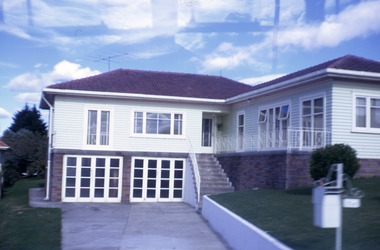 Robin Boyd Foundation
Slide, Robin Boyd, 1967
... Colour slide in a mount. Suburban architecture, possibly Australia...slide robin boyd Made in Australia / 3 / MAY 67M6 / 12 (Handwritten) Colour slide in a mount. Suburban architecture, possibly Australia Slide Robin Boyd ...Colour slide in a mount. Suburban architecture, possibly AustraliaMade in Australia / 3 / MAY 67M6 / 12 (Handwritten)slide, robin boyd -
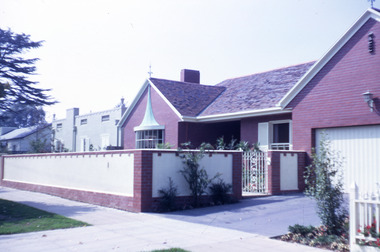 Robin Boyd Foundation
Slide, Robin Boyd, 1967
... Colour slide in a mount. Suburban architecture, possibly Australia or New Zealand...From New Zealand, he travelled on to Montreal, Canada, where he was Exhibits Architect for the Australian Pavilion at Expo ‘67. slide robin boyd Made in Australia / 27 / APR 67M4 / Encircled 16 (Handwritten) / Encircled 1 (Handwritten) Colour slide in a mount. Suburban architecture, possibly Australia or New Zealand Slide Robin Boyd ...Robin Boyd was an invited speaker at the 1967 New Zealand Institute of Architects Conference held in Queenstown, New Zealand. From New Zealand, he travelled on to Montreal, Canada, where he was Exhibits Architect for the Australian Pavilion at Expo ‘67. Colour slide in a mount. Suburban architecture, possibly Australia or New ZealandMade in Australia / 27 / APR 67M4 / Encircled 16 (Handwritten) / Encircled 1 (Handwritten)slide, robin boyd -
 Canterbury History Group
Archive - 62 Bryson Street Canterbury, Miles Lewis
... ...Suburban architecture...Äge 13 June 1998, p16 -adv. c, 4 bedr c1890, Land 66'x 160 Record from Melbourne Mansions Data Base author Miles Lewis 62 Bryson Canterbury Suburban architecture A4 Typed Sheet Archive 62 Bryson Street Canterbury Miles Lewis ...Äge 13 June 1998, p16 -adv. c, 4 bedr c1890, Land 66'x 160 Record from Melbourne Mansions Data Base author Miles Lewis A4 Typed Sheet62 bryson, canterbury, suburban architecture -
Canterbury History Group
Archive - Balwyn Road Canterbury, Miles Lewis
... ...Suburban architecture...MMBW ref 2221 July 1906) Record from Melbourne Mansions Data Base author Miles Lewis Canterbury Suburban architecture The Pines east side Balwyn Rd south of "Shrublands" MMBW ref 2221 July 1906 A4 Typed Sheet Archive Balwyn Road Canterbury Miles Lewis ...The Pines, Balwyn Rd (east side, south of "Shrublands". Large basement, complex shaped house. MMBW ref 2221 July 1906) Record from Melbourne Mansions Data Base author Miles Lewis A4 Typed Sheetcanterbury, suburban architecture, the pines, east side balwyn rd south of "shrublands", mmbw ref 2221 july 1906 -
 Eltham District Historical Society Inc
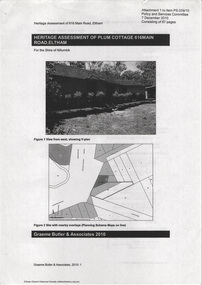
Document - Property Binder, 616 Main Road, Eltham; Plum Cottage
... Architecturally: • Plum Cottage's pise wall construction is uncommon among the early earth-walled structures in the Shire, that are mainly of adobe or mud brick, and as a building material is uncommon among the Shire’s suburban dwellings generally which are clad typically with either fired clay bricks or timber boarding. ...Architecturally: • Plum Cottage's pise wall construction is uncommon among the early earth-walled structures in the Shire, that are mainly of adobe or mud brick, and as a building material is uncommon among the Shire’s suburban dwellings generally which are clad typically with either fired clay bricks or timber boarding. ...Plum Cottage is covered by Heritage Overelay HO256 in the Nillumbuk Planning Scheme This two-lot land holding was created as a subdivision and sold to Charles Stuart McNeil by May 1955. Sometime in the period 1955-1960, the builder-designer, John Harcourt had created a pise house on the site, straddling the two subdivision lots. The designer, John M. Harcourt was a pioneer builder in pise-de-terre and mudbrick in the Eltham Shire, Eltham being synonymous with alternative lifestyles and building practises until the onset of suburbia in the late 20th and early 21st centuries. This hipped-roof house is set high above Main Road on a V-shape plan characteristic of the Arts & Crafts style, with rammed earth or pise walls, timber joinery and a cement tiled roof. The V shape plan was used by important English and Eltham Arts & Crafts designers. The use of natural materials such as stone and timber construction is an essential part of the Arts & Crafts style and Harcourt’s work. So too is the application of the style on both the exterior and interior of the house as a holistic concept. The house adjoins the Lim Joon adobe house built and designed by Alistair Knox in the same era (HO119), thus forming a distinctive pair, both using an uncommon plan form. This house was identified in the Shire of Shire of Eltham Heritage 1992 as contributory to the Eltham Gateway Conservation Area, then proposed as an urban conservation area (now Heritage Overlay Area). Land Ownership Emily Jane Smith of 12 Woodside Street Fitzroy owned Crown Allotments 1 & 2 Sections 14, 27 by August 1918, selling to William Henry Smith of 12 Woodside Street, Nth Fitzroy May 1921. (John) James Isherwood of Main Road, Eltham owned the property by 1928 (the year of his death) with the beneficiary of his estate and next owner of this site being his widow, Minnie Maria Isherwood of Cemetery Road, Eltham. His holding in Main Road included parts of what was described in rate records as allotments1 & 2 Section E6. In the late 1930s, early 1940s her son Alfred John Isherwood was also rated for the land around this site, with the rated nett annual value varying between £2 and £5. Alfred Isherwood also lived at Main Road, Eltham with his wife Ellen: her early death at the age of 24 was reported in the Argus of 1923. Part of the Isherwood land was divided off and sold to Charles Stuart McNeil by May1955. Sometime in the period 1955-1960, the builder-designer, John Harcourt had created a pise house on the site, straddling the two subdivision lots. The house is visible on an aerial photograph from 1960s. Reputedly the house was called Plum Cottage and erected for Harcourt’s mother-in-law. A garage was added in 1959. Charles McNeil died in1971 aged 87: he was the son of Don McNeil and Margaret Arkell. Available rate records from the construction era start in the of the 1970s (1972-3) and list Mr H.C. & M/S A.V. Charity at 616 Main Road Eltham of this property with a nett annual value of $740. More recent valuer's data describes the property as lots 1 & 2 LP25668, located in the Central Riding of Eltham Shire, owned by Ann Valerie Charity and later, in 1990, by the Chincarini family. Building Description This hipped roof 11 .5 square house is set high above Main Road on a characteristic-shape plan and has rammed earth or pise walls, timber joinery and a cement tiled roof. The V-shape plan was used by Important designers such as C.F.A. Voysey (UK) who interpreted medieval domestic architecture as part of the Arts & Crafts style of the late 19th and early 20th centuries. The pise walls are covered with a textured render while the cement roofing tiles are also seen in the Harcourt Hill examples. Reputedly the ceiling joists are of a deep section and span long lengths with no need for hanging beams in the roof space. The ceilings are low and panelled in main rooms with apparently Caneite soft board infill panels between the exposed ceiling beams. These are painted white but may have been stained at one time. The focus of the house is the large living area with its vast random stone fireplace. Significance Plum Cottage is significant to the locality of Eltham because: Historically: • Plum Cottage is closely associated with the important historical theme of earth construction evident in Eltham and elsewhere in the Shire since theear1y Arts & Crafts inspired creations at Penleigh Boyd's The Robins (1912, HO101) and those at Montsalvat (1934-, HO82) but more prominent from the Second War period when earth building in Eltham was promoted in national periodicals as an alternative building method that avoided the building materials shortages of that era; • The choice of the earth building technique also expresses the theme of refuge or alternative living, synonymous with Eltham in the early to mid 20th century; • as a good example of domestic architecture from John Harcourt who was the first major post Second War figure in an important phase of Eltham’s earth building development, using his characteristic Old English or Arts& Crafts style that relies in this case on the pise wall construction, pitched roof forms, exposed ceiling joists, half timbering, random stonework, and panelled internal wall finishes. Architecturally: • Plum Cottage's pise wall construction is uncommon among the early earth-walled structures in the Shire, that are mainly of adobe or mud brick, and as a building material is uncommon among the Shire’s suburban dwellings generally which are clad typically with either fired clay bricks or timber boarding. Aesthetically: • Plum Cottage is a good and well preserved example of a modern Old English or Arts & Crafts style earth-walled building in the Shire • For the proximity of the significant Lim Joon adobe house designed by Alistair Knox adjoining to the north, providing a distinctive earth wall house pair, with uncommon plan forms. Reference Heritage Assessment of Plum Cottage, 616 Main Road, Eltham; Graeme Butler & Associates 2010main road, eltham, property, houses, (john) james isherwood, alfred john isherwood, ann valerie charity, arts and crafts style, charles stuart mcneil, chincarini family, eltham gateway zone, emily jane smith, h.c. charity, heritage assessment, john harcourt, john m. harcourt, lim joon house, main road eltham, minnie maria isherwood, pise construction, plum cottage -
 Glen Eira Historical Society
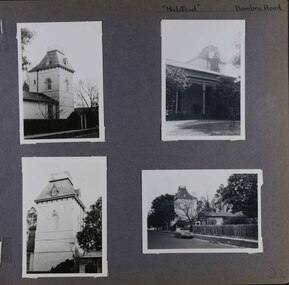
Album - Album page, Halstead, Bambra Road, Circa 1972
... It is important for its place in the socio-economic history of south eastern suburban Melbourne, the inland pattern of development stretching from Malvern through Murrumbeena. Architecturally ...This photograph is part of the Caulfield Historical Album 1972. This album was created in approximately 1972 as part of a project by the Caulfield Historical Society to assist in identifying buildings worthy of preservation. The album is related to a Survey the Caulfield Historical Society developed in collaboration with the National Trust of Australia (Victoria) and Caulfield City Council to identify historic buildings within the City of Caulfield that warranted the protection of a National Trust Classification. Principal photographer thought to be Trevor Hart, member of Caulfield Historical Society. Most photographs were taken between 1966-1972 with a small number of photographs being older and from unknown sources. All photographs are black and white except where stated, with 386 photographs over 198 pages.From the Victorian Heritage Register Database - Citation for Halstead, 23 Bambra Road as at (as at 12/10/2020) https://vhd.heritagecouncil.vic.gov.au/places/276 Halstead is believed to be the oldest standing residence in Caulfield constructed in 1857 with subsequent additions during the 19th Century. The house was built for and owned by James Dickson, a stock agent, until his death in 1880. Although on a much reduced parcel of land, Halstead is one of the few remaining remnants of Caulfield when it was an area of mansion houses occupied by town residing squatters, professional and business men. It is important for its place in the socio-economic history of south eastern suburban Melbourne, the inland pattern of development stretching from Malvern through Murrumbeena. Architecturally the single storey building displays a history of alteration and addition. Its main front presents with a single storey cast iron verandah across the full width, including the two pavilion wings at each end. Located towards the rear on the Halstead Street side is the substantial three storey tower with its Mansard roof and cast-iron balustrade which makes the house clearly visible from Halstead Street and Bambra Road. Because of internal alteration the importance of the building relates to the exterior only of the main house. Halstead is believed to be the oldest standing residence in the city of Caulfield. https://vhd.heritagecouncil.vic.gov.au/places/43645 "Halstead" is regionally important as a surviving large villa from the early Victorian (1850's) period, offering insights into the lifestyles of the privileged in Caulfield at that time. The later tower is of architectural interest for its use of Medieval Romanesque enrichment.Page 32 of Photograph Album with four photographs of the exterior of this double storey house, focussing on different angles for the house's tower.Hand written: "Halstead" Bambra Road [top right] / 32 [bottom right] trevor hart, caulfield north, bambra road, 1850's, halstead, james dickson, mansion, villa residence, cast iron verandah, pavillion wings, halstead street, victorian, tower, balustrading, decorative brackets, mansard roof, brick, cast iron, slate roof, curved windows, single storey mansions, streetscapes, medieval romanesque style, slate roofs, gardens, cast iron work -
 Glen Eira Historical Society
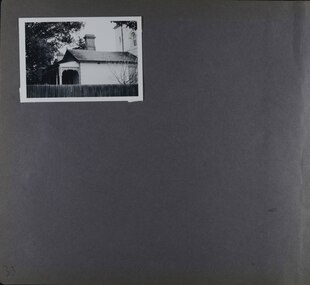
Album - Album page, Halstead, Bambra Road, Circa 1972
... It is important for its place in the socio-economic history of south eastern suburban Melbourne, the inland pattern of development stretching from Malvern through Murrumbeena. Architecturally ...This photograph is part of the Caulfield Historical Album 1972. This album was created in approximately 1972 as part of a project by the Caulfield Historical Society to assist in identifying buildings worthy of preservation. The album is related to a Survey the Caulfield Historical Society developed in collaboration with the National Trust of Australia (Victoria) and Caulfield City Council to identify historic buildings within the City of Caulfield that warranted the protection of a National Trust Classification. Principal photographer thought to be Trevor Hart, member of Caulfield Historical Society. Most photographs were taken between 1966-1972 with a small number of photographs being older and from unknown sources. All photographs are black and white except where stated, with 386 photographs over 198 pages.From the Victorian Heritage Register Database - Citation for Halstead, 23 Bambra Road as at (as at 12/10/2020) https://vhd.heritagecouncil.vic.gov.au/places/276: Halstead is believed to be the oldest standing residence in Caulfield constructed in 1857 with subsequent additions during the 19th Century. The house was built for and owned by James Dickson, a stock agent, until his death in 1880. Although on a much reduced parcel of land, Halstead is one of the few remaining remnants of Caulfield when it was an area of mansion houses occupied by town residing squatters, professional and business men. It is important for its place in the socio-economic history of south eastern suburban Melbourne, the inland pattern of development stretching from Malvern through Murrumbeena. Architecturally the single storey building displays a history of alteration and addition. Its main front presents with a single storey cast iron verandah across the full width, including the two pavilion wings at each end. Located towards the rear on the Halstead Street side is the substantial three storey tower with its Mansard roof and cast-iron balustrade which makes the house clearly visible from Halstead Street and Bambra Road. Because of internal alteration the importance of the building relates to the exterior only of the main house. Halstead is believed to be the oldest standing residence in the city of Caulfield. https://vhd.heritagecouncil.vic.gov.au/places/43645: "Halstead" is regionally important as a surviving large villa from the early Victorian (1850's) period, offering insights into the lifestyles of the privileged in Caulfield at that time. The later tower is of architectural interest for its use of Medieval Romanesque enrichment.Page 33 of Photograph Album with one landscape photograph of the exterior of Halstead, taken from the street.Hand written: 33 [bottom left] trevor hart, caulfield north, bambra road, 1850's, halstead, james dickson, mansion, villa residence, cast iron verandah, pavillion wings, halstead street, victorian, tower, balustrading, decorative brackets, mansard roof, brick, slate roof, curved windows, single storey mansions, cast iron work, medieval romanesque style, slate roofs, gardens -
 Glen Eira Historical Society
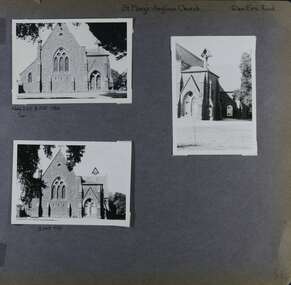
Album - Album page, St Mary's Anglican Church, Glen Eira Road, Circa 1972
... The building is locally important as a historic focus for Anglican worship and early mission activity whilst its architectural grandeur is expressive of mid Victorian Caulfield's status as a suburban location for the Metropolis gentry. trevor hart 1880's elsternwick glen eira road st kilda east church of england gothic st mary's bluestone apsidal sanctuary spirelet trumeau anglican 1870's caulfield north french-influenced Low and Mixed Gothic style Hand written: St Mary's Anglican Church Eira Road [top right] / Neg 235 8 Oct 1966 [under top left photo] / 3 Sep 1972 [under bottom left photo] / 56 [bottom right] Page 56 of Photograph Album with three exterior photographs (two portrait and one landscape) of St Mary's Anglican Church. ...This photograph is part of the Caulfield Historical Album 1972. This album was created in approximately 1972 as part of a project by the Caulfield Historical Society to assist in identifying buildings worthy of preservation. The album is related to a Survey the Caulfield Historical Society developed in collaboration with the National Trust of Australia (Victoria) and Caulfield City Council to identify historic buildings within the City of Caulfield that warranted the protection of a National Trust Classification. Principal photographer thought to be Trevor Hart, member of Caulfield Historical Society. Most photographs were taken between 1966-1972 with a small number of photographs being older and from unknown sources. All photographs are black and white except where stated, with 386 photographs over 198 pages.From the Victorian Heritage Register Database - Citation for St Mary's Anglican Church https://vhd.heritagecouncil.vic.gov.au/places/43715 (as at 14/10/2020) St Mary's has architectural significance as a representative example of French influenced Low and Mixed Gothic (see stylistic Typology in National Trust's Historic Churches Study) and is further distinguished by its use of bluestone, entirely without relief. French influence is demonstrated by the high nave, apsidal sanctuary, spirelet and trumeau. The building is locally important as a historic focus for Anglican worship and early mission activity whilst its architectural grandeur is expressive of mid Victorian Caulfield's status as a suburban location for the Metropolis gentry.Page 56 of Photograph Album with three exterior photographs (two portrait and one landscape) of St Mary's Anglican Church.Hand written: St Mary's Anglican Church Eira Road [top right] / Neg 235 8 Oct 1966 [under top left photo] / 3 Sep 1972 [under bottom left photo] / 56 [bottom right] trevor hart, 1880's, elsternwick, glen eira road, st kilda east, church of england, gothic, st mary's, bluestone, apsidal sanctuary, spirelet, trumeau, anglican, 1870's, caulfield north, french-influenced low and mixed gothic style -
 Glen Eira Historical Society
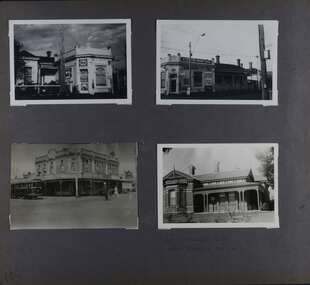
Album - Album page, Kambrook Road, Circa 1972
... suburban industrialist, notable a boot manufacturer, demonstrating the attraction of Caulfield as a residential location for the manufacturers of the metropolis during the late Victorian Boom period. It is aesthetically significant (Criterion E) as a very early example of a Queen Anne influenced late Victorian villa, comparing at the State level with ''Woodlands'' (1888), North Essendon, generally acknowledged to be one of Australia's earliest houses to fully exploit this emerging style. The ornamental timberwork is especially expressive of the new architectural ...This page of photographs is part of the Caulfield Historical Album 1972. This album was created in approximately 1972 as part of a project by the Caulfield Historical Society to assist in identifying buildings worthy of preservation. The album is related to a Survey the Caulfield Historical Society developed in collaboration with the National Trust of Australia (Victoria) and Caulfield City Council to identify historic buildings within the City of Caulfield that warranted the protection of a National Trust Classification. Principal photographer thought to be Trevor Hart, member of Caulfield Historical Society. Most photographs were taken between 1966-1972 with a small number of photographs being older and from unknown sources. All photographs are black and white except where stated, with 386 photographs over 198 pages. First 2 images: milkbar and residence corner Kambrook and Balaclava Roads ie south west corner - building named Airdrie 3rd image: https://vhd.heritagecouncil.vic.gov.au/places/43737 - re 26 Kambrook Road and 345 Balaclava Road corner building ie south east corner: A prominently situated two-storeyed complex of late Victorian buildings consisting of "Wybar's Buildings" occupying the Balaclava Road/ Kambrook Road corner and the "Caulfield Bakery" facing Kambrook Road, separated by a driveway from a single storeyed shop. The main building has a comer splay and balustraded parapet with curved pediments, the words "Wybar's Buildings 1887" having been obliterated but "Caulfield Bakery 1887" with the characteristic wheatsheaf surviving in raised cement work. The walls are stuccoed and richly ornamented with bracketed cornices and keystones with masks extending to the Bakery. The main building is further distinguished by the Masonic symbol of the mason's dividers in the pediment whilst the upper level of the bakery is in overpainted brickwork. The single storeyed shop incorporates the bracketed cornice and consoles characteristic of the main buildings and is in other respects a utilitarian structure. 4th image: https://vhd.heritagecouncil.vic.gov.au/places/42415 (on 24/01/2021) - 196 Kambrook Road An imposing late Victorian poly-chrome brick asymmetrical villa with corner verandah and projecting west facing wing with faceted window bay to the facade. Body bricks are red and relieved by cream and black brick banding and by cream bricks to the bracketed eaves. The fretted barge with king post treatment and timber posted verandah are unique in the Municipality and unusual in the metropolitan area and demonstrate an understated appreciation of the emerging Queen Anne mode.345 Balaclava and 26 Kambrook Roads HO91 - City of Glen Eira https://vhd.heritagecouncil.vic.gov.au/places/43737 (on 24/01/2021) "Wybar's Buildings" at the corner of Balaclava Road and Kambrook Road are important as a prominent late Victorian commercial development incorporating a variety of activities including a bakery and possibly a coffee palace, the latter understood to be unique within the municipality, but characteristic of the period. It is a rare complex of its type in Caulfield and is important also as evocative evidence of the late Victorian Land Boom and the creation of a small now defunct commercial centre at this location by the George Wybrow. 196 Kambrook Road HO122 - City of Glen Eira https://vhd.heritagecouncil.vic.gov.au/places/42415 "Glencoe" is situated at no. 196 Kambrook Road, Caulfield North and was built for the boot manufacturer, Robert Bruce Mair, in 1888. It is of historic and aesthetic significance. It is historically significant (Criterion A) as the home of an inner suburban industrialist, notable a boot manufacturer, demonstrating the attraction of Caulfield as a residential location for the manufacturers of the metropolis during the late Victorian Boom period. It is aesthetically significant (Criterion E) as a very early example of a Queen Anne influenced late Victorian villa, comparing at the State level with ''Woodlands'' (1888), North Essendon, generally acknowledged to be one of Australia's earliest houses to fully exploit this emerging style. The ornamental timberwork is especially expressive of the new architectural fashion and compares with the house at 33 Clarence Street, Elsternwick (1888-89).Page 105 of Photograph Album with two photographs of a milk bar and attached residence, one older photograph of Wybar's Building and another photograph of a house on Kambrook Road (all are landscape).Handwritten: 196 KAMBROOK ROAD / 1970 - GAFFNEY MRS S.M. [under bottom right photo] / 100 [bottom left]trevor hart, kambrook road, victorian style, caulfield north, parapets, wybar's buildings 1887, caulfield bakery 1887, architectural features, painted bricks, balaclava road, george wybrow, shops, milk bars, airdrie, polychrome bricks, verandahs, queen anne architectural style, houses, glencoe, robert mair -
 Glen Eira Historical Society
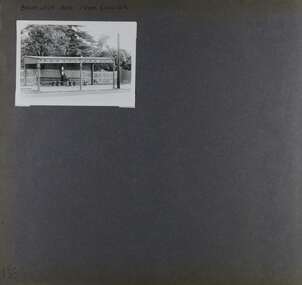
Album - Album page, Balaclava Road Tram Shelter, Circa 1972
... architectural significance to the State of Victoria. Why is it significant? The waiting shelter is of historical significance for its association with the development of the suburban (electric) tram network which assisted the expansion of Melbourne as a suburban metropolis. ...This photograph is part of the Caulfield Historical Album 1972. This album was created in approximately 1972 as part of a project by the Caulfield Historical Society to assist in identifying buildings worthy of preservation. The album is related to a Survey the Caulfield Historical Society developed in collaboration with the National Trust of Australia (Victoria) and Caulfield City Council to identify historic buildings within the City of Caulfield that warranted the protection of a National Trust Classification. Principal photographer thought to be Trevor Hart, member of Caulfield Historical Society. Most photographs were taken between 1966-1972 with a small number of photographs being older and from unknown sources. All photographs are black and white except where stated, with 386 photographs over 198 pages. From Victorian Heritage Database citation H0174 TRAM VERANDAH SHELTER CORNER BALACLAVA AND ORRONG ROADS CAULFIELD NORTH - Vic Heritage Register https://vhd.heritagecouncil.vic.gov.au/places/2721 (as at 28/10/2020) The waiting shelter at the corner of Balaclava Road and Orrong Road, Caulfield was constructed in 1916/17 for the Prahran and Malvern Tramways Trust and is one of only three remaining tram shelters in Melbourne designed in the form of a verandah. The shelter has a corrugated iron roof fixed to an angle iron roof frame. The roof, which extends in the form of a skillion over the pavement, is supported on three squared, chamfered timber posts at the rear and three cast iron reeded columns with round bases and Corinthian capitals at the front. (The columns are hollow and function as downpipes, with rainwater discharging from the verandah roof, through the columns and under the ground). The shelter has a rinceau pattern frieze along the road frontage with centrally placed shield motif (which does not contain a coat of arms). The side and rear panels are lined with ripple iron and the upper panel at the rear is lattice work. The shelter has two timber slatted bench seats.From Victorian Heritage Database citation for H0174 TRAM VERANDAH SHELTER CORNER BALACLAVA AND ORRONG ROADS CAULFIELD NORTH - Vic Heritage Register https://vhd.heritagecouncil.vic.gov.au/places/2721 (as at 28/10/2020) How is it significant? The waiting shelter at the corner of Balaclava Road and Orrong Road, Caulfield is of historical and architectural significance to the State of Victoria. Why is it significant? The waiting shelter is of historical significance for its association with the development of the suburban (electric) tram network which assisted the expansion of Melbourne as a suburban metropolis. It is also of historical significance for its connection with the Prahran & Malvern Tramways Trust. The Prahran & Malvern Tramways Trust (1907-1920) was the first municipal electric tramway in Melbourne, becoming the largest and most successful of all the municipal tramway trusts. Its services played a key role in facilitating suburban expansion and the development of the southern and eastern suburbs. The growth of tramways was one of the greatest municipal developments in Victoria during the first decade of the twentieth century. The waiting shelter is an important remnant of this period of Melbourne's transport history and a tangible reminder of the Prahran & Malvern Tramways Trust. The shelter indicates the extent of the Prahran & Malvern tram network. The waiting shelter at corner of Balaclava Road and Orrong Road, Caulfield is one of only three remaining tram shelters in Melbourne designed in the form of a verandah. The waiting shelter is of architectural significance for the distinctive design and construction which is unique to the Prahran & Malvern Tramway Trust tram network. The shelter was designed by notable Melbourne architect Leonard J. Flannagan (1864-1946). Flannagan was responsible for a number of buildings for the Prahran and Malvern Tramways Trust including the early waiting shelter at the junction of Dandenong Road and Hawthorn Road, Caulfield, and sections of the tram depot at Malvern, and also designed a depot for the Hawthorn Tramways Trust. The waiting shelter, a conservative design influenced by Victorian architecture, is based on the Melbourne City Council late 19th century standard cast iron verandah. It is of significance as an intact example of the cast iron type shelter and for its detail, including Corinthian columns and a 'rinceau' pattern cast-iron frieze. The shelter is largely in keeping with the original design and retains its integrity. The cast iron waiting shelter is also of significance as an unusual example of early twentieth century street architecture. Page 155 of Photograph Album with one landscape photograph of a tram shelter on Balaclava Road.Handwritten: BALACLAVA ROAD TRAM SHELTER [top] / 155 [bottom left]trevor hart, verandah, garden, grimwade house, grimwade, orrong road, balaclava road, melbourne grammar, melbourne grammar junior school, mgs, m.g.s, school, tram shelter, waiting shelter, prahran & malvern tramway trust, leonard j. flannagan, cast iron verandah, cast iron type shelter, corinthian columns, 'rinceau' pattern cast-iron frieze, rinceau, cast iron frieze, victorian style, caulfield north, leonard flanagan, cast iron work, prahran and malvern tramways trust, trams -
 Glen Eira Historical Society
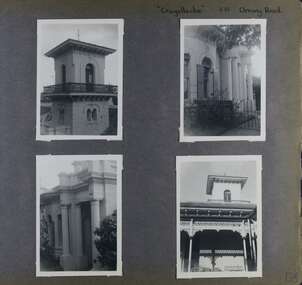
Album - Album page, Craigellachie, 273 Orrong Road, Circa 1972
... The Araucaria bidwilli is notable as a fine example of a species infrequently planted in Melbourne and rarely found in private suburban gardens. trevor hart verandah orrong road tower curved windows decorative brackets italianate mansion 1870's william pearson inkerman street apartments spire decorative plaster work rendered walls ornamentation arched windows moulded ornaments 1860's lynedoch avenue classical style caulfield north craigellachie cast iron work victorian style balaclava st kilda east gardens ailanthus altissima araucaria bidwilli porches trees Handwritten: "Craigellachie" 273 Orrong Road [top right] / 156 [bottom right] Page 156 of Photograph Album with four landscape photographs of Craigellachie - near views of architectural features. ...This photograph is part of the Caulfield Historical Album 1972. This album was created in approximately 1972 as part of a project by the Caulfield Historical Society to assist in identifying buildings worthy of preservation. The album is related to a Survey the Caulfield Historical Society developed in collaboration with the National Trust of Australia (Victoria) and Caulfield City Council to identify historic buildings within the City of Caulfield that warranted the protection of a National Trust Classification. Principal photographer thought to be Trevor Hart, member of Caulfield Historical Society. Most photographs were taken between 1966-1972 with a small number of photographs being older and from unknown sources. All photographs are black and white except where stated, with 386 photographs over 198 pages. From Victorian Heritage Database citation HO40 Craigellachie 2b & 2c Lynedoch Avenue Caulfield North https://vhd.heritagecouncil.vic.gov.au/places/35209 as at (28/10/2020) Craigellachie" is situated at No. 2B Lynedoch Avenue, Caulfield North, and was built for the noted investor, pastoralist and politician, William Pearson, not earlier than 1864 and possible in 1876, undergoing several substantial and contributory extensions during the nineteenth century. It is historically and aesthetically significant. From Victorian Heritage Database citation for HO40 Craigellachie https://vhd.heritagecouncil.vic.gov.au/places/35209 as at (28/10/2020) It is historically significant (Criterion A) as the Melbourne home of William Pearson, MLA, MLC and principal shareholder in Walhalla's Long Tunnel Extended Gold Mining Co. which sustained the township well past the turn of the twentieth century and occupied fifth place amongst Victoria's richest mines. It is aesthetically significant (Criterion E) for its capacity to demonstrate Pearson's continuing financial success throughout the mid to late nineteenth century, the additions associated with the tower being most noteworthy as an example of the lasting appeal of the Italian Style, popularized in the pattern books of the day. The Ailanthus altissima (Tree of Heaven) is significant as an outstanding example of a species that is rare in cultivation, as well as for its very high aesthetic value. The Araucaria bidwilli is notable as a fine example of a species infrequently planted in Melbourne and rarely found in private suburban gardens.Page 156 of Photograph Album with four landscape photographs of Craigellachie - near views of architectural features. Handwritten: "Craigellachie" 273 Orrong Road [top right] / 156 [bottom right]trevor hart, verandah, orrong road, tower, curved windows, decorative brackets, italianate, mansion, 1870's, william pearson, inkerman street, apartments, spire, decorative plaster work, rendered walls, ornamentation, arched windows, moulded ornaments, 1860's, lynedoch avenue, classical style, caulfield north, craigellachie, cast iron work, victorian style, balaclava, st kilda east, gardens, ailanthus altissima, araucaria bidwilli, porches, trees -
 Glen Eira Historical Society
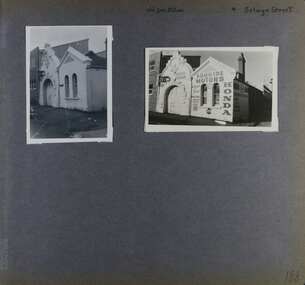
Album - Album page, Old Fire Station, 4 Selwyn Street, Circa 1972
... suburban population. These new stations formed a crucial part of the MFB's fire-fighting network across Melbourne. The Former Elsternwick Fire Station clearly demonstrates the historical development of fire-fighting services in Melbourne, especially the expansion of the newly-formed MFB throughout Melbourne's suburbs during the 1890s. [Criterion A] The Former Elsternwick Fire Station is architecturally ...This album was created in approximately 1972 as part of a project by the Caulfield Historical Society to assist in identifying buildings worthy of preservation. The album is related to a Survey the Caulfield Historical Society developed in collaboration with the National Trust of Australia (Victoria) and Caulfield City Council to identify historic buildings within the City of Caulfield that warranted the protection of a National Trust Classification. Principal photographer thought to be Trevor Hart, member of Caulfield Historical Society. Most photographs were taken between 1966-1972 with a small number of photographs being older and from unknown sources. All photographs are black and white except where stated, with 386 photographs over 198 pages. From Victorian Heritage Database citation for H2376 Former Elsternwick Fire Station, 2-4 Selwyn Street Elsternwick - Victorian Heritage Register https://vhd.heritagecouncil.vic.gov.au/places/2645 (as at 21/11/2021) The Former Elsternwick Fire Station was built and commenced operation in 1896. It was one of 32 new fire stations built between 1892 and 1896 by the newly formed Melbourne Metropolitan Fire Brigade ('MFB') to form a comprehensive fire-fighting network across Melbourne. The MFB was established in 1891 as Victoria's government-run fire-fighting service in Melbourne and its growing suburbs. By 1918 motorised fire engine appliances had replaced horse-drawn fire vehicles across the metropolitan area, and the consequently larger areas that fire stations could protect meant the 1896 Elsternwick Fire Station was one of many which was becoming obsolete. The MFB continued to use the Elsternwick Fire Station up until the Station's closure in 1926. From 1927 the former Fire Station was leased by neighbouring timber merchants JJ Webster Pty Ltd who subsequently purchased the property from the MFB in 1934. From 1954 the 'Esquire Motors' car repair business traded at the site, and changes to the former Fire Station building including the complete enclosure of its yard by corrugated steel walls and roofing appear to have been completed in the mid-1950s. In 1990 the Australian Broadcasting Corporation ('ABC') purchased the former Fire Station together with five other adjoining land parcels in Selwyn Street. From that time until 2017 the former Elsternwick Fire Station has been used by the ABC as office and storage space in its Selwyn Street television studio complex.From Victorian Heritage Database citation for H2376 Former Elsternwick Fire Station, 2-4 Selwyn Street Elsternwick - Victorian Heritage Register https://vhd.heritagecouncil.vic.gov.au/places/2645 (as at 21/11/2021) The Former Elsternwick Fire Station is historically significant as one of the 10 remaining fire stations of the original 32 built for the newly established Melbourne Metropolitan Fire Brigade ('MFB') during the four-year period 1892 to 1896. These fire stations were constructed following the establishment in 1891 of the MFB, Victoria's government-run fire-fighting service for metropolitan Melbourne and its growing suburban population. These new stations formed a crucial part of the MFB's fire-fighting network across Melbourne. The Former Elsternwick Fire Station clearly demonstrates the historical development of fire-fighting services in Melbourne, especially the expansion of the newly-formed MFB throughout Melbourne's suburbs during the 1890s. [Criterion A] The Former Elsternwick Fire Station is architecturally significant as a fine example of a late nineteenth century fire station. Constructed shortly after the establishment of the MFB, it displays characteristics of its class of place that remain mostly unchanged from the former Station's historically important period of development and use. A particularly strong element of the Former Elsternwick Fire Station is the large and strikingly-detailed stone horseshoe arch, designed for horse-drawn fire-fighting vehicles, at the street entrance to its fire-engine room. [Criterion D]Page 188 of Photograph Album with two photographs of the old Elsternwick Fire Station.Handwritten: old fire station 4 Selwyn Street [top right] / 188 [bottom right]trevor hart, rendered, 1890's, melbourne metropolitan fire brigade, mfb, fire-fighting, jj webster, timber merchants, esquire motors, car repair, australian broadcasting corporation, abc, selwyn street, brick and stone, asymmetrical facade, anglo-dutch gable, rusticated and smooth-faced limestone, elsternwick fire station, elsternwick, fire station, jj webster pty ltd, motor vehicle repair shops, stone horseshoe arch entrance -
 Port Melbourne Historical & Preservation Society
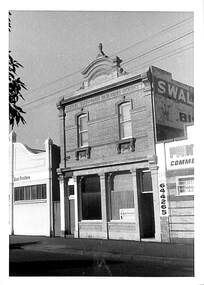
Photograph - Former South Suburban Building Society, 272 Bay Street, Port Melbourne, Janet and Allen Walsh, 1973
... Shot in 1973 with particular interest in architecture Janet WALSH Allen WALSH Built Environment - Commercial Bay Street South Suburban Building Society Identified and dated on back in ink Set of 31 photographs taken in June and July 1973 Former South Suburban Building Society, Bay St, commercial printers either side Photograph Former South Suburban Building Society, 272 Bay Street, Port Melbourne Janet and Allen Walsh ...Shot in 1973 with particular interest in architectureSet of 31 photographs taken in June and July 1973 Former South Suburban Building Society, Bay St, commercial printers either sideIdentified and dated on back in inkjanet walsh, allen walsh, built environment - commercial, bay street, south suburban building society -
 Robin Boyd Foundation
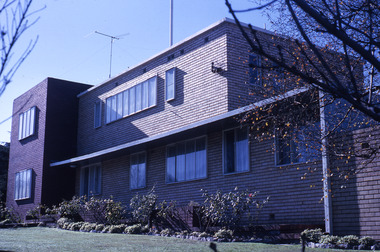
Slide, Robin Boyd
... domestic architecture Australia slide robin boyd Made in Australia / 14 / Encircled 5 (Handwritten) / Encircled 80F (Handwritten) / B (Handwritten) Colour slide in a mount. Suburban ...Colour slide in a mount. Suburban house, unknown location, possibly Melbourne, AustraliaMade in Australia / 14 / Encircled 5 (Handwritten) / Encircled 80F (Handwritten) / B (Handwritten)domestic architecture, australia, slide, robin boyd -
 Robin Boyd Foundation
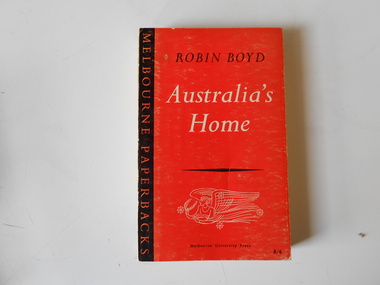
Book, Robin Boyd, Australia's Home, 1991
... suburban home. Accompanying the text was a series of drawings of houses by Boyd that documented his ‘Major Steps of Stylism’. Australian architecture ...Australia's Home' was first published in 1952. In this book, Boyd crystallised his ideas on what he saw as the historical development of the everyday suburban home. Accompanying the text was a series of drawings of houses by Boyd that documented his ‘Major Steps of Stylism’.Softcoveraustralian architecture, australian history, walsh st library -
 Robin Boyd Foundation
Book, Robin Boyd, Australia's Home, 1961
... suburban home. Accompanying the text was a series of drawings of houses by Boyd that documented his ‘Major Steps of Stylism’. Australian architecture ...Australia's Home' was first published in 1952. In this book, Boyd crystallised his ideas on what he saw as the historical development of the everyday suburban home. Accompanying the text was a series of drawings of houses by Boyd that documented his ‘Major Steps of Stylism’.Softcoveraustralian architecture, architecture, australia, home, suburbs, robin boyd, walsh st library -
Villa Alba Museum
Document, Dr James Broadbent, The Garden: A Report, 2005
... Yet, with its combination of preserved architectural and some archaeological features, and a largely accurate re-created form, Villa Alba’s new garden is a major interpretational component of the property which allows the visitor to comprehend its original design and functions and provides an essential historical context for the house as a major suburban villa. ...Villa Alba’s garden is a reconstruction, but in its design it is as accurate to its late nineteenth century form as the available evidence and Xavier College’s requirements, allowed. This is so, despite the 1890s garden having been progressively destroyed, built on and reformed as a hospital garden during the third quarter of last century. Yet, with its combination of preserved architectural and some archaeological features, and a largely accurate re-created form, Villa Alba’s new garden is a major interpretational component of the property which allows the visitor to comprehend its original design and functions and provides an essential historical context for the house as a major suburban villa.Introduction / p1.Features of Heritage Significance / p1-2. Garden Reconstruction (The Flower Garden, South East Shrubbery, The East lawn, The Back or North Garden and Fernery, Privy Fishpond and Conservatory Area, Planting as at 19/7/2001 and later, The Replanting of the Garden, works Awaiting Completion: Stage 2 of Garden Plan) / p2-7.non-fictionVilla Alba’s garden is a reconstruction, but in its design it is as accurate to its late nineteenth century form as the available evidence and Xavier College’s requirements, allowed. This is so, despite the 1890s garden having been progressively destroyed, built on and reformed as a hospital garden during the third quarter of last century. Yet, with its combination of preserved architectural and some archaeological features, and a largely accurate re-created form, Villa Alba’s new garden is a major interpretational component of the property which allows the visitor to comprehend its original design and functions and provides an essential historical context for the house as a major suburban villa.villa alba museum, dr james broadbent, 2005, heritage gardens, garden reconstruction, conservation analysis, conservation report -
 Robin Boyd Foundation
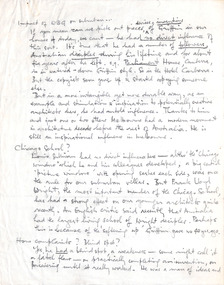
Document - Manuscript, Robin Boyd, Impact of WBG on suburban…
... architectural culture. Also considers his place within the Chicago School more broadly. Boyd believes Griffin to be more human, sensitive, and skillful compared to Frank Lloyd Wright, and laments that Griffin did not build more in Australia. This may be a lecture/talk - there are notes on the back. Walter Burley Griffin Old Parliament House Canberra Louis Sullivan Frank Lloyd Wright Capitol Theatre Robin Boyd manuscript All-caps inscription on the back of 2nd page - possibly a shorthand summary of the talk. Uncertain if this is Boyd's handwriting. Handwritten, quarto, 2 pages Impact of WBG on suburban ...Discusses Walter Burley Griffin's effect on Australian architectural culture. Also considers his place within the Chicago School more broadly. Boyd believes Griffin to be more human, sensitive, and skillful compared to Frank Lloyd Wright, and laments that Griffin did not build more in Australia.This may be a lecture/talk - there are notes on the back.Handwritten, quarto, 2 pagesAll-caps inscription on the back of 2nd page - possibly a shorthand summary of the talk. Uncertain if this is Boyd's handwriting.walter burley griffin, old parliament house, canberra, louis sullivan, frank lloyd wright, capitol theatre, robin boyd, manuscript -
 RMIT Design Archives
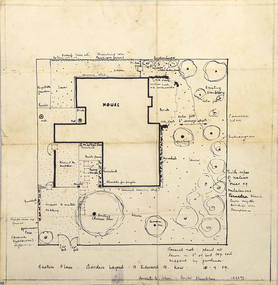
Diazotypes, Sketch Plan: Garden Layout - 13 Edward St. Kew
... Typical of post-war suburban housing thought, the garden is a generous, and the planting a mix of existing shrubs and trees, old favourites such as camelias, hydrangeas, lilacs, and a unusually 'a thick copse of native trees'. John Murphy (1920-2004) and Phyllis Murphy (nee Slater) (1924-) are alumni of RMIT. John commenced his architectural...Typical of post-war suburban housing thought, the garden is a generous, and the planting a mix of existing shrubs and trees, old favourites such as camelias, hydrangeas, lilacs, and a unusually 'a thick copse of native trees'. John Murphy (1920-2004) and Phyllis Murphy (nee Slater) (1924-) are alumni of RMIT. John commenced his architectural ...John and Phyllis Murphy designed this house and garden in Kew for Sir Frank and Lady Macfarlane Burnet in 1959, the year before Burnet and Peter Medaware received the Nobel Prize for discovering acquired immunological tolerance. For the most highly honoured scientist to have worked in Australia, Burnet's house is modest - single storey with two bedrooms. Typical of post-war suburban housing thought, the garden is a generous, and the planting a mix of existing shrubs and trees, old favourites such as camelias, hydrangeas, lilacs, and a unusually 'a thick copse of native trees'. John Murphy (1920-2004) and Phyllis Murphy (nee Slater) (1924-) are alumni of RMIT. John commenced his architectural studies at Swinburne Technical College prior to WW2, and subsequently studied at Melbourne Technical College (now RMIT University) from 1944 to 1946. Phyllis studied architecture at Melbourne Technical College from 1942, before transferring to Melbourne University's Architectural Atelier in 1944 They both completed their Bachelor of Architecture in 1949, with Phyllis topping the fourth year, and John coming in second. They established their architectural practice in 1950. One early project was their design with Kevin Borland and Peter McIntyre for the Olympic Swimming Pool (1956). Ann Carew 2018dye, paper, garden design, kew -
 Robin Boyd Foundation
Book, Robin Boyd, Australia's Home, 1952
... suburban home. Accompanying the text was a series of drawings of houses by Boyd that documented his ‘Major Steps of Stylism’. Australian architecture ...Australia's Home' was first published in 1952. In this book, Boyd crystallised his ideas on what he saw as the historical development of the everyday suburban home. Accompanying the text was a series of drawings of houses by Boyd that documented his ‘Major Steps of Stylism’.HardcoverRBF Acquisitionaustralian architecture, australian history, walsh st library -
 Robin Boyd Foundation
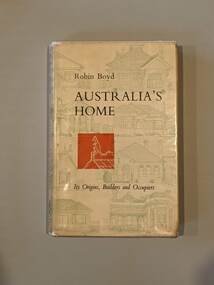
Book, Robin Boyd, Australia's Home, 1952
... suburban home. Accompanying the text was a series of drawings of houses by Boyd that documented his ‘Major Steps of Stylism’. Australian architecture ...Australia's Home' was first published in 1952. In this book, Boyd crystallised his ideas on what he saw as the historical development of the everyday suburban home. Accompanying the text was a series of drawings of houses by Boyd that documented his ‘Major Steps of Stylism’.HardcoverRBF Acquisitionaustralian architecture, australian history, walsh st library -
 Robin Boyd Foundation
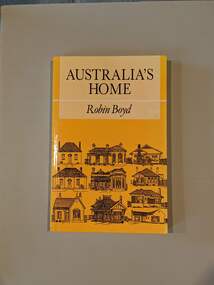
Book, Robin Boyd, Australia's Home, 1987
... suburban home. Accompanying the text was a series of drawings of houses by Boyd that documented his ‘Major Steps of Stylism’. Australian architecture ...Australia's Home' was first published in 1952. In this book, Boyd crystallised his ideas on what he saw as the historical development of the everyday suburban home. Accompanying the text was a series of drawings of houses by Boyd that documented his ‘Major Steps of Stylism’.SoftcoverRBF Acquisitionaustralian architecture, australian history, walsh st library -
 Robin Boyd Foundation
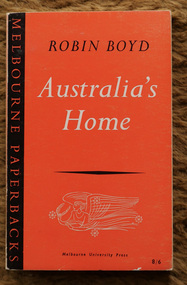
Book, Robin Boyd, Australia's Home, 1961
... suburban home. Accompanying the text was a series of drawings of houses by Boyd that documented his ‘Major Steps of Stylism’. Australian architecture ...Australia's Home' was first published in 1952. In this book, Boyd crystallised his ideas on what he saw as the historical development of the everyday suburban home. Accompanying the text was a series of drawings of houses by Boyd that documented his ‘Major Steps of Stylism’.SoftcoverRBF Acquisition. Abebooks invoice within.australian architecture, australian history, walsh st library -
 Robin Boyd Foundation
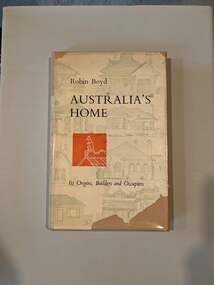
Book, Robin Boyd, Australia's Home, 1952
... suburban home. Accompanying the text was a series of drawings of houses by Boyd that documented his ‘Major Steps of Stylism’. Australian architecture ...Australia's Home' was first published in 1952. In this book, Boyd crystallised his ideas on what he saw as the historical development of the everyday suburban home. Accompanying the text was a series of drawings of houses by Boyd that documented his ‘Major Steps of Stylism’.Hardcover with Dust JacketRBF Acquisitionaustralian architecture, australian history, walsh st library -
 Robin Boyd Foundation
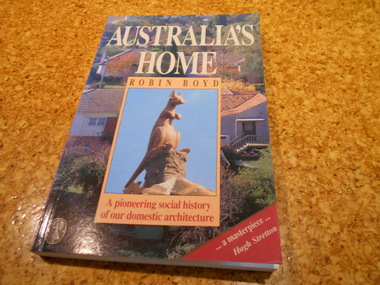
Book, Robin Boyd, Australia's Home, 1991
... suburban home. Accompanying the text was a series of drawings of houses by Boyd that documented his ‘Major Steps of Stylism’. Australian architecture ...Australia's Home' was first published in 1952. In this book, Boyd crystallised his ideas on what he saw as the historical development of the everyday suburban home. Accompanying the text was a series of drawings of houses by Boyd that documented his ‘Major Steps of Stylism’.Softcoveraustralian architecture, australian history, walsh st library -
 Robin Boyd Foundation
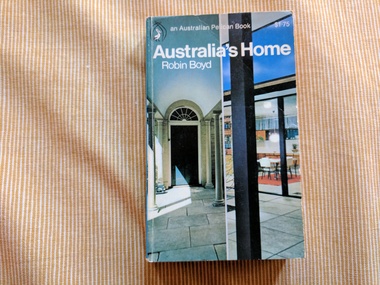
Book, Robin Boyd, Australia's Home, 1968
... suburban home. Accompanying the text was a series of drawings of houses by Boyd that documented his ‘Major Steps of Stylism’. Australian architecture ...Australia's Home' was first published in 1952. In this book, Boyd crystallised his ideas on what he saw as the historical development of the everyday suburban home. Accompanying the text was a series of drawings of houses by Boyd that documented his ‘Major Steps of Stylism’.SoftcoverBoyd on inside front cover, list of Australian Architecture firms penciled on the last pageaustralian architecture, australian history, walsh st library -
 Robin Boyd Foundation
Book, Robin Boyd, Australia's Home, 1952
... suburban home. Accompanying the text was a series of drawings of houses by Boyd that documented his ‘Major Steps of Stylism’. Australian architecture ...Australia's Home' was first published in 1952. In this book, Boyd crystallised his ideas on what he saw as the historical development of the everyday suburban home. Accompanying the text was a series of drawings of houses by Boyd that documented his ‘Major Steps of Stylism’.HardcoverState Lending Library of Victoria/withdrawnaustralian architecture, australian history, walsh st library -
 Sunshine and District Historical Society Incorporated
Photograph - Victoria Railway Substation Talmage Street Albion 1991 Photographs, Adam Ellwood, 28th February 1991
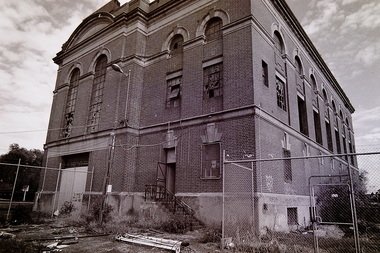
... suburban electric trains. The substation was also briefly associated with H.V. McKay’s Sunshine Harvester Works, supplying power during the early industrial development in Sunshine. Its monumental Renaissance‑style architecture...Substation is of State historical and architectural significance, representing the era when Victoria undertook large‑scale railway electrification, one of the longest electrified suburban systems in the world at the time. ...This Victorian Railway (VR) D.C. Substation was built as part of the first stage of Melbourne’s rail electrification, in the early 20th century. It functioned as a direct‑current (D.C.) traction substation, supplying power to suburban electric trains. The substation was also briefly associated with H.V. McKay’s Sunshine Harvester Works, supplying power during the early industrial development in Sunshine. Its monumental Renaissance‑style architecture reflected VR’s desire to express technological progress and civic confidence.The Victorian Railway (VR) D.C. Substation is of State historical and architectural significance, representing the era when Victoria undertook large‑scale railway electrification, one of the longest electrified suburban systems in the world at the time.The Power House Talmage St Albiontalmage street, albion, substation -
 Sunshine and District Historical Society Incorporated
Card - Howard Ackley House And Garden Western Suburbs Greeting Card, Howard Arkley, 1988
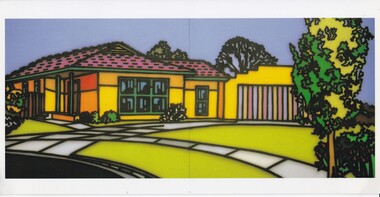
... Howard Arkley (1951–1999) was one of Australia’s most distinctive and influential contemporary artists, best known for his airbrushed, hyper‑colour images of suburban houses and interiors. His work turned the everyday architecture of Melbourne’s suburbs, brick veneers, triple‑fronted homes, patterned interiors, into bold, iconic art. ...Painting by Howard Arklery titled "House and Garden, Western Suburbs, Melbourne 1988".Howard Arkley (1951–1999) was one of Australia’s most distinctive and influential contemporary artists, best known for his airbrushed, hyper‑colour images of suburban houses and interiors. His work turned the everyday architecture of Melbourne’s suburbs, brick veneers, triple‑fronted homes, patterned interiors, into bold, iconic art.6987.01 - Melbourne's Western Suburbs Greeting Cards Cveta Krstevska Kinnears Ropes.jpg Cveta Krstevska working on a twisting machibe at Kinnears Ropes, Footscray 6987.02 - Melbourne's Western Suburbs Greeting Cards - Men Fishing Maribyrnong River.jpg Two Men fishing in erlier days on the Maribyrnong River 6987.03 - Melbourne's Western Suburbs Greeting Cards - Newmarket Cattle Saleyards.jpg Cattle at the Newmarket Saleyardshoward arkley -
 Broadmeadows Historical Society & Museum
Photograph - Area - Suburb, Fawkner Street Westmeadows Looking North
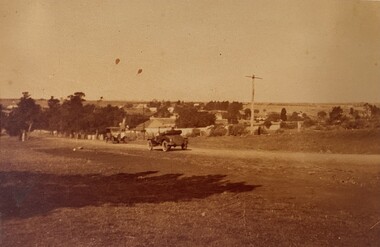
... suburban transformation in the post-war era. It reflects the township’s role as a quiet residential and agricultural community, shaped by its proximity to the Old Sydney Road and its historical function as a waypoint for travelers. The architectural ...This photograph captures a historically significant streetscape in Westmeadows, formerly known as Broadmeadows Township, looking north from Fawkner Street. The image features a dirt road with a vintage automobile parked along its path, flanked by trees and modest residential buildings in the background. A tall utility or signpost stands prominently, indicative of early infrastructure in the area. The scene reflects the semi-rural character of Westmeadows prior to its suburban expansion in the post-war period. The presence of unsealed roads and early 20th-century vehicles suggests a time when the township served as a quiet residential and agricultural community, before the development of the Broadmeadows Housing Commission estate in the late 1940s. Historically, Westmeadows was a key waypoint along the Old Sydney Road, and its built environment—including bluestone bridges and early civic buildings—offers insight into Melbourne’s colonial and interwar development. This photograph contributes to the visual documentation of the City of Hume’s transformation from rural township to suburban district.This photograph holds historical and cultural significance as a visual record of Westmeadows, a township in Melbourne’s north-west, during the early 20th century. Captured from Fawkner Street looking north, the image depicts a dirt road flanked by modest residential buildings and mature trees, with a vintage automobile parked in the foreground. The presence of a tall utility or signpost adds to the authenticity of the streetscape. The image is emblematic of Westmeadows’ semi-rural character prior to its suburban transformation in the post-war era. It reflects the township’s role as a quiet residential and agricultural community, shaped by its proximity to the Old Sydney Road and its historical function as a waypoint for travelers. The architectural style and infrastructure visible in the photograph provide insight into the urban morphology and transport conditions of the time. As a primary source, the photograph contributes to the documentation of Melbourne’s suburban expansion, offering valuable context for researchers, historians, and urban planners studying the evolution of the City of Hume. It is significant for its ability to convey the lived experience, landscape, and development patterns of a community in transition.Sepia tone photo. Two cars on road. Trees, some buildings behind. Open land. Street view.'Looking north Fawkner Street Westmeadows'/'PH-0018' (old catalogue number)westmeadows, fawkner street, north, car
