
Showing 1201 items matching "vhr"
-
 Mission to Seafarers Victoria
Document - Report, Heritage Council Victoria, Victorian Heritage Database Report - Mission to Seamen, 20 August 1982
... ...vhr...VHR Registration August 20, 1982...VHR Registration August 20, 1982 victorian heritage database 1982 heritage council victoria victorian heritage register vhr heritage listed vhr 1496 built heritage Victorian Heritage Database Report - Mission to Seamen Document Report Heritage Council Victoria ...VHR Registration August 20, 1982victorian heritage database, 1982, heritage council victoria, victorian heritage register, vhr, heritage listed, vhr 1496, built heritage -
 Bendigo Military Museum
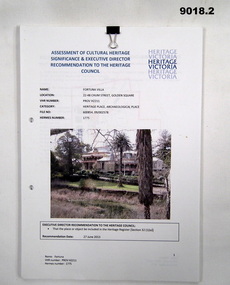
Document - Heritage Victoria Assessment of Cultural Heritage - Fortuna Villa, Heritage Victoria, October 2013
... Name Fortuna, VHR Number : PROV H2211, Hermes Number 1775...Royal Australian Survey Corps RASvy Fortuna Army Survey Regiment Army Svy Regt ASR Heritage Victoria Name Fortuna, VHR Number : PROV H2211, Hermes Number 1775 .1 A A4 Paper Heritage Report of Fortuna Villa. 26 x Pages of the Assessment part of the document, further 24 x Pages are the City of Greater Bendigo discussions of Heritage permit Exemptions. ...These documents 9018.1 and .2 discuss the significant Cultural Heritage value of Fortuna Villa and is a report regarding the acceptance of the Heritage Values by the Heritage Council of Victoria. 9018.2 while almost identical to 9018.1 in content does have additional information in red. Fortuna Villa was the family home of George Lansell the "Gold King" of Bendigo prior to being occupied by the Australian Army's Land Headquarters Cartographic Coy in WWII from 1942. The Army Survey Regiment was disbanded in 1996 and Defence left the site in 2004..1 A A4 Paper Heritage Report of Fortuna Villa. 26 x Pages of the Assessment part of the document, further 24 x Pages are the City of Greater Bendigo discussions of Heritage permit Exemptions. The document is two hole punched and held together with a metal Arnos fastener. .2 A second copy of the document containing 32 x unnumbered loose Pages held together with a small "bulldog" clip. Name Fortuna, VHR Number : PROV H2211, Hermes Number 1775royal australian survey corps, rasvy, fortuna, army survey regiment, army svy regt, asr, heritage victoria -
 Williamstown Historical Society Inc
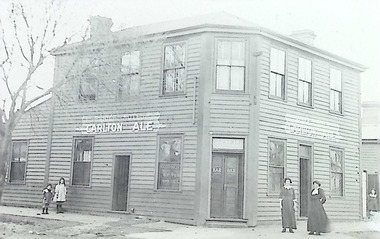
Photograph - Bridge Hotel, Thompson Street, Williamstown. c1914
... Victorian Heritage Register (VHR) Number H1792...Victorian Heritage Register (VHR) Number H1792 The former Bridge Hotel is architecturally and historically significant as an extremely rare survivor of the once many timber mid-nineteenth century hotels built in Victoria. ...Victorian Heritage Register (VHR) Number H1792The former Bridge Hotel is architecturally and historically significant as an extremely rare survivor of the once many timber mid-nineteenth century hotels built in Victoria. It is now one of only a few known early timber hotels remaining in the state and the only known early two-storey timber hotel in metropolitan Melbourne. The former Bridge Hotel, constructed in 1868, at 72 Thompson Street, Williamstown.bridge hotel, thompson street, williamstown, pub -
 Williamstown Historical Society Inc
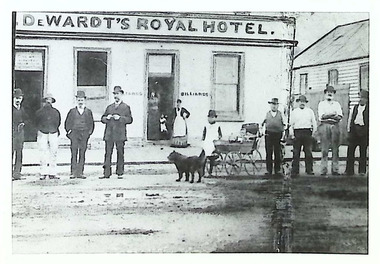
Photograph - Royal Hotel, Williamstown
... Victorian Heritage Register (VHR) Number H1770...Victorian Heritage Register (VHR) Number H1770 The former Royal Hotel was built in 1890 following the demolition of an earlier building on the site. ...Victorian Heritage Register (VHR) Number H1770The former Royal Hotel was built in 1890 following the demolition of an earlier building on the site. Publican Thomas de Wardt had the new hotel built by Henry Hick to a design by architect T Anthoness. It was de-licensed early in the 20th century and has been used as a boarding house ever since. The three-storeyed, red brick and stucco building is designed in the Anglo-Dutch (Queen Anne) revival style. The highly mannered facade, characterised by Flemish gables and a central bay surmounted by a rectangular brick panel and adorned with a cement garland, features distinctive stucco ornament. Original buildingroyal hotel, williamstown, pub -
 Williamstown Historical Society Inc
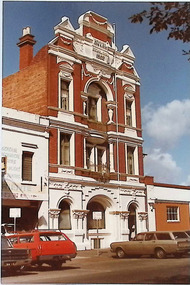
Photograph - Nelson Place, Royal Hotel
... Victorian Heritage Register (VHR) Number H1770...Victorian Heritage Register (VHR) Number H1770 The former Royal Hotel was built in 1890 following the demolition of an earlier building on the site. ...Victorian Heritage Register (VHR) Number H1770The former Royal Hotel was built in 1890 following the demolition of an earlier building on the site. Publican Thomas de Wardt had the new hotel built by Henry Hick to a design by architect T Anthoness. It was de-licensed early in the 20th century and has been used as a boarding house ever since. The three-storeyed, red brick and stucco building is designed in the Anglo-Dutch (Queen Anne) revival style. The highly mannered facade, characterised by Flemish gables and a central bay surmounted by a rectangular brick panel and adorned with a cement garland, features distinctive stucco ornament. Undated photograph shows the former Royal Hotel which is located at 85 Nelson Place. This building was designed by T Athoness and constructed by Henry Hick in 1890, and replaced the previous building which was opened in 1852. The grander scale of the new Royal Hotel responded to new licensing laws in 1877 that required hotels to have a minimum of 30 rooms of minimum dimensions to be licenced.royal hotel, williamstown, pub, no.85 nelson place -
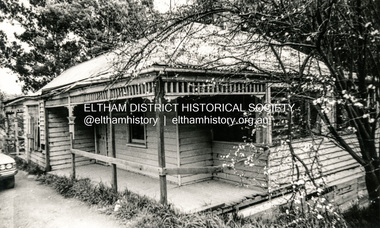 Eltham District Historical Society Inc
Photograph, Southernwood, 250 Bolton Street, Eltham, 1980
... "Southernwood" is the former home of Heidelberg School artist, Walter Withers and is listed on the Victorian Heritage Database VHR H2235 ..."Southernwood" is the former home of Heidelberg School artist, Walter Withers and is listed on the Victorian Heritage Database VHR H2235 Artists Bolton Street Brougham Street Eltham houses Southernwood Walter Withers Black and white photograph of Southernwood, former home of Walter Withers, corner of Brougham and Bolton Streets, Eltham 1980. ..."Southernwood" is the former home of Heidelberg School artist, Walter Withers and is listed on the Victorian Heritage Database VHR H2235 Black and white photograph of Southernwood, former home of Walter Withers, corner of Brougham and Bolton Streets, Eltham 1980.artists, bolton street, brougham street, eltham, houses, southernwood, walter withers -
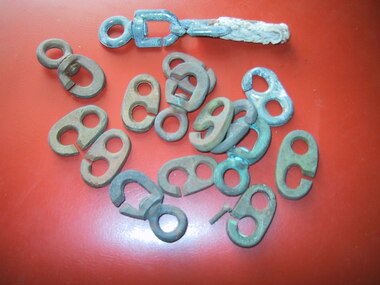 Parks Victoria - Cape Nelson Lightstation
Equipment - Flag clips
... They were used for hoisting visual signalling flags and relate to the use of the forty‐one flags (CNLS 0004.41), which were used to convey messages to passing ships and which are included in the Victorian Heritage Register listing for the lightstation (VHR H1773) . ...They were used for hoisting visual signalling flags and relate to the use of the forty‐one flags (CNLS 0004.41), which were used to convey messages to passing ships and which are included in the Victorian Heritage Register listing for the lightstation (VHR H1773) . They have second level contributory significance for their provenance to the lightstation and association with its set of navigational flags (CNLS 0004.41), which were a major part of the communications system formerly used at the lightstation. ...The items include one intact brass clip and sections of others. They were used for hoisting visual signalling flags and relate to the use of the forty‐one flags (CNLS 0004.41), which were used to convey messages to passing ships and which are included in the Victorian Heritage Register listing for the lightstation (VHR H1773) . They have second level contributory significance for their provenance to the lightstation and association with its set of navigational flags (CNLS 0004.41), which were a major part of the communications system formerly used at the lightstation.Twenty one flag clips, some are intact others partial. One intact brass clip. -
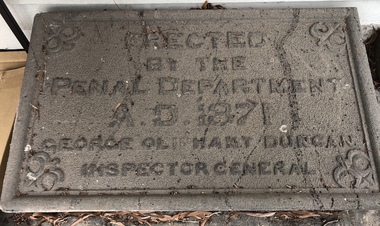 Coburg Historical Society
Artwork, other - Plaque (intended) for Murray Road Bridge, Bluestone Plaque intended for Murray Road Bridge, 1871
... The bridge has one of five largest spans of stone bridges built in Australia, of which at least three survive. (VHR)...The bridge has one of five largest spans of stone bridges built in Australia, of which at least three survive. (VHR) Erected by the Penal Department A.D. 1871 George Oliphant Duncan Inspector General Bluestone Bluestone Plaque intended for Murray Road Bridge Artwork, other Plaque (intended) for Murray Road Bridge ...The plaque was originally intended for the Murray Road Bridge. The Murray Road Bridge is of state historical and architectural significance. With the Newlands Street Bridge it is one of a pair of bluestone bridges constructed by prison labour in Coburg and is situated within the immediate vicinity of the Pentridge Prison. The bridge has one of five largest spans of stone bridges built in Australia, of which at least three survive. (VHR)BluestoneErected by the Penal Department A.D. 1871 George Oliphant Duncan Inspector General -
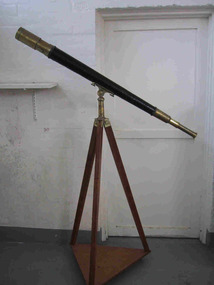 Parks Victoria - Wilsons Promontory Lightstation
Telescope
... The telescope is similar to Cape Nelson’s two metre long telescope, which is included in the VHR registration for the Cape Nelson Lightstation. ...The telescope is similar to Cape Nelson’s two metre long telescope, which is included in the VHR registration for the Cape Nelson Lightstation. ...The telescope is original to the Wilsons Promontory Lightstation and was provided by the Department of Shipping and Transport in about 1900. The device magnifies images of distant objects through its curved interior mirrors, and lightkeepers used this telescope to monitor and record the names of ships, the time they passed, and their direction, as well as read meanings of flags and other visual signals communicated by vessels. The telescope is similar to Cape Nelson’s two metre long telescope, which is included in the VHR registration for the Cape Nelson Lightstation. It is particularly important for its good condition, completeness and confirmed provenance and has first level contributory significance to the cultural heritage values of the lightstation..1 Brass telescope, cylindrical tube shape with mobile interfolding sections. Middle section of tube has been covered with textile or leather and painted black. Narrow plaited rope fixed as a border to this section is also painted black. .2. The telescope is attached by a brass fitting to a wooden tripod on a three legged triangular ply wood base with three castors. -
 Flagstaff Hill Maritime Museum and Village
Horse Brass
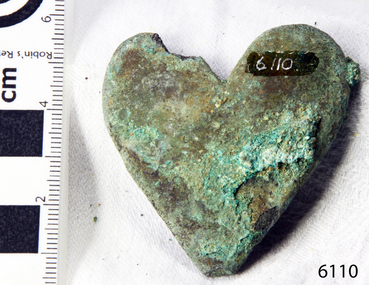
... The Schomberg, which is on the Victorian Heritage Register (VHR S612), has great historical significance as a rare example of a large, fast clipper ship on the England to Australia run, carrying emigrants at the time of the Victorian gold rush. ...The Schomberg, which is on the Victorian Heritage Register (VHR S612), has great historical significance as a rare example of a large, fast clipper ship on the England to Australia run, carrying emigrants at the time of the Victorian gold rush. ...The Schomberg, which is on the Victorian Heritage Register (VHR S612), has great historical significance as a rare example of a large, fast clipper ship on the England to Australia run, carrying emigrants at the time of the Victorian gold rush. She represents the technical advances made to break sailing records between Europe and Australia. Flagstaff Hill’s collection of artefacts from the Schomberg is significant for its association with the shipwreck. The collection is primarily significant because of the relationship between the objects, as together they have a high potential to interpret the story of the Schomberg. It is archaeologically significant as the remains of an international passenger Ship. It is historically significant for representing aspects of Victoria’s shipping history and for its association with the shipwreck and the ship, which was designed to be fastest and most luxurious of its day The Schomberg, which is on the Victorian Heritage Register (VHR S612), has great historical significance as a rare example of a large, fast clipper ship on the England to Australia run, carrying emigrants at the time of the Victorian gold rush. She represents the technical advances made to break sailing records between Europe and Australia. Flagstaff Hill’s collection of artefacts from the Schomberg is significant for its association with the shipwreck. The collection is primarily significant because of the relationship between the objects, as together they have a high potential to interpret the story of the Schomberg. It is archaeologically significant as the remains of an international passenger Ship. It is historically significant for representing aspects of Victoria’s shipping history and for its association with the shipwreck and the ship, which was designed to be fastest and most luxurious of its day Heart shaped horse harness embellishment, brass, 1¾" x 1¾". Has encrustation and verdigris. Heart is cracked around the outside. Recovered from the wreck of the Schomberg.warrnambool, shipwrecked-coast, flagstaff-hill, flagstaff-hill-maritime-museum, maritime-museum, shipwreck-coast, flagstaff-hill-maritime-village, schomberg, shipwrecked-artefact, clipper ship, black ball line, 1855 shipwreck, aberdeen clipper ship, captain forbes, peterborough shipwreck, ss queen, horse brass -
 Melbourne Tram Museum
Administrative record - Correspondence, Heritage Victoria, "Roadworks reveal artefacts from Melbourne's cable tram cars", 4/2007 to 9/2007
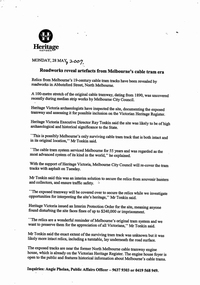
... Comprises 18 A4 sheet 1 - Press release from Heritage Victoria titled "Roadworks reveal artefacts from Melbourne's cable tram cars", advising of a Interim Protection Order. 2 - Letter to Keith Kings from Kay Oddie re Council involvement and other parties - dated 27/6/2007. 3 - Victorian Heritage Register VHR H0988, dated 10/7/2007 adding the track - has details and photographs - interim pending consultation. 4 - Letter to Keith Kings from Kay Oddie re Council involvement and other parties - dated 11/7/2007. 5 - Keith Kings handwritten notes regarding the history of the lines. 6 - E-mail to Graham Jordan dated 3/9/2008 forwarding a copy of Kay Oddie's submission to Heritage Victoria and letter. ...Comprises 18 A4 sheet 1 - Press release from Heritage Victoria titled "Roadworks reveal artefacts from Melbourne's cable tram cars", advising of a Interim Protection Order. 2 - Letter to Keith Kings from Kay Oddie re Council involvement and other parties - dated 27/6/2007. 3 - Victorian Heritage Register VHR H0988, dated 10/7/2007 adding the track - has details and photographs - interim pending consultation. 4 - Letter to Keith Kings from Kay Oddie re Council involvement and other parties - dated 11/7/2007. 5 - Keith Kings handwritten notes regarding the history of the lines. 6 - E-mail to Graham Jordan dated 3/9/2008 forwarding a copy of Kay Oddie's submission to Heritage Victoria and letter. ...Set of 6 sets of correspondence or notifications regarding the Abbotsford St North Melbourne cable tram discovered following roadworks during May 2007. Comprises 18 A4 sheet 1 - Press release from Heritage Victoria titled "Roadworks reveal artefacts from Melbourne's cable tram cars", advising of a Interim Protection Order. 2 - Letter to Keith Kings from Kay Oddie re Council involvement and other parties - dated 27/6/2007. 3 - Victorian Heritage Register VHR H0988, dated 10/7/2007 adding the track - has details and photographs - interim pending consultation. 4 - Letter to Keith Kings from Kay Oddie re Council involvement and other parties - dated 11/7/2007. 5 - Keith Kings handwritten notes regarding the history of the lines. 6 - E-mail to Graham Jordan dated 3/9/2008 forwarding a copy of Kay Oddie's submission to Heritage Victoria and letter. Scanned as a single pdf file.trams, tramways, cable trams, abbotsford st, north melbourne, trackwork, closure -
 Parks Victoria - Point Hicks Lightstation
Telephones
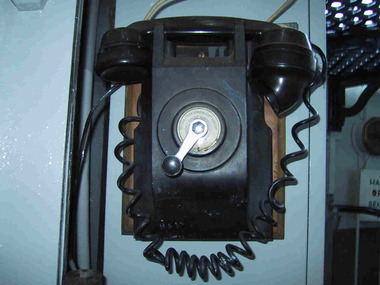
... Three telephones of the same wall-mounted, crank dial type remain at Gabo Island Lightstation; four remain at Cape Otway and five older examples remain at Cape Nelson Lightstation As fixtures attached to the wall, the four telephones are considered to be part of the building fabric and therefore included in the existing Victorian Heritage Register listing for the lightstation (VHR 1983)....Three telephones of the same wall-mounted, crank dial type remain at Gabo Island Lightstation; four remain at Cape Otway and five older examples remain at Cape Nelson Lightstation As fixtures attached to the wall, the four telephones are considered to be part of the building fabric and therefore included in the existing Victorian Heritage Register listing for the lightstation (VHR 1983). As fixtures attached to the wall, the four telephones are considered to be part of the building fabric and therefore included in the existing VHR listing for the lightstation (VHR 1983). ...The lightstation was connected by telephone to Cann River in 1928. The lighthouse retains ablack Bakelite telephone attached to the lantern room wall on timber box mount. It has a crank handle with instructions for its use on the crank dial, and a coiled handset cord, which probably dates the phone to just after 1949 when coiled examples like these began to replace fabric covered smooth cords. An image in 1991 shows the phone in the lower level of the lantern room It is one of four telephones at the lightstsation; with two others attached to walls in the assistant keepers’ quarters, and one in the head keeper’s quarters. The four phones formed an intercom system that facilitated communication between the lightstation buildings. Three telephones of the same wall-mounted, crank dial type remain at Gabo Island Lightstation; four remain at Cape Otway and five older examples remain at Cape Nelson Lightstation As fixtures attached to the wall, the four telephones are considered to be part of the building fabric and therefore included in the existing Victorian Heritage Register listing for the lightstation (VHR 1983).As fixtures attached to the wall, the four telephones are considered to be part of the building fabric and therefore included in the existing VHR listing for the lightstation (VHR 1983).Four telephones with a crank handle mounted on a wooden base, one is fixed to the wall of the lantern room and is black bakelite. Yes -
 Westbourne Grammar Heritage Collection
Memorabilia - Williamstown Naval Dockyard Torch, 1978
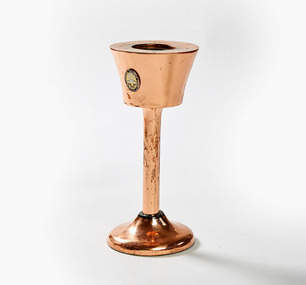
... It demonstrates support for the growth of the school by the historically significant Williamstown Naval Dockyard which includes the Victorian Heritage Register listed Alfred Graving Dock (VHR number H0697). ...It demonstrates support for the growth of the school by the historically significant Williamstown Naval Dockyard which includes the Victorian Heritage Register listed Alfred Graving Dock (VHR number H0697). Copper plated torch comprising two parts, the torch with handle and a separate base. ...This torch was made for Westbourne Grammar School by the Williamstown Naval Dockyard to symbolise the relationship between the two campuses and to perpetuate the new campus at Truganina. The Williamstown campus at Monomeith had been leased since 1956 (and purchased in 1972) from the Melbourne Harbour Trust which had operated the Williamstown Naval Dockyard between 1924 and 1942. In 1978, when this torch was made for the school, the Dockyard was operated by the Royal Australian Navy. At the first assembly of the new campus in 1978 the torch was presented to the school by the Williamstown Naval Dockyard General Manager, Bob Fife. It was then passed, with flame, to every student and teacher present at the assembly. Reflecting on the occasion in the 1978 edition of the school yearbook, student Eileen Moffatt wrote, 'It was our first assembly and we were reminded that we were pioneers'. The torch symbolises the long association of the school with Williamstown's naval and shipping industry and community, and the continuing link between the historic Williamstown Grammar and the new in 1978, Westbourne campus. It demonstrates support for the growth of the school by the historically significant Williamstown Naval Dockyard which includes the Victorian Heritage Register listed Alfred Graving Dock (VHR number H0697). Copper plated torch comprising two parts, the torch with handle and a separate base. The torch features a Williamstown Grammar School badge soldered to the cup which contains the reservoir for fuel. -
 Flagstaff Hill Maritime Museum and Village
Weapon - Ammunition, Before 1878
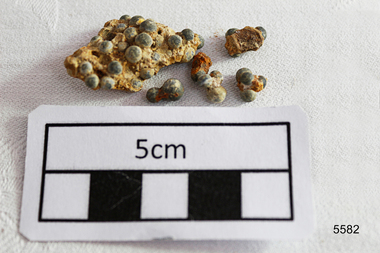
... In 1882 Richard Hodgson erected the 160 feet round chimney-shaped Clifton Hill shot tower on Alexandra Parade (VHR H0709) and in 1889 Walter Coop built the 160 feet square tower-shaped Melbourne Central shot tower on La Trobe Street (VHR H0067). ...In 1882 Richard Hodgson erected the 160 feet round chimney-shaped Clifton Hill shot tower on Alexandra Parade (VHR H0709) and in 1889 Walter Coop built the 160 feet square tower-shaped Melbourne Central shot tower on La Trobe Street (VHR H0067). ...The objects are a small sample of small gauge lead shot raised by Flagstaff Hill divers from the LOCH ARD shipwreck site in 1976. Companion pieces are in the Maritime Village collection. The three masted, iron hulled, LOCH ARD was wrecked against the tall limestone cliffs of Mutton Bird Island in the early hours of the first of June 1878. Included in her diverse and valuable cargo were 22 tons of lead shot, packed in cloth bags and wooden casks. Bulk quantities of lead shot, uniformly round balls of dull grey metal ranging from 2mm “birdshot” to 8mm “buckshot”, were routinely exported to the Australian colonies. Shot was used mostly as projectiles fired from smooth bored guns to bring down moving targets such as wild ducks and small game. It was also useful as ballast, when a dense, “pourable” weight was required to fill cavities or establish volume within a measuring container. The production of consistently round spheres of lead shot required the pouring of molten metal through a sieve and then a long drop through the atmosphere to a water filled basin for final cooling and collection. This “shot tower” process was first patented by William Watts of Bristol in 1782. His calculation of a 150 feet fall was not only to form evenly spherical droplets through surface tension, but also to provide partial cooling and solidification to each shot before they hit the water below. The value of his innovation was the minimising of indentation and shape distortion, avoiding the expense of re-smelting and re-moulding the lead. Lead shot was already being produced in Australia at the time the LOCH ARD loaded her cargo and left Gravesend on the second of March 1878. James Moir constructed a 157 feet circular stone shot tower near Hobart in 1870, with a peak annual production of 100 tons of lead shot sold in 28 pound linen bags. However colonial demand exceeded this source of local supply. The continued strength of the market for lead shot in the Colony of Victoria prompted substantial investment in additional productive capacity in Melbourne in the next decade. In 1882 Richard Hodgson erected the 160 feet round chimney-shaped Clifton Hill shot tower on Alexandra Parade (VHR H0709) and in 1889 Walter Coop built the 160 feet square tower-shaped Melbourne Central shot tower on La Trobe Street (VHR H0067). At its peak, the Coop Tower produced 6 tons of lead shot per week, or 312 tons per annum. The shipwreck of the LOCH ARD is of State significance – Victorian Heritage Register S417 Flagstaff Hill’s collection of artefacts from LOCH ARD is significant for being one of the largest collections of artefacts from this shipwreck in Victoria. It is significant for its association with the shipwreck, which is on the Victorian Heritage Register (VHR S417). The collection is significant because of the relationship between the objects, as together they have a high potential to interpret the story of the LOCH ARD. The LOCH ARD collection is archaeologically significant as the remains of a large international passenger and cargo ship. The LOCH ARD collection is historically significant for representing aspects of Victoria’s shipping history and its potential to interpret sub-theme 1.5 of Victoria’s Framework of Historical Themes (living with natural processes). The collection is also historically significant for its association with the LOCH ARD, which was one of the worst and best known shipwrecks in Victoria’s history. A quantity of 2mm and 4mm lead shot ammunition retrieved from the LOCH ARD shipwreck site. They are concreted together by sediment. There are (6) small pieces with some single shot and a larger conglomerate of cemented shot. flagstaff hill, warrnambool, shipwrecked coast, flagstaff hill maritime museum, maritime museum, shipwreck coast, flagstaff hill maritime village, great ocean road, loch line, loch ard, captain gibbs, eva carmichael, tom pearce, glenample station, mutton bird island, loch ard gorge, lead shot, colonial industry, melbourne shot towers, victorian metallurgy, colonial imports -
 Puffing Billy Railway
10 NU - Louvred Truck, 30/12/1911
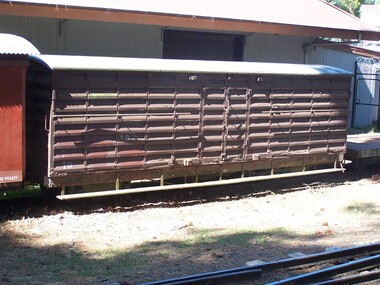
... VR Service History : *NUU 10.VA - 30/12/1911 NWS Built new - / /1926 - To NU 10.VA - NU 10.VA - / 5/1926 - Modified AC Malco /12/1972 BEL To NW 10.VA Sec72/3400, RS72/9371 NW 10.VA - 26/ 8/1976 CLS Photograph #662.2-.4: and end detail 1/10/1977 - Off Register To ETRB Sec76/3630 RS77/4223 Build Date: 30/12/1911 NWS Built new Victorian Heritage Register (VHR) Number H2187 NW 10 is a 1972 reclassification of NU 10. ...VR Service History : *NUU 10.VA - 30/12/1911 NWS Built new - / /1926 - To NU 10.VA - NU 10.VA - / 5/1926 - Modified AC Malco /12/1972 BEL To NW 10.VA Sec72/3400, RS72/9371 NW 10.VA - 26/ 8/1976 CLS Photograph #662.2-.4: and end detail 1/10/1977 - Off Register To ETRB Sec76/3630 RS77/4223 Build Date: 30/12/1911 NWS Built new Victorian Heritage Register (VHR) Number H2187 NW 10 is a 1972 reclassification of NU 10. ...10 NU Louvre Van - Louvred Truck (11) Untrafficable NUU LOUVRED TRUCK. Seven louvre vans for carrying general goods were built during 1899-1901, with another one in 1906 and a further six in 1911, a total of 14 louvre vans numbered 1-14. The term Louvred Truck describes the sides which consist of fixed louvres for ventilation. The aim was to keep the goods inside cool. VR Service History : *NUU 10.VA - 30/12/1911 NWS Built new - / /1926 - To NU 10.VA - NU 10.VA - / 5/1926 - Modified AC Malco /12/1972 BEL To NW 10.VA Sec72/3400, RS72/9371 NW 10.VA - 26/ 8/1976 CLS Photograph #662.2-.4: and end detail 1/10/1977 - Off Register To ETRB Sec76/3630 RS77/4223 Build Date: 30/12/1911 NWS Built new Victorian Heritage Register (VHR) Number H2187 NW 10 is a 1972 reclassification of NU 10. It is presumed the van was used to store tools and equipment. In 1977, the van was removed from railway records and control handed to the Puffing Billy group.Historic - Victorian Railways Narrow Gauge - Rolling Stock - Louvered Van Victorian Heritage Register (VHR) Number H2187 Puffing Billy Locomotives and Rolling Stock CollectionWooden Louvered Van - Made of Timber on a Wrought iron frame - current condition Untrafficable10 NU puffing billy, louvered van, 10nu, victorian railways, 2'6" gauge, narrow gauge rolling stock -
 Bendigo Historical Society Inc.
Document - Gasworks Vision Workshop, 2015
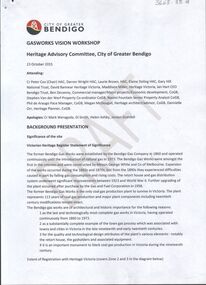
... ( Engineering Heritage Australia: ttps://heritage.engineersaustralia.org.au/wiki/Place:Bendigo_Gas_Works) The site is on the Victorian Heritage Register (VHR) Number H0781 ...Simco, General Manager 1922-1939. ( Engineering Heritage Australia: ttps://heritage.engineersaustralia.org.au/wiki/Place:Bendigo_Gas_Works) The site is on the Victorian Heritage Register (VHR) Number H0781 Sandhurst Bendigo Gas works heritage listing tourism entertainment science and engineering Bendigo City Council retorts coal 1. ...The Bendigo Gas Works are one of around three remaining intact 19th century gas works in the world, and the only one in Australia. It is on the Victorian Heritage Register and regarded by Institution of Engineers Australia as an internationally significant example of an entire provincial gasworks The Bendigo Gasworks operated from 1860 until 1973 when natural gas was introduced and remain as they were at the time of closure; a treasure of industrial heritage frozen in time. It is an internationally significant example of an entire provincial gasworks. It has the only horizontal gas-producing retorts in Australia. Coal Gas was manufactured here from 1860 and operated continuously until the introduction of natural gas in 1973. The works were operated by the Bendigo Gas Company until purchased by the Gas and Fuel Corporation in 1958 at which time they were supplying 3,500 consumers. During the Second World War the works were expanded by the Ministry of Munitions to serve the Bendigo Ordinance Factory. The original works were constructed during 1859-1860 under the direction of engineer Alexander Kennedy Smith (1824 - 1881) and developed in a period of growth by W. A. Simco, General Manager 1922-1939. ( Engineering Heritage Australia: ttps://heritage.engineersaustralia.org.au/wiki/Place:Bendigo_Gas_Works) The site is on the Victorian Heritage Register (VHR) Number H0781 1. Five page, double sided document, typed with photos, prepared by the City of Greater Bendigo, 23rd October 2015. . Heading on front page ' Gasworks Vision Workshop, Heritage Advisory Committee, City of Greater Bendigo'. 'Draft' written across each page. The significance of the site (Victorian Heritage Register Statement of Significance) and the challenges of re-developing the site for tourism are listed for discussion. 2. One page photocopy of the Statement of Significance of the Bendigo Gasworks Conservation Analysis. The gasworks complex, plant and machinery, historic associations of the Gasworks and landscape are assessed. sandhurst, bendigo, gas works, heritage listing, tourism, entertainment, science and engineering, bendigo city council, retorts, coal -
 Bendigo Historical Society Inc.
Plan - Bendigo Gasworks, Unknown
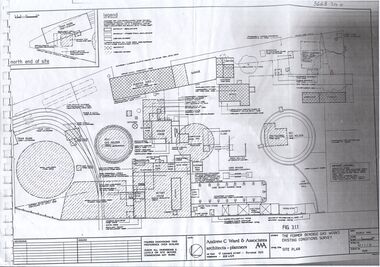
... ( Engineering Heritage Australia: ttps://heritage.engineersaustralia.org.au/wiki/Place:Bendigo_Gas_Works) The site is on the Victorian Heritage Register (VHR) Number H0781 ...Simco, General Manager 1922-1939. ( Engineering Heritage Australia: ttps://heritage.engineersaustralia.org.au/wiki/Place:Bendigo_Gas_Works) The site is on the Victorian Heritage Register (VHR) Number H0781 Sandhurst Bendigo Gas works heritage listing tourism science and engineering Bendigo City Council retort 1. ...The Bendigo Gas Works are one of around three remaining intact 19th century gas works in the world, and the only one in Australia. It is on the Victorian Heritage Register and regarded by Institution of Engineers Australia as an internationally significant example of an entire provincial gasworks The Bendigo Gasworks operated from 1860 until 1973 when natural gas was introduced and remain as they were at the time of closure; a treasure of industrial heritage frozen in time. It is an internationally significant example of an entire provincial gasworks. It has the only horizontal gas-producing retorts in Australia. Coal Gas was manufactured here from 1860 and operated continuously until the introduction of natural gas in 1973. The works were operated by the Bendigo Gas Company until purchased by the Gas and Fuel Corporation in 1958 at which time they were supplying 3,500 consumers. During the Second World War the works were expanded by the Ministry of Munitions to serve the Bendigo Ordinance Factory. The original works were constructed during 1859-1860 under the direction of engineer Alexander Kennedy Smith (1824 - 1881) and developed in a period of growth by W. A. Simco, General Manager 1922-1939. ( Engineering Heritage Australia: ttps://heritage.engineersaustralia.org.au/wiki/Place:Bendigo_Gas_Works) The site is on the Victorian Heritage Register (VHR) Number H0781 1. One page A3 photocopy of site plan of the former Bendigo Gas Works Existing Conditions Survey, by Andrew C. Ward & Associates, architects and planners. Plan shows location of all items of plant in the Gas Works 2. One page photocopy, headed 'Functional Arrangement of Plant' showing the major functional items of plant, machinery and equipment at the Bendigo Gasworks for the period 1930 - 1965. sandhurst, bendigo, gas works, heritage listing, tourism, science and engineering, bendigo city council, retort -
 Bendigo Historical Society Inc.
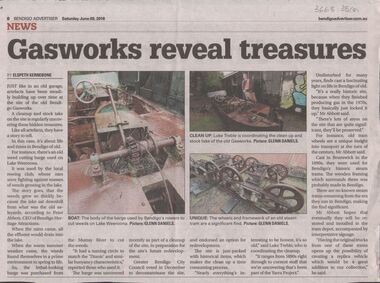
Document - Bendigo Gasworks, 2014, 2018
... ( Engineering Heritage Australia: ttps://heritage.engineersaustralia.org.au/wiki/Place:Bendigo_Gas_Works) The site is on the Victorian Heritage Register (VHR) Number H0781 ...Simco, General Manager 1922-1939. ( Engineering Heritage Australia: ttps://heritage.engineersaustralia.org.au/wiki/Place:Bendigo_Gas_Works) The site is on the Victorian Heritage Register (VHR) Number H0781 Sandhurst Bendigo Gas works heritage listing tourism entertainment science and engineering Bendigo City Council retorts coal Two 'Bendigo Advertiser' articles. 1. ...The Bendigo Gas Works are one of around three remaining intact 19th century gas works in the world, and the only one in Australia. It is on the Victorian Heritage Register and regarded by Institution of Engineers Australia as an internationally significant example of an entire provincial gasworks The Bendigo Gasworks operated from 1860 until 1973 when natural gas was introduced and remain as they were at the time of closure; a treasure of industrial heritage frozen in time. It is an internationally significant example of an entire provincial gasworks. It has the only horizontal gas-producing retorts in Australia. Coal Gas was manufactured here from 1860 and operated continuously until the introduction of natural gas in 1973. The works were operated by the Bendigo Gas Company until purchased by the Gas and Fuel Corporation in 1958 at which time they were supplying 3,500 consumers. During the Second World War the works were expanded by the Ministry of Munitions to serve the Bendigo Ordinance Factory. The original works were constructed during 1859-1860 under the direction of engineer Alexander Kennedy Smith (1824 - 1881) and developed in a period of growth by W. A. Simco, General Manager 1922-1939. ( Engineering Heritage Australia: ttps://heritage.engineersaustralia.org.au/wiki/Place:Bendigo_Gas_Works) The site is on the Victorian Heritage Register (VHR) Number H0781 Two 'Bendigo Advertiser' articles. 1. 'Gasworks reveal treasures' 8th June, 2018. Article discusses the artefacts left behind at the Gasworks 'when they finished producing gas in the 1970's they basically just locked it up' 2. 'Historical treasure awaits full potential', July 30th 2014, double page spread with photos of the gasworks. Bendigo Trust moved to protect the gasworks when it closed.sandhurst, bendigo, gas works, heritage listing, tourism, entertainment, science and engineering, bendigo city council, retorts, coal -
 Bendigo Historical Society Inc.
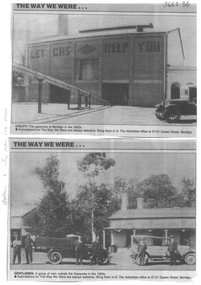
Photograph - Bendigo Gasworks, 2014, 2018
... ( Engineering Heritage Australia: ttps://heritage.engineersaustralia.org.au/wiki/Place:Bendigo_Gas_Works) The site is on the Victorian Heritage Register (VHR) Number H0781 ...Simco, General Manager 1922-1939. ( Engineering Heritage Australia: ttps://heritage.engineersaustralia.org.au/wiki/Place:Bendigo_Gas_Works) The site is on the Victorian Heritage Register (VHR) Number H0781 Sandhurst Bendigo Gas works heritage listing tourism entertainment science and engineering Bendigo City Council retorts coal Two page photocopy, three photos of the Bendigo Gasworks, submitted to the 'Bendigo Advertiser' The Way We Were, series of images. ...The Bendigo Gas Works are one of around three remaining intact 19th century gas works in the world, and the only one in Australia. It is on the Victorian Heritage Register and regarded by Institution of Engineers Australia as an internationally significant example of an entire provincial gasworks The Bendigo Gasworks operated from 1860 until 1973 when natural gas was introduced and remain as they were at the time of closure; a treasure of industrial heritage frozen in time. It is an internationally significant example of an entire provincial gasworks. It has the only horizontal gas-producing retorts in Australia. Coal Gas was manufactured here from 1860 and operated continuously until the introduction of natural gas in 1973. The works were operated by the Bendigo Gas Company until purchased by the Gas and Fuel Corporation in 1958 at which time they were supplying 3,500 consumers. During the Second World War the works were expanded by the Ministry of Munitions to serve the Bendigo Ordinance Factory. The original works were constructed during 1859-1860 under the direction of engineer Alexander Kennedy Smith (1824 - 1881) and developed in a period of growth by W. A. Simco, General Manager 1922-1939. ( Engineering Heritage Australia: ttps://heritage.engineersaustralia.org.au/wiki/Place:Bendigo_Gas_Works) The site is on the Victorian Heritage Register (VHR) Number H0781 Two page photocopy, three photos of the Bendigo Gasworks, submitted to the 'Bendigo Advertiser' The Way We Were, series of images. Image of the gasworks in the 1920's, showing a large brick building with decorative brickwork insert 'Let Gas Help You'; group of men outside the gasworks in the 1920's - two cars in front of house and workers in front of a gasometer at Gasworks in the 1920's. sandhurst, bendigo, gas works, heritage listing, tourism, entertainment, science and engineering, bendigo city council, retorts, coal -
Emerald Museum & Nobelius Heritage Park
Document - Bank passbook, Commonwealth Savings Bank of Australia, 1980s-1990s
... Nobelius & Sons Nursery (VHR place details ID/H2285). By the late 1980s the collection had been relocated to a shed on the former nursery. ...Nobelius & Sons Nursery (VHR place details ID/H2285). By the late 1980s the collection had been relocated to a shed on the former nursery. ...An original Commonwealth Savings Bank of Australia Depositor's Passbook belonging to the Emerald History Museum. This passbook was issued 15th February 1980 and features UV signature technology.Methods of banking developed significantly between the 1970's and 80s in Australia with the credit card, black light passbook signatures and later the passbook-less card based accounts and EFTPOS. While a very few passbook accounts may still exist, this item is a great reminder of the days before the convenience we now enjoy. Emerald Museum was established as a formal collecting entity in 1969 based at the Emerald Hall, acquiring material by donation from local community members. In 1988 the former Shire of Sherbrooke with the help of State Government purchased the only remaining section of the former C. A. Nobelius & Sons Nursery (VHR place details ID/H2285). By the late 1980s the collection had been relocated to a shed on the former nursery. This collection included written records of the nursery’s operations that had been maintained throughout its ownership by the Nobelius family and L. Linton. However in the damp shed, the collection’s condition deteriorated. The nursery records received extensive conservation treatment to restore their condition and are now held as a complete collection at Emerald Museum. After the Emerald community lobbied extensively for a place to house their local heritage, the Shire agreed to construct a purpose-built facility within the former nursery where it has resided since 1993. The land was officially opened as the public ‘Nobelius Heritage Park’ in the same year.This item is significant to our collection due to the relevance of financial transaction data belonging to the Emerald Museum.Emerald History Museum's Depositor's Passbook, issued by Commonwealth Savings Bank of Australia. Black on grey in colour, Covers the period of 1980-1991Obverse: COMMONWEALTH/ SAVINGS BANK/ OF AUSTRALIA/ DEPOSITOR'S PASSBOOK/ BELGRAVE/ VIC/ Reverse: MANAGERS, STAFF AND AGENTS/ OF THE/ COMMONWEALTH SAVINGS BANK/ ARE AT YOUR SERVICE/ THROUGHOUT AUSTRALIA AND/ ITS TERRITORIES, SURROUNDING/ ISLANDS AND IN LONDON/ Typical inscription inside: July 9 Twenty . five dollars 25 - 125 - [bank stamp]commonwealth bank of australia, banking, financial records, 1980s, emerald history museum, emerald museum committee, passbook, emerald & district collection -
 Parks Victoria - Cape Nelson Lightstation
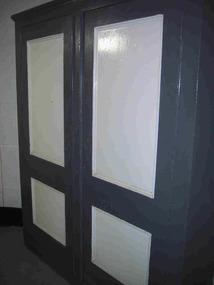
Furniture - Cabinet
... It is not known whether it is attached to the wall or movable; if attached it is considered to be a fixture and included in the Victorian Heritage Register listing for the lightstation (VHR H1773). Other similar cabinets which have been constructed to fit the curved wall of a lighthouse survive at Cape Schanck, varnished wood benchtop, 2‐door cabinet with brass door knob, no drawers); Point Hicks, benchtop, 2‐door, painted green with silver doors, no drawers) and Gabo Island bench top, 2‐door, no drawers, green paint removed to reveal cedar timber), and Cape Nelson, benchtop, 2‐door, 2‐drawer, partially varnished). ...It is not known whether it is attached to the wall or movable; if attached it is considered to be a fixture and included in the Victorian Heritage Register listing for the lightstation (VHR H1773). Other similar cabinets which have been constructed to fit the curved wall of a lighthouse survive at Cape Schanck, varnished wood benchtop, 2‐door cabinet with brass door knob, no drawers); Point Hicks, benchtop, 2‐door, painted green with silver doors, no drawers) and Gabo Island bench top, 2‐door, no drawers, green paint removed to reveal cedar timber), and Cape Nelson, benchtop, 2‐door, 2‐drawer, partially varnished). ...The tall, two‐door cupboard with curved shelves is without a back and is taller than the bench cupboard on the lower lantern room of the lighthouse . The curved shelving suggests that this practical storage cupboard was custom‐built or adapted to serve in this location on the landing level below the lantern room. It is not known when it was provided to the lightstation. It shares the structural features of this furnishing as well as other nineteenth century utilitarian cabinets that were made for Victoria’s lightstations, such as those fitted beside fireplaces in the keepers’ quarters (for example CNLS 0016) or serving as lantern room cupboards. They have doors simply framed and bevelled around central panels. This particular cupboard, which is painted grey with four white panels, is unusual both for its height and the four doors, with the twin top panels taller than those underneath. This panel arrangement repeats the design of the lightstation’s door cases. Further research may reveal more about its manufacture. It is not known whether it is attached to the wall or movable; if attached it is considered to be a fixture and included in the Victorian Heritage Register listing for the lightstation (VHR H1773). Other similar cabinets which have been constructed to fit the curved wall of a lighthouse survive at Cape Schanck, varnished wood benchtop, 2‐door cabinet with brass door knob, no drawers); Point Hicks, benchtop, 2‐door, painted green with silver doors, no drawers) and Gabo Island bench top, 2‐door, no drawers, green paint removed to reveal cedar timber), and Cape Nelson, benchtop, 2‐door, 2‐drawer, partially varnished). Cape Nelson’s tall cupboard with curved shelves and back profile is unusual among the lighthouse furnishings. The cabinet is a unique, original feature of the lighthouse and has first level contributory significance for its historic values and provenance.The tall, two‐door cupboard with curved shelves is without a back and has curved shelving. Painted grey with four white panels, on the four doors, with the twin top panels taller than those underneath. -
 Westbourne Grammar Heritage Collection
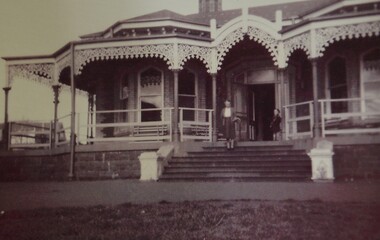
Photograph - Mabel Molland at Monomeith 1962
... Monomeith is a Victorian Heritage Register listed (VHR number H0452), italianate styled brick villa, built in 1887 for one of Williamstown’s most important identities, James Styles. ...Monomeith is a Victorian Heritage Register listed (VHR number H0452), italianate styled brick villa, built in 1887 for one of Williamstown’s most important identities, James Styles. ...This reproduction photograph was donated at a major reunion in 2008, organised by students of the school from the 1950s. It pictures Mabel Molland and a young student at Monomeith, home to the school since 1956. Monomeith is a Victorian Heritage Register listed (VHR number H0452), italianate styled brick villa, built in 1887 for one of Williamstown’s most important identities, James Styles. Styles’ distinguished career in public life included membership of the Williamstown Council, a stint in state parliament as the Member for Williamstown (1894-1900) and, in 1901, election to the first commonwealth parliament as a senator. During the 1890s he was also a commissioner of both the Melbourne Harbour Trust and the Melbourne and Metropolitan Board of Works and one of the trustees of the Williamstown Grammar School. The property comprises the residence designed by W Bennett Hall and built by James Styles in 1887 and the former migrant hostel buildings (now administration and classrooms), erected around 1951 by the then owner the Melbourne Harbour Trust, and intended to house migrant workers during the dredging of Port Phillip Bay. By the 1950s, the School had outgrown its home at Holy Trinity Hall and Mabel Molland reached out to Mr. Keith White, president of the Parent's Association and well-respected member of Williamstown Council for assistance. In 1956, following lengthy negotiations led by Mr. White, Monomeith was leased from the Melbourne Harbour Trust under a seven-year lease, which eventuated as a twenty-one year lease, followed by purchase of the property in 1972. Since then this historic building has come to be a much-loved symbol of the history of Westbourne Grammar School. This is a rare image of Mabel Molland at Monomeith, taken in the year prior to her retirement having taken over the school in 1914 and then set it on a path for the future as an incorporated company in the hands of a school council, with Mr Keith White as president, in 1956. Black and white reproduction photograph of a a residence (Monomeith) with steps in the middle ground, leading up to a verandah with ornate ironwork. Mabel Molland stands on the steps and a young student can be seen on the verandah. -
 City of Greater Bendigo - Civic Collection
Souvenir - Bendigo Post Office Centenary Ephemera, Ted Rankins, 1987
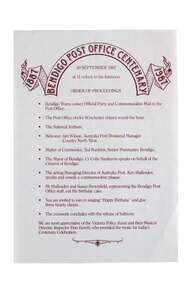
... The facades are elaborately decorated with Corinthian pilasters, balustrading, lions' heads and the state mansard roof with cast iron ridging and finials. (VHR #4739). Situated on Pall Mall it has always been called the Bendigo Post Office even though it was not until 1891 that the name Bendigo was given to the town. ...The facades are elaborately decorated with Corinthian pilasters, balustrading, lions' heads and the state mansard roof with cast iron ridging and finials. (VHR #4739). Situated on Pall Mall it has always been called the Bendigo Post Office even though it was not until 1891 that the name Bendigo was given to the town. ...When the Commonwealth Post and Telegraph Act was passed in June 1902, and a national Postmaster General's Department (the PMG) was established the responsibility the nation's mail and telephone services fell on local Post Offices. The Bendigo Post Office was designed by Public Works architect George W Watson and constructed between 1883 and 1887. The two story brick structure with basement has unpainted rendered facades and a 43m high clock tower complete with 6 bell carillon. The facades are elaborately decorated with Corinthian pilasters, balustrading, lions' heads and the state mansard roof with cast iron ridging and finials. (VHR #4739). Situated on Pall Mall it has always been called the Bendigo Post Office even though it was not until 1891 that the name Bendigo was given to the town. The Bendigo Post Office housed much more than just postal services and the building contained many early government departments and services needed for a growing district. The building celebrated its centenary on the 30th September 1987 to much fan fare with Ted Rankins, the then Postal Manager planning many of the week long events including tours of the post office, a grand parade with cake and staff in period costume, a ball at the Shamrock and a barbeque in Rosalind Park. The Post Office ceased providing postal services in 1997 after the privitisation Australia Post and Telstra but continues to play a central role for the community, providing important services to visitors and locals alike. Currently it is occupied by Bendigo Tourism and includes two exhibition spaces including the Living Arts Space and Djaa Djuwima a dedicated and permanent First Nations Gallery. Activities at the Post Office are supported by City of Greater Bendigo staff and a dedicated group of volunteers. These items are part of the postal collection donated by the Rankins family in memory of the last postal manager at the Bendigo Post Office, Ted Rankins. 0364.1: Single sided printed 'Order of Proceedings' flyer; Outlines the running of events for the celebrations on Wednesday 30 September, 1987 at the Post Office with the centenary logo centre top in crimson ink. 0364.2: Single sided, four-colour printed, DL size invitation for celebrations marking the centenary of the Post Office on Wednesday 30 September, 1987. 0364.3,.4,.5,.6,.7: Printed cake bag with centenary logo and image of Bendigo Post Office printed on front in crimson ink. 0364.8,.9,.10,.11: Square note paper with centenary logo and border printed in crimson ink. 0364.12 Envelope: Australia Post envelope with Bendigo 100th anniversary images. Date stamped and addressed to Mr Edmondston Postmaster, Elmore. bendigo post office, bendigo tourism, city of greater bendigo tourism, post office collection, ted rankins collection, city of greater bendigo volunteers -
 Sunshine and District Historical Society Incorporated
Archive - Bridges - Local Railway Bridges
... Web Search of Victorian Heritage Database Rail Bridge Albion Viaduct Victorian Heritage Register VHR H1197 Statement of Significance 27 December 2013|Extract The Railways of Victoria 1854 to 2004 Robert Lee The maribyrnong viaduct on the independent goods line from Broadmeadows to Spencer Street uder construction in the late 1920s....Bridge Web Search of Victorian Heritage Database Rail Bridge Albion Viaduct Victorian Heritage Register VHR H1197 Statement of Significance 27 December 2013|Extract The Railways of Victoria 1854 to 2004 Robert Lee The maribyrnong viaduct on the independent goods line from Broadmeadows to Spencer Street uder construction in the late 1920s. ...Web Search of Victorian Heritage Database Rail Bridge Albion Viaduct Victorian Heritage Register VHR H1197 Statement of Significance 27 December 2013|Extract The Railways of Victoria 1854 to 2004 Robert Lee The maribyrnong viaduct on the independent goods line from Broadmeadows to Spencer Street uder construction in the late 1920s.|Web Search of Maribyrnong River Viaduct Wikipedia 26 December 2013|Typed Report Victorian Heritage Database Report Rail Bridge Albion Viaduct|Web Search Vcitorian Railways Museum Victoria Construction of Maribyrnong River Viaduct 1928 Keilor East 27 December 2013|Web Search Rail Bridge Albion Viaduct Heritage Listed Location 26 December 2013|Web Search Brimbank City Council Post contact Cultural Heritage Study HO005 Quartermile Railway Trestle Bridge Location Sterling Drive Keilor East|Newspaper Article West Footscray Overpass opens|Extract The Victorian Railways Magazine September 1927 Bridge Building in Excelsis|Extract Construction of a new road overpass carrying Melbourne Road across the Williamstown railway line is well advanced. July 1975 $1.6M overpass Blackshaws Road|Brochure Linking the past preserving Victorias railway heritage|Extract The Victorian Railways Magazine August 1928|Typed Note West Gate Bridge information sheet No 3 Bridge statistics|Extract Newsrail July 2004 Between Two Bridges|Typed Report History behind the Project|Museum Catolgue Worksheet Photos of Trains on Bridgesbridge -
 The Beechworth Burke Museum
Photograph - Lantern Slide, c1900
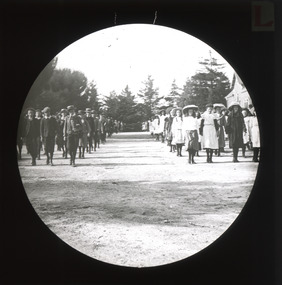
... This picture shows an angle of Beechworth Primary School (State School number 1560) which is also pictured in the building's entry in the Victorian Heritage Register (VHR record 1718). The school began as a national school in 1858 as an alternative to Wesleyan and Anglican schools already operating in the area. ...This picture shows an angle of Beechworth Primary School (State School number 1560) which is also pictured in the building's entry in the Victorian Heritage Register (VHR record 1718). The school began as a national school in 1858 as an alternative to Wesleyan and Anglican schools already operating in the area. ...This picture shows an angle of Beechworth Primary School (State School number 1560) which is also pictured in the building's entry in the Victorian Heritage Register (VHR record 1718). The school began as a national school in 1858 as an alternative to Wesleyan and Anglican schools already operating in the area. Its name was changed to Common School number 36 in 1862 and the Beechworth Academy prior to being taken over by the Education department in 1873. The new premises were built in 1875 utilising the skills of architect Henry Bastow though the original design may be attributable to the firm Wharton and Vickers. The design was used with modifications for other schools in Victoria, including the Competition School in Errol Street, North Melbourne. The school moved to the building pictured from its original premises in Loch Street, designed by Thomas Dalziel, which later became the office of the Ovens Advertiser. The school was opened on 2 July 1875 by former Beechworth resident G.B. Kerferd, who was then the Premier of Victoria. The image shows approximately ninety older students at the school in approximately 1900. There are approximately equal numbers of boys and girls pictured, with most of the individuals pictured appearing to be between the ages of twelve and fifteen. Although the school had more than 1000 students enrolled at its height, enrolments had declined to 304 in 1890. Also visible is a fringe of sequoia pines which were planted by the school children as a project lasting through to the late 1930s. Lantern slides, sometimes called 'magic lantern' slides, are glass plates on which an image has been secured for the purpose of projection. Glass slides were etched or hand-painted for this purpose from the Eighteenth Century but the process became more popular and accessible to the public with the development of photographic-emulsion slides used with a 'Magic Lantern' device in the mid-Nineteenth Century. Photographic lantern slides comprise a double-negative emulsion layer (forming a positive image) between thin glass plates that are bound together. A number of processes existed to form and bind the emulsion layer to the base plate, including the albumen, wet plate collodion, gelatine dry plate and woodburytype techniques. Lantern slides and magic lantern technologies are seen as foundational precursors to the development of modern photography and film-making techniques.The image is significant because it sheds light on the educational infrastructure present in Beechworth in the early part of the Twentieth Century, including the prevalence of education for students after current-day primary-school age and the education of girls. It also provides insight into the building and design practices used by Government departments at the time. Thin translucent sheet of glass with a circular image printed on the front and framed in a black backing. It is held together by metals strips to secure the edges of the slide.Obverse: L / burke museum, beechworth, lantern slide, slide, glass slide, plate, burke museum collection, photograph, monochrome, schools, education, high school, primary school, common school, state school, state school 1560, common school 36, beechworth academy, g.b. kerferd, thomas dalziel, henry bastow, victorian heritage register, beechworth primary school, girls education, boys education, public schools, education department, pines, trees, sequoias, competition school -
 Parks Victoria - Cape Nelson Lightstation
Furniture - Cabinet
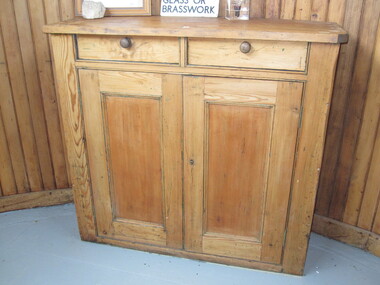
... It is not known whether it is attached to the wall or movable; if attached it is considered to be a fixture and included in the Victorian Heritage Register listing for the lightstation (VHR H1773). Its location, when identified in the CMP of April 1995, was on the ‘lower lantern level’, where there was also a ‘timber step ladder’ (Argus, 6 March 1884, p6. nineteenth or early twentieth century), ‘timber framed lighthouse specification’, ‘timber framed chart’ and telephone .Residue on the furnishing indicates that it was formerly painted green, the colour of some of the other fixtures in the room, such as the original cast iron ladder. ...It is not known whether it is attached to the wall or movable; if attached it is considered to be a fixture and included in the Victorian Heritage Register listing for the lightstation (VHR H1773). Its location, when identified in the CMP of April 1995, was on the ‘lower lantern level’, where there was also a ‘timber step ladder’ (Argus, 6 March 1884, p6. nineteenth or early twentieth century), ‘timber framed lighthouse specification’, ‘timber framed chart’ and telephone .Residue on the furnishing indicates that it was formerly painted green, the colour of some of the other fixtures in the room, such as the original cast iron ladder. ...The cabinet has a curved back and would have been custom‐built to fit the dimensions of the lantern room interior. It is likely to date from when the lighthouse was built in 1884 and may have been among the items delivered by the government steamer dispatch early in March which included ‘the lantern and other fittings for the Cape Nelson Lighthouse’. The Public Works Department provided a range of lightstation furnishings including office desks and cabinets, and domestic settings for keepers’ quarters, with nineteenth century items often stamped with a crown motif and the PWD monogram however the curved cupboards installed in Victoria’s lighthouse lantern rooms do not appear to display this small feature. Further research may reveal more about their manufacture and it is tempting to think that they were perhaps even supplied by Chance Bros as part of the entire lantern room installation. The company usually provided the timber battens for the lantern room paneling, and a cabinet may have been included in the assemblage. Another possibility is that the specially designed cabinet was made on site by carpenters along with other fittings. It is not known whether it is attached to the wall or movable; if attached it is considered to be a fixture and included in the Victorian Heritage Register listing for the lightstation (VHR H1773). Its location, when identified in the CMP of April 1995, was on the ‘lower lantern level’, where there was also a ‘timber step ladder’ (Argus, 6 March 1884, p6. nineteenth or early twentieth century), ‘timber framed lighthouse specification’, ‘timber framed chart’ and telephone .Residue on the furnishing indicates that it was formerly painted green, the colour of some of the other fixtures in the room, such as the original cast iron ladder. It is now partially varnished and the corner to the top’s edging on the right side has been cut off. The lighthouse also has a large curved back, two‐door cupboard. Other similar cabinets with curved backs survive at Cape Schanck, varnished wood cabinet with brass door knob, no drawers; Point Hicks, painted green with silver doors, no drawers and Gabo Island, bench top, 2‐door, no drawers, green paint removed to reveal cedar timber). Cape Nelson’s curved cabinet is unique among these examples for having drawers. The cabinet is a unique, original feature of the lantern room and has first level contributory significance for its historic values and provenance.The bench top cupboard has two drawers, each above a door, and each door is framed and beveled around a central panel. The cabinet has a curved back. -
 Flagstaff Hill Maritime Museum and Village
Functional object - Lead shot, Circa 1877
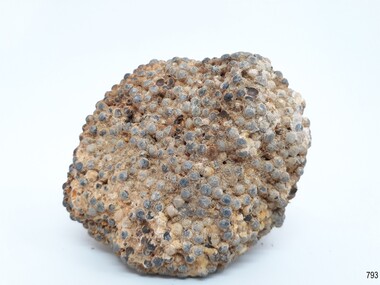
... In 1882 Richard Hodgson erected the 160 feet round chimney-shaped Clifton Hill shot tower on Alexandra Parade (VHR H0709) and in 1889 Walter Coop built the 160 feet square tower-shaped Melbourne Central shot tower on La Trobe Street (VHR H0067). ...In 1882 Richard Hodgson erected the 160 feet round chimney-shaped Clifton Hill shot tower on Alexandra Parade (VHR H0709) and in 1889 Walter Coop built the 160 feet square tower-shaped Melbourne Central shot tower on La Trobe Street (VHR H0067). ...This artifact is a sample of small caliber lead shot recovered by Flagstaff Hill divers from the wreck of the Loch Ard in 1975. Included in her diverse and valuable cargo were 22 tons of lead shot, packed in cloth bags and wooden casks. Bulk quantities of lead shot, uniformly round balls of dull grey metal ranging from 2mm “birdshot” to 8mm “buckshot”, were routinely exported to the Australian colonies. Shot was used mostly as projectiles fired from smooth bored guns to bring down moving targets such as wild ducks and small game. It was also useful as ballast, when a dense, “pourable” weight was required to fill cavities or establish volume within a measuring container. The production of consistently round spheres of lead shot required the pouring of molten metal through a sieve and then a long drop through the atmosphere to a water filled basin for final cooling and collection. This “shot tower” process was first patented by William Watts of Bristol in 1782. His calculation of a 150 feet fall was not only to form evenly spherical droplets through surface tension, but also to provide partial cooling and solidification to each shot before they hit the water below. The value of his innovation was the minimising of indentation and shape distortion, avoiding the expense of re-smelting and re-moulding the lead. Lead shot was already being produced in Australia at the time the Loch Ard sinking in March 1878. James Moir had constructed a 157 feet circular stone shot tower near Hobart in 1870, with a peak annual production of 100 tons of lead shot sold in 28 pound linen bags. However colonial demand exceeded this source of local supply. The continued strength of the market for lead shot in the Colony of Victoria prompted substantial investment in additional productive capacity in Melbourne in the next decade. In 1882 Richard Hodgson erected the 160 feet round chimney-shaped Clifton Hill shot tower on Alexandra Parade (VHR H0709) and in 1889 Walter Coop built the 160 feet square tower-shaped Melbourne Central shot tower on La Trobe Street (VHR H0067). At its peak, the Coop Tower produced 6 tons of lead shot per week, or 312 tons per annum. History of the Loch Ard: The Loch Ard got its name from "Loch Ard" a loch that lies to the west of Aberfoyle, and the east of Loch Lomond. It means "high lake" in Scottish Gaelic. The vessel belonged to the famous Loch Line which sailed many vessels from England to Australia. The Loch Ard was built in Glasgow by Barclay, Curle & Co. in 1873, the vessel was a three-masted square-rigged iron sailing ship that measured 79.87 meters in length, 11.58 m in width, and 7 m in depth with a gross tonnage of 1693 tons with a mainmast that measured a massive 45.7 m in height. Loch Ard made three trips to Australia and one trip to Calcutta before its fateful voyage. Loch Ard left England on March 2, 1878, under the command of 29-year-old Captain Gibbs, who was newly married. The ship was bound for Melbourne with a crew of 37, plus 17 passengers. The general cargo reflected the affluence of Melbourne at the time. Onboard were straw hats, umbrellas, perfumes, clay pipes, pianos, clocks, confectionery, linen, and candles, as well as a heavier load of railway irons, cement, lead, and copper. There were other items included that were intended for display in the Melbourne International Exhibition of 1880. The voyage to Port Phillip was long but uneventful. Then at 3 am on June 1, 1878, Captain Gibbs was expecting to see land. But the Loch Ard was running into a fog which greatly reduced visibility. Captain Gibbs was becoming anxious as there was no sign of land or the Cape Otway lighthouse. At 4 am the fog lifted and a lookout aloft announced that he could see breakers. The sheer cliffs of Victoria's west coast came into view, and Captain Gibbs realised that the ship was much closer to them than expected. He ordered as much sail to be set as time would permit and then attempted to steer the vessel out to sea. On coming head-on into the wind, the ship lost momentum, the sails fell limp and Loch Ard's bow swung back towards land. Gibbs then ordered the anchors to be released in an attempt to hold their position. The anchors sank some 50 fathoms - but did not hold. By this time the ship was among the breakers and the tall cliffs of Mutton Bird Island rose behind. Just half a mile from the coast, the ship's bow was suddenly pulled around by the anchor. The captain tried to tack out to sea, but the ship struck a reef at the base of Mutton Bird Island, near Port Campbell. Waves subsequently broke over the ship and the top deck became loosened from the hull. The masts and rigging came crashing down knocking passengers and crew overboard. When a lifeboat was finally launched, it crashed into the side of Loch Ard and capsized. Tom Pearce, who had launched the boat, managed to cling to its overturned hull and shelter beneath it. He drifted out to sea and then on the flood tide came into what is now known as Lochard Gorge. He swam to shore, bruised and dazed, and found a cave in which to shelter. Some of the crew stayed below deck to shelter from the falling rigging but drowned when the ship slipped off the reef into deeper water. Eva Carmichael a passenger had raced onto the deck to find out what was happening only to be confronted by towering cliffs looming above the stricken ship. In all the chaos, Captain Gibbs grabbed Eva and said, "If you are saved Eva, let my dear wife know that I died like a sailor". That was the last Eva Carmichael saw of the captain. She was swept off the ship by a huge wave. Eva saw Tom Pearce on a small rocky beach and yelled to attract his attention. He dived in and swam to the exhausted woman and dragged her to shore. He took her to the cave and broke the open case of brandy that had washed up on the beach. He opened a bottle to revive the unconscious woman. A few hours later Tom scaled a cliff in search of help. He followed hoof prints and came by chance upon two men from nearby Glenample Station three and a half miles away. In a complete state of exhaustion, he told the men of the tragedy. Tom then returned to the gorge while the two men rode back to the station to get help. By the time they reached Loch Ard Gorge, it was cold and dark. The two shipwreck survivors were taken to Glenample Station to recover. Eva stayed at the station for six weeks before returning to Ireland by steamship. In Melbourne, Tom Pearce received a hero's welcome. He was presented with the first gold medal of the Royal Humane Society of Victoria and a £1000 cheque from the Victorian Government. Concerts were performed to honour the young man's bravery and to raise money for those who lost families in the disaster. Of the 54 crew members and passengers on board, only two survived: the apprentice, Tom Pearce, and the young woman passenger, Eva Carmichael, who lost her family in the tragedy. Ten days after the Lochard tragedy, salvage rights to the wreck were sold at auction for £2,120. Cargo valued at £3,000 was salvaged and placed on the beach, but most washed back into the sea when another storm developed. The wreck of Lochard still lies at the base of Mutton Bird Island. Much of the cargo has now been salvaged and some items were washed up into Lochard Gorge. Cargo and artifacts have also been illegally salvaged over many years before protective legislation was introduced in March 1982. One of the most unlikely pieces of cargo to have survived the shipwreck was a Minton majolica peacock- one of only nine in the world. The peacock was destined for the Melbourne 1880 International Exhibition. It had been well packed, which gave it adequate protection during the violent storm. Today the Minton peacock can be seen at the Flagstaff Hill Maritime Museum in Warrnambool. From Australia's most dramatic shipwreck it has now become Australia's most valuable shipwreck artifact and is one of very few 'objects' on the Victorian State Heritage Register.The shipwreck of the Loch Ard is of significance for Victoria and is registered on the Victorian Heritage Register ( S 417). Flagstaff Hill has a varied collection of artifacts from Loch Ard and its collection is significant for being one of the largest accumulation of artifacts from this notable Victorian shipwreck of which the subject items are a small part. The collection's objects give us a snapshot of how we can interpret the story of this tragic event. The collection is also archaeologically significant as it represents aspects of Victoria's shipping history that allows us to interpret Victoria's social and historical themes of the time. Through is associated with the worst and best-known shipwreck in Victoria's history.Lead shot; a group of mixed -sized lead shot. Small 2mm shot is embedded in a sea sediment clump of concretion. Also in the group are also 5 single 2mm shot and 4 single 4mm shot that are clean and free of sediment. The shot was recovered from the wreck of the Loch Ard.Nonewarrnambool, shipwreck coast, flagstaff hill, flagstaff hill maritime village, flagstaff hill maritime museum, shipwreck artefact, lead shot, loch ard, colonial industry, melbourne shot towers, victorian metallurgy, colonial imports -
 Flagstaff Hill Maritime Museum and Village
Lead shot, Before 1878
... In 1882 Richard Hodgson erected the 160 feet round chimney-shaped Clifton Hill shot tower on Alexandra Parade (VHR H0709) and in 1889 Walter Coop built the 160 feet square tower-shaped Melbourne Central shot tower on La Trobe Street (VHR H0067). ...In 1882 Richard Hodgson erected the 160 feet round chimney-shaped Clifton Hill shot tower on Alexandra Parade (VHR H0709) and in 1889 Walter Coop built the 160 feet square tower-shaped Melbourne Central shot tower on La Trobe Street (VHR H0067). ...The objects comprise a quantity of small calibre lead shot raised from the LOCH ARD shipwreck site by Flagstaff Hill divers in 1976. The Maritime Village’s collection has companion pieces. The three masted, iron hulled, LOCH ARD was wrecked against the tall limestone cliffs of Mutton Bird Island in the early hours of the first of June 1878. Included in her diverse and valuable cargo were 22 tons of lead shot, packed in cloth bags and wooden casks. Bulk quantities of lead shot, uniformly round balls of dull grey metal ranging from 2mm “birdshot” to 8mm “buckshot”, were routinely exported to the Australian colonies. Shot was used mostly as projectiles fired from smooth bored guns to bring down moving targets such as wild ducks and small game. It was also useful as ballast, when a dense, “pourable” weight was required to fill cavities or establish volume within a measuring container. The production of consistently round spheres of lead shot required the pouring of molten metal through a sieve and then a long drop through the atmosphere to a water filled basin for final cooling and collection. This “shot tower” process was first patented by William Watts of Bristol in 1782. His calculation of a 150 feet fall was not only to form evenly spherical droplets through surface tension, but also to provide partial cooling and solidification to each shot before they hit the water below. The value of his innovation was the minimising of indentation and shape distortion, avoiding the expense of re-smelting and re-moulding the lead. Lead shot was already being produced in Australia at the time the LOCH ARD loaded her cargo and left Gravesend on the second of March 1878. James Moir constructed a 157 feet circular stone shot tower near Hobart in 1870, with a peak annual production of 100 tons of lead shot sold in 28 pound linen bags. However colonial demand exceeded this source of local supply. The continued strength of the market for lead shot in the Colony of Victoria prompted substantial investment in additional productive capacity in Melbourne in the next decade. In 1882 Richard Hodgson erected the 160 feet round chimney-shaped Clifton Hill shot tower on Alexandra Parade (VHR H0709) and in 1889 Walter Coop built the 160 feet square tower-shaped Melbourne Central shot tower on La Trobe Street (VHR H0067). At its peak, the Coop Tower produced 6 tons of lead shot per week, or 312 tons per annum. HISTORY OF THE LOCH ARD The LOCH ARD belonged to the famous Loch Line which sailed many ships from England to Australia. Built in Glasgow by Barclay, Curdle and Co. in 1873, the LOCH ARD was a three-masted square rigged iron sailing ship. The ship measured 262ft 7" (79.87m) in length, 38ft (11.58m) in width, 23ft (7m) in depth and had a gross tonnage of 1693 tons. The LOCH ARD's main mast measured a massive 150ft (45.7m) in height. LOCH ARD made three trips to Australia and one trip to Calcutta before its final voyage. LOCH ARD left England on March 2, 1878, under the command of Captain Gibbs, a newly married, 29 year old. She was bound for Melbourne with a crew of 37, plus 17 passengers and a load of cargo. The general cargo reflected the affluence of Melbourne at the time. On board were straw hats, umbrella, perfumes, clay pipes, pianos, clocks, confectionary, linen and candles, as well as a heavier load of railway irons, cement, lead and copper. There were items included that intended for display in the Melbourne International Exhibition in 1880. The voyage to Port Phillip was long but uneventful. At 3am on June 1, 1878, Captain Gibbs was expecting to see land and the passengers were becoming excited as they prepared to view their new homeland in the early morning. But LOCH ARD was running into a fog which greatly reduced visibility. Captain Gibbs was becoming anxious as there was no sign of land or the Cape Otway lighthouse. At 4am the fog lifted. A man aloft announced that he could see breakers. The sheer cliffs of Victoria's west coast came into view, and Captain Gibbs realised that the ship was much closer to them than expected. He ordered as much sail to be set as time would permit and then attempted to steer the vessel out to sea. On coming head on into the wind, the ship lost momentum, the sails fell limp and LOCH ARD's bow swung back. Gibbs then ordered the anchors to be released in an attempt to hold its position. The anchors sank some 50 fathoms - but did not hold. By this time LOCH ARD was among the breakers and the tall cliffs of Mutton Bird Island rose behind the ship. Just half a mile from the coast, the ship's bow was suddenly pulled around by the anchor. The captain tried to tack out to sea, but the ship struck a reef at the base of Mutton Bird Island, near Port Campbell. Waves broke over the ship and the top deck was loosened from the hull. The masts and rigging came crashing down knocking passengers and crew overboard. When a lifeboat was finally launched, it crashed into the side of LOCH ARD and capsized. Tom Pearce, who had launched the boat, managed to cling to its overturned hull and shelter beneath it. He drifted out to sea and then on the flood tide came into what is now known as LOCH ARD Gorge. He swam to shore, bruised and dazed, and found a cave in which to shelter. Some of the crew stayed below deck to shelter from the falling rigging but drowned when the ship slipped off the reef into deeper water. Eva Carmichael had raced onto deck to find out what was happening only to be confronted by towering cliffs looming above the stricken ship. In all the chaos, Captain Gibbs grabbed Eva and said, "If you are saved Eva, let my dear wife know that I died like a sailor". That was the last Eva Carmichael saw of the captain. She was swept off the ship by a huge wave. Eva saw Tom Pearce on a small rocky beach and yelled to attract his attention. He dived in and swam to the exhausted woman and dragged her to shore. He took her to the cave and broke open case of brandy which had washed up on the beach. He opened a bottle to revive the unconscious woman. A few hours later Tom scaled a cliff in search of help. He followed hoof prints and came by chance upon two men from nearby Glenample Station three and a half miles away. In a state of exhaustion, he told the men of the tragedy. Tom returned to the gorge while the two men rode back to the station to get help. By the time they reached LOCH ARD Gorge, it was cold and dark. The two shipwreck survivors were taken to Glenample Station to recover. Eva stayed at the station for six weeks before returning to Ireland, this time by steamship. In Melbourne, Tom Pearce received a hero's welcome. He was presented with the first gold medal of the Royal Humane Society of Victoria and a £1000 cheque from the Victorian Government. Concerts were performed to honour the young man's bravery and to raise money for those who lost family in the LOCH ARD disaster. Of the 54 crew members and passengers on board, only two survived: the apprentice, Tom Pearce and the young woman passenger, Eva Carmichael, who lost all of her family in the tragedy. Ten days after the LOCH ARD tragedy, salvage rights to the wreck were sold at auction for £2,120. Cargo valued at £3,000 was salvaged and placed on the beach, but most washed back into the sea when another storm developed. The wreck of LOCH ARD still lies at the base of Mutton Bird Island. Much of the cargo has now been salvaged and some was washed up into what is now known as LOCH ARD Gorge. Cargo and artefacts have also been illegally salvaged over many years before protective legislation was introduced. One of the most unlikely pieces of cargo to have survived the shipwreck was a Minton porcelain peacock - one of only nine in the world. The peacock was destined for the Melbourne International Exhibition in 1880. It had been well packed, which gave it adequate protection during the violent storm. Today, the Minton peacock can be seen at the Flagstaff Hill Maritime Museum in Warrnambool. From Australia's most dramatic shipwreck it has now become Australia's most valuable shipwreck artefact and is one of very few 'objects' on the Victorian State Heritage Register. The shipwreck of the LOCH ARD is of State significance – Victorian Heritage Register S417 Flagstaff Hill’s collection of artefacts from LOCH ARD is significant for being one of the largest collections of artefacts from this shipwreck in Victoria. It is significant for its association with the shipwreck, which is on the Victorian Heritage Register (VHR S417). The collection is significant because of the relationship between the objects, as together they have a high potential to interpret the story of the LOCH ARD. The LOCH ARD collection is archaeologically significant as the remains of a large international passenger and cargo ship. The LOCH ARD collection is historically significant for representing aspects of Victoria’s shipping history and its potential to interpret sub-theme 1.5 of Victoria’s Framework of Historical Themes (living with natural processes). The collection is also historically significant for its association with the LOCH ARD, which was one of the worst and best known shipwrecks in Victoria’s history. A quantity of lead shot pellets retrieved from the wreck of the LOCH ARD. There are 242 loose 2mm pieces and 17 loose 4mm pieces. They are in good condition, with some shape distortion and sedimentary concretion, and shot tower made.flagstaff hill, warrnambool, shipwrecked coast, flagstaff hill maritime museum, maritime museum, shipwreck coast, flagstaff hill maritime village, great ocean road, loch line, loch ard, captain gibbs, eva carmichael, tom pearce, glenample station, mutton bird island, loch ard gorge, lead shot, colonial industry, melbourne shot towers, victorian metallurgy, colonial imports -
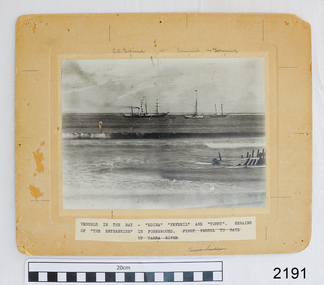 Flagstaff Hill Maritime Museum and Village
Photograph - Vessels, Steam and Sail, Vessels in the bay, 1890's
... The Warrnambool Wreck Enterprise is listed on the Victorian Heritage Database VHR S238. DIFFERENTIATING the New Zealand Schooner “Enterprise” from John Fawkner’s “Enterprize“ Dr Murray Johns, Melbourne, says in his article The Mahogany Ship Story, “…the Enterprise, wrecked in Lady Bay, Warrnambool in 1850 ... was soon covered by sand but was exposed again after several storms in 1887. ...The photograph is significant for its association wreck of the Victorian Heritage Listed schooner Enterprise, VHR S238, being a New Zealand-built but Australian-owned coastal trader. ...The photograph, taken in the 1890s, shows sailing ships and a wreck in Lady Bay, Warrnambool. Lady Bay was once a very busy port of trade in Warrnambool and was also called the Port of Warrnambool or Warrnambool Harbour. ENTERPRISE (1847-1850) NOTE: The “Enterprise” wrecked in 1850 in Warrnambool should not be confused with John Pascoe Faulkner’s ‘Enterprise’, which was wrecked in NSW in 1847. The 58-ton schooner Enterprise was built by David Hay in Waiheke, New Zealand in 1847 and registered by owners John Watson and Edward Byam in Melbourne, Australia. She was a single-deck sailing ship with two masts, used for carrying cargo such as local agricultural produce and general commodities between Melbourne and other colonial ports. On September 14th, 1850 the Enterprise had sailed from Melbourne under the control of the ship’s Master, James Gardiner Caught, and was moored in at the Tramway Jetty in Lady Bay, laden with wheat and potatoes. The vessel rode out a south-easterly gale but eventually dragged anchor and was beached, bow first and then broadside. Buckwall, a local indigenous man, braved the heavy surf and reached the stricken vessel with a rescue line, saving all five crew on board. There were no passengers on board. The Enterprise wreck was in an area called Tramway Jetty in Lady Bay. Since then the area has become the location of Lady Bay Hotel and now, in 2019, it is in the grounds of the Deep Blue Apartments. In fact, with the constantly changing coastline through built-up sand, the wreck site is now apparently under the No 2 Caravan Park on Pertobe Road, perhaps 150 metres from the high tide. Its location was found by Ian McKiggan (leader of the various searches in the 1980s for the legendary Mahogany Ship). The Warrnambool Wreck Enterprise is listed on the Victorian Heritage Database VHR S238. DIFFERENTIATING the New Zealand Schooner “Enterprise” from John Fawkner’s “Enterprize“ Dr Murray Johns, Melbourne, says in his article The Mahogany Ship Story, “…the Enterprise, wrecked in Lady Bay, Warrnambool in 1850 ... was soon covered by sand but was exposed again after several storms in 1887. “Samples of timber were then cut from the wreck, which would then have been buried for 37 years. In November 1887 the Warrnambool Standard reported that “the timber looks sound and hard, a penknife scarcely making any impression.” “For many years there was confusion about the identity of that ship in Lady Bay. Most people believed it was the wreck of John Pascoe Fawkner’s Enterprize, which had sailed from Tasmania to Victoria bringing the pioneer settlers to Melbourne in 1835. “In fact, as I documented in 1985, the Warrnambool wreck was of an entirely different ship, also called Enterprize [Enterprise], but built in New Zealand in 1847. Fawkner’s ship had already been sold to Captain Sullivan in 1845 and was wrecked on the Richmond Pier in northern New South Wales early in 1847. “In 1985 a piece of timber from the local Enterprise, which had been kept at the Warrnambool Museum since 1892, was identified histologically as a New Zealand timber, not Tasmanian timber such as blue gum, from which Fawkner’s Enterprize would have been built in 1830. This confirmed the identity of the Warrnambool Enterprize.”[Dr. M.W. Johns later wrote an article called “The Schooner Enterprise: A Final Word on a Historic Wreck.”] ABOUT THE S S EDINA The three-masted iron screw steamer SS Edina was built in Glasgow, Scotland, in 1854 by Barclay and Curle. She was adorned with the figurehead of the ‘fair maid of Judea’. The many years of service made SS Edina famous worldwide as the longest-serving screw steamer. (The term screw steamer comes from being driven by a single propeller, sometimes called a screw, driven by a steam engine.) SS Edina’s interesting history includes English Chanel runs, serving in the Crimean Ware carrying ammunition, horses and stores to the Black Sea, and further service in the American Civil War and later, serving in the western district of Victoria as well as in Queensland and carried gold, currency and gold prospectors Australia to New Zealand. SS Edina had the privilege of being an escort vessel to H.R.H. the Duke of Edinburgh during his visit to Australia in 1867. In March 1863 SS Edina arrived in Port Phillip Bay, Melbourne and was bought by Stephen Henty, of Portland fame, to work the cargo and passenger run from Melbourne – Warrnambool – Port Fairy - Portland. After a short time of working the run from Australia to New Zealand, with passengers and cargo that included gold and currency, she returned to her Melbourne - Warrnambool – Port Fairy run, with cargo including bales of wool produced in the western district of Victoria. The Warrnambool Steam Packet Company purchased SS Edina in 1867; she was now commanded by Captain John Thompson and Chief Engineer John Davies. She survived several mishaps at sea, had a complete service and overhaul and several changes of commanders. In 1870 SS Edina was in Lady Bay, Warrnambool, when a gale sprung up and caused a collision with the iron screw steamer SS Dandenong. SS Edina’s figurehead was broken into pieces and it was not ever replaced. SS Edina was re-fitted in 1870 and was then used as a coastal trader in Queensland for a period. She was then brought to Melbourne to carry cargo and passengers between Melbourne and Geelong and performed this service from 1880-1938. During this time (1917) she was again refitted with a new mast, funnel, bridge and promenade deck, altering her appearance. In 1938, after more collisions, SS Edina was taken out of service. However, she was later renamed Dinah and used as a ‘lighter’ (a vessel without an engine or superstructure) to be towed and carry wool and general cargo between Melbourne and Geelong. In 1957, after 104 years, the SS Edina was broken up at Footscray, Melbourne. Remains of SS Edina’s hull can be found in the Maribyrnong River, Port Phillip Bay. This photograph is significant for its association with the screw steamer SS Edina, heritage listed on the Victorian Heritage Database VHR S199. She had endeared herself to the people of Port Phillip Bay as a passenger ferry, part of their history and culture. She played a significant role in the Crimean War, the American Civil War and the gold rush in New Zealand. She also served western Victoria for many years in her cargo and passenger runs. The SS Edina is famous for being the longest-serving screw steamer in the world. After spending her first nine years overseas she arrived in Melbourne and her work included running the essential service of transporting cargo and passengers between Melbourne and the western Victoria ports of Warrnambool, Port Fairy and Portland. The SS Edina was purchased in the late 1860s by the local Warrnambool business, the Warrnambool Steam Packet Co. and continued trading from there as part of the local business community. Her original ‘fair maid of Judea’ figurehead was broken to pieces in a collision with another vessel (the SS Dandenong) in a gale off Warrnambool, Victoria, in 1870. The photograph is significant for its association wreck of the Victorian Heritage Listed schooner Enterprise, VHR S238, being a New Zealand-built but Australian-owned coastal trader. The wreck was also significant for its association with the local indigenous hero, Buckawall, who saved the lives of the five crew on board. Photograph "Vessels in the Bay". Black and white photograph of several vessels in Lady Bay, Warrnambool, including some small vessels and "S.S. Edina", the "Peveril" and "Tommy", plus the remains of the wrecked vessel "Enterprise" in the foreground. Photograph is mounted on beige card with label describing the vessels, plus pencilled vessel names. There are several pin holes in each corner of the photograph. Typed label under the photograph “VESSELS IN THE BAY – “EDINA” “PEREVIL” AND “TOMMY”. / REMAINS OF “THE ENTERPRISE” IN FOREGROUND. (Also crossed out on the label “FIRST VESSEL TO SAIL UP YARRA RIVER). In pencil script above the vessels on the photograph “S.S. Edina”, “Peveril” “Tommy”. On the reverse is a printed sticker with “F-Ph 59/2 74”, red felt-tip pen “88”, green pen script repeating the text that is under the photograph on the front.flagstaff hill, warrnambool, shipwrecked-coast, flagstaff-hill, flagstaff-hill-maritime-museum, maritime-museum, shipwreck-coast, flagstaff-hill-maritime-village, enterprize, port of warrnambool, warrnambool harbour, peveril, tommy, ss edina, lighter dinah, warrnambool steam packet company, lady bay, pleasure steamer, edina, trade, travel, screw ship, coastal trader, cargo, victoria, buckawall, indigenous rescue, indigenous hero -
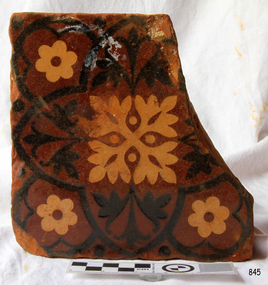 Flagstaff Hill Maritime Museum and Village
Ceramic - Tile, circa 1878
... It is significant for its association with the shipwreck, which is on the Victorian Heritage Register (VHR S417). The collection is significant because of the relationship between the objects, as together they have a high potential to interpret the story of the LOCH ARD. ...This Minton floor tile is from the wreck of the LOCH ARD along with other examples of this manufacture recovered from the wreck site and form part of the collection at Flagstaff Hill. The iron-hulled clipper ship from the Loch Line was heading for Port Phillip from London when it ran into the cliffs of Mutton Bird Island near Port Campbell and was wrecked on June 1st, 1878. The LOCH ARD was laden with high-value cargo including luxury goods intended for display at the Melbourne International Exhibition in 1880. One notable survivor from the ship’s freight manifest was the well-packed Minton porcelain peacock, a two-metre-high ceramic masterpiece of vivid glazed colours. The almost total loss of life and property from the LOCH ARD registered as a shocking tragedy for the Colony of Victoria, at a time when social confidence and economic optimism were otherwise high. The wealth generated from Gold and Wool was increasingly being spent on grandiose private residences and imposing public buildings. The demand for quality furnishings and fittings was therefore strong. Among the products consigned to burgeoning colonial markets by the Milton Pottery at Stoke upon Trent, were their new range of colourfully patterned but very durable floor tiles – ideal for the high-traffic spaces in the large civic buildings then being constructed in Australia and America. These new floor tiles were “encaustic”, meaning that their designs and colours were encased “within” the depth of the tile. Rather than their decorative patterns being glazed onto the surface of the tile, their inlaid designs were created during the manufacturing process, as “coloured slips” (or liquid clay) were poured into a deep pre-moulded casting. When fired, the resulting tile was colour-fast and design-fast. A brief history of the Loch Ard (1873-1878): - The sailing ship Loch Ard was one of the famous Loch Line ships that sailed from England to Australia. Barclay, Curdle and Co. built the three-masted iron vessel in Glasgow in 1873. It had sailed three trips to Australia and one trip to Calcutta before its fateful voyage. Loch Ard left England on March 2, 1878, under the command of recently married, 29-year-old Captain Gibbs. It was bound for Melbourne with a crew of 37, plus 17 passengers. The general cargo reflected the affluence of Melbourne at the time. Onboard were straw hats, umbrellas, perfumes, clay pipes, pianos, clocks, confectionery, linen and candles, and a heavier load of railway irons, cement, lead and copper. Other cargo included items intended for display in the Melbourne International Exhibition of 1880. The Loch Ard had been sailing for three months and was close to its destination on June 1, 1878. Captain Gibbs had expected to see land at about 3 am but the Loch Ard ran into a fog that greatly reduced visibility and there was no sign of land or the Cape Otway lighthouse. The fog lifted at 4 am and the sheer cliffs of Victoria's west coast were much closer to them than Captain Gibbs expected. He tried to manage the vessel but failed and the ship struck a reef at the base of Mutton Bird Island, near Port Campbell. The top deck loosened from the hull, and the masts and rigging crashed down, knocking passengers and crew overboard. The lifeboat was launched by Tom Pearce but crashed into the side of Loch Ard and capsized. He clung onto its overturned hull and sheltered under it. He drifted out to sea and the tide brought him back to what is now called Loch Ard Gorge. He swam to shore and found a cave for shelter. A passenger, Eva Carmichael, had raced onto the deck to find out what was happening and was confronted by towering cliffs above the ship. She was soon swept off the ship by a huge wave. Eva saw Tom Pearce on a small rocky beach and yelled to attract his attention. He swam out and dragged her to the shelter of the cave. He revived her with a bottle of brandy from a case that had washed up on the beach. Tom scaled a cliff in search of help and followed some horse hoof prints. He came from two men from Glenample Station, three and a half miles away. He told the men of the tragedy and then returned to the gorge while the two men rode back to the station to get help. They reached Loch Ard Gorge and took the two shipwreck survivors to Glenample Station to recover. Eva stayed at the station for six weeks before returning to Ireland by steamship. In Melbourne, Tom Pearce received a hero's welcome and was presented with a medal and some money. Of the 54 crew members and passengers on board, only two survived: the apprentice, Tom Pearce and the young woman passenger, Eva Carmichael, who lost her family in the tragedy. One of the most unlikely pieces of cargo to have survived the shipwreck was a Minton porcelain peacock - one of only nine in the world. The peacock was destined for the Melbourne International Exhibition in 1880. It had been well packed, which gave it adequate protection during the violent storm. Today, the Minton peacock can be seen at the Flagstaff Hill Maritime Museum in Warrnambool. From Australia's most dramatic shipwreck, it has now become Australia's most valuable shipwreck artefact and is one of very few 'objects' on the Victorian State Heritage Register. The Minton floor tile is significant for its hard-wearing yet attractive design. The shipwreck of the LOCH ARD is of State significance. Victorian Heritage Register S417. Flagstaff Hill’s collection of artefacts from LOCH ARD is significant for being one of the largest collections of artefacts from this shipwreck in Victoria. It is significant for its association with the shipwreck, which is on the Victorian Heritage Register (VHR S417). The collection is significant because of the relationship between the objects, as together they have a high potential to interpret the story of the LOCH ARD. The LOCH ARD collection is archaeologically significant as the remains of a large international passenger and cargo ship. The LOCH ARD collection is historically significant for representing aspects of Victoria’s shipping history and its potential to interpret sub-theme 1.5 of Victoria’s Framework of Historical Themes (living with natural processes). The collection is also historically significant for its association with the LOCH ARD, which was one of the worst and best-known shipwrecks in Victoria’s history. A square Minton floor tile with a black and apricot pattern against a chocolate brown background. There is a large chip missing. This decorative floor tile was recovered from the shipwreck of the LOCH ARD. On the back, or base, of the tile is inscribed the number “46” and the letters “Minton & Co Patent Stoke upon Trent”.flagstaff hill, warrnambool, shipwrecked coast, flagstaff hill maritime museum, maritime museum, shipwreck coast, flagstaff hill maritime village, great ocean road, loch line, loch ard, captain gibbs, eva carmichael, tom pearce, glenample station, mutton bird island, loch ard gorge, encaustic tile, melbourne international exhibition, floor tile, minton floor tile
