
Showing 26 items matching "victorian lifestyle"
-
 Bendigo Historical Society Inc.
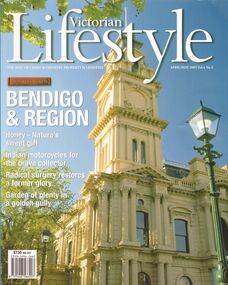
Magazine - VICTORIAN LIFESTYLE MAGAZINE
... VICTORIAN LIFESTYLE MAGAZINE......Victorian Lifestyle...Victorian Lifestyle Magazine glossy paper April / May 2005 Bendigo & Region....MAGAZINE Victorian Lifestyle Bendigo Victorian Lifestyle Magazine glossy paper April / May 2005 Bendigo & Region. ...Victorian Lifestyle Magazine glossy paper April / May 2005 Bendigo & Region.magazine, victorian lifestyle, bendigo -
 Flagstaff Hill Maritime Museum and Village
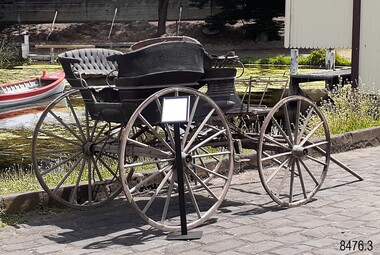
Vehicle - Murweh Carriage, c.1874
... lifestyle befitting a prosperous personality of the late 19th century. It adds to the story of Warrnambool's development as a town influenced by the port, wealth gained from shipping and the home place of prominent local people such as the Councillor and later Mayor. The side-facing rear seating is unusual for a passenger carriage. It has the feature of removable rear bench seats, allowing for the dual purpose of a carriage or wagon. Flagstaff Hill Maritime Museum and Village Warrnambool Great Ocean Road Shipwreck Coast Murweh buggy cart carriage wagon horse-drawn vehicle Victorian ...This private late-nineteenth-century four-wheeled carriage has been built to transport a family or group of passengers with a coachman in the front seat. It can be pulled by one horse, or by two horses if the T-pole is attached. The button fittings along each side of the carriage indicate that a folding roof or hood was once attached. The frame across the front of the carriagewas likely to have been a ‘dashboard’ with a leather or wood covering to prevent water, mud and other particles from splashing onto the passengers. The rear step between the two side-facing bench seats is adjustable to allow for ladies’ long skirts. These rear seats appear to be removable, in which case the carriage could be converted to a wagon to transport goods and equipment. The carriage could have been illuminated by oil or carbide lamps placed into the lamp holders on the sides. The carriage was kept under cover for many years in an open-front sandstone building that also included living quarters and an area that may have been stable. It was at ‘Murweh’ a Warrnambool property at 203 Liebig Street. The home is now Heritage and National Trust Listed and described as a ‘gentleman’s residence’. It was built by James Wotton Shevill in the 1860s. Shevill was a councillor from 1875 to 1878, serving in 1878 as Mayor of the Borough of Warrnambool. Jeremiah Wade lived at Murweh there from 1879-1880. By 1915 F.B. Whitehead and his family were living there, and by 1930 the address was used by Mr T.J. Rome and his family. Thomas James Rome was still using that address in September 1973 after his 100th birthday. It is believed that one of the property’s owners had been an Obstetrician in Warrnambool. The current owner re-told the story that children used to hide in the back section of the carriage and smoke, hidden from the sight of onlookers. He had heard the story from a previous owner.The well-appointed horse-drawn four-wheeled carriage is likely to have first belonged to a local councillor and past Mayor of the town of Warrnambool, J.W. Shervill, whose 1860s city property was the carriage location for many years. The carriage is a rare local example of a town-based lifestyle befitting a prosperous personality of the late 19th century. It adds to the story of Warrnambool's development as a town influenced by the port, wealth gained from shipping and the home place of prominent local people such as the Councillor and later Mayor. The side-facing rear seating is unusual for a passenger carriage. It has the feature of removable rear bench seats, allowing for the dual purpose of a carriage or wagon.Carriage; the Victorian-era horse-drawn four-wheeled open carriage has a coachman’s bench seat across the front and two side-facing bench seats in the rear. There are steps at the front on each side and a centre adjustable step and the back. It has a hinged shaft, two lamp holders and a separate T-pole. The bench seats have padded backrests upholstered in green leather and each has padded armrests at the ends. A rectangular metal frame, likely to have been a dashboard, is mounted across the front of the carriage. It has two inner vertical bars. The carriage's body is painted dark green with crimson highlights on some of the panelling. Decorative oval panels with hand-painted motifs are mounted along the sides. The side panels of the carriage have metal fastener buttons attached. The iron-rimmed wheels have sixteen wooden spokes and copper cuffs on the outside of the hubs, and the rear wheels are higher than the front wheels. Wooden brake blocks are mounted onto the back wheels and are active by a metal lever at the front right side of the carriage. The undercarriage is fitted with leaf springs on each side, mounted from front to back axles. Included are: (1) The separate T-pole that allows two horses to be harnessed to the carriage (2) Leather horse winkers with metal hardware and oval brass plate on the side of each winkerMotif painted on an oval panel [a musical lyre within a blue floral wreath flanked by scrolls] flagstaff hill maritime museum and village, warrnambool, great ocean road, shipwreck coast, murweh, buggy, cart, carriage, wagon, horse-drawn vehicle, victorian buggy, four-wheeled carriage, coachman’s seat, bench seat, side-facing benches, upholstered seats, victorian decals, heritage vehicle decoration, antique hand painting, hand painted decals, motifs, iron-rimmed wheels, wooden brake blocks, leaf springs, t-pole shaft, rear step, equine carriage, 19th century vehicle, victorian transport, transport, gentleman’s vehicle, james wotton shevill, councillor, mayor, jeremiah wade, f.b. whitehead, thomas james rome, warrnambool obstruction, warrnambool genealogy, warrnambool pioneers, victorian carriage, one horse carriage, two horse carriage, horse drawn carriage -
 City of Moorabbin Historical Society (Operating the Box Cottage Museum)
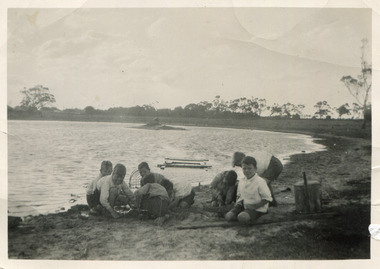
Photograph, Black & White, Boys fishing for Yabbies Methodist Childrens' Home Cheltenham 1935, 1935
... However new settlers to Cheltenham area who were seeking a healthier and more respectable lifestyle for their families were not happy to share Church and School with the Home's Children. 1911 school parents committee moved to exclude the Home's Children but this was countered by the Home's Committee who defeated the motion 60 to 8. 1915 Dr Scantlebury was pressured by school parents into ordering the confinement/ isolation of all Homes Children if an infectious disease was contracted by a child. This resulted in the Homes Children missing school for months so an application was made to the Victorian...However new settlers to Cheltenham area who were seeking a healthier and more respectable lifestyle for their families were not happy to share Church and School with the Home's Children. 1911 school parents committee moved to exclude the Home's Children but this was countered by the Home's Committee who defeated the motion 60 to 8. 1915 Dr Scantlebury was pressured by school parents into ordering the confinement/ isolation of all Homes Children if an infectious disease was contracted by a child. This resulted in the Homes Children missing school for months so an application was made to the Victorian ...1892-1953 The Methodist Children's Home in Cheltenham was founded c1880 to provide housing for neglected children from the inner city. The Founders aimed to provide regular nourishment, a stable environment and integrate the children into the local community thereby improving their education and lives. However new settlers to Cheltenham area who were seeking a healthier and more respectable lifestyle for their families were not happy to share Church and School with the Home's Children. 1911 school parents committee moved to exclude the Home's Children but this was countered by the Home's Committee who defeated the motion 60 to 8. 1915 Dr Scantlebury was pressured by school parents into ordering the confinement/ isolation of all Homes Children if an infectious disease was contracted by a child. This resulted in the Homes Children missing school for months so an application was made to the Victorian Education Dept. for e School to be set up at the Home. However funds were short due to WW1. In 1917 John Livingston, former Homes child who had become successful, bequeathed his estate to the Home and the Vic.Education Dept agreed to a school at the Home. The Influenza epidemic 1919 saw the children quarantined for 4 months as a precaution at the Home. When Flu actually struck, a further 5 months isolation was ordered. July 1920 their own school was on site and continuity of education could proceed , however it reinforced the isolation of the institution contrary to the Founders vision of integration.. 1925 the Danks family funded a Domestic Economy Class for girls, but not until 1936 could the children attend the local High School so that they could pursue office work, apprenticeships, commercial college courses. 1947 a benefactor donated £5,000 to pay fees for school, university or apprenticeship in Arts & Cultural subjects. Some of the children were able to join the local society as Methodist minister, accountant, nurses, farmers, secretaries, trademen whilst others were unable to adjust as crime and misfortune ensued. 1939 some past residents began a group called Living Stones Union that they circulated to the others giving news and a sense of family connectedness among themselves. ( Rev. N. Marshall, KCC Local History , H. Stanley 2005) 1950's saw a new direction for the support of children and families in poor and difficult situations . The new Burwood Homes Facility opened in 1951 and children were transferred from Cheltenham in 1952. The land was sold to the St John of God, Catholic Order in1953 who maintained an orphanage until Myer Pty Ltd bought the site in 1967 and constructed the Southland Shopping Centre1892 -1953 The Methodist Children's Home Cheltenham was founded to provide safe accommodation and education for neglected children from the Melbourne inner city slums. Black & White photograph of boys fishing for yabbies from the lake behind the 'Methodist Homes for Children' Cheltenham pdf of Appeal for the establishment of an Infant Asylum 1877methodist childrens home cheltenham 1892- 1953, st john of god home cheltenham 1953-1967, scantlebury dr john city of moorabbin, county of bourke, moorabbin roads board, parish of moorabbin, shire of moorabbin, henry dendy's special survey 1841, were j.b.; bent thomas, o'shannassy john, king richard, charman stephen, highett william, ormond francis, maynard dennis, cheltenham state school no.84, methodist chapel cheltenham, methodist school cheltenham, beaumaris west state school, meeres frederick, meeres walter, education, early settlers, -
 Glen Eira Historical Society
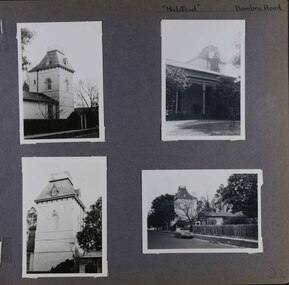
Album - Album page, Halstead, Bambra Road, Circa 1972
... https://vhd.heritagecouncil.vic.gov.au/places/43645 "Halstead" is regionally important as a surviving large villa from the early Victorian (1850's) period, offering insights into the lifestyles of the privileged in Caulfield at that time. ...This photograph is part of the Caulfield Historical Album 1972. This album was created in approximately 1972 as part of a project by the Caulfield Historical Society to assist in identifying buildings worthy of preservation. The album is related to a Survey the Caulfield Historical Society developed in collaboration with the National Trust of Australia (Victoria) and Caulfield City Council to identify historic buildings within the City of Caulfield that warranted the protection of a National Trust Classification. Principal photographer thought to be Trevor Hart, member of Caulfield Historical Society. Most photographs were taken between 1966-1972 with a small number of photographs being older and from unknown sources. All photographs are black and white except where stated, with 386 photographs over 198 pages.From the Victorian Heritage Register Database - Citation for Halstead, 23 Bambra Road as at (as at 12/10/2020) https://vhd.heritagecouncil.vic.gov.au/places/276 Halstead is believed to be the oldest standing residence in Caulfield constructed in 1857 with subsequent additions during the 19th Century. The house was built for and owned by James Dickson, a stock agent, until his death in 1880. Although on a much reduced parcel of land, Halstead is one of the few remaining remnants of Caulfield when it was an area of mansion houses occupied by town residing squatters, professional and business men. It is important for its place in the socio-economic history of south eastern suburban Melbourne, the inland pattern of development stretching from Malvern through Murrumbeena. Architecturally the single storey building displays a history of alteration and addition. Its main front presents with a single storey cast iron verandah across the full width, including the two pavilion wings at each end. Located towards the rear on the Halstead Street side is the substantial three storey tower with its Mansard roof and cast-iron balustrade which makes the house clearly visible from Halstead Street and Bambra Road. Because of internal alteration the importance of the building relates to the exterior only of the main house. Halstead is believed to be the oldest standing residence in the city of Caulfield. https://vhd.heritagecouncil.vic.gov.au/places/43645 "Halstead" is regionally important as a surviving large villa from the early Victorian (1850's) period, offering insights into the lifestyles of the privileged in Caulfield at that time. The later tower is of architectural interest for its use of Medieval Romanesque enrichment.Page 32 of Photograph Album with four photographs of the exterior of this double storey house, focussing on different angles for the house's tower.Hand written: "Halstead" Bambra Road [top right] / 32 [bottom right] trevor hart, caulfield north, bambra road, 1850's, halstead, james dickson, mansion, villa residence, cast iron verandah, pavillion wings, halstead street, victorian, tower, balustrading, decorative brackets, mansard roof, brick, cast iron, slate roof, curved windows, single storey mansions, streetscapes, medieval romanesque style, slate roofs, gardens, cast iron work -
 Glen Eira Historical Society
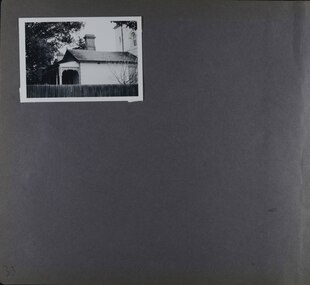
Album - Album page, Halstead, Bambra Road, Circa 1972
... https://vhd.heritagecouncil.vic.gov.au/places/43645: "Halstead" is regionally important as a surviving large villa from the early Victorian (1850's) period, offering insights into the lifestyles of the privileged in Caulfield at that time. ...This photograph is part of the Caulfield Historical Album 1972. This album was created in approximately 1972 as part of a project by the Caulfield Historical Society to assist in identifying buildings worthy of preservation. The album is related to a Survey the Caulfield Historical Society developed in collaboration with the National Trust of Australia (Victoria) and Caulfield City Council to identify historic buildings within the City of Caulfield that warranted the protection of a National Trust Classification. Principal photographer thought to be Trevor Hart, member of Caulfield Historical Society. Most photographs were taken between 1966-1972 with a small number of photographs being older and from unknown sources. All photographs are black and white except where stated, with 386 photographs over 198 pages.From the Victorian Heritage Register Database - Citation for Halstead, 23 Bambra Road as at (as at 12/10/2020) https://vhd.heritagecouncil.vic.gov.au/places/276: Halstead is believed to be the oldest standing residence in Caulfield constructed in 1857 with subsequent additions during the 19th Century. The house was built for and owned by James Dickson, a stock agent, until his death in 1880. Although on a much reduced parcel of land, Halstead is one of the few remaining remnants of Caulfield when it was an area of mansion houses occupied by town residing squatters, professional and business men. It is important for its place in the socio-economic history of south eastern suburban Melbourne, the inland pattern of development stretching from Malvern through Murrumbeena. Architecturally the single storey building displays a history of alteration and addition. Its main front presents with a single storey cast iron verandah across the full width, including the two pavilion wings at each end. Located towards the rear on the Halstead Street side is the substantial three storey tower with its Mansard roof and cast-iron balustrade which makes the house clearly visible from Halstead Street and Bambra Road. Because of internal alteration the importance of the building relates to the exterior only of the main house. Halstead is believed to be the oldest standing residence in the city of Caulfield. https://vhd.heritagecouncil.vic.gov.au/places/43645: "Halstead" is regionally important as a surviving large villa from the early Victorian (1850's) period, offering insights into the lifestyles of the privileged in Caulfield at that time. The later tower is of architectural interest for its use of Medieval Romanesque enrichment.Page 33 of Photograph Album with one landscape photograph of the exterior of Halstead, taken from the street.Hand written: 33 [bottom left] trevor hart, caulfield north, bambra road, 1850's, halstead, james dickson, mansion, villa residence, cast iron verandah, pavillion wings, halstead street, victorian, tower, balustrading, decorative brackets, mansard roof, brick, slate roof, curved windows, single storey mansions, cast iron work, medieval romanesque style, slate roofs, gardens -
 Glen Eira Historical Society
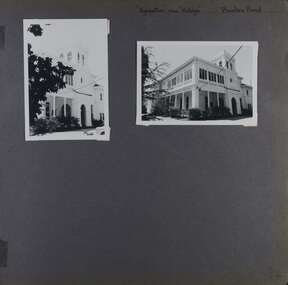
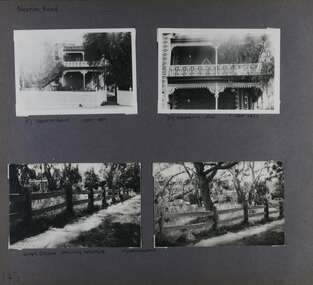
Album - Album page, Kynaston now Kahlyn, Bambra Road, Circa 1972
... All photographs are black and white except where stated, with 386 photographs over 198 pages. https://vhd.heritagecouncil.vic.gov.au/places/35575 From: Glen Eira Heritage Management Plan (1996) by Andrew Ward and Associates Significance: "Kynaston" is locally important as a large late Victorian villa residence, demonstrating something of the lifestyle to which a senior government bureaucrat could aspire during the late nineteenth century boom period. ...This photograph is part of the Caulfield Historical Album 1972. This album was created in approximately 1972 as part of a project by the Caulfield Historical Society to assist in identifying buildings worthy of preservation. The album is related to a Survey the Caulfield Historical Society developed in collaboration with the National Trust of Australia (Victoria) and Caulfield City Council to identify historic buildings within the City of Caulfield that warranted the protection of a National Trust Classification. Principal photographer thought to be Trevor Hart, member of Caulfield Historical Society. Most photographs were taken between 1966-1972 with a small number of photographs being older and from unknown sources. All photographs are black and white except where stated, with 386 photographs over 198 pages.https://vhd.heritagecouncil.vic.gov.au/places/35575 From: Glen Eira Heritage Management Plan (1996) by Andrew Ward and Associates Significance: "Kynaston" is locally important as a large late Victorian villa residence, demonstrating something of the lifestyle to which a senior government bureaucrat could aspire during the late nineteenth century boom period. The design of the verandah, though defaced, is unusual in Caulfield and, therefore, important. A substantial late Victorian stuccoed Bool11 style villa residence with tower surmounting the entrance porch, fluted columns to the ground level verandah and parapeted balcony over, now built in with a sympathetic addition at the north-west corner. The principal rooms and staircase are intact and representative of the period.Page 34 of Photograph Album with two portrait photographs of exterior of Kynaston - 2 views highlighting the front of the mansionHand written: "Kynaston" now "Kahlyn" Bambra Road [top right] / 34 [bottom right] trevor hart, caulfield north, bambra road, 1850's, mansion, villa residence, cast iron verandah, victorian, decorative brackets, slate roof, curved windows, 1880's, kynaston, kynaston l murray, kahlyn private hospital, kahlyn, return verandah, enclosed verandah, cast iron work, double storey mansions, towers, balconies -
 Kiewa Valley Historical Society
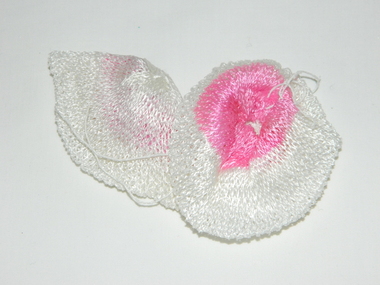
Mantle for Gas Lantern
... These incandescent gas mantles were initially used in the Coleman White Gas Lanterns The Kiewa Valley, with its closeness to the Victorian Alps, allows greater opportunity for the "happy" campers to enjoy the outdoors. The lighting provided by the incandescent gas lamps allow the adventurer at heart to enjoy an alternative lifestyle and still having the comforts of "home" at their finger tips. ...Originally these mantles where produced to be used in gas street lights in Europe and North America cities.There use started in 1891. These mantles were used before electrical power street lighting was installed. They have been used ever since until safety concerns regarding radiation from their thorium infused particles made alternate mobile lamps more attractive. The age of open flame recreational lighting is fast coming to a close. The greater use of battery and generator powered lighting(ease of operation) has brought the costing of these alternative lighting to an acceptable level. The age of miniaturisation and volatility of the open flame has seen a greater swing to smaller and more stable lighting. These incandescent gas mantles were initially used in the Coleman White Gas LanternsThe Kiewa Valley, with its closeness to the Victorian Alps, allows greater opportunity for the "happy" campers to enjoy the outdoors. The lighting provided by the incandescent gas lamps allow the adventurer at heart to enjoy an alternative lifestyle and still having the comforts of "home" at their finger tips. The numerous camping facilities in the Kiewa Valley and the upper alpine region is testament that those living in the cities need a break from the day to day grind and go to a quieter and more spiritual environment. Artificial lighting, as provided by mobile apparatus, is highly valued by the urban gypsy. The outdoor recreational industry has significantly provided for, if only at holiday time, an industry that has a relatively high employment rate and beneficial to local communities.The gas mantle is in a fabric, pear shaped, of rayon fabric impregnated with cerium. It's appearance is similar to a very small fishing net. The fabric is very ply-able until it is heated by an open flame then it becomes more rigid and lets out an incandescent white light. Its colour is white to off white. It has a draw string fastened a t the bottom (to wrap around the flame source)lighting, gas, heating, camping, outdoor equipment lamp -
 Bendigo Historical Society Inc.
Newspaper - Bendigo Advertiser Collection: Small Town With Big Hearts Article on Maiden Gully, October 27 1993
... The area features a variety of architectural designs, including neo-Colonial, neo-Victorian, neo-Federation, neo-Edwardian, and modern ranch-style homes, reflecting a blend of historical and contemporary influences. Residents strongly identify Maiden Gully as a separate community rather than a suburb of Bendigo, valuing its blend of country lifestyle and urban conveniences. ...The area features a variety of architectural designs, including neo-Colonial, neo-Victorian, neo-Federation, neo-Edwardian, and modern ranch-style homes, reflecting a blend of historical and contemporary influences. Residents strongly identify Maiden Gully as a separate community rather than a suburb of Bendigo, valuing its blend of country lifestyle and urban conveniences. ...Maiden Gully is a distinctive community located on the western edge of Bendigo, known for its spacious living and strong local identity. Properties are typically no smaller than one acre, with most homes situated on even larger plots, offering residents ample space and privacy. The area features a variety of architectural designs, including neo-Colonial, neo-Victorian, neo-Federation, neo-Edwardian, and modern ranch-style homes, reflecting a blend of historical and contemporary influences. Residents strongly identify Maiden Gully as a separate community rather than a suburb of Bendigo, valuing its blend of country lifestyle and urban conveniences. The community includes heritage sites such as Pratty's Patch, a stone cottage over 130 years old, and a name rooted in the area's gold rush history. Maiden Gully offers a modern school with over 200 pupils, a central shopping area with essential services (general store, post office, take-away, bottle shop, service station), a conservation-focused public hall, and a leafy caravan park.Natural Setting. The community is set among rolling hills and ironbark forests, providing a scenic and tranquil environment.Maiden Gully combines the best aspects of rural and urban living, making it a unique and self-sufficient district on Bendigo's outskirts. Maiden Gully is described as a peaceful, close-knit community with a strong sense of identity, distinct from nearby Bendigo. Residents value the area's spaciousness, natural beauty, and welcoming atmosphere. The town's center is defined by its school and a central shop, with additional businesses like transport services and a modern sports complex. Leon and Kim Holt, who run the postal agency, note the demanding nature of their business but appreciate the supportive community. While the postal agency serves about 300 people, the actual population is believed to be much higher, stretching from West Bendigo stadium to Marong. The area has seen growth, with new housing developments and an expanding community. Residents like Lyn and Lorna Wilkinson have deep family ties to Maiden Gully, appreciating both its history and its evolving character. Gerard and Carol Kelly, owners of a historic stone cottage restaurant, share their positive experiences and ongoing investment in the community, including renovations and a new tavern-style license. Many residents express a strong sense of belonging and attachment to Maiden Gully, often contrasting it with previous places they've lived. Overall, the document paints Maiden Gully as a growing yet tight-knit suburb where community, history, and personal connections are highly valued.Small Towns With Big Hearts Maiden Gully. Series of photos and information about Maiden Gully. Pictures by Bill Hawking. Written by Wayne Gregson. This item contains the following documents: 8091.601k Part of Page 36, the Bendigo Advertiser Wednesday October 27 1993 8091.601l Part of Page 36, the Bendigo Advertiser Wednesday October 27 1993 8091.601a Black and White photo of the General Store, Post Office and Takeaway taken from the playground opposite. Contact BHS for Details 8091.601b Black and White photo of Left to Right: Hayley Wilkinson (2 Years), Lorna Wilkinson and Lyn Pearce; all next to the Post Box. Contact BHS for Details 8091.601c Black and White photo of Front: Hayley Wilkinson (2 Years), Karina Wilkinson (4.5 years) and Right: Devin Pearce (4 years). Contact BHS for Details 8091.601d Black and White photo of Carol and Gerard Kelly owners of Pratty's Patch Restaurant. Contact BHS for Details 8091.601e Black and White photo of typical house and street scene. Contact BHS for Details 8091.601f Black and White photo of Carol and Gerard Kelly owners of Pratty's Patch Restaurant with stone workers. Contact BHS for Details 8091.601g Black and White photo of the Calder Highway. Contact BHS for Details 8091.601h Black and White photo of the playground opposite the General Store. Contact BHS for Details 8091.601i Black and White photo of Leon and Kim Holt, owners of the Maiden Gully shops. Contact BHS for Details 8091.601j Black and White photo of the Maiden Gully Primary School. Contact BHS for Detailsnewspaper, bendigo advertiser, maiden gully -
 Glen Eira Historical Society
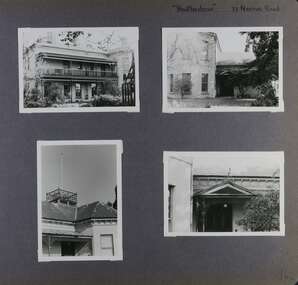
Album - Album page, Heatherbrae, 73 Neerim Road, Circa 1972
... Its social value rests on its ability to demonstrate a past lifestyle. trevor hart verandah chimneys decorative brackets cast iron columns return verandah garden 1870's intricate lacework neerim road booran road 1880's 1890's mansion john c. holland bluestone foundations italianate iron roofed balcony cast iron balustrade balcony ornamented pediment mosaic tiles cast iron lookout flagpole george f griffiths mcgowan tower caulfield heatherbrae cast iron work victorian style john holland porte-cochere porches lead lights george griffiths mansions stables councillors outbuildings Handwritten: "Heatherbrae" 73 Neerim Road [top right] / 142 [bottom right] Page 142 of Photograph Album with four photographs (three landscape, one portrait) of Heatherbrae on Neerim Road. ...This photograph is part of the Caulfield Historical Album 1972. This album was created in approximately 1972 as part of a project by the Caulfield Historical Society to assist in identifying buildings worthy of preservation. The album is related to a Survey the Caulfield Historical Society developed in collaboration with the National Trust of Australia (Victoria) and Caulfield City Council to identify historic buildings within the City of Caulfield that warranted the protection of a National Trust Classification. Principal photographer thought to be Trevor Hart, member of Caulfield Historical Society. Most photographs were taken between 1966-1972 with a small number of photographs being older and from unknown sources. All photographs are black and white except where stated, with 386 photographs over 198 pages.From Victorian Heritage Database citation for Heatherbrae HO46 https://vhd.heritagecouncil.vic.gov.au/places/120933 (as at 28/10/2020) "Heatherbrae" at 73 Neerim Road, Glenhuntly, is a substantial Victorian residential complex made up of two principal construction stages (pre 1876 and c. 1890) and outbuildings including stables. It is aesthetically, historically and socially significant. Its aesthetic value is demonstrated by the manner in which the two periods of construction survive, the earliest being of greater architectural interest on account of its tower and facade treatment, the latter phase adopting a common villa form. The importance of the complex is heightened by its intact state and surviving outbuildings. "Heatherbrae's" historical significance lies in its link with locally known business man and Shire of Caulfield councillor, John Charles Holland. Its social value rests on its ability to demonstrate a past lifestyle.Page 142 of Photograph Album with four photographs (three landscape, one portrait) of Heatherbrae on Neerim Road.Handwritten: "Heatherbrae" 73 Neerim Road [top right] / 142 [bottom right]trevor hart, verandah, chimneys, decorative brackets, cast iron columns, return verandah, garden, 1870's, intricate lacework, neerim road, booran road, 1880's, 1890's, mansion, john c. holland, bluestone foundations, italianate, iron roofed balcony, cast iron balustrade, balcony, ornamented pediment, mosaic tiles, cast iron lookout, flagpole, george f griffiths, mcgowan, tower, caulfield, heatherbrae, cast iron work, victorian style, john holland, porte-cochere porches, lead lights, george griffiths, mansions, stables, councillors, outbuildings -
 Glen Eira Historical Society
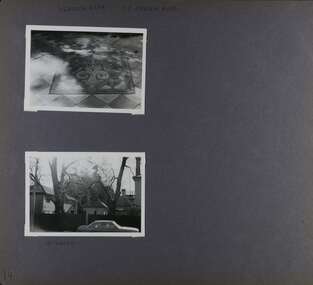
Album - Album page, Heatherbrae, 73 Neerim Road, Circa 1972
... Its social value rests on its ability to demonstrate a past lifestyle. trevor hart chimneys cast iron columns return verandah garden 1870's neerim road booran road 1880's 1890's mansion john c. holland bluestone foundations italianate iron roofed balcony cast iron balustrade mosaic tiles cast iron lookout flagpole george f griffiths residential villa caulfield heatherbrae victorian style cast iron work stables outbuildings john holland george griffiths councillors mansions Handwritten: "HEATHERBRAE" 73 NEERIM ROAD [top] / STABLE [under bottom photo] / 143 [bottom left] Page 143 of Photograph Album with 2 landscape photographs of Heatherbrae on Neerim Road - paving insignia and side view. ...This photograph is part of the Caulfield Historical Album 1972. This album was created in approximately 1972 as part of a project by the Caulfield Historical Society to assist in identifying buildings worthy of preservation. The album is related to a Survey the Caulfield Historical Society developed in collaboration with the National Trust of Australia (Victoria) and Caulfield City Council to identify historic buildings within the City of Caulfield that warranted the protection of a National Trust Classification. Principal photographer thought to be Trevor Hart, member of Caulfield Historical Society. Most photographs were taken between 1966-1972 with a small number of photographs being older and from unknown sources. All photographs are black and white except where stated, with 386 photographs over 198 pages.From Victorian Heritage Database citation for Heatherbrae HO46 https://vhd.heritagecouncil.vic.gov.au/places/120933 as at (28/10/2020) "Heatherbrae" at 73 Neerim Road, Glenhuntly, is a substantial Victorian residential complex made up of two principal construction stages (pre 1876 and c. 1890) and outbuildings including stables. It is aesthetically, historically and socially significant. Its aesthetic value is demonstrated by the manner in which the two periods of construction survive, the earliest being of greater architectural interest on account of its tower and facade treatment, the latter phase adopting a common villa form. The importance of the complex is heightened by its intact state and surviving outbuildings. "Heatherbrae's" historical significance lies in its link with locally known business man and Shire of Caulfield councillor, John Charles Holland. Its social value rests on its ability to demonstrate a past lifestyle. Page 143 of Photograph Album with 2 landscape photographs of Heatherbrae on Neerim Road - paving insignia and side view.Handwritten: "HEATHERBRAE" 73 NEERIM ROAD [top] / STABLE [under bottom photo] / 143 [bottom left]trevor hart, chimneys, cast iron columns, return verandah, garden, 1870's, neerim road, booran road, 1880's, 1890's, mansion, john c. holland, bluestone foundations, italianate, iron roofed balcony, cast iron balustrade, mosaic tiles, cast iron lookout, flagpole, george f griffiths, residential villa, caulfield, heatherbrae, victorian style, cast iron work, stables, outbuildings, john holland, george griffiths, councillors, mansions -
 Glen Eira Historical Society
Album - Album page, Neerim Road, Circa 1972
... Victorian Heritage database (as of 26/10/2021) HO45 Edenkillie https://vhd.heritagecouncil.vic.gov.au/places/35545 "Edenkillie" at 37 Neerim Road, Glenhuntly, is a substantial two storeyed polychrome brick villa, built for Frederick Jowett, municipal secretary, in 1890. It has aesthetic, historical and social significance. "Edenkillie's" aesthetic value derives from its survival as a substantially intact example of a common villa form expressed in polychrome brickwork. Its historical significance lies in its association with Frederick Jowett, Shire of Caulfield secretary and town clerk for over three decades. Its social significance is derived from the building's ability to demonstrate the kind of lifestyle ...This photograph is part of the Caulfield Historical Album 1972. This album was created in approximately 1972 as part of a project by the Caulfield Historical Society to assist in identifying buildings worthy of preservation. The album is related to a Survey the Caulfield Historical Society developed in collaboration with the National Trust of Australia (Victoria) and Caulfield City Council to identify historic buildings within the City of Caulfield that warranted the protection of a National Trust Classification. Principal photographer thought to be Trevor Hart, member of Caulfield Historical Society. Most photographs were taken between 1966-1972 with a small number of photographs being older and from unknown sources. All photographs are black and white except where stated, with 386 photographs over 198 pages. "Edenkillie" was the home of Frederick Jowett, Caulfield's shire secretary and town clerk from 1887 to 1921. The Outer Circle Railway's Oakleigh section opened 1890 and closed 1895. Victorian Heritage database (as of 26/10/2021) HO45 Edenkillie https://vhd.heritagecouncil.vic.gov.au/places/35545 "Edenkillie" at 37 Neerim Road, Glenhuntly, is a substantial two storeyed polychrome brick villa, built for Frederick Jowett, municipal secretary, in 1890. It has aesthetic, historical and social significance. "Edenkillie's" aesthetic value derives from its survival as a substantially intact example of a common villa form expressed in polychrome brickwork. Its historical significance lies in its association with Frederick Jowett, Shire of Caulfield secretary and town clerk for over three decades. Its social significance is derived from the building's ability to demonstrate the kind of lifestyle which a local government administrator could enjoy during the Land Boom.Page 145 of Photograph Album with four landscape photographs from Neerim Road: two photographs of No 37 and two of the Outer Circle Railway Reserve.Handwritten: Neerim Road [top left] / 37 NEERIM ROAD 1OCT 1972 [under top left photo] / 37 NEERIM RD 1 OCT 1972 [under top right photo] / OUTER CIRCLE RAILWAY RESERVE MURRUMBEENA [under bottom left photo] / 145 [bottom left]trevor hart, neerim road, murrumbeena, caulfield, edenkillie, glen huntly, polychrome brick, mansions, frederick jowett, town clerks, shire of caulfield, outer circle railway, railways, parks and reserves, outer circle railway reserve, cast iron work, verandahs, balconies -
 Glen Eira Historical Society
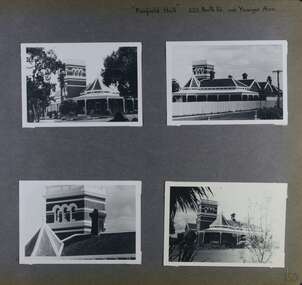
Album - Album page, Fairfield Hall, 225 North Road, Circa 1972
... It is historically important for the manner in which it demonstrates the lifestyle to which a businessman could aspire during the boom period. trevor hart jenny o'donnell verandah porch tower house tower mansion three storey tower bichromatic brickwork fairfield hall 1890's george jobbins conical roofed projecting corner bay conical roofed bay timber ceilings north road younger avenue frederick wallis curwan curwan italianate queen anne australian homestead arched windows curved windows columned parapet return verandah fairfield estate fairfield street slate roofed red brick polychrome bricks victorian style cast iron work caulfield south maniar house names Handwritten: "Fairfield Hall" 225 North Rd cnr Younger Ave [top right] / 150 [bottom right] Page 150 of Photograph Album with four landscape photographs of Fairfield Hall on North Road. ...This photograph is part of the Caulfield Historical Album 1972. This album was created in approximately 1972 as part of a project by the Caulfield Historical Society to assist in identifying buildings worthy of preservation. The album is related to a Survey the Caulfield Historical Society developed in collaboration with the National Trust of Australia (Victoria) and Caulfield City Council to identify historic buildings within the City of Caulfield that warranted the protection of a National Trust Classification. Principal photographer thought to be Trevor Hart, member of Caulfield Historical Society. Most photographs were taken between 1966-1972 with a small number of photographs being older and from unknown sources. All photographs are black and white except where stated, with 386 photographs over 198 pages. Glen Eira Heritage Management Plan 1996 by Andrew Ward https://www.gleneira.vic.gov.au/media/4777/heritage_mment_plan_vol_3b.pdf (as of 27/01/2021) - p90 An imposing single storeyed Italianate bi-chromatic brick villa with three staged tower surmounting the entry and facetted corner bay with conical roof. White tuckpointed black body bricks are relieved with reds and stucco work. Gable ends are fretted and there is a concave cast iron verandah to the principal elevations.Victorian Heritage Database (as of 27/10/2020) - HO49 225 North Road Caulfield South https://vhd.heritagecouncil.vic.gov.au/places/42426 "Maniar" (?) is a substantial late Victorian Italianate villa with tower and extensive grounds built for Frederick Curwan, an inspector of the National Bank, in 1890. It is aesthetically and historically important. An imposing single storeyed ltalianate bi-chromatic brick villa with three staged tower surmounting the entry and facetted comer bay with conical roof. White tuckpointed black body bricks are relieved with reds and stucco work. Gable ends are fretted and there is a concave cast iron verandah to the principal elevations. It is aesthetically important as an imposing and substantially intact villa residence demonstrating the changing architectural fashions of the 1890's, evidenced by the use of face brickwork and fretted gables in the Queen Anne manner. It is historically important for the manner in which it demonstrates the lifestyle to which a businessman could aspire during the boom period.Page 150 of Photograph Album with four landscape photographs of Fairfield Hall on North Road.Handwritten: "Fairfield Hall" 225 North Rd cnr Younger Ave [top right] / 150 [bottom right]trevor hart, jenny o'donnell, verandah, porch, tower house, tower, mansion, three storey tower, bichromatic brickwork, fairfield hall, 1890's, george jobbins, conical roofed projecting corner bay, conical roofed bay, timber ceilings, north road, younger avenue, frederick wallis curwan, curwan, italianate, queen anne, australian homestead, arched windows, curved windows, columned parapet, return verandah, fairfield estate, fairfield street, slate roofed, red brick, polychrome bricks, victorian style, cast iron work, caulfield south, maniar, house names -
 Glen Eira Historical Society
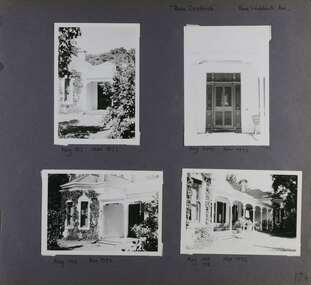
Album - Album page, Rose Craddock, Rose Craddock Avenue, Circa 1972
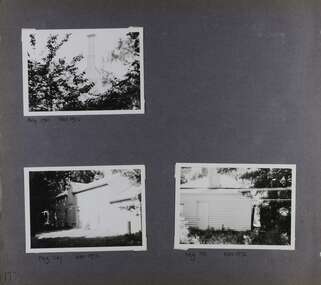
... From Victorian Heritage Database citation for H0589 Rosecraddock 4-10 Craddock Avenue and 2-8 Keverell CAULFIELD NORTH https://vhd.heritagecouncil.vic.gov.au/places/35279 as at (30/10/2020) "Rosecraddock" is regionally important as a surviving large villa from the early Victorian (1850's) period, offering insight into the lifestyles of the privileged in Caulfield at that time. ...From Victorian Heritage Database citation for H0589 Rosecraddock 4-10 Craddock Avenue and 2-8 Keverell CAULFIELD NORTH https://vhd.heritagecouncil.vic.gov.au/places/35279 as at (30/10/2020) "Rosecraddock" is regionally important as a surviving large villa from the early Victorian (1850's) period, offering insight into the lifestyles of the privileged in Caulfield at that time. ...This photograph is part of the Caulfield Historical Album 1972. This album was created in approximately 1972 as part of a project by the Caulfield Historical Society to assist in identifying buildings worthy of preservation. The album is related to a Survey the Caulfield Historical Society developed in collaboration with the National Trust of Australia (Victoria) and Caulfield City Council to identify historic buildings within the City of Caulfield that warranted the protection of a National Trust Classification. Principal photographer thought to be Trevor Hart, member of Caulfield Historical Society. Most photographs were taken between 1966-1972 with a small number of photographs being older and from unknown sources. All photographs are black and white except where stated, with 386 photographs over 198 pages. From Victorian Heritage Database citation for H0589 Rosecraddock 4-10 Craddock Avenue and 2-8 Keverell CAULFIELD NORTH https://vhd.heritagecouncil.vic.gov.au/places/35279 as at (30/10/2020) "Rosecraddock" is regionally important as a surviving large villa from the early Victorian (1850's) period, offering insight into the lifestyles of the privileged in Caulfield at that time. Its importance is enhanced through its long association with the Langdon family and, in particular, Henry Joseph Langdon, founder of H.J. Langdon and Company, China merchants. Victorian Heritage Database HO16 Rosecraddock, 2-8 Keverell Road & 4-10 Craddock Avenue Caulfield North https://vhd.heritagecouncil.vic.gov.au/places/35279 (as of 17/02/2021) A single storeyed stuccoed villa with west facing facade consisting of a parapeted and recessed central section with hipped slate roof and timber posted verandah with cast iron lace. Projecting pavilions have bayed windows and a secondary wing runs north with angled corners and prominent chimney stack. The front entrance is situated at the north end of the central section and is given emphasis by a small hip roof and false pediment to the verandah. Outbuildings include the timber stables with characteristic hay loft gablet and fretted barges to the south-east. Rear additions in brick and timber are of an early date and utilitarian in character. Also see https://vhd.heritagecouncil.vic.gov.au/places/277 for Significance Statement for the H0589 Victorian Heritage Register listing.Page 174 of Photograph Album with four photographs of Rose Craddock.Handwritten: "Rose Craddock" Rose Craddock Ave. top right] / Neg 197 Nov 1972 [under top left photo] / Neg 209 Nov 1972 [under top right photo] / Neg 196 Nov 1972 [under bottom left photo] / Neg 195 198 Nov 1972 [under bottom right photo] / 174 [bottom right]trevor hart, chimneys, porch, rose craddock, rosecraddock, ringwood, 1850's, henry joseph langdon, h.j. langdon, h.j. langdon and company, china merchants, rosecraddock place, slate roof, return verandah, decorative brackets, keverell road, caulfield north, early victorian style, protruding bay windows, cast iron work, rendered walls, entrances, mansions, craddock avenue -
 Glen Eira Historical Society
Album - Album page, Rose Craddock, Rose Craddock Avenue, Circa 1972
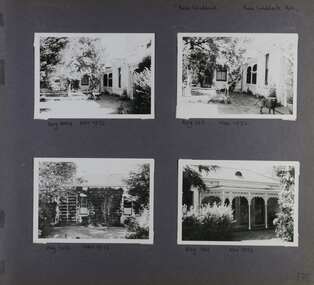
... From Victorian Heritage Database citation for Rosecraddock https://vhd.heritagecouncil.vic.gov.au/places/35279 as at (30/10/2020) City of Glen Eira Heritage Listing HO16 "Rosecraddock" is regionally important as a surviving large villa from the early Victorian (1850's) period, offering insight into the lifestyles of the privileged in Caulfield at that time. ...From Victorian Heritage Database citation for Rosecraddock https://vhd.heritagecouncil.vic.gov.au/places/35279 as at (30/10/2020) City of Glen Eira Heritage Listing HO16 "Rosecraddock" is regionally important as a surviving large villa from the early Victorian (1850's) period, offering insight into the lifestyles of the privileged in Caulfield at that time. ...This photograph is part of the Caulfield Historical Album 1972. This album was created in approximately 1972 as part of a project by the Caulfield Historical Society to assist in identifying buildings worthy of preservation. The album is related to a Survey the Caulfield Historical Society developed in collaboration with the National Trust of Australia (Victoria) and Caulfield City Council to identify historic buildings within the City of Caulfield that warranted the protection of a National Trust Classification. Principal photographer thought to be Trevor Hart, member of Caulfield Historical Society. Most photographs were taken between 1966-1972 with a small number of photographs being older and from unknown sources. All photographs are black and white except where stated, with 386 photographs over 198 pages. From Victorian Heritage Database citation for Rosecraddock https://vhd.heritagecouncil.vic.gov.au/places/35279 as at (30/10/2020) City of Glen Eira Heritage Listing HO16 "Rosecraddock" is regionally important as a surviving large villa from the early Victorian (1850's) period, offering insight into the lifestyles of the privileged in Caulfield at that time. Its importance is enhanced through its long association with the Langdon family and, in particular, Henry Joseph Langdon, founder of H.J. Langdon and Company, China merchants.There is a separate statement of significance at https://vhd.heritagecouncil.vic.gov.au/places/277 for H0589 Rosecraddock 2-8 KEVERELL ROAD and 4-10 CRADDOCK AVENUE CAULFIELD NORTH - Victorian Heritage RegisterPage 175 of Photograph Album with three photographs of Rose Craddock.Handwritten: Neg 190 Nov 1972 [under top left photo] / Neg 207 Nov 1972 [under bottom left photo] / Neg 191 Nov 1972 [under bottom right photo] / 175 [bottom left]trevor hart, chimneys, porch, rose craddock, rosecraddock, 1850's, henry joseph langdon, h.j. langdon, h.j. langdon and company, china merchants, rosecraddock place, slate roof, return verandah, decorative brackets, cast iron lacework, keverell road, caulfield north, early victorian style, mansions, protruding bay windows, cast iron work, outbuildings, craddock avenue, gardens -
 Glen Eira Historical Society
Album - Album page, Rose Craddock, Rose Craddock Avenue, Circa 1972
... From Victorian Heritage Database citation for HO16 Rosecraddock 4-10 Craddock Avenue and 2-8 Keverell CAULFIELD NORTH https://vhd.heritagecouncil.vic.gov.au/places/35279 as at (30/10/2020) - the City of Glen Eira Heritage listing "Rosecraddock" is regionally important as a surviving large villa from the early Victorian (1850's) period, offering insight into the lifestyles of the privileged in Caulfield at that time. ...From Victorian Heritage Database citation for HO16 Rosecraddock 4-10 Craddock Avenue and 2-8 Keverell CAULFIELD NORTH https://vhd.heritagecouncil.vic.gov.au/places/35279 as at (30/10/2020) - the City of Glen Eira Heritage listing "Rosecraddock" is regionally important as a surviving large villa from the early Victorian (1850's) period, offering insight into the lifestyles of the privileged in Caulfield at that time. ...This photograph is part of the Caulfield Historical Album 1972. This album was created in approximately 1972 as part of a project by the Caulfield Historical Society to assist in identifying buildings worthy of preservation. The album is related to a Survey the Caulfield Historical Society developed in collaboration with the National Trust of Australia (Victoria) and Caulfield City Council to identify historic buildings within the City of Caulfield that warranted the protection of a National Trust Classification. Principal photographer thought to be Trevor Hart, member of Caulfield Historical Society. Most photographs were taken between 1966-1972 with a small number of photographs being older and from unknown sources. All photographs are black and white except where stated, with 386 photographs over 198 pages. From Victorian Heritage Database citation for HO16 Rosecraddock 4-10 Craddock Avenue and 2-8 Keverell CAULFIELD NORTH https://vhd.heritagecouncil.vic.gov.au/places/35279 as at (30/10/2020) - the City of Glen Eira Heritage listing "Rosecraddock" is regionally important as a surviving large villa from the early Victorian (1850's) period, offering insight into the lifestyles of the privileged in Caulfield at that time. Its importance is enhanced through its long association with the Langdon family and, in particular, Henry Joseph Langdon, founder of H.J. Langdon and Company, China merchants. There is a separate statement of significance at https://vhd.heritagecouncil.vic.gov.au/places/277 for H0589 Rosecraddock 2-8 KEVERELL ROAD and 4-10 CRADDOCK AVENUE CAULFIELD NORTH - Victorian Heritage RegisterPage 176 of Photograph Album with four photographs of Rose Craddock.Handwritten: "Rose Craddock" Rose Craddock Ave. [top right] / Neg 204 Nov 1972 [under top left photo] / Neg 193 Nov 1972 [under top right photo] / Neg 208 Nov 1972 [under bottom left photo] / Neg 194 Nov 1972 [under bottom right photo] / 176 [bottom right]trevor hart, chimneys, porch, rose craddock, rosecraddock, 1850's, henry joseph langdon, h.j. langdon, h.j. langdon and company, china merchants, rosecraddock place, mansion, slate roof, return verandah, decorative brackets, cast iron lacework, keverell road, caulfield north, early victorian style, protruding bay windows, cast iron work, gardens, craddock avenue -
 Glen Eira Historical Society
Album - Album page, Seymour Road, Circa 1972
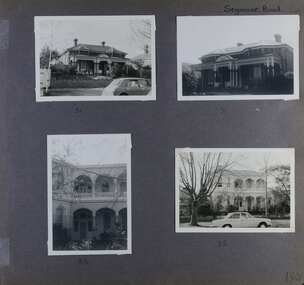
... Victorian period. Its historical value derives from its association with the Langdon family in Caulfield (compare "Rosecraddock", "Tarqua" and "Hengar"). Its social value derives from its ability to demonstrate a lifestyle ...This album was created in approximately 1972 as part of a project by the Caulfield Historical Society to assist in identifying buildings worthy of preservation. The album is related to a Survey the Caulfield Historical Society developed in collaboration with the National Trust of Australia (Victoria) and Caulfield City Council to identify historic buildings within the City of Caulfield that warranted the protection of a National Trust Classification. Principal photographer thought to be Trevor Hart, member of Caulfield Historical Society. Most photographs were taken between 1966-1972 with a small number of photographs being older and from unknown sources. All photographs are black and white except where stated, with 386 photographs over 198 pages. As at 22/08/2021, 51 Seymour Road is included in the HO179 Beemery Park Precinct which C204glen Amendment seeks to add to the Glen Eira Planning Scheme (amongst others). This is not yet finalised. Bellecourt (so named in 1989 according to Andrew Ward's Heritage Study) was originally named Beemery.Victorian Heritage Database HO62 Bellecourt 85 Seymour Road ELSTERNWICK https://vhd.heritagecouncil.vic.gov.au/places/35585 (as of 22/08/2021) "Beemery" at 85 Seymour Road, is an imposing ltalianate villa with arcaded asymmetrical facade built in 1891 for Charles Langdon. It has aesthetic, historical and social significance. Its aesthetic value rests with the facade which is highly representative of a not uncommon villa form of the late Victorian period. Its historical value derives from its association with the Langdon family in Caulfield (compare "Rosecraddock", "Tarqua" and "Hengar"). Its social value derives from its ability to demonstrate a lifestyle in late Victorian Caulfield.Page 190 of Photograph Album with four photographs of two different properties on Seymour Road.Handwritten: Seymour Road [top right] / 51 [under top left photo] / 51 [under top right photo] / 85 [under bottom left photo] / 85 [under bottom right photo] / 190 [bottom right]trevor hart, elsternwick, seymour road, late victorian, caulfield, beemery, bellecourt, house names, langdon family, charles langdon, cast iron work, verandahs, polychromatic brickwork, italianate style, arched balconies -
 Warrnambool and District Historical Society Inc.
Book, Allen & Unwin, Aboriginal Victorians, 2005
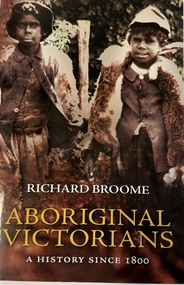
... lifestyle. This book is of interest because it gives an overview of the history of Victorian aboriginals and the information it contains gives us a greater understanding of aboriginal culture. ...This book by Richard Broome gives details on the history of aborigines in Victoria from 1800 to the present day. The sections on this book on the aborigines in the Warrnambool area, particularly those at the Framlingham Aboriginal Reserve, are of great local interest. The Framlingham settlement dates from the 1860s and is today an important centre for aboriginal culture and lifestyle. This book is of interest because it gives an overview of the history of Victorian aboriginals and the information it contains gives us a greater understanding of aboriginal culture. It is of interest also because of its sections on the Framlingham Aboriginal Reserve and this information will be useful to local researchers. This is a soft cover book of 467 pages. It has a brown cover with a photograph of two aboriginal boys on the front cover and yellow and white printing on the spine and back cover. The pages contain a preface, acknowledgements, four sections of printed material, recommended reading, endnotes and an index. The text contains many black and white photographs and sketches. framlingham aboriginal reserve, history of warrnambool -
Clunes Museum
Book, IAN D. CLARK. 1990, ABORIGINAL LANGUAGES AND CLANS, 1990
... VICTORIAN'S KOORIE COMMUNITIES. BOOK ABORIGINAL LANGUAGES AND CLANS Full bibliographic detail on Dhauwurd wurrung, Djab wurrung, Djadja wurrung, Djargurd wurrung; Gadubanud; Girai wurrung; Gulidjan Jardwadjarli; Wada wurrung, Wergaia; East Kulin, Woi wurrung, Daung wurrung, Bun wurrung, Ngurai-illam wurrung, Barababaraba, Wadiwadi; Wembawemba; history of contact and settlement; effects on tradition; disruption of lifestyle; clan/subsection information; research based solely on archival sources. ...Full bibliographic detail on Dhauwurd wurrung, Djab wurrung, Djadja wurrung, Djargurd wurrung; Gadubanud; Girai wurrung; Gulidjan Jardwadjarli; Wada wurrung, Wergaia; East Kulin, Woi wurrung, Daung wurrung, Bun wurrung, Ngurai-illam wurrung, Barababaraba, Wadiwadi; Wembawemba; history of contact and settlement; effects on tradition; disruption of lifestyle; clan/subsection information; research based solely on archival sources.A MONASH UNIVERSITY PUBLICATION IN GEOGRAPHYnon-fictionFull bibliographic detail on Dhauwurd wurrung, Djab wurrung, Djadja wurrung, Djargurd wurrung; Gadubanud; Girai wurrung; Gulidjan Jardwadjarli; Wada wurrung, Wergaia; East Kulin, Woi wurrung, Daung wurrung, Bun wurrung, Ngurai-illam wurrung, Barababaraba, Wadiwadi; Wembawemba; history of contact and settlement; effects on tradition; disruption of lifestyle; clan/subsection information; research based solely on archival sources.book, aboriginal languages and clans -
Koorie Heritage Trust
Book, Beveridge, Peter, The Aborigines of Victoria and Riverina, 1889
... Victorian town. He and his brother settled at 'Tyntynder' outside Swan Hill in 1845. His brother was killed by Aborigines. Brought into daily contact with the Aborigines of the area he gradually acquired their language and was permitted to learn much denied to other whites. By 1883 he had amassed a large amount of information which he put into the form of a Paper, read before the Royal Society of New South Wales. This paper may be regarded as the skeleton of the volume now publishjed. Victoria -- RiverinaAboriginals, Victoria -Swan Hill region. Lifestyle ...The author arrived in Victoria at the age of 10 years in 1839. His family gave their name to the Victorian town. He and his brother settled at 'Tyntynder' outside Swan Hill in 1845. His brother was killed by Aborigines. Brought into daily contact with the Aborigines of the area he gradually acquired their language and was permitted to learn much denied to other whites. By 1883 he had amassed a large amount of information which he put into the form of a Paper, read before the Royal Society of New South Wales. This paper may be regarded as the skeleton of the volume now publishjed. Victoria -- Riverina Aboriginals, Victoria -Swan Hill region. Lifestyle; customs and beliefs. Tyntynder(Vic) Aboriginals - Murray River tribes; language; magic; religion and practices.191p.; vocab. list; The author arrived in Victoria at the age of 10 years in 1839. His family gave their name to the Victorian town. He and his brother settled at 'Tyntynder' outside Swan Hill in 1845. His brother was killed by Aborigines. Brought into daily contact with the Aborigines of the area he gradually acquired their language and was permitted to learn much denied to other whites. By 1883 he had amassed a large amount of information which he put into the form of a Paper, read before the Royal Society of New South Wales. This paper may be regarded as the skeleton of the volume now publishjed. Victoria -- Riverina Aboriginals, Victoria -Swan Hill region. Lifestyle; customs and beliefs. Tyntynder(Vic) Aboriginals - Murray River tribes; language; magic; religion and practices.aboriginal australians -- victoria. | aboriginal australians -- murray river valley (n.s.w.-s.a.) -
Dandenong & District Historical Society
Book, The Lasting Impact of Waverley Riding School
... The Victorian Pony Club recognised Kay's ability to teach and she was invited to become Chief Instructor — a position she diligently filled for 25 years, A legendary figure, T it three Irving sisters certainly taught people to ride and care for horses, but it was their methods and lifestyle that was so significant and unique. ...The Victorian Pony Club recognised Kay's ability to teach and she was invited to become Chief Instructor — a position she diligently filled for 25 years, A legendary figure, T it three Irving sisters certainly taught people to ride and care for horses, but it was their methods and lifestyle that was so significant and unique. ...non-fiction -
 Ararat Gallery TAMA
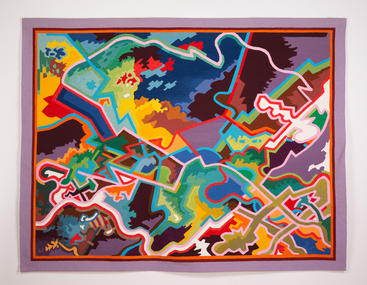
Mike Brown, Untitled (tapestry), 1982
... An artistic anarchist and polemicist, during his 30-year career he waged an unwavering war on art world conventions and sensibilities, critiquing mass culture, consumerism, sex, advertising, censorship, and embracing counterculture, alternative lifestyles and socialism.’ This tapestry was produced by the Victorian Tapestry Workshop Melbourne (now known as the Australian Tapestry Workshop) in South Melbourne, based on an original painting by Mike Brown. ...An artistic anarchist and polemicist, during his 30-year career he waged an unwavering war on art world conventions and sensibilities, critiquing mass culture, consumerism, sex, advertising, censorship, and embracing counterculture, alternative lifestyles and socialism.’ This tapestry was produced by the Victorian Tapestry Workshop Melbourne (now known as the Australian Tapestry Workshop) in South Melbourne, based on an original painting by Mike Brown. ...Mike Brown is known for his bold use of colour and graffiti-like imagery. Charles Nodrum Gallery describe Brown as ‘a unique leader of alternative avant guard art in Australia, and a true bohemian eccentric. An artistic anarchist and polemicist, during his 30-year career he waged an unwavering war on art world conventions and sensibilities, critiquing mass culture, consumerism, sex, advertising, censorship, and embracing counterculture, alternative lifestyles and socialism.’ This tapestry was produced by the Victorian Tapestry Workshop Melbourne (now known as the Australian Tapestry Workshop) in South Melbourne, based on an original painting by Mike Brown. We have exhibited the weaving and painting together to provide a comparison of how artwork is translated into tapestry. The large area of dark blue at the centre top of the tapestry demonstrates how the weavers have used colour changes in the yarn to depict the painterly shading in the original painting. The Australian Tapestry Workshop (ATW) is an international leader in contemporary tapestry, collaborating with a diverse range of international and Australian artists to produce exceptional handwoven works of art. Established in 1976, ATW have created over 500 tapestries in creative collaborations for nearly 50 years, promoting innovation and excellence in tapestry weaving and textile art. -
 Ararat Gallery TAMA
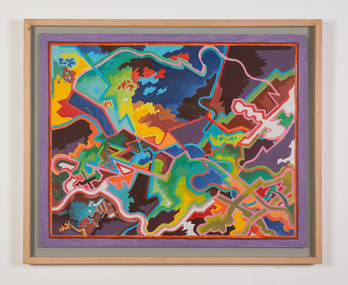
Mike Brown, Untitled (Sketch for tapestry), 1982
... An artistic anarchist and polemicist, during his 30-year career he waged an unwavering war on art world conventions and sensibilities, critiquing mass culture, consumerism, sex, advertising, censorship, and embracing counterculture, alternative lifestyles and socialism.’ This tapestry was produced by the Victorian Tapestry Workshop Melbourne (now known as the Australian Tapestry Workshop) in South Melbourne, based on an original painting by Mike Brown. ...An artistic anarchist and polemicist, during his 30-year career he waged an unwavering war on art world conventions and sensibilities, critiquing mass culture, consumerism, sex, advertising, censorship, and embracing counterculture, alternative lifestyles and socialism.’ This tapestry was produced by the Victorian Tapestry Workshop Melbourne (now known as the Australian Tapestry Workshop) in South Melbourne, based on an original painting by Mike Brown. ...Mike Brown is known for his bold use of colour and graffiti-like imagery. Charles Nodrum Gallery describe Brown as ‘a unique leader of alternative avant guard art in Australia, and a true bohemian eccentric. An artistic anarchist and polemicist, during his 30-year career he waged an unwavering war on art world conventions and sensibilities, critiquing mass culture, consumerism, sex, advertising, censorship, and embracing counterculture, alternative lifestyles and socialism.’ This tapestry was produced by the Victorian Tapestry Workshop Melbourne (now known as the Australian Tapestry Workshop) in South Melbourne, based on an original painting by Mike Brown. We have exhibited the weaving and painting together to provide a comparison of how artwork is translated into tapestry. The large area of dark blue at the centre top of the tapestry demonstrates how the weavers have used colour changes in the yarn to depict the painterly shading in the original painting. The Australian Tapestry Workshop (ATW) is an international leader in contemporary tapestry, collaborating with a diverse range of international and Australian artists to produce exceptional handwoven works of art. Established in 1976, ATW have created over 500 tapestries in creative collaborations for nearly 50 years, promoting innovation and excellence in tapestry weaving and textile art. -
Vision Australia
Audio (item) - Sound recording, Royal Victorian Institute for the Blind, Around the Institute: April 17, 2001
... April 17: Research into the effects of diabetes on women’s lifestyle – Georgina Kelly, Changes to a Boorondara bylaw for shopfronts – Graeme Craig. Royal Victorian Institute for the Blind Radio shows 1 digital sound file in WAV format Around the Institute: April 17, 2001 Audio Sound recording Royal Victorian Institute for the Blind ...Around the Institute was a weekly program designed to keep clients and staff informed of events, activities and thoughts relating to low vision and blindness. It consisted of interviews undertaken by Jo Matthews, with sound engineer Ed Gamble, designed to inform, educate and explore on a variety of topics. April 17: Research into the effects of diabetes on women’s lifestyle – Georgina Kelly, Changes to a Boorondara bylaw for shopfronts – Graeme Craig. royal victorian institute for the blind, radio shows -
 Port Fairy Historical Society Museum and Archives
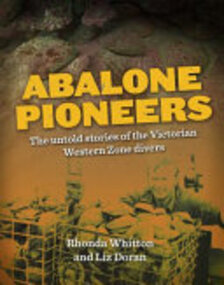
Book, Gelding Street Press, Abalone pioneers : the Untold Stories of the Victorian Western Zone Divers, 2019
... The book chronicles the amateur fisherman of the 1950s and the hazy crazy tribe of ‘scruffy longhairs’, who were attracted by the hedonistic lifestyle and fantastic profits in the 1960s, to the professional enterprise of today. It charts the development of the Victorian Western Abalone Divers Association and it role managing and protecting the Victorian Western Zone’s resources, and explores the successful diver-led commercial processors. ...“Abalone Pioneers is the Australian story of the divers, deckhands, researchers and processors who established and developed the zone's abalone industry. The book chronicles the amateur fisherman of the 1950s and the hazy crazy tribe of ‘scruffy longhairs’, who were attracted by the hedonistic lifestyle and fantastic profits in the 1960s, to the professional enterprise of today. It charts the development of the Victorian Western Abalone Divers Association and it role managing and protecting the Victorian Western Zone’s resources, and explores the successful diver-led commercial processors. Illustrated with over 100 historical photographs and featuring over 50 interviews, Abalone Pioneers is an exuberant and fascinating account of the establishment of one of Australia’s valuable but little-known fisheries.”--Back cover.224 pages, 19 pages of plates : illustrations (chiefly colour), colour facsimiles, colour portraits ; 27 cm.non-fiction“Abalone Pioneers is the Australian story of the divers, deckhands, researchers and processors who established and developed the zone's abalone industry. The book chronicles the amateur fisherman of the 1950s and the hazy crazy tribe of ‘scruffy longhairs’, who were attracted by the hedonistic lifestyle and fantastic profits in the 1960s, to the professional enterprise of today. It charts the development of the Victorian Western Abalone Divers Association and it role managing and protecting the Victorian Western Zone’s resources, and explores the successful diver-led commercial processors. Illustrated with over 100 historical photographs and featuring over 50 interviews, Abalone Pioneers is an exuberant and fascinating account of the establishment of one of Australia’s valuable but little-known fisheries.”--Back cover.western abalone divers association (victoria) -- history., divers -- victoria, western -- biography., abalone fisheries -- victoria, western -- history., abalone industry -- victoria, fishers -- victoria, abalones., fisheries -- victoria., sports & active outdoor recreation., local history., abalones -- victoria, western., abalone industry -- australia., deep diving., fisheries -- australia -- victoria., victoria, victoria., australian, book -
 Wodonga & District Historical Society Inc
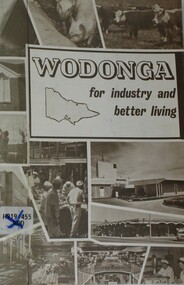
Booklet - Wodonga For Industry and Better Living, Wodonga Development Committee, c1960 - 1970
... Wodonga promotions Albury Wodonga Wodonga Development Committee This publication was produced to promote the benefits of Wodonga for lifestyle and decentralised industry. In 1973 the Commonwealth, New South Wales and Victorian Governments agreed to the Albury-Wodonga Development Scheme, for a decentralised growth area. ...This publication was produced to promote the benefits of Wodonga for lifestyle and decentralised industry. In 1973 the Commonwealth, New South Wales and Victorian Governments agreed to the Albury-Wodonga Development Scheme, for a decentralised growth area. Before then the Wodonga Development Committee and the Shire Council promoted the town’s industrialisation. This booklet was published to encourage new investment in the Wodonga area prior to the convening of the Albury-Wodonga Development Scheme.A small booklet of 18 pages printed in black and white, including photos and promotional material about Wodonga and District.This publication was produced to promote the benefits of Wodonga for lifestyle and decentralised industry. In 1973 the Commonwealth, New South Wales and Victorian Governments agreed to the Albury-Wodonga Development Scheme, for a decentralised growth area. Before then the Wodonga Development Committee and the Shire Council promoted the town’s industrialisation. This booklet was published to encourage new investment in the Wodonga area prior to the convening of the Albury-Wodonga Development Scheme.wodonga promotions, albury wodonga, wodonga development committee -
 Emerald Museum & Nobelius Heritage Park
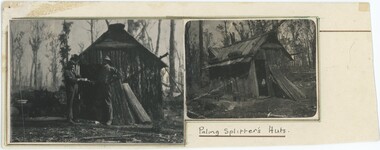
Photograph, Paling Splitter's Huts, Late 19th/Early 20th Century
... Timber splitters were vital to the construction of most 19th century Victorian towns and settlements, Emerald included; this photograph captures the lifestyle of such workers,. potentially from this area where much of Melbourne's timber supply originated. ...The men in the larger photograph may be the eponymous Paling Splitters. Timber splitters were vital to the construction of buildings across colonial-era Victoria, cutting palings and other materials from harvested local timber. They spread rapidly eastwards from the 1860s as demand for wood grew, endangering favoured tree varieties like the mountain ash and messmate from camps in rural areas with little to no regulation. Finally after an 1897-1901 Royal Commission, in 1907 the State Forest Department was created to regulate splitters. Timber splitting was replaced over the first half of the 20th century by the introduction of steam powered sawmills deep in the forest, connected to the market by small timber tramways. This photograph is likely from the late 19th or early 20th century.Timber splitters were vital to the construction of most 19th century Victorian towns and settlements, Emerald included; this photograph captures the lifestyle of such workers,. potentially from this area where much of Melbourne's timber supply originated.This item is a collage of two black and white photographs adhered to a cream piece of card. The card has an underlined annotation in the bottom right and no other writing. The photographs are bordered by a black line and a green line, both apparently ruled but handdrawn. The reverse of the card is blank besides its museum accession number. The smaller, rightmost photograph is an angled shot on a small hut built of wooden planks, with an angled roof and small doorframe; the background shows mid-density tree coverage filling the sky. The larger, leftmost photograph shows the same hut from an angle looking directly at the door, with two men standing in front of it and shaking hands."Paling Splitter's Huts."forestry, plants, industry
