
Showing 43 items matching "victorian terraces"
-
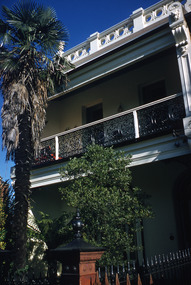 Robin Boyd Foundation
Slide, Robin Boyd
... Colour slide in a mount. Victorian terrace house, Australia...slide robin boyd 14 Colour slide in a mount. Victorian terrace house, Australia Slide Robin Boyd ...Colour slide in a mount. Victorian terrace house, Australia14slide, robin boyd -
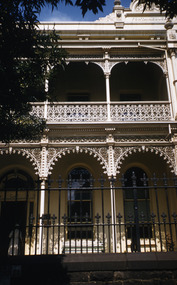 Robin Boyd Foundation
Slide, Robin Boyd
... Colour slide in a mount. Victorian terrace houses, Australia...slide robin boyd Mount Made in Australia / 1 / Encircled 12 (Handwritten) Colour slide in a mount. Victorian terrace houses, Australia Slide Robin Boyd ...Colour slide in a mount. Victorian terrace houses, AustraliaMount Made in Australia / 1 / Encircled 12 (Handwritten)slide, robin boyd -
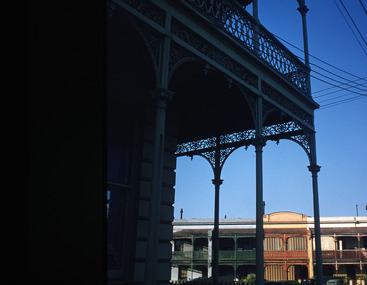 Robin Boyd Foundation
Slide, Robin Boyd
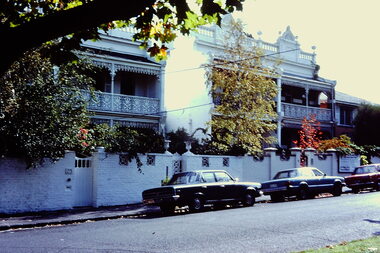
... Colour slide in a mount. Victorian terraces, unknown location, Australia...slide robin boyd 12 / First (Handwritten) Colour slide in a mount. Victorian terraces, unknown location, Australia Slide Robin Boyd ...Colour slide in a mount. Victorian terraces, unknown location, Australia12 / First (Handwritten)slide, robin boyd -
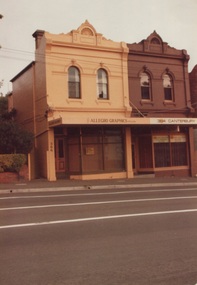 Surrey Hills Historical Society Collection
Photograph, 386-384 Canterbury Road Surrey Hills
... ...victorian terraces... style allegro graphics william lennox 386-384 canterbury road shops victorian terraces canterbury road surrey hills john woodhead Heritage Overlay Union Road Commercial Precinct 2011 heritage overlays Back of photo in green pencil "CANTERBURY RD SURREY HILLS / EAST OF UNION RD" A colour photo with rounded corners taken from slightly diagonally across Canterbury Road from 2 double-storey Victorian style buildings. ...The donor, Bob Lennox believed that these were the work of his great-grandfather William Lennox and his builders. William and his son were plasterers and often used the shell motif which is seen on the pediment of the buildings. These two terraces were part of the retail development of five terraces along Canterbury Road which were constructed on land subdivided from the parcel of land originally owned by John Woodhead. The Alan Holt register of properties in 3127 gives a list of proprietors / residents at the beginning of each decade from 1890-1980. There are also earlier photos depicting these buildings in the collection. These buildings have been included in the City of Boroondara Heritage Overlay Union Road Commercial Precinct 2011, Surrey Hills.These buildings were amongst the first commercial buildings serving the area of Surrey Hills and followed the extension of the railway from Camberwell in 1883.A colour photo with rounded corners taken from slightly diagonally across Canterbury Road from 2 double-storey Victorian style buildings. Both have the decorative shell motif in the pediment.Back of photo in green pencil "CANTERBURY RD SURREY HILLS / EAST OF UNION RD"victorian style, allegro graphics, william lennox, 386-384 canterbury road, shops, victorian terraces, canterbury road, surrey hills, john woodhead, heritage overlay union road commercial precinct 2011, heritage overlays -
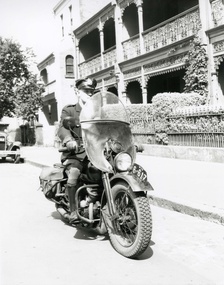 Victoria Police Museum
Photograph (police motorcycle)
... William Nelson on a Harley Davidson, registration number 6-617, in front of a Victorian terrace house. Circa 1948...Photo taken in McKenzie Street around corner from Police HQ police vehicles; wireless patrol; motor transport branch; motor transport section; motor cycle branch; police motorcycles; harley davidson motorcycle; nelson, william William Nelson on a Harley Davidson, registration number 6-617, in front of a Victorian terrace house. Circa 1948 Photograph (police motorcycle) ...Photo taken in McKenzie Street around corner from Police HQWilliam Nelson on a Harley Davidson, registration number 6-617, in front of a Victorian terrace house. Circa 1948police vehicles; wireless patrol; motor transport branch; motor transport section; motor cycle branch; police motorcycles; harley davidson motorcycle; nelson, william -
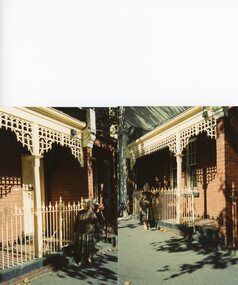 Ithacan Historical Society
Photograph, Anthi Chilianis - House no. 6, 1994
... A coloured photograph of two photos which were scanned together of a re brick Victorian terrace house with a verandah at street level. ...She lived here from1930 for six years, with her sister-in-law, Katerini Black (Koutsouvelis) nee Chilianis . chillianis A coloured photograph of two photos which were scanned together of a re brick Victorian terrace house with a verandah at street level. ...This was Anthi Chilianis' sixth house located in Queensberry Street, North Melbourne. She lived here from1930 for six years, with her sister-in-law, Katerini Black (Koutsouvelis) nee Chilianis .A coloured photograph of two photos which were scanned together of a re brick Victorian terrace house with a verandah at street level. A lady is standing by the verandah.chillianis -
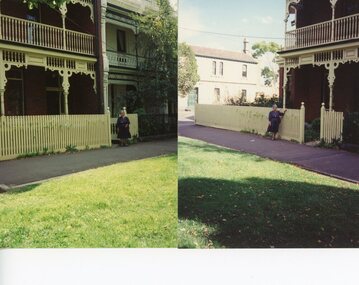 Ithacan Historical Society
Photograph, Anthi Chilianis - House no. 1, 1994
... A coloured photograph showing 2 views of a double storey Victorian terrace house taken from opposite sides. ...A coloured photograph showing 2 views of a double storey Victorian terrace house taken from opposite sides. ...Anthi Chilianis is standing outside the first house her family lived in when they arrived from Greece in 1921. It was in Royal Parade, Parkville opposite the University of Melbourne. Her family shared the house with Olga Black's parents, Efstathia (Toula) and Constantine Mavrokefalos, until they moved into their own home.In the early days of arrival in Melbourne many Ithacan families shared homes or took Ithacan boarders. A coloured photograph showing 2 views of a double storey Victorian terrace house taken from opposite sides. A lady is standing outside the house in both photographs. -
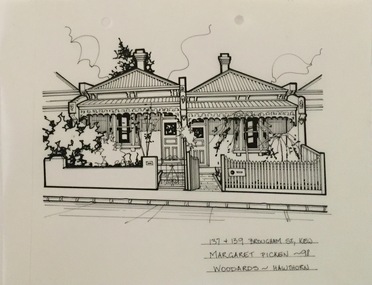 Kew Historical Society Inc
Drawing - Property Illustration, Margaret Picken, 137 & 139 Brougham Street, Kew, 1998
... Two single-fronted brick Victorian terraces houses; part of a row of five. ...The year in which the drawing was created is also a valuable record for house historians, as a number of the properties depicted have either been altered since that date or demolished. artist -- margaret picken 1950- architectural drawings -- houses -- kew (vic.) 137 & 139 brougham street -- kew (vic.) 137 & 139 BROUGHAM ST., KEW / MARGARET PICKEN '98 / WOODARDS ~ HAWTHORN Two single-fronted brick Victorian terraces houses; part of a row of five. ...After training as a Cartographic Draftsman within the mining industry, I worked as a property illustrator for real estate firms in the eastern suburbs of Melbourne for 23 years from 1983. I initially photographed houses with a Polaroid camera and made a 'thumbnail' sketch while there. The photos were used to scale off a sketch in pencil and then that sketch was overlaid with drafting film and the 'pen and ink' completed. The pens I used were the Rotring ‘Rapidigraph’ drafting pens. The ink was also made by Rotring (German).The film was ‘Rapidraw’, polyester drafting film, double matte. It takes a very fine line and doesn’t bleed. As well as house sketches, there were often floor plans and site plans ordered. Aerial sketches were ordered when the property needed an overall view. (Margaret Picken, 2020)This drawing is one of a series created by Margaret Picken for a range of real estate agents in Melbourne between c.1983 and c.2005. Each work is signed and dated by the artist.Gift of Margaret Picken, 2020Two single-fronted brick Victorian terraces houses; part of a row of five. Extant in August 2020 but with alterations including a first floor addition since the drawing was made. The pen and ink drawing on drafting film was made by Margaret Picken in 1998.137 & 139 BROUGHAM ST., KEW / MARGARET PICKEN '98 / WOODARDS ~ HAWTHORNartist -- margaret picken 1950-, architectural drawings -- houses -- kew (vic.), 137 & 139 brougham street -- kew (vic.) -
 Kew Historical Society Inc
Slide - Terraces, Gellibrand Street, 1979
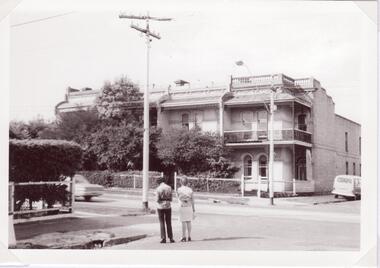
... terraces...victorian architecture...The slides represent a snapshot in time of built architecture in Kew, much of which has changed in the forty-plus period since they were created. terraces -- Gellibrand street -- kew (vic.) two-storey terraces victorian architecture 35mm colour transparency (slide) of the pair of two storey terraces in Gellibrand Street, Kew. ...One of a group of slides taken by members of the Society of built heritage in Kew in 1979-80. The selection of subject matter reflects the priorities of the period. The colour of some slides has degraded.The slides represent a snapshot in time of built architecture in Kew, much of which has changed in the forty-plus period since they were created. 35mm colour transparency (slide) of the pair of two storey terraces in Gellibrand Street, Kew. The photo was developed in May 1979.terraces -- gellibrand street -- kew (vic.), two-storey terraces, victorian architecture -
 Glen Eira Historical Society
Photograph - Hawthorn Road, 23-29, Caulfield
... Black and white photograph of four two-story Victorian terrace houses at 23-29 Hawthorn Road Caulfield. ...Black and white photograph of four two-story Victorian terrace houses at 23-29 Hawthorn Road Caulfield. ...Black and white photograph of four two-story Victorian terrace houses at 23-29 Hawthorn Road Caulfield. Photo dated 03/09/1972.hawthorn road, caulfield, terrace houses, houses, architectural features, streetscape -
 St Kilda Historical Society
Photograph, Hile Terrace, 26-27-28 Esplanade, St Kilda
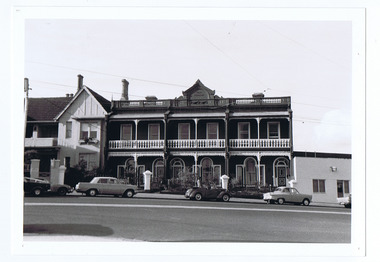
... It maintains all the features of late Victorian terraces with cast iron balcony and posts...It maintains all the features of late Victorian terraces with cast iron balcony and posts William Pitt Historic buildings St Kilda - terraces hand written: terraces in Upper Esplanade opposite Palais Theatre, stamped: Graeme S. ...Hile Terrace is a group of 3 identical terraces designed by the highly regarded architect William Pitt in 1885. It is located on the Esplanade. It maintains all the features of late Victorian terraces with cast iron balcony and postsblack and white photograph, unmounted, good conditionhand written: terraces in Upper Esplanade opposite Palais Theatre, stamped: Graeme S. Breydon, 204 Carlisle St, Balaclava, 3183 phone 94 2886william pitt, historic buildings, st kilda - terraces -
 Surrey Hills Historical Society Collection
Photograph, 'Maitland', 1 Bedford Avenue, Surrey Hills, c 1900, 1900
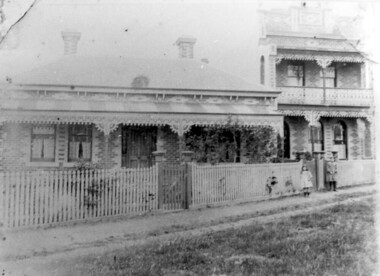
... Next door at No 3 is a double-storey Victorian terrace with a similar fence and building materials. ...Next door at No 3 is a double-storey Victorian terrace with a similar fence and building materials. ...Maitland' was built in 1889 for Thomas Zeplin, who was a Professor of Music. He owned all the land bound by Union Road, Wilson and Montrose Streets and the railway line. 1 Bedford Avenue stayed in family ownership until purchased by Camberwell Council in 1986, initially for a car park. However it was renovated to become part of Surrey Hills Neighbourhood Centre. It was opened on 23 November 1990. No 3 Bedford Avenue was built for Thomas Zeplin's daughter and named 'Mervyl' or 'Merryl'. Mrs Brodecky (donor) was the great-granddaughter of Thomas Zeplin. The 2 girls are granddaughters of Thomas Zeplin. Electoral roll information: 1972 & 1977: Albert Vojteck Brodecky, manager, 1 Bedford Avenue. 1977: Ray Nanette Brodecky. There are 2 copies. Thomas had this built for his son and family. The house was occupied by his family, though sometimes rented out. His great-grand-daughter Mrs. A. Brodecky sold to the Camberwell Council in 1986. This was the only surviving photo in the family after the fire. Courtesy: Mrs. A. BrodeckyBlack and white photo of 2 houses taken from the street front. On the LHS is a Victorian double-fronted single-storey villa of Hawthorn brick construction, with wrought iron lacework to the veranda, slate roof and picket fence, with an established garden. Next door at No 3 is a double-storey Victorian terrace with a similar fence and building materials. There are 2 young girls standing in front between the properties.maitland, bedford avenue, 1900, surrey hills neighbourhood centre, victorian style, mervyl, merryl, mr thomas zeplin, mrs nanette brodecky, mr albert vojteck brodecky -
 Melbourne Tram Museum
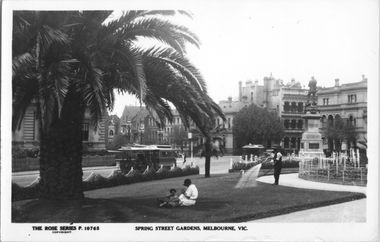
Postcard, Rose Stereograph Co, "Spring Street Gardens, Melbourne", c1928
... Fitzroy" the second one "Spring Street," A lady is sitting on the lawn in Gordon Reserve while a gardener is watering the lawns. Note the Victorian terrace house on the corner of Collins and Spring streets to the right of General Charles George Gordon statue, this was demolished around 1928 to make way for Alcaston House built in 1929. ...Fitzroy" the second one "Spring Street," A lady is sitting on the lawn in Gordon Reserve while a gardener is watering the lawns. Note the Victorian terrace house on the corner of Collins and Spring streets to the right of General Charles George Gordon statue, this was demolished around 1928 to make way for Alcaston House built in 1929. ...Rose Series postcard P.10765 titled "Spring Street Gardens, Melbourne", looking southwest. Has two cable trams in Macarthur Street, the first one with a destination of "Nth. Fitzroy" the second one "Spring Street," A lady is sitting on the lawn in Gordon Reserve while a gardener is watering the lawns. Note the Victorian terrace house on the corner of Collins and Spring streets to the right of General Charles George Gordon statue, this was demolished around 1928 to make way for Alcaston House built in 1929. Yields information about Spring St and Macarthur St late 1920'sPostcard - printed real photograph with Rose Stereograph Co. name on the rear.Has in pencil on rear "KM-M-080"trams, tramways, cable trams, spring st, macarthur st, rose series -
 Glen Eira Historical Society
Document - Edward Street, Elsternwick
... Terrace houses... Morton Street... Shoobra Road... Prentice Street... Glen Eira Road... Occupations... Architectural styles... Victorian...Three photocopied pages from Andrew Ward’s Caulfield Conservation Study in 1994 of a row of twelve single storey Victorian style terrace houses at 2-24 Edward Street, Elsternwick. ...Three photocopied pages from Andrew Ward’s Caulfield Conservation Study in 1994 of a row of twelve single storey Victorian style terrace houses at 2-24 Edward Street, Elsternwick. ...Three photocopied pages from Andrew Ward’s Caulfield Conservation Study in 1994 of a row of twelve single storey Victorian style terrace houses at 2-24 Edward Street, Elsternwick. Description and brief history of the development of the properties are provided. The study also includes a statement of the historical and architectural significance of the properties and a photograph (117mm x 154mm) of the exteriors of the houses.ward andrew, edward street, elsternwick, cockill harry, corkill harry, caulfield conservation study, county of bourke building society, terrace houses, morton street, shoobra road, prentice street, glen eira road, occupations, architectural styles, victorian style -
 Bendigo Historical Society Inc.
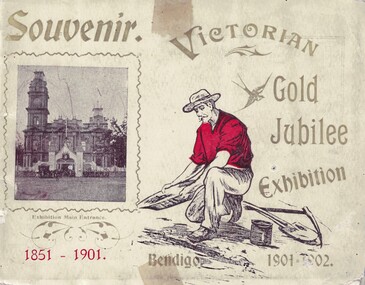
Souvenir - Views of Bendigo, 1902
... Exhibition was held on the site of the present Bendigo Library between Hargreaves St and Lyttleton Terrace. * 8662.1a Victorian Gold Jubilee Exhibition - Front Cover: Printed 'Souvenir', 'Bendigo 1901-1902'; a photo of the Entrance to the exhibition beside the Town Hall. * 8662.1b Victorian Gold Jubilee Exhibition - Inside Front Cover - Page 1 of 29. ...Recently a City of Greater Bendigo staff member used both these volumes to write a detailed report about this monument, for Heritage Victoria. history bendigo victorian gold jubilee exhibition bendigo Carol Holsworth Collection Carol Holsworth Collection: Small book Souvenir, 29 pages plus cover; each page. has a photo of the exhibit. Exhibition was held on the site of the present Bendigo Library between Hargreaves St and Lyttleton Terrace. * 8662.1a Victorian Gold Jubilee Exhibition - Front Cover: Printed 'Souvenir', 'Bendigo 1901-1902'; a photo of the Entrance to the exhibition beside the Town Hall. * 8662.1b Victorian Gold Jubilee Exhibition - Inside Front Cover - Page 1 of 29. ...The Victorian Gold Jubilee Exhibition, held at Bendigo from 13 November 1901 to 14 May 1902. The courts were numbered from one, or had titles like “Machinery”, “Agricultural”, “Naval & Military Court” and “Art”. The female visitors to the Exhibition were able to view exhibits deemed suitable for the fairer sex and located within their own “Women’s Court”. There were exhibits such as “Parasols & Umbrellas”, cotton and haberdashery from Manchester and Staffordshire, “Corsets & Embroideries” from Paris. The most valuable exhibits were mining machinery such as Taylor Horsfield’s £850 “Air Compressor & Rock Borer”. “Bohemian Glassware” brought down from Sydney was valued at £600. The profits from this Exhibition were used to fund the sculpture known as the Gold Monument, which still gazes along Pall Mall (from the McCrae Street end). The Exhibition’s Cash Book shows payments, which totalled £1160, were made to then up and coming sculptor C.D.Richardson. Recently a City of Greater Bendigo staff member used both these volumes to write a detailed report about this monument, for Heritage Victoria.Carol Holsworth Collection: Small book Souvenir, 29 pages plus cover; each page. has a photo of the exhibit. Exhibition was held on the site of the present Bendigo Library between Hargreaves St and Lyttleton Terrace. * 8662.1a Victorian Gold Jubilee Exhibition - Front Cover: Printed 'Souvenir', 'Bendigo 1901-1902'; a photo of the Entrance to the exhibition beside the Town Hall. * 8662.1b Victorian Gold Jubilee Exhibition - Inside Front Cover - Page 1 of 29. Portraits of Exhibition President S.H. Cowen esq.; and G.V. Allen esc., General Secretary. Photos by W.H. Robinson publisher. Printed by T. Cambridge, Market Square Bendigo. * 8662.1c Victorian Gold Jubilee Exhibition - Page 1 of 29 The Governor General at the Exhibition. Photo of the crowd, police, trooper and horse drawn vehicles. * 8662.1d Victorian Gold Jubilee Exhibition - Page 2 of 29 Procession Passing the Fountain, Pall Mall. The crowd and horse drawn vehicles. *8662.1e Victorian Gold Jubilee Exhibition - Page 3 of 29 James Martin and Co's Exhibit. James Martin & Co was an Australian engineering company which progressed from making agricultural equipment to making railway locomotives. * 8662.1f Victorian Gold Jubilee Exhibition - Page 4 of 29 Old Pioneers. Elderly gentlemen on foot and carriage - at the Bendigo Railway Station. * 8662.1g Victorian Gold Jubilee Exhibition - Page 5 of 29 Robert Harper and Company's Exhibit. From Trove - The Brisbane Courier 25 Aug 1891: One of the best known firms in the Southern hemisphere is Messrs. Robert Harper and Co , tea importers, coffee, rice, and spice merchants and manufacturers Then productions circle this continent, and every thrifty housewife is familiar with their Empire tens, their Star' brand of goods, then oatmeal, wheatmeal, and other breakfast table luxuries The headquarters of the firm are placed at Port Melbourne, and the manufactory there occupies over an acre of ground, while the mills at Sydney and Adelaide are as great in proportion It is eight cars since the firm opened business in this colony. The step was taken with much confidence, the principals the firm being quite attracted. * 8662.1h Victorian Gold Jubilee Exhibition - Page 6 of 29 The Electric Tram * 8662.1i Victorian Gold Jubilee Exhibition - Page 7 of 29 G. Weymouth Proprietary Ltd. The business of G. Weymouth & Co was founded in 1898 by George Andrew Philip Weymouth, who began operating from a small workshop on City Road, South Melbourne (opposite Princes Bridge). An early advertisement describes the firm's activities at this time as being 'makers of dynamos, (electric) motors, x-ray apparatus and electrical instruments, &c' together with 'repairs to every class of electrical work'. * 8662.1j Victorian Gold Jubilee Exhibition - Page 8 of 29 The Exhibition Fernery * 8662.1k Victorian Gold Jubilee Exhibition - Page 9 of 29 Cohn Bros'. Exhibit. In 1857 at the height of the gold rush, with people pouring into Central Victoria from all over the world, three brothers from Denmark – Moritz, Julius and Jacob Cohn – founded a small cordial factory in the booming town of Bendigo. They went on to build an empire and, through introducing lager, which is served cold, to the country, changed the drinking preferences of Australians. * 8662.1l Victorian Gold Jubilee Exhibition - Page 10 of 29 Ornamental Lake in the Exhibition Grounds * 8662.1m Victorian Gold Jubilee Exhibition - Page 11 of 29 Australian Explosives and Chemical Co.'s Exhibit. The Australian Explosives and Chemical Company began manufacturing explosives in Melbourne's outskirts (the area now known as Deer Park) in 1875. In 1897 the Company was purchased by Nobel, forming Nobel (Australasia) Ltd. * 8662.1n Victorian Gold Jubilee Exhibition - Page 12 of 29 Tasmanian Court * 8662.1o Victorian Gold Jubilee Exhibition - Page 13 of 29 N. Guthridge's Limited Exhibit. Guthridge sold a variety of mining supplies and equipment; also 'Rackarock' which was used to fill the mining drill holes before blasting. * 8662.1p Victorian Gold Jubilee Exhibition - Page 14 of 29 Navel and Military Court (LARGE File) * 8662.1q Victorian Gold Jubilee Exhibition - Page 15 of 29 Women's Court * 8662.1r Victorian Gold Jubilee Exhibition - Page 16 of 29 T. J. Connelly and Co's Exhibit. T.J. Connelly an American immigrant came to the Bendigo goldfields where he later established Connelly’s Tin Shop on the corner of High and Forest Streets 1853. Connelly was named after Thomas Jefferson the famous statesman who wrote much of the American Declaration of Independence in 1776 and became the third United States President. Connelly, along with other prominent citizens of the time established Bendigo’s first Fire Brigade, Mechanics Institute. * 8662.1s Victorian Gold Jubilee Exhibition - Page 17 of 29 The Potter's Wheel * 8662.1t Victorian Gold Jubilee Exhibition - Page 18 of 29 G. D. Guthrie and Co.'s Exhibit. In 1863 the Bendigo Pottery was set up by Guthrie. * 8662.1u Victorian Gold Jubilee Exhibition - Page 19 of 29 The Ladies' Committee * 8662.1v Victorian Gold Jubilee Exhibition - Page 20 of 29 J. Kitchen and Sons Exhibit. In Port Melbourne since the 1850s they made such products as Velvet Soap and Electrine Candles from the tallow and other animal fats from the nearby slaughter yards. In recent decades the company has become Kitchen & Lever then Unilever and most recently Unichema. * 8662.1w Victorian Gold Jubilee Exhibition - Page 21 1of 29 The Executive Committee * 8662.1x Victorian Gold Jubilee Exhibition - Page 22 of 29 Taylor Horsfield Exhibit. The most valuable exhibits were mining machinery such as Taylor Horsfield’s £850 “Air Compressor & Rock Borer” * 8662.1y Victorian Gold Jubilee Exhibition - Page 23 of 29 A Peep at the Education Department 8662.1z Victorian Gold Jubilee Exhibition - Page 24 of 29 John Danks and Co's Exhibit. John Danks & Son was a major manufacturing company in Melbourne, Victoria and Sydney, New South Wales. * 8662.1aa Victorian Gold Jubilee Exhibition - Page 25 of 29 Glance at the Agricultural Department's Court * 8662.1bb Victorian Gold Jubilee Exhibition - Page 26 of 29 T. York's Exhibit. Thomas York was an instrument repairer and brass instrument maker that resided in Melbourne in the late 19th to the early 20th century. While old newspaper advertisements suggested he repaired all instruments, it appears the focus of his business were military and brass band instruments. (BrassandWoodWind.com) * 8662.1cc Victorian Gold Jubilee Exhibition - Page 27 of 29 T. McPherson and Son's Exhibit. Possibly monumental masons. * 8662.1dd Victorian Gold Jubilee Exhibition - Page 28 of 29 T. Lewis and Whitty's Exhibit - Inside Back Cover. Lewis & Whitty were prominent boot blacking manufacturers as well as a number of other chemical products such as “Odourbane" disinfectant. * 8662.1ee Victorian Gold Jubilee Exhibition - Page 29 of 29 Singer Manufacturing Coy's Exhibithistory, bendigo, victorian gold jubilee exhibition bendigo, carol holsworth collection -
 Flagstaff Hill Maritime Museum and Village
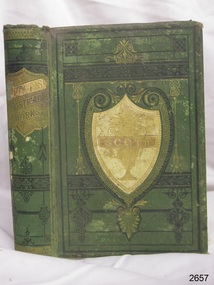
Book - Book of Poetry, Gall & Inglis, The Poetical Works of Sir Walter Scott, 1874-1880
... Victorian masses. The POETICAL WORKS of SIR WALTER SCOTT. With Life/ Six engravings on Steel. GALL & INGLIS. Edinburgh: BERNARD TERRACE ...Sir Walter Scott was the literary rock star of the 19th century, and the Edinburgh-based firm Gall & Inglis played a massive role in making his work accessible to the Victorian masses.The Poetical Works of Sir Walter Scott Author: Sir Walter Scott Publisher: Gall & Inglis fictionSir Walter Scott was the literary rock star of the 19th century, and the Edinburgh-based firm Gall & Inglis played a massive role in making his work accessible to the Victorian masses.warrnambool, shipwrecked-coast, flagstaff-hill, flagstaff-hill-maritime-museum, maritime-museum, shipwreck-coast, flagstaff-hill-maritime-village, book, the poetical works of sir walter scott, sir walter scott, poetry -
Federation University Historical Collection
Booklet - Document, Robert Ashley et al, 'The Lal Lal Iron Tramway', 1970
... High on a series of terraces overlooking the Moorabool River stands the remains of the Lal Lal Blast Furnace, classified 'A' by the National trust (to be preserved at all costs). This was the location of Victoria's only pig iron industry. A series of tramways served the works, as a well surveyed narrow-gauge tramway connected the blast furnace with the Victorian...High on a series of terraces overlooking the Moorabool River stands the remains of the Lal Lal Blast Furnace, classified 'A' by the National trust (to be preserved at all costs). This was the location of Victoria's only pig iron industry. A series of tramways served the works, as a well surveyed narrow-gauge tramway connected the blast furnace with the Victorian ...High on a series of terraces overlooking the Moorabool River stands the remains of the Lal Lal Blast Furnace, classified 'A' by the National trust (to be preserved at all costs). This was the location of Victoria's only pig iron industry. A series of tramways served the works, as a well surveyed narrow-gauge tramway connected the blast furnace with the Victorian Roailways' main line about 3.5 miles away. Light Railways, no 24, Summer 1970-71, 36 pages. This booklet considers the Lal Lal Iron Tramwaylal lal iron, lal lal blast furnace, tramways, railways, pig iron, ironstone quarry, industrial heritage -
 Flagstaff Hill Maritime Museum and Village
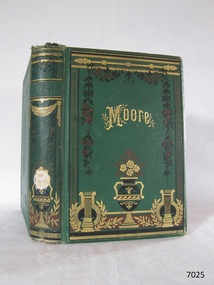
Book - Poetical Writings, Thomas Moore, The Poetical Works of Thomas Moore, 1878–1890s
... Operating out of Bernard Terrace in Edinburgh and later 25 Paternoster Square in London, the company carved out a massive market in mid-to-late Victorian Britain. ...Operating out of Bernard Terrace in Edinburgh and later 25 Paternoster Square in London, the company carved out a massive market in mid-to-late Victorian Britain. ...This subject volume is a comprehensive collection of the works of Irish poet and songwriter Thomas Moore (1779–1852). The work features his famous Irish Melodies (containing classic songs like "The Last Rose of Summer" and "The Minstrel Boy"), his Oriental romance epic Lalla Rookh, satire, and light verse, along with a biographical summary ("With Life") and steel-engraved illustrations.Hard cover book. The Poetical Works of Thomas Moore Author: Thomas Moore Publisher: Gall & Inglis Date: 1878–1890s Further Information: Highly decorated green Cloth hardcover with lettering and patterning to spine in gilt. The spine has a Library label with an inscription.fictionThis subject volume is a comprehensive collection of the works of Irish poet and songwriter Thomas Moore (1779–1852). The work features his famous Irish Melodies (containing classic songs like "The Last Rose of Summer" and "The Minstrel Boy"), his Oriental romance epic Lalla Rookh, satire, and light verse, along with a biographical summary ("With Life") and steel-engraved illustrations.warrnambool, shipwrecked-coast, flagstaff-hill, flagstaff-hill-maritime-museum, maritime-museum, shipwreck-coast, flagstaff-hill-maritime-village, shipwrecked-artefact, book, the poetical works of thomas moore, thomas moore, warrnambool mechanics’ institute, pattison collection, warrnambool library, ralph eric pattison, corangamite regional library service, warrnambool city librarian, mechanics’ institute library, victorian library board, warrnambool books and records, warrnambool children’s library -
 Eltham District Historical Society Inc
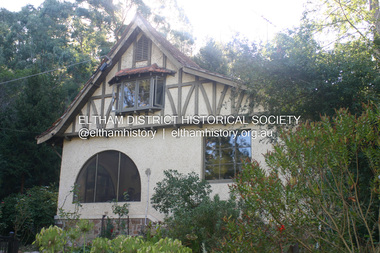
Photograph - Digital Photograph, Alan King, The Robins, 13 Kangaroo Ground-Warrandyte Road, North Warrandyte, 2 March 2008
... terraced the land with Warrandyte rock5 without the aid of machinery. At only 33 years, Boyd was killed in a car accident in 1923. He was buried in Brighton near the home of his parents. Several people have since owned the house, including political journalist, Owen Webster. Boyd was born at Penleigh House, Wiltshire, and studied at Haileybury College, Melbourne and The Hutchins School, Hobart. He attended the Melbourne National Gallery School and in his final year exhibited at the Victorian...terraced the land with Warrandyte rock5 without the aid of machinery. At only 33 years, Boyd was killed in a car accident in 1923. He was buried in Brighton near the home of his parents. Several people have since owned the house, including political journalist, Owen Webster. Boyd was born at Penleigh House, Wiltshire, and studied at Haileybury College, Melbourne and The Hutchins School, Hobart. He attended the Melbourne National Gallery School and in his final year exhibited at the Victorian ...Built by noted artist Theodore Penleigh Boyd, father of architect Robin Boyd. Covered under National Estate, National Trust of Australia (Victoria) Local Significance and Heritage Overlay, Nillumbik Planning Scheme. Published: Nillumbik Now and Then / Marguerite Marshall 2008; photographs Alan King with Marguerite Marshall.; p111 The Robins at Warrandyte,* was once home to a member of a famous family and is also one of the first reinforced concrete houses in Victoria. The builder, Theodore Penleigh Boyd, born in 1890, was a talented painter1 noted for his works of the Warrandyte bush. He was the father of architect Robin Boyd, author of the Australian Ugliness and the uncle of painter, Arthur Boyd. Penleigh Boyd’s great grandfather was Sir William A’Beckett, Victoria’s first Chief Justice. Penleigh Boyd is considered by some to be an ‘unsung hero’ overshadowed by more famous members of his family. Mornington Gallery Director Andrea May said many believed Boyd ‘had never received the national acclaim that he deserved’.2 Classified by the National Trust3 and part of the Australian National Heritage,4 The Robins is set well back near the end of Kangaroo Ground – Warrandyte Road, unobserved by passers-by. Built in 1913, The Robins has some Art Nouveau influences and is a descendant of the Queen Anne style. It is covered in stucco and has a prominent attic, which Boyd used as a studio. Some parts of the house are up to 33 centimetres thick and built in part with pisé (rammed earth) and in part with reinforced concrete. Amazingly, Boyd built The Robins without an accessible driveway, and only a narrow track along which he had to cart building materials. The journey was uphill and Boyd terraced the land with Warrandyte rock5 without the aid of machinery. At only 33 years, Boyd was killed in a car accident in 1923. He was buried in Brighton near the home of his parents. Several people have since owned the house, including political journalist, Owen Webster. Boyd was born at Penleigh House, Wiltshire, and studied at Haileybury College, Melbourne and The Hutchins School, Hobart. He attended the Melbourne National Gallery School and in his final year exhibited at the Victorian Artists’ Society. He arrived in London in 1911 and his painting Springtime was hung at the Royal Academy. He painted in several studios in England and then worked in Paris.6 There he met painter Phillips Fox through whom he met artists of the French modern school and also his wife-to-be, Edith Anderson, whom he married in Paris in 1912. After touring France and Italy, the couple returned to Melbourne. In 1913 Boyd held an exhibition and won second prize in the Federal Capital site competition, then the Wynne Prize for landscape in 1914. In 1915 Boyd joined the Australian Imperial Force, and became a sergeant in the Electrical and Mechanical Mining Company. However he was severely gassed at Ypres and invalided to England. In 1918 in London Boyd published Salvage, writing the text and illustrating it with 20 black-and-white ink-sketches of army scenes. Later that year he returned to Melbourne, and, despite suffering from the effects of gas, he held several successful one-man shows, quickly selling his water-colour and oil paintings. In his short career Penleigh Boyd was recognized as one of Australia’s finest landscape painters. He loved colour, having been influenced early by Turner and McCubbin. His works are in all Australian state galleries, the National Collection in Canberra as well as in regional galleries.7 His wife Edith was also an artist having studied at the Slade School, London, and in Paris with Phillips Fox. After her marriage she continued to paint and excelled in drawing. In later years she wrote several dramas, staged by repertory companies, and radio plays for the Australian Broadcasting Commission, in which she took part. She was the model for the beautiful red-haired woman in several of Phillips Fox’s paintings and the family hold three of his portraits of her. *Possibly named after the Aboriginal words warran, meaning ‘object’ and dyte, meaning ‘thrown at’.This collection of almost 130 photos about places and people within the Shire of Nillumbik, an urban and rural municipality in Melbourne's north, contributes to an understanding of the history of the Shire. Published in 2008 immediately prior to the Black Saturday bushfires of February 7, 2009, it documents sites that were impacted, and in some cases destroyed by the fires. It includes photographs taken especially for the publication, creating a unique time capsule representing the Shire in the early 21st century. It remains the most recent comprehenesive publication devoted to the Shire's history connecting local residents to the past. nillumbik now and then (marshall-king) collection, kangaroo ground-warrandyte road, north warrandyte, the robins -
 Eltham District Historical Society Inc
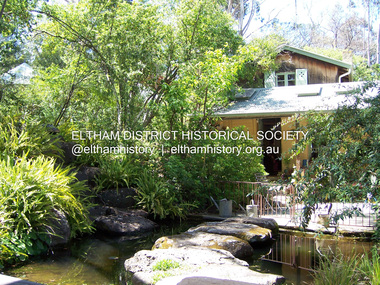
Photograph - Digital Photograph, Marguerite Marshall, Gordon Ford's Garden, 'Fulling', Pitt Street, Eltham, 10 November 2006
... Victorian major landscape designers of the mid 20th century – Ellis Stones, Peter Glass and Edna Walling. The gate opens onto a sandy gravel path, one of several, which wind around dramatic pools and what appear to be natural bush, but on close inspection are carefully integrated native, indigenous and exotic plantings. Retaining walls and steps of rock through the garden link different terrace...Victorian major landscape designers of the mid 20th century – Ellis Stones, Peter Glass and Edna Walling. The gate opens onto a sandy gravel path, one of several, which wind around dramatic pools and what appear to be natural bush, but on close inspection are carefully integrated native, indigenous and exotic plantings. Retaining walls and steps of rock through the garden link different terrace ...'Fulling', the half-hectare property at Pitt Street, Eltham was the home of landscape designer Gordon Ford and his wife Gwen. Ford bought the property in 1948, originally part of an orchard. The garden encapsulates the major trends of Australian garden design in the second half of the 20th century. The garden design is based on mass (plants) and void (paths and pools), textures and forms. It epitomises the Eltham style because of its relaxed informality and attraction to native wildlife. The mud brick house and designed and built by Ford commenced in 1948. Several extensions were added up to 1970 and were built by Graham Rose (Source: information panel for exhibition, n.d.) Covered under Heritage Overlay, Nillumbik Planning Scheme. Published: Nillumbik Now and Then / Marguerite Marshall 2008; photographs Alan King with Marguerite Marshall.; p147 A narrow timber gate opens onto a garden that has had a huge impact on natural garden development in Australia since the 1950s.1 Fulling, the half-hectare property at Pitt St, Eltham, was the home of the landscape designer, Gordon Ford, who died in 1999. The garden ‘encapsulates the major trends of Australian garden design in the second half of the 20th century...and epitomises the Eltham style of garden’.2 It in turn, was influenced by several Victorian major landscape designers of the mid 20th century – Ellis Stones, Peter Glass and Edna Walling. The gate opens onto a sandy gravel path, one of several, which wind around dramatic pools and what appear to be natural bush, but on close inspection are carefully integrated native, indigenous and exotic plantings. Retaining walls and steps of rock through the garden link different terrace levels. Lichen-covered boulders serve as steps across a pool, leading to the triple level mud-brick house. Ford bought the property, which was originally part of an orchard, in 1948. As the son of a Presbyterian minister, Ford received a good education, which included learning Latin. This was advantageous when he worked in plant sales for the Forestry Commission, before the Second World War. In the late 1940s, however, Ford turned to building and landscape gardening. He worked on the Busst house, an early mud-brick building designed by Alistair Knox and at the same time, Ford was employed by Ellis Stones. Knox described Ford as, ‘one of the funniest men of the district. ...Rocky’s (Ellis Stones) Depression stories and Gordon’s memory and quick tongue made the jobs the most enjoyable of all those hysterical times that made Eltham the centre of the eternal laugh, between the years of 1945 and 1950’.3 Ford’s house, like so many after the war, was built progressively, as more space was needed and formerly scarce materials became available. It began with an army-shed of timber-lined walls, now used as the kitchen. Ford then built what is now the lounge room, and the house grew ‘like topsy and on a shoestring,’ says his widow Gwen. A lot of second-hand materials such as window frames were used, a style made famous particularly with their extensive use at Montsalvat, the Eltham Artists’ Colony. The house was constructed as a joint venture with friends, including artist Clifton Pugh, who built Ford’s bedroom for £10. The polished floorboards and solomite (compressed straw) ceilings, interspersed with heavy beams, exude warmth. The result is a home of snug spaces, with soft light and garden vistas. Several other mud-brick buildings were constructed as needed, including a studio and units for bed-and-breakfast clients. The garden, which has been part of the Open Garden Scheme since the mid 1980s, is based on a balance of mass (plants) and void (paths and pools), textures and forms. It epitomises the Eltham style because of its relaxed informal ethos and attracts native animals. Wattlebirds, scrub wrens, pardalotes, currawongs, owls and even kangaroos, have been seen at Fulling. Gwen, a former English teacher who has worked on the garden since around 1970, urged and helped Ford write his book, The Natural Australian Garden.4 Several of Ford’s favourite trees are in the garden, including the native Casuarina or She-Oak. In spring, the garden is dusted with the purple Orthrosanthus multiflorus or blue native irises and rings with the calls of birds attracted to plants like the callistemons, correas and grevilleas.This collection of almost 130 photos about places and people within the Shire of Nillumbik, an urban and rural municipality in Melbourne's north, contributes to an understanding of the history of the Shire. Published in 2008 immediately prior to the Black Saturday bushfires of February 7, 2009, it documents sites that were impacted, and in some cases destroyed by the fires. It includes photographs taken especially for the publication, creating a unique time capsule representing the Shire in the early 21st century. It remains the most recent comprehenesive publication devoted to the Shire's history connecting local residents to the past. nillumbik now and then (marshall-king) collection, eltham, fulling, gordon ford garden, pitt street, eltham mud brick buildings, mud brick house -
 Glen Eira Historical Society
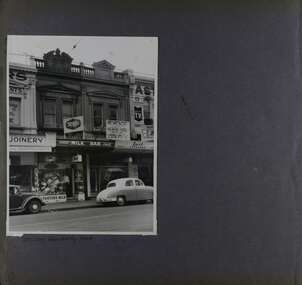
Album - Album page, Glen Huntly Road, Circa 1972
... ...victorian terrace...They recall Elsternwick's role in the Land Boom and survive as a most prominent row in the Glen Huntly Road shops, enhanced by the survival of the unpainted stuccoed surfaces to nos. 307-311. 287-289 Glen Huntly Road: contributory to HO72, Elsternwick Estate and Environs, City of Glen Eira. trevor hart shop grocer stuccoed terrace victorian terrace protruding parapet ornate render hugh moore 1890's moore's buildings glenmoore glenmoore estate shopping centres milk bars cars victorian style glen huntly road glenhuntly road elsternwick Hand written: 287-289 Glen Huntly Road [under photo] / 63 [bottom left] Page 63 of Photograph Album with one landscape photograph of retail shops (Moore's Buildings). ...This photograph is part of the Caulfield Historical Album 1972. This album was created in approximately 1972 as part of a project by the Caulfield Historical Society to assist in identifying buildings worthy of preservation. The album is related to a Survey the Caulfield Historical Society developed in collaboration with the National Trust of Australia (Victoria) and Caulfield City Council to identify historic buildings within the City of Caulfield that warranted the protection of a National Trust Classification. Principal photographer thought to be Trevor Hart, member of Caulfield Historical Society. Most photographs were taken between 1966-1972 with a small number of photographs being older and from unknown sources. All photographs are black and white except where stated, with 386 photographs over 198 pages. From: Glen Eira Heritage Management Plan (1996) by Andrew Ward and Associates Moore's Buildings", were built in 1891 and comprising 5 shops. In 1888, Hugh Moore, a gentleman, subdivided his land in Glen Huntly Road, north side between Selwyn Street and St Georges Road into 27 lots, with a right of way separating them from his property "Glenmoore". The subdivision was known as the "Glenmoore Estate". Purchases of land included local builders Corkill, French and Pugh. Moore retained five lots and W.W. Jamieson bought lots 11 to 14. "Moore' s Buildings are locally important for their association with the early Elsternwick land owner, Hugh Moore, whose home, "Glenmoore", at 1 St.Georges Road (qv) survives. They recall Elsternwick's role in the Land Boom and survive as a most prominent row in the Glen Huntly Road shops, enhanced by the survival of the unpainted stuccoed surfaces to nos. 307-311. 287-289 Glen Huntly Road: contributory to HO72, Elsternwick Estate and Environs, City of Glen Eira.Page 63 of Photograph Album with one landscape photograph of retail shops (Moore's Buildings).Hand written: 287-289 Glen Huntly Road [under photo] / 63 [bottom left] trevor hart, shop, grocer, stuccoed, terrace, victorian terrace, protruding parapet, ornate render, hugh moore, 1890's, moore's buildings, glenmoore, glenmoore estate, shopping centres, milk bars, cars, victorian style, glen huntly road, glenhuntly road, elsternwick -
 Glen Eira Historical Society
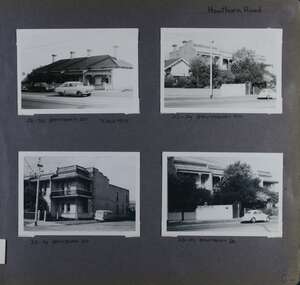
Album - Album page, Hawthorn Road, Circa 1972
... victorian...cars...terrace...All photographs are black and white except where stated, with 386 photographs over 198 pages. 23-29 Hawthorn Road Caulfield North are contributory buildings to HO14 Caulfield North and environs, Caulfield North - Heritage Precinct in the City of Glen Eira. trevor hart caulfield hawthorn road victorian cars terrace houses cottages streetscapes caulfield north Handwritten: Hawthorn Road [top right] / 28-34 HAWTHORN ROAD 3 Sep 1972 [under top left photo] / 23-29 HAWTHORN ROAD [under top right photo] / 23-29 HAWTHORN ROAD 3 Sep [under bottom left photo] / 23-29 HAWTHORN ROAD [under bottom right photo] / 82 [bottom right] Page 82 of Photograph Album with four landscape photographs of street views of two sets of properties on Hawthorn Road. ...This photograph is part of the Caulfield Historical Album 1972. This album was created in approximately 1972 as part of a project by the Caulfield Historical Society to assist in identifying buildings worthy of preservation. The album is related to a Survey the Caulfield Historical Society developed in collaboration with the National Trust of Australia (Victoria) and Caulfield City Council to identify historic buildings within the City of Caulfield that warranted the protection of a National Trust Classification. Principal photographer thought to be Trevor Hart, member of Caulfield Historical Society. Most photographs were taken between 1966-1972 with a small number of photographs being older and from unknown sources. All photographs are black and white except where stated, with 386 photographs over 198 pages. 23-29 Hawthorn Road Caulfield North are contributory buildings to HO14 Caulfield North and environs, Caulfield North - Heritage Precinct in the City of Glen Eira.Page 82 of Photograph Album with four landscape photographs of street views of two sets of properties on Hawthorn Road. Addresses are handwritten underneath each property.Handwritten: Hawthorn Road [top right] / 28-34 HAWTHORN ROAD 3 Sep 1972 [under top left photo] / 23-29 HAWTHORN ROAD [under top right photo] / 23-29 HAWTHORN ROAD 3 Sep [under bottom left photo] / 23-29 HAWTHORN ROAD [under bottom right photo] / 82 [bottom right] trevor hart, caulfield, hawthorn road, victorian, cars, terrace houses, cottages, streetscapes, caulfield north -
 Eltham District Historical Society Inc
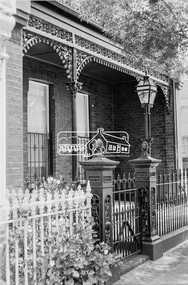
Photograph, George Coop, A day in Melbourne, a Victorian terrace building in the area of Cardigan Street, Carlton, November 1962, 1962
... A day in Melbourne, a Victorian terrace building in the area of Cardigan Street, Carlton, November 1962...Cardigan Street, Carlton, houses, Melbourne, Victorian Terrace...Cardigan Street, Carlton, houses, Melbourne, Victorian Terrace Digital TIFF file Scan of 35mm Ilford FP3 black and white transparency A day in Melbourne, a Victorian terrace building in the area of Cardigan Street, Carlton, November 1962 Photograph George Coop ...Digital TIFF file Scan of 35mm Ilford FP3 black and white transparencycardigan street, carlton, houses, melbourne, victorian terrace -
 Bendigo Historical Society Inc.
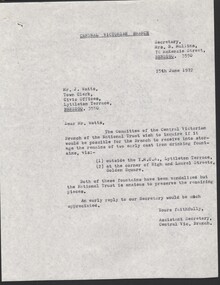
Document - National Trust Collection: preserving sections of two cast-iron drinking fountains (Lyttleton Terrace & High / Laurel Streets, Bendigo), 25/06/1972
... National Trust - letter dated 25 June 1972 from National Trust (Central Victorian Branch) requesting to "receive into storage the remains of two early drinking fountains: 1) outside the Y.M.C.A. Lyttleton Terrace...historic significant drinking fountains two early cast drinking fountains National Trust - letter dated 25 June 1972 from National Trust (Central Victorian Branch) requesting to "receive into storage the remains of two early drinking fountains: 1) outside the Y.M.C.A. Lyttleton Terrace ...historic significant drinking fountainsNational Trust - letter dated 25 June 1972 from National Trust (Central Victorian Branch) requesting to "receive into storage the remains of two early drinking fountains: 1) outside the Y.M.C.A. Lyttleton Terrace, 2) at the corner of High and Laurel Streets, Golden Square Both fountains have been vandalised but the National Trust is anxious to preserve the remaining pieces".two early cast drinking fountains -
 Bendigo Historical Society Inc.
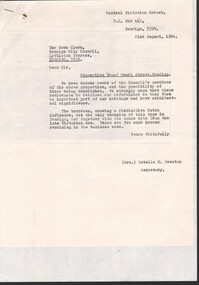
Document - National Trust Collection: Properties 30-45 Mundy Street Bendigo, 1984
... The twin terraces has a Dutch façade to the street and is the only example from late Victorian era. 3030 b short article from Bendigo, showing twin terraces and abutting residence from Advertiser, dated 19 July 1984 3030 c City of Bendigo reply, dated 22nd August 1984 - Council has no plans to demolish the buildings 3230 d letter from National Trust again addressing confirmation from Council tat thee are no proposed plans to demolish the twin terrace and abutting weatherboard house 3230 e Bendigo Advertise article and photograph of the two-storey twin terraces at 38-42 Mundy Street 3230 f report on dwellings at 38-42 Mundy Street Bendigo, compiled by M. ...The twin terraces has a Dutch façade to the street and is the only example from late Victorian era. 3030 b short article from Bendigo, showing twin terraces and abutting residence from Advertiser, dated 19 July 1984 3030 c City of Bendigo reply, dated 22nd August 1984 - Council has no plans to demolish the buildings 3230 d letter from National Trust again addressing confirmation from Council tat thee are no proposed plans to demolish the twin terrace and abutting weatherboard house 3230 e Bendigo Advertise article and photograph of the two-storey twin terraces at 38-42 Mundy Street 3230 f report on dwellings at 38-42 Mundy Street Bendigo, compiled by M. ...Social history, Historic buildings National Trust Collection: 3230 twin terrace 38-42 Mundy Street, Bendigo 3230 a Letter, 21st August 1984, from the National Trust to Bendigo City Council; strongly urging the Council to retain and refurbish as it is an important part of our heritage and architectural. The twin terraces has a Dutch façade to the street and is the only example from late Victorian era. 3030 b short article from Bendigo, showing twin terraces and abutting residence from Advertiser, dated 19 July 1984 3030 c City of Bendigo reply, dated 22nd August 1984 - Council has no plans to demolish the buildings 3230 d letter from National Trust again addressing confirmation from Council tat thee are no proposed plans to demolish the twin terrace and abutting weatherboard house 3230 e Bendigo Advertise article and photograph of the two-storey twin terraces at 38-42 Mundy Street 3230 f report on dwellings at 38-42 Mundy Street Bendigo, compiled by M. Butcher; four pages with B&W photos of the buildings 3230 g report compiled by Peter Cuffley over two pages - Report on Mundy Street Terrace pair38-42 mundy street -
 Bendigo Historical Society Inc.
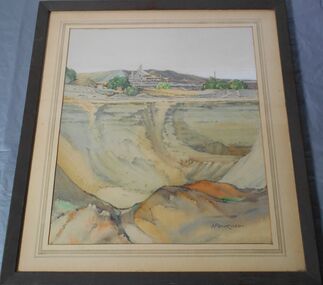
Painting - Sand Pit Fortuna, Norman Penrose
... Terrace east Bendigo. Price: - guineas. Title: Sand Pit Fortuna. For: drawing, watercolour and graphic art exhibition. Victorian...Terrace east Bendigo. Price: - guineas. Title: Sand Pit Fortuna. For: drawing, watercolour and graphic art exhibition. Victorian ...Born in 1903, Norman Penrose studied at the Bendigo School of Mines. A painter and a teacher, he lived in Bendigo most of his life.Watercolour painting by Norman Penrose titled "Sand Pit Fortuna." It shows a mining sand pit and the Fortuna mine in the background. The painting is signed on the bottom right-hand side. The painting is under glass in a dark brown wooden frame. On the back: Penrose Norman William 14 Barkly Terrace east Bendigo. Price: - guineas. Title: Sand Pit Fortuna. For: drawing, watercolour and graphic art exhibition. Victorian Artista Society 430 Albert Street, East Melbourne bendigo, mining, norman penrose, artist, teacher, fortuna -
 Glen Eira Historical Society
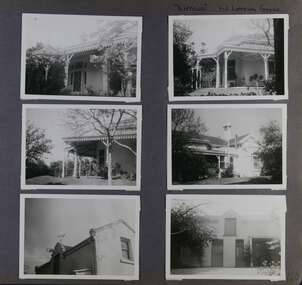
Album - Album page, Lirrewa, 1-3 Lirrewa Grove, Circa 1972
... This latter style was particularly attractive to persons of means on account of its English precedents, the combination of influences being skillfully handled in this instance. trevor hart verandah lirrewa tarqua 1880's montague william langdon italian style shallow hipped roof symmetrical facade gothic revival pointed arches fretted barges battlemented parapet terraces boom era single storey timber roof brackets frieze gables cast iron ridging lirrewa grove cast iron work caulfield arches parapets gardens houses victorian style caulfield south Handwritten: "Lirrewa" 1-3 Lirrewa Grove [top right] / 120 [bottom right] Page 120 of Photograph Album with six photographs (all landscape) of views of Lirrewa, mostly including its garden. ...This photograph is part of the Caulfield Historical Album 1972. This album was created in approximately 1972 as part of a project by the Caulfield Historical Society to assist in identifying buildings worthy of preservation. The album is related to a Survey the Caulfield Historical Society developed in collaboration with the National Trust of Australia (Victoria) and Caulfield City Council to identify historic buildings within the City of Caulfield that warranted the protection of a National Trust Classification. Principal photographer thought to be Trevor Hart, member of Caulfield Historical Society. Most photographs were taken between 1966-1972 with a small number of photographs being older and from unknown sources. All photographs are black and white except where stated, with 386 photographs over 198 pages.From Victorian Heritage Database citation for Lirrewa - HO39 Tarqua and Stables, 1-3 Lirrewa Grove Caulfield South https://vhd.heritagecouncil.vic.gov.au/places/120932 (as at 26/10/2020) "Tarqua", now "Lirrewa", is situated at nos. 1-3 Lirrewa Grove, Caulfield South, and was built in 1886 for Montague William Langdon, son of the merchant Joseph Henry Langdon of nearby "Rosecraddock". It is historically and aesthetically significant. It is historically significant (Criterion A) as one of the Langdon family residences, comparing in Glen Eira also with "Rosecraddock" at 10 Craddock Avenue (1857) and "Hengar" at 356 Glen Eira Road (1889-90). It is aesthetically significant (Criterion E) for its capacity to demonstrate the stylistic influences prevailing at the time especially for substantial residences. At "Tarqua", the design acknowledges the prevailing popularity of the Italian Style in the shallow hipped roof form and symmetrical facade as well as the picturesque Gothic Revival style demonstrated especially by the use of pointed arches, fretted barges and the battlemented parapeted section. This latter style was particularly attractive to persons of means on account of its English precedents, the combination of influences being skillfully handled in this instance.Page 120 of Photograph Album with six photographs (all landscape) of views of Lirrewa, mostly including its garden.Handwritten: "Lirrewa" 1-3 Lirrewa Grove [top right] / 120 [bottom right]trevor hart, verandah, lirrewa, tarqua, 1880's, montague william langdon, italian style, shallow hipped roof, symmetrical facade, gothic revival, pointed arches, fretted barges, battlemented parapet, terraces, boom era, single storey, timber roof brackets, frieze, gables, cast iron ridging, lirrewa grove, cast iron work, caulfield, arches, parapets, gardens, houses, victorian style, caulfield south -
 Glen Eira Historical Society
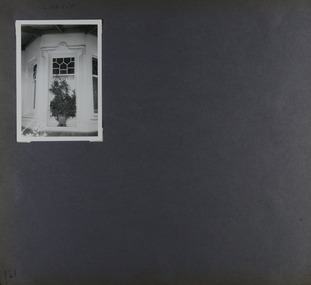
Album - Album page, Lirrewa, 1-3 Lirrewa Grove, Circa 1972
... This latter style was particularly attractive to persons of means on account of its English precedents, the combination of influences being skillfully handled in this instance. trevor hart verandah lirrewa tarqua 1880's montague william langdon italian style shallow hipped roof symmetrical facade gothic revival pointed arches fretted barges battlemented parapet ornamented parapets terraces boom era timber roof brackets frieze gables cast iron ridging lirrewa grove bay window cast iron work lead lights houses victorian style caulfield caulfield south Handwritten: Lirrewa [top left ] / 121 [bottom left] Page 121 of Photograph Album with one landscape photograph of Lirrewa - external view of a bay window. ...This photograph is part of the Caulfield Historical Album 1972. This album was created in approximately 1972 as part of a project by the Caulfield Historical Society to assist in identifying buildings worthy of preservation. The album is related to a Survey the Caulfield Historical Society developed in collaboration with the National Trust of Australia (Victoria) and Caulfield City Council to identify historic buildings within the City of Caulfield that warranted the protection of a National Trust Classification. Principal photographer thought to be Trevor Hart, member of Caulfield Historical Society. Most photographs were taken between 1966-1972 with a small number of photographs being older and from unknown sources. All photographs are black and white except where stated, with 386 photographs over 198 pages.From Victorian Heritage Database citation for - HO39 Tarqua and Stables, 1-3 Lirrewa Grove Caulfield South https://vhd.heritagecouncil.vic.gov.au/places/120932 as at (26/10/2020) "Tarqua", now "Lirrewa", is situated at nos. 1-3 Lirrewa Grove, Caulfield South, and was built in 1886 for Montague William Langdon, son of the merchant Joseph Henry Langdon of nearby "Rosecraddock". It is historically and aesthetically significant. It is historically significant (Criterion A) as one of the Langdon family residences, comparing in Glen Eira also with "Rosecraddock" at 10 Craddock Avenue (1857) and "Hengar" at 356 Glen Eira Road (1889-90). It is aesthetically significant (Criterion E) for its capacity to demonstrate the stylistic influences prevailing at the time especially for substantial residences. At "Tarqua", the design acknowledges the prevailing popularity of the Italian Style in the shallow hipped roof form and symmetrical facade as well as the picturesque Gothic Revival style demonstrated especially by the use of pointed arches, fretted barges and the battlemented parapeted section. This latter style was particularly attractive to persons of means on account of its English precedents, the combination of influences being skillfully handled in this instance.Page 121 of Photograph Album with one landscape photograph of Lirrewa - external view of a bay window.Handwritten: Lirrewa [top left ] / 121 [bottom left]trevor hart, verandah, lirrewa, tarqua, 1880's, montague william langdon, italian style, shallow hipped roof, symmetrical facade, gothic revival, pointed arches, fretted barges, battlemented parapet, ornamented parapets, terraces, boom era, timber roof brackets, frieze, gables, cast iron ridging, lirrewa grove, bay window, cast iron work, lead lights, houses, victorian style, caulfield, caulfield south -
 Glen Eira Historical Society
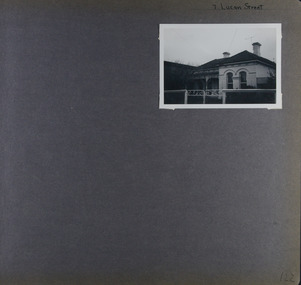
Album - Album page, Lucan Street, 7, Circa 1972
... All photographs are black and white except where stated, with 386 photographs over 198 pages. trevor hart caulfield north villa residence verandah terraces timber roof brackets gables cast iron ridging ornate plasterwork arched windows curved windows chimneys lucan street victorian style cast iron work houses Handwritten: 7 Lucan Street [top right] / 122 [bottom right] Page 122 of Photograph Album with one landscape photograph of a house at 7 Lucan Street. ...This photograph is part of the Caulfield Historical Album 1972. This album was created in approximately 1972 as part of a project by the Caulfield Historical Society to assist in identifying buildings worthy of preservation. The album is related to a Survey the Caulfield Historical Society developed in collaboration with the National Trust of Australia (Victoria) and Caulfield City Council to identify historic buildings within the City of Caulfield that warranted the protection of a National Trust Classification. Principal photographer thought to be Trevor Hart, member of Caulfield Historical Society. Most photographs were taken between 1966-1972 with a small number of photographs being older and from unknown sources. All photographs are black and white except where stated, with 386 photographs over 198 pages. Page 122 of Photograph Album with one landscape photograph of a house at 7 Lucan Street.Handwritten: 7 Lucan Street [top right] / 122 [bottom right]trevor hart, caulfield north, villa residence, verandah, terraces, timber roof brackets, gables, cast iron ridging, ornate plasterwork, arched windows, curved windows, chimneys, lucan street, victorian style, cast iron work, houses -
 Glen Eira Historical Society
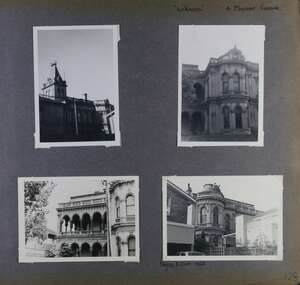
Album - Album page, Labassa, 4 Manor Grove, Circa 1972
... [Online Data Upgrade Project 2004] trevor hart bracketed eaves slate roof bay windows decorative brackets caulfield north labassa richard a. billing balaclava road orrong road sylliott hill william lyall crouch and wilson alexander william robertson ontario 1880's john a. b. koch mansion john boyd watson labassa grove french renaissance style l-shaped arcaded verandah bluestone plinths balustraded parapet flat topped mansard roofs conical roof elaborate cornices corinthian columns caryatid consoles marble panels imitation marble scagliola tower conservatory stables tennis pavilion mouldings decorative glass caryatids swagged columns ornamental cresting trompe l'oeil ceiling embossed imitation leather oak parquetry stained glass tripartite window triple window ferguson and urie 1870's flats 1920's electric wiring 1860's verandahs curved windows arched windows italianate terraces gargoyles ornamentation ornate entrance la bassa manor grove st kilda east victorian cast iron work john koch richard billing architects electrification john mickle land subdivision mrs watson labassa estate robert hannon national trust of australia (victoria) sculpture Handwritten: "Labassa" 4 Manor Grove [top right] / Neg 232 8 Oct 1966 [under bottom right photo] / 128 [bottom right] Page 128 of Photograph Album with four photographs (two portrait and two landscape) of Labassa. ...This photograph is part of the Caulfield Historical Album 1972. This album was created in approximately 1972 as part of a project by the Caulfield Historical Society to assist in identifying buildings worthy of preservation. The album is related to a Survey the Caulfield Historical Society developed in collaboration with the National Trust of Australia (Victoria) and Caulfield City Council to identify historic buildings within the City of Caulfield that warranted the protection of a National Trust Classification. Principal photographer thought to be Trevor Hart, member of Caulfield Historical Society. Most photographs were taken between 1966-1972 with a small number of photographs being older and from unknown sources. All photographs are black and white except where stated, with 386 photographs over 198 pages. HISTORY:-- From Victorian Heritage Database citation for Labassa https://vhd.heritagecouncil.vic.gov.au/places/278 as at (26/10/2020) Labassa, Caulfield is one of Melbourne's most lavishly decorated nineteenth century mansions. It resulted from the extensive remodelling in 1890, of an earlier house, known as Sylliott Hill, which was begun in 1862-3 for lawyer, Richard A. Billing. The land at the corner of Balaclava and Orrong Roads was first acquired in 1854 by William Lyall, transferred to his partner, John Mickle, in 1859, who also acquired the adjoining allotment in Balaclava Road, and the three allotments were conveyed to Billing. His first eight-roomed house was extended significantly in 1873 into a twenty-roomed house by architects Crouch and Wilson, who were possibly also responsible for the first house. This reflected Billing's success as a barrister, and he resided at this property until his death in 1882. In 1883 prominent Melbourne businessman, Alexander William Robertson, leased the Sylliott Hill property from Billing's widow, and in 1885 he purchased the adjoining allotment in Balaclava Road. He purchased the Billing's property in 1887 and renamed the 6.31 hectare property, Ontario. In 1889-90, Robertson commissioned the German born architect, John A. B. Koch, to extensively remodel the house into a thirty-five roomed mansion. The existing house was extended and altered, largely resulting in the nineteenth century mansion as it now appears. After Robertson's death in 1896, the house was tenanted until it was eventually sold to the mining millionaire, John Boyd Watson, in 1904. He renamed the property Labassa and carried out repair and re-decoration work to the house. In the early twentieth century, many large estates were subdivided into smaller allotments as the demand for land grew and it became difficult to maintain such large estates. After Watson's death in 1911, portions of the Labassa estate were offered for sale, with Mrs Watson retaining a 1.73 hectare portion containing the house. In 1913 forty-six allotments were auctioned at Labassa Estate, with the formation of Labassa Grove and Ontario Street to the east of the property. Labassa was first recorded as containing flats in 1923 and in the late 1920s, the owner, Robert Hannon, built a red brick block of flats adjacent to the house. Subdivision continued, until the National Trust of Australia (Victoria) purchased the house in 1980 and subsequently purchased adjoining sites, one to the south-east in 1984 (house demolished in 1988) and to the west in 1988. Labassa as it now stands is substantially as it appeared when Koch completed the work in 1890. The original two storey house was transformed into a French Renaissance style mansion, with the addition of a two level L-shaped arcaded verandah and two prominent terminating bays to the south and the east. The building is of unpainted cement render with dressed bluestone plinths, balustraded parapet and steep, slate covered, flat topped mansard roofs behind. A truncated conical roof is a feature of the south bay and a helmeted head is incorporated in the parapet over the east bay. The main south and east facades incorporate many cast cement details, including sculptures, elaborate cornices, swagged Corinthian columns and caryatid consoles flanking the entrance porch, as well as pink marble panels and imitation marble, or scagliola, on curved surfaces. At the rear of the building is a two storey wing and a single storey cottage, the former being connected to the main house by a tower. This section of the house was constructed in 1873. The estate at its peak included stables (1873), conservatory (probably 1890) and a tennis pavilion (probably 1890). All of these outbuildings survive, with the stables and conservatory being converted for residential use after 1922. Internally a range of decorative treatments remain from the late nineteenth century and the early twentieth century, both from the Robertson and Watson periods of occupancy. These include wallpapers, ceiling decoration, chimney pieces, mouldings, joinery and decorative glass. From Victorian Heritage Database citation for H0135 Labassa 2/2A Manor Grove Caulfield North https://vhd.heritagecouncil.vic.gov.au/places/278 as at (26/10/2020) HOW IS IT SIGNIFICANT? Labassa, Caulfield is of architectural, aesthetic and historical significance to the State of Victoria. WHY IS IT SIGNIFICANT? Labassa, Caulfield is of architectural significance as the most prominent example of a small number of houses built in Australia in the French Renaissance style. It is of further note due to the German interpretation of the style and the use of Hellenistic sources, via Germany. It is exceptional for its lavish treatment externally, including marble, scagliola, caryatids, swagged columns, mansard roofs and ornamental cresting. Labassa is of architectural significance as the most important surviving example of German architect, John Koch's domestic work. He undertook a large variety of work in Melbourne, including a number of houses, however Labassa is the most lavish example of his work. Labassa is of aesthetic significance for its outstanding assemblage of late nineteenth and early twentieth century European style interior decoration, which remain remarkably intact. These include a trompe l'oeil ceiling, painted ceilings, embossed imitation leather and other papers, chimney pieces, ceramic tilework, oak parquetry and stained glass, including a tripartite window by Ferguson and Urie, probably dating from the 1873 period. Labassa is of historical significance as an illustrative example of the wealth acquired by a number of prominent Victorian families in the second half of the 19th century. The early development of the property, Sylliott Hill, was due to the wealth acquired by Richard Billing, barrister and fifth Victorian to be appointed Queen's Counsel in 1878. The significant development in 1890 of Ontario, is illustrative of the wealth of Alexander Robertson, a partner in Cobb and Co., a director of Goldsborough Mort & Co., and a pastoral speculator. John B. Watson, whose father had acquired great wealth from the goldfields of Bendigo and subsequently invested in city and country properties, was the third resident to impact on the house, particularly the interiors. The Labassa estate is of historical significance as an illustrative example of the development that occurred in such suburbs as Caulfield in the 1880s due to the land boom, its proximity to Melbourne and the establishment of the Melbourne to Gippsland railway in 1879. It is also illustrative of an estate which succumbed to the pressures of subdividing in the early twentieth century, as properties became difficult to maintain and demand for land close to the city grew. It was typically divided into flats in the 1920s and was used as such for about sixty years. It is of historical significance for its associations with the remnants of the earlier estate which remain extant. These include the stables, conservatory (H2005) and tennis pavilion which all remain on separate sites. Also significant are the remains of early electrical wiring and fittings. Labassa was one of the first houses in Caulfield to be electrified and some of the original wires remain. [Online Data Upgrade Project 2004]Page 128 of Photograph Album with four photographs (two portrait and two landscape) of Labassa.Handwritten: "Labassa" 4 Manor Grove [top right] / Neg 232 8 Oct 1966 [under bottom right photo] / 128 [bottom right]trevor hart, bracketed eaves, slate roof, bay windows, decorative brackets, caulfield north, labassa, richard a. billing, balaclava road, orrong road, sylliott hill, william lyall, crouch and wilson, alexander william robertson, ontario, 1880's, john a. b. koch, mansion, john boyd watson, labassa grove, french renaissance style, l-shaped arcaded verandah, bluestone plinths, balustraded parapet, flat topped mansard roofs, conical roof, elaborate cornices, corinthian columns, caryatid consoles, marble panels, imitation marble, scagliola, tower, conservatory, stables, tennis pavilion, mouldings, decorative glass, caryatids, swagged columns, ornamental cresting, trompe l'oeil ceiling, embossed imitation leather, oak parquetry, stained glass, tripartite window, triple window, ferguson and urie, 1870's, flats, 1920's, electric wiring, 1860's, verandahs, curved windows, arched windows, italianate, terraces, gargoyles, ornamentation, ornate entrance, la bassa, manor grove, st kilda east, victorian, cast iron work, john koch, richard billing, architects, electrification, john mickle, land subdivision, mrs watson, labassa estate, robert hannon, national trust of australia (victoria), sculpture
