
Showing 109 items matching "warrnambool photographers"
-
 Flagstaff Hill Maritime Museum and Village
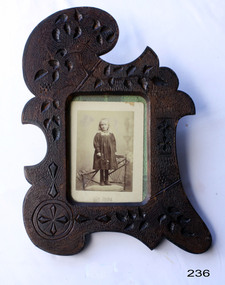
Photograph, Joseph Jordan Photographic Studio, Miss Christina Giles, before May 1899
... "Jordan Warrnambool" ( Photographers) ..., Joseph Jordan. flagstaff hill warrnambool shipwrecked coast flagstaff hill maritime museum maritime museum shipwreck coast flagstaff hill maritime village great ocean road christina giles giles collection giles family giles history henry and mary giles henry giles tower hill cooramook warrnambool breakwater mailor’s flat wangoom 19th century personal effects Joseph Jordan Jordan photography "Jordan Warrnambool" ( Photographers) Photograph of Christina Giles standing on chair in a decorative carved wood frame with floral design in abstract shape. ...This photograph is of Christina Giles, who died in Wangoom, Warrnambool, in 1899 at 7 years, 5 months and 4 days old and is one of many 19th century items of furniture, linen and crockery donated to Flagstaff Hill Maritime Village by, Vera and Aurelin Giles. The items are associated with Warrnambool and the Giles Family history. Items donated by the family have come to be known as the “Giles Collection”. Many items in the Lighthouse Keeper’s Cottage were donated by Vera and Aurelin Giles and mostly came from the home of Vera’s parents-in-law, Henry Giles and his wife Mary Jane (nee Freckleton) who married in 1880 and whose photos are on display in the parlour. Henry was born at Tower Hill in 1858, and was a labourer on the construction of the Warrnambool Breakwater before leaving in 1895 for around seven years to build bridges in NSW. Mary Jane was born in 1860 at Cooramook and she attended Mailor’s Flat State School and where she eventually was to become a student teacher. After which she became a governess at “Injemiara” where her grandfather, Francis Freckleton, had once owned land. Henry and Mary’s family consisted of six, some of the children were born at Mailor’s Flat and later some children at Wangoom. They lived with their parents at Wangoom and Purnim west, and this is where Henry died in 1933 and Mary Jane in 1940. Jordan, Warrnambool refers to Joseph Jordan who operated a photographic studio in Warrnambool from the late 1880s. His work was prevelent in Victoria's Western District of Victoria.This photograph of Christina Giles is of social significance at a local level, because it not only illustrates the level of material support the Warrnambool community gave to Flagstaff Hill during it’s establishment. But the Giles collection also gives us today a snapshot into what domestic life was like in early colonial times prior to Federation and the high mortality rates amongst children during the early years of colonial settlement. The photograph is also significant for is association with renowned Western District photographer, Joseph Jordan.Photograph of Christina Giles standing on chair in a decorative carved wood frame with floral design in abstract shape. Photo by Jordan of Warrnambool. Christina Giles died in Warrnambool in 1899 at 7 years, 5 months, 4 days of age. It is part of the Giles Family Collection. "Jordan Warrnambool" ( Photographers) flagstaff hill, warrnambool, shipwrecked coast, flagstaff hill maritime museum, maritime museum, shipwreck coast, flagstaff hill maritime village, great ocean road, christina giles, giles collection, giles family, giles history, henry and mary giles, henry giles, tower hill, cooramook, warrnambool breakwater, mailor’s flat, wangoom, 19th century personal effects, joseph jordan, jordan photography -
 Warrnambool and District Historical Society Inc.
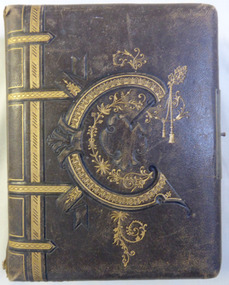
Album - Portrait photos Frisch, Circa 1888
... ...Warrnambool photographers...Warrnambool. Most of the photos are unnamed but of those that are there is a Thom Wickham, E. M. Fleming, Henry and Stanly Frisch. There are also a number of photographs depicting land clearing and wood cutting also a couple of cards, one happy New year and Glaedelig Jul( Danish Merry Christmas) An album typical of the era with local family connections as well as work by local photographers Warrnambool Warrnambool photographers Lovewell & Co Jordan photographers Daniel Clarke thom wickham e m fleming henry frisch stanley frisch Jan 17th 1888. ...A collection of photographs depicting numerous people. Some have been taken by studios such as Lovewell & Co, Hider, Jordan and Daniel Clarke of Warrnambool. Most of the photos are unnamed but of those that are there is a Thom Wickham, E. M. Fleming, Henry and Stanly Frisch. There are also a number of photographs depicting land clearing and wood cutting also a couple of cards, one happy New year and Glaedelig Jul( Danish Merry Christmas)An album typical of the era with local family connections as well as work by local photographersBrown leather cover with gold figure work over embossing on the front with possibly the letter,”C”. The back cover is entirely embossed. Edges of metal clasp are on front and back cover but clasp part is missing. Gold edges to pages, which are all heavy card. Front inside page has pink briar roses with “Album” on card inserted through it.Jan 17th 1888. To Morris from H Bambrick?warrnambool, warrnambool photographers, lovewell & co, jordan photographers, daniel clarke, thom wickham, e m fleming, henry frisch, stanley frisch -
 Warrnambool and District Historical Society Inc.
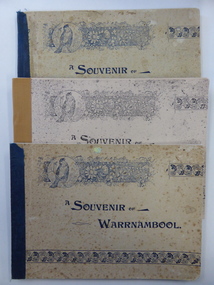
Booklet, A Souvenir of Warrnambool (5 copies), 1896
... These booklets were produced in 1896 by the Warrnambool photographer, Joseph Jordan as a souvenir of Warrnambool with three of them being also souvenirs of the 1896-7 Warrnambool Industrial and Art Exhibition. ...These booklets have been published in 1896 by the Warrnambool photographer, Joseph Jordan and contain 15 pages of black and white photographs of Warrnambool and district, many advertisements for local and Melbourne business and an article of the town of Warrnambool. ...These booklets were produced in 1896 by the Warrnambool photographer, Joseph Jordan as a souvenir of Warrnambool with three of them being also souvenirs of the 1896-7 Warrnambool Industrial and Art Exhibition. ...These booklets were produced in 1896 by the Warrnambool photographer, Joseph Jordan as a souvenir of Warrnambool with three of them being also souvenirs of the 1896-7 Warrnambool Industrial and Art Exhibition. Joseph Jordan, born in England, took up photography whilst on military service in India. In 1890 he set up as a professional photographer in Warrnambool and became well-known for his family portraits and official photographs of civic dignitaries in the town. He retired in 1916 and the business was continued by his son, Arthur. The Warrnambool Industrial and Art Exhibition was held over three months in 1896-7 in the civic buildings with some temporary buildings added. 70,000 people were said to have attended over that time with concerts, operas, art and sporting competitions and many exhibits. Joseph Jordan had the exclusive rights to publish a souvenir booklet. These booklets are of prime importance because:- 1. They are invaluable pictorial records of Warrnambool and district in the late 1890s. 2. They contain valuable advertisements which give us pictorial representations and other information on businesses in Warrnambool in the late 1890s. 3. Three of them relate directly to the Warrnambool Industrial and Art Exhibition and contain an article dealing with the Exhibition. 4. They contain a written description of Warrnambool in the late 1890s. 5. They show the work of one of our most important photographers, Joseph Jordan and probably also the work of his son, Arthur. These booklets have been published in 1896 by the Warrnambool photographer, Joseph Jordan and contain 15 pages of black and white photographs of Warrnambool and district, many advertisements for local and Melbourne business and an article of the town of Warrnambool. Three of the booklets also contain information on the 1896-7 Warrnambool Industrial and Art Exhibition. Booklet One and Two – dark red hard cover with the title in gold and ornamental scroll work. The cover printing of Booklet Two is almost obliterated. The books are glued and reinforced with string. Booklets Three, Four and Five – soft covers in beige tonings with the title in black print and featuring ornamental scroll work with a sketch of a bird. The covers have much foxing. The booklets are bound with black and brown tape. Booklet One: ‘Ivy Morden’ Booklet Two; ‘Mr Peter Gibbons’ joseph jordan, warrnambool industrial and art exhibition -
 Warrnambool and District Historical Society Inc.
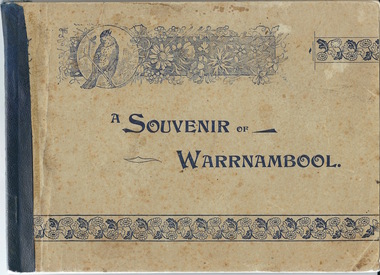
Book, A Souvenir of Warrnambool
... ...Jordan photographers...warrnambool...Warrnambool. The advertisements also provide a record of people in business at that time. j jordan Jordan photographers warrnambool jordan photographs warrnambool souvenir Published by J Jordan Warrnambool. ...A collection of 20 photographs which shows different aspects of Warrnambool. In 1896 Joseph Jordan was given exclusive rights to produce a souvenir booklet for the 1896-97 Warrnambool Industrial and Arts Exhibition. The Jordan studio sold many publications such as albums, which featured local scenes, as well as postcards, and greeting cards for different occasions and portraits The Jordan studio was a significant photographic studio in Warrnambool. They produced a large volume of work which is a useful record of scenes of the Western District and Warrnambool. This Souvenir booklet was a memento of an important event in Warrnambool. The advertisements also provide a record of people in business at that time.Pale green light card cover with dark blue text and illustrations which consist of title in the middle of cover with floral border along bottom with drawing of bird inset in floral picture at the top. The contents consist of 18 illustrations and a number of advertisements. One loose page with same text as book and advertisement for R. F. Kennedy chemistPublished by J Jordan Warrnambool.j jordan, jordan photographers, warrnambool, jordan photographs, warrnambool souvenir -
 Warrnambool and District Historical Society Inc.
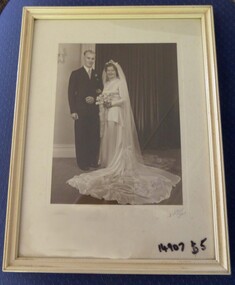
Photograph - Framed Wedding Photograph, Alex Wilkins, Circa 1940’s
... An unknown couple on their wedding day, photographed by Warrnambool photographer, Alex Wilkins. Alex was popular as a photographer and produced a large volume of work. ...An unknown couple on their wedding day, photographed by Warrnambool photographer, Alex Wilkins. Alex was popular as a photographer and produced a large volume of work. ...An unknown couple on their wedding day, photographed by Warrnambool photographer, Alex Wilkins. Alex was popular as a photographer and produced a large volume of work. This photograph was purchased by Les and Elizabeth O'Callaghan at a cost of $5. It is thought to be members of the Cassady family.The photo depicts styles of wedding dress popular in the 1940’s. Alex Wilkins commenced his photographic career working for a local chemist and worked for some time from a studio at 151 Fairy Street Warrnambool and in 1938 purchased the studio of Arthur Jordan and moved to Liebig Street. The business was sold in 1961 and for some time after he operated in a small studio and worked shooting film for local TV channels. Alex died in 1972 after a short illness. Sepia wedding photograph depicting bride and groom, in cream wooden frame with cream mount. A.Wilkins, W’Bool.warrnambool, warrnambool wedding, alex wilkins -
 Port Fairy Historical Society Museum and Archives
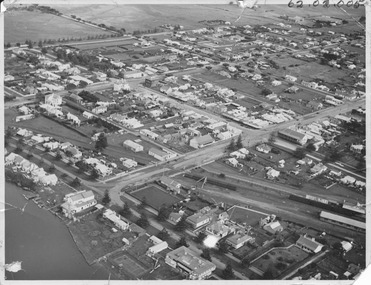
Photograph, 1940's
... ALEX WILKINS PHOTOGRAPHER WARRNAMBOOL O.G.Powell Chemist Phone 88 Port Fairy...This photograph shows Port Fairy from the air looking down on Douglas House across the rail lines showing Bank Street, Sackville Street, Cox street and to a lesser extent surrounding streets This photograph depicts the Streets and river during the 1940's and the buildings that were present at that time some no longer in existence bank street sackville street railway ALEX WILKINS PHOTOGRAPHER WARRNAMBOOL O.G.Powell Chemist Phone 88 Port Fairy Black and white Photograph Photograph Photograph Alex Wilkins ...This photograph shows Port Fairy from the air looking down on Douglas House across the rail lines showing Bank Street, Sackville Street, Cox street and to a lesser extent surrounding streetsThis photograph depicts the Streets and river during the 1940's and the buildings that were present at that time some no longer in existenceBlack and white PhotographALEX WILKINS PHOTOGRAPHER WARRNAMBOOL O.G.Powell Chemist Phone 88 Port Fairybank street, sackville street, railway -
 Warrnambool and District Historical Society Inc.
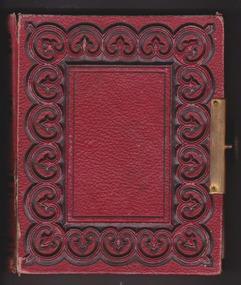
Album - Photo Album, Late 19th century
... Some of the photographs have been taken by Warrnambool photographers including Daniel Clarke. ...Some of the photographs have been taken by Warrnambool photographers including Daniel Clarke. This album shows two different methods of photography which existed in the mid to late 19th century. ...This album contains photos done on photographic paper while others are on exposed metal. Some are named, among them a Thomas or Edward Wickham, Fred Giles, Mrs. F Giles, Mary Humphrey Wickham, Jack Giles, Eliza Hornsby. Some of the photographs have been taken by Warrnambool photographers including Daniel Clarke. This album shows two different methods of photography which existed in the mid to late 19th century. With a number of the photos named it would suggest that there is some family connection between them which provokes an interest from a genealogical point of view. Red leather cover with circular pattern with black edging which sits around rectangle on front and back. Brass metal clasp. Pages are edged in gold. First pages has photo of woman leaning on back of couch and last page has cut out coloured picture of three children with garlands of flowers.Stamp inside front cover, Hider, Charles Liebig St, Warrnambool.warrnambool, photo album warrnambool, giles family album, 19th century album, giles, wickham, hornsby, daniel clarke -
 Warrnambool and District Historical Society Inc.
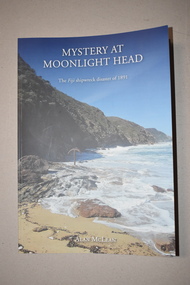
Book, Bart n Print Pty Ltd, Mystery at Moonlight Head, 2018
... ...Warrnambool photographer...Residents of Warrnambool and district had some connection to the wreck as Joseph Jordan, a Warrnambool photographer, took photographs of the wreck scene and was involved in a controversy regarding the late arrival of rescue equipment and residents from the Warrnambool area were charged with stealing some of the wrecked cargo....Wreck of the FIJI history of warrnambool Alan McLean Warrnambool photographer To Warrnambool and District Historical Society With Best Wishes Alan McLean This is a soft cover book of 176 pages. ...This book written by Alan McLean records the historical details concerning the wreck of the Fiji at Moonlight Head, Victoria in 1891. The ship was travelling from Hamburg and bound for Melbourne when it was wrecked at Moonlight Head. Twelve lives were lost and a subsequent enquiry found the captain to be guilty of negligence. Residents of Warrnambool and district had some connection to the wreck as Joseph Jordan, a Warrnambool photographer, took photographs of the wreck scene and was involved in a controversy regarding the late arrival of rescue equipment and residents from the Warrnambool area were charged with stealing some of the wrecked cargo.This book is of considerable local interest as the wreck of the Fiji was connected with Warrnambool and district and affected many local residents.This is a soft cover book of 176 pages. It has a cover with a blue background, some printed material and two colour photographs. The book contains an acknowledgement, an introduction, 21 chapters and appendices. It also contains black and white and colour illustrations, maps and other images. To Warrnambool and District Historical Society With Best Wishes Alan McLeanwreck of the fiji, history of warrnambool, alan mclean, warrnambool photographer -
 Warrnambool and District Historical Society Inc.
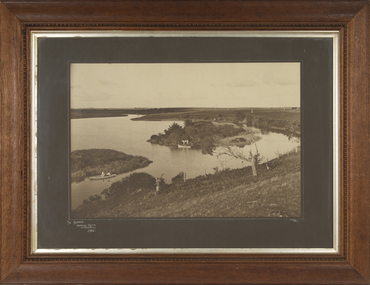
Photograph - Framed Photograph of the Islands in the Hopkins River, Jordan Studios, Warrnambool, 1911
... The photograph was taken by Jordan Studios so the photographer may be either Joseph Jordan, one of the best-known Warrnambool photographers of the past, or his son Arthur, also a well-credentialled photographer....The photograph was taken by Jordan Studios so the photographer may be either Joseph Jordan, one of the best-known Warrnambool photographers of the past, or his son Arthur, also a well-credentialled photographer. ...This photograph shows the islands in the Hopkins River in 1911. This section of the river is in the Allansford area, near Jubilee Park (Hopkins River Caravan Park). It was, and still is, a picnic and fishing spot. On one of the islands is an unmarked grave which may be that of Jemima Christine Allan, the first wife of one of the first European settlers in the Allansford area, William Allan. She died in 1842. The photograph was taken by Jordan Studios so the photographer may be either Joseph Jordan, one of the best-known Warrnambool photographers of the past, or his son Arthur, also a well-credentialled photographer.This photograph is considerable historical importance, showing a section of the Hopkins River in the Warrnambool region in 1911.This is a black and white photograph in a wooden frame with a patterned edging. The photograph is inset with a gilt metal edging and enclosed in glass. The backing is wooden with a wire cord for hanging. The photograph shows the river with islands covered in vegetation. On the river are two boats, one wuih four occupants standing up in the boat and the other with two occupants. In the ccntre of the photograph is a tree stump and a dead tree.The Islands Hopkins River Warrnambool 1911 Jordan Photohopkins river, jemima allan, jordan studios -
 Warrnambool and District Historical Society Inc.
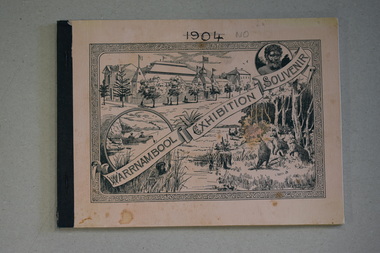
Booklet, Warrnambool Exhibition Souvenir, 1896
... It was produced by the prominent Warrnambool photographer Joseph Jordan who had the sole rights to produce a souvenir booklet and whose photographs feature in the booklet. ...It was produced by the prominent Warrnambool photographer Joseph Jordan who had the sole rights to produce a souvenir booklet and whose photographs feature in the booklet. ...souvenir booklet of 1896-7 Warrnambool Industrial and Art ExhibitionThis is a booklet with a buff-coloured cover with black binding covering metal staples.The cover has images of the Warrnambool Exhibition buildings, local scenes, aboriginals and bush scenes surrounded by scroll patterns. The booklet contains many pages of advertising, black and white photographs of scenes of Warrnambool and district and printed text.non-fictionsouvenir booklet of 1896-7 Warrnambool Industrial and Art Exhibitionwarrnambool industrial and art exhibition, joseph jordan -
 Victoria Police Museum
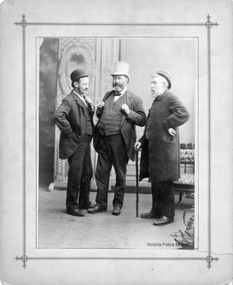
Photograph (Victoria Police), Early century 3 men in suits, 1900s
... ...Foyle photographer...Warrnambool...Handwritten: (top left) 55 P99(crossed out) (top right) AP 78 (bottom left) 81 (centre) (stick) FOYLE // PHOTOGRAPHER // WARRNAMBOOL...victoria police museum police officers police force Foyle photographer Warrnambool Handwritten: (top left) 55 P99(crossed out) (top right) AP 78 (bottom left) 81 (centre) (stick) FOYLE // PHOTOGRAPHER // WARRNAMBOOL Black and white photograph mounted on bege frame with red ornaments. ...Black and white photograph mounted on bege frame with red ornaments. Seems to be taken very early in the 20th century, before WWI. 3 Gentlemen stand on room, facing each other and not the camera. On the left, men is relatively more simple dressed, with small hat. In the middle, men with tall hat and pocket watch on fancy suit. And on the right, older man with hat, walking stick and overcoat.Handwritten: (top left) 55 P99(crossed out) (top right) AP 78 (bottom left) 81 (centre) (stick) FOYLE // PHOTOGRAPHER // WARRNAMBOOLvictoria police museum, police officers, police force, foyle photographer, warrnambool -
 Warrnambool and District Historical Society Inc.
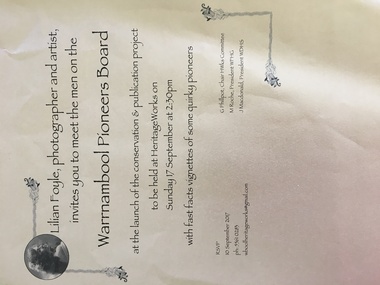
Document, HeritageWorks Personnel, Warrnambool Pioneers Board, 2017
... The invitation was sent out in the name of Lilian Foyle, the Warrnambool photographer and artist who produced the portraits and some of the sketches on the board. ...‘Lilian Foyle, photographer and artist, invites you to meet the men on the Warrnambool Pioneers Board at the launch of the conservation & publication project to be held at HeritageWorks on Sunday 17 September at 2.30 pm’...The invitation was sent out in the name of Lilian Foyle, the Warrnambool photographer and artist who produced the portraits and some of the sketches on the board. ...This is an invitation to the launch of the conservation and publication project for the Warrnambool Pioneer Honour Board. The invitation was sent out in the name of Lilian Foyle, the Warrnambool photographer and artist who produced the portraits and some of the sketches on the board. A person representing Lilian Foyle welcomed those who came to the launch. The Pioneer Honour Board, initiated by Edward Vidler, was first assembled in 1907 to mark the 60th anniversary of the founding of Warrnambool. It has the portraits of 204 pioneer men of Warrnambool and district and is one of the best examples of a pioneer honour board in Victoria. It now requires extensive conservation work and an appeal has been launched to cover the cost of this. A publication with biographies of the 204 men is also being prepared. This invitation is of great interest as it is connected to the Warrnambool Pioneer Honour Board which is one of the most important historical items in the city of Warrnambool and a work of art in its own right.This is a buff-coloured piece of paper with black printing and a black and white photograph of Lilian Foyle. There are also two ornamental patterns on two corners of the printing. ‘Lilian Foyle, photographer and artist, invites you to meet the men on the Warrnambool Pioneers Board at the launch of the conservation & publication project to be held at HeritageWorks on Sunday 17 September at 2.30 pm’warrnambool pioneer honour board, lilian foyle, edward vidler -
 Port Fairy Historical Society Museum and Archives
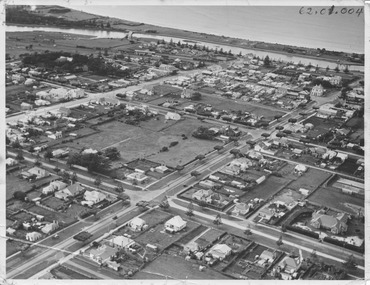
Photograph, Alex Wilkins, c1940's
... 2 stamps - ALEX WILKINS Photographer Warrnambool, Mrs O.G. Powell Phone 883 Port Fairy.( No 6 set over Sect 4) 4-6 ...The Gas works are visible on Cox Street This photograph taken in the 1940's is significant because of the detail of that is shows regarding the set out of the streets and the vacant land streets moyne river port fairy Cox street William street Gas works 2 stamps - ALEX WILKINS Photographer Warrnambool, Mrs O.G. Powell Phone 883 Port Fairy.( No 6 set over Sect 4) 4-6 black and white photograph of the streets of Port Fairy Photograph Photograph Alex Wilkins ...This photograph depicts Port Fairy streets in the 1940's showing Cox Street, William Street,Lower half of Bank Street River and sea. The Gas works are visible on Cox StreetThis photograph taken in the 1940's is significant because of the detail of that is shows regarding the set out of the streets and the vacant landblack and white photograph of the streets of Port Fairy2 stamps - ALEX WILKINS Photographer Warrnambool, Mrs O.G. Powell Phone 883 Port Fairy.( No 6 set over Sect 4) 4-6 streets, moyne river, port fairy, cox street, william street, gas works -
 Port Fairy Historical Society Museum and Archives
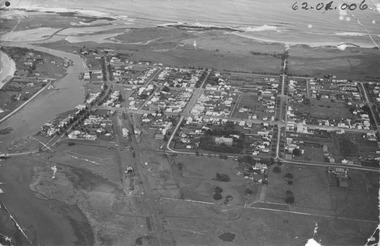
Photograph, 1940's
... ALEX WILKINS PHOTOGRAPHER WARRNAMBOOL O.G.Powell Chemist Phone 88 Port Fairy Handwritten- Aerial View to be enlarged to 12" wide underlined 62.01.006 written on front of picture...The photograph depicts the river, bridge, rail line, Regent Street, Sackville Street, William Street and south west passage and pudney grounds Significant for its depiction of the layout of the town in the 1940's and the river and south west passage moyne river sackville street william street south west passage pudney gorunds ALEX WILKINS PHOTOGRAPHER WARRNAMBOOL O.G.Powell Chemist Phone 88 Port Fairy Handwritten- Aerial View to be enlarged to 12" wide underlined 62.01.006 written on front of picture Black and white photograph Oblique Port Fairy Streets looking South Photograph Photograph Alex Wilkins ...The photograph depicts the river, bridge, rail line, Regent Street, Sackville Street, William Street and south west passage and pudney groundsSignificant for its depiction of the layout of the town in the 1940's and the river and south west passageBlack and white photograph Oblique Port Fairy Streets looking SouthALEX WILKINS PHOTOGRAPHER WARRNAMBOOL O.G.Powell Chemist Phone 88 Port Fairy Handwritten- Aerial View to be enlarged to 12" wide underlined 62.01.006 written on front of picturemoyne river, sackville street, william street, south west passage, pudney gorunds -
 Warrnambool and District Historical Society Inc.
Correspondence – Louis Buvelot, 1889-1897
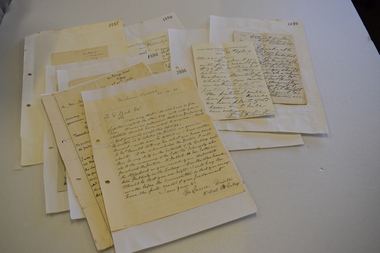
... The other eight letters were written between 1889 and 1897 and document the controversy of the time when the authenticity of the art work by Louis Buvelot, The Waterhole at Coleraine, in the Warrnambool Art Gallery collection, was questioned. The Warrnambool photographer Daniel Clarke was querying the authenticity of the art work in the Art Gallery but evidence in the form of letters from George Folingsby of the National Gallery in Melbourne and from Louis Buvelot’s widow, Caroline-Julie, confirmed that there was confusion over the number of art works that Buvelot had executed with a similar theme. ...The other eight letters were written between 1889 and 1897 and document the controversy of the time when the authenticity of the art work by Louis Buvelot, The Waterhole at Coleraine, in the Warrnambool Art Gallery collection, was questioned. The Warrnambool photographer Daniel Clarke was querying the authenticity of the art work in the Art Gallery but evidence in the form of letters from George Folingsby of the National Gallery in Melbourne and from Louis Buvelot’s widow, Caroline-Julie, confirmed that there was confusion over the number of art works that Buvelot had executed with a similar theme. ...One of these items is an 1894 letter written by the artist Tudor St George Tucker regarding one of his artworks in the Warrnambool Art Gallery collection. The other eight letters were written between 1889 and 1897 and document the controversy of the time when the authenticity of the art work by Louis Buvelot, The Waterhole at Coleraine, in the Warrnambool Art Gallery collection, was questioned. The Warrnambool photographer Daniel Clarke was querying the authenticity of the art work in the Art Gallery but evidence in the form of letters from George Folingsby of the National Gallery in Melbourne and from Louis Buvelot’s widow, Caroline-Julie, confirmed that there was confusion over the number of art works that Buvelot had executed with a similar theme. It was eventually proven that the Buvelot art work was genuine. The public spat was largely played out in the Warrnambool Standard but these original letters fill in the gaps of our knowledge on the subject. The letters came into the possession of George Lance who was involved with the Warrnambool Mechanics Institute /Art Gallery in the 1880s and 1890s and was the secretary of these institutions from 1892 to 1901. The letters were then handed on George Lance’s grandson, Bruce Morris, a well-known Warrnambool historian who was the editor of the Warrnambool Standard from 1946 to 1968. These letters are of great significance as eight of them are the original letters written in connection with the 19th century controversy in Warrnambool over the authenticity of a Louis Buvelot art work owned by the Warrnambool Art gallery. .1 A sheet of paper folded in two containing three pages of writing handwritten in black ink and pasted on paper. .2 A sheet of paper folded in two containing one page of writing handwritten in black ink and pasted on a sheet of paper. .3 A sheet of paper with handwriting in black ink pasted on a piece of paper. .4 One sheet of paper folded in two to make four pages of writing, handwritten in black ink. .5 .6 .7 A sheet of paper with handwritten material in black ink pasted onto another sheet of paper .8 A sheet of paper folded in two with three pages of handwritten material pasted onto another sheet of paper. .9 A sheet of paper folded in two with one page of handwritten material pasted onto another sheet of paper. tudor st. george tucker, artist, louis buvelot, artist, george lance, warrnambool, daniel clarke, warrnambool, george folinsby, melbourne, history of warrnambool -
 Warrnambool and District Historical Society Inc.
Book, The Holy Bible - Clarke's Commentary Vol 2 Joshua-Esther, 1838
... For thirty years he was a prominent businessman in Warrnambool as a photographer and artist. He is well-known today for his paintings of Tower Hill and the Hopkins River mouth. ...For thirty years he was a prominent businessman in Warrnambool as a photographer and artist. He is well-known today for his paintings of Tower Hill and the Hopkins River mouth. ...This book is one volume of a series of six volumes of Bible commentaries. It was a 30 year project for the writer, Adam Clarke. He was the great uncle of Daniel Clarke, a 19th century resident of Warrnambool. Daniel Clarke, as a social worker for the Anglican Church, established the Framlingham Aboriginal Reserve in the 1860s. For thirty years he was a prominent businessman in Warrnambool as a photographer and artist. He is well-known today for his paintings of Tower Hill and the Hopkins River mouth. This book is retained not only because of its antiquarian value but also because of its link with Daniel Clarke, important in Warrnambool’s 19th century history. This is a hard cover book with a black leather spine and black leather trimming on the cover edges. The cover is green with gold lettering and ornamentation on the spine. The pages have a mottled blue and brown pattern on the edges. The cover is a little torn and stained. adam clarke, daniel clarke, bible commentary -
 Warrnambool and District Historical Society Inc.
Album - Family photo album, Photographs
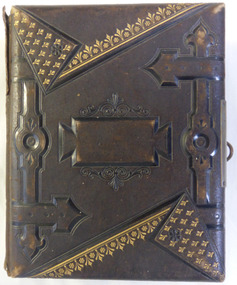
... Warrnambool...margaret clarke aged 8 1870...charles alexander clarke 1870...daniel clarke photographer...Daniel Clarke was one of Warrnambool’s more important photographers, operating a business for thirty years in the town. ...Daniel Clarke was one of Warrnambool’s more important photographers, operating a business for thirty years in the town. ...This album contains a collection of family photos, greeting cards and hand drawn floral emblems. Among the photographs are two which have details on them: a young girl named Margaret Clarke aged 8 1870 and another of Charles Alexander Clarke. The photographers are from many places including Britain, Melbourne, Portland and a number by Daniel Clarke of Warrnambool. Daniel Clarke was one of Warrnambool’s more important photographers, operating a business for thirty years in the town. He also worked as an artist and taught art in local schools. He painted a number of versions of Tower Hill. He died in 1918 at the age of 91.This album shows a collection of photographs and cards which were important to families in the later part of the 19th century. It has artistic and historical significance, with the photographs in particular depicting many different styles of clothing and household details of the time. Brown leather with a figured pattern and gold detail. Bent metal clasp Back cover in cross-hatched pattern. Spine has 5 horizontal lines. Edges of pages are edged in gold. Pale grey water wave patterned paper inside front and back covers. Pages inside are varied with some having coloured floral embellishments while others have pockets to hold from 1 to 4 photographs or card. One photograph of young boy has Charles Alexander Clarke written on bottom in black pen. A card with illustration of honeysuckle on front, has With Love to Mrs. Smith from Isabel,warrnambool, history of warrnambool, margaret clarke aged 8 1870, charles alexander clarke 1870, daniel clarke photographer -
 Warrnambool and District Historical Society Inc.
Book, Holy Bible, 19th century
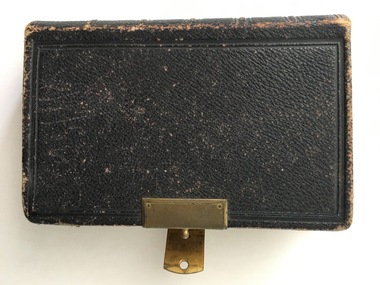
... Warrnambool for all of their married life. They had eleven children and all the births and some of the deaths of the children are recorded in this little Bible. The book was purchased from James Hider who had been a carpenter, a land agent and a rate collector before he established a bookstore in Timor Street in the 1860s. He was heavily involved in community affairs, being a local Councillor and Mayor in 1868-9. He was also an early commercial photographer...Warrnambool for all of their married life. They had eleven children and all the births and some of the deaths of the children are recorded in this little Bible. The book was purchased from James Hider who had been a carpenter, a land agent and a rate collector before he established a bookstore in Timor Street in the 1860s. He was heavily involved in community affairs, being a local Councillor and Mayor in 1868-9. He was also an early commercial photographer ...This Bible was owned by Janet Hose (nee Murfitt) 1856-1947. She was married to George Hose and they lived in Warrnambool for all of their married life. They had eleven children and all the births and some of the deaths of the children are recorded in this little Bible. The book was purchased from James Hider who had been a carpenter, a land agent and a rate collector before he established a bookstore in Timor Street in the 1860s. He was heavily involved in community affairs, being a local Councillor and Mayor in 1868-9. He was also an early commercial photographer in Warrnambool. This small Bible is of great interest because of its connection to the Hose family in Warrnambool. In the book are recorded the births and deaths of members of the Hose family. It was a common custom in the 19th century to include family history details in family Bibles and some larger-style Bibles had pages specifically printed to include family history material. This Bible is also of antiquarian interest, an attractive item with its leather cover and gold clasp.This is a mottled brown leather-covered Bible of 840 pages. The pages are gilt-edged and there is a gold metal clasp to close over the pages. Inside the front and back pages there are signatures and other handwritten material, some written in black ink and some in pencil. There is also a label from the Warrnambool book shop and stationery store of James Hider. The inscription pages and the front cover are stained. The cover is also rubbed. ‘J.Hider Opposite the Post Office Warrnambool’ ‘Janet Hose 19/07, 78,83 (Plus the family history details of the Hose Family, mostly on the back pages) janet and george hose, history of warrnambool, hose family -
 Warrnambool and District Historical Society Inc.
Functional object - Packaging, Photo Wallet McKinney, 1940s or 1950s
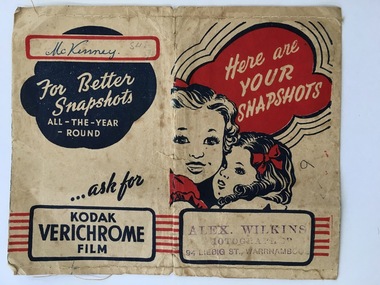
... For over 35 years in the 20th century he was one of the best-known commercial photographers in Warrnambool. In 1938 he purchased the building known as Jordan Studios (94 Liebig Street) and worked there until the 1960s. ...This folder is of some interest as it comes from the studio of Alex Wilkins, one of Warrnambool’s most important photographers in the 20th century. ...This folder came from the photographic studio of Alex Wilkins. For over 35 years in the 20th century he was one of the best-known commercial photographers in Warrnambool. In 1938 he purchased the building known as Jordan Studios (94 Liebig Street) and worked there until the 1960s. In the 1940s he became interested in producing movie films documenting local news and scenes. The name ‘McKinney’ on this folder indicates that the contents belonged to someone in the Warrnambool area as William McKinney had a general store in Lava Street in the 1870s and 80s and there are still McKinney residents in Warrnambool today. This folder is of some interest as it comes from the studio of Alex Wilkins, one of Warrnambool’s most important photographers in the 20th century. This is buff-coloured paper folded in three places to make a folder with sleeves at each end to insert photographs or photograph negatives. The folder is stitched with cotton at the top and the bottom and some of the stitching is coming undone. The inside sleeves have black printed advertising material on them and the front cover has a red and black image of two little girls. The back cover has a red and black advertisement for Kodak Verichrome film.Back Cover: ‘McKinney’ Front Cover: ‘Alex Wilkins, Photographer, 94 Liebig St., Warrnanmbool’ (stamp) alex wilkins, mckinney family, warrnambool -
 Warrnambool and District Historical Society Inc.
Photograph - Framed Photograph of the Proclamation of Warrnambool as a City, Arthur Jordan, 1918
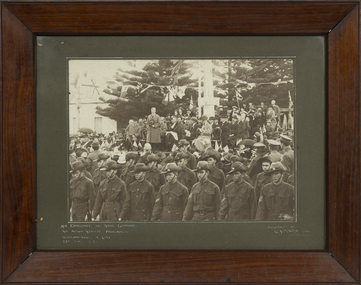
... was Arthur Jordan who, like his father Joseph, was a prominent photographer in Warrnambool at the end of the 19th and the beginning of the 20th centuries and took many official photographs of civic affairs. ... was Arthur Jordan who, like his father Joseph, was a prominent photographer in Warrnambool at the end of the 19th and the beginning of the 20th centuries and took many official photographs of civic affairs. ...This is a framed photograph showing a key event in Warrnambool's history - the proclamation by Sir Arthur Stanley of Warrnambool as a city in 1918. Warrnambool was the fifth non--metropolitan town in Victoria to be declared a city and a large crowd gathered outside the Town Hall to see this event. Sir Arthur Stanley (Lord Stanley of Alderley) was an English nobleman, Parliamentarian and soldier who was the Governor of Victoria from 1914 to 1920. The photographer was Arthur Jordan who, like his father Joseph, was a prominent photographer in Warrnambool at the end of the 19th and the beginning of the 20th centuries and took many official photographs of civic affairs. The donor of the photograph, probably immediately after the event to the Warrnambool Museum at the time under the auspices of the Warnambool Mechanics' Institute, was George Mackay, a prominent Warrnambool lawyer, Councillor and Mayor. He was probably responsible for the framing of the photograph.This is a significant photograph as it is a record of an important event in Warrnambool's history and is a great research toolThis is a black and white photograph in a polished wooden frame with a card inset and a glass covering. The photograph shows the Governor of Victoria, Sir Arthur Stanley, in civilian dress standing on a platform outside the Warrnambool Town Hall proclaiming Warrnambool a city. Behind the Governor on the platform are many men and some women and in the foreground left is a band and in the foreground centre are Army school cadets. The photograph frame has a wooden backing with a piece of wire attached for hanging the object. In the photograph also is a columm with a sign on it.His Excellency the State Governor Sir Arthur Stanley Proclamation- Warrnambool a City 23rd May 1918 Warrnambool Museum & Art Gallery Presented by G.S.Mackay Warrnambool Arthur Jordanwarrnambool -a city in 1918, sir arthur stanley, george s. mackay, arthur jordan -
 Flagstaff Hill Maritime Museum and Village
Postcard - Local Postcards, Joseph Jordan Photographic Studio, Nov 1908 - early 1909
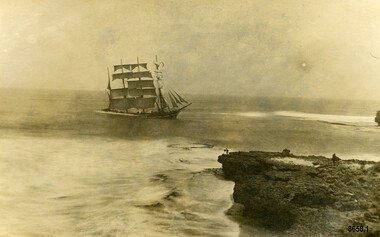
... The image on Postcard 8658.3 was taken by Joseph Jordan (a well-known Warrnambool photographer who had his own studio in Liebig Street, Warrnambool). ...The image on Postcard 8658.3 was taken by Joseph Jordan (a well-known Warrnambool photographer who had his own studio in Liebig Street, Warrnambool). ...ABOUT THE ‘FALLS OF HALLADALE’ (1886 - 1908) Built: in1886 by Russell & Co., Greenock shipyards, River Clyde, Scotland, UK. The company was founded in 1870 (or 1873) as a partnership between Joseph Russell (1834-1917), Anderson Rodger and William Todd Lithgow. During the period 1882-92 Russell & Co., they standardised designs, which sped up their building process so much that they were able to build 271 ships over that time. In 1886 they introduced a 3000 ton class of sailing vessel with auxiliary engines and brace halyard winches. In 1890 they broke the world output record. Owner: Falls Line, Wright, Breakenridge & Co, 111 Union Street, Glasgow, Scotland. Configuration: Four masted sailing ship; iron-hulled barque; iron masts, wire rigging, fore & aft lifting bridges. Size: Length 83.87m x Breadth 12.6m x Depth 7.23m, Gross tonnage 2085 ton Wrecked: the night of 14th November 1908, Curdies Inlet, Peterborough southwest Victoria Crew: 29 The Falls of Halladale was a four-masted sailing ship built-in 1886 in Glasgow, Scotland, for the long-distance cargo trade and was mostly used for Pacific grain trade. She was owned by Wright, Breakenridge & Co of Glasgow and was one of several Falls Line ships, all of which were named after waterfalls in Scotland. The lines flag was of red, blue and white vertical stripes. The Falls of Halladale had a sturdy construction built to carry maximum cargo and able to maintain full sail in heavy gales, one of the last of the ‘windjammers’ that sailed the Trade Route. She and her sister ship, the Falls of Garry, were the first ships in the world to include fore and aft lifting bridges. Previous to this, heavily loaded vessels could have heavy seas break along the full length of the deck, causing serious injury or even death to those on deck. The new, raised catwalk-type decking allowed the crew to move above the deck stormy conditions. This idea is still used today in the most modern tankers and cargo vessels and has proved to be an important step forward in the safety of men at sea. On 4th August 1908, with new sails, 29 crew, and 2800 tons of cargo, the Falls of Halladale left New York, bound for Melbourne and Sydney via the Cape of Good Hope. The cargo on board was valued at £35,000 and included 56,763 tiles of American slate roofing tiles (roof slates), 5,673 coils of barbed wire, 600 stoves, 500 sewing machines, 6,500 gallons of oil, 14,400 gallons of benzene, plumbing iron, 117 cases of crockery and glassware and many other manufactured items. The Falls of Halladale had been at sail for 102 days when, at 3 am on the night of 14th November 1908, under full sail in calm seas with a six knots breeze behind and misleading fog along the coast, the great vessel rose upon an ocean swell and settled on top of a submerged reef near Peterborough on south-west Victoria’s coast. The ship was jammed on the rocks and began filling with water. The crew launched the two lifeboats and all 29 crew landed safely on the beach over 4 miles away at the Bay of Islands. The postmistress at Peterborough, who kept a watch for vessels in distress, saw the stranding and sent out an alert to the local people. A rescue party went to the aid of the sailors and the Port Campbell rocket crew was dispatched, but the crew had all managed to reach shore safely by the time help arrived. The ship stayed in full sail on the rocky shelf for nearly two months, attracting hundreds of sightseers who watched her slowly disintegrate until the pounding seas and dynamiting by salvagers finally broke her back, and her remains disappeared back into deeper water. The valuable cargo was largely lost, despite two salvage attempts in 1908-09 and 1910. Further salvage operations were made from 1974-1986, during which time 22,000 slate tiles were recovered with the help of 14 oil drums to float them, plus personal artefacts, ship fittings, reams of paper and other items. The Court of Marine Inquiry in Melbourne ruled that the foundering of the ship was entirely due to Captain David Wood Thomson’s navigational error, not too technical failure of the Clyde-built ship. The shipwreck is a popular site for divers, about 300m offshore and in 3 – 15m of water. Some of the original cargo can be seen at the site, including pieces of roof slate and coils of barbed wire. These 5 postcards have photographic images taken while the Falls of Halladale was stuck on the reef near Peterborough. They are not stamped or dated but four of the images show the ship still in fairly good condition with her stern very low in the water so can be dated to around late November 1908 to January 1909 and the fifth image shows the ship beginning to disintegrate soon after. The image on Postcard 8658.3 was taken by Joseph Jordan (a well-known Warrnambool photographer who had his own studio in Liebig Street, Warrnambool). The other four images were supposedly taken by the sender (Bob) and converted to postcards. Amateur photography in Australia in the early 1900's was becoming very popular (and accessible) to the average person. Many newspapers published advertisements and articles about photography and photographic supplies. In 1903 in America, George Eastman designed and marketed the "Model 3A Folding Pocket Kodak" which used postcard-size negatives and provided the average person with a camera with which to make real photo postcards. As they became popular, George Eastman was able to develop and market a wide range of supplies for the amateur photographer to develop and print their own photographs onto a postcard backing at home. Four of the postcards were addressed to "Miss M. Kerr, Leura, Camperdown". Mary Agnes Kerr (1888 - 1943) was the daughter of William and Mary Ann Kerr (nee Spence) who owned "Leura Farm" at Camperdown. Mary Agnes Kerr went on to marry James Young Caldwell (a local tailor and mercer) in 1917. James Yong Caldwell came to Camperdown around 1908 and was employed as a draper. The postcards were signed "Bob". On postcard 5658.2 he has written his name with quotation marks around it - suggesting "Bob" is a nickname. He writes about the weather, meeting a friend, sending fish to Mary Agnes' family and the cargo expected to be washed up on the beach. On postcard 8658.4 he wrote about being busy after the wreck and supplying the shipwrecked crew with boots and pants which suggests "Bob" may be James Caldwell (the mercer and tailor).The Falls of Halladale shipwreck is listed on the Victorian Heritage Register (No. S255). She was one of the last ships to sail the Trade Routes. She is one of the first vessels to have fore and aft lifting bridges. She is an example of the remains of an International Cargo Ship and also represents aspects of Victoria’s shipping industry. The wreck is protected as a Historic Shipwreck under the Commonwealth Historic Shipwrecks Act (1976). These postcards are significant as examples of the continued interest the locals around the district of Peterborough showed towards the Falls of Halladale wreck and its disintegration during the next few months. Four of the postcards are also significant examples of the new hobby of photography that was available to the average person during the beginning of the 20th century.Set of 5 postcards showing different images of the Falls of Halladale sailing ship after it became stuck on a reef near Peterborough. None of the postcards are dated or stamped. Postcard 8658.1 has a sepia toned image of the Falls of Halladale, with its stern sitting very low in the water. It has many of its sails unfurled and there is a rocky headland in the foreground. A very small figure appears to be on the edge of the cliff. The back of the postcard has a handwritten message addressed to "Miss M Kerr, Leura, Camperdown" and is signed "Love Bob". Postcard 8658.2 has a sepia image of the Falls of Halladale taken some months after it had been stuck on the reef. Its sails are missing and only two broken masts remain. A large rock is visible in the front right hand side of the photo. There is a handwritten message on the back signed by "Bob". Postcard 8658.3 has a black and white image of the Falls of Halladale showing her almost side on with her stern very low in the water and still in full sail. The words "Falls of Halladale. No 1" are printed on the lower left side of the image. The back is labelled "Jordan Series". There is no message written on the back. Postcard 8658.4 has a sepia toned image of the Falls of Halladale facing two rocky headlands. She is showing full sail and the sea appears calm. There is a handwritten note on the back addressed to "Miss M Kerr" from "Bob". Postcard 8658.5 has a sepia image of a side view of the Falls of Halladale with her stern very low in the water and her sails are all up. The sea is calm and a rocky reef can be seen in the foreground. It has a handwritten note on the back from "Bob" to "Miss M Kerr" of Leura, Camperdown.Back of postcard 8658.1- "POST" "EMPIRE" "CARD" "FOR CORRESPONDENCE" "FOR ADDRESS ONLY" "STAMP" "Miss M Kerr / Leura / Camperdown" "Looking forward to letter today" "Hope fish arrived / allright. Don't / know for sure / what day I will / be going to Town / to buy. Some day / this week / Love Bob Back of postcard 8658.2 - "POST CARD"/ "CORRESPONDENCE" "ADDRESS ONLY" "93"/ "Friday / This is a contrast to the first/ I sent you. Having glorious weather / Saw Saw (Saul)? on Thursday at Peterborough / He is having a grand holiday / Expecting letter on /Tuesday Fondest Love / "Bob" Front of postcard 8658.3 - "Falls of Halladale. No 1" Back of postcard 8658.3 -"Post" "Card"/ Printed in Great Britain" /"This space may be used for Communication" "The Address to be written / here" "Jordan Series" Back of postcard 8658.4 -"POST" "EMPIRE" "CARD"/ "FOR CORRESPONDENCE" "FOR ADDRESS ONLY" / "STAMP" "Miss M Kerr/ Leura / Camperdown"/ "We are/ very busy. The / wreck is about / 11/2 other side of / Peterborough./ Fondest Love, Bob "Had to supply sailors with Boots Pants etc/ 25 pairs Boots, good order ah!" Back of postcard 8658.5 - "POST" "EMPIRE" "CARD" / "FOR CORRESPONDENCE" "FOR ADDRESS ONLY" / "STAMP"/ "Miss M Kerr / Leura / Camperdown" "Tuesday / Her estimated / value cargo included/ is (pounds)100,000. When / she breaks up the coast / will be strewn with / wreckage as the cargo / includes Rolls Paper./all sorts machinery thousands / cases Benzine etc/ love Bob flagstaff hill maritime museum and village, warrnambool, peterborough, great ocean road, falls of halladale, shipwreck, postcards, photographic images, mary agnes kerr, leura farm, camperdown, jordan series, handwritten notes, photographs, george eastman, 3a folding pocket kodak camera -
 Flagstaff Hill Maritime Museum and Village
Container - Medicine Glass, J.W. Small & Co, early 20th century
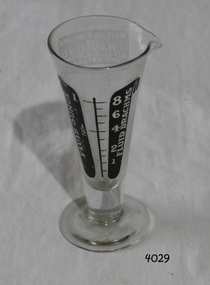
... Warrnambool in the 20th century. It was donated by members of his family. Dr Angus enjoyed photography amongst other hobbies. The maker, J.W. Small & Co. was a long established camera and photography business Camera Corner, in 270 Little Collins Street, Melbourne. At the 1887 Melbourne Exhibition the company showcased bicycles as well as a wide range of photography equipment including cameras and any other accessories and needs for the amateur photographer. ...Warrnambool in the 20th century. It was donated by members of his family. Dr Angus enjoyed photography amongst other hobbies. The maker, J.W. Small & Co. was a long established camera and photography business Camera Corner, in 270 Little Collins Street, Melbourne. At the 1887 Melbourne Exhibition the company showcased bicycles as well as a wide range of photography equipment including cameras and any other accessories and needs for the amateur photographer. ...This measuring glass for fluids was used mostly used for medicines but could have been used for measuring photography chemicals. The glass was once owned by Dr W R Angus, who practised in Warrnambool in the 20th century. It was donated by members of his family. Dr Angus enjoyed photography amongst other hobbies. The maker, J.W. Small & Co. was a long established camera and photography business Camera Corner, in 270 Little Collins Street, Melbourne. At the 1887 Melbourne Exhibition the company showcased bicycles as well as a wide range of photography equipment including cameras and any other accessories and needs for the amateur photographer. In 1887 the sole proprietor of the business was Mr Herbert Small. The firm offered the service of developing and enlarging pictures. In 1894 the firm advertised as photographic and lantern material manufacturers. There were branches in Adelaide and Sydney also. The company was still in business in the 1920's, when Dr Angus graduated as a doctor and surgeon.The medicine glass is significant for its association with Dr William Roy Angus, who practice medicine in Warrnambool for several decades. He and his wife were heavily involved in the community. Dr Angus was also connected to the maritime history of Warrnambool, being the last Port Medical Officer. The glass is also associated with the Melbourne company J.W. Small &O Co, which was 'long established' in 1887.Medicine glass (dose cup or measuring glass), for measuring fluids. This glass holds 1 fluid ounce. Wide mouth with pouring lip tapers sharply to narrow centre of the base, which has a round flat foot. Black inscriptions are on the side of the glass, showing fluid ounces and fluid drachmas. An opaque label on the back shows maker details. The other side has a label. The glass was made in England for the Australian company J.W. Small & Co. It is part of the W R Angus Collection. "FLUID OUNCES" "FLUID DRACHMS" "MADE IN ENGLAND / FOR / J.W. SMALL & CO / MELBOURNE, SYDNEY AND ADELAIDE"flagstaff hill, warrnambool, shipwrecked-coast, flagstaff-hill, flagstaff-hill-maritime-museum, maritime-museum, shipwreck-coast, flagstaff-hill-maritime-village, measuring glass, dose cup, medical equipment, medicine glass, medication administration, w.r. angus, j.w. small & co, fluid measurment, photography equipment -
 Flagstaff Hill Maritime Museum and Village
Photograph
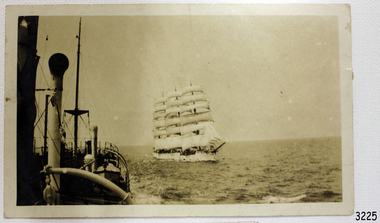
... The photographer was E.G. Hammersley. flagstaff hill warrnambool shipwrecked coast flagstaff hill maritime museum maritime museum shipwreck coast flagstaff hill maritime village great ocean road photograph sailing ship herzogin cecilie sailing ship in english channel 1926 e.g. hammersley sailing ship 1926 Reverse side states “4 masted Bqu. - taken in English Channel, June 4 1926 by E.G. ...Black and white (sepia) photograph of the 4-masted barque Herzogin Cecilie in full sail in the English Channel on June 4, 1926. The photographer was E.G. Hammersley. Photograph, black and white (sepia), of 4-masted barque Herzogin Cecilie. Reverse side states “4 masted Bqu. - taken in English Channel, June 4 1926 by E.G. Hammersley.” Reverse side states “4 masted Bqu. - taken in English Channel, June 4 1926 by E.G. Hammersley.” flagstaff hill, warrnambool, shipwrecked coast, flagstaff hill maritime museum, maritime museum, shipwreck coast, flagstaff hill maritime village, great ocean road, photograph, sailing ship herzogin cecilie, sailing ship in english channel 1926, e.g. hammersley, sailing ship 1926 -
 Flagstaff Hill Maritime Museum and Village
Postcard - Ships, Willets Photo, Victorian Training Ships, 1915
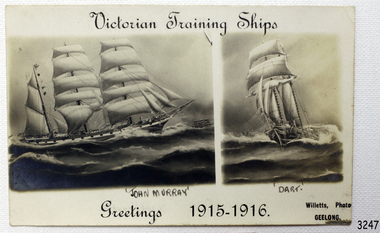
... warrnambool...willets photo geelong...greeting card...1915-1916...postcard...victorian training ships...sailing ships...john murry...dart...maritime museum...maritime village...maritine photograph...training ships...juvenile reformation...Loch Ryan...Willis photography...Geelong photographer...None-the-less, it is part of our Victorian history. flagstaff hill warrnambool willets photo geelong greeting card 1915-1916 postcard victorian training ships sailing ships john murry dart maritime museum maritime village maritine photograph training ships juvenile reformation Loch Ryan Willis photography Geelong photographer Williamstown Printed on front "Victorian Training Ships", "Greetings 1915-1916" and "Willets PHOTO / GEELONG" Written in ink below ships "John Murry" & "Dart". ...The photographic postcard was made in 1915-1916 by Willets Photography in Geelong. It is one of a series called 'Victorian Training Ships and it featured the sailing ships John Murry and the Dart'. The John Murry was commissioned by the Victorian Government for the training of juvenile offenders from 1910-1918 and anchored just off Williamstown, Victoria. The ship was previously named Loch Ryan. The Dart was named such in 1882, and in 1904 the New South Wales Government purchased her for use as a training ship. ln 1912 the Victorian Government bought her for use as a tender, to support the John Murry training ship until she was again sold in 1919 to the owner of a shipping and trading agency. The postcard is significant for its association with sailing ships and with training ships. It is also significant for its representation of two training ships used for rehabilitation. This form of treatment became controversial so the project didn't last for many years. None-the-less, it is part of our Victorian history.Black and white postcard picturing two sailing ships plus printed and handwritten text. The ships are the John Murry and the Dart. The postcard is in the series 'Victorian Training Ships'. Made by Willets of Geelong. Printed on front "Victorian Training Ships", "Greetings 1915-1916" and "Willets PHOTO / GEELONG" Written in ink below ships "John Murry" & "Dart". flagstaff hill, warrnambool, willets photo geelong, greeting card, 1915-1916, postcard, victorian training ships, sailing ships, john murry, dart, maritime museum, maritime village, maritine photograph, training ships, juvenile reformation, loch ryan, willis photography, geelong photographer, williamstown -
 Flagstaff Hill Maritime Museum and Village
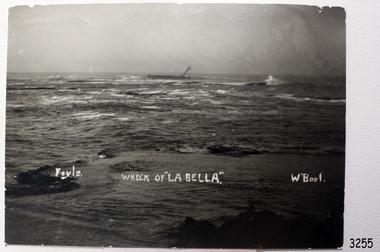
Photograph, Foyle Photographic Studio, Wreck of La Bella, about 11/11/1905
... Warrnambool. The photograph shows the ship lying on its side in rough sea, with mast and rope rigging hanging loosely. Several large rocks are also visible. The photograph is a rectangle shape, mounted on heavy card, with slightly ragged edges. The photographer’s...Warrnambool. The photograph shows the ship lying on its side in rough sea, with mast and rope rigging hanging loosely. Several large rocks are also visible. The photograph is a rectangle shape, mounted on heavy card, with slightly ragged edges. The photographer’s ...The photograph shows the wreck of La Bella in Lady Bay, Warrnambool, Australia. It was probably taken on 11th November 1905, the morning after she was wrecked. “Foyle” written on the photograph is the name of Foyle’s Photographic studio. At the time of the photograph the studio was owned by both Charles and Lilian Foyle (sometimes known as Lillian or Lily), either of whom could have taken this photograph. They also worked together at a later date on the photographs, sketches and paintings of the famous and historical Pioneers’ Honour Board, which is currently on view in the Warrnambool Library. Foyles Photography was the studio of James Charles Foyle. He owned “Foyle’s Photo Card Studios” in Liebig St , Warrnambool, which operated between 1889 – 1919 . A letter to the editor (by Mr Edward Vidler) in the Melbourne Argus, 3rd August, 1907, mentions that in that year Warrnambool would celebrate its 60th anniversary of its proclamation as a town, and that talented local artist Miss Lily Foyle would paint 200 portraits in watercolour of the pioneers who settled in the district prior to 1860. The Pioneer Honour Board can still be seen on display in the Warrnambool Library. In the Warrnambool Standard, Dec. 1917, “Mr Foyle’s studio was awarded contract to decorate rail cars on newly opened Trans-Continental railway, assisted by his sister, Miss Findlay.” The subject of the painting, La Bella, has its own tragic story. Read on for further details … On November 10th, 1905, the Norwegian-built barquentine La Bella approached Warrnambool at the end of her 37 day voyage. She was carrying a cargo of timber from Lyttleton, New Zealand, in heavy seas and evening mist. (On its only other visit to Warrnambool a year earlier the master had gone to shore to find a tow. He returned to the ship to find the crew drunk and unwilling to take up their posts, even though the ship was dragging its anchors and in a dangerous position.) As Captain Mylius steered La Bella to Lady Bay Channel the ship was tossed onto its side by heavy breakers and ran aground on what is now known as La Bella Reef. The sea was so rough that it wrenched a one-and-a- half ton anchor from the vessel. Several attempts were made by parties of volunteers in lifeboats to rescue the stricken sailors, but the rough conditions made this difficult for the boats to get close enough to the ship and the parties had to return to shore. The La Bella’s crew became exhausted and sailors were being washed overboard, one by one. By sunrise only five of the twelve crew still clung to the wreck. A local fisherman, 25 year old William Ferrier, rowed his small dingy through the heavy seas and managed to rescue the captain, whilst the volunteer lifeboat crew rescued a further three sailors, returning to shore. Ferrier made a final attempt at rescue and was able to reach its stern as the conditions eased slightly, saving the last remaining, terrified sailor just before the ship broke up and sank. William Ferrier became a national hero as news of the daring rescue spread. He was awarded the Silver Medal for bravery by the Royal Humane Society and was honoured by the Prime Minister and the Governor. He was presented with several other awards for his daring rescue. Ferrier’s rescue efforts are one of the most heroic in Victoria’s shipwreck history. The wreck now lies in 13m of water and is home to an abundance of marine life. Flagstaff Hill’s La Bella Collection includes a rail holder from La Bella, a photograph of William Ferrier with four of the five men rescued, a rail holder from the ship and the letter from the Prime Minister and other Members of Parliament that was sent to William Ferrier to commend him for his bravery. La Bella has been protected under the Commonwealth Historic Shipwrecks Act (1976) as a Historic Shipwreck since 23 April 1982 (VHR S401). It is archaeologically significant as the remains of an international and inter-colonial passenger and cargo ship. Flagstaff Hill’s collection of artefacts from the La Bella is of historical and archaeological significance because of its association with the La Bella, which is on the Victorian Heritage Register, and because of the relationship between the objects. The collection represents aspects of Victorian history, and the letter to William Ferrier demonstrates how important his rescue efforts were to Victoria and Australia. Black and white photograph of the wreck of the sailing ship La Bella in the bay at Warrnambool. The photograph shows the ship lying on its side in rough sea, with mast and rope rigging hanging loosely. Several large rocks are also visible. The photograph is a rectangle shape, mounted on heavy card, with slightly ragged edges. The photographer’s name, a title for the photograph and the location are hand written in white along the bottom third of the photograph. The back of the photograph is blank. Printed in white hand writing “Foyle”, “WRECK OF “LA BELLA”, “W’Bool”foyle, la bella, william ferrier, lady bay, lifeboats, lilian foyle, lillian foyle, charles foyle, james foyle, royal humane society medal, flagstaff hill, warrnambool, shipwrecked coast, flagstaff hill, flagstaff hill maritime museum, maritime museum, shipwreck coast, flagstaff hill maritime village -
 Flagstaff Hill Maritime Museum and Village
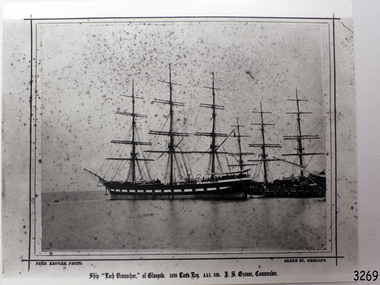
Photograph - Vessel, Sailing Ship, Fred. Kruger, Loch Vennachar of Glasgow, 1875-1888
... warrnambool...shipwrecked-coast...flagstaff-hill...flagstaff-hill-maritime-museum...maritime-museum...shipwreck-coast...flagstaff-hill-maritime-village...Loch Vennachar...Loch vennacher...loch line ship...glasgow shipping co...1875 clipper ship...loch Vennachar image....Kangaroo Island shipwreck...1905 shipwreck...Fred Kruger photographer...These goods included locally preserved tinned rabbits processed at a factory in Warrnambool for overseas trade. flagstaff hill warrnambool shipwrecked-coast flagstaff-hill flagstaff-hill-maritime-museum maritime-museum shipwreck-coast flagstaff-hill-maritime-village Loch Vennachar Loch vennacher loch line ship glasgow shipping co 1875 clipper ship loch Vennachar image. Kangaroo Island shipwreck 1905 shipwreck Fred Kruger photographer ...This is a photographic image of the three-masted iron clipper Loch Vennachar created by photographer Fred Kruger of Geelong. Fred Kruger was born in Germany in 1831 and migrated to Victoria before his wife, who arrived in 1863. He began working in photography in the 1850s. He was internationally recognised for his work, which covered a variety of subjects. He settled in Geelong in later years, registering his studio in Skene St, Newtown. He passed away in February 1888. The National Gallery of Victoria now holds much of his work. Loch Vennachar: - Loch Vennachar made many journeys from Britain to Australia and was well-known in Australian ports. On one of its homeward-bound journeys from Australia, the ship sank in the River Thames. Its cargo included 850 tonnes of preserved canned rabbits from Warrnambool's Western Meat Preserving Company. The ship was raised and continued trading for another four years. On 14th June 1905, Loch Vennachar departed Glasgow for Adelaide and Melbourne. The last known sighting of it was on 6th September 1875 when overtaken by the SS Yongala; the captains exchanged the “all well” signals. After that, the ship disappeared with loss of all 27 lives, according to a list that was received by Fremantle through the English mail. The list indicated that there were no passengers on that voyage. Sadly, other Loch Line ships med with similar disasters. The list of lost crew on the Loch Vennachar included Thomas. W. Pearce, apprentice, Southampton. His father was Tom Pearce, one of the two survivors of the Loch Ard, wrecked in 1878. Also, Thomas’ grandfather, James Pearce, was the captain of SS Gothenburg at the time of her wrecking in 1875. Consequently, the wrecking of the Loch Vennachar and the Loc Sloy near the southwest point of Kangaroo Island, a lighthouse was erected, officially opening in June 1907. The northern headland of West Bay was named Vennachar Point in memory of the ship in 1908. The wreck was discovered in 1976 by divers from the Society for Underwater Historical Research, over seventy years after being lost off Kangaroo Island.The Loch Vennachar performed a significant role in Australia’s colonial trade, taking goods between Great Britain and Australia. These goods included locally preserved tinned rabbits processed at a factory in Warrnambool for overseas trade.Black and white photograph of the Loch Vennachar at the dock, without sails. (aka Loch Vennacher). Printed below photo "Loch Vennachar of Glasgow, 1485 Tons Reg. AA1 100. T.S. Ozanne, Comander" and "Fred Kruger Photo / Skene Street, Geelong" Printed below photo "Loch Vennachar of Glasgow, 1485 Tons Reg. AA1 100. T.S. Ozanne, Comander" and "Fred Kruger Photo / Skene Street, Geelong" flagstaff hill, warrnambool, shipwrecked-coast, flagstaff-hill, flagstaff-hill-maritime-museum, maritime-museum, shipwreck-coast, flagstaff-hill-maritime-village, loch vennachar, loch vennacher, loch line ship, glasgow shipping co, 1875 clipper ship, loch vennachar image., kangaroo island shipwreck, 1905 shipwreck, fred kruger photographer, photograph loch vennachar, preserved rabbits, canned rabbits, meat preserving company, western meat preserving company, 1901, 1905 -
 Flagstaff Hill Maritime Museum and Village
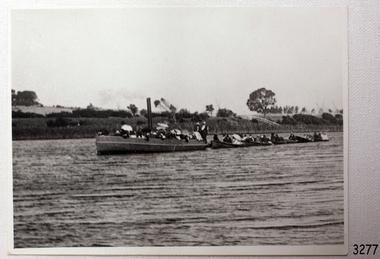
Photograph - Vessel, Steam Launch, Mrs. A. Dawson, Lady Loch, Feb 1907 - Jun 1910
... The photograph is also connected with an early Warrnambool buat builder James Flett & Sons. representing the maritime history of the town. flagstaff hill warrnambool shipwrecked-coast flagstaff-hill flagstaff-hill-maritime-museum maritime-museum shipwreck-coast flagstaff-hill-maritime-village lady of the lake lady of the lake steamer lady loch steamer lake colac steamer hopkins river warrnambool jubilee park warrnambool francis maria mann andrew abernathy nelson iiird hopkins hotel nelson's boathouse chapman's boathouse flett's boathouse fanny (francis) nelson james flett & sons Photograph, black and white, of the steam launch Lady Loch towing five rowing boats downstream on the Hopkins River from Jubilee Park towards the river mouth. There are many figures on the boats. The photograph was taken from a property called Allandale on the south river bank between February 1907 and June 1910. The photographer ...The photograph shows the steam launch Lady Loch towing five rowing boats full of passengers on the Hopkins River at Warrnambool. The boat is travelling downstream from the riverbank near Jubilee Park towards Warrnambool and the river mouth. A similar trip in 1909 was a fund-raising excursion when the Lady Loch was to tow boats from Flett & Sons' boating establishment on the Hopkins River, travelling towards Jubilee Park. The photograph was taken between February 1907 and June 1910 by Mrs A. G. Dawson from the Hopkins River Bank at “Allandale”, which she was leasing. She took another photograph that day, which was published in the Warrnambool Standard on 24th March 1973. At the time of the photograph the launch Lady Loch was owned by James Flett & Son who operated a boatshed on the bend of the Hopkins River. The boat was described as “a fine little steamer”. In 1916 it was licenced to carry 42 passengers. The LADY LOCH: - In February 1884 Mr Sutton’s steam launch had the name of Lady of the Lake. The boat was part of the entertainment for a Sunday school picnic at Ballarat Lake and Gardens. In October 1884 Mr Ivey from Lake Wendouree purchased two vessels, the steamer Ballarat and Mr Sutton’s well-known and popular launch, Lady of the Lake, to join his own fleet of pleasure boats. In November 1887 Mr Mark Hooper’s purchase of a ‘new’ pleasure boat, Lady of the Lake, arrived in Colac to be an addition to his boating business. The launch had been transported by road from Ballarat, but the boiler and the engine had travelled by rail the previous day. In June 1888, Fanny Nelson purchased the steam launch Lady of the Lake for her Nelson’s Boating and Fishing Establishment on the Hopkins River, Warrnambool. She renamed it Lady Loch. People have suggested the mane was in honour of the wife of the then-current Governor of Victoria, Sir Henry Loch, and the local paper stated that Lady Loch flew the Governor’s colours of yellow, black and blue on her first trip under Nelson’s ownership, Sunday 12th August 1888. In 1890 Fanny Nelson sold her complete business, including Lady Loch, to Mr Chapman. in January 1897 James Flett & Sons, already involved in boating, purchased the business from Chapman. In January 1916, Flett advertised everything for sale, including the boatshed and the steam launch Lady Loch. NOTE: - at least three vessels in Victoria were named Lady Loch; a river launch (ca 1884-ca 1916), a steamer ferry (1884-1920s) and a government steam lighthouse tender HMS Lady Loch (1886-1962)The photograph of the Lady Loch pleasure steamer represents the social and recreational activities of late 19th-century people from Warrnambool and the local district. It shows an example of the pleasure craft of that era. The history of the Lady Loch includes the history of fishing and boat hire businesses of that period. The photograph is also connected with an early Warrnambool buat builder James Flett & Sons. representing the maritime history of the town.Photograph, black and white, of the steam launch Lady Loch towing five rowing boats downstream on the Hopkins River from Jubilee Park towards the river mouth. There are many figures on the boats. The photograph was taken from a property called Allandale on the south river bank between February 1907 and June 1910. The photographer was Mrs A. G. Dawson. The Lady Loch was owned by Mr James Flett & Sons at that time. The photograph is mounted on card.flagstaff hill, warrnambool, shipwrecked-coast, flagstaff-hill, flagstaff-hill-maritime-museum, maritime-museum, shipwreck-coast, flagstaff-hill-maritime-village, lady of the lake, lady of the lake steamer, lady loch steamer, lake colac steamer, hopkins river warrnambool, jubilee park warrnambool, francis maria mann, andrew abernathy nelson iiird, hopkins hotel, nelson's boathouse, chapman's boathouse, flett's boathouse, fanny (francis) nelson, james flett & sons -
 Flagstaff Hill Maritime Museum and Village
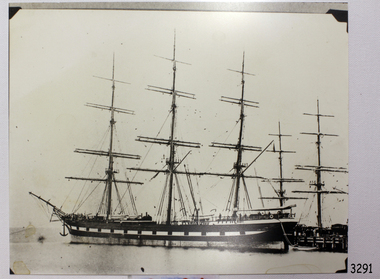
Photograph - Vessel, Sailing Ship, 1875-1905
... warrnambool...shipwrecked-coast...flagstaff-hill...flagstaff-hill-maritime-museum...maritime-museum...shipwreck-coast...flagstaff-hill-maritime-village...loch vennachar...loch vennacher...loch line ship...glasgow shipping co...1875 clipper ship...loch vennachar image....kangaroo island shipwreck...1905 shipwreck...photograph loch vennachar...fred kruger photographer...photographer, between 1875-1905 and possibly in the Port of Melbourne. Loch Vennachar made many journeys from Britain to Australia and was well-known in Australian ports. On one of its homeward-bound journeys from Australia, the ship sank in the River Thames. Its cargo included 850 tonnes of preserved canned rabbits from Warrnambool's...photographer, between 1875-1905 and possibly in the Port of Melbourne. Loch Vennachar made many journeys from Britain to Australia and was well-known in Australian ports. On one of its homeward-bound journeys from Australia, the ship sank in the River Thames. Its cargo included 850 tonnes of preserved canned rabbits from Warrnambool's ...This photograph is an image of the Loch Vennacher, taken while she is docked. The photograph is very similar to another in our collection taken by Fred. Kruger, a renowned Victorian photographer, between 1875-1905 and possibly in the Port of Melbourne. Loch Vennachar made many journeys from Britain to Australia and was well-known in Australian ports. On one of its homeward-bound journeys from Australia, the ship sank in the River Thames. Its cargo included 850 tonnes of preserved canned rabbits from Warrnambool's Western Meat Preserving Company. The ship was raised and continued trading for another four years. On 14th June 1905, Loch Vennachar departed Glasgow for Adelaide and Melbourne. The last known sighting of it was on 6th September 1875 when overtaken by the SS Yongala; the captains exchanged the “all well” signals. After that, the ship disappeared with loss of all 27 lives, according to a list that was received by Fremantle through the English mail. The list indicated that there were no passengers on that voyage. Sadly, other Loch Line ships med with similar disasters. The list of lost crew on the Loch Vennachar included Thomas. W. Pearce, apprentice, Southampton. His father was Tom Pearce, one of the two survivors of the Loch Ard, wrecked in 1878. Also, Thomas’ grandfather, James Pearce, was the captain of SS Gothenburg at the time of her wrecking in 1875. Consequently, the wrecking of the Loch Vennachar and the Loc Sloy near the southwest point of Kangaroo Island, a lighthouse was erected, officially opening in June 1907. The northern headland of West Bay was named Vennachar Point in memory of the ship in 1908. The wreck was discovered in 1976 by divers from the Society for Underwater Historical Research, over seventy years after being lost off Kangaroo Island.The Loch Vennachar performed a significant role in Australia’s colonial trade, taking goods between Great Britain and Australia. These goods included locally preserved tinned rabbits processed at a factory in Warrnambool for overseas trade.Black and white photograph of Loch Vennachar (aka Loch Vennacher) at a wharf. There are photo mounts in each corner. The vessel was was built in 1875 and wrecked on Kangaroo Island with the loss of all hands; she was last seen September 6th 1905 flagstaff hill, warrnambool, shipwrecked-coast, flagstaff-hill, flagstaff-hill-maritime-museum, maritime-museum, shipwreck-coast, flagstaff-hill-maritime-village, loch vennachar, loch vennacher, loch line ship, glasgow shipping co, 1875 clipper ship, loch vennachar image., kangaroo island shipwreck, 1905 shipwreck, photograph loch vennachar, fred kruger photographer, canned rabbits, preserved rabbits, western meat preserving company -
 Flagstaff Hill Maritime Museum and Village
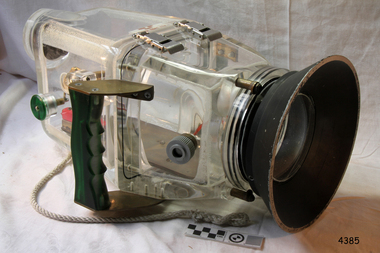
Equipment - Camera Housing, Wills Camera Housings, Late 1960s to the mid-1970s
... photographer, for his own camera. It was produced by the French company Beauchat. In 1957 the revolutionary underwater camera was invented by Jaques-Yves Cousteau and Jean de Wouters. The new amphibious "Calypso" changed the nature of underwater photography. This underwater video camera housing is significant for its purpose of underwater photography. Camera housings such as this were used to record the position and layout of shipwrecks along coast of the Great Ocean Road. Flagstaff Hill Maritime Museum and Village has underwater footage of dives that show the now protected shipwrecks. Flagstaff Hill Flagstaff Hill Maritime Museum and Village Warrnambool ...This is an early underwater camera housing for a video camera. It was sold by Wills Camera Housings from Kaniva, Victoria. It is dated around the late 1960s to the mid1970s. The history of underwater photography began with the first protective camera box for underwater photography was made in 1856. In 1914 the first underwater video footage was taken. Colour underwater photography was first shot in 1926. In 1950 the first commercially available underwater camera housing, the "Tarzan" was designed by Henry Broussard, an underwater photographer, for his own camera. It was produced by the French company Beauchat. In 1957 the revolutionary underwater camera was invented by Jaques-Yves Cousteau and Jean de Wouters. The new amphibious "Calypso" changed the nature of underwater photography.This underwater video camera housing is significant for its purpose of underwater photography. Camera housings such as this were used to record the position and layout of shipwrecks along coast of the Great Ocean Road. Flagstaff Hill Maritime Museum and Village has underwater footage of dives that show the now protected shipwrecks.Underwater camera housing for a video camera. Perspex and metal, made by Wills Camera Housings of Kaniva, Victoria. flagstaff hill, flagstaff hill maritime museum and village, warrnambool, maritime museum, maritime village, great ocean road, shipwreck coast, camera housing, underwater camera housing, video camera housing -
 Flagstaff Hill Maritime Museum and Village
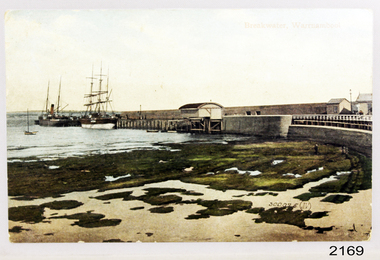
Postcard - Coastal Scene, Joseph Jordan Photographic Studio, Breakwater, Warrnambool, circa 1907
... From around 1900 (or earlier) the firm bought many images for their postcards from local and national photographers who sold publishing rights to Valentines. This postcard is significant for its association with the Port of Warrnambool and the Warrnambool Breakwater as it shows a point in time when shipping activities were an important part of Warrnambool's commerce and social development. ...The Port of Warrnambool - In the early years the Port of Warrnambool was a busy port. Steamships and sailing ships were frequent visitors to the port. Steam navigation companies were plentiful, carrying passengers and freighting cargo such as coal, timber, food, livestock, furniture, hardware and haberdashery between Melbourne and the ports along the southwest coast of Victoria, including Warrnambool. The carts would take their loads into the township for distribution. The Breakwater was built (using 32 ton blocks of concrete) between 1874 and 1890 to provide ships with greater protection from the Southern Ocean. The Lifeboat and Rocket House - The coastline of South West Victoria has had over 600 shipwrecks and many lost lives; even in Warrnambool’s Lady Bay there were around 16 known shipwrecks between 1850 and 1905, with eight lives lost. In 1859 the first Government-built lifeboat arrived at Warrnambool Harbour and a shed was soon built to house it, followed in 1864 by a rocket house to safely store the Rocket Rescue equipment. In 1878 the buildings were moved to the Breakwater area, and in 1910 the new Lifeboat Warrnambool arrived with its ‘self-righting’ design. For almost one hundred years the lifeboat and rocket crews, mostly local volunteers, trained regularly to maintain and improve their skills, summoned when needed by alarms, gunshots, ringing bells and foghorns. Some became local heroes but all served an important role. By the end of the 1950s the lifeboat and rescue equipment had become obsolete. Joseph Jordan - Joseph Jordan was born in 1841 in Leicester England. When he was 16 he joined the 7th Queen's Own Hussars and was sent to India at the outbreak of the mutiny. He took part in the relief of Lucknow and remained in India for eleven years. It was during this time, he became interested in photography. He was posted to New Zealand and later came to Victoria, becoming a sergeant major of the Mounted Rifles. In the mid 1880s he came to the Western district where he was responsible for establishing units of the Mounted Rifles in various country towns such as Dunkeld, Mortlake, Panmure, Bushfield, Koroit etc. He resigned from the army in 1889 and set up a professional photography studio in Liebig Street, Warrnambool. He became very well known in the Western District for family photographs, official photographs of local councillors and groups as well as views of local scenery. In 1891 he photographed the wrecked barque "Fiji" at "Wrecks Beach" near Princetown. His business was taken over by his son Arthur around 1917. Joseph was a keen rifle shot and in 1924 he donated the "Jordan Shield" as a prize to the Victorian Rifle Association. He was made a "Life Honorary Member" of the Warrnambool Returned Soldiers League and in 1933 he was recognised as being the oldest living soldier in Victoria. Joseph died in 1935 aged 95. Valentine Publishing Company Pty. Ltd. Valentine and Sons was a printing and photography business based in Dundee, Scotland and Canada. In the early 1900's, at the height of the postcard craze, they published large numbers of postcards in the U.K., Canada, U.S., Australia and South Africa. Valentine postcards have a 6 digit serial number on the view side with the initials "J. V." in a circle adjacent to the number. The 300,000's related to views of Australia. From around 1900 (or earlier) the firm bought many images for their postcards from local and national photographers who sold publishing rights to Valentines.This postcard is significant for its association with the Port of Warrnambool and the Warrnambool Breakwater as it shows a point in time when shipping activities were an important part of Warrnambool's commerce and social development. It is also a record of the Warrnambool Lifeboat and Rocket house which was important in aiding ordinary citizens, harbour employees and the volunteer boat and rescue crew in saving the lives of sailors and passengers due to the high number of shipwrecks that occurred along the coastline. Joseph Jordan is a significant figure in Warrnambool history as he helped to establish early units of the Mounted Rifles (G Company) in local towns during the late 1880's and later, photographed local scenes, groups and citizens of early Warrnambool. It is also a culturally significant example of the type of postcards that were very popular in the early part of the 20th century.Photograph of breakwater from beachFront of card - Breakwater, Warrnambool / 300,025 J.V [in a circle] Back of card - POSTCARD / VALENTINE'S SERIES / - This space may be used for communication / The address only to be written here - Miss Alice Griffen / Howard St / Warrnambool - How are you enjoying your holiday we are grand. / from / Dodo, Dodo, Dodo with love - Leura? / Marjory Craig? / BL006 / R99A / REG NO 2169flagstaff hill, warrnambool, shipwrecked-coast, flagstaff-hill, flagstaff-hill-maritime-museum, maritime-museum, photograph, warrnambool breakwater, breakwater, shipwreck-coast, flagstaff-hill-maritime-village, warrnambool harbour, postcard, joseph jordan, valentine and sons, valentine publishing company, lady bay, life boat house, rocket house, steam ship, barque, jordan photography
