
Showing 200 items matching "william pioneer settler"
-
 Tatura Irrigation & Wartime Camps Museum
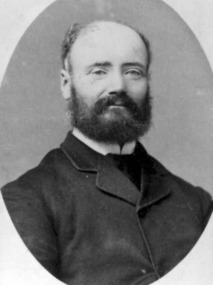
Photograph, Williams Cross
... ...william pioneer settler...cross william pioneer settler Williams Cross Photograph ...cross, william pioneer settler -
 Warrnambool and District Historical Society Inc.
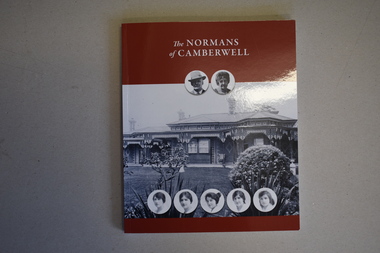
Book, The Normans of Camberwell, 2021
... The book also gives details of Frederick Norman's antecedents and descendants, including his father William Norman, a pioneer settler with his wife and family in Warrnambool. ...The book also gives details of Frederick Norman's antecedents and descendants, including his father William Norman, a pioneer settler with his wife and family in Warrnambool. ...Norman Family HistoryThis is a book of 162 pages. The cover has a brown background with white printing and black and white photographs on the front cover and a colour photograph and printing on the back. The pages contain a Foreword, an Introduction, an Appendix, a Bibliography, printed material and colour and black and white photographs.non-fictionNorman Family Historyhistory of frederick norman and family, william norman -
 Warrnambool and District Historical Society Inc.
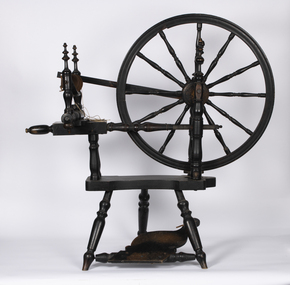
Functional object - Spinning Wheel, early 19th century
... They had three sons. William Allan was a pioneer settler who, in 1839/40, established, with his brothers, a property (Allandale) east of the Hopkins River in the area known today as Allansford. ...They had three sons. William Allan was a pioneer settler who, in 1839/40, established, with his brothers, a property (Allandale) east of the Hopkins River in the area known today as Allansford. ...This spinning wheel was recovered in pieces from N.S.W. and re-assembled in the 1980s by Les O'Callaghan, a Warrnambool historian and President of the Warrnambool and District Historical Society for many years. The spinning wheel belonged to Alice Allan (nee Mullaly) who married William Osborne Allan in 1844. They had three sons. William Allan was a pioneer settler who, in 1839/40, established, with his brothers, a property (Allandale) east of the Hopkins River in the area known today as Allansford. During the 1840s the property was divided with William taking up the Allandale section and his brother John taking the Tooram section. William died in 1860 and Alice continued to manage the property with the assistance of her sons until her death in 1887 when the Allandale estate was sub-divided. A spinning wheel such as this would have been an important item in a pioneer settler's home with the wife needing to spin wool or sometimes flax to produce cloth for clothing and furnishings. It was donated by June Rhodes who is a descendant of the original Allan family of Allandale. June was one of three children belonging to William John Allan.This spinning wheel is of considerable significance as it was owned by Alice Allan (nee Mullaly) of Allandale, one of the first settlers in the district. This would make it one of the oldest and most interesting items in our collection. It has very strong provenance as it was donated by a direct descendant of the original settlers. It is a fine example of a fairly common household items and speaks of a time when many everyday items such as clothing were made in a home setting and as such required the necessary aids and tools to do the particular task. As one such piece of equipment, a spinning wheel would have been highly valued. This is a spinning wheel made of metal and wood. The base stand has a foot pedal attached to the wheel and other sections of the spinning mechanism abovealice allan of allandale, william osborne allan of allandale, vintage household items, les o'callaghan warrnambool historian, spinning wheel, 19th century spinning wheel, allan spinning wheel, alice allan, william john allan -
 Federation University Historical Collection
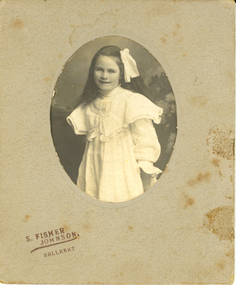
Photograph - Photograph - Black and White, S. Fisher Johnson, Edith Pickford (Holmes)
... pioneer settler, Captain Coghill. Edith and Henry spent all their married life, and raised 4 children Jack [John], Bill [William], [Mary] Elizabeth and David, at Ascot. ...pioneer settler, Captain Coghill. Edith and Henry spent all their married life, and raised 4 children Jack [John], Bill [William], [Mary] Elizabeth and David, at Ascot. ...Edith Sarah Pickford was born and raised in Clunes, Victoria. She is the only daughter of John Pickford and Betsey (Robbins) Pickford and sister of Henry Pickford, John Pickford, William Harold Pickford, Horace Pickford DCM, Arthur Pickford and Charles Alexander Pickford. [ Research by Edith;s granduaghter Jane Dyer (nee Chatham)] Edith's maternal grandmother was a descendent of Donald Cameron, the first recorded European settler in the Clunes area.The Pickford family's pioneer settler legacy in the Clunes- Glendaruel district is commemorated with a Pickford Road and displays in the Clunes Museum. A collection of Edith's song music was donated to the Clunes Museum by her great grand-daughter in 2023. Edith married a local farmer, Henry Smerdon Holmes from "Sauchieburn" Ascot, Victoria. Henry was a descendant of the family who had inherited their maternal ancestor's, Catherine Coghill (nee Holmes), Ascot - Coghills Creek property. This branch of the Coghill Family descended from the district's pioneer settler, Captain Coghill. Edith and Henry spent all their married life, and raised 4 children Jack [John], Bill [William], [Mary] Elizabeth and David, at Ascot. She was buried in the Coghills Creek Cemetery with her husband, Henry Smerdon Holmes, and their son, David, in 1967. Her children, Bill Holmes and Elizabeth Chatham, and their spouses are buried nearby.Social and historicalMounted black and white photo of a young girl wearing a white dress and ribbon.chatham holmes collection, holmes, pickford -
 Federation University Historical Collection
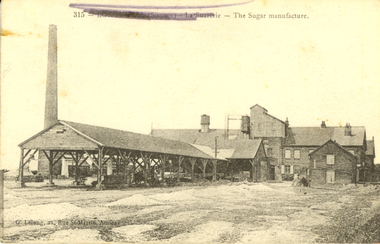
Postcard, G. Lelong, The Sugar Manufacture, Somme, France, c1917, c1917
... Henry and Violet Holmes subsequently inherited "Sauchieburn" from Catherine (nee Holmes) and William Coghill, direct descendants of the Coghills Creek, Ascot, Tourello pioneer settler Captain William Coghill [Jane Dyer, May 2024] Catherine and her brother Edward Carter Holmes drowned at sea.This is an extract from the Korumburra Times, Wednesday June 6, 1956: The fated travellers wrecked off N.S.W. ...Henry and Violet Holmes subsequently inherited "Sauchieburn" from Catherine (nee Holmes) and William Coghill, direct descendants of the Coghills Creek, Ascot, Tourello pioneer settler Captain William Coghill [Jane Dyer, May 2024] Catherine and her brother Edward Carter Holmes drowned at sea.This is an extract from the Korumburra Times, Wednesday June 6, 1956: The fated travellers wrecked off N.S.W. ...This postcard was sent from France during World War One WW1 to Violet Holmes [mother and aunty of other WW1 soldiers], by the son of a neighbouring Ascot Tourello District Family, the Wrigley Family. Violet inherited "Sauchieburn" an Ascot property on the death of her husband William Holmes in 1914. On her death this property was to be left to their 4 children and administered by a relative till the youngest child turned 27. As young boys, Violet's husband William, and his brother Henry, lived with their Aunt Catherine Coghill and Uncle William Coghill at ‘Sauchieburn’ Ascot. The Coghills had no children of their own. He and his brother Edward started a stock and station business at Clunes. Henry and Violet Holmes subsequently inherited "Sauchieburn" from Catherine (nee Holmes) and William Coghill, direct descendants of the Coghills Creek, Ascot, Tourello pioneer settler Captain William Coghill [Jane Dyer, May 2024] Catherine and her brother Edward Carter Holmes drowned at sea.This is an extract from the Korumburra Times, Wednesday June 6, 1956: The fated travellers wrecked off N.S.W. ‘On May 29th, 1886 in bright moonlight the Ly-e-Moon, the pride of the Australian coastal fleet, broke her back on the treacherous rocks of Green Cape, off the NSW coast. Eighty souls perished within range of the beacon rays of the lighthouse, including representatives of the earliest families ever to settle in Poowong. The passengers. On the main deck, Mr Edward Holmes, a Poowong grazier and former owner of ‘Wombalano’. He had sold this property with the object of going to Queensland and settling there. The proceeds of sale amounting to 1,200 pounds in gold sovereigns were under lock and key in the Purser's Office. Mr Holmes, although advanced in years, had unformed plans to invest his money in some Queensland enterprise. In the meantime he would visit his married daughter and [his] two sons, who had previously settled in Queensland. With him on board was his widowed sister Mrs Coghill who had also accepted an invitation to go north. News of the shipwreck, means of communication being slow, did not reach Korumburra for nearly a week. By then all hope had been abandoned for the missing. Relations and friends thronged the Melbourne shipping office, but the answer was always the same - All passengers unaccounted for were presumed drowned. Black and white postcard of a sugar refinery in The Somme, France. The name of the town has been scrubbed out in purple pencil by a censor during World War One. The back of the card is written on in pencil,Written on back of card: Dear Violet, received photos and letters and thank you for forwarding same. Are we having lovely spell of weather. This morning is quite warm and pleasant. The photo of you all standing in front of your house is a good one and you all look to be getting enough to eat. Mother looks as if she it getting stronger after her severe illness. Your concert party will be broken up through the Vale girls leaving but you should have no difficulty in finding volunteers to fill the ranks. By all of your letters you are all looking forward to the day we return 9as we are). I wouldn't like to bet too much that we would be home by this time next year [ ? ] by the way fritz is fighting lately he would very much like to get [peace?] I think we will give him all he wants this summer. J. Waller was here last night is looking well. With best wished to you all. I am sincerely. [W.Wrigbee? Wrigley]somme, la suererie, chatham family collection, amiens, france, world war 1, postcard, ly-ee-moon, william coghill junior, ascot victoria, pioneers of ascot, shipwreck -
 Federation University Historical Collection
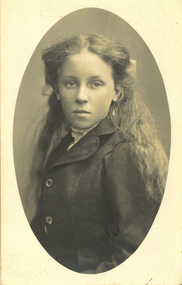
Photograph - Photograph - black and white, Iris
... On her husband, William's, death in 1914, Violet Holmes inherited 'Sauchieburn’ property in the Ascot District of the Wider Ballarat District, Victoria. Her ownership had descended via the Holmes Family from the pioneer district settler/squatter Captain William Coghill. ...On her husband, William's, death in 1914, Violet Holmes inherited 'Sauchieburn’ property in the Ascot District of the Wider Ballarat District, Victoria. Her ownership had descended via the Holmes Family from the pioneer district settler/squatter Captain William Coghill. ...On her husband, William's, death in 1914, Violet Holmes inherited 'Sauchieburn’ property in the Ascot District of the Wider Ballarat District, Victoria. Her ownership had descended via the Holmes Family from the pioneer district settler/squatter Captain William Coghill. In turn, the property on Violet's death was left to their family: Violet Spittle (nee Holmes), Mary Holmes, William E. Holmes and Henry Smerdon Holmes. I suspect this photo was sent to Violet Holmes Jnr (m Spittle) [Jane Dyer 2024]Photographic portrait of a girlVerso: Dear Mary, I am sending one of my photos and hope you will like it. Please get your taken and send me one and ask Violet and the boys also. Mother and Daphne send their love to all. From Iris.chatham-holmes family collection, family history, women -
 Flagstaff Hill Maritime Museum and Village
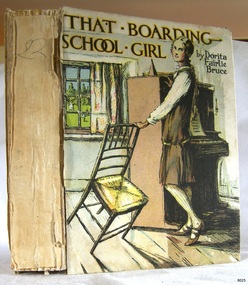
Book - Fiction, Oxford University Press, That Boarding School Girl, 1926
... pioneer families in Australia, particularly those from Victoria and the Warrnambool district in southwest Victoria. It is a tangible link to the history and legacy of these early settlers, who were instrumental in shaping the regional development. Flagstaff Hill Flagstaff Hill Maritime Museum and Village Warrnambool Maritime Museum Maritime Village Great Ocean Road Shipwreck Coast book Warrnambool Library Warrnambool Mechanics’ Institute Mechanics’ Institute Library Victorian Library Board Warrnambool Books and Records Warrnambool Children’s Library Warrnambool Public Library that boarding school girl Dorita Fairlie Bruce Sylvia McCullagh Sylvia Jean Veronica McCullagh Sylvia Barr James McCullagh Elizabeth Eccles McCullagh William McCullagh Margaret Jane Russell McCullagh Oak Grove Yangery Illowa Dennington Presbyterian Sabbath School Presbyterian Sunday School Dennington Presbyterian Church book award book prize book presentation F. ...Sylvia Jean Veronica McCullagh Barr (1914–1998) was a student at the Presbyterian Sabbath School in Dennington, near Warrnambool. In December 1930, she received a book as an award from F. Jones, the Sabbath School Superintendent, recognising her involvement and achievements at the school. Sylvia was the granddaughter of James McCullagh (1831–1911) and Elizabeth Eccles (1831–1909), a pioneering couple in the region. Married in 1856, James and Elizabeth settled at Oak Grove, Yangery, Illowa from 1859, where they lived until their deaths. One of James and Elizabeth’s sons, William McCullagh (1873–1940), married Margaret Jane Russell (1879–1981). William and Margaret also made their home at Oak Grove and raised eleven children there, including Sylvia.The book, “That Boarding School Girl” by Dorita Fairlie Bruce, represents an example of literature accessible to older girls during the early 20th century. It was specifically selected as an end-of-year award, recognising consistent attendance at Sabbath School. Such choices highlight the role of books in supporting the educational and moral development of young women during this period. The book is important as a connection to the early township of Dennington, a community distinguished by its established school and church. This association reflects the values the community placed on education and religious instruction. The book’s significance is further enhanced by its relationship with colonial pioneer families in Australia, particularly those from Victoria and the Warrnambool district in southwest Victoria. It is a tangible link to the history and legacy of these early settlers, who were instrumental in shaping the regional development. That Boarding School Girl Author: Dorita Fairlie Bruce Publisher: Oxford University Press Date: 1926 The front cover and the page opposite the fly page have drawn and coloured illustrations. The cloth-covered, hardcover book includes black and white illustrations and coloured illustrations on the front cover and frontispiece. The front cover illustration shows a teenage irl in a school tunic, standing beside a piano with one hand on the backrest of a tilted chair. Inscriptions are printed on the front loose endpaper and handwritten on the fly page. The book belonged to Sylvia McCullagh. It was awarded to her as a prize in 1930.Handwritten on the top of the fly page: "Sylvia McCullagh Den" [ Den - abbreviation for Dennington] " Presbyterian Sabbath School, Dennington. Prize Awarded to: Sylvia McCullagh. December 1930." "F. Jones, Superintendent"flagstaff hill, flagstaff hill maritime museum and village, warrnambool, maritime museum, maritime village, great ocean road, shipwreck coast, book, warrnambool library, warrnambool mechanics’ institute, mechanics’ institute library, victorian library board, warrnambool books and records, warrnambool children’s library, warrnambool public library, that boarding school girl, dorita fairlie bruce, sylvia mccullagh, sylvia jean veronica mccullagh, sylvia barr, james mccullagh, elizabeth eccles mccullagh, william mccullagh, margaret jane russell mccullagh, oak grove, yangery, illowa, dennington, presbyterian sabbath school, presbyterian sunday school, dennington presbyterian church, book award, book prize, book presentation, f. jones, sabbath school superintendent, 1930 -
 Flagstaff Hill Maritime Museum and Village
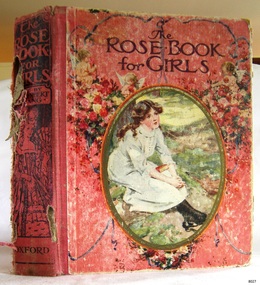
Book - Fiction, Mrs Herbert Strang, editor, The Rose Book for Girls, 1916
... pioneering settlers in the region. James and Elizabeth married in 1856 and established their home at Oak Grove, Yangery, Illowa from 1859, residing there until their deaths. One of their sons, William...pioneering settlers in the region. James and Elizabeth married in 1856 and established their home at Oak Grove, Yangery, Illowa from 1859, residing there until their deaths. One of their sons, William ...Alma McCullagh was a student at the Presbyterian Sabbath School located in Dennington, near Warrnambool. In January, around 1928, she received a book as an award from R. Conn, her Sabbath School teacher, in recognition of her involvement and achievements at the school. The exact year of this award is based on available records: in January 1928, Alma was presented with a prize by R. Conn, whereas by 1930, the role of awarding prizes had passed to F. Jones. Alma was probably the granddaughter of James McCullagh (1831–1911) and Elizabeth Eccles (1831–1909), who were pioneering settlers in the region. James and Elizabeth married in 1856 and established their home at Oak Grove, Yangery, Illowa from 1859, residing there until their deaths. One of their sons, William McCullagh (1873–1940), married Margaret Jane Russell (1879–1981). William and Margaret continued the family tradition, making their home at Oak Grove as well. They raised eleven children, with Alma likely being among the youngest of their children.The book, “The Rose Book for Girls”, edited by Mrs Herbert Strang, represents an example of literature accessible to older girls during the early 20th century. It was specifically selected as an end-of-year award, recognising consistent attendance at Sabbath School. Such choices highlight the role of books in supporting the educational and moral development of young women during this period. The book is important as a connection to the early township of Dennington, a community distinguished by its established school and church. This association reflects the values the community placed on education and religious instruction. The book’s significance is further enhanced by its relationship with colonial pioneer families in Australia, particularly those from Victoria and the Warrnambool district in southwest Victoria. It is a tangible link to the history and legacy of these early settlers, who were instrumental in shaping the regional development. In addition, the book is notable for its connection to the McCullagh family, a prominent farming family whose contributions supported the social and economic growth of the local district. This historical association enriches its value, situating the book within the broader narrative of community progress and pioneer achievement in the area, and highlighting its place within a tradition of religious life and community building.The Rose Book for Girls A collection of short stories by various authors Edited by Mrs Herbert Strang Publisher: Henry Frowde, Hodder & Stoughton, London Printer: Morrison & Gibb Ltd., Tanfield, Edinburgh, Scotland, UK Date: 1916 Hardcover book. Deep pink front and back covers, decorated with garlands of pink and white flowers, cupids and blue ribbons. The front has a cameo with a seated girl in white, with a book in her lap. Details on the spine: title, author, publisher and a sketched female in 19th-century dress holding a fan. The fly page shows details of the book and has a black and red sketch of two seated girls, one reading, the other stitching. Twenty-five books are listed on the Contents page, as well as the printer's details. Within the book are several colourful sketches. Inscriptions include the name of the book's previous owner, Alma McCullagh.Front loose-end paper: "Presbyterian Sabbath School, Dennington. Prize Awarded to: Alma McCullagh. January. (year is unreadable, circa 1928) R. Conn, Teacher"flagstaff hill, flagstaff hill maritime museum and village, warrnambool, maritime museum, maritime village, great ocean road, shipwreck coast, book, the rose book for girls, mrs herbert strang, short stories, henry frowde, hodder & stoughton, london, morrison & gibb ltd, 1916, alma mccullagh, james mccullagh, elizabeth eccles mccullagh, ca. 1928, dennington, southwest victoria, warrnambool district, presbyterian sabbath school, presbyterian sunday school, dennington presbyterian church, book award, book prize, book presentation, r. conn, sabbath school superintendent -
 City of Moorabbin Historical Society (Operating the Box Cottage Museum)
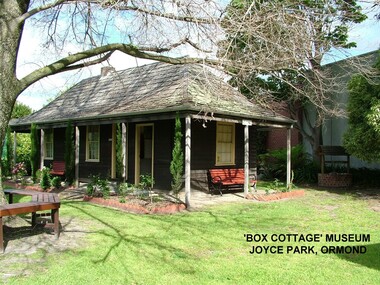
Photograph - ' Box Cottage' Reconstruction, c1841
... ‘Box Cottage’ is named after the pioneers, William and Elizabeth Box, who resided in the original cottage from approximately 1865, until Elizabeth’s death in 1914.The re-constructed cottage plan has followed faithfully the original dimensions, and plan of the original pioneer cottage, and as many original items from that cottage’s long occupation have been incorporated. Photograph ' Box Cottage' Reconstruction An unknown, early settler ...The original small, pioneer cottage was built in the late 1840s to early1850s, by an unknown pioneer. It was located on part of a 30 Acre allotment that was originally part of Henry Dendy’s Special Survey granted in 1841. The doors and window sashes, (made of red deal joinery timber), as well as the brass locks and fittings, are from the original cottage, and were imported from England.The fire-place bricks are from the original cottage, and are sun-dried, (not kiln fired), and are hand-made. Convict marks can be seen on two bricks.There is a small display of external cladding shingles from the original pioneer cottage. These shingles were hand-split, and most likely made from locally collected timber The nails included in this display were used to fasten the shingles on the original cottage, and are also hand-made. The enamel nameplate, “Colonial”, on the wall of the cottage, was the name chosen for the original pioneer cottage when a later owner, Mr August Rietman and wife Frieda leased the property in around 1917. August purchased the property 1935 for 1200 Pounds approximately and resided there until 1953. In 1974 Mr Lewis, a timber specialist, found the dilapidated building on property he had recently purchased in Jasper Rd and suggested it be reconstructed and relocated. Moorabbin Council agreed and the Cottage was rebuilt just about 250 metres from its original site. The cost of the rebuild was met by 'Victoria's 150th Committee, plus a small grant from the City of Moorabbin, and Mr Laurie Lewis donated much of the timber for the reconstruction. Although 'Box Cottage' is a re-construction, it is an unique museum that, being located in the midst of a modern community in Ormond Victoria, can educate and demonstrate many aspects of the early settler’s way of life in Victoria. As such, it is an invaluable resource for students and all kinds of visitors. The original small, pioneer cottage was built in the late 1840s to1850s, by an unknown pioneer. It was located on part of a 30 Acre allotment that was originally part of Dendy’s Special Survey granted in 1841. The re-constructed pioneer cottage, named ‘Box Cottage’, is located only a matter of metres from the original pioneer cottage site, in Joyce Park, Jasper Road, Ormond, Victoria. The museum has copies of interesting Land Titles associated with the surrounding land, including the site of the original pioneer cottage, from Dendy’s time, and into the 1900s. ‘Box Cottage’ is named after the pioneers, William and Elizabeth Box, who resided in the original cottage from approximately 1865, until Elizabeth’s death in 1914.The re-constructed cottage plan has followed faithfully the original dimensions, and plan of the original pioneer cottage, and as many original items from that cottage’s long occupation have been incorporated. Convict marks on sun -dried, fire-place chimney bricks. Enamel nameplate 'Colonial' circa1915brighton, moorabbin, cottages, pioneers, ormond, colonial, mckinnon, dendy henry, box william, box elizabeth, convicts, rietman august, rietman frieda, rietman stefanie -
 City of Moorabbin Historical Society (Operating the Box Cottage Museum)
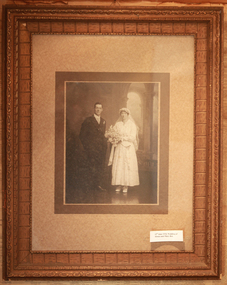
Photograph - Wedding Photograph, Alonzo and Mary Box, Box, Alonzo and Mary, 1918
... Alonzo Box, who lived in Oakleigh, was the nephew of William and Elizabeth Box, a pioneer settler of Dendy's Special Survey 1841 who purchased 'Box Cottage ' in 1865 and lived there until 1914. ...Alonzo Box, who lived in Oakleigh, was the nephew of William and Elizabeth Box, a pioneer settler of Dendy's Special Survey 1841 who purchased 'Box Cottage ' in 1865 and lived there until 1914. ...Alonzo Box, who lived in Oakleigh, was the nephew of William and Elizabeth Box, a pioneer settler of Dendy's Special Survey 1841 who purchased 'Box Cottage ' in 1865 and lived there until 1914. Alonzo Box married Mary Kloster/ Closter in 1918. On the Marriage Certificate Mary Box has spelt "Closter" with a "C" and not the "K" of her German heritage. This marriage was taking place during World War 1. Many immigrants would have altered their name at that time. The Box family were early pioneers of the district and raised their family in reconstructed 'Box Cottage'. They established a market garden and sold produce to the Melbourne markets for the colony's increasing population.A large, glass covered, wooden-framed, wedding photograph of Alonzo and Mary Box (nee Kloster/ Closter),married June 12th 1918 is displayed in the reconstructed 'Box Cottage' Museum, Joyce Park, Ormond, Victoria. At front base of mounting of photograph 'Muntz Malvern' is stamped. On back of photograph is written, unsigned, 'Mr & Mrs Alonzo Box/ June 12th 1918/ (Mary Kloster )/photographs, brighton, moorabbin, malvern, box william, box elizabeth, box alonzo, box mary, oakleigh, muntz -
 City of Moorabbin Historical Society (Operating the Box Cottage Museum)
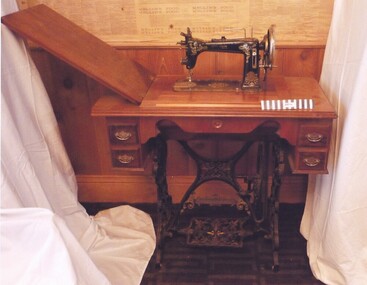
Functional object - Sewing Machine, Melber, Early 20th Century
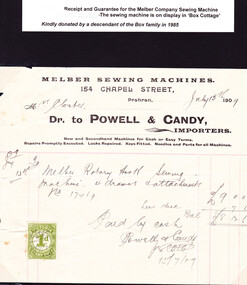
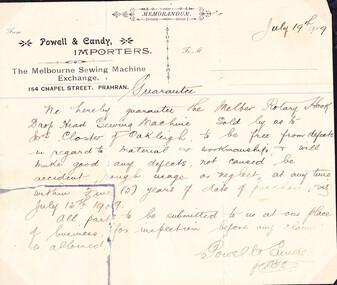
... The 'Box Cottage' Melber Treadle Sewing Machine was owned by Mary Box, nee Kloster / Closter, wife of Alonzo Box , the nephew of William and Elizabeth Box who purchased 'Box Cottage' in 1865 from a pioneer settler The machine was bought in 1909, and is a good example of its kind. ...William and Elizabeth Box purchased 'Box Cottage' in 1865 from a pioneer settler who had bought part of the land noted in Dendy's Special Survey 1841 Brighton. ...Melber sewing machines were first sold in Australia in the late 1870s. The 'Box Cottage' Melber Treadle Sewing Machine was owned by Mary Box, nee Kloster / Closter, wife of Alonzo Box , the nephew of William and Elizabeth Box who purchased 'Box Cottage' in 1865 from a pioneer settler The machine was bought in 1909, and is a good example of its kind. This type of sewing machine was widely used in many homes, in an era when hand-made clothes were the “norm.”, and clothes were mended, or ‘re-made’ into another garment. The cottage has both the Receipt, cat 00004.1 and Guarantee, cat 00004.2, for the sewing machine. This machine was possibly built by Wertheim Pty Ltd Hugo Wertheim (1854 – 1919) arrived in Melbourne in 1875. He became a successful agent for sewing machines manufactured by his father’s cousin Joseph Wertheim in Frankfurt, Germany. Hugo married Joseph’s daughter Sophie Emilie and they settled in Richmond Melbourne Australia. Hugo made many trips back to the main factory in Germany and, with extensive advertising, established a thriving business for sewing machines, bicycles, pianos under various ‘brand names’ - Wertheim, Electra, Planet, Griffin, Hapsburg. It has been said that Dame Nellie Melba preferred a Wertheim piano for her performances. In 1908 Hugo opened a large piano factory in Bendigo St Richmond, Victoria and his son Herbert maintained the business until 1935 The sewing machine was donated in 1985 by, a descendant of the Box family. The machine is complete, and in good condition. William and Elizabeth Box purchased 'Box Cottage' in 1865 from a pioneer settler who had bought part of the land noted in Dendy's Special Survey 1841 Brighton. They raised their family there and established a market garden to supply produce to the population of Melbourne. Their nephew Alonzo married Mary Kloster/ Closter in 1918 and she brought with her this 'Melber' sewing machine that she used to provide clothing for the family. 'Melber'Treadle Sewing Machine that was owned by Mary Box, nee Kloster/ Closter. It was bought in 1909, and it is a good example of its kind. This type of sewing machine was widely used in many homes, in an era when hand-made clothes were the “norm.”, and clothes were mended, or ‘re-made’ into another garment. The Box Cottage Museum has both the Receipt, and Guarantee for the sewing machine. 'MELBER' stamped on sewing machine.dendys special survey, treadle sewing machine, box cottage, mary kloster, alonzo box, melber, wertheim hugo, wertheim sewing machine manufacturer, richmond melbourne victoria, -
 City of Moorabbin Historical Society (Operating the Box Cottage Museum)
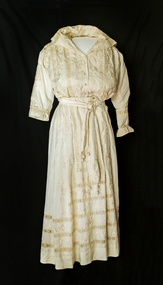
Clothing - Wedding Dress, Mary Box (nee Closter), circa 1918
... Australian Dress Register ID 573 12/5/2015 Following Henry Dendy's Special Survey 1841 pioneer settlers bought allotments of land in the area of Moorabbin Parish. Alonzo Box was the nephew of William and Elizabeth Box who bought the cottage on the 30acre allotment from an unknown pioneer settler in 1868 and resided there until Elizabeth's death in 1914. ...Alonzo Box, of Oakleigh ,a nephew of William and Elizabeth Box who resided in 'Box Cottage' 1865 - 1914, married Mary Closter (Kloster), of Oakleigh, on June 12th 1918. Alozo's elder sister, Rebecca, sent a bolt of Chinese hand-embroidered silk from which this wedding dress was made. Rebecca Viloudakia, nee Box, was a missionary in China, and married to a Greek Silk Merchant. Alonzo Box, the 9th child of John and Martha Sheldrake Box , enlisted in the Army and landed at Gallipoli 25/4/1918. He was evacuated to Egypt and then sent to the battlefields of France and Flanders before returning home to Melbourne in February 1918. Rebecca Box, the eldest child of John and Martha Sheldrake Box, was in the first party of Methodist Missionaries to leave Australia for the China Inland Mission in 1890. During the Boxer Uprising 1900-1901 her Mission outpost was attacked but she escaped and was taken to Shanghai. She later married one of the rescue party Nicholas Viloudakia a Greek silk merchant .Australian Dress Register ID 573 12/5/2015 Following Henry Dendy's Special Survey 1841 pioneer settlers bought allotments of land in the area of Moorabbin Parish. Alonzo Box was the nephew of William and Elizabeth Box who bought the cottage on the 30acre allotment from an unknown pioneer settler in 1868 and resided there until Elizabeth's death in 1914. Alonzo Box served in the Army World War 1 1914- 1918 at Gallipoli, France and Flanders. Rebecca Box -Viloudakia was in the first party of Methodist Missionaries to leave Australia for the China Inland Mission in 1890 and was rescued during the Boxer Rebellion 1900-1901 and taken to Shanghai by her future husband.A cream two piece wedding dress made from a bolt of hand embroidered Chinese silk for the marriage of Mary Closter and Alonzo Box on June 12th, 1918. The bolt of Chinese silk was sent by Alonzo’s older sister, Mrs Rebecca Viloudakia, a missionary in China, who was married to a Greek silk merchant. The machine sewn dress was made by a dressmaker in Dandenong, Victoria. The jacket is blouson, with a front opening and is gathered at the waist by a band enclosing a drawstring. The collar is a sailor style that forms a slight / high V-shape front neckline. Four vertical roses are separated by three bands of lacework. The back of the jacket is plain silk. The right front of the jacket has a panel of embroidered roses, band of lacework and a facing fold that encloses 4 fastening presses. There are crocheted bobbles on the front representing buttons. The left jacket front also has the panel of embroidered roses, lacework and matching fold for the 4 fastening studs. The full length inset sleeves are gathered to a cuff that fastens with silk covered buttons. The sleeves have floral embroidery down the outside centre line. The left sleeve has an extra detachable cuff with embroidery on the flounce that matches the bottom panel of the skirt. It is held in position around the wrist by 4 white metal press studs. The skirt sits above the ankle. It consists of 5 panels slightly gathered at the back waistline with a left side placket 21cm with hooks and eyes and press studs. The waistband is lined with petersham and has 6 whalebone inserts. The front of the skirt has small pleats to fit the 3 decorated panels to the waistline. The front has 3 bands of lacework around the lower part. 3 panels form the centre front each embroidered with a different floral pattern. The back of the skirt is plain with 3 bands of lacework rising from the hem, which is sewn with spoke work stitch. The long waist sash/belt is plain silk with embroidered ends and 3 silk balls with crocheted caps suspended on 3 crocheted silk chains. It has a rose knot with 2 metal press stud fasteners. There are a variety of floral designs embroidered on the material including ‘corner motifs’ on the 2nd inner front panel of skirt. brighton, moorabbin, silk, box william, box elizabeth, box alonzo, box mary, kloster mary, closter mary, oakleigh, dandenong, chinese silk merchant, boxer rebellion 1900-1901, box rebecca, methodist china inland mission, viloudakia nichols, anzac landings, world war 1, gallipoli -
 City of Moorabbin Historical Society (Operating the Box Cottage Museum)
Functional object - Sewing Equipment, needles
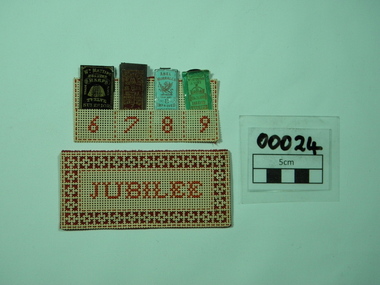
... pioneer settlers and market gardeners of Moorabbin Shire had to be self reliant and made their own clothing and utensils. This is one of many items used to exhibit the skill and craftsmanship of the women in these families. 1887 queen victorias golden jubilee victorian punched card work hand embroidery different packets different gauge sharp needles wm shrimpton and sons william mattins abel morrals copestakes cross stitch In red cot tonCross stitch on one side of the card needle case the word "NEEDLES" is embroidered, and on the other side the word "JUBILEE". ...In the 1820s perforated cardboard first became available. Then, with the invention of the printing press, designs such as sentimental or religious mottos were pre-printed on the card and a Victorian craze began as it provided a simpler and cheaper method of embroidering for the masses compared to the previously far more expensive linen embroidery. Over the following decades embroidering of punched-card grew enormously in popularity and a variety of articles from Christmas decorations to birthday cards, and in this case a Neele case to celebrate Queen Victoria's golden Jubilee in 1887. The pioneer settlers and market gardeners of Moorabbin Shire had to be self reliant and made their own clothing and utensils. This is one of many items used to exhibit the skill and craftsmanship of the women in these families. Small cream coloured Punched-Cardboard needle case,with red satin lining and red cross-stitch decoration. The case contains four paper packets each containing sewing needles of a different gauge. Each packet of needles is 3 1/2 cms long and 1 cm wide. The size of the needles In red cot tonCross stitch on one side of the card needle case the word "NEEDLES" is embroidered, and on the other side the word "JUBILEE". Inside the needle case is four packets of different sized needles, by Wm Mattins1887, queen victorias golden jubilee, victorian punched card work, hand embroidery, different packets, different gauge sharp needles, wm shrimpton and sons, william mattins, abel morrals, copestakes, cross stitch -
 City of Moorabbin Historical Society (Operating the Box Cottage Museum)
Book - Rites, Bible 1874, THE HOLY BIBLE, 1874
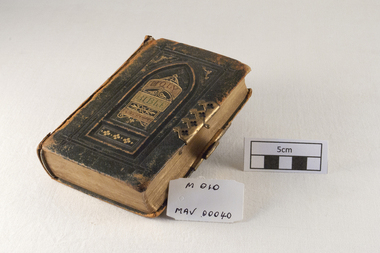
... Mr John Herron resided at 4 Vickery St Bentleigh until 1989. herron john jones james. early settlers pioneers collins william printers publishers bibles church of england prayer books moorabbin brighton melbourne glasgow scotland Front cover THE HOLY BIBLE inside page THE/ HOLY BIBLE/ CONTAINING THE / OLD AND NEW TESTAMENTS/ APPOINTED TO BE READ IN CHURCHES/ A Bible of Mr James Jones 1874 THE HOLY BIBLE Book Rites, Bible 1874 William Collins, Sons & Company ...A Bible used by Mr James Jones, an early settler in Moorabbin Shire, from 1880 - 1940James Jones was the son of Philip Jones, a Chairmaker, and Ann Jones who settled in East Brighton after the sale of land c1852 in the area of the Henry Dendy Special Survey of 1841. Mary Ann Moore was the daughter of Thomas Moore, a Gardener, and Sarah Harris who also settled in Brighton c1852. James and Mary Ann Jones settled and raised their family in East Brighton now Bentleigh. Mr John Herron resided at 4 Vickery St Bentleigh until 1989.A Bible of Mr James Jones 1874Front cover THE HOLY BIBLE inside page THE/ HOLY BIBLE/ CONTAINING THE / OLD AND NEW TESTAMENTS/ APPOINTED TO BE READ IN CHURCHES/ herron john, jones james. early settlers, pioneers, collins william, printers, publishers, bibles, church of england, prayer books, moorabbin, brighton, melbourne, glasgow, scotland -
 City of Moorabbin Historical Society (Operating the Box Cottage Museum)
Domestic object - Kitchen equipment, gas-fuelled flat iron, c1900 - 30
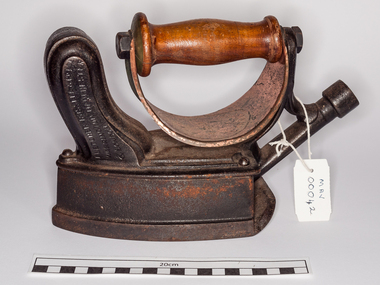
... William Russell of Pendleton Iron Works. Circa 1950, the firm merged into Radiation Ltd which was later acquired by 'TI New World'; 1902: Fletcher, Russell & Co. Ltd., Palatine Works, Warrington In 1880 gas -fuelled irons were connected by rubber tubing to the gas light-fittings of the house or to gas canisters. However , not many houses had access to a gas supply until much later and this iron was popular in 1920’s These sad irons remind us of the difficult circumstances experienced in their daily routines by the pioneers and early settlers ...Sad-irons or "solid" irons were made by blacksmiths and used to smooth out material by pressing the hot iron over it. A piece of sheet -iron was placed over the kitchen fire and the irons placed on it could be heated whilst remaining clean of ash.. The women used 2 irons - one heating while the other was used. Thick cloth or gloves protected their hands from the hot irons. The handle was removed from the cool iron and re- attached to remove the hot iron from the fire. The cool iron was replaced on the fire or stove to heat again. These irons were cleaned with steel wool to prevent them marking the material. If the iron was too hot the material would scorch. Most homes set aside one day for ironing and some large households had an ironing room with a special stove designed to heat irons. However, most women had to work with a heavy, hot iron close to the fireplace even in summer. Thomas Fletcher (1840-1903). By 1880s he had a gas appliance manufactory in Thynne Street, Warrington. By 1895 the company had become Fletcher Russell and Co Gas Engineers, his firm having merged with Alexander and William Russell of Pendleton Iron Works. Circa 1950, the firm merged into Radiation Ltd which was later acquired by 'TI New World'; 1902: Fletcher, Russell & Co. Ltd., Palatine Works, Warrington In 1880 gas -fuelled irons were connected by rubber tubing to the gas light-fittings of the house or to gas canisters. However , not many houses had access to a gas supply until much later and this iron was popular in 1920’sThese sad irons remind us of the difficult circumstances experienced in their daily routines by the pioneers and early settlers of Moorabbin Shire The family of Miss M Curtis were early settlers in Moorabbin Shire.A gas-fuelled flat iron, made in USA , It would have been attached to a gas hose fitting that was also used at night for light in the house. There is a small chimney to allow for air and to try to control the amount of heat in the iron. A 'shield' is under the leather covered handle to protect the user's hand from the heat, however it is made of copper metal - a heat conductor.FLETCHER RUSSELL CO. / LIM/ PATENT/ WARRINGTON on right side of handle 'Registered' on left side of handle ' Fletcher Russell Co L / Warrington, Manchester / & London.sad iron, kitchen equipment, fletcher russell co. ltd., england, warrington, manchester, pioneers, early settlers, market gardeners, sewing, craftwork, clothing, moorabbin, brighton, bentleigh, fireplaces, stoves, domestic gas supply, gas-light, gas cannisters -
 City of Moorabbin Historical Society (Operating the Box Cottage Museum)
Domestic object - Kitchen equipment, spirit-fuelled sad iron, c1920
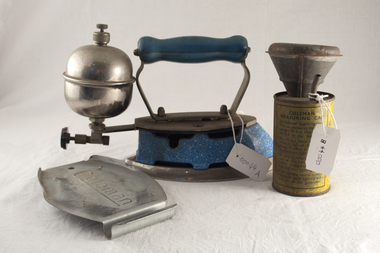
... William Coleman began selling Kerosene lanterns in 1900 in Kingfisher, Oklahoma, USA. He moved to Wichita, Kansas in 1902 and the company became world wide. The company also produced a range of cooking stoves and domestic irons. This spirit- fuelled flat iron was very popular in 1920s - 30s These sad irons remind us of the difficult circumstances experienced in their daily routines by the pioneers and early settlers of Moorabbin Shire The family of Miss M Curtis were early settlers in Moorabbin Shire sad iron kitchen equipment coleman william kansas oklahoma pioneers early settlers market gardeners sewing craftwork clothing moorabbin brighton bentleigh fireplaces stoves petrol fuelled irons spirit flat irons coleman lamp stove co. ltd. ...Sad-irons or "solid" irons were made by blacksmiths and used to smooth out material by pressing the hot iron over it. A piece of sheet -iron was placed over the kitchen fire and the irons placed on it could be heated whilst remaining clean of ash.. The women used 2 irons - one heating while the other was used. Thick cloth or gloves protected their hands from the hot irons. The handle was removed from the cool iron and re- attached to remove the hot iron from the fire. The cool iron was replaced on the fire or stove to heat again. These irons were cleaned with steel wool to prevent them marking the material. If the iron was too hot the material would scorch. Most homes set aside one day for ironing and some large households had an ironing room with a special stove designed to heat irons. However, most women had to work with a heavy, hot iron close to the fireplace even in summer. Late in the 19thC designers experimented with heat retaining fillings for these irons. William Coleman began selling Kerosene lanterns in 1900 in Kingfisher, Oklahoma, USA. He moved to Wichita, Kansas in 1902 and the company became world wide. The company also produced a range of cooking stoves and domestic irons. This spirit- fuelled flat iron was very popular in 1920s - 30s These sad irons remind us of the difficult circumstances experienced in their daily routines by the pioneers and early settlers of Moorabbin Shire The family of Miss M Curtis were early settlers in Moorabbin ShireA) spirit- fuelled, sad iron with chrome plated sole c1920, and metal trivet The iron is blue enamel with a white speckled body, with a hemispherical tank for the Coleman 'Lighting Petrol' that provided the heat for smoothing the material B) Coleman Fuel measuring can and funnellMetal Trivet/stand " COLEMAN" ; Petrol can " COLEMAN" / MEASURING CAN / for INSTANT LIGHTING IRON/ with printed instructionssad iron, kitchen equipment, coleman william, kansas, oklahoma, pioneers, early settlers, market gardeners, sewing, craftwork, clothing, moorabbin, brighton, bentleigh, fireplaces, stoves, petrol fuelled irons, spirit flat irons, coleman lamp stove co. ltd. -
 City of Moorabbin Historical Society (Operating the Box Cottage Museum)
Document - Receipt, c1900
... William and Elizabeth Box purchased 'Box Cottage' in 1865 from a pioneer settler who had bought part of the land noted in Dendy's Special Survey 1841 Brighton. ...Mrs Martha Closter ( Kloster), of Oakleigh purchased the Melber Sewing Machine in 1909 and gave it to her daughter Mary when she and Alonzo Box married in 1918 and settled in Moorabbin Shire. This document was donated by a descendant of the Box family in 1985.William and Elizabeth Box purchased 'Box Cottage' in 1865 from a pioneer settler who had bought part of the land noted in Dendy's Special Survey 1841 Brighton. They raised their family there and established a market garden to supply produce to the population of Melbourne. Their nephew Alonzo married Mary Kloster/ Closter in 1918 and she brought with her the 'Melber' sewing machine that she used to provide clothing for the familyThe original paper Receipt of the Melber Company Sewing Machine, 154 Chapel Street Prahran on July 15th 1909. Mrs Closter purchased a ‘Melber Rotary Hook Sewing Machine , 4 drawers and attachment. No. 17469 costing 9 pounds, less due 7 shillings and 6 pence leaving the sum of 8 pounds 12 shillings and 6 pence Paid by Cash to Powell & Candy per ……… on 15/7/09 ( hand written ) MELBER SEWING MACHINES / 154 CHAPEL STREET, / Prahran / Mrs Closter July 15th 1909 ( handwritten) / Dr. to POWELL & CANDY, / IMPORTERS / New and Secondhand Machines for Cash and Easy Terms. / Repairs promptly executed Locks repaired. Keys fitted. Needles and Parts for all Machines. A stamp 25mm x 30mm is on left corner of document ‘ VICTORIA STAMP DUTY ‘ -at top and base - ‘1d ‘ - centrally victoria, melbourne, clothing, brighton, moorabbin, pioneers, sewing, box elizabeth, box alonzo, closter mary, kentucky, early settlers, america, craftwork, sewing machines, melber company, u s a, prahran, kloster martha -
 City of Moorabbin Historical Society (Operating the Box Cottage Museum)
Document - Guarantee, c1900
... William and Elizabeth Box purchased 'Box Cottage' in 1865 from a pioneer settler who had bought part of the land noted in Dendy's Special Survey 1841 Brighton. ...Mrs Maria Closter ( Kloster), of Oakleigh purchased the Melber Sewing Machine in 1909 and gave it to her daughter Mary when she and Alonzo Box married in 1918 and settled in Moorabbin Shire. This document was donated by a descendant of the Box family in 1985.William and Elizabeth Box purchased 'Box Cottage' in 1865 from a pioneer settler who had bought part of the land noted in Dendy's Special Survey 1841 Brighton. They raised their family there and established a market garden to supply produce to the population of Melbourne. Their nephew Alonzo married Mary Kloster/ Closter in 1918 and she brought with her this 'Melber' sewing machine that she used to provide clothing for the family The original, hand written, Guarantee for the Melber Sewing Machine purchased by Mrs Maria Closter of Oakleigh in July 15th 1909 at Powell & Candy, Importers of Chapel Street, Prahran, Melbourne. MEMORANDUM / From / Powell & Candy/ IMPORTERS / ‘ July 19th 1909 ‘ ( hand written) / To M / The Melbourne Sewing Machine / Exchange, / 154 CHAPEL STREET, PRAHRAN / Guarantee ( hand written) / “ We hereby guarantee the Melber Rotary Hook / Drop Head Sewing Machine Sold by us to / Mrs Closter of Oakleigh, to be free from defects / in regard to material & workmanship & will / make good any defects not caused “be” / accident, rough usage or neglect at any time / within Five (5) years of date of purchase . viz. / July 15th 1909. / All parts to be submitted to us at our place / of business for inspection before any claim / is allowed. / Powell & Candy / per ……..” ( all hand written ) victoria, melbourne, clothing, brighton, moorabbin, pioneers, sewing, box elizabeth, box alonzo, closter mary, oakleigh, kentucky, early settlers, america, craftwork, sewing machines, melber company, u s a, prahran, kloster maria -
 City of Moorabbin Historical Society (Operating the Box Cottage Museum)
Book, Stirling, Amie Livingstone, Amie, Memories of an Australian Childhood, 1980
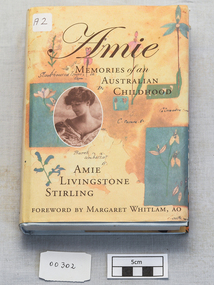
... foreword by Margaret Whitlam. stirling james reid elizabeth early settlers pioneers surveyors geologists gippsland omeo elwood melbourne victoria geelong mining botany von mueller baron elster creek brighton moorabbin howitt alfred william murray r a f goodsir agnes Amie Stirling Amie Livingston Stirling 1880-1945 recorded her memories of growing up in Omeo, Elwood and San Remo in Victoria and in 1880s and '90s. ...Amie Livingston Stirling 1880-1945 recorded her memories of growing up in Omeo, Elwood and San Remo in Victoria and in 1880s and '90s. About her father James Stirling, the famous coal-mining pioneer and geologist. Her grand-daughter Linda Harrison compiled her writings and added stories from her later life in Paris and North Africa274 p. : ill., ports., tables ; Pale blue hardback book of the childhood memories of Amie Livingston Stirling1880- 1945, compiled by her grand-daughter Linda Harrison in1980 non-fictionAmie Livingston Stirling 1880-1945 recorded her memories of growing up in Omeo, Elwood and San Remo in Victoria and in 1880s and '90s. About her father James Stirling, the famous coal-mining pioneer and geologist. Her grand-daughter Linda Harrison compiled her writings and added stories from her later life in Paris and North Africastirling james, reid elizabeth, early settlers, pioneers, surveyors, geologists, gippsland, omeo, elwood, melbourne, victoria, geelong, mining, botany, von mueller baron, elster creek, brighton, moorabbin, howitt alfred william, murray r a f, goodsir agnes, amie stirling -
 City of Moorabbin Historical Society (Operating the Box Cottage Museum)
Document - Photocopy of Land Title 1881, c1881
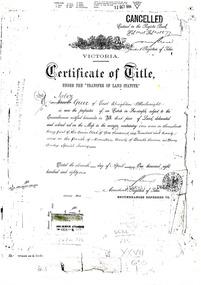
... William and Elizabeth Box, who owned the land until 1926. The land was then purchased by Charles John Greenlaw Coates and remained with this family until 1971. All these Family names appear on Councils and Community Boards during the foundation and development of City of Moorabbin dendy henry dendy's special survey 1841 brighton moorabbin bentleigh market gardeners early settlers pioneers wheelwrights merchants fruit gardens markets smith robert box william henry george gurr jabez county of bourke victoria melbourne land statutes tucker road centre road box william box elizabeth box cottage museum Stamped CANCELLED 12 OCT 1994 (top Right) / Entered in the Register Book / Vol.1245 Fol. 248877/ signed Henry Crowe / Assistant Registrar of Titles / Coat of Arms / VICTORIA / Certificate of Title / UNDER THE ' TRANSFER OF AND STATUTE' /dated ' eleventh day of April one thousand eight / hundred and eighty one' / signed 'Henry Crowe' / Assistant Registrar of Titles/ ENCUMBRANCES REFERRED TO / circular Stamp 'OFFICE OF TITLES VICTORIA' / Drawn and shaded on the left side is the area of land in "Tucker's" Road 3331/3 links fro Centre Road, 150 links x 6662/3 links / The measurements are in links 3 photocopied pages of the Certificate of Title for approximately 1 acre of land near the corner of Centre Road and Tucker Road, Parish of Moorabbin, County of Bourke, Victoria that was part of the 5,120 acre Henry Dendy Special Survey in Brighton in 1841 and purchased in 1881 by Jabez Gurr. ...This is a Certificate of Title for an acre of land in 'Tucker's Road' purchased by Jabez Gurr in 1881, in the area that was part of the Crown Block known as Henry Dendy's Special Survey 1841, in the Parish of Moorabbin, County of Bourke, Victoria. Following the 'Transfer of Land Statute' allotments in the area of Henry Dendy's Special Survey of 1841 were sold to early settlers. This Certificate of Title shows the passage of history in Moorabbin Shire . Jabez Gurr, a wheelwright, of East Brighton, now Bentleigh East, purchased an acre of land in 'Tucker's Road' , near Centre Road, in 1881. In 1889 he sold to a produce merchant, Robert Smith, and in April 1916 this block was purchased by William Henry George Box, a market gardener and relative of William and Elizabeth Box, who owned the land until 1926. The land was then purchased by Charles John Greenlaw Coates and remained with this family until 1971. All these Family names appear on Councils and Community Boards during the foundation and development of City of Moorabbin3 photocopied pages of the Certificate of Title for approximately 1 acre of land near the corner of Centre Road and Tucker Road, Parish of Moorabbin, County of Bourke, Victoria that was part of the 5,120 acre Henry Dendy Special Survey in Brighton in 1841 and purchased in 1881 by Jabez Gurr. It records subsequent proprietors up to 1971Stamped CANCELLED 12 OCT 1994 (top Right) / Entered in the Register Book / Vol.1245 Fol. 248877/ signed Henry Crowe / Assistant Registrar of Titles / Coat of Arms / VICTORIA / Certificate of Title / UNDER THE ' TRANSFER OF AND STATUTE' /dated ' eleventh day of April one thousand eight / hundred and eighty one' / signed 'Henry Crowe' / Assistant Registrar of Titles/ ENCUMBRANCES REFERRED TO / circular Stamp 'OFFICE OF TITLES VICTORIA' / Drawn and shaded on the left side is the area of land in "Tucker's" Road 3331/3 links fro Centre Road, 150 links x 6662/3 links / The measurements are in linksdendy henry, dendy's special survey 1841, brighton, moorabbin, bentleigh, market gardeners, early settlers, pioneers, wheelwrights, merchants, fruit gardens, markets, smith robert, box william henry george, gurr jabez, county of bourke, victoria, melbourne, land statutes, tucker road, centre road, box william, box elizabeth, box cottage museum -
 City of Moorabbin Historical Society (Operating the Box Cottage Museum)
Document - Document, deposit receipt 1950, c1950
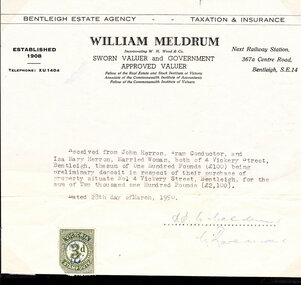
... The Marriott family were early settler market gardeners from 1878 in the area of Dendy’s 1841 Special Survey and John Herron was a descendant of Philip Jones , a chair-maker, who settled in the area of East Brighton, now Bentleigh, in 1852 pioneers early settlers brighton moorabbin bentleigh market gardeners dairyman dairy farmer jones james jones mary ann jones martha jones elizabeth ann dendy henry dendys special survey 1841 elster creek melbourne jones ethel may herron isa mary herron john tram conductor marriott m solicitors valuers taxation meldrum w real estate BENTLEIGH ESTATE AGENCY TAXATION & INSURANCE / WILLIAM MELDRUM / ESTABLISHED / 1908 Incorporating W.H.Wood & Co., Next Railway Station,/ SWORN VALUER and GOVERNMENT / APPROVED VALUER 367 a Centre Road / Bentleigh / Telephone XU 1404 / Fellow of the Real Estate and Stock Institute of Victoria / Associate of the Commonwealth Institute of Accountants/ Fellow of the Commonwealth Institute of Valuers Stamp in left bottom VICTORIA STAMP DUTY 3d with signature initials / Letter dated 28th day of March 1950 and signed SP W Meldrum / C Raveand An original paper statement of receipt issued by William Meldrum for £100 deposit paid on March 28th 1950 by Mr John Herron for purchase of the house at 4 Vickery Street Bentleigh Document Document, deposit receipt 1950 Unrecorded printer for W Meldrum, Real Estate Agent ...Mr John Herron and his wife Isa Mary Herron purchased the house at 4 Vickery Street Bentleigh in 1950 from Miss M Marriott. He was a descendant of John James an early settler dairyman in Moorabbin Shire and Miss M Marriott was a descendant of the early settler market gardeners Marriott family. Mr Herron lived there until 1989 and the house was then demolished and turned into a carpark for the busy Shopping precinct of Centre Road, Bentleigh.The Marriott family were early settler market gardeners from 1878 in the area of Dendy’s 1841 Special Survey and John Herron was a descendant of Philip Jones , a chair-maker, who settled in the area of East Brighton, now Bentleigh, in 1852An original paper statement of receipt issued by William Meldrum for £100 deposit paid on March 28th 1950 by Mr John Herron for purchase of the house at 4 Vickery Street BentleighBENTLEIGH ESTATE AGENCY TAXATION & INSURANCE / WILLIAM MELDRUM / ESTABLISHED / 1908 Incorporating W.H.Wood & Co., Next Railway Station,/ SWORN VALUER and GOVERNMENT / APPROVED VALUER 367 a Centre Road / Bentleigh / Telephone XU 1404 / Fellow of the Real Estate and Stock Institute of Victoria / Associate of the Commonwealth Institute of Accountants/ Fellow of the Commonwealth Institute of Valuers Stamp in left bottom VICTORIA STAMP DUTY 3d with signature initials / Letter dated 28th day of March 1950 and signed SP W Meldrum / C Raveand pioneers, early settlers, brighton, moorabbin, bentleigh, market gardeners, dairyman, dairy farmer, jones james, jones mary ann, jones martha, jones elizabeth ann, dendy henry, dendys special survey 1841, elster creek, melbourne, jones ethel may, herron isa mary, herron john, tram conductor, marriott m, solicitors, valuers, taxation, meldrum w, real estate -
 City of Moorabbin Historical Society (Operating the Box Cottage Museum)
Clothing - Clothing, City of Moorabbin Tie, Circa 1960s
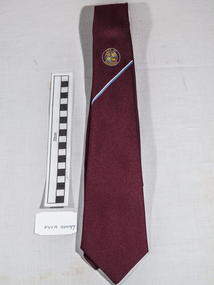
... It was the largest Municipality in Victoria with a population of 118,865 in 1974 This tie c 1960 is a memento of the City of Moorabbin 1934 - 1994 city of moorabbin moorabbin roads board moorabbin brighton dendy's special survey 1841 early settlers pioneers market gardners dendy henry were jonathan b cheltenham bentleigh mentone sandringham mair william bent thomas around circle enclosing Coat of Arms ; CITY OF MOORABBIN Maroon colour, polyester, man's tie with the crest of City of Moorabbin woven on front. ...The City of Moorabbin existed from 1934 until 1994. Henry Dendy's Special Survey in 1841 of 5,120 acres in the Parish of Moorabbin , extended from Port Phillip Bay , then East to Boundary Road, South to South Road and North to North Road and became known as Brighton. 1859 Brighton became a Borough with its boundary Thomas Street ,and Bluff Road. In 1862 The Moorabbin Roads Board was formed and the extended area now included Cheltenham, Hampton, Sandringham, Black Rock, Beaumaris, Mentone and Mordialloc .and Little Brighton became known as Bentleigh. In 1871 the area became known as The Shire of Moorabbin. Gradually the area was separated into The Borough of Sandringham 1917, ( Black Rock, Beaumaris , Sandringham and Hampton ) Borough of Mentone and Mordialloc 1920, ( Parkdale ). In 1934 The City of Moorabbin was established for the area from South East corner of Thomas Street and North Road , East to Warrigal Road, Clayton Road, Kingston Road , Lower Dandenong Road, then South along Nepean Highway to Balcombe Road and along Bluff Road, Cummins Road, Nepean Highway, Thomas Street to North Road In the 1994 Amalgamation of Councils the City of Moorabbin was divided between the new City of Kingston in the South ( from South Road) and the new City of Glen Eira to the North . It was the largest Municipality in Victoria with a population of 118,865 in 1974This tie c 1960 is a memento of the City of Moorabbin 1934 - 1994Maroon colour, polyester, man's tie with the crest of City of Moorabbin woven on front.around circle enclosing Coat of Arms ; CITY OF MOORABBIN city of moorabbin, moorabbin roads board, moorabbin, brighton, dendy's special survey 1841, early settlers, pioneers, market gardners, dendy henry, were jonathan b, cheltenham, bentleigh, mentone, sandringham, mair william, bent thomas -
![Photograph - Digital Image, Grave of William Poulter and Mary Chapman Poulter, Greensborough Cemetery [damaged headstone and replacement headstone], 13/03/1888](/media/collectors/4f729f5697f83e03086015b8/items/54c5d0a42162f1173053178c/item-media/54c5d14e2162f11730532268/item-fit-380x285.jpg?cb=6) Greensborough Historical Society
Greensborough Historical SocietyPhotograph - Digital Image, Grave of William Poulter and Mary Chapman Poulter, Greensborough Cemetery [damaged headstone and replacement headstone], 13/03/1888
... William Poulter, a local settler, about 1864. The cemetery holds the graves of many early settlers in the district. Post 2012 descendants of some pioneer families have been replacing damaged headstones. william poulter mary chapman poulter greensborough cemetery Digital copy of colour photograph of damaged grave/headstone. ...Grave of William Poulter (died 13/03/1888) and Mary Chapman Poulter (died 18/09/1899) [date not clear due to damage] in Plot#B8 Greensborough Cemetery. Photographs 2 and 3 shows the replacement headstone erected circa 2012.Greensborough Cemetery was created when land was given for the cemetery by Mr William Poulter, a local settler, about 1864. The cemetery holds the graves of many early settlers in the district. Post 2012 descendants of some pioneer families have been replacing damaged headstones.Digital copy of colour photograph of damaged grave/headstone. Digital copy of colour photographs of replacement headstone.william poulter, mary chapman poulter, greensborough cemetery -
 Greensborough Historical Society
Photograph - Digital Image, Grave of Edith Poulter, Greensborough Cemetery, 1907_
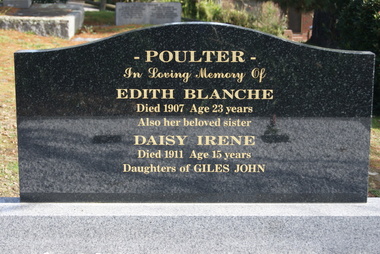
... pioneer families have been replacing damaged headstones. Greensborough Cemetery was created when land was given for the cemetery by Mr William Poulter, a local settler, about 1864. ...Grave of Edith Poulter (died 1907) in Plot# G1/G2 Greensborough Cemetery. Post 2012 descendants of some pioneer families have been replacing damaged headstones.Greensborough Cemetery was created when land was given for the cemetery by Mr William Poulter, a local settler, about 1864. The cemetery holds the graves of many early settlers in the district. Digital copy of colour photograph of grave/headstone.edith poulter, greensborough cemetery -
 Greensborough Historical Society
Photograph - Digital image, Grave of Giles Poulter, Greensborough Cemetery, 15/12/1926
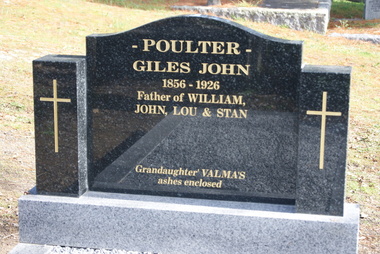
... pioneer families have been replacing damaged headstones. Greensborough Cemetery was created when land was given for the cemetery by Mr William Poulter, a local settler, about 1864. ...Grave of Giles John Poulter (died 15/12/1926) in Plot# G3 Greensborough Cemetery (new headstone). Post 2012 descendants of some pioneer families have been replacing damaged headstones.Greensborough Cemetery was created when land was given for the cemetery by Mr William Poulter, a local settler, about 1864. The cemetery holds the graves of many early settlers in the district. Digital copy of colour photograph of grave/headstone.giles john poulter, greensborough cemetery -
 Greensborough Historical Society
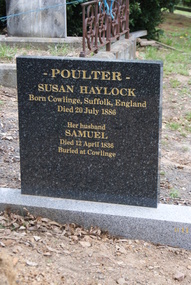
Photograph - Digital image, Grave of Susan Haylock Poulter, Greensborough Cemetery, 20/07/1886
... pioneer families have been replacing damaged headstones. Greensborough Cemetery was created when land was given for the cemetery by Mr William Poulter, a local settler, about 1864. ...Grave of Susan Haylock Poulter (died 20/07/1886) in Plot# unknown Greensborough Cemetery. Post 2012 descendants of some pioneer families have been replacing damaged headstones.Greensborough Cemetery was created when land was given for the cemetery by Mr William Poulter, a local settler, about 1864. The cemetery holds the graves of many early settlers in the district. Digital copy of colour photograph of grave/headstone.susan haylock, susan poulter, greensborough cemetery -
 Greensborough Historical Society
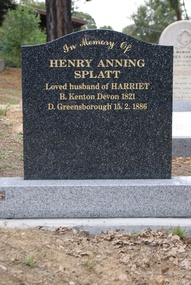
Photograph - Digital Image, Grave of Henry Anning Splatt at Greensborough Cemetery, 17/11/1886
... pioneer families have been replacing damaged headstones. Greensborough Cemetery was created when land was given for the cemetery by Mr William Poulter, a local settler, about 1864. ...Grave of Henry Anning Splatt (died 17/11/1886) in Plot#G9 Greensborough Cemetery. Post 2012 descendants of some pioneer families have been replacing damaged headstones.Greensborough Cemetery was created when land was given for the cemetery by Mr William Poulter, a local settler, about 1864. The cemetery holds the graves of many early settlers in the district. Digital copy of colour photograph of grave/headstone.henry anning splatt, greensborough cemetery -
 City of Moorabbin Historical Society (Operating the Box Cottage Museum)
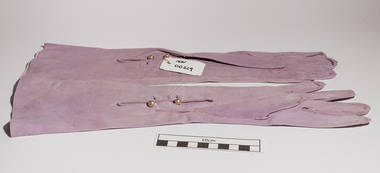
Clothing - Clothing, lady's lilac kid gloves, 20thC
... William and Elizabeth Box were early settlers in Moorabbin Shire and resided in 'Box Cottage' 1865 -1913. John Box 1841-1913 was William's brother. Carole Eldridge was a descendant of John Box who with his first wife Martha Sheldrake were the parents of Alonzo Box. clothing gloves leather work mousquetaire gloves moorabbin bentleigh brighton box elizabeth box william box avis eldridge carol early settlers pioneers market gardeners box john sheldrake martha box alonzo A pair of lady's 3/4 length, lilac, kid leather gloves with 2 pearl buttons at wrist opening. ...Ladies' gloves for formal and semi-formal wear come in three lengths for women: wrist, elbow, and opera or full-length (over the elbow, usually reaching to the biceps but sometimes to the full length of the arm). In the late 19thC and early 20thC Gloves were expected to be worn for both daytime and evening wear with most types of outfits. The most expensive gloves are custom-made of kid leather. Mousquetaire gloves have buttons at the wrist so the wearer could open the buttons and slip her hand out without taking the whole glove off. The finger section would be folded in and kept away tidily. This is how ladies wore gloves while dining. After the meal they would put their hands back into the gloves, usually for the rest of the evening. William and Elizabeth Box were early settlers in Moorabbin Shire and resided in 'Box Cottage' 1865 -1913. John Box 1841-1913 was William's brother. Carole Eldridge was a descendant of John Box who with his first wife Martha Sheldrake were the parents of Alonzo Box.A pair of lady's 3/4 length, lilac, kid leather gloves with 2 pearl buttons at wrist opening.clothing, gloves, leather work, mousquetaire gloves, moorabbin, bentleigh, brighton, box elizabeth, box william, box avis, eldridge carol, early settlers, pioneers, market gardeners, box john, sheldrake martha, box alonzo -
 City of Moorabbin Historical Society (Operating the Box Cottage Museum)
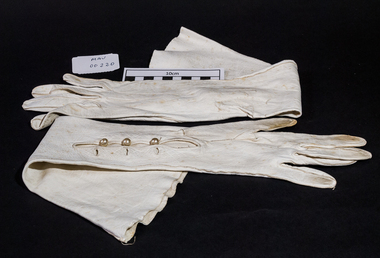
Clothing - Clothing, lady's white kid gloves, 20thC
... The Eldridge family were early settlers in Moorabbin Shire and relatives of William and Elizabeth Box. clothing gloves kid leather leather work moorabbin bentleigh brighton early settlers pioneers market gardeners box elizabeth box william box avis eldridge carol box john sheldrake martha box alonzo A pair of lady's white, 'Opera length', kid leather gloves with 3 pearl buttons at wrist opening, or 'Mousquetaire' Clothing Clothing, lady's white kid gloves unrecorded ...Ladies' gloves for formal and semi-formal wear come in three lengths for women: wrist, elbow, and opera or full-length (over the elbow, usually reaching to the biceps but sometimes to the full length of the arm). In the late 19thC and early 20thC Gloves were expected to be worn for both daytime and evening wear with most types of outfits. The most expensive gloves are custom-made of kid leather. Mousquetaire gloves have buttons at the wrist so the wearer could open the buttons and slip her hand out without taking the whole glove off. The finger section would be folded in and kept away tidily. This is how ladies wore gloves while dining. After the meal they would put their hands back into the gloves, usually for the rest of the evening. The Eldridge family were early settlers in Moorabbin Shire and relatives of William and Elizabeth Box. A pair of lady's white, 'Opera length', kid leather gloves with 3 pearl buttons at wrist opening, or 'Mousquetaire'clothing, gloves, kid leather, leather work, moorabbin, bentleigh, brighton, early settlers, pioneers, market gardeners, box elizabeth, box william, box avis, eldridge carol, box john, sheldrake martha, box alonzo -
 City of Moorabbin Historical Society (Operating the Box Cottage Museum)
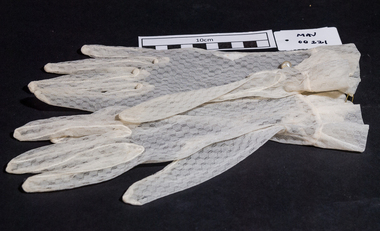
Accessory - Clothing, lady's nylon short gloves, c1950
... The Box family were early settlers in Moorabbin Shire and resided in 'Box Cottage' 1865 -1913 The Eldridge family were early settlers in Moorabbin Shire Carol Eldridge was the Daughter in law of Alf and Avis Box, descendants of John Box 1841-1913 clothing gloves nylon england moorabbin bentleigh brighton box elizabeth box william box avis eldridge carol early settlers pioneers market gardeners box john sheldrake martha box alonzo ALL NYLON / MADE IN ENGLAND / 7 A pair of lady's cream, nylon, wrist length gloves with a pearl button Accessory Clothing, lady's nylon short gloves Unrecorded ...Ladies' gloves for formal and semi-formal wear come in three lengths for women: wrist, elbow, and opera or full-length (over the elbow, usually reaching to the biceps but sometimes to the full length of the arm). In the late 19thC and early 20thC Gloves were expected to be worn for both daytime and evening wear with most types of outfits. The most expensive gloves are custom-made of kid leather.The Box family were early settlers in Moorabbin Shire and resided in 'Box Cottage' 1865 -1913 The Eldridge family were early settlers in Moorabbin Shire Carol Eldridge was the Daughter in law of Alf and Avis Box, descendants of John Box 1841-1913 A pair of lady's cream, nylon, wrist length gloves with a pearl buttonALL NYLON / MADE IN ENGLAND / 7clothing, gloves, nylon, england, moorabbin, bentleigh, brighton, box elizabeth, box william, box avis, eldridge carol, early settlers, pioneers, market gardeners, box john, sheldrake martha, box alonzo
