
Showing 524 items matching "world war 2 (ww2)"
-
 Lara RSL Sub Branch
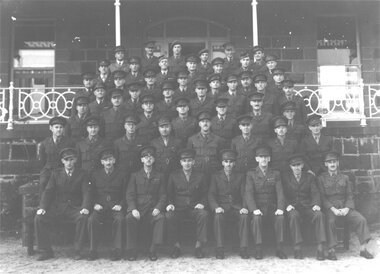
79th Fighter Squadron, Wooloomanata
... ...world war 2...ww2...Of national Significance as a Spitfire Squadron training camp in Lara Districts during WW2 79th fighter squadron raaf wooloomanata spitfire world war 2 ww2 peter anderson southern command training school 15 course 18th april 1943 On the back of the photo is "No:15 Course 18th April 1943 on the steps of Wooloomanata Homestead Southern Side". ...The 79th Fighter Squadron was initially formed at Laverton on the 26th April, 1943 under the command of flying ace Squadron Leader Alan Rawlinson, but within seven days moved to Wooloomanata Homestead on the Geelong-Bacchus Marsh Rd, No 1580 in Victoria. It was a Spitfire Squadron and used Wooloomanata as a training base before flying. It was disbanded 20th October, 1945.Of national Significance as a Spitfire Squadron training camp in Lara Districts during WW2Glossy photo and A4 documentOn the back of the photo is "No:15 Course 18th April 1943 on the steps of Wooloomanata Homestead Southern Side". On the bottom is a list of the names of those in the photo. Left to Right Rear Row: Maj. K. Ewen, Capt. N.F. Attree, Capt. C.N. Bucknell, Capt. J.L. McKenzie, Capt. C.D. Seabrook, Lt. W.G. Foley. Second row from rear: Maj. C. Dumble, Capt. A. Tavener, Maj. F. Langford, Maj. T.A.R. Cleave, Capt. M.D. Waller, Capt. J.B. Ainslie, Capt. G.M.Taylor. Third row from rear: Capt. E.K. Jennings, Lt. J.H. Loxton, Capt. D.J. Breheny, Lt. R.V. Stephens, Capt J.W.D. Cornell, Maj. C.A. Ricketts, Lt. A.R. Creswick. Fourth row from rear: Lt. W. Ruthven (V.C.), Capt. R.C. Tomkins, Capt. R.J.Bermingham, Maj. A.E. Arnott, Capt. L.S. Ralton, Maj. F.L. Edmunds, Capt. W.E. Paterson. Fifth row from rear: Maj. H.W. Stockwell, Capt. C.A. Ferry, Maj. A.C. Jennings, Capt. W.L. Hart, Maj. R.R. Marston, Capt. R.A. Cameron, Capt. R.W.M. Page. Sixth Row from rear: Lt. A.E. Pizzy, Capt. A.G. Yungman, Maj.T.G. Court, Maj. J.B. Chapman, Maj. H.F. Gough, Maj. P.L. Barbour, Maj. H.M. Heward, Maj. E.C. Nolte. Front Row: Lt. G.H. Rowden, Capt. C.J.F. Pollett, Maj. A.E.Bunbury, Lt-Col. E.W. Bundey, Major W.A. Cronk, Capt. B.V. Eames, Lt. N.D. Anderson, Maj. C.A. Lotherington. Absent: Lt. R.R. Webster, Lt. R.B. Blackwell The A4 is a written description of a brief history of the 79th Fighter Squadron79th fighter squadron, raaf, wooloomanata, spitfire, world war 2, ww2, peter anderson, southern command training school, 15 course 18th april 1943 -
 Lara RSL Sub Branch
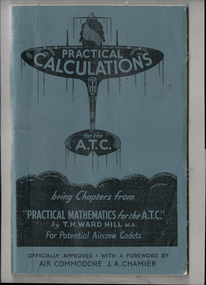
Booklet, Practical Calculations for the A.T.C, first edition 1942
... ...world war 2...ww2...Used for training pilots during World War 2 Used by Air Training Corps to train Aircrew Cadets in Geometry during World War 2 pratical calculations atc air training corps world war 2 ww2 pratical mathematics t.h. ward hill air commodore j.a. chamier air force australian air force royal australian air force geometry 1942 george g. harrap & co. ltd Front cover of an aeroplane flying above clouds with following words: Practical Calculations for the A.T.C. being Chapters from "Practical Mathematics for the A.T.C." by T.H. ...Used for training pilots during World War 2Used by Air Training Corps to train Aircrew Cadets in Geometry during World War 2Blue cloth covered book of 80 pagesFront cover of an aeroplane flying above clouds with following words: Practical Calculations for the A.T.C. being Chapters from "Practical Mathematics for the A.T.C." by T.H. Ward Hill M.A. for potential Aircrew Cadets. Officially approved with a foreward by Air Commodore J.A.Chamier On inside cover is written in pencil: A.T.C. 1942-43 R. Ellis 69 Rennie Street Lara.pratical calculations, atc, air training corps, world war 2, ww2, pratical mathematics, t.h. ward hill, air commodore j.a. chamier, air force, australian air force, royal australian air force, geometry, 1942, george g. harrap & co. ltd -
 Lara RSL Sub Branch
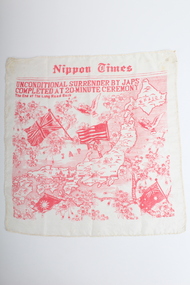
Silk Flag, Nippon Times
... ...world war 2...ww2...World War 2 to celebrate the surrender of Japan. The item was brought back from Japan by Sapper Albert Alexander Founds VX71775 who joined from Lara Victoria 12 January 1942 and was discharged on 9th July 1947. Made of silk after the Japanese Surrender of World War 2 silk american army british army australian military forces aif cherry blossoms nippon times japan world war 2 ww2 japenese surrender See image A silk flag with the words Nippon Times. ...Made at the end of World War 2 to celebrate the surrender of Japan. The item was brought back from Japan by Sapper Albert Alexander Founds VX71775 who joined from Lara Victoria 12 January 1942 and was discharged on 9th July 1947. Made of silk after the Japanese Surrender of World War 2A silk flag with the words Nippon Times. Unconditional Surrender by Japs Completed at 20 minute Ceremony. Picture of cherry blossoms, map of Japan and British, American FlagSee imagesilk, american army, british army, australian military forces, aif, cherry blossoms, nippon times, japan, world war 2, ww2, japenese surrender -
 Lara RSL Sub Branch
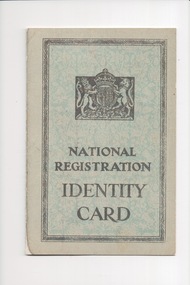
Identity Card, National Registration Identity Card
... ...world war 2...ww2...WW2. Introduced in 1939 at the outbreak of war. It had to be carried at all times if you were an adult and shown upon demand to the Police etc. Initially, all cards were coloured brown like my Dad's example, but in 1943 a new blue coloured card was introduced for adults. This card was issued in 1943. Used in the UK by residents during WW2 identity card national identity card united kingdom van lier 1943 world war 2 ...The National Registration Card was issued to everyone in Great Britain at the outbreak of WW2. Introduced in 1939 at the outbreak of war. It had to be carried at all times if you were an adult and shown upon demand to the Police etc. Initially, all cards were coloured brown like my Dad's example, but in 1943 a new blue coloured card was introduced for adults. This card was issued in 1943.Used in the UK by residents during WW2Folding identity card made from light cardboardOn the cover (see image) is a picture of the British coat of arms and the wording National Registration Identity Card. Inside (see image) is information of person. Number: BCDP 157, Surname: Van Lier, Christian Names: Abraham, Class Code: A, Full Postal Address: 89 Sherwood Avenue Greenford UK, and his signature. On rear (see image) are endorsement stampsidentity card, national identity card, united kingdom, van lier, 1943, world war 2, ww2 -
 Lara RSL Sub Branch
Book, British and Foreign Bible Society, NEW TESTAMENT POCKET BIBLE, 1939
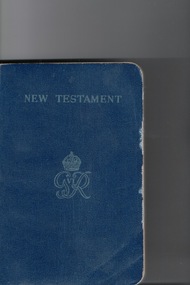
... world war 2...ww2...The bible forms part of a collection of Ronald Leslie's belongings that were donated to the Lara RSL in 2006. world war 2 ww2 wwii hmas australia Presented by 'The British and Foreign Bible Society'. ...Ronald Leslie Gregory (R/22961) served in the Australian Royal Navy. Born 5th August 1921, he enlisted on the 7th March 1939, and served on the HMAS Kuttabul II. He was discharged in 1948. The bible forms part of a collection of Ronald Leslie's belongings that were donated to the Lara RSL in 2006.Royal blue New Testament pocket sized. Presented by 'The British and Foreign Bible Society'. New South Wales Auxillary. To members of the Navy and Air Force volunteering for Active Service in defence of the British Empire. Name: Ronald L. Gregory REverand A. W. Stuart B. A. General Secretary Sydney 1940 [name: unable to be read] Chaplain H.M.A.S. Australia world war 2, ww2, wwii, hmas australia -
 Lara RSL Sub Branch
Book, Khaki and Green, 1943
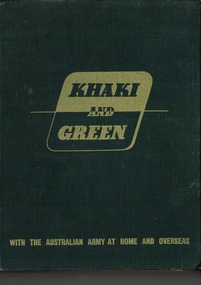
... ...World War 2...WW2...Collection of servicemen recounts, poems and cartoons from World War 2 blaney aif 6th and 7th division poetry middle east south west pacific darwin nassau bay kokoda rats of moresby bullybeef night patrol jungle fighters prisoners of war World War 2 WW2 To the memory of fallen comrades ‘They gave their lives. ...Khaki and Green is a summary of the scope of the activities of the Australian soldiers since last they related their experiences, in book form. To their homeland. It speaks of desert and jungle epitomising the two major regions of the campaign in which Australians have participated since October 1942 - the overthrow of Rommel's forces at El Alamein and the smashing of the Chinese in Papua.Collection of servicemen recounts, poems and cartoons from World War 2Faded light green hardcover front and back with title in centre symmetrical green and back lettering (shadowed) With the Australian Army at home and overseas. Text is repeated on spine of book. Front and back inside pages has an illustrations of a kit bag and it's contents and text - Palestine, United Kingdom, Egypt, Libya, Greece, Crete, Eritrea, Cyprus, Syria, Siam, Malaya, Java, Ambon, Ceylon, China, New Britain, Ocean islands, Nauru, New Caledonia, New Guinea, Solomon's, Papua, Timor, Dutch New Guinea. Photos, illustrations, cartoons, poems. There are three copies held at the Lara RSL Sub Branch.To the memory of fallen comrades ‘They gave their lives. For the public gift they received a praise which never ages and a tomb most glorious – not so much the tomb in which they lie, but that in which their fame survives, to be remembered forever when occasion comes for word or dead…. ‘ blaney, aif, 6th and 7th division, poetry, middle east, south west pacific, darwin, nassau bay, kokoda, rats of moresby, bullybeef, night patrol, jungle fighters, prisoners of war, world war 2, ww2 -
 Lara RSL Sub Branch
Booklet, Government Printer, An Outline of Repatriation
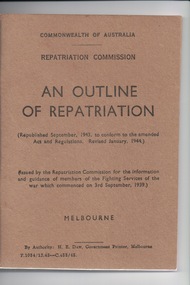
... ...world war 2...ww2...Printed for Australian Infantry personnel during World War 2 to help with repatriation on return to Australia Used by World War 2 service personnel to assist with repatriation on return from active service to Australia. commonwealth of australia repatriation commission world war 2 ww2 repatriation aif australian infantry forces melbourne government printer navy army air force On the front Cover from top to bottom: Commonwealth of Australia; Repatriation Commission; AN OUTLINE OF REPATRIATION; (Republished September, 1943, to conform to the amended Acts and Regulation, Revised January, 1941); (Issued by the Repatriation Commission for the information and guidance of members of the Fighting Services of the war which commenced on 3rd September, 1939); Melbourne; By Authority: H.E. ...Printed for Australian Infantry personnel during World War 2 to help with repatriation on return to AustraliaUsed by World War 2 service personnel to assist with repatriation on return from active service to Australia.A booklet coloured khaki with a cover made from light cardboard and 64 pages made from paper.On the front Cover from top to bottom: Commonwealth of Australia; Repatriation Commission; AN OUTLINE OF REPATRIATION; (Republished September, 1943, to conform to the amended Acts and Regulation, Revised January, 1941); (Issued by the Repatriation Commission for the information and guidance of members of the Fighting Services of the war which commenced on 3rd September, 1939); Melbourne; By Authority: H.E. Daw, Government Printer, Melbourne T.1034/12.43-C.454/45 See images for content on front and rear covers.commonwealth of australia, repatriation commission, world war 2, ww2, repatriation, aif, australian infantry forces, melbourne, government printer, navy, army, air force -
 Lara RSL Sub Branch
Handbook, W.A.Cooney, The Road Back, 1947/1950
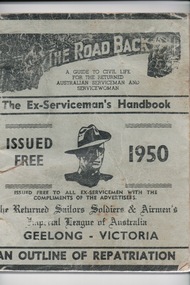
... ...world war 2...ww2...The handbook was distributed to all ex-servicemen on return from WW2 in the Geelong area and was a guide to civil life. This booklet for returned service personnel from World War 2 living in the Geelong Region is og local district significance as a part of the history of Geelong. the road back the ex-serviceman's handbook world war 2 ww2 australian aif australian serviceman australian servicewoman rss&aila army navy air force returned sailor's, soldier's and airmen's imperial league of australia rsl The Road Back The Ex-Serviceman's Handbook Geelong. ...The handbook was distributed to all ex-servicemen on return from WW2 in the Geelong area and was a guide to civil life.This booklet for returned service personnel from World War 2 living in the Geelong Region is og local district significance as a part of the history of Geelong.The Road Back -two of The Ex-Serviceman's Handbooks,1947/ 1950 Geelong Issued Free.One is Light green in colour with black writingThe Road Back The Ex-Serviceman's Handbook Geelong.the road back, the ex-serviceman's handbook, world war 2, ww2, australian aif, australian serviceman, australian servicewoman, rss&aila, army, navy, air force, returned sailor's, soldier's and airmen's imperial league of australia, rsl -
 Eltham District Historical Society Inc
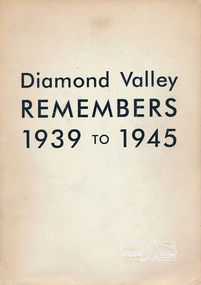
Book, Northern Metropolitan College of TAFE, Diamond Valley Remembers 1939-1945, 1995
... ...world war 1939-1945...world war 2...ww2...The collection is linked through the association of the participants living in the Diamond Valley area in Melbourne's north in 1995. roy hillard eleanor sumner bob campbell dulcie cox lancelot riky charles nelson reg johnson frank collings george armstrong stan ware lorna mill ann hewett reg angwin ruby talbot dion hogan elean dansey mary keppel charles baker elaine grigg len grigg kathleen kennedy arthur dykes eric wood frances jensen mary edwards frank wilson harry hewett mick marks audrey wass ian wall joyce anderson john grant jean gee noel mcintyre allan dunn reminscences oral history world war 1939-1945 world war 2 ww2 australia remembers northern metropolitan college of tafe watsonia personal narrative Watsonia Barracks Diamond Valley Remembers 1939-1945 Book Northern Metropolitan College of TAFE ...An Oral History Project - An Australia Remembers New Work Project funded by the Department of Employment, Education and Training. Sponsored by Northern Metropolitan College of TAFE. The Australia Remembers 1945-1995 campaign was a pageant of events commemorating the end of World War II. 34 chapters include reminiscences from 34 men and women mainly from the Watsonia Returned Servicemen's League recording their memories of the war years for the benefit of the [Shire of] Diamond Valley community. This copy is signed by Eleanor Sumner who is also a contributor.This book comprises a collection of unique and individual personal narratives of World War 2, written 50 years after the war and preserved for future generations. The collection is linked through the association of the participants living in the Diamond Valley area in Melbourne's north in 1995.roy hillard, eleanor sumner, bob campbell, dulcie cox, lancelot riky, charles nelson, reg johnson, frank collings, george armstrong, stan ware, lorna mill, ann hewett, reg angwin, ruby talbot, dion hogan, elean dansey, mary keppel, charles baker, elaine grigg, len grigg, kathleen kennedy, arthur dykes, eric wood, frances jensen, mary edwards, frank wilson, harry hewett, mick marks, audrey wass, ian wall, joyce anderson, john grant, jean gee, noel mcintyre, allan dunn, reminscences, oral history, world war 1939-1945, world war 2, ww2, australia remembers, northern metropolitan college of tafe, watsonia, personal narrative, watsonia barracks -
 Warrnambool RSL Sub Branch
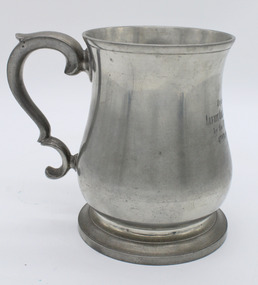
Pewter Tankard (One of Pair), 1942
... world war 1...first world war...ww1...light horse regiment...4th motor regiment...australian military force...aif...corangamite...1942...world war 2...ww2...Stevens was born and lived in Warrnambool, South Western Victoria. pewter tankards world war 1 first world war ww1 light horse regiment 4th motor regiment australian military force aif corangamite 1942 world war 2 ww2 Inscription on front "PRESENTED TO LIEUT COL L.G. ...The pewter tankard is part of a set of two that were presented to Lt. Col. L.G. Stevens of the 4th Light-horse Regiment. The Regiment was part of the Australian Military force in the First World War (WW1). At the end of WW1 the regiment was disbanded and it was re-raised in the 1920's as a part-time unit in the Shire of Corangamite, South Western Victoria. In World War 2 the 4th Light-horse Regiment was mechanised and became the 4th Motor Regiment. Lt.Col. Stevens served in both wars and was discharged in July 1942.. The tankards were probably presented to Lt. Col. Stevens at his retirement from the service. The set of two pewter mugs is of historic significance because of its connection to WW2 and the AIF. It indicates the relationship between Officers and Men of the regiment. It is of local significance as Lt. Col. Stevens was born and lived in Warrnambool, South Western Victoria. Pewter tankard (one of two) height 13mm circumference 3mm, ornate broken C handle height 9 mm, inscription on front, hall mark on base, mild tarnish, Inscription on front "PRESENTED TO LIEUT COL L.G. STEVENS ED. By the Officers of the 4th MOTOR REGIMENT 1.5.42 Hallmark on base "Crown & Rose" CAST PEWTER, CREST CROWN & ROSE3 surrounded by FIDE IN LONDONpewter tankards, world war 1, first world war, ww1, light horse regiment, 4th motor regiment, australian military force, aif, corangamite, 1942, world war 2, ww2 -
 Warrnambool RSL Sub Branch
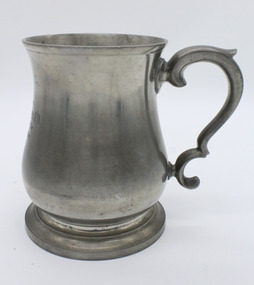
Pewter Tankard (One of Pair), 1942
... world war 1...first world war...ww1...light horse regiment...4th motor regiment...australian military force...aif...corangamite...1942...world war 2...ww2...Stevens was born and lived in Warrnambool, South Western Victoria. pewter tankards world war 1 first world war ww1 light horse regiment 4th motor regiment australian military force aif corangamite 1942 world war 2 ww2 Inscription on front "PRESENTED TO LIEUT COL L.G. ...The pewter tankard is part of a set of two that were presented to Lt. Col. L.G. Stevens of the 4th Light-horse Regiment. The Regiment was part of the Australian Military force in the First World War (WW1). At the end of WW1 the regiment was disbanded and it was re-raised in the 1920's as a part-time unit in the Shire of Corangamite, South Western Victoria. In World War 2 the 4th Light-horse Regiment was mechanised and became the 4th Motor Regiment. Lt.Col. Stevens served in both wars and was discharged in July 1942.. The tankards were probably presented to Lt. Col. Stevens at his retirement from the service. The set of two pewter mugs is of historic significance because of its connection to WW2 and the AIF. It indicates the relationship between Officers and Men of the regiment. It is of local significance as Lt. Col. Stevens was born and lived in Warrnambool, South Western Victoria. Pewter tankard (one of two) height 13mm circumference 3mm, ornate broken C handle height 9 mm, inscription on front, hall mark on base, mild tarnish, Inscription on front "PRESENTED TO LIEUT COL L.G. STEVENS ED. By the Officers of the 4th MOTOR REGIMENT 1.5.42 Hallmark on base "Crown & Rose" CAST PEWTER, CREST CROWN & ROSE3 surrounded by FIDE IN LONDONpewter tankards, world war 1, first world war, ww1, light horse regiment, 4th motor regiment, australian military force, aif, corangamite, 1942, world war 2, ww2 -
 Frankston RSL Sub Branch
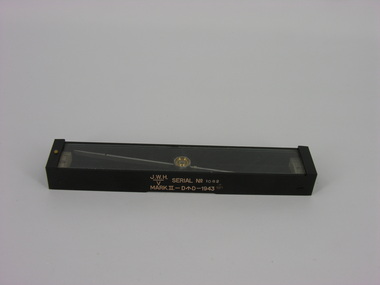
Compass, Plane Table, J. W. Handley, 1943
... ...world war 2...ww2...artillery trough compass plane table compass compass world war 2 ww2 The side of the compass body is stamped: "J.W.H." with the letter "V" under a line, "SERIAL No 1082", MARK.II-D^D-1943". ...A plane table compass, sometimes referred to as a trough compass, used by surveyors and artillery crew to accurately establish magnetic north. The compass is precision machined of brass material with a long needle to ensure accuracy. The compass scale is marked with a centre zero (for magnetic north) and graduations indicating plus and minus five degrees. The compass is housed in a protective wooden case with a sliding lid. The lid has a brass slide which locks the compass needle during periods when the compass is not in use. This compass is the type used by an artillery unit of the Australian Military Forces during World War 2. This compass was manufactured by J. W. Handley P/L of Melbourne in 1943. Refer 00330 and 00330.2The side of the compass body is stamped: "J.W.H." with the letter "V" under a line, "SERIAL No 1082", MARK.II-D^D-1943". The case is stamped with the serial number "1082".artillery, trough compass, plane table compass, compass, world war 2, ww2 -
 Frankston RSL Sub Branch
Rule, Scale, E. ESDAILE & SONS, 1942
... ...world war 2...ww2...artillery rule scale imperial metric distance world war 2 ww2 The rule is stamped with the following: "SCALE, ARTY, No 2, MKI, E.ESDAILE & SONS, D^D, 1942" A scale rule used by artillery units to measure distance between map co-ordinates on the 1 to 25,000 scale military map series. ...A scale rule used by artillery units to measure distance between map co-ordinates on the 1 to 25,000 scale military map series. The rule is accurately machined from flat stainless steel strip and is stamped with Imperial measurements (thousands of yards) and metric measurements (thousands of metres).The rule is stamped with the following: "SCALE, ARTY, No 2, MKI, E.ESDAILE & SONS, D^D, 1942"artillery, rule, scale, imperial, metric, distance, world war 2, ww2, -
Frankston RSL Sub Branch
Cap, Forage
... ...world war 2...ww2...raaf air force australia world war 2 ww2 airmen aircrew kings crown badge A label attached inside the cap has the following: "V 330, 1944, MADE IN AUSTRALIA, SIZE 7" and the D^D marking with the letters "A F". ...A standard issue RAAF blue Other Ranks' woollen forage cap with oxidised brass RAAF badge on left hand side. The two buttons at the front are made of black plastic. The cap is lined with black cotton fabric. The crown opening has been sewn up with large black running stitches in heavy black thread. A rectangular shaped white cotton maker's label that bears various markings indicating size, year of manufacture, etc. is sewn inside the left hand side of the cap. A label attached inside the cap has the following: "V 330, 1944, MADE IN AUSTRALIA, SIZE 7" and the D^D marking with the letters "A F". The cap is also marked with the name "FRASER" and the service number "RAAF A36508"raaf, air force, australia, world war 2, ww2, airmen, aircrew, kings crown badge, -
 Frankston RSL Sub Branch
Periscope, 1943
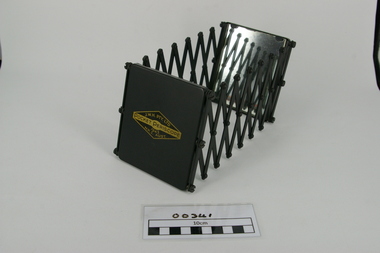
... world war 2...ww2...world war 2 ww2 periscope equipment A maker's label on top of the periscope reads 'J.W.H. ...World War 2 Australian defence department issue folding steel periscope with two mirrors and extendable steel sides. The item is carried in a khaki brown canvas case with a belt loop at the back for wear with standard issue webbing. The case has a top opening flap secured by a press stud button. The periscope extends to approximately 640mm overall.A maker's label on top of the periscope reads 'J.W.H. PTY. LTD. POCKET PERISCOPE 1943 MK.I. AUST.'. 'D (broadarrow) D 523' is impressed below the label. world war 2, ww2, periscope, equipment -
 Frankston RSL Sub Branch
Photograph, Frankston Memorial Hall
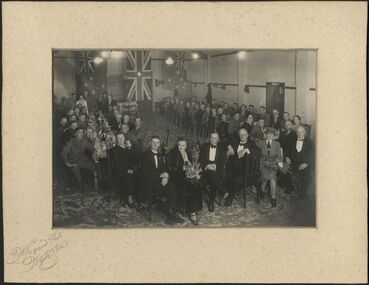
... world war 2...ww2...world war 2 ww2 frankston memorial hall rssaila A framed black and white photograph of a formal dinner at the original Frankston Memorial Hall building (Thompson Street) in April 1940. ...A framed black and white photograph of a formal dinner at the original Frankston Memorial Hall building (Thompson Street) in April 1940. The photograph is of a mixed group with a number of servicemen in Army uniform and shows the interior of the main hall. The caption on the rear of the photograph notes : "presented to those soldiers who sailed in the 1st convoy, April 1940, who lived in Frankston, by the Frankston RSL" (skip) I. D. Welsh VX4460 2/6 Bn - 17th Brigade.world war 2, ww2, frankston, memorial hall, rssaila, -
Frankston RSL Sub Branch
Souvenir, Tea Towels
... world war 2...ww2...world war 2 ww2 women women's awas a.w.a.s. australian nurse nursing service The tea towels have the following screen printed in colour: The badge of the A.W.A.S. ...Souvenir tea towels made for the 40th anniversary commemoration of the formation of the Australian Women's Army Service which was formed on the 13th August 1941. There are eight of these linen tea towels screen printed in colour on a plain background. There are blue, maroon and green examples. The tea towels feature the badge of the A.W.A.S. ASSOCIATION VIC. and the date of formation.The tea towels have the following screen printed in colour: The badge of the A.W.A.S. ASSOCIATION VIC. with "A.W.A.S." above and "AUSTRALIAN WOMEN'S ARMY SERVICE" around the lower part of the badge. Beneath that "13 AUGUST 1941" and the note "Hand printed in Australia"world war 2, ww2, women, women's, awas, a.w.a.s., australian, nurse, nursing, service, -
Frankston RSL Sub Branch
Souvenir, Tea Towels
... world war 2...ww2...world war 2 ww2 awas a.w.a.s. nurses service womens women's army australia These tea towels have the following screen printed in colour: The 'rising sun' badge of the Australian Commonwealth Military Forces with "A.W.A.S." uppermost and "40th ANNIVERSARY" above the badge and "AUSTRALIAN WOMEN'S ARMY SERVICE" below the badge. ...Souvenir tea towels made for the 40th anniversary commemoration of the formation of the Australian Women's Army Service which was formed on the 13th August 1941. These tea towels are linen and are screen printed in olive green on a plain background. The tea towels feature the badge of the Australian Commonwealth Military Forces. These tea towels have the following screen printed in colour: The 'rising sun' badge of the Australian Commonwealth Military Forces with "A.W.A.S." uppermost and "40th ANNIVERSARY" above the badge and "AUSTRALIAN WOMEN'S ARMY SERVICE" below the badge. Beneath that "1941 - 1981" and the note "PURE LINEN" world war 2, ww2, awas, a.w.a.s., nurses, service, womens, women's, army, australia, -
 Frankston RSL Sub Branch
Souvenir, Ashtray
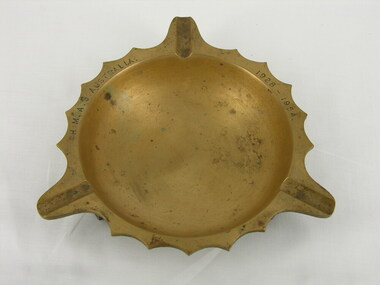
... ...world war 2...ww2...trench art brass ashtray ran navy world war 2 ww2 hmas australia The ashtray has the following stamped inscription across the top rim. ...A trench art souvenir of HMAS Australia. This brass ashtray is apparently made from part of a propellor. The HMAS Australia was a heavy cruiser class fighting ship which was commissioned by the RAN on the 24th September, 1928 and de-commissioned on the 31st August, 1954.The ashtray has the following stamped inscription across the top rim. "H.M.A.S. AUSTRALIA", "1928 - 1954".trench art, brass, ashtray, ran, navy, world war 2, ww2, hmas australia, -
 Frankston RSL Sub Branch
Canteen, Water
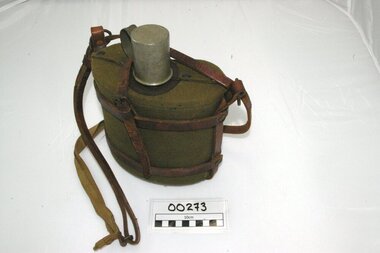
... world war 2...ww2...world war 2 ww2 Large enamelled steel water canteen, dark blue in colour. ...Large enamelled steel water canteen, dark blue in colour. This canteen is felt covered, is carried in a leather harness with a leather and canvas shoulder strap. This canteen has a cork stopper and a small cup made from tinned steel. This is a larger capacity canteen carried by nurses who required additional water for wounded and ill patients. These canteens were also carried by horsemen who required additional water for their animals. world war 2, ww2 -
Frankston RSL Sub Branch
Souvenir, M R Williams
... world war 2...ww2...world war 2 ww2 sport A pair of souvenir brass ashtrays which were awarded as first prize trophies to Cpl M R Williams The underside of the ashtrays are engraved with details of the award and indicating that they were sports competition trophies. ...A pair of souvenir brass ashtrays which were awarded as first prize trophies to Cpl M R Williams The underside of the ashtrays are engraved with details of the award and indicating that they were sports competition trophies. See 00274.1 and 00274.2.world war 2, ww2, sport -
 Frankston RSL Sub Branch
Belt, Leather Money
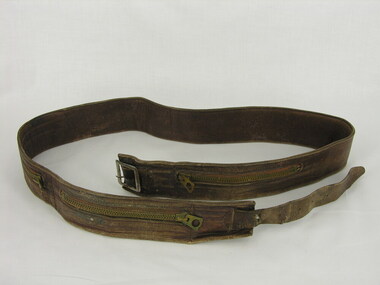
... world war 2...ww2...He died on 27 July 1983 and buried at Fawkner Memorial Park. world war 2 ww2 Leather money belt worn during World War 2 military service by Frederick Henry Laurence Rankin, service number VX139086. ...Frederick Henry Laurence Rankin (Laurie) VX 139086 was an Australian Army cook who served from May 1943 to June 1945 within Australia (including Darwin). he was born 24/7/1914 at Jumburra, Victoria and enlisted on 27/5/1943 at Clifton Hill, Victoria. His "Next of Kin" was Eunice Rankin. He was discharged on 4 June, 1945 and he was then posted to 2 Australian Field Artillery Regiment. He died on 27 July 1983 and buried at Fawkner Memorial Park.Leather money belt worn during World War 2 military service by Frederick Henry Laurence Rankin, service number VX139086. This belt has three zippered pockets for carrying money or other valuables. One pocket contains a ration coupon for one packet of smokes (cigarettes). world war 2, ww2, -
 Frankston RSL Sub Branch
Photograph
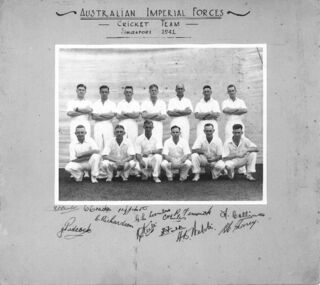
... ...world war 2...ww2...churches world war 2 ww2 singapore changi australian army The photograph has the following inscription: "AUSTRALIAN IMPERIAL FORCES" "CRICKET TEAM" "SINGAPORE 1941" and bears the signatures of the team members. ...Original monochrome photograph mounted on thick buff coloured mounting board. This photograph is of a cricket team fielded by the Australian Imperial Forces, Singapore during 1941. The players depicted have signed the photograph. The photograph is from the collection of one of the players, Sergeant R. K. Churches, service number VX34599, of the Australian Army 2/9th Field Ambulance who were based in Singapore at the time. (refer item number 00320) note: digital format copy only available, this original photograph has been donated to the Australian War Memorial, Canberra - 22nd November, 2014The photograph has the following inscription: "AUSTRALIAN IMPERIAL FORCES" "CRICKET TEAM" "SINGAPORE 1941" and bears the signatures of the team members. The rear of the mounting board has the following note: "To My Dear Darling Pet, with Love from Ron" "5/8/41"churches, world war 2, ww2, singapore, changi, australian army -
 Bendigo Historical Society Inc.
Photograph - SWEENEY COLLECTION: ARMY DRIVING LICENCE, 1942
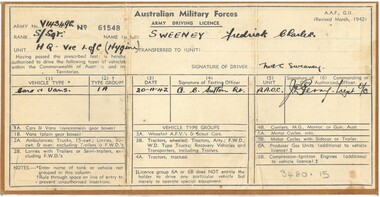
... ...World war 2...ww2...MILITARY World war 2 ww2 driver's licence World War 2 Army Driving Licence issued to Frederick Charles Sweeney 20/11/1942. ...World War 2 Army Driving Licence issued to Frederick Charles Sweeney 20/11/1942. Heavy trifold board cover.military, world war 2, ww2 driver's licence -
 Sunshine and District Historical Society Incorporated
Administrative record - Air Raid Warden Eric Edwin Wegenger Form of Attestation, 1942
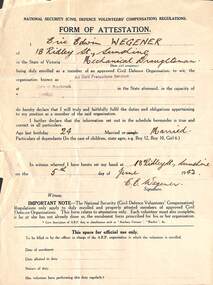
... World War 2... WW2...World War 2 WW2 WWII Wegender Signed document form titled Form of Attestation Form gave the signature authenticity in proving services in the Air Raid Precautions Services during the Second World War Form of attestation Eric Edwin Wegener 18 Ridley Street Sunshine Mechanical Draughtsman Age last birthday was 24 Married Document dated 5 June 1942 Air Raid Warden Eric Edwin Wegenger Form of Attestation Administrative record Air Raid Warden Eric Edwin Wegenger Form of Attestation ...Signed document form titled Form of Attestation Form gave the signature authenticity in proving services in the Air Raid Precautions Services during the Second World War Form of attestation Eric Edwin Wegener 18 Ridley Street Sunshine Mechanical Draughtsman Age last birthday was 24 Married Document dated 5 June 1942world war 2, ww2, wwii, wegender -
Stawell Historical Society Inc
Sgt Steven John Bullen (Jack) c1945
... World War 2...WW2...Sergeant 8th Battalion VX103410 World War 2 WW2 Steven John (Jack) Bullen WW2 Soldier in uniform portrait Sgt Steven John Bullen (Jack) c1945 ...Sergeant 8th Battalion VX103410 WW2 Soldier in uniform portraitSteven John (Jack) Bullenworld war 2, ww2 -
 Ringwood RSL Sub-Branch
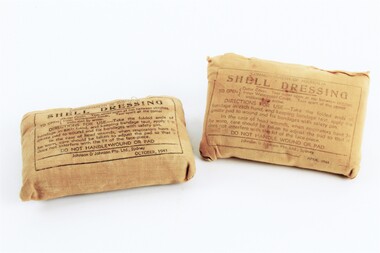
Equipment - Equipment, Shell Dressing, Johnson & Johnson, October 1941
... ...world war 2...ww2...wound dressing, field dressing first aid cotton bandage world war 2 ww2 00081.1 Cotton package containg shell wound dressing. ...00081.1 Cotton package containg shell wound dressing. October 1941 00081.2 Cotton package containing shell wound dressing Aprill 1944wound dressing,, field dressing, first aid, cotton bandage, world war 2, ww2 -
 Ringwood RSL Sub-Branch
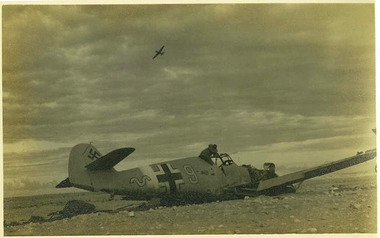
Album - Photos, shot down GHerman planes, probably Middle East WW2
... ...world war 2...ww2...crashed planes, beached planes, world war 2 ww2 midddle east Photograph No. ______ / Supplied by Military History / & Information Section AIF / for personal enjoyment only / and on condition that it will / not be reproduced in any form. ...Batch of 5 black and white photographs of downed aircraft, German/ Italian.Photograph No. ______ / Supplied by Military History / & Information Section AIF / for personal enjoyment only / and on condition that it will / not be reproduced in any form.crashed planes,, beached planes,, world war 2, ww2, midddle east -
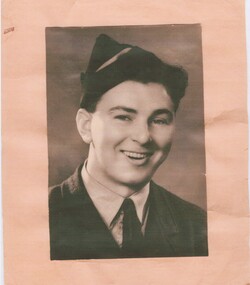 Rutherglen Historical Society
Image, c1950
... ...world war 2...ww2...As this photograph and certificate were received by the Museum with a collection relating to the Rutherglen Timber Mill, it is believed that he was probably an employee there before his military service. industry timber timber mill geoffrey william addinsall world war 2 ww2 william addinsall daisy addinsall daisy bautovitch Text of memorial certificate: "This scroll commemorates Flight Sergeant G.W. ...As this photograph and certificate were received by the Museum with a collection relating to the Rutherglen Timber Mill, it is believed that he was probably an employee there before his military service.Black and white portrait photograph of a young man in military uniform, and a memorial certificateText of memorial certificate: "This scroll commemorates Flight Sergeant G.W. Addinsall Royal Australian Air Force held in honour as one who served King and Country in the world war of 1939-1945 and gave his life to save mankind from tyranny. May his sacrifice help to bring the peace and freedom for which he died."industry, timber, timber mill, geoffrey william addinsall, world war 2, ww2, william addinsall, daisy addinsall, daisy bautovitch -
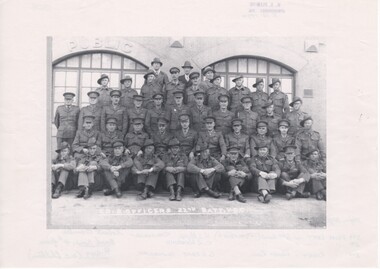 Rutherglen Historical Society
Image, c1941
... ...world war 2...ww2...Meeking, Robert Bourke, G.H.Earp don brown moss meeking robert bourke earp 22nd battalion volunteer defence corps world war 2 ww2 At bottom of photo: "C.O. and Officers 22nd Batt VDC" On back of photo: Stamp identifying donor. ...Don Brown, H.S. Moss, C.R. Meeking, Robert Bourke, G.H.EarpPhotocopy on A4 paper, of black and white photograph of a group of 43 men in Army uniforms in front of a public hallAt bottom of photo: "C.O. and Officers 22nd Batt VDC" On back of photo: Stamp identifying donor. Also at bottom on back: "3rd from right, 2nd row - Don Brown | 3rd from left in 3rd row (1st standing) H.S. Moss, Springhurst | 4th from left in 3rd row - C.R. Meeking | 4th from right in front row - G.H. Earp, Glenrowan | Robert Bourke, back row 4th from right (O.C. Chiltern)"don brown, moss, meeking, robert bourke, earp, 22nd battalion, volunteer defence corps, world war 2, ww2
