
Showing 103 items matching "wwii prisoners"
-
 Returned Nurses RSL Sub-branch
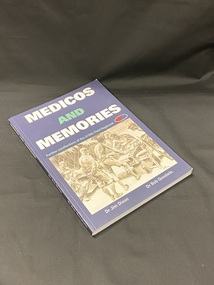
Book - Illustrated paperback book, Bob Goodwin et al, Medics and memories : further recollections of the 2/10th Field Regiment, 2000
... ...WWII prisoners...2/10th Australian Army Field Regiment 2/10th WWII prisoners WW2 Prisoners World War Two Prisoners This book is an extension of the history of the 2/10th Field Regiment which was formed in Brisbane more than sixty years ago. ...This book is an extension of the history of the 2/10th Field Regiment which was formed in Brisbane more than sixty years ago. Its members came from all parts of Queensland. After Singapore and Changi many of its members were dispersed to Burma, Thailand, Borneo and Japan. - from TroveDark blue softcover book. Title and author printed along spine in white print. Front cover has white and green print and a black and white image of Prisoner Of War medical personnel operating on a patient, watched over by soldiers.non-fictionThis book is an extension of the history of the 2/10th Field Regiment which was formed in Brisbane more than sixty years ago. Its members came from all parts of Queensland. After Singapore and Changi many of its members were dispersed to Burma, Thailand, Borneo and Japan. - from Trove 2/10th australian army field regiment, 2/10th, wwii prisoners, ww2 prisoners, world war two prisoners -
 Bendigo Military Museum
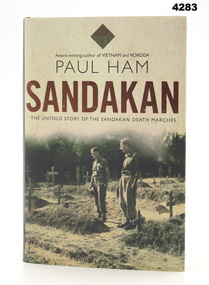
Book - BOOK, WW2, SANDAKAN : The Untold Story Of The Sandakan Death Marches, Published 2012
... wwii...sandakan...prisoners...prisoners of war. After the fall of Singapore in February 1942. Their journey became known as the Sandakan Death Marches.” book wwii sandakan prisoners of war Book with dust cover. 1) Cover, hard cover, cardboard with pale green paper-cover, red and black print on spine, end papers dark red colour. 2) Dust cover, paper, red and black print on front and spine, background beige on front, grey grey colour on spine. ...“This is the story of the three-year ordeal of the Sandakan prisoners of war. After the fall of Singapore in February 1942. Their journey became known as the Sandakan Death Marches.”Book with dust cover. 1) Cover, hard cover, cardboard with pale green paper-cover, red and black print on spine, end papers dark red colour. 2) Dust cover, paper, red and black print on front and spine, background beige on front, grey grey colour on spine. Illustrated front and spine sepia toned photograph of two soldiers in uniform standing in a graveyard. Colour photograph on back of the “Sandakan Memorial Gates” with garden view behind. 656 pages, cut, plain, off white, illustrated black and white photographs and maps.book, wwii, sandakan, prisoners of war -
 Returned Nurses RSL Sub-branch
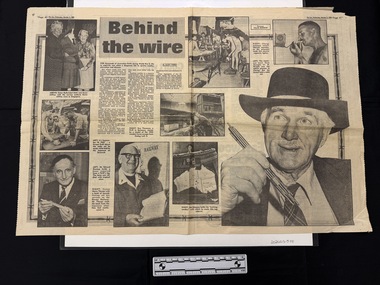
Newspaper - Newspaper clipping, The Sun, Behind the wire, 19841003
... Brief article with historic photographs of experiences of WWII prisoners of war. Photos include one of [Vivian] Bullwinkel and [Agnes Betty] Jeffrey with the uniform worn by Jeffrey in Singapore....Brief article with historic photographs of experiences of WWII prisoners of war. Photos include one of [Vivian] Bullwinkel and [Agnes Betty] Jeffrey with the uniform worn by Jeffrey in Singapore. ...Brief article with historic photographs of experiences of WWII prisoners of war. Photos include one of [Vivian] Bullwinkel and [Agnes Betty] Jeffrey with the uniform worn by Jeffrey in Singapore.A spread from the centre of a newspaper with many black and white photographs, captions and a small article with three columns. All photographs have people in them,wwii, ww2, world war two, prisoners of war -
 Returned Nurses RSL Sub-branch
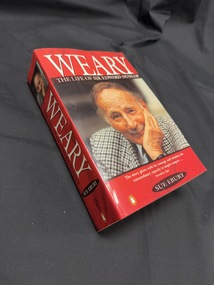
Book, Sue Ebury, Weary : The life of Sir Edward Dunlop, 1994 (original) 1995 (this publication)
... WWII...WW2...Japan...Prisoners...World War Two WWII WW2 Japan Prisoners of war 'Sir Edward "Weary" Dunlop is known for looking after the men under his command during their time as prisoners of war. ...'Sir Edward "Weary" Dunlop is known for looking after the men under his command during their time as prisoners of war. However, many would not know about his involvement in the Colombo Plan, his pioneering period in cancer surgery, and his time as a young and brilliant student who also represented Australia in rugby.' [From Trove record]Paperback book with a red cover that has a colour photo of an elderly man on the cover and spine, and white writing on the cover and spinenon-fiction'Sir Edward "Weary" Dunlop is known for looking after the men under his command during their time as prisoners of war. However, many would not know about his involvement in the Colombo Plan, his pioneering period in cancer surgery, and his time as a young and brilliant student who also represented Australia in rugby.' [From Trove record]world war two, wwii, ww2, japan, prisoners of war -
 Lara RSL Sub Branch
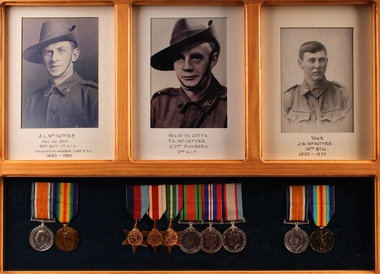
Photographs, Bob Wilson, Framed Photos and Medals - McIntyre Family, 2016
... prisoner. No record of him after this was ever discovered, and he is presumed to have been killed. Jim McIntyre was born in 1893, and grew up in Lara and Geelong. Jim enlisted in the 1st AIF in 1916, and served with the 14th Battalion through the war. He was wounded twice. Jim died in 1976. The McIntyre family were early pioneers in the Lara district, and the brothers were founding members of the Lara RSL. Their medals and photographs represent a significant link to the history of the town and sub-branch. photograph mcintyre medals wwi wwii ...These photographs and medals are of the McIntyre family. Three members of Lara's McIntyre family served during the First and Second World Wars, and two were members of the Lara RSL. John Lachlan McIntyre was born at Beeac, Victoria in December 1890. He enlisted in the 1st AIF in July 1915. John fought on the Western Front, taking part in the battles of Fromelles and the 2nd Battle of the Somme. He was severely wounded at Fromelles and spent 12 months in hospital in England before returning to the front. John returned home in 1919 and was granted a soldier settlement block in Lara in 1937. He was a founding member of Lara RSL and is its longest serving member. John died in 1990. Thomas Gordon McIntyre was born at Lara in 1901. Thomas, known as Gordon, was too young to enlist in the First World War with his brothers. At the outbreak of the Second World War he joined the 2/2nd Pioneer Battalion. He fought in the Syrian Campaign, before being recalled to Australia to fight in the pacific campaign. Gordon was wounded in a battle against the Japanese in Java on the 19/02/1942, and taken prisoner. No record of him after this was ever discovered, and he is presumed to have been killed. Jim McIntyre was born in 1893, and grew up in Lara and Geelong. Jim enlisted in the 1st AIF in 1916, and served with the 14th Battalion through the war. He was wounded twice. Jim died in 1976. The McIntyre family were early pioneers in the Lara district, and the brothers were founding members of the Lara RSL. Their medals and photographs represent a significant link to the history of the town and sub-branch. Three photographs and three sets of medals in a pine wood frame with glass covering. Photographs are black and white portraits of soldiers in uniform mounted on cream card. The medals are mounted on black felt. T.G. McIntyre VX20754 - 35-45 Star, Africa Star, Pacific Star, Defence Medal, War Medal and the Australian Service Medal 39-45. J.L. McIntyre 3591 - War Medal and Victory Medal J.W. McIntyre 7049 - War Medal and Victory Medal J.L. McIntyre REG. No. 3591 58th. BATT. 1st A.I.F Foundation Member Lara R.S.L 1890 - 1990 REG. NO. VX20754 T.G. MC INTYRE 2/2nd PIONEERS 2nd A.I.F 7049 J.W. McINTYRE 14th BTN. 1893-1975photograph, mcintyre, medals, wwi, wwii, world war 1, world war 2, aif, pioneers, lara, rsl -
 Lara RSL Sub Branch
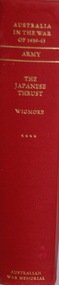
Book, Australia in the War of 1939 - 1945 Series One ARMY Volumn IV THE JAPANESE THRUST, First published 1957
... WWII List of events. Part 1 - The Road to War Part 11 - South East Asia Conquered Part III - Prisoners of the Japanese ...WWII List of events. Part 1 - The Road to War Part 11 - South East Asia Conquered Part III - Prisoners of the Japanese WW11 Japanese New Guinea 1939-1942 Malaya Singapore Prisoners of War Java Timor Burma Thai Railway Australian War Memorial Australia in the War of 1939-1945 - The Japanese Thrust ARMY Author Lionel Wilmore List of events from 1931 - 20th May 1942 Maps, Photographs and Illustrations Australia in the War of 1939 - 1945 Series One ARMY Volumn IV THE JAPANESE THRUST Book ...WWII List of events. Part 1 - The Road to War Part 11 - South East Asia Conquered Part III - Prisoners of the Japanese Australia in the War of 1939-1945 - The Japanese Thrust ARMY Author Lionel Wilmore List of events from 1931 - 20th May 1942 Maps, Photographs and IllustrationsAustralian War Memorialww11, japanese, new guinea, 1939-1942, malaya, singapore, prisoners of war, java, timor, burma thai railway -
 Lara RSL Sub Branch
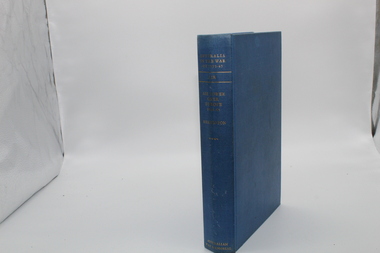
Book, Australia in the War of 1939-1945 - Air Power Over Europe 1944-1945 Volume 4. AIR. Author John Herington, First Published 1963
... Historical record of the Air power over Europe 1944-1945 invasion of italy long range missiles oil normandy coastal command ardennes offensive battle of the bulge evaders prisoners rhine air force 1944-1945 wwii 453 squadron 646 squadron spitfire ground crew no.3 squadron 461 squadron 466 squadron 455 squadron Australian War Memorial Australia in the War of 1939-1945 - Air Power Over Europe 1944-1945. ...A continuation and conclusion of the story of Australian airmen who served in or beside the RAAF in the struggle against Germany and Italy. In general it covers a period when both in the Mediterranean and in Northern Europe Air superiority, the vital pre-requisite of successful air assault, had already been gained over the enemy. The emphasis is largely engagements or in the strategic bombing campaigns to the total achievement of allied air power in land and sea campaigns.Historical record of the Air power over Europe 1944-1945Australia in the War of 1939-1945 - Air Power Over Europe 1944-1945. AIR Maps, Illustrations, charts, photographsAustralian War Memorialinvasion of italy, long range missiles, oil, normandy, coastal command, ardennes offensive, battle of the bulge, evaders, prisoners, rhine, air force 1944-1945, wwii, 453 squadron, 646 squadron, spitfire, ground crew, no.3 squadron, 461 squadron, 466 squadron, 455 squadron -
 Orbost & District Historical Society
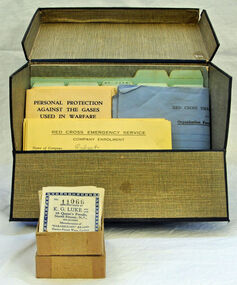
Red Cross Box, 1939
... WWII were monumental. They worked tirelessly for Red Cross in response to the national emergency, serving the humanitarian needs of the nation. Women produced millions of pounds worth of in-kind support through volunteer labour and goods, sending an astonishing volume of goods overseas to servicemen and prisoners of war. ...This box was donated by Mary Gilbert who was the Orbost Red Cross Superintendent. Australian women's efforts on the home front to support the nation during WWI and WWII were monumental. They worked tirelessly for Red Cross in response to the national emergency, serving the humanitarian needs of the nation. Women produced millions of pounds worth of in-kind support through volunteer labour and goods, sending an astonishing volume of goods overseas to servicemen and prisoners of war. They knitted and sewed socks, towels and vests for soldiers.A black Red Cross box containing training cards, forms and badges. The box is made of card and covered in black fabric.red-cross gilbert-mary world-war-11 -
 Phillip Island and District Historical Society Inc.
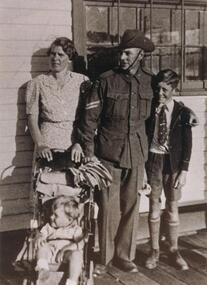
Photograph - Photograph, black + white, Corporal Frederick Edward Woodley and family at Cowes pier 1941, 01/1941
... prisoner-of-war by the Japanese at the fall of Singapore and imprisoned at the Changi P O W Camp. Later, after being on the missing list for some two years, it was learned that he was imprisoned at the most infamous Sandakan P O W camp in North Borneo from where he did not return. Fred was 37 years of age when this photo was taken. With compliments, Arthur E Woodley, 34 Park Road, Crib Point. 6/8/1995" Arthur claims this is the only photo of the family together. Historical corporal frederick edward woodley royal australian engineers wwii ...As on back of photograph. "A Phillip Islander goes to War. Corporal Frederick Edward Woodley, No. VX24588 of 2nd/10th Field Company, Royal Australian Engineers, with his wife Ruby, eldest son Arthur and John, pictured beside the shed on Cowes Jetty prior to his departure for active service overseas. January 1941. Fred subsequently voyaged from Sydney to Singapore (via Western Australia) on the troop ship Queen Mary. He was taken prisoner-of-war by the Japanese at the fall of Singapore and imprisoned at the Changi P O W Camp. Later, after being on the missing list for some two years, it was learned that he was imprisoned at the most infamous Sandakan P O W camp in North Borneo from where he did not return. Fred was 37 years of age when this photo was taken. With compliments, Arthur E Woodley, 34 Park Road, Crib Point. 6/8/1995" Arthur claims this is the only photo of the family together.HistoricalBlack & White photograph of Corporal Frederick Edward Woodley (Royal Australian Engineer) with his wife Ruby, eldest son Arthur and John, standing beside the Cowes Jetty shed, Phillip Island.Detailed inscription on back - see Historical Information below.corporal frederick edward woodley, royal australian engineers, wwii, arthur e woodley, military -
 Red Cliffs Military Museum
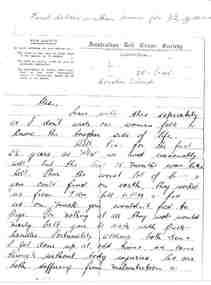
Letter
... Japanese soldier Teruo Nakamura was discovered in the Morotai jungle in 1974, as one of the WWII Japanese soldiers who held out subsequent to the Japanese military's surrender. 2 pow morotri island morotai island world war prisoner of war australian red cross society Added to head of letter at a later date is inscription ' First letter written home for 3 1/2 years'.Top left hand- FOR SAFETY/ IN YOUR LETTERS DO NOT REFER TO:-/ The name of your ship or other ships in the convoy, or its escorts. ...Letter written from (unknown) POW imprisioned by the Japanese on Morotai Island from 1942 - 1945 to (unknown) friend. Descriptive of life and treatment in POW camp. The island was captured by the Japanese in early 1942. Morotai's southern plain was taken by American forces in September 1944 during the Battle of Morotai, and used as a staging point for the Allied invasion of the Philippines in early 1945, and of Borneo in May and June of that year. Japanese soldier Teruo Nakamura was discovered in the Morotai jungle in 1974, as one of the WWII Japanese soldiers who held out subsequent to the Japanese military's surrender.Photocopy of letter, 4 pages, originally written in ink on (unofficial) Australian Red Cross form.Added to head of letter at a later date is inscription ' First letter written home for 3 1/2 years'.Top left hand- FOR SAFETY/ IN YOUR LETTERS DO NOT REFER TO:-/ The name of your ship or other ships in the convoy, or its escorts./The date of sailing, ports of call, or probable destination./ The description of troops, their loca-/tion or any other information/ which, if intercepted, would be of/ value to the enemy. In your Top right hand- Australian Red Cross Society/ (UNOFFICIAL)/ 25-8-45/ (added at later date 'Morotri Island')/ Alex, Have witten this especially/ as i don't wish our women folk to know the tougher side of life./Well Alex for the first/ 2 1/2 years as POWs we lived reasonably/ well, but the last 15 months was like /hell. Heres the worst lot of b-s/ you could find on earth, they worked /us from 7AM till 6 PM, & fed/ us on muck you wouldn't feed to/ Pigs. I'm nothing at all they would 2, pow, morotri island, morotai island, world war, prisoner of war, australian red cross society -
 Bendigo Military Museum
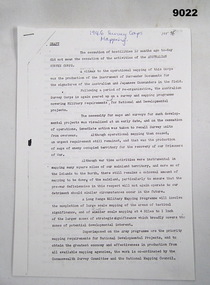
Article - Survey Corps Mapping - 1946, 23.08.1946
... Following cessation of hostilities following WWII the Survey Corps was actively redeployed to commence mapping of Mainland Australia to ensure that Australia's limited mapping coverage situation was not repeated should any similar conflict occur. There was still an urgent requirement to map enemy occupied territory for the recovery of our prisoners...Following cessation of hostilities following WWII the Survey Corps was actively redeployed to commence mapping of Mainland Australia to ensure that Australia's limited mapping coverage situation was not repeated should any similar conflict occur. There was still an urgent requirement to map enemy occupied territory for the recovery of our prisoners ...Following cessation of hostilities following WWII the Survey Corps was actively redeployed to commence mapping of Mainland Australia to ensure that Australia's limited mapping coverage situation was not repeated should any similar conflict occur. There was still an urgent requirement to map enemy occupied territory for the recovery of our prisoners of war. This paper discusses that 1946 mapping program and is complimented by a Herald Sun Newspaper Article of the time titled "Big Areas to be Mapped from the Air.".Six x A4 photocopied pages of typed text that is a transcription of A Herald Sun article published in 1946. pages are stapled top left-hand corner."1946 Survey Corps Mapping" royal australian survey corps, rasvy, fortuna, army survey regiment, army svy regt, asr -
 Bendigo Military Museum
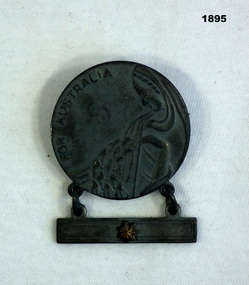
Badge - MOTHERS AND WIDOWS BADGE WW11, 1942
... One star on the clasp means " One son K.I.A in WWII" This Mothers and Windows Badge was issued to Mrs M Baldwin, the mother of Pte Walter Robert Baldwin who died as a prisoner of war in Burma on the 27th of May 1943. ...One star on the clasp means " One son K.I.A in WWII" This Mothers and Windows Badge was issued to Mrs M Baldwin, the mother of Pte Walter Robert Baldwin who died as a prisoner of war in Burma on the 27th of May 1943. ...One star on the clasp means " One son K.I.A in WWII" This Mothers and Windows Badge was issued to Mrs M Baldwin, the mother of Pte Walter Robert Baldwin who died as a prisoner of war in Burma on the 27th of May 1943. He rests at the Thanbyuzayat Prisoner of War Cemetery, which is in what is now called Myanmar. This is a Death Railway related POW cemetery. Walter Baldwin was born in Mildura on the 12th of May 1921, and prior to enlisting lived at Iron Bark in Bendigo with his parents. He enlisted as No VX55835 in the 2nd AIF on 14.5.1941 in the 2/29th Batt aged 20 years. Embarked for Singapore on 30.7.1941 and disembarked 15.8.1941. He contracted Malaria in a December 1941. Taken POW early 1942 he is listed as died suffering from Cholera on 27.5.1943. “The 2/29th Infantry Battalion was formed at Bonegilla in Victoria in October 1940. It was part of the 8th Division's 27th Brigade, which was the last AIF infantry brigade raised for service during the Second World War.” Badge, metal, "for Australia." Circular section depicting a woman, wreath and an arm. suspended by two rings is a clasp with one star =. Rear has 2 lugs and a pin." issued by C'wlth govt A12229”numismatics - badges - military - army, mothers, widows -
 Bendigo Military Museum
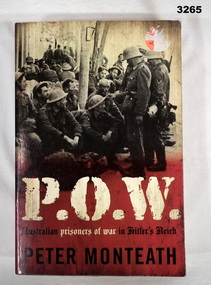
Book - BOOK, POW'S, P.O.W. Australian Prisoners of War in Hitler's Reich, 2011
... Australians from every branch of our armed forces in WWII found themselves captives in Hitler's notorious prisoner of war camps....Australians from every branch of our armed forces in WWII found themselves captives in Hitler's notorious prisoner of war camps. books-military-history pow's reich Cover - soft cardboard,black, cream & white print on front, spine & back. ...Australians from every branch of our armed forces in WWII found themselves captives in Hitler's notorious prisoner of war camps.Cover - soft cardboard,black, cream & white print on front, spine & back. Background photo in black, white & red of soldiers in uniform sitting & standing. 523 pages, cut plain white paper. Illustrated with black & white photos & maps.books-military-history, pow's, reich -
 Waverley RSL Sub Branch
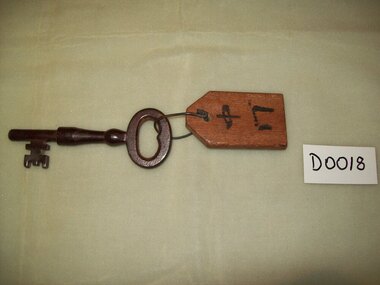
Key
... About 850 POWs died during their internment in Changi during the Japanese Occupation of Singapore,[2] a relatively low rate compared to the overall death rate of 27% for POWs in Japanese camps.[3] However, many more prisoners died after being transferred from Changi to various labour camps outside Singapore, including the Burma Railway and the Sandakan airfield. this item is of historical significance because it is supposedly one of the few surving keys to Changi Jail and donated by Mr.Robertson . Changi is significant as it was a major prison camp during WWII ...During World War II, following the Fall of Singapore in February 1942, the Japanese military detained about 3,000 civilians in Changi Prison, which was built to house only 600 prisoners. The Japanese used the British Army's Selarang Barracks, near the prison, as a prisoner of war camp, holding some 50,000 Allied—predominantly British and Australian—soldiers.[1] Although POWs were rarely, if ever, held in the civilian prison, the name Changi became synonymous in the UK, Australia, and elsewhere with the POW camp. About 850 POWs died during their internment in Changi during the Japanese Occupation of Singapore,[2] a relatively low rate compared to the overall death rate of 27% for POWs in Japanese camps.[3] However, many more prisoners died after being transferred from Changi to various labour camps outside Singapore, including the Burma Railway and the Sandakan airfield.this item is of historical significance because it is supposedly one of the few surving keys to Changi Jail and donated by Mr.Robertson . Changi is significant as it was a major prison camp during WWII Changi Jail Key. Blackened metal key, Wooden tag attached with Japanese print on it. Kanji Characters read Middle Gatechangi, fall of singapore, key, p.o.w. -
 Doncaster RSL Sub Branch
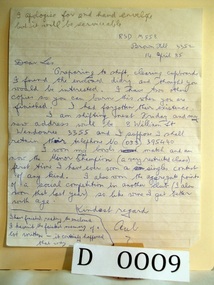
Aub's Diary, Written immediate Post World War Two
... Aub's Diary covering his joining the AIF in Bendigo 1st July 1940 through to becoming a prisoner of war in Changi prison Singapore and to his release and final coming home to Bendigo 22nd August 1945 world war two singapore aif changi bendigo wwii diary Foolscap size folder Aub's Diary ...Aub's Diary covering his joining the AIF in Bendigo 1st July 1940 through to becoming a prisoner of war in Changi prison Singapore and to his release and final coming home to Bendigo 22nd August 1945Foolscap size folderworld war two, singapore, aif, changi, bendigo, wwii, diary -
 Monbulk RSL Sub Branch
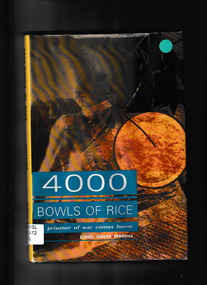
Book, Allen & Unwin, Four thousand bowls of rice : a prisoner of war comes home, 1993
... World war 1939 – 1945 - Prisons and prisoners – Australia Burma Thailand railway Over 60,000 Australians and Americans captured by the Japanese during World War II toiled and died to build the Bridge over the River Kwai. Respected military historian Linda Goetz Holmes tells the story of one man's survival in Japanese labor camps during WWII. ...Over 60,000 Australians and Americans captured by the Japanese during World War II toiled and died to build the Bridge over the River Kwai. Respected military historian Linda Goetz Holmes tells the story of one man's survival in Japanese labor camps during WWII. Amazing photographs, taken secretly by other prisoners, chronicle this dark history of Allied troops in the Pacific theatre of war.Index, bibliography, notes, ill, p.179.non-fictionOver 60,000 Australians and Americans captured by the Japanese during World War II toiled and died to build the Bridge over the River Kwai. Respected military historian Linda Goetz Holmes tells the story of one man's survival in Japanese labor camps during WWII. Amazing photographs, taken secretly by other prisoners, chronicle this dark history of Allied troops in the Pacific theatre of war.world war 1939 – 1945 - prisons and prisoners – australia, burma thailand railway -
 Monbulk RSL Sub Branch
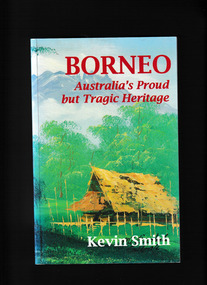
Book, Kevin Smith, Borneo: Australias proud but tragic heritage, 1999
... World War 1939-1945 - Prisoners of war - Sandakan World war 1939 – 1945 - Prisons and prisoners - Japanese History of Australian POW's in Borneo during WWII. Index, ill, maps, p.402. ...History of Australian POW's in Borneo during WWII.Index, ill, maps, p.402.non-fictionHistory of Australian POW's in Borneo during WWII. world war 1939-1945 - prisoners of war - sandakan, world war 1939 – 1945 - prisons and prisoners - japanese -
 Monbulk RSL Sub Branch
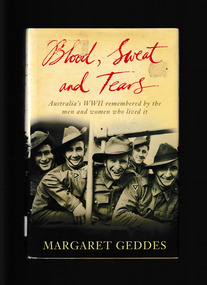
Book, Viking, Blood, sweat and tears : Australia's WWII remembered by the men and women who lived it, 2004
... Prisoners of war, airmen, nurses, landgirls, internees, schoolchildren, soldiers, sailors and volunteers of every description share their memories of a time of horror, tragedy, love and excitement. B Index, ill, p.403. Blood, sweat and tears : Australia's WWII ...Blood, Sweat and Tears brings together the first-hand accounts of more than seventy-five ordinary Australians who did extraordinary things during World War II. Prisoners of war, airmen, nurses, landgirls, internees, schoolchildren, soldiers, sailors and volunteers of every description share their memories of a time of horror, tragedy, love and excitement. BIndex, ill, p.403.non-fictionBlood, Sweat and Tears brings together the first-hand accounts of more than seventy-five ordinary Australians who did extraordinary things during World War II. Prisoners of war, airmen, nurses, landgirls, internees, schoolchildren, soldiers, sailors and volunteers of every description share their memories of a time of horror, tragedy, love and excitement. Bworld war 1939-1945 - australia - history, australia 1939-1945 - social conditions -
 Bendigo Historical Society Inc.
Document - VICTORIAN SYMPHONY ORCHESTRA, CAPITAL THEATRE, BENDIGO, 20 Oct,1960
... During WWII spent years in Polish mines as a prisoner of Germans. Escaped in 1944...During WWII spent four years working in Polish mines as a prisoner of the Germans. ...During WWII spent four years working in Polish mines as a prisoner of the Germans. ...Victorian Symphony Orchestra, Capital Theatre, Bendigo. Thursday, 20th October, 1960, 8pm. Conductor: Rudolf Pekarek. Soloist: Jiri Tancibudek (Oboist). Programme One Shilling. Rudolf Pekarek (includes photograph) Czech born. The A.B.C.'s resident conductor of the Queensland Symphony Orchestra, can look back on forty year's experience as a conductor of the symphony orchestras. He is chiefly remembered in has native Prague for his founding of the Film Opera Koncert Orchestra, the predecessor of the Prague Symphony Orchestra. Studied oboe and violin. Founded F.O.K Orchestra in 1933. Often a guest conductor of the Czech Philharmonic and Vienna Symphony Orchestras. During WWII spent four years working in Polish mines as a prisoner of the Germans. Escaped in 1944, joined Czech liberators. Appointed director of the Army of the Arts Ensemble of the Czechoslovakian Liberation Army. After coming to Australia in 1949, Pekarek spent four years in Perth as . . . Jiri Tanibudek ( including Photograph) Principle oboe with the Victorian Symphony Orchestra, formerly played with the Czech Philharmonics Orchestra in Prague. Appointed with the V.S.O. in 1953, naturalized in 1956. Played with Smetana String Quartet. Australia invited him as Professor of Oboe at the New South Wales Conservatorium. Returned overseas . . . Programme. Analytical Notes . . . The Australian Broadcasting Commission acknowledges with thanks the valuable advice and assistance received from The Wangaratta Arts Council and The Music Advancement Society of Bendigo in the presentation of these concerts. A.B.C. Sir Richard Boyer, K.B.E., M.A., Chairman. E R Dawes, C.M.G., Vice-Chairman. Sir John Medley, KT., D.C.L., LL.D., M.A. The Hon. Dame Enid Lyons, G.B.E. Miss Rhonda Felgate, M.B.E. A G Lowndes, M/SC. H B Halvorsen, F.C.A., F.C.I.S. Charles Moses, C.B.E., General Manager. Ewart Chapple, Manager for Victoria. Charles Buttrose, Director of Publicity and Concerts. H Cannon, Director of Music. Ray Humphrey, Concert Manager for Victoria. Advertisements: Brashs, His Masters Voice, Philips, Country Club.program, music, music advancement society bendigo, victorian symphony orchestra, capital theatre, bendigo. 20th october, 1960. conductor: rudolf pekarek. soloist: jiri tancibudek (oboist). rudolf pekarek (includes photograph) czech born. the a.b.c.'s resident conductor of the queensland symphony orchestra. remembered in prague for founding of the film opera koncert orchestra, the predecessor of the prague symphony orchestra. studied oboe and violin. founded f.o.k orchestra in 1933. often a guest conductor of the czech philharmonic and vienna symphony orchestras. during wwii spent years in polish mines as a prisoner of germans. escaped in 1944, joined czech liberators. director of the army of the arts ensemble of the czechoslovakian liberation army. australia in 1949, pekarek spent four years in perth. jiri tanibudek ( including photograph) principle oboe with the victorian symphony orchestra, formerly played with the czeh philharmonis orchestra in prague. appointed with the v.s.o. in 1953, naturalised in 1956. played with smetana string quartet. professor of oboe at the new south wales conservatorium. . programme. analytical notes . . . the australian broadcasting commission acknowledges with thanks the valuable advice and assistance received from the wangaratta arts council and the music advancement society of bendigo. a.b.c. sir richard boyer, k.b.e., m.a., chairman. e r dawes, c.m.g., vice-chairman. sir john medley, kt., d.c.l., ll.d., m.a. the hon. dame enid lyons, g.b.e. miss rhonda felgate, m.b.e. a g lowndes, m/sc. h b halvorsen, f.c.a., f.c.i.s. charles moses, c.b.e., general manager. ewart chapple, manager for victoria. charles buttrose, director of publicity and concerts. h cannon, director of music. ray humphrey, concert manager for victoria. advertisements: brashs, his masters voice, philips, country club. -
 Wangaratta RSL Sub Branch
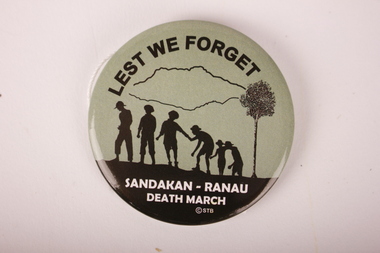
Badge, unknown
... Badge commemorating the Sandakan death marches, one of the worst atrocities suffered by Australian troops during WWII. Australian prisoners were sent to Sandakan in 1942 to build an airstrip. ...Badge commemorating the Sandakan death marches, one of the worst atrocities suffered by Australian troops during WWII.Australian prisoners were sent to Sandakan in 1942 to build an airstrip. At first they were treated reasonably well. Gradually, however, rations were reduced and bashings increased. By late 1944, with Allied forces advancing toward Borneo, the Japanese decided to send about 2,000 Australian and British prisoners westward to Ranau, in Borneo’s rugged interior. Weak and sick prisoners staggered for about 260 kilometres along jungle tracks. Many died on the way, their bodies never recovered. Those unable to continue were killed; those too weak to march had been left behind in Sandakan, where all died or were killed. Only six – all Australians – out of about a thousand sent to Ranau survived the war. The Sandakan “death march” remains the greatest single atrocity committed against Australians in war.Circular badge with green background and black text and figures. Six soldiers are silhouetted next to a tree. Safety pin clasp on back."LEST WE FORGET" "Sandakan Ranau / Death March"pow, world war two, death march, sandakan death marches, borneo -
 St Kilda Historical Society
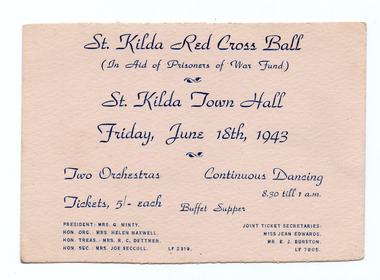
Ephemera - Invitation, St Kilda Red Cross Ball, 1943
... WWII fund-raising...St Kilda Balls...Prisoner...Invitation to a St Kilda Red Cross Ball in aid of the Prisoners of War Fund at the St Kilda Town Hall on 18 June 1943 World War II WWII WWII fund-raising St Kilda Balls Prisoner of War Fund St Kilda Red Cross Buff coloured card printed in blue St Kilda Red Cross Ball Ephemera Invitation ...Invitation to a St Kilda Red Cross Ball in aid of the Prisoners of War Fund at the St Kilda Town Hall on 18 June 1943Buff coloured card printed in blueworld war ii, wwii, wwii fund-raising, st kilda balls, prisoner of war fund, st kilda red cross -
 Tatura Irrigation & Wartime Camps Museum
Memorabilia - Framed medals and Photo, Major Andrew William Smith MC
... Prisoner of War Camp Murchison. He was award the Military Cross, British War Medal and Victory Medal in WWI. WWII...Prisoner of War Camp Murchison. He was award the Military Cross, British War Medal and Victory Medal in WWI. WWII ...Major Smith was the Commandant in charge of 'Kormoran' Seamen Camp 13 Prisoner of War Camp Murchison. He was award the Military Cross, British War Medal and Victory Medal in WWI. WWII medals were awarded for his service at Murchison, War Medal 1939-45 and Australia Service Medal 1939-45Wooden frame with glass. Black and white photographic portrait of Major Andrew William Smith in military uniform. Beneath the photo are five miniature medals: MC, BWM, Vic, ASM and WM. To the right of the photo and medals is a description of Major Smith's military accomplishments. Background is buff coloured.pow, camp 13, murchison, military cross, kormoran -
 Jewish Museum of Australia
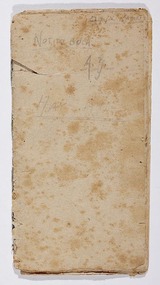
Diary of Alfred Broch, 10/7/1940 - 17/12/1940
... It was kept while Alfred Broch was travelling on the HMT Dunera and then during his detainment in the Hay internment camp. dunera wwii internment jewish history & people [selected passage translation from German, further translation available] : “Dunera” 10.VII – 6.IX.1940 First impression very depressing. Fears. Confusion with prisoners ...This diary was handwritten by Alfred Broch over the course of four months in 1940. It was kept while Alfred Broch was travelling on the HMT Dunera and then during his detainment in the Hay internment camp.Bound with cotton and handwritten in pencil. Bound with cotton and handwritten in pencil.[selected passage translation from German, further translation available] : “Dunera” 10.VII – 6.IX.1940 First impression very depressing. Fears. Confusion with prisoners of war. Never mind. Corrected. Continuing further bad treatment. Boarding the ship assisted by rifle butts. Robbed as soon as we reached the deck. Impression of a death ship. Complete helplessness. No sleeping facilities. All sleep on the floor, on tables etc. Intended accommodation taken up by luggage cases. (barbed wire). Food good but only spoons. Next day: robbery from the cases. Own people steal. Purloined objects even include toothbrushes and toothpaste. Much to eat. Small convoy with one cruiser. In the same convoy a women’s transport which soon leaves us as it is bound for Canada and we are quite surprised. The English soldiers and officers have another side. While in the danger zone they only had a webbing belt and slippers. In case of torpedoes – expecting certain death. Bad air as all vents are closed. Other Inscriptions: Front page, upper right, underlined: "Alfred Broch" Front page, upper, underlined: "Notitz Buch" Front page, centre, underlined: "Hay 1941" Page 1, upper right: "Mittwoch 10. VII." Page 3, upper right: "10. VII. - 6. IX. 1940 Page 4, centre: "[...] ARANDORA STAR" Page 11, upper, underlined: "Von Liverpool Nach Hay / Mittwoch 10 VII" dunera, wwii, internment, jewish history & people -
 City of Ballarat
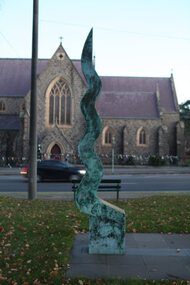
Public Artwork, Eternal Flame by Peter Blizzard, 1995
... WWII in the Pacific. Engraved into the bluestone shaped tile across the base of the statue is details about conflict areas where Australian Troops were active. The metal structure mimics a moving flame with it's polished golden hue, a feature included in many war memorials around the world. Peter Blizzard also designed the Prisoner...WWII in the Pacific. Engraved into the bluestone shaped tile across the base of the statue is details about conflict areas where Australian Troops were active. The metal structure mimics a moving flame with it's polished golden hue, a feature included in many war memorials around the world. Peter Blizzard also designed the Prisoner ...Eternal Flame was created by Ballarat sculptor Peter Blizzard as a marker of the end of WWII in the Pacific. Engraved into the bluestone shaped tile across the base of the statue is details about conflict areas where Australian Troops were active. The metal structure mimics a moving flame with it's polished golden hue, a feature included in many war memorials around the world. Peter Blizzard also designed the Prisoner of War Memorial in the South Gardens, Ballarat Botanic Gardens. The metal structure mimics the moving flame of polished golden hue that is present in war memorials around the world. Eternal flame is aesthetically and historically significant to the people of BallaratMetal construction on bluestone tile baseConflict areas for Australian Troops are engraved into bluestone shaped tile across the base of the statue. eternal flame, world war ii, conflict, peter blizzard, australian sculpture -
 8th/13th Victorian Mounted Rifles Regimental Collection
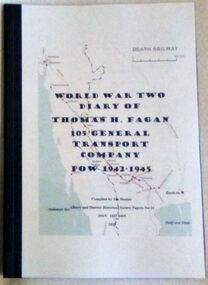
Book - Document, WWII Diary Thomas H Fagan
... WWII. Following service in Syria and Egypt the unit sailed for home but was diverted to Java, Dutch East Indies where they became part of Blackforce. The Japanese following up their success in Singapore overran Jave and Blackforce went into captivity. Fagan spent a short time at Changi then nearly three years on the Burma Railway. He lost a leg to tropical ulcers but survived the war return to Australia at the end of hostilities. A document worthy of preservation and public access. diary prisoner ...Thomas H Fagan of Walbundrie NSW served in 105 General Transport Company during WWII. Following service in Syria and Egypt the unit sailed for home but was diverted to Java, Dutch East Indies where they became part of Blackforce. The Japanese following up their success in Singapore overran Jave and Blackforce went into captivity. Fagan spent a short time at Changi then nearly three years on the Burma Railway. He lost a leg to tropical ulcers but survived the war return to Australia at the end of hostilities.A document worthy of preservation and public access.World War diary typed by the diarist from notes kept at great risk throughout his imprisonment by the Japanese 1942-1945. Transcribed 2018 by Albury historian Jan Hunter and published by Albury & District Historical Society as Booklet No 31 in limited hard copy for district Libraries and Schools.diary, prisoner of war, burma, railway, changi -
Unions Ballarat
The diaries of Weary Dunlop: Java and the Burma-Thailand Railway 1942-1945 (Don Woodward Collection), Dunlop, E.E. (Weary), (c) 1986
... He was a prisoner of war by the Japanese in WWII at which time he is known for his fine leadership. ...He was a prisoner of war by the Japanese in WWII at which time he is known for his fine leadership. ...Colonel Sir Ernest Edward "Weary" Dunlop, AC, CMG, OBE was an Australian surgeon. He was a prisoner of war by the Japanese in WWII at which time he is known for his fine leadership. The book is extracts from his diaries.Relevant to the Second World War and the role of Weary Dunlop. Autobiographical interest.Book; 476 pages. Cover: colour photograph of Weary Dunlop; white and yellow lettering; author's name and title.btlc, ballarat trades hall, ballarat trades and labour council, diary, autobiography, world war ii, burma-thailand railway -
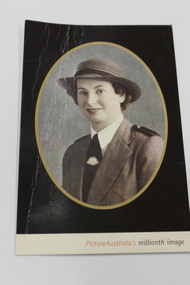 Dandenong/Cranbourne RSL Sub Branch
Photograph - Sepia photograph/postcard, Unknown
... WWII historical significance Vivian Bullwinkel, a Second World War army nursing sister, is best known as the sole survivor of the infamous Banka Island massacre, in which 21 of her colleagues were killed by Japanese troops. Her courage while a prisoner ...WWII historical significancePortrait of Vivian Bullwinkel AO, MBE (1915 - 2000)Vivian Bullwinkel, a Second World War army nursing sister, is best known as the sole survivor of the infamous Banka Island massacre, in which 21 of her colleagues were killed by Japanese troops. Her courage while a prisoner of the Japanese for over three and a half years exemplified the bravery of Australian women in war, and her distinguished postwar career was marked by many humanitarian achievements. -
Unions Ballarat
Straight left, Uren, Tom, 1994
... He also lived through the great depression and was a prisoner of war in WWII. The book, Straight Left, is Uren's memoir....He also lived through the great depression and was a prisoner of war in WWII. The book, Straight Left, is Uren's memoir. ...Tom Uren was an ALP Member of Parliament from 1958 to 1990. For some of this time he served as Deputy Leader of the Opposition and was a cabinet minister. He was supportive of the heritage and conservation movement, particularly in Sydney. He also lived through the great depression and was a prisoner of war in WWII. The book, Straight Left, is Uren's memoir.Political relevance, especially to the ALP. Autobiographical interest - Tom Uren. Paper; book. Five black and white photographs on the back cover.Author, title and barcode on dust jacket. btlc, ballarat trades hall, ballarat trades and labour council, uren, tom, politics, deputy leader of the opposition, government, autobiography, alp, australian labor party -
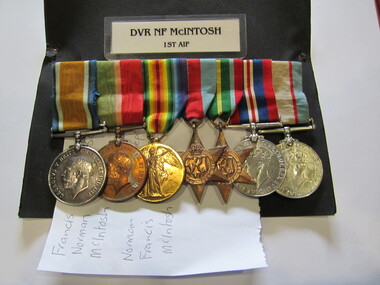 Ballarat RSL Sub-Branch Inc.
British War Medal
... WWII enlistment is 29/3/1900. McIntosh enlisted on 15/8/1944, in Abbotsford and served in Port Moresby. He was discharged on 4/1/1946 at which time he was posted with the 128 Aust Gen Hosp (624 / 34138; VX149550). He also served with the 3 ARMY BDE as a Army Non-Commissioned DVR (GNR) in WWI, having enlisted on 28/11/1916 in Ballarat, VIC and been discharged on 27/11/1919. Norman Francis /Francis Norman McINTOSH was not a prisoner...WWII enlistment is 29/3/1900. McIntosh enlisted on 15/8/1944, in Abbotsford and served in Port Moresby. He was discharged on 4/1/1946 at which time he was posted with the 128 Aust Gen Hosp (624 / 34138; VX149550). He also served with the 3 ARMY BDE as a Army Non-Commissioned DVR (GNR) in WWI, having enlisted on 28/11/1916 in Ballarat, VIC and been discharged on 27/11/1919. Norman Francis /Francis Norman McINTOSH was not a prisoner ...This object relates to Norman Francis /Francis Norman McINTOSH. He was born on 29/03/1895 in Ballarat, VIC though the Date of Birth given on his WWII enlistment is 29/3/1900. McIntosh enlisted on 15/8/1944, in Abbotsford and served in Port Moresby. He was discharged on 4/1/1946 at which time he was posted with the 128 Aust Gen Hosp (624 / 34138; VX149550). He also served with the 3 ARMY BDE as a Army Non-Commissioned DVR (GNR) in WWI, having enlisted on 28/11/1916 in Ballarat, VIC and been discharged on 27/11/1919. Norman Francis /Francis Norman McINTOSH was not a prisoner of war.first world war (ww1), 1914 - 1918, medals, ballarat rsl, ballarat -
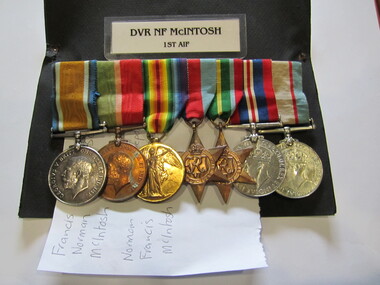 Ballarat RSL Sub-Branch Inc.
Mercantile Marine Medal
... WWII enlistment is 29/3/1900. McIntosh enlisted on 15/8/1944, in Abbotsford and served in Port Moresby. He was discharged on 4/1/1946 at which time he was posted with the 128 Aust Gen Hosp (624 / 34138; VX149550). He also served with the 3 ARMY BDE as a Army Non-Commissioned DVR (GNR) in WWI, having enlisted on 28/11/1916 in Ballarat, VIC and been discharged on 27/11/1919. Norman Francis /Francis Norman McINTOSH was not a prisoner...WWII enlistment is 29/3/1900. McIntosh enlisted on 15/8/1944, in Abbotsford and served in Port Moresby. He was discharged on 4/1/1946 at which time he was posted with the 128 Aust Gen Hosp (624 / 34138; VX149550). He also served with the 3 ARMY BDE as a Army Non-Commissioned DVR (GNR) in WWI, having enlisted on 28/11/1916 in Ballarat, VIC and been discharged on 27/11/1919. Norman Francis /Francis Norman McINTOSH was not a prisoner ...This object relates to Norman Francis /Francis Norman McINTOSH. He was born on 29/03/1895 in Ballarat, VIC though the Date of Birth given on his WWII enlistment is 29/3/1900. McIntosh enlisted on 15/8/1944, in Abbotsford and served in Port Moresby. He was discharged on 4/1/1946 at which time he was posted with the 128 Aust Gen Hosp (624 / 34138; VX149550). He also served with the 3 ARMY BDE as a Army Non-Commissioned DVR (GNR) in WWI, having enlisted on 28/11/1916 in Ballarat, VIC and been discharged on 27/11/1919. Norman Francis /Francis Norman McINTOSH was not a prisoner of war.first world war (ww1), 1914 - 1918, medals, ballarat rsl, ballarat
