

Historical information
Period characteristics:
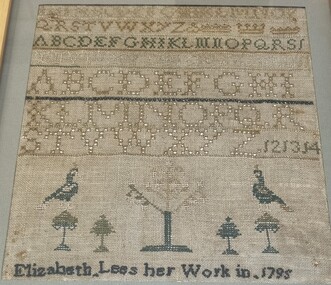
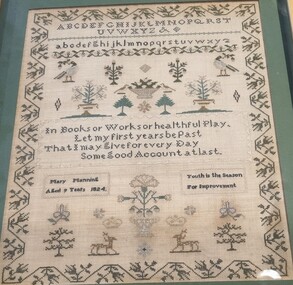
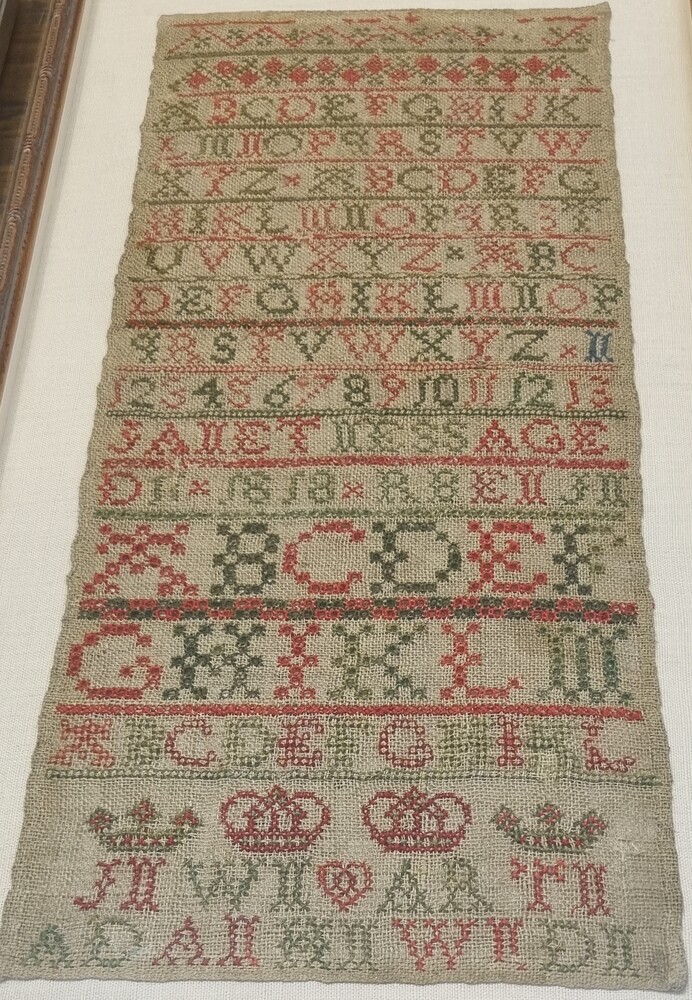
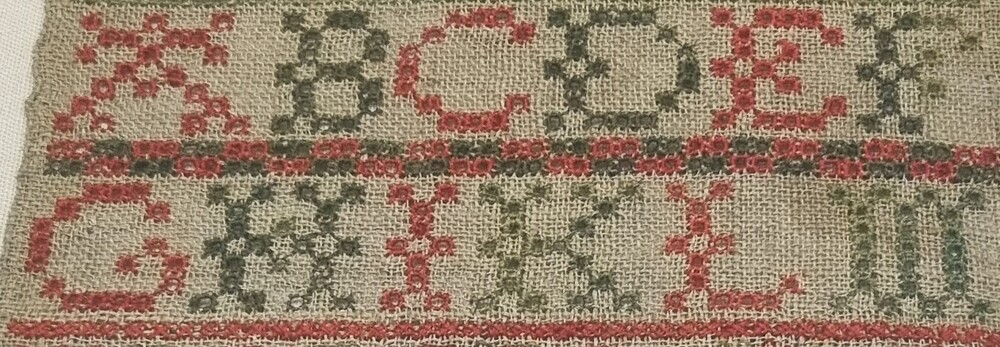
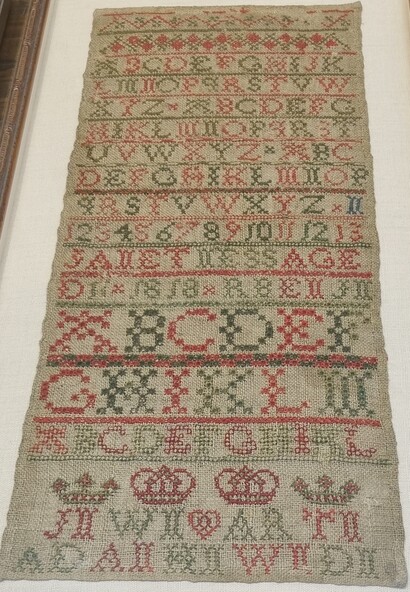
Missing letters - the exclusion of 'J' and 'U' was standard in Latin Alphabet typography and carried heavily into educational samplers through the 19th century.
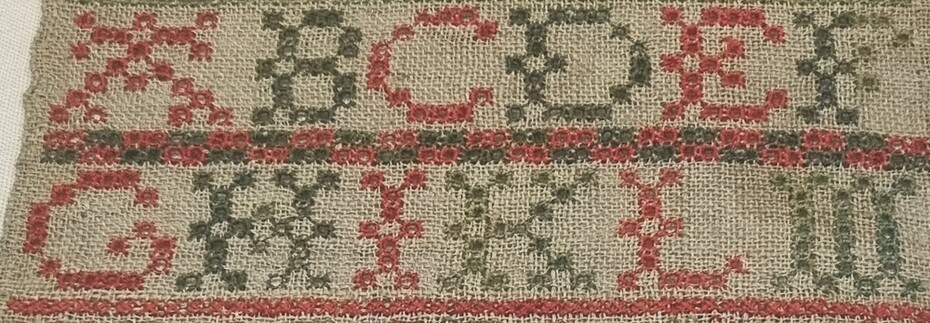
Horizontally arranged bands of letters and text separated by geometric borders was a simpler band composition in older educational templates.
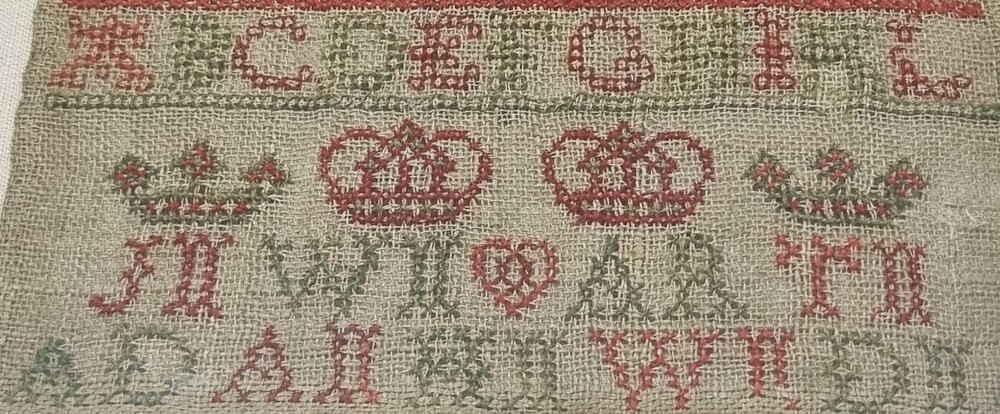
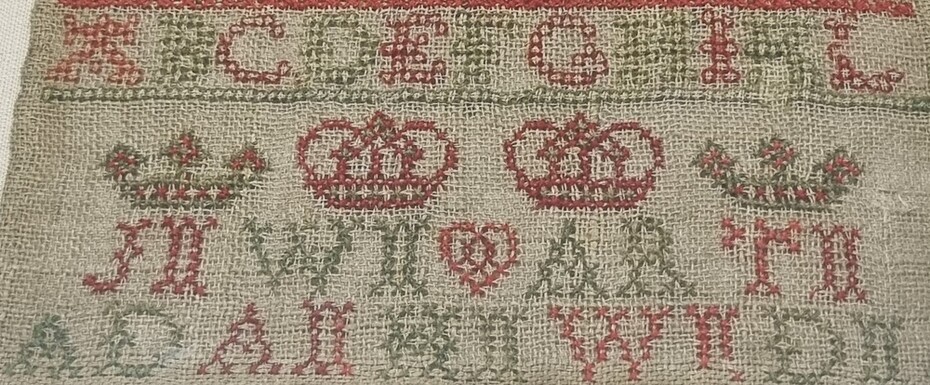
Crown motifs can serve several purposes:
Loyalty to the Monarchy - allegiance to the reigning King or Queen was especially prominent in British, Scottish and Dutch traditional samplers.
Religious devotion - spiritually crowns represented 'Crown of Life' or the 'Crown of Righteousness' mentioned in the Bible, signifying eternal reward, fidelity and spiritual virtue.
Family hierarchy and status - different style of crowns and coronets symbolized specific ranks of nobility. They may be incorporated to represent family heritage.
Linen marking practice - alphabet samplers were used to practice marking household linens. Small crowns alongside initials indicate the status or lineage belonging to the owner of the linens.
Physical description
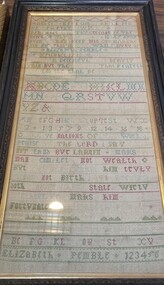
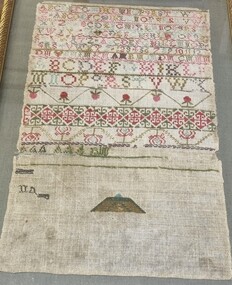
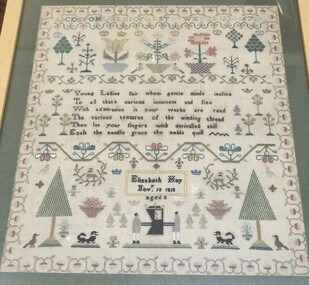
Traditional Scottish child's sampler on ecru linen embroidered with green and red threads.
Narrow borders, worked in a variety of stitches, separates the alphabet, numbers and initials.
Cross stitch, eyelet and four sided stitch are used.
Lower row of crowns and coronets and initials.
Inscriptions & markings
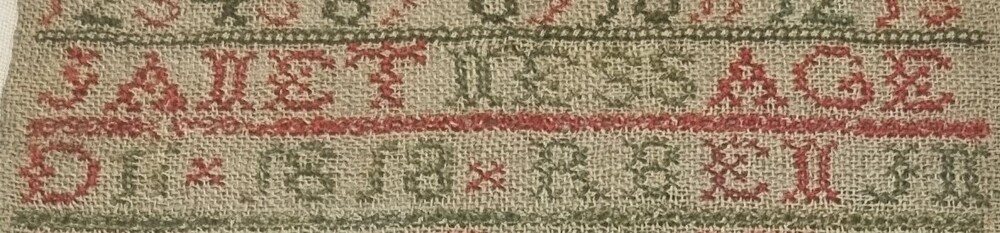
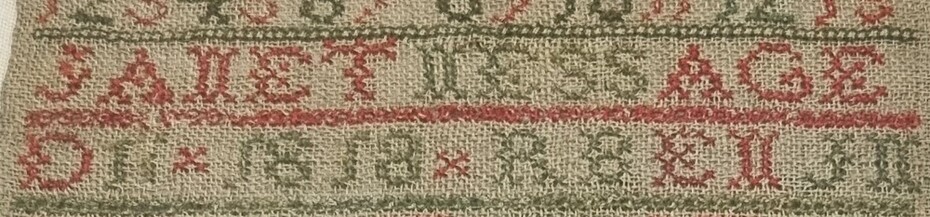
Janet Ness Aged 11 1818