


Historical information
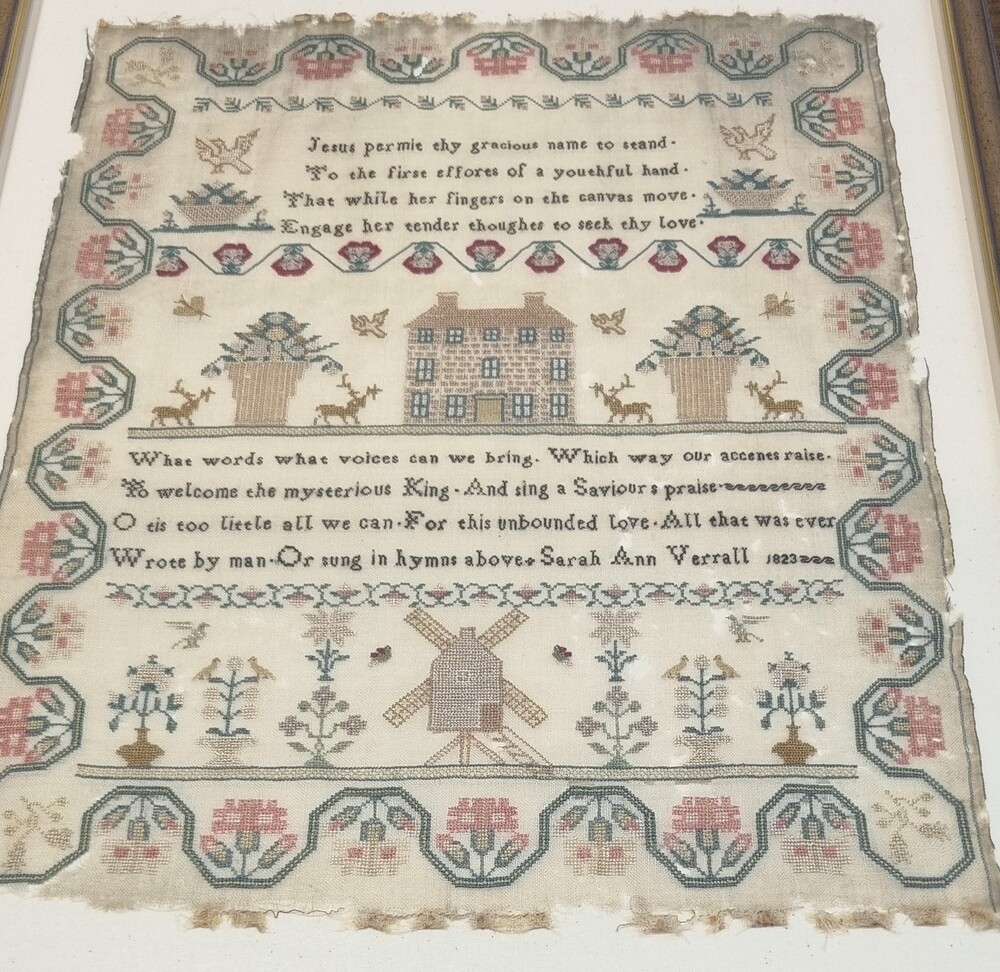
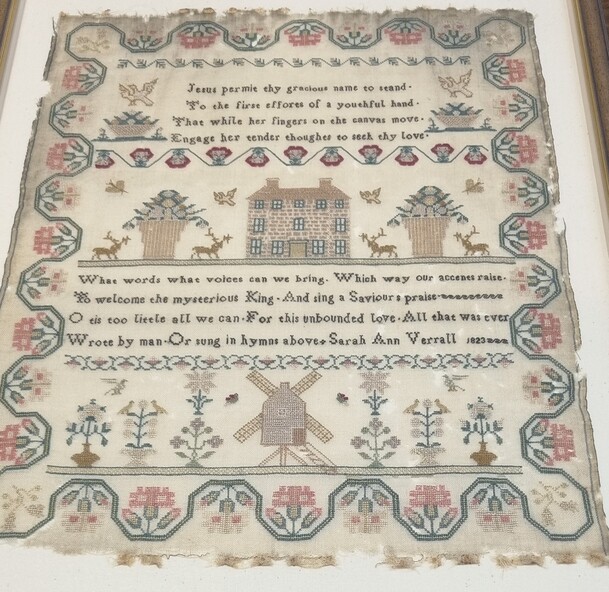
The first text is the opening verse of a highly popular, traditional needlework sampler poem from the 18th and 19th centuries.
The verse is most widely attributed to the Reverend John Newton (1725–1807), the famous English cleric, abolitionist, and author of the hymn "Amazing Grace". He is believed to have written this specific petition for his niece, Elizabeth Catlitt. It gained massive popularity after being published in The Evangelical Magazine in May 1798.
Young girls throughout the UK and the United States frequently embroidered this prayer onto their marking samplers to demonstrate their growing skills in needlework, literacy, and piety.
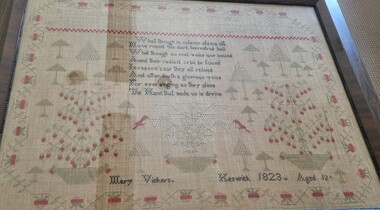
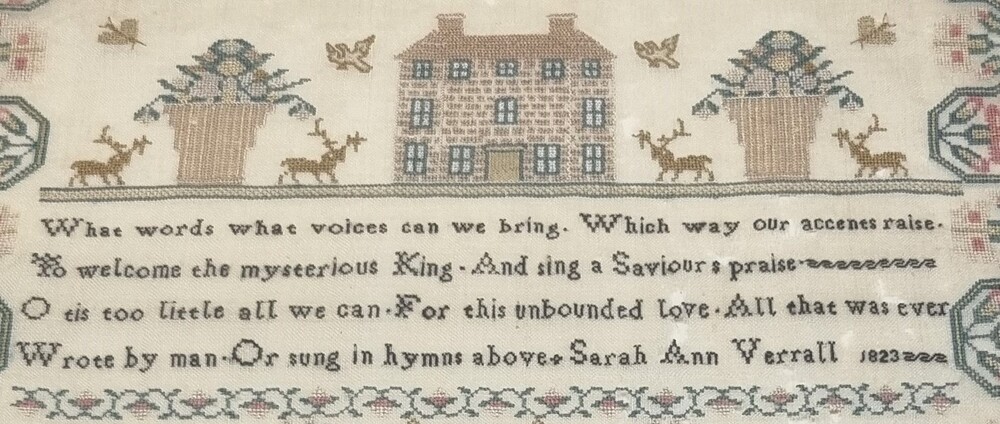
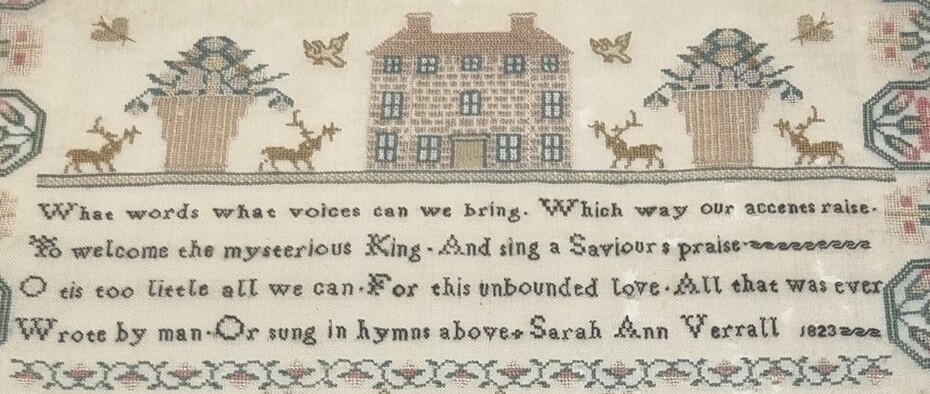
The second verse lines are from the Christmas hymn "What Words! What Voices Can We Bring?", written for Christmas Day with words of unknown origin and music composed by William Knapp (1698–1768).
Physical description
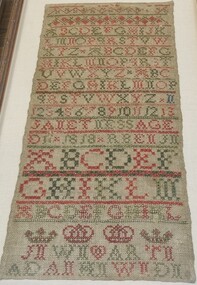
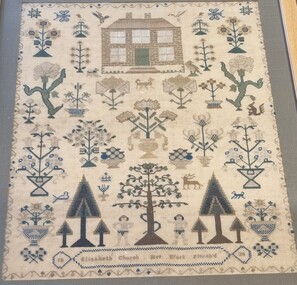
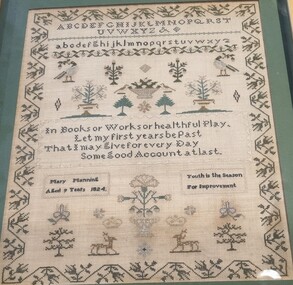
Traditional child's sampler on ecru linen embroidered in a variety of coloured silks and stitches.
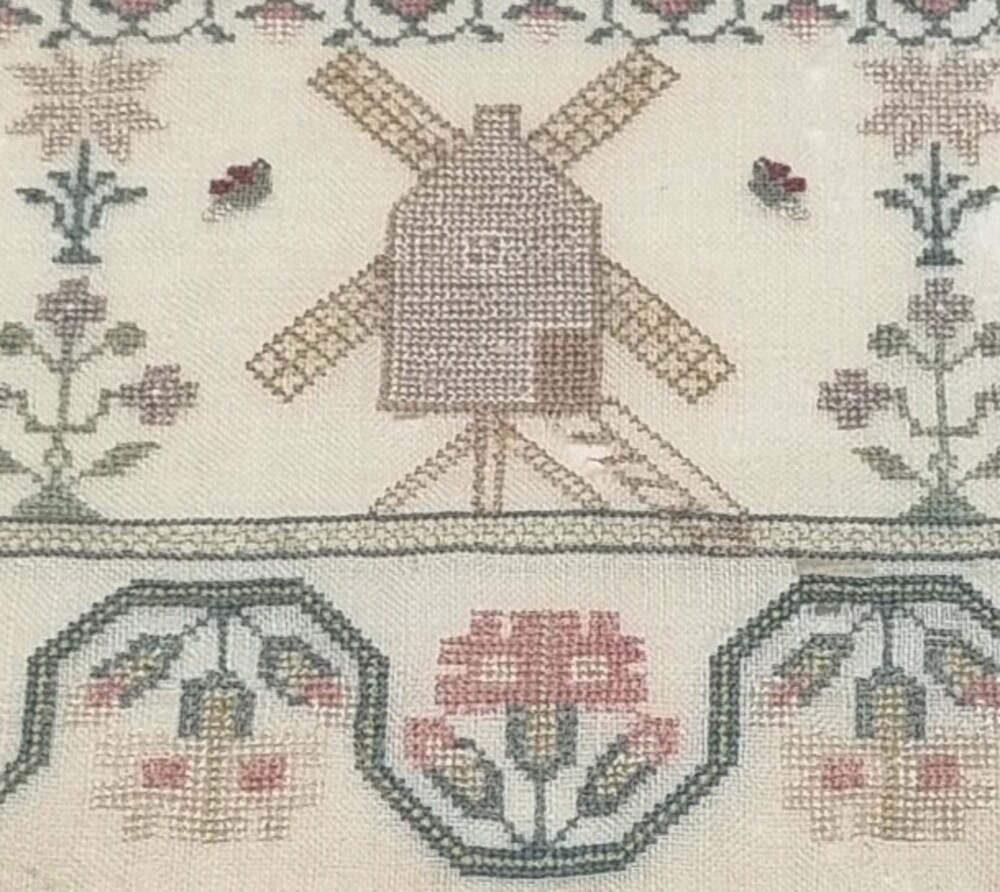
External border in a traditional carnation design.
Ornate dividing bands separate the alphabet, verses, a house with numerous floral, bird and deer motifs.
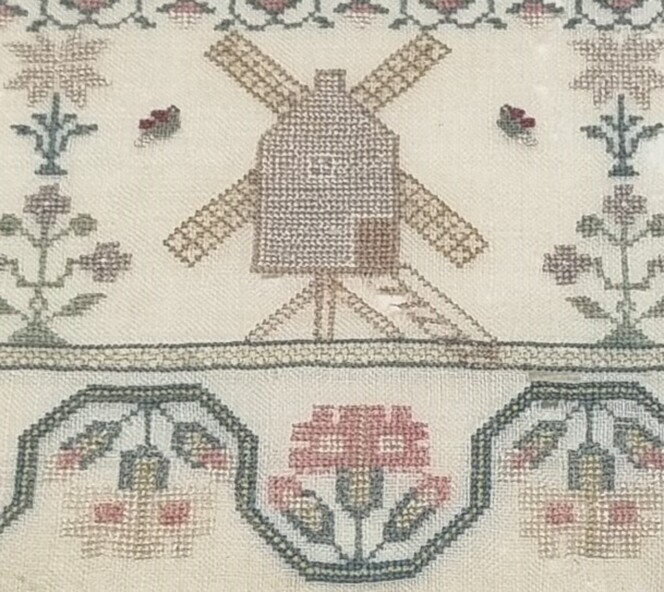
Large bottom panel depicts a windmill with identical motifs embroidered either side of flowers and birds.
Inscriptions & markings
"Jesus permit thy gracious name to stand
To the first efforts of a youthful hand
That while her fingers on the canvas move
Engage her tender thoughts to seek thy love"
"What words what voices can we bring. Which way our accents raise.
To welcome the mysterious King. And sing a Saviour s praise.
O tis too little all we can. For this unbounded love. All that was ever
Wrote by man Or sung In hymns above".
Sarah Ann Verrall 1823