
Showing 3391 items matching "murray's"
-
 Tarnagulla History Archive
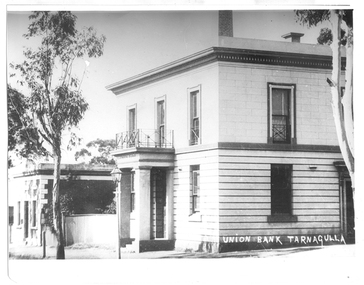
Photograph of bank buildings, Tarnagulla, Bank buildings, Tarnagulla, circa 1866 to 1888
... Copy probably made by Murray Comrie in the 1970s. ...Murray Comrie Collection. There were four banks in Tarnagulla at one stage, but two - the National Bank and the Bank of Australasia - were open for a short period only. ...Murray Comrie Collection. There were four banks in Tarnagulla at one stage, but two - the National Bank and the Bank of Australasia - were open for a short period only. The single-storey brick building at far left was built in 1859 and used by the Union Bank until 1888, and was later renamed 'Lochcarron' and used as premises by doctors and dentists. The two-storey building (right) was built in 1866 by the Colonial Bank of Australasia. Before this, the site had been occupied by Foo's shop. Whilst it was being built, the Colonial Bank operated from Company's Hotel (later known as Burstall Hall and the Council Chambers). The double-storey building in this image was used by the Colonial Bank from 1866 until 21st February, 1888. The premises were sold to the Union Bank for £2500. The Union Bank moved in and commenced operations on 6th June 1888, continuing until 1942. The building was later used as a general store until the 1990s. Both buildings are now private residences. This is a reasonable copy of an older original. Copy probably made by Murray Comrie in the 1970s. Monochrome photograph depicting a section of Commercial Road in Tarnagulla with two brick buildings, one single-storey and one double-storey. Caption on original in right lower corner 'Union Bank Tarnagulla'. Handwritten on reverse: Orig showed building to left of Lochcarron H. Joyce Fruiterer' and 'Orig with Mr. A.M. Renshaw'.tarnagulla, banks, banking, commerce, buildings, commercial road -
 Wodonga & District Historical Society Inc
Document - Kergunyah Football Club Membership Ticket, c1970
... In 1989 Wodonga Demons were successful in their bid to be admitted to the Ovens and Murray League. Following the decision to allow the Wodonga Demons permission to join the Ovens and Murray Football League, the Wodonga Demons Football and Sports Club went about re-establishing their new identity. ...In 1989 Wodonga Demons were successful in their bid to be admitted to the Ovens and Murray League. Following the decision to allow the Wodonga Demons permission to join the Ovens and Murray Football League, the Wodonga Demons Football and Sports Club went about re-establishing their new identity. ...The Kergunyah Football Club was established in 1923. They competed in several leagues including the Allans Flat District Football Association, the Yackandandah Football Association, the Dederang and District Football Association and the Tallangatta and District Football League. They won Tallangatta and District Football League premierships in 1955, 1956, 1957. Kergunyah Football Club went into recess in 1940. In 1945 the club joined the Yackandandah League, then in 1953 they were accepted into the Tallangatta and District Football League. The club closed in 1975 due to dwindling numbers but many of its remaining players become the Wodonga Demons. In 1989 Wodonga Demons were successful in their bid to be admitted to the Ovens and Murray League. Following the decision to allow the Wodonga Demons permission to join the Ovens and Murray Football League, the Wodonga Demons Football and Sports Club went about re-establishing their new identity. They had to change both their name and colours so as to not cause confusion with the Benalla Demons. The club settled upon the name of the Wodonga Raiders, officially the Wodonga Raiders Sports Club, and chose to wear red and navy colours for its playing jumpers.Card in shape of shield with issued to members of the Kergunyah Football Club.KERGUNYAH , FOOTBALL CLUB/ SEASON 19 __ / MEMBERS TICKET/ A.C.Reid President/ J. Meeham Hon. Sec.kergunyah football club, northeast victoria football, wodonga raiders football club -
 Wodonga & District Historical Society Inc
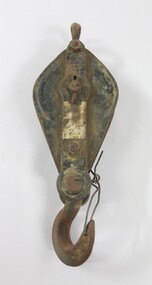
Functional object - Pulley, North East Region Water Authority, Wodonga
... In 1994 the Kiewa Murray Region Water Authority took over the Wodonga Council’s water and wastewater operations, and then in 1999 the Kiewa Murray Region Water Authority combined with the Ovens Region Water Authority and became the North East Region Water Authority or NERWA. ...In 1994 the Kiewa Murray Region Water Authority took over the Wodonga Council’s water and wastewater operations, and then in 1999 the Kiewa Murray Region Water Authority combined with the Ovens Region Water Authority and became the North East Region Water Authority or NERWA. ...The pulley was used by the Wodonga Waterworks Trust and Sewerage Authority, which were established in 1897, and had the responsibility for providing Wodonga's drinking water and managing the wastewater. In 1923 a Wodonga Waterworks Trust referendum to provide funding for new infrastructure to supply more water of better quality to Wodonga was passed. This included building the Wodonga Water Tower and it was completed in 1924. It supplied water to Wodonga until 1959, when it was drained and decommissioned after the No 1 Basin on Huon Hill was completed in 1958. In 1983 the Wodonga Waterworks Trust and the Wodonga Sewerage Authority became part of the Wodonga Council. And by 1989 a filtration plant at Huon Hill was completed, which provided filtered water of improved quality to Wodonga, in accordance with the World Health Organisation’s guidelines. In 1994 the Kiewa Murray Region Water Authority took over the Wodonga Council’s water and wastewater operations, and then in 1999 the Kiewa Murray Region Water Authority combined with the Ovens Region Water Authority and became the North East Region Water Authority or NERWA. NERWA then became known as North East Water. The pulley has local significance due to its use by the Wodonga Waterworks Trust and Sewerage Authority, and donation from the North East Region Water Authority. It also has wider historical significance as an example of the equipment used in the early management of water in Victoria and Australia.Elongated ellipse-shaped iron pulley, painted black on the flat exterior surfaces. Considerable light brown dirt on the surface and traces of a silver coloured rectangular label on the central raised section on the front. The light brown surface dirt covers nearly the entire back surface. Piece of iron wire attached to the hook at the bottom of the pulley."Backwards R 6" on the central raised section on the back surface.wodonga waterworks trust, wodonga sewerage authority, wodonga water, pulleys, north east region water authority, north east water, n.e. water, nerwa -
 Wodonga & District Historical Society Inc
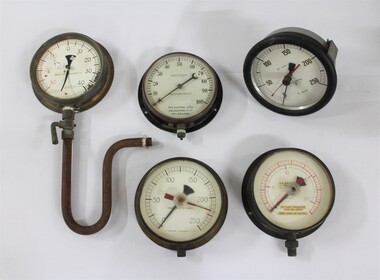
Functional object - Water Pump Pressure Gauges, North East Region Water Authority, Wodonga
... In 1994 the Kiewa Murray Region Water Authority took over the Wodonga Council’s water and wastewater operations, and then in 1999 the Kiewa Murray Region Water Authority combined with the Ovens Region Water Authority and became the North East Region Water Authority or NERWA. ...In 1994 the Kiewa Murray Region Water Authority took over the Wodonga Council’s water and wastewater operations, and then in 1999 the Kiewa Murray Region Water Authority combined with the Ovens Region Water Authority and became the North East Region Water Authority or NERWA. ...The water pump pressure gauges were used by the Wodonga Waterworks Trust and Sewerage Authority, which were established in 1897, and had the responsibility for providing Wodonga's drinking water and managing the wastewater. In 1923 a Wodonga Waterworks Trust referendum to provide funding for new infrastructure to supply more water of better quality to Wodonga was passed. This included building the Wodonga Water Tower and it was completed in 1924. It supplied water to Wodonga until 1959, when it was drained and decommissioned after the No 1 Basin on Huon Hill was completed in 1958. In 1983 the Wodonga Waterworks Trust and the Wodonga Sewerage Authority became part of the Wodonga Council. By 1989 a filtration plant at Huon Hill was completed, which provided filtered water of improved quality to Wodonga, in accordance with the World Health Organisation’s guidelines. In 1994 the Kiewa Murray Region Water Authority took over the Wodonga Council’s water and wastewater operations, and then in 1999 the Kiewa Murray Region Water Authority combined with the Ovens Region Water Authority and became the North East Region Water Authority or NERWA. NERWA then became known as North East Water.The water pump pressure gauges have local significance due to their use by the Wodonga Waterworks Trust and Sewerage Authority, and donation from the North East Region Water Authority. They also have wider historical significance as examples of the equipment used in the management of water in Victoria and Australia.Five metal and glass water pump pressure gauges, including one with a U-shaped pipe and lever attached. "-HOMPSONS (CASTLEMAINE) LT-" on pressure gauge no.1 "BOURDON'S / PRESSURE GAUGE / THE AUSTRAL OTIS /ENGINEERING Co. LD. / MELBOURNE" on pressure gauge no.2 "No. 1609 / POUNDS PRESSURE / PER SQ. INCH / FEET HEAD OF WATER" on pressure gauge no. 3 "FEET HEAD OF WATER / THOMPSONS (CASTLEMAI-- LTD" on pressure gauge no. 4 "SET SLOW 33' -" / BUDENBERG / MADE IN AUSTRALIA / ft water / 1 4 9 3 9 each number underlined" on pressure gauge no. 5north east region water authority, nerwa, wodonga sewerage authority, north east water, n.e. water, wodonga waterworks trust, pressure gauges, water pump pressure gauges -
 Wodonga & District Historical Society Inc
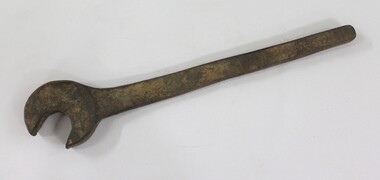
Tool - Large Spanner, North East Region Water Authority, Wodonga
... In 1994 the Kiewa Murray Region Water Authority took over the Wodonga Council’s water and wastewater operations, and then in 1999 the Kiewa Murray Region Water Authority combined with the Ovens Region Water Authority and became the North East Region Water Authority or NERWA. ...In 1994 the Kiewa Murray Region Water Authority took over the Wodonga Council’s water and wastewater operations, and then in 1999 the Kiewa Murray Region Water Authority combined with the Ovens Region Water Authority and became the North East Region Water Authority or NERWA. ...The large wrench was used by the Wodonga Waterworks Trust and Sewerage Authority, which were established in 1897, and had the responsibility for providing Wodonga's drinking water and managing the wastewater. In 1923 a Wodonga Waterworks Trust referendum to provide funding for new infrastructure to supply more water of better quality to Wodonga was passed. This included building the Wodonga Water Tower and it was completed in 1924. It supplied water to Wodonga until 1959, when it was drained and decommissioned after the No 1 Basin on Huon Hill was completed in 1958. In 1983 the Wodonga Waterworks Trust and the Wodonga Sewerage Authority became part of the Wodonga Council. And by 1989 a filtration plant at Huon Hill was completed, which provided filtered water of improved quality to Wodonga, in accordance with the World Health Organisation’s guidelines. In 1994 the Kiewa Murray Region Water Authority took over the Wodonga Council’s water and wastewater operations, and then in 1999 the Kiewa Murray Region Water Authority combined with the Ovens Region Water Authority and became the North East Region Water Authority or NERWA. NERWA then became known as North East Water. The large spanner has local significance due to its use by the Wodonga Waterworks Trust and Sewerage Authority, and donation from the North East Region Water Authority. It also has wider historical significance as an example of the equipment used in the management of water in Victoria and Australia.Large cast iron spanner with some red/brown rust corrosion and light brown ingrained surface dirt.north east region water authority, nerwa, wodonga sewerage authority, north east water, n.e. water, wodonga, large spanners, spanner, wodonga waterworks trust -
 Wodonga & District Historical Society Inc
Tool - Shifter Wrench, North East Region Water Authority, Wodonga
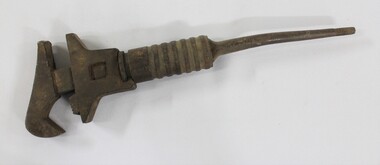
... In 1994 the Kiewa Murray Region Water Authority took over the Wodonga Council’s water and wastewater operations, and then in 1999 the Kiewa Murray Region Water Authority combined with the Ovens Region Water Authority and became the North East Region Water Authority or NERWA. ...In 1994 the Kiewa Murray Region Water Authority took over the Wodonga Council’s water and wastewater operations, and then in 1999 the Kiewa Murray Region Water Authority combined with the Ovens Region Water Authority and became the North East Region Water Authority or NERWA. ...The Shifter Wrench was used by the Wodonga Waterworks Trust and Sewerage Authority, which were established in 1897, and had the responsibility for providing Wodonga's drinking water and managing the wastewater. In 1923 a Wodonga Waterworks Trust referendum to provide funding for new infrastructure to supply more water of better quality to Wodonga was passed. This included building the Wodonga Water Tower and it was completed in 1924. It supplied water to Wodonga until 1959, when it was drained and decommissioned after the No 1 Basin on Huon Hill was completed in 1958. In 1983 the Wodonga Waterworks Trust and the Wodonga Sewerage Authority became part of the Wodonga Council. And by 1989 a filtration plant at Huon Hill was completed, which provided filtered water of improved quality to Wodonga, in accordance with the World Health Organisation’s guidelines. In 1994 the Kiewa Murray Region Water Authority took over the Wodonga Council’s water and wastewater operations, and then in 1999 the Kiewa Murray Region Water Authority combined with the Ovens Region Water Authority and became the North East Region Water Authority or NERWA. NERWA then became known as North East Water. The shifter wrench has local significance due to its use by the Wodonga Waterworks Trust and Sewerage Authority, and donation from the North East Region Water Authority. It also has wider historical significance as an example of the equipment used in the early management of water in Victoria and Australia.Large cast iron wrench with an adjustable grip and a circular turning mechanism at the top of a thin tapering handle. 2.6 cm thread on the end of the thin tapering handle. "GSP 23/15" on one side of the thin tapering handle.north east region water authority, nerwa, wodonga sewerage authority, north east water, n.e. water, wodonga, shifter wrench, wodonga waterworks trust -
 Bendigo Historical Society Inc.
Document - AUSTRALIAN BUZZA ANCESTRY, 2013
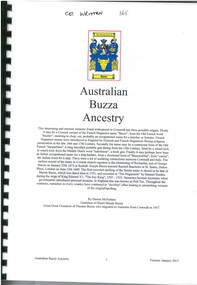
... He also built and operated paddle-steamers in the Murray Darling system. He left Myers Flat in 1893 and died in Goolwa, SA in 1904. ...He also built and operated paddle-steamers in the Murray Darling system. He left Myers Flat in 1893 and died in Goolwa, SA in 1904. ...Thomas Buzza (1833-1904) was a Cornish born miner who came to Bendigo in 1853. He bought the BAckCreek sawmill (1861-1865). He had several other sawmilling enterprises and later operated a hay and corn produce store. He also built and operated paddle-steamers in the Murray Darling system. He left Myers Flat in 1893 and died in Goolwa, SA in 1904. He had married Emily Rainsdon (1852-1926) in 1867.Printed family history spiral bound with perspex cover. Contents page - no index. Contains family trees, summary of Thomas Buzza and his migration from Cornwall, details of descendants of Thomas Buzza, photographs, maps and images of birth, death and marriage certificates.Darren McFarlanegenealogy, family, cornish, buzza, bendigo, eaglehawk -
 Port of Echuca
Functional object - Boiler engine, 1927
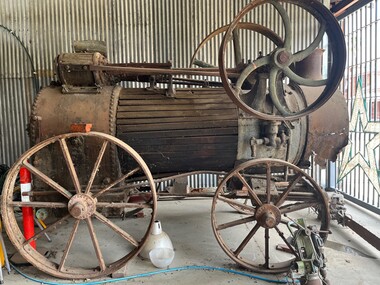
... It was launched in December 1878. Owned by Murray River Sawmills, it was used for logging operations until 1904, when the vessel was dismantled. ...It was launched in December 1878. Owned by Murray River Sawmills, it was used for logging operations until 1904, when the vessel was dismantled. ...This is the Ruston and Proctor engine and boiler from the PS Little Wonder built by R Barbour, Cornella NSW. It was launched in December 1878. Owned by Murray River Sawmills, it was used for logging operations until 1904, when the vessel was dismantled. The engine and boiler was purchased by the Robins family and ran a pump on their property by the Goulburn River. The boiler was later condemned by the engine continued to be used with steam supplied by another boiler up until the 1950s. Now considered to be beyond repair. A good example of the technology and industrial history of northern Victoria and along the Goulburn River. boiler, steam display, steam garage, ruston and proctor -
 National Wool Museum
Scrapbook
... Scrapbook contains dozens of auction notices for various properties around the Geelong region, many of them auctioned through Dennys Lascelles & Austin Co, or Strachan, Murray & Shannon Co. Auction notices are undated. ...Scrapbook contains dozens of auction notices for various properties around the Geelong region, many of them auctioned through Dennys Lascelles & Austin Co, or Strachan, Murray & Shannon Co. Auction notices are undated. ...Large cardboard-backed scrapbook found within National Wool Museum. May have originally been part of a display. Scrapbook contains dozens of auction notices for various properties around the Geelong region, many of them auctioned through Dennys Lascelles & Austin Co, or Strachan, Murray & Shannon Co. Auction notices are undated. Some have hand-written notes about who bought the property or if it was passed in. No indication on who compiled the book.Navy blue cloth-wrapped cardboard front and back cover book, with a red spine and corners. Book has paper pages with dozens of pages containing an auction notice attached. Auction notices relate to properties auctioned through local Geelong woolbrokers. There are several loose auction notice copies which are sitting on pages with a copy attached. -
 Ballarat Base Hospital Trained Nurses League
1982, Graduation, Nurses approaching Civic Hall, Ballarat
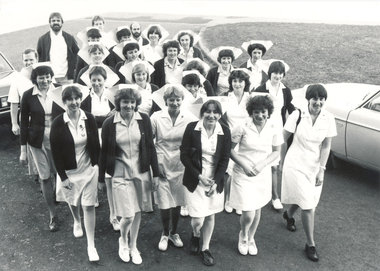
... The 38th Annual Graduation was held in the Civic Hall on Friday, 16th July, 1982 in the presence of Lady Murray, wife of the Governor of Victoria. A large crowd was in attendance and the Guest Speaker, Mr R.M. ...The 38th Annual Graduation was held in the Civic Hall on Friday, 16th July, 1982 in the presence of Lady Murray, wife of the Governor of Victoria. A large crowd was in attendance and the Guest Speaker, Mr R.M. ...Ballarat Base Hospital, School of Nursing Graduation. (BBH Annual Report, 1982, page 9.) The 38th Annual Graduation was held in the Civic Hall on Friday, 16th July, 1982 in the presence of Lady Murray, wife of the Governor of Victoria. A large crowd was in attendance and the Guest Speaker, Mr R.M. Horner, Headmaster of Ballarat and Clarendon College, presented a very interesting and stimulating address to the Graduates. There were 41 General, 21 Fourth Year and 13 Midwifery Graduates.Photo1982, nurses, graduation, civic hall, annual report, ballarat base hospital -
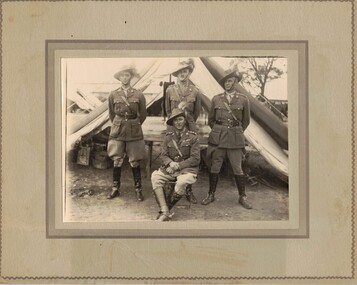 8th/13th Victorian Mounted Rifles Regimental Collection
Photograph - McGeoch, Wilesmith, Attree, Grossman
... It had its headquarters at Benalla with sub-units throughout the Upper Murray and Northeast Victoria. In December 1941, the regiment converted from horse to mechanised, initially as 8th Reconnaissance Battalion then in July 1942 it became 8th Cavalry Regiment and served in Northern Territory. ...It had its headquarters at Benalla with sub-units throughout the Upper Murray and Northeast Victoria. In December 1941, the regiment converted from horse to mechanised, initially as 8th Reconnaissance Battalion then in July 1942 it became 8th Cavalry Regiment and served in Northern Territory. ...The 8th Light Horse (Indi) was raised following World War One the Citizen Military Forces, superseding 16th (Indi) Light Horse. It had its headquarters at Benalla with sub-units throughout the Upper Murray and Northeast Victoria. In December 1941, the regiment converted from horse to mechanised, initially as 8th Reconnaissance Battalion then in July 1942 it became 8th Cavalry Regiment and served in Northern Territory. As Japanese threat to the mainland declined the regiment was disbanded.Black and white photograph mounted on card of four light horse officers: Lieutenant AH McGeoch 4 Troop A squadron (Wodonga), Lieutenant F. Attree, A Squadron, Lieutenant Wilesmith, 3 Troop A Squadron (Corryong) and seated Captain Grossman 2i/c C Squadron 8th Light Horse, c. 1938.wilesmith, attree, grossman, light horse, mcgeoch, wodonga, corryong, 8th -
 8th/13th Victorian Mounted Rifles Regimental Collection
Photograph
... It had its headquarters at Benalla with sub-units throughout the Upper Murray and Northeast Victoria. In December 1941, the regiment converted from horse to mechanised, initially as 8th Reconnaissance Battalion then in July 1942 it became 8th Cavalry Regiment and served in Northern Territory. ...It had its headquarters at Benalla with sub-units throughout the Upper Murray and Northeast Victoria. In December 1941, the regiment converted from horse to mechanised, initially as 8th Reconnaissance Battalion then in July 1942 it became 8th Cavalry Regiment and served in Northern Territory. ...The 8th Light Horse (Indi) Regiment superseded the 16th Light Horse in 1919. It had its headquarters at Benalla with sub-units throughout the Upper Murray and Northeast Victoria. In December 1941, the regiment converted from horse to mechanised, initially as 8th Reconnaissance Battalion then in July 1942 it became 8th Cavalry Regiment and served in Northern Territory. As Japanese threat to the mainland declined the regiment was disbanded.Jack Bell was a Farrier/ Blacksmith in 8th Light Horse 1930s and WW2Shows Light Horsemen of late 1930sBlack and white photograph of mounted light horseman being Trooper Jack Bell, 8th Light Horse circa 19398th, light horse, bell -
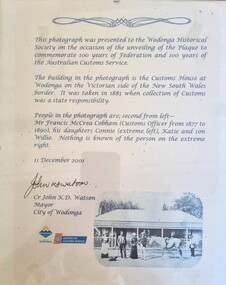 Wodonga & District Historical Society Inc
Certificate - 100 Years of Federation and the Australian Customs Service, 2001
... Merchants and settlers along the Murray River complained and petitioners approached Melbourne to establish a Customs House on the Murray River so that trade could resume. ...Merchants and settlers along the Murray River complained and petitioners approached Melbourne to establish a Customs House on the Murray River so that trade could resume. ...On 11th December 2001 an event was held in Wodonga to celebrate 100 years of the Australian Customs Service. It was held at the former Customs House building in Wodonga. The ceremony was attended by several dignitaries including the sitting Members of Parliament Mr Tony Plowman and Mr Bill Baxter. Speeches were made by Cr John Watson and Mr Bob Morgan, Supervisor of Australian Customs. A commemorative plaque was also unveiled. The Australian Customs Service played an important role in the history of Wodonga and a major part in the federation of the colonies of Australia. In 1852 the colonies were given the right to collect import duties on items such as coffee, tea, tobacco, chocolate and spirits. NSW was first to impose collection of duties in 1853. At that time Wodonga was not an official port of entry and was not allowed to collect duties. This regulation made it illegal for people to transport dutiable goods across the Murray River from NSW which provided an incentive for smuggling, while at the same time strangling the legitimate trade. Merchants and settlers along the Murray River complained and petitioners approached Melbourne to establish a Customs House on the Murray River so that trade could resume. Belvoir (later to become Wodonga) was a made a port of entry with its own Customs House gazetted on 22nd December 1854. The Government set aside 500 Pounds in 1859 to build Belvoir's own Customs House J P Hanify was appointed as sub-collector at Belvoir. The Customs House was built near the end of Union Bridge over the Murray River in 1859. Tariffs or customs duties greatly angered residents and it was little wonder the customs officer of the day was always an unpopular man. Tariffs had to be paid on articles such as tobacco, many food items and new clothing that were carried across the Border. The range of items was extended over time, leading to some farmers even swimming their livestock across the river to avoid duties at the Customs House. The levying of duties ended with Federation in 1901. Francis Cobham depicted in this photograph, took up the position of Customs Officer in 1867 and remained there until his retirement in 1890. The building was originally a 2-roomed Customs House in 1856 but was extended to provide living quarters for the Cobham family while a nearby cottage became the Customs House. The building was moved to a position south of the lagoon in the mid-1980s and is now a restaurant.This item is significant because it documents the commemoration ceremony for the Australian Custom Service held in Wodonga on 11th December 2001.An A4 size certificate created to acknowledge the centenary of the Australian Customs Service officially established at the time of Federation in 1901. The certificate accompanied the donation of a photo of the Wodonga Customs House including the Customs Officer and his family. It has been mounted in a clear frame.This photograph was presented to the Wodonga Historical Society on the occasion of the unveiling of the Plaque to commemorate 100 years of Federation and 100 years of the Australian Customs Service. The building in the photograph is the Customs House at Wodonga on the Victorian side of the New South Wales border. It was taken in 1883 when collection of Customs wàs a state responsibility. People in the photograph are; second from left- Mr Francis McCrea Cobham (Customs Officer from 1877 to 1890), his daughters Connie (extreme, left), Katie and son Willie. Nothing is known of the person on the extreme right. 11 December 2001 Cr John K.D. Watson Mayor City of Wodonga Insignias of the City of Wodonga and Australian Customs Serviceaustralian customs service, customs house wodonga -
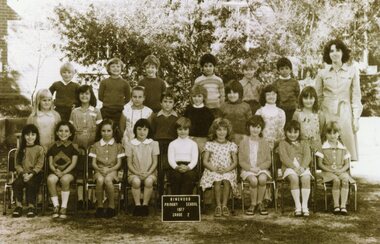 Ringwood and District Historical Society
Photograph, Ringwood State School - Grade 2, 1977
... , ?, ?, Jenny Murray, Kerry (?), ?, ?, Tania Alhouse. ...Front Row- L to R: Ellen Hodgson, ?, ?, ?, Jenny Murray, Kerry (?), ?, ?, Tania Alhouse. Teacher: Miss Harmon (American Exchange Teacher) Black and white photograph - Grade 2, 1977 Ringwood State School - Grade 2, 1977 Photograph ...Black and white photograph - Grade 2, 1977"Attached to photograph" Back Row- L to R: Craig McDonald, ?, James Edis, Simon Ignations, Robert McDougall, Dale Franklin. 2nd Row- L to R: Julie Rigg, Kerryn Hopgood, Lexie Jenkinson, Johnny Tomada, ?, Racheal McEwan, ?, Nicole Mathieson. Front Row- L to R: Ellen Hodgson, ?, ?, ?, Jenny Murray, Kerry (?), ?, ?, Tania Alhouse. Teacher: Miss Harmon (American Exchange Teacher) -
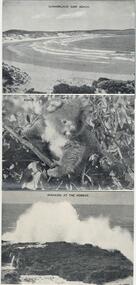 Phillip Island and District Historical Society Inc.
Postcard Folder, The Isle of Enchantment, 1946
... The Isle of Enchantment" Photos by A. J. Murray - Copyright. Each photo inscription as above in Physical Description. ...A. J. Murray...The Isle of Enchantment" Photos by A. J. Murray - Copyright. Each photo inscription as above in Physical Description. ...Fold out series of 8 photographs relating to Phillip Island. Donated by Dr Cook.Black & White Folder of photographs: 1: Summerland Surf Beach 2: Koala 3: Breakers At The Nobbies 4: The Jetty at Cowes 5: Seals on Seal Rocks 6: Newhaven - San Remo Bridge 7: Penguins at Summerland Cowes 8: The Nobbies and Seal RocksFront Cover: "Camera Highlights illustrating Cowes Phillip Island, Vic. The Isle of Enchantment" Photos by A. J. Murray - Copyright. Each photo inscription as above in Physical Description. Back Cover: "Postage Rates within the British Empire - Without correspondence, in an unsealed envelope, will be 1.1/2d. If correspondence is added, postage will be 2.1/2d. whether envelope is ealsed or unsealed. Foreign rate, 3.1/2d. To..................................... From..............................."phillip island, penguins, seals, the nobbies, seal rocks, the jetty shed cowes, summerland surf beach, newhaven to san remo bridge, dr cook -
 Phillip Island and District Historical Society Inc.
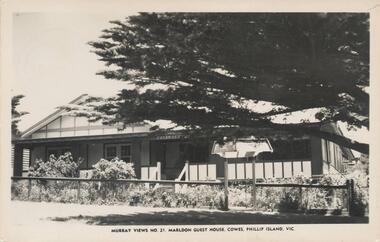
Photograph - Post Card, Early 1900's
... "Murray Views No. 21" "Marldon Guest House, Cowes, Phillip Island, Vic." ...Murray Views...Photograph - Post Card Murray Views ...One of a collection of photographs purchased by the Society from Jack Day of Mornington.Black & White postacrd of Marldon Guest House. Situated in an elevated position over looking bay in Thompson Avenue, Cowes. House has verandah with garden behind a fence and a pine tree providing shade in the street outside."Murray Views No. 21" "Marldon Guest House, Cowes, Phillip Island, Vic." On Back: "Dear Matre, We are having a nice time here. It is my birthday today and we had a cake with three candles and I got 2 ribbons and some sweeties and some hankies. Will see you on Sat. Love Lyn. Addressed to: Mrs C. Henderson,17 Woodmason Street, Malvern, Melbourne."marldon guest house, cowes, phillip island, jack day collection -
 Friends of the Cerberus Inc
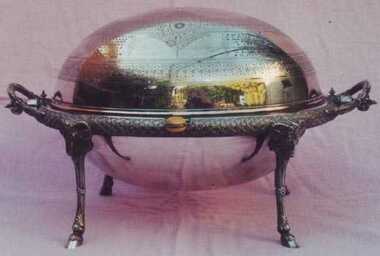
Soup Tureen
... Mandeville K. L. Murray O. Richards J. Breaks J. D. Dayle J. ...Mandeville K. L. Murray O. Richards J. Breaks J. D. Dayle J. ...Silver plated soup tureen measuring 390 mm wide, 250 mm deep and 220 mm high.Presented to J. A. Thompson as a mark of esteem from C. T. Mandeville K. L. Murray O. Richards J. Breaks J. D. Dayle J. Tubb W. A. Holmes A. Mahler R. M. Collins E. J. Huseyman R. Malcolmson J. Frogley A. Harrow J. Nelson T. J. Beatty H. Schreiber A. M. Houston H.M.V.S. Cerberus Nov. 16th 1881. -
 Geoffrey Kaye Museum of Anaesthetic History
Machine - Waveform Ventilator, 1970
... Waveform Generator, Drs Colliss N Cowie, Dr Baker Dr Murray Willson, Dr Babbington, Safety Pressure, Error POS F/B, Position, Feedback, Set Balance, Reset, Full Stroke, Velocity, Converter Current, line Pressure, Low Pressure, Bias Pressure, Start, Stop, Stop, Reset Press, Max Press, W/G Output, A/CRO B/2....Although ventilators are common equipment, this specific design and construct prototype is one of a kind, designed and used specifically for research purposes. baker, arthur barrington baker, barry professor academic anaesthetist oxford university nuffield department of anaesthesia Waveform Generator, Drs Colliss N Cowie, Dr Baker Dr Murray Willson, Dr Babbington, Safety Pressure, Error POS F/B, Position, Feedback, Set Balance, Reset, Full Stroke, Velocity, Converter Current, line Pressure, Low Pressure, Bias Pressure, Start, Stop, Stop, Reset Press, Max Press, W/G Output, A/CRO B/2. ...Professor Arthur Barrington (Barry) Baker was the first Australian anaesthetist to gain a DPhil in anaesthesia. He completed his DPhil at Oxford University at the Nuffield Department of Anesthesia in 1971, titled, Physiological Responses to Artificial Ventilation. The Waveform Ventilator is the machine developed to illustrate his DPhil. The waveform ventilator was used in several scientific studies on 'the effects of varying inspiratory flow waveforms and time in intermittent positive pressure ventilation (IPPV)', published in the 'British Journal of Anaesthesia'. Professor Arthur Barrington Baker had an extensive career in research and clinical practice including holding the position as the Nuffield Professor of Anaesthetics at Sydney university (1992 - 2005) and also as the Dean of the Australian and New Zealand College of Anaesthetists (ANZCA) (1987-1990).The variable waveform ventilator is of national significance, due to its association with Professor Arthur Barrington Baker (Prof. Baker) the first Australian academic anaesthetist, and the representation of historical social themes and research and design, in anaesthesia. Historic significance – It is a rare type of ventilator in good condition and well provenanced. It is a tangible record of the beginning of the long established and distinguished career of Prof. Baker, the first anaesthetist in Australia to gain a DPhil. Prof Baker has a strong involvement in the Australian and New Zealand College of Anaesthetists (ANZCA) organisation. The object is a product of Prof Baker’s Doctorate of Philosophy (DPhil) on respiratory physiology and is associated with the prestigious Oxford University and the well-known Nuffield Department of Anaesthetics. It also represents the social theme of migration to England from Australia in the 1960s and 1970s to access and experience academic and artistic opportunities limited in Australia at the time. Scientific Value – The object is of scientific value as it offers major potential for education and interpretation in anaesthesia. Although ventilators are common equipment, this specific design and construct prototype is one of a kind, designed and used specifically for research purposes. A rectangular shaped object on a trolley with four wheels. The top half of the object consists of two panels, one of cream coloured painted wood, the other black plastic, both containing several dials of different shapes and sizes. The wood surface also contains several gauges and a safety pressure clear plastic box. The plastic surface also contains a pin board. The bottom half of the object consists of two shelves. The whole object's perimeter is lined with perforated metals. The top wooden surface has several metal pieces of equipment and a long tube. The rear of the object contains numerous types of tubing and wire, a gas cylinder and two leather straps with buckles. The bottom half of one side of the objects has 3 electrical power outlets.Waveform Generator, Drs Colliss N Cowie, Dr Baker Dr Murray Willson, Dr Babbington, Safety Pressure, Error POS F/B, Position, Feedback, Set Balance, Reset, Full Stroke, Velocity, Converter Current, line Pressure, Low Pressure, Bias Pressure, Start, Stop, Stop, Reset Press, Max Press, W/G Output, A/CRO B/2.baker, arthur barrington, baker, barry, professor, academic anaesthetist, oxford university, nuffield department of anaesthesia -
 Sunshine and District Historical Society Incorporated
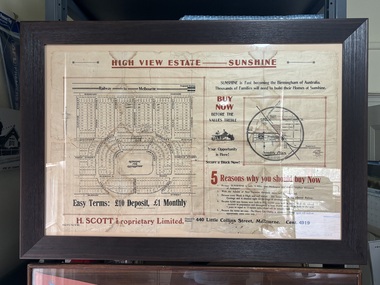
Poster - High View Estate Sunshine Land Sales Poster
... Scott Propertary Limited|Street names include Ridgeway Parage, Crescent Avenue, Whitesides Avenue, Mary Street, Harold Street, Vernon Crescent, Glengala Road, Lorna Crescent, Murray Street, Daphne Street, Fern Street, James Street, Lawrence Street, Frank Street, Ailsa Street, Norma Crescent...Scott Propertary Limited|Street names include Ridgeway Parage, Crescent Avenue, Whitesides Avenue, Mary Street, Harold Street, Vernon Crescent, Glengala Road, Lorna Crescent, Murray Street, Daphne Street, Fern Street, James Street, Lawrence Street, Frank Street, Ailsa Street, Norma Crescent Framed land sale poster. ...High View Estate Sunshine 5 Reasons why you should by now H. Scott Propertary Limited|Street names include Ridgeway Parage, Crescent Avenue, Whitesides Avenue, Mary Street, Harold Street, Vernon Crescent, Glengala Road, Lorna Crescent, Murray Street, Daphne Street, Fern Street, James Street, Lawrence Street, Frank Street, Ailsa Street, Norma Crescentland sale, poster, sunshine west, glengala -
 Whitehorse Historical Society Inc.
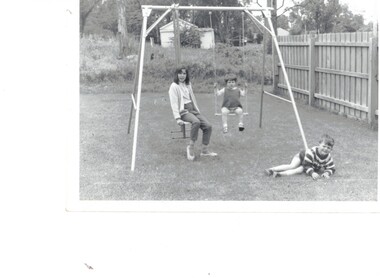
Photograph - Playground, 27 Good Governs Rd Mitcham
... On rear of Photo: This was the paddock at the back of No 27 Good Governs Street at one stage Approx 1969 (Now no 12 Irvine St Development of 27 units0 Land was sold for $3.5 million in 2009 by estate of Mr Murray Jones who was the original owner of this parcel of land He purchased the remaining land from the mortgagor of Miss Linda Roberts. ...Good Governs Rd No 27 Irvine St No 12 Jones Murray On rear of Photo: This was the paddock at the back of No 27 Good Governs Street at one stage Approx 1969 (Now no 12 Irvine St Development of 27 units0 Land was sold for $3.5 million in 2009 by estate of Mr Murray Jones who was the original owner of this parcel of land He purchased the remaining land from the mortgagor of Miss Linda Roberts. ...Black and white photographs of a family of 3 at 27 Good Governs Rd with a paddock in the background Approximately 1969On rear of Photo: This was the paddock at the back of No 27 Good Governs Street at one stage Approx 1969 (Now no 12 Irvine St Development of 27 units0 Land was sold for $3.5 million in 2009 by estate of Mr Murray Jones who was the original owner of this parcel of land He purchased the remaining land from the mortgagor of Miss Linda Roberts. John Hay is the boy with his cousins from Ringwoodgood governs rd no 27, irvine st no 12, jones murray -
 University of Melbourne, Burnley Campus Archives
Certificate - Book plate, Centenary 1891-1991 - We thank you for supporting The Horticultural College 'Burnley', 1991
... We thank you for supporting THE HORTICULTURAL COLLEGE 'BURNLEY' Singed Thomas Hugh Kneen Principal 1946-67, Eric Bruce Littlejohn Principal 1967-77, Brian Gilbert Pell Principal 1977-80, James Davis Principal 1980-87, Gregory Murray Moore Principal 1988 - VCAH logo - The Horticultural College Centenary 1891-1991 BURNLEY Victorian College of Agriculture and Horticulture...Also numerous copies in 11.0295/4. green grows your garden a.p. winzenreid centenary principals peter esdale centenary fund donors We thank you for supporting THE HORTICULTURAL COLLEGE 'BURNLEY' Singed Thomas Hugh Kneen Principal 1946-67, Eric Bruce Littlejohn Principal 1967-77, Brian Gilbert Pell Principal 1977-80, James Davis Principal 1980-87, Gregory Murray Moore Principal 1988 - VCAH logo - The Horticultural College Centenary 1891-1991 BURNLEY Victorian College of Agriculture and Horticulture A5 sized sticker (FasPrint CleanCut Perm Fasson Snap n peel) as a certificate. ...Certificate to be stuck in presentation book "Green Grows Your Garden," by A.P. Winzenreid, the Centenary History of Horticultural Education at Burnley. Signed by the past 5 Principals and given to those who donated in excess of $251 to the Centenary Fund. From Peter Esdale's files. Also numerous copies in 11.0295/4.A5 sized sticker (FasPrint CleanCut Perm Fasson Snap n peel) as a certificate. Signed by the past 5 Principals of the college for the centenary celebrations 1991 to be used as book plate in gifts to donors.We thank you for supporting THE HORTICULTURAL COLLEGE 'BURNLEY' Singed Thomas Hugh Kneen Principal 1946-67, Eric Bruce Littlejohn Principal 1967-77, Brian Gilbert Pell Principal 1977-80, James Davis Principal 1980-87, Gregory Murray Moore Principal 1988 - VCAH logo - The Horticultural College Centenary 1891-1991 BURNLEY Victorian College of Agriculture and Horticulturegreen grows your garden, a.p. winzenreid, centenary, principals, peter esdale, centenary fund donors -
 Bendigo Military Museum
Photograph - Army Inter-Area Netball Competition, Bendigo, Victoria, 1993
... Front Row L to R: Allison (Ottaway) Wooldrage, Leanne Power, Janet Murray, unidentified (x2). .33) & .34) - Photo, colour, 1993, netballers selected for Inter-Service competition Back Row L to R: unidentified (x4), Front Row L to R: Annette (Odgers) Wynn, unidentified, Janet Murray....Front Row L to R: Allison (Ottaway) Wooldrage, Leanne Power, Janet Murray, unidentified (x2). .33) & .34) - Photo, colour, 1993, netballers selected for Inter-Service competition Back Row L to R: unidentified (x4), Front Row L to R: Annette (Odgers) Wynn, unidentified, Janet Murray. ...This set of 34 photographs was taken during Army’s Inter-area Netball competition held in Bendigo, Victoria in 1993. The competition was probably held at the Schweppes Centre sporting complex, now known as the Red Energy Arena located in Wes Bendigo. The photos also include members of Army’s team selected to represent Army in Victoria’s inter-service competition (Army vs RAAF vs Navy) held later in 1993. This set of 34 photographs was taken during Army’s Inter-area Netball competition held in Bendigo, Victoria in 1993. Black & white photos .1P to .34P are on 35mm negative film and scanned at 96 dpi. Colour photos .24P, .27P and .31P are also printed on photographic paper and scanned at 300 dpi. They are part of the Army Survey Regiment’s Collection. .1) - Photo, colour, c1993, in foreground: unidentified netballer, in background L to R: Nadine ‘Princie’ (Paul) Read, unidentified, Sue (Foote) Bourne, Jo Otto, unidentified. .2) to .4) - Photo, colour, c1993, unidentified netballers. .5) - Photo, colour, c1993, L to R: Nadine ‘Princie’ (Paul) Read, unidentified, Sue (Foote) Bourne, Jo Otto. .6) - Photo, colour, c1993, L to R: unidentified, Jodi (Cuskelly) Bingley. .7) - Photo, colour, c1993, L to R: unidentified (x2), Annette (Odgers) Wynn, unidentified. .8) - Photo, colour, c1993, L to R: unidentified, Sue (Foote) Bourne, unidentified (x2). .9) - Photo, colour, c1993, L to R: unidentified, Le-Anne (Smallshaw) Shirley. .10) - Photo, colour, c1993, L to R: unidentified, Nicole ‘Nikki’ Midgley, Sue (Foote) Bourne. .11) - Photo, colour, c1993, Nicole ‘Nikki’ Midgley. .12) - Photo, colour, c1993, L to R: unidentified (x2), Dallas (Campbell) Goodyear. .13) - Photo, colour, c1993, back row L to R: all unidentified, Front row L to R: Ailsa (Sorby) Miller, Annette (Odgers) Wynn, remainder unidentified. .14) - Photo, colour, 1993, unidentified netballers. .15) - Photo, colour, 1993, L to R: unidentified, Jo Otto, Le-Anne (Smallshaw) Shirley, unidentified. .16) - Photo, colour, 1993, facing camera: Janet Murray, remainder unidentified. .17) - Photo, colour, 1993, L to R: unidentified, Janet Murray. .18) - Photo, colour, 1993, L to R: Jo Otto, unidentified. .19) - Photo, colour, 1993, unidentified netballers. .20) - Photo, colour, 1993, L to R: Le-Anne (Smallshaw) Shirley, unidentified. .21) - Photo, colour, 1993, L to R: Ailsa (Sorby) Miller, unidentified. .22) - Photo, colour, 1993, L to R: Ailsa (Sorby) Miller, Leanne Power. .23) - Photo, colour, 1993, in foreground: Annette (Odgers) Wynn, unidentified netballer. .24) - Photo, colour, 1993, L to R: Annette (Odgers) Wynn, Nicole ‘Nikki’ Midgley. .25) - Photo, colour, 1993, netballers selected for Inter-Service competition L to R: unidentified (x3), Annette (Odgers) Wynn, Janet Murray, unidentified. .26) - Photo, colour, 1993, Bendigo netballers selected for inter Service competition L to R: Annette (Odgers) Wynn, Janet Murray. .27) & .28) - Photo, colour, 1993, Bendigo’s Netball Team: Back Row L to R: Joanne Otto, unidentified, Leanne Power, Sue (Foote) Bourne, Gloria Lucas, Le-Anne (Smallshaw) Shirley, Dallas (Campbell) Goodyear. Front Row L to R: Nadine ‘Princie’ (Paul) Read, Nicole ‘Nikki’ Midgley, Ailsa (Sorby) Miller. .29) & .30) - Photo, colour, 1993, Bendigo’s Netball Team: Back Row L to R: Michelle Withers, unidentified (x2), Nadine ‘Princie’ (Paul) Read, Allison (Ottaway) Wooldrage, Sue (Foote) Bourne, Dallas (Campbell) Goodyear, Joanne Otto, Le-Anne (Smallshaw) Shirley. Front Row L to R: Annette (Odgers) Wynn, Janet Murray, unidentified, Gloria Lucas, Leanne Power, Nicole ‘Nikki’ Midgley, Ailsa (Sorby) Miller. .31) & .32) - Photo, colour, 1993, Combined Netball Teams, Back Row L to R: unidentified (x2), Gloria Lucas, Jodi (Cuskelly) Bingley, unidentified, Peter Barrett, Le-Anne (Smallshaw) Shirley, unidentified. 3rd Row L to R: Ailsa (Sorby) Miller, Nicole ‘Nikki’ Midgley, Joanne Otto, Dallas (Campbell) Goodyear, unidentified (x5). 2nd Row L to R: Michelle Withers, unidentified, Annette (Odgers) Wynn, unidentified (x5). Front Row L to R: Allison (Ottaway) Wooldrage, Leanne Power, Janet Murray, unidentified (x2). .33) & .34) - Photo, colour, 1993, netballers selected for Inter-Service competition Back Row L to R: unidentified (x4), Front Row L to R: Annette (Odgers) Wynn, unidentified, Janet Murray..1P to .3P – No personnel are identified. ‘Nikki’ is written in red texta on the back of photos .24P, .27P and .31P.royal australian survey corps, rasvy, army survey regiment, army svy regt, fortuna, asr -
 Orbost & District Historical Society
bottles, late 19th - 1930s ?
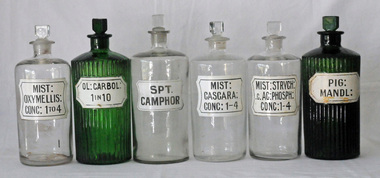
... Chemists who worked in Orbost included Henry Cottman; James Alfred Dubois Williams; Harry Arthur Murray; Miss P.E .Mason (Phyllis Estelle?); Miss Sybil Monica Buzza; Thomas James Frayer; Australia Shaw; James David Torley; John William Zimmer; Dalkeith William Steele; William Thomas Hollingsworth; E.E. ...Chemists who worked in Orbost included Henry Cottman; James Alfred Dubois Williams; Harry Arthur Murray; Miss P.E .Mason (Phyllis Estelle?); Miss Sybil Monica Buzza; Thomas James Frayer; Australia Shaw; James David Torley; John William Zimmer; Dalkeith William Steele; William Thomas Hollingsworth; E.E. ...These bottles were used at the pharmacies in Orbost. Chemists who worked in Orbost included Henry Cottman; James Alfred Dubois Williams; Harry Arthur Murray; Miss P.E .Mason (Phyllis Estelle?); Miss Sybil Monica Buzza; Thomas James Frayer; Australia Shaw; James David Torley; John William Zimmer; Dalkeith William Steele; William Thomas Hollingsworth; E.E. Cohen; R.S. Anderson; Frances John Perry Faith Everard Pardew and Charles Anthony Wurf.Medicinal bottles are probably the largest and most diverse group of bottles. The practices of early pharmacists are revealed through these glass bottles. The items have a clear association with Orbost.Six large glass bottles - four clear and two green. All have narrow necks with glass stoppers and are clearly labelled with black print on a white background. Each of the the two coloured glass bottles have a fluted surface. These apothecary bottles were used to dispense medications and also for show or display purposes. The labels under glass bottles had a recessed section that the label was placed into. The label was then covered with a thin piece of glass to prevent the label from becoming damaged by the bottles contents. 3210.1 - "MIST ; OXYMELLIS : CONC : 1 TO 4" 3210.2 - " OL : CARBOL : 1 IN 10" 3210.3 - "SPT. CAMPHOR" 3210.4 - "MIST : CASCARA: CONC: 1 - 4" 3210.5 - "MIST : STRYCH: c. AC : PHOSPH CONC : 1 - 4" 3210.6 - "PIG : MANDL : ": bottles-pharmaceutical chemists-orbost medicine -
 Orbost & District Historical Society
medications, mid to second half 20th century
... Chemists who worked in Orbost included Henry Cottman; James Alfred Dubois Williams; Harry Arthur Murray; Miss P.E .Mason (Phyllis Estelle?); Miss Sybil Monica Buzza; Thomas James Frayer; Australia Shaw; James David Torley; John William Zimmer; Dalkeith William Steele; William Thomas Hollingsworth; E.E. ...Chemists who worked in Orbost included Henry Cottman; James Alfred Dubois Williams; Harry Arthur Murray; Miss P.E .Mason (Phyllis Estelle?); Miss Sybil Monica Buzza; Thomas James Frayer; Australia Shaw; James David Torley; John William Zimmer; Dalkeith William Steele; William Thomas Hollingsworth; E.E. ...These items were available for sale by chemists in Orbost. Chemists who worked in Orbost included Henry Cottman; James Alfred Dubois Williams; Harry Arthur Murray; Miss P.E .Mason (Phyllis Estelle?); Miss Sybil Monica Buzza; Thomas James Frayer; Australia Shaw; James David Torley; John William Zimmer; Dalkeith William Steele; William Thomas Hollingsworth; E.E. Cohen; R.S. Anderson; Frances John Perry Faith Everard Pardew and Charles Anthony Wurf.The practices of early pharmacists are revealed through these glass bottles. The items have a clear association with Orbost. Seven packaged medications / ointments.Inside 3215.1 is a small brown glass jar with a white plastic lid. It is labelled " Zimmer's Cuprese Ointment". The contents are unused and have a use by date label June 95.The box is white with black and white print on bands of blue and green. 3215.2 is a white cardboard box with red and black print. It contains a 60 g unused tube of "Akileine ionisee". 3215.3 is an orange and white cardboard box with black print. It contains a narrow green glass bottle of oil with a black plastic lid and is labelled "OLBAS".3215.4 is a glass jar with a white plastic lid. It is labelled "NAPRASH CREAM". 3215.5 is a small brown glass jar with a white metal screw lid. On the label is "SKIN BALM". 3215.6 is a very rusted round tin with a painted label on the front "French Corn Cure" in gold print. 3215.7 is a rectangular shaped tin with rounded corners. It is light green with a painted label on the lid "SIMPSON"S CAMPHOR ICE".pharmacies-orbost medications chemist skin-remedies -
 Warrnambool and District Historical Society Inc.
Annual Report, Save the Children Fund 1984-1985, C1985
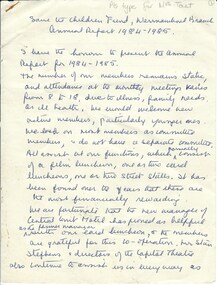
... Names which are mentioned include Central Court Motel, Stan Stephens and the Capitol Theatre,Mrs D Ogier, Mr & Mrs Merryne Ritchie, Warrnambool golf course, Sir Brian Murray Mr & Mrs K Swinton,, Mrs Shirley Taylor and Mrs Tup Isles ...Names which are mentioned include Central Court Motel, Stan Stephens and the Capitol Theatre,Mrs D Ogier, Mr & Mrs Merryne Ritchie, Warrnambool golf course, Sir Brian Murray Mr & Mrs K Swinton,, Mrs Shirley Taylor and Mrs Tup Isles This report has social significance as it contains names of local people and records the types of activities in which the group participated warrnambool warrnambool save the children fund Pls type for mrs tait written in greylead at top of first page . ...These pages contain details of the local branch of the Save The Children's Fund. it records events such as film and card luncheons and street stalls which all contributed to fund raising efforts of the group. Names which are mentioned include Central Court Motel, Stan Stephens and the Capitol Theatre,Mrs D Ogier, Mr & Mrs Merryne Ritchie, Warrnambool golf course, Sir Brian Murray Mr & Mrs K Swinton,, Mrs Shirley Taylor and Mrs Tup Isles This report has social significance as it contains names of local people and records the types of activities in which the group participated Five pages of handwritten notes from exercise book. Written in blue biro.Pls type for mrs tait written in greylead at top of first page . Annual report 1984-1985.warrnambool, warrnambool save the children fund -
 Ballarat Tramway Museum
Postcard, Murray Views, "Murray Views No. 27 from Post Office Ballarat Vic", 1948
... "Murray Views No. 27 from Post Office Ballarat Vic"...Note: There are two Murray Views No. 27 - see item 7360 as well....Murray Views...Postcard black and white, plain back, with a handwritten note on rear. "Murray Views No. 27 from Post Office Ballarat Vic" Postcard Murray Views ...Photo shows the view looking southwest from the Post Office towards the Town Hall. Two trams are in the view including the National Mutual building, the Town Hall, and Myer. Wal Jack in a note to Ken Magor of Newcastle notes the trams (No. 26 and a bogie), tram services, the ESCo fuse box, the tram waiting shelter, and that the location is known as "City Tram Centre". Wal has dated the photo as 1948. Note: There are two Murray Views No. 27 - see item 7360 as well.Yields information about Sturt and Lydiard St view and tram services.Postcard black and white, plain back, with a handwritten note on rear.See image 2 for details of the handwritten note by Wal Jack on the rear. tramways, trams, sturt st, lydiard st, tram 26, tramway centre -
 8th/13th Victorian Mounted Rifles Regimental Collection
Plaque
... It had its headquarters at Benalla with sub-units throughout the Upper Murray and Northeast Victoria. In December 1941,the regiment converted from horse to mechanised, initially as 8th Reconnaissance Battalion then in July 1942 it became 8th Cavalry Regiment and served in Northern Territory. ...It had its headquarters at Benalla with sub-units throughout the Upper Murray and Northeast Victoria. In December 1941,the regiment converted from horse to mechanised, initially as 8th Reconnaissance Battalion then in July 1942 it became 8th Cavalry Regiment and served in Northern Territory. ...The 8th Light Horse (Indi) Regiment superseded the 16th Light Horse in 1919. It had its headquarters at Benalla with sub-units throughout the Upper Murray and Northeast Victoria. In December 1941,the regiment converted from horse to mechanised, initially as 8th Reconnaissance Battalion then in July 1942 it became 8th Cavalry Regiment and served in Northern Territory. As Japanese threat to the mainland declined the regiment was disbanded. The regimental association visited the 8/13th VMR Museum at Buna Barracks Albury on occasions. Well made plaque in fine condition commemorating a WWII Regiment.Stained wooden shield - shaped plaque with 8th Cavalry Regiment insignia and two engraved panels.Top panel " Presented to 8/13th Victorian Mounted Rifles Museum Albury.". Lower Panel " From 8th Cavalry Regiment Victoria 1986."cavalry, 8th, world war two, wwii -
 8th/13th Victorian Mounted Rifles Regimental Collection
Photograph - Wodonga section jumping
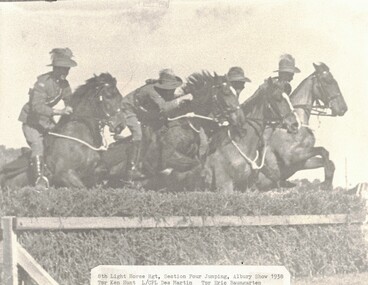
... It had its headquarters at Benalla with sub-units throughout the Upper Murray and Northeast Victoria. In December 1941, the regiment converted from horse to mechanised, initially as 8th Reconnaissance Battalion then in July 1942 it became 8th Cavalry Regiment and served in Northern Territory. ...It had its headquarters at Benalla with sub-units throughout the Upper Murray and Northeast Victoria. In December 1941, the regiment converted from horse to mechanised, initially as 8th Reconnaissance Battalion then in July 1942 it became 8th Cavalry Regiment and served in Northern Territory. ...A feature of Agricultural Shows was military sports. Following World War One, the 8th (Indi) Light Horse was raised in the Citizen Military Forces, superseding 16th (Indi) Light Horse. It had its headquarters at Benalla with sub-units throughout the Upper Murray and Northeast Victoria. In December 1941, the regiment converted from horse to mechanised, initially as 8th Reconnaissance Battalion then in July 1942 it became 8th Cavalry Regiment and served in Northern Territory. As Japanese threat to the mainland declined the regiment was disbanded.Black and white photograph of section of four light horse jumping at Albury Show, 1938.Wodonga troop 8th Light Horseshow, military, sports, wodonga, martin, albury -
 Vision Australia
Administrative record - Text, Deed of management for the Kooyong recreation grounds and Clubhouse, 1951, February 14, 1951
... This agreement between the Association for Advancement the Blind and Trustees (namely William Henry Paterson, Howard Murray Lightfoot and Arthur Malvern Yeatman) lays out the terms and conditions surrounding the Association's access and usage of the Kooyong recreation grounds and club-house. ...This agreement between the Association for Advancement the Blind and Trustees (namely William Henry Paterson, Howard Murray Lightfoot and Arthur Malvern Yeatman) lays out the terms and conditions surrounding the Association's access and usage of the Kooyong recreation grounds and club-house. ...This agreement between the Association for Advancement the Blind and Trustees (namely William Henry Paterson, Howard Murray Lightfoot and Arthur Malvern Yeatman) lays out the terms and conditions surrounding the Association's access and usage of the Kooyong recreation grounds and club-house. The agreement is dated 14th February 1951, and is signed by the three Trustees, as well as members of the General Committee, namely Bruce Small, W.J.S. Horsfall and Edwin Dean, as well as Secretary G. R. Fowler. There are 2 copies held. 2 pages of typed legal agreementassociation for the advancement of the blind, william paterson, h.m. lightfoot, arthur yeatman, victorian blind cricket association, victorian blind soccer association, kooyong club house -
 Surrey Hills Historical Society Collection
Work on paper - Photograph, Post-war wedding of Norman Pryde and Hilda Scales, 1935
... Norma died in 1997 in Murray Bridge, South Australia. John's full name was John Patrick Cleak (1923-2023). ...Norma died in 1997 in Murray Bridge, South Australia. John's full name was John Patrick Cleak (1923-2023). ...Information from the donor by email gives: Norma Pryde married John Cleak in Camberwell in 1947. Norma's parents were Norman & Hilda Pryde. Norma was born in 1924 in Surrey Hills and attended Surrey Hills State School. Information from the donor's Ancestry.com.au tree: Norma and John had 5 children: 4 boys and one girl. Norma died in 1997 in Murray Bridge, South Australia. John's full name was John Patrick Cleak (1923-2023). This photo documents a post-war wedding when quite often the bride, groom, and wedding party would all simply wear their best suits and dresses.A copy B&W wedding photo of 2 men and 2 women. The men are dressed in suits and wearing buttonholes. The women are wearing hats; the older woman has a corsage on the lapel of her coat and the younger woman is carrying a bouquet.NILnorma pryde, norma cleak, jenny pomeray, 1947, 1940-1949, norman pryde, hilda pryde, hilda gwendoline scales, hilda scales, john cleak, hilda gwendoline pryde, clothing and dress, weddings, john patrick cleak
