
Showing 305 items matching " c prior"
-
 Bendigo Historical Society Inc.
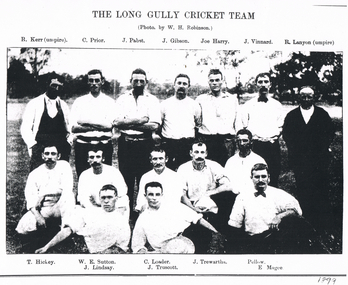
Document - LONG GULLY HISTORY GROUP COLLECTION:THE LONG GULLY CRICKET TEAM
... ... C Prior...The names are R Kerr (umpire), C Prior, J Pabst, J Gibson, Joe Harry, J Vinnard, R Lanyon (umpire), T Hickey, W E Sutton, C Loader, J Trewartha, Pellow, J Lindsay, J Truscott and E Magee. ...The names are R Kerr (umpire), C Prior, J Pabst, J Gibson, Joe Harry, J Vinnard, R Lanyon (umpire), T Hickey, W E Sutton, C Loader, J Trewartha, Pellow, J Lindsay, J Truscott and E Magee. ...Long Gully Cricket Club is first mentioned in newspapers in 1858.Black and white photocopy of the Long Gully cricket Team. Photo by W H Robinson. The names are R Kerr (umpire), C Prior, J Pabst, J Gibson, Joe Harry, J Vinnard, R Lanyon (umpire), T Hickey, W E Sutton, C Loader, J Trewartha, Pellow, J Lindsay, J Truscott and E Magee. Written at the bottom is 1899.bendigo, history, long gully history group, the long gully history group - the long gully cricket team, w h robinson, r kerr, c prior, j pabst, j gibson, joe harry, j vinnard, r lanyon, t hickey, w e sutton, c loader, j trewartha, pellow, j lindsay, j truscott, e magee -
 Bendigo Historical Society Inc.
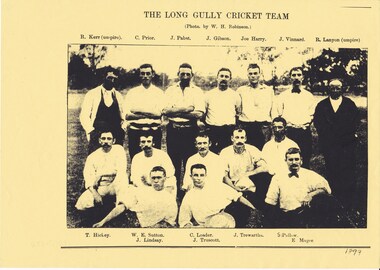
Photograph - LONG GULLY HISTORY GROUP COLLECTION: THE LONG GULLY CRICKET TEAM 1899
... ... C Prior...Names of the men in the photo are - R Kerr (umpire), C Prior, J Pabst, J Gibson, Joe Harry, J Vinnard, R Lanyon (umpire), T Hickey, W E Sutton, C Loader, J Trewartha, S Pellow, J Lindsay, J Truscott and E Magee. ...Names of the men in the photo are - R Kerr (umpire), C Prior, J Pabst, J Gibson, Joe Harry, J Vinnard, R Lanyon (umpire), T Hickey, W E Sutton, C Loader, J Trewartha, S Pellow, J Lindsay, J Truscott and E Magee. ...Copy of a black and white photo printed on yellow paper. Most of the men are wearing white shirts and dark trousers. Photo by W H Robinson. Names of the men in the photo are - R Kerr (umpire), C Prior, J Pabst, J Gibson, Joe Harry, J Vinnard, R Lanyon (umpire), T Hickey, W E Sutton, C Loader, J Trewartha, S Pellow, J Lindsay, J Truscott and E Magee. Written under the photo is 1899.bendigo, history, long gully history group, the long gully history group - the long gully cricket team 1899, w h robinson, r kerr (umpire), c prior, j pabst, j gibson, joe harry, j vinnard, r lanyon (umpire), t hickey, w e sutton, c loader, j trewartha, s pellow, j lindsay, j truscott, e magee -
 Uniting Church Archives - Synod of Victoria
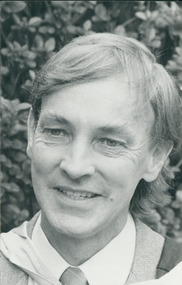
Photograph, Barry Prior, 25/07/1984
... "Barry Prior C&N 25/7/1984"...Barry Walford Prior (06/01/1938 - 22/06/2013) was born in Carlton and was ordained at Hartwell Presbyterian Church in 1971. prior, barry "Barry Prior C&N 25/7/1984" B&W head and shoulders. ...Photograph accompanies an article entitled 'Barry Prior', responding to the recent article on 'Sunrise or Sunset'. Barry Walford Prior (06/01/1938 - 22/06/2013) was born in Carlton and was ordained at Hartwell Presbyterian Church in 1971.B&W head and shoulders."Barry Prior C&N 25/7/1984"prior, barry -
 Melbourne Tram Museum
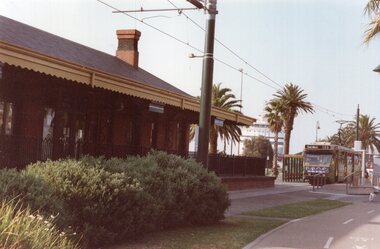
Photograph - Set of 3 Colour Print/s, Colin Rough, 28/01/2003 12:00:00 AM
... Set of 3 colour prints taken by Colin Rough at the Port Melbourne tram terminus. .1 - A 264 at the platform stop, showing Mont Albert route 109, 28/1/2003. .2 - ditto - tram in the PTC livery. .3 - Illustration of C 3004, prior to the construction the platform stop - 8?...Set of 3 colour prints taken by Colin Rough at the Port Melbourne tram terminus. .1 - A 264 at the platform stop, showing Mont Albert route 109, 28/1/2003. .2 - ditto - tram in the PTC livery. .3 - Illustration of C 3004, prior to the construction the platform stop - 8? ...Set of 3 colour prints taken by Colin Rough at the Port Melbourne tram terminus. .1 - A 264 at the platform stop, showing Mont Albert route 109, 28/1/2003. .2 - ditto - tram in the PTC livery. .3 - Illustration of C 3004, prior to the construction the platform stop - 8?/2001 - possibly from a Topmill calendar - has been glued to a Kodak photograph.On rear in ink various notes about the location and date - 28/1/2003 and on .3, location and car details. Hard to read date.trams, tramways, port melbourne, route 109, mont albert, a class, c class, platform stops, tram 264, tram 3004 -
 Ringwood and District Historical Society
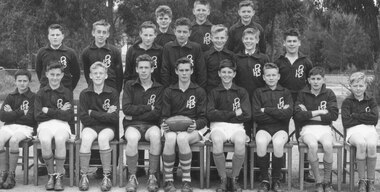
Photograph, Ringwood High School Junior Football Team, 1960
... C. Pavey, J. McCubbin, T. Hancock, D. Baud, G. Anderson, P. Stevens, J. Reid. Middle Row: W. Pole, L. Prior...C. Pavey, J. McCubbin, T. Hancock, D. Baud, G. Anderson, P. Stevens, J. Reid. Middle Row: W. Pole, L. Prior ...Black and white photographList of names attached with photograph: (Left to right) - Front Row: A. Hancy, L. Smith, C. Pavey, J. McCubbin, T. Hancock, D. Baud, G. Anderson, P. Stevens, J. Reid. Middle Row: W. Pole, L. Prior, C. Healey, J. Stuchberry, T. Noy, A. Gray, G. Saines. Back Row: P. Fletcher, B. Moore, G. Sinclair. -
 Glen Eira Historical Society
Document - Cavers Carre
... Handwritten document giving details of the location of the house. Built c.1866 and demolished prior to 1905 when the block was subdivided. ...Handwritten document giving details of the location of the house. Built c.1866 and demolished prior to 1905 when the block was subdivided. ...Three articles about Cavers Carre. Handwritten document giving details of the location of the house. Built c.1866 and demolished prior to 1905 when the block was subdivided. No details of the house. Two plans of Gardenvale and Riddell Estate dated 29/11/1884 and unknown from State Library Victoria records.gardenvale estate, glen huntly road, riddell estate, melbourne and brighton railway, mcmillan street, orrong road, archibald street, rowan street, hamilton street, downshire road, shoobra road, madden walter, tuxen august, fraser and co., surveyors, muntz and muntz, cavers carre, elsternwick, stanley street, carre street, railway cresent, riddell parade, riddell john carre, land subdivisions -
 Sunshine and District Historical Society Incorporated
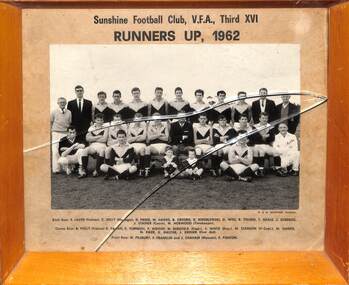
Photograph - Sunshine Football Club V.F.A. Third XVI Runners Up 1962 Team Photo, R. & R. Mudford Sunshine
... Third XVI Runners Up 1962|Back Row S. Laver C. Jolly D. Prior W. Harris B. Crosbie R. Wroblewski G. ...Third XVI Runners Up 1962|Back Row S. Laver C. Jolly D. Prior W. Harris B. Crosbie R. Wroblewski G. ...Sunshine Football Club V.F.A. Third XVI Runners Up 1962|Back Row S. Laver C. Jolly D. Prior W. Harris B. Crosbie R. Wroblewski G. Wise R. Young T. Neale J. Clinnick J. Stainer W. Horwood|Centre Row B. Polly K. Fagan C. Turnbull P. Wright M. Bergfeld J. White N. Clemson N. Harris N, Ewer K. Inkster J. Dreher|Front Row W. Pilsbury S. Franklin J. Graham P. Pontonsunshine football club, football, team photograph -
 8th/13th Victorian Mounted Rifles Regimental Collection
Uniform - Blues uniform
... Following the war he joined the CMF and served as 2i/c 4/19 PWLH prior to taking command of 8/13 VMR. ...Following the war he joined the CMF and served as 2i/c 4/19 PWLH prior to taking command of 8/13 VMR. ...This uniform was worn by Lieutenant Colonel J Allard who commanded 8/13 Victorian Mounted Rifles 1959-1962. Col Allard had served in the pre-WW2 militia, then in 2/4th Armoured Regiment (AIF). Following the war he joined the CMF and served as 2i/c 4/19 PWLH prior to taking command of 8/13 VMR. He maintained close contact with the Regimental Association and following his death in October 2018 at age 98 his family donated this uniform to the museum. The uniform was known as 'mess undress' but served as formal winter dress until 'mess dress' was made available in 1970s. Mannequin dressed in Blues uniform with beret and 8/13 Victorian Mounted Rifles badge with emu plume tuft behind badge. Uniform has 8/13 VMR regimental buttons, lieutenant colonel badges of rank and WWII service ribbon bar. military, uniform, allard, vmr, blues -
 Eltham District Historical Society Inc
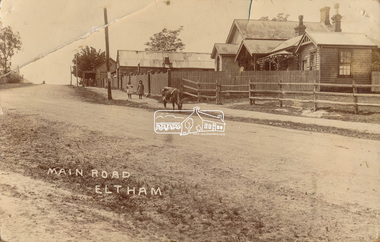
Photograph, J.H. Clark (poss), Main Road, Eltham, c.1910
... View looking north up Policeman’s Hill across Main Road towards the Police Station, Police Residence and Courthouse, c.1910 prior to Brougham Street being made. The two rails / gap in the fence would be where Brougham Street now enters Main Road. ...View looking north up Policeman’s Hill across Main Road towards the Police Station, Police Residence and Courthouse, c.1910 prior to Brougham Street being made. The two rails / gap in the fence would be where Brougham Street now enters Main Road. ...Original photo from a scrapbook belonging to Heather Jenkins (nee Cone) who lived as a child in the Police Residence at 728 Main Road, Eltham from 1911 to the early 1920s. (Reported in Newsletter No. 98, Sept., 1994). View looking north up Policeman’s Hill across Main Road towards the Police Station, Police Residence and Courthouse, c.1910 prior to Brougham Street being made. The two rails / gap in the fence would be where Brougham Street now enters Main Road. Also visible are Knapman's Forge adjacent to Courthouse and E.J. Andrew's Store on top of the hill At the upper left can be seen the front of the Evelyn Hotel. On the opposite corner was Watsons Hotel. E.J. Andrew's store with its verandah was on the corner of Franklin Street. Behind the picket fence stands the 1860 Court House and Police residence with the weatherboard clad Police office. The enclosed fence is now the end of Brougham Street, opened to Bible Street in 1926. The Evelyn Hotel (formerly Fountain of Friendship) burnt down in the 1930s when it was being used as a boarding house since 1919. A cow is feeding on the grass verge in street. The photo is identified in white lettering typical of the style of Clark Bros., photographers of Windsor, Melbourne (1894-1914). One of the brothers, John Henry Clark, took many early photos around Little Eltham and moved to Eltham in 1916 where he lived at the bottom of the hill. Typically, he would add “J.H. Clark Photo” to his personal work, but this is not evident. There is however some ghost writing, a cheeky inscription in small white lettering in the grass verge in front of where Brougham Street is, which appears to state: “Heather or Hannah was here”. Perhaps J.H. Clark took the photo during a trip to Eltham and gifted it some years later after moving there as a gift to a young Heather Cone. The Police Station sign: E vii R ELTHAM POLICE STATION HEIDELBERG DISTRICT Edward VII ascended the throne in 1901 and died 6 May 1910. He was succeeded by George V.Heather Cone was the daughter of Constable John Thomas Cone (Badge 3935) the local police officer in residence at Eltham, 1 May 1911 to 9 July 1922. Heather McKnight Jenkins (nee Cone) was born 1911, possibly at the Eltham Police Residence and spent her childhood growing up in the Police Residence. Heather was the daughter of John Thomas Cone, Police Constable, and Charlotte Helena Cone (nee Black) who had married in 1906. Constable Cone was transferred to Eltham Police Station from Lauriston (near Kyneton) in May 1911. He retired from the force around September 1922 most likely as a result of significant health concerns experienced earlier that year from 22 April when he was hospitalised. He died 5 October 1922 at Maria Street at age 60 leaving behind a widow and two daughters; his son having pre-deceased him as a result of effects of the war. He is buried in Melbourne General Cemetery . In his probate it states that he owned a piece of land 200 links frontage to Maria Street and a depth of 241 links. It is believed that this is the land opposite the Police Station which Heather Jenkins referred to as being owned by her father and where he agisted the Police horses. Heather, her sister and mother Charlotte remained in Eltham until at least the 1924 Electoral Roll where Charlotte was listed as Home Duties however by 1925 she was listed at 229 Glenferrie Road, Malvern, occupation, Registrar of Births. In the 1934 (and 1936) Electoral Roll, Heather was a Clerk and her mother Charlotte was the Registrar of Births. in 1952 following her mother’s death she made application for Grant of Probate. Heather remains listed in the 1954 Electoral Roll at 13 Ashburton Road under her maiden name Cone however by the 1963 Electoral Roll she is listed at the same address as Heather McKnight Jenkins long with James Gardiner Jenkins. Neither appear listed in the 1958 Electoral Roll. James Gardiner Jenkins (1892-1975) first wife was Fanny Davison Carrucan (1899-1929), daughter of Denis Carrucan and Jane (nee McAleese). They married in 1925. Fanny died 11 November 1929. In the 1934 Electoral Roll he remained listed at John Street, Eltham, Railway Employee however by 1935 Electoral Roll, James Gardiner Jenkins, Railway Employee, was listed at 229 Glenferrie Road, Malvern and he remained living with Charlotte and Heather Cone when they moved to 13 Ashburton Road, Glen Iris. One of Constable Cone’s first investigations upon arriving in Eltham was the accidental fatal shooting in the head with a pea rifle by young Francis August Capewell, aged 11, of John Sutcliffe Deegan, 14, in Maria Street near the Railway. Constable Cone’s replacement was Constable William Charles Sargeant who commenced in charge of the Eltham Police Station from Thursday, 10 August 1922. Constable William Charles Sargeant, and his wife Elizabeth Agnes Sargeant were based at the Eltham Police Station until his transfer to the Police Station in Burwood Road, Hawthorn. He retired at Hawthorn Police Station in 1931, described by Hawthorn Council in 1927 as in a disgraceful condition and unfit for human habitation (Kathryn Griffin family tree – Ancestry) whereupon they moved to 28 Saunders Street, Coburg. Elizabeth died 16 July 1936 in Fitzroy. William then moved to 6 Queen Street Coburg in 1936 and then 1 Queen Street in 1942 where he died 7 August 1944. He is buried at Fawkner Cemetery.Sepia postcard photo glued on a brown paper scrapbook page (torn from scrapbook) along with 8 other black and white/sepia photos of varying sizes, 1 newspaper clipping and handwritten captions in ink.brougham street, courthouse, cow, eltham, knapmans forge, little eltham, local history centre, main road, maria street, police residence, police station, policeman's hill, scrapbook, w.b. andrew corn store, j.h. clark photo, andrews store, heather jenkins (nee cone), clark bros. photo -
 Eltham District Historical Society Inc
Archive Box, Shire of Eltham War Memorial
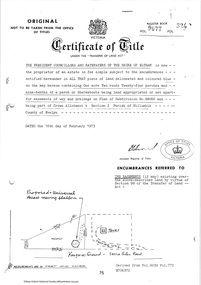
... Photocopies of postcards of Soldiers War Memorial: One taken c.1926 before completion around base, on colour print on paper (enlarged) of Soldiers War Memorial postcard c.1930s prior to gun placements with typed text pasted on and additional detail version mounted on card with handwritten explanatory notes by Harry Gilham. 7. ...Photocopies of postcards of Soldiers War Memorial: One taken c.1926 before completion around base, on colour print on paper (enlarged) of Soldiers War Memorial postcard c.1930s prior to gun placements with typed text pasted on and additional detail version mounted on card with handwritten explanatory notes by Harry Gilham. 7. ...Material relating to the Shire of Eltham War Memorial located at Garden Hill, Kangaroo Ground. Also known as The Eltham Shire War Memorial Tower, Shire of Eltham Soldiers' Memorial and Kangaroo Ground War Memorial Park. Includes photocopies, newspaper clippings, correspondence and more beginning from early history 1919-2009. Contents: Archive Box 1 Folder 1 (Publication Proofs) The Tower of Remembrance and War Memorial Park On Garden Hill at Kangaroo Ground, Victoria 1919-2010 Folder 2 (Up to 1960) 1. Binder with plastic pockets. Photocopies. Minutes of the Kangaroo Ground War Memorial Bazaar Committee, 1922-1926 EDHS Newsletter No. 123 November 1998 PRESIDENT'S REPORT ACQUISITION FROM NILLUMBIK SHIRE'S MEMORABILIA Recently found in a storage box of old Shire of Eltham items was a school size, blue lined black covered writing book. It is recognized as the minute book and cash receipt book of the period 1922-1926 when the Memorial Park Committee, who it seems were part of the Shire of Eltham Soldier's Memorial League, was requested to raise funds for building the Shire of Eltham War Memorial Tower at Kangaroo Ground. History tells us that the tower, which is currently being refurbished, was officially opened by the Governor General of Australia, Lord Stonehaven on 11.11.26. The ladies invited to the first meeting at the Shire Hall did so on 21st September 1922. The minutes book reads: Present: Mesdames Bell, Bourchier, McMahon, Gosling, Cockcroft, Wraight, E Coutie, R Rogers, A Jones, AH White, Davies, Everitt and the Misses Lacey, Harris, N Weller, Gosling, Bell and D and G J Bourchier. These people became the Kangaroo Ground Memorial Bazaar Committee along with others named at further meetings. They conditionally accepted the role of raising funds, their condition being that the Bazaar Committee be given representation on any committee empowered to deal with the memorial in proportion to the amount of money raised by the bazaar'. The Andrew Ross Museum has the original book. We at Eltham District Historical Society have two photocopies for public perusal. 2. Transcriptions of newspaper articles 1919-1920. 6 pages. 3. Photocopy of program for thanksgiving service July 6th, 1919 held at Public Hall, Panton Hill. 4. Photocopies: a. Kangaroo Ground, The Advertiser, 17 Oct 1919 (working bee) b. The Advertiser August 1920 – advertisement for coach between Eltham and KG. c. Anzac Memorial Service, The Eltham & Whittlesea Shires Advertiser & Diamond Creek Advertiser, April 14, 1922 and April 28, 1922 d. Anzac Day services. April 27, 1923 e. Photocopy Anzac Commemoration, local newspaper, May 2, 1924 f. Shire of Eltham Memorial Service, The Advertiser April 23, 1926 g. Eltham Shire War Memorial Advertiser August 13,1926 h. Eltham Shire War Memorial The Advertiser October 26, 1926 i. Eltham The Advertiser, December 17, 1926 j. Kangaroo Ground April 26, 1929 5. Photocopy. Eltham War Memorial Tower article, The Advertiser, November 19, 1926 6. Typed transcription of parts of newspaper articles for three titles, November 1926 7. Transcription. Public Notice, October 16, 1926 8. Photocopy Kangaroo Ground Armistice Day local newspaper, November 25, 1927 9. Photocopy Kangaroo Ground Armistice Day local newspaper, November 16, 1928 10. Photocopy Kangaroo Ground, local newspaper, April 26 1929 11. 3 Original Copies. One Hardback. Dedication of memorial official brochure, 1951 original but damaged 12. Photocopy with notes from G.G. relating to the land transfer/acquisition/contract via White and Gepp. Folder 3 (1961-1970) 1. Original newspaper article: Place with a view at Kangaroo Ground, The Age, May 11, 1963, p18 Folder 4 (1981-1990) 1. Newspaper article, Memorial a fire watch. Diamond Valley News, March 16, 1982, 2 original copies. 2. Newspaper article. An Obvious Monument by Russell Yeoman article with photo: Network Nov/Dec 1984, p14. Folder 5 (1991-2000) 1. Original newspaper article: “Kangaroo Ground Tower is top spot”. Thought to be from a tourist information free newspaper, Mountain Country, Summer [1993] p39. 2. Newspaper article with reference to quoins – a contrasting edging or corner stone on the façade of a stone or brick house. Age August 2000 3. Program. Service program for Remembrance Day commemoration ceremony, 1996. 4. Speech by Harry Gilham for Remembrance Day commemoration ceremony, 1996 5. Newspaper article: Remembrance, Diamond Valley News, 20 November 1996 6. Word Document. A Tower of Strength by Dean Stewart April 1997 7. Newspaper articles: Tower group needed, Diamond Valley News, September 17, 1997, p3 and advertisement “Nillumbik, Nominations for Kangaroo Ground Memorial Tower and Grounds Advisory Committee”, Diamond Valley News, September 17, 1997 8. Newspaper article: Council apology; scaling new heights, 1997 about Aboriginal Reconciliation. Probably Diamond Valley News ca 1997. 9. Photocopy / Newspaper Article: Two newspaper clippings, “Memorial with a view” 30 April 1997 and “Funds boost to restore tower to its former glory”, Diamond Valley News, 3 December 1997. 10. Newspaper article: Kangaroo Ground Tower of Remembrance Nillumbik Mail, 9th August 2000 and Research notes (July 2000) by Harry Gilham pertaining to photo in August 2000 newspaper article. 11. Photocopy. Newspaper article: New lease of life for tower (Concept plan) Nillumbik Mail, September 27, 2000 12. Photocopy: 4 pages, War Memorials of Victoria; a pictorial record, c.1994 Folder 6 (2001-2010) 1. Newspaper article: $10,000 to start refurbishment, Nillumbik Mail, Feb 21, 2001 2. Circular. KG War Memorial Advisory committee circular August 2001 3. Newspaper article: Tower group retained 4. Program for re-dedication of the Kangaroo Ground War Memorial Tower 8th November 2001 with copies of pages 65-70 of from The Tower of Remembrance and War Memorial Park 1919-2001 (see Folder 1) - Speaking notes from the day from Nillumbik Shire Mayor, Cr. Sigmund Jorgensen and Harry Gilham and Speech by John Landy, Governor of Victoria 5. 2 pages of Harry Gilham notes – Draft of ‘book’ notes ‘Thank you’ for rededication ceremony to be held Thursday, Nov 8, 2001 - list of invitations, notifications and acknowledgements. 6. Proposed running sheet. Re-dedication of KGT. November 8, 2001 7. Newspaper article (2 copies) Century of war service, DVL November 14, 2001 page 6 8. Letter. Gov. John Landy to Harry Gilham. Thank you for visit. [2001] 9. Newsletter Clipping: Governor of Victoria re-dedicates KG War memorial Tower, Nillumbik News (NSC) Christmas 2001 10. Newspaper article: War Memorial to be restored: DVL November 19, 2003 11. Newspaper article: Memorial Facelift Sept 29 2004. 12. Folder. Collection of maps and context Yarra Water proposal to build water tanks 13. Newspaper clipping. Pressure on with new tank. Re installation of water tank near site. DVL March 2, 2005 14. Folder of emails and designs from Dennis Ward re poppies and prostrate rosemary for formal garden around base of tower April 2005 15. Folder. Letters and paperwork re the Victorian Government “Community Cabinet” and invitation for community groups to speak directly with a government minister. Actual submission not included in folder. 16. Newspaper clipping. Time to remember among the poppies, Diamond Valley Leader, 9 November 2005, p1 and 17. Newspaper clipping. Lone pine company for souls. DVL 9 November 2005 18. Folder. Restoring Community War Memorials Grants Program. Application and associated paperwork 2005/2006 January 2006 19. Newspaper article. Shared views. Valley Weekly, June 21 2006 20. Newspaper article: Kangaroo Ground, Restoration on schedule, DVL October 2006? 21. Newspaper article. Towering over the terrain. The Age August 8, 2009 22. Photocopy. Nillumbik Shire Council. Policy and service report re lease of land to Victoria Police for police radio communications and re-building of radio tower. December 9, 2009 23. Schematics: A3 photocopies, Kangaroo Ground memorial Tower, front and rear view, Tom Manley, 17 Apr 2001 Folder 7 (2011 on) 1. Magazine article and cover. Cover story – The Kangaroo Ground Memorial Tower, The Genealogist, March 2010 2. Newspaper article. (2 copies) Photo and caption. Diamond Valley Leader, July 14, 2010 3. Newspaper notice: Notice of application for a planning permit to construct radio communications tower, DVL, October 10, 2012 4. Copy. Reference enquiry to National Film and Sound Archive. 10 September 2012 5. Copy letter. Quotation/estimate for Shire of Nillumbik on renovation and underpinning of old care takers cottage, KG. 30 September, 2012 6. Story. The Kangaroo Ground Tower of Remembrance by Amy Shaw. Yarrambat Primary School Year 6 History speech, 2014. 7. Program: Remembrance Day service, 11th November 2014 8. Newspaper article. Tribute to bravery DVL, November 19, 2014. 9. Minutes. MAC meeting. 2 September 2016. Folder 8 (Interpretative Signs Grant 2000-2001) 1. Folder. Various including Letters. EDHS Grant project: Kangaroo Ground Park and Tower of Remembrance interpretative signage from Parks Victoria 2000-2001. Folder 9 (Miscellaneous) 1. Folder Gilham collection. Google earth images of Tower, Extract describing history of Tower, including honour roll for WW1 and WW2, 8 pages, Extract describing history of Tower, including honour roll for WW1 and WW2, 3 pages, 2002 and 2004; Kangaroo Ground Tower; Southwell-Keely M.; WAR MEMORIALS IN AUSTRALIA; 8 pages, https://web.archive.org/web/20080722161554/http://www.skp.com.au/memorials2/pages/30054.htm) 2. Letter. Undated, unsigned re application to council to proposed work to police radio masts behind caretaker’s cottage. 3. Brochure: Heritage Nillumbik. Includes cover photo and other information about site. Published by Nillumbik Shire Council. About 2006. 4. Folder of notes and photocopies of various Certificates of Title for property 5. Inward loan documents. Two. Andrew Ross Museum inward loan for collection items from “War Memorial Tower” 2003 6. Photocopies of postcards of Soldiers War Memorial: One taken c.1926 before completion around base, on colour print on paper (enlarged) of Soldiers War Memorial postcard c.1930s prior to gun placements with typed text pasted on and additional detail version mounted on card with handwritten explanatory notes by Harry Gilham. 7. Photocopy of photo of tower 1944 with guns in place from Gordon and explanatory notes plus A4 photo paper print of image (photoshopped cleaned up). 8. Miscellaneous photocopies of photos taken by Harry Gilham of Memorial Park entrance, model tower in font of tower entrance, caretaker’s cottage, spiral staircase, Menin Gate sign and possibly planting of Lone Pine. Folder 10 (Fire Spotting Operations) 1. Biographical notes on Herman Motschall 1969-1981 2. Newspaper article, Memorial Tower top site for fire spotter, Diamond Valley News, May 15, 1973. 3. Proper Officer's report on an addition to the Kangaroo Ground Memorial Tower for Fire Spotting purposes: "This report covers the history of the tower, its uses, and reasons why it should be put to greater use, benefiting the Shire Council and ratepayers" Includes detailed commentary around the proposal to use the Shire of Eltham War Memorial at Kangaroo Ground for fire spotting. From Shire of Eltham archives. H. J. Masefield Property Officer. 4. Eltham Shire Council meetings 14 and 24 September 1973 references to fire watching facilities. Summary of end of season reports from spotters 1965-1973. 5. Newspaper clipping; Memorial a fire watch by Marguerite Marshall Diamond Valley News 16 March 1982 6. Letter: Cover letter from Dennis Ward 20 Feb 2006 architect for CFA Cabin design and Proposal to upgrade the fire spotting cabin, 2007 including a cost and concept plan dated 7 February 2009. 7. Newspaper article. From that first puff of smoke – horror. Diamond Valley Leader, Feb 25, 2009, p. 7 8. Invitation: State Government announcement of refurbishment of KGWM Fire spotting tower 19 October 2009 9. Newspaper article. Tower– up, Black Saturday watch. Cover and page. Diamond Valley Leader, October 28, 2009 10. Invitation. Opening of newly upgraded fire spotting tower, 11 April 2010 11. Newspaper article. Incredible luxury at fire spotting tower, Diamond Valley Leader, April 21, 2010, p, 5 12. Printout of plan of base of tower including comms cabinet and ladder to CFA cabin. Dated 17/6/2010 Archive Box 2 Folder 11 (Moor-rul Viewing Platform) 1. Agenda. Planning and building committee 12 March 2003 Application for construction of a viewing platform and road entry refurbishment and coach parking bay. 2. Envelope. Letters, paperwork and emails, mainly from Dennis Ward re roof design for the viewing platform and order for poppy seeds. 2005 3. Newspaper article (enlarged and laminated). Stolen Red gum seats sap new project’s momentum. (Local paper), April 3, 2007 4. Convenor’s Notes – Opening of the Viewing Platform at Kangaroo Ground, Shire of Nillumbik 5. Folder. Nillumbik Reconciliation Charter. Opening of the Moor-rul viewing platform 17.4.2008. Compiled by Harry Gilham. Includes newspaper clipping, speech, photocopy of photos with captions. 6. Newspaper article. View from the hill is a thrill. Heidelberg and Diamond Valley Weekly, April 22, 2008 7. Newspaper article. A platform towards reconciliation. Diamond Valley Leader, 23 April 2008. 8. Newspaper article: 6 reasons to visit Hurstbridge, The Age, Jun 6 2012 9. Article: Aboriginal cultural values and heritage management issues 10. Folder: Material relating to design and construction of viewing platform Folder 12 - Shire of Nillumbik Advisory Committee 1. 2011 Diary, Harry Gilham, Kangaroo Ground Advisory Committee 2. Photocopy. Newspaper clipping. Nillumbik Council seeking nominations for new Kangaroo Ground Memorial Tower and grounds advisory committee. DVN 17 Sept 1997 3. Letter. From NSC to Dean Stewart re heritage listing status. 12 July 1998. 4. Business paper for NSC Council meeting: KG Memorial Tower and Grounds advisory committee, 12 March 2002. Includes Terms of Reference Folder 13 - Friends of Kangaroo Ground War Memorial Park Inc. 1. KG Tower and land occupational health & Safety (guidelines) for volunteers 2. Supplementary notes (not related to fire spotting) from Friends group or advisory group of Kangaroo Ground War Memorial Park including design of seating, proposed budget for works, hand written notes from meeting by H.G. about 1999. Folder 14 - Soldiers. 1. Folder of material pertaining to men from the Shire of Eltham who enlisted in WW1 and for whom the Shire of Eltham War Memorial was dedicated. 2. Folder on residents from Shire of Eltham who died in WW2 1939-1945 with listings of each from Commonwealth War Graves Commission, WW2 Nominal Roll for Eltham 3. Newspaper article: Mates join to recall past, Diamond Valley News, November 16, 1994 4. Newspaper article: Board replaced, Diamond Valley News, September 2, 1998 about Hurstbridge RSL Honour Roll Board 5. Newspaper article: Keeping the memories alive; VP Day honoured, Valley Weekly, August 17, 2005 6. Newspaper article: In our hearts; Tributes for war heroes, Diamond Valley Leader, November 9, 2005, p1 7. Newspaper article: Service honoured, Diamond Valley News, Leader, April 23, 2008 8. Newspaper article: Salute to last men standing, Diamond Valley Leader, April 20, 2011, p1 and Last of the world warriors, pp8-9 9. Newspaper article: We will remember, Diamond Valley Leader, April 25, 2012, p3 10. Newspaper article: Family legacy builds whole town, Diamond Valley Leader, Oct, 2013, p15 11. Photos and details of Honour Boards in the shire 12. Miscellaneous notes by Harry Gilham Folder 15 – Welcome Home Committee Meeting Minutes. 1. Extracts from Welcome Home Committee Meeting Minutes 18 August 1917 to 14 August 1919. Folder 16 – World War One Local Enlistments. 1. Lever arch binder containing records of local enlistments by name from the Diamond Valley including extracts from Commonwealth War Graves Commission records. Includes Newspaper article clipping "Digger's marker of respect: Temporary cross a poignant find after eight decades in dusty garage"; Sunday Herald Sun, November 10, 2024, p33 concerning Private Harry Conway who died April 1918 and whose tempory grave marker cros now housed at Montmorency-Eltham RSL. Archive Box with documentsharry gilham collection, fire spotting, kangaroo ground, shire of eltham war memorial, masefield h. j., cfa, kangaroo ground war memorial park, shire of eltham soldiers' memorial, eltham shire war memorial tower, harry conway, montmorency-eltham rsl sub-branch -
 Federation University Historical Collection
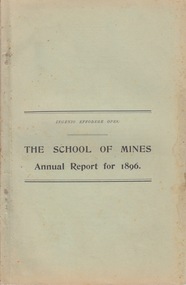
Booklet - Annual Report and Calendar, Ballarat School of Mines Annual Report and Calendar, 1896
... . - president hon. r. t. vale - vice president r. denham pinnock - vice president the hon. sir w. j. clarke - trustee the hon. john warrington rogers - trustee the right reverend samuel thornton - trustee andrew anderson - trustee james millhinch - trustee james oddie - trustee the hon. henry cuthbert - honorary solicitor r. g. middleton - honorary treasurer charles kent - auditor fred. j. martell - director and registrar professor alf. mica smith - chemistry metallurgy natural philosophy professor purdie - geology mineralogy principles of mining professor g. j. dawbarn - mine and land surveying mining mechanics hydraulics civil engineering applied mechanics j. rowe - practical mining w. huey steele - electrical technology electricity and magnetism d. walker - chemistry and natural philosophy w. e. bennett - mathematics henry j. hall - freehand and perspective drawing a. e. c. kerr - mechanical drawing (machine construction and design) j. f. usher - paleontology zoology materia medica professor purdie - botany george clegg - building construction l. hart - photography h. g. a. brown - carpentry r. e. weir - veterinary science daniel walker henry cuthbert james millhinch jams oddie j.f. usher .1) Ballarat School of Mines Annual Report .2) Ballarat School of Mines calendar The Ballarat School of Mines Calendar and Annual Report 1896. Associateship of The School, Calendar for 1896, Certificates Granted by Education Department 1894, Certificates Issued by The School 1895, Certificates Issued Prior ...The Ballarat School of Mines was the first Technical School on Australia..1) Ballarat School of Mines Annual Report .2) Ballarat School of Mines calendar The Ballarat School of Mines Calendar and Annual Report 1896. Associateship of The School, Calendar for 1896, Certificates Granted by Education Department 1894, Certificates Issued by The School 1895, Certificates Issued Prior to 1895, Certificates Issued by Education Department 1895, Examiners, Examination Fees, Fees, Honorary Correspondents, Life Governors, Meteorological Observations, Number of Students attended The School, Office Bearers, Professors and Lecturers, Report of the Superintendent of Laboratories, Report of the Professor of Mineralogy, Geology and Botany, Report of the Professor of Engineering, Report of the Lecturer on Mathematics, Report of the Instructor in Engineering Drawing, Report of the Lecturer on Electricity, Report of the Teacher of Drawing, Report of the Lecturer in Veterinary Science, Statement of Receipts and Expenditure for year 1895, Statistics - Student attending Lectures, Subscriptions and Donations, Subjects Included in Regulations Technical Schools, Time Tableballarat school of mines, examiners, examination fees, fees, honorary correspondents, life governors, meteorological observations, number of students attended the school, office bearers, professors and lecturers, report of the superintendent of laboratories, report of the professor of mineralogy, geology and botany, report of the professor of engineering, report of the lecturer on mathematics, report of the instructor in engineering drawing, report of the lecturer on electricity, report of the teacher of drawing, report of the lecturer in veterinary science, statement of receipts and expenditure for year 1895, statistics - student attending lectures, subscriptions and donations, subjects included in regulations technical schools, time table, annual report, calendar, andrew anderson j.p. - president, hon. r. t. vale - vice president, r. denham pinnock - vice president, the hon. sir w. j. clarke - trustee, the hon. john warrington rogers - trustee, the right reverend samuel thornton - trustee, andrew anderson - trustee, james millhinch - trustee, james oddie - trustee, the hon. henry cuthbert - honorary solicitor, r. g. middleton - honorary treasurer, charles kent - auditor, fred. j. martell - director and registrar, professor alf. mica smith - chemistry, metallurgy, natural philosophy, professor purdie - geology, mineralogy, principles of mining, professor g. j. dawbarn - mine and land surveying, mining mechanics, hydraulics, civil engineering, applied mechanics, j. rowe - practical mining, w. huey steele - electrical technology, electricity and magnetism, d. walker - chemistry and natural philosophy, w. e. bennett - mathematics, henry j. hall - freehand and perspective drawing, a. e. c. kerr - mechanical drawing (machine construction and design), j. f. usher - paleontology, zoology, materia medica, professor purdie - botany, george clegg - building construction, l. hart - photography, h. g. a. brown - carpentry, r. e. weir - veterinary science, daniel walker, henry cuthbert, james millhinch, jams oddie, j.f. usher -
 Mission to Seafarers Victoria
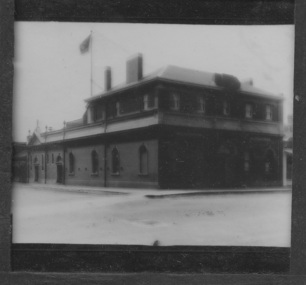
Slide - Glass slide, Black and white, circa 1921
... The Port Melbourne building in the image established in the 19th C., still survives. It was a key centre of operations for the Mission prior to the building of the Mission near Australian Wharf in 1907 and prior to the eventual opening of the current "Central Mission" in 1917. ...This image provides an additional later modified building view to that of the image of the original single storey building image published on back page of the 1910 MTS Annual Report. According to the Annual Report of 1915 the plans to build a residence on top ( the 2nd storey ) of the Port Melbourne building got the go ahead to commence and opened 1916. Originally designed by architect, Frederick Williams, who built the first brick Mission at Port Melbourne in the 19th C. Walter Butler was commissioned for the second storey.The Port Melbourne building in the image established in the 19th C., still survives. It was a key centre of operations for the Mission prior to the building of the Mission near Australian Wharf in 1907 and prior to the eventual opening of the current "Central Mission" in 1917. NB operations of The Port Melbourne Branch Mission were eventually transferred to the King George V memorial Building, dedicated in December 1937 but demolished in 1995. The Mission depicted here still survives as part of an apartment complex on the corner of Nott st.Positive photograph on medium format glass slide ; b & w image of brick building taken from a corner street level view, with upper storey at one end on glass transparency with a flagpole and flag (Flying Angel) just discernible. The slide is edged with adhesive tape.missions to seamen institute, mission building, frederick williams, walter butler, port melbourne, beach road, mission to seafarers, nott street -
 The Beechworth Burke Museum
Photograph
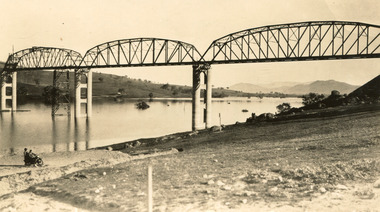
... C. Ruwolt Pty. Ltd., engineers who were located on Victoria Street, West Richmond. The contract was awarded for £71,890. It was predicted between 250 and 300 men would find employment on the project. The news was well received by trade unions at the time as there had been a drop in available engineering work. This photograph is historically significant as it depicts the progress of the Bethanga Bridge construction, which was important infrastructure for the area. It is also a good example of methods used in the area to assist in travel over the river prior ...Taken between 1928 and 1930, depicted is the Bethanga Bridge under construction. The Bridge was completed in 1930 and was built to assist residents of the Bethanga district to travel to Albury. Other bridges would become submerged by the backed-up water of the Murray and Mitta Rivers so the Bethanga bridge was built two miles above the Mitta Weir. The Bethanga Bridge was built north of the future Hume Dam which would be completed in 1936. At 2430 feet long, Bethanga Bridge was the longest road bridge in Australia at the time of its completion. The Bridge is 20 feet wide and made up of nine 270 feet long spans. Materials used include ten tons of paint for the steel works; 1600 tons of steel; 900 tons of timber for the decking; and reinforced concrete for the piers. The tender for the construction was awarded to C. Ruwolt Pty. Ltd., engineers who were located on Victoria Street, West Richmond. The contract was awarded for £71,890. It was predicted between 250 and 300 men would find employment on the project. The news was well received by trade unions at the time as there had been a drop in available engineering work.This photograph is historically significant as it depicts the progress of the Bethanga Bridge construction, which was important infrastructure for the area. It is also a good example of methods used in the area to assist in travel over the river prior to the construction of the Hume Dam.Black and white rectangular photo printed on matte photographic paper.Reverse: 1997 3186 / 84-19-3 / This is the bridge. / It is not yet open to traffic / yet. will not be completed / until May next / It is a wonderful bridge the / pillars are 100 feet high. / KODAK PRINT Envelope Obverse: Peterson PHOTO / Hume Weir Envelope Reverse: BMM 84-20-1,2+3. bethanga bridge, lake hume, hume dam, hume weir, murray river, bridge, bethanga, albury -
Federation University Historical Collection
Magazine, J.A. Hoskin & Son, Ballarat Teachers' College Magazine "Extra Muros', 1951
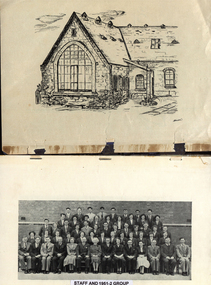
... prior...p. readman...b. voight...k. coles...max martin...j. o'connor...l. whelehan...d. mayne...r. colbourne...b. pohlner...p. nolan...alan sonsee...mavis canty...tom turner...edward doney...howard pattendon...j. walters...ros menadue...j.m. hill...g.a. jenkins...j. dudley...r.r. reed...a.o. puls...m.g. crooke...j. dawson...j. klein...t.w.H. turner...monica miller...betty walpole...patricia smith...grampians...Student Representative Council...F. Holcombe...S. Rowe...M. Crooke...c...Ballarat Teacher's College is a predecessor of Federation University frank nolan ballarat teachers' college dana street primary school keith pyers a. williams p. quinlan m. constable a. dunn r. watson g. prior p. readman b. voight k. coles max martin j. o'connor l. whelehan d. mayne r. colbourne b. pohlner p. nolan alan sonsee mavis canty tom turner edward doney howard pattendon j. walters ros menadue j.m. hill g.a. jenkins j. dudley r.r. reed a.o. puls m.g. crooke j. dawson j. klein t.w.H. turner monica miller betty walpole patricia smith grampians Student Representative Council F. Holcombe S. Rowe M. Crooke c ...Ballarat Teacher's College is a predecessor of Federation UniversityBlue soft covered magazine of 28 pages. Includes a drawing of the bluestone building at Dana Street Primary School by J. Dawsonfrank nolan, ballarat teachers' college, dana street primary school, keith pyers, a. williams, p. quinlan, m. constable, a. dunn, r. watson, g. prior, p. readman, b. voight, k. coles, max martin, j. o'connor, l. whelehan, d. mayne, r. colbourne, b. pohlner, p. nolan, alan sonsee, mavis canty, tom turner, edward doney, howard pattendon, j. walters, ros menadue, j.m. hill, g.a. jenkins, j. dudley, r.r. reed, a.o. puls, m.g. crooke, j. dawson, j. klein, t.w.h. turner, monica miller, betty walpole, patricia smith, grampians, student representative council, f. holcombe, s. rowe, m. crooke, c. sheehy, m. robinson, p. smith, crooke -
 Federation University Historical Collection
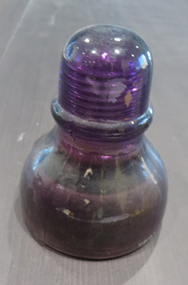
Equipment - Object, Glass insulators
... Prior to 1925, Australia relied solely on insulators imported from other countries. Glass insulators were first manufactured in Australia in c. 1926 by Australian Glass Manufacturers. ...Prior to 1925, Australia relied solely on insulators imported from other countries. Glass insulators were first manufactured in Australia in c. 1926 by Australian Glass Manufacturers. ...This insulator was used on phone wires. Insulators were originally designed to keep the wires linking telegraphs and telephones insulated from the wooden poles that held them aloft. Prior to 1925, Australia relied solely on insulators imported from other countries. Glass insulators were first manufactured in Australia in c. 1926 by Australian Glass Manufacturers. Their factory was, and still is, located on South Dowling Road in Sydney. Australian Glass Manufacturers (A.G.M.) had developed a toughened type of glass very similar to Pyrex glass. Since the Pyrex name could not be used due to trademark infringements, they called their glass AGEE for Australian Glass. Many fruit jars, insulators, pie dishes and other glass items were manufactured with this AGEE trademark during the 1926 to 1940 period.Glass insulators are rapidly becoming a thing of the past in Australia with open-wire communication lines rarely existing near metropolitan areas. The remaining open wire lines are being abandoned and dismantled everywhere with very few insulators being saved as interest in them in Australia is quite limited. (ref Australian Insulators web-site). This item is an example of a piece of equipment which has been superceded.Purple glass insulator by Ageeinsulator, electricity, agee -
 Federation University Historical Collection
Magazine, J.A. Hoskin & Son, Ballarat Teachers' College Magazine "Extra Muros', 1951
... prior...p. readman...b. voight...k. coles...max martin...j. o'connor...l. whelehan...d. mayne...r. colbourne...b. pohlner...p. nolan...alan sonsee...mavis canty...tom turner...edward doney...howard pattendon...j. walters...ros menadue...j.m. hill...g.a. jenkins...j. dudley...r.r. reed...a.o. puls...m.g. crooke...j. dawson...j. klein...t.w.H. turner...monica miller...betty walpole...patricia smith...grampians...Student Representative Council...F. Holcombe...S. Rowe...M. Crooke...c...frank nolan ballarat teachers' college dana street primary school keith pyers a. williams p. quinlan m. constable a. dunn r. watson g. prior p. readman b. voight k. coles max martin j. o'connor l. whelehan d. mayne r. colbourne b. pohlner p. nolan alan sonsee mavis canty tom turner edward doney howard pattendon j. walters ros menadue j.m. hill g.a. jenkins j. dudley r.r. reed a.o. puls m.g. crooke j. dawson j. klein t.w.H. turner monica miller betty walpole patricia smith grampians Student Representative Council F. Holcombe S. Rowe M. Crooke c ...Blue soft covered magazine of 28 pages. Includes a drawing of the bluestone building at Dana Street Primary School by J. DawsonFront Cover "Frank Nolan"frank nolan, ballarat teachers' college, dana street primary school, keith pyers, a. williams, p. quinlan, m. constable, a. dunn, r. watson, g. prior, p. readman, b. voight, k. coles, max martin, j. o'connor, l. whelehan, d. mayne, r. colbourne, b. pohlner, p. nolan, alan sonsee, mavis canty, tom turner, edward doney, howard pattendon, j. walters, ros menadue, j.m. hill, g.a. jenkins, j. dudley, r.r. reed, a.o. puls, m.g. crooke, j. dawson, j. klein, t.w.h. turner, monica miller, betty walpole, patricia smith, grampians, student representative council, f. holcombe, s. rowe, m. crooke, c. sheehy, m. robinson, p. smith, crooke, dana street state school -
 Flagstaff Hill Maritime Museum and Village
Currency - Banknote, Bank of Australasia, One-pound, 1st July 1903
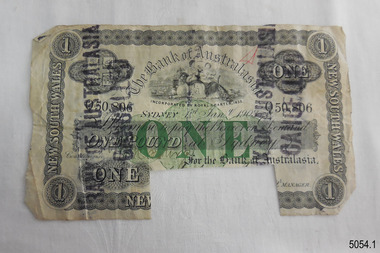
... The banknotes also have a significant place in Australia’s history as two notes are just prior to Federation and two notes just after Federation. flagstaff hill warrnambool one pound note Bank of Australasia legal tender £1 banknote banknotes Flagstaff Hill Maritime Museum & Village Shipwreck Coast five poind note Australian currency Shipwrecked coast Flagstaff Hill Maritime Museum Maritime Museum Flagstaff Hill Maritime Village Great Ocean Road Union Bank Australia & New Zealand Bank ANZ Bank David Charters McArthur D C McArthur One-pound note Five-pound note £5 Sydney New South Wales Pre-Federation Post-Federation Currency banknote set Printed: (Serial Number) "Q50,806" "ONE POUND" "NEW SOUTH WALES" "1st July 1903" Stamped: "BANK OF AUSTRALASIA / CANCELLED" Handwritten in red pen: "undecipherable [initials]" Text in pencil "L24" One-pound note, one of a set of four (4) notes published by The Bank of Australasia, Sydney, New South Wales. ...This one-pound banknote is one of a set of four banknotes issued by the Bank of Australasia's Head Office in Sydney, New South Wales. Two banknotes are dated before the Federation of Australia on 1st January 1901 and two are dated just two years after Federation. Each of the banknotes in this set has a rectangular piece cut from it. This indicates that the banknote was cancelled when the note was exchanged for Australian dollars after Decimal Currency was introduced on 14th February 1966. The Bank of Australasia was established under the Royal Charter of England. It first came to Australia in 1835, opening in Sydney. The Bank of Australasia was the first bank in Warrnambool. It was established in 1854 and operated from leased buildings on Merri Street and then Timor Street. The bank opened its own building on May 21, 1860, on the northeast corner of Timor and Kepler Streets. In that year, the Acting Superintendent of the Bank of Australasia in Sydney was David Charters McArthur. He went on to become the Superintendent from 1867-to 1876. In 1951 the Bank of Australasia amalgamated with the Union Bank to form the Australia and New Zealand Bank, now known as the ANZ. Then in 1970 the ANZ merged with both the ES&A and the London Bank of Australia to form the ANZ Banking Group Limited. The ANZ Banking Group Ltd kindly donated a variety of historic items from the Bank of Australasia. This set of banknotes has historical significance as it was used by the Bank of Australasia, the first bank in Warrnambool. The bank was established in 1854 and continued until its merger, when it became the ANZ Bank in 1951 and is still in operation today. The bank was an integral part of the establishment and growth of commerce in Colonial Warrnambool, Victoria, and Australia. The banknotes also have a significant place in Australia’s history as two notes are just prior to Federation and two notes just after Federation.One-pound note, one of a set of four (4) notes published by The Bank of Australasia, Sydney, New South Wales. The obverse of the note is printed in black ink with the denomination and its round pound-coin symbol printed in green ink. There is no printing on the reverse. A black ink stamp is impressed twice on each side of the note, stating that the note is cancelled. Handwritten red ink text is on the note's obverse and pencil text on the reverse. A unique Serial number is printed twice on the obverse. The banknote has a rectangular cut-out notch on the lower edge. Printed: (Serial Number) "Q50,806" "ONE POUND" "NEW SOUTH WALES" "1st July 1903" Stamped: "BANK OF AUSTRALASIA / CANCELLED" Handwritten in red pen: "undecipherable [initials]" Text in pencil "L24"flagstaff hill, warrnambool, one pound note, bank of australasia, legal tender, £1, banknote, banknotes, flagstaff hill maritime museum & village, shipwreck coast, five poind note, australian currency, shipwrecked coast, flagstaff hill maritime museum, maritime museum, flagstaff hill maritime village, great ocean road, union bank, australia & new zealand bank, anz bank, david charters mcarthur, d c mcarthur, one-pound note, five-pound note, £5, sydney, new south wales, pre-federation, post-federation, currency, banknote set -
 Flagstaff Hill Maritime Museum and Village
Currency - Banknote, Bank of Australasia, One-pound, 1st July 1903
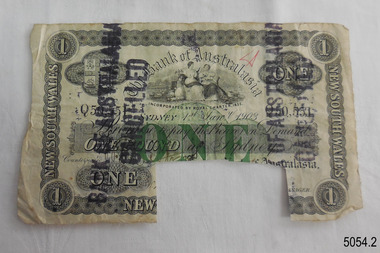
... The banknotes also have a significant place in Australia’s history as two notes are just prior to the Federation of Australia and two notes just after. flagstaff hill warrnambool one pound note Bank of Australasia legal tender £1 banknote banknotes Flagstaff Hill Maritime Museum & Village Shipwreck Coast five poind note Australian currency Shipwrecked coast Flagstaff Hill Maritime Museum Maritime Museum Flagstaff Hill Maritime Village Great Ocean Road Union Bank Australia & New Zealand Bank ANZ Bank David Charters McArthur D C McArthur One-pound note Five-pound note £5 Sydney New South Wales Pre-Federation Post-Federation Currency Set of banknotes banknote set Printed (Serial Number) "O50 551" "ONE POUND" "NEW SOUTH WALES" "1st July 1903" Stamp "BANK OF AUSTRALASIA / CANCELLED" Handwritten in red pen: "undecipherable [initials]" Text in pencil "L24" One-pound note, one of a set of four (4) notes published by The Bank of Australasia, Sydney, New South Wales. ...One-pound note, one of a set of four (4) notes published by The Bank of Australasia, Sydney, New South Wales. The obverse of the note is printed in black ink with the denomination and its round pound-coin symbol printed in green ink. There is no printing on the reverse. A black ink stamp is impressed twice on each side of the note, stating that the note is cancelled. Handwritten red ink text is on the note's obverse and pencil text on the reverse. A unique Serial number is printed twice on the obverse. The banknote has a rectangular cut-out notch on the lower edge. The Bank of Australasia was established under the Royal Charter of England. It first came to Australia in 1835, opening in Sydney. The Bank of Australasia was the first bank in Warrnambool. It was established in 1854 and operated from leased buildings in Merri Street then Timor Street. The bank opened its own building on May 21, 1860, on the north-east corner of Timor and Kepler Streets. In that year, the Acting Superintendent of the Bank of Australasia in Sydney was David Charters McArthur. He went on to become the Superintendent 1867-1876. In 1951 the Bank of Australasia amalgamated with the Union Bank to form the Australia and New Zealand Bank, now known as the ANZ. Then in 1970 the ANZ merged with both the ES&A and the London Bank of Australia to form the ANZ Banking Group Limited. The ANZ Banking Group Ltd kindly donated a variety of historic items from the Bank of Australasia. This set of banknotes has historical significance as it was issued by the Bank of Australasia. The Bank of Australasia was the first bank in Warrnambool, established in 1854. The bank continued to operate until its merger in 1951 when it became the ANZ Bank, which is still in operation today. The Bank was an integral part of the establishment and growth of commerce in Colonial Warrnambool and throughout Australia. The banknotes also have a significant place in Australia’s history as two notes are just prior to the Federation of Australia and two notes just after.One-pound note, one of a set of four (4) notes published by The Bank of Australasia, Sydney, New South Wales. The obverse of the note is printed in black ink with the denomination and its round pound-coin symbol printed in green ink. There is no printing on the reverse. A black ink stamp is impressed twice on each side of the note, stating that the note is cancelled. Handwritten red ink text is on the note's obverse and pencil text on the reverse. A unique Serial number is printed twice on the obverse. The banknote has a rectangular cut-out notch on the lower edge.Printed (Serial Number) "O50 551" "ONE POUND" "NEW SOUTH WALES" "1st July 1903" Stamp "BANK OF AUSTRALASIA / CANCELLED" Handwritten in red pen: "undecipherable [initials]" Text in pencil "L24"flagstaff hill, warrnambool, one pound note, bank of australasia, legal tender, £1, banknote, banknotes, flagstaff hill maritime museum & village, shipwreck coast, five poind note, australian currency, shipwrecked coast, flagstaff hill maritime museum, maritime museum, flagstaff hill maritime village, great ocean road, union bank, australia & new zealand bank, anz bank, david charters mcarthur, d c mcarthur, one-pound note, five-pound note, £5, sydney, new south wales, pre-federation, post-federation, currency, set of banknotes, banknote set -
 Flagstaff Hill Maritime Museum and Village
Currency - Banknote, Bank of Australasia, One-pound, 1st July 1899
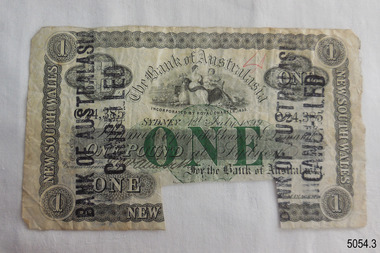
... The banknotes also have a significant place in Australia’s history as two notes are just prior to the Federation of Australia and two notes just after. flagstaff hill warrnambool one pound note Bank of Australasia legal tender £1 banknote banknotes Flagstaff Hill Maritime Museum & Village Shipwreck Coast five poind note Australian currency Shipwrecked coast Flagstaff Hill Maritime Museum Maritime Museum Flagstaff Hill Maritime Village Great Ocean Road Union Bank Australia & New Zealand Bank ANZ Bank David Charters McArthur D C McArthur One-pound note Five-pound note £5 Sydney New South Wales Pre-Federation Post-Federation Currency Banknote set Printed: (Serial Number) "O24,385" "ONE POUND" "NEW SOUTH WALES" "1st July 1899" Stamp "BANK OF AUSTRALASIA / CANCELLED" Handwritten in red pen: "undecipherable [initials]" Text in pencil "L24" One-pound note, one of a set of four (4) notes published by The Bank of Australasia, Sydney, New South Wales. ...This set of banknotes was issued by the Bank of Australasia's Head Office in Sydney, New South Wales. Two banknotes are dated before the Federation of Australia on 1st January 1901 and two are dated just two years after Federation. Each of the banknotes in this set has a rectangular piece cut from it. This indicates that the banknote was cancelled when the note was exchanged for Australian dollars after Decimal Currency was introduced on 14th February 1966. The Bank of Australasia was established under the Royal Charter of England. It first came to Australia in 1835, opening in Sydney. The Bank of Australasia was the first bank in Warrnambool. It was established in 1854 and operated from leased buildings in Merri Street then Timor Street. The bank opened its own building on May 21, 1860, on the north-east corner of Timor and Kepler Streets. In that year, the Acting Superintendent of the Bank of Australasia in Sydney was David Charters McArthur. He went on to become the Superintendent 1867-1876. In 1951 the Bank of Australasia amalgamated with the Union Bank to form the Australia and New Zealand Bank, now known as the ANZ. Then in 1970 the ANZ merged with both the ES&A and the London Bank of Australia to form the ANZ Banking Group Limited. The ANZ Banking Group Ltd kindly donated a variety of historic items from the Bank of Australasia. This set of banknotes has historical significance as it was issued by the Bank of Australasia. The Bank of Australasia was the first bank in Warrnambool, established in 1854. The bank continued to operate until its merger in 1951 when it became the ANZ Bank, which is still in operation today. The Bank was an integral part of the establishment and growth of commerce in Colonial Warrnambool and throughout Australia. The banknotes also have a significant place in Australia’s history as two notes are just prior to the Federation of Australia and two notes just after.One-pound note, one of a set of four (4) notes published by The Bank of Australasia, Sydney, New South Wales. The obverse of the note is printed in black ink with the denomination and its round pound-coin symbol printed in green ink. There is no printing on the reverse. A black ink stamp is impressed twice on each side of the note, stating that the note is cancelled. Handwritten red ink text is on the note's obverse and pencil text on the reverse. A unique Serial number is printed twice on the obverse. The banknote has a rectangular cut-out notch on the lower edge.Printed: (Serial Number) "O24,385" "ONE POUND" "NEW SOUTH WALES" "1st July 1899" Stamp "BANK OF AUSTRALASIA / CANCELLED" Handwritten in red pen: "undecipherable [initials]" Text in pencil "L24"flagstaff hill, warrnambool, one pound note, bank of australasia, legal tender, £1, banknote, banknotes, flagstaff hill maritime museum & village, shipwreck coast, five poind note, australian currency, shipwrecked coast, flagstaff hill maritime museum, maritime museum, flagstaff hill maritime village, great ocean road, union bank, australia & new zealand bank, anz bank, david charters mcarthur, d c mcarthur, one-pound note, five-pound note, £5, sydney, new south wales, pre-federation, post-federation, currency, banknote set -
 Flagstaff Hill Maritime Museum and Village
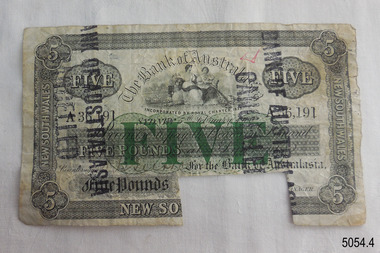
Currency - Banknote, Five-pound
... The banknotes also have a significant place in Australia’s history as two notes are just prior to Federation and two notes just after Federation. flagstaff hill warrnambool one pound note Bank of Australasia legal tender £1 banknote banknotes Flagstaff Hill Maritime Museum & Village Shipwreck Coast five poind note Australian currency Shipwrecked coast Flagstaff Hill Maritime Museum Maritime Museum Flagstaff Hill Maritime Village Great Ocean Road Union Bank Australia & New Zealand Bank ANZ Bank David Charters McArthur D C McArthur One-pound note Five-pound note £5 Sydney New South Wales Pre-Federation Post-Federation Currency banknote set Printed: (Serial Number) "A36,191" "FIVE POUND" "NEW SOUTH WALES" "5th February 1900" Stamp "BANK OF AUSTRALASIA / CANCELLED" Image: (around border) "BANK OF AUSTRALASIA INCORPORATED BY ROYAL CHARTER" and (image on shield) [suspended sheep] in diagonal corners, and [sailing ships] in other diagonal corners, and four stars (or open flowers)" Handwritten in red pen: "undecipherable [initials]" Text in pencil "L24" Five-pound banknote, one of a set of four banknotes published by The Bank of Australasia, Sydney, New South Wales. ...This five-pound banknote is one of a set of four banknotes issued by the Bank of Australasia's Head Office in Sydney, New South Wales. Two banknotes are dated before the Federation of Australia on 1st January 1901 and two are dated just two years after Federation. Each of the banknotes in this set has a rectangular piece cut from it. This indicates that the banknote was cancelled when the note was exchanged for Australian dollars after Decimal Currency was introduced on 14th February 1966. The Bank of Australasia was established under the Royal Charter of England. It first came to Australia in 1835, opening in Sydney. The Bank of Australasia was the first bank in Warrnambool. It was established in 1854 and operated from leased buildings in Merri Street then Timor Street. The bank opened its own building on May 21, 1860, on the north-east corner of Timor and Kepler Streets. In that year, the Acting Superintendent of the Bank of Australasia in Sydney was David Charters McArthur. He went on to become the Superintendent 1867-1876. In 1951 the Bank of Australasia amalgamated with the Union Bank to form the Australia and New Zealand Bank, now known as the ANZ. Then in 1970 the ANZ merged with both the ES&A and the London Bank of Australia to form the ANZ Banking Group Limited. The ANZ Banking Group Ltd kindly donated a variety of historic items from the Bank of Australasia. This set of banknotes has historical significance as it was used by the Bank of Australasia, the first bank in Warrnambool. The bank was established in 1854 and continued until its merger, when it became the ANZ Bank in 1951 and is still in operation today. The bank was an integral part of the establishment and growth of commerce in Colonial Warrnambool, Victoria, and Australia. The banknotes also have a significant place in Australia’s history as two notes are just prior to Federation and two notes just after Federation.Five-pound banknote, one of a set of four banknotes published by The Bank of Australasia, Sydney, New South Wales. The obverse of the note is printed in black ink with the denomination and its round pound-coin symbols printed in green ink. The reverse has a decorative border and image with an inscription and shield. A black ink stamp was impressed twice on each side, stating that the note is cancelled. Handwritten red ink text is on the note's obverse and pencil text on the reverse. A unique Serial number is printed twice on the obverse. The banknote has a rectangular cut-out notch on the lower edge. Printed: (Serial Number) "A36,191" "FIVE POUND" "NEW SOUTH WALES" "5th February 1900" Stamp "BANK OF AUSTRALASIA / CANCELLED" Image: (around border) "BANK OF AUSTRALASIA INCORPORATED BY ROYAL CHARTER" and (image on shield) [suspended sheep] in diagonal corners, and [sailing ships] in other diagonal corners, and four stars (or open flowers)" Handwritten in red pen: "undecipherable [initials]" Text in pencil "L24"flagstaff hill, warrnambool, one pound note, bank of australasia, legal tender, £1, banknote, banknotes, flagstaff hill maritime museum & village, shipwreck coast, five poind note, australian currency, shipwrecked coast, flagstaff hill maritime museum, maritime museum, flagstaff hill maritime village, great ocean road, union bank, australia & new zealand bank, anz bank, david charters mcarthur, d c mcarthur, one-pound note, five-pound note, £5, sydney, new south wales, pre-federation, post-federation, currency, banknote set -
 City of Moorabbin Historical Society (Operating the Box Cottage Museum)
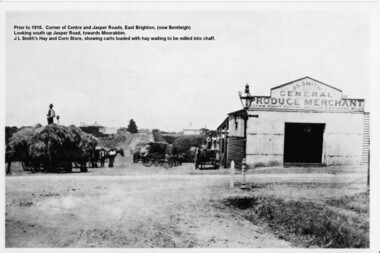
Photograph - Photograph Hay & Corn Store, Before 1910, Smith's Hay & Corn Store, Cnr. Centre and Jasper Roads, Bentleigh, Late 19th to early 20th Century
... /"Photographer /Victor C Smith,/ Phone Number XL1472"/ Two black and white early photographs both of the same location. The photos are of the corner of Centre and Jasper Roads, Bentleigh. (Prior ...The first photograph was taken prior to 1910. The location is at the corner of Centre and Jasper Roads, East Brighton, (now known as Bentleigh). It is an early view of John L. and "Minnie" Smith's Hay and Corn Store, situated on the South West corner of those two roads. The first photo was taken prior to the introduction of electricity in the area. A gas lamp and horse "hitching post" can be seen "in shot". There are several loaded wagons waiting in line to have their hay milled to chaff. Farmers came from places as distant as Carrum to have their loads of hay milled into chaff. John Smith was born in 1860 in Point Nepean Road, Brighton, and Minnie was born in Patterson Road, Moorabbin, in a wattle and daub cottage with earthen floor and butter muslin over the windows. The couple married in 1884, Minnie was a devout Methodist and the family became very involved in the development of the local Methodist church. The couple had four children and during the 1890s Depression their first child died, they lost all their possessions, and John's family struggled to survive. Finally in the late 1890s JL Smith was able to rent a shed from Mr Henry Box on the corner of Centre and Jasper Roads, and he later purchased that property. With the gradual improvement in the economy, and the development of the successful market gardening industry in the Shire of Moorabbin, JL Smith's produce store became quite prosperous. Over some years the little "shed" developed into a thriving Hay and Corn Store. JL Smith went on to become Moorabbin Shire President in 1914. He and his wife were active in assisting soldiers returning injured from the 1st WW, in the local Methodist Church and other early community projects. Smith was a typical example of the majority of the early settlers in the Shire of Moorabbin, being god-fearing and devoted to the idea of service to the community. The photographs demonstrate the primitive conditions and early development of what is now a bustling and well-recognised area of Bentleigh, (known as east Brighton before 1907). The photo shows a gas lamp in use before the introduction of electricity in 1916. The Smith's story is representative of the many early pioneering traders, who elected to "set up shop", who suffered the adversity of the 1890s depression, but who survived and made their living in the largely undeveloped area of East Brighton ( now Bentleigh) district. Two black and white early photographs both of the same location. The photos are of the corner of Centre and Jasper Roads, Bentleigh. (Prior to 1907 this area was known as East Brighton.) Both photos show J.L Smith's General Merchant Produce store. "Steam Chaff Cutting and Corn Crushing Mills" and the surrounding area at differing stages. In the first photo taken prior to 1910, we can see there are several horse-drawn carts loaded with hay waiting to be milled, a gas lamp and a horse "hitching post". The store is just a single unadorned, shed. The later, second photo of the same area, shows improvements and the further development of that site. On the back of the photo "Hay and Corn Store -/ not later than 1910."/"Photographer /Victor C Smith,/ Phone Number XL1472"/hitching post, methodist church, smith minnie, moorabbin shire president, gas lamp, east brighton district, 1890s depression, wattle and daub cottage, centre road, jasper road, box henry, smith john l -
 City of Moorabbin Historical Society (Operating the Box Cottage Museum)
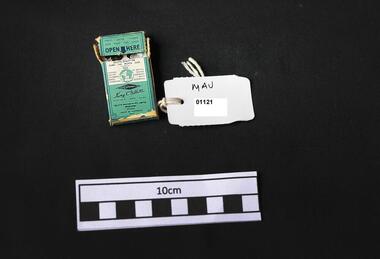
Personal Effects, safety razor blade 'King Gillette'', 20thc
... Throughout the 20thC most men used this type of safety razor with disposable stainless steel razor blades to shave their beards prior to the introduction of affordable electric razors in 1960's shaving equipment, safety razors, Gillette king, proctor & gamble, Moorabbin, Bentleigh, Cheltenham, on top of packet; Press with thumb / and snap end open / GILLETTE QUALITY THE / SAME THE WORLD OVER / FACTORIES IN / USA / CANADA , GREAT BRITAIN / MEXICO , FRANCE / COLUMBIA, GERMANY / BRAZIL, SPAIN / ARGENTINA, AUSTRALIA / GILLETTE TRADE MARK / KING C GILLETTE / RED. ...King Camp Gillette observed in 1902 that as existing, relatively expensive, razor blades dulled quickly and needed continuous sharpening, a razor whose blade could be thrown away when it dulled would meet a real need and likely be profitable. Safety razors had been developed in the mid-19th century, but still used a forged blade that dulled and rusted. In the 1870s, the Kampfe Brothers ( Germany) introduced a type of safety razor Gillette improved these earlier safety-razor designs, and introduced the high-profit-margin stamped razor blade steel blade. Gillette's innovation was the thin, inexpensive, disposable blade of stamped steel. Gillette's safety razor retailed for a substantial $5 half the average working man's weekly pay — yet sold by the millions. The most difficult part of development was engineering the blades, as thin, cheap steel was difficult to work and sharpen. This accounts for the delay between the initial idea and the product's introduction. To sell the product, Gillette founded the American Safety Razor Company on September 28, 1901 (changing the company's name to Gillette Safety Razor Company in July 1902). Gillette obtained a trademark registration (0056921) for his portrait and signature on the packaging. Production began in 1903, when he sold a total of 51 razors and 168 blades. The following year, he sold 90,884 razors and 123,648 blades, thanks in part to Gillette's low prices, automated manufacturing techniques and good advertising. By 1908, the corporation had established manufacturing facilities in the United States, Canada, England, France and Germany. Razor sales reached 450,000 units and blade sales exceeded 70 million units in 1915. In 1918, when the U.S. entered World War I, the company provided all American soldiers with a field razor set, paid for by the government, and as they were allowed to take them at discharge they continued their use of this product thus ensuring future sales. The company continues in the present day as the Gillette brand of Procter & Gamble, USA. Throughout the 20thC most men used this type of safety razor with disposable stainless steel razor blades to shave their beards prior to the introduction of affordable electric razors in 1960'sA blue packet of unused 'King Gillette' safety razor blades.on top of packet; Press with thumb / and snap end open / GILLETTE QUALITY THE / SAME THE WORLD OVER / FACTORIES IN / USA / CANADA , GREAT BRITAIN / MEXICO , FRANCE / COLUMBIA, GERMANY / BRAZIL, SPAIN / ARGENTINA, AUSTRALIA / GILLETTE TRADE MARK / KING C GILLETTE / RED. TRADE MARKS / GILLETTE (AUST.) PTY. LIMITED / MELBOURNE / DE 2023 / MADE IN AUSTRALIA / shaving equipment, safety razors, gillette king, proctor & gamble, moorabbin, bentleigh, cheltenham, -
 City of Moorabbin Historical Society (Operating the Box Cottage Museum)
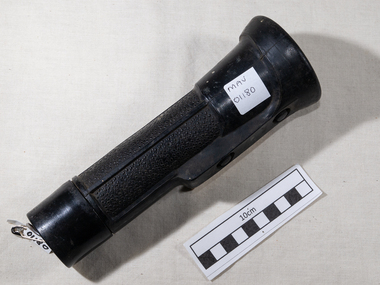
Manufactured Object, Torch 'Eveready' c1950, c1950
... Prior to March 1, 1980, the company's alkaline battery had been called the Eveready Alkaline Battery (1959–1968), Eveready Alkaline Energizer (1968–1974) and Eveready Alkaline Power Cell (1974–February 29, 1980). On March 1, 1980, it was rebadged under its current name, Energizer. 2019 production plant in Portage, Wisconsin, but the majority of batteries are made in China and there are also numerous production facilities outside the US. This is an industrial strength Eveready Torch made in England and was used by George Reed, a draftsman, who lived in Bentleigh , City of Moorabbin in mid 20th C ...George Reed was a draftsman living in the City of Moorabbin c 1950 1899, David Misell, invented this "electric device" ( torch / flashlight) powered by "D" batteries laid front-to-back in a paper tube with the light bulb and a rough brass reflector at the end. Misell assigned his invention over to the American Electrical Novelty and Manufacturing Company owned by Conrad Hubert. In 1905, Hubert changed the name again to The American Ever Ready Company, selling torches / flashlights and batteries under the trademark Ever Ready. In 1906 the British Ever Ready Electrical Company was formed for export of batteries; it became independent in 1914. The American Ever Ready Company became part of National Carbon Company in 1914. The trademark was shortened to Eveready. In 1986, Union Carbide sold its Battery Products Division to Ralston Purina Company becoming the Eveready Battery Company, Inc. and in 1992, it bought the British Ever Ready Electrical Company. Prior to March 1, 1980, the company's alkaline battery had been called the Eveready Alkaline Battery (1959–1968), Eveready Alkaline Energizer (1968–1974) and Eveready Alkaline Power Cell (1974–February 29, 1980). On March 1, 1980, it was rebadged under its current name, Energizer. 2019 production plant in Portage, Wisconsin, but the majority of batteries are made in China and there are also numerous production facilities outside the US. This is an industrial strength Eveready Torch made in England and was used by George Reed, a draftsman, who lived in Bentleigh , City of Moorabbin in mid 20th CLarge 'Eveready' industrial hand torch/ flashlight with rubber protective coverEVEREADY /MADE IN ENGLAND clothing, manufactured lace, dressmaking, blouses, theatrical props, lights, torches, lighting, early settlers, moorabbin shire, mechanics institute cheltenham, postworld war 11 settlers, housing estates moorabbin 1950, bentleigh, ormond, moorabbin, cheltenham, , clark judy, reed gladys, reed george -
 City of Moorabbin Historical Society (Operating the Box Cottage Museum)
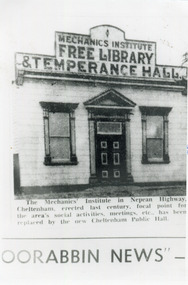
Photograph, Black & White, Cheltenham Mechanics Institute,Library, Temperance hall, c1960
... The Mechanics Institute, built c 1890, was the focal point for the Cheltenham area's social activities, public meetings, adult education, etc. until its demolition 1960 when a new Cheltenham Hall was erected The early settlers erected this Mechanics Institute prior to 1900 as a public meeting place, library, temperance hall and it was used for social events cheltenham mechanics institute, cheltenham temperance hall, cheltenham church of christ, keys robert, lepage everet, moorabin news, leader newspapers, horse drawn carts, toll gates brighton, motor cars 1900, steam engines, early settlers, bentleigh, mckinnon, parish of moorabbin, city of moorabbin, county of bourke, moorabbin roads board, shire of moorabbin, henry dendy's special survey 1841, were j.b.; bent thomas, o'shannassy john, king richard, charman stephen, highett william, ormond francis, maynard dennis, market gardeners, vineyards, orchards Black & White photograph in the Moorabbin News c 1960 showing the Mechanics Institute, c1900 Nepean Highway Cheltenham Photograph, Black & White, Cheltenham Mechanics Institute,Library, Temperance hall Moorabbin News , ...The Mechanics Institute, built c 1890, was the focal point for the Cheltenham area's social activities, public meetings, adult education, etc. until its demolition 1960 when a new Cheltenham Hall was erectedThe early settlers erected this Mechanics Institute prior to 1900 as a public meeting place, library, temperance hall and it was used for social eventsBlack & White photograph in the Moorabbin News c 1960 showing the Mechanics Institute, c1900 Nepean Highway Cheltenhamcheltenham mechanics institute, cheltenham temperance hall, cheltenham church of christ, keys robert, lepage everet, moorabin news, leader newspapers, horse drawn carts, toll gates brighton, motor cars 1900, steam engines, early settlers, bentleigh, mckinnon, parish of moorabbin, city of moorabbin, county of bourke, moorabbin roads board, shire of moorabbin, henry dendy's special survey 1841, were j.b.; bent thomas, o'shannassy john, king richard, charman stephen, highett william, ormond francis, maynard dennis, market gardeners, vineyards, orchards -
 Geelong RSL Sub Branch
Book, Signal Training (All Arms) 1938, Early 20th Century
... Printed by Brown, Prior, Anderson Pty Ltd Melbourne. C.1....Printed by Brown, Prior, Anderson Pty Ltd Melbourne. C.1. Oblong shape book, red cardboard and cloth cover. ...Signal Training (All Arms) 1938 for the use of training Military Personal.Used for training Military Personnel in Signals.Oblong shape book, red cardboard and cloth cover.Inside front cover written in pencil in name Booth. Printed by Brown, Prior, Anderson Pty Ltd Melbourne. C.1.training, signals, all arms, military. -
Glenelg Shire Council Cultural Collection
Photograph - Photograph - Portland abattoir & Portland drive-in theatre, 1970s
... prior to demolition in 1996. Company was then owned by Australian Meat Holdings aerial photography drive-in cinema abattoir industry recreation Front: Photocopy - legend of key functions of the abattoir buildings Black and white photograph, framed. Frame: stained wooden moulding c ...Donated by abattoir staff during clean-up prior to demolition in 1996. Company was then owned by Australian Meat HoldingsBlack and white photograph, framed. Frame: stained wooden moulding c. 1970s. Image: Portland abattoirs, aerial view from N.E. Portland Drive-in theatre in backgroundFront: Photocopy - legend of key functions of the abattoir buildingsaerial photography, drive-in cinema, abattoir, industry, recreation -
 Orbost & District Historical Society
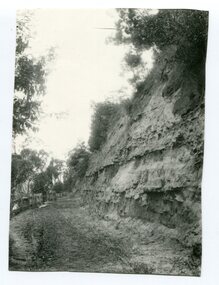
Photograph - Hofen's cutting, Bete Bolong, Orbost district, early 20th century
... This photograph was taken c. 1906 when transport was by horse, wagon and prior to cars and railways....This photograph was taken c. 1906 when transport was by horse, wagon and prior to cars and railways. ...This photograph is of a cutting on a road at Bete Bolong known as Hofen's Cutting. This photograph was taken c. 1906 when transport was by horse, wagon and prior to cars and railways.This is a pictorial record of early Bete Bolong showing a road through a cutting which was known as Hofen's cutting. Two black / white photographs showing a dirt road heading down a cutting with a post and rail wooden fence on the left side in the background. In 958.1 there is a cut - away hillside beside the dirt road.on back - "Newmerella" (note: this location is at Bete Bolong and not on Newmerella Hill) 958.1 - on back - "Hofen's Bluff 1906"bete bolong, orbost, tracks/roads -
 Orbost & District Historical Society
Photograph, 1920s-1950s
... c.1920-1940s. The 50 metres swimming pool was constructed in the 1960s following a huge community campaign. This photo is significant because it shows the use of the Snowy River as a recreation resource prior to the construction of a community swimming pool. swimming Snowy River recreation This is 'THE BIG HOLE' on the Snowy just beyond the butter factory. ...From the earliest days of white settlement in the Orbost district, people used the Snowy River for recreation and transport. A local swimming hole was adjacent to the butter factory and was a deep hole. The diving board has been improvised. This photo appears to date from c.1920-1940s. The 50 metres swimming pool was constructed in the 1960s following a huge community campaign. This photo is significant because it shows the use of the Snowy River as a recreation resource prior to the construction of a community swimming pool. A b/w photo of a group of children, three swimming and five on a diving board. One at the end of the diving board has a swimming costume, others are fully dressed. This is 'THE BIG HOLE' on the Snowy just beyond the butter factory. Water about 8ft. deep straight off the bank. We were all very good swimmers and played there for hours and hours."swimming, snowy river, recreation -
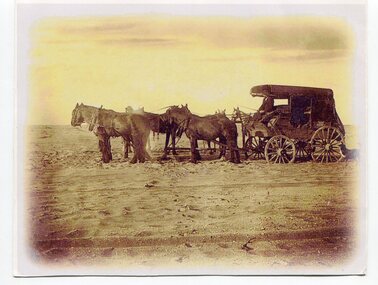 Orbost & District Historical Society
Photograph - Two coach photos, Orbost, c.1880s-1920
... c. 1880s-1920. These photos are significant because they show horses and coaches which were an important transport method prior to the linking of settlements within East Gippsland by roads, cars, and railway. horses coaches Orbost Lake Tyers 2718.1 on back of photograph: 'Albert Barthile drove coaches from Orbost to Lakes Entrance & sometimes from Cann River to Orbost.' 2718.2 no inscriptions Two b/w photographs of horses and coaches. 2718.1 photo of a coach and 4 horses, 3 people sitting on front of the coach. ...From the 1880s to c. 1920, much of the Orbost district was linked by coaching routes. These photos show two different locations: one photo shows a coach crossing a sand bar. This is most likely the crossing of the Lake Tyers sand bar to Lakes Entrance. The other photo shows a coach passing a barn in a rural setting. Both photos c. 1880s-1920. These photos are significant because they show horses and coaches which were an important transport method prior to the linking of settlements within East Gippsland by roads, cars, and railway. Two b/w photographs of horses and coaches. 2718.1 photo of a coach and 4 horses, 3 people sitting on front of the coach. Coach is outside a barn. 2718.2 photo of a 4 horse coach with one man driving. Other horses behind this coach. All are in a flat, sandy location. 2718.1 on back of photograph: 'Albert Barthile drove coaches from Orbost to Lakes Entrance & sometimes from Cann River to Orbost.' 2718.2 no inscriptionshorses, coaches, orbost, lake tyers -
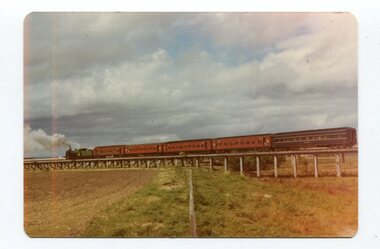 Orbost & District Historical Society
Photograph - Train to Orbost, c. 1980s
... c.1980s. The photo shows it crossing the long wooden bridge known as the viaduct over the Snowy River floodplain. The train is travelling towards Orbost. This photo is significant because it is evidence of an excursion train crossing the Snowy River Floodplain on the large railway viaduct, prior to arriving at the Orbost Railway Station. ...This photograph is most likely of a 'special excursion train' travelling to Orbost during the c.1980s. The photo shows it crossing the long wooden bridge known as the viaduct over the Snowy River floodplain. The train is travelling towards Orbost. This photo is significant because it is evidence of an excursion train crossing the Snowy River Floodplain on the large railway viaduct, prior to arriving at the Orbost Railway Station. A colour photo of a steam train travelling over a wooden railway bridge. In the foreground is a fence across a paddock. noneorbost, railways, orbost viaduct, excursion train
