
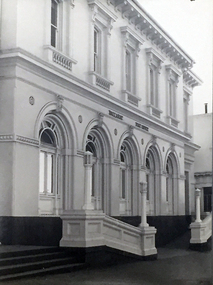
Showing 257 items matching " mansion house"
-
 Glen Eira Historical Society
Document - LANGDON FAMILY
... ... Mansion House...Langdon Marie Langdon Clive Moxham Margaret Langdon Henry Joseph Langdon Elizabeth Laetitia Langdon Montague William Langdon Charles Petley Langdon Emily Amy Langdon Florence Elizabeth Langdon Laura Langdon Blanche Emma Langdon Jane Renwick Jane Renwick Samuel ‘The Garrell’ Glen Eira Road Langdon Elizabeth Langdon Leslie John Langdon Mary Elizabeth Langdon Dorothy Langdon Margery Campbell Mary Elizabeth Campbell Dorothy Franklin Margery Franklin John Riddoch Halstead Street ‘Tarqua’ ‘Lirrewa’ Lirrewa Grove Caulfield Town Hall ‘Hengar’ Happy Days Kindergarten Read louisa Martha ‘Neringa’ House names ‘Beemery’ Blanche Street Seymour Road ‘Little Cromer’ Esler Lilian Webb Lilian Langdon Stanley Blake Langdon Richard Read Langdon Philip Clarke Langdon Mary Laetitia Lane Langdon Henry Clive Courtenay St Mary’s Anglican Church Caulfield ‘Penleigh’ Parsons Florence Elizabeth Parsons Charles Robert Waiora Road ‘Beemery Park’ ‘Bellecourt’ Sherlock Max Langdon Road Anderson Irene Victoria ‘Lincluden’ Southall Kate ‘Ringwood’ Sadler Alfred Mansion House Elsternwick Document LANGDON FAMILY ...This file contains four items pertaining to the Langdon family: 1/Five typed copies of research notes ‘History of the Langdons of Caulfield’, undated, probably by Irene Anderson, eleven pages. 2/Photocopy of typed and hand written notes, four pages, by Irene Anderson for her history of the Langdons dated August 1982 plus one typed version of the first 3 pages. 3/Handwritten, nineteen pages draft of ‘The Langdon homes’ by Irene Anderson, undated. 4/Photocopy of an extract from ‘Henderson’s Families’, five pages titled ‘Langdon of Rosecraddock’ (four copies), some with handwritten notes.caulfield, langdon phillip, ‘rosecraddock’, hawthorn road, kooyong road, powderham road, craddock avenue, franklin j. r., langdon marie, langdon clive, moxham margaret, langdon henry joseph, langdon elizabeth laetitia, langdon montague william, langdon charles petley, langdon emily amy, langdon florence elizabeth, langdon laura, langdon blanche emma, langdon jane, renwick jane, renwick samuel, ‘the garrell’, glen eira road, langdon elizabeth, langdon leslie john, langdon mary elizabeth, langdon dorothy, langdon margery, campbell mary elizabeth, campbell dorothy, franklin margery, franklin john riddoch, halstead street, ‘tarqua’, ‘lirrewa’, lirrewa grove, caulfield town hall, ‘hengar’, happy days kindergarten, read louisa martha, ‘neringa’, house names, ‘beemery’, blanche street, seymour road, ‘little cromer’, esler lilian, webb lilian, langdon stanley blake, langdon richard read, langdon philip clarke, langdon mary laetitia lane, langdon henry clive courtenay, st mary’s anglican church caulfield, ‘penleigh’, parsons florence elizabeth, parsons charles robert, waiora road, ‘beemery park’, ‘bellecourt’, sherlock max, langdon road, anderson irene victoria, ‘lincluden’, southall kate, ‘ringwood’, sadler alfred, mansion house, elsternwick -
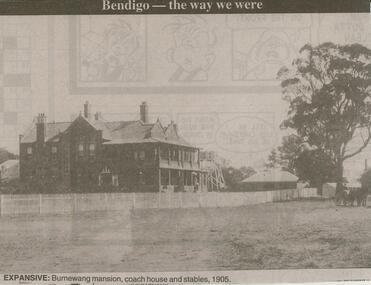 Bendigo Historical Society Inc.
Newspaper - JENNY FOLEY COLLECTION: EXPANSIVE
... Expansive: Burnewang mansion, coach house and stables, 1905. The clip is in a folder....Expansive: Burnewang mansion, coach house and stables, 1905. The clip is in a folder. ...Bendigo Advertiser ''The way we were'' from 2000. Expansive: Burnewang mansion, coach house and stables, 1905. The clip is in a folder.newspaper, bendigo advertiser, the way we were -
Glen Eira Historical Society
Document - Shoobra Road, 41, Elsternwick
... House... Mansion...Shoobra Road Elsternwick Shoobra House Mansion Architectural styles Biggin and Scott Real estate agents Stefanis Angelos Stavrakis Bill Buxtoms Ione House names Neville Jas F Neville E I miss Ackland H L Neville James Cast iron work Glen Huntly Road Document Shoobra Road, 41, Elsternwick ...Two items about this property. 1) Three unattributed newspaper articles on 41 Shoobra Road Elsternwick, dated 03/11/2004 and 27/01/2001 and 2011. Includes seven coloured photographs showing façade and interior rooms for upcoming sale. 2) Researched notes by Claire Barton, dated 22/06/2012, on residents/owners at 41 Shoobra Road, from Sands and McDougall editions 1910, 1913, 1923, 1942, 194 and 1960.shoobra road, elsternwick, shoobra house, mansion, architectural styles, biggin and scott, real estate agents, stefanis angelos, stavrakis bill, buxtoms, ione, house names, neville jas f, neville e i miss, ackland h l, neville james, cast iron work, glen huntly road -
Glen Eira Historical Society
Article - Billing, Richard Annesley
... Mansion... Sylliott Hill... House...house, in The Argus of 02/09/1882 2. Handwritten research notes by Peta Darke, dated 24/05/2011, concerning the history of Judge Billing’s residence. Mansion ...Two documents regarding Sylliot Hill, home of judge Richard Billings. 1. Three photocopies of the notice for sale/lease of Sylliot Hill, Judge Billing’s house, in The Argus of 02/09/1882 2. Handwritten research notes by Peta Darke, dated 24/05/2011, concerning the history of Judge Billing’s residence.mansion, sylliott hill, house names, balaclava road, orrong road, labassa, st kilda east, billing judge, judges, stables, coach houses, stained glass, ferguson and urie, crouch and wilson, towers, pearson william, paddocks, robertson alexander, cobb and co, ontario, verandahs -
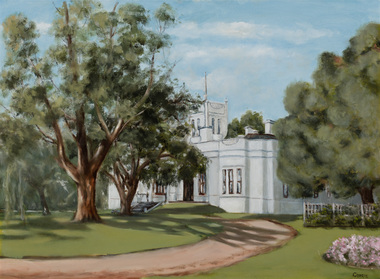 Bayside Gallery - Bayside City Council Art & Heritage Collection
Painting - oil on board, Marjorie Currie, Billilla, 1968
... house...mansion...Billilla Brighton Historic house house mansion gardens Marjorie Currie Smith and Johnson Walter Richmond Butler Weatherly Billilla Painting oil on board Marjorie Currie ...billilla, brighton, historic house, house, mansion, gardens, marjorie currie, smith and johnson, walter richmond butler, weatherly -
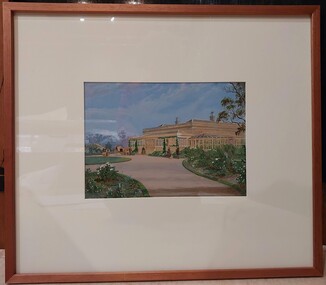 Glenelg Shire Council Cultural Collection
Painting, a) Johnston & Co. Hamilton b) Johnstone O'Shannessy, Melbourne, Burswood, late 1800s
... From Victorian Heritage: The single storey mansion house with enclosed glass verandah, Burswood was built in 1853 on a site overlooking the Portland Bay for English born pioneer colonist Edward Henty. ...From Victorian Heritage: The single storey mansion house with enclosed glass verandah, Burswood was built in 1853 on a site overlooking the Portland Bay for English born pioneer colonist Edward Henty. ...From Victorian Heritage: The single storey mansion house with enclosed glass verandah, Burswood was built in 1853 on a site overlooking the Portland Bay for English born pioneer colonist Edward Henty. John Barrow of Adelaide was the architect for this exceptional Australian regency style residence which he designed as a central block of fine axed basalt ashlar and slate roof (now replaced) with flanking brick wings forming an enclosed rear courtyard. Burswood is the most important early mansion house in western Victoria, being an exceptional Australian regency design by distinguished colonial architect James Barrow. Edward Henty, a member of one of Australia's most remarkable colonial families and the founder of Portland, established the first permanent settlement in Victoria on 19th November 1834, and Burswood is testimony to his success as an early colonist. Henty lived in his mansion for 17 years in a semi-regal state. Burswood has been little altered since completion in 1853. A glasshouse conservatory to the side of the present enclosed verandah was demolished prior to 1895 and the slate roof replaced with iron. Johnstone, O’Shannessy & Co was a leading photographic studio located in Melbourne, Victoria, Australia. It was active from 1865 to 1905. Henry James Johnstone was also an artist and studied at Louis Buvelot's school and with Thomas Clark.Painting of a sandstone coloured building. A grand house with a driveway and well-kept gardens to the front. There is a horse and cart with a man standing to the side of it. There is a female figure exiting the building and another female and a man further along the driveway with a dog. The building has a glass conservatory attached to the side. The sky is blue with several fluffy clouds.Bottom right: Johnstone O'Shannessy & Co Melbourne (in white paint)homestead, henty, historic buildings, colonial, burswood house -
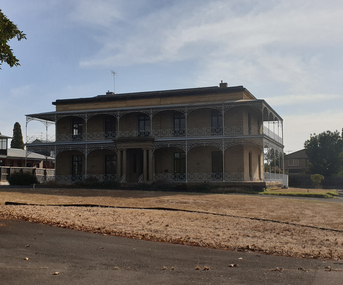 Ballarat Heritage Services
Photograph - Colour, Clare Gervasoni, Armytage House, Geelong, 2019, 24/03/2019
... 'Armytage House' formerly 'The Hermitage' a two storey Barrabool freestone ashlar and basalt rubble mansion was upon completion in 1860 one the finest colonial regency style mansion houses in Victoria. ...'Armytage House' formerly 'The Hermitage' a two storey Barrabool freestone ashlar and basalt rubble mansion was upon completion in 1860 one the finest colonial regency style mansion houses in Victoria. ...'Armytage House' formerly 'The Hermitage' a two storey Barrabool freestone ashlar and basalt rubble mansion was upon completion in 1860 one the finest colonial regency style mansion houses in Victoria. The Ionic portico and exquisitely proportioned, encircling wrought iron verandah is the most distinctive feature of this mansion, which is undoubtedly Edward Prowse's most impressive work. The mansion has considerable and important historical associations, firstly with the Armytage family, and finally with the Geelong C.E.G.G.S (1905-1973) (https://vhd.heritagecouncil.vic.gov.au/places/21747/download-report, accessed 25/03/2019) 03 May 1858 - Tender Notice in Geelong Advertiser 27 April 1860 - tender for iron gates 15 October 1860 - tender for stone wall and iron railing.armytage, armytage house, geelong, edward prowse, barrabook freestone, the hermitage -
Box Hill Historical Society
Photograph - Upton House, 1976
... View of windows saved from the Upton House mansion. They now decorate the foyer of the new building, also called Upton House. ...View of windows saved from the Upton House mansion. They now decorate the foyer of the new building, also called Upton House. ...View of windows saved from the Upton House mansion. They now decorate the foyer of the new building, also called Upton House. See page 21 "The days we remember."upton house, stained glass, houses, the days we remember -
 Bendigo Military Museum
Souvenir - ANZAC DAY MARCH 1919, C.1919
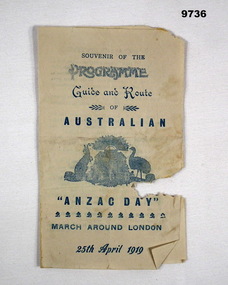
... The route taken over 12 streets, at Mansion House the Lord Mayor will take the Salute, the Prince of Wales to take a Salute at Australia House, secretary for War Winston Churchill and members of the Army Council, Australian Airmen will fly over in 14 Aircraft. ...The route taken over 12 streets, at Mansion House the Lord Mayor will take the Salute, the Prince of Wales to take a Salute at Australia House, secretary for War Winston Churchill and members of the Army Council, Australian Airmen will fly over in 14 Aircraft. ...Item in the collection relating to C.J.C. McQuie MM, refer Cat No 9680P for his service details. The March as per cover was held on 25th April 1919 in London. The program gives full details of the days events which include 5,000 troops from the 5 Australian Diviisions, Light Horse Division, Artilley, 18 PDR Battery all led by the General Officers of the Divisions on Horse back. The route taken over 12 streets, at Mansion House the Lord Mayor will take the Salute, the Prince of Wales to take a Salute at Australia House, secretary for War Winston Churchill and members of the Army Council, Australian Airmen will fly over in 14 Aircraft. After a luncheon in the Egyptian Hall for 350 of the men plus distinguished guests, evening will be a reception at Australia House for 1,500 guests held by the Riight Honorable Andrew and Mrs Fisher.Program, paper folded, front cover in all blue print, inside is all black print, rear page is clear.program, anzac, 1919, mcquie -
 Bendigo Historical Society Inc.
Document - NORTHERN DISTRICT SCHOOL OF NURSING: TRIBUTE, 8/6/1989
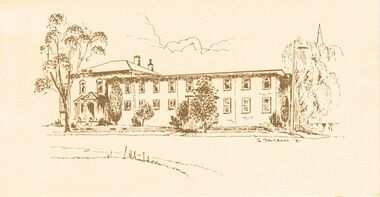
... House. It is with Pride and sadness that we say farewell to LISTER HOUSE.This will end 39 years of Nurse Training unique in Australia. The final farewell to student nurses in the present Certificate Course at the Northern District School of Nursing will take place on June 8th,1989 when School 108 completes Examinations.The old mansion, LISTER HOUSE, belonged to Bendigo's golden years of the 19th Century. ...House. It is with Pride and sadness that we say farewell to LISTER HOUSE.This will end 39 years of Nurse Training unique in Australia. The final farewell to student nurses in the present Certificate Course at the Northern District School of Nursing will take place on June 8th,1989 when School 108 completes Examinations.The old mansion, LISTER HOUSE, belonged to Bendigo's golden years of the 19th Century. ...Document, Northern District School of Nursing, farewell to Lister House. It is with Pride and sadness that we say farewell to LISTER HOUSE.This will end 39 years of Nurse Training unique in Australia. The final farewell to student nurses in the present Certificate Course at the Northern District School of Nursing will take place on June 8th,1989 when School 108 completes Examinations.The old mansion, LISTER HOUSE, belonged to Bendigo's golden years of the 19th Century. By courtesy of Ron Webb and Jenny Reid. The front cover depicts a drawing of Lister House by G.Samson '81.Ron Webb and Jenny Reiddocument, lister house -
 Bacchus Marsh & District Historical Society
Map, Plan of the second portion of the property of Messers Atkins and Clarke situate at Bacchus Marsh 1856
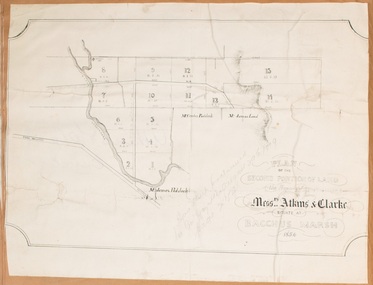
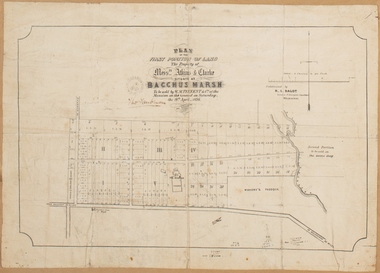
... The subdivided land shown was owned by John Aitkins and Robert Nalder Clarke, but previously owned by the Bacchus Family and was in and around their Manor House (Mansion) property in Bacchus Marsh. This plan shows allotments in the second portion of land to be sold which was located east of the Manor House on the eastern side of the Lerderderg River. ...The subdivided land shown was owned by John Aitkins and Robert Nalder Clarke, but previously owned by the Bacchus Family and was in and around their Manor House (Mansion) property in Bacchus Marsh. This plan shows allotments in the second portion of land to be sold which was located east of the Manor House on the eastern side of the Lerderderg River. ...This plan of land allotments for sale indicates part of the property once owned by the Bacchus family in and around the township area of Bacchus Marsh. The Bacchus family sold their property in Bacchus Marsh to John Aitkins and Robert Nalder Clarke in March 1851. Aitkins and Clarke kept the property for a number of years until April 1856 when these allotments were put up for sale.This is a very early land sales plan for agricultural land close to the township of Bacchus Marsh. It therefore provides some clues as to how the early urban development of the township and agricultural development of the nearby area took place. Upon seeing the map in 1911 Bacchus Marsh Express newspaper editor Christopher Crisp wrote "The sale appears to have created the present township, which had a nucleus in earlier times further east", Express, 30 September, 1911, page 3.A single page paper plan showing allotments of land for sale. The subdivided land shown was owned by John Aitkins and Robert Nalder Clarke, but previously owned by the Bacchus Family and was in and around their Manor House (Mansion) property in Bacchus Marsh. This plan shows allotments in the second portion of land to be sold which was located east of the Manor House on the eastern side of the Lerderderg River. The land for sale was made up of 15 allotments. The plan is pasted into a bound volume containing 76 maps or plans in total. BMDHS Loc: AR/B12/S4 Bacchus Marsh Township and Nearby Districts Maps Volume In-house Digital copies: BMDHS, Computer Network: Maps\Bacchus Marsh Township and Nearby Districts Maps Volumebacchus marsh victoria maps, bacchus family, land sales, manor house bacchus marsh -
 Bacchus Marsh & District Historical Society
Map, Atkins and Clarke Land Sale situate at Bacchus Marsh 1856 Copy 2
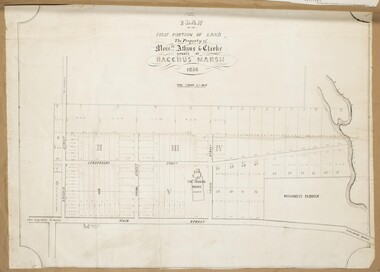
... The subdivided land shown was owned by John Atkins and Robert Nalder Clarke, but previously owned by the Bacchus Family and was in and around their Manor House (Mansion) property in Bacchus Marsh.There are 5 portions of land further divided into numerous small portions. ...The subdivided land shown was owned by John Atkins and Robert Nalder Clarke, but previously owned by the Bacchus Family and was in and around their Manor House (Mansion) property in Bacchus Marsh.There are 5 portions of land further divided into numerous small portions. ...This plan of land allotments for sale indicates the property once owned by the Bacchus family in and around the township area of Bacchus Marsh. The Bacchus family sold their property in Bacchus Marsh to John Atkins and Robert Nalder Clarke in March 1851. Atkins and Clarke kept the property for a number of years until April 1856 when these allotments were put up for sale.This plan is almost identical to another copy held by the Bacchus Marsh and District Historical Society, VC Record 707, BMDHS collection). This plan, VC Record 452 Copy 2, contains a less detail than than VC Record 707 Copy 1. For example the selling agents and the surveyor who created the plan are not indicated on this copy of the plan. This copy of the plan does indicate the name Crook Street on the map. As the Crook family were the buyers of the Manor House property and surrounding land from Atkins and Clarke in 1856 it suggests that this copy is a later one of the earlier version. It is unlikely that the Crook family would have had the adjacent street named after them prior to purchasing the house and property. This is a very early land sales plan for the township of Bacchus Marsh and it therefore provides some clues as to how the early urban development of the township took place. Upon seeing the map in 1911 Bacchus Marsh Express newspaper editor Christopher Crisp wrote "The sale appears to have created the present township, which had a nucleus in earlier times further east", Express, 30 September, 1911, page 3. A single page paper map showing a portions of land available for sale in Bacchus Marsh in 1856. The subdivided land shown was owned by John Atkins and Robert Nalder Clarke, but previously owned by the Bacchus Family and was in and around their Manor House (Mansion) property in Bacchus Marsh.There are 5 portions of land further divided into numerous small portions. The land for sale is bounded by the present day streets of Main Street, Young Street, McFarland Street, Morton Streets, Crook Street, and part of the eastern section extends to the Lerderderg River. Scale: 4 chains to 1 inch. The map is pasted into a bound volume containing 76 maps or plans in total. High resolution digital image stored on BMDHS computer network. Plan of the first portion of land. The property of Messers Atkins and Clarke situate at Bacchus Marsh.land sales, land sales bacchus marsh, manor house bacchus marsh, crook family bacchus marsh -
 Federation University Historical Collection
Photograph, Ballarat photographs by Geoff Biddington, 1967, 1967
... After the Queen's Church of England Girls' Grammar School acquired the property in 1919, the mansion was renamed Manifold House. Manifold House now accommodates administrative facilities of the campus and staff offices. ...After the Queen's Church of England Girls' Grammar School acquired the property in 1919, the mansion was renamed Manifold House. Manifold House now accommodates administrative facilities of the campus and staff offices. ....6) Australian Catholic University Ballarat Campus (Aquinas) is set in the historic gardens of Carn Brea, formerly the property of Cornish miner Cyrus Retallack. The property includes a two-storey mansion, which he built as his family home in 1881. Carn Brea, a castle in Cornwall, was built in the 1500s. After the Queen's Church of England Girls' Grammar School acquired the property in 1919, the mansion was renamed Manifold House. Manifold House now accommodates administrative facilities of the campus and staff offices. (http://www.acu.edu.au/about_acu/campuses/ballarat/history_of_ballarat_campus, accesses 21 August 2014)Nine black and white images by Geoff Biddington. .1) Burke and Wills Monument, corner Sturt Street and Lydiard Street, with the MLS Building and Allan Brothers in the background. .2) Former Ballarat Post Office (later Federation University Post Office Gallery) .3) Tram in Sturt Street .4) Geelong ? shopping centre .5) Geelong Waterworks and Sewerage Trust .6) Carn Brae / Retallacks / Queen's / Australian Catholic University, 1200 Mair Street .7) Former Ballarat Post OFfice, Lydiard Street .8) Perseus Statue, Camp Street (removed for conservation in 2008) .9 McDonald Printer, 48 Lydiard Stgeoff biddington, ballarat, ballarat post office, geelong waterworks, perseus, mcdonald, acu, carn brae, australian catholic university ballarat, burk and wills monument, mlc building ballarat, allan brothers ballarat, lydiard street, sturt street -
 Bacchus Marsh & District Historical Society
Map, Plan of the property of Messers Atkins and Clarke to be sold at the Mansion, Bacchus Marsh 19th April 1856. Copy 1
... The subdivided land shown was owned by John Atkins and Robert Nalder Clarke, but previously owned by the Bacchus Family and was in and around their Manor House (Mansion) property in Bacchus Marsh.There are 5 portions of land further divided into numerous small portions. ...The subdivided land shown was owned by John Atkins and Robert Nalder Clarke, but previously owned by the Bacchus Family and was in and around their Manor House (Mansion) property in Bacchus Marsh.There are 5 portions of land further divided into numerous small portions. ...This plan of land allotments for sale indicates the property once owned by the Bacchus family in and around the township area of Bacchus Marsh. The Bacchus family sold their property in Bacchus Marsh to John Atkins and Robert Nalder Clarke in March 1851. Atkins and Clarke kept the property for a number of years until April 1856 when these allotments were put up for sale.This plan is almost identical to another copy held by the Bacchus Marsh and District Historical Society, VC Record 452, BMDHS collection). This plan, VC Record 707 Copy 1, contains a little more detail overall than VC Record 452 Copy 2, such as who did the survey work for the plan (R.C. Bagot) and who the selling agents were, (W.M. Tennent), and on the right side of the plan near the Lerderderg River is indicated the general area for a second parcel of land from this sale which is to be sold. There is also a compass illustration indicating north and south compass points.This is a very early land sales plan for the township of Bacchus Marsh and it therefore provides some clues as to how the early urban development of the township took place. Upon seeing the map in 1911 Bacchus Marsh Express newspaper editor Christopher Crisp wrote "The sale appears to have created the present township, which had a nucleus in earlier times further east", Express, 30 September, 1911, page 3.A single page paper plan showing allotments of land for sale. The subdivided land shown was owned by John Atkins and Robert Nalder Clarke, but previously owned by the Bacchus Family and was in and around their Manor House (Mansion) property in Bacchus Marsh.There are 5 portions of land further divided into numerous small portions. The land for sale is bounded by the present day streets of Main Street, Young Street, McFarland Street, Morton Streets, Crook Street, and part of the eastern section extends to the Lerderderg River. Scale: 8 chains to 1 inch The plan is pasted into a bound volume containing 76 maps or plans in total. BMDHS Loc: AR/B12/S4 Bacchus Marsh Township and Nearby Districts Maps Volume In-house Digital copies: BMDHS, Computer Network: Maps\Bacchus Marsh Township and Nearby Districts Maps VolumeHeading: Plan of the first portion of land. The property of Messers Atkins and Clarke situate at Bacchus Marsh. To be sold by W.M. Tennent & Co. at the Mansion on the Ground on Saturday the 19th April 1856. Below heading: Jas Ferguson, Lithographer On upper right side: Subdivided by R.C. Bagot London and Liverpool Chambers, Melbourne. 'Thos Taubman'. Post Office Stamp: BACCHUS MARSH VICTORIA MY 6, 63bacchus marsh victoria maps, bacchus family, land sales, manor house bacchus marsh -
 Glen Eira Historical Society
Album - Album page, Labassa, 4 Manor Grove, Circa 1972
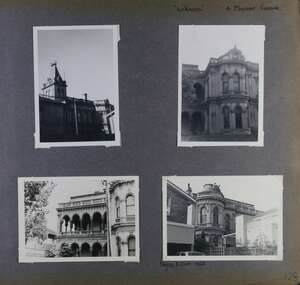
... Koch, to extensively remodel the house into a thirty-five roomed mansion. The existing house was extended and altered, largely resulting in the nineteenth century mansion as it now appears. ...Koch, to extensively remodel the house into a thirty-five roomed mansion. The existing house was extended and altered, largely resulting in the nineteenth century mansion as it now appears. ...This photograph is part of the Caulfield Historical Album 1972. This album was created in approximately 1972 as part of a project by the Caulfield Historical Society to assist in identifying buildings worthy of preservation. The album is related to a Survey the Caulfield Historical Society developed in collaboration with the National Trust of Australia (Victoria) and Caulfield City Council to identify historic buildings within the City of Caulfield that warranted the protection of a National Trust Classification. Principal photographer thought to be Trevor Hart, member of Caulfield Historical Society. Most photographs were taken between 1966-1972 with a small number of photographs being older and from unknown sources. All photographs are black and white except where stated, with 386 photographs over 198 pages. HISTORY:-- From Victorian Heritage Database citation for Labassa https://vhd.heritagecouncil.vic.gov.au/places/278 as at (26/10/2020) Labassa, Caulfield is one of Melbourne's most lavishly decorated nineteenth century mansions. It resulted from the extensive remodelling in 1890, of an earlier house, known as Sylliott Hill, which was begun in 1862-3 for lawyer, Richard A. Billing. The land at the corner of Balaclava and Orrong Roads was first acquired in 1854 by William Lyall, transferred to his partner, John Mickle, in 1859, who also acquired the adjoining allotment in Balaclava Road, and the three allotments were conveyed to Billing. His first eight-roomed house was extended significantly in 1873 into a twenty-roomed house by architects Crouch and Wilson, who were possibly also responsible for the first house. This reflected Billing's success as a barrister, and he resided at this property until his death in 1882. In 1883 prominent Melbourne businessman, Alexander William Robertson, leased the Sylliott Hill property from Billing's widow, and in 1885 he purchased the adjoining allotment in Balaclava Road. He purchased the Billing's property in 1887 and renamed the 6.31 hectare property, Ontario. In 1889-90, Robertson commissioned the German born architect, John A. B. Koch, to extensively remodel the house into a thirty-five roomed mansion. The existing house was extended and altered, largely resulting in the nineteenth century mansion as it now appears. After Robertson's death in 1896, the house was tenanted until it was eventually sold to the mining millionaire, John Boyd Watson, in 1904. He renamed the property Labassa and carried out repair and re-decoration work to the house. In the early twentieth century, many large estates were subdivided into smaller allotments as the demand for land grew and it became difficult to maintain such large estates. After Watson's death in 1911, portions of the Labassa estate were offered for sale, with Mrs Watson retaining a 1.73 hectare portion containing the house. In 1913 forty-six allotments were auctioned at Labassa Estate, with the formation of Labassa Grove and Ontario Street to the east of the property. Labassa was first recorded as containing flats in 1923 and in the late 1920s, the owner, Robert Hannon, built a red brick block of flats adjacent to the house. Subdivision continued, until the National Trust of Australia (Victoria) purchased the house in 1980 and subsequently purchased adjoining sites, one to the south-east in 1984 (house demolished in 1988) and to the west in 1988. Labassa as it now stands is substantially as it appeared when Koch completed the work in 1890. The original two storey house was transformed into a French Renaissance style mansion, with the addition of a two level L-shaped arcaded verandah and two prominent terminating bays to the south and the east. The building is of unpainted cement render with dressed bluestone plinths, balustraded parapet and steep, slate covered, flat topped mansard roofs behind. A truncated conical roof is a feature of the south bay and a helmeted head is incorporated in the parapet over the east bay. The main south and east facades incorporate many cast cement details, including sculptures, elaborate cornices, swagged Corinthian columns and caryatid consoles flanking the entrance porch, as well as pink marble panels and imitation marble, or scagliola, on curved surfaces. At the rear of the building is a two storey wing and a single storey cottage, the former being connected to the main house by a tower. This section of the house was constructed in 1873. The estate at its peak included stables (1873), conservatory (probably 1890) and a tennis pavilion (probably 1890). All of these outbuildings survive, with the stables and conservatory being converted for residential use after 1922. Internally a range of decorative treatments remain from the late nineteenth century and the early twentieth century, both from the Robertson and Watson periods of occupancy. These include wallpapers, ceiling decoration, chimney pieces, mouldings, joinery and decorative glass. From Victorian Heritage Database citation for H0135 Labassa 2/2A Manor Grove Caulfield North https://vhd.heritagecouncil.vic.gov.au/places/278 as at (26/10/2020) HOW IS IT SIGNIFICANT? Labassa, Caulfield is of architectural, aesthetic and historical significance to the State of Victoria. WHY IS IT SIGNIFICANT? Labassa, Caulfield is of architectural significance as the most prominent example of a small number of houses built in Australia in the French Renaissance style. It is of further note due to the German interpretation of the style and the use of Hellenistic sources, via Germany. It is exceptional for its lavish treatment externally, including marble, scagliola, caryatids, swagged columns, mansard roofs and ornamental cresting. Labassa is of architectural significance as the most important surviving example of German architect, John Koch's domestic work. He undertook a large variety of work in Melbourne, including a number of houses, however Labassa is the most lavish example of his work. Labassa is of aesthetic significance for its outstanding assemblage of late nineteenth and early twentieth century European style interior decoration, which remain remarkably intact. These include a trompe l'oeil ceiling, painted ceilings, embossed imitation leather and other papers, chimney pieces, ceramic tilework, oak parquetry and stained glass, including a tripartite window by Ferguson and Urie, probably dating from the 1873 period. Labassa is of historical significance as an illustrative example of the wealth acquired by a number of prominent Victorian families in the second half of the 19th century. The early development of the property, Sylliott Hill, was due to the wealth acquired by Richard Billing, barrister and fifth Victorian to be appointed Queen's Counsel in 1878. The significant development in 1890 of Ontario, is illustrative of the wealth of Alexander Robertson, a partner in Cobb and Co., a director of Goldsborough Mort & Co., and a pastoral speculator. John B. Watson, whose father had acquired great wealth from the goldfields of Bendigo and subsequently invested in city and country properties, was the third resident to impact on the house, particularly the interiors. The Labassa estate is of historical significance as an illustrative example of the development that occurred in such suburbs as Caulfield in the 1880s due to the land boom, its proximity to Melbourne and the establishment of the Melbourne to Gippsland railway in 1879. It is also illustrative of an estate which succumbed to the pressures of subdividing in the early twentieth century, as properties became difficult to maintain and demand for land close to the city grew. It was typically divided into flats in the 1920s and was used as such for about sixty years. It is of historical significance for its associations with the remnants of the earlier estate which remain extant. These include the stables, conservatory (H2005) and tennis pavilion which all remain on separate sites. Also significant are the remains of early electrical wiring and fittings. Labassa was one of the first houses in Caulfield to be electrified and some of the original wires remain. [Online Data Upgrade Project 2004]Page 128 of Photograph Album with four photographs (two portrait and two landscape) of Labassa.Handwritten: "Labassa" 4 Manor Grove [top right] / Neg 232 8 Oct 1966 [under bottom right photo] / 128 [bottom right]trevor hart, bracketed eaves, slate roof, bay windows, decorative brackets, caulfield north, labassa, richard a. billing, balaclava road, orrong road, sylliott hill, william lyall, crouch and wilson, alexander william robertson, ontario, 1880's, john a. b. koch, mansion, john boyd watson, labassa grove, french renaissance style, l-shaped arcaded verandah, bluestone plinths, balustraded parapet, flat topped mansard roofs, conical roof, elaborate cornices, corinthian columns, caryatid consoles, marble panels, imitation marble, scagliola, tower, conservatory, stables, tennis pavilion, mouldings, decorative glass, caryatids, swagged columns, ornamental cresting, trompe l'oeil ceiling, embossed imitation leather, oak parquetry, stained glass, tripartite window, triple window, ferguson and urie, 1870's, flats, 1920's, electric wiring, 1860's, verandahs, curved windows, arched windows, italianate, terraces, gargoyles, ornamentation, ornate entrance, la bassa, manor grove, st kilda east, victorian, cast iron work, john koch, richard billing, architects, electrification, john mickle, land subdivision, mrs watson, labassa estate, robert hannon, national trust of australia (victoria), sculpture -
 Glen Eira Historical Society
Album - Album page, Labassa, 4 Manor Grove, Circa 1972
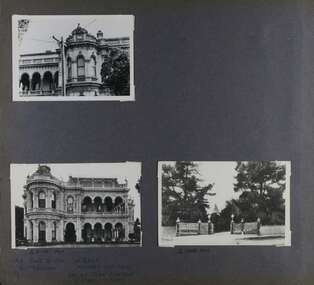
... Koch, to extensively remodel the house into a thirty-five roomed mansion. The existing house was extended and altered, largely resulting in the nineteenth century mansion as it now appears. ...Koch, to extensively remodel the house into a thirty-five roomed mansion. The existing house was extended and altered, largely resulting in the nineteenth century mansion as it now appears. ...This photograph is part of the Caulfield Historical Album 1972. This album was created in approximately 1972 as part of a project by the Caulfield Historical Society to assist in identifying buildings worthy of preservation. The album is related to a Survey the Caulfield Historical Society developed in collaboration with the National Trust of Australia (Victoria) and Caulfield City Council to identify historic buildings within the City of Caulfield that warranted the protection of a National Trust Classification. Principal photographer thought to be Trevor Hart, member of Caulfield Historical Society. Most photographs were taken between 1966-1972 with a small number of photographs being older and from unknown sources. All photographs are black and white except where stated, with 386 photographs over 198 pages. HISTORY:-- From Victorian Heritage Database citation for Labassa https://vhd.heritagecouncil.vic.gov.au/places/278 as at (26/10/2020) Labassa, Caulfield is one of Melbourne's most lavishly decorated nineteenth century mansions. It resulted from the extensive remodelling in 1890, of an earlier house, known as Sylliott Hill, which was begun in 1862-3 for lawyer, Richard A. Billing. The land at the corner of Balaclava and Orrong Roads was first acquired in 1854 by William Lyall, transferred to his partner, John Mickle, in 1859, who also acquired the adjoining allotment in Balaclava Road, and the three allotments were conveyed to Billing. His first eight-roomed house was extended significantly in 1873 into a twenty-roomed house by architects Crouch and Wilson, who were possibly also responsible for the first house. This reflected Billing's success as a barrister, and he resided at this property until his death in 1882. In 1883 prominent Melbourne businessman, Alexander William Robertson, leased the Sylliott Hill property from Billing's widow, and in 1885 he purchased the adjoining allotment in Balaclava Road. He purchased the Billing's property in 1887 and renamed the 6.31 hectare property, Ontario. In 1889-90, Robertson commissioned the German born architect, John A. B. Koch, to extensively remodel the house into a thirty-five roomed mansion. The existing house was extended and altered, largely resulting in the nineteenth century mansion as it now appears. After Robertson's death in 1896, the house was tenanted until it was eventually sold to the mining millionaire, John Boyd Watson, in 1904. He renamed the property Labassa and carried out repair and re-decoration work to the house. In the early twentieth century, many large estates were subdivided into smaller allotments as the demand for land grew and it became difficult to maintain such large estates. After Watson's death in 1911, portions of the Labassa estate were offered for sale, with Mrs Watson retaining a 1.73 hectare portion containing the house. In 1913 forty-six allotments were auctioned at Labassa Estate, with the formation of Labassa Grove and Ontario Street to the east of the property. Labassa was first recorded as containing flats in 1923 and in the late 1920s, the owner, Robert Hannon, built a red brick block of flats adjacent to the house. Subdivision continued, until the National Trust of Australia (Victoria) purchased the house in 1980 and subsequently purchased adjoining sites, one to the south-east in 1984 (house demolished in 1988) and to the west in 1988. Labassa as it now stands is substantially as it appeared when Koch completed the work in 1890. The original two storey house was transformed into a French Renaissance style mansion, with the addition of a two level L-shaped arcaded verandah and two prominent terminating bays to the south and the east. The building is of unpainted cement render with dressed bluestone plinths, balustraded parapet and steep, slate covered, flat topped mansard roofs behind. A truncated conical roof is a feature of the south bay and a helmeted head is incorporated in the parapet over the east bay. The main south and east facades incorporate many cast cement details, including sculptures, elaborate cornices, swagged Corinthian columns and caryatid consoles flanking the entrance porch, as well as pink marble panels and imitation marble, or scagliola, on curved surfaces. At the rear of the building is a two storey wing and a single storey cottage, the former being connected to the main house by a tower. This section of the house was constructed in 1873. The estate at its peak included stables (1873), conservatory (probably 1890) and a tennis pavilion (probably 1890). All of these outbuildings survive, with the stables and conservatory being converted for residential use after 1922. Internally a range of decorative treatments remain from the late nineteenth century and the early twentieth century, both from the Robertson and Watson periods of occupancy. These include wallpapers, ceiling decoration, chimney pieces, mouldings, joinery and decorative glass.From Victorian Heritage Database citation for H0135 Labassa 2/2A Manor Grove Caulfield North https://vhd.heritagecouncil.vic.gov.au/places/278 as at (26/10/2020) HOW IS IT SIGNIFICANT? Labassa, Caulfield is of architectural, aesthetic and historical significance to the State of Victoria. WHY IS IT SIGNIFICANT? Labassa, Caulfield is of architectural significance as the most prominent example of a small number of houses built in Australia in the French Renaissance style. It is of further note due to the German interpretation of the style and the use of Hellenistic sources, via Germany. It is exceptional for its lavish treatment externally, including marble, scagliola, caryatids, swagged columns, mansard roofs and ornamental cresting. Labassa is of architectural significance as the most important surviving example of German architect, John Koch's domestic work. He undertook a large variety of work in Melbourne, including a number of houses, however Labassa is the most lavish example of his work. Labassa is of aesthetic significance for its outstanding assemblage of late nineteenth and early twentieth century European style interior decoration, which remain remarkably intact. These include a trompe l'oeil ceiling, painted ceilings, embossed imitation leather and other papers, chimney pieces, ceramic tilework, oak parquetry and stained glass, including a tripartite window by Ferguson and Urie, probably dating from the 1873 period. Labassa is of historical significance as an illustrative example of the wealth acquired by a number of prominent Victorian families in the second half of the 19th century. The early development of the property, Sylliott Hill, was due to the wealth acquired by Richard Billing, barrister and fifth Victorian to be appointed Queen's Counsel in 1878. The significant development in 1890 of Ontario, is illustrative of the wealth of Alexander Robertson, a partner in Cobb and Co., a director of Goldsborough Mort & Co., and a pastoral speculator. John B. Watson, whose father had acquired great wealth from the goldfields of Bendigo and subsequently invested in city and country properties, was the third resident to impact on the house, particularly the interiors. The Labassa estate is of historical significance as an illustrative example of the development that occurred in such suburbs as Caulfield in the 1880s due to the land boom, its proximity to Melbourne and the establishment of the Melbourne to Gippsland railway in 1879. It is also illustrative of an estate which succumbed to the pressures of subdividing in the early twentieth century, as properties became difficult to maintain and demand for land close to the city grew. It was typically divided into flats in the 1920s and was used as such for about sixty years. It is of historical significance for its associations with the remnants of the earlier estate which remain extant. These include the stables, conservatory (H2005) and tennis pavilion which all remain on separate sites. Also significant are the remains of early electrical wiring and fittings. Labassa was one of the first houses in Caulfield to be electrified and some of the original wires remain. [Online Data Upgrade Project 2004]Page 129 of Photograph Album with three landscape photographs of Labassa. One of the photographs is of Labassa's drive and gates.Handwritten: 4 JUNE 1910 / SALE JUNE 28 1910 "LA BASSA' / "AUSTRALASIAN" FORMERLY "ONTARIO"/ RES OF JOHN B WATSON / 15 ACRES 3 ROADS [under bottom left photo] / 4 JUNE 1910 [under bottom right photo] / 129 [bottom left]trevor hart, bracketed eaves, intricate lacework, slate roof, bay windows, decorative brackets, caulfield north, labassa, richard a. billing, balaclava road, orrong road, sylliott hill, william lyall, crouch and wilson, alexander william robertson, ontario, 1880's, john a. b. koch, mansion, john boyd watson, labassa grove, french renaissance style, l-shaped arcaded verandah, bluestone plinths, balustraded parapet, flat topped mansard roofs, conical roof, elaborate cornices, corinthian columns, caryatid consoles, marble panels, imitation marble, scagliola, tower, conservatory, stables, tennis pavilion, mouldings, decorative glass, caryatids, swagged columns, ornamental cresting, trompe l'oeil ceiling, embossed imitation leather, oak parquetry, stained glass, tripartite window, triple window, ferguson and urie, 1870's, flats, 1920's, electric wiring, 1860's, verandahs, curved windows, arched windows, italianate, terraces, gargoyles, ornamentation, ornate entrance, la bassa, manor grove, st kilda east, gates, cast iron work, richard billing, architects, john koch, electrification, victorian style, drives, john mickle, land subdivision, mrs watson, labassa estate, robert hannon, national trust of australia (victoria), sculpture -
 Flagstaff Hill Maritime Museum and Village
Container - Ink bottle, MABIE TODD & Co. (Aust.) Pty. Ltd, Second half of 19th Century or first half of the 20th Century
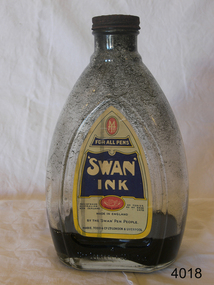
... Another new headquarters grew out of this period of abundance and market domination. when in 1936 they moved into Sunderland House in Mayfair, London, a highly prized mansion building. Disaster struck early in the Second World War. ...Another new headquarters grew out of this period of abundance and market domination. when in 1936 they moved into Sunderland House in Mayfair, London, a highly prized mansion building. Disaster struck early in the Second World War. ...A Brief History Of Mabie Todd Ltd The company originated in America from the beginnings during the 1860s when a Mr. Todd and a Mr. Mabie began making pencil cases and pen holders in New York. Later they were joined by the Bard Brothers who made Gold nibs and by 1873 the company of Mabie Todd and Bard were established in New York. By 1878 the first patent was filed for the design and manufacture of a fountain pen, achieved under the design leadership of one William Washington Stewart. The first Swan fountain pen followed just 6 years later in 1884 with an over-under feed with ink delivery assisted by a twisted silver wire. This same year an office had been established in the UK with a showroom in Cheapside, London. The UK was being supplied with a steadily increasing supply of pens from New York and by 1905 new, larger showrooms were established in High Holborn. By this time the Swan pen had become synonymous with fountain pens at large. In 1906 the name of Bard was dropped in the US and the UK company subsequently adopted the title Mabie Todd & Co. New York. In 1907 British production began, using imported nibs from New York and whilst the company in the UK flourished, the business in the US started to diminish under stiff competition from new manufacturers.. By 1915 manufacturing was doing well in England from a factory in Weston Street, London and the New York company agreed to sell the rights to all European and Colonial business to Mabie Todd & Company Ltd of England. From then onwards, the development of the range mostly followed, rather than led the interests of the markets they were supplying. Even during the First World War the business continued to flourish. with factories in both London and Liverpool. At the end of 1919 a new expansion plan saw the establishment of a new Headquarters in Oxford Street, London. Throughout this period, some components were continuing to be imported from America, but gradually these diminished and during the 20s and 30s manufacturing facilities were expanded and by the end of the 1930s Mabie Todd were in full production, manufacturing pens in its London factory, gold nibs in Birmingham and ink in Liverpool. Another new headquarters grew out of this period of abundance and market domination. when in 1936 they moved into Sunderland House in Mayfair, London, a highly prized mansion building. Disaster struck early in the Second World War. Its prestigious Sunderland House headquarters was destroyed during the blitz, followed by destruction of its main factory in Harlesden, North London. Some machinery was saved and able to be used at another factory premises in the City, but like many other 'non essential' manufacturing, the main production was centred on wartime components such as rocket fuses and ammunition. After The War, in 1945 they moved out of their City premises to Park Royal and eventually in 1946 proper fountain pen production was resumed. In 1948 the company decided to go public. But at the time they had no plans to enter into the market for the now growing interest in ballpoint pens, the result was the beginning of their slide into obscurity and subsequent demise. They became Biro Swan in 1952 following a large share purchase by Biro Pens. Even though at this time they had just launched their new high profile Calligraph range to join the competition for the new market associated with a craze for italic writing, fountain pen manufacture under the new company was to suffer a lack of real support. The restyled ranges of 1956 failed to ignite market interest and with diminishing quality, the end of the Mabie Todd story was inevitable. After 80 years of Swan pens, the book was closed.This bottle of ink would have been supplied to schools. After a child was deemed old enough to progress from just using slate and board, he/she would have been supplied with a pen shaft made of wood and with a very basic metal nib. The ink bottle would be used to fill up the individual inkwells. This operation would have been conducted by the teacher him/herself, or by an older pupil under the close eye of the teacher.Ink bottle clear glass with 'Swan Ink' paper label. Has rusted screw on top & black ink inside.Label has 'Mabel Todd' manufacturer's logo at top,; 'Swan Ink' name clearly shown; 'Made in England' printed clearly; and 'Mable Todd & Co Ltd, London & Liverpool' printed at base of label.flagstaff hill, warrnambool, shipwrecked-coast, flagstaff-hill, flagstaff-hill-maritime-museum, maritime-museum, shipwreck-coast, flagstaff-hill-maritime-village, ink, bottle, mabie todd ltd -
 Federation University Historical Collection
Photograph - Photograph Album, Photographs of Ballarat Buildings, 1967, 1967
... .25) .26) .27) Iron hitching Rail .28) Iron hitching Rail .30) Postal Box, Corner or Armstrong Street South and Eyre Street, October 1967 .31) Iron Drinking Fountain in the Ballarat Botanical Gardens .32) Iron Drinking Fountain in the Ballarat Botanical Gardens .33) Killarney, Warrenheip .34) Killarney, Warrenheip .35) Killarney, Warrenheip .36) Killarney, Warrenheip .37) Bailey's Mansion, Drummond Street .38) Bailey's Mansion, Drummond Street .39) Beaufort House .40) Beaufort House .41) ? ....25) .26) .27) Iron hitching Rail .28) Iron hitching Rail .30) Postal Box, Corner or Armstrong Street South and Eyre Street, October 1967 .31) Iron Drinking Fountain in the Ballarat Botanical Gardens .32) Iron Drinking Fountain in the Ballarat Botanical Gardens .33) Killarney, Warrenheip .34) Killarney, Warrenheip .35) Killarney, Warrenheip .36) Killarney, Warrenheip .37) Bailey's Mansion, Drummond Street .38) Bailey's Mansion, Drummond Street .39) Beaufort House .40) Beaufort House .41) ? ...When these photos were taken Geoffrey Biddington was highly involved with the Ballarat Branch of the National Trust. At one time Her Majesty's Theatre was known as the Memorial Theatre. Lenaghan of Tourello "Master Dan Lenaghan, eldest son of Mr. and Mrs. R. Lenaghan, of Tourello, has been successful in obtaining a Government scholarship, tenable for four years at St. Patrick's College, Ballarat.(Melbourne Advocate, 02 March 1939) Two Black folders of Ballarat photographs as follows: .1) Interior of Ballarat Railway Station .2) Interior of Ballarat Railway Station .3) Craig's Hotel .4) Craig's Hotel .5) Craig's Hotel .6) Craig's Hotel .7) Ballarat Fine Art Gallery later Art Gallery of Ballarat .8) Cuthberts, corner Lydiard and Mair Streets .9) Golden City Hotel (GCs) .10) Golden City Hotel (GCs) .11) Reid's Coffee Palace .12) Alexandria Tea Rooms, neighbouring Old Colonists' Club, Ballarat, Lydiard Street North .13) ? .14 Caste iron drink fountain, corner of Strurt and Drummond Streets, October 1967 .15) Lal Lal Blast Furnace .16) Ballarat Botanical Garden Gates .17) Ballaarat Old Cemetery Gates .18) Novar gate .19) Ballaarat Old Cemetery Gates .20) ? .21) Webster Street .22) Doveton Street South .23) ? .24) ? .25) .26) .27) Iron hitching Rail .28) Iron hitching Rail .30) Postal Box, Corner or Armstrong Street South and Eyre Street, October 1967 .31) Iron Drinking Fountain in the Ballarat Botanical Gardens .32) Iron Drinking Fountain in the Ballarat Botanical Gardens .33) Killarney, Warrenheip .34) Killarney, Warrenheip .35) Killarney, Warrenheip .36) Killarney, Warrenheip .37) Bailey's Mansion, Drummond Street .38) Bailey's Mansion, Drummond Street .39) Beaufort House .40) Beaufort House .41) ? .42) ? .43) ? .44) ? .45) ? .46) ? .47) ? .48) Lenaghan's Tourello, February 1968 .49) Lenaghan's Tourello, February 1968 .50) ? .51) ? .52) ? .53) ? .54) ? .55) ? .56) ? .57) ? .58) ? .59) ? .70) Her Majesty's Theatre, Lydiard Street .71) Her Majesty's Theatre, Lydiard Street .72) Dana Street Primary School, September 1967 .73) Ballarat School of Mines Administration Building, September 1967 .74) Eureka Street Primary School ? .75) Selkirk Brick Chimney? .76) Grigsby's Foundry, Mair Street, September 1967 .77) Pratt's Warehouse, Camp Street .78) Premises of R. And R.A. Williams, Mair Street, September 1967 .79) City Oval Grandstand, with fire training tower in the background, .80) City Oval Grandstand .81) City Oval Grandstand .82) Smythesdale Post Office, October 1967 .83) Court House Hotel. Smythesdale, October 1967 .84) Smythesdale, October 1967ballarat, buildings, bluestone, iron, architecture, biddington, geoff biddington, railway, old colonists, lal lal blast furnace, beaufort house, her majesty's theatre, craig's hotel, botanical gardens, bailey, cuthbert, lenaghan, tourello, smythesdale post office, court house hotel, smythesdale, smythesdale, alexandria tea rooms, cast iron, eureka street primary school, dana street primary school, ballarat school of mines administration building, grigsby brass founder, foundry, pratt's warehouse, selkirk bricks, grandstand, court house hotel -
 Mission to Seafarers Victoria
Photograph - Photograph, Sepia, Mr and Mrs Gurney Goldsmith, c. 1906-1907
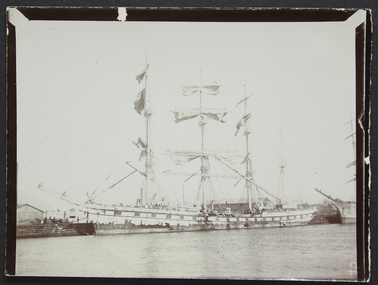
... The inscription at the back: Monomeith is a Victorian mansion, located on 67 the Strand in Williamstown. Monomeith, located 67 the Strand, in Newport was built in 1887, and was the house of Senator James Styles. ...The inscription at the back: Monomeith is a Victorian mansion, located on 67 the Strand in Williamstown. Monomeith, located 67 the Strand, in Newport was built in 1887, and was the house of Senator James Styles. ...Possibly a photograph of a damaged vessel. The inscription at the back: Monomeith is a Victorian mansion, located on 67 the Strand in Williamstown. Monomeith, located 67 the Strand, in Newport was built in 1887, and was the house of Senator James Styles. Reverend Gurney Goldsmith lived in Monomeith from 17 Octoberr 1905 to at least November 1907 (See Victorian Government Gazette: 14 November 1907) until he and his wife could move in the new central Seamen Institute open in December 1907. "Senator Styles' house, “Monomeith," Strand, has been leased to the Rev. A. Gurney Goldsmith, who has been sent to Victoria from England to establish a Church of England mission to seamen. Tho new tenant will enter into possession on October 17th and proposes to make it a rendezvous for seamen, and to get about the bay and river on an oil motor launch. It is his intention to establish a mission church and home near Victoria dock. Senator Styles and family will reside at Hawthorn." (Williamstown Advertiser, Saturday 2 September 1905, page 3) Monomeith has been housing the Westbourne Grammar School, Williamstown Campus, since it was leased from the Harbour Trust in 1956 then purchased by the school in 1972. Small monochrome photograph with a black border depicting a sailing ship berthed in docks.Disabled French Barque: Towing up the Yarra from Monomeith Gardens Newportship, melbourne., sailing ship, 1900's, french, barque, williamstown -
 Mission to Seafarers Victoria
Photograph - Photograph, Sepia, Anne Treverton Goldsmith (nee Lobb), Boxing Day at Findon, Kew 1906, 26 December 1906
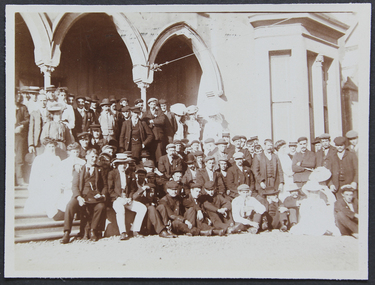
... Another outing at Findon was organised for Boxing Day in 1907, this time 125 men took part to the party. findon boxing day mrs audrey bowen football races seamen's institute lhlg kew sports tea ladies harbour lights guild mansion anne treverton goldsmith (nee lobb picnics Group of seamen standing and sitting in front of house. ...Wednesday 26 December 1906: Mrs Audrey Bowen received over 70 sailors on her property. According to the article published in The Standard (5 January 1907): "On Boxing Day a most enjoyable time was spent at "Findon," by the kindness of Mrs. Aubrey Bowen and the trustees. During the afternoon Mrs Bowen drove on to the ground and was received with hearty cheers by over 70 sailors. A game of football and races filled up the time only too rapidly, and the party returned to the tea a the Institute." Another outing at Findon was organised for Boxing Day in 1907, this time 125 men took part to the party.Group of seamen standing and sitting in front of house.findon, boxing day, mrs audrey bowen, football, races, seamen's institute, lhlg, kew, sports, tea, ladies harbour lights guild, mansion, anne treverton goldsmith (nee lobb, picnics -
 Federation University Historical Collection
Photograph, Geoff Biddington, Former Cyril Retallick House (Now Australian Catholic University), Ballarat, c1967
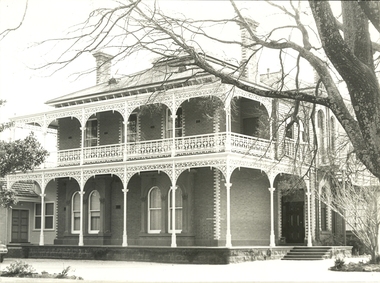
... mansion between 1882 and 1883, naming the property ‘Carn Brae’ after the castle in Cornwall. Substantial grounds were established with with range of exotic trees planted, a tennis court was laid out and a stables building was erected. In 1918 the site become a campus of Queen’s GIrls’ Grammar School, then Aquinas College which was merged into the Australian Catholic University from 1973. ballarat geoff biddington cast iron bluestone cyril retallick australian catholic university, ballarat aquinas college Photograph of a double storey brick building on bluestone foundations, with cast iron balcony. Former Cyril Retallick House ...In 1881 Cyrus Bath Retallack purchased land now known as 1200 Mair Street Ballarat. Retallack was a successful Cornish miner and engineer. He built a two storey brick mansion between 1882 and 1883, naming the property ‘Carn Brae’ after the castle in Cornwall. Substantial grounds were established with with range of exotic trees planted, a tennis court was laid out and a stables building was erected. In 1918 the site become a campus of Queen’s GIrls’ Grammar School, then Aquinas College which was merged into the Australian Catholic University from 1973. Photograph of a double storey brick building on bluestone foundations, with cast iron balcony. ballarat, geoff biddington, cast iron, bluestone, cyril retallick, australian catholic university, ballarat, aquinas college -
 Greensborough Historical Society
Book, Cheryl Scott, Osborne House - celebrating 150 years - 1858-2008, 2008c
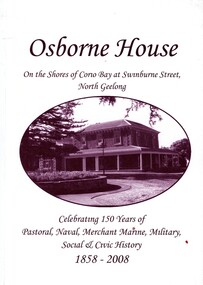
... Originally built as a squatter's mansion in North Geelong 1858, Osborne House is currently owned by Geelong City Council and is used for community purposes. ...Originally built as a squatter's mansion in North Geelong 1858, Osborne House is currently owned by Geelong City Council and is used for community purposes. ...Originally built as a squatter's mansion in North Geelong 1858, Osborne House is currently owned by Geelong City Council and is used for community purposes. This is a history of the house and its various uses.79 p. paperback printed in black, illus.geeelong, osborne house -
 Greensborough Historical Society
Article - Newspaper Clipping (copy), Michelle Pountney, Big dig unearths city's rich past, 18/01/1999
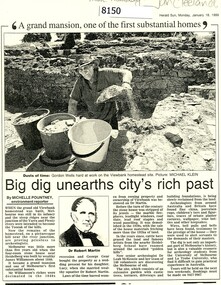
... The house was built c1840 by James Williamson; it was later purchased by George Gear as a wedding gift to his daughter on her marriage to Dr Robert Martin. It became a grand mansion...The house was built c1840 by James Williamson; it was later purchased by George Gear as a wedding gift to his daughter on her marriage to Dr Robert Martin. It became a grand mansion ...In 1999, an archaeological dig was undertaken at the Viewbank Homestead site in Viewbank. The house was built c1840 by James Williamson; it was later purchased by George Gear as a wedding gift to his daughter on her marriage to Dr Robert Martin. It became a grand mansion in the late 1800s but by the 1920s, it was stripped bare of materials and demolished in the 1920s. The archaeological dig was and insight into early life in the Viewbank HomesteadCopy of news clipping, black and white text and images.viewbank homestead, banyule road viewbank, viewbank, archaeological digs -
 Greensborough Historical Society
Article - Article, Journal, Forgotten but not lost, 1999
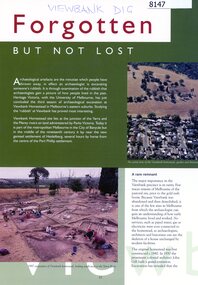
... The house was built c1840 by James Williamson; it was later purchased by George Gear as a wedding gift to his daughter on her marriage to Dr Robert Martin. It became a grand mansion...The house was built c1840 by James Williamson; it was later purchased by George Gear as a wedding gift to his daughter on her marriage to Dr Robert Martin. It became a grand mansion ...In 1999, an archaeological dig was undertaken at the Viewbank Homestead site in Viewbank. The house was built c1840 by James Williamson; it was later purchased by George Gear as a wedding gift to his daughter on her marriage to Dr Robert Martin. It became a grand mansion in the late 1800s but by the 1920s, it was stripped bare of materials and demolished in the 1920s. The archaeological dig was an insight into early life in the Viewbank HomesteadMagazine clipping, colour text and images.viewbank homestead, banyule road viewbank, viewbank, archaeological digs -
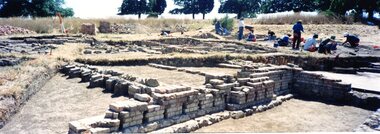 Greensborough Historical Society
Photograph - Photograph Collection, Jan Macdonald, Viewbank Homestead archaeological excavation 1999, 1999
... The house was built c1840 by James Williamson; it was later purchased by George Gear as a wedding gift to his daughter on her marriage to Dr Robert Martin. It became a grand mansion...The house was built c1840 by James Williamson; it was later purchased by George Gear as a wedding gift to his daughter on her marriage to Dr Robert Martin. It became a grand mansion ...In 1999, an archaeological dig was undertaken at the Viewbank Homestead site in Viewbank. This set of photographs was taken at the dig site in 1999. The house was built c1840 by James Williamson; it was later purchased by George Gear as a wedding gift to his daughter on her marriage to Dr Robert Martin. It became a grand mansion in the late 1800s but by the 1920s, it was stripped bare of materials and demolished in the 1920s. The archaeological dig was and insight into early life in the Viewbank HomesteadSet of 8 panoramic photos of archaeological dig and flyer for dig.viewbank homestead, banyule road viewbank, viewbank, archaeological digs -
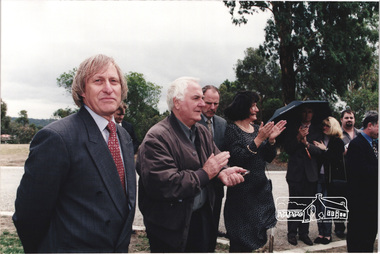 Eltham District Historical Society Inc
Photograph, Standing L-R: Nillumbik Shire President Robert Marshall, Architect Graeme Gunn and owners Architect Ian Jelbart and his wife, Christine Jelbart at the launch of the Kinloch Gardens development, 93 Arthur Street, Eltham, April 1998, April 1998
... mansion set on 2.4ha in Arthur St. The launch was attended by Planning Minister Rob Maclellan and Nillumbik Shire president Robert Marshall, Architects Graeme Gunn and Ian Jelbart and approximately 100 guests. arthur street, christine jelbart, eltham, graeme gunn, houses, ian jelbart, jelbart property, kinloch gardens, robert marshall, woodridge estate 1 images; digital file only; created from scan undertaken by EDHS of a set of 34 colour 10 x 15 cm prints Standing L-R: Nillumbik Shire President Robert Marshall, Architect Graeme Gunn and owners Architect Ian Jelbart and his wife, Christine Jelbart at the launch of the Kinloch Gardens development, 93 Arthur Street, Eltham, April 1998 Photograph Photograph ...Launch of the Kinloch Gardens development, 12 new double and triple storey homes along a private road in the gardens of Kinloch, a mansion set on 2.4ha in Arthur St. The launch was attended by Planning Minister Rob Maclellan and Nillumbik Shire president Robert Marshall, Architects Graeme Gunn and Ian Jelbart and approximately 100 guests.1 images; digital file only; created from scan undertaken by EDHS of a set of 34 colour 10 x 15 cm prints arthur street, christine jelbart, eltham, graeme gunn, houses, ian jelbart, jelbart property, kinloch gardens, robert marshall, woodridge estate -
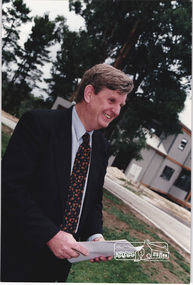 Eltham District Historical Society Inc
Photograph, Planning Minister Rob Maclellan addressing the guests at the launch of the Kinloch Gardens development, 93 Arthur Street, Eltham, April 1998, April 1998
... mansion set on 2.4ha in Arthur St. The launch was attended by Planning Minister Rob Maclellan and Nillumbik Shire president Robert Marshall, Architects Graeme Gunn and Ian Jelbart and approximately 100 guests. arthur street, eltham, houses, jelbart property, kinloch gardens, rob maclellan, woodridge estate 2 images; digital file only; created from scan undertaken by EDHS of a set of 34 colour 10 x 15 cm prints Planning Minister Rob Maclellan addressing the guests at the launch of the Kinloch Gardens development, 93 Arthur Street, Eltham, April 1998 Photograph Photograph ...Launch of the Kinloch Gardens development, 12 new double and triple storey homes along a private road in the gardens of Kinloch, a mansion set on 2.4ha in Arthur St. The launch was attended by Planning Minister Rob Maclellan and Nillumbik Shire president Robert Marshall, Architects Graeme Gunn and Ian Jelbart and approximately 100 guests.2 images; digital file only; created from scan undertaken by EDHS of a set of 34 colour 10 x 15 cm prints arthur street, eltham, houses, jelbart property, kinloch gardens, rob maclellan, woodridge estate -
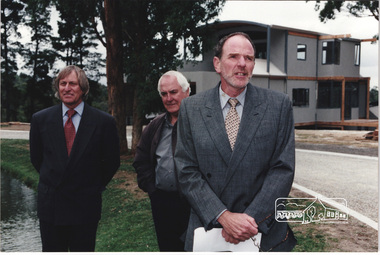 Eltham District Historical Society Inc
Photograph, Standing L-R: Nillumbik Shire President Robert Marshall, Architect Graeme Gunn and owner Architect Ian Jelbart addressing the guests at the launch of the Kinloch Gardens development, 93 Arthur Street, Eltham, April 1998, April 1998
... mansion set on 2.4ha in Arthur St. The launch was attended by Planning Minister Rob Maclellan and Nillumbik Shire president Robert Marshall, Architects Graeme Gunn and Ian Jelbart and approximately 100 guests. arthur street, eltham, graeme gunn, houses, ian jelbart, jelbart property, kinloch gardens, robert marshall, woodridge estate 3 images; digital file only; created from scan undertaken by EDHS of a set of 34 colour 10 x 15 cm prints Standing L-R: Nillumbik Shire President Robert Marshall, Architect Graeme Gunn and owner Architect Ian Jelbart addressing the guests at the launch of the Kinloch Gardens development, 93 Arthur Street, Eltham, April 1998 Photograph Photograph ...Launch of the Kinloch Gardens development, 12 new double and triple storey homes along a private road in the gardens of Kinloch, a mansion set on 2.4ha in Arthur St. The launch was attended by Planning Minister Rob Maclellan and Nillumbik Shire president Robert Marshall, Architects Graeme Gunn and Ian Jelbart and approximately 100 guests.3 images; digital file only; created from scan undertaken by EDHS of a set of 34 colour 10 x 15 cm prints arthur street, eltham, graeme gunn, houses, ian jelbart, jelbart property, kinloch gardens, robert marshall, woodridge estate -
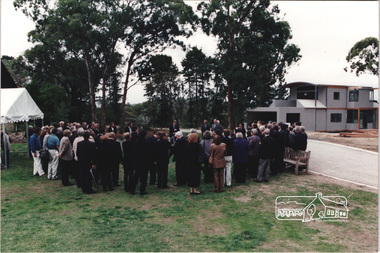 Eltham District Historical Society Inc
Photograph, Owner and Architect Ian Jelbart addressing the guests at the launch of the Kinloch Gardens development, 93 Arthur Street, Eltham, April 1998, April 1998
... mansion set on 2.4ha in Arthur St. The launch was attended by Planning Minister Rob Maclellan and Nillumbik Shire president Robert Marshall, Architects Graeme Gunn and Ian Jelbart and approximately 100 guests. arthur street, eltham, graeme gunn, houses, ian jelbart, jelbart property, kinloch gardens, robert marshall, woodridge estate 3 images; digital file only; created from scan undertaken by EDHS of a set of 34 colour 10 x 15 cm prints Owner and Architect Ian Jelbart addressing the guests at the launch of the Kinloch Gardens development, 93 Arthur Street, Eltham, April 1998 Photograph Photograph ...Launch of the Kinloch Gardens development, 12 new double and triple storey homes along a private road in the gardens of Kinloch, a mansion set on 2.4ha in Arthur St. The launch was attended by Planning Minister Rob Maclellan and Nillumbik Shire president Robert Marshall, Architects Graeme Gunn and Ian Jelbart and approximately 100 guests.3 images; digital file only; created from scan undertaken by EDHS of a set of 34 colour 10 x 15 cm prints arthur street, eltham, graeme gunn, houses, ian jelbart, jelbart property, kinloch gardens, robert marshall, woodridge estate -
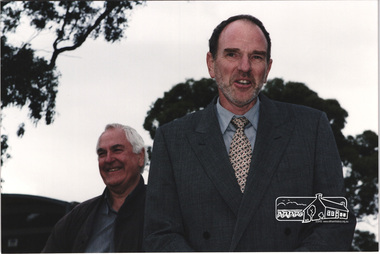 Eltham District Historical Society Inc
Photograph, Owner and Architect Ian Jelbart addressing the guests at the launch of the Kinloch Gardens development, 93 Arthur Street, Eltham, April 1998, April 1998
... mansion set on 2.4ha in Arthur St. The launch was attended by Planning Minister Rob Maclellan and Nillumbik Shire president Robert Marshall, Architects Graeme Gunn and Ian Jelbart and approximately 100 guests. arthur street, eltham, graeme gunn, houses, ian jelbart, jelbart property, jenny graves, john graves, kinloch gardens, robert marshall, woodridge estate 8 images; digital file only; created from scan undertaken by EDHS of a set of 30 colour 10 x 15 cm prints Owner and Architect Ian Jelbart addressing the guests at the launch of the Kinloch Gardens development, 93 Arthur Street, Eltham, April 1998 Photograph Photograph ...Launch of the Kinloch Gardens development, 12 new double and triple storey homes along a private road in the gardens of Kinloch, a mansion set on 2.4ha in Arthur St. The launch was attended by Planning Minister Rob Maclellan and Nillumbik Shire president Robert Marshall, Architects Graeme Gunn and Ian Jelbart and approximately 100 guests.8 images; digital file only; created from scan undertaken by EDHS of a set of 30 colour 10 x 15 cm prints arthur street, eltham, graeme gunn, houses, ian jelbart, jelbart property, jenny graves, john graves, kinloch gardens, robert marshall, woodridge estate
