
Showing 148 items matching "australian oaks"
-
 Victorian Harness Racing Heritage Collection at Lord's Raceway Bendigo
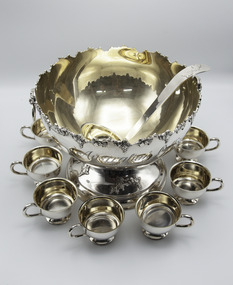
Memorabilia - Gold, Silver trophy, Mother Courage, 1999 Australian Oaks
... Mother Courage, 1999 Australian Oaks ......australian oaks...Australian Oaks / Moonee Valley / Saturday 7 August 1999 / "Mother Courage"...Defeating Frosty Lady 2nd and Ok Rock NZ 3rd. trophy harness horse mother courage australian oaks 1999 moonee valley jj caldow john caldow bruce morgan b morgan Australian Oaks / Moonee Valley / Saturday 7 August 1999 / "Mother Courage" Punch Bowl Set Trophy Mother Courage, 1999 Australian Oaks Memorabilia Gold, Silver trophy ...Mother Courage (Stoneridge Scooter Imp P 1.50.8 - Talk To Me Vic P 1.59.6 (What's Next)) Bay Mare. Foaled 1995 (3rd Foal) Breeder/Owner: Castle Family Pty Ltd. Trainer B Morgan. Mother Courage raced from 1998 (2yo) through to 2003 (7yo). Career: 30 wins 19 seconds 9 thirds 81 starts $462,520 1.56.9 Winning Drivers: JJ Caldow (27) BR Gath (3). Won on 8 Tracks: Moonee Valley (14) Ballarat (6) Bendigo (2) Horsham (2) Maryborough (2) Kilmore (2) Hamilton (1) Mildura (1)Mother Courage won the 1999 Australian Oaks at Moonee Valley over 2060m at a mile rate of 1.58.6. Driven by JJ Caldow. Defeating Frosty Lady 2nd and Ok Rock NZ 3rd.Punch Bowl Set TrophyAustralian Oaks / Moonee Valley / Saturday 7 August 1999 / "Mother Courage"trophy, harness horse, mother courage, australian oaks, 1999, moonee valley, jj caldow, john caldow, bruce morgan, b morgan -
 Whitehorse Historical Society Inc.
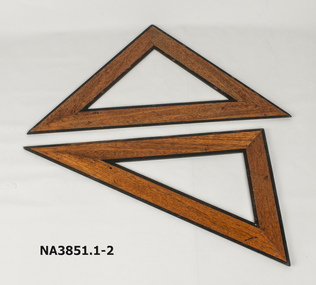
Equipment - Set squares, circa 1912
... Australian oak drafting set squares. Edges inlaid with ebony. ...The only hydraulic lift remaining in Melbourne was designed by and installed by Edward Hughes trades drafting 145 E L Hughes Australian oak drafting set squares. Edges inlaid with ebony. ...The two set squares belonged to the donor's father. Purchased in Melbourne in 1912. He was an engineer with John's Waygood, Otis and Skinner, lift engineers. The only hydraulic lift remaining in Melbourne was designed by and installed by Edward HughesAustralian oak drafting set squares. Edges inlaid with ebony. One 45 degree angle, the other 60 degree angle.145 E L Hughestrades, drafting -
 Victorian Harness Racing Heritage Collection at Lord's Raceway Bendigo
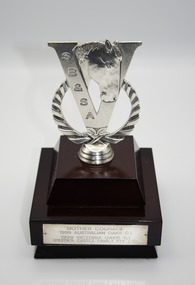
Memorabilia - Glass trophy, Mother Courage, 1999 SB&SA Award
... "Mother Courage" / 1999 Australian Oaks G.1 / 1999 Victoria Oaks G.1 / Breeder: Castle Family Pty Ltd ...Won on 8 Tracks: Moonee Valley (14) Ballarat (6) Bendigo (2) Horsham (2) Maryborough (2) Kilmore (2) Hamilton (1) Mildura (1) 1999 SB&SA Award won by Mother Courage and Breeder: Castle Family Pty Ltd trophy harness horse mother courage 1999 sb&sa castle family pty ltd jj caldow john caldow bruce morgan b morgan "Mother Courage" / 1999 Australian Oaks G.1 / 1999 Victoria Oaks G.1 / Breeder: Castle Family Pty Ltd Silver V Shaped Trophy on a Wooden Base Mother Courage, 1999 SB&SA Award Memorabilia Glass trophy ...Mother Courage (Stoneridge Scooter Imp P 1.50.8 - Talk To Me Vic P 1.59.6 (What's Next)) Bay Mare. Foaled 1995 (3rd Foal) Breeder/Owner: Castle Family Pty Ltd. Trainer: B Morgan. Mother Courage raced from 1998 (2yo) through to 2003 (7yo). Career: 30 wins 19 seconds 9 thirds 81 starts $462,520 1.56.9 Winning Drivers: JJ Caldow (27) BR Gath (3). Won on 8 Tracks: Moonee Valley (14) Ballarat (6) Bendigo (2) Horsham (2) Maryborough (2) Kilmore (2) Hamilton (1) Mildura (1)1999 SB&SA Award won by Mother Courage and Breeder: Castle Family Pty Ltd Silver V Shaped Trophy on a Wooden Base"Mother Courage" / 1999 Australian Oaks G.1 / 1999 Victoria Oaks G.1 / Breeder: Castle Family Pty Ltd trophy, harness horse, mother courage, 1999, sb&sa, castle family pty ltd, jj caldow, john caldow, bruce morgan, b morgan -
 Ringwood and District Historical Society
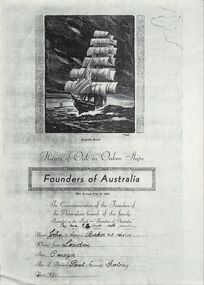
Certificate, Poster presented to those who arrived in Australia prior to1866 Hearts of Oak in Oaken Ships.given to John and Anne Barker and 5 children in 1850
... Poster presented to those who arrived in Australia prior to1866 Hearts of Oak in Oaken Ships.given to John and Anne Barker and 5 children in 1850....Picture of Sailing ship Australia Bound . Hearts of oak in oaken ships. Founders of Australia.who arrived prior to 1866. ...Butterworth (Granddaughter) added later in ink Name John and Anne Baker and 5 children Where from London Ship Omega Port of Arrival; Port Henry , Geelong Year 1850 Picture of Sailing ship Australia Bound . Hearts of oak in oaken ships. Founders of Australia.who arrived prior to 1866. ...One of the Baker Granddaughter Amy Thelma married Stanley Wieland and this document is on page 84 of the book "Wiielands of Heathmont.Picture of Sailing ship Australia Bound . Hearts of oak in oaken ships. Founders of Australia.who arrived prior to 1866. In Commemoration of the Founders of Australian branch of this family. Recorded in the book "Founders of Australia".by Mrs. E.A. Butterworth (Granddaughter) added later in ink Name John and Anne Baker and 5 children Where from London Ship Omega Port of Arrival; Port Henry , Geelong Year 1850 -
 National Wool Museum
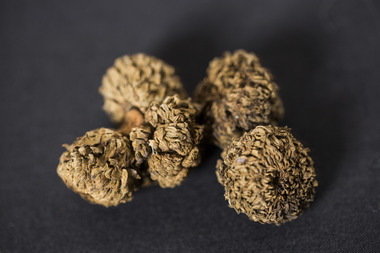
Acorn
... Very few Valonia Oaks were successfully propagated in Australia. Valonia oak caps were an important species which were used in the European tanning industry and Australian tanners were eager to grow the oak here....Very few Valonia Oaks were successfully propagated in Australia. Valonia oak caps were an important species which were used in the European tanning industry and Australian tanners were eager to grow the oak here. geelong botanic gardens dennys lascelles limited city of greater geelong tanning valonia oak ibbotson mr a. charles the heights newtown geelong. ...Acorn and caps are from a 15 metre high Valonia oak tree (Quercus ithaburensis macrolepis) which was uprooted during a storm on Tuesday, 1st December 1987. The tree was planted in the Geelong Botanic Gardens by the first curator, Daniel Bunce, from an acorn shipped to Charles Ibbotson from Southern Europe in 1861. Ibbotson was the Chairman of the Management Committee of the Gardens and a woolbroker and merchant who founded the company Dalgety, Ibbotson and Co. with F.G. Dalgety in 1852. The acorns arrived in poor condition, but later established well. Very few Valonia Oaks were successfully propagated in Australia. Valonia oak caps were an important species which were used in the European tanning industry and Australian tanners were eager to grow the oak here.Five immature acorn caps from a Valonia oak, first planted in the Geelong Botanic Gardens in 1861 from acorns forwarded by Charles Ibbotson. Acorn and cap from a Valonia oak, first planted in the Geelong Botanic Gardens in 1861 from acorns provided by Charles Ibbotson. geelong botanic gardens dennys, lascelles limited city of greater geelong, tanning, valonia oak, ibbotson, mr a. charles, the heights, newtown, geelong. -
 Hymettus Cottage & Garden Ballarat
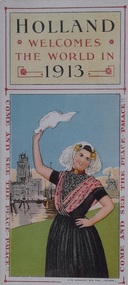
Work on paper - Bookmark, Holland welcomes the world in 1913
... Australia's contribution to this symbol of international peace was the donation of an office desk made of Australian Blackwood, Silky Oak and Queensland Opals, with a matching ink stand. ...Australia's contribution to this symbol of international peace was the donation of an office desk made of Australian Blackwood, Silky Oak and Queensland Opals, with a matching ink stand. ...The Peace Palace was officially handed over in the presence of the Dutch Royal Family in 1913. Australia was part of the international community watching the inauguration of this new headquarters of the Permanent Court of Arbitration. Australia's contribution to this symbol of international peace was the donation of an office desk made of Australian Blackwood, Silky Oak and Queensland Opals, with a matching ink stand. The offer from Sir George Reid, former Prime Minister, was accepted, delivered and installed in 1914 shortly before the outbreak of World War II.(Blackwood, Silky Oak, and Queensland Opals)This bookmark and invitation to the world to visit the Peace Palace is a reminder that Australia was one of the nations that contributed to the establishment of the Peace Palace, contributing a commissioned desk and inkwell for furnishing the Palace. These items were designed and made by leading Australian designers and craftsmen and used Australian materials.Printed massage 'Holland welcomes the World in1913' with border printing 'Come and see the Peace Palace'.bookmark, peace palace, holland, invitation, tourism, carnegie, arbitration, gifts -
 Mont De Lancey
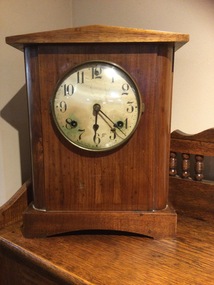
Domestic object - Mantel Clock
... An antique wooden mantel clock made in USA with an Australian made Duff brand oak case with a plain angled top with round shaped pillar styled sides. ...An antique wooden mantel clock made in USA with an Australian made Duff brand oak case with a plain angled top with round shaped pillar styled sides. ...The mantel clock has a rich history that dates back to the 18th century. These smaller clocks were designed during an age when people wanted elegant timepieces that fit on mantels or shelves. Their compact size and decorative designs made them a popular choice for homes of the time. They graced the mantelpieces or tables in homes, serving as both functional timepieces and sophisticated decorations. These clocks often feature ornate wooden carvings and intricate designs, with their gentle ticking and chimes adding a cozy ambiance to living spaces. It was used by Harold and Jean Parker.An antique wooden mantel clock made in USA with an Australian made Duff brand oak case with a plain angled top with round shaped pillar styled sides. It has a white ceramic dial face with black digits and black metal hands. The dial is covered by a glass and gold trimmed covering that may be opened on the right side. Inside the case is a Waterbury Clock Co of USA key and the internal workings are visible. It is not in working order.'Duff' brand brass plaque on back of cover. The key has 'Waterbury Clock Co USA' stamped on it.clocks, timepieces, clock components, clock keys, mantel clocks -
 Flagstaff Hill Maritime Museum and Village
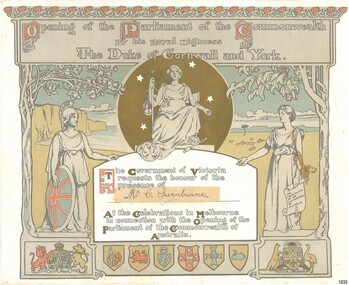
Certificate - Invitation, Norman Lindsay (Artist), Opening of the Parliament of the Commonwealth by His Royal Highness The Duke of Cornwall and York, ca. 1901
... Swinburne" Left image: [figure of Britannia holding a blue shield with three crossing red bands, standing below an oak tree] Central image, in front of a gilt circle : [symbolic female royal future with Orbe and Sceptre seated on throne, four stars around her] Right image: [young female figure representing Australia holding a scroll, standing below a flowering gum] "THE CONSTITUTION OF THE COMMONWEALTH OF AUSTRALIA" Bottom left: Combined Arms: "[Duke of Cornwall and York, Prince George Frederick Ernest Albert, Princess Alexandra, his Duchess]" Bottom centre: [six symbols representing the Coat of Arms for each state of Australia] Bottom right: Advance Australia Arms "[Shield with six symbols, between Kangaroo and Emu, and below Rising Sun'] ADVANCE AUSTRALIA"...Flagstaff Hill Maritime Museum and Village Flagstaff hill Maritime Museum Maritime Village Warrnambool Great Ocean Road Shipwreck Coast invitation certificate Mr C Swinburne Government of Victoria Opening of Federal Parliament HRH The Duke of Cornwall and York C Swinburne Susan Jane Granter Susan Jane Swinburne Federal Parliament 1901 Australian Federation Ceremonies Politics Royal Exhibition Building Invited guest Britannia Orb Sceptre Advance Australia Arms Constitution of the Commonwealth of Australia Norman Lindsay John Longstaff Sands & McDougall Federation British colonies Commonwealth of Australia Charles Grant Swinburne Chas Swinburne C G Swinburne Opening of the Federal Parliament Duke of Cornwall and York May 9th Tattersall’s Hotel Marco Polo Warrnambool Steam Packet Co Warrnambool Pioneers Board Joseph Granter Ann Granter Inscription, handwritten on a label: "Mr. C. Swinburne" Left image: [figure of Britannia holding a blue shield with three crossing red bands, standing below an oak ...Australia became a Federation on January 1st, 1901, uniting Australia's six British colonies - New South Wales, Victoria, Queensland, South Australia, Western Australia and Tasmania – into States of the Commonwealth of Australia. The Government of Victoria invited 12,000 guests to attend the official celebrations for the Opening of the Federal Parliament by His Royal Highness, the Duke of Cornwall and York (later King George V). The historic occasion was held at noon on May 9th, 1901, at Melbourne's Royal Exhibition Building, the only building large enough for that number of guests. The guests represented all six states of Australia with varied connections and interests, including politics, business and industry, the arts, religion, education, and public service. In Melbourne, the occasion was followed by two weeks of celebrations. The decorative, elaborate design of the certificate-size invitation represents Australia’s colonial history and its transition to the Federated Commonwealth of Australia. The National Gallery of Australia attributes the artwork of this invitation to Australian artists Norman Lindsay (1879–1969) and John Longstaff (1861–1941) and its printing to Sands & McDougall Limited, Melbourne. The invitation has no date or location details. This invitation has the label “Mr. C Swinburne” added over an original, handwritten name. Perhaps it was a spelling correction, or a late change, with Swinburne attending in the place of another citizen. The book “Our Invited Guests An Official Directory, Melbourne, Victoria, 1901” lists all the guests, but not one has the surname SWINBURNE. There are five Warrnambool listings, eight people in all: - - MoCOBMICK, G. D., Esq., P.M., Warrnambool. - O’DOWD, The Ven. Monsignor, Warrnambool. - OPIE, C. N. T., Esq. (and Lady), Warrnambool. - OSBORNE, Hy. Wm., Esq., Shire Secretary (and Lady), Town Hall, Warrnambool. - STEVENS, Mrs. F. P., Mia Mia, Warrnambool. CHARLES GRANT SWINBURNE (1864-1934): - Charles Grant Swinburne, known as Chas.., was a prominent Warrnambool figure: a member of Toc H., the Progress Association and several other local clubs and societies. He purchased Warrnambool’s Tattersall’s Hotel in 1911 and had a booth at the 1914 Warrnambool Show. In 1891, he married Susan Jane Granter (1867-19 June 1935), daughter of Joseph Granter (1832-1879) and Ann (born Holley). Joseph had arrived in Melbourne on the famous tall ship Marco Polo in February 1856. In 1868, he was a shareholder of the Warrnambool Steam Packet Co., trading along the coast of Victoria. His portrait is among those recognised on the historic Warrnambool Pioneers Board. The invitation is nationally significant for its connection with the first Federal Parliament in May 1901, where the first federal parliamentarians were sworn in, and where the Duke and Duchess of Cornwall and York attended, representing the continued link with Britain. The invitation also unites a local Warrnambool businessman, Mr C Swinburne, with the 12,000 guests representing their towns and states that in 1901 became the Commonwealth of Australia. Swinburn was also married to the daughter of Joseph Granter, an early pioneer recognised on Warrnambool’s Pioneer Board. Invitation: certificate size, colour lithograph on cream card with gilt highlights. The Victorian Government invited Mr C Swinburne to celebrate the Opening of Federal Parliament by HRH the Duke of Cornwall and York, held in Melbourne. The invitation has printed drawings of figures, decorations, heraldic symbols, and gilt accents behind the central figure, on the capital letters of the message, and the Advance Australia Arms. Inscribed with a handwritten label that covers handwritten text. [The event was held at Noon, 9th May 1901, Royal Exhibition Building, Melbourne.] Inscription, handwritten on a label: "Mr. C. Swinburne" Left image: [figure of Britannia holding a blue shield with three crossing red bands, standing below an oak tree] Central image, in front of a gilt circle : [symbolic female royal future with Orbe and Sceptre seated on throne, four stars around her] Right image: [young female figure representing Australia holding a scroll, standing below a flowering gum] "THE CONSTITUTION OF THE COMMONWEALTH OF AUSTRALIA" Bottom left: Combined Arms: "[Duke of Cornwall and York, Prince George Frederick Ernest Albert, Princess Alexandra, his Duchess]" Bottom centre: [six symbols representing the Coat of Arms for each state of Australia] Bottom right: Advance Australia Arms "[Shield with six symbols, between Kangaroo and Emu, and below Rising Sun'] ADVANCE AUSTRALIA"flagstaff hill maritime museum and village, flagstaff hill, maritime museum, maritime village, warrnambool, great ocean road, shipwreck coast, invitation, certificate, mr c swinburne, government of victoria, opening of federal parliament, hrh the duke of cornwall and york, c swinburne, susan jane granter, susan jane swinburne, federal parliament, 1901, australian federation, ceremonies, politics, royal exhibition building, invited guest, britannia, orb, sceptre, advance australia arms, constitution of the commonwealth of australia, norman lindsay, john longstaff, sands & mcdougall, federation, british colonies, commonwealth of australia, charles grant swinburne, chas swinburne, c g swinburne, opening of the federal parliament, duke of cornwall and york, may 9th, tattersall’s hotel, marco polo, warrnambool steam packet co, warrnambool pioneers board, joseph granter, ann granter -
 Flagstaff Hill Maritime Museum and Village
Plant specimen - Wood Sample, Herbst, 1759-1765
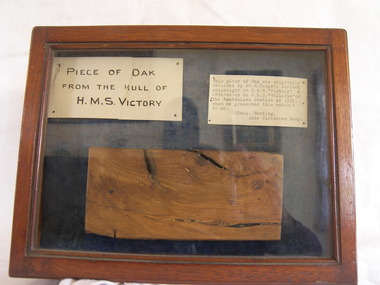
... It was during that early restoration period that Cooper obtained the piece of Oak from HMS Victory, believed to be from the ship's hull. Cooper was in Australia in September 1891 serving on the HMS Wallaroo, a British Auxiliary Squadron commissioned as part of the British Royal Navy contingent, to serve and operate in Australian waters. ...Oak was originally obtained by Mr. H. Cooper, skilled shipwright on H.M.S. “Victory” & afterwards on H.M.S. “Wallaroo” on the Australian Station in 1895, when he presented this exhibit to me. ...Oak was originally obtained by Mr. H. Cooper, skilled shipwright on H.M.S. “Victory” & afterwards on H.M.S. “Wallaroo” on the Australian Station in 1895, when he presented this exhibit to me. ...The piece of oak wood sample inside the case was obtained from Mr H. Cooper during the time he served as a shipwright for the British Royal Navy on Nelson’s flagship, HMS Victory, in 1891. By that time, the H.M.S. Victory was around 100 years old, having been built in 1765 and was currently in dry dock undergoing restoration. Cooper’s skills as a shipwright would have been well employed during this period. HMS Victory was, and still is, undergoing continuous restoration to preserve her for display as a museum ship, due to the vessel's significant naval history. It was during that early restoration period that Cooper obtained the piece of Oak from HMS Victory, believed to be from the ship's hull. Cooper was in Australia in September 1891 serving on the HMS Wallaroo, a British Auxiliary Squadron commissioned as part of the British Royal Navy contingent, to serve and operate in Australian waters. The photograph included with the donation of the wood sample is a portrait of Mr H Cooper taken in 1895 in Sydney. The inscription on the photograph describes him as a skilled shipwright from H.M.S. Wallaroo, depicting Cooper as a young man in Royal Navy uniform, with the emblem of a petty officer third class. While Cooper was stationed on the H.M.S. Wallaroo in Sydney, he presented the display case, containing the wood sample from H.M.S. Victory, as well as the exhibit labels, to Charles Harding ("Chas"), late of the Royal Australian Navy. Harding had been based at the H M Naval Torpedo Depot at Williamstown, Victoria. Although not mentioned, it is believed the two men met whilst serving together in Australia in their respective assignments. It could have been a retirement gift from Cooper to Harding, with the photograph of Cooper likely included with the case, and gifted to Harding in 1895, as the date on the photograph indicates. One of the exhibit's labels indicates that Harding had the item on display whilst serving at the Naval Torpedo Depot in Williamstown. The label indicates: "This piece of Oak is part of the hull of H.M.S. 'Victory', Lord Nelson’s renowned flagship, which took such a prominent part in the Battle of Trafalgar. 21st October 1805. Exhibited by Charles Harding, H.M.V. Naval Torpedo Depot, Williamstown.” After Charles Harding died in 1931, the case containing the sample of oak from H.M.S. Victory was donated by his son, Reg Harding, to Mr Murphy in 1962. The display case has since become a treasured item at Flagstaff Hill. A newspaper article dated 1905 included with the donation mentions that the city of Hamilton in Victoria was shortly expecting a mounted piece of the H.M.S. Victory to be included in the city’s commemoration of the centenary of the "Battle of Trafalgar". Battle of Trafalgar: On October 21, 1805, twenty-seven British ships of the line led by Admiral Lord Nelson aboard HMS Victory defeated thirty-three French and Spanish ships of the line under French Admiral Villeneuve. The battle took place in the Atlantic Ocean off the southwest coast of Spain, just west of Cape Trafalgar, near the town of Los Caños de Meca. The victory confirmed the naval supremacy Britain had established during the course of the eighteenth century, and it was achieved in part through Nelson's departure from the prevailing naval tactical orthodoxy of the day. Conventional practice at the time was for opposing fleets to engage each other in single parallel lines, to facilitate signalling and disengagement, and to maximise fields of fire and target areas. Nelson instead arranged his ships into two columns to sail perpendicularly into the enemy fleet's line. During the battle, Nelson was shot by a French musketeer, and he died shortly before the battle ended. Villeneuve was captured, along with his ship Bucentaure. He later attended Nelson's funeral while a captive on parole in Britain. Admiral Federico Gravina, the senior Spanish flag officer, escaped with the remnant of the fleet. He died five months later from wounds sustained during the battle. It was before this battle that Nelson had issued his now-famous final orders to his ships in 12 separate flag-hoists: “England expects that every man will do his duty”. This wood sample is historically significant for its association with Admiral Lord Nelson and the Battle of Trafalgar. Through Nelson’s leadership and unorthodox battle tactics, he secured not only a victory against the French and Spanish but also reaffirmed Britain's naval supremacy, opening the way for Britain to continue the policy of colonisation of many countries, including Australia.Wood sample adhered to the base of a hinged wood and glass display case. Wood is a sample of oak taken from the hull of Vice-Admiral Lord Nelson's flagship, the HMS Victory, built in 1765. The case also contain two exhibit labels pinned above the wood sample. Other items donated with the display case, and relating to the wood sample: an 1895 photograph, a 1905 newspaper clipping, a 1962 donor's letter (two pages), and a handwritten exhibit label with a border of red lines. Photograph Front: printed- "Herbst" "28 Oxford Street, Hyde Park, Sydney", handwritten - "Mr Cooper", "see back". Back: handwritten - "Mr H Cooper, skilled shipwright, H.M.S. Wallaroo 1895" Exhibit labels still in the case: Left: handwritten- “PIECE OF OAK FROM THE HULL OF H.M.S. VICTORY”, Right: typewritten- “This piece of Oak was originally obtained by Mr. H. Cooper, skilled shipwright on H.M.S. “Victory” & afterwards on H.M.S. “Wallaroo” on the Australian Station in 1895, when he presented this exhibit to me. Chas. Harding, Late Victorian Navy.”flagstaff hill, warrnambool, shipwrecked-coast, flagstaff-hill, flagstaff-hill-maritime-museum, maritime-museum, shipwreck-coast, flagstaff-hill-maritime-village, oak, hms victory, vice-admiral lord nelson, horatio nelson, lord nelson, oak piece, piece of oaknelson, battle of trafalgar, maritime technology, ship relics, 18th century warship, british royal navy, h cooper shipwright, hms wallaroo, herbst hyde park sydney, charles harding, hmv naval orpedo depot williamstown, sir home popham’s telegraphic code, admiralty official day signal book -
 Flagstaff Hill Maritime Museum and Village
Equipment - Rowing Oar
... Australia and subsequently to the United States, UK and Japan. The company ceased trading in April 2018 and was placed into receivership. This pair of lightweight oars represents the maritime tradition of handmade oar making, which has evolved over the centuries. Their shape is still similar to early oars and continues to serve the same purpose, to steer and propel a boat. warrnambool flagstaff-hill flagstaff-hill-maritime-museum maritime-museum shipwreck-coast flagstaff-hill-maritime-village oar oars gull oars and paddles new zealand oars and paddles jas edwards and sons melbourne rowing equipment New Zealand oak paddle James Edwards and Sons Melbourne James Edwards Tasman Fir Gull superior oars marine equipment marine technology ship fitting boat fitting rowing oar boat oar "GULL Superior Oars and Paddles, Pelco, Palmerston North NZ" "JAS. ...The family-owned timber manufacturing business Pelco was started by Cecil Victor Woodfield in 1937. The joinery company Pelco began by making wooden ladders and was registered as the Palmerston Extension Ladder Company. C V Woodfield, who lived from 1884 -1959, arrived in Palmerston North from Canterbury NZ in the aftermath of the Great Depression to work in construction. The company got its first step up when Woodfield was asked by a commercial painter to make a ladder, and the founder set up shop in a garage on Ruahine St. According to the company website, Pelco made its name in New Zealand with its Oregon Extension Ladders, and up until its closure, manufactured non-conductive Lamilite Ladders for the electrical supply and service industry worldwide. The company was incorporated as a joinery business in 1946 and continued making high-end cabinetry for seven decades. Under director Geoff Woodfield, in the 1950s, the company embarked on the production of Fleetcraft plywood boats. Another water-related enterprise followed, with the manufacture of oars and paddles. Its branded Gull Superior Oars and Paddles business began exporting in 1972 to Australia and subsequently to the United States, UK and Japan. The company ceased trading in April 2018 and was placed into receivership.This pair of lightweight oars represents the maritime tradition of handmade oar making, which has evolved over the centuries. Their shape is still similar to early oars and continues to serve the same purpose, to steer and propel a boat. Pair of blonde varnished Tasman Fir oars with a flattened paddle at one end. Made by Gull of New Zealand, sold by James Edwards & Sons of Melbourne. Inscriptions on printed labels on the oars."GULL Superior Oars and Paddles, Pelco, Palmerston North NZ" "JAS. EDWARDS & SONS, Boat Builders, Oar and Skull Makers, & Importers, PRINCES BRIDGE MELBOURNE"warrnambool, flagstaff-hill, flagstaff-hill-maritime-museum, maritime-museum, shipwreck-coast, flagstaff-hill-maritime-village, oar, oars, gull oars and paddles, new zealand oars and paddles, jas edwards and sons melbourne, rowing equipment, new zealand oak, paddle, james edwards and sons melbourne, james edwards, tasman fir, gull superior oars, marine equipment, marine technology, ship fitting, boat fitting, rowing oar, boat oar -
 Federation University Historical Collection
Book, Victoria Education Gazette and Teachers' Aid, 1921-1930, 1921-1930
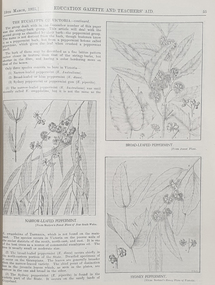
... Oak, Redwood, John E. Grant, The Need for Research (Donald Clark), Junior Drama, Ida D. Marshall, John Pounds, Australian Books, Fish Creek School, State Boundaries, History in the Curriculum, Ceramic Art in Australia (Percy E. ...Oak, Redwood, John E. Grant, The Need for Research (Donald Clark), Junior Drama, Ida D. Marshall, John Pounds, Australian Books, Fish Creek School, State Boundaries, History in the Curriculum, Ceramic Art in Australia (Percy E. ...The Victoria Education Gazette and Teachers' Aid was published for Victoria's teachers and was sent to all school on the state. In 1920 The Ballarat School of Mines had donated 136 pounds 14 shillings and 10 pence to the Victorian Education Department's War Relief Account, and the Ballarat Junior Technical School had donated 10 pounds 6 shillings and 10 pence.Ten black hard covered volumes with red tape spine, covering 1921 to 1930. The gazettes include Education Department appointments, transfers, resignations and retirements, vacancies, notices, queries, notices of books, examination papers, original articles, lesson plans, suggestions for lessons, drawing, obituaries, notes on nature study, mathematics, music, sloyd woodwork, English grammar, Victorian State School Swimming Clubs, Geography, penmanship, science, History, Latin, Geography, The School Garden, horticulture, singing, World War One; ANZAC Day, lifesaving, Astronomy, Empire Day, ANZAC Buffet London, Victorian Education Department's War Relief Fund .1) 1928. Articles include: New Caledonia, Swimming and Lifesaving, School forestry, a visit to the pyramids, Exploration of Gippsland, paul de Strezelecki, Angus McMillan, Villers Bretonneux Memorial School, American Black Walnut, Red Gum, Messmate Stringybark, The Great Barrier Reef, retirement of Frank Tate, Stawell High School, Report on Some Aspects of Education in the United States, Jubilee Education Exhibition , New School Readers; measured Drawing Images include: Macarthur Street School's Plantation, Maryborough School Plantation, Pinus Insignis (Radiata) ready for Milling, Creswick State Forest, Metalwork, Daylesford Pine Plantation four years old, Henry Harvey (art Inspector); Omeo School Endowment Plantation; Frank Tate; Stawell High School Drawings From Casts; Lake Tyers School Endowment Plantation, measured drawing, Thomas H. Stuart, GEorge Swinburne. J.R. Tantham-Fryer, Cookery Class, John Edward Thomas. .3) War Savings Stampsm Swimming and Life-saving, Teh Rural School System of Victoria, Imaginative Composition, ANZAC Day, Retardation, Teh Bright Child Hudson Hard Obituary, Leeches, Relief for Distress in Europe, Dental, Teachers' Library, History of Portarlington, J.E. Stevens Obituary, Victorian Teachers in England Images: Swimming and Life-Saving Medallion .3) Swimming and Lifesaving, Bronze medallion, Victoria Leage of Victori, War Savings Stamps, Rural School Sytem of Victoria, .4) War Relief, Talbot Colony for Epileptics Masonmeadows, Discipline New and Old (Percy Samson), Soldier teachers, Preservation of Australian Birds, Arbor Day, Jubilee of Free Education, Teaching Geography, Poery in Schools, School Committees, Shelter Pavilion, Mysia Memorial School, Clovers, Jubilee Exhibition, Domestic Arts, Louis Pasteur, .5) Victoria League of Victoria, An Endowment Scheme (Pine Plantations), School Endowment Plantations, Protecting our trees by Owen Jones,. Victorian State Schools Horticultural Society, Sloyd Woodwork, School Forestry, Thomas Brodribb Obituary and portrait, Imperial Education Conference London, school Management and Method, School plantations, Eucalypt plantations in the Bendix and Heathcote District, Junior Red Cross, Jubilee Education Exhibition, Gould League Competitions, handwriting, The School Magazine, Frank Tate in London, Victorian beetles, Council of Public Education, Villers Bretonneux and its new School, Death of Samuel Summons, Woodwork Summer School, Swimming, Japanese Relief Fund, Retirement of John Cross, reminiscences of the Late Mr Albert Mattingley .6) Thomas H. Trengrove and the Villers Bretonneux School hall and pilaster carvings, forestry, visit of Maryborough teachers to Ballarat Water Reserves, noxious weeds, relief for Distressed Europe, The Dalton Plan, Empire Day, Retirement of Mr Fussell, Centenary of Hume and Hovell Expedition, League of Kindness, Effective Nature Study in a Rural School, Some Facts About Paper and their Bearing Upon School Plantations, Council of the Working Men's College Melbourne, Maria Montessori, University Vacation School, Horticulture in State Schools, An Informal Chat About French Schools (C.R. McRae), The Vacation School, Johann Heinrich Pestalozzi, Inspector's Report on a 5th-class School, Can Children Write Verse, John Adams, Victoria League of Victoria, R.F. Toutcher, Sir James Barbie's Address to High-School Girls, Impressions of a High School Teacher Abroad (R.D. Collman), The Spirit of the School Plantation Scheme, Monument of the Late Mr and Mrs A.T. Sharp at Box Hill Cemetery, The Teaching of Geography, The Treatment of Poetry in Class, Two Difficult Arithmetic Lessons, Location of Principal Australian Timbers, Dr John Smyth, Stammering and its Influence on Education, Wireless Broadcasting as an Educational Medium, Boys School at Villers Brettonneux, The New School at Villers Brettonneux, Bird Day, Messmate or Stringybark, What Every Woman Knows, Director's Report on Denmark .7)1925 . Includes: School Forestry, horticulture, J.H. Betheras retirement, Ivanhoe School, Coburg School, Moorabool Junior Technical School, Villers Bretonneux School hall and pilaster carvings, Francis Ormond, William Charles Kernot, Corsican Pnes at Creswick, Ballarat High School Plantation, Workin Men's College, RMIT, Naorrow LEafed Peppermint, Education and World Peace, Eucalypts of Victoria, John C. Eccles, Blue Gum. Manners, Giving the Poorly Nourished Boy A Chance, Native Ferns, Marybourough Technical School, Memorial School at Villers-Brettonneux .8) Experimental Plots in Country Schools (W.W. Gay), Villers Bretonneaux and its Memorial School. nominated classes for Art Teachers, The Teachers Act 1925, Horsham High School, Richmond Technical School, Farewell to Messrs C.R. Long and Ponsonby Carew-Smyth, Frank Tate, Phyiscal Training, Arbor Day, ANZAC Day, Shakespeare Day,Bendigo Junior Techncial School, Musical Appreciation, Motor Dental Unit, School Camps, Education Act of 1872: Mr Angus McKay's Part (George Mackay), A Bush Fire Experience (Irene Stable), Black Sunday, Californian Red Pine, Women's Education in America, Farewell to Lord and Lady Stradbroke, Grevilia Robusta, Silky Oak, Redwood, John E. Grant, The Need for Research (Donald Clark), Junior Drama, Ida D. Marshall, John Pounds, Australian Books, Fish Creek School, State Boundaries, History in the Curriculum, Ceramic Art in Australia (Percy E. Everett), Choice of School Songs, Tasmanian Beech, Should History be Taught on a National or an International Basis, Hydatid Disease, James Holland Obituary, Florrie Hodges, Queensland Maple, Post Bushfire Ruins at Fumina, Arbor Day at Fumina, Queensland Rosewood, Omeo Endowment Plantation, Bird Day, Junior Red Cross, Pioneers' Day, Edward Henty, Junior Technical Schools, Yellow Pine, History and Progress of Needlework, A.B.C. of Astronomy, Northumberland Mental tests, Queensland Red Cedar, Teh Globe Theatre, .9) 1927 includes The ABC of Astronomy, Atr Theatre, English Beech, Angus McMillan Art Pottery, School Singing, State Schools' Nursery, School endowment plantations, Making a Man, experimental proof of Charles's Law, John Smyth obituary and portrait, Linton Pine Planation, motivation of arithmetic, Women's Classes at Dookie, Swimming and Lifesaving, Pioneers Day, Drawing, Ballarat High School planation, biting fly, Tir-Na-N'og, John Byatt retirement and portrait, Technical Schools Conference at Daylesford, Ethel Osborne and portrait, library. Francis Thompson portrait, Adam Lindsay Gordon, Solar movement, motor transport, Liverpool Cathedral, Teh Story of the Cathedral, Bendigo School of Mines, Omeo School pine plantation, Egypt and the Nile, Self-Criticism Images include Ballarat High School Pine Plantation, Vale Park, Francis Ormond, Woking Men's College (RMIT), W.N. Kernot, A Stand of Corsican Pines at Creswick, Victoria .10) Some Remarks on the Relationship of the technical Schools to the University (Donald Clark) , Present Day Education in England , Memorial to Joseph Cornwall, Spelling, motivation, Singing, State Scholarships, Agriculture, T.W. Bothroyd, The Swimmer - A Summer School Sketch (H.H. Croll), Swimming woodwork, Farewell to Dr Sutton. ,Drowning, War Savings Movement, White Beech. George S. Browne , Example of School Honor Book, Blackwood, Optimistic teacher, Soldier settlement around Shapparton, Oral Hygiene, Cinema Machines, Basketball, Wakter M. Camble obituary, ANZAC day Pilgrimage in England, Froebel's System, Montessori Method, War Relief Fund, New Zealand Kauri Tree, Bat Tenis at a Bush School., Advice to Australian Girls, Chrysanthemums, Royal Visit, National Parks of Victoria, Maurice Copland Obituary, total eclipse of the Moon, School libraries, The teacher and the COmmunity (A.M. Barry), The Reading Lesson, Swimming and Life-saving, MElbourne Teachers' College War Memorial Windows Old Trainees War Memorial, Cultivating a Natinoal Art education gazette, school, education, teaching, teacher, world war one, school plantations, macarthur street pine plantation, school forestry, creswick state forest, anzac day, armistance celebrations, frank tate, frank tate retirement, drawing from cast, education department school readers, lake tyers pine plantation, w.n. kernot, rmit, working men's college, francis ormond, pine plantations, calenbeem park, creswick, villers-brettonneux school hall and carvings, thomas trengrove, corsican pines, creswick, pine endowment plantations, mccarthur st primary school pine plantation, ballarat high school pine plantation, vale park, mount pleasant primary school pine plantation, golden point pine plantation, angus macmillan, paul de strzelecki, gippsland, villers-bretonneaux memorial school, francis thompson, english ash, pestalozzi centenary, shakespeare day, swimming classes, clear pine, cinema in education, american black walnut, red gum, thomas wolliam bothroyd obituary, and portrait, physical training displays, teaching of spelling, ohm's law, blue gum -
 Marysville & District Historical Society
Postcard (item) - Colour postcard, Graphic Print Postcards, Marysville, Vic, 2004
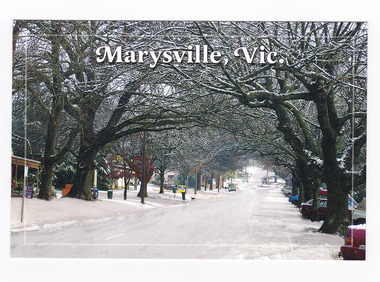
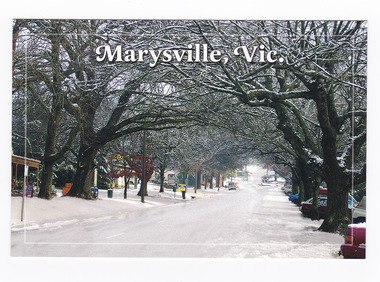
... Australia's best/ Cross Country Skiing Resorts. Graphic in Print/ Postcards Place/ Stamp/ Here Graphic in Print/ Country Towns Collection/ Classic 2/ c 2004/ Ph: (03) 5966 8523 Fax: (03) 5966 8458 Mob: 418 593 534 A colour photograph of a snow covered Murchison Street in Marysville in Victoria. The photograph shows the famous oak ...A colour photograph of a snow covered Murchison Street in Marysville in Victoria.A colour photograph of a snow covered Murchison Street in Marysville in Victoria. This photograph was taken in 2004 before the 2009 Black Saturday bushfires that destroyed most of the businesses in the main street.Marysville's main street covered with a light layer of snow. Marysville is a small country town in Victoria, just 10/ minutes from Lake Mountain, one of Australia's best/ Cross Country Skiing Resorts. Graphic in Print/ Postcards Place/ Stamp/ Here Graphic in Print/ Country Towns Collection/ Classic 2/ c 2004/ Ph: (03) 5966 8523 Fax: (03) 5966 8458 Mob: 418 593 534marysville, victoria, murchison street, snow, postcard, souvenir, graphic in print, country town collection -
 Marysville & District Historical Society
Postcard (item) - Colour postcard, Graphic Print Postcards, Marysville, Vic, 2004
... Australia's best/ Cross Country Skiing Resorts. Graphic in Print/ Postcards Place/ Stamp/ Here Graphic in Print/ Country Towns Collection/ Classic 2/ c 2004/ Ph: (03) 5966 8523 Fax: (03) 5966 8458 Mob: 418 593 534 A colour photograph of a snow covered Murchison Street in Marysville in Victoria. The photograph shows the famous oak ...A colour photograph of a snow covered Murchison Street in Marysville in Victoria.A colour photograph of a snow covered Murchison Street in Marysville in Victoria. This photograph was taken in 2004 before the 2009 Black Saturday bushfires that destroyed most of the businesses in the main street.Marysville's main street covered with a light layer of snow. Marysville is a small country town in Victoria, just 10/ minutes from Lake Mountain, one of Australia's best/ Cross Country Skiing Resorts. Graphic in Print/ Postcards Place/ Stamp/ Here Graphic in Print/ Country Towns Collection/ Classic 2/ c 2004/ Ph: (03) 5966 8523 Fax: (03) 5966 8458 Mob: 418 593 534marysville, victoria, murchison street, snow, postcard, souvenir, graphic in print, country town collection -
 Marysville & District Historical Society
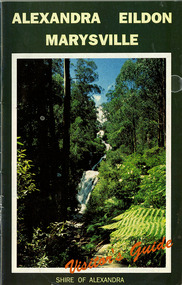
Ephemera (Item) - Visitor's Guide, Shire of Alexandra, ALEXANDRA EILDON MARYSVILLE Visitor's Guide, Unknown
... australia...tourist guide...steavenson falls...blackwood lodges...marysville hotel motel...the cumberland...gallery restaurant marysville...marysville gallery...cross country ski hire...marylyn guest house...marylands guest house...marysville crafts & gifts...hearts of oak...A tourist guide for Alexandra, Eildon and Marysville produced by the Shire of Alexandra. alexandra eildon marysville victoria australia tourist guide steavenson falls blackwood lodges marysville hotel motel the cumberland gallery restaurant marysville marysville gallery cross country ski hire marylyn guest house marylands guest house marysville crafts & gifts hearts of oak antiques geoffrey pope & associates cedron house marysville amber view holiday lodges marysville marysville ski hire lake mountain ski school fruit salad farm taggerty general store arbor green galleries marysville black spur roadhouse black spur motel & caravan park marysville caravan park the hermitage narbethong danish coffee garden maryton park buxton trout farm lake mountain outdoor centre marysville australian bush pioneer's farm the camel farm and zoo buxton marysville mountain view horse hire marysville golf and bowls club yarrolyn holiday park taggerty riverland lodge taggerty beauty spot walk tree fern gully walk michaeldene track keppel track woods lookout track A tourist guide for Alexandra, Eildon and Marysville produced by the Shire of Alexandra. ...A tourist guide for Alexandra, Eildon and Marysville produced by the Shire of Alexandra.A tourist guide for Alexandra, Eildon and Marysville produced by the Shire of Alexandra.alexandra, eildon, marysville, victoria, australia, tourist guide, steavenson falls, blackwood lodges, marysville hotel motel, the cumberland, gallery restaurant marysville, marysville gallery, cross country ski hire, marylyn guest house, marylands guest house, marysville crafts & gifts, hearts of oak antiques, geoffrey pope & associates, cedron house marysville, amber view holiday lodges marysville, marysville ski hire, lake mountain ski school, fruit salad farm, taggerty general store, arbor green galleries marysville, black spur roadhouse, black spur motel & caravan park, marysville caravan park, the hermitage narbethong, danish coffee garden, maryton park, buxton trout farm, lake mountain outdoor centre marysville, australian bush pioneer's farm, the camel farm and zoo buxton, marysville mountain view horse hire, marysville golf and bowls club, yarrolyn holiday park taggerty, riverland lodge taggerty, beauty spot walk, tree fern gully walk, michaeldene track, keppel track, woods lookout track -
 Marysville & District Historical Society
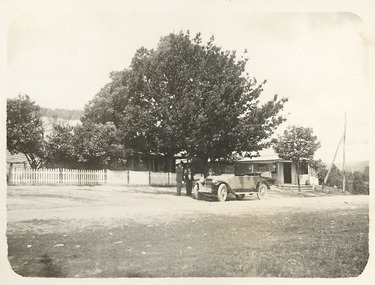
Photograph (Item) - Black and white photograph, Unknown
... oak trees and bordered and backed by large pine trees. It was a weatherboard structure with a painted corrugated iron roof. Old split wood shingles were covered by corrugated iron, which overlaid the shingles to make the roof watertight. The wooden shingles date back to the 1850s. A digital copy of a black and white photograph of the Buxton Hotel in Buxton. buxton victoria australia ...A digital copy of a black and white photograph of the Buxton Hotel in Buxton. The Buxton Hotel was built by William Burchall, probably in the late 1870s. The first owner, who also had land locally, was Frederick Nichols (1833-1904). The Buxton Hotel is located directly opposite the General Store. It was fronted with two huge oak trees and bordered and backed by large pine trees. It was a weatherboard structure with a painted corrugated iron roof. Old split wood shingles were covered by corrugated iron, which overlaid the shingles to make the roof watertight. The wooden shingles date back to the 1850s.A digital copy of a black and white photograph of the Buxton Hotel in Buxton.buxton, victoria, australia, buxton hotel, photograph, william burchall, frederick nichols -
 Marysville & District Historical Society
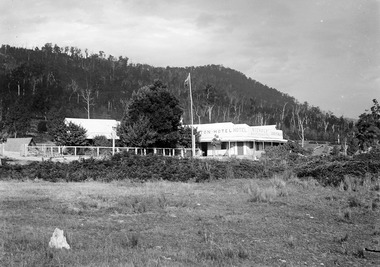
Photograph (Item) - Black and white photograph, Mark James Daniel, 1904
... oak trees and bordered and backed by large pine trees. It was a weatherboard structure with a painted corrugated iron roof. Old split wood shingles were covered by corrugated iron, which overlaid the shingles to make the roof watertight. The wooden shingles date back to the 1850s. A digital copy of a black and white photograph of Nichol's Buxton Hotel in Buxton. buxton victoria australia ...A digital copy of a black and white photograph of Nichol's Buxton Hotel in Buxton. The Nichol's Buxton Hotel was built by William Burchall, probably in the late 1870s. The first owner, who also had land locally, was Frederick Nichols (1833-1904). The Buxton Hotel is located directly opposite the General Store. It was fronted with two huge oak trees and bordered and backed by large pine trees. It was a weatherboard structure with a painted corrugated iron roof. Old split wood shingles were covered by corrugated iron, which overlaid the shingles to make the roof watertight. The wooden shingles date back to the 1850s.A digital copy of a black and white photograph of Nichol's Buxton Hotel in Buxton.buxton, victoria, australia, buxton hotel, nichol's buxton hotel, photograph, william burchall, frederick nichols -
 Marysville & District Historical Society
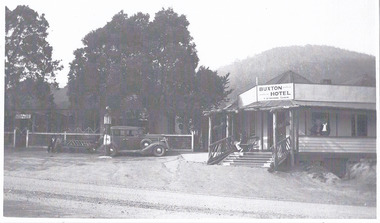
Photograph (Item) - Black and white photograph, Unknown
... oak trees and bordered and backed by large pine trees. It was a weatherboard structure with a painted corrugated iron roof. Old split wood shingles were covered by corrugated iron, which overlaid the shingles to make the roof watertight. The wooden shingles date back to the 1850s. A black and white photograph of the Buxton Hotel in Buxton. buxton victoria australia ...A black and white photograph of the Buxton Hotel in Buxton. Thomas David Robb (1886-1967), was the licensee at the time of the photograph. He, and his wife Alice May Evans, ran the Buxton Hotel for 25 years. The Buxton Hotel was built by William Burchall, probably in the late 1870s. The first owner, who also had land locally, was Frederick Nichols (1833-1904). The Buxton Hotel is located directly opposite the General Store. It was fronted with two huge oak trees and bordered and backed by large pine trees. It was a weatherboard structure with a painted corrugated iron roof. Old split wood shingles were covered by corrugated iron, which overlaid the shingles to make the roof watertight. The wooden shingles date back to the 1850s.A black and white photograph of the Buxton Hotel in Buxton.buxton, victoria, australia, buxton hotel, accommodation, photograph, william burchall, frederick nichols, alice may evans, thomas david robb -
 Marysville & District Historical Society
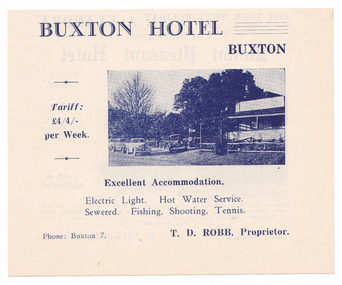
Ephemera (Item) - Advertisement, BUXTON HOTEL, Unknown
... oak trees and bordered and backed by large pine trees. It was a weatherboard structure with a painted corrugated iron roof. Old split wood shingles were covered by corrugated iron, which overlaid the shingles to make the roof watertight. The wooden shingles date back to the 1850s. An advertisement regarding the Buxton Hotel in Buxton. buxton victoria australia ...An advertisement regarding the Buxton Hotel in Buxton. Thomas David Robb (1886-1967), was the licensee at the time of the photograph. He, and his wife Alice May Evans, ran the Buxton Hotel for 25 years. The Buxton Hotel was built by William Burchall, probably in the late 1870s. The first owner, who also had land locally, was Frederick Nichols (1833-1904). The Buxton Hotel is located directly opposite the General Store. It was fronted with two huge oak trees and bordered and backed by large pine trees. It was a weatherboard structure with a painted corrugated iron roof. Old split wood shingles were covered by corrugated iron, which overlaid the shingles to make the roof watertight. The wooden shingles date back to the 1850s.An advertisement regarding the Buxton Hotel in Buxton.buxton, victoria, australia, buxton hotel, thomas david robb, alice may evans, accommodation, willam burchall, frederick nichols, advertisement -
 Marysville & District Historical Society
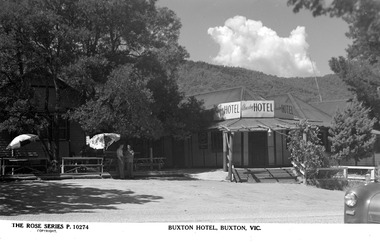
Postcard (Item) - Black and white postcard, Rose Stereograph Company, BUXTON HOTEL, BUXTON, VIC, 1913-1967
... oak trees and bordered and backed by large pine trees. It was a weatherboard structure with a painted corrugated iron roof. Old split wood shingles were covered by corrugated iron, which overlaid the shingles to make the roof watertight. The wooden shingles date back to the 1850s. This postcard was produced by the Rose Stereograph Company as a souvenir of Buxton. A black and white postcard of the Buxton Hotel in Buxton. buxton victoria australia ...A black and white postcard of the Buxton Hotel in Buxton. The Buxton Hotel was built by William Burchall, probably in the late 1870s. The first owner, who also had land locally, was Frederick Nichols (1833-1904). The Buxton Hotel is located directly opposite the General Store. It was fronted with two huge oak trees and bordered and backed by large pine trees. It was a weatherboard structure with a painted corrugated iron roof. Old split wood shingles were covered by corrugated iron, which overlaid the shingles to make the roof watertight. The wooden shingles date back to the 1850s. This postcard was produced by the Rose Stereograph Company as a souvenir of Buxton.A black and white postcard of the Buxton Hotel in Buxton.THE ROSE SERIES P. 10274/ COPYRIGHT BUXTON HOTEL, BUXTON, VIC.buxton, victoria, australia, buxton hotel, rose stereograph company, rose series, p. 10274, postcard, souvenir, william burchall, frederick nichols -
 Marysville & District Historical Society
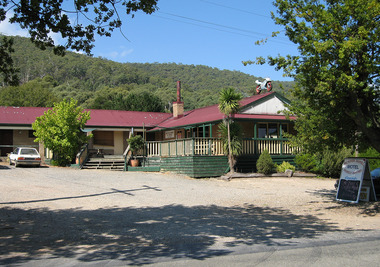
Photograph (Item) - Colour photograph, Unknown
... oak trees and bordered and backed by large pine trees. It was a weatherboard structure with a painted corrugated iron roof. Old split wood shingles were covered by corrugated iron, which overlaid the shingles to make the roof watertight. The wooden shingles date back to the 1850s. This postcard was produced by the Rose Stereograph Company as a souvenir of Buxton. A digital copy of a colour photograph of the Buxton Hotel in Buxton. buxton victoria australia ...A digital copy of a colour photograph of the Buxton Hotel in Buxton. The Buxton Hotel was built by William Burchall, probably in the late 1870s. The first owner, who also had land locally, was Frederick Nichols (1833-1904). The Buxton Hotel is located directly opposite the General Store. It was fronted with two huge oak trees and bordered and backed by large pine trees. It was a weatherboard structure with a painted corrugated iron roof. Old split wood shingles were covered by corrugated iron, which overlaid the shingles to make the roof watertight. The wooden shingles date back to the 1850s. This postcard was produced by the Rose Stereograph Company as a souvenir of Buxton.A digital copy of a colour photograph of the Buxton Hotel in Buxton.buxton, victoria, australia, buxton hotel, accommodation, photograph, william burchall, frederick nichols -
 Marysville & District Historical Society
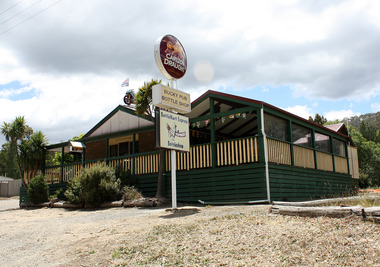
Photograph (Item) - Colour photograph, Unknown
... oak trees and bordered and backed by large pine trees. It was a weatherboard structure with a painted corrugated iron roof. Old split wood shingles were covered by corrugated iron, which overlaid the shingles to make the roof watertight. The wooden shingles date back to the 1850s. A colour photograph of the Buxton Hotel in Buxton. buxton victoria australia ...A colour photograph of the Buxton Hotel in Buxton. The Buxton Hotel was built by William Burchall, probably in the late 1870s. The first owner, who also had land locally, was Frederick Nichols (1833-1904). The Buxton Hotel is located directly opposite the General Store. It was fronted with two huge oak trees and bordered and backed by large pine trees. It was a weatherboard structure with a painted corrugated iron roof. Old split wood shingles were covered by corrugated iron, which overlaid the shingles to make the roof watertight. The wooden shingles date back to the 1850s.A colour photograph of the Buxton Hotel in Buxton.buxton, victoria, australia, buxton hotel, william burchall, frederick nichols, accommodation, carlton draught, photograph -
 Marysville & District Historical Society
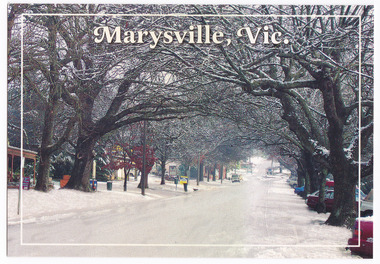
Postcard (Item) - Colour postcard, Graphic Print Postcards, Marysville, Vic, 2004
... Australia's best/ Cross Country Skiing Resorts. Graphic in Print/ Postcards Place/ Stamp/ Here Graphic in Print/ Country Towns Collection/ Classic 2/ c 2004/ Ph: (03) 5966 8523 Fax: (03) 5966 8458 Mob: 418 593 534 A colour photograph of a snow covered Murchison Street in Marysville in Victoria. The photograph shows the famous oak ...A colour photograph of a snow covered Murchison Street in Marysville in Victoria.A colour photograph of a snow covered Murchison Street in Marysville in Victoria. This photograph was taken in 2004 before the 2009 Black Saturday bushfires that destroyed most of the businesses in the main street.Marysville's main street covered with a light layer of snow. Marysville is a small country town in Victoria, just 10/ minutes from Lake Mountain, one of Australia's best/ Cross Country Skiing Resorts. Graphic in Print/ Postcards Place/ Stamp/ Here Graphic in Print/ Country Towns Collection/ Classic 2/ c 2004/ Ph: (03) 5966 8523 Fax: (03) 5966 8458 Mob: 418 593 534marysville, victoria, murchison street, snow, postcard, souvenir, graphic in print, country town collection -
 Marysville & District Historical Society
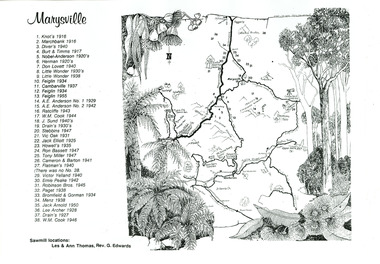
Map (item) - Sawmill locations, Ann Thomas, Unknown
... australia...sawmill...sawmill locations...map...knot's...marchbank...diver's...burt & timms...nobel-anderson...herman...don lovett...little wonder...feiglin...cambarville...a.e. anderson...ratcliffe...w.m. cook...j. sund...drain's...stebbins...vic oak...A map with a key showing the locations of the many timber mills in the district surrounding Marysville. marysville victoria australia sawmill sawmill locations map knot's marchbank diver's burt & timms nobel-anderson herman don lovett little wonder feiglin cambarville a.e. anderson ratcliffe w.m. cook j. sund drain's stebbins vic oak jack elliott howell's ron bassett tony miller cameron & barton flatman's victor yelland ernie peake robinson bros paget bromfield & gorman menz jack arnold lee archer A map with a key showing the locations of the many timber mills in the district surrounding Marysville. ...A map with a key showing the locations of the many timber mills in the district surrounding Marysville.A map with a key showing the locations of the many timber mills in the district surrounding Marysville.marysville, victoria, australia, sawmill, sawmill locations, map, knot's, marchbank, diver's, burt & timms, nobel-anderson, herman, don lovett, little wonder, feiglin, cambarville, a.e. anderson, ratcliffe, w.m. cook, j. sund, drain's, stebbins, vic oak, jack elliott, howell's, ron bassett, tony miller, cameron & barton, flatman's, victor yelland, ernie peake, robinson bros, paget, bromfield & gorman, menz, jack arnold, lee archer -
 Marysville & District Historical Society
Document (item) - Feasibility study, Glenn. M. Brooks, THE VIC OAK, 06-1978
... ...australia...vic oak...A feasibility study of the Vic Oak Sawmill project. marysville victoria australia vic oak sawmill feasibility study A feasibility study of the Vic Oak Sawmill project. ...A feasibility study of the Vic Oak Sawmill project.A feasibility study of the Vic Oak Sawmill project.marysville, victoria, australia, vic oak sawmill, feasibility study -
 Marysville & District Historical Society
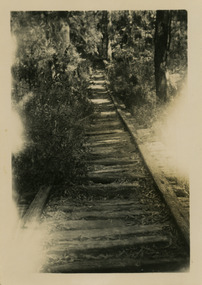
Photograph (item) - Black and white photograph, 1953
... ...australia...vic oak...A black and white photograph of the Vic Oak Sawmill timber tramline just on the outskirts of Marysville. The photograph was taken in 1953. marysville victoria australia vic oak sawmill timber tramline photograph VIC OAK/ TRAMLINE/ (ALL WOOD)/ MARYSVILLE '53 A black and white photograph of the Vic Oak Sawmill timber tramline just on the outskirts of Marysville. ...A black and white photograph of the Vic Oak Sawmill timber tramline just on the outskirts of Marysville. The photograph was taken in 1953. The Vic Oak sawmill was one of the active local timber processing operations in the Marysville region during the mid-20th century. A black and white photograph of the Vic Oak Sawmill timber tramline just on the outskirts of Marysville. The photograph was taken in 1953.VIC OAK/ TRAMLINE/ (ALL WOOD)/ MARYSVILLE '53marysville, victoria, australia, vic oak sawmill, timber tramline, photograph -
 Marysville & District Historical Society
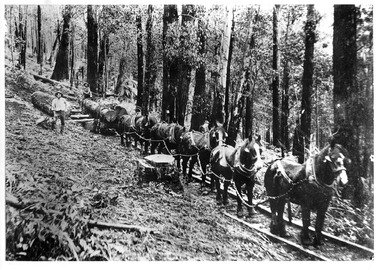
Photograph (item) - Black and white photograph, Unknown
... ...australia...vic oak...A copy of a black and white photograph of horses hauling logs along the Vic Oak Sawmill timber tramline. marysville victoria australia vic oak sawmill timber tramline photograph A copy of a black and white photograph of horses hauling logs along the Vic Oak Sawmill timber tramline. ...A copy of a black and white photograph of horses hauling logs along the Vic Oak Sawmill timber tramline. The Vic Oak sawmill was one of the active local timber processing operations in the Marysville region during the mid-20th century. A copy of a black and white photograph of horses hauling logs along the Vic Oak Sawmill timber tramline.marysville, victoria, australia, vic oak sawmill, timber tramline, photograph -
 Marysville & District Historical Society
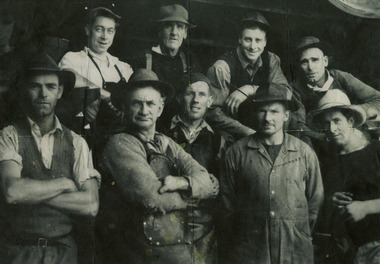
Photograph (item) - Black and white photograph, Unknown
... ...australia...vic oak...A digital copy of a black and white photograph of some of the workers at the Vic Oak Sawmill in Marysville. marysville victoria australia vic oak sawmill timber tramline photograph gertie sheard hooker rogers bill haig athol shannon romolo gerletti ron cain tiny hoffman ron hadfield bob carmody Front Row-L-R-Gertie Sheard, Hooker Rogers, Bill Haig, Athol Shannon, Romolo Gerletti Back Row-L-R-Ron Cain, Tiny Hoffman, Ron Hadfield, Bob Carmody A digital copy of a black and white photograph of some of the workers at the Vic Oak Sawmill in Marysville. ...A digital copy of a black and white photograph of some of the workers at the Vic Oak Sawmill in Marysville. The Vic Oak sawmill was one of the active local timber processing operations in the Marysville region during the mid-20th century. A digital copy of a black and white photograph of some of the workers at the Vic Oak Sawmill in Marysville.Front Row-L-R-Gertie Sheard, Hooker Rogers, Bill Haig, Athol Shannon, Romolo Gerletti Back Row-L-R-Ron Cain, Tiny Hoffman, Ron Hadfield, Bob Carmodymarysville, victoria, australia, vic oak sawmill, timber tramline, photograph, gertie sheard, hooker rogers, bill haig, athol shannon, romolo gerletti, ron cain, tiny hoffman, ron hadfield, bob carmody -
 Marysville & District Historical Society
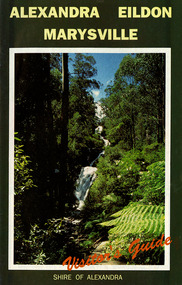
Ephemera (Item) - Visitor's Guide, Shire of Alexandra, ALEXANDRA EILDON MARYSVILLE Visitor's Guide, Unknown
... australia...tourist guide...steavenson falls...blackwood lodges...marysville hotel motel...the cumberland...gallery restaurant marysville...marysville gallery...cross country ski hire...marylyn guest house...marylands guest house...marysville crafts & gifts...hearts of oak...A tourist guide for Alexandra, Eildon and Marysville produced by the Shire of Alexandra. alexandra eildon marysville victoria australia tourist guide steavenson falls blackwood lodges marysville hotel motel the cumberland gallery restaurant marysville marysville gallery cross country ski hire marylyn guest house marylands guest house marysville crafts & gifts hearts of oak antiques geoffrey pope & associates cedron house marysville amber view holiday lodges marysville marysville ski hire lake mountain ski school fruit salad farm taggerty general store arbor green galleries marysville black spur roadhouse black spur motel & caravan park marysville caravan park the hermitage narbethong danish coffee garden maryton park buxton trout farm lake mountain outdoor centre marysville australian bush pioneer's farm the camel farm and zoo buxton marysville mountain view horse hire marysville golf and bowls club yarrolyn holiday park taggerty riverland lodge taggerty beauty spot walk tree fern gully walk michaeldene track keppel track woods lookout track A tourist guide for Alexandra, Eildon and Marysville produced by the Shire of Alexandra. ...A tourist guide for Alexandra, Eildon and Marysville produced by the Shire of Alexandra.A tourist guide for Alexandra, Eildon and Marysville produced by the Shire of Alexandra.alexandra, eildon, marysville, victoria, australia, tourist guide, steavenson falls, blackwood lodges, marysville hotel motel, the cumberland, gallery restaurant marysville, marysville gallery, cross country ski hire, marylyn guest house, marylands guest house, marysville crafts & gifts, hearts of oak antiques, geoffrey pope & associates, cedron house marysville, amber view holiday lodges marysville, marysville ski hire, lake mountain ski school, fruit salad farm, taggerty general store, arbor green galleries marysville, black spur roadhouse, black spur motel & caravan park, marysville caravan park, the hermitage narbethong, danish coffee garden, maryton park, buxton trout farm, lake mountain outdoor centre marysville, australian bush pioneer's farm, the camel farm and zoo buxton, marysville mountain view horse hire, marysville golf and bowls club, yarrolyn holiday park taggerty, riverland lodge taggerty, beauty spot walk, tree fern gully walk, michaeldene track, keppel track, woods lookout track -
 Marysville & District Historical Society
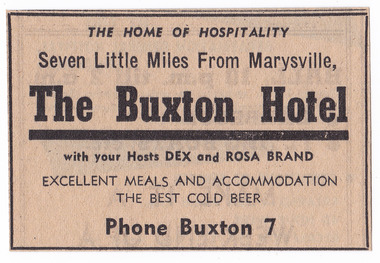
Newspaper (Item) - Newspaper advertisement, BUXTON HOTEL, 1950s
... oak trees and bordered and backed by large pine trees. It was a weatherboard structure with a painted corrugated iron roof. Old split wood shingles were covered by corrugated iron, which overlaid the shingles to make the roof watertight. The wooden shingles date back to the 1850s. A newspaper advertisement regarding the Buxton Hotel in Buxton. buxton victoria australia ...A newspaper advertisement regarding the Buxton Hotel in Buxton. Dex and Rosa Brand were the hosts at the hotel at the time of the advertisement. They, along with their children, Colin and Helen, ran the hotel in the 1950s. The Buxton Hotel was built by William Burchall, probably in the late 1870s. The first owner, who also had land locally, was Frederick Nichols (1833-1904). The Buxton Hotel is located directly opposite the General Store. It was fronted with two huge oak trees and bordered and backed by large pine trees. It was a weatherboard structure with a painted corrugated iron roof. Old split wood shingles were covered by corrugated iron, which overlaid the shingles to make the roof watertight. The wooden shingles date back to the 1850s.A newspaper advertisement regarding the Buxton Hotel in Buxton.buxton, victoria, australia, buxton hotel, accommodation, willam burchall, frederick nichols, advertisement, colin brand, helen brand, dex brand, rosa brand -
Marysville & District Historical Society
Document (item) - Memories document, Catherine Stabb, MARYSVILLE-ROYAL SCOTTISH COUNTRY DANCE SOCIETY, Unknown
... australia...mountain lodge...accommodation...royal scottish country dance society...mount kitchener...mount kitchener lodge...crossways restaurant...tree fern gully...steavenson river...falls road...our lady of the snows...church of england...havest festival...warburton...emerald...berwick...liquid ambers...oak...A document outlining Catherine Stabb's memories of a Royal Scottish Dance Society event that was held in Marysville in April, 1975. marysville victoria australia mountain lodge accommodation royal scottish country dance society mount kitchener mount kitchener lodge crossways restaurant tree fern gully steavenson river falls road our lady of the snows church of england havest festival warburton emerald berwick liquid ambers oak claret ash golden ash virginia creeper japanese maple luckenbooth brooch kendall's hornpipe new scotland strathspey polharrow burn hollin buss robertson's rant bonnie shire glen janet's delight fireside reel eightsome reel duke of perth trip to bavaria shepherds crook mr wilsons hornpipe glasgow highlander rest and be thankful hooper's jig bonnie lass of bon accord ian powrie's farewell 2009 black saturday bushfires bellbird magpie kookaburra currawong crow pardalote tomtit wagtail blackbird parrot murray grey hereford guernsey brahman A document outlining Catherine Stabb's memories of a Royal Scottish Dance Society event that was held in Marysville in April, 1975. ...A document outlining Catherine Stabb's memories of a Royal Scottish Dance Society event that was held in Marysville in April, 1975.A document outlining Catherine Stabb's memories of a Royal Scottish Dance Society event that was held in Marysville in April, 1975.marysville, victoria, australia, mountain lodge, accommodation, royal scottish country dance society, mount kitchener, mount kitchener lodge, crossways restaurant, tree fern gully, steavenson river, falls road, our lady of the snows, church of england, havest festival, warburton, emerald, berwick, liquid ambers, oak, claret ash, golden ash, virginia creeper, japanese maple, luckenbooth brooch, kendall's hornpipe, new scotland strathspey, polharrow burn, hollin buss, robertson's rant, bonnie shire glen, janet's delight, fireside reel, eightsome reel, duke of perth, trip to bavaria, shepherds crook, mr wilsons hornpipe, glasgow highlander, rest and be thankful, hooper's jig, bonnie lass of bon accord, ian powrie's farewell, 2009 black saturday bushfires, bellbird, magpie, kookaburra, currawong, crow, pardalote, tomtit, wagtail, blackbird, parrot, murray grey, hereford, guernsey, brahman
