
Showing 119 items matching "common feature"
-
 Melbourne Tram Museum
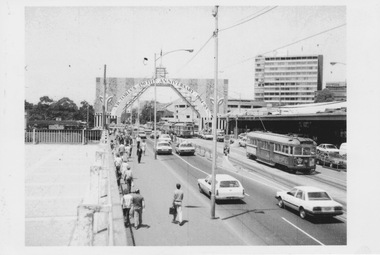
Photograph - Victorian 150th Anniversary Arch, 1984-85
... ...common feature...Temporary archways to mark special occasions have been a common feature on St Kilda Road since the late 1800s....Temporary archways to mark special occasions have been a common feature on St Kilda Road since the late 1800s. ...This photographic copy of an older photo shows a large temporary archway across St Kilda Road at Batman Avenue on the north side of Princes Bridge. Signage on the arch reads 'Victoria's 150th Anniversary - 1984-85'. Numerous trams, motor vehicles and pedestrian are featured. Temporary archways to mark special occasions have been a common feature on St Kilda Road since the late 1800s.Yields information about commemorative archways in Melbourne.Black and white photograph with nothing on rear.temporary archway, st kilda road, princes bridge, victoria's 150th anniversary - 1984-85, to mark special occasions, common feature -
 Bendigo Historical Society Inc.
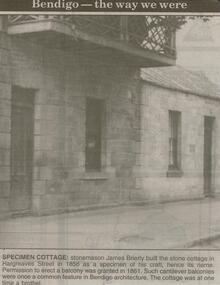
Newspaper - JENNY FOLEY COLLECTION: SPECIMEN COTTAGE
... Such cantilever balconies were once a common feature in Bendigo architecture. The cottage was at one time a brothel. ...Such cantilever balconies were once a common feature in Bendigo architecture. The cottage was at one time a brothel. ...Bendigo Advertiser ''The way we were'' from 2000. Specimen cottage: stonemason James Brierly built the stone cottage in Hargreaves Street in 1856 as a specimen of his craft, hence the name. Permission to erect a balcony was granted in 1861. Such cantilever balconies were once a common feature in Bendigo architecture. The cottage was at one time a brothel. The clip is in a folder.newspaper, bendigo advertiser, the way we were -
 Warrnambool and District Historical Society Inc.
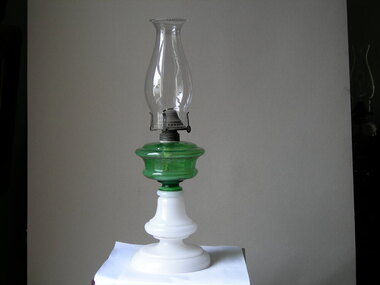
Lamp, Spirit Lamp, Early 20th century
... A spirit lamp was an essential household item in the 19th century and the first three decades of the 20th century until electric lighting became a common feature of most homes. ...A spirit lamp was an essential household item in the 19th century and the first three decades of the 20th century until electric lighting became a common feature of most homes. This lamp has no particular significance and is suitable for display as an example of family life in the past. ...There is no known history connected to this item. A spirit lamp was an essential household item in the 19th century and the first three decades of the 20th century until electric lighting became a common feature of most homes. This lamp has no particular significance and is suitable for display as an example of family life in the past.This is a spirit lamp with a milk glass base in two sections (two pedestals in rings). The bowl is made of green glass emulating the shape of the base. There is a brass section connecting the bowl to the wick holder with the wick exposed. There is a small knob or handle external to the bowl for controlling the wick’s use. The clear glass lamp mantle is slim-line bulbous shaped. history of warrnambool, social history, spirit lamp -
 Hume City Civic Collection
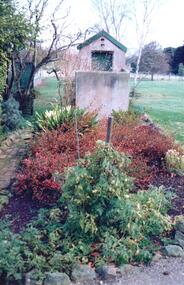
Photograph, Late 1990's
... The outdoor toilet was a common feature in country estates and farms before the introduction of septic tank systems to non-sewered areas. ...The outdoor toilet was a common feature in country estates and farms before the introduction of septic tank systems to non-sewered areas. ...The outdoor toilet was a common feature in country estates and farms before the introduction of septic tank systems to non-sewered areas. They were built away from the main house and were often disguised with a wall or trellis.A coloured photograph of an outdoor toilet. Its walls are brick with cement rendering. The pitched roof has a blue trim and a blue door. There is a wall in front of the building which covers three-quarters of the structure. A brick path is on the LHS of the photograph and a small garden is in the front with some tomato plants and ground covers.harpsdale estate, brodie, richard sinclair, george, outdoor toilets, george evans collection -
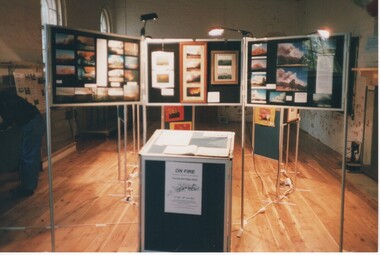 Rutherglen Historical Society
Image, 20/06/2003
... Colour photograph of the interior of the Home Economics room of the Common School Museum, featuring a display of photographs...Fire photos. 20/6/03" Colour photograph of the interior of the Home Economics room of the Common School Museum, featuring a display of photographs Image ...One of a series of photographs taken after refurbishment of Museum, during "On Fire" exhibition.Colour photograph of the interior of the Home Economics room of the Common School Museum, featuring a display of photographsOn back of photo: "7 Historical Society. Fire photos. 20/6/03"on fire display, common school museum -
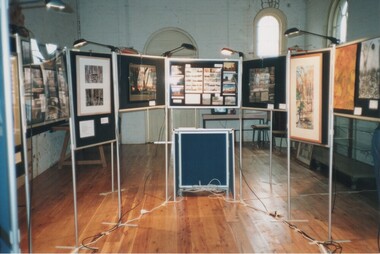 Rutherglen Historical Society
Image, 20/06/2003
... Colour photograph of the interior of the Home Economics room of the Common School Museum, featuring a display of photographs...Fire photos. 20/6/03" Colour photograph of the interior of the Home Economics room of the Common School Museum, featuring a display of photographs Image ...One of a series of photographs taken after refurbishment of Museum, during "On Fire" exhibition.Colour photograph of the interior of the Home Economics room of the Common School Museum, featuring a display of photographsOn back of photo: "6 Historical Society. Fire photos. 20/6/03"on fire display, common school museum -
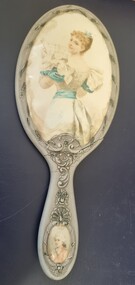 Wodonga & District Historical Society Inc
Decorative object - Decorative Hand Mirror, c1920
... As production techniques were streamlined and allowed for mass production, they became a common feature in most households....As production techniques were streamlined and allowed for mass production, they became a common feature in most households. This item is significant because it is representative of personal items used in the home from the Victorian era onwards. ...Hand-painted hand mirrors featuring portraits gained significant popularity during the Victorian era. They were originally a feature of an upper class lady's boudoir. As production techniques were streamlined and allowed for mass production, they became a common feature in most households.This item is significant because it is representative of personal items used in the home from the Victorian era onwards.A small hand mirror featuring a painting of a young woman on the back of the mirror and a man on the handle.personal toiletry items, vintage mirror -
 Emerald Museum & Nobelius Heritage Park
Domestic object - Shoe lasts, Unknown maker, 1920s-1930s
... Shoe lasts were used for making and repairing shoes and were a common feature in homes in the early and middle twentieth century where they were often used to replace the soles of family members' shoes....Shoe lasts were used for making and repairing shoes and were a common feature in homes in the early and middle twentieth century where they were often used to replace the soles of family members' shoes. shoe last 1920s Alexander domestic item None discernible Two shoe lasts of different dimensions - each shoe last consists of a 3-size sole working surface - each sole is set at 90 degrees to each other. ...These shoe lasts belonged to the family of Karen Alexander (donator). Her grandparents, Charles Thomas and Alice Mary Alexander owned a farming property in Emerald but lived in Ferntree Gully. Shoe lasts were used for making and repairing shoes and were a common feature in homes in the early and middle twentieth century where they were often used to replace the soles of family members' shoes.Two shoe lasts of different dimensions - each shoe last consists of a 3-size sole working surface - each sole is set at 90 degrees to each other. They are rusted cast iron and would have been used for repairing or replacing the soles of shoes or boots.None discernibleshoe last, 1920s, alexander, domestic item -
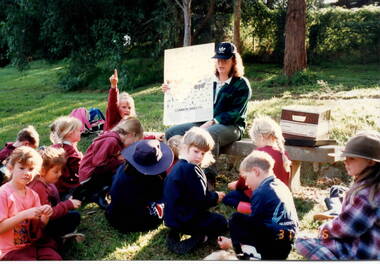 Sunbury Family History and Heritage Society Inc.
Photograph, Science excursion, 31st March 1996
... A non-digital coloured photograph of a group of children sitting on the ground in front of a teacher who is holding up a chart featuring common insects. One child has her hand up while others are looking down onto the grass....Bulla Bulla Primary School Nature studies School Excursion A non-digital coloured photograph of a group of children sitting on the ground in front of a teacher who is holding up a chart featuring common insects. One child has her hand up while others are looking down onto the grass. ...The students from Bulla Primary School were taken on a nature excursion to a nearby nature park as part of their scientific and environmental studies. They were studying the number and types of insects that could be found in the plants and water in the area. The park ranger then asked them to identify any insects on the chart that they found. Nature and environmental studies give the students of the importance of caring for the environment and are included in their science work.A non-digital coloured photograph of a group of children sitting on the ground in front of a teacher who is holding up a chart featuring common insects. One child has her hand up while others are looking down onto the grass.bulla, bulla primary school, nature studies, school excursion -
 Bacchus Marsh & District Historical Society
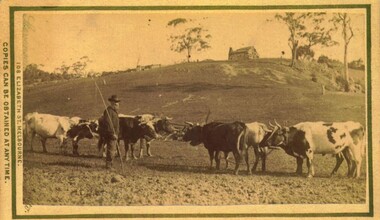
Photograph, Bullocks in paddock, near Bacchus Marsh 1883
... Transportation of goods and material by bullock teams was a common feature of life in nineteenth century Australia. ...Transportation of goods and material by bullock teams was a common feature of life in nineteenth century Australia. ...Transportation of goods and material by bullock teams was a common feature of life in nineteenth century Australia. Bullock teams could comprise more than twenty bullocks to haul very large and heavy loads. They were the equivalent of large trucks on the roads of today. Many Australian country towns have very wide main streets to allow for large bullock teams to turn without having to unharness and reharness the animals. The bullock driver in this photo is thought to be of James Densley, aka Charlie (the ) Carter, who lived at Hopetoun, east of the township of Bacchus Marsh. He worked as a carrier with a bullock team in the later years of the nineteenth century. He had a reputation as a sober man who never used bad language. (Williams, W. A History of Bacchus Marsh and its Pioneers. 1836-1936. Reproduced 2015 BMDHS.p. 78.) James Densley died in 1905, supposed to be over the age of ninety.Small sepia unframed photograph on card with gold border framing photograph. Housed in the album, 'Photographs of Bacchus Marsh and District in 1883 by Stevenson and McNicoll'. The image shows a group of seven shorthorn bullocks in a paddock. Their yokes and a chain can be seen. Standing near them is a bearded man holding a bullock team leader's whip. He is dressed neatly and is wearing a very smart hat. On the hilltop stands a large hut, possibly with a bark shingle roof. A chimney is at the end of the dwelling. On the front: Stevenson & McNicoll. Photo. 108 Elizabeth St. Melbourne. COPIES CAN BE OBTAINED AT ANY TIME. On the back: LIGHT & TRUTH inscribed on a banner surmounted by a representation of the rising sun. Copies of this Portrait can be had at any time by sending the Name and Post Office Money Order or Stamps for the amount of order to STEVENSON & McNICOLL LATE BENSON & STEVENSON, Photographers. 108 Elizabeth Street, MELBOURNE. stevenson and mcnicoll 1883 photographs of bacchus marsh and district, bullocks, bullock teams -
4th/19th Prince of Wales's Light Horse Regiment Unit History Room
Medal, Victory Medal
... Each of the Allied nations issued a ‘Victory Medal' to their own nationals with all of these having the figure of Victory on the obverse as a common feature. Australians were awarded the medal issued by Great Britain. ...Each of the Allied nations issued a ‘Victory Medal' to their own nationals with all of these having the figure of Victory on the obverse as a common feature. Australians were awarded the medal issued by Great Britain. ...The Victory Medal was authorised in 1919 to commemorate the victory of the Allied Forces over the Central Powers. Each of the Allied nations issued a ‘Victory Medal' to their own nationals with all of these having the figure of Victory on the obverse as a common feature. Australians were awarded the medal issued by Great Britain. A member mentioned in despatches (MID) for service during World War 1 wears a bronze spray of oak leaves on the Victory Medal ribbon. Only one emblem is worn no matter how many times a member may have been ‘mentioned'. When a ribbon alone is worn a slightly smaller insignia is worn as a ribbon emblem. Eligibility The Victory Medal was awarded to prescribed classes of persons who entered a theatre of war on duty between 5 August 1914 and 11 November 1918. The Medal The Victory Medal is bronze with a winged figure of Victory on the obverse. The reverse has the words ‘THE GREAT WAR FOR CIVILISATION', all surrounded by a laurel wreath. The Ribbon The Victory Medal ribbon has a ‘two rainbow' design, with the violet from each rainbow on the outside edges moving through to a central red stripe where both rainbows meet. No 19 Farrier Sgt William Stephens, a 26 year old station hand of Drouin, Vic, enlisted RHQ 4 LH Regiment on 21 August 1914.Embarked 19 October 1914, A Squadron 17 April 1916, sick (malaria) 10 Aug 1917, 14 Army General Hospital , Abbassia, 18 Aug, rejoined Regiment 11 Jan 1918, Returned to Australia 15 Nov 1918. Militia service with 13 LH Regt Full size medal with ribbon, unmountedSGT W STEPHENS 4 LHR AIFvictory medal, sgt stephens 4 lh -
 Ballarat Heritage Services
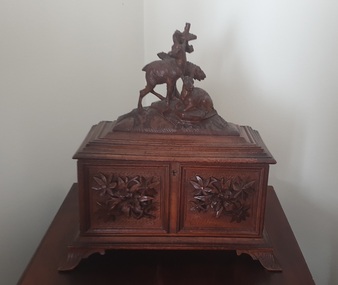
Photograph, Antique Black Forest Walnut carved tea caddy
... Black Forest carvings were symbolic of luxury and wealth. Common animals that featured in Black Forest Wood Carvings were Bears, Eagles, Stags, Boars and Dogs....Black Forest carvings were symbolic of luxury and wealth. Common animals that featured in Black Forest Wood Carvings were Bears, Eagles, Stags, Boars and Dogs. ...The wood carving industry started out in Switzerland in the Swiss city of Brienz. After a famine in 1816 the Swiss government encouraged the wood carving industry as a way of creating jobs and boosting the local economy. Black Forest carvings were symbolic of luxury and wealth. Common animals that featured in Black Forest Wood Carvings were Bears, Eagles, Stags, Boars and Dogs.Hand carved antique Black Forest Walnut wood carved box with two animals on top, and flowers on the side. black forest carved box, carving, animals, flora -
 Flagstaff Hill Maritime Museum and Village
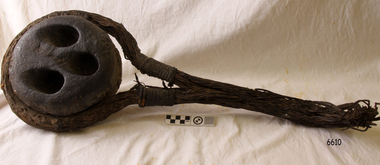
Deadeye, circa 1873
... Deadeyes were a common feature of sailing ship technology in the nineteenth century. ...Deadeyes were a common feature of sailing ship technology in the nineteenth century. ...This example of a sailing ship’s ‘dead-eye’ is from the wreck of the LOCH ARD, which sank near Port Campbell in 1878. The vessel was an iron hulled clipper ship constructed for the Loch Line in 1873. It was part of a fleet of similar merchant ships owned by that company, which specialised in bringing passengers and goods from London via the Great Circle route to Melbourne, and returning to Britain via Cape Horn with the colony’s wool clip. Deadeyes were a common feature of sailing ship technology in the nineteenth century. They were a simple, cheap, and hard-wearing device that, in conjunction with another deadeye, provided an effective means of levering, or tightening, attached ropes and stays. Lower deadeyes were fixed to the sides of the ship by an encircling metal collar (inset in a flattish groove chiselled around the outer circumference of the disc), which was bolted to iron bars attached to the hull (called chain-plates). Upper deadeyes were looped by a strong hemp or wire rope (inset in a rounded groove carved around the outer circumference of the disc), which was joined to the bottom ends of the rigging which reached up to secure the masts into position (called shrouds or stays). Connecting a Lower deadeye to its corresponding Upper deadeye was a rope (called a lanyard) which looped up and down through the three “eyes” of each disc, to form a pulley system. The hitching of the two deadeyes with a looped lanyard provided the means of tightening, or loosening, the tension on the mast rigging ― essentially by pulling against the chain-plates bolted to the outside of the hull. It was a procedure that could be performed by sailors at sea and in emergencies. For example, after a gale the stays may have stretched and the masts worked loose, requiring retightening. Or, in the extreme circumstance of shipwreck, the lanyards might need to be released on the weather side, so that the masts fall away from the stricken vessel. The shipwreck of the LOCH ARD is of State significance. Victorian Heritage Register S417.A well-preserved ship’s deadeye with wire loop rope still attached. The original tar coating for water-proofing still remains, colouring the entire artefact black. It is wrapped in hessian cloth and hemp cord and is currently in storage under secure and stable conditions. This deadeye was recovered from the wreck of the LOCH ARD. The artefact is a typical deadeye, comprising a thick round wooden disc, pierced by 3 similarly sized and shaped holes from one flat side through to the other, in a triangle formation. The survival of the wire cable loop-rope suggests it was an Upper Deadeye, connected to the shrouds (mast rigging). Previous number PWO 2388.flagstaff hill, warrnambool, shipwrecked-coast, flagstaff-hill, flagstaff-hill-maritime-museum, maritime-museum, shipwreck-coast, flagstaff-hill-maritime-village, deadeye, loch ard, rigging -
 Embroiderers Guild, Victoria
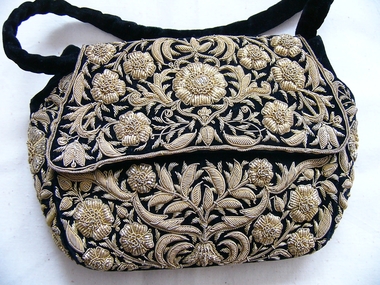
Accessory - Indian Goldwork Handbag, Early 20th century
... Techniques: Specialized techniques include Dabka (coiled wire) and Kasab (twisted wire) to create raised, three-dimensional motifs. Common Motifs: Designs often feature intricate floral patterns, leaves, paisley, and geometric shapes inspired by nature and architecture. 2. ...Techniques: Specialized techniques include Dabka (coiled wire) and Kasab (twisted wire) to create raised, three-dimensional motifs. Common Motifs: Designs often feature intricate floral patterns, leaves, paisley, and geometric shapes inspired by nature and architecture. 2. ...Known as Karchob it is divided into 2 types of gold embroidery: 1. Key Aspects of Zardozi Embroidery: Origin and Meaning: The term "Zardozi" comes from the Persian words "zar" (gold) and "dozi" (embroidery), literally meaning "sewing with gold". Materials Used: Traditionally, threads were made of pure gold or silver, but modern zardozi typically uses copper wires with a gold or silver polish, often blended with silk threads, sequins, and crystals. The Process: Adda: The fabric is stretched tightly over a wooden frame, known as an adda, to facilitate precise, delicate work. Aari Needle: Artisans often use a hook-ended needle, similar to a crochet needle, called an aari, to make intricate stitches. Techniques: Specialized techniques include Dabka (coiled wire) and Kasab (twisted wire) to create raised, three-dimensional motifs. Common Motifs: Designs often feature intricate floral patterns, leaves, paisley, and geometric shapes inspired by nature and architecture. 2. Key details about Kamdani embroidery: Technique: It is often called a "lighter version" of Zardozi. It involves using a needle to insert flat metallic wires (badla) through the fabric, making tiny stitches that sparkle, often creating dots, paisleys, or floral patterns. Origin: The craft originated in the Indian subcontinent, specifically developing in Lucknow, India. Materials: Originally done with pure gold or silver threads, modern Kamdani often uses synthetic metallic threads or beads for affordability. Application: It is commonly featured on luxurious textiles, including georgette, chiffon, and cotton, frequently worn as formal wedding wear (sarees, dupattas, and kurtas). Types of Work: It is often referred to by related terms such as Mukaish, Badla, or Fardi work.Gold embroidery all over bag except under flap. Intricate design on flowers in very typical of the variety of metal threads. Velvet handles with black silk lining with press-studs in both corners of the flap. Decorative beaded tassel at base. Intricate design of flowers in typical design known as Karchob.embroidery, bags, 1900-20, india, goldwork -
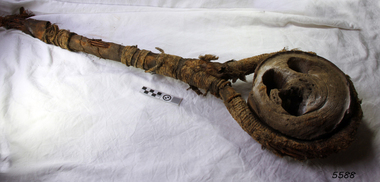 Flagstaff Hill Maritime Museum and Village
Deadeye, circa 1873
... Deadeyes were a common feature of sailing ship technology in the nineteenth century. ...Deadeyes were a common feature of sailing ship technology in the nineteenth century. ...This example of a sailing ship’s ‘dead-eye’ is from the wreck of the LOCH ARD, which sank near Port Campbell in 1878. The vessel was an iron hulled clipper ship constructed for the Loch Line in 1873. It was part of a fleet of similar merchant ships owned by that company, which specialised in bringing passengers and goods from London via the Great Circle route to Melbourne, and returning to Britain via Cape Horn with the colony’s wool clip. Deadeyes were a common feature of sailing ship technology in the nineteenth century. They were a simple, cheap, and hard-wearing device that, in conjunction with another deadeye, provided an effective means of levering, or tightening, attached ropes and stays. Lower deadeyes were fixed to the sides of the ship by an encircling metal collar (inset in a flattish groove chiselled around the outer circumference of the disc), which was bolted to iron bars attached to the hull (called chain-plates). Upper deadeyes were looped by a strong hemp or wire rope (inset in a rounded groove carved around the outer circumference of the disc), which was joined to the bottom ends of the rigging which reached up to secure the masts into position (called shrouds or stays). Connecting a Lower deadeye to its corresponding Upper deadeye was a rope (called a lanyard) which looped up and down through the three “eyes” of each disc, to form a pulley system. The hitching of the two deadeyes with a looped lanyard provided the means of tightening, or loosening, the tension on the mast rigging ― essentially by pulling against the chain-plates bolted to the outside of the hull. It was a procedure that could be performed by sailors at sea and in emergencies. For example, after a gale the stays may have stretched and the masts worked loose, requiring retightening. Or, in the extreme circumstance of shipwreck, the lanyards might need to be released on the weather side, so that the masts fall away from the stricken vessel. HISTORY OF THE LOCH ARD The LOCH ARD belonged to the famous Loch Line which sailed many ships from England to Australia. Built in Glasgow by Barclay, Curdle and Co. in 1873, the LOCH ARD was a three-masted square rigged iron sailing ship. The ship measured 262ft 7" (79.87m) in length, 38ft (11.58m) in width, 23ft (7m) in depth and had a gross tonnage of 1693 tons. The LOCH ARD's main mast measured a massive 150ft (45.7m) in height. LOCH ARD made three trips to Australia and one trip to Calcutta before its final voyage. LOCH ARD left England on March 2, 1878, under the command of Captain Gibbs, a newly married, 29 year old. She was bound for Melbourne with a crew of 37, plus 17 passengers and a load of cargo. The general cargo reflected the affluence of Melbourne at the time. On board were straw hats, umbrella, perfumes, clay pipes, pianos, clocks, confectionary, linen and candles, as well as a heavier load of railway irons, cement, lead and copper. There were items included that intended for display in the Melbourne International Exhibition in 1880. The voyage to Port Phillip was long but uneventful. At 3am on June 1, 1878, Captain Gibbs was expecting to see land and the passengers were becoming excited as they prepared to view their new homeland in the early morning. But LOCH ARD was running into a fog which greatly reduced visibility. Captain Gibbs was becoming anxious as there was no sign of land or the Cape Otway lighthouse. At 4am the fog lifted. A man aloft announced that he could see breakers. The sheer cliffs of Victoria's west coast came into view, and Captain Gibbs realised that the ship was much closer to them than expected. He ordered as much sail to be set as time would permit and then attempted to steer the vessel out to sea. On coming head on into the wind, the ship lost momentum, the sails fell limp and LOCH ARD's bow swung back. Gibbs then ordered the anchors to be released in an attempt to hold its position. The anchors sank some 50 fathoms - but did not hold. By this time LOCH ARD was among the breakers and the tall cliffs of Mutton Bird Island rose behind the ship. Just half a mile from the coast, the ship's bow was suddenly pulled around by the anchor. The captain tried to tack out to sea, but the ship struck a reef at the base of Mutton Bird Island, near Port Campbell. Waves broke over the ship and the top deck was loosened from the hull. The masts and rigging came crashing down knocking passengers and crew overboard. When a lifeboat was finally launched, it crashed into the side of LOCH ARD and capsized. Tom Pearce, who had launched the boat, managed to cling to its overturned hull and shelter beneath it. He drifted out to sea and then on the flood tide came into what is now known as LOCH ARD Gorge. He swam to shore, bruised and dazed, and found a cave in which to shelter. Some of the crew stayed below deck to shelter from the falling rigging but drowned when the ship slipped off the reef into deeper water. Eva Carmichael had raced onto deck to find out what was happening only to be confronted by towering cliffs looming above the stricken ship. In all the chaos, Captain Gibbs grabbed Eva and said, "If you are saved Eva, let my dear wife know that I died like a sailor". That was the last Eva Carmichael saw of the captain. She was swept off the ship by a huge wave. Eva saw Tom Pearce on a small rocky beach and yelled to attract his attention. He dived in and swam to the exhausted woman and dragged her to shore. He took her to the cave and broke open case of brandy which had washed up on the beach. He opened a bottle to revive the unconscious woman. A few hours later Tom scaled a cliff in search of help. He followed hoof prints and came by chance upon two men from nearby Glenample Station three and a half miles away. In a state of exhaustion, he told the men of the tragedy. Tom returned to the gorge while the two men rode back to the station to get help. By the time they reached LOCH ARD Gorge, it was cold and dark. The two shipwreck survivors were taken to Glenample Station to recover. Eva stayed at the station for six weeks before returning to Ireland, this time by steamship. In Melbourne, Tom Pearce received a hero's welcome. He was presented with the first gold medal of the Royal Humane Society of Victoria and a £1000 cheque from the Victorian Government. Concerts were performed to honour the young man's bravery and to raise money for those who lost family in the LOCH ARD disaster. Of the 54 crew members and passengers on board, only two survived: the apprentice, Tom Pearce and the young woman passenger, Eva Carmichael, who lost all of her family in the tragedy. Ten days after the LOCH ARD tragedy, salvage rights to the wreck were sold at auction for £2,120. Cargo valued at £3,000 was salvaged and placed on the beach, but most washed back into the sea when another storm developed. The wreck of LOCH ARD still lies at the base of Mutton Bird Island. Much of the cargo has now been salvaged and some was washed up into what is now known as LOCH ARD Gorge. Cargo and artefacts have also been illegally salvaged over many years before protective legislation was introduced. One of the most unlikely pieces of cargo to have survived the shipwreck was a Minton porcelain peacock - one of only nine in the world. The peacock was destined for the Melbourne International Exhibition in 1880. It had been well packed, which gave it adequate protection during the violent storm. Today, the Minton peacock can be seen at the Flagstaff Hill Maritime Museum in Warrnambool. From Australia's most dramatic shipwreck it has now become Australia's most valuable shipwreck artefact and is one of very few 'objects' on the Victorian State Heritage Register. The shipwreck of the LOCH ARD is of State significance. Victorian Heritage Register S417. Flagstaff Hill’s collection of artefacts from LOCH ARD is significant for being one of the largest collections of artefacts from this shipwreck in Victoria. It is significant for its association with the shipwreck, which is on the Victorian Heritage Register (VHR S417). The collection is significant because of the relationship between the objects, as together they have a high potential to interpret the story of the LOCH ARD. The LOCH ARD collection is archaeologically significant as the remains of a large international passenger and cargo ship. The LOCH ARD collection is historically significant for representing aspects of Victoria’s shipping history and its potential to interpret sub-theme 1.5 of Victoria’s Framework of Historical Themes (living with natural processes). The collection is also historically significant for its association with the LOCH ARD, which was one of the worst and best known shipwrecks in Victoria’s history. A reasonably well-preserved ship’s deadeye with rust-stained wire loop-rope still attached. It retains portions of its original hemp cord and hessian wrapping. The flat sides of this thick wooden disc have three holes drilled through in a triangular configuration. The artefact is from the shipwreck of the LOCH ARD (1878). The survival of the loop-rope (wire cable) indicates it was an Upper Deadeye, connected to the shrouds (mast rigging).flagstaff hill, warrnambool, shipwrecked coast, flagstaff hill maritime museum, maritime museum, shipwreck coast, flagstaff hill maritime village, great ocean road, loch line, loch ard, captain gibbs, eva carmichael, tom pearce, glenample station, mutton bird island, loch ard gorge, deadeye, rigging -
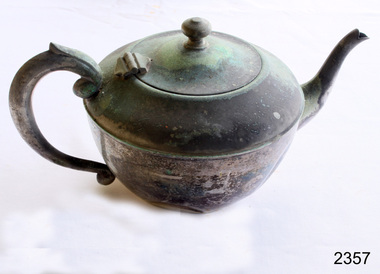 Flagstaff Hill Maritime Museum and Village
Domestic object - Teapot, Unknown
... common groups. The first style of teapot was the pear shaped style which began to appear in 1705. The pear shaped pot usually had a domed lid and sometimes featured a finial. ...common groups. The first style of teapot was the pear shaped style which began to appear in 1705. The pear shaped pot usually had a domed lid and sometimes featured a finial. ...In the 1650s, the newest exciting development had arrived on Britain’s shores, this time it was tea from China. As it was brought back from overseas, tea was incredibly scarce and as such its price was very high; in 1664, the cost of tea was already 40s per pound, although this is not as high as what it would become when taxed in the 18th century. This resulted in only the social elite enjoying a cup of tea, and most commonly tea was enjoyed in coffee houses, and teapots were therefore not yet a household item. As the East India Company imported larger quantities of tea, it became more widely available and a larger section of the British population were able to enjoy it meaning that, by 1669, tea was available nearly everywhere. Likely due to the fact that tea was first enjoyed in coffee houses, the first known teapot resembles a coffee pot, with a tapering cylindrical shape and standing much taller than what we now know as a teapot at 13.5 inches tall. Into the 1680s, these teapots were given a conical cover for the spout that was fixed to the pot via a chain. As Queen Anne took the throne in 1702, teapots had become much more widely used and had formed two common groups. The first style of teapot was the pear shaped style which began to appear in 1705. The pear shaped pot usually had a domed lid and sometimes featured a finial. This form was generally supplied with a heater and stand as well as having a baluster shaped handle on one side. This iteration would disappear by 1725 but does make a reappearance in the 1740s, only this time as an inverted pear shape. The second group was the more spherical, or globular, shape which appeared in 1710. The globular teapot had a flush, hinged lid as well as a narrow moulded rim foot and a straight sided, tapering spout. Both generalised groups of teapots have polygonal examples – that is, teapots that are made up of straight sided segments – but six or seven sided teapots are incredibly rare. There is one known example of a seven sided globular teapot, made by Isaac Ribouleau in 1724. This is so unique because polygonal teapots are much more technically difficult and time consuming to make. Other than the occasional band of engraving round the shoulder of the teapot, they remain quite plain until c.1740 when scrollwork and chased shells begin to be applied for decoration. ‘Chasing’ is the process of decorating the front of a piece of metal by indenting the back, without cutting or engraving. From 1755 until 1770, silver teapots became incredibly uncommon and it is likely that this either reflects a change in drinking habits or changing trends producing a favour for porcelain. This dip in popularity could also be in response to the outrageous taxes placed on tea, up to 119%! In 1765, the Leeds creamware globular teapot seemed to kickstart a resurgence and this, combined with the Commutation Act of 1784 – which reduced tax on tea from 119% to 12.5% – saw teapots return in all their forms. It’s around this time, in 1780, that a form of teapot with a detachable, openwork stand appeared; however, the plain, oval teapot remained the most popular in the 1780s and 90s. In the later years of George III’s tenure on the throne, during the last decade of the 18th century, there was a revival of chasing and embossing teapots with flower and foliage designs. At the turn of the century, the spherical, partly fluted teapot with classical decoration was superseded by a more oblong shaped pot that sat on four spherical feet. This was then changed again when teapots became more melon shaped. It was at this time that the capacity of a teapot greatly increased and the previously wooden or ivory handles were replaced by silver handles with ivory washers for insulation. As Britain entered into the Victorian era, the design quality often suffered as there was a tendency to over-decorate the silver. In the early 19th century, the last major addition to the shape of the teapot, a raised collar was added between the cover and body. Whilst this seems to just be for decoration, there is some speculation that it could also be to prevent overspills. https://www.marklittler.com/silver-teapots-history/ This item shows that silver and silver plated teapots were used for tea making.Plain sliver teapot. Heavy oxidation. Dented.None.flagstaff hill, warrnambool, shipwrecked-coast, flagstaff-hill, flagstaff-hill-maritime-museum, maritime-museum, shipwreck-coast, flagstaff-hill-maritime-village, teapot, silver, siver plate, tea -
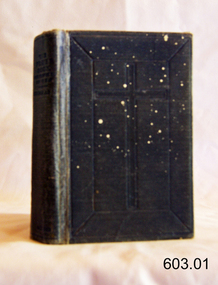 Flagstaff Hill Maritime Museum and Village
Book - Religious Book, Oxford University Press, The Book of Common Prayer, early 20th century
... feature of ports during the late 1800s and into the 1900s. It seemed appropriate for Flagstaff Hill to include such a representation within the new Maritime Village, so the Melbourne Board of Management of Missions to Seamen Victoria gave its permission on 21st May 1979 for the entire furnishings of the Williamstown chapel to be transferred to Flagstaff Hill. The St Nicholas Seamen’s Church was officially opened on October 11, 1981 and closely resembles the Williamstown chapel. This book, one of ten in a set of books, each titled The Book of Common ...The Book of Common Prayer is the foundational liturgical text of the Church of England and the broader Anglican Communion. The subject book as a standard 730-page UK edition often printed in the late 19th or early 20th century by major privilege presses like Cambridge University Press, Oxford University Press, or William Clowes & Sons contains the complete 1662 standard text. The volume is structured into distinct sections designed for daily worship, sacramental rites, and personal devotion. There is introductory matter within the text that includes the original prefaces regarding the service of the Church and how the Psalter and Holy Scriptures are ordered to be read. Lectionary and calendar tables are also included as well as lessons for daily Bible readings, rules for determining the date of Easter, and the calendar of Holy Days and saints' days.The Book of Common Prayer. Blue cloth cover. Title: The Book of Common Prayer with the Additions and Deviations proposed in 1928 Publisher: Humphrey Milford, Oxford University Press, London. 244 numbered pages. This is one of a set of original items in our ‘St Nicholas Seamen's Church Williamstown Collection’.non-fictionThe Book of Common Prayer is the foundational liturgical text of the Church of England and the broader Anglican Communion. The subject book as a standard 730-page UK edition often printed in the late 19th or early 20th century by major privilege presses like Cambridge University Press, Oxford University Press, or William Clowes & Sons contains the complete 1662 standard text. The volume is structured into distinct sections designed for daily worship, sacramental rites, and personal devotion. There is introductory matter within the text that includes the original prefaces regarding the service of the Church and how the Psalter and Holy Scriptures are ordered to be read. Lectionary and calendar tables are also included as well as lessons for daily Bible readings, rules for determining the date of Easter, and the calendar of Holy Days and saints' days.flagstaff hill, warrnambool, shipwrecked coast, flagstaff hill maritime museum, maritime museum, shipwreck coast, flagstaff hill maritime village, great ocean road, preyer books, book of common prayer, anglican church prayer book, religion, religious service, sailors rest, bethel sailors’ church, bethel floating church, ladies harbour light guild, missions to seamen victoria, mission to seafarers, flying angels club, st nicholas seaman’s church williamstown, st nicholas mission to seamen church williamstown, mission to seamen williamstown, st nicholas seamen’s church flagstaff hill, 139 nelson place williamstown, anglican church, religious book, vc queries, search -, photo, st nicholas seamen’s church williamstown collection -
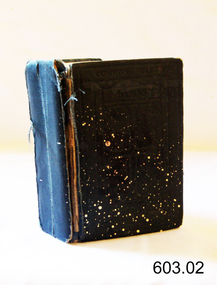 Flagstaff Hill Maritime Museum and Village
Book - Religious Book, Oxford University Press, The Book of Common Prayer, Early 20th century
... feature of ports during the late 1800s and into the 1900s. It seemed appropriate for Flagstaff Hill to include such a representation within the new Maritime Village, so the Melbourne Board of Management of Missions to Seamen Victoria gave its permission on 21st May 1979 for the entire furnishings of the Williamstown chapel to be transferred to Flagstaff Hill. The St Nicholas Seamen’s Church was officially opened on October 11, 1981 and closely resembles the Williamstown chapel. This book is one of a set of ten books, each titled The Book of Common ...The Book of Common Prayer is the foundational liturgical text of the Church of England and the broader Anglican Communion. The subject book as a standard 730-page UK edition often printed in the late 19th or early 20th century by major privilege presses like Cambridge University Press, Oxford University Press, or William Clowes & Sons contains the complete 1662 standard text. The volume is structured into distinct sections designed for daily worship, sacramental rites, and personal devotion. There is introductory matter within the text that includes the original prefaces regarding the service of the Church and how the Psalter and Holy Scriptures are ordered to be read. Lectionary and calendar tables are also included as well as lessons for daily Bible readings, rules for determining the date of Easter, and the calendar of Holy Days and saints' days.The Book of Common Prayer. Blue cloth cover. Title: The Book of Common Prayer with the Additions and Deviations proposed in 1928 Publisher: Humphrey Milford, Oxford University Press, London. Spines have gold inlay print. 244 numbered pages. This is one of a set of original items in our ‘St Nicholas Seamen's Church Williamstown Collection’.non-fictionThe Book of Common Prayer is the foundational liturgical text of the Church of England and the broader Anglican Communion. The subject book as a standard 730-page UK edition often printed in the late 19th or early 20th century by major privilege presses like Cambridge University Press, Oxford University Press, or William Clowes & Sons contains the complete 1662 standard text. The volume is structured into distinct sections designed for daily worship, sacramental rites, and personal devotion. There is introductory matter within the text that includes the original prefaces regarding the service of the Church and how the Psalter and Holy Scriptures are ordered to be read. Lectionary and calendar tables are also included as well as lessons for daily Bible readings, rules for determining the date of Easter, and the calendar of Holy Days and saints' days.flagstaff hill, warrnambool, shipwrecked coast, flagstaff hill maritime museum, maritime museum, shipwreck coast, flagstaff hill maritime village, great ocean road, preyer books, book of common prayer, anglican church prayer book, religion, religious service, sailors rest, bethel sailors’ church, bethel floating church, ladies harbour light guild, missions to seamen victoria, mission to seafarers, flying angels club, st nicholas seaman’s church williamstown, st nicholas mission to seamen church williamstown, missions to seamen williamstown, st nicholas seamen’s church flagstaff hill, 139 nelson place williamstown, anglican church, religious book -
 Flagstaff Hill Maritime Museum and Village
Book - Religious Book, Oxford University Press, The Book of Common Prayer, Early 20th century
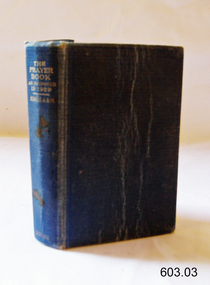
... feature of ports during the late 1800s and into the 1900s. It seemed appropriate for Flagstaff Hill to include such a representation within the new Maritime Village, so the Melbourne Board of Management of Missions to Seamen Victoria gave its permission on 21st May 1979 for the entire furnishings of the Williamstown chapel to be transferred to Flagstaff Hill. The St Nicholas Seamen’s Church was officially opened on October 11, 1981 and closely resembles the Williamstown chapel. This book is one of a set of ten books, each titled The Book of Common ...The Book of Common Prayer is the foundational liturgical text of the Church of England and the broader Anglican Communion. The subject book as a standard 730-page UK edition often printed in the late 19th or early 20th century by major privilege presses like Cambridge University Press, Oxford University Press, or William Clowes & Sons contains the complete 1662 standard text. The volume is structured into distinct sections designed for daily worship, sacramental rites, and personal devotion. There is introductory matter within the text that includes the original prefaces regarding the service of the Church and how the Psalter and Holy Scriptures are ordered to be read. Lectionary and calendar tables are also included as well as lessons for daily Bible readings, rules for determining the date of Easter, and the calendar of Holy Days and saints' days.The Book of Common Prayer. Blue cloth cover. Title: The Book of Common Prayer with the Additions and Deviations proposed in 1928 Publisher: Humphrey Milford, Oxford University Press, London. Spines have gold inlay print. 244 numbered pages. This is one of a set of original items in our ‘St Nicholas Seamen's Church Williamstown Collection’.non-fictionThe Book of Common Prayer is the foundational liturgical text of the Church of England and the broader Anglican Communion. The subject book as a standard 730-page UK edition often printed in the late 19th or early 20th century by major privilege presses like Cambridge University Press, Oxford University Press, or William Clowes & Sons contains the complete 1662 standard text. The volume is structured into distinct sections designed for daily worship, sacramental rites, and personal devotion. There is introductory matter within the text that includes the original prefaces regarding the service of the Church and how the Psalter and Holy Scriptures are ordered to be read. Lectionary and calendar tables are also included as well as lessons for daily Bible readings, rules for determining the date of Easter, and the calendar of Holy Days and saints' days.flagstaff hill, warrnambool, shipwrecked coast, flagstaff hill maritime museum, maritime museum, shipwreck coast, flagstaff hill maritime village, great ocean road, preyer books, book of common prayer, anglican church prayer book, religion, religious service, sailors rest, bethel sailors’ church, bethel floating church, ladies harbour light guild, missions to seamen victoria, mission to seafarers, flying angels club, st nicholas seaman’s church williamstown, st nicholas mission to seamen church williamstown, missions to seamen williamstown, st nicholas seamen’s church flagstaff hill, 139 nelson place williamstown, anglican church, religious book -
 Flagstaff Hill Maritime Museum and Village
Book - Religious Book, Oxford University Press, The Book of Common Prayer, Early 20th century
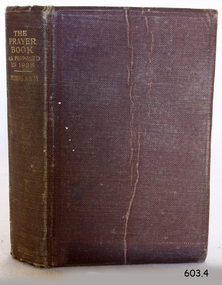
... feature of ports during the late 1800s and into the 1900s. It seemed appropriate for Flagstaff Hill to include such a representation within the new Maritime Village, so the Melbourne Board of Management of Missions to Seamen Victoria gave its permission on 21st May 1979 for the entire furnishings of the Williamstown chapel to be transferred to Flagstaff Hill. The St Nicholas Seamen’s Church was officially opened on October 11, 1981 and closely resembles the Williamstown chapel. This book is one of a set of ten books, each titled The Book of Common ...The Book of Common Prayer is the foundational liturgical text of the Church of England and the broader Anglican Communion. The subject book as a standard 730-page UK edition often printed in the late 19th or early 20th century by major privilege presses like Cambridge University Press, Oxford University Press, or William Clowes & Sons contains the complete 1662 standard text. The volume is structured into distinct sections designed for daily worship, sacramental rites, and personal devotion. There is introductory matter within the text that includes the original prefaces regarding the service of the Church and how the Psalter and Holy Scriptures are ordered to be read. Lectionary and calendar tables are also included as well as lessons for daily Bible readings, rules for determining the date of Easter, and the calendar of Holy Days and saints' days.The Book of Common Prayer. Red cloth cover. Title: The Book of Common Prayer with the Additions and Deviations proposed in 1928 Publisher: Humphrey Milford, Oxford University Press, London. Spines have gold inlay print. 244 numbered pages. This is one of a set of original items in our ‘St Nicholas Seamen's Church Williamstown Collection’.non-fictionThe Book of Common Prayer is the foundational liturgical text of the Church of England and the broader Anglican Communion. The subject book as a standard 730-page UK edition often printed in the late 19th or early 20th century by major privilege presses like Cambridge University Press, Oxford University Press, or William Clowes & Sons contains the complete 1662 standard text. The volume is structured into distinct sections designed for daily worship, sacramental rites, and personal devotion. There is introductory matter within the text that includes the original prefaces regarding the service of the Church and how the Psalter and Holy Scriptures are ordered to be read. Lectionary and calendar tables are also included as well as lessons for daily Bible readings, rules for determining the date of Easter, and the calendar of Holy Days and saints' days.flagstaff hill, warrnambool, shipwrecked coast, flagstaff hill maritime museum, maritime museum, shipwreck coast, flagstaff hill maritime village, great ocean road, preyer books, book of common prayer, anglican church prayer book, religion, religious service, sailors rest, bethel sailors’ church, bethel floating church, ladies harbour light guild, missions to seamen victoria, mission to seafarers, flying angels club, st nicholas seaman’s church williamstown, st nicholas mission to seamen church williamstown, missions to seamen williamstown, st nicholas seamen’s church flagstaff hill, 139 nelson place williamstown, anglican church, religious book, book -
 Flagstaff Hill Maritime Museum and Village
Book - Religious Book, Oxford University Press, The Book of Common Prayer, Early 20th century
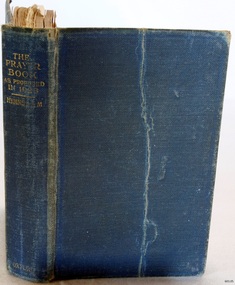
... feature of ports during the late 1800s and into the 1900s. It seemed appropriate for Flagstaff Hill to include such a representation within the new Maritime Village, so the Melbourne Board of Management of Missions to Seamen Victoria gave its permission on 21st May 1979 for the entire furnishings of the Williamstown chapel to be transferred to Flagstaff Hill. The St Nicholas Seamen’s Church was officially opened on October 11, 1981 and closely resembles the Williamstown chapel. This book is one of a set of ten books, each titled The Book of Common ...The Book of Common Prayer is the foundational liturgical text of the Church of England and the broader Anglican Communion. The subject book as a standard 730-page UK edition often printed in the late 19th or early 20th century by major privilege presses like Cambridge University Press, Oxford University Press, or William Clowes & Sons contains the complete 1662 standard text. The volume is structured into distinct sections designed for daily worship, sacramental rites, and personal devotion. There is introductory matter within the text that includes the original prefaces regarding the service of the Church and how the Psalter and Holy Scriptures are ordered to be read. Lectionary and calendar tables are also included as well as lessons for daily Bible readings, rules for determining the date of Easter, and the calendar of Holy Days and saints' days.The Book of Common Prayer. Blue cloth cover. Title: The Book of Common Prayer with the Additions and Deviations proposed in 1928 Publisher: Humphrey Milford, Oxford University Press, London. Spines have gold inlay print. 244 numbered pages. This is one of a set of original items in our ‘St Nicholas Seamen's Church Williamstown Collection’.non-fictionThe Book of Common Prayer is the foundational liturgical text of the Church of England and the broader Anglican Communion. The subject book as a standard 730-page UK edition often printed in the late 19th or early 20th century by major privilege presses like Cambridge University Press, Oxford University Press, or William Clowes & Sons contains the complete 1662 standard text. The volume is structured into distinct sections designed for daily worship, sacramental rites, and personal devotion. There is introductory matter within the text that includes the original prefaces regarding the service of the Church and how the Psalter and Holy Scriptures are ordered to be read. Lectionary and calendar tables are also included as well as lessons for daily Bible readings, rules for determining the date of Easter, and the calendar of Holy Days and saints' days.flagstaff hill, warrnambool, shipwrecked coast, flagstaff hill maritime museum, maritime museum, shipwreck coast, flagstaff hill maritime village, great ocean road, preyer books, book of common prayer, anglican church prayer book, religion, religious service, sailors rest, bethel sailors’ church, bethel floating church, ladies harbour light guild, missions to seamen victoria, mission to seafarers, flying angels club, st nicholas seaman’s church williamstown, st nicholas mission to seamen church williamstown, missions to seamen williamstown, st nicholas seamen’s church flagstaff hill, 139 nelson place williamstown, anglican church, religious book, book -
 Flagstaff Hill Maritime Museum and Village
Book - Religious Book, Oxford University Press, The Book of Common Prayer, Early 20th century
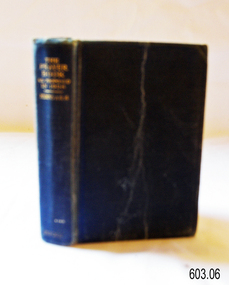
... feature of ports during the late 1800s and into the 1900s. It seemed appropriate for Flagstaff Hill to include such a representation within the new Maritime Village, so the Melbourne Board of Management of Missions to Seamen Victoria gave its permission on 21st May 1979 for the entire furnishings of the Williamstown chapel to be transferred to Flagstaff Hill. The St Nicholas Seamen’s Church was officially opened on October 11, 1981 and closely resembles the Williamstown chapel. This book is one of a set of ten books, each titled The Book of Common ...The Book of Common Prayer is the foundational liturgical text of the Church of England and the broader Anglican Communion. The subject book as a standard 730-page UK edition often printed in the late 19th or early 20th century by major privilege presses like Cambridge University Press, Oxford University Press, or William Clowes & Sons contains the complete 1662 standard text. The volume is structured into distinct sections designed for daily worship, sacramental rites, and personal devotion. There is introductory matter within the text that includes the original prefaces regarding the service of the Church and how the Psalter and Holy Scriptures are ordered to be read. Lectionary and calendar tables are also included as well as lessons for daily Bible readings, rules for determining the date of Easter, and the calendar of Holy Days and saints' days.The Book of Common Prayer. Blue cloth cover. Title: The Book of Common Prayer with the Additions and Deviations proposed in 1928 Publisher: Humphrey Milford, Oxford University Press, London. Spines have gold inlay print. 244 numbered pages. This is one of a set of original items in our ‘St Nicholas Seamen's Church Williamstown Collection’.non-fictionThe Book of Common Prayer is the foundational liturgical text of the Church of England and the broader Anglican Communion. The subject book as a standard 730-page UK edition often printed in the late 19th or early 20th century by major privilege presses like Cambridge University Press, Oxford University Press, or William Clowes & Sons contains the complete 1662 standard text. The volume is structured into distinct sections designed for daily worship, sacramental rites, and personal devotion. There is introductory matter within the text that includes the original prefaces regarding the service of the Church and how the Psalter and Holy Scriptures are ordered to be read. Lectionary and calendar tables are also included as well as lessons for daily Bible readings, rules for determining the date of Easter, and the calendar of Holy Days and saints' days.flagstaff hill, warrnambool, shipwrecked coast, flagstaff hill maritime museum, maritime museum, shipwreck coast, flagstaff hill maritime village, great ocean road, preyer books, book of common prayer, anglican church prayer book, religion, religious service, sailors rest, bethel sailors’ church, bethel floating church, ladies harbour light guild, missions to seamen victoria, mission to seafarers, flying angels club, st nicholas seaman’s church williamstown, st nicholas mission to seamen church williamstown, missions to seamen williamstown, st nicholas seamen’s church flagstaff hill, 139 nelson place williamstown, anglican church, religious book, book -
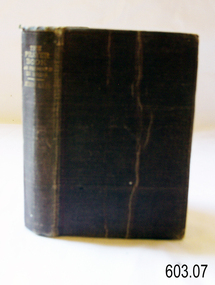 Flagstaff Hill Maritime Museum and Village
Book - Religious Book, Oxford University Press, The Book of Common Prayer, Early 20th century
... feature of ports during the late 1800s and into the 1900s. It seemed appropriate for Flagstaff Hill to include such a representation within the new Maritime Village, so the Melbourne Board of Management of Missions to Seamen Victoria gave its permission on 21st May 1979 for the entire furnishings of the Williamstown chapel to be transferred to Flagstaff Hill. The St Nicholas Seamen’s Church was officially opened on October 11, 1981 and closely resembles the Williamstown chapel. This book is one of a set of ten books, each titled The Book of Common ...The Book of Common Prayer is the foundational liturgical text of the Church of England and the broader Anglican Communion. The subject book as a standard 730-page UK edition often printed in the late 19th or early 20th century by major privilege presses like Cambridge University Press, Oxford University Press, or William Clowes & Sons contains the complete 1662 standard text. The volume is structured into distinct sections designed for daily worship, sacramental rites, and personal devotion. There is introductory matter within the text that includes the original prefaces regarding the service of the Church and how the Psalter and Holy Scriptures are ordered to be read. Lectionary and calendar tables are also included as well as lessons for daily Bible readings, rules for determining the date of Easter, and the calendar of Holy Days and saints' days.The Book of Common Prayer. Red cloth cover. Title: The Book of Common Prayer with the Additions and Deviations proposed in 1928 Publisher: Humphrey Milford, Oxford University Press, London. Spines have gold inlay print. 244 numbered pages. This is one of a set of original items in our ‘St Nicholas Seamen's Church Williamstown Collection’.non-fictionThe Book of Common Prayer is the foundational liturgical text of the Church of England and the broader Anglican Communion. The subject book as a standard 730-page UK edition often printed in the late 19th or early 20th century by major privilege presses like Cambridge University Press, Oxford University Press, or William Clowes & Sons contains the complete 1662 standard text. The volume is structured into distinct sections designed for daily worship, sacramental rites, and personal devotion. There is introductory matter within the text that includes the original prefaces regarding the service of the Church and how the Psalter and Holy Scriptures are ordered to be read. Lectionary and calendar tables are also included as well as lessons for daily Bible readings, rules for determining the date of Easter, and the calendar of Holy Days and saints' days.flagstaff hill, warrnambool, shipwrecked coast, flagstaff hill maritime museum, maritime museum, shipwreck coast, flagstaff hill maritime village, great ocean road, religion, religious service, sailors rest, bethel sailors’ church, bethel floating church, ladies harbour light guild, lightkeepers’ auxiliary, missions to seamen victoria, mission to seafarers, flying angel’s club, st nicholas seaman’s church williamstown, st nicholas mission to seamen church williamstown, st nicholas seamen's church williamstown collection, mission to seamen williamstown, st nicholas seamen’s church flagstaff hill, 139 nelson place williamstown, religious book, religious worship, anglican church, prayer book, book of common prayer -
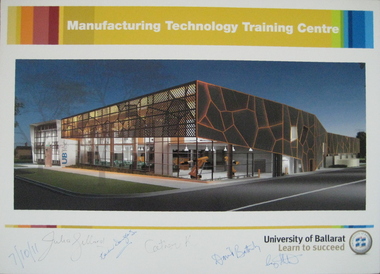 Federation University Historical Collection
Photograph - Poster, University of Ballarat Manufacturing Technology Training Centre poster signed by Prime Minister Julia Gillard, 07/10/2011 (approx 11.15am)
... common areas, computer rooms, meeting rooms, staff work areas and kitchen areas as well as car parking and site-wide amenities. While the buildings will have separate street identities the buildings will be joined with shared amenities areas. Funding for the UBTec component of the building is provided by Maintaining the Advantage: Skilled Victorians from the Victorian State Government. university of ballarat david battersby julia gillard prime minister catherine king ubtec karen douglas manufacturing technology training centre grant street architecural feature The poster is signed by the Prime Minister of Australia, the Hon. ...The new Manufacturing Technology Training Centre (MTTC), a part of the proposed Building Construction Training Centre (BCTC), will be a purpose-built, stand-alone, fully fitted-out industry-standard facility. This new space will accommodate current course provision along with specialist training spaces for developing skill requirements in manufacturing technology such as robotics, mechatronics, engineering and industrial automation. Project funding was provided by the Education Investment Fund from the Australian Government Department of Education, Employment and Workplace Relations. The project budget is $18.09m, and the resulting building will have a floor space of 4,755m2. The Manufacturing Technology Training Centre is being built in conjunction with the Technical Education Centre (UBTec). While the buildings will have separate street identities the buildings will be joined with shared amenities areas. UBTec will provide a facility including individual learning spaces, learning studios, administration/office space, circulation, open plan learning space, staff common areas, computer rooms, meeting rooms, staff work areas and kitchen areas as well as car parking and site-wide amenities. While the buildings will have separate street identities the buildings will be joined with shared amenities areas. Funding for the UBTec component of the building is provided by Maintaining the Advantage: Skilled Victorians from the Victorian State Government. A colour poster prepared for the 'turning of the sod' at the site of the proposed University of Ballarat Manufacturing Technology Training Centre (MTTC), Grant Street, Ballarat. The poster was signed on Friday 7 October 2011 at about 11:15 am at the Building Construction Training Centre (BCTC), Grant Street, Ballarat by: Hon. Julia Gillard MP Hon. Catherine King MP (Ballarat ) Prof. David Battersby, Vice Chancellor, University of Ballarat Mayor, Cr Craig Fletcher, Mayor of the City of Ballarat appointed in December 2010 Mrs. Karen Douglas, Chair University of Ballarat Building & Infrastructure Committee The poster is signed by the Prime Minister of Australia, the Hon. Julia Gillard MP; Karen Douglas; the Hon. Catherine King MP (Ballarat ); Prof. David Battersby (Vice Chancellor); Craig Fletcher (Mayor, City of Ballarat)university of ballarat, david battersby, julia gillard, prime minister, catherine king, ubtec, karen douglas, manufacturing technology training centre, grant street, architecural feature -
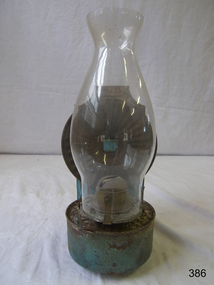 Flagstaff Hill Maritime Museum and Village
Domestic object - Lamp, Valor Co. Ltd, 1920-1936
... They were in common use in until the lighting was powered by gas and electricity. The reflector at the back of the lamp makes it of greater significance as most lamps don't have this feature. ...This trade mark (V inside a clover) was German. It was used by the lamp makers Veritas Efsca Works in Birmingham, and for a time by Valor Co. Ltd. which took over Veritas. Valor Co. Ltd. was established in Birmingham in 1890 and produced oil containers for the Anglo-American Oil Com. In 1901 the firm advertised themselves as Stampers And Pieces. Later it was named 'The Valor Co. and was associated with the Aston Brass Co., and advertised as makers of oil lamps and stoves. Valor became a maker of oil heaters cookers and many other products that were fueled by oil. Later it sold gas heaters and ovens. In 1936 Valor Co. Ltd. was made a Public Company and operated under the name The Velor Company Ltd. The company changed names over the years and it was still operating under Velor Fires in January 2002.Oil or kerosene lamps were the means of lighting for homes, farms and industry in the late 19th and early-to-mid 20th centuries. Lamps like these were important as Lighthouse Keepers and Assistant Keepers' equipment. They were in common use in until the lighting was powered by gas and electricity. The reflector at the back of the lamp makes it of greater significance as most lamps don't have this feature. The logo is also interesting as it originated in Germany and was used with permission by a British company and the company that brought it out for a short time. Similar lamps are still available today, usually with gas for fuel. Kerosene lamp; blue painted metal fuel can and metal rear reflector support. and a round corrugated reflector at the rear. The mid-section wick is made of brass. The glass cover or chimney is bulbous in shape. Inscriptions include a trademark "V" inside a clover. It is British-made in Birmingham by either Veritas Efsca Works or Veritas Valor.Trademark; "[clover symbol] surrounding a "V" Stamp: "BRITISH MADE" Marked on adjusting device: "English Made 1 in w" Marked on support of deflector shield - "British Made" and symbolwarrnambool, shipwreck coast, flagstaff hill, flagstaff hill maritime museum, flagstaff hill maritime village, oil lamp, table lamp, kerosene lamp, valor co. ltd, v inside a clover, veritas, british made, lamp reflector, lighting, lamp, the valor company ltd -
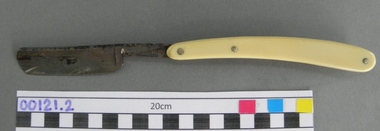 Upper Yarra Museum
Razor, Cut throat
... common in many countries until the 1950s. TODAY Straight razors are still manufactured. DOVO, of Solingen, Germany, and Thiers Issard of France are two of the most well-known European manufacturers. Feather Safety Razor Co. Ltd. of Osaka, Japan makes a razor with the same form as a traditional straight, but featuring...common in many countries until the 1950s. TODAY Straight razors are still manufactured. DOVO, of Solingen, Germany, and Thiers Issard of France are two of the most well-known European manufacturers. Feather Safety Razor Co. Ltd. of Osaka, Japan makes a razor with the same form as a traditional straight, but featuring ...Sharped Edged instrument used for cleaning hair from the skin. http://en.wikipedia.org/wiki/Straight_razor A straight razor is a razor with a blade that can fold into its handle.[1] They are also called open razors and cut-throat razors. HISTORY The first modern straight razor complete with decorated handles and hollow ground blades was constructed in Sheffield, England, by Benjamin Huntsman in 1740. Huntsman's process was adopted by the French sometime later. The English manufacturers were even more reluctant than the French to adopt the process and only did so after they saw its success in France.[5] Straight razors were the most common form of shaving before the 20th century and remained that common in many countries until the 1950s. TODAY Straight razors are still manufactured. DOVO, of Solingen, Germany, and Thiers Issard of France are two of the most well-known European manufacturers. Feather Safety Razor Co. Ltd. of Osaka, Japan makes a razor with the same form as a traditional straight, but featuring a disposable blade that can be installed through an injector-type system. Modern straight razor users are known to favor them for a variety of reasons. Some are attracted to the nostalgia of using old and traditional methods of shaving. It is a masculine ritual comparable to pipe smoking. Others profess an interest in reducing the waste of disposable blades.[11][22] Still others agree that straight razors provide a superior shave through a larger blade and greater control of the blade including the blade angle. Straight razors cover a much greater area per shaving stroke because their cutting edge is much longer than any of the multiblade razors. Ivory cut throat razor, with cream case 00121.3.Known as a straight razor.Razor with square point, full hollow ground 5/8” blade and double transverse stabiliser. The centre pin adds stability and rigidity to the handle---I think this is it ROM Parts The narrow end of the blade pivots on a pin, between 2 pieces of ivory forms the handle. LONG EXTRACT FROM WIKI _ SHORTEN to describe 00121 The parts of a straight razor and their function are described as follows: The narrow end of the blade rotates on a pin called the pivot, between two protective pieces called the scales or handle. The upward curved metal end of the narrow part of the blade beyond the pivot is called the tang and acts as a lever to help raise the blade from the handle. One or two fingers resting on the tang also help stabilize the blade while shaving. The narrow support piece between the tang and the main blade is called the shank, but this reference is often avoided because it can be confusing. The shank sometimes features decorations and the stamp of the country of origin. The top side and the underside of the shank can sometimes exhibit indentations known as fluting, or jimps for a more secure grip.[8] The curved lower part of the main blade from the shank to the cutting edge is called the shoulder.[9] The point where the shoulder joins the cutting edge is called the heel. A thick strip of metal running transversely at the junction where the main blade attaches to the shank is called the stabiliser. The stabiliser can be double,[10] single or can be absent in some razor models. The first stabiliser is usually very narrow and thicker and runs at the shank to blade junction, covering the shank and just spilling over to the shoulder. The second stabiliser can be distinguished since it is considerably wider and narrower, appearing after the first stabiliser and running lower into the shoulder. The non-cutting top of the blade is called the back or the spine while the cutting part of the blade opposite the back is called the cutting edge.[11] Finally the other free end of the blade, at the opposite end of the tang, is called the point and, sometimes, the head or the nose.[9][12] There are two to three pins in any handle. The middle pin, if present, is plastic coated and is called the plug.[13] Its function is to stabilise the sides of the handle so that they cannot be squeezed in the middle. When folded into the scales, the blade is protected from accidental damage, and the user is protected from accidental injury. During folding, the back of the blade, being thick and normally with a curved cross-section, acts as a natural stopper and prevents further rotation of the blade out of the handle from the other side shaving, lever, handle, blade, pivot, razor, tang -
 Flagstaff Hill Maritime Museum and Village
Instrument - Clock Parts, Bef. 01-06-1878
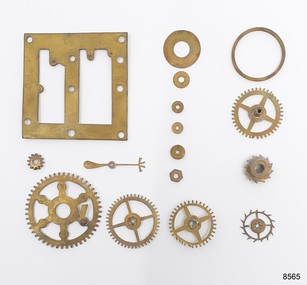
... common for antique clocks. Modern clockworks have ‘involute’ teeth with sloping sides and a squared-off top. The brass carriage clock parts are an example of a mechanical clock produced in the 1870s. The clock's design is a part of the chain of technological improvements in methods for timekeeping. Its cycloidal gear teeth were the forerunner of the more modern involute gears. The group of clock parts includes a weighted hand or arm for signifying the seconds. This feature ...The clock parts were discovered in 1980 by Julie Wilkins, a Victorian scuba diver who had already experienced more than 500 dives in Australia and overseas. She was holidaying in Peterborough, Victoria, and looking forward to discovering more about the famous Loch Ard ship, wrecked in June 1878 at Mutton Bird Island. The fast Glasgow-built clipper ship was only five years old when the tragedy occurred. There were 54 people on board the vessel and only two survived Julie's holiday photograph of Boat Bay reminds her of her most memorable dive. Submerged in the calm, flat sea, she was carefully scanning around the remains of the old wreck when, to her amazement, a gold coin and a small gold cross suddenly came up towards her. She excitedly cupped them in her hands and then stowed the treasures safely in her wetsuit and continued her dive. She soon discovered a group of brass carriage clock parts and some bottles of champagne. It was a day full of surprises. The items were easily recognisable, without any build-up of encrustations or concretion. Julie secretly enjoyed her treasures for twenty-four years then packed them up for the early morning train trip to Warrnambool. After a short walk to Flagstaff Hill Maritime Museum and Village, her photograph was taken as she handed over her precious find. She told her story to a local newspaper reporter, lunched a café in town then took the late afternoon train home. Her generous donation is now part of a vast collection of Loch Ard shipwreck artefacts, including the gold watch and the Minton Majolica model peacock. This group of brass clockwork parts is incomplete. The pieces were in the ocean for over 100 years before Julie recovered them from the Loch Ard wreck. Their size would suit the works of a carriage clock, with a mainspring and weight to power the clock movement, a pendulum to measure the clock's speed, arbours, posts, pillars and at least one other plate. They would have been mounted inside a protective case with a small door to easily access the clock face for setting the time and accessing the key's winding hole. The clock cases were usually made from decorative gilt brass with a glass front and a carrying handle. The parts include a weighted second hand with a decorative four-pronged finish at one end, a rounded weight at the other, and a hole for attaching it to the clock face. The gear teeth profiles are ‘cycloidal’, an arch shape with vertical sides, which is common for antique clocks. Modern clockworks have ‘involute’ teeth with sloping sides and a squared-off top. The brass carriage clock parts are an example of a mechanical clock produced in the 1870s. The clock's design is a part of the chain of technological improvements in methods for timekeeping. Its cycloidal gear teeth were the forerunner of the more modern involute gears. The group of clock parts includes a weighted hand or arm for signifying the seconds. This feature was uncommon in portable Victorian-era clocks. The clock parts are also significant for their association with the ill-fated sailing ship Loch Ard, wrecked in 1878. The travelling clock or officer’s clock may have been part of the cargo destined for the 1880 Melbourne Exhibition, or the personal possession of one of the people on board the vessel. Brass clockwork parts from a mechanical clock, sixteen pieces. Parts comprise a plate, large gears or wheels, small pinions or wheels with fine teeth, wheels with cogs, and a weighted second hand. The parts were from a carriage clock ca. 1878. They were recovered from the wreck of the sailing ship Loch Ard.flagstaff hill maritime museum and village, warrnambool, great ocean road, shipwreck coast, loch ard, wreck of the loch ard, 1878, mutton bird island, peterborough, scuba diver, 1980s, shipwreck artefact, relic, clock, mechanical, clock parts, time, timekeeper, horology, chronometry, cogs, time keeping device, scientific instrument, chronometer, john harrison, longitude, carriage clock, coach clock, portable clock, travelling clock, travel clock, traveller’s clock, officer’s clock, weighted second hand, victorian era, cycloidal gear teeth, brass clock, julie wilkins -
 Flagstaff Hill Maritime Museum and Village
Book - Fiction, Hal Porter, author, The Tilted Cross, 1961
... In 1886, a Museum and Fine Arts Gallery were added to the WMI, and by the early 20th century, it also featured a billiards room and a School of Art. At this time, it was common for country Victorian Mechanics’ Institutes to have attached museums. ...In 1886, a Museum and Fine Arts Gallery were added to the WMI, and by the early 20th century, it also featured a billiards room and a School of Art. At this time, it was common for country Victorian Mechanics’ Institutes to have attached museums. ...The Pattison Collection: The ‘Pattison Collection’ comprises books and records that were originally owned by the Warrnambool Mechanics’ Institute, which was established in Warrnambool in 1853. By 1886, the Institute had expanded significantly, boasting a Library, Museum, and Fine Arts Gallery. The collection included notable works of art and valuable specimens from various fields, as well as remarkable national curiosities and historic relics relating to the town and district. The Institute later incorporated a School of Design. Despite being popular with the public, the Institute struggled financially and, in 1911, requested that the City Council assume control. In 1935, Ralph Pattison was appointed as City Librarian to establish and organise what was then known as the Warrnambool Library. When the Mechanics’ Institute building was demolished in 1963, a new civic building was constructed on the site, and the Warrnambool Library, managed by the City Council, acquired all the holdings of the WMI. It was during this transition that certain items were separated and designated as the ‘Pattison Collection’, in honour of Ralph Pattison. Over time, the various components of the WMI were distributed among different institutions, including the Art Gallery, Historical Society, and Flagstaff Hill. Some items were also sent to other regional branches of the Corangamite Regional Library, and their exact locations have become difficult to trace. The books at Flagstaff Hill Maritime Village typically bear stamps and markings from Pattison and various other institutions, including the Mechanics’ Institute itself. Ralph Eric Pattison: Ralph Eric Pattison was born in Rockhampton, Queensland, in 1891. In 1920, he married Maude Swan from Warrnambool, and the couple settled in Warrnambool. Pattison accepted the role of City Librarian for the Warrnambool City Council in 1935. Tasked with transforming two rooms in the Mechanics’ Institute into a functional library, he diligently cleaned, sorted, and organised a disordered collection of old books, jars of preserved specimens, and assorted items previously reserved for the city’s museum. Pattison expanded and modernised the library, ensuring it catered to a broad range of interests, including providing reference books for students—a challenging feat in the years following the Depression. He converted the lower level of the building into a library, reference room, and reading room for both members and the public. Books were organised using a cataloguing and card index system that Pattison designed himself. He also prepared the upper floor, establishing both an Art Gallery and, later, a Museum to display the many historical relics collected over the years. Among these treasures was a beautiful antique clock, which Pattison restored and used in his office throughout his tenure. He was known as a meticulous gentleman, recognised for his punctuality, impeccable courtesy, and neat appearance. His restored clock regulated his daily routine and the precise opening and closing of the library’s doors. During 1942 to 1945, Pattison took leave to serve as a Lieutenant in the Royal Australian Navy Volunteer Reserve. A few years later, he converted one of the Museum’s rooms into a Children’s Library, which quickly became popular. In the 1950s, Pattison was appointed to the Victorian Library Board, where he gained further inspiration from monthly conferences in Melbourne. He retired in 1959, after more than 23 years of service, due to having surpassed the working age limit for council officers. Nevertheless, Pattison maintained a strong interest in the ongoing development of the Library until his death in 1969. Warrnambool Public Library: The Warrnambool Mechanics’ Institute (WMI) originated from a voluntary community group in 1863, just six years after the founding of Warrnambool, with its Reading Room opening in 1854. The WMI remained in operation until 1963 and was among the oldest Mechanics’ Institutes in Victoria. Mechanics’ Institutes provided essential public services, including libraries, reading rooms, and spaces for the exhibition and storage of curiosities and local historical relics. In 1886, a Museum and Fine Arts Gallery were added to the WMI, and by the early 20th century, it also featured a billiards room and a School of Art. At this time, it was common for country Victorian Mechanics’ Institutes to have attached museums. Over the years, the Warrnambool Mechanics’ Institute Library was also referred to as the Warrnambool Public Library, the Warrnambool Library, and the Free Library. Early government funding was provided for the “Free Library”. For example, a book titled “Science of Man” was inscribed for the “Warrnambool Public Library” and donated by Joseph Archibald in 1899. Another book, “Catalogue of Plants Under Cultivation in the Melbourne Botanic Gardens 1 & 2, 1883”, was presented to the “Warrnambool Library” and signed by the author W.R. Guilfoyle. In 1903, the Warrnambool Public Library established a Juvenile Department, stocking hundreds of books suitable for young readers. In 1905, the committee updated the book collection by adding 100 new novels and arranging for the latest novels to be included as soon as they became available in Victoria. By July 1911, the Warrnambool Council had assumed management of the Public Library, Art Gallery, Museum, and Mechanics’ Institute, with plans to double the size of the existing building. In 1953, under the stewardship of Mr. R. Pattison, the Warrnambool Public Library’s senior section contained 10,000 fiction books out of a total of 13,000. The children’s section held an additional 3,400 books, equating to one book per head of population and serving around 33 percent of the local reading public. The collection comprised approximately 60 percent reference books and 40 percent fiction, with the library lending out 400 books per day. In 1963, the Warrnambool City Council designated the site of the Mechanics’ Institute building—which included the Public Library, Museum, and Art Gallery—for the new Municipal Offices, resulting in the dispersal of the collections until 1971. The Warrnambool Library subsequently assumed responsibility for the Mechanics’ Institute Library’s holdings on behalf of the City Council. Since the closure of the Mechanics’ Institute, the precise location and composition of the original WMI books and items have become unclear. Additional items have entered the collection over time, including materials from Terang MI, Warrnambool Court House, and Customs House. Many books are now identified as part of the Pattison Collection, named after the librarian who catalogued and numbered them before the Mechanics’ Institute closed. When Warrnambool joined the Corangamite Regional Library, some books and materials were sent to its head office in Colac and later returned to Warrnambool, where they were stored at the Art Gallery for an extended period. Some items subsequently went to the Warrnambool Historical Society, some remained at the Art Gallery, and others were transferred to Flagstaff Hill Maritime Village. The various stamps and labels on the books at Flagstaff Hill reflect the diverse distribution and origins of the collection. The books currently held at Flagstaff Hill Maritime Village date from the 1850s to the late 1950s and include rare and valuable volumes. Many are part of the “Pattison Collection”, named after Warrnambool’s Public Librarian, Mr. R. Pattison.Integration and Significance of the WMI Publication Collection: Many components of the Warrnambool Mechanics' Institute (WMI) publication collection serve to complement and reinforce other important cultural collections in the region, including those held by the Flagstaff Hill Maritime Museum, the Warrnambool Art Gallery, and the Warrnambool Historical Society. Collectively, these collections provide a more comprehensive understanding of the origins and development of the original Warrnambool Mechanics' Institute holdings. The presence and integration of these materials not only enhance the appreciation of the few remaining Mechanics' Institute collections in Victoria, but also contribute to the recognition of similar collections in New South Wales. Examining both the similarities and differences among these surviving collections offers valuable insights into the ways in which the people of Victoria—and the community of Warrnambool in particular—constructed a civic culture centred on adult education, ultimately fostering an informed and engaged citizenry. Local and State Importance: The Warrnambool Mechanics' Institute publication collection is significant at local and state levels. Its value lies in its relationship to other cultural collections, its historical context, and its enduring role in supporting the intellectual and social development of the community.The Tilted Cross Author: Hal Porter Publisher: Faber and Faber. London Date: 1961 Hardcover bound book with gold embossed titles on the spine, and a pasted-on title on the front cover. Inscriptions are on labels on the spine and front loose endpaper, and on a stamp on the fly page. The book is part of the Pattison CollectionLabel with typed text": "PAT FIC POR" Sticker: "Corangamite Regional Library Service" Stamp: "Warrnambool Public Library"warrnambool, shipwrecked-coast, flagstaff-hill, flagstaff-hill-maritime-museum, maritime-museum, shipwreck-coast, flagstaff-hill-maritime-village, shipwrecked-artefact, book, pattison collection, warrnambool library, warrnambool mechanics’ institute, ralph eric pattison, corangamite regional library service, warrnambool city librarian, mechanics’ institute library, victorian library board, warrnambool books and records, warrnambool children’s library, great ocean road, the tilted cross, hal porter -
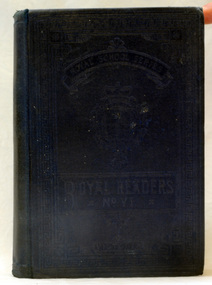 Orbost & District Historical Society
school text book, Thomas Nelson & Sons, Royal Readers No V1, 1895
... featured some Australian content. The authors made great use of the natural world as well as incidents and common daily events to attract children to the stories. ...featured some Australian content. The authors made great use of the natural world as well as incidents and common daily events to attract children to the stories. ...The Royal Readers had been prepared especially for Victorian schools and featured some Australian content. The authors made great use of the natural world as well as incidents and common daily events to attract children to the stories. Teachers were encouraged to teach children not only the 'art of reading' but also a 'love of reading'. Illustrations were used effectively to attract children 'through the eye' to the stories and to help them understand same. They were used extensively in Victorian schools as well as in other states. However, during the 1890s and especially the early 1900s, governments came under increasing pressure to change the reading books again because these books did not reflect the rapid scientific advances in the 1890s. Royal Readers date quickly when a new syllabus was introduced in 1905. Education materials were to be relevant to children's daily lives with a demand for greater local content. (info. from http://education.qld.gov.au)This book as an example of school work in the early 20th century. It reflects the the way reading was taught, to young children in Victoria. It reflects the changes in education in East Gippsland and is a useful comparison tool for literacy teaching. A small book with a blue fabric cover. It is titled Royal Readers No V1 and is a part of a series of Royal Readers.inside cover - E.A. Stephenson, Longford.education-texts schools-reading royal-readers -
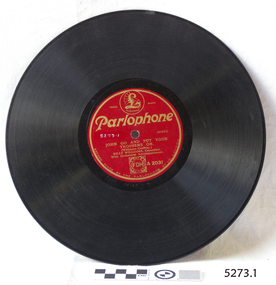 Flagstaff Hill Maritime Museum and Village
Audio - Gramophone Record, Parlophone Co. Ltd, John Go And Put Your Trousers On, Early-to-mid 20th century
... featured a terrier called Nipper beside a gramophone. Early gramophone records were mostly made from a material referred to as shellac, a natural ingredient combined with slate powder, and a filler of manilla copal, wood resin, carnauba wax, and carbon black. Although Bakelite seemed a useful, synthetic product, it was unsuccessful as a product for records. Around the time of World War II, lightweight, flexible synthetic vinyl records began replacing shellac records. Common...featured a terrier called Nipper beside a gramophone. Early gramophone records were mostly made from a material referred to as shellac, a natural ingredient combined with slate powder, and a filler of manilla copal, wood resin, carnauba wax, and carbon black. Although Bakelite seemed a useful, synthetic product, it was unsuccessful as a product for records. Around the time of World War II, lightweight, flexible synthetic vinyl records began replacing shellac records. Common ...Thomas Edison (1847–1931), an American, invented the phonograph in 1877, making it possible to record sound waves vertically and reproduce them on a wax cylinder so they could be heard again. Later, the German American, Emile Berliner (1851-1929), improved on Edison’s principles, greatly increasing the quality of the reproduced sounds with his invention of the gramophone in 1887, which recorded the sound waves laterally onto a flat shellac disc, or ‘record’. Records could be mass-produced in a factory where audio recordings were converted to a physical copy of that recording on a plate-sized disc. A gramophone machine reproduced the sound by spinning the record on a turntable at a specified number of rotations per minute (RPM) and using a stylus or needle to transfer the vibration via a membrane to a speaker, which amplified the sound. Berliner helped set up affiliated businesses overseas. One of his representatives was William Barry Owen (1860–1914), who, on 23 February 1889, partnered with Edmund Trevor Lloyd Williams (1859–1946) in England to register The Gramophone Company. His Master’s Voice (HMV) soon became the company’s major recording label, popular worldwide. The label's logo, a dog looking into a gramophone horn, looking for his master’s voice, was based on a painting by English artist Francis Barraud, which featured a terrier called Nipper beside a gramophone. Early gramophone records were mostly made from a material referred to as shellac, a natural ingredient combined with slate powder, and a filler of manilla copal, wood resin, carnauba wax, and carbon black. Although Bakelite seemed a useful, synthetic product, it was unsuccessful as a product for records. Around the time of World War II, lightweight, flexible synthetic vinyl records began replacing shellac records. Common diameters of records: 7 inch, 10 inch, 12 inch and 16 inch Revolutions Per Minute include: 33 1/3, 45, 78 Minutes per side of record: 3, 5.5, 7, 8, 9, 12, 15 and 22 Labels, in minutes per side: Single Play 3-5 min, Extended Play (EP) 7-12 min, Long Play (LP) 12-22 min This gramophone represents a step in the evolution of recording sound. In the 19th century, the human voice was first recorded on wax cylinders and replayed. It was the beginning of a new era in sound. Then, in the 1880s, voice could be recorded onto flat discs like this record, reliably reproduced and replayed many times, even on portable devices. Later, in the mid-20th century the following generation of electronic audio recording began, and later that century, digital recording gave even better reproduction. The record represents a popular means of entertainment for personal and social activities, as well as in some businesses. Shellac gramophone record, red label. Title: John Go And Put Your Trousers On Artist: Billy Williams Publisher: Parlophone Co Ltd, London Number: 41413 Size: 10 inch"A2031"flagstaff hill, warrnambool, maritime village, maritime museum, flagstaff hill maritime museum and village, shipwreck coast, great ocean road, gramophone, phonograph, sound waves, record, reproduction, audio record, music, sound, thomas edison, emile berliner, 1887, shellac, rpm, william barry owen, edmund trevor lloyd williams, the gramophone company, his master’s voice, hmv, francis barraud, nipper, 10 inch, parlophone co ltd, london, john go and put your trousers on, billy williams
