
Showing 72 items matching "formation sign"
-
 National Vietnam Veterans Museum (NVVM)
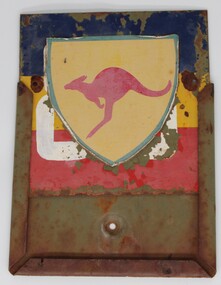
Sign - TAC sign
... ...Formation sign... An Australian Army TAC (Tactical) sign ( also called a Formation Sign) carries an emblem identifying unit, corps, or command. ...An Australian Army TAC (Tactical) sign ( also called a Formation Sign) carries an emblem identifying unit, corps, or command. ...An Australian Army TAC (Tactical) sign ( also called a Formation Sign) carries an emblem identifying unit, corps, or command. They are used on vehicles, buildings and equipment. The Australian Army signs include numbers and symbols to denote different corps. Signs were generally metal, painted with the relevant colours and markings. This object was collect by Corporal W K Folland during his service with the Royal Corps of Australian Electrical and Mechanical Engineers in Vietnam 1968-9.A metal holder with a sliding insert. The metal holder is painted with three horizontal stripes: blue, yellow and red. The sliding insert has a painted yellow shield with a green edge, in the centre is a red kangaroo. tac, folland, vietnam, sign, australian army, emblem, tac sign, formation sign -
 National Vietnam Veterans Museum (NVVM)
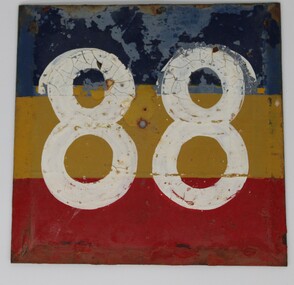
Sign - TAC Sign
... ...formation sign...TAC 88 emblem sign tactical sign formation sign Folland 88 A square metal object with blue, yellow and red painted stripe. ...Australian Army tactical (TAC) signs in Vietnam were unique markings on vehicles identifying units, callsigns, and sometimes unit names. They were crucial for command and control, using shapes and numbers to denote troop, section, and vehicle roles. They were generally metal, painted with the relevant colours and markings. During the Vietnam War, the tactical sign "88" identified the 106th Field Workshop (RAEME - Royal Australian Electrical and Mechanical Engineers) located at the main base in Nui Dat. This object was collect by Corporal W K Folland during his service with RAEME in Vietnam 1968-9.A square metal object with blue, yellow and red painted stripe. At the centre is the number 88 painted in white.88tac, 88, emblem, sign, tactical sign, formation sign, folland -
 Returned Nurses RSL Sub-branch
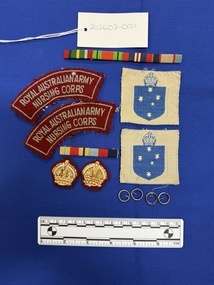
Uniform - Ribbon bars, rank badges, battledress flashes, patches, split rings, unknown
... Two battledress flashes for 'Royal Australian Army Nursing Corps', Two crown patches denoting rank of Lieutenant and two patches with the Southern Command formation sign. There are four split rings that would have used for the attachment of buttons or other metal/delicate things that required removal prior to laundering. ...Two sets of ribbon bars with coloured stripes that indicate awards received, three sets of two patches including maroon battledress flashes, blue and white southern command formation sign patches and maroon and gold rank patches, along with four metal split rings....Two battledress flashes for 'Royal Australian Army Nursing Corps', Two crown patches denoting rank of Lieutenant and two patches with the Southern Command formation sign. There are four split rings that would have used for the attachment of buttons or other metal/delicate things that required removal prior to laundering. ...Patches, ribbon bars, split rings that were originally used on the uniform of WWII serving nurse Lesla Meddy Blanshard. Two battledress flashes for 'Royal Australian Army Nursing Corps', Two crown patches denoting rank of Lieutenant and two patches with the Southern Command formation sign. There are four split rings that would have used for the attachment of buttons or other metal/delicate things that required removal prior to laundering. Present is two ribbon bars of various length, the long one denoting WWII medals: Pacific Star, Defence Medal, War Medal 1939-45 and Australian Service Medal. The shorter bar denoting the 1939-45 Star and Africa Star.Two sets of ribbon bars with coloured stripes that indicate awards received, three sets of two patches including maroon battledress flashes, blue and white southern command formation sign patches and maroon and gold rank patches, along with four metal split rings.Englishwwii, ww2, world war 2, uniform accessories, uniform, patches -
 Montmorency–Eltham RSL Sub Branch
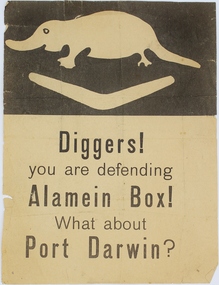
Pamphlet - German Propaganda Leaflet El Alamein 1942, El Alamein German Propaganda Leaflet, World War Two 1942
... Printed paper, colour black white. top of pamphlet depicts a stylized platypus and boomerang - the 9th Division's Formation Sign, with text below. ...Printed paper, colour black white. top of pamphlet depicts a stylized platypus and boomerang - the 9th Division's Formation Sign, with text below. El Alamein German Propaganda Leaflet Pamphlet German Propaganda Leaflet El Alamein 1942 Printing Company ...Leaflet dropped from German/Italian aircraft on to Australian troops defending El Alamein during 1942. These propagander leaflets were designed to lower moral of defending troops, but were generally unsuccessful. This item relates to the history of the defence of El Alamein by Australian Forces in the Middle East 1942, and the bombing of Darwin by the Japanese in 1942.Printed paper, colour black white. top of pamphlet depicts a stylized platypus and boomerang - the 9th Division's Formation Sign, with text below. Printed on pamphlet "Diggers! / you are defending / Alamein Box! / What about / Port Darwin?" world war two, el alamein, propaganda, leaflet, plane drop, port darwin, diggers, platypus, boomerang -
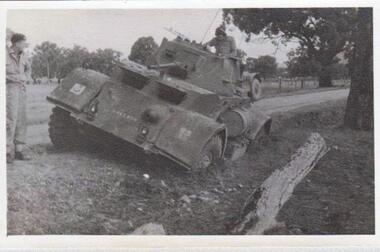 8th/13th Victorian Mounted Rifles Regimental Collection
Photograph
... Black and white photograph of Staghound Armoured Car heavily bogged on exercise in Chiltern Forest near Albury. Has formation sign of 2nd Armoured Brigade on right mudguard....Silver regimental hat badges are worn in place of Rising Sun badge. " 1956 Staghound Armrd ( sic ) exercise in Chiltern / Rutherglen area " Black and white photograph of Staghound Armoured Car heavily bogged on exercise in Chiltern Forest near Albury. Has formation sign of 2nd Armoured Brigade on right mudguard. ...The 8th/13th Victorian Mounted Rifles was raised as a regiment of the Royal Australian Armoured Corps on 1 May 1948 with Headquarters in Melbourne and squadrons in Sale, Benalla/Wangaratta and Albury. In 1955 Regimental Headquarters moved to Wangaratta and a second squadron was located at Albury. The Sale squadron transferred to 4th/19th Prince of Wales’s Light Horse. In 1977 8/13 VMR Regiment was reduced to an independent squadron A Squadron 8th/13th Victorian Mounted Rifles and in 1991 was linked with 4th/19th Prince of Wales’s Light Horse forming the VMR Squadron of that regiment.Collection of photographs showing early evolution of an armoured regiment of the Citizen Forces as it progressed from WWII equipment and uniforms to post-war equipment and uniforms. Silver regimental hat badges are worn in place of Rising Sun badge.Black and white photograph of Staghound Armoured Car heavily bogged on exercise in Chiltern Forest near Albury. Has formation sign of 2nd Armoured Brigade on right mudguard." 1956 Staghound Armrd ( sic ) exercise in Chiltern / Rutherglen area " -
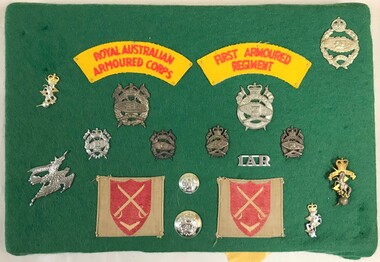 8th/13th Victorian Mounted Rifles Regimental Collection
Badge - RAAC, badges
... Shoulder titles ; Royal Australian Armoured Corps and 1st Armoured Regiment, and two formation signs ; 1st Infantry Brigade....Shoulder titles ; Royal Australian Armoured Corps and 1st Armoured Regiment, and two formation signs ; 1st Infantry Brigade. Badge RAAC, badges ...Fabric c:overed board with collection of badges: RAAC and 1st AR, 2nd Cavalry Regiment, RAEME. Shoulder titles ; Royal Australian Armoured Corps and 1st Armoured Regiment, and two formation signs ; 1st Infantry Brigade.badge, button, title -
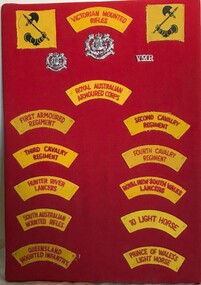 8th/13th Victorian Mounted Rifles Regimental Collection
Memorabilia - Shoulder titles
... Display board containing the badge and shoulder title of 8/13 Victorian Mounted Rifles flanked by the formation signs of 2nd Armoured Brigade. These are followed by the shoulder titles of Royal Australian Armoured Corps and eight other RAAC regiments....Unique collection of regimental titles worthy of preservation and display. military titles uniform ara cmf Display board containing the badge and shoulder title of 8/13 Victorian Mounted Rifles flanked by the formation signs of 2nd Armoured Brigade. These are followed by the shoulder titles of Royal Australian Armoured Corps and eight other RAAC regiments. ...Embroidered shoulder titles were worn on the upper sleeves of uniform prior to the introduction of colour patches c.1990. Regular regiments used the numerical designations First, Second, Third and Fourth. CMF regiments used their territorial designation: Victorian, Queensland, New South Wales, Hunter River, South Australian, Prince of Wales's and 10th Light Horse. Australia’s defence plans and priorities changed after the Second World War. Decolonisation coupled with competing ideologies created an unstable situation in the Asia-Pacific region. Australia recognised it needed both regular and citizen forces. Six Armoured Corps regiments were formed in 1948, all with territorial titles reflecting their Light Horse heritage. In Victoria they were 4th/19th Prince of Wales’s Light Horse and 8th/13th Victorian Mounted Rifles. The 1st Armoured Regiment, formed July 1949, was the first regular RAAC regiment, followed by 2nd, 3rd and 4th Cavalry Regiments decades later. Unique collection of regimental titles worthy of preservation and display.Display board containing the badge and shoulder title of 8/13 Victorian Mounted Rifles flanked by the formation signs of 2nd Armoured Brigade. These are followed by the shoulder titles of Royal Australian Armoured Corps and eight other RAAC regiments.military, titles, uniform, ara, cmf -
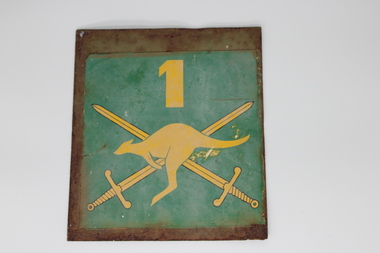 National Vietnam Veterans Museum (NVVM)
Sign - Tactical Sign
... The green with yellow kangaroo signifies the historic 1st Division Formation Sign used on Australian Army vehicles and equipment....The green with yellow kangaroo signifies the historic 1st Division Formation Sign used on Australian Army vehicles and equipment. ...A sign usually attached to vehicles, identifying the vehicle to its unit. The green with yellow kangaroo signifies the historic 1st Division Formation Sign used on Australian Army vehicles and equipment.Green metal sign with cardboard printed image of yellow kangaroo, crossed swords and the number 1. Reverse is blue with diagonal stripe and white number 70.tac sign, vehicle tac sign 70, vietnam conflict, tactical sign, vehicles, 1atf -
 4th/19th Prince of Wales's Light Horse Regiment Unit History Room
Badge, cloth, 2 BRAAC
... Design also displayed on army vehicles as formation sign. 2nd Armoured Brigade no longer exists. ...Design also displayed on army vehicles as formation sign. 2nd Armoured Brigade no longer exists. ...Worn on battle dress uniform. Design also displayed on army vehicles as formation sign. 2nd Armoured Brigade no longer exists. The Australian Army no longer has any armoured brigadesCloth badge of 2nd Armoured Brigade, Royal Australian Armoured Corps. Featuring, in black, an armoured right arm holding a battle axe on yellow background. For right sleeveheraldry, army, badges, armour -
The 5th/6th Battalion Royal Victoria Regiment Historical Collection
Mixed media - Framed Badges and Lanyard, 58/32 Infantry Battalion Essendon Rifles
... These are the Titles Embroidered Sign Formation, Lanyard, Collar and Hat badges of the 58th/32 Inf. ...Unit that 5/6RVR draws its lineage 1 rvr officers mess trust Wark VC Club 58/32 Battalion These are the Titles Embroidered Sign Formation, Lanyard, Collar and Hat badges of the 58th/32 Inf. ...Unit that 5/6RVR draws its lineageFramed red cloth shoulder patches and gold coloured metal hat and collar badges and red and black woven lanyard of the 58th/ 32nd Inf Bn Essendon Rifles.These are the Titles Embroidered Sign Formation, Lanyard, Collar and Hat badges of the 58th/32 Inf. Bn. City of Essendon Regiment which was formally known as the Melbourne Rifles. Presented to the Museum by Capt. I. Rainford. 1 rvr officers mess trust, wark vc club, 58/32 battalion -
 Lara RSL Sub Branch
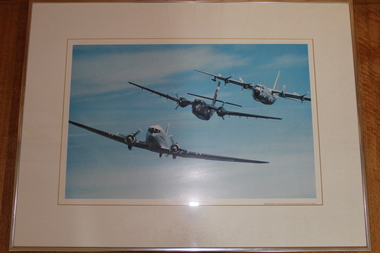
R.A.A.F. Dakota, Caribou Hercules Transport Flying in formation., Frames Picture, Framed picutre R.A.A.F. Transport flying in formation
... Dakota, Caribou Hercules Transport Aircraft Flying in formation. r.a.a.f. dakota cariboo small sign/sticker "GEOMETRICS" stuck on the back of the picture frame Aluminium frame, glass, chip-board rear photo of R.A.A.F. ...R.A.A.F. Dakota, Caribou Hercules Transport Aircraft Flying in formation.Aluminium frame, glass, chip-board rear photo of R.A.A.F. Dakota, Caribou Hercules Transport Flying in formation.small sign/sticker "GEOMETRICS" stuck on the back of the picture framer.a.a.f., dakota, cariboo -
 Lara RSL Sub Branch
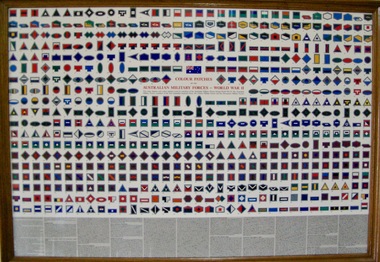
Coloured Print, Colour Patches of the Australian Military Forces World War Two
... The use of colour patches was discontinued in 1949 when the British system of embroidered shoulder titles, formation signs and lanyards was adopted. In July 1987 colour patches were reintroduced in order to foster the Army’s heritage and are now worn on the right side of the puggaree on the slouch hat. ...The Chart displays unit colour patches worn by members of the Australian military forces during world war 2. the Australian Military forces consisted of the 2nd Australian Imperial Forces and the Permanent Military ForcesDuring the world wars and the years in between, Australian soldiers wore cloth patches of various shapes and colours on their upper sleeves to indicate to which unit or formation they belonged. The use of colour patches was discontinued in 1949 when the British system of embroidered shoulder titles, formation signs and lanyards was adopted. In July 1987 colour patches were reintroduced in order to foster the Army’s heritage and are now worn on the right side of the puggaree on the slouch hat. Coloured Print of Colour Patches of the Australian Military Forces World War TwoNumbered Colour Patches and descriptions of each patch 1 to 630 -
 City of Moorabbin Historical Society (Operating the Box Cottage Museum)
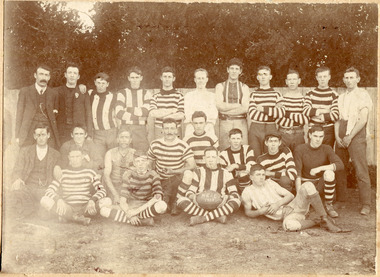
Photograph, 1903 or 1908 Moorabbin Football Club, 1903 or 1908 Moorabbin Football Club, 1903 or 1908
... formation of a "foot-ball club" with a "code of laws" to keep cricketers fit during winter. The Melbourne Football Club's rules of 1859 are the oldest surviving set of laws for Australian football. The ten simple rules were drawn up on 17 May at a meeting chaired by Tom Wills and in attendance were journalists W. J. Hammersley and J. B. Thompson, and Thomas H. Smith. The rules were signed...formation of a "foot-ball club" with a "code of laws" to keep cricketers fit during winter. The Melbourne Football Club's rules of 1859 are the oldest surviving set of laws for Australian football. The ten simple rules were drawn up on 17 May at a meeting chaired by Tom Wills and in attendance were journalists W. J. Hammersley and J. B. Thompson, and Thomas H. Smith. The rules were signed ...1903 or 1908 Moorabbin Australian Rules Football Club. Philip Jones, a relative of James Jones who was a pioneer settler in Moorabbin Shire, is holding the football. In the late 1850s Melbourne's schools are first recorded organising football games modeled on precedents at English schools The earliest known such match was played on 15 June 1858 between Scotch College and Melbourne Grammar School on the St Kilda foreshore. On 10 July 1858, the Melbourne-based Bell's Life in Victoria and Sporting Chronicle published a letter by prominent Victorian cricketer Tom Wills, calling for the formation of a "foot-ball club" with a "code of laws" to keep cricketers fit during winter. The Melbourne Football Club's rules of 1859 are the oldest surviving set of laws for Australian football. The ten simple rules were drawn up on 17 May at a meeting chaired by Tom Wills and in attendance were journalists W. J. Hammersley and J. B. Thompson, and Thomas H. Smith. The rules were signed by Tom Wills, William Hammersley, J. Sewell, J. B. Thompson, Alex Bruce, T. Butterworth and Thomas H. Smith. Importantly, the rules were widely publicised and distributed. Having been codified in 1859, this means that Australian football is an older sport than most other football codes in the world, including soccer. As Geoffrey Blainey states, "soccer has no club that matches the antiquity of the early Victorian clubs." In 1859 several new football clubs formed including the Castlemaine Football Club, Geelong Football Club and the Melbourne University Football Club. The first football match played at the Melbourne Cricket Ground (MCG) was not until 1876. Cricket authorities soon saw the opportunity to capitalise on the rapid growth of Australian football, however, and soon most grounds in Victoria were expanded to accommodate the dual purpose, a situation that continues to this day. Football matches between 1859 and 1899 were played in a 20-per-side format. n 1896, delegates from the stronger and wealthier Victorian Football Association clubs—Carlton, Collingwood, Essendon, Fitzroy, Geelong, Melbourne, St Kilda and South Melbourne—met to form a breakaway competition and in 1897, the Victorian Football League (VFL), was born as an eight-team competition. Popularity of the VFL grew rapidly and by 1925 with 12 teams, had become the most prominent league in the game and would dominate so many aspects of the sport from that point on. Moorabbin Football Club, nicknamed the Kangaroos, was the name of two distinct Australian rules football clubs which played in the Victorian Football Association (VFA). The first club, founded in the early 20th century, joined the VFA in 1951 and played there until 1963 with great success; they played home matches at Moorabbin Oval and wore royal blue and white hooped jerseys. The second club played in the VFA from 1983 to 1987. Moorabbin played initially in the Federal Football League, making their debut in 1909 and competing until 1950. During this time the club won 12 premierships, including winning all six premierships staged over the nine years between 1940 and 1948 (the competition was in recess from 1942 until 1944). The club entered the VFA in 1951. Its Federal League home ground, the Dane Road Reserve, was not up to VFA standards; so, in 1951 the club played at Cheltenham, and in 1952 moved into the Moorabbin Oval, which the Moorabbin Council had developed during 1951. The Kangaroos made the 1954 and 1955 finals series without success but in 1957 they helped eliminate premiership favourite Williamstown after defeating them by two points in the Semi Final. Moorabbin, who were coached by Bill Faul, took on Port Melbourne in the Grand Final, whom they had not once beaten since joining the league. In another upset, Moorabbin won comfortably to claim their maiden VFA premiership. In the early 1960s, the Moorabbin Council was very keen to bring a Victorian Football League team to Moorabbin Oval. 1964, the Moorabbin City Council secured a deal with St Kilda, who moved to Moorabbin Oval starting in 1965. The club originally intended to seek readmission for the 1965 season, but in July the club committee decided to withdraw permanently from the Association,and disbanded.Photograph is Black and White. Three rows of Australian Rules Football players in a typical team photograph. Some are wearing striped jumpers, either the stripes are going horizontal or parallel. There is a known man in this photo, named Philip Jones, who is holding the football in front row. There are two men wearing suits at the left, on the end of the third row. Hewitt, Photographer, 92 Regent St. North Richmond.moorabbin, football club, 1903, 1908, philip jones, james jones, early settlers, market gardeners, pioneers, herron john, australian rules foorball, victorian footbal league, victorian football association, moorabbin city council, moorabbin shire, city of moorabbin, st kilda football club, -
 Flagstaff Hill Maritime Museum and Village
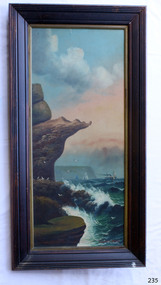
Painting - Oil painting, W. Langley-Taylor, Eagle Rock, Warrnambool, Vic, Late 19th to early 20th century
... Seascape of rock formation and cliffs, two yachts, a two-masted steamboat with red funnel and smoke, flying birds, high waves breaking onto rocks, blue sky with clouds, some tinted pink. The title is painted on the lower left corner, and the artist, W. Langley-Taylor, has signed...Seascape of rock formation and cliffs, two yachts, a two-masted steamboat with red funnel and smoke, flying birds, high waves breaking onto rocks, blue sky with clouds, some tinted pink. The title is painted on the lower left corner, and the artist, W. Langley-Taylor, has signed ...This painting is one of a pair of large works by W. Langley-Taylor in our collection. Further information about the artist has not yet been identified. The pair depicts coastal sites on either side of Port Phillip Bay, south of Melbourne. This work represents Eagle Rock, Warrnambool, on the bay’s western side. Eagle Rock lies about 400 metres west of Thunder Point, near Shelly Beach. The painting shows the cliff formations looking east towards the Warrnambool Breakwater. The site is well known locally, appears in many photographs, and is also a recognised dive location in calm conditions. This stretch of Warrnambool coastline is exposed to the Southern Ocean. In the painting, the breaking waves and northerly drift of smoke from the steamship suggest a strong southerly wind. THE INSCRIPTIONS “Mrs M Irby” and “980/Regency”:- The significance of the inscription “Mrs M Irby”, which appears on the reverse of both paintings, has not been determined. It may refer to the ship or shipping company Irby. Irby was a four-masted iron ship built in Liverpool in 1881. It later traded between London and Australia, including visits to Melbourne and Hobart, before being destroyed by a mine in 1919 while en route to England. Alternatively, “Mrs M Irby” and the pencil inscription “980/Regency” may refer to a delivery address, perhaps an apartment or hotel. This painting is geographically significant for its depiction of Victoria’s coastal scenery. It is also significant as one of a pair of seascapes depicting sites on either side of Port Phillip Bay. Historically, the painting is significant as an example of the late nineteenth- and early twentieth-century methods and materials used in frame construction.Painting oil on board in a dark wooden frame, portrait orientation. Seascape of rock formation and cliffs, two yachts, a two-masted steamboat with red funnel and smoke, flying birds, high waves breaking onto rocks, blue sky with clouds, some tinted pink. The title is painted on the lower left corner, and the artist, W. Langley-Taylor, has signed his name on the lower right. The inscription on the back is handwritten script in red crayon or thick red pencil. The board is held in place inside the timber frame with small, dark metal tacks around all sides. Metal eyes join the wire to the frame. Small, round, dark metal nail heads are dispersed around the frame, and there is a change of colour on both the board and the wood of the frame. Painted on front “W.LANGLEY-TAYLOR.” and “EAGLE ROCK, WARRNAMBOOL, VIC.” Handwritten on back “Mrs. M. Irby” and “980 [underlined] Regency”flagstaff hill, warrnambool, shipwrecked coast, flagstaff hill maritime museum, maritime museum, shipwreck coast, flagstaff hill maritime village, great ocean road, eagle rock warrnambool, w. langley-taylor, oil painting, wall decoration, seascape of victoria's coast, mrs m irby, art, seascape, pair of paintings -
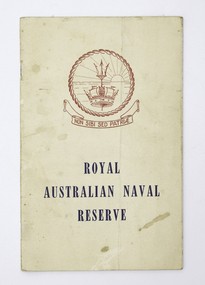 Queenscliffe Maritime Museum
Booklet - RAN Reserve, Royal Australian Naval Reserve
... signed an agreement for the duration of hostilities instead of the customary 12 years engagement. Officers and potential officers, meanwhile, were entered as members of the RANR (S) or the RANVR. The Royal Australian Naval Reserves (RANR) can trace its origins back to at least 1863 and the formation ...At the outbreak of World War II, the RAN Reserve Forces comprised: RANR (S), 86 officers; RANR, 222 officers, 3869 ratings; RANVR, 223 officers. In order to balance the numbers in the permanent service at post-war complements, Reserve training was suspended during the War; all new entry personnel were entered through the RANR and they signed an agreement for the duration of hostilities instead of the customary 12 years engagement. Officers and potential officers, meanwhile, were entered as members of the RANR (S) or the RANVR.The Royal Australian Naval Reserves (RANR) can trace its origins back to at least 1863 and the formation of the New South Wales Naval Brigade.Booklet detailing a brief history and operation of the RAN Reserve.Royal Australian Naval Reserve; Non Sibi Set Patriaeroyal australian naval reserve, ran reserve, information booklet -
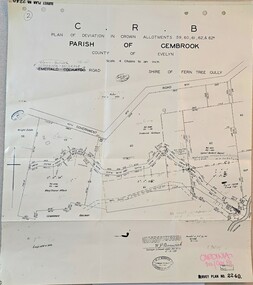 Emerald Museum & Nobelius Heritage Park
Map - Plan of deviation in Crown Allotments - parish of Gembrook, Gembrook-Belgrave Rd, Alterations to allotments 59, 60, 61,62 & 62A for the formation of Belgrave-Gembrook Rd., 1929, c1929
... CRB/Plan of deviation in Crown Allotments 59, 60, 61, 62 & 62A/Parish of Gembrook, County of Evelyn/Scale 4 chains to an inch/Gembrook-Belgrave Road/certification of plan (signed) WP BONWICK, Surveyor Licensed under Act 2679/5-2-29/Survey Plan 2240 Image of Plan of deviation in Crown Allotments - parish of Gembrook, Gembrook-Belgrave Rd., allotments 59, 60, 61,62 & 62A Alterations to allotments 59, 60, 61,62 & 62A for the formation of Belgrave-Gembrook Rd., 1929 Map Plan of deviation in Crown Allotments - parish of Gembrook, Gembrook-Belgrave Rd., ...Image of Plan of deviation in Crown Allotments - parish of Gembrook, Gembrook-Belgrave Rd., allotments 59, 60, 61,62 & 62ACRB/Plan of deviation in Crown Allotments 59, 60, 61, 62 & 62A/Parish of Gembrook, County of Evelyn/Scale 4 chains to an inch/Gembrook-Belgrave Road/certification of plan (signed) WP BONWICK, Surveyor Licensed under Act 2679/5-2-29/Survey Plan 2240 -
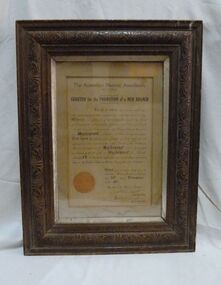 Wycheproof & District Historical Society Inc.
Document - Charter, framed, 1885
... formation of the Wycheproof Branch made this historical data possible. This is an original charter dated 1885 - an old historical document. In 1993 Austalian Natives' Association(ANA)joined forces with Manchester Unity to create Australian Unity. australian natives association a.n.a. wycheproof charter 1885 On back: Donated to the Wycheproof/ Historical Society 6.8. 2008/ by Eddie Molloy. A.N.A. Charter signed ...Wycheproof Historical Society has the Charlton Independent newspaper report Clip of Friday, November 27,1885 of the Opening of ANA Branch Number 45, Wycheproof, in Supplementary file box,Room 1,also ANA Display folder in Upper Level Room 4,Cabinet 2B Many Australian Natives' Association subscribers' details are found in our collection of old A.N.A. books.These record books give names, occupations,locations and transfer information.The formation of the Wycheproof Branch made this historical data possible. This is an original charter dated 1885 - an old historical document. In 1993 Austalian Natives' Association(ANA)joined forces with Manchester Unity to create Australian Unity. A.N.A. Charter signed by chief President and General secretary; seal of A.N.A. 24-11-1885. Wycheproof Branch Opening Number 45 for Australian Natives' Association. Contents of 24 lines, commercially printed documentation - wooden ornate frame.On back: Donated to the Wycheproof/ Historical Society 6.8. 2008/ by Eddie Molloy.australian natives association, a.n.a., wycheproof, charter, 1885 -
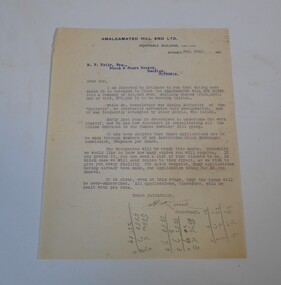 Bendigo Historical Society Inc.
Letter - Kelly and Allsop collection: Amalgamated Hill End
... formation of the Amalgamated Hill End Company. Amalgamated Hill End Mine Shares A lot of sums in pencil on front and back Typewritten letter dated 2nd February 1911. The letter is from the Amalgamated Hill End Ltd signed ...Situated 150 miles from Sydney and 50 miles from Bathurst, Hawkin's Hill mining leases had produced good returns in the 1860's and 70's. However, a lack of working capital meant that many of the mines operated by up to 17 different companies petered out. About 1886 efforts were made to consolidate these claims but insufficient funding could be found. With the renewal of an offer of a government subsidy and the sale of shares, has allowed the purchase of these old claims and their infrastructure. Exploration has shown that these old mines still contained payable amounts of gold. Thus the formation of the Amalgamated Hill End Company.Typewritten letter dated 2nd February 1911. The letter is from the Amalgamated Hill End Ltd signed by the secretary, addressed to M.P. Kelly Esq. stock and share broker, Bendigo. The letter advises of the upcoming float on the stock market of the Amalgamated Hill End Mines. The float is for 500,000 shares at four shilling each. Copies of the prospectus will be sent once available.A lot of sums in pencil on front and backamalgamated hill end mine, shares -
 Bendigo Historical Society Inc.
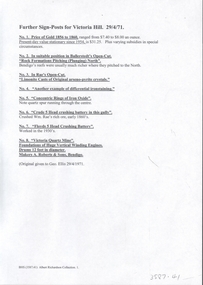
Document - VICTORIA HILL - FURTHER SIGN-POSTS FOR VICTORIA HILL
... Victoria Hill Further Sign-posts for Victoria Hill Price of gold Ballerstedt's Open Cut Rock formations Rae's Open Cut Crude 5 Head Crushing Battery Floyd's 5 Head Crushing Battery Victoria Quartz Mine A Roberts & Sons Geo Ellis Handwritten carbon copy, with typed copy, of notes on further signs dated 29/4/71. ...Handwritten carbon copy, with typed copy, of notes on further signs dated 29/4/71. Note at the end: Original given to Geo Ellis 29/4/1971. Notes include the price of gold and wording for some signs. Albert Richardson Collection. victoria hill, further sign-posts for victoria hill, price of gold, ballerstedt's open cut, rock formations, rae's open cut, crude 5 head crushing battery, floyd's 5 head crushing battery, victoria quartz mine, a roberts & sons, geo ellis -
 Bendigo Historical Society Inc.
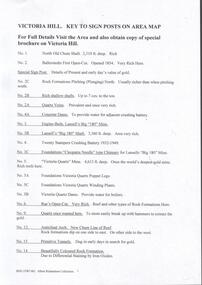
Document - VICTORIA HILL - KEY TO SIGN POSTS ON AREA MAP
... Sign posts were for mines and their associated equipment and geological formations. ...Sign posts were for mines and their associated equipment and geological formations. ...Photocopied handwritten notes with typed copy of same, on Sign Posts on Victoria Hill.. Sign posts were for mines and their associated equipment and geological formations. Initialled AR. Notes prepared by Albert Richardson.document, victoria hill, key to sign posts on area map, north old chum shaft, ballerstedt's first open cut, rock formatins, lansell's big 180, 20 stampers crushing battery, foundations 'cleopatra needle' type chimney, victoria quartz mine, rae's open cut, quartz roasting, anticlinal arch, primitive tunnels, coloured rock formations, adit, oblique fault, spurry quartz veins, prospecting tunnels, floyd's small crushing battery, gt central victoria (midway) shaft -
 Bendigo Historical Society Inc.
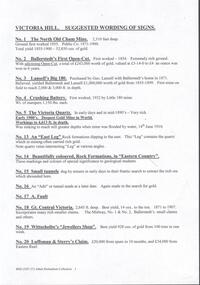
Document - VICTORIA HILL - SUGGESTED WORDING OF SIGNS FOR VICTORIA HILL
... DOCUMENT Gold victoria hill Victoria Hill Suggested Wording of Signs for Victoria Hill The North Old Chum Mine Ballerstedt's First Open Cut Lansell's Big 180 Crushing Battery The Victoria Quartz Coloured rock formations Great Central Victoria Wittscheibe's 'Jewellers Shop' Luffsman & Sterry's Claim The Adventure Handwritten carbon copy of suggested wording for signs at Victoria Hill. ...Handwritten carbon copy of suggested wording for signs at Victoria Hill. Mentions mines and open cuts and amounts of gold, and geological features. Notes prepared by Albert Richardson.document, gold, victoria hill, victoria hill, suggested wording of signs for victoria hill, the north old chum mine, ballerstedt's first open cut, lansell's big 180, crushing battery, the victoria quartz, coloured rock formations, great central victoria, wittscheibe's 'jewellers shop', luffsman & sterry's claim, the adventure -
 Bendigo Historical Society Inc.
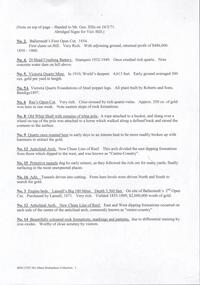
Document - VICTORIA HILL - ABRIDGED SIGNS FOR VICTORIA HILL
... Signs mentioned are: Ballerstedt's First Open Cut,20 Head Crushing Battery, Victoria Quartz Mine, Victoria Quartz Foundations of Steel Poppet Legs, Coloured rock formations, Primitive tunnels, Adit, Engine Beds Lansell's Big 180 Mine, Anticlinal Arch, Coloured rock formations marking and patterns. ...Signs mentioned are: Ballerstedt's First Open Cut,20 Head Crushing Battery, Victoria Quartz Mine, Victoria Quartz Foundations of Steel Poppet Legs, Coloured rock formations, Primitive tunnels, Adit, Engine Beds Lansell's Big 180 Mine, Anticlinal Arch, Coloured rock formations marking and patterns. ...Handwritten carbon copy of notes with typed copy of same, for signs on Victoria Hill. Signs mentioned are: Ballerstedt's First Open Cut,20 Head Crushing Battery, Victoria Quartz Mine, Victoria Quartz Foundations of Steel Poppet Legs, Coloured rock formations, Primitive tunnels, Adit, Engine Beds Lansell's Big 180 Mine, Anticlinal Arch, Coloured rock formations marking and patterns. Notes prepared by Albert Richardson.document, gold, victoria hill, victoria hill, abridged signs for victoria hill, ballerstedt's first open cut, 20 head crushing battery, victoria quartz mine, victoria quartz foundations of steel poppet legs, coloured rock formations, primitive tunnels, adit, engine beds lansell's big 180 mine, anticlinal arch, coloured rock formations marking and patterns -
 Bendigo Historical Society Inc.
Document - VICTORIA HILL - NOTES ON SIGNS FOR VICTORIA HILL
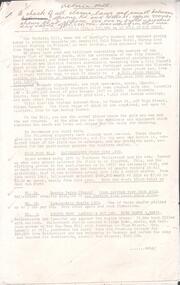
... Sign posts listed are for: Ballerstedt's First open Cut, Quartz Veins (Spurs), Prospecting Shafts 1929, Engine beds for Lansell's big 180 Mine, 20 Head Crushing Battery Stampers, concrete dam, Victoria Quartz Mine, Foundations of steel poppet legs of the Victoria Quartz Mine, Victoria Quartz Dams, Rae's Open Cut, Site where the quartz was roasted, Anticlinal Arch , coloured rock formations, primitive tunnels, Adit, Engine bed for Great Central Victoria, Prospecting Tunnels, Great Central Victoria (Midway). ...Sign posts listed are for: Ballerstedt's First open Cut, Quartz Veins (Spurs), Prospecting Shafts 1929, Engine beds for Lansell's big 180 Mine, 20 Head Crushing Battery Stampers, concrete dam, Victoria Quartz Mine, Foundations of steel poppet legs of the Victoria Quartz Mine, Victoria Quartz Dams, Rae's Open Cut, Site where the quartz was roasted, Anticlinal Arch , coloured rock formations, primitive tunnels, Adit, Engine bed for Great Central Victoria, Prospecting Tunnels, Great Central Victoria (Midway). ...Three page typed copy of notes for signs on Victoria Hill. Mentions items to be seen at Victoria Hill. Sign posts listed are for: Ballerstedt's First open Cut, Quartz Veins (Spurs), Prospecting Shafts 1929, Engine beds for Lansell's big 180 Mine, 20 Head Crushing Battery Stampers, concrete dam, Victoria Quartz Mine, Foundations of steel poppet legs of the Victoria Quartz Mine, Victoria Quartz Dams, Rae's Open Cut, Site where the quartz was roasted, Anticlinal Arch , coloured rock formations, primitive tunnels, Adit, Engine bed for Great Central Victoria, Prospecting Tunnels, Great Central Victoria (Midway). Notes prepared by Albert Richardson.document, victoria hill, notes on signs for victoria hill, gold mines hotel, ballerstedt's first open cut, quartz veins (spurs), prospecting shafts 1929, engine beds for lansell's big 180 mine, 20 head crushing battery stampers, concrete dam, victoria quartz mine, foundations of steel poppet legs of the victoria quartz mine, victoria quartz dams, rae's open cut, site where the quartz was roasted, anticlinal arch , coloured rock formations, primitive tunnels, adit, engine bed for great central victoria, prospecting tunnels, great central victoria (midway), a richardson -
 Bendigo Historical Society Inc.
Document - VICTORIA HILL - KEY TO SIGN POSTS ON AREA MAP
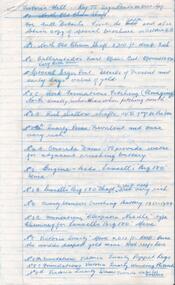
... Special Sign Post, No 2 C Rock Formations Pitching North, No 2 B Rich shallow shafts, No 2 A Quartz veins, No 4 A Concrete Dams, No 3 Engine Beds - Lansell's 'Big 180' Mine, No 3 B Lansell's 'Big 180' Shaft, No 4 Twenty Stampers Crushing Battery, No 3 C Foundations - 'Cleopatra Needle' type Chimney for Lansell's 'big 180' Mine, No 5 Victoria Quartz Mine, No 5 A Fou;ndations Victoria Quartz Poppet Legs, No 5 C Foundations Victoria Quartz Winding Plant, No 5 B Victoria Quartz Dams, No 6 Rae's Open - Cut, No 9 Quartz Once Roasted Here, No 12 Anticlinal Arch, No 15 primitive Tunnels, No 14 Beautifully Coloured Rock Formations, No 16 Adit, Graded Bedding, Oblique Fault, Spurry Quartz Veins, No 17 Prospecting Tunnels, No 18 Floyd's Small Crushing Battery, No 19 Gt Central Victoria (Midway) Shaft, No 20 Great Central Victoria (Midway) Engine Bed, No 21 ballerstedt's Small 24 Yard Claim, No 22 Humboldt Shaft, No 23 Wittscheibe's 'Jeweller's Shop', No 24 The 'Adventure' ground, Large Open - Cut, No 26 Luffsman and Sterry's Ground, NO 27 A Round Shaft, Notes prepared by Albert Richardson....Special Sign Post, No 2 C Rock Formations Pitching North, No 2 B Rich shallow shafts, No 2 A Quartz veins, No 4 A Concrete Dams, No 3 Engine Beds - Lansell's 'Big 180' Mine, No 3 B Lansell's 'Big 180' Shaft, No 4 Twenty Stampers Crushing Battery, No 3 C Foundations - 'Cleopatra Needle' type Chimney for Lansell's 'big 180' Mine, No 5 Victoria Quartz Mine, No 5 A Fou;ndations Victoria Quartz Poppet Legs, No 5 C Foundations Victoria Quartz Winding Plant, No 5 B Victoria Quartz Dams, No 6 Rae's Open - Cut, No 9 Quartz Once Roasted Here, No 12 Anticlinal Arch, No 15 primitive Tunnels, No 14 Beautifully Coloured Rock Formations, No 16 Adit, Graded Bedding, Oblique Fault, Spurry Quartz Veins, No 17 Prospecting Tunnels, No 18 Floyd's Small Crushing Battery, No 19 Gt Central Victoria (Midway) Shaft, No 20 Great Central Victoria (Midway) Engine Bed, No 21 ballerstedt's Small 24 Yard Claim, No 22 Humboldt Shaft, No 23 Wittscheibe's 'Jeweller's Shop', No 24 The 'Adventure' ground, Large Open - Cut, No 26 Luffsman and Sterry's Ground, NO 27 A Round Shaft, Notes prepared by Albert Richardson. ...Three page hand written carbon copy of Sign numbers at Victoria Hill. No 1 North Old Chum Shaft, No 2 Ballerstedt's First Open - Cut. Special Sign Post, No 2 C Rock Formations Pitching North, No 2 B Rich shallow shafts, No 2 A Quartz veins, No 4 A Concrete Dams, No 3 Engine Beds - Lansell's 'Big 180' Mine, No 3 B Lansell's 'Big 180' Shaft, No 4 Twenty Stampers Crushing Battery, No 3 C Foundations - 'Cleopatra Needle' type Chimney for Lansell's 'big 180' Mine, No 5 Victoria Quartz Mine, No 5 A Fou;ndations Victoria Quartz Poppet Legs, No 5 C Foundations Victoria Quartz Winding Plant, No 5 B Victoria Quartz Dams, No 6 Rae's Open - Cut, No 9 Quartz Once Roasted Here, No 12 Anticlinal Arch, No 15 primitive Tunnels, No 14 Beautifully Coloured Rock Formations, No 16 Adit, Graded Bedding, Oblique Fault, Spurry Quartz Veins, No 17 Prospecting Tunnels, No 18 Floyd's Small Crushing Battery, No 19 Gt Central Victoria (Midway) Shaft, No 20 Great Central Victoria (Midway) Engine Bed, No 21 ballerstedt's Small 24 Yard Claim, No 22 Humboldt Shaft, No 23 Wittscheibe's 'Jeweller's Shop', No 24 The 'Adventure' ground, Large Open - Cut, No 26 Luffsman and Sterry's Ground, NO 27 A Round Shaft, Notes prepared by Albert Richardson.mine, gold, victoria hill, victoria hill, victoria hill key to sign posts on area map, north old chum shaft, ballerstedt's first open cut, lansell's big 180 shaft, 'cleopatra needle' type chimney, victoria quartz mine, rae's open cut, prospecting tunnels, floyd's small crushing battery, gt central victoria (midway) shaft, ballerstedt's small 245 yard claim, humboldt shaft, wittscheibe's 'jeweller's shop', adventure, luffsman and sterry's ground, david sterry, sterry's 'gold mines' hotel, round shaft -
Kyneton RSL Sub Branch
Framed certificate, Sailors, Soldiers and Airmen Fathers Association of Vic, 17 July 1944
... By order of the State Council Minute no. 11 of 7/44 of 13 June 1944 Signed by the Vice President and the State Secretary ww2 Charter for the Formation of a New Branch. ...Sailors, Soldiers & Airmens Fathers Association of Vic Charter for the formation of a new Branch 17/7/44. Sailors, Soldiers & Airmen’s Fathers’ Association of Vic. Charter for the Formation of a New Branch To all to whom these presents shall come the Sailors, Soldiers and Airmen’s Fathers’ sends Greeting. Whereas an application in writing has been made to the State Council of the Association by ten or more members thereof for a Charter to form a branch of the Association which the said State Council has agreed to grant. Now Know Ye that the said applicants are herby authorised and empowered to form a new Branch of the Sailors, Soldiers and Airmans Fathers Association at Kyneton to be called and known by the title of the Kyneton Branch in accordance with and subject in all things and at all times to the Constitution and rules for the time being of the Association. Given under our hands this 17th day of July 1944. By order of the State Council Minute no. 11 of 7/44 of 13 June 1944 Signed by the Vice President and the State SecretaryFramed original certificate. Water stained left side.Charter for the Formation of a New Branch.ww2 -
 National Vietnam Veterans Museum (NVVM)
Poster, Veterans' Corner 103.1 3BBR-FM
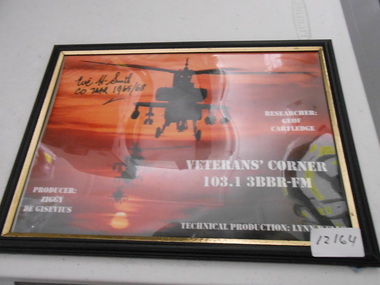
... The image is of four Apache helicopters flying in formation with the setting. The poster is signed by EWE H-Smith CO 7 RAR 1965-68....The image is of four Apache helicopters flying in formation with the setting. The poster is signed by EWE H-Smith CO 7 RAR 1965-68. ...Framed poster advertising Veterans corner radio program, 103.1 3BBR-Fm. The image is of four Apache helicopters flying in formation with the setting. The poster is signed by EWE H-Smith CO 7 RAR 1965-68.Ewe H. Smith/CO 7RAR 1965.68/Researcher: Geof/Cartledge/ Veterans' corner/103.1 3BBR-FM/Producer:/Ziggy/De Gisevius/Technical Production: Lynn Wellsposter, 7 rar, veterans' corner -
 Eltham District Historical Society Inc
Photograph - Digital Photograph, Marguerite Marshall, Eltham Lower Park, 20 April 2008
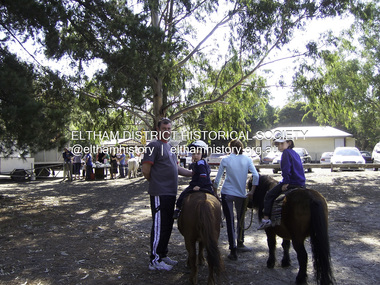
... The Lenister Farm wetland includes a bird hide, viewing platform and interpretive signs.5 Pioneer Henry Stooke, later Road Board chairman, bought the 11 acres (4.5ha) - later to become Lenister Farm - from the Crown in 1862. Stooke never lived on this site and the two houses at Lenister Farm were built in the 20th century. Since its formation...The Lenister Farm wetland includes a bird hide, viewing platform and interpretive signs.5 Pioneer Henry Stooke, later Road Board chairman, bought the 11 acres (4.5ha) - later to become Lenister Farm - from the Crown in 1862. Stooke never lived on this site and the two houses at Lenister Farm were built in the 20th century. Since its formation ...Originally a race course, the park has brought the community together with a variety of activities. Published: Nillumbik Now and Then / Marguerite Marshall 2008; photographs Alan King with Marguerite Marshall.; p45 Once used for horse racing, which attracted visitors from Melbourne, the Eltham Lower Park has brought the community together with a wide range of activities. Horse riding is now enjoyed as a recreation in the park as are other sports. The park also includes the Diamond Valley Railway miniature trains and a sanctuary for the rare and vulnerable Eltham Copper Butterfly. Eltham Lower Park, with other parks, forms an almost continuous green band from Eltham’s centre, along the Diamond Creek to the Yarra River.1 Before European settlement the Wurundjeri people met on this land, particularly at the junction of the Diamond Creek with the Yarra River, which they called Birr-arung. This is commemorated by the sculpture, Not just a Pretty Place by Aleks Danko, winner of the 2000 Nillumbik Art in Public Places Award. The first European to settle here was probably Henry Foley, who in 1841 used it as part of his pastoral run. Foley sold his leasehold to Joseph Wilson in 1845, who soon after sold it to Frederick Falkiner. During the 1840s the future park was part of a government square mile (2.6 sqkm) reserve, north of the Yarra, within the Parish of Nillumbik, later named Eltham. Soon the land was used for horse racing after nearby residents cleared ten acres (4ha) in the early 1850s. A three-quarter of a mile (1.2km) race secured the winner the £10 Publican’s Prize. In response to popular demand, the newly formed Eltham District Road Board petitioned the Surveyor General of the Colony of Victoria, in 1856, for 36 acres (14.6ha) of crown land for a racecourse and recreation. By 1858 the Eltham races had become an institution. ‘Many skirmishes occurred and the way home was paved with temptation, with sly-grog for sale.3 In the early 1870s, two jockeys were sons of the police officer in charge of the Eltham Police Station, Miles S Lyons. Another ten acres (4ha) was added to the area in 1866 and 12 acres (4.8ha) – Hohnes Hill – in 1870. In 1866, two acres (0.8ha) on the creek banks became an animal pound with William Walsh the pound keeper in 1870, but this was later incorporated into the park. By 1877 the area was called a public park but horse racing and training continued into the 1920s. In the mid-1900s trotters were trained on a circuit road. In 1953 the Eltham Pony Club was established and used a cross-country course on Hohnes Hill. From the mid 1950s the club held the Eltham Easter Fair at the park, later to include a procession along Main Road from the town centre to the park. The park also attracted picnic parties and campers from the inner suburbs as did Wingrove Park, and businesses catering for visitors, sprang up on the opposite side of Main Road. Bus-loads of school children visited the park for Gould League bird days in the 1960s. In 1979 the Eltham Shire Council bought Lenister Farm, linking the park with the Yarra River. The Lenister Farm wetland includes a bird hide, viewing platform and interpretive signs.5 Pioneer Henry Stooke, later Road Board chairman, bought the 11 acres (4.5ha) - later to become Lenister Farm - from the Crown in 1862. Stooke never lived on this site and the two houses at Lenister Farm were built in the 20th century. Since its formation in 1871, the Council has controlled this crown land, which it named Eltham Park. But in the 1920s Eltham Council bought land near the town centre for a park, which it named Eltham Central Park. To avoid confusion the Council renamed Eltham Park, Eltham Lower Park. Since 2004 the Yarra footbridge has linked the park with the Yarra Valley Metropolitan Park and the Main Yarra Trail.This collection of almost 130 photos about places and people within the Shire of Nillumbik, an urban and rural municipality in Melbourne's north, contributes to an understanding of the history of the Shire. Published in 2008 immediately prior to the Black Saturday bushfires of February 7, 2009, it documents sites that were impacted, and in some cases destroyed by the fires. It includes photographs taken especially for the publication, creating a unique time capsule representing the Shire in the early 21st century. It remains the most recent comprehenesive publication devoted to the Shire's history connecting local residents to the past. nillumbik now and then (marshall-king) collection, eltham lower park, eltham park -
 Sunshine and District Historical Society Incorporated
Administrative record - City of Sunshine - Commissioner Mr Alexander "Alex" George Gillon Collection 1976 - 1982 - Notice of Ordinary Meeting of the City of Sunshine on 13th June 1978, City of Sunshine, 7th June 1978
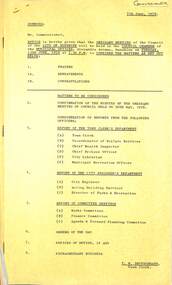
... Albans Deer Park Infant Welfare Centre Gas fired Toilet "Destroilet" Report of the By-Lawa Officer Court Proceedings Parking Infringements Report of the City Librarian Second Bookmobile School Holiday Programme 15th to 26th May Children's Literature Second National Seminar September 1st to 5th 1978 Report of the Municipal Recreation Officer Proposed Formation of Western Region Commission Municipal Recreation Officers' Sub Committee Ground Allocations Winter Seasons 1978 Report of the City Engineer Proposed Amendment No 81 to the Melbourne Metropolitan Planning Scheme Land Acquisition Maribyrnong Valley Land Use Permit Application Extensions to Marian College Secondary School Lots 590 & 591 Glengala Road Land Use Permit Application Flats Lot 31 Bardsley Street Land Use Permit Application Take Away Foods Lot 8 Market Place Land Use Permit Application Advertising Sign A.C. ...Albans Deer Park Infant Welfare Centre Gas fired Toilet "Destroilet" Report of the By-Lawa Officer Court Proceedings Parking Infringements Report of the City Librarian Second Bookmobile School Holiday Programme 15th to 26th May Children's Literature Second National Seminar September 1st to 5th 1978 Report of the Municipal Recreation Officer Proposed Formation of Western Region Commission Municipal Recreation Officers' Sub Committee Ground Allocations Winter Seasons 1978 Report of the City Engineer Proposed Amendment No 81 to the Melbourne Metropolitan Planning Scheme Land Acquisition Maribyrnong Valley Land Use Permit Application Extensions to Marian College Secondary School Lots 590 & 591 Glengala Road Land Use Permit Application Flats Lot 31 Bardsley Street Land Use Permit Application Take Away Foods Lot 8 Market Place Land Use Permit Application Advertising Sign A.C. ...Notice of Ordinary Meeting of the City of Sunshine on 13th June 1978 Report of the Town Clerk's Department Report of the Town Clerk Increased Crime Request for Royal Commission Loan Programme Increased Borrowing Allocation for 1978/79 Pre-Natal Clinic Sunshine Infant Welfare Centre Land Transfer Discontinued Road Between Verdun Street and Mitchell Street Crown Lands Adjoining Kororoit Creek / Anderson Road / Graham Street Proposed Committee of Management Lease Italo-Australian Co-Operative Social Club Ltd Separate Rate Off Street Parking Scheme Melbourne Metropolitan Board of Works Representation Report of the Co-Ordinator of Welfare Services Family and Community Service Programme State Grants (Home Care) Act Welfare Officers Subsidies Proposal for Funding for Emergency Relief in the Western Region Caretaker / Cleaner Lions House of Sunshine Senior Citizens Club Howard Kingham Lodge Hostel for the Frail Aged Proposal for Upgrading Housing Commission Areas Report of the Acting Chief Health Inspector Prosecution Proceedings Sunshine Magistrates Court Quarterly Return of Food Samples Infant Welfare Immunisation St. Albans Deer Park Infant Welfare Centre Gas fired Toilet "Destroilet" Report of the By-Lawa Officer Court Proceedings Parking Infringements Report of the City Librarian Second Bookmobile School Holiday Programme 15th to 26th May Children's Literature Second National Seminar September 1st to 5th 1978 Report of the Municipal Recreation Officer Proposed Formation of Western Region Commission Municipal Recreation Officers' Sub Committee Ground Allocations Winter Seasons 1978 Report of the City Engineer Proposed Amendment No 81 to the Melbourne Metropolitan Planning Scheme Land Acquisition Maribyrnong Valley Land Use Permit Application Extensions to Marian College Secondary School Lots 590 & 591 Glengala Road Land Use Permit Application Flats Lot 31 Bardsley Street Land Use Permit Application Take Away Foods Lot 8 Market Place Land Use Permit Application Advertising Sign A.C. Sheeting Pty Ltd 1 Fourth Avenue Land Use Permit Application Drive In Bottle Shop and Extension to St. Albans Hotel McKechnie Street Plan of Subdivision Gladstone Street and Garfield Street Strata Subdivision 11 Yarmouth Avenue Consolidation of Title Somers Street and Henderson Street Plan of Subdivision Geelong Road and Francis Street Tenders for Surplus Equipment Mowers Contract Construction of Neale Road Somerville Road Outfall Drain Subsidy for Victoria S.E.S. Local Unit McIntyre Road / Sunshine Avenue Construction Construction of Wright Street Bridge Account for Reinstatement 11 Commercial Street Allocation of Funds Joint Works Main and Unclassified Roads Proposed Intersection Signals St. Albans Road / Main Road East / East Esplanade Give Way to Right Signs Western Highway Fitzgerald Road / Boundary Road Funds Street Lighting Western Highway (Ballarat Road, Ashley Street and Mitchell Street Intersection Princess Highway West Old Geelong Road to McDonald Road Northern Service Road Replacement of Plant Nos 51 & 58 Chamberlin Front End Loaders Sunshine Swimming Pool Progress Report Relocation of Steel Framed Steel Clad Sheds to Errington Reserve and Robert Bruce Reserve Fairbairn Road Pre-School Centre Toilet Blocks Various Reserves Scovell Reserve Proposal by Maidstone Junior Sporting Club to Construct a Recreation Hall Report of the Acting Building surveyor Outbuilding 19 Charlotte Street Sunshine West Outbuilding 34 Bent Street St. Albans Outbuilding 2 Lynch Street Sunshine Outbuilding 18 Hertford Road Sunshine Outbuilding 16 Baynton Avenue Sunshine North Dangerous and Ruinous Building Van Ness Avenue (Former Rock Crushing Plant) Report of the Director Parks & Recreation Summer School Park Management 1979 Children's Playgrounds Burnley Horticultural College Nursery Trends and Development Bon Thomas Reserve Development Main Pavilion House McKay Gardens Demolition Bon Thomas Reserve Development Tender Tree Surgery Maintenance Seminar Royal Australian Institute of Parks & Recreations Victoria Region city of sunshine, alexander "alex" george gillon, sunshine infant welfare centre, verdun street, mitchell street, maidstone, kororoit creek, anderson road, graham street, sunshine, italo-australian co-operative social club, furlong road, st. albans, lions house of sunshine senior citizens club, watt street, corio street, howard kingham lodge hostel, darnley street, braybrook, deer park infant welfare centre, maribyrnong valley, marian college, glengala road, bardsley street, sunshine west, market place, fourth avenue, st. albans hotel, mckechnie street, gladstone street, garfield street, yarmouth avenue, somers street, henderson street, sunshine north, geelong road, francis street, brooklyn, mcintyre road, sunshine avenue, wright street bridge, wright street, commercial street, st. albans road, main road east, east esplanade, western highway, fitzgerald road, boundary road, ballarat road, ashley street, princess highway, old geelong road, mcdonald road, sunshine swimming pool, kennedy street, errington reserve, robert bruce reserve, station road, deer park, scovell reserve, maidstone junior sporting club, charlotte street, bent street, lynch street, hertford road, baynton avenue, van ness avenue, maribyrnong, bon thomas reserve, quinn street -
 Sunshine and District Historical Society Incorporated
Administrative record - City of Sunshine - Commissioner Mr Alexander Alex George Gillon Collection 1976 - 1982 - Minutes of the Ordinary Meeting of Council Held on 13th June 1978, City of Sunshine, 13th June 1978
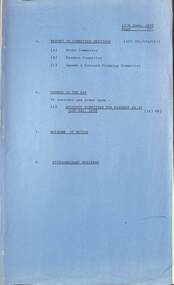
... Albans Deer Park Infant Welfare Centre Gas Fired Toilet "Destroilet" Report of the By-Lawa Officer Court Proceedings Parking Infringements Report of the City Librarian Second Bookmobile School Holiday Programme 15th to 26th May Children's Literature Second National Seminar September 1st to 5th 1978 Report of the Municipal Recreation Officer Proposed Formation of Western Region Commission Municipal Recreation Officers' Sub Committee Ground Allocations Winter Seasons 1978 Report of the City Engineer Proposed Amendment No 81 to the Melbourne Metropolitan Planning Scheme Land Acquisition Maribyrnong Valley Land Use Permit Application Extensions to Marian College Secondary School Lots 590 & 591 Glengala Road Land Use Permit Application Flats Lot 31 Bardsley Street Land Use Permit Application Take Away Foods Lot 8 Market Place Land Use Permit Application Advertising Sign A.C. ...Albans Deer Park Infant Welfare Centre Gas Fired Toilet "Destroilet" Report of the By-Lawa Officer Court Proceedings Parking Infringements Report of the City Librarian Second Bookmobile School Holiday Programme 15th to 26th May Children's Literature Second National Seminar September 1st to 5th 1978 Report of the Municipal Recreation Officer Proposed Formation of Western Region Commission Municipal Recreation Officers' Sub Committee Ground Allocations Winter Seasons 1978 Report of the City Engineer Proposed Amendment No 81 to the Melbourne Metropolitan Planning Scheme Land Acquisition Maribyrnong Valley Land Use Permit Application Extensions to Marian College Secondary School Lots 590 & 591 Glengala Road Land Use Permit Application Flats Lot 31 Bardsley Street Land Use Permit Application Take Away Foods Lot 8 Market Place Land Use Permit Application Advertising Sign A.C. ...Report of the Town Clerk's Department Report of the Town Clerk Increased Crime Request for Royal Commission Loan Programme Increased Borrowing Allocation for 1978/79 Pre-Natal Clinic Sunshine Infant Welfare Centre Land Transfer Discontinued Road Between Verdun Street and Mitchell Street Crown Lands Adjoining Kororoit Creek / Anderson Road / Graham Street Proposed Committee of Management Lease Italo-Australian Co-Operative Social Club Ltd Separate Rate Off Street Parking Scheme Melbourne Metropolitan Board of Works Representation Report of the Co-Ordinator of Welfare Services Family and Community Service Programme State Grants (Home Care) Act Welfare Officers Subsidies Proposal for Funding for Emergency Relief in the Western Region Caretaker / Cleaner Lions House of Sunshine Senior Citizens Club Howard Kingham Lodge Hostel for the Frail Aged Proposal for Upgrading Housing Commission Areas Report of the Acting Chief Health Inspector Prosecution Proceedings Sunshine Magistrates Court Quarterly Return of Food Samples Infant Welfare Immunisation St. Albans Deer Park Infant Welfare Centre Gas Fired Toilet "Destroilet" Report of the By-Lawa Officer Court Proceedings Parking Infringements Report of the City Librarian Second Bookmobile School Holiday Programme 15th to 26th May Children's Literature Second National Seminar September 1st to 5th 1978 Report of the Municipal Recreation Officer Proposed Formation of Western Region Commission Municipal Recreation Officers' Sub Committee Ground Allocations Winter Seasons 1978 Report of the City Engineer Proposed Amendment No 81 to the Melbourne Metropolitan Planning Scheme Land Acquisition Maribyrnong Valley Land Use Permit Application Extensions to Marian College Secondary School Lots 590 & 591 Glengala Road Land Use Permit Application Flats Lot 31 Bardsley Street Land Use Permit Application Take Away Foods Lot 8 Market Place Land Use Permit Application Advertising Sign A.C. Sheeting Pty Ltd 1 Fourth Avenue Land Use Permit Application Drive In Bottle Shop and Extension to St. Albans Hotel McKechnie Street Plan of Subdivision Gladstone Street and Garfield Street Strata Subdivision 11 Yarmouth Avenue Consolidation of Title Somers Street and Henderson Street Plan of Subdivision Geelong Road and Francis Street Tenders for Surplus Equipment Mowers Contract Construction of Neale Road Somerville Road Outfall Drain Subsidy for Victoria S.E.S. Local Unit McIntyre Road / Sunshine Avenue Construction Construction of Wright Street Bridge Account for Reinstatement 11 Commercial Street Allocation of Funds Joint Works Main and Unclassified Roads Proposed Intersection Signals St. Albans Road / Main Road East / East Esplanade Give Way to Right Signs Western Highway Fitzgerald Road / Boundary Road Funds Street Lighting Western Highway (Ballarat Road, Ashley Street and Mitchell Street Intersection Princess Highway West Old Geelong Road to McDonald Road Northern Service Road Replacement of Plant Nos 51 & 58 Chamberlin Front End Loaders Sunshine Swimming Pool Progress Report Relocation of Steel Framed Steel Clad Sheds to Errington Reserve and Robert Bruce Reserve Fairbairn Road Pre-School Centre Toilet Blocks Various Reserves Scovell Reserve Proposal by Maidstone Junior Sporting Club to Construct a Recreation Hall Report of the Acting Building surveyor Outbuilding 19 Charlotte Street Sunshine West Outbuilding 34 Bent Street St. Albans Outbuilding 2 Lynch Street Sunshine Outbuilding 18 Hertford Road Sunshine Outbuilding 16 Baynton Avenue Sunshine North Dangerous and Ruinous Building Van Ness Avenue (Former Rock Crushing Plant) Report of the Director Parks & Recreation Summer School Park Management 1979 Children's Playgrounds Burnley Horticultural College Nursery Trends and Development Bon Thomas Reserve Development Main Pavilion House McKay Gardens Demolition Bon Thomas Reserve Development Tender Tree Surgery Maintenance Seminar Royal Australian Institute of Parks & Recreations Victoria Region Orders of the Day Accounts Submitted for Payment as at 31st May 1978 Extraordinary Business Report of the Town Clerk Meals on Wheels Report of the City Engineet Child Care Buildings Bon Thomas Reserve, Diamond Reserve, Orama Street & Highpoint West city of sunshine, alexander "alex" george gillon, sunshine infant welfare centre, verdun street, mitchell street, maidstone, kororoit creek, anderson road, graham street, italo-australian co-operative social club, furlong road, st. albans, lions house of sunshine senior citizens club, howard kingham lodge hostel, darnley street, braybrook, deer park infant welfare centre, maribyrnong valley, glengala road, marian college, sunshine west, bardsley street, market place, fourth avenue, sunshine, st. albans hotel, mckechnie street, gladstone street, garfield street, yarmouth avenue, somers street, henderson street, sunshine north, geelong road, francis street, brooklyn, neale road, deer park, wright street bridge, wright street, commercial street, st. albans road, main road east, east esplanade, fitzgerald road, boundary road, western highway, ballarat road, princess highway, old geelong road, mcdonald road, sunshine swimming pool, errington reserve, robert bruce reserve, station road, fairbairn road pre-school centre, fairbairn road, maidstone junior sporting club, scovell reserv, scovell crescent, charlotte street, bent street, lynch street, hertford road, baynton avenue, van ness avenue, maribyrnong, bon thomas reserve, quinn street, diamond reserve, albanvale, orama street, highpoint west, rosamond road -
 Victorian Aboriginal Corporation for Languages
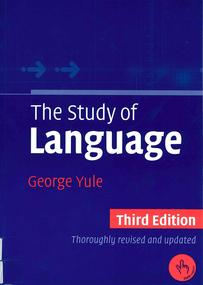
Book, George Yule, The study of Language, 2006
... Issues in language study: origin of language, animals & human language, writing, phonetics, phonology, words & word-formation processes, morphology, grammar, syntax, semantics, pragmatics, discourse analysis, language and the brain, language acquisition, gestures and sign languages, languages and regional variation, language and social variation, language and culture....linguistics sociolinguistics history and language B&w illustrations, b&w photographs, maps Issues in language study: origin of language, animals & human language, writing, phonetics, phonology, words & word-formation processes, morphology, grammar, syntax, semantics, pragmatics, discourse analysis, language and the brain, language acquisition, gestures and sign languages, languages and regional variation, language and social variation, language and culture. ...Issues in language study: origin of language, animals & human language, writing, phonetics, phonology, words & word-formation processes, morphology, grammar, syntax, semantics, pragmatics, discourse analysis, language and the brain, language acquisition, gestures and sign languages, languages and regional variation, language and social variation, language and culture.B&w illustrations, b&w photographs, mapslinguistics, sociolinguistics, history and language
