
Showing 62 items matching "hours of labour"
-
 Sunshine and District Historical Society Incorporated
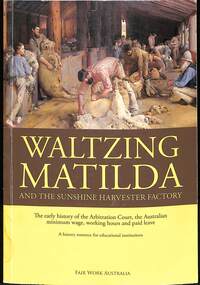
Book - Waltzing Matilda and the Sunshine Harvester Factory, Fair Work Australia et al, 2011
... ...Hours of labour...McKays Sunshine Harvester Works Arbitration Minimum wage Hours of labour 'Waltzing Matilda' is a song loosely based on some local events in Queensland during the shearers' strike of 1894. ...'Waltzing Matilda' is a song loosely based on some local events in Queensland during the shearers' strike of 1894. Strikes during the 1890s were key events that led to the establishment of the Arbitration Court. The book is an early history of the Arbitration Court, the minimum wage, working hours and paid leave.Soft cover booknon-fiction'Waltzing Matilda' is a song loosely based on some local events in Queensland during the shearers' strike of 1894. Strikes during the 1890s were key events that led to the establishment of the Arbitration Court. The book is an early history of the Arbitration Court, the minimum wage, working hours and paid leave.h.v. mckays, sunshine harvester works, arbitration, minimum wage, hours of labour -
 Unions Ballarat
Change the Rules bumper sticker, 2018
... Give people the choice of converting from casual to permanent if they work regular hours End labour hire and sham contracting rip-offs Stop the exploitation of temporary visa workers Stop allowing employers to terminate workplace agreements Equal rights for people working in the gig economy Investment in apprenticeships and vocational training Governments to procure from local businesses first, to create local jobs" Change the Rules is a union driven campaign that supported campaigning towards the 2018 Victorian State election and the 2019 Federal election. ...Give people the choice of converting from casual to permanent if they work regular hours End labour hire and sham contracting rip-offs Stop the exploitation of temporary visa workers Stop allowing employers to terminate workplace agreements Equal rights for people working in the gig economy Investment in apprenticeships and vocational training Governments to procure from local businesses first, to create local jobs" Change the Rules is a union driven campaign that supported campaigning towards the 2018 Victorian State election and the 2019 Federal election. ...From Change the Rules website: "We need to change the rules so people have jobs they can count on. Give people the choice of converting from casual to permanent if they work regular hours End labour hire and sham contracting rip-offs Stop the exploitation of temporary visa workers Stop allowing employers to terminate workplace agreements Equal rights for people working in the gig economy Investment in apprenticeships and vocational training Governments to procure from local businesses first, to create local jobs" Change the Rules is a union driven campaign that supported campaigning towards the 2018 Victorian State election and the 2019 Federal election. Elections, politics and government, and industrial relations.Bumper sticker: blue background; white lettering; slogan; adhesive with backing strip.Slogan reads: "For more secure jobs and better pay, Change the RULES".btlc, ballarat trades hall, ballarat trades and labour council, vthc, victorian trades hall council, actu, australian council of trade unions, elections, politics and government, political campaigns, industrial relations, unions, change the rules -
 Ballarat Tramway Museum
Document - Folder with papers, Commonwealth Court of Arbitration, "Commonwealth Court of Conciliation and Arbitration / A.T.M.O.E.A. 1955 Award - No. 718 of 1952, 1955
... On bottom of page 5, the formal award commences: gives details of award duration, rates of pay, contract of employment, margins compared to the basic award, additional rates, hours of labour, shift work, overtime. holiday work, call forward and call back to duty, spread of hours, Saturday and Sunday work, special night allowances, time allowance at commencement and finish of duty, attending for duty, reporting for duty, meals, acting out of grade, surpluses and shortages, annual leave, sick leave, free travel uniforms, training of traffic employees, reports, union notices and punishments. ...On bottom of page 5, the formal award commences: gives details of award duration, rates of pay, contract of employment, margins compared to the basic award, additional rates, hours of labour, shift work, overtime. holiday work, call forward and call back to duty, spread of hours, Saturday and Sunday work, special night allowances, time allowance at commencement and finish of duty, attending for duty, reporting for duty, meals, acting out of grade, surpluses and shortages, annual leave, sick leave, free travel uniforms, training of traffic employees, reports, union notices and punishments. ...Thirteen typed, foolscap size, page (carbon copy) of the Commonwealth Court of Arbitration decision and basis for this decision made 14/6/1955 by Conciliation Commissioner E.W. Tokin. Notes history of dispute, MMTB, SEC, Adelaide, Hobart, Launceston, Ballarat, Bendigo and Geelong. Details basis for decisions of Contract of Employment, additional rates for trackman, time allowance at commencement and finish of duty, meals, training of traffic employees, special night allowances, margins. On bottom of page 5, the formal award commences: gives details of award duration, rates of pay, contract of employment, margins compared to the basic award, additional rates, hours of labour, shift work, overtime. holiday work, call forward and call back to duty, spread of hours, Saturday and Sunday work, special night allowances, time allowance at commencement and finish of duty, attending for duty, reporting for duty, meals, acting out of grade, surpluses and shortages, annual leave, sick leave, free travel uniforms, training of traffic employees, reports, union notices and punishments. Was stapled for all 13 pages with three staples on left hand side. Pages 10 to 13 have become unstapled. Contained within a heavy grey cardboard folder with "A.T.M.O.E.A Award as from 14.6.55" written on outside cover in black ink. "BTPS 219" on cover of folder and first sheet of award.trams, tramways, atmoea, unions, agreements, sec, uniforms -
 Ballarat Tramway Museum
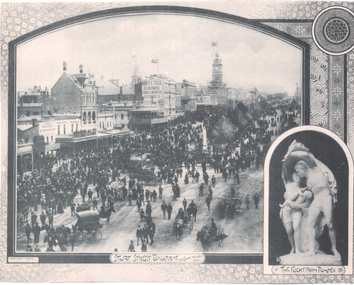
Photograph - Illustration, F W Niven & Co, "Sturt Street Ballarat on eight hours day", 1890s
... ...8 hour day monument...Labour...The photo shows a large crowd on an 8 hours (Labour Day) gathered in the eastern end or lower end of Sturt St. ...The photo shows a large crowd on an 8 hours (Labour Day) gathered in the eastern end or lower end of Sturt St. ...The photo shows a large crowd on an 8 hours (Labour Day) gathered in the eastern end or lower end of Sturt St. The 8-hour memorial or monument is in the centre of the photograph. Has one double-deck horse tram in view along with many other horse-drawn vehicles. On the Ballarat Mechanics Institute building is an advert for "Morrey & Tyler, the Cash Drapers" at 11 Bridge St Ballarat. Also in the view are Ribble, Suttons, E Payne, the Ballarat Gas Co. building and a dentist along with other buildings. In the bottom right-hand corner is an insert photo of the statue "The Flight from Pompeii". In the bottom left hand corner is "Crisp Photo Process F W Niven & Co.Yields information about an 8 hour celebration day in the lower end of Sturt St.Illustration cut from a journaltramways, trams, sturt st, horse tram, 8 hour day monument, labour day -
 Ballarat Tramway Museum
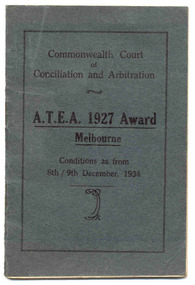
Book, Australian Tramway and Motor Omnibus Employees Association (ATMOEA), "Commonwealth Court of Conciliation and Arbitration / A.T.E.A. 1927 Award Melbourne Conditions as from 8th / 9th December, 1934", 1934
... Details wage increases for various classes of workers, probationary staff, junior labour, hours of work, minimum wage, shifts, rosters, spread of hours, overtime, Sunday and holiday work, meal hours, training, promotions, attending office, medical examinations, holidays, punishments, travelling time, calls back, days off, preference to unionists and Boards of Reference. ...Details wage increases for various classes of workers, probationary staff, junior labour, hours of work, minimum wage, shifts, rosters, spread of hours, overtime, Sunday and holiday work, meal hours, training, promotions, attending office, medical examinations, holidays, punishments, travelling time, calls back, days off, preference to unionists and Boards of Reference. ...Twenty page booklet, off white paper, saddle stapled, with additional dark green paper cover titled "Commonwealth Court of Conciliation and Arbitration / A.T.E.A. 1927 Award Melbourne Conditions as from 8th / 9th December, 1934". Details wage increases for various classes of workers, probationary staff, junior labour, hours of work, minimum wage, shifts, rosters, spread of hours, overtime, Sunday and holiday work, meal hours, training, promotions, attending office, medical examinations, holidays, punishments, travelling time, calls back, days off, preference to unionists and Boards of Reference. On page 10 has a small sheet of paper pinned in, with pencil writing re uniform issue periods."Ballarat Tramway Preservation Society Catalogue No. 216" in ink on top of first page.trams, tramways, melbourne, atea, unions, agreements, mmtb, uniforms -
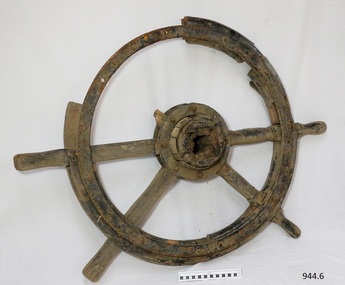 Flagstaff Hill Maritime Museum and Village
Equipment - Ship's Wheel, 1922
... The vessel suffered great damage; the mast snapped, and the crew laboured for four hours to free it by chopping off the mast and rigging. ...The vessel suffered great damage; the mast snapped, and the crew laboured for four hours to free it by chopping off the mast and rigging. ...This ship's wheel was hand-made from wood and metal using a recycled cart wheel. It originally belonged to the "Reginald M", a coastal trading ketch. ‘REGINALD M’ 1922 to 1975- The vessel “Reginald M” was a two-masted coastal ketch, owned and built by Mr Jack (John) Murch of Birkenhead, Port of Adelaide, South Australia. Its construction took approximately 6 months, and it launched at Largs Bay in 1922. The Reginald M’s purpose was to serve the coastal trade of South Australia, to carry cargo cheaply and efficiently. Some have said that the keel was, in fact, hewn from two telegraph poles! Its builder frequented all the salvage yards for materials and fittings. Reginald M had a very shallow draft and a flat bottom that enabled it to come close to shore and to sit high and dry at low tide or to be beached on sand. The flat bottom was also to make the ship able to skim over reefs. Wagons could load and unload direct from their sides. Its cargo included Guano, Barley, Wool, Horses, Cattle, Timber, Explosives, Potatoes, Shell Gritt and Gypsum. On April 9th 1931Reginald M weathered a large storm in St Vincent Gulf, SA. The vessel suffered great damage; the mast snapped, and the crew laboured for four hours to free it by chopping off the mast and rigging. The crew patched it up and slowly returned to Port Adelaide with only a portion of the insured cargo being damaged. The crew members at the time were owner Mr John H Murch of Wells Street, Largs Bay; Skipper Mr R Murch, John’s brother; Murray, son of Captain Murch; and Seaman John Smith. Reg Webb purchased Carribie Station, at Marion in the Warooka District, south of Adelaide, in 1921. He cleared the land and farmed sheep and grain. In 1923, he shipped his own wool and grain from Marion Bay, having first carted 300 bags of the barley grain, 12 bags at a time, along the unmade track to the jetty. A photograph donated to Flagstaff Hill, dating about 1929 - 1942, shows two men on the Reginald M, holding between them their fishing catch of a large hammer shark. The photograph is stamped “GRENFELL STUDIO PORT LINCOLN PRINT” and titled “hammer shark caught on Reginald Emm”. The donor’s family lived on the Your Peninsula and dispatched their grain from a chute at Gleeson’s Landing to the awaiting transport vessel. Reg knew the Murch Brothers from Port Adelaide. The brothers had been using their ketch, Reginald M, to ship Guano from the Islands, led by Captain Richard Murch. Reg approached them in 1934 about shipping grain from Marion Bay. The brothers visited the bay and thought it was an ideal place. They showed Reg where to stack his grain, and they measured up the cliffs. When Reg was ready, they brought down and installed a ninety-foot wooden chute. The bags of grain were individually pushed down the chute, landing in a waiting small boat, then rowed to Reginald M with 14 bags at a time. After 10 hours, Reginald M would have a load of 1300 bags of grain to ship to waiting ports. At one time, a wild storm destroyed the chute, so they built a stronger replacement chute. Reginald M engaged in the shipping of grain from there until 1938. In 1940, Able Seaman Allan H Lucas served on the Reginald M between September and December, being engaged and discharged from Port Adelaide. The ship’s Master, W S Murch, signed his Certificate of Discharge. It seems that at the Reginald M was used, at one time, as a Customs vessel, as one photograph in Flagstaff Hill’s collection shows “H.M.C. No. 3, Pt Adelaide” on the bow. In 1969, the last freight left Marion Bay on the ketch Reginald M carrying grain, wool, and explosives. In late 1970, the Mt. Lyell Mining and Railway Company bought the vessel to use as a barge to carry explosives. In 1972, the Navy League of Strahan, Tasmania, purchased it for use by the Strahan Sea Cadet Unit to use at Macquarie Harbour and renamed it T.S. Macquarie. However, this plan for the use of Reginald M did not happen. In 1974, Mr Andrew Rennie, of East Brighton, Melbourne, bought it for a similar purpose, paying $5,000 and donating a ‘Cadet of the Year’ trophy to the Sea Cadets. He sailed it from Strahan to Melbourne, planning to use it for pleasure sailing. Also, in 1975, Reginald M was bought by the Melbourne Ferry Company at auction. Later in 1975, Flagstaff Hill Maritime Museum bought the Reginald M for $20,000. It became a popular exhibit in the Village’s lake. In 2006, using funds from a $4,000 government grant, the restoration of the vessel continued. Flagstaff Hill Maritime Village’s Collection holds other artefacts associated with Reginald M. They include - Photographs of the Reginald M, including one photograph of it in Outer Harbour, S.A., dated 1947, with Skipper- R.F. Dale and Owner- John Murch. Another shows it docked at Port Adelaide, with the lettering H.M.C. No. 3 Pt ADEL (standing for His /Her Majesty’s Customs). There is a black and white photo of it at a wharf and another showing a person on board. - a lifebuoy, made of cork, with the inscription of “Pt Adelaide” on it. - Helm section, removed and replaced during restoration. - a bullet found in pieces of timber when Reginald M was restored in 1979 Reginald M was a much-loved exhibit at the Maritime Village, where many visitors enjoyed boarding and exploring a real ship with a long history. Sadly, the Reginald M was decommissioned in late 2016, due to the continuing prohibitive cost of maintenance and the risk to public safety. Components from the Reginald M are held in Flagstaff Hill's collection as a reminder of the Reginald M’s history. This ship's wheel is significant because of its association with the REGINALD M. REGNIALD M was a coastal trading ketch from South Australia built in 1922. It is one of very few sailing coastal trading vessels still extant, and its flat bottom, single chine shape illustrates a very simple but robust method of construction, compared to other round bilged examples of trading vessels. She is now listed on the Australian Register of Historic Vessels (ARHV Number: HV000562.)Ship’s wheel, also called a Helm, eight spoke design. Centre of wheel is handmade of wood and has iron rings around each side. The spokes are fitted into this wooden hub. The outer wheel has an iron ring on one side and sections of a wooden ring on the other. There are both original and modern bolt and screw fastenings. The wheel has remnants of black paint. This ship’s wheel was originally fitted to the ketch REGINALD M and removed during its restoration. flagstaff hill, warrnambool, shipwrecked-coast, flagstaff-hill, flagstaff-hill-maritime-museum, maritime-museum, shipwreck-coast, flagstaff-hill-maritime-village, ship's wheel, hand made ship's wheel, coastal trader, reginald m, ketch, john murch, ch murch, reg webb, carribie station, mt lyell copper company, queenstown navy league, andrew rennie, melbourne ferry company, r.f. dale -
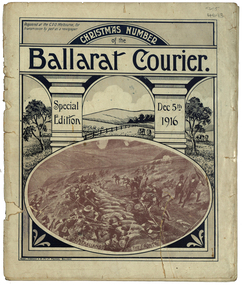 Federation University Historical Collection
Magazine - Photograph - Black and White, Berry, Anderson & Co, Ballarat Courier Special Christmas Edition, 1916, 1916
... ...labour day...8 hour...st patrick's day ballarat townscape st patrick's day parade ballarat st patrick's day parade ballarat courier hanrahan morris labour day 8 hour day eight hours day procession st patrick's day procession mrs captain ellis picture palace grenville college berry united company ullina lewis s. smith architect bolster brothers Buninyong Butter Factory aquatic carnival George E. ...A magazine supplement of the Ballarat Courier containing articles, images and advertisement. Images include: St Patrick's Day March, Eight Hour Day procession Advertisements include: Morris undertaker, Olivers, Miller, Hanrahan's Hotelst patrick's day, ballarat townscape, st patrick's day parade, ballarat st patrick's day parade, ballarat courier, hanrahan, morris, labour day, 8 hour day, eight hours day procession, st patrick's day procession, mrs captain ellis, picture palace, grenville college, berry united company ullina, lewis s. smith architect, bolster brothers, buninyong butter factory, aquatic carnival, george e. deeble machinery, cape nelson portland, jelbarts, jelbart's telescope, lin hillman, presbyterian church snake valley, miss a.m. abrams, berry anderson and co, j.a. reynolds, maypole, w.f. coltman, ballarat boot palace, ben nevis elmhurst, jonathan reeve, victorian producers co-operative, r.u. nicholls, f.w. barnes and son, ballarat steam laundryballarat water reserves, yarra river warburton, erskine river lorne, john bray, eden studios, lake wendouree -
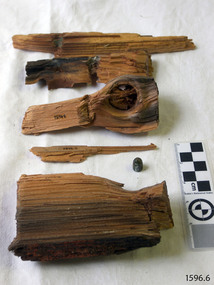 Flagstaff Hill Maritime Museum and Village
Memorabilia - Bullet & Timber, Early 20th century
... The vessel suffered great damage; the mast snapped, and the crew laboured for four hours to free it by chopping off the mast and rigging. ...The vessel suffered great damage; the mast snapped, and the crew laboured for four hours to free it by chopping off the mast and rigging. ...The Reginald M was an early purchase of Flagstaff Hill Maritime Museum and Village, soon after it opened in 1975. It was restored and then used as an exhibit in the maritime Village. The reason for the bullet being within the pieces of timber is unknown. The Reginald M's history does not suggest a time when weapons were used. However, the vessel's construction included used materials from different sources; perhaps the bullet was within these materials, which later became part of the Reginald M. ‘REGINALD M’ 1922 to 1975- The vessel “Reginald M” was a two-masted coastal ketch, owned and built by Mr Jack (John) Murch of Birkenhead, Port of Adelaide, South Australia. Its construction took approximately 6 months, and it launched at Largs Bay in 1922. The Reginald M’s purpose was to serve the coastal trade of South Australia, to carry cargo cheaply and efficiently. Some have said that the keel was, in fact, hewn from two telegraph poles! Its builder frequented all the salvage yards for materials and fittings. Reginald M had a very shallow draft and a flat bottom that enabled it to come close to shore and to sit high and dry at low tide or to be beached on sand. The flat bottom was also to make the ship able to skim over reefs. Wagons could load and unload directly from their sides. Its cargo included Guano, Barley, Wool, Horses, Cattle, Timber, Explosives, Potatoes, Shell Grit, and Gypsum. On April 9th 1931, Reginald M weathered a large storm in St Vincent Gulf, SA. The vessel suffered great damage; the mast snapped, and the crew laboured for four hours to free it by chopping off the mast and rigging. The crew patched it up and slowly returned to Port Adelaide with only a portion of the insured cargo being damaged. The crew members at the time were the owner, Mr John H Murch of Wells Street, Largs Bay; Skipper Mr R Murch, John’s brother; Murray, son of Captain Murch; and Seaman John Smith. Reg Webb purchased Carribie Station, at Marion in the Warooka District, south of Adelaide, in 1921. He cleared the land and farmed sheep and grain. In 1923, he shipped his own wool and grain from Marion Bay, having first carted 300 bags of the barley grain, 12 bags at a time, along the unmade track to the jetty. A photograph donated to Flagstaff Hill, dating about 1929 - 1942, shows two men on the Reginald M, holding between them their fishing catch of a large hammer shark. The photograph is stamped “GRENFELL STUDIO PORT LINCOLN PRINT” and titled “hammer shark caught on Reginald Emm”. The donor’s family lived on the Your Peninsula and dispatched their grain from a chute at Gleeson’s Landing to the awaiting transport vessel. Reg knew the Murch Brothers from Port Adelaide. The brothers had been using their ketch, Reginald M, to ship Guano from the Islands, led by Captain Richard Murch. Reg approached them in 1934 about shipping grain from Marion Bay. The brothers visited the bay and thought it was an ideal place. They showed Reg where to stack his grain, and they measured up the cliffs. When Reg was ready, they brought down and installed a ninety-foot wooden chute. The bags of grain were individually pushed down the chute, landing in a waiting small boat, then rowed to Reginald M with 14 bags at a time. After 10 hours, Reginald M would have a load of 1300 bags of grain to ship to waiting ports. At one time, a wild storm destroyed the chute, so they built a stronger replacement chute. Reginald M engaged in the shipping of grain from there until 1938. In 1940, Able Seaman Allan H Lucas served on the Reginald M between September and December, being engaged and discharged from Port Adelaide. The ship’s Master, W S Murch, signed his Certificate of Discharge. It seems that at the Reginald M was used, at one time, as a Customs vessel, as one photograph in Flagstaff Hill’s collection shows “H.M.C. No. 3, Pt Adelaide” on the bow. In 1969, the last freight left Marion Bay on the ketch Reginald M carrying grain, wool, and explosives. In late 1970, the Mt. Lyell Mining and Railway Company bought the vessel to use as a barge to carry explosives. In 1972, the Navy League of Strahan, Tasmania, purchased it for use by the Strahan Sea Cadet Unit to use at Macquarie Harbour and renamed it T.S. Macquarie. However, this plan for the use of Reginald M did not happen. In 1974, Mr Andrew Rennie, of East Brighton, Melbourne, bought it for a similar purpose, paying $5,000 and donating a ‘Cadet of the Year’ trophy to the Sea Cadets. He sailed it from Strahan to Melbourne, planning to use it for pleasure sailing. Also, in 1975, Reginald M was bought by the Melbourne Ferry Company at auction. Later in 1975, Flagstaff Hill Maritime Museum bought the Reginald M for $20,000. It became a popular exhibit in the Village’s lake. In 2006, using funds from a $4,000 government grant, the restoration of the vessel continued. Flagstaff Hill Maritime Village’s Collection holds other artefacts associated with Reginald M. They include - Photographs of the Reginald M, including one photograph of it in Outer Harbour, S.A., dated 1947, with Skipper- R.F. Dale and Owner- John Murch. Another shows it docked at Port Adelaide, with the lettering H.M.C. No. 3 Pt ADEL (standing for His /Her Majesty’s Customs). There is a black and white photo of it at a wharf and another showing a person on board. - a lifebuoy, made of cork, with the inscription of “Pt Adelaide” on it. - Helm section, removed and replaced during restoration. - a bullet found in pieces of timber when Reginald M was restored in 1979 Reginald M was a much-loved exhibit at the Maritime Village, where many visitors enjoyed boarding and exploring a real ship with a long history. Sadly, the Reginald M was decommissioned in late 2016, due to the continuing prohibitive cost of maintenance and the risk to public safety. Components from the Reginald M are held in Flagstaff Hill's collection as a reminder of the Reginald M’s history. The timber is an example of the materials used to build the Reginald M in 1922. The ship was built from recycled items where possible. The bullet represents a time in the history of the vessel that is currently unknown.Wood from the vessel, Reginald M, and a bullet found within its timbers on June 22nd, 1979, during its restoration. flagstaff hill, flagstaff hill maritime museum and village, warrnambool, maritime museum, maritime village, great ocean road, shipwreck coast, reginald m, ketch, coastal trader, timber, wood, bullet, murch, john murch, 1922 -
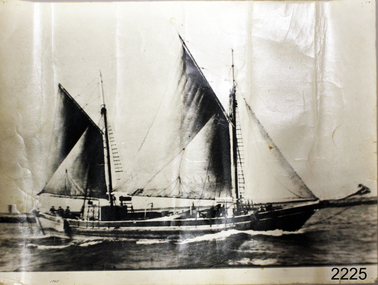 Flagstaff Hill Maritime Museum and Village
Photograph, 1945
... The vessel suffered great damage; the mast snapped, and the crew laboured for four hours to free it by chopping off the mast and rigging. ...The vessel suffered great damage; the mast snapped, and the crew laboured for four hours to free it by chopping off the mast and rigging. ...The donor was a seamen at Port Adelaide, where this photogrpah of the ketch, Reginald M, was taken in 1945. ‘REGINALD M’ 1922 to 1975- The vessel “Reginald M” was a two-masted coastal ketch, owned and built by Mr Jack (John) Murch of Birkenhead, Port of Adelaide, South Australia. Its construction took approximately 6 months, and it launched at Largs Bay in 1922. The Reginald M’s purpose was to serve the coastal trade of South Australia, to carry cargo cheaply and efficiently. Some have said that the keel was, in fact, hewn from two telegraph poles! Its builder frequented all the salvage yards for materials and fittings. Reginald M had a very shallow draft and a flat bottom that enabled it to come close to shore and to sit high and dry at low tide or to be beached on sand. The flat bottom was also to make the ship able to skim over reefs. Wagons could load and unload directly from their sides. Its cargo included Guano, Barley, Wool, Horses, Cattle, Timber, Explosives, Potatoes, Shell Gritt, and Gypsum. On April 9th 1931, Reginald M weathered a large storm in St Vincent Gulf, SA. The vessel suffered great damage; the mast snapped, and the crew laboured for four hours to free it by chopping off the mast and rigging. The crew patched it up and slowly returned to Port Adelaide with only a portion of the insured cargo being damaged. The crew members at the time were the owner, Mr John H Murch of Wells Street, Largs Bay; Skipper Mr R Murch, John’s brother; Murray, son of Captain Murch; and Seaman John Smith. Reg Webb purchased Carribie Station, at Marion in the Warooka District, south of Adelaide, in 1921. He cleared the land and farmed sheep and grain. In 1923, he shipped his own wool and grain from Marion Bay, having first carted 300 bags of the barley grain, 12 bags at a time, along the unmade track to the jetty. A photograph donated to Flagstaff Hill, dating about 1929 - 1942, shows two men on the Reginald M, holding between them their fishing catch of a large hammer shark. The photograph is stamped “GRENFELL STUDIO PORT LINCOLN PRINT” and titled “hammer shark caught on Reginald Emm”. The donor’s family lived on the Your Peninsula and dispatched their grain from a chute at Gleeson’s Landing to the awaiting transport vessel. Reg knew the Murch Brothers from Port Adelaide. The brothers had been using their ketch, Reginald M, to ship Guano from the Islands, led by Captain Richard Murch. Reg approached them in 1934 about shipping grain from Marion Bay. The brothers visited the bay and thought it was an ideal place. They showed Reg where to stack his grain, and they measured up the cliffs. When Reg was ready, they brought down and installed a ninety-foot wooden chute. The bags of grain were individually pushed down the chute, landing in a waiting small boat, then rowed to Reginald M with 14 bags at a time. After 10 hours, Reginald M would have a load of 1300 bags of grain to ship to waiting ports. At one time, a wild storm destroyed the chute, so they built a stronger replacement chute. Reginald M engaged in the shipping of grain from there until 1938. In 1940, Able Seaman Allan H Lucas served on the Reginald M between September and December, being engaged and discharged from Port Adelaide. The ship’s Master, W S Murch, signed his Certificate of Discharge. It seems that at the Reginald M was used, at one time, as a Customs vessel, as one photograph in Flagstaff Hill’s collection shows “H.M.C. No. 3, Pt Adelaide” on the bow. In 1969, the last freight left Marion Bay on the ketch Reginald M carrying grain, wool, and explosives. In late 1970, the Mt. Lyell Mining and Railway Company bought the vessel to use as a barge to carry explosives. In 1972, the Navy League of Strahan, Tasmania, purchased it for use by the Strahan Sea Cadet Unit to use at Macquarie Harbour and renamed it T.S. Macquarie. However, this plan for the use of Reginald M did not happen. In 1974, Mr Andrew Rennie, of East Brighton, Melbourne, bought it for a similar purpose, paying $5,000 and donating a ‘Cadet of the Year’ trophy to the Sea Cadets. He sailed it from Strahan to Melbourne, planning to use it for pleasure sailing. Also, in 1975, Reginald M was bought by the Melbourne Ferry Company at auction. Later in 1975, Flagstaff Hill Maritime Museum bought the Reginald M for $20,000. It became a popular exhibit in the Village’s lake. In 2006, using funds from a $4,000 government grant, the restoration of the vessel continued. Flagstaff Hill Maritime Village’s Collection holds other artefacts associated with Reginald M. They include - Photographs of the Reginald M, including one photograph of it in Outer Harbour, S.A., dated 1947, with Skipper- R.F. Dale and Owner- John Murch. Another shows it docked at Port Adelaide, with the lettering H.M.C. No. 3 Pt ADEL (standing for His /Her Majesty’s Customs). There is a black and white photo of it at a wharf and another showing a person on board. - a lifebuoy, made of cork, with the inscription of “Pt Adelaide” on it. - Helm section, removed and replaced during restoration. - a bullet found in pieces of timber when Reginald M was restored in 1979 Reginald M was a much-loved exhibit at the Maritime Village, where many visitors enjoyed boarding and exploring a real ship with a long history. Sadly, the Reginald M was decommissioned in late 2016, due to the continuing prohibitive cost of maintenance and the risk to public safety. Components from the Reginald M are held in Flagstaff Hill's collection as a reminder of the Reginald M’s history. The photograph represents a time when the Reginald M was in use at the Port of Adelaide. It shows the configuration of the sails at that time. The vessel was active as a coastal trader from Adelaide and along the south east coast of Australia.Photograph: sepia, rectangular image of the two-masted ketch, Reginald M, in Port River, Adelaide, South Australia. A figure is on the bowsprit, and other figures are on the masts and on deck. Photographed at Port River, Adelaide.flagstaff hill, flagstaff hill maritime museum and village, warrnambool, maritime museum, maritime village, great ocean road, shipwreck coast, ships, port river sa, adelaide, reginald m, 2-masted, sailing ship, ketch, port adelaide, 1945 -
 Marysville & District Historical Society
THE TRIANGLE NEWS-VOL 40 NO 7-MARCH 1 2013
... labour day office closures...church notices...world day of prayer...triangle community dinner...adventurous cooks...madrats weekend...black spur inn...bbq at gallipoli oval...community happy hour...marysville victoria australia skate park almost finished gallipoli park lions club what's on when in march marysville sub branch rsl agm marysville community golf & bowls club marysville primary school council agm marysville primary school parents club agm creative triangle marysville community market rates strategy needs further consideration state government review murrindindi shire council labour day office closures church notices world day of prayer triangle community dinner adventurous cooks madrats weekend black spur inn bbq at gallipoli oval community happy hour maryton beer & platter garden modern life music school taggerty community ticks off on township projects marysville netball notice of agm and call for teams mayor's chair pet registration by april temporary road closure watercolours on display councillor comment triangle community dance group new yarra valley design market changes to administration at marysville rac rebuilding advisory centre survey aims to support inclusiveness stategy marysville golf report wriggly fish swimming lessons program marysville world's longest lunch swimming pool season coming to an end advertisments community upgrade regeneration burns in central highlands stephanie alexander-cook marysville primary school fundraiser for dunalley primary school tasmania marysville fire brigade presentation night a positive outlook for ageing in community real estate bakers lane works revised ceaca agm construction of new visitors information and interpretive centre yea wetlands council community services open hall buxton murrindindi planning scheme camp marysville maintenance manager wanted st john's anglican church arts crafts & produce festival memorabilia of buxton memorial hall wanted buxton progress assocn community notice THE TRIANGLE NEWS-VOL 40 NO 7-MARCH 1 2013 ...marysville, victoria, australia, skate park almost finished, gallipoli park, lions club, what's on when in march, marysville sub branch rsl agm, marysville community golf & bowls club, marysville primary school council agm, marysville primary school parents club agm, creative triangle, marysville community market, rates strategy needs further consideration, state government review, murrindindi shire council, labour day office closures, church notices, world day of prayer, triangle community dinner, adventurous cooks, madrats weekend, black spur inn, bbq at gallipoli oval, community happy hour, maryton beer & platter garden, modern life music school, taggerty community ticks off on township projects, marysville netball notice of agm and call for teams, mayor's chair, pet registration by april, temporary road closure, watercolours on display, councillor comment, triangle community dance group, new yarra valley design market, changes to administration at marysville rac, rebuilding advisory centre, survey aims to support inclusiveness stategy, marysville golf report, wriggly fish swimming lessons program, marysville world's longest lunch, swimming pool season coming to an end, advertisments, community upgrade regeneration burns in central highlands, stephanie alexander-cook, marysville primary school fundraiser for dunalley primary school tasmania, marysville fire brigade presentation night, a positive outlook for ageing in community, real estate, bakers lane works revised, ceaca agm, construction of new visitors information and interpretive centre, yea wetlands, council community services, open hall buxton, murrindindi planning scheme, camp marysville maintenance manager wanted, st john's anglican church arts crafts & produce festival, memorabilia of buxton memorial hall wanted, buxton progress assocn community notice -
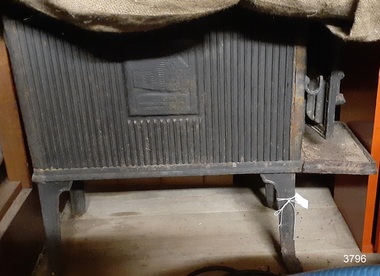 Flagstaff Hill Maritime Museum and Village
Domestic object - Wood Stove, circa 1880-1920
... The vessel suffered great damage; mast snapped and the crew laboured for four hours to free it by chopping off the past and rigging. ...The vessel suffered great damage; mast snapped and the crew laboured for four hours to free it by chopping off the past and rigging. ...Stoves of this design are used for heating domestic places and were available in many designs and shapes. They commonly used wood as fuel. They were used for both heating and cooking. This stove was part of the original furnishings of the 1922 vessel 'Reginald M', a South Australian coastal trader. The two-masted coastal ketch was built from material and fittings obtained from salvage yards by Mr Jack (John) Murch of Birkenhead, Port of Adelaide, South Australia. Its construction took approximately six months. It was launched at Largs Bay in 1922. ‘REGINALD M’ 1922 to 1975- The vessel “Reginald M” was a two-masted coastal ketch, owned and built by Mr. Jack (John) Murch of Birkenhead, Port of Adelaide, South Australia. Its construction took approximately 6 months, and it launched at Largs Bay in 1922. The Reginald M’s purpose was to serve the coastal trade of South Australia, to carry cargo cheaply and efficiently. Some have said that the keel was in fact hewn from two telegraph poles! Its builder frequented all the salvage yards for materials and fittings. Reginald M had a very shallow draft and a flat bottom that enabled it to come close to shore and to sit high and dry at low tide or to be beached on sand. The flat bottom was also to make the ship able to skim over reefs. Wagons could load and unload direct from its side. Her cargo included Guano, Barley, Wool, Horses, Cattle, Timber, Explosives, Potatoes, Shell Gritt and Gypsum. On April 9th 1931Reginald M weathered a large storm in St Vincent Gulf, SA. The vessel suffered great damage; mast snapped and the crew laboured for four hours to free it by chopping off the past and rigging. The crew patched iit up and slowly returned to Port Adelaide with only a portion of the insured cargo being damaged. Her crew members at the time were owner Mr John H Murch of Wells Street Largs Bay, Skipper Mr R Murch – John’s brother, Murray – son of Captain Murch and Seaman John Smith. Reg Webb purchased Carribie Station, at Marion in the Warooka District, south of Adelaide, in 1921. He cleared the land and farmed sheep and grain. In 1923 he shipped his own wool and grain from Marion Bay, having first carted 300 bags of the barley grain, 12 bags at a time, along the unmade track to the jetty. A photograph donated to Flagstaff Hill, dating about 1929 - 1942, shows two men on the Reginald M, holding between them their fishing catch of a large hammer shark. The photograph is stamped “GRENFELL STUDIO PORT LINCOLN PRINT” and titled “hammer shark caught on Reginald Emm”. The donor’s family lived on the Your Peninsular and despatched their grain from a chute at Gleeson’s Landing to the awaiting transport vessel. Reg knew the Murch Brothers from Port Adelaide. The brothers had been using their ketch Reginald M to ship Guano from the Islands, led by Captain Richard Murch. Reg approached them in 1934 about shipping grain from Marion Bay. The brothers visited the bay and thought it was an ideal place. They showed Reg where to stack his grain, and they measured up the cliffs. When Reg was ready, they brought down and installed a ninety-foot wooden chute. The bags of grain individually pushed down the chute, landing in a waiting small boat then rowed to Reginald M, 14 bags at a time. After 10 hours Reginald M would have a load of 1300 bags of grain to ship to waiting ports. At one time a wild storm destroyed the chute, so they built a stronger replacement chute. Reginald M engaged in the shipping of grain from there until 1938. In 1940 Able Seaman Allan H Lucas served on Reginald M between September and December, being engaged and discharged from Port of Adelaide. The ship’s Master, W S Murch, signed his Certificate of Discharge. It seems that at the Reginald M was used at one time as a Customs vessel, as one photograph in Flagstaff Hill’s collection shows “H.M.C. No. 3, Pt Adelaide” on the bow. In 1969 the last freight left Marion Bay on the ketch Reginald M carrying grain, wool, and explosives. In late 1970 the Mt. Lyell Mining and Railway Company bought the vessel to use as a barge to carry explosives. In 1972 the Navy League of Strahan, Tasmania, purchased it for use by the Strahan Sea Cadet Unit to use at Macquarie Harbour and renamed iit T.S. Macquarie. However, this plan for use of Reginald M did not happen. In 1974 Mr. Andrew Rennie, of East Brighton, Melbourne, bought it for a similar purpose, paying $5,000 and donating a ‘Cadet of the Year” trophy to the Sea Cadets. He sailed it from Strahan to Melbourne, planning to use it for pleasure sailing. Also, in 1975 Reginald M was bought by the Melbourne Ferry Company auction. Later in 1975 Flagstaff Hill Maritime Museum bought the Reginald M for $20,000. It became a popular exhibit in the Village’s lake. In 2006, using funds from a $4,000 government grant, restoration continued the vessel. Flagstaff Hill Maritime Village’s Collection holds other artefacts associated with Reginald M. They include - Photographs of the Reginald M, including one photograph of iit in Outer Harbour, S.A. dated 1947, with Skipper- R.F. Dale and Owner- John Murch. Another shows it docked at Port Adelaide, with the lettering H.M.C. No. 3 Pt ADEL (standing for His/Her Majesty’s Customs). There is a black and white photo of it at a wharf and another showing a person on board. - a lifebuoy, made of cork, with the inscription of “Pt Adelaide” on it. - Helm section, removed and replaced during restoration. - a bullet found in pieces of timber when Reginald M was restored in 1979 Reginald M was a much-loved exhibit at the Maritime Village, where many visitors enjoyed boarding and exploring a real ship with a long history. Sadly, in late 2016, the Reginald M was decommissioned due to the continuing prohibitive cost of maintenance and the risk to public safety. Components from the Reginald M are preserved as part of Flagstaff Hill's collection. The stove is significant as it represents the heating and cooking appliances used in the late 19th and early 20th centuries, both on board vessels as well as for domestic purposes. The stove has additional significance for its association with the vessel "Reginald M", a coastal trading ketch from South Australia built in 1922 at Largs Bay. It is one of the very few sailing coastal trading vessels built in Australia, with its flat bottom, single chine shape designed for navigating shallow water. Stove: a cast-iron, rectangular, four-legged stove with a hinged front door. This stove was part of the original furnishings of the vessel 'Reginald M', built in Adelaide in 1922. Inscription on the side. Image of a log cabin with an illegible inscription below it.flagstaff hil, warrnambool, flagstaff hill maritime museum, maritime museum, shipwreck coast, flagstaff hill maritime village, coastal trader, trading vessel, vessel reginald m, ketch, john murch ship builder, reg webb, carribie station, mt lyell copper company, queenstown navy league, andrew rennie, melbourne ferry company, r.f. dale, port adelaide vessel reginald m, macquarie training vessel, grenfell studio port lincoln, stove, domestic heating, domestic cooking, heater, cooking unit, wood fired stove, wood stove, wood-burning stove -
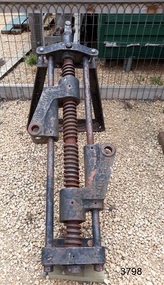 Flagstaff Hill Maritime Museum and Village
Machine - Steering Gear, Carron Ironworks foundry, before 1922
... The vessel suffered much damage; mast snapped and the crew laboured for four hours to free her by chopping off the past and rigging. ...The vessel suffered much damage; mast snapped and the crew laboured for four hours to free her by chopping off the past and rigging. ...The ship's steering gear was used for steering and navigation of a vessel - it was a very important part of the ship's equipment. This steering gear was part of the original vessel 'Reginald M', which became part of the exhibitions at Flagstaff Hill Maritime Village. The steering gear was manufactured by the Carron Company. ABOUT THE CARRON COMPANY The Carron Company established its ironworks on the banks of the River Carron in Stirlingshire, Scotland, in 1759, and became an incorporated company in 1773. One of the notable items produced by the company was the Carronade, a short-barrelled naval cannon, being produced until the 1850s. The company was the largest ironworks in Europe during the 19th century. It supplied ammunition and armaments, steamboat engines, pig iron, cast iron goods such as balustrades fire grates and bath tugs, pillar boxes and telephone boxes, and even cast iron rings for underground tunnels. In 1982 it became insolvent and was taken over by the Franke Corporation, using the brand Carron Phoenix. ABOUT THE 'REGINALD M' The Reginald M’s purpose was to serve the coastal trade of South Australia, to carry cargo cheaply and efficiently. It is believed that the keel was in fact hewn from two telegraph poles! Its builder frequented all the salvage yards for materials and fittings. The vessel “Reginald M” was a two-masted coastal ketch, owned and built by Mr. Jack (John) Murch of Birkenhead, Port of Adelaide, South Australia. Its construction took approximately 6 months and it was launched at Largs Bay in 1922. Reginald M had a very shallow draft and a flat bottom that enabled it to come close to shore and to sit high and dry at low tide or to be beached on sand. The flat bottom was also to make the ship able to skim over reefs. Wagons could load and unload direct from her side. Her cargo included Guano, Barley, Wool, Horses, Cattle, Timber, Explosives, Potatoes, Shell Grit and Gypsum. On April 9th 1931Reginald M weathered a large storm in St Vincent Gulf, SA. The vessel suffered much damage; mast snapped and the crew laboured for four hours to free her by chopping off the past and rigging. The crew patched her up and slowly returned to Port Adelaide with only a portion of the insured cargo being damaged. Her crew members at the time were owner Mr John H Murch of Wells Street Largs Bay, Skipper Mr R Murch – John’s brother, Murray – son of Captain Murch and Seaman John Smith. Reg Webb purchased Carribie Station, at Marion in the Warooka District, south of Adelaide, in 1921. He cleared the land and farmed sheep and grain. In 1923 he shipped his own wool and grain from Marion Bay, having first carted 300 bags of the barley grain, 12 bags at a time, along the unmade track to the jetty. A photograph donated to Flagstaff Hill, dating about 1929 - 1942, shows two men on the Reginald M, holding between them their fishing catch of a large hammer shark. The photograph is stamped “GRENFELL STUDIO PORT LINCOLN PRINT” and titled “hammer shark caught on Reginald Emm”. The donor’s family lived on the Your Peninsular and despatched their grain from a chute at Gleeson’s Landing to the awaiting transport vessel. Reg knew the Murch Brothers from Port Adelaide. The brothers had been using their ketch REGINALD M to ship Guano from the Islands, led by Captain Richard Murch. Reg approached them in 1934 about shipping grain from Marion Bay. The brothers visited the bay and thought it was an ideal place. They showed Reg where to stack his grain and they measured up the cliffs. When Reg was ready, they brought down and installed a ninety foot wooden chute. The bags of grain were then individually sent down the chute, landing in a waiting small boat then rowed to REGINALD M, 14 bags at a time. After 10 hours REGINALD M would be fully loaded with 1300 bags of grain and shipped to waiting ports. At one time a wild storm destroyed the chute but it was rebuilt and strengthened. REGINALD M was involved in shipping the grain from there until 1938. In 1940 Able Seaman Allan H Lucas served on Reginald M between September and December, being engaged and discharged from Port of Adelaide. His Certificate of Discharge was signed by ship’s Master W S Murch. It seems that at some stage Reginald M was used as a Customs vessel, as one photograph in Flagstaff Hill’s collection shows “H.M.C. No. 3, Pt Adelaide” on the bow. In 1969 the last freight left Marion Bay on the ketch REGINALD M carrying grain, wool and explosives. In late 1970 she was sold to the Mt. Lyell Mining and Railway Company and was used by them as a barge to carry explosives. In 1972 the Navy League of Strahan, Tasmania, purchased her for use by the Strahan Sea Cadet Unit to use at Macquarie Harbour and renamed her T.S. Macquarie. However this plan for use of Reginald M did not come to pass. In 1974 Mr. Andrew Rennie, of East Brighton, Melbourne, bought her for a similar purpose. , paying $5,000 and donating a ‘Cadet of the Year” trophy to the Sea Cadets. He sailed her from Strahan to Melbourne, planning to use her for pleasure sailing. Also in 1975 Reginald M was sold to Melbourne Ferry Company at auction. Later in 1975 the Reginald M was bought by Flagstaff Maritime Museum for $20,000 . She has been restored and is now one of the exhibits in the Village lagoon or lake. It was restored in 2006 using funds from a $4,000 government grant. Flagstaff Hill Maritime Village’s Collection holds several other artefacts associated with Reginald M. They include photographs of the Reginald M, including one photograph of her in Outer Harbour, S.A. dated 1947, with Skipper- R.F. Dale and Owner- John Murch. Another shows her docked at Port Adelaide, with the lettering H.M.C. No. 3 Pt ADEL (standing for His/Her Majesty’s Customs). There is a black and white photo of her at a wharf and another showing a person on board.The steering gear is significant through its association with the Carron Company, the largest ironworks in Europe in the 19th century, and the manufacture of the short barrel, lightweight naval gun - the Carronade. The steering gear is significant for its association with the vessel REGINALD M is a coastal trading ketch from South Australia built in 1922. It is one of very few sailing coastal trading vessels still extant, and its flat bottom, single chine shape illustrates a very simple but robust method of construction, compared to other round bilged examples of trading vessels. She is now listed on the Australian Register of Historic Vessels (ARHV Number: HV000562.) Ship's steering gear that was part of the original vessel 'Reginald M', which was constructed in 1922. Inscription on both sides. Made by the Carron Company, UK."CARRON COMPANY"flagstaff hil, warrnambool, shipwrecked coast, flagstaff hill maritime museum, maritime museum, shipwreck coast, flagstaff hill maritime village, coastal trader, trading vessel, vessel reginald m, ketch, john murch ship builder, reg webb, carribie station, mt lyell copper company, queenstown navy league, andrew rennie, melbourne ferry company, r.f. dale, port adelaide vessel reginald m, macquarie training vessel, grenfell studio port lincoln, ship steering gear, metal steering gear, ship's gear, ship's navigation, carron company -
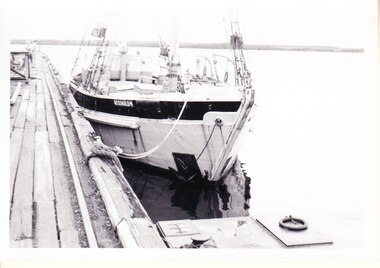 Flagstaff Hill Maritime Museum and Village
Photograph - Vessels, Sail and Steam Ships, c. 1972-1975
... Vincents Gulf, SA, suffering much damage; the mast snapped and the crew laboured for four hours to free it up by severing the mast and rigging. ...Vincents Gulf, SA, suffering much damage; the mast snapped and the crew laboured for four hours to free it up by severing the mast and rigging. ...Andy Clapham owned and operated a boat yard on the Maribyrnong River in Footscray, Victoria. The river runs into Port Phillip Bay (sometimes known as Hobson’s bay) at Williamstown, an area with a history of trades associated with the shipping and construction industry. Andy Clapham’s photographs include those of the Reginald M and one of Polly Woodside, another vessel restored and used as a maritime exhibition. Andy Clapham’s letter of 1972 was posted in a and envelope with an early Australian decimal currency stamp showing the profile portrait of Queen Elizabeth II, and valued at 7 cent. Andy offered invaluable advice to the Flagstaff Hill Historic Park Planning Board regarding the purchase a vessel suitable for use as an exhibit once Flagstaff Hill was opened. The Planning Board was set up by the Warrnambool Chamber of Commerce and approved by the City Council and State Government. Flagstaff Hill was investigating vessels in Adelaide and Tasmania as well as Melbourne. Andy looked at several vessels in 1972-1973. He also serviced the Reginald M among other vessels belonging to Captain Julian Dyson of Yarra Ferries, who had casually offered the vessel to Flagstaff Hill as a price that was unattainable at the time. Flagstaff Hill later requested photographs of the hull to discern the dimensions and also the condition of the timbers as well as wanting advice on its seafaring capability. In 1972 the Flagstaff Hill Historic Park Planning Board – Chairman J. (John) S. Lindsay (1972-1980), Secretary J. (James) Mark – wrote a letter of appreciation to Mr A. (Andy) Clapham of 3 Charles Street Footscray ... “Dear Mr. Clapham, The Board has asked me to write to you to express our appreciation for the assistance you have offered us through our Chairman John Lindsay. The information you have already given us has been invaluable, in that is shows us that we have not been setting out to do something that is impossible. We look forward to receiving further information from you as it becomes available and we appreciate that you must be busy enough without our problems. Members of our Board hope to call and see you on a trip to Melbourne in the near future. The Board is optimistic about the future of Flagstaff Hill as a Maritime Museum and look forward to you visiting Warrnambool to examine what we believe will be an ideal site. Yours faithfully, James Mark.” ABOUT the vessel “Reginald M” The vessel “Reginald M” was a two-masted, timber coastal vessel built by John Henry Murch in Birkenhead, Port of Adelaide, South Australia. It was named after Reginald Murch. (It was occasionally referred to as the Reginald “Emm”). Its construction took approximately 6 months using many materials and fittings from salvage yards. It is believed that the keep was hewn from two telegraph poles! Reginald M was launched at Largs Bay in 1922. Reginald M was approximately 30 metres long and was fore-to-aft ketch rigged with an ‘auxiliary’ motor to support any loss of sail power. The Reginald M was built to service the coastal ports of South Australia to Port Victoria on the York Peninsular, Spencer Gulf. It freighted cargo from port to port cheaply and efficiently. It had a very shallow draft and a flat bottom, enabling it to come close to shore and sit high and dry at low tide, or to be beached on the sand. It could easily skim over reefs due to its flat bottom. Wagons could be loaded and unloaded directly from the side of the vessel. Over the years her cargo included guano, barley, wool, horses, cattle, timber, explosives, potatoes, shell grit and gypsum. The Murch brothers from Port Adelaide were owners of the Reginald M and Richard Murch as the Captain. On April 9, 1931, Reginald M weathered a large storm in St. Vincents Gulf, SA, suffering much damage; the mast snapped and the crew laboured for four hours to free it up by severing the mast and rigging. The crew patched it up and slowly returned to Port Adelaide with only a portion of the insured cargo being damaged. The crew members at that time were owner Mr John Henry Murch of Wells Street Largs Bay, Skipper Mr R Murch – John’s brother, Murray – son of Captain Murch and Seaman John Smith. At some stage it seems that the Reginald M was used as a Customs vessel “H.M.C. No. 3, Pt Adelaide” as shown in a photograph in Flagstaff Hill’s collection. In 1969 Reginald M’s last freight trip left Marion Bay, carrying grain, wool and explosives. In late 1970 it was sold to the Mount Lyall Mining and Railway Clompany and used as a barge to carry explosives. In 1972 The Navy League of Strahan, Tasmania, purchased the vessel for use by the Strahan Sea Cadet Unit at Macquarie Harbour; it was renamed “T.S. Macquarie”. (This plan did not come to pass.) In 1974 Mr Andrew Rennie of East Brighton, Melbourne, brought Reginald M for shipping purposes, He sailed it from Strahan to Melbourne, planning to use it for pleasure sailing. The Reginald M was later sold at auction to Captain Julian Dyson, owner of Yarra Passenger Ferries in Melbourne. Later in 1975 funds became available to Flagstaff Hill Maritime Village to purchase the Reginald M. It was then restored and used as an exhibit here for many hears. Flagstaff Hill’s collection also includes various objects related to the Reginald M: - Photographs of Reginald M over the years in various aspects of its use - a life buoy with the inscription of “Pt. Adelaide” - helm section that was removed and replaced during restoration - a bullet found in pieces of timber during the 1979 restoration ABOUT THE POLLY WOODSIDE On the bow in the Polly Woodside's photograph is the word "RONA". the Polly Woodside was built at Belfast in 1885. In 1904 the vessel was sold to A.H. Turnbull of New Zealand and renamed "RONA". The letter and photographs are significant for their association with the Reginald M, an Australian built coastal trader now on the Australian Register of Historic Vessels (number HV000562). The letter and photographs are also significant as part of both the history of Flagstaff Hill and the history of the vessel “Reginald M” that has been on display in the lake for many years. Objects retained from this boat are included in Flagstaff Hill’s collection of maritime history.Packet with photographs and negatives in a KODAK envelope. The photographs are of two sail and steam vessels; twelve (12) black and white photographs of the 'Reginald M', and one (1) colour photograph of the Polly Woodside, plus six (6) negative strips. Included int he packet is a letter in stamped and postmarked envelope addressed to Mr A Clapham of Footscray. The envelope postmarked 9 Dec 1972, with the Warrnambool postcode 3280, A 7c Australian postage stamp in attached to the envelope. They are associated with Flagstaff Hill’s acquisition of the vessel “Reginald M”. Envelope "9 DEC 1972 / 3280" Postage stamp "7c" "Australia" Inscriptions on one Reginald M;; "REGINALD M" and "Pt ADELAIDE H.M.C. No. 3" Inscriptions of the Polly Woodside; "RONA / MSC" "MHI / NO. 1" Ball point ink, reverse of photograph "POLLY WOODSIDE"flagstaff hill, warrnambool, shipwrecked coast, flagstaff hill maritime museum, maritime museum, shipwreck coast, flagstaff hill maritime village, great ocean road, vessel reginald m, reginald emm, t. s. macquarie, h.m.c. no. 3, pt adelaide, australian register of historic vessels (number hv000562), boat building trade, jack murch, john henry murch, birkenhead, port adelaide sa, largs bay sa, coastal trader south australia, 1920 ketch reginald m, marion bay produce, mount lyall mining and railway company, navy league of strahan, tasmania, melbourne ferry company, flagstaff hill historic park planning board, john lindsay, james mark, andy clapham of footscray, andy clapham boat builder, kodak photograph packet envelope, kodak super-size prints, kodak australia pty ltd, australian postage stamp 1972 - 7c -
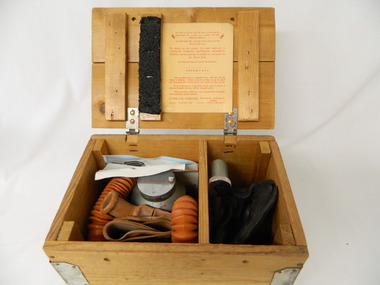 Kiewa Valley Historical Society
Medical - Portable Inhaler
... labour bed. The inhaler contains a wick which absorbs trichloroethylene and will function for several hours....labour bed. The inhaler contains a wick which absorbs trichloroethylene and will function for several hours. ...The inhaler can be used in hospitals in the labour ward for the patient to absorb trichloroethylene. The inhaler can be mounted on the bracket which can be secured to the leg of a labour bed. The inhaler contains a wick which absorbs trichloroethylene and will function for several hours.This inhaler was used in the Tawonga District Hospital.Wooden box with corners strengthened with steel plate and lid on 2 hinges. Lid has 3 rectangular lengths of wood attached to enhance packing and a yellow piece of paper with red writing stapled on. Box contains 2 metal clamps, a light metal stand/bracket with screw and holder and a hard black plastic mask. In the other side: 2 sheets including Instructions, a small paper bag with spare washers, a light brown extendable hose with metal attachment at one end and a light brown oval rubber bladder with a hole at one end to fit over the hose. Light metal Inhaler - 3 cylinders of different diameters attached to a plate. Red markings / writing and plate incl. serial no. Yellow paper on lid explains "...packing box is supplied free with the Tecota mark 6 Inhaler..." Mask: Cyprene Ltd / Keighley /Made in England Instructions / for the preparation of / Tecota / Mark 6 / Trichloroethylene B.P. / Inhaler Bladder: A Cig Product / 4 litre / Made in England to Inhaler: Cyprane Ltd. / Max Min / Pat No 646680 / Patents Pending / Tecota Mark 6 / Charge with / Trichloroethylene B.P. / Cyprane Ltd. / Serial No. / Keighley / Yorks.medical. hospital. inhaler. trichloroethylene. childbirth.tawonga district hospital -
 Kiewa Valley Historical Society
Sign Canteen Painted, Circa 1950
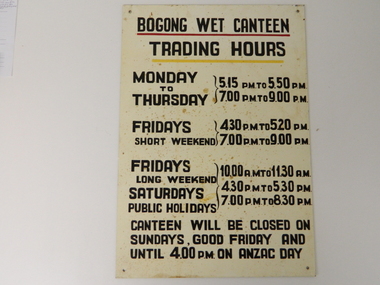
... On site accommodation for the workforce is still a requirement for some mining areas but high market returns have produced fly in/out labour. saucer plate secv state electricity commission of victoria canteen bogong mess hall recreational amenities socialisation of sec vic kiewa hydro scheme labour force In black stenciled type "BOGONG WET CANTEEN" underneath this "TRADING HOURS" Below this "MONDAY TO THURSDAY 5.15 PM TO 5.50 PM, 7.00 PM TO 9.00 PM" "FRIDAYS SHORT WEEKEND 4.30 PM TO 5.20 PM 7.00 PM TO 9.00 PM" Below this "FRIDAYS LONG WEEKEND 10.00AM TO 11.30 AM" Below this "SATURDAYS PUBLIC HOLIDAYS 4.30 PM TO 5.30 PM 7.00 PM TO 8.30 PM" bELOW THIS "CANTEEN WILL BE CLOSED ON SUNDAYS, GOOD FRIDAY AND UNTIL 4.00 PM ON ANZAC DAY" This anodised metal sign has been "block" stenciled on. ...This sign is a part of the "human" factor required for remote and difficult, large impact (both labour and other resources) projects. It is one of the "human" factors which was clearly used in the big 1930's to the 1970's "landscape redevelopment" schemes which started in the early 1900's and is highly regarded as lifting the Australian psyche of only primary producers to an industrial level, equal to any in the world.This "Wet Canteen" sign was installed at the entrance of the Bogong "workers" village "provision's hut" detailing the operational times for the SEC Victorian staff and construction workers, involved in the building of the Kiewa Hydro Electricity Scheme to obtain alcoholic beverages. This facility lasted for over the extensive period (1938 to 1961) of the "Schemes" building phase. This large project was the forerunner when industrial legislation provided for the welfare of workers living in the Bogong Village. The provision of facilities such as a "wet canteen" was of the utmost importance not only to ensure that the long running project was both successful, production wise, but also that its employees were not only physically but also mentally healthy. This sign details that all aspects required for a fit and productive labour force were in place, in this remote and demanding work environment. The majority of heavy equipment and machinery used was either made in England or Europe. A section of the specialised workforce came from local and European expertise in dam construction and water management in alpine terrain. The majority of labour came from migrants and some specialists recruited from England and Europe. At this point in time, the quality of the machines used came from England, Europe and the USA and could not be matched from anywhere else in the developed world. With a specialised workforce came the responsibility of providing all the "comforts of home" including alcoholic beverages. On site accommodation for the workforce is still a requirement for some mining areas but high market returns have produced fly in/out labour.This anodised metal sign has been "block" stenciled on. Black lettering and numbers with the main headings underlined with a red and a yellow line(emphasising the headings)In black stenciled type "BOGONG WET CANTEEN" underneath this "TRADING HOURS" Below this "MONDAY TO THURSDAY 5.15 PM TO 5.50 PM, 7.00 PM TO 9.00 PM" "FRIDAYS SHORT WEEKEND 4.30 PM TO 5.20 PM 7.00 PM TO 9.00 PM" Below this "FRIDAYS LONG WEEKEND 10.00AM TO 11.30 AM" Below this "SATURDAYS PUBLIC HOLIDAYS 4.30 PM TO 5.30 PM 7.00 PM TO 8.30 PM" bELOW THIS "CANTEEN WILL BE CLOSED ON SUNDAYS, GOOD FRIDAY AND UNTIL 4.00 PM ON ANZAC DAY"saucer, plate, secv, state electricity commission of victoria, canteen, bogong mess hall, recreational amenities, socialisation of sec vic kiewa hydro scheme labour force -
 Bendigo Historical Society Inc.
Sign - Returned Exhibits Board
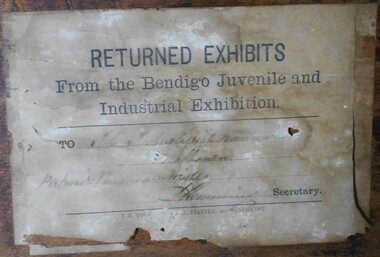
... Around 1886 there were exhibitions held to encourage young people to compete in 'works of industry and usefulness', to impress the dignity and honour of labour , to nurture those in the trades, to show handiwork, to share ideas and to develop the idea of 'useful employment' in leisure hours and to create a 'taste for the fine arts and ornamental works, so as to make the home attractive. ...Around 1886 there were exhibitions held to encourage young people to compete in 'works of industry and usefulness', to impress the dignity and honour of labour , to nurture those in the trades, to show handiwork, to share ideas and to develop the idea of 'useful employment' in leisure hours and to create a 'taste for the fine arts and ornamental works, so as to make the home attractive. ...Around 1886 there were exhibitions held to encourage young people to compete in 'works of industry and usefulness', to impress the dignity and honour of labour , to nurture those in the trades, to show handiwork, to share ideas and to develop the idea of 'useful employment' in leisure hours and to create a 'taste for the fine arts and ornamental works, so as to make the home attractive. (Official Record, Australian Juvenile Industrial Exhibition, Ballarat, 1890). Information gathered from Museums Victoria Collections.A large wooden lid from a crate with a paper slip attached in the middle. The paper slip reads ' RETURNED EXHIBITS from the Juvenile and Industrial Exhibition'. The rest of the writing is illegible. bendigo juvenile & industrial exhibition, trading -
 Victorian Interpretive Projects Inc.
Photograph - Colour, Clare Gervasoni, Old Quadrangle, Melbourne University, 02/10/2010
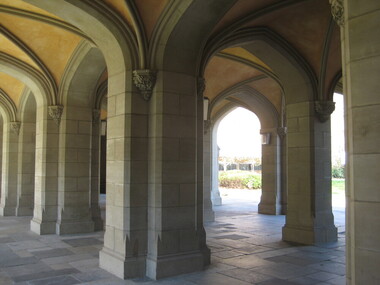
... It was during the construction of this building that stonemasons put down their tools in April 1856 and marched to the City of Melbourne and inaugurated a movement which won the Eight Hours Day for building workers in Victoria. The victory became an international benchmark in the history of the labour movement. ...It was during the construction of this building that stonemasons put down their tools in April 1856 and marched to the City of Melbourne and inaugurated a movement which won the Eight Hours Day for building workers in Victoria. The victory became an international benchmark in the history of the labour movement. ...It was during the construction of this building that stonemasons put down their tools in April 1856 and marched to the City of Melbourne and inaugurated a movement which won the Eight Hours Day for building workers in Victoria. The victory became an international benchmark in the history of the labour movement. This is the oldest building on campus and was constructed of Tasmanian freestone between 1854 and 1857 to the design of architect Francis M. White. For many years the building was used as the University's Administrative centre, library, lecture rooms and professional residences. The east and west wings were extended in 1930 to the design of J.S. Gawler. The quadrangle was completed in 1969 with the addition of the southern wing which contains the University Council Chamber designed by R.E. Featherstone.Colour photograph in digital format of the arches of a sandstone building at Melbourne University.university of melbourne, eight hours day, eight hour day, 8 hour day, gawler, featherstone, fm white, tasmanian sandstone, sandstone, francis white -
 Bendigo Historical Society Inc.
Album - Merle Bush Trefoil Guild: Photographs
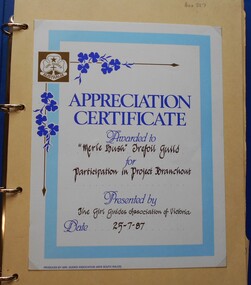
... Includes Region Conference East Loddon 25/08/89, 7th National Gathering Stawell Tops 1985, 8th National gathering Monash university 1988 Tour of Government House Day 16th December 1989 Brittania Park labour Day Weekend 1990 A.G.M. 5th May 1990 Region Reunion Day Cohuna 19th August 1990 RR Day North Central Region 10th A.G.M. 4th May 1991 Reaffirmation of Promise 2/7/91 Gwen Derby and Fay Osborn The Chalet, Brittania Park, March Long weekend 1992 24 Hour Gathering Bendigo 15/16 October 1997 Benalla Rose Gardens 16 May 2001 Social BBQ Christmas 2001 Melbourne Cup day 1999 24 Hour Gathering Oct 1999 24 Hour Gathering Stawell 2001 24 Hour Gathering Phillip Island 2003 25th Anniversary 2006 Long Service Awards 15 Oct 2006 100 years of Guiding Christmas 2011...Includes Region Conference East Loddon 25/08/89, 7th National Gathering Stawell Tops 1985, 8th National gathering Monash university 1988 Tour of Government House Day 16th December 1989 Brittania Park labour Day Weekend 1990 A.G.M. 5th May 1990 Region Reunion Day Cohuna 19th August 1990 RR Day North Central Region 10th A.G.M. 4th May 1991 Reaffirmation of Promise 2/7/91 Gwen Derby and Fay Osborn The Chalet, Brittania Park, March Long weekend 1992 24 Hour Gathering Bendigo 15/16 October 1997 Benalla Rose Gardens 16 May 2001 Social BBQ Christmas 2001 Melbourne Cup day 1999 24 Hour Gathering Oct 1999 24 Hour Gathering Stawell 2001 24 Hour Gathering Phillip Island 2003 25th Anniversary 2006 Long Service Awards 15 Oct 2006 100 years of Guiding Christmas 2011 Album Merle Bush Trefoil Guild: Photographs ...The Merle Bush Trefoil Guild was registered in Bendigo on 18/06/1981.The decision to disband the Merle Bush Trefoil Guild was made at a General Meeting on 17/02/2016. The group agreed to continue as the Merle Bush Friendship Group. The Australian Trefoil Guilds connect women who are either actively involved in Girl Guiding or have a history with Girl Guiding. The purpose of a Trefoil Guild is to keep alive the spirit of the Promise and Law, carry this spirit into the community and to give support Guiding.Blue vinyl covered four ring binder containing photographs of activities of the Merle Bush Trefoil Guild. The photographs are mounted (glued) on to buff coloured card from manilla folders cut in half. 61 pp with hand written numbers in top RH corner. Pages 25 and 26 Missing. The first page has an "Appreciation Certificate Awarded to the Merle Bush Trefoil Guild for Participation in Project Branchout. Presented by The Girl Guides association of Victoria. Date 25-7-87. The pages have handwritten annotations of names of people in the photographs. Includes Region Conference East Loddon 25/08/89, 7th National Gathering Stawell Tops 1985, 8th National gathering Monash university 1988 Tour of Government House Day 16th December 1989 Brittania Park labour Day Weekend 1990 A.G.M. 5th May 1990 Region Reunion Day Cohuna 19th August 1990 RR Day North Central Region 10th A.G.M. 4th May 1991 Reaffirmation of Promise 2/7/91 Gwen Derby and Fay Osborn The Chalet, Brittania Park, March Long weekend 1992 24 Hour Gathering Bendigo 15/16 October 1997 Benalla Rose Gardens 16 May 2001 Social BBQ Christmas 2001 Melbourne Cup day 1999 24 Hour Gathering Oct 1999 24 Hour Gathering Stawell 2001 24 Hour Gathering Phillip Island 2003 25th Anniversary 2006 Long Service Awards 15 Oct 2006 100 years of Guiding Christmas 2011girl guides, guiding, merle bush, trefoil guild -
 Bendigo Historical Society Inc.
Letter - MERLE HALL COLLECTION: ROSALIND PARK CREATIVE VILLAGE BENDIGO PROJECT LETTERS, 1994
... .: $700 31 May 1996 List of possible donors' checklist Undated Budget Sheet 21 September 1995 From: The Victorian Arts Council To: City of Greater Bendigo Content: Invoice for $5000 10 December 1995 From: Maery Gabriel artist To: Arts Bendigo Content: Invoice $1575 for design of Rosalind Park Lookout. 45 hours @ $35/hour 1 October 1996 Historic mining Mosaic Pavement, Rosalind Park Poppet Head Financial Statement as a October 1st, 1996 28 October 1996 From: Maery Gabriel To: Ann Buzza (representing Arts Bendigo) Report on project of Rosalind Park Mosaic as at October 1996. The report lists the difficulties faced with the weather, unsuitable facilities on site and problems with the LEAP team labour....: $700 31 May 1996 List of possible donors' checklist Undated Budget Sheet 21 September 1995 From: The Victorian Arts Council To: City of Greater Bendigo Content: Invoice for $5000 10 December 1995 From: Maery Gabriel artist To: Arts Bendigo Content: Invoice $1575 for design of Rosalind Park Lookout. 45 hours @ $35/hour 1 October 1996 Historic mining Mosaic Pavement, Rosalind Park Poppet Head Financial Statement as a October 1st, 1996 28 October 1996 From: Maery Gabriel To: Ann Buzza (representing Arts Bendigo) Report on project of Rosalind Park Mosaic as at October 1996. The report lists the difficulties faced with the weather, unsuitable facilities on site and problems with the LEAP team labour ...Merle Hall Collection: Rosalind Park Creative Village Bendigo Project Letters 31 March 1994 To: Victorian Arts Council Members From Grant Finck Project Coordinator Content: Introduces himself as the coordinator for 12 months; to members looking for expression of interest, includes Information Sheet 1994 on what the Creative Village is. 27 October 1995 To: Mrs. Mearle Hall From: City of Greater Bendigo, Bernard Smith (Director Environmental Services) Content: Granting access to the Victoria Hill site for small quantities of geological material. 10 January 1996 To: Mrs. Mearle Hall From: City of Greater Bendigo, Bernard Smith (Director Environmental Services) Content: Endorsement of the project by the Council and confirmation that the Council will provide preliminary site work to allow the project to be enabled. Also advised the Arts Bendigo Mosaic Project makes contact with the Salvation Army (New Work Opportunity Project) 27 February 1996 To: Mrs. Mearle Hall From: Ken Beasley Manager Project Development The Smith Read Training Group. Content: LEAP Project Proposal - Mining Heritage Mosaic outlining the benefits of using LEAP Trainees to undertake the project. Proposed Scope of work outlining responsibilities of each participant. Bendigo Mining NL Environmental Trust Fund (Perseverance Exploration and Department of Energy and Minerals Victoria representatives) 27 June 1996 To: Mrs. Mearle Hall From: City of Greater Bendigo, Bernard Smith (Director Environmental Services) Content: Advising that the Council will match dollar for dollar funding for the engagement of an artist to supervise the construction of the Mosaic in Upper Rosalind Park up to $3,500. 22 July 1996 To: Anne Buzza From Geof Brown Camp Hill Primary School Content: Thanks for using and managing the school students to help create tiles. 9 October 1996 To: Mrs. Mearle Hall From: City of Greater Bendigo, Bernard Smith (Director Environmental Services) Content: Enclosed cheque for matching grant of $3500 15 October 1996 To: Mrs. Mearle Hall From: City of Greater Bendigo, Bernard Smith (Director Environmental Services) Content: Agreement to relocate the project facilities to the car park and to maintain a close liaison between the Council and Arts Bendigo. 13 November 1996 To: Mrs. Mearle Hall From: The Sidney Myer Fund Helen Morris Research Officer Content: Remittance advice for $1000 22 April 1997 To: Mrs. Mearle Hall From: John Little Administrator Victorian Arts Council Content: Remittance advice for $500 towards the project and enclosing 12 VAC Annual reports. 20 October 1998 To: Mrs. Mearle Hall From: City of Greater Bendigo, Andrew Hall (Director Community Development) Content: Advising that the Council will make a grant of $1090 for the purpose of printing of Brochures for Bendigo Heritage Mosaic. A service agreement to be signed before the issue of the grant, 21 March 2001 To: Mrs. Mearle Hall From: City of Greater Bendigo, Justin Hanney (Director Community Services) Content: A reference from Council supporting the project application to Vic Health for the development of a series of small mosaic pieces along the linear pathway asjacent to the Bendigo Creek. 12 November 1996 To: Mrs. Mearle Hall From: Arts Bendigo Inc. Content: Cheque for $2000 being first payment as under contract two for mosaic project. 4 December 1996 To: Mrs. Mearle Hall From: Arts Bendigo Inc. Content: Cheque for $2000 being second payment as under contract two for mosaic project. 27 July 1997 To: Maery Gabriel Mosaic Artist From: Arts Bendigo Inc. Content: Cheque for $2000 being final payment as under contract two for mosaic project. 12 June 1997 - Two copies To: Maery Gabriel Mosaic Artist From: Arts Bendigo Inc. Content: Agreement between Maery Gabriel (The artist) and Arts Bendigo Inc. to complete the final two sections of the Bendigo Heritage Mosaic at the base of the Rosalin Park Poppet Head, Bendigo with a design of approximately two square meters within each section. The work to be completed by the endo of July 1997, unless severe weather conditions make the laying impossible. Agreement for two lots of $2000. 14 June 1996 From: Maery Gabriel Mosaic Artist To: Arts Bendigo Inc. Content: receipt for 50% payment for two weeks and $60 Travelling expenses. 21 May 1996 Agreement between Arts Bendigo of P.O Box 563, Bendigo in the State of Victoria (hereinafter referred to as the ‘AB’ of the first part AND Meary Hall of Morningswood, Petersons Road, Ellinbank, 3821 in the State of Victoria (hereinafter referred to as ‘the artist’) of the second part. ENGAGEMENT: (a) AB engages the Artist to provide her services as Mosaic Artist for the design and creation of a Mosaic pavement surround to the poppet head lookout in Rosalind Park, Bendigo and matters incidental thereto at such schools, halls and any other places as required from time to time by AB and the Artist accepts the engagement upon the term and conditions hereinafter appearing. (b) Services to be provided by the artist include community consultation and design work in association with AB Co-Ordinator and Arts Bendigo, a minimum of six weeks of the artist’s time within the six months of the project. Completion of section one of the whole design with further work on the other sections to depend on available funding. The agreed fee was $5400 and $60 per visit to Bendigo with living away to be provided by Arts Bendigo 1 November 1996 Agreement between Arts Bendigo of P.O Box 563, Bendigo in the State of Victoria (hereinafter referred to as the ‘AB’ of the first part AND Meary Hall of Morningswood, Petersons Road, Ellinbank, 3821 in the State of Victoria (hereinafter referred to as ‘the artist’) of the second part. ENGAGEMENT: (a) AB engages the Artist to provide her services as Mosaic Artist for the design and creation of a Mosaic pavement surround to the poppet head lookout in Rosalind Park, Bendigo and matters incidental thereto at such schools, halls and any other places as required from time to time by AB and the Artist accepts the engagement upon the term and conditions hereinafter appearing. (b) Services to be provided by the artist include community consultation and design work in association with AB Co-Ordinator and Arts Bendigo, a minimum of six weeks of the artist’s time within the six months of the project. Completion of section one of the whole design with further work on the other sections to depend on available funding. The agreed fee was $5000 and $60 per visit to Bendigo with living away to be provided by Arts Bendigo, plus transfer of the diamond saw purchased by AB 28 August 1996 Memorial to Bendigo’s Mining Heritage and Traditions financial and other support as at August 128th Arts Bendigo Financial contribution: $7000 Local Busine Sponsors: $2800 City of Greater Bendigo Matching Above: $2800 City of Greater Bendigo Site works: Equiv, $12000 Local Businesses and institutions supplying goods and services to total value of: Equiv: $7600 Expenditure: Purchase of equipment, including diamond saw: $2000 Purchase of materials: $800 Artists design fees: $3000 Artists on site work, travel and accommodation: $12000 insurance, administration etc.: $700 31 May 1996 List of possible donors' checklist Undated Budget Sheet 21 September 1995 From: The Victorian Arts Council To: City of Greater Bendigo Content: Invoice for $5000 10 December 1995 From: Maery Gabriel artist To: Arts Bendigo Content: Invoice $1575 for design of Rosalind Park Lookout. 45 hours @ $35/hour 1 October 1996 Historic mining Mosaic Pavement, Rosalind Park Poppet Head Financial Statement as a October 1st, 1996 28 October 1996 From: Maery Gabriel To: Ann Buzza (representing Arts Bendigo) Report on project of Rosalind Park Mosaic as at October 1996. The report lists the difficulties faced with the weather, unsuitable facilities on site and problems with the LEAP team labour.victorian arts council, city of greater bendigo -
 Sunshine and District Historical Society Incorporated
Newsletter - Sunshine City Council Residential Newsletter Reports, Sunshine City Council, (i) December 1988 (2) July 1990
... Council Report No 14 Headings July 1999|Council Electrions in August|West Sunshine Community Centre|Waste Paper Pick Ups End|Other Recycling News|Marie Mill Community Centre|Location of Polling Places|Family services|Foster Care|Family Support|Emergency Crisis Assistance| Financial counselling|Family Counselling|Vice Regal Visit to Sunshine|Out of School Hours Programs|About the Library|The Hunt Club community Centre|Leisure and Swimming Centrews|Labour Market Programs...Council Report No 14 Headings July 1999|Council Electrions in August|West Sunshine Community Centre|Waste Paper Pick Ups End|Other Recycling News|Marie Mill Community Centre|Location of Polling Places|Family services|Foster Care|Family Support|Emergency Crisis Assistance| Financial counselling|Family Counselling|Vice Regal Visit to Sunshine|Out of School Hours Programs|About the Library|The Hunt Club community Centre|Leisure and Swimming Centrews|Labour Market Programs Collection of Sunshine City Council Reports that were distributed to residents Newsletter Sunshine City Council Residential Newsletter Reports Sunshine City Council ...Distributed to residents and rate payersSunshine City Council. Council Report No 12 Headings December 1988|A message from your Mayor Ian Mill|Making millions from Sunshines garbage|Tip tickets|Use Proper garbage bins|Waster Paper pickup service|Council acts to minimise hardship on rates|Sunshines Management Team|$1.5 million for Nursing Home|Sunshine District Centre will boost Commerce|Government Grants|Hunt Club lives againFree help in Family Planning|August Election results|Mayor and Mayoress meet the Pope|Mayor meets Asian delegates|Librays new computer linkup gives better cheaper service|Council services in the holidays|A new Fitness Centre free to use anytime|Sunshines Sports Calendar Girls|Sunshines Own Postcard|Sunshine City Council. Council Report No 14 Headings July 1999|Council Electrions in August|West Sunshine Community Centre|Waste Paper Pick Ups End|Other Recycling News|Marie Mill Community Centre|Location of Polling Places|Family services|Foster Care|Family Support|Emergency Crisis Assistance| Financial counselling|Family Counselling|Vice Regal Visit to Sunshine|Out of School Hours Programs|About the Library|The Hunt Club community Centre|Leisure and Swimming Centrews|Labour Market Programssunshine city council -
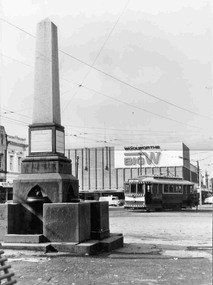 Ballarat Tramway Museum
Photograph - Black and White photograph/s - mounted, John Phillips, late 1960's or early 1970's
... Has Big W (Woolworths) building in the background, along with the Ballarat Working Men or Labor (labour) monument (8 hour day) in the photograph. Taken by John Phillips late 1960's or early 1970's. ...Has Big W (Woolworths) building in the background, along with the Ballarat Working Men or Labor (labour) monument (8 hour day) in the photograph. Taken by John Phillips late 1960's or early 1970's. ...Black and white photograph mounted on heavy cardboard backing. Photo of Ballarat 26 outward bound to Victoria St., loading passengers just prior to crossing Grenville St. Tram has destination of "Victoria St". Has Big W (Woolworths) building in the background, along with the Ballarat Working Men or Labor (labour) monument (8 hour day) in the photograph. Taken by John Phillips late 1960's or early 1970's. Note: Image scanned in two runs through a scanned, resulting in the shading in the image file. .1 - ditto, mounted with four white Velcro dots on rear.trams, tramways, bridge st, grenville st, sturt st, monuments, tram 26 -
 Ballarat Tramway Museum
Document - Report, R. J. Risson, "Moving People", Aug. 1954
... Looks at transport in general, Melbourne's situation, road costs, rolling stock, power and labour costs, traffic congestion, costs and fares, peak load and staggering of hours. ...Looks at transport in general, Melbourne's situation, road costs, rolling stock, power and labour costs, traffic congestion, costs and fares, peak load and staggering of hours. ...Ten page Foolscap, duplicated report or paper, titled "Moving People". Delivered as an address by R. J. H. Risson, Chairman, Melbourne and Metropolitan Tramways Board, August 1954. Ten sheets stapled in top left hand corner. Looks at transport in general, Melbourne's situation, road costs, rolling stock, power and labour costs, traffic congestion, costs and fares, peak load and staggering of hours. Makes references to 3 charts, not included with paper.trams, tramways, melbourne, mmtb, traffic control, tramcars -
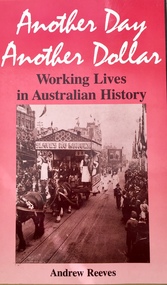 Kew Historical Society Inc
Book, McCulloch Publishing, Another Day Another Dollar: Working lives in Australian history, 1988
... Discusses the significance of the labour cartoonists in highlighting social and political issues; analyses the activities of the community at Broken Hill and how those actions grew to affect the working conditions of the whole nation; traces the rise of the 8 Hour Day movement and celebrations. 105 p. : ill. ...Trade union movement in Australia from the mid 1880s. Discusses the significance of the labour cartoonists in highlighting social and political issues; analyses the activities of the community at Broken Hill and how those actions grew to affect the working conditions of the whole nation; traces the rise of the 8 Hour Day movement and celebrations.105 p. : ill. (some col.), facsims ; 27 cm.non-fictionTrade union movement in Australia from the mid 1880s. Discusses the significance of the labour cartoonists in highlighting social and political issues; analyses the activities of the community at Broken Hill and how those actions grew to affect the working conditions of the whole nation; traces the rise of the 8 Hour Day movement and celebrations.labor and labouring classes -, australia -- history, work -- history, australia - social conditions -
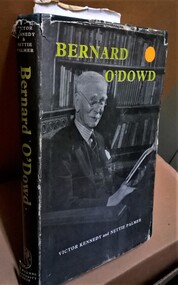 Unions Ballarat
Bernard O'Dowd, 1954
... Tocsin's platform is available in PDF format online http://www.reasoninrevolt.net.au/objects/pdf/a000808.pdf Areas of interest included the constitution, federation and workers' industrial rights (e.g. eight hour day, pensions and arbitration for labour disputes)....Tocsin's platform is available in PDF format online http://www.reasoninrevolt.net.au/objects/pdf/a000808.pdf Areas of interest included the constitution, federation and workers' industrial rights (e.g. eight hour day, pensions and arbitration for labour disputes). Biographical interest. ...Bernard O'Dowd was an Australian poet and anarchist. He was born in Beaufort in 1866 and worked at different times as a teacher, librarian and parliamentary draftsman. He was dismissed from his position at St Alipius' school in Ballarat for heresy. He had a particular interest in the Federation of Australia and formation of the Constitution, which features in his poem "Australia". O'Dowd co-edited Tocsin with Jack Andrews. Tocsin was a labor newspaper in Melbourne. Others involved with the newspaper include Edward Findley and, for a short time, Norman Lindsay. Tocsin's platform is available in PDF format online http://www.reasoninrevolt.net.au/objects/pdf/a000808.pdf Areas of interest included the constitution, federation and workers' industrial rights (e.g. eight hour day, pensions and arbitration for labour disputes).Biographical interest. Literary interest. Pertinent to Ballarat. Pertinent to constitutional history and industrial relations. Pertinent to labor publications, history and literature.Hardcover - book. Cover dust jacket: black and white photograph of Bernard O'Dowd on front, yellow and white lettering; back is yellow. Cover without dust jacket: green cloth; gold lettering.Cover without dust jacket: authors' names and title on the spine. Cover with dust jacket: authors' names and title on front cover and spine. Inside page: Inscribed in ink, "Happy Birthday Dad from Lorna and John (Sept 17 1960).btlc, ballarat trades and labour council, ballarat trades hall, o'dowd, bernard, writers - poets, newspaper, tocsin, lindsay, norman, andrews, jack, findley, edward, anarchists, biography, palmer, nettie, st alipius school, ballarat, o'dowd, bernard, 1866-1953, industrial relations -
Unions Ballarat
Lectures on the labour question (3rd ed), Brassey, Thomas M.P, 1871
... A collection of addresses on the "Labour Question": I. Labour and Capital II. The Nine Hours Movement III. Wages in 1873 IV. ...A collection of addresses on the "Labour Question": I. Labour and Capital II. The Nine Hours Movement III. Wages in 1873 IV. ...A collection of addresses on the "Labour Question": I. Labour and Capital II. The Nine Hours Movement III. Wages in 1873 IV. Public Elementary Education in the United States V. The Duties of the Church in Relation to the Labour Question VI. Co-operative Production VII. The South Wales Colliery Strike VIII. On the Influences Affecting the Price of Labour in England at the Present Time IX. On Canada and the United States X. Work and Wages in 1877 XI. Labour at Home and Abroad XII. On the Comparative Efficiency of English and Foreign Labour XIII. On the Rise of Wages in the Building Trades of London AppendicesRelevant to the history of workplace relations and conditions in the US, Canada and UK. Hardcover, book; no dustjacket; 336 pages. Cover: brown cloth/paper; black decorative banner; gold lettering on spine.Spine: title, author's and publisher's name. Inside cover: Ballaarat East Public Library regulations; the book has been designated number 53; writing in blue and grey pencil - illegible; stamped in red, "CANCELLED". Title page: Ballarat East Public Library stamp (black).btlc, ballarat trades hall, ballarat regional trades and labour council, brassey, thomas, industrial relations, industrial action, industrial disputes, wages, religion, education - primary -
Unions Ballarat
Bluestone: the story of James Stephens, Turnbull, Clive, 1945
... labour council...Stephens, James...eight hour...Significant to the trade union movement, the Eight Hour movement and the fight for improved working conditions. BTLC Ballarat Trades Hall ballarat trades and labour council Stephens, James eight hour day social conditions Book; 38 pages. ...Bluestone is part of the Australian Heritage series. It is a biography of James Stephens is described as the pioneer of the Eight Hour Movement in Victoria. Significant to the trade union movement, the Eight Hour movement and the fight for improved working conditions.Book; 38 pages. Dust jacket: white background; illustration of the eight hour monument; author's name and title. Cover: green; gold lettering; author's name and title on the spine. Inside: Berkelouw Bookdealers sticker.btlc, ballarat trades hall, ballarat trades and labour council, stephens, james, eight hour day, social conditions -
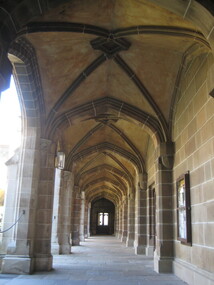 Ballarat Heritage Services
Photograph - Colour, Clare Gervasoni, University of Melbourne Old Law Building, 2010, 29/09/2010
... A plaque on the wall of this building states: In April, 1856 stonemasons woking on this building downed tools, marched to the city and inaugrated a movement which win the Eight Hour Day for building workers in Victoria. The victory became an international landmark in the history of the labour movement. ...It later house the Univesity's Centre for Indigenous Education and a conference centre (2010). university of melbourne old law building eight hour day stonemasons A plaque on the wall of this building states: In April, 1856 stonemasons woking on this building downed tools, marched to the city and inaugrated a movement which win the Eight Hour Day for building workers in Victoria. The victory became an international landmark in the history of the labour movement. ...Melbourne University Old Physics Building (1889) was designed by Reed, Henderson and Smart. It later house the Univesity's Centre for Indigenous Education and a conference centre (2010).Colour photograph of the windows of the Melbourne University Old Physics Building.A plaque on the wall of this building states: In April, 1856 stonemasons woking on this building downed tools, marched to the city and inaugrated a movement which win the Eight Hour Day for building workers in Victoria. The victory became an international landmark in the history of the labour movement. university of melbourne, old law building, eight hour day, stonemasons -
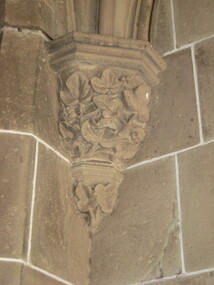 Ballarat Heritage Services
Photograph - Colour, Clare Gervasoni, University of Melbourne Old Law Building, 2010, 29/09/2010
... A plaque on the wall of this building states: In April, 1856 stonemasons woking on this building downed tools, marched to the city and inaugrated a movement which win the Eight Hour Day for building workers in Victoria. The victory became an international landmark in the history of the labour movement. ...It later house the Univesity's Centre for Indigenous Education and a conference centre (2010). university of melbourne old law building eight hour day stonemasons A plaque on the wall of this building states: In April, 1856 stonemasons woking on this building downed tools, marched to the city and inaugrated a movement which win the Eight Hour Day for building workers in Victoria. The victory became an international landmark in the history of the labour movement. ...Melbourne University Old Physics Building (1889) was designed by Reed, Henderson and Smart. It later house the Univesity's Centre for Indigenous Education and a conference centre (2010).Colour photograph of the windows of the Melbourne University Old Physics Building.A plaque on the wall of this building states: In April, 1856 stonemasons woking on this building downed tools, marched to the city and inaugrated a movement which win the Eight Hour Day for building workers in Victoria. The victory became an international landmark in the history of the labour movement. university of melbourne, old law building, eight hour day, stonemasons -
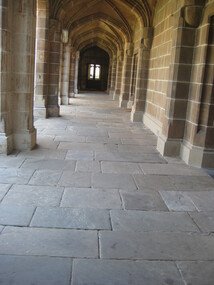 Ballarat Heritage Services
Photograph - Colour, Clare Gervasoni, Flagstones at the University of Melbourne Old Law Building, 2010, 29/09/2010
... A plaque on the wall of this building states: In April, 1856 stonemasons woking on this building downed tools, marched to the city and inaugrated a movement which win the Eight Hour Day for building workers in Victoria. The victory became an international landmark in the history of the labour movement. ...It later house the Univesity's Centre for Indigenous Education and a conference centre (2010). university of melbourne old law building eight hour day stonemasons A plaque on the wall of this building states: In April, 1856 stonemasons woking on this building downed tools, marched to the city and inaugrated a movement which win the Eight Hour Day for building workers in Victoria. The victory became an international landmark in the history of the labour movement. ...Melbourne University Old Physics Building (1889) was designed by Reed, Henderson and Smart. It later house the Univesity's Centre for Indigenous Education and a conference centre (2010).Colour photograph of the windows of the Melbourne University Old Physics Building.A plaque on the wall of this building states: In April, 1856 stonemasons woking on this building downed tools, marched to the city and inaugrated a movement which win the Eight Hour Day for building workers in Victoria. The victory became an international landmark in the history of the labour movement. university of melbourne, old law building, eight hour day, stonemasons -
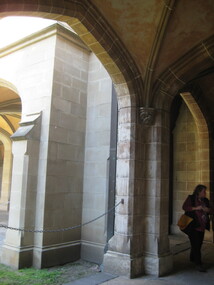 Ballarat Heritage Services
Photograph - Colour, Clare Gervasoni, University of Melbourne Old Law Building, 2010, 29/09/2010
... A plaque on the wall of this building states: In April, 1856 stonemasons woking on this building downed tools, marched to the city and inaugrated a movement which win the Eight Hour Day for building workers in Victoria. The victory became an international landmark in the history of the labour movement. ...It later house the Univesity's Centre for Indigenous Education and a conference centre (2010). university of melbourne old law building eight hour day stonemasons tasmanian freestone f.m. white j.s. gawler r.e. featherstone A plaque on the wall of this building states: In April, 1856 stonemasons woking on this building downed tools, marched to the city and inaugrated a movement which win the Eight Hour Day for building workers in Victoria. The victory became an international landmark in the history of the labour movement. ...Melbourne University Old Physics Building (1889) was designed by Reed, Henderson and Smart. It later house the Univesity's Centre for Indigenous Education and a conference centre (2010).Colour photograph of the windows of the Melbourne University Old Physics Building.A plaque on the wall of this building states: In April, 1856 stonemasons woking on this building downed tools, marched to the city and inaugrated a movement which win the Eight Hour Day for building workers in Victoria. The victory became an international landmark in the history of the labour movement. Another plaque reads: This, the original building of the University was built of Tasmanian freestone between 1854 and 1857 to the design of F.M. White, architect. It was for many years the University's administrative centre, library, lecture rooms, and professorial residences. The east and west wings were extended in 1930 to the design of J.S. Gawler. In 1969, the quadrangle was completed by the addition of the southern wing which contains the council chamber, designed by R.E. Featherstone. university of melbourne, old law building, eight hour day, stonemasons, tasmanian freestone, f.m. white, j.s. gawler, r.e. featherstone
