
Showing 38 items matching "imperial currency"
-
 Ballarat Tramway Museum
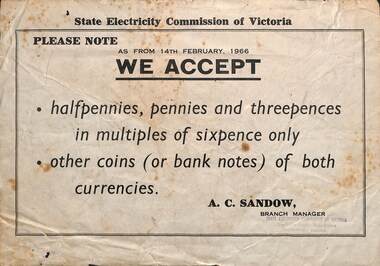
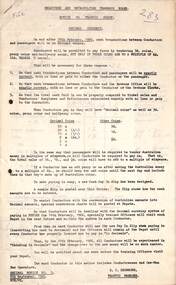
Poster, State Electricity Commission of Victoria (SECV), SEC Poster, about the acceptance of imperial currency, Feb. 1966
... SEC Poster, about the acceptance of imperial currency ...Poster - SEC Poster, about the acceptance of imperial currency following the introduction of Decimal currency from 14/2/1966. ...Poster - SEC Poster, about the acceptance of imperial currency following the introduction of Decimal currency from 14/2/1966. ...A poster issued to advise people of the acceptance of imperial currency at offices or on trams.Poster - SEC Poster, about the acceptance of imperial currency following the introduction of Decimal currency from 14/2/1966. Advises what multiples imperial coins would be accepted in at SEC offices and trams. Signed A C Sandow Branch Manager and has the SEC Ballarat branch stamp. See Reg Item 8344 for another poster. various pencil notations on the first page and the last page such as telephone numbers.trams, tramways, decimal currency, conversion, sec, posters -
 Ballarat Tramway Museum
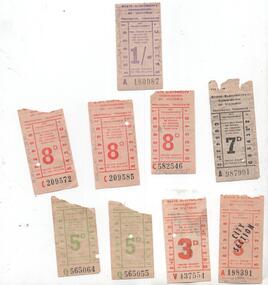
Ephemera - Ticket/s, State Electricity Commission of Victoria (SECV), Set of 9 pre-decimal or imperial currency, 1959 to 1965
... Set of 9 pre-decimal or imperial currency...Set of 9 pre-decimal or imperial currency tickets used on the Ballarat or the Bendigo tramway system with three of them noted as to their use on the rear. 1 - 3d - orange ticket, over printed "City Section" - A 198391 - used "Charing Cross to Station - tram 23 - Sat 22 May 1965" 2 - 3d - orange - V437554 - on rear "Tram 34 Going to Mt Pleasant Easter Tuesday 31 March 1959". 3 - 5d - green - Q565064 - on rear in pencil "Quarry Hill to Charing Cross (No. 3) 4 - 5d - green - Q565055 - ditto, with addition of "2nd tram" 5 - 7d - black A987991 - on side in pencil' "Eaglehawk to Q Hill No. 3" 6 - 8d - red C209572 - "18 Drummond from L St N Sun 8 Nov. 1964" 7 - 8d- red - C209585 - "ditto" 8 - 8d - red - C582546 - "Q Hill to station tram 23, Sat 22 May 1965" 9 - 1/- purple - A 180987 - "18 decorated for Sebastopol Gold Cent. ...Sun 8 Nov. 1964 to Sebastopol" Set of 9 pre-decimal or imperial currency Ephemera Ticket/s State Electricity Commission of Victoria (SECV) ...Has a strong association with the Ballarat and Bendigo tramway system as being identified as being used on the system and for which trip on a specific date and demonstrates the ticket style prior to the time of decimal conversion in Australia.Set of 9 pre-decimal or imperial currency tickets used on the Ballarat or the Bendigo tramway system with three of them noted as to their use on the rear. 1 - 3d - orange ticket, over printed "City Section" - A 198391 - used "Charing Cross to Station - tram 23 - Sat 22 May 1965" 2 - 3d - orange - V437554 - on rear "Tram 34 Going to Mt Pleasant Easter Tuesday 31 March 1959". 3 - 5d - green - Q565064 - on rear in pencil "Quarry Hill to Charing Cross (No. 3) 4 - 5d - green - Q565055 - ditto, with addition of "2nd tram" 5 - 7d - black A987991 - on side in pencil' "Eaglehawk to Q Hill No. 3" 6 - 8d - red C209572 - "18 Drummond from L St N Sun 8 Nov. 1964" 7 - 8d- red - C209585 - "ditto" 8 - 8d - red - C582546 - "Q Hill to station tram 23, Sat 22 May 1965" 9 - 1/- purple - A 180987 - "18 decorated for Sebastopol Gold Cent. Sun 8 Nov. 1964 to Sebastopol" trams, tramways, tickets, secv, ballarat, bendigo, gold, sebastopol, quarry hill, mt pleasant, lydiard st north -
 Melbourne Tram Museum
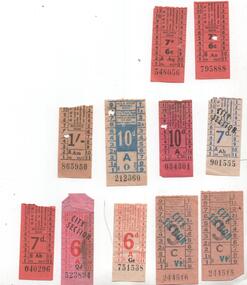
Ephemera - Ticket/s, Melbourne & Metropolitan Tramways Board (MMTB), Set of 9 MMTB imperial currency tickets and two decimal currency conversion tickets, 1960's
... Set of 9 MMTB imperial currency tickets and two decimal currency conversion tickets...Set of 9 MMTB imperial currency tickets and two decimal currency conversion tickets. ...Melbourne Tram Museum 8 Wallen Road Hawthorn melbourne Trams tramways MMTB Tickets Decimal Currency Decimal Conversion advertisements City section Set of 9 MMTB imperial currency tickets and two decimal currency conversion tickets. ...Set of 9 MMTB imperial currency tickets and two decimal currency conversion tickets. Some tickets have notes or advertisements on the rear as noted. If not noted, all printed with black ink on coloured paper with black numbers. 1 - 3d - on a light cream paper, overprinted "City Section" and letter Vt in Blue, numbers 244515 and 244516, both with Stamina trousers adverts on rear. 2 - 6d - red ink on off white paper - GE 751538 (has been creased badly) 3 - 6d - red ink on pink paper - overprinted "City Section" Qd 523894 - has dirt marks at top and stains on right hand side 4 - 7d - blue ink on off white paper, overprinted "City Section" in black ink, Ab901555 - with pencil note "Wed 23 Dec 1964 ? Collins St Sp St to Swanston St." 5 - 7d - on orange paper Ah 040296 - with an advert for "Blind babies" help on rear. 6 - 10d - on pink paper Ch 034301 - with a "Hicks advert on rear - 385 Bourke St for a trade in on a new Kelvinator Refrigerator" 7 - 10d - on off white paper, printed in blue ink, O 212360, with Stamina trousers adverts on rear 8 - 1/- on off white paper, Am 865950 9 - 7d / 6c - decimal conversion - orange paper, numbers Aq 548056 and An 795888, the second with a note in pencil on the rear "W2 604 6pm Glenferrie Road Gardiner to Camberwell 7D Fri 14 Nov 1965"trams, tramways, mmtb, tickets, decimal currency, decimal conversion, advertisements, city section -
 Melbourne Tram Museum
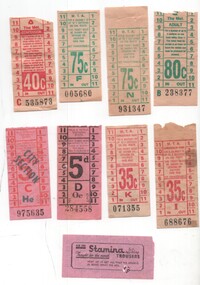
Ephemera - Ticket/s, Melbourne & Metropolitan Tramways Board (MMTB), Set of 9 imperial or decimal currency MMTB or MTA or The Met tickets, 1980s
... Set of 9 imperial or decimal currency MMTB or MTA or The Met tickets...Set of 9 imperial or decimal currency MMTB or MTA or The Met tickets. ...Melbourne Tram Museum 8 Wallen Road Hawthorn melbourne Trams tramways MMTB Tickets Concession Fares City section MTA The Met Set of 9 imperial or decimal currency MMTB or MTA or The Met tickets. ...Set of 9 imperial or decimal currency MMTB or MTA or The Met tickets. All numbers printed in black. .1 - 80c - The Met, green ink on off white paper, marked "Adult", No. B238377 .2 - 75c - MTA, green ink on off white paper, No. 005680 .3 - ditto - No. 931347 .4 - 40c - The Met, red ink on off white paper, "Concession" - No. C535873 .5 - 35c - MTA - red ink on off white paper, No. 071355 .6 - ditto - No. 688676 .7 - 5d - MMTB - black ink on purple paper No. 099479 .8 - ditto - No. 284558 .9 - 5d City Section - MMTB - red ink on red paper, over stamped of grey ink - No. 975635 Tickets 7, 8 and 9 have advertisements for Stamina trousers or suits on the rear along with the thought of the month or a statement.trams, tramways, mmtb, tickets, concession fares, city section, mta, the met -
 Melbourne Tram Museum
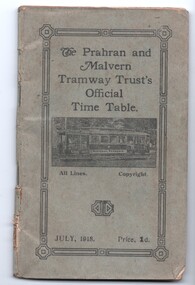
Ephemera - Timetable, Prahran & Malvern Tramway Trust (PMTT), "The Prahran and Malvern Tramway Trust's Official Time Table", Jul. 1918
... Has two pencil imperial currency calculation on rear cover....Melbourne Tram Museum 8 Wallen Road Hawthorn melbourne Trams tramways Timetables PMTT Tours Cable Trams HTT Has two pencil imperial currency calculation on rear cover. Timetable - 60 pages printed on off white sheets, plus light grey cover and in the rear, a foldout map showing tram routes of the PMTT etc, centre stapled, titled "The Prahran and Malvern Tramway Trust's Official Time Table", dated July 1918 and priced at 1d. ...Timetable - 60 pages printed on off white sheets, plus light grey cover and in the rear, a foldout map showing tram routes of the PMTT etc, centre stapled, titled "The Prahran and Malvern Tramway Trust's Official Time Table", dated July 1918 and priced at 1d. Gives details of the timetables for each routes, fares, signs, notices, tickets and details of the Combined round trips by tram. Has advertisements for Anderson's Furniture of Chapel St Prahran and E. Crook Men's Boys and Boots Chapel St, South Yarra. Map details the Circular Tramway Route, by cable and electric - shows the lines of the PMTT, HTT, rail lines and cable tramways. On rear details the trip, fare (9d for 16 miles), changing points and how tickets could be purchased. NOTE: See letter from donor on htd1389doc - page 3 - re return of item if we get another copy. Second copy in box 01-04-73.2 0- from the McComb Collection - pending discussions with the original donor.Has two pencil imperial currency calculation on rear cover.trams, tramways, timetables, pmtt, tours, cable trams, htt -
 Flagstaff Hill Maritime Museum and Village
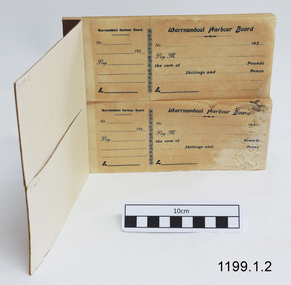
Financial record - Receipt Book, c. 1930
... ...imperial currency...Flagstaff Hill Maritime Museum and Village 89 Merri Street Warrnambool great-ocean-road flagstaff hill warrnambool shipwrecked-coast flagstaff-hill flagstaff-hill-maritime-museum maritime-museum shipwreck-coast flagstaff-hill-maritime-village receipt book imperial currency australian currency pre-1966 sales receipt warrnambool harbour board account book Printed names "Warrnambool Harbour Board" and "Pounds, Shillings and Pence" Two unused receipt books for the year 193? ...Two unused receipt books for the year 193?, from the Warrnambool Harbour Board. The books are marked for Pounds, Shillings and Pence. Books are unused.Printed names "Warrnambool Harbour Board" and "Pounds, Shillings and Pence"flagstaff hill, warrnambool, shipwrecked-coast, flagstaff-hill, flagstaff-hill-maritime-museum, maritime-museum, shipwreck-coast, flagstaff-hill-maritime-village, receipt book, imperial currency, australian currency pre-1966, sales receipt, warrnambool harbour board, account book -
 Flagstaff Hill Maritime Museum and Village
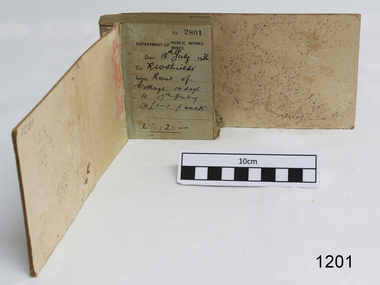
Financial record - Receipt Book, Department of Works and Mines Victoria, July 1936 (first record)
... ...imperial currency...A snapshot into social history around the 1930s when the Department of works and the Mines Departments were still linked flagstaff hill warrnambool shipwrecked coast flagstaff hill maritime museum maritime museum shipwreck coast flagstaff hill maritime village great ocean road department of works: mines receipt book rent 1936 imperial currency living costs 1936 Department of Works Department of Mines J F Condou 1933 13-3-33 Printed on spine "GENERAL RECEIPTS / 15 / 2801 / TO 3000" Printed on each receipt 'DEPARTMENT OF / PUBLIC WORKS. / MINES." ...Establishment and Functions Prior to 1860, the Chief Secretary's Department had been responsible for the administration of the gold fields and associated mining activities. In November 1860 a Commissioner of Mines was appointed and a Department was established under his administration. For the period November 1861 to June 1863, the Postmaster General was responsible for the Mining Department. A Minister of Mines was again appointed in 1863. Responsibilities of the Department of Mines were: 1. Regulation of mining and related public works activities through the issue of miners rights, business and residence licences, mining leases, mineral and other prospecting licences 2. Superintendence of the activities of mining surveyors, registrars, wardens and Mining Boards. 3. Investigation of the state's geological structure, mineral wealth and underground water resources 4. Development of the mining industry 5. Supervision of the safe working of mines, machinery and quarries including checking the credential of mine managers, inspectors and operators 6. Regulation of the disposal of sludge and other waste products 7. Administration of the Victorian Mining Accident Relief Fund. Arising from its initial responsibility for the supply of water on the gold fields, the Department became responsible for rural water supply from the mid 1860s. Statutory responsibility for rural water works during this period rested with the Board of Land and Works. In 1865 the Waterworks Act gave the Board power to construct waterworks, purchase land, levy charges and lease or sell works, while the Public Loans Act 1865 empowered it to provide loans to local water trusts for waterworks. The actual administration of these statutory provisions was undertaken by the Victorian Water Supply Department which operated from 1865 to 1889 as a sub-department of the Department of Mines, from 1889 as a department in its own right, and from 1895 to 1909 as a sub-department of the Department of Mines and Water Supply. For a brief period from 1891 to 1893 the Department of Mines was also responsible for forests and, until 1880, for the Schools of Mines subsequently transferred to the Education Department. In 1895 the Department of Mines and the Victorian Water Supply Department were amalgamated to form the Department of Mines and Water Supply. A snapshot into social history around the 1930s when the Department of works and the Mines Departments were still linkedReceipt Book for the Department of Works; Mines. Receipt No 2801 - 3000. 1st receipt Number 2801, "18th July 1936, for Rent of Cottage: 14 days for 2 pounds, 2 shillings. The inscription on the back is signed by J F Condau in 13-3-33Printed on spine "GENERAL RECEIPTS / 15 / 2801 / TO 3000" Printed on each receipt 'DEPARTMENT OF / PUBLIC WORKS. / MINES." Fill in using ink pen "(DATE) 18th July 1936 / (TO) - - - shields' / BEING) Rent of / Cottage: 14 days / (TO) 17th July / @ (symbol for pound) 1-1. p. week / . (symbol for pound) 2:2:-"Inside cover there is some red pencil writing, words and figures unreadable. Handwritten on back cover "Numbers checked / and found corredt / J S Coudou (?) / 13-3-33" One some receipts "Wharfage / S.S. Koonara"flagstaff hill, warrnambool, shipwrecked coast, flagstaff hill maritime museum, maritime museum, shipwreck coast, flagstaff hill maritime village, great ocean road, department of works: mines, receipt book, rent 1936, imperial currency, living costs 1936, department of works, department of mines, j f condou, 1933, 13-3-33 -
 Warrnambool and District Historical Society Inc.
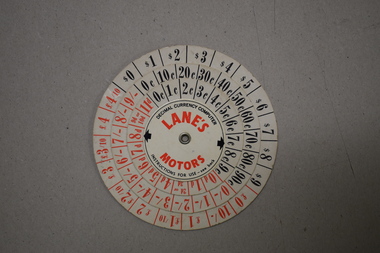
Instrument - Decimal Currency Converter, Ultra Publicity Pty Ltd, C 1966
... This decimal currency converter was produced about 1966 when the Australian currency was changed from the imperial system to the decimal system. ...The smallest central piece of paper has advertising material and the other three pieces have red and black numbers, some of decimal currency notations and some of imperial currency notations...The smallest central piece of paper has advertising material and the other three pieces have red and black numbers, some of decimal currency notations and some of imperial currency notations Instrument Decimal Currency Converter Ultra Publicity Pty Ltd ...This decimal currency converter was produced about 1966 when the Australian currency was changed from the imperial system to the decimal system. It has been used by a Warrnambool businessman, Alan Lane to promote one of his businesses, Lane’s Motors and would have been given to business clients. Alan Lane (d.1995) was prominent in Warrnambool as a businessman man, community leader and philanthropist. His businesses included a bus company, a taxi company and a travel agency. His community services included involvement in the St. John Ambulance Brigade, the Rotary Club, the local Football League, the Warrnambool Art Gallery, the Performing Arts Centre, the Warrnambool Chamber of Commerce and the Warrnambool Council. The A.L. Lane Foundation was established with funds from his estate and continues to assist local projects and charitable causes. This item is of interest as a memento of the time when the Australian currency was converted to the decimal system and as a memento of the prominent Warrnambool community worker, Alan Lane. This is a card consisting of four circles of paper of different sizes joined in the centre with a metal clip. The smallest central piece of paper has advertising material and the other three pieces have red and black numbers, some of decimal currency notations and some of imperial currency notationsDecimal Currency Computer Instructions for Use See Back Lane’s Motors alan l. lane, warrnambool, a.l. lane foundation -
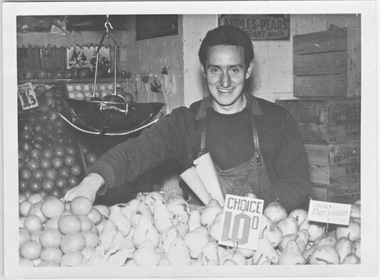 Ithacan Historical Society
Photograph, Dennis Black, c1950s
... There are wooden fruit packing cases stacked behind and the fruit prices in imperial currency, are displayed on individual plastic tickets. ...There are wooden fruit packing cases stacked behind and the fruit prices in imperial currency, are displayed on individual plastic tickets. ...The young man in the photo is Dennis Black. He along with his brother, Steve worked with their father John at the family fruit stall in Camberwell Market. A scanned non-digital black and white photograph of a young man behind a fruit stall in a market. He has a paper bag in his hand and is preparing to serve a customer. There are wooden fruit packing cases stacked behind and the fruit prices in imperial currency, are displayed on individual plastic tickets. dennis black, fruit stalls, fruit vendor, camberwell market -
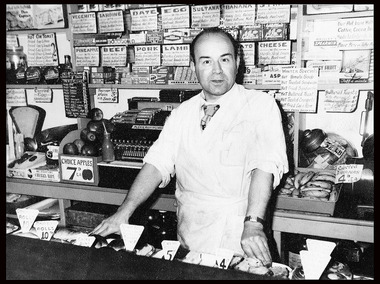 Ithacan Historical Society
Photograph, Bill Florence's Sandwich Bar, c1940 - 1950s
... The prices are in the old imperial currency of pounds shillings and pence. ...The prices are in the old imperial currency of pounds shillings and pence. ...Bill Florence (Florias) is standing behind the counter of his Quality Lunch Service located at 3 Manchester Lane off Collins Street which he ran from 1937 - 1970. This is an example of the type of businesses, mainly food related, which Ithacan Greeks owned and ran in Melbourne's CBD from the early 1900s through to the early 1970s. They ranged from restaurants, cafes, milk bars, fruit shops and fruit barrows, flower shops, as well as fruit stalls in the Queen Victoria Market. A black and white photograph of a man dressed in a white dust coat standing behind a counter in a small sandwich bar. Behind him are the cash register and various food items and on the wall are printed cards listing the sandwiches and other snacks available. The prices are in the old imperial currency of pounds shillings and pence. -
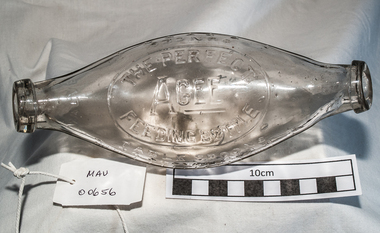 City of Moorabbin Historical Society (Operating the Box Cottage Museum)
Manufactured Glass, baby feeding bottle, c1950
... * bottles, feeding bottles, infants, breastfeeding, Moorabbin, Bentleigh, Ormond Cheltenham, glass, Australian glass manufacturing company ltd, decimal currency, imperial measurements, ounces, milk, dairy, baby formulae,.... * bottles, feeding bottles, infants, breastfeeding, Moorabbin, Bentleigh, Ormond Cheltenham, glass, Australian glass manufacturing company ltd, decimal currency, imperial measurements, ounces, milk, dairy, baby formulae, AGEE/ THE PERFECT FEEDING BOTTLE / OUNCES 1-6 A clear glass feeding bottle. ...A baby bottle is a bottle with a rubber or latex teat attached so that baby can drink directly from it by sucking on the teat. It is typically used by infants and young children ,when a mother does not breastfeed, to feed infant formula, expressed breast milk or paediatric electrolyte solution. Australian Glass Manufacturers produced glass bottles for pharmacy, brewery, dairy and domestic use 1913 – 1970 . Melbourne Glass Bottle Works Co Pty Ltd Registered in Victoria in 1903 amalgamated with the Waterloo Glass Bottle Works Ltd in 1915 to form Australian Glass Manufacturers Company, Limited. .Melbourne Glass Bottle Works Spotswood 1872- 1970 comprising a complex of buildings constructed between 1880 and 1940, (at Booker Street, Douglas Parade, 2-38 Hudson Road, Raleigh Street and Simcock Avenue, Spotswood ) originally made bottles for druggists Felton Grimwade before it was sold to the State Government by US multinational, OI glass manufacturers. . The Baby feeding bottle has graduated markings in 1- 6 ounces which shows that it was made prior to the introduction of Decimal Currency in Australia 14/2/1966. A clear glass feeding bottle. It is 'banana shaped' and open both ends with graduated measurements - 1-6 ouncesAGEE/ THE PERFECT FEEDING BOTTLE / OUNCES 1-6* bottles, feeding bottles, infants, breastfeeding, moorabbin, bentleigh, ormond cheltenham, glass, australian glass manufacturing company ltd, decimal currency, imperial measurements, ounces, milk, dairy, baby formulae, -
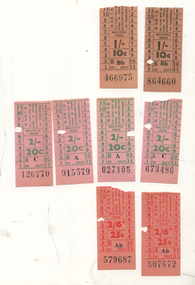 Melbourne Tram Museum
Ephemera - Set of 8 dual currency tram tickets, Melbourne & Metropolitan Tramways Board (MMTB), 2/1966
... When Australia changed from imperial currency to decimal currency on 14/2/1966, a well-planned operation of conversion took place. ...Melbourne Tram Museum 8 Wallen Road Hawthorn melbourne When Australia changed from imperial currency to decimal currency on 14/2/1966, a well-planned operation of conversion took place. ...When Australia changed from imperial currency to decimal currency on 14/2/1966, a well-planned operation of conversion took place. This involved changing public transport tickets as well, especially those where a printed value was shown. The MMTB printed dual currency tickets as part of the process. This set of tickets show the value in both imperial and decimal currency 1 schilling or 1/- = 10 cents, 2 schillings or 2/- = 20c, and 2 schillings and 6 pence or 2/6 = 25 cents.Demonstrates dual currency tickets used at the time of decimal conversion in Australia.Set of 8 dual currency MMTB tram tickets - flimsy - papertramways, mmtb, tickets, decimal conversion, dual currency -
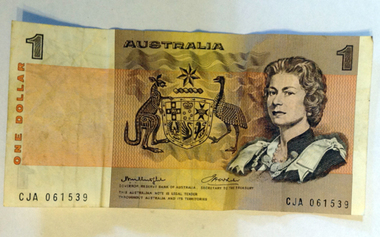 Warrnambool and District Historical Society Inc.
Currency - Australian 1962 & 1966, 1962 & 1966
... In value the penny was the second smallest denominator in the old imperial currency in Australia in the mid 20th century (halfpenny was the smallest). ...Warrnambool and District Historical Society Inc. 2 Gilles Street (south of Merri St) Warrnambool great-ocean-road In value the penny was the second smallest denominator in the old imperial currency in Australia in the mid 20th century (halfpenny was the smallest). ...In value the penny was the second smallest denominator in the old imperial currency in Australia in the mid 20th century (halfpenny was the smallest). Decimal currency was introduced in 1966 and the two cent coin was the second lowest in value. It was withdrawn from circulation in 1992 but it is still legal tender in some circumstances. This coin was minted in the first year of decimal currency in Australia. The dollar note was introduced in 1966 and it in turn was replaced in 1984 by the dollar coin. These coins are kept as mementoes of notes and coins no longer in use and are therefore of historical interest. 000496.1 Australian decimal currency bank note: $1 note 000496.2 Australian decimal currency coin: 2c 000496.3 Australian pre-decimal currency coin: 1 penny The one dollar notes are orange, yellow, black and white in colour. They have images of Queen Elizabeth 11 and the Australian Coat of Arms on one side and aboriginal motifs on the other side. The metal two cent coin has the Queen’s head on one side and an image of a frilled lizard on the other. The metal penny has the Queen’s head on one side and a kangaroo image on the other.One dollar note- numbers CJA 061539 and CEU 647543 Two cent coin: Elizabeth 11, Australia 1966 One penny: Australia, Penny, 1962 australian currency, australian decimal currency, pre-decimal currency in australia -
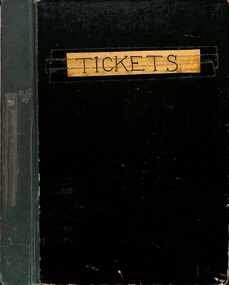 Melbourne Tram Museum
Album - A collection of, John Fitzsimons, "Tickets"
... Contains the following tickets showing the style of tickets issued by various public transport operators. 3 pages of MMTB Imperial currency tickets 1 page of Pensioner concessions 3 pages of decimal currency tickets including dual currency type 1 page of Ultimate tickets - type sold at safety zones by Zone sellers 1 page of PMG prepaid tickets, special supplementary journal, machine bus ticket 1 page of PMG prepaid Section tickets, 1 page of incapacitated section tickets 2 pages of Hospital tickets Scholar's Concession ticket issued to the donor, Swimming class tickets and a Police ticket. 2 pages of unidentified tickets SPER National Park line 1 page of Adelaide tickets 4 pages of Provincial tramway tickets, dual currency including a Bendigo battery tram ticket. 3 pages of Brisbane tram and bus tickets 2 pages of Launceston bus tickets - 1968 1 page of Hobart tickets VR motor coach (bus) ticket 1 page of Perth tram tickets A TAA ground transport ticket San Francisco ticket, Hong Kong tickets, 2 pages of recovered MMTB tickets from behind tramcar seats - imperial currency and one MMTB Supplementary Running Journal....Melbourne Tram Museum 8 Wallen Road Hawthorn melbourne Contains the following tickets showing the style of tickets issued by various public transport operators. 3 pages of MMTB Imperial currency tickets 1 page of Pensioner concessions 3 pages of decimal currency tickets including dual currency type 1 page of Ultimate tickets - type sold at safety zones by Zone sellers 1 page of PMG prepaid tickets, special supplementary journal, machine bus ticket 1 page of PMG prepaid Section tickets, 1 page of incapacitated section tickets 2 pages of Hospital tickets Scholar's Concession ticket issued to the donor, Swimming class tickets and a Police ticket. 2 pages of unidentified tickets SPER National Park line 1 page of Adelaide tickets 4 pages of Provincial tramway tickets, dual currency including a Bendigo battery tram ticket. 3 pages of Brisbane tram and bus tickets 2 pages of Launceston bus tickets - 1968 1 page of Hobart tickets VR motor coach (bus) ticket 1 page of Perth tram tickets A TAA ground transport ticket San Francisco ticket, Hong Kong tickets, 2 pages of recovered MMTB tickets from behind tramcar seats - imperial currency and one MMTB Supplementary Running Journal. ...Contains the following tickets showing the style of tickets issued by various public transport operators. 3 pages of MMTB Imperial currency tickets 1 page of Pensioner concessions 3 pages of decimal currency tickets including dual currency type 1 page of Ultimate tickets - type sold at safety zones by Zone sellers 1 page of PMG prepaid tickets, special supplementary journal, machine bus ticket 1 page of PMG prepaid Section tickets, 1 page of incapacitated section tickets 2 pages of Hospital tickets Scholar's Concession ticket issued to the donor, Swimming class tickets and a Police ticket. 2 pages of unidentified tickets SPER National Park line 1 page of Adelaide tickets 4 pages of Provincial tramway tickets, dual currency including a Bendigo battery tram ticket. 3 pages of Brisbane tram and bus tickets 2 pages of Launceston bus tickets - 1968 1 page of Hobart tickets VR motor coach (bus) ticket 1 page of Perth tram tickets A TAA ground transport ticket San Francisco ticket, Hong Kong tickets, 2 pages of recovered MMTB tickets from behind tramcar seats - imperial currency and one MMTB Supplementary Running Journal.Yields information about the style of tickets issued by Australian Public Transport systems.Album - heavy black/green card covers containing 35 ruled quarto sheets secured with an Arnos metal binder with the title "Tickets" taped to the front of the object.tramways, melbourne, tickets, ballarat, bendigo, adelaide, launceston, hobart, brisbane, hong kong, taa airlines, perth, san francsico, sper, pmg -
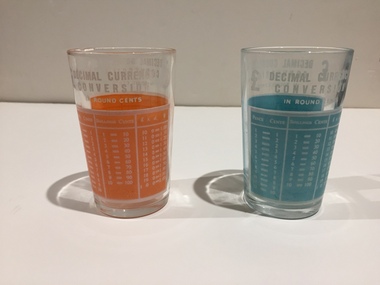 Kew Historical Society Inc
Domestic object - Glasses, Pair of Decimal Currency Conversion Glasses, circa 1966, c.1966
... Presumably made around the time that Australia switched from Imperial to Decimal Currency in 1966 to aid the householder make quick conversions....Kew Historical Society Inc Kew Court House 188 High Street Kew melbourne Presumably made around the time that Australia switched from Imperial to Decimal Currency in 1966 to aid the householder make quick conversions. decimal currency - australia glasses currency converters Pair of transfer printed glasses with decimal currency converters printed on them. ...Presumably made around the time that Australia switched from Imperial to Decimal Currency in 1966 to aid the householder make quick conversions.Pair of transfer printed glasses with decimal currency converters printed on them.decimal currency - australia, glasses, currency converters -
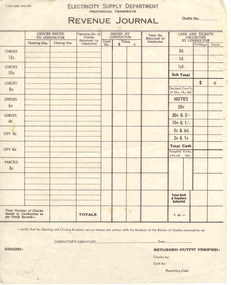 Ballarat Tramway Museum
Document - Form/s, State Electricity Commission of Victoria (SECV), "Revenue Journal", 1950's, 1966
... Gives the opening and closing number of tickets or checks issued to the conductor, check returned by conductor, total number issued, value, returned by conductor, cash returned, both decimal and imperial currency, space for hospital vouchers and area where signed by conductor. ...Gives the opening and closing number of tickets or checks issued to the conductor, check returned by conductor, total number issued, value, returned by conductor, cash returned, both decimal and imperial currency, space for hospital vouchers and area where signed by conductor. ...3047.1 - Printed form titled "Revenue Journal", for recording the value of tickets sold by Conductors. Headed - Electricity Supply Depart, Provincial Tramways". Has value of tickets up to 12c, parcel tickets of 8c. Gives the opening and closing number of tickets or checks issued to the conductor, check returned by conductor, total number issued, value, returned by conductor, cash returned, both decimal and imperial currency, space for hospital vouchers and area where signed by conductor. Printed on off white paper. Has form number TYE 1-280 (R2/66). 3047.2 - same form but with values up to 7d, parcel tickets of 4d. Prepared in pounds, shilling and pence format, or notes, silver and copper. Used in during the mid 1950's. Two copies held. trams, tramways, tickets, accounting, revenue journal, conductors -
 Melbourne Tram Museum
Document, Melbourne & Metropolitan Tramways Board (MMTB), Decimal Currency, 1965
... Currency that took place on 14/2/1966 1 - Notice No. 3 dated 6/9/1965 regarding how revenue pay-in would be made and coins counted. Has a sample pay-in form showing the methods. Notes the training to be provided. 2 - Notice No. 4 dated 16/9/1965 - in a question and answer format about the conversion from imperial to decimal currency. 3 - Notice No. 5 dated 31/10/1965 - training using plastic model coins and conversions....Yields information about the conversion from imperial to decimal currency and the training undertaken for this. ...Set of three notices regarding the introduction of Decimal Currency that took place on 14/2/1966 1 - Notice No. 3 dated 6/9/1965 regarding how revenue pay-in would be made and coins counted. Has a sample pay-in form showing the methods. Notes the training to be provided. 2 - Notice No. 4 dated 16/9/1965 - in a question and answer format about the conversion from imperial to decimal currency. 3 - Notice No. 5 dated 31/10/1965 - training using plastic model coins and conversions.Yields information about the conversion from imperial to decimal currency and the training undertaken for this.Document - Set of three notices foolscap, each with two punched holes on left side.Some have numbers in the top left hand corner in ink.tramways, instructions, operations, conductors, decimal conversion, decimal currency, training -
 Melbourne Tram Museum
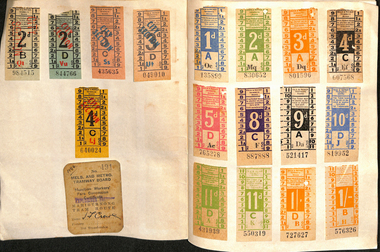
Ephemera - Folder with tickets, Harry Jackson, 1950's to 1990's
... Sheet 1 - 21 No. SEC mainly imperial currency tickets, including City Section and concession. ...Sheet 1 - 21 No. SEC mainly imperial currency tickets, including City Section and concession. ...Manila folder, Wotan flat file, with built in fold back metal clips (see images 5624i and 5624i12) holding 12 large and 6 small plastic sheets that have been made to hold railway (Edmondson pasteboard) or tramway paper tickets. Where relevant the rear of the sheet has been scanned as well. Sheet 1 - 21 No. SEC mainly imperial currency tickets, including City Section and concession. Sheet 2 - 7 SEC decimal tickets, 9 Ballarat Tourist Tramway and Ballarat Vintage Tramway (BTPS and BTM) and 5 VFL Park tickets. Sheet 3 - 6 City Section and City Section Plus One tickets Sheet 4 - as above and City Saver Sheet 5 - 5 Day Tripper Sheet 6 - machine tickets and Junior 3rd term 1975 Scholars Concession ticket issued to Gavin Cox Sheet 7 - machine tickets and 3rd 1974 Scholars Concession ticket issued to Elizabeth Wignell Sheet 8 - MMTB and MTA Single journey card tickets, including a Herald Take a Tram campaign tickets, Check tickets Zone 1 and Single Journey paper tickets. Sheet 9 - 8 MMTB imperial tickets & 1 yellow Cable Tramway City Ticket 1 1/2d, issued by the Tramway Board. On rear are adverts for Stamina Trousers, John Randle hair dresser and Bushels Tea. Sheet 10 - 25 MMTB imperial tickets. On rear are adverts for Stamina Trousers, John Randle hair dresser, Blind Babies, Major 8, Promote Thomastown Committee, Hicks and Leighton Home plans. Sheet 11 - 25 MMTB Imperial and decimal tickets - some have date and tram notes on rear. Sheet 12 - 24 MMTB decimal tickets Sheet 13 - 25 Pensioner an d machine issued tickets Sheet 14 - 2 machine issue, 20 section tickets (PMG, Telecom, Incapacitated, MMTB Employees, :Police, Aust Post, Hospital and 1 School Swimming class. Sheet 15 - 14 Section tickets - Adult and Child Hospital, and 1 Restricted MMTB single journal tickets. Sheet 16 - 10 MTA paper tickets, 2 The Met priced tickets and 5 The Met Paper Single Journey tickets. Sheet 17 - 6 The Met Paper Single Journey tickets.7 The Met City Saver tickets Sheet 18 - 13 - MMTB City Concession check tickets and 5 Zone 1 check tickets and 1 Heidelberg Road check tickets (not on scan)trams, tramways, tickets, mmtb, vr, the met, btps, btm, ptc, mta -
 Melbourne Tram Museum
Ephemera - Exercise Book, The Reading Universal, "Tickets", 1950's to 1980's
... Pages 1 to 13 - MMTB imperial, dual and decimal currency tram and bus tickers, including a Munitions workers fare concession certificate, Scholars Concession ticket, swimming, Adelaide. 14 - 15 - SEC and Brisbane tickets 16 - 17 - MTT Adelaide 18 - 24 - MMTB mixed and some railway card 25 - 26 - Sydney 26 - 28 - Hobart 29 - 30 - Mixed - MOTAT, Ferrymead, Brisbane, Hornibrook Highway Toll, 31 - 32- Melbourne Rail, mixed admission, VR Excess Fare 33 - 34 - SEC 35 - 36 - Dunedin 37 - 38 - Christchurch 39 - 41 - Wellington 42 - Auckland 43 - NZR rail 44 - MMTB 45 - 46 - MTT Adelaide, Tallahassee, St Claude 47 - 48 - Ballarat, Bendigo and TMSV 49 - MMTB 50 - TMSV, SPER 51 - Brisbane 52 - Parramatta Park (COTMA), Eurail pass 53 - Hong Kong, Melbourne rail, platform tickets, pram tickets, Begonia Festival car park, 54 - 55- Mixed - NZR, Wellington, 56 - Auckland 57 - 58 - AETM, Adelaide, 59 - 60 Adelaide, MMTB, Exhibition buildings car park, 61 - Radio receiving licence, mixed bus tricks, Ansett, TAA, 62 - cover - mixed - Ansett, TAA, Ballarat ESCo, Melbourne transport Pageant and MTA/The Met...Pages 1 to 13 - MMTB imperial, dual and decimal currency tram and bus tickers, including a Munitions workers fare concession certificate, Scholars Concession ticket, swimming, Adelaide. 14 - 15 - SEC and Brisbane tickets 16 - 17 - MTT Adelaide 18 - 24 - MMTB mixed and some railway card 25 - 26 - Sydney 26 - 28 - Hobart 29 - 30 - Mixed - MOTAT, Ferrymead, Brisbane, Hornibrook Highway Toll, 31 - 32- Melbourne Rail, mixed admission, VR Excess Fare 33 - 34 - SEC 35 - 36 - Dunedin 37 - 38 - Christchurch 39 - 41 - Wellington 42 - Auckland 43 - NZR rail 44 - MMTB 45 - 46 - MTT Adelaide, Tallahassee, St Claude 47 - 48 - Ballarat, Bendigo and TMSV 49 - MMTB 50 - TMSV, SPER 51 - Brisbane 52 - Parramatta Park (COTMA), Eurail pass 53 - Hong Kong, Melbourne rail, platform tickets, pram tickets, Begonia Festival car park, 54 - 55- Mixed - NZR, Wellington, 56 - Auckland 57 - 58 - AETM, Adelaide, 59 - 60 Adelaide, MMTB, Exhibition buildings car park, 61 - Radio receiving licence, mixed bus tricks, Ansett, TAA, 62 - cover - mixed - Ansett, TAA, Ballarat ESCo, Melbourne transport Pageant and MTA/The Met "Tickets" Ephemera Exercise Book The Reading Universal ...Exercise or Mapping book - The Reding Universal Mapping book, blue front cover plain paper, holding tickets collected by Keith Stodden. Titled "Tickets". Tickets have been positioned using stamp hinges. Pages 1 to 13 - MMTB imperial, dual and decimal currency tram and bus tickers, including a Munitions workers fare concession certificate, Scholars Concession ticket, swimming, Adelaide. 14 - 15 - SEC and Brisbane tickets 16 - 17 - MTT Adelaide 18 - 24 - MMTB mixed and some railway card 25 - 26 - Sydney 26 - 28 - Hobart 29 - 30 - Mixed - MOTAT, Ferrymead, Brisbane, Hornibrook Highway Toll, 31 - 32- Melbourne Rail, mixed admission, VR Excess Fare 33 - 34 - SEC 35 - 36 - Dunedin 37 - 38 - Christchurch 39 - 41 - Wellington 42 - Auckland 43 - NZR rail 44 - MMTB 45 - 46 - MTT Adelaide, Tallahassee, St Claude 47 - 48 - Ballarat, Bendigo and TMSV 49 - MMTB 50 - TMSV, SPER 51 - Brisbane 52 - Parramatta Park (COTMA), Eurail pass 53 - Hong Kong, Melbourne rail, platform tickets, pram tickets, Begonia Festival car park, 54 - 55- Mixed - NZR, Wellington, 56 - Auckland 57 - 58 - AETM, Adelaide, 59 - 60 Adelaide, MMTB, Exhibition buildings car park, 61 - Radio receiving licence, mixed bus tricks, Ansett, TAA, 62 - cover - mixed - Ansett, TAA, Ballarat ESCo, Melbourne transport Pageant and MTA/The Mettrams, tramways, tickets, the met, mmtb, adelaide, sec, tmsv, sydney, buses -
 Warrnambool and District Historical Society Inc.
Numismatics, Coin Collection
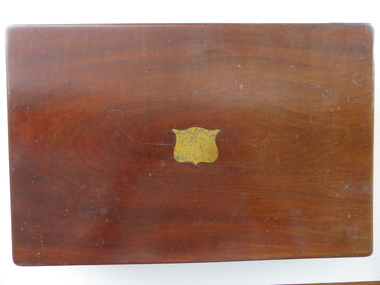
... The coinage was based on the imperial system with the basic currency unit being the pound. ...The coinage was based on the imperial system with the basic currency unit being the pound. ...These coins were in use in Australia during the 20th century up to 1965. The coinage was based on the imperial system with the basic currency unit being the pound. In February 1966 decimal coinage was introduced in Australia with the basic currency unit being the dollar (equivalent in value to half a pound or ten shillings). This collection of coins shows what coins looked like in Australia before the introduction of decimal currency. It is a very useful display item. This is a collection of coins in a wooden box. The wood is polished and has brass hinges on the lid and a brass lock and keyhole on the box’s side. The lid is lined with blue felt and on the top of the lid is a much-scratched brass shield (intended for inscribing a name). Inside the box there is a clear piece of glass over the coins which are pasted onto a piece of buff-coloured paper. There are 40 coins in the box. The heading is hand written (calligraphy) in black ink and the other information is type-written. ‘Australian Pre-Decimal Coinage’ ‘Edward V11, Threepence & Sixpence, 1910’ ‘George V, Halfpenny, Penny, Threepence, Sixpence, Shilling, Florin, 1911-1936’ ‘George V1, Halfpenny, Penny, Threepence, Sixpence, Shilling, Florin, 1938-1952’ ‘Elizabeth 11, Halfpenny, Penny, Threepence, Sixpence, Shilling, Florin. 1963-1963’ decimal currency in australia, pre-decimal currency in australia, history of warrnambool -
 Bendigo Military Museum
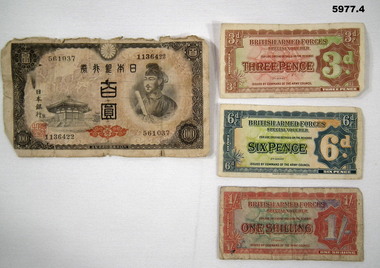
Currency - PAPER CURRENCY, Imperial Japanese Govt, 1. Asian. 2. 3. 4. British Army Forces, cWW2
... Currency PAPER CURRENCY Imperial Japanese Govt. ...1. Old Japanese 100 year old note. Black and Red printing on face, blue ink on rear side. Face side has image of a building and traditional man. rear side images has buildings and two dragons. NRS: 561037 1136422. 2. British Armed Forces - Special voucher. Three pence. printing on front is in brown green and red ink. rear side, brown ink. 3. British Armed Forces - Special voucher. Six pence. Printing on front is in blue, orange and green ink - rearside in blue ink. 4. British Armed Forces - Special voucher. One shilling. Printing on front is in red, blue and green ink - rearside in red ink.army overseas, barracks money, japan, britian -
 Kiewa Valley Historical Society
Weights
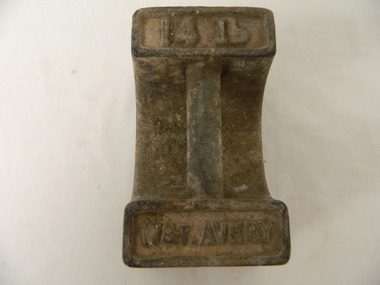
... Kiewa Valley Historical Society Mount Beauty Information Centre 31 Bogong High Plains Rd Mt Beauty high-country Weight was used on platform type scale to weigh farm produce Imperial weights were used prior to 1966 when decimal currency was introduced. ...Weight was used on platform type scale to weigh farm produceImperial weights were used prior to 1966 when decimal currency was introduced. Weights were used in stores selling farm produce prior to packaging.Cast iron weight with a solid base the upper side curved to form two ends which are joined by a cylindrical handle. The ends are embossed on the top.W & T Avery 14 lbweights. scale. farms produce. w & t avery. -
 Bendigo Military Museum
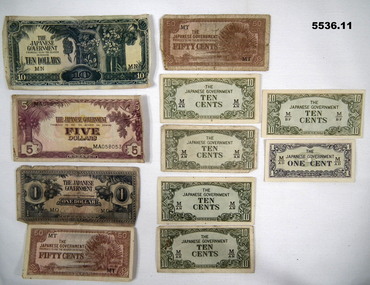
Currency - JAPANESE INVASION MONEY - PHILIPINES, Japanese Imperial Government, c1938-1945
... Imperial Japanese Government. 1. Ten dollar note - white paper, dark green ink both sides. 2. Five dollar note - white paper, purple ink both sides. 3. One dollar note - white paper, blue ink both sides. 4. & 5. 50 cent notes - white paper, brown ink both sides. 6, 7, 8, 9, 10. 10 cent notes - white paper, green ink both sides. 11. Very small note - 1 cent. Front side printed in black and green ink. Rear in light black ink. Currency ...Refer to Cat 95P. RAAF service of C.S. Cornelius NR 40595.This is a set of Invasion notes for the Philippines in WW2. Printed by Imperial Japanese Government. 1. Ten dollar note - white paper, dark green ink both sides. 2. Five dollar note - white paper, purple ink both sides. 3. One dollar note - white paper, blue ink both sides. 4. & 5. 50 cent notes - white paper, brown ink both sides. 6, 7, 8, 9, 10. 10 cent notes - white paper, green ink both sides. 11. Very small note - 1 cent. Front side printed in black and green ink. Rear in light black ink.ww2, philipines, invasion money -
 Bendigo Military Museum
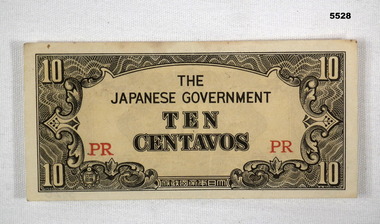
Currency - JAPANESE INVASION MONEY - WW2 - PHILIPINES, c1938-1945
... Imperial Japanese Govt printed their money/promissory notes for the countries they invaded (or were about to invade.) This souvenir came from Mr. C. S. Cornelius, RAAF NR 40545, Refer to Cat No 95P. WW2 Money Philipines I.J.A. This is a small paper note. It is for 10 Centavos. It was printed by the Japanese Govt WW2. White Paper with Black ink. Currency ...The Imperial Japanese Govt printed their money/promissory notes for the countries they invaded (or were about to invade.) This souvenir came from Mr. C. S. Cornelius, RAAF NR 40545, Refer to Cat No 95P.This is a small paper note. It is for 10 Centavos. It was printed by the Japanese Govt WW2. White Paper with Black ink.ww2, money, philipines, i.j.a. -
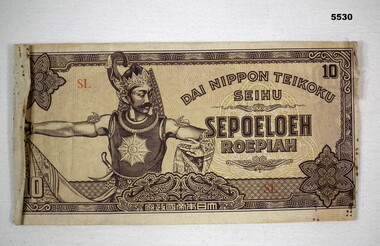 Bendigo Military Museum
Currency - JAPANESE INVASION MONEY, Japanese Government, c1938-1945
... Imperial Japanese Government printed their own money for countries they invaded or were about to invade. Refer to Cat 95P. Refers to the RAAF Service of No.40595 C.S. Cornelius. WW2 Japanese Money Invasion This is a medium size note. It was probably painted on white paper with brown ink. It has the portrait of a Dutch East Indian dancer in traditional clothes. The rear side is printed in purple ink. It shows the Buddhas in front of two bell shaped buildings. The value is 10 (Sepoeloeh) Roepiah. Currency ...The Imperial Japanese Government printed their own money for countries they invaded or were about to invade. Refer to Cat 95P. Refers to the RAAF Service of No.40595 C.S. Cornelius.This is a medium size note. It was probably painted on white paper with brown ink. It has the portrait of a Dutch East Indian dancer in traditional clothes. The rear side is printed in purple ink. It shows the Buddhas in front of two bell shaped buildings. The value is 10 (Sepoeloeh) Roepiah.ww2, japanese money, invasion -
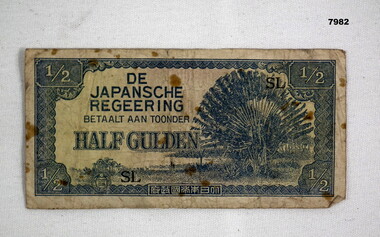 Bendigo Military Museum
Currency - CURRENCY - INDONESIAN, Imperial Japanese Govt, c.1942
... Currency CURRENCY - INDONESIAN Imperial Japanese Govt. ...Part of the collection of "Thomas Leslie Wilkinson" 2nd AIF. Refer Cat No 7996.6 for his service history. Japanese half gulden occupation currency for Dutch East Indies (Indonesia). Blue note with image of palm bush on front. The no. 1/2 on each corner. On other side "1/2" in big numbers and Gulden.On front "De Japansche Regeering" and "Half Gulden".currency, indonesia, occupation, thomas leslie wilkinson -
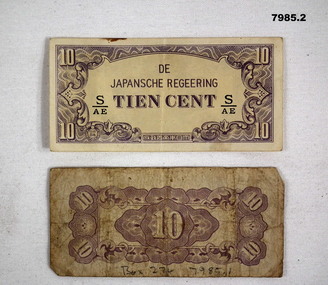 Bendigo Military Museum
Currency - CURRENCY - INDONESIAN, Imperial Japanese Govt, c.1942
... Currency CURRENCY - INDONESIAN Imperial Japanese Govt. ...Part of collection of "Thomas Leslie Wilkinson" 2nd AIF. Refer Cat No 7996.6 for his service history.Two notes of Tien cent (10) denomination of Japanese issued occupation currency for Dutch East Indies, now Indonesia, during WW2. Purple in colour on white paper. No.10 in each corner and "Tien Cent" on front.De Japansche Regeering Tien Cent.occupational currencies, thomas leslie wilkinson -
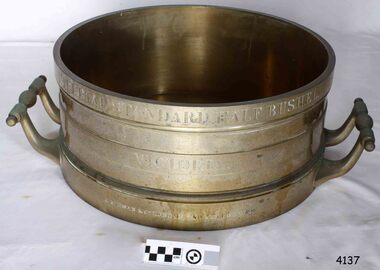 Flagstaff Hill Maritime Museum and Village
Equipment - Standard Measure, James McEwan & Co, 1860s-1900s
... These were tested against the then British Imperial Standards to measure length, weight and currency. Administrative bodies in the Colony of Australia could then compare their weights and measures against these British Primary Standards and adjust their Measures accordingly, to maintain the Standards. ...These were tested against the then British Imperial Standards to measure length, weight and currency. Administrative bodies in the Colony of Australia could then compare their weights and measures against these British Primary Standards and adjust their Measures accordingly, to maintain the Standards. ...This container is a pre-Decimal, Imperial Standard Half Bushel, part of a three-piece set of Standard measures used in Victoria from around 1900 to 1940. The measures were made in Melbourne by J. McEwan & Co. These three measures were likely used by the local Melbourne authority that monitored weights and measures in the mid to late 19th century. . An Imperial Bushel was equal to 8 gallons, or 36.36872 litres . An Imperial Peck equals a quarter of a Bushel, or 9.09 litres Standards for weights and measures began in Victoria when the Melbourne Observatory received primary sets of Imperial Standard Weights and Measures from Britain. These were tested against the then British Imperial Standards to measure length, weight and currency. Administrative bodies in the Colony of Australia could then compare their weights and measures against these British Primary Standards and adjust their Measures accordingly, to maintain the Standards. The Weights and Measures Act of 1862 was passed in Victoria, and local inspectors were established throughout the colony. By the 1870s, local councils and shires in Victoria held a set of Standards used to test scales, weights, and measures used by manufacturers, wholesalers, and retailers. Every ten years, the councils’ Standards needed to be rechecked against the Victorian Standards. In the 19th Century, the Victorian Customs Department inspected and maintained the Standards. In 1901, the Customs Department was transferred to the Federal Government, but the Weights and Measures authority remained with the Victorian Government and relocated to the Melbourne Observatory. In 1904, the Standard weights and measures, and testing equipment, were installed in the room of a new building erected at the south end of the Great Melbourne Telescope House. The room became known as the Whirling Room, due to its large whirling apparatus that tested air meters. When the Melbourne Observatory closed in 1944, the Weights and Measures Branch was formed to continue maintaining the Standards. On February 14th, 1966, Australia began its conversion to metric measures and currency, and a new set of Standard Measures was introduced; the conversion took place in stages. The Weights and Measures Branch remained at the Observatory site until 1995. James McEwan & Co.: - The maker of this set of Standard Measures was James McEwan. His Melbourne business was established in 1852 and sold retail furniture and wholesale ironmongery. The firm’s warehouses were situated at the intersection of 81-83 Elizabeth and Little Collins Streets. Shortly afterwards, the firm partnered with William Kerr Thomson and Samuel Renwick. When McEwan died in 1868, his partners carried on and expanded the business under his name, J McEwan. The business was expanded to provide a retail shop, counting-house and private offices. Wholesale warehouses adjoined these premises at 4, 6 and 10 Little Collins Street, West. This company provided and sold a large and varied amount of imported goods into the colony; agricultural equipment, building materials, mining items, steam engines, tools of all types and marble fireplaces. The company grew to employ over 150 people in Melbourne and opened offices at 27 Lombard St, London, as well as in New Zealand and Fiji. It also serviced the Mauritius islands and the Pacific area with its steamship, the Suva, and a brig, the Shannon.The set of Imperial Standard Measures is an example of a bronze measure container made specifically for J. McEwan & Co. Today, it helps us to understand how imperial weights and measures were used, and how a standard of measurement for merchants was developed in the Australian colonies based on the Imperial British measurement system. The container has social significance as an item retailed by J McEwan, and used by Victoria’s authorities legally responsible for ensuring that dry goods sold in Victoria by wholesalers and retailers are correct.Imperial Standard Measure: a container to measure the volume of a Half Bushel. It is part of a set of three precision measures - a Peck, a Half Bushel and a Bushel – used by government authorities in Victoria. The cast brass cylinder has straight sides and a flat base, and two handles are attached near the base by two posts on each handle. The wall inside is straight, and outside has grooves and horizontal bands. Inscriptions are engraved on the outside. The Measures were made for the retailer, J. McEwan & Co., London and Melbourne. Engraved test: "IMPERIAL STANDARD HALF BUSHEL. / VICTORIA / J. MCEWAN & O. LONDON AND MELBOURNE."flagstaff hill, flagstaff hill maritime museum and village, warrnambool, maritime museum, maritime village, great ocean road, shipwreck coast, weights and measurements, science, james mcewan & co., precision instrument, technology, melbourne observatory, british imperial standards, standard weights & measures, volume measure, dry measure, customs, commerce, victorian standard measure, pre-decimal measure, imperial standard, imperial half bushel, bronze container, brass container, cast container -
 Flagstaff Hill Maritime Museum and Village
Functional object - Standard Measure, James McEwan & Co, 1860s-1900s
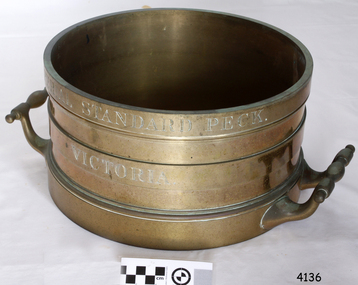
... These were tested against the then British Imperial Standards to measure length, weight and currency. Administrative bodies in the Colony of Australia could then compare their weights and measures against these British Primary Standards and adjust their Measures accordingly, to maintain the Standards. ...These were tested against the then British Imperial Standards to measure length, weight and currency. Administrative bodies in the Colony of Australia could then compare their weights and measures against these British Primary Standards and adjust their Measures accordingly, to maintain the Standards. ...This container is a pre-Decimal, Imperial Standard Peck, part of a three-piece set of Standard measures used in Victoria from around 1900 to 1940. The measures were made in Melbourne by J. McEwan & Co. These three measures were likely used by the local Melbourne authority that monitored weights and measures in the mid to late 19th century. . An Imperial Bushel was equal to 8 gallons, or 36.36872 litres . An Imperial Peck equals a quarter of a Bushel, or 9.09 litres Standards for weights and measures began in Victoria when the Melbourne Observatory received primary sets of Imperial Standard Weights and Measures from Britain. These were tested against the then British Imperial Standards to measure length, weight and currency. Administrative bodies in the Colony of Australia could then compare their weights and measures against these British Primary Standards and adjust their Measures accordingly, to maintain the Standards. The Weights and Measures Act of 1862 was passed in Victoria, and local inspectors were established throughout the colony. By the 1870s, local councils and shires in Victoria held a set of Standards used to test scales, weights, and measures used by manufacturers, wholesalers, and retailers. Every ten years, the councils’ Standards needed to be rechecked against the Victorian Standards. In the 19th Century, the Victorian Customs Department inspected and maintained the Standards. In 1901, the Customs Department was transferred to the Federal Government, but the Weights and Measures authority remained with the Victorian Government and relocated to the Melbourne Observatory. In 1904, the Standard weights and measures, and testing equipment, were installed in the room of a new building erected at the south end of the Great Melbourne Telescope House. The room became known as the Whirling Room, due to its large whirling apparatus that tested air meters. When the Melbourne Observatory closed in 1944, the Weights and Measures Branch was formed to continue maintaining the Standards. On February 14th, 1966, Australia began its conversion to metric measures and currency, and a new set of Standard Measures was introduced; the conversion took place in stages. The Weights and Measures Branch remained at the Observatory site until 1995. James McEwan & Co.: - The maker of this set of Standard Measures was James McEwan. His Melbourne business was established in 1852 and sold retail furniture and wholesale ironmongery. The firm’s warehouses were situated at the intersection of 81-83 Elizabeth and Little Collins Streets. Shortly afterwards, the firm partnered with William Kerr Thomson and Samuel Renwick. When McEwan died in 1868, his partners carried on and expanded the business under his name, J McEwan. The business was expanded to provide a retail shop, counting-house and private offices. Wholesale warehouses adjoined these premises at 4, 6 and 10 Little Collins Street, West. This company provided and sold a large and varied amount of imported goods into the colony; agricultural equipment, building materials, mining items, steam engines, tools of all types and marble fireplaces. The company grew to employ over 150 people in Melbourne and opened offices at 27 Lombard St, London, as well as in New Zealand and Fiji. It also serviced the Mauritius islands and the Pacific area with its steamship, the Suva, and a brig, the Shannon. The set of Imperial Standard Measures is an example of a bronze measure container made specifically for J. McEwan & Co. Today, it helps us to understand how imperial weights and measures were used, and how a standard of measurement for merchants was developed in the Australian colonies based on the Imperial British measurement system. The container has social significance as an item retailed by J McEwan, and used by Victoria’s authorities legally responsible for ensuring that dry goods sold in Victoria by wholesalers and retailers are correct. Imperial Standard Measure: a container to measure the volume of a Peck. It is part of a set of three precision measures - a Peck, a Half Bushel and a Bushel – used by government authorities in Victoria. The cast brass cylinder has straight sides and a flat base, and two handles are attached near the base by two posts on each handle. The wall inside is straight, and outside has grooves and horizontal bands. Inscriptions are engraved on the outside. The Measures were made for the retailer, J. McEwan & Co., London and Melbourne. Engraved on side: "IMPERIAL STANDARD PECK. / VICTORIA."flagstaff hill, flagstaff hill maritime museum and village, warrnambool, maritime museum, maritime village, great ocean road, shipwreck coast, weights and measurements, science, james mcewan & co., precision instrument, technology, melbourne observatory, british imperial standards, standard weights & measures, volume measure, dry measure, customs, commerce, victorian standard measure, pre-decimal measure, imperial standard, imperial bushel, imperial half bushel, imperial peck, peck measure, bronze container, brass container, cast container -
 Flagstaff Hill Maritime Museum and Village
Functional object - Standard Measure, James McEwan & Co, 1860s-1900s
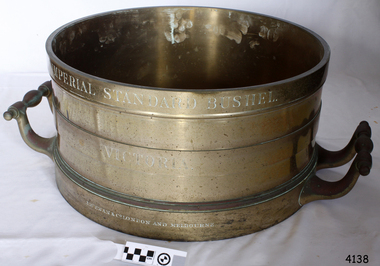
... These were tested against the then British Imperial Standards to measure length, weight and currency. Administrative bodies in the Colony of Australia could then compare their weights and measures against these British Primary Standards and adjust their Measures accordingly, to maintain the Standards. ...These were tested against the then British Imperial Standards to measure length, weight and currency. Administrative bodies in the Colony of Australia could then compare their weights and measures against these British Primary Standards and adjust their Measures accordingly, to maintain the Standards. ...This container is a pre-Decimal, Imperial Standard Bushel, part of a three-piece set of Standard measures used in Victoria from around 1900 to 1940. The measures were made in Melbourne by J. McEwan & Co. These three measures were likely used by the local Melbourne authority that monitored weights and measures in the mid to late 19th century. . An Imperial Bushel was equal to 8 gallons, or 36.36872 litres . An Imperial Peck equals a quarter of a Bushel, or 9.09 litres Standards for weights and measures began in Victoria when the Melbourne Observatory received primary sets of Imperial Standard Weights and Measures from Britain. These were tested against the then British Imperial Standards to measure length, weight and currency. Administrative bodies in the Colony of Australia could then compare their weights and measures against these British Primary Standards and adjust their Measures accordingly, to maintain the Standards. The Weights and Measures Act of 1862 was passed in Victoria, and local inspectors were established throughout the colony. By the 1870s, local councils and shires in Victoria held a set of Standards used to test scales, weights, and measures used by manufacturers, wholesalers, and retailers. Every ten years, the councils’ Standards needed to be rechecked against the Victorian Standards. In the 19th Century, the Victorian Customs Department inspected and maintained the Standards. In 1901, the Customs Department was transferred to the Federal Government, but the Weights and Measures authority remained with the Victorian Government and relocated to the Melbourne Observatory. In 1904, the Standard weights and measures, and testing equipment, were installed in the room of a new building erected at the south end of the Great Melbourne Telescope House. The room became known as the Whirling Room, due to its large whirling apparatus that tested air meters. When the Melbourne Observatory closed in 1944, the Weights and Measures Branch was formed to continue maintaining the Standards. On February 14th, 1966, Australia began its conversion to metric measures and currency, and a new set of Standard Measures was introduced; the conversion took place in stages. The Weights and Measures Branch remained at the Observatory site until 1995. James McEwan & Co.: - The maker of this set of Standard Measures was James McEwan. His Melbourne business was established in 1852 and sold retail furniture and wholesale ironmongery. The firm’s warehouses were situated at the intersection of 81-83 Elizabeth and Little Collins Streets. Shortly afterwards, the firm partnered with William Kerr Thomson and Samuel Renwick. When McEwan died in 1868, his partners carried on and expanded the business under his name, J McEwan. The business was expanded to provide a retail shop, counting-house and private offices. Wholesale warehouses adjoined these premises at 4, 6 and 10 Little Collins Street, West. This company provided and sold a large and varied amount of imported goods into the colony; agricultural equipment, building materials, mining items, steam engines, tools of all types and marble fireplaces. The company grew to employ over 150 people in Melbourne and opened offices at 27 Lombard St, London, as well as in New Zealand and Fiji. It also serviced the Mauritius islands and the Pacific area with its steamship, the Suva, and a brig, the ShannonThe set of Imperial Standard Measures is an example of a bronze measure container made specifically for J. McEwan & Co. Today, it helps us to understand how imperial weights and measures were used, and how a standard of measurement for merchants was developed in the Australian colonies based on the Imperial British measurement system. The container has social significance as an item retailed by J McEwan, and used by Victoria’s authorities legally responsible for ensuring that dry goods sold in Victoria by wholesalers and retailers are correct.Imperial Standard Measure: a container to measure the volume of a Busel. It is part of a set of three precision measures - a Peck, a Half Bushel and a Bushel – used by government authorities in Victoria. The cast brass cylinder has straight sides and a flat base, and two handles are attached near the base by two posts on each handle. The wall inside is straight, and outside has grooves and horizontal bands. Inscriptions are engraved on the outside. The Measures were made for the retailer, J. McEwan & Co., London and Melbourne.Engraved on side: "IMPERIAL STANDARD BUSHEL. / VICTORIA ./ J. MCEWAN & CO. LONDON AND MELBOURNE."flagstaff hill, flagstaff hill maritime museum and village, warrnambool, maritime museum, maritime village, great ocean road, shipwreck coast, weights and measurements, science, james mcewan & co., precision instrument, technology, melbourne observatory, british imperial standards, standard weights & measures, volume measure, dry measure, customs, commerce, victorian standard measure, pre-decimal measure, imperial standard, imperial bushel, peck measure, bronze container, brass container, cast container
