
Showing 64 items matching "john carmichael"
-
 Federation University Historical Collection
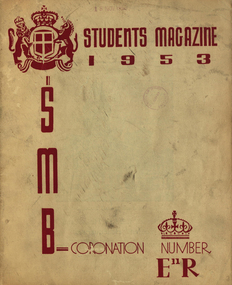
Booklet, J. A. Hoskin & Son, Ballarat School of Mines Students' Magazine, 1953, 1953
... ...john carmichael...Ballarat School of Mines Students' Magazine, 1953 staff sports her majesty queen elizabeth ii mr hillman mr gillespie i. burger n. leckie b. singleton mr treadwell mr fairbank j. mcneil b. smith ann mitchell janice wilton eleanor tozer j. beattie b. macdougall mr bryan mrs alf. watson mr hans fumberger mr w. r. richards cliff restarick russell ewins kevin whiter mr w. carlyon mr k. treloar mr c. livitsamos arthur faneco jim john barbara ngip jim tinney jean dean neville spiers stewart rowe max stevens barrie smith elaine walton jim sawyer bruce flavel ron ingleton john bethune john blackburn john boag jim brokenshire john carmichael ray kibby alec kinnane noel meagher norm ludbrook graham searle ron sheppard ryrie mccallum Queen Elizabeth II Coronation White front page soft cover with burgundy inscriptions on front cover. ...Ballarat School of Mines Students' Magazine, 1953White front page soft cover with burgundy inscriptions on front cover. This magazine recognised the coronation of Queen Elizabeth II, and reproduced a portrait of the Queen.staff, sports, her majesty queen elizabeth ii, mr hillman, mr gillespie, i. burger, n. leckie, b. singleton, mr treadwell, mr fairbank, j. mcneil, b. smith, ann mitchell, janice wilton, eleanor tozer, j. beattie, b. macdougall, mr bryan, mrs alf. watson, mr hans fumberger, mr w. r. richards, cliff restarick, russell ewins, kevin whiter, mr w. carlyon, mr k. treloar, mr c. livitsamos, arthur faneco, jim john, barbara ngip, jim tinney, jean dean, neville spiers, stewart rowe, max stevens, barrie smith, elaine walton, jim sawyer, bruce flavel, ron ingleton, john bethune, john blackburn, john boag, jim brokenshire, john carmichael, ray kibby, alec kinnane, noel meagher, norm ludbrook, graham searle, ron sheppard, ryrie mccallum, queen elizabeth ii, coronation -
 Federation University Historical Collection
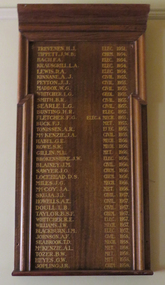
Photograph, Ballarat School of Mines Associates Board 1951-1957, c1984
... ...john d carmichael electrical engineering 1961...Ballarat School of Mines Associates could ascribe ASMB after their name. ballarat school of mines smb campus electrical engineering 1958 brian w. schreenan civil engineering 1958 clifford j. restarick metallurgy 1958 john t h. clelland metallurgy 1958 donald c. stevens mining engineering 1958 john g. wolfe civil engineering 1959 james e. mcneil electrical engineering 1959 patrick h. nally civil engineering 1959 graham j. willey metallurgy 1959 stanley p. kisler civil engineering 1959 donald j. overall electrical engineering 1959 brian j. mclennan civil engineering 1959 philip j. davis art 1959 bruce v. mcdougall mining engineering 1959 lancelot j. matthews mechanical engineering 1959 alan w. wilson mechanical engineering 1959 alan w. wilson electrical engineering 1959 george a r. lewis art 1959 noel e. meagher electrical engineering 1960 john l. collier mining engineering 1960 john l. collier civil engineering 1960 frank andrewartha mechanical engineering 1960 norman leckie art 1960 lansell j. groat civil engineering 1960 boon thiam lu mining engineering 1960 oswyn n. hails civil engineering 1960 john a. watts applied chemistry 1960 thomas b. gallagher civil engineering 1960 brian a. bellingham civil engineering 1961 alan c leviston applied chemistry 1961 walter j wynd civil engineering 1961 francis d benjamin civil engineering 1961 leonard e fox mechanical engineering 1961 yan kai chung applied chemistry 1961 george d mcgrath mechanical engineering 1961 john r sawyer mechanical engineering 1961 ronald horgan applied chemistry 1961 douglas j vendy civil engineering 1961 john a barnes electrical engineering 1961 brian w smith metallurgy 1961 william r carlyon metallurgy 1961 chris p livitsanos metallurgy 1961 lawrence g trevan civil engineering 1961 richard g dunlop mechanical engineering 1961 ronald m ingleton mechanical engineering 1961 peter m robinson mechanical engineering 1961 david j jelbart mechanical engineering 1961 john g hollway mechanical engineering 1961 george m hetherington civil engineering 1961 david w brown mechanical engineering 1961 john r gowan civil engineering 1961 geoffrey a christian civil engineering 1961 arthur c burrow mechanical engineering 1961 john n mcarthur applied chemistry 1961 graeme r bromley mechanical engineering 1961 william davison civil engineering 1961 ben a johnson electrical engineering 1961 ben a johnson civil engineering 1961 allan j tinney civil engineering 1961 thomas h j coad applied chemistry 1961 brian h duthie civil engineering 1961 basil c bautovich mechanical engineering 1961 reece pullen electrical engineering 1961 john d carmichael electrical engineering 1961 william j spencer civil engineering 1961 neil a brogden civil engineering 1961 michael villani civil engineering 1961 ralph j hepburn mechanical engineering 1961 peter w linaker mechanical engineering 1961 peter j matthews mechanical engineering 1961 edgar mca bartrop mining engineering 1961 donald j stewart brian schreenan Associates of the Ballarat School of Mines :Lists names 1989-1964 Black and white photograph of Associatedsof the Ballarat School of Mines from 1951-1957. ...In the early 1880s the Ballarat School of Mines Council introduced a three year course of training under the professors to qualify students in the following professions: 1. Mining Engineering 2. Metallurgy 3. Geology 4. Electricity [45] Each of these courses had an additional, but optional, fourth year of study. The prescribed subjects of study for an Associateship was set out in the Calendar of the Ballarat School of Mines in each year. Any student who passed the prescribed examinations in any of the above courses was issued with a Certificate of Competency, and conferred with the distinction of Associate. By the 1890s the professorial staff had drawn up a curriculum leading to an Associateship of the Ballarat School of Mines. The first two years work was to be common to all courses, but in the third and subsequent years the student wold be devoted to a specialised branch of study. The Associateship was to be conferred in one of another of the following Courses: Agriculture, Civil Engineering, Electrical Engineering, [Geology], Metallurgy and Mining Engineering. All were three year courses except for Agriculture which was two years. Each course was conducted in accordance with a prescribed curriculum and syllabus. During the 1910s there was an expectation that candidates for the Associate course should have attained the age of sixteen, and have received preparatory training equivalent to University Matriculation at least in the subjects of Elementary Mathematics, English Grammar and Composition, or have passed through Junior Technical School. In 1960 an new procedure for admission to graduate status as Associates was introduced to the Ballarat School of Mines where Associateship would be conferred at a public ceremony. After 01 July 1976 graduates of Ballarat College of Advanced Education and Ballarat College of Advanced Education were admitted in major studies relating to mining for Australian accreditation and overseas purposes. Ballarat School of Mines Associates could ascribe ASMB after their name.Black and white photograph of Associatedsof the Ballarat School of Mines from 1951-1957.Associates of the Ballarat School of Mines :Lists names 1989-1964ballarat school of mines, smb campus, electrical engineering 1958, brian w. schreenan civil engineering 1958, clifford j. restarick metallurgy 1958, john t h. clelland metallurgy 1958, donald c. stevens mining engineering 1958, john g. wolfe civil engineering 1959, james e. mcneil electrical engineering 1959, patrick h. nally civil engineering 1959, graham j. willey metallurgy 1959, stanley p. kisler civil engineering 1959, donald j. overall electrical engineering 1959, brian j. mclennan civil engineering 1959, philip j. davis art 1959, bruce v. mcdougall mining engineering 1959, lancelot j. matthews mechanical engineering 1959, alan w. wilson mechanical engineering 1959, alan w. wilson electrical engineering 1959, george a r. lewis art 1959, noel e. meagher electrical engineering 1960, john l. collier mining engineering 1960, john l. collier civil engineering 1960, frank andrewartha mechanical engineering 1960, norman leckie art 1960, lansell j. groat civil engineering 1960, boon thiam lu mining engineering 1960, oswyn n. hails civil engineering 1960, john a. watts applied chemistry 1960, thomas b. gallagher civil engineering 1960, brian a. bellingham civil engineering 1961, alan c leviston applied chemistry 1961, walter j wynd civil engineering 1961, francis d benjamin civil engineering 1961, leonard e fox mechanical engineering 1961, yan kai chung applied chemistry 1961, george d mcgrath mechanical engineering 1961, john r sawyer mechanical engineering 1961, ronald horgan applied chemistry 1961, douglas j vendy civil engineering 1961, john a barnes electrical engineering 1961, brian w smith metallurgy 1961, william r carlyon metallurgy 1961, chris p livitsanos metallurgy 1961, lawrence g trevan civil engineering 1961, richard g dunlop mechanical engineering 1961, ronald m ingleton mechanical engineering 1961, peter m robinson mechanical engineering 1961, david j jelbart mechanical engineering 1961, john g hollway mechanical engineering 1961, george m hetherington civil engineering 1961, david w brown mechanical engineering 1961, john r gowan civil engineering 1961, geoffrey a christian civil engineering 1961, arthur c burrow mechanical engineering 1961, john n mcarthur applied chemistry 1961, graeme r bromley mechanical engineering 1961, william davison civil engineering 1961, ben a johnson electrical engineering 1961, ben a johnson civil engineering 1961, allan j tinney civil engineering 1961, thomas h j coad applied chemistry 1961, brian h duthie civil engineering 1961, basil c bautovich mechanical engineering 1961, reece pullen electrical engineering 1961, john d carmichael electrical engineering 1961, william j spencer civil engineering 1961, neil a brogden civil engineering 1961, michael villani civil engineering 1961, ralph j hepburn mechanical engineering 1961, peter w linaker mechanical engineering 1961, peter j matthews mechanical engineering 1961, edgar mca bartrop mining engineering 1961, donald j stewart, brian schreenan -
 Linton and District Historical Society Inc
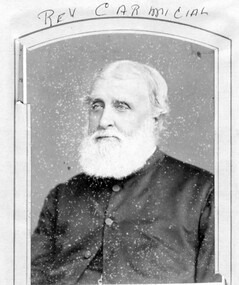
Photograph, Bardwell 21 Collins St East, Melbourne, Reverend Carmichael
... Carmichael... Surman collection... John...Rev. Carmichael Surman collection John Campbell Carmichael C of E Reader at Carngham 1883 Sepia portrait of an elderly bearded man wearing high necked suit jacket, fob chain. ...Part of S E Surman collection (album) page 30.Sepia portrait of an elderly bearded man wearing high necked suit jacket, fob chain.rev. carmichael, surman collection, john campbell carmichael, c of e reader at carngham, 1883 -
 Federation University Historical Collection
Letter, Ballarat School of Mines Rough Correspondence, 1916-1917, 1916-17
... John Sutcliffe...Thomas Carmichael...Jebb John Dulfer Daniel Liddy Louis Vernon Pharmacy Board Victoria Scholarships David Cochrane Howard Bennett herbert werner frederick de nully Thomas Robinson John Sutcliffe Thomas Carmichael Bessie Beatrice Robertson A bundle of rough correspondence from the Ballarat School of Mines. ...The Ballarat School of Mines was established in 1870, and is a predecessor institution of Federation University Australia. A bundle of rough correspondence from the Ballarat School of Mines. Includes Ballarat School of Mines Letterhead, a list of Trade Students, their address and the fees they paid; Special Grant for Photography Equipment; Building valuations; Annual Staff Social, Ballarat School of Mines Technical School Annual Report, Quarterly Attendance Return, Medical Certificate ballarat school of mines, 45th a.a.m.c., 49th a.a.m.c., camp, f.c. buchanan, e.l. fidge, r.c. valentine, r.c. smith, j.m. turnbull, w.l. carroll, e.w. simmering, f.m. wesley, k. whittle, allan bernaldo, j.b. sutcliffe, e.n.t. henry, f.t. jellett, a.p. doran, e. somerville, t.h. robinson, ballarat school of mines evening trade time table, victorian education department receipt, letterhead, charles graham, h.s. hall, gauge tower, trade fees., trades, f.r. eva, m.a. fiscalini, v. giuliano, walter baxter, humffray, james walker, clemence hill, mcpherson's pty ltd, robinson, telephone account, charles e. bright, plumbing, g.r. king, a.e. anderson, buildings, n.r. worrell, h.v. duncan, ballarat junior technical school, a.w. steane, philately, stamp duty, bhp, broken hill, excursion, broken hill south mining co, g. fenner, wallaroo, moonta, daniel walker, t.h. shattock, j.m. sutherland, myra bolte, nellie grigg, j.a. greenshields, dora gooch, myra howe, mavis mcgrath, charles mcnamara, kath reidy, percy albert trompf, percy trompf, h.g. wakeling, rene hardess, quarterly returns, accounting, sands and mcdougall, travel lists, w. coltman, gladys kitchen, h. beanland, eva betteridge, victor greenhalgh, staff salary, goliath and hercules, cuming smith and co, australian engineering school, e.j. powell, e.w. hurfield, e.j. mcconnon, hilda wardle, dorothy hambly, assay report, north woah hawp, supplementary examinations, hugh m. rowlands, frank b. maxwell, richard buchanan, walter j. ewart, r.f. finnis, f.g. davis, w.g. walker, charles schroeder, k. bailey fisher, robert hutchinson, w. o'halloran, s.j. chambers, a. westcott, m.f. larking, k. jebb, john dulfer, daniel liddy, louis vernon, pharmacy board victoria, scholarships, david cochrane, howard bennett, herbert werner frederick de nully, thomas robinson, john sutcliffe, thomas carmichael, bessie beatrice robertson -
 Federation University Historical Collection
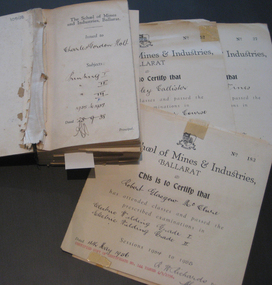
Book - Certificate stub book, School of Mines Ballarat, Ballarat School of Mines Certificate Stubb Book, 1938-1964
... John Betts...Leonard Wade...Robert McClure...David Beaumont...Leslie Powell...Samuel Perry...Donald Treweek...Edgar McArthur...Russell Fraser...Edgar McArthur Bartrop...Clive Carmichael...Millar, Heith Smyth, Walter Hines, Harold Leslie, Joseph Fisher, Geoffry Burns, Alick Dait, George Hill, Raymond Wines, Robert Manson, Albert O'Neill, Thomas Green, William Stargatt, William Harrison, Reginald Allen, Albert Wilson, Allan Curtis, Arthur Donald, John Wynn, Sydney Robinson, John Blackic, Percy Elsdon, Hubert Jenkins, Kingsley Callister, Douglas Hall, Norman Lawson, Winfield Tonkin, Artuhur Williams, Allan Curtis, Ernest, Billinge, John Daelon, Harold Bunting, Stanley Wilton, Robert Sugden, Heith Foster, Winsome Stevens, Herbert Stanbridge, Robert Pittard, Henry Brew, Ernest Berriman, Carlyle West-Onley, William Blackic, Lorna Dunstan, Cedric Pike, Stanley Jephson, Hugh Hendrick, Joseph Fisher, Ernest Grove, Ronald Fisher, Heith Halsall, Henry Harris, Maxwell Silvey, Stanley Trengove, Donald Trescowthick, Harold Tolliday, Russell Lucas, John Boyd, John Keys, Stanley Betteridge, Ernest Betteridge, Michael Ross, Robert Stewart, Joseph Beasley, William Beasley, Ray Deveson, George Hennessy, Charles Matthews, Maxwell Silvey, Ian Creek, Geoffrey Moorhouse, Hector Tonks, John Donald, Hugh Hendrick, Stanley Jephson, Ian McIntosh, Robert Nice, Ralph Scott, Walter Martin, Grant Coutts, Lindsay Hannah, John Tainsh, Hubert Robinson, John Donald, George Beaton, Heather Harris, Brian McCarthy, Samuel Perry, Valentine Pascoe, Philip McLean, Geoffrey Hewish, Hubert Robinson, John Borch, Frederick Gale, Ian Grundell, Albert Perry, Frank Hutchinson, Horace Shuttleworth, Kenneth Mason, David Hatt, Malcom Foster, George Jones, Graham McKinnon, Ronald Newton, John Betts, Leonard Wade, Robert McClure, David Beaumont, Leslie Powell, Samuel Perry, Donald Treweek, Edgar McArthur, Russell Fraser, Edgar McArthur Bartrop, Clive Carmichael, Leslie Fuhrmeister, Lindsay Coon, Zigurds Plavina, Victor Gingell, Rupert McKenna, Graham McKinnon, David Fairley, Johannes Meennen, Ronald Murphy, Johannes Naus, John McConville, Graham Melonie, William Cutter, Thomas Chalkley, Kenneth Morton, Stanley Shears, Robert Auld, Donald Campbell, John Cofield, Brian Whykes, William Milford, Noel Richards, Stewart Jacobs, James Robertson, Clement Rose, Eric Brown, Allan Raworth, Ernest Salter, Neville Cartledge, Peter Stacey, Robert McClure, Antonius Goossens, Rodney Cartledge, Rodney Hayes, Bevan Grigsby, James Robertson, Neil Stephens, John Riddle, Andreas Aaus, Bruce Fletcher, Keith Pedler, Allen Flavell, Robert Cartledge, Ronald Shaw, Kenneth Hibberd, William Lockland, Percival Bilney and Petrus Damen. ...Millar, Heith Smyth, Walter Hines, Harold Leslie, Joseph Fisher, Geoffry Burns, Alick Dait, George Hill, Raymond Wines, Robert Manson, Albert O'Neill, Thomas Green, William Stargatt, William Harrison, Reginald Allen, Albert Wilson, Allan Curtis, Arthur Donald, John Wynn, Sydney Robinson, John Blackic, Percy Elsdon, Hubert Jenkins, Kingsley Callister, Douglas Hall, Norman Lawson, Winfield Tonkin, Artuhur Williams, Allan Curtis, Ernest, Billinge, John Daelon, Harold Bunting, Stanley Wilton, Robert Sugden, Heith Foster, Winsome Stevens, Herbert Stanbridge, Robert Pittard, Henry Brew, Ernest Berriman, Carlyle West-Onley, William Blackic, Lorna Dunstan, Cedric Pike, Stanley Jephson, Hugh Hendrick, Joseph Fisher, Ernest Grove, Ronald Fisher, Heith Halsall, Henry Harris, Maxwell Silvey, Stanley Trengove, Donald Trescowthick, Harold Tolliday, Russell Lucas, John Boyd, John Keys, Stanley Betteridge, Ernest Betteridge, Michael Ross, Robert Stewart, Joseph Beasley, William Beasley, Ray Deveson, George Hennessy, Charles Matthews, Maxwell Silvey, Ian Creek, Geoffrey Moorhouse, Hector Tonks, John Donald, Hugh Hendrick, Stanley Jephson, Ian McIntosh, Robert Nice, Ralph Scott, Walter Martin, Grant Coutts, Lindsay Hannah, John Tainsh, Hubert Robinson, John Donald, George Beaton, Heather Harris, Brian McCarthy, Samuel Perry, Valentine Pascoe, Philip McLean, Geoffrey Hewish, Hubert Robinson, John Borch, Frederick Gale, Ian Grundell, Albert Perry, Frank Hutchinson, Horace Shuttleworth, Kenneth Mason, David Hatt, Malcom Foster, George Jones, Graham McKinnon, Ronald Newton, John Betts, Leonard Wade, Robert McClure, David Beaumont, Leslie Powell, Samuel Perry, Donald Treweek, Edgar McArthur, Russell Fraser, Edgar McArthur Bartrop, Clive Carmichael, Leslie Fuhrmeister, Lindsay Coon, Zigurds Plavina, Victor Gingell, Rupert McKenna, Graham McKinnon, David Fairley, Johannes Meennen, Ronald Murphy, Johannes Naus, John McConville, Graham Melonie, William Cutter, Thomas Chalkley, Kenneth Morton, Stanley Shears, Robert Auld, Donald Campbell, John Cofield, Brian Whykes, William Milford, Noel Richards, Stewart Jacobs, James Robertson, Clement Rose, Eric Brown, Allan Raworth, Ernest Salter, Neville Cartledge, Peter Stacey, Robert McClure, Antonius Goossens, Rodney Cartledge, Rodney Hayes, Bevan Grigsby, James Robertson, Neil Stephens, John Riddle, Andreas Aaus, Bruce Fletcher, Keith Pedler, Allen Flavell, Robert Cartledge, Ronald Shaw, Kenneth Hibberd, William Lockland, Percival Bilney and Petrus Damen. ...This certificate stub book contains the subject certificates of the graduates of the School of Mines and Indutsries, Ballarat, a predecessor of Federation University Australia.This item highlights the subjects studied and graduates of the School of Mines between 1938 to 1964. It also records the change of cursive over that time.This book includes stubs of subject certificates from the School of Mines and Industries, Ballarat. This also contains a number of uncollected certificates. It is a brown hardback book with black binding. Its contents covers certificates between 1938 to 1964. Names of recipients include: Charles Holt, Henry Elford, Irvin Singleton, J. H. Hughes, John Morcom, Alfred Amor, John Wastell, John Rudwick, Jared Hines, Harry Allan, L. F. J. Hillman, Arthur Davies, Letitia Stanley, Victor Wright,Raymond Ball, Mary O'Callaghan, Ethna Burke, Alec Foyster, James Duggan, Leonard Auchettl, Reeves Collins, James Patterson, Stanley Douglas Webb, Oswald Lyle, Marvis Orr, Eric Roberts, Jack Clennell, A. R. Millar, Heith Smyth, Walter Hines, Harold Leslie, Joseph Fisher, Geoffry Burns, Alick Dait, George Hill, Raymond Wines, Robert Manson, Albert O'Neill, Thomas Green, William Stargatt, William Harrison, Reginald Allen, Albert Wilson, Allan Curtis, Arthur Donald, John Wynn, Sydney Robinson, John Blackic, Percy Elsdon, Hubert Jenkins, Kingsley Callister, Douglas Hall, Norman Lawson, Winfield Tonkin, Artuhur Williams, Allan Curtis, Ernest, Billinge, John Daelon, Harold Bunting, Stanley Wilton, Robert Sugden, Heith Foster, Winsome Stevens, Herbert Stanbridge, Robert Pittard, Henry Brew, Ernest Berriman, Carlyle West-Onley, William Blackic, Lorna Dunstan, Cedric Pike, Stanley Jephson, Hugh Hendrick, Joseph Fisher, Ernest Grove, Ronald Fisher, Heith Halsall, Henry Harris, Maxwell Silvey, Stanley Trengove, Donald Trescowthick, Harold Tolliday, Russell Lucas, John Boyd, John Keys, Stanley Betteridge, Ernest Betteridge, Michael Ross, Robert Stewart, Joseph Beasley, William Beasley, Ray Deveson, George Hennessy, Charles Matthews, Maxwell Silvey, Ian Creek, Geoffrey Moorhouse, Hector Tonks, John Donald, Hugh Hendrick, Stanley Jephson, Ian McIntosh, Robert Nice, Ralph Scott, Walter Martin, Grant Coutts, Lindsay Hannah, John Tainsh, Hubert Robinson, John Donald, George Beaton, Heather Harris, Brian McCarthy, Samuel Perry, Valentine Pascoe, Philip McLean, Geoffrey Hewish, Hubert Robinson, John Borch, Frederick Gale, Ian Grundell, Albert Perry, Frank Hutchinson, Horace Shuttleworth, Kenneth Mason, David Hatt, Malcom Foster, George Jones, Graham McKinnon, Ronald Newton, John Betts, Leonard Wade, Robert McClure, David Beaumont, Leslie Powell, Samuel Perry, Donald Treweek, Edgar McArthur, Russell Fraser, Edgar McArthur Bartrop, Clive Carmichael, Leslie Fuhrmeister, Lindsay Coon, Zigurds Plavina, Victor Gingell, Rupert McKenna, Graham McKinnon, David Fairley, Johannes Meennen, Ronald Murphy, Johannes Naus, John McConville, Graham Melonie, William Cutter, Thomas Chalkley, Kenneth Morton, Stanley Shears, Robert Auld, Donald Campbell, John Cofield, Brian Whykes, William Milford, Noel Richards, Stewart Jacobs, James Robertson, Clement Rose, Eric Brown, Allan Raworth, Ernest Salter, Neville Cartledge, Peter Stacey, Robert McClure, Antonius Goossens, Rodney Cartledge, Rodney Hayes, Bevan Grigsby, James Robertson, Neil Stephens, John Riddle, Andreas Aaus, Bruce Fletcher, Keith Pedler, Allen Flavell, Robert Cartledge, Ronald Shaw, Kenneth Hibberd, William Lockland, Percival Bilney and Petrus Damen. Uncollected certificates for James Patterson, Robert Sugden, Ernest Berriman, Stanley Jephson, Henry Harris, Maxwell Silvey, Joseph Beasley, Charles Matthews, Maxwell Silvey, Ian Creek, Geoffrey Hewish, Robert McClure, Kingsley Callister, Winfield Tonkin, Raymond Wines, Oswald Wilde and Kenneth Mason are included within. The subjects covered include: Printing, mining, geology, metallurgy, mining geology, mine surveying, mechanics applied to mining, electric welding, machine shop practice, algebra, trigonometry, mechanics and heat, applied mechanics, heat treatment, graphics, oxywelding, engineering drawing, blacksmithing, shorthand theory advanced, shorthand speed, commercial English, intermediate English, plain dressmaking, dressmaking advanced, electric wiring, physics, electric technology, carpentry, machine shop, plumbing, trade science, carpentry and joinery, building construction, heat treatment, wiring, oxyacetylene welding, foremanship, turning and fitting, electric wiring, arithmetic, social studies, commercial correspondence, office routine, bookkeeping, typewriting, shorthand, electric refrigerator servicing, refrigeration, radio mechanics, trade maths, sheetmetal, wool sorting, motor mechanics, human relations in management and industrial supervision. Many of the stubbs are signed by principal Dick Richards. Each certificate is signed by the current principal of the School of Mines and Industries, Ballarat, and a number have also been signed by the students.school of mines, school of mines andindustries, certificate, richard w. richards, horace william shuttleworth, dick richards, charles holt, henry elford, irvin singleton, j. h. hughes, john morcom, alfred amor, john wastell, john rudwick, jared hines, harry allan, l. f. j. hillman, arthur davies, letitia stanley, victor wright, raymond ball, mary o'callaghan, ethna burke, alec foyster, james duggan, leonard auchettl, reeves collins, james patterson, stanley douglas webb, oswald lyle, marvis orr, eric roberts, jack clennell, a. r. millar, heith smyth, walter hines, harold leslie, joseph fisher, geoffry burns, alick dait, george hill, raymond wines, robert manson, albert o'neill, thomas green, william stargatt, william harrison, reginald allen, albert wilson, allan curtis, arthur donald, john wynn, sydney robinson, john blackic, percy elsdon, hubert jenkins, kingsley callister, douglas hall, norman lawson, winfield tonkin, artuhur williams, allan curtis, ernest billinge, john daelon, harold bunting, stanley wilton, robert sugden, winsome stevens, herbert stanbridge, robert pittard, henry bre, ernest berriman, carlyle west-onley, william blackic, lorna dunstan, cedric pike, stanley jephson, hugh hendrick, joseph fisher, ernest grove, ronald fisher, heith halsall, henry harris, maxwell silvey, stanley trengove, donald trescowthick, harold tolliday, russell lucas, john boyd, john keys, stanley betteridge, ernest betteridge, michael ross, robert stewart, joseph beasley, william beasley, ray deveson, george hennessy, charles matthews, maxwell silvey, ian creek, geoffrey moorhouse, hector tonks, john donald, hugh hendrick, stanley jephson, ian mcintosh, robert nice, ralph scott, walter martin, grant coutts, lindsay hannah, john tainsh, hubert robinson, john donald, george beaton, heather harris, brian mccarthy, samuel perry, valentine pascoe, philip mclean, geoffrey hewish, hubert robinson, john borch, frederick gale, ian grundell, albert perry, frank hutchinson, horace shuttleworth, kenneth mason, david hatt, malcom foster, george jones, graham mckinnon, ronald newton, john betts, leonard wade, robert mcclure, david beaumont, leslie powell, samuel perry, donald treweek, edgar mcarthur, russell fraser, edgar mcarthur bartrop, clive carmichael, leslie fuhrmeister, lindsay coon, zigurds plavina, zig plavina, victor gingell, rupert mckenna, graham mckinnon, david fairley, johannes meennen, ronald murphy, johannes naus, john mcconville, graham melonie, william cutter, thomas chalkley, kenneth morton, stanley shears, robert auld, donald campbell, john cofield, brian whykes, william milford, noel richards, stewart jacobs, james robertson, clement rose, eric brown, allan raworth, ernest salter, neville cartledge, peter stacey, robert mcclure, antonius goossens, rodney cartledge, rodney hayes, bevan grigsby, james robertson, neil stephens, john riddle, andreas aaus, bruce fletcher, keith pedler, allen flavell, robert cartledge, ronald shaw, kenneth hibberd, william lockland, percival bilney, petrus damen, james patterson, robert sugden, ernest berriman, stanley jephson, henry harris, maxwell silvey, joseph beasley, charles matthews, maxwell silvey, ian creek, geoffrey hewish, robert mcclure, kingsley callister, winfield tonkin, raymond wines, oswald wilde, kenneth mason, trades -
 Federation University Historical Collection
Booklet - Annual Review, Ballarat School of Mines Annual Review, 1986 -1991
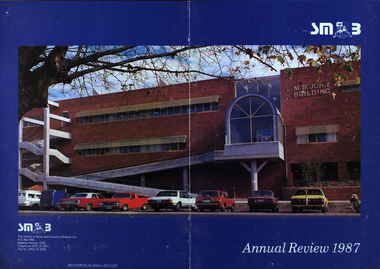
... Young Scholarship, Peter Muir, Founders Day Cake, Morgan John. .11) Black card covered booklet with five images of exteriors of the Ballarat School of Mines. the contents include: Jack Barker, Peter Shiells, Peter Ellyard, Ian Stoney, Terry Moran, Wayne Strong, David Ince, Simone Titheridge, Ian Aitken,Kevin Alsop, Bill Bridges, Clive Carmichael, Bob Feary, Rendle hannah, Roly Parfenovics, Graham Snibson, Kevin Stockdale, Len Wilson, Child Care Centre opening, Student accommodation, Victoria Street, Brewery site. naming buildings, E.J. barker. ...Young Scholarship, Peter Muir, Founders Day Cake, Morgan John. .11) Black card covered booklet with five images of exteriors of the Ballarat School of Mines. the contents include: Jack Barker, Peter Shiells, Peter Ellyard, Ian Stoney, Terry Moran, Wayne Strong, David Ince, Simone Titheridge, Ian Aitken,Kevin Alsop, Bill Bridges, Clive Carmichael, Bob Feary, Rendle hannah, Roly Parfenovics, Graham Snibson, Kevin Stockdale, Len Wilson, Child Care Centre opening, Student accommodation, Victoria Street, Brewery site. naming buildings, E.J. barker. ...The Ballarat School of Mines was established in 1870 through the initiatives of the Ballarat Mining Board making it the oldest site of technical education in Australia. The Board was concerned with the shortage of mine managers for the goldfields. Classes began in surveying, mathematics, and chemistry and a decade later they included metallurgy , assaying and geology. With the decline in goldmining the direction of the college changed and broadened, the art School was established and the Ballarat Junior Technical School developed. In 1976, the tertiary sector seperated from the School of Mines and Industries Ballarat to form the Ballarat College of Advanced Education. In the 1980s SMB was a Community College of Technical Education and Further Education (TAFE) offering a wide range of vocational, enrichment and preparatory programs. It is continuing the tradition of providing for the educaiton needs of people within the Central Highlands. During the 1970s and 80s it acquired and refurbished old buildings and developed new facilities to keep up with the needs of an expanding curriculum and student population. The era of these annual reports is just before the merger with the University of Ballarat.A number of soft card covered annual report for the Ballarat School of Mines. .1) 12 page black covered report featuring an image of the E.J. Tippett Library. Includes information on death of E.J. Tippett, disability policy, Peter Quinn, Patti McNulty, Bob Feary, Shane Everand, Integration, Fiona Watson, retirement of Robert Morgan, Opening of the carpentry and Joinery Facility in Davey Street, formation of the School of Business and Information Technology, Melissa Bone, opening of the E.J. T. Tippett Learning Resource Centre (Library), Refurbishment of the Administration Building, Food Service Building (Prospects), Court House Theatre, Enrolment centre, Museum, Creche, Women's Trade technical Program, Rural Education Program, Ararat Prison Program, Community Studies Section, Ararat Adult Literacy Group. Literacy Assistance for Undergraduates, Fire training, fitness, open Learning, Training & Employment Group, Awards, Filipino Visitors, oil Seed Research, Brunei, Barometer (gift) for Horticulture, Special Equipment (guillotine and brake press; programmable logic Controller; theodolite: laser lever; Universal testing Machine; Atomic Absorption Spectrophotometer)., organisational Structure. Photos include Ken Flecknoe, Peter Quinn, Patti McNulty, Bob Feary, Shane Everard, Fiona Watson,Linda Bland, Robert Morgan, David McCaughey, E.J. Tippett, Frank Sheehan, Julie Baulch, Jo Reeves, Col McCurry, Jenny Garnham .3) Blue covered book with a photograph of the M.B. John Building taken from Albert Street on the cover. Topics include: Ken Flecknoe, Peter Shiells, Ararat Campus, David Haddow, Kevin Martin, Rendle Hannah, Gary Eason, Geoff Pope, Albert Peart, M.B. John building opened, Hairdressing Salon, Community Centre, Creche, closure of Lydiard Street, Museum, Jenny Levison, Inskill, Small Business Training, Ballarat Eat free Library, Barkly Street, Wormalds Valve Group, Aboriginal Programs, Horticulture Center, Awards, Country fire Authority, tractor Donation, Women's Policy. Special purchases included surveying equipment with data recorder, test rig , CDT MIG welder, compact gas chromatograph with FID and single pen recorder, Olivetti stand-alone word processing unit. Images include Ken Flecknoe. Peter Shiells, John Crowe, Trevor Slater, Brian McLennan, Kerrie Cross, Albert Peart, John Cain, M.B. John, Enrollment Centre, Museum, Jo Watson, Wormalds, Brian Webber, Dianna Nikelson, Ian Aitken, Brendan B, Chez Dichiera, Heather Dixon, Julie Broadbent .4) 1993 - Brown and white soft covered annual review featuring students of the Ballarat School of Mines at work. Bill Gribble, Brian McLennan, Peter Shiells Retirement, Robert C. Lovett, Steven Mendelson, Max Palmer, Jenny Gough, Mary Molloy, Barrie Firth, Colin McCurry, Dora Hormann, Organisation Structure, Brewery Acquisition, Humffray Street Primary School, Grant Street Retaining Wall, Neville Bunning Plaque, VCE Plus, Ballarat Small Business centre, Ararat Prison, Ballarat Showgrounds Rotunda, .6) Green covered annual review with an aerial photograph over Albert Street, Ballarat. Content include Kerrie Cross, Peter Shiells. Kenneth Flecknoe Obituary, Ian Pimblett, Keith Boast, David Nicholson, Max Palmer, Brian Webber, Bob Lovett, Linda Bland, Prospects, Training restaurant, 3BBB, Malcolm Vallance, Aboriginal Programs, Ian Cathie, Koorie Support Unit, Caroline Hogg, 'Trained Men Make Their Own Terms' exhibition at the Gold Museum, Ricky Hains, Stephen Hughes, Jeff White, Dennis Bolster .8) Blue covered review for 1989. The contents include: Kerrie Cross, Peter Shiells, Ann McCaffrey, Kevin Alsop, Mary Molloy, Ross Furness, Robert Lovett, Victoria Street Student Hostel, Hugh Beggs, Ballarat Small Business Centre, Inskill, Ararat Campus, Hospitality and Tourism, Koorie Support Unit, Fiona Warsn, Bruce Staley, Terry Moran, Anthony Wonish, Ivan Deveson, Leo Shannon Memorial Award, Bryan Crebbin, Geoff Howard, R.C.W. Burdett, Jeff White, Ian Harris, Tom Wiseman, Bill Gribble, Allison Kay, Steven Mendelson, Keith Boast. .9) Grey covered book with a coloured photo of the Victoria Street Student Residence. Contents include: Kerry Cross, Peter Shiells, Morgan Bevan John Illuminated address. Jean Phillips, Koorie Support Unit, Andrew Sullivan, Victoria Street Student Residence, Horticulture, Inskill, Tertiary Awareness Project, Adult Education, Ivan Deveson, Brian Howe, Barry Jones, Joan Kirner, Andrew Trigg, Warren Perry, Murrell Rock Collections, Gwyn Hanssen-Piggott, Disability Awareness Day, Sebastopol Borough Logo, Phoebe Rimmer, Russell Jackson, R.J. Young Scholarship, Peter Muir, Founders Day Cake, Morgan John. .11) Black card covered booklet with five images of exteriors of the Ballarat School of Mines. the contents include: Jack Barker, Peter Shiells, Peter Ellyard, Ian Stoney, Terry Moran, Wayne Strong, David Ince, Simone Titheridge, Ian Aitken,Kevin Alsop, Bill Bridges, Clive Carmichael, Bob Feary, Rendle hannah, Roly Parfenovics, Graham Snibson, Kevin Stockdale, Len Wilson, Child Care Centre opening, Student accommodation, Victoria Street, Brewery site. naming buildings, E.J. barker. A.W. Steane K.J. Flecknow, Carpentry and joinery, Inskill, Hospitality, Pottery, ceramics, Founders' Day, Warren Perry, Agreement between Ballarat School of Mines and Ballarat university College, merger, Peter Baldwin, Awards, obituary Lindsay Hillman. Images include: Wayne Strong, David Ince, Simone Titheridge, kerrie Cross, Joan Kirner, Frank Sheehan, Bill Gribble Ros Wilkie, Judi O'Loughlin, Tony Leonard, Gemma Hearnes, Brendan Hill, Joanne Bell, Karl Moon, Stella Savy, Shirley Falkinder, Peter Baldwin, Jack Barker, Michael Ronaldson, David Kemp, Peter Shiells, Margot Healey, Sharon McLennan, Kerrie Firns, Petrena Brookers, Deb Goudappel, Claire Bond, Administration Building Lindsay Hillman. .13 ) Brown covered report with photographic images. Content includes: Pam Merrett. , Peter Shiells, Robert Lovett, Steven Mendelson, Max Palmer, Jenny Gough, Barrie Firth .14) Brown covered report with photographic images. Content includes: .15) Green covered report with photographic images. The blond woman standing on the right looking at a computer screen is Pam Merrett. Content includes: Bill Gribble, Ron Wild, Doug Sarah, Martin Hill, John Kemp, David Manterfield, Leslie Comy, Linette Penhall, Glen Martland. Virginia Fenelon. Michael Bracher, Brewery Building. Child care centre, Prospects Cafe Opening, Horticulture Training Centre, Retaining Wall, The Gordon, University of Ballarat and Ballarat School of Mines affiliation, Geoffrey Blainey, Ararat Community College Memo of understanding, Brian McLennan. Founders Day (Hadden Storey), Gwyn Hanssen-Pigott, Ken Latta, Neville Bunning Outstanding Achievement Award, Valerie Wilson, Jack Barker, John Sharpham, Jack Barker Resignation.ballarat school of mines, university of ballarat, integration, shane everard, robery morgan, linda bland, ballarat junior technical school, former court house, ken flecknoe, bruce muir, lindsay hillman, neil crouch, jack barker, keith boast, rex hollioake, m.b. john, bob lovett, brian mclennan, peter shiells, bruce tanner, jeff white, bryan crebbin, kerrie cross, ric dunlop, tom wiseman, barbara hughes, chris matheson, morgan b. john, albert street, steven mendelson, john crowe, ann mccaffrey, kevin alsop, mary molloy, ross furness, robert lovett, victoria street student hostel, student residences, hugh beggs, ballarat small business centre, inskill, ararat campus, hospitality and tourism, koorie support unit, fiona watson, bruce staley, terry moran, anthony wonish, ivan deveson, leo shannon memorial award, geoff howard, r.c.w. burdett, ian harris, bill gribble, allison kay, liz eddy, pam merrett, doug sarah, martin hill, john kemp, david manterfield, leslie comy, linette penhall, glen martland, virginia fenelon, michael bracher, brewery building, child care centre, prospects cafe, horticulture training centre, retaining wall, the gordon, university of ballarat and ballarat school of mines affiliation, geoffrey blainey, ararat community college memo of understanding, founders day, hadden storey, gwyn hanssen-pigott, ken latta, neville bunning outstanding achievement award, valerie wilson, john sharpham, kerry cross, morgan bevan john illuminated address, jean phillips, andrew sullivan, victoria street student residence, horticulture, inskill, tertiary awareness project, adult education, brian howe, barry jones, joan kirner, andrew trigg, warren perry, murrell rock collections, gwyn hanssen-piggott, disability awareness day, sebastopol borough logo, phoebe rimmer, russell jackson, r.j. young scholarship, peter muir, kenneth flecknoe obituary, ian pimblett, david nicholson, brian webber, prospects, training restaurant, 3bbb, malcolm vallance, aboriginal programs, ian cathie, caroline hogg, 'trained men make their own terms' exhibition at the gold museum, ricky hains, stephen hughes, dennis bolster, aboriginal education, e.j. tippett obituary, patti mcnulty, bob feary, equal opportunity officer, robert c. morgan, school of business and information technology, e.j. tippett library, e.j. tippett library opening, carpentry and joinery, women's trade and technical program, rural education program, ararat prison program, barometer, oil seed research, . bill gribble, peter shiells retirement, robert c. lovett, max palmer, jenny gough, barrie firth, colin mccurry, dora hormann, organisation structure, brewery acquisition, humffray street primary school, grant street retaining wall, neville bunning plaque, vce plus, ararat prison, ballarat showgrounds rotunda -
 Federation University Historical Collection
Book, Victorian Government Legislative Assembly, The Select Committee on Castlemaine and Sandhurst water supply, Report from the Select Committee on Castlemaine and Sandhurst Water Supply, together with the proceedings of the Committee, minutes of evidence and appendices, 19/5/1865 (exact)
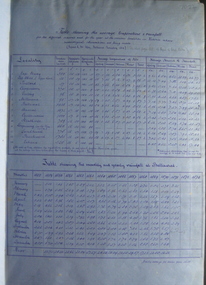
... john h reilly...ambrose johnson...george francis...timber preservation...james forbes...alfred surplice...malcolm carmichael...He was assistant engineer for the Ballaarat and Ballarat East Water Supply Committee and helped plan local reservoirs. water supply victoria castlemaine directories sandhurst directories ballarat directories james blackburn edward wardle daylesford water race c j taylor george avery fletcher bagge ohlfsen bagge george foote john h reilly ambrose johnson george francis timber preservation james forbes alfred surplice malcolm carmichael robert adams frederick hugh thomas h o christerpherson william downe thomas lawrence brown francis hadgson nixon strangways guildford maldon muckleford lauriston malmesbury franklinford walmer strathloddon downe ferdinand krause m7082 trentham castlemaine drummond metcalfe sutton grange lockwood ravenswood mandurang yandoit c.h. ohlfsen bagge moorabool reservoir gong gong reservoir harry beale's reservoir pincott reservoir frank pinkerton water A signature by "Ferdinand M. ...This book contains the report from the select committee on Castlemaine and Sandhurst water supply; with the proceedings of the committee, minutes of evidence and appendices. It also contains the report Of the Engineer-In-Chief of Railways, and reply of the Chief Engineer of Water Supply on the works constructed by the Victorian Water Supply Department, presented to both houses of parliament by His Excellency’s command. Ferdinand M. Krause, was a lecturer at the Ballarat School of Mines in Geology Mineralogy Mining Engineering and Surveying. He was a Fellow of the Geological Society and a Fellow of the Linnian Society. He was assistant engineer for the Ballaarat and Ballarat East Water Supply Committee and helped plan local reservoirs.A brown cloth hard cover, foolscap book with leather spine. Title is written in black on the title page. "Water Supply Reports" is engraved in gold on spine. It includes a table showing the monthly and yearly rainfall and shade temperature at Ballarat, 2nd February, 1885. It also includes two reports and two replies, a map No.7082.2 of Victorian Water Supply, Castlemaine and Sandhurst district general plan including lines of Aqueduct, Reservoirs. No. 7082.3 of Victorian Mining districts, Mining Divisions and The Gold Fields in 1866 - includes districts to be supplied under the Waterworks Act, 1965. It also includes: *Report of the Engineer-in-chief of Railways and Reply of the Chief Engineer of Water Supply on the works constructed by the Victorian Water Supply Department, 1869. * Coliban Water Scheme, 1864 * Ballarat and Ballarat East Water Supply (1869) including the Ballarat Water Supply List containing names of occupiers and nature of improvements on lands comprised within the proposed reserve of Gong Gong Reservoir, Ballaarat. At Warrenheip the names included: Honora McCallin, William Honan, C. McMahon, Patrick McMahon, J.P. Beach, J.H. Smith, Michael Nestor, Martin Quinn, Martin McIntyre, Robert Higgins, Coleman Kane, Robert Bond. At Ballarat: William Clarke, Richard White, John Hosking, Wesleyan Chapel, J. Hewitt, Robert McRobinson. At Bungaree: John Pullin, John Llewellyn. William Daw, Smith and Wynne, William Brough, A. Alexander. * Ballarat and Ballaarat East Water Supply report upon the advisability, or otherwise, of constructing a reservoir at the junction of the Yarrowee Creek and Gile's Creek, upon a site known as Gile's Reservoir (printed by Frank Pinkerton). This report has numerous notes written on it (most probably by Krause) and includes the capacity of Harry Beale's Reservoir, Pimcott's Reservoir and the Proposed Gong Gong Reservoir. * Statement as to the position of the Ballaarat and Ballaarat East Borough Councils in Connection with Water Supply, September 1869. * Ballarat and Ballaarat East Water Supply - General Statement upon the Ballaarat and Ballaarat east Scheme of Water Supply. Includes information on Moorabool reservoir, Harry Beale's Reservoir, Lal Lal Creek, Two Mile Creek, Beale's Dam, Yarrowee Creek, Gong Gong Reservoir, Kirk's Dam, Devil's Creek, Moorabool Creek. Additional handwritten notes (probably by Krause) * Engineer's Report on the resolution of the COmmittee of Water Supply, of the 7th July 1868. The report refers to the Country around Mount Warrenheip. Names mentioned are L. Abraham, Great North-West Gold Mining Company, Border Sawmills, Ferdinand Krause, Ohlfsen Bagge, W.H. Shaw, A signature by "Ferdinand M. Krause" at the top corner of the title page. A few pages have handwriting on the margins, it is believed to be his handwriting. water supply victoria, castlemaine directories, sandhurst directories, ballarat directories, james blackburn, edward wardle, daylesford water race, c j taylor, george avery fletcher, bagge, ohlfsen bagge, george foote, john h reilly, ambrose johnson, george francis, timber preservation, james forbes, alfred surplice, malcolm carmichael, robert adams, frederick hugh thomas, h o christerpherson, william downe, thomas lawrence brown, francis hadgson nixon, strangways, guildford, maldon, muckleford, lauriston, malmesbury, franklinford, walmer, strathloddon, downe, ferdinand krause, m7082, trentham, castlemaine, drummond, metcalfe, sutton grange, lockwood, ravenswood, mandurang, yandoit, c.h. ohlfsen bagge, moorabool reservoir, gong gong reservoir, harry beale's reservoir, pincott reservoir, frank pinkerton, water -
 Federation University Historical Collection
Magazine - Booklets, Ballarat School of Mines Students' Magazine 1954, 1953-1955
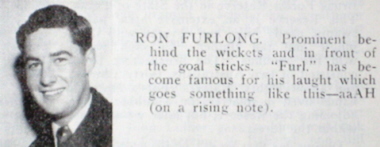
... john...dean...spiers...ngip...barrie smith...stewart rowe...elaine walton...stevens...max stevens...sawyer...ann mitchell...flavel...ingleton...bethune...blackburn...boag...brokenshire...carmichael...ballarat school of mines tinney faneco jim john dean spiers ngip barrie smith stewart rowe elaine walton stevens max stevens sawyer ann mitchell flavel ingleton bethune blackburn boag brokenshire carmichael kirby kinnane alec kinnane ludbrook meagher searl sheppard gillin murray gillan archer beattie bautovich benjamin buck bunting athol day eddie habel heyes maddox phillips schreenan donald stevens tinissen whitcher ian whitcher mccallum ryrie mccallum marching competition skuja wilton neil andrews ellen freemantle alan johnson willey graeme willey mainwaring diana mainwaring mcdougall little margaret little lance matthews philp davis eureka stockade eureka swimming pool pools swimming pool restarick kempe barry johns harold everett taylor holmes wendell holmes skipton john collier collier daryl schmidt chris sanos greece andrews doull everett seong lockhead pitzen watts technical school junior technical school girl's junior technical school ballarat girl's junior technical school baxendale stan kisler graham willey murray jim murray grundell cleland furlog ron furlong judy johnson russ whitcher anita young durant malaysia literary society thurling andrewartha barnes ditchfield peter ditchfield dunlop kisler mcneil orgill quinlan saggers bill saggers seabrook williams paddle graham handmer hetehrington dow pine ballarat north junior technical school William Saggers Signatures: N.H. ...Three soft covered Magazines - the Ballarat School of Mines Students' Magazine for 1953-5. .1) 1953 - The Coronation Number. Articles include: The Mining and Metallurgy Congress, Aboriginal research, Power from Water, Engineering Etiquette, Australian Art Images include: Queen Elizabeth 2, Ballarat Junior Technical School winning the Marching Competition, competitors in the Redex Trial. .2) 1954 - Articles include: Eureka Stockade; Working in East Africa and Canada, Greece, Images include; Craig's Hotel, Eureka Swimming Pool; Barry Jones, Harold Everett, "Tailspin" Taylor, Pastoral Skipton, Margaret McGregor, Nancy Rimmington, Janice Tonkin, First Roll Call in Girls' Junior Technical School .3) 1955. Articles include: Tales from Malaysia, Literary Society Images include; Craig's Hotel, Signatures: N.H. Andrews; J. Skuja: Alan E. Johnson, B.V. McDougall, L.J. Mathews, Daryl Schmidt, J, Collierballarat school of mines, tinney, faneco, jim john, dean, spiers, ngip, barrie smith, stewart rowe, elaine walton, stevens, max stevens, sawyer, ann mitchell, flavel, ingleton, bethune, blackburn, boag, brokenshire, carmichael, kirby, kinnane, alec kinnane, ludbrook, meagher, searl, sheppard, gillin, murray gillan, archer, beattie, bautovich, benjamin, buck, bunting, athol day, eddie, habel, heyes, maddox, phillips, schreenan, donald stevens, tinissen, whitcher, ian whitcher, mccallum, ryrie mccallum, marching competition, skuja, wilton, neil andrews, ellen freemantle, alan johnson, willey, graeme willey, mainwaring, diana mainwaring, mcdougall, little, margaret little, lance matthews, philp davis, eureka stockade, eureka swimming pool, pools, swimming pool, restarick, kempe, barry johns, harold everett, taylor, holmes, wendell holmes, skipton, john collier, collier, daryl schmidt, chris sanos, greece, andrews, doull, everett, seong, lockhead, pitzen, watts, technical school, junior technical school, girl's junior technical school, ballarat girl's junior technical school, baxendale, stan kisler, graham willey, murray, jim murray, grundell, cleland, furlog, ron furlong, judy johnson, russ whitcher, anita young, durant, malaysia, literary society, thurling, andrewartha, barnes, ditchfield, peter ditchfield, dunlop, kisler, mcneil, orgill, quinlan, saggers, bill saggers, seabrook, williams, paddle, graham, handmer, hetehrington, dow, pine, ballarat north junior technical school, william saggers -
 Federation University Historical Collection
Letter - Letterbook, Ballarat School of Mines Letterbook, 1915 to 1916, 1916
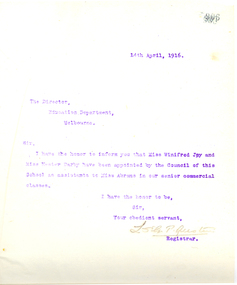
... john dulfer...stanley westcott...wolfram...assay...anzac medallion...beaufort house...ballarat eight hours' anniversary...last chance mine...evan walker...norman carmichael...The letter book related to outward letters from the Ballarat School of Mines. ballarat school of mines correspondence murphy vaughan victor greenhalgh irvine coulter lancelot austin l.s.g.p. austin adcock james bickett bickett tunbridge tucker desnoy phillips edgar mcconnon revill tinworth r.o. buchanan john dulfer stanley westcott wolfram assay anzac medallion beaufort house ballarat eight hours' anniversary last chance mine evan walker norman carmichael doney thomas doolan harold wakeling bowman james early garry eason abrams bennett duthie harry fern hetherington hutchinson collyeer colom carew-smyth ponsonby carew-smyth donald clark george swinburne bev syliva hestor darby joy winifred barry judd c.c. campbell cathcart centrel gold mining co adcockbawden benevolent asylum ditchburn doctor spring doepel and chandler eureka tile company pitfield edwads pyrites works embling fleay c.e. fenner mount rowan gower greenhalgh c. hosking murtoa c.a. hoadley harold herbert jolly kenny kelsall kerr architect a.m. lilburne lemmon andrew land leipson h.s. lawson a. levy scarsdale gold mines w.k. moss fred martell e.j. mcconnen read murphy h. morris leongatha maurice claude j. middleton j.c. molley e. merlin e.f. pitman p. pringle rumble dr robin edgar richard g. remfry g. robertson james rich a. ross d. l. stirling s. stretch c. skilbeck r. strachan w.k. thomson grant taylor j.h. tundbury v.e. reeves tin mining co. hobart vernon hilda wardle daylesford waller whitloa w. watson b. whitington j.b. robinson k. hamilton photography j.m. sutherland j.h. scullin scholarship w.h. wesley gundagai a.t. o'meara associated smelters port pirrie assayer telegraphy t. williams d.l. stirling edward finnis norman tinworth j.y. mcdonald h.s. summers geology homeward bound bon accord gmc e.t. vane a.d. dunstan maughan cox g.s. richards westcott w.l. carroll turnbull l. vernon s. nightingale cathcart central gold mining company cathcart a.j. moffit v.e. reevesr. mcmillan w. nankervis w.h. clutterbuck j.m. wesley e. dooley olive mckillop dana street primary school shelter shed ballarat junior technical school british nationality and aliens act war relief fund s. hylton bravo queensland molasses co ethel merlin a.e. poulton commercial winifred joy c. adcock lancelot st.g.p. austin herbert p. bennett a. bray fonald clark walter collyer o.f. colom g.e. desnoy f.w.r. doney brian h. duthie a. gordon g.m. hetherington kath hutchinson baryr judd j. kean john y. mcdonald j. murray a.f. phillips c.c. phillips john mck. sutherland bev sylvia r.e. tunbridge miachel vaughan p. vawdey h.j. vernon harold g. wakeling pharmacy board pharmacy r. cutter ballarat technical art school building dalgety & co. h.s.w. lawson a.h. powell australian institute of engineers eight hours' anniversary committee silberberg beckman's thermometer Miss Abrams Business College A bound leatherbound book with marble endpapers. ...The letter book related to outward letters from the Ballarat School of Mines.A bound leatherbound book with marble endpapers. The contents are copies of outward letters from the Ballarat School of Mines from July 1915 to May 1916. Page 807 relates to the Ballarat Eight Hours' Anniversary Committee (J. Kean) Page 906 - Letter from L. Austin (Ballarat School of Mines Registrar) concerning the appointment of Winifred Joy and Hestor Darby as assistants to Miss Abrams to the Ballarat School of Mines Senior Commercial Classes. ballarat school of mines, correspondence, murphy, vaughan, victor greenhalgh, irvine coulter, lancelot austin, l.s.g.p. austin, adcock, james bickett, bickett, tunbridge, tucker, desnoy, phillips, edgar mcconnon, revill tinworth, r.o. buchanan, john dulfer, stanley westcott, wolfram, assay, anzac medallion, beaufort house, ballarat eight hours' anniversary, last chance mine, evan walker, norman carmichael, doney, thomas doolan, harold wakeling, bowman, james early, garry eason, abrams, bennett, duthie, harry fern, hetherington, hutchinson, collyeer, colom, carew-smyth, ponsonby carew-smyth, donald clark, george swinburne, bev syliva, hestor darby, joy winifred, barry judd, c.c. campbell, cathcart centrel gold mining co, adcockbawden, benevolent asylum, ditchburn, doctor spring, doepel and chandler, eureka tile company, pitfield, edwads pyrites works, embling, fleay, c.e. fenner, mount rowan, gower, greenhalgh, c. hosking, murtoa, c.a. hoadley, harold herbert, jolly, kenny, kelsall, kerr, architect, a.m. lilburne, lemmon, andrew land, leipson, h.s. lawson, a. levy, scarsdale gold mines, w.k. moss, fred martell, e.j. mcconnen, read murphy, h. morris, leongatha, maurice claude, j. middleton, j.c. molley, e. merlin, e.f. pitman, p. pringle, rumble, dr robin, edgar richard, g. remfry, g. robertson, james rich, a. ross, d. l. stirling, s. stretch, c. skilbeck, r. strachan, w.k. thomson, grant taylor, j.h. tundbury, v.e. reeves, tin mining co. hobart, vernon, hilda wardle, daylesford, waller, whitloa, w. watson, b. whitington, j.b. robinson, k. hamilton, photography, j.m. sutherland, j.h. scullin, scholarship, w.h. wesley, gundagai, a.t. o'meara, associated smelters port pirrie, assayer, telegraphy, t. williams, d.l. stirling, edward finnis, norman tinworth, j.y. mcdonald, h.s. summers, geology, homeward bound bon accord gmc, e.t. vane, a.d. dunstan, maughan, cox, g.s. richards, westcott, w.l. carroll, turnbull, l. vernon, s. nightingale, cathcart central gold mining company cathcart, a.j. moffit, v.e. reevesr. mcmillan, w. nankervis, w.h. clutterbuck, j.m. wesley, e. dooley, olive mckillop, dana street primary school shelter shed, ballarat junior technical school, british nationality and aliens act, war relief fund, s. hylton bravo, queensland molasses co, ethel merlin, a.e. poulton, commercial, winifred joy, c. adcock, lancelot st.g.p. austin, herbert p. bennett, a. bray, fonald clark, walter collyer, o.f. colom, g.e. desnoy, f.w.r. doney, brian h. duthie, a. gordon, g.m. hetherington, kath hutchinson, baryr judd, j. kean, john y. mcdonald, j. murray, a.f. phillips, c.c. phillips, john mck. sutherland, bev sylvia, r.e. tunbridge, miachel vaughan, p. vawdey, h.j. vernon, harold g. wakeling, pharmacy board, pharmacy, r. cutter, ballarat technical art school building, dalgety & co., h.s.w. lawson, a.h. powell, australian institute of engineers, eight hours' anniversary committee, silberberg, beckman's thermometer, miss abrams business college -
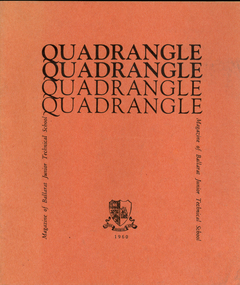 Federation University Historical Collection
Magazine, J.A. Hoskin & Son, Quadrangle: Magazine of the Junior Technical School Ballarat, 1960, 1960
... John Dellaca...J. Angwin...W. Scanlon...M. Chung...G. Holt...r. bilney...w. carey...r. carmichael...John Dellaca J. Angwin W. Scanlon M. Chung G. Holt r. bilney w. carey r. carmichael B. ...The 1960 Quadrangle magazine committee were Kelvin Whitford, Bill Heywood, Ken Delayney, Daryl Burt, John Cornish, John McDonald, Ross Gray, and Messrs I. Chisholm and N. Watkins.Salmon coloured soft covered magazine of 46 pages. Contents include: Villiers Internal Combustion Engine, Geelong, School Song, Death of W.J. Paterson, Old Boys Newsletter (Keith Rash), Pine plantation. Robert Champneys, Air Training Corps, Mothers' Club Images include: R. Watson (headmaster), staff, prefects, tennis court, Peter Trezise, Doug Rash, Wong Chik Min, John Gilbert, John McDonald, Ray Bilney, Denis Moy, John Crawley, Roberto Venier, Reijo Karvinen, Cheetham Salt Works; Graeme Cummins, Gerald Kessel, James Colligan, Alan Everett, David Newman, Air Training Corps, Ken Wach, Athletics team, Tunnel Ball Team, Cross Country Team, Basketball Team, Softball Team, Football Team, Swimming team, Cycling Team, Cricket Team, ballarat junior technica school, ballarat school of mines, whitford, watson, paterson, w.j. paterson, george cornell, franklin, tresize, prefects, tennis court, peter trezise, doug rash, wong chik min, john gilbert, john mcdonald, ray bilney, denis moy, john crawley, roberto venier, reijo karvinen, cheetham salt works, graeme cummins, gerald kessel, james colligan, alan everett, david newman, air training corps, ken wach, athletics team, tunnel ball team, cross country team, basketball team, softball team, football team, swimming team, cycling team, cricket team, r. watson, kelvin whitford, bill heywood, ken delayney, daryl burt, john cornish, ross gray, william paterson obituary, ron kirner, keith rash, air training cadets, i. pym, c. antonio, k. woodyatt, b. middleton, a. everett, b. clarke, d. riddiford, i. trembath, j. myers, l. goldsmith, p. chanler, p. edge, s. riddiford, r. cook, j. holt, k. fellows, d. coldicott, douglas rash, g. angow, n. jones, john dellaca, j. angwin, w. scanlon, m. chung, g. holt, r. bilney, w. carey, r. carmichael, b. mckinnon, n. bedggood, r. robinson, c. cunninham, r. grubb, l. skevington, g. cole, w. whiting, ronaldson-tippett, palmer bros, h. dubberley & son, m.b. john and hatersley limited, h.a. davis motor service, alexandria tea rooms -
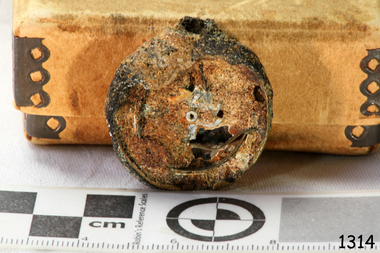 Flagstaff Hill Maritime Museum and Village
Instrument - Fob Watch, ca 1878
... Carmichael...1878...Loch Ard: the wreck that became a legend...ladies fob watch...gold watch...fob watch...pocket watch...horology...accessory...time keeping...scientific instrument...ladies' watch...ladies' pocket watch...lady's watch...souvenir watch...survivor...clocks and watches...diagonally striped envelope lining...Firenze...Busta...Earliera...Florence...italy...Glencove...Portsea...Victoria...1905...1917...Nepean Hotel...Moreton...Morton...Elizabeth Morton...Mrs J. Morton...James Morton...Elizabeth Ford...Julia Ford...Alfred Sandle Ford...Frances Whyburn...James Sandle Ford...John...Flagstaff Hill Warrnambool Shipwreck Coast Flagstaff Hill Maritime Museum maritime museum Flagstaff Hill Maritime Village Great Ocean Road Loch Ard Eva Carmichael Tom Pearce Loch Ard Gorge Loch Ard souvenir Port Campbell Miss Carmichael Mrs Carmichael Dr Carmichael 1878 Loch Ard: the wreck that became a legend ladies fob watch gold watch fob watch pocket watch horology accessory time keeping scientific instrument ladies' watch ladies' pocket watch lady's watch souvenir watch survivor clocks and watches diagonally striped envelope lining Firenze Busta Earliera Florence italy Glencove Portsea Victoria 1905 1917 Nepean Hotel Moreton Morton Elizabeth Morton Mrs J. Morton James Morton Elizabeth Ford Julia Ford Alfred Sandle Ford Frances Whyburn James Sandle Ford John ...The story of this gold fob watch is intriguing. The letter is dated March 6, 1905, 27 years after the Loch Ard was wrecked. It appears to be a quick personal note from a relative or friend who briefly writes the history of the enclosed ‘souvenir’ watch, found in Loch Ard Gorge at Port Campbell. Although the finder is not named, it is likely the letter’s author. The writer mentions that the letter and watch would be sent once photographs of the area where the watch was found had been added. The fancy, lined envelope’s date stamp is October 12th, 1917 (12.10.17), almost 12 years after the letter was written. It has a postmark from Florence (Firenze), Italy. The handwriting on the envelope differs from that of the letter, and there is no further mention of photographs being included. The condition of the watch certainly shows the effects of time in the sea. Some inner workings can be seen through broken encrustations and missing sections of its case. The winding knob on the top is recognisable even though it is covered by sand and other adhesions from the sea. Its dainty size and gold case suggest that it was made for a well-to-do female. The watch, envelope and letter were donated along with a 1971 newspaper cutting, all neatly folded and tucked with the watch into a small, strong cardboard box with metal reinforcing on the corners and a fitted lid. The newspaper article gives context to the watch, telling the story of the Loch Ard shipwreck tragedy and the two survivors, but does not refer to the watch. Perhaps one of the 17 passengers sailing on the Loch Ard, including members of the Carmichael family, owned the watch, or maybe it was amongst the cargo, as the ship’s manifest includes ‘clocks and watches £25’. . Considering the dates of the letter and the envelope, did the finder of the ‘souvenir’ watch take it to Europe? Was it used for good luck during service in the military? . Comparing the different writing on the letter and the envelope, does it suggest that the watch’s finder was overseas and asked someone to send the envelope to the intended recipient, with postage from Italy? ABOUT the address, “Glencove”: The details on the envelope are faint and obscured by stiff creases in the paper. The address appears to be “Mrs J. Mortton, Glencove, Portsea, Victoria, Australia”; though the family at that address had the surname “Morton”. Mrs J. Morton, formerly Elizabeth Ford, married her second husband, James Morton, in 1904, the year before the date of the letter. The couple lived at the Nepean Hotel before they were at “Glencove”. Although they never owned that property, it was their home when James died in 1937. Elizabeth’s nephew, Alfred Sandle Ford (1894-1981), and a nephew-in-law were overseas during World War I. Alfred Ford had moved to Melbourne as a young boy with his father. He entered service as Second Lieutenant in 1915, naming his father, Alfred Sandle Ford, as his next of kin. He served in Egypt, France and Belgium with the Australian Imperial Forces as a member of the Field Artillery Brigades. He returned to Melbourne in 1919 and worked in Richmond and Box Hill. He later married Frances Whyburn. Previously, in 1872, Elizabeth Ford’s sister, Julia Ford, acquired the 1-acre property with a 3-room house that became known as “Glencove”, Portsea. The building was originally the first school in the area, established before Crown Land sales. In the Parish of Nepean, it was first assessed for rates in 1871. Julia Ford (1843-1912) and Elizabeth Ford (1859-1957) were daughters of James Sandle Ford (1811-1890), a well-known pioneer of Portsea, formerly a convict limeburner. James Ford acquired several Crown allotments in Portsea. In 1872, he converted his old hotel into the large residential establishment known as the Nepean Hotel, which his family largely ran until it was demolished in 1971. During those years, different family members lived at the Nepean Hotel or Glencove. In 1877, Julia Ford married a significant landowner, John Cain, a limeburner from Rye. They had five daughters, four of whom were never married; Kathleen (1880-1949), Mabel (1881-1973), who was the last family member to own the house until her death, Hilda (1884-1974) and Julia Ethel (1888-1949). Some of the newspaper records refer to “Glencove”, Portsea, inform that: 1927 - Dr. and Mrs. J. E. Shilliday are staying with Mrs. R. B. Sanderson at Glencove. (Australasian) 1937 - James Morton died at his property, Glencove, Portsea, aged 83 years (Argus) 1949 - Julia Ethel Cain died at Glencove, Portsea. (Argus) 1949 - Probate application by sisters of Julia Ethel Cain, deceased, formerly of Nepean Hotel, Portsea, but late of Glencove, Nepean Highway, Portsea. The connection of the watch with the sands of Loch Ard Gorge and to the ship Loch Ard contributes to our knowledge of personal items brought to Australia in 1878, whether as the belongings of a passenger or as cargo; a gold watch would be intended for a wealthy buyer. The little artefact helps us understand the survival of artefacts in the powerful sea, over a quarter of a century after the wreck of the ship. Although many people would have visited the shipwreck site, the length of time before it was found helps us understand the effects of the sea on shipwreck artefacts. The survival of the carefully packaged watch and related documents shows the respectful understanding of preservation of historic artefacts, even from almost 150 years ago at the time of writing (2025). Ladies' fob watch, thought to be gold. It is now covered in encrustation. A bump on the edge would be the winding mechanism for the watch. A small section of the back of the case has broken away, and an engraved surface can be seen. Face and hands are missing, revealing the spring workings inside. Donated with the watch were two documents and a newspaper cutting about the story of the shipwreck of the Loch Ard. They are all in a strong cardboard box with reinforced corners on the base and lid. Found at Loch Ard Gorge and said to have been from the Loch Ard. The three donated documents are: - 1. A rectangular envelope made of cream waxy paper lined with black and white diagonally striped paper. The top right corner, usually meant for a postage stamp, has been torn off, partly exposing text on a rectangular printed logo. A round black postmark stamp near the top centre shows the post office location and date. The address on the front is handwritten in black ink. The creases on the envelope suggest it has been folded three times. 2. A letter on cream rectangular paper features clear, handwritten script in black ink. The unevenly cut bottom edge has two short black vertical lines, possibly the tops of tall written letters. There are creases where the page has been folded three times. 3. A newspaper clipping featuring text, an illustration, and handwritten details of the newspaper’s source.1. Envelope: - Address: ”Australia (per Postage) / [looks like “Mrs J. Mortton”] / Glencove, (Portsea) / Victoria” Postmark: “FIRENZE” 12 10 17” “ - - - -PORTEN – (illegible)” Logo inside envelope: “BUSTA BRE--- / Earliera Lialia” [Italian; Busta = envelope, Earliera == earlier] 2. Letter: - “I am sending you a ‘souvenir’ from the wreck of the Loch Ard 28 years ago at Port Campbell. It is the remains of a lady’s gold watch found in the gorge where Miss Carmichael & Tom Pearce (the only two saved) were washed up. This souvenir was lying there ever since. I went down into the awful gorge & saw the cave where these two unfortunates (or fortunate perhaps, as they were saved) lived until rescued. I also saw the graves of those who were washed up from the wreck. One grave contains Dr and Mrs Carmichael & six of their children. Later on, when I can get some good views of that wild coast I will send them to you. 6/3/05.” 3. Newspaper cutting: - History of the Lochard. Refer to the Sydney Morning Herald, Nov. 28th, 1971: “Loch Ard: the wreck that became a legend” flagstaff hill, warrnambool, shipwreck coast, flagstaff hill maritime museum, maritime museum, flagstaff hill maritime village, great ocean road, loch ard, eva carmichael, tom pearce, loch ard gorge, loch ard souvenir, port campbell, miss carmichael, mrs carmichael, dr carmichael, 1878, loch ard: the wreck that became a legend, ladies fob watch, gold watch, fob watch, pocket watch, horology, accessory, time keeping, scientific instrument, ladies' watch, ladies' pocket watch, lady's watch, souvenir watch, survivor, clocks and watches, diagonally striped envelope lining, firenze, busta, earliera, florence, italy, glencove, portsea, victoria, 1905, 1917, nepean hotel, moreton, morton, elizabeth morton, mrs j. morton, james morton, elizabeth ford, julia ford, alfred sandle ford, frances whyburn, james sandle ford, john cain, kathleen cain, mabel cain, hilda cain, julia ethel cain, australian imperial forces, field artillery brigades, limeburner -
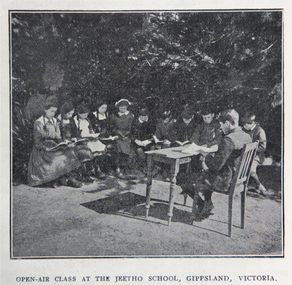 Federation University Historical Collection
Book, Victoria Education Gazette and Teachers' Aid, 1911-1919, 1910-1919
... John Clarke, A.C.H. Jackson, Alexander Robertson, Noel Gambetta, Ralp E. Leyland, Laurance J. Woodruff, Walter E. Cass, Percy D. Moncur, Thomas M. Carmichael...John Clarke, A.C.H. Jackson, Alexander Robertson, Noel Gambetta, Ralp E. Leyland, Laurance J. Woodruff, Walter E. Cass, Percy D. Moncur, Thomas M. Carmichael ...Black hard covered book with red spine, holding Victorian Education Gazettes for one calendar year. .1) 1910 .2) 1912 .3) 1911 .4) 1914 .5) 1918 Images: Open Air Classroom Black Rock; Open Air Classroom, Jeetho, Gippsland; Open Air Nurses bedroom, Mildura; Gym at Canterbury School ; Babies and Nurses at Melbourne Foundling Hospital; Camp at Portland; Alexander Peacock Opens a Melbourne School; Unveiling Major Mitchell Memorial at Mt Arapiles; Agricultural Plot; School Interior; Swimming Drill; Graham Dux Prize Board; Bathing Place; Classroom with blackboard and pictures; Major Mitchell's Map; Melbourne, Derbyshire; Market Place Melbourne; The Blackwood; World War One Send-off at The Athenaeum; Scarsdale Old Boy's logo; Sloyd articles for the Field Hospital; World War One; Gifts for Transport to the Wharf; soldiers; ANZAC Day; ANZAC Day Medalion .5) 1915: Education Department's War Relief Fund, William Park obituary, Closer Settlement Act 1912, Agriculture, needlework, Swimming and Life Saving, explorers, Gregory Blaxland, Matthew Flinders, Composition, Geography, potatoes, onions, gardens, Needlework for Infants, Iona and Staffa, Trained Primary Teacher's Course, Electricity, Electrical Technology, hygiene, Arbour Day, Horticulture, Wattle Day, Bird Day, Technical Schools, Landing at Gaba Tepe, Evils of Alcohol, Old Boys of Scarsdale, Belgium, Teachers' College Images: The British at War, The Sonnet, History and Patriotism, Male Swimming Teachers Summer School at Geelong, Women Swimming Teachers at Port Fairy, Buln Buln State School, Burwood East State School, needlework plans, methods of Rescue and Resucitation. plan of the journey of Gregory Blaxland, Macquarie House, teachers killed (William Ross Hoggart, Stanley Robert Close, William Roy Hodgson, Campbell McDiarmid Peter, William Henry Dawkins, William Hugh Hamilton, Frederick McRae Neal, Vernon Brookes, Frank J. Olle, Alfred J. Collins, Ernest R. Fairlie, William J. McLaren, A.E. Smith, Thomas Patton, Francis W. Kemp, Frederick G. Hall, Rupert O. Hepburn, Woolston J. Govan), Frederick Harold Tubb VC, Botanic Gardens Red Gum, Shelter Pavillions, Head of Wheat, Australian Commonwealth Flag, Iona Cathedral, Drawing exercises, ANZAC Madallion, School Rolls of Honor .6) 1916 - Nature Study, war relief, school gardening, horticulture, singing class, geography of the war, School Rolls of Honour, Ponsonby Carew-Smyth, Astronomy, ANZAC Day, Empire Day, Arbor Day, "Some Suul of Goodness in Things Evil" by Frank Tate, War Relief Gardeners' League, ANZAC Day medallion, Solar System, Abolition of German Schools in Victoria, ANZAC Avenues, avenues of honour, Geography of the War: The West, War relief and handwork, Victorian State Schools Horticultural Society, Patrick Maloney obituary, formalin lamps, Victoria League of Victoria, Wonwondah East Roll of Honor Images - Teachers killed (John Clarke, A.C.H. Jackson, Alexander Robertson, Noel Gambetta, Ralp E. Leyland, Laurance J. Woodruff, Walter E. Cass, Percy D. Moncur, Thomas M. Carmichael, Edward G. Brain, Reginald N.F. Woods, George E. James, William Colvin, David Dobson, Stanley L. Robinson, Charles Allen, G.E. James, H.F. Curnow, Franl L. Cousins, James R. Thompson, Henry H. Campbell, George E. Read, Ernest D. Morshead, Wilfred S. Merlin, Henry R. Wright, George B. Webb, Noel Nicholas, David H. Thomas, Charles A. Levens, Thomas R. Fenner, John M. Daniell, P.J. Larkin, Ralph Smith, Philip Ormsby), school rolls of honour, Swimming Instructors at Queenscliff, The Southern Sky, Map of the North Sea and its Littorals, Easter School of Horticulture at Oakleigh, Map of the Eastern Front, Map of Mesopotamia, Map of the War Area in the Egyptian Campaign, leeches for the Melbourne Hospital .7) 1917 - Swimming and Life-Saving, Childre's FLower Day, Education Department's War Relief Fund, State War Council, Horticulture, Bird Day, Swimming, Growing Chicory at Cowes Images - Teachers killed during World War One (G.M. Nicholas, William C.W. Spencer, J.W.C. Profitt, Ivon C. Bromilow, John Colwell, Robert W. Campbell, Arthur P. Bourchier, Francid G. Houston, Claude N. Harrison, Edgar Williams, Leslie A. Stevens, Charles E. W. Chester, Stanley R. Green, Walter Baker, Arthur G. Scott, Harry L. Swinburne, Horace W. Brown, Arnold Bretherton, Edward W. Jenkins Aubrey Liddelow, Ewen A. Cameron, Edmund R. Lyall, John H. Martin, Harry Bell, Frank L. Nicholls, Melville R. Hughes, Edwin W. Hauser, Walter S. Filmer, Walter G. Barlow, Henry A. Donaldson, Edward H. Jones, Walter W. Raw, Alfred W. Dean, Wiliam Lea, Frederick G. Drury, J.T. Richards, Norman G. Pelton, Lance-Corporal Doran, Kenneth F. McKenzie, William F. Robertson, Wiliam Jarrott, Norman Graham, George G. Paul, Victor Green, Arthur William Rennie, Alfred J. Glendinning, Robert B. Liston, Eward P. Toll, George Jones, Errol E. Rodda, Christian P. Christensen, Charles F. Sydes, H.G. Clements, Norman C. Fricker, J.M. Romeo. Eric N. Lear, Thomas J. Bartley, Norval Birrell, Frederick H. Tubb. J.T. Hamilton Aram, Arthur Wilcock, William M. Conroy, Alex. H. Miller, Patrick J. Cunningham, Charles S. Mitchell, John R. Maddern, James Roadknight, Harry Arundel, Jack C. McKellar, duncan M. McKellar, George S. Manfield, Edgar C. Holmes, George A. Young, Raymond A. Gardiner, William B. Bell, William Opie, George R. Scott, Richard V.B. Vine, Herbery S. Marshall, Hugh St Omer Dentry, George B. Fullerton, Harry Oulton, Iva F. Morieson), School Honor Books, Drawing, Presentation of 30,000 pounds to the British Red Cross at Melbourne Town Hall .8) 1918 .9) 1919 - Photographs of World War One soldiers from the Education Department, Margaret Montgomery Memorial, 1918 Act relating to State School Teachers, State Scolarships, Victorian State Schools' Horticultural Society, Pneumonic Influenza, Spanish Flu, epedemic, swimming and life savinfJunior cadet training, vacancies in Fiji, School Committees, Arbor Day, Arbour Day, Henry Harding of Yinnar, Planting Trees and Shrubs, Juvenile Crime, The use of 'Get', Soldier-Teachers from Overseas in Congress London, Australia's Effort in the War, Military, Working Bees, Tree Planting, fence building, Welcoming Home a Returned Soldier, Avenue of Honour planting, Discipline, Unveiling an Honor Board, School gymnasium, school tennis court, E. E. Crogger grave at Aldershot, The School Honor Book. War Relief Fund, Commonwealth War Record, Caulfield Military Hosptial, ANZAC Day Pilgrimage, Jimmie Panikin, Donald Fraser, Arthur Mee, Card Sun Dial, Balboa Day in Honolulu, William Hamilton, Alfred Jackson, The Backward Child, Flies, Language Teaching and Learning, Spelling, The Education of the Adolescent, victorian education gazette, education gazette and teachers' aid, sloyd, william a. cavanagh, james i froebel, school, education, world war one, memorials, alfred williams, exploration and settlement, cadets, australian naval college, bernard o;dowd, birds, swimming, drawingempire league, eucalypts, paper in history, forestry, arbor day, identification of trees, forestrey museums, fiji, gravel hill school band, horticulture, hygiene, gould league of bird lovers, life saving, la perouse, bandin, j. holland, w. hamilton, charles sturt, principles of archimedes, james holland, william hamilton, scarsdale old boys' reunion, foundling home melbourne, montessori education, open air schools, james hughes, marie corelli, flinders sydney harbour, major mitchell's map, tooth brushing, r.h.s. bailey -
Federation University Historical Collection
Document - Details of applicants for OHM course, VIOSH: Ballarat College of Advanced Education Occupational Hazard Management Applicants, Intake 12B, 1988
... john arente...geoffrey brabrook...james browning (withdrew)...sharon burnell (withdrew)...mary-anne camp...alastair carmichael...Intake 12A merged with 12B due to this. viosh victorian institute of occupational safety and health occupational hazard management ballarat college of advanced education ballarat university college university of ballarat federation university john arente geoffrey brabrook james browning (withdrew) sharon burnell (withdrew) mary-anne camp alastair carmichael christopher cooper william denton (withdrew) neil dine suzanne forsyth alan hawes peter hondros murray johnson (withdrew) stephen lesbirel (withdrew) stanley mccartney (withdrew) anthony mckinlay kenneth clean (withdrew) trevor mann edward mitchell elise moore (withdrew) john morony john o'neill roland parfenovics (withdrew) shaun quinn (withdrew) edward renton christopher st john (withdrew) christopher schaper lynette schrader barbara stack ivanka sucher maggie thomson cheerily tillman antonius van maanenbell (withdrew) VIOSH: Ballarat College of Advanced Education Occupational Hazard Management Applicants, Intake 12B, 1988 Document Details of applicants for OHM course ...Victorian Institute of Occupational Safety and Health (VIOSH) Australia is the Asia-Pacific centre for teaching and research in occupational health and safety (OHS) and is known as one of Australia's leaders on the field. VIOSH has a global reputation for its innovative approach within the field of OHS management. VIOSH had its first intake of students in 1979. At that time the Institution was known as the Ballarat College of Advanced Education. In 1990 it became known as Ballarat University College, then in 1994 as University of Ballarat. It was 2014 that it became Federation University. VIOSH Australia students are safety managers, senior advisors and experienced OHS professionals. They come from all over Australia and industry. Students are taught active research and enquiry; rather than textbook learning and a one-size fits all approach. VIOSH accepts people into the Graduate Diploma of Occupational Hazard Management who have no undergraduate degree - on the basis of extensive work experience and knowledge. Each application required details of their work occupation and the company work department they were employed in. Not all of those who applied began the OHM course. Some withdrew - no indication of reason. Intake 12A merged with 12B due to this.viosh, victorian institute of occupational safety and health, occupational hazard management, ballarat college of advanced education, ballarat university college, university of ballarat, federation university, john arente, geoffrey brabrook, james browning (withdrew), sharon burnell (withdrew), mary-anne camp, alastair carmichael, christopher cooper, william denton (withdrew), neil dine, suzanne forsyth, alan hawes, peter hondros, murray johnson (withdrew), stephen lesbirel (withdrew), stanley mccartney (withdrew), anthony mckinlay, kenneth clean (withdrew), trevor mann, edward mitchell, elise moore (withdrew), john morony, john o'neill, roland parfenovics (withdrew), shaun quinn (withdrew), edward renton, christopher st john (withdrew), christopher schaper, lynette schrader, barbara stack, ivanka sucher, maggie thomson, cheerily tillman, antonius van maanenbell (withdrew) -
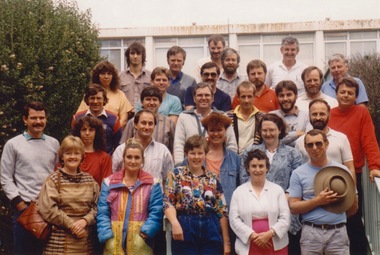 Federation University Historical Collection
Photograph - Photograph - Colour, VIOSH: Occupational Hazard Management Group, Intake 11, 1987
... john arentz...geoff brabrook...mary-anne camp...alistair carmichael...VIOSH accepts people into the Graduate Diploma of Occupational Hazard Management who have no undergraduate degree - on the basis of extensive work experience and knowledge. viosh victorian institute of occupational safety and health ballarat college of advanced education graduate diploma of occupational hazard management john arentz geoff brabrook mary-anne camp alistair carmichael chris cooper neil dine sue forsyth alan hawes jim hondros tony mckinlay trevor mann thomas mitchell jack moroney john o'neill ted renton chris schaper lyn schrader barbara stack ivanka sucher maggie thomson cherilyn tillman Colour photograph of a group of students VIOSH: Occupational Hazard Management Group, Intake 11, 1987 Photograph Photograph - Colour ...Victorian Institute of Occupational Safety and Health (VIOSH) Australia is the Asia-Pacific centre for teaching and research in occupational health and safety (OHS) and is known as one of Australia's leaders on the field. VIOSH has a global reputation for its innovative approach within the field of OHS management. VIOSH had its first intake of students in 1979. At that time the Institution was known as the Ballarat College of Advanced Education. In 1990 it became known as Ballarat University College, then in 1994 as University of Ballarat. It was 2014 that it became Federation University. VIOSH Australia students are safety managers, senior advisors and experienced OHS professionals. They come from all over Australia and industry. Students are taught active research and enquiry; rather than textbook learning and a one-size fits all approach. VIOSH accepts people into the Graduate Diploma of Occupational Hazard Management who have no undergraduate degree - on the basis of extensive work experience and knowledge. Colour photograph of a group of studentsviosh, victorian institute of occupational safety and health, ballarat college of advanced education, graduate diploma of occupational hazard management, john arentz, geoff brabrook, mary-anne camp, alistair carmichael, chris cooper, neil dine, sue forsyth, alan hawes, jim hondros, tony mckinlay, trevor mann, thomas mitchell, jack moroney, john o'neill, ted renton, chris schaper, lyn schrader, barbara stack, ivanka sucher, maggie thomson, cherilyn tillman -
Federation University Historical Collection
Document - Document - Address List, VIOSH: BCAE: Graduate Diploma in Occupational Hazard Management, Intake 11, 1987
... john arentz...geoff brabrook...mary - anne camp...alistair carmichael...They were at Ballarat College of Advanced Education. viosh victorian institute of occupational safety and health ballarat college of advanced education john arentz geoff brabrook mary - anne camp alistair carmichael chris cooper neil dine sue forsyth alan hawes jim hondros tony mckinlay trevor mann thomas mitchell jack moroney john o'neill ted renton chris schaper lyn schrader barbara stack ivanka sucher maggie thomson cherilyn tillman Three A4 sheets - 2 columns per sheet of typed written information of students VIOSH: BCAE: Graduate Diploma in Occupational Hazard Management, Intake 11, 1987 Document Document - Address List ...Victorian Institute of Occupational Safety and Health (VIOSH) Australia is the Asia-Pacific centre for teaching and research in occupational health and safety (OHS) and is known as one of Australia's leaders on the field. VIOSH has a global reputation for its innovative approach within the field of OHS management. VIOSH had its first intake of students in 1979. At that time the Institution was known as the Ballarat College of Advanced Education. In 1990 it became known as Ballarat University College, then in 1994 as University of Ballarat. It was 2014 that it became Federation University. VIOSH Australia students are safety managers, senior advisors and experienced OHS professionals. They come from all over Australia and industry. Students are taught active research and enquiry; rather than textbook learning and a one-size fits all approach. VIOSH accepts people into the Graduate Diploma of Occupational Hazard Management who have no undergraduate degree - on the basis of extensive work experience and knowledge. Type written lists - 3 pages - of students names and addresses. These are students from Intake 11, 1987. They were at Ballarat College of Advanced Education.Three A4 sheets - 2 columns per sheet of typed written information of studentsviosh, victorian institute of occupational safety and health, ballarat college of advanced education, john arentz, geoff brabrook, mary - anne camp, alistair carmichael, chris cooper, neil dine, sue forsyth, alan hawes, jim hondros, tony mckinlay, trevor mann, thomas mitchell, jack moroney, john o'neill, ted renton, chris schaper, lyn schrader, barbara stack, ivanka sucher, maggie thomson, cherilyn tillman -
Federation University Historical Collection
Book - Book - Scrapbook, Ballarat School of MInes: Scrapbook of Newspaper Cuttings, Book 66, November 1994 to December 1994
... carmichael...david linder...heather bush...connie sadler...sue rattray...george burk...john...The papers concerned are The Courier, Ballarat, The Australian, The Age over the period of 29 November 1994 to 29 December 1994. teaching positions advertised pre-employment courses courses available enrolment for smb courses memorandum creates force elder young chefs on trial nicole cobain aaron taylor francine briody ararat courses increased installation of geoffrey blainey university of ballarat liftout richard mcgarvie installs new chancellor chancellor launches rich history anne beggs sunter smb training of water board staff alice discovers computers at 80 smb presentation of volunteer tutors peg johns joan goldsmith bob carmichael david linder heather bush connie sadler sue rattray george burk john vellenoweth edleen tinker lois morritt completes vce neville love ararat college plan approved grants to build networks mark judd colin tonkin award for excellence ruth kealy wins walker ceramics award koori artists show works fine art gallery rubina burgoyne bill blackall kylie bird ray muir abraham baksh anne beggs sunter uni origins Book with yellow cover, front, spiral bound. ...Collection of newspaper articles related to Ballarat School Of Mines.They cover activities and advertisements for staff. The papers concerned are The Courier, Ballarat, The Australian, The Age over the period of 29 November 1994 to 29 December 1994.Book with yellow cover, front, spiral bound. teaching positions advertised, pre-employment courses, courses available, enrolment for smb courses, memorandum creates force, elder, young chefs on trial, nicole cobain, aaron taylor, francine briody, ararat courses increased, installation of geoffrey blainey, university of ballarat liftout, richard mcgarvie installs new chancellor, chancellor launches rich history, anne beggs sunter, smb training of water board staff, alice discovers computers at 80, smb presentation of volunteer tutors, peg johns, joan goldsmith, bob carmichael, david linder, heather bush, connie sadler, sue rattray, george burk, john vellenoweth, edleen tinker, lois morritt completes vce, neville love, ararat college plan approved, grants to build networks, mark judd, colin tonkin award for excellence, ruth kealy wins walker ceramics award, koori artists show works, fine art gallery, rubina burgoyne, bill blackall, kylie bird, ray muir, abraham baksh, anne beggs sunter uni origins -
Federation University Historical Collection
Booklet, Report From the Select Committee Upon Brown's Diggings, 1860, 1860
... carmichael...james baker...john...brown's diggins smythe's creek gorges m. lowther peter lalor j.b. humffray g. mcdonald thomas platt james gibbs archibald carmichael james baker john c. campbell john lynch washington claim banner of war claim victoria claim better-late-than-never claim Blue foolscap report on Brown's Diggings Report From the Select Committee Upon Brown's Diggings, 1860 Booklet John Ferres ...Blue foolscap report on Brown's Diggingsbrown's diggins, smythe's creek, gorges m. lowther, peter lalor, j.b. humffray, g. mcdonald, thomas platt, james gibbs, archibald carmichael, james baker, john c. campbell, john lynch, washington claim, banner of war claim, victoria claim, better-late-than-never claim -
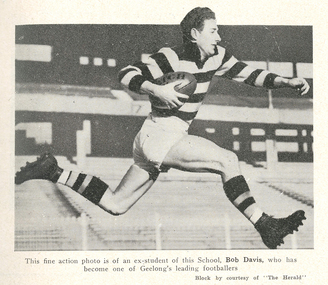 Federation University Historical Collection
Booklet, Ballarat School of Mines Students' Magazine, 1950, 1950
... john f. swain...d. mullins...g. cornell...arthur burrow...j. watts...w. carlyon...a. kinnane...j. boag...r. ingleton...b. schreenan...s. deans...j. tinney...r. campbell...j. vernon...j. jopling...d. durant...j. ballinger...j. swain...k. treloar...t. duncan...j. bethune...j. hines...l. owen...c. livitsanso...m. stevens...bob davis...e. boschen...j. sawyer...c. restarick...r. archer...m. tunbridge...j. carmichael...Baseball, Tennis, Science School, Television in Australia,The Apprentices, Commercial Notes, The Girls Association, Preps and Dressmakers, The Art School, Junior School, List of Full Course Students, Students doing Trade Apprenticeship courses, Junior Technical School Roll Call ballarat school of mines magazine k. e. scull g.w. barrel e. j. tippett j. harriott lindsay hillman a. e. watson (nee jeanette perkins n. andrews j. peyton c.g. fairbank s. jones f. benjamin b. flavel f. heath v. jolly h. browning m. troon w. archibald r. gay s. ross d. cotton b. bryan rodney t. sheppard m. j. mccarthy shirley ross george m. hetherington john k. ballinger roberta gay lois pedrazzi robert tantau joyce eberhardt louise hamilton joy lyons john f. swain d. mullins g. cornell arthur burrow j. watts w. carlyon a. kinnane j. boag r. ingleton b. schreenan s. deans j. tinney r. campbell j. vernon j. jopling d. durant j. ballinger j. swain k. treloar t. duncan j. bethune j. hines l. owen c. livitsanso m. stevens bob davis e. boschen j. sawyer c. restarick r. archer m. tunbridge j. carmichael a. brokenshire m. barker a. mccallum l. searle p. richards r. simpson n. ludbrook r. sheppard nigel fitzclarence j. m. blackburn m. m. phillips w. k. holmes william rodgers barry pearce e. sobey norma taylor pat lavery heather browning anne wright barbara wilson lynette klein margaret winberg pearl monds d. searle heather harris glenys nolan dorothy wilkie mary gleeson phyllis dellaca valerie jolly anne turnley lynette bromley n. taylor n. hooker g. mainwaring barbara symons wm. j. paterson j. jenkin r. l. whitla pastor r. m. hunting r. phillips r. f. bawden l. b. doull g. graham s. hoffman j. mulrooney g. stimson c. lockhart b. kennedy d. irish l. dow s. saw m. winberg h. clark f. case r. braybrook g. holmes e. mackie j. collier a. johnstone n. newey f. young b. baldock b. graham n. caldow c. hay e. carter g. delaland r. millar r. kennedy g. wittingslow h. flack r. quayle g. ditchfield j. parrot a. brogden m. hodder r. satchell r. lyons j. gilmer f. andrewartha b. tozer d. jones l. fuhrmeister r. furlong j. twaits c. hocking n. andres d. quick g. vickers b. mann s. kellett b. matthews g. gilbert afl vfl White soft covered magazine with green and gold font. ...School Council, Members of Staff, Editorial, Principal's Page, News and Notes, Prize Presentation, Magazine Committee 1950, Prominent Personalities, The Literary Society, Retirements, Boys Sport, Annual Sports, Football. Baseball, Tennis, Science School, Television in Australia,The Apprentices, Commercial Notes, The Girls Association, Preps and Dressmakers, The Art School, Junior School, List of Full Course Students, Students doing Trade Apprenticeship courses, Junior Technical School Roll CallWhite soft covered magazine with green and gold font.ballarat school of mines, magazine, k. e. scull, g.w. barrel, e. j. tippett, j. harriott, lindsay hillman, a. e. watson (nee jeanette perkins, n. andrews, j. peyton, c.g. fairbank, s. jones, f. benjamin, b. flavel, f. heath, v. jolly, h. browning, m. troon, w. archibald, r. gay, s. ross, d. cotton, b. bryan, rodney t. sheppard, m. j. mccarthy, shirley ross, george m. hetherington, john k. ballinger, roberta gay, lois pedrazzi, robert tantau, joyce eberhardt, louise hamilton, joy lyons, john f. swain, d. mullins, g. cornell, arthur burrow, j. watts, w. carlyon, a. kinnane, j. boag, r. ingleton, b. schreenan, s. deans, j. tinney, r. campbell, j. vernon, j. jopling, d. durant, j. ballinger, j. swain, k. treloar, t. duncan, j. bethune, j. hines, l. owen, c. livitsanso, m. stevens, bob davis, e. boschen, j. sawyer, c. restarick, r. archer, m. tunbridge, j. carmichael, a. brokenshire, m. barker, a. mccallum, l. searle, p. richards, r. simpson, n. ludbrook, r. sheppard, nigel fitzclarence, j. m. blackburn, m. m. phillips, w. k. holmes, william rodgers, barry pearce, e. sobey, norma taylor, pat lavery, heather browning, anne wright, barbara wilson, lynette klein, margaret winberg, pearl monds, d. searle, heather harris, glenys nolan, dorothy wilkie, mary gleeson, phyllis dellaca, valerie jolly, anne turnley, lynette bromley, n. taylor, n. hooker, g. mainwaring, barbara symons, wm. j. paterson, j. jenkin, r. l. whitla, pastor r. m. hunting, r. phillips, r. f. bawden, l. b. doull, g. graham, s. hoffman, j. mulrooney, g. stimson, c. lockhart, b. kennedy, d. irish, l. dow, s. saw, m. winberg, h. clark, f. case, r. braybrook, g. holmes, e. mackie, j. collier, a. johnstone, n. newey, f. young, b. baldock, b. graham, n. caldow, c. hay, e. carter, g. delaland, r. millar, r. kennedy, g. wittingslow, h. flack, r. quayle, g. ditchfield, j. parrot, a. brogden, m. hodder, r. satchell, r. lyons, j. gilmer, f. andrewartha, b. tozer, d. jones, l. fuhrmeister, r. furlong, j. twaits, c. hocking, n. andres, d. quick, g. vickers, b. mann, s. kellett, b. matthews, g. gilbert, afl, vfl -
 Federation University Historical Collection
Booklet, J.A. Hoskin & Son, Ballarat School of Mines Students' Magazine, 1951. Gold Centenary Number, 1951
... john spittle...mina gallie...mrs willis brown...donald eltringham...mrs d. eltringham...geoff mounter...mrs g. mounter...alan wilson...ian mclachlan...doug dean...mrs d. dean...bill meinhardt...norman dalton...b. taylor...j. tinney...r. ingleton...a. kinnane...g. hindson...j. peyton...j. sawyer...j. watts...a. fareco...e. bartrop...m. frawley...l. matthews...j. blackburn...b. flavel...b. schreenan...b. smith...d. stevens...j. ballinger...c. livitsanos...a. johnson...r. archer...j. brokenshire...g. heyes...j. carmichael...School Council, Members of Staff, Editorial, Principal's Page, Magazine Committee, News and Notes, Literary Society, Prominent Personalities, The Centenary and Jubilee Celebrations, Prize Presentation, Boys Sport, Cricket, Annual Sports, Football, Baseball, Tennis, Science School, A Day in Colombo, The Apprentices, The Art School, Ballarat's Achievement, The Girls Association, Dressmakers, Commercial Notes, Foundation Pupils of Ballarat Girls Junior Technical School, Junior School, Retirements ballarat school of mines magazine heather harris c. g. fairbank d. cotton j. bethune f. andrewartha p. ditchfield n. andrews f. benjamin s. deans w. j. patterson glenice lodington esme atkins rosemary hullick heather browning valerie jolly eileen walsh beverley robinson b. bryan jack ballinger h. trudinger l. garner don stevens kevin treloar cliff restarick jim brokenshire john jopling barbara wilson margery troon e. j. tippett r. w. richards w. kingston joan cameron lloyd veal john mckenzie crom. bray pat maloney betty dulfer margaret martin bill llewellyn jacquiline bilston alf mckenzie grace laurie john spittle mina gallie mrs willis brown donald eltringham mrs d. eltringham geoff mounter mrs g. mounter alan wilson ian mclachlan doug dean mrs d. dean bill meinhardt norman dalton b. taylor j. tinney r. ingleton a. kinnane g. hindson j. peyton j. sawyer j. watts a. fareco e. bartrop m. frawley l. matthews j. blackburn b. flavel b. schreenan b. smith d. stevens j. ballinger c. livitsanos a. johnson r. archer j. brokenshire g. heyes j. carmichael c. restarick m. phillips m. gillin don stewart a. faneco m. stevens w. maddox w. tooth r. simpson jim john ruth buckland ron simpson max phillips l. m. pedrazzi ballarat lake wendouree don whitefield dorothy robertson glen gazzard alison philp audrey dunn judith bryan valerie blee valerie hughes carol seddon brenda beaumont elizabeth kinnane noel batch pat lavery glenys perry ann wright margaret henderson margaret winberg faida lewis diane o'beirne lynette klein gloria white dorothy j. searle isobel tyrell l. j. blomeley adelaide hocking joyce wilson j. edwards lynette robson lois snibson janice rogers joy mills lynn gilbert dawn searle valerie mills bonnie cody dawn peacock margaret paine carole sneddon valma vincent raylee bennetts kay buchanan loris gilbert dawn lang margaret thompson lorraine horwood yvonne rowlands janette sandwith dawn parkes doreen new marion marshall p. sullivan k. r. hall n. brogden k. duncan b. baldock j. bastin r. furlong n. spiers d. quillian n. sutherland a. mills l. norman w. saggers m. hodder r. hewitt d. jones p. reid b. warrillon g. edwards j. bentley m. hall n. quick b. mann f. dolan g. gilbert e. mackie w. davies d. roberts n. purdue r. austin r. dunstone g. king r. hill i. nunn g. hawkes w. cowan c. grose c. garnham j. white d. snowden b. darrington m. drabsch t. wilson r. osborne a. mcpherson n. dixon g. anderson r. stevenson b. musgrove m. roberts d. dow a. hepworth j. copeman g. pike j. collier c. petrie l. pitcher r. sharpe j. gilmer k. hall j. boak j. hudson k. mccoll Green soft covered magazine with gold font. ...School Council, Members of Staff, Editorial, Principal's Page, Magazine Committee, News and Notes, Literary Society, Prominent Personalities, The Centenary and Jubilee Celebrations, Prize Presentation, Boys Sport, Cricket, Annual Sports, Football, Baseball, Tennis, Science School, A Day in Colombo, The Apprentices, The Art School, Ballarat's Achievement, The Girls Association, Dressmakers, Commercial Notes, Foundation Pupils of Ballarat Girls Junior Technical School, Junior School, Retirements Green soft covered magazine with gold font.ballarat school of mines, magazine, heather harris, c. g. fairbank, d. cotton, j. bethune, f. andrewartha, p. ditchfield, n. andrews, f. benjamin, s. deans, w. j. patterson, glenice lodington, esme atkins, rosemary hullick, heather browning, valerie jolly, eileen walsh, beverley robinson, b. bryan, jack ballinger, h. trudinger, l. garner, don stevens, kevin treloar, cliff restarick, jim brokenshire, john jopling, barbara wilson, margery troon, e. j. tippett, r. w. richards, w. kingston, joan cameron, lloyd veal, john mckenzie, crom. bray, pat maloney, betty dulfer, margaret martin, bill llewellyn, jacquiline bilston, alf mckenzie, grace laurie, john spittle, mina gallie, mrs willis brown, donald eltringham, mrs d. eltringham, geoff mounter, mrs g. mounter, alan wilson, ian mclachlan, doug dean, mrs d. dean, bill meinhardt, norman dalton, b. taylor, j. tinney, r. ingleton, a. kinnane, g. hindson, j. peyton, j. sawyer, j. watts, a. fareco, e. bartrop, m. frawley, l. matthews, j. blackburn, b. flavel, b. schreenan, b. smith, d. stevens, j. ballinger, c. livitsanos, a. johnson, r. archer, j. brokenshire, g. heyes, j. carmichael, c. restarick, m. phillips, m. gillin, don stewart, a. faneco, m. stevens, w. maddox, w. tooth, r. simpson, jim john, ruth buckland, ron simpson, max phillips, l. m. pedrazzi, ballarat, lake wendouree, don whitefield, dorothy robertson, glen gazzard, alison philp, audrey dunn, judith bryan, valerie blee, valerie hughes, carol seddon, brenda beaumont, elizabeth kinnane, noel batch, pat lavery, glenys perry, ann wright, margaret henderson, margaret winberg, faida lewis, diane o'beirne, lynette klein, gloria white, dorothy j. searle, isobel tyrell, l. j. blomeley, adelaide hocking, joyce wilson, j. edwards, lynette robson, lois snibson, janice rogers, joy mills, lynn gilbert, dawn searle, valerie mills, bonnie cody, dawn peacock, margaret paine, carole sneddon, valma vincent, raylee bennetts, kay buchanan, loris gilbert, dawn lang, margaret thompson, lorraine horwood, yvonne rowlands, janette sandwith, dawn parkes, doreen new, marion marshall, p. sullivan, k. r. hall, n. brogden, k. duncan, b. baldock, j. bastin, r. furlong, n. spiers, d. quillian, n. sutherland, a. mills, l. norman, w. saggers, m. hodder, r. hewitt, d. jones, p. reid, b. warrillon, g. edwards, j. bentley, m. hall, n. quick, b. mann, f. dolan, g. gilbert, e. mackie, w. davies, d. roberts, n. purdue, r. austin, r. dunstone, g. king, r. hill, i. nunn, g. hawkes, w. cowan, c. grose, c. garnham, j. white, d. snowden, b. darrington, m. drabsch, t. wilson, r. osborne, a. mcpherson, n. dixon, g. anderson, r. stevenson, b. musgrove, m. roberts, d. dow, a. hepworth, j. copeman, g. pike, j. collier, c. petrie, l. pitcher, r. sharpe, j. gilmer, k. hall, j. boak, j. hudson, k. mccoll -
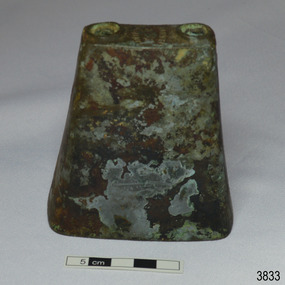 Flagstaff Hill Maritime Museum and Village
Functional object - Cow Bell, James Barwell, 1860s-1878
... john chance...loch ard...mutton bird island...glenample...eva carmichael...The collection is also historically significant for its association with the LOCH ARD, which was one of the worst and best known shipwrecks in Victoria’s history. flagstaff hill warrnambool flagstaff hill maritime museum maritime museum shipwreck coast flagstaff hill maritime village great ocean road john chance loch ard mutton bird island glenample eva carmichael tom pearce james barwell cow bell horse bell bell founder bell smith vintage bell birmingham bell foundry farmer shepherd drover stock bell Stamped on the head "BARWELL / - - - / - - -- ING" [Perhaps BARWELL - - - BIRMING. ...This brass cow bell was recovered from the wreck of the sailing ship ‘Loch Ard’ at Mutton Bird Island, near Port Campbell, Victoria, from late 1960s to early 1970s. Cow bells were listed as part of the cargo on board the Loch Ard. This bell is now part of the John Chance collection. Flagstaff Hill Maritime Village’s divers also recovered similar bells from the Loch Ard wreck in 1973. One of them was found in a sandy hole in the centre of the wreck site. All of the recovered cow bells are without their hangers. A bell of this size could have been used by horse or cattle teams. Cow bells were a common Colonial item. They were hung around the necks of grazing domestic cows and goats, bullock and horse teams, even camel teams so that they could be found again. Sheep and cattle drovers used them as a warning for night time disturbances such as wild animals. The maker of the cow bell, James Barwell, was a bell founder established in Birmingham, England, from 1784. In 1842 he acquired Fiddian’s firm of ‘Steam and Water’, keeping its name and stamping it on some of his products. According to his advertisement in the Exhibitors guide for the Church Congress of 1887, he made bells and fittings for churches and schools. He also made bells for cloches and chimes, and made tuned musical handbells. He repaired and reproduced bells, and he had a team of experienced ringers to “inspect towers and report upon the tone and condition of bells and fittings.” In 1903 he became incorporated as a Limited Company, ‘engineers’ and plumbers’ brasswork, and bell founders.’ In 1914 he advertised as ‘Cock and Bell Founders’, specialising in plumbing and engineering fittings, church bells, and “every description of hanging and hand bells.” Some of Barwell’s products were stamped with his maker’s mark (his initials J. B. either side of a cross entwined with a ‘B’ in an oval of oak leaves (for Birmingham)). James Barwell bells were no longer made after 1920. James Barwell was among makers who exported bells to the Australian colony from the 1860s. Early Australian iron animal bells were also made from the 1860s by blacksmiths such as Anthony Morgan from 1861, August Menneke from 1867, and Samuel Jones from 1868. Few brass bells were produced here in those times. This bell is historically significant as typical of a cow bell used by farmers and herdsmen in Colonial Victoria. Its significance is increased by being an artefact recovered by John Chance, a diver from the wreck of the Loch Ard and other wrecks in the late 1960s to early 1970s. Items that come from several wrecks along Victoria's coast have since been donated to the Flagstaff Hill Maritime Village’s museum collection by his family, illustrating this item’s level of historical value. The cow bell is also significant for being part of Flagstaff Hill’s collection of artefacts from LOCH ARD, which is significant for being one of the largest collections of artefacts from this shipwreck in Victoria. It is significant for its association with the shipwreck, which is on the Victorian Heritage Register (VHR S417). The collection is significant because of the relationship between the objects, as together they have a high potential to interpret the story of the LOCH ARD. The LOCH ARD collection is archaeologically significant as the remains of a large international passenger and cargo ship. The LOCH ARD collection is historically significant for representing aspects of Victoria’s shipping history and its potential to interpret sub-theme 1.5 of Victoria’s Framework of Historical Themes (living with natural processes). The collection is also historically significant for its association with the LOCH ARD, which was one of the worst and best known shipwrecks in Victoria’s history. Cow bell; heavy brass, flat top, pyramid shape, rectangular head, shoulders flare out to rectangular mouth. The head has two same-sized tooled holes for adding the hanging yoke. Inscription on top and one side. Encrustations are on the metal in places. The hanger and clapper are missing. Made by James Barwell of Birmingham.Stamped on the head "BARWELL / - - - / - - -- ING" [Perhaps BARWELL - - - BIRMING. Could size be in centre? 3 3/4 IN?] Stamped on side [motif] (undecipherable) flagstaff hill, warrnambool, flagstaff hill maritime museum, maritime museum, shipwreck coast, flagstaff hill maritime village, great ocean road, john chance, loch ard, mutton bird island, glenample, eva carmichael, tom pearce, james barwell, cow bell, horse bell, bell founder, bell smith, vintage bell, birmingham bell foundry, farmer, shepherd, drover, stock bell -
 Flagstaff Hill Maritime Museum and Village
Container - Bottle, 1840s to 1878
... carmichael...tom pearce...john...Carmichael. This bottle is historically significant as an example of liquor bottles imported into to Colonial Victoria in the mid-1800s to early-1900s. Its significance is increased by also being an artefact recovered by John Chance, a diver from the wreck of the Loch Ard and other wrecks in the late-1960s to early-1970s. ...This handmade black glass bottle was recovered between the late 1960s to early 1970s from the wreck of the sailing ship Loch Ard. The ship was wrecked in 1878 and its remains are located at Mutton Bird Island, near Port Campbell, Victoria and bottles of liquor were listed as part of the Loch Ard’s cargo. This bottle is now part of the John Chance collection. Black glass is one of the oldest bottle colours and dates back to the early 17th century. In the 1840s to late-1870s black glass bottles were mainly used for liquor and ale. All glass is made from silica, which is found in quartz sand. The naturally occurring sand has impurities, such as iron, that determine the colour of the glass. Residual iron leads to green or amber coloured glass, and carbon in the sand makes that glass appear as ‘black’. A strong light behind the glass will show its colour as dark green or dark amber. This handmade bottle appears to have been made in a dip mould, with the molten glass blown into a seamless shoulder-height mould to give the body a uniform symmetrical shape and size. After the body is blown, the glass blower continues blowing free-form (without the mould) to form the shoulder and neck, then the base is pushed up with a tool, and the finish for the mouth is added with his tools. The dip mould gives the body a slightly textured surface, with the free blown shoulders and neck being smoother and shinier. There is usually a line around the shoulder where the mould of the body meets the shoulder, and a lump or mark in the centre of the base, called a pontil mark, where the push-up tool was removed. The ship Loch Ard was built on the River Clyde in Scotland in 1873 for the prestigious Loch Line of colonial clipper ships, designed for the Australian run. It sailed from England on 1 March 1878 carrying 37 crew, 17 passengers and a diverse general cargo ranging from luxury items to bulk railway iron. On 1 June 1878, emerging from fog and hearing too late the sound of breakers against the tall limestone cliffs, the vessel struck the southern foot of Mutton Bird Island and sank in 23 metres of water. Of the fifty-four people on board only two survived, one young male crewman, Tom Pearce, and one young female passenger, Eva Carmichael. This bottle is historically significant as an example of liquor bottles imported into to Colonial Victoria in the mid-1800s to early-1900s. Its significance is increased by also being an artefact recovered by John Chance, a diver from the wreck of the Loch Ard and other wrecks in the late-1960s to early-1970s. Items that come from several wrecks along Victoria's coast have since been donated to the Flagstaff Hill Maritime Village’s museum collection by his family, illustrating this item’s level of historical value. The bottle is also significant for being part of Flagstaff Hill’s collection of artefacts from the Loch Ard, which is significant for being one of the largest collections of artefacts from this shipwreck in Victoria. The collection is significant for its association with the shipwreck, which is on the Victorian Heritage Register (VHR S417. The collection has additional significance because of the relationship between the objects, as together they have a high potential to interpret the story of the Loch Ard. The Loch Ard collection is archaeologically significant as the remains of a large international passenger and cargo ship. The Loch Ard collection is historically significant for representing aspects of Victoria’s shipping history and its potential to interpret sub-theme 1.5 of Victoria’s Framework of Historical Themes (living with natural processes). The shipwreck is one of the worst, and best known, shipwrecks in Victoria’s history.Bottle, black glass. Thick matt body, with slightly bumpy texture, areas with sheen, colour imperfections. Tooled cork-top finish with ring below, slightly bulged neck. Shoulder has some diagonal creases and a line where shoulder meets body. Body tapers inwards to base. Heel varies in width. Pushed up base has pontil mark. Base is uneven. Handmade, dip mould. No inscriptions.flagstaff hill, warrnambool, flagstaff hill maritime museum, maritime museum, shipwreck coast, flagstaff hill maritime village, great ocean road, shipwreck artefact, loch ard, mutton bird island, eva carmichael, tom pearce, john chance, bottle, black glass, antique bottle, bulge neck bottle, handmade, dip mould, mouth blown, pontil base, blown bottle, liquor bottle, ale bottle -
 Flagstaff Hill Maritime Museum and Village
Container - Bottle, 1840s to 1878
... carmichael...tom pearce...john...Carmichael. This bottle is historically significant as an example of liquor bottles imported into to Colonial Victoria in the mid-1800s to early-1900s. Its significance is increased by also being an artefact recovered by John Chance, a diver from the wreck of the Loch Ard and other wrecks in the late-1960s to early-1970s. ...This handmade black glass bottle was recovered between the late 1960s to early 1970s from the wreck of the sailing ship Loch Ard. The ship was wrecked in 1878 and its remains are located at Mutton Bird Island, near Port Campbell, Victoria and bottles of liquor were listed as part of the Loch Ard’s cargo. This bottle is now part of the John Chance collection. Black glass is one of the oldest bottle colours and dates back to the early 17th century. In the 1840s to late-1870s black glass bottles were mainly used for liquor and ale. All glass is made from silica, which is found in quartz sand. The naturally occurring sand has impurities, such as iron, that determine the colour of the glass. Residual iron leads to green or amber coloured glass, and carbon in the sand makes that glass appear as ‘black’. A strong light behind the glass will show its colour as dark green or dark amber. This handmade bottle appears to have been made in a dip mould, with the molten glass blown into a seamless shoulder-height mould to give the body a uniform symmetrical shape and size. After the body is blown, the glass blower continues blowing free-form (without the mould) to form the shoulder and neck, then the base is pushed up with a tool, and the finish for the mouth is added with his tools. The dip mould gives the body a slightly textured surface, with the free blown shoulders and neck being smoother and shinier. There is usually a line around the shoulder where the mould of the body meets the shoulder, and a lump or mark in the centre of the base, called a pontil mark, where the push-up tool was removed. The ship Loch Ard was built on the River Clyde in Scotland in 1873 for the prestigious Loch Line of colonial clipper ships, designed for the Australian run. It sailed from England on 1 March 1878 carrying 37 crew, 17 passengers and a diverse general cargo ranging from luxury items to bulk railway iron. On 1 June 1878, emerging from fog and hearing too late the sound of breakers against the tall limestone cliffs, the vessel struck the southern foot of Mutton Bird Island and sank in 23 metres of water. Of the fifty-four people on board only two survived, one young male crewman, Tom Pearce, and one young female passenger, Eva Carmichael. This bottle is historically significant as an example of liquor bottles imported into to Colonial Victoria in the mid-1800s to early-1900s. Its significance is increased by also being an artefact recovered by John Chance, a diver from the wreck of the Loch Ard and other wrecks in the late-1960s to early-1970s. Items that come from several wrecks along Victoria's coast have since been donated to the Flagstaff Hill Maritime Village’s museum collection by his family, illustrating this item’s level of historical value. The bottle is also significant for being part of Flagstaff Hill’s collection of artefacts from the Loch Ard, which is significant for being one of the largest collections of artefacts from this shipwreck in Victoria. The collection is significant for its association with the shipwreck, which is on the Victorian Heritage Register (VHR S417. The collection has additional significance because of the relationship between the objects, as together they have a high potential to interpret the story of the Loch Ard. The Loch Ard collection is archaeologically significant as the remains of a large international passenger and cargo ship. The Loch Ard collection is historically significant for representing aspects of Victoria’s shipping history and its potential to interpret sub-theme 1.5 of Victoria’s Framework of Historical Themes (living with natural processes). The shipwreck is one of the worst, and best known, shipwrecks in Victoria’s history.Bottle, black glass. Thick matt body, with slightly bumpy texture, areas with sheen, colour imperfections. Tooled cork-top finish with ring below, slightly bulged neck. Shoulder has a line where shoulder meets body. Body tapers inwards to base. Heel varies in width. Pushed up base has pontil mark. Handmade, dip mould. No inscriptions.flagstaff hill, warrnambool, flagstaff hill maritime museum, maritime museum, shipwreck coast, flagstaff hill maritime village, great ocean road, shipwreck artefact, loch ard, mutton bird island, eva carmichael, tom pearce, john chance, bottle, black glass, antique bottle, bulge neck bottle, handmade, dip mould, mouth blown, pontil base, blown bottle, liquor bottle, ale bottle -
 Flagstaff Hill Maritime Museum and Village
Container - Bottle, 1840s to 1878
... carmichael...tom pearce...john...Carmichael. This bottle is historically significant as an example of liquor bottles imported into to Colonial Victoria in the mid-1800s to early-1900s. Its significance is increased by also being an artefact recovered by John Chance, a diver from the wreck of the Loch Ard and other wrecks in the late-1960s to early-1970s. ...This handmade black glass bottle was recovered between the late 1960s to early 1970s from the wreck of the sailing ship Loch Ard. The ship was wrecked in 1878 and its remains are located at Mutton Bird Island, near Port Campbell, Victoria and bottles of liquor were listed as part of the Loch Ard’s cargo. This bottle is now part of the John Chance collection. Black glass is one of the oldest bottle colours and dates back to the early 17th century. In the 1840s to late-1870s black glass bottles were mainly used for liquor and ale. All glass is made from silica, which is found in quartz sand. The naturally occurring sand has impurities, such as iron, that determine the colour of the glass. Residual iron leads to green or amber coloured glass, and carbon in the sand makes that glass appear as ‘black’. A strong light behind the glass will show its colour as dark green or dark amber. This handmade bottle appears to have been made in a dip mould, with the molten glass blown into a seamless shoulder-height mould to give the body a uniform symmetrical shape and size. After the body is blown, the glass blower continues blowing free-form (without the mould) to form the shoulder and neck, then the base is pushed up with a tool, and the finish for the mouth is added with his tools. The dip mould gives the body a slightly textured surface, with the free blown shoulders and neck being smoother and shinier. There is usually a line around the shoulder where the mould of the body meets the shoulder, and a lump or mark in the centre of the base, called a pontil mark, where the push-up tool was removed. The ship Loch Ard was built on the River Clyde in Scotland in 1873 for the prestigious Loch Line of colonial clipper ships, designed for the Australian run. It sailed from England on 1 March 1878 carrying 37 crew, 17 passengers and a diverse general cargo ranging from luxury items to bulk railway iron. On 1 June 1878, emerging from fog and hearing too late the sound of breakers against the tall limestone cliffs, the vessel struck the southern foot of Mutton Bird Island and sank in 23 metres of water. Of the fifty-four people on board only two survived, one young male crewman, Tom Pearce, and one young female passenger, Eva Carmichael. This bottle is historically significant as an example of liquor bottles imported into to Colonial Victoria in the mid-1800s to early-1900s. Its significance is increased by also being an artefact recovered by John Chance, a diver from the wreck of the Loch Ard and other wrecks in the late-1960s to early-1970s. Items that come from several wrecks along Victoria's coast have since been donated to the Flagstaff Hill Maritime Village’s museum collection by his family, illustrating this item’s level of historical value. The bottle is also significant for being part of Flagstaff Hill’s collection of artefacts from the Loch Ard, which is significant for being one of the largest collections of artefacts from this shipwreck in Victoria. The collection is significant for its association with the shipwreck, which is on the Victorian Heritage Register (VHR S417. The collection has additional significance because of the relationship between the objects, as together they have a high potential to interpret the story of the Loch Ard. The Loch Ard collection is archaeologically significant as the remains of a large international passenger and cargo ship. The Loch Ard collection is historically significant for representing aspects of Victoria’s shipping history and its potential to interpret sub-theme 1.5 of Victoria’s Framework of Historical Themes (living with natural processes). The shipwreck is one of the worst, and best known, shipwrecks in Victoria’s history.Bottle, black glass. Thick matt body, with slightly bumpy texture, areas with sheen, colour imperfections. Mouth has cork seal. Tooled cork-top finish with ring below, slightly bulged neck. Shoulder a line where shoulder meets body. Body tapers inwards to base. Heel varies in width. Pushed up base has pontil mark. White discolouration in a narrow line down the body. Handmade, dip mould. No inscriptions.flagstaff hill, warrnambool, flagstaff hill maritime museum, maritime museum, shipwreck coast, flagstaff hill maritime village, great ocean road, shipwreck artefact, loch ard, mutton bird island, eva carmichael, tom pearce, john chance, bottle, black glass, antique bottle, bulge neck bottle, handmade, dip mould, mouth blown, pontil base, blown bottle, liquor bottle, ale bottle -
 Flagstaff Hill Maritime Museum and Village
Container - Bottle, 1840s to 1878
... carmichael...tom pearce...john...Carmichael. This bottle is historically significant as an example of liquor bottles imported into to Colonial Victoria in the mid-1800s to early-1900s. Its significance is increased by also being an artefact recovered by John Chance, a diver from the wreck of the Loch Ard and other wrecks in the late-1960s to early-1970s. ...This handmade black glass bottle was recovered between the late 1960s to early 1970s from the wreck of the sailing ship Loch Ard. The ship was wrecked in 1878 and its remains are located at Mutton Bird Island, near Port Campbell, Victoria and bottles of liquor were listed as part of the Loch Ard’s cargo. This bottle is now part of the John Chance collection. Black glass is one of the oldest bottle colours and dates back to the early 17th century. In the 1840s to late-1870s black glass bottles were mainly used for liquor and ale. All glass is made from silica, which is found in quartz sand. The naturally occurring sand has impurities, such as iron, that determine the colour of the glass. Residual iron leads to green or amber coloured glass, and carbon in the sand makes that glass appear as ‘black’. A strong light behind the glass will show its colour as dark green or dark amber. This handmade bottle appears to have been made in a dip mould, with the molten glass blown into a seamless shoulder-height mould to give the body a uniform symmetrical shape and size. After the body is blown, the glass blower continues blowing free-form (without the mould) to form the shoulder and neck, then the base is pushed up with a tool, and the finish for the mouth is added with his tools. The dip mould gives the body a slightly textured surface, with the free blown shoulders and neck being smoother and shinier. There is usually a line around the shoulder where the mould of the body meets the shoulder, and a lump or mark in the centre of the base, called a pontil mark, where the push-up tool was removed. The ship Loch Ard was built on the River Clyde in Scotland in 1873 for the prestigious Loch Line of colonial clipper ships, designed for the Australian run. It sailed from England on 1 March 1878 carrying 37 crew, 17 passengers and a diverse general cargo ranging from luxury items to bulk railway iron. On 1 June 1878, emerging from fog and hearing too late the sound of breakers against the tall limestone cliffs, the vessel struck the southern foot of Mutton Bird Island and sank in 23 metres of water. Of the fifty-four people on board only two survived, one young male crewman, Tom Pearce, and one young female passenger, Eva Carmichael. This bottle is historically significant as an example of liquor bottles imported into to Colonial Victoria in the mid-1800s to early-1900s. Its significance is increased by also being an artefact recovered by John Chance, a diver from the wreck of the Loch Ard and other wrecks in the late-1960s to early-1970s. Items that come from several wrecks along Victoria's coast have since been donated to the Flagstaff Hill Maritime Village’s museum collection by his family, illustrating this item’s level of historical value. The bottle is also significant for being part of Flagstaff Hill’s collection of artefacts from the Loch Ard, which is significant for being one of the largest collections of artefacts from this shipwreck in Victoria. The collection is significant for its association with the shipwreck, which is on the Victorian Heritage Register (VHR S417. The collection has additional significance because of the relationship between the objects, as together they have a high potential to interpret the story of the Loch Ard. The Loch Ard collection is archaeologically significant as the remains of a large international passenger and cargo ship. The Loch Ard collection is historically significant for representing aspects of Victoria’s shipping history and its potential to interpret sub-theme 1.5 of Victoria’s Framework of Historical Themes (living with natural processes). The shipwreck is one of the worst, and best known, shipwrecks in Victoria’s history.Bottle, black glass. Thick matt body, with slightly bumpy texture, areas with sheen, colour imperfections. Mouth has cork seal. Tooled cork-top finish with ring below, slightly bulged neck. Shoulder has a line with a long bump where shoulder meets body. Body tapers inwards to base. Pushed up base has pontil mark. Handmade, dip mould. No inscriptions.flagstaff hill, warrnambool, flagstaff hill maritime museum, maritime museum, shipwreck coast, flagstaff hill maritime village, great ocean road, shipwreck artefact, loch ard, mutton bird island, eva carmichael, tom pearce, john chance, bottle, black glass, antique bottle, bulge neck bottle, handmade, dip mould, mouth blown, pontil base, blown bottle, liquor bottle, ale bottle -
 Flagstaff Hill Maritime Museum and Village
Container - Bottle, 1840s to 1878
... carmichael...tom pearce...john...Carmichael. This bottle is historically significant as an example of liquor bottles imported into to Colonial Victoria in the mid-1800s to early-1900s. Its significance is increased by also being an artefact recovered by John Chance, a diver from the wreck of the Loch Ard and other wrecks in the late-1960s to early-1970s. ...This handmade black glass bottle was recovered between the late 1960s to early 1970s from the wreck of the sailing ship Loch Ard. The ship was wrecked in 1878 and its remains are located at Mutton Bird Island, near Port Campbell, Victoria and bottles of liquor were listed as part of the Loch Ard’s cargo. This bottle is now part of the John Chance collection. Black glass is one of the oldest bottle colours and dates back to the early 17th century. In the 1840s to late-1870s black glass bottles were mainly used for liquor and ale. All glass is made from silica, which is found in quartz sand. The naturally occurring sand has impurities, such as iron, that determine the colour of the glass. Residual iron leads to green or amber coloured glass, and carbon in the sand makes that glass appear as ‘black’. A strong light behind the glass will show its colour as dark green or dark amber. This handmade bottle appears to have been made in a dip mould, with the molten glass blown into a seamless shoulder-height mould to give the body a uniform symmetrical shape and size. After the body is blown, the glass blower continues blowing free-form (without the mould) to form the shoulder and neck, then the base is pushed up with a tool, and the finish for the mouth is added with his tools. The dip mould gives the body a slightly textured surface, with the free blown shoulders and neck being smoother and shinier. There is usually a line around the shoulder where the mould of the body meets the shoulder, and a lump or mark in the centre of the base, called a pontil mark, where the push-up tool was removed. The ship Loch Ard was built on the River Clyde in Scotland in 1873 for the prestigious Loch Line of colonial clipper ships, designed for the Australian run. It sailed from England on 1 March 1878 carrying 37 crew, 17 passengers and a diverse general cargo ranging from luxury items to bulk railway iron. On 1 June 1878, emerging from fog and hearing too late the sound of breakers against the tall limestone cliffs, the vessel struck the southern foot of Mutton Bird Island and sank in 23 metres of water. Of the fifty-four people on board only two survived, one young male crewman, Tom Pearce, and one young female passenger, Eva Carmichael. This bottle is historically significant as an example of liquor bottles imported into to Colonial Victoria in the mid-1800s to early-1900s. Its significance is increased by also being an artefact recovered by John Chance, a diver from the wreck of the Loch Ard and other wrecks in the late-1960s to early-1970s. Items that come from several wrecks along Victoria's coast have since been donated to the Flagstaff Hill Maritime Village’s museum collection by his family, illustrating this item’s level of historical value. The bottle is also significant for being part of Flagstaff Hill’s collection of artefacts from the Loch Ard, which is significant for being one of the largest collections of artefacts from this shipwreck in Victoria. The collection is significant for its association with the shipwreck, which is on the Victorian Heritage Register (VHR S417. The collection has additional significance because of the relationship between the objects, as together they have a high potential to interpret the story of the Loch Ard. The Loch Ard collection is archaeologically significant as the remains of a large international passenger and cargo ship. The Loch Ard collection is historically significant for representing aspects of Victoria’s shipping history and its potential to interpret sub-theme 1.5 of Victoria’s Framework of Historical Themes (living with natural processes). The shipwreck is one of the worst, and best known, shipwrecks in Victoria’s history.Bottle, black glass. Thick matt body, with slightly bumpy texture, areas with sheen, colour imperfections. Mouth has cork seal, partly removed, with content remnants inside. Tooled cork-top finish with ring below, slightly bulged neck. Shoulder a line where shoulder meets body. Body tapers inwards to base. Heel varies in width. Base is uneven. Pushed up base has pontil mark. Handmade, dip mould. No inscriptions.flagstaff hill, warrnambool, flagstaff hill maritime museum, maritime museum, shipwreck coast, flagstaff hill maritime village, great ocean road, shipwreck artefact, loch ard, mutton bird island, eva carmichael, tom pearce, john chance, bottle, black glass, antique bottle, bulge neck bottle, handmade, dip mould, mouth blown, pontil base, blown bottle, liquor bottle, ale bottle -
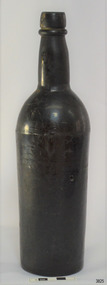 Flagstaff Hill Maritime Museum and Village
Container - Bottle, 1840s to 1878
... carmichael...tom pearce...john...Carmichael. This bottle is historically significant as an example of liquor bottles imported into to Colonial Victoria in the mid-1800s to early-1900s. Its significance is increased by also being an artefact recovered by John Chance, a diver from the wreck of the Loch Ard and other wrecks in the late-1960s to early-1970s. ...This handmade black glass bottle was recovered between the late 1960s to early 1970s from the wreck of the sailing ship Loch Ard. The ship was wrecked in 1878 and its remains are located at Mutton Bird Island, near Port Campbell, Victoria and bottles of liquor were listed as part of the Loch Ard’s cargo. This bottle is now part of the John Chance collection. Black glass is one of the oldest bottle colours and dates back to the early 17th century. In the 1840s to late-1870s black glass bottles were mainly used for liquor and ale. All glass is made from silica, which is found in quartz sand. The naturally occurring sand has impurities, such as iron, that determine the colour of the glass. Residual iron leads to green or amber coloured glass, and carbon in the sand makes that glass appear as ‘black’. A strong light behind the glass will show its colour as dark green or dark amber. This handmade bottle appears to have been made in a dip mould, with the molten glass blown into a seamless shoulder-height mould to give the body a uniform symmetrical shape and size. After the body is blown, the glass blower continues blowing free-form (without the mould) to form the shoulder and neck, then the base is pushed up with a tool, and the finish for the mouth is added with his tools. The dip mould gives the body a slightly textured surface, with the free blown shoulders and neck being smoother and shinier. There is usually a line around the shoulder where the mould of the body meets the shoulder, and a lump or mark in the centre of the base, called a pontil mark, where the push-up tool was removed. The ship Loch Ard was built on the River Clyde in Scotland in 1873 for the prestigious Loch Line of colonial clipper ships, designed for the Australian run. It sailed from England on 1 March 1878 carrying 37 crew, 17 passengers and a diverse general cargo ranging from luxury items to bulk railway iron. On 1 June 1878, emerging from fog and hearing too late the sound of breakers against the tall limestone cliffs, the vessel struck the southern foot of Mutton Bird Island and sank in 23 metres of water. Of the fifty-four people on board only two survived, one young male crewman, Tom Pearce, and one young female passenger, Eva Carmichael. This bottle is historically significant as an example of liquor bottles imported into to Colonial Victoria in the mid-1800s to early-1900s. Its significance is increased by also being an artefact recovered by John Chance, a diver from the wreck of the Loch Ard and other wrecks in the late-1960s to early-1970s. Items that come from several wrecks along Victoria's coast have since been donated to the Flagstaff Hill Maritime Village’s museum collection by his family, illustrating this item’s level of historical value. The bottle is also significant for being part of Flagstaff Hill’s collection of artefacts from the Loch Ard, which is significant for being one of the largest collections of artefacts from this shipwreck in Victoria. The collection is significant for its association with the shipwreck, which is on the Victorian Heritage Register (VHR S417. The collection has additional significance because of the relationship between the objects, as together they have a high potential to interpret the story of the Loch Ard. The Loch Ard collection is archaeologically significant as the remains of a large international passenger and cargo ship. The Loch Ard collection is historically significant for representing aspects of Victoria’s shipping history and its potential to interpret sub-theme 1.5 of Victoria’s Framework of Historical Themes (living with natural processes). The shipwreck is one of the worst, and best known, shipwrecks in Victoria’s history.Bottle, black glass. Thick matt body, with slightly bumpy texture, areas with sheen, colour imperfections. Mouth is sealed, and has remnants of tape on outside. Tooled cork-top finish with ring below. Slightly bulged neck. Shoulder has some diagonal creases and a distinct line where shoulder meets body. Body tapers inwards to base. It has a bubble and diagonal crease lines. Base is uneven. Pushed up base has pontil mark. Handmade, dip mould. No inscriptions.flagstaff hill, warrnambool, flagstaff hill maritime museum, maritime museum, shipwreck coast, flagstaff hill maritime village, great ocean road, shipwreck artefact, loch ard, mutton bird island, eva carmichael, tom pearce, john chance, bottle, black glass, antique bottle, bulge neck bottle, handmade, dip mould, mouth blown, pontil base, blown bottle, liquor bottle, ale bottle -
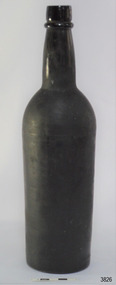 Flagstaff Hill Maritime Museum and Village
Container - Bottle, 1840s to 1878
... carmichael...tom pearce...john...Carmichael. This bottle is historically significant as an example of liquor bottles imported into to Colonial Victoria in the mid-1800s to early-1900s. Its significance is increased by also being an artefact recovered by John Chance, a diver from the wreck of the Loch Ard and other wrecks in the late-1960s to early-1970s. ...This handmade black glass bottle was recovered between the late 1960s to early 1970s from the wreck of the sailing ship Loch Ard. The ship was wrecked in 1878 and its remains are located at Mutton Bird Island, near Port Campbell, Victoria and bottles of liquor were listed as part of the Loch Ard’s cargo. This bottle is now part of the John Chance collection. Black glass is one of the oldest bottle colours and dates back to the early 17th century. In the 1840s to late-1870s black glass bottles were mainly used for liquor and ale. All glass is made from silica, which is found in quartz sand. The naturally occurring sand has impurities, such as iron, that determine the colour of the glass. Residual iron leads to green or amber coloured glass, and carbon in the sand makes that glass appear as ‘black’. A strong light behind the glass will show its colour as dark green or dark amber. This handmade bottle appears to have been made in a dip mould, with the molten glass blown into a seamless shoulder-height mould to give the body a uniform symmetrical shape and size. After the body is blown, the glass blower continues blowing free-form (without the mould) to form the shoulder and neck, then the base is pushed up with a tool, and the finish for the mouth is added with his tools. The dip mould gives the body a slightly textured surface, with the free blown shoulders and neck being smoother and shinier. There is usually a line around the shoulder where the mould of the body meets the shoulder, and a lump or mark in the centre of the base, called a pontil mark, where the push-up tool was removed. The ship Loch Ard was built on the River Clyde in Scotland in 1873 for the prestigious Loch Line of colonial clipper ships, designed for the Australian run. It sailed from England on 1 March 1878 carrying 37 crew, 17 passengers and a diverse general cargo ranging from luxury items to bulk railway iron. On 1 June 1878, emerging from fog and hearing too late the sound of breakers against the tall limestone cliffs, the vessel struck the southern foot of Mutton Bird Island and sank in 23 metres of water. Of the fifty-four people on board only two survived, one young male crewman, Tom Pearce, and one young female passenger, Eva Carmichael. This bottle is historically significant as an example of liquor bottles imported into to Colonial Victoria in the mid-1800s to early-1900s. Its significance is increased by also being an artefact recovered by John Chance, a diver from the wreck of the Loch Ard and other wrecks in the late-1960s to early-1970s. Items that come from several wrecks along Victoria's coast have since been donated to the Flagstaff Hill Maritime Village’s museum collection by his family, illustrating this item’s level of historical value. The bottle is also significant for being part of Flagstaff Hill’s collection of artefacts from the Loch Ard, which is significant for being one of the largest collections of artefacts from this shipwreck in Victoria. The collection is significant for its association with the shipwreck, which is on the Victorian Heritage Register (VHR S417. The collection has additional significance because of the relationship between the objects, as together they have a high potential to interpret the story of the Loch Ard. The Loch Ard collection is archaeologically significant as the remains of a large international passenger and cargo ship. The Loch Ard collection is historically significant for representing aspects of Victoria’s shipping history and its potential to interpret sub-theme 1.5 of Victoria’s Framework of Historical Themes (living with natural processes). The shipwreck is one of the worst, and best known, shipwrecks in Victoria’s history.Bottle, black glass. Thick matt body, with slightly bumpy texture, areas with sheen, colour imperfections, bubble in glass. Bottle has foul smelling contents inside. Mouth has hard capped cork seal with black, hard rubber capped stopper. Side of mouth has ship or mark. Tooled cork-top finish with ring below, slightly bulged neck. Shoulder has some diagonal creases and a line where shoulder meets body. Body tapers inwards to base. Heel varies in width. Base is uneven. Pushed up base has pontil mark. Handmade, dip mould. No inscriptions.flagstaff hill, warrnambool, flagstaff hill maritime museum, maritime museum, shipwreck coast, flagstaff hill maritime village, great ocean road, shipwreck artefact, loch ard, mutton bird island, eva carmichael, tom pearce, john chance, bottle, black glass, antique bottle, bulge neck bottle, handmade, dip mould, mouth blown, pontil base, blown bottle, liquor bottle, ale bottle -
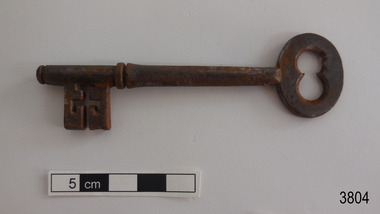 Flagstaff Hill Maritime Museum and Village
Functional object - Key, circa 1866
... carmichael...tom pearce...blue china tea set...antique door key...glenample photographs...john...John Chance Collection. Locksmiths became a recognised trade by the middle of the 19th century, doing work that blacksmiths and gunsmiths would have done. They were craftsmen and trained apprentices for their trade. The local community and businesses relied on them for making a wide variety of precision objects such as locks and keys, knives, ornamental and decorative latticework, fine instruments, accurate tools and hardware items. Glenample Homestead became famous after the disastrous wreck of the sailing ship Loch Ard on June 1, 1878. The owners, Hugh Hamilton Gibson and Peter McArthur, were involved in the rescue and recovery of Eva Carmichael...John Chance Collection. Locksmiths became a recognised trade by the middle of the 19th century, doing work that blacksmiths and gunsmiths would have done. They were craftsmen and trained apprentices for their trade. The local community and businesses relied on them for making a wide variety of precision objects such as locks and keys, knives, ornamental and decorative latticework, fine instruments, accurate tools and hardware items. Glenample Homestead became famous after the disastrous wreck of the sailing ship Loch Ard on June 1, 1878. The owners, Hugh Hamilton Gibson and Peter McArthur, were involved in the rescue and recovery of Eva Carmichael ...The key is one of a collection of seven 1860s keys once belonged to the Glenample Homestead near Princetown. They are all keyed with different bits and would have opened the external panelled doors of the Georgian building. The keys would now be around 150 years old. The keys are now part of the John Chance Collection. Locksmiths became a recognised trade by the middle of the 19th century, doing work that blacksmiths and gunsmiths would have done. They were craftsmen and trained apprentices for their trade. The local community and businesses relied on them for making a wide variety of precision objects such as locks and keys, knives, ornamental and decorative latticework, fine instruments, accurate tools and hardware items. Glenample Homestead became famous after the disastrous wreck of the sailing ship Loch Ard on June 1, 1878. The owners, Hugh Hamilton Gibson and Peter McArthur, were involved in the rescue and recovery of Eva Carmichael and Tom Pearce, the only two survivors, as well as overseeing the salvage of items from the shipwreck and the burial of those who lost their lives. Eva first met Jane Shields at Glenample and they became long-time friends. The keys are significant as an example of mid-19th century locksmith hardware, and for their connection with Glenample Homestead, and for their connection to the history of the Loch Ard shipwreck’s only two survivors. The set of keys also hold significance as they were discovered by John Chance, who was also a diver from the wreck of the Loch Ard in the 1960s-70s. Items that come from several wrecks along Victoria's coast have since been donated to the Flagstaff Hill Maritime Village’s museum collection by his family, illustrating this item’s level of historical value. Glenample Homestead is of historical, social and architectural significance to the State of Victoria and is listed on the Victorian Heritage Register (VHR H0392). It is a historical example of early settlement and development of a run in the coastal land of South West Victoria, and it is constructed from locally quarried sandstone but doesn’t take away from its Georgian design. Glenample Homestead is of State significance through its unique connection with the wreck of the ship Loch Ard and the connection to its owners, Hugh and Lavinia Gibson and Peter McArthur, played a historically and socially significant role in the rescue and care of the survivors, the salvage of goods and the burial of those who lost their lives. The shipwreck of the Loch Ard itself is of significance for Victoria and is registered on the Victorian Heritage Register (S417). Key; steel domestic door key. Flat open bow with 'figure 8' space, round shank that flares out slightly above the collar on the bit. The rectangular bit has internal notches and grooves. There is a rounded pin on the end.flagstaff hill, warrnambool, flagstaff hill maritime museum, maritime museum, shipwreck coast, flagstaff hill maritime village, great ocean road, glenample homestead, victorian heritage register vhr h0392, georgian homestead, loch ard, princetown, jane shields, eva carmichael, tom pearce, blue china tea set, antique door key, glenample photographs, john chance -
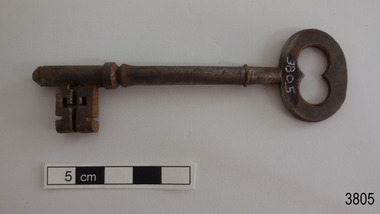 Flagstaff Hill Maritime Museum and Village
Functional object - Key, circa 1866
... carmichael...tom pearce...blue china tea set...antique door key...glenample photographs...john...John Chance Collection. Locksmiths became a recognised trade by the middle of the 19th century, doing work that blacksmiths and gunsmiths would have done. They were craftsmen and trained apprentices for their trade. The local community and businesses relied on them for making a wide variety of precision objects such as locks and keys, knives, ornamental and decorative latticework, fine instruments, accurate tools and hardware items. Glenample Homestead became famous after the disastrous wreck of the sailing ship Loch Ard on June 1, 1878. The owners, Hugh Hamilton Gibson and Peter McArthur, were involved in the rescue and recovery of Eva Carmichael...The shipwreck of the Loch Ard itself is of significance for Victoria and is registered on the Victorian Heritage Register (S417). flagstaff hill warrnambool flagstaff hill maritime museum maritime museum shipwreck coast flagstaff hill maritime village great ocean road glenample homestead victorian heritage register vhr h0392 georgian homestead loch ard princetown jane shields eva carmichael tom pearce blue china tea set antique door key glenample photographs john chance Key; steel domestic door key. ...The key is one of a collection of seven 1860s keys once belonged to the Glenample Homestead near Princetown. They are all keyed with different bits and would have opened the external panelled doors of the Georgian building. The keys would now be around 150 years old. The keys are now part of the John Chance Collection. Locksmiths became a recognised trade by the middle of the 19th century, doing work that blacksmiths and gunsmiths would have done. They were craftsmen and trained apprentices for their trade. The local community and businesses relied on them for making a wide variety of precision objects such as locks and keys, knives, ornamental and decorative latticework, fine instruments, accurate tools and hardware items. Glenample Homestead became famous after the disastrous wreck of the sailing ship Loch Ard on June 1, 1878. The owners, Hugh Hamilton Gibson and Peter McArthur, were involved in the rescue and recovery of Eva Carmichael and Tom Pearce, the only two survivors, as well as overseeing the salvage of items from the shipwreck and the burial of those who lost their lives. Eva first met Jane Shields at Glenample and they became long-time friends. The keys are significant as an example of mid-19th century locksmith hardware, and for their connection with Glenample Homestead, and for their connection to the history of the Loch Ard shipwreck’s only two survivors. Glenample Homestead is of historical, social and architectural significance to the State of Victoria and is listed on the Victorian Heritage Register (VHR H0392). It is a historical example of early settlement and development of a run in the coastal land of South West Victoria, and it is constructed from locally quarried sandstone but doesn’t take away from its Georgian design. Glenample Homestead is of State significance through its unique connection with the wreck of the ship Loch Ard and the connection to its owners, Hugh and Lavinia Gibson and Peter McArthur, played a historically and socially significant role in the rescue and care of the survivors, the salvage of goods and the burial of those who lost their lives. The shipwreck of the Loch Ard itself is of significance for Victoria and is registered on the Victorian Heritage Register (S417). Key; steel domestic door key. Flat open bow with 'figure 8' space, collar on shank, close to the bow. Round shank flares out slightly above the collar on the bit. The rectangular bit has internal and external notches and grooves. There is a rounded pin on the end.flagstaff hill, warrnambool, flagstaff hill maritime museum, maritime museum, shipwreck coast, flagstaff hill maritime village, great ocean road, glenample homestead, victorian heritage register vhr h0392, georgian homestead, loch ard, princetown, jane shields, eva carmichael, tom pearce, blue china tea set, antique door key, glenample photographs, john chance -
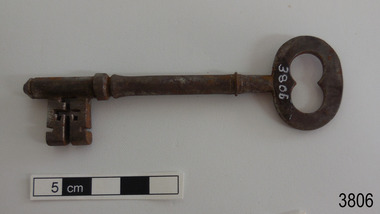 Flagstaff Hill Maritime Museum and Village
Functional object - Key, circa 1866
... carmichael...tom pearce...blue china tea set...antique door key...glenample photographs...john...John Chance Collection. Locksmiths became a recognised trade by the middle of the 19th century, doing work that blacksmiths and gunsmiths would have done. They were craftsmen and trained apprentices for their trade. The local community and businesses relied on them for making a wide variety of precision objects such as locks and keys, knives, ornamental and decorative latticework, fine instruments, accurate tools and hardware items. Glenample Homestead became famous after the disastrous wreck of the sailing ship Loch Ard on June 1, 1878. The owners, Hugh Hamilton Gibson and Peter McArthur, were involved in the rescue and recovery of Eva Carmichael...John Chance Collection. Locksmiths became a recognised trade by the middle of the 19th century, doing work that blacksmiths and gunsmiths would have done. They were craftsmen and trained apprentices for their trade. The local community and businesses relied on them for making a wide variety of precision objects such as locks and keys, knives, ornamental and decorative latticework, fine instruments, accurate tools and hardware items. Glenample Homestead became famous after the disastrous wreck of the sailing ship Loch Ard on June 1, 1878. The owners, Hugh Hamilton Gibson and Peter McArthur, were involved in the rescue and recovery of Eva Carmichael ...The key is one of a collection of seven 1860s keys once belonged to the Glenample Homestead near Princetown. They are all keyed with different bits and would have opened the external panelled doors of the Georgian building. The keys would now be around 150 years old. The keys are now part of the John Chance Collection. Locksmiths became a recognised trade by the middle of the 19th century, doing work that blacksmiths and gunsmiths would have done. They were craftsmen and trained apprentices for their trade. The local community and businesses relied on them for making a wide variety of precision objects such as locks and keys, knives, ornamental and decorative latticework, fine instruments, accurate tools and hardware items. Glenample Homestead became famous after the disastrous wreck of the sailing ship Loch Ard on June 1, 1878. The owners, Hugh Hamilton Gibson and Peter McArthur, were involved in the rescue and recovery of Eva Carmichael and Tom Pearce, the only two survivors, as well as overseeing the salvage of items from the shipwreck and the burial of those who lost their lives. Eva first met Jane Shields at Glenample and they became long-time friends.The keys are significant as an example of mid-19th century locksmith hardware, and for their connection with Glenample Homestead, and for their connection to the history of the Loch Ard shipwreck’s only two survivors. The set of keys also hold significance as they were discovered by John Chance, who was also a diver from the wreck of the Loch Ard in the 1960s-70s. Items that come from several wrecks along Victoria's coast have since been donated to the Flagstaff Hill Maritime Village’s museum collection by his family, illustrating this item’s level of historical value. Glenample Homestead is of historical, social and architectural significance to the State of Victoria and is listed on the Victorian Heritage Register (VHR H0392). It is a historical example of early settlement and development of a run in the coastal land of South West Victoria, and it is constructed from locally quarried sandstone but doesn’t take away from its Georgian design. Glenample Homestead is of State significance through its unique connection with the wreck of the ship Loch Ard and the connection to its owners, Hugh and Lavinia Gibson and Peter McArthur, played a historically and socially significant role in the rescue and care of the survivors, the salvage of goods and the burial of those who lost their lives. The shipwreck of the Loch Ard itself is of significance for Victoria and is registered on the Victorian Heritage Register (S417). Key; steel domestic door key. Flat open bow with 'figure 8' space, narrow collar on shank, close to the bow. Round shank flares out slightly above the collar on the bit. The rectangular bit has internal and external notches and grooves. There is a rounded pin on the end.flagstaff hill, warrnambool, flagstaff hill maritime museum, maritime museum, shipwreck coast, flagstaff hill maritime village, great ocean road, glenample homestead, victorian heritage register vhr h0392, georgian homestead, loch ard, princetown, jane shields, eva carmichael, tom pearce, blue china tea set, antique door key, glenample photographs, john chance
