
Showing 32 items matching "ladies training college"
-
 Returned Nurses RSL Sub-branch
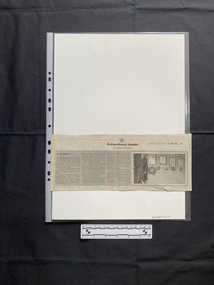
Newspaper - newpaper clipping, The Age, Extraordinary people: Elizabeth Burchill, 11 November 1996
... ...Ladies Training College...WW2 WWII World War One Camberwell First World War Ladies Training College Flinders Street South Australia VX383 Box Hill High Archibald Prize Monash University Ena Curry Burke and Wills A newspaper clipping consisting of the title, three columns of text and a black and white photo of an older woman leaning on a wall beside many certificates and awards. ...Now 90, Elizabeth Burchill has done marvelous things in her life. She nursed in Innaminka, London and helped refugees during the Spanish Civil war. She saw Nazareth when serving with the Sixth Division in Palestine, ran an infant welfare clinic in Darwin, nursed in New Guinea's Sepik district, on Thursday Island, in Labrador, Newfoundland. In 1980, in her 70's, Elizabeth studied for her High School Certificate so she could then go on to get an arts degree, a master of arts in Australian Studies and a Bachelor of Letters.A newspaper clipping consisting of the title, three columns of text and a black and white photo of an older woman leaning on a wall beside many certificates and awards.ww2, wwii, world war one, camberwell, first world war, ladies training college, flinders street, south australia, vx383, box hill high, archibald prize, monash university, ena curry, burke and wills -
 Federation University Historical Collection
Documents, Donald I. Johnston, Ballarat Technical Art School Principal's Reports, 1944-1949, 1944-1949
... Training Corps...Kenneth Treadwell...ethel kift...Ballarat Ladies Art Association...Barbara Daykin...Sylvia Williams...Mary Fogarty...Winifred Beckwith...reginald J. Boyd...Ballarat Teachers' College...Barker Library (top floor) Mount Helen goldfields ballarat school of mines ballarat technical art school Donald I Johnston Valerie Robertson Ballarat Art Association Mollie Crockford Marion Beckwith Neville Reeves Ruth Mole Joan Walter Beryl Grinter John Proctor pottery treddle saw Marion Beckwith Queen's Air Training Corps Kenneth Treadwell ethel kift Ballarat Ladies Art Association Barbara Daykin Sylvia Williams Mary Fogarty Winifred Beckwith reginald J. Boyd Ballarat Teachers' College ...Brown hard covered book with hand written reports from the Art Principal, Donald I. Johnston. 20 September 1944 - Convalescent Depot soldiers for tuition ballarat school of mines, ballarat technical art school, donald i johnston, valerie robertson, ballarat art association, mollie crockford, marion beckwith, neville reeves, ruth mole, joan walter, beryl grinter, john proctor, pottery, treddle saw, marion beckwith, queen's air training corps, kenneth treadwell, ethel kift, ballarat ladies art association, barbara daykin, sylvia williams, mary fogarty, winifred beckwith, reginald j. boyd, ballarat teachers' college, teachers' training college ballarat, iris mitchell, peggie crosbie, grigg, kellock, evan jones, repatriation, ballarat exhibition commissioner, betty brown, red cross society, ken palmer, prime minister's avenue, ben chifley, bryan pddle, neville bunning, bernard bryan, richard o'neill, neville reeves, jack proctor, r. reed, f.g. proctor -
 Ballarat Clarendon College
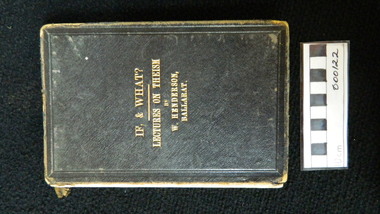
Book, If, & what? Lectures on Theism by W. Henderson, Ballarat, 1882
... It was donated to the College by Keith Hofmaier (PY1944) who had received it from Rev Sid A Goddard, former Ballarat College and Clarendon Presbyterian Ladies College council member and chair. The book affirms the strong theological convictions, training and qualifications of the school's founder. ...It was donated to the College by Keith Hofmaier (PY1944) who had received it from Rev Sid A Goddard, former Ballarat College and Clarendon Presbyterian Ladies College council member and chair. The book affirms the strong theological convictions, training and qualifications of the school's founder. ...This book was authored by Rev William Henderson, founder of Ballarat College. It was donated to the College by Keith Hofmaier (PY1944) who had received it from Rev Sid A Goddard, former Ballarat College and Clarendon Presbyterian Ladies College council member and chair. The book affirms the strong theological convictions, training and qualifications of the school's founder. The book is accompanied by two letters. The first from Sid Goddard on the occasion of his presentation of the book to St Andrews Kirk. The second from Keith Hofmaier advising the inclusion of the book among the 'meagre collection of Henderson relics at the college'. Book has social significance for the college community because of its association with both William Henderson and Sid Goddard. Black binding with gold lettering on cover' damaged spine;green endpapers; various letter included; Gummed label fixed inside front cover: Edward Ford MAsid-a-goddard, william-henderson, keith-hofmaier, 1992, theology, ballarat-college, -
Ballarat Clarendon College
Book, Essays by Ralph Waldo Emerson
... Ladies College in 1893. Normal College is a term used for any college devoted to teacher training. ...Ladies College in 1893. Normal College is a term used for any college devoted to teacher training. ...Alice M Coltman entered Clarendon Ladies College in 1893. Normal College is a term used for any college devoted to teacher training. This term was used for the fore-runner of the Melbourne Teachers' College although by 1907 this institution was known as the Training College. Small leather bound book with gold printing on spine and gold crest on front coverInscribed on 3rd page: Alice M Coltman / Ballarat / November 4, 1907 Inscribed on facing page: Normal Collegealice-m-coltman, normal-college -
 Bendigo Historical Society Inc.
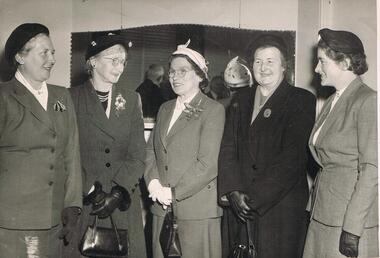
Photograph - LA TROBE UNIVERSITY BENDIGO COLLECTION: LADIES UNKNOWN
... History House 11 Mackenzie Street Bendigo goldfields BENDIGO Education bendigo teachers' college La Trobe University Bendigo collection collection Bendigo education female women Bendigo Teachers' College photo photograph photographs photography tertiary education teacher training history A black and white photograph of a group of ladies. ...A black and white photograph of a group of ladies.bendigo, education, bendigo teachers' college, la trobe university bendigo collection, collection, bendigo, education, female, women, bendigo teachers' college, photo, photograph, photographs, photography, tertiary education, teacher training, history -
 City of Moorabbin Historical Society (Operating the Box Cottage Museum)
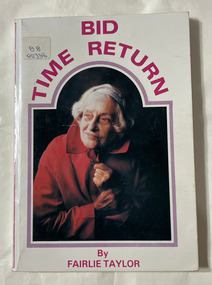
Book, New Century Press Pty.Ltd, Bid Time Return, 1977
... ladies college library. school teacher. The author tells of her life from the age of two (1889) living in Cheltenham Victoria her years at Cheltenham State School, Teachers Training College, teaching in Melbourne and the country and up till 1920 when she got married and left teaching for awhile she returned to teaching and became Victoria's first full time teacher-librarian at the Presbyterian Ladies' College she was a pioneer in teaching school library practice and visual education. ...The author tells of her life from the age of two (1889) living in Cheltenham Victoria her years at Cheltenham State School, Teachers Training College, teaching in Melbourne and the country and up till 1920 when she got married and left teaching for awhile she returned to teaching and became Victoria's first full time teacher-librarian at the Presbyterian Ladies' College she was a pioneer in teaching school library practice and visual education.168p., 8p. of plates ; A small soft cover book white with a coloured photograph of the author, the title and the authors name in red on the front cover,on the back cover is text by the author and a sepia photograph of an unknown early city.non-fictionThe author tells of her life from the age of two (1889) living in Cheltenham Victoria her years at Cheltenham State School, Teachers Training College, teaching in Melbourne and the country and up till 1920 when she got married and left teaching for awhile she returned to teaching and became Victoria's first full time teacher-librarian at the Presbyterian Ladies' College she was a pioneer in teaching school library practice and visual education. cheltenham, mentone, victoria, steam train, dog boxes, cheltenham state school, presbyterian ladies college, library. school teacher. -
 Royal Australian and New Zealand College of Obstetricians & Gynaecologists (RANZCOG)
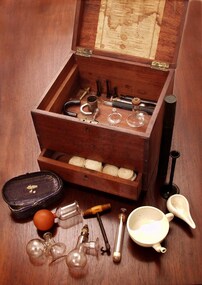
Midwifery box used by midwife Mary Howlett, c. 1866 - 1920
... Royal Australian and New Zealand College of Obstetricians & Gynaecologists (RANZCOG) 1 Bowen Crescent Naarm (Melbourne) melbourne Mary Howlett (1840-1922) began practising as a country midwife in 1866 in the western district of Victoria. She qualified as a 'ladies monthly nurse' in 1887 and continued to practise as a nurse and midwife until 1920.She began her six months training at the Melbourne Lying-In Hospital. ...Mary Howlett (1840-1922) began practising as a country midwife in 1866 in the western district of Victoria. She qualified as a 'ladies monthly nurse' in 1887 and continued to practise as a nurse and midwife until 1920.She began her six months training at the Melbourne Lying-In Hospital. She was known by many as 'Auntie', and her career spanned more than 50 years. Mrs Howlett's midwifery box and contents were given to Dr Frank Forster, and he donated them to the museum collection in 1993. The contents of this box are consistent with use by a midwife, but such a box would have been cumbersome and heavy to carry around. It is possible that Mary Howlett would also have had a bag for her midwifery requirements.This midwifery box is highly significant as it includes close to the original contents of one midwife's 'professional kit' up to 1920. The contents reveal something of the professional practice of a midwife in country Victoria at that time.A wooden box with hinged lift-up lid, one drawer, and an inner wooden tray. Rests at each side inside box indicate another tray may have originally sat across the top. Pasted inside the lid is a product list from Robert McDonald (chemist and druggist). There are locks for both the main chest section and the drawer. A circular section is cut out of the bottom of the drawer. The contents of the box include, enema syringe, a red rubber douche, glass breast pump, nipple shields, a thermometer in travel case. Also includes cotton bandages, a tooth extractor, and fetal stethoscope.midwifery -
 Royal Australian and New Zealand College of Obstetricians & Gynaecologists (RANZCOG)
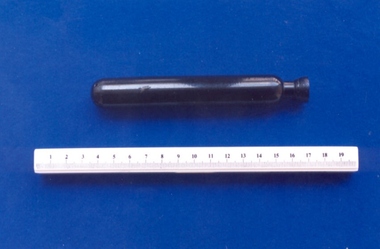
Rectal or vaginal irrigator associated with midwife Mary Howlett, c. 1866 - 1920
... College of Obstetricians & Gynaecologists (RANZCOG) 1 Bowen Crescent Naarm (Melbourne) melbourne Artefact may have been used for enema or vaginal irrigation. Mary Howlett (1840-1922) began practising as a country midwife in 1866 in the western district of Victoria. She qualified as a 'ladies monthly nurse' in 1887 and continued to practise as a nurse and midwife until 1920.She began her six months training ...Artefact may have been used for enema or vaginal irrigation. Mary Howlett (1840-1922) began practising as a country midwife in 1866 in the western district of Victoria. She qualified as a 'ladies monthly nurse' in 1887 and continued to practise as a nurse and midwife until 1920.She began her six months training at the Melbourne Lying-In Hospital. She was known by many as 'Auntie', and her career spanned more than 50 years. Mrs Howlett's midwifery box and contents were given to Dr Frank Forster, and he donated them to the museum collection in 1993.Black bakelite irrigator, resembling a test tube in shape. The irrigator has four entries, a connecting bridge and serrated edged flange. Stopcock attachment and tubing are missing.irrigation, midwifery -
 Royal Australian and New Zealand College of Obstetricians & Gynaecologists (RANZCOG)
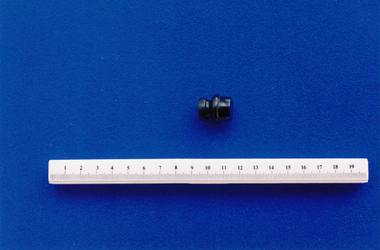
Tool - Irrigation nozzle associated with midwife Mary Howlett, c. 1866 - 1920
... Royal Australian and New Zealand College of Obstetricians & Gynaecologists (RANZCOG) 1 Bowen Crescent Naarm (Melbourne) melbourne Mary Howlett (1840-1922) began practising as a country midwife in 1866 in the western district of Victoria. She qualified as a 'ladies monthly nurse' in 1887 and continued to practise as a nurse and midwife until 1920.She began her six months training at the Melbourne Lying-In Hospital. ...Mary Howlett (1840-1922) began practising as a country midwife in 1866 in the western district of Victoria. She qualified as a 'ladies monthly nurse' in 1887 and continued to practise as a nurse and midwife until 1920.She began her six months training at the Melbourne Lying-In Hospital. She was known by many as 'Auntie', and her career spanned more than 50 years. Mrs Howlett's midwifery box and contents were given to Dr Frank Forster, and he donated them to the museum collection in 1993.Small black bakelite irrigator nozzle. There are 7 entries in the nozzle head. Small ridge around neck of nozzle.irrigation, midwifery -
 Royal Australian and New Zealand College of Obstetricians & Gynaecologists (RANZCOG)
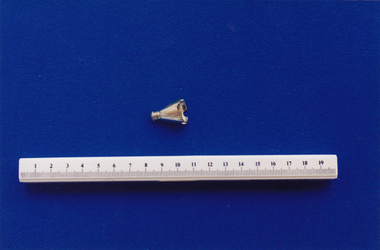
Syringe attachment associated with midwife Mary Howlett, c. 1866 to 1920, 1880 (approximate)
... Royal Australian and New Zealand College of Obstetricians & Gynaecologists (RANZCOG) 1 Bowen Crescent Naarm (Melbourne) melbourne Mary Howlett (1840-1922) began practising as a country midwife in 1866 in the western district of Victoria. She qualified as a 'ladies monthly nurse' in 1887 and continued to practise as a nurse and midwife until 1920.She began her six months training at the Melbourne Lying-In Hospital. ...Mary Howlett (1840-1922) began practising as a country midwife in 1866 in the western district of Victoria. She qualified as a 'ladies monthly nurse' in 1887 and continued to practise as a nurse and midwife until 1920.She began her six months training at the Melbourne Lying-In Hospital. She was known by many as 'Auntie', and her career spanned more than 50 years. Mrs Howlett's midwifery box and contents were given to Dr Frank Forster, and he donated them to the museum collection in 1993. Syringe attachment with 4 depressions of equal size around the base. Inside is a shallow rim. The inside is hollow and wider at the base rim than the top. It tapers to half the circumference size at the outlet.intravenous device, midwifery -
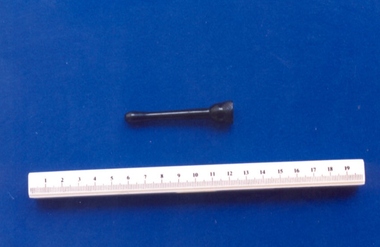 Royal Australian and New Zealand College of Obstetricians & Gynaecologists (RANZCOG)
Rectal or vaginal irrigator nozzle associated with midwife Mary Howlett, c. 1866 - 1920
... College of Obstetricians & Gynaecologists (RANZCOG) 1 Bowen Crescent Naarm (Melbourne) melbourne This item may have been used for enema or vaginal irrigation. Mary Howlett (1840-1922) began practising as a country midwife in 1866 in the western district of Victoria. She qualified as a 'ladies monthly nurse' in 1887 and continued to practise as a nurse and midwife until 1920.She began her six months training ...This item may have been used for enema or vaginal irrigation. Mary Howlett (1840-1922) began practising as a country midwife in 1866 in the western district of Victoria. She qualified as a 'ladies monthly nurse' in 1887 and continued to practise as a nurse and midwife until 1920.She began her six months training at the Melbourne Lying-In Hospital. She was known by many as 'Auntie', and her career spanned more than 50 years. Mrs Howlett's midwifery box and contents were given to Dr Frank Forster, and he donated them to the museum collection in 1993.Black bakelite nozzle with one entry. irrigation, midwifery -
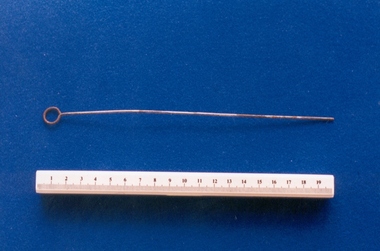 Royal Australian and New Zealand College of Obstetricians & Gynaecologists (RANZCOG)
Introducer associated with midwife Mary Howlett, c. 1866 to 1920, c1880s
... Royal Australian and New Zealand College of Obstetricians & Gynaecologists (RANZCOG) 1 Bowen Crescent Naarm (Melbourne) melbourne This item can be used for cleaning rubber tubing or to assist with the introduction of rubber catheters and tubing. Mary Howlett (1840-1922) began practising as a country midwife in 1866 in the western district of Victoria. She qualified as a 'ladies monthly nurse' in 1887 and continued to practise as a nurse and midwife until 1920.She began her six months training ...This item can be used for cleaning rubber tubing or to assist with the introduction of rubber catheters and tubing. Mary Howlett (1840-1922) began practising as a country midwife in 1866 in the western district of Victoria. She qualified as a 'ladies monthly nurse' in 1887 and continued to practise as a nurse and midwife until 1920.She began her six months training at the Melbourne Lying-In Hospital. She was known by many as 'Auntie', and her career spanned more than 50 years. Mrs Howlett's midwifery box and contents were given to Dr Frank Forster, and he donated them to the museum collection in 1993.Device made of metal wire with a rounded point at one end and an eye hook the other end.surgery, midwifery -
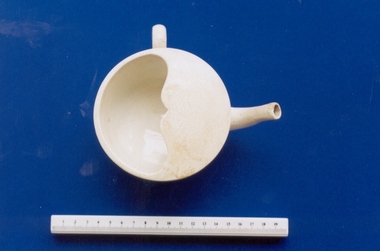 Royal Australian and New Zealand College of Obstetricians & Gynaecologists (RANZCOG)
Ceramic feeding cup associated with midwife Mary Howlett, c.1866-1920
... College of Obstetricians & Gynaecologists (RANZCOG) 1 Bowen Crescent Naarm (Melbourne) melbourne This type of cup was designed for use by an adult and was in common usage from the early 1900s to the 1930s. Feeding cups were used both in the home and in hospitals, and were also often made of white enamel. Mary Howlett (1840-1922) began practising as a country midwife in 1866 in the western district of Victoria. She qualified as a 'ladies monthly nurse' in 1887 and continued to practise as a nurse and midwife until 1920. She began her six months training ...This type of cup was designed for use by an adult and was in common usage from the early 1900s to the 1930s. Feeding cups were used both in the home and in hospitals, and were also often made of white enamel. Mary Howlett (1840-1922) began practising as a country midwife in 1866 in the western district of Victoria. She qualified as a 'ladies monthly nurse' in 1887 and continued to practise as a nurse and midwife until 1920. She began her six months training at the Melbourne Lying-In Hospital. She was known by many as 'Auntie', and her career spanned more than 50 years. Mrs Howlett's midwifery box and contents were given to Dr Frank Forster, and he donated them the museum collection in 1993. Feeding cup made out of white china, now discoloured. The cup has a curved spout (similar to a teapot spout) with a handle. There are four small holes inserted inside the cup diagonally at the proximate end of the spout. midwifery -
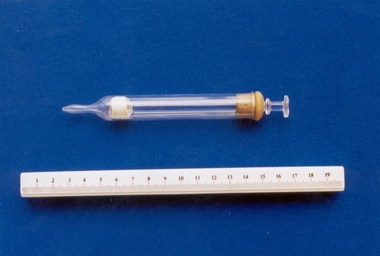 Royal Australian and New Zealand College of Obstetricians & Gynaecologists (RANZCOG)
Glass wound irrigator syringe associated with midwife Mary Howlett, c. 1866 - 1920
... College of Obstetricians & Gynaecologists (RANZCOG) 1 Bowen Crescent Naarm (Melbourne) melbourne Glass wound irrigating syringes were in general use from approximately 1915 to the beginning of the 1940s. Mary Howlett (1840-1922) began practising as a country midwife in 1866 in the western district of Victoria. She qualified as a 'ladies monthly nurse' in 1887 and continued to practise as a nurse and midwife until 1920. She began her six months training ...Glass wound irrigating syringes were in general use from approximately 1915 to the beginning of the 1940s.Mary Howlett (1840-1922) began practising as a country midwife in 1866 in the western district of Victoria. She qualified as a 'ladies monthly nurse' in 1887 and continued to practise as a nurse and midwife until 1920. She began her six months training at the Melbourne Lying-In Hospital. She was known by many as 'Auntie', and her career spanned more than 50 years. Mrs Howlett's midwifery box and contents were given to Dr Frank Forster, and he donated them to the museum collection in 1993. Glass wound syringe, with wood cap at distal end and cork bung inside a glass barrel with tapered end. irrigation, midwifery -
 Royal Australian and New Zealand College of Obstetricians & Gynaecologists (RANZCOG)
Breast reliever associated with midwife Mary Howlett, c. 1866 - 1920
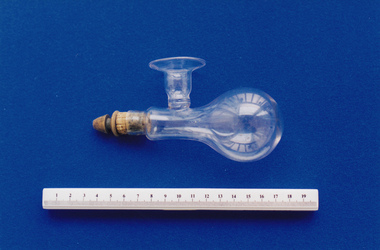
... Royal Australian and New Zealand College of Obstetricians & Gynaecologists (RANZCOG) 1 Bowen Crescent Naarm (Melbourne) melbourne Mary Howlett (1840-1922) began practising as a country midwife in 1866 in the western district of Victoria. She qualified as a 'ladies monthly nurse' in 1887 and continued to practise as a nurse and midwife until 1920. She began her six months training ...Mary Howlett (1840-1922) began practising as a country midwife in 1866 in the western district of Victoria. She qualified as a 'ladies monthly nurse' in 1887 and continued to practise as a nurse and midwife until 1920. She began her six months training at the Melbourne Lying-In Hospital. She was known by many as 'Auntie', and her career spanned more than 50 years. Mrs Howlett's midwifery box and contents were given to Dr Frank Forster who donated them to the museum collection in 1993. Glass breast pump with cork stopper and wooden bung. Pump shape loosely resembles that of a light bulb, with a bell-shaped nipple shield on one side. breast feeding, midwifery -
 Royal Australian and New Zealand College of Obstetricians & Gynaecologists (RANZCOG)
Furgusson-style fetal stethoscope associated with midwife Mary Howlett, c. 1866 - 1920
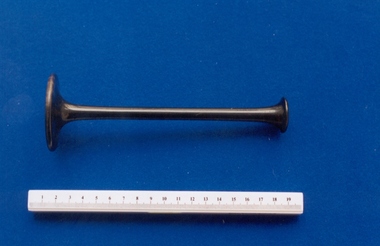
... College of Obstetricians & Gynaecologists (RANZCOG) 1 Bowen Crescent Naarm (Melbourne) melbourne The Furgusson stethoscope was in use from 1866. It is made all in one piece and has no attachments. Mary Howlett (1840-1922) began practising as a country midwife in 1866 in the western district of Victoria. She qualified as a 'ladies monthly nurse' in 1887 and continued to practise as a nurse and midwife until 1920. She began her six months training ...The Furgusson stethoscope was in use from 1866. It is made all in one piece and has no attachments.Mary Howlett (1840-1922) began practising as a country midwife in 1866 in the western district of Victoria. She qualified as a 'ladies monthly nurse' in 1887 and continued to practise as a nurse and midwife until 1920. She began her six months training at the Melbourne Lying-In Hospital. She was known by many as 'Auntie', and her career spanned more than 50 years. Mrs Howlett's midwifery box and contents were given to Dr Frank Forster, and he donated them to the museum collection in 1993.Fetal stethoscope consisting of an ebony tube with flanges at each end. The large flange would be placed onto the abdomen and the small flange would be placed to the ear to hear the fetal heart beat.diagnostic instruments, midwifery -
 Royal Australian and New Zealand College of Obstetricians & Gynaecologists (RANZCOG)
Enema syringe connection associated with midwife Mary Howlett, c. 1866 - 1920
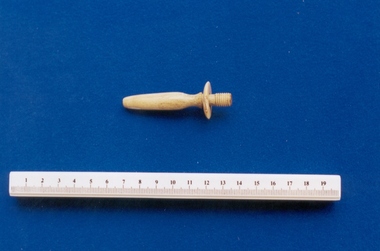
... College of Obstetricians & Gynaecologists (RANZCOG) 1 Bowen Crescent Naarm (Melbourne) melbourne This is a connection for a bone rectum pipe for a manual Indian rubber enema syringe. Mary Howlett (1840-1922) began practising as a country midwife in 1866 in the western district of Victoria. She qualified as a 'ladies monthly nurse' in 1887 and continued to practise as a nurse and midwife until 1920.She began her six months training ...This is a connection for a bone rectum pipe for a manual Indian rubber enema syringe.Mary Howlett (1840-1922) began practising as a country midwife in 1866 in the western district of Victoria. She qualified as a 'ladies monthly nurse' in 1887 and continued to practise as a nurse and midwife until 1920.She began her six months training at the Melbourne Lying-In Hospital. She was known by many as 'Auntie', and her career spanned more than 50 years. Mrs Howlett's midwifery box and contents were given to Dr Frank Forster, and he donated them to the museum collection in 1993.Small, elongated connection with openings at both ends. The connection narrows at the distal end (patient's end), and has a flange at proximal end, where the connection attaches to a rubber bulb.midwifery -
 Royal Australian and New Zealand College of Obstetricians & Gynaecologists (RANZCOG)
Enema syringe case associated with midwife Mary Howlett, c. 1866 - 1920, 1880 (approximate)
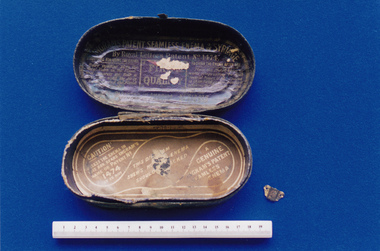
... College of Obstetricians & Gynaecologists (RANZCOG) 1 Bowen Crescent Naarm (Melbourne) melbourne The enema box was used by midwife Mary Howlett in the 1880s on her district rounds. It was used to hold Ingram's Patent No. 1474 Seamless Enema Syringe, but the syringe is missing. Mary Howlett (1840-1922) began practising as a country midwife in 1866 in the western district of Victoria. She qualified as a 'ladies monthly nurse' in 1887 and continued to practise as a nurse and midwife until 1920.She began her six months training ...The enema box was used by midwife Mary Howlett in the 1880s on her district rounds. It was used to hold Ingram's Patent No. 1474 Seamless Enema Syringe, but the syringe is missing.Mary Howlett (1840-1922) began practising as a country midwife in 1866 in the western district of Victoria. She qualified as a 'ladies monthly nurse' in 1887 and continued to practise as a nurse and midwife until 1920.She began her six months training at the Melbourne Lying-In Hospital. She was known by many as 'Auntie', and her career spanned more than 50 years. Mrs Howlett's midwifery box and contents were given to Dr Frank Forster, and he donated them to the museum collection in 1993.Oval shaped black leather case with gold clip. Base (.1) and lid (.2) have become separated. Instructions for use, and how to clean the instrument, are pasted inside the lid and base of the box.midwifery, irrigation -
 Royal Australian and New Zealand College of Obstetricians & Gynaecologists (RANZCOG)
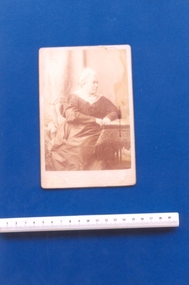
Sepia photograph of Mrs Mary Livingstone (Howlett), Johnstone O'Shannessy & Co Ltd
... Royal Australian and New Zealand College of Obstetricians & Gynaecologists (RANZCOG) 1 Bowen Crescent Naarm (Melbourne) melbourne Mary Livingstone Howlett (1840-1922) began practising as a country midwife in 1866 in the western district of Victoria. She qualified as a 'ladies monthly nurse' in 1887 and continued to practise as a nurse and midwife until 1920. She began her six months training ...Mary Livingstone Howlett (1840-1922) began practising as a country midwife in 1866 in the western district of Victoria. She qualified as a 'ladies monthly nurse' in 1887 and continued to practise as a nurse and midwife until 1920. She began her six months training at the Melbourne Lying-In Hospital. She was known by many as 'Auntie', and her career spanned more than 50 years. Mrs Howlett's midwifery box and contents were given to Dr Frank Forster and he donated them to the museum collection in 1993.Sepia photograph of Mrs Mary Howlett, midwife. Formal studio portrait, with studio stamp "Johnstone O'Shannessy & Co Ltd" Inscribed on verso, probably by Dr Frank Forster, reads "MRS MARY LIVINGSTONE/ HOWLETT".midwifery -
 Royal Australian and New Zealand College of Obstetricians & Gynaecologists (RANZCOG)
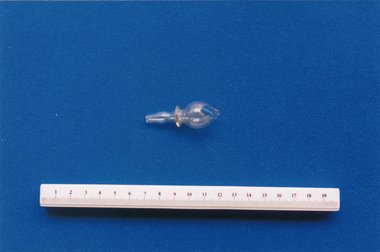
Intravenous drip regulator associated with midwife Mary Howlett, c. 1866 - 1920
... College of Obstetricians & Gynaecologists (RANZCOG) 1 Bowen Crescent Naarm (Melbourne) melbourne Similar in style to a 'Record' syringe adapter. Mary Howlett (1840-1922) began practising as a country midwife in 1866 in the western district of Victoria. She qualified as a 'ladies monthly nurse' in 1887 and continued to practise as a nurse and midwife until 1920.She began her six months training ...Similar in style to a 'Record' syringe adapter.Mary Howlett (1840-1922) began practising as a country midwife in 1866 in the western district of Victoria. She qualified as a 'ladies monthly nurse' in 1887 and continued to practise as a nurse and midwife until 1920.She began her six months training at the Melbourne Lying-In Hospital. She was known by many as 'Auntie', and her career spanned more than 50 years. Mrs Howlett's midwifery box and contents were given to Dr Frank Forster, and he donated them to the museum collection in 1993.Glass regulator from a rectal saline apparatus. Regulator consists of a glass bulb with a glass flange at the base, which connects to a glass pipe. intravenous device, midwifery -
 Royal Australian and New Zealand College of Obstetricians & Gynaecologists (RANZCOG)
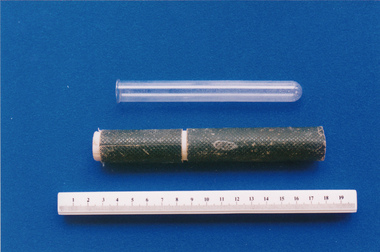
Test tube and case associated with midwife Mary Howlett, c. 1866 - 1920
... College of Obstetricians & Gynaecologists (RANZCOG) 1 Bowen Crescent Naarm (Melbourne) melbourne This type of test tube would have been used to collect blood or other bodily fluids. IT may also have been used to boil urine to identify the presence of urinary abnormalities such as sugar albumen acetone or bile. Mary Howlett (1840-1922) began practising as a country midwife in 1866 in the western district of Victoria. She qualified as a 'ladies monthly nurse' in 1887 and continued to practise as a nurse and midwife until 1920.She began her six months training ...This type of test tube would have been used to collect blood or other bodily fluids. IT may also have been used to boil urine to identify the presence of urinary abnormalities such as sugar albumen acetone or bile.Mary Howlett (1840-1922) began practising as a country midwife in 1866 in the western district of Victoria. She qualified as a 'ladies monthly nurse' in 1887 and continued to practise as a nurse and midwife until 1920.She began her six months training at the Melbourne Lying-In Hospital. She was known by many as 'Auntie', and her career spanned more than 50 years. Mrs Howlett's midwifery box and contents were given to Dr Frank Forster, and he donated them to the museum collection in 1993.Glass test tube with a thin glass lip in original cylinder cardboard case. Case is in two section, lid and body - lid is lined with white cardboard.diagnostic testing, midwifery -
 Royal Australian and New Zealand College of Obstetricians & Gynaecologists (RANZCOG)
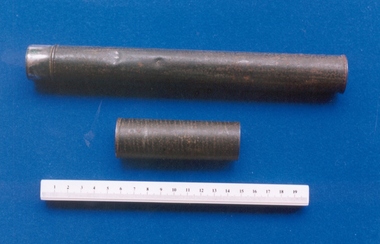
Bath thermometer case associated with midwife Mary Howlett, c. 1866 - 1920
... College of Obstetricians & Gynaecologists (RANZCOG) 1 Bowen Crescent Naarm (Melbourne) melbourne Bath thermometers were used in both hospital and home nursing during the 1800s. Mary Howlett (1840-1922) began practising as a country midwife in 1866 in the western district of Victoria. She qualified as a 'ladies monthly nurse' in 1887 and continued to practise as a nurse and midwife until 1920.She began her six months training ...Bath thermometers were used in both hospital and home nursing during the 1800s.Mary Howlett (1840-1922) began practising as a country midwife in 1866 in the western district of Victoria. She qualified as a 'ladies monthly nurse' in 1887 and continued to practise as a nurse and midwife until 1920.She began her six months training at the Melbourne Lying-In Hospital. She was known by many as 'Auntie', and her career spanned more than 50 years. Mrs Howlett's midwifery box and contents were given to Dr Frank Forster, and he donated them to the museum collection in 1993.Container for bath thermometer, consisting of base and lid. Cylindrical box made of tin with copper lining. Bath thermometer is missing.diagnostic instruments, midwifery -
 Royal Australian and New Zealand College of Obstetricians & Gynaecologists (RANZCOG)
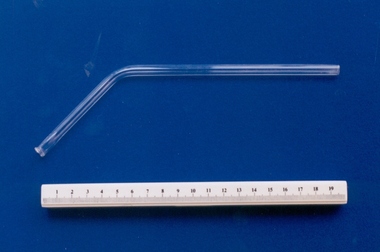
Glass vaginal irrigator associated with midwife Mary Howlett, c. 1866 - 1920
... College of Obstetricians & Gynaecologists (RANZCOG) 1 Bowen Crescent Naarm (Melbourne) melbourne The object has been identified as a vaginal (douche) irrigator. The glass tube is similar in appearance, however, to one of the four types of Brewer's glass cannula used in direct blood transfusion. (Reference Down Bros, page 958A) Mary Howlett (1840-1922) began practising as a country midwife in 1866 in the western district of Victoria. She qualified as a 'ladies monthly nurse' in 1887 and continued to practise as a nurse and midwife until 1920.She began her six months training ...The object has been identified as a vaginal (douche) irrigator. The glass tube is similar in appearance, however, to one of the four types of Brewer's glass cannula used in direct blood transfusion. (Reference Down Bros, page 958A)Mary Howlett (1840-1922) began practising as a country midwife in 1866 in the western district of Victoria. She qualified as a 'ladies monthly nurse' in 1887 and continued to practise as a nurse and midwife until 1920.She began her six months training at the Melbourne Lying-In Hospital. She was known by many as 'Auntie', and her career spanned more than 50 years. Mrs Howlett's midwifery box and contents were given to Dr Frank Forster, and he donated them to the museum collection in 1993.Glass tube, which functions as a vaginal irrigator. There is a curve in the tube, and it gets wider at proximal (far) end. The distal (near) end is round and blunt for attachment to rubber tubing.irrigation, midwifery -
 Royal Australian and New Zealand College of Obstetricians & Gynaecologists (RANZCOG)
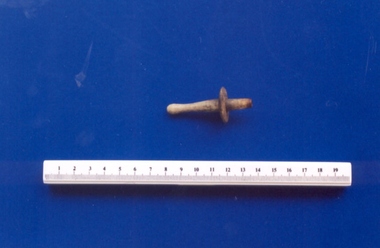
Bone irrigation nozzle associated with midwife Mary Howlett, c. 1866 - 1920
... College of Obstetricians & Gynaecologists (RANZCOG) 1 Bowen Crescent Naarm (Melbourne) melbourne This nozzle could be attached to a Higginson's syringe for either rectal administration of fluid or to irrigate the vagina. The nozzle could also possibly be inserted into a trocar or canula. Mary Howlett (1840-1922) began practising as a country midwife in 1866 in the western district of Victoria. She qualified as a 'ladies monthly nurse' in 1887 and continued to practise as a nurse and midwife until 1920.She began her six months training ...This nozzle could be attached to a Higginson's syringe for either rectal administration of fluid or to irrigate the vagina. The nozzle could also possibly be inserted into a trocar or canula.Mary Howlett (1840-1922) began practising as a country midwife in 1866 in the western district of Victoria. She qualified as a 'ladies monthly nurse' in 1887 and continued to practise as a nurse and midwife until 1920.She began her six months training at the Melbourne Lying-In Hospital. She was known by many as 'Auntie', and her career spanned more than 50 years. Mrs Howlett's midwifery box and contents were given to Dr Frank Forster, and he donated them to the museum collection in 1993.Irrigator nozzle for vaginal or rectal use. Nozzle has a small flange at the distal end with four small bevel lines. midwifery -
 Royal Australian and New Zealand College of Obstetricians & Gynaecologists (RANZCOG)
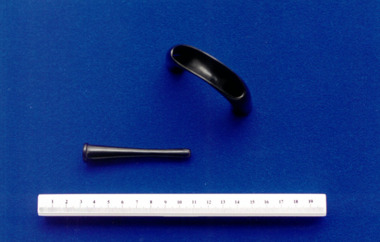
Incomplete vaginal douch apparatus set associated with midwife Mary Howlett, c. 1866 - 1920
... College of Obstetricians & Gynaecologists (RANZCOG) 1 Bowen Crescent Naarm (Melbourne) melbourne These are parts of a vaginal douch apparatus set. The apparatus appears to be a T More-Madden model, as used at the Rotunda Hospital, Ireland. Mary Howlett (1840-1922) began practising as a country midwife in 1866 in the western district of Victoria. She qualified as a 'ladies monthly nurse' in 1887 and continued to practise as a nurse and midwife until 1920.She began her six months training ...These are parts of a vaginal douch apparatus set. The apparatus appears to be a T More-Madden model, as used at the Rotunda Hospital, Ireland.Mary Howlett (1840-1922) began practising as a country midwife in 1866 in the western district of Victoria. She qualified as a 'ladies monthly nurse' in 1887 and continued to practise as a nurse and midwife until 1920.She began her six months training at the Melbourne Lying-In Hospital. She was known by many as 'Auntie', and her career spanned more than 50 years. Mrs Howlett's midwifery box and contents were given to Dr Frank Forster, and he donated them to the museum collection in 1993.Black vulcanite bridge attachment (.1) and irrigator (.2). The bridge would attach to the rubber tubing of the set and a lead sinker, The bridge would attach to a stopcock at the proximal end of the set.midwifery -
 Royal Australian and New Zealand College of Obstetricians & Gynaecologists (RANZCOG)
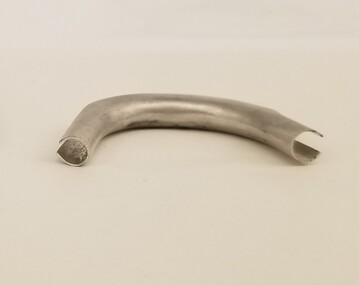
Bridge attachment associated with midwife Mary Howlett, c. 1866-1920
... College of Obstetricians & Gynaecologists (RANZCOG) 1 Bowen Crescent Naarm (Melbourne) melbourne The item is possibly part of an irrigation set. Mary Howlett (1840-1922) began practising as a country midwife in 1866 in the western district of Victoria. She qualified as a 'ladies monthly nurse' in 1887 and continued to practise as a nurse and midwife until 1920.She began her six months training ...The item is possibly part of an irrigation set. Mary Howlett (1840-1922) began practising as a country midwife in 1866 in the western district of Victoria. She qualified as a 'ladies monthly nurse' in 1887 and continued to practise as a nurse and midwife until 1920.She began her six months training at the Melbourne Lying-In Hospital. She was known by many as 'Auntie', and her career spanned more than 50 years. Mrs Howlett's midwifery box and contents were given to Dr Frank Forster, and he donated them to the museum collection in 1993.White metal bridge attachment, possibly part of an irrigation set.midwifery -
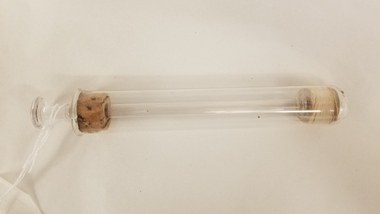 Royal Australian and New Zealand College of Obstetricians & Gynaecologists (RANZCOG)
Vaginal irrigator associated with midwife Mary Howlett, c. 1866 - 1920
... College of Obstetricians & Gynaecologists (RANZCOG) 1 Bowen Crescent Naarm (Melbourne) melbourne The vaginal syringe, also known as a female syringe, was introduced in the early 1900s and was in use until the late 1940s when it was replaced by the glass douche nozzle. (Thackray, 'Midwifery & Gynaecological Instruments, (M)463, p. 264.) Mary Howlett (1840-1922) began practising as a country midwife in 1866 in the western district of Victoria. She qualified as a 'ladies monthly nurse' in 1887 and continued to practise as a nurse and midwife until 1920. She began her six months training ...The vaginal syringe, also known as a female syringe, was introduced in the early 1900s and was in use until the late 1940s when it was replaced by the glass douche nozzle. (Thackray, 'Midwifery & Gynaecological Instruments, (M)463, p. 264.)Mary Howlett (1840-1922) began practising as a country midwife in 1866 in the western district of Victoria. She qualified as a 'ladies monthly nurse' in 1887 and continued to practise as a nurse and midwife until 1920. She began her six months training at the Melbourne Lying-In Hospital. She was known by many as 'Auntie', and her career spanned more than 50 years. Mrs Howlett's midwifery box and contents were given to Dr Frank Forster, and he donated them to the museum collection in 1993. Vaginal syringe with glass barrel and plunger and a cork bung. Fluid capacity of syringe 60-90 mls. Cotton thread is woven tightly around the end of the plunger. There are five holes in the end of the glass barrel.midwifery -
Royal Australian and New Zealand College of Obstetricians & Gynaecologists (RANZCOG)
Apron used by midwife Mary Howlett, c. 1866 - 1920
... College of Obstetricians & Gynaecologists (RANZCOG) 1 Bowen Crescent Naarm (Melbourne) melbourne Apron belonged to and was used by midwife Mary Howlett. Mary Howlett (1840-1922) began practising as a country midwife in 1866 in the western district of Victoria. She qualified as a 'ladies monthly nurse' in 1887 and continued to practise as a nurse and midwife until 1920.She began her six months training ...Apron belonged to and was used by midwife Mary Howlett. Mary Howlett (1840-1922) began practising as a country midwife in 1866 in the western district of Victoria. She qualified as a 'ladies monthly nurse' in 1887 and continued to practise as a nurse and midwife until 1920.She began her six months training at the Melbourne Lying-In Hospital. She was known by many as 'Auntie', and her career spanned more than 50 years. Mrs Howlett's midwifery box and contents were given to Dr Frank Forster, and he donated them to the museum collection in 1993.Hand made white linen apron. Consists of a small bib at front, with two long shoulder straps attached to a long gored skirt. Shoulder straps have three mother of pearl buttons, and there are four buttonholes at the back of the waistband of the skirt. The skirt is divided into three gores and has a darted waist. On the right side of the skirt there is a large patch pocket. The skirt is finished with a false hem.midwifery -
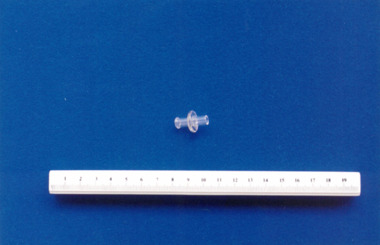 Royal Australian and New Zealand College of Obstetricians & Gynaecologists (RANZCOG)
Glass connection associated with midwife Mary Howlett, c. 1866 - 1920
... College of Obstetricians & Gynaecologists (RANZCOG) 1 Bowen Crescent Naarm (Melbourne) melbourne This type of connection could be attached to a hypodermic syringe for blood or fluid collection. This connection could also be used as an attachment to 'cupping' instruments to induce artificial hyperaemia to assist in the draining of abcesses and carbuncles. Mary Howlett (1840-1922) began practising as a country midwife in 1866 in the western district of Victoria. She qualified as a 'ladies monthly nurse' in 1887 and continued to practise as a nurse and midwife until 1920.She began her six months training ...This type of connection could be attached to a hypodermic syringe for blood or fluid collection. This connection could also be used as an attachment to 'cupping' instruments to induce artificial hyperaemia to assist in the draining of abcesses and carbuncles.Mary Howlett (1840-1922) began practising as a country midwife in 1866 in the western district of Victoria. She qualified as a 'ladies monthly nurse' in 1887 and continued to practise as a nurse and midwife until 1920.She began her six months training at the Melbourne Lying-In Hospital. She was known by many as 'Auntie', and her career spanned more than 50 years. Mrs Howlett's midwifery box and contents were given to Dr Frank Forster, and he donated them to the museum collection in 1993.Glass connection, 2cm in length, with central flange. Proximal (near) end has a rounded ridge for attaching to a syringe. Distal (far) end in plain, for attaching to rubber tubing.midwifery -
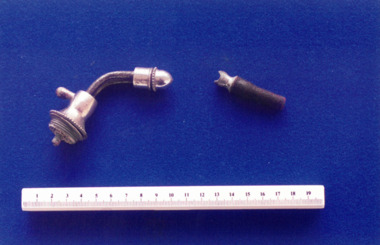 Royal Australian and New Zealand College of Obstetricians & Gynaecologists (RANZCOG)
Metal spray producer associated with midwife Mary Howlett, c. 1866 - 1920
... Royal Australian and New Zealand College of Obstetricians & Gynaecologists (RANZCOG) 1 Bowen Crescent Naarm (Melbourne) melbourne Mary Howlett (1840-1922) began practising as a country midwife in 1866 in the western district of Victoria. She qualified as a 'ladies monthly nurse' in 1887 and continued to practise as a nurse and midwife until 1920.She began her six months training at the Melbourne Lying-In Hospital. ...Mary Howlett (1840-1922) began practising as a country midwife in 1866 in the western district of Victoria. She qualified as a 'ladies monthly nurse' in 1887 and continued to practise as a nurse and midwife until 1920.She began her six months training at the Melbourne Lying-In Hospital. She was known by many as 'Auntie', and her career spanned more than 50 years. Mrs Howlett's midwifery box and contents were given to Dr Frank Forster, and he donated them to the museum collection in 1993.Made of a heavy white metal. Metal cap covers the actual spray applicator. There are two curved metal tubes leading to the outlet spray. In addition to the metal object there is a small metal connection with a small metal insertion. The metal connection is attached to a piece of old red rubber tubing.midwifery
