
Showing 56 items matching "legacy 1947"
-
 Warrnambool and District Historical Society Inc.
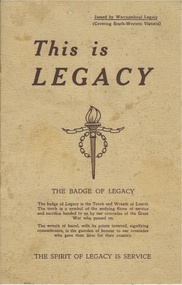
Work on paper - Booklet, This is Legacy, 1947
... legacy 1947...1947 they had 200 wards under their care. This booklet has as its centre pages two photographs depicting children and adults and the captions to raise £10000 towards their work and also to build a holiday camp on beach frontage already approved by the Warrnambool City Council. This booklet has historical and social significance as it shows the endeavor of the people of the district to care for those affected by war, in the district and records the names of the first people involved in working with Legacy in Warrnambool . legacy 1947 warrnambool history warrnambool legacy *Printers Geelong. ...Dark cream coloured soft card cover with brown text. Title is in larger text with the Legacy emblem in the centre of the front cover. The back cover has the poem, Flanders Field and the legacy response. Eight pages which has text and some photographs. A list of Warrnambool office bearers is on the inside back cover. non-fictionlegacy 1947, warrnambool history, warrnambool legacy -
 Melbourne Legacy
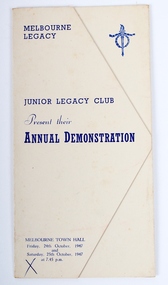
Programme, Junior Legacy Club Annual Demonstration 1947, 1947
... Junior Legacy Club Annual Demonstration 1947...Programme of a Legacy Demonstration at the Melbourne Town Hall in October 1947. Throughout the year Melbourne Legacy provided classes for Junior Legatees such as dancing, gymnastics and eurythmics, the Demonstration was an annual event to showcase their skills. ...A record of a Junior Legacy Demonstration in 1947. annual demonstration junior legatee Pen 'X' in bottom left cover of cover. ...Programme of a Legacy Demonstration at the Melbourne Town Hall in October 1947. Throughout the year Melbourne Legacy provided classes for Junior Legatees such as dancing, gymnastics and eurythmics, the Demonstration was an annual event to showcase their skills. Melbourne Legacy conducted Annual Demonstrations / Parades from 1928 through to 1979, usually held at Melbourne Town Hall or Olympic Pool Stadium. The beautiful costumes were made by members of the Junior Legacy Mothers' Club and the Melbourne Legacy Wives' Association. Presented at the Melbourne Town Hall Friday 24th October and Saturday 25th October 1947.A record of a Junior Legacy Demonstration in 1947.Printed programme for 1947, off white card folded in 3 with navy printing. Includes running order, acts and names of instructors. Pen 'X' in bottom left cover of cover.annual demonstration, junior legatee -
 Melbourne Legacy
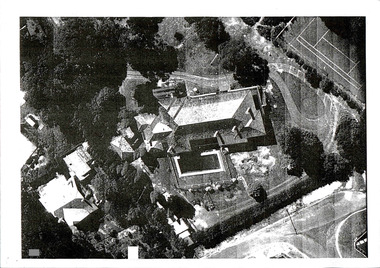
Document, History of Blamey House (Beaumaris) property, 1949
... Black and white photocopies of articles and information about the first Blamey House owned by Legacy between 1947 and 1956. It includes articles about the opening in November 1949 with Sir Thomas Blamey in attendance. ...Black and white photocopies of articles and information about the first Blamey House owned by Legacy between 1947 and 1956. It includes articles about the opening in November 1949 with Sir Thomas Blamey in attendance. ...Black and white photocopies of articles and information about the first Blamey House owned by Legacy between 1947 and 1956. It includes articles about the opening in November 1949 with Sir Thomas Blamey in attendance. It shows the property was described as "a home, a huge rambling weatherboard house with a swimming pool, flood-lit tennis court, and four acres of beautifully kept lawns and gardens." The title deed was handed over to Legacy by Sir Robert Knox, the chairman of trustees of Blamey House, Melbourne (the servicemen hostel that had been operating during the war). Other pages show the property had been built in 1930 as a holiday home for Toorak business man Mr Arthur Jack and his wife Ms Langlands-Jack. It was sold to James Picken by 1941 and it was known as 'Mossgiel'. The Pickens remained owners until 1947 when it was purchased on behalf of Legacy with money donated by the Blamey House Trustees (the servicemen hostel that operated during the war) to be used as a toddlers and childrens' home. When Legacy no longer required the property it was sold to the Beaumaris RSL (or it's precursor RSSALIA) as its clubrooms. There was controversy in 2015 when it was sold to developers for housing. The pages were copied from items held by Sandringham and District Historical Society in February 2022.Records different facts about the property that was Blamey House Beaumaris that could be useful even though there are discrepancies with other known facts about Blamey House (the Hostel) trustees donation to Legacy.Black and white A4 photocopy x 20 pages of collected information about the property in Beaumaris before and after it was held by Legacy.blamey house, beaumaris, properties -
 Sunshine and District Historical Society Incorporated
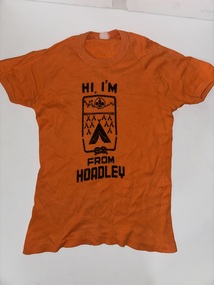
Clothing - Hi, I'm from Hoadley T-Shirt
... 🧭 Charles Hoadley’s Legacy - Charles Hoadley (1887–1947) was a geologist on Douglas Mawson’s Australasian Antarctic Expedition and later became Chief Commissioner of Scouts Victoria. - He championed youth leadership, bushcraft, and adventure-based learning. - The Hoadley Hide was named in his honour and began in the 1950s as a way to challenge Venturers in navigation and initiative... 🧭 Charles Hoadley’s Legacy - Charles Hoadley (1887–1947) was a geologist on Douglas Mawson’s Australasian Antarctic Expedition and later became Chief Commissioner of Scouts Victoria. - He championed youth leadership, bushcraft, and adventure-based learning. - The Hoadley Hide was named in his honour and began in the 1950s as a way to challenge Venturers in navigation and initiative ...The Hoadley Area in Scouting refers to a regional designation within Scouts Victoria, named in honour of Charles Hoadley, a pioneering Antarctic explorer and influential figure in Australian Scouting. While there isn’t a formal “Hoadley Area” in Sunshine today, the name is most prominently associated with the Hoadley Hide—a major Venturer Scout event. Sunshine, Deer Park, St. Albans and Brimbank Scout Troops are part of the Hoadley Area. 🧭 Charles Hoadley’s Legacy - Charles Hoadley (1887–1947) was a geologist on Douglas Mawson’s Australasian Antarctic Expedition and later became Chief Commissioner of Scouts Victoria. - He championed youth leadership, bushcraft, and adventure-based learning. - The Hoadley Hide was named in his honour and began in the 1950s as a way to challenge Venturers in navigation and initiative. 🏕️ Sunshine & Hoadley Hide - Sunshine-area Venturer Units (including Sunshine, Deer Park, and Brimbank District) have long participated in Hoadley Hide events. - Teams from Sunshine have: - Competed under creative patrol names - Won awards for initiative and teamwork - Contributed staff and Rover support - The event is often held in bushland areas like Castlemaine, Mataranka, or Tallarook, but Sunshine units travel statewide to participate. 🗂️ Historical Area Structures - In earlier decades, Scouts Victoria was divided into Areas (e.g. Hoadley Area, Baden-Powell Area), which grouped districts for administration and events. - Sunshine is part of a Hoadley-named Area, especially during the 1960s–80s, but these structures have since evolved into Regions and Districts. Orange Size 14 t-shirt with black textHi, I'm from Hoadley T-Shirtscouting, scouts, cubs -
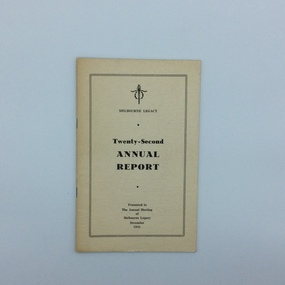 Melbourne Legacy
Document, Annual Report 1945-1963, 1945 to 1963
... Included: 01096.1 Melbourne Legacy Twenty Second Annual Report 1945 01096.2 Melbourne Legacy Twenty Third Annual Report 1946 Melbourne Legacy Twenty Fourth Annual Report 1947 Melbourne Legacy Twenty Fifth Annual Report 1948 01096.5 Melbourne Legacy Twenty Sixth Annual Report 1949 Melbourne Legacy Twenty Seventh Annual Report 1950 01096.7 Melbourne Legacy Twenty Eighth Annual Report 1951 Melbourne Legacy Twenty Ninth Annual Report 1952 Melbourne Legacy Thirtieth Annual Report (Coronation Year) 1953 01096.10 Melbourne Legacy Thirty First Annual Report 1954 .11 Melbourne Legacy Thirty Second Annual Report 1955 .12 Melbourne Legacy Thirty Third Annual Report for the year 1956 .13 Melbourne Legacy Thirty Fourth Annual Report for the year 1957 .14 Melbourne Legacy Thirty Fifth Annual Report for the year 1958 .15 Melbourne Legacy Thirty Sixth Annual Report for the year ending 31/12/1959 .16 Melbourne Legacy Thirty Seventh Annual Report for the year ending 31/12/1960 .17 Melbourne Legacy Thirty Eighth Annual Report for the year ending 31/12/1961 Melbourne Legacy Thirty Ninth Annual Report for the year ending 31/12/1962 Melbourne Legacy 40th Annual Report (for the year ending 31/12/1963)...Included: 01096.1 Melbourne Legacy Twenty Second Annual Report 1945 01096.2 Melbourne Legacy Twenty Third Annual Report 1946 Melbourne Legacy Twenty Fourth Annual Report 1947 Melbourne Legacy Twenty Fifth Annual Report 1948 01096.5 Melbourne Legacy Twenty Sixth Annual Report 1949 Melbourne Legacy Twenty Seventh Annual Report 1950 01096.7 Melbourne Legacy Twenty Eighth Annual Report 1951 Melbourne Legacy Twenty Ninth Annual Report 1952 Melbourne Legacy Thirtieth Annual Report (Coronation Year) 1953 01096.10 Melbourne Legacy Thirty First Annual Report 1954 .11 Melbourne Legacy Thirty Second Annual Report 1955 .12 Melbourne Legacy Thirty Third Annual Report for the year 1956 .13 Melbourne Legacy Thirty Fourth Annual Report for the year 1957 .14 Melbourne Legacy Thirty Fifth Annual Report for the year 1958 .15 Melbourne Legacy Thirty Sixth Annual Report for the year ending 31/12/1959 .16 Melbourne Legacy Thirty Seventh Annual Report for the year ending 31/12/1960 .17 Melbourne Legacy Thirty Eighth Annual Report for the year ending 31/12/1961 Melbourne Legacy Thirty Ninth Annual Report for the year ending 31/12/1962 Melbourne Legacy 40th Annual Report (for the year ending 31/12/1963) A record of the annual reports of Legacy Melbourne, including records of names of Legatees, beneficiaries, supporters, telling stories of Legacy's impact and summarising annual financial information. financial summary annual summary Various annual reports from 1945 to 1963 in small booklets with black type. ...Various consecutive Annual Reports for Melbourne Legacy complete between the years 1945 and 1963. Other annual reports in 00027, 01095, 01097, 01098 and 01099. Included: 01096.1 Melbourne Legacy Twenty Second Annual Report 1945 01096.2 Melbourne Legacy Twenty Third Annual Report 1946 Melbourne Legacy Twenty Fourth Annual Report 1947 Melbourne Legacy Twenty Fifth Annual Report 1948 01096.5 Melbourne Legacy Twenty Sixth Annual Report 1949 Melbourne Legacy Twenty Seventh Annual Report 1950 01096.7 Melbourne Legacy Twenty Eighth Annual Report 1951 Melbourne Legacy Twenty Ninth Annual Report 1952 Melbourne Legacy Thirtieth Annual Report (Coronation Year) 1953 01096.10 Melbourne Legacy Thirty First Annual Report 1954 .11 Melbourne Legacy Thirty Second Annual Report 1955 .12 Melbourne Legacy Thirty Third Annual Report for the year 1956 .13 Melbourne Legacy Thirty Fourth Annual Report for the year 1957 .14 Melbourne Legacy Thirty Fifth Annual Report for the year 1958 .15 Melbourne Legacy Thirty Sixth Annual Report for the year ending 31/12/1959 .16 Melbourne Legacy Thirty Seventh Annual Report for the year ending 31/12/1960 .17 Melbourne Legacy Thirty Eighth Annual Report for the year ending 31/12/1961 Melbourne Legacy Thirty Ninth Annual Report for the year ending 31/12/1962 Melbourne Legacy 40th Annual Report (for the year ending 31/12/1963)A record of the annual reports of Legacy Melbourne, including records of names of Legatees, beneficiaries, supporters, telling stories of Legacy's impact and summarising annual financial information.Various annual reports from 1945 to 1963 in small booklets with black type. financial summary, annual summary -
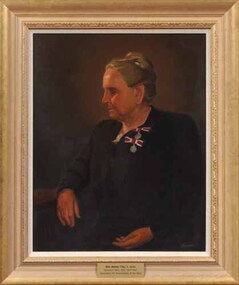 Vision Australia
Painting - Artwork, Portrait of Tilly Aston, 1990
... Tilly passed away on November 1st 1947. Her legacy continues through the work Vision Australia which provides services for thousands of blind Australians. ...Tilly passed away on November 1st 1947. Her legacy continues through the work Vision Australia which provides services for thousands of blind Australians. ...Framed portrait of Tilly Aston who began the Association for the Advancement of the Blind, a forerunner to the Association for the Blind. It is part of a series of paintings commissioned by the AFB Board to commemorate the work of past presidents of the organisation. Tilly sits with one hand resting against a table, and the other in her lap. She is wearing a black collared dress with a white lace neck ruff held with an opal pin. Two medals (the Jubilee medal and Coronation medal) are pinned to the chest, each consisting of a red and white bowtie with a brass medallion. Tilly Aston was born in Carisbrook, Victoria, in 1873. When she was very young her parents noticed she was having problems with her vision. They took her to a doctor who diagnosed her with no sight in her right eye and the prognosis of loss of vision in the left eye. As a result of this she was totally blind by the age of 7. Despite this her parents endeavoured to give Tilly as many of life’s advantages that their limited means could supply. From an early age she was taught singing, music, poetry, arithmetic, encouraged to read and observe the natural world around her and be independent. At the age of 8 she was sent to the Asylum and School for the Blind (later called the Royal Victorian Institute for the Blind). She excelled in a wide range of subjects and matriculated in 1889. With the help of a public fund was able to attend Melbourne University, being the first blind Australian to do so. Unfortunately the lack of Braille text books made it impossible for Tilly to continue her studies and she left in second year. Tilly was determined that other blind people would not have the same negative experience she had had. In 1894 she organised a meeting to form the Victorian Association of Braille Writers with the aim of producing and supplying Braille to blind Victorians. Braille was produced by trained volunteers with ? recruited in the first six month. Other rights and services for blind people remained very limited. In 1895 Tilly organised a meeting, which formed the Association for the Advancement of the Blind (now Vision Australia). The Association was instrumental in obtaining many benefits for blind people including a blind pension, voting rights and transport concessions. It also established the first nursing homes for blind people, at a time when many blind people were homeless and destitute. Tilly went on to be Australia’s first blind teacher. She was also a very talented musician, author of seven books and was very gifted at arts and crafts. She knew Esperanto and corresponded with people all around the world including Helen Keller. Tilly passed away on November 1st 1947. Her legacy continues through the work Vision Australia which provides services for thousands of blind Australians. A memorial bell dedicated to her is also situated in the King Domain Gardens. 1 art original in gold frameThe plaque at the base of the painting reads 'Miss Matilda (Tilly) A. Aston / President 1904, 1910, 1943 to 1947/ Association for Advancement of the Blind'. association for the advancement of the blind, association for the blind, tilly aston -
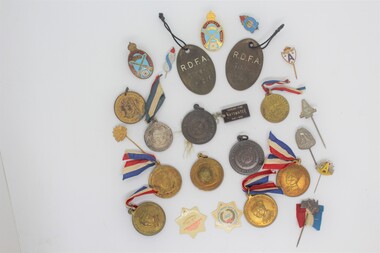 Ringwood and District Historical Society
Ephemera, Badges and Coins 1939-45: 50 years of Queen Victoria's Reign; ANZAC Pins, King George and Queen Elizabeth; City of Wangaratta; etc, 1939 - 1945
... .; Awarded to G Pratt v 1945; Victorian Rifle Association (2 badges); Legacy Badges/Pins (2 badges); Map of Australia on metal pin; Badge: Side 1 Centenary of Victoria 1934. On undeveloped scene embossed)/ Side 2 Centenary of Victoria 1935. (On city skyline embossed) Diam 2.6 cm.; Pavilion Fund Bayswater 1947....; Awarded to G Pratt v 1945; Victorian Rifle Association (2 badges); Legacy Badges/Pins (2 badges); Map of Australia on metal pin; Badge: Side 1 Centenary of Victoria 1934. On undeveloped scene embossed)/ Side 2 Centenary of Victoria 1935. (On city skyline embossed) Diam 2.6 cm.; Pavilion Fund Bayswater 1947 ...Many issues - ANZAC DayBadges and coins. Refer photograph. +Additional Keywords: Pratt, G / GibbonTop Row L_R:; Victoria - 50 Years of Reign. Diam 3cm.; RDFA/Time Keeper (2 badges); Plastic 7-pointed badge (2 badges): Palestine-Gallipoli, FRANCE, Egypt, Mesopotamia, North Sea, New Guinea. In Centre: Lest We Forget printed across a map of Australia.; Assorted ANZAC pins/badges (5 badges); Middle Row L-R:; Side 1: King George VI & Queen Elizabeth (5 badges); Side 2: City of Wangaratta. Wangaratta Proclaimed a City.; Bottom Row:; Royal Life Saving Society, Established 1891. Centre: Awarded to G. Gibbon 1945.; Awarded to G Pratt v 1945; Victorian Rifle Association (2 badges); Legacy Badges/Pins (2 badges); Map of Australia on metal pin; Badge: Side 1 Centenary of Victoria 1934. On undeveloped scene embossed)/ Side 2 Centenary of Victoria 1935. (On city skyline embossed) Diam 2.6 cm.; Pavilion Fund Bayswater 1947-1948 -
 Red Cliffs Military Museum
Document, Obituary, 12:MMMM, 1976 (exact); Walter Thomas West passed away 4th December 1976 and his funeral was held 7th of December
... He was an/ active and keen member of Mildura Legacy/ for 34 years, serving as President in 1947 and 1948./ He was secretary of the Cemetary Trust for many years, served on the Hospital Committee/ was a member of Memorial Lodge, a member of Red Cliffs Senior Citizens Club and a /member of Red Cliffs Sub-Branch R.S.L. since / it's inception./ He was a keen member of the Red Cliffs/ Bowling Club and took part in a club event on/ the day of his passing./ It was the pioneer settler and men with ability/ and initiative of Walter West that brought/ out the Community Spirit which resulted in/ the Red Cliffs we know today....He was an/ active and keen member of Mildura Legacy/ for 34 years, serving as President in 1947 and 1948./ He was secretary of the Cemetary Trust for many years, served on the Hospital Committee/ was a member of Memorial Lodge, a member of Red Cliffs Senior Citizens Club and a /member of Red Cliffs Sub-Branch R.S.L. since / it's inception./ He was a keen member of the Red Cliffs/ Bowling Club and took part in a club event on/ the day of his passing./ It was the pioneer settler and men with ability/ and initiative of Walter West that brought/ out the Community Spirit which resulted in/ the Red Cliffs we know today. ...Attached to his R.S.L. Membership Card along with the funeral notice, is a subsequent newspaper article written at the time of Walter West's death, which reads: Death of Pioneer Settler/ A pioneer settler of/ the Red Cliffs irigation/ district and one of the/ last men to be evacuated/ from Gallipoli, died sud/denly on Saturday night/ aged 84./ In 1922 Mr. Watler Thomas/ West came to Red Cliffs/ where he established Block/ 86 in the irrigation district./ He lived there until his/ death on Saturday after playing bowls at the Red/ Cliffs rinks on Saturday/ afternoon./ Mr. West was born in Jeparit and served with the/ 24th Battalion in Egypt and/ Gallipoli./ He was awarded the Mili/tary Medal in France in/ 1917 and the Military Cross/ in 1918 when he captured/ single handed an enemy/ machine gun post./ He settled at Red Cliffs/ on his return when the/ area was placed under irri-/gation./ For 25 years he operated/ a unique partnership with/ the late Mr. Martin Nippe, his adjoining property/ owner. The pair pooled their/ horticultural equipment for/ joint use./ Mr. West joined Mildura/ Legacy in 1942 and was an/ active member until his/ death./ The funeral will be held at the United Church, Red/ Cliffs this morning at 10.30Type written obituary, presumably used when Walter West,MC,MM, died.Walter West MC,MM/ Red Cliffs residents were saddened to learn of the sudden passing on Saturday last/ of Walter Thomas West MC,MM., a Pioneer/settler and well respected citizen./ "Wal" as he was affectionately known, was/ born at Dandenong some 84years ago./ He served with distinction in World War 1/ with 24th Battalion. He was an original ANZAC, and also saw service in/ Egypt and France. He received two awards for gallantry in the field - The Military/ Medal in France 1917 and the Military Cross in France/ in 1918 when he was responsible for the/ single handed capture of an enemy gun and crew./ He was an original soldier settler and developed/ his fruit block in Red Cliffs which is still/ operated by his son Tom. In 1922 he/ became an original Trustie of the Methodist/Church and was the last surviving original/ Trustie. He served on the Board of/ directors of the Red Cliffs Co-Operative Co.Ltd/ from 1954 to 1967, and was Chairman of Directors/ in 1963 and 1964. He showed a keen interest/ in youth activities and some excellent cricketers/ were produced as a result of his coaching of/ the Methodist Junior Cricket Team. He was an/ active and keen member of Mildura Legacy/ for 34 years, serving as President in 1947 and 1948./ He was secretary of the Cemetary Trust for many years, served on the Hospital Committee/ was a member of Memorial Lodge, a member of Red Cliffs Senior Citizens Club and a /member of Red Cliffs Sub-Branch R.S.L. since / it's inception./ He was a keen member of the Red Cliffs/ Bowling Club and took part in a club event on/ the day of his passing./ It was the pioneer settler and men with ability/ and initiative of Walter West that brought/ out the Community Spirit which resulted in/ the Red Cliffs we know today.1918, 1917, ww1, walter, thomas, west, mm, mc, 24th, battalion, aif, gallipoli, bullecourt -
 Warrnambool and District Historical Society Inc.
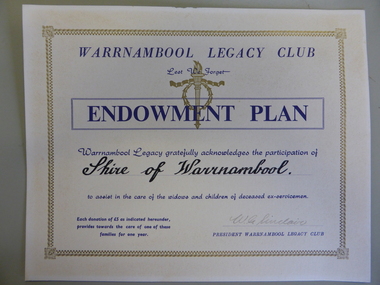
Certificate - Warrnambool Legacy Club to Shire of Warrnambool
... Warrnambool Legacy Club was founded in 1947; prior to that it was part of Geelong Legacy Club. ...Warrnambool Legacy Club was founded in 1947; prior to that it was part of Geelong Legacy Club. ...Warrnambool Legacy Club was founded in 1947; prior to that it was part of Geelong Legacy Club. It covers an area in South West Victoria bounded by Port Fairy in the west, Mortlake, Derrinallum and Lismore to the north, and Camperdown, Timboon and Port Campbell in the south and east. The Warrnambool Legacy Club has contributed to the welfare of widows and children of past soldiers. In turn it has relied upon the generosity of local organisations and people to maintain their work. The Shire of Warrnambool would have been one of many of these groups who contributed in a generous way.Cream card with gold border. Dark blue printing with Warrnambool Legacy club at the top. Legacy logo printed in gold underneath.Signed by W.G. Sinclair. warrnambool, shire of warrnambool, warrnambool legacy club, legacy club endowment plan, w g sinclair -
 Monbulk RSL Sub Branch
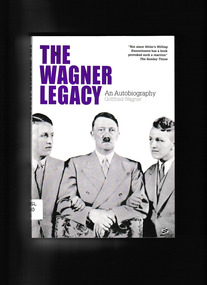
Book, Sanctuary, The Wagner legacy, 2000
... 1947, Gottfried grew up in post-war Bayreuth. In this atmosphere of deceit and discretion, he discovered the darker nature of his great-grandfather Richard Wagner's legacy: the intrinsic anti-Semitism in the composer's music and his heirs' beliefs; how Hitler proposed to Gottfried's English-born grandmother; how plans were drawn up to divide the world culturally, post Nazi victory, between Wolfgang and Wieland Wagner; and how the world of contemporary opera maintains and promotes anti-Semitic ideology even today. ...Born in 1947, Gottfried grew up in post-war Bayreuth. In this atmosphere of deceit and discretion, he discovered the darker nature of his great-grandfather Richard Wagner's legacy: the intrinsic anti-Semitism in the composer's music and his heirs' beliefs; how Hitler proposed to Gottfried's English-born grandmother; how plans were drawn up to divide the world culturally, post Nazi victory, between Wolfgang and Wieland Wagner; and how the world of contemporary opera maintains and promotes anti-Semitic ideology even today.Index, ill, p.312.non-fictionBorn in 1947, Gottfried grew up in post-war Bayreuth. In this atmosphere of deceit and discretion, he discovered the darker nature of his great-grandfather Richard Wagner's legacy: the intrinsic anti-Semitism in the composer's music and his heirs' beliefs; how Hitler proposed to Gottfried's English-born grandmother; how plans were drawn up to divide the world culturally, post Nazi victory, between Wolfgang and Wieland Wagner; and how the world of contemporary opera maintains and promotes anti-Semitic ideology even today.germany - history, germany - anti-semitism -
 National Wool Museum
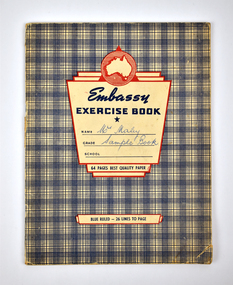
Archive - Notebook, Kathryn Knitwear, 1947-1953
... legacy forms an integral part of both Australian social and manufacturing history. The ‘Embassy’ brand was a house brand of Coles stores from 1929-1994, and manufactured a wide variety of household goods. The manufacture of this specific style of notebook can be dated to between 1947...legacy forms an integral part of both Australian social and manufacturing history. The ‘Embassy’ brand was a house brand of Coles stores from 1929-1994, and manufactured a wide variety of household goods. The manufacture of this specific style of notebook can be dated to between 1947 ...Kathryn Knitwear, founded by Robert Blake, manufactured high quality children’s knitwear in Melbourne from the 1940s – 1980s. Robert Blake began manufacturing children’s knitwear in his bedroom in Strathmore using a hand powered machine in the late 1940s. The operation moved to Ascot Vale and Essendon, before eventually establishing a factory in Moonee Ponds in the early 1950s. The business continued to expand, necessitating a move to a new factory in Broadmeadows. By 1962, the Broadmeadows factory was producing an average of 20,000 garments per month, which increased to 24,000 by 1964. Robert Blake’s Son, Brendan recalls that “The Kathryn brand was famous around Australia, anywhere children needed to keep warm and dress smartly. It also won a number of wool fashion awards”, including the 1969 Wool Awards, which was held by the Australian Wool Bureau and published in Women’s Weekly. The Kathryn range was designed for durability, comfort and care, without sacrificing style. They used patterning techniques that increase stretchiness, comfort and fit, as well as integrating decorative elements into the fabric to prevent them from being bulky, uncomfortable or tight. Making longevity of style a priority, Brendan Blake remembers that “there was one particular garment that was in the range for at least thirty years”. He also recalls “In the past, when women have found out that I was associated with Kathryn Knitwear, they would often relate to me the story of a garment they had purchased or received as a gift and, when their child had grown out of it, they would hand it on to another child. Several ladies have told me of purchasing garments for their daughters’ glory box, or saving a particular garment after their daughter had grown out of it. Brendan Blake: “At the peak of their operation they employed approximately two hundred people, mainly women and girls. A family would often seek to send their daughter to work in this company because they knew they would be looked after and safe. One lady wrote to me telling me that working at the Moonee Ponds Factory prior to getting married was the happiest time of her life.” In 1963, workers at the Kathryn factory earned £13 per week, which was 8 shillings and 8 pence higher than the minimum weekly wage for female workers in the textile manufacturing industry (£12 11s 4d). By 1970, the Kathryn Knitwear brand expanded from children’s knitwear into womenswear under the brand name ‘Lady Kathryn’, and for boys and men under ‘Robert Blake’. Continuing to diversify their distribution, they also began exporting ‘Kathryn’ garments to New Zealand, the Pacific Islands, and Japan. ‘Kathryn Knitwear’ was well-known for their early adoption of modern materials and techniques that had broad appeal to their customer base. This is shown in their early use of the acrylic fibre ‘Orlon’ in the 50s and 60s and ‘Superwash’ wool in the 1970s. Many of Kathryn Knitwear’s styles, particularly those that were long running staples of the brand, were available in both wool and Orlon to suit the consumer’s preference. Far from the humble origins of one man in his bedroom with a hand-cranked machine; at its closure in 1980, the Broadmeadows factory of ‘Kathryn’ housed more than 100 machines, including 53 sewing machines and 45 knitting machines. Robert Blake was “a passionate advocate for wool and Australian Made” throughout his whole life. A strong thread that ties through the lifespan of Robert Blake and Kathryn Knitwear is a balance between adopting new innovations without sacrificing the core values of durability, comfort, care and style that had made the brand so well known. Their legacy forms an integral part of both Australian social and manufacturing history. The ‘Embassy’ brand was a house brand of Coles stores from 1929-1994, and manufactured a wide variety of household goods. The manufacture of this specific style of notebook can be dated to between 1947 and 1953.Notebook with handwritten instructions, formulas and sketches detailing patterns for samples. ‘Embassy’ exercise book cover is printed with a blue checked pattern on a background that was originally likely white, but appears cream due to discolouration. The centre of the front cover has a trapezoidal label that provides space for handwritten labels, and features a map of Australia inside a red circle, as well as the manufacturers branding. The 64 internal pages are printed with blue lines as a writing guide.[Obverse] Embassy EXERCISE BOOK NAME [handwritten] Mrs Maley GRADE [handwritten] Sample Book SCHOOL 64 PAGES BEST QUALITY PAPER BLUE RULED – 26 LINES TO PAGE [sample of internal pages] [left page] Notes: 34” = 3 garments out of 40” Length 32” = 3 “ “ “ 38 “ “ 30” = 28” = Cut together (26” = 4 garments “ “ 33” “ (24 = 4 garments “ “ 33” length Blue 36” Red 36 ½“ Green 36” Royal 35 ½” [right page] Design Esquire (Width 35 ½ - 36) Size 34” Width Yardage Size 32” Width Yardage Sample cotton 90 ribs for 28” Size 28” (sample size) Width cut to 20 ½ (double) Yardage 34 ½“ for 2 garm. Size 26” Width Yardage Size 24” Width Yardagebusiness, business history, manufacturing, knitting machine, fashion textile production, business archives, manufacturing documents, embassy brand, coles -
 Lake Boga Flying Boat Museum
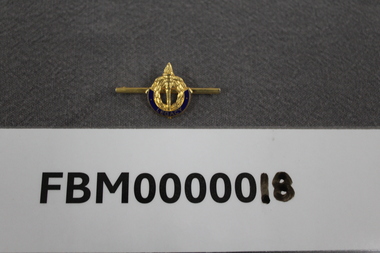
Badge - Pin
... 1947. When Bob passed in 1969 Lois was awarded a War Widows Pension and received the Legacy Badge....1947. When Bob passed in 1969 Lois was awarded a War Widows Pension and received the Legacy Badge. ...Bob Miles enlisted in the Royal Australian Air Force in May 1940. He trained as a Fitter in 1941, then as an Air Gunner in 1942. He was in 11 Squadron and 20 Squadron. Both Squadrons flew Catalinas on special missions dropping sea mines into enemy controlled harbors. These Catalinas were painted black for night missions and were known as the Black Cats. The Black Cat Catalina flying boats were serviced at the No 1 Flying Boat Repair Depot, Lake Boga, during World War II. Bob married Lois Baird WAAAF in 1947. When Bob passed in 1969 Lois was awarded a War Widows Pension and received the Legacy Badge.Lois Baird served in WWII in the WAAAF. Her husband Robert George (Bob) Miles served in the RAAF, a member of 20 Squadron, flying the Catalinas.Gold lapel pin, round emblem with gold torch and wreath, blue scroll with textLegacywwii, catalina, legacy, lois miles, bob miles -
 Wangaratta RSL Sub Branch
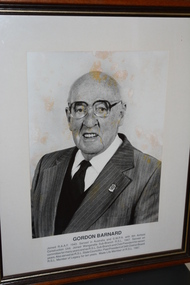
Photograph - Framed photograph, Le Dawn Studio Pty Ltd Photography & Framing, Life Member Gordon Barnard
... 1947. Served as RSL State Councillor, Past President of 34th Dist. Board and member of Legacy for ten years. ...1947. Served as RSL State Councillor, Past President of 34th Dist. Board and member of Legacy for ten years. ...Joined R.A.A.F. 1943. Served in Australia and S.W.P.A with the 8th Airfield Construction Unit. Joined Wangaratta Sub-Branch in 1947. Served as RSL State Councillor, Past President of 34th Dist. Board and member of Legacy for ten years. Made life member in 1987Timber framed photo of Life Member - Gordon BARNARDGORDON BARNARD Joined R.A.A.F in 1943. Joined Wangaratta Sub-Branch in 1947. Served on the committee for many years and was made a Life Member in 1987gordon barnard, 8th airfield contruction unit -
 Melbourne Legacy
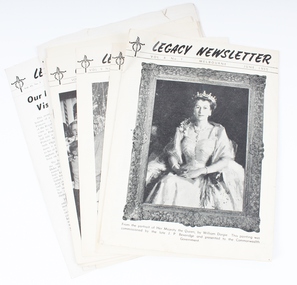
Journal - Document, set of newsletters, Legacy Newsletter, August 1942 to September 1959
... Legacy Club, Melbourne. 00019.1) Vol 1 No 1 August 1942 00019.2) Vol 1 No 2. October 1942 00019.3) Vol 1 No 3. December 1942 00019.4) Vol 1 No 4. July 1943 00019.5) Vol 1 No 6. December 1944 00019.6) Vol 1 No 7. March 1945 00019.7) Vol 1 No 8. June 1945 00019.8) Vol 1 No 9. November 1945 00019.9) Vol 1 No 12. August 1946 00019.10) Vol 2 No 1 October 1946 00019.11) Vol 2 No 2 December 1946 00019.12) Vol 2 No 4 May 1947...Legacy Club, Melbourne. 00019.1) Vol 1 No 1 August 1942 00019.2) Vol 1 No 2. October 1942 00019.3) Vol 1 No 3. December 1942 00019.4) Vol 1 No 4. July 1943 00019.5) Vol 1 No 6. December 1944 00019.6) Vol 1 No 7. March 1945 00019.7) Vol 1 No 8. June 1945 00019.8) Vol 1 No 9. November 1945 00019.9) Vol 1 No 12. August 1946 00019.10) Vol 2 No 1 October 1946 00019.11) Vol 2 No 2 December 1946 00019.12) Vol 2 No 4 May 1947 ...A newsletter published by Legacy in this format for many years from 1942. They mentioned "Issued from time to time for Private Circulation among the Sons and Daughters of Deceased Service men and Merchant Seamen who served their Country during the War of 1914-18, or the present War" Many articles on the work of Legacy, including features on boys classes, girls classes, camps, the residences and where their past residents ended up. There are some suggestion for careers and some general interest articles. Some very interesting photos. Issues: Vol. 1 No. 1 (August, 1942) Vol. No 2 (October 1942) Vol. 1 No 3 (December 1942) Vol. 1 No 4 (July 1943) Vol 1. No 6 (December 1944) Vol. 1 No 7 (March, 1945) Vol. 1 No 8 (June, 1945) Vol. 1 No 9 (November 1945) Vol. 1 No 12 (August 1946) Vol. 2 No 1 (October, 1946) Vol. 2 No 2 (December, 1946) Vol. 2 No 4 (May 1947) Vol. 2 No 5 (September, 1947) Vol. 2 No 6 (December, 1947) - 2 copies Vol. 2 No 7 (May 1948) Vol. 2 No 8 (August, 1948) Vol. 2 No 9 (November 1948) Vol. 3 No 10 (June 1949) - 2 copies Vol. 3 No 11 (September 1949) Vol. 4 No 1 (March 1950) Vol. 4 No 2 (October 1950) Vol. 4 No 1 (July 1951) - seems 'Vol 4' was used twice. Vol. 4 No 3 (December 1951) Vol. 5 No 2 (July 1952) Vol. 5 No 3 (December 1952) Vol. 6 No 1 (April 1953) Vol. 6 No 2 (September 1953) Vol. 7 No 1 (July 1954) Vol. 8 No 1 (June, 1955) - 2 copies Vol. 8 No 2 (October 1955) Vol. 9 No 1 (February 1956) Vol. 9 No 2 (August 1956) Vol. 9 No 3 (December, 1956) - 2 copies Vol. 10 No 1 (June, 1957) - 2 copies Vol. 10 No 2 (December, 1957) Vol. 11 No 1 (August, 1958) Vol. 11 No 2 (December, 1958) - 2 copies Vol. 12 No 1 (May 1959) - 2 copies Vol. 12 No 2 (August, 1959) Vol. 12 No 3 (September, 1959) Vol. 12 No 4 (December 1959)A record of newsletter published that reported on news of Junior Legatee activities.Newspaper style newsletter for Junior Legacy Club, Melbourne. 00019.1) Vol 1 No 1 August 1942 00019.2) Vol 1 No 2. October 1942 00019.3) Vol 1 No 3. December 1942 00019.4) Vol 1 No 4. July 1943 00019.5) Vol 1 No 6. December 1944 00019.6) Vol 1 No 7. March 1945 00019.7) Vol 1 No 8. June 1945 00019.8) Vol 1 No 9. November 1945 00019.9) Vol 1 No 12. August 1946 00019.10) Vol 2 No 1 October 1946 00019.11) Vol 2 No 2 December 1946 00019.12) Vol 2 No 4 May 1947 00019.13) Vol 2 No 5 September 1947 00019.14) Vol 2 No 6 December, 1947 00019.15) Vol 2 No 7 May, 1948 00019.16) Vol 2 No 8 August 1948 00019.17) Vol 2 No 9 November 1948 00019.18) Vol 3 No 10 June, 1949 00019.19) Vol 3 No 11 September, 1949 00019.20) Vol 4 No 1 March, 1950. Playing children on the cover. 12 pages 00019.21) Vol 4 No 2 October 1950. Girl and boy on cover. 12 pages 00019.22) Vol 4 No 1 July 1951 (note Vol and Number is same as 00019.20 but different edition). Sir Thomas Blamey on cover. 8 pages. 00019.23) Vol 4 No 3 Dec 1951. 00019.24) Vol 5 No 2 July 1952. 00019.25) Vol 5 No 3 December 1952. Sir Dallas Brooks on cover. 8 pages 00019.26) Vol 6 No 1 April 1953 00019.27) Vol 6 No 2 September 1953. Mother and son on cover. 16 pages 00019.28) Vol 7 No 1 July 1954 00019.29) Vol 8 No 1 June 1955. Portrait of Queen Elizabeth on the cover. 16 pages 00019.30) Vol 8 No 2 October 1955. Serviceman and toddler on the cover. 16 pages 00019.39) Vol 9 No 1 February 1956. Earl Mountbatten on the cover. 12 pages 00019.31) Vol 9 No 2 August 1956. Mayor Sir Frank Selleck on the cover. 16 pages 00019.40) Vol 9 No 3 December 1956 00019.32) Vol 10 No 1 June 1957 00019.32) Vol 10 No 2 December 1957 00019.33) Vol 11 No 1 August 1958 00019.34) Vol 11 No 2 December 1958 00019.35) Vol 12 No 1 May 1959 00019.36) Vol 12 No 2 August 1959 00019.37) Vol 12 No 3 September 1959 00019.38) Vol 12 No 4 December 1959newsletter, activities -
 Melbourne Legacy
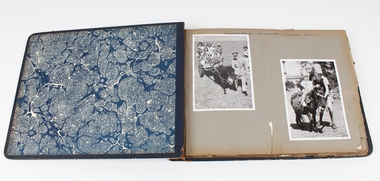
Album, Photos from the 1940s, 1940s
... Legacy. They were in Australia to start his term as Governor General of Australia - until 1947. ...Legacy. They were in Australia to start his term as Governor General of Australia - until 1947. ...Provenence is unknown but contains potentially rare photos. A comprehensive record of the types of events provided for Junior Legatees in the 1940s. Events such as the Government House Christmas parties and Annual Demonstrations. Also a record of the classes offered to girls and boys. There are photos of Anzac Commemoration Ceremony for school students that has been held annually by Legacy in April. It helps educate and promote the observance of Anzac Day to students. Some of the photos are Junior Legatees that joined the armed forces in the second World War. Pages 7 and 8 show the visit of the Duke and Duchess of Gloucester to Legacy. They were in Australia to start his term as Governor General of Australia - until 1947. An important photographic record of the work of Legacy in the 1940s.Large photo album with blue leather look back and front cover. Decorative front and back end pages. Screws in left hand side to keep paper pages bound together. 20 pages with black and white photos attached to the majority of both sides of the pages.Handwritten at top of pages. Page 1 'Christmas Party, Government House Grounds, 1945' Page 2 'Christmas Party, Government House Grounds, 1945' Page 3 'Christmas Party, Government House Grounds, 1945' Page 4 'Senior Girls 6/2/1945' Page 5 'Senior Girls 6/2/1945' Page 6 'JL (?) Cecil Waters 6/2/1945' Page 7 'Duke and Duchess of Gloucester at the Club Rooms, 27/11/1945' and 'At the Club Rooms' Page 8 'At the Grosvenor Theatre' Page 9 '20/2/45 Speaker Wlliamstown' Page 10 '6/2/45 Mr Justice(?) Monty Phillips' Pages 11 - 16 no inscription Page 17 'Annual Demonstration, 1946' (photo missing) Page 18 'Annual Demonstration, 1946' Page 19 'Annual Demonstration, 1946' Page 20 Sepia photo Savige Page 21 'Junior Legatee N Shiels' Page 22 'Legatee E.T. Scott' Page 23 'Legatee H.E. Cohe (?)' Page 24 ‘Christmas Party, Government House Grounds 1948’ (Photo missing bottom right) Page 25 ‘Christmas Party, Government House Grounds 1944’ (Page cut in half) Page 26 ‘Christmas Party, Government House Grounds 1944’ (Page cut in half) events, government house party, anzac commemoration for students, junior legatee outing, annual demonstration, royal visit -
 Melbourne Legacy
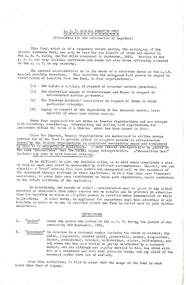
Document, A.M.F. Special Benefits Fund (Circulated for the information of Legatees), 17 April 1947
... Legacy was one of four organisations who were known as Trustee Organisations for the distribution of funds to dependants in necessitous circumstances. The document, written on 17 April 1947...Legacy was one of four organisations who were known as Trustee Organisations for the distribution of funds to dependants in necessitous circumstances. The document, written on 17 April 1947 ...Information for Legatees about the availability and administration of funds from the AMF Benefits Fund after the Second World War. Legacy was one of four organisations who were known as Trustee Organisations for the distribution of funds to dependants in necessitous circumstances. The document, written on 17 April 1947, notes that both the scope and definitions of the AMF is wider than those of Legacy at that time.A record that information was published to help Legatees understand the scope of their work.White foolscap paper, double sided with black type about AMF Benefits Fund.regulations, rules -
 Melbourne Legacy
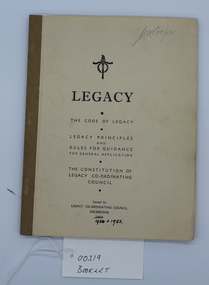
Booklet, Legacy / The Code of Legacy / Legacy Principles and Rules for Guidance, 1952
... A copy of the rules and principles of Legacy what were adopted in principle at Newcastle Conference in 1947, then amended in Perth 1948, revised in Hobart 1949. ...A copy of the rules and principles of Legacy what were adopted in principle at Newcastle Conference in 1947, then amended in Perth 1948, revised in Hobart 1949. ...A copy of the rules and principles of Legacy what were adopted in principle at Newcastle Conference in 1947, then amended in Perth 1948, revised in Hobart 1949. Issued by the Legacy Co-ordinating Council, Melbourne 1952. "The application of these principles and rules to the domestic policy and constitution of clubs is not obligatory, but in order to ensure uniformity and continuity of policy, should be adopted, except in special circumstances".The principles and rules in the booklet are adopted policy of Legacy, determined by resolutions of the annual conference.White paper booklet with black type x 24 pages of the rules and principles of Legacy and 3 sheets of quarto, loose, pencil notes inside front cover.Top RH corner in pencil W.W. Cooper Printed text: Legacy Code of Conduct Legacy Principles and Rules for Guidance for general application The Constitution of Legacy Co-Ordinating Council Issued by Legacy Co-ordinating Council Melbourne 1950. 1950+1952 (hand written in black ink).regulations, rules, procedures -
 Melbourne Legacy
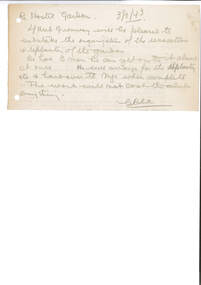
Document - Document, notes, Re Hostel Garden. 3/3/43
... Melbourne Legacy ran three residences: Blamey House (purchased 1947) , Stanhope (purchased 1945) and Harelands (purchased 1950), to take care of children whose fathers were servicemen, and who may have been left orphans, or whose mother may have been unable to care for them herself. ...Melbourne Legacy ran three residences: Blamey House (purchased 1947) , Stanhope (purchased 1945) and Harelands (purchased 1950), to take care of children whose fathers were servicemen, and who may have been left orphans, or whose mother may have been unable to care for them herself. ...A note advising that Legatee Herb Greenway would undertake the renovation and replanting of the Holmbush garden at no cost to the Club. Initialled CRC, believed to be C.R. Carleton one of the architects involved in modifying Holmbush, he was also a Legatee. Holmbush was the first hostel for children that Legacy started and operated from April 1943. It was later renamed Blamey House after another hostel called Blamey House was closed. Melbourne Legacy ran three residences: Blamey House (purchased 1947) , Stanhope (purchased 1945) and Harelands (purchased 1950), to take care of children whose fathers were servicemen, and who may have been left orphans, or whose mother may have been unable to care for them herself. Harelands accommodated boys and girls under the age of 14, Blamey House looked after boys over 14, and Stanhope looked after girls over 14. The children were cared for until they were old enough to become independent. Was deposited in the archive cabinets in a file with documents pertaining to the residences, along with many other items and photos prior to the start of the cataloguing.A record of the work being completed to the first property to be purchased by Melbourne Legacy as a residence for children.Handwritten note on scrap paper in pencil. residences, holmbush, holmbush administration -
 Melbourne Legacy
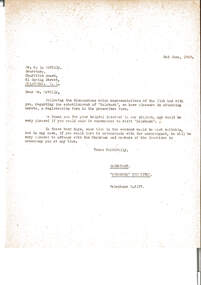
Letter, Hospitals and Charities Acts. Registration of Institutions, 1943
... Melbourne Legacy ran three residences: Blamey House (purchased 1947) , Stanhope (purchased 1945) and Harelands (purchased 1950), to take care of children whose fathers were servicemen, and who may have been left orphans, or whose mother may have been unable to care for them herself. ...Melbourne Legacy ran three residences: Blamey House (purchased 1947) , Stanhope (purchased 1945) and Harelands (purchased 1950), to take care of children whose fathers were servicemen, and who may have been left orphans, or whose mother may have been unable to care for them herself. ...The Holmbush committee sent a form to register Holmbush under the Charities Act with a cover letter dated 2nd June 1943. The reply was received from the Charities Board of Victoria confirming registration, dated 9th June 1943. Holmbush was the first hostel for children that Legacy started and operated from April 1943. It was later renamed Blamey House after another hostel called Blamey House was closed. Melbourne Legacy ran three residences: Blamey House (purchased 1947) , Stanhope (purchased 1945) and Harelands (purchased 1950), to take care of children whose fathers were servicemen, and who may have been left orphans, or whose mother may have been unable to care for them herself. Harelands accommodated boys and girls under the age of 14, Blamey House looked after boys over 14, and Stanhope looked after girls over 14. The children were cared for until they were old enough to become independent.Shows compliance with Victorian legislation when the first hostel was opened by Legacy Melbourne.00335.1 Quarto paper, black and white. 00335.2 Foolscap paper, black and white, 2 pages 00335.3 Note paper, Charities Board of Victoria letterheadresidences, holmbush -
 Melbourne Legacy
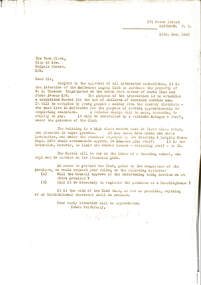
Letter, Holmbush
... Melbourne Legacy ran three residences: Blamey House (purchased 1947) , Stanhope (purchased 1945) and Harelands (purchased 1950), to take care of children whose fathers were servicemen, and who may have been left orphans, or whose mother may have been unable to care for them herself. ...Melbourne Legacy ran three residences: Blamey House (purchased 1947) , Stanhope (purchased 1945) and Harelands (purchased 1950), to take care of children whose fathers were servicemen, and who may have been left orphans, or whose mother may have been unable to care for them herself. ...Architects Carleton & Carleton applied to the City of Kew for any objections to the Melbourne Legacy Club establishing a Hostel for children of deceased Service men on Burke Road, yellow copy of the letter is dated 16 Dec 1942 and signed C.R.Carleton (also a legatee). The reply from the City of Kew is that there were no objections and was dated 19th December 1942. Holmbush was the first hostel for children that Legacy started and operated from April 1943. It was later renamed Blamey House after another hostel called Blamey House was closed. Melbourne Legacy ran three residences: Blamey House (purchased 1947) , Stanhope (purchased 1945) and Harelands (purchased 1950), to take care of children whose fathers were servicemen, and who may have been left orphans, or whose mother may have been unable to care for them herself. Harelands accommodated boys and girls under the age of 14, Blamey House looked after boys over 14, and Stanhope looked after girls over 14. The children were cared for until they were old enough to become independent. Was deposited in the archive cabinets in a file with documents pertaining to the residences, along with many other items and photos prior to the start of the cataloguing.A record of the investigations into regulations prior to the purchase of land on Burke Road for the first hostel to be established by Melbourne Legacy.00336.1 Yellow quarto paper, black type 00336.2 Quarto paper with City of Kew letterhead, black type.00336.1 Signed C.R. Carleton 00336.2 Signed (illegible) Town Clerkresidences, holmbush, properties -
 Melbourne Legacy
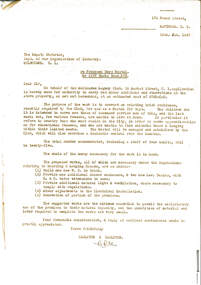
Letter, re Proposed Boys Hostel
... Melbourne Legacy ran three residences: Blamey House (purchased 1947) , Stanhope (purchased 1945) and Harelands (purchased 1950), to take care of children whose fathers were servicemen, and who may have been left orphans, or whose mother may have been unable to care for them herself. ...Melbourne Legacy ran three residences: Blamey House (purchased 1947) , Stanhope (purchased 1945) and Harelands (purchased 1950), to take care of children whose fathers were servicemen, and who may have been left orphans, or whose mother may have been unable to care for them herself. ...00343.1 Application to the Department of War Organisation of Industry for approval to make renovations to the Hostel, including a copy of the approval from Kew Council. It outlines change need to number of toilets and shower facilities as per regulations for Boarding and Lodging Houses 00343.2 Reply granting authority to commence building operations to the value of £290. Holmbush was the first hostel for children that Legacy started and operated from April 1943. It was later renamed Blamey House after another hostel called Blamey House was closed. Melbourne Legacy ran three residences: Blamey House (purchased 1947) , Stanhope (purchased 1945) and Harelands (purchased 1950), to take care of children whose fathers were servicemen, and who may have been left orphans, or whose mother may have been unable to care for them herself. Harelands accommodated boys and girls under the age of 14, Blamey House looked after boys over 14, and Stanhope looked after girls over 14. The children were cared for until they were old enough to become independent.Illustrates that approval was required from the Government to renovate in 1943.00343.1 Yellow quarto copy paper, black type, two hole punched. 00343.2 Quarto paper Department of War Organisation of Industry letterhead two hole punched.00343.1 Initialled in ink CRC of Carleton and Carleton Architects. 00343.2 Signed in ink by L.L. Burch Deputy Directorresidences, holmbush, renovations -
 Melbourne Legacy
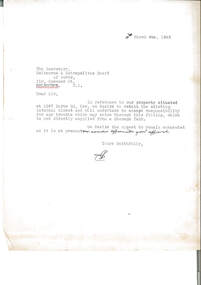
Letter - Document, letter, 10/03/1943
... Melbourne Legacy ran three residences: Blamey House (purchased 1947) , Stanhope (purchased 1945) and Harelands (purchased 1950), to take care of children whose fathers were servicemen, and who may have been left orphans, or whose mother may have been unable to care for them herself. ...Melbourne Legacy ran three residences: Blamey House (purchased 1947) , Stanhope (purchased 1945) and Harelands (purchased 1950), to take care of children whose fathers were servicemen, and who may have been left orphans, or whose mother may have been unable to care for them herself. ...Letter dated 10 March 1943 to the Melbourne and Metropolitan Board of Works about the retention of an internal water closet at 1267 Burke Road, Kew (Holmbush). Legacy accepted responsibility for any trouble which may arise through this fitting which was not directly supplied from a Storage Tank. Holmbush was the first hostel for children that Legacy started and operated from April 1943. It was later renamed Blamey House after another hostel called Blamey House was closed. Melbourne Legacy ran three residences: Blamey House (purchased 1947) , Stanhope (purchased 1945) and Harelands (purchased 1950), to take care of children whose fathers were servicemen, and who may have been left orphans, or whose mother may have been unable to care for them herself. Harelands accommodated boys and girls under the age of 14, Blamey House looked after boys over 14, and Stanhope looked after girls over 14. The children were cared for until they were old enough to become independent.A record of written correspondence in 1943 especially concerning consulting the MMBW about sewer connections.File copy of a letter to MMBW about a WC at Holmbush on white quarto copy paper, with black type, two hole punched.Initialled in ink, possibly EB.residences, holmbush, holmbush administration -
 Melbourne Legacy
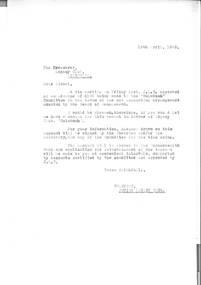
Letter - Document, letter, 1943
... Melbourne Legacy ran three residences: Blamey House (purchased 1947) , Stanhope (purchased 1945) and Harelands (purchased 1950), to take care of children whose fathers were servicemen, and who may have been left orphans, or whose mother may have been unable to care for them herself. ...Melbourne Legacy ran three residences: Blamey House (purchased 1947) , Stanhope (purchased 1945) and Harelands (purchased 1950), to take care of children whose fathers were servicemen, and who may have been left orphans, or whose mother may have been unable to care for them herself. ...Letter from the Junior Legacy Club dated 19 April 1943 recording a request to the Treasurer of Legacy for a cheque of £100 to be drawn in favour of Holmbush Committee. Holmbush was the first hostel for children that Legacy started and operated from April 1943. It was later renamed Blamey House after another hostel called Blamey House was closed. Melbourne Legacy ran three residences: Blamey House (purchased 1947) , Stanhope (purchased 1945) and Harelands (purchased 1950), to take care of children whose fathers were servicemen, and who may have been left orphans, or whose mother may have been unable to care for them herself. Harelands accommodated boys and girls under the age of 14, Blamey House looked after boys over 14, and Stanhope looked after girls over 14. The children were cared for until they were old enough to become independent.Record of establishing financial practices for Holmbush Committee as adopted by the Board of Management.White quarto copy paper, black ink, two hole punched, a letter about funds for Holmbush..residences, holmbush, holmbush administration -
 Melbourne Legacy
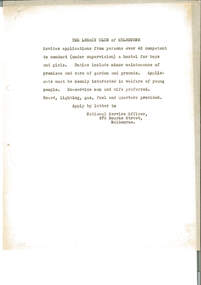
Document - Document, advertisement, 1943
... Melbourne Legacy ran three residences: Blamey House (purchased 1947) , Stanhope (purchased 1945) and Harelands (purchased 1950), to take care of children whose fathers were servicemen, and who may have been left orphans, or whose mother may have been unable to care for them herself. ...Melbourne Legacy ran three residences: Blamey House (purchased 1947) , Stanhope (purchased 1945) and Harelands (purchased 1950), to take care of children whose fathers were servicemen, and who may have been left orphans, or whose mother may have been unable to care for them herself. ...Draft wording of advertisements that were to run in the newspapers. It invites applications from persons over 45 to run a hostel for Legacy. Applicants must be keenly interested in welfare of young people and were preferably an ex-serviceman and his wife. Holmbush was the first hostel for children that Legacy started and operated from April 1943. It was later renamed Blamey House after another hostel called Blamey House was closed. Melbourne Legacy ran three residences: Blamey House (purchased 1947) , Stanhope (purchased 1945) and Harelands (purchased 1950), to take care of children whose fathers were servicemen, and who may have been left orphans, or whose mother may have been unable to care for them herself. Harelands accommodated boys and girls under the age of 14, Blamey House looked after boys over 14, and Stanhope looked after girls over 14. The children were cared for until they were old enough to become independent.Shows the duties and preferred attributes required to run Holmbush as a residence for children.White copy paper with black type two hole punched of an advertisement for hostel manager.Page 2 shows notes in pencil of edits and changes to the typed text which appear in the final draft.residences, holmbush, holmbush administration -
 Melbourne Legacy
Newspaper - Document, article, Professional engagements, 06/02/1943
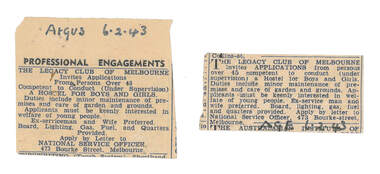
... Melbourne Legacy ran three residences: Blamey House (purchased 1947) , Stanhope (purchased 1945) and Harelands (purchased 1950), to take care of children whose fathers were servicemen, and who may have been left orphans, or whose mother may have been unable to care for them herself. ...Melbourne Legacy ran three residences: Blamey House (purchased 1947) , Stanhope (purchased 1945) and Harelands (purchased 1950), to take care of children whose fathers were servicemen, and who may have been left orphans, or whose mother may have been unable to care for them herself. ...Two advertisements that invites applications from persons over 45 to run a hostel for Legacy. Applicants must be keenly interested in welfare of young people and were preferably an ex-serviceman and his wife. Legacy was in the process of setting up Holmbush as a hostel to care for the children of deceased servicemen and these are an indication of the type of skills and attributes they required. Holmbush was the first hostel for children that Legacy started and operated from April 1943. It was later renamed Blamey House after another hostel called Blamey House was closed. Melbourne Legacy ran three residences: Blamey House (purchased 1947) , Stanhope (purchased 1945) and Harelands (purchased 1950), to take care of children whose fathers were servicemen, and who may have been left orphans, or whose mother may have been unable to care for them herself. Harelands accommodated boys and girls under the age of 14, Blamey House looked after boys over 14, and Stanhope looked after girls over 14. The children were cared for until they were old enough to become independent.Shows the duties and preferred attributes required to run Holmbush as a residence for children.Newspaper cuttings of advertisement for the manager position at Holmbush, black type, handwritten dates.00349.1 Argus 6.2.43 00349.2 AGE 6.2.43residences, holmbush, staff -
 Melbourne Legacy
Document - Document, notes, Suggested duties in connection with the management of Legacy Hostel
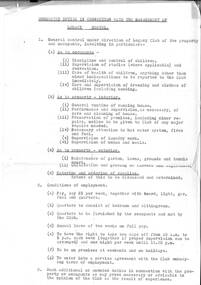
... Melbourne Legacy ran three residences: Blamey House (purchased 1947) , Stanhope (purchased 1945) and Harelands (purchased 1950), to take care of children whose fathers were servicemen, and who may have been left orphans, or whose mother may have been unable to care for them herself. ...Melbourne Legacy ran three residences: Blamey House (purchased 1947) , Stanhope (purchased 1945) and Harelands (purchased 1950), to take care of children whose fathers were servicemen, and who may have been left orphans, or whose mother may have been unable to care for them herself. ...A detailed list of duties broken into 4 parts; dealing with the occupants, the maintenance of the interior of the property, the maintenance of the exterior of the property and the catering and ordering of supplies. Also shows the conditions of employment, the salary was £5 a week with board included. The annual leave was 2 weeks a year. It was anticipated that a couple would manage the property so it outlines the days off per week could be taken together if proper supervision was arranged. The first manager was Mr Bert Frank and his wife was appointed Matron. Holmbush was the first hostel for children that Legacy started and operated from April 1943. It was later renamed Blamey House after another hostel called Blamey House was closed. Melbourne Legacy ran three residences: Blamey House (purchased 1947) , Stanhope (purchased 1945) and Harelands (purchased 1950), to take care of children whose fathers were servicemen, and who may have been left orphans, or whose mother may have been unable to care for them herself. Harelands accommodated boys and girls under the age of 14, Blamey House looked after boys over 14, and Stanhope looked after girls over 14. The children were cared for until they were old enough to become independent.Shows the duties expected of the live-in manager was required to do in order to run Holmbush as a residence for children and the proposed remuneration and employment terms. No mention of wages for the manager's wife even though it was anticipated a couple would run the hostel.White foolscap paper with black type, two hole punched with the suggested duties of the hostel manager.residences, holmbush, staff, bert frank -
 Melbourne Legacy
Letter, re. Captain Frank and Mrs Frank
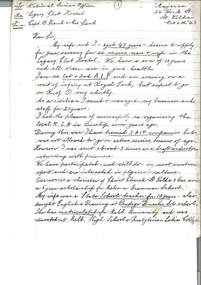
... Melbourne Legacy ran three residences: Blamey House (purchased 1947) , Stanhope (purchased 1945) and Harelands (purchased 1950), to take care of children whose fathers were servicemen, and who may have been left orphans, or whose mother may have been unable to care for them herself. ...Melbourne Legacy ran three residences: Blamey House (purchased 1947) , Stanhope (purchased 1945) and Harelands (purchased 1950), to take care of children whose fathers were servicemen, and who may have been left orphans, or whose mother may have been unable to care for them herself. ...Letter from Captain Bert Frank of 24 York St, St Kilda, applying for the manager position at the first Legacy Hostel, named Holmbush. It outlines his war service in WWI (with the 1st and 2nd A.I.F), civilian career running a Ford garage for 20 years and his interests. Also the education and experience of his wife, Clare Frank, and mentions their 10 year old son. It provides referees for both of them. Holmbush was the first hostel for children that Legacy started and operated from April 1943. It was later renamed Blamey House after another hostel called Blamey House was closed. Melbourne Legacy ran three residences: Blamey House (purchased 1947) , Stanhope (purchased 1945) and Harelands (purchased 1950), to take care of children whose fathers were servicemen, and who may have been left orphans, or whose mother may have been unable to care for them herself. Harelands accommodated boys and girls under the age of 14, Blamey House looked after boys over 14, and Stanhope looked after girls over 14. The children were cared for until they were old enough to become independent.Capt Frank was the successful applicant for the position and this letter provides a lot of background of his life.White note paper, lined, black ink handwriting, two hole punched.residences, holmbush, staff, bert frank -
 Melbourne Legacy
Letter, re. Captain Frank and Mrs Frank
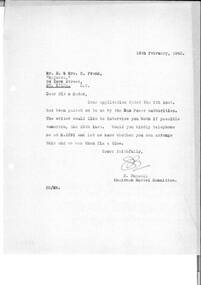
... Melbourne Legacy ran three residences: Blamey House (purchased 1947) , Stanhope (purchased 1945) and Harelands (purchased 1950), to take care of children whose fathers were servicemen, and who may have been left orphans, or whose mother may have been unable to care for them herself. ...Melbourne Legacy ran three residences: Blamey House (purchased 1947) , Stanhope (purchased 1945) and Harelands (purchased 1950), to take care of children whose fathers were servicemen, and who may have been left orphans, or whose mother may have been unable to care for them herself. ...00353.1 Letter dated 18 February 1943 to Captain Frank and Mrs Frank requesting an interview in regards to the position of manager of the first Legacy Hostel, named Holmbush. 00353.2 Letter dated 26th February 1943 to Captain Frank and Mrs Frank requesting a further meeting to discuss the matter further. Holmbush was the first hostel for children that Legacy started and operated from April 1943. It was later renamed Blamey House after another hostel called Blamey House was closed. Melbourne Legacy ran three residences: Blamey House (purchased 1947) , Stanhope (purchased 1945) and Harelands (purchased 1950), to take care of children whose fathers were servicemen, and who may have been left orphans, or whose mother may have been unable to care for them herself. Harelands accommodated boys and girls under the age of 14, Blamey House looked after boys over 14, and Stanhope looked after girls over 14. The children were cared for until they were old enough to become independent.A record of written correspondence regarding job applications in 1943.00353.1 Blue quarto copy paper, black type, two hole punched. 00353.2 Blue quarto copy paper, black type, two hole punched.Initialled by E. Russell Chairman, Hostel Committee.residences, holmbush, staff, bert frank -
 Melbourne Legacy
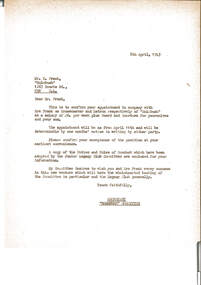
Letter, Holmbush Supervisors: Mr and Mrs Frank
... Melbourne Legacy ran three residences: Blamey House (purchased 1947) , Stanhope (purchased 1945) and Harelands (purchased 1950), to take care of children whose fathers were servicemen, and who may have been left orphans, or whose mother may have been unable to care for them herself. ...Melbourne Legacy ran three residences: Blamey House (purchased 1947) , Stanhope (purchased 1945) and Harelands (purchased 1950), to take care of children whose fathers were servicemen, and who may have been left orphans, or whose mother may have been unable to care for them herself. ...00354.1 Letter dated 8th April 1943 from Holmbush Committee to Captain Bert Frank and Mrs Frank confirming their appointment as Housemaster and Matron of Holmbush at a salary of £6 per week plus board and quarters. A copy of the Duties and rules of Conduct were enclosed but are not found here. 00354.2 Letter dated 10 April 1943 from Mr B Frank accepting the positions. Holmbush was the first hostel for children that Legacy started and operated from April 1943. It was later renamed Blamey House after another hostel called Blamey House was closed. Melbourne Legacy ran three residences: Blamey House (purchased 1947) , Stanhope (purchased 1945) and Harelands (purchased 1950), to take care of children whose fathers were servicemen, and who may have been left orphans, or whose mother may have been unable to care for them herself. Harelands accommodated boys and girls under the age of 14, Blamey House looked after boys over 14, and Stanhope looked after girls over 14. The children were cared for until they were old enough to become independent.A record of written correspondence in 1943 and a record of the first manager and matron of Holmbush.00354.1 Beige quarto copy paper, black type, two hole punched. 00354.2 White quarto lined note paper, black ink handwriting, two hole punched.residences, staff, bert frank, holmbush -
 Melbourne Legacy
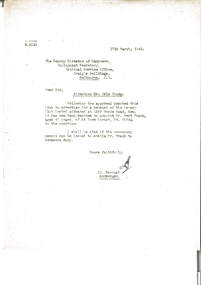
Letter, Attention Mr. Eric Young. Re: Bert Frank
... Melbourne Legacy ran three residences: Blamey House (purchased 1947) , Stanhope (purchased 1945) and Harelands (purchased 1950), to take care of children whose fathers were servicemen, and who may have been left orphans, or whose mother may have been unable to care for them herself. ...Melbourne Legacy ran three residences: Blamey House (purchased 1947) , Stanhope (purchased 1945) and Harelands (purchased 1950), to take care of children whose fathers were servicemen, and who may have been left orphans, or whose mother may have been unable to care for them herself. ...00355.1 Letter dated 17 March 1943 to National Service Office to advise the appointment of Mr Bert Frank to the position of manager of the Legacy Club Hostel (Holmbush). Also requesting a permit to do so. 00355.2 Letter dated 18 March 1943 from the Department of Labour and National Service advising the was no objection to the appointment. Holmbush was the first hostel for children that Legacy started and operated from April 1943. It was later renamed Blamey House after another hostel called Blamey House was closed. Melbourne Legacy ran three residences: Blamey House (purchased 1947) , Stanhope (purchased 1945) and Harelands (purchased 1950), to take care of children whose fathers were servicemen, and who may have been left orphans, or whose mother may have been unable to care for them herself. Harelands accommodated boys and girls under the age of 14, Blamey House looked after boys over 14, and Stanhope looked after girls over 14. The children were cared for until they were old enough to become independent.Record of the Government's role in appointment of labour during 1943.00355.1 Blue quarto copy paper, black type, two hole punched. 00355.2 White quarto letterhead, black type, two hole punched.00355.1 Initialled in blue ink by J Barnes. 00355.2 Signed in black ink by R.W. Drummond, Employment Division, Manpower Directorate of Department of Labour and National Serviceresidences, holmbush, staff, bert frank
