
Showing 153 items matching "milk factory"
-
 Bacchus Marsh & District Historical Society
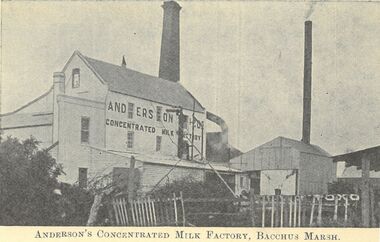
Postcard, Anderson's Concentrated Milk Factory Bacchus Marsh, circa 1900s
... Anderson's Concentrated Milk Factory Bacchus Marsh, circa 1900s....This milk factory began milk processing in 1898. Prior to this it had operated as a butter factory since 1893. ...This milk factory began milk processing in 1898. Prior to this it had operated as a butter factory since 1893. ...This milk factory began milk processing in 1898. Prior to this it had operated as a butter factory since 1893. The building was a converted mill, known as the Border Flour Mill. For a time it traded as the Merrimu Butter and Concentrated Milk Company. Thomas Anderson who had operated the butter and milk factories sold the business at some stage. He then repurchased the building in 1912 and used it as a grain store. In 1933 the building became an apple packing shed and later still a store room. It was demolished in 1962. The location of the building was behind some shops and businesses on the southern side of Main Street, approximately in line with the Post Office and ANA buildings on the northern side of Main Street.Postcard. Image one side. Postage stamp, address and writing space on reverse. The precise date of this postcard is unknown. It is probably between about 1905 and 1910 due to the style of the postcard, this style being introduced in Australia in January 1905, and the known period of time this business was at this location.On the reverse: Top: POST CARD. Left side: FOR INLAND POSTAGE ONLY THIS SPACE MAY NOW BE USED FOR INLAND COMMUNICATION. Right side: THE ADDRESS ONLY TO BE WRITTEN HEREdairy industry bacchus marsh, milk factories, anderson family bacchus marsh -
 Allan Doney Collection, Bendigo Historical Society Inc.
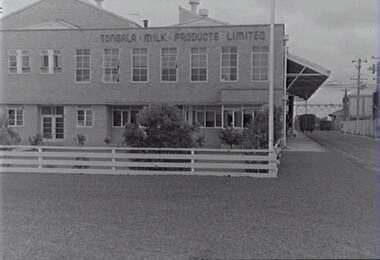
Negative - Tongala - Milk Factory, Allan Doney, 1950 -1970
... Tongala - Milk Factory...Negative Tongala - Milk Factory Allan Doney ...In the years of Allan Doney’s photography, landmark buildings succumbed to fire, neglect and redevelopment. He photographed the grey sand hills from Bendigo’s mining past, the streetscapes, poppet heads, miners’ cottages, gracious homes with ornate verandahs, trams and much more. Above all, his photographs show how much of the city has survived from the 19th century – and how much has not. Through two decades of great change, Allan Doney was there to capture ways people interacted with it. Although he travelled to many other places in Northern Victoria and beyond in search of subjects for his art, he seemed to always return to Bendigo for inspiration. -
 Port Fairy Historical Society Museum and Archives
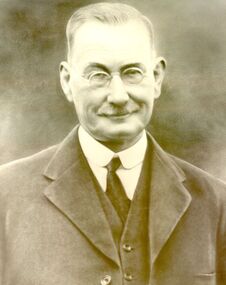
Photograph, Mayor James Steele 1907, 1908
... milk...factory...James Steele Mayor of Port Fairy 1907-1908 also a Director of the Southwestern Co-operative Milk and Trading Company Ltd formed to guarantee the supply of milk to the proposed Glaxo Milk Factory in 1919. The first milk delivery was made by Mr Steele when the factory opened in October 1920....James Steele Mayor of Port Fairy 1907-1908 also a Director of the Southwestern Co-operative Milk and Trading Company Ltd formed to guarantee the supply of milk to the proposed Glaxo Milk Factory in 1919. The first milk delivery was made by Mr Steele when the factory opened in October 1920. ...James Steele Mayor of Port Fairy 1907-1908 also a Director of the Southwestern Co-operative Milk and Trading Company Ltd formed to guarantee the supply of milk to the proposed Glaxo Milk Factory in 1919. The first milk delivery was made by Mr Steele when the factory opened in October 1920.James Steele Mayor of Port Fairy 1907-1908 and then being involved in the establishment of the Glaxo factory in Port Fairy Black and white portrait photograph james steele, mayor, port fairy, glaxo, milk, factory, southwestern co-operative milk and trading company ltd -
 Warrnambool and District Historical Society Inc.
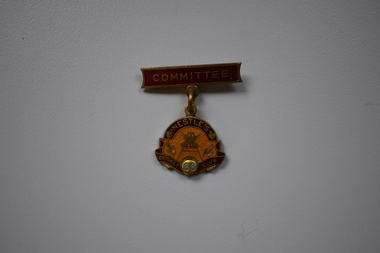
Badge, K.G.Luke, Nestles Cricket Club, 1966
... Nestles Milk Factory...This badge was issued in 1966 to a member of the committee of the Nestles Cricket Club in Dennington (Warrnambool). The Nestles Milk Factory was established at Dennington in 1911, being one of the few Nestles factories at the time to be opened outside of Europe. ...This badge was issued in 1966 to a member of the committee of the Nestles Cricket Club in Dennington (Warrnambool). The Nestles Milk Factory was established at Dennington in 1911, being one of the few Nestles factories at the time to be opened outside of Europe. ...This badge was issued in 1966 to a member of the committee of the Nestles Cricket Club in Dennington (Warrnambool). The Nestles Milk Factory was established at Dennington in 1911, being one of the few Nestles factories at the time to be opened outside of Europe. During World War One and the 1920s the Dennington Nestles Factory was the world’s largest milk condensery and at its peak in the 1960s and 70s was employing 800 people. It produced the drink, Milo and the coffee, Nescafe (this latter ceasing in 2000). In 2005 the Nestles Factory was taken over by the New Zealand firm, Fonterra and it is due to cease business entirely late in 2019. The Nestles Factory encouraged and sponsored several social and sporting clubs, including the Nestles Cricket Club and the Nestles Rowing Club. The Nestles Cricket Club commenced in 1944 and has been a part of the Warrnambool and District Cricket Association competition since that time. It still operates today under the same name and includes a women’s team. This item is of interest as a memento of Nestles Cricket Club, a prominent cricket team in Warrnambool today.This is a shield-shaped metal badge with a red and gold background, an image in yellow of cricket bats and stumps and two decorative patterns and gold-coloured printing. A circular number has been attached to the lower part of the badge. This is detachable. A bar with gold-coloured edging and a red background and gold-coloured printing is attached to the badge by a metal ring. The back of the bar has a metal clip.Committee Nestles Cricket Club 66 K.G.Luke Melb. nestles milk factory, dennington, nestles cricket club, history of warrnambool -
 Tatura Irrigation & Wartime Camps Museum
Photograph, Daryl Walker, Tatura Milk Products, 1986
... Milk Products...Butter Factory Tatura...Tatura Milk Products, formerly Butter Factory was founded in 1907....Black and white photograph of Tatura Milk Products, Hogan Street, Tatura. Office and part of factory. 2 flags flying. 2 females in foreground....Tatura Milk Products Butter Factory Tatura on back: Tatura Milk Products, Hogan Street, Tatura. 1986. ...Tatura Milk Products, formerly Butter Factory was founded in 1907.Black and white photograph of Tatura Milk Products, Hogan Street, Tatura. Office and part of factory. 2 flags flying. 2 females in foreground.on back: Tatura Milk Products, Hogan Street, Tatura. 1986. Same title on sign in photograph.tatura milk products, butter factory tatura -
 Ballarat Heritage Services
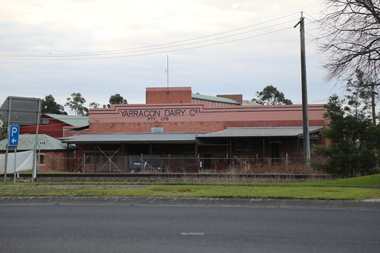
Photograph - digital photographs, Lisa Gervasoni, Yarragon Dairy, 2017
... ...milk factory...2017 yarragon dairy milk factory butter factory Yarragon Dairy Colour photograph of the Yarragon Dairy. ...Colour photograph of the Yarragon Dairy.2017, yarragon, dairy, milk factory, butter factory, yarragon dairy -
 Ballarat Heritage Services
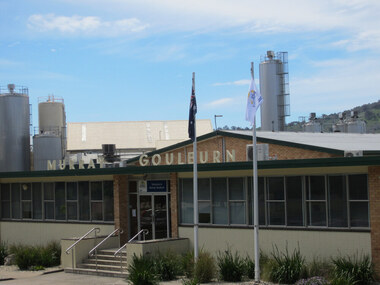
digital photographs, Lisa Gervasoni, Murray Goulburn at Tangambalamba, c2014, c2010-2017
... milk...factory...milk factory murray goulburn Tangambalamba Colour photograph of Murray Goulburn at Tangambalamb. ...Colour photograph of Murray Goulburn at Tangambalamb.milk, factory, murray goulburn, tangambalamba -
 Port Fairy Historical Society Museum and Archives
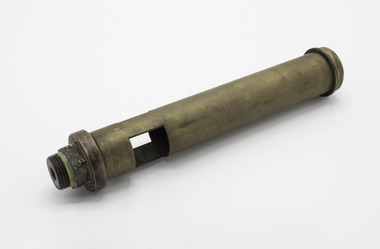
Instrument - Whistle, c.1920
... ...milk factory...Whistle used to mark lunch time and finish of day shifts at the Glaxo Factory from the 1920's to the 1980's This Glaxo factory whistle played a significant role in the fabric of the populace of Port Fairy signalling lunch time and end of the working day from 1929 to 1980. commerce signals glaxo glaxo - welcome glaxo smith kline milk factory glaxo wellcome gsk pharmaceutical Cylindrical Brass Steam Whistle with square openings in either side and thread on base Instrument Whistle ...Whistle used to mark lunch time and finish of day shifts at the Glaxo Factory from the 1920's to the 1980'sThis Glaxo factory whistle played a significant role in the fabric of the populace of Port Fairy signalling lunch time and end of the working day from 1929 to 1980. Cylindrical Brass Steam Whistle with square openings in either side and thread on basecommerce, signals, glaxo, glaxo - welcome, glaxo smith kline, milk factory, glaxo wellcome, gsk, pharmaceutical -
Tatura Irrigation & Wartime Camps Museum
Book, Testing Milk and Its Products, 1911
... Tatura Butter Factory...Milk...Used in early days at Tatura Butter Factory Tatura Butter Factory Milk testing "J E Lockwood 3/3/20" written on first page Brown paper covered book. ...Used in early days at Tatura Butter FactoryBrown paper covered book."J E Lockwood 3/3/20" written on first pagetatura butter factory, milk testing -
Tatura Irrigation & Wartime Camps Museum
Booklet, Tatura Milk Products Limited, 1976
... Sketches of milk tanker and factory equipment...Sketches of milk tanker and factory equipment Tatura Milk Products Limited Booklet Booklet ...Annual report of meeting 1976Cream cover, black writing. Sketches of milk tanker and factory equipmentdairy industry, annual reports, tatura milk products limited -
 Port Fairy Historical Society Museum and Archives
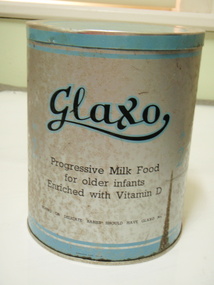
Container - Tin, Glaxo Laboratories, 1930's
... factory...princes highway...manufacturer...milk...Glaxo's Port Fairy Factory was built in 1929 as a milk factory it had a tin shop where the tins were manufactured and the milk was dried and sold as some of the first formula milk for babies...Glaxo's Port Fairy Factory was built in 1929 as a milk factory it had a tin shop where the tins were manufactured and the milk was dried and sold as some of the first formula milk for babies Glaxo factory princes highway manufacturer milk baby food Glaxo Progressive milk food for older infants enriched with Vitamin D Young or delicate babies should have Glaxo No 1. ...Glaxo's Port Fairy Factory was built in 1929 as a milk factory it had a tin shop where the tins were manufactured and the milk was dried and sold as some of the first formula milk for babieslarge tin with printed information "Glaxo" progressive milk food for older infants enriched with Vitamin D Blue bands and silverGlaxo Progressive milk food for older infants enriched with Vitamin D Young or delicate babies should have Glaxo No 1. Table of quantities and directions for useglaxo, factory, princes highway, manufacturer, milk, baby food -
 Warrnambool and District Historical Society Inc.
Bottle, Milk Bottle, Mid 20th century
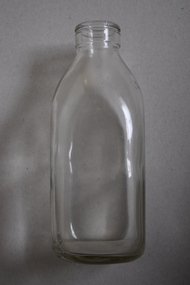
... There are other milk-related factories in the Warrnambool area at Dennington and Koroit. ...There are other milk-related factories in the Warrnambool area at Dennington and Koroit. ...This glass milk bottle held one pint of milk and was filled in an assembly line at a milk factory. It would have had a paper top. Milk in the mid 20th century was delivered daily to households in glass bottles and left at the front door or door step. The commercial production of milk and other milk products in Victoria dates back to the 19th century with the Western District still having an important dairying industry. Warrnambool Cheese and Butter Factory, situated at Allansford, commenced operations in 1888 and still operates today. There are other milk-related factories in the Warrnambool area at Dennington and Koroit. This bottle is of interest as an example of the type of milk bottles used in the 20th century before the advent of plastic and cardboard cartons.This is a clear glass bottle with four rounded sides, a short neck and a round opening at the top. One Pintdairying in the warrnambool area, history of warrnambool -
 Kiewa Valley Historical Society
Milk Cartons - 2 litre & 1 litre, 2 litres - 1986. 1 litre - 1980's
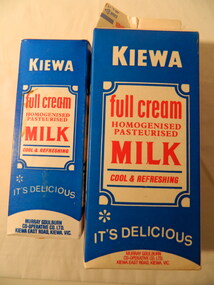
... milk...murray goulburn...kiewa butter factory...In 1928 a new butter factory was built and a milk products factory in 1952. ...Blue, red & white waterproof sealed cardboard box used for storing fresh milk from the Kiewa factory 'Murray Goulburn'. The large box contains 2 litres and the smaller box, 1 litre. ...In 1928 a new butter factory was built and a milk products factory in 1952. ...The North-Eastern Dairy Company was established on 14th December 1892 as a butter factory and built in 1893. In 1928 a new butter factory was built and a milk products factory in 1952. Whole milk sales commenced in 1951, with pasteurised, homogenised milk in both bottles and cartons being sold in the 1980's. Devondale / Murray Goulburn was established in 1950. Cartons enabled the safe transportation and storage of milk. The North East Dairy Company enabled the dairy farmers in the Kiewa Valley to send their milk and milk products eg. cream to the factory at Kiewa. The factory bought its own cream carting vehicles during WW1. The 'full cream / homogenised / pastuerised / milk' is an example of the milk available in the 1980's as many different varieties of ingredients followed in later years.Blue, red & white waterproof sealed cardboard box used for storing fresh milk from the Kiewa factory 'Murray Goulburn'. The large box contains 2 litres and the smaller box, 1 litre. Each of the 4 faces have print - 2 have the title, 1 has advertising and 1 has instructions on how to store the carton of milk2 litre - Use by Date stamped at the top: 'Un Ed Oct 19' 1 litre - Use by Date stamped at the top: 'Ned Feb. 13'milk, murray goulburn, kiewa butter factory, kiewa milk products -
 Sunshine and District Historical Society Incorporated
Photograph - Early 1940s Deer Park, 1940
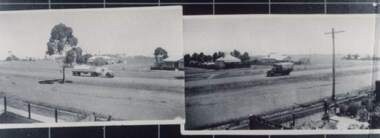
... Deer Park early 1940s Left hand side from No 828 looking south across Ballarat Road Alf Newmans house centre Alec Newman father of Alf Newman milk truck travelling west to Lifeguard milk factory Bacchus Marsh Righthand side from No 828 Walter Curly Vincents Church of England church can be seen also Vincents and Andy Rosss houses...Early s Deer Club Deer Park Photograph Deer Park early 1940s Left hand side from No 828 looking south across Ballarat Road Alf Newmans house centre Alec Newman father of Alf Newman milk truck travelling west to Lifeguard milk factory Bacchus Marsh Righthand side from No 828 Walter Curly Vincents Church of England church can be seen also Vincents and Andy Rosss houses Early 1940s Deer Park Photograph Early 1940s Deer Park ...Deer Park early 1940s Left hand side from No 828 looking south across Ballarat Road Alf Newmans house centre Alec Newman father of Alf Newman milk truck travelling west to Lifeguard milk factory Bacchus Marsh Righthand side from No 828 Walter Curly Vincents Church of England church can be seen also Vincents and Andy Rosss housesearly s deer club, deer, park photograph -
 Cheese World Museum
Sign, Supplier gate sign, c1970
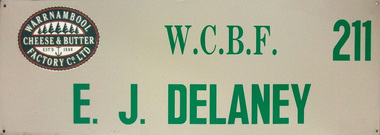
... Warrnambool Cheese and Butter Factory Co Ltd...milk...Supplier identification gate sign used to identify a farm for milk collection by factory milk tankers. The sign showed the factory supplier's name and farm number. ...Supplier identification gate sign used to identify a farm for milk collection by factory milk tankers. The sign showed the factory supplier's name and farm number. ...Supplier identification gate sign used to identify a farm for milk collection by factory milk tankers. The sign showed the factory supplier's name and farm number. EJ (Ted) Delaney farmed at Nirranda South and was a company director for several years.Beige steel supplier identification gate sign with green lettering and Warrnambool Cheese and Butter Factory Co Ltd logo printed on top left hand corner.WCBF E.J.DELANEY 211/ Warrnambool Cheese and Butter Factory Co Ltd. Established 1888rural industry, agriculture, allansford, delaney ej (ted), warrnambool cheese and butter factory co ltd, milk suppliers, dairying, signs -
 Kiewa Valley Historical Society
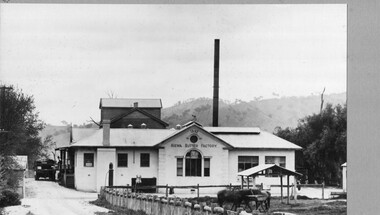
Photo - Kiewa Butter Factory 1892
... In 1928 a new butter factory was built and a milk products factory was created in 1952...In 1928 a new butter factory was built and a milk products factory was created in 1952 The Kiewa Butter Factory employed a lot of people and supported the farmers in the Kiewa Valley. ...Butter factory at Kiewa with creameries at Kergunyah and Gundowring met on 14th December 1892 and built it in 1893. In 1928 a new butter factory was built and a milk products factory was created in 1952The Kiewa Butter Factory employed a lot of people and supported the farmers in the Kiewa Valley.Black and white photo of Kiewa Butter Factory 1892. The photo was taken in 1932. The photo is glued to thick grey cardboard creating a frame. The photo is of a white building with a tall tower behind it. This photo is published on pages 45 and 89 of 'A History of the Kiewa Valley' by Esther Temple and David LloydWritten in biro bottom front of cardboard '1932'kiewa butter factory, creamery, dairy industry -
Tatura Irrigation & Wartime Camps Museum
Photograph, Daryl Walker, Tatura Milk Products, 1986
... Butter Factory Tatura...Tatura Milk...Tatura Milk Products, formerly Butter Factory, was founded in 1907....Black and white photograph of office block and part of factory of Tatura Milk Products. Car in car park, man on bicycle and 2 flags on poles....Tatura Milk Products, formerly Butter Factory, was founded in 1907. ...Tatura Milk Products, formerly Butter Factory, was founded in 1907.Black and white photograph of office block and part of factory of Tatura Milk Products. Car in car park, man on bicycle and 2 flags on poles.on back: Tatura Milk Products 1986butter factory tatura, tatura milk products -
Tatura Irrigation & Wartime Camps Museum
Plate - centenary, Tatura Butter Factory
... Milk Industries...Tatura Butter Factory...Produced to mark the centenary of Tatura Milk Industries (originally Butter Factory)....as above Tatura Milk Industries Tatura Butter Factory Farmers Produce Coy....Produced to mark the centenary of Tatura Milk Industries (originally Butter Factory). Tatura Milk Industries Tatura Butter Factory Tatura Butter Factory centenary as above Tatura Milk Industries Tatura Butter Factory Farmers Produce Coy. ...Produced to mark the centenary of Tatura Milk Industries (originally Butter Factory).Plate, boxed, with picture of early Tatura Butter Factory in centre and the inscription "Centenary 1907 - 2007". Stand enclosed. Gold edge and writing. Red border.as above Tatura Milk Industries Tatura Butter Factory Farmers Produce Coy.tatura milk industries, tatura butter factory, tatura butter factory centenary -
 Warrnambool and District Historical Society Inc.
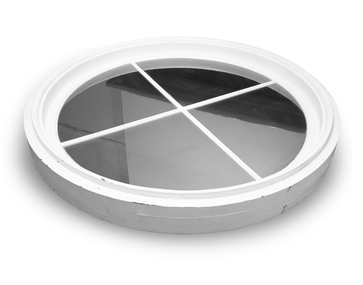
Functional object - Hospital window, Ernie Harris, Warrnambool builder, 1938
... Marcus Saltau (1869-1945) was a Warrnambool produce merchant and politician involved in many Warrnambool ventures, including the establishment and development of the Warrnambool Woollen Mill and the Nestles Milk Factory at Dennington. The Jean Buick Saltau Maternity Ward at the Warrnambool Hospital was established by Marcus Saltau in 1928 in memory of his first wife. ...Marcus Saltau (1869-1945) was a Warrnambool produce merchant and politician involved in many Warrnambool ventures, including the establishment and development of the Warrnambool Woollen Mill and the Nestles Milk Factory at Dennington. The Jean Buick Saltau Maternity Ward at the Warrnambool Hospital was established by Marcus Saltau in 1928 in memory of his first wife. ...This window was removed from the Marcus Saltau House building in the Warrnambool and District Base Hospital when the building was demolished in 2009. Marcus Saltau House was erected in 1938 to provide for intermediate, private and midwifery patients. The builder was Ernie Harris of Warrnambool. The building commemorated the work of Marcus Saltau who was on the Warrnambool Hospital committee for over forty years and the President of that committee for thirty years. Marcus Saltau (1869-1945) was a Warrnambool produce merchant and politician involved in many Warrnambool ventures, including the establishment and development of the Warrnambool Woollen Mill and the Nestles Milk Factory at Dennington. The Jean Buick Saltau Maternity Ward at the Warrnambool Hospital was established by Marcus Saltau in 1928 in memory of his first wife. This window is retained as a memento of a significant building in Warrnambool that no longer exists.This is a circular window with four triangular panels of glass contained within a white painted ridged wood frame.marcus saltau house warrnambool, marcus saltau, ernie harris warrnambool, jean buick saltau maternity ward, warrnambool woollen mill -
 Warrnambool and District Historical Society Inc.
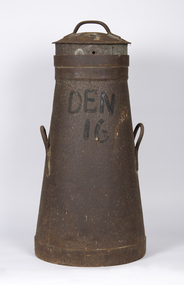
Container - Milk can, Early 20th century
... Milk can...Dairying in Warrnambool district...Nestles Factory...This is a can used for storing milk at a dairy farm for transport to the local butter, milk or cheese factory. It comes from a farm (number 16) in Dennington, a settlement and now a suburb west of Warrnambool. ...This is a can used for storing milk at a dairy farm for transport to the local butter, milk or cheese factory. It comes from a farm (number 16) in Dennington, a settlement and now a suburb west of Warrnambool. ...This is a can used for storing milk at a dairy farm for transport to the local butter, milk or cheese factory. It comes from a farm (number 16) in Dennington, a settlement and now a suburb west of Warrnambool. It may have been supplying milk to the Nestles factory at Dennington by a truck or taken to a Nestles depot nearby. The Nestles factory was established in Dennington in 1907 and closed in 2005. This can is an interesting memento of dairying practices in the early to mid 20th century.This is a metal can with a circular base tapering to an open top. It has two handles on the side and a circular lid with a handle. It has a stencil on the side. The entire can is rusted.Den 16milk can, dairying in warrnambool district, nestles factory dennington -
 Bacchus Marsh & District Historical Society
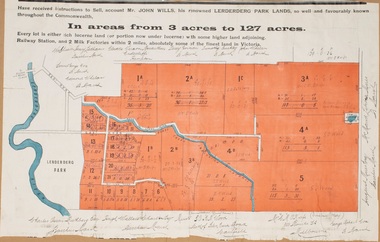
Map, Lerderderg Park Lands sale plan. 1911
... Every lot is either rich lucerne land (or portion now under lucerne) with some higher land adjoining Railway Station, and 2 Milk factories within 2 miles, absolutely the finest land in Victoria. ...Every lot is either rich lucerne land (or portion now under lucerne) with some higher land adjoining Railway Station, and 2 Milk factories within 2 miles, absolutely the finest land in Victoria. ...This plan was for the sale of parcels of land from the Lerderderg Park Estate property in 1911. Advertising for the sale appeared in the Bacchus Marsh Express newspaper through July of 1911. The property was situated only a few kilometers from the township of Bacchus Marsh. The agents for the sale were L. A. Fairbairn & Co.Lerderderg Park Estate was a significant and early colonial property in the Bacchus Marsh area. This plan provides details about the first time the property was subdivided for sale. It is therefore documents an important moment in the history of this property and the broader trend of the subdivision of older and larger properties in the district.A single page paper plan showing allotments of land for sale from the Lerderderg Park property owned by John Wills. The parcels of land for sale are coloured in red.The Lerderderg River and Pyke's Creek Irigation Channel shown on the plan are in blue ink. The rest of the plan is a dark cream or beige colur with the text in black ink. The plan has been extensively annotated with hand-written notes indicating the names of people who purchased the various parcels of lands and the prices paid for those lands. Part of the top of the plan containing some text appears to be missing. The plan is pasted into a bound volume containing 76 maps or plans in total. Top: Have received instructions to Sell, account Mr John Wills, his renowned LERDERDERG PARK LANDS, so well and favourably known throughout the Commonwealth. In areas from 3 acres to 1276 acres. Every lot is either rich lucerne land (or portion now under lucerne) with some higher land adjoining Railway Station, and 2 Milk factories within 2 miles, absolutely the finest land in Victoria. Bottom: THIS IS THE FIRST SUBDIVISIONAL SALE of Rich Flats in Bacchus Marsh since the Pyke's Creek Scheme, and every lot is commanded by it. Only 32 miles from Melbourne.bacchus marsh victoria maps, land sales, lerderderg park estate, land subdivision -
 Warrnambool and District Historical Society Inc.
Bottle, Antarctic Ice Milk Bottle, Mid 20th century
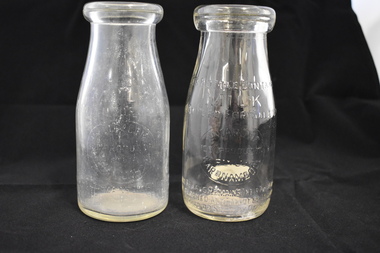
... Kraft Foods sold its share of Sungold to Warrnambool Cheese and Butter and in 1989 the milk factory was moved to the Allansford site of Warrnambool Cheese and Butter and Sungold continues there today....Kraft Foods sold its share of Sungold to Warrnambool Cheese and Butter and in 1989 the milk factory was moved to the Allansford site of Warrnambool Cheese and Butter and Sungold continues there today. ...These two bottles have contained milk sold by the Warrnambool firm of Antarctic Ice Pty Ltd. in the mid 20th century.In the 1930s a pasteurizing plant was set up in Warrnambool in conjunction with an ice works in Kepler Street known as Antarctic Ice (Good and Stevenson). This firm had secured a milk supply from farmers in the Warrnambool region. Eventually Antarctic Ice was bought by the Warrnambool Cheese and Butter Factory and Kraft Foods as equal partners and the milk was marketed as Sungold. Also a farmer named Kaye Ryan had set up a pasteurization plant in East Warrnambool (Raglan Parade/Verdon Street) in opposition to Antarctic Ice and Sungold. Kraft and Warrnambool Cheese and Butter bought out Ryan and moved Sungold operations to the Ryan site. Kraft Foods sold its share of Sungold to Warrnambool Cheese and Butter and in 1989 the milk factory was moved to the Allansford site of Warrnambool Cheese and Butter and Sungold continues there today.These bottles are of interest, firstly as examples of the half-pint milk bottles familiar to people living in the mid 20th century and secondly because they are good examples of the bottles used by an important Warrnambool business, Antarctic Ice. These are two clear glass bottles. When filled each bottle contained 10 fluid ounces or half a pint of milk. The bottles have a round base with a rounded body tapering slightly to a thick neck and a thick moulded top. The bottles when filled had a seal consisting of a circle of waxed cardboard that was pressed into a recess on the lip of the bottle. These lids are missing.The bottles have lettering impressed into the glass. ‘This bottle contains milk bottled for sale by Antarctic Ice Products Pty Ltd Warrnambool and always remains their property. It is loaned and cannot be legally used or sold by others.’ ‘Contents 10 ozs.’ ‘497’ milk production in warrnambool, antarctic ice pty ltd -
 Orbost & District Historical Society
black and white photograph, late 19th century - early 20th century
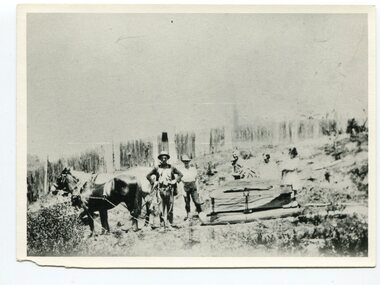
... Dairying was common in the early days, supplying a butter factory at the New South Wales border, and a milk factory at Orbost in more recent times. Wheat was grown for the settlers' own use and ground at Bombala. ...Dairying was common in the early days, supplying a butter factory at the New South Wales border, and a milk factory at Orbost in more recent times. Wheat was grown for the settlers' own use and ground at Bombala. ...This photograph shows land clearing at Bendoc. From 1845 the Bendoc area was part of pastoral leases. In the 1850s alluvial gold was discovered in the Bendoc River. This was quickly exhausted, and a number of mines began successful reef operations. At the head of the river, the settlement of Clarkville clustered round several other mines. Many miners, including numbers of Chinese, sluiced the rivers. The population of the area was as high as 500 during this period. The township was surveyed in 1869 and the hotel built in 1870. This building was burnt down in the early 1900s and rebuilt. A school was also begun at this time. In the 1870s there was a decline in gold mining. Some miners selected land, which in many cases is still held by descendants. Dairying was common in the early days, supplying a butter factory at the New South Wales border, and a milk factory at Orbost in more recent times. Wheat was grown for the settlers' own use and ground at Bombala. Now beef cattle grazing is the main occupation. (info. from Victorian Places)This is a pictorial history associated with the early settlement of Bendoc in East Gippsland.A badly distorted black / white photograph of a horse drawn wagon, three men and two women clearing land.on back - "Clearing land at Bendoc"bendoc-land-clearing bendoc-early-settlement -
 Warrnambool and District Historical Society Inc.
Booklet - Centenary History of Dennington Factory, Dennington Factory 100 Years of Production, 2011
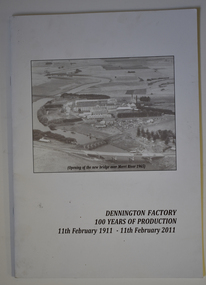
... In 1911 a factory was opened at Dennington, the first building to be erected in Australia by the Nestle and Anglo-Swiss Condensed Milk Company. ...In 1911 a factory was opened at Dennington, the first building to be erected in Australia by the Nestle and Anglo-Swiss Condensed Milk Company. ...Centenary History of the Dennington FactoryThis is a booklet of 24 pages. The front cover has a black and white photograph and black printing and the back cover has a colour photograph, a logo and black printing. The pages contain printed text and black and white and colour photographs. The booklet is stapled.non-fictionCentenary History of the Dennington Factorynestles factory dennington, fonterra factory dennington -
 Orbost & District Historical Society
Photograph - photo of a milk carton
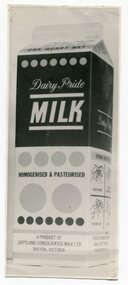
... Orbost had its own milk distribution and butter factory from 1893 to 1969 when Gippsland Consolidated Milk Products took it over and became the new company. ...Orbost had its own milk distribution and butter factory from 1893 to 1969 when Gippsland Consolidated Milk Products took it over and became the new company. ...Orbost had its own milk distribution and butter factory from 1893 to 1969 when Gippsland Consolidated Milk Products took it over and became the new company. This company also included milk supplies from the Bairnsdale to Maffra region in Gippsland. Four years later, in 1973, this company changed to Gippsland Amalgamated Milk Products which included suppliers from Yarram, Foster, Traralgon and Heyfield. It is likely that this carton photo is from 1969-1973. Also, the quart fluid measurement gave way to Metric from 1971 onwards. Related to Orbost Butter Factory and its demise in the late 1960s.b/w photograph of a milk carton - 1 quart - Dairy Pride Milk1Quart net. Dairy Pride MILK. Homogenised & Pasteurised. A product of Gippsland Consolidated Milk Ltd. Maffra. Victoria.orbost, orbost butter factory, dairying history -
 Warrnambool and District Historical Society Inc.
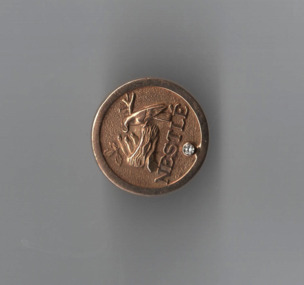
Stud, Nestle
... factory...dennington...anglo-swiss condensed milk company...At this time the name, Nestle, was retained but the factory was actually operated by the Anglo-Swiss Condensed Milk Company. ...At this time the name, Nestle, was retained but the factory was actually operated by the Anglo-Swiss Condensed Milk Company. ...This is a Nestle badge. Henri Nestle formed the Nestle Company in 1867 with the headquarters based in Switzerland. Today this company is the largest nutrition, health and wellness company in the world. Nestle Australia was established in 1908 and a Nestle factory was established in Dennington (Warrnambool) in 1911. At this time the name, Nestle, was retained but the factory was actually operated by the Anglo-Swiss Condensed Milk Company. The Dennington factory was for many years the world's largest milk condensery. In 1948 the factory began producing Nescafe coffee. In 2008, after 94 years of operations, the Dennington factory was sold to the New Zealand firm of Fonterra. This badge is of particular interest because of the many years of local association with the firm of Nestle (Dennington Factory).Circular 14 carat gold stud featuring a raised image of a bird feeding baby bird in a nest, twig and leaves.an text and a minute diamond.NESTLEnestle factory, dennington, anglo-swiss condensed milk company, warrnambool history -
 Mortlake and District Historical Society
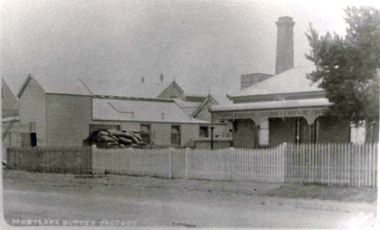
Mortlake Butter Factory Co. Ltd, Photograph
... This local factory was typical of small butter factories in the 1890's in Western Victoria. It was established in 1894 when farmers brought their milk to the factory on horse drawn drays and carts and waited for their cream to be separated. ...This local factory was typical of small butter factories in the 1890's in Western Victoria. It was established in 1894 when farmers brought their milk to the factory on horse drawn drays and carts and waited for their cream to be separated. ...This local factory was typical of small butter factories in the 1890's in Western Victoria. It was established in 1894 when farmers brought their milk to the factory on horse drawn drays and carts and waited for their cream to be separated. The skimmed milk was mostly used by farmers to feed calves and pigs and the separated cream was manufactured into butter, some of which was exported to England. By 1910 this butter factory had an electricity generating plant called Mortlake Electricity which supplied both the factory and the township with power and this took precedence over the butter production which continued until 1926 when it was sold to the Electricity Commission. By 1930 the Butter Factory had a yearly turnover of 24,000 pounds sterling and in1935 it was producing 6 tons of butter weekly. But in 1936 the factory was sold to Glenormiston Cheese & Butter Factory who ceased operations. The manager's residence still remains in 2011 as does the remnants of the small timber butter factory (charcoal lined) and the double brick cheese room but the bluestone chimney has long gone. This complex is listed by Heritage Victoria Black and White Photograph Nonecheese factory, mortlake, butter factory -
 Warrnambool and District Historical Society Inc.
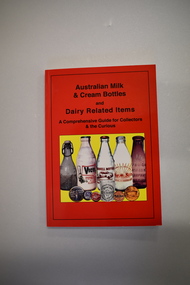
Book, Australian Milk and Cream Bottles, 2008
... It includes photographs of local milk and butter factories – Warrnambool (Allansford), Grassmere, Koroit, Garvoc, Glenormiston and Byaduk and references to Warrnambool milk suppliers – Antarctic Ice, Tooram and H Lindsay. ...It includes photographs of local milk and butter factories – Warrnambool (Allansford), Grassmere, Koroit, Garvoc, Glenormiston and Byaduk and references to Warrnambool milk suppliers – Antarctic Ice, Tooram and H Lindsay. ...This book contains information on milk and cream bottles and other dairy-related items. It includes photographs of local milk and butter factories – Warrnambool (Allansford), Grassmere, Koroit, Garvoc, Glenormiston and Byaduk and references to Warrnambool milk suppliers – Antarctic Ice, Tooram and H Lindsay. No details have been found on H. Lindsay, selling milk in the 1920 to 1940 period. Antarctic Ice had a pasteurising plant in Kepler Street in the 1930s and sold to Warrnambool Cheese and Butter and Kraft in partnership and milk was sold under the new label, Sungold Dairies. They then purchased the Kaye Ryan pasteurizing plant in Verdon Street. Kraft moved out of the partnership with Warrnambool Cheese and Butter and Sungold Dairies relocated to the Allansford factory site where they still operate today. Tooram was the name of the property established in the Allansford area by the pioneer settler, John Allan. By the 1860s Tooram had become well-known for its cheese making and in the 1880s Tooram, owned by Thomas Palmer, had what was described as the finest dairy farm in Victoria. This book is of interest as it contains information on milk and cream bottles and dairy-related items and Warrnambool is the centre of an important dairying industry with the Warrnambool Cheese and Butter Factory in Allansford being the oldest existing dairy product factory in Australia. The book will be very helpful to researchers. This is a soft cover book of 224 pages. The cover has a red background with black printing and a colour image of five bottles and five other dairy-related items on the front cover and colour images of four bottles, a tin and three labels or signs on the back cover. The contents include text on milk and cream bottles and allied material and colour and black and white photographs. dairying in western district of victoria, warrnambool district dairying, history of warrnambool, sungold dairies, tooram -
 Warrnambool and District Historical Society Inc.
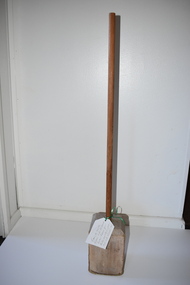
Artefact, Butter ram, Early to mid 20th century
... factory. It was used to ram or mould butter into 56 pound butter boxes for bulk supply or for later cutting up into smaller quantities. Warrnambool was, and is still today, the centre of an important dairying industry with several large milk, cheese and butter factories in the area. ...factory. It was used to ram or mould butter into 56 pound butter boxes for bulk supply or for later cutting up into smaller quantities. Warrnambool was, and is still today, the centre of an important dairying industry with several large milk, cheese and butter factories in the area. ...This butter ram appears to have been made locally and was probably hand-made at a local factory. It was used to ram or mould butter into 56 pound butter boxes for bulk supply or for later cutting up into smaller quantities. Warrnambool was, and is still today, the centre of an important dairying industry with several large milk, cheese and butter factories in the area. The Warrnambool Cheese and Butter Factory at Allansford is the oldest operating factory of this type in Victoria and was established in 1888. The production of butter in the area was greatly accelerated by the invention of refrigeration in the early 1880s, enabling butter to be transported overseas. Warrnambool had two butter box factories which both closed in the 1920s. Up to the mid 1950s the production of butter was largely a hand process.This butter ram is of considerable interest as an example of the early tools used in the local butter industry.This is a heavy solid wooden block in a rectangular shape with the top shaped in the form of a pyramidal base. The edges of the base are worn from constant pounding. A long round wooden handle or rod is inserted into the top of the block. dairying industry in western victoria -
 Bacchus Marsh & District Historical Society
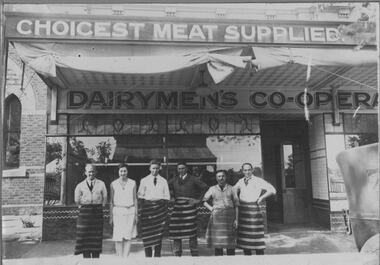
Photograph, Dairymen's Co-operative Butchers Shop. Main Street Bacchus Marsh. 1923
... from local farmers and trucked the milk direct to a factory in Melbourne. Due to financial difficulties, the Co-op ceased trading in the early 1980s. ... from local farmers and trucked the milk direct to a factory in Melbourne. Due to financial difficulties, the Co-op ceased trading in the early 1980s. ...Bacchus Marsh Dairymen's Co-operative Association factory began in 1910. The Co-op, as it was known locally, also had a store in Main Street. This butcher's shop was opened in 1923 and was located at 160 Main Street. The Co-op purchased milk from local farmers and trucked the milk direct to a factory in Melbourne. Due to financial difficulties, the Co-op ceased trading in the early 1980s. Records show that this site was in continuous use as a butcher's and allied industries from 1856 to 2011. The original building underwent several changes and additions until it was sold in 1922 to the Dairymen's Co-operative, who erected a new brick building in 1923. This building housed the Hospital Opportunity Shop from 2011 until 2016 when it was taken over by Natural Health and is still in use by this business.Black and white photographic print mounted on grey cardboard with decorative borders. Photo shows staff standing in front of the shop with two store signs. Along the top the verandah a sign reads: CHOICEST MEAT SUPPLIED. The lower sign along the top of the shop frontage reads: DAIRYMEN'S CO-OPERA. This sign is incomplete, indicating that the butcher's shop was part of the Dairymen's Co-operative Association store. At the front of the store six members of the staff stand in a line. There are five men, all wearing the traditional blue and white striped butcher's apron and one woman who is probably the cashier. At the top of the cantilever verandah, two rolls of canvas awning are tied up, ready to be let down on a hot day. On the left of the photo a portion of the brick Baptist Church can be seen. The store frontage continues to the right. The reflection of the store on the opposite side of the street can be seen in the window. The store frontage is finished with tiles along the bottom of the display window and an inset of leaded glass along the top of the window. On the footpath there is a scattering of sawdust, once used traditionally in butcher shops to soak up blood from the meat. The end of a 1920's vehicle has been captured as it passes in front of the store. On the back: On a printed label: OPENING OF BACCHUS MARSH DAIRYMAN'S CO-OPERATIVE BUTCHERS SHOP. 1923 L. to R. Norm Farrow, Sheila Muir, Bill Bence, Norm Mathews, Jim Cash and Ern Coe, (Manager). shops bacchus marsh vic., bacchus marsh dairymen's co-operative association, butcher's shops, main street bacchus marsh vic.
