
Showing 110 items matching "national primary school"
-
 Bendigo Historical Society Inc.
Document - National Trust Collection: Eaglehawk Primary School, March 1980
... National Trust Collection: Eaglehawk Primary School....National Trust Bendigo Collection...bendigo...Eaglehawk Primary School...Breaden - Architects 145 High St Bendigo File 742 Scale 1:100 Document National Trust Collection: Eaglehawk Primary School. ...The Eaglehawk East Uniting Church, has closed and the property was sold in 1980 (to the education department). The Primitive Methodist Chapel was erected about 1865, and was used as a school by the education department for a period for 1881. It became part of the Uniting Church in 1977.This item contains the following document. 3084.41a Architect's plan for the Eaglehawk Primary school Toilets, David M. Breaden - Architects 145 High St Bendigo File 742 Scale 1:100history, national trust bendigo collection, bendigo, eaglehawk primary school, school -
Port Melbourne Historical & Preservation Society
Document - 2003 Calendar, Pat Grainger, Historic Port Melbourne, Oct 2002
... ...national primary school...Production volume: .600 copies transport - railways industry - food religion - anglican (holy trinity) education - primary schools piers and wharves - railway pier education - kindergartens flood religion - melbourne city mission jubilee hall port melbourne yacht club pmyc cruikshank street faram brothers hardware ted keogh marlene keogh boundary rovers swallow street missions to seamen national primary school st josephs catholic primary school Nott Street State School Historic Port Melbourne calendar 2003: ''School Days" Nott Street class on cover, sepia on ivory All following years calendars also recorded against cat no 1864 Historic Port Melbourne Document 2003 Calendar Pat Grainger Port Melbourne Historical and Preservation Society (PMHPS) Econoprint ...Researched, written and designed by member Pat Grainger as a fundraiser for PMH&PS. Production volume: .600 copiesHistoric Port Melbourne calendar 2003: ''School Days" Nott Street class on cover, sepia on ivory All following years calendars also recorded against cat no 1864transport - railways, industry - food, religion - anglican (holy trinity), education - primary schools, piers and wharves - railway pier, education - kindergartens, flood, religion - melbourne city mission, jubilee hall, port melbourne yacht club, pmyc, cruikshank street, faram brothers hardware, ted keogh, marlene keogh, boundary rovers, swallow street, missions to seamen, national primary school, st josephs catholic primary school, nott street state school -
 Flagstaff Hill Maritime Museum and Village
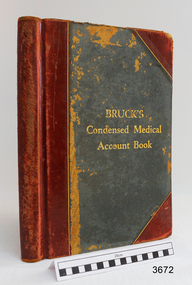
Financial record - Medical Accounts, c. 1929
... tower hill lake national school...koroit primary...The Book is also significant historically for its association with the ancestors of patient John Lee, whose Grandfather is recognised on the Warrnambool pioneer Board as one of the early pioneers in Victoria, arriving in 1852. flagstaff hill warrnambool shipwrecked coast flagstaff hill maritime museum maritime museum shipwreck coast flagstaff hill maritime village great ocean road medical treatment medical history medical accounts medical administration medical record 1929 ledger bruck’s condensed medical account book john hunter henderson william roy angus edward ryan thomas francis ryan john lee tower hill school tower hill lake national school koroit primary school victoria school 628 st marys wangoom warrnambool pioneer birchwood 214 koroit street warrnambool "Bruck’s Condensed Medical Account Book" Ledger, Medical Accounts Book. ...The accounts records in the Medical Accounts book start in February 1929 and refer to many of Warrnambool’s local names and addresses. The ledger book belonged to Dr John Hunter Henderson who conducted his medical practice from his home and surgery at Birchwood, 214 Koroit Street, Warrnambool, from 1904-1939. This particular accounts book spans from February 1929 to May 1931. Dr Henderson retired in 1939 and moved to Melbourne. His home, medical practice and many of his surgery’s items, including the Medical Accounts Book, were transferred to Dr William Roy Angus in that same year. The patients’ addresses on page 1 of the ledger include John Lee of St Marys Road, Wangoom. John Lee’s name has two entries on this page. He Grandfather, also John Lee, was a notable pioneer of the district. JOHN LEE John Lee was born in 1884 and died in 1948. His father (1845-1892) and grandfather (1814-1887) were also named John Lee. John Lee’s Grandfather, Grandmother, Father and Uncle arrived in Australia from Ireland in 1852. The colonial family settled in St Marys Road, Wangoom, Victoria and have a long association with the district. John Lee, born in 1814, is proudly listed amongst the names on the commemorative Warrnambool Pioneers Board, having arrived in Australia In 1852. In 1855 John’s Grandfather John Lee, aged 41, was head teacher of the Tower Hill School on the south bank of Tower Hill. Two years later, in 1857, the north bank of Tower Hill was surveyed and named the township of Koroit. In November of that year John Lee continued on as head master, now at the newly built Tower Hill Lake National School Number 618, on land that is now Victoria Park Recreation Reserve, on High Street, Koroit. John died in Warrnambool in 1887 but even 50 years later an ex-student wrote a letter to The Age newspaper, recalling memories of John Lee, his head master of the 1860s at the Tower Hill Lake Common School in Koroit. DR WILLIAM ROY ANGUS Doctor Angus had previously practiced in Nhill. The accounts book and many more items of Dr Angus were donated to Flagstaff Hill Maritime Village by the family of Dr Angus, Surgeon and Oculist. The Medical Accounts Book is part of the “W.R. Angus Collection” that includes historical medical equipment, surgical instruments and material once belonging to Dr Edward Ryan and Dr Thomas Francis Ryan, (both of Nhill, Victoria) as well as Dr Angus’ own belongings. The Collection’s history spans the medical practices of the two Doctors Ryan, from 1885-1926 plus that of Dr John Henderson from 1904+1939 and Dr Angus until he retired, from 1923 - 1969. The Medical Accounts Book is significant as a record of the names, addresses and health of the people in Warrnambool and District in the early 20th century. The Book is significant for its early 20th century association with two local doctors, Dr John Henderson and Doctor William Roy Angus, whose practices span from 1904-1969. The Book is also significant historically for its association with the ancestors of patient John Lee, whose Grandfather is recognised on the Warrnambool pioneer Board as one of the early pioneers in Victoria, arriving in 1852. Ledger, Medical Accounts Book. Title is Bruck’s Condensed Medical Account Book. Book has hardback, green cover, bound and reinforced with red leather and printed title in gold lettering. The pages of index tabs in the beginning of the book have no entries. The first page of the accounts section of the book have the hand written heading “February 1929”. The book continues until the end of May 1931. Inside both front and back cover are hand written notes in different scrips. Both black and blue ink has been used. The book belonged to Dr John Hunter Henderson. It is part of the W.R. Angus Collection."Bruck’s Condensed Medical Account Book"flagstaff hill, warrnambool, shipwrecked coast, flagstaff hill maritime museum, maritime museum, shipwreck coast, flagstaff hill maritime village, great ocean road, medical treatment, medical history, medical accounts, medical administration, medical record 1929, ledger, bruck’s condensed medical account book, john hunter henderson, william roy angus, edward ryan, thomas francis ryan, john lee, tower hill school, tower hill lake national school, koroit primary school, victoria school 628, st marys wangoom, warrnambool pioneer, birchwood, 214 koroit street warrnambool -
 Whitehorse Historical Society Inc.
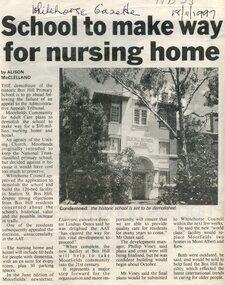
Newspaper, School to make way for Nursing Home, 1997
... Primary School...Moorfields Nursing Home...Box Hill...National...The demolition of the historic Box Hill Primary School is to go ahead following the failure of an appeal to the Administrative Appeals Tribunal to keep the National Trust classified primary school. ...Box Hill Primary School Moorfields Nursing Home Box Hill National Trust of Australia (Victoria) The demolition of the historic Box Hill Primary School is to go ahead following the failure of an appeal to the Administrative Appeals Tribunal to keep the National Trust classified primary school. ...The demolition of the historic Box Hill Primary School is to go ahead following the failure of an appeal to the Administrative Appeals Tribunal to keep the National Trust classified primary school.The demolition of the historic Box Hill Primary School is to go ahead following the failure of an appeal to the Administrative Appeals Tribunal to keep the National Trust classified primary school. It was decided it would have cost too much to preserve. Whitehorse Council has approved the building of a $10 million nursing home and hostel. Cutting from Whitehorse Gazette.The demolition of the historic Box Hill Primary School is to go ahead following the failure of an appeal to the Administrative Appeals Tribunal to keep the National Trust classified primary school. box hill primary school, moorfields nursing home, box hill, national trust of australia (victoria) -
 Federation University Historical Collection
Photograph - Photograph Album, Photographs of Ballarat Buildings, 1967, 1967
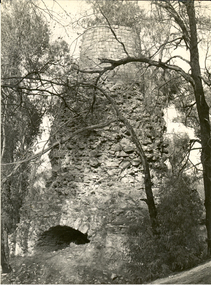
... National Trust. At one time Her Majesty's Theatre was known as the Memorial Theatre. Lenaghan of Tourello "Master Dan Lenaghan, eldest son of Mr. and Mrs. R. Lenaghan, of Tourello, has been successful in obtaining a Government scholarship, tenable for four years at St. Patrick's College, Ballarat.(Melbourne Advocate, 02 March 1939) ballarat buildings bluestone iron architecture biddington geoff biddington railway old colonists lal lal blast furnace beaufort house her majesty's theatre craig's hotel botanical gardens bailey cuthbert lenaghan tourello smythesdale post office court house hotel, smythesdale smythesdale alexandria tea rooms cast iron eureka street primary school dana street primary school ballarat school of mines administration building grigsby brass founder foundry pratt's warehouse selkirk bricks grandstand court house hotel Two Black folders of Ballarat photographs as follows: .1) Interior of Ballarat Railway Station .2) Interior of Ballarat Railway Station .3) Craig's Hotel .4) Craig's Hotel .5) Craig's Hotel .6) Craig's Hotel .7) Ballarat Fine Art Gallery later Art Gallery of Ballarat .8) Cuthberts, corner Lydiard and Mair Streets .9) Golden City Hotel (GCs) .10) Golden City Hotel (GCs) .11) Reid's Coffee Palace .12) Alexandria Tea Rooms, neighbouring Old Colonists' Club, Ballarat, Lydiard Street North .13) ? ...When these photos were taken Geoffrey Biddington was highly involved with the Ballarat Branch of the National Trust. At one time Her Majesty's Theatre was known as the Memorial Theatre. Lenaghan of Tourello "Master Dan Lenaghan, eldest son of Mr. and Mrs. R. Lenaghan, of Tourello, has been successful in obtaining a Government scholarship, tenable for four years at St. Patrick's College, Ballarat.(Melbourne Advocate, 02 March 1939) Two Black folders of Ballarat photographs as follows: .1) Interior of Ballarat Railway Station .2) Interior of Ballarat Railway Station .3) Craig's Hotel .4) Craig's Hotel .5) Craig's Hotel .6) Craig's Hotel .7) Ballarat Fine Art Gallery later Art Gallery of Ballarat .8) Cuthberts, corner Lydiard and Mair Streets .9) Golden City Hotel (GCs) .10) Golden City Hotel (GCs) .11) Reid's Coffee Palace .12) Alexandria Tea Rooms, neighbouring Old Colonists' Club, Ballarat, Lydiard Street North .13) ? .14 Caste iron drink fountain, corner of Strurt and Drummond Streets, October 1967 .15) Lal Lal Blast Furnace .16) Ballarat Botanical Garden Gates .17) Ballaarat Old Cemetery Gates .18) Novar gate .19) Ballaarat Old Cemetery Gates .20) ? .21) Webster Street .22) Doveton Street South .23) ? .24) ? .25) .26) .27) Iron hitching Rail .28) Iron hitching Rail .30) Postal Box, Corner or Armstrong Street South and Eyre Street, October 1967 .31) Iron Drinking Fountain in the Ballarat Botanical Gardens .32) Iron Drinking Fountain in the Ballarat Botanical Gardens .33) Killarney, Warrenheip .34) Killarney, Warrenheip .35) Killarney, Warrenheip .36) Killarney, Warrenheip .37) Bailey's Mansion, Drummond Street .38) Bailey's Mansion, Drummond Street .39) Beaufort House .40) Beaufort House .41) ? .42) ? .43) ? .44) ? .45) ? .46) ? .47) ? .48) Lenaghan's Tourello, February 1968 .49) Lenaghan's Tourello, February 1968 .50) ? .51) ? .52) ? .53) ? .54) ? .55) ? .56) ? .57) ? .58) ? .59) ? .70) Her Majesty's Theatre, Lydiard Street .71) Her Majesty's Theatre, Lydiard Street .72) Dana Street Primary School, September 1967 .73) Ballarat School of Mines Administration Building, September 1967 .74) Eureka Street Primary School ? .75) Selkirk Brick Chimney? .76) Grigsby's Foundry, Mair Street, September 1967 .77) Pratt's Warehouse, Camp Street .78) Premises of R. And R.A. Williams, Mair Street, September 1967 .79) City Oval Grandstand, with fire training tower in the background, .80) City Oval Grandstand .81) City Oval Grandstand .82) Smythesdale Post Office, October 1967 .83) Court House Hotel. Smythesdale, October 1967 .84) Smythesdale, October 1967ballarat, buildings, bluestone, iron, architecture, biddington, geoff biddington, railway, old colonists, lal lal blast furnace, beaufort house, her majesty's theatre, craig's hotel, botanical gardens, bailey, cuthbert, lenaghan, tourello, smythesdale post office, court house hotel, smythesdale, smythesdale, alexandria tea rooms, cast iron, eureka street primary school, dana street primary school, ballarat school of mines administration building, grigsby brass founder, foundry, pratt's warehouse, selkirk bricks, grandstand, court house hotel -
 Federation University Historical Collection
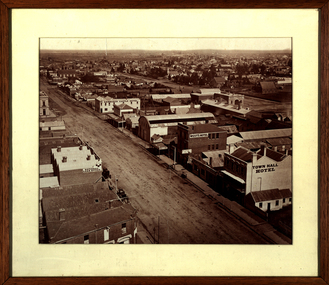
Photograph - Photograph - Sepia, Ballarat looking south along Armstrong Street, 1872
... Businesses shown in the photograph include Town Hall Hotel, West's Hotel, National Loan Office, Edinburgh Castle Hotel, Magill and Coglan, Dana Street Primary School, Band of Hope and Albion Mine, I. ...Businesses shown in the photograph include Town Hall Hotel, West's Hotel, National Loan Office, Edinburgh Castle Hotel, Magill and Coglan, Dana Street Primary School, Band of Hope and Albion Mine, I. ...This photograph was taken not long after the Ballarat Town Hall tower was builtFramed sepia photograph showing a bird's eye view of Ballarat looking south from the tower of the Ballarat Town Hall. Businesses shown in the photograph include Town Hall Hotel, West's Hotel, National Loan Office, Edinburgh Castle Hotel, Magill and Coglan, Dana Street Primary School, Band of Hope and Albion Mine, I. Dean auctioneer, Pritchard, Murray, Victoria Foundry. Just south of West's is the Phoenix Foundry.ballarat, ballarat town hall, ballarat streetscape, ballarat townscape, william bardwell, fotobiennale -
 The Beechworth Burke Museum
Photograph - Lantern Slide, c1900
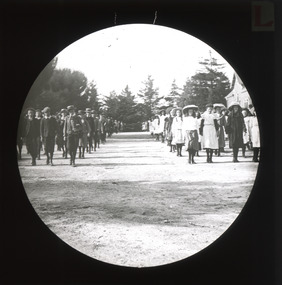
... This picture shows an angle of Beechworth Primary School (State School number 1560) which is also pictured in the building's entry in the Victorian Heritage Register (VHR record 1718). The school began as a national...This picture shows an angle of Beechworth Primary School (State School number 1560) which is also pictured in the building's entry in the Victorian Heritage Register (VHR record 1718). The school began as a national ...This picture shows an angle of Beechworth Primary School (State School number 1560) which is also pictured in the building's entry in the Victorian Heritage Register (VHR record 1718). The school began as a national school in 1858 as an alternative to Wesleyan and Anglican schools already operating in the area. Its name was changed to Common School number 36 in 1862 and the Beechworth Academy prior to being taken over by the Education department in 1873. The new premises were built in 1875 utilising the skills of architect Henry Bastow though the original design may be attributable to the firm Wharton and Vickers. The design was used with modifications for other schools in Victoria, including the Competition School in Errol Street, North Melbourne. The school moved to the building pictured from its original premises in Loch Street, designed by Thomas Dalziel, which later became the office of the Ovens Advertiser. The school was opened on 2 July 1875 by former Beechworth resident G.B. Kerferd, who was then the Premier of Victoria. The image shows approximately ninety older students at the school in approximately 1900. There are approximately equal numbers of boys and girls pictured, with most of the individuals pictured appearing to be between the ages of twelve and fifteen. Although the school had more than 1000 students enrolled at its height, enrolments had declined to 304 in 1890. Also visible is a fringe of sequoia pines which were planted by the school children as a project lasting through to the late 1930s. Lantern slides, sometimes called 'magic lantern' slides, are glass plates on which an image has been secured for the purpose of projection. Glass slides were etched or hand-painted for this purpose from the Eighteenth Century but the process became more popular and accessible to the public with the development of photographic-emulsion slides used with a 'Magic Lantern' device in the mid-Nineteenth Century. Photographic lantern slides comprise a double-negative emulsion layer (forming a positive image) between thin glass plates that are bound together. A number of processes existed to form and bind the emulsion layer to the base plate, including the albumen, wet plate collodion, gelatine dry plate and woodburytype techniques. Lantern slides and magic lantern technologies are seen as foundational precursors to the development of modern photography and film-making techniques.The image is significant because it sheds light on the educational infrastructure present in Beechworth in the early part of the Twentieth Century, including the prevalence of education for students after current-day primary-school age and the education of girls. It also provides insight into the building and design practices used by Government departments at the time. Thin translucent sheet of glass with a circular image printed on the front and framed in a black backing. It is held together by metals strips to secure the edges of the slide.Obverse: L / burke museum, beechworth, lantern slide, slide, glass slide, plate, burke museum collection, photograph, monochrome, schools, education, high school, primary school, common school, state school, state school 1560, common school 36, beechworth academy, g.b. kerferd, thomas dalziel, henry bastow, victorian heritage register, beechworth primary school, girls education, boys education, public schools, education department, pines, trees, sequoias, competition school -
Marysville & District Historical Society
THE TRIANGLE NEWS-VOL 40 NO 24-JUNE 28 2013
... primary school...parents club...movie night...advertisements...yea shire hall refurbishment gathers momentum...coming to lake mountain school holiday white christmas...regional approach to library service delivery...geelong students get their hands dirty at cathedral range...real estate...pool lifeguard positions...black spur inn front of house & housekeeping positions...adventurous cooks...cross country ski hire...sun moth future looking bright...dept of environment & primary industries...depi...marysville cultural community...'the audience' a play...national...marysville victoria australia marysville & district lions club another successful night for lions what's on when in july intrepid triangle bushwalkers the committee of management of the gallipoli park precinct marysville community market creative triangle marysville golf report triangle community dinner church notices my hope for australia-new beginnings special guests the armytage family historians will shed light on one of our darkest days honour the anzacs vale david wilkinson councillor comment mayor's chair two days class quiltors only buxton hall dena crain of kenya marysville primary school parents club movie night advertisements yea shire hall refurbishment gathers momentum coming to lake mountain school holiday white christmas regional approach to library service delivery geelong students get their hands dirty at cathedral range real estate pool lifeguard positions black spur inn front of house & housekeeping positions adventurous cooks cross country ski hire sun moth future looking bright dept of environment & primary industries depi marysville cultural community 'the audience' a play national theatre london breakaway bridge refurbishment starts australian centre for grief and bereavement turning of the sod marks the start of the y water centre new wildlife regulation announcement marysville primary school sponsors needed lake mountain alpine resort sprint x 2013 maryville branch liberal party christmas in july THE TRIANGLE NEWS-VOL 40 NO 24-JUNE 28 2013 ...marysville, victoria, australia, marysville & district lions club, another successful night for lions, what's on when in july, intrepid triangle bushwalkers, the committee of management of the gallipoli park precinct, marysville community market, creative triangle, marysville golf report, triangle community dinner, church notices, my hope for australia-new beginnings, special guests the armytage family, historians will shed light on one of our darkest days, honour the anzacs, vale david wilkinson, councillor comment, mayor's chair, two days class quiltors only, buxton hall, dena crain of kenya, marysville primary school, parents club, movie night, advertisements, yea shire hall refurbishment gathers momentum, coming to lake mountain school holiday white christmas, regional approach to library service delivery, geelong students get their hands dirty at cathedral range, real estate, pool lifeguard positions, black spur inn front of house & housekeeping positions, adventurous cooks, cross country ski hire, sun moth future looking bright, dept of environment & primary industries, depi, marysville cultural community, 'the audience' a play, national theatre london, breakaway bridge refurbishment starts, australian centre for grief and bereavement, turning of the sod marks the start of the y water centre, new wildlife regulation announcement, marysville primary school sponsors needed, lake mountain alpine resort sprint x 2013, maryville branch liberal party christmas in july -
Marysville & District Historical Society
THE TRIANGLE NEWS-VOL 40 NO 25-JULY 5 2013
... primary school...movie night...coming to lake mountain school holiday white christmas...council supports rail trail name change...public notice proposed road discontinuance kinglake...marysville primary school sponsors needed...parents club...real estate...pool lifeguard positions...black spur inn front of house & housekeeping positions...'the weatherman's umbrella' a play...adventurous cooks...cross country ski hire...tender right workshop...'the audience' a play...national...marysville victoria australia lions change over time again what's on when in july marysville cricket club agm the committee of management of the gallipoli park precinct marysville community market creative triangle croydon north too strong for villains marysville football club church notices lakeside fellowship eildon triangle junior fire brigade murrindindi shire council adoption of budget councillor comment advertisements mayor's chair marysville primary school movie night coming to lake mountain school holiday white christmas council supports rail trail name change public notice proposed road discontinuance kinglake marysville primary school sponsors needed parents club real estate pool lifeguard positions black spur inn front of house & housekeeping positions 'the weatherman's umbrella' a play adventurous cooks cross country ski hire tender right workshop 'the audience' a play national theatre london former concillor recognised for red gate contribution australian centre for grief and bereavement marysville branch liberal party christmas in july dinner department of environment & primary industries marysville football club reunion premiers 1973 have your say on health and wellbeing of shire marysville villains council adopts budget and council plan marysville golf report another forward step in fire recovery journey municipal public health and wellbeing plan 2013-2017 helicopters sowing alpine ash forest following harrietville fire past photos wanted for marysville primary school 150 years of marysville celebration draft hume regional growth plan have your say council says yes to supporting yes campaign new website brings together agriculture and enviroment community leadership programs clp THE TRIANGLE NEWS-VOL 40 NO 25-JULY 5 2013 ...marysville, victoria, australia, lions change over time again, what's on when in july, marysville cricket club agm, the committee of management of the gallipoli park precinct, marysville community market, creative triangle, croydon north too strong for villains, marysville football club, church notices, lakeside fellowship eildon, triangle junior fire brigade, murrindindi shire council, adoption of budget, councillor comment, advertisements, mayor's chair, marysville primary school, movie night, coming to lake mountain school holiday white christmas, council supports rail trail name change, public notice proposed road discontinuance kinglake, marysville primary school sponsors needed, parents club, real estate, pool lifeguard positions, black spur inn front of house & housekeeping positions, 'the weatherman's umbrella' a play, adventurous cooks, cross country ski hire, tender right workshop, 'the audience' a play, national theatre london, former concillor recognised for red gate contribution, australian centre for grief and bereavement, marysville branch liberal party christmas in july dinner, department of environment & primary industries, marysville football club reunion premiers 1973, have your say on health and wellbeing of shire, marysville villains, council adopts budget and council plan, marysville golf report, another forward step in fire recovery journey, municipal public health and wellbeing plan 2013-2017, helicopters sowing alpine ash forest following harrietville fire, past photos wanted for marysville primary school, 150 years of marysville celebration, draft hume regional growth plan have your say, council says yes to supporting yes campaign, new website brings together agriculture and enviroment, community leadership programs, clp -
Marysville & District Historical Society
THE TRIANGLE NEWS-VOL 40 NO 36-SEPTEMBER 20 2013
... national emergency medal recipients honoured...what's on when in september...buxton progress assocn agm...the committee of management of the gallipoli park precinct...marysville community market...creative triangle...murrindindi shire council...payment of rate instalments...marysville & district chamber of commerce agm...church notices...triangle community dinner...el kanah village...marysville & district football & netball agm...councillor comment...great victorian rail trail marketing opportunities...mayor's chair...expressions of interest...2013 open gardens...advertisements...the salvation army...community small business funding available...dalton fiske foundation grants awards...marysville primary school...marysville victoria australia national emergency medal recipients honoured what's on when in september buxton progress assocn agm the committee of management of the gallipoli park precinct marysville community market creative triangle murrindindi shire council payment of rate instalments marysville & district chamber of commerce agm church notices triangle community dinner el kanah village marysville & district football & netball agm councillor comment great victorian rail trail marketing opportunities mayor's chair expressions of interest 2013 open gardens advertisements the salvation army community small business funding available dalton fiske foundation grants awards marysville primary school parents club market stalls available buxton hotel curry night local bus tours real estate fire fighting opportunities available across victoria lions triangle tool library council encourages spring clear with free green waste disposal marysville country bakery seeking staff amnesty supports fire prevention efforts black spur inn front of house waiting staff murrindindi shire council tender australian centre for grief and bereavement marysville golf report gallipoli park commitee of management report narbethong history group narbethong hall book launch black spur inn tradie meal & stay deal road management plan review highlights works priorities office manager camp marysville sixteenth annual steam and wood show alexandra timber and tramway museum stage reading crossways inspired by bruno's sculpture garden THE TRIANGLE NEWS-VOL 40 NO 36-SEPTEMBER 20 2013 ...marysville, victoria, australia, national emergency medal recipients honoured, what's on when in september, buxton progress assocn agm, the committee of management of the gallipoli park precinct, marysville community market, creative triangle, murrindindi shire council, payment of rate instalments, marysville & district chamber of commerce agm, church notices, triangle community dinner, el kanah village, marysville & district football & netball agm, councillor comment, great victorian rail trail marketing opportunities, mayor's chair, expressions of interest, 2013 open gardens, advertisements, the salvation army, community small business funding available, dalton fiske foundation grants awards, marysville primary school parents club, market stalls available, buxton hotel curry night, local bus tours, real estate, fire fighting opportunities available across victoria, lions triangle tool library, council encourages spring clear with free green waste disposal, marysville country bakery seeking staff, amnesty supports fire prevention efforts, black spur inn front of house waiting staff, murrindindi shire council tender, australian centre for grief and bereavement, marysville golf report, gallipoli park commitee of management report, narbethong history group, narbethong hall book launch, black spur inn tradie meal & stay deal, road management plan review highlights works priorities, office manager camp marysville, sixteenth annual steam and wood show, alexandra timber and tramway museum, stage reading crossways, inspired by bruno's sculpture garden -
Marysville & District Historical Society
THE TRIANGLE NEWS-VOL 38 NO 17-MAY 27 2011
... national emergency management volunteer summit...vale jack haycraft...mayor's chair...advertisements...marysville primary school...marysville victoria australia victorian cancer council community morning tea volunteers selected for summit in canberra eildon cfa volunteer nicki lund eildon fire brigade national emergency management volunteer summit vale jack haycraft mayor's chair advertisements marysville primary school cross country skiers marysville streetscape restoration project THE TRIANGLE NEWS-VOL 38 NO 17-MAY 27 2011 ...marysville, victoria, australia, victorian cancer council community, morning tea, volunteers selected for summit in canberra, eildon cfa volunteer nicki lund, eildon fire brigade, national emergency management volunteer summit, vale jack haycraft, mayor's chair, advertisements, marysville primary school, cross country skiers, marysville streetscape restoration project -
 Lara RSL Sub Branch
Photograph, Colin Arthur Goldberg, A37084
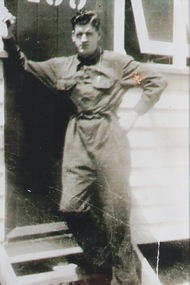
... primary schools in Victoria leaving school aged 13 years. Working hard at various jobs Colin studied at RMIT qualifying as builder /carpenter in 1961. Colin was called up for National...primary schools in Victoria leaving school aged 13 years. Working hard at various jobs Colin studied at RMIT qualifying as builder /carpenter in 1961. Colin was called up for National ...Colin A Goldberg b 13 November 1932 - D 2February 2013. Colin attended several primary schools in Victoria leaving school aged 13 years. Working hard at various jobs Colin studied at RMIT qualifying as builder /carpenter in 1961. Colin was called up for National Service on 30 July, 1951. He was allotted to the RAAF, and underwent recruit training at Laverton. From there he went to the ground and air radio school in Ballarat. After his training Colin was placed in the RAAF reserve. Colin was on the list for Korea for 9 years although did not serve. Colin said of his training: "My National Service Training showed me purpose & a discipline that turned my life somewhat around for the good & for all time". Colin first joined the family of R S L at WARRAGUL in 1992 transferring to Lara in 1996. Elizabeth, Colin's wife, says that he was probably working with members of the RSL and that talk at work about the branch made him think that it was a good place to connect and make friends, and this was part of the reason why they continued at Lara. Colin. And wife Elizabeth came to live in Lara in 1994 there being a warm welcome for us both by the members of Lara RSL in 1996. Colin & Elizabeth found friendship & a whole wide window to the consequence of warfare. Indeed history written through the suffering of so many . Colin & Elizabeth were married for 57 years when Colin died. Colin and Elizabeth had two daughters, three grandchildren, and three great grandchildren however he never met them. Personal Story A willingness to put oneself in readiness for the call to arm oneself in the defence of family and Nation .Sepia image of Telegraphist A37084 Colin A Goldberg Cream Mount Black Frame. Colin is standing on the steps of hut number 199 at Ground and Air Radio School RAAF Ballarat A37084 Telegraphist Colin Arthu Goldberg. 1st National Service Intake. RAAF. 1932-2013.sepia photograph, korea, 1951, laverton, ballarat, raaf reserves -
 Federation University Historical Collection
Book, Walata Tyamateetj: A guide to government records about Aboriginal people in Victoria, 2014, 2014
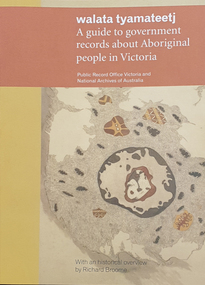
... national archives of australia...jim berg...port phillip...assimilation...chief protector of aborigines...aboriginal protectorates...board for the protection of aborigines...native police corp...edward stone parker...goulbourn river protectoratewesternport district...gunai-kurnai...coranderrk aboriginal station...lake tyers aboriginal station...antwerp primary school...Walata Tyamateetj means 'carry knowledge' in the Gunditjmara language of Western Victoria. aboriginal mission stations plan aboringal aborigine aboriginal records public record office victoria national archives of australia jim berg port phillip assimilation chief protector of aborigines aboriginal protectorates board for the protection of aborigines native police corp edward stone parker goulbourn river protectoratewesternport district gunai-kurnai coranderrk aboriginal station lake tyers aboriginal station antwerp primary school wimmera river framlingham aboriginal station william Thomas map charles tyers F.p. strickland Ebernezer Ochre and yellow covered book of 87 pages with quality photgraphs of public records. ...Ochre and yellow covered book of 87 pages with quality photgraphs of public records.non-fictionaboriginal mission stations, plan, aboringal, aborigine, aboriginal records, public record office victoria, national archives of australia, jim berg, port phillip, assimilation, chief protector of aborigines, aboriginal protectorates, board for the protection of aborigines, native police corp, edward stone parker, goulbourn river protectoratewesternport district, gunai-kurnai, coranderrk aboriginal station, lake tyers aboriginal station, antwerp primary school, wimmera river, framlingham aboriginal station, william thomas, map, charles tyers, f.p. strickland, ebernezer -
Federation University Historical Collection
Notes, Kath Cunningham, Ballarat Teachers' College Creative Activities Notes, 1962, 1962
... nationally and internationally. The name Federation University Australia was chosen to convey the scope and capacity of an expanded regional university with a federated network of campuses. education creative activities art needlework samples apron A number of notes relating to teaching creative activities to primary school children. ...Ballarat Teachers' College notes on teaching Creative Studies and Needlework to primary school children. Federation University Australia was established on 1 January 2014. Formerly known as the University of Ballarat, its enabling legislation was the University of Ballarat Amendment (Federation University Australia) Act 2013. Although formally created as a University in 1994, the University of Ballarat has a lineage back to 1870 with the establishment of the School of Mines Ballarat, making it the third institution of higher learning to be established in Australia and the first to be established in regional Australia. On 1 January 1994, Ballarat University College became the University of Ballarat and in 1998 the University merged with three TAFE Institutes to become a dual sector institution with multiple campuses. On 1 January 2014, the University of Ballarat amalgamated with the Monash University Gippsland Campus to form Federation University Australia. The Gippsland Campus also had a long lineage dating back to 1928 with the establishment of the Yallourn Technical School which became a predecessor institution to the Gippsland College of Advanced Education formed in 1968. In 1990, it was renamed the Monash University College and in 1993 became the Gippsland Campus of Monash University. In 2016, Federation University Australia announced plans to take possession, over a two-year period, of Monash’s Berwick Campus in the south-east corridor of Melbourne. Federation University Australia, or FedUni, is headquartered in Ballarat and offers programs in Higher Education and Vocational Education and Training to regional Victoria and beyond. The University’s commitment to educational and social equity, teaching excellence, research distinction, environmental sustainability and regional capacity building has enabled it to develop in a way that draws on its proud heritage to inform its future. Its regional character sets a framework for the University’s priorities but does not constrain it from serving wider community interests, nationally and internationally. The name Federation University Australia was chosen to convey the scope and capacity of an expanded regional university with a federated network of campuses.A number of notes relating to teaching creative activities to primary school children. Includes needlework samples. education, creative activities, art, needlework, samples, apron -
Federation University Historical Collection
Booklet, The Ballarat Historian: Journal of the Ballarat Historical Society - The History of Mt Clear High School, June 1983
... The Ballarat Junior Technical School was started in 1913 to bridge the gap between primary schools and senior technical colleges at the old Dana Street National School under the administration of the School of Mines. ...The Ballarat Junior Technical School was started in 1913 to bridge the gap between primary schools and senior technical colleges at the old Dana Street National School under the administration of the School of Mines. ...The Mt Clear Technical High School was an amalgamation of several schools. The Ballarat Junior Technical School was started in 1913 to bridge the gap between primary schools and senior technical colleges at the old Dana Street National School under the administration of the School of Mines. The Ballarat Girls Technical School which was commenced in 1951 and the Girls High School which can be traced back to 1874, both had several incarnations before joining together. The Mt Clear Technical School separated from the School of Mines in January 1977 and was officially opened on 10th October 1981.Called 'A marriage of convenience', this 7 page, A4 booklet is stapled at the top left hand corner and is a photocopy of the vol.1, no.9 issue of The Ballarat Historian. It contains a history of the the schools in Ballarat which eventually merged and formed on the completion of the buildings in 1981, the Mt Clear Technical High School. It was written by J A Chisholm who was the Jnr. Vice-President of the Ballarat Historical Society. It was listed as Vol.1, No.9 as the Journal of the Ballarat Historical Society.ballarat historical society, journal of the ballarat historical society, the ballarat historian, j a chisholm, mount clear technical high school, mount clear high school, jack chisholm, j.a. chisholm, mt clear -
 Federation University Historical Collection
Book, Education Gazette, 1968, 1968
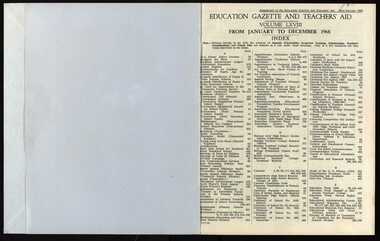
... school golden jubilee...o.e. nilsson...education week...epileptics and swimming classes...frank tate memorial lecture...handwriting in primary schools...fountain pens...jewish holy days...national...education gazette aborignal advancement league accident register anzac fellowship scheme art teachers association of victoria ballarat girls' high school golden jubilee o.e. nilsson education week epileptics and swimming classes frank tate memorial lecture handwriting in primary schools fountain pens jewish holy days national gallert of victoria education program needlecraft nuffield foundation grants pen friends pioneers' day poster competition railways concession fares h.n. muntz school garden swimming and life saving swimming classes for teachers tramways concession tickets victorian state schools band association victorian state schools horticutural society fireworks wet days Red hard covered book with Red spine. ...Red hard covered book with Red spine. It holds each Education Gazette for 1968.education gazette, aborignal advancement league, accident register, anzac fellowship scheme, art teachers association of victoria, ballarat girls' high school golden jubilee, o.e. nilsson, education week, epileptics and swimming classes, frank tate memorial lecture, handwriting in primary schools, fountain pens, jewish holy days, national gallert of victoria education program, needlecraft, nuffield foundation grants, pen friends, pioneers' day, poster competition, railways concession fares, h.n. muntz, school garden, swimming and life saving, swimming classes for teachers, tramways concession tickets, victorian state schools band association, victorian state schools horticutural society, fireworks, wet days -
 Greensborough Historical Society
Folder of articles, Greensborough Historical Society et al, World War 1 Project, 1914-1918
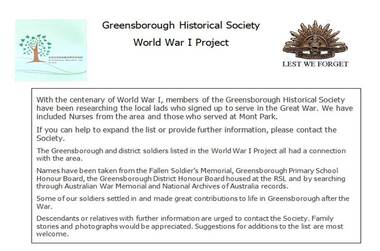
... Names have been taken from the Fallen Soldier’s Memorial, Greensborough Primary School Honour Board, the Greensborough District Honour Board housed at the RSL and by searching through Australian War Memorial and National Archives of Australia records. ...Names have been taken from the Fallen Soldier’s Memorial, Greensborough Primary School Honour Board, the Greensborough District Honour Board housed at the RSL and by searching through Australian War Memorial and National Archives of Australia records. ...With the centenary of World War 1, members of the Greensborough Historical Society researched the local lads who signed up to serve in the Great War. We have included Nurses from the area and those who served at Mont Park. The Greensborough and district soldiers listed in the World War I Project all had a connection with the area. Names have been taken from the Fallen Soldier’s Memorial, Greensborough Primary School Honour Board, the Greensborough District Honour Board housed at the RSL and by searching through Australian War Memorial and National Archives of Australia records. Some of our soldiers settled in and made great contributions to life in Greensborough after the War. Articles are also available on the GHS website. Descendants or relatives with further information are urged to contact the Society. Family stories and photographs would be appreciated. Suggestions for additions to the list are most welcome. Red plastic binder containing over 150 articles, printed text and images. Each article is filed in plastic pocket.world war 1 project, greensborough historical society -
 Greensborough Historical Society
Photograph - Digital image, Dennis Ward, Greensborough Primary School Gr2062 Old Building Detail, 25/06/2015
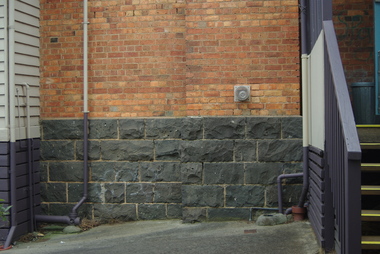
... The old brick building at Greensborough Primary School on Grimshaw Street. Built in 1879, this building is now heritage listed by the National Trust. ...The old brick building at Greensborough Primary School on Grimshaw Street. Built in 1879, this building is now heritage listed by the National Trust. ...The old brick building at Greensborough Primary School on Grimshaw Street. Built in 1879, this building is now heritage listed by the National Trust. This photograph shows detail of brickwork.Digital copy of colour photographgreensborough primary school, greensborough state school -
 Greensborough Historical Society
Photograph - Digital image, Dennis Ward, Greensborough Primary School Gr2062 Old Building Exterior Chimney, 25/06/2015
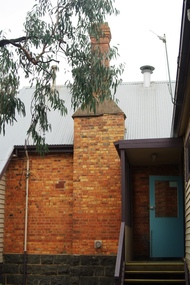
... The old brick building at Greensborough Primary School on Grimshaw Street. Built in 1879, this building is now heritage listed by the National Trust. ...The old brick building at Greensborough Primary School on Grimshaw Street. Built in 1879, this building is now heritage listed by the National Trust. ...The old brick building at Greensborough Primary School on Grimshaw Street. Built in 1879, this building is now heritage listed by the National Trust. This photograph shows detail of chimney.Digital copy of colour photographgreensborough primary school, greensborough state school -
 Greensborough Historical Society
Photograph - Digital image, Dennis Ward, Greensborough Primary School Gr2062 WW1 Honor Board, 25/06/2015
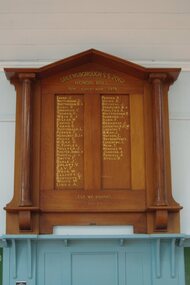
... The old brick building at Greensborough Primary School on Grimshaw Street. Built in 1879, this building is now heritage listed by the National Trust. ...The old brick building at Greensborough Primary School on Grimshaw Street. Built in 1879, this building is now heritage listed by the National Trust. ...The old brick building at Greensborough Primary School on Grimshaw Street. Built in 1879, this building is now heritage listed by the National Trust. This photograph shows the "Greensborough State School 2062 Honor Board" for the Great War 1914-1918.Digital copy of colour photographgreensborough primary school, greensborough state school, world war 1 -
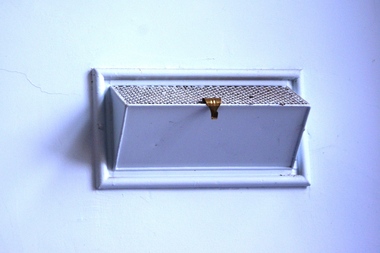 Greensborough Historical Society
Photograph - Digital image, Dennis Ward, Greensborough Primary School Gr2062 Old Building Interior Air Vent, 25/06/2015
... The old brick building at Greensborough Primary School on Grimshaw Street. Built in 1879, this building is now heritage listed by the National Trust. ...The old brick building at Greensborough Primary School on Grimshaw Street. Built in 1879, this building is now heritage listed by the National Trust. ...The old brick building at Greensborough Primary School on Grimshaw Street. Built in 1879, this building is now heritage listed by the National Trust. This photograph shows an interior air vent.Digital copy of colour photographgreensborough primary school, greensborough state school -
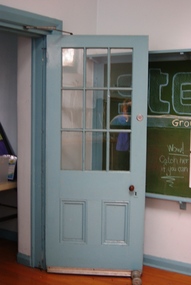 Greensborough Historical Society
Photograph - Digital image, Dennis Ward, Greensborough Primary School Gr2062 Old Building Internal Door, 25/06/2015
... The old brick building at Greensborough Primary School on Grimshaw Street. Built in 1879, this building is now heritage listed by the National Trust. ...The old brick building at Greensborough Primary School on Grimshaw Street. Built in 1879, this building is now heritage listed by the National Trust. ...The old brick building at Greensborough Primary School on Grimshaw Street. Built in 1879, this building is now heritage listed by the National Trust. This photograph shows an internal door.Digital copy of colour photographgreensborough primary school, greensborough state school -
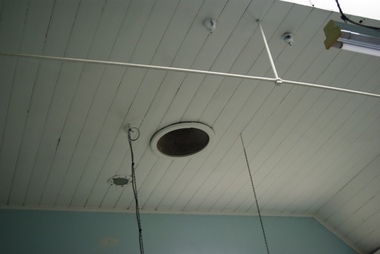 Greensborough Historical Society
Photograph - Digital image, Dennis Ward, Greensborough Primary School Gr2062 Old Building Ceiling Detail, 25/06/2015
... The old brick building at Greensborough Primary School on Grimshaw Street. Built in 1879, this building is now heritage listed by the National Trust. ...The old brick building at Greensborough Primary School on Grimshaw Street. Built in 1879, this building is now heritage listed by the National Trust. ...The old brick building at Greensborough Primary School on Grimshaw Street. Built in 1879, this building is now heritage listed by the National Trust. This photograph shows ceiling detail.Digital copy of colour photographgreensborough primary school, greensborough state school -
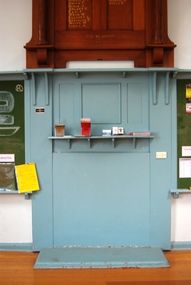 Greensborough Historical Society
Photograph - Digital image, Dennis Ward, Greensborough Primary School Gr2062 Old Building Fireplace, 25/06/2015
... The old brick building at Greensborough Primary School on Grimshaw Street. Built in 1879, this building is now heritage listed by the National Trust. ...The old brick building at Greensborough Primary School on Grimshaw Street. Built in 1879, this building is now heritage listed by the National Trust. ...The old brick building at Greensborough Primary School on Grimshaw Street. Built in 1879, this building is now heritage listed by the National Trust. This photograph shows the fireplace.Digital copy of colour photographgreensborough primary school, greensborough state school -
 Greensborough Historical Society
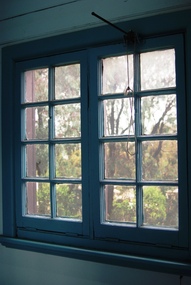
Photograph - Digital image, Dennis Ward, Greensborough Primary School Gr2062 Old Building Windows, 25/06/2015
... The old brick building at Greensborough Primary School on Grimshaw Street. Built in 1879, this building is now heritage listed by the National Trust. ...The old brick building at Greensborough Primary School on Grimshaw Street. Built in 1879, this building is now heritage listed by the National Trust. ...The old brick building at Greensborough Primary School on Grimshaw Street. Built in 1879, this building is now heritage listed by the National Trust. This photograph shows the timber windows.Digital copy of colour photographgreensborough primary school, greensborough state school -
 Greensborough Historical Society
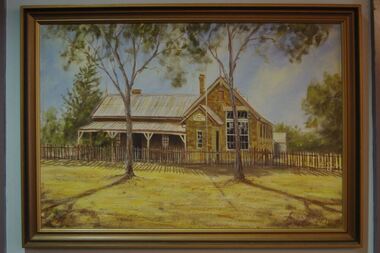
Photograph - Digital image, Dennis Ward, Greensborough Primary School Gr2062 Painting Portrait, 25/06/2015
... The old brick building at Greensborough Primary School on Grimshaw Street. Built in 1879, this building is now heritage listed by the National Trust. ...The old brick building at Greensborough Primary School on Grimshaw Street. Built in 1879, this building is now heritage listed by the National Trust. ...The old brick building at Greensborough Primary School on Grimshaw Street. Built in 1879, this building is now heritage listed by the National Trust. This photograph shows a painting of the school, hanging in the old building. Details unknown.Digital copy of colour photographgreensborough primary school, greensborough state school -
 Greensborough Historical Society
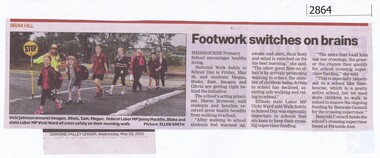
Newspaper Clipping, Footwork switches on brains: Sherbourne Primary School BH5013, 18/05/2016
... sherbourne primary school...national...Sherbourne Primary School encourages healthy living and participated in National Walk Safely to School Day....Sherbourne Primary School encourages healthy living and participated in National Walk Safely to School Day. sherbourne primary school national walk safely to school day News clipping, black text, colour image. ...Sherbourne Primary School encourages healthy living and participated in National Walk Safely to School Day.News clipping, black text, colour image.sherbourne primary school, national walk safely to school day -
Ringwood and District Historical Society
Photograph, National School Photography, Ringwood East Primary School: Photograph of all children at the school when closed 1993, 1993
... Primary School 4180 started in 1924 and this photograph was taken of the 190 children at the school when it closed in 1993. Blue covered photograph with sketch of school on front, logo, 1924-1993; Inside cover has names, photo of whole school final year 1993 Ringwood East Primary School: Photograph of all children at the school when closed 1993 Photograph National School Photography ...Ringwood East Primary School 4180 started in 1924 and this photograph was taken of the 190 children at the school when it closed in 1993.Blue covered photograph with sketch of school on front, logo, 1924-1993; Inside cover has names, photo of whole school final year 1993 -
 Greensborough Historical Society
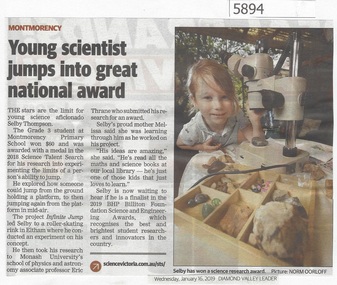
Newspaper Clipping, Diamond Valley Leader, Young scientist jumps into great national award, 16/01/2019
... The Grade 3 student at Montmorency Primary School won $60 and was awarded with a medal in the 2018 Science Talent Search for his research into experimenting the limits of a person's ability to jump. selby thompson montmorency primary school 2018 science talent search News article 1 page, black text and colour image . Young scientist jumps into great national ...The stars are the limit for young science aficionado Selby Thompson. The Grade 3 student at Montmorency Primary School won $60 and was awarded with a medal in the 2018 Science Talent Search for his research into experimenting the limits of a person's ability to jump.News article 1 page, black text and colour image .selby thompson, montmorency primary school, 2018 science talent search -
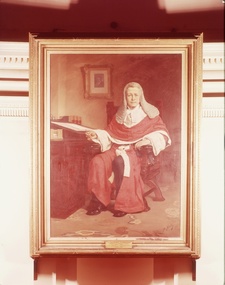 Supreme Court of Victoria Library
Portrait, George Higinbotham
... National Gallery of Victoria. George Higinbotham (1826-1892) had a distinguished career as a newspaper editor and politican before becoming a Judge of the Supreme Court in 1880 and the third Chief Justice in 1886. Higinbotham was a long serving attorney-general in the 1860s colonial administration. Higinbotham was active in the education, land and constitutional debates of his time. He played a prominent role through his chairmanship of the of the Royal Commission into Public Instruction with regard to the introduction of the free and secular primary school...National Gallery of Victoria. George Higinbotham (1826-1892) had a distinguished career as a newspaper editor and politican before becoming a Judge of the Supreme Court in 1880 and the third Chief Justice in 1886. Higinbotham was a long serving attorney-general in the 1860s colonial administration. Higinbotham was active in the education, land and constitutional debates of his time. He played a prominent role through his chairmanship of the of the Royal Commission into Public Instruction with regard to the introduction of the free and secular primary school ...The portrait was commissioned after Higinbotham's death in 1893. A committee was appointed to investigate the making of a portrait and they appointed Mr L Bernard Hall, instructor and later director of the National Gallery of Victoria. George Higinbotham (1826-1892) had a distinguished career as a newspaper editor and politican before becoming a Judge of the Supreme Court in 1880 and the third Chief Justice in 1886. Higinbotham was a long serving attorney-general in the 1860s colonial administration. Higinbotham was active in the education, land and constitutional debates of his time. He played a prominent role through his chairmanship of the of the Royal Commission into Public Instruction with regard to the introduction of the free and secular primary school education.The portrait of George Higinbotham is of historic significance as the depiction of an important public figure in 19th Century Victoria. The painting is also of interest as an early example of L Bernard Hall's Australian works. Portrait in Oils of George Higinbotham. Higinbotham is seated at his desk, pen in hand. He is dressed in his judicial robes, ready for Court.Signed Lower right B Hall 95. Plaque on frame : The Hon. George Higinbotham Judge of the Supreme Court 1880-1886 Chief Justice of the Supreme Court 1866-1892supreme court, higinbotham george, hall bernard
