
Showing 131 items matching "palace hotel"
-
 Camberwell Historical Society
Photograph - Photographs, Ella Keesing, Palace Hotel photographs, 1989
... Palace Hotel photographs...Palace Hotel on Burke Road was built in 1889...9 photographs of Palace Hotel on Burke Road. Photographs taken by Ella Keesing in 1989. ...Palace Hotel on Burke Road was built in 1889 Camberwell Hotel 9 photographs of Palace Hotel on Burke Road. ...Palace Hotel on Burke Road was built in 18899 photographs of Palace Hotel on Burke Road. Photographs taken by Ella Keesing in 1989. camberwell, hotel -
 Torquay and District Historical Society
Domestic object - Crockery set
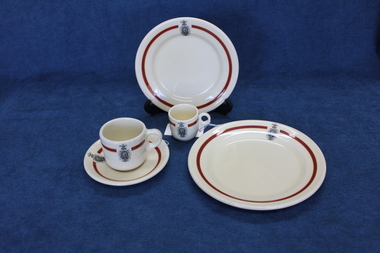
... Palace Hotel Torquay...Used in the Palace Hotel, Torquay. In the Municipal Directory of 1891 it was said to be "large and comfortable with 35 rooms" and could accommodate 150 people. ...Set of crockery, cream coloured with red strip with yellow edges and crest of the Palace Hotel Torquay in black on each item. The set comprises tea cup and saucer, small coffee cup, 2 saucers, 8 plates and 1 larger plate....Red strip outlined in yellow and crest of the Palace Hotel Torquay in black. "Vitrified / Globe / Pottery / Co Ltd / Shelton / England." ...Today's Torquay Hotel is on the original site. Palace Hotel Torquay Hotel insignia Red strip outlined in yellow and crest of the Palace Hotel Torquay in black. ...Used in the Palace Hotel, Torquay. In the Municipal Directory of 1891 it was said to be "large and comfortable with 35 rooms" and could accommodate 150 people. The building was designed by architect Joseph Watts and built by Charles Mills, both from Geelong.Significant because the hotel no longer exists. It opened in December 1888 as the Pioneer Coffee Palace, and was destroyed by fire in 1976. Today's Torquay Hotel is on the original site.Set of crockery, cream coloured with red strip with yellow edges and crest of the Palace Hotel Torquay in black on each item. The set comprises tea cup and saucer, small coffee cup, 2 saucers, 8 plates and 1 larger plate.Red strip outlined in yellow and crest of the Palace Hotel Torquay in black. "Vitrified / Globe / Pottery / Co Ltd / Shelton / England." "Supplied by / John Dynon & Sons / Melbourne" Hallmark designpalace hotel torquay, hotel insignia -
 Camberwell Historical Society
Postcard - Photo postcard, Camberwell from Palace Hotel, 24-01-1909
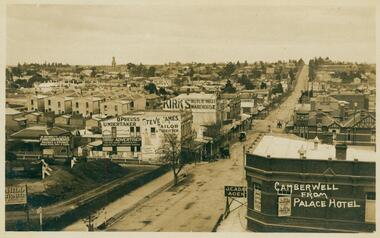
... Camberwell from Palace Hotel...Frazer and Vallance photo postcard showing view looking south from the Palace Hotel, Camberwell Junction. Writing on back of postcard, dated Jan 24th 1909. ...Camberwell from Palace Hotel Postcard Photo postcard ...Frazer and Vallance Photo Post Card. Origin and writer of postcard unknown.Frazer and Vallance photo postcard showing view looking south from the Palace Hotel, Camberwell Junction. Writing on back of postcard, dated Jan 24th 1909. Writing on back of postcard which reads: My Dear Bella, I received your card on Wednesday and was quite pleased to get it, thank-you very much. This is the place I am living in at present - I rather like it, it is quite a change after Yack. Alex. P.S. has Hill any intentions of coming down next month. I have not saw L.C. yet. I never go out that way. Rember me to all at home. -
 Robin Boyd Foundation
Slide, Robin Boyd, 1950
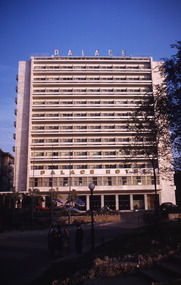
... Colour slide in a mount. Palace Hotel, Milan, Italy. It is now The Westin Palace, located at Piazza della Repubblica...Milan / Hotel / Palace Hotel / 1950 (All Handwritten)...Palace Hotel, Milan, Italy. It is now The Westin Palace, located at Piazza della Repubblica Slide Robin Boyd ...Penleigh Boyd, Robin and Patricia Boyd's son, writes “Prior to 1950 Robin, like most other amateur or hobby photographers, took black and white printed photographs. The oldest slides date from 1950 when Robin and Patricia travelled to Europe on Robin’s Robert Haddon Travelling Scholarship.” In 1948 Robin Boyd was awarded ‘joint first place’ in the Robert Haddon competition for his design of Mildura art gallery. The scholarship helped fund their first overseas trip. Robin and Patricia were passengers on the Greek ship “Cyrenia” departing in May 1950, passing through the Suez Canal and landing in Genoa five weeks later. For six months, they travelled extensively throughout Europe (predominantly driving themselves) - France, Italy, United Kingdom, Sweden, Denmark, Germany, Austria, Switzerland and Spain.Colour slide in a mount. Palace Hotel, Milan, Italy. It is now The Westin Palace, located at Piazza della RepubblicaMilan / Hotel / Palace Hotel / 1950 (All Handwritten)haddon travelling scholarship, haddon, robin boyd, slide -
 Melbourne Tram Museum
Photograph - Colour Print Z3 129 Burke Road Camberwell, George Bishop, c1999
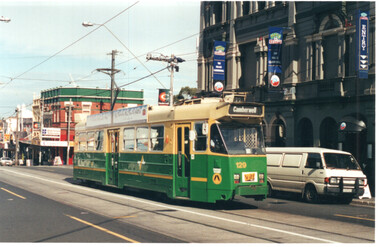
... ...Palace Hotel...Colour print of photograph taken by George Bishop c1999, of Z3 129 (Camberwell, Route 72) Burke Road Camberwell near Burwood Ave. Has the Palace Hotel in the background....Colour print of photograph taken by George Bishop c1999, of Z3 129 (Camberwell, Route 72) Burke Road Camberwell near Burwood Ave. Has the Palace Hotel in the background. Yields information about the operation of Melbourne trams during the late 1990s. trams tramways Z3 class tram 129 Burke Road Camberwell Palace Hotel route 72 Details of the photograph and photographer on the rear in ink. ...Colour print of photograph taken by George Bishop c1999, of Z3 129 (Camberwell, Route 72) Burke Road Camberwell near Burwood Ave. Has the Palace Hotel in the background.Yields information about the operation of Melbourne trams during the late 1990s.Colour prints printed on Kodak paperDetails of the photograph and photographer on the rear in ink.trams, tramways, z3 class, tram 129, burke road, camberwell, palace hotel, route 72 -
 Stawell Historical Society Inc
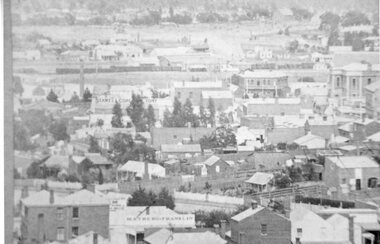
Photograph, Panoramic view from Big Hill with the Town Hall and Coffee Palace formerly Castlemaine Hotel & aso the Train at Station 1880
... Panoramic view from Big Hill with the Town Hall and Coffee Palace formerly Castlemaine Hotel & aso the Train at Station 1880...Stawell Township from Big Hill 1880 Town Hall and Coffee Palace formerly Castlemaine Hotel, can be seen. Train at Station....Stawell Township from Big Hill 1880 Town Hall and Coffee Palace formerly Castlemaine Hotel, can be seen. Train at Station. stawell Panoramic view from Big Hill with the Town Hall and Coffee Palace formerly Castlemaine Hotel & aso the Train at Station 1880 Photograph ...Stawell Township from Big Hill 1880 Town Hall and Coffee Palace formerly Castlemaine Hotel, can be seen. Train at Station.stawell -
 Stawell Historical Society Inc
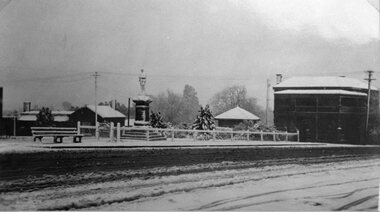
Photograph, Stawell Coffee Palace formerly the Castlemaine Hotel in Lower Main Street with snow on ground 1949
... Stawell Coffee Palace formerly the Castlemaine Hotel in Lower Main Street with snow on ground 1949...Stawell Coffee Palace formerly Castlemaine Hotel, lower Main Street with snow on ground 1949....Stawell Coffee Palace formerly Castlemaine Hotel, lower Main Street with snow on ground 1949. stawell Stawell Coffee Palace formerly the Castlemaine Hotel in Lower Main Street with snow on ground 1949 Photograph ...Stawell Coffee Palace formerly Castlemaine Hotel, lower Main Street with snow on ground 1949.stawell -
 Stawell Historical Society Inc
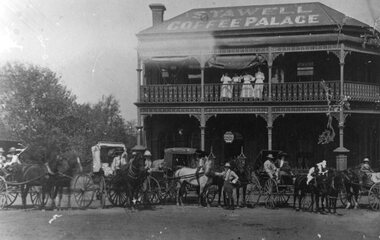
Photograph, Stawell Coffee Palace formerly the Castlemaine Hotel in Lower Main Street
... Stawell Coffee Palace formerly the Castlemaine Hotel in Lower Main Street ...Stawell Coffee Palace formerly Castlemaine Hotel Lower Main Street with buggies in front. ...Stawell Coffee Palace formerly Castlemaine Hotel Lower Main Street with buggies in front. ...Stawell Coffee Palace formerly Castlemaine Hotel Lower Main Street with buggies in front. Established 1889.stawell -
 Stawell Historical Society Inc
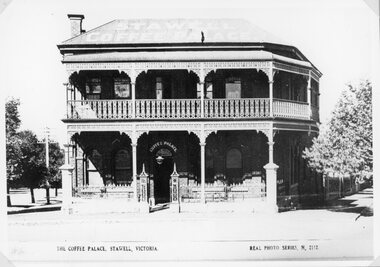
Photograph, Stawell Coffee Palace formerly the Castlemaine Hotel in Lower Main Street -- Postcard
... Stawell Coffee Palace formerly the Castlemaine Hotel in Lower Main Street -- Postcard...Stawell Coffee Palace formerly Castlemaine Hotel Lower Main Street Real Photo Series M. 2112....Stawell Coffee Palace formerly Castlemaine Hotel Lower Main Street Real Photo Series M. 2112. stawell Stawell Coffee Palace formerly the Castlemaine Hotel in Lower Main Street -- Postcard Photograph ...Stawell Coffee Palace formerly Castlemaine Hotel Lower Main Street Real Photo Series M. 2112.stawell -
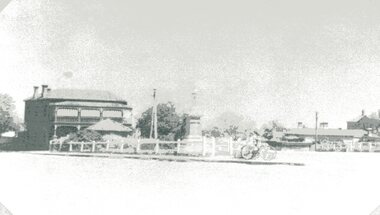 Stawell Historical Society Inc
Photograph, Stawell Coffee Palace formerly the Castlemaine Hotel in Lower Main Street with the War memorial & Weighbridge at the front c1925
... Stawell Coffee Palace formerly the Castlemaine Hotel in Lower Main Street with the War memorial & Weighbridge at the front c1925...Stawell Coffee Palace formerly Castlemaine Hotel, Lower Main Street with War memorial and Weighbridge at front. ...Stawell Coffee Palace formerly Castlemaine Hotel, Lower Main Street with War memorial and Weighbridge at front. ...Stawell Coffee Palace formerly Castlemaine Hotel, Lower Main Street with War memorial and Weighbridge at front. C1925stawell -
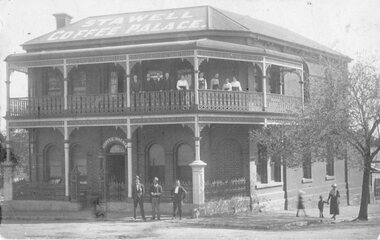 Stawell Historical Society Inc
Photograph, Stawell Coffee Palace formerly the Castlemaine Hotel in Lower Main Street with people in front and on balcony -- Demolished 1956
... Stawell Coffee Palace formerly the Castlemaine Hotel in Lower Main Street with people in front and on balcony -- Demolished 1956...Stawell Coffee Palace formerly Castlemaine Hotel, Lower Main Street with people in front and on balcony. ...Stawell Coffee Palace formerly Castlemaine Hotel, Lower Main Street with people in front and on balcony. ...Stawell Coffee Palace formerly Castlemaine Hotel, Lower Main Street with people in front and on balcony. Demolished 1956.stawell -
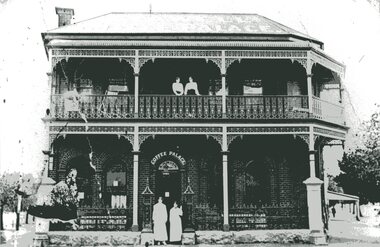 Stawell Historical Society Inc
Photograph, Stawell Coffee Palace formerly the Castlemaine Hotel in Lower Main Street with Staff at front and on verandah c1905
... Stawell Coffee Palace formerly the Castlemaine Hotel in Lower Main Street with Staff at front and on verandah c1905....Stawell Coffee Palace formerly Castlemaine Hotel, Lower Main Street with Staff at front and on verandah. ...Stawell Coffee Palace formerly Castlemaine Hotel, Lower Main Street with Staff at front and on verandah. ...Stawell Coffee Palace formerly Castlemaine Hotel, Lower Main Street with Staff at front and on verandah. A.H. Bush c1905.stawell -
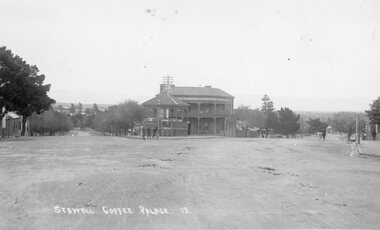 Stawell Historical Society Inc
Postcard, Stawell Coffee Palace formerly the Castlemaine Hotel and Rotunda in Lower Main Street -- Post Card
... Stawell Coffee Palace formerly the Castlemaine Hotel and Rotunda in Lower Main Street -- Post Card ...Stawell Coffee Palace formerly Castlemaine Hotel and Rotunda Lower Main Street. ...Stawell Coffee Palace formerly Castlemaine Hotel and Rotunda Lower Main Street. ...Stawell Coffee Palace formerly Castlemaine Hotel and Rotunda Lower Main Street. Post Card 13. D.S. King Moore Street East Araratstawell -
 Melbourne Legacy
Photograph, Bombay, 1920
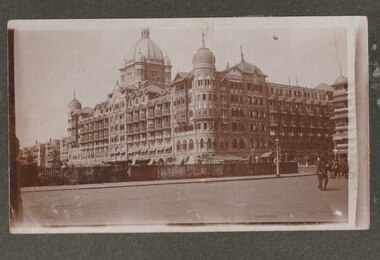
... The photo is of the Taj Mahal Palace Hotel, which opened in 1903. There are many photos of Bombay in the album when the Ceramic had a stopover on its way back to the Australia. ...Sepia photo of the Taj Mahal Palace Hotel in Bombay glued to black cardboard in an album of photos from 1920....The photo is of the Taj Mahal Palace Hotel, which opened in 1903. There are many photos of Bombay in the album when the Ceramic had a stopover on its way back to the Australia. ...One photo from an album belonging to JB McLean, of his voyage home from World War 1 in 1920 on the Ceramic. The photo is of the Taj Mahal Palace Hotel, which opened in 1903. There are many photos of Bombay in the album when the Ceramic had a stopover on its way back to the Australia. The Ceramic departed Tillbury, UK 12th March and docked in Freemantle on 27th April 1920 and then went onto Adelaide, Melbourne and Sydney. The Ceramic was a transport vessel built in Belfast in 1913 for the White Star Line to transport frozen produce and apples from Australia to UK. It was taken over by the Australian Government for troop transport in October 1914 and could carry over 3,000 troops. This trip in 1920 there were 1467 on board, there were women and children as well as 439 soldiers returning home, one of whom was John 'Basil' McLean. Was with other World War 1 memorabilia that has come from Private John Basil McLean, 2nd Reinforcements, 37th Battalion, A.I.F. There was a large collection of postcards so he may have been collecting them as souvenirs. J.B. McLean (Service No. 13824) was from near Maffra, Victoria and enlisted on 22 January 1916. He embarked on 16 December 1916 for Europe. His full war record is available from AWM. He spent time with the Australian Field Artillery (Pack Section). At the end of the war he worked for a year at the A.I.F. Headquarters in London before returning to Australia on the 'Ceramic', arriving Portsea in 1920.A collection of items from John Basil McLean is in the archive. Kept as an indication of what founding legatees experienced in World War One and what they saw on the way home.Sepia photo of the Taj Mahal Palace Hotel in Bombay glued to black cardboard in an album of photos from 1920.souvenir, world war one, jb mclean, ship, ceramic, bombay -
 Stawell Historical Society Inc
Drawing, Coffee Palace, formerly Castlemaine Hotel owned by Mr T Aldred on the corner of Main Street Stawell & Victoria Street fromthe P.C. News Supplement 1888 - Sketch
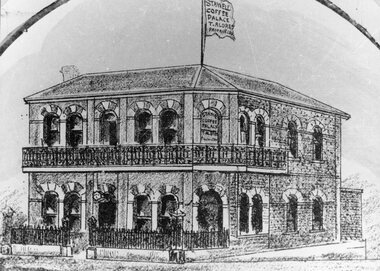
... Coffee Palace, formerly Castlemaine Hotel owned by Mr T Aldred on the corner of Main Street Stawell & Victoria Street fromthe P.C. ...Coffee Palace T. Aldred formerly Castlemaine Hotel corner of Main Street and Victoria Street from P.C. ...News Supplement 1888 stawell businesses Coffee Palace, formerly Castlemaine Hotel owned by Mr T Aldred on the corner of Main Street Stawell & Victoria Street fromthe P.C. ...Coffee Palace T. Aldred formerly Castlemaine Hotel corner of Main Street and Victoria Street from P.C. News Supplement 1888stawell businesses -
 Warrnambool and District Historical Society Inc.
Domestic object - Plate fragment Mansions Hotel, C1920
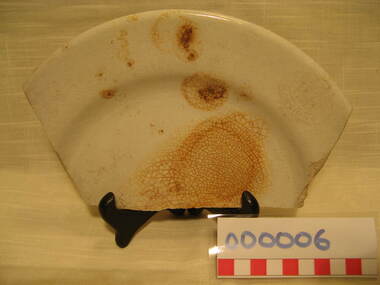
... grand ozone coffee palace...hotel...Within 12 months of construction, it was granted a wine licence and was renamed the Ozone Hotel. Coffee Palaces were temperance hotels which were popular in the latter part of the 19th century. ...Within 12 months of construction, it was granted a wine licence and was renamed the Ozone Hotel. Coffee Palaces were temperance hotels which were popular in the latter part of the 19th century. ...The Hotel Mansions was formerly the Grand Ozone Coffee Palace, erected in 1890 at a cost of around ten thousand pounds at the corner of Kepler and Koroit Streets by a group of local businessmen and leased out. Within 12 months of construction, it was granted a wine licence and was renamed the Ozone Hotel. Coffee Palaces were temperance hotels which were popular in the latter part of the 19th century. They offered recreation and superior accommodation. The Ozone Hotel operated until 1915 and was then closed before re-opening in 1920 as the Hotel Mansions. It had major renovations including a large theatre area. February 23rd 1929 saw the most spectacular fire in Warrnambool's history when the Hotel Mansions was burnt to the ground. Evelyn O'Brien was granted a temporary licence and in September 1930 she was given permission to rebuild. The new hotel, named Hotel Warrnambool was opened in March 1931. This piece of china is a relic from the fire.This piece of china is a small relic from the biggest fire ever to occur in Warrnambool and as such has strong historical significance.Fragment of burnt white, china plate from Hotel Mansions. There is a Hotel Mansions symbol etched inside an oval design on the front of the plate. The hotel side plate, heavily crazed and brown stained on both front and back.Stamp of "Ironstone Ch..." on back also an etched, sand blasted Hotel Mansions on front too faint to photograph effectively.warrnambool, ozone coffee palace warrnambool, grand ozone coffee palace, hotel mansions warrnambool, fire at the ozone, ozone hotel -
 Warrnambool and District Historical Society Inc.
Domestic object - Plate, side, C1920
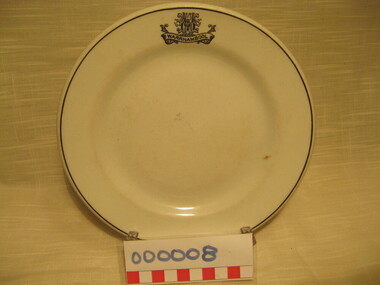
... grand ozone coffee palace...hotel...Coffee Palaces were temperance hotels which were popular in the latter part of the 19th century which offered recreation and superior accommodation. ...Coffee Palaces were temperance hotels which were popular in the latter part of the 19th century which offered recreation and superior accommodation. ...The Ozone Hotel was formerly the Grand Ozone Coffee Palace which was erected in 1890 at a cost of around ten thousand pounds. Coffee Palaces were temperance hotels which were popular in the latter part of the 19th century which offered recreation and superior accommodation. The coffee palace operated until 1915 and was then closed before re-opening in 1920 as Hotels Mansions. It had major renovations including a large theatre area. February 23rd 1929 saw the most spectacular fire in Warrnambool's history when the Hotel mansions was burnt to the ground. Evelyn O'Brien was granted a temporary licence and in September 1930 she was given permission to rebuild. The new hotel named Hotel Warrnambool was opened in March 1931. This item has local significance having come from one of Warrnambool's grandest buildingsSide Plate with Hotel Mansions crest in black, with Warrnambool in banner underneath and a black line around rim of plate. Loftus Moran Pty Ltd Melbourne stamp on back (distributor?)Hotel Mansions crest on front of plate, with Warrnambool in banner underneath.grand ozone coffee palace, hotel mansions warrnambool, ozone hotel warrnambool, warrnambool -
 Warrnambool and District Historical Society Inc.
Label, Hotel Warrnambool, Early 20th century
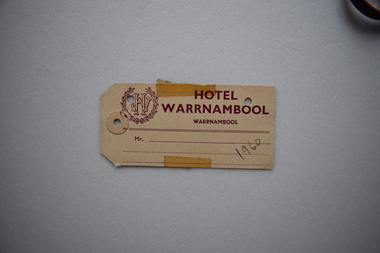
... hotel warrnambool...ozone coffee palace...The Hotel Warrnambool, the second in Warrnambool to have that name, was built on the site of the old Hotel Mansions (Ozone Coffee Palace / Ozone Hotel) which was destroyed by fire in 1929. ...The Hotel Warrnambool, the second in Warrnambool to have that name, was built on the site of the old Hotel Mansions (Ozone Coffee Palace / Ozone Hotel) which was destroyed by fire in 1929. ...The Hotel Warrnambool, the second in Warrnambool to have that name, was built on the site of the old Hotel Mansions (Ozone Coffee Palace / Ozone Hotel) which was destroyed by fire in 1929. The Hotel Warrnambool was opened in 1931 using the licence transferred from the Hotel Mansions. It has played a major role in the social and economic life of the city since this time.This luggage label from the Hotel Warrnambool is of some historical significance as the hotel is a prominent one in Warrnambool today built on the site of the Hotel Mansions regarded as the finest building ever to be erected in Warrnambool. Buff coloured rectangular label with maroon text. Two corners of the card are mitred. The label features a open ended wreath with the letters WH entwined in its centre. There are three punched holes , one with a reinforce sticker. Two pieces of adhesive tape are attached on the top and the bottom. HOTEL WARRNAMBOOL WARRNAMBOOL( In smaller font). Mr. ..... 1960 (in pencil) hotel warrnambool, ozone coffee palace, ozone hotel, warrnambool -
 Stawell Historical Society Inc
Photograph, Group of people in front of Stawell Coffee Palace, formerly the Castlemaine Hotel, 1937-1940
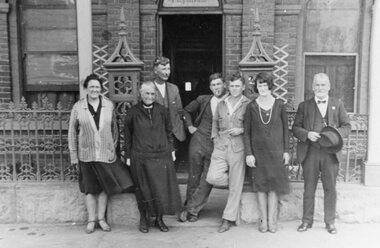
... Group of people in front of Stawell Coffee Palace, formerly the Castlemaine Hotel, 1937-1940...Group in front of Stawell Coffee Palace 1937-40 formerly Castlemaine Hotel,....Group in front of Stawell Coffee Palace 1937-40 formerly Castlemaine Hotel,. stawell Group of people in front of Stawell Coffee Palace, formerly the Castlemaine Hotel, 1937-1940 Photograph ...Group in front of Stawell Coffee Palace 1937-40 formerly Castlemaine Hotel,.stawell -
 Melbourne Legacy
Photograph, Bombay, 1920
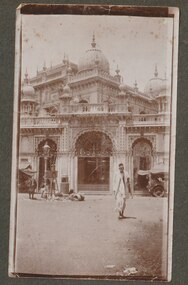
... Sepia photo of the Taj Mahal Palace Hotel in Bombay glued to black cardboard in an album of photos from 1920....Kept as an indication of what founding legatees experienced in World War One and what they saw on the way home. souvenir world war one jb mclean ship ceramic bombay Sepia photo of the Taj Mahal Palace Hotel in Bombay glued to black cardboard in an album of photos from 1920. ...Four photos from an album belonging to JB McLean, of his voyage home from World War 1 in 1920 on the Ceramic. The photos show buildings around Bombay. There are many photos of Bombay in the album when the Ceramic had a stopover on its way back to the Australia. The Ceramic departed Tillbury, UK 12th March and docked in Freemantle on 27th April 1920 and then went onto Adelaide, Melbourne and Sydney. The Ceramic was a transport vessel built in Belfast in 1913 for the White Star Line to transport frozen produce and apples from Australia to UK. It was taken over by the Australian Government for troop transport in October 1914 and could carry over 3,000 troops. This trip in 1920 there were 1467 on board, there were women and children as well as 439 soldiers returning home, one of whom was John 'Basil' McLean. Was with other World War 1 memorabilia that has come from Private John Basil McLean, 2nd Reinforcements, 37th Battalion, A.I.F. There was a large collection of postcards so he may have been collecting them as souvenirs. J.B. McLean (Service No. 13824) was from near Maffra, Victoria and enlisted on 22 January 1916. He embarked on 16 December 1916 for Europe. His full war record is available from AWM. He spent time with the Australian Field Artillery (Pack Section). At the end of the war he worked for a year at the A.I.F. Headquarters in London before returning to Australia on the 'Ceramic', arriving Portsea in 1920.A collection of items from John Basil McLean is in the archive. Kept as an indication of what founding legatees experienced in World War One and what they saw on the way home.Sepia photo of the Taj Mahal Palace Hotel in Bombay glued to black cardboard in an album of photos from 1920.souvenir, world war one, jb mclean, ship, ceramic, bombay -
 Melbourne Legacy
Photograph, Bombay, 1920
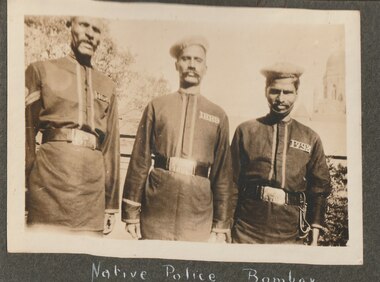
... Sepia photo of the Taj Mahal Palace Hotel in Bombay glued to black cardboard in an album of photos from 1920....Sepia photo of the Taj Mahal Palace Hotel in Bombay glued to black cardboard in an album of photos from 1920. ...One photo from an album belonging to JB McLean, of his voyage home from World War 1 in 1920 on the Ceramic. The photo show three policemen from Bombay in their uniform. There are many photos of Bombay in the album when the Ceramic had a stopover on its way back to the Australia. The Ceramic departed Tillbury, UK 12th March and docked in Freemantle on 27th April 1920 and then went onto Adelaide, Melbourne and Sydney. The Ceramic was a transport vessel built in Belfast in 1913 for the White Star Line to transport frozen produce and apples from Australia to UK. It was taken over by the Australian Government for troop transport in October 1914 and could carry over 3,000 troops. This trip in 1920 there were 1467 on board, there were women and children as well as 439 soldiers returning home, one of whom was John 'Basil' McLean. Was with other World War 1 memorabilia that has come from Private John Basil McLean, 2nd Reinforcements, 37th Battalion, A.I.F. There was a large collection of postcards so he may have been collecting them as souvenirs. J.B. McLean (Service No. 13824) was from near Maffra, Victoria and enlisted on 22 January 1916. He embarked on 16 December 1916 for Europe. His full war record is available from AWM. He spent time with the Australian Field Artillery (Pack Section). At the end of the war he worked for a year at the A.I.F. Headquarters in London before returning to Australia on the 'Ceramic', arriving Portsea in 1920.A collection of items from John Basil McLean is in the archive. Kept as an indication of what founding legatees experienced in World War One and what they saw on the way home.Sepia photo of the Taj Mahal Palace Hotel in Bombay glued to black cardboard in an album of photos from 1920.Handwritten 'Native Police Bombay' in white ink.souvenir, world war one, jb mclean, ship, ceramic, bombay -
 Warrnambool and District Historical Society Inc.
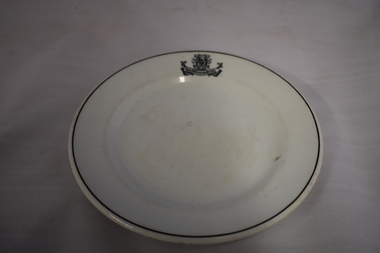
Plate, Hotel Mansions, 1920s
... palace...ozone hotel...This plate comes from the Hotel Mansions in Warrnambool. This building was opened in 1890 as the Grand Ozone Coffee Palace (a temperance hotel) and was at the corner of Koroit and Kepler Streets in Warrnambool. ...This plate comes from the Hotel Mansions in Warrnambool. This building was opened in 1890 as the Grand Ozone Coffee Palace (a temperance hotel) and was at the corner of Koroit and Kepler Streets in Warrnambool. ...This plate comes from the Hotel Mansions in Warrnambool. This building was opened in 1890 as the Grand Ozone Coffee Palace (a temperance hotel) and was at the corner of Koroit and Kepler Streets in Warrnambool. It was built by a company of local businessmen and leased out. In 1891 the Coffee Palace was granted a wine licence. In 1895 Thomas Randall was the proprietor of the building and it was re-named the Ozone Hotel. The building was closed in 1915 and re-opened in 1920 as the Hotel Mansions. In 1923 the Hotel Mansions became a fully-licensed hotel. In 1929 it was destroyed by fire and the present day Hotel Warrnambool was built on the site. This plate is of considerable significance because it is one of the few items we have from the Hotel Mansions in Warrnambool. The Grand Ozone Coffee Palace/Ozone Hotel/Hotel Mansions was the grandest building ever erected in Warrnambool. Its destruction by fire was a major loss to the city. This is a white plate made of vitrified china (bread and butter plate size). It has a charcoal-black rim around the outer edge and a black monogram and scroll on the outer edge of the plate. There are a couple of small stains on the upper part of the plate and on the base. There is information on the maker and supplier on the base as well as a crown symbol.‘H.M. Warrnambool’ Grindley Hotel Ware England Vitrified’ ‘Loftus Moran Pty Ltd Melbourne’ grand ozone coffee palace, ozone hotel, hotel mansions warrnambool, temperance hotels in warrnambool, history of warrnambool -
 Warrnambool and District Historical Society Inc.
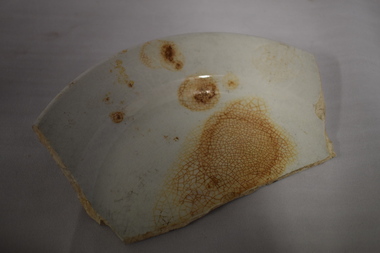
Plate, Fragment Hotel Mansions, 1920s
... Grand Ozone Coffee Palace/Ozone Hotel/Hotel Mansions Warrnambool...This plate fragment came from the Hotel Mansions in Warrnambool. This building was opened in 1890 as the Grand Ozone Coffee Palace (a temperance hotel) and it was at the corner of Koroit and Kepler Streets in Warrnambool. ...This plate fragment came from the Hotel Mansions in Warrnambool. This building was opened in 1890 as the Grand Ozone Coffee Palace (a temperance hotel) and it was at the corner of Koroit and Kepler Streets in Warrnambool. ...This plate fragment came from the Hotel Mansions in Warrnambool. This building was opened in 1890 as the Grand Ozone Coffee Palace (a temperance hotel) and it was at the corner of Koroit and Kepler Streets in Warrnambool. It was built by a company of local businessmen and was leased out. In 1891 the Coffee Palace was granted a wine licence. In 1895 Thomas Randall was the proprietor and it was re-named the Ozone Hotel. The building was closed in 1915 and re-opened in 1920 as the Hotel Mansions. In 1923 the Hotel Mansions became a fully-licensed hotel. In 1929 it was destroyed by fire and the present day Hotel Warrnambool was built on the site. This plate fragment is significant as it came from the Hotel Mansions in Warrnambool and was probably recovered from the fire that destroyed the building. The Grand Ozone Coffee Palace/Ozone Hotel/Hotel Mansions was the grandest building ever erected in Warrnambool and its destruction by fire was a major loss to the town. This is a piece of a white china plate. On the side of the plate is embedded the name of the hotel in a circular pattern. The plate fragment is badly stained and crazed. ‘H D Hotel Mansions’ ‘Ironstone’ grand ozone coffee palace/ozone hotel/hotel mansions warrnambool -
 Warrnambool and District Historical Society Inc.
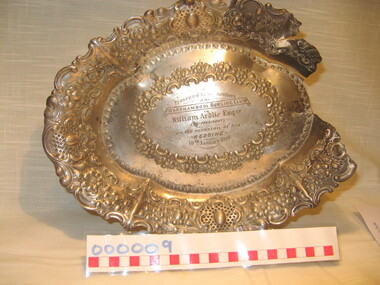
Domestic object - Serving dish, Late 19th century
... grand ozone coffee palace/ozone hotel/ hotel mansions, warrnambool...It was recovered from the fire which destroyed the Hotel Mansions building in Warrnambool in 1929. This building was opened in 1890 as the Grand Ozone Coffee Palace (a temperance hotel). ...It was recovered from the fire which destroyed the Hotel Mansions building in Warrnambool in 1929. This building was opened in 1890 as the Grand Ozone Coffee Palace (a temperance hotel). ...This plate was presented in 1900 to a Warrnambool lawyer, William Ardlie, on the occasion of his marriage to Maud Taylor. It was recovered from the fire which destroyed the Hotel Mansions building in Warrnambool in 1929. This building was opened in 1890 as the Grand Ozone Coffee Palace (a temperance hotel). It was at the corner of Koroit and Kepler Streets. In 1891 the Coffee Palace was granted a wine licence and in 1895 it was re-named the Ozone Hotel. The building was closed in 1915 and re-opened in 1920 as the Hotel Mansions. In 1923 the Hotel Mansions became a fully-licensed hotel and in 1929 it was destroyed by fire. The present-day Hotel Warrnambool was built on the site. William Ardlie, the son of a pioneer Warrnambool settler, John Ardlie, began practising as a lawyer in Warrnambool in the mid 1860s and dominated the legal scene in Warrnambool, continuing on his practice until he was over 80. He and his second wife, Maud, were occupying an apartment in the Hotel Mansions when it was destroyed by fire and this plate is a relic of the fire. The Warrnambool Bowling Club which presented the plate to William Ardlie, was established early in the 1890s and William Ardlie was an enthusiastic supporter and one-time office bearer.This plate is of great significance as it was one of the few items that still exist that was recovered from the 1929 Hotel Mansions fire and its story contains so much of Warrnambool’s history with its connections to:- 1. The story of the Hotel Mansions, the grandest building ever erected in Warrnambool 2. The story of William Ardlie, a dominant figure in the legal world in Warrnambool for over 60 years 3. The story of the Warrnambool Bowls Club, still existing today. This is a silver plate with an oval base with an inside ring and a rim of scroll patterning. The recessed edges of the plate are highly ornamented with scrolls and flower patterning. Parts of the edge of the plate are missing and jagged as this plate has been in a major fire. On the base of the plate are three silver studs for the plate to rest on a surface. The fourth stud is missing. On the rim of the plate are two small projections, suggesting the plate originally had a handle. On the base of the plate is an inscription.‘Presented by the members of the Warrnambool Bowling Club to William Ardlie Esq.re (ex President) on the occasion of his WEDDING, 10th January 1900.’ grand ozone coffee palace/ozone hotel/ hotel mansions, warrnambool, william ardlie, warrnambool bowls club, history of warrnambool -
 Warrnambool and District Historical Society Inc.
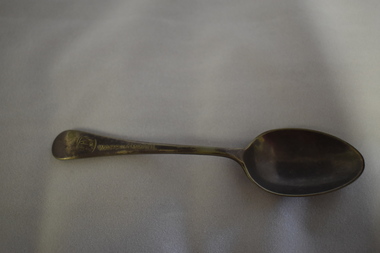
Spoon, Hotel Mansions teaspoon, 1920s
... grand ozone coffee palace warrnambool...ozone hotel...The Hotel Mansions was opened in 1890 as the Grand Ozone Coffee Palace (a temperance hotel) and was at the corner of Kepler and Koroit Streets in Warrnambool. ...The Hotel Mansions was opened in 1890 as the Grand Ozone Coffee Palace (a temperance hotel) and was at the corner of Kepler and Koroit Streets in Warrnambool. ...This teaspoon comes from the Hotel Mansions in Warrnambool. The Hotel Mansions was opened in 1890 as the Grand Ozone Coffee Palace (a temperance hotel) and was at the corner of Kepler and Koroit Streets in Warrnambool. It was built by a company of local businessmen and leased out. In 1891 the Coffee Palace was granted a wine licence. In 1895 Thomas Randall was the proprietor of the building and it was re-named the Ozone Hotel. The building was closed in 1915 and re-opened in 1920 as the Hotel Mansions. In 1923 the Hotel Mansions became a fully-licensed hotel. In 1929 it was destroyed by fire and the present-day Hotel Warrnambool was built on the site. This teaspoon is of considerable significance as it is one of the few items we have from the Hotel Mansions in Warrnambool. The Grand Ozone Coffee Palace/Ozone Hotel/Hotel Mansions was the grandest building ever erected in Warrnambool. Its destruction by fire was a great loss to the city. This is an electro-plated nickel silver teaspoon. The spoon section is of an oval shape and the handle broadens to a curved end. The spoon is much tarnished. The maker’s symbols are on the back of the handle and the hotel name is on the front. ‘H M Warrnambool’grand ozone coffee palace warrnambool, ozone hotel warrnambool, hotel mansions warrnambool, history of warrnambool -
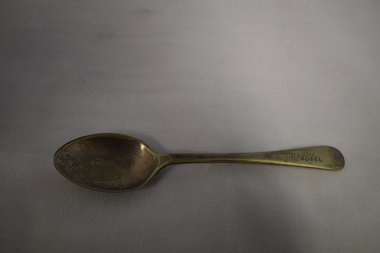 Warrnambool and District Historical Society Inc.
Spoon, Ozone Hotel, Early 20th century
... palace...warrnambool...ozone hotel...The Ozone Hotel was opened in 1890 as the Grand Ozone Coffee Palace (a temperance hotel) and was at the corner of Koroit and Kepler Streets in Warrnambool. ...The Ozone Hotel was opened in 1890 as the Grand Ozone Coffee Palace (a temperance hotel) and was at the corner of Koroit and Kepler Streets in Warrnambool. ...This spoon comes from the Ozone Hotel in Warrnambool. The Ozone Hotel was opened in 1890 as the Grand Ozone Coffee Palace (a temperance hotel) and was at the corner of Koroit and Kepler Streets in Warrnambool. It was built by a company of local businessmen and leased out. In 1891 the Coffee Palace was granted a wine licence. In 1895 Thomas Randall was the proprietor of the building and it was re-named the Ozone Hotel. The building was closed in 1915 and was re-opened in 1920 as the Hotel Mansions. In 1923 the Hotel Mansions became a fully-licensed hotel. In 1929 it was destroyed by fire and the present-day Hotel Warrnambool was built on the site.This little spoon is of considerable significance as it is one of the few items we have from the Ozone Hotel in Warrnambool. The Grand Ozone Coffee Palace/Ozone Hotel/Hotel Mansions was the grandest building ever erected in Warrnambool. Its destruction by fire was a major loss to the town. This is an electro-plated nickel silver teaspoon. It has the maker’s marks on the back of the spoon and the name of the hotel on the handle. It is much tarnished and scratched. ‘Ozone Hotel’grand ozone coffee palace, warrnambool, ozone hotel, warrnambool, hotel mansions, warrnambool -
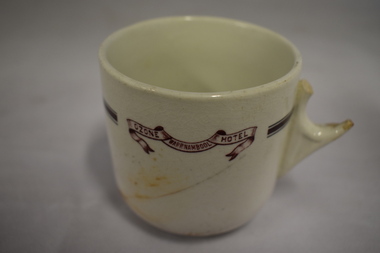 Warrnambool and District Historical Society Inc.
Cup, Ozone Hotel, Early 20th century
... grand ozone coffee palace warrnambool...ozone hotel...The Ozone Hotel building was opened in 1890 as the Grand Ozone Coffee Palace (a temperance hotel) and was at the corner of Koroit and Kepler Streets in Warrnambool. ...The Ozone Hotel building was opened in 1890 as the Grand Ozone Coffee Palace (a temperance hotel) and was at the corner of Koroit and Kepler Streets in Warrnambool. ...This cup has come from the Ozone Hotel, Warrnambool. The Ozone Hotel building was opened in 1890 as the Grand Ozone Coffee Palace (a temperance hotel) and was at the corner of Koroit and Kepler Streets in Warrnambool. It was built by a company of local businessmen and leased out. In 1891 the Coffee Palace was granted a wine licence. In 1895 Thomas Randall was the proprietor of the building and it was renamed the Ozone Hotel. The building was closed in 1915 and re-opened in 1920 as the Hotel Mansions. In 1923 the Hotel Mansions became a fully- licensed hotel. In 1929 it was destroyed by fire and the present-day Hotel Warrnambool was built on the site.This cup, although damaged, is of considerable importance as it is one of the few surviving objects from the Ozone Hotel. The Grand Ozone Coffee Palace/Ozone Hotel/Hotel Mansions was the grandest building ever erected in Warrnambool and its destruction by fire was a major loss to the city. This is a white china cup with a dark red band around the cup near the top and a scroll with the name of the hotel in the same colouring. The handle is completely broken off. The cup has a crack on the side and some staining. 'Ozone Hotel Warrnambool’grand ozone coffee palace warrnambool, ozone hotel warrnambool, hotel mansions warrnambool, history of warrnambool -
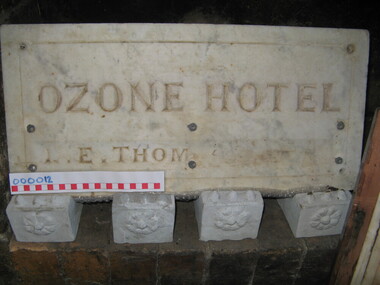 Warrnambool and District Historical Society Inc.
Plaque - Nameplate, marble, Ozone Hotel, C 1900
... palace...warrnambool history...hotel...Coffee Palaces were temperance hotels which were popular in the latter part of the 19th century which offered recreation and superior accommodation. ...Coffee Palaces were temperance hotels which were popular in the latter part of the 19th century which offered recreation and superior accommodation. ...The Ozone Hotel was formerly the Grand Ozone Coffee Palace which was erected in 1890 at a cost of around ten thousand pounds. Coffee Palaces were temperance hotels which were popular in the latter part of the 19th century which offered recreation and superior accommodation. The coffee palace operated until 1915 and was then closed before re-opening in 1920 as Hotels Mansions. It had major renovations including a large theatre area. February 23rd 1929 saw the most spectacular fire in Warrnambool's history when the Hotel mansions was burnt to the ground. Evelyn O'Brien was granted a temporary licence and in September 1930 she was given permission to rebuild. The new hotel named Hotel Warrnambool was opened in March 1931. The name plate is visible in photographs of the original Directors of the Grand Ozone. Mrs Lilias Euphemia Thom was a licensee of the Ozone hotel from 1907-1910.A link to a significant part of Warrnambool's streetscape and grand buildings.Marble name plate Ozone Hotel, with a shallow decorative groove 30mm in from edge, 4 mounting holes in each corner, an inscription L E Thom has 6 holes in lower portion perhaps used to attach the name of subsequent licensees. Ozone Hotel L E Thom grand ozone coffee palace, warrnambool history, hotel warrnambool, hotel mansions warrnambool, l thom -
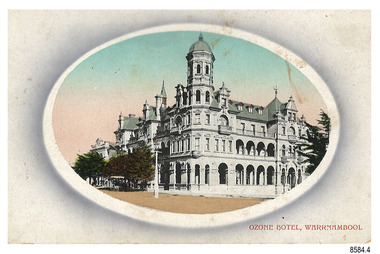 Flagstaff Hill Maritime Museum and Village
Postcard - Historical, Warrnambool, Ozone hotel, Warrnambool, 1902-1929
... ...Ozone Hotel and Coffee Palace...Ozone Hotel, Warrnambool – Construction of Warrnambool’s Ozone Hotel and Coffee Palace on the corner of Koroit and Kepler streets began in 1890. ...Flagstaff Hill Maritime Museum Flagstaff Hill Maritime Village Flagstaff Hill Maritime Museum and Village Maritime Museum Warrnambool Great Ocean Road Warrnambool and District Warrnambool Scenes local scenes Views of Warrnambool Joseph Jordan Jordan Series Jordan Photography postcard souvenir correspondence cameo postcard landscape Ozone Hotel and Coffee Palace Ozone Hotel Warrnambool hotel destroyed by fire Coffee Palace Front, in red: “Ozone hotel, Warrnambool” Back in black: “Jordan Series” “POST CARD” “PRINTED IN GREAT BRITAIN” “For correspondence” “The Address only to be written here” Postcard, one of nine, landscape orientation, coloured print within an oval border and mauve-toned shading. ...The nine postcards in this set were donated together and date to the early 1900s. All but one postcard in this set shows images of Warrnambool, in the Western District of Victoria; the other has a London image. The postcards were all printed in Great Britain according to that country’s postal regulations. The fronts of all cards have titles printed in red. Most of the images on the cards are attributed to photographer Joseph Jordan and belong to the Jordan Series. The back of these cards has an outline for a postage stamp, a vertical dividing line and a heading on each side of the line to separate the Correspondence from the Address. Postcards or ‘correspondence cards’ appeared in Britain in 1894. They were plain cards with a space for the message on one side and an address on the other; regulations didn’t allow anything but the address to be written on the ‘address’ side. In 1902 the British regulations then allowed a picture to be printed on the front and the address on the back, so messages had to be written on the picture side. Soon, the regulations changed and the back was divided for a message and the address. Ozone Hotel, Warrnambool – Construction of Warrnambool’s Ozone Hotel and Coffee Palace on the corner of Koroit and Kepler streets began in 1890. The luxury venue included ballrooms, dining rooms, a theatre and a tower. In 1929 it burnt to the ground in a spectacular fire. Joseph Jordan - Joseph Jordan was born in 1841 in Leicester England. When he was 16 he joined the 7th Queen's Own Hussars and was sent to India at the outbreak of the mutiny. He took part in the relief of Lucknow and remained in India for eleven years. It was during this time that he became interested in photography. He was posted to New Zealand and later came to Victoria, becoming a sergeant major of the Mounted Rifles. In the mid-1880s he came to the Western district where he was responsible for establishing units of the Mounted Rifles in various country towns such as Dunkeld, Mortlake, Panmure, Bushfield, Koroit etc. He resigned from the army in 1889 and set up a professional photography studio in Liebig Street, Warrnambool. He became very well known in the Western District for family photographs, official photographs of local councillors and groups as well as views of local scenery. In 1891 he photographed the wrecked barque ‘Fiji’ at ‘Wrecks Beach’ near Princetown. His business was taken over by his son Arthur around 1917. Joseph was a keen rifle shot and in 1924 he donated the "Jordan Shield" as a prize to the Victorian Rifle Association. He was made a "Life Honorary Member" of the Warrnambool Returned Soldiers League and in 1933 he was recognised as being the oldest living soldier in Victoria. Joseph died in 1935 aged 95.This postcard of the Ozone Hotel and Coffee Palace is significant for its connection to the Victorian-era hotel. The hotel was a luxury facility that attracted visitors to the town by sea, rail and road. The postcard also represents the short period in which the hotel operated and the notable, unforgettable event of its burning to the ground. Out of the set of nine postcards in this donation, this card is the only one that includes the location of Warrnambool on the back. It is also the only one with text within the outline for the postage stamp and with headings in this font. Joseph Jordan is a significant figure in Warrnambool history as he helped to establish early units of the Mounted Rifles (G Company) in local towns during the late 1880's and later, photographed local scenes, groups and citizens of early Warrnambool.Postcard, one of nine, landscape orientation, coloured print within an oval border and mauve-toned shading. The cameo image is of a grand three-storey building on a street corner with a tall turret, shorter turrets, and arches on the verandas. The back has inscriptions and outlines for a postage stamp. There is no correspondence written on the card. Jordan Series, printed in Great Britain.Front, in red: “Ozone hotel, Warrnambool” Back in black: “Jordan Series” “POST CARD” “PRINTED IN GREAT BRITAIN” “For correspondence” “The Address only to be written here”flagstaff hill maritime museum, flagstaff hill maritime village, flagstaff hill maritime museum and village, maritime museum, warrnambool, great ocean road, warrnambool and district, warrnambool scenes, local scenes, views of warrnambool, joseph jordan, jordan series, jordan photography, postcard, souvenir, correspondence, cameo postcard, landscape, ozone hotel and coffee palace, ozone hotel, warrnambool hotel, destroyed by fire, coffee palace -
 Warrnambool and District Historical Society Inc.
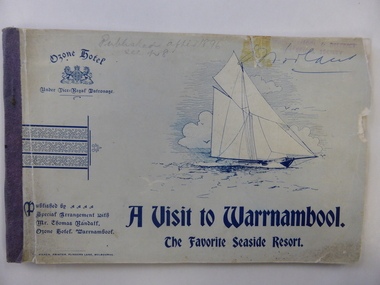
Booklet, The Ozone Hotel Warrnambool, Early 1900s
... Grand Ozone Coffee Palace/Ozone Hotel/Hotel Mansions...The Ozone Hotel was originally called the Grand Ozone Coffee Palace and opened in 1890 as a temperance hotel, a splendid building with over 100 rooms. ...This building is regarded as the finest and most elegant building ever built in Warrnambool and this booklet contains the only photographs we have of the interior of a 19th century/early 20th century hotel in Warrnambool. Grand Ozone Coffee Palace/Ozone Hotel/Hotel Mansions Thomas Randall History of Warrnambool On first page: Warrnambool & District Historical Society Stamp (smudged) This is a soft cover booklet publicizing the Ozone Hotel, Warrnambool, published for the proprietor Thomas Randall early in the 20th century. ...This booklet was produced for Thomas Randall, the proprietor of the Ozone Hotel, Warrnambool. The booklet has the front cover missing and the title of the booklet is actually ‘A Visit to Warrnambool’. It is a publicity booklet given out gratis to prospective clients of the hotel. The Ozone Hotel was originally called the Grand Ozone Coffee Palace and opened in 1890 as a temperance hotel, a splendid building with over 100 rooms. In December 1891 the Coffee Palace was granted a Colonial Wine Licence and in 1895 it was renamed the Ozone Hotel. Thomas Randall was the hotel keeper from 1894 to 1907. In 1920 the Ozone Hotel, after being closed for some time, was re-opened as the Hotel Mansions and a full liquor licence was obtained in 1923. In 1929 the building was burnt down and the present-day Hotel Warrnambool was built on the site. This booklet is of great significance as it documents the splendour of the Warrnambool Ozone Hotel when it was at its best. This building is regarded as the finest and most elegant building ever built in Warrnambool and this booklet contains the only photographs we have of the interior of a 19th century/early 20th century hotel in Warrnambool. This is a soft cover booklet publicizing the Ozone Hotel, Warrnambool, published for the proprietor Thomas Randall early in the 20th century. The front cover and several pages at the back are missing. The booklet contains advertisements, both local and Melbourne ones, black and white photographs of Warrnambool and district and of the interior and exterior of the Ozone Hotel, an article on the town of Warrnambool and extracts from the hotel’s Visitors’ Book. Most of the pages contain black and white ornamental motifs. One of the pages at the front of the booklet is torn in half. The booklet is bound with staples. On first page: Warrnambool & District Historical Society Stamp (smudged)grand ozone coffee palace/ozone hotel/hotel mansions, thomas randall, history of warrnambool
