
Showing 33 items matching "reeves warrnambool"
-
 Warrnambool and District Historical Society Inc.
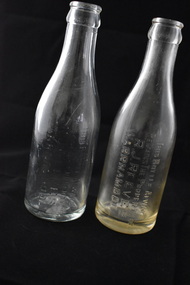
Bottle, Reeves Warrnambool, Mid 20th century
... Reeves Warrnambool...Reg Reeves, Warrnambool... These bottles come from the Warrnambool aerated waters business of Reg Reeves. A cordial factory was established in Koroit Street, Warrnambool by John Davis and this business was taken over in the 1880s by John Fletcher. ...There are no stoppers. Reeves Warrnambool Bottle ...These bottles come from the Warrnambool aerated waters business of Reg Reeves. A cordial factory was established in Koroit Street, Warrnambool by John Davis and this business was taken over in the 1880s by John Fletcher. Ralph Reeves, who had been involved in the cordial making business in Warrnambool since 1900, bought the Koroit Street business in 1931. His son Reginald John acquired the business in 1946 and was actively involved until his death in 1972. The factory continued until the 1908s. These bottles are of interest as they come from the Warrnambol aerated waters business of Reginald John Reeves. The Reeves cordial factory was prominent in Warrnambool for over 40 years. Cordial manufacturing in Warrnambool was an important industry for over 100 years. These are two clear glass bottles (one has been slightly discoloured inside from the contents). They have a rounded base with a rounded body tapering to a smaller neck. The openings at the top have a lip of moulded glass. The name of the aerated waters manufacturer is impressed into the side of the bottle. There are no stoppers.‘This bottle always remains the property of R.J.Reeves Warrnambool.’ reg reeves, warrnambool, cordial manufacturers in warrnambool, history of warrnambool -
 Warrnambool and District Historical Society Inc.
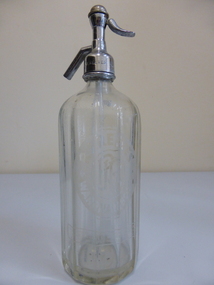
Functional object - Bottle, Syphon R. J Reeves Warrnambool
... Syphon R. J Reeves Warrnambool...Syphon R. J Reeves Warrnambool Functional object Bottle ... -
 Warrnambool and District Historical Society Inc.
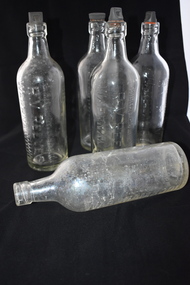
Bottle, Reeves, Mid 20th century
... Ralph Reeves, Warrnambool...Ralph Reeves bought a business in 1916 at Hamilton and sold it in 1929 to concentrate on the Warrnambool business. ...‘This bottle always remains the property of R.V. Reeves Warrnambool’...Ralph Reeves, Warrnambool Cordial Manufacturers in Warrnambool History of Warrnambool ‘This bottle always remains the property of R.V. ...These bottles came from the Warrnambool aerated waters factory of Ralph Reeves. This factory in Koroit Street, Warrnambool was established in the 1860s as the Union Cordial Factory by John Davis and then bought by John Fletcher in 1885. Fletcher’s business continued until 1930 when it was bought by Ralph Reeves. Coming to Warrnambool about 1900 Ralph Reeves managed a Banyan Street cordial factory which had been established by John Rowley. Ralph Reeves bought a business in 1916 at Hamilton and sold it in 1929 to concentrate on the Warrnambool business. Reeves was joined by his son Reg in Warrnambool and Reg operated the business from 1946 to 1972. The trade name of Reeves was still used after Reg Reeves died and continued on for some years.These bottles are of significance as they come from the Warrnambool aerated waters factory of Ralph Reeves. Reeves and his son operated this business for 40 years. Cordial manufacturing was an important industry in Warrnambool for over 100 years. These are five glass bottles with a rounded body, a round base and a smaller rounded neck. The tops are made of moulded glass and the stoppers are made of cork with a brown top. The name of the maker of the aerated waters is impressed into the glass on the side of the bottles.‘This bottle always remains the property of R.V. Reeves Warrnambool’ralph reeves, warrnambool, cordial manufacturers in warrnambool, history of warrnambool -
 Warrnambool and District Historical Society Inc.
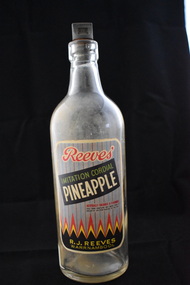
Bottle, Imitation Cordial Pineaple Reeves W'bool, 1970s
... ralph reeves, warrnambool...Fletcher’s business continued until 1930 when it was bought by Ralph Reeves. Coming to Warrnambool about 1900, Ralph Reeves managed a Banyan Street cordial factory which had been established by John Rowley. ...Bottle: Reeves Imitation Cordial Pineapple Artificially coloured &flavoured This food contains not more than 2 grains of sulphur dioxide to the pint R.J. Reeves Warrnambool ...Cordial manufacturing was an important industry in Warrnambool for over 100 years. ralph reeves, warrnambool reg reeves, warrnambool cordial manufacturers in warrnambool history of warrnambool Stopper: R.V.Reeves R.V.R. ...This bottle came from the Warrnambool aerated waters factory of Reg Reeves. This factory in Koroit Street, Warrnambool was established in the 1860s as the Union Cordial Factory by John Davis and then bought by John Fletcher in 1885. Fletcher’s business continued until 1930 when it was bought by Ralph Reeves. Coming to Warrnambool about 1900, Ralph Reeves managed a Banyan Street cordial factory which had been established by John Rowley. Ralph Reeves bought a cordial business at Hamilton in 1916 and sold it in 1929 to concentrate on his Warrnambool cordial factory. Reeves was joined by his son Reg in Warrnambool and Reg operated the business from 1946 to 1972. The trade name of Reeves was still used after Reg Reeves died and continued on for some years. This bottle is of interest as an example of the soft drinks made at the Warrnambool aerated waters factory of Reg Reeves. Reg and his father Ralph operated a cordial business in Warrnambool for 40 years. Cordial manufacturing was an important industry in Warrnambool for over 100 years.This is a glass bottle with a long rounded body, a round base and a short rounded neck. The top of the bottle has a moulded glass open top and there is a cork stopper with a brown top to enable the bottle to be opened by turning. The stopper has the name of the manufacturer of the soft drink on it and there is a multi-coloured label pasted on to the side of the bottle. The name of the soft drinks manufacturer is also impressed into the glass on the side of the bottle. There are two small chips near the base of the bottle. Stopper: R.V.Reeves R.V.R. Bottle: Reeves Imitation Cordial Pineapple Artificially coloured &flavoured This food contains not more than 2 grains of sulphur dioxide to the pint R.J. Reeves Warrnambool ralph reeves, warrnambool, reg reeves, warrnambool, cordial manufacturers in warrnambool, history of warrnambool -
 Warrnambool and District Historical Society Inc.
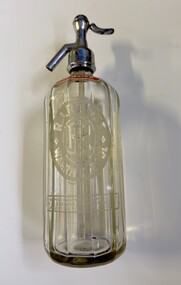
Functional object - Reeves Soda Syphon
... ...reeves warrnambool...Reeves soda water . R J Reeves Warrnambool. This syphon always remains the property of R J Reeves Warrnambool.and its use by others is illegal....The Reeves soft-drink company had a long association with Warrnambool so this bottle has a strong link to Warrnambool. soda syphon reeves bottles reeves warrnambool reeves soda syphon Reginald reeves Reeves soda water . ...Ralph Reeves purchased an established cordial factory in the early 1900’s from the estate of J Fletcher. It was operated by the Reeves family, firstly Reginald, followed by his son-in-law Murray Moon until the latter part of the 20th century. soda syphons were used regularly to produce carbonised soda water which was then mixed with flavoured syrups. They declined in use after the 1930's but are still in use in various forms to this day. Bottles such as this were returned to the manufacturer to be refilled and reused. The Reeves soft-drink company had a long association with Warrnambool so this bottle has a strong link to Warrnambool.This is a clear glass bottle with an etched oval logo on the body of the bottle. There is a red and white label near the neck of the bottle . It is topped by a silver screw on lid with a spout and lever. The body of the bottle itself is divided into 13 equal perpendicular sections.Reeves soda water . R J Reeves Warrnambool. This syphon always remains the property of R J Reeves Warrnambool.and its use by others is illegal.soda syphon, reeves bottles, reeves warrnambool, reeves soda syphon, reginald reeves -
 Warrnambool and District Historical Society Inc.
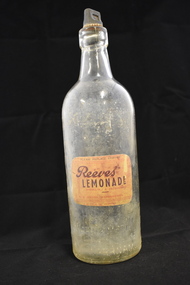
Bottle, Reeves Lemonade - with label, 1940s
... Ralph Reeves, Warrnambool...Fletcher’s business continued until 1930 when it was bought by Ralph Reeves. Coming to Warrnambool about 1900 Reeves had managed a Banyan Street, Warrnambool factory which had been established by John Rowley. ...Reeves Warrnambool, bottle 2d. deposit’ ...Ralph Reeves, Warrnambool Cordial Manufacturers in Warrnambool History of Warrnambool ‘R.V. ...This bottle comes from the Warrnambool aerated waters factory of Ralph Reeves. This business was established in Koroit Street, Warrnambool in the 1860s as the Union Cordial Factory by John Davis and then bought by John Fletcher in 1885. Fletcher’s business continued until 1930 when it was bought by Ralph Reeves. Coming to Warrnambool about 1900 Reeves had managed a Banyan Street, Warrnambool factory which had been established by John Rowley. Reeves was joined by his son Reg in Warrnambool and Reg operated the business from 1946 to 1972. The trade name of Reeves was still used after Reg Reeves died in the early 1970s and continued on for some years. This bottle is of interest as an example of an early Reeves bottle. We have few Reeves bottles with the original paper labels. Cordial manufacturing in Warrnambool was an important industry for over 100 years.This is a clear glass bottle with a rounded base and rounded body tapering to a short round neck with a moulded glass top at the opening. The screw stopper is black and made of composite material. The inside of the bottle is discoloured. The details of the manufacturer of the contents are impressed into the glass on the side and there is a paper label pasted on the side of the bottle (black, red, yellow tonings) ‘R.V. Reeves’ (x2) 34’ ‘Lemonade Warrnambool Cordials Pty Ltd’ ‘Bottle not complete without stopper’ ‘This bottle is the property of Warrnambool Cordials Pty Ltd Warrnambool’ ‘Please replace stopper, Reeves lemonade, sparkling & refreshing, R.J. Reeves Warrnambool, bottle 2d. deposit’ ralph reeves, warrnambool, cordial manufacturers in warrnambool, history of warrnambool -
 Warrnambool and District Historical Society Inc.
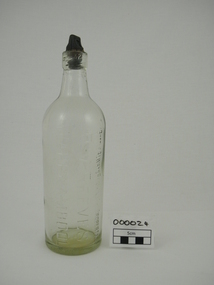
Container - Reeves' Cordial Bottle, Early 20th century
... reeves...warrnambool...The Reeves family emigrated from Dublin arriving in Geelong around 1845. The established their cordial business in Warrnambool in mid 19th century and operated well into the 20th century....Embossed on side of bottle "This bottle always remains the propertyof /R.V. REEVES/WARRNAMBOOL." Lined measure mark on side of bottle. "32" either side of lip.Manufacturers marks on bottom....REEVES/WARRNAMBOOL." Lined measure mark on side of bottle. "32" either side of lip.Manufacturers marks on bottom. ...The Reeves family emigrated from Dublin arriving in Geelong around 1845. The established their cordial business in Warrnambool in mid 19th century and operated well into the 20th century.The Reeves family were one of a number of drink manufacturers which operated in Warrnambool in the late 19th century and 20th century. Clear glass cylindrical bottle with neck. The dark grey stopper has an internal screw with rubber seal.Embossed on side of bottle "This bottle always remains the propertyof /R.V. REEVES/WARRNAMBOOL." Lined measure mark on side of bottle. "32" either side of lip.Manufacturers marks on bottom.reeves, warrnambool, cordial bottle -
 Warrnambool and District Historical Society Inc.
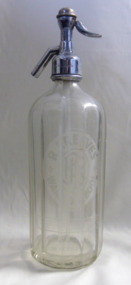
Functional object - Bottles, Syphon R.J Reeves, Early to mid 20th Century
... warrnambool...reeves...J. Reeves Warrnambool and its use by others is prohibited.British syphon company Limited London....J. Reeves Warrnambool and its use by others is prohibited.British syphon company Limited London. ...Ralph Reeves purchased an established cordial factory in the early 1900’s from the estate of J Fletcher. It was operated by the Reeves family, firstly Reginald, followed by his son-in-law Murray Moon until the latter part of the 20th century.A common object familiar to a large number of people in the Warrnambool area with links to one of Warrnambool’s longest established family businesses. Two clear glass. Cylindrical with 12 ribs. Chrome metal top with lever and spout. Logo etched on front of bottles Inscriptions and Markings: “R. J. Reeves” engraved on side of lid. “R. J. Reeves Warrnambool in oval surrounding RJR. This syphon remains the property of R. J. Reeves Warrnambool and its use by others is prohibited.British syphon company Limited London.warrnambool, reeves, soda syphon, reeves soft drink, reeves cordial. -
 Warrnambool and District Historical Society Inc.
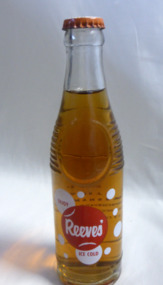
Functional object - Bottle, Reeves Dry Ginger, Circa late 20th century
... warrnambool...reeves...Enjoy Reeves’ ice cold on the front, Bottled by R.J Reeves Warrnambool. Preservative added artificially coloured. ...Enjoy Reeves’ ice cold on the front, Bottled by R.J Reeves Warrnambool. Preservative added artificially coloured. ...Ralph Reeves purchased an established cordial factory in the early 1900’s from the estate of J Fletcher. It was operated by the Reeves family, firstly Reginald, followed by his son-in-law Murray Moon until the latter part of the 20th century. A common object familiar to a large number of people in the Warrnambool area with links to one of Warrnambool’s longest established family businesses.Two clear glass bottles with rib pattern and circles at bottom of neck. Transfer label with small white circles and one larger red one. Top is white with orange writing. Contains Dry Ginger.Enjoy Reeves’ ice cold on the front, Bottled by R.J Reeves Warrnambool. Preservative added artificially coloured. Net contents 7 FL. OZ. warrnambool, reeves, reeves soft drink, reeves cordial. -
 Warrnambool and District Historical Society Inc.
Container - Bottle, Reeves Stopper bottle, 1950s
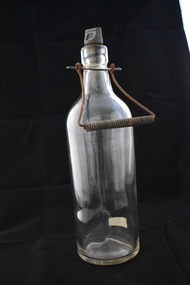
... Reeves Cordial Factory, Warrnambool...Fletcher’s business continued until 1930 when it was bought by Ralph Reeves. Coming to Warrnambool about 1900, Ralph Reeves managed a Banyan Street, Warrnambool cordial factory which had been established by John Rowley. ...This bottle is of interest as an example of a lemonade bottle form Reeves Cordial Factory in Warrnambool. The Reeves family operated this business in Warrnambool for 40 years. ...This bottle comes from the Warrnambool aerated water factory of Reg Reeves. This factory, in Koroit Street, Warrnambool, was established in the 1860s as the Union Cordial Factory by John Davis and then bought by John Fletcher in 1885. Fletcher’s business continued until 1930 when it was bought by Ralph Reeves. Coming to Warrnambool about 1900, Ralph Reeves managed a Banyan Street, Warrnambool cordial factory which had been established by John Rowley. Ralph Reeves bought a business in 1916 at Hamilton and sold it in 1929 to concentrate on the Warrnambool business. Reeves was joined by his son Reg in Warrnambool and Reg operated the business from 1946 to 1972. The trade name of Reeves was still used after Reg Reeves died and continued on for some years. This bottle is of interest as an example of a lemonade bottle form Reeves Cordial Factory in Warrnambool. The Reeves family operated this business in Warrnambool for 40 years. Cordial manufacturing was an important industry in Warrnambool for over 100 years. This is a clear glass lemonade bottle with a round base, a rounded body and a smaller circular neck with a screw top stopper made of composite material. A metal handle is attached to the neck section and it has a coil of metal on the handle for easier handling. The stopper has the name of the manufacturer of the soft drink. ‘R.V.Reeves R.V.R.’ (twice)reeves cordial factory, warrnambool, cordial manufacturing in warrnambool, history of warrnambool -
 Warrnambool and District Historical Society Inc.
Label, Gaspars Modern Print, Reeves, 1930s
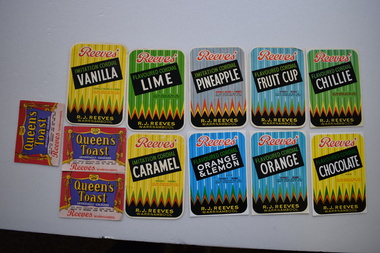
... These labels come from the Warrnambool Reeves Cordial Factory. John Reeves came to Warrnambool about 1900 and managed the cordial bottling plant in Banyan Street for Jim Kelly who traded under the name of the previous cordial manufacturer, J. ....1 Reeves’ Imitation Cordial Vanilla .2 Reeves’ Imitation Cordial Caramel .3 Reeves’ Flavoured Cordial Lime .4 Reeves’ Flavoured Cordial Chocolate .5 Reeves’ Flavoured Cordial Chillie .6 Reeves’ Flavoured Cordial Orange .7 Reeves’ Flavoured Cordial Orange & Lemon .8 Reeves’ Flavoured Cordial Fruit Cup .9 Reeves’ Flavoured Cordial Pineapple .10 Queen’s Toast Artificially Coloured Reeves Warrnambool ...These labels come from the Warrnambool Reeves Cordial Factory. John Reeves came to Warrnambool about 1900 and managed the cordial bottling plant in Banyan Street for Jim Kelly who traded under the name of the previous cordial manufacturer, J. ...These labels come from the Warrnambool Reeves Cordial Factory. John Reeves came to Warrnambool about 1900 and managed the cordial bottling plant in Banyan Street for Jim Kelly who traded under the name of the previous cordial manufacturer, J. S. Rowley. In 1931 John Reeves purchased the cordial factory in Koroit Street from the estate of John Fletcher. John Reeves’ son, Reg managed the cordial business in Koroit Street until 1946 when he took over from his father and carried on the business until his death in 1972. In 1977 Reeves’ son-in-law carried on the business under the trading name of Reeves. The building in Koroit Street that stands today was erected in 1957 when the original building was demolished. These labels are of interest because they are colourful and pleasing to the eye and because the Reeves Cordial Factory was a major business in Warrnambool for several decades in the 20th century..1 to .9 Piece of paper with curved edges with multi-coloured printing and coloured geometric decoration. .10 A piece of paper with yellow, red and white printing and images of a crown and a stage curtain. .1 Reeves’ Imitation Cordial Vanilla .2 Reeves’ Imitation Cordial Caramel .3 Reeves’ Flavoured Cordial Lime .4 Reeves’ Flavoured Cordial Chocolate .5 Reeves’ Flavoured Cordial Chillie .6 Reeves’ Flavoured Cordial Orange .7 Reeves’ Flavoured Cordial Orange & Lemon .8 Reeves’ Flavoured Cordial Fruit Cup .9 Reeves’ Flavoured Cordial Pineapple .10 Queen’s Toast Artificially Coloured Reeves Warrnambool reeves cordial factory, history of warrnambool -
 Warrnambool and District Historical Society Inc.
Functional object - Reeves Fletcher Soda Syphon, 1920s
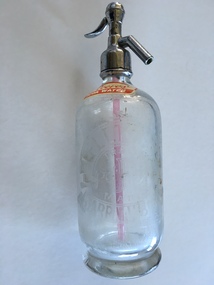
... This is a soda syphon for holding soda water used by the aerated waters business of Reeves of Warrnambool (possibly bottled in the 1970s or 80s). ...Fletcher of Warrnambool is etched into the glass. There is also a red and cream paper label of Reeves....Paper label: ‘Reeves soda water’ Glass etching: ‘J. Fletcher, Warrnambool, F. Trade Mark’ ...This is a soda syphon for holding soda water used by the aerated waters business of Reeves of Warrnambool (possibly bottled in the 1970s or 80s). ...This is a soda syphon for holding soda water used by the aerated waters business of Reeves of Warrnambool (possibly bottled in the 1970s or 80s). It is a Fletcher bottle. John Davis established a cordial business in Warrnambool in 1859 and this business was taken over by John Fletcher. Ralph Reeves purchased the Fletcher business from the estate of the late John Fletcher in 1931 and continued to use the Fletcher bottles. The business of Reeves soft drinks continued in Koroit Street until the 1980s.This soda syphon is of considerable importance as it links two prominent soft drinks makers in Warrnambool – Fletcher and Reeves. It will be useful for display as it tells of a time when this sort of soda syphon was in use.This bottle is a soda syphon with an oblong-shaped glass base and a metal spout. It has a solid glass base and a pink-coloured tube inside the bottle. It has a chip on the base and the spout is a little corroded. The name and logo (scrolls and patterns) of J. Fletcher of Warrnambool is etched into the glass. There is also a red and cream paper label of Reeves.Paper label: ‘Reeves soda water’ Glass etching: ‘J. Fletcher, Warrnambool, F. Trade Mark’ john fletcher, reeves family -
 Flagstaff Hill Maritime Museum and Village
Craft - Ship Model, Heather, before Dec 1983
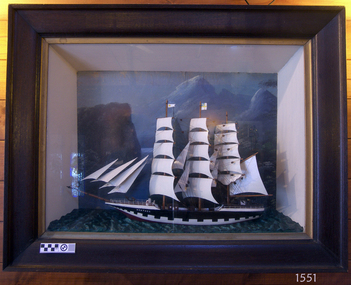
... The letters refer to the founder of the Ellerman Group, John Reeves Ellerman. flagstaff hill warrnambool shipwrecked-coast flagstaff-hill flagstaff-hill-maritime-museum maritime-museum shipwreck-coast flagstaff-hill-maritime-village ship model sailing ship heather tall ship diorama diorama sailing vessel john reeves ellerman. jre ellerman wilson line pty. ltd "HEATHER" on bow. ...The blue pennant with the white letters "J R E" flag of the Ellerman Wilson Line Pty. Ltd. of Hull. The letters refer to the founder of the Ellerman Group, John Reeves Ellerman. Ship model of the vessel "Heather", a three masted tall ship. Model is painted black and white with a brown deck. Sails are raised. The name "HEATHER" is painted in white on it black bow. The ship is displayed as a diorama in a glass fronted, wide edged timber frame with deep sides. The back of the frame is painted pale green. The base of the frame depicts textured sea and the back has a seascape with a cliff and other sailing vessels. Ship is flying two pennants, top one is blue with 'JRE" on it, bottom one is plain white with a red disc and a swallow-tailed end; the rectangular flag is divided by a yellow cross on white, and the top left corner is blue with a yellow anchor symbol on it. "HEATHER" on bow. "JRE" on blue pennant.flagstaff hill, warrnambool, shipwrecked-coast, flagstaff-hill, flagstaff-hill-maritime-museum, maritime-museum, shipwreck-coast, flagstaff-hill-maritime-village, ship model, sailing ship heather, tall ship diorama, diorama, sailing vessel, john reeves ellerman., jre, ellerman wilson line pty. ltd -
 Flagstaff Hill Maritime Museum and Village
Container - Torpedo Bottle, Last quarter of the 19th century
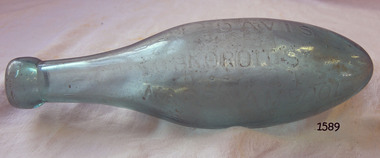
... As a young boy John Fletcher worked at the cordial factory of John Rowley in Banyan Street, Warrnambool and then worked for a number of years for John Davis at his Union Cordial Factory. In 1885 John Fletcher succeeded John Davis and continued in this business until 1930. The business was then taken over by Ralph Reeves...As a young boy John Fletcher worked at the cordial factory of John Rowley in Banyan Street, Warrnambool and then worked for a number of years for John Davis at his Union Cordial Factory. In 1885 John Fletcher succeeded John Davis and continued in this business until 1930. The business was then taken over by Ralph Reeves ...This bottle has come from the aerated waters factory of John Fletcher of Warrnambool. This factory in Koroit Street was established in the mid 19th century by John Davis. As a young boy John Fletcher worked at the cordial factory of John Rowley in Banyan Street, Warrnambool and then worked for a number of years for John Davis at his Union Cordial Factory. In 1885 John Fletcher succeeded John Davis and continued in this business until 1930. The business was then taken over by Ralph Reeves. John Fletcher manufactured aerated waters, soda, tonic waters, lemonade, ginger ale, hop beer, hop bitters, sarsaparilla and cordials. The bottle would have been sealed with a cork stopper. The torpedo shape of the bottle would ensure that it was stored on its side, keeping the cork moist so that it didn't shrink and cause the bottle to leak its contents.The bottle is significant for its unusual torpedo shape and for being sold by the long standing John Fletcher's soft drink business in Warrnambool who was a prominent soft drinks manufacturer in Warrnambool for over 40 years.Torpedo shaped green glass bottle, name of manufacture of contents, John Fletcher Late and J. Davis, of Koroit St Warrnambool, is impressed in the glass."John Fletcher Late and J. Davis Koroit St Warrnambool"flagstaff hill, warrnambool, shipwrecked-coast, flagstaff-hill, flagstaff-hill-maritime-museum, maritime-museum, shipwreck-coast, flagstaff-hill-maritime-village, torpedo shaped glass bottle, torpedo bottle, bottle, john fletcher late and j. davis koroit st warrnambool, john fletcher late and j. davis, john fletcher late, j. davis -
 Flagstaff Hill Maritime Museum and Village
Soda Syphon, 1900-1930’s
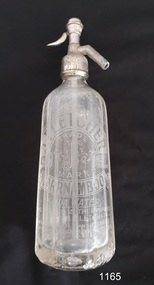
... Warrnambool that was previously owned by John Davis. Fletcher operated the factory as J Fletcher, John Fletcher and Fletcher’s. He eventually sold his business and stock in 1930 to Ralph Reeves, who may have continued using Fletcher’s supply of drink containers before renewing them with stock showing his own brand. ...Warrnambool that was previously owned by John Davis. Fletcher operated the factory as J Fletcher, John Fletcher and Fletcher’s. He eventually sold his business and stock in 1930 to Ralph Reeves, who may have continued using Fletcher’s supply of drink containers before renewing them with stock showing his own brand. ...This soda syphon (or siphon) was distributed by John Fletcher of Warrnambool, and made by the British Syphon Mfg. Co. Ltd. of London between the 1900s-1930s. It comprises a multi-sided clear glass bottle, an internal glass tube and a metal release valve and spout on the top. It was used to dispense pressurised, effervescent soda water. It was often used as an alternative to water or added to fruit juices and cordials. The text on this bottle states that it remains the property of the retailer, John Fletcher, and must be returned to him. Customers were asked for a deposit on the bottle, which would be refunded when the bottle was exchanged or continued as the deposit on a fresh bottle. Returned bottles would be cleaned and recharged with the gas and sold again. Soda syphon are bottles, glass or metal, with a release valve and spout on the top. The valve lever on the top of the syphon, when depressed, causes the gas in the syphon to force the water up through the tube and out of the spout. The bottle’s mechanism gives the water an effervescent quality to make bubbly drinks such as sparkling mineral water, soda water and sparkling water. ABOUT JOHN FLETCHER John Fletcher bought the Union Cordial Factory in Koroit Street, Warrnambool that was previously owned by John Davis. Fletcher operated the factory as J Fletcher, John Fletcher and Fletcher’s. He eventually sold his business and stock in 1930 to Ralph Reeves, who may have continued using Fletcher’s supply of drink containers before renewing them with stock showing his own brand. The soda syphon is representative of drink containers used in the later 19th and early 20th century. It also represents the system of returnable, recyclable containers. Soda syphon (or siphon). Glass bottle, clear, multi sided, tapered from a heavy glass base to a narrower shoulder, with glass tube at centre connected to metal pump mechanism at the top. Has elaborate frosted label for J. Fletcher of Warrnambool. Made by the British Syphon Mfg. Co. Ltd. London. Bottle remains the property of John Fletcher, Warrnambool.Metal syphon has impressed "J FLETCHER" and logo "S S" in centre of two concentric circles with text between circles "BRITISH SYPHON MFG. CO. LTD. LONDON". Etched into glass "J. FLETCHER / WARRNAMBOOL", "TRADE "[stylised] F" / MARK", "SODA WATER", "THIS SYPHON IS THE PROPERTY / OF JOHN FLETCHER / WARRNAMBOOL AND CONNOT BE / AND CONNOT BE LEGALLY USED BY OTHERS / BRITISH SYPHON CO. TLD. LONDON / - - - - "flagstaff hill, warrnambool, shipwrecked coast, flagstaff hill maritime museum, maritime museum, shipwreck coast, flagstaff hill maritime village, great ocean road, john fletcher, fletcher, john fletcher of warrnambool, soda siphon, soda syphon, british syphon mfg co ltd of london, soft drinks, soda drinks -
 Flagstaff Hill Maritime Museum and Village
Functional object - Brush, 1930-1955's
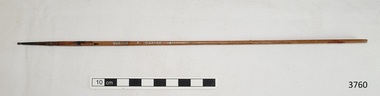
... The Sovereign of the Seas was a historic 17th century English war ship with important maritime heritage. flagstaff hill warrnambool flagstaff hill maritime museum maritime museum shipwreck coast flagstaff hill maritime village great ocean road jim williams james bernard williams ship model hobby ship model tools ship model making equipment ship model making accessories paint brush REEVES OF ENGLAND Sovereign of the sea Ship model Hobby Ship model tool BRUSH Printed on handle -“MADE IN / ENGLAND” , “REEVES”, “157”, “0” Paint brush, narrow ‘0’ size, Reeves brand, no. 157, made in England. ...This fine Reeves paint brush was used in the making of components for the ship model Sovereign of the Seas. It is part of a collection of objects used by Jim Williams, maker of fine ship models from about 1930-1955. Most of the components for the models, as well as many of the tools, were handmade by Jim Williams. Jim’s family has donated the ship model “Sovereign of the Seas” and many tools, accessories and documents used in the making of this and other ship models have been donated to Flagstaff Hill Maritime Village. REEVES - Reeves & Sons Ltd, makers of fine art supplies, operated under this name in London, England, 1891-1976. The company was founded as Thomas Reeves and Son in 1784. SOVEREIGN OF THE SEAS - Ship model of HMS Sovereign of the Seas, scale model of 17th Century English war ship, was handmade and carved from plans, enclosed in airtight glass case. All components of that model, including even the smallest pulleys, were hand crafted using tools designed and made by Jim. Outstanding details include functional rigging and moving cannons. Please see our record 3732 of the mode Sovereign of the Seas for further details of the ship and the maker. This brush is connected with the hobby and skill of ship model making that has been crafted as a leisure activity for many generations. The hobby is often chosen by serving and retired mariners who appreciate the connection with maritime history. This brush was used by local Warrnambool man, Jim Williams, who was employed at Cramond and Dickson clothing store, and then at Fletcher Jones menswear for 27 years. It was used in making components for the model of the historic ship, the Sovereign of the Seas. The Sovereign of the Seas was a historic 17th century English war ship with important maritime heritage. Paint brush, narrow ‘0’ size, Reeves brand, no. 157, made in England. Inscription printed in silver paint. This paint brush is part of a collection of tools and accessories once used by Jim Williams, maker of a series of ship models 1930-1955 including “HMS Sovereign of the Seas”. Printed on handle -“MADE IN / ENGLAND” , “REEVES”, “157”, “0”flagstaff hill, warrnambool, flagstaff hill maritime museum, maritime museum, shipwreck coast, flagstaff hill maritime village, great ocean road, jim williams, james bernard williams, ship model hobby, ship model tools, ship model making equipment, ship model making accessories, paint brush, reeves of england, sovereign of the sea, ship model, hobby, ship model tool, brush -
 Flagstaff Hill Maritime Museum and Village
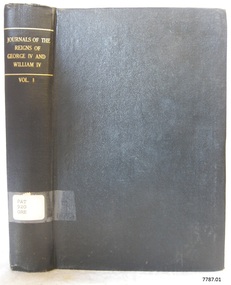
Book - Journal, Charles Greville, A Journal of The Reigns of King George IV and King William IV Vol 1, 1875
... Warrnambool Library...Free Library...Corangamite Regional Library Service...Longmans Green and Co....1724...Thomas Longman...Paternoster Row London...A Journal of The Reigns of King George IV and King William IV...Charles C. F. Greville...Esq....Henry Reeve...The books were edited by Henry Reeve, Registrar of the Privy Council, and published in 1875 after Geville's death, according to his instructions. The book is part of Flagstaff Hill’s Pattison Collection of books which originated from the Warrnambool Mechanics’ Institute. ...Flagstaff Hill Flagstaff Hill Maritime Museum and Village Warrnambool Maritime Museum Maritime Village Great Ocean Road Shipwreck Coast Pattison Collection Ralph Eric Pattison Warrnambool Mechanics’ Institute Mechanics’ Institute Library Warrnambool Library Free Library Corangamite Regional Library Service Longmans Green and Co. 1724 Thomas Longman Paternoster Row London A Journal of The Reigns of King George IV and King William IV Charles C. F. Greville Esq. Henry Reeve ...This volume is one of three volumes in the work ‘A Journal of The Reigns of King George IV and King William IV’ that extends over the years from 1817 to 1837. The set of books was written by Charles C.F. Greville, Esq. (1794-1865), Clerk of the Council to those Sovereigns. The books were edited by Henry Reeve, Registrar of the Privy Council, and published in 1875 after Geville's death, according to his instructions. The book is part of Flagstaff Hill’s Pattison Collection of books which originated from the Warrnambool Mechanics’ Institute. The publisher firm, Longmans, Green & Co, was originally founded in 1724 in London by Thomas Longman under the name Longman. In August of that year, he bought the two shops and goods of William Taylor and set up his publishing house there at 39 Paternoster Row. The shops were called Black Swan and Ship, and it is said that the 'ship' sign was the inspiration for Longman's Logo. After many changes of name and management, the firm was incorporated in 1926 as Longmans, Green & Co. Pty Ltd. The firm was acquired by Pearson in 1968 and was known as Pearson Longman or Pearson PLC. The set of books provide an insight into the public and personal lives and duties of British Roay Families and the roles they played in the 19th century. The book is significant for its connection to the publisher Longmans, Green and Co., of London, a firm that has been established for over two centuries, renowned for publishing encyclopedias, dictionaries, books on English grammar, textbooks, poetry, reference books, novels, magazines and more. The book has additional importance for its connection to the Pattison Collection, which, along with other items at Flagstaff Hill Maritime Village, was originally part of the Warrnambool Mechanics' Institutes’ Collection. The Warrnambool Mechanics’ Institute book collection has historical and social significance for its strong association with the Mechanics Institute movement and its important role in people's intellectual, cultural and social development throughout the latter part of the nineteenth century and the early twentieth century. The collection of books is a rare example of an early lending library and its significance is enhanced by the survival of an original collection of many volumes. The Warrnambool Mechanics' Institute’s publication collection is of both local and state significance.A Journal of The Reigns of King George IV and King William IV Vol 1 Author: Charles C. F. Greville, Esq. Editor: Henry Reeve Publisher: Longmans Green & Co Date: 1875 Fourth Edition. One of three volumes. Part of the Pattison Collection. Green hardback covers with gold embossed spine. Inscriptions on a label, stickers and stamps.Label: "PAT 920 GRE" Sticker: " Warrnambool Public Library" covered by a sticker "Corangamite Regional Library Service" Stamp: "WARRNAMBOOL MECHANICS' INSTITUTE" Handwriting: "P/W" "5312"flagstaff hill, flagstaff hill maritime museum and village, warrnambool, maritime museum, maritime village, great ocean road, shipwreck coast, pattison collection, ralph eric pattison, warrnambool mechanics’ institute, mechanics’ institute library, warrnambool library, free library, corangamite regional library service, longmans green and co., 1724, thomas longman, paternoster row london, a journal of the reigns of king george iv and king william iv, charles c. f. greville, esq., henry reeve, 1817 to 1837, charles greville, the greville memiors -
 Flagstaff Hill Maritime Museum and Village
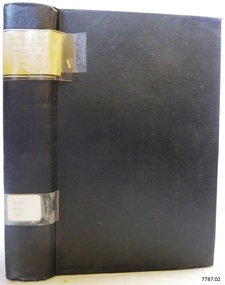
Book - Journal, Charles Greville, A Journal of The Reigns of King George IV and King William IV Vol 2, 1875
... Warrnambool Library...Free Library...Corangamite Regional Library Service...Longmans Green and Co....L & Co....1724...Thomas Longman...Paternoster Row London...A Journal of The Reigns of King George IV and King William IV...Charles C. F. Greville...Esq....Charles Greville...Henry Reeve...The books were edited by Henry Reeve, Registrar of the Privy Council, and published in 1875 after Greville’s death, according to his instructions. The book is part of Flagstaff Hill’s Pattison Collection of books which originated from the Warrnambool Mechanics’ Institute. ...Warrnambool Library Free Library Corangamite Regional Library Service Longmans Green and Co. L & Co. 1724 Thomas Longman Paternoster Row London A Journal of The Reigns of King George IV and King William IV Charles C. F. Greville Esq. Charles Greville Henry Reeve ...This volume is one of three volumes in the work ‘A Journal of The Reigns of King George IV and King William IV’ that extends over the years from 1817 to 1837. The set of books was written by Charles C.F. Greville, Esq. (1794-1865), Clerk of the Council to those Sovereigns. The books were edited by Henry Reeve, Registrar of the Privy Council, and published in 1875 after Greville’s death, according to his instructions. The book is part of Flagstaff Hill’s Pattison Collection of books which originated from the Warrnambool Mechanics’ Institute. The publisher firm, Longmans, Green & Co, was originally founded in 1724 in London by Thomas Longman under the name Longman. In August of that year, he bought the two shops and goods of William Taylor and set up his publishing house there at 39 Paternoster Row. The shops were called Black Swan and Ship, and it is said that the 'ship' sign was the inspiration for Longman's Logo. After many changes of name and management, the firm was incorporated in 1926 as Longmans, Green & Co. Pty Ltd. The firm was acquired by Pearson in 1968 and was known as Pearson Longman or Pearson PLC. The set of books provide an insight into the public and personal lives and duties of British Roay Families and the roles they played in the 19th century. The book is significant for its connection to the publisher Longmans, Green and Co., of London, a firm that has been established for over two centuries, renowned for publishing encyclopedias, dictionaries, books on English grammar, textbooks, poetry, reference books, novels, magazines and more. The book has additional importance for its connection to the Pattison Collection, which, along with other items at Flagstaff Hill Maritime Village, was originally part of the Warrnambool Mechanics' Institutes’ Collection. The Warrnambool Mechanics’ Institute book collection has historical and social significance for its strong association with the Mechanics Institute movement and its important role in people's intellectual, cultural and social development throughout the latter part of the nineteenth century and the early twentieth century. The collection of books is a rare example of an early lending library and its significance is enhanced by the survival of an original collection of many volumes. The Warrnambool Mechanics' Institute’s publication collection is of both local and state significance.A Journal of The Reigns of King George IV and King William IV Vol 2 Author: Charles C. F. Greville, Esq. Editor: Henry Reeve Publisher: Longmans Green & Co Date: 1875 Fourth Edition. One of three volumes. Part of the Pattison Collection. Green hardback covers with gold embossed spine—inscriptions on a label, stickers and stamps.Label: "PAT 920 GRE" Sticker: " Warrnambool Public Library" covered by a sticker "Corangamite Regional Library Service" flagstaff hill, flagstaff hill maritime museum and village, warrnambool, maritime museum, maritime village, great ocean road, shipwreck coast, pattison collection, ralph eric pattison, warrnambool mechanics’ institute, mechanics’ institute library, warrnambool library, free library, corangamite regional library service, longmans green and co., l & co., 1724, thomas longman, paternoster row london, a journal of the reigns of king george iv and king william iv, charles c. f. greville, esq., charles greville, henry reeve, 1817 to 1837, the greville memiors -
 Flagstaff Hill Maritime Museum and Village
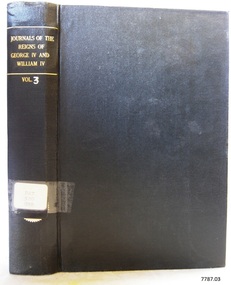
Book - Journal, Charles Greville, A Journal of The Reigns of King George IV and King William IV Vol 3, 1875
... Warrnambool Library...Free Library...Corangamite Regional Library Service...Longmans Green and Co....1724...Thomas Longman...Paternoster Row London...A Journal of The Reigns of King George IV and King William IV...Charles C. F. Greville...Esq....Henry Reeve...The books were edited by Henry Reeve, Registrar of the Privy Council, and published in 1875 after Geville's death, according to his instructions. The book is part of Flagstaff Hill’s Pattison Collection of books which originated from the Warrnambool Mechanics’ Institute. ...Flagstaff Hill Flagstaff Hill Maritime Museum and Village Warrnambool Maritime Museum Maritime Village Great Ocean Road Shipwreck Coast Pattison Collection Ralph Eric Pattison Warrnambool Mechanics’ Institute Mechanics’ Institute Library Warrnambool Library Free Library Corangamite Regional Library Service Longmans Green and Co. 1724 Thomas Longman Paternoster Row London A Journal of The Reigns of King George IV and King William IV Charles C. F. Greville Esq. Henry Reeve ...This volume is one of three volumes in the work ‘A Journal of The Reigns of King George IV and King William IV’ that extends over the years from 1817 to 1837. The set of books was written by Charles C.F. Greville, Esq. (1794-1865), Clerk of the Council to those Sovereigns. The books were edited by Henry Reeve, Registrar of the Privy Council, and published in 1875 after Geville's death, according to his instructions. The book is part of Flagstaff Hill’s Pattison Collection of books which originated from the Warrnambool Mechanics’ Institute. The publisher firm, Longmans, Green & Co, was originally founded in 1724 in London by Thomas Longman under the name Longman. In August of that year, he bought the two shops and goods of William Taylor and set up his publishing house there at 39 Paternoster Row. The shops were called Black Swan and Ship, and it is said that the 'ship' sign was the inspiration for Longman's Logo. After many changes of name and management, the firm was incorporated in 1926 as Longmans, Green & Co. Pty Ltd. The firm was acquired by Pearson in 1968 and was known as Pearson Longman or Pearson PLC.The set of books provide an insight into the public and personal lives and duties of British Roay Families and the roles they played in the 19th century. The book is significant for its connection to the publisher Longmans, Green and Co., of London, a firm that has been established for over two centuries, renowned for publishing encyclopedias, dictionaries, books on English grammar, textbooks, poetry, reference books, novels, magazines and more. The book has additional importance for its connection to the Pattison Collection, which, along with other items at Flagstaff Hill Maritime Village, was originally part of the Warrnambool Mechanics' Institutes’ Collection. The Warrnambool Mechanics’ Institute book collection has historical and social significance for its strong association with the Mechanics Institute movement and its important role in people's intellectual, cultural and social development throughout the latter part of the nineteenth century and the early twentieth century. The collection of books is a rare example of an early lending library and its significance is enhanced by the survival of an original collection of many volumes. The Warrnambool Mechanics' Institute’s publication collection is of both local and state significance.A Journal of The Reigns of King George IV and King William IV Vol 3 Author: Charles C. F. Greville, Esq. Editor: Henry Reeve Publisher: Longmans Green & Co Date: 1875 Fourth Edition. One of three volumes. Part of the Pattison Collection. Green hardback covers with gold embossed spine—inscriptions on a label, stickers and stamp..Label: "PAT 920 GRE" Sticker: " Warrnambool Public Library" covered by a sticker "Corangamite Regional Library Service" Stamp: "WARRNAMBOOL MECHANICS' INSTITUTE"flagstaff hill, flagstaff hill maritime museum and village, warrnambool, maritime museum, maritime village, great ocean road, shipwreck coast, pattison collection, ralph eric pattison, warrnambool mechanics’ institute, mechanics’ institute library, warrnambool library, free library, corangamite regional library service, longmans green and co., 1724, thomas longman, paternoster row london, a journal of the reigns of king george iv and king william iv, charles c. f. greville, esq., henry reeve, 1817 to 1837, charles greville, the greville memiors -
 Flagstaff Hill Maritime Museum and Village
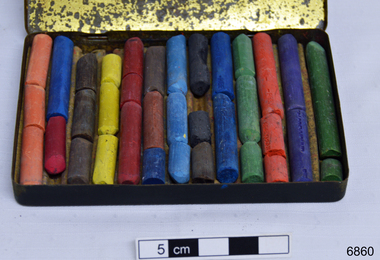
Equipment - Pastels, Reeves', c. 1930's
... Dr Angus assisted Dr Tom Ryan, a pioneer in the use of X-rays and in ocular surgery. flagstaff hill warrnambool shipwrecked coast flagstaff hill maritime museum maritime museum shipwreck coast flagstaff hill maritime village great ocean road dr w r angus pastels reeve's pastels drawing pastels artwork pastel drawing by dr angus 1932 art materials Text on lid "REEVES' / GREYHOUND / PASTELS / MADE IN AUSTRALIA" and on each side are logos of greyhounds. ...This tin of pastels contains the pastels most likely used by Dr Angus in creating his pastel drawing in 1932, which is on display in the in Flagstaff Hill's Port Medical Office. The tin of pastels was donated to Flagstaff Hill Maritime Village by the family of Doctor William Roy Angus, Surgeon and Oculist. It is part of the “W.R. Angus Collection” that includes historical medical equipment, surgical instruments and material once belonging to Dr Edward Ryan and Dr Thomas Francis Ryan, (both of Nhill, Victoria) as well as Dr Angus’ own belongings. The Collection’s history spans the medical practices of the two Doctors Ryan, from 1885-1926 plus that of Dr Angus, up until 1969. ABOUT THE “W.R.ANGUS COLLECTION” Doctor William Roy Angus M.B., B.S., Adel., 1923, F.R.C.S. Edin.,1928 (also known as Dr Roy Angus) was born in Murrumbeena, Victoria in 1901 and lived until 1970. He qualified as a doctor in 1923 at University of Adelaide, was Resident Medical Officer at the Royal Adelaide Hospital in 1924 and for a period was house surgeon to Sir (then Mr.) Henry Simpson Newland. Dr Angus was briefly an Assistant to Dr Riddell of Kapunda, then commenced private practice at Curramulka, Yorke Peninsula, SA, where he was physician, surgeon and chemist. In 1926, he was appointed as new Medical Assistant to Dr Thomas Francis Ryan (T.F. Ryan, or Tom), in Nhill, Victoria, where his experiences included radiology and pharmacy. In 1927 he was Acting House Surgeon in Dr Tom Ryan’s absence. Dr Angus had become engaged to Gladys Forsyth and they decided he further his studies overseas in the UK in 1927. He studied at London University College Hospital and at Edinburgh Royal Infirmary and in 1928, was awarded FRCS (Fellow from the Royal College of Surgeons), Edinburgh. He worked his passage back to Australia as a Ship’s Surgeon on the on the Australian Commonwealth Line’s T.S.S. Largs Bay. Dr Angus married Gladys in 1929, in Ballarat. (They went on to have one son (Graham 1932, born in SA) and two daughters (Helen (died 12/07/1996) and Berenice (Berry), both born at Mira, Nhill ) According to Berry, her mother Gladys made a lot of their clothes. She was very talented and did some lovely embroidery including lingerie for her trousseau and beautifully handmade baby clothes. Dr Angus was a ‘flying doctor’ for the A.I.M. (Australian Inland Ministry) Aerial Medical Service in 1928 . Its first station was in the remote town of Oodnadatta, where Dr Angus was stationed. He was locum tenens there on North-South Railway at 21 Mile Camp. He took up this ‘flying doctor’ position in response to a call from Dr John Flynn; the organisation was later known as the Flying Doctor Service, then the Royal Flying Doctor Service. A lot of his work during this time involved dental surgery also. Between 1928-1932 he was surgeon at the Curramulka Hospital, Yorke Peninsula, South Australia. In 1933 Dr Angus returned to Nhill and purchased a share of the Nelson Street practice and Mira hospital (a 2 bed ward at the Nelson Street Practice) from Dr Les Middleton one of the Middleton Brothers, the current owners of what previously once Dr Tom Ryan’s practice. Dr Tom and his brother had worked as surgeons included eye surgery. Dr Tom Ryan performed many of his operations in the Mira private hospital on his premises. He had been House Surgeon at the Nhill Hospital 1902-1926. Dr Tom Ryan had one of the only two pieces of radiology equipment in Victoria during his practicing years – The Royal Melbourne Hospital had the other one. Over the years Dr Tom Ryan had gradually set up what was effectively a training school for country general-practitioner-surgeons. Each patient was carefully examined, including using the X-ray machine, and any surgery was discussed and planned with Dr Ryan’s assistants several days in advance. Dr Angus gained experience in using the X-ray machine there during his time as assistant to Dr Ryan. When Dr Angus bought into the Nelson Street premises in Nhill he was also appointed as the Nhill Hospital’s Honorary House Surgeon 1933-1938. His practitioner’s plate from his Nhill surgery is now mounted on the doorway to the Port Medical Office at Flagstaff Hill Maritime Village, Warrnambool. When Dr Angus took up practice in the Dr Edward and Dr Tom Ryan’s old premises he obtained their extensive collection of historical medical equipment and materials spanning 1884-1926. A large part of this collection is now on display at the Port Medical Office at Flagstaff Hill Maritime Village in Warrnambool. In 1939 Dr Angus and his family moved to Warrnambool where he purchased “Birchwood,” the 1852 home and medical practice of Dr John Hunter Henderson, at 214 Koroit Street. (This property was sold in1965 to the State Government and is now the site of the Warrnambool Police Station. and an ALDI sore is on the land that was once their tennis court). The Angus family was able to afford gardeners, cooks and maids; their home was a popular place for visiting dignitaries to stay whilst visiting Warrnambool. Dr Angus had his own silk worm farm at home in a Mulberry tree. His young daughter used his centrifuge for spinning the silk. Dr Angus was appointed on a part-time basis as Port Medical Officer (Health Officer) in Warrnambool and held this position until the 1940’s when the government no longer required the service of a Port Medical Officer in Warrnambool; he was thus Warrnambool’s last serving Port Medical Officer. (Masters of immigrant ships arriving in port reported incidents of diseases, illness and death and the Port Medical Officer made a decision on whether the ship required Quarantine and for how long, in this way preventing contagious illness from spreading from new immigrants to the residents already in the colony.) Dr Angus was a member of the Australian Medical Association, for 35 years and surgeon at the Warrnambool Base Hospital 1939-1942, He served as a Surgeon Captain during WWII1942-45, in Ballarat, Victoria, and in Bonegilla, N.S.W., completing his service just before the end of the war due to suffering from a heart attack. During his convalescence he carved an intricate and ‘most artistic’ chess set from the material that dentures were made from. He then studied ophthalmology at the Royal Melbourne Eye and Ear Hospital and created cosmetically superior artificial eyes by pioneering using the intrascleral cartilage. Angus received accolades from the Ophthalmological Society of Australasia for this work. He returned to Warrnambool to commence practice as an ophthalmologist, pioneering in artificial eye improvements. He was Honorary Consultant Ophthalmologist to Warrnambool Base Hospital for 31 years. He made monthly visits to Portland as a visiting surgeon, to perform eye surgery. He represented the Victorian South-West subdivision of the Australian Medical Association as its secretary between 1949 and 1956 and as chairman from 1956 to 1958. In 1968 Dr Angus was elected member of Spain’s Barraquer Institute of Barcelona after his research work in Intrasclearal cartilage grafting, becoming one of the few Australian ophthalmologists to receive this honour, and in the following year presented his final paper on Living Intrasclearal Cartilage Implants at the Inaugural Meeting of the Australian College of Ophthalmologists in Melbourne In his personal life Dr Angus was a Presbyterian and treated Sunday as a Sabbath, a day of rest. He would visit 3 or 4 country patients on a Sunday, taking his children along ‘for the ride’ and to visit with him. Sunday evenings he would play the pianola and sing Scottish songs to his family. One of Dr Angus’ patients was Margaret MacKenzie, author of a book on local shipwrecks that she’d seen as an eye witness from the late 1880’s in Peterborough, Victoria. In the early 1950’s Dr Angus, painted a picture of a shipwreck for the cover jacket of Margaret’s book, Shipwrecks and More Shipwrecks. She was blind in later life and her daughter wrote the actual book for her. Dr Angus and his wife Gladys were very involved in Warrnambool’s society with a strong interest in civic affairs. He had an interest in people and the community They were both involved in the creation of Flagstaff Hill, including the layout of the gardens. After his death (28th March 1970) his family requested his practitioner’s plate, medical instruments and some personal belongings be displayed in the Port Medical Office surgery at Flagstaff Hill Maritime Village, and be called the “W. R. Angus Collection”. The W.R. Angus Collection is significant for still being located at the site it is connected with, Doctor Angus being the last Port Medical Officer in Warrnambool. The collection of medical instruments and other equipment is culturally significant, being an historical example of medicine from late 19th to mid-20th century. Dr Angus assisted Dr Tom Ryan, a pioneer in the use of X-rays and in ocular surgery. Tin of Reeves' Greyhound Pastels Flat tin with hinged lid, painted black with decorative gold embossed label and brand name and logos. Tin contains 34 pieces of pastel drawing sticks in a variety of colours, resting on a layer of corrugated cardboard. Tin has lost most of its gold coloured lining and the embossing on lid is rubbing off. Part of the W.R. Angus Collection. NOTE; W.R. Angus Collection includes a pastel drawing by Dr Angus in 1932Text on lid "REEVES' / GREYHOUND / PASTELS / MADE IN AUSTRALIA" and on each side are logos of greyhounds.flagstaff hill, warrnambool, shipwrecked coast, flagstaff hill maritime museum, maritime museum, shipwreck coast, flagstaff hill maritime village, great ocean road, dr w r angus, pastels, reeve's pastels, drawing pastels, artwork, pastel drawing by dr angus 1932, art materials -
 Warrnambool and District Historical Society Inc.
Functional object - Ginger Ale Bottle, John Fletcher. Koroit Street, Warrnambool, c. 1930
... Warrnambool. He then worked for John Davis who had established the Union Cordial Factory in Koroit Street in the 1860s. In 1885 John Fletcher bought Davis' business and operated it until 1930. It was then bought by Ralph Reeves...Warrnambool. He then worked for John Davis who had established the Union Cordial Factory in Koroit Street in the 1860s. In 1885 John Fletcher bought Davis' business and operated it until 1930. It was then bought by Ralph Reeves ...This bottle was found in sea water while the donor was snorkelling in Stingray Bay, Warrnambool. It is a marble stopper bottle from the Warrnambool cordial factory of John Fletcher. Th bottle was filled upside down so that as soon as the filling ceased the marble was forced down to seal the bottle against a rubber ring (missing in this bottle). Pressure inside the bottle would keep the marble pressed against the top of the neck. To open the bottle the marble was pressed down so that it fell into the body of the bottle. John Fletcher as a young boy worked at Rowley's Cordial Factory in Banyan Street, Warrnambool. He then worked for John Davis who had established the Union Cordial Factory in Koroit Street in the 1860s. In 1885 John Fletcher bought Davis' business and operated it until 1930. It was then bought by Ralph Reeves. John Fletcher manufactured soda water, lemonade, tonic waters, ginger ale, sarsaparilla, cordials, hop beer and hop bitters.This bottle is of some interest as an example of a marble stopper bottle over 90 years old and as a memento of the Warrnambool soft drinks business of John Fletcher, a prominent businessman in Warrnambool for over 40 years.This is a clear glass bottle with a rounded body, a heavy indentation near the base of the neck and a thick tapering neck with a round opening. The bottle contains a green marble and some marine detritus. The bottle is discoloured with stains and dirt and has lettering etched into the side and base.John Fletcher Ginger Ale Warrnambool This bottle is the property of John Fletcher Warrnambool and cannot be legally used by others Gjohn fletcher warrnambool, cordial manufacturers in warrnambool -
 Warrnambool and District Historical Society Inc.
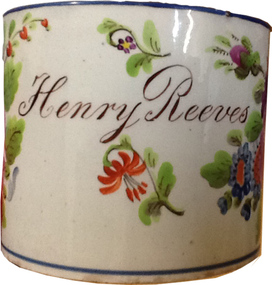
Ceramic - Mug -Henry Reeves, Early 20th century
... warrnambool...henry reeves...No information has been found on Henry Reeves though there have been well-known families bearing that surname in Warrnambool’s history....This mug, at this point of time, has no known local significance, but it is an attractive item and will be useful for display. household items history of warrnambool henry reeves ‘Henry Reeves’ This is a white china mug or cup with coloured flowers and foliage painted on the sides. ...This mug with the name inscribed on the side was perhaps a present for a child. No information has been found on Henry Reeves though there have been well-known families bearing that surname in Warrnambool’s history.This mug, at this point of time, has no known local significance, but it is an attractive item and will be useful for display. This is a white china mug or cup with coloured flowers and foliage painted on the sides. The handle has a blue decoration and the rims of the base and the top are blue. There is a crack on the side and some staining on the inside of the mug. The name ‘Henry Reeves’ is painted on the side of the mug. ‘Henry Reeves’ household items, history of warrnambool, henry reeves -
 Warrnambool and District Historical Society Inc.
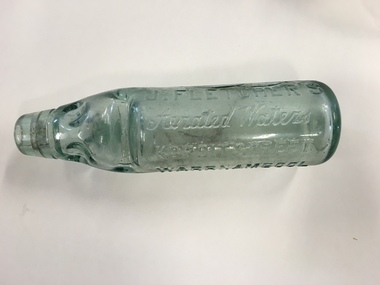
Bottle, J Fletcher's aerated waters, Circa 1900
... Warrnambool from the time of the first settlement up to the 1980s. John Fletcher succeeded John Davis in Koroit Street in 1885 and manufactured aerated waters, soda, lithia, tonic waters, lemonade, ginger ale, hop beer, hop bitters, sarsparilla and cordials. He installed many improvements around the late 1880's including an improved soda water machine which was also used for bottling lemonade, ginger ale and syphons. He sold to Ralph Reeves...Reeves. The premises in Koroit St were auctioned in 1989. Warrnambool cordial bottles are of considerable significance as examples of an important local industry now gone. ...The making of cordials and aerated waters was an important industry in Warrnambool from the time of the first settlement up to the 1980s. John Fletcher succeeded John Davis in Koroit Street in 1885 and manufactured aerated waters, soda, lithia, tonic waters, lemonade, ginger ale, hop beer, hop bitters, sarsparilla and cordials. He installed many improvements around the late 1880's including an improved soda water machine which was also used for bottling lemonade, ginger ale and syphons. He sold to Ralph Reeves in 1930 and the business continued until the 1980's under the name of Reeves. The premises in Koroit St were auctioned in 1989.Warrnambool cordial bottles are of considerable significance as examples of an important local industry now gone. The Fletcher business was a well-known business in Warrnambool for 45 years.Round bottle with raised lettering in glass and indented sections on top section of bottle with marble enclosed. Clear greenish glass.J Fletcher’s Aerated waters Koroit Street Warrnambool vertically on bottle with lemonade horizontally on the other side. M on bottom of bottle.warrnambool,fletcher's aerated waters, fletcher's cordial , cordial bottle, -
 Warrnambool and District Historical Society Inc.
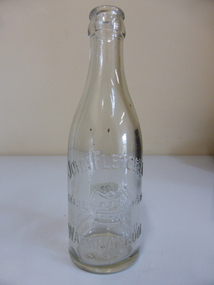
Container - Bottle, John Fletcher
... Warrnambool from the time of the first settlement up to the 1980s. John Fletcher succeeded John Davis in Koroit Street in 1885 and manufactured aerated waters, soda, lithia, tonic waters, lemonade, ginger ale, hop beer, hop bitters, sarsparilla and cordials. He sold to Ralph Reeves... in 1930 and the business continued until the 1908s under the name of Reeves. Warrnambool cordial bottles are of considerable significance as examples of an important local industry now gone. ...The making of cordials and aerated waters was an important industry in Warrnambool from the time of the first settlement up to the 1980s. John Fletcher succeeded John Davis in Koroit Street in 1885 and manufactured aerated waters, soda, lithia, tonic waters, lemonade, ginger ale, hop beer, hop bitters, sarsparilla and cordials. He sold to Ralph Reeves in 1930 and the business continued until the 1908s under the name of Reeves. Warrnambool cordial bottles are of considerable significance as examples of an important local industry now gone. The Fletcher business was a well-known business in Warrnambool for 45 years.This is a small size plain glass bottle manufactured for liquids sold commercially.On side of bottle ‘John Fletcher Warrnambool’ ‘Trade Mark’ with incision of symbol showing a crown with a Maltese Cross and three fleurs-de-lys. Near the base of the bottle is the wording ‘This bottle is the property of John Fletcher Warrnambool & cannot be legally used by others’. On base: ‘M 942, M, A.G.M.’wa, warrnambool,fletcher bottle, fletchers cordials warrnambool, fletcher's aerated water, marble bottle, -
 Warrnambool and District Historical Society Inc.
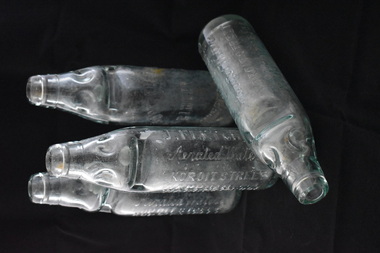
Bottle, J Fletcher Warrnambool, Early 20th century
... Warrnambool and then worked for a number of years for John Davis at his Union Cordial Factory. In 1885 John Fletcher succeeded John Davis and continued in this business until 1930.. The business was then taken over by Ralph Reeves...Warrnambool and then worked for a number of years for John Davis at his Union Cordial Factory. In 1885 John Fletcher succeeded John Davis and continued in this business until 1930.. The business was then taken over by Ralph Reeves ...These bottles are known as marble stopper bottles. This type of bottle was filled upside down so that as soon as the filling stopped the stopper was forced down to seal the bottle against the rubber ring. Pressure inside the bottle would keep the marble pressed against the top of the bottle. To open the bottle the marble was pressed down where it would fall into the neck chamber below. The marble would stay inside the chamber when the bottle was tilted up for drinking. These bottles have come from the aerated waters factory of John Fletcher of Warrnambool. This factory in Koroit Street was established in the mid 19th century by John Davis. As a young boy John Fletcher worked at the cordial factory of John Rowley in Banyan Street, Warrnambool and then worked for a number of years for John Davis at his Union Cordial Factory. In 1885 John Fletcher succeeded John Davis and continued in this business until 1930.. The business was then taken over by Ralph Reeves. John Fletcher manufactured aerated waters, soda, tonic waters, lemonade, ginger ale, hop beer, hop bitters, sarsaparilla and cordials. These bottles are of interest firstly because they are good examples of marble stopper bottles, no longer in use today. They are also important because they are John Fletcher bottles and he was a prominent soft drinks manufacturer in Warrnambool for over 40 years. These four bottles are made of green coloured glass. They have a round body with deep indentations at the top, narrowing the entrance to the neck which is short and thick. The top opening is made of thick moulded glass. A glass marble is loose in the neck section. The rubber ring inside the neck is missing. The manufacturer’s details are embedded into the glass on both sides of the bottle.‘Lemonade’ ‘J.Fletcher’s Aerated Waters Koroit Street Warrnambool’ ‘This bottle is the property of John Fletcher Warrnambool and cannot be legally used by others’ fletcher's cordial, marble stopper bottle, warrnambool cordial -
 Warrnambool and District Historical Society Inc.
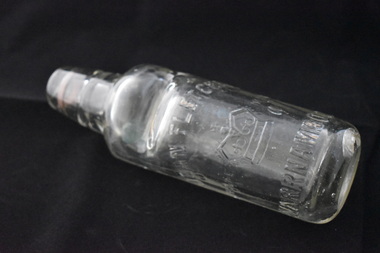
Bottle, John Fletcher Warrnambool, Early 20th century
... Warrnambool. He then worked for John Davis at his Union Cordial Factory in Koroit Street for many years. In 1885 he succeeded John Davis in this business. Fletcher’s business continued until 1930 when it was sold to the soft drinks manufacturer, Ralph Reeves. ...Warrnambool. He then worked for John Davis at his Union Cordial Factory in Koroit Street for many years. In 1885 he succeeded John Davis in this business. Fletcher’s business continued until 1930 when it was sold to the soft drinks manufacturer, Ralph Reeves. ...This is a marble stopper bottle. It was filled upside down so that as soon as the filling stopped the marble was forced down to seal the bottle against the rubber ring. Pressure inside the bottle kept the marble pressed against the top of the bottle. To open the bottle the marble has been pressed down and has fallen into the neck chamber below. The marble stayed inside the chamber when the bottle was tilted up for drinking. This bottle came from the Warrnambool aerated waters factory of John Fletcher. This factory was commenced in the mid 19th century by John Davis. As a young boy John Fletcher worked at the cordial factory of John Rowley in Banyan Street, Warrnambool. He then worked for John Davis at his Union Cordial Factory in Koroit Street for many years. In 1885 he succeeded John Davis in this business. Fletcher’s business continued until 1930 when it was sold to the soft drinks manufacturer, Ralph Reeves. John Fletcher made aerated waters, soda water, tonic water, lemonade, ginger ale, hop beer, hop bitters, sarsaparilla and cordials. This bottle is of interest as a good example of a marble stopper bottle and as a memento of the soft drinks made by John Fletcher, a prominent Warrnambool businessman for over 40 years. This is a glass bottle with a heavy round base and a rounded body which is markedly indented at the top, causing the aperture inside to be narrowed. The neck is rounded and tapers to the moulded glass opening at the top. There is a round piece of red rubber inside the top of the bottle. A green glass marble is loose in the neck section. The lettering giving details of the manufacturer is embedded into the glass. There is a small chip on the base.‘John Fletcher Trade Mark (crown symbol)Warrnambool’ ‘Soda Water’ ‘M’ john fletcher, warrnambool, cordial manufacturers, warrnambool -
 Warrnambool and District Historical Society Inc.
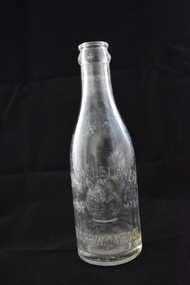
Bottle, Fletts Soda Water Warrnambool
... Warrnambool. He then worked for John Davis who had established the Union Cordial Factory in Koroit Street in the 1860s. In 1885 Fletcher bought John Davis’ business and operated it until 1930. It was then bought by Ralph Reeves...Warrnambool. He then worked for John Davis who had established the Union Cordial Factory in Koroit Street in the 1860s. In 1885 Fletcher bought John Davis’ business and operated it until 1930. It was then bought by Ralph Reeves ...This is a marble stopper bottle that came from the Warrnambool aerated waters factory of John Fletcher. This bottle was filled upside down so that as soon as the filling stopped the marble was forced down to seal the bottle against the rubber ring. Pressure inside the bottle would keep the marble pressed against the top of the bottle. To open the bottle the marble was pressed down where it has fallen into the neck chamber below. The marble stayed inside the bottle when it was tilted for drinking. John Fletcher worked as a young boy at Rowley’s cordial factory in Banyan Street Warrnambool. He then worked for John Davis who had established the Union Cordial Factory in Koroit Street in the 1860s. In 1885 Fletcher bought John Davis’ business and operated it until 1930. It was then bought by Ralph Reeves. John Fletcher manufactured soda water, tonic waters, lemonade, ginger ale, sarsaparilla, cordials, hop beer and hop bitters. This bottle is of some significance as an example of a marble stopper bottle and as a memento of the Warrnambool soft drinks business of John Fletcher. He was a prominent businessman in This is a mauve-coloured glass bottle known as a marble stopper bottle. The base and body are round with the top part of the body heavily indented to form a narrow opening leading to the neck. The neck is rounded and slightly tapering to the moulded round top. A green glass marble is loose in the neck section. The rubber ring at the top of the opening is missing. The details of the soda water manufacturer are embedded into the glass on the sides. ‘John Fletcher Trade Mark (crown symbol) Warrnambool’ ‘Soda Water’ ‘M’ john fletcher, warrnambool, cordial manufacturers in warrnambool, history of warrnambool -
 Warrnambool and District Historical Society Inc.
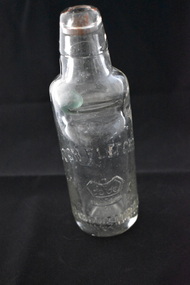
Bottle, J Fletcher Warrnambool, Early 20th century
... Warrnambool and then worked for John Davis at his Union Cordial Factory for many years. In 1885 he succeeded John Davis in this business. Fletcher’s business continued until1930 when it was bought by another soft drinks manufacturer, Ralph Reeves. ...Warrnambool and then worked for John Davis at his Union Cordial Factory for many years. In 1885 he succeeded John Davis in this business. Fletcher’s business continued until1930 when it was bought by another soft drinks manufacturer, Ralph Reeves. ...This bottle came from the Warrnambool aerated waters manufacturer, John Fletcher. This factory was commenced in the mid 19th century by John Davis. As a young boy John Fletcher worked in the cordial factory of John Rowley in Banyan Street, Warrnambool and then worked for John Davis at his Union Cordial Factory for many years. In 1885 he succeeded John Davis in this business. Fletcher’s business continued until1930 when it was bought by another soft drinks manufacturer, Ralph Reeves. John Fletcher manufactured aerated waters, soda, tonic water, lemonade, ginger ale, hop beer, hop bitters, sarsaparilla and cordials. This bottle is of interest because it is a John Fletcher bottle and he was a prominent soft drinks manufacturer in Warrnambool for over 40 years. This is a clear glass bottle. It has a round base and a rounded body tapering in the neck to a round moulded open top. The stopper or seal is missing. The bottle has embedded lettering with details of the manufacturer of the contents.‘John Fletcher Trade Mark (crown symbol) Warrnambool’ ‘This bottle is the property of John Fletcher Warrnambool & cannot be legally used by others’ john fletcher, warrnambool, cordial manufacturers in warrnambool, history of warrnambool -
 Warrnambool and District Historical Society Inc.
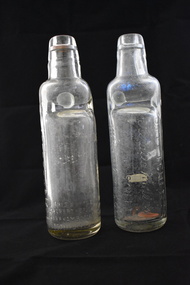
Bottle, Fletcher Warrnambool
... Warrnambool at the Union Cordial Factory of John Davis. This factory had been established in the 1860s. In 1885 John Fletcher bought the business of John Davis and continued it on until 1930 when it was bought by Ralph Reeves. ...Warrnambool at the Union Cordial Factory of John Davis. This factory had been established in the 1860s. In 1885 John Fletcher bought the business of John Davis and continued it on until 1930 when it was bought by Ralph Reeves. ...These marble stopper bottles came from the Warrnambool aerated waters factory of John Fletcher. A marble stopper bottle was filled upside down so that as soon as the filling stopped the marble was forced down to seal the bottle against the rubber ring. Pressure inside the bottle would keep the marble pressed against the top of the bottle. To open the bottle the marble was pressed down where it would fall into the neck of the chamber below. The marble would stay inside the chamber when the bottle was tilted up for drinking. As a young boy John Fletcher worked at the cordial factory of John Rowley in Banyan Street, Warrnambool. He then worked in Koroit Street, Warrnambool at the Union Cordial Factory of John Davis. This factory had been established in the 1860s. In 1885 John Fletcher bought the business of John Davis and continued it on until 1930 when it was bought by Ralph Reeves. John Fletcher manufactured lemonade, tonic waters, soda water, sarsaparilla, cordials, ginger ale, hop beer and hop bitters. These bottles are of interest, firstly because they are good examples of the marble stopper bottle type of bottle, no longer in use. They are also important because they are John Fletcher bottles and he was a prominent businessman in Warrnambool for over 40 years.These are two glass bottles. They have a rounded base and body with deep indentations which give a narrowed aperture to the top of the body and the neck. The neck is round and tapering to a moulded opening at the top of the bottle. Both bottles had a round rubber ring inside the bottle, with one lodged in the bottom of the bottle. Both bottles have a green glass marble in the neck of the bottle. The name of the manufacturer of the lemonade is impressed into the body of the bottles. ‘J. Fletcher’s Aerated Waters Koroit Street Warrnambool’ ‘Lemonade’ ‘This bottle is the property of John Fletcher Warrnambool & cannot be legally used by others’ ‘A.G.M.’ john fletcher warrnambool, cordial manufacturers in warrnambool, history of warrnambool -
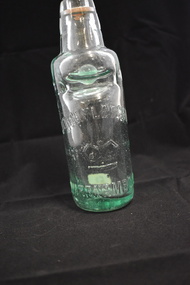 Warrnambool and District Historical Society Inc.
Bottle, John Fletcher, Early 20th century
... Warrnambool and then worked for John Davis at his Union Cordial Factory for many years. In 1885 he succeeded John Davis in this business. Fletcher’s business continued until 1930 and it later was bought by Ralph Reeves. ...Warrnambool and then worked for John Davis at his Union Cordial Factory for many years. In 1885 he succeeded John Davis in this business. Fletcher’s business continued until 1930 and it later was bought by Ralph Reeves. ...This bottle is known as a marble stopper bottle. The bottle was filled upside down so that as soon as the filling stopped the stopper was forced down to seal the bottle against the rubber ring. Pressure inside the bottle would keep the marble pressed against the top of the bottle. To open the bottle the marble was pressed down where it would fall into the neck chamber below. The marble would stay inside the chamber when the bottle was tilted up for drinking. This bottle came from the aerated waters factory of John Fletcher. This factory was commenced in the mid 19th century by John Davis. As a young boy John Fletcher worked at the cordial factory of John Rowley in Banyan Street, Warrnambool and then worked for John Davis at his Union Cordial Factory for many years. In 1885 he succeeded John Davis in this business. Fletcher’s business continued until 1930 and it later was bought by Ralph Reeves. John Fletcher manufactured aerated waters, soda, tonic waters, lemonade, ginger ale, hop beer, hop bitters, sarsaparilla and cordials. This bottle is of interest, firstly because it is a good example of the marble stopper type of bottle, no longer in use. It is also important because it is a John Fletcher bottle and he was a prominent soft drinks manufacturer in Warrnambool for over 40 years. This is a green-coloured glass bottle with a round base. The top of the body of the bottle has two heavy indentations either side, narrowing the entry to the body of the bottle. The neck is short and thick and the opening at the top of the bottle is moulded with a rubber ring around the inside. A glass marble is loose inside the bottle neck. The name of the manufacturer is moulded into the glass on the side and includes a crown symbol used as a trade mark.‘John Fletcher Trade Mark Warrnambool’ john fletcher, warrnambool, cordial manufacturers in warrnambool
