
Showing 69 items matching "sisters of charity"
-
 Northern District School of Nursing. Managed by Bendigo Historical Society Inc.
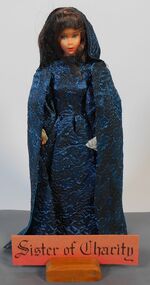
Education kit - Sisters of Charity Miniature Doll, Nursing Through the Ages
... Sisters of Charity Miniature Doll ...Sisters of Charity St Vincent de Paul. In 1638 St Vincents de Paul and Mademoiselle de Gras taught simple nursing procedure to young peasant women. ...Name tag Sisters of Charity...Education kit Sisters of Charity Miniature Doll ...Sisters of Charity St Vincent de Paul. In 1638 St Vincents de Paul and Mademoiselle de Gras taught simple nursing procedure to young peasant women. They worked in the home hospital and battlefield. Their duties were arduous no pain relief was known and they were exposed to infection. In the 20 century the sisters of St Vincents De Paul are working worldwide nursing teaching caring for orphans the aged lepers. They shared in advances in medical science.30cm Miniature Doll dressed in bright blue shimmering dress with matching capeName tag Sisters of Charitynursing history, nursing uniforms, northern district school of nursing, miniature dolls -
 St Vincent's Hospital Melbourne Archives
Badge - St Vincent's Hospital Melbourne Nurses Graduation Badge belonging to Margaret Rosengren in 1943
... ...Sisters of Charity...At graduation, nurses were presented with the St Vincent's Hospital badge by a Sister of Charity Superior or Mother Rectress. The badge certified that nurses could now practice as a qualified nursing sister....Within, there is the Crown of Mary, or Our Lady, the Patroness for the Sisters of Charity. There is a lighter blue banner containing the Heart of Charity, the Anchor of Hope and the Cross of Faith, all the symbols of nurses working under the guidance of the Sisters of Charity. ...Within, there is the Crown of Mary, or Our Lady, the Patroness for the Sisters of Charity. There is a lighter blue banner containing the Heart of Charity, the Anchor of Hope and the Cross of Faith, all the symbols of nurses working under the guidance of the Sisters of Charity. ...At graduation, nurses were presented with the St Vincent's Hospital badge by a Sister of Charity Superior or Mother Rectress. The badge certified that nurses could now practice as a qualified nursing sister.Engraved name M Rosengren in capital letters on the back of the badge.st vincent's hospital melbourne, margaret rosengren, nurse, graduation lapel badge, sisters of charity -
St Vincent's Hospital Melbourne Archives
Badge - St Vincent's Hospital Melbourne trained nurses graduation badge belonging to Margaret Tutton in 1943
... ...Sisters of Charity Melbourne...At graduation, nurses were presented with the St Vincent's Hospital badge by a Sister of Charity Superior or Mother Rectress. The badge certified that nurses could now practice as a qualified nursing sister....Within, there is a cut-out gold Crown of Mary, or Our Lady, the Patroness for the Sisters of Charity. There is a lighter blue banner containing the Heart of Charity, the Anchor of Hope and the Cross of Faith, all the symbols of nurses working under the guidance of the Sisters of Charity...At graduation, nurses were presented with the St Vincent's Hospital badge by a Sister of Charity Superior or Mother Rectress. The badge certified that nurses could now practice as a qualified nursing sister. ...At graduation, nurses were presented with the St Vincent's Hospital badge by a Sister of Charity Superior or Mother Rectress. The badge certified that nurses could now practice as a qualified nursing sister.The St Vincent's Hospital Melbourne Nurses' Graduation Badge has an outer darker blue border with "Caritas Christi Urget Nos" written in gold capitals on the bottom edge. The meaning is "The love of Christ urges us on". Within, there is a cut-out gold Crown of Mary, or Our Lady, the Patroness for the Sisters of Charity. There is a lighter blue banner containing the Heart of Charity, the Anchor of Hope and the Cross of Faith, all the symbols of nurses working under the guidance of the Sisters of Charityst vincent's hospital melbourne, nurse training, margaret tutton, st vincent's hospital melbourne nurses' graduation badge, sisters of charity melbourne -
St Vincent's Hospital Melbourne Archives
Badge - St Vincent's Hospital Melbourne nurses' graduation badge belonging to Vivienne Pearce in 1952
... ...Sisters of Charity St Vincent's Hospital Melbourne...Within, there is a gold Crown of Mary, or Our Lady, the Patroness for the Sisters of Charity. There is a lighter blue banner containing the Heart of Charity, the Anchor of Hope and the Cross of Faith, all symbols of nurses working under the guidance of the Sisters of Charity....Within, there is a gold Crown of Mary, or Our Lady, the Patroness for the Sisters of Charity. There is a lighter blue banner containing the Heart of Charity, the Anchor of Hope and the Cross of Faith, all symbols of nurses working under the guidance of the Sisters of Charity. ...The St Vincent's Hospital Melbourne nurses' graduation badge has an outer darker blue border with "Caritas Christi Urget Nos" written in gold capital writing. The meaning is "the love of Christ urges us on". Within, there is a gold Crown of Mary, or Our Lady, the Patroness for the Sisters of Charity. There is a lighter blue banner containing the Heart of Charity, the Anchor of Hope and the Cross of Faith, all symbols of nurses working under the guidance of the Sisters of Charity.St Vincent's Hospital Melbourne in capital letters adorns the top of the badge with Caritas Christi Urget Nos on the bottom.st vincent's hospital melbourne, nursing badge, sisters of charity st vincent's hospital melbourne, vivienne pearce -
 Eltham District Historical Society Inc
Work on paper - Booklet, St Vincent's Care Services, Building on strong foundations, 2015
... ...sisters of charity...Also includes Sisters of Charity Heritage timeline 1815-2015. Eltham Retirement Centre was previously known as Judge Book Village. ...Also includes Sisters of Charity Heritage timeline 1815-2015. Eltham Retirement Centre was previously known as Judge Book Village. judge book memorial village judgebook st vincent's health australia timeline chronology sisters of charity eltham retirement centre aged care services Original booklet St Vincent's Care Services, Building on strong foundations Work on paper Booklet ...Booklet produced by St Vincent's Care Services presenting a timeline of Eltham Retirement Centre 1955-2015 when it was purchased by St Vincent's Health Australia. Also includes Sisters of Charity Heritage timeline 1815-2015. Eltham Retirement Centre was previously known as Judge Book Village. judge book memorial village, judgebook, st vincent's health australia, timeline, chronology, sisters of charity, eltham retirement centre, aged care services -
St Vincent's Hospital Melbourne Archives
Booklet - Mass of Thanksgiving in 1991 to the Members of the St Vincent's Hospital Advisory Council for their years of service
... ...Sisters of Charity St Vincent's Hospital Melbourne...Sister Helen Clarke R.S.C. and the Sisters of Charity wrote in the mass-book prayers that God's abundand blessings be poured on the advisory council for their dedicated service over the years and that those who govern our civilian life will treat every person with justice and equality. ...St Vincent's Hospital Melbourne St Vincent's Advisory Committee The Most Reverend T F Little DD KBE Archbishop of Melbourne Sr Helen Clarke R.S.C Sisters of Charity St Vincent's Hospital Melbourne Printed booklet in blue script writing. ...The Mass was celebrated in the St Vincents Hospital Convent Chapel by His Grace The Most Revererend TF Little DD, KBE, Archbishop of Melbourne. Sister Helen Clarke R.S.C. and the Sisters of Charity wrote in the mass-book prayers that God's abundand blessings be poured on the advisory council for their dedicated service over the years and that those who govern our civilian life will treat every person with justice and equality. st vincent's hospital melbourne, st vincent's advisory committee, the most reverend t f little dd kbe archbishop of melbourne, sr helen clarke r.s.c, sisters of charity st vincent's hospital melbourne -
St Vincent's Hospital Melbourne Archives
Album - Agnes McLean, photographs at St Vincent's Hospital Melbourne, circa 1926-1928
... ...Religious Sisters of Charity...Nurses are in full uniform, cap, starched loose fitting, long sleeved white linen dresses buttoned to drop waist with belt, white stockings and heeled court leather regulation shoes. Religious Sisters of Charity in full black winter habits, veils and rosary beads. ...St Vincent's Hospital Melbourne Brenan Hall Religious Sisters of Charity Nurses Foundation stone 1928 Four loose album pages containing twenty-three black and white photographs mounted with gold photo corners. ...Photos include nursing colleagues in uniform, in theatre and night duty, social occasions at St Vincent's. Nurses are in full uniform, cap, starched loose fitting, long sleeved white linen dresses buttoned to drop waist with belt, white stockings and heeled court leather regulation shoes. Religious Sisters of Charity in full black winter habits, veils and rosary beads. Laying of new building (later: Healy) Foundation Stone 1928, celebrations in Druids Wing, Brenan Hall.st vincent's hospital melbourne, brenan hall, religious sisters of charity, nurses, foundation stone 1928 -
St Vincent's Hospital Melbourne Archives
Badge - St Vincent's Hospital Melbourne Nurse's graduation badge belonging to Anne Carolan in 1959
... At graduation, nurses were presented with the St Vincent's Hospital badge by a Sister of Charity Superior or Mother Rectress. The badge certified that nurses could now practice as a qualified nursing sister. ...Within, there is the Crown of Mary, or Our Lady, the Patroness for the Sisters of Charity. There is a lighter blue banner containing the Heart of Charity, the Anchor of Hope and the Cross of Faith, all the symbols of nurses working under the guidance of the Sisters of Charity. ...Within, there is the Crown of Mary, or Our Lady, the Patroness for the Sisters of Charity. There is a lighter blue banner containing the Heart of Charity, the Anchor of Hope and the Cross of Faith, all the symbols of nurses working under the guidance of the Sisters of Charity. ...At graduation, nurses were presented with the St Vincent's Hospital badge by a Sister of Charity Superior or Mother Rectress. The badge certified that nurses could now practice as a qualified nursing sister. The St Vincent's Hospital Melbourne nurse's graduation badge has an outer darker blue border with "Caritas Christi Urget Nos" written in gold on the bottom. The meaning is "The love of Christ urges us on". Within, there is the Crown of Mary, or Our Lady, the Patroness for the Sisters of Charity. There is a lighter blue banner containing the Heart of Charity, the Anchor of Hope and the Cross of Faith, all the symbols of nurses working under the guidance of the Sisters of Charity. There are engraved letters on the back of the badge with the letters "AMC".st vincent's hospital melbourne, nurse training, anne carolan, graduation badge -
 St Patrick's Old Collegians Association (SPOCA)
Photograph - Culture, Visual Arts
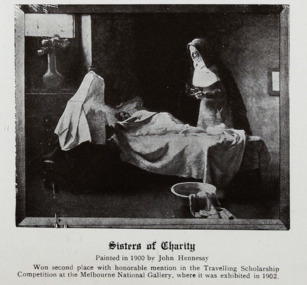
... John Hennessy Snr, Painting 1900 - "Sisters of Charity"...John Hennessy Snr, Painting 1900 - "Sisters of Charity" Photograph Culture, Visual Arts ... -
St Vincent's Hospital Melbourne Archives
Artwork, other - Artwork of St Vincent's Hospital Melbourne Healy Wing, circa 1945, by an unknown Sister of Charity, to James Frances O'Neill Esq
... Artwork of St Vincent's Hospital Melbourne Healy Wing, circa 1945, by an unknown Sister of Charity, to James Frances O'Neill Esq. ......Sisters of Charity St Vincent's Hospital Melbourne...Artwork, other Artwork of St Vincent's Hospital Melbourne Healy Wing, circa 1945, by an unknown Sister of Charity, to James Frances O'Neill Esq. ...The artwork was presented to James Francis O'Neill, Esquire, for his "unselfish work" at St Vincent's Hospital for twenty- one years, 1924-1945. Eleven of these years were spent as Honorary Secretary of the Wellwishers League who conducted three public appeals. james francis o'neill, sisters of charity st vincent's hospital melbourne, st vincent's hospital melbourne, diane o'neill, the wellwishers league of st vincents hospital melbourne -
St Vincent's Hospital Melbourne Archives
Reference for student Olive Cass from Mother M Josephine, St John's Convent Clifton Hill, circa 1940
... ...Sisters of Charity...K Olive Cass St Vincent's Hospital Melbourne Nurse Training Mother M Josephine St John's Convent Clifton Hill Sisters of Charity Script hand writing in black ink. ...Mother Mary Josephine has written a very favourable reference and has wished Olive Cass the best of success. This reference would have been used for Olive's application to commence her nurse training in 1940 at St Vincent's Hospital Melbourne. Script hand writing in black ink.k olive cass, st vincent's hospital melbourne, nurse training, mother m josephine, st john's convent clifton hill, sisters of charity -
Kew Historical Society Inc
Archive (Sub-series) - Subject File, Caritas Christi Hospice (Kew), 1958
... The Sisters of Charity bought land in Studley Park Road in 1937 and opened their first hospital there in 1938. ...Typically files will contain primary and secondary sources. caritas christi hospice hospitals - kew (vic) The Sisters of Charity bought land in Studley Park Road in 1937 and opened their first hospital there in 1938. ...Various partiesReference, Research, InformationSecondary Values (KHS Imposed Order)The Sisters of Charity bought land in Studley Park Road in 1937 and opened their first hospital there in 1938. The subject file contains a newspaper article/clipping published in the Progress Leader (2013) about the 75th Anniversary of the Hospice. caritas christi hospice, hospitals - kew (vic)caritas christi hospice, hospitals - kew (vic) -
 Embroiderers Guild, Victoria
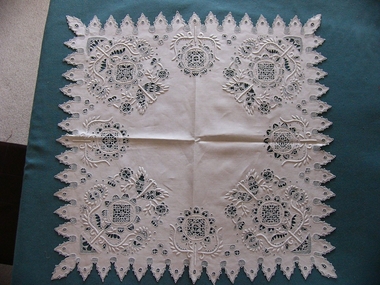
Textile - Aemilia-Ars Tea Cloth, Sister Mary St. Gregory, 1911
... Embroidered by Sister Mary St Gregory Slattery RSC. Sisters of Charity. St. Vincent's Convent, Potts Point, Sydney, NSW....Embroidered by Sister Mary St Gregory Slattery RSC. Sisters of Charity. St. Vincent's Convent, Potts Point, Sydney, NSW. ...Embroidered by Sister Mary St Gregory Slattery RSC. Sisters of Charity. St. Vincent's Convent, Potts Point, Sydney, NSW.Exceptional example of embroidery.Cream linen with self coloured embroidery in a copy of Aemilia-ars Italian work. Many open work designs and satin stitch surrounds and deep peaked edge."1911" stitched near a cornerembroidery, mats, aemilia-ars, 1900-20, australia -
 Embroiderers Guild, Victoria
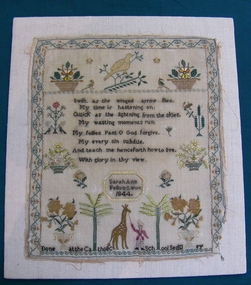
Textile - Sarah Ann Fellows Sampler 1844, Sarah Ann Fellows, 1884
... The sampler was found by a sister Agatha in a house left to the Sisters of Charity by 2 elderly ladies who were visitors, and later patients at Caritas Christi hospice for the dying in Kew (Letter in Archive file). ...The sampler was found by a sister Agatha in a house left to the Sisters of Charity by 2 elderly ladies who were visitors, and later patients at Caritas Christi hospice for the dying in Kew (Letter in Archive file). ...The sampler was found by a sister Agatha in a house left to the Sisters of Charity by 2 elderly ladies who were visitors, and later patients at Caritas Christi hospice for the dying in Kew (Letter in Archive file). Cross stitch and satin stitch sampler in soft coloured silks, on very fine beige linen. There are various spot motifs of flowers, birds, a giraffe and a man which surround a verse, name and date. There is a strawberry border on 3 sides and a scroll border at the base."Sarah Ann Fellows work, 1884" Verse on sampler Swift as the winged arrow flies, My time is hastening on. Quick as the lightning from the skies My wasting moments run. My follies Past O God forgive My every sin subdue And teach me henceforth how to live, with glory in thy view. Above lower border "Done at the Catholic School Sedgley"embroidery, cross stitch, england, samplers, mid 19th century -
St Vincent's Hospital Melbourne Archives
Certificate - Nurse's certificate St Vincent's Hospital Melbourne awarded to Agnes McLean on qualifying as a fully trained registered nurse in 1928
... Caritas Christi Urget Nos is the motto of the hospital's founders, the Sisters of Charity of Australia and means the love of Christ urges us. ...Caritas Christi Urget Nos is the motto of the hospital's founders, the Sisters of Charity of Australia and means the love of Christ urges us. ...The certificate folder features an elaborate St Vincent's Hospital Melbourne insignia with Caritas Christi Urget Nos badge print. Caritas Christi Urget Nos is the motto of the hospital's founders, the Sisters of Charity of Australia and means the love of Christ urges us. agnes mclean, st vincent's hospital melbourne -
St Vincent's Hospital Melbourne Archives
Badge - St Vincent's Hospital Melbourne Nurse and Catholic Women's Social Guild Badges belonging to Nurse Mary Brennan circa 1937-1945
... Within, there is a cut-out gold Crown of Mary, or Our Lady, the Patroness for the Sisters of Charity. There is a lighter blue banner containing The Heart of Charity, The Anchor of Hope and The Cross of Faith, all the symbols of nurses working under the guidance of the Sisters of Charity. 2. ...Within, there is a cut-out gold Crown of Mary, or Our Lady, the Patroness for the Sisters of Charity. There is a lighter blue banner containing The Heart of Charity, The Anchor of Hope and The Cross of Faith, all the symbols of nurses working under the guidance of the Sisters of Charity. 2. ...1. The St Vincent's Hospital Melbourne Nurses Graduation Badge has an outer darker blue border with "Caritas Christi Urget Nos" written in gold. The meaning is "The love of Christ urges us on". Within, there is a cut-out gold Crown of Mary, or Our Lady, the Patroness for the Sisters of Charity. There is a lighter blue banner containing The Heart of Charity, The Anchor of Hope and The Cross of Faith, all the symbols of nurses working under the guidance of the Sisters of Charity. 2. The Catholic Women's Social Guild Badge bears its initials on a round copper background of blue enamel. It has an insignia containing a dove on a heart shaped shield with laurel leaves and a silver star. Mary Brennan may have nursed at institutions of the CWSG which was founded in Melbourne in 1916. It improved the lives of women and children in poor health such as the Santa Casa in Queenscliff run by the Sisters of Mercy. st vincents hospital melbourne, nurses badges, catholic womens social guild, mary bernard brennan -
St Vincent's Hospital Melbourne Archives
Badge - Nurses Badges belonging to K. Olive Cass, Circa 1943
... Within, there is a gold Crown of Mary, or Our Lady, the Patroness for the Sisters of Charity. There is a lighter blue banner containing the Heart of Charity, the Anchor of Hope and the Cross of Faith, all symbols of nurses working under the guidance of the Sisters of Charity. ...Within, there is a gold Crown of Mary, or Our Lady, the Patroness for the Sisters of Charity. There is a lighter blue banner containing the Heart of Charity, the Anchor of Hope and the Cross of Faith, all symbols of nurses working under the guidance of the Sisters of Charity. ...Nurse Katherine Olive Cass completed her general nursing training at St Vincent's Hospital Melbourne. Badge 1 is a graduation badge presented to nurses after three years of lectures, clinical work, supervision and examinations, both internal and State Nurses' Board. Badge 2 is a Royal Victorian Nurses Association badge, given to Nurse Olive Cass by an older patient in appreciation of her nursing whilst she was an inpatient. Badge 1. The St Vincent's Hospital Melbourne nurses' graduation gold badge has an outer darker blue border with "Caritas Christi Urget Nos" written in gold capital writing. The meaning is "the love of Christ urges us on". Within, there is a gold Crown of Mary, or Our Lady, the Patroness for the Sisters of Charity. There is a lighter blue banner containing the Heart of Charity, the Anchor of Hope and the Cross of Faith, all symbols of nurses working under the guidance of the Sisters of Charity. Engraved name K Olive Cass on the back. The badge has a gold safety chain. Badge 2: The Royal Victorian Trained Nurse Association is a round gold badge with an outer white border. It states R.V.T.N.A TOUT BIEN OU RIEN, a French expression translating everything well or nothing. The centre of the badge has a lion and a horse holding further emblems within. The back of the badge is engraved name in capitals "Miss E Glover Honorary Secretary 1901-1908 in appreciation". olive k cass, st vincent's hospital melbourne, nurse training., st vincent's hospital nurses badge, miss e. glover, royal victorian trained nurses association -
St Vincent's Hospital Melbourne Archives
Album - Images of the Royal Visit in 1927 and of St Vincent's Hospital Melbourne, the laying of the foundation stone, new wing, 1928
... Album contents and descriptions written: Page 1, Mother Mary Aikenhead foundress of the Sisters of Charity. Page 2, Mother Mary Berchmans foundress of St Vincent's. ...Album contents and descriptions written: Page 1, Mother Mary Aikenhead foundress of the Sisters of Charity. Page 2, Mother Mary Berchmans foundress of St Vincent's. ...Images in the album are related to the laying of the foundation stone of St Vincent's new wing in 1928 as well as the royal visit of the Duke and Duchess of York in 1927. A loose newspaper clipping contained in the album titled "Fitzroy's Welcome" provides information on the royal visit which extended into Fitzroy, Collingwood and Richmond. A minute photo on page 18 of the album shows an image of the royal yacht. Album contents and descriptions written: Page 1, Mother Mary Aikenhead foundress of the Sisters of Charity. Page 2, Mother Mary Berchmans foundress of St Vincent's. Page 3, The Papal Legate Cardinal Cerretti XX1X eucharistic congress laying of the foundation stone SVHM1928. Page 4, His Grace the Archbishop of Melbourne the most Rev Daniel Mannix 1928. Page 5, The stand from which the cardinal addressed the meeting. Page 6, En route to "Stand" SVH. Page 7, The stone ready to be blessed. Page 8, The Cardinal going to bless the stone. Page 9, The blessing of the stone. Page 10, Listening to the Cardinal. Page 11, The mallet and the trowel used. Page 12, The stone is well and truly laid, Page 13, Via the enclosure. Page 14, St V's nurses. Page 15, The Subway. Page 16, En route to Reception Hall. Page 17, The Reception Hall. Page 18, The Stage Garlands, CLC students entertained. Page 19, Royal visit His RH the Duke of York. Page 20, The Duchess of York. Page 21, The living check. Page 22, The guard of honour SVH nurses. Page 23, Fire station en fete opposite SVH. Page 24, Victoria Parade for a Royal Visit.Each page has script style black ink descriptions of the photograph.archbishop daniel mannix, mother mary berchmans daly, cardinal bonaventura cerretti, duke of york, duchess of york, mother mary aikenhead, st vincent's hospital melbourne, nurses, victoria parade, eastern hill fire station., tunnels, brenan hall -
 City of Melbourne Libraries
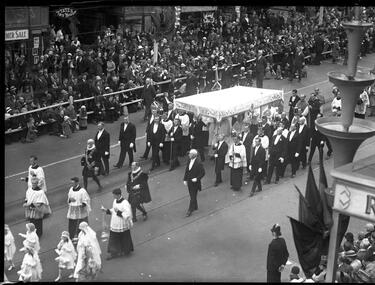
Photograph, Bull, Hugh Jones, 1897-1993, Eucharistic Congress Procession, Collins Street, Melbourne
... The Children of Mary Sodalities was a religious body which aimed at fostering in its members an ardent devotion, reverence, and filial love towards the Blessed Virgin Mary, initially embracing the pupils and orphans of the schools and institutions of the Sisters of Charity of St Vincent de Paul. In 1847, Blessed Pius IX affiliated them to the Jesuit Roman Sodality. ...The Children of Mary Sodalities was a religious body which aimed at fostering in its members an ardent devotion, reverence, and filial love towards the Blessed Virgin Mary, initially embracing the pupils and orphans of the schools and institutions of the Sisters of Charity of St Vincent de Paul. In 1847, Blessed Pius IX affiliated them to the Jesuit Roman Sodality. ...Published: The Age 10 December 1934 Published title: RELIGIOUS PAGEANTRY AND FERVOR MARKED CLOSE OF EUCHARISTIC CONGRESS. Published caption: Thousands of men and women marched in the Eucharistic procession yesterday which brought the Congress to a close. The picture above shows the procession headed by the Children of Mary in Bourke-street and turning into Spring-street, in front of Parlia ment House. Right (top) — The procession leaving the starting point at St. Patrick's Cathedral and below, the Papal Legate carrying the Host under a canopy borne by a guard of laymen and preceded by white-clad girls scattering rose leaves, incense bearers and the Papal Chamberlains in their Spanish uniforms. The end of the procession in front of Mount St. Evin’s Hospital from which the final benediction was given by Cardi nal MacRory from an altar on the bal cony. The Papal Legate carrying the Host is passing through the assemblage of surpliced priests. On the left is an aerial picture taken just as the Children of Mary at the head of the procession are taking up their places for the final assembling. In the left top corner of the picture is St Patrick's Cathedral, from which the procession started, and in the right lower corner is Mount St. Evin’s Hospital. The space immediately in front of the hospital was reserved for the processionists while on either side is the crowd that assembled to take part in the final service. Trove article identifier: http://nla.gov.au/nla.news-article205067634 Religious pageantry and fervour The National Eucharistic Congress took place from Sunday 2 to Sunday 9 December 1934. An initiative of the Roman Catholic Church, it was their contribution to Melbourne’s Centenary Celebrations. 200,000 Catholics resided in Melbourne at this time – one quarter of the city’s population. While the Congress was aimed at Catholics, and acted as an opportunity to reinforce their living faith and homage, it contained a variety of events of splendour, solemnity and significance designed to appeal to Melbournians, and would additionally provide incentive for people to travel to Victoria, thereby creating an economic benefit to the state. The Procession of the Blessed Sacrament concluded the week-long Congress. Commencing at St Patrick’s Cathedral, it covered a two-mile route via Gisborne, Collins, Elizabeth and Bourke streets, then to Victoria Parade, where a final benediction was pronounced by Cardinal MacRory from the balcony of Mount St. Evin’s Hospital (today the site of St Vincent’s Private Hospital). An estimated 100,000 took part. Onlookers line Swanston Street, some standing at the entrance to Tate’s Tea House – a well-known Melbourne landmark located in the basement of the Manchester Unity Building. The white-veiled Children of Mary Sodalists strew rose petals in the path of the canopy, covering the jewelled Monstrance containing the Blessed Sacrament of consecrated Host (bread) and carried by the Cardinal. Church hierarchy in scarlet robes walk alongside, followed by incense bearers, the Papal Chamberlains in their Spanish uniforms, and a guard of honour of laymen of the city and country parishes. In the foreground is a tiered pole. This is one of 800 “Venetian Lights” specifically installed for the Centenary along all principal thoroughfares. “The poles are painted white, the superstructure resembling three trumpet lilies are made of durable fibro-cement, and their colour scheme deepens from clear yellow on the top cone to orange on the lowest, with slender rims of vermilion and white. Each cone is flooded with light externally from three lamps concealed in the one below it. There is also a painted coat of arms from which spring a trophy of flags.” – Australian Home Beautiful Featured in "Newsworthy: Melbourne in photographs 1933-1936" exhibition at East Melbourne Library, October to December 2023. Exhibition caption by project volunteer, Louise McKenzie. Research by project volunteer, Louise McKenzie: This photo was taken on Sunday 9 December 1934, looking from the Melbourne Town Hall (corner of Swanston and Collins streets) across the road to the Manchester Unity Building. This is the afternoon procession concluding the Catholic Church’s National Eucharistic Congress in Melbourne - a procession of the Blessed Eucharist through the Melbourne city. It commenced at St Patrick’s Cathedral, and covered a two mile route via Gisborne, Collins, Elizabeth and Bourke streets, then to Victoria Parade where a final benediction was pronounced by the Cardinal from the balcony of Mount St. Evin’s Hospital (present day St Vincent’s Private Hospital). An estimated 100,000 took part in the march. The people lining the streets a men in suits and hats, women in coats and hats, and children in their “Sunday best”, kneeling beside the road, many with their hands clasped in front of them. The small girls ahead of the canopy covering the Host are pale-blue clad, white veiled Children of Mary Sodalists, who strew rose petals to pave the way of the Cardinal carrying the jewelled Monstrance (Blessed Sacrament of consecrated Host (bread)), together with church heirarchy wearing scarlet robes. Behind came incense bearers and the Papal Chamberlains in their Spanish uniforms, followed by a guard of honour of laymen of the city and country parishes. The Children of Mary Sodalities was a religious body which aimed at fostering in its members an ardent devotion, reverence, and filial love towards the Blessed Virgin Mary, initially embracing the pupils and orphans of the schools and institutions of the Sisters of Charity of St Vincent de Paul. In 1847, Blessed Pius IX affiliated them to the Jesuit Roman Sodality. They were distinguished by a medal suspended from a blue ribbon, and once a fully-fledged a Child of Mary wore a distinctive blue cape. On the extreme right foreground of the photo can be seen an intriguing piece of artistic design – a tiered pole. This is one of the 800 “Venetian Lights” specifically installed for Melbourne’s Centenary along all principal thoroughfares. “The poles are painted white, the superstructure resembling three trumpet lilies are made of durable fibro-cement, and their colour scheme deepens from clear yellow on the top cone to orange on the lowest, with slender rims of vermilion and white. Each cone is flooded with light externally from three lamps concealed in the one below it. There is also a painted coat of arms from which spring a trophy of flags.” Note the sign for Tates Tea House - a well-known Melbourne landmark, located in the basement of the Manchester Unity Building. References: RELIGIOUS PAGEANTRY AND FERVOR MARKED CLOSE OF EUCHARISTIC CONGRESS. (1934, December 10). The Age (Melbourne, Vic. : 1854 - 1954), p. 11. Retrieved September 14, 2023, from http://nla.gov.au/nla.news-article205067634 Eucharistic Congress (1934, December 1). The Argus (Melbourne, Vic. : 1848 - 1957), p. 11. Retrieved January 23, 2024, from http://nla.gov.au/nla.news-article10997817 National Eucharistic Congress, Melbourne. (1934, December 6). The Catholic Press (Sydney, NSW : 1895 - 1942), p. 28. Retrieved January 23, 2024, from http://nla.gov.au/nla.news-article104371824 'The year of the Melbourne Eucharistic Congress: 1934.' The Campion Society, https://campion.australiancardijninstitute.org/ch-7-the-year-of-the-melbourne-eucharistic-congress-1934/ 'Melbourne Eucharistic Congress 1934.' Panoramic photograph, https://emhs.org.au/catalogue/emdf0123 The National Eucharistic Congress, Melbourne, Australia December 2nd-9th, 1934. Edited by Rev. J.M. Murphy and Rev. F. Moynihan, The Advocate Press, Melbourne. 'Children of Mary Sodalists', Wikipedia, https://en.wikipedia.org/wiki/Sodality_of_Our_Lady 'Dressing Melbourne for the Duke' (1934, October 1). The Australian home beautiful : a journal for the home builder, p. 21, 58. Retrieved September 14, 2023, from http://nla.gov.au/nla.obj-2950922209 Photographer notations on slide: "Eucharistic Congress Procession on Swanston St B61" [sic - actually Collins Street].events, religion, parades, catholic church -
 The Beechworth Burke Museum
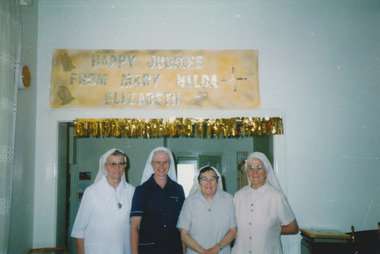
Audio - Oral History, Jennifer Williams, Sister Elizabeth McGovern, Sister Mary Lacey, Sister Mary Griffiths, Sister Gerardus Thistlewaite, 18th March 2000
... Listen to what they say Listen to what they say: voices of twentieth century Beechworth nuns brigidine sisters brigidine convent school religion prison boarding school modernization food women's history teaching teachers Education hospitals beechworth hospital charity old priory Father Stockdale easter Beechworth 1950s Sister Elizabeth McGovern, Sister Mary Lacey, Sister Mary Griffiths, Sister Gerardus Thistlewaite This is a series of digital recordings that were originally recorded on multiple cassette tapes. ...Sister Elizabeth McGovern, Sister Mary Lacey, Sister Mary Griffiths, and Sister Gerardus Thistlewaite were all nuns of the Brigidine Order in Beechworth in the second half of the twentieth century. They had backgrounds in teaching and office work. As nuns, their contributions to the community included teaching, running camps, being there for community members wishing to talk to them or pray, and visiting prisons and hospitals. During their time in the order, the role of the nuns in Beechworth shifted due to the closing down of the Priory School, and changes in where housing for nuns was provided. The oral history also includes stories of boarding at the convent in the 1950s, and reflections on how the experience of being a nun has changed due to increasing immersion in the modern world, and the move from convent to house. This oral history recording was part of a project conducted by Jennifer Williams in the year 2000 to capture the everyday life and struggles in Beechworth during the twentieth century. This project involved recording seventy oral histories on cassette tapes of local Beechworth residents which were then published in a book titled: Listen to what they say: voices of twentieth century Beechworth. These cassette tapes were digitised in July 2021 with funds made available by the Friends of the Burke.Sister Elizabeth McGovern, Sister Mary Lacey, Sister Mary Griffiths, and Sister Gerardus Thistlewaite's interview with Jennifer Williams is revealing of the history of the Brigidine order in Beechworth, and the role religion and nuns played in the wellbeing, education, and life of the community in the latter half of the twentieth century. It is significant both for what it illustrates about the lives and motivation of the Sisters, and for what it tells us about how the role of religious education and figures shifted in Beecjhworth from 1950 onward. It is especially illuminating about the experience of women in education. This oral history account is socially and historically significant as it is a part of a broader collection of interviews conducted by Jennifer Williams which were published in the book 'Listen to what they say: voices of twentieth-century Beechworth.' While the township of Beechworth is known for its history as a gold rush town, these accounts provide a unique insight into the day-to-day life of the town's residents during the 20th century, many of which will have now been lost if they had not been preserved.This is a series of digital recordings that were originally recorded on multiple cassette tapes. The cassette tapes are black with a horizontal white strip and are currently stored in a clear flat plastic rectangular container. They up to 40 minutes of recordings on each side.Sister Elizabeth McGovern, Sister Mary Lacey, Sister Mary Griffiths, Sister Gerardus Thistlewaitelisten to what they say, listen to what they say: voices of twentieth century beechworth, nuns, brigidine sisters, brigidine convent, school, religion, prison, boarding school, modernization, food, women's history, teaching, teachers, education, hospitals, beechworth hospital, charity, old priory, father stockdale, easter, beechworth 1950s -
 Eltham District Historical Society Inc
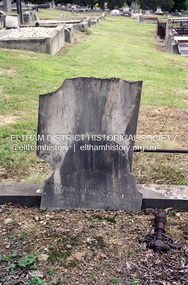
Negative - Photograph, Russell Yeoman, Grave of Edmund John Schlötel and Elizabeth Schlötel, Eltham Cemetery, Mount Pleasant Road, Eltham, Victoria, c.Sep. 2000
... She had older brothers and sisters baptised in Eltham 1795- 1801, namely Charity, Maria, Arthur Partridge, James Union and then Sophie, born 9th October and baptised 31st October 1802." ...She had older brothers and sisters baptised in Eltham 1795- 1801, namely Charity, Maria, Arthur Partridge, James Union and then Sophie, born 9th October and baptised 31st October 1802." ...From EDHS Newsletter No. 135 - November 2000 Marion and Russell Yeoman have had a letter from Margaret Taylor of Eltham England which includes the following:- "John Kennett went on a tour of West Norwood cemetery with the 'Edith Nesbit Society" and his eye was accidentally drawn to a mention of John Edmond SCHLOTEL 1838-1905 who was buried in ELTHAM VICTORIA. His mother was an Eltham girl." "Sophia (Sophie) Rowley, 1802-1870 was the daughter of James Rowley of Eltham (U.K.) who was an assistant teacher and married to Ann, maiden surname Tyhurst. She had older brothers and sisters baptised in Eltham 1795- 1801, namely Charity, Maria, Arthur Partridge, James Union and then Sophie, born 9th October and baptised 31st October 1802." "We have no idea where or when (not Eltham we think) but she apparently married Mr Charles Schlotel, who was possibly three years younger than herself. Their offspring included John Edmond SCHLOTEL 1839-1905 who was buried in your Eltham, Victoria. " This seemed like a bit of challenge to Marion who paid a visit to the Eltham Cemetery and almost immediately located the grave of Edmund John Schlötel who died on 12th May 1905 and was buried there on 14th May. The headstone says he was late of Brixton England. This is a double grave with no indication of who else is buried there. Cemetery records show that Elizabeth Schlötel was buried there in 1917. The records say that Edmund Schlötel came from Brighton England but a hand written version of Brixton or Brighton could easily be confused. Death records in the La Trobe Library record the death at Eltham in 1905 of Edward John Schlötel, son of Charles Bartholemew Schlötel and Sophia Ann Rowley. There appears to be nothing in the Evelyn Observer about Schlötel's death. SCHLOTEL.—On the 12th May, at his residence, Eltham, Edmund John Schlotel, late of Brixton, England, in his 66th year. Family Notices (1905, May 20). The Australasian (Melbourne, Vic. : 1864 - 1946), p. 60. Retrieved May 10, 2026, from http://nla.gov.au/nla.news-article139806588 A Google search in 2026 revealed additional information: E. J. Schlötel. (2026, May 10). Retrieved from https://nzhistory.govt.nz/suffragist/e-j-schlotel Elizabeth Salmon married Edmund John Schlötel, an accountant, on 17 October 1881 in Dunedin. Edmund had arrived on the Sebastian into Port Chalmers on 8 October 1859. He lived at Spylaw station in Otago before moving to Dunedin. In 1878 Edmund was the only candidate for the office of Mayor of North-East Valley and so was declared duly elected. Three years before this petition was signed Elizabeth and Edmund’s five roomed house in the North-East Valley was destroyed by fire. It was insured for £610 (about $109,000 in today’s money). (Biography contributed by Katherine Blakeley.) Elizabeth Salmon was born about 1851. She had a daughter, Nina, who was born about 1876 and was an accomplished violinist. The fire that destroyed their home was in 1890 - in the mid 1890’s the family moved to Victoria, Australia. Edmund died at their home in Eltham on 12 May 1905 and Elizabeth died in December 1917 – they are buried together in the Eltham Cemetery. Eltham Cemetery transcription details of the headstone recorded in November 1984: SCHLOTEL In loving memorry of Edmund John Schlotel late of Brixton, England, died 12 July 1905 aged 63 (Broken stone) edmund john schlötel, elizabeth schlötel (nee salmon), eltham cemetery, gravestones, film - kodak gc 400-6, headstones, russell yeoman collection, scan - 35mm negative -
 Warrnambool and District Historical Society Inc.
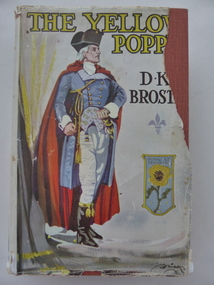
Book, The Yellow Poppy by D K Broster, 1937
... sister Annie. In 1920 Florence Lake built a large house called Lyndoch. She had a Rolls Royce car and a chauffeur and was a tireless worker for local charities. ...sister Annie. In 1920 Florence Lake built a large house called Lyndoch. She had a Rolls Royce car and a chauffeur and was a tireless worker for local charities. ...This book comes from the property of Lyndoch near the mouth of the Hopkins River. George Rolfe, a tea merchant from Melbourne, established Lyndoch in 1875 and Miss Florence Lake, daughter of Miss Annie Lake, later Mrs George Rolfe, inherited the property with her sister Annie. In 1920 Florence Lake built a large house called Lyndoch. She had a Rolls Royce car and a chauffeur and was a tireless worker for local charities. Florence Lake died in 1946 and the property became the site of an Aged Care Facility in Warrnambool. Florence Lake’s house now forms part of the hostel section of this facility. This book would have been in the Lyndoch library during Florence Lake’s time there. D K Broster ( Dorothy Kathleen) was a popular writer of historical novels in the early part of the 20th century. The Flight of the heron being her most acclaimed.This book is of interest as it came from the historically-important property and house known as Lyndoch and so it is connected to Miss Florence Lake, a prominent person in Warrnambool in the first half of the 20th century. This is a hard cover book of 439 pages. It has a red cover with black lettering on the front and spine. It also has a dust cover which has a colour image of a man in late 18th century attire and a shield containing a yellow poppy. The dust cover is partly torn away. The book has 46 chapters. The inscription is handwritten in black ink. ‘Lyndoch Xmas 1937’lyndoch, florence lake, history of warrnambool -
 Bendigo Historical Society Inc.
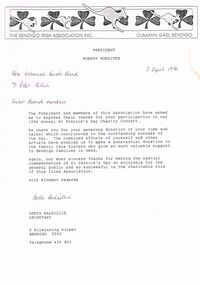
Document - PETER ELLIS COLLECTION: LETTER, 3rd April, 1996
... PERSON Individual peter ellis oam Peter Ellis Collection The Bendigo Irish Association Inc Robert Rossiter The Colonial Bush Band Family Care Sisters Greta Balsillie Letter, dated 3 April 1996, from The Bendigo Irish Association Inc. thanking The Colonial Bush Band for their participation in their Annual St Patrick's Day Charity Concert. ...Letter, dated 3 April 1996, from The Bendigo Irish Association Inc. thanking The Colonial Bush Band for their participation in their Annual St Patrick's Day Charity Concert. Signed by Greta Balsillie, Secretary. The letterhead across the top of the page has 6 shamrocks with 1 large and 3 small kangaroos in front of the shamrocks.person, individual, peter ellis oam, peter ellis collection, the bendigo irish association inc, robert rossiter, the colonial bush band, family care sisters, greta balsillie -
 Bendigo Historical Society Inc.
Audio - The 1930s Depression Tapes - Doreen and Josephine Favaloro, 2005
... The questions covered sixteen relevant subjects: • Introduction and housing • Social activities, swimming, cinemas, school and games played with friends • Organizations such as the RSL, Relief Committees etc. and any effect they had on family life • The life of the single woman • Unemployment and Employment • Government Assistance • Charities Aid • Self-help • People Power, e.g. boycotts or protests • Politics • Trouble or crime • Family Health, Medical and Diet • Education • General memories of, and hardships encountered, during the Depression history Bendigo Michele Matthews Collection The 1930s Depression Tapes Doreen and Josephine Favaloro Audio tape interview with sisters Doreen Domenica Favalora, and Josephine Monica Faveloro; cake and food shop owners. ...In 2005 Michele Matthews interviewed current and former residents of Bendigo for her thesis on the 1930s Depression as part of her PhD Research, with the University of Melbourne Faculty of Arts, History Department. Michele interviewed fifteen members of prominent Bendigonian families. The thesis was titled: "How Depressing?: The impact of the Great Depression on Bendigo and District 1925-1935". The Michele Matthews Collection contains fourteen audio cassette tape recordings and one written transcript. The tapes are each approximately 1 hour and 45 minutes duration. The questions presented to the interviewees explore everyday experiences they would have lived through at the time of the Depression. The questions covered sixteen relevant subjects: • Introduction and housing • Social activities, swimming, cinemas, school and games played with friends • Organizations such as the RSL, Relief Committees etc. and any effect they had on family life • The life of the single woman • Unemployment and Employment • Government Assistance • Charities Aid • Self-help • People Power, e.g. boycotts or protests • Politics • Trouble or crime • Family Health, Medical and Diet • Education • General memories of, and hardships encountered, during the DepressionAudio tape interview with sisters Doreen Domenica Favalora, and Josephine Monica Faveloro; cake and food shop owners. Daughters of Salvatore and Gina Favaloro. Doreen was born in 1915, and Josephine in 1920. Both attended school at St Mary's College, Doreen, c1920-1933, and Josephine, 1925-1938. The tape has been converted to a sound file. The 120 minute interview can be listened to, and the notes viewed, at the Bendigo Historical Society. By appointment only. The sisters lived at 137 Forest Street (not the one in the photo) Generations of the Favaloro family have attended Catherine McAuley College and its predecessor colleges St Mary's and Marist Brothers'. A book has been released documenting the progressive family migration from Salina, Italy to Bendigo. The family went on to run many much-loved businesses in Bendigo including cafes, fruit shops, theatre kiosks and caterers. A book has been written called 'The Favaloro Family of Bendigo: The Early Year 1895-1942' by Robert McWilliam. The photo and article are from the Bendigo Weekly Newspaper Friday April 7th 2006history, bendigo, michele matthews collection, the 1930s depression tapes, doreen and josephine favaloro -
 Alfred Hospital Nurses League - Nursing History Collection
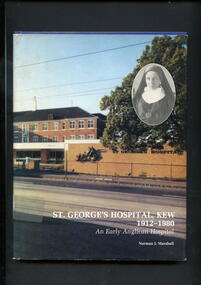
Book - Illustrated book, Norman J. Marshall, St.George's Hospital, Kew 1912-1980: an early Anglican Hospital, 1981
... Sisters of the Community of the Holy Name until 1949. In 1925 a midwifery wing had been added, and the hospital was registered as a Midwifery Training School. The hospital was sold to the Victorian Hospitals and Charities ...A history of St George's hospital, Kew. Hospital was founded by the Church of England in 1912 and administered by the Sisters of the Community of the Holy Name until 1949. In 1925 a midwifery wing had been added, and the hospital was registered as a Midwifery Training School. The hospital was sold to the Victorian Hospitals and Charities Commission in 1949.Illustrated hardcover book with dustjacket. Book has a mid-blue cover, with abbreviated title and authors surname printed in gilt on spine. The dustjacket has a coloured photograph of the front of the hospital as background. An oval black and white photograph of Sister Esther (Mother Foundress of the Community of the Holy Name) is superimposed at the top right front corner. Full title and author's name is printed in white at bottom of front. Abbreviated title and author's name printed in white on spine.non-fictionA history of St George's hospital, Kew. Hospital was founded by the Church of England in 1912 and administered by the Sisters of the Community of the Holy Name until 1949. In 1925 a midwifery wing had been added, and the hospital was registered as a Midwifery Training School. The hospital was sold to the Victorian Hospitals and Charities Commission in 1949.st george's hospital, kew, hospitals-victoria, midwifery training, medical trainining, church of england, ellerslie -
 Alfred Hospital Nurses League - Nursing History Collection
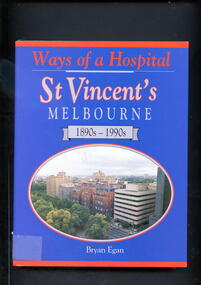
Book - Illustrated book, Bryan Egan, Ways of a hospital: St. Vincent's Melbourne 1890's-1990's, 1993
... St Vincent's Hospital Melbourne Hospitals-Victoria-History medical services nurses Founded as a religious hospital by the Sisters of Charity in 1893, St Vincent's has become a distinctive part of Melbourne life. ...Founded as a religious hospital by the Sisters of Charity in 1893, St Vincent's has become a distinctive part of Melbourne life. 'Ways of a Hospital" offers an engrossing look at the development and the culture of the hospital and it's place in the social history of the city.Illustrated book with dust jacket. Book is bound in black material, with title, author's and publisher's name printed in silver ink on spine. Dust jacket has background of mid-blue with narrow re borders top and bottom. Title in red, silver and black ink, authors name in white print on front and spine. Also on front is an oval shaped colour photo of the hospital. On the back cover is an image of the hospital logo and motto translation in white print.non-fictionFounded as a religious hospital by the Sisters of Charity in 1893, St Vincent's has become a distinctive part of Melbourne life. 'Ways of a Hospital" offers an engrossing look at the development and the culture of the hospital and it's place in the social history of the city.st vincent's hospital melbourne, hospitals-victoria-history, medical services, nurses -
Port Melbourne Historical & Preservation Society
Audio - PMHPS Meeting, Melbourne City Mission, Norma Barnett, 22 Oct 2001
... Social Activities Charities and Appeals Sister Norma Jean Barnett Jubilee Hall Melbourne City Mission Recording of PMHPS Meeting on 22.10.2001. ...Recording of PMHPS Meeting on 22.10.2001. Recording done at Port Melbourne Town Hall. Speaker was Norma Barnett talking of the history of Melbourne City Mission and in Port Melbourne in particular, at Jubilee Hall. Recording duration 47:45social activities, charities and appeals, sister norma jean barnett, jubilee hall, melbourne city mission -
Port Melbourne Historical & Preservation Society
Book, Catherine Waterhouse, Going Forward in Faith - a History of Melbourne City Mission, 1999
... Produced by MCM, purchased and donated by Pat Grainger after seeing the copy belonging to Norma Barnett, who had worked at Jubilee Hall Charities and appeals Religion - Melbourne City Mission Depression Catherine Waterhouse Sister Norma Jean Barnett Jubilee Hall Melbourne City Mission 'Goiing forward in Faith - a history of Melbourne Citymission' by Catherine Waterhouse 1999. blue, softcover, 216pp, illustrated. contains two photos.of Port Melbourne branch (Jubilee Hall) Going Forward in Faith - a History of Melbourne City Mission Book Catherine Waterhouse Melbourne City Mission ...Produced by MCM, purchased and donated by Pat Grainger after seeing the copy belonging to Norma Barnett, who had worked at Jubilee Hall'Goiing forward in Faith - a history of Melbourne Citymission' by Catherine Waterhouse 1999. blue, softcover, 216pp, illustrated. contains two photos.of Port Melbourne branch (Jubilee Hall)charities and appeals, religion - melbourne city mission, depression, catherine waterhouse, sister norma jean barnett, jubilee hall, melbourne city mission -
 Kiewa Valley Historical Society
Photographs – Old Tawonga District General Hospital Mt Beauty. Set of 19 colour photographs
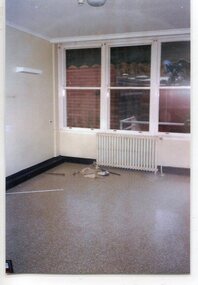
... Charities. Many SEC workers and their families have received medical care at Tawonga District General Hospital and Alpine Health over the years. A number of family members of SECV workers as well as other dedicated staff have provided high quality medical attention and support in all the facilities as nursing staff, support staff and volunteers. Many past staff members and their families still remain living in the Kiewa Valley area mt beauty district hospital tawonga district hospital bonegilla ward Ryder family 1. No markings 2. G Ryder at front entrance 3. Sister ...In the early stages of the Kiewa Hydro-Electric Scheme the State Electricity Commission took over the financial and construction responsibility of the Tawonga District General Hospital building at a cost of 27,000 pounds. This included the removal and re-erection of the ex-military Bonegilla ward from Wodonga while in addition they carried out all the necessary building works that allowed the hospital to operate as a functional unit. The work was completed and handed over to the Hospital Committee of Management on September 1, 1949. Local residents raised 3,400 pounds through fund raising. The balance was met by the SEC and the Hospital and Charities Commission. The initial project was to provide for a basic temporary hospital which was later to include an Operating Theatre, Offices, Store, Mortuary and a Nurse’s Home, until the establishment of a permanent medical premises. Following the opening, 455 patients were admitted to the Tawonga District General Hospital and 254 operations were performed in the first year. The hospital relocated to Mount Beauty in the former SEC administration offices located in the town centre. Official opening of the 18 bed Tawonga District General Hospital was on April 29 in 1961. The old weatherboard building was demolished around the late 1900’s to early 2000’s and replaced with a new modern brick building. Alpine Health CEO Mr Lyndon Seys oversaw the opening of the new Mount Beauty Hospital in November 2001 alongside Board of Management President Mr Andrew Randell, other board members and politicians. The Kiewa Hydro-Electric Scheme the State Electricity Commission played a pivotal part in the planning and initial funding of the Tawonga District General Hospital, with a view to providing medical support for its many workers on the Hydro scheme. Later, spouse and family members of workers were also able to access medical assistance The hospital was originally located in Tawonga away from the majority of the patients as the Hospital and Charities. Many SEC workers and their families have received medical care at Tawonga District General Hospital and Alpine Health over the years. A number of family members of SECV workers as well as other dedicated staff have provided high quality medical attention and support in all the facilities as nursing staff, support staff and volunteers. Many past staff members and their families still remain living in the Kiewa Valley area 19 Colour photographs of the Tawonga and District Hospital situated in Mt Beauty circa 2000. Including photographs of interior and of some staff members1. No markings 2. G Ryder at front entrance 3. Sister G Ryder in the Resuscitation Room 4. Nurse D Hateley in the Kitchen 5. Nurse D Hateley in the Casualty Room 6. Sister W McClelland in new nurse’s station 7. R Forrest, G Ryder, ?, M Ranton 8. Nurse D Hateley in the Pan Room 9. Tawonga District General Hospital: Resuscitation Room 10. Hospital Hallway 11. Empty Nurses Station 12. Tawonga District General Hospital: Nursery 13. Patient Tea Room 14, 15, 16, 17, & 18. No marking mt beauty district hospital, tawonga district hospital, bonegilla ward, ryder family -
 Ballarat Heritage Services
Photograph - Digital photographs, L.J. Gervasoni, RIP Connie Johnson mosaic of Love Your Sister, c2017
... Sister...cancer...breast cancer...Connie Johnson...Constance Johnson...charity...Love Your Sister cancer breast cancer Connie Johnson Constance Johnson charity unicycle Federation Square Digital images of Connie Johnson of Love Your Sister. ...Digital images of Connie Johnson of Love Your Sister. love your sister, cancer, breast cancer, connie johnson, constance johnson, charity, unicycle, federation square
