
Showing 232 items matching "st ann's"
-
 Warrnambool and District Historical Society Inc.
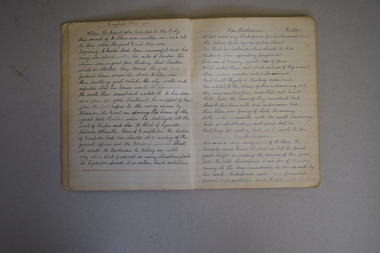
Book - School Exercise Book 1921 St Ann's, early 20th century
... School Exercise Book 1921 St Ann's......st. ann's college...It seems to be about Year 10 standard. St. Ann's College began in 1872 as a Convent of Mercy School for Girls, changed its name to St. ...Ena O'Keefe St. Ann's College Warrnambool...It seems to be about Year 10 standard. St. Ann's College began in 1872 as a Convent of Mercy School for Girls, changed its name to St. ...This school exercise book contains mostly English Literature material produced by Ena O'Keefe at St. Ann's College, Warrnambool and dates from the 1921. It seems to be about Year 10 standard. St. Ann's College began in 1872 as a Convent of Mercy School for Girls, changed its name to St. Ann's in 1888 and amalgamated with the Christian Brothers' College in 1990 to form the present-day Emmanuel College. No information is available on Ena O'Keefe but she may have come from the Winslow district. This book is of interest as a school exercise book from the early 20th centuryThis is a school exercise book of 100 pages. The black cover is somewhat scuffed. The pages are ruled and contain handwriting in blue ink.Ena O'Keefe St. Ann's College Warrnamboolwarrnambool schools, st. ann's college, ena o'keefe -
 Warrnambool and District Historical Society Inc.
Document - Documents (St. Ann’s ), letter, Mid 20th century
... Documents (St. Ann’s )......St. Ann’s Convent...Dorothy and Agnes Ardlie had been pupils at St. Ann’s School. Some of the documents relate to the orphanage established at St. ....1 A sheet of paper containing a letter handwritten in black ink and an envelope with the address handwritten in black ink .2 A sheet of paper containing a letter handwritten in blue ink .3 A black and white photograph of St. Ann’s Convent .4 Two sheets of blue paper with rough plans of St. ...Dorothy and Agnes Ardlie had been pupils at St. Ann’s School. Some of the documents relate to the orphanage established at St. ...These items come from the estates of Dorothy and Agnes Ardlie of Warrnambool. Dorothy Ardlie (1910-1993) and her sister Agnes (1915-1993) were the daughters of law clerk Arthur Ardlie and his wife Ethel, the granddaughters of the prominent Warrnambool lawyer, William Ardlie and his wife Mary and the great granddaughters of John and Mary Ardlie, pioneer settlers in Warrnambool. All of the documents relate to St. Ann’s Convent/School in Warrnambool. The Sisters of Mercy established St Mary’s Wyton school in 1872 and the name was changed to St.Ann’s in 1888. Dorothy and Agnes Ardlie would have been particularly interested in the convent building established around the original building of Wyton as this building had been the home of John Ardlie and had been sold to the Sisters of Mercy by their grandfather, William Ardlie. Dorothy and Agnes Ardlie had been pupils at St. Ann’s School. Some of the documents relate to the orphanage established at St. Ann’s in 1881 when an extension was added to the convent for that purpose. The orphanage was closed when a similar institution, Nazareth House, was opened in Ballarat. Thes items are of minor interest as material compiled by the Ardlie sisters, Dorothy and Agnes, residents of Warrnambool in the 20th century. .1 A sheet of paper containing a letter handwritten in black ink and an envelope with the address handwritten in black ink .2 A sheet of paper containing a letter handwritten in blue ink .3 A black and white photograph of St. Ann’s Convent .4 Two sheets of blue paper with rough plans of St. Ann’s building interior .5 A sheet of paper with a black and white sketch of St. Ann’s Convent .6 A sheet of white paper with photocopies of two newspaper cuttingsardlie family, warrnambool, st. ann’s convent -
 Warrnambool and District Historical Society Inc.
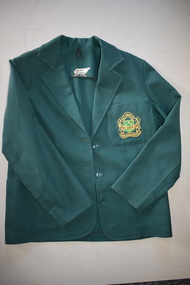
Textile - Artefact : Textile, St Ann's College Blazer, C1980's
... St Ann's College Blazer...st ann's college warrnambool...St Ann's college history dates back to 1872 with the arrival in Warrnambool of eight Sisters Of Mercy from Ireland. ...Monogram has St Ann's Warrnambool, Omnia Vincit Labor. Jacinta Murphy is on the name tag....St Ann's college history dates back to 1872 with the arrival in Warrnambool of eight Sisters Of Mercy from Ireland. ...St Ann's college history dates back to 1872 with the arrival in Warrnambool of eight Sisters Of Mercy from Ireland. They purchased Wyton House, which was the former home of Mr William Ardlie, soon after their arrival, and the first school was opened that same year. It was initially known as St Mary's and had both day and boarding scholars. When the chapel was built in 1888, the name was changed to St Ann's. It operated as both primary and secondary education until 1974 and in 1991 it amalgamated with nearby St Joseph's CBC and became co-educational operating as Emmanuel College. At that time the uniform changed from the familiar green with yellow to navy blue and maroon. The motto translate as Work conquers all. This blazer belonged to one of the last students to attend both St Ann's College and Emmanuel College and was Vice Captain of Emmanuel College in Year 12. IAn item which would have many local memories and connections with large numbers of children attending the school in close to 150 years of education in Warrnambool.Bottle green woollen school blazer with three green buttons and three pockets . The school monogram is sewn on the top left pocket. It is stitched in yellow with school motto in black. Lighter green stitching in the background. Name tag glued at back.Monogram has St Ann's Warrnambool, Omnia Vincit Labor. Jacinta Murphy is on the name tag.st ann's college warrnambool, emmanuel college, warrnambool, wyton house, sister of mercy warrnambool -
 Warrnambool and District Historical Society Inc.
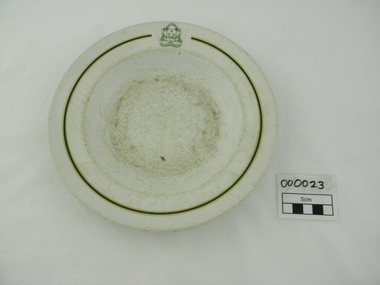
Domestic object - China bowl, Gibsons and Paterson Limited, St Ann's College, Mid 20th Century
... St Ann's College.......st ann's college... St. Anns College had its beginnings in the arrival in May 1872 of a group of nuns from Ireland. ...Inscription on emblem. " St. Anns Warrnambool around edge of logo with Omnia Vincit Labor on banner through the middle with four stars in the background. ...St. Anns College had its beginnings in the arrival in May 1872 of a group of nuns from Ireland. ...St. Anns College had its beginnings in the arrival in May 1872 of a group of nuns from Ireland. They were the third group of Sisters of Mercy to come to Victoria. The Warrnambool nuns worked hard to establish a school and orphanage for the socially disadvantaged children of the district. They purchased Wyton from Captain Ardlie that year and also Amhurst later on. The Nazareth sisters of Ballarat took over the orphanage in the late 1880's and moved the children to Ballarat but the school continued to develop an expanding curriculum. A chapel was built in 1887 and a school wing in 1906. They survived on tuition fees and the generosity of benefactors though the early and middle part of the 20th century including a large bequest by Mrs Vera Kenna in the 1960's. Boarders were a regular part of convent life until the 1970's which is probably the source of this plate. St Ann's College was combined with St Joseph's CBC college as Emmanuel College and operates today as the largest Catholic college in the district.This has significance as it is associated with one of the longest running schools in the district and hence would have a connection to many Warrnambool people as well as district people who boarded at the college.White bowl, with green and yellow stripe around edge and emblem. Surface is quite scratched on front and bottom of bowl.Inscription on emblem. " St. Anns Warrnambool around edge of logo with Omnia Vincit Labor on banner through the middle with four stars in the background. Printed in green. Inscription on base Grindley Hotel Ware England . Vitrified . Gibson and Paterson Limited New Zealand. CIR stamped into china on base.secondary school, catholic, warrnambool, st ann's college, sisters of mercy, education, emmanuel college -
 Warrnambool and District Historical Society Inc.
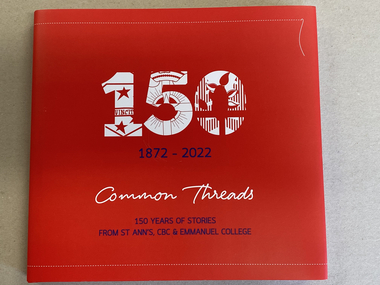
Book, 150, 1872-2022 Common Threads 150 Years of Stories From St. Ann's, CBC, & Emmanuel College, 2022
... 150, 1872-2022 Common Threads 150 Years of Stories From St. Ann's, CBC, & Emmanuel College......St Ann's...In 1991 St Ann's and CBC merged to form Emmanuel College. ...In 1991 St Ann's and CBC merged to form Emmanuel College. ...History of Emmanuel College and its founding schoolsThis is a book of 220 pages with a red cover in blue and white printing and white and red graphics. It has a dust cover replicating some of the pattern of the hard cover. The pages contain printed text, black and white and coloured photographs and other illustrations. There is a loose book mark with the printing replicating the cover. non-fictionHistory of Emmanuel College and its founding schools catholic education in warrnambool., history of emmanuel college, st ann's, christian brothers college, emmanuel college warrnambool -
 Warrnambool and District Historical Society Inc.
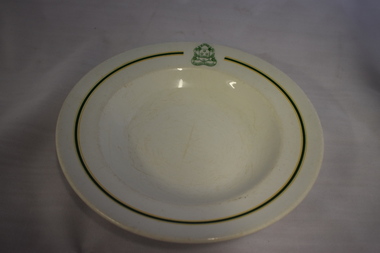
Plate, St Anns Warrnambool, Early to mid 20th century
... St Ann’s School, Warrnambool... This plate came from St Ann’s School, Warrnambool. It was probably used in the boarding house section and may have been used for either soup or cereal. ...‘St. Anns Warrnambool Omnia Vincit Labor’ ...St Ann’s School, Warrnambool Emmanuel College, Warrnambool ‘St. ...This plate came from St Ann’s School, Warrnambool. It was probably used in the boarding house section and may have been used for either soup or cereal. St Ann’s School opened in 1872 as St Mary’s Convent of Mercy School, Wyton, with the latter name being the name of the ex-John Ardlie house in which the school was initially established. There were eight foundation Sisters of Mercy. The name changed to St Ann’s Convent School in 1888 and in 1991 it amalgamated with the Warrnambool Christian Brothers College to form Emmanuel College.This plate is an interesting memento of St. Ann’s School in Warrnambool in the mid 20th century.This is a round china plate with a green and yellow band around the inner edge of the plate. There is also the emblem of the school with the name and motto. The plate has a dip or recess in the middle. The china is slightly crazed. ‘St. Anns Warrnambool Omnia Vincit Labor’ st ann’s school, warrnambool, emmanuel college, warrnambool -
 Warrnambool and District Historical Society Inc.
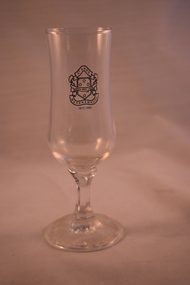
Household, Glass, 1990
... St Ann’s College, Warrnambool...St. Ann’s School commenced in 1872 and was then known as St Mary’s Convent of Mercy School, Wyton. ...‘St. Ann’s Warrnambool Omnia Vincit Labor 1872-1990’ ...St Ann’s College, Warrnambool Emmanuel College, Warrnambool ‘St. ...This glass has been issued to mark the end of the name of St. Ann’s College, Warrnambool in 1990 and the school’s amalgamation with the Warrnambool Christian Brothers College in 1991. St. Ann’s School commenced in 1872 and was then known as St Mary’s Convent of Mercy School, Wyton. The latter name was the name of the ex-John Ardlie home in which the school was then situated. There were eight foundation Sisters of Mercy. In 1888 the name was changed to St Ann’s School and in 1991 it amalgamated with the Warrnambool Christian Brothers College to form Emmanuel College. This glass is an interesting memento of the year that the name of St Ann’s College in Warrnambool ceased to exist. This is a clear drinking glass in the shape of a goblet with a round base and an elongated body with a round opening at the top. The crest of the school is impressed onto the glass in gold outline. ‘St. Ann’s Warrnambool Omnia Vincit Labor 1872-1990’ st ann’s college, warrnambool, emmanuel college, warrnambool -
Federation University Historical Collection
Booklet, St Ann's Press, The Winston, Contest in Music for Youth, 29/10/1966
... St Ann's Press...The Winston, Contest in Music for Youth Booklet St Ann's Press ...Frank Wright was a renown resident of Smeaton, where he was born in 1901. He lived at Laura Villa, and attended Smeaton State School. His father William was a gold miner and his mother's name was Sarah. He was the youngest of eleven children. Their family won many singing and instrumental awards. Frank was tutored by Percy Code and was awarded a gold medal for the highest marks in the ALCM examinations in the British Colonies at the age of seventeen years. He became the Australian Open Cornet Champion by the age of eighteen. A year later, Frank conducted the City of Ballarat Band, and later the Ballarat Soldiers’ Memorial Band. He formed the Frank Wright Frisco Band and Frank Wright and his Coliseum Orchestra. These bands won many South Street awards, and Frank as conductor won many awards in the Australian Band Championship contest. In 1933 Frank Wright sailed to England to conduct the famous St Hilda’s Band and was appointed in 1934 as the Musical Director of the London County Council (the GLC or Greater London Council), where he organized many amazing concerts in most of the 150 parks, in and around the London district. He was also responsible for some of London’s major concerts at Kenwood, the Crystal Palace and Holland Park. He was made Professor of Brass and Military Band Scoring and Conducting and was a Fellow of the Guildhall School of Music and Drama. Frank was often invited to adjudicate Brass Band Championships around Europe, in Australia, including South Street and in New Zealand. Frank was awarded an M.B.E. in 1967 and he died in November 1970. The Frank Wright Medal at the Royal South Street competition is awarded to an individual recognized as making an outstanding contribution to brass music in Australia.Small 21 page booklet has a blue card cover and is printed in black and white. On the first page is a photograph of the Boys' Brigade Massed Band Concert at the Royal Albert Hall with Frank Wright conducting.frank wright, boys' brigade, brass bands, conductor, the winston, youth in music -
 Warrnambool and District Historical Society Inc.
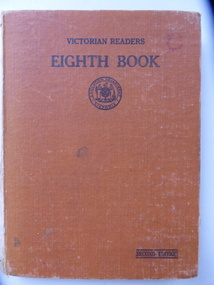
Book, Victorian Readers Eighth Book, Mid 20th century
... This copy was in use as a Form Two (Year 8) class set at St. Ann’s College, Warrnambool in the 1970s ....‘Form Two St. Ann’s College’ ...This copy was in use as a Form Two (Year 8) class set at St. Ann’s College, Warrnambool in the 1970s . ...This is the Eighth Reader in the series of school readers introduced in 1928 for the Education Department of Victoria and used extensively in Victorian schools in the early to mid 20th century decades. This copy was in use as a Form Two (Year 8) class set at St. Ann’s College, Warrnambool in the 1970s .This book is of general interest, being the final book in the series of school readers that were in widespread use in Victorian schools from the late 1920s to the 1950s. The book is also of interest because it was used at St. Ann’s College, Warrnambool in the 1970s and has the signatures of nine pupils who used the book at that time. St. Ann’s College, the Catholic secondary school for girls in Warrnambool in the 1970s, is now incorporated into the co-educational Catholic secondary school in Warrnambool – Emmanuel College. This is a hard cover book of 260 pages. It has a Contents page, an Acknowledgments page, reading material of prose and verse, including extracts from books of well-known authors and Notes and Explanations at the back of the book. The cover is brown with the emblem of the Education Department of Victoria on the front. The book is missing its spine covering. The book has many black and white photographs and sketches. The inscription and signatures on the first page are handwritten in black, blue and red ink.‘Form Two St. Ann’s College’ victorian school readers, history of warrnambool -
 Warrnambool and District Historical Society Inc.
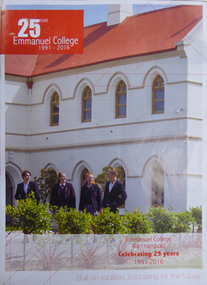
Booklet, Emmanuel College Warrnambool: celebrating 25 years 1991-2016, 2016
... ...st ann's college...Emmanuel College is the result of the amalgamation of St Ann's girls' college and Christian Brothers' College boys' school in 1991. ...Emmanuel College is the result of the amalgamation of St Ann's girls' college and Christian Brothers' College boys' school in 1991. ...Emmanuel College is the result of the amalgamation of St Ann's girls' college and Christian Brothers' College boys' school in 1991. Mother Philomene Maguire arrived in Warrnambool and commenced a Convent of Mercy and school with the consent of the then Bishop of Victoria, Bishop Goold. The school opened in Wyton House in Botanic Road. Brother Egan arrived in 1902 and set up a Brothers' group and school and 104 boys enrolled. Since its inception in 1991 Emmanuel College provides a broad education for students to Year 12 level. A number of students have achieved a high profile in the community, including footballer Jonathan Brown, television personality Dave Hughes, educatior Professor Colin Ferguson, musician Shane Howard, Olympic cyclist Michelle Ferris.This booklet briefly documents the history of Emmanuel College and its predecessors St Ann's and CBC and includes a list of their more prominent and well-known 'inspiring alumni'. It provides research information and window on a period of socialA4 size full colour booklet with a photograph of a white building with light brown trim and red iron roof and arched windows; four senior students (two boys and two girls) wearing school uniform are standing in the foreground. Their blazers feature the school logo. Title is white print in a red box and a sub-title at the bottom right hand side is in red print. 15 pages25 YEARS/Emmanuel College/1991-2016 Emmanuel College/Warrnambool/Celebrating 25 years/1991-2016 Built on tradition, Educating for the future.emmanuel college, convent of mercy, bishop goold, catholic schools, wyton house, brother egan, st ann's college, christian brothers college warrnambool, education, education in the warrnambool area, boyce, rosalie, ferris, michelle, gorman, lisa, howard, shane, keilar, brendan, o'dwyer, dr barry, ryan, kathryn, brown, jonathan, atkinson, david oam, coghlan, gorgi, earls, judith, o'shea, br frank, ryan, dr kevin, houlihan, sr natalie, hughes, dave, ferguson, prof colin, howard, sr adele, ryan, shaun, smith, karan, lanigan, sgt sean, melican, felicity, turner, michael, green, danielle mp, holland, nicki, o'keefe, marcia oam, o'toole, melanie, harrington, clayton, gallagher, br don, gleeson, dr laurence, gleeson, trevor, houlihan, patrick, mugavin, fr patrick -
 Koroit & District Historical Society
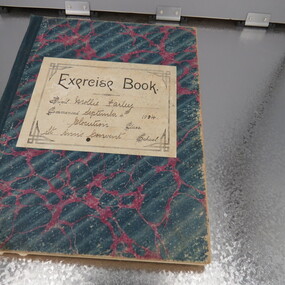
Class book
... Class book of Mollie Farley from St Ann's Convent Warrnambool...Class book of Mollie Farley from St Ann's Convent Warrnambool Class book ...Class book of Mollie Farley from St Ann's Convent Warrnambool -
 Stawell Historical Society Inc
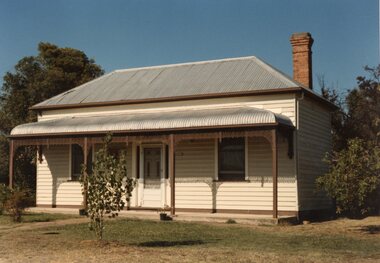
Photograph, Oates family home
... 7045 On reverse: St 85 Ann St. 7045-1 On reverse: Sept. 28 1988 Oates Homestead Stawell Ann Street...Oates 7045 On reverse: St 85 Ann St. 7045-1 On reverse: Sept. 28 1988 Oates Homestead Stawell Ann Street 7045 White Weatherboard hosue with Iron roof with Vernadah Brown Trim 7045-1 Smae house with white trim, with four people two adults and 2 children. ...7045 White Weatherboard hosue with Iron roof with Vernadah Brown Trim 7045-1 Smae house with white trim, with four people two adults and 2 children.7045 On reverse: St 85 Ann St. 7045-1 On reverse: Sept. 28 1988 Oates Homestead Stawell Ann Streetoates -
 Stawell Historical Society Inc
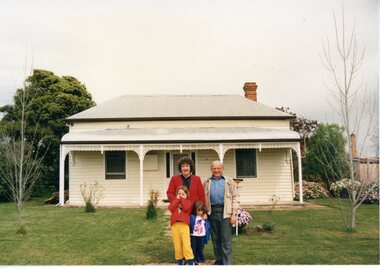
Photograph, Oates family home
... 7045 On reverse: St 85 Ann St. 7045-1 On reverse: Sept. 28 1988 Oates Homestead Stawell Ann Street...Oates 7045 On reverse: St 85 Ann St. 7045-1 On reverse: Sept. 28 1988 Oates Homestead Stawell Ann Street 7045 White Weatherboard hosue with Iron roof with Vernadah Brown Trim 7045-1 Smae house with white trim, with four people two adults and 2 children. ...7045 White Weatherboard hosue with Iron roof with Vernadah Brown Trim 7045-1 Smae house with white trim, with four people two adults and 2 children.7045 On reverse: St 85 Ann St. 7045-1 On reverse: Sept. 28 1988 Oates Homestead Stawell Ann Streetoates -
Emerald Museum & Nobelius Heritage Park
Functional object - School bag
... E. Constable - Ann St...Emerald Victoria Australia school children school history E Constable Ann Street E. Constable - Ann St Leather school bag with name inside Functional object School bag ...Leather school bag with name insideE. Constable - Ann Stemerald, victoria, australia, school children, school history, e constable, ann street -
 Warrnambool and District Historical Society Inc.
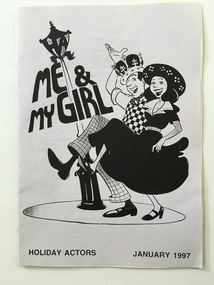
Programme - Me & My Girl, 1997
... The Holiday Actors began in 1985 when a group of students from what was then C.B.C. College and St. Ann’s School performed in a production of ‘Joseph and His Amazing Technicolour Dreamcoat’. ...The Holiday Actors began in 1985 when a group of students from what was then C.B.C. College and St. Ann’s School performed in a production of ‘Joseph and His Amazing Technicolour Dreamcoat’. ...This is a program for the 1997 Holiday Actors production of ‘Me and My Girl’. The Holiday Actors began in 1985 when a group of students from what was then C.B.C. College and St. Ann’s School performed in a production of ‘Joseph and His Amazing Technicolour Dreamcoat’. The following summer ‘The Boyfriend’ was staged and it was decided to extend the production in future years to include students in other secondary schools. Holiday Actors became incorporated in 1986 and the productions are staged annually today in the January school vacationThis program is of interest as an example of the productions staged by the Holiday Actors, an important Warrnambool theatre company. This is a program of 16 pages for the 1997 Holiday Actors production of ‘Me and My Girl’. It has a mauve-coloured cover with a black and white sketch of a dancing couple on the front cover and a sketch of a violin and a McDonalds logo on the back cover. The program includes advertisements, photographs of the cast and information on the play and the Holiday Actors. The pages were stapled but the staples have been removed. holiday actors, warrnambool theatre productions, production – ‘me and my girl’ -
 Warrnambool and District Historical Society Inc.
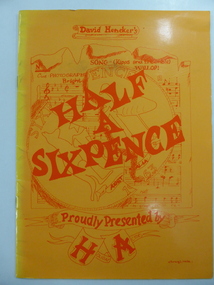
Programme, Half a sixpence, 1987
... This company began in 1985 when a group of students from St Ann’s College and Christian Brothers College, Warrnambool (now merged to form the present day school, Emmanuel College), staged a musical production. ...This company began in 1985 when a group of students from St Ann’s College and Christian Brothers College, Warrnambool (now merged to form the present day school, Emmanuel College), staged a musical production. ...This is the programme of a musical production, ‘Half a Sixpence’ by the Warrnambool Holiday Actors. This company began in 1985 when a group of students from St Ann’s College and Christian Brothers College, Warrnambool (now merged to form the present day school, Emmanuel College), staged a musical production. The next year it was decided to extend membership to students across the district and membership today is still restricted to school students and young people. The Holiday Actors continue today with musical productions, mostly staged in school holidays. This programme is of interest as an example of the productions staged by the Warrnambool-based theatre company, Holiday Actors. This is a booklet of 20 pages, a programme for the musical ‘Half a Sixpence’. The front cover is yellow with images of a musical score, a sixpence cut in half and the Holiday Actors logo in red printing. The back cover has advertisements. The booklet contains sketches, printed material, advertisements and black and white photographs. The booklet is bound with metal staples. One small piece has been cut out of page seven. holiday actors, history of warrnambool -
 Warrnambool and District Historical Society Inc.
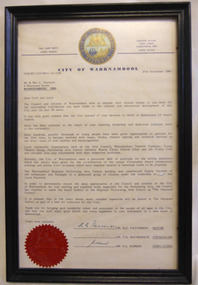
Letter - Citation City of Warrnambool Hayward, 1985
... Hayward taught drama and speech at Warrnambool High School and St Ann’s College. They both worked towards reviving the Warrnambool Arts Council.. ...Hayward taught drama and speech at Warrnambool High School and St Ann’s College. They both worked towards reviving the Warrnambool Arts Council.. ...Cyril and Joyce Hayward migrated from England in 1955 and quickly became involved in the Arts in Warrnambool. They both became life members of the Warrnambool Theatre Company. Mrs. Joyce Hayward along with her husband Cyril, had a 30 year association with the Warrnambool Theatre Company. They acted, directed and produced a number of works from the 1950’s through to the 1980’s. Mrs. Hayward taught drama and speech at Warrnambool High School and St Ann’s College. They both worked towards reviving the Warrnambool Arts Council.. They were involved in Christ Church choir, readings for the blind, Probus and Penguin club. They retired to Bribie Island in 1985. Joyce Hayward died aged 97 in 2007.Joyce and Cyril Hayward played a significant part in the development of the Performing Arts and Education in Warrnambool over a 30 year period. They both received the Warrnambool Citizenship award. This letter expresses the gratitude of Council and citizens of Warrnambool to the Haywards for their contribution. Cream paper with body of letter typed and signed by the Mayor, a councillor and Town Clerk at the time. It has the City of Warrnambool crest at the top in light and dark blue with gold lettering and at the bottom left corner is the City of Warrnambool seal in red.Cr R.K. Patterson, Cr T, A, McCormack, V. G. Robson, Town clerk. warrnambool, cyril hayward, joyce hayward, citizen award, performing arts centre. -
 Warrnambool and District Historical Society Inc.
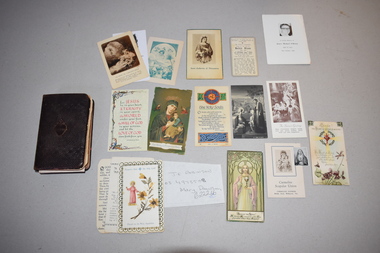
Book, Charles Eason, The Treasury of the Sacred Heart, C1920
... Mary’s Convent School, Wyton in North Warrnambool (re-named St. Ann’s in 1888). This school merged with the Christian Brothers College in 1990 to form the present-day Emmanuel College. ...Mary’s Convent School, Wyton in North Warrnambool (re-named St. Ann’s in 1888). This school merged with the Christian Brothers College in 1990 to form the present-day Emmanuel College. ...This book of prayers was given by the Warrnambool Sisters of Mercy to Dorothy Ardlie on the occasion of her 12th birthday. The Sisters of Mercy came to Warrnambool in 1872 and established St. Mary’s Convent School, Wyton in North Warrnambool (re-named St. Ann’s in 1888). This school merged with the Christian Brothers College in 1990 to form the present-day Emmanuel College. The Sisters of Mercy ceased active involvement with the school in the 1990s. Dorothy Ardlie (1910-1993) and her sister Agnes Ardlie (1915-1993) were the daughters of Arthur and Ethel Ardlie of Warrnambool, the granddaughters of the prominent Warrnambool lawyer William Ardlie and his wife Mary and the great granddaughters of John and Mary Ardlie, pioneer settlers in Warrnambool. This book and the loose cards are interesting mementoes of Dorothy Ardlie, a member of a prominent Warrnambool family in the 20th century and of the Sisters of Mercy, an order of nuns that has been important in Warrnambool’s educational history. This is a book of 138 pages with a brown leather cover and gilt edging along the sides of the pages. The front and back cover and spine are embossed with two decorative patterns. The front cover has an embossed heart with flames and a cross and the spine has gold lettering. Some of the pages are loose and some have been re-attached to the binding using adhesive tape. Some of the pages are stained. The book contains black printing and there is one black and white illustration. In the pages of the book were 29 small cards, scraps of paper etc. These are now kept with the book but in a separate folder. Most of these are of a devotional nature – prayers, images of saints etc. Wishing dear Dorothy a very happy birthday with much love from the Sisters of Mercy 26th April 1922ardlie family, sisters of mercy, history of warrnambool -
 Melton City Libraries
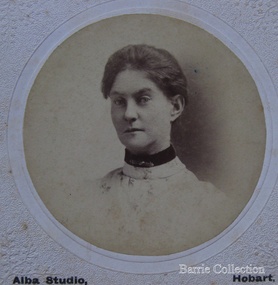
Photograph, Ann Daley, 1902
... William and Eliza Daley were living in Ann St Williamstown 1863. Their daughter Ann was born in 1864 and in 1865 daughter Elzabeth was born in Melton...William and Eliza Daley were living in Ann St Williamstown 1863. Their daughter Ann was born in 1864 and in 1865 daughter Elzabeth was born in Melton Local Identities Pioneer Families Portrait photo of Ann taken at Alba Studio, Hobart Ann Daley Photograph Barrie Collection ...William and Eliza Daley were living in Ann St Williamstown 1863. Their daughter Ann was born in 1864 and in 1865 daughter Elzabeth was born in MeltonPortrait photo of Ann taken at Alba Studio, Hobartlocal identities, pioneer families -
 Eltham District Historical Society Inc
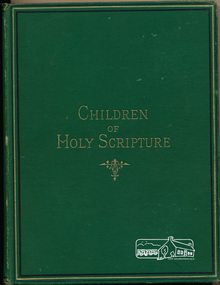
Book, The Children of Holy Scripture by L. Massey
... Guy Rewell, 15 Luck St. Elhtam Ann Bullen Rm 201...Guy Rewell, 15 Luck St. Elhtam Ann Bullen Rm 201 Hardcover The Children of Holy Scripture by L. ...2nd Edition. One of five items relating to the Shillinglaw Family collectionThe book was presented in 1886 to Caroline Shillinglaw. This family were pioneer settlers in the Eltham area.HardcoverThree separate inscriptions on flyleaf: Eltham Primitive Methodist Sabbath School - Presented to Caroline Shillinglaw Sept 13th 1886 written in red ink with horizontal lines through it. Guy Rewell, 15 Luck St. Elhtam Ann Bullen Rm 201shillinglaw family collection -
 Warrnambool and District Historical Society Inc.
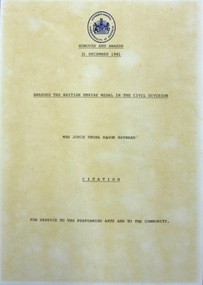
Document - Citation Award, British Empire Medal Citation awarded to Mrs Joyce Thora Hagon Hayward, 1981
... Mrs Hayward taught drama and speech at Warrnambool High School and St Ann’s College. They both worked towards reviving the Warrnambool Arts Council.. ...Mrs Hayward taught drama and speech at Warrnambool High School and St Ann’s College. They both worked towards reviving the Warrnambool Arts Council.. ...The Order of the British Empire was formed in 1917 to reward service to the British Empire in the United Kingdom and abroad. Originally having only a civil division, a military division was added in 1918 to acknowledge distinguished military service of a non-combative nature. The Order has five classes of appointment in each division and a medal of the Order. In descending order, the classes are: Grand Cross (GB); Knights and Dames Commander (KCB and DCB); Commanders (CBE); Officers (OBE); Members (MBE), and Medal (BEM). Mrs Joyce Hayward along with her husband Cyril, had a 30 year association with the Warrnambool Theatre Company. They acted, directed and produced a number of works from the 1950’s through to the 1980’s. Mrs Hayward taught drama and speech at Warrnambool High School and St Ann’s College. They both worked towards reviving the Warrnambool Arts Council.. They were involved in Christ Church choir, readings for the blind, Probus and Penguin club. They retired to Bribie Island in 1985. Joyce Hayward died aged 97 in 2007. Joyce Hayward played a significant role in the development of the performing arts in Warrnambool. The British Empire medal is an award of some importance and recognizes the contribution Mrs Hayward made to the Warrnambool Community. Both Mrs Joyce Hayward and her husband Cyril were awarded the British Empire Medal. Cream paper with black typed text. Navy blue seal at top. Framed in black and gold plastic frame. Governor General Commonwealth of Australia printed at top. warrnambool, joyce hayward, cyril hayward, british empire medal, joyce thora hagon hayward -
 Warrnambool and District Historical Society Inc.
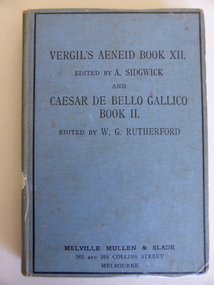
Book, Vergil's Aeneid Book X11, Late 19th century
... It was used by Lizzie Stanley at the convent school in Warrnambool This school was established in 1872 and was at first known as the Convent of Mercy, Wyton and, after 1888, St. Ann’s Convent School. In 1991 it merged with the Warrrnambool Christian Brothers’ College to become Emmanuel College. ...It was used by Lizzie Stanley at the convent school in Warrnambool This school was established in 1872 and was at first known as the Convent of Mercy, Wyton and, after 1888, St. Ann’s Convent School. In 1991 it merged with the Warrrnambool Christian Brothers’ College to become Emmanuel College. ...This is a Latin text book for pupils studying for the Matriculation examinations in 1899 and 1900. It was used by Lizzie Stanley at the convent school in Warrnambool This school was established in 1872 and was at first known as the Convent of Mercy, Wyton and, after 1888, St. Ann’s Convent School. In 1991 it merged with the Warrrnambool Christian Brothers’ College to become Emmanuel College. Lizzie Stanley is believed to be Elizabeth Stanley, born in 1883 with her parents John Shaw and Marie Stanley. Her father, a writer, mathematician and chess player, was well-known in Warrnambool as the founder and Head Master of Warrnambool Grammar School (1879-1900). This text book has at some stage been in the collection of the Warrnambool Mechanics’ Institute Library. The Warrnambool Mechanics’ Institute and Subscription Library were established in Warrnambool in 1854 and a Free Library was operating in the Mechanics’ Institute building from the 1870s on. The Mechanics’ Institute building was demolished in 1975 and the library collection was housed in the new library opened in 1976. In 2006 the old Mechanics’ Institute library was re-housed at Flagstaff Hill Maritime Museum, Warrnambool and it is not known exactly when this text book was removed from the collection. This book is of considerable interest as it has connections to Warrnambool student, Lizzie Stanley, the Warrnambool Convent school and the Warrnambool Mechanics’ Institute Library.This is a hard cover book of 162 pages. It has a blue cover with black lettering. There are two library labels pasted in, one at the front and one at the back and a library sticker on the spine. The inscription is handwritten in black ink and there are also some notes written at the back in pencil. The cover is stained and the spine is much faded. ‘Lizzie Stanley Convent Warrnambool’ The Warrnambool Mechanics’ Institute and Free Library’ ‘Warrnambool Public Library’lizzie stanley, warrnambool mechanics’ institute library, warrnambool public library -
 Mission to Seafarers Victoria
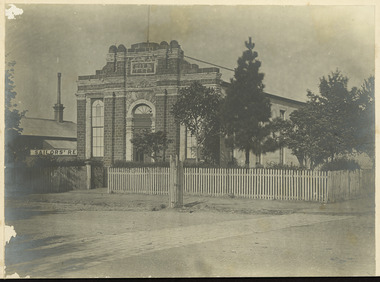
Photograph - Photograph, Sepia, Andrew Rider, c. 1885
... Written on verso: Sailors' Rest, Ann St., Williamtown, 1880's....Written on verso: Sailors' Rest, Ann St., Williamtown, 1880's. View looking across street to a brick building with arched doorway on a corner block. ...This Wesleyan Chapel was used as the first Sailor's Rest in Williamstown in 1875. Photograph of the first Institute locales in Williamstown.View looking across street to a brick building with arched doorway on a corner block. A sign on the left reads: Sailors' Re[st].Typed sheet attached to verso: No. 15: The Sailor's Rest, Ann Street, Williamstown, about 1885. Written on verso: Photograph - Andrew Rider. Written on verso: Sailors' Rest, Ann St., Williamtown, 1880's.williamstown, ann street, sailors' rest, seamen's mission, andrew rider (1821-1903), wesleyan church -
 Melton City Libraries
Photograph, Myers Gully, 1935
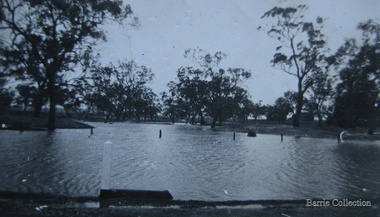
... Eliza married in Williamstown 1862 to William Daley a Bootmaker of Ann St, Williamstown. In 1865, Eliza and William lived in High Street Melton. ...Eliza married in Williamstown 1862 to William Daley a Bootmaker of Ann St, Williamstown. In 1865, Eliza and William lived in High Street Melton. ...Mary, Eliza and Ann Dowling arrived in Melbourne in June 1855 on the ship “Hotspur” as assisted immigrants. Mary married in Melton in 1857 to John Luby.The couple lived in Reserve Road Melton. Eliza married in Williamstown 1862 to William Daley a Bootmaker of Ann St, Williamstown. In 1865, Eliza and William lived in High Street Melton. Ann was a domestic servant in Williamstown and married Henri Miers in Melbourne in 1867.They built their house in Melton on the Ballarat road near the intersection of Reserveroad in 1867–Ryans Creek, referred to as Myers GullyMyers Gully at the junction of Reserve Road, now known as Ryans Creeklandscapes of significance, local identities, pioneer families -
 Flagstaff Hill Maritime Museum and Village
Instrument - Clock, 1950
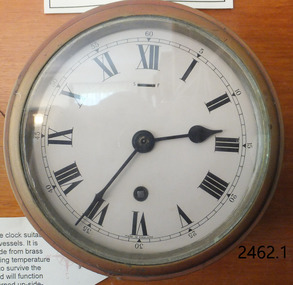
... In 1909 company of JJ Elliott amalgamated with Grimshaw Baxter, and the factory moved to Greys Inn Lane, London, in 1911, followed by a further move, in 1917, to larger premises in St Ann’s Road, Tottenham, London. In 1921, the partnership with Grimshaw Baxter was dissolved, and Frank Elliott joined a well-known firm of Bell Founders and Clockmakers, Gillett and Johnson Ltd, in Croydon. ...In 1909 company of JJ Elliott amalgamated with Grimshaw Baxter, and the factory moved to Greys Inn Lane, London, in 1911, followed by a further move, in 1917, to larger premises in St Ann’s Road, Tottenham, London. In 1921, the partnership with Grimshaw Baxter was dissolved, and Frank Elliott joined a well-known firm of Bell Founders and Clockmakers, Gillett and Johnson Ltd, in Croydon. ...In 1865, James Jones Elliott of 156 Cheapside in the City of London, was apprenticed to a clockmaker, "Bateman" of 82 St John Street, Smithfield, London, to learn the art of clock making. Initially, J J Elliott specialised in producing pinions and balance shafts for clocks. He eventually progressed to making and patenting a weight-driven movement that had chimes on tubes. This clock was very successful and resulted in considerable trade with America. James Elliott's son, Frank Westcombe Elliott, who at the age of 17 years, went into business with his father after his father had bought a partnership with a jeweller called “Walden” of Brompton Road, London. In 1904, JJ Elliott died and Frank succeeded his father in clock clock-making business. In 1909 company of JJ Elliott amalgamated with Grimshaw Baxter, and the factory moved to Greys Inn Lane, London, in 1911, followed by a further move, in 1917, to larger premises in St Ann’s Road, Tottenham, London. In 1921, the partnership with Grimshaw Baxter was dissolved, and Frank Elliott joined a well-known firm of Bell Founders and Clockmakers, Gillett and Johnson Ltd, in Croydon. In 1923, two years later, he took over their clock factory and formed the famous company of F.W. Elliott Ltd. He was joined by his two sons, Leonard and Horace Elliott, who had served their apprenticeships in the trade. The third son, Ronald, joined the company in 1929. Elliott's started to produce clocks for the armed forces when war was declared in 1939, together with test gear and apparatus for the Rolls-Royce engines used in the RAF planes. In 1944, Frank Elliott died at the age of 69, and Horace Elliott assumed the role of Managing Director. Whilst Horace controlled sales from a showroom in Hatton Garden. In 1952, Horace Elliott was elected Chairman of the British Horological Institute in the same year as Tony, one of Horace's sons, joined the company after he had completed training as a cabinet maker. Ronald Elliott died suddenly in 1966, at the age of 54. His son Peter continued to manage the company until 1998, when it ceased trading. An item that is now regarded as vintage, sought by horology collector’s worldwide and is in excellent condition. The item is unique in that it was made specifically for ships by a well-known British clock manufacture. Its provenance is well established as the serial numbers on the clock indicate it was made in 1950. Production by F.W Elliott for this design of ships clock ceased in 1959. Clock has a gold color case with a 150 mm white painted dial and Roman numerals. The movement has a balance wheel escapement and a slow-fast timekeeping adjuster to the top of the dial. The back of the clock is stamped “made by F W Elliott Ltd of Croydon” and a serial number 21B/829, an additional number 994 is also stamped on the back casing. Thsi model clock finished production in 1959. flagstaff hill, warrnambool, shipwrecked-coast, flagstaff-hill, flagstaff-hill-maritime-museum, maritime-museum, shipwreck-coast, flagstaff-hill-maritime-village, clock, f w elliott, maritime clock, horology, time keeping, english clock -
 City of Moorabbin Historical Society (Operating the Box Cottage Museum)
Photograph, Black & White, 'Oak Bank' later 'Whitehouse' Ann St. McKinnon c1920, c1960
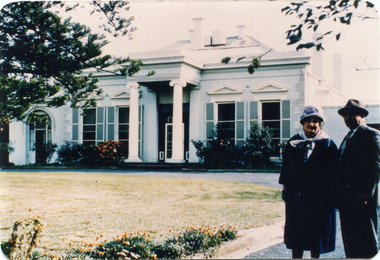
... Photograph, Black & White, 'Oak Bank' later 'Whitehouse' Ann St. McKinnon c1920...As time progressed the Hospital became too small, and was unable to meet new medical standards When Moorabbin Community Hospital opened c1974 in Centre Road East Bentleigh, the Ann St Hospital closed. The Moorabbin Hospital is now a campus of Monash Medical Centre Clayton. ...c1960 Photograph, Black & White, 'Oak Bank' later 'Whitehouse' Ann St. McKinnon c1920 ...'Oak Bank ' , in Ann Street McKinnon, was originally owned by Mr Robert Smith. The house was later renamed 'The Whitehouse' and was still in use as a General Hospital in the 1950's, known as the Ann Street Hospital.. This small hospital handled some Surgery, Midwifery and general Medical cases from the fast growing Bentleigh / McKinnon area. As time progressed the Hospital became too small, and was unable to meet new medical standards When Moorabbin Community Hospital opened c1974 in Centre Road East Bentleigh, the Ann St Hospital closed. The Moorabbin Hospital is now a campus of Monash Medical Centre Clayton. 'The Whitehouse' was used as a general Hospital for the residents of McKinnon, Bentleigh, and Ormond for many years during the 20thC.Colour photograph showing Mrs John Marriott ( nee Ann Smith) , her son Fred Marriott standing outside 'The Whitehouse' undated ? c1960Back ; Handwritten informationoakbank house mckinnon, whitehouse mckinnon, ann street general hospital, moorabbin community hospital, monash hospital clayton, smith robert, lees seedling growers ltd. thomas street mckinnon,mith j l; smith mary ann, stanley helen, smith vic, chaff cutter, horse drawn carts, toll gates brighton, motor cars 1900, steam engines, early settlers, bentleigh, mckinnon, parish of moorabbin, city of moorabbin, county of bourke, moorabbin roads board, shire of moorabbin, henry dendy's special survey 1841, were j.b.; bent thomas, o'shannassy john, king richard, charman stephen, highett william, ormond francis, maynard dennis, market gardeners, vineyards, orchards -
 Bendigo Historical Society Inc.
Document - M.A. KNOTT BUSINESS CARD
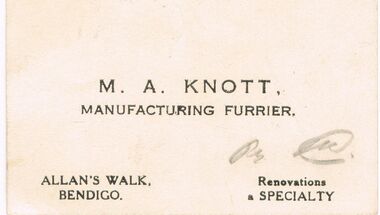
... In 1931 Mary Ann is living in Eadie St. and David is listed at 121 Wattle Street, again both furriers. 3. 1937 both are living at 123 Wattle St. but Mary Ann is now listed as home duties. 4. 1942 Both are living in Spring Gully Road where David died in 1948 before he is buried at the Bendigo cemetery. ...In 1931 Mary Ann is living in Eadie St. and David is listed at 121 Wattle Street, again both furriers. 3. 1937 both are living at 123 Wattle St. but Mary Ann is now listed as home duties. 4. 1942 Both are living in Spring Gully Road where David died in 1948 before he is buried at the Bendigo cemetery. ...Mary Ann Craddock married David George Knott (1894-1948) in 1923. He was born at Lockwood. The following from the electoral rolls:- 1. 1925 David and Mary Ann were living at the Olive Branch Hotel in Mitchell Street and both are listed as furriers; 2. In 1931 Mary Ann is living in Eadie St. and David is listed at 121 Wattle Street, again both furriers. 3. 1937 both are living at 123 Wattle St. but Mary Ann is now listed as home duties. 4. 1942 Both are living in Spring Gully Road where David died in 1948 before he is buried at the Bendigo cemetery. NB. Both 121 and 123 Wattle St. are very big homes, possibly boarding houses at the time. In 1923 their shop was situated in the Lansell building on the corner of Mitchell and Hargreaves St. It was on the upper floor and all stock was destroyed in a fire. In 1931 the address for their business is listed as Mitchell Street. Earlier in 1915, in the NSW Police Gazette, David was listed as a deserter from the army but no army records have been found. Likewise no birth or death records have been found for Mary Ann.M. A. Knott Business Card: Cream card with black ink. M. A. Knott, Manufacturing Furrier. Allan's Walk, Bendigo. Renovations a Specialty. Box 625.business, retail, furrier, m.a. knott. allan's walk -
 Flagstaff Hill Maritime Museum and Village
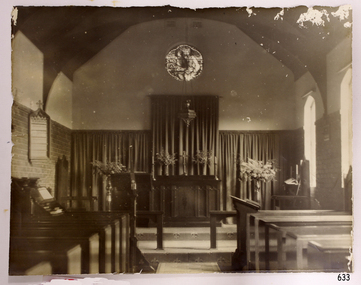
Photograph - Historical, religious, mid-20th century
... St Nicholas’ Seamen’s Church is named after its namesake from Williamstown, Victoria, which began in 1857. Bishop Perry opened the first Sailors’ Church there, known as ‘Bethel’, on an old hulk floating in Hobson’s Bay, Port of Melbourne. In 1860, a Sailors’ Rest started operating from rented premises in Williamstown. In 1878, the Sailors’ Church moved into an old Wesleyan chapel in Ann...St Nicholas’ Seamen’s Church is named after its namesake from Williamstown, Victoria, which began in 1857. Bishop Perry opened the first Sailors’ Church there, known as ‘Bethel’, on an old hulk floating in Hobson’s Bay, Port of Melbourne. In 1860, a Sailors’ Rest started operating from rented premises in Williamstown. In 1878, the Sailors’ Church moved into an old Wesleyan chapel in Ann ...This photograph records the interior of St Nicholas Seamen's Church at 139 Nelson Place, Williamstown, Victoria, which was purchased and furnished around 1943. The furniture and furnishings are now part of the St. Nicholas Seamen's Church collection. HISTORY of the Missions to Seamen: - DETAILED HISTORY of the Missions to Seamen: - The Missions to Seamen is an Anglican (Church of England) charity that has served the world’s seafarers since 1856. It was inspired by the work of Rev. John Ashley, who, 20 years earlier, had pioneered a ministry to seafarers in the Bristol Channel in Great Britain. When Ashley retired, others continued the work, founding the Missions to Seamen. It adopted a Flying Angel as its symbol, inspired by a verse from the Bible in Revelation 14. Today, over 200 world ports have Missions to Seamen centres and chaplains. A Missions to Seamen’s Club warmly welcomes sailors of all colours, creeds and races and provides a wide range of facilities. The Missions to Seamen organisation changed its name to the Mission to Seafarers in 2000, continuing to include Missions to Seamen clubs in Victoria’s cities of Melbourne, Portland, Geelong and Hastings. Flagstaff Hill’s St Nicholas’ Seamen’s Church is named after its namesake from Williamstown, Victoria, which began in 1857. Bishop Perry opened the first Sailors’ Church there, known as ‘Bethel’, on an old hulk floating in Hobson’s Bay, Port of Melbourne. In 1860, a Sailors’ Rest started operating from rented premises in Williamstown. In 1878, the Sailors’ Church moved into an old Wesleyan chapel in Ann Street. By the end of that year, they managed to purchase the building, which they had already refurbished. In 1883, they affiliated with the Victorian Seamen’s Mission. A few years later, in 1906, the building had to be demolished because it was no longer safe. While they raised funds for a new building, the Sailors’ Rest temporarily moved to premises in front of Customs House in Nelson Place. Around this time, in 1906, the Ladies Harbour Lights Guild was formed in Australia to support and raise funds for the Mission to Seamen organisation in Melbourne. Two of the most significant ladies of the Guild were founding members Ethel Godfrey and Alice Sibthorpe. During the Mission's time at Siddeley Street, Melbourne, the activities of the Guild raised funds for the Mission to Seamen's Chapel at their new, and still current, premises in Flinders Street, Melbourne, opened in 1917. The Guild continued its important work until the 1960s. In 1908, the Williamstown Mission had enough money to purchase the former Mascotte skating rink on Thompson Street, Williamstown. In August of that year, they were inaugurated into the Victorian Missions to Seamen. They continued at that venue for a few decades. In 1943, the former ES&A Bank building at 139 Nelson Place, Williamstown, was purchased to become the new Mission to Seamen’s Club. On May 6th, 1944, it was officially opened, described as a ‘distinctive little building’. Funds had previously been raised for the building and furnishing of the chapel at the rear. The chapel was named St Nicholas’ Seamen’s Church, after St Nicholas, fourth-century bishop and patron saint of sailors. Services were held on Wednesdays and Sundays. The church was supported by the Williamstown Lightkeepers’ Auxiliary, newly founded by Mrs Ethel Margaret Musther in 1943, as well as the Harbour Lights Guild and the League of Soldiers’ and Sailors’ Friends. The Williamstown Mission to Seamen’s Church operated until 1966, when large international ships no longer used the Port of Williamstown. The Commonwealth Government then leased the premises. In the formative years of Flagstaff Hill Maritime Village, the Advisory Board decided to include a Missions to Seamen Chapel and Recreation Room in its village. The Missions organisation was a significant feature of ports during the late 1800s and early 1900s, the period that the Village represents. They often erected Missions to house social and worshipful activities for seamen. Flagstaff Hill’s curator, Mr Ken Marshman, approached the Melbourne Board of Management of Missions to Seamen regarding the Williamstown branch. Consequently, the Board permitted the furnishings of the Williamstown chapel to be transferred to Flagstaff Hill Maritime Village. A provision of the transfer was that the Victoria Missions to Seamen be recognised, that the items would remain as a collection, and that the chapel would be called St Nicholas Seamen’s Church and conduct Divine services. The donation was approved on 21st May 1979. Flagstaff Hill's St. Nicholas Seamen's Church: - The idea behind Flagstaff Hill’s Missions to Seamen’s Church was partly driven by the offer of Stained Glass Memorial Windows that originated from the Warrnambool and District Base Hospital, which was undergoing multi-storey expansion in the late 1960s and early 1970s. The hospital’s Manager/Secretary was eager to see the historic window installed in a suitable place. The church, or chapel, was designed by a local architectural draftsman in collaboration with the Flagstaff Hill Planning Board and was constructed by Mr Leon Habel. The designers hoped that the church would be used for formal worship such as weddings, funerals, and multi-denominational special services like war commemorations. The design is inspired by the ‘Missions to Seamen’ buildings in Portland and the Port of Melbourne. The furniture and furnishings were placed as accurately as possible according to photographs of the Williamstown St Nicholas Seamen’s Church and with assistance from local clergy. The Recreation Room was furnished and arranged on advice from experienced members of the Missions to Seamen organisation. A framed document in the building recognises the donor of the furnishings, Victoria Missions to Seamen, and includes the names of some original donors and their donated item/s. The building’s design incorporates local features such as Warrnambool sandstone, which was no longer commercially available but was procured from demolished buildings and uniformly cut to use as a veneer over the stronger Mt. Gambier stone. Also, traditional green American roofing slate was used, sourced from the 1908 local shipwreck “Falls of Halladale” by Flagstaff Hill volunteer divers. The bell tower includes a bell believed to be from a local shipwreck. Additional furnishings were acquired locally, along with several items donated by Warrnambool residents. Light fittings in both rooms were assembled to simulate 19th-century gas light fittings. The stained-glass window at the back of the church is a memorial to Dr Connell, a well-respected member of the Warrnambool community. It was originally installed in 1928 in the main building of Warrnambool Hospital. The St Nicholas’ Seamen’s Church at Flagstaff Hill was officially opened by His Worship the Mayor, Cr. John Lindsay, on Sunday, 11th October 1981. The event included a service of thanksgiving conducted by the Warrnambool Ministers Fraternal. Since then, the Chapel has been the historic venue for many weddings. This photograph is significant through its association with the St Nicholas' Mission to Seamen Church in Williamstown, Melbourne, established in 1857. The building in the photograph is the former English, Scottish and Australian Bank (ES&A bank), also known as the Mission to Seamen. It is listed on the Victorian Heritage Database for having local historic and aesthetic interest. Photograph of St Nicholas Seamen's Church, Williamstown. Sepia photograph. The photograph shows the inside of the Chapel of Mission to Seamen, including organ, pews and other furniture and furnishings. There is a circular stained glass window high on the back wall depicting a sailor at the helm of a ship and a man standing behind him and pointing the way - "Christ Showing The Helmsman The Way". A Sanctuary Light is suspended from the ceiling. The Sanctuary chars are visible. This shows the St Nicholas Seamen's Church in Williamstown, the furnishings and furniture of which is now part of the St Nicholas Seamen's Church Collection’.flagstaff hill, warrnambool, shipwrecked-coast, flagstaff-hill, flagstaff-hill-maritime-museum, maritime-museum, shipwreck-coast, flagstaff-hill-maritime-village, st nicholas mission to seamen's church williamstown, mission to seamen williamstown, mission to seamen victoria, st nicholas mission to seamen, chapel window, christ showing the helmsman the way, stained glass window, st nicholas seamen's church, religion, religious service, sailor's rest, ladies harbour light guild -
 Flagstaff Hill Maritime Museum and Village
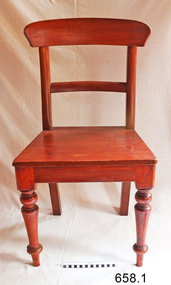
Furniture - Chair, 1880s
... ...ann street williamstown...st...The connection of this set of chairs to the Mission to Seamen and to the Ladies Lightkeepers’ Auxiliary highlights the strong community awareness of the life of people at sea, their dangers and hardships, and their need for physical, financial, spiritual and moral support. flagstaff hill warrnambool shipwrecked coast flagstaff hill maritime museum maritime museum shipwreck coast flagstaff hill maritime village great ocean road religion religious service sailors rest sailors’ church bethel sailors’ church bethel floating church ladies harbour light guild lightkeepers’ auxiliary missions to seamen victoria mission to seafarers flying angel’s club ann street williamstown st nicholas seaman’s church williamstown st nicholas mission to seamen church williamstown mission to seamen williamstown st nicholas seamen’s church flagstaff hill 139 nelson place williamstown church furniture religious furniture religious worship anglican church chair dining chair kitchen chair domestic furniture colonial chair australian colonial period cedar chair Chair: Australian Colonial rail back dining chair. ...This chair is one of a set of four chairs from the St. Nicholas Seamen’s Church, 139 Nelson Place, Williamstown, Victoria, during religious services there. The Church was operated by the Mission to Seamen organisation. * for more detailed history please see our Registration Number 658, Set of chairs This set of chairs is significant historically for its origin in the St Nicholas Mission to Seamen's Church in Williamstown, established in 1857 to cater for the physical, social, and spiritual needs of seafarers. It originated in Bristol, England when a Seamen's Mission was formed in 1837. The set of chairs is historically significant for its connection to the Ladies Lightkeepers’ Auxiliary, an organisation of women, formed to support seafarers. The connection of this set of chairs to the Mission to Seamen and to the Ladies Lightkeepers’ Auxiliary highlights the strong community awareness of the life of people at sea, their dangers and hardships, and their need for physical, financial, spiritual and moral support. Chair: Australian Colonial rail back dining chair. Chair is one of a set of four (4) cedar wood chairs. Each chair has a rounded rail back, flat cross rail, flat solid wood seat, curved back legs and colonial turned front legs. Mid-brown colour, veneer finish. The set of chairs is part of the St Nicholas Seamen's Church Williamstown Collection. flagstaff hill, warrnambool, shipwrecked coast, flagstaff hill maritime museum, maritime museum, shipwreck coast, flagstaff hill maritime village, great ocean road, religion, religious service, sailors rest, sailors’ church, bethel sailors’ church, bethel floating church, ladies harbour light guild, lightkeepers’ auxiliary, missions to seamen victoria, mission to seafarers, flying angel’s club, ann street williamstown, st nicholas seaman’s church williamstown, st nicholas mission to seamen church williamstown, mission to seamen williamstown, st nicholas seamen’s church flagstaff hill, 139 nelson place williamstown, church furniture, religious furniture, religious worship, anglican church, chair, dining chair, kitchen chair, domestic furniture, colonial chair, australian colonial period, cedar chair -
 Flagstaff Hill Maritime Museum and Village
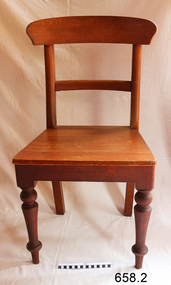
Furniture - Chair, 1880s
... ...ann street williamstown...st...The connection of this set of chairs to the Mission to Seamen and to the Ladies Lightkeepers’ Auxiliary highlights the strong community awareness of the life of people at sea, their dangers and hardships, and their need for physical, financial, spiritual and moral support. flagstaff hill warrnambool shipwrecked coast flagstaff hill maritime museum maritime museum shipwreck coast flagstaff hill maritime village great ocean road religion religious service sailors rest sailors’ church bethel sailors’ church bethel floating church ladies harbour light guild lightkeepers’ auxiliary missions to seamen victoria mission to seafarers flying angel’s club ann street williamstown st nicholas seaman’s church williamstown st nicholas mission to seamen church williamstown mission to seamen williamstown st nicholas seamen’s church flagstaff hill 139 nelson place williamstown church furniture religious furniture religious worship anglican church chair dining chair kitchen chair domestic furniture colonial chair australian colonial period cedar chair Chair: Australian Colonial rail back dining chair. ...This chair is one of a set of four chairs from the St. Nicholas Seamen’s Church, 139 Nelson Place, Williamstown, Victoria, during religious services there. The Church was operated by the Mission to Seamen organisation. * for more detailed history please see our Registration Number 658, Set of chairs This set of chairs is significant historically for its origin in the St Nicholas Mission to Seamen's Church in Williamstown, established in 1857 to cater for the physical, social, and spiritual needs of seafarers. It originated in Bristol, England when a Seamen's Mission was formed in 1837. The set of chairs is historically significant for its connection to the Ladies Lightkeepers’ Auxiliary, an organisation of women, formed to support seafarers. The connection of this set of chairs to the Mission to Seamen and to the Ladies Lightkeepers’ Auxiliary highlights the strong community awareness of the life of people at sea, their dangers and hardships, and their need for physical, financial, spiritual and moral support. Chair: Australian Colonial rail back dining chair. Chair is one of a set of four (4) cedar wood chairs. Each chair has a rounded rail back, flat cross rail, flat solid wood seat, curved back legs and colonial turned front legs. Mid-brown colour, veneer finish. The set of chairs is part of the St Nicholas Seamen's Church Williamstown Collection. flagstaff hill, warrnambool, shipwrecked coast, flagstaff hill maritime museum, maritime museum, shipwreck coast, flagstaff hill maritime village, great ocean road, religion, religious service, sailors rest, sailors’ church, bethel sailors’ church, bethel floating church, ladies harbour light guild, lightkeepers’ auxiliary, missions to seamen victoria, mission to seafarers, flying angel’s club, ann street williamstown, st nicholas seaman’s church williamstown, st nicholas mission to seamen church williamstown, mission to seamen williamstown, st nicholas seamen’s church flagstaff hill, 139 nelson place williamstown, church furniture, religious furniture, religious worship, anglican church, chair, dining chair, kitchen chair, domestic furniture, colonial chair, australian colonial period, cedar chair
