
Showing 35 items matching "used for visitors to museum"
-
 Ballarat Tramway Museum
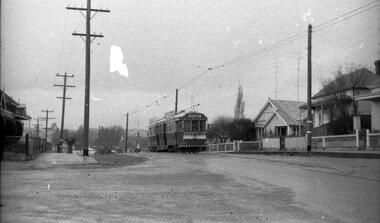
Photograph - Ballarat Tram 40, Tram in Barkly Street at the top of the rise, 10/08/1971
... ...used for visitors to museum...The tram remained in Ballarat and became part of the Ballarat Tramway Museum fleet. It is classified as operable - used for visitors to travel on at the Museum. ...The tram remained in Ballarat and became part of the Ballarat Tramway Museum fleet. It is classified as operable - used for visitors to travel on at the Museum. ...Tram 40 was built in 1913 by Duncan and Fraser for the Prahran and Malvern Tramways Trust was given the number 35. It was sold to the State Electricity Commission of Victoria (SEC) and renumbered 40 when it came to Ballarat in 1951. This tram was the last Ballarat tram operated by the SEC to officially carry passengers in Ballarat. This was on 19 September 1971. The tram remained in Ballarat and became part of the Ballarat Tramway Museum fleet. It is classified as operable - used for visitors to travel on at the Museum. Photograph shows Ballarat Tram 40 in Barkly Street. Street to the left possibly Cameron Street. Taken 10/08/1971. Campbell Duncan, photographer Negative folder - paper, Photape Pty Ltd. containing 6 strips of 35mm negatives in clear plastic sleeve. campball duncan, photographer, ballarat, barkly street, tram 40, 1913, duncan and fraser, prahran and malvern tramways trust, state electricity commission ballarat, last tram operated 1971, museum fleet, used for visitors to museum, 10/08/2026 -
 Flagstaff Hill Maritime Museum and Village
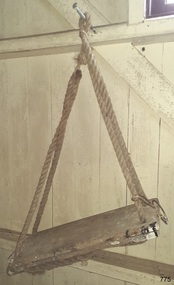
Equipment - Bosun's Chair, ca. 1922
... The vessel had many owners and adventures over the years until it was purchased by Flagstaff Hill Maritime Museum & Village in 1975 from the Melbourne Ferry Company at auction. It was then used as an active display until 2016. Visitors...The vessel had many owners and adventures over the years until it was purchased by Flagstaff Hill Maritime Museum & Village in 1975 from the Melbourne Ferry Company at auction. It was then used as an active display until 2016. Visitors ...This Bosun's char was part of the equipment on the vessel 'Reginald M. It is typical of items included on board a vessel in the late 19th and early 20th century. The nautical word 'bosun' is an abbreviation of the word 'boatswain' who is the person responsible for the repair and maintenance of the vessel. It could be used when rigging the sails and for rescue at sea, along with a thick rope anchored on shore or a rope between ships. It could also be used to move passengers to and from a ship as well as cargo on, to and from the vessel. A bosun's chair is a simple piece of equipment made from a short plank of wood and a sturdy piece of rope. It looks a little like a child's swing but usually has a pulley system that allows the user to adjust the length of the hanging piece of rope, and in so-doing adjusts the height above the floor or ground or sea. In modern times a harness would also be worn by the bosun’s chair user for safety reasons. Bosun's chairs are also used by window cleaners, construction workers and painters. The bosun’s chair is sometimes just a short plank, or even a canvas sling. The REGINALD M - The vessel “Reginald M” was a two-masted coastal ketch, owned and built by Mr. Jack (John) Murch of Birkenhead, Port of Adelaide, South Australia. Its construction took approximately 6 months and it was launched at Largs Bay in 1922. The vessel had many owners and adventures over the years until it was purchased by Flagstaff Hill Maritime Museum & Village in 1975 from the Melbourne Ferry Company at auction. It was then used as an active display until 2016. Visitors could go aboard, turn the ship's wheel, go below deck and get the feel of the captain's quarters, sailors' quarters and the storage space available. The Reginald M was a popular exhibit for young and old, until 2016. This bosun's chair is significant for its connection to the maritime history. It has been used for rigging, painting, maintenance and importantly for life saving and safety. The bonus's chair is also significant because of its connection to the history of the vessel REGINALD M, the coastal trading ketch from South Australia built in 1922 and in existence until 2016. Its flat bottom, single chine shape illustrates a very simple but robust method of construction, compared to other round bilged examples of trading vessels. The Reginald M is listed on the Australian Register of Historic Vessels (ARHV Number: HV000562.) Bosun's chair; seat is a rectangular plank of wood with a hole drilled in each corner and three reinforcing wood lengths attached below the plank. The ends of two looped thick ropes have been threaded through the holes in the plank, crossed over then spliced together. The loops of rope above the plank have been tied with light rope. A roughly made wire hook is attached at the base of one length of rope. Top surface reveals indents where the bottom wooden pieces are joined to the top and some of the metal fixtures can be seen along the edge. There are remnants of white paint on the top. flagstaff hill, warrnambool, maritime village, maritime museum, flagstaff hill maritime museum & village, shipwreck coast, great ocean road, bosun's chair, bosuns chair, boatswains chair, rigging, maritime equipment, bosun's seat, life saving, marine technology, ship rigging -
 Flagstaff Hill Maritime Museum and Village
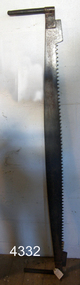
Tool - Saw, 1905-1913
... used for the timber carried as cargo on the Marjorie Craig. The saw is significant for its association with the well-known Marjorie Craig, a frequent visitor to the Port of Warrnambool 1908 to 1912, a supplier of New Zealand timber for the local firm P J McGennan & Co, and one of the fastest inter-colonial sailing ships that broke numerous records for its speed including the fastest sailing from Warrnambool to Hokianga. flagstaff hill maritime museum maritime village warrnambool great ocean road shiopwreck coast woodworking tool crosscut saw shipwright tool saw marine trade carpenter marjorie craig j j craig craig line 1905-1912 Handwritten on tab: "From sailing ship Marjorie Craig early 1900 Port of Warrnambool" Crosscut saw; blade attached to wooden handles by wingnut each end. ...This crosscut saw was originally part of the equipment on the barque Marjorie Craig, which brought New Zealand timber into Warrnambool from about 1908 to 1912 for the local merchants P J McGennan & Co. The toolbox was donated by a member of a local family connected with the La Bella rescue in 1905. The toolbox has carvings and markings that make it unique and connect it to the Marjorie Craig. The Craig Line of sailing ships was from Auckland, New Zealand, and traded in timber and some coal from New Zealand ports to Australia, including Sydney, Adelaide, Melbourne and Warrnambool. They returned with produce from Australia as ballast. In 1912 the Craig fleet included the Ihumata, Inga, Jessie Craig, Marjorie Craig, Louisa Craig and Joseph Craig. The steel barque Marjorie Craig, 500 ton, was built in 1891 as the 'Hirotha', in Ardrossan, Scotland for Norwegian owners. The ship was sold to Auckland’s Donald Ross and others in 1900, then in 1905 it was sold, registered by J.J. Craig in Auckland, New Zealand and renamed Marjorie Craig. Marjorie Craig’s commanders included Master R A Campbell in 1907, J MacFarlane in 1909 and Master R.G. Holmes in 1913. From February 1908, the Marjorie Craig was regularly seen in the Port of Warrnambool with loads of timber for merchants P J McGennan & Co. In February 1912 Marjorie Craig delivered white pine for P J McGennan & Co. In April of the same year, she brought 500,000 feet of timber for McGennan & Co and again in May 1912. On May 12 1912 Marjorie left the Port of Warrnambool with 500 tons of flour for New Zealand; it seems that this was her last time at Warrnambool. Prior to 1908, the vessel Speculant brought in timber from New Zealand for the McGennan firm. The Marjorie Craig had a strong reputation for being a ‘Fast Flyer’, breaking the sailing records for voyages between New Zealand and Australia. It was reported that she made passages with a speed equal to steamboats on several occasions. One of her records was from Warrnambool to Hokianga, NZ in eight-and-a-half days. The ship broke the record in October 1913 for the time from Adelaide to Auckland, sailing in 28 days, even with a damaged ship, and the owner presented Captain Holmes with a gold watch and chain. By the end of December 1913, the Craig Line’s last two surviving sailing ships, Marjorie Craig and Jessie Craig, had been purchased by Huddart, Parker & Co. Ltd. to work as coal hulks, one in Melbourne and one in Hobart. The saw is significant for being created for use in 1905 when the steel barque Marjorie Craig was purchased by J J Craig and given that name. The saw would be part of the sip's equipment and could have been used for the timber carried as cargo on the Marjorie Craig. The saw is significant for its association with the well-known Marjorie Craig, a frequent visitor to the Port of Warrnambool 1908 to 1912, a supplier of New Zealand timber for the local firm P J McGennan & Co, and one of the fastest inter-colonial sailing ships that broke numerous records for its speed including the fastest sailing from Warrnambool to Hokianga. Crosscut saw; blade attached to wooden handles by wingnut each end. The saw has 63 teeth. Also has a tag attached with an inscription. The saw was ship's equipment on the barque, Marjorie Craig. Handwritten on tab: "From sailing ship Marjorie Craig early 1900 Port of Warrnambool" flagstaff hill, maritime museum, maritime village, warrnambool, great ocean road, shiopwreck coast, woodworking tool, crosscut saw, shipwright tool, saw, marine trade, carpenter, marjorie craig, j j craig, craig line, 1905-1912 -
 Flagstaff Hill Maritime Museum and Village
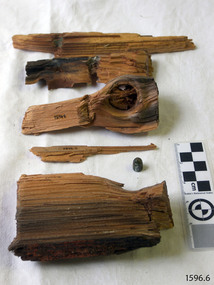
Memorabilia - Bullet & Timber, Early 20th century
... visitors enjoyed boarding and exploring a real ship with a long history. Sadly, the Reginald M was decommissioned in late 2016, due to the continuing prohibitive cost of maintenance and the risk to public safety. Components from the Reginald M are held in Flagstaff Hill's collection as a reminder of the Reginald M’s history. The timber is an example of the materials used to build the Reginald M in 1922. The ship was built from recycled items where possible. The bullet represents a time in the history of the vessel that is currently unknown. Flagstaff Hill Flagstaff Hill Maritime Museum ...The Reginald M was an early purchase of Flagstaff Hill Maritime Museum and Village, soon after it opened in 1975. It was restored and then used as an exhibit in the maritime Village. The reason for the bullet being within the pieces of timber is unknown. The Reginald M's history does not suggest a time when weapons were used. However, the vessel's construction included used materials from different sources; perhaps the bullet was within these materials, which later became part of the Reginald M. ‘REGINALD M’ 1922 to 1975- The vessel “Reginald M” was a two-masted coastal ketch, owned and built by Mr Jack (John) Murch of Birkenhead, Port of Adelaide, South Australia. Its construction took approximately 6 months, and it launched at Largs Bay in 1922. The Reginald M’s purpose was to serve the coastal trade of South Australia, to carry cargo cheaply and efficiently. Some have said that the keel was, in fact, hewn from two telegraph poles! Its builder frequented all the salvage yards for materials and fittings. Reginald M had a very shallow draft and a flat bottom that enabled it to come close to shore and to sit high and dry at low tide or to be beached on sand. The flat bottom was also to make the ship able to skim over reefs. Wagons could load and unload directly from their sides. Its cargo included Guano, Barley, Wool, Horses, Cattle, Timber, Explosives, Potatoes, Shell Grit, and Gypsum. On April 9th 1931, Reginald M weathered a large storm in St Vincent Gulf, SA. The vessel suffered great damage; the mast snapped, and the crew laboured for four hours to free it by chopping off the mast and rigging. The crew patched it up and slowly returned to Port Adelaide with only a portion of the insured cargo being damaged. The crew members at the time were the owner, Mr John H Murch of Wells Street, Largs Bay; Skipper Mr R Murch, John’s brother; Murray, son of Captain Murch; and Seaman John Smith. Reg Webb purchased Carribie Station, at Marion in the Warooka District, south of Adelaide, in 1921. He cleared the land and farmed sheep and grain. In 1923, he shipped his own wool and grain from Marion Bay, having first carted 300 bags of the barley grain, 12 bags at a time, along the unmade track to the jetty. A photograph donated to Flagstaff Hill, dating about 1929 - 1942, shows two men on the Reginald M, holding between them their fishing catch of a large hammer shark. The photograph is stamped “GRENFELL STUDIO PORT LINCOLN PRINT” and titled “hammer shark caught on Reginald Emm”. The donor’s family lived on the Your Peninsula and dispatched their grain from a chute at Gleeson’s Landing to the awaiting transport vessel. Reg knew the Murch Brothers from Port Adelaide. The brothers had been using their ketch, Reginald M, to ship Guano from the Islands, led by Captain Richard Murch. Reg approached them in 1934 about shipping grain from Marion Bay. The brothers visited the bay and thought it was an ideal place. They showed Reg where to stack his grain, and they measured up the cliffs. When Reg was ready, they brought down and installed a ninety-foot wooden chute. The bags of grain were individually pushed down the chute, landing in a waiting small boat, then rowed to Reginald M with 14 bags at a time. After 10 hours, Reginald M would have a load of 1300 bags of grain to ship to waiting ports. At one time, a wild storm destroyed the chute, so they built a stronger replacement chute. Reginald M engaged in the shipping of grain from there until 1938. In 1940, Able Seaman Allan H Lucas served on the Reginald M between September and December, being engaged and discharged from Port Adelaide. The ship’s Master, W S Murch, signed his Certificate of Discharge. It seems that at the Reginald M was used, at one time, as a Customs vessel, as one photograph in Flagstaff Hill’s collection shows “H.M.C. No. 3, Pt Adelaide” on the bow. In 1969, the last freight left Marion Bay on the ketch Reginald M carrying grain, wool, and explosives. In late 1970, the Mt. Lyell Mining and Railway Company bought the vessel to use as a barge to carry explosives. In 1972, the Navy League of Strahan, Tasmania, purchased it for use by the Strahan Sea Cadet Unit to use at Macquarie Harbour and renamed it T.S. Macquarie. However, this plan for the use of Reginald M did not happen. In 1974, Mr Andrew Rennie, of East Brighton, Melbourne, bought it for a similar purpose, paying $5,000 and donating a ‘Cadet of the Year’ trophy to the Sea Cadets. He sailed it from Strahan to Melbourne, planning to use it for pleasure sailing. Also, in 1975, Reginald M was bought by the Melbourne Ferry Company at auction. Later in 1975, Flagstaff Hill Maritime Museum bought the Reginald M for $20,000. It became a popular exhibit in the Village’s lake. In 2006, using funds from a $4,000 government grant, the restoration of the vessel continued. Flagstaff Hill Maritime Village’s Collection holds other artefacts associated with Reginald M. They include - Photographs of the Reginald M, including one photograph of it in Outer Harbour, S.A., dated 1947, with Skipper- R.F. Dale and Owner- John Murch. Another shows it docked at Port Adelaide, with the lettering H.M.C. No. 3 Pt ADEL (standing for His /Her Majesty’s Customs). There is a black and white photo of it at a wharf and another showing a person on board. - a lifebuoy, made of cork, with the inscription of “Pt Adelaide” on it. - Helm section, removed and replaced during restoration. - a bullet found in pieces of timber when Reginald M was restored in 1979 Reginald M was a much-loved exhibit at the Maritime Village, where many visitors enjoyed boarding and exploring a real ship with a long history. Sadly, the Reginald M was decommissioned in late 2016, due to the continuing prohibitive cost of maintenance and the risk to public safety. Components from the Reginald M are held in Flagstaff Hill's collection as a reminder of the Reginald M’s history. The timber is an example of the materials used to build the Reginald M in 1922. The ship was built from recycled items where possible. The bullet represents a time in the history of the vessel that is currently unknown. Wood from the vessel, Reginald M, and a bullet found within its timbers on June 22nd, 1979, during its restoration. flagstaff hill, flagstaff hill maritime museum and village, warrnambool, maritime museum, maritime village, great ocean road, shipwreck coast, reginald m, ketch, coastal trader, timber, wood, bullet, murch, john murch, 1922 -
 Flagstaff Hill Maritime Museum and Village
Vehicle - Wagon, Circa 1909
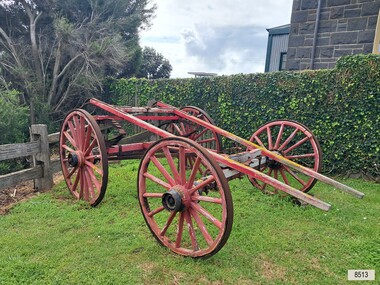
... visitors rides around Flagstaff Hill’s lake. This wagon is significant for its association with an Indian emigrant who used it to earn an income in Australia. It also reflects the vital role of hawkers, who travelled through rural and regional communities in the late nineteenth and early twentieth centuries, supplying food, goods and news. The wagon is also historically significant as a former Flagstaff Hill attraction, offering visitors the experience of horse-drawn rides around the lake. Flagstaff Hill Warrnambool Maritime Village Maritime Museum ...This wagon was used in towns across south-west Victoria during the first half of the twentieth century by Pooran Singh, an Indian-born immigrant. Singh arrived in Australia alone in 1899 at the age of 30. The following year, at the Colac Licensing Court in western Victoria, he was one of 78 hawkers granted a Hawker’s Licence. According to the Colac Herald, all but two of the applicants appeared to be Asian. While some hawkers registered horse-drawn carts, Singh was one of nineteen licensed to trade on foot, selling door to door. Applicants were encouraged to contribute to a collection for the Colac Hospital. Over time, Pooran Singh came to own his own wagon—a top-of-the-range light delivery vehicle—and a horse named Prince. His work often took him along rough country roads, and for a period, he worked in the Corryong district of north-eastern Victoria, an area popular with hawkers. In September 1909, near Thowgla, he was thrown from his wagon while attempting to navigate a deep rut and was run over by one of its wheels. Although he suffered bruising to his chest, his injuries were not serious. The following year, he was granted a Hawker’s Licence in Corryong. By 1916, Singh was living and working at Garvoc in western Victoria, where that year, he lost his paper licence on Cooramook Road, and he placed a notice in The Standard. In 1918, at the Warrnambool Petty Sessions Court, he was one of four applicants granted renewal of their hawkers’ licences, and each donated ten shillings to Warrnambool Hospital. Throughout these years, Singh became well known to farmers and their families as he travelled across Victoria’s Western District, living and working from his covered wagon. In his later years, Pooran Singh formed a close friendship with John Jandes Moore and his wife, Vera, of Russells Creek, Warrnambool. They offered him the use of their property as a base for his travels and cared for him during his final illness. John Moore was later appointed one of the two executors of Singh’s will. Pooran Singh died in Warrnambool on 8 June 1947, aged 77. His final wish was to be cremated and for his ashes to be returned to India for immersion in the Ganges. The cremation was arranged by Guyett’s Funerals in Warrnambool. Having never married, Singh left his estate to his four nephews, enabling them to buy land and build homes; one later installed a memorial plaque in his honour. In the late 1980s, Guyett’s Funerals placed his ashes in the niche wall at Warrnambool Cemetery as a memorial, while continuing to hope that family instructions might eventually arrive. Nearly 63 years after his death, renewed enquiries brought public attention to the long and respectful care given to his ashes. As a result, the renowned Indian cricketer Kapil Dev travelled to Warrnambool to collect them and escort them to India, helping to fulfil Singh’s final wish. He was joined by one of Singh’s grand-nephews, Harmel Uppal, who had travelled from England. At a formal ceremony on 25 July 2010 commemorating Singh’s life, the ashes were handed to Dev and Uppal, and local resident Avis Quarrell, who had known Singh as a child, read a poem she had written in his memory. She still owned a shell necklace that Singh had made for her mother. Some Warrnambool locals who had been closely involved also travelled to India, where they joined Uppal’s family from the village of Uppal Bhopa, near Jalandhar. On 31 July 2010, Pooran Singh’s ashes were immersed in the Ganges, fulfilling the wish he had expressed more than six decades earlier. After Pooran Singh’s death, his horse and wagon remained on John Moore’s property. When Prince died, he was buried on the beach at Warrnambool. The wagon remained with the Moore family and was occasionally used as a cubby house. In about 1997, John Moore, the son of John Jandes Moore, donated it to Flagstaff Hill. After restoration, the wagon became an attraction in the village, where volunteer Pat and his Clydesdale horse, Duke, offered visitors rides around Flagstaff Hill’s lake. This wagon is significant for its association with an Indian emigrant who used it to earn an income in Australia. It also reflects the vital role of hawkers, who travelled through rural and regional communities in the late nineteenth and early twentieth centuries, supplying food, goods and news. The wagon is also historically significant as a former Flagstaff Hill attraction, offering visitors the experience of horse-drawn rides around the lake. Wagon: a light delivery vehicle once used as a hawker's wagon. It is a four-wheel, horse-drawn vehicle with iron tyres, brakes, spoked wheels painted red with decorative yellow strips on the hubs, a timber shaft, and springs on the undercarriage. It was once a covered wagon, fitted with green, wooden sideboards, a front seat with leather-padded backrest and mounting steps. The late-19th to early-20th-century wagon was once owned by Pooran Singh, a local Indian hawker. flagstaff hill, warrnambool, maritime village, maritime museum, flagstaff hill maritime museum and village, shipwreck coast, great ocean road, southwest victoria, northwest victoria, western district, colac, colac hospital, colac licensing court, thowgla, corryong, garvoc, cooramook road, warrnambool petty sessions court, warrnambool hospital, russells creek road, ganges, warrnambool cemetery, uppal bhopa, jalandhar, hawker’s licence, covered wagon, wagon, hawker's wagon, horse-drawn cart, hawker's cart, light delivery vehicle, hawker, travelling salesman, travelling hawker, door-to-door sales, rural salesman, rural commerce, prince, duke, clydesdale horse, 1997, pooran singh, indian immigrant, pat, john james moore, vera moore, john and vera moore, john moore, guyatt’s funerals, kapil dev, harmel uppal, avis quarrell -
 Flagstaff Hill Maritime Museum and Village
Equipment - Ship's Wheel
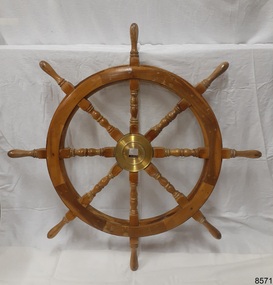
... Museum and Village as an educational display and attraction. SS ROWITTA: - The 1909 steam ferry, SS Rowitta, was installed as an exhibit at Flagstaff Hill in 1975 and was enjoyed by many visitors for 40 years. Rowitta was a timber steam ferry built in Hobart in 1909 using...Museum and Village as an educational display and attraction. SS ROWITTA: - The 1909 steam ferry, SS Rowitta, was installed as an exhibit at Flagstaff Hill in 1975 and was enjoyed by many visitors for 40 years. Rowitta was a timber steam ferry built in Hobart in 1909 using ...This is the whip's wheel that was on display for 40 years on the vessel SS Rowitta, installed on the lake at the Flagstaff Hill Maritime Museum and Village as an educational display and attraction. SS ROWITTA: - The 1909 steam ferry, SS Rowitta, was installed as an exhibit at Flagstaff Hill in 1975 and was enjoyed by many visitors for 40 years. Rowitta was a timber steam ferry built in Hobart in 1909 using planks of Huon and Karri wood. It was a favourite of sightseeing passengers along Tasmania’s Tamar and Derwent rivers for 30 years. Rowitta was also known as Tarkarri and Sorrento and had worked as a coastal trading vessel between Devonport and Melbourne, and Melbourne Queenscliff and Sorrento. In 1974 Rowitta was purchased by Flagstaff Hilt to convert into a representation of the Speculant, a historic and locally significant sailing ship listed on the Victorian Heritage Database. (The Speculant was built in Scotland in 1895 and traded timber between the United Kingdom and Russia. Warrnambool’s P J McGennan & Co. then bought the vessel to trade pine timber from New Zealand to Victorian ports and cargo to Melbourne. It was the largest ship registered with Warrnambool as her home port, playing a key role in the early 1900s in the Port of Warrnambool. In 1911, on her way to Melbourne, it was wrecked near Cape Otway. None of the nine crew lost their lives.) The promised funds for converting Rowitta into the Speculant were no longer available, so it was restored back to its original configuration. The vessel represented the importance of coastal traders to transport, trade and communication in Australia times before rail and motor vehicles. Sadly, in 2015 the time had come to demolish the Rowitta due to her excessive deterioration and the high cost of ongoing repairs. The vessel had given over 100 years of service and pleasure to those who knew her. The ship's wheel is an example of the equipment used on a steam ship for navigation. This wheel is connected to the history of the Rowitta, which was a large exhibit on display at Flagstaff Hill Maritime Village from the museum’s early beginnings until the vessel’s end of life 40 years later. The display was used as an aid to maritime education. The Rowitta represents the importance of coastal traders to transport, trade and communication along the coast of Victoria, between states, and in Australia before rail and motor vehicles. The vessel was an example of a ferry built in the early 20th century that served many different roles over its lifetime of over 100 years. Ship's wheel, light coloured wood, eight turned spokes, brass hub in centre with square hold. The wheel was part of the display of the vessel Rowitta at Flagstaff Hill. flagstaff hill maritime museum and village, warrnambool, great ocean road, shipwreck coast, flagstaff hill, maritime village, maritime museum, ss rowitta, navigation, marine technology, steam power, hobart, tasmania, devonport, tasmanian-built, ferry, steam ferry, steamer, 1909, early 20th century vessel, passenger vessel, tamar trading company, tamar river, launceston, george town, sorrento, tarkarri, speculant, peter mcgennan, p j mcgennan & co. port phillip ferries pty ltd, melbourne, coastal trader, timber steamer, huon, karri, freighter, supply ship, charter ferry, floating restaurant, prawn boat, lakes entrance, ship's wheel, ship's steering wheel, ship's steering, direction -
 City of Moorabbin Historical Society (Operating the Box Cottage Museum)
Photograph, Colour, 'Box Cottage' in Lewis Yard 1977, 1977
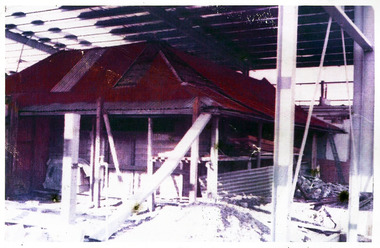
... used as a storage room for timber. Mrs H Deam and Mr A. Smith, CMHS members, photographed the progress of the 'Reconstruction' from February 1984 to November 1984. Although 'Box Cottage' is a re-construction, it is an unique museum that, being located in the midst of a modern community in Ormond Victoria, can educate and demonstrate many aspects of the early settler’s way of life in Victoria. As such, it is an invaluable resource for students and all kinds of visitors ...The original small, pioneer cottage was built in the late 1840s to early1850s, by an unknown pioneer. It was located on part of a 30 Acre allotment that was originally part of Dendy’s Special Survey granted in 1841. The doors and window sashes, (made of red deal joinery timber), as well as the brass locks and fittings, are from the original cottage, and were imported from England. The fire-place bricks are from the original cottage, and are sun-dried, (not kiln fired), and are hand-made. Convict marks can be seen on two bricks. There is a small display of external cladding shingles from the original pioneer cottage. These shingles were hand-split, and most likely made from locally collected timber The nails included in this display were used to fasten the shingles on the original cottage, and are also hand-made. The cottage was occupied by William Box and family from 1865 until 1914 when it was sold to William Reitman who resided there until 1950. The enamel nameplate, “Colonial”, on the wall of the cottage, was the name chosen for the original pioneer cottage by Mr William Reitman, when he purchased the property in around 1915, for 1200 Pounds approximately. In 1974 Mr Lewis, a timber specialist, found the dilapidated building on property he had recently purchased in Jasper Rd and suggested it be reconstructed and relocated. Moorabbin Council agreed and the cottage was rebuilt just about 250 metres from its original site. The cost of the rebuild was met by 'Victoria's 150th Committee, plus a small grant from the City of Moorabbin, and Mr Laurie Lewis donated much of the timber for the reconstruction. The re-constructed cottage plan has followed faithfully the original dimensions, and plan of the original pioneer cottage, and as many original items from that cottage’s long occupation have been incorporated. The photographs in Album 1 record the progress of the reconstruction from February 1984 to the First Public Open Day November 18th 1984 This photograph shows the 'Box Cottage' in the Lewis Timber Co Ltd property in 1977 where it is being used as a storage room for timber. Mrs H Deam and Mr A. Smith, CMHS members, photographed the progress of the 'Reconstruction' from February 1984 to November 1984. Although 'Box Cottage' is a re-construction, it is an unique museum that, being located in the midst of a modern community in Ormond Victoria, can educate and demonstrate many aspects of the early settler’s way of life in Victoria. As such, it is an invaluable resource for students and all kinds of visitors. A colour photograph of the ‘Cottage’ in the yard of the Lewis Timber Co P/L Jasper Road, Ormond, in 1977 where it is being used as a storage area for timber. brighton, moorabbin, cottages, pioneers, ormond, colonial, mckinnon, dendy henry, box william, box elizabeth, reitman william, convicts lewis timber co. ltd., deam h, museums, box alonzo, smith a, -
 Orbost & District Historical Society
visitors' book, 1937
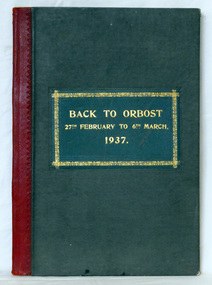
... museum. The book was presented to the president, Jacob Perry, as a token of esteem and in appreciation of his interest and services to the movement. Jacob Perry was an Orbost farmer. Born 1874. Died 1950. He was a Boer War veteran , 4th Victorian Imperial Bushmen. He was a shire councillor and worker for school affairs. The book was used again on Friday, 8th March to Saturday, 16th March 1963. This item is a record of an early Orbost celebration and a useful reference tool. visitors ...This book was used by Orbost Shire Council at the "Back to Orbost" celebrations in 1937 and again in 1963. The item was donated to Orbost & District Historical society from P.R.O.V. as a Place of Deposit (POD) item for safe keeping by a local history group or museum. The book was presented to the president, Jacob Perry, as a token of esteem and in appreciation of his interest and services to the movement. Jacob Perry was an Orbost farmer. Born 1874. Died 1950. He was a Boer War veteran , 4th Victorian Imperial Bushmen. He was a shire councillor and worker for school affairs. The book was used again on Friday, 8th March to Saturday, 16th March 1963. This item is a record of an early Orbost celebration and a useful reference tool. A green covered hard back visitors' book with a red spine and gold lettering on the front cover. It contains names and addresses and comments from those who attended the "Back to Orbost" celebrations in 1937 and in 1963. Entries have been hand-written in ink (1937) and biro (1963). On front in gold framed rectangle - "BACK TO ORBOST 27th FEBRUARY TO 6th MARCH 1937" visitors'-book back-to-orbost-celebrations perry-jacob -
 Flagstaff Hill Maritime Museum and Village
Equipment - Toolbox, ca. 1922
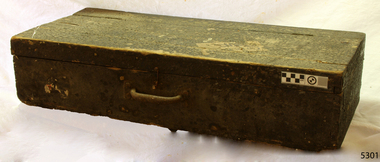
... The vessel had many owners and adventures over the years until it was purchased by Flagstaff Hill Maritime Museum & Village in 1975. It was then used as an active display until 2016. Visitors could go aboard, turn the ship's wheel, go below deck and get the feel of the captain's quarters, sailors' quarters and the storage space available. ...The vessel had many owners and adventures over the years until it was purchased by Flagstaff Hill Maritime Museum & Village in 1975. It was then used as an active display until 2016. Visitors could go aboard, turn the ship's wheel, go below deck and get the feel of the captain's quarters, sailors' quarters and the storage space available. ...This toolbox was part of the equipment of the coastal trader Reginald M. It is typical of general-purpose toolboxes of the early 20th century. The covering of pitch on the outside was likely to be a form of waterproofing and protection. The vessel “Reginald M” was a two-masted coastal ketch, owned and built by Mr Jack (John) Murch of Birkenhead, Port of Adelaide, South Australia. Its construction took approximately 6 months and it was launched at Largs Bay in 1922. The vessel had many owners and adventures over the years until it was purchased by Flagstaff Hill Maritime Museum & Village in 1975. It was then used as an active display until 2016. Visitors could go aboard, turn the ship's wheel, go below deck and get the feel of the captain's quarters, sailors' quarters and the storage space available. The Reginald M was a popular exhibit for young and old, until 2016. This toolbox is significant because of its connection to the history of the vessel REGINALD M, the coastal trading ketch from South Australia built in 1922 and in existence until 2016. Its flat bottom, single-chine shape illustrates a very simple but robust method of construction, compared to other round-bilged examples of trading vessels. The Reginald M is listed on the Australian Register of Historic Vessels (ARHV Number: HV000562.) Wooden toolbox with hinged lid covering tree-quarters of the box. A case handle is attached for carrying. Hook on one side but nothing to catch it on. Toolbox has been covered with pitch on the outside. flagstaff hill, warrnambool, reginald m, flagstaff hill maritime museum & village, shipwreck coast, maritime museum, coastal trader, ketch, john murch, sailor's equipment, ship maintenance, wooden toolbox, toolbox -
 Flagstaff Hill Maritime Museum and Village
Document - License, Marine Board of Launceston, Launch Master's Licence, 13-02-1920
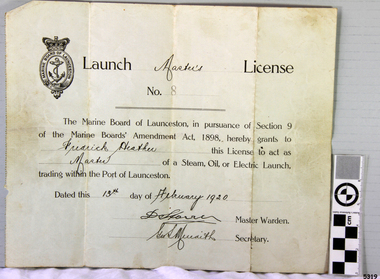
... Fredrick’s son is one of the volunteers at the Low Head Pilot Station Museum, Frederick Heather is also related to a Harry Heather from Tasmania and was also a ship master, one of his ships being the "Alma Doepel", a sailing schooner built in 1903 and sailed by Harry for about 21 years until his death in 1937. Flagstaff Hill’s collection includes a painting of the Alma Doepel. SS ROWITTA: - The 1909 steam ferry, SS Rowitta, was installed as an exhibit at Flagstaff Hill in 1975 and was enjoyed by many visitors for 40 years. Rowitta was a timber steam ferry built in Hobart in 1909 using...Fredrick’s son is one of the volunteers at the Low Head Pilot Station Museum, Frederick Heather is also related to a Harry Heather from Tasmania and was also a ship master, one of his ships being the "Alma Doepel", a sailing schooner built in 1903 and sailed by Harry for about 21 years until his death in 1937. Flagstaff Hill’s collection includes a painting of the Alma Doepel. SS ROWITTA: - The 1909 steam ferry, SS Rowitta, was installed as an exhibit at Flagstaff Hill in 1975 and was enjoyed by many visitors for 40 years. Rowitta was a timber steam ferry built in Hobart in 1909 using ...The Launch Master Frederick Heather was licensed to be Master of Launches within the Port of Launceston. Amongst the vessels that he captained was the S.S. ROWITTA. Fredrick’s son is one of the volunteers at the Low Head Pilot Station Museum, Frederick Heather is also related to a Harry Heather from Tasmania and was also a ship master, one of his ships being the "Alma Doepel", a sailing schooner built in 1903 and sailed by Harry for about 21 years until his death in 1937. Flagstaff Hill’s collection includes a painting of the Alma Doepel. SS ROWITTA: - The 1909 steam ferry, SS Rowitta, was installed as an exhibit at Flagstaff Hill in 1975 and was enjoyed by many visitors for 40 years. Rowitta was a timber steam ferry built in Hobart in 1909 using planks of Huon and Karri wood. It was a favourite of sightseeing passengers along Tasmania’s Tamar and Derwent rivers for 30 years. Rowitta was also known as Tarkarri and Sorrento and had worked as a coastal trading vessel between Devonport and Melbourne, and Melbourne Queenscliff and Sorrento. In 1974 Rowitta was purchased by Flagstaff Hilt to convert into a representation of the Speculant, a historic and locally significant sailing ship listed on the Victorian Heritage Database. (The Speculant was built in Scotland in 1895 and traded timber between the United Kingdom and Russia. Warrnambool’s P J McGennan & Co. then bought the vessel to trade pine timber from New Zealand to Victorian ports and cargo to Melbourne. It was the largest ship registered with Warrnambool as her home port, playing a key role in the early 1900s in the Port of Warrnambool. In 1911, on her way to Melbourne, it was wrecked near Cape Otway. None of the nine crew lost their lives.) The promised funds for converting Rowitta into the Speculant were no longer available, so it was restored back to its original configuration. The vessel represented the importance of coastal traders to transport, trade and communication in Australia times before rail and motor vehicles. Sadly, in 2015 the time had come to demolish the Rowitta due to her excessive deterioration and the high cost of ongoing repairs. The vessel had given over 100 years of service and pleasure to those who knew her. The licence is significant for its association with the Tasmanian early to mid-1900s passenger ferry, the S.S. Rowitta. It is connected to the history of the Rowitta, which was a large exhibit on display at Flagstaff Hill Maritime Village from the museum’s early beginnings until the vessel’s end of life 40 years later. The display was used as an aid to maritime education. The Rowitta represents the importance of coastal traders to transport, trade and communication along the coast of Victoria, between states, and in Australia before rail and motor vehicles. The vessel was an example of a ferry built in the early 20th century that served many different roles over its lifetime of over 100 years. Launch Master's License No 8 issued to Fredrick Heather to act as Master of a steam, oil or electric launch trading within the Port of Launceston. Date issued 13th February 1920. The license is printed with hand written details added. Handwritten on License "Master's" "Frederick Heather" "Master" "13th February 1920" Also two signatures (indecipherable) of Master Warden and Secretary. flagstaff hill, flagstaff hill maritime museum and village, warrnambool, maritime museum, maritime village, great ocean road, shipwreck coast, launch master's licence, rowitta, frederick heather, port of launceston, launch master's license, marine board of launceston, tarkarri, speculant, purdon & featherstone of hobart, passenger ferry 1909, vessel, charles street wharf launceston, sorrento -
 The Beechworth Burke Museum
Animal specimen - Diamond Dove, Trustees of the Australian Museum, 1860-1880
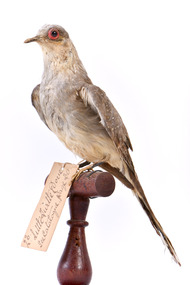
... use of these birds as messengers throughout history. This specimen is part of a collection of almost 200 animal specimens that were originally acquired as skins from various institutions across Australia, including the Australian Museum and the National Museum of Victoria, as well as individuals such amateur anthropologist Reynell Eveleigh Johns between 1860-1880. These skins were then mounted by members of the Burke Museum Committee and put-on display in the formal space of the Museum’s original exhibition hall where they continue to be on display. This display of taxidermy mounts initially served to instruct visitors...use of these birds as messengers throughout history. This specimen is part of a collection of almost 200 animal specimens that were originally acquired as skins from various institutions across Australia, including the Australian Museum and the National Museum of Victoria, as well as individuals such amateur anthropologist Reynell Eveleigh Johns between 1860-1880. These skins were then mounted by members of the Burke Museum Committee and put-on display in the formal space of the Museum’s original exhibition hall where they continue to be on display. This display of taxidermy mounts initially served to instruct visitors ...Diamond Doves reside in Oceania and Northern America. They are often seen gathering in small groups and foraging on the ground near a source of water. Diamond Doves are granivores. Their diet includes seeds of herbs and grasses. The sound made by the dove is a slow "coo" often repeated twice. These birds are renowned for their ability to find their way home over large distances which has resulted in the use of these birds as messengers throughout history. This specimen is part of a collection of almost 200 animal specimens that were originally acquired as skins from various institutions across Australia, including the Australian Museum and the National Museum of Victoria, as well as individuals such amateur anthropologist Reynell Eveleigh Johns between 1860-1880. These skins were then mounted by members of the Burke Museum Committee and put-on display in the formal space of the Museum’s original exhibition hall where they continue to be on display. This display of taxidermy mounts initially served to instruct visitors to the Burke Museum of the natural world around them, today it serves as an insight into the collecting habits of the 19th century. This specimen is part of a significant and rare taxidermy mount collection in the Burke Museum. This collection is scientifically and culturally important for reminding us of how science continues to shape our understanding of the modern world. They demonstrate a capacity to hold evidence of how Australia’s fauna history existed in the past and are potentially important for future environmental research. This collection continues to be on display in the Museum and has become a key part to interpreting the collecting habits of the 19th century. The Diamond Dove is a small pigeon with red rings around their eyes. It stands on a wooden perch with an identification tag tied around one leg. The upper part of the body is a brown grey and the belly of the dove is a cream colour. This bird has distinctive white spots on the wings. This particular specimen is a grey coloured Diamond Dove. Other colourings for this species are white, brown, yellow, red, cinnamon and pied. 2b Little Turtle Dove. See Catalogue, page 30. taxidermy mount, taxidermy, animalia, burke museum, beechworth, australian museum, skin, reynell eveleigh johns, bird, dove, little turtle dove, diamond dove -
 The Beechworth Burke Museum
Animal specimen - Budgerigar, Trustees of the Australian Museum, 1860-1880
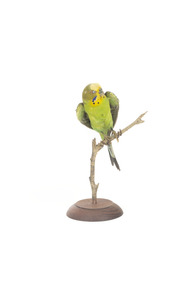
... use. This specimen is part of a collection of almost 200 animal specimens that were originally acquired as skins from various institutions across Australia, including the Australian Museum in Sydney and the National Museum of Victoria (known as Museums Victoria since 1983), as well as individuals such as amateur anthropologist Reynell Eveleigh Johns between 1860-1880. These skins were then mounted by members of the Burke Museum Committee and put-on display in the formal space of the Museum’s original exhibition hall where they continue to be on display. This display of taxidermy mounts initially served to instruct visitors...use. This specimen is part of a collection of almost 200 animal specimens that were originally acquired as skins from various institutions across Australia, including the Australian Museum in Sydney and the National Museum of Victoria (known as Museums Victoria since 1983), as well as individuals such as amateur anthropologist Reynell Eveleigh Johns between 1860-1880. These skins were then mounted by members of the Burke Museum Committee and put-on display in the formal space of the Museum’s original exhibition hall where they continue to be on display. This display of taxidermy mounts initially served to instruct visitors ...The budgerigar, or budgie, is a very social bird, found in large groups in the wild. They primarily live across mainland Australia. They are often found near water. Budgies are very popular pets globally (called parakeets in other countries). They eat grasses and seeds. They nest in hollowed trees. Budgies in the wild are often right green with a yellow face. This specimen is a good example because it has the common colouring of wild budgies and has not got signs of wear/use. This specimen is part of a collection of almost 200 animal specimens that were originally acquired as skins from various institutions across Australia, including the Australian Museum in Sydney and the National Museum of Victoria (known as Museums Victoria since 1983), as well as individuals such as amateur anthropologist Reynell Eveleigh Johns between 1860-1880. These skins were then mounted by members of the Burke Museum Committee and put-on display in the formal space of the Museum’s original exhibition hall where they continue to be on display. This display of taxidermy mounts initially served to instruct visitors to the Burke Museum of the natural world around them, today it serves as an insight into the collecting habits of the 19th century. This specimen is part of a significant and rare taxidermy mount collection in the Burke Museum. This collection is scientifically and culturally important for reminding us of how science continues to shape our understanding of the modern world. They demonstrate a capacity to hold evidence of how Australia’s fauna history existed in the past and are potentially important for future environmental research. This collection continues to be on display in the Museum and has become a key part to interpreting the collecting habits of the 19th century. This male budgerigar is perched with its wings partially opened and looking to the left. It has a yellow head with black stripes on the back, indicating the specimen was quite aged before it was killed. It has a blue nose, indicating it is male. Its body is light green. Its wings are green-yellow with black lines. Its tail is a blue-green. It has some minor pest damage around its eyes. no markings or identification tags budgerigar, budgie, parakeet, taxidermy, ornithological, bird -
 Orbost & District Historical Society
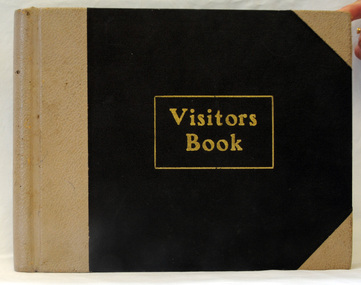
book, Visitors Book
... This was used as the Orbost Historical Society's visitors' book for the Orbost Museum....This was used as the Orbost Historical Society's visitors' book for the Orbost Museum. This book records those who have visited the Orbost Museum. ...This was used as the Orbost Historical Society's visitors' book for the Orbost Museum. This book records those who have visited the Orbost Museum. It indicates where they are from and their thoughts about the museum. A large album with a brown cloth cover. There is gold lettering on the front cover - Visitors Book. ORBOST HISTORICAL MUSEUM Opened on December 1st, 1967 by Hon. Peter Nixon M.P., Minister for the Interior. visitors-book orbost-museum -
 Bendigo Military Museum
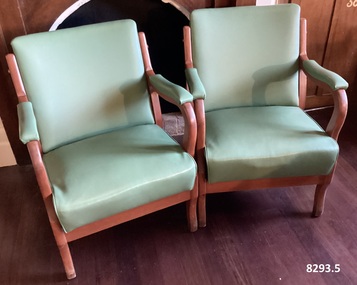
Furniture - ARM CHAIRS
... When the building became a Museum they were used by visitors who needed to rest or the Museum volunteers. ...When the building became a Museum they were used by visitors who needed to rest or the Museum volunteers. ...These Arm chairs were originally placed in the foyer entrance many, many years before the SMI became a Museum in 1998. Members would sit in the Foyer for a chat or when waiting to see the Dept of Vet Affairs person who sat in the Meeting room regarding veteran's issues. When the building became a Museum they were used by visitors who needed to rest or the Museum volunteers. The Museum had them recovered in 2014 at a cost of $1,230.00. They are now placed around the Museum for visitors to sit on due to changes in the foyer. .1) - .5) Five Arm Chairs, timber frame, green vinyl seating on seat, back and arm rests. brsl, smirsl, chairs -
 Kiewa Valley Historical Society
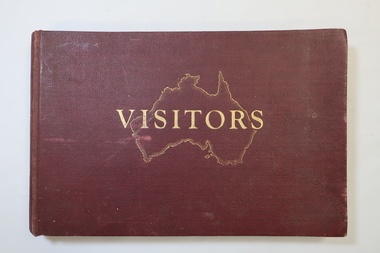
Visitors Book - Nissen Paradise, Welcome to our Nissen Paradise - Ski Nissen School - 1953 to 1960
... The book was later used for visiors to the KVHS museum located in the old Tawonga South School. Nissen Ski Lodge Visitors Book Falls Creek Nissen School Deep red, bound, thick cardboard book with gold outline of Australia and 'Visitors" on the centre front. ...Nissen Lodge was built by 1953 at Falls Creek. The first lodge at Falls Creek was built in 1947 by SECV staff members. By the 1954 Ski Season, Falls Creek Alpine Village had 10 club lodges, plus a ski tow house and a commercial lodge that both provided skier accommodation. Several other club lodges were under construction. The Nissen Alpine Club operated a rope tow with a 240m rise in altitude..Ski lessons were also available. Re: Tony and Skippy St Elmo Beveridge See KVHS 1113 By 1953, the SECV was issuing entry permits for private cars used by skiers with bookings in a Falls Creek lodge. The Nissen Ski Lodge was one of the early ski lodges at Falls Creek. Toni St Elmo Beveridge was involved in the early development of skiing at Falls Creek including assisting with the building of the early lodges, and establishing the Nissen Ski School. See KVHS 1113. The book was later used for visiors to the KVHS museum located in the old Tawonga South School. Deep red, bound, thick cardboard book with gold outline of Australia and 'Visitors" on the centre front. Many pages each with a column for Date, Name in Full and Address in Full. Written in ink and pencil both sides of each page with the first date being 14 - 6 - 1953 to 17th September 1960. Entries follow from 1985 to 1994 when the closure of the display at the old South Tawonga Primary School is noted by the KVHS Secretary. The book also has 'Tony & Skippy St Elmo Beveridge' on its cover page. nissen ski lodge, visitors book falls creek, nissen school -
 Alfred Hospital Nurses League - Nursing History Collection
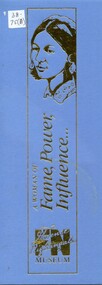
Souvenir - Note pad, Florence Nightingale Museum, Note pad from the Florence Nightingale Museum, London, [ca.1990]
... used for exhibitions, or to mark key anniversaries and events. The collection transferred to the newly created Florence Nightingale Museum Trust in 1983, who then opened the museum on the site of the Training School in 1989. Since then the museum has continued to grow and has welcomed thousands of visitors...used for exhibitions, or to mark key anniversaries and events. The collection transferred to the newly created Florence Nightingale Museum Trust in 1983, who then opened the museum on the site of the Training School in 1989. Since then the museum has continued to grow and has welcomed thousands of visitors ...Florence Nightingale helped to set up the Nightingale Training School at St Thomas’s Hospital in 1860. Following the first intake of 15 ‘probationer’ trainee nurses, the school improved and expanded over the following decades, spreading Nightingale’s ideas of nurse training across the world. The school was overseen by the Matrons of St Thomas’s Hospital. During her time as Matron of St Thomas’s, Dame Alicia Lloyd Still started to collect objects that had belonged to Nightingale or that Nightingale had gifted to some of the nurses who had trained at the Nightingale Training School. The objects that Lloyd Still collected were held at the Nightingale Training School and came to be known as the ‘Nightingalia’. The objects were used by the probationer nurses as a teaching tool and occasionally they would be used for exhibitions, or to mark key anniversaries and events. The collection transferred to the newly created Florence Nightingale Museum Trust in 1983, who then opened the museum on the site of the Training School in 1989. Since then the museum has continued to grow and has welcomed thousands of visitors from around the world, sharing Nightingales legacy, celebrating Nursing and inspiring the next generation of nurses. This notepad is a souvenir from the musuem Exaple of memorabilia from the Florence Nightingale Museum Unlied note book with white pages and blue cover. On the front cover within a single line border is a portrait of Florence Nightingale at top and 'FN' overprinted with signature of Florence Nightingale at base. Printed sideways 'A WOMAN OF/ Fame, Power,/Influence...' At top left of the front cover there is a small white sticker on wnich the previous catalogue number is handwritten [black ink] florence nightingale, florence nightingale museum -
 Alfred Hospital Nurses League - Nursing History Collection
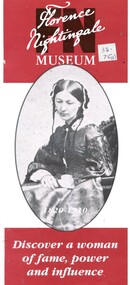
Pamphlet - Museum pamphlet, Philip Chidlow, Florence Nightingale Museum, London, [ca.1992]
... used for exhibitions, or to mark key anniversaries and events. The collection transferred to the newly created Florence Nightingale Museum Trust in 1983, who then opened the museum on the site of the Training School in 1989. Since then the museum has continued to grow and has welcomed thousands of visitors...used for exhibitions, or to mark key anniversaries and events. The collection transferred to the newly created Florence Nightingale Museum Trust in 1983, who then opened the museum on the site of the Training School in 1989. Since then the museum has continued to grow and has welcomed thousands of visitors ...This is an information pamphlet about the Florence Nightingale Museum, London Florence Nightingale helped to set up the Nightingale Training School at St Thomas’s Hospital in 1860. Following the first intake of 15 ‘probationer’ trainee nurses, the school improved and expanded over the following decades, spreading Nightingale’s ideas of nurse training across the world. The school was overseen by the Matrons of St Thomas’s Hospital. During her time as Matron of St Thomas’s, Dame Alicia Lloyd Still started to collect objects that had belonged to Nightingale or that Nightingale had gifted to some of the nurses who had trained at the Nightingale Training School. The objects that Lloyd Still collected were held at the Nightingale Training School and came to be known as the ‘Nightingalia’. The objects were used by the probationer nurses as a teaching tool and occasionally they would be used for exhibitions, or to mark key anniversaries and events. The collection transferred to the newly created Florence Nightingale Museum Trust in 1983, who then opened the museum on the site of the Training School in 1989. Since then the museum has continued to grow and has welcomed thousands of visitors from around the world, sharing Nightingales legacy, celebrating Nursing and inspiring the next generation of nurses Provides information about a significant nursing museum Pamphlet folded in thirds, front of papmlet has a black and white photograph of Florence Nightingale, photographs of items from the collection, as well as a map and transport information Previous catalogue number handwitten [black ink] on small white sticker on front florence nightingale, florence nightingale museum -
 National Vietnam Veterans Museum (NVVM)
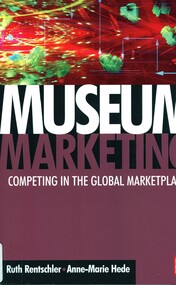
Book, Rentschler, Ruth ed, Museum Marketing: Competing In The Global Marketplace
... Museums have moved from a product to a marketing focus within the last ten years. This has entailed a painful reorientation of approaches to understanding visitors as 'customers'; new ways of fundraising and sponsorship as government funding decreases; and grappling with using the internet for marketing. ...Museums have moved from a product to a marketing focus within the last ten years. This has entailed a painful reorientation of approaches to understanding visitors as 'customers'; new ways of fundraising and sponsorship as government funding decreases; and grappling with using the internet for marketing. This book brings the latest in marketing and thinking to bear on the museum sector taking into account both commercial issues and social missions it involves. carefully structured to be highly accessible the book offers.Museums have moved from a product to a marketing focus within the last ten years. This has entailed a painful reorientation of approaches to understanding visitors as 'customers'; new ways of fundraising and sponsorship as government funding decreases; and grappling with using the internet for marketing. This book brings the latest in marketing and thinking to bear on the museum sector taking into account both commercial issues and social missions it involves. carefully structured to be highly accessible the book offers. museums -- marketing, global marketplace -
 Kiewa Valley Historical Society
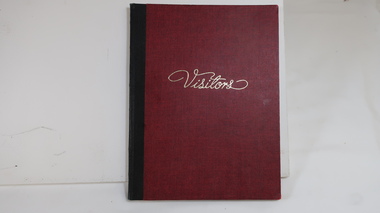
Book - KVHS Visitors 1969
... Visitors' title and black binding. Inside front cover KVHS / Museum / Camping Reserve, Tawonga / Opened on 13th Dec. 1969 / by Councillor R.S.Hollonds. 12 pages used and goes to 1981...museum includes visitors and their town of residence. It also shows that the KVHS had difficulty finding a home. kvhs museum tawonga tawonga south Red book with gold 'Visitors' title and black binding. Inside front cover KVHS / Museum / Camping Reserve, Tawonga / Opened on 13th Dec. 1969 / by Councillor R.S.Hollonds. 12 pages used and goes to 1981 Book - KVHS Visitors 1969 ...KVHS set up a museum at the Tawonga Camping Ground in Dec. 1969. The building was sold so items were stored from Dec. 1981. In 1985 items were displayed in Tawonga South. KVHS's history as a museum includes visitors and their town of residence. It also shows that the KVHS had difficulty finding a home. Red book with gold 'Visitors' title and black binding. Inside front cover KVHS / Museum / Camping Reserve, Tawonga / Opened on 13th Dec. 1969 / by Councillor R.S.Hollonds. 12 pages used and goes to 1981 kvhs, museum, tawonga, tawonga south -
 Ballarat Tramway Museum
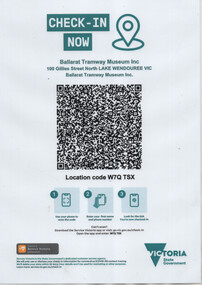
Administrative record - BTM QR Code check in sheet, Services Victoria, 2021
... QR Code check in sheet during the COVID-19 pandemic event used to check members and visitors into the Museum. Used during 2021 and 2022. ...QR Code check in sheet during the COVID-19 pandemic event used to check members and visitors into the Museum. Used during 2021 and 2022. ...QR Code check in sheet during the COVID-19 pandemic event used to check members and visitors into the Museum. Used during 2021 and 2022. Produced by the Victorian State Government Services Victoria unit. The system recorded the entry of visitors to the museum, date and time. Demonstrates the systems that State Government required visitors to check in using their mobile devices and a detailed QR code. Laminated A4 sheet, printed with a colour laser printer. btm, covid-19, services victoria -
 Ballarat Tramway Museum
Ephemera - Ticket, Ballarat Tramway Museum (BTM), Mucopolysaccharide Society, Apr. 1998
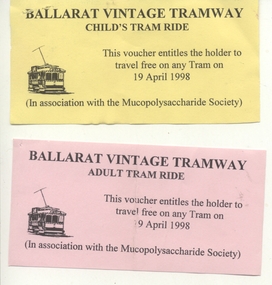
... use. Trams tramways Visitors BTM Tickets Special Trams Set of two preprinted tickets for use on the BTM tramway, 19 April 1998 by the Mucopolysaccharide Society. .1 - printed on yellow paper. .2 - ditto printed on green Mucopolysaccharide diseases (MPS) are rare inherited disorders of the metabolism. They are caused by a problem with the enzymes that break down complex carbohydrates. When carbohydrates build up in body tissues, this causes damage to the heart, bones, lungs, cornea, skin, connective tissue and the central nervous system (brain and spinal cord). http://raisingchildren.net.au/articles/mucopolysaccharide_diseases_d.html - accessed 3/11/2012. Mucopolysaccharide Society. Ephemera Ticket Ballarat Tramway Museum ...Yields information about the type of ticket provided to visitors, in this case the Mucopolysaccharide Society and that nature of its use. Set of two preprinted tickets for use on the BTM tramway, 19 April 1998 by the Mucopolysaccharide Society. .1 - printed on yellow paper. .2 - ditto printed on green Mucopolysaccharide diseases (MPS) are rare inherited disorders of the metabolism. They are caused by a problem with the enzymes that break down complex carbohydrates. When carbohydrates build up in body tissues, this causes damage to the heart, bones, lungs, cornea, skin, connective tissue and the central nervous system (brain and spinal cord). http://raisingchildren.net.au/articles/mucopolysaccharide_diseases_d.html - accessed 3/11/2012. trams, tramways, visitors, btm, tickets, special trams -
 Ballarat Tramway Museum
Slide - BTPS Volunteer David Frost - set of 2, David Frost, 1973
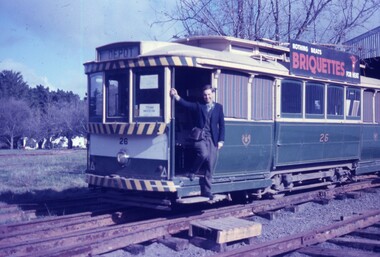
... Set of two colour slides of BTPS Volunteer David Frost; 1 - Standing in the doorway of tram 26 on the depot fan when it acted as the visitor "Museum" tram - August 1973 2 - Standing by MMTB works tram 16W at Preston Workshops which was used by the BTPS for the first and last day of training. ...Set of two colour slides of BTPS Volunteer David Frost; 1 - Standing in the doorway of tram 26 on the depot fan when it acted as the visitor "Museum" tram - August 1973 2 - Standing by MMTB works tram 16W at Preston Workshops which was used by the BTPS for the first and last day of training. ...Set of two colour slides of BTPS Volunteer David Frost; 1 - Standing in the doorway of tram 26 on the depot fan when it acted as the visitor "Museum" tram - August 1973 2 - Standing by MMTB works tram 16W at Preston Workshops which was used by the BTPS for the first and last day of training. David qualified as a driver in Dec. 1977 - see item 7010 for his certificate. Has a close association with BTPS Volunteer David Frost. Colour Slide - GAF and AGFA Plastic mounts. tramways, btps, volunteers, drivers, museum, tram 26, tram 16w, training -
 National Wool Museum
Tool - Glasses, c.1950
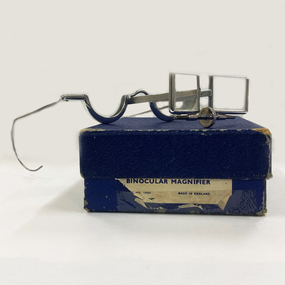
... Museum. His passion for the world of textiles provided energy and knowledge to the visitors and staff of the museum. Although Nino has now retired from his honorary position and has hung up his Australian Tartan vest, these items will continue to serve the community in sharing the stories of Australian Textile design. Textile designers used...Museum. His passion for the world of textiles provided energy and knowledge to the visitors and staff of the museum. Although Nino has now retired from his honorary position and has hung up his Australian Tartan vest, these items will continue to serve the community in sharing the stories of Australian Textile design. Textile designers used ...Nino Corda was a Geelong based textile designer who worked at various textile mills between 1957 & 2003. He travelled the world in search of the latest fashions and techniques and developed timeless designs that were much loved by Australians. These items are on rotational display at the National Wool Museum’s ‘In the Factory’ exhibition. For many years, Nino also worked as part of the Honorary Staff of the National Wool Museum. His passion for the world of textiles provided energy and knowledge to the visitors and staff of the museum. Although Nino has now retired from his honorary position and has hung up his Australian Tartan vest, these items will continue to serve the community in sharing the stories of Australian Textile design. Textile designers used glasses such as these to see how many threads are within a textile sample. It was important to count correctly, otherwise the enlarged final pattern would be out of alignment. These glasses were popular in the 1950s but were replaced by viewing lens, such as item 8040 (in the National Wool Museum's Collection) in the 1960s because of their compact nature. Thin metal wire makes up the frame of the glasses. The metal is a standard metallic silver. The piece to sit on-top of the ear is excessively curved to hook around the ear. This is done to ensure the glasses do not fall off the face while looking down to view thread counts in a textile sample. The glasses are lacking lenses in their usual place. This has been replaced by another thin wire frame which protrudes an extra inch in front of the frame, almost like an additional layer of the glasses. Where this layer / frame ends, two lenses can be found which are square and much smaller than typical glasses lenses. This has been done to allow for powerful magnifying glass which would be ill-suited if it sat too close to the face / eyes. The glasses are also accompanied by their original box. The box is blue and has a large rectangle running through its centre. This rectangle works as a cushion for the glasses and is required as a result of their unusual shape. textile design, textile calculations -
 National Wool Museum
Tool - Lens, c.1960
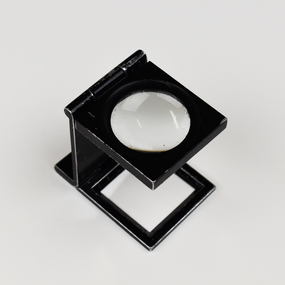
... Museum. His passion for the world of textiles provided energy and knowledge to the visitors and staff of the museum. Although Nino has now retired from his honorary position and has hung up his Australian Tartan vest, these items will continue to serve the community in sharing the stories of Australian Textile design. Textile designers used...Museum. His passion for the world of textiles provided energy and knowledge to the visitors and staff of the museum. Although Nino has now retired from his honorary position and has hung up his Australian Tartan vest, these items will continue to serve the community in sharing the stories of Australian Textile design. Textile designers used ...Nino Corda was a Geelong based textile designer who worked at various textile mills between 1957 & 2003. He travelled the world in search of the latest fashions and techniques and developed timeless designs that were much loved by Australians. These items are on rotational display at the National Wool Museum’s ‘In the Factory’ exhibition. For many years, Nino also worked as part of the Honorary Staff of the National Wool Museum. His passion for the world of textiles provided energy and knowledge to the visitors and staff of the museum. Although Nino has now retired from his honorary position and has hung up his Australian Tartan vest, these items will continue to serve the community in sharing the stories of Australian Textile design. Textile designers used viewing lenses such as this to see how many threads are within a textile sample. It was important to count correctly, otherwise the enlarged final pattern would be out of alignment. Before compact lenses such as this, specialised glasses were used such as 8039. The viewing lens has a 3 fold design in order to fold up to be compact and easily transportable in a pocket while also working to provide its own stand when unfolded. The lens is black and contains one circular piece of magnifying glass on the top panel. Top panel. Words, scratched. NINO textile calculations, textile design -
 National Wool Museum
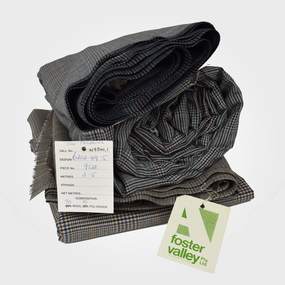
Textile - Fabric Bolt, c.1970
... Museum. His passion for the world of textiles provided energy and knowledge to the visitors and staff of the museum. Although Nino has now retired from his honorary position and has hung up his Australian Tartan vest, these items will continue to serve the community in sharing the stories of Australian Textile design. These three bolts of fabric come from the same run of fabric used...Museum. His passion for the world of textiles provided energy and knowledge to the visitors and staff of the museum. Although Nino has now retired from his honorary position and has hung up his Australian Tartan vest, these items will continue to serve the community in sharing the stories of Australian Textile design. These three bolts of fabric come from the same run of fabric used ...Nino Corda was a Geelong based textile designer who worked at various textile mills between 1957 & 2003. He travelled the world in search of the latest fashions and techniques and developed timeless designs that were much loved by Australians. These items are on rotational display at the National Wool Museum’s ‘In the Factory’ exhibition. For many years, Nino also worked as part of the Honorary Staff of the National Wool Museum. His passion for the world of textiles provided energy and knowledge to the visitors and staff of the museum. Although Nino has now retired from his honorary position and has hung up his Australian Tartan vest, these items will continue to serve the community in sharing the stories of Australian Textile design. These three bolts of fabric come from the same run of fabric used to tailor Suit Jacket 8045. All fabrics were designed by Nino Corda while he was working at the Foster Valley Mill. The bolts of fabric have an attached swing tag. This swing tag details information such as composition of the fabric, total amount of fabric and the design number. Three bolts of fabric with repeating pattern in 100mm grid. All three bolts have frayed edges, indicative of their need to be sent for finishing. The dominant colour in all three fabrics is grey. 8044.1 has red and green lines running vertically and horizontally and an attached swing tag. 8044.2 has red and orange lines running vertically and horizontally and an attached swing tag. Fabric bolt has yellow label attached to one edge of fabric, depicting the fabric’s number. 8044.3 has orange and blue lines running vertically and horizontally. No swing tag is attached. 8044.1. Swing tag. Typed wording. Front. foster / valley / Pty / Ltd. / (Incorporated in Victoria) 8044.1. Swing tag. Typed and handwritten wording. Reverse. JONO TAILORING / CALL NO……………. / DESIGN 6302-49-5 / PIECE NO 9528 / METERS 3.5 STRINGS…………… / NET METERS…………… / COMPOSITION / 70% WOOL 30% POLYESTER 8044.2. Swing tag. Typed wording. Front. foster / valley / Pty / Ltd. / (Incorporated in Victoria) 8044.2. Swing tag. Typed and handwritten wording. Reverse. left over (?unknown handwriting?) / CALL NO…………… / DESIGN 6302-49-2 / PIECE NO…………… / METERS 6.0 STRINGS…………… / NET METERS…………… / COMPOSITION / 70% WOOL 30% POLYESTER. textile design -
 National Wool Museum
Quilt
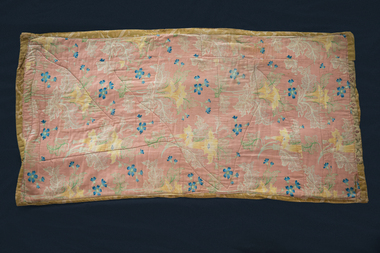
... visitor at the 'SIO Great Exhibition of Victoria' held at the Museum of Victoria in 1985. This exhibition of historical ephemera about our state included many of the quilts collected by the group. After seeing the value of these utilitarian quilts, many visitors decided to donate their family quilts to the Running Stitch Group. Meg McNab was one such person who identified her step-grandmother as the maker and said the quilt was used...visitor at the 'SIO Great Exhibition of Victoria' held at the Museum of Victoria in 1985. This exhibition of historical ephemera about our state included many of the quilts collected by the group. After seeing the value of these utilitarian quilts, many visitors decided to donate their family quilts to the Running Stitch Group. Meg McNab was one such person who identified her step-grandmother as the maker and said the quilt was used ...This quilt came to the Running Stitch Group from a visitor at the 'SIO Great Exhibition of Victoria' held at the Museum of Victoria in 1985. This exhibition of historical ephemera about our state included many of the quilts collected by the group. After seeing the value of these utilitarian quilts, many visitors decided to donate their family quilts to the Running Stitch Group. Meg McNab was one such person who identified her step-grandmother as the maker and said the quilt was used in her fathers' family. It eventually came back into her family through her own mother who came to stay in later years. For the journey, the quilt had been used as packing material. Owing to its size, this quilt may have been made for a child. The stained pattern on the back has occurred as a result of rust marks from a wire wove mattress base. This is the front of the quilt. The rod pocket has been applied to the verso. This is the back of the quilt. the rod pocket has been applied to this side. quilting history, running stitch group, running stitch collection, mcnab, meg, quilting - history -
 Tatura Irrigation & Wartime Camps Museum
Note Book, Tatura and District Historical Society Visitors Book 1988-1999, 1988
... This book was used as our first Visitor's Book. 1988-1999 visitors to museum Tatura and District Historical Society visitors book Visitors book Blue hard cover book, gold lettering Tatura and District Historical Society Visitors Book 1988-1999 Note Book ...Tatura and District Historical Society officially opened 6th November, 1988. This book was used as our first Visitor's Book. 1988-1999 Blue hard cover book, gold lettering visitors to museum, tatura and district historical society visitors book, visitors book -
 Ballarat Tramway Museum
Functional object - Fare Tokens - 2021
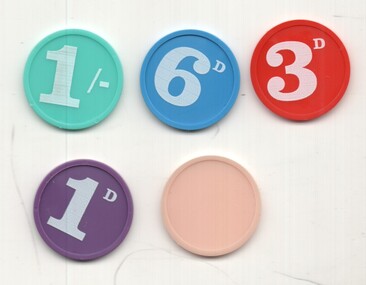
... Used by the Museum as a fare payment mechanism or system. With the use of coins or banknotes being phased out and replaced by digital means, it is not possible for the traditional fare payment system to be demonstrated by conductors or tram crews. Maintains the mechanism or practice of exchanging a "coin" for a tram ticket. Visitors...Used by the Museum as a fare payment mechanism or system. With the use of coins or banknotes being phased out and replaced by digital means, it is not possible for the traditional fare payment system to be demonstrated by conductors or tram crews. Maintains the mechanism or practice of exchanging a "coin" for a tram ticket. Visitors ...Design based on the Electric Supply Co of Victoria tokens. Used by the Museum as a fare payment mechanism or system. With the use of coins or banknotes being phased out and replaced by digital means, it is not possible for the traditional fare payment system to be demonstrated by conductors or tram crews. Maintains the mechanism or practice of exchanging a "coin" for a tram ticket. Visitors pay an entry fee at the new Museum and are given a token for each person. When ready for a tram ride, each passenger gives the token to the Conductor or Driver who issues a paper ticket. Tokens are: Green - 1/- Adult, blue - 6d - Child, red - 3d - concession, purple 1d - members and guests, and orange - no value - baby or under 4. Also maintains the traditional system of conductors accounting for tokens (or cash) and the number of tickets issued. Demonstrates a fare payment system that maintains a strong interpretative link to traditional methods for visitors. Set of 5 plastic fare tokens used by the Ballarat Tramway Museum manufactured during 2021. Four of the tokens have a fare value on one side and the Museum's pictogram and name on the rear. Made by CombiCraft Bundall Qld. trams, tramways, ballarat, tokens, fares, tickets, btm -
 Ballarat Tramway Museum
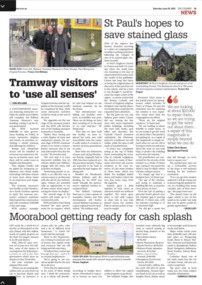
Newspaper, The Courier Ballarat, Tramways visitors to 'use all senses', 25-6-2022
... BTM tramways grants museum Ballarat Newspaper - digital image - The Courier 25-6-2022 - Tramways visitors to 'use all senses' Tramways visitors to 'use all senses' Newspaper The Courier Ballarat ...Published by The Courier Ballarat on 25-6-2022 reporting on the State Government grant for $200,000 to provide additional interpretative displays and hands on activities. Quotes Paul Mong, Virginia Fenelon and MP for Wendouree Juliana Addison. Has a photo of Peter Waugh, Virginia and Paul standing in front of Geelong 2. Photo and story by Erin Williams Provides information on a State Government Grant to the Museum for additional interpretation. Newspaper - digital image - The Courier 25-6-2022 - Tramways visitors to 'use all senses' btm, tramways, grants, museum, ballarat -
 Friends of Westgarthtown
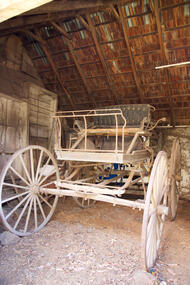
Functional object - Buggy, horse drawn, c. early 1900s
... used for travel between their farm, central Melbourne, and surrounding districts and there was adequate rear storage for purchases. Its survival in fair, serviceable condition offers a rare example of traditional carriage construction, combining finely turned timber wheels, forged ironwork, steel-trimmed rims, and a leather-upholstered seat. As the only remaining transport relic associated with Westgarthtown’s settlers, the buggy holds deep historical, technological and social significance. It illustrates how immigrant families adapted European trades to harsh landscape conditions, tailored domestic vehicles for local needs, and maintained mobility before motorisation. Exhibiting the buggy within the museum preserves and interprets these connections, offering visitors ...The horse-drawn buggy, built by Carl Alfred Ziebell, is one of the most evocative surviving artefacts of everyday life at Ziebell’s Farmhouse, and a tangible link to the family’s heritage. As a skilled wheelwright, Carl Alfred constructed this four-wheeled vehicle on the property to serve his wife Dorothea and their ten children throughout the early 1900s. For decades, the buggy was the primary mode of transport for the Ziebell family, used for travel between their farm, central Melbourne, and surrounding districts and there was adequate rear storage for purchases. Its survival in fair, serviceable condition offers a rare example of traditional carriage construction, combining finely turned timber wheels, forged ironwork, steel-trimmed rims, and a leather-upholstered seat. As the only remaining transport relic associated with Westgarthtown’s settlers, the buggy holds deep historical, technological and social significance. It illustrates how immigrant families adapted European trades to harsh landscape conditions, tailored domestic vehicles for local needs, and maintained mobility before motorisation. Exhibiting the buggy within the museum preserves and interprets these connections, offering visitors a direct insight into the material culture and everyday lives of the Ziebell family and the broader settler community in 19th- and early 20th-century Victoria. The buggy was donated by Lyn and James Ziebell. James Ziebell is the son of Henry Christian Ziebell (1911–1988) and Anne Emily Ziebell (née Zimmer, 1912–1985), on whose property the buggy resided following the sale of the Ziebell’s Thomastown farm. Horse drawn buggy. Black leather upholstered chair with studded back. Four large timber spoked wheels the back wheels are larger than the front wheels, with steel trim on edges of wheels. Axels connects wheels and have turning mechanism. Two metal steps on each side of carriage. Small wooden seat on back of carriage facing the back. Steel barrier at front of the carriage. Wooden attachment with two wooden poles to attach to cart to horse. No visible markings. transport, animal, buggy, cart, horse, dairy, carriage, jessie.
