
Showing 167 items matching "victorian war memorials"
-
 Lakes Entrance Historical Society
Postcard - Victorian War Memorial 1934
... Victorian War Memorial 1934...Collection of four postcards taken at the Victorian War Memorial 11/11/1934...WW1 Historic Buildings The National War Memorial of Victoria Ray of Light striking rock of Remembrance at 11th November Collection of four postcards taken at the Victorian War Memorial 11/11/1934 Postcard Victorian War Memorial 1934 ...Collection of four postcards taken at the Victorian War Memorial 11/11/1934The National War Memorial of Victoria Ray of Light striking rock of Remembrance at 11th Novemberww1, historic buildings -
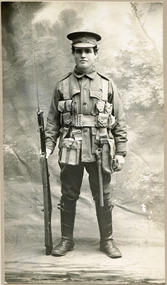 City of Moorabbin Historical Society (Operating the Box Cottage Museum)
Photograph, 1916 William Henry Thomas in WW1 Uniform, 1916 William Henry Thomas in WW1 Uniform, 1916
... world war 1 1914- 1918, thomas street,early settlers, pioneers, market gardeners, australian infantry force, soldiers, key's cup, victorian war memorials, cheltenham, mckinnon,...Private Thomas returned to Australia on the hospital transport Castalia 13 April 1919 and his enlistment was terminated 26 September 1919 Private William Henry Thomas and his family are examples of the patriotism exhibited by the market gardeners, and indeed throughout Australia, during the World War 1 1914-1918. william henry thomas 1916 1894 first ww world war one uniform wickham road south brighton moorabbin world war 1 1914- 1918, thomas street,early settlers, pioneers, market gardeners, australian infantry force, soldiers, key's cup, victorian war memorials, cheltenham, mckinnon, keys road moorabbin ss castalia, british expeditionary force ww1 1914- 1918, 24th battalion 1st aif, 6th australian machine gun company 1st aif, influenza epidemic 1919, alexandria egypt, methodist church, Front of Mount : Ainor Studio Auburn Back of Mount : William Henry Thomas / 1st World War 1916 / Keys Rd., Moorabbin / Born 1894 / Christened at Wesleyan ( Methodist ) Church / Wickham Rd., / South Brighton / now Uniting Church unsigned undated Photograph is black and white. ...1916 William Henry Thomas of Keys Road , South Brighton (now Moorabbin ) in WW 1 1914 -1918 1st AIF uniform. William was born in 1894 , Christened at the Wesleyan Church. (Methodist), Wickham Road, South Brighton and attended Moorabbin State School. . Private Thomas was a market gardener in Moorabbin prior to his enlistment in the Australian Imperial Force on 19 July 1915. Both his parents wrote separate letters giving their consent for their son to serve overseas due to " the pressing request of my son William Henry, also the urgent need of recruits do give my consent that he shall go to the front." September 29th 1915 he left Australia with the 5th Reinforcements of the 24th Battalion for Egypt. March 1916 he was hospitalised with Mumps and shortly after left Alexandria to join the British Expeditionary Force for France where he transferred to the 6th Australian Machine Gun Company.. Whilst on leave in England he received medical attention before returning to France and 13 November 1918 he spent a week in the care of the 7rh Field Ambulance suffering with influenza . Private Thomas returned to Australia on the hospital transport Castalia 13 April 1919 and his enlistment was terminated 26 September 1919Private William Henry Thomas and his family are examples of the patriotism exhibited by the market gardeners, and indeed throughout Australia, during the World War 1 1914-1918. Photograph is black and white. William Henry Thomas is standing straight and tall in the centre of the photograph, looking directly at the photographer while holding a weapon in his right hand. He is in his military uniform (WW1) .Front of Mount : Ainor Studio Auburn Back of Mount : William Henry Thomas / 1st World War 1916 / Keys Rd., Moorabbin / Born 1894 / Christened at Wesleyan ( Methodist ) Church / Wickham Rd., / South Brighton / now Uniting Church unsigned undatedwilliam henry thomas, 1916, 1894, first ww, world war one, uniform, wickham road, south brighton, moorabbin, world war 1 1914- 1918, thomas street,early settlers, pioneers, market gardeners, australian infantry force, soldiers, key's cup, victorian war memorials, cheltenham, mckinnon,, keys road moorabbin, ss castalia, british expeditionary force ww1 1914- 1918, 24th battalion 1st aif, 6th australian machine gun company 1st aif, influenza epidemic 1919, alexandria egypt, methodist church, -
 Wodonga & District Historical Society Inc
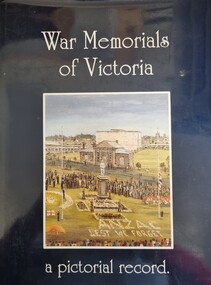
Book - War Memorials of Victoria, Max Parsons, Harold Bradley, 1994
... Victorian War Memorials...This publication is significant because it was donated to the Citizens of Wodonga by the President of the Australia Remembers Committee which organised a series of events to commemorate the 50th anniversary of the end of World War II. Victorian War Memorials Australian World War II This book was produced as part of the “Australia Remembers, 1945-1995” activities organised in conjunction with the Commonwealth Government of Australia to commemorate the 50th anniversary of the end of the Second World War and culminated in key national ceremonies held in Brisbane on 15 August 1995 to mark the 50th anniversary of Victory in the Pacific. ...This book was produced as part of the “Australia Remembers, 1945-1995” activities organised in conjunction with the Commonwealth Government of Australia to commemorate the 50th anniversary of the end of the Second World War and culminated in key national ceremonies held in Brisbane on 15 August 1995 to mark the 50th anniversary of Victory in the Pacific. “Australia Remembers” activities took place around in Australia including Wodonga. The major event in Wodonga was the installation and dedication of the official commemorative plaque at the Wodonga War Memorial located in Woodland Grove.A large volume of 240 pages featuring photographic images of 1,100 war memorials throughout Victoria. An inscription is written on the frontpage.non-fictionThis book was produced as part of the “Australia Remembers, 1945-1995” activities organised in conjunction with the Commonwealth Government of Australia to commemorate the 50th anniversary of the end of the Second World War and culminated in key national ceremonies held in Brisbane on 15 August 1995 to mark the 50th anniversary of Victory in the Pacific. “Australia Remembers” activities took place around in Australia including Wodonga. The major event in Wodonga was the installation and dedication of the official commemorative plaque at the Wodonga War Memorial located in Woodland Grove. victorian war memorials, australian world war ii -
 Stawell Historical Society Inc
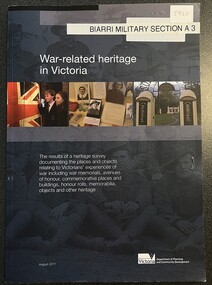
Book - Survey, War Related heritage in Victoria, August 2011
... Survey - Overview, veterans heritage in context, survey data, Victorian war Memorials, Lost & Rescued heritage, ase studies, Community collaboration case studies, Resources for veterans heritage organizations Stawell pp 86-89 - Photos and Text....Survey - Overview, veterans heritage in context, survey data, Victorian war Memorials, Lost & Rescued heritage, ase studies, Community collaboration case studies, Resources for veterans heritage organizations Stawell pp 86-89 - Photos and Text. ...Survey - Overview, veterans heritage in context, survey data, Victorian war Memorials, Lost & Rescued heritage, ase studies, Community collaboration case studies, Resources for veterans heritage organizations Stawell pp 86-89 - Photos and Text.Soft Cover: Background; Sepia group of Soldiers. Colour Photo Strip: children in front of U.J. Army Nurses. War memorial Gates. etc.Dept Premier and Cabinet! Hi Val, with compliments, Cathy Nash -
 Warrnambool and District Historical Society Inc.
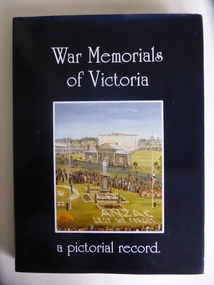
Book, War Memorials of Victoria, 1994
... War Memorial and white printing on the front cover and an outline of the map of Australia on the back cover. The book has 240 pages, black and white and colour illustrations, a Foreword, Dedication, Acknowledgements, Introduction, Contents, Bibliography and Index and information in alphabetical order of the War Memorials in Victoria. It also has reproductions of 20 oil paintings of Victorian...Spine: ‘War Memorials of Victoria’ R.S.L. Victorian Branch’ Front Cover: ‘War Memorials of Victoria, a Pictorial Record’ ...War Memorials reflect the historical importance of Australia’s involvement in world wars and because of our distance from the battlefields they have become sacred places in Australia – de facto war cemeteries. The book includes information on the Warrnambool War Memorial and those in our area. This book is of interest as it gives details on War Memorials and includes all those in the Western District of Victoria. It will be useful to researchers of social and military history. war memorials in victoria warrnambool war memorial history of warrnambool Spine: ‘War Memorials of Victoria’ R.S.L. Victorian ...This book gives information on 1,100 War Memorials in Victoria. It was compiled by Bradley, Christey et al and produced for the Returned and Services League of Victoria. War Memorials were established in most settlements in Australia after World War One and added to after World War Two and succeeding conflicts. The number of War Memorials reflect the historical importance of Australia’s involvement in world wars and because of our distance from the battlefields they have become sacred places in Australia – de facto war cemeteries. The book includes information on the Warrnambool War Memorial and those in our area. This book is of interest as it gives details on War Memorials and includes all those in the Western District of Victoria. It will be useful to researchers of social and military history. This is a hard cover book with a blue cover and gold printing on the spine. The dust cover is dark blue with a colour sketch of the Portland War Memorial and white printing on the front cover and an outline of the map of Australia on the back cover. The book has 240 pages, black and white and colour illustrations, a Foreword, Dedication, Acknowledgements, Introduction, Contents, Bibliography and Index and information in alphabetical order of the War Memorials in Victoria. It also has reproductions of 20 oil paintings of Victorian War Memorials by Dacre Smyth.Spine: ‘War Memorials of Victoria’ R.S.L. Victorian Branch’ Front Cover: ‘War Memorials of Victoria, a Pictorial Record’ war memorials in victoria, warrnambool war memorial, history of warrnambool -
 Eltham District Historical Society Inc
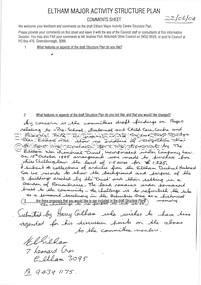
Folder, Eltham Major Activity Structure Plan and Nillumbik Shire Council Proposed Sale of Eltham War Memorial, 2004
... RSL advising the War Memorial had been removed from the wider proposal of the Eltham Activity Centre, 16 September 2004 • Newspaper article: Future of memorial site on hold until poll by Caroline Gonzalez, Diamond Valley Leader, September 20, 2004 • Fax from Catherine Dale, CEO, Nillumbik Shire Council to John Cohen re Renovation and Maintenance of Victorian War Memorials, 6 October 2004 • Letter from Cr Tony Raunic, Mayor to Harry Gilham regarding Eltham Major Activity Centre Structure Plan advising the removal of any reference to sale of the War Memorial and detailed consultation to be held with stakeholders regarding the former Shire of Eltham Office site; 8 October 2004 • Letter from Barry Rosewall, President, Eltham RSL to John Cohen advising the sub-branch strongly opposes the sale of the Eltham War Memorial, 20 October 2004 • Fax from Bill Forrest, Interim CEO, Nillumbik Shire Council to John Cohen re Renovation and Maintenance of Victorian War Memorials, 8 November 2004 • Copy of letter from John Cohen to Bill Forrest, Interim CEO, Nillumbik Shire Council re Maintenance of Eltham War Memorial, November 2004 ...War Memorial, 27 August 2004 • Handwritten notes prepared by Harry Gilham in preparation of presentation to Council pertaining to draft Eltham Major Activity Structure Plan, c. Sep. 2004 • Newspaper article: Don't let a dream stay hijacked; Letters, Diamond Valley Leader, September 1, 2004, p11 • Ordinary Meeting of Council Agenda, 15 September 2004, p55 with notes on vote for motion that any reference to the sale of the War Memorial be removed • Copy of letter sent by John Cohen, OAM, JP to Brigadier J.R. Deighton, State Secretary, Victorian ...Material covers Eltham Major Activity Structure Plan and a proposal by Council to sell the Eltham War Memorial site for commercial use Contents: • Eltham Major Activity Structure Plan Comments Sheet; Response by Harry Gilham, 22 June 2004 • Letter from Eric Mack to the Hon. Steve Herbert, Member for Eltham regarding draft Major Activity Centre Structure Plan, 22 June 2004 • Newspaper article: Protect war memorial, Harry Gilham, President, Eltham District Historical Society; Letter, Diamond Valley Leader, June 30, 2004, p16 (Includes copy sent to paper 17 June) • Letter from Eric Mack to Nillumbik Shire Council CEO and Councillors regarding draft Major Activity Centre Structure Plan, 2004 • Copy of fax sent by John Cohen, OAM, JP to Diamond Valley News, re his support for the appeal for protection of the Eltham War Memorial 3 July 2004 • Newspaper article: Sell-off a betrayal of trust, Ken Eckersall; Letters, Diamond Valley Leader, 7 July 2004 • Newspaper article: Don't insult memory of fallen servicemen, John Cohen; Letters, Diamond Valley Leader, 7 July 2004 • Newspaper article: Up in arms against sell-off, Dave Crosswaite, Diamond Valley Leader, July 14, 2004, p5 • Copy of letter from John Cohen to President and Executive of the Eltham RSL regarding the Eltham War Memorial, 16 July 2004 • Reply to Eric Mack from the Hon. Steve Herbert, Member for Eltham regarding his letter of 22 June, 27 July, 2004 • Notice issued by Cr Greg Johnson of 11 August meeting by Council's Policy and Services Committee to consider a proposal to sell the Eltham War memorial and old shire office properties, 6 August 2004 • Minutes for the policy and Services Committee of Nillumbik Shire Council held Wednesday 11 August 2004 • Newspaper article: Shire plan 'sacrilegious' by Dave Crossthwaite, Diamond Valley Leader, Wednesday, August 19, 2004, p1 • Newspaper article: Our say on sale of land; Have you say, Diamond Valley Leader, August 18, 2004, p22 • Newspaper article: School hall is not ratepayers' worry; Have your Say, Diamond Valley Leader, August 18, 2004, p23 • Copy of letter sent by John Cohen, OAM, JP to the CEO, RSL Victoria requesting their opposition to sale of the Eltham War Memorial, 19 August 2004 • Newspaper article: Clash over land sale by Dave Crossthwaite, Diamond Valley Leader, August 25, 2004, p1 • Newspaper article: Mayor beset over arts agenda claim by Dave Crossthwaite, Diamond Valley Leader, August 25, 2004, p5 • Newspaper article: A lot of work has gone into shire structure plan; Letters, Diamond Valley Leader, August 25, 2004, p10 • Newspaper article: Public assets are not for sale; Letters, Diamond Valley Leader, August 25, 2004, p11 • Copy of letter sent by John Cohen, OAM, JP to Brigadier J.R. Deighton, State Secretary, Victorian RSL re his comments in Diamond Valley Leader regarding the Eltham War Memorial, 27 August 2004 • Handwritten notes prepared by Harry Gilham in preparation of presentation to Council pertaining to draft Eltham Major Activity Structure Plan, c. Sep. 2004 • Newspaper article: Don't let a dream stay hijacked; Letters, Diamond Valley Leader, September 1, 2004, p11 • Ordinary Meeting of Council Agenda, 15 September 2004, p55 with notes on vote for motion that any reference to the sale of the War Memorial be removed • Copy of letter sent by John Cohen, OAM, JP to Brigadier J.R. Deighton, State Secretary, Victorian RSL advising the War Memorial had been removed from the wider proposal of the Eltham Activity Centre, 16 September 2004 • Newspaper article: Future of memorial site on hold until poll by Caroline Gonzalez, Diamond Valley Leader, September 20, 2004 • Fax from Catherine Dale, CEO, Nillumbik Shire Council to John Cohen re Renovation and Maintenance of Victorian War Memorials, 6 October 2004 • Letter from Cr Tony Raunic, Mayor to Harry Gilham regarding Eltham Major Activity Centre Structure Plan advising the removal of any reference to sale of the War Memorial and detailed consultation to be held with stakeholders regarding the former Shire of Eltham Office site; 8 October 2004 • Letter from Barry Rosewall, President, Eltham RSL to John Cohen advising the sub-branch strongly opposes the sale of the Eltham War Memorial, 20 October 2004 • Fax from Bill Forrest, Interim CEO, Nillumbik Shire Council to John Cohen re Renovation and Maintenance of Victorian War Memorials, 8 November 2004 • Copy of letter from John Cohen to Bill Forrest, Interim CEO, Nillumbik Shire Council re Maintenance of Eltham War Memorial, November 2004 51 pages of various types, A4, printed, handwritten notes, letters and newspaper clippingscr. greg johnson, diamond valley leader, eltham district historical society, eltham leisure centre, eltham major activity structure plan, eltham rsl sub-branch, eltham war memorial, eric mack, harry gilham, john cohen, ken eckersall, letters, nillumbik shire council, protests, steve herbert mp, wurrundjeri -
 Bendigo Military Museum
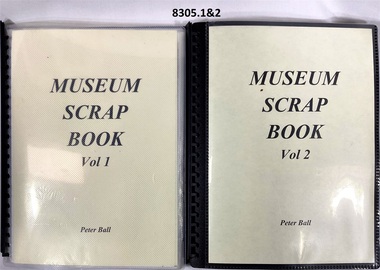
Literary work - SCRAP BOOKS 1998 - 2026
... These Scrap books hold articles from local Bendigo newspapers, Melbourne newspapers, other publications including Mufti magazine, Victorian Collections, Australian War Memorial to name a few. General photographs of Museum Volunteers and their involvement, Renovations to the SMI Building, Funeral notice's and programs of past Museum Volunteers, exhibitions involved in to also name a few. ...These Scrap books hold articles from local Bendigo newspapers, Melbourne newspapers, other publications including Mufti magazine, Victorian Collections, Australian War Memorial to name a few. General photographs of Museum Volunteers and their involvement, Renovations to the SMI Building, Funeral notice's and programs of past Museum Volunteers, exhibitions involved in to also name a few. ...Due to several name changes to the Bendigo RSL Museum it will be just referred to as the Museum. These Scrap books hold articles from local Bendigo newspapers, Melbourne newspapers, other publications including Mufti magazine, Victorian Collections, Australian War Memorial to name a few. General photographs of Museum Volunteers and their involvement, Renovations to the SMI Building, Funeral notice's and programs of past Museum Volunteers, exhibitions involved in to also name a few. The biggest collection of one item relates to the Grinton photographs. .1) Vol 1. The first article and also the first since the Museum opened in Feb 1998. Dated April 28th 1998 in the Local "Weekender" on page 2 with a full page, two articles and photographs. The final article was in the Bendigo Advertiser dated Aug 22nd 2009 regarding the mass graves at Fromelles and for families to come forward for DNA testing to identify remains. The photo included was T.W. Francis which the Museum holds. he was later identified as one of the Soldiers. (Refer Cat No 8015P) .2) Vol 2. The first two pages Sep 2009 relate to the Shrine of Remembrance Box - Outreach program and it's visit to Bendigo and other areas. This was part of their Education program which the Museum became involved in. The last item April 2013 relates to the search for the Military Gun War trophies allotted to Bendigo after WW1. .3) Vol 3. The first two pages are June 2013 "Mufti magazine" and items that the Museum put in their publication. "Mufti" is the newsletter of the Victorian State Branch of the RSL. The last item Nov 15th 2022 tells of the Post 75 Central Victorian Veterans Banner being donated to the Museum. The Association changed their name. (Refer Cat No 7420) .4) Vol 4. First item is a large photograph Sept 2023 advertising "Discover what's on inside the Museum. The final article in 2026 with photo's and heading "Military Museum considered amongst the States best". (Ongoing) Collection re Peter Ball, refer Cat No 4704 for service details & RSL service.Four scrapbooks plastic covers, with A4 plastic inserts, front cover sheets are all yellow with black text, the headings on each, "Museum Scrap book Vol 1 - 2 - 3 - 4". .1) Volume 1 has 33 inserts with 66 pages of articles. .2) Volume 2 has 34 inserts with 68 pages of articles. .3) Volume 3 has 35 inserts with 70 pages of articles .4) Volume 4 has 4 inserts with 8 pages of articles (ongoing)brsl, smirsl, scrapbooks, museum -
 Eltham District Historical Society Inc
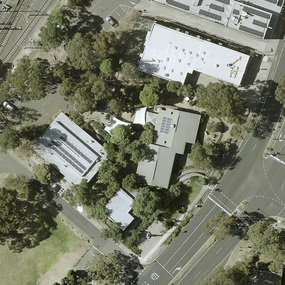
Archive Box, Eltham War Memorial
... These buildings are known as the Eltham War Memorial buildings located at 903-907 Main Road, Eltham. In May 2020, the Heritage Council Victoria did not recommend the site for inclusion in the Victorian Heritage Register. ...These buildings are known as the Eltham War Memorial buildings located at 903-907 Main Road, Eltham. In May 2020, the Heritage Council Victoria did not recommend the site for inclusion in the Victorian Heritage Register. ...CONTENTS: BOX 1 04585-1 04585 History • 04585-1-1 An Outline History of the Eltham War Memorial Trust by Stanley S. Addison • 04585-1-2 Stanly Addison's notes for his Outline History of the Eltham War Memorial Trust • 04585-1-3-1 Newspaper article: Eltham War Memorial Trust: Ready Now for Forward Movement; Acknowledgements £722; publication unknown, c.1946 • 04585-1-3-2 Newspaper article: Eltham War Memorial Trust: "Garden of Remembrance"; Baby Health Centre First Building, The News: The Newspaper of the City of Heidelberg and of the Shire of Eltham, 11 April 1947 • 04585-1-3-3 Newspaper: The News: The Newspaper of the City of Heidelberg and of the Shire of Eltham; Friday, December 1, 1950 • 04585-1-3-4 Newspaper article: Eltham War Memorial Trust by Stanley Addison, 1953 • 04585-1-3-5 Newspaper article: War Memorial Trust (publication unknown, n.d.) • 04581-1-4 Folder: A brief history of the Eltham War Memorial and Eltham Library, Harry Gilham, 1997-1999 • 04585-1-5 Newspaper article: Eltham's War Memorial; A Journey in Time, Nillumbik Mail, 5 July c.2001 04585-2 Eltham War Memorial Trust Minutes • 04585-2-1 Eltham War Memorial Trust Minutes, Book No. 2, 20 March 1951 to 4 June 1957 • 04585-2-2 Minute Book: Eltham War Memorial Trust Minutes, 2 July 1957 to 12 November 1973 BOX 2 04585-3 Women's Auxiliary, Eltham War Memorial Trust • 04585-3-1-1 Minute Book: Minute Book No. 1, Women's Auxiliary, Eltham War Memorial Trust, 10 May 1946 to 10 April 1952 • 04585-3-1-2 Minute Book: Minute Book No. 2, Women's Auxiliary, Eltham War Memorial Trust, 12 June 1952 to 14 June 1956 • 04585-3-1-3 Minute Book: Minute Book No. 3, Women's Auxiliary, Eltham War Memorial Trust, 12 July 1957 to 14 May 1959 • 04585-3-1-4 Minute Book: Minute Book No. 4, Women's Auxiliary, Eltham War Memorial Trust, 14 May 1959 to 12 August 1965 • 04585-3-2 Book: A favourite book of country recipes / compiled by the Women's Auxiliary of the Eltham War Memorial Trust 04585-4 04591 Eltham Easter Show and Gymkhana • 04585-4-1 Minute Book: Eltham War Memorial Trust; Easter Gymkhana Committee Minutes, 19 Nov 1954-6 Jun 1958 • 04585-4-2 Folder: Eltham War Memorial Trust; Easter Gymkhana Committee Correspondence, 19 Nov 1954-6 Jun 1958 o 04585-4-2-1 Notice from Honorary Treasurer of Easter Gymkhana Committee regarding completion of 1954 event and expression of thanks and that committee is now going into recess prior to commencement of planning for 1955 o 04585-4-2-2 Notice of Easter Gymkhana Committee Meeting, Monday 24th October, 1955 at the Shire Hall, Eltham o 04585-4-2-3 Letter from B.T. Taylor, Hon. Secretary, Eltham Easter Show Committee regarding the sale of tickets (c.1957) o 04585-4-2-4 Letter from B.T. Taylor, President, Eltham Easter Show Committee to Georges Ltd regarding the supply of The Georges Cup for the Eltham Easter Show, 11 April 1958 o 04585-4-2-5 Letter from Georges Ltd to B.T. Taylor, President, Eltham Easter Show Committee with payment for the miniatures of The Georges Cup, 6 June 1958 o 04585-4-2-6 Letter from Eltham Shire Secretary to B.T. Taylor, President, Eltham Easter Show Committee advising of new process regarding raffle, 5 May 1958 o 04585-4-2-7 Letter from Lilian Heath, Secretary, Judge Book Village Auxiliary to B.T. Taylor, Eltham Easter Show Committee, 24 May 1958 o 04585-4-2-8 Letter from Mrs R.J. Godfrey on behalf of M.A. Godfrey of Dandenong to B.T. Taylor, President, Eltham Easter Show under threat of legal action requesting replacement of cheque for £10 (second prize Open Jumping Contest), which was lost, 24 May 1958 o 04585-4-2-9 Reply by B.T. Taylor, President, Eltham Easter Show Committee to Mrs R.J. Godfrey to her letter of 24 May explaining circumstances and denying responsibility to forward a replacement cheque as it was cashed at the Golf Club Hotel; 6 June 1958 • 04585-4-3 Folder: Easter Gymkhana Committee Minutes and other associated ephemera o 04585-4-3-1 Letter: Letter of donation to Shire of Eltham Historical Society of the Easter Gymkhana Committee Minutes and other associated ephemera, J.M. Peter Bassett-Smith, 31 October 1987 o 04585-4-3-2 Souvenir Program: Free Program; Eltham Easter Gymkhana and Light Horse Show also Dog Competition, Easter Saturday 9th April, 1955 at Eltham (Lower) Park o 04585-4-3-3 Program Schedule; Eltham Easter Gymkhana and Light Horse Show also Dog Competition, Easter Saturday 9th April, 1955 at Eltham (Lower) Park o 04585-4-3-4 Program; Monster Gymkhana in aid of Hurstbridge Hall Re-Building Fund, Hurstbridge Recreation Reserve, Sunday, September 18, 1955 o 04585-4-3-5 Record Crowd Came To Eltham Gymkhana, Sporting World, Diamond Valley Local, Thursday, April 14, 1955, p8 o 04585-4-3-6 Program; Eltham Easter Gymkhana Goat Show Schedule, Easter Saturday 31st March, 1956, Eltham Park o 04585-4-3-7 Official Program; Eltham Easter Horse Show and Goat Show, Easter Saturday April 20th, 1957, Eltham Park o 04585-4-3-8 Program Schedule; Eltham Easter Horse Show and Goat Show, Easter Saturday April 20th, 1957, Eltham Park o 04585-4-3-9 Young Rider to Judge at Show, The Age, Wednesday, April 17, 1957, p8 o 04585-4-3-10 Promotional window label, Eltham Gymkhana, Easter Saturday, 20 April 1957 o 04585-4-3-11 Entry form for the Skyline Drive-In “Soap-Box” Derby, to be held along Main Road between Panorama Avenue and Bolton Street, Easter Saturday, 20 April 1957 o 04585-4-3-12 Official Program; Eltham Easter Horse Show and Goat Show, Easter Saturday, 5th April, 1958, Eltham Park o 04585-4-3-13 Brief history of the Eltham War Memorial Trust and Women's Auxiliary, Peter Bassett-Smith, 1987 o 04585-4-3-14 Summary of the Eltham War Memorial Trust Easter Gymkhana Committee Minutes (1954-1956) 04585-5 Folder: Infant Welfare Centre (1952) 04585-5-1 Newspaper article: Eltham: “Memorial Baby Health Centre Opening”; District News, The News, 14 November 1952. (Single sheet newsprint printed one side with District News for Macleod, Kinglake, Watsonia, Wattle Glen, Diamond Creek, Panton Hill, Eltham North, Lower Plenty, Research, Eltham. On reverse in handwritten purple pencil to the President, somewhat indecipherable, about an item to be hung on the walls of the beautiful building.) • 04585-5-2 Eltham War Memorial Trust, Official Opening - Baby Health Centre, 15th November 1952; Timetable of proceedings (1 page handwritten) • 04585-5-3 Eltham Baby Health Centre; Official Opening - Baby Health Centre: Address by President, 15 November 1952 (9 pages handwritten) • 04585-5-4 Newspaper article: Infant Welfare Centre as War Memorial, 15 November 1952 • 04585-5-5 Souvenir Booklet: Eltham War Memorial Trust, 1954 • 04585-5-6 Eltham War Memorial: Address by Mrs Stanley Addison at the Annual Meeting of the Infant Welfare Centre, Thursday 21st October, 1965 (4 pages typed, carbon copy) 04585-6 Roll of Honour Board (1954), Eltham War Memorial 04585-7 Eltham Pre-School (1956), Eltham War Memorial • 04585-7-1 Newspaper article: Minister to open Eltham Pre-school Tomorrow • 04585-7-2 Program; Eltham War Memorial Trust: Opening of the Second Unit of the War memorial, The Pre-school Centre, on Saturday, December 1st, 1956 at 3 p.m. • 04585-7-3 Folder: Eltham Pre-School (1956) Papers donated by Gordon Pearce, 30 Apr 2021 pertaining to Eltham Pre-school and Eltham War Memorial Trust. Gordon was a former President of the Eltham Pre-school at the time the Eltham War Memorial Trust was disbanded by Eltham Shire Council in December 1973. o Articles of the Eltham War Memorial Trust (9 A3 photocopies of original foolscap pages) o President’s Report: Eltham War Memorial Trust, Committee of Management, Dec. 1973 in which it was advised that the Committee was to be disbanded. o Letter: Gordon J.J. Pearce, President Eltham Pre-school to C.J. Bock, Chief Administrative Officer, Shire of Eltham, 21 Nov 1973 expressing disappointment at the Shire wanting to disband the Committee of Management of the Eltham War Memorial Trust o Minutes: Eltham Pre-school Committee, 26 Nov 1973 o Minutes: Eltham Pre-school Committee, 17 Dec 1973 o President’s Report: Gordon Pearce, Eltham Pre-school, 4 Feb 1974 • 04585-7-4 Newspaper clipping: A humble beginning, Diamond Valley Leader, July 26, 2006, p35 04585-8 Children’s Library (1961) / Eltham War Memorial Hall (1966) • 04585-8-1 Letter: Hon. Secretary Eltham Shire Council inviting Lieut-General The Honourable Sir Edmund Herring to attend the opening of the Children's Library. 23 Aug. 1961 • 04585-8-2 Newspaper article: Third unit of Eltham's memorial opened; Diamond Valley News, 14 Nov 1961 (Ref: SEA_74_001-055) • 04585-8-3-1 Receipt to Eltham Historical Society for hire of Eltham War Memorial Hall, 23 June 1970 • 04585-8-3-2 Receipt to Eltham Historical Society for hire of Eltham War Memorial Hall, 6 July 1970 • 04585-8-4 A brief history of the Eltham Library, Harry Gilham, c.1994 04585-9 Eltham Enlistments for the Second World War 04585-1964 • Document: Photocopy of Certificate of Title, Eltham War Memorial Trust, Lot 2, Plan of Subdivision No. 63242, Parish of Nillumbik; derived from Vol. 7073 Fol. 498, 18 May 1964 04585-1996 (Eltham Town Focus Group) Documents relating to a focus group brought together by the Shire of Nillumbik Chairman of Commissioners in 1996 to provide advice on the best long term use for the buildings and land situated between the former Eltham Shire Offices and Country Fire Authority buildings. These buildings are known as the Eltham War Memorial buildings located at 903-907 Main Road, Eltham. In May 2020, the Heritage Council Victoria did not recommend the site for inclusion in the Victorian Heritage Register. Potential impact upon the Memorial Garden because of a proposed roundabout at Dudley Street and Main Road • Notes concerning impact upon Eltham War Memorial Garden of a proposed roundabout at Dudley Street, Eltham, 20 August 1996 • Draft proposal of a roundabout at Dudley Street and Main Road showing impact upon Eltham War Memorial Garden, c. Sep. 1996 • Letter (copy): Harry Gilham, President, EDHS to Bruce Ruxton, President, Victorian RSL concerning impact upon Eltham War Memorial Garden of a proposed roundabout at Dudley Street, Eltham, 1 September 1996 • Letter: Bruce Ruxton, President, Victorian RSL to Harry Gilham, President, EDHS, 20 Sep 1996 concerning impact upon Eltham War Memorial Garden of a proposed roundabout at Dudley Street, Eltham, including copy of communication with Eltham RSL (T. Beaton, Hon Sec.) of 10 Sep 1996 • Letter: EDHS (H. Gilham, President) to Commissioners, Nillumbik Shire Council, 16 Sep 1996 advising not in support of roundabout at Dudley Street due to impact upon Eltham War Memorial Garden • Photocopy: Editorial comment, Peter Doughterty, ArtStreams Dec 1996/Jan 1997 re Commissioners push for development in activity zone of former office site and Eltham War Memorial (see EDHS_04362) • Letter: Don Cordell, Chairman of Commissioners, Nillumbik Shire Council, 10 Dec. 1996 inviting Harry Gilham to join a Focus Group to advise him, chaired by Alan Field. Includes a list of focus group members and contact details. • Minutes of Meeting, Eltham Town Focus Group, 17 Dec. 1996 04585-1997 (Eltham Town Focus Group) Documents relating to a focus group brought together by the Shire of Nillumbik Chairman of Commissioners in 1996 to provide advice on the best long term use for the buildings and land situated between the former Eltham Shire Offices and Country Fire Authority buildings. These buildings are known as the Eltham War Memorial buildings located at 903-907 Main Road, Eltham. In May 2020, the Heritage Council Victoria did not recommend the site for inclusion in the Victorian Heritage Register. Investigating condition of and future use of the Eltham War Memorial Complex and redevelopment of the site • Letter: Alan Field to Harry Gilham. 8 Jan. 1997 advising date of 18 Jan. for next meeting of Eltham Town Focus Group • Minutes of Meeting, Eltham Town Focus Group, 18 Jan. 1997 with handwritten notes by Harry Gilham • Draft Report: A Community Vision for “The Eltham War Memorial Trust” Property, Main Road, Eltham, prepared at the request of Chief Commissioner, Don Cordell, 31 Jan. 1997, along with handwritten nots by Ross McDonald and accompanying note by Harry Gilham written in 2010 upon handover of EDHS presidency 04585-2000 • Notes used by Harry Gilham at Nillumbik Council Meeting of 21 March 2000 regarding proposed sale/development of the Eltham War Memorial property 04585-2004 Material covers Eltham Major Activity Structure Plan and a proposal by Council to sell the Eltham War Memorial site for commercial use • Eltham Major Activity Structure Plan Comments Sheet; Response by Harry Gilham, 22 June 2004 • Letter from Eric Mack to the Hon. Steve Herbert, Member for Eltham regarding draft Major Activity Centre Structure Plan, 22 June 2004 • Newspaper article: Protect war memorial, Harry Gilham, President, Eltham District Historical Society; Letter, Diamond Valley Leader, June 30, 2004, p16 (Includes copy sent to paper 17 June) • Letter from Eric Mack to Nillumbik Shire Council CEO and Councillors regarding draft Major Activity Centre Structure Plan, 2004 • Copy of fax sent by John Cohen, OAM, JP to Diamond Valley News, re his support for the appeal for protection of the Eltham War Memorial 3 July 2004 • Newspaper article: Sell-off a betrayal of trust, Ken Eckersall; Letters, Diamond Valley Leader, 7 July 2004 • Newspaper article: Don't insult memory of fallen servicemen, John Cohen; Letters, Diamond Valley Leader, 7 July 2004 • Newspaper article: Up in arms against sell-off, Dave Crosswaite, Diamond Valley Leader, July 14, 2004, p5 • Copy of letter from John Cohen to President and Executive of the Eltham RSL regarding the Eltham War Memorial, 16 July 2004 • Reply to Eric Mack from the Hon. Steve Herbert, Member for Eltham regarding his letter of 22 June, 27 July, 2004 • Notice issued by Cr Greg Johnson of 11 August meeting by Council's Policy and Services Committee to consider a proposal to sell the Eltham War memorial and old shire office properties, 6 August 2004 • Minutes for the policy and Services Committee of Nillumbik Shire Council held Wednesday 11 August 2004 • Newspaper article: Shire plan 'sacrilegious' by Dave Crossthwaite, Diamond Valley Leader, Wednesday, August 19, 2004, p1 • Newspaper article: Our say on sale of land; Have you say, Diamond Valley Leader, August 18, 2004, p22 • Newspaper article: School hall is not ratepayers' worry; Have your Say, Diamond Valley Leader, August 18, 2004, p23 • Copy of letter sent by John Cohen, OAM, JP to the CEO, RSL Victoria requesting their opposition to sale of the Eltham War Memorial, 19 August 2004 • Newspaper article: Clash over land sale by Dave Crossthwaite, Diamond Valley Leader, August 25, 2004, p1 • Newspaper article: Mayor beset over arts agenda claim by Dave Crossthwaite, Diamond Valley Leader, August 25, 2004, p5 • Newspaper article: A lot of work has gone into shire structure plan; Letters, Diamond Valley Leader, August 25, 2004, p10 • Newspaper article: Public assets are not for sale; Letters, Diamond Valley Leader, August 25, 2004, p11 • Copy of letter sent by John Cohen, OAM, JP to Brigadier J.R. Deighton, State Secretary, Victorian RSL re his comments in Diamond Valley Leader regarding the Eltham War Memorial, 27 August 2004 • Handwritten notes prepared by Harry Gilham in preparation of presentation to Council pertaining to draft Eltham Major Activity Structure Plan, c. Sep. 2004 • Newspaper article: Don't let a dream stay hijacked; Letters, Diamond Valley Leader, September 1, 2004, p11 • Ordinary Meeting of Council Agenda, 15 September 2004, p55 with notes on vote for motion that any reference to the sale of the War Memorial be removed • Copy of letter sent by John Cohen, OAM, JP to Brigadier J.R. Deighton, State Secretary, Victorian RSL advising the War Memorial had been removed from the wider proposal of the Eltham Activity Centre, 16 September 2004 • Newspaper article: Future of memorial site on hold until poll by Caroline Gonzalez, Diamond Valley Leader, September 20, 2004 • Fax from Catherine Dale, CEO, Nillumbik Shire Council to John Cohen re Renovation and Maintenance of Victorian War Memorials, 6 October 2004 • Letter from Cr Tony Raunic, Mayor to Harry Gilham regarding Eltham Major Activity Centre Structure Plan advising the removal of any reference to sale of the War Memorial and detailed consultation to be held with stakeholders regarding the former Shire of Eltham Office site; 8 October 2004 • Letter from Barry Rosewall, President, Eltham RSL to John Cohen advising the sub-branch strongly opposes the sale of the Eltham War Memorial, 20 October 2004 • Fax from Bill Forrest, Interim CEO, Nillumbik Shire Council to John Cohen re Renovation and Maintenance of Victorian War Memorials, 8 November 2004 • Copy of letter from John Cohen to Bill Forrest, Interim CEO, Nillumbik Shire Council re Maintenance of Eltham War Memorial, November 2004 04585-2007 • News article: The spin starts here; Brian Murray, Nillumbik Ratepayers’ Association, Valley Views, Diamond Valley Leader, 13 June 2007 suggesting Council proposing to bring back Shire Offices to Eltham with potential loss of Eltham War Memorial • News article: War memorial fear-mongering; Harry Gilham, Heidelberg Valley Weekly, 26 June 2007 • News article: Consultation is no spin; John Cohen, Former Shire President, Valley Views, Diamond Valley Leader, 27 June 2007 • News article: Troops enlist for campaign by Fiona Willan, Diamond Valley Leader, 18 July 2007 04585-2010 • Newspaper article: Hall 'scruffy' - war vet, Diamond Valley Leader, 17 February 2010, p2 04585-2011 Cultural Significance Assessment • Cultural Heritage Significance Assessment; Civic Building Complex, 903-907 Main Road, Eltham, September 2011 DRAFT • Feedback to Nillumbik Shire Council by Eltham District Historical Society in response to September 2011 Draft Cultural Heritage Significance Assessment of the Eltham War Memorial Building Complex, 3 November 2011 • War Memorial Building Complex, 903-907 Main Road, Eltham: Cultural Significance Assessment, November 2011 prepared for Nillumbik Shire Council by Samantha Westbrooke Pty Ltd in association with Peter Mills PhD, Architectural Historian 04585-2014 Proposed extension to Cenotaph War Memorial Terrace championed by Montmorency-Eltham RSL and its impact upon the Memorial Garden and Eltham War Memorial buildings complex. • Draft Landscape Concept Plan by Henry Architects for Proposed Extension to Memorial Terrace, 14 July 2014 (Note: Senior Citizen’s Building correctly identified. Every subsequent plan incorrectly shows this building as the former Children’s Library, which was the War Memorial Hall building) • Letter: Eltham Gateway Action Group to Stuart Burdack, Shire of Nillumbik (undated) offering comment on Proposed Extension to Memorial Terrace with handwritten notes • Letter: Jim Connor, President, EDHS to Adrian Cully, Manager Community Participation, Learning and Culture, Nillumbik Shire Council, 18 Aug. 2014, encouraging Council not to support proposed extension to War Memorial Terrace due to significant impact upon the Eltham War Memorial Complex as supported by the Cultural Significance assessment conducted by Council in 2011 • Notices of Motion, NOM.001/14 pertaining to memorials Advisory Committee and Montmorency-Eltham RSL to upgrade the Eltham War Memorial site in time for ANZAC Day 2015, Nillumbik Shire Council Ordinary Meeting, 26 August 2014 • Notices of Motion, NOM.001/14 pertaining to memorials Advisory Committee and Montmorency-Eltham RSL to upgrade the Eltham War Memorial site in time for ANZAC Day 2015, Nillumbik Shire Council Ordinary Meeting, 26 August 2014 • Media Release: Support for cenotaph expansion, Nillumbik Shire Council, Sep 2014 • Eltham War Memorial Park (Stage 2), Nillumbik Shire Council, c.2014 • Email (copy): Summary of advice from Samantha Westbrooke (2 Sep. 2014) regarding proposed impact of landscaping around the cenotaph as identified in the significance assessment conducted Nov. 2011 by herself and Dr Peter Mills. • Policy and Services reports, PSD.034/14 Eltham War Memorial Building Precinct - Proposed Extension to Memorial Terrace, Nillumbik Shire Council Ordinary Meeting, 9 September 2014 • EDHS presentation to NSC Policy and Services meeting 9 September 2014 regarding the Montmorency-Eltham RSL proposal to expand/upgrade the Eltham War Memorial with handwritten notes from Harry Gilham for his submission at Council meeting • Newspaper article: Plan to expand memorial; growth in ANZAC Day services inspires RSL proposal by Megan Bailey, Diamond Valley Leader, Wednesday, September 10, 2014 • Agenda: User Groups and Stakeholders Meeting, Proposed Extension to Memorial Terrace, 11 September 2014 • Email: Jim Connor, EDHS, regarding option to seek a heritage protection overlay for the Eltham War Memorial Building complex similar to that for the cenotaph, 15 Sep. 2014 • Newspaper article: Council defers RSL war memorial upgrade to seek consultation, Diamond Valley Leader, September 17, 2014 • Letter: Harry Gilham to Local Press, 20 Sep. 2014 regarding the Eltham War Memorial and moves by the RSL to take expand the War Memorial Terrace further into the orginal Memorial Garden • Letter: Alan Field, President, The Eltham Veterans War Memorial Preservation Society Inc. to CEO and Councillors, Nillumbik Shire Council protesting at perceived injustices and ‘veteran bashing’ regarding their previous efforts to relocate ‘their Obelisk and Cenotaph’ to the Eltham War Memorial complex and their frustration in their attempts to further expand upon the Memorial Terrace. Areas of letter are highlighted with handwritten markups and notes. Also notes on loose card and paper with definitions of Memorial, Obelisk, Cenotaph, commentary on establishment of Eltham War Memorial, The Eltham War Memorial Trust and RSL involvement and current actions by RSL in respect to claims in the letter (written by Harry Gilham ?). • Newspaper article: Residents say no to memorial upgrade; Mayor says feedback will be considered at next meeting by Megan Bailey, Diamond Valley Leader, Wednesday, October 1, 2014 • Policy and Services reports, PS.038/14 Eltham War Memorial Building Precinct - proposed extension to the Eltham Cenotaph Terrace, Nillumbik Shire Council Policy and Services Committee Meeting, 14 October 2014 • Newspaper article: Centenary dawn service moves to Petrie Park; Diamond Valley Leader, October 22, 2014, p5 • Newspaper article: Upset over upgrade; war memorial plans get culled; Diamond Valley Leader, October 29, 2014, p3 • Newspaper article: Memorial to be extended; expected to be finished before ANZAC Day ceremony by Megan Bailey, Diamond Valley Leader, December 17, 2014 04585-2018 Proposal by Nillumbik Shire Council to sell off former Eltham Shire Office site and Eltham War Memorial site for commercial use and community reaction. • Newspaper article: Site of contention; Conversations, Diamond Valley Leader, September 5, 2018, p10 • Motion to Councillors: Carlotta Quinlan, Eltham Community Action Group, [October 2018] following a Community Town Hall Meeting held October 13, 2018 regarding proposed development and sale of part of 895 and 903-907 Main Road, Eltham • Things you should know about the Eltham War Memorial, author unknown, c. Oct. 2018 • Email: Greg Johnson to Sue Dyet 16 October 2018 regarding Assessment Criteria discussed at 25 September 2018 Council meeting concerning proposed development and sale of part of 895 and 903-907 Main Road, Eltham • Newspaper article: War memorial assurance; RSL involved but no-confidence motion passed on council by Brittany Shanahan, Diamond Valley Leader, October 17, 2018 • An essay addressed to the Councillors of Nillumbik Shire, October 2018: About the Eltham War Memorial and the adjacent community-owned sites in Eltham that the Council threatens to sell, Andrew Lemon Nov. 2018 • Report: Request for proposals - For the development and sale of part of 895 and 903-907 Main Road, Eltham; Prepared for Nillumbik Shire Council by Maddocks; 2 November 2018 (229 pages) • Notice: Duncan Duke, President, Montmorency Eltham RSL, to Members, 5 December 2018 – statement regarding “proposed redevelopment of the Eltham War Memorial Buildings and potential impact of the proposed redevelopment on our (sic) Cenotaph and Memorial Site.” 04585-2020 Community motions to seek Heritage Council Victoria registration of the Eltham War Memorial precinct • Eltham War Memorial Buildings: Recommendation of the Executive Director and assessment of cultural heritage significance under Part 3, Division 3 of the Heritage Act 2017; 18 May 2020 • Newspaper advertisement: Heritage Council Victoria, advising the Eltham War Memorial Buildings have been recommended NOT for inclusion in the Victorian Heritage Register; The Age, May 22, 2020, p34 • Correspondence: Eltham War Memorial Buildings; prepared by Nillumbik Shire Council for the Heritage Council Victoria; 29 May 2020 • Correspondence: Eltham War Memorial Buildings; prepared by Nillumbik Shire Council for the Heritage Council Victoria; 5 June 2020 • Submission: Eltham War Memorial Buildings; prepared by Eltham Community Action Group for the Heritage Council Victoria; 17 July 2020. Also included: o Submission: Eltham War Memorial Buildings; prepared by Catherine Johnson of Pryor Street, Eltham for the Heritage Council Victoria; 17 July 2020 o Submission: Eltham War Memorial Buildings; prepared by Andrew Barras of Silver Street, Eltham for the Heritage Council Victoria; 10 July 2020 o Submission: Eltham War Memorial Buildings; prepared by Graham Fildes of Elouera Close, Eltham for the Heritage Council Victoria; 11 July 2020 o Submission: Eltham War Memorial Buildings; prepared by Eltham District Historical Society for the Heritage Council Victoria; 17 July 2020 o Submission: Eltham War Memorial Buildings; prepared by Julie Willis of Faculty of Architecture, Building and Planning, University of Melbourne for the Heritage Council Victoria; 17 July 2020 o Submission: Eltham War Memorial Buildings; prepared by Ms Zheng Wu of Wynton Ct, Eltham for the Heritage Council Victoria; 16 July 2020 o Submission: Eltham War Memorial Buildings; prepared by Jenny Daw of Black Cameron Road, Smith Gully for the Heritage Council Victoria; 19 July 2020 o Submission: Eltham War Memorial Buildings; prepared by Eltham Pre-School for the Heritage Council Victoria; 19 July 2020 o Submission: Eltham War Memorial Buildings; prepared by Jo-Anne Barker of Treloar Ave, Eltham for the Heritage Council Victoria; 18 July 2020 o Submission: Eltham War Memorial Buildings; prepared by Prof. Hannah Lewi of Faculty of Architecture, Building and Planning, University of Melbourne for the Heritage Council Victoria; 18 July 2020 o Submission: Eltham War Memorial Buildings; prepared by Janet Boddy of Kerrie Cres, Eltham for the Heritage Council Victoria; 19 July 2020 o Submission: Eltham War Memorial Buildings; prepared by Rosemary Aitken of Kent Hughes Rd., Eltham for the Heritage Council Victoria; 18 July 2020 o Submission: Eltham War Memorial Buildings; prepared by Sue Dyet of Leonard Cres., Eltham for the Heritage Council Victoria; 19 July 2020 o Submission: Eltham War Memorial Buildings; prepared by Lynnsay Prunotto of Lavender Park Rd., Eltham for the Heritage Council Victoria; 19 July 2020 o Submission: Eltham War Memorial Buildings; prepared by Felicity Bing of Eltham Pre-School for the Heritage Council Victoria • Draft Report: Eltham War Memorial Building Complex, 903-907 Main Road, Eltham, prepared by CONTEXT, (Survey Date: Dec. 2020) Also contained in Box 2 is EDHS_04586 – Eltham Obelisk EDHS_04586 - Eltham Obelisk The Eltham Obelisk was originally located at the corner of Bridge and Main Roads in 1919. It commemorated the memory of the Eltham Soldiers who fell in the First World War and complemented the Eltham Avenue of Honour established in 1917 to those that served. In 1943 (WW2) the local community commenced plans to establish the Eltham War Memorial, a living memorial to benefit the children as opposed to a one in stone as per the obelisk. The Eltham War Memorial Trust was established in 1945. In 1947 the Trust intended for the Obelisk to be relocated from Bridge Street and Main Road to the Garden of Remembrance which was planned as part of the Baby Health Centre which was to be the first of three buildings of the Eltham War Memorial to be built in 1951. In 1951 the Eltham RSL was invited to be represented on the Eltham War Memorial Trust. During the period of Jun through October 1956 the original wooden bridge over the Diamond Creek in Bridge Street was replaced with a new concrete structure. At the same time the intersection of Bridge Street at Main Road was revised necessitating the relocation of the Eltham Obelisk. It was ‘temporarily’ relocated to the front garden of the Eltham RSL Sub-Branch on Main Road for safe keeping. In 2007, a suggestion was proposed by Harry Gilham (President, EDHS) to John Cohen (ERSL) to claim a special site along with the historic Shillinglaw trees on the now vacant former Eltham Shire Office site adjacent to the Eltham War Memorial precinct for relocation of the obelisk. In 2010 following the financial collapse and sale of the Eltham RSL Sub-Branch property and amalgamation with the Montmorency Eltham RSL sub-branch, the location of the obelisk was again in immediate jeopardy and in conjunction with Nillumbik Shire Council, supported by the RSL, the obelisk was relocated in front of the Eltham War Memorial buildings in preparation for the Dawn Service on Anzac Day 2012. The new location resulted in significant impact upon the Eltham War Memorial Garden. Council’s preferred location was near the Eltham Library however that would have cost $39,000. The Eltham War Memorial Garden was subjected to further intrusion in 2014 with a proposed expansion of the War Memorial Terrace. Contents: 1. Newspaper article: Eltham, The Advertiser, 15 Nov 1918 2. Newspaper article: Eltham, The Advertiser, 18 Nov 1918 3. Newspaper article: An Obelisk at Eltham, The Advertiser, 11 Jul 1919 4. Newspaper advertisement: Unveiling of Obelisk at Eltham, The Advertiser, 1 Aug 1919 5. Newspaper article: Eltham Soldiers’ Memorial; Unveiled by Sir William Irvine, The Argus, Monday, 4 Aug 1919, p8 6. Newspaper article: Memorial to the Fallen; Unveiled at Eltham, The Age, Monday, 4th August 1919 7. Newspaper article: Eltham Memorial to Fallen Soldiers, Diamond Creek Valley Advocate, 8 Aug 1919 8. Newspaper article: Programme - Presentation of German Machine Gun at the Obelisk, Eltham on Sunday, 8th August 1920, at 3.30 P.M. 9. Newspaper article: article about presentation of a war trophy, a heavy machine gun placed beside obelisk, The Advertiser, 13 Aug 1920 10. Newspaper article: Eltham: ANZAC Services, The Advertiser, Friday, May 2, 1924 11. Newspaper article: Eltham War Memorial, The Advertiser, Oct 26, 1928 12. Newspaper article: Obelisk honors their memory, Diamond Valley News, March 30, 1971, p11 13. Newspaper article: Eltham Obelisk of 1919, Harry Gilham, August 2000 as well as draft submitted dated 22 Aug 2000 14. Newspaper article: Names renewal, thanks to Barry, Diamond Valley Leader, 18 Apr 2007, p3 with picture featuring Eltham RSL president John Haines and Gwen Rosewall 15. Handwritten note from Harry Gilham (President EDHS) to John Cohen (ERSL) regarding history of Eltham RSL site and 1947 newspaper article "Eltham War Memorial Trust "Garden of Remembrance" referencing relocation of Obelisk to the proposed Garden of Remembrance at the Baby Health Centre (Eltham War Memorial), 24 December 2000. 16. Minutes of Eltham RSL and Community Meeting held at 29 Nyora Road, Eltham, 23 June 2010 (Community meeting re closure of Eltham RSL sub-branch and relocation of the WW1 Obelisk) 17. Newspaper article: RSL branch has a fight on its hands by Alana Schetzer, Heidelberg & Valley Weekly, 3 August 2010, p7 18. Newspaper article: Locals battle state RSL over building, Diamond Valley Leader, 4 August 2010, p7 19. Newspaper article: Move war memorial: RSL, c. Dec. 2010 20. Officers' reports, 11.113/10 Relocation of Eltham RSL Cenotaph, Nillumbik Shire Council Ordinary Meeting, 21 December 2010 21. Newspaper article: New home for cenotaph; Councillors support proposal for relocation to Eltham's War Memorial Hall, Diamond Valley Leader, 12 January 2011 22. Newspaper article: CFA hot for RSL site; MP presses for 'fast-track' purchase, Diamond Valley Leader, 23 February 2011, p1 23. Email Correspondence: EDHS President to NSC General Manager Community and Leisure re RSL Obelisk (Cenotaph) proposed relocation, 24 May 2011 24. Officers' reports, OCM.091/11 Interim Relocation site for the Eltham Cenotaph, Nillumbik Shire Council Ordinary Meeting, 23 August 2011 25. Newspaper article: New home for cenotaph delights war veterans, Diamond Valley Leader, 31 August 2011, p9 26. Newsletter Extract: Eltham RSL and War Memorial, EDHS Newsletter 14 Sep 2011 27. Officers' reports, OCM.004/121 Interim Relocation of the Eltham Cenotaph, Nillumbik Shire Council Ordinary Meeting, 31 January 2012 (includes Funding agreement between NSC and Montmorency-Eltham RSL Sub-branch Inc) 28. Newspaper article: Memorial move lags, Diamond Valley Leader, 1 February 2012 29. Site history of Obelisk and Wall Memorial Hall, Montmorency-Eltham RSL, March 2012 draft 30. Open Letter to the Residents of ELTHAM and MONTMORENCY [And their Surrounding Districts]; Montmorency-Eltham RSL, 19 March 2012 (including drafts) 31. Newspaper advertisement: Open letter to the residents of Eltham and Montmorency, Montmorency Eltham RSL, Diamond Valley News, 21 March 2012 32. Newspaper advertisement: Open letter to the residents of Eltham and Montmorency, Montmorency Eltham RSL, Banyule & Nillumbik Weekly, 27 March 2012, p7 33. Newspaper article: New dawn for tribute, Diamond Valley Leader ca April 2012 34. Email (Copy): Alex Smith (MERSL Ast. Sec.) advising that contractor (Malcorp) will relocate obelisk Monday, April 2, 2012 35. Newspaper article: Memorial Moved, Banyule/Nillumbik Weekly, 10 April 2012 36. Newspaper article: Eltham cenotaph move goes 'like clockwork', Diamond Valley Leader, 11 April 2012 37. Newspaper photo: Veterans (l-r) Alan Field, Max Lowerson and John Cohen will join piper David Cretney to commemorate fallen Diggers, 2012 (standing beside relocated obelisk in front of the Eltham War Memorial complex), c. 11 April 2012 38. Advertisement, Program for Eltham Dawn Service, Diamond Valley Leader, April 2012 39. Program for Montmorency Anzac Day March 2012 (incomplete, some pages duplicated, some pages upside down). 40. Newspaper article: RSL site nets $1.8m, Diamond Valley Leader, 9 May 2012 41. OCM.076/13 Amendment C84 Eltham Cenotaph; 11. Officer's reports, Ordinary Meeting of Council Agenda, 25 June 2013, pp42-44 and Attachment; Amendment C84 Eltham Cenotaph; Citation - Eltham War Memorial (4 pages) 42. Newspaper article: Council seeks to protect cenotaph, Diamond Valley Leader, Wednesday, July 3, 2013, p5 43. Newspaper article: Future safe for war memorial, Diamond Valley Leader, Wednesday, November 13, 2013, p5 44. Handwritten notes in pencil (2 pages) by Harry Gilham, Items form the Eltham and Whittlesea Shires The Advertiser newspaper 7 June 1918 - 1919 providing a summary of the formation of the Peace Celebration Committee leading to the establishment of the Avenue of Honour and the Eltham Obelisk and seeking information in lead up to WW1 Centenary, 2013 45. Newspaper article: Memories of our heroes, Diamond Valley Leader, 25 Apr 2018 – also Veteran saluted, featuring article on Army veteran, Glen Ferrarotto. eltham war memorial, eltham war memorial trust, eltham infant welfare centre, eltham pre school, honour roll, eltham war memorial hall, children's library, eltham obelisk -
 Flagstaff Hill Maritime Museum and Village
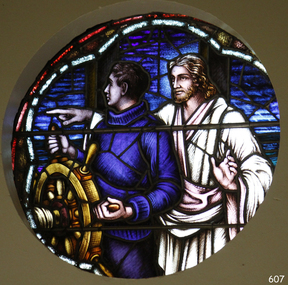
Artwork, other - Window, Brooks, Robinson & Co, Christ Showing the Helmsman the Way, circa August 1947
... ...war memorial window...victorian...This memorial window has significance as a part of Victoria's War Heritage and is listed on the Victorian Heritage Database. ...This memorial window has significance as a part of Victoria's War Heritage and is listed on the Victorian Heritage Database. ...This round, stained glass window, titled "Christ Showing the Helmsman the Way", was also referred to as the Sanctuary Window or Memorial window. It was installed in the St Nicholas Seamen's Church at 139 Nelson Place, Williamstown, Victoria, inside the chapel above the altar. This memorial window has significance as a part of Victoria's War Heritage and is listed on the Victorian Heritage Database. The window and subsequent plaque were donated to St Nicholas Seamen’s Church as a memorial to the members of the Merchant Navy whose lives were lost in the Second World War, 1939-1945. The donor was the Williamstown Lightkeepers Auxiliary, an independent ladies' association working with the Williamstown Missions to Seamen (the Missions to Seamen organisation was re-named the Mission to Seafarers in the year 2000). The window was officially dedicated on December 14, 1947, by Geelong's Anglican Bishop, Rt. Rev. J.D. McKie. In the early months of 1948, a bronze plaque was also placed in the chapel above the altar. It recognises the lost souls of the Merchant Navy during World War 2, as well as the donor of the window, the Williamstown Lightkeepers Auxiliary. The inscription impressed on the rectangular bronze plaque, 20.4 x 10.2cm, is as follows: “IN MEMORY OF THE MEMBERS OF THE MERCHANT NAVY WHO WERE LOST IN THE SECOND WORLD WAR 1939-1945 FAITHFUL UNTO DEATH. THE WINDOW ABOVE THE ALTAR WAS ERECTED BY THE WILLIAMSTOWN LIGHTKEEPERS AUXILIARY 1947.” The Williamstown St Nicholas Seamen’s Church ceased operation in 1966. In 1979, the Victoria Missions to Seamen donated this round, stained glass window and the memorial plaque to Flagstaff Hill Maritime Village, along with many other items and furnishings. These items have been used to simulate the Williamstown Mission and Chapel as much as possible. The round space that formerly displayed the window can still be seen at the back of the old St Nicholas Seamen’s Church, previously the ES&A bank, in Williamstown. THE MISSIONS TO SEAMEN (Brief History): - The Missions to Seamen was an Anglican charity in Great Britain that has served the world's seafarers since 1856. Its symbol is a Flying Angel, inspired by a Bible verse. Today, there are centres in over 200 ports worldwide where seamen of all backgrounds are offered a warm welcome and provided with a wide range of facilities. In Victoria, the organisation began in Williamstown in 1857 as a Sailors’ Church, also known as ‘Bethel’ or the ‘Floating Church’ in an old hulk floating in Hobson’s Bay, Port of Melbourne. It soon became part of the Missions to Seamen, Victoria. In 2000, the organisation, now named Mission to Seafarers, still operated locally in Melbourne, Portland, Geelong and Hastings. The Ladies’ Harbour Lights Guild was formed in 1906 to support the Missions to Seamen in Melbourne and other centres, such as Williamstown. Two of the most significant ladies of the Guild were founder Ethel Augusta Godfrey and foundation member Alice Sibthorpe Tracy (who established a branch of the Guild in Warrnambool in 1920). The Guild continued its work until the 1960s. In 1943, a former Williamstown bank was purchased for the Missions to Seamen Club. The chapel was named St Nicholas’ Seamen’s Church and was supported by the Ladies’ Harbour Lights Guild, the Williamstown Lightkeepers’ Auxiliary and the League of Soldiers’ and Sailors’ Friends. It ceased operation in 1966. A Missions to Seamen Chapel and Recreation Room was a significant feature of ports during the late 1800s and 1900s. It seemed appropriate for Flagstaff Hill to include such a representation within the new Maritime Village, and the Melbourne Board of Management of Missions to Seamen Victoria gave its permission on 21st May 1979 for the entire furnishings of the Williamstown chapel to be transferred to Flagstaff Hill. The St Nicholas Seamen’s Church was officially opened on October 11, 1981, and resembles the Williamstown chapel. This stained glass window is historically significant for its connection to the St Nicholas Mission to Seamen's Church in Williamstown, established in 1857 to cater for the physical, social, and spiritual needs of seafarers. It was donated to the Mission by the Lightkeepers Auxiliary (Ladies Harbour Lights Guild, which was formed in 1905). The Missions to Seamen organisation had its origins in Bristol, England, when a Seamen's Mission was formed in 1837. The first Australian branch was started in 1856 by the Rev. Kerr Johnston, a Church of England clergyman, and operated from a hulk moored in Hobson’s Bay. Later, the Mission occupied buildings in Williamstown and Port Melbourne. The connection of this window, the Mission to Seamen and the Ladies Harbour Lights Guild highlights the strong community awareness of the life of people at sea, their dangers and hardships, and their need for physical, financial, spiritual and moral support. This memorial window is significant as a part of Victoria's War Heritage and is listed on the Victorian Heritage Database, Heritage Number 196973.Window, stained glass, circular, with reinforcing bars. The window represents Christ showing the helmsman the way. It shows a man in blue knitted jumper holding onto a ship's wheel, looking over his right shoulder. Behind him stands a man in a white robe, pointing to his right and looking to his left, his left hand gesturing to pause. The background has various shapes and patterns of blue glass, bordered by two arcs; the outer one is white, the inner one is red. This beautiful window is in our St Nicholas Seamen's Church Collection and was brought to Warrnambool from the original St Nicholas Seamen’s Church in Williamstown. flagstaff hill, warrnambool, shipwrecked coast, flagstaff hill maritime museum, maritime museum, shipwreck coast, flagstaff hill maritime village, great ocean road, mission to seamen williamstown, st nicholas seaman’s church williamstown, missions to seamen victoria, mission to seafarers, lightkeepers auxiliary, ladies harbour light guild, 139 nelson place williamstown, religion, religious service, sailors rest, bethel sailors’ church, bethel floating church, e. s. & a. bank williamstown, christ directing a sailor, christ showing the helmsman the way, quartermaster’s hand on the wheel, stained glass window, church window, religious window, sanctuary window, memorial window, war memorial window, victorian war heritage inventory, victorian heritage database, merchant navy ww2, 1939-1945, anglican church, bishop mckie, mrs musther, brooks robinson & co, flying angel club, williamstown lightkeepers' auxiliary, ladies' harbour lights guild, commemorative window -
 Federation University Historical Collection
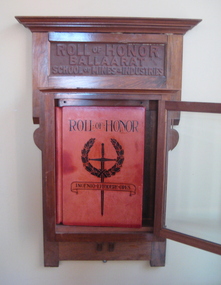
Book - Honour Board (hanging bookcase), Ballarat School of Mines Honor Book and Bookcase, c1920
... In 2011, as the result of a 'Restoring Community War Memorials Grant' calligrapher Lynton Forrester was commissioned to record over 400 names into the honor book. world war one ww1 ballarat school of mines world war 1 world war i honour roll calligraphy don johnston honor book honor roll copeland maurice copeland honour book roll of honour percy coltman arthur e. tandy leslie coulter A Victorian Blackwood World War I Honor Board holds a red leatherbound Ballarat School of Mines Honor Book. ...The Ballarat Technical Art School made many honour boards for schools and organisation in Victoria and interstate. Their own was made, but the names were not listed. The Ballarat School of Mines Annual Report for 1921 states: 'It has been decided, for the present, to record the names of our students who served in the warm, in an Honor Book, and to defer the erection of an Honor Board until we can feel assured that the Roll is complete. the wide spread occupations of our students has rendered it very difficult for us to secure detailed information of their service. A handsome Honor Book and Case has been designed and executed by the staff and students of the Technical Art School, and the engrossing of the names and military records will be proceeded with as soon as possible. The Technical Art School was quite busy with commissions. The SMB Annual Report of 1918 states: 'under the direction of the Art principal (Mr H.H. Smith), the work of the Art School continues to receive wide public recognition. Handsome Honor Boars have been designed and executed for the Sydney Sports' Club, the St Arnaud High School, the Birregurra State School, the Wendouree State School and the Ballarat Old Colonists' Club. The School also designed the certificates for the Young Workers' Patriotic Guild, the 'Herald" Shield for perpetual competition at the technical Schools' athletic meetings, the "Hansen" Shield for competition among the Northern District High Schools, two metal tablets for the Castlemaine high School, and a certificate for the Grampians Secondary Schools' Association. Numerous Honor Books and Mural cases have also been designed for State Schools.' Over 400 former students and staff of the Ballarat School of Mines served during World War One. The 1920 SMb Students' Magazine said' 'Many students left Australia with the first Contingent, and since then, the School has been represented on every field where Australians have fought, from the first landing at Gallipoli to the decisive victory on the 8 August 1918.' The influence of the school was appropriately shown in the fact that at least 13 of its students were officers in the Australian Mining Corps. The title page has the initials 'D.J.' which most probably stands for Donald I. Johnston, a teacher with the Ballarat Technical Art school from 1920 to 1949. The Ballarat School of Mines World War 1 Honor Book remained uncompleted for more than 90 years. The names of over 400 SMB staff and students who served their country were not inscribed until 2012, despite names, ranks and service records being compiled. A restoration project was instigated as part of the 140th anniversary of the Ballarat School of Mines in 2010. Names were inscribed into the book by Calligrapher Lyn Forrester. The University of Ballarat believed this project is important not only to SMB's history, but the families and descendants of those who served while studying or teaching at SMB. The restoration project involved names being hand written in calligraphy into the Honor Book and was funded with the assistance of the 'Restoring Community War Memorial Grant'. The memorial was designed and made by the staff and students of the Ballarat School of Mines Technical Art School under the direction of Principal Herbert H. Smith. In 1921 the Ballarat School of Mines Annual Report recorded: "It has been decided, for the present, to record the names of our students who served in the war, in an Honor Book, and to defer the erection of an Honor Board until we can feel assured that the roll is complete. The wide spread occupations of our students has rended it very difficult for us to secure detailed information of their service. A handsome Honor Book and case has been designed and executed by the staff and students of the Technical Art School, and the engrossing of the names and miliatary records will proceed with as soon as possible. The Ballarat Technical Art School and was involved with the design and manufacture of numerous WW1 memorials. When it came time to complete their own memorial, the Principal died, and the Honor Roll must have been overlooked in the confusion that ensued. There have been numerous theories about why the Honor Roll was never completed, one being that it was because the SMB Principal, Maurice Copland, literally worked himself to death organising repatriation classes for ex-soldiers who attended SMB. The Courier of 18 November 1922 said of Maurice Copland: “He put his very best into the work for the welfare of the soldiers; in fact, he did too much for the good of his physique, for he wore himself out in the services of the returned men. If ever there was a war victim the late Mr Copland was one. But for the stress of work entailed by those repatriation classes and the amount of general war work which he performed Mr Copland would probably have been with them today." Understandably, SMB was thrown into some disarray by their Principal's death and the Honor Book was not completed. The University of Ballarat would like to finally honor its SMB war veterans by completing the Honor Book and as a further mark of respect, dedicate the project to Maurice Copland. The Ballarat Technical Art School undertook many honor boards. The Ballarat School of Mines Annual Report 1918 states: "Under the direction of the Art Principal (Mr H.H. Smith), the work of the Art School continues to receive a wide public recognition. handsome Honor Boards have been designed and executed for the Sydney Sports' Club, the St Arnaud High School, the Birregurra State School, the wendouree State School and the Ballarat Old Colonists' Club. The School also designed certificates for the Young Workers' patriotic Guild, the "Herald" Shield for perpetual Competition at the Technical schools athletics meetings, the "Hansen" Shield for competition in the northern District High Schools, two metal tablets for the Castlemaine High School, and a certificate for the Grampians Secondary Schools' Association. Numerous Honor Gooks and mural cases have also been designed for State Schools." The 1920 Ballarat School of Mines Annual Report stated: Public appreciation of the High standard of design and artistic craft work produced by the students of the Art School, under the direction of the Principal (Mr Herbert H. Smith), continues to be demonstrated by the lage number of important commissions entrusted to the school, not only by the public bodies and business firms by the Education Department and public bodies all over the State." "Amongst the important local commissions received during the year was the designing and supplying of the Municipal Council's Address of Welcome Casket for presentation to His Royal Highness the Prince of Wales, the designing and supervising of a large four-light stained glass window for the Lydiard Street Methodist Church, ... and supply numerous honor books, honor boards, etc., for public institutions and school." "The School has been honored by, and has acceded to the request of the Education Department to supply designs for the title page, chapter headings and initial letters for the War Service Book which it is about to publish, Mr F. Tate, director of Education, recognising the students' work in this direction by an appreciative letter of thanks. The Education Department has also been instrumental in directing to the School applications from all parts of the State, including Melbourne, for the School to supply competitive sports shields, honor boards, books and designs for certificates, and various decorative objects. The School has therefor been responsible for much work coming to local Ballarat firms which would otherwise have found its way to Melbourne or other centres. In 2011, as the result of a 'Restoring Community War Memorials Grant' calligrapher Lynton Forrester was commissioned to record over 400 names into the honor book. A Victorian Blackwood World War I Honor Board holds a red leatherbound Ballarat School of Mines Honor Book. The book includes a title page relating to the Ballarat School of Mines and Industries. The Ballarat School of Mines Honor Book and case was not finally inscribed with names until 2012. world war one, ww1, ballarat school of mines, world war 1, world war i, honour roll, calligraphy, don johnston, honor book, honor roll, copeland, maurice copeland, honour book, roll of honour, percy coltman, arthur e. tandy, leslie coulter -
 Federation University Historical Collection
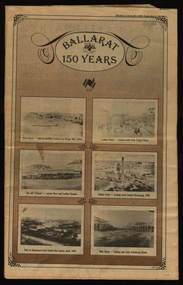
Newspaper, Ballarat 150 Years: Supplement to the Ballarat Courier, 1988, 17/03/1988
... Articles include: 1838-the pastoral period begins; First White Settlers arrive (Anderson, Winter, Yuille, Kirkland, Learmonth); Learmonths - Pioneer Settlers; The Rush to Ballarat; Last of the Aborigines; Eureka Affair Gains New Importance; Mining-After the rush; SMB - First Technical School; Clubs Play their Part; Ballarat Yuilles had Wealthy Ancestors; Town, Country Share a Close Relationship; Many Sides to Metals Industry; True Victorian City; Five Severe Recessions; Financiers to the Fore; Ready for War; City Rich in Sport Facilities; Visitors to most exciting place; No Place for a Nervous Lady; Theatres Provide Welcome Diversion for Mines; Might Achievers Among famous Citizens; Life Seemed Different After the War; Ballarat School of Mines Eastern Station Hotel; Memorial (Her Majesty's) Last of Many Theatres; Art Gallery at its Best; Pilgrimage to Yuille Cairn at Sebastopol Images include: Jelbart tractor; Sunshine Harvester; Bailey's Mansion; Pennyweight Hotel; Bridge Mall; Blue Riband Mine, Black Hill, Burrumbeet Shooting party; A wendouree rowing club; Motor Cycle Racing; Women bowlers, Queen Elizabeth; Gong Gong Methodist Church; Arbour day at Waterloo Farm, Smythes Rd; Gold panners (1890s); Ballarat Cricket Team (1902); William Peart; D'Angri's store; Sturt St Advertisements include: Rehfisch and Co.; UFS Dispensaries; Deutscher Mower Sales and Service; Haymes Paint; Cincotta's; Abraham's Sportscene; McK's; McKay Macleod; St John of God Hospital; Benjamins Real Estate; Ballarat Water Board; Cornell's Pharmacy; Laminex Industries; Coltman Mitre 10; Lal Lal Iron Mine; Heinz Bros; Crockers; Frank ford travel; S.J. ...Articles include: 1838-the pastoral period begins; First White Settlers arrive (Anderson, Winter, Yuille, Kirkland, Learmonth); Learmonths - Pioneer Settlers; The Rush to Ballarat; Last of the Aborigines; Eureka Affair Gains New Importance; Mining-After the rush; SMB - First Technical School; Clubs Play their Part; Ballarat Yuilles had Wealthy Ancestors; Town, Country Share a Close Relationship; Many Sides to Metals Industry; True Victorian City; Five Severe Recessions; Financiers to the Fore; Ready for War; City Rich in Sport Facilities; Visitors to most exciting place; No Place for a Nervous Lady; Theatres Provide Welcome Diversion for Mines; Might Achievers Among famous Citizens; Life Seemed Different After the War; Ballarat School of Mines Eastern Station Hotel; Memorial (Her Majesty's) Last of Many Theatres; Art Gallery at its Best; Pilgrimage to Yuille Cairn at Sebastopol Images include: Jelbart tractor; Sunshine Harvester; Bailey's Mansion; Pennyweight Hotel; Bridge Mall; Blue Riband Mine, Black Hill, Burrumbeet Shooting party; A wendouree rowing club; Motor Cycle Racing; Women bowlers, Queen Elizabeth; Gong Gong Methodist Church; Arbour day at Waterloo Farm, Smythes Rd; Gold panners (1890s); Ballarat Cricket Team (1902); William Peart; D'Angri's store; Sturt St Advertisements include: Rehfisch and Co.; UFS Dispensaries; Deutscher Mower Sales and Service; Haymes Paint; Cincotta's; Abraham's Sportscene; McK's; McKay Macleod; St John of God Hospital; Benjamins Real Estate; Ballarat Water Board; Cornell's Pharmacy; Laminex Industries; Coltman Mitre 10; Lal Lal Iron Mine; Heinz Bros; Crockers; Frank ford travel; S.J. ...A supplement to celebrate 150 since the establishment of the Port Phillip Colony (Victoria).40 page newspaper published to celebrate the Sesquicentenary of Ballarat. Articles include: 1838-the pastoral period begins; First White Settlers arrive (Anderson, Winter, Yuille, Kirkland, Learmonth); Learmonths - Pioneer Settlers; The Rush to Ballarat; Last of the Aborigines; Eureka Affair Gains New Importance; Mining-After the rush; SMB - First Technical School; Clubs Play their Part; Ballarat Yuilles had Wealthy Ancestors; Town, Country Share a Close Relationship; Many Sides to Metals Industry; True Victorian City; Five Severe Recessions; Financiers to the Fore; Ready for War; City Rich in Sport Facilities; Visitors to most exciting place; No Place for a Nervous Lady; Theatres Provide Welcome Diversion for Mines; Might Achievers Among famous Citizens; Life Seemed Different After the War; Ballarat School of Mines Eastern Station Hotel; Memorial (Her Majesty's) Last of Many Theatres; Art Gallery at its Best; Pilgrimage to Yuille Cairn at Sebastopol Images include: Jelbart tractor; Sunshine Harvester; Bailey's Mansion; Pennyweight Hotel; Bridge Mall; Blue Riband Mine, Black Hill, Burrumbeet Shooting party; A wendouree rowing club; Motor Cycle Racing; Women bowlers, Queen Elizabeth; Gong Gong Methodist Church; Arbour day at Waterloo Farm, Smythes Rd; Gold panners (1890s); Ballarat Cricket Team (1902); William Peart; D'Angri's store; Sturt St Advertisements include: Rehfisch and Co.; UFS Dispensaries; Deutscher Mower Sales and Service; Haymes Paint; Cincotta's; Abraham's Sportscene; McK's; McKay Macleod; St John of God Hospital; Benjamins Real Estate; Ballarat Water Board; Cornell's Pharmacy; Laminex Industries; Coltman Mitre 10; Lal Lal Iron Mine; Heinz Bros; Crockers; Frank ford travel; S.J. Weir; Ludbrook Plumbing Service; Mars; Robert Sim Building Supplies, Frank Day; Sectrol Systems; Thornton Richardsballarat, anniversary, sydney abraham, cincotta, eureka, ballarat school of mines, mining, ballarat club, lal lal iron mine, ballarat rangers, victorian rifles, 3rd battalion victorian rifles, ballarat militia, white flat, celia scott, adelphi theatre, victoria theatre, montezuma theatre, charlie napier, juliamatthews, royal theatre, dick richards, henry sutton, eleanor lucus, martin hosking, newington estate, saleyards, g. gay & co, ballarat books, old benev' alleviated distress on goldfields -
 Federation University Historical Collection
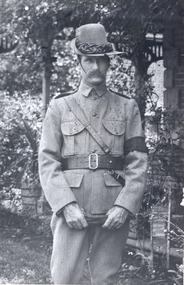
Photograph, Boer War Veteran Alfred G. Johnston
... Victorian Mounted Rifles. The uniform (the forerunner of the uniform of the Australian Light Horse) includes a slouch hat. Also see: Photograph of Alfred G. Johnston as S.M.B. student, 1899. Catalogue number 00414. A photograph of the memorial that Ballarat School of Mines put up in his honour is Catalogue number 00531. Boer War ...Alfred G Johnston was a former Ballarat School of Mines student who was killed in action at Rhenosterkop, Middleburg district, Transvaal, South Africa, on 7 May 1901, aged 29 years. A letter of condolence was sent to his parents (see S.M.B. Council Meeting 31-5-1901).An image from the original black and white photograph showing the torso of a man in military uniform - Alfred G Johnston who served in the 5th Regiment of the Victorian Mounted Rifles. The uniform (the forerunner of the uniform of the Australian Light Horse) includes a slouch hat. Also see: Photograph of Alfred G. Johnston as S.M.B. student, 1899. Catalogue number 00414. A photograph of the memorial that Ballarat School of Mines put up in his honour is Catalogue number 00531.Verso: AUTHENTICATION REQUESTED Photographic portrait of LIEUTENANT ALFRED GRESHAM JOHNSTON (with handwritten note - or Gersham) 5th Regiment V.M.R. (late student of S.M.B.) Killed in action at Rhenoster Kop. South Africa, May 7, 1901 S.M.B. Council Meeting (31-5-1901) - - - letter of condolence to parents. Please return to W.T. Ryan, c/- School of Mines, Ballarat. 3350boer, boer war, south african war, south africa, volunteer regiments, alfred johnston, a g johnston, johnston, ballarat school of mines, victorian mounted rifles -
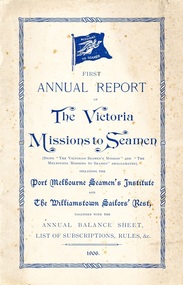 Mission to Seafarers Victoria
Administrative record (sub-series) - Annual Reports, Victorian Seamen's Mission, Annual Reports - Victorian Seamen's Mission, 1857 -1905
... victorian-seamens-mission...melbourne-missions-to-seamen...port-melbourne-seamens-institute...williamstown-sailors-rest...1906...financial reports...members...rules for members...war memorial...They are a vital resource and guide to names and dates associated with the Mission, its patrons and subscribers and changing patterns of seafaring and shipping. annual-report victoria-missions-to-seamen victorian-seamens-mission melbourne-missions-to-seamen port-melbourne-seamens-institute williamstown-sailors-rest 1906 financial reports members rules for members war memorial fund administrative document-annual report See each individual report. ...Victorian Seamen's MissionChronologicalannual-report, victoria-missions-to-seamen, victorian-seamens-mission, melbourne-missions-to-seamen, port-melbourne-seamens-institute, williamstown-sailors-rest, 1906, financial reports, members, rules for members, war memorial fund, administrative document-annual reportannual-report, victoria-missions-to-seamen, victorian-seamens-mission, melbourne-missions-to-seamen, port-melbourne-seamens-institute, williamstown-sailors-rest, 1906, financial reports, members, rules for members, war memorial fund, administrative document-annual report -
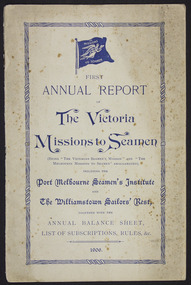 Mission to Seafarers Victoria
Administrative record (sub-series) - Annual Reports, Victorian Missions to Seamen, Annual Reports - The Victoria Missions to Seamen, 1906-1999
... victorian-seamens-mission...melbourne-missions-to-seamen...port-melbourne-seamens-institute...williamstown-sailors-rest...1906...financial reports...members...rules for members...war memorial...They are a vital resource and guide to names and dates associated with the Mission, its patrons and subscribers and changing patterns of seafaring and shipping. annual-report victoria-missions-to-seamen victorian-seamens-mission melbourne-missions-to-seamen port-melbourne-seamens-institute williamstown-sailors-rest 1906 financial reports members rules for members war memorial fund administrative document-annual report staff events See each individual report. ...The Victoria Missions to SeamenChronologicalannual-report, victoria-missions-to-seamen, victorian-seamens-mission, melbourne-missions-to-seamen, port-melbourne-seamens-institute, williamstown-sailors-rest, 1906, financial reports, members, rules for members, war memorial fund, administrative document-annual report, staff, eventsannual-report, victoria-missions-to-seamen, victorian-seamens-mission, melbourne-missions-to-seamen, port-melbourne-seamens-institute, williamstown-sailors-rest, 1906, financial reports, members, rules for members, war memorial fund, administrative document-annual report, staff, events -
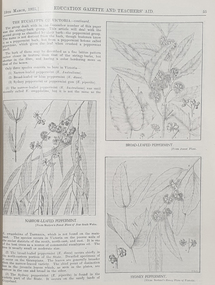 Federation University Historical Collection
Book, Victoria Education Gazette and Teachers' Aid, 1921-1930, 1921-1930
... The gazettes include Education Department appointments, transfers, resignations and retirements, vacancies, notices, queries, notices of books, examination papers, original articles, lesson plans, suggestions for lessons, drawing, obituaries, notes on nature study, mathematics, music, sloyd woodwork, English grammar, Victorian State School Swimming Clubs, Geography, penmanship, science, History, Latin, Geography, The School Garden, horticulture, singing, World War One; ANZAC Day, lifesaving, Astronomy, Empire Day, ANZAC Buffet London, Victorian Education Department's War Relief Fund .1) 1928. Articles include: New Caledonia, Swimming and Lifesaving, School forestry, a visit to the pyramids, Exploration of Gippsland, paul de Strezelecki, Angus McMillan, Villers Bretonneux Memorial...The gazettes include Education Department appointments, transfers, resignations and retirements, vacancies, notices, queries, notices of books, examination papers, original articles, lesson plans, suggestions for lessons, drawing, obituaries, notes on nature study, mathematics, music, sloyd woodwork, English grammar, Victorian State School Swimming Clubs, Geography, penmanship, science, History, Latin, Geography, The School Garden, horticulture, singing, World War One; ANZAC Day, lifesaving, Astronomy, Empire Day, ANZAC Buffet London, Victorian Education Department's War Relief Fund .1) 1928. Articles include: New Caledonia, Swimming and Lifesaving, School forestry, a visit to the pyramids, Exploration of Gippsland, paul de Strezelecki, Angus McMillan, Villers Bretonneux Memorial ...The Victoria Education Gazette and Teachers' Aid was published for Victoria's teachers and was sent to all school on the state. In 1920 The Ballarat School of Mines had donated 136 pounds 14 shillings and 10 pence to the Victorian Education Department's War Relief Account, and the Ballarat Junior Technical School had donated 10 pounds 6 shillings and 10 pence.Ten black hard covered volumes with red tape spine, covering 1921 to 1930. The gazettes include Education Department appointments, transfers, resignations and retirements, vacancies, notices, queries, notices of books, examination papers, original articles, lesson plans, suggestions for lessons, drawing, obituaries, notes on nature study, mathematics, music, sloyd woodwork, English grammar, Victorian State School Swimming Clubs, Geography, penmanship, science, History, Latin, Geography, The School Garden, horticulture, singing, World War One; ANZAC Day, lifesaving, Astronomy, Empire Day, ANZAC Buffet London, Victorian Education Department's War Relief Fund .1) 1928. Articles include: New Caledonia, Swimming and Lifesaving, School forestry, a visit to the pyramids, Exploration of Gippsland, paul de Strezelecki, Angus McMillan, Villers Bretonneux Memorial School, American Black Walnut, Red Gum, Messmate Stringybark, The Great Barrier Reef, retirement of Frank Tate, Stawell High School, Report on Some Aspects of Education in the United States, Jubilee Education Exhibition , New School Readers; measured Drawing Images include: Macarthur Street School's Plantation, Maryborough School Plantation, Pinus Insignis (Radiata) ready for Milling, Creswick State Forest, Metalwork, Daylesford Pine Plantation four years old, Henry Harvey (art Inspector); Omeo School Endowment Plantation; Frank Tate; Stawell High School Drawings From Casts; Lake Tyers School Endowment Plantation, measured drawing, Thomas H. Stuart, GEorge Swinburne. J.R. Tantham-Fryer, Cookery Class, John Edward Thomas. .3) War Savings Stampsm Swimming and Life-saving, Teh Rural School System of Victoria, Imaginative Composition, ANZAC Day, Retardation, Teh Bright Child Hudson Hard Obituary, Leeches, Relief for Distress in Europe, Dental, Teachers' Library, History of Portarlington, J.E. Stevens Obituary, Victorian Teachers in England Images: Swimming and Life-Saving Medallion .3) Swimming and Lifesaving, Bronze medallion, Victoria Leage of Victori, War Savings Stamps, Rural School Sytem of Victoria, .4) War Relief, Talbot Colony for Epileptics Masonmeadows, Discipline New and Old (Percy Samson), Soldier teachers, Preservation of Australian Birds, Arbor Day, Jubilee of Free Education, Teaching Geography, Poery in Schools, School Committees, Shelter Pavilion, Mysia Memorial School, Clovers, Jubilee Exhibition, Domestic Arts, Louis Pasteur, .5) Victoria League of Victoria, An Endowment Scheme (Pine Plantations), School Endowment Plantations, Protecting our trees by Owen Jones,. Victorian State Schools Horticultural Society, Sloyd Woodwork, School Forestry, Thomas Brodribb Obituary and portrait, Imperial Education Conference London, school Management and Method, School plantations, Eucalypt plantations in the Bendix and Heathcote District, Junior Red Cross, Jubilee Education Exhibition, Gould League Competitions, handwriting, The School Magazine, Frank Tate in London, Victorian beetles, Council of Public Education, Villers Bretonneux and its new School, Death of Samuel Summons, Woodwork Summer School, Swimming, Japanese Relief Fund, Retirement of John Cross, reminiscences of the Late Mr Albert Mattingley .6) Thomas H. Trengrove and the Villers Bretonneux School hall and pilaster carvings, forestry, visit of Maryborough teachers to Ballarat Water Reserves, noxious weeds, relief for Distressed Europe, The Dalton Plan, Empire Day, Retirement of Mr Fussell, Centenary of Hume and Hovell Expedition, League of Kindness, Effective Nature Study in a Rural School, Some Facts About Paper and their Bearing Upon School Plantations, Council of the Working Men's College Melbourne, Maria Montessori, University Vacation School, Horticulture in State Schools, An Informal Chat About French Schools (C.R. McRae), The Vacation School, Johann Heinrich Pestalozzi, Inspector's Report on a 5th-class School, Can Children Write Verse, John Adams, Victoria League of Victoria, R.F. Toutcher, Sir James Barbie's Address to High-School Girls, Impressions of a High School Teacher Abroad (R.D. Collman), The Spirit of the School Plantation Scheme, Monument of the Late Mr and Mrs A.T. Sharp at Box Hill Cemetery, The Teaching of Geography, The Treatment of Poetry in Class, Two Difficult Arithmetic Lessons, Location of Principal Australian Timbers, Dr John Smyth, Stammering and its Influence on Education, Wireless Broadcasting as an Educational Medium, Boys School at Villers Brettonneux, The New School at Villers Brettonneux, Bird Day, Messmate or Stringybark, What Every Woman Knows, Director's Report on Denmark .7)1925 . Includes: School Forestry, horticulture, J.H. Betheras retirement, Ivanhoe School, Coburg School, Moorabool Junior Technical School, Villers Bretonneux School hall and pilaster carvings, Francis Ormond, William Charles Kernot, Corsican Pnes at Creswick, Ballarat High School Plantation, Workin Men's College, RMIT, Naorrow LEafed Peppermint, Education and World Peace, Eucalypts of Victoria, John C. Eccles, Blue Gum. Manners, Giving the Poorly Nourished Boy A Chance, Native Ferns, Marybourough Technical School, Memorial School at Villers-Brettonneux .8) Experimental Plots in Country Schools (W.W. Gay), Villers Bretonneaux and its Memorial School. nominated classes for Art Teachers, The Teachers Act 1925, Horsham High School, Richmond Technical School, Farewell to Messrs C.R. Long and Ponsonby Carew-Smyth, Frank Tate, Phyiscal Training, Arbor Day, ANZAC Day, Shakespeare Day,Bendigo Junior Techncial School, Musical Appreciation, Motor Dental Unit, School Camps, Education Act of 1872: Mr Angus McKay's Part (George Mackay), A Bush Fire Experience (Irene Stable), Black Sunday, Californian Red Pine, Women's Education in America, Farewell to Lord and Lady Stradbroke, Grevilia Robusta, Silky Oak, Redwood, John E. Grant, The Need for Research (Donald Clark), Junior Drama, Ida D. Marshall, John Pounds, Australian Books, Fish Creek School, State Boundaries, History in the Curriculum, Ceramic Art in Australia (Percy E. Everett), Choice of School Songs, Tasmanian Beech, Should History be Taught on a National or an International Basis, Hydatid Disease, James Holland Obituary, Florrie Hodges, Queensland Maple, Post Bushfire Ruins at Fumina, Arbor Day at Fumina, Queensland Rosewood, Omeo Endowment Plantation, Bird Day, Junior Red Cross, Pioneers' Day, Edward Henty, Junior Technical Schools, Yellow Pine, History and Progress of Needlework, A.B.C. of Astronomy, Northumberland Mental tests, Queensland Red Cedar, Teh Globe Theatre, .9) 1927 includes The ABC of Astronomy, Atr Theatre, English Beech, Angus McMillan Art Pottery, School Singing, State Schools' Nursery, School endowment plantations, Making a Man, experimental proof of Charles's Law, John Smyth obituary and portrait, Linton Pine Planation, motivation of arithmetic, Women's Classes at Dookie, Swimming and Lifesaving, Pioneers Day, Drawing, Ballarat High School planation, biting fly, Tir-Na-N'og, John Byatt retirement and portrait, Technical Schools Conference at Daylesford, Ethel Osborne and portrait, library. Francis Thompson portrait, Adam Lindsay Gordon, Solar movement, motor transport, Liverpool Cathedral, Teh Story of the Cathedral, Bendigo School of Mines, Omeo School pine plantation, Egypt and the Nile, Self-Criticism Images include Ballarat High School Pine Plantation, Vale Park, Francis Ormond, Woking Men's College (RMIT), W.N. Kernot, A Stand of Corsican Pines at Creswick, Victoria .10) Some Remarks on the Relationship of the technical Schools to the University (Donald Clark) , Present Day Education in England , Memorial to Joseph Cornwall, Spelling, motivation, Singing, State Scholarships, Agriculture, T.W. Bothroyd, The Swimmer - A Summer School Sketch (H.H. Croll), Swimming woodwork, Farewell to Dr Sutton. ,Drowning, War Savings Movement, White Beech. George S. Browne , Example of School Honor Book, Blackwood, Optimistic teacher, Soldier settlement around Shapparton, Oral Hygiene, Cinema Machines, Basketball, Wakter M. Camble obituary, ANZAC day Pilgrimage in England, Froebel's System, Montessori Method, War Relief Fund, New Zealand Kauri Tree, Bat Tenis at a Bush School., Advice to Australian Girls, Chrysanthemums, Royal Visit, National Parks of Victoria, Maurice Copland Obituary, total eclipse of the Moon, School libraries, The teacher and the COmmunity (A.M. Barry), The Reading Lesson, Swimming and Life-saving, MElbourne Teachers' College War Memorial Windows Old Trainees War Memorial, Cultivating a Natinoal Art education gazette, school, education, teaching, teacher, world war one, school plantations, macarthur street pine plantation, school forestry, creswick state forest, anzac day, armistance celebrations, frank tate, frank tate retirement, drawing from cast, education department school readers, lake tyers pine plantation, w.n. kernot, rmit, working men's college, francis ormond, pine plantations, calenbeem park, creswick, villers-brettonneux school hall and carvings, thomas trengrove, corsican pines, creswick, pine endowment plantations, mccarthur st primary school pine plantation, ballarat high school pine plantation, vale park, mount pleasant primary school pine plantation, golden point pine plantation, angus macmillan, paul de strzelecki, gippsland, villers-bretonneaux memorial school, francis thompson, english ash, pestalozzi centenary, shakespeare day, swimming classes, clear pine, cinema in education, american black walnut, red gum, thomas wolliam bothroyd obituary, and portrait, physical training displays, teaching of spelling, ohm's law, blue gum -
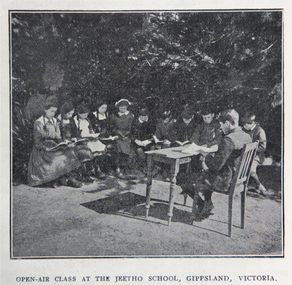 Federation University Historical Collection
Book, Victoria Education Gazette and Teachers' Aid, 1911-1919, 1910-1919
... Morieson), School Honor Books, Drawing, Presentation of 30,000 pounds to the British Red Cross at Melbourne Town Hall .8) 1918 .9) 1919 - Photographs of World War One soldiers from the Education Department, Margaret Montgomery Memorial, 1918 Act relating to State School Teachers, State Scolarships, Victorian State Schools' Horticultural Society, Pneumonic Influenza, Spanish Flu, epedemic, swimming and life savinfJunior cadet training, vacancies in Fiji, School Committees, Arbor Day, Arbour Day, Henry Harding of Yinnar, Planting Trees and Shrubs, Juvenile Crime, The use of 'Get', Soldier-Teachers from Overseas in Congress London, Australia's Effort in the War, Military, Working Bees, Tree Planting, fence building, Welcoming Home a Returned Soldier, Avenue of Honour planting, Discipline, Unveiling an Honor Board, School gymnasium, school tennis court, E. ...victorian education gazette education gazette and teachers' aid sloyd william a. cavanagh james i froebel school education world war one memorials alfred williams exploration and settlement cadets australian naval college bernard o;dowd birds swimming drawingempire league eucalypts paper in history forestry arbor day identification of trees forestrey museums fiji gravel hill school band horticulture hygiene gould league of bird lovers life saving la perouse bandin j. holland w. hamilton charles sturt principles of archimedes james holland william hamilton scarsdale old boys' reunion foundling home melbourne montessori education open air schools james hughes marie corelli flinders sydney harbour major mitchell's map tooth brushing R.H.S. ...Black hard covered book with red spine, holding Victorian Education Gazettes for one calendar year. .1) 1910 .2) 1912 .3) 1911 .4) 1914 .5) 1918 Images: Open Air Classroom Black Rock; Open Air Classroom, Jeetho, Gippsland; Open Air Nurses bedroom, Mildura; Gym at Canterbury School ; Babies and Nurses at Melbourne Foundling Hospital; Camp at Portland; Alexander Peacock Opens a Melbourne School; Unveiling Major Mitchell Memorial at Mt Arapiles; Agricultural Plot; School Interior; Swimming Drill; Graham Dux Prize Board; Bathing Place; Classroom with blackboard and pictures; Major Mitchell's Map; Melbourne, Derbyshire; Market Place Melbourne; The Blackwood; World War One Send-off at The Athenaeum; Scarsdale Old Boy's logo; Sloyd articles for the Field Hospital; World War One; Gifts for Transport to the Wharf; soldiers; ANZAC Day; ANZAC Day Medalion .5) 1915: Education Department's War Relief Fund, William Park obituary, Closer Settlement Act 1912, Agriculture, needlework, Swimming and Life Saving, explorers, Gregory Blaxland, Matthew Flinders, Composition, Geography, potatoes, onions, gardens, Needlework for Infants, Iona and Staffa, Trained Primary Teacher's Course, Electricity, Electrical Technology, hygiene, Arbour Day, Horticulture, Wattle Day, Bird Day, Technical Schools, Landing at Gaba Tepe, Evils of Alcohol, Old Boys of Scarsdale, Belgium, Teachers' College Images: The British at War, The Sonnet, History and Patriotism, Male Swimming Teachers Summer School at Geelong, Women Swimming Teachers at Port Fairy, Buln Buln State School, Burwood East State School, needlework plans, methods of Rescue and Resucitation. plan of the journey of Gregory Blaxland, Macquarie House, teachers killed (William Ross Hoggart, Stanley Robert Close, William Roy Hodgson, Campbell McDiarmid Peter, William Henry Dawkins, William Hugh Hamilton, Frederick McRae Neal, Vernon Brookes, Frank J. Olle, Alfred J. Collins, Ernest R. Fairlie, William J. McLaren, A.E. Smith, Thomas Patton, Francis W. Kemp, Frederick G. Hall, Rupert O. Hepburn, Woolston J. Govan), Frederick Harold Tubb VC, Botanic Gardens Red Gum, Shelter Pavillions, Head of Wheat, Australian Commonwealth Flag, Iona Cathedral, Drawing exercises, ANZAC Madallion, School Rolls of Honor .6) 1916 - Nature Study, war relief, school gardening, horticulture, singing class, geography of the war, School Rolls of Honour, Ponsonby Carew-Smyth, Astronomy, ANZAC Day, Empire Day, Arbor Day, "Some Suul of Goodness in Things Evil" by Frank Tate, War Relief Gardeners' League, ANZAC Day medallion, Solar System, Abolition of German Schools in Victoria, ANZAC Avenues, avenues of honour, Geography of the War: The West, War relief and handwork, Victorian State Schools Horticultural Society, Patrick Maloney obituary, formalin lamps, Victoria League of Victoria, Wonwondah East Roll of Honor Images - Teachers killed (John Clarke, A.C.H. Jackson, Alexander Robertson, Noel Gambetta, Ralp E. Leyland, Laurance J. Woodruff, Walter E. Cass, Percy D. Moncur, Thomas M. Carmichael, Edward G. Brain, Reginald N.F. Woods, George E. James, William Colvin, David Dobson, Stanley L. Robinson, Charles Allen, G.E. James, H.F. Curnow, Franl L. Cousins, James R. Thompson, Henry H. Campbell, George E. Read, Ernest D. Morshead, Wilfred S. Merlin, Henry R. Wright, George B. Webb, Noel Nicholas, David H. Thomas, Charles A. Levens, Thomas R. Fenner, John M. Daniell, P.J. Larkin, Ralph Smith, Philip Ormsby), school rolls of honour, Swimming Instructors at Queenscliff, The Southern Sky, Map of the North Sea and its Littorals, Easter School of Horticulture at Oakleigh, Map of the Eastern Front, Map of Mesopotamia, Map of the War Area in the Egyptian Campaign, leeches for the Melbourne Hospital .7) 1917 - Swimming and Life-Saving, Childre's FLower Day, Education Department's War Relief Fund, State War Council, Horticulture, Bird Day, Swimming, Growing Chicory at Cowes Images - Teachers killed during World War One (G.M. Nicholas, William C.W. Spencer, J.W.C. Profitt, Ivon C. Bromilow, John Colwell, Robert W. Campbell, Arthur P. Bourchier, Francid G. Houston, Claude N. Harrison, Edgar Williams, Leslie A. Stevens, Charles E. W. Chester, Stanley R. Green, Walter Baker, Arthur G. Scott, Harry L. Swinburne, Horace W. Brown, Arnold Bretherton, Edward W. Jenkins Aubrey Liddelow, Ewen A. Cameron, Edmund R. Lyall, John H. Martin, Harry Bell, Frank L. Nicholls, Melville R. Hughes, Edwin W. Hauser, Walter S. Filmer, Walter G. Barlow, Henry A. Donaldson, Edward H. Jones, Walter W. Raw, Alfred W. Dean, Wiliam Lea, Frederick G. Drury, J.T. Richards, Norman G. Pelton, Lance-Corporal Doran, Kenneth F. McKenzie, William F. Robertson, Wiliam Jarrott, Norman Graham, George G. Paul, Victor Green, Arthur William Rennie, Alfred J. Glendinning, Robert B. Liston, Eward P. Toll, George Jones, Errol E. Rodda, Christian P. Christensen, Charles F. Sydes, H.G. Clements, Norman C. Fricker, J.M. Romeo. Eric N. Lear, Thomas J. Bartley, Norval Birrell, Frederick H. Tubb. J.T. Hamilton Aram, Arthur Wilcock, William M. Conroy, Alex. H. Miller, Patrick J. Cunningham, Charles S. Mitchell, John R. Maddern, James Roadknight, Harry Arundel, Jack C. McKellar, duncan M. McKellar, George S. Manfield, Edgar C. Holmes, George A. Young, Raymond A. Gardiner, William B. Bell, William Opie, George R. Scott, Richard V.B. Vine, Herbery S. Marshall, Hugh St Omer Dentry, George B. Fullerton, Harry Oulton, Iva F. Morieson), School Honor Books, Drawing, Presentation of 30,000 pounds to the British Red Cross at Melbourne Town Hall .8) 1918 .9) 1919 - Photographs of World War One soldiers from the Education Department, Margaret Montgomery Memorial, 1918 Act relating to State School Teachers, State Scolarships, Victorian State Schools' Horticultural Society, Pneumonic Influenza, Spanish Flu, epedemic, swimming and life savinfJunior cadet training, vacancies in Fiji, School Committees, Arbor Day, Arbour Day, Henry Harding of Yinnar, Planting Trees and Shrubs, Juvenile Crime, The use of 'Get', Soldier-Teachers from Overseas in Congress London, Australia's Effort in the War, Military, Working Bees, Tree Planting, fence building, Welcoming Home a Returned Soldier, Avenue of Honour planting, Discipline, Unveiling an Honor Board, School gymnasium, school tennis court, E. E. Crogger grave at Aldershot, The School Honor Book. War Relief Fund, Commonwealth War Record, Caulfield Military Hosptial, ANZAC Day Pilgrimage, Jimmie Panikin, Donald Fraser, Arthur Mee, Card Sun Dial, Balboa Day in Honolulu, William Hamilton, Alfred Jackson, The Backward Child, Flies, Language Teaching and Learning, Spelling, The Education of the Adolescent, victorian education gazette, education gazette and teachers' aid, sloyd, william a. cavanagh, james i froebel, school, education, world war one, memorials, alfred williams, exploration and settlement, cadets, australian naval college, bernard o;dowd, birds, swimming, drawingempire league, eucalypts, paper in history, forestry, arbor day, identification of trees, forestrey museums, fiji, gravel hill school band, horticulture, hygiene, gould league of bird lovers, life saving, la perouse, bandin, j. holland, w. hamilton, charles sturt, principles of archimedes, james holland, william hamilton, scarsdale old boys' reunion, foundling home melbourne, montessori education, open air schools, james hughes, marie corelli, flinders sydney harbour, major mitchell's map, tooth brushing, r.h.s. bailey -
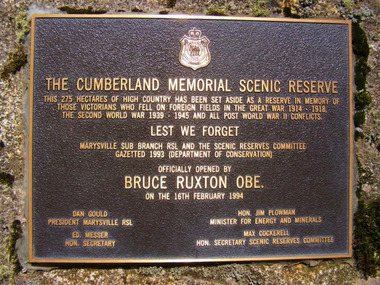 Marysville & District Historical Society
Photograph (item) - Colour photograph, Unknown
... THE CUMBERLAND MEMORIAL SCENIC RESERVE THIS 275 HECTARES OF HIGH COUNTRY HAS BEEN SET ASIDE AS A RESERVE IN MEMORY OF/ THOSE VICTORIANS WHO FELL ON FOREIGN FIELDS IN THE GREAT WAR 1914 - 1918,/ THE SECOND WORLD WAR 1939 - 1945 AND ALL POST WAR II CONFLICTS LEST WE FORGET MARYSVILLE SUB BRANCH RSL AND THE SCENIC RESERVES COMMITTEE GAZETTED 1993 (DEPARTMENT OF CONSERVATION) OFFICIALLY OPENED BY BRUCE RUXTON OBE. ...A colour photograph of the plaque commemorating Victorian veterans who have lost their lives in various conflicts in world history which was placed in the Cumberland Memorial Scenic Reserve on 16th February 1994, the day of the opening of the reserve. The Cumberland Memorial Scenic Reserve comprises of 275 hectares set aside as a reserve to commemorate Victorians who have died in service or were killed in action in World War One, World War Two, and conflicts since 1945. ...A colour photograph of the plaque commemorating Victorian veterans who have lost their lives in various conflicts in world history which was placed in the Cumberland Memorial Scenic Reserve on 16th February 1994, the day of the opening of the reserve.The Cumberland Memorial Scenic Reserve comprises of 275 hectares set aside as a reserve to commemorate Victorians who have died in service or were killed in action in World War One, World War Two, and conflicts since 1945. The reserve is situated on the Marysville-Wood's Point Road.THE CUMBERLAND MEMORIAL SCENIC RESERVE THIS 275 HECTARES OF HIGH COUNTRY HAS BEEN SET ASIDE AS A RESERVE IN MEMORY OF/ THOSE VICTORIANS WHO FELL ON FOREIGN FIELDS IN THE GREAT WAR 1914 - 1918,/ THE SECOND WORLD WAR 1939 - 1945 AND ALL POST WAR II CONFLICTS LEST WE FORGET MARYSVILLE SUB BRANCH RSL AND THE SCENIC RESERVES COMMITTEE GAZETTED 1993 (DEPARTMENT OF CONSERVATION) OFFICIALLY OPENED BY BRUCE RUXTON OBE. ON THE 16TH FEBRUARY 1994 DAN GOULD/ PRESIDENT MARYSVILLE RSL ED MESSER/ HON SECRETARY HON. JIM PLOWMAN/ MINISTER FOR ENERGY AND MINERALS MAX COCKERERLL/ HON. SECRETARY SCENIC RESERVES COMMITTEEcumberland memorial scenic reserve, marysville, victoria, marysville-woods point road -
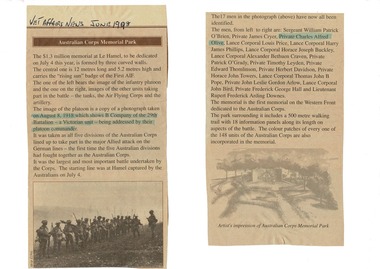 Lara RSL Sub Branch
Veteran Affairs Newspaper article dated June 1998, Australian Corps Memorial Park - $1.3 million memorial at La Hamel for Australian World War 1 Soldiers
... memorial walls for Australian soldiers that died during Wold War 2. The photograph included in the article was taken on August 8, 1918 which shows B company of the 29th Battalion - a Victorian Unit - being addressed by their platoon Commander. ...memorial walls for Australian soldiers that died during Wold War 2. The photograph included in the article was taken on August 8, 1918 which shows B company of the 29th Battalion - a Victorian Unit - being addressed by their platoon Commander. ...Article of World War 1 Refer to carved life size soldier with machine gun in foyer and photograph at its feet.A4 sheet of white paper has two cut-out sections of Veteran Affairs Newspaper article dated June 1998 glued on. Title Australian Corps Memorial Park. Article covers a Memorial cost $1.3 million dollars for dedication on 4th July 1998 consisting of three curved memorial walls for Australian soldiers that died during Wold War 2. The photograph included in the article was taken on August 8, 1918 which shows B company of the 29th Battalion - a Victorian Unit - being addressed by their platoon Commander. All 5 Australian Divisions took part in the major Allied attack on the German Lines - the first time the five Australian Divisions had fought together as the Australian Corps. (Under Australian Command) It is the First memorial on the Western Front dedicated to the Australian Corps. The park surrounding it includes a 500 meter walking tril with 18 information panels along its length on aspects of the battle.Article was found in Veteran Affairs News dated June 1998, heading - Australian Corps Memorial Park.veteran affairs news article, a4 paper sheet -
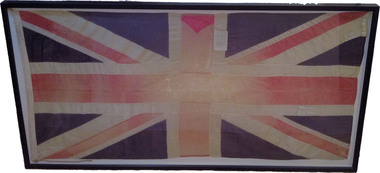 Lara RSL Sub Branch
Flag, Australian Flag (Union Jack) 1900
... The Australian War Memorial records that the fighting conditions in South Africa extremely hard on men and horses. Australians fighting in South Africa were doing so as part of Colony based Regiments such as the Victorian Mounted Rifles, New South Wales Lancers, Queensland Mounted Infantry as well as units from the other states. ...The Australian War Memorial records that the fighting conditions in South Africa extremely hard on men and horses. Australians fighting in South Africa were doing so as part of Colony based Regiments such as the Victorian Mounted Rifles, New South Wales Lancers, Queensland Mounted Infantry as well as units from the other states. ...There is a Union Jack brought back from South Africa by 1229 Trooper Fredrick James Smith. Between 1899 and 1902, around 16,500 Australians served in South Africa during the Boer War. This was the largest international deployment of troops from the Australian Colonies before Australian Federation. Of the 16,500 men who served in South Africa, 606 were killed in action or died of diseases. The Australian War Memorial records that the fighting conditions in South Africa extremely hard on men and horses. Australians fighting in South Africa were doing so as part of Colony based Regiments such as the Victorian Mounted Rifles, New South Wales Lancers, Queensland Mounted Infantry as well as units from the other states. Australians were awarded six Victoria Crosses during the campaign along with many other decorations. In May of 1902 the treaty of Vereeniging was signed officially ending the Boer War. The Boer War is commemorated in many Towns and Cities around Australia. The Lara RSL Sub Branch holds some memorabilia from the Boer War. There is a Union Jack brought back from South Africa by 1229 Trooper Fredrick James Smith. He was a resident of Lara and was a member of the 5th Victorian Mounted Rifles. It was reported that he carried this flag into battle. The Lara RSL also holds the flag staff of the China, South African and Old Veterans Association. Both these items are of national significance. Both the flag and flag staff were used in marches in Geelong each year until 1916 when Anzac Day commenced. The flag and flag staff were donated to the Lara RSL sub Branch when he joined in 1928. Fredrick James Smith was born at Lara in 1879, the son of Mr/Mrs Smith from Lara. He was a farm hand from Horton Vale, Anakie when he joined F Company of the 5th Victorian Mounted Rifles at the beginning of February 1901. Two weeks later, he left for South Africa on the 15th February. Before leaving, he purchased the flag from W. Libby & Son Geelong. Frederick Left for South Africa on the 15 February 1901 on the Orient. He saw service between March 1901 - March 1902 in east Transvaal and Natal frontier under the British Major General S. Beatson then Pulteney, including the defeat at Wilmansrust where 18 soldiers were killed and 42 wounded (12th June 1901 - heaviest casualties of any Australian contingent,); and the successful intervention at Onverwacht on the 4th January 1902. The 5th Victorian Mounted Rifles suffered: 36 killed or died of wounds, 13 died of disease of a contingent of 46 Officers, 971 Other Ranks and 1099 horses. They returned to Australia on the 26th April 1902 on the Custodian after sailing from Point Natal in South Africa on the 5th April. On his return, Tropper Smith (Saddler Private) joined the South African Soldiers Association of Victoria – Geelong Branch, and after 1928, he joined the Lara RSL. He was buried in Western Cemetery on the 19th June 1968 at the age of 89. Enrolled February 1901 Departed for South Africa on 15 February 1901 Establishment: 46 Officers, 971 Other Ranks with 1099 horses Mobilised at Pretoria: 24 March -- 4 April 1901 Typical company: 1 Captain, 4 Lieutenants, 1 company sergeant-major, 1 company quartermaster-sergeant, 1 sergeant-farrier, 1 sergeant-saddler, 5 sergeants, 6 corporals, 3 shoeing-smiths, 3 saddlers, 1 bugler, 99 privates. Total in company: 126 with 131 horses. Engagements: Rhenoster Kop, Klippan, Kornfontein, Drivelfontein, Wilmansrust, Kambuladraai, H'Lobane, Luchiel's Nek, Loch's Kraal, Vryheid, Onverwacht, Johnston Hoek Killed in action (or died): six Officers, 48 Other Ranks VC Winner: Lieut. L. C. Maygar News article Leader (Melbourne) Saturday 31st May 1902, page 42 - Dear Cinderella. — This is the second time I have written to you. I was very sorry at not seeing my first letter in "The Leader". But I hope to say, that this one will be in. The last time I wrote to you I told you that my brother (Fredrick Smith) went to the Boer War in South Africa, and that he was supposed to be killed in the Wilmansrust disaster. But this time I am going to tell you about his return, and the grand welcome he got from the residents of Lara. Mother, Father, and my Brother, went down to Melbourne, to meet the boat. You can just imagine how rejoiced we all were to see him back again. The railway station was decorated some thing beautiful with flags of all description all the colours you could think of. He has bought a lot of Boer curios home and some Kaffir bracelets. They are such funny looking things. The residents of Lara, also gave my brother a grand social and ball there were over four hundred people present, They presented him with a hand some gold chain, and locket suitably inscribed, and a pair of gold sleeve links, they were magnificent. The ball was very nice. . I had a few dances. I enjoyed myself grand. I think this is all I can tell you this time. I must conclude with love. I remain yours sincerely - BESSIE SMITH. Age 14-years. This flag is of national significance as it was used in the Boer War by Private Fredrick James Smith (SN:1229) of the 5th Victorian Mounted Rifles, F Company in their deployment to South Africa between 1901 and 1902. The flag was taken into the Wilmansrust engagement in which 19 soldiers died and 41 were wounded. On return to Australia, the flag was used in marches by the South Africa, China Old Veterans Association - Geelong. This flag represents a unique part of Australian history from which the movie, Breaker Morant was taken. It is of spiritual significance as the Boer War was where the first Australian received the Imperial Victoria Cross, and the spirit of Anzac was conceived, giving birth in World War 1. The Flag represents the spirit of Australians who fought and died in South Africa.Cotton Union Jack flag approx 221cm wide by 109cm tall with small repair patches and center section cotton deteriorated.Has the word "Lara" inscribed in black on bottom part of the flag heading. Has the flag makers name "W.Libby & Son" on the top part of the flag heading.boer war, union jack flag, south africa, wilmansrust, 5th victorian mounted rifles, f coy, private fredrick james smith, service number 1229, february 1901, april 1902, south africa china old veterans association -
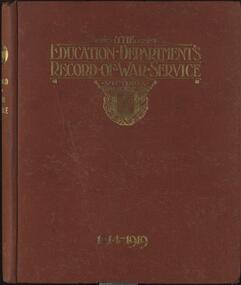 Federation University Historical Collection
Book, The Education Department's Record of War Service, 1914-1919, 1921
... Victorian Education Department personnel who served World War One. Contents include the men who enlisted, the men who fell, the men who returned, honours and decorations, memorials, Education Department's War Relief Organisation, Comforts for Soldiers, War Savings. ...war one ballarat technical art school percy tromff harold herbert harold b. herbert c.l. e.v. rowsell J.N. Wood M. Mather Hard covered book of the Victorian Education Department personnel who served World War One. Contents include the men who enlisted, the men who fell, the men who returned, honours and decorations, memorials ...Hard covered book of the Victorian Education Department personnel who served World War One. Contents include the men who enlisted, the men who fell, the men who returned, honours and decorations, memorials, Education Department's War Relief Organisation, Comforts for Soldiers, War Savings. Artwork was done by the students of the Ballarat Technical Art School, a division of the Ballarat School of Mines. Page 9 Contents page was done by Percy Trompf.education department victoria, world war one, ballarat technical art school, percy tromff, harold herbert, harold b. herbert, c.l., e.v. rowsell, j.n. wood, m. mather -
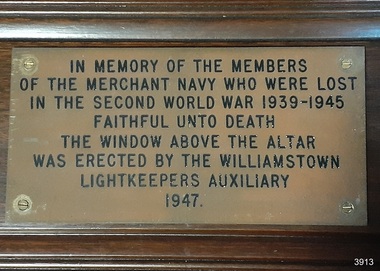 Flagstaff Hill Maritime Museum and Village
Plaque - Commemorative Plaque, circa August 1947
... ...war memorial window...victorian.... & a. bank williamstown christ directing a sailor christ showing the helmsman the way quartermaster’s hand on the wheel stained glass window church window religious window sanctuary window memorial window war memorial window victorian war heritage inventory victorian heritage database merchant navy ww2 1939-1945 anglican church bishop mckie flying angel club williamstown lightkeepers' auxiliary ladies' harbour lights guild commemorative window memorial plaque merchant navy WW II St. ...This commemorative plaque was made for the round, stained glass memorial window titled “Christ showing the helmsman the way”, originally installed at the St Nicholas Seamen’s Church in Williamstown. The window was donated as a memorial to the members of the Merchant Navy whose lives were lost in the Second World War, 1939-1945. The donor was the Williamstown Lightkeepers Auxiliary, an independent ladies' association that worked with the Williamstown Missions to Seamen (renamed the Mission to Seafarers in 2000). The window was officially dedicated on December 14, 1947, by Geelong's Anglican Bishop, Rt. Rev. J.D. McKie. In the early months of 1948, this bronze plaque was also placed in the chapel above the altar. The Williamstown St Nicholas Seamen’s Church ceased operation in 1966. In 1979, the Victoria Missions to Seamen donated this round, stained glass window and the memorial plaque to Flagstaff Hill Maritime Village, along with many other items and furnishings. These items have been used to simulate the Williamstown Mission and Chapel as much as possible. THE MISSIONS TO SEAMEN: - The Missions to Seamen was an Anglican charity that served seafarers since 1856 in Great Britain. Its symbol is a Flying Angel, inspired by a Bible verse. Today, there are centres in over 200 ports worldwide where seamen of all backgrounds are offered a warm welcome and provided with a wide range of facilities. In Victoria, the orgainsation began in Williamstown in 1857 as a Sailors’ Church, also known as ‘Bethel’ or the ‘Floating Church’ in an old hulk floating in Hobson’s Bay, Port of Melbourne. It soon became part of the Missions to Seamen, Victoria. In the year 2000, the organisation, now named Mission to Seafarers, still operated locally in Melbourne, Portland, Geelong and Hastings. The Ladies’ Harbour Lights Guild was formed in 1906 to support the Missions to Seamen in Melbourne and other centres such as Williamstown. Two of the most significant ladies of the Guild were founder Ethel Augusta Godfrey and foundation member Alice Sibthorpe Tracy (who established a branch of the Guild in Warrnambool in 1920). The Guild continued its work until the 1960s. In 1943, a former Williamstown bank was purchased for the Missions to Seamen Club. The chapel was named St Nicholas’ Seamen’s Church and was supported by the Ladies’ Harbour Lights Guild, the Williamstown Lightkeepers’ Auxiliary and the League of Soldiers’ and Sailors’ Friends. It ceased operation in 1966. A Missions to Seamen Chapel and Recreation Room was a significant feature of ports during the late 1800s and into the 1900s. It seemed appropriate for Flagstaff Hill to include such a representation within the new Maritime Village, so the Melbourne Board of Management of Missions to Seamen Victoria gave its permission on 21st May 1979 for the entire furnishings of the Williamstown chapel to be transferred to Flagstaff Hill. The St Nicholas Seamen’s Church was officially opened on October 11, 1981 and closely resembles the Williamstown chapel. This plaque is significant for its connection with the round Sanctuary window above the altar in the chapel at Flagstaff Hill. The window was originally installed at the chapel of the St Nicholas Seamen’s Church in Williamstown in 1947, and is listed on the Victorian War Heritage Inventory No. 196973 as an object of significance. The plaque is also significant for its recognition of the members of the Merchant Navy who lost their lives in service to our country during World War II. The plaque is important for its connection with the Williamstown Lightkeepers’ Auxiliary and Missions to Seamen, which were dedicated to supporting seafarers from all over the world. The funds the group raised helped to furnish the St Nicholas Seamen’s Church in Williamstown, including the Sanctuary window, pews, carpets and hangings. These items are now part of the St Nicholas Seamen's Church Williamstown Collection at Flagstaff Hill Maritime Village, Warrnambool. Plaque: rectangular brass commemorative plaque. Each corner has a round hole. Inscription impressed into the metal and filled in with black paint. Plaque refers to the memorial, a stained glass window titled "Christ Showing the Helmsman the Way," donated by the Williamstown Lightkeepers' Auxiliary to the Willimastown Missions to Seamen. This plaque is part of the St. Nicholas Seamen's Church Collection. “IN MEMORY OF THE MEMBERS / OF THE MERCHANT NAVY WHO WERE LOST / IN THE SECOND WORLD WAR 1939-1945 / FAITHFUL UNTO DEATH / THE WINDOW ABOVE THE ALTAR / WAS ERECTED BY THE WILLIAMSTOWN / LIGHTKEEPERS AUXILIARY / 1947.”flagstaff hill, warrnambool, flagstaff hill maritime museum, maritime museum, shipwreck coast, flagstaff hill maritime village, mission to seamen williamstown, st nicholas seaman’s church williamstown, missions to seamen victoria, mission to seafarers, lightkeepers auxiliary, ladies harbour light guild, 139 nelson place williamstown, religion, religious service, sailors rest, bethel sailors’ church, bethel floating church, e. s. & a. bank williamstown, christ directing a sailor, christ showing the helmsman the way, quartermaster’s hand on the wheel, stained glass window, church window, religious window, sanctuary window, memorial window, war memorial window, victorian war heritage inventory, victorian heritage database, merchant navy ww2, 1939-1945, anglican church, bishop mckie, flying angel club, williamstown lightkeepers' auxiliary, ladies' harbour lights guild, commemorative window, memorial plaque, merchant navy, ww ii, st. nicholas seamen's church -
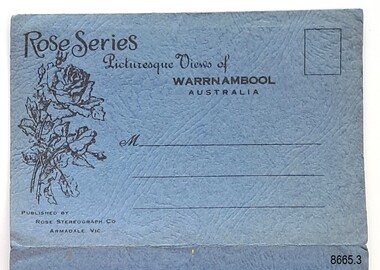 Flagstaff Hill Maritime Museum and Village
Postcard - Postcard Folder, scenes, George Rose, Rose Stereographic Company, Rose Series Picturesque Views of Warrnambool Australia, 1880-1942
... War Memorial. Warrnambool. Vic. . The Blow-hole. Thunder Point. Warrnambool. Vic. . Botanical Gardens. Warrnambool. Vic. . Eagle Rock. Warrnambool. Vic. . The New Concrete Bridge and Breakwater. Warrnambool. Vic. . Liebig Street. Warrnambool. Vic. . Looking to Thunder Point. Warrnambool. Vic. . The Beach. Warrnambool. Vic. . Hopkins Falls. Warrnambool. Vic. . Shelly Beach. Warrnambool. Vic. . The Mouth of the Hopkins River. Warrnambool. Vic. . Panorama of Warrnambool, Vic. [Kepler Street towards Presbyterian Church on Spence St] The photographs in this postcard folder were taken between 1880 and 1942 by the renowned Victorian ...GEORGE ROSE 1861-1942: - George Rose was a well-known Victorian photographer, famous for his late 19th and early 20th century photography. He was born in Clunes, Victoria, and was in his 20th year when he founded Rose Stereograph Company in 1880. He took the opportunity of a popular trend of the times to produce stereographs, pairs of almost duplicate photographs that appeared in 3D when viewed in a handheld stereo viewer. By the 1920s, these lost their popularity, so he used his photographic skills to produce cards and postcards of scenes and people. The twelve photographs in the Rose postcard folders include locations connected to other items in our Collection, including the Valentine postcard folder in this set. The photographs are titled: - . The Avenue and War Memorial. Warrnambool. Vic. . The Blow-hole. Thunder Point. Warrnambool. Vic. . Botanical Gardens. Warrnambool. Vic. . Eagle Rock. Warrnambool. Vic. . The New Concrete Bridge and Breakwater. Warrnambool. Vic. . Liebig Street. Warrnambool. Vic. . Looking to Thunder Point. Warrnambool. Vic. . The Beach. Warrnambool. Vic. . Hopkins Falls. Warrnambool. Vic. . Shelly Beach. Warrnambool. Vic. . The Mouth of the Hopkins River. Warrnambool. Vic. . Panorama of Warrnambool, Vic. [Kepler Street towards Presbyterian Church on Spence St] The photographs in this postcard folder were taken between 1880 and 1942 by the renowned Victorian photographer George Rose. The locations match photographs and postcards in our collection that were taken at different times. A comparison between them shows the changes over time in the land and bay, the buildings and other structures, transportation and even the fashions of the times, building the story of our local history.Postcard folder, Rose Series, blue cover. One of a set of three containing images of Warrnambool and district before 1942. Green folder, textured cardboard folder containing a Z-folded strip of white matte photographic paper with six black and white photographs on each side. Titles are printed below the images. The folder is secured by placing two tabs into two slots on the back cover to hold the cover in place and create an envelope shape. Three horizontal lines are printed on the front for the receiver’s address. There is a logo of a long-stemmed rose on the left side and inscriptions on the front cover. The lithograph photographs were taken between 1880 and 1942 by well-known Victorian photographer George Rose and published by Rose Stereograph Company of Armadale, Victoria. The folder contains scenes of popular areas at Warrnambool and nearby locations including Lady Bay, the Port of Warrnambool, the Warrnambool Breakwater, the Viaduct, the Merri River Footbridge, the Hopkins River Mouth, and Proudfoot’s and the Fanny Nelson/Flett boathouses. Image: [Rose with rosebud and leaves] Printed: "Rose Series / Picturesque Views of / WARRNAMBOOL / AUSTRALIA" "PUBLISHED BY / ROSE STEREOGRAPH CO / ARMADALE. VIC." flagstaff hill maritime museum and village, great ocean road, shipwreck coast, warrnambool, flagstaff hill, flagstaff hill maritime museum, flagstaff hill maritime village, warramble, postcard, postcard folder, warrnambool scenes, picturesque views of warrnambool, picturesque views of warramble, lady bay, port of warrnambool, breakwater, warrnambool breakwater, viaduct, merri river footbridge, merri river suspension bridge, suspension footbridge, merri river mouth, hopkins river mouth, proudfoot's, fanny nelson, nelson's boatsheds, nelson's boathouse, boathouse, hopkins river boathouses, flett's boathouse, flett, george rose, image of a rose, rose series, rose stereograph co, rose stereographic company, lighograph, armadale victoria, lady bay beach, beach scene, lower light, concrete footbridge, 1922 footbridge, viaduct road, rose postcard, new concrete bridge, 1945, 1890, 1922, small footbridge, 1872 footbridge, 1872, merri river estuary, stingray bay, postcards -
 Flagstaff Hill Maritime Museum and Village
Book, Australia in the War of 1939-1945 Greece Crete and Syria
... victorian library board...warrnambool books and records...warrnambool children’s library...great ocean road...Australia in the War of 1939-1945 Greece Crete and Syria...Australia in the War of 1939-1945...Gavin Long...Australian War Memorial...The Warrnambool Mechanics' Institute’s publication collection is of both local and state significance. warrnambool shipwrecked-coast flagstaff-hill flagstaff-hill-maritime-museum maritime-museum shipwreck-coast flagstaff-hill-maritime-village shipwrecked-artefact book pattison collection warrnambool library warrnambool mechanics’ institute ralph eric pattison corangamite regional library service warrnambool city librarian mechanics’ institute library victorian library board warrnambool books and records warrnambool children’s library great ocean road Australia in the War of 1939-1945 Greece Crete and Syria Australia in the War of 1939-1945 Gavin Long Australian War Memorial Label on spine cover with typed text PAT 994.04 AUS Pastedown front endpaper has sticker from Warrnambool Public Library Front loose endpaper has a sticker from Corangamite Regional Library Service Australia in the War of 1939-1945 Greece Crete and Syria This volume of the army series of the offical history of Australia in the war of 1939-1945 describes the campaogns in Greece, Crete and Syria in 1941 Author: Gavin Long Publisher: Australian War Memorial Date: 1953 Australia in the War of 1939-1945 Greece Crete and Syria Book ...This item is from the ‘Pattison Collection’, a collection of books and records that was originally owned by the Warrnambool Mechanics’ Institute, which was founded in Warrnambool in 1853. By 1886 the Warrnambool Mechanics’ Institute (WMI) had grown to have a Library, Museum and Fine Arts Gallery, with a collection of “… choice productions of art, and valuable specimens in almost every branch and many wonderful national curiosities are now to be seen there, including historic relics of the town and district.” It later included a School of Design. Although it was very well patronised, the lack of financial support led the WMI in 1911 to ask the City Council to take it over. In 1935 Ralph Pattison was appointed as City Librarian to establish and organise the Warrnambool Library as it was then called. When the WMI building was pulled down in 1963 a new civic building was erected on the site and the new Warrnambool Library, on behalf of the City Council, took over all the holdings of the WMI. At this time some of the items were separated and identified as the ‘Pattison Collection’, named after Ralph Pattison. Eventually the components of the WMI were distributed from the Warrnambool Library to various places, including the Art Gallery, Historical Society and Flagstaff Hill. Later some were even distributed to other regional branches of Corangamite Regional Library and passed to and fro. It is difficult now to trace just where all of the items have ended up. The books at Flagstaff Hill Maritime Village generally display stamps and markings from Pattison as well as a variety of other institutions including the Mechanics’ Institute itself. RALPH ERIC PATTISON Ralph Eric Pattison was born in Rockhampton, Queensland, in 1891. He married Maude Swan from Warrnambool in 1920 and they set up home in Warrnambool. In 1935 Pattison accepted a position as City Librarian for the Warrnambool City Council. His huge challenge was to make a functional library within two rooms of the Mechanics’ Institute. He tirelessly cleaned, cleared and sorted a disarrayed collection of old books, jars of preserved specimens and other items reserved for exhibition in the city’s museum. He developed and updated the library with a wide variety of books for all tastes, including reference books for students; a difficult task to fulfil during the years following the Depression. He converted all of the lower area of the building into a library, reference room and reading room for members and the public. The books were sorted and stored using a cataloguing and card index system that he had developed himself. He also prepared the upper floor of the building and established the Art Gallery and later the Museum, a place to exhibit the many old relics that had been stored for years for this purpose. One of the treasures he found was a beautiful ancient clock, which he repaired, restored and enjoyed using in his office during the years of his service there. Ralph Pattison was described as “a meticulous gentleman whose punctuality, floorless courtesy and distinctive neat dress were hallmarks of his character, and ‘his’ clock controlled his daily routine, and his opening and closing of the library’s large heavy doors to the minute.” Pattison took leave during 1942 to 1945 to serve in the Royal Australian Navy, Volunteer Reserve as Lieutenant. A few years later he converted one of the Museum’s rooms into a Children’s Library, stocking it with suitable books for the younger generation. This was an instant success. In the 1950’s he had the honour of being appointed to the Victorian Library Board and received more inspiration from the monthly conferences in Melbourne. He was sadly retired in 1959 after over 23 years of service, due to the fact that he had gone over the working age of council officers. However he continued to take a very keen interest in the continual development of the Library until his death in 1969. The Pattison Collection, along with other items at Flagstaff Hill Maritime Village, was originally part of the Warrnambool Mechanics' Institute’s collection. The Warrnambool Mechanics’ Institute Collection is primarily significant in its totality, rather than for the individual objects it contains. Its contents are highly representative of the development of Mechanics' Institute libraries across Australia, particularly Victoria. A diversity of publications and themes has been amassed, and these provide clues to our understanding of the nature of and changes in the reading habits of Victorians from the 1850s to the middle of the 20th century. The collection also highlights the Warrnambool community’s commitment to the Mechanics’ Institute, reading, literacy and learning in the regions, and proves that access to knowledge was not impeded by distance. These items help to provide a more complete picture of our community’s ideals and aspirations. The Warrnambool Mechanics Institute book collection has historical and social significance for its strong association with the Mechanics Institute movement and the important role it played in the intellectual, cultural and social development of people throughout the latter part of the nineteenth century and the early twentieth century. The collection of books is a rare example of an early lending library and its significance is enhanced by the survival of an original collection of many volumes. The Warrnambool Mechanics' Institute’s publication collection is of both local and state significance. Australia in the War of 1939-1945 Greece Crete and Syria This volume of the army series of the offical history of Australia in the war of 1939-1945 describes the campaogns in Greece, Crete and Syria in 1941 Author: Gavin Long Publisher: Australian War Memorial Date: 1953Label on spine cover with typed text PAT 994.04 AUS Pastedown front endpaper has sticker from Warrnambool Public Library Front loose endpaper has a sticker from Corangamite Regional Library Servicewarrnambool, shipwrecked-coast, flagstaff-hill, flagstaff-hill-maritime-museum, maritime-museum, shipwreck-coast, flagstaff-hill-maritime-village, shipwrecked-artefact, book, pattison collection, warrnambool library, warrnambool mechanics’ institute, ralph eric pattison, corangamite regional library service, warrnambool city librarian, mechanics’ institute library, victorian library board, warrnambool books and records, warrnambool children’s library, great ocean road, australia in the war of 1939-1945 greece crete and syria, australia in the war of 1939-1945, gavin long, australian war memorial -
 Flagstaff Hill Maritime Museum and Village
Book, Australia in the War of 1939-1945 The Island Campaigns
... victorian library board...warrnambool books and records...warrnambool children’s library...great ocean road...Australia in the War of 1939-1945 The Island Campaigns...Australia in the War of 1939-1945...Allan S Walker...Australian War Memorial...The Warrnambool Mechanics' Institute’s publication collection is of both local and state significance. warrnambool shipwrecked-coast flagstaff-hill flagstaff-hill-maritime-museum maritime-museum shipwreck-coast flagstaff-hill-maritime-village shipwrecked-artefact book pattison collection warrnambool library warrnambool mechanics’ institute ralph eric pattison corangamite regional library service warrnambool city librarian mechanics’ institute library victorian library board warrnambool books and records warrnambool children’s library great ocean road Australia in the War of 1939-1945 The Island Campaigns Australia in the War of 1939-1945 Allan S Walker Australian War Memorial Label on spine cover with typed text PAT 994.04 AUS Pastedown front endpaper has sticker from Warrnambool Public Library Front loose endpaper has a sticker from Corangamite Regional Library Service Australia in the War of 1939-1945 The Island Campaigns This volume of the medical series of the offical history of Australia in the war of 1939-1945 covers the operational experiences of the Australian Army Medical Corps. ...This item is from the ‘Pattison Collection’, a collection of books and records that was originally owned by the Warrnambool Mechanics’ Institute, which was founded in Warrnambool in 1853. By 1886 the Warrnambool Mechanics’ Institute (WMI) had grown to have a Library, Museum and Fine Arts Gallery, with a collection of “… choice productions of art, and valuable specimens in almost every branch and many wonderful national curiosities are now to be seen there, including historic relics of the town and district.” It later included a School of Design. Although it was very well patronised, the lack of financial support led the WMI in 1911 to ask the City Council to take it over. In 1935 Ralph Pattison was appointed as City Librarian to establish and organise the Warrnambool Library as it was then called. When the WMI building was pulled down in 1963 a new civic building was erected on the site and the new Warrnambool Library, on behalf of the City Council, took over all the holdings of the WMI. At this time some of the items were separated and identified as the ‘Pattison Collection’, named after Ralph Pattison. Eventually the components of the WMI were distributed from the Warrnambool Library to various places, including the Art Gallery, Historical Society and Flagstaff Hill. Later some were even distributed to other regional branches of Corangamite Regional Library and passed to and fro. It is difficult now to trace just where all of the items have ended up. The books at Flagstaff Hill Maritime Village generally display stamps and markings from Pattison as well as a variety of other institutions including the Mechanics’ Institute itself. RALPH ERIC PATTISON Ralph Eric Pattison was born in Rockhampton, Queensland, in 1891. He married Maude Swan from Warrnambool in 1920 and they set up home in Warrnambool. In 1935 Pattison accepted a position as City Librarian for the Warrnambool City Council. His huge challenge was to make a functional library within two rooms of the Mechanics’ Institute. He tirelessly cleaned, cleared and sorted a disarrayed collection of old books, jars of preserved specimens and other items reserved for exhibition in the city’s museum. He developed and updated the library with a wide variety of books for all tastes, including reference books for students; a difficult task to fulfil during the years following the Depression. He converted all of the lower area of the building into a library, reference room and reading room for members and the public. The books were sorted and stored using a cataloguing and card index system that he had developed himself. He also prepared the upper floor of the building and established the Art Gallery and later the Museum, a place to exhibit the many old relics that had been stored for years for this purpose. One of the treasures he found was a beautiful ancient clock, which he repaired, restored and enjoyed using in his office during the years of his service there. Ralph Pattison was described as “a meticulous gentleman whose punctuality, floorless courtesy and distinctive neat dress were hallmarks of his character, and ‘his’ clock controlled his daily routine, and his opening and closing of the library’s large heavy doors to the minute.” Pattison took leave during 1942 to 1945 to serve in the Royal Australian Navy, Volunteer Reserve as Lieutenant. A few years later he converted one of the Museum’s rooms into a Children’s Library, stocking it with suitable books for the younger generation. This was an instant success. In the 1950’s he had the honour of being appointed to the Victorian Library Board and received more inspiration from the monthly conferences in Melbourne. He was sadly retired in 1959 after over 23 years of service, due to the fact that he had gone over the working age of council officers. However he continued to take a very keen interest in the continual development of the Library until his death in 1969. The Pattison Collection, along with other items at Flagstaff Hill Maritime Village, was originally part of the Warrnambool Mechanics' Institute’s collection. The Warrnambool Mechanics’ Institute Collection is primarily significant in its totality, rather than for the individual objects it contains. Its contents are highly representative of the development of Mechanics' Institute libraries across Australia, particularly Victoria. A diversity of publications and themes has been amassed, and these provide clues to our understanding of the nature of and changes in the reading habits of Victorians from the 1850s to the middle of the 20th century. The collection also highlights the Warrnambool community’s commitment to the Mechanics’ Institute, reading, literacy and learning in the regions, and proves that access to knowledge was not impeded by distance. These items help to provide a more complete picture of our community’s ideals and aspirations. The Warrnambool Mechanics Institute book collection has historical and social significance for its strong association with the Mechanics Institute movement and the important role it played in the intellectual, cultural and social development of people throughout the latter part of the nineteenth century and the early twentieth century. The collection of books is a rare example of an early lending library and its significance is enhanced by the survival of an original collection of many volumes. The Warrnambool Mechanics' Institute’s publication collection is of both local and state significance. Australia in the War of 1939-1945 The Island Campaigns This volume of the medical series of the offical history of Australia in the war of 1939-1945 covers the operational experiences of the Australian Army Medical Corps. Author: Allan S Walker Publisher: Australian War Memorial Date: 1957Label on spine cover with typed text PAT 994.04 AUS Pastedown front endpaper has sticker from Warrnambool Public Library Front loose endpaper has a sticker from Corangamite Regional Library Service warrnambool, shipwrecked-coast, flagstaff-hill, flagstaff-hill-maritime-museum, maritime-museum, shipwreck-coast, flagstaff-hill-maritime-village, shipwrecked-artefact, book, pattison collection, warrnambool library, warrnambool mechanics’ institute, ralph eric pattison, corangamite regional library service, warrnambool city librarian, mechanics’ institute library, victorian library board, warrnambool books and records, warrnambool children’s library, great ocean road, australia in the war of 1939-1945 the island campaigns, australia in the war of 1939-1945, allan s walker, australian war memorial -
 Flagstaff Hill Maritime Museum and Village
Book, Australia in the War of 1939-1945 Middle East and Far East
... victorian library board...warrnambool books and records...warrnambool children’s library...great ocean road...Australia in the War of 1939-1945 Middle East and Far East...Australia in the War of 1939-1945...Allan S Walker...Australian War Memorial...The Warrnambool Mechanics' Institute’s publication collection is of both local and state significance. warrnambool shipwrecked-coast flagstaff-hill flagstaff-hill-maritime-museum maritime-museum shipwreck-coast flagstaff-hill-maritime-village shipwrecked-artefact book pattison collection warrnambool library warrnambool mechanics’ institute ralph eric pattison corangamite regional library service warrnambool city librarian mechanics’ institute library victorian library board warrnambool books and records warrnambool children’s library great ocean road Australia in the War of 1939-1945 Middle East and Far East Australia in the War of 1939-1945 Allan S Walker Australian War Memorial Label on spine cover with typed text PAT 994.04 AUS Pastedown front endpaper has sticker from Warrnambool Public Library Front loose endpaper has a sticker from Corangamite Regional Library Service Australia in the War of 1939-1945 Middle East and Far East This book describes the work of the Australian Medical Service in the Middle East and in Malaya Author: Allan S Walker Publisher: Australian War Memorial Date: 1953 Australia in the War of 1939-1945 Middle East and Far East Book ...This item is from the ‘Pattison Collection’, a collection of books and records that was originally owned by the Warrnambool Mechanics’ Institute, which was founded in Warrnambool in 1853. By 1886 the Warrnambool Mechanics’ Institute (WMI) had grown to have a Library, Museum and Fine Arts Gallery, with a collection of “… choice productions of art, and valuable specimens in almost every branch and many wonderful national curiosities are now to be seen there, including historic relics of the town and district.” It later included a School of Design. Although it was very well patronised, the lack of financial support led the WMI in 1911 to ask the City Council to take it over. In 1935 Ralph Pattison was appointed as City Librarian to establish and organise the Warrnambool Library as it was then called. When the WMI building was pulled down in 1963 a new civic building was erected on the site and the new Warrnambool Library, on behalf of the City Council, took over all the holdings of the WMI. At this time some of the items were separated and identified as the ‘Pattison Collection’, named after Ralph Pattison. Eventually the components of the WMI were distributed from the Warrnambool Library to various places, including the Art Gallery, Historical Society and Flagstaff Hill. Later some were even distributed to other regional branches of Corangamite Regional Library and passed to and fro. It is difficult now to trace just where all of the items have ended up. The books at Flagstaff Hill Maritime Village generally display stamps and markings from Pattison as well as a variety of other institutions including the Mechanics’ Institute itself. RALPH ERIC PATTISON Ralph Eric Pattison was born in Rockhampton, Queensland, in 1891. He married Maude Swan from Warrnambool in 1920 and they set up home in Warrnambool. In 1935 Pattison accepted a position as City Librarian for the Warrnambool City Council. His huge challenge was to make a functional library within two rooms of the Mechanics’ Institute. He tirelessly cleaned, cleared and sorted a disarrayed collection of old books, jars of preserved specimens and other items reserved for exhibition in the city’s museum. He developed and updated the library with a wide variety of books for all tastes, including reference books for students; a difficult task to fulfil during the years following the Depression. He converted all of the lower area of the building into a library, reference room and reading room for members and the public. The books were sorted and stored using a cataloguing and card index system that he had developed himself. He also prepared the upper floor of the building and established the Art Gallery and later the Museum, a place to exhibit the many old relics that had been stored for years for this purpose. One of the treasures he found was a beautiful ancient clock, which he repaired, restored and enjoyed using in his office during the years of his service there. Ralph Pattison was described as “a meticulous gentleman whose punctuality, floorless courtesy and distinctive neat dress were hallmarks of his character, and ‘his’ clock controlled his daily routine, and his opening and closing of the library’s large heavy doors to the minute.” Pattison took leave during 1942 to 1945 to serve in the Royal Australian Navy, Volunteer Reserve as Lieutenant. A few years later he converted one of the Museum’s rooms into a Children’s Library, stocking it with suitable books for the younger generation. This was an instant success. In the 1950’s he had the honour of being appointed to the Victorian Library Board and received more inspiration from the monthly conferences in Melbourne. He was sadly retired in 1959 after over 23 years of service, due to the fact that he had gone over the working age of council officers. However he continued to take a very keen interest in the continual development of the Library until his death in 1969. The Pattison Collection, along with other items at Flagstaff Hill Maritime Village, was originally part of the Warrnambool Mechanics' Institute’s collection. The Warrnambool Mechanics’ Institute Collection is primarily significant in its totality, rather than for the individual objects it contains. Its contents are highly representative of the development of Mechanics' Institute libraries across Australia, particularly Victoria. A diversity of publications and themes has been amassed, and these provide clues to our understanding of the nature of and changes in the reading habits of Victorians from the 1850s to the middle of the 20th century. The collection also highlights the Warrnambool community’s commitment to the Mechanics’ Institute, reading, literacy and learning in the regions, and proves that access to knowledge was not impeded by distance. These items help to provide a more complete picture of our community’s ideals and aspirations. The Warrnambool Mechanics Institute book collection has historical and social significance for its strong association with the Mechanics Institute movement and the important role it played in the intellectual, cultural and social development of people throughout the latter part of the nineteenth century and the early twentieth century. The collection of books is a rare example of an early lending library and its significance is enhanced by the survival of an original collection of many volumes. The Warrnambool Mechanics' Institute’s publication collection is of both local and state significance. Australia in the War of 1939-1945 Middle East and Far East This book describes the work of the Australian Medical Service in the Middle East and in Malaya Author: Allan S Walker Publisher: Australian War Memorial Date: 1953Label on spine cover with typed text PAT 994.04 AUS Pastedown front endpaper has sticker from Warrnambool Public Library Front loose endpaper has a sticker from Corangamite Regional Library Servicewarrnambool, shipwrecked-coast, flagstaff-hill, flagstaff-hill-maritime-museum, maritime-museum, shipwreck-coast, flagstaff-hill-maritime-village, shipwrecked-artefact, book, pattison collection, warrnambool library, warrnambool mechanics’ institute, ralph eric pattison, corangamite regional library service, warrnambool city librarian, mechanics’ institute library, victorian library board, warrnambool books and records, warrnambool children’s library, great ocean road, australia in the war of 1939-1945 middle east and far east, australia in the war of 1939-1945, allan s walker, australian war memorial -
 Flagstaff Hill Maritime Museum and Village
Book, Australia in the War of 1939-1945 The New Guinea Offensives
... victorian library board...warrnambool books and records...warrnambool children’s library...great ocean road...Australia in the War of 1939-1945 The New Guinea Offensives...Australia in the War of 1939-1945...David Dexter...Australian War Memorial...The Warrnambool Mechanics' Institute’s publication collection is of both local and state significance. warrnambool shipwrecked-coast flagstaff-hill flagstaff-hill-maritime-museum maritime-museum shipwreck-coast flagstaff-hill-maritime-village shipwrecked-artefact book pattison collection warrnambool library warrnambool mechanics’ institute ralph eric pattison corangamite regional library service warrnambool city librarian mechanics’ institute library victorian library board warrnambool books and records warrnambool children’s library great ocean road Australia in the War of 1939-1945 The New Guinea Offensives Australia in the War of 1939-1945 David Dexter Australian War Memorial Label on spine cover with typed text PAT 994.04 AUS Front loose endpaper has a sticker from Corangamite Regional Library Service Fly paper has a stamp from Warrnambool Public Library Australia in the War of 1939-1945 The New Guinea Offensives This volume relates how the Australian Army supported by Allied naval airforces drove the Japanese out of most of the mainland of Australian New Guinea 1943 and early 1944. ...This item is from the ‘Pattison Collection’, a collection of books and records that was originally owned by the Warrnambool Mechanics’ Institute, which was founded in Warrnambool in 1853. By 1886 the Warrnambool Mechanics’ Institute (WMI) had grown to have a Library, Museum and Fine Arts Gallery, with a collection of “… choice productions of art, and valuable specimens in almost every branch and many wonderful national curiosities are now to be seen there, including historic relics of the town and district.” It later included a School of Design. Although it was very well patronised, the lack of financial support led the WMI in 1911 to ask the City Council to take it over. In 1935 Ralph Pattison was appointed as City Librarian to establish and organise the Warrnambool Library as it was then called. When the WMI building was pulled down in 1963 a new civic building was erected on the site and the new Warrnambool Library, on behalf of the City Council, took over all the holdings of the WMI. At this time some of the items were separated and identified as the ‘Pattison Collection’, named after Ralph Pattison. Eventually the components of the WMI were distributed from the Warrnambool Library to various places, including the Art Gallery, Historical Society and Flagstaff Hill. Later some were even distributed to other regional branches of Corangamite Regional Library and passed to and fro. It is difficult now to trace just where all of the items have ended up. The books at Flagstaff Hill Maritime Village generally display stamps and markings from Pattison as well as a variety of other institutions including the Mechanics’ Institute itself. RALPH ERIC PATTISON Ralph Eric Pattison was born in Rockhampton, Queensland, in 1891. He married Maude Swan from Warrnambool in 1920 and they set up home in Warrnambool. In 1935 Pattison accepted a position as City Librarian for the Warrnambool City Council. His huge challenge was to make a functional library within two rooms of the Mechanics’ Institute. He tirelessly cleaned, cleared and sorted a disarrayed collection of old books, jars of preserved specimens and other items reserved for exhibition in the city’s museum. He developed and updated the library with a wide variety of books for all tastes, including reference books for students; a difficult task to fulfil during the years following the Depression. He converted all of the lower area of the building into a library, reference room and reading room for members and the public. The books were sorted and stored using a cataloguing and card index system that he had developed himself. He also prepared the upper floor of the building and established the Art Gallery and later the Museum, a place to exhibit the many old relics that had been stored for years for this purpose. One of the treasures he found was a beautiful ancient clock, which he repaired, restored and enjoyed using in his office during the years of his service there. Ralph Pattison was described as “a meticulous gentleman whose punctuality, floorless courtesy and distinctive neat dress were hallmarks of his character, and ‘his’ clock controlled his daily routine, and his opening and closing of the library’s large heavy doors to the minute.” Pattison took leave during 1942 to 1945 to serve in the Royal Australian Navy, Volunteer Reserve as Lieutenant. A few years later he converted one of the Museum’s rooms into a Children’s Library, stocking it with suitable books for the younger generation. This was an instant success. In the 1950’s he had the honour of being appointed to the Victorian Library Board and received more inspiration from the monthly conferences in Melbourne. He was sadly retired in 1959 after over 23 years of service, due to the fact that he had gone over the working age of council officers. However he continued to take a very keen interest in the continual development of the Library until his death in 1969. The Pattison Collection, along with other items at Flagstaff Hill Maritime Village, was originally part of the Warrnambool Mechanics' Institute’s collection. The Warrnambool Mechanics’ Institute Collection is primarily significant in its totality, rather than for the individual objects it contains. Its contents are highly representative of the development of Mechanics' Institute libraries across Australia, particularly Victoria. A diversity of publications and themes has been amassed, and these provide clues to our understanding of the nature of and changes in the reading habits of Victorians from the 1850s to the middle of the 20th century. The collection also highlights the Warrnambool community’s commitment to the Mechanics’ Institute, reading, literacy and learning in the regions, and proves that access to knowledge was not impeded by distance. These items help to provide a more complete picture of our community’s ideals and aspirations. The Warrnambool Mechanics Institute book collection has historical and social significance for its strong association with the Mechanics Institute movement and the important role it played in the intellectual, cultural and social development of people throughout the latter part of the nineteenth century and the early twentieth century. The collection of books is a rare example of an early lending library and its significance is enhanced by the survival of an original collection of many volumes. The Warrnambool Mechanics' Institute’s publication collection is of both local and state significance. Australia in the War of 1939-1945 The New Guinea Offensives This volume relates how the Australian Army supported by Allied naval airforces drove the Japanese out of most of the mainland of Australian New Guinea 1943 and early 1944. Author: David Dexter Publisher: Australian War Memorial Date: 1952Label on spine cover with typed text PAT 994.04 AUS Front loose endpaper has a sticker from Corangamite Regional Library Service Fly paper has a stamp from Warrnambool Public Librarywarrnambool, shipwrecked-coast, flagstaff-hill, flagstaff-hill-maritime-museum, maritime-museum, shipwreck-coast, flagstaff-hill-maritime-village, shipwrecked-artefact, book, pattison collection, warrnambool library, warrnambool mechanics’ institute, ralph eric pattison, corangamite regional library service, warrnambool city librarian, mechanics’ institute library, victorian library board, warrnambool books and records, warrnambool children’s library, great ocean road, australia in the war of 1939-1945 the new guinea offensives, australia in the war of 1939-1945, david dexter, australian war memorial -
 Flagstaff Hill Maritime Museum and Village
Book, Australia in the War of 1939-1945 Tobruk and El Alamein
... victorian library board...warrnambool books and records...warrnambool children’s library...great ocean road...Australia in the War of 1939-1945 Tobruk and El Alamein...Australia in the War of 1939-1945...Australian War Memorial...The Warrnambool Mechanics' Institute’s publication collection is of both local and state significance. warrnambool shipwrecked-coast flagstaff-hill flagstaff-hill-maritime-museum maritime-museum shipwreck-coast flagstaff-hill-maritime-village shipwrecked-artefact book pattison collection warrnambool library warrnambool mechanics’ institute ralph eric pattison corangamite regional library service warrnambool city librarian mechanics’ institute library victorian library board warrnambool books and records warrnambool children’s library great ocean road Australia in the War of 1939-1945 Tobruk and El Alamein Australia in the War of 1939-1945 Australian War Memorial Barton Maughan Label on spine cover with typed text PAT 994.04 AUS Front loose endpaper has a stamp from Corangamite Regional Library Service Australia in the War of 1939-1945 Tobruk and El Alamein This volume's main theme is the 9th Australian Division's contribution in 1941-1942 to the defeat in North Africa of the German and Italian Army commanded by Field Marshal Rommel. ...This book is from the ‘Pattison Collection’, a collection of books and records that was originally owned by the Warrnambool Mechanics’ Institute, which was founded in Warrnambool in 1853. By 1886 the Warrnambool Mechanics’ Institute (WMI) had grown to have a Library, Museum and Fine Arts Gallery, with a collection of “… choice productions of art, and valuable specimens in almost every branch and many wonderful national curiosities are now to be seen there, including historic relics of the town and district.” It later included a School of Design. Although it was very well patronised, the lack of financial support led the WMI in 1911 to ask the City Council to take it over. In 1935 Ralph Pattison was appointed as City Librarian to establish and organise the Warrnambool Library as it was then called. When the WMI building was pulled down in 1963 a new civic building was erected on the site and the new Warrnambool Library, on behalf of the City Council, took over all the holdings of the WMI. At this time some of the items were separated and identified as the ‘Pattison Collection’, named after Ralph Pattison. Eventually the components of the WMI were distributed from the Warrnambool Library to various places, including the Art Gallery, Historical Society and Flagstaff Hill. Later some were even distributed to other regional branches of Corangamite Regional Library and passed to and fro. It is difficult now to trace just where all of the items have ended up. The books at Flagstaff Hill Maritime Village generally display stamps and markings from Pattison as well as a variety of other institutions including the Mechanics’ Institute itself. RALPH ERIC PATTISON Ralph Eric Pattison was born in Rockhampton, Queensland, in 1891. He married Maude Swan from Warrnambool in 1920 and they set up home in Warrnambool. In 1935 Pattison accepted a position as City Librarian for the Warrnambool City Council. His huge challenge was to make a functional library within two rooms of the Mechanics’ Institute. He tirelessly cleaned, cleared and sorted a disarrayed collection of old books, jars of preserved specimens and other items reserved for exhibition in the city’s museum. He developed and updated the library with a wide variety of books for all tastes, including reference books for students; a difficult task to fulfil during the years following the Depression. He converted all of the lower area of the building into a library, reference room and reading room for members and the public. The books were sorted and stored using a cataloguing and card index system that he had developed himself. He also prepared the upper floor of the building and established the Art Gallery and later the Museum, a place to exhibit the many old relics that had been stored for years for this purpose. One of the treasures he found was a beautiful ancient clock, which he repaired, restored and enjoyed using in his office during the years of his service there. Ralph Pattison was described as “a meticulous gentleman whose punctuality, floorless courtesy and distinctive neat dress were hallmarks of his character, and ‘his’ clock controlled his daily routine, and his opening and closing of the library’s large heavy doors to the minute.” Pattison took leave during 1942 to 1945 to serve in the Royal Australian Navy, Volunteer Reserve as Lieutenant. A few years later he converted one of the Museum’s rooms into a Children’s Library, stocking it with suitable books for the younger generation. This was an instant success. In the 1950’s he had the honour of being appointed to the Victorian Library Board and received more inspiration from the monthly conferences in Melbourne. He was sadly retired in 1959 after over 23 years of service, due to the fact that he had gone over the working age of council officers. However he continued to take a very keen interest in the continual development of the Library until his death in 1969. The Pattison Collection, along with other items at Flagstaff Hill Maritime Village, was originally part of the Warrnambool Mechanics' Institute’s collection. The Warrnambool Mechanics’ Institute Collection is primarily significant in its totality, rather than for the individual objects it contains. Its contents are highly representative of the development of Mechanics' Institute libraries across Australia, particularly Victoria. A diversity of publications and themes has been amassed, and these provide clues to our understanding of the nature of and changes in the reading habits of Victorians from the 1850s to the middle of the 20th century. The collection also highlights the Warrnambool community’s commitment to the Mechanics’ Institute, reading, literacy and learning in the regions, and proves that access to knowledge was not impeded by distance. These items help to provide a more complete picture of our community’s ideals and aspirations. The Warrnambool Mechanics Institute book collection has historical and social significance for its strong association with the Mechanics Institute movement and the important role it played in the intellectual, cultural and social development of people throughout the latter part of the nineteenth century and the early twentieth century. The collection of books is a rare example of an early lending library and its significance is enhanced by the survival of an original collection of many volumes. The Warrnambool Mechanics' Institute’s publication collection is of both local and state significance. Australia in the War of 1939-1945 Tobruk and El Alamein This volume's main theme is the 9th Australian Division's contribution in 1941-1942 to the defeat in North Africa of the German and Italian Army commanded by Field Marshal Rommel. Author: Barton Maughan Publisher: Australian War Memorial Date: 1966Label on spine cover with typed text PAT 994.04 AUS Front loose endpaper has a stamp from Corangamite Regional Library Servicewarrnambool, shipwrecked-coast, flagstaff-hill, flagstaff-hill-maritime-museum, maritime-museum, shipwreck-coast, flagstaff-hill-maritime-village, shipwrecked-artefact, book, pattison collection, warrnambool library, warrnambool mechanics’ institute, ralph eric pattison, corangamite regional library service, warrnambool city librarian, mechanics’ institute library, victorian library board, warrnambool books and records, warrnambool children’s library, great ocean road, australia in the war of 1939-1945 tobruk and el alamein, australia in the war of 1939-1945, australian war memorial, barton maughan -
 Flagstaff Hill Maritime Museum and Village
Book, Australia in the War of 1939-1945 Royal Australian Air Force
... victorian library board...warrnambool books and records...warrnambool children’s library...great ocean road...Australia in the War of 1939-1945 Royal Australian Air Force...Australia in the War of 1939-1945...Royal Australian Air Force...Gillison Douglas...Australian War Memorial...The Warrnambool Mechanics' Institute’s publication collection is of both local and state significance. warrnambool shipwrecked-coast flagstaff-hill flagstaff-hill-maritime-museum maritime-museum shipwreck-coast flagstaff-hill-maritime-village shipwrecked-artefact book pattison collection warrnambool library warrnambool mechanics’ institute ralph eric pattison corangamite regional library service warrnambool city librarian mechanics’ institute library victorian library board warrnambool books and records warrnambool children’s library great ocean road Australia in the War of 1939-1945 Royal Australian Air Force Australia in the War of 1939-1945 Royal Australian Air Force Gillison Douglas Australian War Memorial Label on spine cover with typed text PAT 994.04 AUS Front loose endpaper has a sticker from Corangamite Regional Library Service Australia in the War of 1939-1945 Royal Australian Air Force This volume is concerned mainly with the air war against Japan from December 1941 to the end of the first quarter of 1943. ...This Book is from the ‘Pattison Collection’, a collection of books and records that was originally owned by the Warrnambool Mechanics’ Institute, which was founded in Warrnambool in 1853. By 1886 the Warrnambool Mechanics’ Institute (WMI) had grown to have a Library, Museum and Fine Arts Gallery, with a collection of “… choice productions of art, and valuable specimens in almost every branch and many wonderful national curiosities are now to be seen there, including historic relics of the town and district.” It later included a School of Design. Although it was very well patronised, the lack of financial support led the WMI in 1911 to ask the City Council to take it over. In 1935 Ralph Pattison was appointed as City Librarian to establish and organise the Warrnambool Library as it was then called. When the WMI building was pulled down in 1963 a new civic building was erected on the site and the new Warrnambool Library, on behalf of the City Council, took over all the holdings of the WMI. At this time some of the items were separated and identified as the ‘Pattison Collection’, named after Ralph Pattison. Eventually the components of the WMI were distributed from the Warrnambool Library to various places, including the Art Gallery, Historical Society and Flagstaff Hill. Later some were even distributed to other regional branches of Corangamite Regional Library and passed to and fro. It is difficult now to trace just where all of the items have ended up. The books at Flagstaff Hill Maritime Village generally display stamps and markings from Pattison as well as a variety of other institutions including the Mechanics’ Institute itself. RALPH ERIC PATTISON Ralph Eric Pattison was born in Rockhampton, Queensland, in 1891. He married Maude Swan from Warrnambool in 1920 and they set up home in Warrnambool. In 1935 Pattison accepted a position as City Librarian for the Warrnambool City Council. His huge challenge was to make a functional library within two rooms of the Mechanics’ Institute. He tirelessly cleaned, cleared and sorted a disarrayed collection of old books, jars of preserved specimens and other items reserved for exhibition in the city’s museum. He developed and updated the library with a wide variety of books for all tastes, including reference books for students; a difficult task to fulfil during the years following the Depression. He converted all of the lower area of the building into a library, reference room and reading room for members and the public. The books were sorted and stored using a cataloguing and card index system that he had developed himself. He also prepared the upper floor of the building and established the Art Gallery and later the Museum, a place to exhibit the many old relics that had been stored for years for this purpose. One of the treasures he found was a beautiful ancient clock, which he repaired, restored and enjoyed using in his office during the years of his service there. Ralph Pattison was described as “a meticulous gentleman whose punctuality, floorless courtesy and distinctive neat dress were hallmarks of his character, and ‘his’ clock controlled his daily routine, and his opening and closing of the library’s large heavy doors to the minute.” Pattison took leave during 1942 to 1945 to serve in the Royal Australian Navy, Volunteer Reserve as Lieutenant. A few years later he converted one of the Museum’s rooms into a Children’s Library, stocking it with suitable books for the younger generation. This was an instant success. In the 1950’s he had the honour of being appointed to the Victorian Library Board and received more inspiration from the monthly conferences in Melbourne. He was sadly retired in 1959 after over 23 years of service, due to the fact that he had gone over the working age of council officers. However he continued to take a very keen interest in the continual development of the Library until his death in 1969. The Pattison Collection, along with other items at Flagstaff Hill Maritime Village, was originally part of the Warrnambool Mechanics' Institute’s collection. The Warrnambool Mechanics’ Institute Collection is primarily significant in its totality, rather than for the individual objects it contains. Its contents are highly representative of the development of Mechanics' Institute libraries across Australia, particularly Victoria. A diversity of publications and themes has been amassed, and these provide clues to our understanding of the nature of and changes in the reading habits of Victorians from the 1850s to the middle of the 20th century. The collection also highlights the Warrnambool community’s commitment to the Mechanics’ Institute, reading, literacy and learning in the regions, and proves that access to knowledge was not impeded by distance. These items help to provide a more complete picture of our community’s ideals and aspirations. The Warrnambool Mechanics Institute book collection has historical and social significance for its strong association with the Mechanics Institute movement and the important role it played in the intellectual, cultural and social development of people throughout the latter part of the nineteenth century and the early twentieth century. The collection of books is a rare example of an early lending library and its significance is enhanced by the survival of an original collection of many volumes. The Warrnambool Mechanics' Institute’s publication collection is of both local and state significance. Australia in the War of 1939-1945 Royal Australian Air Force This volume is concerned mainly with the air war against Japan from December 1941 to the end of the first quarter of 1943. Author: Gillison Douglas Publisher: Australian War Memorial Date: 1962Label on spine cover with typed text PAT 994.04 AUS Front loose endpaper has a sticker from Corangamite Regional Library Servicewarrnambool, shipwrecked-coast, flagstaff-hill, flagstaff-hill-maritime-museum, maritime-museum, shipwreck-coast, flagstaff-hill-maritime-village, shipwrecked-artefact, book, pattison collection, warrnambool library, warrnambool mechanics’ institute, ralph eric pattison, corangamite regional library service, warrnambool city librarian, mechanics’ institute library, victorian library board, warrnambool books and records, warrnambool children’s library, great ocean road, australia in the war of 1939-1945 royal australian air force, australia in the war of 1939-1945, royal australian air force, gillison douglas, australian war memorial -
 Flagstaff Hill Maritime Museum and Village
Book, Australia in the War of 1939-1945 Air War Against Germany and Italy
... victorian library board...warrnambool books and records...warrnambool children’s library...great ocean road...Australia in the War of 1939-1945 Air War Against Germany and Italy...Australia in the War of 1939-1945...Australian War Memorial...The Warrnambool Mechanics' Institute’s publication collection is of both local and state significance. warrnambool shipwrecked-coast flagstaff-hill flagstaff-hill-maritime-museum maritime-museum shipwreck-coast flagstaff-hill-maritime-village shipwrecked-artefact book pattison collection warrnambool library warrnambool mechanics’ institute ralph eric pattison corangamite regional library service warrnambool city librarian mechanics’ institute library victorian library board warrnambool books and records warrnambool children’s library great ocean road Australia in the War of 1939-1945 Air War Against Germany and Italy Australia in the War of 1939-1945 Australian War Memorial John Herington Label on spine cover with typed text PAT 994.04 AUS Pastedown front endpaper has sticker from Warrnambool Mechanics Institute and Free Library covered by a sticker from Corangamite Regional Library Service Australia in the War of 1939-1945 Air War Against Germany and Italy This volume describes the part played by increasing numbers of Australians in the first four years of the air war in Europe and the Middle East. ...This book is from the ‘Pattison Collection’, a collection of books and records that was originally owned by the Warrnambool Mechanics’ Institute, which was founded in Warrnambool in 1853. By 1886 the Warrnambool Mechanics’ Institute (WMI) had grown to have a Library, Museum and Fine Arts Gallery, with a collection of “… choice productions of art, and valuable specimens in almost every branch and many wonderful national curiosities are now to be seen there, including historic relics of the town and district.” It later included a School of Design. Although it was very well patronised, the lack of financial support led the WMI in 1911 to ask the City Council to take it over. In 1935 Ralph Pattison was appointed as City Librarian to establish and organise the Warrnambool Library as it was then called. When the WMI building was pulled down in 1963 a new civic building was erected on the site and the new Warrnambool Library, on behalf of the City Council, took over all the holdings of the WMI. At this time some of the items were separated and identified as the ‘Pattison Collection’, named after Ralph Pattison. Eventually the components of the WMI were distributed from the Warrnambool Library to various places, including the Art Gallery, Historical Society and Flagstaff Hill. Later some were even distributed to other regional branches of Corangamite Regional Library and passed to and fro. It is difficult now to trace just where all of the items have ended up. The books at Flagstaff Hill Maritime Village generally display stamps and markings from Pattison as well as a variety of other institutions including the Mechanics’ Institute itself. RALPH ERIC PATTISON Ralph Eric Pattison was born in Rockhampton, Queensland, in 1891. He married Maude Swan from Warrnambool in 1920 and they set up home in Warrnambool. In 1935 Pattison accepted a position as City Librarian for the Warrnambool City Council. His huge challenge was to make a functional library within two rooms of the Mechanics’ Institute. He tirelessly cleaned, cleared and sorted a disarrayed collection of old books, jars of preserved specimens and other items reserved for exhibition in the city’s museum. He developed and updated the library with a wide variety of books for all tastes, including reference books for students; a difficult task to fulfil during the years following the Depression. He converted all of the lower area of the building into a library, reference room and reading room for members and the public. The books were sorted and stored using a cataloguing and card index system that he had developed himself. He also prepared the upper floor of the building and established the Art Gallery and later the Museum, a place to exhibit the many old relics that had been stored for years for this purpose. One of the treasures he found was a beautiful ancient clock, which he repaired, restored and enjoyed using in his office during the years of his service there. Ralph Pattison was described as “a meticulous gentleman whose punctuality, floorless courtesy and distinctive neat dress were hallmarks of his character, and ‘his’ clock controlled his daily routine, and his opening and closing of the library’s large heavy doors to the minute.” Pattison took leave during 1942 to 1945 to serve in the Royal Australian Navy, Volunteer Reserve as Lieutenant. A few years later he converted one of the Museum’s rooms into a Children’s Library, stocking it with suitable books for the younger generation. This was an instant success. In the 1950’s he had the honour of being appointed to the Victorian Library Board and received more inspiration from the monthly conferences in Melbourne. He was sadly retired in 1959 after over 23 years of service, due to the fact that he had gone over the working age of council officers. However he continued to take a very keen interest in the continual development of the Library until his death in 1969. The Pattison Collection, along with other items at Flagstaff Hill Maritime Village, was originally part of the Warrnambool Mechanics' Institute’s collection. The Warrnambool Mechanics’ Institute Collection is primarily significant in its totality, rather than for the individual objects it contains. Its contents are highly representative of the development of Mechanics' Institute libraries across Australia, particularly Victoria. A diversity of publications and themes has been amassed, and these provide clues to our understanding of the nature of and changes in the reading habits of Victorians from the 1850s to the middle of the 20th century. The collection also highlights the Warrnambool community’s commitment to the Mechanics’ Institute, reading, literacy and learning in the regions, and proves that access to knowledge was not impeded by distance. These items help to provide a more complete picture of our community’s ideals and aspirations. The Warrnambool Mechanics Institute book collection has historical and social significance for its strong association with the Mechanics Institute movement and the important role it played in the intellectual, cultural and social development of people throughout the latter part of the nineteenth century and the early twentieth century. The collection of books is a rare example of an early lending library and its significance is enhanced by the survival of an original collection of many volumes. The Warrnambool Mechanics' Institute’s publication collection is of both local and state significance. Australia in the War of 1939-1945 Air War Against Germany and Italy This volume describes the part played by increasing numbers of Australians in the first four years of the air war in Europe and the Middle East. Author: John Herington Publisher: Australian War Memorial Date: 1954Label on spine cover with typed text PAT 994.04 AUS Pastedown front endpaper has sticker from Warrnambool Mechanics Institute and Free Library covered by a sticker from Corangamite Regional Library Service warrnambool, shipwrecked-coast, flagstaff-hill, flagstaff-hill-maritime-museum, maritime-museum, shipwreck-coast, flagstaff-hill-maritime-village, shipwrecked-artefact, book, pattison collection, warrnambool library, warrnambool mechanics’ institute, ralph eric pattison, corangamite regional library service, warrnambool city librarian, mechanics’ institute library, victorian library board, warrnambool books and records, warrnambool children’s library, great ocean road, australia in the war of 1939-1945 air war against germany and italy, australia in the war of 1939-1945, australian war memorial, john herington -
 Flagstaff Hill Maritime Museum and Village
Book, Australia in the War of 1939-1945 South-West Pacific Area-First Year Kokoda to Wau
... victorian library board...warrnambool books and records...warrnambool children’s library...great ocean road...Australia in the War of 1939-1945 South-West Pacific Area-First Year Kokoda to Wau...Australia in the War of 1939-1945...Australian War Memorial...The Warrnambool Mechanics' Institute’s publication collection is of both local and state significance. warrnambool shipwrecked-coast flagstaff-hill flagstaff-hill-maritime-museum maritime-museum shipwreck-coast flagstaff-hill-maritime-village shipwrecked-artefact book pattison collection warrnambool library warrnambool mechanics’ institute ralph eric pattison corangamite regional library service warrnambool city librarian mechanics’ institute library victorian library board warrnambool books and records warrnambool children’s library great ocean road Australia in the War of 1939-1945 South-West Pacific Area-First Year Kokoda to Wau Australia in the War of 1939-1945 Australian War Memorial Dudley McCarthy Label on spine cover with typed text PAT 994.04 AUS Pastedown front endpaper has sticker from Warrnambool Public Library Front loose endpaper has a sticker from Corangamite Regional Library Service Australia in the War of 1939-1945 South-West Pacific Area-First Year Kokoda to Wau This volume describes the fighting on land in the South-West Pacific from mid -1942 to March 1943 Author: Dudley McCarthy Publisher: Australian War Memorial Date: 1959 Australia in the War of 1939-1945 South-West Pacific Area-First Year Kokoda to Wau Book ...This book is from the ‘Pattison Collection’, a collection of books and records that was originally owned by the Warrnambool Mechanics’ Institute, which was founded in Warrnambool in 1853. By 1886 the Warrnambool Mechanics’ Institute (WMI) had grown to have a Library, Museum and Fine Arts Gallery, with a collection of “… choice productions of art, and valuable specimens in almost every branch and many wonderful national curiosities are now to be seen there, including historic relics of the town and district.” It later included a School of Design. Although it was very well patronised, the lack of financial support led the WMI in 1911 to ask the City Council to take it over. In 1935 Ralph Pattison was appointed as City Librarian to establish and organise the Warrnambool Library as it was then called. When the WMI building was pulled down in 1963 a new civic building was erected on the site and the new Warrnambool Library, on behalf of the City Council, took over all the holdings of the WMI. At this time some of the items were separated and identified as the ‘Pattison Collection’, named after Ralph Pattison. Eventually the components of the WMI were distributed from the Warrnambool Library to various places, including the Art Gallery, Historical Society and Flagstaff Hill. Later some were even distributed to other regional branches of Corangamite Regional Library and passed to and fro. It is difficult now to trace just where all of the items have ended up. The books at Flagstaff Hill Maritime Village generally display stamps and markings from Pattison as well as a variety of other institutions including the Mechanics’ Institute itself. RALPH ERIC PATTISON Ralph Eric Pattison was born in Rockhampton, Queensland, in 1891. He married Maude Swan from Warrnambool in 1920 and they set up home in Warrnambool. In 1935 Pattison accepted a position as City Librarian for the Warrnambool City Council. His huge challenge was to make a functional library within two rooms of the Mechanics’ Institute. He tirelessly cleaned, cleared and sorted a disarrayed collection of old books, jars of preserved specimens and other items reserved for exhibition in the city’s museum. He developed and updated the library with a wide variety of books for all tastes, including reference books for students; a difficult task to fulfil during the years following the Depression. He converted all of the lower area of the building into a library, reference room and reading room for members and the public. The books were sorted and stored using a cataloguing and card index system that he had developed himself. He also prepared the upper floor of the building and established the Art Gallery and later the Museum, a place to exhibit the many old relics that had been stored for years for this purpose. One of the treasures he found was a beautiful ancient clock, which he repaired, restored and enjoyed using in his office during the years of his service there. Ralph Pattison was described as “a meticulous gentleman whose punctuality, floorless courtesy and distinctive neat dress were hallmarks of his character, and ‘his’ clock controlled his daily routine, and his opening and closing of the library’s large heavy doors to the minute.” Pattison took leave during 1942 to 1945 to serve in the Royal Australian Navy, Volunteer Reserve as Lieutenant. A few years later he converted one of the Museum’s rooms into a Children’s Library, stocking it with suitable books for the younger generation. This was an instant success. In the 1950’s he had the honour of being appointed to the Victorian Library Board and received more inspiration from the monthly conferences in Melbourne. He was sadly retired in 1959 after over 23 years of service, due to the fact that he had gone over the working age of council officers. However he continued to take a very keen interest in the continual development of the Library until his death in 1969. The Pattison Collection, along with other items at Flagstaff Hill Maritime Village, was originally part of the Warrnambool Mechanics' Institute’s collection. The Warrnambool Mechanics’ Institute Collection is primarily significant in its totality, rather than for the individual objects it contains. Its contents are highly representative of the development of Mechanics' Institute libraries across Australia, particularly Victoria. A diversity of publications and themes has been amassed, and these provide clues to our understanding of the nature of and changes in the reading habits of Victorians from the 1850s to the middle of the 20th century. The collection also highlights the Warrnambool community’s commitment to the Mechanics’ Institute, reading, literacy and learning in the regions, and proves that access to knowledge was not impeded by distance. These items help to provide a more complete picture of our community’s ideals and aspirations. The Warrnambool Mechanics Institute book collection has historical and social significance for its strong association with the Mechanics Institute movement and the important role it played in the intellectual, cultural and social development of people throughout the latter part of the nineteenth century and the early twentieth century. The collection of books is a rare example of an early lending library and its significance is enhanced by the survival of an original collection of many volumes. The Warrnambool Mechanics' Institute’s publication collection is of both local and state significance. Australia in the War of 1939-1945 South-West Pacific Area-First Year Kokoda to Wau This volume describes the fighting on land in the South-West Pacific from mid -1942 to March 1943 Author: Dudley McCarthy Publisher: Australian War Memorial Date: 1959Label on spine cover with typed text PAT 994.04 AUS Pastedown front endpaper has sticker from Warrnambool Public Library Front loose endpaper has a sticker from Corangamite Regional Library Servicewarrnambool, shipwrecked-coast, flagstaff-hill, flagstaff-hill-maritime-museum, maritime-museum, shipwreck-coast, flagstaff-hill-maritime-village, shipwrecked-artefact, book, pattison collection, warrnambool library, warrnambool mechanics’ institute, ralph eric pattison, corangamite regional library service, warrnambool city librarian, mechanics’ institute library, victorian library board, warrnambool books and records, warrnambool children’s library, great ocean road, australia in the war of 1939-1945 south-west pacific area-first year kokoda to wau, australia in the war of 1939-1945, australian war memorial, dudley mccarthy
