
Showing 167 items matching "war bird"
-
 National Vietnam Veterans Museum (NVVM)
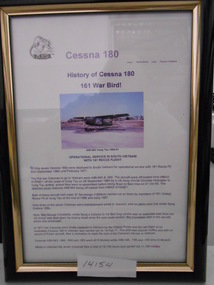
Document, History of Cessna 180 - 161 War Bird
... History of Cessna 180 - 161 War Bird...Documented History of 161 Recce Flt Cessna 180 History of Cessna 180 - 161 War Bird Document Document ...Black Framed document. Documented History of 161 Recce Flt Cessna 180framed document, cessna 180, 161 reconnaissance flight -
 Flagstaff Hill Maritime Museum and Village
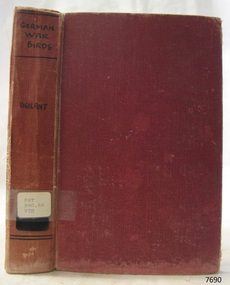
Book, German War Birds
... German War Birds Author: Vigilante Publisher: John Hamilton Date: 1933...Warrnambool Shipwrecked-coast Flagstaff-Hill Flagstaff-Hill-Maritime-Museum Maritime-Museum Shipwreck-coast Flagstaff-Hill-Maritime-Village Shipwrecked-artefact Book Pattison Collection Warrnambool Library Warrnambool Mechanics’ Institute Ralph Eric Pattison Corangamite Regional Library Service Warrnambool City Librarian Mechanics’ Institute Library Victorian Library Board Warrnambool books and records Warrnambool Children’s Library Great Ocean Road German War Birds Vigilante Label on spine cover with typed text PAT 940.44 VIG Pastedown front endpaper has sticker from Warrnambool Public Library coveered by a sticker from Corangamite Regional Library Service German War Birds Author: Vigilante Publisher: John Hamilton Date: 1933 German War Birds Book ...This item is from the ‘Pattison Collection’, a collection of books and records that was originally owned by the Warrnambool Mechanics’ Institute, which was founded in Warrnambool in 1853. By 1886 the Warrnambool Mechanics’ Institute (WMI) had grown to have a Library, Museum and Fine Arts Gallery, with a collection of “… choice productions of art, and valuable specimens in almost every branch and many wonderful national curiosities are now to be seen there, including historic relics of the town and district.” It later included a School of Design. Although it was very well patronised, the lack of financial support led the WMI in 1911 to ask the City Council to take it over. In 1935 Ralph Pattison was appointed as City Librarian to establish and organise the Warrnambool Library as it was then called. When the WMI building was pulled down in 1963 a new civic building was erected on the site and the new Warrnambool Library, on behalf of the City Council, took over all the holdings of the WMI. At this time some of the items were separated and identified as the ‘Pattison Collection’, named after Ralph Pattison. Eventually the components of the WMI were distributed from the Warrnambool Library to various places, including the Art Gallery, Historical Society and Flagstaff Hill. Later some were even distributed to other regional branches of Corangamite Regional Library and passed to and fro. It is difficult now to trace just where all of the items have ended up. The books at Flagstaff Hill Maritime Village generally display stamps and markings from Pattison as well as a variety of other institutions including the Mechanics’ Institute itself. RALPH ERIC PATTISON Ralph Eric Pattison was born in Rockhampton, Queensland, in 1891. He married Maude Swan from Warrnambool in 1920 and they set up home in Warrnambool. In 1935 Pattison accepted a position as City Librarian for the Warrnambool City Council. His huge challenge was to make a functional library within two rooms of the Mechanics’ Institute. He tirelessly cleaned, cleared and sorted a disarrayed collection of old books, jars of preserved specimens and other items reserved for exhibition in the city’s museum. He developed and updated the library with a wide variety of books for all tastes, including reference books for students; a difficult task to fulfil during the years following the Depression. He converted all of the lower area of the building into a library, reference room and reading room for members and the public. The books were sorted and stored using a cataloguing and card index system that he had developed himself. He also prepared the upper floor of the building and established the Art Gallery and later the Museum, a place to exhibit the many old relics that had been stored for years for this purpose. One of the treasures he found was a beautiful ancient clock, which he repaired, restored and enjoyed using in his office during the years of his service there. Ralph Pattison was described as “a meticulous gentleman whose punctuality, floorless courtesy and distinctive neat dress were hallmarks of his character, and ‘his’ clock controlled his daily routine, and his opening and closing of the library’s large heavy doors to the minute.” Pattison took leave during 1942 to 1945 to serve in the Royal Australian Navy, Volunteer Reserve as Lieutenant. A few years later he converted one of the Museum’s rooms into a Children’s Library, stocking it with suitable books for the younger generation. This was an instant success. In the 1950’s he had the honour of being appointed to the Victorian Library Board and received more inspiration from the monthly conferences in Melbourne. He was sadly retired in 1959 after over 23 years of service, due to the fact that he had gone over the working age of council officers. However he continued to take a very keen interest in the continual development of the Library until his death in 1969. The Pattison Collection, along with other items at Flagstaff Hill Maritime Village, was originally part of the Warrnambool Mechanics' Institute’s collection. The Warrnambool Mechanics’ Institute Collection is primarily significant in its totality, rather than for the individual objects it contains. Its contents are highly representative of the development of Mechanics' Institute libraries across Australia, particularly Victoria. A diversity of publications and themes has been amassed, and these provide clues to our understanding of the nature of and changes in the reading habits of Victorians from the 1850s to the middle of the 20th century. The collection also highlights the Warrnambool community’s commitment to the Mechanics’ Institute, reading, literacy and learning in the regions, and proves that access to knowledge was not impeded by distance. These items help to provide a more complete picture of our community’s ideals and aspirations. The Warrnambool Mechanics Institute book collection has historical and social significance for its strong association with the Mechanics Institute movement and the important role it played in the intellectual, cultural and social development of people throughout the latter part of the nineteenth century and the early twentieth century. The collection of books is a rare example of an early lending library and its significance is enhanced by the survival of an original collection of many volumes. The Warrnambool Mechanics' Institute’s publication collection is of both local and state significance. German War Birds Author: Vigilante Publisher: John Hamilton Date: 1933Label on spine cover with typed text PAT 940.44 VIG Pastedown front endpaper has sticker from Warrnambool Public Library coveered by a sticker from Corangamite Regional Library Servicewarrnambool, shipwrecked-coast, flagstaff-hill, flagstaff-hill-maritime-museum, maritime-museum, shipwreck-coast, flagstaff-hill-maritime-village, shipwrecked-artefact, book, pattison collection, warrnambool library, warrnambool mechanics’ institute, ralph eric pattison, corangamite regional library service, warrnambool city librarian, mechanics’ institute library, victorian library board, warrnambool books and records, warrnambool children’s library, great ocean road, german war birds, vigilante -
 Moorabbin Air Museum
Book - General aviation, Earlybird The Story of Phil Lightband
... ...War bird...General aviation The child bird Air born The helmet speaks Solo Old enough Dancing Discipline Crossroads War bird Grounded Sea gulls The silver blue bird First leg Bogged Foreign skies Winged Jail birds Wings clipped Bikes & prams Phoenix Between two worids Amphibians Rainmakers Biography of NZ pilot Phil Lightbrand & his involvement in NZ general aviation, circa 1996 Earlybird The Story of Phil Lightband Book General aviation ...Biography of NZ pilot Phil Lightbrand & his involvement in NZ general aviation, circa 1996non-fictionBiography of NZ pilot Phil Lightbrand & his involvement in NZ general aviation, circa 1996the child bird, air born, the helmet speaks, solo, old enough, dancing, discipline, crossroads, war bird, grounded, sea gulls, the silver blue bird, first leg, bogged, foreign skies, winged, jail birds, wings clipped, bikes & prams, phoenix, between two worids, amphibians, rainmakers -
Moorabbin Air Museum
Document (item) - Miscellaneous items See list under "Description"
... Magazine February, 2013 Aeroplane Monthly mag. Magazine War Birds of Australia & New Zealand 2010. Magazine April, 1991 Australian Aviation Magazine War Birds of Australia & New Zealand 2009. ...Magazine February, 2013 Aeroplane Monthly mag. Magazine War Birds of Australia & New Zealand 2010. Magazine April, 1991 Australian Aviation Magazine War Birds of Australia & New Zealand 2009. ... -
 Bendigo Historical Society Inc.
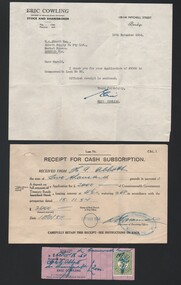
Document - ABBOTT COLLECTION: CORRESPONDENCE, 1920 - 1960
... Abbott, Sloman & Mogg, accountants; Commercial Travellers Club; Charles Sumner Bird, Scotts Hotel. Letters written in approx. 1940, mention of war in Charles Sumner Bird's letter....Abbott, Sloman & Mogg, accountants; Commercial Travellers Club; Charles Sumner Bird, Scotts Hotel. Letters written in approx. 1940, mention of war in Charles Sumner Bird's letter. ...A collection of Ten letters referring to the Abbott Company including share receipts, bond listings and a letter referring to the scalebuoy. These have been numbered 2402.228.1 - 228.10, Eric Cowling, sharebroker, H.A. Abbott, ,Sandhurst Trustees, RHS Abbott estate, H.A. Abbott, Sloman & Mogg, accountants; Commercial Travellers Club; Charles Sumner Bird, Scotts Hotel. Letters written in approx. 1940, mention of war in Charles Sumner Bird's letter.organization, business, abbotts, r.h.s. abbott, abbott company, scalebuoy -
 Eltham District Historical Society Inc
Book, Jenny Brown et al, Out of the Mist; Osborne Peninsula, 2024
... Contents: Welcome: The landform: The River: Aboriginal occupation: The Miners: North Warrandyte :The Subdivision: The Lowes: The Osbornes: The Last Osborne: The Elders: The Relics: Dray Track: Water Wheel"Kauri Plaque: River track: Pines: Windmill Creek Bridge: The Koornong School: The Houses" Man Cave: MidCentury Classic: Enduring Original" Masterwork: The Muddies: The State Park: The Saving of Koornong Reserve: The Landcare Story: Flora and Fauna: The Vulnerable, Endangered and threatened: Birds: Mammals: "Waring" the wombat: Reptiles: Fish: Invertebrates: Flora: Fire. ...Contents: Welcome: The landform: The River: Aboriginal occupation: The Miners: North Warrandyte :The Subdivision: The Lowes: The Osbornes: The Last Osborne: The Elders: The Relics: Dray Track: Water Wheel"Kauri Plaque: River track: Pines: Windmill Creek Bridge: The Koornong School: The Houses" Man Cave: MidCentury Classic: Enduring Original" Masterwork: The Muddies: The State Park: The Saving of Koornong Reserve: The Landcare Story: Flora and Fauna: The Vulnerable, Endangered and threatened: Birds: Mammals: "Waring" the wombat: Reptiles: Fish: Invertebrates: Flora: Fire. ...The Osborne Peninsula on the Yarra River at Warrandyte accommodates a limited number of properties and residents (70 households). The area is rich in geology and ecology, and an unusually rich endowment of human, built and creative history. Contents: Welcome: The landform: The River: Aboriginal occupation: The Miners: North Warrandyte :The Subdivision: The Lowes: The Osbornes: The Last Osborne: The Elders: The Relics: Dray Track: Water Wheel"Kauri Plaque: River track: Pines: Windmill Creek Bridge: The Koornong School: The Houses" Man Cave: MidCentury Classic: Enduring Original" Masterwork: The Muddies: The State Park: The Saving of Koornong Reserve: The Landcare Story: Flora and Fauna: The Vulnerable, Endangered and threatened: Birds: Mammals: "Waring" the wombat: Reptiles: Fish: Invertebrates: Flora: Fire. Published by the North Warrandyte (Osborne Peninsula) Landcare Group. Includes photos from EDHS collection.64 p. : ill., map ; 29.7 x 21 cm. (2 copies)yarra river, birrarung, dray track, fauna, geology, houses, indigenous history, koornong reserve, koornong school, lowe family, mining, mudbrick houses, north warrandyte, osborne family, warrandyte state park, water wheel, north warrandyte (osborne peninsula) landcare group, osborne peninsula -
 Federation University Historical Collection
Book, Victoria Education Gazette and Teachers' Aid, 1911-1919, 1910-1919
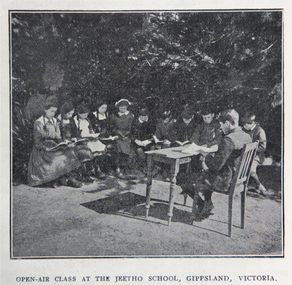
... war one...memorials...alfred williams...exploration and settlement...cadets...australian naval college...bernard o;dowd...birds...swimming...drawingempire league...eucalypts...paper in history...forestry...arbor day...identification of trees...forestrey museums...fiji...gravel hill school band...horticulture...hygiene...gould league of bird...Larkin, Ralph Smith, Philip Ormsby), school rolls of honour, Swimming Instructors at Queenscliff, The Southern Sky, Map of the North Sea and its Littorals, Easter School of Horticulture at Oakleigh, Map of the Eastern Front, Map of Mesopotamia, Map of the War Area in the Egyptian Campaign, leeches for the Melbourne Hospital .7) 1917 - Swimming and Life-Saving, Childre's FLower Day, Education Department's War Relief Fund, State War Council, Horticulture, Bird Day, Swimming, Growing Chicory at Cowes Images - Teachers killed during World War One (G.M. ...Larkin, Ralph Smith, Philip Ormsby), school rolls of honour, Swimming Instructors at Queenscliff, The Southern Sky, Map of the North Sea and its Littorals, Easter School of Horticulture at Oakleigh, Map of the Eastern Front, Map of Mesopotamia, Map of the War Area in the Egyptian Campaign, leeches for the Melbourne Hospital .7) 1917 - Swimming and Life-Saving, Childre's FLower Day, Education Department's War Relief Fund, State War Council, Horticulture, Bird Day, Swimming, Growing Chicory at Cowes Images - Teachers killed during World War One (G.M. ...Black hard covered book with red spine, holding Victorian Education Gazettes for one calendar year. .1) 1910 .2) 1912 .3) 1911 .4) 1914 .5) 1918 Images: Open Air Classroom Black Rock; Open Air Classroom, Jeetho, Gippsland; Open Air Nurses bedroom, Mildura; Gym at Canterbury School ; Babies and Nurses at Melbourne Foundling Hospital; Camp at Portland; Alexander Peacock Opens a Melbourne School; Unveiling Major Mitchell Memorial at Mt Arapiles; Agricultural Plot; School Interior; Swimming Drill; Graham Dux Prize Board; Bathing Place; Classroom with blackboard and pictures; Major Mitchell's Map; Melbourne, Derbyshire; Market Place Melbourne; The Blackwood; World War One Send-off at The Athenaeum; Scarsdale Old Boy's logo; Sloyd articles for the Field Hospital; World War One; Gifts for Transport to the Wharf; soldiers; ANZAC Day; ANZAC Day Medalion .5) 1915: Education Department's War Relief Fund, William Park obituary, Closer Settlement Act 1912, Agriculture, needlework, Swimming and Life Saving, explorers, Gregory Blaxland, Matthew Flinders, Composition, Geography, potatoes, onions, gardens, Needlework for Infants, Iona and Staffa, Trained Primary Teacher's Course, Electricity, Electrical Technology, hygiene, Arbour Day, Horticulture, Wattle Day, Bird Day, Technical Schools, Landing at Gaba Tepe, Evils of Alcohol, Old Boys of Scarsdale, Belgium, Teachers' College Images: The British at War, The Sonnet, History and Patriotism, Male Swimming Teachers Summer School at Geelong, Women Swimming Teachers at Port Fairy, Buln Buln State School, Burwood East State School, needlework plans, methods of Rescue and Resucitation. plan of the journey of Gregory Blaxland, Macquarie House, teachers killed (William Ross Hoggart, Stanley Robert Close, William Roy Hodgson, Campbell McDiarmid Peter, William Henry Dawkins, William Hugh Hamilton, Frederick McRae Neal, Vernon Brookes, Frank J. Olle, Alfred J. Collins, Ernest R. Fairlie, William J. McLaren, A.E. Smith, Thomas Patton, Francis W. Kemp, Frederick G. Hall, Rupert O. Hepburn, Woolston J. Govan), Frederick Harold Tubb VC, Botanic Gardens Red Gum, Shelter Pavillions, Head of Wheat, Australian Commonwealth Flag, Iona Cathedral, Drawing exercises, ANZAC Madallion, School Rolls of Honor .6) 1916 - Nature Study, war relief, school gardening, horticulture, singing class, geography of the war, School Rolls of Honour, Ponsonby Carew-Smyth, Astronomy, ANZAC Day, Empire Day, Arbor Day, "Some Suul of Goodness in Things Evil" by Frank Tate, War Relief Gardeners' League, ANZAC Day medallion, Solar System, Abolition of German Schools in Victoria, ANZAC Avenues, avenues of honour, Geography of the War: The West, War relief and handwork, Victorian State Schools Horticultural Society, Patrick Maloney obituary, formalin lamps, Victoria League of Victoria, Wonwondah East Roll of Honor Images - Teachers killed (John Clarke, A.C.H. Jackson, Alexander Robertson, Noel Gambetta, Ralp E. Leyland, Laurance J. Woodruff, Walter E. Cass, Percy D. Moncur, Thomas M. Carmichael, Edward G. Brain, Reginald N.F. Woods, George E. James, William Colvin, David Dobson, Stanley L. Robinson, Charles Allen, G.E. James, H.F. Curnow, Franl L. Cousins, James R. Thompson, Henry H. Campbell, George E. Read, Ernest D. Morshead, Wilfred S. Merlin, Henry R. Wright, George B. Webb, Noel Nicholas, David H. Thomas, Charles A. Levens, Thomas R. Fenner, John M. Daniell, P.J. Larkin, Ralph Smith, Philip Ormsby), school rolls of honour, Swimming Instructors at Queenscliff, The Southern Sky, Map of the North Sea and its Littorals, Easter School of Horticulture at Oakleigh, Map of the Eastern Front, Map of Mesopotamia, Map of the War Area in the Egyptian Campaign, leeches for the Melbourne Hospital .7) 1917 - Swimming and Life-Saving, Childre's FLower Day, Education Department's War Relief Fund, State War Council, Horticulture, Bird Day, Swimming, Growing Chicory at Cowes Images - Teachers killed during World War One (G.M. Nicholas, William C.W. Spencer, J.W.C. Profitt, Ivon C. Bromilow, John Colwell, Robert W. Campbell, Arthur P. Bourchier, Francid G. Houston, Claude N. Harrison, Edgar Williams, Leslie A. Stevens, Charles E. W. Chester, Stanley R. Green, Walter Baker, Arthur G. Scott, Harry L. Swinburne, Horace W. Brown, Arnold Bretherton, Edward W. Jenkins Aubrey Liddelow, Ewen A. Cameron, Edmund R. Lyall, John H. Martin, Harry Bell, Frank L. Nicholls, Melville R. Hughes, Edwin W. Hauser, Walter S. Filmer, Walter G. Barlow, Henry A. Donaldson, Edward H. Jones, Walter W. Raw, Alfred W. Dean, Wiliam Lea, Frederick G. Drury, J.T. Richards, Norman G. Pelton, Lance-Corporal Doran, Kenneth F. McKenzie, William F. Robertson, Wiliam Jarrott, Norman Graham, George G. Paul, Victor Green, Arthur William Rennie, Alfred J. Glendinning, Robert B. Liston, Eward P. Toll, George Jones, Errol E. Rodda, Christian P. Christensen, Charles F. Sydes, H.G. Clements, Norman C. Fricker, J.M. Romeo. Eric N. Lear, Thomas J. Bartley, Norval Birrell, Frederick H. Tubb. J.T. Hamilton Aram, Arthur Wilcock, William M. Conroy, Alex. H. Miller, Patrick J. Cunningham, Charles S. Mitchell, John R. Maddern, James Roadknight, Harry Arundel, Jack C. McKellar, duncan M. McKellar, George S. Manfield, Edgar C. Holmes, George A. Young, Raymond A. Gardiner, William B. Bell, William Opie, George R. Scott, Richard V.B. Vine, Herbery S. Marshall, Hugh St Omer Dentry, George B. Fullerton, Harry Oulton, Iva F. Morieson), School Honor Books, Drawing, Presentation of 30,000 pounds to the British Red Cross at Melbourne Town Hall .8) 1918 .9) 1919 - Photographs of World War One soldiers from the Education Department, Margaret Montgomery Memorial, 1918 Act relating to State School Teachers, State Scolarships, Victorian State Schools' Horticultural Society, Pneumonic Influenza, Spanish Flu, epedemic, swimming and life savinfJunior cadet training, vacancies in Fiji, School Committees, Arbor Day, Arbour Day, Henry Harding of Yinnar, Planting Trees and Shrubs, Juvenile Crime, The use of 'Get', Soldier-Teachers from Overseas in Congress London, Australia's Effort in the War, Military, Working Bees, Tree Planting, fence building, Welcoming Home a Returned Soldier, Avenue of Honour planting, Discipline, Unveiling an Honor Board, School gymnasium, school tennis court, E. E. Crogger grave at Aldershot, The School Honor Book. War Relief Fund, Commonwealth War Record, Caulfield Military Hosptial, ANZAC Day Pilgrimage, Jimmie Panikin, Donald Fraser, Arthur Mee, Card Sun Dial, Balboa Day in Honolulu, William Hamilton, Alfred Jackson, The Backward Child, Flies, Language Teaching and Learning, Spelling, The Education of the Adolescent, victorian education gazette, education gazette and teachers' aid, sloyd, william a. cavanagh, james i froebel, school, education, world war one, memorials, alfred williams, exploration and settlement, cadets, australian naval college, bernard o;dowd, birds, swimming, drawingempire league, eucalypts, paper in history, forestry, arbor day, identification of trees, forestrey museums, fiji, gravel hill school band, horticulture, hygiene, gould league of bird lovers, life saving, la perouse, bandin, j. holland, w. hamilton, charles sturt, principles of archimedes, james holland, william hamilton, scarsdale old boys' reunion, foundling home melbourne, montessori education, open air schools, james hughes, marie corelli, flinders sydney harbour, major mitchell's map, tooth brushing, r.h.s. bailey -
 Flagstaff Hill Maritime Museum and Village
Container - Tin, Kiwi Shoe Polish Manufacture, 1940s
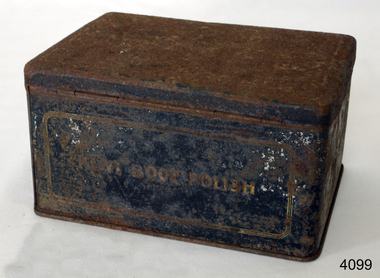
... The polish was developed in Australia by William Ramsay who named it Kiwi after the flightless bird endemic to New Zealand, the home country of his wife, Annie Elizabeth Meek Ramsay. Its success in Australia expanded overseas when it was adopted by both the British and American armies in World War I. ...The polish was developed in Australia by William Ramsay who named it Kiwi after the flightless bird endemic to New Zealand, the home country of his wife, Annie Elizabeth Meek Ramsay. Its success in Australia expanded overseas when it was adopted by both the British and American armies in World War I. ...The polish was developed in Australia by William Ramsay who named it Kiwi after the flightless bird endemic to New Zealand, the home country of his wife, Annie Elizabeth Meek Ramsay. Its success in Australia expanded overseas when it was adopted by both the British and American armies in World War I. In the UK, Kiwi was for many years manufactured at its British headquarters in Ealing (Brumwell Road, London W5 1DT). From here the factory manufactured for the UK market and exported the Kiwi brand too much of Europe and the Middle East. In the mid-1970s, as part of a major streamlining, the UK factory was closed with production switched to France. The UK operation moved to Surrey at Yately becoming, effectively, a sales and marketing office, with distribution contracted to a third party. In 1980, production for the UK market moved back to the UK and was housed in a factory near Huddersfield. The UK head office was relocated to Maidstone, Kent, where Kiwi had other product interests. Following the global merger with Nicholas Laboratories, the UK head office was again relocated to Slough at the Nicholas building on Bath Road.A significant product as Kiwi is an Australian brand name of shoe polish, first launched and sold in Australia in 1906 and as of 2005 sold in almost 180 countries. Previously owned by the Sara Lee Corporation since 1984, it was sold in 2011 to S. C. Johnson. It is the dominant shoe polish in some countries, including the United Kingdom and the United States, where it has about two thirds of the market. In Malaysia and Singapore, Kiwi has become such a household brand for a shoe polish that the word "kiwi" has been genericized into a verb in the Malay language, meaning "to polish one's shoes".Metal cleaning outfit of Kiwi boot polish brush, scraper, & polish missingKiwi Boot Polish to front of containerflagstaff hill, warrnambool, shipwrecked-coast, flagstaff-hill, flagstaff-hill-maritime-museum, maritime-museum, shipwreck-coast, flagstaff-hill-maritime-village -
 Mission to Seafarers Victoria
Photograph - Framed montage, Arthouse - Picture Framing & Gallery, Noli Me Tangere, 2013
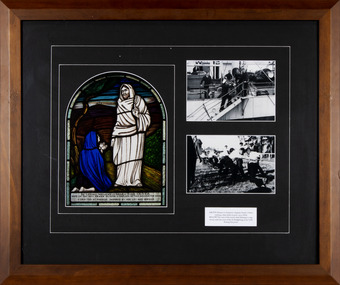
... bird oliver (nee good)...padre frank leslie oliver...picnic...tug-of-war...This frame is showcasing the memorial window to Moira Bird Oliver, wife of Padre Oliver , a photograph of Padre Oliver listing a ship and a photograph of sailors playing tug-of-war during a picnic....This frame is showcasing the memorial window to Moira Bird Oliver, wife of Padre Oliver , a photograph of Padre Oliver listing a ship and a photograph of sailors playing tug-of-war during a picnic. ...A GLOBAL PERSPECTIVE Before the increase of air transport, everything that arrived or departed from Australia did so via the ports and wharves. The Mission to Seafarersis not a Victorian initiative, but rather a global network that currently operates in over 260 ports worldwide, assisting over 1.3 million seafaring men and women each year. The importance of the Mission’s role is demonstrated in the Chaplain’s Report 1947, which notes that ships and their crews are: “...inextricably linked with the well-being of Australian industrial and economic life... This, in turn, means that you cannot escape some share in responsibility for their welfare.” This window, titled ‘Noli Me Tangere’, was installed in memoriam of Moira Oliver, the wife of the Reverend Frank Oliver, chaplain at the Mission 1930-60, and whose dedication in life and service to the welfare of seafarers was inspirational to many.Reflections of the Sea was an exhibition of 10 framed montage of photographs from the mission's archive collection showcasing 10 stained glass windows from the St Peter chapel. This exhibition curated by Georgia Melville and Catherine McLay, and funded by PROV and Creative Victoria, was displayed in the World Trade Centre Wharf Gallery in June July 2013 and toured to Queenscliff Maritime Museum. The photographs of the windows were taken by scientific photographer Justine M. Philip. This frame is showcasing the memorial window to Moira Bird Oliver, wife of Padre Oliver , a photograph of Padre Oliver listing a ship and a photograph of sailors playing tug-of-war during a picnic.Framed and mounted on black cardboard of black and white and colour reproductions from the MTSV collection for the exhibition Reflections of the Sea with brief label signageon label: ABOVE: Mission to Seafarers' chaplain Frank L Oliver, visiting a ship whilst in port, c1950s BELOW: The crew of the motor ship Nyhaugin a tug-of-war with the crew of the SS Madgeburg at the 1926 Boxing Day picnicreflections of the sea, georgia melville, exhibition, 2013, world trade centre, wtc, creative victoria, prov, mission to seafarers, stained glass windows, justine m. philip, moira bird oliver, moira bird oliver (nee good), padre frank leslie oliver, picnic, tug-of-war, flinders street, catherine mclay, arthouse -
 Federation University Historical Collection
Book, Victoria Education Gazette and Teachers' Aid, 1921-1930, 1921-1930
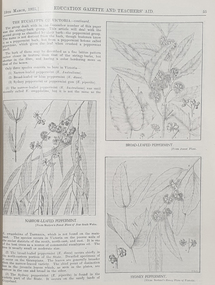
... Stevens Obituary, Victorian Teachers in England Images: Swimming and Life-Saving Medallion .3) Swimming and Lifesaving, Bronze medallion, Victoria Leage of Victori, War Savings Stamps, Rural School Sytem of Victoria, .4) War Relief, Talbot Colony for Epileptics Masonmeadows, Discipline New and Old (Percy Samson), Soldier teachers, Preservation of Australian Birds, Arbor Day, Jubilee of Free Education, Teaching Geography, Poery in Schools, School Committees, Shelter Pavilion, Mysia Memorial School, Clovers, Jubilee Exhibition, Domestic Arts, Louis Pasteur, .5) Victoria League of Victoria, An Endowment Scheme (Pine Plantations), School Endowment Plantations, Protecting our trees by Owen Jones,. ...Stevens Obituary, Victorian Teachers in England Images: Swimming and Life-Saving Medallion .3) Swimming and Lifesaving, Bronze medallion, Victoria Leage of Victori, War Savings Stamps, Rural School Sytem of Victoria, .4) War Relief, Talbot Colony for Epileptics Masonmeadows, Discipline New and Old (Percy Samson), Soldier teachers, Preservation of Australian Birds, Arbor Day, Jubilee of Free Education, Teaching Geography, Poery in Schools, School Committees, Shelter Pavilion, Mysia Memorial School, Clovers, Jubilee Exhibition, Domestic Arts, Louis Pasteur, .5) Victoria League of Victoria, An Endowment Scheme (Pine Plantations), School Endowment Plantations, Protecting our trees by Owen Jones,. ...The Victoria Education Gazette and Teachers' Aid was published for Victoria's teachers and was sent to all school on the state. In 1920 The Ballarat School of Mines had donated 136 pounds 14 shillings and 10 pence to the Victorian Education Department's War Relief Account, and the Ballarat Junior Technical School had donated 10 pounds 6 shillings and 10 pence.Ten black hard covered volumes with red tape spine, covering 1921 to 1930. The gazettes include Education Department appointments, transfers, resignations and retirements, vacancies, notices, queries, notices of books, examination papers, original articles, lesson plans, suggestions for lessons, drawing, obituaries, notes on nature study, mathematics, music, sloyd woodwork, English grammar, Victorian State School Swimming Clubs, Geography, penmanship, science, History, Latin, Geography, The School Garden, horticulture, singing, World War One; ANZAC Day, lifesaving, Astronomy, Empire Day, ANZAC Buffet London, Victorian Education Department's War Relief Fund .1) 1928. Articles include: New Caledonia, Swimming and Lifesaving, School forestry, a visit to the pyramids, Exploration of Gippsland, paul de Strezelecki, Angus McMillan, Villers Bretonneux Memorial School, American Black Walnut, Red Gum, Messmate Stringybark, The Great Barrier Reef, retirement of Frank Tate, Stawell High School, Report on Some Aspects of Education in the United States, Jubilee Education Exhibition , New School Readers; measured Drawing Images include: Macarthur Street School's Plantation, Maryborough School Plantation, Pinus Insignis (Radiata) ready for Milling, Creswick State Forest, Metalwork, Daylesford Pine Plantation four years old, Henry Harvey (art Inspector); Omeo School Endowment Plantation; Frank Tate; Stawell High School Drawings From Casts; Lake Tyers School Endowment Plantation, measured drawing, Thomas H. Stuart, GEorge Swinburne. J.R. Tantham-Fryer, Cookery Class, John Edward Thomas. .3) War Savings Stampsm Swimming and Life-saving, Teh Rural School System of Victoria, Imaginative Composition, ANZAC Day, Retardation, Teh Bright Child Hudson Hard Obituary, Leeches, Relief for Distress in Europe, Dental, Teachers' Library, History of Portarlington, J.E. Stevens Obituary, Victorian Teachers in England Images: Swimming and Life-Saving Medallion .3) Swimming and Lifesaving, Bronze medallion, Victoria Leage of Victori, War Savings Stamps, Rural School Sytem of Victoria, .4) War Relief, Talbot Colony for Epileptics Masonmeadows, Discipline New and Old (Percy Samson), Soldier teachers, Preservation of Australian Birds, Arbor Day, Jubilee of Free Education, Teaching Geography, Poery in Schools, School Committees, Shelter Pavilion, Mysia Memorial School, Clovers, Jubilee Exhibition, Domestic Arts, Louis Pasteur, .5) Victoria League of Victoria, An Endowment Scheme (Pine Plantations), School Endowment Plantations, Protecting our trees by Owen Jones,. Victorian State Schools Horticultural Society, Sloyd Woodwork, School Forestry, Thomas Brodribb Obituary and portrait, Imperial Education Conference London, school Management and Method, School plantations, Eucalypt plantations in the Bendix and Heathcote District, Junior Red Cross, Jubilee Education Exhibition, Gould League Competitions, handwriting, The School Magazine, Frank Tate in London, Victorian beetles, Council of Public Education, Villers Bretonneux and its new School, Death of Samuel Summons, Woodwork Summer School, Swimming, Japanese Relief Fund, Retirement of John Cross, reminiscences of the Late Mr Albert Mattingley .6) Thomas H. Trengrove and the Villers Bretonneux School hall and pilaster carvings, forestry, visit of Maryborough teachers to Ballarat Water Reserves, noxious weeds, relief for Distressed Europe, The Dalton Plan, Empire Day, Retirement of Mr Fussell, Centenary of Hume and Hovell Expedition, League of Kindness, Effective Nature Study in a Rural School, Some Facts About Paper and their Bearing Upon School Plantations, Council of the Working Men's College Melbourne, Maria Montessori, University Vacation School, Horticulture in State Schools, An Informal Chat About French Schools (C.R. McRae), The Vacation School, Johann Heinrich Pestalozzi, Inspector's Report on a 5th-class School, Can Children Write Verse, John Adams, Victoria League of Victoria, R.F. Toutcher, Sir James Barbie's Address to High-School Girls, Impressions of a High School Teacher Abroad (R.D. Collman), The Spirit of the School Plantation Scheme, Monument of the Late Mr and Mrs A.T. Sharp at Box Hill Cemetery, The Teaching of Geography, The Treatment of Poetry in Class, Two Difficult Arithmetic Lessons, Location of Principal Australian Timbers, Dr John Smyth, Stammering and its Influence on Education, Wireless Broadcasting as an Educational Medium, Boys School at Villers Brettonneux, The New School at Villers Brettonneux, Bird Day, Messmate or Stringybark, What Every Woman Knows, Director's Report on Denmark .7)1925 . Includes: School Forestry, horticulture, J.H. Betheras retirement, Ivanhoe School, Coburg School, Moorabool Junior Technical School, Villers Bretonneux School hall and pilaster carvings, Francis Ormond, William Charles Kernot, Corsican Pnes at Creswick, Ballarat High School Plantation, Workin Men's College, RMIT, Naorrow LEafed Peppermint, Education and World Peace, Eucalypts of Victoria, John C. Eccles, Blue Gum. Manners, Giving the Poorly Nourished Boy A Chance, Native Ferns, Marybourough Technical School, Memorial School at Villers-Brettonneux .8) Experimental Plots in Country Schools (W.W. Gay), Villers Bretonneaux and its Memorial School. nominated classes for Art Teachers, The Teachers Act 1925, Horsham High School, Richmond Technical School, Farewell to Messrs C.R. Long and Ponsonby Carew-Smyth, Frank Tate, Phyiscal Training, Arbor Day, ANZAC Day, Shakespeare Day,Bendigo Junior Techncial School, Musical Appreciation, Motor Dental Unit, School Camps, Education Act of 1872: Mr Angus McKay's Part (George Mackay), A Bush Fire Experience (Irene Stable), Black Sunday, Californian Red Pine, Women's Education in America, Farewell to Lord and Lady Stradbroke, Grevilia Robusta, Silky Oak, Redwood, John E. Grant, The Need for Research (Donald Clark), Junior Drama, Ida D. Marshall, John Pounds, Australian Books, Fish Creek School, State Boundaries, History in the Curriculum, Ceramic Art in Australia (Percy E. Everett), Choice of School Songs, Tasmanian Beech, Should History be Taught on a National or an International Basis, Hydatid Disease, James Holland Obituary, Florrie Hodges, Queensland Maple, Post Bushfire Ruins at Fumina, Arbor Day at Fumina, Queensland Rosewood, Omeo Endowment Plantation, Bird Day, Junior Red Cross, Pioneers' Day, Edward Henty, Junior Technical Schools, Yellow Pine, History and Progress of Needlework, A.B.C. of Astronomy, Northumberland Mental tests, Queensland Red Cedar, Teh Globe Theatre, .9) 1927 includes The ABC of Astronomy, Atr Theatre, English Beech, Angus McMillan Art Pottery, School Singing, State Schools' Nursery, School endowment plantations, Making a Man, experimental proof of Charles's Law, John Smyth obituary and portrait, Linton Pine Planation, motivation of arithmetic, Women's Classes at Dookie, Swimming and Lifesaving, Pioneers Day, Drawing, Ballarat High School planation, biting fly, Tir-Na-N'og, John Byatt retirement and portrait, Technical Schools Conference at Daylesford, Ethel Osborne and portrait, library. Francis Thompson portrait, Adam Lindsay Gordon, Solar movement, motor transport, Liverpool Cathedral, Teh Story of the Cathedral, Bendigo School of Mines, Omeo School pine plantation, Egypt and the Nile, Self-Criticism Images include Ballarat High School Pine Plantation, Vale Park, Francis Ormond, Woking Men's College (RMIT), W.N. Kernot, A Stand of Corsican Pines at Creswick, Victoria .10) Some Remarks on the Relationship of the technical Schools to the University (Donald Clark) , Present Day Education in England , Memorial to Joseph Cornwall, Spelling, motivation, Singing, State Scholarships, Agriculture, T.W. Bothroyd, The Swimmer - A Summer School Sketch (H.H. Croll), Swimming woodwork, Farewell to Dr Sutton. ,Drowning, War Savings Movement, White Beech. George S. Browne , Example of School Honor Book, Blackwood, Optimistic teacher, Soldier settlement around Shapparton, Oral Hygiene, Cinema Machines, Basketball, Wakter M. Camble obituary, ANZAC day Pilgrimage in England, Froebel's System, Montessori Method, War Relief Fund, New Zealand Kauri Tree, Bat Tenis at a Bush School., Advice to Australian Girls, Chrysanthemums, Royal Visit, National Parks of Victoria, Maurice Copland Obituary, total eclipse of the Moon, School libraries, The teacher and the COmmunity (A.M. Barry), The Reading Lesson, Swimming and Life-saving, MElbourne Teachers' College War Memorial Windows Old Trainees War Memorial, Cultivating a Natinoal Art education gazette, school, education, teaching, teacher, world war one, school plantations, macarthur street pine plantation, school forestry, creswick state forest, anzac day, armistance celebrations, frank tate, frank tate retirement, drawing from cast, education department school readers, lake tyers pine plantation, w.n. kernot, rmit, working men's college, francis ormond, pine plantations, calenbeem park, creswick, villers-brettonneux school hall and carvings, thomas trengrove, corsican pines, creswick, pine endowment plantations, mccarthur st primary school pine plantation, ballarat high school pine plantation, vale park, mount pleasant primary school pine plantation, golden point pine plantation, angus macmillan, paul de strzelecki, gippsland, villers-bretonneaux memorial school, francis thompson, english ash, pestalozzi centenary, shakespeare day, swimming classes, clear pine, cinema in education, american black walnut, red gum, thomas wolliam bothroyd obituary, and portrait, physical training displays, teaching of spelling, ohm's law, blue gum -
 Frankston RSL Sub Branch
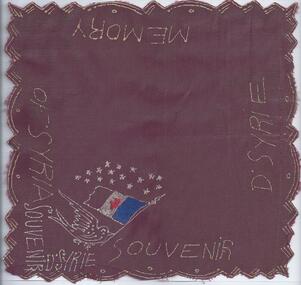
Souvenir Handkerchief
... souvenir ww2 world war 2 handkerchief syria blundell noel blundell The handkerchief is inscribed around the perimeter with the following words "MEMORY OF SYRIA" and "SOUVENIR D'SYRIE". In one corner of the square there is a bird ...Cloth handkerchief sent to family in Australia by Noel Louis Blundell, a 2nd AIF serviceman in Syria during World War 2. The handkerchief is maroon in colour and made from a square piece of silk-like cloth. The edges of the cloth have been cut in decorative pattern. The cloth has been decorated with a paint like material on one side which is gold in colour and contains some golden glitter particles.The handkerchief is inscribed around the perimeter with the following words "MEMORY OF SYRIA" and "SOUVENIR D'SYRIE". In one corner of the square there is a bird (dove?) holding a flag as it is flying over another inscription "SOUVENIR D'SYRIE". Above the flag are 17 stars. The flag is of unknown origin at this stage. souvenir, ww2, world war 2, handkerchief, syria, blundell, noel blundell -
Lara RSL Sub Branch
Book, These Eagles - Story of the RAAF at War, 1953
... Personal recounts from RAAF service personnel by way of stories, poems, cartoons, illustrations and portraits raaf air staff uboat hunters blitz air vice marshall george jones gazala no.3 squadron sorties bismark These eagles suffer us little birds to sing These Eagles - Story of the RAAF at War. Green hardcover front and back with text in black in addition to the spine. ...This volume is made up of a quick summary of the deeds of individuals and the story of a new an amazing breed of men. Most of them little more than boys.Personal recounts from RAAF service personnel by way of stories, poems, cartoons, illustrations and portraits These Eagles - Story of the RAAF at War. Green hardcover front and back with text in black in addition to the spine. A picture of the RAAF eagle is also on the front cover. Photographs, portraits, cartoons. The inside front and back have The RAAF motto and pictures of insignias and roles. These eagles suffer us little birds to singraaf, air staff, uboat hunters, blitz, air vice marshall george jones, gazala, no.3 squadron, sorties, bismark -
Lara RSL Sub Branch
Book, These Eagles - Story of the RAAF at War, 1952
... Personal recounts from RAAF service personnel by way of stories, poems, cartoons, illustrations and portraits raaf air staff uboat hunters blitz air vice marshall george jones gazala no.3 squadron sorties bismark These eagles suffer us little birds to sing These Eagles - Story of the RAAF at War. Blue hardcover front and back with text in black in addition to the spine. ...This volume is made up of a quick summary of the deeds of individuals and the story of a new an amazing breed of men. Most of them little more than boys.Personal recounts from RAAF service personnel by way of stories, poems, cartoons, illustrations and portraits These Eagles - Story of the RAAF at War. Blue hardcover front and back with text in black in addition to the spine. A picture of the RAAF eagle is also on the front cover. Photographs, portraits, cartoons. The inside front and back have The RAAF motto and pictures of insignias and roles. These eagles suffer us little birds to singraaf, air staff, uboat hunters, blitz, air vice marshall george jones, gazala, no.3 squadron, sorties, bismark -
 Lara RSL Sub Branch
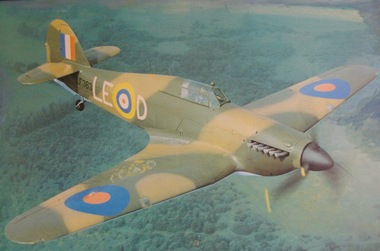
Picture Print, Hurricane, Unknown
... Harold 'Birdy' Bird-Wilson had previously been badly burned in a pre-war flying accident. ...Harold 'Birdy' Bird-Wilson had previously been badly burned in a pre-war flying accident. ...The Hawker Hurricane is a British single-seat fighter aircraft of the 1930s–40s that was designed and predominantly built by Hawker Aircraft Ltd. for service with the Royal Air Force (RAF). It was overshadowed in the public consciousness by the Supermarine Spitfire's role during Battle of Britain in 1940, but the Hurricane actually inflicted 60 percent of the losses sustained by the Luftwaffe in the engagement, and it went on to fight in all the major theatres of the Second World War. Url Hurricane.html. The Hawker Hurricane Mk.IIc - LF363, first flew on the 1st January 1944 and is believed to be the last Hurricane to enter service in the RAF. It was in service with 63 squadron and 26 squadron. After hostilities, LF363 was spared the scrap yard and used on various station flights and also appeared in films 'Angels one five', 'Reach for the Sky' and 'The Battle of Britain'. Whilst flying to Jersey in September 1991, LF363 suffered engine problems and had to be diverted to RAF Wittering but on the final approach the aircraft suffered complete engine failure and had to make an emergency landing. The pilot was saved with relative minor injuries (a broken ankle and minor burns) but the aircraft suffered severe damage. Historic Flying Limited completely rebuilt LF363 and by 1998 it was flying again as part of the B.B.M.F. LF363 currently wears the colour scheme of a Mk.I Hurricane of 17 squadron, P3878 'YB-W' which was flown by Flying Office Harold Bird-Wilson at Debden and Tangmere. Harold 'Birdy' Bird-Wilson had previously been badly burned in a pre-war flying accident. Upon his recovery he joined 17 squadron and fought through the 'Battle of France' and the 'Battle of Britain' achieving 6 confirmed kills. On 24th September 1940, 'Birdy' was shot down by Adolf Galland, his 40th 'kill', and had to bale out. 'Birdy' survived the war and when he retired from the RAF he had reached the rank of Vice Marshall and had been awarded the CBE, DSO, DFC & Bar and the AFC & Bar. British single-seat fighter aircraft manufactured by Hawker Aircraft, Ltd., in the 1930s and ’40s. The Hurricane was numerically the most important British fighter during the critical early stages of World War II, sharing victory laurels with the Supermarine Spitfire in the Battle of Britain (1940–41) and the defense of Malta (1941–42). Hurricanes served in all theatres of war where British forces were engaged. https://www.britannica.com/technology/Hurricane-airplane Framed coloured picture print on plastic sheetOn the aircraft are the markings LF 363 -
Lara RSL Sub Branch
Book, These Eagles - Story of the RAAF at War, 1953
... Personal recounts from RAAF service personnel by way of stories, poems, cartoons, illustrations and portraits RAAF air staff Uboat hunters blitz air Vice Marshall George Jones Gazala No.3 squadron sorties Bismark These eagles suffer us little birds to sing These Eagles - Story of the RAAF at War. Green hardcover front and back with text in black in addition to the spine. ...This volume is made up of a quick summary of the deeds of individuals and the story of a new an amazing breed of men. Most of them little more than boys.Personal recounts from RAAF service personnel by way of stories, poems, cartoons, illustrations and portraits These Eagles - Story of the RAAF at War. Green hardcover front and back with text in black in addition to the spine. A picture of the RAAF eagle is also on the front cover. Photographs, portraits, cartoons. The inside front and back have The RAAF motto and pictures of insignias and roles. These eagles suffer us little birds to singraaf, air staff, uboat hunters, blitz, air vice marshall george jones, gazala, no.3 squadron, sorties, bismark -
 Federation University Historical Collection
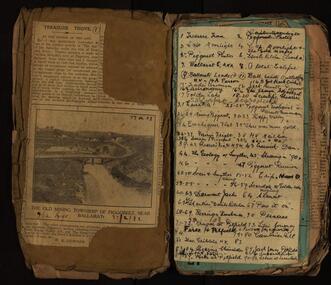
Book - Scrapbooks, William RObertson, Newsclips written by William Robertson, c1930-c1948, c1930-c1948
... war...napoleons...cambran hill...hiscocks...john winter...john jenkins...bonshaw...john bird...andrew christie mrs nimon william christie alec christie grand trunk cape clear donald mclean's alchemist co john lynch golden belt lead paddy webb annie rooney kruger hanging pitfield boer war napoleons cambran hill hiscocks john winter john jenkins bonshaw john bird nintingbool moppianum station w.h. bird david clarke william hamilton john clarke benjamin j. scott julius kleberger m.a. weatherston j.h. vaughan a. reid alfred william crow p. young george clarkson a.w. crowe william henderson claud pender a. garside mount erip alec crothers communism basalt italian gully john roberts john browne john crossthwaite patrick mcgrath newtown john boyd john bruce william irwin george hatfield d. croswaite grand trunk mine golden horn jubilee lode woady yallock springdallah fairy glen lead linton lead south berry banshee wil-o-the wisps forest creek chewton mount alexander jim crow ranges trawalla j.g. roberts carngham german lead scarsdale railway great western beaumont mine north grenville shearing piggoreet reunion scarsdale and smythesdale scarsdale to golden lake derwent jacks shanties devil's kitchen berringa bushmen perseus kruger at pitfield fires and pitfield football memories cambrian hill theo gribble jack jones pitfield risks at pitfield superstition scarsdale golden point lead outlet frenchman's lead trooper o'brogue peroni morelli lucky woman's gully william robertson piggoreet captain moonlight devil's kitchen ballarat east australian natives' association total eclipse ballarat leads joe mack cricket trade unionism jack hewitt of piggoreet astronomy golden lake scientific shearers eureka piggoreet geological piggoreet mining happy valley exchequer flat fairy's fright h.v. mailboy shearers creswick geology of smythesdale On cover: "Wm Robertson 10 Young Street Ballarat East" Small brown covered scrapbook with newsclipping written by William Robertson, and his handwritten corrections to the articles. ...Small brown covered scrapbook with newsclipping written by William Robertson, and his handwritten corrections to the articles. Newsclips include poetry and articles on: Piggoreet, Captain Moonlight, Devil's Kitchen, Ballarat East Australian Natives' Association, A Total Eclipse, Ballarat Leads, Joe Mack Cricket, Trade Unionism, Jack Hewitt of Piggoreet, Astronomy, Golden Lake, Scientific Shearers, Eureka, Piggoreet Geological, Piggoreet Mining, Happy Valley, Exchequer Flat, Fairy's Fright, H.V. Mailboy, Shearers, Creswick, Geology of Smythesdale, Shearing in the 1890s, Piggoreet reunion, Scarsdale and Smythesdale, Scarsdale to Golden Lake, Derwent Jacks, Shanties Devil's Kitchen, Berringa Bushmen, Perseus, Kruger at Pitfield, Fires and Pitfield, Football Memories, Cambrian Hill, Theo Gribble, Jack Jones Pitfield, Risks at Pitfield, Superstition, Scarsdale, death notice for William Robertson's mother.On cover: "Wm Robertson 10 Young Street Ballarat East"andrew christie, mrs nimon, william christie, alec christie, grand trunk, cape clear, donald mclean's, alchemist co, john lynch, golden belt lead, paddy webb, annie rooney, kruger hanging, pitfield, boer war, napoleons, cambran hill, hiscocks, john winter, john jenkins, bonshaw, john bird, nintingbool, moppianum station, w.h. bird, david clarke, william hamilton, john clarke, benjamin j. scott, julius kleberger, m.a. weatherston, j.h. vaughan, a. reid, alfred william crow, p. young, george clarkson, a.w. crowe, william henderson, claud pender, a. garside, mount erip, alec crothers, communism, basalt, italian gully, john roberts, john browne, john crossthwaite, patrick mcgrath, newtown, john boyd, john bruce, william irwin, george hatfield, d. croswaite, grand trunk mine, golden horn, jubilee lode, woady yallock, springdallah, fairy glen lead, linton lead, south berry, banshee, wil-o-the wisps, forest creek, chewton, mount alexander, jim crow ranges, trawalla, j.g. roberts, carngham, german lead, scarsdale railway, great western, beaumont mine, north grenville, shearing, piggoreet reunion, scarsdale and smythesdale, scarsdale to golden lake, derwent jacks, shanties, devil's kitchen, berringa bushmen, perseus, kruger at pitfield, fires and pitfield, football memories, cambrian hill, theo gribble, jack jones pitfield, risks at pitfield, superstition, scarsdale, golden point lead outlet, frenchman's lead, trooper o'brogue, peroni, morelli, lucky woman's gully, william robertson, piggoreet, captain moonlight, devil's kitchen, ballarat east australian natives' association, total eclipse, ballarat leads, joe mack cricket, trade unionism, jack hewitt of piggoreet, astronomy, golden lake, scientific shearers, eureka, piggoreet geological, piggoreet mining, happy valley, exchequer flat, fairy's fright, h.v. mailboy, shearers, creswick, geology of smythesdale -
 Greensborough Historical Society
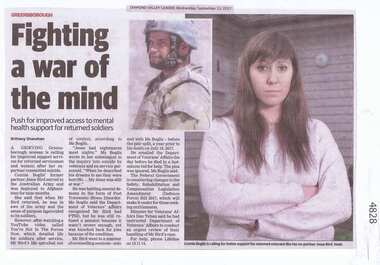
Newspaper Clipping, Diamond Valley Leader, Fighting a war of the mind, 13/09/2017
... A grieving Greensborough woman is calling for improved support services for returned servicemen and woman after her ex-partner committed suicide. greensborough returned servicemen and women post traumatic stress disorder ptsd jesse bird connie boglis News article 1 page, black text, colour image. Fighting a war of the mind Newspaper Clipping Diamond Valley Leader ...A grieving Greensborough woman is calling for improved support services for returned servicemen and woman after her ex-partner committed suicide.News article 1 page, black text, colour image.greensborough, returned servicemen and women, post traumatic stress disorder, ptsd, jesse bird, connie boglis -
 Greensborough Historical Society
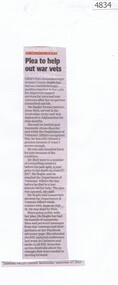
Newspaper Clipping, Diamond Valley Leader, Plea to help out war vets, 27/09/2017
... Grieving Greensborough woman Connie Boglis has had an overwhelmingly positive reaction to her calls for improved support services for returned war veterans after her ex-partner committed suicide. returned service veterans greensborough australia department of veterans affairs ptsd post traumatic stress disorder jesse bird connie boglis News article 1 page, black text. ...Grieving Greensborough woman Connie Boglis has had an overwhelmingly positive reaction to her calls for improved support services for returned war veterans after her ex-partner committed suicide.News article 1 page, black text.returned service veterans, greensborough, australia department of veterans affairs, ptsd, post traumatic stress disorder, jesse bird, connie boglis -
City of Moorabbin Historical Society (Operating the Box Cottage Museum)
Tools, spanner, Garrington 'Magpie' c1950, c1950
... birds. Early settlers were reliant on the draught horse and wagon but by the 1930's Vulcan trucks transported the produce to market and post war settlers in the Moorabbin Estates gradually purchased cars (automobiles) for transport and pleasure....birds. Early settlers were reliant on the draught horse and wagon but by the 1930's Vulcan trucks transported the produce to market and post war settlers in the Moorabbin Estates gradually purchased cars (automobiles) for transport and pleasure. ...John Garrington & Sons was founded 1837 in London as a company producing iron and steel tools, pistols, coach parts, military harness, nuts and bolts . In 1879 the business moved to Albert Works in Willenhall Road. 1912 the business was sold to F.W.Cotterill, a local nut and bolt manufacturer. F.W.Cotterill and consequently Garrington's was purchased in 1919 by G.K.N. (originally Guest, Keen and Nettlefolds). 1926 they were producing drop forged automobile tools, spanners and in 1947 'lightweight high tensile carbon steel' 'Magpie" automobile spanner. They had a lot of products named after birds. Early settlers were reliant on the draught horse and wagon but by the 1930's Vulcan trucks transported the produce to market and post war settlers in the Moorabbin Estates gradually purchased cars (automobiles) for transport and pleasure.This Garrington Tools Pty Ltd automobile spanner is typical of the type used by automobile mechanics in Moorabbin c1950A large high tensile carbon steel spanner c1950 for use in automobile repair and manufacture.GARRINGTON 'MAGPIE' tools, garrington tool company england, post world war 11 estates, moorabbin , automobile tools, automotive parts, jaguar cars pty ltd, early settlers, market gardeners, blacksmiths, tools, building equipment, moorabbin shire, bentleigh, mckinnon, highett, cheltenham,mcewan james pty ltd, melbourne, bunnings pty ltd, -
 City of Moorabbin Historical Society (Operating the Box Cottage Museum)
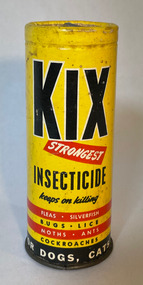
Equipment - 'KIX' Insecticide Powder, DAVID CHEMICALS PTY LTD, for dogs, cats and all animals, 20thC
... War II. The offices were located in 237 Queen Street Melbourne. Clark, King &Co Pty Ltd started business in the early 1920's and were known as the poultry food specialist. The head of the firm, Mr Clive Harrison Clark was know as a successful poultry farmer and exhibitor of prize birds, he was the secretary of the Brighton Poultry Society....War II. The offices were located in 237 Queen Street Melbourne. Clark, King &Co Pty Ltd started business in the early 1920's and were known as the poultry food specialist. The head of the firm, Mr Clive Harrison Clark was know as a successful poultry farmer and exhibitor of prize birds, he was the secretary of the Brighton Poultry Society. ...Kix was first manufactured by Clark King & Co.after World War II. The offices were located in 237 Queen Street Melbourne. Clark, King &Co Pty Ltd started business in the early 1920's and were known as the poultry food specialist. The head of the firm, Mr Clive Harrison Clark was know as a successful poultry farmer and exhibitor of prize birds, he was the secretary of the Brighton Poultry Society.KIX was used by citizens of MoorabbinA yellow heavy cardboard container with metal swivel top containing a white powder. Front: KIX - STRONGEST - INSEDTICIDE - keeps on killing - FLEAS - SILVERFISH - BUGS - LICE - MOTHS - ANTS - COCKROACHES - FOR DOGS, CATS AND ALL ANIMALS BACK: DIRECTIONS Fleas and Lice. Kix keeps on killing fleas and lice for weeks. An occasional dusting will FLEA-PROFF dogs and cats. Dust Kix on the hair of dogs commencing at the neck and ru it in with the fingers. If the dog appears irritated after treatment, it will be due to the efforts of fleas to escape and indicates both the effectiveness of Kix and the necessity of treatment. Sprinkle Kix on the head and neck of cats and rub well in. Use Kix on poultry also. In personal hygiene against fleas Kix may may dusted on underwear socks etc. Use Kix also for head lice and body lice. Silverfish, cockroaches, Bugs, Ants. Duct Kix where necessary and it will remain effective for months. These pest take some hours to die, but death is certain. Active Constituents: 5% Para Para Dichlorodiphenyltrichloroethane, 2.5% Isobornly Thiocyanoacetate. DAVID CHEMICALS PTY LTD. Clayton, Victoria Contents 1½ ozskix, insecticide, ddt, pets, moorabbin, poultry -
 Phillip Island and District Historical Society Inc.
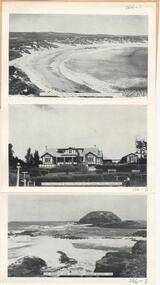
Souvenir Photographs, 1940's
... Bottcher, Private Bag, Kerang, Vic. wildlife - koala wildlife - seals summerland beach isle of wight hotel cowes phillip island war memorial cowes phillip island the cenotaph cowes phillip island the nobbies phillip island seal rocks phillip island wildlife - penguins the killara ferry cowes pier phillip island bass memorial cairn rhyll suspension bridge san remo/phillip island coastal views san remo jetty breakers at the nobbies pyramid rock wildlife - birds wildlife - mutton birds erehwon point, cowes mussell rocks cowes phillip island berry's beach phillip island lovers walk cowes the pinnacles cape woolamai the blowhole phillip island the cascades the nobbies wendy fletcher Two Souvenir Photograph folders with a total of 30 photographs. ...The two folders found in an old home in Cohuna in 2010. Sent to Mrs J. H. Bottcher, Private Bag, Kerang, Vic.Two Souvenir Photograph folders with a total of 30 photographs. One folder named "Nature's Paradise, Phillip Island. Cowes" Second folder named "Cowes Phillip Island - 18 Selected Glimpses"wildlife - koala, wildlife - seals, summerland beach, isle of wight hotel cowes phillip island, war memorial cowes phillip island, the cenotaph cowes phillip island, the nobbies phillip island, seal rocks phillip island, wildlife - penguins, the killara ferry, cowes pier phillip island, bass memorial cairn rhyll, suspension bridge san remo/phillip island, coastal views, san remo jetty, breakers at the nobbies, pyramid rock, wildlife - birds, wildlife - mutton birds, erehwon point, cowes, mussell rocks cowes phillip island, berry's beach phillip island, lovers walk cowes, the pinnacles cape woolamai, the blowhole phillip island, the cascades the nobbies, wendy fletcher -
 Phillip Island and District Historical Society Inc.
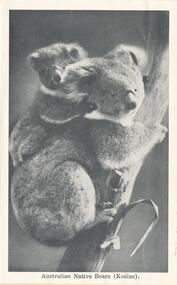
Souvenir Photographs, Valentine Publishing Co. Pty. Ltd, 1940's
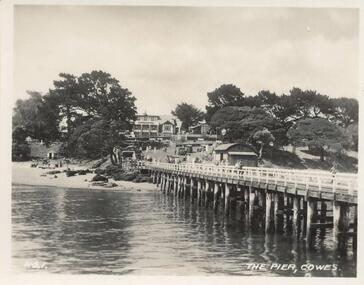
... War Memorial and Pier". 230-08. "The Pier. Cowes (Phillip Island)" 230-09. "Rocks at Cape Woolamai. Cowes (Phillip Island)." 230-10. "The Nobbies." 230-11. "Sea Birds...War Memorial and Pier". 230-08. "The Pier. Cowes (Phillip Island)" 230-09. "Rocks at Cape Woolamai. Cowes (Phillip Island)." 230-10. "The Nobbies." 230-11. "Sea Birds ...Souvenir Photographic Strip photo envelope donated by Anne LucasBlack & White photographs in a Souvenir Folder. Photos of wildlife and coastal scenes at Phillip Island.On Cover: "Cowes, Phillip Island. Photographic Souvenir" 230-01. "Australian Native Bears (Koalas)." 230-02. "Bathing scene at Cowes." 230-03. "The Pier, showing Isle of Wight Hotel." 230-04. "The Beach at Cowes." 230-05. "Seals on Seal Rock." 230-06. "The Beach, Cowes." 230-07. "War Memorial and Pier". 230-08. "The Pier. Cowes (Phillip Island)" 230-09. "Rocks at Cape Woolamai. Cowes (Phillip Island)." 230-10. "The Nobbies." 230-11. "Sea Birds at Phillip Island." 230-12. "Rocky Headland, Cape Woolamai." 230-13. "Australian Native Bears (Koalas)." 230-14. "Forrest Caves."wildlife - koalas, wildlife - sea birds, coastline cape woolamai, the nobbies phillip island, seals on seal rocks phillip island, wildlife - seals, cowes pier phillip island, cowes jetty, cowes beach phillip island, forrest caves, phillip island, seal rocks phillip island, cowes war memorial, war memorial cowes phillip island, cenotaph cowes phillip island, anne lucas -
 Phillip Island and District Historical Society Inc.
Photograph - Post Cards, 1940's/50's
... We are sure our original Donor, Anne Lucas, would also be pleased. the nobbies phillip island australian fur seals seals wildlife - seals wildlife - sea birds pyramid rock rocks at cape woolamai rocky cliffs at cape woolamai cowes war memorial the killara ferry cowes beach phillip island cowes pier phillip island forrest caves, phillip island anne lucas Each photograph has a description of the photo with a number. 231-01. ...A Collection of 12 (1 missing) photographs in a paper envelope. On the front of the envelope is the following: Valentine's Snapshots. 12 Real Photographs for Your Album. Cowes, Phillip Island. Published by The Valentine Publishing Co. Pty. Ltd., Melbourne. Photo No. 9 was originally missing but has now been supplied by James Iveson who had the complete collection. This was supplied to us on the 23/5/2020. We are always pleased when people visit VC and can add or make corrections to our entries and thank James very much. We are sure our original Donor, Anne Lucas, would also be pleased. 231-01. Black & White Photograph of the Cowes Pier looking towards Cowes with The Isle of Wight Hotel in the background. 231-02. Black & White Photograph of Forrest Caves looking out to the sea. Two people on the foreshore. 231-03. Black & White Photograph of seabirds on the coastline of Phillip Island. 231-04. Black & White Photograph of The Nobbies, Phillip Island. 231-05. Black & White Photograph of Pyramid Rock, Phillip Island. 231-06. Black & White Photograph of seals on Seal Rocks, Phillip Island. 231-07. Black & White Photograph of rocks at Cape Woolamai. 231-08. Black & White Photograph of the beach at Cowes. People and beach umbrellas - looking towards Mussell Rocks, Phillip Island. 231-09 Black & White Photograph of a Ferry arriving at the Cowes Pier loaded with people. Originally missing. 231-10. Black & White Photograph of the Killara Ferry at the Cowes Pier, Phillip Island. 231-11. Black & White Photograph looking towards the Cowes Pier. The Killara Ferry at the pier. 231-12. Black & White Photograph looking toward the Cowes Pier with the War Memorial in the foreground.Each photograph has a description of the photo with a number.the nobbies phillip island, australian fur seals, seals, wildlife - seals, wildlife - sea birds, pyramid rock, rocks at cape woolamai, rocky cliffs at cape woolamai, cowes war memorial, the killara ferry, cowes beach phillip island, cowes pier phillip island, forrest caves, phillip island, anne lucas -
 Montmorency–Eltham RSL Sub Branch
Souvenir - Framed World War 2 Embroidered Banner, WW2 Embroidered Souvenir, Estimated date 1941
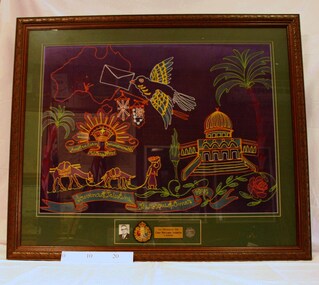
... Framed embroidered banner – a souvenir of World War Two. A multi-coloured map of Australia, a bird carrying a letter, an Australian military badge, camels and a mosque are depicted on a dark blue background. ...Framed embroidered banner – a souvenir of World War Two. A multi-coloured map of Australia, a bird carrying a letter, an Australian military badge, camels and a mosque are depicted on a dark blue background. ...Framed embroidered banner – a souvenir of World War Two. A multi-coloured map of Australia, a bird carrying a letter, an Australian military badge, camels and a mosque are depicted on a dark blue background. At the bottom there is a photo, a 1939 associate badge, a dog tag and a brass plaque. 'In Honour of Corp Benjamin Ackroyd VX 5001. Souvenir of Palestine, The Mosque of Omar 1941.'world war two, embroidery, 1941, souvenir, palestine, mosque, omar -
 Montmorency–Eltham RSL Sub Branch
Memorabilia - Cup
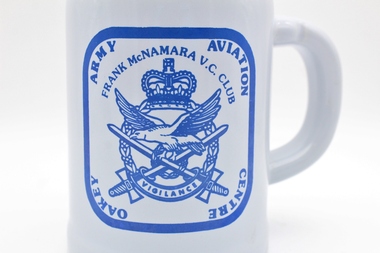
... War II; and more generally for its link to the Australian Army. Inscription on top: 'Frank McNamara VC Club' Inscription at the bottom of the symbol: 'Vigilance' Inscription circling the symbol: 'Army Aviation Centre Oakey' Large white cup with a handle; decorated with a blue ink symbol (displaying a crown and below it, a bird handling two swords) and blue ink inscriptions (from the Army Aviation Centre Oakey). ...The Oakey Army Aviation Centre is a training facility formed in October 1943 at Oakey, Queensland. It was built with the purpose of providing a maintenance facility: the units would erect, repair and insect aircrafts and engines. At the end of the war in 1945, the depot was used to store surplus aircraft. In early 1946, the RAAF Station Oakey was disbanded and categorised ‘to be retained but not maintained’. Since then, the RAAF Station Oakey facilities have been used few times for some minor activities. Although there are no information relating to the owner or usage of the cup; it holds historic significance for its direct link with the Australian Army Aviation Centre in Oakey and its involvement in World War II; and more generally for its link to the Australian Army.Large white cup with a handle; decorated with a blue ink symbol (displaying a crown and below it, a bird handling two swords) and blue ink inscriptions (from the Army Aviation Centre Oakey). Inscription on top: 'Frank McNamara VC Club' Inscription at the bottom of the symbol: 'Vigilance' Inscription circling the symbol: 'Army Aviation Centre Oakey' -
 Red Cliffs Military Museum
Satchell (leather), (estimated); World War 2
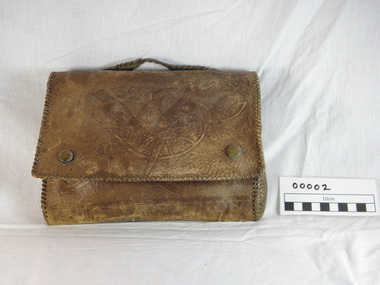
... War. He later became President of the Red Cliffs RSL and a Life Member of the League for service rendered. satchell leather embossed leather native flora native fauna past rsl president j g murphy hand made leather work middle east hospital craft past presidents life members rsl middle east Brown leather satchell,embossed with Australian flora and forna, front, back and under flap, there is a carry handle on the top. The front features two Kookaburra like birds ...This item of meorabilia was made by J.G.Murphy while he was hospitalised in the Middle East during the 2nd World War. He later became President of the Red Cliffs RSL and a Life Member of the League for service rendered.Brown leather satchell,embossed with Australian flora and forna, front, back and under flap, there is a carry handle on the top. The front features two Kookaburra like birds, under the flap is a Kangaroo and butterfly and folliage on the back. The seams and handle are hand sewn with 2.5mm leather lacing, and there are press studs to hold the flap closed. There are two internal pockets, stitched with fine cotton thread and the stitching is only visable from the inside. satchell leather, embossed leather, native flora, native fauna, past rsl president, j g murphy, hand made leather work, middle east hospital craft, past presidents, life members, rsl, middle east -
 Orbost & District Historical Society
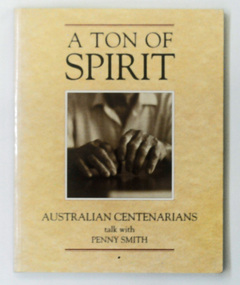
book, Kim Hup Lee Printing, A Ton of Spirit, 1990
... It includes reminiscences of Judy Bagu, Jimmy Bird, Paddy Djiaween and Walter Smith; brief accounts of bush foods, medicines, uses of plants, birth and mortuary rituals; working lives on cattle stations, missions, prospecting, dingo trapping, camel working, pearling, shire council; Kunmunyah, Beagle Bay Mission, Broome. This compilation of stories from centenarians is a contemporary social record of one hundred years of living through two world wars ...This book contains interviews with 48 of the 300 centenarians listed by the Australian Bicentennial Authority, whose long lives together form an oral social history of the development of Australia over the past one hundred years. It includes reminiscences of Judy Bagu, Jimmy Bird, Paddy Djiaween and Walter Smith; brief accounts of bush foods, medicines, uses of plants, birth and mortuary rituals; working lives on cattle stations, missions, prospecting, dingo trapping, camel working, pearling, shire council; Kunmunyah, Beagle Bay Mission, Broome.This compilation of stories from centenarians is a contemporary social record of one hundred years of living through two world wars and the Great Depression in Australia. A 183 pp book with a light brown cover, darker spine. On the front cover is a photograph of a pair of hands. Print is black "A Ton of Spirit Australian Centenarians talk with Penny Smith".book-a-ton-of-spirit-penny-smith social-records-early-australia -
Glen Eira Historical Society
Letter - Kadimah Cultural Centre, Selwyn Street, Elsternwick
... War Memorial... The Great Awakening... Kadimah... Fine art... Sculpture... Stained glass... The Candle of Hope... The Menorah... Youth and a New Dreamland... The Flowers and the Star of David... Bird...Ajzenbud Moshe Kadimah Cultural Centre Selwin Street Selwyn Street Elsternwick Duldig Karl Karl Duldig Artworks National Trust of Australia Kadimah War Memorial The Great Awakening Kadimah Fine art Sculpture Stained glass The Candle of Hope The Menorah Youth and a New Dreamland The Flowers and the Star of David Bird of Peace Rosh Robert Melbourne Holocaust Museum The Martyrs The Sun Appearing Through Dark Clouds The Muse The Poet Kadimah Emblem Boyd Arthur Progress of Man Adam and Eve The Family City of Caulfield National Trust Register Classification Report for Public Art Letter Kadimah Cultural Centre, Selwyn Street, Elsternwick ...Correspondence from the National Trust of Australia (Victoria) to Moshe Ajzenbud, President of the Kadimah Cultural Centre, dated 05/05/1992, advising that the Karl Duldig artworks of the Kadimah Cultural Centre have been added to the National Trust Register. The file also includes a copy of the four page classification report. The report includes a statement of significance, a brief history of the artist and describes each artwork in detail.ajzenbud moshe, kadimah cultural centre, selwin street, selwyn street, elsternwick, duldig karl, karl duldig artworks, national trust of australia, kadimah war memorial, the great awakening, kadimah, fine art, sculpture, stained glass, the candle of hope, the menorah, youth and a new dreamland, the flowers and the star of david, bird of peace, rosh robert, melbourne holocaust museum, the martyrs, the sun appearing through dark clouds, the muse, the poet, kadimah emblem, boyd arthur, progress of man, adam and eve, the family, city of caulfield, national trust register, classification report for public art -
 Bendigo Military Museum
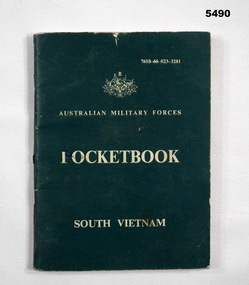
Booklet - POCKET BOOK SOUTH VIETNAM, AUSTRALIAN ARMY, C 1962-1972
... War booklet Inside front cover.. Pte. P. J. PENNO 3790111 NUI DAT 67/68 Page 24 has a map of South Vietnam. A bird ...Aust soldiers going to South Vietnam were issued with this booklet Pocket size booklet. The cover is cardboards, jungle green colour. The printing is white. At the top of front cover is the Crest of Australia 72 pages- History of South Vietnam and culture. Enemy descriptions and drawings. Viet language. Ranks of US Army and SVN army. Maps Inside front cover.. Pte. P. J. PENNO 3790111 NUI DAT 67/68 Page 24 has a map of South Vietnam. A bird mark “x” has been placed on PHUOC TOY vietnam war, booklet -
 Eltham District Historical Society Inc
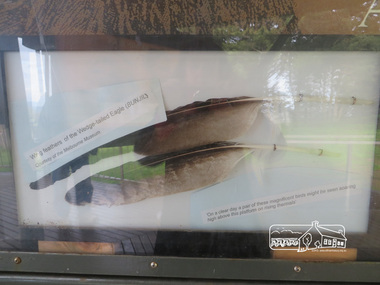
Photograph, Moor-Rul Viewing Platform Panel: Wing tailed feather of the Wedge-tailed Eagle (BUNJIL), 10 August 2016
... War memorial park in Kangaroo Ground highlight the area's indigenous history. Wing feathers of the wedge-tailed Eagle (BUNJIL) Courtesy of the Melbourne Museum. "On a clear day a pair of these magnificent birds...War memorial park in Kangaroo Ground highlight the area's indigenous history. Wing feathers of the wedge-tailed Eagle (BUNJIL) Courtesy of the Melbourne Museum. "On a clear day a pair of these magnificent birds ...One of eight double-sided interpretation panels on the Moor-rul viewing platform at the War memorial park in Kangaroo Ground highlight the area's indigenous history. Wing feathers of the wedge-tailed Eagle (BUNJIL) Courtesy of the Melbourne Museum. "On a clear day a pair of these magnificent birds might be seen soaring high above this platform on rising thermals" For the Wurundjeri people, Bunjil, the Eaglehawk was seen as being the all powerful Being of the Dreamtime, the all-father who created the centre world and its creatures. After the creation Bunjil with his wives and sons went up intothe “tharingbeik”, the sky, where he remains today as the star Attair. Souce: Document compiled by EDHS in 1997 for a series of historic items for Diamond Valley Public Radio. The Moor-Rul Viewing Platform, part of the Kangaroo Ground War Memorial Park opened in April 2007. Eight double-sided interpretation panels on the Moor-rul viewing platform highlight the area's Aboriginal and European history of the area and also details of local geology, flora and fauna. These panels feature high quality graphic design and professionally written text. The subjects covered are: ''Womin Je Ka" Welcome The Kulin Nation Singing, Dancing, Ceremony, Celebration This Country, My Home The Highland Taken Auld Lang Syne "Same Land Different Views" Working the Land Food from the Earth or "Earth's Harvest" Lest We Forget, "And with the going down of the Sun .... (3 panels) This Black Earth Those other indigenous inhabitants - Kangaroo Ground's Wildlife Silent Witnesses - Kangaroo Ground's White Manna Gums Belonging A Place of Reverence and A Tower of Strength Souce: EDHS Newsletter No 173 March 2007. As part of a program to acknowledge the Anzac Centenary Nillumbik Shire Council partnered with Yarra Plenty Regional Library to provide a bus tour with commentary of local sites of significance: Shire of Nillumbik World War One Memorials tour, 10 August 2016. These included Eltham township, the Shire of Eltham War Memorial at Kangaroo Ground, Christmas Hills war memorial, Hurstbridge memorial recreation park and finshed at Eltham Library to view the Writing the War exhibtion at Eltham Library Community Gallery. Born Digitalshire of nillumbik, kangaroo ground, moor-rul viewing platform, interpretative signage, eagle, feather, interpetation panel, dreamtime, bunjil
