
Showing 104 items matching " research trust"
-
 City of Moorabbin Historical Society (Operating the Box Cottage Museum)
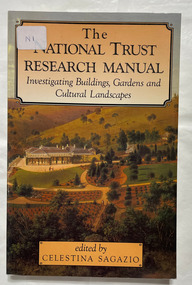
Book, Sagazio, Celestina, The National Trust research manual : investigating buildings, gardens and cultural landscapes, 1992
... The National Trust research manual : investigating buildings, gardens and cultural landscapes...The National Trust research manual : investigating buildings, gardens and cultural landscapes Book Sagazio, Celestina Allen & Unwin ...xiv, 177 p. : ill., plans :Includes index. Bibliography: p. 147-168.non-fictionhistoric buildings, historic gardens, historic sites -
 Surrey Hills Historical Society Collection
Book, The National Trust Research Manual: investigating buildings, gardens and cultural landscapes, 1992
... The National Trust Research Manual: investigating buildings, gardens and cultural landscapes....The National Trust Research Manual: investigating buildings, gardens and cultural landscapes. ...This book explains how to use the many documentary sources that are available, such as rate books, directories and titles; how to investigate and restore exteriors; and, how to recognise the main architectural styles.This book explains how to use the many documentary sources that are available, such as rate books, directories and titles; how to investigate and restore exteriors; and, how to recognise the main architectural styles.historic sites, historic buildings, conservation, (ms) celestina sagazio, national trust of australia -
 Surrey Hills Historical Society Collection
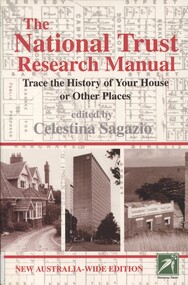
Book, The National Trust Research Manual: Trace the history of your house or other places, 2004
... The National Trust Research Manual: Trace the history of your house or other places....This book is designed to help you unlock the secrets of historic places and buildings.Detailed guidance from the National Trust Team of experts makes it as easy and accurate as possible to research the history of properties and discover their heritage significance....This book is designed to help you unlock the secrets of historic places and buildings.Detailed guidance from the National Trust Team of experts makes it as easy and accurate as possible to research the history of properties and discover their heritage significance....The National Trust Research Manual: Trace the history of your house or other places. ...This book is designed to help you unlock the secrets of historic places and buildings.Detailed guidance from the National Trust Team of experts makes it as easy and accurate as possible to research the history of properties and discover their heritage significance.This book is designed to help you unlock the secrets of historic places and buildings.Detailed guidance from the National Trust Team of experts makes it as easy and accurate as possible to research the history of properties and discover their heritage significance.historic sites, historic buildings, historic gardens, conservation and restoration, (ms) celestina sagazio -
 Musculoskeletal Health Australia (now held by the Glen Eira Historical Society)
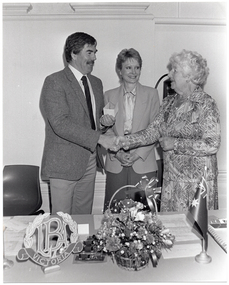
Photograph - Group photo, 1987
... ... research trust...The funds were raised by 37,000 members of the association for the Victorian Ladies Bowls Association Research Trust through 350 special charity bowls events across the state. ...The funds were raised by 37,000 members of the association for the Victorian Ladies Bowls Association Research Trust through 350 special charity bowls events across the state. ...In 1987, the Arthritis Foundation of Victoria (AFV) received a generous donation from the Victorian Ladies Bowls Association. The funds were raised by 37,000 members of the association for the Victorian Ladies Bowls Association Research Trust through 350 special charity bowls events across the state. In this photo, Dr John Hamilton accepts a cheque for $73,600 on behalf of the Arthritis Foundation of Victoria from Beryl Boniface, the outgoing President of the Victorian Ladies Bowls Association. Also depicted in the photo (standing between Dr Hamilton and Mrs Boniface) is the AFV's Robyn Hill. This photo appears on page 3 of the No 46, November 1987 issue of the Arthritis Foundation of Victoria's quarterly newsletter, News Review. It accompanies an article titled, "Bowled over by gift from VLBA - $73,600 donation raised by members".Black and white photo of three people standing behind a table. A man and woman are shaking hands, while another woman is standing between them. There are three items on the table: an 'LBA Victoria' logo on a stand, a small basket of flowers, and a small Australian flag on a stand.[Handwritten in blue ink] Dr JOHN HAMILTON ROBYN HILL Mrs BERYL BONIFACEarthritis foundation of victoria, afv, victorian ladies bowls association, lba victoria, research trust, donation, fundraising, dr john hamilton, robyn hill, beryl boniface, president, 1987 -
 Eltham District Historical Society Inc
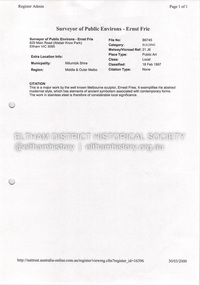
Document - Property Binder, 855 Main Road, Eltham
... Newspaper article: Former shire president honoured, Diamond Valley News, Tuesday September 9, 1986, p3 (on rverse page an advertisement for Research Mowers & Chainsaws National Trust Public Art Register: Citation, 18 February 1997, of major work by sculptor Ernst Frie. ...Newspaper article: Former shire president honoured, Diamond Valley News, Tuesday September 9, 1986, p3 (on rverse page an advertisement for Research Mowers & Chainsaws National Trust Public Art Register: Citation, 18 February 1997, of major work by sculptor Ernst Frie. ...Individual Research Project, Catherine Loftus-Hills 1982: To what extent is the Eltham Town Park successful in providing a recreational facility for the entire community? Newspaper article: Diamond Valley News, 24 August 1982, Byways of History, Early view of Little Eltham, illustrated by photograph sometime 1902-1920. Newspaper article: Diamond Valley News, 24 August 1982, Pauline thrives on work, Australian Labor Party member of Victorian parliament. Newspaper article: unidentified, undated: Many attempts to change name, letter from Frank Burgoyne. Newspaper article: unidentified, undated: Anger over park renaming. Photocopy letter from Office of the Place Names Committee to Eltham and District Historical Society, 25 February 1982, stating naming of Eltham Town Park, not Alistair Knox Park. Newspaper article: Former shire president honoured, Diamond Valley News, Tuesday September 9, 1986, p3 (on rverse page an advertisement for Research Mowers & Chainsaws National Trust Public Art Register: Citation, 18 February 1997, of major work by sculptor Ernst Frie. Newspaper article: Diamond Valley Leader, 8 June 2005, Sign not before time, erection of Welcome to Eltham Town sign made by Greg Bebbington and Hamish Knox. Newspaper article: Diamond Valley News, 9 June 2005, p3, Former shire president honoredmain road, eltham, businesses, public art, ernst frie, eltham town park, alistair knox park, j m holloway, pauline toner, catherine loftus-hills, greg bebbington, hamish knox, frank lynch, greg johnson, advertising, research mowers & chainsaws -
 Flagstaff Hill Maritime Museum and Village
Wood Samples, 1891
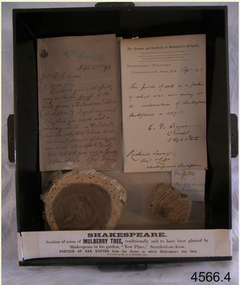
... Loggin donated a scion or cutting from Shakespeare's mulberry tree to the Shakespeare Birthplace Trust in 1862, he was a chemist who lived and worked in Stratford. There is a note on the frame of the donation that the mulberry sample is from this scion, research shows that from Richard Savage's diary notes that there must have been a lot of wood taken from that scion over the years which was planted in the garden of “New Place” and is still growing there today. ...Loggin donated a scion or cutting from Shakespeare's mulberry tree to the Shakespeare Birthplace Trust in 1862, he was a chemist who lived and worked in Stratford. There is a note on the frame of the donation that the mulberry sample is from this scion, research shows that from Richard Savage's diary notes that there must have been a lot of wood taken from that scion over the years which was planted in the garden of “New Place” and is still growing there today. ...The timber display case was presented to Mr Richard Standcombe Harris of Warrnambool (1831-1923). He was a councillor (1875-1891) and predominant businessman. Mr C F Loggin had met Mr Harris while on a trip to Stratford upon Avon in the United Kingdom. Upon his return to Warrnambool, Mr Harris donated the item to the Warrnambool Museum and Art Gallery, (established 1886) where Joseph Archibald was Curator: he catalogued the case in 1894. THE LETTERS IN THE CASE The two letters contained within the display case confirm the authenticity of the oak wood sample. The first letter in the case includes the text; "[Stamped Header on banner] High Street, Stratford on Avon [Hand written] Sept. 22nd / 91. Mr. R. S. Harris, Dear Sir, Enclosed you will find [underlined next 3 words] every authentic proof of the Oak from Shakespeare's House (Birth place). I regret very much Sir, that you made a short-day at S. on A. I should have been delighted to have had the honour, & pleasure, of showing you around our Beautiful Country. You did not give [next 3 words underlined] me or yourself a fair chance. But however I hope that we may again some day have more time to go quietly around. With kind regards, and wishing you, Sir, a pleasant voyage, I remain, Dear Sir, Yours very truly, C.F. Loggin. P.S. A paper will be always acceptable to be as how you Jolly Warrnamboolites are desporting yourselves. “ The second letter includes text; “[Printed Letterhead with stamped impression] The Trustees and Guardians of Shakespeare’s Birthplace Incorporated by Act of 54 and 55, Vict. 1891 Secretary and Librarian - Richard Savage Shakespeare’s Birthplace Stratford-upon-Avon [handwritten] 22 Sept 1891 This piece of oak is a portion of what was cut away at at the restoration of Shakespeare’s Birthplace in 1857-58. C. F. Loggins Chemist 3 High Street Richard Savage Sec. – Shakespeare’s Birthplace Mr C F Loggin was connected with the Shakespeare Trust as the person who had originally donated a scion of Shakespeare's mulberry tree to the "Shakespearean Birthday Committee" in 1842. (The scion that was given to the Shakespearean Birthday Committee, from which the Mulberry sample is derived, still grows today in "New Place" garden.) Mr Richard Savage was the Secretary and Liberian of the then renamed “Trustees and Guardians of Shakespeare’s Birthplace when the display case was given to Mr Harris in 1891 by Mr Loggin. WILLIAM SHAKESPEARE Shakespeare was born in 1564 in Stratford-upon-Avon, where he also grew up. He married at 18 years and he and his wife, Anne Hathaway, had three children: They moved to London where he became successful as an actor, writer, and part-owner of a playing company. He later returned to Stratford and purchased his last home, which he called "New Place" in 1602 where he later died in 1616. For the next 150 years, it was known that there existed a black mulberry tree in the garden. At the time there was a fashion for planting mulberry trees. It was the early 17th century after King James had come to the throne, and he imported tens of thousands of saplings in an attempt to get landowners to start a silk industry in England. Unfortunately for posterity, Shakespeare's mulberry was felled around 1756, by the then owner of “New Place" the Reverend Francis Gastrell, who was apparently tired of continual visits by pilgrims asking to see the tree, so he chopped it down. Gastrell had applied for local permission to extend the garden but the application was rejected and his tax was increased. Gastrell retaliated by demolishing the house in 1759, this greatly outraged the local inhabitants. Gastrell was eventually forced to leave town having provoked the wrath of Stratford residents for committing such an act. Today only the garden remains where “New House" used to stand with a scion from the original mulberry tree still growing there. The wood from the felled mulberry tree at “New House" was purchased by an enterprising local clock-maker Thomas Sharp and he spent the next 40 years or so years making souvenirs from the wood. These became early tourist souvenirs and subsequently developed into a profitable sideline for various other makers, including George Cooper and John Marshall. These objects range from relatively small domestic wooden objects, such as snuff boxes and weight scales to large tea caddies and even tables. C. F. Loggin donated a scion or cutting from Shakespeare's mulberry tree to the Shakespeare Birthplace Trust in 1862, he was a chemist who lived and worked in Stratford. There is a note on the frame of the donation that the mulberry sample is from this scion, research shows that from Richard Savage's diary notes that there must have been a lot of wood taken from that scion over the years which was planted in the garden of “New Place” and is still growing there today. The "Trustees and Guardians of Shakespeare’s Birthplace" (1847 -1964) was formed after the house where Shakespeare is believed to have been born fell into disrepair. Subsequently in 1846 after the death of Thomas Court's widow the last owner. Interest in the house was revived when PT Barnum, the American showman, wanted to buy it and ship the house back to America. In response to this, the Shakespeare Birthday Committee was established (by a private Act of Parliament) with the help of such luminaries as Charles Dickens, the Committee of Trustees raised the necessary £3,000 and purchased the house the following year. Once the Committee had acquired the building, restoration work began. Originally the Birthplace formed part of a terrace with later houses built either side. The first stage in its conservation was their destruction. At the time it was thought necessary to avoid the risk of fire spreading to Shakespeare's birthplace. Reconstruction was carried out by the Shakespeare Trust between 1857 and 1864 that restored the outside of the building to its original 16th-century state. It is from this restoration that the donated piece of oak is derived, originally from a beam that was in the house. Communication from The Shakespeare Birthplace Trust, dated April 11th, 2019, confirms that the pieces displayed in this case have good provenance. The wood samples are significant for their association with the history of William Shakespeare. The display case and its content is significant to Warrnambool local history for its association with the establishment in 1886 of the Warrnambool Museum and Art Gallery. However, it should be noted that the letters of authentication that accompany the wood samples are only applicable to the oak sample. None the less, all the pieces have very good provenance, with Richard Savage's certificate of authenticity for the oak, and the mulberry sample with the letter to Mr Harris from Mr CF Loggin having also been the donor of the scion of mulberry in 1862 to the Shakespeare Birthplace Trust. This scion was then established at Shakespeare's garden at "New Home" that had been demolished by Rev Francis Gastrell in 1759. Two wood samples associated with William Shakespeare, presented in a hanging, timber and glass display case with metal trim around the frame. The case also contains two letters and a label printed on a card that refers to the contents, their origins and the donor. A card label with a printed number and a round adhesive label are attached on the back of the case. The left round section of wood is from a donated scion (or shoot) derived from the original mulberry tree planted by William Shakespeare at his last home "New Place", Stratford-upon-Avon. The outer section is light brown coloured while the centre is dark grain. The right wood sample in the case is a section of oak rafter from the house where Shakespeare was born in 1564. The wood is mid brown with a distinct grain. The included letters, each dated 22/9/1891, refer to only the oak sample. - The letter on the left comprises two handwritten pages from Mr CF Loggin to Mr Richard Standcombe Harris. The paper has the printed letterhead address of High Street, Stratford on Avon. - The letter on the right is a handwritten certificate of authenticity signed by Mr CF Loggin and counter signed by Mr Richard Savage, Secretary and Liberian of the Shakespeare Trust. It is on the printed letterhead of The Trustees and Guardians of Shakespeare’s Birthplace Cardboard label inside the glass case “Shakespeare Section of Mulberry Tree, traditionally said to have been planted by Shakespeare in his garden, “New Place,” Stratford-on-Avon. PORTION OF OAK RAFTER from the house in which Shakespeare was born. (Presented by R S Harris 1891.) Printed label on the back of the case “3 2 “ The handwritten adhesive label “0566” flagstaff hill, warrnambool, shipwrecked coast, flagstaff hill maritime museum, maritime museum, shipwreck coast, flagstaff hill maritime village, great ocean road, shakespeare display case, wood samples, oak from shakespeare's birthplace, mulberry from shakespeare's home "new place", stratford-upon-avon, shakespeare's birthplace, the trustees and guardians of shakespeare's birthplace &c., shakespeare trust, shakespeare birthday committee, r.s. harris, brunswick, victoria, richard s harris, brunswick, victoria, c.f. loggins, chemist, 3 high street stratford-on-avon, richard savage, warrnambool museum and art gallery, thomas court, pt barnum, charles dickins, anne hathaway, black mulberry tree, reverend francis gastrell -
 Federation University Historical Collection
Article - Article - Women, Ballarat School of Mines to University of Ballarat: Women of Note; Verna Barry, Secretary to Jack Barker
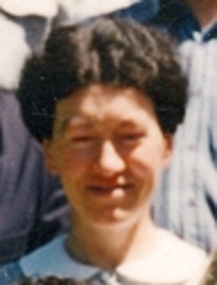
... trusted and loyal member of staff, Verna was devoted to her job, her workplace and greatly respected Jack Barker with whom she worked loyally for until his retirement in 1987. In 1988 Verna was appointed Administration Officer with Engineering Faculty. She spent five years with Engineering Science from 1990, and in 1996 worked for Information Technology & Mathematical Science (ITMS), becoming a key member of the Research...trusted and loyal member of staff, Verna was devoted to her job, her workplace and greatly respected Jack Barker with whom she worked loyally for until his retirement in 1987. In 1988 Verna was appointed Administration Officer with Engineering Faculty. She spent five years with Engineering Science from 1990, and in 1996 worked for Information Technology & Mathematical Science (ITMS), becoming a key member of the Research ...Verna Barry commenced worked as a typist at the Ballarat School of Mines (SMB) in 1961. In 1965 she became private secretary to Jack Barker, Principal of the Ballarat School of Mines and later Director of the Ballarat Institute of Education (BIAE) and the Ballarat College of Advanced Education (BCAE). A trusted and loyal member of staff, Verna was devoted to her job, her workplace and greatly respected Jack Barker with whom she worked loyally for until his retirement in 1987. In 1988 Verna was appointed Administration Officer with Engineering Faculty. She spent five years with Engineering Science from 1990, and in 1996 worked for Information Technology & Mathematical Science (ITMS), becoming a key member of the Research Support team. After thirty-nine years of service to the University of Ballarat and its predecessor institutions Verna Barry retired from full-time work on 31 January 2000women of note, verna barry, typist, secretary, jack barker, 1965-1987, ballarat school of mines, ballarat institute of advanced education, ballarat college of advanced education, administration officer, engineering faculty, engineering science, information technology and mathematical science, research support -
 Federation University Historical Collection
Photograph - Photograph - Colour, Clare Gervasoni, Visitors to the Geoffrey Blainey Research Centre, 2014-2022>
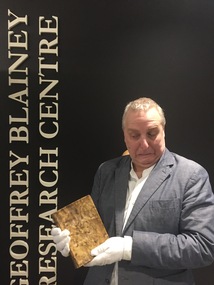
... Research Centre. * Dr Dorothy Wickham, 08 August 2012 * Gene Geoffrey and the Human Skin Covered Book * Major Neil Leckie RFD (Ret'd) with his newly released book 'Creswick's War: Through the Letters of Driver S. Gordon Spittle MM "The War Correspondent", 04 September 2019 * Barry Kentish and Peter Voterakis of the Ballarat Fly Fishing Club * Kevin Jewell and Robert Littlewood, trustees of the Keith Wingrove Memorial Trust...Research Centre. * Dr Dorothy Wickham, 08 August 2012 * Gene Geoffrey and the Human Skin Covered Book * Major Neil Leckie RFD (Ret'd) with his newly released book 'Creswick's War: Through the Letters of Driver S. Gordon Spittle MM "The War Correspondent", 04 September 2019 * Barry Kentish and Peter Voterakis of the Ballarat Fly Fishing Club * Kevin Jewell and Robert Littlewood, trustees of the Keith Wingrove Memorial Trust Visitors to the Geoffrey Blainey Research Centre Photograph Photograph - Colour Australia Victoria Mount Helen Clare Gervasoni ...The Geoffrey Blainey Research Centre is a supervised reading room in the E.J. Barker Library on the Federation University Mt Helen Campus. It holds the Art and HIstorical Collections, as well as special librarry collections.Colour photographs of visitors to the Federation University Geoffrey Blainey Research Centre. * Dr Dorothy Wickham, 08 August 2012 * Gene Geoffrey and the Human Skin Covered Book * Major Neil Leckie RFD (Ret'd) with his newly released book 'Creswick's War: Through the Letters of Driver S. Gordon Spittle MM "The War Correspondent", 04 September 2019 * Barry Kentish and Peter Voterakis of the Ballarat Fly Fishing Club * Kevin Jewell and Robert Littlewood, trustees of the Keith Wingrove Memorial Trustgeoffrey blainey resaerch centre, visitors, dorothy wickham, gene geoffrey, neil leckie, barry kentish, peter voterakis, kevin jewell, robert littlewood -
 Federation University Historical Collection
Photograph, Ballarat School of Mines Library Plaques, c1970s and 1980s
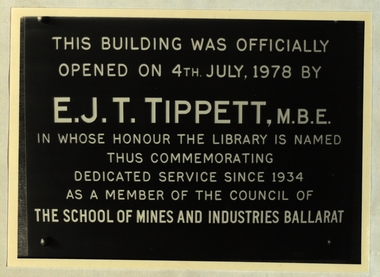
... research centre...smb library...ballarat school of mines library...e.j. tippett...smb foundation stone...smb stamp battery plaque...geology centre - yates...yates geological centre...smb amenities building opening...smb land laborarory opening...smb hairdressing school opening...smb vocational centre (stage 1) opening...smb e.j. tippett library opening...former ballarat gaol national trust...The Ballarat School of Mines is a predecessor organisation of Federation University Australia. buildings ballarat school of mines smb campus premier of victoria plaque e.j.t. tippett library tippett learning research centre smb library ballarat school of mines library e.j. tippett smb foundation stone smb stamp battery plaque geology centre - yates yates geological centre smb amenities building opening smb land laborarory opening smb hairdressing school opening smb vocational centre (stage 1) opening smb e.j. tippett library opening former ballarat gaol national trust plaque former ballarat supreme court national trust plaque smb buildings - administration national trust plaque foundation of technical education in australia ballarat school of mines foundation stone yates geology centre amenities building land laboratory former ballarat gaol former ballarat supreme court courthouse theatre stamp battery stamper battery centenary anniversary mortar box peter shiells ken flecknoe vocatonal skills centre haidressing school peter cutter museum building former wesley church henry winneke graham beanland harold yates alexander peacock andrew anderson a building administration building This building was officially opened on 4th July, 1978 by E.J.T. ...The Ballarat School of Mines is a predecessor organisation of Federation University Australia.Black and white photographThis building was officially opened on 4th July, 1978 by E.J.T. Tippett, M.B.E. in whose honour the library was named thus commemorating dedicated service since 1934 as a member of the Council of the School of Mines and Industries Ballarat Stamp Battery The stamp battery for treating gold ores was first intriduced in California. A heavy iron stamp is raised on a cam and let fall so that its weight causes the quartz which is held in the mortar box. This three head battery was installed in the mining laboratory of The School of Mines, Ballarat in 1898 and crused many hundreds of tons of quartz. It was reected on this site to commeorate the centenary of the School of Mines in 1870. School of Mines & Industries Ballarat Established - 1870 Stage one of The Vocational Skills Centre was officially opened by The Hon. Robert Fordham M.P. Minister of Education on 29th April 1983 P.R. Shiells K.J. Flecknoe Principal President The School of Mines and Industries Ballarat Established - 1870 This plaque commemorates the opening of the Hairdressing School on 9 March 1983 by Peter Cutter, B. Comms, M. Ed. General Manager - Programs, TAFE Board School of Mines and Industries Ballarat Ltd Land Laboratory officially opened by Dr D.F. Smith Director of Agriculture on 12th November 1980. School of Mines & Industries Ballarat Amenities Building was officially opened by His excellency The Hon. Sir Henry Winneke K.C.M.G., K.C.V.O., O.B.E.. K. St. J., O.C., Governor of Victoria on 7th October 1981 G.H. Beanland K.J. Beanland Principal President This room is known as the Yates Geological Centre in recognition of a professional lifetime of service from 1920=1962 as' head of Geology in The SChool of Mines and Industries Ballarat by Harold Yates M.Sc Plaque presented by former students This stone was laid by The Hon. Alexr J. Peacock Minister of Public Instruction April 14th 1899 Abdrew Anderson, Presidentbuildings, ballarat school of mines, smb campus, premier of victoria, plaque, e.j.t. tippett library, tippett learning research centre, smb library, ballarat school of mines library, e.j. tippett, smb foundation stone, smb stamp battery plaque, geology centre - yates, yates geological centre, smb amenities building opening, smb land laborarory opening, smb hairdressing school opening, smb vocational centre (stage 1) opening, smb e.j. tippett library opening, former ballarat gaol national trust plaque, former ballarat supreme court national trust plaque, smb buildings - administration national trust plaque, foundation of technical education in australia, ballarat school of mines foundation stone, yates geology centre, amenities building, land laboratory, former ballarat gaol, former ballarat supreme court, courthouse theatre, stamp battery, stamper battery, centenary, anniversary, mortar box, peter shiells, ken flecknoe, vocatonal skills centre, haidressing school, peter cutter, museum building, former wesley church, henry winneke, graham beanland, harold yates, alexander peacock, andrew anderson, a building, administration building -
 Greensborough Historical Society
Book, Celestina Sagazio, Cemeteries: our heritage / edited by Celestina Sagazio, 1992_
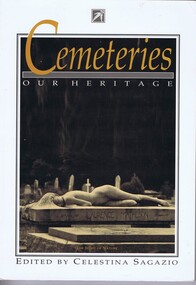
... research tool. There is a small section on St Katherine's Cemetery St Helena. st katherines church st helena st helena cemetery 184p., illus. Cemeteries: our heritage / edited by Celestina Sagazio Book Celestina Sagazio National Trust of Australia (Victoria) ...This book covers various heritage cemeteries throughout Victoria and includes tips on maintenance as well as information on using cemeteries as a research tool. There is a small section on St Katherine's Cemetery St Helena.184p., illus.st katherines church st helena, st helena cemetery -
 Connecting Home
book, Deadly Design, Bewteen Two Worlds, 2008
... Research Significance, book stolen generations victoria victorian human resources syd jackson roseann hepbruns haines aiatsis missions rererves aboriginal legal service child care agency health education consultative group housing cooperative bringing them home counsellor program link up koori heritage trust Soft cover book, with 43 pages. ...As a result of the recommendations arising from the Stolen Generations Taskforce Report 2003. The taskforce identified the need for an independant, community controlled organisation in Victoria to be established to meet the needs of the stolen generation in this state. Connecting Home seeks to undertalke activities that will assist members of the stolen generation and engage in publc awareness and education. Historic Significance, this is one of Victoria's first books published that helps to explain the thought & feelings of Stolen Generation people, that has been developed to address recommendations from the Bringing Them Home Report. Social Significance, The information recorded from stolen generation participants explains to non-aboriginal health & human service professionals about the social impact of the politically incorrect times that state & national laws and policies had been introduced to forcibly remove aboriginal & toerres strait islander children form family, land and culture. Research Significance, Soft cover book, with 43 pages. Picture of aboriginal girl, crying, holding teddy bear on front cover. Content is a guide aimed at understanding the Stolen Generations for Health & Human Service Professionals. book, stolen, generations, victoria, victorian, human, resources, syd, jackson, roseann, hepbruns haines, aiatsis, missions, rererves, aboriginal, legal, service, child, care, agency, health, education, consultative, group, housing, cooperative, bringing, them, home, counsellor, program, link, up, koori, heritage, trust -
 Mission to Seafarers Victoria
Painting, Ib Odfeldt, MS Nella Dan 1961, 1995
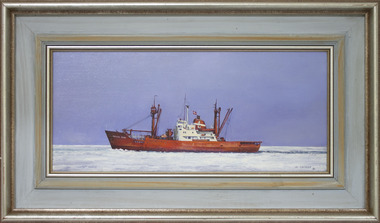
... This image depicts one such Merchant ship, manned by expert merchant seafarers and crucial to the exploration by Australian scientists of the substantial Australian Antarctic territories throughout the 20th C. nella dan anare antarctica icebreakers explorations merchant vessels artwork maritime art ib odfeldt artwork-paintings Australian National Antarctic Research Expeditions (ANARE) hobbies asma australian society of maritime artists Artist signature at lwr right corner PAINTED.: IB ODFELDT 95 At the back: Square loose label: 3076 Leonard Joel Bottom corner on the frame in Pencil: POW 2894 (National Trust accession number) Framed , oil on board painting depicting a red hulled , single funnel ship cutting through sea ice MS Nella Dan 1961 Painting Painting Ib Odfeldt Leonard Joel Auctions ...A depiction of the MS Nella Dan an active primary vessel built in 1961 by the Aarlborg Shipyard PTY Ltd, and regularly chartered by the Australian National Antarctic Research Expeditions (ANARE) in the 20th C. The ship ran aground in December 1987 and unable to be salvaged, had to be scuttled in deep water off Macquarie Island. See link above, this record. The ship was named after Nel Law wife of the Director of the Antarctic Division, DR Phil Law. "Ib Odfeldt (b. 1944) is a self-taught painter and sculptor spending many years inspired by and interest in ships and marine art whilst working as an engineer in the Danish Merchant Navy. His paintings demonstrate a keen eye for technical accuracy and skill. The balance and setting of his works have attracted interest in many commissions by lovers of marine and shipping works. In 2002 Ib was awarded the Southern Ocean Maritime Art Prize and this acquisition of the Nella Dan is presented in the foyer of the Tasmanian Maritime Museum in Hobart." (The ASMA 2019 National Exhibition - Maritime Museum of Tasmania catalogue). According to the artist, the painting was part of an exhibition he held at "Melbourne maritime museum " (Polly Woodside) to celebrate ANARE (ARTIC SHOW). He donated two paintings of the Nella Dan. Ib Odfledt has also entered the Maritime Art Prize several times. (2012)Maritime ArtFramed , oil on board painting depicting a red hulled , single funnel ship cutting through sea iceArtist signature at lwr right corner PAINTED.: IB ODFELDT 95 At the back: Square loose label: 3076 Leonard Joel Bottom corner on the frame in Pencil: POW 2894 (National Trust accession number)nella dan, anare, antarctica, icebreakers, explorations, merchant vessels, artwork, maritime art, ib odfeldt, artwork-paintings, australian national antarctic research expeditions (anare), hobbies, asma, australian society of maritime artists -
 Orbost & District Historical Society
plans, July 1949
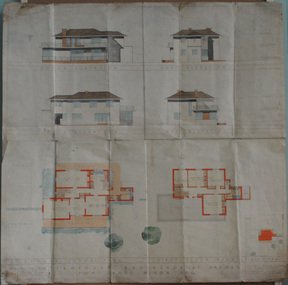
... Trust, as well a director of Snowy River Seed and th Bean Board. He died on 21.12.2002. James Nixon, a third generation Nixon, father of Peter Nixon A.O., was an involved and respected Orbost identity. This item is a significant research ...These house plans were drawn up for James Nixon. James Nixon was born in Orbost on 15.11.1912. He married Joyce May Thompson on 2.2.1937. He was a well known Orbost identity, serving a record 47 years as a Commissioner on the Snowy River improvement Trust, as well a director of Snowy River Seed and th Bean Board. He died on 21.12.2002.James Nixon, a third generation Nixon, father of Peter Nixon A.O., was an involved and respected Orbost identity. This item is a significant research tool.Architectural plans for a two-storey house with 4 bedrooms to be built on the corner of Gladstone and Tennyson Streets in Orbost. On a white background with coloured drawings ( water colour).nixon-james house-plans architecture -
 Orbost & District Historical Society
book, Australian Glass Manufacturers, before 1894
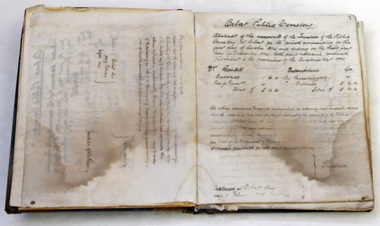
... Trust dated 29th May 1891. The first mention of a Mr. C. Richardson wasn’t until 25th February 1916 whilst the cemetery was under the control of the Orbost Shire Council with select councillors on the committee. Orbost Cemetery is an important part of Orbost's history. Its records are essential in research ...This book was used by Orbost Cemetery Trust to record letters written especially to provide a running account of the trust's activities. Although the cemetery was officially gazetted in November, 1891, it seemed certain that burials had taken place before that time. The early trusts were diligent in their record keeping and visionary in their planning.The original Trust members approved by the Public Health Department included C. N. Henderson, E. Watt (Ernest), D. Munro (Donald), M. R. Coote (Massy) and James Cameron (recorded at the first meeting of the Trust dated 29th May 1891. The first mention of a Mr. C. Richardson wasn’t until 25th February 1916 whilst the cemetery was under the control of the Orbost Shire Council with select councillors on the committee. Orbost Cemetery is an important part of Orbost's history. Its records are essential in research of local history.A grey covered letter book used by the Orbost Cemetery Trust to record letters written between 1894 and 1907.On spine-Letter Bookorbost-cemetery letter-book -
 Orbost & District Historical Society
book, Research Publications Pty Ltd, The Ensign Bearer, July 1981
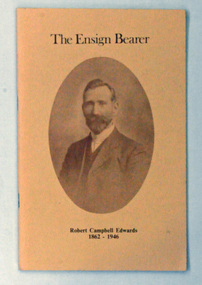
... The Campbell Edwards Trust trust is still operating today. This is a useful research tool on the history of Robert Campbell Edwards. book-The-Ensign-Bearer Green-Oswald-Stuart Campbell-Edwards-Trust on title page "With Kind Regards O S Green" handwritten in blue pen A thin soft cover book with a light brown cover with dark brown print. ...In 1922 Robert Campbell Edwards (1862-1946) established the Campbell Edwards Trust for religious, educational and charitable purposes. This book is the story of Robert Campbell Edwards' life from his birth in Drumgowan, Ireland until his death in South Yarra, Victoria. The Campbell Edwards Trust trust is still operating today.This is a useful research tool on the history of Robert Campbell Edwards.A thin soft cover book with a light brown cover with dark brown print. On the front cover is an oval shaped photograph of Robert Campbell Edwards.on title page "With Kind Regards O S Green" handwritten in blue penbook-the-ensign-bearer green-oswald-stuart campbell-edwards-trust -
 Eltham District Historical Society Inc
Document - Report, Tract Consultants Australia Pty Ltd, Eltham Cemetery: Towards a Master Plan, Nov 1987
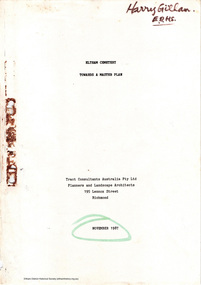
... Trusts Terms of Reference for the Study. Before commencing the study in detail, additional basic information was sought; viz: a) sub-soil and rock analysis; and b) feature survey by a Licensed Surveyor. The results from both exercises are included as appendices to this report. Section three includes a summary of the findings along with other analytical results. Also: Eltham Cemetery - planning bewteen 1859 to 1860; research...Trusts Terms of Reference for the Study. Before commencing the study in detail, additional basic information was sought; viz: a) sub-soil and rock analysis; and b) feature survey by a Licensed Surveyor. The results from both exercises are included as appendices to this report. Section three includes a summary of the findings along with other analytical results. Also: Eltham Cemetery - planning bewteen 1859 to 1860; research ...BACKGROUND The Eltham Cemetery is of historic significance to the Eltham area. The Trust was established in 1858 and has administered and maintained the cemetery from that date right up to the present. Among the more noteworthy graves is that of Sir William Irvine, a former State Premier and Chief Justice of Victoria. Eltham Cemetery is surrounded on three sides by urban development. Montsalvat Artists Colony adjoins the remaining (eastern) side. A Joint Select Committee of Parliament called the “Mortuary Industry and Cemeteries Administration Committee" (MICA) enquired into the land requirements at the Eltham Cemetery in 1986. The MICA recommendations contained in its 1986 report are included in the Appendices attached to this report. Although the recommendations have not been adopted by the Government it is interesting to note that the MICA report recommended the use of the bulk of the land for cemetery purpose. In June of 1987, the Cemetery Trust was expanded to include additional members from the Eltham Community by the Minister for Health. At the same time, he instructed the Trust to resolve the land requirement issues. As a result of this Ministerial direction, Tract Consultants has been instructed by the Eltham Cemetery Trust to prepare a report addressing the issues raised in the Minister's letter (see Appendix 1) to the Trust. Principally, the study will examine options available for development of the Cemetery. These options will explore possible boundaries, cemetery design, vegetation, the overall environment, landscaping and financial planning for the Cemetery operations. Appendix 2 details the Cemetery Trusts Terms of Reference for the Study. Before commencing the study in detail, additional basic information was sought; viz: a) sub-soil and rock analysis; and b) feature survey by a Licensed Surveyor. The results from both exercises are included as appendices to this report. Section three includes a summary of the findings along with other analytical results. Also: Eltham Cemetery - planning bewteen 1859 to 1860; research by Alan Sheehan April 2015, collated by Harry Gilham, EDHS, April 2016 (2 pages) PROV Guide 5: Cemetery Records (8 pages), printed 7 May 2014Development of Eltham Cemeteryeltham cemetery trust, master plan, mica, montsalvat, mortuary industry and cemeteries administration committee, tract consultants -
 Eltham District Historical Society Inc
Document - Appendix, M.B. Watson, Shire Secretary, List of Former Road Board Chairmen and Shire Presidents (1856-1966), 28 Nov 1966
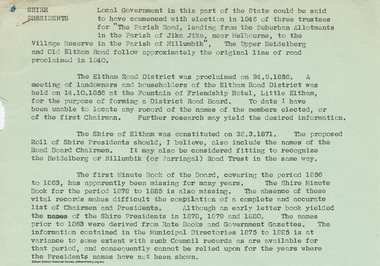
... research may yield the desired information. The Shire of Eltham was constituted on 28.3.1871. The proposed Roll of Shire Presidents should, I believe, also include the Road Board Chairmen. It may also be considered fitting to recognise the Heidelberg or Nillumbik (or Warringal) Road Trust...research may yield the desired information. The Shire of Eltham was constituted on 28.3.1871. The proposed Roll of Shire Presidents should, I believe, also include the Road Board Chairmen. It may also be considered fitting to recognise the Heidelberg or Nillumbik (or Warringal) Road Trust ...Appendix to Shire Secretary’s Report, 28 November 1966 SHIRE PRESIDENTS Local Government in this part of the State could be said to have commenced with election in 1846 of three trustees for "The Parish Road, leading from the Suburban Allotments in the Parish of Jika Jika, near Melbourne, to the Village Reserve in the Parish of Nillumbik". The Upper Heidelberg and Old Eltham Road follow approximately the original line of road proclaimed in 1840. The Eltham Road District was proclaimed on 24.9.1856. A meeting of landowners and householders of the Eltham Road District was held on 14.10.1856 at the Fountain of Friendship Hotel, Little Eltham, for the purpose of forming a District Road Board. To date I have been unable to locate any record of the names of the members elected, or of the first Chairman. Further research may yield the desired information. The Shire of Eltham was constituted on 28.3.1871. The proposed Roll of Shire Presidents should, I believe, also include the Road Board Chairmen. It may also be considered fitting to recognise the Heidelberg or Nillumbik (or Warringal) Road Trust in the same way. The first Minute Book of the Board, covering the period 1856 to 1863, has apparently been missing for many years. The Shire Minute Book for the period 1878 to 1885 is also missing. The absence of these vital records makes difficult the compilation of a complete and accurate list of Chairmen and Presidents. Although an early letter book yielded the names of the Shire Presidents in 1878, 1879 and 1800. The names prior to 1863 were derived from Rate Books and Government Gazettes. The information contained in the Municipal Directories 1875 to 1885 is at variance to some extent with such Council records as are available for that period, and consequently cannot be relied upon for the years where the Presidents names have not been shown. shire of eltham archives, series listing, a. armstrong, a. beale, a. brinkkotter, a. donaldson, a.h. price, a.j. braid, c.h. bath, c.m.a. pelling (mrs.), c.t. bell, d.c. o'beirne, e.d. butler, e.h. cameron, e.j. andrew, e.p. harmer, f.e. griffith, f.v. squire, f.w. nankervis, g. love, g. robertson, h. dendy, h. hewitt, h. stooke, l.t. wilmot, j. cox, j. murray, j. barr, j. bell, j. fitch, j. herbert, j. lawrey, j. mealy, j. pape, j. ryan, j. smedley, j.b. shallard, j.l. beale, l. c. docksey, r. mcadam, r.a. bell, r.c. white, r.r. woolcott, rutter, s.s. addison, s.w. scott, t. armstrong, t. irvine, w. horris, w. hubbard, w. lorimer, w. morris, w. taylor, w.c. farrell, w.f. ford, w.g. gray, w.h. bradbury, w.j. taylor, w.v. houghton -
 Eltham District Historical Society Inc
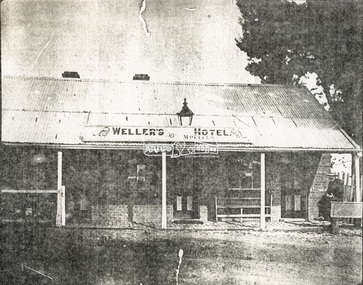
Document - Folder, Wellers of Kangaroo Ground, 1984-2017
... Printouts (various versions) from Victorian Heritage Database (National Trust and Nillumbik Shire) https://vhd.heritagecouncil.vic.gov.au/ 6. Collection of research notes, copies of records from various publications including EDHS Chronology of Events and Kangaroo Ground: The Highland Taken by Mick Woiwod, pp90, 180-181 (EDHS_01618). 7. ...Printouts (various versions) from Victorian Heritage Database (National Trust and Nillumbik Shire) https://vhd.heritagecouncil.vic.gov.au/ 6. Collection of research notes, copies of records from various publications including EDHS Chronology of Events and Kangaroo Ground: The Highland Taken by Mick Woiwod, pp90, 180-181 (EDHS_01618). 7. ...Wellers of Kangaroo Ground Vertical File Contents: 1. Article: History of Wellers Restaurant by Sandra Cahir, revised 2017. 7 pages 2. Article: Weller’s Hotel of Kangaroo Ground (final draft) by Jim Allan, 1 June 2017, including feedback email from Sandra Cahir (7 May 2017). 3. Printout of online image - Kangaroo Ground landholders from 1841, Kangaroo Ground Presbyterian Church. (2022, June 29). Retrieved from https://kgpc.pcvic.org.au/images/history_images/Kangaroo-Ground-landholders.jpg 4. Folder of printouts of historical newspaper articles referencing the hotel 1866-1911 https://trove.nla.gov.au/list/163201 5. Printouts (various versions) from Victorian Heritage Database (National Trust and Nillumbik Shire) https://vhd.heritagecouncil.vic.gov.au/ 6. Collection of research notes, copies of records from various publications including EDHS Chronology of Events and Kangaroo Ground: The Highland Taken by Mick Woiwod, pp90, 180-181 (EDHS_01618). 7. Report: Request for ministerial amendment to use the property as a restaurant, includes existing conditions and plan for development, 1 November 1984 8. Papers donated by Diana and Peter Bassett-Smith including: a. Photocopy of Weller’s Hotel, Licensee M. Weller b. Letter: Shire of Eltham to Office of the Secretary for Planning and Environment, 23 Feb 1984 - Information regarding inclusion of Wellers Hotel into the Historic Buildings Register c. Letter: Historic Buildings Council letter to Peter Bassett-Smith seeking historical information on Wellers Hotel, 10 Jan 1985 d. Memo: Peter Bassett-Smith to Robert N. Hendrey on history of Wellers Hotel, 28 Jan 1985 - Includes extract of information about Mary Weller, Dept. of Crown Lands and Survey Map NILLUMBIK showing properties of John Weller and E. Weller and a Diamond Valley News article from 10 April 1973, p11, "Eltham on old coach route" 9. Information about the Weller family including family trees from various sources a. Edward Weller, Pioneer Families in Victoria, http://mepnab.netau.net/w/w09.html, 1 Jan 2017 (link broken) b. The WELLER family tree. (2017, January 1), 2 pages. Retrieved from https://www.weller.org.uk/cgi-bin/FamilyTree/ShowFamily.pl? and 27 pages Retrieved from https://www.weller.org.uk/cgi-bin/FamilyTree/ShowFamily.pl?ListAllPeople=A c. Edward WELLER on the WELLER family tree. (2017, January 1), 1 page. Retrieved from https://www.weller.org.uk/cgi-bin/FamilyTree/ShowFamily.pl?PersonID=516 d. Photograph (print copy), believed to be Edward Weller, 1836-1883 e. Photograph (print copy), Gravestone of Weller family at Kangaroo Cemetery f. Wellers of Kangaroo Ground, 1 page, possibly from History, http://www.wellers.com.au (broken) c.2016 g. Edward and Mary Weller miscellaneous biographical research notes (by Jim Allen?) including from Ancestry.com, and extracts from Chappel file (EDHS_04448) with relevant names highlighted h. Information about the Vernon Pitman family from Ancestry.com 10. Newspaper articles: a. Cobb & Co called here by Marguerite Marshall; Diamond Valley News, May 4, 1982, p2 b. Rich is history, 30 August 1983 (very similar to previous article) c. Weller’s Pub - restaurant, craft store or art gallery? Diamond Valley News, October 22, 1985, p3 d. Despite years of neglect a magical charm lies waiting, Diamond Valley News, October 29, 1985 e. Old pub fate still in doubt, Diamond Valley News, (?) 29 October 1985 f. Renovated Weller’s Pub to begin its new stage of life, DVN 26 January 1988 g. Wellers Restaurant, Lynne Hillier, Network, October 1988, p14 h. Revolution at Wellers, Nillumbik Mail, December 20, 2000 i. Wellers brings on good times, Valley Weekly, June 22, 2005 j. Dine in with ideal outlook, Valley News, 10 August 2005 k. Advertisement: Wellers of Kangaroo Ground, Enjoy lunch, afternoon tea and dinner at Wellers from Tuesday to Sunday, Valley Weekly, Wednesday, August 31, 2005 l. Advertisement: Wellers of Kangaroo Ground, Appearing live; Normie Rowe Fri 24 Feb, Diamond Valley Leader February 22, 2006, p11 m. Advertisement: Wellers of Kangaroo Ground, Lunch Special, Diamond Valley Leader March 27, 2010 n. Braithwaite abounds to Kangaroo Ground, Gig Guide, The Age, Friday, October 8, 2010, p14 o. History up for grabs, Diamond Valley Leader, March 28, 2012 p. Advertisement: Wellers Restaurant, Freehold only for sale, Morrison Kleeman, Diamond Valley Leader, March 28, 2012 q. Restaurant’s crash course, Megan Bailey, Diamond Valley Leader, January 1, 2014, p3. Also accessible online - Staff praised after car crashes through Kangaroo Ground eatery. (2022, June 29). Retrieved from https://www.heraldsun.com.au/leader/north/staff-praised-after-car-crashes-through-kangaroo-ground-eatery/news-story/021c896a1ab6d76bd6b73f2e57dc1854 r. Eatery set for revival, Brittany Shanahan, Diamond Valley Leader 15 February 2017; Also, online as Much-loved Wellers of Kangaroo Ground to be relaunched as Italian restaurant Fondata 1872. (2022, June 29). Retrieved from https://www.heraldsun.com.au/leader/north/muchloved-wellers-in-kangaroo-ground-to-be-relaunched-as-italian-restaurant-fondata-1872/news-story/665777fb347584ef483867ae2b536a8f s. Fondata 1872 proves a big hit with food, Diamond Valley Leader 3 May 2017, p3 11. Wellers of Kangaroo Restaurant Bar Entertainment Functions, tri-fold brochure promotional brochure 12. Website Printout: Wellers Restaurant, Live Guide, (2017, January 5). Retrieved from http://www.liveguide.com.au/Restaurants_Bars/VIC/Kangaroo_Ground/Food_Styles/3... 13. Website Printout: Wellers of Kangaroo Ground, Only Melbourne (2017, January 30). Retrieved from http://www.onlymelbourne.com.au/wellers-of-kangaroo-ground 14. Printouts from Fondata 1872 website and Facebook page including colour photograph of sign in front and business card (2017). Related EDHS Collection items • Wellers Hotel of Kangaroo Ground by Jim Allen, Part 1, Newsletter No. 235, Eltham District Historical Society, August 2017. Retrieved from https://elthamhistory.files.wordpress.com/2017/08/edhs-nl-235-aug-2017.pdf • Wellers Hotel of Kangaroo Ground by Jim Allen, Part 2, Newsletter No. 236, Eltham District Historical Society, October 2017. Retrieved from https://elthamhistory.files.wordpress.com/2017/10/edhs-nl-236-oct-2017.pdf • EDHS_03997 - Slide, Wellers Hotel, Pitmans Corner, Eltham-Yarra Glen Road, Kangaroo Ground, c.1975 https://victoriancollections.net.au/items/5e59e36221ea671798ac40eb • EDHS_03998 - Slide, Wellers Hotel, Pitmans Corner, Eltham-Yarra Glen Road, Kangaroo Ground, c.1975 https://victoriancollections.net.au/items/5e59e39e21ea671798ac9c27 • EDHS_03999 - Slide, Wellers Hotel, Pitmans Corner, Eltham-Yarra Glen Road, Kangaroo Ground, c.1975 https://victoriancollections.net.au/items/5e59e3c721ea671798acd2ef • EDHS_04000 - Slide, Wellers Hotel, Pitmans Corner, Eltham-Yarra Glen Road, Kangaroo Ground, c.1975 https://victoriancollections.net.au/items/5e59e3e021ea671798acfd68 • EDHS_04066-18 - Photograph, Wellers Restaurant, Eltham-Yarra Glen Road, Kangaroo Ground, c.Mar. 1989 https://victoriancollections.net.au/items/610f4dafa346aadcee7ac79c • EDHS_04041-26 - Photograph, Wellers Restaurant, 150 Eltham-Yarra Glen Road, Kangaroo Ground, c.May 1988 https://victoriancollections.net.au/items/610e2f4a7d65e7c945a35e69 • EDHS_04437 – Newsclipping, Renovated Weller's Pub to begin its new stage of life by Linley Hartley, Diamond Valley News, 26 January 1988 https://victoriancollections.net.au/items/5de4913921ea6710a46a85c7 • EDHS_04438 - Newsclipping, Wellers Restaurant by Lynne Hillier, Network, October 1988, p14 https://victoriancollections.net.au/items/5de4916f21ea6710a46aea0f • ArtStreams magazine (from Volume 9, 2004) ‘partnered' with Wellers in promoting and supporting the arts and culture. Various advertisements throughout, particular with live performance acts. Numerous references throughout to art and music performances on site. • Stephen Cummings and Joe Camilleri at Wellers Kangaroo Ground, ArtStreams, Vol. 9, No. 4, Sep/Oct 2004, p17 EDHS_04406 - Journal, ArtStreams: Whittlesea, Banyule, Darebin, Manningham, Nillumbik, Yarra; Vol. 9, No. 4, Sep-Oct 2004 https://victoriancollections.net.au/items/5bcc086021ea6804a82a92a9 • Daryl Braithwaite rocks up at Wellers, Fiona Sievers, ArtStreams, Vol.10 No.2, 2005, pp6-7 EDHS_04409 - Journal, ArtStreams: Vol. 10, No. 2, 2005 https://victoriancollections.net.au/items/60f5416ab06f0c13a9419541 • Ephemeral Sculpture by Peter Dougherty, ArtStreams, Vol.10 No.3, 2005, pp7-9. About sculptures created in or on the grounds of culinary establishments throughout the Shire. - Denise Keele-Bedford constructed ‘Ou Well’ at Wellers Restaurant and Vicky Shukuroglou, also at Wellers set up cotton banners printed and painted with natural dyes from onion skins, spinach, radish beetroot, turmeric and charcoal. EDHS_04410 - Journal, ArtStreams: Vol. 10, No. 3, 2005 https://victoriancollections.net.au/items/60f5436db06f0c13a941ae19 • Music at Wellers Restaurant, ArtStreams, Vol.10 No.4, 2005, p23 EDHS_04411 - Journal, ArtStreams: Vol. 10, No. 4, 2005 https://victoriancollections.net.au/items/60f543e4b06f0c13a941b059 • Weller’s Pub, Diamond Valley sketchbook / text by Brian McKinlay ; drawings by Graham Hawley, 1973, pp42-43 EDHS_00856 - https://victoriancollections.net.au/items/590852edd0ce7b14e8177da3 • Gold Field Coaches Stopped Here, Nillumbik now and then / Marguerite Marshall; photographs Alan King with Marguerite Marshall, 2008, pp86-87 EDHS_00977 - https://victoriancollections.net.au/items/5935f315d0cdd42c80f9cc52 External Links: • Historic Kangaroo Ground venue comes up for rare sale. (2022, June 29). Retrieved from https://www.smh.com.au/business/companies/historic-kangaroo-ground-venue-comes-up-for-rare-sale-20120325-1vshw.html • Wellers, Kangaroo Ground property sold with leaseback. (2022, June 29). Retrieved from https://www.urban.com.au/expert-insights/investing/37735-wellers-kangaroo-ground-property-sold-with-leaseback • Wellers, Kangaroo Ground | With Mark Seymour, at one of his …. (2022, June 29). Retrieved from https://www.flickr.com/photos/robertmilesdesign/4564390893/ • 2016 Notice of proposed deregistration - WELLERS OF KANGAROO GROUND PTY LTD 124 435 409. (2022, June 29). Retrieved from https://publishednotices.asic.gov.au/browsesearch-notices/notice-details/WELLERS-OF-KANGAROO-GROUND-PTY-LTD-124435409/35d43b89-159a-4435-963f-daec688a61ca • Search results for: Websites (archived). (2022, June 29). Retrieved from https://trove.nla.gov.au/search/category/websites?keyword=%22wellers%20restaurant%22 29 June 2022 edward weller, wellers of kangaroo ground, wellers hotel, wellers restaurant, mary weller, pittmans corner, fondata 1812 at wellers, historic buildings register, hotels, john weller, kangaroo ground, pitman's corner, bassett-smith collection -
 Eltham District Historical Society Inc
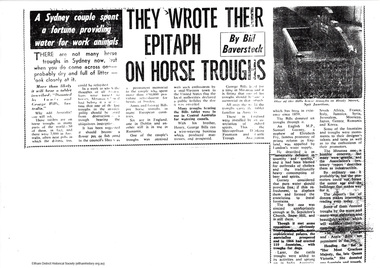
Folder, Bill Baverstock et al, Bills horse troughs
... A total of around 700 troughs were distributed by the trust in Australia and 50 in several other countries" - Wikipedia There is a trough locally situated on Main Road, Research...A total of around 700 troughs were distributed by the trust in Australia and 50 in several other countries" - Wikipedia There is a trough locally situated on Main Road, Research water trough bills horse trough george bills 7 pages Bills horse troughs Folder Bill Baverstock The Weekly Times Boroondara Bulletin Laura Cochrane Wendy Monger ...Photocopies of articles, some unsourced relating to the genral history of the Bills horse troughs. "Bills horse troughs are watering troughs that were manufactured in Australia and installed to provide relief for working horses in the first half of the twentieth century. The troughs were financed by a trust fund established through the will of George Bills. A total of around 700 troughs were distributed by the trust in Australia and 50 in several other countries" - Wikipedia There is a trough locally situated on Main Road, Research7 pageswater trough, bills horse trough, george bills -
 Eltham District Historical Society Inc
Archive Box, Eltham War Memorial
... Peter Bassett-Smith, 31 October 1987 o 04585-4-3-2 Souvenir Program: Free Program; Eltham Easter Gymkhana and Light Horse Show also Dog Competition, Easter Saturday 9th April, 1955 at Eltham (Lower) Park o 04585-4-3-3 Program Schedule; Eltham Easter Gymkhana and Light Horse Show also Dog Competition, Easter Saturday 9th April, 1955 at Eltham (Lower) Park o 04585-4-3-4 Program; Monster Gymkhana in aid of Hurstbridge Hall Re-Building Fund, Hurstbridge Recreation Reserve, Sunday, September 18, 1955 o 04585-4-3-5 Record Crowd Came To Eltham Gymkhana, Sporting World, Diamond Valley Local, Thursday, April 14, 1955, p8 o 04585-4-3-6 Program; Eltham Easter Gymkhana Goat Show Schedule, Easter Saturday 31st March, 1956, Eltham Park o 04585-4-3-7 Official Program; Eltham Easter Horse Show and Goat Show, Easter Saturday April 20th, 1957, Eltham Park o 04585-4-3-8 Program Schedule; Eltham Easter Horse Show and Goat Show, Easter Saturday April 20th, 1957, Eltham Park o 04585-4-3-9 Young Rider to Judge at Show, The Age, Wednesday, April 17, 1957, p8 o 04585-4-3-10 Promotional window label, Eltham Gymkhana, Easter Saturday, 20 April 1957 o 04585-4-3-11 Entry form for the Skyline Drive-In “Soap-Box” Derby, to be held along Main Road between Panorama Avenue and Bolton Street, Easter Saturday, 20 April 1957 o 04585-4-3-12 Official Program; Eltham Easter Horse Show and Goat Show, Easter Saturday, 5th April, 1958, Eltham Park o 04585-4-3-13 Brief history of the Eltham War Memorial Trust and Women's Auxiliary, Peter Bassett-Smith, 1987 o 04585-4-3-14 Summary of the Eltham War Memorial Trust Easter Gymkhana Committee Minutes (1954-1956) 04585-5 Folder: Infant Welfare Centre (1952) 04585-5-1 Newspaper article: Eltham: “Memorial Baby Health Centre Opening”; District News, The News, 14 November 1952. (Single sheet newsprint printed one side with District News for Macleod, Kinglake, Watsonia, Wattle Glen, Diamond Creek, Panton Hill, Eltham North, Lower Plenty, Research, Eltham. ...Peter Bassett-Smith, 31 October 1987 o 04585-4-3-2 Souvenir Program: Free Program; Eltham Easter Gymkhana and Light Horse Show also Dog Competition, Easter Saturday 9th April, 1955 at Eltham (Lower) Park o 04585-4-3-3 Program Schedule; Eltham Easter Gymkhana and Light Horse Show also Dog Competition, Easter Saturday 9th April, 1955 at Eltham (Lower) Park o 04585-4-3-4 Program; Monster Gymkhana in aid of Hurstbridge Hall Re-Building Fund, Hurstbridge Recreation Reserve, Sunday, September 18, 1955 o 04585-4-3-5 Record Crowd Came To Eltham Gymkhana, Sporting World, Diamond Valley Local, Thursday, April 14, 1955, p8 o 04585-4-3-6 Program; Eltham Easter Gymkhana Goat Show Schedule, Easter Saturday 31st March, 1956, Eltham Park o 04585-4-3-7 Official Program; Eltham Easter Horse Show and Goat Show, Easter Saturday April 20th, 1957, Eltham Park o 04585-4-3-8 Program Schedule; Eltham Easter Horse Show and Goat Show, Easter Saturday April 20th, 1957, Eltham Park o 04585-4-3-9 Young Rider to Judge at Show, The Age, Wednesday, April 17, 1957, p8 o 04585-4-3-10 Promotional window label, Eltham Gymkhana, Easter Saturday, 20 April 1957 o 04585-4-3-11 Entry form for the Skyline Drive-In “Soap-Box” Derby, to be held along Main Road between Panorama Avenue and Bolton Street, Easter Saturday, 20 April 1957 o 04585-4-3-12 Official Program; Eltham Easter Horse Show and Goat Show, Easter Saturday, 5th April, 1958, Eltham Park o 04585-4-3-13 Brief history of the Eltham War Memorial Trust and Women's Auxiliary, Peter Bassett-Smith, 1987 o 04585-4-3-14 Summary of the Eltham War Memorial Trust Easter Gymkhana Committee Minutes (1954-1956) 04585-5 Folder: Infant Welfare Centre (1952) 04585-5-1 Newspaper article: Eltham: “Memorial Baby Health Centre Opening”; District News, The News, 14 November 1952. (Single sheet newsprint printed one side with District News for Macleod, Kinglake, Watsonia, Wattle Glen, Diamond Creek, Panton Hill, Eltham North, Lower Plenty, Research, Eltham. ...CONTENTS: BOX 1 04585-1 04585 History • 04585-1-1 An Outline History of the Eltham War Memorial Trust by Stanley S. Addison • 04585-1-2 Stanly Addison's notes for his Outline History of the Eltham War Memorial Trust • 04585-1-3-1 Newspaper article: Eltham War Memorial Trust: Ready Now for Forward Movement; Acknowledgements £722; publication unknown, c.1946 • 04585-1-3-2 Newspaper article: Eltham War Memorial Trust: "Garden of Remembrance"; Baby Health Centre First Building, The News: The Newspaper of the City of Heidelberg and of the Shire of Eltham, 11 April 1947 • 04585-1-3-3 Newspaper: The News: The Newspaper of the City of Heidelberg and of the Shire of Eltham; Friday, December 1, 1950 • 04585-1-3-4 Newspaper article: Eltham War Memorial Trust by Stanley Addison, 1953 • 04585-1-3-5 Newspaper article: War Memorial Trust (publication unknown, n.d.) • 04581-1-4 Folder: A brief history of the Eltham War Memorial and Eltham Library, Harry Gilham, 1997-1999 • 04585-1-5 Newspaper article: Eltham's War Memorial; A Journey in Time, Nillumbik Mail, 5 July c.2001 04585-2 Eltham War Memorial Trust Minutes • 04585-2-1 Eltham War Memorial Trust Minutes, Book No. 2, 20 March 1951 to 4 June 1957 • 04585-2-2 Minute Book: Eltham War Memorial Trust Minutes, 2 July 1957 to 12 November 1973 BOX 2 04585-3 Women's Auxiliary, Eltham War Memorial Trust • 04585-3-1-1 Minute Book: Minute Book No. 1, Women's Auxiliary, Eltham War Memorial Trust, 10 May 1946 to 10 April 1952 • 04585-3-1-2 Minute Book: Minute Book No. 2, Women's Auxiliary, Eltham War Memorial Trust, 12 June 1952 to 14 June 1956 • 04585-3-1-3 Minute Book: Minute Book No. 3, Women's Auxiliary, Eltham War Memorial Trust, 12 July 1957 to 14 May 1959 • 04585-3-1-4 Minute Book: Minute Book No. 4, Women's Auxiliary, Eltham War Memorial Trust, 14 May 1959 to 12 August 1965 • 04585-3-2 Book: A favourite book of country recipes / compiled by the Women's Auxiliary of the Eltham War Memorial Trust 04585-4 04591 Eltham Easter Show and Gymkhana • 04585-4-1 Minute Book: Eltham War Memorial Trust; Easter Gymkhana Committee Minutes, 19 Nov 1954-6 Jun 1958 • 04585-4-2 Folder: Eltham War Memorial Trust; Easter Gymkhana Committee Correspondence, 19 Nov 1954-6 Jun 1958 o 04585-4-2-1 Notice from Honorary Treasurer of Easter Gymkhana Committee regarding completion of 1954 event and expression of thanks and that committee is now going into recess prior to commencement of planning for 1955 o 04585-4-2-2 Notice of Easter Gymkhana Committee Meeting, Monday 24th October, 1955 at the Shire Hall, Eltham o 04585-4-2-3 Letter from B.T. Taylor, Hon. Secretary, Eltham Easter Show Committee regarding the sale of tickets (c.1957) o 04585-4-2-4 Letter from B.T. Taylor, President, Eltham Easter Show Committee to Georges Ltd regarding the supply of The Georges Cup for the Eltham Easter Show, 11 April 1958 o 04585-4-2-5 Letter from Georges Ltd to B.T. Taylor, President, Eltham Easter Show Committee with payment for the miniatures of The Georges Cup, 6 June 1958 o 04585-4-2-6 Letter from Eltham Shire Secretary to B.T. Taylor, President, Eltham Easter Show Committee advising of new process regarding raffle, 5 May 1958 o 04585-4-2-7 Letter from Lilian Heath, Secretary, Judge Book Village Auxiliary to B.T. Taylor, Eltham Easter Show Committee, 24 May 1958 o 04585-4-2-8 Letter from Mrs R.J. Godfrey on behalf of M.A. Godfrey of Dandenong to B.T. Taylor, President, Eltham Easter Show under threat of legal action requesting replacement of cheque for £10 (second prize Open Jumping Contest), which was lost, 24 May 1958 o 04585-4-2-9 Reply by B.T. Taylor, President, Eltham Easter Show Committee to Mrs R.J. Godfrey to her letter of 24 May explaining circumstances and denying responsibility to forward a replacement cheque as it was cashed at the Golf Club Hotel; 6 June 1958 • 04585-4-3 Folder: Easter Gymkhana Committee Minutes and other associated ephemera o 04585-4-3-1 Letter: Letter of donation to Shire of Eltham Historical Society of the Easter Gymkhana Committee Minutes and other associated ephemera, J.M. Peter Bassett-Smith, 31 October 1987 o 04585-4-3-2 Souvenir Program: Free Program; Eltham Easter Gymkhana and Light Horse Show also Dog Competition, Easter Saturday 9th April, 1955 at Eltham (Lower) Park o 04585-4-3-3 Program Schedule; Eltham Easter Gymkhana and Light Horse Show also Dog Competition, Easter Saturday 9th April, 1955 at Eltham (Lower) Park o 04585-4-3-4 Program; Monster Gymkhana in aid of Hurstbridge Hall Re-Building Fund, Hurstbridge Recreation Reserve, Sunday, September 18, 1955 o 04585-4-3-5 Record Crowd Came To Eltham Gymkhana, Sporting World, Diamond Valley Local, Thursday, April 14, 1955, p8 o 04585-4-3-6 Program; Eltham Easter Gymkhana Goat Show Schedule, Easter Saturday 31st March, 1956, Eltham Park o 04585-4-3-7 Official Program; Eltham Easter Horse Show and Goat Show, Easter Saturday April 20th, 1957, Eltham Park o 04585-4-3-8 Program Schedule; Eltham Easter Horse Show and Goat Show, Easter Saturday April 20th, 1957, Eltham Park o 04585-4-3-9 Young Rider to Judge at Show, The Age, Wednesday, April 17, 1957, p8 o 04585-4-3-10 Promotional window label, Eltham Gymkhana, Easter Saturday, 20 April 1957 o 04585-4-3-11 Entry form for the Skyline Drive-In “Soap-Box” Derby, to be held along Main Road between Panorama Avenue and Bolton Street, Easter Saturday, 20 April 1957 o 04585-4-3-12 Official Program; Eltham Easter Horse Show and Goat Show, Easter Saturday, 5th April, 1958, Eltham Park o 04585-4-3-13 Brief history of the Eltham War Memorial Trust and Women's Auxiliary, Peter Bassett-Smith, 1987 o 04585-4-3-14 Summary of the Eltham War Memorial Trust Easter Gymkhana Committee Minutes (1954-1956) 04585-5 Folder: Infant Welfare Centre (1952) 04585-5-1 Newspaper article: Eltham: “Memorial Baby Health Centre Opening”; District News, The News, 14 November 1952. (Single sheet newsprint printed one side with District News for Macleod, Kinglake, Watsonia, Wattle Glen, Diamond Creek, Panton Hill, Eltham North, Lower Plenty, Research, Eltham. On reverse in handwritten purple pencil to the President, somewhat indecipherable, about an item to be hung on the walls of the beautiful building.) • 04585-5-2 Eltham War Memorial Trust, Official Opening - Baby Health Centre, 15th November 1952; Timetable of proceedings (1 page handwritten) • 04585-5-3 Eltham Baby Health Centre; Official Opening - Baby Health Centre: Address by President, 15 November 1952 (9 pages handwritten) • 04585-5-4 Newspaper article: Infant Welfare Centre as War Memorial, 15 November 1952 • 04585-5-5 Souvenir Booklet: Eltham War Memorial Trust, 1954 • 04585-5-6 Eltham War Memorial: Address by Mrs Stanley Addison at the Annual Meeting of the Infant Welfare Centre, Thursday 21st October, 1965 (4 pages typed, carbon copy) 04585-6 Roll of Honour Board (1954), Eltham War Memorial 04585-7 Eltham Pre-School (1956), Eltham War Memorial • 04585-7-1 Newspaper article: Minister to open Eltham Pre-school Tomorrow • 04585-7-2 Program; Eltham War Memorial Trust: Opening of the Second Unit of the War memorial, The Pre-school Centre, on Saturday, December 1st, 1956 at 3 p.m. • 04585-7-3 Folder: Eltham Pre-School (1956) Papers donated by Gordon Pearce, 30 Apr 2021 pertaining to Eltham Pre-school and Eltham War Memorial Trust. Gordon was a former President of the Eltham Pre-school at the time the Eltham War Memorial Trust was disbanded by Eltham Shire Council in December 1973. o Articles of the Eltham War Memorial Trust (9 A3 photocopies of original foolscap pages) o President’s Report: Eltham War Memorial Trust, Committee of Management, Dec. 1973 in which it was advised that the Committee was to be disbanded. o Letter: Gordon J.J. Pearce, President Eltham Pre-school to C.J. Bock, Chief Administrative Officer, Shire of Eltham, 21 Nov 1973 expressing disappointment at the Shire wanting to disband the Committee of Management of the Eltham War Memorial Trust o Minutes: Eltham Pre-school Committee, 26 Nov 1973 o Minutes: Eltham Pre-school Committee, 17 Dec 1973 o President’s Report: Gordon Pearce, Eltham Pre-school, 4 Feb 1974 • 04585-7-4 Newspaper clipping: A humble beginning, Diamond Valley Leader, July 26, 2006, p35 04585-8 Children’s Library (1961) / Eltham War Memorial Hall (1966) • 04585-8-1 Letter: Hon. Secretary Eltham Shire Council inviting Lieut-General The Honourable Sir Edmund Herring to attend the opening of the Children's Library. 23 Aug. 1961 • 04585-8-2 Newspaper article: Third unit of Eltham's memorial opened; Diamond Valley News, 14 Nov 1961 (Ref: SEA_74_001-055) • 04585-8-3-1 Receipt to Eltham Historical Society for hire of Eltham War Memorial Hall, 23 June 1970 • 04585-8-3-2 Receipt to Eltham Historical Society for hire of Eltham War Memorial Hall, 6 July 1970 • 04585-8-4 A brief history of the Eltham Library, Harry Gilham, c.1994 04585-9 Eltham Enlistments for the Second World War 04585-1964 • Document: Photocopy of Certificate of Title, Eltham War Memorial Trust, Lot 2, Plan of Subdivision No. 63242, Parish of Nillumbik; derived from Vol. 7073 Fol. 498, 18 May 1964 04585-1996 (Eltham Town Focus Group) Documents relating to a focus group brought together by the Shire of Nillumbik Chairman of Commissioners in 1996 to provide advice on the best long term use for the buildings and land situated between the former Eltham Shire Offices and Country Fire Authority buildings. These buildings are known as the Eltham War Memorial buildings located at 903-907 Main Road, Eltham. In May 2020, the Heritage Council Victoria did not recommend the site for inclusion in the Victorian Heritage Register. Potential impact upon the Memorial Garden because of a proposed roundabout at Dudley Street and Main Road • Notes concerning impact upon Eltham War Memorial Garden of a proposed roundabout at Dudley Street, Eltham, 20 August 1996 • Draft proposal of a roundabout at Dudley Street and Main Road showing impact upon Eltham War Memorial Garden, c. Sep. 1996 • Letter (copy): Harry Gilham, President, EDHS to Bruce Ruxton, President, Victorian RSL concerning impact upon Eltham War Memorial Garden of a proposed roundabout at Dudley Street, Eltham, 1 September 1996 • Letter: Bruce Ruxton, President, Victorian RSL to Harry Gilham, President, EDHS, 20 Sep 1996 concerning impact upon Eltham War Memorial Garden of a proposed roundabout at Dudley Street, Eltham, including copy of communication with Eltham RSL (T. Beaton, Hon Sec.) of 10 Sep 1996 • Letter: EDHS (H. Gilham, President) to Commissioners, Nillumbik Shire Council, 16 Sep 1996 advising not in support of roundabout at Dudley Street due to impact upon Eltham War Memorial Garden • Photocopy: Editorial comment, Peter Doughterty, ArtStreams Dec 1996/Jan 1997 re Commissioners push for development in activity zone of former office site and Eltham War Memorial (see EDHS_04362) • Letter: Don Cordell, Chairman of Commissioners, Nillumbik Shire Council, 10 Dec. 1996 inviting Harry Gilham to join a Focus Group to advise him, chaired by Alan Field. Includes a list of focus group members and contact details. • Minutes of Meeting, Eltham Town Focus Group, 17 Dec. 1996 04585-1997 (Eltham Town Focus Group) Documents relating to a focus group brought together by the Shire of Nillumbik Chairman of Commissioners in 1996 to provide advice on the best long term use for the buildings and land situated between the former Eltham Shire Offices and Country Fire Authority buildings. These buildings are known as the Eltham War Memorial buildings located at 903-907 Main Road, Eltham. In May 2020, the Heritage Council Victoria did not recommend the site for inclusion in the Victorian Heritage Register. Investigating condition of and future use of the Eltham War Memorial Complex and redevelopment of the site • Letter: Alan Field to Harry Gilham. 8 Jan. 1997 advising date of 18 Jan. for next meeting of Eltham Town Focus Group • Minutes of Meeting, Eltham Town Focus Group, 18 Jan. 1997 with handwritten notes by Harry Gilham • Draft Report: A Community Vision for “The Eltham War Memorial Trust” Property, Main Road, Eltham, prepared at the request of Chief Commissioner, Don Cordell, 31 Jan. 1997, along with handwritten nots by Ross McDonald and accompanying note by Harry Gilham written in 2010 upon handover of EDHS presidency 04585-2000 • Notes used by Harry Gilham at Nillumbik Council Meeting of 21 March 2000 regarding proposed sale/development of the Eltham War Memorial property 04585-2004 Material covers Eltham Major Activity Structure Plan and a proposal by Council to sell the Eltham War Memorial site for commercial use • Eltham Major Activity Structure Plan Comments Sheet; Response by Harry Gilham, 22 June 2004 • Letter from Eric Mack to the Hon. Steve Herbert, Member for Eltham regarding draft Major Activity Centre Structure Plan, 22 June 2004 • Newspaper article: Protect war memorial, Harry Gilham, President, Eltham District Historical Society; Letter, Diamond Valley Leader, June 30, 2004, p16 (Includes copy sent to paper 17 June) • Letter from Eric Mack to Nillumbik Shire Council CEO and Councillors regarding draft Major Activity Centre Structure Plan, 2004 • Copy of fax sent by John Cohen, OAM, JP to Diamond Valley News, re his support for the appeal for protection of the Eltham War Memorial 3 July 2004 • Newspaper article: Sell-off a betrayal of trust, Ken Eckersall; Letters, Diamond Valley Leader, 7 July 2004 • Newspaper article: Don't insult memory of fallen servicemen, John Cohen; Letters, Diamond Valley Leader, 7 July 2004 • Newspaper article: Up in arms against sell-off, Dave Crosswaite, Diamond Valley Leader, July 14, 2004, p5 • Copy of letter from John Cohen to President and Executive of the Eltham RSL regarding the Eltham War Memorial, 16 July 2004 • Reply to Eric Mack from the Hon. Steve Herbert, Member for Eltham regarding his letter of 22 June, 27 July, 2004 • Notice issued by Cr Greg Johnson of 11 August meeting by Council's Policy and Services Committee to consider a proposal to sell the Eltham War memorial and old shire office properties, 6 August 2004 • Minutes for the policy and Services Committee of Nillumbik Shire Council held Wednesday 11 August 2004 • Newspaper article: Shire plan 'sacrilegious' by Dave Crossthwaite, Diamond Valley Leader, Wednesday, August 19, 2004, p1 • Newspaper article: Our say on sale of land; Have you say, Diamond Valley Leader, August 18, 2004, p22 • Newspaper article: School hall is not ratepayers' worry; Have your Say, Diamond Valley Leader, August 18, 2004, p23 • Copy of letter sent by John Cohen, OAM, JP to the CEO, RSL Victoria requesting their opposition to sale of the Eltham War Memorial, 19 August 2004 • Newspaper article: Clash over land sale by Dave Crossthwaite, Diamond Valley Leader, August 25, 2004, p1 • Newspaper article: Mayor beset over arts agenda claim by Dave Crossthwaite, Diamond Valley Leader, August 25, 2004, p5 • Newspaper article: A lot of work has gone into shire structure plan; Letters, Diamond Valley Leader, August 25, 2004, p10 • Newspaper article: Public assets are not for sale; Letters, Diamond Valley Leader, August 25, 2004, p11 • Copy of letter sent by John Cohen, OAM, JP to Brigadier J.R. Deighton, State Secretary, Victorian RSL re his comments in Diamond Valley Leader regarding the Eltham War Memorial, 27 August 2004 • Handwritten notes prepared by Harry Gilham in preparation of presentation to Council pertaining to draft Eltham Major Activity Structure Plan, c. Sep. 2004 • Newspaper article: Don't let a dream stay hijacked; Letters, Diamond Valley Leader, September 1, 2004, p11 • Ordinary Meeting of Council Agenda, 15 September 2004, p55 with notes on vote for motion that any reference to the sale of the War Memorial be removed • Copy of letter sent by John Cohen, OAM, JP to Brigadier J.R. Deighton, State Secretary, Victorian RSL advising the War Memorial had been removed from the wider proposal of the Eltham Activity Centre, 16 September 2004 • Newspaper article: Future of memorial site on hold until poll by Caroline Gonzalez, Diamond Valley Leader, September 20, 2004 • Fax from Catherine Dale, CEO, Nillumbik Shire Council to John Cohen re Renovation and Maintenance of Victorian War Memorials, 6 October 2004 • Letter from Cr Tony Raunic, Mayor to Harry Gilham regarding Eltham Major Activity Centre Structure Plan advising the removal of any reference to sale of the War Memorial and detailed consultation to be held with stakeholders regarding the former Shire of Eltham Office site; 8 October 2004 • Letter from Barry Rosewall, President, Eltham RSL to John Cohen advising the sub-branch strongly opposes the sale of the Eltham War Memorial, 20 October 2004 • Fax from Bill Forrest, Interim CEO, Nillumbik Shire Council to John Cohen re Renovation and Maintenance of Victorian War Memorials, 8 November 2004 • Copy of letter from John Cohen to Bill Forrest, Interim CEO, Nillumbik Shire Council re Maintenance of Eltham War Memorial, November 2004 04585-2007 • News article: The spin starts here; Brian Murray, Nillumbik Ratepayers’ Association, Valley Views, Diamond Valley Leader, 13 June 2007 suggesting Council proposing to bring back Shire Offices to Eltham with potential loss of Eltham War Memorial • News article: War memorial fear-mongering; Harry Gilham, Heidelberg Valley Weekly, 26 June 2007 • News article: Consultation is no spin; John Cohen, Former Shire President, Valley Views, Diamond Valley Leader, 27 June 2007 • News article: Troops enlist for campaign by Fiona Willan, Diamond Valley Leader, 18 July 2007 04585-2010 • Newspaper article: Hall 'scruffy' - war vet, Diamond Valley Leader, 17 February 2010, p2 04585-2011 Cultural Significance Assessment • Cultural Heritage Significance Assessment; Civic Building Complex, 903-907 Main Road, Eltham, September 2011 DRAFT • Feedback to Nillumbik Shire Council by Eltham District Historical Society in response to September 2011 Draft Cultural Heritage Significance Assessment of the Eltham War Memorial Building Complex, 3 November 2011 • War Memorial Building Complex, 903-907 Main Road, Eltham: Cultural Significance Assessment, November 2011 prepared for Nillumbik Shire Council by Samantha Westbrooke Pty Ltd in association with Peter Mills PhD, Architectural Historian 04585-2014 Proposed extension to Cenotaph War Memorial Terrace championed by Montmorency-Eltham RSL and its impact upon the Memorial Garden and Eltham War Memorial buildings complex. • Draft Landscape Concept Plan by Henry Architects for Proposed Extension to Memorial Terrace, 14 July 2014 (Note: Senior Citizen’s Building correctly identified. Every subsequent plan incorrectly shows this building as the former Children’s Library, which was the War Memorial Hall building) • Letter: Eltham Gateway Action Group to Stuart Burdack, Shire of Nillumbik (undated) offering comment on Proposed Extension to Memorial Terrace with handwritten notes • Letter: Jim Connor, President, EDHS to Adrian Cully, Manager Community Participation, Learning and Culture, Nillumbik Shire Council, 18 Aug. 2014, encouraging Council not to support proposed extension to War Memorial Terrace due to significant impact upon the Eltham War Memorial Complex as supported by the Cultural Significance assessment conducted by Council in 2011 • Notices of Motion, NOM.001/14 pertaining to memorials Advisory Committee and Montmorency-Eltham RSL to upgrade the Eltham War Memorial site in time for ANZAC Day 2015, Nillumbik Shire Council Ordinary Meeting, 26 August 2014 • Notices of Motion, NOM.001/14 pertaining to memorials Advisory Committee and Montmorency-Eltham RSL to upgrade the Eltham War Memorial site in time for ANZAC Day 2015, Nillumbik Shire Council Ordinary Meeting, 26 August 2014 • Media Release: Support for cenotaph expansion, Nillumbik Shire Council, Sep 2014 • Eltham War Memorial Park (Stage 2), Nillumbik Shire Council, c.2014 • Email (copy): Summary of advice from Samantha Westbrooke (2 Sep. 2014) regarding proposed impact of landscaping around the cenotaph as identified in the significance assessment conducted Nov. 2011 by herself and Dr Peter Mills. • Policy and Services reports, PSD.034/14 Eltham War Memorial Building Precinct - Proposed Extension to Memorial Terrace, Nillumbik Shire Council Ordinary Meeting, 9 September 2014 • EDHS presentation to NSC Policy and Services meeting 9 September 2014 regarding the Montmorency-Eltham RSL proposal to expand/upgrade the Eltham War Memorial with handwritten notes from Harry Gilham for his submission at Council meeting • Newspaper article: Plan to expand memorial; growth in ANZAC Day services inspires RSL proposal by Megan Bailey, Diamond Valley Leader, Wednesday, September 10, 2014 • Agenda: User Groups and Stakeholders Meeting, Proposed Extension to Memorial Terrace, 11 September 2014 • Email: Jim Connor, EDHS, regarding option to seek a heritage protection overlay for the Eltham War Memorial Building complex similar to that for the cenotaph, 15 Sep. 2014 • Newspaper article: Council defers RSL war memorial upgrade to seek consultation, Diamond Valley Leader, September 17, 2014 • Letter: Harry Gilham to Local Press, 20 Sep. 2014 regarding the Eltham War Memorial and moves by the RSL to take expand the War Memorial Terrace further into the orginal Memorial Garden • Letter: Alan Field, President, The Eltham Veterans War Memorial Preservation Society Inc. to CEO and Councillors, Nillumbik Shire Council protesting at perceived injustices and ‘veteran bashing’ regarding their previous efforts to relocate ‘their Obelisk and Cenotaph’ to the Eltham War Memorial complex and their frustration in their attempts to further expand upon the Memorial Terrace. Areas of letter are highlighted with handwritten markups and notes. Also notes on loose card and paper with definitions of Memorial, Obelisk, Cenotaph, commentary on establishment of Eltham War Memorial, The Eltham War Memorial Trust and RSL involvement and current actions by RSL in respect to claims in the letter (written by Harry Gilham ?). • Newspaper article: Residents say no to memorial upgrade; Mayor says feedback will be considered at next meeting by Megan Bailey, Diamond Valley Leader, Wednesday, October 1, 2014 • Policy and Services reports, PS.038/14 Eltham War Memorial Building Precinct - proposed extension to the Eltham Cenotaph Terrace, Nillumbik Shire Council Policy and Services Committee Meeting, 14 October 2014 • Newspaper article: Centenary dawn service moves to Petrie Park; Diamond Valley Leader, October 22, 2014, p5 • Newspaper article: Upset over upgrade; war memorial plans get culled; Diamond Valley Leader, October 29, 2014, p3 • Newspaper article: Memorial to be extended; expected to be finished before ANZAC Day ceremony by Megan Bailey, Diamond Valley Leader, December 17, 2014 04585-2018 Proposal by Nillumbik Shire Council to sell off former Eltham Shire Office site and Eltham War Memorial site for commercial use and community reaction. • Newspaper article: Site of contention; Conversations, Diamond Valley Leader, September 5, 2018, p10 • Motion to Councillors: Carlotta Quinlan, Eltham Community Action Group, [October 2018] following a Community Town Hall Meeting held October 13, 2018 regarding proposed development and sale of part of 895 and 903-907 Main Road, Eltham • Things you should know about the Eltham War Memorial, author unknown, c. Oct. 2018 • Email: Greg Johnson to Sue Dyet 16 October 2018 regarding Assessment Criteria discussed at 25 September 2018 Council meeting concerning proposed development and sale of part of 895 and 903-907 Main Road, Eltham • Newspaper article: War memorial assurance; RSL involved but no-confidence motion passed on council by Brittany Shanahan, Diamond Valley Leader, October 17, 2018 • An essay addressed to the Councillors of Nillumbik Shire, October 2018: About the Eltham War Memorial and the adjacent community-owned sites in Eltham that the Council threatens to sell, Andrew Lemon Nov. 2018 • Report: Request for proposals - For the development and sale of part of 895 and 903-907 Main Road, Eltham; Prepared for Nillumbik Shire Council by Maddocks; 2 November 2018 (229 pages) • Notice: Duncan Duke, President, Montmorency Eltham RSL, to Members, 5 December 2018 – statement regarding “proposed redevelopment of the Eltham War Memorial Buildings and potential impact of the proposed redevelopment on our (sic) Cenotaph and Memorial Site.” 04585-2020 Community motions to seek Heritage Council Victoria registration of the Eltham War Memorial precinct • Eltham War Memorial Buildings: Recommendation of the Executive Director and assessment of cultural heritage significance under Part 3, Division 3 of the Heritage Act 2017; 18 May 2020 • Newspaper advertisement: Heritage Council Victoria, advising the Eltham War Memorial Buildings have been recommended NOT for inclusion in the Victorian Heritage Register; The Age, May 22, 2020, p34 • Correspondence: Eltham War Memorial Buildings; prepared by Nillumbik Shire Council for the Heritage Council Victoria; 29 May 2020 • Correspondence: Eltham War Memorial Buildings; prepared by Nillumbik Shire Council for the Heritage Council Victoria; 5 June 2020 • Submission: Eltham War Memorial Buildings; prepared by Eltham Community Action Group for the Heritage Council Victoria; 17 July 2020. Also included: o Submission: Eltham War Memorial Buildings; prepared by Catherine Johnson of Pryor Street, Eltham for the Heritage Council Victoria; 17 July 2020 o Submission: Eltham War Memorial Buildings; prepared by Andrew Barras of Silver Street, Eltham for the Heritage Council Victoria; 10 July 2020 o Submission: Eltham War Memorial Buildings; prepared by Graham Fildes of Elouera Close, Eltham for the Heritage Council Victoria; 11 July 2020 o Submission: Eltham War Memorial Buildings; prepared by Eltham District Historical Society for the Heritage Council Victoria; 17 July 2020 o Submission: Eltham War Memorial Buildings; prepared by Julie Willis of Faculty of Architecture, Building and Planning, University of Melbourne for the Heritage Council Victoria; 17 July 2020 o Submission: Eltham War Memorial Buildings; prepared by Ms Zheng Wu of Wynton Ct, Eltham for the Heritage Council Victoria; 16 July 2020 o Submission: Eltham War Memorial Buildings; prepared by Jenny Daw of Black Cameron Road, Smith Gully for the Heritage Council Victoria; 19 July 2020 o Submission: Eltham War Memorial Buildings; prepared by Eltham Pre-School for the Heritage Council Victoria; 19 July 2020 o Submission: Eltham War Memorial Buildings; prepared by Jo-Anne Barker of Treloar Ave, Eltham for the Heritage Council Victoria; 18 July 2020 o Submission: Eltham War Memorial Buildings; prepared by Prof. Hannah Lewi of Faculty of Architecture, Building and Planning, University of Melbourne for the Heritage Council Victoria; 18 July 2020 o Submission: Eltham War Memorial Buildings; prepared by Janet Boddy of Kerrie Cres, Eltham for the Heritage Council Victoria; 19 July 2020 o Submission: Eltham War Memorial Buildings; prepared by Rosemary Aitken of Kent Hughes Rd., Eltham for the Heritage Council Victoria; 18 July 2020 o Submission: Eltham War Memorial Buildings; prepared by Sue Dyet of Leonard Cres., Eltham for the Heritage Council Victoria; 19 July 2020 o Submission: Eltham War Memorial Buildings; prepared by Lynnsay Prunotto of Lavender Park Rd., Eltham for the Heritage Council Victoria; 19 July 2020 o Submission: Eltham War Memorial Buildings; prepared by Felicity Bing of Eltham Pre-School for the Heritage Council Victoria • Draft Report: Eltham War Memorial Building Complex, 903-907 Main Road, Eltham, prepared by CONTEXT, (Survey Date: Dec. 2020) Also contained in Box 2 is EDHS_04586 – Eltham Obelisk EDHS_04586 - Eltham Obelisk The Eltham Obelisk was originally located at the corner of Bridge and Main Roads in 1919. It commemorated the memory of the Eltham Soldiers who fell in the First World War and complemented the Eltham Avenue of Honour established in 1917 to those that served. In 1943 (WW2) the local community commenced plans to establish the Eltham War Memorial, a living memorial to benefit the children as opposed to a one in stone as per the obelisk. The Eltham War Memorial Trust was established in 1945. In 1947 the Trust intended for the Obelisk to be relocated from Bridge Street and Main Road to the Garden of Remembrance which was planned as part of the Baby Health Centre which was to be the first of three buildings of the Eltham War Memorial to be built in 1951. In 1951 the Eltham RSL was invited to be represented on the Eltham War Memorial Trust. During the period of Jun through October 1956 the original wooden bridge over the Diamond Creek in Bridge Street was replaced with a new concrete structure. At the same time the intersection of Bridge Street at Main Road was revised necessitating the relocation of the Eltham Obelisk. It was ‘temporarily’ relocated to the front garden of the Eltham RSL Sub-Branch on Main Road for safe keeping. In 2007, a suggestion was proposed by Harry Gilham (President, EDHS) to John Cohen (ERSL) to claim a special site along with the historic Shillinglaw trees on the now vacant former Eltham Shire Office site adjacent to the Eltham War Memorial precinct for relocation of the obelisk. In 2010 following the financial collapse and sale of the Eltham RSL Sub-Branch property and amalgamation with the Montmorency Eltham RSL sub-branch, the location of the obelisk was again in immediate jeopardy and in conjunction with Nillumbik Shire Council, supported by the RSL, the obelisk was relocated in front of the Eltham War Memorial buildings in preparation for the Dawn Service on Anzac Day 2012. The new location resulted in significant impact upon the Eltham War Memorial Garden. Council’s preferred location was near the Eltham Library however that would have cost $39,000. The Eltham War Memorial Garden was subjected to further intrusion in 2014 with a proposed expansion of the War Memorial Terrace. Contents: 1. Newspaper article: Eltham, The Advertiser, 15 Nov 1918 2. Newspaper article: Eltham, The Advertiser, 18 Nov 1918 3. Newspaper article: An Obelisk at Eltham, The Advertiser, 11 Jul 1919 4. Newspaper advertisement: Unveiling of Obelisk at Eltham, The Advertiser, 1 Aug 1919 5. Newspaper article: Eltham Soldiers’ Memorial; Unveiled by Sir William Irvine, The Argus, Monday, 4 Aug 1919, p8 6. Newspaper article: Memorial to the Fallen; Unveiled at Eltham, The Age, Monday, 4th August 1919 7. Newspaper article: Eltham Memorial to Fallen Soldiers, Diamond Creek Valley Advocate, 8 Aug 1919 8. Newspaper article: Programme - Presentation of German Machine Gun at the Obelisk, Eltham on Sunday, 8th August 1920, at 3.30 P.M. 9. Newspaper article: article about presentation of a war trophy, a heavy machine gun placed beside obelisk, The Advertiser, 13 Aug 1920 10. Newspaper article: Eltham: ANZAC Services, The Advertiser, Friday, May 2, 1924 11. Newspaper article: Eltham War Memorial, The Advertiser, Oct 26, 1928 12. Newspaper article: Obelisk honors their memory, Diamond Valley News, March 30, 1971, p11 13. Newspaper article: Eltham Obelisk of 1919, Harry Gilham, August 2000 as well as draft submitted dated 22 Aug 2000 14. Newspaper article: Names renewal, thanks to Barry, Diamond Valley Leader, 18 Apr 2007, p3 with picture featuring Eltham RSL president John Haines and Gwen Rosewall 15. Handwritten note from Harry Gilham (President EDHS) to John Cohen (ERSL) regarding history of Eltham RSL site and 1947 newspaper article "Eltham War Memorial Trust "Garden of Remembrance" referencing relocation of Obelisk to the proposed Garden of Remembrance at the Baby Health Centre (Eltham War Memorial), 24 December 2000. 16. Minutes of Eltham RSL and Community Meeting held at 29 Nyora Road, Eltham, 23 June 2010 (Community meeting re closure of Eltham RSL sub-branch and relocation of the WW1 Obelisk) 17. Newspaper article: RSL branch has a fight on its hands by Alana Schetzer, Heidelberg & Valley Weekly, 3 August 2010, p7 18. Newspaper article: Locals battle state RSL over building, Diamond Valley Leader, 4 August 2010, p7 19. Newspaper article: Move war memorial: RSL, c. Dec. 2010 20. Officers' reports, 11.113/10 Relocation of Eltham RSL Cenotaph, Nillumbik Shire Council Ordinary Meeting, 21 December 2010 21. Newspaper article: New home for cenotaph; Councillors support proposal for relocation to Eltham's War Memorial Hall, Diamond Valley Leader, 12 January 2011 22. Newspaper article: CFA hot for RSL site; MP presses for 'fast-track' purchase, Diamond Valley Leader, 23 February 2011, p1 23. Email Correspondence: EDHS President to NSC General Manager Community and Leisure re RSL Obelisk (Cenotaph) proposed relocation, 24 May 2011 24. Officers' reports, OCM.091/11 Interim Relocation site for the Eltham Cenotaph, Nillumbik Shire Council Ordinary Meeting, 23 August 2011 25. Newspaper article: New home for cenotaph delights war veterans, Diamond Valley Leader, 31 August 2011, p9 26. Newsletter Extract: Eltham RSL and War Memorial, EDHS Newsletter 14 Sep 2011 27. Officers' reports, OCM.004/121 Interim Relocation of the Eltham Cenotaph, Nillumbik Shire Council Ordinary Meeting, 31 January 2012 (includes Funding agreement between NSC and Montmorency-Eltham RSL Sub-branch Inc) 28. Newspaper article: Memorial move lags, Diamond Valley Leader, 1 February 2012 29. Site history of Obelisk and Wall Memorial Hall, Montmorency-Eltham RSL, March 2012 draft 30. Open Letter to the Residents of ELTHAM and MONTMORENCY [And their Surrounding Districts]; Montmorency-Eltham RSL, 19 March 2012 (including drafts) 31. Newspaper advertisement: Open letter to the residents of Eltham and Montmorency, Montmorency Eltham RSL, Diamond Valley News, 21 March 2012 32. Newspaper advertisement: Open letter to the residents of Eltham and Montmorency, Montmorency Eltham RSL, Banyule & Nillumbik Weekly, 27 March 2012, p7 33. Newspaper article: New dawn for tribute, Diamond Valley Leader ca April 2012 34. Email (Copy): Alex Smith (MERSL Ast. Sec.) advising that contractor (Malcorp) will relocate obelisk Monday, April 2, 2012 35. Newspaper article: Memorial Moved, Banyule/Nillumbik Weekly, 10 April 2012 36. Newspaper article: Eltham cenotaph move goes 'like clockwork', Diamond Valley Leader, 11 April 2012 37. Newspaper photo: Veterans (l-r) Alan Field, Max Lowerson and John Cohen will join piper David Cretney to commemorate fallen Diggers, 2012 (standing beside relocated obelisk in front of the Eltham War Memorial complex), c. 11 April 2012 38. Advertisement, Program for Eltham Dawn Service, Diamond Valley Leader, April 2012 39. Program for Montmorency Anzac Day March 2012 (incomplete, some pages duplicated, some pages upside down). 40. Newspaper article: RSL site nets $1.8m, Diamond Valley Leader, 9 May 2012 41. OCM.076/13 Amendment C84 Eltham Cenotaph; 11. Officer's reports, Ordinary Meeting of Council Agenda, 25 June 2013, pp42-44 and Attachment; Amendment C84 Eltham Cenotaph; Citation - Eltham War Memorial (4 pages) 42. Newspaper article: Council seeks to protect cenotaph, Diamond Valley Leader, Wednesday, July 3, 2013, p5 43. Newspaper article: Future safe for war memorial, Diamond Valley Leader, Wednesday, November 13, 2013, p5 44. Handwritten notes in pencil (2 pages) by Harry Gilham, Items form the Eltham and Whittlesea Shires The Advertiser newspaper 7 June 1918 - 1919 providing a summary of the formation of the Peace Celebration Committee leading to the establishment of the Avenue of Honour and the Eltham Obelisk and seeking information in lead up to WW1 Centenary, 2013 45. Newspaper article: Memories of our heroes, Diamond Valley Leader, 25 Apr 2018 – also Veteran saluted, featuring article on Army veteran, Glen Ferrarotto. eltham war memorial, eltham war memorial trust, eltham infant welfare centre, eltham pre school, honour roll, eltham war memorial hall, children's library, eltham obelisk -
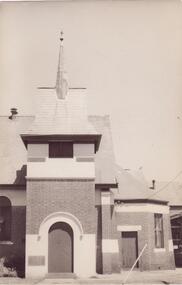 Glen Eira Historical Society
Letter - Carnegie Methodist Church, Neerim Rd, 252- 254, Carnegie
... Handwritten research note on the Carnegie Methodist Church. Undated and unacknowledged. Letter, National Trust of Australia (Victoria) notifying inclusion of the Carnegie Methodist on the Register – 25/09/1990...Handwritten research note on the Carnegie Methodist Church. Undated and unacknowledged. Letter, National Trust of Australia (Victoria) notifying inclusion of the Carnegie Methodist on the Register – 25/09/1990 Carnegie Rosstown State School Rosstown Neerim Road Carnegie State School Coles A. ...Caulfield Conservation Study – Andrew Ward 1995 with photos. Photocopy of extract from the study. Two Black and White photographs of the Carnegie Methodist Church 1) 90mm x 135mm 2) 80mm x 115mm. Sats unknown. Handwritten research note on the Carnegie Methodist Church. Undated and unacknowledged. Letter, National Trust of Australia (Victoria) notifying inclusion of the Carnegie Methodist on the Register – 25/09/1990carnegie, rosstown state school, rosstown, neerim road, carnegie state school, coles a. phipps, schools, oakleigh circuit, ward andrew, toolambool road, methodist circuit, carnegie methodist church, broadbent l. c., snell j. f., reid g., rosstown theatrical company, methodist church, uniting church, architectural styles, architectural features, frederick h. w. rev., californian bungalow, sunday schools, towers. -
Glen Eira Historical Society
Letter - Anselm, Glenferrie Street, 4, Caulfield North
... research notes with detailed descriptions of the architectural features of Anselm. Also includes a photocopy of two hand-drawn room plans (100mm x 82mm; 81mm x 75mm), detailed hand-written descriptions of the rooms (3 pages) and a hand-drawn crest (41mm x 29mm), compiled by Mrs J O’Donnell in 1972. The file also includes a copy of the tile and inscription located at the base of the tower (41 mm x 56 mm). Also included is a copy of the letter, dated 31/10/2011, from the National Trust...research notes with detailed descriptions of the architectural features of Anselm. Also includes a photocopy of two hand-drawn room plans (100mm x 82mm; 81mm x 75mm), detailed hand-written descriptions of the rooms (3 pages) and a hand-drawn crest (41mm x 29mm), compiled by Mrs J O’Donnell in 1972. The file also includes a copy of the tile and inscription located at the base of the tower (41 mm x 56 mm). Also included is a copy of the letter, dated 31/10/2011, from the National Trust ...Various detailed descriptions of the architectural features of Anselm. Includes a photocopy of the Caulfield Conservation Study report on Anselm by Andrew Ward, dated 02/1994, with a photo (152mm x 97mm). Also includes 3 pages of unattributed, undated, typed and handwritten research notes with detailed descriptions of the architectural features of Anselm. Also includes a photocopy of two hand-drawn room plans (100mm x 82mm; 81mm x 75mm), detailed hand-written descriptions of the rooms (3 pages) and a hand-drawn crest (41mm x 29mm), compiled by Mrs J O’Donnell in 1972. The file also includes a copy of the tile and inscription located at the base of the tower (41 mm x 56 mm). Also included is a copy of the letter, dated 31/10/2011, from the National Trust of Australia, regarding the classification upgrading of Anselm. Includes references.cohen samuel, haddon robert joseph, graham c. g., o’donnell j., ward andrew, anselm, caulfield north, glenferrie street, balaclava road, st. stephen’s presbyterian church caulfield, architectural features, architectural styles, attics, towers -
 Bendigo Military Museum
Document - RESEARCH PAPERS WW1, Unknown
... Passchendaele Barracks Trust PBT21 WW1 Documents ERYX GABRIEL INCLEDON Ten pages of documents related to Eryx Gabriel INCLEDON No 35 (born Geelong) enlisted 18.8.1914 in C Coy 8th Bn AIF, embark for Eygpt 19.10.1914, embark for Gallipoli 5.4.1915, WIA 5.5.1915 GSW to back, promoted Sgt 13.8.1915, transfer to 60th Bn 24.2.1916, embark for France 29.6.1916, reported missing 19.7 1916, Court of enquiry later listed as KIA 19.7.1916, no known grave. In reference to DNA search which was unsuccessful. Document RESEARCH ...Ten pages of documents related to Eryx Gabriel INCLEDON No 35 (born Geelong) enlisted 18.8.1914 in C Coy 8th Bn AIF, embark for Eygpt 19.10.1914, embark for Gallipoli 5.4.1915, WIA 5.5.1915 GSW to back, promoted Sgt 13.8.1915, transfer to 60th Bn 24.2.1916, embark for France 29.6.1916, reported missing 19.7 1916, Court of enquiry later listed as KIA 19.7.1916, no known grave. In reference to DNA search which was unsuccessful.passchendaele barracks trust, pbt21, ww1, documents, eryx gabriel incledon -
 Warrnambool and District Historical Society Inc.
Administrative record - Warrnambool Waterworks Newspaper Cuttings, 1891 to 1917
... Trust was formed using water from the Merri River. This system lasted until 1939 when the Warrnambool water supply came from the Otway ranges. This system is still the water supply for Warrnambool today. The cuttings in this ledger will be useful for research ...This ledger contains newspaper cuttings form The Warrnambool Standard newspaper from May 1891 to October 1917. The cuttings are reports of meetings of the Warrnambool Waterworks Trust. In the early days of Warrnambool domestic water and water for fire suppression was supplied by tanks, wells and springs. In the 1870s various schemes were proposed to find a better supply of water. In 1891 the Warrnambool Waterworks Trust was formed using water from the Merri River. This system lasted until 1939 when the Warrnambool water supply came from the Otway ranges. This system is still the water supply for Warrnambool today. The cuttings in this ledger will be useful for research.This is a ledger with a brown mottled cover and a leather spine and leather corners. The spine is partly detached. The front cover has a label pasted on it. The pages originally had hand written entries (The Minutes of a Warrnambool organisation). Newspaper cuttings have been pasted over the original writing. Warrnambool Waterworks Trust Newspaper Reports From 19th May 1891 To --- warrnambool waterworks trust, warrnambool water supply -
 Warrnambool and District Historical Society Inc.
Administrative record - Warrnambool Friendly Societies Park Trust Ledgers, Friendly Societies Park Trust administrative personnel, 1871 to 1947
... These items are of considerable historical interest as they contain much detail about the early history of the Friendly Societies Park Trust and give researchers valuable information on the work of benefit societies in the late 19th and early 20th centuries in Warrnambool and also on a major sports facility still existing in Warrnambool. ...These ledgers are administrative records of the Warrnambool Friendly Societies Park Trust. One contains Minutes of meetings from 1931 to 1947 and the other is an Accounts Book with records of payments for salaries, insurance, rentals, ground improvements etc. from 1908 to 1947. Some inserts in the ledgers date back to the early days of the Trust. In 1871 the Friendly Societies of Warrnambool (benefit societies which mainly offered members heath cover, including the Oddfellows, Foresters, Hibernians,, Rechabites, Sons of Temperance, Druids and Protestant Alliance) established a sports ground in Warrnambool. This included facilities for cricket, football and Athletics Carnivals and other public demonstrations and meetings and was administered by a Trust with members representing each of the Friendly Societies. Today the area is a major sports facility and still has the name Friendly Societies Park but it is now administered by the Warrnambool City Council. These items are of considerable historical interest as they contain much detail about the early history of the Friendly Societies Park Trust and give researchers valuable information on the work of benefit societies in the late 19th and early 20th centuries in Warrnambool and also on a major sports facility still existing in Warrnambool. .1 Ledger of 380 pages with a black cover and beige leather spine and corners. The edges of the pages are marbled and the pages have printed red and blue lines. The handwritten entries are in ink. There are some loose inserts in this ledger. .2 Ledger of 510 pages with a black cover and beige leather spine and corners. The pages have an alphabetical index at the front and have red and blue printed lines. The handwritten entries are in ink. friendly societies park warrnambool, friendly societies in warrnambool -
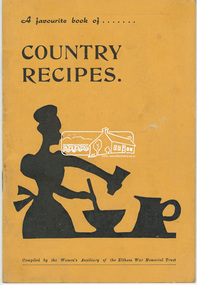 Eltham District Historical Society Inc
Book, Eltham War Memorial Trust, A favourite book of country recipes / compiled by the Women's Auxiliary of the Eltham War Memorial Trust, 1958
... Research Post Office and General Store S. Littlehales Stanley S Addison T. Sawyer T.E. & E.M. Moran V. Addison V. Hughes Valley Furniture Women's Auxiliary cookery Fundraising 47 p. : ill., b&w., ; 19 cm. A favourite book of country recipes / compiled by the Women's Auxiliary of the Eltham War Memorial Trust ...46 page book produced by the women of the Shire of Eltham as a fundraising project for the construction of the WW2 Eltham War Memorial. Contents: I. Fish, II. Meat, III. Puddings and desserts, IV. Bread and scones, V. Cakes and biscuits, VI. Jams, marmalades and chutneys, VII. Salads, dressings and sauces, VIII. Drinks. 47 p. : ill., b&w., ; 19 cm. a. & s. davis pty ltd, a. boyd-graham, a. lyon, a. mezner, a. uglow, a.m. lynes, b. clark, b. rothwell, b. thomas, b.j. brinkkotter, b.m. gresford, b.w. morrison, betty p. metcalfe, briar hill timber & trading, c. may, c. pelling, c. smith, cold comfort farm, commercial bank of australia, cook-book, cooking, d. garratt, d. richards, d. warner, d.g. wills, draffin bros pty ltd, e. egan, e. hoppner, e.i. rains, e.s. rothwell, eltham home supplies, eltham hotel, eltham motor garage, eltham real estate & business agency, eltham war memorial trust, f.j. burgoyne, g.b. gresford, gas and fuel corporation of victoria, george lovitt & co pty ltd, guest's biscuits, h.w. downing, heidelberg district bakery, i. putnam, j. & j. burgoyne, j. kimber, j.m. attiwill, jack burgoyne, kraft cheddar, l. carter, lyon bros garage, m. banks, m. battye, m. black, m. erswell, m. foletta, m. johnson, m. roletta, m.h. bucknell, m.j. loosli, millett's foodland, n.h. baxter estate agent, n.h. baxter, new bridge building supplies, m. banks, m. battye, m. black, m. erswell, m. foletta, m. johnson, m. roletta, m.h. bucknell, m.j. loosli, millett's foodland, n.h. baxter estate agent, n.h. baxter, new bridge building supplies, o. holland, o.a. brown, p. moore, p. pease, p. peel, p. reece, presswell's eltham east auto service, r.j. scully, rains, recipes, research meat supply, research post office and general store, s. littlehales, stanley s addison, t. sawyer, t.e. & e.m. moran, v. addison, v. hughes, valley furniture, women's auxiliary, cookery, fundraising -
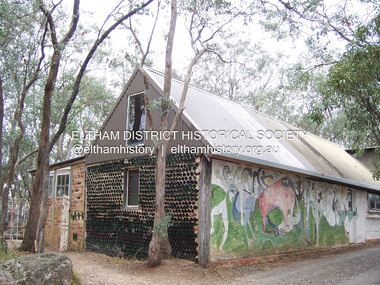 Eltham District Historical Society Inc
Photograph - Digital Photograph, Marguerite Marshall, Art Gallery at Clifton Pugh's Artists' Colony, Dunmoochin, Barreenong Road, Cottles Bridge, 5 February 2008
... researchers the chance to work in beautiful and peaceful surroundings, usually for a year. By November 2007, more than 80 people had taken part, and the first disabled artist had been chosen to reside in a new studio with disabled access.1 In 1989, not long before Pugh died in 1990 of a heart attack at age 65, he established the Foundation with La Trobe University and the Victorian Conservation Trust now the Trust for Nature. ...researchers the chance to work in beautiful and peaceful surroundings, usually for a year. By November 2007, more than 80 people had taken part, and the first disabled artist had been chosen to reside in a new studio with disabled access.1 In 1989, not long before Pugh died in 1990 of a heart attack at age 65, he established the Foundation with La Trobe University and the Victorian Conservation Trust now the Trust for Nature. ...Art Gallery with mural painted by Clifton Pugh (1924-1990) at his Artists' Colony, Dunmoochin, Barreenong Road, Cottles Bridge. Following military service in the second world war, Clifton Pugh studied under artist Sir William Dargie at the National Gallery School in Melbourne as well as Justus Jorgensen, founder of Montsalvat. For a while he lived on the dole but also worked packing eggs for the Belot family saving sufficient to purchase six acres (2.4 ha) of land at Barreenong Road, Cottles Bridge. He accumulated more land and persuaded several other artists and friends to buy land nearby, resulting in a property of approximately 200 acres, stablishing it as one of the first artistic communes in Australia alongside Montsalvat in Eltham. It was around 1951 that Pugh felt he had '"done moochin' around" and so the name of the property evolved. He bought timber from Alistair Knox to build his house on the crest of a hill. Inspired by local goldminer's huts, it was a one room wattle-and-daub structure with dirt floor. Over the years it expanded with thick adobe walls made from local clay, high ceilings and stone floors. All materials other than the local earth were sourced from second hand materials, most found at wreckers' yards. Artists from across the nation were drawn to Dunmoochin, with several setting up houses and shacks on the property, maintaining their independence but sharing their artistic zeal. Artists who worked or resided at Dunmoochin included Mirka Mora, John Perceval, Albert Tucker, Fred Williams, Charles Blackman, Arthur Boyd and John Olsen. In 2002, Pugh's house along with its treasure trove of art and a library of some 20,000 books was destroyed by fire. Traces of Pugh's home remain with the presence of the Victorian doorframe archway with leadlight of intricate design, procured from a demolished Melbourne mansion; and two bronze life-sized female statues created by Pugh and cast by Matcham Skipper. In place of Pugh's house rose two double-storey mud-brick artists' studios topped with corrugated iron rooves curved like the wings of a bird with accommodation for seven. The original studios, gallery and other buildings survived the fire. Covered under Heritage Overlay, Nillumbik Planning Scheme. Published: Nillumbik Now and Then / Marguerite Marshall 2008; photographs Alan King with Marguerite Marshall.; p153 It’s not surprising that artist Clifton Pugh was drawn to Cottles Bridge to establish his artists’ colony Dunmoochin. Undisturbed by the clamour of modern life at Barreenong Road, Pugh was surrounded by the Australian bush he loved, and where his ashes were later scattered. The 200 acres (81ha) of bushland, broken by glimpses of rolling hills, has more than 50 species of orchids and Pugh shared his property with native animals including kangaroos, emus, phascogales, wombats, and diverse bird life. Pugh encouraged these creatures to join him in the bush by creating, with Monash University, a holding station where the animals were raised. Dunmoochin inspired Pugh for such paintings as in a book on orchids and the Death of a Wombat series.1 But his love for the bush was accompanied by the fear that Europeans were destroying it and much of his painting illustrated this fear and his plea for its conservation.2 However it was his house rather than the surrounding bush that was to be destroyed. Tragically in 2002 Pugh’s house, with its treasure of art and library of 20,000 art books, was destroyed by fire. Traces of the beauty of Pugh’s home still remain, however, in the magnificent Victorian doorframe archway with leadlight of intricate design procured from a demolished Melbourne mansion; and two bronze life-sized female statues created by Pugh and cast by Matcham Skipper. Now in place of Pugh’s house, are two double-storey mud-brick artists’ studios topped with corrugated roofs curved like birds’ wings, with accommodation for seven. The original studios, gallery and other buildings remain.3 Pugh grew up on his parents’ hobby farm at Briar Hill and attended the Briar Hill Primary School, then Eltham High School and later Ivanhoe Grammar. At 15 he became a copy boy for the Radio Times newspaper, then worked as a junior in a drafting office. Pugh was to have three wives and two sons. After serving in World War Two in New Guinea and Japan, Pugh studied under artist Sir William Dargie, at the National Gallery School in Melbourne.4 Another of his teachers was Justus Jörgensen, founder of Montsalvat the Eltham Artists’ Colony. Pugh lived on the dole for a while and paid for his first six acres (2.4ha) at Barreenong Road by working as an egg packer for the Belot family. Pugh accumulated more land and persuaded several other artists and friends to buy land nearby, resulting in the 200 acre property. They, too, purchased their land from the Belot family by working with their chickens. Around 1951 Pugh felt he had ‘Done moochin’ around’ and so the name of his property was born. Pugh bought some used timber from architect Alistair Knox to build his house on the crest of a hill. Inspired by local goldminers’ huts it was a one-room wattle-and-daub structure with a dirt floor. It was so small that the only room he could find for his telephone was on the fork of a tree nearby.5 Over the years the mud-brick house grew to 120 squares in the style now synonymous with Eltham. It had thick adobe walls (sun-dried bricks) made from local clay, high ceilings and stone floors with the entire structure made of second-hand materials – most found at wreckers’ yards. Pugh’s first major show in Melbourne in 1957, established him as a distinctive new painter, breaking away from the European tradition ‘yet not closely allied to any particular school of Australian painting’.6 Pugh became internationally known and was awarded the Order of Australia. He won the Archibald Prize for portraiture three times, although he preferred painting the bush and native animals. In 1990 not long before he died, Pugh was named the Australian War Memorial’s official artist at the 75th anniversary of the landing at Gallipoli. Today one of Pugh’s legacies is the Dunmoochin Foundation, which gives seven individual artists or couples and environmental researchers the chance to work in beautiful and peaceful surroundings, usually for a year. By November 2007, more than 80 people had taken part, and the first disabled artist had been chosen to reside in a new studio with disabled access.1 In 1989, not long before Pugh died in 1990 of a heart attack at age 65, he established the Foundation with La Trobe University and the Victorian Conservation Trust now the Trust for Nature. Pugh’s gift to the Australian people – of around 14 hectares of bushland and buildings and about 550 art works – is run by a voluntary board of directors, headed by one of his sons, Shane Pugh. La Trobe University in Victoria stores and curates the art collection and organises its exhibition around Australia.2 The Foundation aims to protect and foster the natural environment and to provide residences, studios and community art facilities at a minimal cost for artists and environmental researchers. They reside at the non-profit organisation for a year at minimal cost. The buildings, some decorated with murals painted by Pugh and including a gallery, were constructed by Pugh, family and friends, with recycled as well as new materials and mud-bricks. The Foundation is inspired by the tradition begun by the Dunmoochin Artists’ Cooperative which formed in the late 1950s as one of the first artistic communes in Australia. Members bought the land collaboratively and built the seven dwellings so that none could overlook another. But, in the late 1960s, the land was split into private land holdings, which ended the cooperative. Dunmoochin attracted visits from the famous artists of the day including guitarists John Williams and Segovia; singer and comedian Rolf Harris; comedian Barry Humphries; and artists Charles Blackman, Arthur Boyd and Mirka Mora. A potters’ community, started by Peter and Helen Laycock with Alma Shanahan, held monthly exhibitions in the 1960s, attracting local, interstate and international visitors – with up to 500 attending at a time.3 Most artists sold their properties and moved away. But two of the original artists remained into the new millennium as did relative newcomer Heja Chong who built on Pugh’s property (now owned by the Dunmoochin Foundation). In 1984 Chong brought the 1000-year-old Japanese Bizan pottery method to Dunmoochin. She helped build (with potters from all over Australia) the distinctive Bizan-style kiln, which fires pottery from eight to 14 days in pine timber, to produce the Bizan unglazed and simple subdued style. The kiln, which is rare in Australia, is very large with adjoining interconnected ovens of different sizes, providing different temperatures and firing conditions. Frank Werther, who befriended Pugh as a fellow student at the National Gallery Art School in Melbourne, built his house off Barreenong Road in 1954. Werther is a painter of the abstract and colourist style and taught art for about 30 years. Like so many in the post-war years in Eltham Shire, as it was called then, Werther built his home in stages using mud-brick and second-hand materials. The L-shaped house is single-storey but two-storey in parts with a corrugated-iron pitched roof. The waterhole used by the Werthers for their water supply is thought to be a former goldmining shaft.4 Alma Shanahan at Barreenong Road was the first to join Pugh around 1953. They also met at the National Gallery Art School and Shanahan at first visited each weekend to work, mainly making mud-bricks. She shared Pugh’s love for the bush, but when their love affair ended, she designed and built her own house a few hundred yards (metres) away. The mud-brick and timber residence, made in stages with local materials, is rectangular, single-storey with a corrugated-iron roof. As a potter, Shanahan did not originally qualify as an official Cooperative member.This collection of almost 130 photos about places and people within the Shire of Nillumbik, an urban and rural municipality in Melbourne's north, contributes to an understanding of the history of the Shire. Published in 2008 immediately prior to the Black Saturday bushfires of February 7, 2009, it documents sites that were impacted, and in some cases destroyed by the fires. It includes photographs taken especially for the publication, creating a unique time capsule representing the Shire in the early 21st century. It remains the most recent comprehenesive publication devoted to the Shire's history connecting local residents to the past. nillumbik now and then (marshall-king) collection, art gallery, clifton pugh, dunmoochin, cottlesbridge, cottles bridge, barreenong road -
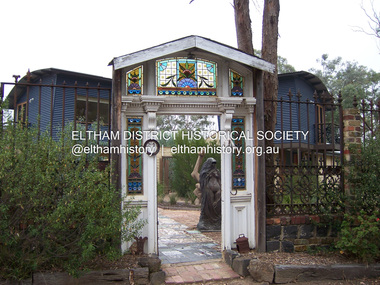 Eltham District Historical Society Inc
Photograph - Digital Photograph, Marguerite Marshall, Doorway of Clifton Pugh's former house at Dunmoochin, Barreenong Road, Cottles Bridge, 5 February 2008
... researchers the chance to work in beautiful and peaceful surroundings, usually for a year. By November 2007, more than 80 people had taken part, and the first disabled artist had been chosen to reside in a new studio with disabled access.1 In 1989, not long before Pugh died in 1990 of a heart attack at age 65, he established the Foundation with La Trobe University and the Victorian Conservation Trust now the Trust for Nature. ...researchers the chance to work in beautiful and peaceful surroundings, usually for a year. By November 2007, more than 80 people had taken part, and the first disabled artist had been chosen to reside in a new studio with disabled access.1 In 1989, not long before Pugh died in 1990 of a heart attack at age 65, he established the Foundation with La Trobe University and the Victorian Conservation Trust now the Trust for Nature. ...Following military service in the second world war, Clifton Pugh studied under artist Sir William Dargie at the National Gallery School in Melbourne as well as Justus Jorgensen, founder of Montsalvat. For a while he lived on the dole but also worked packing eggs for the Belot family saving sufficient to purchase six acres (2.4 ha) of land at Barreenong Road, Cottles Bridge. He accumulated more land and persuaded several other artists and friends to buy land nearby, resulting in a property of approximately 200 acres, stablishing it as one of the first artistic communes in Australia alongside Montsalvat in Eltham. It was around 1951 that Pugh felt he had '"done moochin' around" and so the name of the property evolved. He bought timber from Alistair Knox to build his house on the crest of a hill. Inspired by local goldminer's huts, it was a one room wattle-and-daub structure with dirt floor. Over the years it expanded with thick adobe walls made from local clay, high ceilings and stone floors. All materials other than the local earth were sourced from second hand materials, most found at wreckers' yards. Artists from across the nation were drawn to Dunmoochin, with several setting up houses and shacks on the property, maintaining their independence but sharing their artistic zeal. Artists who worked or resided at Dunmoochin included Mirka Mora, John Perceval, Albert Tucker, Fred Williams, Charles Blackman, Arthur Boyd and John Olsen. In 2002, Pugh's house along with its treasure trove of art and a library of some 20,000 books was destroyed by fire. Traces of Pugh's home remain with the presence of the Victorian doorframe archway with leadlight of intricate design, procured from a demolished Melbourne mansion; and two bronze life-sized female statues created by Pugh and cast by Matcham Skipper. In place of Pugh's house rose two double-storey mud-brick artists' studios topped with corrugated iron rooves curved like the wings of a bird with accommodation for seven. The original studios, gallery and other buildings survived the fire. Covered under Heritage Overlay, Nillumbik Planning Scheme. Published: Nillumbik Now and Then / Marguerite Marshall 2008; photographs Alan King with Marguerite Marshall.; p155 It’s not surprising that artist Clifton Pugh was drawn to Cottles Bridge to establish his artists’ colony Dunmoochin. Undisturbed by the clamour of modern life at Barreenong Road, Pugh was surrounded by the Australian bush he loved, and where his ashes were later scattered. The 200 acres (81ha) of bushland, broken by glimpses of rolling hills, has more than 50 species of orchids and Pugh shared his property with native animals including kangaroos, emus, phascogales, wombats, and diverse bird life. Pugh encouraged these creatures to join him in the bush by creating, with Monash University, a holding station where the animals were raised. Dunmoochin inspired Pugh for such paintings as in a book on orchids and the Death of a Wombat series.1 But his love for the bush was accompanied by the fear that Europeans were destroying it and much of his painting illustrated this fear and his plea for its conservation.2 However it was his house rather than the surrounding bush that was to be destroyed. Tragically in 2002 Pugh’s house, with its treasure of art and library of 20,000 art books, was destroyed by fire. Traces of the beauty of Pugh’s home still remain, however, in the magnificent Victorian doorframe archway with leadlight of intricate design procured from a demolished Melbourne mansion; and two bronze life-sized female statues created by Pugh and cast by Matcham Skipper. Now in place of Pugh’s house, are two double-storey mud-brick artists’ studios topped with corrugated roofs curved like birds’ wings, with accommodation for seven. The original studios, gallery and other buildings remain.3 Pugh grew up on his parents’ hobby farm at Briar Hill and attended the Briar Hill Primary School, then Eltham High School and later Ivanhoe Grammar. At 15 he became a copy boy for the Radio Times newspaper, then worked as a junior in a drafting office. Pugh was to have three wives and two sons. After serving in World War Two in New Guinea and Japan, Pugh studied under artist Sir William Dargie, at the National Gallery School in Melbourne.4 Another of his teachers was Justus Jörgensen, founder of Montsalvat the Eltham Artists’ Colony. Pugh lived on the dole for a while and paid for his first six acres (2.4ha) at Barreenong Road by working as an egg packer for the Belot family. Pugh accumulated more land and persuaded several other artists and friends to buy land nearby, resulting in the 200 acre property. They, too, purchased their land from the Belot family by working with their chickens. Around 1951 Pugh felt he had ‘Done moochin’ around’ and so the name of his property was born. Pugh bought some used timber from architect Alistair Knox to build his house on the crest of a hill. Inspired by local goldminers’ huts it was a one-room wattle-and-daub structure with a dirt floor. It was so small that the only room he could find for his telephone was on the fork of a tree nearby.5 Over the years the mud-brick house grew to 120 squares in the style now synonymous with Eltham. It had thick adobe walls (sun-dried bricks) made from local clay, high ceilings and stone floors with the entire structure made of second-hand materials – most found at wreckers’ yards. Pugh’s first major show in Melbourne in 1957, established him as a distinctive new painter, breaking away from the European tradition ‘yet not closely allied to any particular school of Australian painting’.6 Pugh became internationally known and was awarded the Order of Australia. He won the Archibald Prize for portraiture three times, although he preferred painting the bush and native animals. In 1990 not long before he died, Pugh was named the Australian War Memorial’s official artist at the 75th anniversary of the landing at Gallipoli. Today one of Pugh’s legacies is the Dunmoochin Foundation, which gives seven individual artists or couples and environmental researchers the chance to work in beautiful and peaceful surroundings, usually for a year. By November 2007, more than 80 people had taken part, and the first disabled artist had been chosen to reside in a new studio with disabled access.1 In 1989, not long before Pugh died in 1990 of a heart attack at age 65, he established the Foundation with La Trobe University and the Victorian Conservation Trust now the Trust for Nature. Pugh’s gift to the Australian people – of around 14 hectares of bushland and buildings and about 550 art works – is run by a voluntary board of directors, headed by one of his sons, Shane Pugh. La Trobe University in Victoria stores and curates the art collection and organises its exhibition around Australia.2 The Foundation aims to protect and foster the natural environment and to provide residences, studios and community art facilities at a minimal cost for artists and environmental researchers. They reside at the non-profit organisation for a year at minimal cost. The buildings, some decorated with murals painted by Pugh and including a gallery, were constructed by Pugh, family and friends, with recycled as well as new materials and mud-bricks. The Foundation is inspired by the tradition begun by the Dunmoochin Artists’ Cooperative which formed in the late 1950s as one of the first artistic communes in Australia. Members bought the land collaboratively and built the seven dwellings so that none could overlook another. But, in the late 1960s, the land was split into private land holdings, which ended the cooperative. Dunmoochin attracted visits from the famous artists of the day including guitarists John Williams and Segovia; singer and comedian Rolf Harris; comedian Barry Humphries; and artists Charles Blackman, Arthur Boyd and Mirka Mora. A potters’ community, started by Peter and Helen Laycock with Alma Shanahan, held monthly exhibitions in the 1960s, attracting local, interstate and international visitors – with up to 500 attending at a time.3 Most artists sold their properties and moved away. But two of the original artists remained into the new millennium as did relative newcomer Heja Chong who built on Pugh’s property (now owned by the Dunmoochin Foundation). In 1984 Chong brought the 1000-year-old Japanese Bizan pottery method to Dunmoochin. She helped build (with potters from all over Australia) the distinctive Bizan-style kiln, which fires pottery from eight to 14 days in pine timber, to produce the Bizan unglazed and simple subdued style. The kiln, which is rare in Australia, is very large with adjoining interconnected ovens of different sizes, providing different temperatures and firing conditions. Frank Werther, who befriended Pugh as a fellow student at the National Gallery Art School in Melbourne, built his house off Barreenong Road in 1954. Werther is a painter of the abstract and colourist style and taught art for about 30 years. Like so many in the post-war years in Eltham Shire, as it was called then, Werther built his home in stages using mud-brick and second-hand materials. The L-shaped house is single-storey but two-storey in parts with a corrugated-iron pitched roof. The waterhole used by the Werthers for their water supply is thought to be a former goldmining shaft.4 Alma Shanahan at Barreenong Road was the first to join Pugh around 1953. They also met at the National Gallery Art School and Shanahan at first visited each weekend to work, mainly making mud-bricks. She shared Pugh’s love for the bush, but when their love affair ended, she designed and built her own house a few hundred yards (metres) away. The mud-brick and timber residence, made in stages with local materials, is rectangular, single-storey with a corrugated-iron roof. As a potter, Shanahan did not originally qualify as an official Cooperative member.This collection of almost 130 photos about places and people within the Shire of Nillumbik, an urban and rural municipality in Melbourne's north, contributes to an understanding of the history of the Shire. Published in 2008 immediately prior to the Black Saturday bushfires of February 7, 2009, it documents sites that were impacted, and in some cases destroyed by the fires. It includes photographs taken especially for the publication, creating a unique time capsule representing the Shire in the early 21st century. It remains the most recent comprehenesive publication devoted to the Shire's history connecting local residents to the past. nillumbik now and then (marshall-king) collection, art gallery, clifton pugh, dunmoochin, cottlesbridge, cottles bridge, barreenong road -
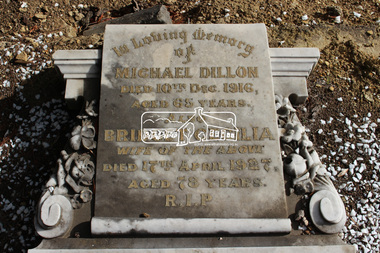 Eltham District Historical Society Inc
Photograph, Eltham Cemetery Trust, Grave of Michael and Bridget Cecilia Dillon, Eltham Cemetery, Victoria, 4 May 2016
... Research, Vic. Some damage has occurred to their monument and the Eltham Cemetery Trust would like to locate a next of kin or family member. ...Research, Vic. Some damage has occurred to their monument and the Eltham Cemetery Trust would like to locate a next of kin or family member. ...Bridget was the daughter of John Wright MURRAY(1816-1867) and Mary SWEENEY(1833-1909). She married Hamilton DRAIN(1847-1886) in 1884 and they had a daughter, Mary Ellen DRAIN(1886-1888). Following husband Hamilton Drain’s death in 1886, and her infant daughter Mary’s death in 1888, Bridget married Michael Dillon in 1894. It appears that she and Michael had no children together. Electoral roll records indicate that Michael was a farmer and that he and Bridget lived in Research, Vic. Some damage has occurred to their monument and the Eltham Cemetery Trust would like to locate a next of kin or family member. Unfortunately, there was no purchase information recorded, only the following details; no next of kin. Deceased Location Date of Death Interment Date Michael Dillon Roman Catholic 205 10/12/1916 11/12/1916 Bridget Cecilia Dillon Roman Catholic 206 7/04/1927 19/04/1927 The photo of the headstone is dated 4 May 2016, which provides the best detail of the inscription.The headstone has deteriorated further in the last few years. In Loving Memory of Michael Dillon Died 10th Dec. 1916 Aged 65 years Also Bridget Cecilia Wife of the above Died 17th April 1927 Aged 78 years R.I.PBorn Digitaleltham cemetery, gravestones, michael dillon, bridget cecilia dillon (nee sweeeney) -
 Eltham District Historical Society Inc
Binder, Eltham District History, Eltham Road Board, 1856-1871; Research by Keith Chappel, 1971-1974
... francis watson rosier frank haley frank wayne maas franklin william nankervis frederick charles barrett frederick edward falkiner frederick eldred griffith frederick filed durham frederick gration frederick kirk gration frederick vincent squire fredrick ninck g. drabble g. haley g. hodgkins g. lee g. thomas g. thomson g.d. boursiquot g.f. belcher garden hill geoffrey charles dreverman geology george d'arley boursiquot george ellis parker george fletcher george frederick belcher george haley george hirt george louie cresp george love george robertson george turnbull george wise godalmin street gold mining goodman gordon melville government gazette graham lindsay bride grazing greenhill greensborough grierson gun maker h. g. james h. stooke h. taylor h.g. jhones h.t. beams harold edward bartlett heatherleigh heidelberg helen louise wells henry creswell henry gilbert jones henry holloway henry peers herbert eric rundle herbert hewitt herbert rutter hoddle holiday resort horace hilton house of assembly hugh larimour hurst i. barrow i. rooks ian g smedley ian gordon smedley industry isaac rooks isidore t. wilmor j. alison j. brown j. cameron j. carfrae & co. j. ferguson j. frank j. garthwaite j. greaves j. greitzner j. irish j. lindsay j. murray j. o'brien j. stevenson j. wilson j.b. phipps j.b. rodda j.f. imley j.g. foxton j.g. fraser j.h.f. hawke j.k. zahn j.m. holloway j.p. imley jack cato jack clendinnen gill jacob belcham jacob greitzner jakeb greitzner james bailey james cox james d mealy james darley mealy james frank james frederick mackay james graham james johnstone james kay bryce james mclaren james murray james oliver white james pearson imley james pearsons imley james rosier james ryan jane thompson jersey johann karl zahn john a porter john alexander hampton lewis john alison john b. wilson john barter bennett john blackmore phipps john blakemore phipps john carfrae john dane john g. foxton john gerald searle john greaves john green foxton john greenlaw foxton john henry sabelberg john johnstone john lee smith john lindsay john lindsay beale john mann john mason john pape john porter john samuel lithgow john stevenson john verran mcconnell john wilson jonathan scott joseph anderson panton joseph bromley shallard joseph garthwaite joseph smedley joseph walter henry bradbury josiah morris holloway k.e. dunstan m kinglake keelbundora kenneth chareles crompton kenneth donald macmillan kenneth frederick hines kenyon kerby street kinglake school krelbundora l. jenyns l.m. bill lancefield land act 1862 land act 1865 land act 1869 land alienation land settlement legislative council leopold kershaw lawry leslie christopher docksey leslie edward clarke little eltham school m. o'shea m.h. fitzpatrick mail run mail service main road map margaret moody martin fogarty mary leak maxwell alexander spence medical practitioner michael o'shea miss haley moira morang mr. ford mrs galbraith n. gillies n. rodda name names neil stewart roberts norman ernest charles williams opening orchard district p. ryan p.a.c o'farrell p.p. cotter parish of nillumbik parish of nillumbik 1856 patrick costello patrick turnbull percy downer peter andrew charles o'farrell peter fair peter graham petr lawlor phillip cumming photographer plenty river polling place polling places porter street portrait post office post office directory 1868 princes bridge proclamation r. boston r. hepburn r. lane r. wadeson r.d. mess r.s.h. moody radley (rodney) douglas quin rag mill railway lines raymond clive duncan registrar research state school no. 2959 reserve for aborigines reynolds road richard jones and co richard robert woolcott river plenty robert alan bell robert benn (ship) robert cadden robert cunningham white robert david taylor robert hepburn robert kenneth marshall robert miller robert reid robert stewart hull moody robinia joyce rodda family rosemount rupert norman maskell ryans road s. evans s. wekey samuel evans samuel phillips samuel ramsden samuel w. scott searle shire of diamond valley sigismund wekey sly grog seller sources south province south yarra st kilda stanley simpson addison strathbogie strippers of bark stuart alexander donaldson sweeneys lane sweeny sylvia ruth houston t. archer t. huntley t. murray t. stephens t. watkins t.a. stork t.b. daling t.b. darling t.c. darling t.milthorpe t.p. cross tannery tenders terence alphonsus collins the explorers and early colonists of victoria the story of the camera in australia thomas bell darling thomas clarke thomas darling thomas foster chuck thomas grant thomas henry bowman thomas herbert power thomas irvine thomas maltby thomas mccombie thomas scarce thomas sweeny thornton street town of eltham vaccinations act victorian government gazette virtue hall station virtue hill w. archer w. brown w. gordon w. inglis w. jones w. matthew w. mcdonald w. williams w. wilson w.r. belcher w.t. fitzpatrick walter craig walter wipple warringal water wheel wattle glen whittlesea william acland william adams william b. burnley william buckingham william c. farrell william cleve william craig william frederick ford william george gray william henry hull william john taylor william john turner clarke william johnson william jones william lorimer william morris william redmond belcher william thomas cochrane william vasey houghton william walker william wandliss herbert william white willie haley willie stanley dawson yan yean yarra flats yarra river yielima york street yow yow gully zig zag road Frederick George hurst Grimshaw mrs s marshall mrs mcclelland bushfire parish of greensborough f. baker h. hude j.l. caudwell m. borelli p.e. clarke church of england reserve m. miller t.j. carr i.d. marshall t.c. pickering m.e. lazarus w.r. gathercole j.p. adam p.f. plunkett state school reserve t. wilkinson a.e. hopkinson m.l. merritt w.e. apted e. cohen g. brandt j.j. foubister h. foubister w.h. hopkinson mechanics institute & free library j.o. hughes church of england trusts corporation c.a. brennan j.a.d. brennan e.m. tucker j. carter e. carter p.e. plunkett j. plunkett cricket and recreation reserve d.j. & e.i. ross w. wigham l.s. mendes Two binders containing 486 A4 pages (photocopied) of mostly handwritten notes from research undertaken of Public Office Records of Victoria various holdings. ...Eltham District History, Eltham Road Board, 1856-1871Two binders containing 486 A4 pages (photocopied) of mostly handwritten notes from research undertaken of Public Office Records of Victoria various holdings. Some photocopies from source reference books. Includes 20 page subject index (handwritten) at front and 5 pages of notes and sources at rear and a photocopy of short biography of Keith Chappel.a. foley, a. harkness, a. mackie, a. mcintyre, a. von ziegler, a.a. vivian, a.d. kinninmont, a.d. quadri, a.h. grimshaw, a.w. page, aboriginal reserve, aborigines, abraham quarman, abraham rooks, abraham taylor, adam goudie, aenaes harrison, agnes black, agnes charlton, agnes dalrymple, ah chong, ah cock, ah hein, ah lie, ah sing, albert lunson, albert ness, albert parker, albert ramseyor, alert hunt, alex cameron, alex eason, alex mcandrew, alexander crichton, alexander donaldson, alexander falconer, alexander innes, alexander james, alexander mcdonald, alexander miller, alexander thompson, alexander walker, alexander white, alfred armstrong, alfred burgess, alfred davey, alfred deschamp, alfred eddy, alfred hinley, alfred hooper, alfred hubbard, alfred lowman, alfred smith, alfred whelpton, alice power, allen heeps, allwood, amelia neuman, amos taylor, anderson, andersons creek, andrew brown, andrew byrne, andrew harkness, andrew herbert, andrew ross, andrew smith, angus mcdonald, ann emmott, ann mcphee, ann odea, ann plunkett, ann snell, ann tatty, annie ashmore, annie herbert, annie stuart, anthony beale, anthony currie, ants nest, archibald mcphee, arthur connor, arthur lyttle, arthur rooke, arthur young, arthurs creek, arthurs creek school, august ostling, b.o. wallis, barkers creek, barr, belton, benjamin bain, benjamin jenken, benjamin lawford, benjamin rice, benjamin shaw, benjamin smith, benjamin wallis, benjamin walton, berry, bismark hotel, black calf gully, black thursday, boomers gully, bridget bunker, bridget hailes, bridget kearse, bruno hirt, burns, bushranger, c. twiss, c.h. bade, caleb sherar, caledonia, caledonia diggings, campbell hunter, carl euman, caroline davey, catherine kennedy, cathren brock, cecilia farman, chamberlain, chapman, charles caldwell, charles campbell, charles dale, charles draper, charles fowler, charles green, charles hawkins, charles hempel, charles hirt, charles hirtson, charles jefer, charles jesse, charles kerchevell, charles lidgerwood, charles morris, charles peake, charles prince, charles rielly, charles roberts, charles rowand, charles simms, charles souter, charles swan, charles verso, charles wells, charles whelpton, charles williams, charles wingrove, charles woodley, charleys gully, charlotte beltison, charlotte goodwin, ching ah hock, christine brennan, christine mckenzie, christmas hills hotel, christmas hills school, christopher battaila, christopher twiss, chune grove, church of england, church of england school, clarissa milton, cleir hills, colin amos, constable quirke, constable talty, cornelius haley, cornelius stewart, cottles bridge, councillors hotel, cricket, cucksons brewery, d. nicholson, d.w. morrissey, dalry, daniel charleston, daniel harding, daniel jepps, daniel mccarthy, daniel mckenzie, daniel mcloughlin, daniel oloughlin, david boyd, david christian, david clark, david creighton, david rogers, david rolfe, david sharp, david shawcross, david smith, david stevenson, diamond accommodation store, diamond reef mine, dickson, dixon bertram, donald cameron, donald mcmillan, donaldson, dougald mcphee, dr barclay, dugald mcphee, dugald taylor, duncan fraser, duncan smith, dungey, e. hildebrand, e. stichlins, e.f. falkiner, e.j. hughes, e.m. garsed, e.w. morrissey, edith staff, edmund clarke, edmund cuckson, edmund hall, edmund picket, edward bage, edward beltison, edward bunker, edward ford, edward hindley, edward jackson, edward jones, edward kelly, edward qualtrough, edward staff, edward tresain, edward weller, edward whelpton, edward whilpson, edwin biley, edwin cartwright, edwin cohen, edwin deschamp, edwin mcleish, edwin rodda, edwin smith, effie rodda, eliza bellamy, eliza dawson, eliza howell, eliza nield, eliza smith, elizabeth cockshutt, elizabeth eiles, elizabeth fitch, elizabeth gillespie, elizabeth harris, elizabeth herbert, elizabeth hollow, elizabeth le juge, elizabeth plunkett, elizabeth whelpton, ellen hurst, ellen kearse, ellen quarman, ellen sweeney, ellen white, ellis, eltham cemetery, eltham hotel, eltham lower park, eltham market, eltham police station, eltham pound, eltham quarry, eltham racecourse, eltham roads board, eltham school, emile hude, emily anderson, emily blamire, emily coutie, emma smith, emma taylor, ephraim wyett, ernest baillie, ernest henrick, ernest steer, esther porter, ethel baillie, evan jones, evelyn hotel, evelyn observer, ewen cameron, ewen jones, f. chrimes, f. grundel, f.e. falkiner, f.r. howard, fanny benson, fanny white, felix hude, felix noisette, ferdinand ramseyer, flora vale, florence hurst, fogarty, forbes mackenzie, fords creek, frances kearse, francis baker, francis hales, francis raselli, francis steer, frank eiles, frank rogerson, frank tanner, fraser, fred hurst, frederick falkiner, frederick hurst, frederick muller, frederick nink, frederick walker, frederick wharington, friedrich muller, fryers gully, furphy, g. donaldson, g. houghton, g. turnbull, geanetta hude, george assender, george bear, george beare, george benson, george bird, george boston, george brain, george brandt, george burley, george buswell, george coutie, george eiles, george ewings, george ford, george godber, george goodman, george gray, george griffiths, george hall, george herbert, george horn, george kirk, george langhorne, george mann, george mclelland, george mosely, george neumayer, george orchard, george parish, george porter, george purcell, george ralph, george reid, george rocke, george rogers, george rolfe, george stebbing, george stebbings, george stebbins, george switzer, george symons, george thompson, georgina hilton, glenda moriss, glengloy, gold, goulstone, greensborough police station, gulf station, h. jennings, h. mann, h.h. farquason, hannah sunderland, happy valley, harkness, harold scarce, harriet hunt, harriet smith, harry hollow, hazel glen, healesville, heinrich hirt, helena peters, henrietta hill, henry arthur, henry ashmore, henry austin, henry brown, henry dendy, henry dineen, henry fowler, henry gardner, henry green, henry griffin, henry hart, henry hirst, henry hirt, henry hopkinson, henry hude, henry hurst, henry inch, henry jones, henry mills, henry scarce, henry st paul, henry stevens, henry stooke, henry thomson, henry vogt, henry wallace, henry wilson, herbert rodda, herman henrick, hermann lampe, hermann steinmann, hester staff, hitchill, holbert, honoree hude, hotel de france, hugh mccann, humphrey peers, humphrey spicer, hurstbridge, hurstbridge general store, i.h. clarke, ida adelskold, ignatz kinzel, ira pimm, irene donaldson, isaac briggs, isaac hickson, isaac hill, isaac kerr, isaac varby, isaac williams, isabella donaldson, isabelle herbert, j. dungate, j. eccleston, j. harkness, j. hartley, j. hude, j. irvine, j. jones, j. manduell, j. mason, j. mcdonald, j. mcnamara, j. nichenson, j. renahen, j. scott, j. seymour, j.a. goold, j.a. panton, j.c. hughes, j.d. thompson, j.f. hughes, j.f. johnstone, j.g. walter, j.h. taylor, j.p. morris, jack ewart, jacob belsham, jacob goldstein, jacob morast, jam loon, james alexander, james anderson, james andrew, james andrews, james baines, james batchelor, james bond, james bradford, james brennan, james brock, james brown, james brunning, james buchanan, james cockburn, james cowan, james dalrymple, james donaldson, james duckworth, james goodwin, james harding, james harrison, james hartley, james hawkins, james hewish, james holinger, james hughes, james inglis, james jamieson, james johnson, james johnston, james kaye, james kew, james lindsay, james lindsey, james lynan, james macpherson, james mann, james martley, james mayger, james mccutcheon, james mcmahon, james mcpherson, james mess, james miller, james mitton, james morton, james murdoch, james murdock, james nickinson, james orford, james purcell, james qualtrough, james rudall, james simpson, james smith, james spence, james stonachan, james stuart, james suman, james surman, james sutherland, james thompson, james thomson, james walker, james walters, james watts, jane cleave, jane donaldson, jane mess, jane sadler, jane shaw, jane thomson, janefield, jean borelli, jeanette hudi, jeanne hude, johann muller, john ainsworth, john andrew, john baillie, john barr, john beale, john bell, john bellin, john blake, john blyth, john brock, john brown, john byers, john cameron, john candler, john carter, john cobbock, john cockshank, john cockshutt, john coleman, john connell, john crozier, john darroch, john dennis, john donaldson, john elsworthy, john fenton, john fitch, john gardner, john gast, john graham, john grimshaw, john haines, john haley, john harper, john harris, john hassall, john hayes, john heales, john herbert, john holland, john holman, john hood, john horner, john horton, john hughes, john jardine, john johns, john johnston, john jones, john kearse, john kilpatrick, john knell, john lawrey, john macadam, john mandell, john manduell, john marker, john mccoll, john mccolly, john mcdonald, john mcintyre, john mckimmie, john mcnamara, john mitchell, john moore, john morgan, john muller, john murray, john pearson, john peterson, john petty, john pullen, john quinn, john rawlings, john ryder, john sabelberg, john scott, john semar, john serman, john seymour, john shawcross, john smith, john staff, john steer, john stephens, john sweeney, john thompson, john thomson, john trahy, john walker, john weller, john wells, john williams, john williamson, john yates, john yeoman, john young, johnn mcdonnell, joseph bull, joseph burns, joseph caldwell, joseph caudwell, joseph coutie, joseph elliott, joseph emmott, joseph fayver, joseph furphy, joseph hall, joseph hibbert, joseph hilton, joseph johns, joseph lithgow, joseph panton, joseph rodda, joseph sands, joseph sanson, joseph schubert, joseph scott, joseph shaw, joseph smith, joseph spedder, joseph stevenson, joseph verco, joseph wilson, josiah hollis, josiah hullis, josiah thomas, judith furphy, julie williams, junction hotel, kangaroo forest, kangaroo ground, kangaroo ground cemetery, kangaroo ground general store, kangaroo ground hotel, kangaroo ground police station, kangaroo ground post office, kangaroo ground school, kate bolger, kath scarce, katherine kearse, kidd, kinglake, kinglake hotel, kingstown, l. storey, lan quan, lang, latimour, laura henrick, laurence paterson, leon berlioz, levinia henrick, lillian gillan, linton, little eltham, long gully, louis henrick, louis le juge, louis smith, louisa steinmann, louise miller, lower plenty bridge hotel, lucy tidell, lydia qualtrough, m.j. careton, m.s. adams, macrudden, maggs, mail coach, maplestone, margaret graham, margaret hollins, margaret kearse, margaret kennedy, margaret kinrade, margaret lynch, margaret mcbirney, margaret steinmann, marguerite borelli, maria reilly, maria st paul, maria trew, marian trew, marianne miller, marie wright, marion hillier, mark bunker, martha herbert, martin brennan, mary alexander, mary beltison, mary bradford, mary bridgman, mary brock, mary bull, mary eiles, mary hopkinson, mary kearse, mary lean, mary mcinerney, mary miller, mary parmington, mary pearson, mary pickles, mary robertson, mary rodda, mary ross, mary smith, mary surman, mary weller, matilda jordan, matilda mcmillan, matthias watson, mawson, mechanics institute, michael callanan, michael fenton, michael kearse, michael mctyne, michael merritt, michael oday, michael odea, midgley hall, mills, minnie watts, miss bellon, morgans gully, mount joy, mr donnan, mr omeare, mr page, mrs greenaway, mrs havard, mrs hude, mrs morris, muller, murrays bridge, n.d. whyte, ned kelly, new caledonia creek, nicholas rodda, nillumbik, norman mcphee, old caledonia gully, oliver gourlay, one tree hill, owen finnegan, panton hill, panton hill hotel, panton hill post office, panton hill school, parambool, patrick armstrong, patrick bourke, patrick burke, patrick callaghan, patrick green, patrick harrington, patrick kearse, patrick lynch, patrick mcintyre, patrick o'callaghan, patrick rodgers, patrick sheahan, peach grove, perinella bull, perry, peter carrucan, peter flyn, peter ford, peter lawlor, peter patterson, peter snodgrass, peter watson, philip korfman, phillip gakden, phillip kaufman, phillip korfman, pierce brennan, pierce power, poo long, pound bend, pretty hill, queenstown, queenstown cemetery, queenstown police station, queenstown school, r. mackie, r.a. davidson, rebecca noisette, rebecca weller, reefers hotel, research, research gully, research gully hotel, research hotel, research school, rev dobinson, rhoda coutie, richard brook, richard capper, richard dunstan, richard goulding, richard heales, richard lane, richard matthews, richard rodda, richard searle, richard smith, richard wallis, richard warren, richard woolcott, robert alice, robert bourke, robert burke, robert charlton, robert clarke, robert cunningham, robert dugdale, robert grant, robert hall, robert harris, robert hempel, robert hill, robert hurst, robert lowman, robert mcadam, robert mckee, robert nink, robert norman, robert pontessey, robert sharp, robert smith, robert steel, robert stevenson, robert strong, robert surnam, robert wood, robina joyce, rogerson, roman catholic church, rossiter, rudolph muller, ruth mess, ruth sadler, ruth stevenson, s. smith, s. stewart, salters rush, sam deacon, samuel bird, samuel brace, samuel cameron, samuel candler, samuel cole, samuel cracknell, samuel dagley, samuel flier, samuel furphy, samuel merriman, samuel moseley, samuel mosley, samuel smith, sarah howard, sarah moseley, sarah raston, sarah walters, second watery gully school, self, shin hun, simon armstrong, smiths gully, smiths gully mechanics institute, smiths gully school, sophia greenaway, spanish gully, st andrews, st andrews hotel, st helena, stack, stanley smith, stephen gonnet, stephenson turner, stephensons bridge, steven anderson, stevensons corner, sumner, susan dickson, susan street, susan walke, sutherland, t. davidson, t. mclaughlin, t. symons, t.a. aldwell, t.b. drummond, t.b. henderson, t.e. johnston, t.h. subelly, tarrawarra, theis, theodore sabelberg, theresa lynch, thomas anderson, thomas armstrong, thomas baillie, thomas batt, thomas bell, thomas benson, thomas bibbs, thomas boardman, thomas bradford, thomas bull, thomas cattery, thomas cochrane, thomas cook, thomas cottle, thomas cousins, thomas downward, thomas edwards, thomas evans, thomas grierson, thomas haines, thomas harmer, thomas hunniford, thomas huntford, thomas hurry, thomas jardine, thomas jones, thomas kearse, thomas kennedy, thomas marland, thomas martin, thomas mcinerney, thomas morrison, thomas mundy, thomas murphy, thomas murray, thomas peacock, thomas plunkett, thomas postlethwaite, thomas prior, thomas qualtrough, thomas smith, thomas stone, thomas sunderland, thomas swatling, thomas sweeney, thomas symons, thomas walke, thomas wall, thomas wright, thomas young, tim shaw, toll gate, tom collins, tommys hut, true, upper diamond creek, upper diamond creek school, view hill, virtue hall, w. cockayne, w. craig, w. foster, w. marriott, w. ridley, w. trenoweth, w.a. page, w.b. andrew, w.b. burnley, w.b. phillips, w.c. shortt, w.w. herbert, walter barlow, walter hillier, walter joyce, walter knell, walter mckimmie, walter mcnicoll, walter thomson, walter wippell, warburton carr, warrandyte, warrens hotel, watery gully, watsons creek, watsons creek hotel, wattle glen school, wellers hotel, weymss donaldson, whipstick gully, white cloud, wild dog creek, wild dog gully, wiliam albert, william aitken, william albert, william anderson, william andrews, william barr, william barrow, william bell, william bond, william bowden, william bremmer, william brewer, william bridgman, william burnley, william buswell, william cant, william clarke, william cleave, william crozier, william dawson, william dodging, william ellis, william finn, william fitzgibbon, william ford, william foster, william garland, william ghosley, william golding, william goodwin, william graham, william gray, william grimshaw, william hall, william harding, william herbert, william hoilett, william hopkinson, william howitt, william howlett, william hubbard, william hunt, william inglis, william jarrold, william joyce, william kidd, william kilpatrick, william kommer, william lodge, william mclaughlin, william mcmurray, william mitton, william moore, william mosley, william murphy, william nicholson, william normage, william norman, william nuttall, william phillips, william quarman, william ronald, william sadler, william scott, william seaville, william sharp, william smith, william spicer, william taylor, william thomson, william tobin, william underwood, william walsh, william walshe, william walters, william watkins, william west, william wilmot, william wilson, william wolverston, william woods, wolfe, woodley, yarra bank, yow yow creek, a. brewer, a. easson, a. edwards, a. melville, a.m. ross, a.r. larrimour, aborigine reserve, advertisements, agricultural district, alan bernhard horsley, albert frederick charles glover, albert h price, albert h.c. price, albert henry charles price, alex easson, alexander campbell, alexander melville, alexander thomas haley, alexander thomson, alfred j. lowman, alice may peake, alie haley, alistair knox, alistair samuel knox, allandale road, allendale road, allwood run, andrew, andrew mckay, anton william brinkkotter, archibald brown, argus, arthur chichester allen, arthur edwin cracknell, arthur john braid, arthur robert traynor, atlas of australia 1886, b. lawford, b. mess, barry thale houston, basil y hall, basil yaldwyn hall, bell street, benjamin baxter, benjamin bowater, benjamin thomas taylor, benjaomin o. wallis, bible street, billis, bolton street, brewery, brisbane street, buckingham, bushrangers, c. brown, c. carroll, c. hirt, c.s. haley, c.s. wingrove, c.t. harris, caledonia run, cam, cattle, charis meta alexander pelling, charles brown, charles ellis, charles hicks bath, charles newman, clara gonnet, claude bryan gibbs, clifford henry goulding seear, coleraine, colin t. bell, collectors, collingwood, commissioner airey, coplin thomas bell, cornelius john stewart, cornelius sharp haley, cornelius sharpe haley, county of evelyn, culla hill, cutto hill, d. ryan, daily news newspaper, dalton street, daniel jepp, derek cecil o'beirne, diamond creek, diamond creek post office, diamond creek railway station, diamond creek run, diamond creek station, diamond creek township, divisions, doctor, donald alfred neil, donald charles maling, donald ingersole, donald kennedy, douglas anderson, e. cameron, e. falkiner, e. stooke, e.t. peers, edward dumaresq, edward heller, edward james, edward wilson, edwin stooke, elections, electoral districts, electoral roll, electrified railway, eltham, eltham district description, eltham district history, eltham district road board, eltham post office, eltham railway station, eltham road district, eltham road district board, eltham shire council, eltham shire councillors, eltham shire history, eltham town common, eltham village, eltham-hurstbridge railway, ely street, eric dudley butler, eric nichol staff, eric percival harmer, ernest james andrews, eve may edwards, evelyn and mornington division, evelyn division, everard albert hale, ewn hugh cameron, f. stone, f.d. wickham, flour mill, fountain of friendship hotel, francis bradley, francis joseph favier, francis regiereals(?), francis watson rosier, frank haley, frank wayne maas, franklin william nankervis, frederick charles barrett, frederick edward falkiner, frederick eldred griffith, frederick filed durham, frederick gration, frederick kirk gration, frederick vincent squire, fredrick ninck, g. drabble, g. haley, g. hodgkins, g. lee, g. thomas, g. thomson, g.d. boursiquot, g.f. belcher, garden hill, geoffrey charles dreverman, geology, george d'arley boursiquot, george ellis parker, george fletcher, george frederick belcher, george haley, george hirt, george louie cresp, george love, george robertson, george turnbull, george wise, godalmin street, gold mining, goodman, gordon melville, government gazette, graham lindsay bride, grazing, greenhill, greensborough, grierson, gun maker, h. g. james, h. stooke, h. taylor, h.g. jhones, h.t. beams, harold edward bartlett, heatherleigh, heidelberg, helen louise wells, henry creswell, henry gilbert jones, henry holloway, henry peers, herbert eric rundle, herbert hewitt, herbert rutter, hoddle, holiday resort, horace hilton, house of assembly, hugh larimour, hurst, i. barrow, i. rooks, ian g smedley, ian gordon smedley, industry, isaac rooks, isidore t. wilmor, j. alison, j. brown, j. cameron, j. carfrae & co., j. ferguson, j. frank, j. garthwaite, j. greaves, j. greitzner, j. irish, j. lindsay, j. murray, j. o'brien, j. stevenson, j. wilson, j.b. phipps, j.b. rodda, j.f. imley, j.g. foxton, j.g. fraser, j.h.f. hawke, j.k. zahn, j.m. holloway, j.p. imley, jack cato, jack clendinnen gill, jacob belcham, jacob greitzner, jakeb greitzner, james bailey, james cox, james d mealy, james darley mealy, james frank, james frederick mackay, james graham, james johnstone, james kay bryce, james mclaren, james murray, james oliver white, james pearson imley, james pearsons imley, james rosier, james ryan, jane thompson, jersey, johann karl zahn, john a porter, john alexander hampton lewis, john alison, john b. wilson, john barter bennett, john blackmore phipps, john blakemore phipps, john carfrae, john dane, john g. foxton, john gerald searle, john greaves, john green foxton, john greenlaw foxton, john henry sabelberg, john johnstone, john lee smith, john lindsay, john lindsay beale, john mann, john mason, john pape, john porter, john samuel lithgow, john stevenson, john verran mcconnell, john wilson, jonathan scott, joseph anderson panton, joseph bromley shallard, joseph garthwaite, joseph smedley, joseph walter henry bradbury, josiah morris holloway, k.e. dunstan, m kinglake, keelbundora, kenneth chareles crompton, kenneth donald macmillan, kenneth frederick hines, kenyon, kerby street, kinglake school, krelbundora, l. jenyns, l.m. bill, lancefield, land act 1862, land act 1865, land act 1869, land alienation, land settlement, legislative council, leopold kershaw lawry, leslie christopher docksey, leslie edward clarke, little eltham school, m. o'shea, m.h. fitzpatrick, mail run, mail service, main road, map, margaret moody, martin fogarty, mary leak, maxwell alexander spence, medical practitioner, michael o'shea, miss haley, moira, morang, mr. ford, mrs galbraith, n. gillies, n. rodda, name, names, neil stewart roberts, norman ernest charles williams, opening, orchard district, p. ryan, p.a.c o'farrell, p.p. cotter, parish of nillumbik, parish of nillumbik 1856, patrick costello, patrick turnbull, percy downer, peter andrew charles o'farrell, peter fair, peter graham, petr lawlor, phillip cumming, photographer, plenty river, polling place, polling places, porter street, portrait, post office, post office directory 1868, princes bridge, proclamation, r. boston, r. hepburn, r. lane, r. wadeson, r.d. mess, r.s.h. moody, radley (rodney) douglas quin, rag mill, railway lines, raymond clive duncan, registrar, research state school no. 2959, reserve for aborigines, reynolds road, richard jones and co, richard robert woolcott, river plenty, robert alan bell, robert benn (ship), robert cadden, robert cunningham white, robert david taylor, robert hepburn, robert kenneth marshall, robert miller, robert reid, robert stewart hull moody, robinia joyce, rodda family, rosemount, rupert norman maskell, ryans road, s. evans, s. wekey, samuel evans, samuel phillips, samuel ramsden, samuel w. scott, searle, shire of diamond valley, sigismund wekey, sly grog seller, sources, south province, south yarra, st kilda, stanley simpson addison, strathbogie, strippers of bark, stuart alexander donaldson, sweeneys lane, sweeny, sylvia ruth houston, t. archer, t. huntley, t. murray, t. stephens, t. watkins, t.a. stork, t.b. daling, t.b. darling, t.c. darling, t.milthorpe, t.p. cross, tannery, tenders, terence alphonsus collins, the explorers and early colonists of victoria, the story of the camera in australia, thomas bell darling, thomas clarke, thomas darling, thomas foster chuck, thomas grant, thomas henry bowman, thomas herbert power, thomas irvine, thomas maltby, thomas mccombie, thomas scarce, thomas sweeny, thornton street, town of eltham, vaccinations act, victorian government gazette, virtue hall station, virtue hill, w. archer, w. brown, w. gordon, w. inglis, w. jones, w. matthew, w. mcdonald, w. williams, w. wilson, w.r. belcher, w.t. fitzpatrick, walter craig, walter wipple, warringal, water wheel, wattle glen, whittlesea, william acland, william adams, william b. burnley, william buckingham, william c. farrell, william cleve, william craig, william frederick ford, william george gray, william henry hull, william john taylor, william john turner clarke, william johnson, william jones, william lorimer, william morris, william redmond belcher, william thomas cochrane, william vasey houghton, william walker, william wandliss herbert, william white, willie haley, willie stanley dawson, yan yean, yarra flats, yarra river, yielima, york street, yow yow gully, zig zag road, frederick george hurst, grimshaw, mrs s marshall, mrs mcclelland, bushfire, parish of greensborough, f. baker, h. hude, j.l. caudwell, m. borelli, p.e. clarke, church of england reserve, m. miller, t.j. carr, i.d. marshall, t.c. pickering, m.e. lazarus, w.r. gathercole, j.p. adam, p.f. plunkett, state school reserve, t. wilkinson, a.e. hopkinson, m.l. merritt, w.e. apted, e. cohen, g. brandt, j.j. foubister, h. foubister, w.h. hopkinson, mechanics institute & free library, j.o. hughes, church of england trusts corporation, c.a. brennan, j.a.d. brennan, e.m. tucker, j. carter, e. carter, p.e. plunkett, j. plunkett, cricket and recreation reserve, d.j. & e.i. ross, w. wigham, l.s. mendes
