
Showing 75 items matching "art needlework"
-
 Bendigo Historical Society Inc.
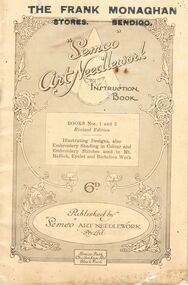
Book - RANDALL COLLECTION: THE FRANK MONAGHAN STORES BENDIGO ''SEMCO'' ART NEEDLEWORK INSTRUCTION BOOK
... RANDALL COLLECTION: THE FRANK MONAGHAN STORES BENDIGO ''SEMCO'' ART NEEDLEWORK INSTRUCTION BOOK...Book, The Frank Monaghan Stores Bendigo, ''Semco'' Art Needlework Instruction Book 32 pages....BOOK Bendigo frank monaghan stores Book, The Frank Monaghan Stores Bendigo, ''Semco'' Art Needlework Instruction Book 32 pages. Book RANDALL COLLECTION: THE FRANK MONAGHAN STORES BENDIGO ''SEMCO'' ART NEEDLEWORK INSTRUCTION BOOK ...Book, The Frank Monaghan Stores Bendigo, ''Semco'' Art Needlework Instruction Book 32 pages.book, bendigo, frank monaghan stores -
 Flagstaff Hill Maritime Museum and Village
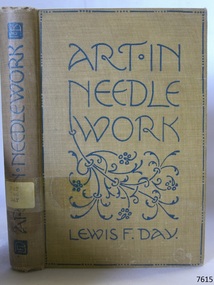
Book, Art in Needlework
... Art in Needlework......Art in Needlework...Art in Needlework A Book About Embroidery Author: Lewis F Day and Mary Buckle Publisher: BT Batsford Date: 1914...Warrnambool Shipwrecked-coast Flagstaff-Hill Flagstaff-Hill-Maritime-Museum Maritime-Museum Shipwreck-coast Flagstaff-Hill-Maritime-Village Shipwrecked-artefact Book Pattison Collection Warrnambool Library Warrnambool Mechanics’ Institute Ralph Eric Pattison Corangamite Regional Library Service Warrnambool City Librarian Mechanics’ Institute Library Victorian Library Board Warrnambool books and records Warrnambool Children’s Library Great Ocean Road Art in Needlework Lewis F Day Mary Buckle Label on spine cover with typed text PAT 746 DAY Pastedown front endpaper has sticker from Warrnambool Mechanics Institute and Free Library covered by a sticker from Corangamite Regional Library Service Front loose endpaper has a stamp from Corangamite Regional Library Service Front loose endpaper has a stamp from Warrnambool Public Museum Art in Needlework A Book About Embroidery Author: Lewis F Day and Mary Buckle Publisher: BT Batsford Date: 1914 Art in Needlework Book ...This item is from the ‘Pattison Collection’, a collection of books and records that was originally owned by the Warrnambool Mechanics’ Institute, which was founded in Warrnambool in 1853. By 1886 the Warrnambool Mechanics’ Institute (WMI) had grown to have a Library, Museum and Fine Arts Gallery, with a collection of “… choice productions of art, and valuable specimens in almost every branch and many wonderful national curiosities are now to be seen there, including historic relics of the town and district.” It later included a School of Design. Although it was very well patronised, the lack of financial support led the WMI in 1911 to ask the City Council to take it over. In 1935 Ralph Pattison was appointed as City Librarian to establish and organise the Warrnambool Library as it was then called. When the WMI building was pulled down in 1963 a new civic building was erected on the site and the new Warrnambool Library, on behalf of the City Council, took over all the holdings of the WMI. At this time some of the items were separated and identified as the ‘Pattison Collection’, named after Ralph Pattison. Eventually the components of the WMI were distributed from the Warrnambool Library to various places, including the Art Gallery, Historical Society and Flagstaff Hill. Later some were even distributed to other regional branches of Corangamite Regional Library and passed to and fro. It is difficult now to trace just where all of the items have ended up. The books at Flagstaff Hill Maritime Village generally display stamps and markings from Pattison as well as a variety of other institutions including the Mechanics’ Institute itself. RALPH ERIC PATTISON Ralph Eric Pattison was born in Rockhampton, Queensland, in 1891. He married Maude Swan from Warrnambool in 1920 and they set up home in Warrnambool. In 1935 Pattison accepted a position as City Librarian for the Warrnambool City Council. His huge challenge was to make a functional library within two rooms of the Mechanics’ Institute. He tirelessly cleaned, cleared and sorted a disarrayed collection of old books, jars of preserved specimens and other items reserved for exhibition in the city’s museum. He developed and updated the library with a wide variety of books for all tastes, including reference books for students; a difficult task to fulfil during the years following the Depression. He converted all of the lower area of the building into a library, reference room and reading room for members and the public. The books were sorted and stored using a cataloguing and card index system that he had developed himself. He also prepared the upper floor of the building and established the Art Gallery and later the Museum, a place to exhibit the many old relics that had been stored for years for this purpose. One of the treasures he found was a beautiful ancient clock, which he repaired, restored and enjoyed using in his office during the years of his service there. Ralph Pattison was described as “a meticulous gentleman whose punctuality, floorless courtesy and distinctive neat dress were hallmarks of his character, and ‘his’ clock controlled his daily routine, and his opening and closing of the library’s large heavy doors to the minute.” Pattison took leave during 1942 to 1945 to serve in the Royal Australian Navy, Volunteer Reserve as Lieutenant. A few years later he converted one of the Museum’s rooms into a Children’s Library, stocking it with suitable books for the younger generation. This was an instant success. In the 1950’s he had the honour of being appointed to the Victorian Library Board and received more inspiration from the monthly conferences in Melbourne. He was sadly retired in 1959 after over 23 years of service, due to the fact that he had gone over the working age of council officers. However he continued to take a very keen interest in the continual development of the Library until his death in 1969. The Pattison Collection, along with other items at Flagstaff Hill Maritime Village, was originally part of the Warrnambool Mechanics' Institute’s collection. The Warrnambool Mechanics’ Institute Collection is primarily significant in its totality, rather than for the individual objects it contains. Its contents are highly representative of the development of Mechanics' Institute libraries across Australia, particularly Victoria. A diversity of publications and themes has been amassed, and these provide clues to our understanding of the nature of and changes in the reading habits of Victorians from the 1850s to the middle of the 20th century. The collection also highlights the Warrnambool community’s commitment to the Mechanics’ Institute, reading, literacy and learning in the regions, and proves that access to knowledge was not impeded by distance. These items help to provide a more complete picture of our community’s ideals and aspirations. The Warrnambool Mechanics Institute book collection has historical and social significance for its strong association with the Mechanics Institute movement and the important role it played in the intellectual, cultural and social development of people throughout the latter part of the nineteenth century and the early twentieth century. The collection of books is a rare example of an early lending library and its significance is enhanced by the survival of an original collection of many volumes. The Warrnambool Mechanics' Institute’s publication collection is of both local and state significance. Art in Needlework A Book About Embroidery Author: Lewis F Day and Mary Buckle Publisher: BT Batsford Date: 1914Label on spine cover with typed text PAT 746 DAY Pastedown front endpaper has sticker from Warrnambool Mechanics Institute and Free Library covered by a sticker from Corangamite Regional Library Service Front loose endpaper has a stamp from Corangamite Regional Library Service Front loose endpaper has a stamp from Warrnambool Public Museum warrnambool, shipwrecked-coast, flagstaff-hill, flagstaff-hill-maritime-museum, maritime-museum, shipwreck-coast, flagstaff-hill-maritime-village, shipwrecked-artefact, book, pattison collection, warrnambool library, warrnambool mechanics’ institute, ralph eric pattison, corangamite regional library service, warrnambool city librarian, mechanics’ institute library, victorian library board, warrnambool books and records, warrnambool children’s library, great ocean road, art in needlework, lewis f day, mary buckle -
 Embroiderers Guild, Victoria
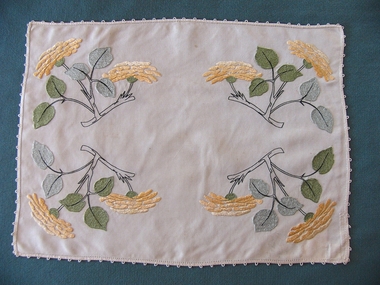
Textile - 1916 School of Art Needlework Table Mat, Early 20th century
... 1916 School of Art Needlework Table Mat...Designed and worked by donor in 1916 while a student at the School of Art Needlework, London. (Royal School of Needlework). ...Textile 1916 School of Art Needlework Table Mat ...Designed and worked by donor in 1916 while a student at the School of Art Needlework, London. (Royal School of Needlework). Design in William Morris style. Typical of late 19th , early 20th century embroidery.Fine silk, ecru colour, design of yellow flowers, green leaves, black stems in silk. Fine hem edged with small loops.embroidery, silk embroidery, 1900-20, england -
 Embroiderers Guild, Victoria
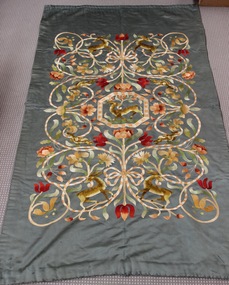
Textile - Art Needlework Arts and Crafts Panel, 1895-1910
... Art Needlework Arts and Crafts Panel...The pattern may well have been printed in an Art Needlework magazine of the period....Textile Art Needlework Arts and Crafts Panel ...Discussed with RSN Historian Dr Isabella Rosner and Dr Lynn Hulse, textile scholar and practitioner, specialising in embroidered furnishings of the Aesthetic and Arts and Crafts period. Piece can possible be dated to between 1895-1910. The pattern may well have been printed in an Art Needlework magazine of the period.Art Nouveau style panel depicting stags, flowers and striped ribbon in coloured silks on green silk fabric.art nouveau, embroidery -
 Embroiderers Guild, Victoria
Textile - 1916 School of Art Needlework Table Mat, Early 20th century
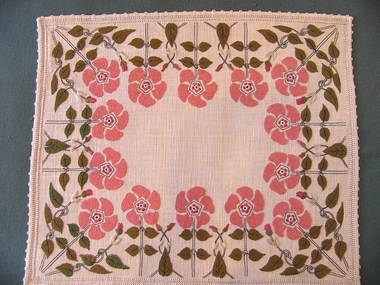
... 1916 School of Art Needlework Table Mat...Textile 1916 School of Art Needlework Table Mat ...Made by donor in 1916 as a student at Royal School of Needlework, London.Pink flowers, green leaves on natural linen. Interesting edge of pulled thread and loops. Art Nouveau style.embroidery, rumania, couching, england, 1900-20, pulled thread -
 Warrnambool and District Historical Society Inc.
Tray, Wooden sandwich tray, Early 20th century
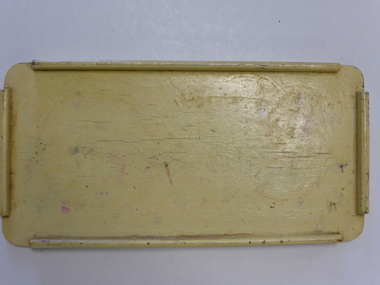
... ...Art Needlework in Warrnambool... ‘Millinery, Art Needlework, Baby Wear and Wool Specialists, Wrights (M.I.Giblett) Warrnambool’ ...Giblett, Warrnambool History of Warrnambool Art Needlework in Warrnambool ‘Millinery, Art Needlework, Baby Wear and Wool Specialists, Wrights (M.I.Giblett) Warrnambool’ This is a rectangular-shaped wooden tray with four raised pieces of wood attached to form edges. ...This wooden tray has been purchased from the Warrnambool Fancy Goods shop of M. Giblett. She had taken over this shop early in the 20th century from Mrs Martha Wright who was well-known in the late 19th and early 20th centuries for her shop in Liebig Street (95 Liebig Street today) and for her needlework classes in the town. Many of her pupils won prizes at the local Agricultural Shows. This tray is of some interest as an object bought at the Wright/Giblett Fancy Goods Store in Warrnambool early in the 20th century. This is a rectangular-shaped wooden tray with four raised pieces of wood attached to form edges. The tray has been painted yellow. There is a label on the base of the tray indicating the shop from where it was purchased. The tray has some chipped paint, some dirt marks and some small cracks in the wood. ‘Millinery, Art Needlework, Baby Wear and Wool Specialists, Wrights (M.I.Giblett) Warrnambool’ martha wright, warrnambool, m. giblett, warrnambool, history of warrnambool, art needlework in warrnambool -
 Embroiderers Guild, Victoria
Textile - Weldon's Period Needlework-Art Series 5 Magazine, Mrs Eglantine Gill, 1936
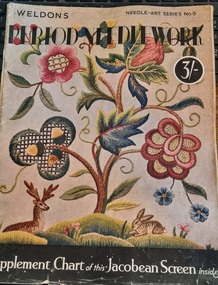
... Weldon's Period Needlework-Art Series 5 Magazine...Weldon's Period Needlework-Art Series 5 1936. Contains Jacobean design "Tree of Life" for embroidered fire screen....Textile Weldon's Period Needlework-Art Series 5 Magazine Mrs Eglantine Gill Mrs Eglantine Gill ...Mrs Gill was a member of the British Embroiderers Guild.Weldon's Period Needlework-Art Series 5 1936. Contains Jacobean design "Tree of Life" for embroidered fire screen.pattern, crewel, jacobean -
 Federation University Historical Collection
Booklet, Art Gallery Association Technical Art School (Opposite City Hall) Sturt Street, Ballarat. General Syllabus, 1893, c1893
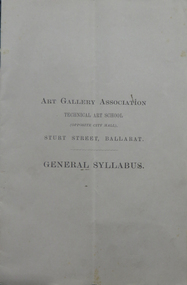
... ...art needlework...Sixteen page soft cover booklet covering fees, general art course, technical art course, architectural course, modelling course, painters' and decorators' course, Art Needlework course, Bi-manual training course, and art teachers' course. ...art gallery association art gallery association technical art school art gallery of ballarat ballarat fine art gallery course syllabus wood carving clay-modelling painters and decorators reposse metalwork art needlework photography photo-proces work art teachers' course life drawing - costume model life drawing drawing from ornament drawing from antique colour architecture clay ceramics coach painting house painting needlework woodcarving Sixteen page soft cover booklet covering fees, general art course, technical art course, architectural course, modelling course, painters' and decorators' course, Art Needlework course, Bi-manual training course, and art teachers' course. ...Sixteen page soft cover booklet covering fees, general art course, technical art course, architectural course, modelling course, painters' and decorators' course, Art Needlework course, Bi-manual training course, and art teachers' course. art gallery association, art gallery association technical art school, art gallery of ballarat, ballarat fine art gallery, course, syllabus, wood carving, clay-modelling, painters and decorators, reposse, metalwork, art needlework, photography, photo-proces work, art teachers' course, life drawing - costume model, life drawing, drawing from ornament, drawing from antique, colour, architecture, clay, ceramics, coach painting, house painting, needlework, woodcarving -
 Warrnambool and District Historical Society Inc.
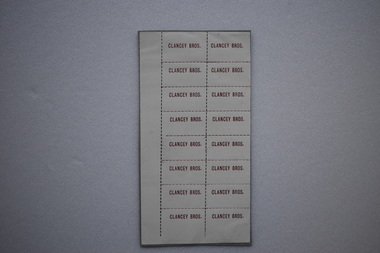
Label, Mrs. Wm. Wright, Early 20th century
... Martha Wright was the proprietor of a fancy goods store in Liebig Street, Warrnambool opposite Jordan's studio. She took art needlework classes offering seven lessons for 5 shillings . ...ART NEEDLEWORK AND REQUISITES From Mrs. Wm. Wright LIEBIG ST. ...Martha Wright was the proprietor of a fancy goods store in Liebig Street, Warrnambool opposite Jordan's studio. She took art needlework classes offering seven lessons for 5 shillings . ...Martha Wright was the proprietor of a fancy goods store in Liebig Street, Warrnambool opposite Jordan's studio. She took art needlework classes offering seven lessons for 5 shillings . Her pupils were successful at local shows and she herself won second prize in the Australian Womens Work Exhibition of 1907 for the best made washing dress for a girl of 12. This item is significant as Mrs.Wright was a prominent business woman in Warrnambool in the early 20th century.White rectangular label with dark blue lines and background .ART NEEDLEWORK AND REQUISITES From Mrs. Wm. Wright LIEBIG ST. WARRNAMBOOL Telephone 158 GOLFERS & KNITTED SUITS A SPECIALITY martha wright, fancy goods, australian womens work exhibition -
 Whitehorse Historical Society Inc.
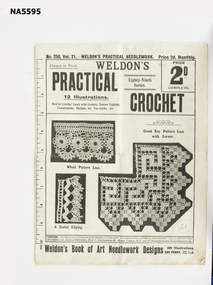
Booklet - Practical crochet - Weldon's Booklet, Weldon's Ltd, Fashion Publishers
... Weldon's Book of Art Needlework Designs with 12 illustrations priced 2d Eighty-ninth series....Weldon's Book of Art Needlework Designs with 12 illustrations priced 2d Eighty-ninth series. ...Crochet patternsPaper booklet 'Weldon's Practical Crochet No 250 Vol 21. Price 2d monthly. Off-white background with black writing. Weldon's Book of Art Needlework Designs with 12 illustrations priced 2d Eighty-ninth series.'As above'crochet, needlework, weldon's -
 Federation University Historical Collection
Notes, Kath Cunningham, Ballarat Teachers' College Creative Activities Notes, 1962, 1962
... art...needlework...The name Federation University Australia was chosen to convey the scope and capacity of an expanded regional university with a federated network of campuses. education creative activities art needlework samples apron A number of notes relating to teaching creative activities to primary school children. ...Ballarat Teachers' College notes on teaching Creative Studies and Needlework to primary school children. Federation University Australia was established on 1 January 2014. Formerly known as the University of Ballarat, its enabling legislation was the University of Ballarat Amendment (Federation University Australia) Act 2013. Although formally created as a University in 1994, the University of Ballarat has a lineage back to 1870 with the establishment of the School of Mines Ballarat, making it the third institution of higher learning to be established in Australia and the first to be established in regional Australia. On 1 January 1994, Ballarat University College became the University of Ballarat and in 1998 the University merged with three TAFE Institutes to become a dual sector institution with multiple campuses. On 1 January 2014, the University of Ballarat amalgamated with the Monash University Gippsland Campus to form Federation University Australia. The Gippsland Campus also had a long lineage dating back to 1928 with the establishment of the Yallourn Technical School which became a predecessor institution to the Gippsland College of Advanced Education formed in 1968. In 1990, it was renamed the Monash University College and in 1993 became the Gippsland Campus of Monash University. In 2016, Federation University Australia announced plans to take possession, over a two-year period, of Monash’s Berwick Campus in the south-east corridor of Melbourne. Federation University Australia, or FedUni, is headquartered in Ballarat and offers programs in Higher Education and Vocational Education and Training to regional Victoria and beyond. The University’s commitment to educational and social equity, teaching excellence, research distinction, environmental sustainability and regional capacity building has enabled it to develop in a way that draws on its proud heritage to inform its future. Its regional character sets a framework for the University’s priorities but does not constrain it from serving wider community interests, nationally and internationally. The name Federation University Australia was chosen to convey the scope and capacity of an expanded regional university with a federated network of campuses.A number of notes relating to teaching creative activities to primary school children. Includes needlework samples. education, creative activities, art, needlework, samples, apron -
 Federation University Historical Collection
Document - Documents, Ballarat School of Mines Correspondence Relating to the Ballarat Technical Art School, 1907-1914, 24/12/1907 - 28/08/1914
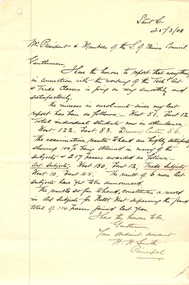
... ...art needlework...Art School by Principal Herbert H. Smith, 1914 .42) Correspondence on Stanley Mullen Company letterhead requesting a junior (lady) to help in designing and drawing from Needlework, 1914 .43) Report on the progress of the Ballarat Technical Art School by Principal Herbert H. ...This covers that time before the custom built Ballarat Technical Art School opened in 1915. ballarat technical school henry j. hall arthur m lilburn thomas h. trengrove herbert h. smith g.w. clegg m.c. young j.w. wright fred foster j. barber etsher green lily green p. isaac e.m. cornell albert steane f.n. king letterhead ballarat fine art public gallery association richard maddern j. powell j.a. powell frederick martell ponsonby carew-smyth stawell school of mines lilburne pridgeon arthur lilburne henry hall edith m. cornell john barber east ballarat library esther green percy isaac sloyd millinery r.w. richards frank king a.w. steane naas majorie walker art needlework stanley mullen company donald johnston ted cannon edwin cannon harold brown harold herbert art gallery of ballarat 48 pieces of hand and type written correspondence relating to the Ballarat Technical Art School, covering its first eight years. .1) Transferal of money from the Ballarat Fine Art Public Gallery Association to the Ballarat School of Mines for credit to the Ballarat Technical Art School No 15. .3) Letter from Herbert H. ...The dates 1907-1914 cover the first eight years of the Ballarat Technical Art School No. 15, a division of the Ballarat School of Mines. This covers that time before the custom built Ballarat Technical Art School opened in 1915.48 pieces of hand and type written correspondence relating to the Ballarat Technical Art School, covering its first eight years. .1) Transferal of money from the Ballarat Fine Art Public Gallery Association to the Ballarat School of Mines for credit to the Ballarat Technical Art School No 15. .3) Letter from Herbert H. Smith reporting on the appointment of Thomas Trengove to the position of Art Director at the Stawell School of Mines, and the appointment of Arthur Lilburne and Pridgeon as student assistants. .5) Application from Arthur M. Lilburne for a position at the Ballarat Technical Art School. .7) Resignation of Thomas Trengrove from the Ballarat Technical Art School so he could take up a position at the Stawell School of Mines, 1908. .9) Correspondence from H.H. Smith concerning expectations. 1908 .10) Report from Herbert H. Smith on the number of Art enrolments at the Ballarat West Art School, the Ballarat East Art School and the Drawing Centre. .8) Correspondence from Henry H. Hall regarding his teaching appointment, 1908 .11) A Report on architectural studies at the Ballarat Technical Art School on Clegg and Miller letterhead. .12) Report from M.C. Young. .13) Report from Arthur Lilburne .14) Reorrt from J.A. Wright, 1908 .15) Report on student numbers from Edith M. Cornell, 1908 .16) Report on classes in Freehand Geometry and Perspective by Fred Foster, 1908 .16b) Report by Decorating and Signwriting teacher John Barber, 1908 .17) Report from Esther and Lily Green from the East Public Library, 1908 .18) Report from Percy Isaac of the Ballarat East Public Library re manual training and Sloyd classes. .19) Report on the progress of the Ballarat Technical Art School by Principal Herbert H. Smith, 1908 .20) Report from Arthur M. Lilburn on the Elementary Evening Classes and the State School Teachers Saturday class, 1908 .21) Report by M.C. Young on drawing classes at the Ballarat Technical Art School, 1908 ,22) Report by Fred Foster on Freehand Geometry of Perspective classes at the Ballarat Technical Art School, 1908 .24) Report by E. and L. Green on classes at the Ballarat Technical Art School, 1908 .25) Report by Miss Wright on Dresscutting classes at the Ballarat Technical Art School, 1908 .26) Report by John Barber on Signs and Decorating classes at the Ballarat Technical Art School, 1908 .27) Report by Edith Cornell on Millinery classes at the Ballarat Technical Art School, 1908 .28) Report by Percy R. Green on Manual Training ad Carpentry classes at the Ballarat Technical Art School, 1908 .29) Correspondence from Posenby Carew-Smyth and Melbourne Education Department letterhead, 1908, .30) Report on the need for instruction in Decorative Needlework at the Ballarat Technical Art School by Principal Herbert H. Smith. Ida Johnston undertook classes from Miss Macgeorge in Melbourne at the suggestion of Posonby Carew-Smyth, and H.H. Smith suggested she be appointed to teach the class, 1910 .31) Report on the Junior Technical School, 1915 .32) Quarterly Report on the Ballarat Technical Art School by Principal Herbert H. Smith, 1911 .34) Report on the progress of the Ballarat Technical Art School by Principal Herbert H. Smith, 1914 .34b) Invoice from James Ingram and Son, Booksellers and School Stationers, 1908 .35) Report on the progress of the Ballarat Technical Art School by Principal Herbert H. Smith, 1914 .36) Correspondence from F.N. King seeking employment at the Ballarat Junior Technical Scool due to the resignation of A.W. Steane, 1914 .37) Correspondence regarding the qualifications of F.N. King, including Sloyd at NAAS, Sweden, 1914 Reference from F.V. Burridge of the London County Council Central School of Arts and Crafts (incorporating The Royal Female School of Art), Southamoton Row, London, regarding Francis N. King, 1913 .40) Correspondence on Ballarat Junior Technical School letterhead when it was located at 104 Doveton Street, Ballarat (Dana Street Primary School) from Albert W. Steane. The report mentioned to appointment of R.W. Richards commencing duties as a science ad mathematics master and Francis N. King as Woodwork and Modeling instructor, 1914 .41) Report on the progress of the Ballarat Technical Art School by Principal Herbert H. Smith, 1914 .42) Correspondence on Stanley Mullen Company letterhead requesting a junior (lady) to help in designing and drawing from Needlework, 1914 .43) Report on the progress of the Ballarat Technical Art School by Principal Herbert H. Smith, 1914 .44) Report on the progress of the Ballarat Technical Art School by Principal Herbert H. Smith, 1914. The report includes the resignation of Donadl Johnston to take up the position of assistant to Posonby Carew-Smyth. Harold Herbert to travel to England, and Edwin Cannon to to apply his art knowledge commercially. H.H. Smith suggested they be replaced with Ken Moss and Harold Brown .45) Report on the progress of the Ballarat Technical Art School by Principal Herbert H. Smith .46) Hours and duties of the caretaker and attendant at the Ballarat Technical Art School .47) Letter from the J.A. Powell, secretary of the Ballarat West Art School to the Ballarat School of Mines. ballarat technical school, henry j. hall, arthur m lilburn, thomas h. trengrove, herbert h. smith, g.w. clegg, m.c. young, j.w. wright, fred foster, j. barber, etsher green, lily green, p. isaac, e.m. cornell, albert steane, f.n. king, letterhead, ballarat fine art public gallery association, richard maddern, j. powell, j.a. powell, frederick martell, ponsonby carew-smyth, stawell school of mines, lilburne, pridgeon, arthur lilburne, henry hall, edith m. cornell, john barber, east ballarat library, esther green, percy isaac, sloyd, millinery, r.w. richards, frank king, a.w. steane, naas, majorie walker, art needlework, stanley mullen company, donald johnston, ted cannon, edwin cannon, harold brown, harold herbert, art gallery of ballarat -
 Embroiderers Guild, Victoria
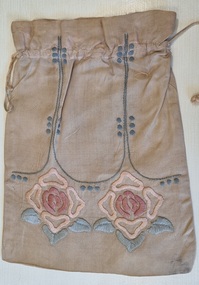
Textile - Art Nouveau Style Embroidered Sachet, early 20th C
... Art Nouveau Art Needlework drawstring embroidered sachet in coffee coloured linen. ...Art nouveau Sachet Art Nouveau Art Needlework drawstring embroidered sachet in coffee coloured linen. ...Art Nouveau/Arts and Crafts period reminiscent of Charles Rennie Mackintosh, with stylised curving lines and nature inspired motifs.Art Nouveau Art Needlework drawstring embroidered sachet in coffee coloured linen. Two stylized roses in dark and light pink and green leaves, all embroidered in satin stitch. Stem stitch embellishment with satin stitch circles . String drawstring. Machine stitched casing.art nouveau, sachet -
Federation University Historical Collection
Book, Ballarat Technical Art School Register, 1955-1971, 1955-1971
... Junior Art, Building Construction, Matriculation Art, Needlework, Painting, Life Class, Decorative Needlework, General Art Course, Sculpture...Junior Art, Building Construction, Matriculation Art, Needlework, Painting, Life Class, Decorative Needlework, General Art Course, Sculpture Ballarat Technical Art School Register, 1955-1971 Book ...The Ballarat Technical Art School (No. 10) was a division of the Ballarat School of Mines. Green ledger with black spine. Lists Student Number, Name, Trade or Occupation, Age at Last Birthday, Address, Date of Joining the School, Course Work. Courses listed include dressmaking, Elementary Art, Ticket Writing, Shorthand, Drawing, Pottery and Drawing. Pottery, Millinery. Junior Art, Building Construction, Matriculation Art, Needlework, Painting, Life Class, Decorative Needlework, General Art Course, Sculptureballarat technical art school, art general register, student enrolments, alumni, art studies, ballarat school of mines -
 Embroiderers Guild, Victoria
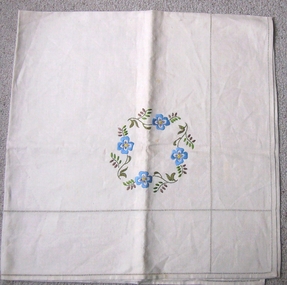
Textile - Brian McHenry Design Tea Cloth, Mr Brian McHenry, 1920-40
... Includes 'Flaxen Art Needlework' design 823. Probably a sample piece....Includes 'Flaxen Art Needlework' design 823. Probably a sample piece. ...Probably embroidered by Mrs McHenry. Includes 'Flaxen Art Needlework' design 823. Probably a sample piece.Tea cloth, blue floral design, embroidered only on one corner, spoke stitched edge.embroidery, surface stitchery, table cloths, 1920-40, australia -
 Embroiderers Guild, Victoria
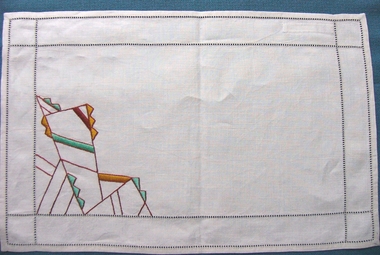
Textile - Art Deco Table Mat, Mr Brian McHenry, 1920-40
... Also included, original label "Flaxen 837 Art Needlework Design" instruction card. Designed by Mr McHenry, probably embroidered by his wife....Also included, original label "Flaxen 837 Art Needlework Design" instruction card. Designed by Mr McHenry, probably embroidered by his wife. ...Also included, original label "Flaxen 837 Art Needlework Design" instruction card. Designed by Mr McHenry, probably embroidered by his wife.Art Deco Table Mat - rectangular, cream linen brightly with coloured green,orange and brown art deco design.embroidery, surface stitchery, mats, 1920-40, australia -
 Stawell Historical Society Inc
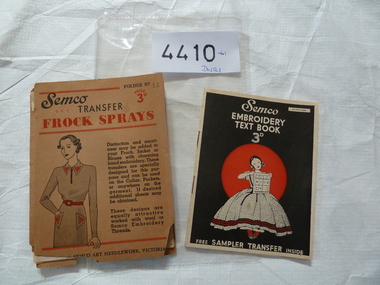
Memorabilia - Realia, Semco Transfers Frock Sprays, 1930's
... These designs are equally attractive worked with wool or Semco Embroidery Threads. Semco Art Needlework, Victoria...These designs are equally attractive worked with wool or Semco Embroidery Threads. Semco Art Needlework, Victoria Semco Transfer Frock Sprays Booklet Semco Transfers Frock Sprays Memorabilia Realia ...NeedleworkBooklet contains sheets of tissue paper Fautley's size , B also iron on transfers. Semco Transfer Frock Sprays BookletSemco Transfer Frock Sprays Folder No.15 Price 3DDistiction and smartness may be added to your frock, jacket or blouse with charming hand embroidery. These transfers are specifically designed for this purpose and can be used on the collar, pockets or anywhere on the garment. If desired additional sheets may be obtained. These designs are equally attractive worked with wool or Semco Embroidery Threads. Semco Art Needlework, Victoriastawell -
 Stawell Historical Society Inc
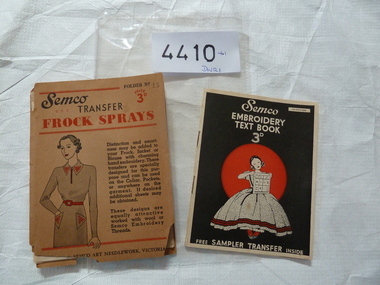
Memorabilia - Realia, Semco Embroidery Text Book 3D !st Edition Free Sampler insede, 1930's
... Published by Semco Art Needlework Pty.Ltd> Semco Park Cheltenham Road Black Rock S.9. ...Published by Semco Art Needlework Pty.Ltd> Semco Park Cheltenham Road Black Rock S.9. ...Published by Semco Art Needlework Pty.Ltd> Semco Park Cheltenham Road Black Rock S.9. Farrow Falcon Press Pty. Ltd. 226 Lonsdale Place, Melbourne. For Girls learning embroidery- home/schoolSemco Embroidery Text Book. White outline around Black cover. Large red circle with girl siting in front doing embroidery wearing Victorian style short puffed sleeved dress polka dot pattern and pantaloons red stockings and lace up ballerina style shoes1st Edition Semco Embroidery Text Book 3D Free sampler transfer inside. Booklet contains illustrations and instructions for each stich. Pages 2 and 3 have pencil squiggles across the top.: Stem stitch, Snail Trail, Back Stitch, Lazy Daisy Stitch, Thousand Flower Stitch, Buttonhole Stitch, Long and short buttonhole stitch, Chain Stitch Seed Stitch, Arrow stitch, Feather Stitch, Herringbone Stitch, Cross Stitch, French Knots, Lattice Stitch. Illustrations of designs with stiches referred to on previous pages. stawell -
Federation University Historical Collection
Booklet, Ballarat School of Mines Prospectus A and B, 1916-7, c1917
... art teachers' courses...outdoor sketching classes...photography...building construction...architectural drawing...ticketwriting...signwriting and decorating...dressmaking...needlework....1) Ballarat School of Mines Prospectus A .2) Ballarat School of Mines Prospectus B Contents includes teaching staff, school hours, curriculum, fee list, Travelling concessions, school library, classification of subjects. scholarships, Full art and Craft Courses (Industrial Design; Figure, Modelling, Painting and Design; Figure Drawing, Modelling, Painting and Design; Fashion Plate Drawing; Black and White Illustration; Modelling; Wood Carving and Lettering; Art Metal Work; Retouching, colouring, &c; Architectural Diploma; Draughtsmen's Courses; Art Teachers' Courses; Outdoor Sketching Classes; Photography; Building Construction and Architectural Drawing; Ticketwriting; Signwriting and Decorating COurse; Dressmaking, Needlework, etc; Preparatory Technical Classes for Girls; Day Commercial Classes; Other Branches of the School's Activities, examination results; Art Teachers' Certificate. ...The Ballarat Technical Art School was part of the Ballarat School of Mines ballarat school of mines ballarat technical art school design modelling figure drawing fashion plate drawing black and white illustration wood carving lettering art metal work retouching architecture architectural diploma draughtsmen's courses art teachers' courses outdoor sketching classes photography building construction architectural drawing ticketwriting signwriting and decorating dressmaking needlework art teachers' certificate. .1) Ballarat School of Mines Prospectus A .2) Ballarat School of Mines Prospectus B Contents includes teaching staff, school hours, curriculum, fee list, Travelling concessions, school library, classification of subjects. scholarships, Full art and Craft Courses (Industrial Design; Figure, Modelling, Painting and Design; Figure Drawing, Modelling, Painting and Design; Fashion Plate Drawing; Black and White Illustration; Modelling; Wood Carving and Lettering; Art Metal Work; Retouching, colouring, &c; Architectural Diploma; Draughtsmen's Courses; Art Teachers' Courses; Outdoor Sketching Classes; Photography; Building Construction and Architectural Drawing; Ticketwriting; Signwriting and Decorating COurse; Dressmaking, Needlework, etc; Preparatory Technical Classes for Girls; Day Commercial Classes; Other Branches of the School's Activities, examination results; Art Teachers' Certificate. ...The Ballarat Technical Art School was part of the Ballarat School of Mines.1) Ballarat School of Mines Prospectus A .2) Ballarat School of Mines Prospectus B Contents includes teaching staff, school hours, curriculum, fee list, Travelling concessions, school library, classification of subjects. scholarships, Full art and Craft Courses (Industrial Design; Figure, Modelling, Painting and Design; Figure Drawing, Modelling, Painting and Design; Fashion Plate Drawing; Black and White Illustration; Modelling; Wood Carving and Lettering; Art Metal Work; Retouching, colouring, &c; Architectural Diploma; Draughtsmen's Courses; Art Teachers' Courses; Outdoor Sketching Classes; Photography; Building Construction and Architectural Drawing; Ticketwriting; Signwriting and Decorating COurse; Dressmaking, Needlework, etc; Preparatory Technical Classes for Girls; Day Commercial Classes; Other Branches of the School's Activities, examination results; Art Teachers' Certificate. Includes an image of W.H. Middleton, President of the Ballarat School of Mines; Staff of the Ballarat School of Minesballarat school of mines, ballarat technical art school, design, modelling, figure drawing, fashion plate drawing, black and white illustration, wood carving, lettering, art metal work, retouching, architecture, architectural diploma, draughtsmen's courses, art teachers' courses, outdoor sketching classes, photography, building construction, architectural drawing, ticketwriting, signwriting and decorating, dressmaking, needlework, art teachers' certificate. -
Federation University Historical Collection
Document - Document - Letter, Ballarat Junior Technical School: Reference letter for Kyra Sandra Trotter for her new school, 1958
... art...craft...decorative needlework...Subjects covered in her first year of secondary school and courses available in the girl's section of the Junior Technical School outlined. ballarat junior technical school head master l garner kyra sandra trotter character highly regarded ability excellent first year english social studies arithmetic science art craft decorative needlework dressmaking home management music Cream page, typed. ...Letter from Mr Garner outlining the character and academic ability of Kyra Sandra Trotter. This provided for school she would be attending when the family move to the West. Subjects covered in her first year of secondary school and courses available in the girl's section of the Junior Technical School outlined. Cream page, typed. ballarat junior technical school, head master, l garner, kyra sandra trotter, character highly regarded, ability excellent, first year, english, social studies, arithmetic, science, art, craft, decorative needlework, dressmaking, home management, music -
Federation University Historical Collection
Booklet, Ballarat School of Mines, Prospectus, 1905-1906, 1905
... art teachers' courses...outdoor sketching classes...photography...building construction...architectural drawing...ticketwriting...signwriting and decorating...dressmaking...needlework...The Ballarat Technical Art School was part of the Ballarat School of Mines ballarat school of mines ballarat technical art school design modelling figure drawing fashion plate drawing black and white illustration wood carving lettering art metal work retouching architecture architectural diploma draughtsmen's courses art teachers' courses outdoor sketching classes photography building construction architectural drawing ticketwriting signwriting and decorating dressmaking needlework art teachers' certificate. ...The Ballarat Technical Art School was part of the Ballarat School of MinesTwo Ballarat School of Mines Prospectuses of 16 pages. Both are the same but have different colour covers Contents includes teaching staff, school hours and subjects. It also includes an advertisement for the practical treatment of Auriferous Ores in the Ballarat School of Mines Mining Laboratory. ballarat school of mines, ballarat technical art school, design, modelling, figure drawing, fashion plate drawing, black and white illustration, wood carving, lettering, art metal work, retouching, architecture, architectural diploma, draughtsmen's courses, art teachers' courses, outdoor sketching classes, photography, building construction, architectural drawing, ticketwriting, signwriting and decorating, dressmaking, needlework, art teachers' certificate., ballarat school of mines model mine -
 Federation University Historical Collection
Booklet, Ballarat School of Mines and Industries, Prospectus A, Science and Engineering, 1916-7, c1917
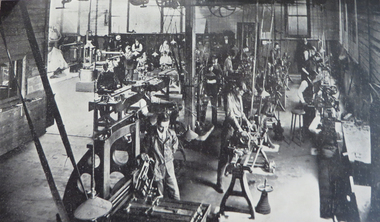
... art teachers' courses...outdoor sketching classes...photography...building construction...architectural drawing...ticketwriting...signwriting and decorating...dressmaking...needlework...The Ballarat Technical Art School was part of the Ballarat School of Mines ballarat school of mines ballarat technical art school design modelling figure drawing fashion plate drawing black and white illustration wood carving lettering art metal work retouching architecture architectural diploma draughtsmen's courses art teachers' courses outdoor sketching classes photography building construction architectural drawing ticketwriting signwriting and decorating dressmaking needlework art teachers' certificate. student activities A soft covered book of 58 pages called the Ballarat School of Mines and Industries Prospectus A. ...The Ballarat Technical Art School was part of the Ballarat School of MinesA soft covered book of 58 pages called the Ballarat School of Mines and Industries Prospectus A. Contents includes teaching staff, school hours, curriculum, fee list, Travelling concessions, school library, classification of subjects. scholarships, list of examiners, full science courses Includes images Staff of the Ballarat School of Mines and Students at work in Turning and Fittingballarat school of mines, ballarat technical art school, design, modelling, figure drawing, fashion plate drawing, black and white illustration, wood carving, lettering, art metal work, retouching, architecture, architectural diploma, draughtsmen's courses, art teachers' courses, outdoor sketching classes, photography, building construction, architectural drawing, ticketwriting, signwriting and decorating, dressmaking, needlework, art teachers' certificate., student activities -
 Buda Historic Home & Garden Castlemaine
Domestic furniture, Arts and Crafts embroidered draught screen, c1900
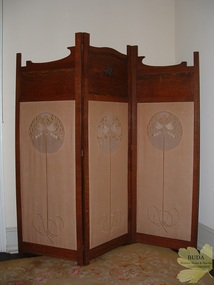
... ...needlework...art...Baillie-Scott, which was published in The Studio magazine in the early 1900s, This three-panel draught screen was made by Hilda Leviny in the Arts and Crafts style and entered into the First Exhibition of Women's Work, at the Exhibition Buildings, Melbourne in 1907. hilda leviny buda castlemaine domestic furniture handcrafts needlework art nouveau 1907 exhibition of women's work royal exhibition building woodwork draught sceen arts and crafts movement embroidery and applique Arts and Crafts style three-panel draught screen made from timber(American Oak), linen panels, silk embroidery threads, beaten copper decoration and varnish. ...This screen with embroidered and appliqued panels was entered in the First Australian Exhibition of Women's Work 1907, at the Royal Exhibition Building in Melbourne. This landmark exhibition gave women artists and craft workers an opportunity to display their works to a broad audience and gain recognition for the variety and high standard of the works in both traditional and non-traditional fields for women. The embroidery and applique design is based on an original design for a similar object made by British Arts and Crafts Architect and Designer, M.H. Baillie-Scott, which was published in The Studio magazine in the early 1900s,This three-panel draught screen was made by Hilda Leviny in the Arts and Crafts style and entered into the First Exhibition of Women's Work, at the Exhibition Buildings, Melbourne in 1907.Arts and Crafts style three-panel draught screen made from timber(American Oak), linen panels, silk embroidery threads, beaten copper decoration and varnish. The embroidered panels, made by Hilda Leviny, are mounted within the timer framework, depicting a design of birds and trees in the Arts and Crafts style. Pattern Reg. No. 3227.2 and 2503. With copper decoration.hilda leviny, buda, castlemaine, domestic furniture, handcrafts, needlework, art nouveau, 1907, exhibition of women's work, royal exhibition building, woodwork, draught sceen, arts and crafts movement, embroidery and applique -
 Embroiderers Guild, Victoria
Textile - Jacobean Crewel Work Fire Screen, Mrs Eglantine Gill, 1936
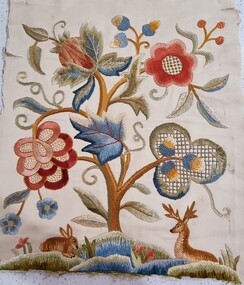
... Design from Weldon's Period Needlework-Art Series 5 1936....Design from Weldon's Period Needlework-Art Series 5 1936. Textile Jacobean Crewel Work Fire Screen Mrs Eglantine Gill Mrs Eglantine Gill ...Mrs. Eglantine Gill was a member of the British Embroiderers Guild. The fire screen was made as a wedding gift to the donor's parents in 1936. Jacobean design "Tree of Life" embroidered fire screen worked in silks. Design from Weldon's Period Needlework-Art Series 5 1936.jacobean, crewel embroidery -
 Bendigo Historical Society Inc.
Newspaper - JENNY FOLEY COLLECTION: DISCOVER BENDIGO
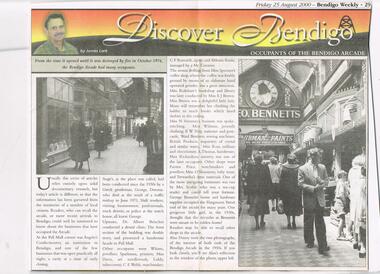
... In this article James describes some of the shops that occupied the arcade; Angelo's confectionary, Dr Albert Beischer (dental clinic), Whites jewellers, Miss Davis art needlework, Liddy Tobacconist, C.E. Welsh watchmaker, C.F. ...In this article James describes some of the shops that occupied the arcade; Angelo's confectionary, Dr Albert Beischer (dental clinic), Whites jewellers, Miss Davis art needlework, Liddy Tobacconist, C.E. Welsh watchmaker, C.F. ...BHS CollectionBendigo Weekly from Friday, 25 August, 2000. Article by James Lerk '' Discover Bendigo, occupants of the Bendigo Arcade''. From the time it opened until it was destroyed by fire in October 1974, the Bendigo Arcade had many occupants. In this article James describes some of the shops that occupied the arcade; Angelo's confectionary, Dr Albert Beischer (dental clinic), Whites jewellers, Miss Davis art needlework, Liddy Tobacconist, C.E. Welsh watchmaker, C.F. Rowart agent, Abbotts boots, Miss Spooner's coffee shop, Miss Robshaw's bookshop, Miss N. Sweeney spokestiching, Miss Wilman clothing, E.W. Ship Stationer and postcards, Ward Brothers sewing machines, British Products importers of crystal, Miss Ross milliner, A. Thomas hairdresser, Max Richardson nursery, Farren price watchmakers and jewellers, Miss O'Shannessy baby wear, Trewartha's dress materials, Miss Scobie fortune teller and George Bennetts home and hardware supplies occupied the Hargreaves Street end of the arcade. The clip is in a plastic folder.newspaper, bendigo, bendigo weekly -
 Eltham District Historical Society Inc
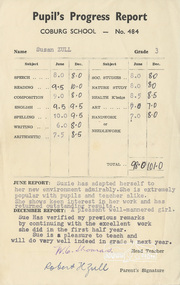
Work on paper (item) - Pupil's Progress Report, Coburg School, Susan Zull, 1961
... This undated progress report, cites numerical scores for June and December for Grade three for the subjects: speech, reading, composition, english, spellling, writing, arithmetic, social studies, nature study, health knowledge, art, and needlework. It also provides a short report on Susan's progress. ...This undated progress report, cites numerical scores for June and December for Grade three for the subjects: speech, reading, composition, english, spellling, writing, arithmetic, social studies, nature study, health knowledge, art, and needlework. It also provides a short report on Susan's progress. ...Susan Zull was the daughter of Florence Ada and Robert Henry Zull of Brunswick when she attended Coburg School, no 484 in the early 1960s. This undated progress report, cites numerical scores for June and December for Grade three for the subjects: speech, reading, composition, english, spellling, writing, arithmetic, social studies, nature study, health knowledge, art, and needlework. It also provides a short report on Susan's progress. The report is signed by W. E. Thomas Head teacher and Robert H. Zull The family would move to Eltham in 1963. susan zull, susan bennett, coburg school, report card, grade 3, education, primary, elementary, subjects, robert zull, w. e. thomas -
 Embroiderers Guild, Victoria
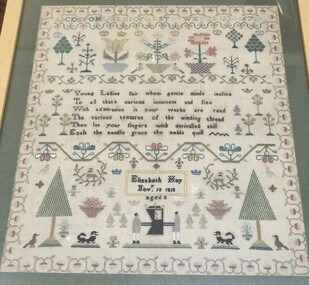
Textile - Elizabeth May 1810 Sampler, Elizabeth May, The Elizabeth Mury Collection, 1810
... This verse is a traditional poem or inscription historically dedicated to the art of needlework, embroidery, and samplers. In the 18th and 19th centuries, young girls frequently stitched verses like this onto their school room samplers to demonstrate both their needlework skills and their virtuous upbringing. ...This verse is a traditional poem or inscription historically dedicated to the art of needlework, embroidery, and samplers. In the 18th and 19th centuries, young girls frequently stitched verses like this onto their school room samplers to demonstrate both their needlework skills and their virtuous upbringing. ...This verse is a traditional poem or inscription historically dedicated to the art of needlework, embroidery, and samplers. In the 18th and 19th centuries, young girls frequently stitched verses like this onto their school room samplers to demonstrate both their needlework skills and their virtuous upbringing. The verse encourages young women to use their hands with unmatched skill to master the needle (embroidery) and honor the quill (writing or drawing designs). This text belongs to a genre of anonymous "sampler verses" widely used in the 1700s and 1800s. These verses were often distributed by schoolmistresses or printed in specialized instruction manuals to serve a dual purpose: moral instruction and literacy practice. The earliest recorded physical evidence of this exact verse appears on an English needlework sampler stitched by a girl named Ann Luty in 1788, at the age of 13. Traditional child's sampler on ecru linen embroidered in a variety of coloured silks and stitches. External border in a traditional strawberry design. Ornate dividing bands separate the alphabet, numerous floral and tree motifs. Large bottom panel depicts two men carrying a sedan chair or 'litter' with person inside. Identical motifs embroidered either side of trees, dogs, flowers and birds. Two small crowns either side of the cartouche with maker's name and date. "Young ladies for whom gentle minds incline To all that's curious innocent and fine With admiration in your works are read The various textures of the winding thread Then let your fingers with unrivalled skill Exalt the needle grace the noble quill" Elizabeth May Nov 13 1810 Aged 8 sampler, england, childs -
 Flagstaff Hill Maritime Museum and Village
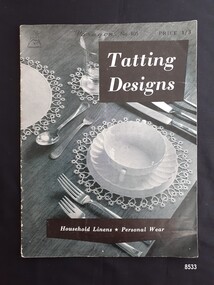
Book - Tatting craft book, Paragon Art Needlecraft Pty Ltd, Tatting Designs, circa 1940's
... Paragon knitting, crochet and tatting books have been distributed throughout Australia since the 1930's, originally by "Paragon Art Needlework Pty Ltd" of Sydney, N.S.W. From 1946 these books were designed and printed in Australia from patterns provided by British and Australian thread companies. ...Paragon knitting, crochet and tatting books have been distributed throughout Australia since the 1930's, originally by "Paragon Art Needlework Pty Ltd" of Sydney, N.S.W. From 1946 these books were designed and printed in Australia from patterns provided by British and Australian thread companies. ...Tatting is a form of knotted lace making using thread and a small shuttle. Twisted threads are tied around or through small, pointed shuttles that can be made of bone, mother of pearl, tortoise shell, steel or plastic. This produces a stable, strong lace using simple knots of two half hitches to make rings and chains embellished with picots. The origins of tatting are not clear but early versions of decorative knotting were used by the Egyptians on their ceremonial dress. Tatting also has elements of fishermen's net making techniques and the decorative knotting that was practiced by aristocratic women from the 15th century. Tatting, as we know it today, emerged in the first half of the 19th century. The new availability of mercerised thread from 1835 encouraged a burgeoning of lace crafts of all sorts. It was known in Italy as "occhi" and in France as "la frivolite". It looks fragile but is both strong and durable. An article in a column named "Wives and Daughters" published in the Star newspaper in May 1910 describes the durability of tatting lace - "there is edging and insertion still in existence that have outworn two sets of pillow slips." In the 19th century and well into the 20th century, tatting was used like crochet and knitted lace for decorative edgings, collars, doylies, tray cloths etc. At first, different tatting patterns were passed along by word of mouth from person to person, however in time, patterns regularly appeared in newspapers and magazines well into the 1950's. Paragon knitting, crochet and tatting books have been distributed throughout Australia since the 1930's, originally by "Paragon Art Needlework Pty Ltd" of Sydney, N.S.W. From 1946 these books were designed and printed in Australia from patterns provided by British and Australian thread companies. Consequently these patterns may also appear in similar British and American publications. Paragon Book No. 104 is an instruction book designed for the "beginner" whilst Paragon book No. 105 is designed for the more experienced tatter. The layout of these books was typical of the 1940s period when paper was in short supply. Most of the pattern books were approximately 18 cms wide by 24 cms high and some were smaller at about 13cm by 21 cms. The type used was small (about four lines of text per centimetre) which was difficult to read. This item is an excellent example of a needle work pattern book available to women in the 1940's in Australia.A soft covered, 16 page instruction book titled "Tatting Designs". It has black and white photographs and detailed patterns for tatted doilies, a tray mat, a chairback and arm rests, a cheval set, a luncheon set, collars and edgings for an underskirt, gloves and handkerchief. It is published by Paragon Art Needlecraft of Sydney.Front cover - "Paragon's No 105" "PRICE 1/3" "Tatting Designs" "Household Linens * Personal Wear" Plus a stylized drawing of a deerflagstaff hill maritime museum and village, great ocean road, warrnambool, shipwreck coast, tatting book, tatting patterns, craft, handiwork, handcraft, needlework, shuttle -
 Flagstaff Hill Maritime Museum and Village
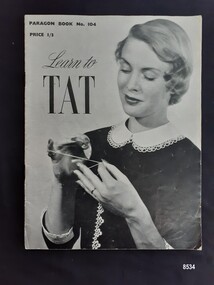
Book - Tatting craft book, Paragon Art Needlecraft Pty Ltd, Learn to Tat, circa 1940's
... Paragon knitting, crochet and tatting books have been distributed throughout Australia since the 1930's, originally by "Paragon Art Needlework Pty Ltd" of Sydney, N.S.W. From 1946 these books were designed and printed in Australia from patterns provided by British and Australian thread companies. ...Paragon knitting, crochet and tatting books have been distributed throughout Australia since the 1930's, originally by "Paragon Art Needlework Pty Ltd" of Sydney, N.S.W. From 1946 these books were designed and printed in Australia from patterns provided by British and Australian thread companies. ...Tatting is a form of knotted lace making using thread and a small shuttle. Twisted threads are tied around or through small, pointed shuttles that can be made of bone, mother of pearl, tortoise shell, steel or plastic. This produces a stable, strong lace using simple knots of two half hitches to make rings and chains embellished with picots. The origins of tatting are not clear but early versions of decorative knotting were used by the Egyptians on their ceremonial dress. Tatting also has elements of fishermen's net making techniques and the decorative knotting that was practiced by aristocratic women from the 15th century. Tatting, as we know it today, emerged in the first half of the 19th century. The new availability of mercerised thread from 1835 encouraged a burgeoning of lace crafts of all sorts. It was known in Italy as "occhi" and in France as "la frivolite". It looks fragile but is both strong and durable. An article in a column named "Wives and Daughters" published in the Star newspaper in May 1910 describes the durability of tatting lace - "there is edging and insertion still in existence that have outworn two sets of pillow slips." In the 19th century and well into the 20th century, tatting was used like crochet and knitted lace for decorative edgings, collars, doylies, tray cloths etc. At first, different tatting patterns were passed along by word of mouth from person to person, however in time, patterns regularly appeared in newspapers and magazines well into the 1950's. Paragon knitting, crochet and tatting books have been distributed throughout Australia since the 1930's, originally by "Paragon Art Needlework Pty Ltd" of Sydney, N.S.W. From 1946 these books were designed and printed in Australia from patterns provided by British and Australian thread companies. Consequently these patterns may also appear in similar British and American publications. Paragon Book No. 104 is an instruction book designed for the "beginner" whilst Paragon book No. 105 is designed for the more experienced tatter. The layout of these books was typical of the 1940s period when paper was in short supply. Most of the pattern books were approximately 18 cms wide by 24 cms high and some were smaller at about 13cm by 21 cms. The type used was small (about four lines of text per centimetre) which was difficult to read.This item is an excellent example of a needle work pattern book available to women in the 1940's in Australia.A soft covered 16 page instruction book with black and white photographs and detailed instructions explaining how to tat and eight tatting projects including how to make a collar and handkerchief edgings, published by Paragon Art Needlecraft of Sydney.Front cover - "PARAGON BOOK NO. 104" "PRICE 1/3" "Learn to/ TAT' Back Cover - "36/D5 E/A DO2" - handwritten in pencil flagstaff hill maritime museum and village, warrnambool, great ocean road, shipwreck coast, tatting, tatting pattern book, tatting instructions, handicraft, needlework, shuttle, tatting shuttle, paragon needlecraft, paragon craft book -
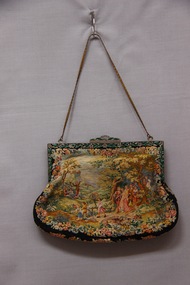 Embroiderers Guild, Victoria
Accessory - Landsberger Sisters, Vienna petit Point Evening Bag, 20th Century
... "Schwestern Landsberger" (or Landsberger Sisters, Vienna) was a well-known Austrian studio for textile art and needlework during the interwar period. The name behind the studio belonged to two Jewish sisters, Markéta (Margarethe) and Magdalene (Magda) Landsberger. ..."Schwestern Landsberger" (or Landsberger Sisters, Vienna) was a well-known Austrian studio for textile art and needlework during the interwar period. The name behind the studio belonged to two Jewish sisters, Markéta (Margarethe) and Magdalene (Magda) Landsberger. ...Purchased in Austria in 1937 by donor's father as a present for his wife. The vendors stated only two bags were made like this. The second bag was sold to Queen Mary, the mother of King George V1. "Schwestern Landsberger" (or Landsberger Sisters, Vienna) was a well-known Austrian studio for textile art and needlework during the interwar period. The name behind the studio belonged to two Jewish sisters, Markéta (Margarethe) and Magdalene (Magda) Landsberger. Career and Fate • The Vienna Studio: In the 1920s and early 1930s, the two sisters ran a successful studio and shop at Porzellangasse 43 in Vienna's 9th district. They specialised in artistic textile art and high-quality Petit Point handbags, which are highly sought after by collectors as antiques today. • Flight from the Nazis: Due to rising antisemitism in Austria, they closed their shop in the mid-1930s. Following the confiscation of their property, they initially fled to Belgium before eventually leaving Europe. • Emigration: Markéta Landsberger emigrated to Brazil in 1940, where she also established a reputation as a textile artist and art collector. Rural scenes both side of bag. Metal frame and handle. Frame is decorated with small green metal leaves and tiny pearls. Gusset is of flowers and a black ground, and black fine piping. Stitched in petit point with fine silk . Lined in apricot silk and containing a tiny purse and mirror.petit point, bag frame, pearls
