
Showing 40 items matching "chemist timor street warrnambool"
-
 Warrnambool and District Historical Society Inc.
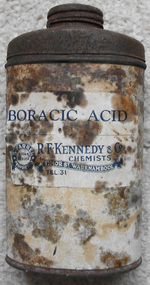
Container - Boracic Acid Tin: Kennedy Chemist, Early 20th century
... ...chemist timor street warrnambool...Kennedy was a significant business in Warrnambool. warrnambool r. f. kennedy chemist timor street warrnambool timor street warrnambool chemist R.F Kennedy & Co Chemists Timor St Warrnambool, Tel, 31. ...R. F. Kennedy operated as a pharmacy in the late 19th and early 20th century in Timor Street Warrnambool. Mr Kennedy manufactured a large number of drugs and perfumes on a wholesale basis as well as very impressive retail business. Around the mid 1880’s they were shipping 5000 dozen bottles of Janos salts annually. Boracic acid was one such product which was commonly used product as an insecticide, herbicide and in cleaning products.A common item which was manufactured by one of the largest manufacturing chemists of the area. R. F. Kennedy was a significant business in Warrnambool.Oval shaped tin with cream paper label overlaid with blue and white label. All labels are stained brown.R.F Kennedy & Co Chemists Timor St Warrnambool, Tel, 31. B Farrer proprietor Kodak dealer. warrnambool, r. f. kennedy, chemist timor street warrnambool, timor street warrnambool, chemist -
 Warrnambool and District Historical Society Inc.
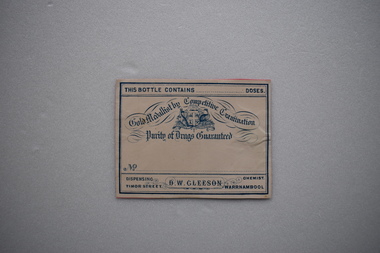
Label, Late 19th century, D.W.Gleeson Chemist
... He had a chemist shop in Timor Street, Warrnambool in the late 19th century. ...This bottle contains…. doses Gold Medallist by Competitive Examination Purity of Drugs Guaranteed Dispensing Chemist D.W.Gleeson Timor Street Warrnambool ...He had a chemist shop in Timor Street, Warrnambool in the late 19th century. ...This label comes from the pharmacy of D.W.Gleeson. He had a chemist shop in Timor Street, Warrnambool in the late 19th century. This label is of interest as a memento of a late 19th century chemist in Warrnambool – D.W. GleesonThis is a piece of cream-coloured paper with blue edging, an Australian logo and blue printing. The paper has been pasted on to a piece of pink card. This bottle contains…. doses Gold Medallist by Competitive Examination Purity of Drugs Guaranteed Dispensing Chemist D.W.Gleeson Timor Street Warrnambool d.w.gleeson, chemist, history of warrnambool -
 Warrnambool and District Historical Society Inc.
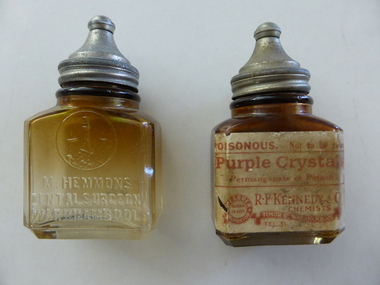
Bottles, Early 20th century
... These two bottles have been used in the business of Melsom Hemmons a dentist who operated from the chemist shop of R.F. Kennedy & Co. in Timor Street, Warrnambool. Hemmons was a close friend of Richard Kennedy who established a large wholesale, retail and manufacturing chemist business in Warrnambool in the 1880s. ....1 and .2 M HEMMONS DENTAL SURGEON WARRNAMBOOL .2 POISONOUS NOT TO BE TAKEN PURPLE CRYSTALS R.F KENNEDY & CO CHEMISTS TIMOR STREET WARRNAMBOOL ...These two bottles have been used in the business of Melsom Hemmons a dentist who operated from the chemist shop of R.F. Kennedy & Co. in Timor Street, Warrnambool. Hemmons was a close friend of Richard Kennedy who established a large wholesale, retail and manufacturing chemist business in Warrnambool in the 1880s. ...These two bottles have been used in the business of Melsom Hemmons a dentist who operated from the chemist shop of R.F. Kennedy & Co. in Timor Street, Warrnambool. Hemmons was a close friend of Richard Kennedy who established a large wholesale, retail and manufacturing chemist business in Warrnambool in the 1880s. This business was regarded as the largest and best appointed pharmacy in Victoria for many years. The business continued until the 1920s trading as R..F. Kennedy & Co. These two bottles are of considerable interest as mementoes of two prominent Warrnambool identities of the past- Melsom Hemmons and Richard Kennedy..1 A brown glass bottle with a metal top and a white label with faded red writing pasted on. On the other side is an embedded emblem of a lighthouse and lettering. The bottle is half filled with a liquid. The lid is rusted and the label is stained and torn. .2 As above except there is no label or liquid. .1 and .2 M HEMMONS DENTAL SURGEON WARRNAMBOOL .2 POISONOUS NOT TO BE TAKEN PURPLE CRYSTALS R.F KENNEDY & CO CHEMISTS TIMOR STREET WARRNAMBOOL melsom hemmons warrnambool dentist -
 Warrnambool and District Historical Society Inc.
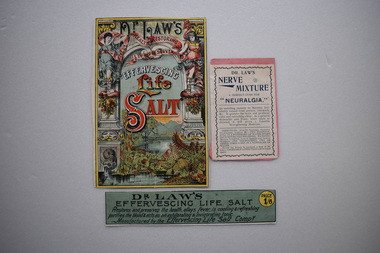
3x Labels, Gaspars Modern Printing Co, Kennedy, Early 20th century
... Law's patent medicines were sold in Warrnambool by Richard Kennedy (1826-1903). He was, a wholesale, retail and manufacturing chemist in Timor Street, Warrnambool in 1880 and he had what was described in the "Cyclopedia of Victoria" as "the largest and best appointed pharmacy in Victoria.". ...Law's patent medicines were sold in Warrnambool by Richard Kennedy (1826-1903). He was, a wholesale, retail and manufacturing chemist in Timor Street, Warrnambool in 1880 and he had what was described in the "Cyclopedia of Victoria" as "the largest and best appointed pharmacy in Victoria.". ...Dr. Law's patent medicines were sold in Warrnambool by Richard Kennedy (1826-1903). He was, a wholesale, retail and manufacturing chemist in Timor Street, Warrnambool in 1880 and he had what was described in the "Cyclopedia of Victoria" as "the largest and best appointed pharmacy in Victoria.". Kennedy was the Vice President of the Pharmaceutical Society of Victoria, on the Pharmacy Board and prominent in community affairs in Warrnambool. He was for some time the President of the Mechanics Institute and the Warrnambool Hospital and a foundation member of the Warrnambool Bowls Club. He also made perfumes with many varieties named after people or events of the time -- Federation, Nellie Melba etc. His pharmacy building in Timor Street and his house in Canterbury Road ("Ivanhoe") still stand (2019). R.F. Kennedy's pharmacy had the sole rights to Dr. Law's products.These labels are of importance as R.F. Kennedy was a well acknowledged pharmacist and a prominent business man and citizen of Warrnambool. Dr. Law's products were popular patent medicines in the early 20th century..1 Rectangular brightly coloured paper label with text and decorations including pillars,flowers, ferns, fruit, a gargoyle and two figures. One edge has been cut. .2 White rectangular label with blue text adhered to a piece of pink card. .3 Mid green rectangular label with black text and a yellow circle with text. All edges have been cut. .1 Mr LAW'S HEALTH RESTORING LIFE PRESERVER EFFERVESCING Life SALT. .2 DR.LAW'S NERVE MIXTURE A PERFECT CURE FOR "NEURALGIA." Further text in fine print .3 DR. LAW'S EFFERVESCING LIFE SALT restores and preserves the health, allays fever, is cooling & refreshing purifies the blood & acts as an exhilarating & invigorating tonic. Manufactured by the Effervescing life Salt Comp.y.(sic) Price 1/6r.f. kennedy, dr. law's products, pharmacy -
 Warrnambool and District Historical Society Inc.
Administrative record - Prescription Book, early 20th century
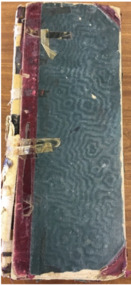
... This prescription book contains the entries of a chemist shop in Timor Street, Warrnambool from 1911 to 1946. ...This prescription book contains the entries of a chemist shop in Timor Street, Warrnambool from 1911 to 1946. ...This prescription book contains the entries of a chemist shop in Timor Street, Warrnambool from 1911 to 1946. During that time there were various chemists in the business trading for most of the time as R.F. Kennedy and Co. and later successors to R.F. Kennedy and Co, with one known name being that of J. Paterson. Richard Frank Kennedy established his wholesale, retail and manufacturing chemist's business in Warrnambool in 1880 and it became a leading business in Warrnambool. After Kennedy's death in 1903 the business continued as R.F.Kennedy and Co. The entries in the book show the type of medicines and prescriptions used in Warrnambool over a period of thirty years.This is a significant item, firstly because it is a record of an important business in 20th century Warrnambool and secondly because it is a great social record of one aspect of the health of residents in Warrnambool and district at that time. This is a ledger of 502 pages with a heavy cardboard cover with red leather edgings. The binding is largely missing and the ledger is held together with adhesive tape. The pages contain an alphabetical section at the front and handwritten entries in blue and black ink.R.F. Kennedy & Co. Timor St Warrnambool R.K. McDonald r. f. kennedy & co. warrnambool -
 Warrnambool and District Historical Society Inc.
Bottle, Australian Glass Manufacturers, R F Kennedy & Co, Early 20th century
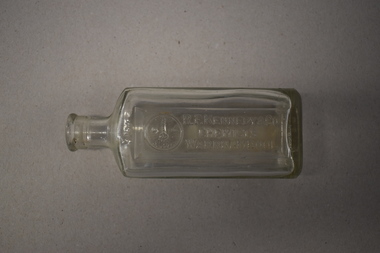
... This bottle comes from the chemist’s business in Timor Street Warrnambool of R.F.Kennedy & Co. ...This bottle comes from the chemist’s business in Timor Street Warrnambool of R.F.Kennedy & Co. ...This bottle comes from the chemist’s business in Timor Street Warrnambool of R.F.Kennedy & Co. Richard Frank Kennedy came to Warrnambool in 1880 and established a retail, wholesale and manufacturing business in Timor Street. The business was described in the 1904 ‘Cyclopedia of Victoria’ as the largest and best-appointed pharmacy in Victoria. Kennedy was prominent in community affairs in Warrnambool, being a Town Councillor, a Justice of the Peace, and on the committees of the Warrnambool Hospital and the Mechanics Institute and Art Gallery. He was the first Vice-President and fourth President of the Warrnambool Bowls Club. After Kennedy’s death in 1903 the pharmacy business continued as a company and this bottle comes from that time. The Kennedy chemist bottles were well-known for their lighthouse logo (Warrnambool having two operating lighthouses during the company’s time, with these still operating today).This bottle is significant as an example of a chemist’s bottle from R.F. Kennedy & Co. This pharmacy was a dominant business in Timor Street, Warrnambool for over 40 years. This is a small clear glass bottle with a rectangular-shaped body with rounded sides, a small neck and a moulded open top. The stopper is missing. The chemist’s name and a lighthouse logo are etched into the side of the bottle. ‘R.F. Kennedy & Co Chemists Warrnambool’ ‘M297 AGM’ r.f. kennedy, warrnambool chemist, history of warrnambool -
 Warrnambool and District Historical Society Inc.
Labels, Gaspars Modern Print, Lectar Company, Early 20th century
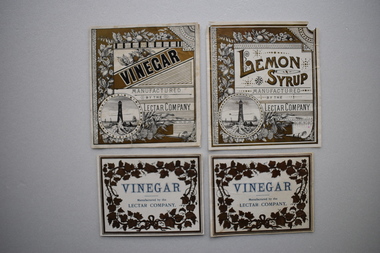
... Richard Kennedy (1826-1903), a wholesale, retail and manufacturing chemist in Timor Street, came to Warrnambool in 1880 and had what was described in the ‘Cyclopedia of Victoria’ as ‘the largest and best-appointed pharmacy in Victoria’. ...Richard Kennedy (1826-1903), a wholesale, retail and manufacturing chemist in Timor Street, came to Warrnambool in 1880 and had what was described in the ‘Cyclopedia of Victoria’ as ‘the largest and best-appointed pharmacy in Victoria’. ...These labels come from the pharmacy business of R.F.Kennedy who sold Lectar Company products and used a lighthouse image as his logo. Richard Kennedy (1826-1903), a wholesale, retail and manufacturing chemist in Timor Street, came to Warrnambool in 1880 and had what was described in the ‘Cyclopedia of Victoria’ as ‘the largest and best-appointed pharmacy in Victoria’. Kennedy was the Vice-President of the Pharmaceutical Society of Victoria, on the Pharmacy Board and was prominent in community affairs n Warrnambool. He also made local perfumes with many varieties named after people or events of the time – Nellie Melba, Federation etc. His pharmacy building in Timor Street and his house in Canterbury Road (“Ivanhoe”) still stand today.These labels are of some interest as they are associated with the Warrnambool business of the chemist, R.F.Kennedy. This business was the most important historically of all the Warrnambool chemists. .1, .2 Paper with a decorative order, images in gold and black of grapes, flowers and a lighthouse and black printing .3 As .1 above .4,.5 Paper with a gold border, images of grape vines in gold and blue printing .1,.2 Vinegar manufactured by the Lectar Company .3 Lemon Syrup manufactured by the Lectar Company .4,.5 Vinegar manufactured by the Lectar Company warrnambool, r f kennedy, chemist labels, lectar company -
 Warrnambool and District Historical Society Inc.
Multiple Labels, Kennedy, Early 20th century
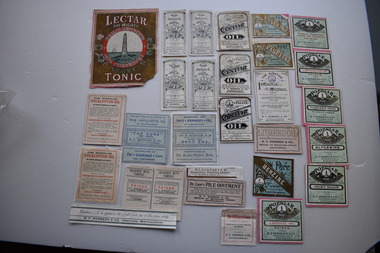
... Richard Kennedy (1826-1903), a wholesale , retail and manufacturing chemist in Timor Street, came to Warrnambool in 1880 and had what was described in "Cyclopedia of Victoria' as the "largest and best appointed pharmacy in Victoria'. ...Richard Kennedy (1826-1903), a wholesale , retail and manufacturing chemist in Timor Street, came to Warrnambool in 1880 and had what was described in "Cyclopedia of Victoria' as the "largest and best appointed pharmacy in Victoria'. ...Richard Kennedy (1826-1903), a wholesale , retail and manufacturing chemist in Timor Street, came to Warrnambool in 1880 and had what was described in "Cyclopedia of Victoria' as the "largest and best appointed pharmacy in Victoria'. Kennedy was Vice President of the Pharmaceutical Society of Victoria, on the Pharmacy Board and was prominent in community affairs in Warrnambool. He was for some time President of the Mechanics Institute and the Warrnambool Hospital and a foundation member of the Warrnambool Bowls Club. He also made locally perfumes with many varieties named after people or events of the time-Federation, Nellie Melba etc.. His pharmacy building in Timor Street and his house 55 Canterbury Road "Ivanhoe" still stands (2019) The use of a lighthouse in his advertising and on his bottles is of particular interest. W.D.H.S. has Kennedy bottles in its collectionThese labels are of great significance as they were produced for a pharmacist of note in Victoria and Warrnambool. .1 Rectangular paper label adhered to a piece of pink card. It features a lighthouse and small sailing ship in the centre of a red circle with black and white text, Surrounding the circle is text and decorations of flowers on an olive green background. The label is torn on the bottom right hand corner. It is adhered to a piece of pink card. .2 Light green label featuring a lighthouse in a circle underneath which is a scroll with text, There are finely drawn curly decorations and further text. It is adhered to a piece of pink card. .3 Similar to .2 with different text .4 Similar to .2 and .3 with different text .5 Similar to .2,.3,.4 with different text .6 Similar to .2,.3,.4,.5 with different text 6.1Similar to .2,.3,.4,.5,.6 with different text 6.2 Turquoise label with a gold diagonal wide band with text. The label features a lighthouse in a circle , there are decorations of leaves, and curls. The white and black text is stylised, especially the name of the manufacturer. .7 Buff coloured rectangular card adhered to a piece of pink card. The dark green text is surrounded by a decorative border. .8 White rectangular featuring a blue coloured lighthouse and detailed black text .9 White rectangular label with black detailed text surrounded by a border. .10 Similar to 6.2 with different text, adhered to white paper. .11 identical to .10 but adhered to pink card. .12 White rectangular card with black and red text .13 identical to .12 .14 Three joined pale blue labels with dark blue text. The central label is larger than the other two which are equal in size. One of the smaller labels in upside down. All have borders. .15 Identical to .14 excepting it is adhered to white card .16 White rectangular label with black text. It features a lighthouse, decorations of leaves and a variety of styles and fonts of the print. It is adhered to a piece of pink card. .17 Identical to .16 excepting it is adhered to white card. .18 Identical to .17 .19 Rectangular white label with red and black detailed text adhered to a piece of white paper .20 Identical to .19 excepting it is adhered to a piece of pink card. .21 Rectangular white label with grey text , a decorative border and further decorations adhered to a piece of white card. .22 Identical to .21 but not adhered, .23 Identical to .21 , adhered to white card .24 Identical to .22 .25 Square white label with red and black text. and a red border. .26 White rectangular label with dark green text and border. .27 Small white rectangular label with gold text adhered to a piece of white paper .1 LECTAR THE MIGHTY HEALTH RESTORING LIFE PRESERVER NERVE TONIC .2 POPULAR FAMILY MEDICINES CARBOLIC OIL POISON FROM R. F. KENNEDY& CO PHARMAISTS WARRNAMBOOL .3 As for .2 FRIAR'S BALSAM in lieu of CARBOLIC OIL .4 As for .2, .3 GLYCERINE in lieu OF FRIAR'S BALSAM .5 As for .2,.3,.4 Paregoric, Peppermint, Aniseed and Laudanum. POISON in lieu of GLYCERINE .6 As for .2,.3,.4,.5 CAMPHORATED OIL in lieu of Paregoric,Peppermint, Aniseed and Laudanum .6.1 As for .2,.3,.4,.5,.6 PARRISH'S FOOD . in lieu of CAMPHORATED OIL Dose- Adults 1/2 to 1 teaspoonful 6.2 Pure BENZINE FROM R. F. KENNEDY AND CO. Pharmaceutical Works WARRRNAMBOOL .7 LINSEED OILR.F KENNEDY & CO. Wholesale and Manufacturing Chemists WARRNAMBOOL .8 the primary text is : THE ALSATIAN INFLUENZA MIXTURE A section of the ensuing text is ; "For EXHAUSTION, LOSS OF APPETITE , NEURITIS and GENERAL RUN DOWN it will be found a Powerful Tonic." .9 Dr Law's PILE OINTMENT Directions ............... R.F KENNEDY & CO Wholesale and Manufacturing Chemists WARRNAMBOOOL 10. As for .2,.3,.4,.5,.6.6.1 VASELINE in lieu of BENZINE .11 Identical to .10 .12 COLOURED WITH TUMERIC. Labelled in accordance with the "SALE AND USE OF POISONS ACT" POISON R.F. KENNEDY & CO. Chemists WARRNAMBOOL APPROXIMATELY 7 GRAMS .13 Identical to .12. .14 Central label "THE CURE" FOR CORNS R.F. KENNEDY &CO manufacturing Chemists WARRNAMBOOL .Small label PROPRIETORS OF THE. CELEBRATED . CURE FOR TOOTHACHE . Small label PROPRIETORS OF The Sulpho- Thymol Soap, For Eruptions and Irritations of the Skin. .15 Identical to .14 .16TASTELESS ITALIAN CASTOR OIL OF THE PUREST QUALITY. Adults Dose one to two tablespoonfuls . Children half to one tablespoonful. IMPORTED BY R.F. KENNEDY&CO. Manufacturing Chemists Timor ST. Warrnambool .17 Identical to .16 .18 Identical to .16 .19 PURE REDISTILLED EUCALYPTUS OIL OF EXTRA STRENGTH & PURITY DEODORANT & DISINFECTANT FROM R.F. KENNEDY & CO'S Pharmaceutical Works Warrnambool ( Much more detail) .20 Identical to .19 .21,.22,.23,.24 PURE Refined SALAD OIL FROM R.F. KENNEDY & CO.MANUFACTURING CHEMISTS WARRNAMBOOL .25 Brilliantine AN ELEGANT AND FRAGRANT PREPARATION FOR THE HAIR, MOUSTACHE, OR WHISKERS. PROPRIETORS R.F. KENNEDY & CO. WARRNAMBOOL .26 Directions.--- To be applied to the irritable parts two or three times daily R.F. KENNEDY & CO., Chemists, Warrnambool .27 R.F. KENNEDY & CO. Manufacturing and Dispensing Chemists WARRNAMBOOL chemists, pharmaceutical society of victoria, mechanics institute, warrnambool, warrnambool hospital, warrnambool bowls club -
 Warrnambool and District Historical Society Inc.
Label, Gaspers Modern Print, R.F.Kennedy, Early 20th century
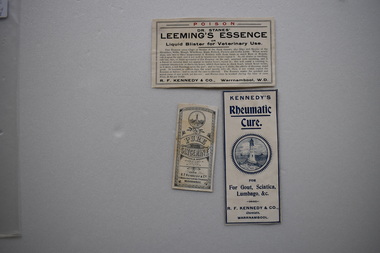
... Richard Kennedy (1926-1903), a wholesale, retail and manufacturing chemist in Timor Street, came to Warrnambool in 1880 and established what was described in the ‘Cyclopedia of Victoria’ as ‘the largest and best-appointed pharmacy in Victoria’. ...Richard Kennedy (1926-1903), a wholesale, retail and manufacturing chemist in Timor Street, came to Warrnambool in 1880 and established what was described in the ‘Cyclopedia of Victoria’ as ‘the largest and best-appointed pharmacy in Victoria’. ...These labels come from the pharmacy business of R.F. Kennedy and Co. Richard Kennedy (1926-1903), a wholesale, retail and manufacturing chemist in Timor Street, came to Warrnambool in 1880 and established what was described in the ‘Cyclopedia of Victoria’ as ‘the largest and best-appointed pharmacy in Victoria’. Kennedy was Vice-President of the Pharmaceutical Society of Victoria, on the Pharmacy Board and prominent in community affairs in Warrnambool. He was for some time President of the Mechanics’ Institute and the Warrnambool Hospital and a foundation member of the Warrnambool Bowls Club. He also made perfumes with many varieties named after people or events of the time – Federation, Nellie Melba etc. His pharmacy building in Timor Street and his house in Canterbury Road, Warrnambool (‘Ivanhoe’) still stand. The use of a lighthouse in his advertising is of particular interest because of the two operating lighthouses in Warrnambool.These labels are of considerable significance as the pharmacy business of R.F.Kennedy was a prominent one in Warrnambool because of the number of years it existed and because it was one of the largest and best equipped in Victoria, especially during the years at the end of the 19th century. .1 A sheet of white paper with black edging and red and black print. .2 A sheet of paper with a blue border, blue printing and the image of a lighthouse. .3 A sheet of paper with an ornamental border, black and white printing and the image of a lighthouse. .1 Poison - Dr. Stanes’ Leeming’s Essence or Liquid Blister for veterinary use .2 Kennedy’s Rheumatic Cure for Gout, Sciatica, Lumbago etc .3 Pure Glycerine from R.F.Kennedy & Co. Manufacturing Chemists Warrnambool r.f.kennedy, chemist, history of warrnambool -
 Flagstaff Hill Maritime Museum and Village
Equipment - Stamp, Cramond and Dickson, Mid-19th century
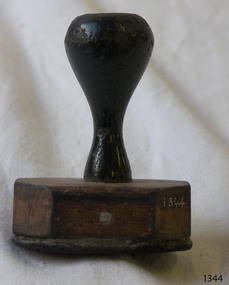
... Timor Streets, Warrnambool. They traded from 185 – 1974. John Glass Cramond and James Dickson migrated from Scotland to Melbourne where they opened a Cramond and Dickson store in St Kilda. They were inspired by the growth in Warrnambool after a visit and opened a second store there in 1855. The Cramond and Dickson store, grocers – drapery – ironmongery - chemist...Timor Streets, Warrnambool. They traded from 185 – 1974. John Glass Cramond and James Dickson migrated from Scotland to Melbourne where they opened a Cramond and Dickson store in St Kilda. They were inspired by the growth in Warrnambool after a visit and opened a second store there in 1855. The Cramond and Dickson store, grocers – drapery – ironmongery - chemist ...This stamp was made for and used by Cramond and Dickson, a large clothing store on the corner of Liebig and Timor Streets, Warrnambool. They traded from 185 – 1974. John Glass Cramond and James Dickson migrated from Scotland to Melbourne where they opened a Cramond and Dickson store in St Kilda. They were inspired by the growth in Warrnambool after a visit and opened a second store there in 1855. The Cramond and Dickson store, grocers – drapery – ironmongery - chemist, was located on the corner of Liebig and Timor Streets, Warrnambool (now the site of a Mexican restaurant). Both Cramond and Dickson were involved in the business and social aspects of Warrnambool’s community. Cramond and Dickson closed in 1974. An advertisement placed by Cramond and Dickson in The Camperdown Chronicle, Saturday 6th April 1895, states them “showing the latest novelties for the coming winter season” … “import directly from English and Continental manufacturers” … “representatives in London … always in touch with the Newest Continental Fashions” ... “having been established for so many years we know the requirements of the Western District”… “allow 5 percent discount on goods paid for at the time of purchase”.The rubber stamp is significant for its association with Cramond and Dickson, a large retail store established in Warrnambool and operating from 1855 to 1974. Both partners were prominent figures in the community.Rubber stamp, octagonal-sided, with wooden handle. The stamp was owned and used by Warrnambool's department store, Cramond & Dickson."Warrnambool" "Outfitters and Drapers" "Cramond and Dickson"flagstaff hill maritime museum and village, flagstaff hill, maritime village, maritime museum, shipwreck coast, great ocean road, warrnambool, cramond and dickson, warrnambool business, department store, commerce, timor street, liebig street, sales, retail equipment, office equipment, stamp, rubber stamp, business stamp -
 Flagstaff Hill Maritime Museum and Village
Container - Boot Polish Tin, Cramond and Dickson, 1855-1974
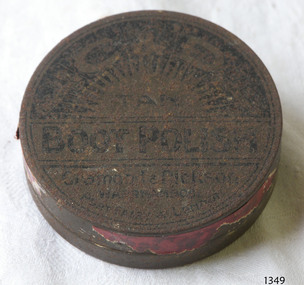
... Warrnambool after a visit and opened a second store there in 1855. The Cramond and Dickson store, grocers – drapery – ironmongery - chemist, was located on the corner of Liebig and Timor Streets, Warrnambool. ...Warrnambool after a visit and opened a second store there in 1855. The Cramond and Dickson store, grocers – drapery – ironmongery - chemist, was located on the corner of Liebig and Timor Streets, Warrnambool. ...This tin of boot polish was a product sold be Cramond and Dickson store, which traded in Warrnambool from 1855 - 1974. John Glass Cramond and James Dickson migrated from Scotland to Melbourne, where they opened a Cramond and Dickson store in St Kilda. They were inspired by the growth in Warrnambool after a visit and opened a second store there in 1855. The Cramond and Dickson store, grocers – drapery – ironmongery - chemist, was located on the corner of Liebig and Timor Streets, Warrnambool. Both Cramond and Dickson were involved in the business and social aspects of Warrnambool’s community. Cramond and Dickson closed in 1974. An advertisement placed by Cramond and Dickson in The Camperdown Chronicle, Saturday 6th April 1895, states them “showing the latest novelties for the coming winter season” … “import directly from English and Continental manufacturers” … “representatives in London … always in touch with the Newest Continental Fashions” ... “having been established for so many years we know the requirements of the Western District”… “allow 5 percent discount on goods paid for at the time of purchase”.The tin of boot polish is an example of the goods sold in Warrnambool in the 19th and early 20th century. It s significant for its association with Cramond and Dickson, a large retail store established in Warrnambool and operating from 1855 to 1974. Both partners were prominent figures in the community.Container: a tin of boot polish, with a small amount of light tan polish inside. Inscribed for the makers, Cramond and Dickson, Warrnambool, Port Fairy & Londo. Labelling is partly obscured by corrosion. Instructions for use are on the base of the tin. "C and D Tan Boot Polish" and "Cramond and Dickson, Warrnambool, Port Fairy & London" and "For best results, remove all dust and apply a little C and D Dressing, Brush Briskly" "Weight when packed 1 1/2 ozs net"flagstaff hill maritime museum and village, flagstaff hill, maritime village, maritime museum, shipwreck coast, great ocean road, warrnambool, boot polish, shoe cleaning, grooming, cramond and dickson, warrnambool business, department store, commerce, timor street, liebig street, port fairy business, metal craft, tinware -
 Flagstaff Hill Maritime Museum and Village
Functional object - String Dispenser, Cramond and Dickson, mid-19th century
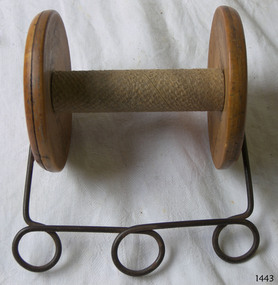
... Warrnambool after a visit and opened a second store there in 1855. The Cramond and Dickson store, grocers – drapery – ironmongery - chemist, was located on the corner of Liebig and Timor Streets, Warrnambool (now the site of a Mexican restaurant). ...Warrnambool after a visit and opened a second store there in 1855. The Cramond and Dickson store, grocers – drapery – ironmongery - chemist, was located on the corner of Liebig and Timor Streets, Warrnambool (now the site of a Mexican restaurant). ...This dispenser was most likely used for holding and dispensing string. It was used in the Cramond and Dickson store, which operated in Warrnambool from 1855 + 1974. John Glass Cramond and James Dickson migrated from Scotland to Melbourne where they opened a Cramond and Dickson store in St Kilda. They were inspired by the growth in Warrnambool after a visit and opened a second store there in 1855. The Cramond and Dickson store, grocers – drapery – ironmongery - chemist, was located on the corner of Liebig and Timor Streets, Warrnambool (now the site of a Mexican restaurant). Both Cramond and Dickson were involved in the business and social aspects of Warrnambool’s community. Cramond and Dickson closed in 1974. An advertisement placed by Cramond and Dickson in The Camperdown Chronicle, Saturday 6th April 1895, states them “showing the latest novelties for the coming winter season” … “import directly from English and Continental manufacturers” … “representatives in London … always in touch with the Newest Continental Fashions” ... “having been established for so many years we know the requirements of the Western District”… “allow 5 percent discount on goods paid for at the time of purchase”.The string dispenser is significant for being used at the local historical Cramond and Dickson department store in Warrnambool It is also of significance as it is an example of office equipment used in many stores for the wrapping and securing of parcels.Dispenser for string; spindle, reel or spool with cylindrical axle in centre, a wooden disc at each end. A length of wire is attached to each end and bend into a 'U' shape, with three loops formed across the base of the 'U'. Item came from Cramond and Dickson store in Warrnambool and was possibly used for dispensing string, with the wire being used as a handle or for mounting.flagstaff hill maritime museum and village, flagstaff hill, maritime village, maritime museum, shipwreck coast, great ocean road, warrnambool, cramond and dickson, warrnambool business, department store, commerce, timor street, liebig street, sales, retail equipment, office equipment, string dispenser, string reel, packaging, parcelling -
 Flagstaff Hill Maritime Museum and Village
Equipment - Cash Ball, Cramond and Dickson, 1855 - 1974
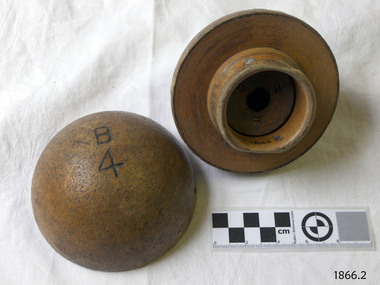
... Warrnambool after a visit and opened a second store there in 1855. The Cramond and Dickson store, grocers – drapery – ironmongery - chemist, was located on the corner of Liebig and Timor Streets, Warrnambool (now the site of a Mexican restaurant). ...Warrnambool after a visit and opened a second store there in 1855. The Cramond and Dickson store, grocers – drapery – ironmongery - chemist, was located on the corner of Liebig and Timor Streets, Warrnambool (now the site of a Mexican restaurant). ...This cash ball was used by Cramond and Dickson, a large clothing store on the corner of Liebig and Timor Streets, Warrnambool. The Cash Ball system serviced the ground floor, which measured about 30 metres by 25 metres. An overhead pipe connected each service point in the store, with the pipes connected to the upstairs office. The ball would be filled with a note of details of the sale, and the cash payment; a vacuum system would be activated that would transport the ball upstairs to the office, where details were recorded and the change assembled. Change was placed in the ball, and the vacuum system was activated to return the ball to the correct sales point. A frequent customer has reported that she never remembered the system not working efficiently, and the service was probably quicker than having a cash register at each sales location. John Glass Cramond and James Dickson migrated from Scotland to Melbourne, where they opened a Cramond and Dickson store in St Kilda. They were inspired by the growth in Warrnambool after a visit and opened a second store there in 1855. The Cramond and Dickson store, grocers – drapery – ironmongery - chemist, was located on the corner of Liebig and Timor Streets, Warrnambool (now the site of a Mexican restaurant). Both Cramond and Dickson were involved in the business and social aspects of Warrnambool’s community. Cramond and Dickson closed in 1974. An advertisement placed by Cramond and Dickson in The Camperdown Chronicle, Saturday 6th April 1895, states them “showing the latest novelties for the coming winter season” … “import directly from English and Continental manufacturers” … “representatives in London … always in touch with the Newest Continental Fashions” ... “having been established for so many years we know the requirements of the Western District”… “allow 5 percent discount on goods paid for at the time of purchase”.The cash ball represents an efficient retail system used in the late 19th to mid 20th century to securely transfer cash from one part of the store to another. It is significant for its association with Cramond and Dickson, a large retail store established in Warrnambool and operating from 1855 to 1974. Both partners were prominent figures in the community.Cash ball: a wooden, round, hollow ball in two pieces. Two half spheres that fit into each other securely. Both are marked with carved characters. "B4" and one has "Fancy" marked on it. It was used by Warrnambool's Cramond and Dickson clothing store. "B4" "Fancy"flagstaff hill, warrnambool, shipwrecked-coast, flagstaff-hill, flagstaff-hill-maritime-museum, maritime-museum, shipwreck-coast, flagstaff-hill-maritime-village, cash ball, cramond and dickson, office equipment, retail equipment, cash handling, sales, warrnambool business, department store, commerce, timor street, liebig street -
 Warrnambool and District Historical Society Inc.
Archive - Door plate with Inscription, Leslie O'Callaghan, 1942
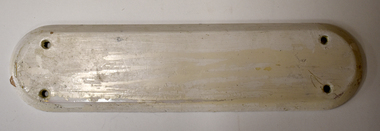
... Warrnambool Technical School. He became an industrial chemist, working at the Kraft Walker Cheese Factory in Allansford (Warrnambool Cheese and Butter Factory). His experimental work in cheese cultures over a 45 year period was regarded as cutting edge work in the Victorian dairying industry. Known as 'Mr History', Leslie O'Callaghan was also an important Warrnambool historian, serving as president of the Warrnambool and District Historical Society for 35 years. In later life Les wrote about his time in 28 Spence Street...Warrnambool Technical School. He became an industrial chemist, working at the Kraft Walker Cheese Factory in Allansford (Warrnambool Cheese and Butter Factory). His experimental work in cheese cultures over a 45 year period was regarded as cutting edge work in the Victorian dairying industry. Known as 'Mr History', Leslie O'Callaghan was also an important Warrnambool historian, serving as president of the Warrnambool and District Historical Society for 35 years. In later life Les wrote about his time in 28 Spence Street ...This door plate was found at 28 Spence Street, Warrnambool by the builder Ray Hollingsworth, when he was renovating the building for the Warrnambool Presbyterian Church in June 2019. He realized that the inscription had been placed there by Leslie O'Callaghan, probably when he left the premises in 1942 after boarding there for some years. Leslie O'Callaghan (1918-2014) was born in Balmoral and left there at the age of 13 with a scholarship to study at Warrnambool Technical School. He became an industrial chemist, working at the Kraft Walker Cheese Factory in Allansford (Warrnambool Cheese and Butter Factory). His experimental work in cheese cultures over a 45 year period was regarded as cutting edge work in the Victorian dairying industry. Known as 'Mr History', Leslie O'Callaghan was also an important Warrnambool historian, serving as president of the Warrnambool and District Historical Society for 35 years. In later life Les wrote about his time in 28 Spence Street, noting the lay-out of the early building and other boarders at the time. He never mentioned the interesting memento of his time there that he left on the back of a door plate. The Warrnambool and District Historical Society Archives Centre is called 'Les O'Callaghan History House'This door plate with its inscription was found 77 years after the inscription was written. It is of considerable interest because the writer of the inscription was well-known in Warrnambool as a bacteriologist and an historian. He left his own personal historical message and by sheer chance it was found years later. (All the old door plates at the time of the renovation were thrown out and it was fortunate that the builder happened to see the writing on one of them and to recognize who the writer was.)This is a cream-coloured ceramic door plate. It is rectangular-shaped with curved edges at the top and bottom. It has been painted white and has two holes at the top and bottom for the insertion of screws for a5taching the plate to the door. The inside of the plate has handwriting in black pencilLeslie Alexander O'Callaghan lived here for some years 1939-1942 AD. His occupation was as assistant bacteriologist for Kraft-Walker Cheese Coy. at Allansford. Born at Balmoral, 40 miles NORTH of Hamilton, Victorialeslie o'callaghan warrnambool, kraft walker cheese company allansford, 28 spence street warrnambool -
 Warrnambool and District Historical Society Inc.
Bottle, Chemist - Dr Laws Kennedy, Early 20th century?
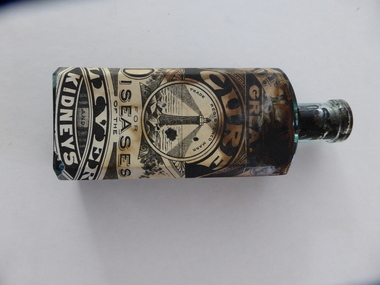
... time of Richard Kennedy or later on the 20th century when the business of R.F.Kennedy and Co., was still operating or it may have come from any local chemist selling Dr Law’s products in the 20th century. The fact that the label on the bottle has an image of a lighthouse on it is a further link with Richard Kennedy who used a lighthouse image as his trademark (albeit a different image).Richard Kennedy came to Warrnambool in the late 19th century and established a retail, wholesale and manufacturing pharmaceutical business in Timor Street. ...time of Richard Kennedy or later on the 20th century when the business of R.F.Kennedy and Co., was still operating or it may have come from any local chemist selling Dr Law’s products in the 20th century. The fact that the label on the bottle has an image of a lighthouse on it is a further link with Richard Kennedy who used a lighthouse image as his trademark (albeit a different image).Richard Kennedy came to Warrnambool in the late 19th century and established a retail, wholesale and manufacturing pharmaceutical business in Timor Street. ...This is a bottle that contained Dr Law’s medicine for diseases of the liver and kidney. In the late 1800s Richard Kennedy, the Warrnambool chemist, had the sole rights to produce Dr. Law’s medicines in his manufacturing business. Dr Law, from Boston, U.S.A., was a prolific and popular producer of patent medicines. This bottle may have been produced during the time of Richard Kennedy or later on the 20th century when the business of R.F.Kennedy and Co., was still operating or it may have come from any local chemist selling Dr Law’s products in the 20th century. The fact that the label on the bottle has an image of a lighthouse on it is a further link with Richard Kennedy who used a lighthouse image as his trademark (albeit a different image).Richard Kennedy came to Warrnambool in the late 19th century and established a retail, wholesale and manufacturing pharmaceutical business in Timor Street. This business was regarded as one of the largest and finest in Victoria. Richard Kennedy was prominent in community and civic affairs in Warrnambool. This bottle is of interest as a good example of the many patent medicines available in the 19th century. Dr Law’s remedies were sold world-wide. It is also of interest because of its possible link s with the prominent Warrnambool chemist, Richard kennedy. This is a glass bottle with a cork stopper that has been pushed into the neck. The glass was originally clear but it is now very black and stained from the dried liquid that was in the bottle. The label on the front of the bottle, pasted on, has black and white printing with an image of a lighthouse in the middle. The label on the back is pasted on and contains directions for use of the medicine. Both labels are very stained. ‘Dr Law’s Great Cure for Diseases of the Liver and Kidneys’dr law of boston, history of warrnambool, richard kennedy, chemists of warrnambool -
 Warrnambool and District Historical Society Inc.
Photograph - Framed Wedding Photograph, Alex Wilkins, Circa 1940’s
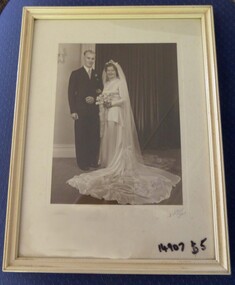
... Warrnambool photographer, Alex Wilkins. Alex was popular as a photographer and produced a large volume of work. This photograph was purchased by Les and Elizabeth O'Callaghan at a cost of $5. It is thought to be members of the Cassady family. The photo depicts styles of wedding dress popular in the 1940’s. Alex Wilkins commenced his photographic career working for a local chemist and worked for some time from a studio at 151 Fairy Street ...An unknown couple on their wedding day, photographed by Warrnambool photographer, Alex Wilkins. Alex was popular as a photographer and produced a large volume of work. This photograph was purchased by Les and Elizabeth O'Callaghan at a cost of $5. It is thought to be members of the Cassady family.The photo depicts styles of wedding dress popular in the 1940’s. Alex Wilkins commenced his photographic career working for a local chemist and worked for some time from a studio at 151 Fairy Street Warrnambool and in 1938 purchased the studio of Arthur Jordan and moved to Liebig Street. The business was sold in 1961 and for some time after he operated in a small studio and worked shooting film for local TV channels. Alex died in 1972 after a short illness. Sepia wedding photograph depicting bride and groom, in cream wooden frame with cream mount. A.Wilkins, W’Bool.warrnambool, warrnambool wedding, alex wilkins -
 Warrnambool and District Historical Society Inc.
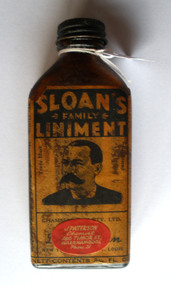
Domestic object - Sloan's family liniment bottle with Sticker Paterson Chemist, Warrnambool, Manufactured in late 1800s and early 20th century
... While the bottle of Sloan's liniment has historical value, the link with Warrnambool lies in the chemist's label of J Paterson who operated a business at 186 Timor Street, Warrnambool around the 1930s. warrnambool chemists timor st sloan's liniment paterson j Front: SLOAN'S/FAMILY/LINIMENT/(text obscured)/NEW YORK (obscured) ST LOUIS/NETT CONTENTS 2½ FL. ...Sloan's liniment was used in the late19th and early to mid 20th century. Originally used for horses but later advertised as good for Man and Beast.While the bottle of Sloan's liniment has historical value, the link with Warrnambool lies in the chemist's label of J Paterson who operated a business at 186 Timor Street, Warrnambool around the 1930s.Brown glass bottle with black metal screw-top lid. Bottle has a short neck. The indented rear has the maker's name imprinted. The black and white printed paper label has a picture of a man's head and wraps across the front and sides and has a red sticker with the Warrnambool retailer's name..Front: SLOAN'S/FAMILY/LINIMENT/(text obscured)/NEW YORK (obscured) ST LOUIS/NETT CONTENTS 2½ FL. OZS Left side: INSTRUCTIONS-Massage (obscured) gently with/fingers. Then (obscured) liberally with a soft/ flannel cloth or a piece of absorbent cotton. If skin is tender,/do not use./ CAUTION:-COMBUSTIBLE MIXTURE./Do not Use near Fire or Flame./Regd Vic 1173 Right side: EXTERNALLY: Recommended by us in the treatment of Muscu-/lar Congestion and Muscular Pain due to the exposure and fatigue or/of rheumatic origin, Lumbago, S--- and sc--- and s--- of/Muscles and Tendons, Neuralgia, (obscured), Stiff Neck, Backache, Bruises, Chilblains, Mosquito Bites and/stings of major non-poisonous insects. An Excellent Counter (obscured) Back: THIS BOTTLE ALWAYS REMAINS/ THE PROPERTY OF/CHAMBERLAIN'S PTY LTD/SYDNEY warrnambool, chemists, timor st, sloan's liniment, paterson j -
 Warrnambool and District Historical Society Inc.
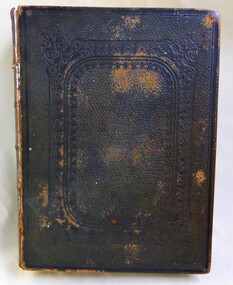
Book - The Holy Bible, 1860
... chemist from 1848 to 1876 on the corner of Sackville and Bank Streets Port Fairy . In January 1878 he opened a pharmacy in partnership with Warrell in the Apothecaries Hall in Timor Street. Rev. Swinburn was an assistant at St Paul’s Church in 1880. St Paul’s Church, Allansford opened in 1882 and this donation would have been one of the earliest donations to the congregation. allansford st paul's allansford j h atkinson rev swinburn bible 1881 Presented to the Church of England Allansford by J.H Atkinson, Warrnambool, September 1881. ...A King James version of the Bible presented to the Allansford Congregation in 1881 by J H Atkinson who was a chemist from 1848 to 1876 on the corner of Sackville and Bank Streets Port Fairy . In January 1878 he opened a pharmacy in partnership with Warrell in the Apothecaries Hall in Timor Street. Rev. Swinburn was an assistant at St Paul’s Church in 1880.St Paul’s Church, Allansford opened in 1882 and this donation would have been one of the earliest donations to the congregation.Olive green/ brown leather cover with imprinted rectangular pattern on front and back covers. Spine has Holy Bible in gold lettering. It has dark blue ribbon page marker and gold on edges of pages.Presented to the Church of England Allansford by J.H Atkinson, Warrnambool, September 1881. Also letter from Mr Atkinson to Rev. Swinburn.allansford, st paul's allansford, j h atkinson, rev swinburn, bible, 1881 -
 Warrnambool and District Historical Society Inc.
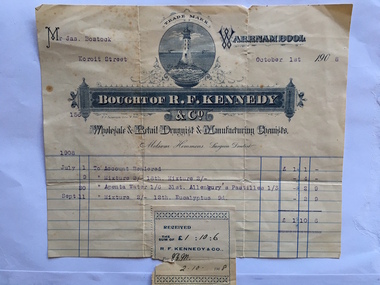
Docket, R F Kennedy, 1908
... Warrnambool area. The chemist shop of R.F. Kennedy was established in Warrnambool in 1880 and quickly became one of the leading businesses in the town. Kennedy was a wholesale, retail and manufacturing chemist in Timor Street (the building still exists) and a prominent community member and a Town Councillor. ...Warrnambool area. The chemist shop of R.F. Kennedy was established in Warrnambool in 1880 and quickly became one of the leading businesses in the town. Kennedy was a wholesale, retail and manufacturing chemist in Timor Street (the building still exists) and a prominent community member and a Town Councillor. ...James Bostock, a grazier, was a member of the Bostock family, prominent Warrnambool pastoralists and businessmen who had come from Tasmania in the mid 1840s and settled in the Warrnambool area. The chemist shop of R.F. Kennedy was established in Warrnambool in 1880 and quickly became one of the leading businesses in the town. Kennedy was a wholesale, retail and manufacturing chemist in Timor Street (the building still exists) and a prominent community member and a Town Councillor. He died in 1903 but the business continued to use the name of R. F. Kennedy and Co. until 1924. This docket is of some interest as it contains the names of the R.F. Kennedy chemist shop and James Bostock , a prominent Warrnambool resident. This is a cream-coloured docket issued by R.F.Kennedy & Co. to James Bostock in 1908. The printing shows a variety of styles in blue and white and the page has blue printed lines. The famous Kennedy symbol of a lighthouse is printed prominently and the name of Kennedy is contained in an ornamental banner. The sales information is printed in blue type and there is a Kennedy stamp attached to the bottom of the docket and this is slightly overlapping the page. There is a small tear in the stamp and at the top of the docket. ‘Mr Jas. Bostock, Koroit Street, October 1st 1908, July 1st , To Account Rendered, £1/1/-, July 9, Mixture 2/-, 18th, Mixture, 2/-, 4/-, July 30, Apenta Water, 1/6, 31st Allenbury’s pastilles, 1/3, 2/9, Sept. 11, Mixture 2/-, 12th, Eucalyptus, 9d., 2/9, Total, £1/10/6’r.f. kennedy, james bostock, r f kennedy chemist, warrnambool history -
 Warrnambool and District Historical Society Inc.
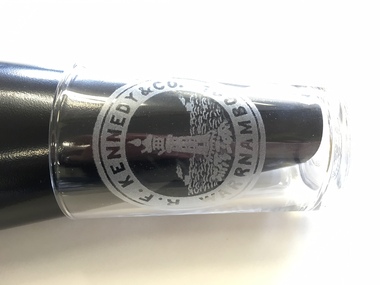
Glass, Glass Tumbler (Kennedy)
... Warrnambool chemist R.F. Kennedy because he was a prominent chemist and because his chemist bottles and jars have become so collectable today. Richard Frank Kennedy came to Warrnambool in the 1880s as a retail, wholesale and manufacturing chemist and his premises in Timor Street became one of the best furnished and stocked pharmacy businesses in Victoria. ...Warrnambool chemist R.F. Kennedy because he was a prominent chemist and because his chemist bottles and jars have become so collectable today. Richard Frank Kennedy came to Warrnambool in the 1880s as a retail, wholesale and manufacturing chemist and his premises in Timor Street became one of the best furnished and stocked pharmacy businesses in Victoria. ...This glass has been produced as a memento of the South West Bottle & Collectable Club Annual Display and Sale of 2016. The club has reproduced the logo of the 19th century Warrnambool chemist R.F. Kennedy because he was a prominent chemist and because his chemist bottles and jars have become so collectable today. Richard Frank Kennedy came to Warrnambool in the 1880s as a retail, wholesale and manufacturing chemist and his premises in Timor Street became one of the best furnished and stocked pharmacy businesses in Victoria. The lighthouse logo used on his bottles, labels, jars and advertising material was a well-known one throughout Victoria.Although this glass is not an original R.F. Kennedy item it is of interest as it shows how widely known Kennedy’s pharmacy business was and how he is still remembered today.This is a heavy-weight glass tumbler etched with the wording ‘South West Bottle & Collectable Club Inc’ and the image of an R. F. Kennedy lighthouse symbol. The glass has a stamp on the bottom with the maker’s name.‘R.F. Kennedy, Warrnambool’ ‘South West Bottle & Collectable Club Inc’ ‘Duralex 12, Made in France’. south west bottle & collectable club inc., r.f.kennedy, warrnambool -
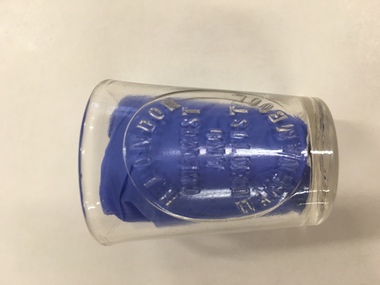 Warrnambool and District Historical Society Inc.
Glass, Medicine H London Chemist, Early 20th century
... chemist and dentist, came to Warrnambool in 1891, occupying the Nettleton building at 95 Liebig Street. In 1896 he built new premises at the corner of Liebig and Koroit Streets and in 1905 his was the first shop in Warrnambool to have electric lighting. He was succeeded in the early 1920s by the chemists, Dougall and Easton. This glass is of considerable significance because it came from the pharmacy of Harry London, an important chemist in Warrnambool at the end of the 19th century and the beginning of the 20th century. It also shows the custom of the time ...This is a small medicine measuring glass supplied by the Warrnambool pharmacy of Harry London. Born in England, Harry London, a chemist and dentist, came to Warrnambool in 1891, occupying the Nettleton building at 95 Liebig Street. In 1896 he built new premises at the corner of Liebig and Koroit Streets and in 1905 his was the first shop in Warrnambool to have electric lighting. He was succeeded in the early 1920s by the chemists, Dougall and Easton. This glass is of considerable significance because it came from the pharmacy of Harry London, an important chemist in Warrnambool at the end of the 19th century and the beginning of the 20th century. It also shows the custom of the time of chemists supplying to customers small glasses for measuring out medicine. This is a small thick glass tumbler used for measuring medicine. It is etched with the measurements of teaspoon, dessertspoon and tablespoon and the name of the supplier, H. London, a Warrnambool chemist and dentist. It has the initials of the maker on the base. Etched on side in oval shape: ‘H. London, Chemist and Dentist, Warrnambool’ Etched on side: ……. Tea ……. Dessert ……. Table Etched on base: ‘W.T. Co., A J. U.S.A.’ harry london, warrnambool, dougall and easton, chemists -
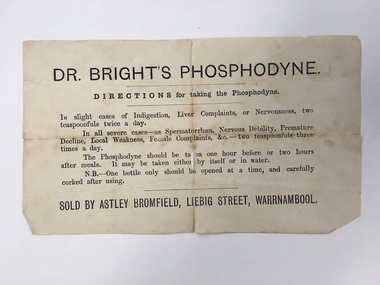 Warrnambool and District Historical Society Inc.
Document, Docket Dr Bright's Phosphodyne, Mid 19th century
... chemists throughout Australia in the 19th century and in this case was supplied by the Warrnambool chemist, James Astley Bromfield. He was a significant person in Warrnambool’s history as he produced the 1856 map of the Warrnambool district showing all the original landholders, a seminal resource for historians today. Bromfield had a chemist shop in Warrnambool from 1854 to the late 1880s, initially in Timor Street...chemists throughout Australia in the 19th century and in this case was supplied by the Warrnambool chemist, James Astley Bromfield. He was a significant person in Warrnambool’s history as he produced the 1856 map of the Warrnambool district showing all the original landholders, a seminal resource for historians today. Bromfield had a chemist shop in Warrnambool from 1854 to the late 1880s, initially in Timor Street ...This label accompanied a bottle of Dr Bright’s Phosphodyne. It was a form of medicine also known as ozonic oxygen which was developed and patented in 1869 by Dr Charles Bright, a 19th century Resident Surgeon at St Mary’s Hospital London, The medicine claimed to ease ‘indigestion, liver complaints, nervous debility, female complaints, premature decline, local weakness and spermatorrhea’. It was widely sold by chemists throughout Australia in the 19th century and in this case was supplied by the Warrnambool chemist, James Astley Bromfield. He was a significant person in Warrnambool’s history as he produced the 1856 map of the Warrnambool district showing all the original landholders, a seminal resource for historians today. Bromfield had a chemist shop in Warrnambool from 1854 to the late 1880s, initially in Timor Street and then in Liebig Street (number 80 and later number 78). Bromfield was very active in local community affairs. This label is of considerable interest as it shows the use in the 19th century of medicine that today would be labelled ‘quack’. It is of particular interest as it was supplied by James Astley Bromfield’s chemist shop and he is an important early identity in Warrnambool, involved in many activities in the town. He was a Justice of the Peace, a Trustee of the Savings Bank, Chairman of the Western Steam Navigation Company, a Director of the Gasworks and on the committees of the Harbour Committee, the Fire Brigade and the Anglers Protection Society. He was a Warrnambool Councillor (1858-60; 1865-1870) and a Shire Councillor (1875-1883). This is a sheet of paper that accompanied a bottle of Dr Brights’ Phosphodyne medicine. It is buff-coloured with black printed material. It is in two pieces and dog-eared at the edges.warrnambool, dr bright's phosphodyne, james bromfield chemist, warrnambool chemists -
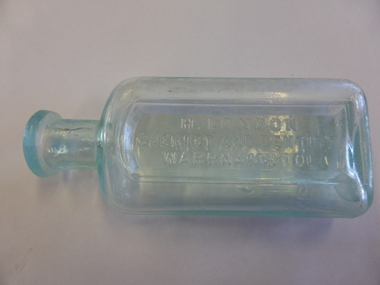 Warrnambool and District Historical Society Inc.
Bottle, H London Chemist
... chemist and surgeon dentist who came to Warrnambool in 1891 and bought out the Liebig Street business of the late William Nettleton. In 1896 London erected a new chemist shop at the corner of Koroit and Liebig Streets. This shop was the first in Warrnambool to have an electric light installation (1905). This bottle is of considerable significance as it came from the chemist’s shop of Harry London, a prominent chemist in Warrnambool at the end of the 19th and the beginning of the 20th centuries. It also shows the type of medicine bottle prevalent at the time ...Harry London, born in England, was a chemist and surgeon dentist who came to Warrnambool in 1891 and bought out the Liebig Street business of the late William Nettleton. In 1896 London erected a new chemist shop at the corner of Koroit and Liebig Streets. This shop was the first in Warrnambool to have an electric light installation (1905). This bottle is of considerable significance as it came from the chemist’s shop of Harry London, a prominent chemist in Warrnambool at the end of the 19th and the beginning of the 20th centuries. It also shows the type of medicine bottle prevalent at the time. Glass is a durable item and bottles such as these would have been dumped in tips or buried with other rubbish The bottle was dug up in Warrnambool so it makes it an archeological find and it also shows the possibility at any time of finding items such as this in old buildings and in garden plots and paddocks etc. This is a small glass bottle used for patent or prescription medicine and issued by a chemist. It has no stopper. Side of bottle – ‘H. London, Chemist and Dentist, Warrnambool’ Base: ‘W.T. Co’, ‘Pat. Jan 5, 1892’ harry london, warrnambool chemist -
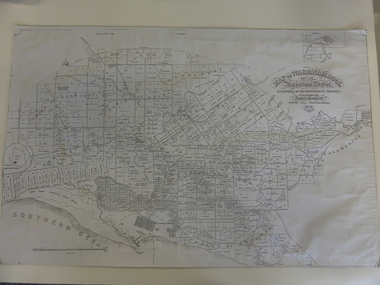 Warrnambool and District Historical Society Inc.
Map, Warrnambool 1859, Late 20th century (copy)
... Warrnambool. He established a chemist’s shop in 1854, initially situated in Timor Street. ...Warrnambool. He established a chemist’s shop in 1854, initially situated in Timor Street. ...This is a copy of Bromfield’s 1856 map of Warrnambool and district. James Astley Bromfield was a pioneer settler in Warrnambool. He established a chemist’s shop in 1854, initially situated in Timor Street. He moved his shop to Liebig Street with a new building erected in 1875. Bromfield was a prominent resident of Warrnambool (Shire Councillor, Fire Brigade member, Cricket Club member, associated with horse racing etc). He was interested in preserving the history of Warrnambool and this map he produced in 1856 was an example of this interest.This is a copy only but this 1856 map is of prime importance as it contains the names of the original landowners of land in north Warrnambool and the surrounding district. It is a frequently-used resource by historians.This is a copy of a map of Warrnambool and its agricultural district published by James Astley Bromfield in 1856. The map is mounted on cardboard and has black printing on a white background. ‘Map of Warrnambool and its Agricultural District according to the Government Survey’s published by Astley Bromfield, Medical Hall, Warrnambool 1856, James Ferguson, Lithr., Melbne.’bromfield’s 1856, map, warrnambool and district -
 Warrnambool and District Historical Society Inc.
Bottle, R F Kennedy & Co Chemist, Early 20th century
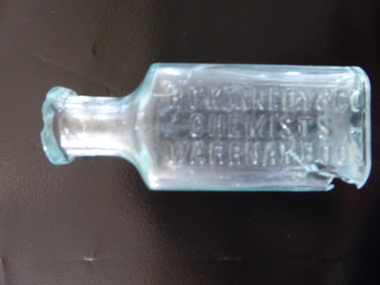
... Richard Frank Kennedy (1826-1903) was born in England and came to Warrnambool in 1883 where he quickly established a large pharmacy business in Timor Street. In 1891 he built a mew shop which was described as one of the most elegant and best-stocked chemist’s shops in Victoria. ...Richard Frank Kennedy (1826-1903) was born in England and came to Warrnambool in 1883 where he quickly established a large pharmacy business in Timor Street. In 1891 he built a mew shop which was described as one of the most elegant and best-stocked chemist’s shops in Victoria. ...This bottle came from the pharmacy business of R.F.Kennedy and Co of Warrnambool. Richard Frank Kennedy (1826-1903) was born in England and came to Warrnambool in 1883 where he quickly established a large pharmacy business in Timor Street. In 1891 he built a mew shop which was described as one of the most elegant and best-stocked chemist’s shops in Victoria. He was a retail, wholesale and manufacturing chemist with large workshops at the back of his building. Kennedy was active in community affairs in Warrnambool and a foundation member of the Warrnambool Bowls Club as the first Vice-President and an early President. The business continued after Kennedy’s death, trading as ‘R.F. Kennedy and Co.’ Richard Frank Kennedy was one of the most significant businessmen in Warrnambool in the late 19th century. The products of his chemist shop and factory were distributed all over Victoria and beyond. The bottle, although damaged, is an example of the smaller-size bottle in use at the shop he founded. This is a small, clear glass bottle used at the pharmacy of R.F. Kennedy and Co, of Warrnambool. It has a rectangular body with curved edges, a circular-shaped neck and a moulded circular opening. There is no stopper. The top rim is chipped and the bottom of the bottle near the base is cracked with parts missing. The name of the pharmacy is embossed on the side of the bottle. ‘R.F. Kennedy & Co. Chemists Warrnambool’ r.f. kennedy, chemist, chemists in warrnambool, history of warrnambool -
 Warrnambool and District Historical Society Inc.
Bottle, R.F Kennedy Chemist, Early 20th century
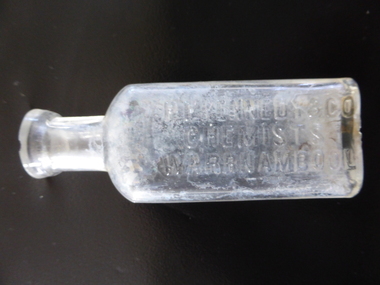
... Warrnambool in the early 1880s, where he established a pharmacy business in Timor Street. This was a retail, wholesale and manufacturing business. In 1891 Kennedy erected a new building which was described as one of the most elegant and best-stocked chemist’s shops in Victoria. ...Warrnambool in the early 1880s, where he established a pharmacy business in Timor Street. This was a retail, wholesale and manufacturing business. In 1891 Kennedy erected a new building which was described as one of the most elegant and best-stocked chemist’s shops in Victoria. ...This bottle was used in the pharmacy of R.F.Kennedy & Co. of Warrnambool. Richard Frank Kennedy (1826-1903) was born in England and came to Warrnambool in the early 1880s, where he established a pharmacy business in Timor Street. This was a retail, wholesale and manufacturing business. In 1891 Kennedy erected a new building which was described as one of the most elegant and best-stocked chemist’s shops in Victoria. Kennedy was active in Warrnambool community affairs and was a foundation member of the Warrnambool Bowls Club, being its first Vice-President and an early President. The pharmacy business continued after Kennedy’s death, trading as R.F.Kennedy and Co. Richard Frank Kennedy was one of the most significant businessmen in Warrnambool in the late 19th century. The products of his chemist shop and factory were distributed all over Victoria and beyond. This bottle is retained as an example of the smaller-sized bottles used in the Kennedy pharmacy. This is a clear glass bottle with a rectangular-shaped body with rounded edges, a circular-shaped neck and a moulded top and opening. The top is slightly chipped. There is no stopper. The bottle has the chemist’s name on the side. The inside of the bottle is discoloured from the original contents. ‘3 iv’ ‘R.F.Kennedy & Co. Chemists Warrnambool’ r.f.kennedy, warrnambool chemist, chemists in warrnambool, history of warrnambool -
 Warrnambool and District Historical Society Inc.
Bottle, H London Chemist & Dentist, Early 20th century
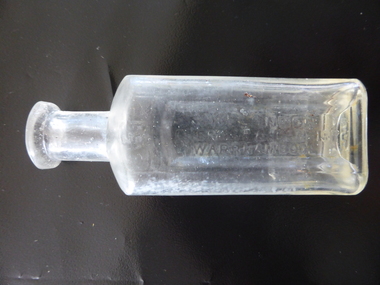
... Warrnambool. Born in England, Harry London arrived in Victoria in 1883 and worked as a chemist in Ballarat and Euroa. In 1891 he went back to England where he studied dentistry. In 1891 he came to Warrnambool where he bought the pharmacy business of the late William Nettleton. He occupied the Nettleton building in Liebig Street (95 Liebig Street today) until 1896 when he erected new premises at the south west corner of Liebig and Koroit Streets. At that time...Warrnambool. Born in England, Harry London arrived in Victoria in 1883 and worked as a chemist in Ballarat and Euroa. In 1891 he went back to England where he studied dentistry. In 1891 he came to Warrnambool where he bought the pharmacy business of the late William Nettleton. He occupied the Nettleton building in Liebig Street (95 Liebig Street today) until 1896 when he erected new premises at the south west corner of Liebig and Koroit Streets. At that time ...This bottle was used in the pharmacy of Harry London of Warrnambool. Born in England, Harry London arrived in Victoria in 1883 and worked as a chemist in Ballarat and Euroa. In 1891 he went back to England where he studied dentistry. In 1891 he came to Warrnambool where he bought the pharmacy business of the late William Nettleton. He occupied the Nettleton building in Liebig Street (95 Liebig Street today) until 1896 when he erected new premises at the south west corner of Liebig and Koroit Streets. At that time he was the only chemist in Warrnambool using a Pasteur filter for water to make up his medicines. In his dentistry business he used gas, chloroform and cocaine as anaesthetics. The making of dentures was his speciality. In 1904 he was the owner of the only set of Rontgen X Ray apparatus in Warrnambool. In 1905 his shop was the first in Warrnambool to have electric lighting installed. This item is a valuable one as it has local provenance. It came from the pharmacy business of Harry London, a prominent Warrnambool chemist in the late 19th and early 20th centuries. Harry London mementoes such as this are comparatively rare. This is a chemist’s glass bottle with a rectangular body, a circular neck and a rounded top. There is no stopper and the bottle is empty. The top has a small chip. The name of the chemist is embossed on the front of the bottle in an indented section of the glass. The bottle is slightly scratched and discoloured from the original contents. On front of bottle: ‘H. London Chemist & Dentist Warrnambool’ On base: ‘M’ On the body of the bottle: ‘31’ harry london, chemist, warrnambool chemists, history of warrnambool -
 Warrnambool and District Historical Society Inc.
Bottle, R F Kennedy Chemist
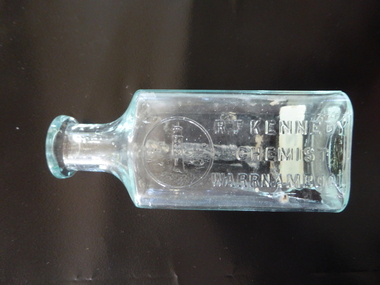
... Warrnambool in the early 1880s. He established a large pharmacy in Timor Street with a retail, wholesale and manufacturing business. In 1891 he erected a new building which was described as one of the most elegant and best-stocked chemist shops in Victoria. ...Warrnambool in the early 1880s. He established a large pharmacy in Timor Street with a retail, wholesale and manufacturing business. In 1891 he erected a new building which was described as one of the most elegant and best-stocked chemist shops in Victoria. ...This bottle was used in the pharmacy of R. F. Kennedy of Warrnambool. It has on it the well-known Kennedy symbol of a lighthouse on a rocky cliff on a coastline with ships in the distance. Richard Frank Kennedy (1826-1903) was born in England and came to Warrnambool in the early 1880s. He established a large pharmacy in Timor Street with a retail, wholesale and manufacturing business. In 1891 he erected a new building which was described as one of the most elegant and best-stocked chemist shops in Victoria. Kennedy was active in Warrnambool community affairs and was a foundation member of the Warrnambool Bowls Club, being its first Vice-President and an early President. The business continued after Kennedy’s death, trading as ‘R.F.Kennedy and Co.’ Richard Frank Kennedy was one of the most significant businessmen in Warrnambool in the late 19th century. The products of his chemist shop and factory were distributed all over Victoria and beyond. This item is a very good example of a Kennedy bottle. This is a small clear glass bottle used in the pharmacy of R.F. Kennedy. It has a rectangular-shaped body with rounded edges, a circular-shaped neck and a circular top moulded over the neck. There is no stopper. The name and logo of the chemist are embossed on the side of the bottle and the name of the maker is on the base. ‘R.F. Kennedy Chemist Warrnambool’ ‘W.T & Co. U.S.A.’ ‘Pat. Dec. 11 1894’ r.f. kennedy, warrnambool chemist, chemists in warrnambool, history of warrnambool -
 Warrnambool and District Historical Society Inc.
Bottle, R F Kennedy & Son, c. 1900
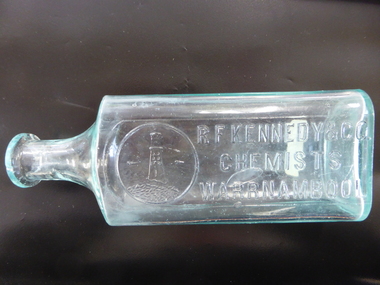
... Richard Frank Kennedy (1826-1903) was born in England and came to Warrnambool in the early 1880s where he quickly established a large pharmacy business in Timor Street. In 1891 he built new premises with the shop described as one of the most elegant and best-stocked chemist’s shops in Victoria. ...Richard Frank Kennedy (1826-1903) was born in England and came to Warrnambool in the early 1880s where he quickly established a large pharmacy business in Timor Street. In 1891 he built new premises with the shop described as one of the most elegant and best-stocked chemist’s shops in Victoria. ...This bottle was made by Whitall Tatum and Co. of U.S.A. It was used in the pharmacy business of R. F. Kennedy and Co. of Warrnambool and it has the well-known Kennedy symbol of a lighthouse on a rocky face on a coastline with ships in the distance. Richard Frank Kennedy (1826-1903) was born in England and came to Warrnambool in the early 1880s where he quickly established a large pharmacy business in Timor Street. In 1891 he built new premises with the shop described as one of the most elegant and best-stocked chemist’s shops in Victoria. He was a retail, wholesale and manufacturing chemist. Kennedy was active in community affairs in Warrnambool and was a foundation member of the Warrnambool Bowls Club, being the first Vice-President and an early President. The pharmacy business continued after Kennedy’s death, trading as ‘R.F. Kennedy and Co’. Richard Frank Kennedy was one of the most significant businessmen in Warrnambool in the late 19th century. The products of his chemist shop and factory were distributed all over Victoria and beyond. This bottle is a very good example of a Kennedy chemist bottle. This is a clear glass bottle used in the pharmacy of R. F. Kennedy and Co of Warrnambool. The bottle has a rectangular-shaped body with rounded edges, a circular shaped neck and a moulded top that extends over the neck. The top has a piece missing and there is no stopper. The chemist’s logo and name are embossed on the side of the bottle and the maker’s name is on the base of the bottle. ‘R.F.Kennedy & Co, Chemists Warrnambool’ ‘W.T. & Co, U.S.A.’ ‘Pat. Dec 11 1894’ r.f.kennedy,, chemists in warrnambool -
 Warrnambool and District Historical Society Inc.
Bottle, R F Kennedy & Son Chermist, c. 1900
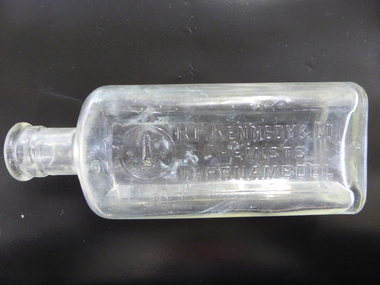
... Richard Frank Kennedy (1826-1903) was born in England and in the early 1880s came to Warrnambool where he quickly established a large pharmacy business in Timor Street. In 1891 he erected a new building which was described as one of the most elegant and best-stocked chemist shops in Victoria. ...Richard Frank Kennedy (1826-1903) was born in England and in the early 1880s came to Warrnambool where he quickly established a large pharmacy business in Timor Street. In 1891 he erected a new building which was described as one of the most elegant and best-stocked chemist shops in Victoria. ...This bottle came from the pharmacy business of R. F. Kennedy and Co. of Warrnambool. Richard Frank Kennedy (1826-1903) was born in England and in the early 1880s came to Warrnambool where he quickly established a large pharmacy business in Timor Street. In 1891 he erected a new building which was described as one of the most elegant and best-stocked chemist shops in Victoria. He was a retail, wholesale and manufacturing chemist. Kennedy was active in community affairs and was a foundation member of the Warrnambool Bowls Club, being its first Vice-President and an early President. His pharmacy business continued on after his death, trading as ‘R.F. Kennedy and Co.’ Richard Frank Kennedy was one of the most significant businessmen in Warrnambool in the late 19th century. The products of his chemist shop and factory were distributed all over Victoria and beyond. This bottle, which has on it the well-known Kennedy logo of a lighthouse on a rocky cliff on a coastline with ships in the distance, is a good example of a Kennedy bottle. This is a clear glass bottle with a rectangular-shaped body with rounded edges, a circular-shaped neck and a moulded top and opening. There is no stopper. The chemist’s logo and name are on the side of the bottle and the maker’s name is on the base but this is not decipherable. The inside of the bottle is slightly discoloured. R.F. Kennedy & Co. Chemists Warrnambool’ r.f. kennedy,, chemists in warrnambool, history of warrnambool.
