
Showing 44 items matching "colac district"
-
 Otway Districts Historical Society
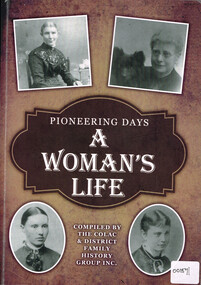
Book, Colac & District Family History Group Inc, Pioneering days: a woman's life, 2013
... This is a collection of stories and newspaper clippings that relate to the women of the Colac district during the 19th and early 20th centuries. ...Pioneering days: a woman's life. Colac & District Family History Group Inc (comp.). 1st ed. ...Colac & District Family History Group Inc....This is a collection of stories and newspaper clippings that relate to the women of the Colac district during the 19th and early 20th centuries. ...This is a collection of stories and newspaper clippings that relate to the women of the Colac district during the 19th and early 20th centuries. Over 300 women, some with a lot of information, others only covering a few lines, have been recorded. Many often would have had overwhelming issues to face in their day-to-day lives, with loneliness, lack of close communication and medical help, bad or unmade roads and harsh living conditions, ensuring that their children were fed. Pioneering days: a woman's life. Colac & District Family History Group Inc (comp.). 1st ed. Colac (Vic); Colac & District Family History Group Inc; 2013. vi, 284 p.; illus. ISBN 978 0975 0679 1 8 Soft cover.colac; otways; families; articles; -
 Otway Districts Historical Society
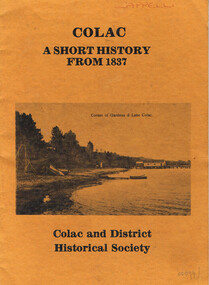
Book, Colac and District Historical Society, Colac. A short history from 1837, After 1981
... Colac; Time Line; history; pioneers; political representatives; Colac And District Historical Society....This is a time line of Colac, Victoria, giving a short history of the area, some early pioneers of the district, and a brief political history of the representatives of Colac....A short history from 1837. Colac and District Historical Society. Colac and District Historical Society; Colac (Vic); nd. 24 p.; illus. ...Colac and District Historical Society...Colac and District Historical Society. Colac and District Historical Society; Colac (Vic); nd. 24 p.; illus. ...This is a time line of Colac, Victoria, giving a short history of the area, some early pioneers of the district, and a brief political history of the representatives of Colac.Colac. A short history from 1837. Colac and District Historical Society. Colac and District Historical Society; Colac (Vic); nd. 24 p.; illus. Soft cover. colac; time line; history; pioneers; political representatives; colac and district historical society. -
 Otway Districts Historical Society
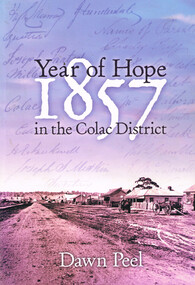
Book, Year of hope: 1857 in the Colac District, 2006
... Year of hope: 1857 in the Colac District....The land, the settlers, and the social institutions which found or altered the character of the small settlement of Colac, Victoria, and its district....Year of hope: 1857 in the Colac district. Dawn Peel. 1st ed. Colac (Vic); Dawn Peel; 2006. x, 212 p.; illus, bibliography. ...ISBN 0 646 46270 9 Year of hope: 1857 in the Colac District. Book ...The land, the settlers, and the social institutions which found or altered the character of the small settlement of Colac, Victoria, and its district.Year of hope: 1857 in the Colac district. Dawn Peel. 1st ed. Colac (Vic); Dawn Peel; 2006. x, 212 p.; illus, bibliography. Soft cover. ISBN 0 646 46270 9For Irene - a fellow historian. Dawn Peel. 6/10/06.1857; dawn peel; land; politics; aborigines; religion; history; social institutions; -
 Warrnambool and District Historical Society Inc.
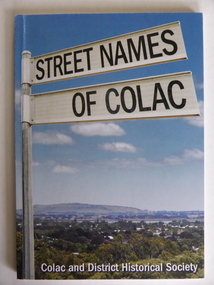
Book, Street Names of Colac, 2008
... ...Colac and District Historical Society...The book was commenced by Ian McIntosh in the 1970s and in 2005 the Colac and District Historical Society took on the project again with the major editors being Ida and Andrew McIntosh. ...The cover has a blue background and features a colour photograph (mainly in green, blue and white tonings) of a panorama of the Colac district. The photograph extends over the front and back covers. ...Front Cover: ‘Street Names of Colac’ ‘Colac and District Historical Society’ ...History of Colac Colac and District Historical Society Street Names of Colac Ian McIntosh Front Cover: ‘Street Names of Colac’ ‘Colac and District Historical Society’ This is a soft cover book of 60 pages. ...This is a book giving information on the streets of Colac and the origins of the names. Colac is a city 150 kilometres south west of Melbourne and is a commercial centre for a major agricultural area. It is situated near the 3rd largest volcanic plain in the world and European settlement began in 1837. The book was commenced by Ian McIntosh in the 1970s and in 2005 the Colac and District Historical Society took on the project again with the major editors being Ida and Andrew McIntosh. This book is of interest, particularly those in the Western District of Victoria, as it contains information on Colac streets, many of which were named after pioneers of the district. The book will be useful for research. This is a soft cover book of 60 pages. The cover has a blue background and features a colour photograph (mainly in green, blue and white tonings) of a panorama of the Colac district. The photograph extends over the front and back covers. The book contains the names and name origins of Colac streets in alphabetical order and many black and white photographs. The pages have a glued binding. Front Cover: ‘Street Names of Colac’ ‘Colac and District Historical Society’ history of colac, colac and district historical society, street names of colac, ian mcintosh -
 Otway Districts Historical Society
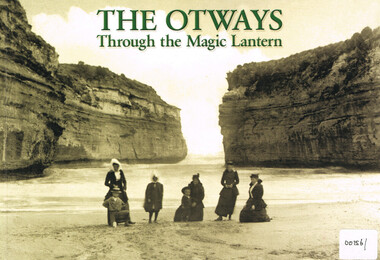
Book, Colac and District Historical Society, The Otways through the magic lantern, 2013
... Colac (Vic); Colac and District Historical Society; 2013. iv, 118 p.; illus., map. ...Colac and District Historical Society...Colac (Vic); Colac and District Historical Society; 2013. iv, 118 p.; illus., map. ...George Sydenham was appointed as Colac Shire Valuer and rate collector in 1890 which threw him into direct contact with the Otway people at a time when the first selectors were suffering badly. He would have heard their frustrations and grievances in great detail. When Secretary to the Colac Committee for the Railway Extension to Beech Forest he used his magic lantern slide shows from 1896 to support his case for a railway, by lauding the place and its potential, both for settlement and for timber production.The Otways through the magic lantern: commentary and glass slides of George Sydenham - lecture held in 1896. George Francis Sydenham. 1st ed. Colac (Vic); Colac and District Historical Society; 2013. iv, 118 p.; illus., map. ISBN 9780 6469 122 02 Soft cover.colac: otway ranges; history; coasts; -
 National Wool Museum
Ribbon
... ...Colac and District Pastoral and Agricultural Society...COLAC & DISTRICT P. & A. SOCIETY ANNUAL SHOW Best UTILITY PIGEON...Agricultural shows Colac and District Pastoral and Agricultural Society Colac Victoria COLAC & DISTRICT P. & A. ...Awarded at Agricultural show.COLAC & DISTRICT P. & A. SOCIETY ANNUAL SHOW Best UTILITY PIGEONagricultural shows, colac and district pastoral and agricultural society, colac, victoria -
National Wool Museum
Ribbon
... ...Colac and District Pastoral and Agricultural Society...COLAC & DISTRICT P. & A. SOCIETY ANNUAL SHOW 1968 Best UTILITY PIGEON...Agricultural shows Colac and District Pastoral and Agricultural Society Colac Victoria COLAC & DISTRICT P. & A. ...Awarded at Agricultural show.COLAC & DISTRICT P. & A. SOCIETY ANNUAL SHOW 1968 Best UTILITY PIGEONagricultural shows, colac and district pastoral and agricultural society, colac, victoria -
 Otway Districts Historical Society
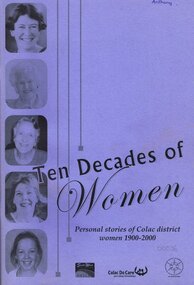
Book, Colac Herald Press, Ten Decades of Women, 2005
... colac district; women;...Personal stories of Colac district women 1900-2000. Margaret Evans. ...A Women's History Month 2005 project recording the stories of 'ordinary' women born between 1900-2000 from the Colac region in south-west Victoria, Australia. colac district; women; Ten decades of women. Personal stories of Colac district women 1900-2000. ...A Women's History Month 2005 project recording the stories of 'ordinary' women born between 1900-2000 from the Colac region in south-west Victoria, Australia.Ten decades of women. Personal stories of Colac district women 1900-2000. Margaret Evans. Merrill O'Donnell. Kerri Bauer. 1st ed. Colac (Vic); Colac Herald; 2005. iv, 100 p.; illus. Soft cover.colac district; women; -
 Otway Districts Historical Society
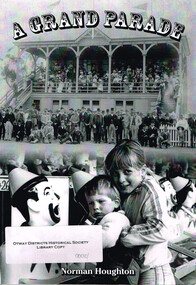
Book, A Grand Parade. Norman Houghton, 2011
... A Grand Parade; Colac and District Pastoral & Agricultural Society; Jubilee history; Norman Houghton; Honour Roll; Colac Show;...A Grand Parade. 150 years of the Colac & District Pastoral & Agricultural Society. ...A Grand Parade; Colac and District Pastoral & Agricultural Society; Jubilee history; Norman Houghton; Honour Roll; Colac Show; A Grand Parade. 150 years of the Colac & District Pastoral & Agricultural Society. ...A Grand Parade. 150 years of the Colac & District Pastoral & Agricultural Society. Commemorative Jubilee history for the years 1859 to 2009. Norman Houghton. ISBN 978-0-9593013-4-2. Soft cover. vi, 102 p.; illus, diagrams.a grand parade; colac and district pastoral & agricultural society; jubilee history; norman houghton; honour roll; colac show; -
 Otway Districts Historical Society
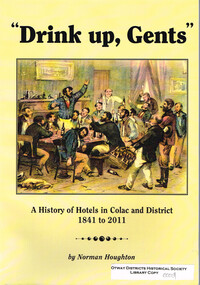
Book, "Drink up, Gents." Norman Houghton, 2011
... "; Hotels in Colac and District; Colac; Apollo Bay; Beech Forest; Lavers Hill; Birregurra; Forrest; Wye River; Wine Shanties; Norman Houghton;...A history of hotels in Colac and District, 1841 to 2011. Norman Houghton. ..."; Hotels in Colac and District; Colac; Apollo Bay; Beech Forest; Lavers Hill; Birregurra; Forrest; Wye River; Wine Shanties; Norman Houghton; "Drink up, Gents". ..."Drink up, Gents". A history of hotels in Colac and District, 1841 to 2011. Norman Houghton. ISBN 978-0-9593013-8-0. Soft cover. iv, 88 p.; illus, maps, diagrams."drink up, gents."; hotels in colac and district; colac; apollo bay; beech forest; lavers hill; birregurra; forrest; wye river; wine shanties; norman houghton; -
 Derrinallum and Lismore Community Association - History Group
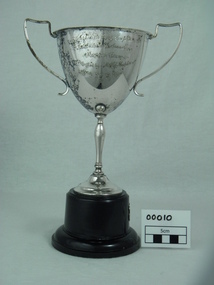
Trophy, 1955
... Silver Trophy won by Lismore Telephonists in a quiz competition for Colac and district in 1955 and 1956 Presented by W.J. ..."Telephonists Quiz Competion/Colac District Annual/Premier Team/Presented by MrW.J.Madden/District Telephone Officer" Inscibed on left hand shield "1955/Lismore" Inscribed on right hand shield " 1956/Lismore"...Silver Trophy won by Lismore Telephonists in a quiz competition for Colac and district in 1955 and 1956 Presented by W.J. ...Silver Trophy won by Lismore Telephonists in a quiz competition for Colac and district in 1955 and 1956 Presented by W.J. Madden District Telephone OfficerTwo handled inscribed pedestal Silver Cup mounted on bakerlite stand .Two inscribed shields on stand won by Lismore Telephonistts Inscription on front of cup. "Telephonists Quiz Competion/Colac District Annual/Premier Team/Presented by MrW.J.Madden/District Telephone Officer" Inscibed on left hand shield "1955/Lismore" Inscribed on right hand shield " 1956/Lismore"trophy, silver cup, telephonists, quiz compertition, lismore victoria -
Otway Districts Historical Society
Minute Book, Beech Forest Butter Factory Minute Book, 18/3/1902 - 6/2/1905, 18 March 1902
... Beech Forest Butter Factory Minutes Book Donated to the Otway District Historical Society Inc. by the Colac & District Family History Group Inc. 1st May 2013...Beech Forest; Butter Factory 1902 1905 minute book Beech Forest Butter Factory Minutes Book Donated to the Otway District Historical Society Inc. by the Colac & District Family History Group Inc. 1st May 2013 A ledger containing the records of the Beech Forest Butter Factory Minute Book from 18 March, 1902, the date the Butter Factory starts, until 6 February, 1905. ...A meeting was held in Gardner's Hall, Beech Forest, for the purposes of considering the advisability of having butter factory established in the Beech Forest district. It was eventually agreed that a butter factory should be established, that provisional directors should be appointed, and upwards of 400 shares were taken up immediately. A second meeting was held on 20 May 1902 of about 40 dairymen. The meeting became a meeting of shareholders resolving to expedite the registration of the company and other preliminary matters. The election of directors then took place. Another meeting of shareholders held on the 15 July 1902 resolved to purchase a property and have the by-laws accepted. An Extraordinary General Meeting was held on 6 August 1902 to confirm all the resolutions passed by the Board.A ledger containing the records of the Beech Forest Butter Factory Minute Book from 18 March, 1902, the date the Butter Factory starts, until 6 February, 1905.Beech Forest Butter Factory Minutes Book Donated to the Otway District Historical Society Inc. by the Colac & District Family History Group Inc. 1st May 2013beech forest; butter, factory, 1902, 1905, minute book, -
 Otway Districts Historical Society
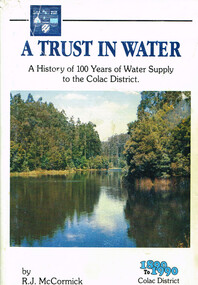
Book, A trust in water, 1990
... A history of 100 years of water supply to the Colac district. R.J. McCormick. 1st ed. np; R.J. ...A history of 100 years of water supply to the Colac district. R.J. McCormick. 1st ed. np; R.J. ...The harnessing of the bountiful water resources of the Otways as a critical element in the urban and agricultural development of the Colac region.A trust in water. A history of 100 years of water supply to the Colac district. R.J. McCormick. 1st ed. np; R.J. McCormick; 1990. xxii, 324 p.; illus, map. Hard cover. ISBN 0 7241968 2 X a trust in water; r.j. mccormick; colac; water resources; sewerage; west gellibrand dam; otways; -
 Otway Districts Historical Society
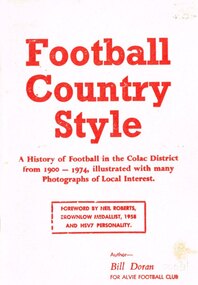
Book, The Printing Place, Football Country Style
... A history of football in the Colac District from 1900 - 1974, illustrated with many photographs of local interest. ...A history of football in the Colac District from 1900 - 1974, illustrated with many photographs of local interest. ...A football history of the teams surrounding Colac, Victoria, and Alvie Football Club in particular.Football country style. A history of football in the Colac District from 1900 - 1974, illustrated with many photographs of local interest. Bill Doran. 1st ed. Alvie (Vic); Alvie Football Club; nd. 120 p.; illus. Soft cover.football; history; colac; alvie;, football; history; colac; alvie; -
 Flagstaff Hill Maritime Museum and Village
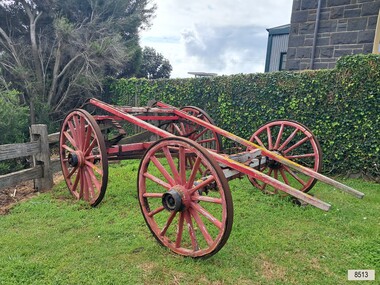
Vehicle - Wagon, Circa 1909
... ...western district...Colac...Colac Hospital. Over time, Pooran Singh came to own his own wagon—a top-of-the-range light delivery vehicle—and a horse named Prince. His work often took him along rough country roads, and for a period, he worked in the Corryong district of north-eastern Victoria, an area popular with hawkers. ...Flagstaff Hill Warrnambool Maritime Village Maritime Museum Flagstaff Hill Maritime Museum and Village Shipwreck coast Great Ocean Road southwest Victoria northwest Victoria western district Colac Colac Hospital Colac Licensing Court Thowgla Corryong Garvoc Cooramook Road Warrnambool Petty Sessions Court Warrnambool Hospital Russells Creek Road Ganges Warrnambool Cemetery Uppal Bhopa Jalandhar Hawker’s Licence covered wagon wagon hawker's wagon horse-drawn cart hawker's cart light delivery vehicle hawker travelling salesman travelling hawker door-to-door sales rural salesman rural commerce Prince Duke Clydesdale horse 1997 Pooran Singh Indian immigrant Pat John James Moore Vera Moore John and Vera Moore John Moore Guyatt’s Funerals Kapil Dev Harmel Uppal Avis Quarrell Wagon: a light delivery vehicle once used as a hawker's wagon. ...This wagon was used in towns across south-west Victoria during the first half of the twentieth century by Pooran Singh, an Indian-born immigrant. Singh arrived in Australia alone in 1899 at the age of 30. The following year, at the Colac Licensing Court in western Victoria, he was one of 78 hawkers granted a Hawker’s Licence. According to the Colac Herald, all but two of the applicants appeared to be Asian. While some hawkers registered horse-drawn carts, Singh was one of nineteen licensed to trade on foot, selling door to door. Applicants were encouraged to contribute to a collection for the Colac Hospital. Over time, Pooran Singh came to own his own wagon—a top-of-the-range light delivery vehicle—and a horse named Prince. His work often took him along rough country roads, and for a period, he worked in the Corryong district of north-eastern Victoria, an area popular with hawkers. In September 1909, near Thowgla, he was thrown from his wagon while attempting to navigate a deep rut and was run over by one of its wheels. Although he suffered bruising to his chest, his injuries were not serious. The following year, he was granted a Hawker’s Licence in Corryong. By 1916, Singh was living and working at Garvoc in western Victoria, where that year, he lost his paper licence on Cooramook Road, and he placed a notice in The Standard. In 1918, at the Warrnambool Petty Sessions Court, he was one of four applicants granted renewal of their hawkers’ licences, and each donated ten shillings to Warrnambool Hospital. Throughout these years, Singh became well known to farmers and their families as he travelled across Victoria’s Western District, living and working from his covered wagon. In his later years, Pooran Singh formed a close friendship with John Jandes Moore and his wife, Vera, of Russells Creek, Warrnambool. They offered him the use of their property as a base for his travels and cared for him during his final illness. John Moore was later appointed one of the two executors of Singh’s will. Pooran Singh died in Warrnambool on 8 June 1947, aged 77. His final wish was to be cremated and for his ashes to be returned to India for immersion in the Ganges. The cremation was arranged by Guyett’s Funerals in Warrnambool. Having never married, Singh left his estate to his four nephews, enabling them to buy land and build homes; one later installed a memorial plaque in his honour. In the late 1980s, Guyett’s Funerals placed his ashes in the niche wall at Warrnambool Cemetery as a memorial, while continuing to hope that family instructions might eventually arrive. Nearly 63 years after his death, renewed enquiries brought public attention to the long and respectful care given to his ashes. As a result, the renowned Indian cricketer Kapil Dev travelled to Warrnambool to collect them and escort them to India, helping to fulfil Singh’s final wish. He was joined by one of Singh’s grand-nephews, Harmel Uppal, who had travelled from England. At a formal ceremony on 25 July 2010 commemorating Singh’s life, the ashes were handed to Dev and Uppal, and local resident Avis Quarrell, who had known Singh as a child, read a poem she had written in his memory. She still owned a shell necklace that Singh had made for her mother. Some Warrnambool locals who had been closely involved also travelled to India, where they joined Uppal’s family from the village of Uppal Bhopa, near Jalandhar. On 31 July 2010, Pooran Singh’s ashes were immersed in the Ganges, fulfilling the wish he had expressed more than six decades earlier. After Pooran Singh’s death, his horse and wagon remained on John Moore’s property. When Prince died, he was buried on the beach at Warrnambool. The wagon remained with the Moore family and was occasionally used as a cubby house. In about 1997, John Moore, the son of John Jandes Moore, donated it to Flagstaff Hill. After restoration, the wagon became an attraction in the village, where volunteer Pat and his Clydesdale horse, Duke, offered visitors rides around Flagstaff Hill’s lake. This wagon is significant for its association with an Indian emigrant who used it to earn an income in Australia. It also reflects the vital role of hawkers, who travelled through rural and regional communities in the late nineteenth and early twentieth centuries, supplying food, goods and news. The wagon is also historically significant as a former Flagstaff Hill attraction, offering visitors the experience of horse-drawn rides around the lake.Wagon: a light delivery vehicle once used as a hawker's wagon. It is a four-wheel, horse-drawn vehicle with iron tyres, brakes, spoked wheels painted red with decorative yellow strips on the hubs, a timber shaft, and springs on the undercarriage. It was once a covered wagon, fitted with green, wooden sideboards, a front seat with leather-padded backrest and mounting steps. The late-19th to early-20th-century wagon was once owned by Pooran Singh, a local Indian hawker. flagstaff hill, warrnambool, maritime village, maritime museum, flagstaff hill maritime museum and village, shipwreck coast, great ocean road, southwest victoria, northwest victoria, western district, colac, colac hospital, colac licensing court, thowgla, corryong, garvoc, cooramook road, warrnambool petty sessions court, warrnambool hospital, russells creek road, ganges, warrnambool cemetery, uppal bhopa, jalandhar, hawker’s licence, covered wagon, wagon, hawker's wagon, horse-drawn cart, hawker's cart, light delivery vehicle, hawker, travelling salesman, travelling hawker, door-to-door sales, rural salesman, rural commerce, prince, duke, clydesdale horse, 1997, pooran singh, indian immigrant, pat, john james moore, vera moore, john and vera moore, john moore, guyatt’s funerals, kapil dev, harmel uppal, avis quarrell -
 Uniting Church Archives - Synod of Victoria
Photograph, Undated c.1890s
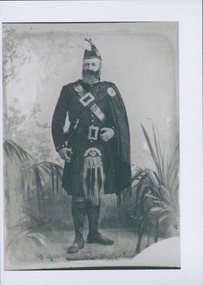
... Mr Donald "Dosh" McLennan was a well-known Highland piper in the Colac district. He was honorary piper of the Geelong Commun na Feinne and the Colac and Camperdown Caledonian societies. ...Mr Donald "Dosh" McLennan was a well-known Highland piper in the Colac district. He was honorary piper of the Geelong Commun na Feinne and the Colac and Camperdown Caledonian societies. ...Mr Donald "Dosh" McLennan was a well-known Highland piper in the Colac district. He was honorary piper of the Geelong Commun na Feinne and the Colac and Camperdown Caledonian societies. He was born in Balmacara, Rosshire, and arrived in Victoria in 1852. He died at Colac on 26 September 1906, aged 57 years.B & W full length studio portrait of Donald (Dosh) McLennan in highland dress.donald mclennan, dosh, highland, piper, colac, commun na feinne, birregurra, lorne -
 Warrnambool and District Historical Society Inc.
Booklet, The Shipley Stud 1918, 1918
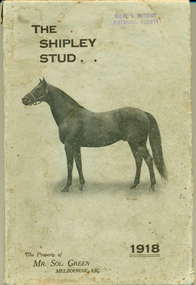
... Light paper pasted inside front cover “Colac and District Historical Society, Donor Miss Betty Mallinson 1960. ...district and secondly that it was owned by Mr Sol Green who was a person of standing within the racing industry as a bookmaker but also as a stud owner and owner of the 1910 Melbourne cup winner. This catalogue lists the stock which he had established at Shipley in a relatively short period of time. warrnambool allansford shipley sol green comedy king white star 1918 shipley dispersal sale shipley stud * Mallinson Pomborneit 9/1/18. Light paper pasted inside front cover “Colac ...Sol Green came to Australia as a penniless migrant who made his fortune as a bookmaker. He was inducted into the Australian Racing Museum Hall of fame in 2002. He purchased the Shipley stud from George Rolfe about 1905 and set about turning the Ayrford cattle property into a successful horse stud. His horse Comedy King won the Melbourne Cup in 1910 and was retired to stud in 1912. He became one of the top 10 Australian Stallions in the ensuing years. He dispersed his stud at Shipley in 1918 and this catalogue lists the stock sold that day. The property remained in the Green family and continued as a dairy farm with cheese factory and piggery by his son Bob Green. Sol Green was known for his philanthropic gestures extending help where needed on various fronts. Shortly before his death in 1948 he donated 47000 pounds to five Melbourne hospitals.This catalogue has significance firstly on a local level in that Shipley was an important farm in the district and secondly that it was owned by Mr Sol Green who was a person of standing within the racing industry as a bookmaker but also as a stud owner and owner of the 1910 Melbourne cup winner. This catalogue lists the stock which he had established at Shipley in a relatively short period of time.Light grey card cover with horse in brown. The title is in top left corner in brown text with the date 1918 in bottom right. Compilers details on back cover. 164 Pages. It has black and white plates of two horses, Comedy King and White Star* Mallinson Pomborneit 9/1/18. Light paper pasted inside front cover “Colac and District Historical Society, Donor Miss Betty Mallinson 1960. There are purchasers’ names and the purchase price paid, written at the base of each page. warrnambool, allansford, shipley, sol green, comedy king, white star 1918, shipley dispersal sale, shipley stud -
 Colac & District Historical Society
presentation silver jug, Untitled
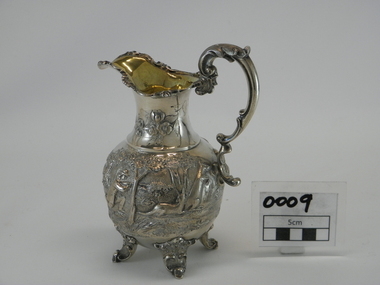
... Connor, M.L.A., Colony of Victoria by the Electors of the district of Colac, inappreciation of his service as their representative. 27/6/1866...Connor, M.L.A., Colony of Victoria by the Electors of the district of Colac, inappreciation of his service as their representative. 27/6/1866 This jug is part of a significant set of silverware made especially for the people of Colac in the early days of the settlement. ...Presented to Mr. Connor, M.L.A., Colony of Victoria by the Electors of the district of Colac, inappreciation of his service as their representative. 27/6/1866This jug is part of a significant set of silverware made especially for the people of Colac in the early days of the settlement. It is of great local significanceSterling silver jug with ornate single handle and detailed embossing on the lip. Four filigree feet. Elaborate embossing on the bottom - an emu, three kangaroos and a man shootingSterling sliver hallmark on base and family intitals in script engraved on side of jug "JFC"presentation silver jug, connor mla -
 Federation University Historical Collection
Photograph, Richards & co, Ballarat Junior Technical School Senior Cadet Team, 1918
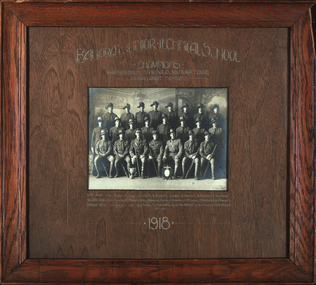
... In 1918 the Ballarat Junior Technical School Cadets were the champions of the Maryborough, St Arnaud, Mildura, Colac and Ballarat Districts. According to Neil Leckie, Manager of the Ballarat Ranger Military Museum: * Originally 12 – 14 year olds went to Junior Cadets attached to their school...In 1918 the Ballarat Junior Technical School Cadets were the champions of the Maryborough, St Arnaud, Mildura, Colac and Ballarat Districts. According to Neil Leckie, Manager of the Ballarat Ranger Military Museum: * Originally 12 – 14 year olds went to Junior Cadets attached to their school ...In 1918 the Ballarat Junior Technical School Cadets were the champions of the Maryborough, St Arnaud, Mildura, Colac and Ballarat Districts. According to Neil Leckie, Manager of the Ballarat Ranger Military Museum: * Originally 12 – 14 year olds went to Junior Cadets attached to their school. * From age 14 – 17 they were Senior Cadets attached to the local militia unit. * After 1 July of the year a Cadet turned 18, the Cadet left the Senior Cadets and became a member of the Citizen Military Force. * In October 1918 the AIF, Militia and Cadets were renamed to give some connection to the AIF battalion raised in the area. Ballarat saw: 8th Australian Infantry Regiment comprising: * 8th Battalion AIF renamed 1st Battalion 8th Australian Infantry Regiment * 70th Infantry Militia renamed 2nd Battalion 8th Australian Infantry Regiment * 70th Infantry Cadets renamed 3rd B, 8th Australian Infantry. 39th Australian Infantry Regiment comprising: * 39th Battalion AIF renamed 1st Battalion 39th Australian Regiment * 71st Infantry Militia renamed 2nd Bn, 39th Australian Infantry Regiment * 71st Infantry Cadets renamed 3rd Bn, 39th Australian Infantry Regiment Prior to the reorganisation in 1918 the 18th Brigade was the 70th, 71st and 73rd Infantry. It is thought that the 18th Brigade Cadet units in 1920 were those that came from the old: * 69th Infantry (Geelong/Queenscliff) * 70th Infantry (Ballarat/Colac) * 71st Infantry (Ballarat West) * 72nd Infantry Warrnambool) * 73rd Infantry (NW Vic) The next name change came in 1921! The Ballarat Star, Saturday 22 June 1918, Page 4 Junior Technical School Cadet Team. The Ballarat Junior Technical School Cadet Team, which was very successful in the competitions recently held at Colac, hopes to be able to compete in similar events at Maryborough. Mildura, and St. Arnaud, but unfortunately they have no funds available for the purpose. An appeal is to be made to the citizens of Ballarat to assist them in defraying the cost of their participation in the competitions at the places mentioned. The Ballarat Star, Saturday 6 July 1918, Page 3 MARYBOROUGH MILITARY SPORTS SUCCESS OF BALLARAT CADETS Maryborough, Friday, The following were the principal results of the events held here on the occasion of the handing over of' the 1900 quota of cadets to the Citizens' Forces, the ceremony in connection with which' was supplemented by arranging a programme of military events. Rifle Exercises, - Ballarat Technical School (85 pts:). l; St: Arnaud (75 pts.). 2; Maryborough High School (68 pts.). 3. Maryborough (66 pts), also competed. Despatch Race. 400 yards— Maryborough (No. 1); 1; Ballarat Technical School, 2. Squad Drill with Arms — Ballarat Technical. School (85. pts): 1; St. Arnaud (72 pts.) 2; Maryborough High School (70- pts), 3. Maryborough No. 1 (68 pts.) 3. Night Alarm: — Ballarat Technical School (3 min. 35. sees), 1; Maryborough High School (4 min. 4 secs), 2; Maryborough No. I (3- min 50 secs), 3. St. Arnaud (4 min. 10 secs). Placing Indian Club. — Maryborough No. 1,1; Ballarat Technical School, 2 Physical Training. Ballarat Technical School (85 pts), 1 ; Maryborough High School, (76 pts). 2; St. Arnaud (70. pts), .3. Tunnel Ball: Maryborough No. 2, 1'; Ballarat Technical School, 2; St. Arnaud; 3. Chase Ball in Two Lines.— Ballarat Technical School. 1; Maryborough; 2. Obstacle Race.. — Sergeant C. F. W. Krahnert (Ballarat), 1; T. Brown (High School) 2; Aggregate Points — Following are the aggregate points scored by the four leading teams :— Ballarat Technical School; 21; Maryborough. 9; Maryborough High School, 6; St. Arnaud 6. The Ballarat Star, Monday 28 October 1918, Page 4. Junior Technical School Cadet Team. —The Junior Technical School's cadet team, which won the championship at the South street competitions this year, was tendered a dinner by the staff in appreciation of the honor they had brought to the school. The function was held at Miss Brazenor's tea rooms, and a most dainty repast was served, the tables being arranged in the artistic fashion which is characteristic of these ladies. Mr W. H. Middleton (president of the School of Mines), Mr H. Smith (principal of the Art School), Lieut. P. Miller (instructor of the High School team), and Sgt. S. Fry were also present. Mr A. W. Steane (head master of The Junior Technical School) presided. After the toast of the King, Mr Middleton proposed, and Mr H. Smith supported, the health of the team and their instructor, Lieut. H. Wakeling, who suitably responded. The toast of the High School team was proposed by Mr. R. Cutler.; and Lieut D. Miller responded. The cup won at the recent competitions was then handed over to Mr - Steane; in accepting the trophy, said he was pleased to see swell a clean, sportsmanlike spirit between the rival teams. He hoped it would continue. He was proud to accept the cup from the team for the school. The Ballarat Star, Monday 12 April 1920 SENIOR CADET COMPETITION. 18th BRIGADE CHAMPIONSHIP. WON BY HIGH SCHOOL. On Saturday afternoon the championship of the 18th Brigade was decided as a preliminary to the State Championship, which will be held on the M.C.C. ground, Melbourne, on Anzac Day. Results, after a keen contest : Ballarat High School .... 1, Junior Technical School .. 2 As a result of this competition, High School will represent the 18th Brigade which embraces Ballarat, Geelong, Colac and the Western District, in the State event. Black and white photograph of 23 men in military uniform. Most wear a slouch hat, with the number 71 on the hat band. Two trophies are positioned in the front. Four men in the front row hold rifles. Back: R. Hirt; Percy Trompf; J. Nicholls; Robert Serjeant; J. Jones; A. Hannah; A. Duncan; L. Lindsay. Centre: H. Ashley; H. Beanland; J. Finlayson; F. Larkin; G. Chambers; A. McCallum; T. Shattock; E. Rowsell. Front: Sergeant A. Roe; John Dulfer, Major Tucker; Lieutenant Harold Wakeling; Sergeant-Major Reeves; Sergeant K. Krahnert; W. Middleton. .1) Mount and frame are wood grain. Top right hand corner of frame is chipped. .5) Framed black and white print of 1918 Ballarat Junior Technical School senior cadet team. 23 men in uniform. The St Arnaud event was for boys born in 1900 (the Quota). They would turn 18 in 1918..2) Reverse of photograph - "Ballarat Tech School Cadet Corp, 1918 / H Wakeling in charge / Photo property of H. Beanland / A Williams not in photo / H Wakeling & A Williams completed teacher training courses as I did but were 3 or 4 years my senior." .5) Top of mount - "Ballarat Junior Technical School Senior Cadet Team / champions 1918" Bottom of mount - "Winners of Following Competitions:- Stawell Colac Maryborough St Arnaud Mildura South Street "A" Grade" r hirt, percy trompf, j nicholls, robert serjeant, j jones, a hannah, a duncan, l lindsay, h ashley, h beanland, j finlayson, f larkin, g chambers, a mccallum, t shattock, e rowsell, a roe, john dulfer, tucker, harold gordon wakeling, reeves, krahnert, w middleton, world war 1, world war i, world war one, ballarat junior technical school, ballarat school of mines, wakeling, harold wakeling, royal south street competitions, 71st regiment, howard beanland -
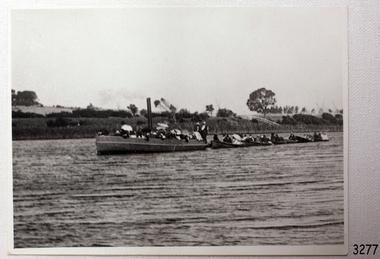 Flagstaff Hill Maritime Museum and Village
Photograph - Vessel, Steam Launch, Mrs. A. Dawson, Lady Loch, Feb 1907 - Jun 1910
... district. It shows an example of the pleasure craft of that era. The history of the Lady Loch includes the history of fishing and boat hire businesses of that period. The photograph is also connected with an early Warrnambool buat builder James Flett & Sons. representing the maritime history of the town. flagstaff hill warrnambool shipwrecked-coast flagstaff-hill flagstaff-hill-maritime-museum maritime-museum shipwreck-coast flagstaff-hill-maritime-village lady of the lake lady of the lake steamer lady loch steamer lake colac steamer hopkins river warrnambool jubilee park warrnambool francis maria mann andrew abernathy nelson iiird hopkins hotel nelson's boathouse chapman's boathouse flett's boathouse fanny (francis) nelson james flett & sons Photograph, black and white, of the steam launch Lady Loch towing five rowing boats downstream on the Hopkins River from Jubilee Park towards the river mouth. ...The photograph shows the steam launch Lady Loch towing five rowing boats full of passengers on the Hopkins River at Warrnambool. The boat is travelling downstream from the riverbank near Jubilee Park towards Warrnambool and the river mouth. A similar trip in 1909 was a fund-raising excursion when the Lady Loch was to tow boats from Flett & Sons' boating establishment on the Hopkins River, travelling towards Jubilee Park. The photograph was taken between February 1907 and June 1910 by Mrs A. G. Dawson from the Hopkins River Bank at “Allandale”, which she was leasing. She took another photograph that day, which was published in the Warrnambool Standard on 24th March 1973. At the time of the photograph the launch Lady Loch was owned by James Flett & Son who operated a boatshed on the bend of the Hopkins River. The boat was described as “a fine little steamer”. In 1916 it was licenced to carry 42 passengers. The LADY LOCH: - In February 1884 Mr Sutton’s steam launch had the name of Lady of the Lake. The boat was part of the entertainment for a Sunday school picnic at Ballarat Lake and Gardens. In October 1884 Mr Ivey from Lake Wendouree purchased two vessels, the steamer Ballarat and Mr Sutton’s well-known and popular launch, Lady of the Lake, to join his own fleet of pleasure boats. In November 1887 Mr Mark Hooper’s purchase of a ‘new’ pleasure boat, Lady of the Lake, arrived in Colac to be an addition to his boating business. The launch had been transported by road from Ballarat, but the boiler and the engine had travelled by rail the previous day. In June 1888, Fanny Nelson purchased the steam launch Lady of the Lake for her Nelson’s Boating and Fishing Establishment on the Hopkins River, Warrnambool. She renamed it Lady Loch. People have suggested the mane was in honour of the wife of the then-current Governor of Victoria, Sir Henry Loch, and the local paper stated that Lady Loch flew the Governor’s colours of yellow, black and blue on her first trip under Nelson’s ownership, Sunday 12th August 1888. In 1890 Fanny Nelson sold her complete business, including Lady Loch, to Mr Chapman. in January 1897 James Flett & Sons, already involved in boating, purchased the business from Chapman. In January 1916, Flett advertised everything for sale, including the boatshed and the steam launch Lady Loch. NOTE: - at least three vessels in Victoria were named Lady Loch; a river launch (ca 1884-ca 1916), a steamer ferry (1884-1920s) and a government steam lighthouse tender HMS Lady Loch (1886-1962)The photograph of the Lady Loch pleasure steamer represents the social and recreational activities of late 19th-century people from Warrnambool and the local district. It shows an example of the pleasure craft of that era. The history of the Lady Loch includes the history of fishing and boat hire businesses of that period. The photograph is also connected with an early Warrnambool buat builder James Flett & Sons. representing the maritime history of the town.Photograph, black and white, of the steam launch Lady Loch towing five rowing boats downstream on the Hopkins River from Jubilee Park towards the river mouth. There are many figures on the boats. The photograph was taken from a property called Allandale on the south river bank between February 1907 and June 1910. The photographer was Mrs A. G. Dawson. The Lady Loch was owned by Mr James Flett & Sons at that time. The photograph is mounted on card.flagstaff hill, warrnambool, shipwrecked-coast, flagstaff-hill, flagstaff-hill-maritime-museum, maritime-museum, shipwreck-coast, flagstaff-hill-maritime-village, lady of the lake, lady of the lake steamer, lady loch steamer, lake colac steamer, hopkins river warrnambool, jubilee park warrnambool, francis maria mann, andrew abernathy nelson iiird, hopkins hotel, nelson's boathouse, chapman's boathouse, flett's boathouse, fanny (francis) nelson, james flett & sons -
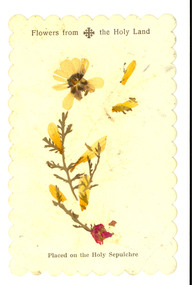 Federation University Historical Collection
Plant specimen, Flowers from the Holy Land, possibly c1949
... Thomson owned section 10 of the parish of Barrabool known as the Kardinia section — a square mile of undulating land west of Colac, still known today as Larpent. Among the 'Larpent' immigrants were many well-known Ballarat and District pioneers including Armitage, Mercer, Oddie and Scott. ...Thomson owned section 10 of the parish of Barrabool known as the Kardinia section — a square mile of undulating land west of Colac, still known today as Larpent. Among the 'Larpent' immigrants were many well-known Ballarat and District pioneers including Armitage, Mercer, Oddie and Scott. ...This item was located in a book called The English Lakes which was owned by E.C. Holmes [Edward Carter Holmes was the name of my mother's, Elizabeth Mary [Elizabeth] Holmes family's pioneer settler. He arrived in Geelong on the 28th of June, 1849, with his wife Sarah and their first child Frances Harriet as assisted immigrants (people whose passage was subsidised by an assisted immigration scheme) to New South Wales at Port Henry, Geelong in the sailing boat ‘Larpent’. Sarah and Edward arrived two years before his mother, Harriet, arrived as unassisted passenger in Geelong on ‘The Eagle’. 200 of the " Larpent" passengers had been selected in England by Rev John Dunmore Lang whose wish was to encourage the migration of hard-working, God-fearing Protestants to the colony. He sponsored two ships, the "Travancore" and the" Larpent', to bring the settlers to Australia in 1849 with Dr Alexander Thomson, a Sydney Presbyterian minister, ready to receive and settle them. Thomson owned section 10 of the parish of Barrabool known as the Kardinia section — a square mile of undulating land west of Colac, still known today as Larpent. Among the 'Larpent' immigrants were many well-known Ballarat and District pioneers including Armitage, Mercer, Oddie and Scott. For more details about this migration scheme refer to: A thoroughly Protestant emigration: the emigration activities of the Rev. Dr. J.D. Lang / Ian Wynd.2006.] [source: Jane Dyer 2024] Printed card with a pressed botanical specimen glued onto it. Printed onto the card 'Flowers from the Holy Land. Placed on the Holy Sepulchrechatham family archive, chatham, holmes, ec holmes. holy land, relic, botanical, botany, holy sepulchre, botanical specimen -
Federation University Historical Collection
Letter, Inward Correspondence to the Ballarat School of Mines, 1910, 08/1910
... Colac...Macquarie Steam Brick Yards...Bairnsdale District...Pearson Assaying Felton and Grimwade Colac Macquarie Steam Brick Yards Bairnsdale District School of Mines Scools of Mines S. ...Inward Correspondence to the Ballarat School of Mines, October 1910letterhead, education department, telegram, pharmacy board of victoria, launceston, l.f. fairthorne & sons, empire typewriter company, rotary duplicator, n.j. coote, clunes, octavius williams, h.a. taylor, s. radcliffe, bairnsdale, broken hill, frederick e. barclay, incorporated institute of analysts assayers and metallurgists, i.h. davies, j.f. dentry, j. refshauge, ballarat agricultural high school, tinghae, w. jennings, chemistry, gordon and gotch, gordon technical college woolsorting department, v.m. pearson, assaying, felton and grimwade, colac, macquarie steam brick yards, bairnsdale district school of mines, scools of mines, s. radcliff, frederick k. fairthorne, noyes brothers, fried krupp, h.g. taylor, w.d. hill, w.e. humphreys, william nixon, bell lambert and nixon, r.m. lambert -
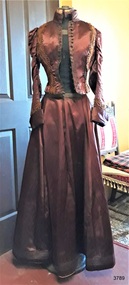 Flagstaff Hill Maritime Museum and Village
Clothing - Evening Outfit, before April 1874
... district for 60 years before moving to Melbourne. Alexander passed away at the age of 92, and Eliza passed away six months later, aged 85. Their graves are in the Colac...district for 60 years before moving to Melbourne. Alexander passed away at the age of 92, and Eliza passed away six months later, aged 85. Their graves are in the Colac ...This amber satin evening outfit was worn by Mrs Isabella Mitchell (nee Russell, 1840 – 1929) at the wedding of her brother Alexander (c.1846–1938) and Eliza (nee Moore, c.1854–1939). The jacket and skirt attach at the waist by joining the metal rings around the base of the jacket, and the metal hooks on the waistband of the skirt. The outfit was donated with its own mannequin and fits it perfectly. In the colonial days, outer clothing was rarely, if ever, washed, due to the expense of fabrics and the difficulty in careful laundering. Clever methods were employed to reduce the occurrence of soiling. The mannequin included with the donation would also help keep the outfit in good shape and ensure a flattering fit. FAMILIES’ HISTORY The families connected with this wedding, where the outfit was worn, are from Warrnambool’s colonial days. Isabella and Alexander’s parents, Robert Russell and Elizabeth (nee Mitchell), were born in 1808 and married about 1830. They were from farming families in Northern Ireland, where they raised their seven children before migrating to Australia in the early colonial days, around 1857. Their graves are in the Tower Hill Cemetery. Alexander’s wife, Eliza (nee Moore, born in 1854), was also from Northern Ireland and migrated to Australia in 1858 with her parents, Thomas and Nancy Moore, in the last voyage of the sailing ship “Chance”. Isabella (Bella) talked with her granddaughter Ruby Akers about her memories of Alexander and Eliza’s wedding and other events in her life. Ruby recorded these memories in a letter. She says, “They were married in the Warrnambool Congregational Church by a pioneer minister, the Reverend Uriah Coombs. The bride wore a pale blue silk wedding gown, which she made herself. Bella was Matron of Honora, and Ian McCasker was best man. In those days, the transport to the church was usually a carriage – similar to a cab – and a pair of white ponies. They would have the reception at home, go for a drive afterwards, and at night there would be a dance. They did all the catering themselves … Eliza carried on farming in the Dennington, Yarpturk and Purnim districts until they moved to Camperdown around 1905…” Ruby’s letter later mentions “[Isabella] could recall seeing a blackfellows’ corroboree being performed near where the Dennington Bridge now stands. It was rather a terrifying experience; they seemed to be in a warlike mood, and one never knew what they would do next. One lubra came running to Granny, crying, Hide me, bad man kill me. She was bleeding from a wound in the head: probably the result of a blow from a waddy. My mother [Margaret Jane McLaughlan nee Mitchell], coming home from school in the 1800s, often met blackfellows walking ahead with spears and boomerang, the two lubras – they usually had two – following in the rear, carrying the children or any burdens they had.“ Margaret was probably in primary school at the time she saw these things. Alexander and Eliza had ten children. One of their daughters, Margaret Jane, was born in Warrnambool in 1879. She married William McCullagh, and they had eleven children. Margaret made headlines in the Warrnambool newspapers for celebrating her 100th birthday. She had lived in the district for 60 years before moving to Melbourne. Alexander passed away at the age of 92, and Eliza passed away six months later, aged 85. Their graves are in the Colac cemetery. Isabella married Ralph Mitchell, and their daughter Margaret Jane married John McLauchlan in 1891. Margaret and John’s daughter, Ruby Elizabeth Jane, married Fredrick Akers in 1938. Fredrick, born in England, was a Boer War veteran and served in the British Army. He migrated to Queensland, Australia, in 1913, and joined the Australian Army to fight in World War I. In 1935, he moved to Warrnambool, where he served in the Volunteer Defence Corps from 1938 to 1945. Both Ruby and Fredrick are buried in the Tower Hill Cemetery.The evening outfit and its accompanying mannequin serve as notable examples of female fashion from the mid to late 1900s. These items reflect the styles and trends that were prevalent during this period, offering insight into the clothing choices and cultural influences that shaped women's attire. Beyond their representation of period fashion, the outfit and mannequin are significant due to their association with colonial pioneer families from Australia, specifically Victoria and Warrnambool. These families played an important role in the development and history of the region, and the items are linked to their legacy. The evening outfit and mannequin are also notable for their connection to a wedding that united two colonial families originating from Northern Ireland. These families immigrated to Australia in the mid-1850s and became influential figures within the Warrnambool district. The wedding marked a significant event, symbolising the merging of two prominent family lineages. Furthermore, the significance of the evening outfit and mannequin extends to their connection with the colonial families’ contact with the indigenous culture of the district. These items represent a period of interaction between the native and European peoples, highlighting the cultural exchanges that occurred within the region. This lady’s evening outfit is made from amber coloured satin fabric. It comprises a short-waisted, long-sleeved jacket and a long skirt, and it has its own neck-to-floor wooden mannequin on a pedestal. The outfit was worn by Mrs Isabella Mitchell (nee Russell) as the Matron of Honour at the wedding of her brother Alexander Russell and his fiancée Eliza Moore in Warrnambool, 29th April 1874.flagstaff hill, warrnambool, shipwrecked coast, flagstaff hill maritime museum, maritime museum, shipwreck coast, flagstaff hill maritime village, great ocean road, evening outfit, wedding outfit, bridesmaid’ outfit, matron of honour outfit, clothing female, clothing late 19th century, clothing wedding late 19th century, clothing bridesmaid late 19th century, clothing antique, clothing ladies, women’s clothing, women’s fashion, alexander russell, eliza russell, eliza moore, isabella mitchell, bella mitchell, bella russell, isabella russell, ralph russell, ian mccusker, ruby akers, fredrick william akers, ruby mclauchlan, margaret jane mclaughlan nee mitchell, margaret jane mclaughlan centenarian, william mclaughlan, robert russell, elizabeth russell nee mitchell, irish immigrants, warrnambool volunteer defence corps 1938-1945, antique satin outfit, warrnambool wedding 1874, congregational church warrnambool, reverend uriah coombs, dennington farmer, yarpturk farmer, purnim district farmer, camperdown resident 1905, dennington bridge, indigenous corroboree in dennington, corroboree in warrnambool, 1880s corroboree in warrnambool, lubra and baby, indigenous corroboree in warrnambool, mccullagh family -
Glenelg Shire Council Cultural Collection
Map - Map - RACV Road Map, 1970s
... Large coloured map of Warrnambool District. Small maps of Apollo Bay, Colac, Camperdown, Tower Hill and Warrnambool. ...Large coloured map of Warrnambool District. Small maps of Apollo Bay, Colac, Camperdown, Tower Hill and Warrnambool. ...RACV road map, Warrnambool District, Port Fairy to Lorne. Large coloured map of Warrnambool District. Small maps of Apollo Bay, Colac, Camperdown, Tower Hill and Warrnambool. When folded, black and white photo on cover of 12 Apostlesracv, road touring, road map, victoria -
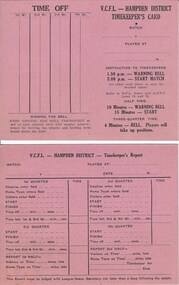 Warrnambool and District Historical Society Inc.
Document, VCFL Hampden District, Mid 20th century
... These cards are to be filled out by the timekeeper at football matches in the hampden district which covers the area from Colac to Port Fairy in Western Victoria. ...These cards are to be filled out by the timekeeper at football matches in the hampden district which covers the area from Colac to Port Fairy in Western Victoria. ...These cards are to be filled out by the timekeeper at football matches in the hampden district which covers the area from Colac to Port Fairy in Western Victoria. The form has space to record the various aspects of time matters for each football game. A common but essential part of the running of sports .Both cards are identical and are bright pink with black text in table form on front and back. V C F L Hampden Districtwarrnambool,, hampden league, hampden district, timekeepers vcfl -
 Warrnambool and District Historical Society Inc.
Legal record - Two documents regarding purchase and sale of land, George Barber, Port Fairy solicitor, early 1850s
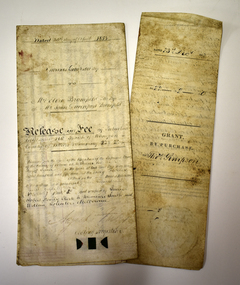
... Colac farmer who played a prominent part in the early history of that town. His brother James Astley Bromfield, an early chemist in Warrnambool is important in Warrnambool's history. These two items are of considerable significance because they are amongst the earliest legal documents we have connected to Warrnambool's history and because they concern three early pioneers of the district. ...Thes two documents deal with the purchase and sale of land near Warrnambool by Thomas Simpson. The first document, called a Grant by Purchase, is dated 1852 and shows that Thomas Simpson purchased from the Crown, Allotment 146 (22 acres two roods) adjoining the property of Wollaston on the Merri River and the Mortlake Road, north of Warrnambool. The cost was 90 pounds. The second document is dated 1853 and shows that Thomas Simpson sold this Merri River allotment of 22 acres to Eliza Bromfield, in conjunction with her husband, John Davenport Bromfield, for the sum of 110 pounds. The property of Wollaston was owned by the Manifold family and in the 1850s was leased to William Simpson, the brother of Thomas who had an adjoining property called Wooramoota. John Davenport Bromfield was a Colac farmer who played a prominent part in the early history of that town. His brother James Astley Bromfield, an early chemist in Warrnambool is important in Warrnambool's history.These two items are of considerable significance because they are amongst the earliest legal documents we have connected to Warrnambool's history and because they concern three early pioneers of the district. They also have a connection to Wollaston, an important early property in the Warrnambool district..1 A piece of light parchment paper, stained with age and folded in three places. It contains printed and handwritten material, a copy of a signature and a white seal. .2 A piece of parchment paper folded in half and then folded again in two places. It contains ruled red lines, handwritten material in black ink and the remains of a red seal. The top of the first page has a cut-out fluted pattern.wollaston, john davenport bromfield, thomas simpson, eliza bromfield, george barber solicitor -
Warrnambool and District Historical Society Inc.
Booklet - Regional Tourist Guide, W. Payne, Western Districts Illustrated Guide, c. 1914
... District. It dates from about 1914 and includes advertisements, text and black and white photographs of the towns of Warrnambool, Camperdown, Port Fairy, Koroit, Colac and Lorne. ...District. It dates from about 1914 and includes advertisements, text and black and white photographs of the towns of Warrnambool, Camperdown, Port Fairy, Koroit, Colac and Lorne. ...Regional Tourist Guide with photographs and textThis is a small booklet of 32 pages. The cream-coloured cover contains an ornamental border, four black and white photographs and black printing. The pages contain advertisements, black and white photographs and printed text. The booklet has been stapled but the staples have been removed. non-fictionRegional Tourist Guide with photographs and textwestern district of victoria, warrnambool tourism, early 20th century tourist guides -
 Warrnambool and District Historical Society Inc.
Book, Hymns Ancient & Modern, 1906
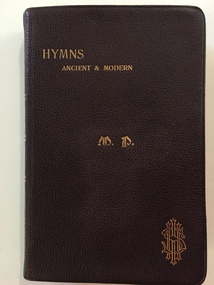
... The book was in the possession of her sister, Mrs Uglow, the wife of a Colac physician and this lady was a friend of Gladys Angus, the wife of a well-known Warrnambool doctor, Roy Angus. Mrs Uglow gave the book to Mrs Angus’ daughter, Berry McDade and she has handed it over to the Warrnambool and District Historical Society for safe-keeping. ...This Hymn Book was given to Margaret (Peggie) Peacock by the Christ Church Choir, Warrnambool when she left Warrnambool in 1912. She was the sister of Archdeacon Andrew Peacock, the fourth Vicar of Christ Church, Warrnambool. Their brother was Sir Alexander Peacock, at one time Premier of Victoria. Margaret Peacock kept house for her brother at the vicarage and assisted him in his pastoral work. Her brother died in Warrnambool in 1912 and Margaret left the town. She died in 1947.This book is of considerable importance as it belonged to a Warrnambool resident in the early 1900s. She worked as a housekeeper for her brother, Archdeacon Peacock and assisted him in his pastoral duties in the Anglican Church. The sketch in the book shows that Margaret Peacock was interested in art work and the caption, ‘Where Memory Lingers’ shows that she had fond memories of her time in Warrnambool. The book was in the possession of her sister, Mrs Uglow, the wife of a Colac physician and this lady was a friend of Gladys Angus, the wife of a well-known Warrnambool doctor, Roy Angus. Mrs Uglow gave the book to Mrs Angus’ daughter, Berry McDade and she has handed it over to the Warrnambool and District Historical Society for safe-keeping. This is a maroon-coloured leather-bound book of 514 pages of hymns (music and words) and 31 pages of additional material at the end of the book. The inside of the cover has an ornamental gilt pattern on the edges and the page ends have red gilt shading. There are four loose pages, three of them relating to the ownership and donation of the book and one is a prayer for members of the Girls’ Friendly Society. The front cover has been personalised with gold lettering with the initials of the owner and there is an inscription inside relating to the original presentation of the book to the owner, Margaret Peacock. This is in silver and black script. There is also a sketch of Christ Church, Warrnambool by Margaret (Peggie) Peacock inserted into the third page. There is some small damage to the first page.Front Cover: ‘Hymns Ancient and Modern, M.P., HIS’ Inscription: ‘To Miss Peacock, A parting gift from the Choir, Christ Church Warrnambool, October 1912’ Sketch: ‘Where Memory Lingers’ christ church warrnambool, archdeacon peacock, margaret peacock, warrnambool, miss peacock, andrew peacock -
 Eltham District Historical Society Inc
Magazine, Sun News-Pictorial, Bush Fires: A pictorial survey of Victoria's most tragic week, January 8-15, 1939, 1939
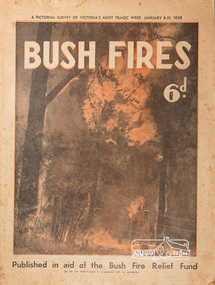
... Colac. Panic drove them, uncontrollable, into the smoke-filled road when the fire raced down behind their home. They choked to death. In other parts fires were joining to make fronts of scores of miles. Kinglake was being menaced on two fronts, £60,000 worth of timber was going up in smoke in Ballarat district...Colac. Panic drove them, uncontrollable, into the smoke-filled road when the fire raced down behind their home. They choked to death. In other parts fires were joining to make fronts of scores of miles. Kinglake was being menaced on two fronts, £60,000 worth of timber was going up in smoke in Ballarat district ...THE WEEK REVIEWED (Article; Bush Fires: A pictorial survey of Victoria's most tragic week, January 8-15, 1939. Published in aid of the Bush Fire Relief Fund by the Sun News-Pictorial in co-operation with its newsagents, pp2-3) THE fiercest bush fires Australia has known since its discovery are quiescent at the moment, and Victoria, in the comparative coolness of the change which came with rain on Sunday night, has begun·to count its losses. In the fiery eight days, from Sunday to Sunday, at least sixty-six men, women and children have lost their lives in forest fires, or have succumbed to burns and shock; many others have died from heat; and several serious cases of burns are being treated in hospitals. Two babies in Narrandera district have died, and ten others are in hospital, because of milk soured by the record temperatures of those eight days. Forest damage totals at least a million pounds, and incalculable damage has been done to the seedlings which were to have been the forests of the future. Water conservation will be seriously affected by the silting-up of reservoirs and streams from which protective timber has been taken by the all-engulfing flames. More than a thousand houses have been destroyed, and these, with 40 mills, and schools, post-offices, churches, and other buildings, represent a loss of at least half a million. At least 1500 are homeless. For their aid, money raised in appeals has now passed the £50,000 mark, and the biggest relief organisation ever set up in peace time has swung into operation. The First Hint Victoria's first hint of what was to come appeared on Sunday, January 8, when most parts of the State awoke to find a blistering day awaiting. At 12.20 p.m., when the thermometer reached its highest for the day, 109.6 degrees, the first fire victims were at that moment going to their death on a bush track five feet wide off the main road to Narbethong. They were the forestry officers Charles Isaac Demby and John Hartley Barling, who went to warn Demby of his danger when he parted from his companions, and was himself surrounded by the treacherous fire. It was not until 8 o'clock next morning that the tragic news was flashed throughout the State. Searchers found the two charred bodies close together, one seeking protection in the nook of two logs. Barling's watch had stopped at 1.20. In the meantime, tragedy was spreading its cloak. By Monday, big fires were raging at Toolangi, Erica, Yallourn, Monbulk, Frankston, Dromana, Drouin South, Glenburn, and Blackwood, with smaller outbreaks at many other centres. In the ensuing week, while women and children were evacuated as fast as the flames would permit, Erica-scene of the 1926 fire disaster-thrice escaped doom by a change of wind. Indeed, those who have been in the fire country these past days say that the numbers of times a change of wind has saved towns from destruction is amazing. In the towns they speak of miracles. Monday's Miracles The escapes from Monett's Mill at Erica and from the Hardwood Company's Mill at Murrindindi, near where Demby and Barling went to their death, were Monday's miracles. Twenty came out alive from each mill. At the first a 60ft. dugout provided an oven-like refuge; at the second, 12 women and children survived in the smoke-filled gloom of a three-roomed cottage while their eight men, their clothes sometimes afire, poured water on the wooden walls. Three houses out of ten remained when the fire had passed. Record Temperatures Sunday had been the hottest Melbourne day for 33 years; Monday dropped to a 76.1 degree maximum; but Tuesday dawned hotter than ever, the mercury reaching 112.5. By now rumor was racing ahead of fact; whole towns were being reported lost; the alarm was raised for scores of missing persons. But fact soon overtook rumor, and within a few days the staggering toll began to mount to a figure beyond the wildest imaginings of the panic-stricken. Six died from heat on this torrid Tuesday, and the fires spread in a wide swathe from south-west to north-east across the State. Fish died in shallow streams. A curtain of smoke hid the sky from all Victoria, and hung far out to sea. It alarmed passengers on ships. On the Ormonde, on the voyage to Sydney from Burnie, women ran on deck, believing fire had broken out in the hold. Days later the smoke reached New Zealand. In Melbourne thousands of fire-volunteers were leaving in cars: vans, motor-buses-anything reliable on wheels-to aid the country in its grim fight. In the fires at Rubicon and. Narbethong, seventeen were facing death this day. But not till Wednesday, when Melbourne breathed again in a cool change, while the country still sweltered in temperatures up to 117 degrees, did the news come through the tree blocked roads. A woman and her little daughter, trapped on the road, were among those who died. Their bodies, and those of menfolk with them, were found strewn out at intervals along the road, where the furnace of the surrounding fire had dropped them in their tracks as they ran. Twelve died at a Rubicon mill, five on the road at Narbethong. At Alexandra, not far distant, a baby was born while the fires raged, and stretcher-bearers brought in the injured. On Thursday the State Government voted £5000 for the relief of fire victims. The Governor (Lord Huntingfield) and the Lord Mayor (Cr. Coles) visited some of the stricken areas, and dipped into their pockets personally. Later, the City Council, too, voted £5000. Friday, The 13th Friday, the Thirteenth, justified its evil name. A blistering northerly came early in the morning, presaging destruction, and forcing the mercury to a new record of 114 degrees. Racing fires killed at least ten in those terrible 12 hours. Four children were engulfed in the furnace at Colac. Panic drove them, uncontrollable, into the smoke-filled road when the fire raced down behind their home. They choked to death. In other parts fires were joining to make fronts of scores of miles. Kinglake was being menaced on two fronts, £60,000 worth of timber was going up in smoke in Ballarat district. Warburton was surrounded. Residents at Lorne, favoured resort, were being driven to the sea-front by a fire which destroyed at least 20 homes. Healewille. with flames visible from the town at one stage, was in a trough between two fires which burned four guest-houses, seven homes and left its surrounding beauty-spots wastes of bowed-over, blackened tree-fern fronds; with its famous Sanctuary, however, intact. Most of Omeo was destroyed this black day: Noojee. while 200 residents crouched in the river, was being reduced to a waste of buckled iron and smoking timber; Erica was once again saved by a change of wind. Beneath a pall of smoke, the Rubicon victims were buried at Alexandra. Friday night and the early hours of Saturday saw the streets of beleagured towns strewn with exhausted fire-fighters. Their flails beside them, ready for the next call, they lay where exhaustion overtook them-on footpaths, beside lamp-posts, in gutters, in cars, under trucks. Saturday's dawn brought clear skies and lower temperatures in many parts, and from the burnt-out areas came a great rush of tragic reports. The death-roll rushed past the fifty mark with incredible speed. Some had been trapped on roads, others at mills; some, after burying their treasures, had clung too long to the places they had made their homes for many years. Four men lost their lives because one went back for his dog. By Sunday, when the first of the saving rain came, nearly another score of names had been added to the list.Newspaper magazine, 48 pages (incl. covers). Fully digitised and searchable PDFPublished in aid of the Bush Fire Relief Fund by the Sun News-Pictorial in co-operation with its newsagents.bushfires, 1939 bushfires, black friday, warrandyte -
 Victoria Police Museum
Police Stations (Apollo Bay)
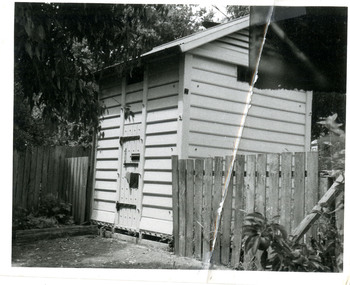
... Colac Otway Shire. The original township was surveyed in 1853 and named Middleton. In 1881 the town was renamed Krambruk which was changed to Apollo Bay in 1898. The Krambruk Police Station was opened on 7 March 1888 in the Southern District...Colac Otway Shire. The original township was surveyed in 1853 and named Middleton. In 1881 the town was renamed Krambruk which was changed to Apollo Bay in 1898. The Krambruk Police Station was opened on 7 March 1888 in the Southern District ...Apollo Bay is a coastal town in southwestern Victoria. It is situated on the eastern side of Cape Otway, along the edge of the Barham River and on the Great Ocean Road, in the Colac Otway Shire. The original township was surveyed in 1853 and named Middleton. In 1881 the town was renamed Krambruk which was changed to Apollo Bay in 1898. The Krambruk Police Station was opened on 7 March 1888 in the Southern District on land opposite the site of the current Mechanics' Institute and changed its name to the Apollo Bay Police Station on 1 September 1990. It came under the Barwon District in 1948 and "Lima" Western District from 4 March 1990. In 1930 the police station was located to 29 Nelson Street. It was a seven-roomed weather-board dwelling on three-quarters of an acre of land. It consisted of six rooms of pine, lined and painted; one pantry; one bathroom and wash-house; one hall; one office and one W.C.. There was stabling for one horse and one cell for prisoners. It was staffed by one Mounted Constable. In the early 1970s land was acquired at 31 Nelson Street and a new police station was constructed. This was a three-roomed brick building with a cell block at the rear. By the time it closed in 2005 it had been extended twice. On 17 November 2006 the current Apollo Bay Police Station opened in its current location at 35a Nelson Street, on the corner of Cartwight Street). Outside the peak summer season, the station is open 16 hours per day and staffed by one sergeant and five other members. 3 black & white photos and 2 coloured photospolice stations; apollo bay police station
