
Showing 34 items matching "german miners"
-
 Bendigo Historical Society Inc.
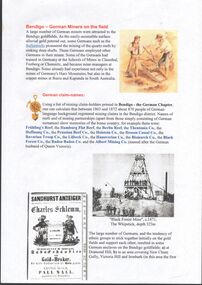
Document - German miners on the Bendigo gold field
... German miners on the Bendigo gold field. ...German miners...Two-page document which gives brief details of the German miners on the Bendigo gold field. A4 pages. ...German miners Gold Two-page document which gives brief details of the German miners on the Bendigo gold field. ...Two-page document which gives brief details of the German miners on the Bendigo gold field. A4 pages. Typed notes and photographs.german miners, gold -
 Bendigo Historical Society Inc.
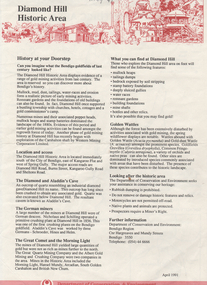
Document - Kangaroo Flat Gold Mine Collection: Diamond Hill Historic Area, Department of Conservation and Environment, April 1991
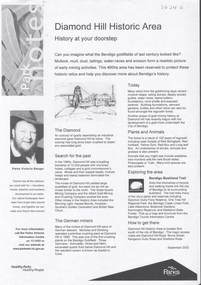
... ...German miners...Bendigo mining gold City of Greater Bendigo Great Comet Quartz Mining Golden Fleece Quartz Mining Albert Tribute Glasgow Golconda Albert Gold Mining and Crushing Golden Gully Dead Dog Gully German miners British New Chum South Golden Carshalton Hansel Mundy Morning Light mullock tailings stamp battery One page double sided information sheet, produced by Department of Conservation and Environment, April 1991, detailing the mining history of the Diamond Hill area, Kangaroo Flat/Spring Gully area. ...Diamond Hill was a gold mining village 5 km south of Bendigo and about 1 km west of the Spring Gully Reservoir. Its location is now inaccessible and within the water catchment area. Diamond Hill was reputedly named after a diamond shaped rock on the hill. With the development of mining companies which employed workers with families, a school was needed by 1873 and one was opened at the beginning of the next year. The mining companies included Great Comet Quartz Mining, Golden Fleece Quartz Mining, Albert Tribute, Glasgow Golconda, and Albert Gold Mining and Crushing. Mining continued beyond 1900, as recorded in the Australian handbook, 1903. The Bendigo Mining N.L. company was located nearby, adjoining Ham Street. One page double sided information sheet, produced by Department of Conservation and Environment, April 1991, detailing the mining history of the Diamond Hill area, Kangaroo Flat/Spring Gully area. On the back of the sheet: map of the Diamond Hill historic area, showing location of former mining sites. bendigo mining n.l., bendigo, mining, gold, city of greater bendigo, great comet quartz mining, golden fleece quartz mining, albert tribute, glasgow golconda, albert gold mining and crushing, golden gully, dead dog gully, german miners, british new chum, south golden carshalton, hansel mundy, morning light, mullock tailings, stamp battery, -
 Bendigo Historical Society Inc.
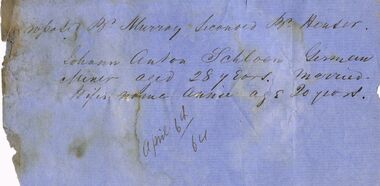
Document - ANCIENT ORDER OF FORESTERS NO. 3770 COLLECTION: CORRESPONDENCE
... Johann Anton Schloen German Miner aged 28 years married. Wife's name Annie age 20 years. ...Johann Anton Schloen Johann Anton Schloen German Miner aged 28 years married. Wife's name Annie age 20 years. ...Johann Anton Schloen German Miner aged 28 years married. Wife's name Annie age 20 years. Dated April 6th 64. ? Br Murray. Seconded Br. Henser?societies, aof, correspondence, ancient order of foresters no. 3770 collection - correspondence, br murray, br henser?, johann anton schloen -
 Bendigo Historical Society Inc.
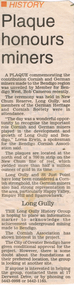
Newspaper - LONG GULLY HISTORY GROUP COLLECTION: PLAQUE HONOURS MINERS
... A plaque commemorating the contribution Cornish and German miners made to the Bendigo region was unveiled by Member for Bendigo West, Bob Cameron. ...A plaque commemorating the contribution Cornish and German miners made to the Bendigo region was unveiled by Member for Bendigo West, Bob Cameron. ...Newspaper cutting titled Plaque honours miners. A plaque commemorating the contribution Cornish and German miners made to the Bendigo region was unveiled by Member for Bendigo West, Bob Cameron. The ceremony was held in New Chum Reservebendigo, history, long gully history group, the long gully history group - plaque honours miners, bob cameron, german heritage society, bendigo cornish association, lorna erwin, the long gully history group, the city of greater bendigo -
 Bendigo Historical Society Inc.
Book - German Bible
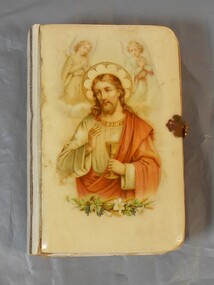
... There was a large influx of German miners to the Bendigo gold fields and they mainly focussed on deep quartz mining. ...There was a large influx of German miners to the Bendigo gold fields and they mainly focussed on deep quartz mining. ...There was a large influx of German miners to the Bendigo gold fields and they mainly focussed on deep quartz mining. German enclaves existed at Diamond Hill, New Chum Gully, Victoria Hill, Ironbark and in the Whipstick area. The first Lutheran Church was built in 1865 and there were also two German schools. Small bible with hard cover, possibly bakelite/plastic. The cover has an image of Jesus with and angel above each of his shoulders and plants at the bottom of the image. Pages of bible have gold edging. There is a metal clasp to lock. The back is plain and a creamy color.german, bible, religion -
 Bendigo Historical Society Inc.
Document - DIAMOND HILL HISTORIC AREA PARKS VICTORIA
... Contains information regarding the history of the area; German Miners; Plants and animals. On second page is a map of the area showing historic features: Deborah Consolidated Gold workings Red, White and Blue Extended gold workings Goldfields Extended gold workings Dead Dog Gully, alluvial gold workings Glasgow & Golconda Gold workings and tramway Surface gold mining site Hansel Mundy gold workings Bendigo Goldfields Pty gold workings Stafford gold workings Langdon gold workings Great Opossum Gully alluvial gold workings...Contains information regarding the history of the area; German Miners; Plants and animals. On second page is a map of the area showing historic features: Deborah Consolidated Gold workings Red, White and Blue Extended gold workings Goldfields Extended gold workings Dead Dog Gully, alluvial gold workings Glasgow & Golconda Gold workings and tramway Surface gold mining site Hansel Mundy gold workings Bendigo Goldfields Pty gold workings Stafford gold workings Langdon gold workings Great Opossum Gully alluvial gold workings Document DIAMOND HILL HISTORIC AREA PARKS VICTORIA ...Document, two pages, prepared by Parks Victoria in relation to the Diamond Hill Historic Area. Contains information regarding the history of the area; German Miners; Plants and animals. On second page is a map of the area showing historic features: Deborah Consolidated Gold workings Red, White and Blue Extended gold workings Goldfields Extended gold workings Dead Dog Gully, alluvial gold workings Glasgow & Golconda Gold workings and tramway Surface gold mining site Hansel Mundy gold workings Bendigo Goldfields Pty gold workings Stafford gold workings Langdon gold workings Great Opossum Gully alluvial gold workingsbendigo, mining, diamond hill -
 Bendigo Historical Society Inc.
Document - ILLUMINATED ADDRESS TO CARL ROEDER. ESQ, 19th october 1885
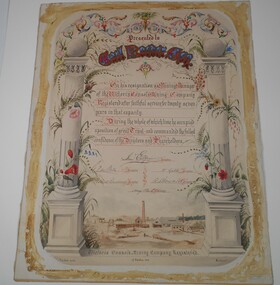
... Roeder was part of a wave of experienced German miners who migrated to the Bendigo goldfields, and settled in the Bendigo area (then Sandhurst) in 1862 .The Victoria Consols Mining Company was one of the major players on the famous Garden Gully line of reef, one of the richest gold-producing areas in the world. ...Roeder was part of a wave of experienced German miners who migrated to the Bendigo goldfields, and settled in the Bendigo area (then Sandhurst) in 1862 .The Victoria Consols Mining Company was one of the major players on the famous Garden Gully line of reef, one of the richest gold-producing areas in the world. ...Carl Roeder was a highly respected figure in the Bendigo mining community, serving 27 years as a manager in the region. Roeder was part of a wave of experienced German miners who migrated to the Bendigo goldfields, and settled in the Bendigo area (then Sandhurst) in 1862 .The Victoria Consols Mining Company was one of the major players on the famous Garden Gully line of reef, one of the richest gold-producing areas in the world. Beyond mine management, Roeder served as Chair of the Board of the VC mining company. The Artist is F. de Kock (Frederic de Kock) and was a known artist and lithographer in Sandhurst during the 1880s and was often commissioned for these high-end, bespoke illuminated addresses.Illuminated address presented to Carl Roeder. Esq. "On his resignation as mining manager of the Victoria Consols Mining Company. Registered after faithful service for twenty seven years in the capacity". Signed by: Henry Nirch - Manager.. Yason - Director.. Mills - Director.. Burrows - Director.. Howard - Director.. Gibbs - Director. Drawing of a Mine with poppet heads. Address decorated with floral display. Markings/Inscriptions: F.de Kock. Artist. 19th October 1885. Sandhurst. 11910F.de Kock. Sandhurstperson, individual, certificate -
 Bendigo Historical Society Inc.
Newspaper - Fortuna Articles - "Time to Honour Pioneers", May 01 2009
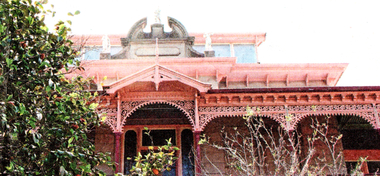
... Christopher Ballerstedt, a German miner, established a successful quartz mining operation and built Fortuna Villa, later sold to George Lansell. ...Christopher Ballerstedt, a German miner, established a successful quartz mining operation and built Fortuna Villa, later sold to George Lansell. ...Germans were the third largest ethnic group on the Bendigo goldfields in the mid-19th century, numbering 2,000–3,000 by 1860. Many were experienced miners from the Harz mountains and led the development of quartz mining at Sandhurst. Christopher Ballerstedt, a German miner, established a successful quartz mining operation and built Fortuna Villa, later sold to George Lansell. Other notable German names include Wittscheibe, Koch, Killian, Ketterer, Roeder, and Mueller, who contributed to mining and local society. German architects, especially William Vahland, played a major role in shaping Bendigo’s architecture, including work on Fortuna Villa. Germans contributed to Bendigo’s cultural life, with several daughters of German-born residents achieving international fame as opera singers. The community was active in commerce, wine production, trades, and professions (e.g., priests, chemists, mayors). Despite some families anglicizing their names during World War I, many German surnames remain prominent in Bendigo. The document advocates for greater recognition of German pioneers, suggesting Fortuna Villa as a venue for a museum or display to celebrate their legacy, inspired by the example of the Chinese Museum in Bendigo. The author urges the community to preserve and showcase the stories, artifacts, and memorabilia of all Bendigo’s pioneers, emphasizing the importance of remembering the city’s immigrant past. Beverley Carter is the author of the document and is introduced as a retired secondary school teacher, part-time journalist, reviewer, and editor. She is a member of Bendigo's Lansell family and is currently writing a comprehensive history of her family, covering their European and English origins and their role in Bendigo's development. Carter's 'Fortuna Glimpses' series focuses on the life of mining magnate George Lansell and his home, Fortuna Articles - "Time to Honour Pioneers" May 01 2009 The Bendigo Advertiser by Bevely Carter, picture by Julian Prowd This item contains the following: 11217.39a Colour Photo of Fortuna. 11217.39b Part of Page 17 - "Time to Honour Pioneers"non-fictionbendigo, fortuna, george lansell, beverley carter -
 Bendigo Historical Society Inc.
Document - VICTORIA HILL MARONG RD BENDIGO HERITAGE DAY BROCHURE 2010, 2010
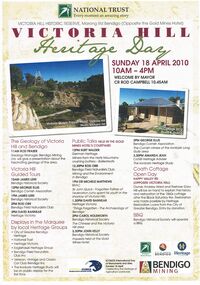
... Victoria Hill Guided Tours James Lerk (Bendigo Historical Society) George Ellis (Bendigo Cornish Association) Rod Orr (Bendigo Field Naturalists Club) David Bannear (Heritage Victoria) Presentations: Rod Fraser The Geology of Victoria Hill and Bendigo, Kurt Walder German Heritage Ballerstedts-miners from the Hartz Mountains crushing battery, Rod Orr Mining and the Environment in Bendigo, Michele Matthews (BRAC) Sir John Quick the Forgotten Father of Federation spent his youth in the shadow of Victoria Hill, David Bannear ''Things Forgotten'' - the Archaelogy of Bendigo, Carol Holsworth the Chinese and Victoria Hill area, John Kelly Inquests held at the Gold Mines Hotel, George Ellis The Cornish miners of the Ironbark and Long Gully area, Amanda Jean The Ironbark Heritage Study. ...Victoria Hill Guided Tours James Lerk (Bendigo Historical Society) George Ellis (Bendigo Cornish Association) Rod Orr (Bendigo Field Naturalists Club) David Bannear (Heritage Victoria) Presentations: Rod Fraser The Geology of Victoria Hill and Bendigo, Kurt Walder German Heritage Ballerstedts-miners from the Hartz Mountains crushing battery, Rod Orr Mining and the Environment in Bendigo, Michele Matthews (BRAC) Sir John Quick the Forgotten Father of Federation spent his youth in the shadow of Victoria Hill, David Bannear ''Things Forgotten'' - the Archaelogy of Bendigo, Carol Holsworth the Chinese and Victoria Hill area, John Kelly Inquests held at the Gold Mines Hotel, George Ellis The Cornish miners of the Ironbark and Long Gully area, Amanda Jean The Ironbark Heritage Study. ...Victoria Hill Marong Rd Bendigo (Opposite the Gold Mines Hotel) Heritage Day Brochure 2010. Victoria Hill Guided Tours James Lerk (Bendigo Historical Society) George Ellis (Bendigo Cornish Association) Rod Orr (Bendigo Field Naturalists Club) David Bannear (Heritage Victoria) Presentations: Rod Fraser The Geology of Victoria Hill and Bendigo, Kurt Walder German Heritage Ballerstedts-miners from the Hartz Mountains crushing battery, Rod Orr Mining and the Environment in Bendigo, Michele Matthews (BRAC) Sir John Quick the Forgotten Father of Federation spent his youth in the shadow of Victoria Hill, David Bannear ''Things Forgotten'' - the Archaelogy of Bendigo, Carol Holsworth the Chinese and Victoria Hill area, John Kelly Inquests held at the Gold Mines Hotel, George Ellis The Cornish miners of the Ironbark and Long Gully area, Amanda Jean The Ironbark Heritage Study. Coath Cottage Open Day owner Andrew Ward and Restorer Gary Hill explain the history and restoration of the 1860s miners cottage after Black Saturday fire. Restoration Loans from the City of Greater Bendigo.bendigo, gold mining, heritage day 2010 -
 Federation University Historical Collection
Book, Bennett H. Brough, A treatise on Mine-Surveying, 1904
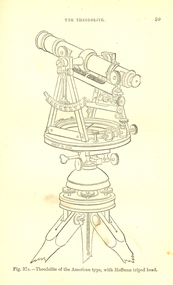
... Contents include general explanatinos of surveying, an historical sketch, mineral deposits, mining terms, measures of length, measurement distances, the chain, rods, steel bands, measuring wheel, Miner's Dial, Magnetic needle, Fixed needle, German Dial, theodolite, traversing underground. ...Contents include general explanatinos of surveying, an historical sketch, mineral deposits, mining terms, measures of length, measurement distances, the chain, rods, steel bands, measuring wheel, Miner's Dial, Magnetic needle, Fixed needle, German Dial, theodolite, traversing underground. ...The author, Bennett H. Brough was an associate of theRoyal School of Mines, a member of the COuncil of the Institution of Mining Engineers, a fellow of the geological society and of the Institute of Chemistry, a member of the Mining Institute of Cornwall, and a former instructor of mine-surveying at the Royal School of MinesRed had covered book 372 pages - part of Griffin's Mining Series. Contents include general explanatinos of surveying, an historical sketch, mineral deposits, mining terms, measures of length, measurement distances, the chain, rods, steel bands, measuring wheel, Miner's Dial, Magnetic needle, Fixed needle, German Dial, theodolite, traversing underground. Surface-surveys. plotting the survey, calculation of area, leveling, Telescope, Setting out, Mine-Surveying Problems, Mine Plans, Photographic Surveying, examination Surveying. Illustrations include: Whitelaw's Dial (Fig 22), Theodolite of the American Type with Hoffman tripod head, (fig 37a)mining, surveying, miner's dial, chain, survey, theodolite, scientific instruments -
 Federation University Historical Collection
Document, Zelda Martin, Central Victorian Goldmining towns - Boom Towns or Ghost Towns?, c1996
... Addresses on behalf of : the people of Bendigo; Members of the Church of England, Bendigo; Members of the Wesleyan Church on the Bendigo Gold Fields; Bendigo Gold District General Hospital; the Bendigo Prospecting Association; Committee of the Bendigo Local Exhibition; Bendigo District Medical Association; Coloured Americans Resident at Bendigo; German Inhabitants of Bendigo; Landowners, Inhabitants, and Miners of Castlemaine; Inhabitants of Forest Creek; Inhabitants of Heathcote and Gold Miners of McIvor; Residents and landholders of the District of Bacchus Marsh; Inhabitants of Kilmore and Vicinity. ...Addresses on behalf of : the people of Bendigo; Members of the Church of England, Bendigo; Members of the Wesleyan Church on the Bendigo Gold Fields; Bendigo Gold District General Hospital; the Bendigo Prospecting Association; Committee of the Bendigo Local Exhibition; Bendigo District Medical Association; Coloured Americans Resident at Bendigo; German Inhabitants of Bendigo; Landowners, Inhabitants, and Miners of Castlemaine; Inhabitants of Forest Creek; Inhabitants of Heathcote and Gold Miners of McIvor; Residents and landholders of the District of Bacchus Marsh; Inhabitants of Kilmore and Vicinity. ...Zelda Martin was a PhD candidate at the University of Melbourne.[.1] 4th item in light blue display book titled Research Approach/Overview of Chapters/Confirmation of Canditure/Chapters1,2,3&4 of proposed thesis. *Twenty-seven page article on Victorian goldfields towns titled: Central Victorian Goldmining Towns - Boom Towns or Ghost Towns. The article was written during the author's PhD study. It outlines the context methodology, and resources and the chapters of the proposed thesis: (1) Central Victorian Goldmining Towns - The Context (2) Contemporary Views of the Factors Necessary for Town Growth (3) Outward Manifestations of Town Growth (4) The Trappings of Government (5-9) The Main Towns and Their Hinterland. [.2] 5th item in Light Blue display book as above item. *Chapter 1 of proposed thesis titled 'Pick, Shovel and Tin Dish Mining.' Covers in Section A: Central Victoria - Pre 1851: Aborigines in Central Victoria, Squatters, and Government. Section B: The years 1851-1854: The Early Gold Rushes, Government Reaction, Township Surveys, Legislation, Town Development, Local Government and Early Settlement. [.3] 6th item in Light Blue display book as above item. *2A of proposed thesis titled 'Contemporary Views of the Factors Necessary for Town Growth'. Similar information to Chapter 1 plus extra re towns and maps. Sections: Introduction, Context of Place - Geographical Towns Listed, The Context of Time - Pre1851 Aborigines, Governance of Port Phillip, The Squatters, The Villages of Central Victorian Highlands, Conclusion, Condensed Version of Chapter2B. [.4] 7th item in Light Blue display book as above item. *Chapter2B of proposed thesis. Sections: Area of Research, Schools, Banks, Newspapers, Progress Association, Town Development - Sandhurst (Bendigo), Ballarat, Castlemaine,, Maryborough, Ararat and Stawell. [.5] 8th item in Light Blue display book as above item. *Chapter 3 of proposed thesis titled 'Outward Manifestations of Town Growth'. Sections: Introduction, Contemporary Writing, Educationalists, The Bankers, The Townsfolk, Current Theory, General Theories of Urban Development, and Conclusion. [.6] 9th item in Light Blue display book as above item. *Chapter 4 of proposed thesis titled 'Trappings of Government' Sections: Introduction, Early Government Attitudes to Mining and Town Development, Law and Order, Township Surveys, Legislation, Local Government, Transport and Communication, The People and Lobbyists. [.7] 10th item in Light Blue display book as above item. *'The Rise and Fall of Central Victorian Goldmining Towns'. Includes a map showing main Goldfields, a table showing towns and villages at two points in time - 1857 and 1871; a Bibliography of Primary and Secondary Sources. [.8] Resource No1. Black display book titled Local Towns 1 : Alma: *Brief history *Directory *Maps Amphitheatre / Mountain Hut: *Brief History Post Office Directory Ararat: *Brief History *Post Office Directory 1869 - Alphabetical Listing by Occupation *Ararat - Prominent Citizens of 1858 *Langi-Morgala Museum Avoca: *Brief History *Excerpts from 'Avoca The Early Years', Margery and Betty Beavis; pg1 - Beginnings; pg11 - The Midas Touch; pg25 - Local Gold Escorts; pg27 - A Town is Born; pg51- The Administration of Justice; pg53 - The Ways of the Law; pg61 - News of the Day; pg65 - A Time to Play; pg72 - Land Ownership *Post Office Directory (Bailliere's) 1869 *Tourism Map and Information of area *Historic Avoca - A 5.5km Tour *Avoca & the Pyrenees Region - information pamphlet Ballarat: *Early History of Ballarat - Ballarat Historical Society, Publication No.1: origin of the name; Ballaarat - the Beginning; Fabulous Yields from the Ballaarat Goldfield; *Streetscape Lydiard Street. *Hand drawn map showing Leigh River, Old Portland Bay Road, plaque on road to Colac; etc. *Newspaper article re 'The Theatre Royal' ( which stood in the vicinity of the current Owen Williams store) - 'The News'15/04/1998 *Article - 'Ballarat's Mechanics' Institute Lives On' Ballarat Courier, 14/09/1985 *Article - Standing the Test of Time' The News 17/11/1993 re The Mechanics Institute & picture of the Reading Room *'Ballarat a Study of a City, Phyllis Reichl, pub. Nelson, 1968; no.3 place, time and people field studies series *Investigator Vol.33 No.2, 1998 Geelong Historical Society. Article on pg75 describes Ballarat in 1861 *Folded poster - 'Ballarat 100' a history of telegraph communication, pub. Telecom. Beaufort (Fiery Creek): *Brief history *Post Office Directory [.9] Resource No.2 Black Folder Titled Towns cont.No2 Bendigo (Sandhurst): *'Family & Local History at the Bendigo Library - 1851-2001 150 years of gold'. *Bendigo Government Camp in 1853 illustration; key to sketch and names of Government officers stationed there *Excerpts from 'Bendigo and Vicinity' Adolph Haman *The Bendigo Goldfield Registry - pgs 1-7 Introduction *Excerpt: 'Breaking the Grip' *Excerpt: The Most Go-Ahead Place *Excerpts from 'History of Bendigo' - anti license agitation; laying out of town; proposed railway; gold calls and dividends; the Sandhurst Municipality; journalism *Bibliography Blackwood: *Excerpts from 'Aspects of Early Blackwood - The Goldfield, the Landmarks, the Pioneers' Alan J Buckingham and Margaret F Hitchcock, JG Publishing,1980 Buninyong: *A Brief History *Investigator Vol1 No.2 Feb 1966 Geelong Historical Society. Pg3 - Article re gold escort route - Mt Alexander to Adelaide - (see a simple monument on the Western Highway a few miles out of Horsham. Pg 15 - Ballarat Excursion - re the finding of gold. *Three articles published by Buninyong and District Historical Society Inc: (Magpie Exploration; Finding Gold In The Green Hills; Magpie Exploration; Burnt Bridge to Cargarie to Mt Mercer) *Copies of newspaper articles/items *Buninyong Street Directory Carisbrook: *In the Beginning There Was Carisbrook *The History of the Carisbrook Racecourse Carngham / Snake Valley: *Brief History *Directory Castlemaine: *Directory 1865-1866 - Alphabetical and Street *Poster - Castlemaine A Contemporary Guide "The Great Centre" 1866 - A Contemporary Guide to the Fascinating Past *Pamphlet - Castlemaine District Community Hospital *Map - Castlemaine, Maldon & Surrounding Districts *Map and Information - The Dry Diggings Track - a 55kl walk among historic goldfields relics ( Castlemaine Fryerstown Vaughan Mt Franklin Hepburn Daylesford) *Postcard - Former Court House *Directory 1867 - Alphabetical, Trade [.10] Resource No.3 Grey folder Titled Towns 3 Creswick to Maryborough Creswick: *Brief History *Booklet - "Creswick Cemetery Walk" *Booklet - The Buried Rivers of Gold Heritage Trail Creswick *Creswick Historical Museum Information Sheet *Chronological History of Creswick *Alphabetical Directory of the Borough of Creswick *Creswick's Creek Directory 1856 *Historic Creswick Walking Tour *A Brief Account of the Schools of Creswick - Past and Present *100 Years of Railway Travel in Creswick *The Berry Deep Leads *The Spence Home at Jackass Gully in the Creswick State Forest ( William Guthrie Spence - Pioneer) *The New Australian Mine and the 1882 Disaster *Creswick District News, Issue 7, July August 1999 *The Creswick Miners Walk - Information and Map *Maps Chewton: *Brief History *Directory Clunes: *Brief History *Clunes Street Directory Daylesford: *Brief History *Notable Bushfires in Daylesford District Over More Than a Century - "Black Thursday" 1851; 1862; 1899; the Disastrous Hepburn Fire of 1906; 1939; 1944; 1969. *Post Office Directory -Daylesford and Hepburn Dunolly / Inkerman: *Brief History *Directory *Pamphlet - Goldfields Historical Museum *Pamphlet - Historic Dunolly - Victoria's Best Kept Secret *Map of Gold Workings at Dunolly Area - showing where the main gold rushes occurred *Brief History - Inglewood *Directory - Inglewood - Name Occupation, Dwelling Kingower: *Brief History *Directory - Name / Ocupation / Dwelling Linton / Happy Valley / Piggoreet: *Brief History *Directory - Lintons McIvor: *"A History of the Shire and the Township of Heathcote" by J.O. Randell Majorca: *Brief History *Official Post Office Directory 1869 - Name / Occupation/ Address Maldon (Tarrangower): *Brief History Part 1 *Brief History Part 2 *Post Office Directory *List - Alphabetical Order by Names plus Business and Trade (Tarrangower Times Oct/1858) *List - Alphabetical Order by Trade plus Name and Business *Directory - Name / Occupation / Dwelling Maryborough: *Worsley Cottage - built by Arthur Worsley, a contractor in stonework in 1894 [.11] Resource No. 4 Blue Display Book titled Towns 4 Moliagul to Stawell Moliagul: *Brief History *Moligul Legislative Assembly (Voting?) List - Names and Occupations *Moliagul Victorian Post Office Directory 1868 - Name / Ocupation / Address / Comments *"The Welcome Stranger" gold nugget *The Sunday School *The Welcome Stranger Discovery Walk - information and map Moonambel (Mountain Creek) Redbank *Brief History *List of names extracted from advertisments of the Pioneer and Mountain Creek Advertiser 16/02/1861. *Bailliere's Directory 1869 - Alphabetical List of Name / Occupation / Place St Arnaud: *Brief History Sebastapol: *Brief History *Directory 1869 - Alphabetical by Name; plus occupation and address. Browns and Scarsdale: *Brief History *Browns Street Directory - Name and Occupation Smythesdale: *Brief Description *Smythesdale Street Directory -Name and Occupation Stawell (Pleasant Creek) *Brief History *Victorian Official Post Office Directory - Name /Occupation / Dwelling *Chronology - 1841-1920 *Production of gold statistics - 1879 - 1900 *Big Hill *Extracts from "The Golden Years of Stawell". Chapt 1 - Stawell's Coming Out. Capt. 2 - The Gold Rush. Caapt.3 - Cradle of Democracy. Chapt.4 - The Reefs Becomes Stawell. Chapt. 5 - Rushing In. Chapt.6 - The Pioneers. Chapt 7 - The Decade of Optimism. [.12] Resource No. 5: Blue Display Book titled 'Towns Steiglitz to the The Golden Triangle. Steiglitz: Brief History Victorian Post Office Directory 1869 *Map of Steiglitz *List of maps relevant to Steiglitz history *Information 6 tables of data from "Reports of Mining Surveyors Talbot (Back Creek) Brief History Taradale: Post office Directory 1869 - Name/Occupation/Street. Also list in alphabetical order by Occupation Taradale *Chronological Reference to Taradale Mines *Water - The Coliban System of Waterworks *Joseph Brady *The Syphon Tarnagulla (Sandy Creek) *Brief History *Tarnagulla Businessmen Cameos to give depth to advertisments in 'The Tarnagulla Courier' various issues 1864-1871 *Directory - Name/Occupation /Address *List - Name/Business/Trade Wedderburn (Koorong) *Brief History *List - Name/Occupation The Golden Triangle: *The Early Rushes - Wedderburn / Moliagul / Sandy Creek - Tarnagulla / Jones Creek - Waanyarra / Kingower / Dunolly - Goldsborough / Inglweood *Census of 1857 - Population / Occupations *1858-1871 - A Time of Consolidation- Wedderburn / Moliagul / Sandy Creek- Tarnagulla / Arnold *Census 1871 - Population *Information gleaned from the census data - Demographics / Population / Occupations / marital / Birthplace / Religion / Literacy/ Occupation and Housing Cameos *Graphs - Birthplace of settlers /Male-Female Ratio / Married males / Children under 15 as Percentage of Population / Religion *Census 1857 - Statistical data *Maps *Bibliography [.13] Resource No. 6 - Black Display Book Information and Research in Central Victoria including: *Banking - Research from ANZ Bank Archives *Institutions - also includes articles listed from the Ballarat Times Newspaper *Australian mining History Association - A.M.H.A. Bibliography *Australia's Mining History * Bibliography - Land Surveys Victoria - *1853 Administration (Statistics and Other) includes: schools / ministers of religion / police / military / local administration / licences for sale of spirits / distances between various Victorian gold fields. * Victoria Government Gazette (Copy) - N0. 116, 12/12/1854 includes: Gold Felds Commission of Enquiry & No. 85, 15/09/1854 - Addresses presented to the Lieutenant Governor (Sir Charles Hotham) during his tour through the Gold Fields of Victoria,1854. Addresses on behalf of : the people of Bendigo; Members of the Church of England, Bendigo; Members of the Wesleyan Church on the Bendigo Gold Fields; Bendigo Gold District General Hospital; the Bendigo Prospecting Association; Committee of the Bendigo Local Exhibition; Bendigo District Medical Association; Coloured Americans Resident at Bendigo; German Inhabitants of Bendigo; Landowners, Inhabitants, and Miners of Castlemaine; Inhabitants of Forest Creek; Inhabitants of Heathcote and Gold Miners of McIvor; Residents and landholders of the District of Bacchus Marsh; Inhabitants of Kilmore and Vicinity. *Gold Fields Correspondence 1853: letter from Lieutenant Colonel Valiant, (Officer commanding the Troops in Victoria) to the Lieutenant Governor re threatened disturbance at Sandhurst (Bendigo) regarding the Gold License Fee. * Extracts from a book "Victoria" re Gold Fields Commission of Enquiry involving mainly Ballarat and Castlemaine and a chapter titled 'A Tour to the Victorian Gold-Fields' *Lists of central Victorian newspapers - listed by date published 1851to 1874; by first date available to State Library. *A list of cities and towns showing County, population in 1861 &1871, and municipal status. [.14] Resource no.7. Black display book. *Reference: Papers presented to Parliament Victoria - 1859-1860 4 volumes - relevant sections copied. Contains information on Branches of Government. General / Finance / Gold / Gazette / Commission and Warrant / Statistic. *Gold Fields Act. In accordance with the Act the gold fields are divided into six districts - Ballaarat, Castlemaine , Sandhurst, Avoca, Ararat, and Beechworth.. Official staff in each gold district consists of a Resident Warden, Wardens, Wardens' Clerks, Bailiffs, Chinese Protectors, Chinese Interpreters, and Mining Surveyors. *Gold Receiver *Gaols *Police magistrates and Clerks of Petty Sessions, etc. *Field Branch *Immigration and Emigration Overland - Chinese - 1859 *Population on the Goldfields *The Geological Survey - The Government Geologist is assisited by staff from four branches - the office Branch; the Publishing Branch; the Field Branch and the Museum Branch. *Commission to Enquire Into Sludge dated 10/02/1859 (Some sections copied) - Report to the Honorable Chief Commissioner of Public Works, Melbourne re the mode of carrying the sludge from the puddling mills in Sandhurst without interfering with the drainage of the town and the roads in the neighbourhood. [.15] Resource No.8: Camel display book titled Resource No. 8. Aborigines *Lists of book titles - +"Readings in Victorian prehistory" +"The Aborigines of Port Phillip" +Aboriginal languages and clans" +"A History of the Port Phillip District" +"Langi Ghiran 1: Aboriginal Rock...." +"Koorie History: sources for aboriginal studies in the State Library of Victoria", ed. Tom Griffiths, Melb. Friends of the State Library, 1989 +"The Public Lands of Australia Felix"; settlement and land appraisal in Victoria1834-91 with special reference to the Western Plains", J.M.Powell, Melb. Oxford University Press 1970 +*Bibliography of the Victorian Aborigines' from the earliest manuscripts to 31st December 1970, Massoa, Aldo, Melb. Hawthorn Press, 1971 +"Aborigines in Colonial Victoria, 1836-1886", M.F. Christie, Sydney University Press, 1979 +"Urban and Industrial Australia: readings in Human Geography" ed J.M. Powell, Melb. Sorrett Pub. 1974 *Extracts: -Processes of Pioneer Settlement - The Squatting Occupation of Victoria, 1834-60. J.M. Powell -Areal Variations in the Class Structure of the Central-Place Hierarchy. P. Scott - Volume1 and Volume 2: Notes Relating to the Habits of the Natives of Other Parts of Australia and Tasmania. Compiled from various sources for the Government of Victoria by R Brough Smyth. John Curry, O'Neil, Melb. 1st pub. Melb. 1876. p31-45 - Numbers and Distribution of the Aborigines in Victoria -Victorian Aborigines 1835-1901 - A Resource Guide to the Holdings of the Public Record Office, Victoria; published by the Government Information Centre 1984. *History of the Aboriginal Artefacts Displayed in the Daylesford Museum. F. G. Powell (4 page pamphlet) *Letter to Zelda Martin from Peter Lovett, Cultural Officer, Ballarat & District Aboriginal Co- Operative, 05/02/1997 *Map: Ian Clarke Victorian Tribunal Boundary Map - Clans of Central Victoria. *Victorian Rock Art and Mythology - Article about Mount Langhi Ghiran and myths of the Tjapwarong people. *Two Aboriginal myths relating to the Grampians - 'The Monster Emu' / 'The Aquisition of Fire', by the Aborigines in the Grampians Areas *Article titled (chapter 8) Ballarat - information re camping sites in the region. Lake Wendouree / Lake Burrumbeet (includes a myth) / Mt Bunninyong / Lal Lal / Pitfield / Mount Elephant / Mount Egerton / Meredith / Lake Goldsmith / Lake Learmonth / Ercildoune *Notes on the Aborigines of the Wider Ballarat Region plus European names=Aboriginal names. John Morris 26/07/1995 *Role of Aborigines in Town Development in Central Victoria. Mentions Native Police Force est. in Port Phillip 1842 and Central Board for Aborigines est. 1860 *The Grave of King Billy. (Frank Wilson) Pamphlet. *Camping Places in Central and Northern Victoria. Article re Lake Burrumbeet site. *Programme for the Unveiling of Memorial Cairn for Edward Stone Parker 1802-1865. Note portrait not accurate. Accurate portrait is available in the book "A Successful Failure A Trilogy The Aborigines and Early Settlers", Edgar Morrison, Graffiti Publications, 2002. * Large envelope addressed to Mr G Netherway containing newspaper cuttings regarding the life of Edward Stone Parker, the unveiling of the Memorial Cairn as mentioned above, articles titled 'Episodes from Our Early Days' (Edgar Morrison, Yandoit)- The Black's School, A School At Last and The Final years. Also a typed page titled 'Historical Background to E.S.Parker's Career. Includes an interesting tale titled 'When the cat lay doggo' re laying power leads for the unveiling ceremony at the memorial site. [.16] green display folder titled 'Research Aids' *List of references to Commissioners' & W'ardens' Reports (formerly held at La Trobe Library Archives, now at Public Records Office [PRO]). Indicates town referred to / date of report / name of camp if different to town. * Archive information re Anglican Records *Movement around the Goldfields - Miners and Storekeepers - usefulness of newspapers in providing information - areas covered - Castlemaine, Maldon, Ararat, Stawell, Tarnagulla, Dunolly. *Port Phillip /Victoria Directories 1839/1867 - Chronological list of Directories included in this series. *"Notes on the History of Local Government in Victoria" A.W. Greig Melb. University Press 1925 - Photo-copied extract p5-p40. (Source - Deakin University Library) - Introduction by W.Harrison Moore. Section 1 - Development in New South Wales Before Separation. Section 2 - Development in Victoria After Its Separation from New South Wales. Hand written notations: 'roads, markets, and local government 1855 on' ;'opportunity of squatters in parliament' and 'opportunities of matters in parliament p33' * Notes on the Establishment of Surveyor General's Department 1851and Commissioner of Crown Lands and Survey. * Newspaper articles from The Argus, 1849, re the discovery of gold in the Pyrenees region. * Excerpt - a report on schools - A.B.Orlebar, Inspector; re the need for permanent school buildings rather than tents. *Excerpt from - 'Approaches to Urban History', Sean Glynn: The Case for Caution * Except from - 'The Urban Sprinkle', Weston Bate: Country Towns and Australian Regional History *Reference- 'The History of Land Tenure in the Colony of Victoria', John Quick. References the Haines Land Bill, land tenure and Land Leagues. [.17] Light blue envelope folder titled 'Birtchnell's Ballarat, etc. Directory 1862 *Contains various directories for Smythesdale, Buninyong, Clunes, Brown's and Creswick. [.18] Red envelope folder no.2 titled Victorian Gazetteer *Selected pages from 1869 Victorian Gazetteer on A4 paper (with a handwritten note questioning if some pages are from 1868 Victorian Gazetteer as appears to be different sizes - A3 pages.) Information includes locations and descriptions of towns, hotels, banks, communications and populations. (Does not include names, residences and occupations) [.19] Red Envelope folder titled Bailliere's Official Post Office Directory 1868 (or1869 or a mixture of both?) *Preface *Contains a selection of pages of towns highlighted in yellow in the the index *Work on this directory was commenced in 1867. *Information includes: Municipalities - mayors and councilors; lists of towns naming male inhabitants and their occupations. [.20]Yellow manila folder titled Post Grad Seminar Presentation 1996 *Gives some background to Zelda Martin's proposed thesis and why she chose the topic Gold Mining Towns Boom or Bust [.21] A3 display book - No. 1A * A list of 'Relevant Newspapers collected: The Tarrangower Times and Maldon Advertiser (first published 1858) Includes dates 1858-1867. The Mount Alexander Mail. Includes dates 1854-1866 The Tarnagulla Courier. Includes dates from1864-1871 Dunolly and Burnt Creek Express. Includes dates from 1862-1871 * Selection of newspaper pages from The Mount Alexander Mail 1854 to 1856, mostly showing advertisements for businesses and services provided to that community. [.22] A3 display book - No. 1B * Selection of newspaper pages from The Mount Alexander Mail 1857 to 1866, mostly showing advertisements for businesses and services provided to that community. [.23] A3 display book -No. 2 * Selection of newspaper pages from The Tarnagulla Courier 1864 to 1871, mostly showing advertisements for businesses and services provided to that community. [.24] A3 display book - No. 3 *Selection of newspaper pages from The Tarrangower Times (and Maldon and Newstead) Advertiser 1858 to1867, mostly showing advertisements for businesses and services provided to that community. [.25] A3 display book - No.4 * Selection of newspaper pages from The Dunolly and Burnt Creek Express; and The Dunolly and Betbetshire Express 1862 to 1871, mostly showing advertisements for businesses and services provided for that community. [.26] A3 display book - No.5 Includes: * Bryce Ross's Diggings Directory. Includes instructions for using this directory. This directory was used by "all persons having connexion or desiring to communicate with 'working parties, private friends, or Stores at the Diggings." As a directory for each area wwas completed it was published in each month's issue of Bonwick's "Digger's Magazine." Years c1852/1853. This Directory commences first at the head of Forest Creek. Includes a directory for Bendigo and Ballarat. Of interest at the end of the Bendigo and Ballarat directory is a list of the number of storekeepers, butchers, doctors, smiths, eating houses, lemonade sellers and chapels. * The Castlemaine Directory and Book of General Information Comprehending Glass's Model Calendar for the Two Years 1862 and1863. "zelda martin, victorian goldfield towns, bendigo, castlemaine, ballarat, maldon, stawell, ararat, maryborough, creswick, avoca, heathcote, banks, bank of australasia, union bank of australia, government camp, sandhurst, water supply, tarnagulla, talbot, back creek, mountain creek, police court, carisbrook, dunolly, thompson's foundry, charles clacy, anthony trollope, robert cecil, mount alexander, urbanisation, national schools, education, govenrment, industry, railway, transport, settlement, land settlement in central victoria, steiglitz, joseph brady, the new australian mine, berry deep leads, william guthrie spence, creswick state forest, arthur worsley, worsley cottage, the welcome stranger, moliagul, moonambel, redbank, st arnaud, sebastapol, brown's, scarsdale, clunes, chewton, daylesford, bushfires, inkerman, inglewood, kingower, lintons, happy valley, piggoreet, mcivor, majorca, tarrangower, taradale, the coliban system, the syphon, sandy creek, wedderburn, koorong, arnold, jones creek, waanyarra, the golden triangle, census 1857, blackwood, buninyong, durham lead, magpie, carngham, snake valley, alma, amherst, daisy hill, amphitheatre, mountain hut, beaufort, fiery creek, counties, population, gold fields commission of enquiry1854, william westgarth, gold license fee, lieutenant colonel valiant, administration of the victorian gold fields, commission to enquire into sludge 1859, e.s. parker, edward stone parker, edgar morrison, mount franklin protectorate, dja dja wurrung, memorial cairn, franklinford, mt franklin memorial cairn, jajowurrong, dja dja wurung, tjaowarong, wothowurong, assistant protectors, daylesford museum, buluk, rock art - grampians, aboriginal mythology - grampians, aborigines, first nations people, mount franklin, aboriginal artifacts, lake burrumbeet, native police force, central board of aborigines, yandoit, commissioners' reports, wardens' reports, port phillip/victoria directories 1839-1867, local government - victoria 1853/1854, surveyor general's department - 1850's, victorian schools 1850's, a.b.orlebar, haines land bill, william charles haines, wilson gray, land tenure, land leagues, victorian gazetteer, the tarrangower times and maldon advertiser - 1858-1867, the mount alexander mail 1854-1866, the tarnagulla courier 1864, dunolly and burnt creek express 1862-1871, bryce rose's diggings directory, the castlemaine directory 1862-1863 -
 Federation University Historical Collection
Book, Ballarat School of Mines Visitors' Book, 1879-1890, 1879-1890
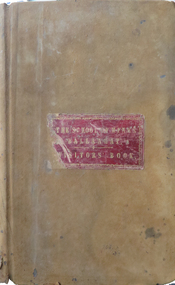
... Miner South Africa May 3 Albert E. King Accountant Adelaide, South Australia "see signature 6 leaves back" May 6 William Morley Wesleyan Minister Auckland, New Zealand May 6 Rainsford Ravin Wellington, New Zealand May 7 Frank E. Lawrence, Lake River, Tasmania May 9 M. Richter Engineer Germany...Miner South Africa May 3 Albert E. King Accountant Adelaide, South Australia "see signature 6 leaves back" May 6 William Morley Wesleyan Minister Auckland, New Zealand May 6 Rainsford Ravin Wellington, New Zealand May 7 Frank E. Lawrence, Lake River, Tasmania May 9 M. Richter Engineer Germany ...James Redmond Gilbert (sr) was born in 1837 at Hamilton, Ontario, Canada. He married Ellen Spouse. He , James Gilbert died on 26 July 1900 at Melbourne, and is buried at Boroondara Cemetery (Kew). J.R Gilbert lived at Running Creek (later Havilah) for some time, and during that time was employed in one of the bigger mines in the district. (Research by Ren at Havilah Research, 2019) Leatherbound ledger with hand written names, professions, residence and remarks relating to visitors to the Ballarat School of Mines. Sample Names: 1881 May 2 David Kerr Diamond Miner South Africa May 2 S. R. Dodds Diamond Miner South Africa May 3 Albert E. King Accountant Adelaide, South Australia "see signature 6 leaves back" May 6 William Morley Wesleyan Minister Auckland, New Zealand May 6 Rainsford Ravin Wellington, New Zealand May 7 Frank E. Lawrence, Lake River, Tasmania May 9 M. Richter Engineer Germany May 9 Dr Wilhelm Landall naturalist Berlin, Germany May 10 William Ralph Heaton Mercantile Birmingham May 11 Arthur I. Traill Grazier Llanpollen, New South Wales May 10 Marian Traill 1882 July 10 Arthur W.W. Brown London July 10 Benjamin Spargo Mining Mananger and owner Snowy Creek July 10 Thomas Cooke Miner Ballarat July 14 Robert H. Kenny July 14 Mr and Mrs Buston, [Indigo Planter?] Bengal, Indonesia July 14 Samuel H. Halker Ballarat July 14 Charles Phelan Talbot July 14 E. Walker Ballarat 1884 June 30 M.N. Cooper Dunedin, new Zealand June 30 Richard Hosking gardiner Gong Gong Well pleased with School June 30 Humphrey John Ballarat July 1 Cecily Gilbert Melbourne July 1 Florence Shrivall Melbourne July 1 [W.N. Marsh?] Colonial Secretary Hong Kong July 1 Louis Fause Engine Driver Dunolly July 1 John L. Bertram Blacksmith Melbourne July 1 Thomas Eardley Coachmaker London "Exceedingly obliged to Mr Oddie for a very pleasant instruction time spent in inspection of the various scientific appliances in the Ballarat School of Mines." (Donation 2/6) July 4 E. Goodwin [David?] Artist Spellbound July 4 W. Glumley Station Master Murtoa July July 4 James Thomas Miner Corrinondie, New Zealand "Very pleased with the School in all its branches. I hope to contribute to the specimen department. J.T." July 8 Robert Wall Engine Driver 1885 September 16 J.W. Springthorpe, M.D., Melbourne (very much pleased in every way) September 26 M. Oddie, Ballarat 1886 January 12 William Piekard, Leicester, England January 12 Robert Linford, Norwich, England January 12 H. Tipping, Draughtsman, Adelaide (Very instructive and should be taken advantage of by all who can) January 12 Fred H.K. Dreslecher, London (ditto) January 23 Walter Redgate, Manchester (ditto) April 7 Annie Bellingham, Richmond April 9 Fred Kruger, Landscape Photo, Geelong April 14 Mary Barry, Murtoa April 19 N.J. Tabuteau Accountant Napier, New Zealand April 19 George N. [Baroft?] Gentleman Cheshire, England April 21 Hon. George D'Almaine, Peer of England, London April 21 Lord Augustus Honour April 21 William Holt, South Melbourne April 21 H. Bartell, Gentleman, Smythes April 21 Fred Musgrove, Gentleman April 21 A. Chirnside, Squatter April 23 Alice Cravino, student, Buninyong April 24 East Melbourne Bicycle Club April 28 J. Kinnear, Kyneton April 28 J.P. Kinnear, Kyneton May 19 Bob Selby, Doctor, Ballarat May 19 J.W.M.. Quiggin, globe trotter, Picton (NS Wales) May 25 Arthur Night, Sutton Hotel, Ballarat (very fair) May 28 D. Kelly, attendant, China May 28 J. Kelly, schoolboy, China June 1 Joseph Jelbart, Blacksmith, Harrow September 9 David Ham, M.L.C. Ballarat ( A right to be pleased) September 9 J.J. Green, Merchant, Adelaide (Very much pleased with my visit to this intitiution it has my hearty sympathy and appreciation, Much pleased at what I have seen its value to the community) 9 December James H. Tappin, Agent, Ballarat (very pleased with instruction 1887 March 20 Thomas Bath Learmonth March 20 James R. Gilbert= Miner Running Creek March 20 C. Holtermann Out of business Adelaide 1890 21 May Mr and Mrs Fairchild, gentleman. Yarra house, Dalgety St, St Kildaballarat school of mines, visitors, j.w. springthorpe, chinese visitors, visitors' book, running creek, james redmond gilbert sr, havilah -
 Flagstaff Hill Maritime Museum and Village
Functional object - Lamp, Carl Hermann Nier, 1928-1932
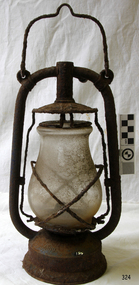
... Carl Hermann Nier in 1877 a silverware maker started to produce miners lamps and household lanterns in Beierfeld, Saxonia, East Germany. In January 1902 he established the Nier-Feuerh and company in his home town to produce kerosene lanterns. ...Carl Hermann Nier in 1877 a silverware maker started to produce miners lamps and household lanterns in Beierfeld, Saxonia, East Germany. In January 1902 he established the Nier-Feuerh and company in his home town to produce kerosene lanterns. ...Carl Hermann Nier in 1877 a silverware maker started to produce miners lamps and household lanterns in Beierfeld, Saxonia, East Germany. In January 1902 he established the Nier-Feuerh and company in his home town to produce kerosene lanterns. Carl's three sons Bruno, Curt and Woldemar Nier made the company into the largest lantern producer in the 1930s with Bruno Nier holding many patents for lamps. Lantern production was interrupted by World War II and ceased at the end of 1944 because of the shortage of materials and the advancing Russian army. After the Second World War the company restart the lantern production in 1947 at Luedenscheid and Hohenlockstedt north of Hamburg and fully re-establishing the company in 1950. A domestic item with an interesting history that now is sought after by collectors giving an insight into how hurricane kerosene lamps came into being from a manufacturer in Germany that held numerous patents for oil lamps from 1902 until 1940.Kerosene Lamp with handle, blue in colour, badly rusted. Lamp shade has lever to lift so you can light. Marked "Feuerhand Nr 327" "Made in Germany".flagstaff hill, warrnambool, shipwrecked coast, flagstaff hill maritime museum, shipwreck coast, flagstaff hill maritime village, great ocean road, lamp, kerosene lamp, hurricane lamp, nier-feuerh, carl hermann nier -
 City of Moorabbin Historical Society (Operating the Box Cottage Museum)
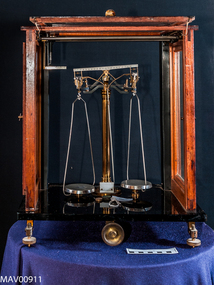
Scales, Gold, Apothecary, Analytical in Glass Case c1880, c1880
... Gottingen made fine precision scientific scales for use by assayers, jewellers, chemists, gold buyers rtc. scales balance precision measures gold pharmacy precious metals jewellery gottingen germany sartorious f moorabin bentleigh cheltenham early settlers gold miners pioneers market gardeners ballarat bendigo imperial measure troy weight D.R.PATENT / GOTTINGER PRAZISIONSWAGENFABRIK G.m.b.H. / GOTTINGEN On upright V over GPW A 2 pan analytical, scientific or pharmaceutical beam balance scale made in Gottingen Germany c 1880. ...A pair of scales or dishes in which objects to be weighed and the weights / masses against which to weigh them are placed is an "Apparatus for weighing. The pan, or each of the pans, of a balance." Its parts include a fulcrum, a beam that balances on it, two pans at the ends of the beam to hold the materials to be weighed, and counter-balancing weights. Gottingen made fine precision scientific scales for use by assayers, jewellers, chemists, gold buyers rtc. A 2 pan analytical, scientific or pharmaceutical beam balance scale made in Gottingen Germany c 1880. These scales are encased in a mahogany framed glass cabinet and Graded 0 -9 9-0D.R.PATENT / GOTTINGER PRAZISIONSWAGENFABRIK G.m.b.H. / GOTTINGEN On upright V over GPW scales, balance, precision measures, gold, pharmacy, precious metals, jewellery, gottingen germany, sartorious f, moorabin, bentleigh, cheltenham, early settlers, gold miners, pioneers, market gardeners, ballarat, bendigo, imperial measure, troy weight -
 Montmorency–Eltham RSL Sub Branch
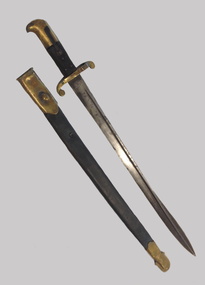
Weapon - 1855 Pattern Sappers and Miners Lancaster Sword Bayonet, Carl Reinhard KIRSCHBAUM, 1855 Pattern Sapper and Miners Lancaster Sword Bayonet, 1855
... Miners bayonet appeared in 1841 and differs significantly from this type. Pattern 1855 bayonets were issued to some volunteer units of the Victorian defence forces in the late 1850s, bayonet victorian defence forces lancaster carbine Knight's Head stamping of the German Solingen-based firm Carl Reinhard KIRSCHBAUM Stylised beaked-brass pommel with T- shaped attachment slot. ...This bayonet and scabbard was made for the Charles Lancaster .577 calibre Oval Bore Carbine and was known as the Pattern 1855 'Sappers and Miners' bayonet because they were designed for use by the Corps of British Royal Sappers & Miners. The first model Sappers and Miners bayonet appeared in 1841 and differs significantly from this type. Pattern 1855 bayonets were issued to some volunteer units of the Victorian defence forces in the late 1850s, Stylised beaked-brass pommel with T- shaped attachment slot. A steel press stud operates the locking catch via a steel leaf spring on right side of hilt. Two-piece black chequered leather grips. Left grip has four small steel rivets, right grip three rivets and the leaf spring securing screw. Brass cross-guard with formed muzzle ring. Long single-edged, pipe backed, quill pointed 24 inch (615mm) steel blade. Original leather scabbard with brass locket and chape.Knight's Head stamping of the German Solingen-based firm Carl Reinhard KIRSCHBAUM bayonet, victorian defence forces, lancaster carbine -
 Flagstaff Hill Maritime Museum and Village
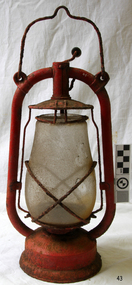
Functional object - Lamp, Carl Hermann Nier, 1928-1932
... Carl Hermann Nier in 1877 a silverware maker started to produce miners lamps and household lanterns in Beierfeld, Saxonia, East Germany. In January 1902 he established the Nier-Feuerh and company in his home town to produce kerosene lanterns. ...Carl Hermann Nier in 1877 a silverware maker started to produce miners lamps and household lanterns in Beierfeld, Saxonia, East Germany. In January 1902 he established the Nier-Feuerh and company in his home town to produce kerosene lanterns. ...Carl Hermann Nier in 1877 a silverware maker started to produce miners lamps and household lanterns in Beierfeld, Saxonia, East Germany. In January 1902 he established the Nier-Feuerh and company in his home town to produce kerosene lanterns. Carl's three sons Bruno, Curt and Woldemar Nier made the company into the largest lantern producer in the 1930s with Bruno Nier holding many patents for lamps. Lantern production was interrupted by World War II and ceased at the end of 1944 because of the shortage of materials and the advancing Russian army. After the Second World War the company restart the lantern production in 1947 at Luedenscheid and Hohenlockstedt north of Hamburg and fully re-establishing the company in 1950. A domestic item with an interesting history that now is sought after by collectors giving an insight into how hurricane kerosene lamps came into being from a manufacturer in Germany that held numerous patents for oil lamps from 1902 until 1940.Kerosene lamp with handle, red in colour, badly rusted. Lamp shade has lever to lift so you can light it.Marked "Feuerhand Nr 327" "Made in Germany".flagstaff hill, warrnambool, shipwrecked coast, flagstaff hill maritime museum, shipwreck coast, flagstaff hill maritime village, great ocean road, lamp, kerosene lamp, hurricane lamp, nier-feuerh, carl hermann nier -
 Eltham District Historical Society Inc
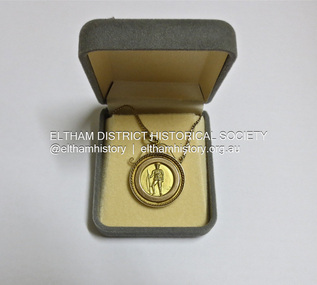
Photograph - Medal, Jim Connor, Welcome Home Medal awarded to Spr. W. H. Orford by Shire of Eltham Welcome Home Committee, 22 April 2014
... At 3:10 a.m. on June 7, nearly 1,000,000 pounds of explosives (ammonal) were detonated, creating one of the largest pre-atomic explosions in history The explosions shattered German morale and destroyed defences, allowing Allied forces to take the ridge. Specifically, Australian miners placed, at great risk, two massive mines under the German-held Hill 60 and the nearby "Caterpillar" crater. ...At 3:10 a.m. on June 7, nearly 1,000,000 pounds of explosives (ammonal) were detonated, creating one of the largest pre-atomic explosions in history The explosions shattered German morale and destroyed defences, allowing Allied forces to take the ridge. Specifically, Australian miners placed, at great risk, two massive mines under the German-held Hill 60 and the nearby "Caterpillar" crater. ...Awarded to Spr. W. H. Orford by Shire of Eltham Welcome Home Committee Welcome Home Medal The Welcome Home Medal was issued to acknowledge service during World War 1. As groups of servicemen returned and were discharged a local welcome home function was held in their honour. The welcome home committee decided that to commemorate the occasion a medal should be presented to the returned servicemen and also to the nearest relations of those who had fallen during the conflict. The medal shown was presented to Sapper William Henry Orford, of the 2nd Australian Tunnelling Company, an uncle of Doug Orford, one of our members. Sapper Orford participated in an operation where on June 7, 1917, British and Australian tunnellers detonated 19 massive mines beneath German lines at Messines Ridge, Belgium, marking a pivotal moment in WWI underground warfare. The explosions, including those at the heavily contested Hill 60, created craters 60 feet deep, killed roughly 10,000 German troops, and were heard as far away as London. Tunnellers from Australian and British units worked for over a year (since 1916) in treacherous conditions—including quicksand and mud—to dig tunnels beneath German strongpoints. At 3:10 a.m. on June 7, nearly 1,000,000 pounds of explosives (ammonal) were detonated, creating one of the largest pre-atomic explosions in history The explosions shattered German morale and destroyed defences, allowing Allied forces to take the ridge. Specifically, Australian miners placed, at great risk, two massive mines under the German-held Hill 60 and the nearby "Caterpillar" crater. Inscribed on the front of the medal is: SPR W.H. ORFORD FROM ELTHAM WE HONOUR YOU GREAT WAR 1914 – 1919 On the back of the medal is the image of a soldier standing at ease with a rifle. Smaller than originally stated the Eltham Districts medal is midway between a 10 and 20 cent piece in size. The medal is a fine piece of craftsmanship and is understood to have cost £4 to make. On 22nd April 2014 Society members were pleased to attend an announcement by Mr Damien Drum, Victorian Minister for Veterans Affairs and Sport, of funding for installation of signage for the Eltham and Hurstbridge Avenues of Honour. Doug Orford was there and created much interest with his Welcome Home Medal, including from Minister Drum. See also EDHS Newsletter No. 216 May 2014spr. w.h. orford, welcome home committee, welcome home medal, world war 1, avenue of honour, jim connor collection, mr damien drum, victorian minister for veterans affairs and sport, william henry orford -
 Eltham District Historical Society Inc
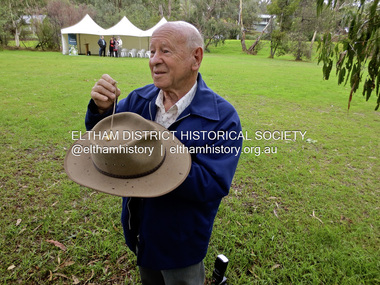
Photograph - Medal, Jim Connor, Doug Orford with the Welcome Home Medal awarded to Spr. W. H. Orford by Shire of Eltham Welcome Home Committee, 22 April 2014
... At 3:10 a.m. on June 7, nearly 1,000,000 pounds of explosives (ammonal) were detonated, creating one of the largest pre-atomic explosions in history The explosions shattered German morale and destroyed defences, allowing Allied forces to take the ridge. Specifically, Australian miners placed, at great risk, two massive mines under the German-held Hill 60 and the nearby "Caterpillar" crater. ...At 3:10 a.m. on June 7, nearly 1,000,000 pounds of explosives (ammonal) were detonated, creating one of the largest pre-atomic explosions in history The explosions shattered German morale and destroyed defences, allowing Allied forces to take the ridge. Specifically, Australian miners placed, at great risk, two massive mines under the German-held Hill 60 and the nearby "Caterpillar" crater. ...Awarded to Spr. W. H. Orford by Shire of Eltham Welcome Home Committee Welcome Home Medal The Welcome Home Medal was issued to acknowledge service during World War 1. As groups of servicemen returned and were discharged a local welcome home function was held in their honour. The welcome home committee decided that to commemorate the occasion a medal should be presented to the returned servicemen and also to the nearest relations of those who had fallen during the conflict. The medal shown was presented to Sapper William Henry Orford, of the 2nd Australian Tunnelling Company, an uncle of Doug Orford, one of our members. Sapper Orford participated in an operation where on June 7, 1917, British and Australian tunnellers detonated 19 massive mines beneath German lines at Messines Ridge, Belgium, marking a pivotal moment in WWI underground warfare. The explosions, including those at the heavily contested Hill 60, created craters 60 feet deep, killed roughly 10,000 German troops, and were heard as far away as London. Tunnellers from Australian and British units worked for over a year (since 1916) in treacherous conditions—including quicksand and mud—to dig tunnels beneath German strongpoints. At 3:10 a.m. on June 7, nearly 1,000,000 pounds of explosives (ammonal) were detonated, creating one of the largest pre-atomic explosions in history The explosions shattered German morale and destroyed defences, allowing Allied forces to take the ridge. Specifically, Australian miners placed, at great risk, two massive mines under the German-held Hill 60 and the nearby "Caterpillar" crater. Inscribed on the front of the medal is: SPR W.H. ORFORD FROM ELTHAM WE HONOUR YOU GREAT WAR 1914 – 1919 On the back of the medal is the image of a soldier standing at ease with a rifle. Smaller than originally stated the Eltham Districts medal is midway between a 10 and 20 cent piece in size. The medal is a fine piece of craftsmanship and is understood to have cost £4 to make. On 22nd April 2014 Society members were pleased to attend an announcement by Mr Damien Drum, Victorian Minister for Veterans Affairs and Sport, of funding for installation of signage for the Eltham and Hurstbridge Avenues of Honour. Doug Orford was there and created much interest with his Welcome Home Medal, including from Minister Drum. See also EDHS Newsletter No. 216 May 2014spr. w.h. orford, welcome home committee, welcome home medal, world war 1, avenue of honour, jim connor collection, mr damien drum, victorian minister for veterans affairs and sport, william henry orford -
 Eltham District Historical Society Inc
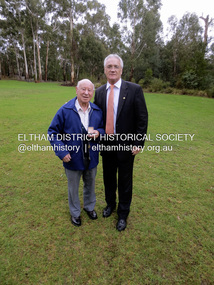
Photograph - Medal, Jim Connor, Doug Orford with Minister Damian Drum, Minister for Veterans' Affairs at Wingrove Park, Eltham, 22 April 2014
... At 3:10 a.m. on June 7, nearly 1,000,000 pounds of explosives (ammonal) were detonated, creating one of the largest pre-atomic explosions in history The explosions shattered German morale and destroyed defences, allowing Allied forces to take the ridge. Specifically, Australian miners placed, at great risk, two massive mines under the German-held Hill 60 and the nearby "Caterpillar" crater. ...At 3:10 a.m. on June 7, nearly 1,000,000 pounds of explosives (ammonal) were detonated, creating one of the largest pre-atomic explosions in history The explosions shattered German morale and destroyed defences, allowing Allied forces to take the ridge. Specifically, Australian miners placed, at great risk, two massive mines under the German-held Hill 60 and the nearby "Caterpillar" crater. ...Awarded to Spr. W. H. Orford by Shire of Eltham Welcome Home Committee Welcome Home Medal The Welcome Home Medal was issued to acknowledge service during World War 1. As groups of servicemen returned and were discharged a local welcome home function was held in their honour. The welcome home committee decided that to commemorate the occasion a medal should be presented to the returned servicemen and also to the nearest relations of those who had fallen during the conflict. The medal shown was presented to Sapper William Henry Orford, of the 2nd Australian Tunnelling Company, an uncle of Doug Orford, one of our members. Sapper Orford participated in an operation where on June 7, 1917, British and Australian tunnellers detonated 19 massive mines beneath German lines at Messines Ridge, Belgium, marking a pivotal moment in WWI underground warfare. The explosions, including those at the heavily contested Hill 60, created craters 60 feet deep, killed roughly 10,000 German troops, and were heard as far away as London. Tunnellers from Australian and British units worked for over a year (since 1916) in treacherous conditions—including quicksand and mud—to dig tunnels beneath German strongpoints. At 3:10 a.m. on June 7, nearly 1,000,000 pounds of explosives (ammonal) were detonated, creating one of the largest pre-atomic explosions in history The explosions shattered German morale and destroyed defences, allowing Allied forces to take the ridge. Specifically, Australian miners placed, at great risk, two massive mines under the German-held Hill 60 and the nearby "Caterpillar" crater. Inscribed on the front of the medal is: SPR W.H. ORFORD FROM ELTHAM WE HONOUR YOU GREAT WAR 1914 – 1919 On the back of the medal is the image of a soldier standing at ease with a rifle. Smaller than originally stated the Eltham Districts medal is midway between a 10 and 20 cent piece in size. The medal is a fine piece of craftsmanship and is understood to have cost £4 to make. On 22nd April 2014 Society members were pleased to attend an announcement by Mr Damien Drum, Victorian Minister for Veterans Affairs and Sport, of funding for installation of signage for the Eltham and Hurstbridge Avenues of Honour. Doug Orford was there and created much interest with his Welcome Home Medal, including from Minister Drum. See also EDHS Newsletter No. 216 May 2014spr. w.h. orford, welcome home committee, welcome home medal, world war 1, avenue of honour, jim connor collection, mr damien drum, victorian minister for veterans affairs and sport, william henry orford -
Warrnambool and District Historical Society Inc.
Functional object - Kerosene Lantern, Nier Feuerhand Company, Germany, c. 1930
... This lantern was made about 1930 by the Nier Feuerhand Company of Germany. Hermann Nier began making miners' lamps and household lanterns in the 1870s in East Germany and in 1893 he and his brother Ernst founded the Nier Feuerhand Company. ...This lantern was made about 1930 by the Nier Feuerhand Company of Germany. Hermann Nier began making miners' lamps and household lanterns in the 1870s in East Germany and in 1893 he and his brother Ernst founded the Nier Feuerhand Company. ...This lantern was made about 1930 by the Nier Feuerhand Company of Germany. Hermann Nier began making miners' lamps and household lanterns in the 1870s in East Germany and in 1893 he and his brother Ernst founded the Nier Feuerhand Company. By 1930 this company was the world's largest producer of household lanterns and after an interruption in World War Two it was re-established in West Germany and continued until the 1990s with the trade name still in use today. Feuerhand lanterns were used extensively in countries such as Australia because of his strong lighting qualities and its ability to stay alight in external conditions.This lantern has no known local provenance but is retained because it is a fine example of the type of household lighting used in Australian homes, farms and businesses in the 19th and early 20th centuries.This is a kerosene lantern with a metal base and frame holding a plain glass mantle open at the top. A metal handle is attached to loops at the top of the frame. There is a wooden handle at the top to assist in the removal of the glass mantle. The base has an opening with a screw top for the filling with kerosene or other heating liquid and also a rotating wheel on the side for controlling the size of the flame. The glass has printing and a logo etched on to it and the base has printing and a logo. The item is very rusted but appears to have been painted brown.Feuerhand Made in Germany No. 327vintage lighting, feuerhand lanterns -
 Eltham District Historical Society Inc
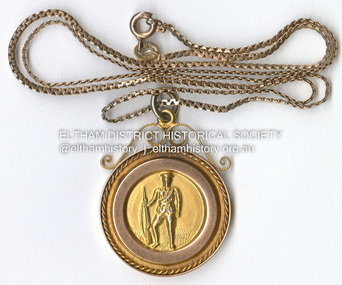
Photograph - Medal, Awarded to Spr. W. H. Orford by Shire of Eltham Welcome Home Committee, 1919
... He was a Tunneler and was part of an operation of a group of British miners (known as "Claykickers" or “Manchester Moles”) recruited during World War I to tunnel underneath no man's land and set bombs below the German front at the Battle of Messines in June 1917. 10,000 German soldiers were killed instantly after the detonation of explosives beneath their lines. ...He was a Tunneler and was part of an operation of a group of British miners (known as "Claykickers" or “Manchester Moles”) recruited during World War I to tunnel underneath no man's land and set bombs below the German front at the Battle of Messines in June 1917. 10,000 German soldiers were killed instantly after the detonation of explosives beneath their lines. ...Medal presented for their service to their country and local district to returning local servicemen from the Great War (First World War) by the Shire of Eltham Welcome Home Committee. This medal was presented to W.H. Orford. Spr. W.H. Orford From Eltham We Honour You Great War 1914 - 1919 Whilst the war ended in 1918, many servicemen did not return home till 1919. ORFORD William Henry - Munitions Worker Number 542 William Henry Orford enlisted 1 Feb 1916 and embarked for France 25 May 1916. He was a Tunneler and was part of an operation of a group of British miners (known as "Claykickers" or “Manchester Moles”) recruited during World War I to tunnel underneath no man's land and set bombs below the German front at the Battle of Messines in June 1917. 10,000 German soldiers were killed instantly after the detonation of explosives beneath their lines. The story was depicted in the film "The War Below". Doug Orford, William's nephew recalls William saying they could hear the Germans as they tunnelled below them within metres. A month later He was wounded in action with a gun shot wound to the scalp and face in July 1917. He disembarked back in Melbourne on September 5, 1919.ww1, 1919, aif, battle of messine, great war, medal, shire of eltham, tunneler, welcome home committee, william henry orford -
 Eltham District Historical Society Inc
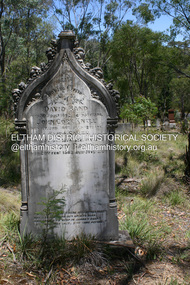
Photograph - Digital Photograph, Alan King, Queenstown Cemetery, Smiths Gully Road, St Andrews, 28 December 2007
... Many of the Caledonia Diggings miners were Chinese, many of whom, with itinerant prospectors, were buried in unmarked graves. Histories are being recorded of other immigrants, mainly English and German, who settled after the gold rush, some of whose descendants fought and died in the two world wars. ...Many of the Caledonia Diggings miners were Chinese, many of whom, with itinerant prospectors, were buried in unmarked graves. Histories are being recorded of other immigrants, mainly English and German, who settled after the gold rush, some of whose descendants fought and died in the two world wars. ...The discovery of gold in Smyth's Creek in 1854 and subsequent gold rush to the Caledonia diggings led to the establishment of Queenstown (present day St Andrews). The first recorded burial was July 31st, 1861 and it was officially declared a Cemetery Reserve in 1866. Many graves are unmarked and unrecorded including many Chinese and other itinerant miners. The cemetery was closed for new burials in 1851. The last recorded burial was in 1981 in an existing family grave. In Loving memory of David Band Died 30th Decr. 1862, aged 51 years. John Cork Knell Died 11th April 1867, aged 42 years. Eliza Smith Died 20th Jany. 1874, aged 3 1/2 years. William Band Died 20th Feby. 1883, aged 51 years. Published: Nillumbik Now and Then / Marguerite Marshall 2008; photographs Alan King with Marguerite Marshall.; p73 The discovery of gold at Smyth’s Creek* in 1854 brought 3000 people to the area in search of their fortunes.1 However in the harsh conditions many miners and their families died young, and were buried in unmarked graves. Their stories died with them but by 1861, the first burial was recorded at the Queenstown Cemetery – that of William Dalrymple aged 65 – although the cemetery was only officially declared a reserve in 1866. Even before this in 1856, a double burial had been recorded for the twin baby daughters of George Harrison at Market Square, the miners’ settlement – presumably where the cemetery is today. In 1951 the Queenstown Cemetery at 70 Smiths Gully Road, Smiths Gully, closed for burials. However the last burial in a family plot, that of Grace Evelyn Smith, occurred in 1981. Today only 55 headstones remain, but more than 380 burials are recorded. Remnant bushland dominates the cemetery where many graves are merely mounds and others have been damaged by vandalism and the neglect of time. Bushfire in 1962 destroyed the picket fencing, grave markers and cypress boundary planted in the early 1900s. The box/stringybark woodland in the 1.7 hectare Cemetery Reserve is regrowth from then and the indigenous and heritage vegetation is protected. Thanks to the volunteer Cemetery Trust and Friends & Relations of Queenstown Cemetery, the cemetery is maintained, stories recorded and the burial index corrected and expanded.2 Close by the cemetery on the site of today’s Peter Franke Picnic and Nature Reserve stood Market Square, the Caledonia Diggings village of tents and stores, the forerunner of Queenstown, now St Andrews. Many of the Caledonia Diggings miners were Chinese, many of whom, with itinerant prospectors, were buried in unmarked graves. Histories are being recorded of other immigrants, mainly English and German, who settled after the gold rush, some of whose descendants fought and died in the two world wars. Names on many headstones are also recorded on the district’s roads, reserves and war memorials such as Motschall, Joyce, Howard and Coutie. The oldest surviving tombstone is that of Scot, David Band who died in 1862 at 51 years. His oldest daughter Elizabeth, with husband John Knell, owned the Queenstown Hotel and the post office. Child-rearing in a colonial gold town was often tragically difficult, as demonstrated in the first 20 years, when 41% of the 34 burials recorded were children. Settlers endured harsh conditions graphically illustrated with the deaths of Annie Joyce at 30 years and of her family. Annie was married to gold miner Walter Joyce. Their third child Walter, born in 1886, died in March 1887. Eight months later Annie died of breast cancer. Walter died in 1909, aged 53, of miner’s phthisic caused by stone dust destroying his lungs. It was so hard to make a living that burials were usually held from 2.30 pm to allow mourners to work a day before paying their last respects.3 Most burials before 1890 were recorded as Anglicans, as the only church on the Caledonia Diggings was the Church of St Andrew, until 1897, when the Primitive Methodist Church came to Panton Hill. Generally miners came to better themselves, but some, like Grace Hopkinson (nee Milward), born in England in 1828, came from a well-off and educated family. According to family legend Grace emigrated with husband William, to live in a tent, but had kept her personally embossed sterling silver cutlery service. Amid the tough environment were some successes like that reported in The Evelyn Observer April/May 1901 of miner William Hopkinson who was buried at the cemetery in 1912 aged 81. The Observer stated that Hopkinson ‘recently dropped across another find in his claim at One Tree Hill’. The lump of gold found this time weighed more than half a kilo. Mr Hopkinson referred to it as ‘another little speck’. *Today’s Smiths GullyThis collection of almost 130 photos about places and people within the Shire of Nillumbik, an urban and rural municipality in Melbourne's north, contributes to an understanding of the history of the Shire. Published in 2008 immediately prior to the Black Saturday bushfires of February 7, 2009, it documents sites that were impacted, and in some cases destroyed by the fires. It includes photographs taken especially for the publication, creating a unique time capsule representing the Shire in the early 21st century. It remains the most recent comprehenesive publication devoted to the Shire's history connecting local residents to the past. nillumbik now and then (marshall-king) collection, david band, eliza smith, gravestones, john cork knell, queenstown cemetery, smiths gully road, st andrews, william band -
 Bendigo Historical Society Inc.
Textile - Flags
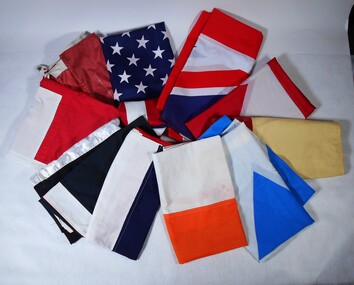
... miners protested against the Licence fee imposed by the Government. Flags Red Ribbon Agitation Replicas of various flags used during the Red Ribbon Agitation (1853) re-enactments. There are flags of Scotland, Ireland, France, Germany ...The Red Ribbon Agitation took place in Sandhurst in 1853 when the miners protested against the Licence fee imposed by the Government.Replicas of various flags used during the Red Ribbon Agitation (1853) re-enactments. There are flags of Scotland, Ireland, France, Germany, Canada, Switzerland, USA, Union Jack and two St Piran's Flag of Cornwall. The Red Ribbon replica flag has four segments: Gold Scales, Emu/Kangaroo, Pick/Shovel and Gold Cradle and a Roman bundle of sticks.flags, red ribbon agitation -
 Bendigo Historical Society Inc.
Book - BENDIGO THE GERMAN CHAPTER, 1998
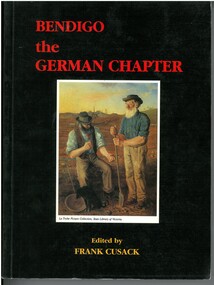
... miners entitled Theodore and Christopher Ballerstedt on cover. Contains 275 pages with contents and index, text, black and white photos and diagrams. Book BENDIGO THE GERMAN ...BHS CollectionSoftcover book with black cover and red title. Coloured print of painting of two miners entitled Theodore and Christopher Ballerstedt on cover. Contains 275 pages with contents and index, text, black and white photos and diagrams.Frank Cusack -
 Bendigo Historical Society Inc.
Document - DIAMOND HILL, THE ENCLAVES
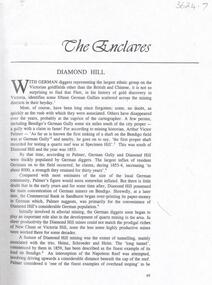
... The 'German Arches' in the tunnel were constructed by miners who bought their skills and experience from the Harz Mountains. ...The 'German Arches' in the tunnel were constructed by miners who bought their skills and experience from the Harz Mountains. ...Four page, double sided copy of chapter titled 'The Enclaves' from 'Bendigo, The German Story'. Reference to the Heinz, Schroeder and Helm 'long tunnel' at Diamond Hill, described as the finest example of its kind on Bendigo. The 'German Arches' in the tunnel were constructed by miners who bought their skills and experience from the Harz Mountains. Other prominent Germans were Friedrich Adolph Hermann Schilling, Louis August Samuels and Ruschmeyer's, who owned the Town and Country Hotel, Diamond Hill. -
 Bendigo Historical Society Inc.
Newspaper - JENNY FOLEY COLLECTION: BEGINNINGS
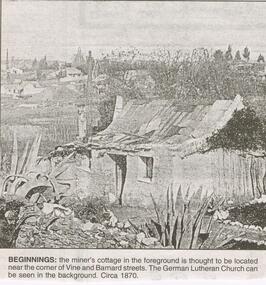
... Beginnings: the miner's cottage in the foreground is thought to be located near the corner of Vine and Barnard streets. The German...Beginnings: the miner's cottage in the foreground is thought to be located near the corner of Vine and Barnard streets. The German ...Bendigo Advertiser "The way we were" from 1999. Beginnings: the miner's cottage in the foreground is thought to be located near the corner of Vine and Barnard streets. The German Lutheran Church can be seen in the background. Circa 1870.newspaper, bendigo advertiser, the way we were -
 Bendigo Historical Society Inc.
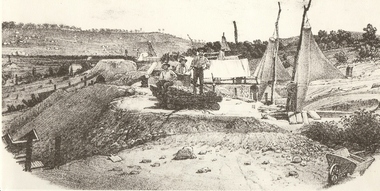
Photograph - MINERS AT VICTORIA REEF, c.1857
... MINE Gold victoria hill Book 'Bendigo the German Chapter' by Frank Cusack. P52. mines and mining mine place workers miners mining equipment equipment Frank Cusack history Alex Fox Black and white photograph of sketch of workmen at mine site. ...Black and white photograph of sketch of workmen at mine site. Air ventilators on top of mine shafts to R. Wheelbarrow at R foreground. Wind socks or sails were used to ventilate the holes. History: 'Victoria Reef 1857, Frank Cusack after a photograph by Alex Fox.Alex Foxmine, gold, victoria hill, book 'bendigo, the german chapter' by frank cusack. p52., mines and mining, mine, place, workers, miners, mining equipment, equipment, frank cusack, history -
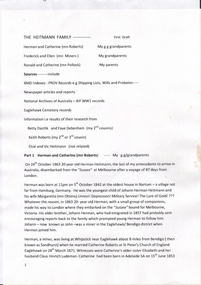 Bendigo Historical Society Inc.
Document - FAMILY HISTORY NOTES ON HEITMANN AND HAMILTON FAMILIES
... 15 pages of research on the Heitmann family starting with Herman and Catherine (nee Roberts), Frederick and Ellen (Nee Miners) and Ronald and Catherine (nne Pollock). Herman was born October 5, 1842 in Nartum, Germany. ...GENEALOGY Family Heitmann 15 pages of research on the Heitmann family starting with Herman and Catherine (nee Roberts), Frederick and Ellen (Nee Miners) and Ronald and Catherine (nne Pollock). Herman was born October 5, 1842 in Nartum, Germany. ...15 pages of research on the Heitmann family starting with Herman and Catherine (nee Roberts), Frederick and Ellen (Nee Miners) and Ronald and Catherine (nne Pollock). Herman was born October 5, 1842 in Nartum, Germany. He made the trip to Melbourne in 1863 aboard the "Sussex".`genealogy, family, heitmann -
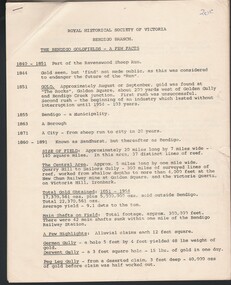 Bendigo Historical Society Inc.
Document - THE BENDIGO GOLDFIELDS - A FEW FACTS, c1970
... Miners The Bendigo Goldfields A Few Facts Document. A Few Facts (7 copies). Two page typed, timelined document on the Goldfield area of Bendigo 1851 1954 by the Bendigo Branch of the Royal Historical Society of Victoria. Mentions Ravenswood sheep run, German ...Document. A Few Facts (7 copies). Two page typed, timelined document on the Goldfield area of Bendigo 1851 1954 by the Bendigo Branch of the Royal Historical Society of Victoria. Mentions Ravenswood sheep run, German Gully, Derwent Gully, Peg Leg Gully, 'The Dascombe' & 'The Victoria' gold nuggets. Watson's Kentish mine in Long Gully, Garden Gully United in Ironbark, The Great Extended Hustlers Tribute on Hustlers Hill, The New Chum United in Golden Square, The Victoria Quartz in Victoria Hill Ironbark, The United Devonshire Mine in Eaglehawk, The Famous Devonshire Valley, Portion of the New Chum Group in Golden Square, The New Moon, The South New Moon, The 'Flying Fox' which conveyed the quartz from the Central Red, White and Blue mine to New Chum Hill, Lansell's'222' Mine, The Mine in the Heart of the City, The Fortuna Hustlers Mine; Snob's Hill, Sailors Gully & Devonshire Gully at Eaglehawk, California Gully, Long Gully, Victoria Hill at Ironbark, New Chum Hill & New Chum Valley at Golden Square, Hustlers Hill & Comet & Redan Hills at North Bendigo.cottage, miners, the bendigo goldfields, a few facts -
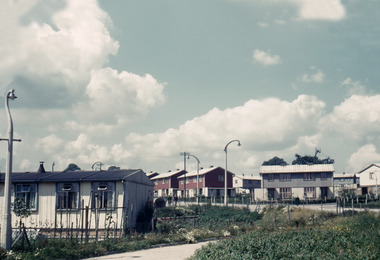 Robin Boyd Foundation
Slide, Robin Boyd, 1950
... Germany, Austria, Switzerland and Spain. Haddon Travelling Scholarship Haddon robin boyd slide England Prefab (Handwritten) / Nottingham: 'Miners' Prefab & Semi-Permanents / 1950 (Handwritten) Colour slide in a mount. ...Penleigh Boyd, Robin and Patricia Boyd's son, writes “Prior to 1950 Robin, like most other amateur or hobby photographers, took black and white printed photographs. The oldest slides date from 1950 when Robin and Patricia travelled to Europe on Robin’s Robert Haddon Travelling Scholarship.” In 1948 Robin Boyd was awarded ‘joint first place’ in the Robert Haddon competition for his design of Mildura art gallery. The scholarship helped fund their first overseas trip. Robin and Patricia were passengers on the Greek ship “Cyrenia” departing in May 1950, passing through the Suez Canal and landing in Genoa five weeks later. For six months, they travelled extensively throughout Europe (predominantly driving themselves) - France, Italy, United Kingdom, Sweden, Denmark, Germany, Austria, Switzerland and Spain.Colour slide in a mount. "Miners" Prefab and semi-permanent housing, possibly Aspley Council Estate, Nottingham, EnglandEngland Prefab (Handwritten) / Nottingham: 'Miners' Prefab & Semi-Permanents / 1950 (Handwritten)haddon travelling scholarship, haddon, robin boyd, slide
