
Showing 41 items matching "ideology"
-
 National Vietnam Veterans Museum (NVVM)
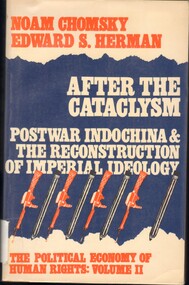
Book, Chomsky, Noam, & Herman, Edward S, After the Cataclysm: Postwar Indochina and the Reconstruction of Imperial Ideology
... After the Cataclysm: Postwar Indochina and the Reconstruction of Imperial Ideology...After the Cataclysm: Postwar Indochina and the Reconstruction of Imperial Ideology Book Book Chomsky, Noam, & Herman, Edward S ...Chomsky and Herman have done a fine service for those seeking the truth about American imperialism. To progressive people in Australia, these volumes conform our worst fears of American foreign policy. These scholarly works contain serious implications for all Australians who are concerned with the direction of our own foreign policy.Chomsky and Herman have done a fine service for those seeking the truth about American imperialism. To progressive people in Australia, these volumes conform our worst fears of American foreign policy. These scholarly works contain serious implications for all Australians who are concerned with the direction of our own foreign policy.press - united states, indochina - history -1945, united states - foreign relations -
 Victorian Aboriginal Corporation for Languages
Book, Peter K Austin, Endangered languages : beliefs and ideologies in language documentation and revitalisation, 2014
... Julia Sallabank pt. 1 Case Studies: Beliefs and Ideologies in Endangered Language Communities 2.Paradoxes of Engagement with Irish Language Community Management, Practice, and Ideology /? ...Julia Sallabank pt. 1 Case Studies: Beliefs and Ideologies in Endangered Language Communities 2.Paradoxes of Engagement with Irish Language Community Management, Practice, and Ideology /? ...1.Introduction /? Julia Sallabank pt. 1 Case Studies: Beliefs and Ideologies in Endangered Language Communities 2.Paradoxes of Engagement with Irish Language Community Management, Practice, and Ideology /? Tadhg O. Hifearnain 3.Fluidity in Language Beliefs: The Beliefs of the Kormakiti Maronite Arabic Speakers of Cyprus towards their Language /? Chryso Hadjidemetriou 4.Reflections on the Promotion of an Endangered Language: The Case of Ladin Women in the Dolomites (Italy) /? Olimpia Rasom 5.Minority Language Use in Kven Communities: Language Shift or Revitalization? /? Anna-Kaisa Raisanen 6.Going, Going, Gone? The Ideologies and Politics of Gamilaraay-Yuwaalaraay Endangerment and Revitalization /? Peter K. Austin 7.Language Shift in an `Importing Culture': The Cultural Logic of the Arapesh Roads /? Lise M. Dobrin pt. 2 Language Documentation and Revitalization: What and Why? Contents note continued: 8.Ideologies, Beliefs, and Revitalization of Guernesiais (Guernsey) /? Julia Sallabank 9.Local Language Ideologies and Their Implications for Language Revitalization among the Sumu-Mayangna Indians of Nicaragua's Multilingual Caribbean Coast Region /? Eloy Frank Gomez 10.Must "We Save the Language? Children's Discourse on Language and Community in Provencal and Scottish Language Revitalization Movements /? James Costa 11.Revitalizing the Maori Language? /? Jeanette King 12.What Are We Trying to Preserve? Diversity, Change, and Ideology at the Edge of the Cameroonian Grassfields /? Jeff Good 13.The Cost of Language Mobilization: Wangkatha Language Ideologies and Native Title /? Jessica Boynton 14.Finding the Languages We Go Looking For /? Tonya N. Stebbins 15.Meeting Point: Parameters for the Study of Revival Languages /? Christina Eira pt. 3 From Local to International: Interdisciplinary and International Views Contents note continued: 16.Conflicting Goals, Ideologies, and Beliefs in the Field /? Simone S. Whitecloud 17.Whose Ideology, Where, and When? Rama (Nicaragua) and Francoprovencal (France) Experiences /? Michel Bert 18.UN Discourse on Linguistic Diversity and Multilingual ism in the 2000s: Actor Analysis, Ideological Foundations, and Instrumental Functions /? Anahit Minasyan 19.Language Beliefs and the Management of Endangered Languages /? Bernard Spolsky.maps, b&w photographs, tables, graphsendangered languages, language revival, education, language research -
Unions Ballarat
Power, action and belief: A new sociology of knowledge?, 1986
... ...ideology...Fyfe -- The Politics of schism: routinisation and social control in the International Socialists/Socialist workers' party / Steve Rayner -- The Social preconditions of radical scepticism / Mary Douglas -- The values of quantification / Jean Lave -- 'Interests' in political analysis / Barry Hindess -- Interactive-orientation and argumentation in scientific texts / Steven Yearley -- The Question of ideology: Althusser, Pecheux and Foucault / Mark Cousins and Athar Hussain -- On authority and its relationship to power / Barry Barnes -- Some elements of a sociology of translation: domestication of the scallops and the fishermen of St Brieuc Bay / Michel Callon -- On the methods of long-distance control: vessels, navigation and the Portuguese route to India / John Law -- The Powers of association / Bruno Latour. ...Broad relevance to how societies work. btlc ballarat trades and labour council ballarat trades hall power knowledge art socialism sociology politics science ideology Back cover: contributors' and editor's bios. ...Sociological text that explores social structure. Marxist and Durkeimian influences. Editor's introduction: Power/knowledge and the dissolution of the sociology of knowledge / John Law -- Art exhibitions and power during the nineteenth century / Gordon J. Fyfe -- The Politics of schism: routinisation and social control in the International Socialists/Socialist workers' party / Steve Rayner -- The Social preconditions of radical scepticism / Mary Douglas -- The values of quantification / Jean Lave -- 'Interests' in political analysis / Barry Hindess -- Interactive-orientation and argumentation in scientific texts / Steven Yearley -- The Question of ideology: Althusser, Pecheux and Foucault / Mark Cousins and Athar Hussain -- On authority and its relationship to power / Barry Barnes -- Some elements of a sociology of translation: domestication of the scallops and the fishermen of St Brieuc Bay / Michel Callon -- On the methods of long-distance control: vessels, navigation and the Portuguese route to India / John Law -- The Powers of association / Bruno Latour. Socially and politically significant. Broad relevance to how societies work.Paperback; white background; blue and black text; price sticker; 280 pages.Back cover: contributors' and editor's bios. Front cover: editor's name and title.btlc, ballarat trades and labour council, ballarat trades hall, power, knowledge, art, socialism, sociology, politics, science, ideology -
Tatura Irrigation & Wartime Camps Museum
Book, How Deep is High, 1999
... Written about Lavra Cameron of her personal encounter with the conflicting ideologies of Australian people...Written about Lavra Cameron of her personal encounter with the conflicting ideologies of Australian people how deep is high knorr h fiction camp 1 tatura ww2 camp 1 books novels Dark blue soft cover. ...Written about Lavra Cameron of her personal encounter with the conflicting ideologies of Australian peopleDark blue soft cover. Orange, white and blue abstract design, orange and white text. Back cover orange, blue and white, white texthow deep is high, knorr h, fiction, camp 1, tatura, ww2 camp 1, books, novels -
Broadmeadows Historical Society & Museum
Administrative record (sub-series) - Notice Paper, Notice papers and Agenda for meetings of the City of Broadmeadows, 1960
... Documents reflect systems of municipal governance, public works administration, and institutional ideology during a period of urban development and civic regulation. ...Documents reflect systems of municipal governance, public works administration, and institutional ideology during a period of urban development and civic regulation. ...Created and accumulated by Broadmeadows Historical Society (Broadmeadows Museum). Maintained as working records and reference materials.Created to document, support, and justify administrative governance, institutional ideology, and the planning, approval, and execution of municipal works and civic infrastructure.Documents appear to have been kept in subject based groupings, combining technical records with ideological or interpretive material. Original order largely maintained, reflecting creator usage rather than chronological sequencing. Arranged in chronological order.Sub series comprises: • Administrative memoranda and ideological statements. • Municipal engineering and public works reports. • Construction, street, drainage, and infrastructure documentation. • Approval notes, official reports, and technical appendices. • Mixed manuscript and typescript material with annotations. local government, municipal administration, public works, infrastructure development, bureaucracy, governance and authority, urban historylocal government, municipal administration, public works, infrastructure development, bureaucracy, governance and authority, urban history -
 Women's Art Register
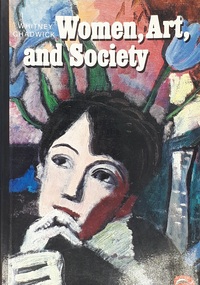
Book, Whitney Chadwick, Women, Art and Society, 1990
... Using research by other feminist writers and academics who have addressed the limitations of art history in regards to women's work, the book "reframes' many of the issues raised in previous writing to make visible "omissions and silences that reveal the power of culture ideology." (From the author's Preface)...Using research by other feminist writers and academics who have addressed the limitations of art history in regards to women's work, the book "reframes' many of the issues raised in previous writing to make visible "omissions and silences that reveal the power of culture ideology." (From the author's Preface) Complements many texts, catalogues, monographs and histories held by the Women's Art Register. painting sculpture performance feminism collage Illustrated feminist overview of women artists from the Middle Ages to the late 20th century, practising predominantly in Europe, United Kingdom and the United States. ...Illustrated feminist overview of women artists from the Middle Ages to the late 20th century, practising predominantly in Europe, United Kingdom and the United States.Booknon-fictionIllustrated feminist overview of women artists from the Middle Ages to the late 20th century, practising predominantly in Europe, United Kingdom and the United States.painting, sculpture, performance, feminism, collage -
Unions Ballarat
Book - Labour History No. 68 May 1995 (D.J. Spiers Collection), Irving, Terry
... This edition includes these articles: -Deskilling Revisited: Continuity and Change in Craft Work and Apprenticeship in Late 19th Century NSW -'Depravity and Disorder': the Sexuality of Convict Women -'That Old Treasure-House of Constructive Suggestion': Australian Labor Ideology and War Organisation of Industry -'Four More Points than Moses': Dr. ...This edition includes these articles: -Deskilling Revisited: Continuity and Change in Craft Work and Apprenticeship in Late 19th Century NSW -'Depravity and Disorder': the Sexuality of Convict Women -'That Old Treasure-House of Constructive Suggestion': Australian Labor Ideology and War Organisation of Industry -'Four More Points than Moses': Dr. ...Published semi-annually, contains refereed, scholarly articles about social and labour history in Australasia, - labour politics, trade unions, management labour practices, co-operatives, gender and ethnicity. This edition includes these articles: -Deskilling Revisited: Continuity and Change in Craft Work and Apprenticeship in Late 19th Century NSW -'Depravity and Disorder': the Sexuality of Convict Women -'That Old Treasure-House of Constructive Suggestion': Australian Labor Ideology and War Organisation of Industry -'Four More Points than Moses': Dr. H.V. Evatt and the Press and the 1944 Referendum -Chifley, the Army and the 1949 Coal Strike Labour and class politics; direct relevance to industrial relations; social issues in general that fall within the purview of the union movement.Book; paper.btlc, ballarat trades and labour council, history - labour, labourism, politics - class, industrial relations, economics, politics - communism, women's rights, book reviews, conference reports -
 Nillumbik Shire Council
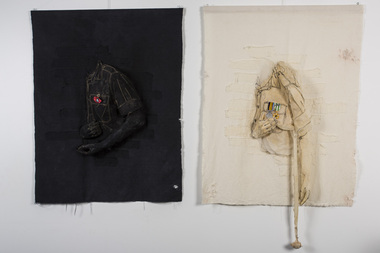
Mixed Media (textiles): Rosalie COGAN (b.1948 Vaght, Netherlands), Rosalie Cogan, War and Peace, 1987
... The obverse of this medal shows the crowned head of Queen Elizabeth II, with titles, while the reverse has the inscription VIETNAM above a symbolic representation of the ideological war in Vietnam. The RSL poppy (the Flanders poppy) has long been a part of Remembrance Day, the ritual that marks the Armistice of 11 November 1918, and is also increasingly being used as part of Anzac Day observances. ...A replica of the 'Vietnam Medal' in muslin is shown reverse and has the inscription VIETNAM above a symbolic representation of the ideological war in Vietnam, which is of a male figure standing between two spherical shapes. ...A replica of the 'Vietnam Medal' in muslin is shown reverse and has the inscription VIETNAM above a symbolic representation of the ideological war in Vietnam, which is of a male figure standing between two spherical shapes. ...Cogan is a textile artist and her work is political in nature. 'War and Peace' is about the Vietnam War and a statement about patriotism in war, of lessons not learnt, of remembrance and never forgetting. This work is an expression of her feelings towards this time and of her husband's experience who fought in this war. The Republic of Vietnam 'Vietnam Campaign Medal' is from the former country of South Vietnam (Republic of Vietnam). Established in 1966, it was awarded to members of United States, Australian, and New Zealand military forces serving six months or more in support of Republic of Vietnam military operations. The medal is issued with a device known as the 1960 Bar. The bar displays the date of 1960 followed by a dash and a blank space. The unusual appearance was caused by the government of the Republic of Vietnam stating that the 1960 bar would show the dates of the Vietnam War from start to finish, with the ending date placed on the 1960 bar after the South Vietnamese had triumphed over North Vietnam (the Democratic Republic of Vietnam). Since South Vietnam fell, and the government ceased to exist, an ending date for the 1960 Bar was never established. The Vietnam Campaign Medal is considered a foreign award by the U.S., Australian, and New Zealand governments. The joint Australian and New Zealand campaign medal awarded for service in the Vietnam War is the 'Vietnam Medal'. The obverse of this medal shows the crowned head of Queen Elizabeth II, with titles, while the reverse has the inscription VIETNAM above a symbolic representation of the ideological war in Vietnam. The RSL poppy (the Flanders poppy) has long been a part of Remembrance Day, the ritual that marks the Armistice of 11 November 1918, and is also increasingly being used as part of Anzac Day observances. During the First World War, red poppies were among the first plants to spring up in the devastated battlefields of northern France and Belgium. In soldiers' folklore, the vivid red of the poppy came from the blood of their comrades soaking the ground. The poppy soon became widely accepted throughout the allied nations as the flower of remembrance to be worn on Armistice Day. Today the RSL continues to sell poppies for Remembrance Day to raise funds for its welfare work. "War and Peace' is significant as it explores and highlights a period in history (the Vietnam War), which was contentious both socially and politically. Cogan and her family lived locally, in the Shire of Eltham during this time, and her work is a reflection of the experiences and sentiments of a section of the Nillumbik community. Textile piece. 'War": Cast muslin, machine embroidery onto white calico. Tanin dye, poly thread, side bust view (hand, shoulder and arm). Black machine stiching on shirt and shirt pocket with two vietnam medals. A replica of the 'Vietnam Medal' in muslin is shown reverse and has the inscription VIETNAM above a symbolic representation of the ideological war in Vietnam, which is of a male figure standing between two spherical shapes. The ribbon has a vertical central section of bright yellow which has centrally superimposed on it three thin stripes of red, (representing the South Vietnamese flag) flanked by two stripes of red (representing the Army). On the left is a dark blue stripe representing the Navy and on the right, a light blue stripe representing the Air Force. A replica in muslin of the second medal is the Republic of Vietnam 'Vietnam Campaign Medal' of the former country of South Vietnam. The ribbon has green and white strips with a device bearing the inscription ‘1960 – ‘. The medal is traditionally a gold and white enamelled star with a green, red and gold centre motif. Right hand is touching the medals/heart, while left arm is left resting to the left side over a crutch which ends in a rolled up bandage. 'Peace': Cast muslin, machine embroidery onto calico. Black dye, poly thread and RSL poppy. Side bust view (hand, shoulder and arm). Yellow machine stiching on black shirt and shirt pocket with RSL red poppy on shirt pocket. Right hand is reaching to touch the poppy, while left arm is slightly bent resting on its' left side. Nonetextile, muslin, embroidery, vietnam war, medals, vietnam medal, vietnam campaign medal, rsl poppy, war, peace, armistice, remembrance day, anzac -
Unions Ballarat
Edmund Burke (Don Woodward Collection), Kramnick, Isaac, 1974
... From back cover: Edmund Burke has long been recognized as the intellectual source of one of the modern world's most influential political ideologies: conservatism. Yet he took an uncompromising stand for the cause of the American colonies and championed the rights of persecuted Catholics in Ireland and England. ...From back cover: Edmund Burke has long been recognized as the intellectual source of one of the modern world's most influential political ideologies: conservatism. Yet he took an uncompromising stand for the cause of the American colonies and championed the rights of persecuted Catholics in Ireland and England. ...From back cover: Edmund Burke has long been recognized as the intellectual source of one of the modern world's most influential political ideologies: conservatism. Yet he took an uncompromising stand for the cause of the American colonies and championed the rights of persecuted Catholics in Ireland and England. In this volume, Isaac Kramnick explores the many sides of this fascinating political sceptic. This multifaceted portrait examines the skillful writings and speeches that catapulted Burke into the aristocratic political community. In addition, the comments of such men as Tom Paine and Samuel Johnson reflect the way Burke's contemporaries regarded the man who decried both the French Revolution and the rape of India by English adventurers. The commentaries by modern historians illustrate the profound impact of Burke's dynamic words and actions on his own time and country and the legacy he has left for the modern world. ------------ Burke was a Whig who served in the House of Commons.Political, social and biographical interest - United Kingdom.Book; 180 pages. Front cover: cream/white background; black and white picture of Edmund Burke; white and black lettering on brown background; editor's name and title.Title page: name (illegible). Inside back cover: stamp reading "Book Market, Peter White 212-2478, 711 George Street, Sydney"; in pencil, (a) 3308 (b) 575 (c) PC 82875. btlc, ballarat trades and labour council, ballarat trades hall, burke, edmund, biography, autobiography, politics and government, whig party, political ideology -
 Ballarat and District Irish Association
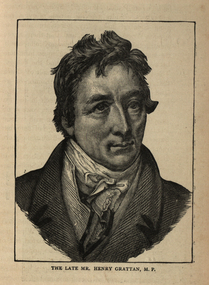
Image, Henry Grattan, M.P., c1864
... As a Protestant, he also advocated for Catholic emancipation and voting rights, clashing with ex-ally Henry Flood over ideology. Later serving in the House of Commons, Grattan died on June 4, 1820. ...As a Protestant, he also advocated for Catholic emancipation and voting rights, clashing with ex-ally Henry Flood over ideology. Later serving in the House of Commons, Grattan died on June 4, 1820. ...Born on July 3, 1746, in Dublin, Ireland, Henry Grattan became a brilliant parliamentary orator who pushed for Irish legislative independence from Britain, achieved for a time starting in 1782. As a Protestant, he also advocated for Catholic emancipation and voting rights, clashing with ex-ally Henry Flood over ideology. Later serving in the House of Commons, Grattan died on June 4, 1820. [http://www.biography.com/people/henry-grattan-9318523, accessed 14/12/2013] Born in 1746, died in 1820; was admitted to the Irish Bar in 1772; entered the Irish Parliament in 1775; secured the restoration of independence to the Irish Parliament in 1782; retired from the Irish Parliament in 1797; returned to the Irish Parliament in 1800, in order to oppose the Union; elected to the Imperial Parliament in 1806, remaining a member until his death.[http://www.bartleby.com/268/6/4.html, accessed 14/12/2013] Portrait of a man wearing a jacket. He is Henry Grattan, MP.ballarat irish, henry grattan, henry grattan -
![Australian Nursing Federation Victorian Branch 'Jeff Kennett' protest badge, [1993?]](/media/collectors/5bb42dc221eaf31100db1d3b/items/5c7376ba21ea6d1634678bef/item-media/5c7376cb21ea6d16346797dd/item-fit-380x285.jpg?cb=6) Australian Nursing & Midwifery Federation
Australian Nursing & Midwifery FederationAustralian Nursing Federation Victorian Branch 'Jeff Kennett' protest badge, [1993?]
... "In a context of high unemployment and an ideological commitment to small government, there were widespread job losses and people affixed stickers to their cars saying 'I've been Jeffed', i.e. made redundant. ..."In a context of high unemployment and an ideological commitment to small government, there were widespread job losses and people affixed stickers to their cars saying 'I've been Jeffed', i.e. made redundant. ...Badge campaigning against the Victorian Liberal government's widespread privatisation of the public health service (and other public services) in the 1990s, which resulted in job cuts and site closures throughout the state. The Australian Nursing Federation, the union representing nurses in Victoria, was a strong opponent of these cuts and closures, that resulted in pressure applied on an already overstretched and poorly resourced group of workers. "In a context of high unemployment and an ideological commitment to small government, there were widespread job losses and people affixed stickers to their cars saying 'I've been Jeffed', i.e. made redundant. The cuts were not confined to government employees and many staff of private enterprises also lost their jobs. This was the era of the 'consulting poor' as professional staff struggled to make a living as independent consultants, rather than employees. They were well paid for short term contracts, but continuity of work was hard to find." (Sally Wilde, 'The History of Prahran 1990-1994', 2000)Circular blue, red and white plastic badge. Silver metal, plastic-coated, with safety pin fastener adhered to back. Badge printed with 'I've been 'Jeffed' and I'm paying the Penalty!' and 'ANF [Australian Nursing Federation] VIC. [Victorian] BRANCH'. 'Jeffed' refers to the then Victorian Premier Jeff Kennett (1992-1999).nursing, nurses, victoria, jeff kennett, 1990s, badges, buttons, pins, trade unions, labour history, protest, rationalisation, australia, politics, privatisation, australian nursing federation -
Kiewa Valley Historical Society
Polisher Floor, Hoover Appliances, Meadowbank
... Relatively isolated rural areas were opening up (post war) to foreign ideologies of consumerism. The basic restraints of "this will be alright mate, she'll do" was under a slow but effective take over. ...Relatively isolated rural areas were opening up (post war) to foreign ideologies of consumerism. The basic restraints of "this will be alright mate, she'll do" was under a slow but effective take over. ...This appliance was a time saving method of cleaning floors. It appeared at a time (after World War II) when the domestic pressures faced by mothers and domestic staff was on the increase. The necessary "working parents" was through necessity becoming part of the "typical" family environment. It was the start of the ever increasing demand, from an economical reason, for both parents to work outside their property. Historically the period of the 1950s was one of extreme changes. It was an era where established role models were under pressure from an ever increasing demand for new and advancing consumerism. Communication levels via radio, newspapers and television was expanding at an ever increasing rate. Relatively isolated rural areas were opening up (post war) to foreign ideologies of consumerism. The basic restraints of "this will be alright mate, she'll do" was under a slow but effective take over. "I can get this done faster by this new whiz bang gadget that I saw on the TV last night!" was the new way to live by.This item is very significant in that it demonstrates the new consumerism at its infant stage of the social changes occurring due to greater communication levels between the rural Australian communities and other advancing communities world wide. The Kiewa Valley residents (mainly from the intermingling of rural and post World War II refugees working at the construction of the Victorian Hydro electricity installations, resulted in this rural area becoming integrated to new ways of living (both socially and economically). Once the attitude of "we have always done it this way mate!" was challenged and overcome, the acceptance of new time saving "gadgets" which started to pour in from foreign markets, the relative isolation of the Kiewa Valley (being mainly psychological entrenched), was over.This hoover electric floor scrubber and polisher has a main base containing two brushes (can be replaced with polishing pads). The two brushes/pads are fastened or removed from the base unit by pulling/pushing the heads from the small hexagonal shaft on the bottom of the machine motor. A pressure sensitive wire is inlaid at the brush/pad end to hold the brush/pad unit onto the shaft. The discs body and main body covering the electric motor are made from sturdy plastic. The rest of the appliance materials i.e. upright handle and the u framed attaching arm are made from lightweight powder coated steel. A small (350mm) red coloured foot switch protrudes from the back of the motor to release the the upright handle from the storage position to the action position.There are two fork shaped brackets on the rear of the handle, for securing the 6.5 metre long electrical cord and plug. There is no on/off switch on the appliance. A small stainless steel "u" framed clip (for hanging the appliance in the vertical position) for cupboard storage. Within the circle of the cleaning brush is stamped "1 above S.A.B.351" and on the opposite side P/No: 5023792". On the main plastic head of the brush discs are "TO CLEAN" and under this "USE ONLY WARM(underlined) WATER AND SOAP" on the opposite side, and within a circle is the Hoover Trademark. On the front of the blue coloured plastic dome covering the electric motor is (on a raised domed shaped plaque (on a red background) Hoover in slanted print from left to right(in a diagonal level)domestic appliances, floor cleaning, electric floor scrubbers and polishers -
 National Wool Museum
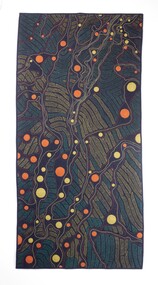
Textile - Everything Flows No.4, Greg Somerville, 2025
... Greg's interests in physics, ecological theory, Buddhist ideology and years of observation, have all contributed to an aesthetic investigation dwelling upon underlying energies, patterns and relationships inherent in this world: the patterns of water drops on leaves, the way water flows over a bush track. ...Greg's interests in physics, ecological theory, Buddhist ideology and years of observation, have all contributed to an aesthetic investigation dwelling upon underlying energies, patterns and relationships inherent in this world: the patterns of water drops on leaves, the way water flows over a bush track. ...Greg’s work has grown out of a Buddhist/ecological perspective. Graduating with a major in Ecology, he worked in the scientific and art commissioning world, becoming a full-time art maker from the mid 1980’s. Much of his work is textile based, but drawing, printing and photography are other passions, each influencing the other. Greg's interests in physics, ecological theory, Buddhist ideology and years of observation, have all contributed to an aesthetic investigation dwelling upon underlying energies, patterns and relationships inherent in this world: the patterns of water drops on leaves, the way water flows over a bush track. The inspiration is endless. Winner of the 2025 Expressions Wool Quilt Acquisitive Prize. Exhibition history includes Tamworth National Fibre Exhibition, Hobart Art Prize, Sorrento Art Prize, National Contemporary Art Prize, Art Quilt Australia, travelling exhibitions (Ararat and Goulburn Regional Galleries), many other Art Prizes and Group shows. Work is held in the Powerhouse and National Wool Museum.Wool quilt featuring circle and line designs in blue, yellow and orange tones.art quilt, expressions: the wool quilt prize, acquisitive award, prize, quilting, wool, greg somerville, textiles, artwork -
 8th/13th Victorian Mounted Rifles Regimental Collection
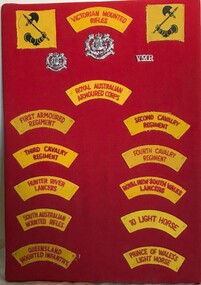
Memorabilia - Shoulder titles
... Decolonisation coupled with competing ideologies created an unstable situation in the Asia-Pacific region. ...Decolonisation coupled with competing ideologies created an unstable situation in the Asia-Pacific region. ...Embroidered shoulder titles were worn on the upper sleeves of uniform prior to the introduction of colour patches c.1990. Regular regiments used the numerical designations First, Second, Third and Fourth. CMF regiments used their territorial designation: Victorian, Queensland, New South Wales, Hunter River, South Australian, Prince of Wales's and 10th Light Horse. Australia’s defence plans and priorities changed after the Second World War. Decolonisation coupled with competing ideologies created an unstable situation in the Asia-Pacific region. Australia recognised it needed both regular and citizen forces. Six Armoured Corps regiments were formed in 1948, all with territorial titles reflecting their Light Horse heritage. In Victoria they were 4th/19th Prince of Wales’s Light Horse and 8th/13th Victorian Mounted Rifles. The 1st Armoured Regiment, formed July 1949, was the first regular RAAC regiment, followed by 2nd, 3rd and 4th Cavalry Regiments decades later. Unique collection of regimental titles worthy of preservation and display.Display board containing the badge and shoulder title of 8/13 Victorian Mounted Rifles flanked by the formation signs of 2nd Armoured Brigade. These are followed by the shoulder titles of Royal Australian Armoured Corps and eight other RAAC regiments.military, titles, uniform, ara, cmf -
Unions Ballarat
Book - Labour History No. 66 May 1994 (D.J. Spiers Collection), Irving, Terry
... This edition includes these articles: -Labourism: a Political Genealogy -Class, Populism and Labour Politics in Victoria, 1890-1914 -Keynesianism, Socialism and Labourism and the Role of Ideas in Labour Ideology -A Century of Laborism and the State, 1891-1993: An Historical Interpretation -We are of Age: Class, Locality and Region at Port Kembla, 1900-1940 -Researching Industrial Relations History: The Development of a Databas on Australian Trade Unions 1825-1900 -Loyalty and Communists: an interview with Bill Gollan -International Women's Day in Newcastle in the Fifties and Sixties: A Personal Account -Forthcoming: A Bibliography of Australian Communism -Postcard from California: the Hoover Institute -The ACTU Congress of 1993 -Australian Canadian Labour History Conference -The Australian Society for the Study of Labour History -The Classing Gaze: Sexuality, Class and Surveillance -Book reviews -Newcastle's Special Day; Australians in Spain Memorial Unveiling...This edition includes these articles: -Labourism: a Political Genealogy -Class, Populism and Labour Politics in Victoria, 1890-1914 -Keynesianism, Socialism and Labourism and the Role of Ideas in Labour Ideology -A Century of Laborism and the State, 1891-1993: An Historical Interpretation -We are of Age: Class, Locality and Region at Port Kembla, 1900-1940 -Researching Industrial Relations History: The Development of a Databas on Australian Trade Unions 1825-1900 -Loyalty and Communists: an interview with Bill Gollan -International Women's Day in Newcastle in the Fifties and Sixties: A Personal Account -Forthcoming: A Bibliography of Australian Communism -Postcard from California: the Hoover Institute -The ACTU Congress of 1993 -Australian Canadian Labour History Conference -The Australian Society for the Study of Labour History -The Classing Gaze: Sexuality, Class and Surveillance -Book reviews -Newcastle's Special Day; Australians in Spain Memorial Unveiling Labour and class politics; direct relevance to industrial relations; social issues in general that fall within the purview of the union movement. ...Published semi-annually, contains refereed, scholarly articles about social and labour history in Australasia, - labour politics, trade unions, management labour practices, co-operatives, gender and ethnicity. This edition includes these articles: -Labourism: a Political Genealogy -Class, Populism and Labour Politics in Victoria, 1890-1914 -Keynesianism, Socialism and Labourism and the Role of Ideas in Labour Ideology -A Century of Laborism and the State, 1891-1993: An Historical Interpretation -We are of Age: Class, Locality and Region at Port Kembla, 1900-1940 -Researching Industrial Relations History: The Development of a Databas on Australian Trade Unions 1825-1900 -Loyalty and Communists: an interview with Bill Gollan -International Women's Day in Newcastle in the Fifties and Sixties: A Personal Account -Forthcoming: A Bibliography of Australian Communism -Postcard from California: the Hoover Institute -The ACTU Congress of 1993 -Australian Canadian Labour History Conference -The Australian Society for the Study of Labour History -The Classing Gaze: Sexuality, Class and Surveillance -Book reviews -Newcastle's Special Day; Australians in Spain Memorial UnveilingLabour and class politics; direct relevance to industrial relations; social issues in general that fall within the purview of the union movement.Book; paper.btlc, ballarat trades and labour council, history - labour, labourism, politics - class, industrial relations, economics, politics - communism, women's rights, book reviews, conference reports -
 Tatura Irrigation & Wartime Camps Museum
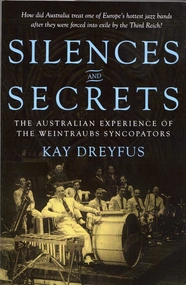
Book, Kay Dreyfus, Silences and Secrets: The Australian Experience of the Weintraubs Syncopators, 2013
... (From back cover): "The Weintraubs Syncopators, international musical celebrities of the 1930s, embarked on a four-year journey across Europe, Russia and the Far East in exile from the antisemitic ideologies of the German Third Reich. This band of mainly Jewish musicians arrived in Sydney, Australia, in 1937. ...(From back cover): "The Weintraubs Syncopators, international musical celebrities of the 1930s, embarked on a four-year journey across Europe, Russia and the Far East in exile from the antisemitic ideologies of the German Third Reich. This band of mainly Jewish musicians arrived in Sydney, Australia, in 1937. ...(From back cover): "The Weintraubs Syncopators, international musical celebrities of the 1930s, embarked on a four-year journey across Europe, Russia and the Far East in exile from the antisemitic ideologies of the German Third Reich. This band of mainly Jewish musicians arrived in Sydney, Australia, in 1937. The decision of some of them to stay brought them into conflict with the aggressively protectionist Musicians’ Union of Australia. They gained employment at a high-end Sydney nightclub but when war came, were forced to come to terms with a change in their status – from celebrities to enemy aliens. Denounced for alleged espionage activities in Russia, three were interned and the band broke up. In this major recounting of the experience of the Weintraubs Syncopators, Kay Dreyfus pieces together the complex personal, social and political forces at work in this story of migration at a time of insecurity, fear and dramatic conflict." The Tatura group of camps were built after the beginning of World War 2, and held prisoners of war (enemy military) and civilian internees (enemy nationals, regardless of political affiliation, either living in Australia or in Allied territories overseas). The Weintraubs Syncopators' members were just some of the civilians caught up in the conflict. Paperback book. Glossy black front cover, black & white photo of group of musicians. Blue & white text. Back cover glossy white, black & white photo group of men standing over bass drum labelled "Weintraubs Syncopators". 305 pages. Dewey no. 781.65092weintraub, camp 1, tatura, internment camps, civilian internees, jazz, jewish community, world war ii, musicians, stefan weintraub, horst graff -
 Victorian Aboriginal Corporation for Languages
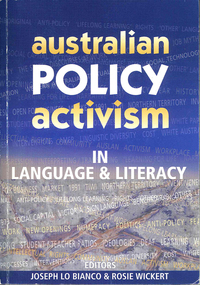
Book, Joseph Lo Bianco, Australian policy activism in language and literacy, 2001
... Merilyn Childs 15. Ideologies, languages, policies: Australia's ambivalent relationship with learning to communicate in 'other' languages /? ...Merilyn Childs 15. Ideologies, languages, policies: Australia's ambivalent relationship with learning to communicate in 'other' languages /? ...Australian Policy Activism in Language and Literacy presents the dynamics of language and literacy policy activism in Australia by capturing accounts of many of those most deeply engaged in Australia?s distinctive practice of Language and Literacy policy-making and its effects. This book describes how policy texts came about. 1. From policy to anti-policy: how fear of language rights took policy-making out of community hands /? Joseph Lo Bianco 2. Australia's language /? Paul Brock 3. Politics, activism and processes of policy production: adult literacy in Australia /? Rosie Wickert 4. Although it wasn't broken, it certainly was fixed: interventions in the Australian Adult Migrant English Program 1991-1996 /? Helen Moore 5. Advocating the sustainability of linguistic diversity /? Michael Singh 6. The cost of literacy for some /? Anthea Taylor 7. (E)merging discourses at work: bringing together new and old ways to account for workplace literacy policy /? Geraldine Castleton 8. The melody changes but the dance goes on - tracking adult literacy education in Western Australia from 'learning for life' to 'lifelong learning': policy impacts on practice 1973-1999 /? Margaret McHugh, Jennifer Nevard and Anthea Taylor 9. Sleight of hand: job myths, literacy and social capital /? Ian Falk 10. National literacy benchmarks and the outstreaming of ESL learners /? Penny McKay 11. Open for business: the market, the state and adult literacy in Australia up to and beyond 2000 /? Peter Kell 12. Inventiveness and regression: interpreting/?translating and the vicissitudes of Australian language policy /? Uldis Ozolins 13. Deafness and sign language in government policy documents 1983-1990 /? Des Power 14. Imprisoned by a landmark narrative? Student/?teacher ratios and the making of policy /? Merilyn Childs 15. Ideologies, languages, policies: Australia's ambivalent relationship with learning to communicate in 'other' languages /? Angela Scarino and Leo Papademetre 16. Reconciled to what? Reconciliation and the Norther Territory's bilingual education program, 1973-1998 /? Christine Nicholls 17. Sing out that song: the textual activities of social technologies in an Aboriginal community /? Jack Frawley.language activism, linguistic diversity, adult literacy, education, sign language, reconciliation, esl programs -
 Victorian Aboriginal Corporation for Languages
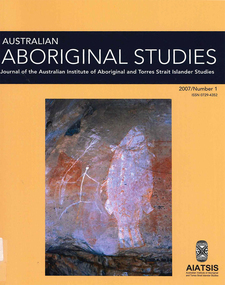
Periodical, Australian Institute of Aboriginal and Torres Strait Islander Studies, Australian Aboriginal studies : journal of the Australian Institute of Aboriginal and Torres Strait Islander Studies, 2007
... s texts convey, through subtle but recurrent remarks, an ideology of blame rather than a mere will to identify practical solutions. ...s texts convey, through subtle but recurrent remarks, an ideology of blame rather than a mere will to identify practical solutions. ...1. The moral lexicon of the Warlpiri people of central Australia LR Hiatt This paper discusses words that match ?Good? and ?Bad?; examples of ?Good? and ?Bad? behaviour; morality and law; and egalitarianism and dominance. It also presents a comparison with Gidjingarli (Burarra). 2. Mobs and bosses: Structures of Aboriginal sociality Patrick Mullins (Mount Druitt, NSW) A commonality of Aboriginal social organisation exists across the continent in communities as different as those from the Western Desert across to Cape York, from the towns of New South Wales and Western Australia to cities like Adelaide. This is found in the colloquial expressions ?mob? and ?boss?, which are used in widely differing contexts. Mobbing is the activity where relatedness, in the sense of social alliances, is established and affirmed by virtue of a common affiliation with place, common experience and common descent, as well as by the exchange of cash and commodities. Bossing is the activity of commanding respect by virtue of one?s capacity to bestow items of value such as ritual knowledge, nurturance, care, cash and commodities. Mobbing and bossing are best understood as structures in Giddens? sense of sets of rules and resources involved in the production of social systems, in this case social alliances. Mobbing and bossing imply a concept of a person as a being in a relationship. Attention needs to be given to the way these structures interact with institutions in the wider Australian society. 3. Recognising victims without blaming them: A moral contest? About Peter Sutton?s ?The Politics of Suffering: Indigenous Policy in Australia since the 1970s? and Gillian Cowlishaw?s replies Ma�a Ponsonnet (Universit� Paris- 8-Saint-Denis) Peter Sutton?s texts on Aboriginal violence, health and their politicisation are replied to using his methodology, and acknowledging his convincing points. Sutton rightly denounces a lack of lucidity and scientific objectivity in anthropological debates. These inadequacies impede identification of what Aboriginal groups can do to improve their situations for fear that this identification would lead to blame the victims. At the other end of the ethical spectrum, those who advocate a broader use of what I will call a ?resistance interpretation? of violence fail to recognise victims as such, on the implicit grounds that seeing victims as victims would deprive them of any agency, on the one hand, and entail blame, on the other hand. I aim to define a middle road between those views: the idea that victims should be acknowledged as such without being denied their agency and without being blamed for their own condition. This middle road allows identification of the colonisers? responsibilities in the contemporary situation of Indigenous communities in Australia, and to determine who can do what. Secondly, I show that Sutton?s texts convey, through subtle but recurrent remarks, an ideology of blame rather than a mere will to identify practical solutions. As a consequence, some of his proposals do not stand on a solid and objective causal analysis. 4. 'You would have loved her for her lore?: The letters of Daisy Bates Bob Reece (Murdoch University) Daisy Bates was once an iconic figure in Australia but her popular and academic reputation became tarnished by her retrograde views. Her credibility was also put in doubt through the exposure of her fictionalised Irish background. In more recent times, however, her ethnographic data on the Aborigines of Western Australia has been an invaluable source for Native Title claims, while her views on Aboriginal extinction, cannibalism and ?castes? are being seen as typical of her time. This article briefly reviews what has been the orthodox academic opinion of her scientific achievement before summarising what is reliably known of her early history and indicating what kind of person is revealed in the 3000 or more letters that she left behind. 5. What potential might Narrative Therapy have to assist Indigenous Australians reduce substance misuse? Violet Bacon (Curtin University of Technology) Substance misuse is associated with adverse consequences for many Australians including Aboriginal and Torres Strait Islander peoples. Extensive research has been conducted into various intervention, treatment and prevention programs to ascertain their potential in reducing substance misuse within Aboriginal and non-Aboriginal communities. I explore the potential of Narrative Therapy as a counselling intervention for assisting Indigenous Australians reduce the harm associated with substance misuse. 6. Bone points from the Adelaide River, Northern Territory Sally Brockwell (University of Canberra) and Kim Akerman (Moonah) Large earth mounds located next to the vast floodplains of the lower Adelaide River, one of the major tropical rivers draining the flat coastal plains of northern Australia, contain cultural material, including bone points. The floodplains of the north underwent dynamic environmental change from extensive mangrove swamps in the mid-Holocene, through a transition phase of variable estuarine and freshwater mosaic environments, to the freshwater environment that exists today. This geomorphological framework provides a background for the interpretation of the archaeology, which spans some 4000 years. 7. A different look: Comparative rock-art recording from the Torres Strait using computer enhancement techniques Liam M Brady (Monash University) In 1888 and 1898, Cambridge University?s Alfred C Haddon made the first recording of rock-art from the Torres Strait islands using photography and sketches. Systematic recording of these same paintings and sites was carried out from 2000 to 2004 by archaeologists and Indigenous Torres Strait Islander and Aboriginal communities as part of community-based rock-art recording projects. Computer enhancement techniques were used to identify differences between both sets of recordings, to reveal design elements that Haddon missed in his recordings, and to recover images recorded by Haddon that are today no longer visible to the naked eye. Using this data, preliminary observations into the antiquity of Torres Strait rock-art are noted along with recommendations for future Torres Strait region rock-art research and baseline monitoring projects. 8. Sources of bias in the Murray Black Collection: Implications for palaeopathological analysis Sarah Robertson (National Museum of Australia) The Murray Black collection of Aboriginal skeletal remains has been a mainstay of bio-anthropological research in Australia, but relatively little thought has been given to how and why this collection may differ from archaeologically obtained collections. The context in which remains were located and recovered has created bias within the sample, which was further skewed within the component of the collection sent to the Australian Institute of Anatomy, resulting in limitations for the research potential of the collection. This does not render all research on the collection unviable, but it demonstrates the importance of understanding the context of a skeletal collection when assessing its suitability for addressing specific research questions.maps, b&w photographs, colour photographs, illustrations, graphs, chartswarlpiri, sociology, daisy bates, substance abuse, narrative therapy, rock art, technology and art, murray black collection, pleistocene sites, watarrka plateau -
 Victorian Aboriginal Corporation for Languages
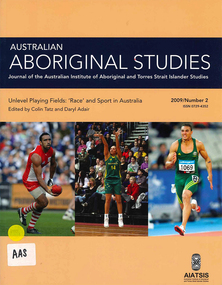
Periodical, Australian Institute of Aboriginal and Torres Strait Islander Studies, Australian Aboriginal studies : journal of the Australian Institute of Aboriginal and Torres Strait Islander Studies, 2009
... This reappraisal of the tour explores the centrality of racial ideology, racial science and racial power imbalances that enabled, created and shaped the tour. ...This reappraisal of the tour explores the centrality of racial ideology, racial science and racial power imbalances that enabled, created and shaped the tour. ...Darkness and a little light: ?Race? and sport in Australia Colin Tatz (AIATSIS & Australian National University) and Daryl Adair (University of Technology Sydney) Despite ?the wonderful and chaotic universe of clashing colors, temperaments and emotions, of brave deeds against odds seemingly insuperable?, sport is mixed with ?mean and shameful acts of pure skullduggery?, villainy, cowardice, depravity, rapaciousness and malice. Thus wrote celebrated American novelist Paul Gallico on the eve of the Second World War (Gallico 1938 [1988]:9-10). An acute enough observation about society in general, his farewell to sports writing also captures the ?clashing colors? in Australian sport. In this ?land of the fair go?, we look at the malice of racism in the arenas where, as custom might have it, one would least want or expect to find it. The history of the connection between sport, race and society - the long past, the recent past and the social present - is commonly dark and ugly but some light and decency are just becoming visible. Coming to terms: ?Race?, ethnicity, identity and Aboriginality in sport Colin Tatz (AIATSIS & Australian National University) Notions of genetic superiority have led to some of the world?s greatest human calamities. Just as social scientists thought that racial anthropology and biology had ended with the cataclysm of the Second World War, so some influential researchers and sports commentators have rekindled the pre-war debate about the muscular merits of ?races? in a new discipline that Nyborg (1994) calls the ?science of physicology?. The more recent realm of racial ?athletic genes?, especially within socially constructed black athletic communities, may intend no malice but this search for the keys to their success may well revive the old, discredited discourses. This critical commentary shows what can happen when some population geneticists and sports writers ignore history and when medical, biological and sporting doctrines deriving from ?race? are dislocated from any historical, geographic, cultural and social contexts. Understanding discourses about race, racism, ethnicity, otherness, identity and Aboriginality are essential if sense, or nonsense, is to be made of genetic/racial ?explanations? of sporting excellence. Between the two major wars boxing was, disproportionately, a Jewish sport; Kenyans and Ethiopians now ?own? middle- and long-distance running and Jamaicans the shorter events; South Koreans dominate women?s professional golf. This essay explores the various explanations put forward for such ?statistical domination?: genes, biochemistry, biomechanics, history, culture, social dynamics, the search for identity, alienation, need, chance, circumstances, and personal bent or aptitude. Traditional games of a timeless land: Play cultures in Aboriginal and Torres Strait Islander communities Ken Edwards (University of Southern Queensland) Sports history in Australia has focused almost entirely on modern, Eurocentric sports and has therefore largely ignored the multitude of unique pre- European games that are, or once were, played. The area of traditional games, especially those of Aboriginal and Torres Strait Islander peoples, is an important aspect of the cultural, social and historical experiences of Indigenous communities. These activities include customs of play that are normally not associated with European notions of competitive sport. Overall, this paper surveys research undertaken into traditional games among Indigenous Australians, as well as proposals for much needed further study in this area. Culture, ?race? and discrimination in the 1868 Aboriginal cricket tour of England David Sampson As a consequence of John Mulvaney?s important historical research, the Aboriginal cricket and performance tour of Britain in 1868 has in recent decades become established as perhaps the most famous of all public events in contact history involving Aborigines, white settlers and the British metropolis. Although recognition of its importance is welcome and significant, public commemorations of the tour have enveloped the tour in mythologies of cricket and nation. Such mythologies have obscured fundamental aspects of the tour that were inescapable racial and colonial realities of the Victorian era. This reappraisal of the tour explores the centrality of racial ideology, racial science and racial power imbalances that enabled, created and shaped the tour. By exploring beyond cricketing mythology, it restores the central importance of the spectacular performances of Aboriginal skills without which the tour would have been impossible. Such a reappraisal seeks to fully recognise the often trivialised non-cricketing expertise of all of the Aboriginal performers in 1868 for their achievement of pioneering their unique culture, skills and technologies to a mass international audience. Football, ?race? and resistance: The Darwin Football League, 1926?29 Matthew Stephen (Northern Territory Archive Service) Darwin was a diverse but deeply divided society in the early twentieth century. The Commonwealth Government introduced the Aboriginals Ordinance 1911 in the Northern Territory, instituting state surveillance, control and a racially segregated hierarchy of whites foremost, then Asians, ?Coloureds? (Aborigines and others of mixed descent) and, lastly, the so-called ?full-blood? Aborigines. Sport was important in scaffolding this stratification. Whites believed that sport was their private domain and strictly controlled non-white participation. Australian Rules football, established in Darwin from 1916, was the first sport in which ?Coloured? sportsmen challenged this domination. Football became a battleground for recognition, rights and identity for all groups. The ?Coloured? community embraced its team, Vesteys, which dominated the Northern Territory Football League (NTFL) in the 1920s. In 1926, amidst growing racial tension, the white-administered NTFL changed its constitution to exclude non-white players. In reaction, ?Coloured? and Chinese footballers formed their own competition - the Darwin Football League (DFL). The saga of that colour bar is an important chapter in Australia?s football history, yet it has faded from Darwin?s social memory and is almost unknown among historians. That picture - Nicky Winmar and the history of an image Matthew Klugman (Victoria University) and Gary Osmond (The University of Queensland) In April 1993 Australian Rules footballer Nicky Winmar responded to on-field racist abuse by lifting his jersey and pointing to his chest. The photographic image of that event is now famous as a response to racial abuse and has come to be seen as starting a movement against racism in football. The racial connotations in the image might seem a foregone conclusion: the power, appeal and dominant meaning of the photograph might appear to be self-evident. But neither the fame of the image nor its racial connotation was automatic. Through interviews with the photographers and analysis of the use of the image in the media, we explore how that picture came to be of such symbolic importance, and how it has remained something to be re-shown and emulated. Rather than analyse the image as a photograph or work of art, we uncover some of its early history and explore the debates that continue to swirl around its purpose and meaning. We also draw attention to the way the careful study of photographs might enhance the study of sport, race and racism. ?She?s not one of us?: Cathy Freeman and the place of Aboriginal people in Australian national culture Toni Bruce (University of Waikato) and Emma Wensing (Independent scholar) The Sydney 2000 Olympic Games generated a national media celebration of Aboriginal 400 metre runner Cathy Freeman. The construction of Freeman as the symbol of national reconciliation was evident in print and on television, the Internet and radio. In contrast to this celebration of Freeman, the letters to the editor sections of 11 major newspapers became sites for competing claims over what constitutes Australian identity and the place of Aboriginal people in national culture. We analyse this under-explored medium of opinion and discuss how the deep feelings evident in these letters, and the often vitriolic responses to them, illustrate some of the enduring racial tensions in Australian society. Sport, physical activity and urban Indigenous young people Alison Nelson (The University of Queensland) This paper challenges some of the commonly held assumptions and ?knowledges? about Indigenous young people and their engagement in physical activity. These include their ?natural? ability, and the use of sport as a panacea for health, education and behavioural issues. Data is presented from qualitative research undertaken with a group of 14 urban Indigenous young people with a view to ?speaking back? to these commentaries. This research draws on Critical Race Theory in order to make visible the taken-for-granted assumptions about Indigenous Australians made by the dominant white, Western culture. Multiple, shifting and complex identities were expressed in the young people?s articulation of the place and meaning of sport and physical activity in their lives. They both engaged in, and resisted, dominant Western discourses regarding representations of Indigenous people in sport. The paper gives voice to these young people in an attempt to disrupt and subvert hegemonic discourses. An unwanted corroboree: The politics of the New South Wales Aboriginal Rugby League Knockout Heidi Norman (University of Technology Sydney) The annual New South Wales Aboriginal Rugby League Knockout is so much more than a sporting event. Involving a high level of organisation, it is both a social and cultural coming together of diverse communities for a social and cultural experience considered ?bigger than Christmas?. As if the planning and logistics were not difficult enough, the rotating-venue Knockout has been beset, especially since the late 1980s and 1990s, by layers of opposition and open hostility based on ?race?: from country town newspapers, local town and shire councils, local business houses and, inevitably, the local police. A few towns have welcomed the event, seeing economic advantage and community good will for all. Commonly, the Aboriginal ?influx? of visitors and players - people perceived as ?strangers?, ?outsiders?, ?non-taxpayers? - provoked public fear about crime waves, violence and physical safety, requiring heavy policing. Without exception, these racist expectations were shown to be totally unfounded. Research report: Recent advances in digital audio recorder technology provide considerable advantages in terms of cost and portability for language workers.b&w photographs, colour photographs, tablessport and race, racism, cathy freeman, nicky winmar, rugby league, afl, athletics, cricket, digital audio recorders -
 Federation University Historical Collection
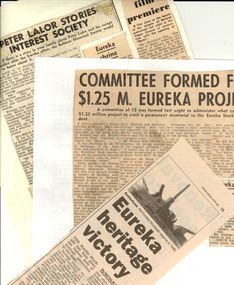
Book - Newspaper clippings, Eureka Stockade Newspaper Clippings, 1923-2015
... . * Ballarat Courier 2004, -Eureka is for one and all (Eureka provides inspiration for many different ideologies but is not owned by any of them), Senator John Faulkner expresses his view about Eureka, [photo of new Eureka centre during recent dawn walk].... * Ballarat Courier 2004, -Eureka is for one and all (Eureka provides inspiration for many different ideologies but is not owned by any of them), Senator John Faulkner expresses his view about Eureka, [photo of new Eureka centre during recent dawn walk] ...The Eureka Stockade was fought on the Eureka Lead, Ballarat East on 03 December 1854. Keith Rash was a signwriter who learnt his trade at the Ballarat School of Mines. He was very interested in local history and wrote articles for the local newspapers. The clippings on Eureka would have been used to inform his articles, and research on the site of the Eureka Stockade. Ken Clements was former Academic Registrar at Ballarat College of Advanced Education (now University of Ballarat). He was a committee member of the Eureka Stockade Memorial Park Committee for a number of years. Dr Dorothy Wickham has researched Eureka over a number of decades, and has published a number of titles on the topic. Clare Gervasoni has researched Eureka over a number of decades, and has published a number of titles on the topic, including coordination of www.Eurekapedia.org for Ballarat Reform League Inc. Three white A4 folders of newspaper clippings dating from 1923 to 2012. The clippings are in chronological order. The clippings were collected by Keith Rash, and were later supplemented by clippings collected by Ken Clements. Further clippings collected by Dorothy Wickham, mainly around the 1990s were inserted throughout the folders in chronological order, as well as later clippings by Clare Gervasoni .1) Folder One - Eureka Cuttings 1923 - 1984 * Courier 05/05/1923 - Eureka Progress Association (W. Groves, Stockader Phillips of Rocky Lead, Stockader Wilson, G. Lakeland, Eureka Hall.) * Courier 10.08.1931 - Banquet at Eureka - Progress Association's Annual Meeting (McGregor, Parsons, W.J. McAdam, 75th anniversary. Elsworth, Kent, Robert McGregor) *Courier 11/08/1932 - Eureka Reserve - Committee Annual Social. (E. Parsons, C.C. Phillips, D.C. McGrath, T.T. Hollway, Bolster, Mackenzie, Mares, Hendy) * Courier 07/07/1939 - Eureka Improvement Committee, Eureka Reserve * Courier 04/12/1950 - Australian Democracy Was Born at Eureka * Courier 04/09/1951 - Council Seeks Development of Eureka Land - potential housing Commission development on site of Last Chance Mine. (J. Welsh). * Ballarat Courier 12/1952 - Few Remembered Eureka Affair (98th anniversary, A.W. Nicholson, C.E. Brown, L. O'Brien, R. Joshua, Soldiers' Memorial Band) * Courier 07/12/1953 - Few Commemorated the Affair at Eureka - 99th anniversary at the Stockade reserve (F.J. Cutts, L. O'Brien, R. Joshua, Peter Lalor, C.E. Brown. * Courier 14/04/1954 - Eureka Centenary - meeting to determine form of commemoration. * Courier 15/04/1954 - Getting ready - Centenary celebrations (Picture of Diggers Memorial, F.J. Cutts, C. Mott). * Courier 15/04/1954 - Eureka Centenary Planned (F.J. Cutts, Geoffrey Searle, Edgar Bartrop, G. Swenson, B. Parsons, T.E. Carter, M. Collins, Mrs L.M. Quinlan, Grenville, Eureka Progress Association, Arthur Jones, E.J. Crimmins, Bernard D'Arcy, A.W. [Bert] Strange). * Guardian 25/11/1954 - Diary of a Eureka Stockader [signed RDW] (Bentley, Fletcher, McIntyre, Westerby, Ballarat Reform League, monster meeting, Bakery Hill, Charles Hotham) * Argus 04/12/1954 - Eureka Day Marred by Storm (image of Bert O'Toole in Red Coat uniform, Peter Lalor Statue, A.C. Pittard, F.J. Cutts, Bernard D'Arcy, L. Moyle, Catherine Smith, wounded, death, Eureka Celebrations, anniversary, John Cain *Age Literary Supplement, 04/12/1954 - The motives that prompted the tragic Eureka rising . (image of Charles Hotham, government troops attack, Eureka Stockade Monument) 1851 discovery of gold in Victoria, centenary of Eureka Stockade, author MM, Governor Latrobe, law abiding nature of most miners, most miners were British but other nationalities represented, miners former occupations were varied, many did not "strike it rich", by 1853 the earnings of most diggers had fallen very low, 30/- licence fee, digger hunts, cries of "Joe" or "The Traps", 5 pound fine or 6 month imprisonment for not carrying Licence, La Trobe had hired ex-convicts as police, Governor Charles Hotham 1854, Bentlys Hotel, Commissioner Rede, miners leader Peter Lalor, Carboni Raffaello, Press warning by "Age", Ballarat Reform League, November 29 diggers meeting, licences burned, November 30 licence hunt, new flag and Southern Cross oath, the Stockade, revolution ?, Stockade Garrison, December 3 1854, the battle, 125 prisoners, 13 charged with high treason, all prisoners acquitted, Lalor and Vern into hiding, 'democratic revolution' or 'undisguised rebellion' ? , Miner's Right, Chartist ideas involved, Lalor became a member of Victorian parliament, Eureka monument inscription, little revolutionary significance. * The Argus 06/12/1954 - 100th Eureka Day ( [ Images - bearded miners, Bert O'Toole, simulated battle, red coats] battle tableau, Centenary celebrations. Mr Cain Premier, Spirit of Eureka). * Ballarat Courier 22/04/1961 Attack on the Paint ( [Image - Eureka Monument Guns] vandals). * Ballarat Courier 13/09/1962 - Little-Known Aspects of Eureka Affair (E.J. Crimmins and the 109th Eureka Anniversary); Eureka Drilling (Photo of M. Milligan drilling for water for the Eureka Pool) * Ballarat Courier 10/12/1963 - Eureka Relics in Public Display (Trev Negri), Little-known aspects of the Eureka affair (E J Crimmins, 13 State prisoners, Creswick men, M Greville), Eureka Request (Apex explanatory notice). * Ballarat Courier 12/05/1964 - Plaque to tell Eureka Story (Apex donation on monument). * Ballarat Courier 09/06/1964 - Permission is sought (re Eureka Reserve small Hall). * Ballarat Courier 28/08/ 1964 - Eureka should be much better attraction (Mayor Cr Webb, Rotary). * No Chlorination at Stockade Pool 24/08/1964 (A Jones secretary) * Ballarat Courier 10/10/1964 - Assurance given on Eureka Swimming Pool (Murray Byrne MLC, Bill Stephen MLA, pool plans [Images - Photo of Jones, Stephen Byrne - diagram of Eureka reserve swimming pools, caravan park, monument area] ) * Ballarat Courier 23/06/1964 - Pool plans ready for tenders MLA (Black Hill) * Ballarat Courier 26/11/1966 - Eureka: Was that clash in 1854 inevitable ? ([Image - Monument, Peter Lalor statue], by J J Sheehan, foreigners, Chartists, poorly armed. * 03/12/1966 Part 2 - Eureka: No plan by the Diggers to Attack, by j j Sheehan ([Images - Eureka collection, W C Colbourne and G Brookes with old rifle] Corrupt, Instructed, Withers' view, The last hunt, Police spies). * Ballarat Courier 19/12/1968 - Eureka commemoration definite next year,1854 - (Connolly Association, 3 December, 'Finest thing in Australasian history', few attending, L O'Brien, public apathy, A Williams, successful 1954 centenary, W. Roff, Eureka Progress Association) * 23/11/67 - Eureka and Miners' rights (G P Ryan letter, no representation, excessive licence system, offensive administration.brutality, Gov Hotham, barricade on Eureka lead, Miners' Rights replaced Licences but now worthless, mining monopolies, democracy). * Eureka Flag Ceremony (L O'Brien, false report, revive annual Eureka service). * Ballarat Courier 12/05/1867 Questions of Eureka (W Thompson letter, why military names on monument ? Why mount irrelevant cannons on monument ? Where is the flag ?). Lalor's refuge (between Bungaree and Bullarook ?, Fr t Linane ). Building linked with Ballarat (at French end of Collins Street Melbourne, Sir Robert Nickle, relief march to Ballarat, historian E Moorhead, 40th regiment link ). * Ballarat Courier 08/01/1968 - Too little history at Eureka says Visitor (Image - Eureka monument, Mrs L Riley, frequent complaint, B McOrist, proposed Stockade model). * Ballarat Courier c 1968 - Gallery Eureka flag may be the original (Cr W Roff, at Ballarat Art Gallery, fraud ?, matching pieces). * Ballarat Courier 11/04/1968 Pool of reflection ([Image - Eureka pool and willows], near full again). * Ballarat Courier 20/08/1968 - Eureka Reserve (Rotary Clubs' proposed project). *Ballarat Courier 05/10/1968 - Picturesque Willows ([Image- willows in good condition at Eureka Stockade]). * Ballarat Courier, November 1968 - Eureka Ceremony will be Revived (Eureka Progress Association to revive Eureka Commemoration at the site, Connolly Association Australia, J. Garvey, A. Jones) [Photo of L. O'Brien, A, Jones, R.A. Mitchell, Jim Styker and Alan Mills *Ballarat Courier 15/11/1968 - Walkathon for Stockade Diorama (planned life-size Diorama at Stockade depicting the Eureka riot, Rotary Cup walkathon fundraiser. *Ballarat Courier 26/11/1968 - Discussing plans ([Image - Les O'Brien, Arthur Jones, Alan Mills et al], memorial service Sunday). * Ballarat Courier 26/11/1968 - Eureka ceremony will be revived (four year lapse, Connolly Association, Eureka Progress Association) * Ballarat Courier 02/12/1968 - 500 attend Eureka ceremony (114th commemoration, on island in Lake, Mayor Cr M J Brown, speaker Mr Dudley Erwin MLA, significance to Australia, Connolly Association morning ceremony, Bernie Nolan, W Hartley). * Courier 1969 - Letters to the editor - Peter Lalor's Grave, Losing Places of Beauty loss of verandahs, Eureka Stockade Caravan Park, Eureka Swimming Pool), Ireland's Dilemma (Catholic Church), Small Group in "Affair" (F.R. Muller) * Courier 22/04/1969 - $7000 grant for Eureka Diorama (Sir Henry Bolte approves grant, $2 for $1, Rotary walkathon basis, City Council interest, Diorama details, information about Eureka for public, Eureka Park Sovereign Hill and Montrose cottage combination). * Courier 21/08/1969 - Mayor turns sod at Diorama site ([Image- Mayor Cr M J Brown et al], life size representation of stockade scene, Mr W F Stephen MLA). * Courier 06/12/1969 - The 'affair at Eureka' ([Image- Diorama] Few remembered anniversary of bid for democratic Government in 1850s, Mayor Cr Alec Mills, Murray Byrne, Colonial secretary J Foster resignation, reforms, hostility, unpopular, end of era). * Courier mixed 1969 - City link with Eureka Stockade threatened, - Eureka signposts [Diggers Memorial, Soldiers Memorial], - Eureka Anniversary - Souvenir of Eureka (William Cowland's pistol). * Courier :/05/1970 - Fascinated ([Image- children at near completed Diorama]). * Courier 10/08/1970 - Mayor opens Eureka Diorama ([Image- Diorama scene of 3 December 1854 battle], Mayor Cr A E Mills, Rotarians, Eric Pearce voice tape recording). * Courier 08/08/1970 - Eureka Diorama should be Popular-Rotarian ([Image- Diorama shed], City's new drawcard, Diorama Opening para and advert). * Courier 12/09/1970 - The Quick change Eureka Stockade ([Image- Eureka Stockade Hotel], was Australia Felix Hotel, Mr Kevin Worthington). * Courier 22/09/1970 - Missing golden opportunities (message unheeded, American tourists misled, bewildered tourists). * Courier 20/10/1970 - Ballarat's monument to vandalism ? (Ballarat, Wendouree and South Rotary clubs' pride: Eureka Diorama, joy and heartaches, vandalism damage, thoughtless and vicious). * Courier 20/10/1970 - Marked for demolition ([Image- Ballarat east railyard] troops path to Eureka stockade). * Courier 20/10/1970 - Diorama sound system target for vandals ([Image- Jack Redman removing foreign material from diorama starting mechanism). * Courier 03/11/1970 - Record Good but Facts are Wrong ([Image- depiction of Eureka scene], article by Paul Hughes, RCA LP record based on musical play re Eureka Stockade, errors) * Courier 11/03/1970 - Diorama for Eureka Stockade ([Images- view of park, view of diorama]). * Courier 4/12/1970 - Anniversary of Eureka uprising ([Images- Southern Cross flag over Montrose cottage, R Fenton and V Demedeze], 107th anniversary, Scouts Eureka re-enactment, Diggers didn't mind delay). * Courier 16/04/1971 - Lake disappearing ([Image- Lake Elsworth being filled], Olympic standard pool planned for same site). * Courier 31/07/1971 - Birthplace of Peter Lalor ([Image- 211 year old Lalor home in Ireland], Eureka Stockade (park) name change to Eureka Stockade Memorial Park (in Sept. 1972). * Courier 01/02/1971 Eureka Stockade Gardens - ([Images- Gardens near Caretakers Cottage, Miss J Hetherington and begonias in Eureka Stockade hothouse). * Courier 11/1971 - Eureka Grant (for toilet block in Eureka Caravan Park), Ancestor Died in Stockade Battle (William Clifton), $93,887 Tender for Eureka Pool) * Courier 10/12/1971 - Eureka FILM 'iMMORAL' ( Erwin's attack, DUDLEY ERWIN MP, suggested cuts). * Courier 21/02/1972 - It is not a subsidy (says Stockade Director, re film, Added bonus, also Descendant upset- letter from Peter A Lalor re film content). * Ballarat Courier 31/10/1973 - Eureka Stockade a National Shrine, (Editorial , Minister Grassby's support) - Eureka 'Shrine of our History', (Grassby's pledge). * Ballarat Courier 14/02/1973, - $1000 Grant for Eureka Flag (from State government to Ballarat Art Gallery, Bill Stephen MLA, Murray Byrne Minister for Tourism). * Ballarat Courier 26/05/1973, - Eureka Flag Restored (by Val D'Angri, Peter Lalor details, [Images- Val at work on flag, painting of 1854 Ballarat]). * Ballarat Courier 26/10/1973 - Taking another look at Eureka (Editorial, historical and social significance of Eureka Stockade, Neighbour attractions, Thinking BIG), and Editorial report, Put up the Stockade again - and a Monorail ? * Ballarat Courier 31/10/1973 - Eureka Stockade a National Shrine (Minister's support) * Ballarat Courier October 1973 - Eureka a 'Shrine of our History' (Grassby's pledge, Alex Barnett's plans for Eureka Stockade ). * Ballarat Courier 03/11/1973, - Build Eureka into a tourist drawcard ,(Challenge to Clubs. W H McGregor; Ceremony, Tram Link, the "Iceberg"). * Ballarat Courier 08/11/1973, - Grassby to get Eureka Plans - (from Alex Barnett). * Ballarat Courier 29/11/1973, - Memorial Plans with Town Hall (Architect plans also sent to Mr Grassby). * Ballarat Courier 13/11/1973, - Prime Minister will unveil Eureka Flag [Image - Erecting Flag frame at Ballarat Art gallery, Val D'Angri]. * Ballarat Courier 14/11/1973, - What plan for the Eureka memorial ? (Public entitled to know, National concept) and (Eureka Upgrading). * Ballarat Courier 24/11/1973, - Connolly Opposition to Eureka Proposals (Association protests about limited support for commemoration of Eureka) and (Gallery search for Lalor descendant). *Ballarat Courier 24/11/1973, - The Affair at Eureka (Part one by J J Sheehan) [Images -Jones' Circus tent, and Stockade location, also Peter Lalor photo, also artist's impression of the 13 men on trial]. Part 2 )3/11/1973 (Eureka Diorama) * Ballarat Courier 01/12/1973, - Grassby to see Eureka Plan on Site [Image- Architect's sketch of proposed $450,000 Museum building]. *Ballarat Courier 01/12/1973, - The Affair at Eureka (The fight for justice, concluding J J Sheehan series), [Images - painting of fight, and the supposed site of the Stockade]. * Ballarat Courier 02/12/1973, Victorian Treasures at Art Gallery (Eureka Flag and "Moonrise exhibition), [Image - J Nicholson cleaning 'Peter Lalor' portrait]. * Ballarat Courier 03/12/1973, - The Events Which led up to Eureka (Licence contentions,the perceived need for fortification around the workings at the Eureka lead, the death of James Scobie, the burning of Bentley's Hotel, the conviction of three miners on 20 November, arrival of armed soldiers at the Camp. Also Raffaello observations, and advert for public viewing of Eureka Flag. [Image - Diggers and Soldiers names on Eureka Monument]. * Ballarat Courier 03/12/1973, - The past celebrated but what of the future ? (119th anniversary of the Eureka Stockade uprising, but current politicians are under close scrutiny) * Ballarat Courier 03/12/1973, - Teacher-Politician is behind Eureka story (J J Sheehan profile). *Ballarat Courier 04/12/1973 - A Noteworthy Day in Ballarat - (Prime Minister Whitlam unveiled the famous Eureka Flag at the Art gallery). * Ballarat Courier 04/12/1973, - Newcomers told about migrants at Eureka (migrants from >20 countries, comradeship after battle and defeat, new nation in peace and tranquility. Minister for Immigration Mr Al Grassby at Sovereign Hill. Liberties. A Shrine. [Image- Al Grassby and newly arrived migrants at Sovereign Hill]. *Ballarat Courier 04/12/1973, - Grassby leads colorful Eureka commemoration (cheering school children, flag, wreath, World Fame for Eureka affair, boy's coach trip, two sides to Eureka battle.) [Image- Mr Grassby and group of children]. (National day proposed by Mr Grassby). * Ballarat Courier 04/12/1973, Eureka as National Monument (PM commends stockade plan, Mr Whitlam on Eureka commemoration day supports plans to make Eureka Stockade a national monument. Flag saved and restored, TV hitch. New Australian anthem needed to match the 'new nationalism'. [Image - Gough Whitlam and group at flag presentation and unfurling ceremony.] * Ballarat Courier 04/12/1973, - Eureka ! It's Digger Al (Al Grassby at 119th anniversary of the Eureka Stockade rebellion). [Images - scenes of Al Grassby at Sovereign Hill]. * Ballarat Courier 05/12/1973, - Talk, But No Cash: Stephen (Mr Bill Stephen MLA comments on visit by Whitlam and Grassby). - Eureka Flag Australia's most valuable relic: PM (Gough Whitlam report to Federal Parliament yesterday, Hospitality from Mr Dudley Erwin) * Ballarat Courier 10/12/1973, - Flag restorer stitched her way into history (Val D"Angri has stitched her way into Australian History as the person who restored the Eureka Flag. [Image - Mrs Val D'Angri, Eureka Flag needlewoman ]. * Ballarat Courier, 1974 - Location of the Eureka Stockade (Bert Strange), Misplaced Stockade (Maurice Calnin, T.C. Cleary, diary), Stockade Site (Bob O'Brien), Eureka Flag Stolen (John Shannon) *Ballarat Courier 6 May 1974, - Committee formed for $1.25 M. Eureka Project - ( a permanent memorial). *Ballarat Courier 6 May 1974, - Federal Govt Aid likely for Eureka (Federal Labor Government wants Eureka Stockade site to be a major tourist attraction, Eureka booklet proposed). *Ballarat Courier 10 May 1974, - Peter Lalor Stories Interest Society (Ballarat Historical Society seeks reports of Peter Lalor during escape after the Eureka affair). Also Eureka Shrine, The Eureka 'affair', Eureka film premier. * 29/07/1974 - Eureka Memorial Plans Need Full Support (Eureka Stockade Association) * Ballarat Courier 11/5/1974 and 6/6/1974 - Stockade Site (Rob O'Brien, Eureka Interesting Story * Ballarat Courier 30/01/1974 - Eureka Remembered in Italy (Al Grasby, Raffaello Carboni, Urbino); Eureka Memorial on Way (Eureka Stockade Association) {photo of Gordon Cornell, Alec Barnett, Bruce Bartrop] * Ballarat Courier, May 1974 and 11 May 1974 - Location of the Eureka Stockade (Bert Strange); Stockade Site (Bob O'Brien) * [Ballarat Courier?] 10/07/1979 - City's Oldest Memorial is Over Diggers' Graves. (An article on the grave over the diggers who were killed as a result of the Eureka Stockade battle which was erected on 22 March 1856. .2) Folder Two- Eureka Cuttings c1980-2004 Ballarat Courier ~9/1980, - First-hand account of hardship omitted (Frank Titan letter re Tom Evans' use of selected evidence in his proclamation that democracy was not born at Eureka Stockade. "Democracy was won at the Stockade on 3/12/1854. [Cartoon 'A beach view of the Eureka Flag debate']. Ballarat News ~1980, Names (Diggers & Troopers) of deceased on Eureka Stockade Monument. [Photo of white marble tablet] Ballarat Courier 4 July 1981, Eureka Papers Gift to City, Peter Lalor letters, Stephen Cumming diary. [Photo - Town Clerk Ian Smith, Cr Jessie Scott and donor Bruce Evans]. * The Sun Travel Supplement, 06 April 1984 - A Bloody Moment Re-visited by Alec Hepburn - (Diorama, Eureka Stockade Replica, Montrose Cottage) [Image of Gerard Rushforth to the reconstruction of the Eureka Stockade * Ballarat Courier, 10/04/1984 - Eureka Incident 'an uprising of the scum of goldfields. [photo of John Callinan with the Diggers Grave monument] * The Age, 06/05/1987 - Eureka! Man found whose father was there by John Lahey (Article on Terence Brady, who was a 4 month old baby at the Eureka Stockade battle. * Ballarat Courier 13 June 1984, 'Eureka Stockade'.....a Panning, (American critic J J O'Connor pans the Australian TV Mini-series. Book 2 - C1990-2004 * Ballarat Courier ~1990,- High-calibre Restoration, (World War I German Howitzer being restored after about 70 years exposure in the Eureka Stockade Memorial Park). [Photo of wheeled Gun, and article by author Peter Butters]. * Ballarat Courier, ~1990, A Changing Track to Eureka, a 'Room for a View' article by Alex Barnett OAM. (comment about the Stockade site and the tracks leading to it). [Photo of painting by Charles Doudiet depicting the diggers swearing allegiance to the southern Cross on 1 December 1854]. * Ballarat News 22 March 1990 - Eureka Troopers Slept Here (article on the Werribee Hunt Hotel, near the Ballarat Gold Course, where troopers slept and watered their horses on the way to Ballarat in 1854. [photograph of the hotel] * Ballarat Courier, 23 August 1991 - Eureka relics Return to Ballarat by Gemma Daley. Items acquired by Sovereign Hill - including a Ground plan of James Bentley's Eureka Hotel, autographed statement by Michael Carroll. (photograph of Peter Hiscock holding a set of percussion pistols, the Plan of the Eureka Hotel] * 30 November 1992 - Ballarat Courier 'Hayden Pays a Visit' by Julia Balderstone (Article on the visit of Governor-General Bill Hayden to Ballarat, the launch of Bob O'Brien's book 'Massacre at Eureka: The untold Story' ) [Photographs of Bill Hayden, Mayor James Coglan, Sovereign Hill, Bob O'Brien) * Ballarat Courier 03 December 1994 - Awareness grows of flag's meaning by Lorrie Brown (article on the Ballarat Trades Hall replica of the Eureka Flag. The replica flag was made by the then Trades Hall caretaker Tom Ellis. The replica flag was used in a Trades Hall march in 1945 and then disappeared until the mid 1980s (Image of David Miller nad Graeme Shearer in front of the flag.) Verso - Robert and Pamela Sublet and their link to the Eureka Stockade via their ancestor Charles Sublet de Bourgy and the site of the Eureka Stockade. * 04 May 1996 Ballarat Courier Saturday Magazine Extra 'Our Next Flag?' by Gabrielle Hodson (An article on the Australian Flag and the Eureka Flag with interview with Gayle Hart (Ballarat Fine Art Gallery) * Ballarat Courier, 15 February 1995 - 'Knockers' Harming the Story of Eureka - an opinion piece by Lewis L. Gay (descendant of William Gay) * Ballarat Courier, 10 July 1996 - Facts, not our bias, are Eureka's basis, an opinion piece by Tom Evans * Ballarat Courier 03 September 1996 - Tell Warts and All of Eureka by Weston Bate (image of Weston Bate) * The Age, 21 December 1996 - Mining a rich vein of passion by Mary Ryllis Clark (Eureka overview with information on Charles Doudiet). * Ballarat Courier, 07 July 1997 - Eureka Flag Row (Sale by auction of Eureka Flag piece held by Lex McClintock - associated with Communist Party and Evelyn Shaw) [Photo of Anne Beggs Sunter beside the Eureka Flag] * Ballarat Courier, 02 August 1997; images of the Eureka sail on the Eureka centre from different locations. * Ballarat Courier 23 October 1997, Eureka Stockade Centre Agreement is signed, (Sovereign Hill to manage new Eureka Centre). [p 1 Photo Doug Sarah, Janet Dore, James Coghlan, Peter Tobin, and Peter Hiscock at table; p 2 photo of new Eureka Centre and reference to 21 year management agreement between City of Ballarat and Sovereign Hill Museums Association. * Ballarat Courier 23 October 1997, 'A Handsome Addition to our Heritage Assets' [Plan of Bentley's Eureka Hotel ason 17 October 1854 it was when it burned ] * Ballarat Courier 03 November 1997 - Different Eureka Flag. Letter to the editor from A.D. Glasson. * * Ballarat Courier 23 October 1997, 'Did Eureka Claim the Drummer Boy' Dorothy Wickham prooves the Drummer Boy of the 12 Regiment. John Egan. did not die in the events leading to the Eureka Stockade. * Ballarat Courier ~1998, - Alex and Audrey thanked, (Total of 90 years work for Eureka Stockade Memorial Park Committee recognised), [Photo of Gordon Taite, Alex Barnett and John Barnes. * Ballarat Couruer, 04 February 1998 - Exciting Eureka Flag Find in UK by Stuart Howie. (Eureka Flag held in the Suffold Military Museum) [Jan Penney holds with a Eureka centre logo.] * Ballarat Courier 23 February 1998, Eureka Centre almost ready, (Workers adding finishing touches, description of $4m Centre by Manager Jan Penney). [Photo of new Eureka Centre, Mothers Art figures, Jan Penney, stage coach, Trooper John King]. [Photo Dorothy Wickham an d Governement Camp] * Ballarat Courier 23 February 1998, Forging links with Irish (Article by Leanne Keem on visitors from County Wicklow, 1798 Rebellion, convicts, Wicklow Historic Gaol.) [Photograph at Sovereign Hill of Joan Kavanagh, Pat Vance, Balise Treacy) * Ballarat Courier 28 March 1998, On to Camp Street, Premier urges at Eureka opening, (Comments by Mr Kennett about Eureka and the Ballarat community). [Various photos and paras about participants and about the Centre]. * Ballarat Courier 28 March 1998, EUREKA CENTRE SETS FULL SAIL, (celebration of launch of new centre by Premier Jeff Kennett). [Cartoon re Red Carpet and flag pieces]. * Ballarat Courier 17 November 1998, National Eureka Day idea 'could boost city' (Mayor Judy Verlin) * Ballarat Courier 28 November 1998, - MP backs Eureka Sunday, (Michael Ronaldson supports idea of a national Eureka Sunday to recognise Eureka's significance). [Photo of Michael Ronaldson MHR]. * Ballarat Courier 1/12/1998, - Red Eureka flag symbolic for anniversary, (red spotlight on giant Eureka flag model above the new Eureka Centre for 144th anniversary week, and outline of displays in Centre by manager Dr Jan Penny). [Photos - red 'Eureka Flag' on new Stockade Centre, and cartoon re 'tomato sauce']. * Ballarat Courier 2/12/1998, - Eureka enthusiast hopes for national day of celebration, (Jack Harvey expresses his hope that 'Eureka Day' might replace 'Australia Day' as our national day for celebration of anniversary of the formation of Australia, especially if Australia becomes a republic. History of the Dawn Walk in a list). [Cartoon re Eureka Walk Backpacker]. * The News 2/12/1998 - Lanterns to Light Path on Eureka Walk by Toni Lea-Howie - Dawn walk, lanterns, Jack Harvey, * Ballarat Courier 3/12/1998,- Marching the light fantastic, (Lighting the way, lanterns being prepared at Mining Exchange under direction of maker Graeme Dunstan in readiness for Sunday dawn walk, and other details of the Sunday program). [Photo of Belinda Dyer and Michael McTigue with several lanterns and a Eureka flag in the background]. * Ballarat Courier 4/12/1898, - Old trash reveals gold rush lifestyle , (display of artefacts dug from ground before new Eureka Centre built, Dr Jan Penny spoke, Minister Rob Maclellan launched the display, Cr James Coghlan announced the formation of the Eureka Stockaders support group with Peter Tobin and Alex Barnett as Life Members, article by Diane Squires. [Photo of Robert Maclellan and Gael Shannon with archaeological artefacts]. * Ballarat Courier 04/12/1998 'Many Behind New Eureka Centre' by Paul Murphy. (An article about the origins of the Eureka Stockade centre through the eyes of Paul Murphy, Executive Office of Eureka's Children. It includes the 1988 Bicentennial Eureka celebrations, Eureka Commemorative Society, Peter Tobin, Eureka Stockade Memorial Trust) Also inclides a letter from Bob O'Biren on the Origins of the Eureka Flag. * Ballarat Courier 5/12/1998, - Eureka walk revisits past , (Lantern bearers in a dawn walk will follow path taken in 1854 by troops as they marched to the Eureka Stockade, article by Rohan Wade). [Photo of Wayne Parker and Peter Freund discussing the internet recording of the dawn walk]. * Ballarat News 06/12/1995 - Lest we forget the fallen at Eureka by Peter Butters (William Westgarth, Captain Wise, Charles Rich, coffins, Bakery Hill meeting, Eureka monument, James Scobie, George Scobie. * Ballarat Courier 7/12/1998, - DAWN HOMAGE TO EUREKA HEROES, (300 take part in Dawn Walk, organiser Margaret Rich describes the community response and participation as fabulous and thanked Ballarat Fine Art Gallery for underwriting this years event). [Photo of dawn walkers on way to Eureka Stockade on Sunday, and photo of walk Leader Jack Harvey]. * Ballarat Courier 7/12/1998, - Walk sees the dawn of a national day, (3.30am marshalling of dawn walkers at Mining Exchange building by leader Jack Harvey and lantern maker Graeme Dunstan was spectacular; at the Eureka monument Don Chip addressed the large gathering on the significance of Eureka, Big turnout draws praise from Dore, Gallery echoes stirring oath).[Photo of Jack Harvey, Janet Dore, and Margaret Rich, Photo of Evelyn Healy, Cartoon re Ho Ho Ho ]. * Ballarat Courier 7/12/1998, - Miners were fighting for a fair go : Chipp, (Stirring Eureka address by Democrats founder Don Chipp,University lecturer Jack Harvey shares his passion, Walk invite for Jeff Kennett). [Photos of Don Chipp, Phil Cleary,Tobi and Chris Kelly, and other dawn walkers]. * Ballarat Courier 8/12/1998, - Eureka day just not for historians , (Editorial re inaugural National Eureka Sunday with comments about the program and the participation of many who are not historians). * Ballarat Courier 8/12/1998, - 'Children' threaten Eureka walk, (Paul Murphy declares that 'Eureka's Children' group would disrupt next years National Eureka Day Dawn Walk unless group criticisms of the 1998 program are heeded and changes made. Janet Dore states that Council noted advice from several community groups in setting the program). [Photo of 1998 dawn walkers]. * Ballarat Courier 9/12/1998, - Donors vital part of Eureka centre, (Dr Jan Penney, Manager of the Eureka Centre, praised donors towards cost of the Centre and the exhibits in contradiction of an article by Paul Murphy of 'Eureka's Children' group). [Photo of Dr Jan Penney]. * Ballarat Courier 9/12/1998, - Dawn Walk will continue to grow , (Editorial comment on Paul Murphy's criticism of the recent commemoration of Eureka Day including the date, the march, and use of the southern cross). * Ballarat Courier 9/12/1998, - People and Places: Eureka Dawn Walk [photographs of Dawn Walk participants, including Don Chipp and Jack Harvery * Ballarat Courier 17/12/1998, - Spirit of cooperation set up Eureka centre , (City of Ballarat chief executive officer Janet Dore gives the council's point of view on the story behind the Eureka Stockade centre, perhaps prompted by Paul Murphy's recent statements, : many individuals have participated cooperatively, the state and federal governments have cooperated as have the Eureka Stockade Memorial Trust Committee, the Eureka Project Special Committee, the Centre Historic Contents sub-committee, the Eureka's Children group, community donors, the Eureka Stockade Advisory Committee, and the Sovereign Hill Museums Association). [Photos of the Eureka Stockade centre, and Janet Dore]. * Ballarat Courier 13/2/1999, - Leaky Eureka Centre leaves visitors out in cold, (Leaky ceiling leads to closure of Eureka Stockade Centre at about 2.30pm yesterday after extremely high rainfall despite much work done on earthen wall after earlier trouble). [Photo of Dr Jan Penny in the Centre Cafe and a bucket catching water]. * Melbourne Weekly, 1-7 March 1999 - Ballarat's Eureka Stockade (overview of the Eureka Stockade centre, archaeology) [Photo of Eureka sail on the Eureka Stockade centre] * Sunday Age 7/11/1999, - Maintaining the Eureka rage, (Paul Heinrichs meets the heirs of Australia's first republicans; discussion of republican pressures and other community views in relation to the Eureka rebellion, assuming Paul H is the author of the article). [Photo of Veterans of the Eureka rebellion at a reunion in 1904 and photo of 'Eureka's Children' Robert Dublet. John Ireland, Christine Gillespie and Paul Murphy unfurling a Eureka flag at the Old Melbourne Gaol - cross purposes ?] * Family Salutes a Link with History by Tony Wright (John King descendants) [Owen and John King hold a Eureka Flag] * Eureka Children Claim Historic Flag Was Stolen by Rohan Wade (contends Eureka Flag was unlawfully removed from the Eureka Stockade. * The Making of a Eureka Myth by Tom Evans (too much emphasis on the role of Eureka in the move to Australian Independence) * Ballarat Courier, 06/12/1999 - Brave Terrier's Statue Unveiled by Peter Litras (Article about the statue to the Pikeman's Dog which was unveiled at the Eureka Stockade Centre by Victorian Premier, Steve Bracks. * Ballarat Courier 03/12/1999 - Streets to Light Up on Eureka Sunday (Article on the Eureka Dawn Walk and lanterns. The walk was attended by Irish Ambassador Richard O'Brien , and Federal Senator for Victoria Tsebin Tchen). * Ballarat Courier 1/2/2000, - Eureka myths, (Tom Evans, historian and former member of parliament, writes we should be wary of large claims about the significance of Eureka in the development of the Australian spirit). [Photo of Eureka/an artists impression, and photo of Historian Tom Evans]. * Ballarat Courier ~March 2000, - Monument to Eureka, (Peter Butters discusses the Eureka monument in relation to ecology of the Stockade reserve with particular reference to tree removal). [Photo of early view of Eureka monument]. * Ballarat courier 30 April 2000, - Eureka Stockade work a family tradition (Alex Barnett comments on his recent award of an OAM), [photo of Alex Barnett and new Eureka Centre]. * Ballarat Courier 13 May 2000, - In Retrospect (para 3 re 'Mrs Anne Franks'). * Balalrat Courier 18/07/2000 - Eureka Group Wants Headstone Removed by Lyndal Reading (Article about the headstone to the drummer boy, John Egan, erected in the Ballaarat Old Cemetery in 1988. Dorothy Wickham's research discovered that the drummer boy did not die as the result of a pre-Eureka inceident, therefore Eureka's Children called for the gravestone to be removed.) [Photo of Paul Murphy and the headstone] * Ballarat Courier 29 November 2000, - Eureka Guide to December 3, 1854 (four pages of articles, adverts and photos including authors Angela Carey, Joy King, Tom Evans, Anne Beggs Sunter, Bob O'Brien, Steve Bracks, Peter Kennedy and Weston Bate). * Ballarat Courier 12 December 2000, - Union should bow out of Eureka Debate (Tom Evans letter). * Ballarat Courier ~2002, - Eureka Stockade a Family Tradition (Alex Barnett receives OAM), [Photo of Alex and new Eureka Centre]. * Ballarat Courier, 30 October 2002 - Democracy's debt to goldfields pioneer by Paul Williams [photo of J.B. Humffray and a number of people around Humffray's grave] * Ballarat Courier, 03 December 2002 - Unfit to Fly by Mariza Fiamengo - Failed attempts to fly the Eureka Flag at Parliament House, Canberra) *Ballarat Courier 10 December 2002 – Charter Campaign rewrites history, by Tom Evans, including an image from Doudiet. * Ballarat Courier 31 July 2002, - No Right From Eureka (Mjner's Right and Australian Democracy not 'born at Eureka'), letter by Tom Evans. * Ballarat Courier, 07 September 2002 - Statue to honour Italian Eureka democracy fighter by Julia Hodges. (Preliminary sketches for a statue of Raffaello Carboni by Gary Anderson) [Preliminary sketch for statue] * Ballarat Courier 10 December 2002, - Charter Campaign Rewrites History (Eureka did not gain democracy for Victoria), article by Tom Evans, [Photo of C.Doudiet's sketch of soldiers at Eureka Stockade.] * Herald Sun, 04 April 2003 - Rebels with a cause * Ballarat Courier 5 August 2003, - Bloodline claim to Eureka irrelevant (Denial of claim by 'Eureka Children' that they know best about interpretation of Eureka), article by Dr Paul Laffey. * Ballarat Courier 21 August 2003, - Information session on Eureka Gardens (Notice of public meeting at Eureka Centre), * Ballarat Courier 24 October 2003, - Which is the true Eureka version ? (argument that there is only one true Eureka story), [letter by Tom Evans]. * Ballarat Courier 28 October 2003, - Many threads in a complex fabric (criticism of Tom Evans' case for the one true version of Eureka), letter by Ken Clements. * Ballarat Courier, 2004 - Australia Port Stamp Issue: Eureka 'spirit' honoured - stamps issued for 150th anniversary * Ballarat Courier, 2004 - Think About the Ideals by Dot Wickham (Ballarat reform League, Chartism (photo of military reenactors in the Ballaarat Old Cemetery) * Ballarat Courier, 2004 - The Flames that Lit Eureka by Peter Butters (burning of the Eureka Hotel) * Ballarat Courier 27 January 2004, - Democracy not born at Eureka (Claim that England granted 'Australian' colonies democracy two years before the Eureka battle), letter by Tom Evans. * Ballarat Courier 4 February 2004, - Forget Eureka, what about Westminster ? (Denial that Eureka was the birthplace of Australian democracy), letter by Tom Jobling, [plus Eureka flag cartoon and sundry other letters]. * Ballarat Courier 23 February 2004, - Eureka coin makes its mark (Minting of $1 coins to mark 150th anniversary of Eureka Stockade), report by Katie Maheras, [Photo of coin]. * Ballarat Courier 2004, -Eureka is for one and all (Eureka provides inspiration for many different ideologies but is not owned by any of them), Senator John Faulkner expresses his view about Eureka, [photo of new Eureka centre during recent dawn walk]. * Ballarat Courier ~2004, - Eureka : from the horse's mouth (An account by W Bourke of the Eureka fight as recorded in the Courier of 2 December 1904), one article in a series by Dot Wickham, [photo of Eureka veterans at 1904 jubilee celebrations, and photo of sketch of Eureka site]. * Eureka! The Past Gets a New Image with a Telling Makeover (an article by David Rood on historian Clare Wright's postdoctoral thesis 'Eureka's Women: An intimate History of Sex, Class and Culture on the Victorian Goldfields'. * The Sunday Age 31 October 2004 'Eureka: A job worth doing weld' (An article by Claire Miller on the 150th anniversary sculpture by Anton Hasell in the Eureka Stockade Gardens) * The Age 23 October 2004, - The Eureka Myth (An article by James Button discussing the meaning of the gold-rush uprising), [photos of tattered Eureka flag, impression of crowd hailing defendant after treason acquittal, and Peter Lalor actor; and copy of Mark Twain's famous 1890s quote re Eureka]. *`Ballarat Courier 27 October 2004, - Eureka flag to fly during historic journey to ice continent ('Ice Maidens' plan trek to South Pole), [Photo of 'Ice Maidens' and Minister Mary Delahunty, and modern version of Eureka flag]. * Ballarat Courier 1 November 2004, - Eureka 150th Anniversary Conference Dinner (Guest Speaker Gough Whitlam at University of Ballarat on 26 November), [Images of version of Eureka flag, and logos of Victoria, Eureka Spirit 150, City of Ballarat, and University of Ballarat]. * Ballarat Courier 5 November 2004, - Sculpture evokes life at Eureka (Interpretive sculpture titled 'Eureka Circle' by Dr Anton Hasell is being erected in Eureka Gardens), [Photo of Dr Hasell and image of the sculpture). * Ballarat Courier 5 November 2004, Plenty of stitches in time help re-create the history of Eureka (Eureka Women's Sewing Circle making banners based on the Eureka flag, report by Karen McCann), [Photo of Maisie Spry, Nancy Taite, Shirlie Jones, Thelma Lyle, Heather Caddy and a banner; and a photo of Marion Macleod at work]. * Ballarat Courier 6 November 2004, - A rich vein of golden history (An account by Dot Wickham about the history of the Eureka Lead; another in 'The Rest is History' series ), [Photo of Peter Butters, Eric Andrews, Dot Wickham and Tom Evans at old Eureka Lead; and photo of author Dot Wickham]. * Ballarat Courier 11 November 2004, - Historic miners' charter honoured in parliament (Copy of Reform League Charter to be presented to State Parliament and Professor Weston Bate will unveil a plaque at Bakery Hill commemorating the Ballarat Reform League; report by Jason Shields). * Ballarat Courier 11 November 2004, - Our 'priceless' Eureka flag (Article by Professor Garry Carnegien re estimates of monetary value of the flag), [image of tattered Eureka flag]. * Ballarat Courier 11 November 2004, - Eureka 150 (Feature coming in The Courier on 24 November), [Images of City of Ballarat and The Courier logos]. * Ballarat Courier 12 November 2004, - Eureka rebellion all about justice (Letter by Des Williams criticising Tom Evans' altered quotations, and stressing the injustices that existed before Eureka and that the miners charged over the affair were found to be not guilty). * Ballarat Courier 12 November 2014, - Eureka retains a special place in modern Victoria (Editorial comments on the high interest in the coming 150th anniversary of Eureka and lists some of the commemorative events planned). * Ballarat Courier 12 November 2004, - Charter vital to history : Bracks (Article by Jason Shields asserting that the Ballarat Reform League Charter is a landmark document in the history of our nation, quoting Steve Bracks, David Vendy and others) [Photo of Mayor David Vendy and L.A. Speaker Judy Maddigan; photo of replica Eureka flag flying over Parliament House; photo of Weston Bate and John Semmens unveiling Reform League plaque; copy of 'Call for freedom' from 1854 Ballarat Times; and advert for 'the scenes of Eureka' to be in the courier on 24 November]. * Ballarat Courier 13 November 2004, - Wanted: people to fly flags (Flag-bearers Needed for Parade of Nations as part of Eureka 150 celebrations). * Ballarat Courier 16 November 2004, - Latham to visit Eureka 150, while PM says no (Federal government appears to be snubbing Eureka’s significance, and Anarchists Demand an an apology for the Eureka ‘massacre’; article by Michael Ruffles) [Image of replica Eureka flag to be raised at Bakery Hill for the Monster Meeting simulation]. * Ballarat Courier 16 November 2004, - Democracy on display (Article by Eugene Kneebone re University of Ballarat Conference on democracy as part of Eureka 150 celebrations) [Image of Conference guests Weston Bate and Gough Whitlam]. * Ballarat Courier 20 November 2004, - But wait there’s more (Article by Peter Dwyer in ‘The State We’re In’ series, great Ballarat Events with another coming soon in the Eureka 150 celebrations) [Image of tattered Eureka flag]. * Ballarat Courier 20 November 2004, - Broadcast for Eureka (Ballarat Amateur Radio Group to broadcast worldwide carefully researched stories of Eureka from 27 November to 5 December) [Image of advert ‘The Stories of Eureka’]. * Ballarat Courier 20 November 2004, - PM sends Eureka message (A report by Karen McCann outlining John Howard’s view that Eureka was central to the development of the nation as an independent democratic country) [Image of PM John Howard]. * Ballarat Courier 22 November 2004, - Conference boost. under page heading ‘The Stories of Eureka 150, November 24 (Report by Michael Ruffles that Richard Franklin, Martin Kingham and Susan Mitchell would also speak at the University Democracy Conference, that Geoff Howard had presented a Eureka flag to Canadian Lead Primary School and spoken to the students about the significance of Eureka, that about 600 aborigines were living in the Ballarat area 50 years before 1854, and that a group of about 40 people would walk from Bendigo to Ballarat along the Great Dividing Trail arriving at the Eureka Reserve on 5 December) [Images of Martin Kingham, Susan Mitchell, Jose Ramos-Horta and Marjorie Mowlam]. * Ballarat Courier 23 November 2004, - CELEBRATION TOURISM BOOM (Front page article by Catherine Best, Massive influx expected for Eureka 150 commemoration, comments on various aspects of the program) [Image of Kim Rowe at Ballarat Visitor Information Centre]. * Ballarat Courier 23 November 2004, - Eureka 159 (Article by Catherine Best, Alcohol ban at major events, Sovereign Hill special show of ‘Blood on the Southern Cross’ sold-out; and report by Simon Gladman about addition of colour to activities by 10 volunteers sewing 50 decorative banners) [Cartoon re troops demanding their rum ration, Images of Marion MacLeod and Shirley Jones working on banners]. * Ballarat Courier 23 November 2004, - Show to go north following success, under page heading ‘Eureka 150’ (Article by Karen McCann re musical production titled ‘Eureka’, section re Sebastopol College flying Eureka flag proudly, and editorial comment about Courier publication ‘Eureka 150’ including contributions by Dot Wickham, Anne Beggs Sunter and Weston Bate) [Cartoon re Sydney understanding of Eureka, Images of Peter Dwyer, David Ellery and Ron Egeberg with a copy of the Eureka 150 publication, and images of Catherine King raising a flag at Sebastopol College with student Dellaram Jamli watching]. * Ballarat Courier 24 November 2004 - Eureka 150 Inside Today (page 1 heading advertising enclosed publication). * Ballarat Courier 24 November 2004 – Eureka 150 (Public invited to open forum, an article by Catherine best; Memorabilia goes on display, items from 125th anniversary display; Meeting to mark spirit of ‘fair go’, at Maritime Union meeting in Melbourne on 1 December; and Author shares insight, John Molony spoke at ACUB on 22 November), [Image of Pearl May, Bruce Bartrop, Doug Sarah, and Peter Davies with Eureka memorabilia; Listing of the 150th celebrations Program]. * Ballarat Courier 24 November 2004 – Let us simply enjoy Eureka (Letter by Allistair McCoy re cost of Eureka celebrations and government attitude to the Eureka affair). * Ballarat Courier 25 November 2004 – Eureka 150 (Delegates gather to discuss democracy, article by Catherine Best; Eureka history drama display in exhibition at Ballarat fine art gallery, article by Michael Ruffles; Sovereign Hill prepares for a rush of visitors, article by Michael Ruffles including comments by Jeremy Johnson), [Image of Gordon Morrison preparing the Eureka exhibition; listing of Eureka 150 Program]. * Ballarat Courier 25 November 2004 – Eureka 150 IT’S HERE (Page 1 article by Michael Ruffles re the first of eleven days of celebration) [Image of Jeroen Boersma, Peter Bray, and Chris Zakynthinos celebrating Sovereign Hill’s recent Tourism awards success]. * Ballarat Courier 25 November 2004 – Eureka 150, Spirit lives on:unions (Article by Michael Ruffles outlining union involvement in the celebrations) [Image of Brian Boyd and Graeme Shearer at Ballarat Trades Hall]. * Ballarat Courier 25 November 2004 – Personal feelings over proven facts (Letter by Tom Evans re Eureka rebels’ plans to plunder and destroy Ballarat after annihilating the Government camp). * Ballarat Courier 26 November 2004 – Latham Fires Up Launch (Eureka 150 conference underway in report by Catherine Best; On track for name change in report by Karen McCann, Steve Bracks supported a name change for the Ballarat train line to Eureka train line) [Image of Mark Latham and simulated flag on Eureka Centre]. * Ballarat Courier 26 November 2004 – Eureka 150 page 7 reports by Michael Ruffles (Italians honoured, concert to celebrate contribution of Italians to life on the goldfields 150 years ago; Campaigning to ditch our colony status by Peter Consandine through speaking about Eureka from a Republican perspective; Putting the Redcoat perspective by Lt Col Neil Smith) [Image of Peter Consandine]. * Ballarat Courier 26 November 2004 – Eureka 150 (Reports by Catherine Best, Alcohol ban dumped after Council plan defeated; Sailors to march in Ballarat from frigate HMAS Ballarat; Pupils in own dawn walk at Grainery Lane Theatre; Festivities move into top gear with official opening and start of formal program; MP fires up launch from page 1) [Image of six Wendouree Primary School pupils rehearsing Dawn Walk re-enactment; listing of remaining Program]. *Ballarat Courier 27 November 2004 – Eureka 150 (Symbolic hand-over, report of symbolic replicas of ‘Miner’s rights’; Call for Redcoats to return to UK, Paul Murphy claims that bodies of Redcoats killed at Eureka should be exhumed and sent to Britain but Ron Egeberg and Peter Lalor II disagree) and [Image of Theo Theophanous and Geoff Strang with commemorative Miners’ Right and image of Cr Stephen Jones with Redcoat models and Eureka Centre in background]. *Ballarat Courier 27 November 2004 – From many lands to Ballarat’s goldfields (Article by Dot Wickham in ‘The rest is History series’, various nationalities and major ideas featured in the Eureka story) and [Image of author Dot, and Image of Chinese at goldfields from Doudiet painting]. *Ballarat Courier 27 November 2004 – Eureka 150 (Diversity honoured, report by Emma-Kate Rickard of concert at Mining Exchange which celebrated the harmony between people of different nationalities at Eureka) and [Image of crowd watching ‘Wave the Flag’ concert at Mining exchange, and listing of Eureka 150 Program] *Ballarat Courier 27 November 2004 – Eureka 150 (Charter our ‘Declaration’, report by Catherine Best quoting remarks by Steve Bracks, Kerry Cox, Jose Ramos Horta, Gustav Nossal, and Alexandra Curtain at first day of Democracy conference) and [Images of these people]. *Ballarat Courier 29 November 2004 – Eureka 150 (‘Bakery Hill lights up once again’, commemorations of the 29 November 1854 Monster Meeting at Bakery Hill Ballarat and also at Federation Square Melbourne in article by Michael Ruffles, and report on ‘Musical tribute to Italians’, David Volk explained the tribute to the contribution made by Italians at Eureka and in the multicultural Ballarat), [Image of Hugh McKelvey, Alison Thompson, Peggy Ludt-Nash and Sarah Walters, and Italian flag]. *Ballarat Courier 29 November 2004,page 6 - Eureka 150 (‘Diverse views get a hearing’, report by Catherine Best of forum discussing claims of some groups that they are underrepresented in Australian democracy; ‘Call for more politics at school’ in report of talk by Adam Spencer; ‘For democracy, just listen; Dr Mowlam’, government must listen to the people, in report by Catherine Best), [Images of Tan Le, Adam Spencer, Marjorie Mowlam and remainder of Eureka 150 Program]. *Ballarat Courier 30 November 2004 – Eureka 150 (‘Monster of a day for city’, report by Catherine Best re yesterday’s re-enactment of the Monster Meeting, the first raising of the Eureka flag, the burning of licences, the march by 16 national flag-bearers, the swearing of the digger’s oath, the release of homing pigeons as a symbol of hope and peace; ‘Descendant travels from England for big occasion’, and report of participation in Eureka 150 by great-great-grandson of Alfred Madocks, Tony Fyson, from England), [Images of raising of Eureka flag, Youth team carrying Eureka flag along Victoria Street to Bakery Hill, and Tony Fyson]. *Ballarat Courier 30 November, page 7 – Eureka 150 (‘Goldfields history retold in exhibition’ report by Michael Ruffles of “Eureka Revisited-The Contest of Memories” exhibition at The Ballarat Fine Art Gallery, curated by Ann Beggs-Sunter, unveiled by Minister Mary Delahunty; ‘Critical documents go on show’, report by Joan Hunt that replicas of Ballarat Reform League Charter, miners’ resolutions and advertisement for the Monster meeting are on show at the PROV Ballarat Archives Centre; and ‘Senator seeks support to fly Eureka flag in Canberra’ Gavin Marshall tells of plan to get Eureka flag raised in Senate Foyer on Friday), [Images of Mary Delahuntly with art exhibit, Dot Wickham with small replica of Eureka flag, and list of remaining Program events]. *Ballarat Courier 1 December 2004 – A typical Australian turning point that all of us can honour (article by Michael Easson urging that the Eureka Stockade should appeal to conservatives as well as Laborites). *Ballarat Courier 1 December 2004, page 8 – Eureka 150 (‘Golden chance to recall the 1850s’ article by Michael Ruffles re Australian Gold Panning Championships, including flat-pan section, in Ballarat this coming weekend; ‘Experience the tension leading to the battle’ through Eureka type activities at Sovereign Hill this weekend; ‘Redcoats unsung heroes’ Neil Smith advocates that Redcoats be recognised for doing their duty as they understood it), [Images of actors as Peter Lalor and some Miners after Monster Meeting, Neil Smith with Alister Smith and Matthew Dowler, and List of remaining Program events]. *Ballarat Courier 1 December 2004 – Eureka 150 (‘Flag flies Friday’ report by Michael Ruffles that Eureka flag will fly in foyer of Australian Senate on Friday; ‘All’s fair in war and collecting’ article re 17th Eureka Collectables and Militaria Fair planned for this weekend; ‘Encyclopaedia of a rebellion’ publication to be released at weekend, it carries stories of the ordinary people of Eureka), [Images of Nick Smith and David Wright with military memorabilia, and Catherine King, Justin Corfield, Clare Gervasoni and Dorothy Wickham with copies of ‘Eureka Encyclopaedia’ *Ballarat Courier 2 December 2004 page 1 – REUNITE THE FLAG (Premier’s Eureka 150 Plea, Michael Ruffles reports on Steve Bracks’ call that all fragments of the Eureka flag be returned to Ballarat) [Images of part of Eureka flag, Catherine King and Steve Bracks]. *Ballarat Courier 2 December 2004 page 3 – Eureka 150 (Concern at choice of Hicks, report by Andrew Jefferson about the father of David Hicks being named to lead the Dawn Walk on Sunday; Pride of Southern Cross flies on top of the world, report by John Murphy and John McMahon of a recent trip to the Himalayas with a replica Eureka flag; Democracy symbol has parliamentary approval, Michael Ruffles reports that Catherine King has negotiated for a Eureka flag to be flown in foyer of House of Representatives on Friday; Push to reunite pieces of the scattered flag, continued from Page 1) [Images of Terry Hicks, John Murphy and John McMahon with Eureka flag in front of mountains, and Catherine King]. *Ballarat Courier 2 December 2004 page 5 – Eureka 150 (Navy rekindles local bond, report by Michael Ruffles of ‘HMAS Ballarat’ taking part in Eureka celebrations including a return to Sebastopol College by ex-student Daniel Hooper; A very charitable crew, HMAS Ballarat crew members assisted several local charities and schools on Wednesday; Eureka celebrations go live on radio, ABC and SBS will broadcast features from the Olympic program) [Images of Kayleigh Lord and Seahawk helicopter, Daniel Lord and Sharon Mudge with some St Aloysius students, and Daniel Hooper at Sebastopol College]. *Vanguard 1 December 2004 – page 1, Eureka diggers showed the way (Oppose aggression, Action precipitated political development, Essential services under attack, Better quality of life and Cultural Identity is important) [diagram of Australia with image of Eureka flag superimposed]. Showed *Ballarat Courier 2 December 2004 – LETTERS TO EDITOR (Eureka conference cost not egalitarian, letter by Frank Williams protesting about $660 registration fee for international conference being held at the University of Ballarat). *Ballarat Courier 3 December 2004 – Eureka (Cover page 1, 1923 memorial listing names of Diggers and Soldiers who died at Eureka, Cover “pages 2 &3” opinions of 20 notables re meaning of Eureka in 2004, and “page 4” the diggers’ oath.) [Images of the deceased’s names, images of the 20 surveyed, and words of the diggers’ oath]. *Ballarat Courier 3 December 2004 – EDITORIAL (Debate keeps Eureka alive and healthy in discussion re Australian democracy). *Ballarat Courier 3 December 2004 – LETTERS TO THE EDITOR (Eureka should never have happened in letter by Cordell Kent re adequacy of the courts, Different attacks on the same problem in letter by Don Woodward re J B Humffray and Peter Lalor, and Eureka expense a waste of money in letter by Raymond Morris re lack of interest in Eureka by most Australians.) *Ballarat Courier 3 December 2004 – Eureka 150 (Page 3 Hicks walk anger, report by Karen McCann re continuing public debate about Terry Hicks’ participation in the dawn walk; page 3 Bracks questions dawn route, perhaps it should not start from the soldiers camp site ?, and also on page 3 A great occasion for Ballarat in which Steve Bracks notes why it is also a great occasion for Australia; page 4 Crew free to sail in any time, in Catherine Best’s report of Freedom of City to crew of HMAS Ballarat; United report of Indigenous smoking ceremony; page 4 Message reaches across the country in report by Andrew Jefferson of reception held on Thursday evening attended by Mary Delahuntley and Steve Bracks; page 5 Hundreds expected to gather in article by Catherine Best about the dawn ceremony and other events planned for Eureka day) [Images of Terry Hicks, Margaret Mavety, Kylie Newland, Brian Molloy, Brad O’Neill, Steve Bracks, cartoon of David Hicks’ dawn walk in a prison cell, Andy Barnes, David Hunter, Geoff Clark, Shirahan Brown, Ted Lovett, Steve Bracks]. *Ballarat Courier 4 December 2004 – Eureka 150 (Descendants back Hicks in report by Karen McCann quoting comments by members of the Lalor family; Flag displayed in Britain, Activists forum in city tonight, King urges all to reflect; Family reflects on its historic link in quotes by Des and Sadie Morrish) [Images of cartoon re site of Eureka Stockade. Des Morrish at Anastasia Hayes’ gravesite]. *Ballarat Courier 4 December 2004 page 1 – DAWN AT THE EUREKA (Report by Catherine Best of the gathering at ‘Eureka Stockade’ yesterday morning, cont. on page 2) [Image of dawn ceremony, firelight people and Eureka Centre]; (page 2 – Eureka 150, Hundreds turn out at dawn, cont. from page 1 report and comments re the ceremony on the edge of Lake Penhalluriak within the Stockade Reserve; Baker’s spirit returns to hill as Bruce Gow tells of his ancestor John Balderston being the original baker at Bakery Hill) and [Images of Lake Penhalluriak including the huge Eureka flag model, wreath laying, warmth from fire, choir of 170 singers, and Bruce Gow with portrait of John Balderston]. *Ballarat Courier 4 December page 5 - Eureka 150 (Workers walk off the job, report by Michael Ruffles of protest by ‘Eureka Tiles’ workers yesterday while the shindig was proceeding; Echoes of Freedom beat rises, report by Andrew Jefferson of Friday night concert and plans for a musical Saturday; and Sharing historic stories, Annie Stewart told stories of the goldfields to primary students at Central Highlands Regional Library yesterday) and [Images of Kelly McMeeken and Keziah Burns dancing, and Hugh Masekela performing]. *Australian 4 December 2004 – Tension over Hicks’ father at Eureka (Letters from Leigh Matters, George Finlay. John Dobinson, and Raymond Morris). *Ballarat Courier 4 December 2004 – The State We’re In (Gone, but never forgotten, article by Peter Dwyer featuring the death and destruction but also the inspiration of Eureka) and [Image of children of Youth Co-ordination Team carrying replica Eureka Flag to Bakery Hill for Monster meeting simulation]. *Ballarat Courier 4 December 2004 – Weekend Features (From Eureka to Gallipoli, article by Anne Beggs Sunter re the grave of Joseph Peter Lalor at Gallipoli, he was a grandson of ‘Eureka’ Peter Lalor, Mount Clear Secondary College had developed a relationship with Gallipoli Anatolian High School and a group of MCSC personnel had taken a photo of the J P Lalor grave) and [Image of Captain Peter Lalor’s grave at Gallipoli with flowers from MCSC and GAHS]. *Ballarat Courier 6 December 2004 page 1 – Eureka 150 (Celebration huge success, report by Michael Ruffles outlining the extensive program and the world wide coverage it had received) and [Images of Deborah Conway singing at Echoes of Freedom Festival of Music, Leo Howard rode in car instead of walking, and local Prospectors placed modern day information about prospecting and mining in a time capsule to be opened at 200th Eureka Anniversary]. *Ballarat Courier 6 December 2004 page2 – Eureka 150 (Event a huge success, continued from page 1; History’s echo felt, article by Karen McCann mentioning local individuals with links to Eureka people : Leo Howard grandson of Patrick Howard, Val D’Angri great grand daughter of Anastasia Withers, Colin Holmes whose wife was a descendant of a nine year old boy at Eureka, Gary Winstanley a leading unionist, and Peter Lalor great great grandson of ‘Eureka Peter Lalor’; and Bells take their toll on the weary ringers, report of the Town Hall bell-ringers who kept the bells ringing all through the Eureka weekend) and [Images of Eureka March from Bakery Hill to the Eureka Centre on Saturday, Leo Howard, Norm Hand, Ron Furlonger, and Fergus McLaren]. *Ballarat Courier 6 December 2004 page 3 – Eureka 150 (Songs of justice draw thousands, report of music festival by Karen McCann; Walkers complete trek, report by Simon Goodwin of the ‘Follow the Southern Cross walk’ along the Great Dividing Trail from Bendigo arriving at the Eureka Centre yesterday) and [Images of George Telek on stage, Steve Moneghetti, Rosie Annear, and Patricia Grant, Adam Simmons musician, and Grand Union Band at Music festival]. *Ballarat Courier 6 December 2004 page 4 – Eureka 150 (Flag plea rebuffed, report by Andrew Jefferson that State Library of Victoria will not hand over a piece of the original Eureka flag and news of other fragments; Special day reaps gold find, report of John Campbell’s nugget found on Friday; and Miners leave time capsule for 200th, report by Karen McCann of prospecting and mining equipment being sealed in a time capsule) and [Images of John Campbell with his nugget, and prospectors with the time capsule]. *Ballarat Courier 6 December 2004 page 5 – Eureka 150 (Hicks firm despite jeers, report by Michael Ruffles of Friday’s Dawn Walk by almost 800 people led by Terry Hicks; Redcoats recall soldiers, wreath laid to honour the soldiers killed at Eureka; tour of graves a chance to remember ancestors, Callinan family had four ancestors at Eureka and 30 members of this family joined over 100 others in a tour of the Old Ballarat Cemetery) and [Images of Terry Hicks at Dawn Walk, Peter Cox dressed as a Redcoat, and Leigh Callinan at Old Ballarat Cemetery]. *Ballarat Courier 7 December 2004 page 8 – Eureka Celebration a magnificent event (para congratulating all who assisted in the 150th anniversary activities to ensure that the events of December 1854 will be elevated in the minds of Australians; and Eureka precinct is splendid, letter from Ron Marshall congratulating the City Council and staff for the good condition of the Eureka precinct). *Ballarat Courier 10 December 2004 – Eureka Flag should not fly in Canberra (Letter by Bev Hoath arguing that the Eureka flag is an expensive stunt by ALP for political purposes). *Ballarat Courier 11 December 2004 – letters re Eureka ( Hicks and Eureka: where’s the link ?, by Denis Bateman; Reckless Eureka claim repudiated, by Tom Evans). *Ballarat Courier 13 December 2004 page 8 – letters re Eureka ( What does PM find offensive in Eureka ? by Ian Braybrook; Hicks should not have been asked, by Brenda Rawlins; Hicks hijacked true meaning of Eureka, by Michael G Kershaw; and Peter Tobin would be grinning wryly, by Maree Harrison). *Ballarat Courier 13 December 2004 – [Image of Arthur Beech and Petera Clamp with flag of Eureka Probus Club]. *Ballarat Courier 16 December 2004 – Hicks choice for Eureka absurd (Letter by Jason Hamilton putting the case that Hicks should not have had a role in Eureka celebrations). *Ballarat Courier 17 December 2004 – letters re Eureka (Celebrations have silenced the critics, by Colin a Holmes; Time to rescue our Eureka flag, by Kevin Jackson). *Ballarat Courier 20 December 2004 – Figures don’t back the Eureka myth, letter by Robert Carter. *Ballarat Courier 21 December 2004 – View of Eureka is misguided, letter by Mark Mitchell. Book 3 - 2018 onwards *Ballarat News 30 November 2005 - Eureka Week 2005, Reflections of Eureka, (Centre) open free on Eureka Day. [Image of Eureka Centre and open day advert.] *Ballarat Courier ~2006 – Stalwart of Eureka Street. Notes of interview with Alex Barnett. * The Age, 02 September 2006 - Gripping Diary Captures Pivotal Moments in Australian History by Karen Kissane. Article on the Samuel Lazarus Diary. Includes image by J.B. Henderson. * Ballarat Courier, 02 December 2006 - Multicultural Eureka by Dorothy Wickham - Eureka Stockade participants came from 18 cultures. *Ballarat Courier ~April 2008 – Eureka: make it a centre of attention. Article by Eugene Kneebone in ‘Kneejerk’ series as Chairman of CHACC; “… the Eureka Centre in 1997 could never achieve its vision. The funding package was simply insufficient to design, build and equip a national icon.” *Ballarat Courier 28 November 2009 – Goldfields tension leads to battle, article by Dot Wickham in ‘The rest is history’ series’. [Image of 2004 Eureka Day celebration]. *Ballarat Courier 14 April 2010 – Eureka Centre is flagging, article by Meg Rayner, new Museum for Australian Democracy work stalls. [Image through cut wire of flagless new centre]. *Ballarat Courier 13 May 2010 – Ballarat Visitor Information Centre …on the Move Again, [Image of Eureka Centre and two previous locations of Information Centre]. Later page editorial inviting expression of public opinion re suitable location for the Visitor Information Centre. *Ballarat Courier 21 May 2010 - $11m plans unveiled, Redevelopment to double size of Eureka Centre…..to become a national heritage showpiece, article by Kim Quinlan. [Image of design of new look centre]. *Ballarat Courier 26 May 2010 – ‘Sacred Cow’ is a burden to the city, $12m on a new Eureka Centre is crazy: letter to Editor by Bob House, Wendouree. *City of Ballarat Community Magazine June 2010 – Australian Centre for Democracy at Eureka designs now available, [Image of artists impression of the Australian Centre for Democracy at Eureka]. *Ballarat Courier 12 July 2010 – Lighting the Sky, Eureka Centre plans for a night sky flag show; article by Meg Rayner. [Image of Eureka Centre and flagpole]. *Ballarat Courier 13 July 2010 – ‘Web words’ on ‘Opinion’ page re Plan for Eureka Centre flag. *Ballarat Courier 18 August 2010 – Eureka flag to undergo works in SA, page 3 continuation of article from page 1. *Ballarat Courier 18 August 2010 – Original Eureka flag heads to Adelaide for works, ‘On the Move’ page 1 article by Marcus Power, restoration of the flag and construction of a new climate-controlled display case. [Image of the original Eureka flag]. *Ballarat Courier 19 August 2010 - $100,000 set for Eureka Flag work, comments by Marcus Power. Also Flag’s home under scrutiny: invitation for expression of opinion re where the flag should be housed. *Ballarat Courier 19 August 2010 – Our flag will be missed, but conservation is important, Editorial re conservation of the Eureka flag. *Ballarat Courier 20 August 2010 – Lone objector puts $11m Eureka works on hold, report by Marcus Power; and page 2 [Image of artists impression of new Eureka Centre]. *Ballarat Courier 21 August 2010 – Keep flag at gallery for now, article by Angela Carey in series ‘The State We’re In’. [Image of Doudiet’s sketch of Ballarat miners swearing allegiance to the Southern Cross]. *Ballarat Courier 21 August 2010 – Women conserving the flag, outline of the history of the Eureka flag by Anne Beggs Sunter ( in ‘HERSTORY’ series), expressing passionately that the flag after conservation must be returned to the Art Gallery. [Images of Anne, the Eureka Flag and Val D’Angri]. *Ballarat Courier 28 August 2010 - The flag must stay permanently at the gallery, letter from Yvonne Horsfield citing the Eureka Centre as a lemon *Ballarat Courier 30 August 2019 – Sun sets on Icon, visitors farewell Eureka Centre after 12 years of operation and new development to be a Centre for democracy at Eureka; article by Erin Williams. [Images of Anne Hardy, Tracey Coates, Shane Holsgrove, and their views about the Eureka Centre]. *Ballarat Courier 22 September 2010 – Come Oprah, but let’s check our history, letter from Tom Jobling asserting that Eureka had nothing to do with the birth of democracy in Australia. *Ballarat Community Magazine September 2010 – Major conservation works for Eureka Flag, extensive repair and renovation work to be done in Adelaide with cost to be met by City of Ballarat and the National Museum of Australia in Canberra. *Ballarat Courier 27 January 2011 – Democracy Centre works under way, brief outline of soil and other works in preparation for the extending building work to begin in May 2011. *Ballarat Courier 19 February 2011 – Eureka centre works on track, report by Pat Nolan describing recent site works and proclaiming that tens of thousands of students will be able to visit each year. [Image of earthworks near Eureka Centre]. *Ballarat Courier 10 May 2011 – Help decide flag’s home, where will our Eureka icon go when it returns ? Article by Fiona Henderson inviting online expressions of opinions. [Image of Craig Fletcher, Joy King, Maryanne Gooden and Kristin Phillips inspecting work done on the Eureka flag at Artlab in Adelaide. Also, New (governance) structure proposed for (Eureka) centre, article by Fiona Henderson suggesting that the Centre be managed by a limited company rather than by Council; [Image of Eureka Centre and site works]. Page 3 [Image of Eureka flag and ‘Debate fires up’ caption, also images of Art Gallery (option 1) and Eureka Centre (option 2)]. *Ballarat Courier 17 May 2011 – Flag needs home of quiet dignity, letter by John Williams arguing for the Art Gallery to be that home. *Ballarat Courier 21 May 2011 – Flag must stay at art gallery, article by Anne Beggs Sunter (within HERSTORY series) arguing that the Art Gallery is the proper place for the Eureka flag. [Image of the Eureka flag], *Ballarat Courier 21 May 2011 – Two letters (i) Flag’s rightful place is in city’s art gallery, by Ron Batten, and (ii) Dispersed Eureka heritage good for city, by Elizabeth Trudgeon. *Ballarat Courier 12 July 2011 – Flag’s new home, Art Gallery agrees to lend Eureka icon; front page headline. [Image of soldiers with guns aloft in front of the Eureka flag]. And on page 4, Icon to return (on loan) to stockade, article by Tom McIlroy. [Images of the Eureka battle, the flag, the Eureka Centre]. And on page 5, 1895 to 2011 history of Eureka flag with two images of the flag; Seamstress’ connection to the flag dates back to 1854, [Image of Val D’Angri and the flag]; Local firm may win contract to construct the Australian Centre of democracy at Eureka, article by Evan Shuurman * Good Weekend 11 September 2004. [Gough Whitlam holding Eureka FLag, and Val D'Angri stiching a Eureka Flag with a sewing machine. *Ballarat Courier 30 September 2011 – ‘All running smoothly at Eureka site’, news article, [Image of Mayor Craig Fletcher looking at plans for Australian Centre of Democracy at Eureka]. *Ballarat Courier 26 November 2011 – ‘157 years on’. Editorial re coming anniversary. *Ballarat Courier 29 November 2011 p5 – ‘Eureka events this week’. Editorial para re 157th anniversary plans. *Ballarat Courier 2 December 2011 p5 – ‘Eureka in focus (Schools commemorate anniversary)’, report by Colin MacGillivray including some details of this years Eureka anniversary celebrations. *Ballarat Courier 2 December 2011 p1 – ‘It’s Back (Eureka flag’s top-secret return to Gallery)’, report by Brendan Gullifer advising that there was an unveiling of the restored flag today. [Image of Eureka flag prior to restoration]. *Ballarat Courier 2 December 2011 p4 – ‘Flag to return to art gallery’, from p1. The Eureka flag is described as one of the most recognisable symbols of Australian history. *Ballarat Courier 3 December 2011 – ‘Five-star repair (Eureka flag fixed and back in town) and (Stitch in time saves icon)’, reports by Jordan Oliver. [Image of conservator Kristin Phillips inspecting restored flag at Art Gallery of Ballarat]. *Ballarat Courier 3 December 2011 p3 – ‘City reflects on uprising and birth of democracy’, report by Jordan Oliver re 157th Eureka anniversary celebrations. [Image of activities in a history lesson for school pupils at Old Ballarat cemetery]. *Ballarat Courier 3 December 2011 p18 – ‘Eureka Flag returns home’, Web word from Over it praising Val D’Angri’s original restoration of the flag and asserting that it should not be lent to the Australian Centre for Democracy. *Ballarat Courier 4 December 2011 – ‘Spirit of Eureka, Ceremony marks 157 years’. Report by Tom McIlroy. [Image of troops firing a volley in salute of the men and women of Eureka. And Image of troops at the Ballarat Old Cemetery]. *Ballarat Courier 5 December 2011 – ‘Who is making the decisions ?’, letter to Editor from Gerald Jenzen in which he queries the role of the new Museum of Australian Democracy. *Ballarat Courier 1 March 2012 – ‘Query on Management of Eureka Centre plan’, letter to Editor from Gerald Jenzen re Council’s legal obligations in managing this $11m project. *Ballarat Courier 25 April 2012 – ‘Eureka project by year’s end (Centre director not finalised)’, report by Fiona Henderson including comments by Katherine Armstrong (project manager). [Image of construction works at new Eureka Centre]. *Ballarat Courier 17 May 2012 – ‘Project to finish in months ( Early opening expected)’, report by Jordan Oliver of the current stages in various aspects of the works. [Images of New spaces in the Centre, Richard Nicholson looking at the near completed Centre, Councillors inside the Centre, Councillors looking at construction methods, and a staffer levelling concrete]. *Australian 18 August 2012 p22 – ‘Eureka Moment’, Ken Henry compares the circumstances of the Eureka Stockade with present government concern about returns from natural resources. *Ballarat Courier 5 September 2012 – ‘Eureka Flag to feature’, Fiona Henderson reports on comments by deputy Premier Peter Ryan during launch of new M.A.D.E logo. *Ballarat Courier 28 November 2012 p23 - ‘Eureka, Rebellion under the southern cross’, diggers oath from 29 November 1854 and story of Eureka by Program Manager Liz Zelencich. *Ballarat Courier 28 November 2012 p25 – ‘The People of Eureka’, biographical paragraphs of Peter Lalor, Sir Charles Hotham, Rafaello Carboni, J.B. Humfray and James Scobie. [Images of each except cartoon of Scobie.] *Ballarat Courier 4 December 2012 p4 – ‘History, hope and a …. (see p5)’, Democracy museum won’t open until May, Generations keep the Eureka story alive; reports by Pat Nolan. [Images of David Battersby, Paul Murphy and Shane Howard, also Eureka cupcakes]. *Ballarat Courier 4 December 2012 p5 – ‘(see p4)….feeling of solidarity’, Eureka resonates with a modern struggle, Rebel spirit is alive and well; reports and comments by Pat Nolan. [Images of Eureka marchers, supporters at march, flags at march, and advert for Eureka Carols on 16 December]. *Ballarat Courier 5 December 2012 – ‘Time to rally around the flag’, 158 years since their battle, it is time for us reclaim the Eureka flag back from the hard left of the union movement and the rednecks of the right; article by Peter Fitzsimons. [Image of Charles Doudiet’s painting of miners swearing allegiance to the Eureka flag; is there a case to make it the national flag ? ]. *Ballarat Courier 21 January 2013 – ‘Eureka : behind the scenes’, Museum of Australian Democracy opens its doors interim report by Pat Nolan. [Images from inside and surrounds of the new Eureka Centre]. *Ballarat Courier 23 January 2013 – ‘ ‘Disturbing experience at MADE open day’, letter from Kay Wheeler claiming that the Eureka experience has been lost, * 'Flag Piece Home' - Adrian Milane, Jane Smith, Flag remnant [images of Adrian Milane, Jane Scott and the Flag piece]F1997 *Ballarat Courier 5 April 2014 p7 – ‘M.A.D.E. strife as budget blown’, …from p1…report by Rachel Afflick claiming that the centre had expended its annual budget in six months. Also ‘M.A.D.E. Timeline’. *Ballarat Courier 11 April 2014 – ‘M.A.D.E. on a tight deadline’, issues that need to be resolved before 160th anniversary of Eureka in December in article by Ron Egeberg.[Images of interior of new centre]. *Ballarat Courier 5 May 2014 – ‘Rights, freedom made possible’, article by Jane Smith MADE Director explaining how it has evolved in its first 12 months. [Images of the Eureka Flag, MADE plaque and Jane Smith]. *Ballarat Courier 1 December 2014 p1 – ‘Eureka still vital 160 years later’, Celebrations to mark rebellion’s anniversary in article by Nicole Cairns and table of Celebration Events.[Image of part of Ballarat old cemetery]. *Ballarat Courier 1 December 2014 p9 – ‘EUREKA 160 1854 – 2014’ advert for Eureka Day Wednesday Dec 3 commemorative events at M.A.D.E. *Ballarat Courier 2 December 2014 p12 – ‘Eureka rebellion through pupil’s words’, verses by Sonia Vlatkovic of Canberra. *Ballarat Courier 3 December 2014 – ‘Revolutions have a long legacy’, the stockaders have left an enduring legacy in today’s society, in article by Jane Smith. *Ballarat Courier 4 December 2014 p6 – ‘Crowd pays tribute…’, Eureka Anniversary reports by Gav McGrath; Government conspired with police: historian (John Molony), Flag raises rebellion victory query, and Pupils become part of the story. [Image of Eureka flag copy flying above Toorak House (Governor Hotham’s official residence at time of battle. Also image of Gold Commissioner Rede (actor Ian Burton) being heckled by miners (acted by school children)]. *Ballarat Courier 4 December 2014 p7 – Continuation of p6 above. ‘…160 years after battle’ Reports by David Jeans : Recreated flag flies for duration of original fight, and Pikeman’s Dog unveiled at site. [Image of Noel White, Australia’s ambassador to Ireland, at statue memorialising the Pikeman’s Dog. Also image of people watching as Wathaurong elder Uncle Bryon Powell conducts a welcome to Country and Smoking Ceremony ]. *Ballarat Courier 4 December 2014 p13 – ‘Eureka spirit lives on today’, an edited version of speech made by Hon. Steve Bracks at 160th anniversary of Eureka on Wednesday; Steve Bracks was patron of M.A.D.E. and a former Premier of Victoria, [Image of Steve Bracks in front of MADE logo]. *Ballarat Courier 4 December 2014 p15 – ‘Eureka 160 1854 – 2014’, a list of events for 6th and 7th of December, submitted by MADE. *Ballarat Courier 8 December 2014 – ‘Paying respect for democracy’, report by William Vallely re dozens attending graves ceremony in rain at Ballarat Old Cemetery. *Ballarat Courier 23 December 2014 – ‘Eureka Rebellion rekindled’, Miners’ descendants demand ownership of the stockade flag, in article by Gav McGrath in which he refers to statements by Julian Burnside QC. [Image of Eureka flag and image of Julian Burnside beside quote : “The flag never became (Trooper) King’s property, if anything, he took it on behalf of the Crown”]. Also ‘Reward offered for evidence of the battle’s Union Jack flag’, in report by Fiona Henderson. * Flyer, c2014 - Have you seen the Eureka Jack? $10,000 reward offered for further information on this flag. The Eureka Jack is believed to be a Union Jack flag hoisted beneath the Eureka Flag on the morning of 03 December 1854. * Ballarat Courier 23 December 2014. Miners descendants demand ownership of the Stockade flag. Julian Burnside supports their case. *Ballarat Courier 5 May 2015 – ‘Strengthening the Eureka story’, article by Jane Smith in which she outlines recent statements by leading Australians which indicate that they are aware of Eureka’s role in the development of Australian democracy, [Image of M.A.D.E. logo ]. *Ballarat Courier 30 June 2015 – ‘M.A.D.E. in Ballarat, showcasing Google’, article re MADE joining with 13 other Australian organisations in the Google Cultural Institute. [Image of * Ballarat Courier, 16 April 2016 - Eureka Symbol is still strong by Matthew Dixon [Photograph of Jane Smith in front of the flag] * Ballarat Courier, 16 April 2016 - Flag Meaning Has Been Losnt Among Some/Should Flag Be Protected by Matthew Dixon. [Photograph of Val D'Angri with a fragment of the Eureka Flag. * Ballarat COurier, 23 April 2016 - Tunnell of Tall Tales by Amber Wilson (Storyteller Anne E. Stewart's Eureka ghost story.) [Photograph of Anne E. Stewart] * Ballarat Courier, 06 September 2017 - The drama of the disappearing diorama by Caleb Cluff (Also Lake Elsworth Swimming Pool) This article used this item for research and features images from the news clippings. * The Miner, 01 March 2018 - Council continues its commitment to MADE and the Eureka Story * Ballarat Courier, 22 February 2018 - City of Ballarat votes to wind up MADE and rename it Eureka Centre by Ashleigh McMillan - https://www.thecourier.com.au/story/5243544/city-of-ballarat-votes-to-wind-up-made-and-rename-it-eureka-centre/ * Ballarat Courier, 12 February 2018 - - Decision on future of MADE looms, nine options presented by Rochelle Kirkham. https://www.thecourier.com.au/story/5220740/could-made-become-an-office-space/ * Ballarat Courier, 01 February 2018 - A change of name and a focus on Eureka are the keys to survival by Caleb Cluff - MADE interim CEO Rebecca MacFarling speaks on the survival of MADE - https://www.thecourier.com.au/story/5202742/call-it-the-eureka-museum-says-interim-made-ceo-macfarling/ * Ballarat Courier, 22 March 2018 - MADE to shut doors next week before reopening under City of Ballarat by • Siobhan Calafiore ( Closing of MADE to open as a City of Ballarat facility) - https://www.thecourier.com.au/story/5300446/made-to-shut-doors-next-week-before-reopening-under-city-of-ballarat/ * Ballarat Courier, 12 May 2018 - Full Page advertisement - We the Undersigned believe it is time the Eureka Flag was Returned to the Gallery. Paragraphs written by Ron Radford, Margaret Rich, Kate Redwood, Neville Oddie, Owen and Jim King, Anne Beggs Sunter, Peter Hiscock, Robert Selkirk, Iain Selkirk, and supported by around 50 people including Eric Archer, Konstantin Probst, Luigi and Athalie Bazzani, Liz Blizzard, Gary Bunn, Val D'Angri, Giancarlo Faustini, Andrew Ferry, Clare Gervasoni, Yvonne Horsfield, Bill and Heather Horrocks, Robert and Emma House, Ewan Jones, Dean Kittelty, John Mildren, Phil and Geraldine Roberts, Warwick and Julie Sellens, Christine Sutton, Val Tudball. Kevin and Linda Zibell. eureka, democracy, eureka stockade, ballarat reform league, eureka progress association, eureka stockade memorial park, ballarat, ballarat east, peter lalor, eureka film, eureka reserve, commemoration, centenary, ballaarat old cemetery, ballarat cemetery, diggers' graves, diggers graves, bert o'toole, eureka pool, black hill memorial swimming pool, swiming pool, stockade pool, eureka flag, ballarat fine art gallery, art gallery of ballarat, eureka diorama, tom mccarthy, kevin worthington, eureka stockade hotel, eureka lake, eureka stockade gardens, val d'angri, flag conservation, gough whitlam, eureka progress hall, dorothy wickham, clare gervasoni, anne beggs sunter, keith rash, anastasia withers, gary winstanley, colin holmes, steve bracks, jose ramos horta, gus nossal, alexandra curtain, swimming pool, newsclips, eureka sail, red eureka sail, news clippings, scrap book, ballarat reform league charter, paul murphy, ken clements, john egan, eureka clippings, raffaello carboni, urbino, italu, eureka swimming pool, al grasby, eureka stockade association, gordon cornell, bruce bartrop, alec barnett, alex barnett -
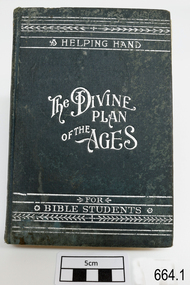 Flagstaff Hill Maritime Museum and Village
Book - Reference Religious Ideology, Charles Taze Russell, Millennial Dawn Vol 1 The Plan of the Ages, 1905
... Allegheny, PA USA 1905 Date: 1905 Further Information: Blue hard cover book with white text to lettering and front board edge pattern design Millennial Dawn Vol 1 The Plan of the Ages Book Reference Religious Ideology Charles Taze Russell Watch Tower Bible & Tract Society ...Millennial Dawn, Vol. 1 (The Plan of the Ages) was published in 1905 by the Watch Tower Bible & Tract Society and is a central text in the history of modern American millenarianism. The subject book was originally published in 1886 under the title The Plan of the Ages, and later re-titled The Divine Plan of the Ages as part of the Studies in the Scriptures series. Volume 1 lays out the foundational theological framework of Charles Taze Russell's religious movement. The book argues that God operates through distinct chronological "dispensations" or ages, such as the Patriarchal Age, the Jewish Age, and the Gospel Age, leading up to the "Millennial Age". Its primary themes include the harmonising of the scriptures while attempting to systematically reconcile Old and New Testament prophecies.Millennial Dawn Vol 1 (The Plan of The Ages) Author: Charles Taze Russell Publisher: Watch Tower Bible & Tract Society. Allegheny, PA USA 1905 Date: 1905 Further Information: Blue hard cover book with white text to lettering and front board edge pattern designnon-fictionMillennial Dawn, Vol. 1 (The Plan of the Ages) was published in 1905 by the Watch Tower Bible & Tract Society and is a central text in the history of modern American millenarianism. The subject book was originally published in 1886 under the title The Plan of the Ages, and later re-titled The Divine Plan of the Ages as part of the Studies in the Scriptures series. Volume 1 lays out the foundational theological framework of Charles Taze Russell's religious movement. The book argues that God operates through distinct chronological "dispensations" or ages, such as the Patriarchal Age, the Jewish Age, and the Gospel Age, leading up to the "Millennial Age". Its primary themes include the harmonising of the scriptures while attempting to systematically reconcile Old and New Testament prophecies.flagstaff hill, warrnambool, shipwrecked-coast, flagstaff-hill, flagstaff-hill-maritime-museum, maritime-museum, shipwreck-coast, millennial dawn vol 1 the plan of the ages, book, religious works, watch tower bible & tract society, charles taze russell, jehova witness, bible studies -
 Flagstaff Hill Maritime Museum and Village
Book - Fictional Novel, Robert Clark, The Crooked Stick Or Pollie's Probation, 1895
... Literary historians analyse it for how it reflects the anxieties, prejudices, and romanticised racial ideologies of the late Victorian era. However, it is largely considered a minor, secondary work in Boldrewood’s overall bibliography. ...The Crooked Stick; or, Pollie's Probation is another of Rolf Boldrewood's lesser-known, late-Victorian novels. Published by Macmillan & Co. in 1895, it takes a sharp departure from his typical bushranger action, operating instead as a domestic social drama set against the backdrop of colonial pastoral life. The title is derived from an old folk proverb: "Go through the wood and through the wood, and take a crooked stick at last." It serves as a warning against being too selective in choosing a spouse, only to end up with a poor match out of desperation. The story centres on Pollie Devereux, a beautiful, high-spirited, and wealthy young woman living on Corindgerie, a prosperous Australian sheep station. Following her father's death, she is left under the guardianship of her sensible cousin, Tom Devereux. Tom is deeply in love with Pollie and represents stability, safety, and a traditional life on the land. Pollie, however, craves the romance, glamour, and sophistication she associates with Europe. Enter Bertram Devereux, an English cousin who arrives from the UK. He is polished, charming, and highly cynical—a classic Victorian "dandy". Pollie is infatuated, and the core of the book follows her "probation", a period of emotional maturity where she must learn to distinguish between superficial English charm and rugged, genuine Australian worth.Hard cover book, The Crooked Stick Or Pollie's Probation Author: Pen Name Rolf Boldrewood For (Thomas Alexander Browne) Publisher: Macmillan And Co Printer: Robert Clark Date: 1895 Blue cloth hardcover and spine with spine lettering in gilt. The label on the spine has a Library Label.fictionThe Crooked Stick; or, Pollie's Probation is another of Rolf Boldrewood's lesser-known, late-Victorian novels. Published by Macmillan & Co. in 1895, it takes a sharp departure from his typical bushranger action, operating instead as a domestic social drama set against the backdrop of colonial pastoral life. The title is derived from an old folk proverb: "Go through the wood and through the wood, and take a crooked stick at last." It serves as a warning against being too selective in choosing a spouse, only to end up with a poor match out of desperation. The story centres on Pollie Devereux, a beautiful, high-spirited, and wealthy young woman living on Corindgerie, a prosperous Australian sheep station. Following her father's death, she is left under the guardianship of her sensible cousin, Tom Devereux. Tom is deeply in love with Pollie and represents stability, safety, and a traditional life on the land. Pollie, however, craves the romance, glamour, and sophistication she associates with Europe. Enter Bertram Devereux, an English cousin who arrives from the UK. He is polished, charming, and highly cynical—a classic Victorian "dandy". Pollie is infatuated, and the core of the book follows her "probation", a period of emotional maturity where she must learn to distinguish between superficial English charm and rugged, genuine Australian worth.flagstaff hill, warrnambool, shipwrecked coast, flagstaff hill maritime museum, maritime museum, shipwreck coast, flagstaff hill maritime village, great ocean road, book, pattison collection, warrnambool library, warrnambool mechanics’ institute, ralph eric pattison, corangamite regional library service, warrnambool city librarian, mechanics’ institute library, victorian library board, warrnambool books and records, warrnambool children’s library, the crooked stick or pollie's probation, rolf bolderwood -
 Flagstaff Hill Maritime Museum and Village
Book - Fictional Novel, Rolf Boldrewood (Pen Name), War to The Knife, 1899
... Literary historians analyse it for how it reflects the anxieties, prejudices, and romanticised racial ideologies of the late Victorian era. However, it is largely considered a minor, secondary work in Boldrewood’s overall bibliography. ...War to the Knife; or, Tangata Maori is a late 19th-century historical romance novel written by the prominent Australian author Rolf Boldrewood (the pen name of Thomas Alexander Browne) and published by the historic house Macmillan & Co. in 1899. Unlike most of Boldrewood's work, which is rooted deeply in the Australian outback, War to the Knife shifts its setting to New Zealand during the Waikato War of the 1860s, which was part of the New Zealand Land Wars. The story follows Sir Roland Massinger, a cultured English squire who suffers a devastating heartbreak at home when the woman he loves, Hypatia Tollemache, rejects him to pursue a life dedicated to social reform. Distraught, Sir Roland leaves his ancestral estate and emigrates to New Zealand in search of adventure and a fresh start. Upon arriving, he finds himself caught squarely in the middle of the violent clash between the Pakeha (British colonial settlers) and the indigenous Maori tribes over the ownership of the Waitara land block. Written in a late-Victorian style that heavily blends high-stakes adventure with a romanticised "frontier" view, the book attempts to explore colonial identity and the cultural friction of the era.War to The Knife Author: Pen Name Rolf Boldrewood For (Thomas Alexander Browne) Publisher: Macmillan And Co Printer: Robert Clark Date: 1899 Blue cloth hardcover and spine with spine lettering in gilt. The spine has a Library label with inscription.fictionWar to the Knife; or, Tangata Maori is a late 19th-century historical romance novel written by the prominent Australian author Rolf Boldrewood (the pen name of Thomas Alexander Browne) and published by the historic house Macmillan & Co. in 1899. Unlike most of Boldrewood's work, which is rooted deeply in the Australian outback, War to the Knife shifts its setting to New Zealand during the Waikato War of the 1860s, which was part of the New Zealand Land Wars. The story follows Sir Roland Massinger, a cultured English squire who suffers a devastating heartbreak at home when the woman he loves, Hypatia Tollemache, rejects him to pursue a life dedicated to social reform. Distraught, Sir Roland leaves his ancestral estate and emigrates to New Zealand in search of adventure and a fresh start. Upon arriving, he finds himself caught squarely in the middle of the violent clash between the Pakeha (British colonial settlers) and the indigenous Maori tribes over the ownership of the Waitara land block. Written in a late-Victorian style that heavily blends high-stakes adventure with a romanticised "frontier" view, the book attempts to explore colonial identity and the cultural friction of the era. flagstaff hill, warrnambool, shipwrecked coast, flagstaff hill maritime museum, maritime museum, shipwreck coast, flagstaff hill maritime village, great ocean road, book, pattison collection, warrnambool library, warrnambool mechanics’ institute, ralph eric pattison, corangamite regional library service, warrnambool city librarian, mechanics’ institute library, victorian library board, warrnambool books and records, warrnambool children’s library, war to the knife, rolf bolderwood -
 Flagstaff Hill Maritime Museum and Village
Book - Reference Religious Ideology, Charles Taze Russell, Millennial Dawn Vol 3 Thy Kingdom Come, 1905
... Allegheny, PA USA 1905 Date: 1905 Further Information: Blue hard cover book with white text to lettering and front board edge pattern design Millennial Dawn Vol 3 Thy Kingdom Come Book Reference Religious Ideology Charles Taze Russell Watch Tower Bible & Tract Society ...Millennial Dawn, Vol. 3 (Thy Kingdom Come) was published in 1905 by the Watch Tower Bible & Tract Society and is a central text in the history of modern American millenarianism. The subject book was originally published in 1886 under the title The Plan of the Ages, and later re-titled The Divine Plan of the Ages as part of the Studies in the Scriptures series. Volume 1 lays out the foundational theological framework of Charles Taze Russell's religious movement. The book argues that God operates through distinct chronological "dispensations" or ages, such as the Patriarchal Age, the Jewish Age, and the Gospel Age, leading up to the "Millennial Age". Its primary themes include the harmonising of the scriptures while attempting to systematically reconcile Old and New Testament prophecies.Millennial Dawn Vol 3 (Thy Kingdom Come) Author: Charles Taze Russell Publisher: Watch Tower Bible & Tract Society. Allegheny, PA USA 1905 Date: 1905 Further Information: Blue hard cover book with white text to lettering and front board edge pattern designnon-fictionMillennial Dawn, Vol. 3 (Thy Kingdom Come) was published in 1905 by the Watch Tower Bible & Tract Society and is a central text in the history of modern American millenarianism. The subject book was originally published in 1886 under the title The Plan of the Ages, and later re-titled The Divine Plan of the Ages as part of the Studies in the Scriptures series. Volume 1 lays out the foundational theological framework of Charles Taze Russell's religious movement. The book argues that God operates through distinct chronological "dispensations" or ages, such as the Patriarchal Age, the Jewish Age, and the Gospel Age, leading up to the "Millennial Age". Its primary themes include the harmonising of the scriptures while attempting to systematically reconcile Old and New Testament prophecies.flagstaff hill, warrnambool, shipwrecked-coast, flagstaff-hill, flagstaff-hill-maritime-museum, maritime-museum, shipwreck-coast, millennial dawn vol 1 the plan of the ages, book, religious works, watch tower bible & tract society, charles taze russell, jehova witness, bible studies -
 Flagstaff Hill Maritime Museum and Village
Book - Reference Religious Ideology, Charles Taze Russell, Millennial Dawn Vol 4 The Day of Vengeance, 1905
... Allegheny, PA USA 1905 Date: 1905 Further Information: Blue hard cover book with white text to lettering and front board edge pattern design Millennial Dawn Vol 4 The Day of Vengeance Book Reference Religious Ideology Charles Taze Russell Watch Tower Bible & Tract Society ...Millennial Dawn, Vol. 4 (The Day of Vengeance) was published in 1905 by the Watch Tower Bible & Tract Society and is a central text in the history of modern American millenarianism. The subject book was originally published in 1886 under the title The Plan of the Ages, and later re-titled The Divine Plan of the Ages as part of the Studies in the Scriptures series. Volume 1 lays out the foundational theological framework of Charles Taze Russell's religious movement. The book argues that God operates through distinct chronological "dispensations" or ages, such as the Patriarchal Age, the Jewish Age, and the Gospel Age, leading up to the "Millennial Age". Its primary themes include the harmonising of the scriptures while attempting to systematically reconcile Old and New Testament prophecies.Millennial Dawn Vol 4 (The Day of Vengeance) Author: Charles Taze Russell Publisher: Watch Tower Bible & Tract Society. Allegheny, PA USA 1905 Date: 1905 Further Information: Blue hard cover book with white text to lettering and front board edge pattern designMillennial Dawn, Vol. 4 (The Day of Vengeance) was published in 1905 by the Watch Tower Bible & Tract Society and is a central text in the history of modern American millenarianism. The subject book was originally published in 1886 under the title The Plan of the Ages, and later re-titled The Divine Plan of the Ages as part of the Studies in the Scriptures series. Volume 1 lays out the foundational theological framework of Charles Taze Russell's religious movement. The book argues that God operates through distinct chronological "dispensations" or ages, such as the Patriarchal Age, the Jewish Age, and the Gospel Age, leading up to the "Millennial Age". Its primary themes include the harmonising of the scriptures while attempting to systematically reconcile Old and New Testament prophecies.flagstaff hill, warrnambool, shipwrecked-coast, flagstaff-hill, flagstaff-hill-maritime-museum, maritime-museum, shipwreck-coast, millennial dawn vol 1 the plan of the ages, book, religious works, watch tower bible & tract society, charles taze russell, jehova witness, bible studies -
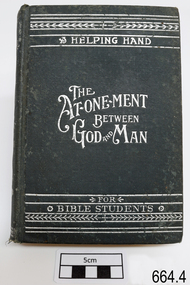 Flagstaff Hill Maritime Museum and Village
Book - Reference Religious Ideology, Charles Taze Russell, Millennial Dawn Vol 4 The Atonement of Man, 1905
... Allegheny, PA USA 1905 Date: 1905 Further Information: Blue hard cover book with white text to lettering and front board edge pattern design Millennial Dawn Vol 4 The Atonement of Man Book Reference Religious Ideology Charles Taze Russell Watch Tower Bible & Tract Society ...Millennial Dawn, Vol. 4 (The Atonement of Man) was published in 1905 by the Watch Tower Bible & Tract Society and is a central text in the history of modern American millenarianism. The subject book was originally published in 1886 under the title The Plan of the Ages, and later re-titled The Divine Plan of the Ages as part of the Studies in the Scriptures series. Volume 1 lays out the foundational theological framework of Charles Taze Russell's religious movement. The book argues that God operates through distinct chronological "dispensations" or ages, such as the Patriarchal Age, the Jewish Age, and the Gospel Age, leading up to the "Millennial Age". Its primary themes include the harmonising of the scriptures while attempting to systematically reconcile Old and New Testament prophecies.Millennial Dawn Vol 4 (The Atonement of Man) Author: Charles Taze Russell Publisher: Watch Tower Bible & Tract Society. Allegheny, PA USA 1905 Date: 1905 Further Information: Blue hard cover book with white text to lettering and front board edge pattern designnon-fictionMillennial Dawn, Vol. 4 (The Atonement of Man) was published in 1905 by the Watch Tower Bible & Tract Society and is a central text in the history of modern American millenarianism. The subject book was originally published in 1886 under the title The Plan of the Ages, and later re-titled The Divine Plan of the Ages as part of the Studies in the Scriptures series. Volume 1 lays out the foundational theological framework of Charles Taze Russell's religious movement. The book argues that God operates through distinct chronological "dispensations" or ages, such as the Patriarchal Age, the Jewish Age, and the Gospel Age, leading up to the "Millennial Age". Its primary themes include the harmonising of the scriptures while attempting to systematically reconcile Old and New Testament prophecies.flagstaff hill, warrnambool, shipwrecked-coast, flagstaff-hill, flagstaff-hill-maritime-museum, maritime-museum, shipwreck-coast, millennial dawn vol 1 the plan of the ages, book, religious works, watch tower bible & tract society, charles taze russell, jehova witness, bible studies -
 Orbost & District Historical Society
magazine, Fitchett Bros P/Ltd, The New Idea, September 5 1945
... This magazine reflects the contemporary ideology about class, family structures and women’s role in society magazine-The New Idea A 34 pp magazine, titled The New Idea. ...New Idea is a long-running Australian weekly magazine published by Pacific Magazines and aimed at women.The magazine was first published in 1902 by Fitchett Bros. Southdown Magazines purchased Fitchett Bros. after World War II.. . This magazine reflects the contemporary ideology about class, family structures and women’s role in societyA 34 pp magazine, titled The New Idea. The front cover has a coloured picture of a woman in a stylish red dress. In white print across the bottom is written "Baby Hold Your Tongue". The magazine cost 3d and is dated September 5 1945. It contains stories, articles comics and advertisements , all in b/w.magazine-the new idea -
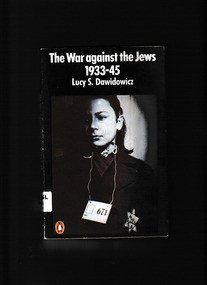 Monbulk RSL Sub Branch
Book, Penguin, The war against the Jews, 1933-45, 1987
... Holocaust - Jewish - 1939-1945 1939-1945 - atrocities In the first part, "The Final Solution," the author "records the origins and growth of the virulent ideology that underlay the plan to annihilate the European Jews," and in the second part, "The Holocaust," she describes "the Jewish plight under German terror. ...In the first part, "The Final Solution," the author "records the origins and growth of the virulent ideology that underlay the plan to annihilate the European Jews," and in the second part, "The Holocaust," she describes "the Jewish plight under German terror.Index, bib, maps, p.556.non-fictionIn the first part, "The Final Solution," the author "records the origins and growth of the virulent ideology that underlay the plan to annihilate the European Jews," and in the second part, "The Holocaust," she describes "the Jewish plight under German terror.holocaust - jewish - 1939-1945, 1939-1945 - atrocities -
 Monbulk RSL Sub Branch
Book, Indra Publishing, Best we forget, 1998
... This is the story of Simpson and his mates, caught in a war between powerful ideologies which none of them understood. They walk the fine line of sanity, swinging wildly between love and hate, pathos and humour, patriotism and treason, life and pointless death. ...Donkey Simpson, a typically naive young Australian, thrust into uniform by his country, sets out on the adventure of a lifetime -- or so he thinks. But Vietnam is not what he expected. It's a horror story. It's a story over which he has no control, at first a 'typical Army stuff-up' which wrenches him this way and that, like a puppet soldier on a string, and then something far more dangerous and sinister threatens to destroy him -- but who's pulling the strings? This is the story of Simpson and his mates, caught in a war between powerful ideologies which none of them understood. They walk the fine line of sanity, swinging wildly between love and hate, pathos and humour, patriotism and treason, life and pointless death. Donkey Simpson's story is centred around the Public Relations Office of the Australian contingent, and a spy in the nearby Intelligence Office -- a spy of unclear loyalties, working for the South Vietnamese allies, working for the enemy, or working only for survival? The novel has its ugly aspects -- most soldiers' lack of respect for the Vietnamese, whether ally or enemy, the callous disregard for human life, and the treachery practised on both sides. Collapse summaryp.390.fictionDonkey Simpson, a typically naive young Australian, thrust into uniform by his country, sets out on the adventure of a lifetime -- or so he thinks. But Vietnam is not what he expected. It's a horror story. It's a story over which he has no control, at first a 'typical Army stuff-up' which wrenches him this way and that, like a puppet soldier on a string, and then something far more dangerous and sinister threatens to destroy him -- but who's pulling the strings? This is the story of Simpson and his mates, caught in a war between powerful ideologies which none of them understood. They walk the fine line of sanity, swinging wildly between love and hate, pathos and humour, patriotism and treason, life and pointless death. Donkey Simpson's story is centred around the Public Relations Office of the Australian contingent, and a spy in the nearby Intelligence Office -- a spy of unclear loyalties, working for the South Vietnamese allies, working for the enemy, or working only for survival? The novel has its ugly aspects -- most soldiers' lack of respect for the Vietnamese, whether ally or enemy, the callous disregard for human life, and the treachery practised on both sides. Collapse summary vietnam war 1961-1975 - fiction, vietnam war 1961-1975 – personal recollections – australia -
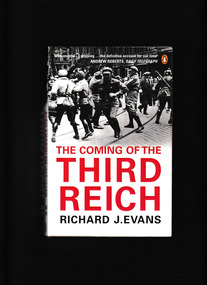 Monbulk RSL Sub Branch
Book, Penguin Books, The coming of the Third Reich, 2004
... In the end, though nothing about what happened was preordained, Germany proved to be fertile ground for Nazism's ideology of hatred. Index, bibliography, ill, maps, p.335. ...n 1900, Germany was one of modernity's great success stories: The most progressive and dynamic nation in Europe, it was the only country whose rapid economic growth and innovation rivaled that of the United States. Its political culture was far less authoritarian than Russia's and less anti-Semitic than France's. Representative institutions thrived, and competing political parties and elections were a central part of life. How, then, could it be that in little more than a generation this stable modern country would fall into the hands of Adolf Hitler and the violent, racist, extremist political movement he led, a movement that would lead Germany and then all of Europe into utter moral, physical, and cultural ruin?" "There is no story in twentieth-century history more important to understand, and Richard Evans has written the definitive account for our time. A masterful synthesis of a vast body of scholarly work integrated with important new research and interpretations, Evans's history restores drama and contingency to the rise to power of Hitler and the Nazis, even as he shows how ready Germany was by the early 1930s for such a takeover to occur. Its citizens were angry and embittered by military defeat and economic ruin, and its young democracy undermined by a civil service, an army, and a law enforcement system deeply alienated from the new order. The electorate was beset by growing extremism and panic about communism; and the small but successful Jewish community was subject to wide-spread suspicion and resentment. In the end, though nothing about what happened was preordained, Germany proved to be fertile ground for Nazism's ideology of hatred.Index, bibliography, ill, maps, p.335.non-fictionn 1900, Germany was one of modernity's great success stories: The most progressive and dynamic nation in Europe, it was the only country whose rapid economic growth and innovation rivaled that of the United States. Its political culture was far less authoritarian than Russia's and less anti-Semitic than France's. Representative institutions thrived, and competing political parties and elections were a central part of life. How, then, could it be that in little more than a generation this stable modern country would fall into the hands of Adolf Hitler and the violent, racist, extremist political movement he led, a movement that would lead Germany and then all of Europe into utter moral, physical, and cultural ruin?" "There is no story in twentieth-century history more important to understand, and Richard Evans has written the definitive account for our time. A masterful synthesis of a vast body of scholarly work integrated with important new research and interpretations, Evans's history restores drama and contingency to the rise to power of Hitler and the Nazis, even as he shows how ready Germany was by the early 1930s for such a takeover to occur. Its citizens were angry and embittered by military defeat and economic ruin, and its young democracy undermined by a civil service, an army, and a law enforcement system deeply alienated from the new order. The electorate was beset by growing extremism and panic about communism; and the small but successful Jewish community was subject to wide-spread suspicion and resentment. In the end, though nothing about what happened was preordained, Germany proved to be fertile ground for Nazism's ideology of hatred.germany - politics and government 1933-1939, germany - nazi party
