
Showing 30 items matching "illegal photograph"
-
 Tatura Irrigation & Wartime Camps Museum
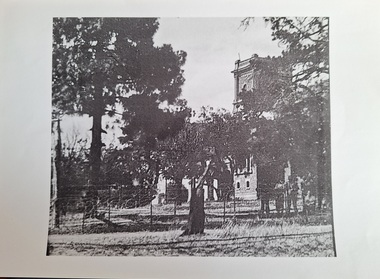
Photograph, Illegal Photograph of Dhurringile Mansion
... Illegal Photograph of Dhurringile Mansion...illegal photograph...An illegal photograph taken of Dhurringile Mansion by the wife of one of the internees. ...Copy of black and white illegal photograph of Dhurringile Mansion as an internment camp during WW2. ...An illegal photograph taken of Dhurringile Mansion by the wife of one of the internees. ...An illegal photograph taken of Dhurringile Mansion by the wife of one of the internees. September 1939.Copy of black and white illegal photograph of Dhurringile Mansion as an internment camp during WW2. Barbed wire fence and several guards standing in shade of trees to right.illegal photograph, dhurringile mansion, ww2 internment camp, w kiessling -
 Flagstaff Hill Maritime Museum and Village
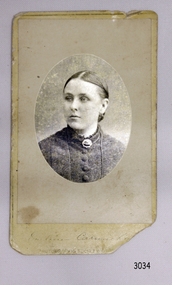
Photograph - Portrait, Miss Eva Carmichael, 24-07-1878
... Cargo and artefacts have also been illegally salvaged over many years before protective legislation was introduced. The photograph is significant for its association with the wreck of the Loch Ard. ...Eva Carmichael was the daughter of Dr and Mrs Emery Carmichael. Both her parents, as well as her three sisters and two brothers, were drowned when the Loch Ard was wrecked. Only five bodies were recovered from the wreck, two of these being Miss Carmichael's mother and sister. They were buried on top of the cliff. The only other survivor, Mr Tom Pearce, assisted Miss Carmichael. She was taken to Glenample homestead, where she remained for some time before going to Melbourne. A few months later, she returned to Ireland, where she later married Mr T Townshend. The sailing ship Loch Ard was bound for Melbourne in 1878, loaded with passengers and cargo, when it ran into a rocky reef at the base of Mutton Bird Island, near Port Campbell. Of the 54 crew members and passengers on board, only two survived: an apprentice, Tom Pearce and a young woman passenger, Eva Carmichael, who lost all of her family in the tragedy. The wreck of Loch Ard still lies at the base of Mutton Bird Island, and much of the cargo has been salvaged. Some washed up into what is now known as Loch Ard Gorge following the shipwreck. Cargo and artefacts have also been illegally salvaged over many years before protective legislation was introduced.The photograph is significant for its association with the wreck of the Loch Ard. This wreck has been protected as a Historic Shipwreck since 11 March 1982, under the Commonwealth Historic Shipwrecks Act (1976) Flagstaff Hill’s collection of artefacts from Loch Ard is significant for being one of the largest collections of artefacts from this shipwreck in Victoria. It is significant for its association with the shipwreck, which is on the Victorian Heritage Register. The collection is significant because of the relationship between the objects, as together they have a high potential to interpret the story of the Loch Ard. The Loch Ard collection is archaeologically significant as the remains of a large international passenger and cargo ship. The Loch Ard collection is historically significant for representing aspects of Victoria’s shipping history and its potential to interpret sub-theme 1.5 of Victoria’s Framework of Historical Themes (living with natural processes). The collection is also historically significant for its association with the Loch Ard, which was one of the worst and best known shipwrecks in Victoria’s history. The Loch Ard collection meets the following criteria for assessment: Criterion A: Importance to the course, or pattern, of Victoria’s cultural history. Criterion B: Possession of uncommon, rare or endangered aspects of Victoria’s cultural history. Criterion C: Potential to yield information that will contribute to an understanding of Victoria’s cultural history. Photograph, small sepia portrait of Miss Eva Carmichael within an oval matte frame, on card. Photographed in 1878 in Melbourne by the Photographic Society of Victoria. There is a handwritten inscription below the photograph. The reverse has a stamp, gold maker’s print and a white adhesive label with handwriting on it.Front, handwritten below photograph: "Miss Eva Carmichael" Reverse, bottom right, handwritten: [3 signatures] Stamped: “PHOTOGRAPHIC / SOCIETY OF VICTORIA / MELBOURNE / REGISTERED COPYRIGHT / JULY 24th 878” and “NONE ARE GENUINE UNLESS WITH / SIGNATURES THUS” and “PRESIDENT / VICE PRESIDENT / - - - - - TARY” Label, handwritten: “F- Ph 56/2 – 74”flagstaff hill maritime museum and village, flagstaff hill, warrnambool, maritime museum, shipwreck coast, photograph, miss eva carmichael, loch ard shipwreck, loch ard survivor, photographic society of melbourne, dr and mrs emery carmichael., mr t townshend, mutton bird island, port campbell, tom pearce, 1878 -
 Flagstaff Hill Maritime Museum and Village
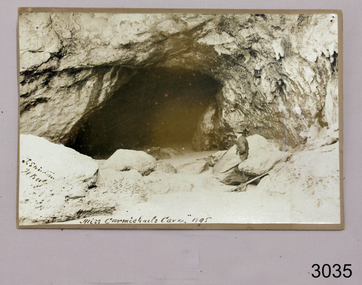
Photograph, March 1895
... Cargo and artefacts have also been illegally salvaged over many years before protective legislation was introduced. The photograph is significant for its association with the wreck of the Loch Ard. ...Loch Ard was bound for Melbourne in 1878 loaded with passengers and cargo when it ran into a rocky reef at the base of Mutton Bird Island, near Port Campbell. Of the 54 crew members and passengers on board, only two survived: an apprentice, Tom Pearce and a young woman passenger, Eva Carmichael, who lost all of her family in the tragedy. The wreck of Loch Ard still lies at the base of Mutton Bird Island and much of the cargo has been salvaged. Some was washed up into what is now known as Loch Ard Gorge following the shipwreck. Cargo and artefacts have also been illegally salvaged over many years before protective legislation was introduced. The photograph is significant for its association with the wreck of the Loch Ard. This wreck has been protected as a Historic Shipwreck since 11 March 1982, under the Commonwealth Historic Shipwrecks Act (1976) Flagstaff Hill’s collection of artefacts from Loch Ard is significant for being one of the largest collections of artefacts from this shipwreck in Victoria. It is significant for its association with the shipwreck, which is on the Victorian Heritage Register. The collection is significant because of the relationship between the objects, as together they have a high potential to interpret the story of the Loch Ard. The Loch Ard collection is archaeologically significant as the remains of a large international passenger and cargo ship. The Loch Ard collection is historically significant for representing aspects of Victoria’s shipping history and its potential to interpret sub-theme 1.5 of Victoria’s Framework of Historical Themes (living with natural processes). The collection is also historically significant for its association with the Loch Ard, which was one of the worst and best known shipwrecks in Victoria’s history. The Loch Ard collection meets the following criteria for assessment: Criterion A: Importance to the course, or pattern, of Victoria’s cultural history. Criterion B: Possession of uncommon, rare or endangered aspects of Victoria’s cultural history. Criterion C: Potential to yield information that will contribute to an understanding of Victoria’s cultural history. Photograph of Miss Eva Carmichaels Cave at Loch Ard Gorge where the survivors found shelter. Reverse has four areas of torn surface, perhaps were photo had been mounted. Hand written text in pencil and in ink.Reverse of photograph Hand written in pencil “ … refuge … which he … offer words … Miss Carmichael. He then … on the …“ Hand written in ink “Loch Ard Gorge / Miss Carmichael’s cave” and “ Mr J Swinton / Warrnambool / March 1895” flagstaff hill, warrnambool, shipwrecked coast, flagstaff hill maritime museum, maritime museum, shipwreck coast, flagstaff hill maritime village, great ocean road, loch line, loch ard, captain gibbs, eva carmichael, tom pearce, glenample station, mutton bird island, loch ard gorge, loch ard shipwreck, 1878 shipwreck, loch ard gorge, miss eva carmichael -
 Flagstaff Hill Maritime Museum and Village
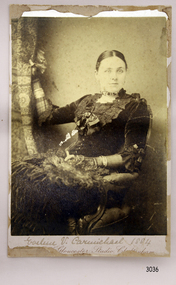
Photograph, late 1800's
... Cargo and artefacts have also been illegally salvaged over many years before protective legislation was introduced. The photograph is significant for its association with the wreck of the Loch Ard. ...Miss Eva Carmichael is one of two survivors of the Loch Ard shipwreck.. Loch Ard was bound for Melbourne in 1878 loaded with passengers and cargo when it ran into a rocky reef at the base of Mutton Bird Island, near Port Campbell. Of the 54 crew members and passengers on board, only two survived: an apprentice, Tom Pearce and a young woman passenger, Eva Carmichael, who lost all of her family in the tragedy. The wreck of Loch Ard still lies at the base of Mutton Bird Island and much of the cargo has been salvaged. Some was washed up into what is now known as Loch Ard Gorge following the shipwreck. Cargo and artefacts have also been illegally salvaged over many years before protective legislation was introduced. The photograph is significant for its association with the wreck of the Loch Ard. This wreck has been protected as a Historic Shipwreck since 11 March 1982, under the Commonwealth Historic Shipwrecks Act (1976) Flagstaff Hill’s collection of artefacts from Loch Ard is significant for being one of the largest collections of artefacts from this shipwreck in Victoria. It is significant for its association with the shipwreck, which is on the Victorian Heritage Register. The collection is significant because of the relationship between the objects, as together they have a high potential to interpret the story of the Loch Ard. The Loch Ard collection is archaeologically significant as the remains of a large international passenger and cargo ship. The Loch Ard collection is historically significant for representing aspects of Victoria’s shipping history and its potential to interpret sub-theme 1.5 of Victoria’s Framework of Historical Themes (living with natural processes). The collection is also historically significant for its association with the Loch Ard, which was one of the worst and best known shipwrecks in Victoria’s history. The Loch Ard collection meets the following criteria for assessment: Criterion A: Importance to the course, or pattern, of Victoria’s cultural history. Criterion B: Possession of uncommon, rare or endangered aspects of Victoria’s cultural history. Criterion C: Potential to yield information that will contribute to an understanding of Victoria’s cultural history. Photograph of Miss Eva Carmichael sitting on a chair holding a curtain. Text below photograph is partly unreadable but gives the name of the photographic studio. A printed on the back "County of Gloucester Studio Cheltenham" with the address and other informaion.Reverse has crest that includes “PRIZE MEDALIST PARIS EXHIBIT’N 1867” Printed text “No. …………” “COUNTY OF GLOUCESTER STUDIO / 20a / PROMENADE VILLAS / CHELTENHAM” and “Autotype Prints or Permanent Porcelain enlargements can be made from this plate” flagstaff hill, warrnambool, shipwrecked-coast, flagstaff-hill, flagstaff-hill-maritime-museum, maritime-museum, shipwreck-coast, flagstaff-hill-maritime-village, photograph of miss eva carmichael, eva carmichael, loch ard shipwreck, county of gloucester studio -
 Flagstaff Hill Maritime Museum and Village
Photograph, March, 1895
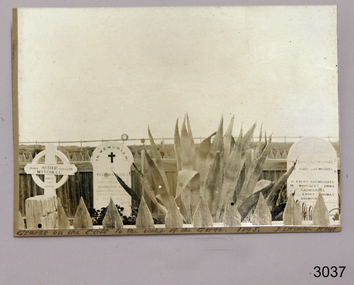
... Cargo and artefacts have also been illegally salvaged over many years before protective legislation was introduced. The photograph is significant for its association with the wreck of the Loch Ard. ...Loch Ard was bound for Melbourne in 1878 loaded with passengers and cargo when it ran into a rocky reef at the base of Mutton Bird Island, near Port Campbell. Of the 54 crew members and passengers on board, only two survived: an apprentice, Tom Pearce and a young woman passenger, Eva Carmichael, who lost all of her family in the tragedy. The wreck of Loch Ard still lies at the base of Mutton Bird Island and much of the cargo has been salvaged. Some was washed up into what is now known as Loch Ard Gorge following the shipwreck. Cargo and artefacts have also been illegally salvaged over many years before protective legislation was introduced. The photograph is significant for its association with the wreck of the Loch Ard. This wreck has been protected as a Historic Shipwreck since 11 March 1982, under the Commonwealth Historic Shipwrecks Act (1976) Flagstaff Hill’s collection of artefacts from Loch Ard is significant for being one of the largest collections of artefacts from this shipwreck in Victoria. It is significant for its association with the shipwreck, which is on the Victorian Heritage Register. The collection is significant because of the relationship between the objects, as together they have a high potential to interpret the story of the Loch Ard. The Loch Ard collection is archaeologically significant as the remains of a large international passenger and cargo ship. The Loch Ard collection is historically significant for representing aspects of Victoria’s shipping history and its potential to interpret sub-theme 1.5 of Victoria’s Framework of Historical Themes (living with natural processes). The collection is also historically significant for its association with the Loch Ard, which was one of the worst and best known shipwrecks in Victoria’s history. The Loch Ard collection meets the following criteria for assessment: Criterion A: Importance to the course, or pattern, of Victoria’s cultural history. Criterion B: Possession of uncommon, rare or endangered aspects of Victoria’s cultural history. Criterion C: Potential to yield information that will contribute to an understanding of Victoria’s cultural history. Photograph of Loch Ard Gorge graves on hillside, including the Carmichael family, Reginald Jones and Arthur Mitchell Reverse has hand writing in pen and ink, part of details are lost due to photo being trimmed. Also has four areas of torn surface, perhaps were photo had been mounted. Reverse has hand writing “ … Loch Ard Gorge / Graves of / the Carmichael family / Mr. Reginald Jones / Mr Arthur Mitchell “ and “Mr J Swinton / March 1895”flagstaff hill, warrnambool, shipwrecked coast, flagstaff hill maritime museum, maritime museum, shipwreck coast, flagstaff hill maritime village, great ocean road, loch line, loch ard, captain gibbs, eva carmichael, tom pearce, glenample station, mutton bird island, loch ard gorge, loch ard shipwreck, carmichael family, arthur mitchell, reginald jones, loch ard gorge graves -
 Flagstaff Hill Maritime Museum and Village
Photograph - Portrait, late 19th century
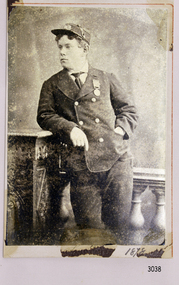
... Cargo and artefacts have also been illegally salvaged over many years before protective legislation was introduced. The photograph is significant for its association with the wreck of the Loch Ard. ...This photograph is of Tom Pearce, one of only 2 survivors from the shipwreck LOCH ARD. Loch Ard was bound for Melbourne in 1878 loaded with passengers and cargo when it ran into a rocky reef at the base of Mutton Bird Island, near Port Campbell. Of the 54 crew members and passengers on board, only two survived: an apprentice, Tom Pearce and a young woman passenger, Eva Carmichael, who lost all of her family in the tragedy. Coleman Jacobs composed the music “The Young Hero Schottische” and dedicated it, by permission, to Mr. Thomas R. (Tom) Pearce. The sheet music was published in 1878 by the Messieurs Roberts, professors of dancing etc. Melbourne. It was on sale for 3/- (3 shillings) and in aid of the “LOCH ARD” fund. [This is Coleman Jacobs’ only surviving musical work Coleman Jacobs, accomplished pianist, musical performer, singer, composer, professor of music and music teacher, was born in 1827 and died on 4 July 1885, aged 58 years. Coleman Jacobs was buried in the Melbourne Cemetery (grave 461, Church of England section).] The wreck of Loch Ard still lies at the base of Mutton Bird Island and much of the cargo has been salvaged. Some was washed up into what is now known as Loch Ard Gorge following the shipwreck. Cargo and artefacts have also been illegally salvaged over many years before protective legislation was introduced. The photograph is significant for its association with the wreck of the Loch Ard. This wreck has been protected as a Historic Shipwreck since 11 March 1982, under the Commonwealth Historic Shipwrecks Act (1976) Flagstaff Hill’s collection of artefacts from Loch Ard is significant for being one of the largest collections of artefacts from this shipwreck in Victoria. It is significant for its association with the shipwreck, which is on the Victorian Heritage Register. The collection is significant because of the relationship between the objects, as together they have a high potential to interpret the story of the Loch Ard. The Loch Ard collection is archaeologically significant as the remains of a large international passenger and cargo ship. The Loch Ard collection is historically significant for representing aspects of Victoria’s shipping history and its potential to interpret sub-theme 1.5 of Victoria’s Framework of Historical Themes (living with natural processes). The collection is also historically significant for its association with the Loch Ard, which was one of the worst and best known shipwrecks in Victoria’s history. The Loch Ard collection meets the following criteria for assessment: Criterion A: Importance to the course, or pattern, of Victoria’s cultural history. Criterion B: Possession of uncommon, rare or endangered aspects of Victoria’s cultural history. Criterion C: Potential to yield information that will contribute to an understanding of Victoria’s cultural history. Photograph of Mr Tom Pearce dressed in a uniform with a medal pinned on it. Standing with his arm resting on a masonry pillar. Reverse has piece of tape centre top and bottom. Also has printed maker’s information. Printed by the Photographic Society of Victoria, Melbourne.Printed green text “PHOTOGRAPHIC / SOCIETY OF VICTORIA / MELBOURNE / REGISTERED COPYRIGHT / JULY 24th 1878” and “NONE ARE GENUINE UNLESS WITH / SIGNATURES THUS” and “PRESIDENT / VICE PRESIDENT / SECRETARY” flagstaff hill, warrnambool, shipwrecked coast, flagstaff hill maritime museum, maritime museum, shipwreck coast, flagstaff hill maritime village, loch ard shipwreck, tom pearce, thomas r pearce, eva carmichael, mutton bird island, loch ard survivor, loch ard hero, coleman jacobs, the young hero schottische, photograph of tom pearce -
 Flagstaff Hill Maritime Museum and Village
Photograph, circa 1895
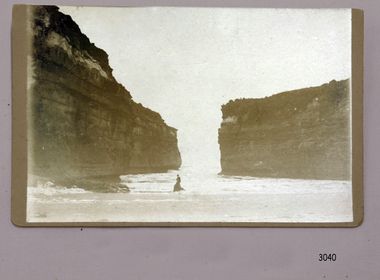
... Cargo and artefacts have also been illegally salvaged over many years before protective legislation was introduced. The photograph is significant for its association with the wreck of the Loch Ard. ...Loch Ard was bound for Melbourne in 1878 loaded with passengers and cargo when it ran into a rocky reef at the base of Mutton Bird Island, near Port Campbell. Of the 54 crew members and passengers on board, only two survived: an apprentice, Tom Pearce and a young woman passenger, Eva Carmichael, who lost all of her family in the tragedy. The wreck of Loch Ard still lies at the base of Mutton Bird Island and much of the cargo has been salvaged. Some was washed up into what is now known as Loch Ard Gorge following the shipwreck. Cargo and artefacts have also been illegally salvaged over many years before protective legislation was introduced. The photograph is significant for its association with the wreck of the Loch Ard. This wreck has been protected as a Historic Shipwreck since 11 March 1982, under the Commonwealth Historic Shipwrecks Act (1976) Flagstaff Hill’s collection of artefacts from Loch Ard is significant for being one of the largest collections of artefacts from this shipwreck in Victoria. It is significant for its association with the shipwreck, which is on the Victorian Heritage Register. The collection is significant because of the relationship between the objects, as together they have a high potential to interpret the story of the Loch Ard. The Loch Ard collection is archaeologically significant as the remains of a large international passenger and cargo ship. The Loch Ard collection is historically significant for representing aspects of Victoria’s shipping history and its potential to interpret sub-theme 1.5 of Victoria’s Framework of Historical Themes (living with natural processes). The collection is also historically significant for its association with the Loch Ard, which was one of the worst and best known shipwrecks in Victoria’s history. The Loch Ard collection meets the following criteria for assessment: Criterion A: Importance to the course, or pattern, of Victoria’s cultural history. Criterion B: Possession of uncommon, rare or endangered aspects of Victoria’s cultural history. Criterion C: Potential to yield information that will contribute to an understanding of Victoria’s cultural history. Photograph of rocks of Loch Ard Gorge in background, a man is sitting on small rock in the foreground. Reverse has hand writing in pen and inkReverse hand writing “The Loch Ard Gorge / showing the rock / on which Miss Carmichael / was clinging when Pearce / first saw her” and “Mr J Swinton / Warrnambool / March 1895”flagstaff hill, warrnambool, shipwrecked coast, flagstaff hill maritime museum, maritime museum, shipwreck coast, flagstaff hill maritime village, great ocean road, loch line, loch ard, captain gibbs, eva carmichael, tom pearce, glenample station, mutton bird island, loch ard gorge, photograph -
 Flagstaff Hill Maritime Museum and Village
Photograph - Portrait, Photographic Society of Victoria, late 19th century
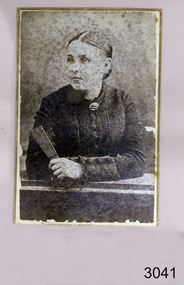
... Cargo and artefacts have also been illegally salvaged over many years before protective legislation was introduced. The photograph is significant for its association with the wreck of the Loch Ard. ...The portrait is of Miss Eva Carmichael, one of only two survivors of the disastrous wreck of the Loch Ard. The sailing ship Loch Ard was bound for Melbourne in 1878, loaded with passengers and cargo, when it ran into a rocky reef at the base of Mutton Bird Island, near Port Campbell. Of the 54 crew members and passengers on board, only two survived: an apprentice, Tom Pearce and a young woman passenger, Eva Carmichael, who lost all of her family in the tragedy. The wreck of Loch Ard still lies at the base of Mutton Bird Island, and much of the cargo has been salvaged. Some washed up into what is now known as Loch Ard Gorge following the shipwreck. Cargo and artefacts have also been illegally salvaged over many years before protective legislation was introduced. The photograph is significant for its association with the wreck of the Loch Ard. This wreck has been protected as a Historic Shipwreck since 11 March 1982, under the Commonwealth Historic Shipwrecks Act (1976). Flagstaff Hill’s collection of artefacts from the Loch Ard is significant for being one of the largest collections of artefacts from this shipwreck in Victoria. It is significant for its association with the shipwreck, which is on the Victorian Heritage Register. The collection is significant because of the relationship between the objects, as together they have a high potential to interpret the story of the Loch Ard. The Loch Ard collection is archaeologically significant as the remains of a large international passenger and cargo ship. The Loch Ard collection is historically significant for representing aspects of Victoria’s shipping history and its potential to interpret sub-theme 1.5 of Victoria’s Framework of Historical Themes (living with natural processes). The collection is also historically significant for its association with the Loch Ard, which was one of the worst and best-known shipwrecks in Victoria’s history. The Loch Ard collection meets the following criteria for assessment: Criterion A: Importance to the course, or pattern, of Victoria’s cultural history. Criterion B: Possession of uncommon, rare or endangered aspects of Victoria’s cultural history. Criterion C: Potential to yield information that will contribute to an understanding of Victoria’s cultural history. Photograph, sepia, of Miss Eva Carmichael holding a book, seated at a desk. Oval gilt-framed portrait in a green container edged with gilt. The reverse has a piece of tape centred left and right. Also has printed maker’s information. Printed by the Photographic Society of Victoria, Melbourne.Reverse, printed brown text “PHOTOGRAPHIC / SOCIETY OF VICTORIA / MELBOURNE / REGISTERED COPYRIGHT / JULY 24th 878” and “NONE ARE GENUINE UNLESS WITH / SIGNATURES THUS” and “PRESIDENT / VICE PRESIDENT / SECRETARY” flagstaff hill, warrnambool, shipwrecked-coast, flagstaff-hill, flagstaff-hill-maritime-museum, maritime-museum, shipwreck-coast, flagstaff-hill-maritime-village, loch ard shipwreck, miss eva carmichael, loch ard survivor, photographic society of victoria, melbourne -
 Flagstaff Hill Maritime Museum and Village
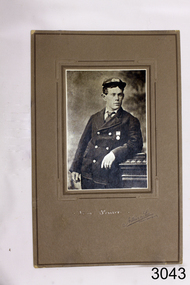
Photograph - Portrait, late 19th century
... Cargo and artefacts have also been illegally salvaged over many years before protective legislation was introduced. The photograph is significant for its association with the wreck of the Loch Ard. ...This photograph is of Tom Pearce, one of only 2 survivors from the shipwreck LOCH ARD. Loch Ard was bound for Melbourne in 1878 loaded with passengers and cargo when it ran into a rocky reef at the base of Mutton Bird Island, near Port Campbell. Of the 54 crew members and passengers on board, only two survived: an apprentice, Tom Pearce and a young woman passenger, Eva Carmichael, who lost all of her family in the tragedy. Coleman Jacobs composed the music “The Young Hero Schottische” and dedicated it, by permission, to Mr. Thomas R. (Tom) Pearce. The sheet music was published in 1878 by the Messieurs Roberts, professors of dancing etc. Melbourne. It was on sale for 3/- (3 shillings) and in aid of the “LOCH ARD” fund. [This is Coleman Jacobs’ only surviving musical work Coleman Jacobs, accomplished pianist, musical performer, singer, composer, professor of music and music teacher, was born in 1827 and died on 4 July 1885, aged 58 years. Coleman Jacobs was buried in the Melbourne Cemetery (grave 461, Church of England section).] The wreck of Loch Ard still lies at the base of Mutton Bird Island and much of the cargo has been salvaged. Some was washed up into what is now known as Loch Ard Gorge following the shipwreck. Cargo and artefacts have also been illegally salvaged over many years before protective legislation was introduced. The photograph is significant for its association with the wreck of the Loch Ard. This wreck has been protected as a Historic Shipwreck since 11 March 1982, under the Commonwealth Historic Shipwrecks Act (1976) Flagstaff Hill’s collection of artefacts from Loch Ard is significant for being one of the largest collections of artefacts from this shipwreck in Victoria. It is significant for its association with the shipwreck, which is on the Victorian Heritage Register. The collection is significant because of the relationship between the objects, as together they have a high potential to interpret the story of the Loch Ard. The Loch Ard collection is archaeologically significant as the remains of a large international passenger and cargo ship. The Loch Ard collection is historically significant for representing aspects of Victoria’s shipping history and its potential to interpret sub-theme 1.5 of Victoria’s Framework of Historical Themes (living with natural processes). The collection is also historically significant for its association with the Loch Ard, which was one of the worst and best known shipwrecks in Victoria’s history. The Loch Ard collection meets the following criteria for assessment: Criterion A: Importance to the course, or pattern, of Victoria’s cultural history. Criterion B: Possession of uncommon, rare or endangered aspects of Victoria’s cultural history. Criterion C: Potential to yield information that will contribute to an understanding of Victoria’s cultural history. Photograph of Mr Tom Pearce dressed in a uniform with a medal pinned on it. Standing with his arm resting on a masonry pillar.flagstaff hill, warrnambool, shipwrecked coast, flagstaff hill, flagstaff hill maritime museum, maritime museum, shipwreck coast, flagstaff hill maritime village, loch ard shipwreck, tom pearce, thomas r pearce, eva carmichael, mutton bird island, loch ard survivor, loch ard hero, coleman jacobs, the young hero schottische, photograph of tom pearce -
 Greensborough Historical Society
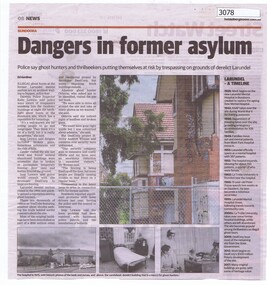
Newspaper clipping, Heidelberg Leader, Dangers in former asylum, by Ed Gardiner, 2017_03
... Article on illegal ghost hunts in the abandoned buildings of the former Larundel Mental Hospital. Photographs include the hospital in 1975....Article on illegal ghost hunts in the abandoned buildings of the former Larundel Mental Hospital. Photographs include the hospital in 1975. larundel hospital polaris 1 p. text and black & white and coloured photographs Dangers in former asylum, by Ed Gardiner Newspaper clipping Heidelberg Leader ...Article on illegal ghost hunts in the abandoned buildings of the former Larundel Mental Hospital. Photographs include the hospital in 1975.1 p. text and black & white and coloured photographslarundel hospital, polaris -
 Flagstaff Hill Maritime Museum and Village
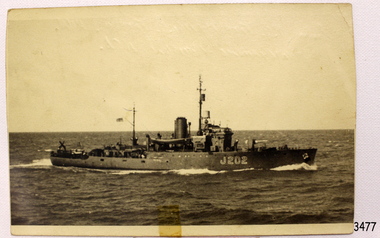
Photograph - Vessel, Steam Ship, H.M.A.S. Warrnambool J202, Between 1941-1947
... illegal fishing vessels. This vessel was decommissioned in 2005. (2)- There was also a steam and sail ship named the S.S. Warrnambool, built in 1892 in London and broken up in 1926. This photograph ...This photograph is connected to the first HMAS Warrnambool (J202), which was one of 60 Bathurst class corvette vessels built during World War II by Mort's Dock & Engineering Co Ltd of Sydney under the commission of the Royal Australian Navy (RAN). It was the namesake of the City of Warrnambool in Victoria. The armed minesweeper was 57 metres long and could had a complement of 85 personnel. Its armament included 1 × 4 inch Mk XIX gun, 1 × 40 mm Bofors AA gun (installed later), 3 × 20 mm Oerlikon guns (1 later removed), machine guns and depth charge chutes and throwers. It was launched in Sydney in May, 1941. The HMAS Warrnambool began service with patrols off Bass Strait in 1941. In December the ship docked in Warrnambool Harbour and the crew marched in a parade along Timor Street. The ship’s crew received a donation of 110 books from the Warrnambool Patriotic Fund, and a plaque of the City of Warrnambool’s Coat of Arms presented by the Mayor, Cr. John R Astbury. In September 1942 a Dutch East Indies family, Samuel and Annie Jacob and seven of their eight children, was rescued by the HMAS Warrnambool and evacuated to Darwin. The family settled in Melbourne, then in 1944 Samuel tragically died. After the war ended the family was threatened with deportation under Australia’s Immigration Restriction Act 1901 (known also as the White Australia policy). Annie married her landlord, John O’Keefe but was still issued a deportation order in 1949. The family appealed to the High Court and the case became famous for being the first successful legal challenge to the Act. The HMAS Warrnambool was in Darwin during the time it was bombed, attacked by the Japanese while rescuing 73 crew from a merchant vessel that had also been attacked. The ship was involved in several other rescues and carried troops to New Guinea. Other events included escort and patrol duties on Australia's east coast, then at Fremantle and back to Darwin. When the Japanese surrendered on September 11, 1945, at the end of World War II, the ship was at Timor. It performed mine clearance work around the Solomon Islands and New Guinea after the war. On 13th September 1947 the ship was sent to lead a flotilla at the Great Barrier Reef, off the Queensland coast. The mission was to clear the defensive British mines that were laid during1941-43 to protect Australia’s boarders. The HMAS Warrnambool hit a mine near Cockburn Reef, exploded and sank shortly afterwards. One of the 70 or so men on board was killed at the time and thirty-two men were badly injured; three of these also lost their lives. The four deceased were Victorian seamen. The wounded men were transferred by boats to the nearby HMAS Swan II, where the Swan’s and the Warrnambool’s doctors cared for them. The HMAS Swan II took the survivors to Cairns, and from there the men were flown by RAAF to either Brisbane or Sydney hospitals. The HMAS Warrnambool was the only RAN ship to be sunk by a mine, and the four who lost their livers were the last naval casualties from World War II. The ship’s wartime service was recognised by three honours. In May 1948 a number of items were recovered by Navy divers from the wreck of HMAS Warrnambool. The items included the ship’s bell (inscribed HMAS Warrnambool 1941) and the round plaque with the Seal of the Warrnambool City Council. In 1949 the plaque was returned to the Council, and the bell was donated to the Australian War Memorial. Further objects were recovered by the new owners of the wreck, Southern Cross Diving and Salvage, in 1972-75. A memorial plaque, honouring the memories of all those who served on the HMAS Warrnambool until is sunk on September 13 1947, was erected in Warrnambool on September 13, 1995. NOTE: (1)- The second HMAS Warrnambool (FCPB204), also the namesake of the City of Warrnambool, was built in 1980 in Cairns, one of fifteen Fremantle Class Patrol Boats ordered by the RAN. It was just over 41 metres long with a compliment of 22 personnel. It patrolled Australia’s northern waters for illegal fishing vessels. This vessel was decommissioned in 2005. (2)- There was also a steam and sail ship named the S.S. Warrnambool, built in 1892 in London and broken up in 1926.This photograph is significant for its association with Royal Australian Navy and its vessel, HMAS Warrnambool (j202). The HMAS Warrnambool played a nationally significant role in overturning Australia’s Immigration Restriction Act 1901 (colloquially known as the White Australia policy). The ship rescued, and brought to Australia, Samuel and Annie Jacob and their family after they evacuated Dutch East India. The family was threatened with deportation and made the first successful appeal to High Court regarding that Act. The HMAS Warrnambool has - Local significance for being the namesake of the City of Warrnambool - Local significance, having docked in Warrnambool Harbour - Local significance, the crew having paraded in Timor Street, Warrnambool - State significance for its first patrol being in Bass Strait. - National significance, being present in Timor at the Japanese surrender - National significance as part of Australia’s defence force history, being one of only four Bathurst class corvettes lost while in Australian service, the only Bathurst class corvette lost after World War II, the only RAN vessel to be sunk by a mine, and associated with the last four Navy deaths of WWIIBlack and white photograph of vessel H.M.A.S. Warrnambool J202 on an open sea. The identifying number is painted on the hull. The ship is flying a white ensign. A lifeboat is suspended near the centre of the ship. Figures can be seen on deck. Hand written inscription on the reverse side. On ship's hull "J202" On reverse of photo "From P.O. FRED MATTHEWS. 23378. R.A.N." "MARIBYRNONG MAIDSTON RSL" "H.M.A.S. WARRNAMBOOL"flagstaff hill, warrnambool, shipwrecked-coast, flagstaff-hill, flagstaff-hill-maritime-museum, maritime-museum, shipwreck-coast, flagstaff-hill-maritime-village, photograph, h.m.a.s. warrnambool, maritime village, maritime museum, shipwreck coast, mort's dock & engineering co ltd, hmas warrnambool, hmas warrnambool i, hmas warrnambool j202, hmas swan ii, j202, world war ii, bathurst class corvette, royal australian navy, ran, sydney built ship, bass strait patrol, sea mine patrol, mine sweeper, mine clearance, navy divers, great barrier reef, cockburn reef, southern cross diving and salvage, warrnambool city council, cr j r astbury, mayor j r astbury, warrnambool patriotic fund, seal, coat of arms, ship’s bell, hmas warrnambool 1941, shipwreck by sea mine 1947, sea rescue, life saving, lifesaving, sinking ship, sunk ship, immigration restrictions act 1901, white australia policy, samuel and annie jacob, john o'keere, minesweeper -
 Flagstaff Hill Maritime Museum and Village
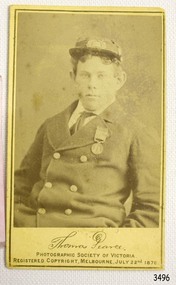
Photograph, late 19th century
... Cargo and artefacts have also been illegally salvaged over many years before protective legislation was introduced. The photograph is significant for its association with the wreck of the Loch Ard. ...Loch Ard was bound for Melbourne in 1878 loaded with passengers and cargo when it ran into a rocky reef at the base of Mutton Bird Island, near Port Campbell. Of the 54 crew members and passengers on board, only two survived: an apprentice, Tom Pearce and a young woman passenger, Eva Carmichael, who lost all of her family in the tragedy. The wreck of Loch Ard still lies at the base of Mutton Bird Island and much of the cargo has been salvaged. Some was washed up into what is now known as Loch Ard Gorge following the shipwreck. Cargo and artefacts have also been illegally salvaged over many years before protective legislation was introduced. The photograph is significant for its association with the wreck of the Loch Ard. This wreck has been protected as a Historic Shipwreck since 11 March 1982, under the Commonwealth Historic Shipwrecks Act (1976) Flagstaff Hill’s collection of artefacts from Loch Ard is significant for being one of the largest collections of artefacts from this shipwreck in Victoria. It is significant for its association with the shipwreck, which is on the Victorian Heritage Register. The collection is significant because of the relationship between the objects, as together they have a high potential to interpret the story of the Loch Ard. The Loch Ard collection is archaeologically significant as the remains of a large international passenger and cargo ship. The Loch Ard collection is historically significant for representing aspects of Victoria’s shipping history and its potential to interpret sub-theme 1.5 of Victoria’s Framework of Historical Themes (living with natural processes). The collection is also historically significant for its association with the Loch Ard, which was one of the worst and best known shipwrecks in Victoria’s history. The Loch Ard collection meets the following criteria for assessment: Criterion A: Importance to the course, or pattern, of Victoria’s cultural history. Criterion B: Possession of uncommon, rare or endangered aspects of Victoria’s cultural history. Criterion C: Potential to yield information that will contribute to an understanding of Victoria’s cultural history. Black and White photograph of Thomas Pearce. Taken on July 22nd 1878 by the Photographic Society of Victoria. Registered copyright July 24th 1878. Reverse has printed maker’s information.Printed green text “PHOTOGRAPHIC / SOCIETY OF VICTORIA / MELBOURNE / REGISTERED COPYRIGHT / JULY 24th 878” and “NONE ARE GENUINE UNLESS WITH / SIGNATURES THUS” and “PRESIDENT / VICE PRESIDENT / SECRETARY” flagstaff hill, warrnambool, shipwrecked-coast, flagstaff-hill, flagstaff-hill-maritime-museum, maritime-museum, shipwreck-coast, flagstaff-hill-maritime-village, photograph, thomas pearce, loch ard, photographic society of victoria -
 Flagstaff Hill Maritime Museum and Village
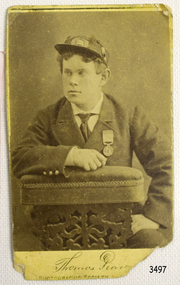
Photograph, late 19th century
... Cargo and artefacts have also been illegally salvaged over many years before protective legislation was introduced. The photograph is significant for its association with the wreck of the Loch Ard. ...Loch Ard was bound for Melbourne in 1878 loaded with passengers and cargo when it ran into a rocky reef at the base of Mutton Bird Island, near Port Campbell. Of the 54 crew members and passengers on board, only two survived: an apprentice, Tom Pearce and a young woman passenger, Eva Carmichael, who lost all of her family in the tragedy. The wreck of Loch Ard still lies at the base of Mutton Bird Island and much of the cargo has been salvaged. Some was washed up into what is now known as Loch Ard Gorge following the shipwreck. Cargo and artefacts have also been illegally salvaged over many years before protective legislation was introduced. The photograph is significant for its association with the wreck of the Loch Ard. This wreck has been protected as a Historic Shipwreck since 11 March 1982, under the Commonwealth Historic Shipwrecks Act (1976) Flagstaff Hill’s collection of artefacts from Loch Ard is significant for being one of the largest collections of artefacts from this shipwreck in Victoria. It is significant for its association with the shipwreck, which is on the Victorian Heritage Register. The collection is significant because of the relationship between the objects, as together they have a high potential to interpret the story of the Loch Ard. The Loch Ard collection is archaeologically significant as the remains of a large international passenger and cargo ship. The Loch Ard collection is historically significant for representing aspects of Victoria’s shipping history and its potential to interpret sub-theme 1.5 of Victoria’s Framework of Historical Themes (living with natural processes). The collection is also historically significant for its association with the Loch Ard, which was one of the worst and best known shipwrecks in Victoria’s history. The Loch Ard collection meets the following criteria for assessment: Criterion A: Importance to the course, or pattern, of Victoria’s cultural history. Criterion B: Possession of uncommon, rare or endangered aspects of Victoria’s cultural history. Criterion C: Potential to yield information that will contribute to an understanding of Victoria’s cultural history. Black and White photoghrap of Thomas Pearce. Taken by the Photographic Society of Victoria. Registered copyright July 24th 1878. Reverse has printed maker’s information and a white adhesive label with hand writing on it.Label has hand writing “F-Ph 55/2-74” Printed green text “PHOTOGRAPHIC / SOCIETY OF VICTORIA / MELBOURNE / REGISTERED COPYRIGHT / JULY 24th 878” and “NONE ARE GENUINE UNLESS WITH / SIGNATURES THUS” and “PRESIDENT / VICE PRESIDENT / SECRETARY” flagstaff hill, warrnambool, shipwrecked coast, flagstaff hill maritime museum, maritime museum, shipwreck coast, flagstaff hill maritime village, great ocean road, loch line, loch ard, captain gibbs, eva carmichael, tom pearce, glenample station, mutton bird island, loch ard gorge, photoghrap, thomas pearce, photographic society of victoria, loch ard shipwreck -
 Ringwood and District Historical Society
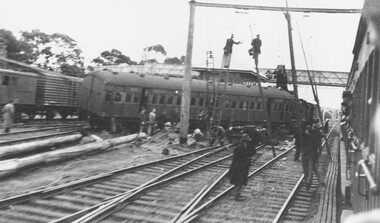
Photograph, Ringwood railway station precinct - derailment 22/6/1945
... illegally in the signal box moved the points under a train coming into the south platform from a siding. The 5th carriage took two lines as shown, and brought down the overhead stanchions over both the passenger and goods lines. For about 36 hours, the service beyond Mitcham was maintained by steam trains connecting with electrics at Mitcham. Men are pictured putting up temporary overhead stanchions over the passenger lines around 10 a.m. on Saturday 22/6/1945 and another photograph...illegally in the signal box moved the points under a train coming into the south platform from a siding. The 5th carriage took two lines as shown, and brought down the overhead stanchions over both the passenger and goods lines. For about 36 hours, the service beyond Mitcham was maintained by steam trains connecting with electrics at Mitcham. Men are pictured putting up temporary overhead stanchions over the passenger lines around 10 a.m. on Saturday 22/6/1945 and another photograph ...A porter illegally in the signal box moved the points under a train coming into the south platform from a siding. The 5th carriage took two lines as shown, and brought down the overhead stanchions over both the passenger and goods lines. For about 36 hours, the service beyond Mitcham was maintained by steam trains connecting with electrics at Mitcham. Men are pictured putting up temporary overhead stanchions over the passenger lines around 10 a.m. on Saturday 22/6/1945 and another photograph shows the steam crane near the signal box lifting the Melbourne end of the derailed carriage. Accompanying typed sheet reads, "...shows the steam crane about outside the signal box lifting the Melbourne end of the derailed carriage". -
 Eltham District Historical Society Inc
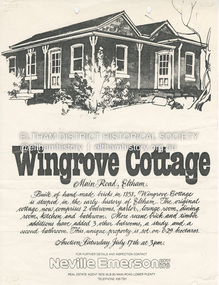
Document - Property Binder, 672 Main Road, Eltham
... photograph of part demolition. Letter 30 December 2002 from Stephen Coleriro Acting Manager Planning and Building Services Nillumbik Shire re consultation on illegal demolition works at Wingrove Cottage. ...photograph of part demolition. Letter 30 December 2002 from Stephen Coleriro Acting Manager Planning and Building Services Nillumbik Shire re consultation on illegal demolition works at Wingrove Cottage. ...Flyer, Neville Emerson Pty Ltd, for sale Wingrove Cottage. Shire of Eltham Heritage Study, nd but post 1989: Wingrove Cottage. Note: June 1997 re Judy David, descendant of Mr Wingrove. Note: 2 September 2003: Greg Johnson description of building. Statement 2 September 2003 from Francis Percival (Jock) Read of memories of Wingrove Cottage. Copy letter 21 October 2002 from Value Creating Environments (recent purchasers of Wingrove site) to John Karageorge Planning and Building Services Nillumbik Shire re planned work; also attachment re possible site development. Newspaper article: Diamond Valley Leader, 23 October 2002, Angry crowd stops demolition, photograph of part demolition. Letter 30 December 2002 from Stephen Coleriro Acting Manager Planning and Building Services Nillumbik Shire re consultation on illegal demolition works at Wingrove Cottage. Letter 24 February 2003 from Allom Lovell & Associates to John Karageorge Shire of Nillumbik commenting on Wingrove Cottage work. Newspaper article: Diamond Valley Leader, 17 September 2003, Court orders restoration at cottage. Newspaper article: Diamond Valley Leader, 25 February 2004, Health vision for Eltham's 1800s home, Wingrove Cottage will be restored as health and wellness centre if plans approved. Newspaper article: Diamond Valley Leader, 7 July 2004, 1850s bricks in debris, Jim Cummane owner ordered to prepare conservation plan, photograph of site and Harry Gilham president Eltham District Historical Society. Newspaper article: Diamond Valley Leader, 1 December 2004, Cottage heritage plan crucial to sale success, site to be sold, photograph of Wingrove Cottage. Letter 14 April 2005 from Gaye Van Donkelaar Planning and Building Services Nillumbik Shire to Russell Yeoman Eltham District Historical Society re meeting of key stakeholders 27 April 2005. Newspaper article: Diamond Valley Leader, 28 March 2007, Cottage work on hold, recent purchasers Cameron Construction restored Cottage, open as photographic studio, applied for permit to build office and 7 homes on site. Letter 13 August 2007 from Senior Registrar VCAt to Eltham District Historical Society enclosing VCAT order re application for 672 Main Road. Letter 24 August 2007 from Colin Bowden Planning and Development Consultants to VCAT enclosing response prepared by O'Brien Traffic for VCAT. Letter 14 February 2007 from Jeremy Livingstone Planning and Building Services Nillumbik Shire, invitation to review re planning application.main road, eltham, property, houses, wingrove cottage -
 Bendigo Historical Society Inc.
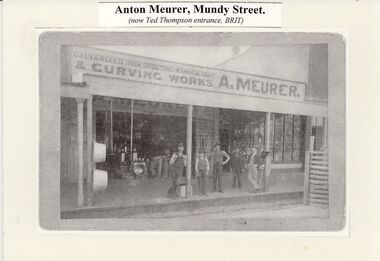
Photograph - STRAUCH COLLECTION: ANTON MEURER
... illegally) an eucalyptus distillery. Anton and Marie had the following children:- Albert Anthony ( 1882-1953); Ernest Christian (1884-1961 ); Frederick Louis (1886-1906); Herbert Theodore ( 1889-1977 ); Hilda Marie (1891-1959) BUILDINGS Commercial meurer Bendigo-history-business-meurer-german Copy of photograph of Anton Meurer store Mundy Street. ...Anton Meurer (1841-1923) married Marie Johanna Denker in 1882. He was a plumber and tinsmith, an ironmonger and gasfitter. At one point he built (illegally) an eucalyptus distillery. Anton and Marie had the following children:- Albert Anthony ( 1882-1953); Ernest Christian (1884-1961 ); Frederick Louis (1886-1906); Herbert Theodore ( 1889-1977 ); Hilda Marie (1891-1959)Copy of photograph of Anton Meurer store Mundy Street.buildings, commercial, meurer, bendigo-history-business-meurer-german -
 Victoria Police Museum
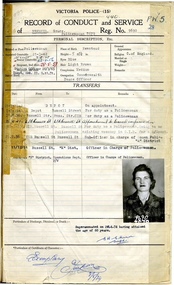
Record of Conduct and Service (Grace Brebner), 1942
... illegal gambling. Brebner was later employed as Sub-Officer-in-Charge at the Women Police Division. police woman brebner, grace, 9690 conduct record service record criminal investigation branch detective police women policewoman policewomen Record of Conduct and Service belonging to Grace Brebner, registration no. 9690. Includes personal description, list of transfers and black and white profile photograph ...Grace Brebner graduated in 1942 and was the first police woman to attend Detective Training School. She began at the Criminal Investigation Branch in 1951 often taking on undercover shifts at a factory to investigate illegal gambling. Brebner was later employed as Sub-Officer-in-Charge at the Women Police Division.Record of Conduct and Service belonging to Grace Brebner, registration no. 9690. Includes personal description, list of transfers and black and white profile photograph of Grace Brebner.police woman, brebner, grace, 9690, conduct record, service record, criminal investigation branch, detective, police women, policewoman, policewomen -
 Port Melbourne Historical & Preservation Society
Photograph - Speedboat being recovered by mobile crane, Princes Pier, 2000s
... Illegal to reproduce or sell", on back Photo of speedboat being recovered by mobile crane West side of Princes Pier, early 2000s Photograph Speedboat being recovered by mobile crane, Princes Pier News ltd ...Photo of speedboat being recovered by mobile crane West side of Princes Pier, early 2000s"News Ltd. Illegal to reproduce or sell", on backpiers and wharves - princes pier -
 Dutch Australian Heritage Centre Victoria
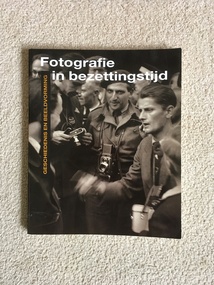
Book of Photographs, Fotografie in Bezettingstijd (Photos from the Occupation Years), 1993
... Illegal Photography. The back cover carries 6 thumbnails indicative of the 6 divisions and a sticker showing the price of €14.95. Soft cover publication containing numerous photos taken between May 1940 and May 1945, the years of occupation by Germany. Fotografie in Bezettingstijd (Photos from the Occupation Years) Book of Photographs ...The German occupation during WWII lives on in the memories of those who survived and the relatives of victims. Many Dutch emigrated during the post-war years but maintained their connection with the home country. This item was most likely acquired during a visit at the time of the 1993 exhibition of which it is the catalogue.Soft cover publication containing numerous photos taken between May 1940 and May 1945, the years of occupation by Germany. The contents have been assembled by René Kok, Herman Selier and Erik Somers from the National Institute for War Documentation, Amsterdam. Publisher is Waanders in Zwolle. A single page Foreword was written by Dr .L. de Jong. The six divisions are headed: Introduction, Press Photography, Professional Photography, Colour Photography, Amateur Photography, Illegal Photography. The back cover carries 6 thumbnails indicative of the 6 divisions and a sticker showing the price of €14.95. -
 Port of Echuca
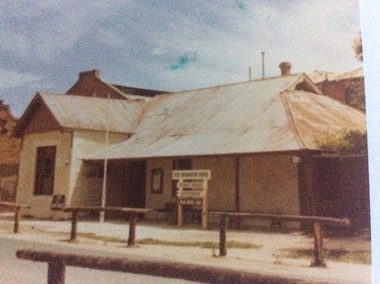
Colour photograph, 1979
... illegally in the underground bar. It was then that the escape tunnel to the laneway was built , so the drinkers could escape the Police raids. For many years it was a private dwelling, or an office. In 1973 the City of Echuca bought the Star Hotel and resored it. At the time this photograph...illegally in the underground bar. It was then that the escape tunnel to the laneway was built , so the drinkers could escape the Police raids. For many years it was a private dwelling, or an office. In 1973 the City of Echuca bought the Star Hotel and resored it. At the time this photograph ...The Star Hotel was built in 1863 as a private dwelling, by James Shackell who owned the Bond Store, next door. It was a small house consisting of only a couple of rooms. In 1867 Joseph Salomon bought the house and converted it into a hotel. He built an underground bar to "deal with the peculiarities of the Echuca climate". It was called 'The Shades'. In 1890 Jane Pygall bought the hotel, which was described by the Riverine Herald as having ' three parlours, seven bedrooms, underground bar, kitchen, bathroom, outhouses, small stables, and entrance from two streets." She changed the name to The Esplanade Hotel. In 1890 it was de-licensed along with many hotels in Echuca. It had been a very popular drinking place for all the wharf workers, who continued to to drink illegally in the underground bar. It was then that the escape tunnel to the laneway was built , so the drinkers could escape the Police raids. For many years it was a private dwelling, or an office. In 1973 the City of Echuca bought the Star Hotel and resored it. At the time this photograph was taken it was the main tourist information centre for the Port of Echuca. It now operates as a hotel, serving meals and providing performance opportunities for musicians.The Star Hotel is very significant in Echuca's history due to its proximity to the Echuca Wharf. It was the closest bar to the wharf. Despite Jane Pygall trying to improve the quality of her clientele, the wharf drinkers preferred to drink at The Star Hotel, as the Bridge Hotel catered for more upmarket clientele. After de-licensing in 1897, the workers continued to drink at The Shades Bar and even put in place elaborate strategies to enable them to drink illegally there. It is now a large eating and entertainment site, and the public are still able to visit 'The Shades Bar'.A coloured photograph of the Star Hotel building in Murray Esplanade. The photograph is taken from the east side of the street. The Shackell's Bond Store can be seen on the left of the photograph. Printed on the back are the words, "This paper manufactured by Kodak". Also on the back is green Port of Echuca stamp. Written across the front of the Bond Store are the words 'World In Wax Museum.' On a sign outside the Star Hotel are the words, "Port Information Centre. Ticket Sales. Souvenirs . Star Hotel 1867."port of echuca, star hotel, shackell, james, salomon, joseph, pygall, jane, esplanade hotel, 1863, underground bar, the shades, de-licensing of echuca hotels -
 Uniting Church Archives - Synod of Victoria
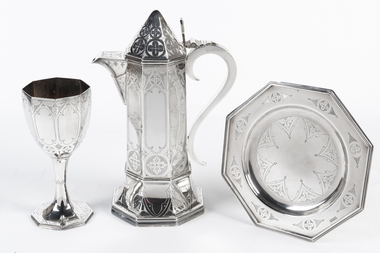
Communion set
... The church was illegally demolished by developers in 1985. the wesleyan jubilee church toorak 4 piece decorated silver communion set: S11.1 Communion flagon; S11.2 Chalice; S11.3 Chalice; S11.4 Octagonal paten. The set has been identified as coming from The Wesleyan Jubilee Church Toorak by a photograph ...Communion set used in The Wesleyan Jubilee Church Toorak Church which was built in 1877. The church was illegally demolished by developers in 1985.4 piece decorated silver communion set: S11.1 Communion flagon; S11.2 Chalice; S11.3 Chalice; S11.4 Octagonal paten. The set has been identified as coming from The Wesleyan Jubilee Church Toorak by a photograph of its alter.the wesleyan jubilee church toorak -
 Stawell Historical Society Inc
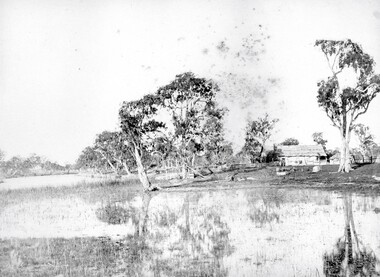
Photograph, "Schoolers" Homestead at Lake Lonsdale 1866
... Photographs by Mr. O.G. Armstrong as commissioned by the Shire of Stawell for the Inter-colonial and Paris Exhibition in Melbourne in 1866. Similar Photo Scoullar station Rosehill Cat No 3888 G.F. Scoullar originally from Canada, according to W.G. Sharply in his 1930 Stawell Borough History, was a member of the Stawell Shire Council 1870-1888 and president 1875-1876. Maynard Ord in Stawell Past and Present says G.F. Scoullar, M. Brinkman and one other, took up small pieces of land fronting Lake Lonsdale. The owners of the Squatting Run, presumably Ledcourt, charged them with illegal...Photographs by Mr. O.G. Armstrong as commissioned by the Shire of Stawell for the Inter-colonial and Paris Exhibition in Melbourne in 1866. Similar Photo Scoullar station Rosehill Cat No 3888 G.F. Scoullar originally from Canada, according to W.G. Sharply in his 1930 Stawell Borough History, was a member of the Stawell Shire Council 1870-1888 and president 1875-1876. Maynard Ord in Stawell Past and Present says G.F. Scoullar, M. Brinkman and one other, took up small pieces of land fronting Lake Lonsdale. The owners of the Squatting Run, presumably Ledcourt, charged them with illegal ...Schoolers Homestead Lake Lonsdale. Part of a collection of Photographs by Mr. O.G. Armstrong as commissioned by the Shire of Stawell for the Inter-colonial and Paris Exhibition in Melbourne in 1866. Similar Photo Scoullar station Rosehill Cat No 3888 G.F. Scoullar originally from Canada, according to W.G. Sharply in his 1930 Stawell Borough History, was a member of the Stawell Shire Council 1870-1888 and president 1875-1876. Maynard Ord in Stawell Past and Present says G.F. Scoullar, M. Brinkman and one other, took up small pieces of land fronting Lake Lonsdale. The owners of the Squatting Run, presumably Ledcourt, charged them with illegal occupation. They were heavily fined at Pleasant Creek Court, or in default gaol. As they could not afford the fine, some friends raise the money. Note re the spelling of ‘Schooler’. Variations in local records are ‘Schoullar’ and ‘Scoullar’. stawell education -
 Tatura Irrigation & Wartime Camps Museum
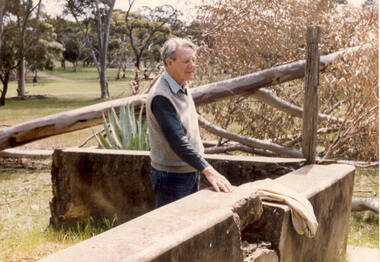
Photograph, Haakon Nilsen
... Haakon Nilsen who operated the illegal radio in Camp 1 most nights, needed to be visible during the daytime, so worked occasionally at the milk bar, where he is pictured standing, c.2000 Haakon Nilsen Illegal radio Camp 1 milk bar Coloured photo of man standing inside a concrete section with timber beams behind, brown bush behind beam and trees in background. Haakon Nilsen Photograph ...Haakon Nilsen who operated the illegal radio in Camp 1 most nights, needed to be visible during the daytime, so worked occasionally at the milk bar, where he is pictured standing, c.2000Coloured photo of man standing inside a concrete section with timber beams behind, brown bush behind beam and trees in background.haakon nilsen, illegal radio, camp 1 milk bar -
 Tatura Irrigation & Wartime Camps Museum
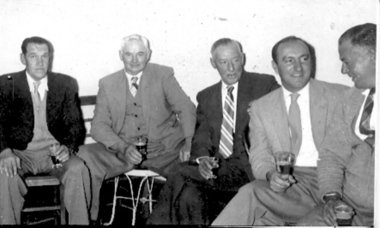
Photograph, Coursing and Racing Club
... illegal. Plumpton Coursing Club: L-R: Neil Colliver, Mick O'Reilly, Jack Maher, John Marker, Tom Cornish. tatura recreations sports Plumpton Coursing Club - list of members (see below). approximately 1950's. Black and white photograph ...Greyhound Coursing was popular as far back as 1886, when the first president of the club was Mr Gellion. From 1896, open coursing was held at Dhurringile Estate until 1904, when meetings were held "in the paddock north of the town" In 1919 the Tatura Plumpton Coursing Club was inaugurated and successfully ran many of the classics, such as the Oaks, Derby, and Waterloo Cup meetings until 1967, when Plumpton Coursing was declared illegal. Plumpton Coursing Club: L-R: Neil Colliver, Mick O'Reilly, Jack Maher, John Marker, Tom Cornish.Black and white photograph of members of the Plumpton Coursing Club. Photograph on foam backing.Plumpton Coursing Club - list of members (see below). approximately 1950's.tatura, recreations, sports -
 Tatura Irrigation & Wartime Camps Museum
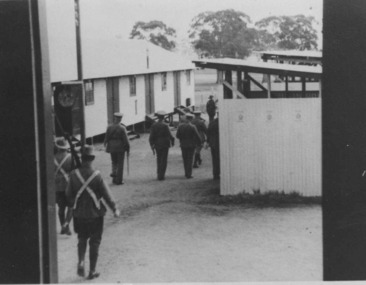
Photograph, Camp 1 garrison inspection
... Illegal photo of garrison inspecting the barracks, 1943. Foam backed copy in file. camp 1 garrison guards inspecting barracks. Black and white photograph ...Illegal photo of garrison inspecting the barracks, 1943. Foam backed copy in file.Black and white photograph showing guards walking between barracks and other buildings.camp 1, garrison, guards inspecting barracks. -
Tatura Irrigation & Wartime Camps Museum
Photograph, Dhurringile Internees
... Dhurringile Internees being transferred to Camp 1, January 1940. photograph people Illegal photos taken by Mrs. Pargeter. ...Dhurringile Internees being transferred to Camp 1, January 1940.Illegal photos taken by Mrs. Pargeter.photograph, people -
 Inverloch Historical Society
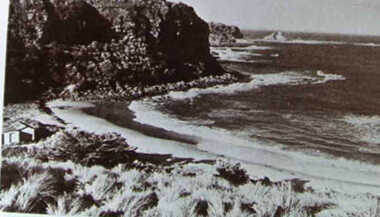
000808 - Photograph - Inverloch - Shack Bay looking to Eagles Nest - illegal shack - Coastal Retreat - from Nancye Durham
... 000808 - Photograph - Inverloch - Shack Bay looking to Eagles Nest - illegal shack - Coastal Retreat - from Nancye Durham...000808 - Photograph - Inverloch - Shack Bay looking to Eagles Nest - illegal shack - Coastal Retreat - from Nancye Durham ... -
 Phillip Island Conservation Society Inc.
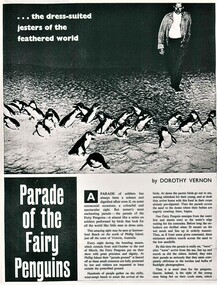
Work on paper - newspaper cutting photocopy, "...the dress-suited jesters of the feathered world/Parade of the Fairy Penguins", unknown
... Accompanying photographs were almost invariably taken by flashlight (now illegal), or of penguins taken from their burrows during daylight hours for photo opportunities. ...Accompanying photographs were almost invariably taken by flashlight (now illegal), or of penguins taken from their burrows during daylight hours for photo opportunities. ...The general public was fascinated by the nightly 'Penguin Parade' on Phillip Island. Many articles have been written about the birds and the Penguin Parade attraction since the 1930s. So many people spent their summer holidays on Phillip Island in one of the many guest houses, then caravan parks and holiday homes and a visit to the Penguin Parade by them and their visitors was very common during their holidays. Articles tended to be a mix of basic penguin behavior information and anthropomorphic descriptions. Accompanying photographs were almost invariably taken by flashlight (now illegal), or of penguins taken from their burrows during daylight hours for photo opportunities. The article provides evidence of the level of knowledge about Phillip Island's Little/Fairy Penguins at this time. (approx 1960?)Photocopy of 2 page magazine article. Black print. Images poor quality due old photocopy.little penguins, fairy penguins, eudyptula minor, phillip island penguin parade, dorothy vernon, penguin rookery, penguin behaviour, phillip island tourist attractions -
 Phillip Island Conservation Society Inc.
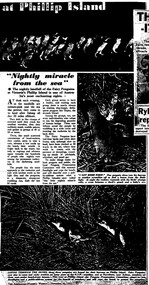
Work on paper - Photocopy of newspaper cutting, (part obscured) "at Phillip Island/Nightly Miracle/from the sea", November 20, 1957
... Accompanying photographs were almost invariably taken by flashlight (now illegal), or of penguins taken from their burrows during daylight hours for photo opportunities. ...Accompanying photographs were almost invariably taken by flashlight (now illegal), or of penguins taken from their burrows during daylight hours for photo opportunities. ...The general public was fascinated by the nightly 'Penguin Parade' on Phillip Island. Many articles have been written about the birds and the Penguin Parade attraction since the 1930s. So many people spent their summer holidays on Phillip Island in one of the many guest houses, then caravan parks and holiday homes and a visit to the Penguin Parade by them and their visitors was very common during their holidays. Articles tended to be a mix of basic penguin behavior information and anthropomorphic descriptions. Accompanying photographs were almost invariably taken by flashlight (now illegal), or of penguins taken from their burrows during daylight hours for photo opportunities. This article, written in the 1950s, describes the management of the Penguin Parade at that time as being run by the Penguin Preservation Committee. This was before the Phillip Island Council took over running the Penguin Parade. The article provides evidence of the level of knowledge about Phillip Island's Little/Fairy Penguins at this time. (1957)single full-page magazine article, black ink on white paper. Photocopied from original, so photos appear as black and white.little penguins, fairy penguins, eudyptula minor, phillip island penguin parade, dorothy vernon, penguin rookery, penguin behaviour, phillip island tourist attractions -
 Wonga Park Community Cottage History Group
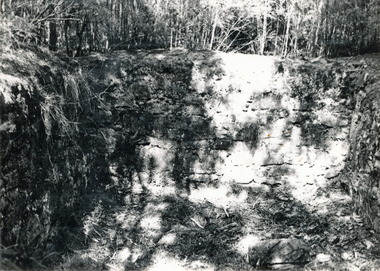
Photograph (sub-item) - Black and White, The remains of the illegal whisky still operated in the late 1800’s by gold miners. Photo taken in 1984
... The remains of the illegal whisky still operated in the late 1800’s by gold miners. Photo taken in 1984. Photograph Black and White ...
