
Showing 46 items matching "tawonga farm"
-
 Kiewa Valley Historical Society
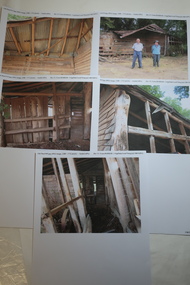
Photocopied photos - Wooden planks from Reid's Shed, Constructed by Jack Pratt
... ...Tawonga farm...Their property was known as 'Willowdene' in Reid's Lane, Tawonga. Reid's farm in Tawonga - photos showing building methods in the early days. ...The Kiewa Valley was a farming district being developed by clearing and farming the land with cattle.The Reid family were early settlers of the Kiewa Valley.. Their property was known as 'Willowdene' in Reid's Lane, Tawonga. Reid's farm in Tawonga - photos showing building methods in the early days. The builder (the local bush carpenter) ,Jack Platt was well known in the area having built the Reid's home and the shed. A full account of the Reid family is on Pages 100 -to 102 of "A History of the Kiewa Valley", by Esther Temple.6 A4 sheets, 5 photocopied coloured photos and one typed page with explanation. Reid's shed and the Reids familyreid family, tawonga farm, jack platt builder -
 Kiewa Valley Historical Society
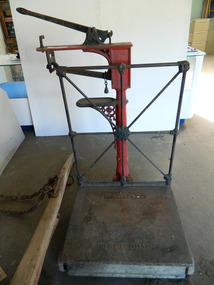
Scales - Tawonga Store
... scales. weights. tawonga store. farm produce....Tawonga Store which opened c1920. They were used to weigh produce e.g.. flour & wheat that the farmers used on their farms and in their homes. ...The scales were a necessary item for a store as goods were sold in bulk. scales. weights. tawonga store. farm produce. W. & T. Avery Birmingham Large steel dirty black platform attached at the middle of the back to a red cylinder which has 2 smaller platforms coming out to the side. ...These scales were used in the Tawonga Store which opened c1920. They were used to weigh produce e.g.. flour & wheat that the farmers used on their farms and in their homes. These scales pre date packaging. Ref. Weights KVHS 0800 (A)The Tawonga Store opened c1920 and sold goods and produce to the farmers of the Kiewa Valley. The scales were a necessary item for a store as goods were sold in bulk. Large steel dirty black platform attached at the middle of the back to a red cylinder which has 2 smaller platforms coming out to the side. The top platform has a black steel lever attached and a hook to hold it down. Below this platform is a measuring rod marked 2,4 etc up to 14 on which hangs a eight. The bottom platform is to rest the unused weights. Weights ref. KVHS 0800 (A)W. & T. Avery Birminghamscales. weights. tawonga store. farm produce. -
 Kiewa Valley Historical Society
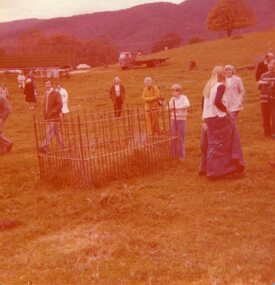
Photograph of pioneer grave, 29th May, 1977
... The grave is located at Mullagong Station (farm) in Tawonga, five miles south of Keegan's Bridge. ...The grave is located at Mullagong Station (farm) in Tawonga, five miles south of Keegan's Bridge. ...Pictorial record of the grave of pioneer woman Mrs Mary Hollonds, who passed away in 1862. The grave is located at Mullagong Station (farm) in Tawonga, five miles south of Keegan's Bridge. Miss Hobbs, formerly of Running Creek, mentioned that twin babies of the Brigg's family are buried at Mary Holland's feet.Pictorial record of pioneer gravesites in the Kiewa Valley. Social history of people in 1977 showing interested in local historyColour photograph of group visiting the grave of pioneer woman Mrs Mary Hollands at Mullagong on 29th May, 1977Handwritten in faint blue ink on back of photograph: Mrs Mary Holland's grave. Died 1862 Mullagong. 29th May, 1977kiewa valley, mullagong station, tawonga, hollonds family, brigg's family -
 Kiewa Valley Historical Society
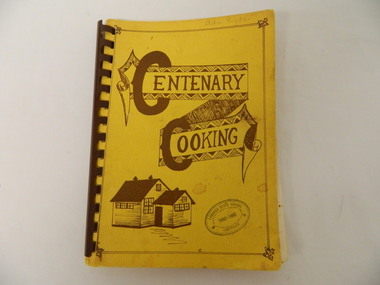
Book - Cooking x2, Centenary Cooking, 1980
... The Tawonga School was a weatherboard building built on 8 acres of land catering for children from the surrounding grazing farms to ride their horses to school. ...The Tawonga School was a weatherboard building built on 8 acres of land catering for children from the surrounding grazing farms to ride their horses to school. ...The Tawonga School was a weatherboard building built on 8 acres of land catering for children from the surrounding grazing farms to ride their horses to school. It opened on 27th July 1880. The original school building and records were erased by fire in 1900. The Tawonga hall was used until 1910 when 3 acres of land was donated by Frank Cooper. It still operates today (2015) with its numbers having fluctuated over the years with the Kiewa Hydro Electric Scheme, tobacco farming and now tourism. The Tawonga community published a cook book to celebrate the school's centenary.This book may have also been used as a fund raiser.The Tawonga school celebrated its centenary with a cookbook with contributions from the community. This indicates that the school was very proud of reaching its centenary and the community co-operated with each other to develop this book.This book is a good source of the names of people who lived in Tawonga in 1980.Yellow book with brown writing and sketch of school held together with brown hard plastic binding. It has 90 pages of recipes most of which give the contributor's name.Tawonga State School Centenary 1880 - 1980 (stamped on front & back cover) In pencil on front cover: Ada Ryder An advertising for Kelvinator sticker has been stuck on the inside front cover with 18-3-92 written on it & on the inside back cover and 'Energy Rating' sticker.tawonga school. centenary of school. 1880-1980. cooking. food. kiewa valley -
 Kiewa Valley Historical Society
Towel Tea CWA
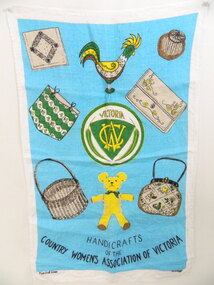
... Women living in Tawonga were mostly on farms and, in 1946, when the branch commenced would have been feeling more remote with WW11 having had an effect of available workers and the well being of the women and children. ...The Tawonga branch of the C.W.A. commenced on the 7th Feb. 1946 and often combined activities with the other branches in the Kiewa Valley. The C.W.A. aimed to improve health, welfare and education for women and children in the country.Women living in Tawonga were mostly on farms and, in 1946, when the branch commenced would have been feeling more remote with WW11 having had an effect of available workers and the well being of the women and children. This tea towel would have been used at a later date possibly for fund raising as the group continued to meet and work together.This large blue green, yellow, brown and black with a white border, linen, tea towel has the CWA logo in the middle with pictures of handcrafted items surrounding it. Along the bottom is printed: "Handicrafts / of the / Country Women's Association of Victoria."Handicrafts / of the / Country Women's Association of Victoria - along the bottom Pure Irish Linen - bottom left Dummay - bottom righttea towel, cwa, tawonga, kitchen, linen -
 Kiewa Valley Historical Society
Papers - Tawonga School Centenary 1880-1980 x2, original 1980
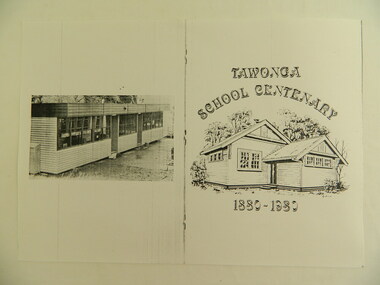
... Tawonga School opened in 1880 for the children of the surrounding farming families. Its enrolment increased when the Kiewa Hydro Electric Scheme peaked in the 1950's and it continues to educate the children of the local families (town and farm) now (2015). ...The operation of running a school during that period as challenges and change occur with the coming and going of teachers and pupils. tawonga. tawonga school. farms. kiewa hydro electric scheme. ...The Tawonga School opened in 1880 for the children of the surrounding farming families. Its enrolment increased when the Kiewa Hydro Electric Scheme peaked in the 1950's and it continues to educate the children of the local families (town and farm) now (2015). This book covers 100 years of the history of the Kiewa Valley. The operation of running a school during that period as challenges and change occur with the coming and going of teachers and pupils.Photocopied A4 papers of the 'Tawonga School Centenary 1880 - 1980'tawonga. tawonga school. farms. kiewa hydro electric scheme. -
 Kiewa Valley Historical Society
Scrap Book - C.W.A. Tawonga, C. W. A. Tawonga by Clare Roper, Dec. 1995
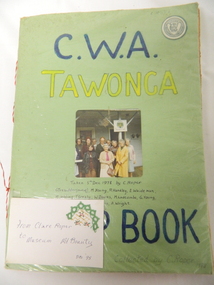
... Women in Tawonga were mostly on farms and in 1946 felt remote after WWII as it affected available workers and the well being of children. ...CWA Tawonga 1946 - 1988 collection of its written history. The C.W.A. aimed to improve the health, welfare and education of women and children in the country. The book gives examples of all activities the members were involved in over the years and their involvement with other CWA groups in the North East of Victoria. Through the photos it also gives a good example of women's fashions over the years.History of CWA Tawonga by Clare Roper, President, founding member and local resident. Women in Tawonga were mostly on farms and in 1946 felt remote after WWII as it affected available workers and the well being of children. The Country Women's Association improved the living conditions and well being of members in the Kiewa Valley community.Scrap book with block handwritten and coloured heading. Cover: Centre middle has a coloured photo of 10 ladies standing below a CWA logo. Covered with clear plastic. Consists of photos, newspaper clippings and typed sheets."CWA Tawonga from 1946 collected by C. Roper" - top of front pagecountry women's association; clare roper; tawonga; -
 Kiewa Valley Historical Society
Case - C.W.A. Collection
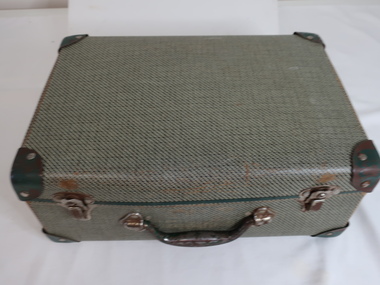
... Women living in Tawonga were mostly on farms and in 1946, when the branch commenced, would have been feeling more remote with WWII having had an effect on available workers and the well being of the women and children. ...The Tawonga branch of the Country Women's Association commenced on the 7th February 1946 and often combined activities with the other branches in the Kiewa Valley. The C.W.A. aimed to improve the health, welfare and education for women and children in the country.Women living in Tawonga were mostly on farms and in 1946, when the branch commenced, would have been feeling more remote with WWII having had an effect on available workers and the well being of the women and children.Black and white case with reinforced corners on the lid an container, metal handle and metal clip fasteners. A hard case of reinforced cardboard. Includes: C,W.A. magazines from the hears 2000 onwards. Recipe book 1978, badges, Inside the lid "Tawonga CWA Secretary's Case"country women's association, tawonga cwa -
 Kiewa Valley Historical Society
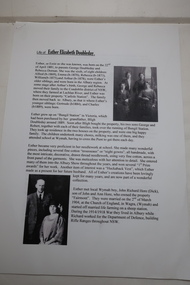
Papers - The Life story of Esther Hore, and the early days of the Bogong Hotel c1924
... They farmed at Gundowring and then in about 1924 bought the Bogong Hotel in Tawonga. ...They farmed at Gundowring and then in about 1924 bought the Bogong Hotel in Tawonga. ...Esther was born in 1881, married in 1904 to Dick Hore. They had 8 children all born in Albury. They farmed at Gundowring and then in about 1924 bought the Bogong Hotel in Tawonga. The hotel was very popular with visiting artists eg. Harold Herbert, Charles Wheeler and Sir John Longstaff.and stayed in the bungalows. Lord Baden Powell, founder of the Scouts stayed during 1931 and 1935.Residents of the Kiewa Valley in Gundowring and Tawonga. Owners of the Tawonga Pub when famous artists and Lord Baden Powell visited.3 A4 pages of typed pages 2 with copied photos of people regarding the History of Esther Doubleday (maiden name) Hore.esther hore nee doubleday, bogong hotel, artists at tawonga -
 Kiewa Valley Historical Society
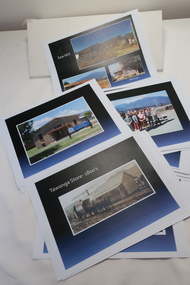
Coloured photographs on paper - Back to Tawonga 2010
... Tawonga School Photos x8 24. Harry Cooper's Farm Looking South 25.View from Edmondson's Farm - looking north 26. ...Tawonga School Photos x8 24. Harry Cooper's Farm Looking South 25.View from Edmondson's Farm - looking north 26. ...These photos were collected and copied by Di Edmondson for the 'Back To Tawonga' Event in 2010 when she launched her book "Tawonga Remembers".An historical photographic collection of Tawonga and its surrounds, places and people up to 20101. Saw Mill - Mill house 2. The Rock Pool 3. People at the Rock Pool x 2 4.Old Saw mill 5. Back to Tawonga Celebrations x6 6. Tennis Curts opposite the Tawonga Store, Bakery in the background 7. Bowling Club 8. Old Guide Hall 9. The Old Boarding House 10. Old Fire Brigade Shed 11. Building the New Tawonga Memorial Hall 12. Tawonga Go Kart Track - 1960s 13. Tawonga Pony Club 1969 State Championships 14. Tawonga Recreation Reserve Newspaper article 15. The Damm Children 19. 1980s Brian Edmondson, Geoff Edmondson, Mick Harvey, David Piera. Geoff Edmondson's car 20. Tawonga Speedway Track - 1970s Mick Harvey and Paul Harkin's car 21. 2000 22. Tawonga Sports Vera Ryder and Allie Briggs 23. Tawonga School Photos x8 24. Harry Cooper's Farm Looking South 25.View from Edmondson's Farm - looking north 26. Mount Emu 27. St Aiden's Debutante Ball 27. Grand Opening Ball 1961 Tawonga Hall 28. The Kiewa Valley Road at Tawonga. Vic. 29. Tennis Courts opposite the Bogong Hotel 30.Opening of the new Toilet Block in Pioneer park 31. Old Tawonga Store x 3 32. Tawonga Memorial Hall 33. Anglican Church, St Aiden's x 2 34. Motor Khana held at Recreation reserve 35. 1970 State Champioships Team 36. Kiewa Valley School Sports at Dederang 37. Miscellaneous photos x27 Some photos have headings and some headings have been writtentawonga remembers, back to tawonga 2010, di edmondson -
 Kiewa Valley Historical Society
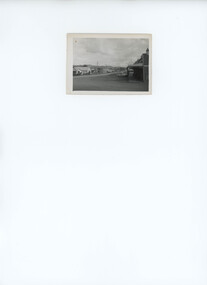
Photos - King Family Collection
... The King family lived in Tawonga South where my older brother and sister went to school. We lived over the road from Wally Madison's farm. ...The King family lived in Tawonga South where my older brother and sister went to school. We lived over the road from Wally Madison's farm. Later when a house became available, we moved into Valley Avenue, Mt Beauty. This is when I turned 5 and started my schooling. It was a long walk for a 5 year old as I remember. Then later we moved to 50 Lakeside Ave. I remember we loved living there as it was close to the school, footy ground and kindergarten. My father, Ted King, wad a carpenter and was involved in the building of many houses in Mt Beauty which was the home for the workers on the Kiewa Electric Scheme. So as they are part of the history of Mt Beauty I thought they may be useful to you as part of the history. The tennis photos, I vaguely remember Lou Hoad and Ken Rosewell giving exhibition matches in Mt Beauty. I may stand corrected on this, but I do remember my parents who were keen tennis players themselves were most excited at seeing these famous tennis players. As I was only 9 when we left Mt Beauty to live in Dimboola I still remember the shock of leaving a beautiful mountainous county side and arriving in a flat farming land next to a desert and seeing windmills One thing I do remember from school is, once a week (or fortnight) the teacher used to come around with a jar of little white pills, of which we were all to take. I really don't know what they were?? or for?? I also remember being taught to swim in the freezing cold river by a Mrs Smith who wore black bathers and wore her hair in a bun...... ...I am now in my 70s My father used to also carve intricate trays and jewellery boxes in his spare time. I think they were used for tennis trophies. by Diane Werner.x33 photos of small black and white photos of the Tawonga, Tawonga South and Mt Beauty - Photos not labelled but described as follows. See each photo for a possible label. A. Tawonga? B. Mt Beauty taken on the road to Bogong ? C. SEC Works D. Industrial buildings with mountains in the background E. Building site with wooden frame and 3 men F. Buildings with power poles G. Building site with lots of huts H. Buildings under construction I. Group of houses in the distance J. Group of houses in the distance K. Group of people in front of a building L. Group of 8 men sitting on timber planks, corrugated iron at back. M.& N. Building site with floor and upright timbers O. Mountain view with camp site in foreground P.& Q. Buiding site, several houses R.5 men at a building site S. portable building on trailer T & U. Mountain view V. Building site W. Group of men, car and mountains in background X. Cows Y. Pigs Z. 2 men standing next to cars. AA. Football players BB. Man painting a corrugated iron building CC. Football DD. Men in front of a building EE Buildings with mountains in background FF & GG Tennis payersHH & II. Electricity infrastructure -
 Kiewa Valley Historical Society
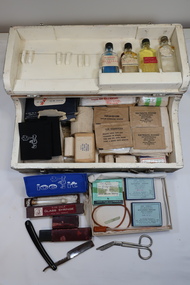
First Aid Box
... farms. This first aid kit was found under the floor of a home in Tawonga South. ...First aid kits were kept in many households as transport wasn't always available and many people lived in isolation especially those on farms. This first aid kit was found under the floor of a home in Tawonga South.Wooden box with 2 steel hinges on the top and 2 steel clips and 2 steel rings at the front. The corners are reinforced with steel caps. When open the lid has 4 bottles of liquid (medicine?). The box is full of medical aids eg. bandages, scissors, etc.first aid kit -
 Kiewa Valley Historical Society
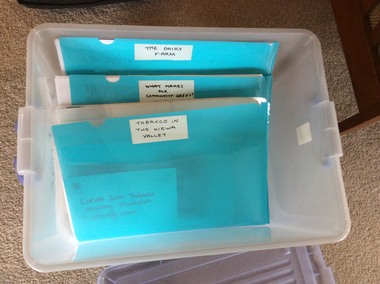
Folders - Exhibitions in the KVHS Museum
... Tawonga District General Hospital 14. The Buffalo Lodge 15. The Dairy Farm 16. ...Tawonga District General Hospital 14. The Buffalo Lodge 15. The Dairy Farm 16. ...The KVHS rotates its displays in the Mt Beauty Museum. These topics are researched and give a deeper insight into the chosen topic.A frosted white plastic tub holding blue plastic folders each with information and photos of each of the temporary displays that the KVHS has displayed in the Mt Beauty Museum. These include: 1. And Then There was Light 2. A Woman's Work is Never Done 3. Bogong Village - Camps 4. Cross Country Skiing 5. Electricity: Watts the Story 6. Here Comes the Bride 7. High Country Cattlemen 8. Indigenous People 9. Mt Beauty - Early; 10. Mt Beauty Sports 11. Not All Tea and Scones - C.W.A.12. Old School Days 13. Tawonga District General Hospital 14. The Buffalo Lodge 15. The Dairy Farm 16. Tobacco in the Kiewa Valley 17. What Makes our Community Great? Clubslight, women's work, bogong village, cross country skiing, electricity, weddings, cattlemen on the high plains, indigenous australians, mt beauty, c.w.a., schools, tawonga hospital, buffalo lodge, dairy farming, tobacco in the kiewa valley, community clubs -
 Kiewa Valley Historical Society
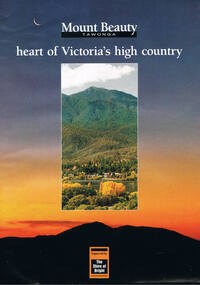
Poster Brochure, Mt Beauty Tawonga Heart Of Victoria's High Country, Circa 1995
... The Item is a pictorial time piece of the valley and usage, farms,industry,town area, vegetation and winter snow levels Historical and the social-economical development at circa 1995 of land usage and residential buildings style.Major social events e.g. Festival of the Bogong Moth and the Mt Beauty Mardi Gras. It is also a good historical record of tourism campaigns of the Alpine Shire and Mt Beauty Chamber of Commerce. Also see "KVHS 0125" tourism mt beauty tawonga ...The Item is a pictorial time piece of the valley and usage, farms,industry,town area, vegetation and winter snow levels Historical and the social-economical development at circa 1995 of land usage and residential buildings style.Major social events e.g. Festival of the Bogong Moth and the Mt Beauty Mardi Gras. It is also a good historical record of tourism campaigns of the Alpine Shire and Mt Beauty Chamber of Commerce. Also see "KVHS 0125"Brochure folds out from a 20.5cm x 29.5cm to 82cm x 29.5cm poster type documentinside panoramic photo of snow tipped alpine mountain range incorporating the Mount Beauty township, farming area of the Kiewa Valley and relevant tourist orientated informationtourism mt beauty tawonga photographs, victorian alps -
 Kiewa Valley Historical Society
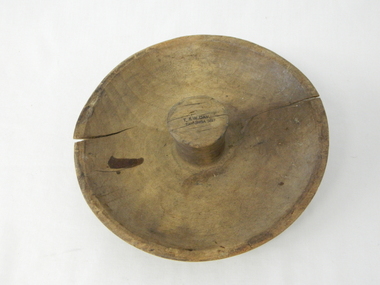
Mould Butter, unknown, post 1967
... Although this method of production was phased out by better access to goods from nearby cities the revival of the good organic home grown produce in the 1980s saw a greater demand of this type of farm based produce. domestic food preparation wooden butter pat butter mould circular dairy industry The top of the handle has an ink stamp "T. & W. Dav" on the top line and "Tawonga ...This butter mould/pat may have been manufactured post 1967(year post codes appeared in Australia) however the post code was only stamped on after it was machined. This type of butter mould was used by rural families to fashion home/farm made butter. This period was in most rural regions a time of self sufficiency where any domestic type implement which could be fashioned by the family would be crafted with skill. Shopping for goods required catalogues from stores located in major rural towns and cities and involved lengthy waiting times. Travelling to and from these specialised stores was not pleasant due to the relatively poor quality of the roads and the lengthy times taken. The small general stores in the Kiewa Valley could not cater for all the needs of the valley. The 1960's was a time when facilities especially goods and services started to improve drastically. The S.E.C. of Victoria with its Kiewa Hydro Electricity Scheme provided not only an improvement of facilities in the valley but also a increase in the population. This increase resulted in a greater demand for local produce. This item is one of many domestic food processing implements used by Kiewa Valley households in the mid 1900s, whether on the farm or in the small towns and hamlets. Self sufficiency was the key to survival during these early times. Where ever possible supplies from within the valley were preferred to that brought in by travelling salesmen or traders. This butter mould and butter pat was commonly used to fashion "home" made butter throughout the valley and in some cases supplied to "outside" regional towns. Although this method of production was phased out by better access to goods from nearby cities the revival of the good organic home grown produce in the 1980s saw a greater demand of this type of farm based produce.This well crafted circular wooden butter mould could also be used as a butter pat.The handle in the middle of the mould was not added after the crafting but has been fashioned from the initial block of wood when the bowl was crafted. The bowl structure has a rim around the edge.The top of the handle has an ink stamp "T. & W. Dav" on the top line and "Tawonga 3697" underneath.domestic food preparation, wooden butter pat, butter mould circular, dairy industry -
 Kiewa Valley Historical Society
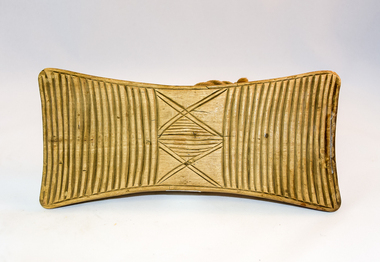
Pat Butter Profiler, Circa 1950s
... Although this method of production was phased out by better access to goods from nearby cities the revival of the good organic home grown produce in the 1980s saw a greater demand of this type of farm based produce. domestic food preparation wooden butter pat butter mould circular dairy industry On the top of the hand grip is stamped in black print"T. & W. Davies" and under this"TAWONGA ...This butter pat profiler may have been manufactured post 1967(year post codes appeared in Australia) however the post code was only stamped on after it was machined. This type of butter mould was used by rural families to fashion home/farm made butter. This period was in most rural regions a time of self sufficiency where any domestic type implement which could be fashioned by the family would be crafted with skill. Shopping for goods required catalogues from stores located in major rural towns and cities and involved lengthy waiting times. Travelling to and from these specialised stores was not pleasant due to the relatively poor quality of the roads and the lengthy times taken. The small general stores in the Kiewa Valley could not cater for all the needs of the valley. The 1960's was a time when facilities especially goods and services started to improve drastically. The S.E.C. of Victoria with its Kiewa Hydro Electricity Scheme provided not only an improvement of facilities in the valley but also a increase in the population. This increase resulted in a greater demand for local produce.This item is one of many domestic food processing implements used by Kiewa Valley households in the mid 1900s, whether on the farm or in the small towns and hamlets. Self sufficiency was the key to survival during these early times. Where ever possible supplies from within the valley were preferred to that brought in by travelling salesmen or traders. This butter mould and butter pat was commonly used to fashion "home" made butter throughout the valley and in some cases supplied to "outside" regional towns. Although this method of production was phased out by better access to goods from nearby cities the revival of the good organic home grown produce in the 1980s saw a greater demand of this type of farm based produce.This butter Pat/Profiler has on its base two patterns. On each end it has horizontal grooves cut into the wood which produce distinct lines onto the surface of the butter. between these grooves there is a section of two double lines crossing in the middle and separated by eleven horizontal lines The base has an elongated rectangular shape. The upper body has been sanded into a smooth convex shaped form where a wooden circular hand grip has been fashioned.On the top of the hand grip is stamped in black print"T. & W. Davies" and under this"TAWONGA 3697"domestic food preparation, wooden butter pat, butter mould circular, dairy industry -
 Kiewa Valley Historical Society
Book - Reference Cricket, The Cricket on the Hearth, circa 1930
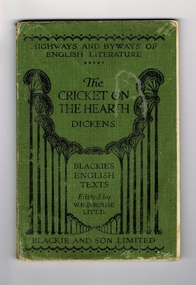
... Tawonga. After her marriage, Wilma moved, with her husband, to Mt. Beauty until 1958 when they moved back to manage the farm and remained there for the rest of her life....Tawonga. After her marriage, Wilma moved, with her husband, to Mt. Beauty until 1958 when they moved back to manage the farm and remained there for the rest of her life. ...A text book used by a local Tawonga student in the 1930's. The school she attended was Rosehill Girls School in Albury. This was one of the foundation schools of Scots School, Albury. Rosehill was opened in 1926 by a Miss Lillian Windridge, for both day and boarding students, in a large former residential property on the corner of Crisp and Young Streets and was named after her uncle's property 'Rosehill' near Kyneton in Victoria. It catered from kindergarten to the Leaving Class. The school flourished and extra space was made available at the adjacent 'Springfield' property for more classrooms. In 1934 lack of space forced 'Rosehill' to move to a new location in Kiewa Street. In 1938, Miss Windridge sold the school to Miss Anna Drennan, a well educated Scots woman with a Masters' degree from Edinburgh University. By early 1939 the school was again overcrowded and was moved to the property 'Woodstock' in Schubach Street, East Albury and the name changed to 'Woodstock School for Girls'. In 1972, the Woodstock Presbyterian Girls School and the Albury Grammar School amalgamated to form the Scots School Albury. Wilma's family were one of the early families to settle in the Kiewa Valley and had a property at Tawonga. After her marriage, Wilma moved, with her husband, to Mt. Beauty until 1958 when they moved back to manage the farm and remained there for the rest of her life.It has a social significance as it depicts the standard of literature that was expected to be read and appreciated by students in the 1930's era. As the school was situated in Albury, it meant that the student would have been a boarder as daily transport to and from the Kiewa Valley would have been impossible at that time, unlike the 'School Bus' run that is available today. At this time there was no 'secondary education' available in the valley and education beyond primary school would have been limited to children of families that could afford to send their children to board at privately run schools.Book of literature by Charles Dickens. Has green cover with black lettering and decoration. It seems to be one of a series of books called the 'Highways and Byways of English Literature". On the front cover, at the top, 'Highway and Byways of English Literature'. Centre of page is the title "The Cricket on the Hearth" and the author Dickens. Underneath this is 'Blackies English Texts Edited by W.H.D.Rouse, Litt.D." Across the foot of the page is 'Blackie and Son Limited'. On the first page, hand written in ink is "Wilma Roper, Rosehill G.S.,Albury."secondary education, albury, kiewa valley, tawonga -
 Kiewa Valley Historical Society
Boots Riding, late 1800's - early 1900's
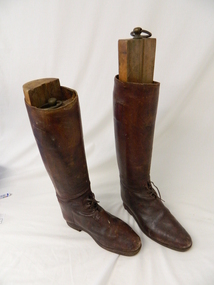
... Tawonga. These boots were used when mustering the families cattle up to the Bogong High Plains for summer grazing and also around his farm in Tawonga when riding his horses. ...The early Kiewa Valley farmers opened up the Bogong High Plains for cattle grazing in the late 1800's and early 1900's. Many farmers of the Kiewa Valley built huts on the Bogong High Plains to stay in during the summer mustering season. The Roper family had their own cattle run on the High Plains with several version's of Ropers Hut being built and used for this purpose. These boots were owned by Fred Roper whose father was one of the first pioneers of the Upper Kiewa Valley and Tawonga farming district. These boots were made around the late 1800's to early 1900's and are of a quality hide and a very good example of historical clothing worn at the time. These boots are very significant to the Kiewa Valley because the mark a period of early farming within the Kiewa Valley and Bogong High Plains as they were worn by Fred Roper who comes from one of the farming pioneering families of Tawonga. These boots were used when mustering the families cattle up to the Bogong High Plains for summer grazing and also around his farm in Tawonga when riding his horses. They were donated by his great grand daughter Leonie Roper in 2011, therefore the manufacturing of these boots could be anything from the late 1880's to early 1900's. They are made of high quality leather and were made to last the tough conditions of mustering and farming cattle. They also had wooden stock which fitted into them "KVHS 0445"These knee high "riding" boots have a 4 "rung" laces at the base of the upright boot and a strap at the top of the boot. They are made of brown leather and have a small heel (not the usual higher heel for stirrups)riding boots. footwear. cattle mustering footwear. roper family. cattlemen. bogong high plains. -
 Kiewa Valley Historical Society
Book - History, Smaller History of Greece, from the earliest times to the Roman conquest, 1903
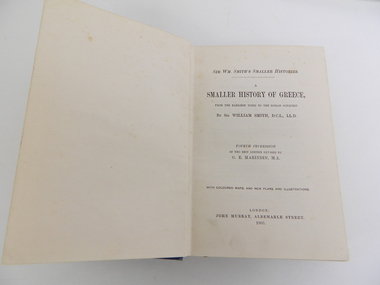
... This book was used as a text book at Camberwell Grammar School by Jack Roper whose family lived and farmed at Mt Yorke Station, Tawonga. At the time there wasn't a local High School, the closest one being in Albury. ...This book was used as a text book at Camberwell Grammar School by Jack Roper whose family lived and farmed at Mt Yorke Station, Tawonga. At the time there wasn't a local High School, the closest one being in Albury. ...This book was used as a text book at Camberwell Grammar School by Jack Roper whose family lived and farmed at Mt Yorke Station, Tawonga. At the time there wasn't a local High School, the closest one being in Albury. Historical: Students studied History. Country students boarded in Melbourne for their education. Provenance: Jack Roper had a private school education. His family still live and farm in the Kiewa Valley. Comparative to his descendants' education.Blue book with embossed hard cover including cloud like patterns in a rectangular shape around the title.Inside cover - hand written: Jack Roper / Camberwell G.S. / Jack Rooper / Mt Yorke Station / Tawonga/ Via Yackandandah Also handwritten notations: Marathon 490; 130 to 136 History; 4 chapter after holidays 18 to 24; !V chapter. Also smudged ink stain.education. history. greece. jack roper. mt yorke station. tawonga. camberwell grammar school. -
 Kiewa Valley Historical Society
Bottle - Chemist, Pre 1915
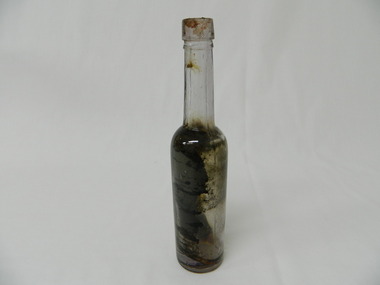
... Historical: Found inside the walls of a Tawonga South farm house having been left there when the house was being built. ...This bottle contained castor oil or cod-liver oil and has a hand finished top. It would have been bought at a local chemist or in a larger city on a shopping expedition.Historical: Found inside the walls of a Tawonga South farm house having been left there when the house was being built. Change of bottles - shape, glass stopper, manufacture and use. Aesthetic: Display showing shape and colour due to the affect of sunlight.Clear glass bottle with manganese/purple tinge caused by sunlight. Hand finished top. Joins in glass on each side but not continuing to opening. Straight sides from the base to a little more than half way up. Sharp taper to neck which is straight and long to lip and opening. Cork stopper.Bubbles in glass. chemist, castor oil, codliver oil, tawonga south, aurora parmesan -
 Kiewa Valley Historical Society
Book - Country Women's Association of Victoria, Victoria C.W.A. / For Country and City Women
... Women living in Tawonga were mostly on farms and, in 1946, when the branch commenced, would have been feeling more remote with WW11 having had an effect on available workers and the well being of the women and children. country women's association of victoria. c.w.a.. tawonga. ...Historical: This book covers all aspects of the C.W.A. including its history. The Tawonga branch of the C.W.A. commenced on the 7th Feb. 1946 and often combined activities with the other branches in the Kiewa Valley. The C.W.A. aimed to improve health, welfare and education for women and children in the country .Women living in Tawonga were mostly on farms and, in 1946, when the branch commenced, would have been feeling more remote with WW11 having had an effect on available workers and the well being of the women and children.Small 17 page book with white cardboard cover and green writing. Pages are held together with 2 staples. Cover: "The Country Women's Association / of Victoria Inc. / For Country and City Women / Victoria (with logo underneath) Address and contact details beneathcountry women's association of victoria. c.w.a.. tawonga. -
 Kiewa Valley Historical Society
Book - Country Women's Association of Victoria, The Official Annual of The Country Women's Association of Victoria, 1971
... Women living in Tawonga were mostly on farms and, in 1946, when the branch commenced would have been feeling more remote with WW11 having had an effect on available workers and the well being of the women and children. country women's association of victoria. c.w.a.. tawonga. ...The Tawonga branch of the C.W.A. was formed on the 7th Feb. 1946. They had 45 members by the end of the year. A scrap book (KVHS 0750) exists with a list of names of members for each year up to 1988 and articles from the newspaper. The Tawonga branch often combined activities with the other branches in the Kiewa Valley. The C.W.A. aimed to improve the health, welfare and education for women and children in the country.Women living in Tawonga were mostly on farms and, in 1946, when the branch commenced would have been feeling more remote with WW11 having had an effect on available workers and the well being of the women and children.Small green cardboard covered book with yellow border and logo (in middle) and with black printing. It has 48 pages.Cover: "The Official Annual of the Country Women's Association of Victoria." Also their Motto and "Forty Third Annual Report / and Balance Sheet / for the Year ending 31st December 1970 / Published 1971 Handwritten on cover: "Tawonga 15 cents each" Inside on cover sheet: handwritten: "30 c to pay to Mrs Courtney"country women's association of victoria. c.w.a.. tawonga. -
 Kiewa Valley Historical Society
Scrapbook - C.W.A. Tawonga, C.W.A. Scrapbook Collected by C.Roper, 1945 to 1988
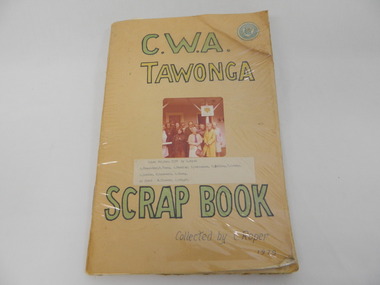
... Historical: Women living in Tawonga were mostly on farms and, in 1946, when the branch commenced would have been feeling more remote with WW11 having had an effect on available workers and the well being of the women and children. ...The Tawonga C.W.A. formed on 7th Feb. 1946. It was a very active group with 45 members in that year. Numbers fluctuated throughout the years and totalled 26 members in 1988. The Tawonga C.W.A. often combined activities with the other branches in the Kiewa Valley. The C.W.A. aimed to improve health, welfare and education for women and children in the country. The book gives examples of all the activities the members were involved in over the years and their involvement with other C.W.A. groups in North East Victoria and Victoria. There are many photos of members and their activities too. These photos give a good representation of what womens fashions were during the mid part of the 20 century. Historical: Women living in Tawonga were mostly on farms and, in 1946, when the branch commenced would have been feeling more remote with WW11 having had an effect on available workers and the well being of the women and children. This scrap book was complied by Claire Roper one of the founding members of the CWA. It traces the history of the Tawonga branch of the CWA, its members and what they did which improved the living conditions for their community. Large scrap book held together by 3 large staples originally with blank pages. The pages have been written on and newspaper articles have been pasted in. The book was covered with light brown paper, the heading has been handwritten using block letters coloured in green with black outline. Centre front of the book has a photo of ladies dated 1978. Their names are typed in underneath. The book has then been covered by clear plastic.The title: "C.W.A. / Tawonga / Scrap Book / Collected by C. Ropercountry women's association of victoria. tawonga. clare roper. -
 Kiewa Valley Historical Society
Book - Country Women's Association of Victoria, Myart Knit & Crochet
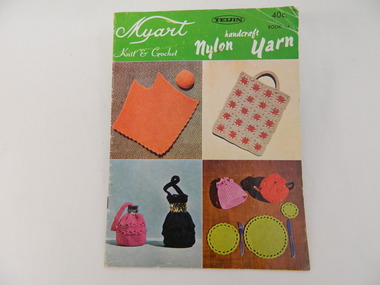
... Women living in Tawonga were mostly on farms and, in 1946, when the branch commenced would have been feeling more remote with WW11 having had an effect on available workers and the well being of the women and children. country women's association of victoria. tawonga. handcrafts. knitting. crocheting. ...This book was used by members of the Tawonga C.W.A.. The group exhibited their handicrafts and made items for charity. The Tawonga branch of the C.W.A. commenced on the 7th Feb. 1946 and often combined activities with the other branches in the Kiewa Valley. The C.W.A. aimed to improve health, welfare and education for women and children in the country.Women living in Tawonga were mostly on farms and, in 1946, when the branch commenced would have been feeling more remote with WW11 having had an effect on available workers and the well being of the women and children.Small coloured 16 page book with a cover showing 4 squares of knitted and crocheted items. At the top the book has a light green background with white writing and some black writing. The back cover is similar with 4 different items. The book is bound with 2 staples. The book has patterns with instructions for knitted & crocheted items.Cover: 'Myart / Knit & Crochet' - on left. 'Handcraft / Nylon Yarn' - on right. 'Teijin 40c / Book 14' - top right in blackcountry women's association of victoria. tawonga. handcrafts. knitting. crocheting. -
 Kiewa Valley Historical Society
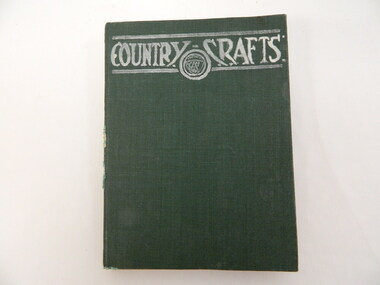
Book - Country Women's Association of Victoria, Country Crafts - CWA, 1950
... Women living in Tawonga were mostly on farms and, in 1946, when the branch commenced would have been feeling more remote with WW11 having had an effect on available workers and the well being of the women and children. country women's association of victoria. country crafts. tawonga. c.w.a. ...This book is a periodical that the Tawonga C.W.A. group received each year with news, hints, ideas etc. of all CWA groups in Victoria. The Tawonga branch of the C.W.A. commenced on the 7th Feb. 1946 and often combined activities with the other branches in the Kiewa Valley. The C.W.A. aimed to improve health, welfare and education for women and children in the country.Women living in Tawonga were mostly on farms and, in 1946, when the branch commenced would have been feeling more remote with WW11 having had an effect on available workers and the well being of the women and children.Hard covered bound green book with 345 slightly yellowing pages. 1949 periodical book Vol. XIX No.1 (- 12) 1st January 1949 - (December) reporting on activities of C.W.A. clubs in Victoria. It is set out month by month but isn't indexed. Subscription: 4/- per annum; 5/- per year, posted; 4d. per Copy, 5 and a half pence postedCover: "Country Crafts with CWA logo."country women's association of victoria. country crafts. tawonga. c.w.a. -
 Kiewa Valley Historical Society
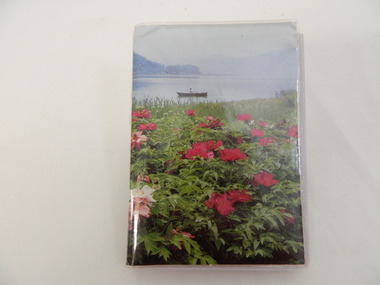
Photo Album - Country Women's Association of Victoria, 1990's
... Women living in Tawonga were mostly on farms and, in 1946, when the branch commenced would have been feeling more remote with WW11 having had an effect on available workers and the well being of the women and children. country women's association of victoria. tawonga. handicraft. home industries. exhibition. kiewa valley group.c.w.a. ...The Tawonga branch of the C.W.A. commenced on the 7th Feb. 1946 and often combined activities with the other branches in the Kiewa Valley. The C.W.A. aimed to improve health, welfare and education for women and children in the country. The Tawonga ladies competed in Handicraft and Home Industries Exhibitions during the 1990's and were very successful. Women living in Tawonga were mostly on farms and, in 1946, when the branch commenced would have been feeling more remote with WW11 having had an effect on available workers and the well being of the women and children.Small photo album with Country Women's Association Prize Cards for handicraft and Home Industries Exhibition enclosed. Each Prize Card is filled out with (Third) Prize; Name; No.; Section; Branch - all Tawonga; and points. Some of the cards have been won from other CWA groups displays e.g.. Yackandandah. The album has several blank pages left over. The cover is a picture of a boat on a lake with red flowers in the foreground.country women's association of victoria. tawonga. handicraft. home industries. exhibition. kiewa valley group.c.w.a. -
 Kiewa Valley Historical Society
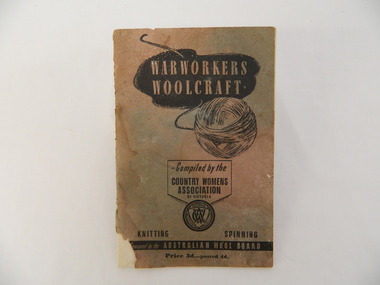
Book - Country Women's Association of Victoria, Warworkers Woolcraft - Compiled by the CWA of Victoria, c1940's
... The Tawonga ladies would have been involved in assisting the war effort from home. Most of the ladies lived on remote farms so they may have got together, learnt together and felt happier while contributing to the war effort and supporting the men fighting overseas. ...Tawonga CWA branch commenced on 7th Feb. 1946. Prior to this the ladies would have been involved in supporting the war effort with knitted and spun items as described in this book. The branch often combined activities with the other branches in the Kiewa Valley. The C.W.A. aimed to improve health, welfare and education for women and children in the country. Getting together for the war effort would have succeeded in this aim perhaps encouraging the women to continue meeting under the banner of C.W.A.The Tawonga ladies would have been involved in assisting the war effort from home. Most of the ladies lived on remote farms so they may have got together, learnt together and felt happier while contributing to the war effort and supporting the men fighting overseas. Wool was available and easily made into useful items that could be shipped overseas. After the war, the ladies may have wanted to continue meeting and hence decided to form a C.W.A. branch.Small brown book with black writing. 32 pages held by 2 rusty staples.The book gives patterns and instructions for making woolcraft (knitting & spinning) eg. socks & scarves, for the Airforce, Navy and Army with specific colours, thickness of wool and notes eg. no frills. Price 3d. posted 4d. Sponsored by the Australian Wool BoardCover: Warworkers Woolcraft / Compiled by the CWA / Knitting Spinning / Sponsored by the Australian Wool Boardww11. warworkers. tawonga. country women's association of victoria. woolcraft. australian wool board. c.w.a. -
 Kiewa Valley Historical Society
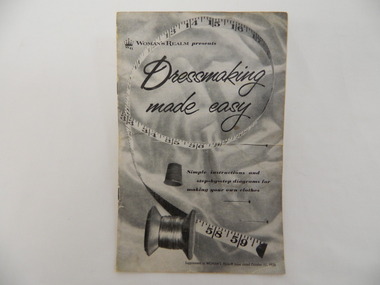
Book - Craft, Dressmaking Made Easy, 1958
... Women living in Tawonga were mostly on farms and, in 1946, when the branch commenced would have been feeling more remote with WW11 having an effect on available workers and the well being of the women and children. tawonga. country woman's association of victoria. dressmaking. woman's realm. c.w.a. ...Tawonga C.W.A. was involved in dressmaking and other home industries.The Tawonga branch of the C.W.A. commenced on the 7th Feb. 1946 and often combined activities with the other branches in the Kiewa Valley. The C.W.A. aimed to improve health, welfare and education for women and children in the country. This was achieved by getting together and exchanging ideas on dressmaking while providing for their families and the local community, possibly selling their products at fetes.Women living in Tawonga were mostly on farms and, in 1946, when the branch commenced would have been feeling more remote with WW11 having an effect on available workers and the well being of the women and children.Small white and grey book with picture of tape measure and cotton reel on the cover. It has 15 pages including the cover which is printed on too. It has general instructions for sewing. Held by 2 staplesCover: Woman's Realm presents / Dressmaking / made easy / Simple instructions and / step-by-step diagrams for / making your own clothes tawonga. country woman's association of victoria. dressmaking. woman's realm. c.w.a. -
 Kiewa Valley Historical Society
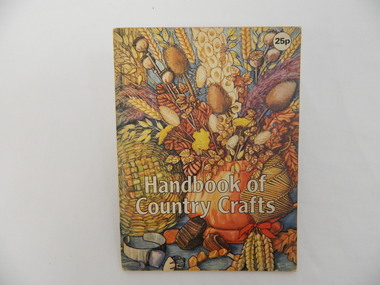
Book - Country Women's Association of Victoria, Handbook of Country Crafts, 1973
... Women living in Tawonga were mostly on farms and, in 1946, when the branch commenced would have been feeling more remote with WW11 having an effect on available workers and the well being of the women and children. tawonga. country woman's association of australia. crafts. plant crafts.c.w.a. ...The Tawonga branch of the C.W.A. commenced on the 7th Feb. 1946 and often combined activities with the other branches in the Kiewa Valley. The C.W.A. aimed to improve health, welfare and education for women and children in the country. The members achieved these aims by being involved in handcrafts of all kinds.Women living in Tawonga were mostly on farms and, in 1946, when the branch commenced would have been feeling more remote with WW11 having an effect on available workers and the well being of the women and children.The book has a cover with Autumn colours of flowers in a vase with the title in block letters of pale yellow. It has 47 pages bound by 2 staples. The crafts involve the use of plants in creating decorations.tawonga. country woman's association of australia. crafts. plant crafts.c.w.a. -
 Kiewa Valley Historical Society
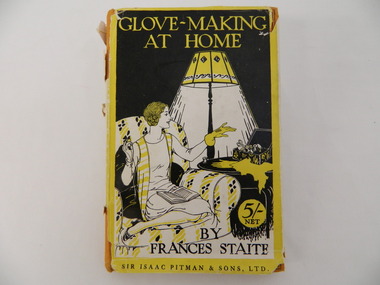
Book - Country Women's Association of Victoria, Glove-Making at Home by Frances Staite, 1927
... Women living in Tawonga were mostly on farms and, in 1946, when the branch commenced would have been feeling more remote with WW11 having an effect on available workers and the well being of the women and children. tawonga. cwa. gloves. craft. country women's association of victoria Cover page "Country Womens' Association / of Victoria" stamp with purple ink Title: Clove-Making / At Home / by Frances Staite / Sir Isaac Pitman & Sons, Ltd 5/- net. ...The Tawonga branch of the C.W.A. commenced on the 7th Feb. 1946 and often combined activities with the other branches in the Kiewa Valley. The C.W.A. aimed to improve health, welfare and education for women and children in the country. Doing craft helped the women achieve these aims as they would get together and learn from each other. Women living in Tawonga were mostly on farms and, in 1946, when the branch commenced would have been feeling more remote with WW11 having an effect on available workers and the well being of the women and children.Hard covered book with a yellow and black sleeve. The sleeve has a picture of a lady sitting on a lounge chair under a lamp admiring her glove. Inserted in the book is a page with further instructions on glove making. The book is bound and has 90 pages. The first and last 3 pages consist of advertising.Cover page "Country Womens' Association / of Victoria" stamp with purple ink Title: Clove-Making / At Home / by Frances Staite / Sir Isaac Pitman & Sons, Ltd 5/- net.tawonga. cwa. gloves. craft. country women's association of victoria
