
Showing 88 items matching "uk army"
-
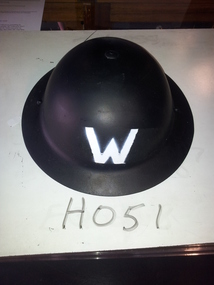 Running Rabbits Military Museum operated by the Upwey Belgrave RSL Sub Branch
Helmet
... ...UK Army...Headgear WW2 UK Army Helmet British (1942) (Relic) - Repurposed as "Civil Defense Warden, Volunteer" helmet. ...Helmet British (1942) (Relic) - Repurposed as "Civil Defense Warden, Volunteer" helmet.headgear, ww2, uk army -
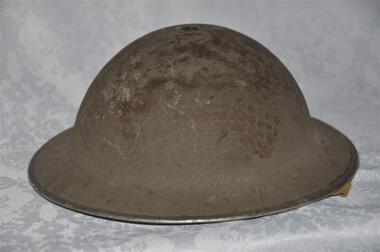 Running Rabbits Military Museum operated by the Upwey Belgrave RSL Sub Branch
Helmet
... ...UK Army...Headgear WW2 UK Army Brodie,British/Australian, 1952 Helmet ...Brodie,British/Australian, 1952headgear, ww2, uk army -
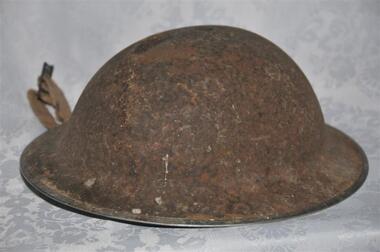 Running Rabbits Military Museum operated by the Upwey Belgrave RSL Sub Branch
Helmet
... ...UK Army...Headgear WW2 UK Army Brodie British/ Australian, LT 1939 missing insert.. ...Brodie British/ Australian, LT 1939 missing insert..headgear, ww2, uk army -
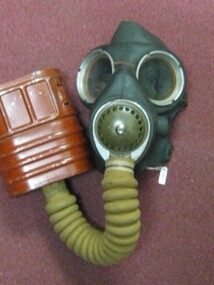 Running Rabbits Military Museum operated by the Upwey Belgrave RSL Sub Branch
Gas Mask
... ...UK Army...Equipment WW2 UK Army Gas Mask with British markings HL7431 Gas Mask ...Gas Mask with British markings HL7431equipment, ww2, uk army -
 Running Rabbits Military Museum operated by the Upwey Belgrave RSL Sub Branch
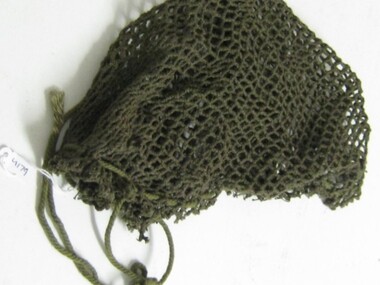
Helmet Cover
... ...UK Army...Uniform WW2 UK Army Scrim Net. British Helmet Cover ...Scrim Net. Britishuniform, ww2, uk army -
 Frankston RSL Sub Branch
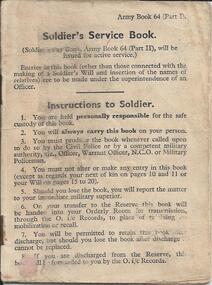
Booklet, Soldier's Service Book
... Small printed pocket book size record of soldier's service details. Issued by the UK Army to Colin Proctor who served in the Royal Sussex Regiment during WW2....Small printed pocket book size record of soldier's service details. Issued by the UK Army to Colin Proctor who served in the Royal Sussex Regiment during WW2. ...Small printed pocket book size record of soldier's service details. Issued by the UK Army to Colin Proctor who served in the Royal Sussex Regiment during WW2. -
 Bendigo Military Museum
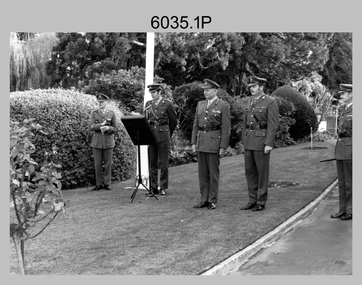
Photograph - Army Survey Regiment - Defence Force Service Medal Presentations, Fortuna Villa, Bendigo, 1979
... On this occasion the CGS presented the Defence Force Service Medal to WO2 Alex Cairney, WO1 Bob Mason and WO2 Ken Slater for 15 years of efficient remunerated service in the Australian Army. It is likely the unidentified UK Exchange senior NCO was the recipient of the UK Army’s equivalent service medal. ...Army Survey Regiment’s Collection. They were scanned at 300 dpi. .1) - Photo, black and white, 1979. L to R: RSM WO1 Aub Harvey, CAPT Don Maskew, CGS LTGEN General Sir Donald Dunstan AC, KBE, CB; MAJ Don Swiney MBE, CO LTCOL Bob Skitch. .2) - Photo, black and white, 1979. Foreground L to R: CO LTCOL Bob Skitch, MAJ Don Swiney MBE, CGS LTGEN General Sir Donald Dunstan AC, KBE, CB; CAPT Don Maskew. Background L to R: WO2 Ken Slater, WO2 Alex Cairney, WO1 Bob Mason, unidentified UK...On this occasion the CGS presented the Defence Force Service Medal to WO2 Alex Cairney, WO1 Bob Mason and WO2 Ken Slater for 15 years of efficient remunerated service in the Australian Army. It is likely the unidentified UK Exchange senior NCO was the recipient of the UK Army’s equivalent service medal. ...This is a set of nine photographs of Defence Force Service Medal presentations by the Chief of the General Staff (CGS) Lieutenant General Sir Donald Dunstan AC, KBE, CB; at the Army Survey Regiment, Fortuna, Bendigo on the 5th of June 1979. The photos were taken next to the flagpole in Fortuna Villa’s front garden. Upon retirement from the Army in 1982, Lieutenant General Sir Donald Dunstan AC, KBE, CB; was appointed to the position of Governor of South Australia from 1982 to 1991. On this occasion the CGS presented the Defence Force Service Medal to WO2 Alex Cairney, WO1 Bob Mason and WO2 Ken Slater for 15 years of efficient remunerated service in the Australian Army. It is likely the unidentified UK Exchange senior NCO was the recipient of the UK Army’s equivalent service medal. Other key staff appearing in these photos are LTCOL Bob Skitch was the CO of the Army Svy Rgt from 1976 to 1980 and WO1 Aub Harvey, who was RSM from 1976 to 1982. MAJ Don Swiney MBE was later promoted to LTCOL and was CO of the Army Svy Rgt from 1985 to 1987. He was subsequently promoted to Colonel and was Director of the Royal Australian Survey Corp from November 1988 to January 1991, and the honorary position as Colonel Commandant from January 1993 to January 1996. See item 6034.14P for photos of the CGS’s tour through the production areas of the Army Svy Rgt.This is a set of nine photographs of Defence Force Service Medal presentations by the Chief of the General Staff (CGS) at the Army Survey Regiment, Fortuna, Bendigo on the 5th of June 1979. The photographs were printed on photographic paper and are part of the Army Survey Regiment’s Collection. They were scanned at 300 dpi. .1) - Photo, black and white, 1979. L to R: RSM WO1 Aub Harvey, CAPT Don Maskew, CGS LTGEN General Sir Donald Dunstan AC, KBE, CB; MAJ Don Swiney MBE, CO LTCOL Bob Skitch. .2) - Photo, black and white, 1979. Foreground L to R: CO LTCOL Bob Skitch, MAJ Don Swiney MBE, CGS LTGEN General Sir Donald Dunstan AC, KBE, CB; CAPT Don Maskew. Background L to R: WO2 Ken Slater, WO2 Alex Cairney, WO1 Bob Mason, unidentified UK Exchange senior NCO. .3) - Photo, black and white, 1979. L to R: WO2 Ken Slater, WO2 Alex Cairney, WO1 Bob Mason, unidentified UK Exchange senior NCO. .4) & .5) - Photo, black and white, 1979. L to R: WO2 Ken Slater, CGS LTGEN General Sir Donald Dunstan AC, KBE, CB; CAPT Don Maskew, MAJ Don Swiney MBE, CO LTCOL Bob Skitch. .6) - Photo, black and white, 1979. L to R: RSM WO1 Aub Harvey, unidentified UK Exchange senior NCO, , CGS LTGEN General Sir Donald Dunstan AC, KBE, CB; MAJ Don Swiney MBE, CO LTCOL Bob Skitch, unidentified aide de camp officer. .7) - Photo, black and white, 1979. L to R: RSM WO1 Aub Harvey, WO2 Alex Cairney, CAPT Don Maskew, LTGEN General Sir Donald Dunstan AC, KBE, CB; MAJ Don Swiney MBE, CO LTCOL Bob Skitch, unidentified aide de camp officer, unidentified photographer. .8) - Photo, black and white, 1979. L to R: RSM WO1 Aub Harvey, CAPT Don Maskew, WO1 Bob Mason, LTGEN General Sir Donald Dunstan AC, KBE, CB; MAJ Don Swiney MBE, CO LTCOL Bob Skitch, unidentified aide de camp officer, unidentified RAAF officer, MAJ Peter Eddy. .9) - Photo, black and white, 1979. L to R: WO1 Bob Mason, WO2 Ken Slater, RSM WO1 Aub Harvey, WO2 Alex Cairney, unidentified UK Exchange senior NCO..1P to .14P – no annotationsroyal australian survey corps, rasvy, army survey regiment, army svy regt, fortuna, asr -
 Bendigo Military Museum
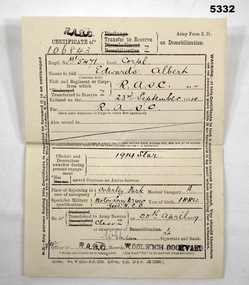
Document - CERTIFICATE of TRANSFER, British Army, BRITISH ARMY CERTIFICATE OF TRANSFER TO RESERVE ON DEMOB, 1919
... Transferred to Army Reserve (UK) 20 Apr 1919. Certificate NR 106843. ...Transferred to Army Reserve (UK) 20 Apr 1919. Certificate NR 106843. ...Refers to Service of Albert Edwards This is a small sheet of strong paper. It was white paper and the print is in black ink. British Army Form Z.24. It is for MJ/5471 Cpl Edwards, Albert. DOE: 23 Sep 1914 RASC. DOB 1884. MIL trades Motor Lorry Driver, Good NCO. Transferred to Army Reserve (UK) 20 Apr 1919. Certificate NR 106843. Stamped RASC. Woolwich Dockyard.ww1, certificate of transfer -
 Bendigo Military Museum
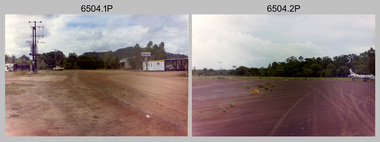
Photograph - 4th Field Survey Squadron – Operation NERVOSE 85 Reconnaissance, Northern Territory, 1985
... Army Survey Regiment’s Collection. The photographs were scanned at 96 dpi. .1) to .4) - Photo, colour, 1985. Unknown location in the Northern Territory. .5) - Photo, colour, 1985. Unidentified personnel in the back of a police vehicle. .6P to .12) - Photo, colour, 1985. Unknown location in the Northern Territory. .13) - Photo, colour, 1985. L to R: Possibly MAJ A. Vickers RE - UK...Army Survey Regiment’s Collection. The photographs were scanned at 96 dpi. .1) to .4) - Photo, colour, 1985. Unknown location in the Northern Territory. .5) - Photo, colour, 1985. Unidentified personnel in the back of a police vehicle. .6P to .12) - Photo, colour, 1985. Unknown location in the Northern Territory. .13) - Photo, colour, 1985. L to R: Possibly MAJ A. Vickers RE - UK ...This is a set of 13 photographs taken in 1985* during reconnaissance of locations in regions of the Northern Territory. Later that year, Operation NERVOSE 85 was mounted by 4 Fd Svy Sqn in the EAST ARNHEM, VICTORIA RIVER DOWNS AND DALY WATERS areas of the Northern Territory from 26 May to 18 Sep 85. The aim of Operation NERVOSE 85 was to finalise the horizontal and vertical control for mapping at a scale of 1:50,000, to field check 40x 1:50,000 preliminary maps and to obtain mapping photography in support of the RAAF TINDAL redevelopment project. *Note –These photos were most likely taken in 1985, contrary to the ‘1987’ date annotated on the negative sleeves. The Op NERVOSE 85 Project Report available on RASVY’s web site lists a nominal roll of personnel. Photos of 4 Fd Svy Sqn taken in 1985 and 1987 provide names of posted personnel. Several personnel identified in these photos were posted to 4 Fd Svy Sqn in 1985, not in 1987.This is a set of 13 photographs taken during 4th Field Survey Squadron’s reconnaissance of Operation NERVOSE 85 locations in the Northern Territory in 1985. The colour photographs are on 35mm negative film and are part of the Army Survey Regiment’s Collection. The photographs were scanned at 96 dpi. .1) to .4) - Photo, colour, 1985. Unknown location in the Northern Territory. .5) - Photo, colour, 1985. Unidentified personnel in the back of a police vehicle. .6P to .12) - Photo, colour, 1985. Unknown location in the Northern Territory. .13) - Photo, colour, 1985. L to R: Possibly MAJ A. Vickers RE - UK Exchange Officer from Army Svy Regt, unidentified officer. .1P to .13P – There are no personnel identified. ‘1987 OP NERVOSE – RECON PHOTOG.’ annotated on negative sleeve.royal australian survey corps, rasvy, 4 fd svy sqn, op nervose 85 -
 Flagstaff Hill Maritime Museum and Village
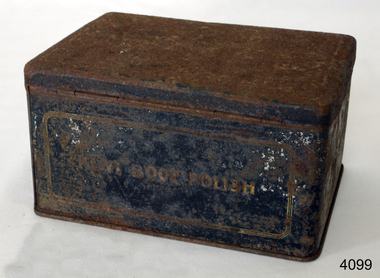
Container - Tin, Kiwi Shoe Polish Manufacture, 1940s
... Its success in Australia expanded overseas when it was adopted by both the British and American armies in World War I. In the UK, Kiwi was for many years manufactured at its British headquarters in Ealing (Brumwell Road, London W5 1DT). ...Its success in Australia expanded overseas when it was adopted by both the British and American armies in World War I. In the UK, Kiwi was for many years manufactured at its British headquarters in Ealing (Brumwell Road, London W5 1DT). ...The polish was developed in Australia by William Ramsay who named it Kiwi after the flightless bird endemic to New Zealand, the home country of his wife, Annie Elizabeth Meek Ramsay. Its success in Australia expanded overseas when it was adopted by both the British and American armies in World War I. In the UK, Kiwi was for many years manufactured at its British headquarters in Ealing (Brumwell Road, London W5 1DT). From here the factory manufactured for the UK market and exported the Kiwi brand too much of Europe and the Middle East. In the mid-1970s, as part of a major streamlining, the UK factory was closed with production switched to France. The UK operation moved to Surrey at Yately becoming, effectively, a sales and marketing office, with distribution contracted to a third party. In 1980, production for the UK market moved back to the UK and was housed in a factory near Huddersfield. The UK head office was relocated to Maidstone, Kent, where Kiwi had other product interests. Following the global merger with Nicholas Laboratories, the UK head office was again relocated to Slough at the Nicholas building on Bath Road.A significant product as Kiwi is an Australian brand name of shoe polish, first launched and sold in Australia in 1906 and as of 2005 sold in almost 180 countries. Previously owned by the Sara Lee Corporation since 1984, it was sold in 2011 to S. C. Johnson. It is the dominant shoe polish in some countries, including the United Kingdom and the United States, where it has about two thirds of the market. In Malaysia and Singapore, Kiwi has become such a household brand for a shoe polish that the word "kiwi" has been genericized into a verb in the Malay language, meaning "to polish one's shoes".Metal cleaning outfit of Kiwi boot polish brush, scraper, & polish missingKiwi Boot Polish to front of containerflagstaff hill, warrnambool, shipwrecked-coast, flagstaff-hill, flagstaff-hill-maritime-museum, maritime-museum, shipwreck-coast, flagstaff-hill-maritime-village -
 Frankston RSL Sub Branch
Medal Set (set of 3)
... . • Army - those who served on the establishment of a unit in a theatre of war. • Air Force - those who served on the establishment of a unit in a theatre of war outside the UK, served with an operational unit in the UK or overseas and had been actively engaged against the enemy, been employed in flying new aircraft to France or served on the complement of aircraft-carrying ships. .... • Army - those who served on the establishment of a unit in a theatre of war. • Air Force - those who served on the establishment of a unit in a theatre of war outside the UK, served with an operational unit in the UK or overseas and had been actively engaged against the enemy, been employed in flying new aircraft to France or served on the complement of aircraft-carrying ships. ...Thomas Richard Cook Service number: 1732 Rank: Private Roll title: 1 Infantry Battalion - 1 to 8 Reinforcements (December 1914 - August 1915) Conflict: First World War, 1914-1918 Date of embarkation: 10 April 1915 Place of embarkation: Sydney Ship embarked on: HMAT Argyllshire Ship number: A8 Set of WW1 medals issued to T. R. Cook, note DCM + MM not included. 1) The 1914-1915 Star. Awarded for service on the establishment of a ship or unit in a theatre of war. A member awarded the 1914 Star could not be awarded the 1914-15 Star (this award). 2) British War Medal. Awarded for service as follows: • Navy - for 28 days mobilised service or to those who lost their lives in active operations before completing that period, between 5 August 1914 and 11 November 1918. • Army and Air Force - entry into a theatre of war on duty, or who left places of residence and rendered approved overseas service between 5 August 1914 and 11 November 1918. • Mercantile Marine - at least six months service between 5 August 1914 and 11 November 1918. 3) The Victory medal. Awarded for service as follows: • Navy - those who were mobilised and rendered approved service either at sea between 5 August 1914 and 11 November 1918 or on the establishment of a unit within a theatre of military operations. • Army - those who served on the establishment of a unit in a theatre of war. • Air Force - those who served on the establishment of a unit in a theatre of war outside the UK, served with an operational unit in the UK or overseas and had been actively engaged against the enemy, been employed in flying new aircraft to France or served on the complement of aircraft-carrying ships. A member Mentioned in Dispatches for service during World War 1 wears a bronze oak leaf on the ribbon. Only one emblem is worn no matter how many times a member may have been 'mentioned' 1) 1914-15 Star: Star with crown on top, with crossed swords, embossed with "1914-15" on obverse side, "1768/ Gnr T R Cook/ 1/Bn. A.I.F." 2)King George head and mounted warrioir on obverse. 3)Winged Brittania and obverse "The Great/war for/civilisation/1914-1919"medals, 1914 15 star, british war medal, victory medal, ww1 medals -
 Lara RSL Sub Branch
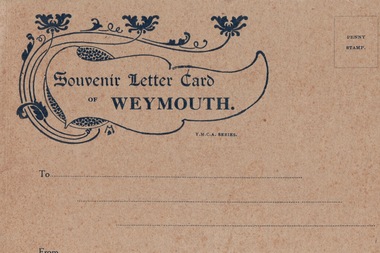
Postcards Booklet, Souvenir Letter Card of Weymouth
... uk...australian base camp...world war 1...ww1...aif...army...A World War 1 Letter Card sent home by Australian troops repatriated in Weymouth, UK containing images of Weymouth and a picture of the Australian Base Camp. ymca uk australian base camp world war 1 ww1 aif army australian army westham littemoor weymouth melcombe regis cemetery anzac Front cover (see image) Souvenir Letter Card of Weymouth Inside are eight pictures of the Weymouth area including the YMCA Hut - Australian Base Camp Souvenir Letter Card of Weymouth Postcards Booklet ...Following the landing of Australian & New Zealand troops, the Anzacs, at Gallipoli on 25th April 1915, casualties mounted rapidly and were initially transported to their base in Egypt, which was soon unable to cope, with wounded being sent to England. Here the troops found that there was no Australian base to which they could report once they had been discharged from hospital; what was needed urgently was a base in England where troops could be sent to convalesce. So on 31st May 1915 a command depot was set up at Monte Video House in Chickerell, some two miles from Weymouth. Weymouth then became the Australian Imperial Forces (AIF) Command Depot No.2 which accommodated those men not expected to be fit for duty within six months, therefore, most of the Diggers repatriated as a result of wounds or sickness passed through Weymouth. During the years 1915-1919 over 120,000 Australian and New Zealand troops passed through Weymouth. In Spring & Summer, Weymouth Esplanade would be full of Anzac soldiers in wheelchairs, being wheeled along by their more able mates. The first contingent of 200 wounded men arrived in the first week of June 1915, and two weeks later a group of local ladies organised a cream tea for the newcomers, followed by a concert party 'The Frolics' at the camp. So began the close connection that was to grow between the soldiers and the villagers of Chickerell. The ANZAC Memorial on Weymouth seafront commemorates the Australian and New Zealand troops who were accommodated in three camps in the town during WW1: Monte Video, Westham and Littlemoor. In Weymouth and Melcombe Regis Cemetery there are about eighty-six graves of those Anzacs who were never to return to their homelands. Also in memory of these troops, there a number of roads close to the camps named after Australian cities and states.A World War 1 Letter Card sent home by Australian troops repatriated in Weymouth, UK containing images of Weymouth and a picture of the Australian Base Camp.Front cover (see image) Souvenir Letter Card of Weymouth Inside are eight pictures of the Weymouth area including the YMCA Hut - Australian Base Campymca, uk, australian base camp, world war 1, ww1, aif, army, australian army, westham, littemoor, weymouth, melcombe regis cemetery, anzac -
 Flagstaff Hill Maritime Museum and Village
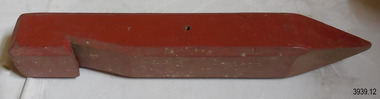
Equipment - Sand peg set, Mid-19th to mid-20th Century
... army peg military peg Peg or spike; set of twelve wooden pegs, painted red. Pages have a long, thick square shank with bevelled side edges, flat top with broad hook on one side of the top and a point at the other end. A small hole goes from one side to the other side near the centre of the shank, on the face without the hook. Equipment Sand peg set UK ...This set of Victorian era wooden sand pegs was part of the equipment used by the Rocket Rescue Crew when attending a shipwreck. The broad pegs were designed to give a strong grip on soft sand and soil. The pegs could be used with the sand anchor as well as to give a stronger hold on the tripod holding the hawser. The same design is still available today and is used by the Army and by campers. The rocket rescue crews used a sand anchor at a beach rescue site to weigh down the rescue apparatus. The crew would connect the shackle to the other cable on the anchor and to the loose steel cable to form a triangle with the cable lengths. They would then bury the anchor in about a 0.75-meter trench, keeping the free end of the cable above the surface. This end of the cable was then connected to a block that was attached to the heavy hawser line. The block and a crotch pole were used to keep the hawser line high and taught as the survivors were hauled to shore on a line or in a breeches buoy. Saving lives in Warrnambool – The coastline of South West Victoria is the site of over 600 shipwrecks and many lost lives; even in Warrnambool’s Lady Bay there were around 16 known shipwrecks between 1850 and 1905, with eight lives lost. In 1859 the first Government-built lifeboat arrived at Warrnambool Harbour and a shed was soon built to house it. In 1858 the provision of rocket and mortar apparatus was approved for lifeboat stations in Victoria, and in 1864 a rocket house was built to safely store the rocket rescue equipment. In 1878 the buildings were moved to the Breakwater area, and in 1910 the new Lifeboat Warrnambool arrived with its ‘self-righting’ design. For almost a hundred years the lifeboat and rocket crews, mostly local volunteers, trained regularly to maintain their rescue skills. They were summoned when needed by alarms, gunshots, ringing bells and foghorns. Some became local heroes but all served an important role. By the end of the 1950s, the lifeboat and rescue equipment had become obsolete. Rocket Rescue Method - The Government of Victoria adopted lifesaving methods based on Her Majesty’s Coast Guard in Great Britain. It authorised the first line-throwing rescue system in 1858. Captain Manby’s mortar powered a projectile connected to a rope, invented in 1808. The equipment was updated to John Dennett’s 8-foot shaft and rocket method that had a longer range of about 250 yards. From the 1860s the breeches buoy apparatus was in use. The apparatus was suspended on a hawser line and manually pulled to and from the distressed vessel carrying passengers and items. In the early 1870s Colonel Boxer’s rocket rescue method became the standard in Victoria. His two-stage rockets, charged by a gunpowder composition, could fire the line up to 500-600 yards, although 1000 yards range was possible. Boxer’s rocket carried the light line, which was faked, or coiled, in a particular way between pegs in a faking box to prevent twists and tangles when fired. The angle of firing the rocket to the vessel in distress was measured by a quadrant-type instrument on the side of the rocket machine. Decades later, in about 1920, Schermuly invented the line-throwing pistol that used a small cartridge to fire the rocket. The British Board of Trade published instructions for both the beach rescue crew and ship’s crew. It involved setting up the rocket launcher on shore at a particular angle measured by the quadrant, inserting a rocket that had a lightweight line threaded through its shaft, and then firing it across the stranded vessel, the line issuing freely from the faking board. A tally board was then sent out to the ship with instructions in four languages. The ship’s crew would haul on the line to bring out the heavier, continuous whip line, then secure the attached whip block to the mast or other sturdy part of the ship. The rescue crew on shore then hauled out a stronger hawser line, which the ship’s crew fixed above the whip block. The hawser was then tightened using the block on the shore end of the whip. The breeches buoy and endless whip are then attached to the traveller block on the hawser, allowing the shore crew to haul the breeches buoy to and from the vessel, rescuing the stranded crew one at a time. This set of sand pegs would have been used with sand anchor that is part of the rocket rescue equipment . It is significant for its connection with local history, maritime history and marine technology. Lifesaving has been an important part of the services performed from Warrnambool's very early days, supported by State and Local Government, and based on the methods and experience of Great Britain. Hundreds of shipwrecks along the coast are evidence of the rough weather and rugged coastline. Ordinary citizens, the Harbour employees, and the volunteer boat and rescue crew, saved lives in adverse circumstances. Some were recognised as heroes, others went unrecognised. In Lady Bay, Warrnambool, there were around 16 known shipwrecks between 1850 and 1905. Many lives were saved but tragically, eight lives were lost.Peg or spike; set of twelve wooden pegs, painted red. Pages have a long, thick square shank with bevelled side edges, flat top with broad hook on one side of the top and a point at the other end. A small hole goes from one side to the other side near the centre of the shank, on the face without the hook. flagstaff hill maritime museum & village, flagstaff hill, maritime museum, maritime village, warrnambool, great ocean road, shipwreck, life-saving, lifesaving, rescue crew, rescue, rocket rescue, maritime accidents, shipwreck victim, rocket crew, beach rescue, line rescue, rescue equipment, rocket firing equipment, rocket rescue equipment, rocket apparatus, beach apparatus, breeches buoy, rocket house, rocket equipment, rocket launcher, rocket line, marine technology, beach rescue set, traveller, block, running block, pulley, hawser, faked line, lady bay, warrnambool harbour, port of warrnambool, volunteer lifesavers, volunteer crew, breakwater, rocket rescue method, rocket rescue apparatus, shore to ship, rocket apparatus rescue, stranded vessel, whip line, endless whip, harbour board, sand anchor, rocket set, anchor backer, beach anchor, backer, steel cable, wire cable, sand peg, wooden tent peg, army peg, military peg -
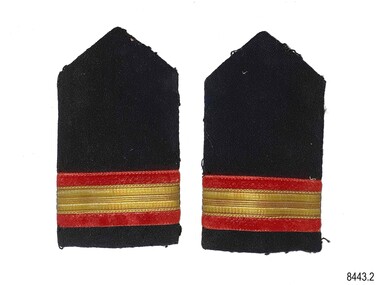 Flagstaff Hill Maritime Museum and Village
Badge - Epaulette, 1920s
... UK in 1927, sailing on the ship SS Banffshire (built in 1912, destroyed in 1937). He studied at London University College Hospital and at Edinburgh Royal Infirmary and in 1928 he was awarded FRCS (Fellow from the Royal College of Surgeons), Edinburgh, Scotland. He worked his passage back to Australia as a Ship’s Surgeon on the Australian Commonwealth Line T.S.S. Largs Bay, purchased by the White Star Line in 1928. Dr W R Angus was a Surgeon Captain for the Australian Defence Forces, Army...UK in 1927, sailing on the ship SS Banffshire (built in 1912, destroyed in 1937). He studied at London University College Hospital and at Edinburgh Royal Infirmary and in 1928 he was awarded FRCS (Fellow from the Royal College of Surgeons), Edinburgh, Scotland. He worked his passage back to Australia as a Ship’s Surgeon on the Australian Commonwealth Line T.S.S. Largs Bay, purchased by the White Star Line in 1928. Dr W R Angus was a Surgeon Captain for the Australian Defence Forces, Army ...The pair of epaulettes once belonged to W.R. Angus, who possibly wore them when he worked his passage fo or from the UL in the 1920s. The epaulettes are part of Flagstaff Hill’s comprehensive W.R. Angus Collection, donated by the family of Dr W R Angus (1901-1970), surgeon and oculist. William Roy Angus (1901-1970) qualified as a doctor in 1923. He decided he further his studies overseas in the UK in 1927, sailing on the ship SS Banffshire (built in 1912, destroyed in 1937). He studied at London University College Hospital and at Edinburgh Royal Infirmary and in 1928 he was awarded FRCS (Fellow from the Royal College of Surgeons), Edinburgh, Scotland. He worked his passage back to Australia as a Ship’s Surgeon on the Australian Commonwealth Line T.S.S. Largs Bay, purchased by the White Star Line in 1928. Dr W R Angus was a Surgeon Captain for the Australian Defence Forces, Army Medical Corps, stationed in Ballarat, Victoria, and in Bonegilla, N.S.W. He completed his service just before the end of the war due to suffering from a heart attack. The W.R. Angus Collection: - The W.R. Angus Collection includes historical medical equipment, surgical instruments and material belonging to Dr Edward Ryan and Dr Thomas Francis Ryan, (both of Nhill, Victoria) and Dr Angus’ own belongings. The Collection’s history spans the medical practices of the two Doctors Ryan, from 1885-1926 plus that of Dr Angus, up until 1969. It includes historical medical and surgical equipment and instruments from the doctors Edward and Thomas Ryan of Nhill, Victoria. Dr Angus married Gladys in 1927 at Ballarat, the nearest big city to Nhill where he began as a Medical Assistant. He was also Acting House surgeon at the Nhill hospital where their two daughters were born. During World War II He served as a Military Doctor in the Australian Defence Forces. Dr Angus and his family moved to Warrnambool in 1939, where Dr Angus operated his own medical practice. He later added the part-time Port Medical Officer responsibility and was the last person appointed to that position. Dr Angus and his wife were very involved in the local community, including the planning stages of the new Flagstaff Hill and the layout of the gardens there. Dr Angus passed away in March 1970.This pair of epaulettes is connected to the badges in the W.R. Angus Collection. Dr W R Angus (1901-1970), surgeon and oculist, collected a range of badges and military objects including those he personally used during his time as Surgeon Captain in the Australian Defence Forces in World War II. The W.R. Angus Collection is significant for still being located at the site it is connected with, Doctor Angus being the last Port Medical Officer in Warrnambool. The Collection includes historical medical objects that date back to the late 1800s.Epaulette (pair of two), dark blue with red and gold horizontal stripes. A tall rectangular shape with a point at the top. Made from a card covered by hessian, the front is covered with a dark blue fabric joined at the back by crossed stitching. The epaulettes belonged to Dr W R Angus and are now part of the W. R. Angus Collection.flagstaff hill, warrnambool, maritime village, maritime museum, shipwreck coast, great ocean road, flagstaff hill maritime museum and village, dr w r angus, w.r. angus collection, badge, insignia, badge collection, epaulettes, naval epaulettes, naval insignia, shoulder boards, ss banffshire, t.s.s. largs bay, uniform -
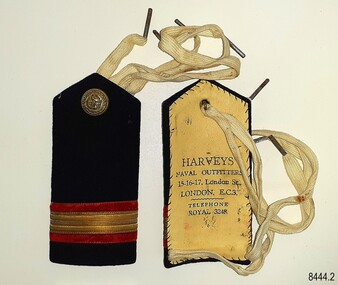 Flagstaff Hill Maritime Museum and Village
Badge - Epaulette, Harvey's Naval Outfitters, 1920s
... UK in 1927, sailing on the ship SS Banffshire (built in 1912, destroyed in 1937). He studied at London University College Hospital and Edinburgh Royal Infirmary and in 1928 he was awarded FRCS (Fellow from the Royal College of Surgeons), Edinburgh, Scotland. He worked his passage back to Australia as a Ship’s Surgeon on the Australian Commonwealth Line T.S.S. Largs Bay, purchased by the White Star Line in 1928. Dr W R Angus was a Surgeon Captain for the Australian Defence Forces, Army...UK in 1927, sailing on the ship SS Banffshire (built in 1912, destroyed in 1937). He studied at London University College Hospital and Edinburgh Royal Infirmary and in 1928 he was awarded FRCS (Fellow from the Royal College of Surgeons), Edinburgh, Scotland. He worked his passage back to Australia as a Ship’s Surgeon on the Australian Commonwealth Line T.S.S. Largs Bay, purchased by the White Star Line in 1928. Dr W R Angus was a Surgeon Captain for the Australian Defence Forces, Army ...The pair of epaulettes once belonged to W.R. Angus, who possibly wore them when he worked his passage to and from the UK in the 1920s. The button on each has an unidentified emblem. They are part of Flagstaff Hill’s comprehensive W.R. Angus Collection, donated by the family of Dr W R Angus (1901-1970), surgeon and oculist. The ties, which look like shoe laces, would secure the epaulettes to the uniform's shoulders. The epaulettes were made by Harvey's Naval Outfitters of 15-16-17 London Street, London, E.C.3, in the East Central area of London. Another of the firm's addresses is Leadenhall Street, London, named the 'centre of commerce'. East India Company and Pacific & Oriental Steam Navigation Company (P&O) once had their headquarters there. The postcode 'EC3' dates back to 1917 when the postcode system was established in the United Kingdom. William Roy Angus (1901-1970) qualified as a doctor in 1923. He decided he further his studies overseas in the UK in 1927, sailing on the ship SS Banffshire (built in 1912, destroyed in 1937). He studied at London University College Hospital and Edinburgh Royal Infirmary and in 1928 he was awarded FRCS (Fellow from the Royal College of Surgeons), Edinburgh, Scotland. He worked his passage back to Australia as a Ship’s Surgeon on the Australian Commonwealth Line T.S.S. Largs Bay, purchased by the White Star Line in 1928. Dr W R Angus was a Surgeon Captain for the Australian Defence Forces, Army Medical Corps, stationed in Ballarat, Victoria, and in Bonegilla, N.S.W. He completed his service just before the end of the war due to suffering from a heart attack. The W.R. Angus Collection: - The W.R. Angus Collection includes historical medical equipment, surgical instruments and material belonging to Dr Edward Ryan and Dr Thomas Francis Ryan, (both of Nhill, Victoria) and Dr Angus’ own belongings. The Collection’s history spans the medical practices of the two Doctors Ryan, from 1885-1926 plus that of Dr Angus, up until 1969. It includes historical medical and surgical equipment and instruments from the doctors Edward and Thomas Ryan of Nhill, Victoria. Dr Angus married Gladys in 1927 at Ballarat, the nearest big city to Nhill where he began as a Medical Assistant. He was also Acting House surgeon at the Nhill hospital where their two daughters were born. During World War II He served as a Military Doctor in the Australian Defence Forces. Dr Angus and his family moved to Warrnambool in 1939, where Dr Angus operated his own medical practice. He later added the part-time Port Medical Officer responsibility and was the last person appointed to that position. Dr Angus and his wife were very involved in the local community, including the new Flagstaff Hill's planning stages and the gardens' layout. Dr Angus passed away in March 1970.This pair of epaulettes is connected to the badges in the W.R. Angus Collection. Dr W R Angus (1901-1970), surgeon and oculist, collected a range of badges and military objects including those he personally used during his time as Surgeon Captain in the Australian Defence Forces in World War II. The W.R. Angus Collection is significant for still being located at the site it is connected with, Doctor Angus being the last Port Medical Officer in Warrnambool. The Collection includes historical medical objects that date back to the late 1800s.Epaulette (pair of two), dark blue with red and gold horizontal stripes, with a gold-coloured button and woven white web ties. A tall rectangular shape with a point at the top. Made from a card base, covered by dark blue fabric and a hand-stitched lining of cream-coloured leather, stamped with the maker's details. The button has an inscripton and image. Made by Harvey's Outfitters in London. The button has images and text. The epaulettes belonged to Dr W R Angus and are now part of the W. R. Angus Collection.“HARVEYS’ / NAVAL OUTFITTERS / 15-16-17, London St / LONDON E.C.3. / TELEPHONE / ROYAL 3248” Button; Inscription and image [indecipherable] Button is embossed with images (anchor, serpent, flag) and text "B. 'G. "flagstaff hill, warrnambool, maritime village, maritime museum, shipwreck coast, great ocean road, flagstaff hill maritime museum and village, dr w r angus, w.r. angus collection, badge, insignia, badge collection, epaulettes, naval epaulettes, naval insignia, shoulder boards, ss banffshire, t.s.s. largs bay, uniform, harvey's naval outfitters, london street london -
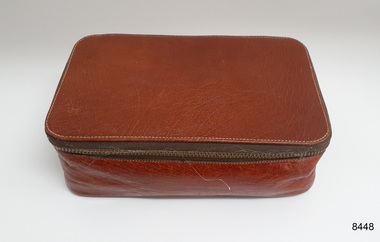 Flagstaff Hill Maritime Museum and Village
Accessory - Traveller's Pouch, Lyall Robertson Pty Ltd, ca 1946
... Army-issued items from WWII. It seems likely that he wore the epaulettes on a uniform when he worked his passage to or from the UK as a young Ship’s Surgeon, with the purpose of furthering his studies overseas in 1927-1928. ...Army-issued items from WWII. It seems likely that he wore the epaulettes on a uniform when he worked his passage to or from the UK as a young Ship’s Surgeon, with the purpose of furthering his studies overseas in 1927-1928. ...The Robex traveller’s pouch may have originally contained men’s grooming set or toiletries such as shaving accessors and soap. The leather strap inside the lid was designed to hold items like a toothbrush, comb or razor. The owner, Dr W.R. Angus, had used the pouch to store his personal memorabilia including epaulettes and various Australian Army-issued items from WWII. It seems likely that he wore the epaulettes on a uniform when he worked his passage to or from the UK as a young Ship’s Surgeon, with the purpose of furthering his studies overseas in 1927-1928. He travelled outward on the SS Banffshire and homeward on the Commonwealth Line’s T.S.S. Largs Bay. The pouch dates from 1946 at the earliest. The Robex leather accessories brand was made by Lyall Robertson Pty. Ltd., Sandringham, Victoria. Robertson established his home business in the 1940s and went on to be a leading firm with over 200 staff. The Robex trademark was registered on July 5th, 1946. The leather pouch is now part of Flagstaff Hill’s comprehensive W.R. Angus Collection, donated by the family of Dr W R Angus (1901-1970), surgeon and oculist. The W.R. Angus Collection: - The W.R. Angus Collection includes historical medical equipment, surgical instruments and material belonging to Dr Edward Ryan and Dr Thomas Francis Ryan, (both of Nhill, Victoria) and Dr Angus’ own belongings. The Collection’s history spans the medical practices of the two Doctors Ryan, from 1885-1926 plus that of Dr Angus, up until 1969. It includes historical medical and surgical equipment and instruments from the doctors Edward and Thomas Ryan of Nhill, Victoria. Dr Angus married Gladys in 1927 at Ballarat, the nearest big city to Nhill where he began as a Medical Assistant. He was also Acting House surgeon at the Nhill hospital where their two daughters were born. During World War II Dr Angus served as a Military Doctor. He was a Surgeon Captain for the Australian Defence Forces, Army Medical Corps, stationed in Ballarat, Victoria, and in Bonegilla, N.S.W. He completed his service just before the end of the war due to suffering from a heart attack. Dr Angus and his family moved to Warrnambool in 1939, where Dr Angus operated his own medical practice. He later added the part-time Port Medical Officer responsibility and was the last person appointed to that position. Both Dr Angus and his wife were very involved in the local community, including the planning stages of the new Flagstaff Hill and the layout of the gardens there. Dr Angus passed away in March 1970.This traveller's pouch is significant for its connection with the firm Lyall Robertson Pty Ltd of Victoria, a home-based enterprise of the 1940s with quickly grew to employ much staff to make its good quality goods. It is also connected with the local doctor, W.R. Angus and Warrnambool's Medical History. Dr W R Angus (1901-1970), surgeon and oculist, collected a range of military objects including those he personally used during his time as Surgeon Captain in the Australian Defence Forces in World War II. The W.R. Angus Collection is significant for still being located at the site it is connected with, Doctor Angus being the last Port Medical Officer in Warrnambool. The Collection includes historical medical objects that date back to the late 1800s.Traveller's pouch; tan water buffalo calf leather with brass zipper closure, cream-coloured fabric lining, and leather straps inside the lid for securing items. A silver embossed logo is on the lining of the base of the pouch. The Robex brand was made by Lyall Robertson Pty. Ltd in Victoria. The pouch belonged to Dr W R Angus and is now part of the W. R. Angus Collection.Stamped inside the base “ROBEX / WATER BUFFALO” and a silver logo [shield] flagstaff hill, warrnambool, maritime village, maritime museum, shipwreck coast, great ocean road, flagstaff hill maritime museum and village, dr w r angus, w.r. angus collection, australian army, world war 2, second world war, ww 2, army issue, wwii, traveller's pouch, personal grooming accessory, robex, buffalo calf leather, lyall robertson pty. ltd, ss banffshire, t.s.s. largs bay, leather goods, travel goods -
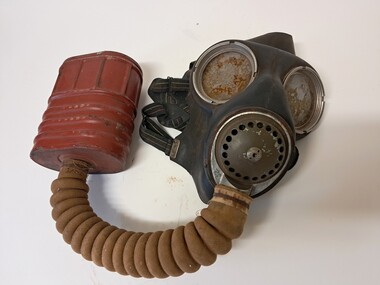 Glenelg Shire Council Cultural Collection
Functional object - World War II Gas Mask, 1939-1945
... UK could not afford to give out masks during the war. The majority of the masks were manufactured at the Commonwealth Ordnance Facility Maribyrnong in Melbourne. This mask is representative of Australian manufacture during WWII. It is part of the story of Australian military history. War WWII World War two Second World War Adult Gas Mask Military Portland Glenelg Shire Army ...This gas mask was the standard issue gas mask for the Australian Army prior to and going into the Second World War. The mask featured two eye pieces made out of splinter-less glass which were removable to allow for decontamination of the mask without damaging the splinter-less glass eye pieces. The filter box was manufactured by Willow in Melbourne. The mask features a tissot system, which uses air provided by the intake assembly to defog the eyepieces. Air breathed out passes directly through the outlet valve which was designed work as voice membrane in order to enhance the speech of the user Unknown to most is that the GSR series of masks were manufactured in Australia rather than being imported from the United Kingdom. This was mainly due to the long travel distance between the UK and Australia, as well as the fact that the UK could not afford to give out masks during the war. The majority of the masks were manufactured at the Commonwealth Ordnance Facility Maribyrnong in Melbourne.This mask is representative of Australian manufacture during WWII. It is part of the story of Australian military history.Gas mas with dark coloured rubber mask. The back of the mask has elastic harness with 6 straps. They can be tightened or loosened to fit. The front of the mask has two large glass eye pieces with metal rims and a metal outlet valve. A concertina fabric and rubber tube leads from the outlet valve to a reddish brown box which is the filter. One side of the mask has the word 'Normal' stamped into it.Mask: NORMAL (on left side) / DPR 12/40 (right side) Back of harness: No. 4 III / 5-11-49 Filter canister: No 4A / 1940 / E VIwar, wwii, world war two, second world war, adult gas mask, military, portland, glenelg shire, army -
 Mission to Seafarers Victoria
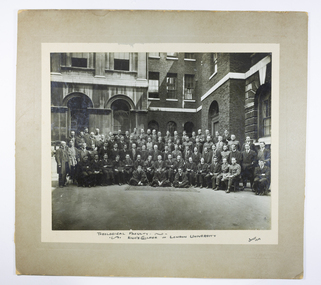
Photograph - Mounted photograph, Black and white, Theological Faculty - King's College - London University - June 1919, 1919
... Army Medical Corps. Established in 1829 under the patronage of George IV, King's College is one of the oldest and most distinguished centres for the study of classical languages, literature, thought, religion, art, archaeology and history in the UK. kings' college london university student theology padre oliver padre frank leslie oliver In black ink along the lower edge of mount: Theological Faculty - King's College - London University - June 1919 Black and white mounted group photograph. ...Frank Leslie Oliver is photographed here in King's College, London in June 1919. Second row standing 8th from the left. According to his autobiography Frank Oliver, senior Chaplain from 1930-1960 at MtS, studied primarily at Trinity College, University of Melbourne after war service in the Army Medical Corps. Established in 1829 under the patronage of George IV, King's College is one of the oldest and most distinguished centres for the study of classical languages, literature, thought, religion, art, archaeology and history in the UK.Black and white mounted group photograph. Many in the group are wearing military uniform In black ink along the lower edge of mount: Theological Faculty - King's College - London University - June 1919kings' college, london university, student, theology, padre oliver, padre frank leslie oliver -
 Bendigo Military Museum
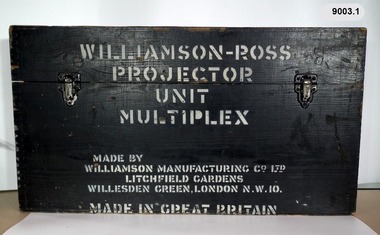
Instrument - Multiplex Unit Projector, Williamson Manufacturing Co, Circa 1950
... Multiplex mechanical stereoplotting equipment was used at the Army Survey Regiment, Fortuna Bendigo. c1950s. Multiplex equipment was imported from the UK in 1951 and introduced in the following year, to accelerate map production output covering CMF training areas at 1:25,000 map scale. ...Multiplex mechanical stereoplotting equipment was used at the Army Survey Regiment, Fortuna Bendigo. c1950s. Multiplex equipment was imported from the UK in 1951 and introduced in the following year, to accelerate map production output covering CMF training areas at 1:25,000 map scale. ...Multiplex mechanical stereoplotting equipment was used at the Army Survey Regiment, Fortuna Bendigo. c1950s. Multiplex equipment was imported from the UK in 1951 and introduced in the following year, to accelerate map production output covering CMF training areas at 1:25,000 map scale. Multiplex plotting was a productive advancement replacing the ‘Arundel’ method of graphical plotting planimetric detail that was expensive and slow, especially in timbered mountainous terrain. Air photos were made into small diapositives and mounted on racks in the exact position relative to when the aerial photos were taken. The technicians operated the Multiplex in a darkened room, with one photo projected with a green filter and the other through a red filter to form a 3D view of the overlapping photos. The 3D model projected onto a platen, which was a small platform that was raised up and down. The technician viewed the 3D image with special glasses fitted with red and green lenses. In the centre of the platen was a small pinhole that served as a floating mark, with a vertical pencil located exactly below the pinhole. This tracing table was moved to follow the topographic feature or contour line and draw it on the paper underneath. The technician raising or lowering the platform’s floating mark to match the height of the 3D terrain. It also replaced the slotted template method of mechanical adjustment of strips of aerial photography, however was restricted to each strip rather than between strips in the block. Although the Multiplex was phased out of production in 1968, it was used in the training of photogrammetry and aero-triangulation at the School of Military Survey located at Bonegilla, Victoria until the early 1990s. The history of the Multiplex is covered in more detail with additional historic photographs, in pages 50 to 51 of Valerie Lovejoy’s book 'Mapmakers of Fortuna – A history of the Army Survey Regiment’ ISBN: 0-646-42120-4. This instrument is only one of the projectors of a set and is unfortunately missing its platen, coloured filters and coloured glasses. A cardboard set of glasses is included as an example. Another Multiplex instrument is in the collection as Item 9039.4A black wooden box containing a Multiplex Unit Projector (incomplete). The Multiplex has a Lamp Head, Barrel Housing, Body of the Projector and a Platen which is missing. .1 Protective wooden box .2 Multiplex Instrument .3 Multiplex Instrument Parts Diagram .4 A bank of Multiplex projectors in operation WILLIAMSON MANUFACTURING CO, PHOTOGRAPHIC ENGINEERS, SERIAL NUMBER 3437, TYPE MPC, LITCHFIELD GARDENS, LONDON AND READING.royal australian survey corps, rasvy, fortuna, army survey regiment, army svy regt -
 Bendigo Military Museum
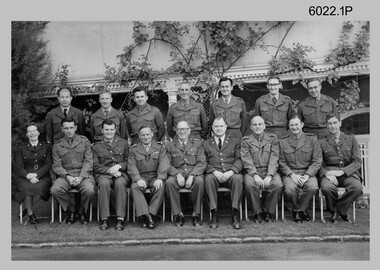
Photograph - Commissioned Officers of the Army Survey Regiment, c1962-1965, 1972, c1973-1974
... Officer appointments to the Army Svy Regt were typically the CO, 2IC, Adjutant; and an OC, 2IC and Troop Officers assigned to the Headquarters, Topographic/Air Survey, Cartographic and Lithographic Squadrons. RAN and RAAF liaison officers were usually appointed to the Regiment; and occasionally exchange officers from other Corps, the USA or UK....Army Survey Regiment’s Collection. The photographs were scanned at 300 dpi. .1) - Photo, black & white, 1963. Back row – L to R: unidentified Philippines officer, LT Merv Marks, LT Jorge Gruszka, LT Bill Greer, CAPT Peter Constantine AM, LT Freddy High, MAJ Brian Dalton. Front row – L to R: CAPT Carol Castor, MAJ NRJ Hillier, MAJ Bill Howarth, CO LTCOL Frank Buckland OBE MID, DSVY-A COL Don Macdonald MID, GEN Miller – US Director Mapping, MAJ John Nolan, MAJ Eddy Anderson MBE, unknown UK Exchange Officer. .2) - Photo, black & white, c1971. ...Officer appointments to the Army Svy Regt were typically the CO, 2IC, Adjutant; and an OC, 2IC and Troop Officers assigned to the Headquarters, Topographic/Air Survey, Cartographic and Lithographic Squadrons. RAN and RAAF liaison officers were usually appointed to the Regiment; and occasionally exchange officers from other Corps, the USA or UK. ...These photographs of Royal Australian Survey Corps commissioned officers was taken at the Army Survey Regiment circa 1962-1965, 1972 and circa 1973-1974. Officer appointments to the Army Svy Regt were typically the CO, 2IC, Adjutant; and an OC, 2IC and Troop Officers assigned to the Headquarters, Topographic/Air Survey, Cartographic and Lithographic Squadrons. RAN and RAAF liaison officers were usually appointed to the Regiment; and occasionally exchange officers from other Corps, the USA or UK.This is a set of photographs of RASvy Officers at the Army Survey Regiment, Bendigo. The photographs were printed on photographic paper and are part of the Army Survey Regiment’s Collection. The photographs were scanned at 300 dpi. .1) - Photo, black & white, 1963. Back row – L to R: unidentified Philippines officer, LT Merv Marks, LT Jorge Gruszka, LT Bill Greer, CAPT Peter Constantine AM, LT Freddy High, MAJ Brian Dalton. Front row – L to R: CAPT Carol Castor, MAJ NRJ Hillier, MAJ Bill Howarth, CO LTCOL Frank Buckland OBE MID, DSVY-A COL Don Macdonald MID, GEN Miller – US Director Mapping, MAJ John Nolan, MAJ Eddy Anderson MBE, unknown UK Exchange Officer. .2) - Photo, black & white, c1971. Back row – L to R: LT Jack Gore (Litho Sqn), LT Tom Royle (Adjt), FLT John Sinclair (Canada, Topo Sqn), 2LT Fred Brown (Carto Sqn), Lt John Winzar (Topo Sqn), 2LT Gary Kenney (Litho Sqn), LT Reg Smith (Litho Sqn), 2LT Terry Edwards (Litho Sqn), LT Bob Roche (Carto Sqn). Front row L to R: CAPT Jack McNeale (RAInf, QM), MAJ John Williams (RE, HQ Sqn), MAJ Keith Todd (OC Carto Sqn), MAJ Don Ridge (Regt 2IC), LTCOL Bill Howarth (CO), MAJ Brian Dalton (OC HQ Sqn), MAJ John Bullen (OC Topo Sqn), Lt Claire Chittleborough (OC WRAAC & Asst Adjt), CAPT Roger Bailey (RE, Topo Sqn). .3) - Photo, black & white c1972. Back row – L to R: 1st 2LT Terry Edwards, 7th LT Gary Kenney, 9th LT Bob Roche. Front row – L to R: 1st CAPT Jack Gore, 3rd CAPT Roger Bailey RE, 4th MAJ Keith Todd, 5th MAJ Don Ridge, 6th LTCOL Bill Howarth, 7th MAJ Brian Dalton, 8th MAJ John Bullen, 9th FLT John Sinclair, 10th CAPT Jack McNeale, , 11th LT Claire Chittleborough. .4) - Photo, black & white, c1972. Personnel named as per .3) .5) - Photo, black & white, c1973-1974. Back row – L to R: 1st LT Graham Baker, 4th MAJ John Sinclair , 7th CAPT Reg Smith, 8th LT Terry Edwards. Front row – L to R: 3rd MAJ Peter Constantine, 4th LTCOL Don Ridge 5th MAJ John Cattell. .6) - Photo, colour print of .5), c1973-1974 Personnel named as per .5).1 no annotation, .2 Personnel (surnames, no rank) annotated on back, .3 to .6 no annotationroyal australian survey corps, rasvy, army survey regiment, army svy regt, fortuna, asr -
 Bendigo Military Museum
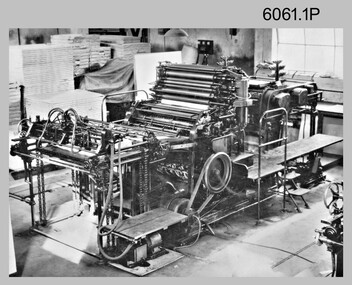
Photograph - George Mann Printing Presses operating at the Army Survey Regiment, c1960s
... Army Survey Regiment, Fortuna, Bendigo. The photos are not annotated except for .4P. The George Mann Fast Five Printing Press was a two-colour demy quad offset press. It was a robust and well-made lithographic printing machine built by the George Mann company in Leeds, UK. ...Army Survey Regiment, Fortuna, Bendigo. The photos are not annotated except for .4P. The George Mann Fast Five Printing Press was a two-colour demy quad offset press. It was a robust and well-made lithographic printing machine built by the George Mann company in Leeds, UK. ...These five photographs of the George Mann printing presses were probably taken circa 1960s in Lithographic Squadron at the Army Survey Regiment, Fortuna, Bendigo. The photos are not annotated except for .4P. The George Mann Fast Five Printing Press was a two-colour demy quad offset press. It was a robust and well-made lithographic printing machine built by the George Mann company in Leeds, UK. The two presses were in service at the Army Svy Regt in the 1960s and 1970s and replaced with the Komori and Planeta offset printing presses in 1975 and 1976 respectively.This is a set of photographs of the George Mann Printing Presses operational at the Army Survey Regiment, Bendigo from c1960s to 1970s. The photographs were printed on photographic paper and are part of the Army Survey Regiment’s Collection. The photographs were scanned at 300 dpi. .1) - Photo, black & white, c1960s, printing press, Lithographic Squadron .2) - Photo, black & white, c1960s, unidentified, printing press, Lithographic Squadron .3) - Photo, black & white, c1960s, printing press, Lithographic Squadron .4) - Photo, black & white, c1960s, SPR Howard Dingle, Lithographic Squadron .5) - Photo, black & white, c1960s, printing presses, Lithographic Squadron.1 to .3 – no annotation .4 - personnel names (with rank) annotated on back. .5 – no annotation royal australian survey corps, rasvy, army survey regiment, army svy regt, fortuna, asr, printing, litho -
 Bendigo Military Museum
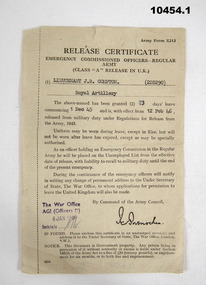
Administrative record - RELEASE CERTIFICATE & LETTER, WW2, War Office, c. Dec 1945
... Compton", No 228290 of UK Royal Artillery granting him 73 days leave prior to release from the Army on 12th Feb 1946. ...Compton", No 228290 of UK Royal Artillery granting him 73 days leave prior to release from the Army on 12th Feb 1946. ...Certificate and letter for "Lieutenant J.B. Compton", No 228290 of UK Royal Artillery granting him 73 days leave prior to release from the Army on 12th Feb 1946. Part of the collection of William (Bill) Thomason. Refer to Cat. 4136P1. White A5 size paper, blank on one side, official document giving Release of Service of Commissioned Officer, giving detail and conditions of release. Dated, initialled and signed. Granted Officer 733 days of leave prior to release. 2. Letter to Lieutenant Compton expressing thanks for his service and giving him rights and conditions on his release. Contained on a single white sheet of hard paper with War Office Emblem in right hand corner on top.1. “Stamp of the War Office AGI (Officers D) and dated 4 Jan 1946 and signed” 2. Noted in pencil on back "No 1008 (38) Dated 4th March 1946”lieutenant j.b. compton, collection of william (bill) thomason, admin record, ww2 -
 Bendigo Military Museum
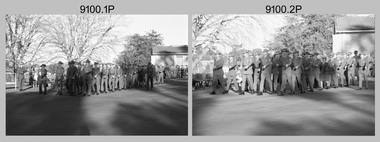
Photograph - Army Survey Regiment – Corps Day Parade, Fortuna Villa, Bendigo, 1989
... Lithographic Squadron front rank L to R: unidentified, CPL Paul Baker, CPL Terry King, SPR Michelle Evans, CPL Penny Knott, SPR Michelle Withers, LCPL Shona Hastie, SSGT Keith Fenton RE – UK Exchange, Bendigo Lord Mayor Councillor Robin Adams, Corps CMDT COL John Hillier, CO LTCOL John Winzar, LT Craig Hersant, CPL Jim Ash, CPL Roy Hicks. .25) - Photo, black & white, June 1989. Lithographic Squadron front rank L to R: unidentified, CPL Paul Baker, CPL Terry King, SPR Michelle Evans, Bendigo Lord Mayor Councillor Robin Adams, Corps CMDT COL John Hillier, CO LTCOL John Winzar, LT Craig Hersant. Army ...This set of 25 photographs were taken at the Corps Day Parade held at the Army Survey Regiment, Bendigo on the 28th of June 1989. The Corps Day Parade was held to commemorate the 74th anniversary of the formation of the Royal Australian Survey Corps. The Parade Commander was CO LTCOL John Winzar and the Reviewing Officer was the Colonel Commandant (honorary appointment) of the Survey Corps - COL John Hillier. The guest of honour was the unidentified Mayor of Bendigo. Refer to Item 9163.13P for more photos taken at the parade.This is a set of 25 photographs of the Corps Day Parade held at the Army Survey Regiment, Fortuna, Bendigo on the 28th of June 1989. The black and white photographs are on 35mm negative film and scanned at 2400 dpi. They are part of the Army Survey Regiment’s Collection. .1) - Photo, black & white, June 1989. Cartographic Squadron marching onto parade ground, commanded by WO1 Stevo Hinic. WO1 Colin Cuskelly at left. RSM WO1 Neville Stone at far left. .2) & .3) - Photo, black & white, June 1989. Headquarters Squadron marching onto parade ground. WO2 Stuart Thaxter at far left. .4) - Photo, black & white, June 1989. Lithographic Squadron marching onto parade ground. Commanded by WO2 Rob Bogumil. Left file L to R: CPL Jim Ash, CPL Roy Hicks, CPL Rob Jones, CPL Stuart Ridge, CPL Chad Hardwick, CPL Peter Breukel, SGT Bob Garritty, SGT Steve Burke. .5) - Photo, black & white, June 1989. Lithographic Squadron marching onto parade ground. Commanded by WO2 Rob Bogumil. Centre file L to R: CPL Penny Knott, SPR Michelle Withers, LCPL Shona Hastie. Left file L to R: CPL Stuart Ridge, CPL Chad Hardwick, CPL Peter Breukel, SGT Bob Garritty, SGT Steve Burke. .6) - Photo, black & white, June 1989. Air Survey Squadron marching onto parade ground, commanded by WO1 Russell ‘Rusty’ Williams. RSM WO1 Neville Stone at far left. .7) - Photo, black & white, June 1989. RSM WO1 Neville Stone issues commands. .8) - Photo, black & white, June 1989. RSM WO1 Neville Stone hands over to 2IC MAJ Bob McHenry at left. .9) - Photo, black & white, June 1989. Officers saluting before taking posts. .10) - Photo, black & white, June 1989. Officers marching to their position to take post. 2IC MAJ Bob McHenry at far right. .11) - Photo, black & white, June 1989. The Reviewing Officer - CMDT COL John Hillier is formally greeted by an unidentified Sapper. Unidentified officer at far right. .12) & .13) - Photo, black & white, June 1989. L to R: Parade Commander - CO LTCOL John Winzar, Guest of Honour - Bendigo Lord Mayor Councillor Robin Adams, Reviewing Officer - Corps CMDT COL John Hillier. .14) - Photo, black & white, June 1989. L to R: unidentified, LT Marty Lyons, SPR Craig Kellet, unidentified, SPR Tony Jackson, unidentified, Maj Neil Taylor, CAPT John Greenwell. .15) - Photo, black & white, June 1989. L to R: unidentified officer, unidentified, LT Steve Hledik, unidentified, SGT Doug Carswell, SGT Brian Colling, SGT Paul ‘Hutch’ Hunter, SGT Graham Johnston, SSGT Rick van der Bom. .16) - Photo, black & white, June 1989. L to R: CO LTCOL John Winzar, Corps CMDT COL John Hillier, Bendigo Lord Mayor Councillor Robin Adams, unidentified (x3), SPR Jeanette Drury-Lane, unidentified (x2), SPR Peter Murphy, SPR Andy Love, WO1 Russell ‘Rusty’ Williams. .17) - Photo, black & white, June 1989. Headquarters Squadron L to R: WO2 Stuart Thaxter, WO2 Mick Flynn, unidentified (x2), RSM WO1 Neville Stone, SGT Chris Edwards, Bendigo Lord Mayor Councillor Robin Adams, CO LTCOL John Winzar, Corps CMDT COL John Hillier. Front rank L to R: unidentified, CPL Mick McConnell, SGT Trevor Poll, CPL Eric Nicholson, remainder unidentified. .18) - Photo, black & white, June 1989. Headquarters Squadron L to R: WO2 Stuart Thaxter, WO2 Mick Flynn, unidentified (x2), RSM WO1 Neville Stone, CO LTCOL John Winzar, SGT Kevin Boehm, Corps CMDT COL John Hillier, LT Craig Hersant. Front rank L to R: unidentified, CPL Mick McConnell, SGT Trevor Poll, CPL Eric Nicholson, remainder unidentified. .19) - Photo, black & white, June 1989. Lithographic Squadron front rank L to R: CPL Jim Ash, CPL Roy Hicks, CPL Rob Jones, CPL Stuart Ridge, CPL Chad Hardwick, CPL Peter Breukel, SGT Bob Garritty, unidentified officer, MAJ Terry Edwards. .20) - Photo, black & white, June 1989. Lithographic Squadron front rank L to R: CPL Jim Ash, CPL Roy Hicks, CPL Rob Jones, CPL Stuart Ridge, CPL Chad Hardwick, CPL Peter Breukel, SGT Bob Garritty, unidentified officer, Bendigo Lord Mayor Councillor Robin Adams, CO LTCOL John Winzar, LT Craig Hersant, WO2 Stuart Thaxter, WO2 Mick Flynn. .21) - Photo, black & white, June 1989. Lithographic Squadron front rank L to R: CPL Jim Ash, CPL Roy Hicks, CPL Rob Jones, Bendigo Lord Mayor Councillor Robin Adams, CO LTCOL John Winzar, CPL Chad Hardwick, CPL Peter Breukel, SGT Bob Garritty, SGT Steve Burke, unidentified officer, Corps CMDT COL John Hillier, LT Craig Hersant, MAJ Terry Edwards. .22) - Photo, black & white, June 1989. Lithographic Squadron front rank L to R: CPL Paul Baker, CPL Terry King, SPR Michelle Evans, CPL Penny Knott, SPR Michelle Withers, LCPL Shona Hastie, SSGT Keith Fenton RE – UK Exchange, Bendigo Lord Mayor Councillor Robin Adams, CO LTCOL John Winzar, LT Craig Hersant, CPL Jim Ash. .23) - Photo, black & white, June 1989. Lithographic Squadron front rank L to R: SGT Frank Lenane, CPL Terry King, SPR Michelle Evans, CPL Penny Knott, SPR Michelle Withers, LCPL Shona Hastie, SSGT Keith Fenton RE – UK Exchange, Bendigo Lord Mayor Councillor Robin Adams, Corps CMDT COL John Hillier, CO LTCOL John Winzar, LT Craig Hersant, CPL Jim Ash, CPL Roy Hicks. .24) - Photo, black & white, June 1989. Lithographic Squadron front rank L to R: unidentified, CPL Paul Baker, CPL Terry King, SPR Michelle Evans, CPL Penny Knott, SPR Michelle Withers, LCPL Shona Hastie, SSGT Keith Fenton RE – UK Exchange, Bendigo Lord Mayor Councillor Robin Adams, Corps CMDT COL John Hillier, CO LTCOL John Winzar, LT Craig Hersant, CPL Jim Ash, CPL Roy Hicks. .25) - Photo, black & white, June 1989. Lithographic Squadron front rank L to R: unidentified, CPL Paul Baker, CPL Terry King, SPR Michelle Evans, Bendigo Lord Mayor Councillor Robin Adams, Corps CMDT COL John Hillier, CO LTCOL John Winzar, LT Craig Hersant.There are no personnel identified. ‘Corps Day 28 Jun 1989’ annotated on negative sleevesroyal australian survey corps, rasvy, army survey regiment, army svy regt, fortuna -
 Bendigo Military Museum
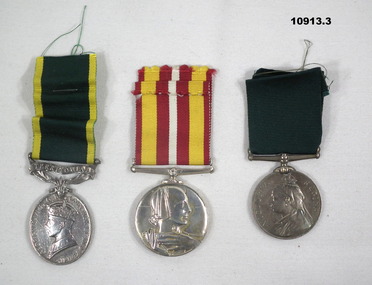
Award - MEDALS, BRITISH, Unnown
... Territorial Forces Efficiency Medal awarded to WO, NCO's and enlisted personnel in Citizens Military Force of Australia and Territorial Armies of NZ & UK for 12 Years Service. 2. Awarded to members who complete 15 years service in British Red Cross Society on St Andrews Ambulance Corps to be worn only on ceremonial occasions. 3. ...Territorial Forces Efficiency Medal awarded to WO, NCO's and enlisted personnel in Citizens Military Force of Australia and Territorial Armies of NZ & UK for 12 Years Service. 2. Awarded to members who complete 15 years service in British Red Cross Society on St Andrews Ambulance Corps to be worn only on ceremonial occasions. 3. ...1. Territorial Forces Efficiency Medal awarded to WO, NCO's and enlisted personnel in Citizens Military Force of Australia and Territorial Armies of NZ & UK for 12 Years Service. 2. Awarded to members who complete 15 years service in British Red Cross Society on St Andrews Ambulance Corps to be worn only on ceremonial occasions. 3. Volunteer Long Service and Good Conduct usually for services in the rank. Instituted in 1894 for 20 years Service and superceded in 1908 by Territorial Forces Efficiency Medal.Three medals with ribbons - unmounted. 1.Territorial Forces Efficiency Medal - oval shaped. 2. British Voluntary Medical Services Medal. 3. Volunteer Reserve Long Service Medal - Queen Victoria.1. Named to "879759 Gunner R. Roll, Royal Artillery" 2. Named to "Mrs Roma Harris". 3. Un-named.ron mills collection, medals, british -
 Bendigo Military Museum
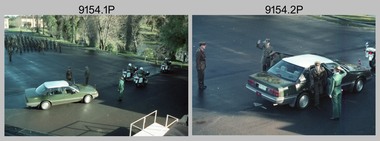
Photograph - Army Survey Regiment – Corps Day Parade Set 2, Fortuna Villa, Bendigo, 1991
... L to R: D-SVY - COL Simon Lemon, unidentified UK Liaison Officer, BRIG P. Davies AM ADC, unidentified Aide-de-camp. Army Survey Regiment – Corps Day Parade Set 2, Fortuna Villa, Bendigo Photograph Army Survey Regiment – Corps Day Parade Set 2, Fortuna Villa, Bendigo Army Survey Regiment ...This set of 37 photographs was taken at the Corps Day Parade held at the Army Survey Regiment, Bendigo on the 26th of June 1991.The Corps Day Parade was held to commemorate the 76th anniversary of the formation of the Royal Australian Survey Corps. The Reviewing officer was the Commander of the 3rd Military District BRIG P. Davies AM ADC and the Parade Host was D-SVY COL Simon Lemon. Refer to items 9152.31P for more photographs taken during the parade; and 9155.27P for photographs taken afterwards during the tour of the unit and the family BBQ.This is a set of 37 photographs of the Corps Day Parade held at the Army Survey Regiment, Fortuna, Bendigo on the 26th of June 1991. The colour photographs are on 35mm negative film and scanned at 2400 dpi. They are part of the Army Survey Regiment’s Collection. .1) - Photo, colour, 1991. Arrival of COMD 3MD. L to R: D-SVY - COL Simon Lemon, unidentified personnel, unidentified Aide-de-camp. .2) to .4) - Photo, colour, 1991. Arrival of COMD 3MD. L to R: D-SVY - COL Simon Lemon, COMD 3MD - BRIG P. Davies AM ADC, unidentified Aide-de-camp, unidentified personnel. .5) - Photo, colour, 1991. Cartographic Squadron stands at attention, under command of OC MAJ Graeme Wastell. .6) - Photo, colour, 1991. Headquarters Squadron stands at attention, under command of OC MAJ Peter Jensen. 2IC MAJ Ray Redman at left. .7) - Photo, colour, 1991. Air Survey Squadron stands at attention. L to R: LT Simon Buckpitt, WO1 Brett ‘Dutchy’ Van Leeuwen, unidentified (x2), CPL Perry Burt, SGT Sandy Craig, SGT Graeme Reany, SPR Stuart Bowd, LT Michelle Breen in foreground, unidentified, SGT Wolfgang Thun, SSGT Bruce Hammond, unidentified, SGT Paul Hopes, WO1 Russell ‘Rusty’ Williams. .8) - Photo, colour, 1991. Air Survey Squadron at attention under command of OC MAJ Peter Clark - at far left during the inspection. L to R: LT Simon Buckpitt, CO LTCOL Rene van den Tol, unidentified Aide-de-camp, LT Michelle Breen in foreground. At her right L to R: COMD 3MD - BRIG P. Davies AM ADC, SGT Graeme Reany, SPR Stuart Bowd, unidentified, SGT Wolfgang Thun, SSGT Bruce Hammond, unidentified, SGT Paul Hopes, WO1 Russell ‘Rusty’ Williams. .9) - Photo, colour, 1991. Air Survey Squadron inspection. L to R: D-SVY - COL Simon Lemon, COMD 3MD - BRIG P. Davies AM ADC, SPR Steve Linane, SPR Derek Percival. .10) & .11) - Photo, colour, 1991. Air Survey Squadron inspection. SSGT Graham Johnston at far left. L to R: CO LTCOL Rene van den Tol, unidentified Aide-de-camp, D-SVY - COL Simon Lemon, COMD 3MD - BRIG P. Davies AM ADC, SPR John ‘Docc’ Commons, unidentified (x4), SPR Jo (Innes) Thun, SGT Peter Tuddenham, SSGT Bob Garritty, SGT Martin Evans. .12) - Photo, colour, 1991. Air Survey Squadron inspection. L to R: CO LTCOL Rene van den Tol, unidentified Aide-de-camp, D-SVY - COL Simon Lemon, COMD 3MD - BRIG P. Davies AM ADC, SPR John ‘Docc’ Commons, unidentified (x4), SPR Jo (Innes) Thun, SGT Peter Tuddenham, SSGT Bob Garritty, SGT Martin Evans. Unidentified WO2 in right background. .13) & .14) - Photo, colour, 1991. SPR Peter Smyth stands on the corner of the parade ground behind an MRA-7 Tellurometer mounted on a tripod. .15) & .16) - Photo, colour, 1991. SPR Damian Nolan stands on the corner of the parade ground behind a Plane Table Board with an alidade mounted 3MD Band stands at attention during the inspection. L to R: unidentified Aide-de-camp, unidentified 3MD Band Master, D-SVY - COL Simon Lemon, COMD 3MD - BRIG P. Davies AM ADC, unidentified members of 3MD Band.on a tripod. .17) - Photo, colour, 1991. The unidentified 3MD Band Master salutes COMD 3MD - BRIG P. Davies AM ADC before the 3MD Band inspection. .18) - Photo, colour, 1991. 3MD Band stands at attention during the inspection. L to R: unidentified Aide-de-camp, unidentified 3MD Band Master, D-SVY - COL Simon Lemon, COMD 3MD - BRIG P. Davies AM ADC, unidentified members of 3MD Band. .19) - Photo, colour, 1991. Army Survey Regiment at ‘Shoulder Arms’ position in readiness for the Present Arms’ salute. CO LTCOL Rene van den Tol at front. .20) - Photo, colour, 1991. Cartographic and Air Survey Squadrons at ‘Shoulder Arms’ position in readiness for the Present Arms’ salute. CO LTCOL Rene van den Tol at front. .21) - Photo, colour, 1991. Headquarters Squadron at ‘Shoulder Arms’ position in readiness for the Present Arms’ salute. L to R: 2IC MAJ Ray Redman, MAJ Bob Williams, OC MAJ Peter Jensen. CAPT Colin Cuskelly. .22) & .23) - Photo, colour, 1991. Army Survey Regiment under CO LTCOL Rene van den Tol’s command salutes the COMD 3MD with ‘Present Arms’. .24) - Photo, colour, 1991. L to R: COMD 3MD - BRIG P. Davies AM ADC, D-SVY - COL Simon Lemon, unidentified Aide-de-camp. .25) - Photo, colour, 1991. The squadrons remove their hats in readiness for ‘Three cheers for Her Majesty the Queen’. .26) & .27) - Photo, colour, 1991. The squadrons cheer in unison to the command ‘Three cheers for Her Majesty the Queen’. .28) - Photo, colour, 1991. The unidentified padre addresses the Parade. .29) - Photo, colour, 1991. COMD 3MD - BRIG P. Davies AM ADC, addresses the Parade. .30) - Photo, colour, 1991. D-SVY - COL Simon Lemon addresses the Parade. .31) & .32) - Photo, colour, 1991. COMD 3MD - BRIG P. Davies AM ADC presents the Defence Force Service Medal with clasp to WO1 Brett ‘Dutchy’ Van Leeuwen for 20 years of efficient remunerated service. .33) - Photo, colour, 1991. The 3MD Band marches towards the front steps of Fortuna Villa. .34) - Photo, colour, 1991. The 3MD Band salutes as it marches past the official guests on the front steps of Fortuna Villa. .35) - Photo, colour, 1991. Lithographic Squadron led by OC MAJ Bob Coote marches towards the front steps of Fortuna Villa. .36) - Photo, colour, 1991. Lithographic Squadron led by OC MAJ Bob Coote salutes as it marches past the official guests on the front steps of Fortuna Villa. .37) - Photo, colour, 1991. COMD 3MD - BRIG P. Davies AM ADC salutes the passing troops. L to R: D-SVY - COL Simon Lemon, unidentified UK Liaison Officer, BRIG P. Davies AM ADC, unidentified Aide-de-camp.There are no personnel identified. ‘Corps Day 26 Jun 1991’ annotated on negative sleeves.royal australian survey corps, rasvy, army survey regiment, army svy regt, fortuna -
 Bendigo Military Museum
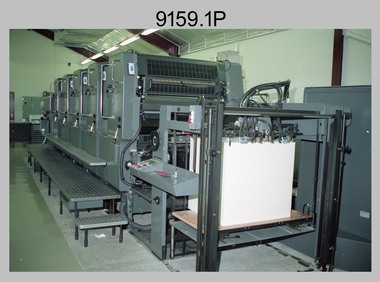
Photograph - Heidelberg Speedmaster 102 Printing Press, Lithographic Squadron – Army Survey Regiment, Fortuna, Bendigo, 1991
... UK Exchange. Front row L to R: unidentified servicing contractor, CPL Lance Strudwick, SGT Dale Hudson. .9) - Photo, colour, 1991. Lithographic Squadron storeroom. .10) - Photo, colour, 1991. Lithographic Squadron’s LCPL Nikki Midgley. Heidelberg Speedmaster 102 Printing Press, Lithographic Squadron – Army ...This is a set of 10 photographs of the Army Survey Regiment’s Heidelberg Speedmaster 102 printing press in Lithographic Squadron’s ‘Wayzgoose Hall’ purpose-built printing building at Fortuna, Bendigo in 1991. The computer-controlled five colour lithographic offset printing press provided the Royal Australian Survey Corps vastly improved printing capability, as the five colours for a standard topographic map was printed in a single pass.This is a set of 10 photograph of the Heidelberg Speedmaster 102 Printing Press in Lithographic Squadron, Army Survey Regiment at Fortuna, Bendigo, 1991. The photographs are on 35mm colour negative film and were scanned at 2400 dpi. They are part of the Army Survey Regiment’s Collection. .1) - Photo, colour, 1991. Heidelberg Speedmaster 102 printing press. .2) - Photo, colour, 1991. Heidelberg Speedmaster 102 printing press. SGT Gary Kerr. .3) - Photo, colour, 1991. Heidelberg Speedmaster 102 printing press. .4) - Photo, colour, 1991. Heidelberg Speedmaster 102 printing press. Part of the printed stock delivery system. .5) - Photo, colour, 1991. Heidelberg Speedmaster 102 printing press servicing. L to R: CPL Daryl South, unidentified servicing contractor, CPL Lance Strudwick. .6) - Photo, colour, 1991. Heidelberg Speedmaster 102 printing press CPC 1-04 control unit and Map Colour Evaluation Workstation. L to R: WO2 Jeff Willey, SGT Gary Kerr. .7) to .8) - Photo, colour, 1991. Heidelberg Speedmaster 102 printing press. Back row L to R: SGT Gary Kerr, CPL Daryl South, WO2 Keith Fenton RE UK Exchange. Front row L to R: unidentified servicing contractor, CPL Lance Strudwick, SGT Dale Hudson. .9) - Photo, colour, 1991. Lithographic Squadron storeroom. .10) - Photo, colour, 1991. Lithographic Squadron’s LCPL Nikki Midgley.There are no personnel identified.royal australian survey corps, rasvy, army survey regiment, army svy regt, fortuna -
 Bendigo Military Museum
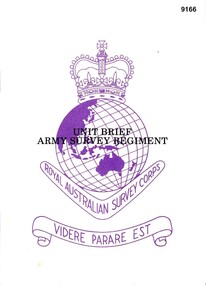
Booklet - Army Survey Regiment - Unit Brief 1985, Army Survey Regiment, 1985
... Army Survey Regiment was located at Fortuna Villa in Bendigo. This booklet was produced in 1985 as a handout to visitors to the Unit to explain the Unit Background and History, The Role and Tasking, The Organisation and Functions and the Biographical Details of Key Personnel. The booklet contains comprehensive biographical details for the Commanding Officer LtCol J G Gruszka, Second in Command Maj RL Roche, OC Headquarters Sqn Maj DR Hockings, OC Air Survey Sqn Maj TJ Edwards, OC Cartographic Sqn Maj RB John, OC Lithographic Sqn Maj PG Raue, Adjutant Capt DJ Maxwell, UK Exchange Officer Maj AJM Vickers RE, US Exchange Officer Maj JJ Charland US Engr, Quartermaster LT DP Galbraith, Regimental Sergeant Major (RSM) WO1 RK Mason, Technical Services Officers Maj KA Weston, Maj AB McLellan and Computer Services Officer MR AJ Spurling....Army Survey Regiment was located at Fortuna Villa in Bendigo. This booklet was produced in 1985 as a handout to visitors to the Unit to explain the Unit Background and History, The Role and Tasking, The Organisation and Functions and the Biographical Details of Key Personnel. The booklet contains comprehensive biographical details for the Commanding Officer LtCol J G Gruszka, Second in Command Maj RL Roche, OC Headquarters Sqn Maj DR Hockings, OC Air Survey Sqn Maj TJ Edwards, OC Cartographic Sqn Maj RB John, OC Lithographic Sqn Maj PG Raue, Adjutant Capt DJ Maxwell, UK Exchange Officer Maj AJM Vickers RE, US Exchange Officer Maj JJ Charland US Engr, Quartermaster LT DP Galbraith, Regimental Sergeant Major (RSM) WO1 RK Mason, Technical Services Officers Maj KA Weston, Maj AB McLellan and Computer Services Officer MR AJ Spurling. ...The Army Survey Regiment was located at Fortuna Villa in Bendigo. This booklet was produced in 1985 as a handout to visitors to the Unit to explain the Unit Background and History, The Role and Tasking, The Organisation and Functions and the Biographical Details of Key Personnel. The booklet contains comprehensive biographical details for the Commanding Officer LtCol J G Gruszka, Second in Command Maj RL Roche, OC Headquarters Sqn Maj DR Hockings, OC Air Survey Sqn Maj TJ Edwards, OC Cartographic Sqn Maj RB John, OC Lithographic Sqn Maj PG Raue, Adjutant Capt DJ Maxwell, UK Exchange Officer Maj AJM Vickers RE, US Exchange Officer Maj JJ Charland US Engr, Quartermaster LT DP Galbraith, Regimental Sergeant Major (RSM) WO1 RK Mason, Technical Services Officers Maj KA Weston, Maj AB McLellan and Computer Services Officer MR AJ Spurling.A soft covered 10 x page A5 Booklet stapled in the centre. The Front cover has a royal Australian survey Corps Badge and scroll printed in Survey Corps colour purple overprinted with "Unit Brief Army Survey Regiment" in black A video has been made of the whole bookletroyal australian survey corps, rasvy, fortuna, army survey regiment, army svy regt, asr -
 Bendigo Military Museum
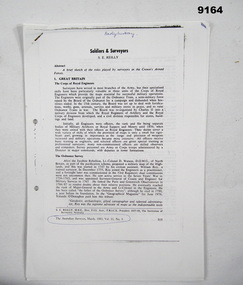
Administrative record - Soldiers and Surveyors by SE Rilley - Roles of Crown's Armed Forces UK and Australia, The Institution of Surveyors, Australia, Mar 1983
... Royal Australian Survey Corps RASvy Fortuna Army Survey Regiment Army Svy Regt ASR Eleven A4 photocopied pages of typed text extracted from the Australian Surveyor March 1983 Vol 31 No. 5 pages 315 - 326 Soldiers and Surveyors by SE Rilley - Roles of Crown's Armed Forces UK and Australia Administrative record Soldiers and Surveyors by SE Rilley - Roles of Crown's Armed Forces UK and Australia The Institution of Surveyors, Australia ...This is a photocopy of an original article written by SE Reilly titled "Soldier Surveyors" that was then republished in the Australian Surveyor March 1983 Vol 31 No. 5 pages 315 - 326. The Author was Capt SE Riley MBE Hon FIS Aust, FRICS, President of the Institution of Surveyors, Australia 1957-1959. Includes Histories of both UK and Australian Mapping Agencies. This document records in detail with Names, the contribution of Officers of the Crown in the early stages of the settlement of Australia. Starting in 1787 their contributions were significant with most occupying positions as State Surveyors General and eventually contributing to the formation of the Australian Intelligence Corps in 1907, a survey section within the Australian Engineers 1910 and eventually the Australian Survey Corps in 1915. This is a very detailed description of the personnel involved and the formation of the Australian Survey Corps, later the title "Royal" was granted in 1948 to become the Royal Australian Survey Corps.Eleven A4 photocopied pages of typed text extracted from the Australian Surveyor March 1983 Vol 31 No. 5 pages 315 - 326royal australian survey corps, rasvy, fortuna, army survey regiment, army svy regt, asr -
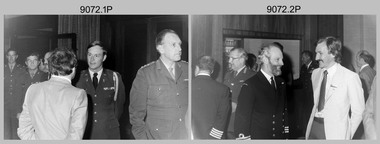 Bendigo Military Museum
Photograph - Five Nation Mapping, Charting & Geodesy Conference - Army Survey Regiment, Fortuna, Bendigo, 1980
... Army Survey Regiment, Fortuna, Bendigo from the 9th to 11th of September 1980. Directors (or their representatives) from Australia, Canada, New Zealand, United Kingdom and the United States of America military mapping agencies attended Five Nations MC&G Conference. Identifiable attendees were MAJ GEN William L. Nicholson III - D-DMA (USA), MAJ GEN Eric W Barton CB - Director of Military Survey (UK...UK Exchange, unidentified (x2). .13) - Photo, black & white, 1980. L to R: unidentified Royal Canadian Air Force officer, unidentified. .14) & .15) - Photo, black & white, 1980. L to R: unidentified, D-SVY COL NRJ Hillier. .16) - Photo, black & white, 1980. L to R: CAPT Paddy Strunks, unidentified USA Army...UK Exchange, unidentified (x2). .13) - Photo, black & white, 1980. L to R: unidentified Royal Canadian Air Force officer, unidentified. .14) & .15) - Photo, black & white, 1980. L to R: unidentified, D-SVY COL NRJ Hillier. .16) - Photo, black & white, 1980. L to R: CAPT Paddy Strunks, unidentified USA Army ...This collection of 19 black and white photographs was taken at the Five Nation Mapping, Charting & Geodesy (MC&G) Conference, held at the Army Survey Regiment, Fortuna, Bendigo from the 9th to 11th of September 1980. Directors (or their representatives) from Australia, Canada, New Zealand, United Kingdom and the United States of America military mapping agencies attended Five Nations MC&G Conference. Identifiable attendees were MAJ GEN William L. Nicholson III - D-DMA (USA), MAJ GEN Eric W Barton CB - Director of Military Survey (UK) and COL NRJ Hillier - D-SVY (AUS). It is apparent from the background of the photos that they were taken in the Army Survey Regiment’s Officers/SGTs Mess Dining Room. Directors (or their representatives) from the five nations signed Page 156 of the Army Survey Regiment’s Visitors Book. See Item 6047. This set of 19 black and white photographs was taken during the Five Nation Mapping, Charting & Geodesy (MC&G) Conference, held at the Army Survey Regiment, Fortuna, Bendigo from the 9th to 11th of September 1980. Photos .1P to .18P are on 35mm negative film and scanned at 96 dpi. Photo .19P is printed on photographic paper and scanned at 200 dpi. They are part of the Army Survey Regiment’s Collection. .1) - Photo, black & white, 1980. In background L to R: MAJ John Blackburn, CAPT Paddy Strunks, MAJ David Bowen USA Exchange, in foreground L to R: unidentified, unidentified USA Army Aide de Camp, D-SVY COL NRJ Hillier. .2) - Photo, black & white, 1980. In background L to R: unidentified, unidentified RAN Hydrographer, MAJ GEN Eric W Barton CB - UK Director of Military Survey, MAJGEN William L. Nicholson III – USA D-DMA, unidentified, in foreground L to R: unidentified NZ Hydrographer, Cr Peter Mansell – City of Bendigo councillor. .3) - Photo, black & white, 1980. In background L to R: unidentified, D-SVY COL NRJ Hillier, unidentified NZ Hydrographer, in foreground L to R: unidentified RAN Hydrographer, unidentified. .4) - Photo, black & white, 1980. L to R: MAJ Don Swiney MBE, MAJGEN William L. Nicholson III - D-DMA. .5) - Photo, black & white, 1980. L to R: CAPT Paddy Strunks, MAJ David Bowen USA Exchange, unidentified (x3). .6) - Photo, black & white, 1980. L to R: unidentified (x2), MAJ GEN Eric W Barton CB - UK Director of Military Survey. .7) - Photo, black & white, 1980. L to R: D-SVY COL NRJ Hillier, unidentified. .8) - Photo, black & white, 1980. L to R: MAJ David Bowen USA Exchange, unidentified NZ Hydrographer. .9) - Photo, black & white, 1980. In background L to R: unidentified, CAPT Peter Searle - UK Exchange, in foreground L to R: unidentified, CO LTCOL Bob Skitch. .10) - Photo, black & white, 1980. L to R: CO LTCOL Bob Skitch, unidentified (x2), MAJ GEN Eric W Barton CB - UK Director of Military Survey. .11) - Photo, black & white, 1980. L to R: Cr Peter Mansell – City of Bendigo councillor, CAPT John Harrison. .12) - Photo, black & white, 1980. L to R: CAPT Peter Searle - UK Exchange, unidentified (x2). .13) - Photo, black & white, 1980. L to R: unidentified Royal Canadian Air Force officer, unidentified. .14) & .15) - Photo, black & white, 1980. L to R: unidentified, D-SVY COL NRJ Hillier. .16) - Photo, black & white, 1980. L to R: CAPT Paddy Strunks, unidentified USA Army Aide de Camp. .17) - Photo, black & white, 1980. L to R: CAPT Bob Cooper, MAJ David Bowen USA Exchange, Cr Peter Mansell – City of Bendigo councillor, CAPT John Harrison. .18) - Photo, black & white, 1980. In background L to R: D-SVY COL NRJ Hillier, CAPT Paddy Strunks, in foreground L to R: MAJ John Blackburn, COL Stirling (NZ). .19) - Photo, black & white, 1980. L to R: MAJGEN William L. Nicholson III - D-DMA, Cr Peter Mansell – City of Bendigo councillor, unidentified Royal Canadian Air Force officer, MAJ GEN Eric W Barton CB - UK Director of Military Survey, unidentified, Cr Robert Campbell – City of Bendigo Mayor, D-SVY COL NRJ Hillier, unidentified, COL Stirling (NZ), unidentified NZ Hydrographer, unidentified RAN Hydrographer.No personnel or civilians are identifiedroyal australian survey corps, rasvy, army survey regiment, army svy regt, fortuna -
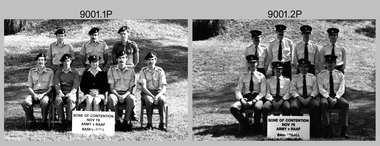 Bendigo Military Museum
Photograph - Bones Day – Army Survey Regiment Verses RAAF School of Radio at Bendigo, Victoria, 1978
... In background L to R: John Smith, Ian Whittington EXCH-UK. .31) - Photo, black & white, 1978, Trophy presentation. L to R: RAAF CO presents ‘the Little Bone’ to Army’s CO LTCOL Bob Skitch. ...In background L to R: John Smith, Ian Whittington EXCH-UK. .31) - Photo, black & white, 1978, Trophy presentation. L to R: RAAF CO presents ‘the Little Bone’ to Army’s CO LTCOL Bob Skitch. ...This set of 31 photographs was taken at Bones Day, an annual sports competition between the Army Survey Regiment and the RAAF School of Radio at Bendigo in November 1978. The two units took turns each year to host the event. The day competition usually comprised basketball, cricket, cross country, golf, sailing, squash, softball, tennis, touch football, rifle shooting, tug-of-war and volleyball. The “big bone” trophy comprising a large bone from a beast housed inside a wooden framed glass case, was awarded to the winner of the day competition. The evening competition often included darts, carpet bowls, hookey, quoits and billiards/snooker. The “little bone” (a mounted chicken bone) was the consolation trophy awarded to the winner of the evening competition. The 3-hour bus trip for the visiting unit on their return was typically very raucous. See item 6275.8P for more photographs taken on this occasion. The history of the Bones Day competition is best described in the booklet titled - Bones of Contention Souvenir Program. 1965. Refer to Item 6267.This set of 31 photographs were taken at Bones Day, an annual sports competition between the Army Survey Regiment (ASR) and the RAAF School of Radio (RSR) at Bendigo in November 1978. The photographs were printed on photographic paper and are part of the Army Survey Regiment’s Collection. The black and white photographs were scanned at 300 dpi. .1) - Photo, black & white, 1978, ASR Basketball Team Back row L to R: Jamie ‘Fish’ McRae, John Thomas, Gary Kerr. Front row L to R: Phil McGuire, Bill Jones, Gill Park, Bruce ‘Stretch’ Gordon, Stuart Symonds. .2) - Photo, black & white, 1978, RSR Basketball Team: All unidentified. .3) - Photo, black & white, 1978, Basketball action: Gill Park in No. 8 top, remainder unidentified. .4) - Photo, black & white, 1978, Basketball action: L to R: unidentified (x4), Gill Park, unidentified, Bruce ‘Stretch’ Gordon, remainder unidentified. .5) - Photo, black & white, 1978, ASR Cricket Team Back row L to R: Alan Toogood, Bob Norwood, Ken ‘Sluggo’ Slater, unidentified, Josh Degroot. Front row L to R: Rick van der Bom, Greg Byers, Peter Hammer, 2LT Trevor Black, Alan Bunn, Mark Casey. .6) - Photo, black & white, 1978, RSR Cricket Team: All unidentified. .7) - Photo, black & white, 1978, ASR Rifle Shooting Team Back row L to R: John Cain, Bob Clark, Ian Belmont, unidentified. Front row L to R: Steve Hansen, Struan Robinson, Max Neil, Warren ‘Waldo’ Shirley. .8) - Photo, black & white, 1978, RSR Rifle Shooting Team: All unidentified. .9) - Photo, black & white, 1978, ASR Squash Team Back row L to R: Errol Fletcher, Rick Downie, Andy Wilson, George Timmins, John Bennett. Front row L to R: Terry Danger, Di Norling, Rob John, Dennis Puniard. .10) - Photo, black & white, 1978, Softball action: L to R: Janet (Chopping) Justin, Lorraine ‘Snoopy’ (Daly) Talbot-Smith. In left background: Janet (Chopping) Justin. .11) - Photo, black & white, 1978, Softball action: L to R: Le-anne (Smallshaw) Shirley, Lynn Johnson. .12) - Photo, black & white, 1978, Softball action: L to R: Lorraine ‘Snoopy’ (Daly) Talbot-Smith, John Ashby, unidentified. .13) - Photo, black & white, 1978, RSR Tennis Team: All unidentified. .14) - Photo, black & white, 1978, ASR Volleyball Team Back row L to R: Kerry ‘Gags’ Gallager, Gerry Gates, Bob Clisby, unidentified, Cornelius Moorrees, Laurie Justin. Front row L to R: Chris Edwards, Bob Bright, Keith Quinton, Mick ‘Buddha’ Ellis, George Holland, unidentified. .15) - Photo, black & white, 1978, RSR Volleyball Team: All unidentified. .16) - Photo, black & white, 1978, Volleyball action L to R: Keith Quinton, unidentified, Chris Edwards, remainder unidentified. .17) - Photo, black & white, 1978, Volleyball action L to R: unidentified, Keith Quinton in No. 4 top, unidentified, unidentified. .18) - Photo, black & white, 1978, ASR Tug-of-War Team Back row L to R: Russ Mollenhaur, Brian Collings, Noel ‘Macca’ McNamara, Ken ‘Sluggo’ Slater, Mick Davey, Russell ‘Rusty’ Williams, unidentified. Front row L to R: Wolfgang Thun, Rhys Delaine, Phil Boyle, unidentified, Ian Nelson, Jamie ‘Fish’ McRae. .19) - Photo, black & white, 1978, RSR Tug-of-War Team: All unidentified. .20) - Photo, black & white, 1978, ASR Tug-of-War Team in action. .21) - Photo, black & white, 1978, RSR Tug-of-War Team in action. .22) & .23) - Photo, black & white, 1978, Tug-of-War Teams at end of contest. .24) - Photo, black & white, 1978, Darts competition: Di Chalmers in action. John Ashby in right background. .25) - Photo, black & white, 1978, Carpet bowls competition: All unidentified. .26) - Photo, black & white, 1978, Ian Whittington EXCH-UK admires the view from the Tavern’s rafters. .27) - Photo, black & white, 1978, social activities L to R: Paul Baker, unidentified. .28) - Photo, black & white, 1978, social activities L to R: Adrian Rynberk, unidentified, unidentified. .29) - Photo, black & white, 1978, Trophy presentation. L to R: RAAF CO presents ‘the Little Bone’ to Army’s CO LTCOL Bob Skitch. In background L to R: unidentified, Ian Whittington EXCH-UK in right background. .30) - Photo, black & white, 1978, Trophy presentation. L to R: RAAF CO presents ‘the Little Bone’ to Army’s CO LTCOL Bob Skitch. In background L to R: John Smith, Ian Whittington EXCH-UK. .31) - Photo, black & white, 1978, Trophy presentation. L to R: RAAF CO presents ‘the Little Bone’ to Army’s CO LTCOL Bob Skitch. In background L to R: unidentified, Ian Whittington EXCH-UK in right background. .1P to.9P – ‘Bones Day 1978’ annotated on cover sleeve.royal australian survey corps, rasvy, army survey regiment, army svy regt, fortuna, bones day
