
Showing 50 items matching "warrnambool cordial factory"
-
 Warrnambool and District Historical Society Inc.
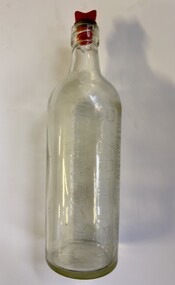
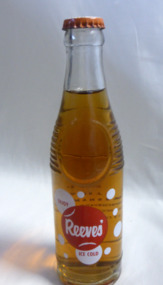
Functional object - Soft drink Bottle, Reeves soft drink bottle
... ...warrnambool cordial factory....A cordial factory was established in Koroit Street, Warrnambool by John Davis and this business was taken over in the 1880s by John Fletcher. ...The deposit scheme provided a source of income for enterprising children to collect discarded bottles for their pocket money. reeves warrnambool reeves soft drinks reeves cordials warrnambool cordial factory Property always remains the property of R V Reeves Warrnambool. "21" raised on the neck. ....A cordial factory was established in Koroit Street, Warrnambool by John Davis and this business was taken over in the 1880s by John Fletcher. Ralph Reeves, who had been involved in the cordial making business in Warrnambool since 1900, bought the Koroit Street business in 1931. His son Reginald John acquired the business in 1946 and was actively involved until his death in 1972. The factory continued until the 1980's.Cordial and soft drink bottles were sold under a deposit scheme where empty bottles were returned for a small amount , 3d or 6d and then reused.This is a common object which was popular during the 20th century. The deposit scheme provided a source of income for enterprising children to collect discarded bottles for their pocket money.Round clear glass bottle with raised lettering on the side. The neck has an orange screw-in stopper.Property always remains the property of R V Reeves Warrnambool. "21" raised on the neck. reeves warrnambool, reeves soft drinks, reeves cordials, warrnambool cordial factory -
 Warrnambool and District Historical Society Inc.
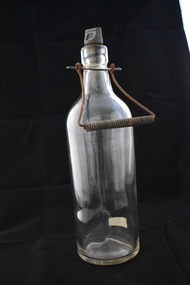
Container - Bottle, Reeves Stopper bottle, 1950s
... Reeves Cordial Factory, Warrnambool...Coming to Warrnambool about 1900, Ralph Reeves managed a Banyan Street, Warrnambool cordial factory which had been established by John Rowley. ...Coming to Warrnambool about 1900, Ralph Reeves managed a Banyan Street, Warrnambool cordial factory which had been established by John Rowley. ...This bottle comes from the Warrnambool aerated water factory of Reg Reeves. This factory, in Koroit Street, Warrnambool, was established in the 1860s as the Union Cordial Factory by John Davis and then bought by John Fletcher in 1885. Fletcher’s business continued until 1930 when it was bought by Ralph Reeves. Coming to Warrnambool about 1900, Ralph Reeves managed a Banyan Street, Warrnambool cordial factory which had been established by John Rowley. Ralph Reeves bought a business in 1916 at Hamilton and sold it in 1929 to concentrate on the Warrnambool business. Reeves was joined by his son Reg in Warrnambool and Reg operated the business from 1946 to 1972. The trade name of Reeves was still used after Reg Reeves died and continued on for some years. This bottle is of interest as an example of a lemonade bottle form Reeves Cordial Factory in Warrnambool. The Reeves family operated this business in Warrnambool for 40 years. Cordial manufacturing was an important industry in Warrnambool for over 100 years. This is a clear glass lemonade bottle with a round base, a rounded body and a smaller circular neck with a screw top stopper made of composite material. A metal handle is attached to the neck section and it has a coil of metal on the handle for easier handling. The stopper has the name of the manufacturer of the soft drink. ‘R.V.Reeves R.V.R.’ (twice)reeves cordial factory, warrnambool, cordial manufacturing in warrnambool, history of warrnambool -
 Warrnambool and District Historical Society Inc.
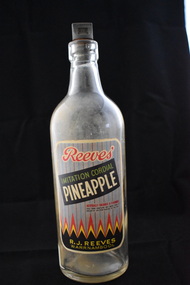
Bottle, Imitation Cordial Pineaple Reeves W'bool, 1970s
... Ralph Reeves bought a cordial business at Hamilton in 1916 and sold it in 1929 to concentrate on his Warrnambool cordial factory. Reeves was joined by his son Reg in Warrnambool and Reg operated the business from 1946 to 1972. ...Ralph Reeves bought a cordial business at Hamilton in 1916 and sold it in 1929 to concentrate on his Warrnambool cordial factory. Reeves was joined by his son Reg in Warrnambool and Reg operated the business from 1946 to 1972. ...This bottle came from the Warrnambool aerated waters factory of Reg Reeves. This factory in Koroit Street, Warrnambool was established in the 1860s as the Union Cordial Factory by John Davis and then bought by John Fletcher in 1885. Fletcher’s business continued until 1930 when it was bought by Ralph Reeves. Coming to Warrnambool about 1900, Ralph Reeves managed a Banyan Street cordial factory which had been established by John Rowley. Ralph Reeves bought a cordial business at Hamilton in 1916 and sold it in 1929 to concentrate on his Warrnambool cordial factory. Reeves was joined by his son Reg in Warrnambool and Reg operated the business from 1946 to 1972. The trade name of Reeves was still used after Reg Reeves died and continued on for some years. This bottle is of interest as an example of the soft drinks made at the Warrnambool aerated waters factory of Reg Reeves. Reg and his father Ralph operated a cordial business in Warrnambool for 40 years. Cordial manufacturing was an important industry in Warrnambool for over 100 years.This is a glass bottle with a long rounded body, a round base and a short rounded neck. The top of the bottle has a moulded glass open top and there is a cork stopper with a brown top to enable the bottle to be opened by turning. The stopper has the name of the manufacturer of the soft drink on it and there is a multi-coloured label pasted on to the side of the bottle. The name of the soft drinks manufacturer is also impressed into the glass on the side of the bottle. There are two small chips near the base of the bottle. Stopper: R.V.Reeves R.V.R. Bottle: Reeves Imitation Cordial Pineapple Artificially coloured &flavoured This food contains not more than 2 grains of sulphur dioxide to the pint R.J. Reeves Warrnambool ralph reeves, warrnambool, reg reeves, warrnambool, cordial manufacturers in warrnambool, history of warrnambool -
 Warrnambool and District Historical Society Inc.
Functional object - Ginger Ale Bottle, John Fletcher. Koroit Street, Warrnambool, c. 1930
... It is a marble stopper bottle from the Warrnambool cordial factory of John Fletcher. Th bottle was filled upside down so that as soon as the filling ceased the marble was forced down to seal the bottle against a rubber ring (missing in this bottle). ...It is a marble stopper bottle from the Warrnambool cordial factory of John Fletcher. Th bottle was filled upside down so that as soon as the filling ceased the marble was forced down to seal the bottle against a rubber ring (missing in this bottle). ...This bottle was found in sea water while the donor was snorkelling in Stingray Bay, Warrnambool. It is a marble stopper bottle from the Warrnambool cordial factory of John Fletcher. Th bottle was filled upside down so that as soon as the filling ceased the marble was forced down to seal the bottle against a rubber ring (missing in this bottle). Pressure inside the bottle would keep the marble pressed against the top of the neck. To open the bottle the marble was pressed down so that it fell into the body of the bottle. John Fletcher as a young boy worked at Rowley's Cordial Factory in Banyan Street, Warrnambool. He then worked for John Davis who had established the Union Cordial Factory in Koroit Street in the 1860s. In 1885 John Fletcher bought Davis' business and operated it until 1930. It was then bought by Ralph Reeves. John Fletcher manufactured soda water, lemonade, tonic waters, ginger ale, sarsaparilla, cordials, hop beer and hop bitters.This bottle is of some interest as an example of a marble stopper bottle over 90 years old and as a memento of the Warrnambool soft drinks business of John Fletcher, a prominent businessman in Warrnambool for over 40 years.This is a clear glass bottle with a rounded body, a heavy indentation near the base of the neck and a thick tapering neck with a round opening. The bottle contains a green marble and some marine detritus. The bottle is discoloured with stains and dirt and has lettering etched into the side and base.John Fletcher Ginger Ale Warrnambool This bottle is the property of John Fletcher Warrnambool and cannot be legally used by others Gjohn fletcher warrnambool, cordial manufacturers in warrnambool -
 Warrnambool and District Historical Society Inc.
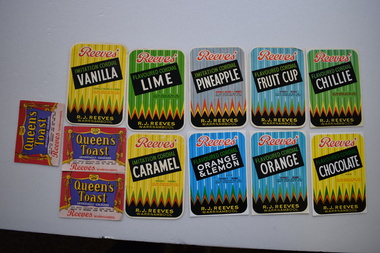
Label, Gaspars Modern Print, Reeves, 1930s
... Cordial Factory...History of Warrnambool... These labels come from the Warrnambool Reeves Cordial Factory. John Reeves came to Warrnambool about 1900 and managed the cordial bottling plant in Banyan Street for Jim Kelly who traded under the name of the previous cordial manufacturer, J. ...These labels come from the Warrnambool Reeves Cordial Factory. John Reeves came to Warrnambool about 1900 and managed the cordial bottling plant in Banyan Street for Jim Kelly who traded under the name of the previous cordial manufacturer, J. ...These labels come from the Warrnambool Reeves Cordial Factory. John Reeves came to Warrnambool about 1900 and managed the cordial bottling plant in Banyan Street for Jim Kelly who traded under the name of the previous cordial manufacturer, J. S. Rowley. In 1931 John Reeves purchased the cordial factory in Koroit Street from the estate of John Fletcher. John Reeves’ son, Reg managed the cordial business in Koroit Street until 1946 when he took over from his father and carried on the business until his death in 1972. In 1977 Reeves’ son-in-law carried on the business under the trading name of Reeves. The building in Koroit Street that stands today was erected in 1957 when the original building was demolished. These labels are of interest because they are colourful and pleasing to the eye and because the Reeves Cordial Factory was a major business in Warrnambool for several decades in the 20th century..1 to .9 Piece of paper with curved edges with multi-coloured printing and coloured geometric decoration. .10 A piece of paper with yellow, red and white printing and images of a crown and a stage curtain. .1 Reeves’ Imitation Cordial Vanilla .2 Reeves’ Imitation Cordial Caramel .3 Reeves’ Flavoured Cordial Lime .4 Reeves’ Flavoured Cordial Chocolate .5 Reeves’ Flavoured Cordial Chillie .6 Reeves’ Flavoured Cordial Orange .7 Reeves’ Flavoured Cordial Orange & Lemon .8 Reeves’ Flavoured Cordial Fruit Cup .9 Reeves’ Flavoured Cordial Pineapple .10 Queen’s Toast Artificially Coloured Reeves Warrnambool reeves cordial factory, history of warrnambool -
 Warrnambool and District Historical Society Inc.
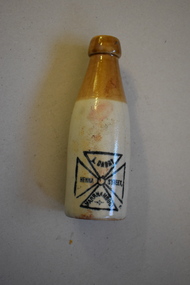
Ceramic - Bottle, The Bendigo Pottery Co. Pty. Ltd, A Darby, Late 1890s
... In 1897 Alfred Darby leased the cordial factory in Henna Street,Warrnambool, formerly the McSweeney Cordial Factory (and today the Alderdice Brass Foundry). ...In 1897 Alfred Darby leased the cordial factory in Henna Street,Warrnambool, formerly the McSweeney Cordial Factory (and today the Alderdice Brass Foundry). ...This bottle has been produced in the Epsom factory of the Bendigo Pottery works and used by Alfred Darby for bottling his ginger beer in the late 1890s. In 1897 Alfred Darby leased the cordial factory in Henna Street,Warrnambool, formerly the McSweeney Cordial Factory (and today the Alderdice Brass Foundry). He used the Maltese Cross as his logo on his bottles. He also had a cordial factory in Rochester, Victoria about the same time. In 1899 Alfred Darby advertised that he had re-located his cordial business to the old ‘Echo’ newspaper building in Koroit Street but it is not known whether the business opened there or if it did, for how long. This ceramic bottle is of interest as one of the late 19th century bottles used by Alfred Darby, a soft drinks manufacturer in Warrnambool. Cordial manufacturing was an important industry in Warrnambool for over 100 years.This is a ceramic brown and buff-coloured ginger beer bottle. It has a black logo in the shape of a Maltese Cross stamped on one side and the maker’s name etched into the clay near the base. It has no stopper and the main body of the bottle is somewhat stained. ‘A. Darby Henna Street Warrnambool’ ‘The Bendigo Pottery Coy. Pty. Ltd. Epsom Bendigo’ cordial manufacturers in warrnambool, history of warrnambool -
 Warrnambool and District Historical Society Inc.
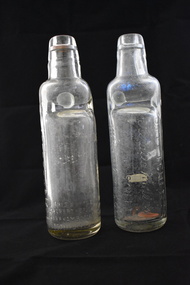
Bottle, Fletcher Warrnambool
... He then worked in Koroit Street, Warrnambool at the Union Cordial Factory of John Davis. This factory had been established in the 1860s. ...He then worked in Koroit Street, Warrnambool at the Union Cordial Factory of John Davis. This factory had been established in the 1860s. ...These marble stopper bottles came from the Warrnambool aerated waters factory of John Fletcher. A marble stopper bottle was filled upside down so that as soon as the filling stopped the marble was forced down to seal the bottle against the rubber ring. Pressure inside the bottle would keep the marble pressed against the top of the bottle. To open the bottle the marble was pressed down where it would fall into the neck of the chamber below. The marble would stay inside the chamber when the bottle was tilted up for drinking. As a young boy John Fletcher worked at the cordial factory of John Rowley in Banyan Street, Warrnambool. He then worked in Koroit Street, Warrnambool at the Union Cordial Factory of John Davis. This factory had been established in the 1860s. In 1885 John Fletcher bought the business of John Davis and continued it on until 1930 when it was bought by Ralph Reeves. John Fletcher manufactured lemonade, tonic waters, soda water, sarsaparilla, cordials, ginger ale, hop beer and hop bitters. These bottles are of interest, firstly because they are good examples of the marble stopper bottle type of bottle, no longer in use. They are also important because they are John Fletcher bottles and he was a prominent businessman in Warrnambool for over 40 years.These are two glass bottles. They have a rounded base and body with deep indentations which give a narrowed aperture to the top of the body and the neck. The neck is round and tapering to a moulded opening at the top of the bottle. Both bottles had a round rubber ring inside the bottle, with one lodged in the bottom of the bottle. Both bottles have a green glass marble in the neck of the bottle. The name of the manufacturer of the lemonade is impressed into the body of the bottles. ‘J. Fletcher’s Aerated Waters Koroit Street Warrnambool’ ‘Lemonade’ ‘This bottle is the property of John Fletcher Warrnambool & cannot be legally used by others’ ‘A.G.M.’ john fletcher warrnambool, cordial manufacturers in warrnambool, history of warrnambool -
 Flagstaff Hill Maritime Museum and Village
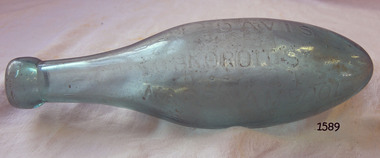
Container - Torpedo Bottle, Last quarter of the 19th century
... Warrnambool. This factory in Koroit Street was established in the mid 19th century by John Davis. As a young boy John Fletcher worked at the cordial factory of John Rowley in Banyan Street, Warrnambool and then worked for a number of years for John Davis at his Union Cordial Factory. ...Warrnambool. This factory in Koroit Street was established in the mid 19th century by John Davis. As a young boy John Fletcher worked at the cordial factory of John Rowley in Banyan Street, Warrnambool and then worked for a number of years for John Davis at his Union Cordial Factory. ...This bottle has come from the aerated waters factory of John Fletcher of Warrnambool. This factory in Koroit Street was established in the mid 19th century by John Davis. As a young boy John Fletcher worked at the cordial factory of John Rowley in Banyan Street, Warrnambool and then worked for a number of years for John Davis at his Union Cordial Factory. In 1885 John Fletcher succeeded John Davis and continued in this business until 1930. The business was then taken over by Ralph Reeves. John Fletcher manufactured aerated waters, soda, tonic waters, lemonade, ginger ale, hop beer, hop bitters, sarsaparilla and cordials. The bottle would have been sealed with a cork stopper. The torpedo shape of the bottle would ensure that it was stored on its side, keeping the cork moist so that it didn't shrink and cause the bottle to leak its contents.The bottle is significant for its unusual torpedo shape and for being sold by the long standing John Fletcher's soft drink business in Warrnambool who was a prominent soft drinks manufacturer in Warrnambool for over 40 years.Torpedo shaped green glass bottle, name of manufacture of contents, John Fletcher Late and J. Davis, of Koroit St Warrnambool, is impressed in the glass."John Fletcher Late and J. Davis Koroit St Warrnambool"flagstaff hill, warrnambool, shipwrecked-coast, flagstaff-hill, flagstaff-hill-maritime-museum, maritime-museum, shipwreck-coast, flagstaff-hill-maritime-village, torpedo shaped glass bottle, torpedo bottle, bottle, john fletcher late and j. davis koroit st warrnambool, john fletcher late and j. davis, john fletcher late, j. davis -
 Flagstaff Hill Maritime Museum and Village
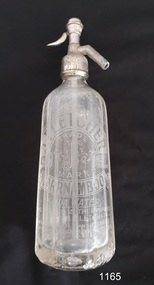
Soda Syphon, 1900-1930’s
... ABOUT JOHN FLETCHER John Fletcher bought the Union Cordial Factory in Koroit Street, Warrnambool that was previously owned by John Davis. ...ABOUT JOHN FLETCHER John Fletcher bought the Union Cordial Factory in Koroit Street, Warrnambool that was previously owned by John Davis. ...This soda syphon (or siphon) was distributed by John Fletcher of Warrnambool, and made by the British Syphon Mfg. Co. Ltd. of London between the 1900s-1930s. It comprises a multi-sided clear glass bottle, an internal glass tube and a metal release valve and spout on the top. It was used to dispense pressurised, effervescent soda water. It was often used as an alternative to water or added to fruit juices and cordials. The text on this bottle states that it remains the property of the retailer, John Fletcher, and must be returned to him. Customers were asked for a deposit on the bottle, which would be refunded when the bottle was exchanged or continued as the deposit on a fresh bottle. Returned bottles would be cleaned and recharged with the gas and sold again. Soda syphon are bottles, glass or metal, with a release valve and spout on the top. The valve lever on the top of the syphon, when depressed, causes the gas in the syphon to force the water up through the tube and out of the spout. The bottle’s mechanism gives the water an effervescent quality to make bubbly drinks such as sparkling mineral water, soda water and sparkling water. ABOUT JOHN FLETCHER John Fletcher bought the Union Cordial Factory in Koroit Street, Warrnambool that was previously owned by John Davis. Fletcher operated the factory as J Fletcher, John Fletcher and Fletcher’s. He eventually sold his business and stock in 1930 to Ralph Reeves, who may have continued using Fletcher’s supply of drink containers before renewing them with stock showing his own brand. The soda syphon is representative of drink containers used in the later 19th and early 20th century. It also represents the system of returnable, recyclable containers. Soda syphon (or siphon). Glass bottle, clear, multi sided, tapered from a heavy glass base to a narrower shoulder, with glass tube at centre connected to metal pump mechanism at the top. Has elaborate frosted label for J. Fletcher of Warrnambool. Made by the British Syphon Mfg. Co. Ltd. London. Bottle remains the property of John Fletcher, Warrnambool.Metal syphon has impressed "J FLETCHER" and logo "S S" in centre of two concentric circles with text between circles "BRITISH SYPHON MFG. CO. LTD. LONDON". Etched into glass "J. FLETCHER / WARRNAMBOOL", "TRADE "[stylised] F" / MARK", "SODA WATER", "THIS SYPHON IS THE PROPERTY / OF JOHN FLETCHER / WARRNAMBOOL AND CONNOT BE / AND CONNOT BE LEGALLY USED BY OTHERS / BRITISH SYPHON CO. TLD. LONDON / - - - - "flagstaff hill, warrnambool, shipwrecked coast, flagstaff hill maritime museum, maritime museum, shipwreck coast, flagstaff hill maritime village, great ocean road, john fletcher, fletcher, john fletcher of warrnambool, soda siphon, soda syphon, british syphon mfg co ltd of london, soft drinks, soda drinks -
 Flagstaff Hill Maritime Museum and Village
Bottle, circa 1899
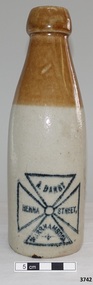
... Warrnambool, (between Raglan Pde and Lava St). The internal screw thread in the neck of this bottle allows for an applied ‘blob’ top stopper to be added. The company A. Darby bottled soda water, cordial, lemonade, ginger ale and ginger beer. Darby’s also made cider, lime juice, raspberry vinegar and other specialties. There was a branch of Darby’s cordial factory...Warrnambool, (between Raglan Pde and Lava St). The internal screw thread in the neck of this bottle allows for an applied ‘blob’ top stopper to be added. The company A. Darby bottled soda water, cordial, lemonade, ginger ale and ginger beer. Darby’s also made cider, lime juice, raspberry vinegar and other specialties. There was a branch of Darby’s cordial factory ...This clay soft drink bottle was made by Bendigo Pottery circa 1899. It was badged for and sold by A. [Alfred] Darby of Henna Street Warrnambool, (between Raglan Pde and Lava St). The internal screw thread in the neck of this bottle allows for an applied ‘blob’ top stopper to be added. The company A. Darby bottled soda water, cordial, lemonade, ginger ale and ginger beer. Darby’s also made cider, lime juice, raspberry vinegar and other specialties. There was a branch of Darby’s cordial factory in Shepparton Victoria. The building has the year 1910 on it and is now the council office. The bottle’s manufacturer, Bendigo Pottery, was established in the 1858 during the gold rush era. The bottle is part of the “W.R. Angus Collection” that includes historical medical equipment, surgical instruments and material once belonging to Dr Edward Ryan and Dr Thomas Francis Ryan, (both of Nhill, Victoria) as well as Dr Angus’ own belongings. The Collection’s history spans the medical practices of the two Doctors Ryan, from 1885-1926 plus that of Dr Angus, up until 1969. ABOUT THE “W.R.ANGUS COLLECTION” Doctor William Roy Angus M.B., B.S., Adel., 1923, F.R.C.S. Edin.,1928 (also known as Dr Roy Angus) was born in Murrumbeena, Victoria in 1901 and lived until 1970. He qualified as a doctor in 1923 at University of Adelaide, was Resident Medical Officer at the Royal Adelaide Hospital in 1924 and for a period was house surgeon to Sir (then Mr.) Henry Simpson Newland. Dr Angus was briefly an Assistant to Dr Riddell of Kapunda, then commenced private practice at Curramulka, Yorke Peninsula, SA, where he was physician, surgeon and chemist. In 1926, he was appointed as new Medical Assistant to Dr Thomas Francis Ryan (T.F. Ryan, or Tom), in Nhill, Victoria, where his experiences included radiology and pharmacy. In 1927 he was Acting House Surgeon in Dr Tom Ryan’s absence. Dr Angus had become engaged to Gladys Forsyth and they decided he further his studies overseas in the UK in 1927. He studied at London University College Hospital and at Edinburgh Royal Infirmary and in 1928, was awarded FRCS (Fellow from the Royal College of Surgeons), Edinburgh. He worked his passage back to Australia as a Ship’s Surgeon on the on the Australian Commonwealth Line’s T.S.S. Largs Bay. Dr Angus married Gladys in 1929, in Ballarat. (They went on to have one son (Graham 1932, born in SA) and two daughters (Helen (died 12/07/1996) and Berenice (Berry), both born at Mira, Nhill According to Berry, her mother Gladys made a lot of their clothes. She was very talented and did some lovely embroidery including lingerie for her trousseau and beautifully handmade baby clothes. Dr Angus was a ‘flying doctor’ for the A.I.M. (Australian Inland Ministry) Aerial Medical Service in 1928. Its first station was in the remote town of Oodnadatta, where Dr Angus was stationed. He was locum tenens there on North-South Railway at 21 Mile Camp. He took up this ‘flying doctor’ position in response to a call from Dr John Flynn; the organisation was later known as the Flying Doctor Service, then the Royal Flying Doctor Service. A lot of his work during this time involved dental surgery also. Between 1928-1932 he was surgeon at the Curramulka Hospital, Yorke Peninsula, South Australia. In 1933 Dr Angus returned to Nhill and purchased a share of the Nelson Street practice and Mira hospital (a 2 bed ward at the Nelson Street Practice) from Dr Les Middleton one of the Middleton Brothers, the current owners of what previously once Dr Tom Ryan’s practice. Dr Tom and his brother had worked as surgeons included eye surgery. Dr Tom Ryan performed many of his operations in the Mira private hospital on his premises. He had been House Surgeon at the Nhill Hospital 1902-1926. Dr Tom Ryan had one of the only two pieces of radiology equipment in Victoria during his practicing years – The Royal Melbourne Hospital had the other one. Over the years Dr Tom Ryan had gradually set up what was effectively a training school for country general-practitioner-surgeons. Each patient was carefully examined, including using the X-ray machine, and any surgery was discussed and planned with Dr Ryan’s assistants several days in advance. Dr Angus gained experience in using the X-ray machine there during his time as assistant to Dr Ryan. When Dr Angus bought into the Nelson Street premises in Nhill he was also appointed as the Nhill Hospital’s Honorary House Surgeon 1933-1938. His practitioner’s plate from his Nhill surgery is now mounted on the doorway to the Port Medical Office at Flagstaff Hill Maritime Village, Warrnambool. When Dr Angus took up practice in the Dr Edward and Dr Tom Ryan’s old premises he obtained their extensive collection of historical medical equipment and materials spanning 1884-1926. A large part of this collection is now on display at the Port Medical Office at Flagstaff Hill Maritime Village in Warrnambool. In 1939 Dr Angus and his family moved to Warrnambool where he purchased “Birchwood,” the 1852 home and medical practice of Dr John Hunter Henderson, at 214 Koroit Street. (This property was sold in1965 to the State Government and is now the site of the Warrnambool Police Station and an ALDI sore is on the land that was once their tennis court). The Angus family was able to afford gardeners, cooks and maids; their home was a popular place for visiting dignitaries to stay whilst visiting Warrnambool. Dr Angus had his own silk worm farm at home in a Mulberry tree. His young daughter used his centrifuge for spinning the silk. Dr Angus was appointed on a part-time basis as Port Medical Officer (Health Officer) in Warrnambool and held this position until the 1940’s when the government no longer required the service of a Port Medical Officer in Warrnambool; he was thus Warrnambool’s last serving Port Medical Officer. (Masters of immigrant ships arriving in port reported incidents of diseases, illness and death and the Port Medical Officer made a decision on whether the ship required Quarantine and for how long, in this way preventing contagious illness from spreading from new immigrants to the residents already in the colony.) Dr Angus was a member of the Australian Medical Association, for 35 years and surgeon at the Warrnambool Base Hospital 1939-1942, He served with the Australian Department of Defence as a Surgeon Captain during WWII 1942-45, in Ballarat, Victoria, and in Bonegilla, N.S.W., completing his service just before the end of the war due to suffering from a heart attack. During his convalescence he carved an intricate and ‘most artistic’ chess set from the material that dentures were made from. He then studied ophthalmology at the Royal Melbourne Eye and Ear Hospital and created cosmetically superior artificial eyes by pioneering using the intrascleral cartilage. Angus received accolades from the Ophthalmological Society of Australasia for this work. He returned to Warrnambool to commence practice as an ophthalmologist, pioneering in artificial eye improvements. He was Honorary Consultant Ophthalmologist to Warrnambool Base Hospital for 31 years. He made monthly visits to Portland as a visiting surgeon, to perform eye surgery. He represented the Victorian South-West subdivision of the Australian Medical Association as its secretary between 1949 and 1956 and as chairman from 1956 to 1958. In 1968 Dr Angus was elected member of Spain’s Barraquer Institute of Barcelona after his research work in Intrasclearal cartilage grafting, becoming one of the few Australian ophthalmologists to receive this honour, and in the following year presented his final paper on Living Intrasclearal Cartilage Implants at the Inaugural Meeting of the Australian College of Ophthalmologists in Melbourne In his personal life Dr Angus was a Presbyterian and treated Sunday as a Sabbath, a day of rest. He would visit 3 or 4 country patients on a Sunday, taking his children along ‘for the ride’ and to visit with him. Sunday evenings he would play the pianola and sing Scottish songs to his family. One of Dr Angus’ patients was Margaret MacKenzie, author of a book on local shipwrecks that she’d seen as an eye witness from the late 1880’s in Peterborough, Victoria. In the early 1950’s Dr Angus, painted a picture of a shipwreck for the cover jacket of Margaret’s book, Shipwrecks and More Shipwrecks. She was blind in later life and her daughter wrote the actual book for her. Dr Angus and his wife Gladys were very involved in Warrnambool’s society with a strong interest in civic affairs. He had an interest in people and the community. They were both involved in the creation of Flagstaff Hill, including the layout of the gardens. After his death (28th March 1970) his family requested his practitioner’s plate, medical instruments and some personal belongings be displayed in the Port Medical Office surgery at Flagstaff Hill Maritime Village, and be called the “W. R. Angus Collection”. This glazed clay bottle represents early Warrnambool industry. It is also a good example of soft drink containers used in the late 19th and early 20th century and of Australian made products. Bendigo Pottery is Australia’s oldest working pottery. The kilns at Bendigo Pottery are now on the Victorian Heritage Register. The W.R. Angus Collection is significant for still being located at the site it is connected with, Doctor Angus being the last Port Medical Officer in Warrnambool. The collection of medical instruments and other equipment is culturally significant, being an historical example of medicine, administration, household equipment and clothing from late 19th to mid-20th century. Dr Angus assisted Dr Tom Ryan, a pioneer in the use of X-rays and in ocular surgery. Earthenware soft drink bottle, part of the W.R. Angus Collection. Glazed clay, 'champ' shape, two-toned colour; caramel from mouth to shoulder, beige on lower section. Inside of neck has an internal thread that could have been sealed with an applied internal ‘blob’ top stopper. Black stamped Maltese cross design emblem on front with each quarter containing text, black oval stamp on back with maker’s details. Bottle was made by Bendigo Pottery of Victoria circa 1899 and sold by A Darby of Henna Street Warrnambool.Maltese cross design, each quarter has text "A. DARBY", "HENNA", 'STREET,", WARRNAMBOOL" Oval stamp” - - - - - -RE BENDIGO POTTERY [EPSO] M - - - - - O” flagstaff hill, warrnambool, shipwrecked coast, flagstaff hill maritime museum, maritime museum, shipwreck coast, flagstaff hill maritime village, great ocean road, dr w r angus, dr ryan, nhill base hospital, mira hospital, flying doctor, department of defence australia, australian army, army uniform, bottle, earthernware soft drink bottle, earthernware bottle, a. darby, henna street warrnambool, soft drink industry warrnambool, bendigo pottery, 1899 soft drink bottle, champ shape soft drink bottle, ginger beer bottle, cordial bottle, blob top, blob stopper, internal stopper -
 Flagstaff Hill Maritime Museum and Village
Container - Stoneware Demijohn, Bendigo Pottery , 1904-1930s
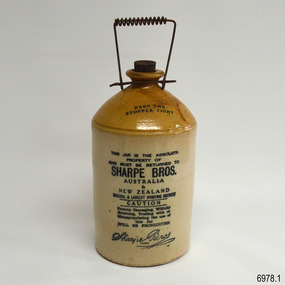
... Warrnambool soft drink...Hygienic brewery...cordial factory...factory no long produced returnable items. The bottle was once part of Dr W.R. Angus' household and is part of the W.R. Angus Collection and could have been purchased from Warrnambool's Sharpe Bros. factory. SHARPE BROS. 1903-1972- The first Sharpe Bros. cordial...factory no long produced returnable items. The bottle was once part of Dr W.R. Angus' household and is part of the W.R. Angus Collection and could have been purchased from Warrnambool's Sharpe Bros. factory. SHARPE BROS. 1903-1972- The first Sharpe Bros. cordial ...This Sharpe Bros. one gallon stoneware Demijohn is in excellent condition and includes its original stopper. It was made between 1904 and 1930, the date from the patent of the handle until the time that the factory no long produced returnable items. The bottle was once part of Dr W.R. Angus' household and is part of the W.R. Angus Collection and could have been purchased from Warrnambool's Sharpe Bros. factory. SHARPE BROS. 1903-1972- The first Sharpe Bros. cordial factory was opened in Dunedin, New Zealand, in 1903 by English prohibition brothers John and Percy Sharpe. Sharpe Bros. made ‘health’ beverages that were non-alcoholic drinks such as ginger beer, ginger ale, lime juice, soda and cordials. The containers of these drinks were not sold with the drinks but were marked as returnable items, to be cleaned and re-used, until this practice ceased in the 1930s. Sharpe Bros. made a niche in the soft drink market by delivering drinks by horse and cart to its customers’ homes. John Sharpe patented the unique wire spiral handle in 1904. By 1905 the New Zealand company also had factories in Australia. By 1910 the company had over 20 factories including Wanganui, New Zealand; Adelaide, Albury, Ballarat, Bathurst, Forbes, Geelong, Goulburn, Lithgow, Melbourne, Newcastle, Orange, Sydney, Tamworth, Warrnambool and Wollongong. The Warrnambool factory was established in 1919 and existed until 1951. The company won awards at Australian exhibitions for its carbonated drinks, including First Prize for its ginger beer made in the Brisbane factory. The company was taken over in 1962 by Tarax Drinks Holdings Ltd, which was in turn taken over by Cadbury Schweppes in 1972. W.R. Angus Collection- The W R Angus Collection spans from 1885 to the mid-1900s and includes historical medical and surgical equipment and instruments from the doctors Edward and Thomas Ryan of Nhill, Victoria. Dr Angus married Gladys in 1927 at Ballarat, the nearest big city to Nhill where he began as a Medical Assistant. He was also Acting House surgeon at the Nhill hospital where their two daughters were born. He and his family moved to Warrnambool in 1939, where Dr Angus operated his own medical practice. He later added the part-time Port Medical Officer responsibility and was the last person appointed to that position. Dr Angus and his wife were very involved in the local community, including the early planning stages of the new Flagstaff Hill, where they contributed to the layout of the gardens. Dr Angus passed away in March 1970.This stoneware Demijohn is connected to the history of Warrnambool, as it was owned by the daughter of Dr W. R. Angus and his wife Gladys. It is part of the W.R. Angus Collection, which is notable for still being located at the site connected to Doctor Angus, Warrnambool’s last Port Medical Officer. It is also connected through its manufacturer Sharpe Bros. which had a branch in Warrnambool from 1919 to 1951, overlapping the time when the Angus family resided there from 1939 to the 1970s. The bottle is also significant as an example of the early-20th-century beverages found in local households and could have been purchased from the local Sharpe Bros. factory.This stoneware Demijohn is glazed, with a brown neck with internal thread and shoulders and a cylindrical cream base. The one gallon bottle has a flat, black stopper with a cork stem and a rubber, threaded tip. The ‘U’ shaped wire carry handle has a spiral of wire around the handpiece. An overhanging lip is on top of the bottle’s short neck above its rounded shoulder. The clay has been joined at the base of the neck, shoulder and body. The underneath is unglazed. The brown glazing on the shoulder has a run mark. Inscriptions are on the stopper and bottle. This container is part of the W.R. Angus Collection.Stamped in black on the shoulder: “KEEP THE / STOPPER TIGHT” Stamped in black on the body: “THIS JAR IS THE ABSOLUTE PROPERTY OF AND MUST BE RETURNED TO SHARPE BROS. AUSTRALIA / & NEW ZEALAND. ORIGINAL & LARGEST HYGIENIC BREWERY. CAUTION Persons Damaging, Willfully Retaining, Trading with or Misappropriating the Use of this Jar WILL BE PROSECUTED “ Stamped in script writing: “Sharpe Bros. TRADE - - - ED “ Embossed on the stopper: “AUSTRALIA AND NEW ZEALAND, SHARPE BROS.”flagstaff hill, warrnambool, maritime village, maritime museum, shipwreck coast, great ocean road, dr w r angus, dr roy angus, dr ryan, sharpe bros., bendigo pottery, bottle, stoneware bottle, demihohn, one gallone bottle, soft drink, non-alcoholic drink, drink container, jar, jug, warrnambool soft drink, hygienic brewery, cordial factory, new zealand, australia, john sharpe, percy sharpe, non-alcoholic, spiral wire handle, ginger beer, w.r. angus collection, demijohn -
 Flagstaff Hill Maritime Museum and Village
Container - Bottle, c. 1905
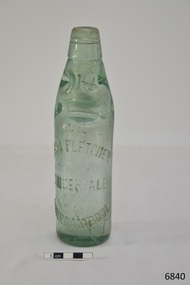
... cordial. It was found in August 2014 in the sand dunes at Levy's Point, near McKinnon's quarry, Warrnambool. ABOUT JOHN FLETCHER of WARRNAMBOOL John Fletcher Cordial (or Beverage) Co.. Warrnambool supplied cordial and aerated drinks to the Western District of Victoria. John Fletcher was named as a cordial manufacturer in the Warrnambool Standard of June 13th 1895, when he attended a Publican’s Association meeting. Mr John Fletcher, aerated water and cordial manufacturer of Koroit Street, Warrnambool, had a summary of his factory...cordial. It was found in August 2014 in the sand dunes at Levy's Point, near McKinnon's quarry, Warrnambool. ABOUT JOHN FLETCHER of WARRNAMBOOL John Fletcher Cordial (or Beverage) Co.. Warrnambool supplied cordial and aerated drinks to the Western District of Victoria. John Fletcher was named as a cordial manufacturer in the Warrnambool Standard of June 13th 1895, when he attended a Publican’s Association meeting. Mr John Fletcher, aerated water and cordial manufacturer of Koroit Street, Warrnambool, had a summary of his factory ...This bottle once contained John Fletcher’s ginger cordial. It was found in August 2014 in the sand dunes at Levy's Point, near McKinnon's quarry, Warrnambool. ABOUT JOHN FLETCHER of WARRNAMBOOL John Fletcher Cordial (or Beverage) Co.. Warrnambool supplied cordial and aerated drinks to the Western District of Victoria. John Fletcher was named as a cordial manufacturer in the Warrnambool Standard of June 13th 1895, when he attended a Publican’s Association meeting. Mr John Fletcher, aerated water and cordial manufacturer of Koroit Street, Warrnambool, had a summary of his factory printed in a short article in the Advocate, Melbourne, in February 1901. The article said, “one of the most complete plants outside the metropolis … spacious … well appointed …old-established business … noted for the excellence of the quality … a trial [of the beverage] is solicited.” John Fletcher and Harold Caffin, trading as J.S. Rowley & Co, cordial manufacturers in 1903, were prosecuted in September that year when the Board of Health found an analysed sample of Raspberry Vinegar to contain coal tar colouring, which could be injurious to health, particularly to the kidneys. The factory was still in operation in December 1924, when sadly, Mr S. Fletcher, who was carrying bottles of aerated water at Mr John Fletcher’s cordial factory, sustained an eye injury when one of the bottles burst. Later, the eye had to be removed at the Warrnambool Base Hospital. ABOUT CODD BOTTLES Many inventions during the mid-to-late 1800s kept the fizz in carbonated drinks, such as ginger ale, soda water, and fruit drinks. Hiram Codd, an English engineer, invented a successful process that he patented as “Codd’s patented globe stopper bottle” in 1872. The Codd-neck bottle (commonly called Codd or marble bottle) is manufactured in two parts. The body of the bottle is cast in two sections. At the time of joining the sections, a glass marble and rubber seal are inserted into the neck section. The lip is then applied to the top of the bottle. The Codd bottle is filled upside down as the pressure of the gas from the carbonated liquid holds the marble up and out of the way. When the bottle stands upright, the gas pushes the marble up against the washer, creating a firm seal to keep the fizz inside. The bottle is opened by pushing the marble down firmly to allow some of the gas to escape. The marble drops down and is caught in a depression formed in the neck. When the bottle is tilted to pour or drink the liquid, the marble rests in a dimple. Some have said that the bottle is a character, the shape having a face with its mouth keeping the marble out of the drink and eyes that catch the marble so that it doesn’t roll into the mouth of the drinker. The Codd bottle was expensive to produce, and children loved to destroy the marbles to play with the marbles inside. Many shops and factories added a deposit to the cost of buying the drink to encourage children to return the bottles rather than break it for the marble. Codd bottles are still being produced in India and Japan for soft drinks. A Codd bottle with the same markings as this one is valued on today’s Australian auction sites from AUD 35 - $75. Bottle, aqua/green glass, with glass marble inside. John Fletcher's Ginger Ale, Warrnambool. Container is often called a "Codd neck bottle", “marble bottle” or “Codd’s patent bottle”. Bottle made by Dobson. Inscription on bottle and base. c. 1905Marks moulded into glass; "JOHN FLETCHER / GINGER ALE / WARRNAMBOOL" and “DOBSON” and on base “G”. flagstaff hill, warrnambool, shipwrecked coast, flagstaff hill maritime museum, maritime museum, shipwreck coast, flagstaff hill maritime village, great ocean road, codd bottle, codd neck bottle, marble bottle, ginger beer bottle, john fletcher soft drinks, warrnambool soft drinks and cordials, john fletcher cordial (or beverage) co ., codd neck bottle, glass stopper bottle, hiram codd, antique bottle, harold caffin, john fletcher -
 Warrnambool and District Historical Society Inc.
Book - History of Alderdice Brassfounders Warrnambool, Bill Downing and Jane Downing, History of Alderdice Brassfounders Pty Ltd 1898-2015, 2016
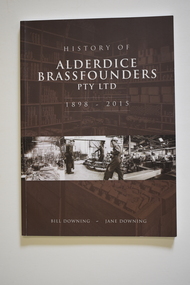
... Warrnambool factory, Alderdice Brassfounders, from 1898 to 2015. Atlas Brassworks was established in 1Warrnambool in 1898 by brothers William (Bill) Downing and Charles Downing, firstly in Liebig Street and then Koroit Street. By 1901 a new business, John Alderdice and Co., was established by the Downings in a building previously housing a cordial...Warrnambool factory, Alderdice Brassfounders, from 1898 to 2015. Atlas Brassworks was established in 1Warrnambool in 1898 by brothers William (Bill) Downing and Charles Downing, firstly in Liebig Street and then Koroit Street. By 1901 a new business, John Alderdice and Co., was established by the Downings in a building previously housing a cordial ...History of Warrnambool Factory - Alderdice Brassfounders Pty LtdThis is a book of 108 pages. It has a brown cover with white printing and a black and white photograph on the front cover and printing and seven black and white photographs on the back cover. The pages contain printed material and black and white photographs. non-fictionHistory of Warrnambool Factory - Alderdice Brassfounders Pty Ltdalderdice brassfounders pty ltd, agriculture in warrnambool district, william & charles downing -
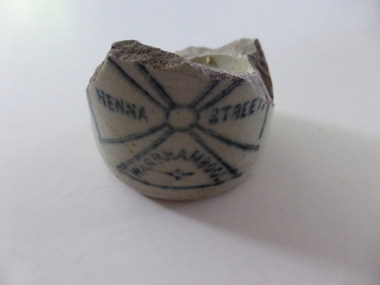 Warrnambool and District Historical Society Inc.
Bottle, Soft Drink Bottle Darby - broken, C 1890
... There was also an Alfred Darby operating a soft drink factory at Rochester in 1897/1898 which also had the same Maltese cross as a trade mark on his bottles. A small link to one of Warrnambool's many cordial and soft drink manufacturers. warrnambool warrnambool cordial manufacturers Henna Street Warrnambool written in sections of cross design on front with The Bendigo Epsom Bendig(o) stamped on the other side. ...Alfred Darby operated a soft drink factory in Henna Street Warrnamboolaround 1890 where Alderdice Brass Foundry now stands. He used the Maltese cross as a trademark. There was also an Alfred Darby operating a soft drink factory at Rochester in 1897/1898 which also had the same Maltese cross as a trade mark on his bottles. A small link to one of Warrnambool's many cordial and soft drink manufacturers.Cream pottery fragment of lower part of bottle with outline of Maltese cross in dark blue on one side.very this and glazed inside and out.Henna Street Warrnambool written in sections of cross design on front with The Bendigo Epsom Bendig(o) stamped on the other side.warrnambool, warrnambool cordial manufacturers -
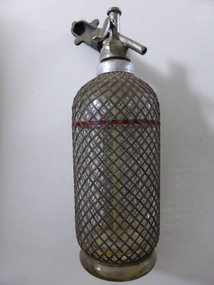 Warrnambool and District Historical Society Inc.
Bottle, Soda Siphon, c. 1920
... This syphon has no known provenance but it could have been used in a hotel or a cordial factory in Warrnambool or district. ...This syphon has no known provenance but it could have been used in a hotel or a cordial factory in Warrnambool or district. This soda syphon is of interest as an example of how soft drinks were dispensed 90 to 100 years ago. ...This soda syphon is a device for dispensing carbonated or soda water. It was also called a Seltzer bottle. The design of soda syphons used in the 20th century was first created in the late 1830s and these bottles were especially popular in the 1920s and 30s. This Sparklets Company syphon was probably made in England but the company was manufacturing also in U.S.A. and Europe. This syphon has no known provenance but it could have been used in a hotel or a cordial factory in Warrnambool or district. This soda syphon is of interest as an example of how soft drinks were dispensed 90 to 100 years ago. It will be useful for display.This is a heavy glass bottle with a heavy base. It has a metal mesh over the bottle with a metal (or material) red band around the bottle three-quarters of the way up from the bottom. The mechanisms for filling and siphoning at the top are made of metal (these include a funnel and two handles). Attached to the top and inside the bottle is a tube for syphoning. Directions for use are printed on the lid. ‘Sparklets’ ‘Admit gas slowly and shake vigorously’ Important. Do not fill the bottle above the red line’. sparklets company, soda syphon bottle, warrnambool -
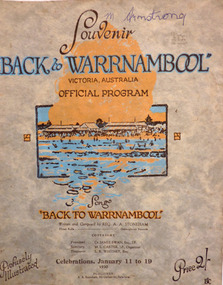 Warrnambool and District Historical Society Inc.
Programme - Back to Warrnambool 1930 official souvenir program, January, 1930
... Many of the advertisements are for businesses of long standing and importance to the prosperity of the town. younger pty ltd warrnambool back to warrnambool 1930 souvenir program warrnambool cordials morse pty swinton warrnambool cheese and butter factory batros shoes tattersalls hotel bruce and mcclure warrnambool woollen mill reg a. a. stoneham M Armstrong is written in blue biro on top right corner. ...This booklet contains the Program for the Back to Warrnambool Celebrations for 1930. It contains a brief history of the town and photos of current council Office bearers and local scenic spots. There is also a map of the town and a large number of advertisements for local businesses. Back to Warrnambool celebrations were an important event on the social calendar and were run over a number of years in the town. This program is one glimpse into the city and its people in 1930. Some of the events held over the week included processions, sports Carnivals, concerts, card playing, Church services and local tours. Many of the advertisements are for businesses of long standing and importance to the prosperity of the town. Twenty page Booklet with light card, grey, mottled cover. Text in brown and blue. Picture of Warrnambool main beach in centre. Price 2/- in bottom right corner. Back cover has full page advertisement for Bruce and McClure. Text and illustrations are brown. M Armstrong is written in blue biro on top right corner. Song “Back to Warrnambool,” written and composed by Reg A.A. Stoneham,” is printed below picture on front cover. Published by A.A. Stoneham, 241 Carlisle St, Balaclava.younger pty ltd, warrnambool, back to warrnambool, 1930, souvenir program, warrnambool cordials, morse pty, swinton, warrnambool cheese and butter factory, batros shoes, tattersalls hotel, bruce and mcclure, warrnambool woollen mill, reg a. a. stoneham -
 Warrnambool and District Historical Society Inc.
Functional object - Bottle, Reeves Dry Ginger, Circa late 20th century
... cordial factory in the early 1900’s from the estate of J Fletcher. It was operated by the Reeves family, firstly Reginald, followed by his son-in-law Murray Moon until the latter part of the 20th century. A common object familiar to a large number of people in the Warrnambool ...Ralph Reeves purchased an established cordial factory in the early 1900’s from the estate of J Fletcher. It was operated by the Reeves family, firstly Reginald, followed by his son-in-law Murray Moon until the latter part of the 20th century. A common object familiar to a large number of people in the Warrnambool area with links to one of Warrnambool’s longest established family businesses.Two clear glass bottles with rib pattern and circles at bottom of neck. Transfer label with small white circles and one larger red one. Top is white with orange writing. Contains Dry Ginger.Enjoy Reeves’ ice cold on the front, Bottled by R.J Reeves Warrnambool. Preservative added artificially coloured. Net contents 7 FL. OZ. warrnambool, reeves, reeves soft drink, reeves cordial. -
 Warrnambool and District Historical Society Inc.
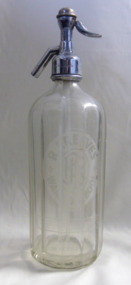
Functional object - Bottles, Syphon R.J Reeves, Early to mid 20th Century
... cordial factory in the early 1900’s from the estate of J Fletcher. It was operated by the Reeves family, firstly Reginald, followed by his son-in-law Murray Moon until the latter part of the 20th century. A common object familiar to a large number of people in the Warrnambool ...Ralph Reeves purchased an established cordial factory in the early 1900’s from the estate of J Fletcher. It was operated by the Reeves family, firstly Reginald, followed by his son-in-law Murray Moon until the latter part of the 20th century.A common object familiar to a large number of people in the Warrnambool area with links to one of Warrnambool’s longest established family businesses. Two clear glass. Cylindrical with 12 ribs. Chrome metal top with lever and spout. Logo etched on front of bottles Inscriptions and Markings: “R. J. Reeves” engraved on side of lid. “R. J. Reeves Warrnambool in oval surrounding RJR. This syphon remains the property of R. J. Reeves Warrnambool and its use by others is prohibited.British syphon company Limited London.warrnambool, reeves, soda syphon, reeves soft drink, reeves cordial. -
 Warrnambool and District Historical Society Inc.
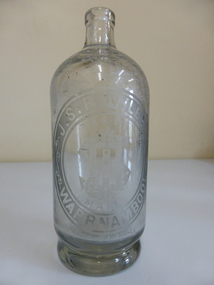
Bottle, J. S Rowley
... cordials and aerated waters was an important industry in Warrnambool from the time of the first settlement up to the 1980s. John Rowley was a prominent producer of aerated waters and cordials from 1868 to his death in 1893 (the Warrnambool Steam Aerated Works). He was known for his originality in the production of soft drinks and produced 20 varieties of drinks, including his own Henneberry Wine and Lime Fruit Champagne, both non-alcoholic. In the 1870s he was producing 600 dozen bottles a day and in the 1880s his cordial factory...cordials and aerated waters was an important industry in Warrnambool from the time of the first settlement up to the 1980s. John Rowley was a prominent producer of aerated waters and cordials from 1868 to his death in 1893 (the Warrnambool Steam Aerated Works). He was known for his originality in the production of soft drinks and produced 20 varieties of drinks, including his own Henneberry Wine and Lime Fruit Champagne, both non-alcoholic. In the 1870s he was producing 600 dozen bottles a day and in the 1880s his cordial factory ...The making of cordials and aerated waters was an important industry in Warrnambool from the time of the first settlement up to the 1980s. John Rowley was a prominent producer of aerated waters and cordials from 1868 to his death in 1893 (the Warrnambool Steam Aerated Works). He was known for his originality in the production of soft drinks and produced 20 varieties of drinks, including his own Henneberry Wine and Lime Fruit Champagne, both non-alcoholic. In the 1870s he was producing 600 dozen bottles a day and in the 1880s his cordial factory occupied half an acre of land and employed 13 people. He won many awards for his products at local Agricultural Shows. Warrnambool cordial bottles are of considerable significance as examples of an important industry now gone. Rowley is a significant person in the history of 19th century Warrnambool industries and Rowley bottles are of considerable importance, especially this one, made for efferverscent drinks. This is a heavy glass bottle (no stopper) possibly used for hop bitters or ginger wine or some contents that had high efferverscent qualities. The bottle has a heavy indented base. Oval etching ‘J.S.,Rowley Warrnambool’ with ‘Trade Mark’ and monogram. ‘J.R.’ in the centre of the oval. ‘Made in France’ is at the bottom edge of the oval inscriptions.warrnambool, john rowley warrnambool, rowley softdrinks, warrnambool steam aerated works, rowley bottle -
 Warrnambool and District Historical Society Inc.
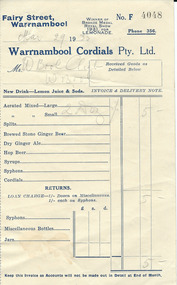
Document, Warrnambool Cordial, 1935
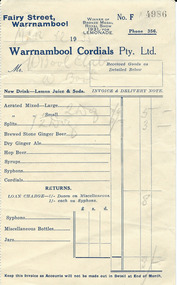
... Warrnambool Cordials Pty Ltd in 1935 to the Warrnambool Club. Warrnambool Cordials was originally established in the early 1920s by the Lescai Brothers who had their cordial business in Fairy Street. A company of local businessmen took over the cordial factory...Warrnambool Cordials Pty Ltd in 1935 to the Warrnambool Club. Warrnambool Cordials was originally established in the early 1920s by the Lescai Brothers who had their cordial business in Fairy Street. A company of local businessmen took over the cordial factory ...This is a docket issued by the Warrnambool Cordials Pty Ltd in 1935 to the Warrnambool Club. Warrnambool Cordials was originally established in the early 1920s by the Lescai Brothers who had their cordial business in Fairy Street. A company of local businessmen took over the cordial factory for some time when the Lescai brothers left the city, then it was purchased by a garage proprietor Thomas Hill and in the early 1930s Charles and Frederick Flett purchased the business and carried on for a few years. It was later operated by Thomas McKenzie before it was closed. It was still operating in 1975 when it was manufacturing both Loys and McKenzie’s soft drinks. It is noted that this docket contains the information that the Warrnambool Cordials business was a winner of a Bronze Medal for lemonade at the Royal Show in 1931. The Warrnambool Club, established in 1874 when the Warrnambool Club Hotel in Kepler Street was opened, was a gentlemen’s club. A new Warrnambool Club building was erected in Kepler Street in 1877 and is still in use today. This original docket is of interest as it is an example of the type of purchase made by the Warrnambool Club in 1935 and the type of docket used by the firm of Warrnambool CordialsThis is a docket printed on cream-coloured paper with blue print and lines. The details of the sale are written in pencil.Written material: ‘Mar.29, 1935, W’bool Club, W’bool, 2 doz., 5/-‘warrnambool cordials, warrnambool club, charles and frederick flett -
 Warrnambool and District Historical Society Inc.
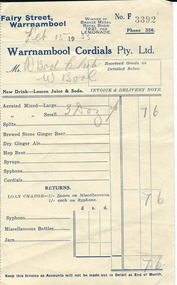
Document, Warrnambool Cordial, 1935
... Warrnambool Cordials Pty Ltd in 1935 to the Warrnambool Club. Warrnambool Cordials was originally established in Fairy Street in the early 1920s by the Lescai Brothers. A company of local businessmen took over the cordial factory...Warrnambool Cordials Pty Ltd in 1935 to the Warrnambool Club. Warrnambool Cordials was originally established in Fairy Street in the early 1920s by the Lescai Brothers. A company of local businessmen took over the cordial factory ...This is a docket issued by the Warrnambool Cordials Pty Ltd in 1935 to the Warrnambool Club. Warrnambool Cordials was originally established in Fairy Street in the early 1920s by the Lescai Brothers. A company of local businessmen took over the cordial factory when the Lescais left the city, then it was purchased by a garage proprietor, Thomas Hill, and in the early 1930s Charles and Frederick Flett purchased the business and carried it on for a few years. It was later operated by Thomas McKenzie before it was closed. It was still operating in 1975 when it was manufacturing both Loys and McKenzie’s soft drinks. It is noted that this docket contains the information that the Warrnambool Cordials business was a winner of a bronze medal for lemonade at the Royal Show in 1931. The Warrnambool Club, established in 1874 when the Warrnambool Club Hotel in Kepler Street was opened, was a gentlemen’s club. A new Warrnambool Club building was erected in Kepler Street in 1877 and is still in use today. This original docket is of interest as it is an example of the type of purchase made by the Warrnambool Club in 1935 and the type of docket issued by the firm of Warrnanmbool Cordials.This is docket printed on cream-coloured paper with blue print and lines. The details of the sale are written in pencil.Written material: ‘Feb.15, 1935, W’bool Club, W’bool, 3 doz. 7/6’warrnambool cordials, warrnambool club, lescai brothers, loys and mckenzie’s soft drinks, warrnambool -
 Warrnambool and District Historical Society Inc.
Document, Warrnambool Cordial, 1935
... Warrnambool Cordials Pty Ltd in 1935 to the Warrnambool Club. Warrnambool Cordials was originally established in the early 1920s by the Lescai brothers who had their cordial business in Fairy Street. A company of local businessmen took over the cordial factory...Warrnambool Cordials Pty Ltd in 1935 to the Warrnambool Club. Warrnambool Cordials was originally established in the early 1920s by the Lescai brothers who had their cordial business in Fairy Street. A company of local businessmen took over the cordial factory ...This is a docket issued by the Warrnambool Cordials Pty Ltd in 1935 to the Warrnambool Club. Warrnambool Cordials was originally established in the early 1920s by the Lescai brothers who had their cordial business in Fairy Street. A company of local businessmen took over the cordial factory for some time after the Lescais left the city, then it was purchased by a garage proprietor, Thomas Hill, and in the early 1930s Charles and Frederick Flett purchased the business and carried it on for a few years. It was later operated by Thomas McKenzie before it was closed. It was still operating in 1975 when it was manufacturing both Loys and McKenzie’s soft drinks. It is noted that this docket contains the information that the Warrnambool Cordials business was a winner of a Bronze Medal for lemonade at the Royal Show in 1931. The Warrnambool Club, established in 1874 when the Warrnambool Club Hotel in Kepler Street was opened, was a gentlemen’s club. A new Warrnambool Club building in Kepler Street was erected in 1877 and is still in use today. This original docket is of interest as it is an example of the type of purchase made by the Warrnambool Club in 1935 and the type of docket used by the firm of Warrnambool Cordials.This is a docket printed on cream-coloured paper with blue print and lines. The details of the sale are written in pencil.Written material: ‘Mar.12, 1935, W’bool Club, W’bool, 2 doz, 5/-, 1½ doz., 3/-, 8/-‘warrnamobol cordials, warrnambool club, charles and frederick flett -
 Warrnambool and District Historical Society Inc.
Document, Warrnambool Cordial, 1935
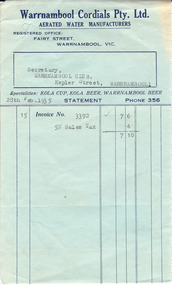
... Warrnambool Cordials Pty Ltd in 1935 to the Warrnambool Club. Warrnambool Cordials was originally established in the early 1920s by the Lescai Brothers who had their business in Fairy Street. A company of local businessmen took over the cordial factory...Warrnambool Cordials Pty Ltd in 1935 to the Warrnambool Club. Warrnambool Cordials was originally established in the early 1920s by the Lescai Brothers who had their business in Fairy Street. A company of local businessmen took over the cordial factory ...This is a docket issued by Warrnambool Cordials Pty Ltd in 1935 to the Warrnambool Club. Warrnambool Cordials was originally established in the early 1920s by the Lescai Brothers who had their business in Fairy Street. A company of local businessmen took over the cordial factory for some time when the Lescai brothers left the city, then it was purchased by a garage proprietor, Thomas Hill, and in the early 1930s Charles and Frederick Flett purchased the business and carried it on for a few years. It was later operated by Thomas McKenzie before it was closed. It was still operating in 1975 when it was manufacturing Loys and McKenzie’s soft drinks. It is noted that this docket contains the information that the Warrnambool Cordials business was a winner of a Bronze Medal for lemonade at the Royal Show in 1931. The Warrnambool Club, established in 1874 when the Warrnambool Club Hotel in Kepler Street was opened, was a gentleman’s club. A new Warrnambool Club building was erected in Kepler Street in 1877 and is still in use today. This original docket is of interest as an example of the type of purchase made by the Warrnambool Club in 1935 and the type of docket used by the firm of Warrnambool Cordials.This is a docket printed on green paper with blue printed material and blue lines. The details of the sale have been typed. The green paper is discoloured on the right hand side. Typed material: ‘Secretary, Warrnambool Club, Kepler Street, Warrnambool, 28th Feb.1935, 15, Invoice no. 3392, 7/6. 5% Sales Tax, 4, 7/10’warrnambool cordials -
 Warrnambool and District Historical Society Inc.
Bottle, J Lescal Warrnambool, 1920's
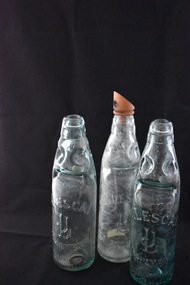
... Warrnambool Cordials Pty Ltd, was operated then by a group of Warrnambool businessmen and later by Thomas Hill in the 1930s. In the 1940s the business was purchased by the Flett brothers, Frederick and Charles, and in the 1960s the business was sold to Thomas McKenzie and retailed under the name of McKenzie’s Cordials. The business was still operating in the 1970s. These bottles are significant because they come from the Warrnambool aerated water factory ...These marble stopper bottles came from the Warrnambool aerated waters factory of Joseph Lescai. A marble stopper bottle was one which was filled upside down so that as soon as the filling stopped the stopper was forced down to seal the bottle against the rubber ring. Pressure inside the bottle would keep the marble pressed against the top of the bottle. To open the bottle the marble was pressed down where it would fall into the neck chamber below. The marble would stay inside the neck chamber when the bottle was tilted up for drinking. Joseph Lescai and his brother, James had fruit shops in Warrnambool and in the 1920s Joseph Lescai began to produce cordial and soft drinks at his Fairy Street shop. The cordial manufacturing was then re-located to a site in Fairy Street close to Raglan Parade and the business, known as Warrnambool Cordials Pty Ltd, was operated then by a group of Warrnambool businessmen and later by Thomas Hill in the 1930s. In the 1940s the business was purchased by the Flett brothers, Frederick and Charles, and in the 1960s the business was sold to Thomas McKenzie and retailed under the name of McKenzie’s Cordials. The business was still operating in the 1970s. These bottles are significant because they come from the Warrnambool aerated water factory of Joseph Lescai, probably in the late 1920s. The business commenced by Joseph Lescai became Warrnambool Cordials Pty Ltd and this was a prominent business in Warrnambool for 50 years or more. Cordial manufacturing was an important industry in Warrnambool for over 100 years. These three bottles are marble-stopper green glass bottles. They have a rounded base and body with a deep indentation in the glass at the top of the body to form a narrow neck chamber. The necks have small round indentations in the glass. The tops of the bottles have moulded glass and an opening. Details on the aerated waters manufacturer are impressed into the glass on the side of the bottles. A round green marble is loose in the neck chamber. Rubber rings in the necks of the bottles are missing. One of the bottles has a wooden stopper but this may not have been an original. Inscriptions and Markings: Serial numbers, signatures, engravings, dedications in books, manufacturing details or personal markings ‘J. Lescai J.L. Warrnambool’ ‘This bottle is the property of Lescai Warrnambool and cannot be legally used by others’ These three bottles are marble-stopper green glass bottles. They have a rounded base and body with a deep indentation in the glass at the top of the body to form a narrow neck chamber. The necks have small round indentations in the glass. The tops of the bottles have moulded glass and an opening. Details on the aerated waters manufacturer are impressed into the glass on the side of the bottles. A round green marble is loose in the neck chamber. Rubber rings in the necks of the bottles are missing. One of the bottles has a wooden stopper but this may not have been an original. Inscriptions and Markings: Serial numbers, signatures, engravings, dedications in books, manufacturing details or personal markings ‘J. Lescai J.L. Warrnambool’ ‘This bottle is the property of Lescai Warrnambool and cannot be legally used by others’ These three bottles are marble-stopper green glass bottles. They have a rounded base and body with a deep indentation in the glass at the top of the body to form a narrow neck chamber. The necks have small round indentations in the glass. The tops of the bottles have moulded glass and an opening. Details on the aerated waters manufacturer are impressed into the glass on the side of the bottles. A round green marble is loose in the neck chamber. Rubber rings in the necks of the bottles are missing. One of the bottles has a wooden stopper but this may not have been an original. Inscriptions and Markings: Serial numbers, signatures, engravings, dedications in books, manufacturing details or personal markings ‘J. Lescai J.L. Warrnambool’ ‘This bottle is the property of Lescai Warrnambool and cannot be legally used by others’ These three bottles are marble-stopper green glass bottles. They have a rounded base and body with a deep indentation in the glass at the top of the body to form a narrow neck chamber. The necks have small round indentations in the glass. The tops of the bottles have moulded glass and an opening. Details on the aerated waters manufacturer are impressed into the glass on the side of the bottles. A round green marble is loose in the neck chamber. Rubber rings in the necks of the bottles are missing. One of the bottles has a wooden stopper but this may not have been an original. J. Lescai J.L. Warrnambool’ ‘This bottle is the property of Lescai Warrnambool and cannot be legally used by others’ lescal cordials, cordial bottles, 1920's bottles, warrnambool cordial manufacurers -
 Warrnambool and District Historical Society Inc.
Bottle, J Fletcher Warrnambool, Early 20th century
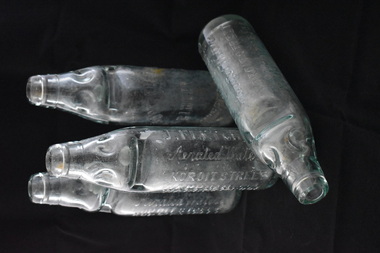
... Warrnambool. This factory in Koroit Street was established in the mid 19th century by John Davis. As a young boy John Fletcher worked at the cordial factory of John Rowley in Banyan Street, Warrnambool and then worked for a number of years for John Davis at his Union Cordial Factory. ...Warrnambool. This factory in Koroit Street was established in the mid 19th century by John Davis. As a young boy John Fletcher worked at the cordial factory of John Rowley in Banyan Street, Warrnambool and then worked for a number of years for John Davis at his Union Cordial Factory. ...These bottles are known as marble stopper bottles. This type of bottle was filled upside down so that as soon as the filling stopped the stopper was forced down to seal the bottle against the rubber ring. Pressure inside the bottle would keep the marble pressed against the top of the bottle. To open the bottle the marble was pressed down where it would fall into the neck chamber below. The marble would stay inside the chamber when the bottle was tilted up for drinking. These bottles have come from the aerated waters factory of John Fletcher of Warrnambool. This factory in Koroit Street was established in the mid 19th century by John Davis. As a young boy John Fletcher worked at the cordial factory of John Rowley in Banyan Street, Warrnambool and then worked for a number of years for John Davis at his Union Cordial Factory. In 1885 John Fletcher succeeded John Davis and continued in this business until 1930.. The business was then taken over by Ralph Reeves. John Fletcher manufactured aerated waters, soda, tonic waters, lemonade, ginger ale, hop beer, hop bitters, sarsaparilla and cordials. These bottles are of interest firstly because they are good examples of marble stopper bottles, no longer in use today. They are also important because they are John Fletcher bottles and he was a prominent soft drinks manufacturer in Warrnambool for over 40 years. These four bottles are made of green coloured glass. They have a round body with deep indentations at the top, narrowing the entrance to the neck which is short and thick. The top opening is made of thick moulded glass. A glass marble is loose in the neck section. The rubber ring inside the neck is missing. The manufacturer’s details are embedded into the glass on both sides of the bottle.‘Lemonade’ ‘J.Fletcher’s Aerated Waters Koroit Street Warrnambool’ ‘This bottle is the property of John Fletcher Warrnambool and cannot be legally used by others’ fletcher's cordial, marble stopper bottle, warrnambool cordial -
 Warrnambool and District Historical Society Inc.
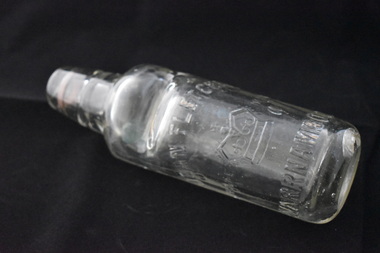
Bottle, John Fletcher Warrnambool, Early 20th century
... Warrnambool aerated waters factory of John Fletcher. This factory was commenced in the mid 19th century by John Davis. As a young boy John Fletcher worked at the cordial factory of John Rowley in Banyan Street, Warrnambool. ...Warrnambool aerated waters factory of John Fletcher. This factory was commenced in the mid 19th century by John Davis. As a young boy John Fletcher worked at the cordial factory of John Rowley in Banyan Street, Warrnambool. ...This is a marble stopper bottle. It was filled upside down so that as soon as the filling stopped the marble was forced down to seal the bottle against the rubber ring. Pressure inside the bottle kept the marble pressed against the top of the bottle. To open the bottle the marble has been pressed down and has fallen into the neck chamber below. The marble stayed inside the chamber when the bottle was tilted up for drinking. This bottle came from the Warrnambool aerated waters factory of John Fletcher. This factory was commenced in the mid 19th century by John Davis. As a young boy John Fletcher worked at the cordial factory of John Rowley in Banyan Street, Warrnambool. He then worked for John Davis at his Union Cordial Factory in Koroit Street for many years. In 1885 he succeeded John Davis in this business. Fletcher’s business continued until 1930 when it was sold to the soft drinks manufacturer, Ralph Reeves. John Fletcher made aerated waters, soda water, tonic water, lemonade, ginger ale, hop beer, hop bitters, sarsaparilla and cordials. This bottle is of interest as a good example of a marble stopper bottle and as a memento of the soft drinks made by John Fletcher, a prominent Warrnambool businessman for over 40 years. This is a glass bottle with a heavy round base and a rounded body which is markedly indented at the top, causing the aperture inside to be narrowed. The neck is rounded and tapers to the moulded glass opening at the top. There is a round piece of red rubber inside the top of the bottle. A green glass marble is loose in the neck section. The lettering giving details of the manufacturer is embedded into the glass. There is a small chip on the base.‘John Fletcher Trade Mark (crown symbol)Warrnambool’ ‘Soda Water’ ‘M’ john fletcher, warrnambool, cordial manufacturers, warrnambool -
 Warrnambool and District Historical Society Inc.
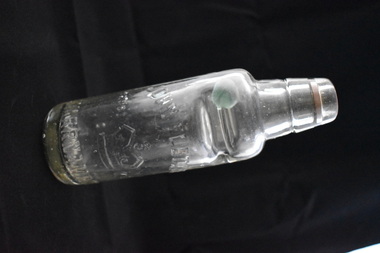
Bottle, Webb Bros Port Fairy, Early 20th century
... Cordial Factory in William Street (no 29) in the late 19th and early 20th centuries. This bottle is of interest as an example of a marble stopper bottle from the aerated waters factory of the Webb brothers in Port Fairy. Cordial manufacturing was an important industry in Warrnambool ...This is a marble stopper bottle from the Port Fairy aerated waters factory of the Webb brothers. A marble stopper bottle was filled upside down so that as soon as the filling stopped the stopper was forced down to seal the bottle against the rubber ring. Pressure inside the bottle would keep the marble pressed against the top of the bottle. To open the bottle the marble was pressed down where it would fall into the neck chamber below. The marble would stay inside the chamber when the bottle was tilted up for drinking. The Webb brothers operated the Port Fairy Aerated Water and Cordial Factory in William Street (no 29) in the late 19th and early 20th centuries. This bottle is of interest as an example of a marble stopper bottle from the aerated waters factory of the Webb brothers in Port Fairy. Cordial manufacturing was an important industry in Warrnambool and district for over 100 yearsThis is a marble stopper glass bottle. It has a rounded base with a rounded body tapering to a deeply-indented section which forms a narrow neck chamber. The top is rounded moulded glass with an opening. The green marble is loose inside the neck chamber and the rubber ring has been displaced and is at the bottom of the bottle. There is some discolouration inside the bottle from the original contents.‘Webb Bros. Aerated Waters Port Fairy’ cordial manufacturing in warrnambool district -
 Warrnambool and District Historical Society Inc.
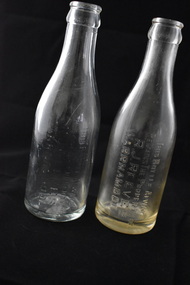
Bottle, Reeves Warrnambool, Mid 20th century
... These bottles come from the Warrnambool aerated waters business of Reg Reeves. A cordial factory was established in Koroit Street, Warrnambool by John Davis and this business was taken over in the 1880s by John Fletcher. ...These bottles come from the Warrnambool aerated waters business of Reg Reeves. A cordial factory was established in Koroit Street, Warrnambool by John Davis and this business was taken over in the 1880s by John Fletcher. ...These bottles come from the Warrnambool aerated waters business of Reg Reeves. A cordial factory was established in Koroit Street, Warrnambool by John Davis and this business was taken over in the 1880s by John Fletcher. Ralph Reeves, who had been involved in the cordial making business in Warrnambool since 1900, bought the Koroit Street business in 1931. His son Reginald John acquired the business in 1946 and was actively involved until his death in 1972. The factory continued until the 1908s. These bottles are of interest as they come from the Warrnambol aerated waters business of Reginald John Reeves. The Reeves cordial factory was prominent in Warrnambool for over 40 years. Cordial manufacturing in Warrnambool was an important industry for over 100 years. These are two clear glass bottles (one has been slightly discoloured inside from the contents). They have a rounded base with a rounded body tapering to a smaller neck. The openings at the top have a lip of moulded glass. The name of the aerated waters manufacturer is impressed into the side of the bottle. There are no stoppers.‘This bottle always remains the property of R.J.Reeves Warrnambool.’ reg reeves, warrnambool, cordial manufacturers in warrnambool, history of warrnambool -
 Warrnambool and District Historical Society Inc.
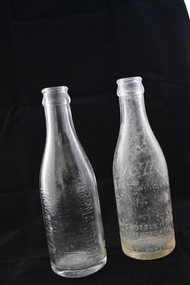
Bottle, Fletts Warrnambool, 1940s, 50s (contents of bottles)
... These bottles came from the Warrnambool aerated waters factory of Charles and Frederick Flett. They were sold under the name of Warrnambool Cordials Pty Ltd. ...These bottles came from the Warrnambool aerated waters factory of Charles and Frederick Flett. They were sold under the name of Warrnambool Cordials Pty Ltd. ...These bottles came from the Warrnambool aerated waters factory of Charles and Frederick Flett. They were sold under the name of Warrnambool Cordials Pty Ltd. This business was first established in the 1920s by Joseph Lescai who had a fruit shop in Fairy Street, Warrnambool (his brother James also had a fruit shop in Liebig Street). Joseph Lescai began to make cordials and moved his business to another location in Fairy Street. His cordial business was sold to a company of local businessmen who employed a cordial maker. In the 1930sThomas Hill then purchased this business, followed by the Flett brothers’ purchase in the 1940s. Charles and Frederick Flett, the sons of William Flett, a Timor Street tinsmith, also operated their father’s plumbing business for some time. In the 1960s Frederick Flett, the surviving brother, sold the Warrnambool Cordials business to Thomas McKenzie.These bottles are of interest because they are examples of the soft drinks bottles sold by the Flett brothers in the 1940s, 50s and 60s. The Warrnambool Cordials business was a prominent one in Warrnambool for many years. These are two glass bottles with a round base and body and rounded neck with a moulded glass opening at the top. The stoppers are missing. The bottles have the contents maker’s details impressed into the body of the bottle.‘Fletts Warrnambool’ ‘Net Contents 6½ fl.oz.’ ‘Warrnambool Cordials Pty Ltd Warrnambool’ ‘This bottle is the property of the Warrnambool Cordials Pty. Ltd. Warrnambool’ ‘39 L103’ charles and frederick flett, warrnambool, cordial manufacturers in warrnambool, history of warrnambool -
 Warrnambool and District Historical Society Inc.
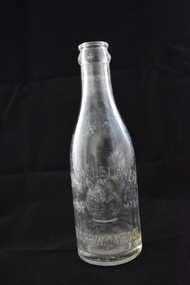
Bottle, Fletts Soda Water Warrnambool
... Warrnambool. He then worked for John Davis who had established the Union Cordial Factory in Koroit Street in the 1860s. ...Warrnambool. He then worked for John Davis who had established the Union Cordial Factory in Koroit Street in the 1860s. ...This is a marble stopper bottle that came from the Warrnambool aerated waters factory of John Fletcher. This bottle was filled upside down so that as soon as the filling stopped the marble was forced down to seal the bottle against the rubber ring. Pressure inside the bottle would keep the marble pressed against the top of the bottle. To open the bottle the marble was pressed down where it has fallen into the neck chamber below. The marble stayed inside the bottle when it was tilted for drinking. John Fletcher worked as a young boy at Rowley’s cordial factory in Banyan Street Warrnambool. He then worked for John Davis who had established the Union Cordial Factory in Koroit Street in the 1860s. In 1885 Fletcher bought John Davis’ business and operated it until 1930. It was then bought by Ralph Reeves. John Fletcher manufactured soda water, tonic waters, lemonade, ginger ale, sarsaparilla, cordials, hop beer and hop bitters. This bottle is of some significance as an example of a marble stopper bottle and as a memento of the Warrnambool soft drinks business of John Fletcher. He was a prominent businessman in This is a mauve-coloured glass bottle known as a marble stopper bottle. The base and body are round with the top part of the body heavily indented to form a narrow opening leading to the neck. The neck is rounded and slightly tapering to the moulded round top. A green glass marble is loose in the neck section. The rubber ring at the top of the opening is missing. The details of the soda water manufacturer are embedded into the glass on the sides. ‘John Fletcher Trade Mark (crown symbol) Warrnambool’ ‘Soda Water’ ‘M’ john fletcher, warrnambool, cordial manufacturers in warrnambool, history of warrnambool
