
Showing 28 items matching "henry henty"
-
 Ruyton Girls' School
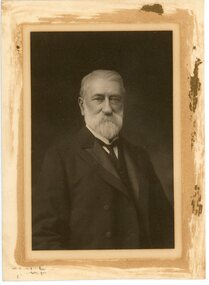
Photograph - Studio Portrait, [Henry Henty], c.1890
... [Henry Henty]...Henry Henty...Henry Henty (b.1833-d.1912) was a successful businessman, and briefly a MLA for the seat of Grenville, Victoria in 1866. ...Half-length, sepia-toned studio portrait of Mr Henry Henty (b.1833-d.1912). Mr Henty wears a dark suit and tie. ...Henry Henty (b.1833-d.1912) was a successful businessman, and briefly a MLA for the seat of Grenville, Victoria in 1866. ...Henry Henty (b.1833-d.1912) was a successful businessman, and briefly a MLA for the seat of Grenville, Victoria in 1866. He was one of three sons of James Henty, and nephew of Edward Henty who is considered to be the first permanent European colonist to take up residence in Victoria. Henry Henty and his wife Marion Ann Henty (nee McKellar) had ‘Tarring’, Kew built for their family in 1872. The Henty family resided at ‘Tarring’ until the death of Marion Henty in 1919. ‘Tarring’ was then sold to Ruyton Girls’ School, and the School moved to the site, (now 12 Selbourne Rd, Kew) in 1920. ‘Tarring’ was renamed ‘Henty House’ in honour of its original owners. Half-length, sepia-toned studio portrait of Mr Henry Henty (b.1833-d.1912). Mr Henty wears a dark suit and tie. His body is one quarter turned to his left, while he looks straight towards the camera. The background behind him is plain and dark. Photograph is mounted on cream card.henry henty, tarring, marion henty, selbourne road, kew (vic), ruyton girls' school, businessman, politician, 1890s -
 Ruyton Girls' School
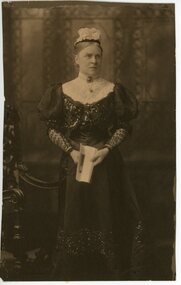
Photograph - Studio Portrait, [Marion Henty], c.1890
... ...henry henty...She died in June 1919. Henry Henty and his wife Marion had ‘Tarring’, Kew built for their family in 1872. ...Henry Henty and his wife Marion had ‘Tarring’, Kew built for their family in 1872. ...Marion Anne McKellar, the daughter of William Gilbert McKellar and Maria Jones was born in 1838. She married Henry Henty in 1859 and they had 9 children. She died in June 1919. Henry Henty and his wife Marion had ‘Tarring’, Kew built for their family in 1872. The Henty family resided at ‘Tarring’ until the death of Marion Henty in 1919. ‘Tarring’ was then sold to Ruyton Girls’ School, and the School moved to the site, (now 12 Selbourne Rd, Kew) in 1920. ‘Tarring’ was renamed ‘Henty House’ in honour of its original owners. Full length, sepia toned studio portrait of Mrs Marion Henty (b.1838-d.1919). Mrs Henty is standing, hold holds a book in front of her while looking to her left. She is wearing a lace cap on her head and has a cameo broach around her neck.marion henty, henry henty, tarring, selbourne road, marion mckellar, ruyton girls' school, kew (vic), woman, book, cameo, studio portrait, 1890s -
 Ruyton Girls' School
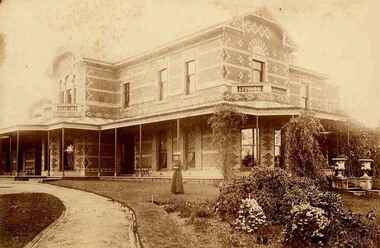
Photograph, [Miss Beatrice Henty in the Garden of Tarring], 1904
... ...henry henty...Miss Beatrice Henty was the daughter of Henry and Marion Henty. Mr Henry Henty and his wife Mrs Marion Anne Henty (nee McKellar) had ‘Tarring’, Kew built for their family in 1872, and resided there until the death of Marion Henty in 1919. ...Miss Beatrice Henty was the daughter of Henry and Marion Henty. Mr Henry Henty and his wife Mrs Marion Anne Henty (nee McKellar) had ‘Tarring’, Kew built for their family in 1872, and resided there until the death of Marion Henty in 1919. ...Beatrice Charlotte Henty was born 25 December 1867, married Graham Frederick Blandy in 1927 and died on 5 March 1950 in Toorak. She did not have any children. Miss Beatrice Henty was the daughter of Henry and Marion Henty. Mr Henry Henty and his wife Mrs Marion Anne Henty (nee McKellar) had ‘Tarring’, Kew built for their family in 1872, and resided there until the death of Marion Henty in 1919. ‘Tarring’ was then sold to Ruyton Girls’ School, and the School moved to the site, (now 12 Selbourne Rd, Kew) in 1920. ‘Tarring’ was renamed ‘Henty House’ by Ruyton Girls' School in honour of its original owners. Ruyton Girls' School was founded in 1878, Miss Beatrice Henty attended the School before 1888. The photograph is dated c.1904. Sepia toned photograph Miss Beatrice Henty in the garden of her family home Tarring, Selbourne Road, Kew. The north east and south facades of the two story brick house are visible in the photo. Beatrice Henty is standing in the garden wearing a long gown and a large hat. A gravel path curves across the lower left corner of the photograph. The photograph is mounted on card.ruyton girls' school, kew, beatrice henty, henry henty, marion henty, tarring, henty house, selbourne road, beatrice blandy, kew (vic), 1900s, 1904 -
 Ruyton Girls' School
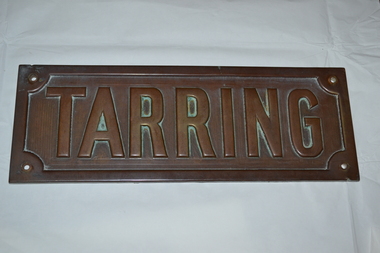
Plaque - House Name Plate, Tarring, 1872-1919
... henty, henry...henty...Henry Henty and his wife Marion Anne Henty (nee McKellar) had ‘Tarring’, Kew built for their family in 1872. ...Henry Henty and his wife Marion Anne Henty (nee McKellar) had ‘Tarring’, Kew built for their family in 1872. ...Henry Henty and his wife Marion Anne Henty (nee McKellar) had ‘Tarring’, Kew built for their family in 1872. Their house was named for Tarring, Sussex, the Henty familys' ancestral home in the United Kingdom. The Henty family resided at ‘Tarring’, Kew until the death of Marion Henty in 1919. ‘Tarring’ was sold to Ruyton Girls’ School in 1920, and the School moved to the site, (now 12 Selbourne Rd, Kew) in that year. ‘Tarring’ was renamed ‘Henty House’ by Ruyton in honour of its original owners.Rectangular-shaped brass name plate for the house "Tarring". One screw-sized hole in each corner to allow name plate to be attached to a building, (total of four). Reverse of nameplate is flat.TARRINGhenty, henry, henty, marion, tarring, 12 selbourne road, kew, ruyton girls' school, kew -
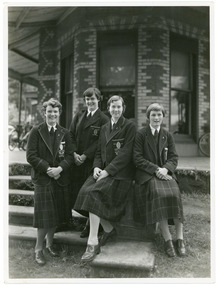 Ruyton Girls' School
Photograph, Ruyton Girls' School, 1951
... ...Henry Henty...Ruyton Girls' School Ruyton Students School Senior School Girls School Kew Melbourne School Uniform Prefects Photograph Henry Henty Henty House Marion Henty Tarring Reverse: Caroline Kent / Mary Murray. / 11.12.51. / Ann Dickinson / RGS011/1951/0003 Black and white rectangular photograph printed on matte photographic paper. ...Depicted are four students who were the 1951 House Captains at Ruyton Girls' School. The photo is an official school portrait, taken outdoors in front of Henty House (formerly Tarring). In the background, we can see two bicycles. The girls are dressed in their school uniforms, comprising a knee-length check-print skirt, dark jumper, light-coloured collared buttoned blouse with a dark tie, wool blazer, stockings, and dark-coloured lace-up shoes. Two of the girls are standing, while the other two are seated on a small concrete plinth. The students have been identified, from left to right, as A. Dickinson (Lascelles), C. Kent (Anderson, H. Cole (Bromby), and E. Duff (Daniell). Student leadership commenced at Ruyton Girls' School in 1906 with the introduction of the prefect system. Prefects had numerous responsibilities—gate duty, grounds duty, classroom marking, assembly door watch, uniform monitoring, and even supervising student detention. In 1947, a dedicated Prefects Room was erected on the east side of the Ruyton Girls' School Assembly Room in Henty House. The prefects system was revised in 1968 with a new leadership structure: there would be a permanent School Captain, Vice Captain and School Sports Captain; six permanent prefects would be elected, and the rest of the Matriculation class would form committees. These included Library, Social Services, S.C.M., Editorial, and Music. In this way, it was thought "that each Matric girl would have a certain amount of responsibility." With this revised structure came a brand new Prefects' Study, located in a former classroom next to the Domestic Science building. Each prefect was allocated one book locker, one clothing locker, "a small share in the heater", plus a new shared lounge. The prefect system was updated again in 1974. All sixth formers would become prefects, or "school officials." This saw the sixth form divided into two halves: one group would be prefects for the first half of the year, then the second group would take the reigns in the latter half of the year. In October 2023, Ruyton announced a new collaborative leadership structure for captains, prefects and house leaders, which would see two students in each leadership role.The record has strong historic significance as it gives insight into the House system at Ruyton Girls' School. In the early 1920s, Ruyton was settling into its new home at Selbourne Road, Kew. At the time, students were arranged by their form (or year level) for lessons and other school activities. A collection of eight emblems and mottoes for each form group was published in the Ruytonian December 1922, although the genesis of each were left unexplained. With enrolments continually growing, Principal Miss Hilda Daniell felt a new basis of organisation would benefit students, giving them a broader outlook and something bigger to work for. She took inspiration from tradition and implemented a House system. The House system was adopted at Ruyton in September 1924 to "provide a new kind of co-operation and competition among the girls, especially in Sport." There were four houses, three of which were named after early Principals: Anderson, Bromby and Lascelles. There was also the School House, initially for boarders only. Some time after the publication of the Ruytonian in April 1928, the School House was renamed Daniell House, and had opened up to day girls. The account published by the newly formed Daniell House in the Ruytonian December 1928 reads, "we are rather bashful in presenting this account of our doings, for we are conscious of our newness. Our house has now the honour of being known as Daniell House." Four of the original eight form emblems were adopted by the new Houses, while the others were discarded. According to former teacher and author of the centenary history of Ruyton, Ms Majorie Theobald, the House system "gave a new focus for all competitive sport, which had previously been organised on a rather inequitable basis." The colours chosen for the Houses were cherry red for Anderson, royal blue for Bromby, gold for Lascelles, and pale blue for School (later Daniell). New students starting at Ruyton from Prep onwards are allocated to one of the Houses with consideration to family connections and balance of numbers. The record's significance is further enhanced by its strong provenance, having been produced by Ruyton Girls' School and donated to the Archives by a familial connection of a former notable student.Black and white rectangular photograph printed on matte photographic paper.Reverse: Caroline Kent / Mary Murray. / 11.12.51. / Ann Dickinson / RGS011/1951/0003ruyton girls' school, ruyton, students, school, senior school, girls school, kew, melbourne, school uniform, prefects, photograph, henry henty, henty house, marion henty, tarring -
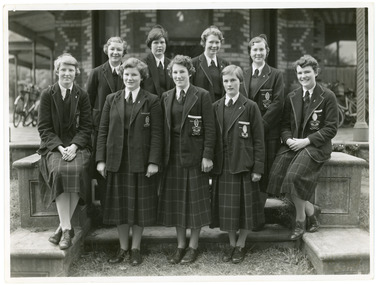 Ruyton Girls' School
Photograph, Ruyton Girls' School, 1951
... ...Henry Henty...Ruyton Girls' School Ruyton Students School Senior School Girls School Kew Melbourne School Uniform Prefects Photograph Henry Henty Henty House Marion Henty Tarring Reverse: Felicity Jacobs / Judi Olsen / Ann Dickinson / Bev. ...Depicted are nine Ruyton Girls' School prefects for the 1951 school year. The image is a formal school portrait taken outdoors on school grounds outside of Henty House (formerly Tarring). In the background, we can see three bicycles with cane baskets. The students are all dressed in knee-length check skirts, a dark jumper, light-coloured collared button-up blouse with a dark tie, wool blazers, and dark coloured shoes. Four girls are standing in the back row, and five are positioned in the front row. Students in the back row have been identified from left to right as M. Murray, B. Addison, T. Abson and H. Cole; in the front row, from left to right we can see S. Backhouse, J. Wigg (Vice Captain), F. Jacobs (Captain), E. Duff, and A. Dickinson. The same photograph appears in the Ruytonian 1951. Student leadership commenced at Ruyton Girls' School in 1906 with the introduction of the prefect system. Prefects had numerous responsibilities—gate duty, grounds duty, classroom marking, assembly door watch, uniform monitoring, and even supervising student detention. In 1947, a dedicated Prefects Room was erected on the east side of the Ruyton Girls' School Assembly Room in Henty House. The prefects system was revised in 1968 with a new leadership structure: there would be a permanent School Captain, Vice Captain and School Sports Captain; six permanent prefects would be elected, and the rest of the Matriculation class would form committees. These included Library, Social Services, S.C.M., Editorial, and Music. In this way, it was thought "that each Matric girl would have a certain amount of responsibility." With this revised structure came a brand new Prefects' Study, located in a former classroom next to the Domestic Science building. Each prefect was allocated one book locker, one clothing locker, "a small share in the heater", plus a new shared lounge. The prefect system was updated again in 1974. All sixth formers would become prefects, or "school officials." This saw the sixth form divided into two halves: one group would be prefects for the first half of the year, then the second group would take the reigns in the latter half of the year. In October 2023, Ruyton announced a new collaborative leadership structure for captains, prefects and house leaders, which would see two students in each leadership role.The record has strong historic significance as it depicts a former notable student, Helen Gordon (maiden name Cole), pictured third from the right in the front row. Helen started at Little Ruyton in Prep 1940 and finished Year 12 in 1952 as School Captain, Bromby Captain, Form Captain for Matric, Tennis Captain, Hockey Captain, Swimming Vice Captain, and an award for Best All-Round Girl. She also played baseball for Victoria. After finishing school, Helen went on to graduate from the University of Melbourne as a physiotherapist in 1956. Her first position at age 19 involved setting up clinics with the Victorian Health Department Poliomyelitis Rural division. Helen’s strong ties to Ruyton continued when she held the position of President of the Old Ruytonians’ Association from the start of 1966 to the end of 1967. In 2019, Helen received an Order of Australia Medal for service to community health as a physiotherapist. She was also the recipient of the 2022 Victorian Senior Achiever Award at Parliament House. Helen passed away in July 2023 at age 88. The record's significance is further enhanced by its strong provenance, having been produced by Ruyton Girls' School and donated to the Archives by a familial connection.Black and white rectangular photograph printed on matte photographic paper.Reverse: Felicity Jacobs / Judi Olsen / Ann Dickinson / Bev. Addison / RGS011/1951/0004 /ruyton girls' school, ruyton, students, school, senior school, girls school, kew, melbourne, school uniform, prefects, photograph, henry henty, henty house, marion henty, tarring -
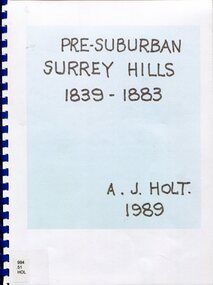 Surrey Hills Historical Society Collection
Book, Alan Judge Holt (deceased), Pre-Suburban Surrey Hills 1839-1883, 1989
... ...(mr) henry henty...(mr) henry jamieson (mr) ken hall (ms) edna holt (mr) frank bamford (mr) harrison buchanan scouts grange hill wattle park round hill bona vista mount albert barton street (mr) john raeburn (mr) edmund holt (mr) james dunn butter merchant mont albert road elgar road view hill new street surry mont delany's hill reservoir hill riversdale road middlesex road surrey hills (mr) aldo massora aborigines damper creek back creek west creek kooyongkoot creek (mr) john gardiner (mr) chas mullins (mr) henry elgar (mr) robert campbell (mr) alexander dyce (mr) robert brooks t budds payne (mr) hugh glass (mr) patrick trainer w virtue (mr) t fulton (mr) john crimp (mr) w dempsey (mr) w e stanbridge (mr) james atkinson j porter j collings w edde (mr) orlando fenwick (dr)(mr) l l smith (mr) j h knipe (mr) george cockcroft (sr) (mr) john martin kleinert w morton d delaney a moeller (mr) william smith (mr) e.p.s.sturt (mr) thomas blood (mr) patrick mornane (mr) henry de carle w craig j hill w oliver j keogh a laing vineyards toll gates (mr) david staig (mr) phillip kleeper (mr) goyder usher (mr) james lawler (mr) w.e. stanbridge (mr) gideon rutherford c a f mater j gadsby w h wrixon e h lamont i ainger (mr) james henty (mr) henry henty w freemantle w palmer beckett park, maranoa gardens Unpublished manuscript / notes written by Alan Holt about settlers in and around Surrey Hills bound in-house. ...Author: Alan Judge Holt amassed a significant collection of historical material related to the Surrey Hills area. Born in Moonee Ponds in 1912 to Edmund Holt and Ellen Ruby Sutton, he married Edna Jean Pallot in 1937. They lived at 62 Broughton Road, Surrey hills, had 3 sons and were strongly associated with the Surrey Hills Methodist Church. Alan was Secretary of the Victorian Lands Department and in his spare time recorded the occupancy of every property in Surrey Hills and Mont Albert at the beginning of each decade from 1890 to 1980. His collection of files and individual cards covers people, places, churches, clubs, businesses and other organisations in the area. Alan used this information to give talks and tours of the area and gifted his material to the local history collection through Jocelyn Hall.Unpublished manuscript / notes written by Alan Holt about settlers in and around Surrey Hills bound in-house. It is supported by maps showing landowners over various years from about 1840-1885(mr) henry jamieson, (mr) ken hall, (ms) edna holt, (mr) frank bamford, (mr) harrison buchanan, scouts, grange hill, wattle park, round hill, bona vista, mount albert, barton street, (mr) john raeburn, (mr) edmund holt, (mr) james dunn, butter merchant, mont albert road, elgar road, view hill, new street, surry mont, delany's hill, reservoir hill, riversdale road, middlesex road, surrey hills, (mr) aldo massora, aborigines, damper creek, back creek, west creek, kooyongkoot creek, (mr) john gardiner, (mr) chas mullins, (mr) henry elgar, (mr) robert campbell, (mr) alexander dyce, (mr) robert brooks, t budds payne, (mr) hugh glass, (mr) patrick trainer, w virtue, (mr) t fulton, (mr) john crimp, (mr) w dempsey, (mr) w e stanbridge, (mr) james atkinson, j porter, j collings, w edde, (mr) orlando fenwick, (dr)(mr) l l smith, (mr) j h knipe, (mr) george cockcroft, (sr) (mr) john martin kleinert, w morton, d delaney, a moeller, (mr) william smith, (mr) e.p.s.sturt, (mr) thomas blood, (mr) patrick mornane, (mr) henry de carle, w craig, j hill, w oliver, j keogh, a laing, vineyards, toll gates, (mr) david staig, (mr) phillip kleeper, (mr) goyder usher, (mr) james lawler, (mr) w.e. stanbridge, (mr) gideon rutherford, c a f mater, j gadsby, w h wrixon, e h lamont, i ainger, (mr) james henty, (mr) henry henty, w freemantle, w palmer, beckett park, maranoa gardens -
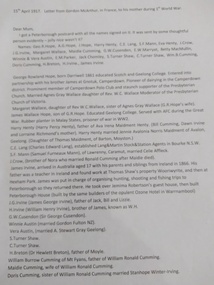 Peterborough History Group
World War One transcribed letter
... ...henry percy henty...Notes names of people present at Peterborough in early 1917. gordon mcarthur george rowland hope henry percy henty charles edward lang samuel furneaux mann james irvine james george irvine william henry irine sir george cusendon winnie austin vera austin s. turner shaw c. turner shaw dr hewlett breton william burrow cumming maidie cumming doris cumming World War I War correspondence Typed transcription of a letter dated 15th April 1917, sent from Mr Gordon McArthur in France to his mother mentioning a postcard from Peterborough. ...The text mentions that Mr Gordon McArthur received a postcard in France, 1917, WWI, from the Peterborough Hotel and he then lists the names of those who signed the card. Later research by Bim Affleck lists the names and who each person is.Notes names of people present at Peterborough in early 1917. Typed transcription of a letter dated 15th April 1917, sent from Mr Gordon McArthur in France to his mother mentioning a postcard from Peterborough.gordon mcarthur, george rowland hope, henry percy henty, charles edward lang, samuel furneaux mann, james irvine, james george irvine, william henry irine, sir george cusendon, winnie austin, vera austin, s. turner shaw, c. turner shaw, dr hewlett breton, william burrow cumming, maidie cumming, doris cumming, world war i, war correspondence -
 Kew Historical Society Inc
Archive (Sub-series) - Subject File, Kew Historical Society, HENTY family, 1963
... The Hentys named in the archive file include: Marion Ruth Henty, Thomas Henry Armstrong, Kew, Thomas Henty, James Henty, Henry Henty, Harry Percy Henty, Charles James Henty, Ethel Maria Henty, Beatrice Charlotte Henty, Gabrielle Henty, Gilbert Waldergrave Henty, Ashley Oliver Henty, Alan McKellar Henty, Herbert James Henty, Herbert William Willie Henty, Ethel Mary Letttie Henty, Florence Emily Henty, Arthur Frederick Henty, June Angela Roxeth Henty, Hon Thomas Henty, Thomas Norman Henty, Herbert Denham Henty, Agnes Muriel Henty, Frances Charlotte Henty, Mary Jane Henty, Emily Henty, Edward Henty, Stephen George Henty, Mary Jane Henty, Percy Henty, Ernest George Henty, Eveline Agnes Henty, Edward Ellis Henty, John Henty, Eliza Whitfield Henty, Francis Henty, Louisa Henty, Caroline Henty, Alice Frances Henty, Ruby Alice Hindson, William Francis Hindson, Dora Henty Hindson, Louisa Charlotte Francis Hindson, Winifred Caroline Henty Hindson, and Elsie Mary Eliza Hindson. ...The Hentys named in the archive file include: Marion Ruth Henty, Thomas Henry Armstrong, Kew, Thomas Henty, James Henty, Henry Henty, Harry Percy Henty, Charles James Henty, Ethel Maria Henty, Beatrice Charlotte Henty, Gabrielle Henty, Gilbert Waldergrave Henty, Ashley Oliver Henty, Alan McKellar Henty, Herbert James Henty, Herbert William Willie Henty, Ethel Mary Letttie Henty, Florence Emily Henty, Arthur Frederick Henty, June Angela Roxeth Henty, Hon Thomas Henty, Thomas Norman Henty, Herbert Denham Henty, Agnes Muriel Henty, Frances Charlotte Henty, Mary Jane Henty, Emily Henty, Edward Henty, Stephen George Henty, Mary Jane Henty, Percy Henty, Ernest George Henty, Eveline Agnes Henty, Edward Ellis Henty, John Henty, Eliza Whitfield Henty, Francis Henty, Louisa Henty, Caroline Henty, Alice Frances Henty, Ruby Alice Hindson, William Francis Hindson, Dora Henty Hindson, Louisa Charlotte Francis Hindson, Winifred Caroline Henty Hindson, and Elsie Mary Eliza Hindson. ...Various partiesReference, Research, InformationSecondary Values (KHS Imposed Order)Comprehensive subject file containing correspondence, research, articles, and newspaper articles/clippings compiled over time by various named and un-named researchers, separated into a number of files. In addition to genealogical information contained in brief handwritten biographies there are also transcriptions of cemetery records and a family tree (Sue Leong). The file also contains a copy of Suzanne McWha’s article on Marion Henty’s wedding dress and a long newspaper article. There is also a typed summary of a talk provided by Dr. and Mrs Scholes, who were descendants of James Henty. The value of the file is that it is comprehensive and mentions Henty relatives who are not named Henty.kew historical society - archives, henty family (kew)kew historical society - archives, henty family (kew) -
 Kew Historical Society Inc
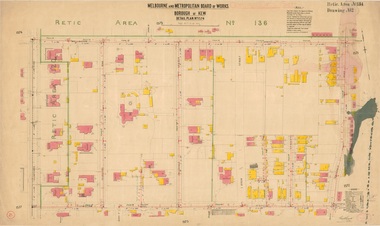
Plan, Melbourne & Metropolitan Board of Works : Borough of Kew : Detail Plan No.1574, 1905
... ‘Tarring’ (incorrectly spelled here as ‘Karring’) was built for Henry Henty in 1872, on part of his original allotment of 20 acres, and ‘Mount View’, which retains its original building and the fountain in the front garden, is part of Ruyton’s Junior School. ...‘Tarring’ (incorrectly spelled here as ‘Karring’) was built for Henry Henty in 1872, on part of his original allotment of 20 acres, and ‘Mount View’, which retains its original building and the fountain in the front garden, is part of Ruyton’s Junior School. ...The Melbourne and Metropolitan Board of Works (MMBW) plans were produced from the 1890s to the 1950s. They were crucial to the design and development of Melbourne's sewerage and drainage system. The plans, at a scale of 40 feet to 1 inch (1:480), provide a detailed historical record of Melbourne streetscapes and environmental features. Each plan covers one or two street blocks (roughly six streets), showing details of buildings, including garden layouts and ownership boundaries, and features such as laneways, drains, bridges, parks, municipal boundaries and other prominent landmarks as they existed at the time each plan was produced. (Source: State Library of Victoria)This plan forms part of a large group of MMBW plans and maps that was donated to the Society by the Mr Poulter, City Engineer of the City of Kew in 1989. Within this collection, thirty-five hand-coloured plans, backed with linen, are of statewide significance as they include annotations that provide details of construction materials used in buildings in the first decade of the 20th century as well as additional information about land ownership and usage. The copies in the Public Record Office Victoria and the State Library of Victoria are monochrome versions which do not denote building materials so that the maps in this collection are invaluable and unique tools for researchers and heritage consultants. A number of the plans are not held in the collection of the State Library of Victoria so they have the additional attribute of rarity.Original survey plan, issued by the MMBW to a contractor with responsibility for constructing sewers in the area identified on the plan within the Borough of Kew. The plan was at some stage hand-coloured, possibly by the contractor, but more likely by officers working in the Engineering Department of the Borough and later Town, then City of Kew. The hand-coloured sections of buildings on the plan were used to denote masonry or brick constructions (pink), weatherboard constructions (yellow), and public buildings (grey). This plan shows several very large houses, particularly along Glenferrie Road, and the area now occupied by Ruyton Girls’ School. ‘Tarring’ (incorrectly spelled here as ‘Karring’) was built for Henry Henty in 1872, on part of his original allotment of 20 acres, and ‘Mount View’, which retains its original building and the fountain in the front garden, is part of Ruyton’s Junior School. The most significant change to Tarring and its grounds since 1903, involve the removal of a number of the outbuildings, including a Burmese temple, bought by Henty from the Burmese Exhibit at the Great Exhibition of 1880. It is shown on the plan as a summerhouse. The two-storey mansion, on the corner of Glenferrie Road and Wellington Street, was built in 1891 by leading architect Alfred White as his own home. Having an initial N.A.V. of £160, the house was purchased by a warehouseman Henry Lister, by 1900, when the N.A.V. was recorded at £111. By the turn of the century the house was known as ‘Comaques’. By contrast, much smaller houses are shown in Scott and Byron Streets, including a tiny Mission Hall in Byron Street, which belonged to the Anglican Church from at least 1903 to 1917.melbourne and metropolitan board of works, detail plans, maps - borough of kew, mmbw 1574, cartography -
 Kew Historical Society Inc
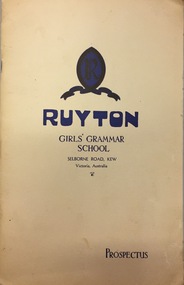
Document, Ruyton Girl's School, Ruyton Girls' Grammar School, Prospectus, 1950
... The centrepiece of this property is Henty House, now named for its original owners, Henry and Marion Henty, but once known as ‘Tarring’. ...The centrepiece of this property is Henty House, now named for its original owners, Henry and Marion Henty, but once known as ‘Tarring’. ...Ruyton was founded in 1878 in the Bulleen Road, Kew, home of newly widowed Mrs Charlotte Anderson (now High Street South). There she hired a governess, Miss Flora Barton, to educate a small group of children, including her own, in her front parlour. Her school immediately flourished. By 1882 she was able to move it to larger premises at ‘Edgecomb’, in Studley Park Road, and name it Ruyton, after a family connection with the village of Ruyton-XI-Towns, Shropshire, England. Since that time Ruyton has continued to thrive, outgrowing its Edgecomb site, and another at A’Beckett Street, Kew, before settling into its current home in Selbourne Road in 1920. The centrepiece of this property is Henty House, now named for its original owners, Henry and Marion Henty, but once known as ‘Tarring’. The grand, polychrome brick home was built in 1872 and with nearly four acres of gardens and grounds around it, it has proved to be a place where Ruyton and its students could continue to prosper. (source: Ruyton website 2020)Prospectus provided in response to an enrolment inquiry in 1950 for Ruyton Girls' Grammar School. (See also Item 2016.0468)ruyton girls grammar school -
 City of Melbourne Libraries
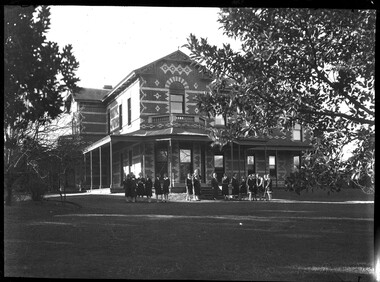
Photograph, Bull, Hugh Jones, 1897-1993, Ruyton Girls School 1933
... Originally named “Tarring”, it was built in 1872 by Mr Henry Henty and his wife Mrs Marion Anne Henty (nee McKellar) for their family. ...Originally named “Tarring”, it was built in 1872 by Mr Henry Henty and his wife Mrs Marion Anne Henty (nee McKellar) for their family. ...Published: Age (Melbourne, Vic.: 1854- ), 4 August 1933, page 3 Published title: GIRLS’ SCHOOLS – MODEL YACHTING - FOOTBALL Published caption: The headmistress, Miss H. Daniell, and girls at Ruyton, Selbourne Road, Kew, snapped after school hours. Trove article identifier: http://nla.gov.au/nla.news-article204381763 Research by Project Volunteer, Louise McKenzie: Rather than the people, this charming building takes the eye! Originally named “Tarring”, it was built in 1872 by Mr Henry Henty and his wife Mrs Marion Anne Henty (nee McKellar) for their family. Located at 82 Selbourne Road, Kew, it is described by Melbourne’s Open House organisation as “… a two-storey, polychrome brick mansion built for them by prominent Melbourne architect Albert Purchas. The house and nearly four acres of grounds served as their family home until the death of Marian Henty in 1919. “ (See below for further information on Albert Purchas.) In 1920 it was sold to Ruyton Girls School. Ruyton was established in 1878 by its first principal, Charlotte Anderson (1838-1906), who named it in honour of the parish in Shropshire, England, Ruyton-XI-Towns, where her great-great-grandfather David Evans had been vicar. Its motto is Recte et Fideliter, meaning "Upright and Faithful", which is also the name of the school song. The original school, one of Victoria’s oldest independent schools for girls, was located at the home of Mrs Anderson at 63 High Street South, Kew. In 1882 she moved the school to Edgecombe in Studley Park Road. Mrs Anderson retired due to ill health and sold the school to her friend Miss Eliza Bromby. One of Ruyton's four Houses, Anderson, is named for Charlotte Anderson. When Ruyton Girls School was moved to the site in 1920 it established the building as a Boarding House, and renamed the building “Henty House” in honour of its original owners. Today the school remains an all girls’ school, and pays tribute to its founder and the historic significance of Henty House and its magnificent Moreton Bay Fig tree, which still stands today. The building retains many original, Victorian-era features, while also showing the layers of change, made over the decades in order to meet the evolving needs of one of Melbourne’s leading schools. The headmistress mentioned in the caption for MCK016 is Miss Hilda Daniell, shown standing in front of Henty House in the midst of a group of Ruyton girls in their school uniforms, some holding hockey sticks. Miss Daniell was the longest serving Principal of Ruyton 1913-1952. She was originally a student in 1893, then joined the teaching staff in 1898. It was under her leadership that the School purchased and moved to “Tarring”. The boarding house included a flat for Hilda to live onsite. An article in the Ruyton Heritage Collection – Bedford Series, dated 21 May 2021 cites that Miss Daniell “was affectionately known as “Dream” by Ruytonians of her era” apparently due to a tendency to quiet reflection. The article continues, “After her retirement in 1952 Miss Daniell was awarded an Order of the British Empire for her many services to education, an award she received from the hands of the Queen during the 1954 Royal Tour. Also in 1952, the Kew Council honoured her by renaming Brougham Place as ‘Daniell Place’.” Arthur Purchas, architect: The architect responsible for the design of “Tarring”. Arthur Purchas, was extremely active and highly regarded at this time. Born in Wales in 1825, he emigrated to Melbourne in 1851 and soon established a private practice as a surveyor and architect, with offices variously in Little Collins, Queen Street, Chancery Lane, and finally 462 Little Collins Street. Wikipedia notes in an early reference to Purchas that “An early story is that one of his first jobs, when he would have been about 25 years old, was a position under Surveyor-General Robert Hoddle, and disagreeing with him over the line for St Kilda Road, appealed to Governor La Trobe, and successfully got the road diverted around the hill which eventually became the site of the Shrine of Remembrance. There may not be much truth to this, since by 1851 St Kilda Road was already a well worn track running around the hill, the top of which La Trobe had reserved for a Government House in 1840.” The timing of Purchas’s arrival in Melbourne was perfect. The Victorian gold rush of the 1850’s generated enormous wealth in Melbourne, and a building boom followed. The Wikipedia entry continues … that alone, or with his brother in law Charles R Swyer, “Purchas is said to have designed over 140 houses, offices, churches, banks and cemetery buildings in Victoria in his long career. Berkely Hall, St Kilda dating from 1854 is one of his first buildings, and still exists, though the original house is obscured by an early C20th verandah. Another notable early design was the head office of the Melbourne Savings Bank, built on the corner Flinders Lane and Market Street in 1857-58, in an elaborately detailed Renaissance Revival style. His churches were mostly Gothic Revival, built for the Anglican Church, along with some parsonages, while most of the bank buildings were Renaissance Revival designs for the Bank of Australasia. He also designed city buildings in the 1860s and 70s, such as the Mutual Insurance Co, Northern Insurance Co, and the first premises for George & George, destroyed by fire in 1889. One of his most outstanding designs is St George's Presbyterian Church in Chapel Street, St Kilda (1877–80), in a striking polychrome brick Gothic Revival style, unusually carried on through to the interior. Purchas produced one of the few published maps and compilations of the early pastoral settlers runs in Victoria in 1853. In the same year he designed the layout of the Melbourne General Cemetery, the first 'garden' cemetery in Victoria, a curvilinear layout with extensive plantings, as well as the gate lodge and gates (the gates lodge were demolished and the gates relocated to their present position in the 1930s). He was a long time member of the Cemetery Trust, serving as secretary from 1876-1886. He was also Chairman of the Boroondara General Cemetery Board of Trustees 1867 to 1909, and designed many aspects of the cemetery, including the landscape, the cast iron entrance gates (1889), the rotunda (1890) and the surrounding brick wall (1895–6). Purchas was a keen inventor having applied for a patent for an invention for lighting a railway carriage with gas in 1861, and won a competition for a model farm complex, in 1862. This unusual design had the dairy either underground or half underground, to keep it cool, with a 'dry lining' around the outside of the sunken portions. In 1883, with fellow architect Alfred Smith, he took out a patent for fire-proof floors, arches, staircases and other parts of buildings.” Purchas died in his home in Kew in 1909 and, not surprisingly, was buried at Boroondara Cemetery. Henty family history in Australia: Henry Henty (b.1833-d.1912) was a successful businessman, and briefly a MLA for the seat of Grenville, Victoria in 1866. He was one of three sons of James Henty, and nephew of Edward Henty who is considered to be the first permanent European colonist to take up residence in Victoria. The Australian Dictionary of Biography provides a riveting overview of the complex and enthusiastic activities of the Henty family, and its entanglement in the development of mercantile life in WA, Tasmania, SA and Victoria from 1828 onwards. The family had a focussed commitment to creating thriving businesses in Australia, despite being regularly thwarted by legislative pushbacks and law changes, instigated in Britain as the Australian colony developed. Areas of greatest influence were merino sheep, beef and horse breeding, whaling, farm establishment, membership of the legal and political fraternities, sporting prowess, and board directorships in banking and railways. The Dictionary of Biography summarises: “As settlers the Henty men were notable not merely for being the first to settle in Victoria but also for their number and quality: a father and seven educated sons experienced in farming and trading, occupations of prime importance to a new colony, and importers of unusually substantial capital in money, skilled workers and thoroughbred stock.” As well as Tarring, the Henty family Melbourne residences included Findon (in Kew, overlooking Studley Park), Offington (St Kilda Road overlooking Albert Park) and Field Place (Henty Court, Kew), and descriptions of the houses in Wikipedia –Melbourne Architecture 1870s - reflect the development of Melbourne society. References RUYTON (1934, December 15). The Argus (Melbourne, Vic. : 1848 - 1957), p. 18. Retrieved March 12, 2025, from http://nla.gov.au/nla.news-article11001092 https://en.wikipedia.org/wiki/Ruyton_Girls%27_School#:~:text=Ruyton%20Girls'%20School%2C%20commonly%20referred,of%20Melbourne%2C%20Victoria%2C%20Australia. https://www.ruyton.vic.edu.au/our-school#:~:text=With%20an%20international%20reputation%20as,opportunity%20and%20challenge%20for%20girls. https://victoriancollections.net.au/items/5bea06b121ea690bf4eb08ed https://www.ruyton.vic.edu.au/our-school/campus-and-facilities Biography of Edward Henty and family: https://adb.anu.edu.au/biography/henty-edward-2247 Article on Offington House: http://nla.gov.au/nla.news-article196554993 Article on Field Place House : https://vhd.heritagecouncil.vic.gov.au/places/64881 Article on Findon: https://www.facebook.com/KewHistoryGroup/posts/in-the-book-jubilee-history-of-kew-1803-1910-by-fga-barnard-there-is-a-photo-of-/4389837914376555/ Charlotte Anderson/Ruyton: https://victoriancollections.net.au/items/5be4b8c821ea6a039c7a13e3 https://victoriancollections.net.au/items/6179e90da912eb195970bdf8 https://victoriancollections.net.au/items/5bea06b121ea690bf4eb08ed https://victoriancollections.net.au/items/65d3e05c5b5e5c61346420a2 Photo of Charlotte Anderson: https://viewer.slv.vic.gov.au/?entity=IE1515776&mode=browse Photo of Charlotte Anderson: https://victoriancollections.net.au/items/6179e90da912eb195970bdf8 https://victoriancollections.net.au/items/5be4b8c821ea6a039c7a13e3 Wikipedia: Architecture of Melbourne: https://en.wikipedia.org/wiki/Architecture_of_Melbourne Open House Melbourne: Henty House: https://www.universe.com/events/henty-house-ruyton-girls-school-tickets-Z45LYH Albert Purchas: https://en.wikipedia.org/wiki/Albert_Purchas Leader (Melbourne, Vic. : 1862 - 1918, 1935), Saturday 3 June 1876, page 9 – Article on Offington http://www.ohta.org.au/organs/organs/BoxHillUC.html Melb Architecture 1870s - Wikipedia Victorian Collections: Letters of Hilda Daniell https://victoriancollections.net.au/items/65d3e05c5b5e5c61346420a2 Photographer notations on slide: "Ruyton Girls School 1933".schools, 1930-1939, architecture, victorian architecture, trees, architects -
 Flagstaff Hill Maritime Museum and Village
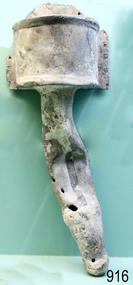
Functional object - Urinal, circa 1825
... It was a major financial setback for James Henty and his brothers, but one from which they recovered. In a submission to the Governor of New South Wales dated 24 March 1840, the Henrys summarised their work over the previous six years of establishing the Portland settlement, stating “Six stations have been occupied, one at Portland Bay three at the open country about 60 miles inland called ‘Merino Downs’ They have erected two houses at Portland Bay and two others at Merino Downs”....It was a major financial setback for James Henty and his brothers, but one from which they recovered. In a submission to the Governor of New South Wales dated 24 March 1840, the Henrys summarised their work over the previous six years of establishing the Portland settlement, stating “Six stations have been occupied, one at Portland Bay three at the open country about 60 miles inland called ‘Merino Downs’ They have erected two houses at Portland Bay and two others at Merino Downs”. ...The urinal was probably situated in the forward part of the ship rather than the stern, being one of two placed on either side of the deck and housed immediately adjacent to the doors into the forward castle, or crew sleeping quarters. The toilets on maritime vessels were (and still are) called the ‘heads’, after the sanitation arrangements common until the end of the eighteenth century. The name was given to the ‘head’ of the ship, forward of the forecastle and around the beak or bowsprit. These first lavatories were floored with grating or nets so the force of the sea could wash them clean, and they were always used on the lee or non-weather side so the effluent fell directly into the water rather than back on board. The Children's wrecking: The barque Children was one of the first vessels to be lost in the Western District. The vessel was wrecked to the east of Warrnambool on 14th January 1838. When it ran ashore in hurricane-force winds, 22 passengers and crew were fortunate to escape being battered to death on the rocks. The Children broke up within 20 minutes, sweeping sixteen of those on board to their deaths. After eleven days, the rescued survivors, all of whom were injured, had been taken to Portland. According to Lloyd's Shipping Register 1837-1839, the Children was built in 1825 at Liverpool and operated by owners Gordon & Co, of London. Registration number 123/1837, James Henty then bought her in 1837 as a three-masted barque of 254 tons, with a hull of “part pitch pine, felt sheathed” and “coppered in 1837” at Launceston, registered number 6/1837. In 1838, the Children, under her master Captain H. Browne, completed a successful round trip from Launceston to London (carrying wool and whale oil loaded in Portland), returning in late November of that year carrying a general cargo including house bricks used for ballast. On the 11th of January 1839, the Children sailed from Launceston for Adelaide, with 24 passengers, 14 crew, and an awkward mixed cargo, including 1500 sheep, 8 bullocks, 7 horses, farming implements, and six whaleboats with associated whaling gear. One account states that when the Children was “put out from port, she was light and badly ballasted”. The vessel immediately encountered four days of hurricane-force storms, eventually clearing on the early morning of the 14th. However, it was too late to take accurate measurements of the sun or stars to establish their position relative to the coast. The Children collided with a limestone stack at the entrance of what is now Childers Cove, and the seas smashed the vessel into pieces within half an hour. All the cargo and 16 lives were lost, including 9 children. The Henty brothers contributed £150 towards a fund for the 22 survivors at a memorial service held in Launceston later that year. It was a major financial setback for James Henty and his brothers, but one from which they recovered. In a submission to the Governor of New South Wales dated 24 March 1840, the Henrys summarised their work over the previous six years of establishing the Portland settlement, stating “Six stations have been occupied, one at Portland Bay three at the open country about 60 miles inland called ‘Merino Downs’ They have erected two houses at Portland Bay and two others at Merino Downs”.The urinal recovered from the Children's wreck is significant as part of the original fittings of the early 19th-century barque. The 1839 wreck and recovered artefacts are examples of the construction methods and materials used in that era and can be used to study the evolution of shipbuilding methods and principles. The wreck of the Children is of state significance as one of colonial Victoria’s earliest and most significant maritime disasters, and one of the first vessels lost in the Western District. This is recognised by its inclusion on the Victorian Heritage Register, VHR No. S116. Little is left on the seabed to mark the tragedy, apart from some of the house bricks intended for the Henty settlement. A lead urinal with a rounded back at the top splash plate with an attached semi-circular receptacle or basin (20cm deep and projecting forward 30cm). At the sides are flanges with bolt holes connecting to a ship's wall. The urinal is drained by a funnel-shaped outlet also made of lead, reducing from a 10cm radius to a joined 5 cm pipe. The urinal was recovered from the wreck of the CHILDREN.flagstaff hill, warrnambool, flagstaff-hill, flagstaff-hill-maritime-museum, shipwreck-coast, shipwreck artefact, the children, lead ship’s plumbing, crew urinal, the ‘heads’, ship plumbing, james henty, portland bay, urinal, ship's urinal, ship’s fitting, ship’s lead plumbing, ship’s toilet, ship’s urinal, children, childer’s cove, port campbell, 1839 shipwreck, james henty and co, henty brothers, captain h. browne, portland -
 Federation University Historical Collection
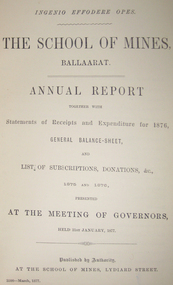
Book - Register, Ballarat School of Mines Donation Book, 1878 - 1895
... henry sutton...ol olden...bh cross...robert hamilton...hancock...ferdinand von mueller...von meuller...berchevaise...j whitehouse...serjeant...henty...Nature of Donation: Copy of the Victorian Review No 74 December 1 1885, Copy Wide Awake Vol 1 No 6 May 21st 1887 ballarat school of mines ballarat school of mines museum benjamin hepburn ce clarke j noble wilson m hamburger d christy edwin jewell ellery john gray go preshaw cf crouch henry brind james darby rm serjeant george day jf watson stoddart j hicks hicks james hector sleep jj sleep james pearce henry obree newman william tarrant beilby william bradford george lansell watson edward gazzard e morey john lynch j hector rivett bland bland costin whittle crowther mitchell ferdinand krause krause joseph mitchell john walker bailey duncan mica smith alfred mica smith james buchanan buchanan whitehouse dr bunce bunce james bklack james bickett js north joseph flude alfred lester wagemann fw niven edwards william evett john addis al elphinstone henry sutton ol olden bh cross robert hamilton hancock ferdinand von mueller von meuller berchevaise j whitehouse serjeant henty james shugg john ross james oddie ralph tate henry watts wh wooster wooster luplau rosenblum heddington albert furmedge buley robert wilson e. rowlands ne hall henry pearce lee young nicholls dusontory daniel brohpy brophy klug james donaldson john cherry ce jones john feilds thomas williams enscoe e price shoppee jacob drew george wyatt dimmock james orr john hardy george wyatte thomas rogers james lamb doepel margaret guerin bella guerin guerin george binns william laplau captain baker baker crisp barnard haffie bateman chalmers richard parker adam adamson jn wilson john noble wilson papenhagen towl government astronomer royal society minister of mines thoams blackett burbury denny thys p gay james law woolnough Large rough calf covered book recording museum, laboratory and library donations to the Ballarat School of Mines. 4835 donations are recorded.Marbled end papers. ...The Ballarat School of Mines was the first School of Mines in the southern hemisphere. Its Museum was established in 1872. Donation 600, 4 July 1882, H. Sutton, Ballarat. Nature of Donation: 13th Annual report of the Aeronautical Society of Great Britain 2 papers 'from the proceedings of the Royal Society', Nos 217 & 218 - 1882 communicated by the President :on a new electrical Storage battery" by Henry Sutton, Ballarat, Victoria Donation 976, 8 May 1884, H. Sutton, Ballarat. Nature of Donation: * 1 volume "Pluttner on the Blowpipe: (Pluttner's manual of qualitative & quantitative analysis of the blowpipe. Donation 1682, 28 Feb 1887, James Lamb, Ballarat. Nature of Donation: Copy of "The Ballarat Times" newspaper of 3 December 1854, framed, and protected on both sides with glass. Donation 1712, 28 April 1887, Marg. Guerin, Ballaarat. Nature of Donation: Specimens nos (797-806) 797-801 from the New Reform Mine Luchnow, NSW (797) Serpentine with vein of quartz and calcite (798) Surpentine passing into silicous ferruginoous gossan; with drives of rock crystal (&99) Diorite with vein of calcite (800) Auriferous vein stuff (801) Auriferous arrenopyrite with calcite (802) noble opal filling cavities in decomposed traclyte (803-805) from Mr McDonald, NSW (806) arutute (carbonate of lead) in long schombie purni (?) Donation 1730, 23 May 1887, Miss Guerin, Ballaarat. Nature of Donation: Copy of the Victorian Review No 74 December 1 1885, Copy Wide Awake Vol 1 No 6 May 21st 1887Large rough calf covered book recording museum, laboratory and library donations to the Ballarat School of Mines. 4835 donations are recorded.Marbled end papers. Labels on spine and front cover.ballarat school of mines, ballarat school of mines museum, benjamin hepburn, ce clarke, j noble wilson, m hamburger, d christy, edwin jewell, ellery, john gray, go preshaw, cf crouch, henry brind, james darby, rm serjeant, george day, jf watson, stoddart, j hicks, hicks, james hector, sleep, jj sleep, james pearce, henry obree, newman, william tarrant, beilby, william bradford, george lansell, watson, edward gazzard, e morey, john lynch, j hector, rivett bland, bland, costin, whittle, crowther, mitchell, ferdinand krause, krause, joseph mitchell, john walker, bailey, duncan, mica smith, alfred mica smith, james buchanan, buchanan, whitehouse, dr bunce, bunce, james bklack, james bickett, js north, joseph flude, alfred lester, wagemann, fw niven, edwards, william evett, john addis, al elphinstone, henry sutton, ol olden, bh cross, robert hamilton, hancock, ferdinand von mueller, von meuller, berchevaise, j whitehouse, serjeant, henty, james shugg, john ross, james oddie, ralph tate, henry watts, wh wooster, wooster, luplau, rosenblum, heddington, albert furmedge, buley, robert wilson, e. rowlands, ne hall, henry pearce, lee young, nicholls, dusontory, daniel brohpy, brophy, klug, james donaldson, john cherry, ce jones, john feilds, thomas williams, enscoe, e price, shoppee, jacob drew, george wyatt, dimmock, james orr, john hardy, george wyatte, thomas rogers, james lamb, doepel, margaret guerin, bella guerin, guerin, george binns, william laplau, captain baker, baker, crisp, barnard, haffie, bateman, chalmers, richard parker, adam adamson, jn wilson, john noble wilson, papenhagen, towl, government astronomer, royal society, minister of mines, thoams blackett, burbury, denny, thys, p gay, james law, woolnough -
 Federation University Historical Collection
Book, Tulloch & King, Printers, Ballarat School of Mines Examination Results 1902-1917, 1917
... henry kofoed...david bonar...herbert j. semmens...a.d.r. galloway...william e. figgis...emma wardle...photography...leslie blick...leslie coulter...ernest heighway...henty...ballarat school of mines examination alumni j.b. robinson practical chemistry land surveying assaying mineralogy metallurgy geology mining geology building contruction engineering geometry botany mining mechanics applied to mining petrology sound and light steam and gas engines engineering drawing maxwell gaunt a.s. ritchie john adam george hepburn george cornell godfrey hary valentine anderson john sutherland william h. callister lionel lambert john currie ferdnand g. krause thomas lakeland william troon charles lund richard cowles glyndwr evans norman buley wilfred avery norman lagerche frederick l. treloar arthur tandy reginald callister henry kofoed david bonar herbert j. semmens a.d.r. galloway william e. figgis emma wardle photography leslie blick leslie coulter ernest heighway henty whittingham charles vale james brokenshire eric bieske william baragwanath harold cornell j. raymond blight george kidd joseph mcgoldrick samuel j. tongway thomas k. sim hevill tinworth israel flegeltaub oliver jaegar charles flude william burbridge hubrt murphy samuel mayo ellen b. morris elsie m. naples jean rankin hilda wardle ernest morshead arthur lilburne herbert malin robert serjeant mollie o'dowd robert w. allan albert w. steane leslie de j. grut norman tinworth robert m. serjeant jnr vincent giuliano william coates allan bernaldo loyal finch john dulfer william carroll noel brelaz guido brelaz kathleen fisher Examination results for a range of subjects Brown quarter leather bound book with examinations results for students of the Ballarat School of Mines. ...Examination results for a range of subjectsBrown quarter leather bound book with examinations results for students of the Ballarat School of Mines. non-fictionExamination results for a range of subjectsballarat school of mines, examination, alumni, j.b. robinson, practical chemistry, land surveying, assaying, mineralogy, metallurgy, geology, mining geology, building contruction, engineering, geometry, botany, mining, mechanics applied to mining, petrology, sound and light, steam and gas engines, engineering drawing, maxwell gaunt, a.s. ritchie, john adam, george hepburn, george cornell, godfrey hary, valentine anderson, john sutherland, william h. callister, lionel lambert, john currie, ferdnand g. krause, thomas lakeland, william troon, charles lund, richard cowles, glyndwr evans, norman buley, wilfred avery, norman lagerche, frederick l. treloar, arthur tandy, reginald callister, henry kofoed, david bonar, herbert j. semmens, a.d.r. galloway, william e. figgis, emma wardle, photography, leslie blick, leslie coulter, ernest heighway, henty whittingham, charles vale, james brokenshire, eric bieske, william baragwanath, harold cornell, j. raymond blight, george kidd, joseph mcgoldrick, samuel j. tongway, thomas k. sim, hevill tinworth, israel flegeltaub, oliver jaegar, charles flude, william burbridge, hubrt murphy, samuel mayo, ellen b. morris, elsie m. naples, jean rankin, hilda wardle, ernest morshead, arthur lilburne, herbert malin, robert serjeant, mollie o'dowd, robert w. allan, albert w. steane, leslie de j. grut, norman tinworth, robert m. serjeant jnr, vincent giuliano, william coates, allan bernaldo, loyal finch, john dulfer, william carroll, noel brelaz, guido brelaz, kathleen fisher -
Glenelg Shire Council Cultural Collection
Photograph - Photograph - Shire of Portland Offices in Heywood, n.d
... Possibly from Bowerbird Museum Back: "Henty Silvester' handwritten black pen Balck and white photograph of Shire of Portland Offices opening in Heywood, Cr Henry Silvester outside offices. ...Possibly from Bowerbird MuseumBalck and white photograph of Shire of Portland Offices opening in Heywood, Cr Henry Silvester outside offices.Back: "Henty Silvester' handwritten black pen -
 Glenelg Shire Council Cultural Collection
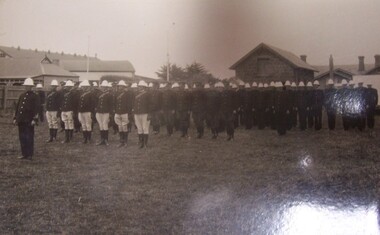
Postcard - Postcard - Police escort for Duke of Gloucester, Portland, 1934, 1934
... HRH Prince Henry Duke of Gloucester came to Australia in late 1934, and to Victoria in time for the Centenary Celebrations (of pastoral settlement of the Port Phillip District, beginning with the Hentys settlement at Portland Bay on 19 November 1834). ...HRH Prince Henry Duke of Gloucester came to Australia in late 1934, and to Victoria in time for the Centenary Celebrations (of pastoral settlement of the Port Phillip District, beginning with the Hentys settlement at Portland Bay on 19 November 1834). ...HRH Prince Henry Duke of Gloucester came to Australia in late 1934, and to Victoria in time for the Centenary Celebrations (of pastoral settlement of the Port Phillip District, beginning with the Hentys settlement at Portland Bay on 19 November 1834). From Trove - 20 November 1934 Historic Portland was the scene yesterday of unprecedented celebrations when the Duke of Gloucester arrived from Tasmania to join in festivities marking the beginning of Victoria's second century. A great crowd estimated at more than 60,000 people watched the re-enactment of the landing of Edward Henty, Victoria's first permanent settler, on November 19, 1834.Black and white photograph rows of men in formal dress with white jodhpurs, dark coats and white hats. Five rows in all, with one man at the front. Buildings in the background. Police escort for Duke of Gloucester, Portland, 1934Front: (no inscriptions) Back: Police escort for Duke of Gloucester Portland 1934royal visit, 1934, duke of gloucester -
 Flagstaff Hill Maritime Museum and Village
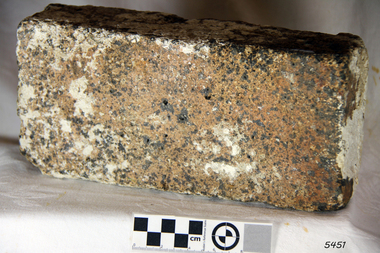
Ceramic - Clay Brick, ca 1837
... The Hentys contributed £150 towards a fund for the 22 survivors at a memorial service held in Launceston later that year. It was a major financial setback for the Henrys, but one from which they recovered. ...The Hentys contributed £150 towards a fund for the 22 survivors at a memorial service held in Launceston later that year. It was a major financial setback for the Henrys, but one from which they recovered. ...According to Lloyds Shipping Register 1837-1839, the CHILDREN was built in 1825 at Liverpool and operated by owners Gordon & Co, of London. London registered number 123/1837. James Henty then bought the vessel in 1837 as a three-masted barque of 254 tons, with a hull of “part pitch pine, felt sheathed” and “coppered 1837”. Launceston registered number 6/1837. In 1838, the CHILDREN, under her master Captain H. Browne, completed a successful round trip from Launceston to London carrying wool and whale oil loaded in Portland, returning in late November of that year carrying a general cargo including the house bricks. On the 11th January 1839, the CHILDREN sailed from Launceston for Adelaide, with 24 passengers, 14 crew, and an awkward mixed cargo, including 1500 sheep, 8 bullocks, 7 horses, farming implements, and six whaleboats with associated whaling gear, and house bricks for the Hentys' settlement in Portland. One account states that when the CHILDREN “put out from port, it was light and badly ballasted”. The vessel immediately encountered four days of hurricane force storms, eventually clearing on the early morning of the 14th to “west force 10”, but too late to take accurate measurements of the sun or stars to establish their position relative to the coast. The CHILDREN collided with a limestone stack at the entrance of what is now called Childers Cove, and the seas smashed it into pieces within half an hour. All the cargo and 16 lives were lost, including 9 children. The Hentys contributed £150 towards a fund for the 22 survivors at a memorial service held in Launceston later that year. It was a major financial setback for the Henrys, but one from which they recovered. In a submission to the Governor of New South Wales dated 24 March 1840, the Henty’s summarised their work over the previous six years of settlement: “Six stations have been occupied, one at Portland Bay…three at the open country about 60 miles inland called ‘Merino Downs’…They have erected two houses at Portland Bay and two others at Merino Downs”. The London house bricks recovered from the Children's wreck are significant as part of the cargo of the early 19th-century barque. The bricks were intended for the owner of the Children, the Henty family, for their Portland settlement. The 1839 wreck and recovered artefacts are examples of the construction methods and materials used in that era and can be used to study the evolution of shipbuilding methods and principles. The wreck of the Children is of state significance as one of colonial Victoria’s earliest and most significant maritime disasters, and one of the first vessels lost in the Western District. This is recognised by its inclusion on the Victorian Heritage Register, VHR No. S116. Little is left on the seabed to mark the tragedy, apart from some of the house bricks intended for the Henty settlement. Clay brick: house brick from London, with some with white marine encrustation, recovered from the wreck of the ship CHILDREN. The brick is an oblong shape and is constructed of a coarse-grained conglomerate. flagstaff hill, flagstaff hill maritime museum and village, warrnambool, maritime museum, maritime village, great ocean road, shipwreck coast, shipwreck artefact, children, barque, three-masted, liverpool, childer’s cove, port campbell, 1839 shipwreck, 1939 wreck, james henty and co, henty brothers, captain h. browne, first mate t. gay, second mate w. wentworth, portland, portland bay, 1939, bricks, london house bricks, clay bricks -
 Glenelg Shire Council Cultural Collection
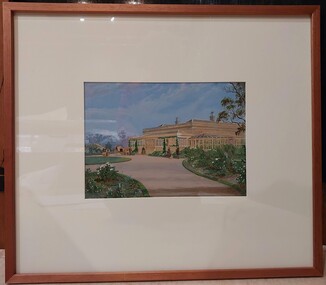
Painting, a) Johnston & Co. Hamilton b) Johnstone O'Shannessy, Melbourne, Burswood, late 1800s
... Henty lived in his mansion for 17 years in a semi-regal state. Burswood has been little altered since completion in 1853. A glasshouse conservatory to the side of the present enclosed verandah was demolished prior to 1895 and the slate roof replaced with iron. Johnstone, O’Shannessy & Co was a leading photographic studio located in Melbourne, Victoria, Australia. It was active from 1865 to 1905. Henry...Henty lived in his mansion for 17 years in a semi-regal state. Burswood has been little altered since completion in 1853. A glasshouse conservatory to the side of the present enclosed verandah was demolished prior to 1895 and the slate roof replaced with iron. Johnstone, O’Shannessy & Co was a leading photographic studio located in Melbourne, Victoria, Australia. It was active from 1865 to 1905. Henry ...From Victorian Heritage: The single storey mansion house with enclosed glass verandah, Burswood was built in 1853 on a site overlooking the Portland Bay for English born pioneer colonist Edward Henty. John Barrow of Adelaide was the architect for this exceptional Australian regency style residence which he designed as a central block of fine axed basalt ashlar and slate roof (now replaced) with flanking brick wings forming an enclosed rear courtyard. Burswood is the most important early mansion house in western Victoria, being an exceptional Australian regency design by distinguished colonial architect James Barrow. Edward Henty, a member of one of Australia's most remarkable colonial families and the founder of Portland, established the first permanent settlement in Victoria on 19th November 1834, and Burswood is testimony to his success as an early colonist. Henty lived in his mansion for 17 years in a semi-regal state. Burswood has been little altered since completion in 1853. A glasshouse conservatory to the side of the present enclosed verandah was demolished prior to 1895 and the slate roof replaced with iron. Johnstone, O’Shannessy & Co was a leading photographic studio located in Melbourne, Victoria, Australia. It was active from 1865 to 1905. Henry James Johnstone was also an artist and studied at Louis Buvelot's school and with Thomas Clark.Painting of a sandstone coloured building. A grand house with a driveway and well-kept gardens to the front. There is a horse and cart with a man standing to the side of it. There is a female figure exiting the building and another female and a man further along the driveway with a dog. The building has a glass conservatory attached to the side. The sky is blue with several fluffy clouds.Bottom right: Johnstone O'Shannessy & Co Melbourne (in white paint)homestead, henty, historic buildings, colonial, burswood house -
 Orbost & District Historical Society
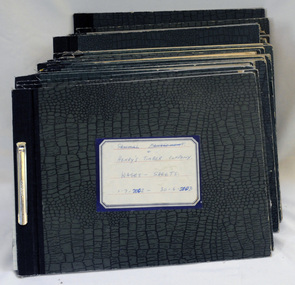
wages sheets, 1.7.1970 - 30.6.1988
... Henty's & Pow). Pow's had a mill at Cabbage Tree as well. Hec Pow and his father sold the Newmerella mill to Henry Silverberg and Les Grace. ...Henty's & Pow). Pow's had a mill at Cabbage Tree as well. Hec Pow and his father sold the Newmerella mill to Henry Silverberg and Les Grace. ...These forms were used by Hector G. Pow's Sawmiller Company in Newmerella ( Henty's & Pow). Pow's had a mill at Cabbage Tree as well. Hec Pow and his father sold the Newmerella mill to Henry Silverberg and Les Grace. The mill is currently owned by Mectec.Orbost has historically been based on the timber industry, but that industry has declined considerably over the last 20 years. The number of locals involved in the timber industry has declined and many of the mills have closed. This item reflects a time when that industry was a significant contributor to the economy of the district.Thirty dark green hard-backed folders with black spines and silver metal fastenings, containing wages sheets for employees of POW's Sawmills P/L. All have labels with "POW's Sawmills P/L" and dates of wages sheets included. They are hand-written. -
 Warrnambool and District Historical Society Inc.
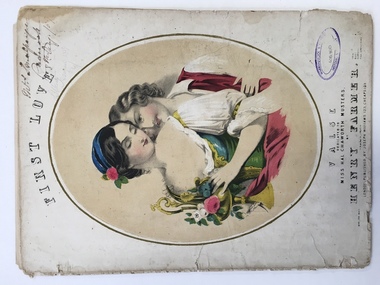
Leisure object - Sheet music, First love, 1850s
... henty...mrs smalpaige...warrnambool...first love sheet music...History of Warrnambool...henry...Henry Farmer (1819-1891). Born in Nottingham, Farmer was an organist and composer and conductor of the Nottingham Harmonic Society from 1866 to 1880. He dedicated this music to Miss Hal Chaworth Musters. It is not known who ‘Miss Hal’ was but the Chaworth name was an ancient one in Nottingham and marriage with a member of the Musters family brought into being the name ‘Chaworth Musters’ and the estates included Annesley, Edwalton and Wiverton. The signatures on the front cover indicate that this music is connected to two early families in the district. Stephen Henty...The music is also important in social history as an example of the music that was played in mid-Victorian drawing rooms. stephen henty mrs smalpaige warrnambool first love sheet music History of Warrnambool henry farmer Front Cover: ‘Mrs Smalpaige, Cadnook, 8th Aug/59’ ‘S.Henty, 8 August 1859’ ‘First Love’, ‘Valse dedicated to Miss Hal Chaworth Musters by Henry Farmer, London, Published by Joseph Williams, 123, Cheapside, Solo, 4, Duet, 4, Septett, 3/6, Full Orchestra, 5/-, Ent. ...This piece of music, ‘First Love’, dates from the 1850s and was composed by Henry Farmer (1819-1891). Born in Nottingham, Farmer was an organist and composer and conductor of the Nottingham Harmonic Society from 1866 to 1880. He dedicated this music to Miss Hal Chaworth Musters. It is not known who ‘Miss Hal’ was but the Chaworth name was an ancient one in Nottingham and marriage with a member of the Musters family brought into being the name ‘Chaworth Musters’ and the estates included Annesley, Edwalton and Wiverton. The signatures on the front cover indicate that this music is connected to two early families in the district. Stephen Henty owned Cadnook (Kadnook), near Harrow, in the 1850s and sold it to Mordaunt Smalpage (or Smalpaige) in July 1859. Stephen Henty, who came to Victoria in 1836, was the brother-in-law of Captain Helpman, the Warrnambool Harbour Master from 1861 to 1869. They were co-owners of the ‘Champion’ which plied between Portland and Melbourne until it was wrecked off Cape Otway in 1857 when it collided with the ‘Lady Bird’.This is a most significant item because of the signatures on the front cover. Stephen Henty was important, not only in the history of Victoria, but also in the history of Warrnambool because of his connection with coastal shipping and his relationship with Captain Helpman. As far as we know the Hentys never lived in Warrnambool but it is possible that this music was played on the ‘Henty’ piano that was donated to the old Warrnambool Museum in 1889 and is now in the Warrnambool Art Gallery. The Hentys brought six pianos to Victoria in 1837. The music is also important in social history as an example of the music that was played in mid-Victorian drawing rooms. This is a piece of music of seven pages printed back to back (cover and 11 pages of musical notation) The pages have black printing on white with a multi-coloured front cover. The cover has a stylized portrait of a man and woman in period costume. The woman is holding an urn of flowers. Some of the pages are loose and the page folds and corners are tattered and torn. The name ‘Smalpaige ‘is written in ink and the name ‘Henty’ is written in pencil. Front Cover: ‘Mrs Smalpaige, Cadnook, 8th Aug/59’ ‘S.Henty, 8 August 1859’ ‘First Love’, ‘Valse dedicated to Miss Hal Chaworth Musters by Henry Farmer, London, Published by Joseph Williams, 123, Cheapside, Solo, 4, Duet, 4, Septett, 3/6, Full Orchestra, 5/-, Ent. Sta. Hall.’ stephen henty, mrs smalpaige, warrnambool, first love sheet music, history of warrnambool, henry farmer -
 Bendigo Historical Society Inc.
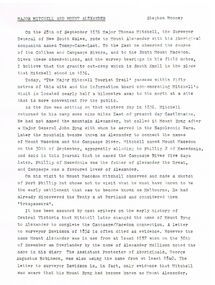
Document - MAJOR MITCHELL AND MOUNT ALEXANDER
... Henty s... Surveyor Davidson... Alexander Mollison... George Augustus Robinson... William Morton... Mr Charles Hotson Ebden... John Randell... Public Library of Melbourne... Les Blake... Governor Burke... Phillip Parker King... Crown Solicitor Henry...DOCUMENT Major Mitchell and Mount Alexander Tommy-Came-Last The Major Mitchell Tourist Trail Major General John Byng Phillip of Macedonia Alexander the Great Henty s Surveyor Davidson Alexander Mollison George Augustus Robinson William Morton Mr Charles Hotson Ebden John Randell Public Library of Melbourne Les Blake Governor Burke Phillip Parker King Crown Solicitor Henry Field Gurner Arthur Phillip Hume Australia Felix Expedition L Blake Place Names of Victoria G Brenmer Booklet for Secondary Schools M Cannon Historical Records of Victoria Vol 1 J H L Cumpston Thomas Mitchell Surveyor General and Explorer H F Gurner Chronicle of Port Phillip T L Mitchell Three Expeditions into the Interior of Eastern Australia A F Mollison An Overlanding Diary W L Morton Adventures of a Pioneer M S 5188 Itinerary from the Journal of the Exploring Expedition returning from Portland Bay M S 5189 Mitchell's 1837 Map J O Randell Pastoral Settlement in Northern Victoria Vol 1 Pastoral Settlement in Northern Victoria Vol 2 Records of the Victorian Archaeological Survey Number 5 Journals of George Augustus Robinson T C Sargent Some Peninsular Names in Australia Felix W H Wells A Geographical Dictionary or Gazetteer of the Australian Colonies Typed notes mentioning the naming of Mount Alexander, Coliban, Campaspe and who named them. ...Typed notes mentioning the naming of Mount Alexander, Coliban, Campaspe and who named them. Also the origins of the names.document, major mitchell and mount alexander, tommy-came-last, the major mitchell tourist trail, major general john byng, phillip of macedonia, alexander the great, henty s, surveyor davidson, alexander mollison, george augustus robinson, william morton, mr charles hotson ebden, john randell, public library of melbourne, les blake, governor burke, phillip parker king, crown solicitor henry field gurner, arthur phillip, hume, australia felix expedition, l blake, place names of victoria, g brenmer, booklet for secondary schools, m cannon, historical records of victoria vol 1, j h l cumpston, thomas mitchell surveyor general and explorer, h f gurner, chronicle of port phillip, t l mitchell, three expeditions into the interior of eastern australia, a f mollison, an overlanding diary, w l morton, adventures of a pioneer, m s 5188, itinerary from the journal of the exploring expedition returning from portland bay, m s 5189, mitchell's 1837 map, j o randell, pastoral settlement in northern victoria vol 1, pastoral settlement in northern victoria vol 2, records of the victorian archaeological survey number 5, journals of george augustus robinson, t c sargent, some peninsular names in australia felix, w h wells, a geographical dictionary or gazetteer of the australian colonies -
Canterbury History Group
Document - School Project: Elgar's Special Survey, Tudehope, Jennifer, 1963
... Henry T. Land Surveys Boroondara Campbell> J & R Dacre> R Towns> R. Sea> H. Dyce> A. McCarthy> W.G. Shenley> James Henty's Paddock Norris> J.R. ...Well researched essay on the background of Elgar's Special Survey. Includes mapcanterbury, elgar> henry t., land surveys, boroondara, campbell> j & r, dacre> r, towns> r., sea> h., dyce> a., mccarthy> w.g., shenley> james, henty's paddock, norris> j.r., maling> j, canterbury road, survey road, boroondara roads board, camberwell historical society, mont albert road, brooks> r., land subdivisions -
Kew Historical Society Inc
Journal, Kew Historical Society, Newsletter No.147, June 2024
... Family records: The diary of Mrs Henry Henty of Tarring / Suzanne McWha pp6-8. ...Tram tracks in Boroondara [electrification of] / Robert Baker pp1-2. History News - Conservation [Henty Family Costume Collection, Community Heritage Grant application - National Library of Australia]; New Members; Donations to the Collection / p3. The Voyage of the John Bunyan / David White pp4-5. Family records: The diary of Mrs Henry Henty of Tarring / Suzanne McWha pp6-8. Sir Rupert 'Dick' Hamer AC KCMG ED / John Torpey pp8-9. As it happened 100 years ago [H.C.A. Harrison, Empire Day, Motor accident, Widening of High Street [Kew], Death of Cr [Sir] Henry [de Castres] Kellett, Bt / David White p.9. Branching out: the Coles family of Kew / Desley Reid pp.10-11. Membership and Donations / p12.Published quarterly since 1977, the newsletters of the Kew Historical Society contain significant research by members exploring relevant aspects of the Victorian and Australian Framework of Historical Themes. Frequently, articles on people, places and artefacts are the only source of information about an aspect of Kew, and Melbourne’s history.non-fictionTram tracks in Boroondara [electrification of] / Robert Baker pp1-2. History News - Conservation [Henty Family Costume Collection, Community Heritage Grant application - National Library of Australia]; New Members; Donations to the Collection / p3. The Voyage of the John Bunyan / David White pp4-5. Family records: The diary of Mrs Henry Henty of Tarring / Suzanne McWha pp6-8. Sir Rupert 'Dick' Hamer AC KCMG ED / John Torpey pp8-9. As it happened 100 years ago [H.C.A. Harrison, Empire Day, Motor accident, Widening of High Street [Kew], Death of Cr [Sir] Henry [de Castres] Kellett, Bt / David White p.9. Branching out: the Coles family of Kew / Desley Reid pp.10-11. Membership and Donations / p12.kew historical society (vic.) -- periodicals., kew historical society (vic.) -- newsletters, kew historical society (vic.) -- journals -
 Kew Historical Society Inc
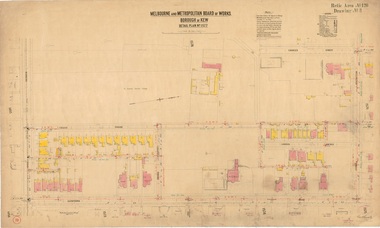
Plan, Borough of Kew Detail Plan No.1577, 1904
... Herbert Henty made his home here and was elected a member of Kew Municipal Council in 1864 and mayor in 1868-69. Walter Henry...Herbert Henty made his home here and was elected a member of Kew Municipal Council in 1864 and mayor in 1868-69. Walter Henry ...The Melbourne and Metropolitan Board of Works (MMBW) plans were produced from the 1890s to the 1950s. They were crucial to the design and development of Melbourne's sewerage and drainage system. The plans, at a scale of 40 feet to 1 inch (1:480), provide a detailed historical record of Melbourne streetscapes and environmental features. Each plan covers one or two street blocks (roughly six streets), showing details of buildings, including garden layouts and ownership boundaries, and features such as laneways, drains, bridges, parks, municipal boundaries and other prominent landmarks as they existed at the time each plan was produced. (Source: State Library of Victoria)This plan forms part of a large group of MMBW plans and maps that was donated to the Society by the Mr Poulter, City Engineer of the City of Kew in 1989. Within this collection, thirty-five hand-coloured plans, backed with linen, are of statewide significance as they include annotations that provide details of construction materials used in buildings in the first decade of the 20th century as well as additional information about land ownership and usage. The copies in the Public Record Office Victoria and the State Library of Victoria are monochrome versions which do not denote building materials so that the maps in this collection are invaluable and unique tools for researchers and heritage consultants. A number of the plans are not held in the collection of the State Library of Victoria so they have the additional attribute of rarity.Original survey plan, issued by the MMBW to a contractor with responsibility for constructing sewers in the area identified on the plan within the Borough of Kew. The plan was at some stage hand-coloured, possibly by the contractor, but more likely by officers working in the Engineering Department of the Borough and later Town, then City of Kew. The hand-coloured sections of buildings on the plan were used to denote masonry or brick constructions (pink), weatherboard constructions (yellow), and public buildings (grey). MMBW Plan No.1577 includes some of the most significant houses in Kew: Herbert Henty’s ‘Roxeth’ (now part of Trinity Grammar), ‘Butleigh Wooton’, ‘Bokara’ and ‘Harrow’. It also includes the streets that have since changed their names. That part of College Parade linked to Glenferrie Road is now named College Place, College Parade now extends further north, and Charles Street did not yet reach Barkers Road. Roxeth is one of a number of Henty houses in Kew. Herbert Henty made his home here and was elected a member of Kew Municipal Council in 1864 and mayor in 1868-69. Walter Henry Serle, of Harrow served in the First World War. He was awarded the Military Medal ‘’For conspicuous bravery and devotion to duty. On 29th September near BELLICOURT he showed the greatest bravery and determination when his platoon was attacked by enemy bombing parties. It was due largely to his personal efforts that all the attacks were repulsed. Until wounded, his utter disregard of personal safety and boldness in dealing with the attacks were the means of saving the situation and were an inspiring example to his men.’melbourne and metropolitan board of works, detail plans, maps - borough of kew, mmbw 1577, cartography -
 Old Colonists' Association of Ballarat Inc.
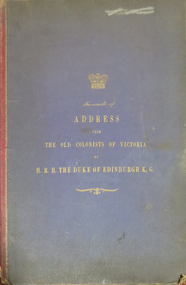
Book, Facsimile of Address From the Old Colonists of Victoria to H.R.H. The Duke of Edinburgh K.G, 1869
... Edward Henty Novr 19th 1834 Francis Henty Decr 9th 1834 John Pascoe Fawkner Oct 9th 1835 Many ignatures follow including John Wilson Novr 1841 Joseph Bickett 27 September 1842 Theophilis Dredge January 1839 Archibald Fisken August 1839 Samuel Legge April 1841 David Coghill March 1838 Joseph L'Estrange 1849 December Thomas W. Wills Dec 1839 James Cuthbert November 1840 John Lamb May 1838 John Hogan November 1839 William Higgenbotham Born Oct 19th 1840 Richard Winter January 1840 Alexander Aitken Born Melbourne June 30 1842 William Cross Yuille February 1837 George Black Decr 1840 Peter Scott Sept 1840 Robert Hoddle March 1837 Henry Darlot September 1839 W. ...Edward Henty Novr 19th 1834 Francis Henty Decr 9th 1834 John Pascoe Fawkner Oct 9th 1835 Many ignatures follow including John Wilson Novr 1841 Joseph Bickett 27 September 1842 Theophilis Dredge January 1839 Archibald Fisken August 1839 Samuel Legge April 1841 David Coghill March 1838 Joseph L'Estrange 1849 December Thomas W. Wills Dec 1839 James Cuthbert November 1840 John Lamb May 1838 John Hogan November 1839 William Higgenbotham Born Oct 19th 1840 Richard Winter January 1840 Alexander Aitken Born Melbourne June 30 1842 William Cross Yuille February 1837 George Black Decr 1840 Peter Scott Sept 1840 Robert Hoddle March 1837 Henry Darlot September 1839 W. ...Blue hard covered 35 page book with an address, a reponse from Prince Alfred, and a number of signatures.To his Rotal highness Prince Alfred Ernest Albert Duke of Edinburgh K.G. &c &c &c May it please Your Royal Highness. We the undersigned, being Colonists of Victoria wirh expressions of a Century and upwards venture to approach you Royal Highness with expressions of unaltered loyalty to Her Majesty's throne and person, and our very sincere and heart congratulations to your Royal Highnedd on your auspicious visit to his distant dependency of the British Empire. We can confiently assure your Royal Highness that however attractive Republicans Institutions may be to many young communitites generally Victoria is in the main free from the taint of any such prediliction. The loyalty and attachment to Monarchial Government of those numbered amonst her older Colonists have been strenghtened bu their enlarged and by the deep connection ever increasing with their ripening years that their material interests will be best protected by the perpetuation of the intimate connexion with the Great Empire over which Her Majesty rules - an Empire the Language, Laws, Customs and Institutions of which it is their privelige to inherit. We may be allowed to esteem the visit of your Royal Highness to these shores as of teh utmost importance, regarded from the Imperial as well as from a Colonial point of view. Your Royal Highness has now had an opportunity of satisfying yourself, and may bear testimony on your return to Europe that the Colonists of Victoria, although they have left their Mother COuntry, have not lost the spirit of enterprise, the energy, the self-reliance, the love of law and order which distinguish the British Race - and that in common with their fellow countrymen at home they possess qualities, the possessoin of which by her peple has made England great and glorious amongst the nations - while your presence here proves to the Colony at large, be especially to our Colonial born youth that Her Majesty 's solicitude for our welfare is unabted. Wish a sincere hope that the visit of your Royal Highness to the other COlonies of the Australian Group may be gratifying to you, and your ultimate return to the Royal Circle safe and attended with every happiness. We beg leave to remain, With the greatest respect, Your Royal Highness' Most humble and most obedient servants, Signature Date of arrival in the Colony. Edward Henty Novr 19th 1834 Francis Henty Decr 9th 1834 John Pascoe Fawkner Oct 9th 1835 Many ignatures follow including John Wilson Novr 1841 Joseph Bickett 27 September 1842 Theophilis Dredge January 1839 Archibald Fisken August 1839 Samuel Legge April 1841 David Coghill March 1838 Joseph L'Estrange 1849 December Thomas W. Wills Dec 1839 James Cuthbert November 1840 John Lamb May 1838 John Hogan November 1839 William Higgenbotham Born Oct 19th 1840 Richard Winter January 1840 Alexander Aitken Born Melbourne June 30 1842 William Cross Yuille February 1837 George Black Decr 1840 Peter Scott Sept 1840 Robert Hoddle March 1837 Henry Darlot September 1839 W. Bacchus 1837 C.B. Hutton Feby 17th 1842 H. Gerrard Feby 1839 Thomas P. Scott 10 August 1838 William Rutledge 19th Decr 1829 in Sydney, at Melbourne in July 1838 Rodk Urquhart March 1842 Thomas Black Septr 1842 J.B. Were November 1839 Thomas Anderson 1839 John Bull June 1842old colonists, prince alfred, address, edward henty, francis henty -
 Kew Historical Society Inc
Book, Stories They Tell : A history of Kew through objects, 2022
... Henty family...Cartwheel pennies...kew lunatic asylum...patchwork quilts...John Carson...george bouchier richardson...gb richardson...Coombs family...James dannock...back to kew 1875...Francis Barnard...Denbigh family...Cullis Hill & Co...Ordsall...Southesk...Kew Volunteer fire brigade...jfc farquhar...Henry...Each item selected is full pictured in colour. collection -- kew historical society museum catalogues Henty family Cartwheel pennies kew lunatic asylum patchwork quilts John Carson george bouchier richardson gb richardson Coombs family James dannock back to kew 1875 Francis Barnard Denbigh family Cullis Hill & Co Ordsall Southesk Kew Volunteer fire brigade jfc farquhar Henry kellett MMBW Detail Plan 1580 William Nicholls Anderson Young Workers patriotic guild Roll of honor -- town of kew Alice Anderson Kew War Memorial flapper dresses Fairfield bridge chandler highway bridge warren trestrail furniture -- 1930s war savings streets Kew Library children's libraries Voluntary aid detachments - Kew (Vic.) ...'Stories They Tell : A history of Kew through objects' explores diverse narratives from European settlement to the first decades of the twenty-first century. These stories use as their starting point artworks, texts and artefacts from the nationally significant collection of the Kew Historical Society. Limited to 100 copies.117 pp : illustrated : Appendices Chapters: Preface / Robert Baker p4. The collection / Robert Baker p5. Cartwheel penny / Robert Baker p6. Creek and old watering stage / David White p10. John Carson: Mayor 1863–4 1 / Julie King p4. Wedding dress / Suzanne McWha p18. Back to Kew 1875 / Judith Scurfield p22. Barnard’s clock / Margaret Robinson p26. Denbigh quilt / Suzanne McWha p28. Fragments of art decoration / Robert Baker p32. Mr Richardson’s sock / Felicity Renowden p36. Kew Volunteer Fire Brigade / David White p38. Kew Where We Live / Judith Scurfield p42. [MMBW} Detail Plan No. 1580 / Judith Scurfield p46. Adeney Avenue / Suzanne McWha p50. Young Workers’ Patriotic Guild / Margaret Robinson p54. Roll of Honor [Thomas Rand] / Robert Baker p56. Alice Anderson in her tourer / Felicity Renowden p60. Kew War Memorial / David White p62. Beaded dance dress / Suzanne McWha p 66. The great flood of 1934 / Desley Reid p68. Depression-era toolbox / Robert Baker p72. War Savings Street / Julie King p74. Kew Public L.ibrary / Suzanne McWha p78. Signature supper cloth / Desley Reid p82. View from the garden of Rockingham / Desley Reid p86. Cr Marie Dalley / Felicity Renowden p90. Centenary of Kew / Robert Baker p94. Doris Dickinson’s gown / Julie King p98. [Model Dairy] Milk bottles / Robert Baker p100. Kew Civic Centre / David White p102. Bicentennial tapestries / Margaret Robinson p106. Crest of the City of Kew / Desley Reid p110. Town Crier [outfit] / Desley Reid p112. Acknowledgements p114. List of works p115.non-fiction'Stories They Tell : A history of Kew through objects' explores diverse narratives from European settlement to the first decades of the twenty-first century. These stories use as their starting point artworks, texts and artefacts from the nationally significant collection of the Kew Historical Society. Limited to 100 copies.collection -- kew historical society, museum catalogues, henty family, cartwheel pennies, kew lunatic asylum, patchwork quilts, john carson, george bouchier richardson, gb richardson, coombs family, james dannock, back to kew 1875, francis barnard, denbigh family, cullis hill & co, ordsall, southesk, kew volunteer fire brigade, jfc farquhar, henry kellett, mmbw detail plan 1580, william nicholls anderson, young workers patriotic guild, roll of honor -- town of kew, alice anderson, kew war memorial, flapper dresses, fairfield bridge, chandler highway bridge, warren trestrail, furniture -- 1930s, war savings streets, kew library, children's libraries, voluntary aid detachments - kew (vic.), rockingham, james govett, centenary of kew, mayoresses -- kew (vic.), model dairy -- kew (vic.), doris dickinson, crests -- city of kew (vic.), town criers -- kew (vic.), joy stewart, australian bicentennial -- kew (vic.), kew civic centre, ak lines mcfarlane marshall, adeney avenue -- kew, wwi -
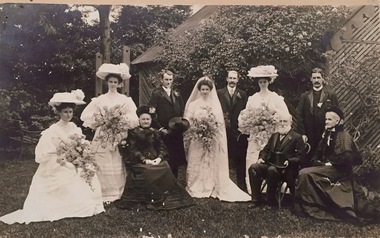 Kew Historical Society Inc
Photograph - Harrison-Balfour Wedding Party, 1905
... James Balfour MP., and his wife, Frances Charlotte (Henty) [the eldest daughter of James Henty] who married at Hawthorn in 1859. The Balfour lived at 'Windella' in Studley Park Road. Henry...Christian Balfour, Jean Mackintosh, Mrs James Balfour (nee Henty), Bridegroom, Bride, Dr. Lewis Balfour, Genevieve Harrison, Hon. James Balfour, Henry Harvey, Marion Harrison (nee Borodin) [Married by Mr Alec Scholes at Kew Presbyterian Church] ....James Balfour MP., and his wife, Frances Charlotte (Henty) [the eldest daughter of James Henty] who married at Hawthorn in 1859. The Balfour lived at 'Windella' in Studley Park Road. Henry ...This wedding photograph is an illustration of the intermarriage of notable Victorian (and Kew) families. The parents of the groom were the Hon. James Balfour MP., and his wife, Frances Charlotte (Henty) [the eldest daughter of James Henty] who married at Hawthorn in 1859. The Balfour lived at 'Windella' in Studley Park Road. Henry Rairey (Harry) Balfour was the youngest son of Mr & Mrs Balfour who married Katie Harrison of 'Horley' in Molesworth Street, Kew. Miss Harrison's father was the T.S. Harrison (merchant and importer, b. Banbury, Oxon, 1829, d. Melb 1901). Portrait of the wedding party in the garden of Horley in Molesworth Street, following the marriage of Elizabeth Kate (Katie) Harrison to Henry Rairey (Harry) Balfour at the Kew Presbyterian Church in 1905. The outfits worn by the women were reported in Punch, on 9 February 1905]. The bride wore a frock of ivory white satin, with bertha of duchesse lace and a yoke of ruched chiffon. The bridesmaids … wore white muslin dresses, inserted with Valenciennes, made in early Victorian style. The white straw hats were trimmed with lace and blue hydrangea, and their flowers were blue hydrangea, delphiniums and cornflowers. … The bride’s mother [right] wore a well-cut dress of black silk. The bridegroom’s mother [left] wore a gown of black silk voile, and smart black bonnet grouped with roses. L. to R. Christian Balfour, Jean Mackintosh, Mrs James Balfour (nee Henty), Bridegroom, Bride, Dr. Lewis Balfour, Genevieve Harrison, Hon. James Balfour, Henry Harvey, Marion Harrison (nee Borodin) [Married by Mr Alec Scholes at Kew Presbyterian Church] .Individuals identified in ink on reverse plus donor name and date.balfour, henty, harrison, horley, molesworth street, kew
