
Showing 101 items matching "john street -- kew (vic.)"
-
 Kew Historical Society Inc
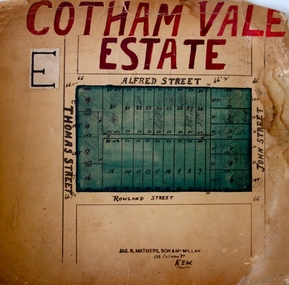
Plan - Subdivision Plan, Cotham Vale Estate, 1919
... street -- Kew (Vic.)...Thomas Street -- Kew (Vic.)...John...Barnes. subdivision plans - kew cotham vale estate rowland street -- Kew (Vic.) Thomas Street -- Kew (Vic.) John Street -- Kew (Vic.) ...Pru Sanderson, in her groundbreaking ‘City of Kew Urban Conservation Study : Volume 2 - Development History’ (1988), summarised the periods of urban development and subdivisions of land in Kew. The periods that she identified included 1845-1880, 1880-1893, 1893-1921, 1921-1933, 1933-1943, and Post-War Development. These periods were selected as they represented periods of rapid growth or decline in urban development. An obvious starting point for Sanderson’s groupings involved population growth and the associated economic cycles. These cycles also highlighted urban expansion onto land that was predominantly rural, although in other cases it represented the decline and breakup of large estates. A number of the plans in the Kew Historical Society’s collection can also be found in other collections, such as those of the State Library of Victoria and the Boroondara Library Service. A number are however unique to the collection. The Kew Historical Society collection includes almost 100 subdivision plans pertaining to suburbs of the City of Melbourne. Most of these are of Kew, Kew East or Studley Park, although a smaller number are plans of Camberwell, Deepdene, Balwyn and Hawthorn. It is believed that the majority of the plans were gifted to the Society by persons connected with the real estate firm - J. R. Mathers and McMillan, 136 Cotham Road, Kew. The Plans in the collection are rarely in pristine form, being working plans on which the agent would write notes and record lots sold and the prices of these. The subdivision plans are historically significant examples of the growth of urban Melbourne from the beginning of the 20th Century up until the 1980s. A number of the plans are double-sided and often include a photograph on the reverse. A number of the latter are by noted photographers such as J.E. Barnes. The Cotham Vale Estate was a subdivision of land between Alfred, Thomas, Rowland and John Streets. It was promoted in the same time as the nearby Normanby Heights Estate. Cotham Vale included 28 allotments. Contemporary newspaper advertisements noted that the Estate ‘is most conveniently situated in a well elevated position, only 2 minutes from Cotham rd. Electric Cars, penny section to Kew station’. subdivision plans - kew, cotham vale estate, rowland street -- kew (vic.), thomas street -- kew (vic.), john street -- kew (vic.) -
 Kew Historical Society Inc
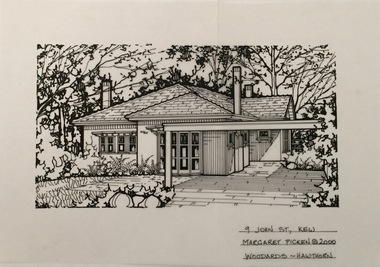
Drawing - Property Illustration, Margaret Picken, 9 John Street, Kew, 2000
... ...9 john street kew (vic)...The year in which the drawing was created is also a valuable record for house historians, as a number of the properties depicted have either been altered since that date or demolished. artist -- margaret picken 1950- architectural drawings -- houses -- kew (vic.) 9 john street kew (vic) 9 JOHN ST., KEW / MARGARET PICKEN is the @ 2000 / WOODARDS ~ HAWTHORN Pen and ink architectural drawing on drafting film of 9 John Street, Kew by Margaret Picken. 9 John Street, Kew Drawing Property Illustration Margaret Picken Woodards (Hawthorn) ...After training as a Cartographic Draftsman within the mining industry, I worked as a property illustrator for real estate firms in the eastern suburbs of Melbourne for 23 years from 1983. I initially photographed houses with a Polaroid camera and made a 'thumbnail' sketch while there. The photos were used to scale off a sketch in pencil and then that sketch was overlaid with drafting film and the 'pen and ink' completed. The pens I used were the Rotring ‘Rapidigraph’ drafting pens. The ink was also made by Rotring (German).The film was ‘Rapidraw’, polyester drafting film, double matte. It takes a very fine line and doesn’t bleed. As well as house sketches, there were often floor plans and site plans ordered. Aerial sketches were ordered when the property needed an overall view. (Margaret Picken, 2020) This drawing is one of a series created by Margaret Picken for a number of real estate agents in Melbourne between 1983 and 2005. Each work is signed and dated by the artist. Gift of Margaret Picken, 2020 Pen and ink architectural drawing on drafting film of 9 John Street, Kew by Margaret Picken. 9 JOHN ST., KEW / MARGARET PICKEN is the @ 2000 / WOODARDS ~ HAWTHORN artist -- margaret picken 1950-, architectural drawings -- houses -- kew (vic.), 9 john street kew (vic) -
 Glen Eira Historical Society
Document - Bakewell Family
... Miller Miller John Francis Compton Emmie Joan Mary Emily Clifton Hotel Welbeck Street Phoebe Alice Anne Edith British Museum Land values Settlements St. Kilda Elsternwick Inkerman Street St. Kilda East Kew ...There are 3 items about this family of early European settlers in Victoria: 1/A photocopy of an extract “Early Pioneer Families of Victoria and Riverina” – Henderson Page 441-442 The Bakewell Family of Burnewang and Tooradin”. It includes a photo of John Bakewell (1807-1888). It contains two pages and describes Bakewell’s property expansion. 2/An original copy of handwritten, unsigned undated research notes on John Bakewell property holdings taken from St Kilda Rate Book (1859-1873). It describes the land allotment. 3/A typed, unsigned, undated extract from 'The Howitts in Australia by Mary Howitt' - Mary Howitt, Vic Hist Mag 1913 Vol 3 No. 1. Reference – Memoirs of a Stockman, Harry Peck, 1853 Map, Foot Plot CCXLVI at Kooyong & Glen Eira Road. It provides a brief outline of the lives of brothers Robert and John Bakewell. the bakewell family, early pioneer families, henderson, bakewell john, port phillip, burnewang, bakewell robert, howitt godfrey dr, lord goderich, tooradin, phoebe, friends' school ackworth, yorkshire, nottingham, shaw john wyberg, plenty river, businesses, goldsbrough richard, goldsbrough mort and company ltd., glaziers, squatters, burnewang, mantons, tooradin, red bluff, torbinurruck, great swamp, brenanah, westernport, numerella, snowy river, orbost, green hills b, caramut, lyall william, mickle john, buckland john, notts, england, balderton, weddings, jane emily, howitt emanuel, farnsfield, lever mary, howitt thomas, heanor, derbyshire, howitt godfrey, scales john, exeter college oxford, downing college cambridge, guerard von, wayne john, south warnborough manor, harrison robert, lord john, jamaica, mary alice, dr. miller, miller john francis compton, emmie joan, mary emily, clifton hotel welbeck street, phoebe alice, anne edith, british museum, land values, settlements, st. kilda, elsternwick, inkerman street, st. kilda east, kew, memoirs of a stockman, harry peck -
 Kew Historical Society Inc
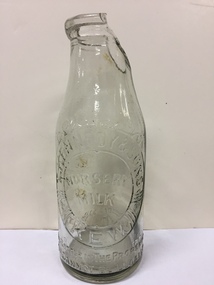
Container - Milk Bottle, Nursery Milk Bottle : Kennedy & Sons, Kew, Twentieth century
... John Kennedy traded as Kennedy and sons, Roselea Dairy at 80 Pakington St, Kew. (Victorian Government, 07 December 1945). Tom Kennedy, Jnr, and his wife, Lucy, lived at 109 Pakington St Kew. Tom Kennedy Jnr. died 02 November 1963. Lucy Kennedy died 28 November 1987. "CONTEMPT OF COURT. MILK-CARTER GUILTY. Breach of an Injunction. A Supreme Court writ has been issued by Thomas Kennedy, sen., Thomas Kennedy, jun., Patrick John Kennedy, and Michael Kennedy, trading as Kennedy and Sons, Rose Lea Dairy, against Gordon Allberry Shepherdly, of Barnard street ...Kennedy and sons, Roselea Dairy operated in Kew (<1930-1945>). In 1945 Thomas Kennedy, Michael Kennedy and Patrick John Kennedy traded as Kennedy and sons, Roselea Dairy at 80 Pakington St, Kew. (Victorian Government, 07 December 1945). Tom Kennedy, Jnr, and his wife, Lucy, lived at 109 Pakington St Kew. Tom Kennedy Jnr. died 02 November 1963. Lucy Kennedy died 28 November 1987. "CONTEMPT OF COURT. MILK-CARTER GUILTY. Breach of an Injunction. A Supreme Court writ has been issued by Thomas Kennedy, sen., Thomas Kennedy, jun., Patrick John Kennedy, and Michael Kennedy, trading as Kennedy and Sons, Rose Lea Dairy, against Gordon Allberry Shepherdly, of Barnard street, North Kew, milk-carter, claiming an injunction and damages. Plaintiffs carry on business at Pakington street. Kew, and Melville street, Hawthorn, and they claim In their writ an injunction restraining the defendant from soliciting or endeavouring to obtain the custom of people who were customers of plaintiffs when Shepherdly was employed by them under an agreement dated March 13 1928. Plaintiffs also claim damages. Mr Read (instructed by Messrs. Moule, Hamilton, and Derham) appeared for plaintiffs before Mr. Justice Macfarlan in the Practice Court yesterday, to ask for an order for the committal of Shepherdly to prison, or alternatively, for an order that plaintiffs be at liberty to Issue a writ of attachment against him for contempt of court in soliciting or endeavouring to obtain the custom of plaintiffs' customers. The affidavits set out that Shepherdly was employed by plaintiffs from March I3, 1928. until June 6. 1930. An Interlocutory injunction had been granted pending trial of the action for a permanent injunction. Shepherdly, who appeared in person yesterday, said that he had a sick wife and two children. He had not served any of the customers referred to since the granting of the injunction. He had passed them over to another man for whom he was working. Mr Justice Macfarlan - In doing that you have committed a breach of the injunction, and I have no alternative but to order that you be sent to gaol. I will make an order that you be committed to prison until further order of the Court. I will direct, however, that the order be not executed until Tuesday next. If you can then satisfy the Court that you have ceased to serve, or take any part in serving, the customers of Kennedy and Sons, the order will not be executed. (The Argus, 11 July 1930) Rare, if damaged milk bottle from an historic Kew dairy Milk bottle produced for and retailed by Kennedy & Sons Kew. The dairy operated under various names, and at one stage was described as the Rose Lea Dairy. The dairy was situated on the corner of Eglinton and Pakington Streets, Kew. "Kennedy & Sons / Kew / Nursery Milk / This bottle is the property of T.Kennedy & Sons, Kew/ and cannot be legally used by others." kennedy's dairy, kennedy and sons, dairies - kew (vic), milk bottles - kew - melbourne - victoria, thomas kennedy, michael kennedy -
 Kew Historical Society Inc
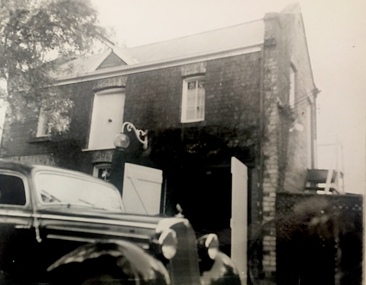
Photograph, J E & B L Rogers, Stables, 'Roseneath', Pakington Street, c.1959
... Together it forms the largest privately-donated collection within the archives of the Kew Historical Society. historic houses -- kew (vic.) roseneath -- pakington street -- kew (vic.) "32" 'Roseneath' was constructed in stages in the I850s by John Ambrose Kitchen, a soap-maker. ...This work forms part of the collection assembled by the historian Dorothy Rogers, that was donated to the Kew Historical Society by her son John Rogers in 2015. The manuscripts, photographs, maps, and documents were sourced by her from both family and local collections or produced as references for her print publications. Many were directly used by Rogers in writing ‘Lovely Old Homes of Kew’ (1961) and 'A History of Kew' (1973), or the numerous articles on local history that she produced for suburban newspapers. Most of the photographs in the collection include detailed annotations in her hand. The Rogers Collection provides a comprehensive insight into the working habits of a historian in the 1960s and 1970s. Together it forms the largest privately-donated collection within the archives of the Kew Historical Society. 'Roseneath' was constructed in stages in the I850s by John Ambrose Kitchen, a soap-maker. In 1870 the brick house received an N.A.V. of £60 while in 1885 it was purchased by Edward John Dunn, a geologist. A new wing was built at the right side of the house and several rooms as well as the coach house, loft and groom's quarters were added. In 1903, during Dunn's ownership, the property was described as having eight roorns. The garden is recorded as having been designed by Baron von Mueller who was the Government Botanist from 1853. Source: City of Kew Urban Conservation Study, 1988 "32" historic houses -- kew (vic.), roseneath -- pakington street -- kew (vic.) -
Kew Historical Society Inc
Journal, Kew Historical Society, Newsletter No.123, June 2018
... kew historical society (vic.) -- periodicals. kew historical society (vic.) -- newsletters kew historical society (vic.) -- journals No 123 JUNE 2018. ...No 123 JUNE 2018. Reservoirs and Pipes / Don Garden p1. Society News p3. Victorian Collections / Collections Group p4. Bookshops of Boroondara: past & continuing / Judith Scurfield p5. A Nationally Significant Sound Recording / Robert Baker p6. In Memoriam [by John Longstaff & John Springthorpe] / Robert Baker p7. Princess Street: a short survey of subdivisions / David White p9. Membership & Donations p12.Published quarterly since 1977, the newsletters of the Kew Historical Society contain significant research by members exploring relevant aspects of the Victorian and Australian Framework of Historical Themes. Frequently, articles on people, places and artefacts are the only source of information about an aspect of Kew, and Melbourne’s history. non-fiction No 123 JUNE 2018. Reservoirs and Pipes / Don Garden p1. Society News p3. Victorian Collections / Collections Group p4. Bookshops of Boroondara: past & continuing / Judith Scurfield p5. A Nationally Significant Sound Recording / Robert Baker p6. In Memoriam [by John Longstaff & John Springthorpe] / Robert Baker p7. Princess Street: a short survey of subdivisions / David White p9. Membership & Donations p12. kew historical society (vic.) -- periodicals., kew historical society (vic.) -- newsletters, kew historical society (vic.) -- journals -
 Kew Historical Society Inc
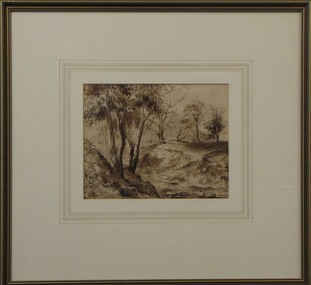
Work on paper - Sepia Wash & Ink, G B Richardson, Creek and Old Watering Stage, on the Yarra, East Collingwood, 1854, 1854
... From 1874 he taught drawing and watercolour painting at Adelaide, where he died on 28 Nov. 1877. gb richardson blind creek - abbotsford yarra river - abbotsford (vic) - kew (vic) colonial artists australian art - 19th century george bouchier richardson Inscribed verso 'Creek and Old Watering stage, on the Yarra East Collingwood 1854 / Trees, stage, &c have long since disappeared / [Artist Signature] / FT 110 / Creek itself now being filled in 1903. ...Blind Creek was located between the Abbotsford Convent and what is now the Collins Bridge in Studley Park. In an 1858 map of East Collingwood by Clement Hodgkinson, in the State Library of Victoria, one can see how the creek was originally a significant landmark in Collingwood; remaining vacant land until a barrel drain enclosed it. The area was later filled in, surveyed and developed. The position where Blind Creek entered the Yarra was in the immediate vicinity of Hodgson’s Punt, which had linked Kew to the other side of the Yarra from 1839. The Punt was purchased by the Colonial Government in 1852 and was in use until the opening of the Studley Park Road (Johnston Street) Bridge in 1858 made its continued use redundant The point of view selected by the artist for the watercolour is from the banks of Blind Creek in East Collingwood, looking across the Yarra to the Kew side of the river. Inscribed verso 'Creek and Old Watering stage, on the Yarra East Collingwood 1854 / Trees, stage, &c have long since disappeared / [Artist Signature] / FT 110 / Creek itself now being filled in 1903. gb richardson, blind creek - abbotsford, yarra river - abbotsford (vic) - kew (vic), colonial artists, australian art - 19th century, george bouchier richardson -
 Kew Historical Society Inc
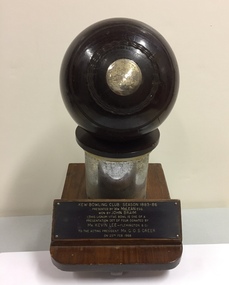
Award, Commemorative Trophy : Kew Bowling Club Season 1885-86
... The collection illuminates two of the Victorian historic themes - 'Building community life' through forming community organisations and 'Shaping cultural and creative life' by participating in sport and recreation. kew bowling club - wellington street - kew (vic) clubs - lawn bowls - kew (vic) lawn bowls - trophies [Metal plaque] KEW BOWLING CLUB SEASON 1885-86 / PRESENTED BY WM MCLEAN ESQ / WON BY JOHN BRAIM / THE LIGNUM VITAE BOWL IS ONE OF A / PRESENTATION SET OF FOUR DONATED BY / MR KEVIN LEE - FLEMINGTON B C / TO THE ACTING PRESIDENT MR G O S GREER / ON 25TH FEB 1968 Trophy commemorating the Kew Bowling Club's season 1885-86. ...Sports Clubs in Kew in the final decades of the 19th century and in the early 20th century were often umbrella organisations with facilities for a number of sports. Typically in Kew, this included teams in lawn bowls, tennis and croquet. The Kew Bowling Club was formed in 1880 while the privately owned Auburn Heights Recreation Club was opened in 1904. By 1998, the two Clubs decided to amalgamate at the Auburn Heights site in Barkers Road, forming the Kew Heights Sports Club. The combined club was itself taken over by the Melbourne Cricket Club in 2012 becoming MCC Kew Sports Club. In 2017 MCC Kew closed and its landholding was subsequently sold to Carey Baptist Grammar School. Both the Kew and Auburn Heights Clubs assembled important collections. These historically significant and large collections were donated to the Society in 2020. The collections include manuscripts, pictures, trophies, plans, honour boards etc. References Barnard FGA 1910, 'Sports and Pastimes' in Jubilee History of Kew Victoria: Its origin & progress 1803-1910. Nixon NV 1980, The History of the Kew Bowling Club 1880-1980. Reeve S 2012, City of Boroondara: Thematic Environmental History, p.216. The combined collections of the four sporting clubs making up the collection number hundreds of items that are historically significant locally. They are also significant to the sporting history of the greater Melbourne area and to the sports of lawn bowls and tennis in Australia in the 19th and 20th centuries. The collection illuminates two of the Victorian historic themes - 'Building community life' through forming community organisations and 'Shaping cultural and creative life' by participating in sport and recreation. Trophy commemorating the Kew Bowling Club's season 1885-86. The trophy includes a Lignum Vitae Bowl used in the 1885-6 season. It was presented to the Acting President in 1968. [The item is part of the large historic Kew Bowling Club collection (1880-1988) gifted to the Kew Historical Society in 2020]. [Metal plaque] KEW BOWLING CLUB SEASON 1885-86 / PRESENTED BY WM MCLEAN ESQ / WON BY JOHN BRAIM / THE LIGNUM VITAE BOWL IS ONE OF A / PRESENTATION SET OF FOUR DONATED BY / MR KEVIN LEE - FLEMINGTON B C / TO THE ACTING PRESIDENT MR G O S GREER / ON 25TH FEB 1968 kew bowling club - wellington street - kew (vic), clubs - lawn bowls - kew (vic), lawn bowls - trophies -
 Kew Historical Society Inc
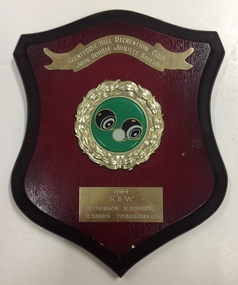
Award, Glenferrie Hill Recreation Club, John Dobbie Jubilee Shield, 1984
... The collection illuminates two of the Victorian historic themes - 'Building community life' through forming community organisations and 'Shaping cultural and creative life' by participating in sport and recreation. kew bowling club - wellington street - kew (vic) clubs - lawn bowls - kew (vic) kew bowling club - trophies GLENFERRIE HILL RECREATION CLUB / JOHN DOBBIE JUBILEE SHIELD / 1984 KEW / A THOMPSON, N BUSHBY, R HARRIS, F O'CALLAGHAN (C) John Dobbie Jubilee Shield, Glenferrie Hill Recreation Club won by Kew Bowling Club, 1984. ...Sports Clubs in Kew in the final decades of the 19th century and in the early 20th century were often umbrella organisations with facilities for a number of sports. Typically in Kew, this included teams in lawn bowls, tennis and croquet. The Kew Bowling Club was formed in 1880 while the privately owned Auburn Heights Recreation Club was opened in 1904. By 1998, the two Clubs decided to amalgamate at the Auburn Heights site in Barkers Road, forming the Kew Heights Sports Club. The combined club was itself taken over by the Melbourne Cricket Club in 2012 becoming MCC Kew Sports Club. In 2017 MCC Kew closed and its landholding was subsequently sold to Carey Baptist Grammar School. Both the Kew and Auburn Heights Clubs assembled important collections. These historically significant and large collections were donated to the Society in 2020. The collections include manuscripts, pictures, trophies, plans, honour boards etc. References Barnard FGA 1910, 'Sports and Pastimes' in Jubilee History of Kew Victoria: Its origin & progress 1803-1910. Nixon NV 1980, The History of the Kew Bowling Club 1880-1980. Reeve S 2012, City of Boroondara: Thematic Environmental History, p.216. The combined collections of the four sporting clubs making up the collection number hundreds of items that are historically significant locally. They are also significant to the sporting history of the greater Melbourne area and to the sports of lawn bowls and tennis in Australia in the 19th and 20th centuries. The collection illuminates two of the Victorian historic themes - 'Building community life' through forming community organisations and 'Shaping cultural and creative life' by participating in sport and recreation. John Dobbie Jubilee Shield, Glenferrie Hill Recreation Club won by Kew Bowling Club, 1984. GLENFERRIE HILL RECREATION CLUB / JOHN DOBBIE JUBILEE SHIELD / 1984 KEW / A THOMPSON, N BUSHBY, R HARRIS, F O'CALLAGHAN (C) kew bowling club - wellington street - kew (vic), clubs - lawn bowls - kew (vic), kew bowling club - trophies -
 Kew Historical Society Inc
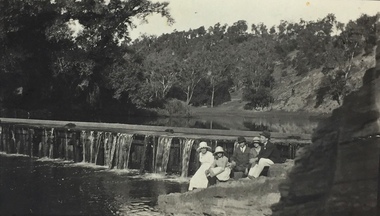
Photograph, Richardson Family at Dight's Falls, 1920
... Together it forms the largest privately-donated collection within the archives of the Kew Historical Society. dight's falls - kew (vic) - fairfield (vic) sport and recreation - kew (vic) dorothy rogers Annotation on reverse: "Mrs D. ...Dight’s Falls in Studley Park is an artificial weir built on a natural rock bar across the Yarra. The weir was built in the 1840s to provide water to the ‘Ceres’ flour-mill, one of the first in Victoria. The falls were later to become known as Dight’s Falls after the owners of the mill. Later, a pumping station was built on the Kew side of the river, which pumped water uphill to a reservoir in Walmer Street that provided water to the Melbourne Botanical Gardens and to Albert Park Lake. The area around Dight’s Falls was and is frequently used for recreational activities. This photograph forms part of the collection assembled by the historian Dorothy Rogers, that was donated to the Kew Historical Society by her son John Rogers in 2015. The manuscripts, photographs, maps, and documents were sourced by her from both family and local collections or produced as references for her print publications. Many were directly used by Rogers in writing ‘Lovely Old Homes of Kew’ (1961) and 'A History of Kew' (1973), or the numerous articles on local history that she produced for suburban newspapers. Most of the photographs in the collection include detailed annotations in her hand. The Rogers Collection provides a comprehensive insight into the working habits of a historian in the 1960s and 1970s. Together it forms the largest privately-donated collection within the archives of the Kew Historical Society. Black and white photograph of the Richardson family seated on the Kew side of Dight's Falls in 1920. One of the girls in the photograph was to become the Melbourne historian Dorothy (Richardson) Rogers. Annotation on reverse: "Mrs D. Rogers, 29 Park Crst Kew. Dights Falls 1920" dight's falls - kew (vic) - fairfield (vic), sport and recreation - kew (vic), dorothy rogers -
Kew Historical Society Inc
Archive (series) - Subject File, Adeney, William, 1971
... Typically files will contain primary and secondary sources. william adeney adeney avenue - kew (vic.) clifton villa - cotham road - kew (vic.) ...Various Parties Reference, Research, Information KHS Order Reference file containing items of correspondence from 1971 relating to a query regarding the life of William Adeney, of Clifton Villa, Cotham Road. Researcher name - John Adeney. Response from Mrs E. West, KHS Secretary. The file contains snippets of original research on Adeney (Rate Books - William Adeney, Park Street (later Adeney Avenue) 1878. The response refers to memories by Frances Dumaresq who knew the descendants. william adeney, adeney avenue - kew (vic.), clifton villa - cotham road - kew (vic.) william adeney, adeney avenue - kew (vic.), clifton villa - cotham road - kew (vic.) -
Kew Historical Society Inc
Archive (Sub-series) - Subject File, BRYAN, Cr. Henry & Family, 1958
... Typically files will contain primary and secondary sources. bryan family residents -- families -- kew (vic) Archive file containing genealogical research into the ancestors and descendants of Cr Henry T “Harry” Bryan of 124 Princess Street, Kew. ...Various parties Reference, Research, Information Secondary Values (KHS Imposed Order) Subject file containing genealogical research into the ancestors and descendants of Cr Henry T “Harry” Bryan of 124 Princess Street, Kew. The file also includes a photocopy of the report of the Coronial Inquest into the death by drowning of Cr. Bryan at Parkdale in 1924, photocopied funeral notices, a photograph of the Bryan grave at the Boroondara General Cemetery, a photocopy of the Bryan Family Tree, two letters from Edna Fryer recalling her life in Kew, copies of photographs of Thomas Henry Bryan (1868-1924), John Bryan (1841-1912) and Sarah Bryan nee Chambers (1840-95), Henry Thomas Bryan’s children - Harold George Bryan (1896-1956), John Alfred Edmund Bryan (1897-1984), Norman Arthur Bryan (1898-1964), and Edna May Bryan (1905-1991), copies of the certificates of marriage of John Bryan and Sarah Chambers (1867) and Henry Thomas Bryan and Edith Ripper (1895). bryan family, residents -- families -- kew (vic) bryan family, residents -- families -- kew (vic) -
Kew Historical Society Inc
Archive (Sub-series) - Subject File, BUCHAN Family, 1958
... Typically files will contain primary and secondary sources. canoe tree - kew (vic) stevenson street -- kew (vic.) buchan family finhaven Reference file containing articles on an Indigenous canoe, now in the Melbourne Museum, which was collected by John Buchan of Finhaven, Stevenson Street, Kew in the 1850s. ...Various parties Reference, Research, Information Secondary Values (KHS Imposed Order) Subject file containing articles on an Indigenous canoe, now in the Melbourne Museum, which was collected by John Buchan of Finhaven, Stevenson Street, Kew in the 1850s. The Museum printout describes the canoe and provides information on its provenance. The KHS newsletter article by Judith Vimpani contains genealogical research on the family. canoe tree - kew (vic), stevenson street -- kew (vic.), buchan family, finhaven canoe tree - kew (vic), stevenson street -- kew (vic.), buchan family, finhaven -
Kew Historical Society Inc
Archive (Sub-series) - Subject File, COLEBATCH, Dr. John, 2005
... John Colebatch AO (1909-2005) who in addition to his pioneering medical discoveries/practices became a resident of Kew and a member/vestryman of Holy Trinity Church, High Street, Kew (Vic). ...Kew and its environs, of which this file is an example. Typically files will contain primary and secondary sources. Archive file containing information about Dr. John Colebatch AO (1909-2005) who in addition to his pioneering medical discoveries/practices became a resident of Kew and a member/vestryman of Holy Trinity Church, High Street, Kew (Vic). ...Various parties Reference, Research, Information Secondary Values (KHS Imposed Order) Subject file containing information about Dr. John Colebatch AO (1909-2005) who in addition to his pioneering medical discoveries/practices became a resident of Kew and a member/vestryman of Holy Trinity Church, High Street, Kew (Vic). The article was adapted from one originally published in the Trinity Times in 2000. -
Kew Historical Society Inc
Archive (Sub-series) - Subject File, Kew Historical Society, Gardens (Kew), 1979
... Typically files will contain primary and secondary sources. gardens - private - kew (vic) garden design - kew (vic) kew horticultural society Correspondence and newspaper articles/clippings relating to historic gardens in Kew. ...Various parties Reference, Research, Information Secondary Values (KHS Imposed Order) Correspondence and newspaper articles/clippings relating to historic gardens in Kew. The oldest item is a letter from the National Trust Victoria announcing their two-year garden study and seeking information on gardens in Kew. Mavis Rolley, Secretary of the Society, made handwritten notes in response, which are kept in the file. She refers to: the pear trees planted by William Oswin in c. 1845 near what is now the Burke Road Bridge (she notes that a search for the trees at the time of the construction of the Eastern Freeway was unsuccessful), a camellia planted by the Dannocks near the corner of Derby and High Street, a c.1876 pine tree in Field Place, Henty Court, an 1875 Moreton Bay fig at Tarring, Ruyton, a Moreton Bay fig at Roxeth, Trinity Grammar, an 1840s oak tree and a 120-year old olive tree at Fairholme, Barry Street, 1870 pine trees at D’Estaville, Barry Street, trees at Turinville, Barnard Grove, dating to 1846, pine trees dating from 1845-6 on the Willsmere Farm, red gums in Victoria Park, pine trees in the Cemetery dating from the 1860s, trees in the Alexandra Gardens and at Kew Primary School, palm trees at La Verna, Sackville Street dating from the 1890s, the trees and gardens at Ross House (Charleville), and the trees at Merridale, Sackville Street which date from the 1880s, a magnolia at Lalla Rookh. These dates are probably highly contestable. Other handwritten notes from 1979 about significant gardens included: 5 Molesworth Street, Red Bluff - Redmond Street (garden now destroyed), Campion House, Studley Park Road, Raheen, Studley Park Road, Ross House, Cotham Road (Charleville), 7 Adeney Avenue, 20-21 Belmont Avenue, 52 Mary Street, an Edna Walling garden on the corner of Argyle Road and Victor Avenue, Merridale, Sackville Street, Roseneath, and Reno, St John’s Parade. gardens - private - kew (vic), garden design - kew (vic), kew horticultural society gardens - private - kew (vic), garden design - kew (vic), kew horticultural society -
 Kew Historical Society Inc
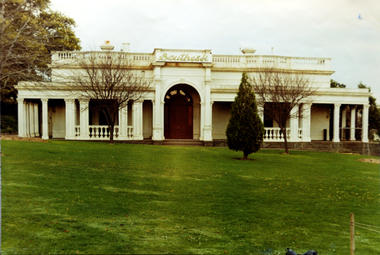
Photograph, Façade of ‘Southesk', Cotham Road, 1970
... Colour enlargement of a photograph (slide) of Southesk (formerly Ordsall) in Cotham Road, Kew (demolished 1970). david carnegie john halfey southesk - cotham road - kew (vic) ordsall - cotham road - kew (vic) Colour photograph of the front lawn and façade of ‘Southesk’ (formerly ‘Ordsall’, built for John Halfey in 1882). The house was located on the corner of Cotham Road and Charles Street ...Colour enlargement of a photograph (slide) of Southesk (formerly Ordsall) in Cotham Road, Kew (demolished 1970). Colour photograph of the front lawn and façade of ‘Southesk’ (formerly ‘Ordsall’, built for John Halfey in 1882). The house was located on the corner of Cotham Road and Charles Street, Kew. The Italianate mansion was built in the Renaissance villa style on a bluestone plinth. Two balustrades surrounded the parapet of the roof and ran between the groups of pillars on either side of the entrance porch. The verandah was tiled and wide and Corinthian columns supported its roof. When the house passed into the hands of the City of Kew in 1948, the landscaping and formal flower beds were removed and replaced by lawns.The house was demolished in 1970. david carnegie, john halfey, southesk - cotham road - kew (vic), ordsall - cotham road - kew (vic) -
 Kew Historical Society Inc
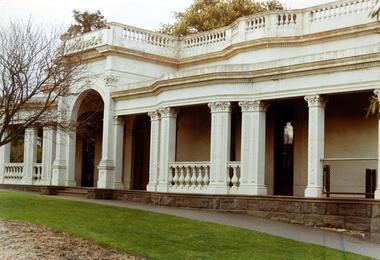
Photograph, Façade of ‘Southesk', Cotham Road, 1970
... Colour enlargement of a photograph (slide) of Southesk (formerly Ordsall) in Cotham Road, Kew (demolished 1970). david carnegie john halfey southesk - cotham road - kew (vic) ordsall - cotham road - kew (vic) A colour photograph of the façade of ‘Southesk’ taken at an oblique angle. Formerly known as ‘Ordsall’, the house was built for John Halfey in 1882 on the corner of Cotham Road and Charles Street. ...Colour enlargement of a photograph (slide) of Southesk (formerly Ordsall) in Cotham Road, Kew (demolished 1970). A colour photograph of the façade of ‘Southesk’ taken at an oblique angle. Formerly known as ‘Ordsall’, the house was built for John Halfey in 1882 on the corner of Cotham Road and Charles Street. The Italianate mansion was built in the Renaissance villa style on a bluestone plinth. Two balustrades surrounded the parapet of the roof and ran between the groups of pillars on either side of the entrance porch. The verandah was tiled and wide and Corinthian columns supported its roof. When the house passed into the hands of the City of Kew in 1948, the Council used it for a kindergarten, an elderly citizen centre and as a home for the Leo Baeck Centre. The house was demolished in 1970. david carnegie, john halfey, southesk - cotham road - kew (vic), ordsall - cotham road - kew (vic) -
 Kew Historical Society Inc
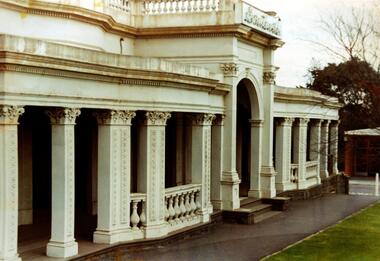
Photograph - Façade of ‘Southesk', Cotham Road, Stewart West, 1970
... Colour enlargement of a photograph (slide) of Southesk (formerly Ordsall) in Cotham Road, Kew (demolished 1970). david carnegie john halfey southesk - cotham road - kew (vic) ordsall - cotham road - kew (vic) A colour photograph of the façade of ‘Southesk’ taken at an oblique angle. Formerly known as ‘Ordsall’, the house was built for John Halfey in 1882 on the corner of Cotham Road and Charles Street. ...Colour enlargement of a photograph (slide) of Southesk (formerly Ordsall) in Cotham Road, Kew (demolished 1970). A colour photograph of the façade of ‘Southesk’ taken at an oblique angle. Formerly known as ‘Ordsall’, the house was built for John Halfey in 1882 on the corner of Cotham Road and Charles Street. The Italianate mansion was built in the Renaissance villa style on a bluestone plinth. Two balustrades surrounded the parapet of the roof and ran between the groups of pillars on either side of the entrance porch. The verandah was tiled and wide and Corinthian columns supported its roof. When the house passed into the hands of the City of Kew in 1948, the Council used it for a kindergarten, an elderly citizen centre and as a home for the Leo Baeck Centre. The house was demolished in 1970. david carnegie, john halfey, southesk - cotham road - kew (vic), ordsall - cotham road - kew (vic) -
 Kew Historical Society Inc
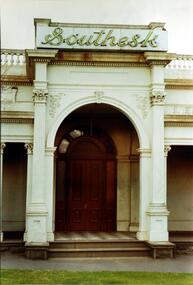
Photograph, Entrance to ‘Southesk’, Cotham Road, 1970
... Kew (demolished 1970). Rare colour photograph of the exterior of Southesk david carnegie john halfey southesk - cotham road - kew (vic) ordsall - cotham road - kew (vic) A colour enlargement of the entrance to ‘Southesk’. Formerly known as ‘Ordsall’, the house was built for John Halfey in 1882 on the corner of Cotham Road and Charles Street ...Colour enlargement of a photograph (slide) of Southesk (formerly Ordsall) in Cotham Road, Kew (demolished 1970). Rare colour photograph of the exterior of Southesk A colour enlargement of the entrance to ‘Southesk’. Formerly known as ‘Ordsall’, the house was built for John Halfey in 1882 on the corner of Cotham Road and Charles Street. This Italianate mansion was built in the Renaissance villa style on a bluestone plinth. The picture provides photographic evidence of the tiling on the veranda and the typically arched doorway. The neon sign above the door was added during the period when it was owned by the City of Kew (1948-70). david carnegie, john halfey, southesk - cotham road - kew (vic), ordsall - cotham road - kew (vic) -
 Kew Historical Society Inc
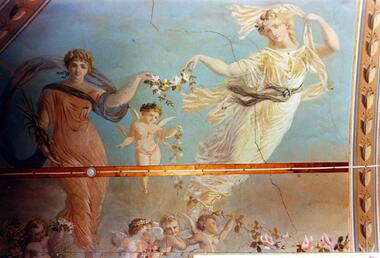
Photograph - Ceiling fresco, Ballroom, ‘Southesk’, Cotham Road, Stewart West, 1970
... john halfey southesk - cotham road - kew (vic) ordsall - cotham road - kew (vic) The most significant decorative aspects of Southesk (formerly ‘Ordsall’) were the murals in the front two rooms. An article in the Melbourne Argus in 1882 records that Mr Vandenbrandt and Signor Rizzi created these under the supervision of Cullis Hill. This fresco from the ceiling of the ballroom is believed to depict two of the Seasons. Signor Rizzi was a renowned painter of flowers. He is credited with painting these parts of the murals. Examples of his floral paintings can still be seen at Villa Alba in Walmer Street ...Colour enlargement of a photograph (slide) of Southesk (formerly Ordsall) in Cotham Road, Kew (demolished 1970). The ceilings of and architraves of Ordsall were painted by artists employed by the decorating company, Cullis Hill & Co. The frescos, of which fragments survive, were some of the most important murals used as elements of interior decoration in Melbourne during the Boom Period of the 1880s. These photographs were taken immediately prior to the demolition of the house, and are the best examples of the murals. The most significant decorative aspects of Southesk (formerly ‘Ordsall’) were the murals in the front two rooms. An article in the Melbourne Argus in 1882 records that Mr Vandenbrandt and Signor Rizzi created these under the supervision of Cullis Hill. This fresco from the ceiling of the ballroom is believed to depict two of the Seasons. Signor Rizzi was a renowned painter of flowers. He is credited with painting these parts of the murals. Examples of his floral paintings can still be seen at Villa Alba in Walmer Street. david carnegie, john halfey, southesk - cotham road - kew (vic), ordsall - cotham road - kew (vic) -
 Kew Historical Society Inc
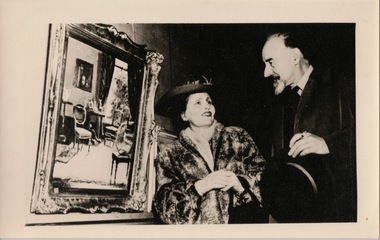
Photograph, Alma Figuerola and Max Meldrum, 1940s
... Kew Arts Festivals, initially in the Presbyterian Church Hall in Highbury Grove and later at the Recreation Hall in Wellington Street. A foundation member of the Kew Historical Society in 1958, Alma Figuerola remained an active member of the Society until her death on 8 December 1970. She predeceased her two sisters who both died in the 1990s and who are buried at Andersons' Creek Cemetery in Warrandyte. alma figuerola album arists - kew (vic) artists - meldrum school occupants - 7 barry street - kew (vic) Alma Figuerola and fellow artist John Farmer, admiring what may be Max Meldrum's painting 'Chair'. ...The Melbourne artist Alma Agnes Marion Figuerola, was the daughter of Juan Pedro Narciso Figuerola (1869-1919) and Alice Lucinda Walker Hanson (1889-1969). Each of their three daughters grew up to be involved in the arts: Alma as a painter; Carmen Irene (1906-1993) as a short story writer, poet and teacher of dancing; and Sylvia (also Silvia) Lyla Alice (1911-1992) as a composer and cellist. The first art lessons Alma Figuerola received were with Oscar Binder. Later she attended the art school established by the Melbourne 'tonalist' [Duncan] Max Meldrum (1875-1955). She graduated from his school in 1920, participating in her first group exhibition in the same year. Solo exhibitions of her work were to be held in 1933 at the Meldrum Gallery in Elizabeth Street, in 1937 and 1945 at the Athenaeum Gallery at 188 Collins Street, and in 1951 at Georges Gallery in Collins Street. Throughout her extensive career she participated in group exhibitions, usually with artists of the Meldrum School, and as a member of the Twenty Melbourne Painters, of which she was invited to become an associate in 1935. In 1953, her portrait of Professor ES Hills was entered in the Archibald Prize Competition of the Art Gallery of New South Wales. A resident of Kew from the 1930s - 51 Studley Park Road, often with her mother, her sister Carmen, or both - from c.1942 until her death she lived at 'D’Estaville', 7 Barry Street. From the late 1930s she is recorded as actively contributing to the arts at a local level. In 1939 and 1940 she participated in art exhibitions at the Hawthorn Municipal Library organised by Jessie Carbines. From 1944 to 1951 she co-organised successive Kew Arts Festivals, initially in the Presbyterian Church Hall in Highbury Grove and later at the Recreation Hall in Wellington Street. A foundation member of the Kew Historical Society in 1958, Alma Figuerola remained an active member of the Society until her death on 8 December 1970. She predeceased her two sisters who both died in the 1990s and who are buried at Andersons' Creek Cemetery in Warrandyte. Alma Figuerola and fellow artist John Farmer, admiring what may be Max Meldrum's painting 'Chair'. The photograph is from the Alma Figuerola photograph album. alma figuerola album, arists - kew (vic), artists - meldrum school, occupants - 7 barry street - kew (vic) -
Kew Historical Society Inc
Archive (Sub-series) - Subject File, Kew Court House - 2000-2005, 2000
... The Society holds the complete documentation of this heritage campaign. kew - history kew court house kew police station heritage campaigns - kew (vic) Information file containing information about the heritage significance of the Kew Court House (and Police Station) in High Street, Kew. ...Various parties Reference, Research, Information Secondary Values (KHS Imposed Order) Subject file containing information about the heritage significance of the Kew Court House (and Police Station) in High Street, Kew. Most of the file contains correspondence between a number of interested parties including the Kew Historical Society which was leading the campaign to have the building/precinct preserved and used for community purposes. Letters and submissions include those from the Department of Treasury & Finance, Ray Tonkin (Heritage Victoria), Dr. Robert Dean MLA, Judith Voce, Hon David Davis MLC, John Lenders MP, Hon John Thwaites, Andrew McIntosh MLA and officers of the Kew Historical Society. The file also contains records of interview and memos and meeting minutes relating to the campaign. kew - history, kew court house, kew police station, heritage campaigns - kew (vic) kew - history, kew court house, kew police station, heritage campaigns - kew (vic) -
 Kew Historical Society Inc
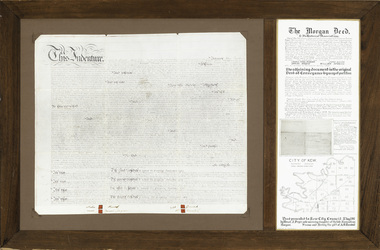
Legal record - The Indenture, Crown Portion 86, otherwise known as 'The Morgan Deed', 1852 (and later)
... They provide a link to Kew's most famous pioneering families. james venn morgan john quick william derrick samuel derrick kew (vic) - history kew (vic) - pioneers samuel watts kew (vic.) — municipal collection Framed 1952 Indenture recording the sale of land in Kew to pioneering Kew families. ...This indenture once formed part of the City of Kew's Municipal Collection. Cr. W.D. Vaughan in his history 'Kew's Civic Century' (1960) records on page 194 that: "The original deed of conveyance of the land being all of Crown Portion 86, Kew, purchased by John Quick, James Venn Morgan, Samuel Derrick and William Derrick was presented by the Historical Society of Victoria on behalf of Mrs Fryer, a daughter of the later J.V. Morgan, to the [Kew] Council on August 5, 1941. Crown Portion 86, comprised all the land between Cotham Road and High Street to an alignment opposite the east boundary of Glenferrie Road. On it the first residential house was built by Mr. J.V. Morgan in 1852." Following the donation, the Indenture was surrounded by other original related text and explanatory notes and framed. The resulting framed documents are the largest framed objects in the collection. The Indenture and the accompanying contextual documents are some of the most historically significant manuscripts to have survived since the settlement of Kew in the 1850s. They provide a link to Kew's most famous pioneering families. Framed 1952 Indenture recording the sale of land in Kew to pioneering Kew families. james venn morgan, john quick, william derrick, samuel derrick, kew (vic) - history, kew (vic) - pioneers, samuel watts, kew (vic.) — municipal collection -
 Kew Historical Society Inc
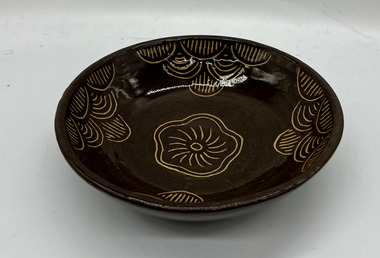
Ceramic - Dish, Viola Ayling, 1950–1970
... Ceramics Pakington Street -- Kew (Vic.) dishes viola annie ayling viola annie mcvicars Signature to base: "V. ...Viola Annie McVicars (1911–1990) was born in Korumburra on 29 April 1911. At the age of 21, she married William John Ayling (1909–1995). After their marriage in 1932, they moved to Kew, initially to 81 Tennyson Street, and later to 180 Pakington Street. A professional tailoress, Viola Ayling was also a talented amateur potter, creating her ceramics at her home in Pakington Street, where she had an internal studio and a handmade, wood-fired brick kiln in her backyard. Following her death in 1990, her studio pottery passed to her daughter, and following the daughter’s death, to her granddaughter. This piece of glazed earthenware is part of a collection of 15 functional and decorative ceramic items donated by Viola’s granddaughter to the collection in 2024. A handmade dish, expertly potted and glazed. The style is representative of Australian ceramic design of the period, particularly that employed by Klytie Pate. Hand thrown earthenware dish, covered with a chocolate brown glaze into which a design on the cavetto and well has been incised. The cavetto has a design of four groups of joined semicircles filled with horizontal and vertical lines. The well includes an abstract representation of a flower. The signed, finely shaped foot and rim are glazed in cream with the artist's signature incised on the base. Signature to base: "V. Ayling" ceramics, pakington street -- kew (vic.), dishes, viola annie ayling, viola annie mcvicars -
 Kew Historical Society Inc
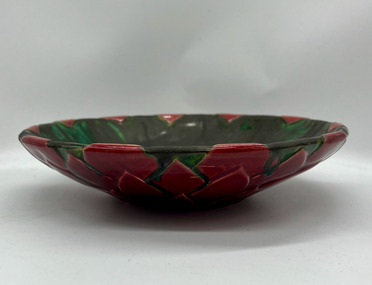
Ceramic - Dish, Viola Ayling, 1950–1970
... Ceramics Pakington Street -- Kew (Vic.) dishes viola annie mcvicars viola annie ayling Signature to base: "V. ...Viola Annie McVicars (1911–1990) was born in Korumburra on 29 April 1911. At the age of 21, she married William John Ayling (1909–1995). After their marriage in 1932, they moved to Kew, initially to 81 Tennyson Street, and later to 180 Pakington Street. A professional tailoress, Viola Ayling was also a talented amateur potter, creating her ceramics at her home in Pakington Street, where she had an internal studio and a handmade, wood-fired brick kiln in her backyard. Following her death in 1990, her studio pottery passed to her daughter, and following the daughter’s death, to her granddaughter. This piece of glazed earthenware is part of a collection of 15 functional and decorative ceramic items donated by Viola’s granddaughter to the collection in 2024. A handmade dish, expertly potted and glazed. The style is representative of Australian ceramic design of the period, particularly that employed by Klytie Pate. A large, eathernware dish, with a maroon ground and a mottled green and black glaze on the inside of the dish. The petals that form the floral design on the base are highlighted in a pink glaze. Each petal overlaps the rim. The artist's signature is on the base. Signature to base: "V. Ayling" ceramics, pakington street -- kew (vic.), dishes, viola annie mcvicars, viola annie ayling -
 Kew Historical Society Inc
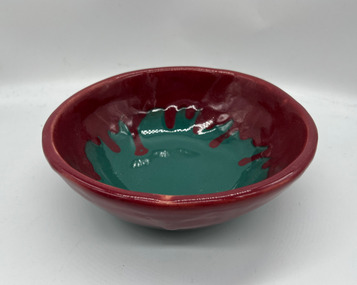
Ceramic - Dish, Viola Ayling, 1954
... Ceramics Pakington Street -- Kew (Vic.) dishes viola annie ayling viola annie mcvicars Signature to base: "V. ...Viola Annie McVicars (1911–1990) was born in Korumburra on 29 April 1911. At the age of 21, she married William John Ayling (1909–1995). After their marriage in 1932, they moved to Kew, initially to 81 Tennyson Street, and later to 180 Pakington Street. A professional tailoress, Viola Ayling was also a talented amateur potter, creating her ceramics at her home in Pakington Street, where she had an internal studio and a handmade, wood-fired brick kiln in her backyard. Following her death in 1990, her studio pottery passed to her daughter, and following the daughter’s death, to her granddaughter. This piece of glazed earthenware is part of a collection of 15 functional and decorative ceramic items donated by Viola’s granddaughter to the collection in 2024. A handmade dish, expertly potted and glazed. The style is representative of Australian ceramic design of the period, particularly that employed by Klytie Pate. Hand built deep dish, glazed in maroon and green. The maroon ground includes a splash of green in the centre of the dish. This is the only ceramic piece in the collection that is both signed and dated. Signature to base: "V. Ayling / 1954" ceramics, pakington street -- kew (vic.), dishes, viola annie ayling, viola annie mcvicars -
 Kew Historical Society Inc
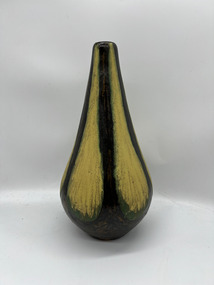
Ceramic - Lamp base, Viola Ayling, 1950–1970
... Ceramics Pakington Street -- Kew (Vic.) lamp bases viola annie ayling viola annie mcvicars Signature to base: "V. ...Viola Annie McVicars (1911–1990) was born in Korumburra on 29 April 1911. At the age of 21, she married William John Ayling (1909–1995). After their marriage in 1932, they moved to Kew, initially to 81 Tennyson Street, and later to 180 Pakington Street. A professional tailoress, Viola Ayling was also a talented amateur potter, creating her ceramics at her home in Pakington Street, where she had an internal studio and a handmade, wood-fired brick kiln in her backyard. Following her death in 1990, her studio pottery passed to her daughter, and following the daughter’s death, to her granddaughter. This piece of glazed earthenware is part of a collection of 15 functional and decorative ceramic items donated by Viola’s granddaughter to the collection in 2024. A handmade lamp base, expertly potted and glazed. The style is representative of Australian ceramic design of the period, particularly that employed by Klytie Pate. Handmade lamp base, irregularly ridged with applied green and yellow glazes. The lamp base has a hole for a cord above the foot. Signature to base: "V. Ayling" ceramics, pakington street -- kew (vic.), lamp bases, viola annie ayling, viola annie mcvicars -
 Kew Historical Society Inc
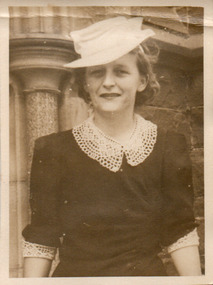
Collection, Ceramics of Viola Annie Ayling (1911–1990), 1950–1970
... John Ayling (1909–1995). After their marriage in 1932, they moved to Kew, initially to 81 Tennyson Street, and later to 180 Pakington Street. ...Viola Annie McVicars (1911–1990) was born in Korumburra on 29 April 1911. At the age of 21, she married William John Ayling (1909–1995). After their marriage in 1932, they moved to Kew, initially to 81 Tennyson Street, and later to 180 Pakington Street. A professional tailoress, Viola Ayling was also a talented amateur potter, creating her ceramics at her home in Pakington Street, where she had an internal studio and a handmade, wood-fired brick kiln in her backyard. Following her death in 1990, her studio pottery passed to her daughter, and following the daughter’s death, to her granddaughter. This piece of glazed earthenware is part of a collection of 15 functional and decorative ceramic items donated by Viola’s granddaughter to the collection in 2024. Parent file of the items in the Viola Annie Ayling collection of 1940s, 1950s, 1960s and 1970s ceramics. This parent file includes digital copies of a photograph of the ceramicist and also of her home at 128 Pakington Street, Kew, in 1951 where she practiced her art. 128 pakington street -- kew (vic.), ceramics -- victoria (australia), viola annie mcvicars, viola annie ayling -
Kew Historical Society Inc
Journal, Kew Historical Society, Newsletter No.147, June 2024
... Kew Historical Society (Vic.) -- Periodicals. Kew Historical Society (Vic.) -- Newsletters Kew Historical Society (Vic.) -- journals Tram tracks in Boroondara [electrification of] / Robert Baker pp1-2. ...Tram tracks in Boroondara [electrification of] / Robert Baker pp1-2. History News - Conservation [Henty Family Costume Collection, Community Heritage Grant application - National Library of Australia]; New Members; Donations to the Collection / p3. The Voyage of the John Bunyan / David White pp4-5. Family records: The diary of Mrs Henry Henty of Tarring / Suzanne McWha pp6-8. Sir Rupert 'Dick' Hamer AC KCMG ED / John Torpey pp8-9. As it happened 100 years ago [H.C.A. Harrison, Empire Day, Motor accident, Widening of High Street [Kew], Death of Cr [Sir] Henry [de Castres] Kellett, Bt / David White p.9. Branching out: the Coles family of Kew / Desley Reid pp.10-11. Membership and Donations / p12.Published quarterly since 1977, the newsletters of the Kew Historical Society contain significant research by members exploring relevant aspects of the Victorian and Australian Framework of Historical Themes. Frequently, articles on people, places and artefacts are the only source of information about an aspect of Kew, and Melbourne’s history. non-fiction Tram tracks in Boroondara [electrification of] / Robert Baker pp1-2. History News - Conservation [Henty Family Costume Collection, Community Heritage Grant application - National Library of Australia]; New Members; Donations to the Collection / p3. The Voyage of the John Bunyan / David White pp4-5. Family records: The diary of Mrs Henry Henty of Tarring / Suzanne McWha pp6-8. Sir Rupert 'Dick' Hamer AC KCMG ED / John Torpey pp8-9. As it happened 100 years ago [H.C.A. Harrison, Empire Day, Motor accident, Widening of High Street [Kew], Death of Cr [Sir] Henry [de Castres] Kellett, Bt / David White p.9. Branching out: the Coles family of Kew / Desley Reid pp.10-11. Membership and Donations / p12. kew historical society (vic.) -- periodicals., kew historical society (vic.) -- newsletters, kew historical society (vic.) -- journals -
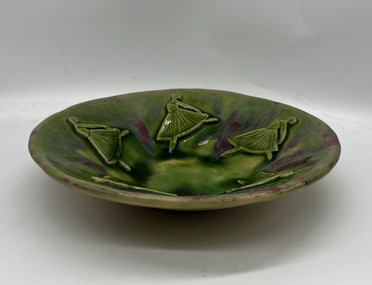 Kew Historical Society Inc
Ceramic - Dish, Viola Ayling, 1950–1970
... John Ayling (1909–1995). After their marriage in 1932, they moved to Kew, initially to 81 Tennyson Street, and later to 180 Pakington Street. ...Viola Annie McVicars (1911–1990) was born in Korumburra on 29 April 1911. At the age of 21, she married William John Ayling (1909–1995). After their marriage in 1932, they moved to Kew, initially to 81 Tennyson Street, and later to 180 Pakington Street. A professional tailoress, Viola Ayling was also a talented amateur potter, creating her ceramics at her home in Pakington Street, where she had an internal studio and a handmade, wood-fired brick kiln in her backyard. Following her death in 1990, her studio pottery passed to her daughter, and following the daughter’s death, to her granddaughter. This piece of glazed earthenware is part of a collection of 15 functional and decorative ceramic items donated by Viola’s granddaughter to the collection in 2024. A dish, expertly potted and glazed. The style is representative of Australian ceramic design of the period, particularly that employed by the Australian art potter, Klytie Pate. Small, green glazed dish, highlighted with splashes of purple. Five ballerinas in the cavetto surround an undecorated well. The reverse is glazed a lighter green. Spur marks in the foot rim reveal that the dish was supported on stilts in the kiln Signature to base: "V. Ayling" ceramics, pakington street -- kew (vic.), dishes, viola annie mcvicars, viola annie ayling
