
Showing 124 items matching "kiewa valley farmers"
-
 Kiewa Valley Historical Society
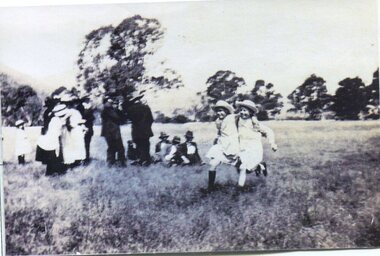
Photograph - Tawonga Sports Day
... ...Kiewa Valley farmers...Tawonga is in the Kiewa Valley, where local farmers lived with their families. ...Tawonga is in the Kiewa Valley, where local farmers lived with their families. ...Tawonga is in the Kiewa Valley, where local farmers lived with their families. The Ryder and Briggs families have been prominent farming families in the local area since early settlement. Vera Ryder and Alli Briggs were pupils at Tawonga Primary School in the early 1920's. Their families were prominent in the settlement of the Kiewa ValleyCopy of black and white photograph of 3 legged race at Tawonga Sports Day circa 1920's (estimate only) Vera Ryder & Allie Briggs racing in the foreground. Various adults and children standing in the background.Printed label attached to rear. Tawonga Sports Day. Vera Ryder and Allie Briggs - 3 legged race. Girls have white aprons over their dresses.tawonga, sports day, kiewa valley farmers -
 Kiewa Valley Historical Society
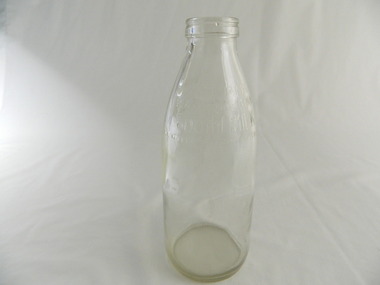
Bottle - Milk, After 1966
... ...kiewa valley farmers...Dairy farmers live in the Kiewa Valley and send their milk to the local dairy to be pasteurised and bottled. ...Milk bottles were bought at the local store. Metric measures were introduced in Australia in 1966. Bottles were recycled and remained the property of the manufacturer.Dairy farmers live in the Kiewa Valley and send their milk to the local dairy to be pasteurised and bottled. Historical: Bottles changed - shape, size, embossing and seal Aesthetic: Display showing bottles of different shape, size, embossingClear glass milk bottle with straight sides three quarters of the way up tapering gently to the opening. The taper sides are heavily embossed with print in capital letters. The circumference of the base is embossed with short straight lines in the direction of the edge to middle.On each side: "Pasteurised / Wash and Return / 600 ml Milk The fourth line continues underneath around the circumference: Use not permitted without written - permission owner milk bottles recovered.clear glass bottle, milk, dairy, milk bottles recovered, kiewa valley farmers -
 Kiewa Valley Historical Society
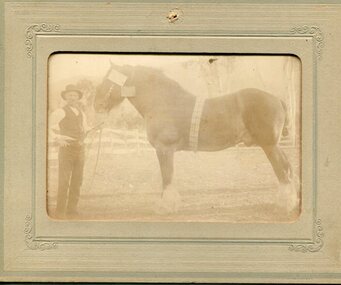
Photo - Henry Fisher and Horse, 1915, Circa 1915
... ...Kiewa Valley farmers...Horse owned by the Fisher family who were dairy farmers in the Mongans Bridge area in the early 1900's The Fisher family were very keen horse people and received awards for their horsemanship and their horses Fisher family Kiewa Valley farmers Mongan's Bridge Hand written on back of photograph - MR HENRY FISHER Daddy and horse. ...Horse owned by the Fisher family who were dairy farmers in the Mongans Bridge area in the early 1900'sThe Fisher family were very keen horse people and received awards for their horsemanship and their horsesSepia photograph of Mr Henry Fisher with his prize winning horse (presumed to be Sir William Wallace) Photo is mounted on heavy cardboard frameHand written on back of photograph - MR HENRY FISHER Daddy and horse. Taken at home about 1915fisher family, kiewa valley farmers, mongan's bridge -
 Kiewa Valley Historical Society
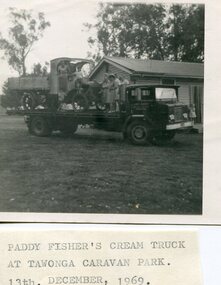
Photo - Paddy Fisher's Cream Truck 1969, December 13, 1969
... ...Kiewa Valley farmers...E Fisher Hallford truck Cream truck Fisher family Kiewa Valley farmers Mongan's Bridge Small typed note attached to back of photo 'Paddy Fisher's cream truck at Tawonga caravan park. 13th December, 1969 Black and white photograph of Paddy Fisher's cream truck loaded onto a tray truck at the Tawonga Caravan Park. ...The Hallford truck was made by J & E Hall, of Dartford, England, whose business commenced in 1785. In 1926 the Fisher family of Mongan's Bridge took delivery of the 1923 Hallford truck which was used on the farm to transport cream to the Kiewa Butter Factory in Tangambalanga. In 1967, the truck was sold to Mr Greg Bedstead and other members of the Kiewa Valley Historical Society for the KVHS who reimbursed them at a later date. The truck was housed at the Butter Factory for many years and was paraded on special occasions. The truck was purchased for $380. It's chassis no. 2439 and the price included a spare chain. (Ref. E. Fisher on 18th Dec. 1969) The KVHS group who paid $50 each towards the Hallford truck were: T Pyle; James Grave; P & E. Barton; K Shoebridge; K Plenderleith and SK Pearce.refunded in 1971 Hallford truck. Fisher family. Kiewa butter factory. J & E Hall Company of England. E FisherBlack and white photograph of Paddy Fisher's cream truck loaded onto a tray truck at the Tawonga Caravan Park. Seven unidentified people on the tray truckSmall typed note attached to back of photo 'Paddy Fisher's cream truck at Tawonga caravan park. 13th December, 1969hallford truck, cream truck, fisher family, kiewa valley farmers, mongan's bridge -
 Kiewa Valley Historical Society
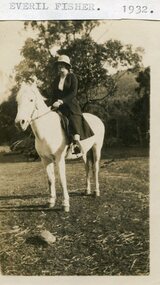
Photo - Everil Fisher 1932, 1932
... ...Kiewa Valley farmers...The Fisher family were dairy farmers in the Mongans Bridge area in the early 1900's The Fisher family, including Everil, were very keen horse people and received awards for their horsemanship and their horses Fisher family Kiewa Valley farmers Mongan's Bridge Handwritten on back - Everil Fisher 1932 Sepia photograph of Everil Fisher on her horse. ...The Fisher family were dairy farmers in the Mongans Bridge area in the early 1900'sThe Fisher family, including Everil, were very keen horse people and received awards for their horsemanship and their horsesSepia photograph of Everil Fisher on her horse. Taken in 1932Handwritten on back - Everil Fisher 1932fisher family, kiewa valley farmers, mongan's bridge -
 Kiewa Valley Historical Society
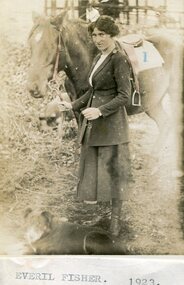
Photographic Postcard - Everil Fisher 1923, 1923
... ...Kiewa Valley farmers...Horse owned by the Fisher family who were dairy farmers in the Mongans Bridge area in the early 1900's The Fisher family were very keen horse people and received awards for their horsemanship and their horses Fisher family Kiewa Valley farmers Mongan's Bridge Handwritten on back - Everil Fisher 1923 Sepia photographic postcard of Everil Fisher with saddled horse. ...Horse owned by the Fisher family who were dairy farmers in the Mongans Bridge area in the early 1900'sThe Fisher family were very keen horse people and received awards for their horsemanship and their horsesSepia photographic postcard of Everil Fisher with saddled horse. Dog in the foreground. Photo taken 1923Handwritten on back - Everil Fisher 1923fisher family, kiewa valley farmers, mongan's bridge -
 Kiewa Valley Historical Society
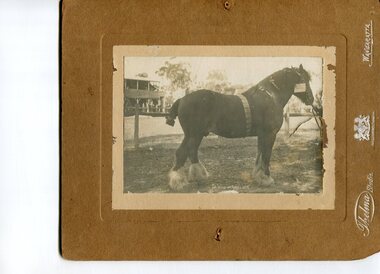
Photo - Horse (Sir William Wallace) Belonging to the Fisher Family 1912, 1912
... ...Kiewa Valley farmers...Fisher family Kiewa Valley farmers Mongan's Bridge Handwritten on the back of photograph 'At Yackandandah Show' 1912 Sepia photograph of horse, Sir William Wallace (displaying first prize ticket) owned by the Fisher family. ...Horse, Sir William Wallace was awarded first place at the Yackandandah show in 1912. Horse was owned by the Fisher family who were dairy farmers in the Mongans Bridge area in the early 1900'sThe Fisher family were very keen horse people and received awards for their horsemanship and their horses.Sepia photograph of horse, Sir William Wallace (displaying first prize ticket) owned by the Fisher family. Photo taken at Yackandandah show in 1912. Photo is mounted on a heavy cardboard frame.Handwritten on the back of photograph 'At Yackandandah Show' 1912fisher family, kiewa valley farmers, mongan's bridge -
 Kiewa Valley Historical Society
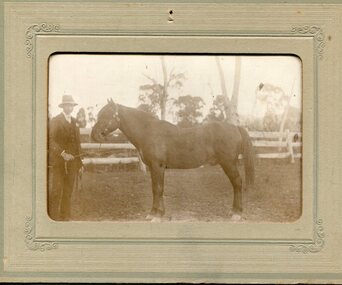
Photo - Paddy Fisher and Horse 1915, 1915
... ...Kiewa Valley farmers...Horse owned by the Fisher family who were dairy farmers in the Mongans Bridge area in the early 1900's The Fisher family were keen horse people and received awards for their horsemanship and their horses Paddy Fisher Kiewa Valley farmers Mongan's Bridge Handwritten on back of photograph - "Paddy" 1915 Sepia photograph of Paddy Fisher with unnamed horse. ...Horse owned by the Fisher family who were dairy farmers in the Mongans Bridge area in the early 1900'sThe Fisher family were keen horse people and received awards for their horsemanship and their horsesSepia photograph of Paddy Fisher with unnamed horse. Photo is mounted on heavy card frameHandwritten on back of photograph - "Paddy" 1915paddy fisher, kiewa valley farmers, mongan's bridge -
 Kiewa Valley Historical Society
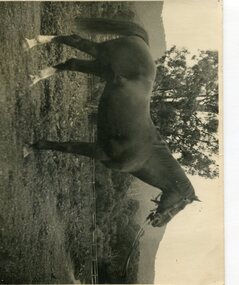
Photo - Horse Owned by Fisher Family
... ...Kiewa Valley farmers...Horse owned by the Fisher family who were dairy farmers in the Mongans Bridge area as early as the 1900's The Fisher family were very keen horse people and received awards for their horsemanship and their horses Fisher family Kiewa Valley farmers Mongan's bridge Sepia photograph of horse (unnamed) owned by Fisher family Photo - Horse Owned by Fisher Family ...Horse owned by the Fisher family who were dairy farmers in the Mongans Bridge area as early as the 1900'sThe Fisher family were very keen horse people and received awards for their horsemanship and their horsesSepia photograph of horse (unnamed) owned by Fisher familyfisher family, kiewa valley farmers, mongan's bridge -
 Kiewa Valley Historical Society
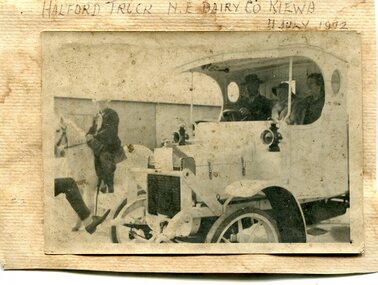
Photographs x 2- Halford truck, 1. 11/7/1972 2. Unknown
... ...Kiewa Valley farmers...Hallford truck Fisher family Kiewa Valley farmers Dairy truck 1. Handwritten in black ink above photo 'Halford truck N.E. ...The Hallford truck was made by J & E Hall, of Dartford, England, whose business commenced in 1785. In 1926 the Fisher family of Mongan's Bridge took delivery of the 1923 Hallford truck which was used on the farm to transport cream to the Kiewa Butter Factory in Tangambalanga. In 1967, the truck was sold to Mr Greg Bedstead and other members of the Kiewa Valley Historical Society for the KVHS who reimbursed them at a later date. The truck was housed at the Butter Factory for many years and was paraded on special occasions.This truck was used to transport cream to the Kiewa Butter Factory from the Fisher family's dairy farm at Mongan's Bridge. At other times a tyre was removed and a belt attached to run a chaff cutter. This truck has historical significance as it is presentative of vehicles which were used by farmers to transport cream to the butter factories by a local family. Furthermore, it has social significance as KVHS members combined their finances to purchase this truck so it would be part of our collection. It is well provenanced and has an excellent interpretive capacity.2 black and white photographs mounted on buff card 1. Photograph of Halford truck with man on white horse riding alongside. Presumably in a parade. Dated 11th July, 1972 when truck was no longer in service. 2. Photograph of Halford truck followed by a horse and buggy. Date unknown1. Handwritten in black ink above photo 'Halford truck N.E. Dairy Co. Kiewa. 11 July, 1972' 2. No markingshallford truck, fisher family, kiewa valley farmers, dairy truck -
 Kiewa Valley Historical Society
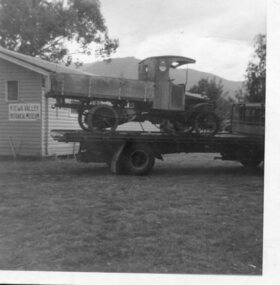
Photograph- Paddy Fisher's truck at Tawonga, 13th Dec. 1969
... ...Kiewa Valley farmers...Hallford truck Fisher family Kiewa Valley farmers Mongan's bridge cream truck Small typed tag on back of photo 'Paddy fisher's truck taken at Tawonga Caravan Park 13th December, 1969' Black and white photograph of Paddy Fisher's truck on a flat bed truck, outside the original Kiewa Valley Historical Museum Photograph- Paddy Fisher's truck at Tawonga ...The Hallford truck was made by J & E Hall, of Dartford, England, whose business commenced in 1785. In 1926 the Fisher family of Mongan's Bridge took delivery of the 1923 Hallford truck which was used on the farm to transport cream to the Kiewa Butter Factory in Tangambalanga. In 1967, the truck was sold to Mr Greg Bedstead and other members of the Kiewa Valley Historical Society for the KVHS who reimbursed them at a later date. The truck was housed at the Butter Factory for many years and was paraded on special occasions. Photograph shows truck parked outside the original Kiewa Valley Historical Museum which was located at Tawonga Caravan Park and was later relocated to its current location at the Mt Beauty Information Centre. This truck was used to transport cream to the Kiewa Butter Factory from the Fisher family's dairy farm at Mongan's Bridge. At other times a tyre was removed and a belt attached to run a chaff cutter. This truck has historical significance as it is presentative of vehicles which were used by farmers to transport cream to the butter factories by a local family. Furthermore, it has social significance as KVHS members combined their finances to purchase this truck so it would be part of our collection. It is well provenanced and has an excellent interpretive capacity.Black and white photograph of Paddy Fisher's truck on a flat bed truck, outside the original Kiewa Valley Historical MuseumSmall typed tag on back of photo 'Paddy fisher's truck taken at Tawonga Caravan Park 13th December, 1969'hallford truck, fisher family, kiewa valley farmers, mongan's bridge, cream truck -
 Kiewa Valley Historical Society
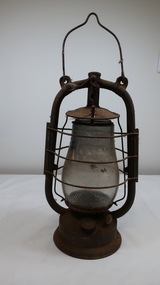
Lantern
... ...kiewa valley farmers...Used by the Higginson Family farmers of the Kiewa Valley lantern household item light eric higginson kiewa valley farmers On the base: No. 420 Frowo, Made in Germany with a medallion of dog and a badge. ...Used by the Higginson Family farmers of the Kiewa ValleyMetal with glass globe. Kerosene reservoir with screw lid. Crank globe lifter, wick knob.On the base: No. 420 Frowo, Made in Germany with a medallion of dog and a badge. Wick winder knob has a pattern. Kerosene screw lid has a pattern. Glass globe: Dietz, Fitzall, New York, USA.lantern, household item, light, eric higginson, kiewa valley farmers -
 Kiewa Valley Historical Society
Papers - Weekly Times Supplement, Wild Nature Series Nos. 1 - 90, 1932 - 1934
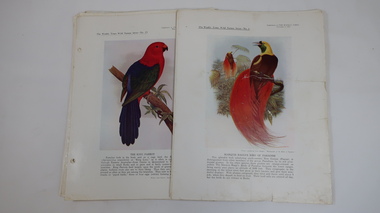
... ...kiewa valley farmers...At the time glossy colored pages were a keepsake. Farmers in the Kiewa Valley would have subscribed to the Weekly Times. weekly times wild life kiewa valley farmers Approximately 90 pages of colored photos of wild life each with factual text about the wildlife. ...The Weekly Times was produced for farmers and country people with local and farming news. At the time glossy colored pages were a keepsake.Farmers in the Kiewa Valley would have subscribed to the Weekly Times.Approximately 90 pages of colored photos of wild life each with factual text about the wildlife. Printed one side only. Each page was a supplement with the Weekly Times from December 3, 1932 through to August 18, 1934weekly times, wild life, kiewa valley farmers -
 Kiewa Valley Historical Society
Book - Farming - Pastoral & Agricultural, Dalgety's Review 1906-1907
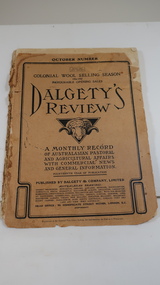
... ...kiewa valley farmers... all the way along the valley. dalgety's review 1906 kiewa valley farmers stock and station agent Paper cover with black print and sketch of a sheep's head with horns in the centre. ...Dalgety's is a stock and station agent who produced a 'monthly record / of Australian Pastoral / and Agricultural Affairs / with Commercial news / and General information.' 1906 was the 14th year of publication.The Kiewa Valley consisted only of farming until the late 1940s when the Kiewa Hydro Electric Scheme commenced in the Upper Kiewa Valley creating the townships of Bogong and Mt Beauty and the corresponding infrastructure. This book would have been subscribed to (9pence) by local farmers all the way along the valley.Paper cover with black print and sketch of a sheep's head with horns in the centre. It has 140 pages which include black & white print of articles, advertisements, charts and photos.dalgety's review 1906, kiewa valley farmers, stock and station agent -
 Kiewa Valley Historical Society
Papers - Cattle Grazing, Bogong High Plains
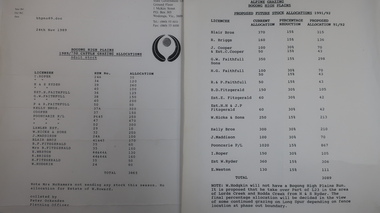
... ...kiewa valley farmers...Kiewa Valley cattle graziers were caught up in the controversy as it was their tradition dating back to the 1840s. This controversy continues as cattle grazing was banned in 2005. cattle grazing kiewa valley farmers ex S.C.A. / Benalla / Received 22nd Feb. 1979 / signed 4 pages with black print: 1. 1989/90 Cattle Grazing Allocation and Dept. of Conservation Forests and Lands, Wodonga. 2. ...Cattle grazing. In the 1990s government departments allocated the number of cattle being taken up to the Bogong High Plains by the families who traditionally leased land there.Cattle grazing had been banned in other Alpine areas due to concerns of their impact on the environment. Kiewa Valley cattle graziers were caught up in the controversy as it was their tradition dating back to the 1840s. This controversy continues as cattle grazing was banned in 2005. 4 pages with black print: 1. 1989/90 Cattle Grazing Allocation and Dept. of Conservation Forests and Lands, Wodonga. 2. Proposed Future Stock Allocations 1991/92 list of 16 families 3. & 4. List of families, ear marks, brands etc. dated 22nd Feb. 1979 stapled togetherex S.C.A. / Benalla / Received 22nd Feb. 1979 / signedcattle grazing, kiewa valley farmers -
 Kiewa Valley Historical Society
Collection of Papers and Articles - Cattle on the Bogong High Plains
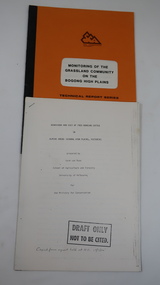
... ...kiewa valley beef farmers...Cattle grazing on the Bogong High Plains was a tradition for the farmers of the Kiewa Valley. Controversy re the environmental impact has recurred over the decades leading to action by the Australian Government. cattlemen bogong high plains grazing kiewa valley beef farmers Articles and Papers collection re controversy re cattle grazing on the Bogong High Plains. ...Cattle grazing on the Bogong High Plains was a tradition for the farmers of the Kiewa Valley. Controversy re the environmental impact has recurred over the decades leading to action by the Australian Government.Articles and Papers collection re controversy re cattle grazing on the Bogong High Plains. Late 1970s to the late 1980s.cattlemen, bogong high plains, grazing, kiewa valley beef farmers -
 Kiewa Valley Historical Society
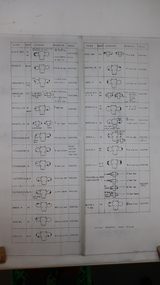
Chart - Cattlemen Families of the Kiewa Valley and their Brands, Cattle Grazing on the Bogong High Plains
... Cattle were taken up to the Bogong High Plains by the Kiewa Valley farmers who had a lease there in their allocated area. ...Cattle were taken up to the Bogong High Plains by the Kiewa Valley farmers who had a lease there in their allocated area. ...Cattle were taken up to the Bogong High Plains by the Kiewa Valley farmers who had a lease there in their allocated area. The cattle roamed and were mustered in late summer. At this time they also sorted the cattle using the cattle's brands for identification.Types of breeds bred in the Kiewa Valley and the names of families who grazed cattle on the Bogong High Plains is of historical interest and also gives an insight into the history of cattle grazing.White paper, black print. Chart's headings: Name of Family (25 in alphabetical order), Run No., Earmark, Brand and Log and Breed. 29th Feb. 1972 cattle grazing, bogong high plains, kiewa valley families, cattle breeds, cattle brands -
 Kiewa Valley Historical Society
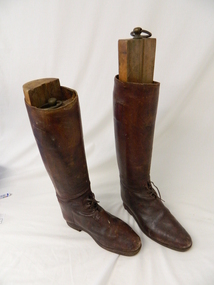
Boots Riding, late 1800's - early 1900's
... The early Kiewa Valley farmers opened up the Bogong High Plains for cattle grazing in the late 1800's and early 1900's. ...The early Kiewa Valley farmers opened up the Bogong High Plains for cattle grazing in the late 1800's and early 1900's. ...The early Kiewa Valley farmers opened up the Bogong High Plains for cattle grazing in the late 1800's and early 1900's. Many farmers of the Kiewa Valley built huts on the Bogong High Plains to stay in during the summer mustering season. The Roper family had their own cattle run on the High Plains with several version's of Ropers Hut being built and used for this purpose. These boots were owned by Fred Roper whose father was one of the first pioneers of the Upper Kiewa Valley and Tawonga farming district. These boots were made around the late 1800's to early 1900's and are of a quality hide and a very good example of historical clothing worn at the time. These boots are very significant to the Kiewa Valley because the mark a period of early farming within the Kiewa Valley and Bogong High Plains as they were worn by Fred Roper who comes from one of the farming pioneering families of Tawonga. These boots were used when mustering the families cattle up to the Bogong High Plains for summer grazing and also around his farm in Tawonga when riding his horses. They were donated by his great grand daughter Leonie Roper in 2011, therefore the manufacturing of these boots could be anything from the late 1880's to early 1900's. They are made of high quality leather and were made to last the tough conditions of mustering and farming cattle. They also had wooden stock which fitted into them "KVHS 0445"These knee high "riding" boots have a 4 "rung" laces at the base of the upright boot and a strap at the top of the boot. They are made of brown leather and have a small heel (not the usual higher heel for stirrups)riding boots. footwear. cattle mustering footwear. roper family. cattlemen. bogong high plains. -
 Kiewa Valley Historical Society
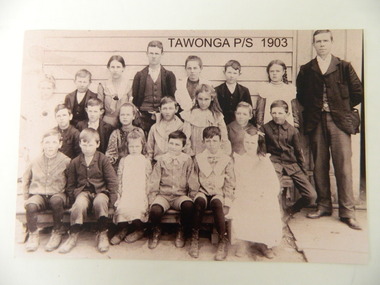
Photo - Copy of Tawonga Primary School 1903, Tawonga Primary School, 1903 - original
... Tawonga is in the Kiewa Valley where farmers lived with their families. ...Tawonga is in the Kiewa Valley where farmers lived with their families. ...Tawonga is in the Kiewa Valley where farmers lived with their families. The school was opened on 27th July 1880 situated on 8 acres near the current township of Tawonga. This school was erased by fire in 1900 and all records were destroyed. The school then moved to the old Tawonga Hall. In 1910 the school was shifted to its present site on 3 acres of land donated by Frank Cooper. The school building and attendance continued to grow especially during the construction of the Kiewa Hydro Electric Scheme. Historic: Tawonga Primary school has educated the local farming and town children for many years. It is an excellent source of the names of the local families in 1903. The photo is taken outside the Old Tawonga hall where the school was situated in 1903 and shows the clothing worn by children and teachers at the time.Teacher and 20 students in school photo. "Tawonga Primary School 1903" added digitally when the photo was copied. There is a typed list of all names.Names of students. Back Row: Charlotte Cooper, John Cooper, Ada Cooper, Thomas Hollands, Irene Roper, Stewart Hollands, Lily Barnette. Teacher Donald Mc Cance. Centre Row: Edward Trebilcock, Alfred Hollands, Pearl Barnette, Frank Cooper, Nellie Higginson, Bert Roper, Reg Roper. Front Row: Ben Cooper, Raymond Cooper, Myrtle Barnette, Lewis Crotty, John Creamer, Annie Hollandstawonga primary school. education. kiewa valley. cooper family -
 Kiewa Valley Historical Society
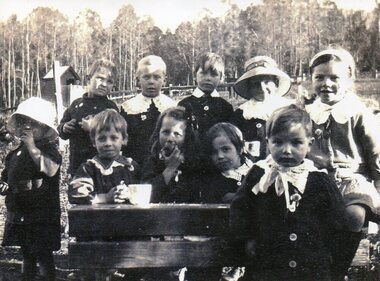
Photo - Tawonga Primary School pupils 1920, 1920
... Tawonga is in the Kiewa Valley where farmers lived with their families. ...Tawonga is in the Kiewa Valley where farmers lived with their families. ...Tawonga Primary School Children 1920. Tawonga is in the Kiewa Valley where farmers lived with their families. The school was opened on 27th July 1880 situated on 8 acres near the current township of Tawonga. This school was erased by fire in 1900 and all records were destroyed. The school then moved to the old Tawonga Hall. In 1910 the school was shifted to its present site on 3 acres of land donated by Frank Cooper. The school building and attendance continued to grow especially during the construction of the Kiewa Hydro Electric Scheme. Early residents of the area. Ellie Seymour front row first on left. Walter J E Ryder in front of the desk at right. Vera Ryder behind him on the right. The boys also wore white collarsCopy of black and white photograph of pupils (children) at Tawonga Primary School 1920tawonga primary school, state school, kiewa valley -
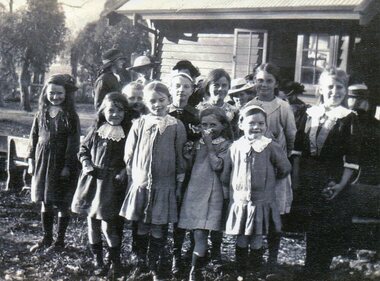 Kiewa Valley Historical Society
Photo - School Children Tawonga Primary School, Circa 1920 (estimate)
... Tawonga is in the Kiewa Valley, where local farmers lived with their families. ...Tawonga is in the Kiewa Valley, where local farmers lived with their families. ...Tawonga is in the Kiewa Valley, where local farmers lived with their families. The school was originally opened July 27 1880, situated on 8 acres near the current township of Tawonga. The school was erased by fire in 1900 and all records destroyed. The school was then moved to the Old Tawonga Hall. In 1910, the school was shifted to its present site on 3 acres of land donated by Frank Cooper. The school building and attendance continued to grow, especially during construction of the Kiewa Hydro Electric Scheme.Tawonga Primary School has educated the local farming and town children for many years. It is an excellent source of the names of the local families of the time ie: Vera Ryder – front row, far right (little girl with the wide headband.)Copy of black and white photograph of pupils at Tawonga Primary School. Circa 1920 (estimate)tawonga primary school, kiewa valley -
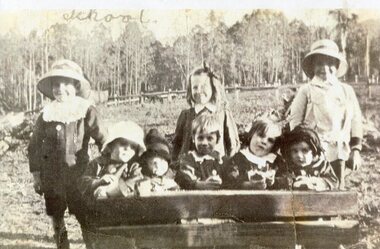 Kiewa Valley Historical Society
Photo - School Children Tawonga Primary School, Circa 1920 (estimate)
... Tawonga is in the Kiewa Valley, where local farmers lived with their families. ...Tawonga is in the Kiewa Valley, where local farmers lived with their families. ...Tawonga is in the Kiewa Valley, where local farmers lived with their families. The school was originally opened July 27 1880, situated on 8 acres near the current township of Tawonga. The school was erased by fire in 1900 and all records destroyed. The school was then moved to the Old Tawonga Hall. In 1910, the school was shifted to its present site on 3 acres of land donated by Frank Cooper. The school building and attendance continued to grow, especially during construction of the Kiewa Hydro Electric Scheme.Tawonga Primary School has educated the local farming and town children for many years. It is an excellent source of the names of the local families of the time. Copy of black and white photograph of pupils at Tawonga Primary School. Circa 1920 (estimate)tawonga primary school, kiewa valley -
 Kiewa Valley Historical Society
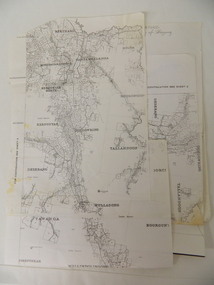
Parish Maps - Kiewa Valley
... Kiewa Valley. They show how the Kiewa Valley was divided up into allotments for town dwellers and farmers and enables further research. kiewa valley. parish maps. land owners Two copies of Parish Maps of the towns in the Kiewa Valley. ...The Parish Maps show how the Counties were divided into allotments for buyers. On one the original owners are named and the sizes of their properties given. The reference numbers enable individuals research the history of the property. The other is on a smaller scale giving only the allotment numbers. The map with the names gives information on the early settlers of the Kiewa Valley. They show how the Kiewa Valley was divided up into allotments for town dwellers and farmers and enables further research.Two copies of Parish Maps of the towns in the Kiewa Valley. One gives the original owners and the other the reference numbers of the allotments.kiewa valley. parish maps. land owners -
 Kiewa Valley Historical Society
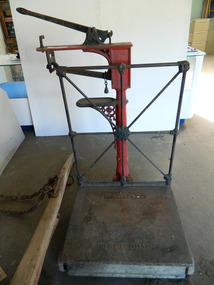
Scales - Tawonga Store
... Weights KVHS 0800 (A) The Tawonga Store opened c1920 and sold goods and produce to the farmers of the Kiewa Valley. The scales were a necessary item for a store as goods were sold in bulk. scales. weights. tawonga store. farm produce. ...These scales were used in the Tawonga Store which opened c1920. They were used to weigh produce e.g.. flour & wheat that the farmers used on their farms and in their homes. These scales pre date packaging. Ref. Weights KVHS 0800 (A)The Tawonga Store opened c1920 and sold goods and produce to the farmers of the Kiewa Valley. The scales were a necessary item for a store as goods were sold in bulk. Large steel dirty black platform attached at the middle of the back to a red cylinder which has 2 smaller platforms coming out to the side. The top platform has a black steel lever attached and a hook to hold it down. Below this platform is a measuring rod marked 2,4 etc up to 14 on which hangs a eight. The bottom platform is to rest the unused weights. Weights ref. KVHS 0800 (A)W. & T. Avery Birminghamscales. weights. tawonga store. farm produce. -
 Kiewa Valley Historical Society
Milking Cups - Dairy
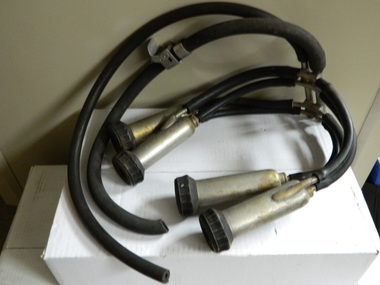
... The dairy industry is and has been one of the major industries of the Kiewa Valley. This equipment was used on local farmers, P & R. Creamer's dairy farm. milking machinery; dairy; Kiewa valley; Creamer family; At opening at end of cups: "Utility" possibly more but too difficult to read. ...This milking equipment was used in the early days of milking using machines. The dairy industry is and has been one of the major industries of the Kiewa Valley. This equipment was used on local farmers, P & R. Creamer's dairy farm.Set of early mechanical milking cups. 4 cups - 2 each side of 2 hollow metal (steel) rods which are attached to hollow rubber tubes that lead towards the main milking machine. The metal cups have black ends at the opening where they are attached to the cow. The outlet from the cups is via 2 metal tubes that lead into the rods that in turn lead to the tubes.At opening at end of cups: "Utility" possibly more but too difficult to read. milking machinery; dairy; kiewa valley; creamer family; -
 Kiewa Valley Historical Society
Map - Topographical, Ski Club of Victoria Bogong High Plains and Adjacent Peaks, Early 1930's
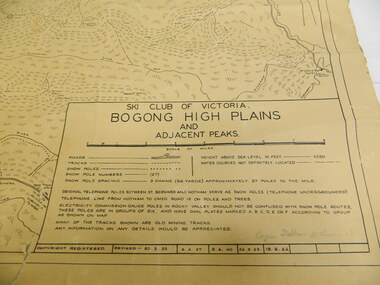
... The Ryder family are farmers in the Kiewa Valley and were involved in taking their cattle up to the Bogong High Plains where they had a lease. ...The Ryder family are farmers in the Kiewa Valley and were involved in taking their cattle up to the Bogong High Plains where they had a lease. ...This map has been in the Ryder family for approx. 70 years. Probably used when bush walking and skiing in the early days on the Bogong High Plains. The Ryder family are farmers in the Kiewa Valley and were involved in taking their cattle up to the Bogong High Plains where they had a lease. The State Electricity Commission of Victoria constructed the Kiewa Hydro Electric Scheme opening up the area during the 1940's and 1950's. This type of map is an early one, used by people in the Kiewa Valley and possibly by surveyors prior to construction.The map is an early topographic map used by farmers living in the Kiewa Valley. It is historically significant as these people were involved in taking cattle up to the High Plains during summer and may have been used for bush walking and skiing.This is a sepia coloured paper map which was originally printed copyright registered. It was revised in 20/6.33/4.4.37/8.4.40/24.8.43/19/6/54. It shows roads / tracks / snow poles / snow pole numbers (27) / Snow pole spacing (3 chains. 66 yards) approximately 27 poles to the mile / height above sea level in feet - 5280. Water courses not definitely located etc.Rocky Valley Dam (Kiewa Hydro Electric Scheme) has been drawn on the map by hand with a biro. There is a wooden rod at the top of the map.topographic map; kiewa valley; ryder family; high plains of victoria -
 Kiewa Valley Historical Society
Bottle - Milk, After 1966
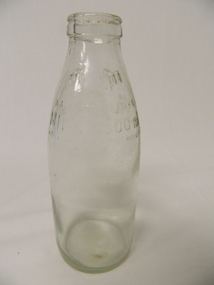
... Dairy farmers live in the Kiewa Valley and send their milk to the local dairy to be pasteurised and bottled. ...Milk bottles were bought at the local store. Metric measures were introduced in Australia in 1966. Bottles were recycled and remained the property of the manufacturer.Dairy farmers live in the Kiewa Valley and send their milk to the local dairy to be pasteurised and bottled. Historical: Bottles changed shape, size, embossing and seal. Aesthetic- Display showing bottles of different shape, size, embossing.Clear glass milk bottle with straight dies three quarters of the way up tapering gently to the opening. The tapered sides are heavily embossed in capital letters with 5 lines of writing.Near opening: around top: 4 lots of 'm' each in a circle on 4 sides Next line 'Wash and Return' twice i.e.. each side Next line 'Milk 600 ml' twice i.e.. each side Next line 'Use not permitted without written permission owner milk Bottles Recovery Ltd Next line: 'M10058 18'milk bottle; kiewa valley; dairy industry -
 Kiewa Valley Historical Society
Journal - John Creamer, Dairyfarmer, 1916 - 1942
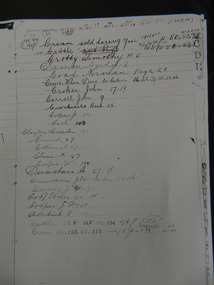
... The journal was kept by local dairy farmer John Creamer who farmed at Gundowring in the Kiewa Valley. It consists of names of local people and is representative of the business (produce and life) on the dairy farm at the time. ...Dairy farmers kept a journal to record their transactions and business on the farm. John Creamer's daughter Mary Cardwell has her father's journal covering the years 1916 to 1942.The journal was kept by local dairy farmer John Creamer who farmed at Gundowring in the Kiewa Valley. It consists of names of local people and is representative of the business (produce and life) on the dairy farm at the time.Photocopied A3 sized pages from John Creamer's dairy journal covering the years 1916-1942. The book has an alphabet index for people's names with details of their purchases (eg. mutton and potatoes) with the cost in pounds shillings and pence. Page 15 has the title "Sows When Due to Parrow" and lists the cows by name. Only pages 1 to 61 have been copied except for pages 39-41, 49, 54, 55. The rest has been digitised. See: KVHSs 1823 for digitised copydairy industry; creamer family; gundowring -
 Kiewa Valley Historical Society
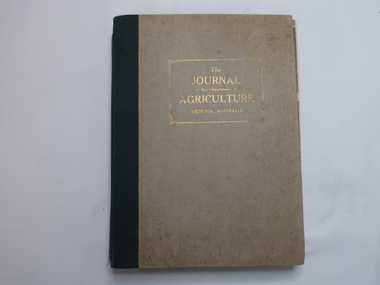
Book of Journals - Agriculture 1949, The Journal of the Department of Agriculture Victoria, Australia
... Each journal has eg January 50 pages and February 100 pages with advertisements, articles, etc updating farmers on current issues and the latest inventions. Farmers in the Kiewa Valley subscribed to these journals enabling them to keep up with the changes in farming in Victoria, Australia. department of agriculture in Victoria farmers of the Kiewa Valley 1949 Journals Large, thick book box with monthly journals in 1949 enclosed. ...Each journal has eg January 50 pages and February 100 pages with advertisements, articles, etc updating farmers on current issues and the latest inventions.Farmers in the Kiewa Valley subscribed to these journals enabling them to keep up with the changes in farming in Victoria, Australia.Large, thick book box with monthly journals in 1949 enclosed. Each journal is held by string. Spine is black and cover is beige.department of agriculture in victoria, farmers of the kiewa valley, 1949 journals -
 Kiewa Valley Historical Society
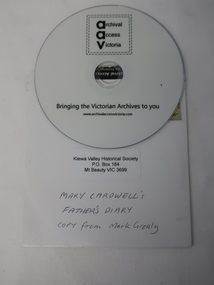
DVD - Mary Cardwell's Father's Diary
... The journal was kept by local dairy farmer John Creamer, who farmed at Gundowring in the Kiewa Valley. It consists of names of local people and is representative of the business (produce and life) on the dairy farm at the time. ...Dairy farmers kept a journal to record their transactions and business on the farm. John Creamer' daughter, Mary Cardwell has her father's journal covering the years 1916 to 1942. Mark Grealy digitised the journal for KVHS to preserve the contents and to make it available to the public at the PRO as an item of significance. DVDs have been replaced by USB sticks as technology advances.The journal was kept by local dairy farmer John Creamer, who farmed at Gundowring in the Kiewa Valley. It consists of names of local people and is representative of the business (produce and life) on the dairy farm at the time. DVDs are a digitised version of the Journal and require a computer to be able to play it as technology advances.DVD is white with black print:on the front: 'AAV' / 'Archival Access Victoria / Bringing the Victorian Archives to you / www.archivalaccessvictoria.com. The DVD is in a white cardboard sleeve with a postage stamp, KVHS address and Title: 'Mary Cardwell's / Father's Diary / Copy from Mark Grealy' Ref: KVHS 0947As Above. dairy industry, creamer family, gundowring, dvd dairy farm journal
