
Showing 124 items matching "school to open in february"
-
 Federation University Historical Collection
Book - Book - Scrapbook, Ballarat College of Advanced Education: Scrapbook of newspaper cutting, Book 1; August 1975 to January 1976
... ...school to open in february...The cuttings cover the period from 20 August 1975 to 19 January 1976. ballarat institute of advanced education biae employment advertisements application for enrolment outline of courses apprenticeship ball u.s. fellowship for former smb student gregory mcrae mount clear school facilities when travelodge comes shops to go introduction to metallurgy practical benefits of legacy john reitze discrimination claim peter den brinker student representatives library on wheels teacher union doubts on new school at mt clear plans in store for mine plans outlined for new school college standards rising no pollution no noise electric cycle biae chemists in pollution hunt council to aid school growth buninyong council school to open in february move for cycle track to biae campus graham beanland appointed depty principal drastic cuts in tertiary courses tempory school goes up portable buildings school of coastal engineering 177 receive diploma of teaching $2500 scholarship to noel janetski fraser island environmental inquiry engineering school takes to the air ballarat students for democracy steve bracks praise for technical school tradition iran appointment for geologist Book with Blue cover, front. ...Newspaper cuttings relating to Ballarat College of Advanced Education. These are from various newspapers and include The Age, Ballarat Courier, The Australian, The Herald. The cuttings cover the period from 20 August 1975 to 19 January 1976. Book with Blue cover, front. Spiral bound.ballarat institute of advanced education, biae, employment advertisements, application for enrolment, outline of courses, apprenticeship ball, u.s. fellowship for former smb student, gregory mcrae, mount clear school facilities, when travelodge comes shops to go, introduction to metallurgy, practical benefits of legacy, john reitze, discrimination claim, peter den brinker, student representatives, library on wheels, teacher union doubts on new school at mt clear, plans in store for mine, plans outlined for new school, college standards rising, no pollution no noise, electric cycle, biae chemists in pollution hunt, council to aid school growth, buninyong council, school to open in february, move for cycle track to biae campus, graham beanland appointed depty principal, drastic cuts in tertiary courses, tempory school goes up, portable buildings, school of coastal engineering, 177 receive diploma of teaching, $2500 scholarship to noel janetski, fraser island environmental inquiry, engineering school takes to the air, ballarat students for democracy, steve bracks, praise for technical school tradition, iran appointment for geologist -
 Lakes Entrance Historical Society
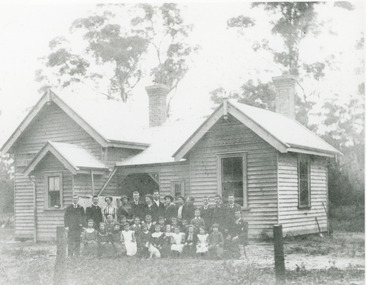
Photograph - Raymond Island School c1907
... Raymond Island school was opened 14 February 1902, and closed permanently 1934....Raymond Island school was opened 14 February 1902, and closed permanently 1934. ...Raymond Island school was opened 14 February 1902, and closed permanently 1934.Black and white photograph of students, teacher and parents at Raymond Island State School no. 3384. Paynesville Victoriaschools, buildings -
Ringwood and District Historical Society
Archive - Parent Record, Heathmont Primary School - Archive Collection (Parent Record)
... Parent Record for Archive collection of photographs and documents relating to Heathmont Primary School, Francis Street, Heathmont. The school opened on 4th February 1952 and closed 31st December 1997 when it merged with Gt Ryrie Primary School. ...Parent Record for Archive collection of photographs and documents relating to Heathmont Primary School, Francis Street, Heathmont. The school opened on 4th February 1952 and closed 31st December 1997 when it merged with Gt Ryrie Primary School. ...Parent Record for Archive collection of photographs and documents relating to Heathmont Primary School, Francis Street, Heathmont. The school opened on 4th February 1952 and closed 31st December 1997 when it merged with Gt Ryrie Primary School. -
 Lakes Entrance Historical Society
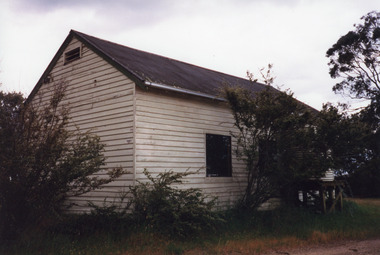
Photograph - Nungurner School 2000
... School, on land donated by H Jemmeson. The Education Department paid rent. Opened September 1924 by Albert Lind, used as school until new school opened in February 1963. ...School, on land donated by H Jemmeson. The Education Department paid rent. Opened September 1924 by Albert Lind, used as school until new school opened in February 1963. ...Erected by voluntary labour in 1924 as Community Hall and School, on land donated by H Jemmeson. The Education Department paid rent. Opened September 1924 by Albert Lind, used as school until new school opened in February 1963. Destroyed by fire September 2011 and site cleared.Colour photograph showing side of old Nungurner Hall / School, timber clad, corrugated iron gable roof, small window in side wall. Nungurner Victoriaschools, halls -
 Whitehorse Historical Society Inc.
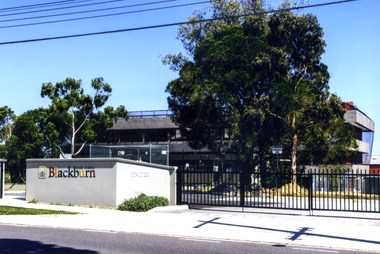
Photograph, Blackburn High School, 2012
... The Blackburn High School opened on 1st February 1956 with 128 Form 1 pupils and a staff of 8. ...The Blackburn High School opened on 1st February 1956 with 128 Form 1 pupils and a staff of 8. ...The Blackburn High School opened on 1st February 1956 with 128 Form 1 pupils and a staff of 8. The 20-acre site on the corner of Williams and Springvale road was surrounded by orchards and pine trees. The trees inspired the school motto: ' Ad licem crescimus' - 'We are growing towards the light'. The first headmaster was Mr V. Percy. The school had a reputation for musical excellence.Coloured photograph of the Blackburn High School in Springfield Road facing north 2012blackburn high school, schools -
 Warrnambool and District Historical Society Inc.
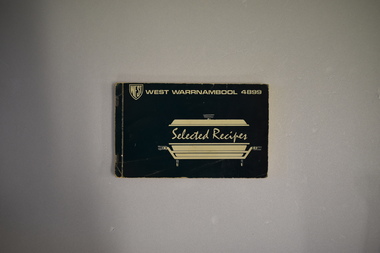
Booklet, Selected Recipes, 1960s
... West Warrnambool School No. 4899 opened in February 1966 with an enrolment of 183 children and a staff of 8 teachers under the Head Teacher J.J.Godfrey. ...West Warrnambool School No. 4899 opened in February 1966 with an enrolment of 183 children and a staff of 8 teachers under the Head Teacher J.J.Godfrey. ...This recipe booklet has been produced as a fund-raiser for the West Warrnambool State School. The production of recipe books such as this one was a popular school project in the 1960s and 70s. West Warrnambool School No. 4899 opened in February 1966 with an enrolment of 183 children and a staff of 8 teachers under the Head Teacher J.J.Godfrey. The West Warrnambool School still operates today in Hoddle Street Warrnambool.This booklet is retained as an example of the recipe books produced for fund raising purposes by non-profit organizations in the second half of the 20th century. It is also a memento of West Warrnambool State School. This is a soft cover booklet with a green front cover with an image of a fry pan and cream printing. The back cover is cream. (This copy has two front covers). The booklet contains a foreword, an index, printed recipes on different coloured pages and hand-drawn advertisements for local businesses. west warrnambool school, history of warrnambool -
 St Kilda Historical Society
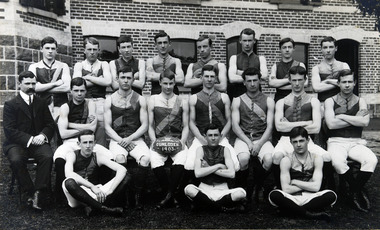
Photograph, Cumloden Football Team 1903, 1903
... Wilson, the then headmaster of that school, a group of disaffected masters lead by Burn established Cumloden College. The school opened in February 1891 with many of Burn's students following him to the new establishment. ...Wilson, the then headmaster of that school, a group of disaffected masters lead by Burn established Cumloden College. The school opened in February 1891 with many of Burn's students following him to the new establishment. ...In ca 1890 Cumloden villa was leased to William Martin Burn, a senior master at Melbourne Grammar. Following a disagreement with Dr. Wilson, the then headmaster of that school, a group of disaffected masters lead by Burn established Cumloden College. The school opened in February 1891 with many of Burn's students following him to the new establishment. It closed in 1905. Cumloden was very successful academically and in many sporting activities. Image shows the main building in the background.black and white photograph, in wooden frame painted black with gold trimA McCracken., A Yuille, C Robertson, C Sandford, C Winter Irving, Cornish, F Atherton, J McCracken, J Smith, K Ducket, L Langdon, M Cave, P McCracken, R Adam, S Dalrymple, W MacGregor, W Molesworth, W Sawerscumloden football team, cumloden college st kilda, football -
 Federation University Historical Collection
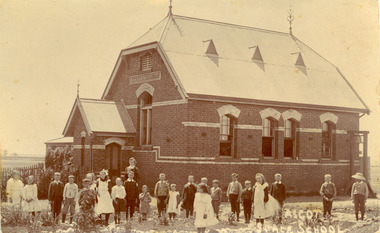
Postcard - Photographic Postcard, Ascot Primary School (No. 2507)
... School in Ascot opened in 1859 for the Presbyterian Free Church with 26 students, which quickly grew to 96. In 1866 the local Board of Managers offered the school to the Board of Education if it would pay the 200 pound building debt, but the offer was rejected. In 1873 Ascot Primary School (No. 16) opened. A new site was purchased in 1981 forcing the closure of School 16. Ascot State School (No. 2507) opened in February...School in Ascot opened in 1859 for the Presbyterian Free Church with 26 students, which quickly grew to 96. In 1866 the local Board of Managers offered the school to the Board of Education if it would pay the 200 pound building debt, but the offer was rejected. In 1873 Ascot Primary School (No. 16) opened. A new site was purchased in 1981 forcing the closure of School 16. Ascot State School (No. 2507) opened in February ...Ascot Denominational School in Ascot opened in 1859 for the Presbyterian Free Church with 26 students, which quickly grew to 96. In 1866 the local Board of Managers offered the school to the Board of Education if it would pay the 200 pound building debt, but the offer was rejected. In 1873 Ascot Primary School (No. 16) opened. A new site was purchased in 1981 forcing the closure of School 16. Ascot State School (No. 2507) opened in February 1883..1) Twenty three children stand in from on a brick building with corrugated iron roof. They are students of Ascot Primary School. .2) Twelve males students of Ascot Primary School stand in front of a timber post and rail fence. They are the same boys as depicted in the .1) Ascot Primary School photo. Members of the Chatham family were educated at Ascot Primary School and are thought to be in these photographs. In the late 1950s and 60s the children of Phillip and Elizabeth Chatham nee Holmes also attended Ascot State School along with the children of Bill and Margaret Holmes.Verso in blue ballpoint pen "Chatham Ascot"chatham family collection, ascot, ascot primary school, ascot state school, post and rail, elizabeth holmes, bill holmes -
 Sunshine and District Historical Society Incorporated
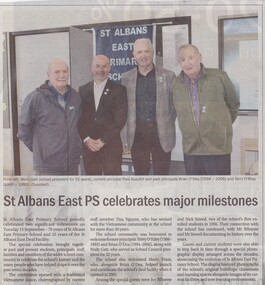
Archive - St. Albans East Primary School Documents
... Albans East Primary School opened in February 1956 at 25 McArthur Avenue, St Albans East with six classrooms. ...Albans East Primary School opened in February 1956 at 25 McArthur Avenue, St Albans East with six classrooms. ...The St. Albans East Primary School opened in February 1956 at 25 McArthur Avenue, St Albans East with six classrooms. The school was opened to relieve pressure on St. Albans Primary School (1889) and to meet the demand from the explosive post‑war population boom and Housing Commission development. During this period St. Albans transform from a semi‑rural fringe into a major migrant suburb. St. Albans East was one of several new schools built to accommodate the surge. A major milestone was the creation of the Deaf Facility in 2001, and has since become one of the school’s defining specialist programs. 2557.01 - St. Albans East Primary School - St. Albans East PS Celebrates Major Milestone Wally Gatt (School President), Paul Busuttil (Principal), Brian O'Dea (Former Principal), Terry O'Riley (Former Principal)st. albans east primary school, st. albans east state school, mcarthur avenue, st. albans -
 Sunshine and District Historical Society Incorporated
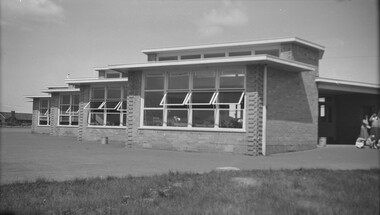
Photograph - Sunshine East Primary School Duke Street Sunshine Photographs
... Sunshine East Primary School opened on 5th February 1952 on Duke Street, Sunshine. ...Sunshine East Primary School opened on 5th February 1952 on Duke Street, Sunshine. ...Sunshine East Primary School opened on 5th February 1952 on Duke Street, Sunshine. The school was built to relieve pressure on the Sunshine Primary School and the Sunshine North Primary School as Sunshine’s population exploded after WWII, driven by the post war migrant boom which caused a rapidly growing population growth in the Sunshine and Braybrook districts. Many of these new migrants were staying in the nearby post war Housing Commission estates in Sunshine and Braybrook. In the 2000’s, the district saw a falling enrolment in student numbers across Sunshine’s older suburbs, and this led to school consolidations. In 2009, the school merged with the Braybrook Primary School and Sunvale Primary School forming the new school Sunshine Harvester Primary School, The Sunshine East site ceased operation on the 31st December 2008 and the site was later cleared with all original’s buildings being demolished. The new Sunshine Harvester Primary School was then built on the site.sunshine east primary school, duke street, sunshine -
 Orbost & District Historical Society
photograph, C 1900
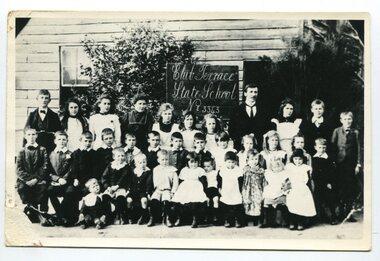
... The school first opened on 1st of February 1900, the teacher being Samuel Beaver. ...The school first opened on 1st of February 1900, the teacher being Samuel Beaver. ...Club Terrace, situated in East Gippsland, is important as a timber milling centre. The name probably derived from the ‘Ace of Clubs’ mine which operated for a time there and which took its name from the ‘Ace of Clubs’ cattle brand of still earlier days. The school first opened on 1st of February 1900, the teacher being Samuel Beaver. In 1960 the number of children enrolled grew too great for the little one-room school that had served so well. A modern type school of two rooms, built on a new site away from the mills, was occupied at the beginning of the 1961 school year when R. Lawry and his wife were the teachers. Later in the same year the school was officially opened by the DI Cyril Bowden. Also present were B. Evans, MLA, B. May, MLC and several Councillors from Orbost Shire. This school record is of immediate interest and value to the pupils and staff who have learned and taught in the Club Terrace State State School. The record also has a much wider significance, to the community in which the school is situated, as a record and research tool.A black / white photograph of a group of students and their male teacher standing outside a wooden building. It is labelled " Club Terrace State School No. 3343"on back - "about 1898"education club-terrace-state-school -
 Surrey Hills Historical Society Collection
Photograph, Chatham State School Grade 1 1927, 1927
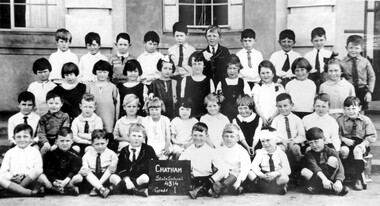
... The school was official opened on 15th February 1928. The school number is 4314. ...The school was official opened on 15th February 1928. The school number is 4314. 1927 schools chatham state school clothing and dress primary schools john butler maling (jnr) ralph rae (mr) A black and white photograph of a group of 39 Grade 1 students from Chatham State School. ...Chatham School, located in Weybridge Street Surrey Hills, was opened on 1 August 1927 following pressure from local residents as nearby schools (Balwyn, Mont Albert & Surrey Hills) were all over-crowded. This followed a surge in development following WW1. Land in surrounding streets was sub-divided. This included part of John Butler Maling (Jnr)'s small farm bounded by Banool Road, Wharton Road, Weybridge Street and Whitehorse Road. An area surrounding his home, 'The Willows' was retained and not sold until after he died in 1931. leased by Mr John Butler Maling in 1861. Three acres of his land were purchased by the Education Department. Some of the early students have referred to Chatham’s land as Mr Maling’s bull paddock. Some of the original yellow box trees remain on the property. The most significant of these is now called the Friendship Tree. On 1 August 1927 212 students were enrolled; Ralph Rae was one of these. The school was official opened on 15th February 1928. The school number is 4314. A black and white photograph of a group of 39 Grade 1 students from Chatham State School.1927, schools, chatham state school, clothing and dress, primary schools, john butler maling (jnr), ralph rae (mr) -
 Surrey Hills Historical Society Collection
Photograph, Chatham State School Grade 5 1931, 1931
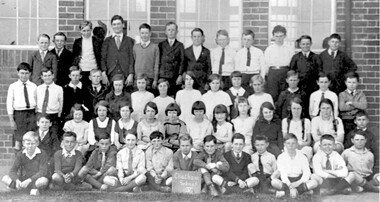
... The school was official opened on 15th February 1928. The school number is 4314. ...The school was official opened on 15th February 1928. The school number is 4314. schools chatham state school clothing and dress primary schools john butler maling (jnr) ralph rae (mr) A black and white photograph of a group of 51 Grade 5 students from Chatham State School. ...Chatham School, located in Weybridge Street Surrey Hills, was opened on 1 August 1927 following pressure from local residents as nearby schools (Balwyn, Mont Albert & Surrey Hills) were all over-crowded. This followed a surge in development following WW1. Land in surrounding streets was sub-divided. This included part of John Butler Maling (Jnr)'s small farm bounded by Banool Road, Wharton Road, Weybridge Street and Whitehorse Road. An area surrounding his home, 'The Willows' was retained and not sold until after he died in 1931. leased by Mr John Butler Maling in 1861. Three acres of his land were purchased by the Education Department. Some of the early students have referred to Chatham’s land as Mr Maling’s bull paddock. Some of the original yellow box trees remain on the property. The most significant of these is now called the Friendship Tree. On 1 August 1927 212 students were enrolled; Ralph Rae was one of these. The school was official opened on 15th February 1928. The school number is 4314. A black and white photograph of a group of 51 Grade 5 students from Chatham State School.schools, chatham state school, clothing and dress, primary schools, john butler maling (jnr), ralph rae (mr) -
 Surrey Hills Historical Society Collection
Photograph, Chatham State School Grade 2 1928, 1931
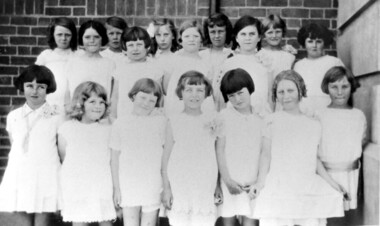
... The school was official opened on 15th February 1928. The school number is 4314. ...The school was official opened on 15th February 1928. The school number is 4314. ...Chatham School, located in Weybridge Street Surrey Hills, was opened on 1 August 1927 following pressure from local residents as nearby schools (Balwyn, Mont Albert & Surrey Hills) were all over-crowded. This followed a surge in development following WW1. Land in surrounding streets was sub-divided. This included part of John Butler Maling (Jnr)'s small farm bounded by Banool Road, Wharton Road, Weybridge Street and Whitehorse Road. An area surrounding his home, 'The Willows' was retained and not sold until after he died in 1931. leased by Mr John Butler Maling in 1861. Three acres of his land were purchased by the Education Department. Some of the early students have referred to Chatham’s land as Mr Maling’s bull paddock. Some of the original yellow box trees remain on the property. The most significant of these is now called the Friendship Tree. On 1 August 1927 212 students were enrolled; Ralph Rae was one of these. The school was official opened on 15th February 1928. The school number is 4314. Front row centre is Jocelyn Cerini who married Ken Hall, another Chatham student. A black and white photograph of a group of Grade 2 female students from Chatham State School. They are dressed in white.schools, chatham state school, clothing and dress, primary schools, john butler maling (jnr), ralph rae (mr), jocelyn cerini (miss), jocelyn hall (mrs) -
 Melton City Libraries
Newspaper, Mowbray Funding, Unknown
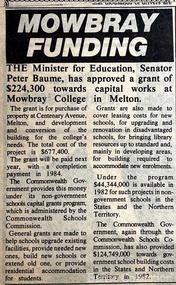
... The school officially opened on 7 February 1983 with an enrolment of 93 students from Prep to Year 7. ...The school officially opened on 7 February 1983 with an enrolment of 93 students from Prep to Year 7. ..." Designed by architect Norman Day, the school was built in an innovative postmodern style. Day’s vision was for the school’s students to feel as comfortable and familiar at school as in their own homes. He based the design on the local suburban typology. The buildings consisted of individual self-contained classrooms, each with a front door, back door and garden. Each class retained the same homeroom for the duration of their schooling. Norman Day won the inaugural Lustig & Moar Architectural Prize in 1988 for his Mowbray College design, and the Australian Library Promotion Council/RAIA Library Design Award for the school’s library building. The school officially opened on 7 February 1983 with an enrolment of 93 students from Prep to Year 7. Mark Fergus was a Prep student in the school’s inaugural year. He later remembered: It was good then because everyone knew each other. Our first few weeks at school we had classes in the Guide Hall because the Mill wasn’t finished. The rest of the school where the Labs and Coppin Court are now was only a big paddock. Another Prep student, Brooke Harrison, recalled: The only recreation we had was the rough playground which consisted of monkey bars, old tractor tyres and a sandpit and high bars. Accidents were a frequent occurrence in those days! It was a friendly atmosphere, you know everyone and their business ... During some classes we used to do horticultural work and planted trees out the front of the school. In 2003, Mowbray College celebrated two decades of educating students in Melton. By that stage, the school had expanded to two campuses with over 1,450 students and 120 staff. It was estimated that over the twenty years since its establishment, 13,000 students passed through the gates. By the mid-2000s, the school offered an International Baccalaureate program and operated across three campuses: the original campus, named Patterson after the first principal, and the Brookside and Town Centre campuses, both located in Caroline Springs. Unfortunately, in 2012 Mowbray College found itself in an unmanageable situation. The community had lost faith in the school’s financial security and as a result some parents withheld their school fees, fearing the school would collapse. It had been in financial difficulty since the mid-2000s and by 2012 was $28 million in debt. 84 In June 2012, all three campuses closed and within four months, each of the campuses of the former Mowbray College had been purchased by other education institutes. Heathdale Christian College bought the original Mowbray campus and established its own campus there and Grace Children’s Services bought the Brookside campus. The Town Centre campus was purchased by Intaj Khan from the Western Institute of Technology but remained vacant after some failed attempts at re-establishing a school. In 2017 the Australian International Academy established an Islamic school on the site".The Express article about a grant for Mowbray Collegeeducation -
 Federation University Historical Collection
Booklet - Book, Albert Steane, Freemasonic Records Ballarat and District 1854 - 1957, 16/10/1957 (exact)
... He was the first headmaster of the Ballarat Technical School, and opened the Sloyd (woodwork) Centre in 1902 at the Ballarat East Art School (later known as the Ballarat East Free Library). According to the Ballarat Courier of 23 March 1957 Steane established the Ballarat Junior Technical School in February 1913, a part of the School of Mines and Industries Ballarat. ...He was the first headmaster of the Ballarat Technical School, and opened the Sloyd (woodwork) Centre in 1902 at the Ballarat East Art School (later known as the Ballarat East Free Library). According to the Ballarat Courier of 23 March 1957 Steane established the Ballarat Junior Technical School in February 1913, a part of the School of Mines and Industries Ballarat. ...Born at the Victorian town of Sandhurst (now Bendigo, Albert Steane attended the Gravel Hill State School until the fourth class, then transferred to the Central School 1976 where he gained the Merit Certificate. The monitor system of teacher training had been introduced and he passed as a fourth, third, second and first class pupil teacher. At about 16 years of age Steane was appointed a teacher monitor at £12 per annum. Albert Steane was awarded the Teachers' Certificate of Competency in 1897. He was the first headmaster of the Ballarat Technical School, and opened the Sloyd (woodwork) Centre in 1902 at the Ballarat East Art School (later known as the Ballarat East Free Library). According to the Ballarat Courier of 23 March 1957 Steane established the Ballarat Junior Technical School in February 1913, a part of the School of Mines and Industries Ballarat. The beginning classes with 86 pupils were held at a temporary site at the Dana Street School. Classrooms were so scattered that Steane recalled without his motorbike he would never have covered the ground! By 9 September 1921 the Junior Technical School Building was officially opened on the site of the old Ballarat Gaol. In a confidential report of 1916 Steane was described as one of the best organizers in schools at that time, and he was noted for his strong but fair discipline. In the 1926 school report the Chief Inspector wrote that 'no boy is neglected'. Steane held the position of headmaster at the Ballarat Junior Technical School for 29 years retiring on 16 April 1942. Steane is known for the teaching of Sloyd or woodwork, which was an important point in his career, and for his love of gymnastics. He was made a life member of the Ballarat Y.M.C.A. in 1968 aged 91 years. The teaching of woodwork in Victoria began in 1901 and Steane was chosen, among 18 others for the inaugural training course at Queensberry State School in Melbourne. Because of his lifelong love of gymnastics Steane organized a gymnastic display for the Education Department in 1902 at Bendigo's Golden Jubilee Exhibition. He was one of those instrumental in establishing the Ballarat Y.M.C.A. and directed its physical culture evening classes in 1906. In 1908 Steane toured the world visiting the Swedish Naas Institute and the Gymnastic Festival in Germany. Steane in his reminiscences recalls: "In 1908 I obtained leave of absence and undertook a world trip to further my knowledge of both manual art training and physical training. On this trip I visited U.S.A., Canada, Scotland, England and Europe. Notable events were the attendance at the great 11th Deutche Turnfest at Frankfurt, inspection of the Naas Training School for Sloyd at Naas, Sweden inorgorated [sic] by Otto Solomon, and attendance at Physical Education Demonstrations at London given by the Swedish institution. These P.E. demonstrations were given to assist the organization and introduction of P.E. training in London schools.On returning to Ballarat I resumed my position at the Ballarat East Sloyd Centre and continued my studies at the Ballarat Art School gaining the Drawing Teachers' Certificate." Steane died, aged 93 years, on 13 July 1970, at Sydney, leaving his widow Grace Elliott Steane and children Eric and Violet. Steane is listed on the University of Ballarat Honour Roll at https://www.ballarat.edu.au/curator/honour-roll/honourroll_steane.shtml Printed green book with soft cover. The book lists all masonic bodies, including lodges and chapters, that have worked within 30 miles of Ballarat during the first 100 years of Freemasonry in the district. Includes a Loose, one page addenda et Corrigenda.The image of Albert Steane in the front of the book is inscribed "Yours faithfully A.W. Steane."ballarat, freemason, freemasonic, lodge, albert steane, a a w steane, a j dean, mark lodges, royal ark mariners, royal arch chapters, masonic orders -
 Federation University Historical Collection
Photograph - Black and White, Ballarat Teachers' College, 1947, 1947
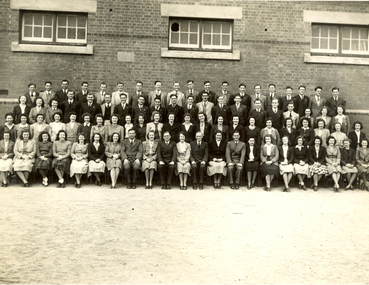
... School. Manual Arts students continued till 1930, when, on grounds of economy, their training was concentrated at Melbourne Teachers' College.\During the four succeeding years approximately sixty students annually entered the primary course. Inclusive of Manual Arts students, and private fee-paying students, exactly 400 trainees passed through the college in its brief span of life (1926-1931) Fourteen years were to pass before they were again opened to students on February 2nd, 1946. ...School. Manual Arts students continued till 1930, when, on grounds of economy, their training was concentrated at Melbourne Teachers' College.\During the four succeeding years approximately sixty students annually entered the primary course. Inclusive of Manual Arts students, and private fee-paying students, exactly 400 trainees passed through the college in its brief span of life (1926-1931) Fourteen years were to pass before they were again opened to students on February 2nd, 1946. ...Ballarat Teachers' College was opened on may 4th, 1926, at S.S. 33, Dana Street, with an enrollment of sixty-one students, its original staff consisted of the Principal, Mr W. H. Ellwood, M.A., m.Ed. (Chairman of the Teachers' tribunal from its inception in 1946 until 1954), Miss A. Bouchier, B.A., and Mr A.B. Jones, B.A. (Lecturers). In 1927 Miss P.A. Hamano joined the staff. Teaching practice and special rural school work were carried on in schools in or near Ballarat - drawing, crafts and singing were taught by local teachers. In 1927 the college moved to the old Ballarat East Town Hall (remodelled for their use) in Barkly Street. During 1927 the numbers in the College were augmented by twenty-six Manual arts students who had formerly received their training at Ballarat High School. Manual Arts students continued till 1930, when, on grounds of economy, their training was concentrated at Melbourne Teachers' College.\During the four succeeding years approximately sixty students annually entered the primary course. Inclusive of Manual Arts students, and private fee-paying students, exactly 400 trainees passed through the college in its brief span of life (1926-1931) Fourteen years were to pass before they were again opened to students on February 2nd, 1946. The college was re-commenced at S.S. Dana Street under the guidance of Mr W.F. Lord, M.C., M.M., B.A., Dip.Ed., (Acting Principal 1946-1950), and a staff consisting of Miss E.B. Hughes, B.A., Dip. Ed., Mr C.B. Bryan, B.A., V.Com., Dip.Ed., Miss M.H. Miller, L.Mus.A., and Miss G. Kentish, Dip.Phys.Ed. The opening ceremony was performed by the Minister for education at that time, the Hon. F. Field, M.L.A., accompanied by the Hon. T.T. Hollway, M.L.A., and the then Director of Education, Mr J.A. Seitz. It was originally intended to cater for women students only (for whom 130 Victoria Street was purchased as a hostel) but, at the last moment, men were also accepted. A co-educational college was thus set up instead, and has continued as such. The original Staff has been considerable augmented, and the number of Students has been more than trebled. 1951 saw the introduction of the two-year course, successful students being presented with the Trained Primary Teachers' Certificate at the final College assembly each year. In December, 1855, College held its first Graduation Ceremony, with its own Graduation hymn, the words of which were written by Miss C.M. Canty of the staff. Mr Ellwood, former Principal,delivered the occasional address and presented the Ellwood Prize to the outstading student of the year (Mr C.P. Handreck). Students who had successfully completed the course received their certificates from Mr E.B. Pederick, Chief Inspector of Primary Schools. College accomodation having been strained for several years, it was pleasant news when tenders were called in July, 1956, for the building of the first section of the new Ballarat Teachers' College in Gillies Street, near the Botanical Gardens. At the beginning of 1958 the new College was occupied, and staff and students have appreciated greatly the appointments and cacilities of the new buildign. In 1968 the three-year Diploma Course began, co-existent with the other courses which will continue during the transitional period. Successful students in the course receive the Diploma of Teaching (Primary).Black and white photograph of students and staff of the Ballarat Teachers' College. The people are in four rows, and they stand in front of the Dana Street Primary School. Back Row: Jim Howlett; Milton Rice; Keith McLean; Jim Williams; George Nield, David Cooper, Ray Terrill, William Gleeson; Tom Pascoe; Lindsay Harley; Ron Carless; Robert Giddings; Colin Connelly; Alex Magill; Eddie Blake; William Punshon; Athol Aisbett; Kevin Collins; John O'Shannessy. Second Row: Beth Leslie; Faye Dreher; Gwen Pamphilon; Arthur Lelean; Howard Pattenden; Jack Tyers; Hugh Fraser; William Henderson; Jack Mallett; Alan Martin; Keith Boyd; John Ellifson; John Collins; Tom Hill; Wal Henning; Burns Roddis; Fred Marshman; Dawn Doney; Pat Watts; Ann McKinnon. Third Row: Ethel Esmore; Joy Love; Pat Luxford; Jean Elliott; Josie Bunny; Phyllis Borley; Joyce Matheson; Val Witney; Ruth Tozer; Nancy Kerr; K.ath Tobin; Muriel Morrish; Jean Clode; Peg Purdue; Joyce Kennedy; Margaret Palmer; Marie Faulds; Thelma Ritchie. Fourth Row: Pat Lewin; Mavis Poland; Lorna Welsh; Lynette Lynch; Nancy Alexander; Betty Williams, Val Gorrie; Alan Sonsee; Trudy Kentish; Carl Bryan; Monica Miller; W.F. Lord; Beth Hughes; Mephan McMcEwin; Mattie Hayes; Neila Vallance; Pat Robinson; Elva Surman; Joan Gunning; Norma Dally; Beatrice Freeman; Kath Crossett.ballarat teachers' college, education, dana street primary school, 1947 -
 Federation University Historical Collection
Book, The Former School of Mines Clunes Conservation Management Plan, 2000, 08/2000
... The conservation plan was prepared for Hepburn Shire Council and Heritage Victoria to guide the future management of the former Clunes School of Mines in Service Street, Clunes, The building was opened in February 1892 as the Clunes branch of the Ballarat School of Mines, and ceased operating in June 1893....The conservation plan was prepared for Hepburn Shire Council and Heritage Victoria to guide the future management of the former Clunes School of Mines in Service Street, Clunes, The building was opened in February 1892 as the Clunes branch of the Ballarat School of Mines, and ceased operating in June 1893. ballarat school of mines clunes school of mines australian native association ana australian native association clunes branch eygelaar inner spring mattress factory clunes infant welfare centre clunes angling club Spiral bound black and white copy of the Conservation Plan for the Clunes School of Mines. ...The Clunes School of Mines was a campus of the Ballarat School of Mines. The conservation plan was prepared for Hepburn Shire Council and Heritage Victoria to guide the future management of the former Clunes School of Mines in Service Street, Clunes, The building was opened in February 1892 as the Clunes branch of the Ballarat School of Mines, and ceased operating in June 1893.Spiral bound black and white copy of the Conservation Plan for the Clunes School of Mines. Contents include the history, chronology development, context of the building and site, current and past function of the building, original fabric, impact of later alterations, condition of the building, statement of significance, conservation action plan, caring for the site, collecting and keeping information, structural engineers Report, Department of Lands Survey 1955, Memorandum of Agreement 1956.ballarat school of mines, clunes school of mines, australian native association, ana, australian native association clunes branch, eygelaar inner spring mattress factory, clunes infant welfare centre, clunes angling club -
 Federation University Historical Collection
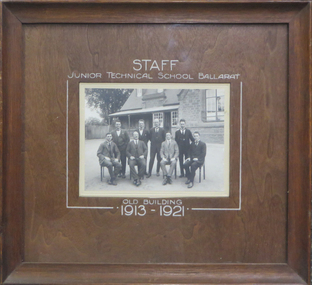
Photograph - Photograph - black and white, Ballarat Junior Technical School Staff, c1913, c1913
... In February 1913 the Ballarat Junior Technical School opened its doors to its 86 pupils. ...In February 1913 the Ballarat Junior Technical School opened its doors to its 86 pupils. ...In February 1913 the Ballarat Junior Technical School opened its doors to its 86 pupils. The old bluestone building in the grounds of the Dana Street Primary School became their temporary for eight years. In its early years the school offered only a two-year course. The first year was of a general nature giving a thorough grounding in Mathematics and Instrumental Drawing, and introducing students to the various branches of trade work. The second-year students studied for the Junior Technical Certificate and specialized in a course of their choice - either a trade (Woodwork or Fitting and Turning) or a course leading to higher studies at the School of Mines. The photograph shows the Albert Steane, the first Headmaster, with other members of Staff outside the Dana Street Primary School where the Junior Technical School first began. Black and white photograph of eight men in front of Dana Street Primary School. They are the original members staff of the Ballarat Junior Technical School. Standing left to right: Frank N. King, Harold G. Wakeling, Sam Mayo, H.Victor Maddison Sitting left to right: H.W. Malin, Albert W. Steane (Headmaster), William J. Paterson, Rex L. Cutter .1) is framed with oak mount and calligraphy.1) Staff Junior Technical School Old Building 1913-1921ballarat junior technical school, king, wakeling, mayo, maddison, malin, steane, paterson, cutter, education, school, teacher, dana street, headmaster, dana street primary school, bluestone, mathematics, instrumental drawing, woodwork, fitting and turning, junior technical certificate, school of mines, william j. paterson, albert steane, sam mayo, harold wakeling, "wendouree", dana street state school -
 Federation University Historical Collection
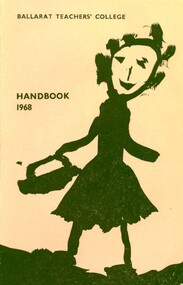
Booklet, Ballarat Teachers' College, Ballarat Teachers' College Handbook, 1968, 1968
... School. Manual Arts students continued until 1930, when, on grounds of economy, their training was concentrated at Melbourne Teachers' College. During the four succeeding years approximately sixty students annually entered the primary course. Inclusive of Manual Arts students, and private fee-paying students, exactly 400 trainees passed through the college in its brief span of life (1926-1931) Fourteen years were to pass before they were again opened to students on February 2nd, 1946. ...School. Manual Arts students continued until 1930, when, on grounds of economy, their training was concentrated at Melbourne Teachers' College. During the four succeeding years approximately sixty students annually entered the primary course. Inclusive of Manual Arts students, and private fee-paying students, exactly 400 trainees passed through the college in its brief span of life (1926-1931) Fourteen years were to pass before they were again opened to students on February 2nd, 1946. ...History of the Ballarat Teachers, College as outlined on page 9 of the handbook. Ballarat Teachers' College was opened on may 4th, 1926, at Dana Street State School (no 33), with an enrollment of sixty-one students, its original staff consisted of the Principal, Mr W. H. Ellwood, M.A., M.Ed. (Chairman of the Teachers' tribunal from its inception in 1946 until 1954), Miss A. Bouchier, B.A., and Mr A.B. Jones, B.A. (lecturers). In 1927 Miss P.A. Hamano joined the staff. Teaching practice and special rural school work were carried on in schools in or near Ballarat - drawing, crafts and singing were taught by local teachers. In 1927 the college moved to the former Ballarat East Town Hall (remodelled for their use) in Barkly Street. During 1927 the numbers in the College were augmented by twenty-six Manual arts students who had formerly received their training at Ballarat High School. Manual Arts students continued until 1930, when, on grounds of economy, their training was concentrated at Melbourne Teachers' College. During the four succeeding years approximately sixty students annually entered the primary course. Inclusive of Manual Arts students, and private fee-paying students, exactly 400 trainees passed through the college in its brief span of life (1926-1931) Fourteen years were to pass before they were again opened to students on February 2nd, 1946. The college was re-commenced at S.S. Dana Street under the guidance of Mr W.F. Lord, M.C., M.M., B.A., Dip.Ed., (Acting Principal 1946-1950), and a staff consisting of Miss E.B. Hughes, B.A., Dip. Ed., Mr C.B. Bryan, B.A., V.Com., Dip.Ed., Miss M.H. Miller, L.Mus.A., and Miss G. Kentish, Dip.Phys.Ed. The opening ceremony was performed by the Minister for education at that time, the Hon. F. Field, M.L.A., accompanied by the Hon. T.T. Hollway, M.L.A., and the then Director of Education, Mr J.A. Seitz. It was originally intended to cater for women students only (for whom 130 Victoria Street was purchased as a hostel) but, at the last moment, men were also accepted. A co-educational college was thus set up instead, and has continued as such. The original Staff has been considerable augmented, and the number of Students has been more than trebled. 1951 saw the introduction of the two-year course, successful students being presented with the Trained Primary Teachers' Certificate at the final College assembly each year. In December, 1855, College held its first Graduation Ceremony, with its own graduation hymn, the words of which were written by Miss C.M. (Mavis) Canty of the staff. Mr Ellwood, former Principal, delivered the occasional address and presented the Ellwood Prize to the outstanding student of the year (Mr C.P. Handreck). Students who had successfully completed the course received their certificates from Mr E.B. Pederick, Chief Inspector of Primary Schools. College accomodation having been strained for several years, it was pleasant news when tenders were called in July, 1956, for the building of the first section of the new Ballarat Teachers' College in Gillies Street, near the Botanical Gardens. At the beginning of 1958 the new College was occupied, and staff and students have appreciated greatly the appointements and cacilities of the new building. In 1968 the three-year Diploma Course began, co-existent with the other courses which will continue during the transitional period. Successful students in the course receive the Diploma of teaching (Primary). Orange and black soft covered booklet with a childlike image of a woman on the cover. The 44 page book is the handbook of the Ballarat Teachers' College and includes: history of the college, 1968 programme, courses, teaching Practice, practising school, classification, certification, Ellwood Prize, Lord Prize, hostels, college tripsInside front page signed "Peter Fryar".ballarat teachers' college, peter fryar, t.w.h. turner, tom turner, frank lord, monica miller, dana street primary school, art collection, hostels -
 Federation University Historical Collection
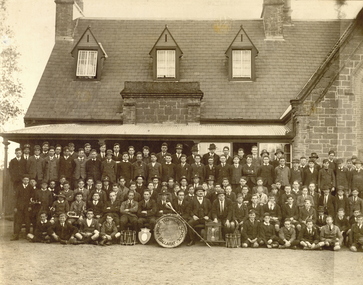
Photograph, Ballarat Junior Technical School at Dana Street, c1913, c1913
... In February 1913 the Ballarat Junior Technical School opened its doors to its 86 pupils. ...In February 1913 the Ballarat Junior Technical School opened its doors to its 86 pupils. ...In February 1913 the Ballarat Junior Technical School opened its doors to its 86 pupils. The old bluestone building in the grounds of the Dana Street Primary School became their temporary for eight years. In its early years the school offered only a two-year course. The first year was of a general nature giving a thorough grounding in Mathematics and Instrumental Drawing, and introducing students to the various branches of trade work. The second-year students studied for the Junior Technical Certificate and specialized in a course of their choice - either a trade (Woodwork or Fitting and Turning) or a course leading to higher studies at the School of Mines. The photograph shows the students outside the school building. Musical instruments, trophy and shield are shown. When World War 1 began, the school formed a 16 piece Bugle Band. A squad of Junior Cadets led by Mr A Williams and later Mr H Wakeling competed at the South Street contests. Mr A Steane (the Headmaster) is shown to the right of the bass drum.Black and white copy of original photograph that is mounted on brown card. Photograph shows the students and staff outside the bluestone building at Dana Street Primary School - first location of the Ballarat Junior Technical School. Drums, a shield and a trophy are located in the foreground. The Headmaster, Albert E. Steane is seated in the centre front row. ballarat junior technical school, bass drum, steane, drum, dana street primary school, bluestone, albert steane, a steane, dana st, world war 1, south street contests, junior cadets, williams, wakeling, bugle band, junior technical certificate, mathematics, instrumental drawing, woodwork, turning and fitting, dana street state school -
 Federation University Historical Collection
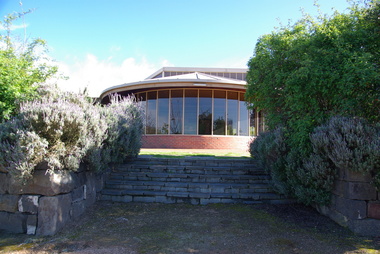
Photograph, Federation University Australia E.J. Tippett Library, 2013, 23/09/2013
... School of Mines Council, and library advocate. In February 1985, the first sod for the new SMB Campus building was turned by the Minister for Planning and the Environment, the Hon. Evan Walker, M.P. The overall responsibility for the building rested with the Public Works Department in association with the SMB Campus architect, Ewan Jones & Associates and the builder, S. J. Weir Pty. Ltd. They put together the facility that is both functional and of a style that merges with the surrounding architecture. The new building was opened...School of Mines Council, and library advocate. In February 1985, the first sod for the new SMB Campus building was turned by the Minister for Planning and the Environment, the Hon. Evan Walker, M.P. The overall responsibility for the building rested with the Public Works Department in association with the SMB Campus architect, Ewan Jones & Associates and the builder, S. J. Weir Pty. Ltd. They put together the facility that is both functional and of a style that merges with the surrounding architecture. The new building was opened ...The E.J. Tippett Library is named after the late E.J. Tippett who was a long time President of the Ballarat School of Mines Council, and library advocate. In February 1985, the first sod for the new SMB Campus building was turned by the Minister for Planning and the Environment, the Hon. Evan Walker, M.P. The overall responsibility for the building rested with the Public Works Department in association with the SMB Campus architect, Ewan Jones & Associates and the builder, S. J. Weir Pty. Ltd. They put together the facility that is both functional and of a style that merges with the surrounding architecture. The new building was opened on 04 July 1986 by Governor of Victoria, His Excellency Dr Davis McCaughey.Two colour photographs showing the exterior of the E.J. Tippett Library at Federation University Australia SMB Campus, and two taken from inside the library looking over Ballarat East.e.j. tippett library, tippett library, smb library, tippett, e.j. tippett, ewan jones & associates -
 Federation University Historical Collection
Photograph - Photograph - Black and white, Ballarat School of Mines Model Steam Engine
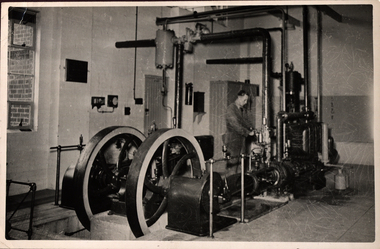
... This laboratory, as an existing building, is first mentioned in the Ballarat School of Mines President's Annual Report of 1901, presented on 28 February 1902, reporting 'the erection of a building 67ft long by 33 ft wide' This report also lists all the equipment that would be accommodated in the Engineering Laboratory, including the experimental steam engine and boiler. The experimental Davey-Paxman steam engine arrived in Ballarat towards the end of 1902. The Engineering Laboratory was opened...This laboratory, as an existing building, is first mentioned in the Ballarat School of Mines President's Annual Report of 1901, presented on 28 February 1902, reporting 'the erection of a building 67ft long by 33 ft wide' This report also lists all the equipment that would be accommodated in the Engineering Laboratory, including the experimental steam engine and boiler. The experimental Davey-Paxman steam engine arrived in Ballarat towards the end of 1902. The Engineering Laboratory was opened ...The Davey Paxman Experimental Steam Engine was purchased as the result of a bequest from Thomas Bath. The 'substantial sum' was used to build an Engineering Laboratory. The Ballarat School of Mines Council minutes of 08 November 1901 record: - Plans for [the] proposed building were submitted ... and ... it was resolved that a temporary building for an Engineering Laboratory be put up.' This laboratory, as an existing building, is first mentioned in the Ballarat School of Mines President's Annual Report of 1901, presented on 28 February 1902, reporting 'the erection of a building 67ft long by 33 ft wide' This report also lists all the equipment that would be accommodated in the Engineering Laboratory, including the experimental steam engine and boiler. The experimental Davey-Paxman steam engine arrived in Ballarat towards the end of 1902. The Engineering Laboratory was opened on 14 August 1903 by His Excellency Sir Sydenham Clarke. This engineering laboratory remained in use till about 1945. By 1944 preparations were under way at the Ballarat School of Mines to expand existing facilities, to be ready for the influx of returned soldiers. A new Heat Engines laboratory was built, this time of brick construction, replacing the previous corrugated-iron shed. In the early stages the steam engine was used to drive an overhead transmission shaft for machinery in the adjacent workshop. Later the steam engine was moved to a space that became the Heat Thermodynamics Laboratory. At the end of 1969 the engine was relocated to the Thermodynamics Laboratory at the then Ballarat Institute of Advanced Education (BIAE) Mt Helen Campus. It was donated to Sovereign Hill in 2006. According to the research of Rohan Lamb in 2001 around five experimental steam engines were made by Davey Paxman, and three of these had similar configuration to the Ballarat School of Mines Steam Engine, however, each of these was also unique with different valve arrangements. The list, which was on a scrap of paper in a folio held in the Essex Archives, confirmed that one was sent to India. The Ballarat steam engine can be dated to late 1901 to early 1902. Zig Plavina was responsible for moving the steam engine to Mount Helen, and worked on it as a technician for many years. He observed the following: * The condenser is driven by the low pressure engine. * The following arrangements are possible: i) the high pressure engine alone, exhausting to atmosphere. Condenser not used, crankshaft flanges not coupled. ii) crankshafts coupled, mains pressure (120 psi) steam supplied to high pressure engine, partially expanded steam delivered to low pressure engine (Tandem operation). Choice available re exhaust steam: either to the condenser or to atmosphere. iii) crankshafts not coupled, reduced pressure steam supplied to low pressure engine. Exhaust steam - either to the condenser or to atmosphere. * Valve arrangement - a choice of Pickering cut-off or throttle governor. On low pressure engine - throttle governor only.Black and white photograph of the Davey Paxman Experimental Steam Engine installed at the Ballarat School of MInes. steam engine, model steam engine, davey paxman, thomas bath, experimental steam engine -
 Greensborough Historical Society
Newsletter, Greenhills and North Greensborough Progress Association, Community News: official journal of the Greenhills and Nth. Greensborough Progress Association and the Apollo Parkways Progress Association. 4th March, 1976. Edition No. 2/76, 04/03/1976
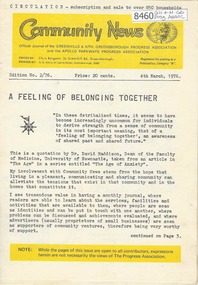
... February 1976 meeting, A feeling of belonging together. Developers play havoc... with our natural heritage, Meet the natives, This and that, Cameo of Johnny Chester, Public open space policy, From the Council Chamber, Letter to the Editor, School and Kinder news, Diamond Valley Repertory, Eltham Film Society. ...February 1976 meeting, A feeling of belonging together. Developers play havoc... with our natural heritage, Meet the natives, This and that, Cameo of Johnny Chester, Public open space policy, From the Council Chamber, Letter to the Editor, School and Kinder news, Diamond Valley Repertory, Eltham Film Society. ...This edition includes a report on the The Apollo Parkways Progress Association's February 1976 meeting, A feeling of belonging together. Developers play havoc... with our natural heritage, Meet the natives, This and that, Cameo of Johnny Chester, Public open space policy, From the Council Chamber, Letter to the Editor, School and Kinder news, Diamond Valley Repertory, Eltham Film Society. A digital copy of this Newsletter is available from Greensborough Historical Society.Newsletter, 28 p., illus.greenhills and north greensborough progress association, greenhills, apollo parkways progress association, apollo parkways -
 Federation University Historical Collection
Photograph, Ballarat School of Mines Davey Paxman Experimental Steam Engine, c1902
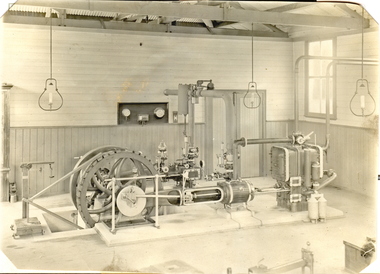
... This laboratory, as an existing building, is first mentioned in the Ballarat School of Mines President's Annual Report of 1901, presented on 28 February 1902, reporting 'the erection of a building 67ft long by 33 ft wide' This report also lists all the equipment that would be accommodated in the Engineering Laboratory, including the experimental steam engine and boiler. The experimental Davey-Paxman steam engine arrived in Ballarat towards the end of 1902. The Engineering Laboratory was opened...This laboratory, as an existing building, is first mentioned in the Ballarat School of Mines President's Annual Report of 1901, presented on 28 February 1902, reporting 'the erection of a building 67ft long by 33 ft wide' This report also lists all the equipment that would be accommodated in the Engineering Laboratory, including the experimental steam engine and boiler. The experimental Davey-Paxman steam engine arrived in Ballarat towards the end of 1902. The Engineering Laboratory was opened ...The Davey Paxman Experimental Steam Engine was purchased as the result of a bequest from Thomas Bath. The 'substantial sum' was used to build an Engineering Laboratory. The Ballarat School of Mines Council minutes of 08 November 1901 record: - Plans for [the] proposed building were submitted ... and ... it was resolved that a temporary building for an Engineering Laboratory be put up.' This laboratory, as an existing building, is first mentioned in the Ballarat School of Mines President's Annual Report of 1901, presented on 28 February 1902, reporting 'the erection of a building 67ft long by 33 ft wide' This report also lists all the equipment that would be accommodated in the Engineering Laboratory, including the experimental steam engine and boiler. The experimental Davey-Paxman steam engine arrived in Ballarat towards the end of 1902. The Engineering Laboratory was opened on 14 August 1903 by His Excellency Sir Sydenham Clarke. This engineering laboratory remained in use till about 1945. By 1944 preparations were under way at the Ballarat School of Mines to expand existing facilities, to be ready for the influx of returned soldiers. A new Heat Engines laboratory was built, this time of brick construction, replacing the previous corrugated-iron shed. In the early stages the steam engine was used to drive an overhead transmission shaft for machinery in the adjacent workshop. Later the steam engine was moved to a space that became the Heat Thermodynamics Laboratory. At the end of 1969 the engine was relocated to the Thermodynamics Laboratory at the then Ballarat Institute of Advanced Education (BIAE) Mt Helen Campus. It was donated to Sovereign Hill in 2006. According to the research of Rohan Lamb in 2001 around five experimental steam engines were made by Davey Paxman, and three of these had similar configuration to the Ballarat School of Mines Steam Engine, however, each of these was also unique with different valve arrangements. The list, which was on a scrap of paper in a folio held in the Essex Archives, confirmed that one was sent to India. The Ballarat steam engine can be dated to late 1901 to early 1902. Zig Plavina was responsible for moving the steam engine to Mount Helen, and worked on it as a technician for many years. He observed the following: * The condenser is driven by the low pressure engine. * The following arrangements are possible: i) the high pressure engine alone, exhausting to atmosphere. Condenser not used, crankshaft flanges not coupled. ii) crankshafts coupled, mains pressure (120 psi) steam supplied to high pressure engine, partially expanded steam delivered to low pressure engine (Tandem operation). Choice available re exhaust steam: either to the condenser or to atmosphere. iii) crankshafts not coupled, reduced pressure steam supplied to low pressure engine. Exhaust steam - either to the condenser or to atmosphere. * Valve arrangement - a choice of Pickering cut-off or throttle governor. On low pressure engine - throttle governor only. Black and white photograph of an experimental steam engine which was produced for the Ballarat School of Mines. It was designed for experimental purposes, such as testing of efficiency, etc. The laboratory which housed the steam engine was lit with gas lighting. davey paxman experimental steam engine, model steam engine, davey paxman, steam, thomas bath, thermodynamics -
 Federation University Historical Collection
Photograph - Colour photograph, Davey Paxman Experimental Steam Engine in the Mount Helen Workshop, c1994
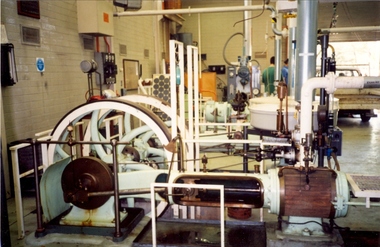
... This laboratory, as an existing building, is first mentioned in the Ballarat School of Mines President's Annual Report of 1901, presented on 28 February 1902, reporting 'the erection of a building 67ft long by 33 ft wide' This report also lists all the equipment that would be accommodated in the Engineering Laboratory, including the experimental steam engine and boiler. The experimental Davey-Paxman steam engine arrived in Ballarat towards the end of 1902. The Engineering Laboratory was opened...This laboratory, as an existing building, is first mentioned in the Ballarat School of Mines President's Annual Report of 1901, presented on 28 February 1902, reporting 'the erection of a building 67ft long by 33 ft wide' This report also lists all the equipment that would be accommodated in the Engineering Laboratory, including the experimental steam engine and boiler. The experimental Davey-Paxman steam engine arrived in Ballarat towards the end of 1902. The Engineering Laboratory was opened ...The Davey Paxman Experimental Steam Engine was purchased by the Ballarat School of Mines as the result of a bequest from Thomas Bath.The Davey Paxman Experimental Steam Engine was purchased as the result of a bequest from Thomas Bath. The 'substantial sum' was used to build an Engineering Laboratory. The Ballarat School of Mines Council minutes of 08 November 1901 record: - Plans for [the] proposed building were submitted ... and ... it was resolved that a temporary building for an Engineering Laboratory be put up.' This laboratory, as an existing building, is first mentioned in the Ballarat School of Mines President's Annual Report of 1901, presented on 28 February 1902, reporting 'the erection of a building 67ft long by 33 ft wide' This report also lists all the equipment that would be accommodated in the Engineering Laboratory, including the experimental steam engine and boiler. The experimental Davey-Paxman steam engine arrived in Ballarat towards the end of 1902. The Engineering Laboratory was opened on 14 August 1903 by His Excellency Sir Sydenham Clarke. This engineering laboratory remained in use till about 1945. By 1944 preparations were under way at the Ballarat School of Mines to expand existing facilities, to be ready for the influx of returned soldiers. A new Heat Engines laboratory was built, this time of brick construction, replacing the previous corrugated-iron shed. In the early stages the steam engine was used to drive an overhead transmission shaft for machinery in the adjacent workshop. Later the steam engine was moved to a space that became the Heat Thermodynamics Laboratory. At the end of 1969 the engine was relocated to the Thermodynamics Laboratory at the then Ballarat Institute of Advanced Education (BIAE) Mt Helen Campus. It was donated to Sovereign Hill in 2006. According to the research of Rohan Lamb in 2001 around five experimental steam engines were made by Davey Paxman, and three of these had similar configuration to the Ballarat School of Mines Steam Engine, however, each of these was also unique with different valve arrangements. The list, which was on a scrap of paper in a folio held in the Essex Archives, confirmed that one was sent to India. The Ballarat steam engine can be dated to late 1901 to early 1902. Zig Plavina was responsible for moving the steam engine to Mount Helen, and worked on it as a technician for many years. He observed the following: * The condenser is driven by the low pressure engine. * The following arrangements are possible: i) the high pressure engine alone, exhausting to atmosphere. Condenser not used, crankshaft flanges not coupled. ii) crankshafts coupled, mains pressure (120 psi) steam supplied to high pressure engine, partially expanded steam delivered to low pressure engine (Tandem operation). Choice available re exhaust steam: either to the condenser or to atmosphere. iii) crankshafts not coupled, reduced pressure steam supplied to low pressure engine. Exhaust steam - either to the condenser or to atmosphere. * Valve arrangement - a choice of Pickering cut-off or throttle governor. On low pressure engine - throttle governor only.davey paxman experimental steam engine, model steam engine, steam, thermodynamics laboratory, thomas bath, bequest -
 Federation University Historical Collection
Photograph, Ballarat Junior Technical School - outside the Ballarat Gaol Wall, c1921
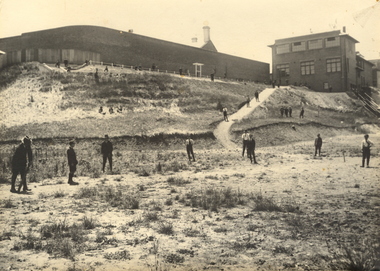
... In February 1913 the Ballarat Junior Technical School opened its doors to its 86 pupils. ...In February 1913 the Ballarat Junior Technical School opened its doors to its 86 pupils. ...In February 1913 the Ballarat Junior Technical School opened its doors to its 86 pupils. The old bluestone building in the grounds of the Dana Street Primary School became their temporary home for eight years. In its early years the school offered only a two-year course. The first year was of a general nature giving a thorough grounding in Mathematics and Instrumental Drawing, and introducing students to the various branches of trade work. The second-year students studied for the Junior Technical Certificate and specialized in a course of their choice - either a trade (Woodwork or Fitting and Turning) or a course leading to higher studies at the School of Mines. Increased enrolment - 86 to 110 in the second year. Some applicants were turned away due to lack of space. An abandoned single room school was brought in and this helped for a time. Plans were developed and a two-storied red brick building in the vacinity of the School of Mines was build. An acre of land was reclaimed from the north-east corner of the Ballarat Gaol. The school backed onto the wall of the gaol. The task of landscaping and terracing of the area was to cost a great deal and time. The boys did much of the heavy work. This kept them occupied as the official playground areas were still full of rubble.View from the south-east of the Junior Technical School with the slope from the gaol wall down to the area known as the Battery Paddock. The new school building was a two-storied red brick building along the Education Department style of the 1920s. On 9 September 1921, the Junior Technical School building was officially opened. Much work was needed to terrace and landscape the area. Students shown in various areas of the grounds.junior technical school, dana street primary school, bluestone, mathematics, instrumental drawing, junior technical certificate, woodwork, fitting and turning, school of mines, ballarat gaol, landscaping, terracing, gaol wall, cricket -
 Federation University Historical Collection
Photograph - Black and white photograph, Ballarat Junior Technical School - outside the Gaol wall - 1921, c1921
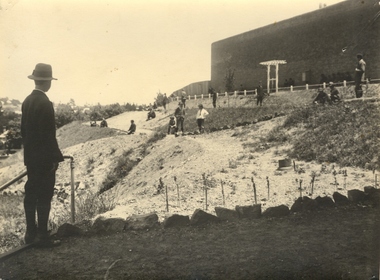
... In February 1913 the Ballarat Junior Technical School opened its doors to its 86 pupils. ...In February 1913 the Ballarat Junior Technical School opened its doors to its 86 pupils. ...In February 1913 the Ballarat Junior Technical School opened its doors to its 86 pupils. The old bluestone building in the grounds of the Dana Street Primary School became their temporary home for eight years. In its early years the school offered only a two-year course. The first year was of a general nature giving a thorough grounding in Mathematics and Instrumental Drawing, and introducing students to the various branches of trade work. The second-year students studied for the Junior Technical Certificate and specialized in a course of their choice - either a trade (Woodwork or Fitting and Turning) or a course leading to higher studies at the School of Mines. Increased enrolments - 86 to 110 in the second year. Some applicants were turned away due to lack of space. An abandoned single room school was brought in and this helped for a time. Plans were developed and a two-storied red brick building in the vacinity of the School of Mines was build. An acre of land was reclaimed from the north-east corner of the Ballarat Gaol. The school backed onto the wall of the gaol. The task of landscaping and terracing of the area was to cost a great deal and time. The boys did much of the heavy work. This kept them occupied as the official playground areas were still full of rubble. This photograph shows the work that has been done in terracing and landscaping the area.Junior Technical School with the slope from the gaol wall down to the area known as the Battery Paddock. New plantings and rock edging evident in the foreground.junior technical school, dana street primary school, bluestone, mathematics, instrumental drawing, junior technical certificate, woodwork, fitting and turning, school of mines, ballarat gaol, landscaping, terracing, gaol wall -
 Federation University Historical Collection
Programme - Four page printed document outlining the Ballarat Junior Technical School, 1914, Free Technical Education - Ballarat Junior Technical School, 1914
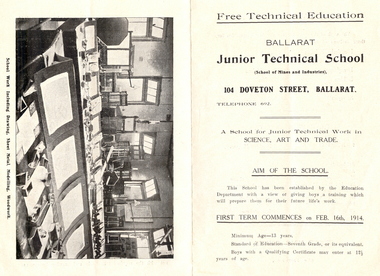
... In February 1913 the Ballarat Junior Technical School opened its doors to its 86 pupils. ...In February 1913 the Ballarat Junior Technical School opened its doors to its 86 pupils. ...In February 1913 the Ballarat Junior Technical School opened its doors to its 86 pupils. The old bluestone building in the grounds of the Dana Street Primary School became their temporary for eight years. In its early years the school offered only a two-year course. The first year was of a general nature giving a thorough grounding in Mathematics and Instrumental Drawing, and introducing students to the various branches of trade work. The second-year students studied for the Junior Technical Certificate and specialized in a course of their choice - either a trade (Woodwork or Fitting and Turning) or a course leading to higher studies at the School of Mines. This pamphlet was provided to parents whose boys wished to attend the new secondary school. Four page pamphlet outlining what the Junior Technical School aims to provide for boys who have reached a certain level of education and wish to study further. Areas covered are Day Courses, First Year Course, Second Year Course, Reduced Tram and Railway Fares, Free Tram and Railway Travelling and Compulsory Drill.ballarat junior technical school, dana street primary school, mathematics, instrumental drawing, trade work., junior technical certificate, woodwork, fitting and turning, school of mines, secondary school, trades, 104 doveton street -
 Federation University Historical Collection
Book - Scrap Book, Ballarat School of Mines Scrap Book, 1924 - 1929, c1931
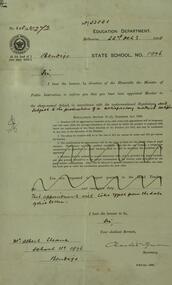
... School of Mines Student Association 20 February 1930 - 61s Annual Meeting of the Ballarat School of Mines 02 June 1930 - R. Young in Belgium and visits battlefields including Hill 60. 19 February 1931 - School Hostel Suggested 14 April 1931 - Frank Pinkerton Obituary 15 October 1921 - Life at Mt Isa (E. Loveland) 18 February 1932 - Discussion on Teachers College (Ballarat Teachers' College) 11 July 1931 - Phoenix Model Locomotive donation to the Ballarat School of Mines 06 May 1932 - The Mt Isa Country 11 Oct 1932 - Death of F.W. Alsopp (former SMB student) 21 January 1933 - Education In Victoria: Will a New Era Open...School of Mines Student Association 20 February 1930 - 61s Annual Meeting of the Ballarat School of Mines 02 June 1930 - R. Young in Belgium and visits battlefields including Hill 60. 19 February 1931 - School Hostel Suggested 14 April 1931 - Frank Pinkerton Obituary 15 October 1921 - Life at Mt Isa (E. Loveland) 18 February 1932 - Discussion on Teachers College (Ballarat Teachers' College) 11 July 1931 - Phoenix Model Locomotive donation to the Ballarat School of Mines 06 May 1932 - The Mt Isa Country 11 Oct 1932 - Death of F.W. Alsopp (former SMB student) 21 January 1933 - Education In Victoria: Will a New Era Open ...The Ballarat School of Mines was a predecessor institution of Federatin University Australia. The scrap books were kept by the librarians and related to topics of interest to the Ballarat School of Mines, its students and its staff. 17 December 1954 - Ballarat Junior Technical School Headmaster's Report 05 February 1925 - Ballarat School of Mines Museum closure 25 February 1925 - War Trophies Museum 06 May 1925 - Ballarat's Museum. Where is it? Some Interesting Facts 14 May 1925 - White Flat Reserve 21 June 1928 - Ballarat School of Mines Procession 14 March 1929 - Mr A.D.R. Galloway - An Australian Abroad - Tragic end. 1929 - Technical Education 17 October 1929 - Agricultural Engineering 15 February 1930 - Ballarat School of Mines Student Association 20 February 1930 - 61s Annual Meeting of the Ballarat School of Mines 02 June 1930 - R. Young in Belgium and visits battlefields including Hill 60. 19 February 1931 - School Hostel Suggested 14 April 1931 - Frank Pinkerton Obituary 15 October 1921 - Life at Mt Isa (E. Loveland) 18 February 1932 - Discussion on Teachers College (Ballarat Teachers' College) 11 July 1931 - Phoenix Model Locomotive donation to the Ballarat School of Mines 06 May 1932 - The Mt Isa Country 11 Oct 1932 - Death of F.W. Alsopp (former SMB student) 21 January 1933 - Education In Victoria: Will a New Era Open 28 September 1933 - New Teaching System Explained by the Minister 17 February 1934 - Trip to New Guinea (A.F. Heseltine) 19 April 1934 - Early Ballarat - Address by Nathan Spielvogel 30 August 1934 - Ballarat Junior Technical School Tennis Court 23 August 1934 - Welding plant and Battery 17 June 1935 - Men about Town - A.F. Heseltine 21 June 1935 - Vocational Guidance 16 July 1935 - Ballarat School of Mines (history) 03 August 1935 - Men About Town - William H. Middleton 10 August 1935 - A.E.C. Kerrballarat school of mines, martha pinkerton, scrap book, a.w. nicholson, john lynch (junior), mount lyell, leslie evans, leslie blake evans, herald shield for athletics, ballarat school of mines museum, motor mechanics' classes for ladies, farm engineering, villers bretonneux carvings, trengrove, museum, port pirrie, j.i. simpson, reuben s. russelll, ballarat technical art school, charles harvey, elliott gower, la gerche, c. curnow, applied art, macroberston scholarship, ballarat school of mines procession, rag, vale park tree planting, smb ball, pottery classes, delineascope, mica smith scholarship, james peart, burma mnies, smb excursion to western australia, kalgoorlie, elsie mckissock, war trophies, warwick smith, spencer street bridge, war museum, richard j. young, alfred mica smith obituary, reginald callister, john rowell, sewerage installation, h.h. smith, w.h. middleton, olive scott, dolly whitehead, vale park, ballarat war museum opening, repatriation classes, sewerage at the ballarat school of mines, australian coals, j.p. ellsworth, yallourn, w.g. walker, reunion, norfolk island pine, mica smith memorial, jessice smith, harry fern, t. henderson, bhp, john adam, ols students' association, l.b. curnow, laura crouch, signwriting, excursion, port pirrie excursion, albert potter, pearl fricke, technica school sports, percy trompf, ballarat school of mines battery, albert mclean, a.d.r. galloway, alan douglas richard galloway, r.j. young, alan ludbrook, r. timpe, ballarat ironworkers and polytechnic association, h. jolly, carpentry, harold jolly, millinery classes, phoenix model locomotive, s.j. morgan, r.d. bannister, juvenile industrial exhibition, w.h. shaw, j.c. winds, f.h. davis, h.r. worland, w.t. magee, l. george, l. balhausen, white flat oval, resue from yarrowee creek, e. berriman, ballarat teachers' college, reg mcconnell, mount lyell co, munro reaper, munro reaper model, weaving classes, mervyn trimmings, briquette dust, edna findlay, jean rogers, n. mccallum, jessie glass, classroom ventilation, art metal, charles fenner, levi molyneux, olice scott, poster competition, kerr grant, w.h. steane, h. caddy, colvin smith, claude creelman, robert colins, stan hillman, n.c. heathcote, egg collection, john alexander, nornie gude, charles deane, graham hopwood, roswald john dart, max wilson, new battery, jess hopwood, william middleton, a.e.c. kerr, hand weaving classes, m. martin, a.h. leeson, mona rogerson, lorna bailey, prospectors classes, edwin robinson, kalgoorlie vist, railway locomotive
