
Showing 68 items matching "torquay victoria"
-
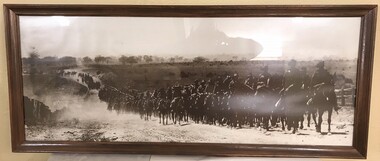 8th/13th Victorian Mounted Rifles Regimental Collection
Photograph - Light Horse Torquay
... A large camp of ligh horse regiments took place near Torquay, Victoria in the early months of World War Two. ...Framed black and white photograph of Light Horse near Torquay Victoria in 1940....A large camp of ligh horse regiments took place near Torquay, Victoria in the early months of World War Two. ...A large camp of ligh horse regiments took place near Torquay, Victoria in the early months of World War Two. This was the swan song for horsed light horse, shortly after the Victorian regiments converted to mechanised units.Framed black and white photograph of Light Horse near Torquay Victoria in 1940.light horse, torquay, world war two, wwii -
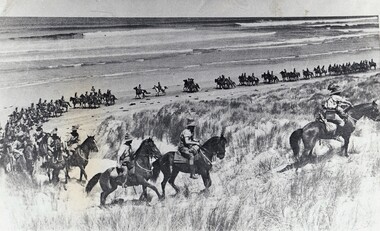 8th/13th Victorian Mounted Rifles Regimental Collection
Photograph
... Black and white photograph of large group of horsemen on beach and crossing dunes at Torquay, Victoria 1940...." The mobilized 20th Light Horse Regiment CMF on Torquay Beach, Victoria in 1940 shortly before its mechanisation and conversion to an Armoured unit. ...Black and white photograph of large group of horsemen on beach and crossing dunes at Torquay, Victoria 1940. Photograph photograph ...The 20th Light Horse (Victorian Mounted Rifles) was raised in 1920 as part of the 3rd Cavalry Brigade, 2nd Cavalry Division, Citizen Military Forces, with Headquarters at Seymour and depots along the Goulburn Valley from Mansfield to Tocumwal in southern NSW. In December 1941, 20th Light Horse (Victorian Mounted Rifles) converted from horse to mechanised, initially as 20th Motor Regiment. In 1943 the Regiment was deployed to Merauke, Dutch New Guinea. Upon its return in April 1945, the Regiment was redesignated 20th Pioneer Battalion. It was disbanded following the end of the war. 20th Light Horse was the only light horse regiment to serve overseas in WWII.This is one of a collection of photographs featuring a Light Horse regiment drawn from rural and regional Victoria in the period immediately prior to mobilisation for World War 2 (1939-1945).Black and white photograph of large group of horsemen on beach and crossing dunes at Torquay, Victoria 1940." The mobilized 20th Light Horse Regiment CMF on Torquay Beach, Victoria in 1940 shortly before its mechanisation and conversion to an Armoured unit. Sun photograph.military, light horse, world war two, torquay, camp -
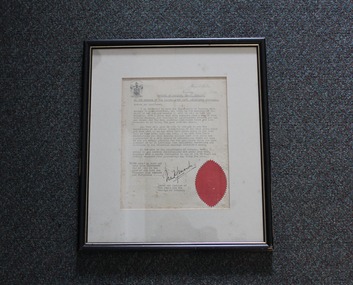 Torquay and District Historical Society
Letter - Framed letter
... ...torquay victoria australia...In this case Torquay Golf Club in Victoria Australia sent its President, Mr Vary, with gifts of food to help supplement the 'somewhat restricted menus' of the people of Torquay, Devon, England. ...In this case Torquay Golf Club in Victoria Australia sent its President, Mr Vary, with gifts of food to help supplement the 'somewhat restricted menus' of the people of Torquay, Devon, England. postwar torquay golf club torquay victoria australia torquay devon england Letter to members of the Torquay Golf Club Australia expressing gratitude for 'generous assistance', such as 'food gifts', given during post war years. ...This letter acknowledges help given to the British people by Australians after WW 11. In this case Torquay Golf Club in Victoria Australia sent its President, Mr Vary, with gifts of food to help supplement the 'somewhat restricted menus' of the people of Torquay, Devon, England. Typed letter/testimonial with large red seal and personally signed. Located in a black frame with gold edge. Letter to members of the Torquay Golf Club Australia expressing gratitude for 'generous assistance', such as 'food gifts', given during post war years. Seal of the Borough of Torquay, Devon, England. Signed by Mayor and Justice of the Peace for the Borough. Dated 13th July 1949. postwar, torquay golf club, torquay victoria australia, torquay devon england -
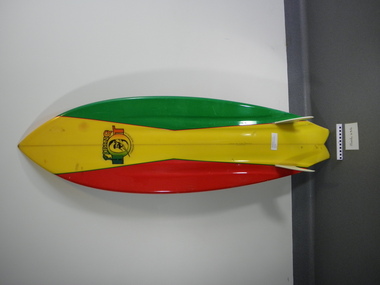 Australian National Surfing Museum
Surfboard, 1979 (estimated); The Piping Hot Twin Fin was produced in 1979 - 1980
... Boston Road, Torquay, Victoria, Australia. ...Twin fin surfboard manufactured at Piping Hot Boston Road Torquay. Manufactured from polyurethane foam core and laminated fibreglass with fixed fibreglass fins. Shaped by Mike Patterson. This board is has channels running almost full length on the bottom of the board, the wide point forward of centre, swallow tail with flyer. Custom graphics in red, yellow and green top and bottom; from 1979High performance twin fin designs were pioneered by 4 time Professional World Surfing Champion Mark Richards (Newcastle). In this period 1978 -1981 these surfboards represented the pinnacle of surfboard design progression and high performance. This surfboard also represents Piping Hot which was one of Australia's leading surf 'brands' at that time. Piping Hot was a Torquay based company that produced surfboards,wetsuits and surf clothing. Piping Hot Twin Fin surfboard. Manufactured from polyurethane foam core and laminated fibreglass with fixed fibreglass fins. Full plan shape with channels running almost full length on the bottom of the board, the wide point forward of centre, swallow tail with flyer. Legrope plug fitted. Custom graphics in red, yellow and green top and bottom.20cm x 16cm Black red yellow green Piping Hot logo on deck and bottom 60cm down from nose. Hand written makers mark "Shaped by Mike Patterson Custom" in pencil on blank beside stringer forward of the fins on the bottom. "1459" in pencil on bottom near tail. surfboard, fibreglass, twin fin, piping hot, mike patterson, torquay, channel bottom, fred pyke, rod brooks -
 Australian National Surfing Museum
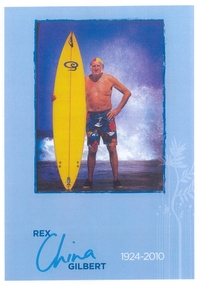
Programme, Rex 'China' Gilbert - Memorial Day - 6th November 2010, 01/11/2010
... Torquay Back Beach, Torquay, Victoria, Australia ...This Memorial Booklet was put together by family, friends and members of the Torquay Surf Life Saving Club for a special memorial service held at the club on Saturday 6th November, 2010. 'China' Gilbert was a popular member of the surf club who passed away from ill health in Torquay on 28th September, 2010. The booklet contains a mixture of tributes, black and white and colour photographs of 'China' from his youth through to modern times highlighting his activities at the Torquay Surf Life Saving Club and a pioneer surfer in the 1940's and 1950's.This booklet is significant because it commemorates the memory of one of the oldest and most popular members of the Torquay Surf Life Saving Club. The booklet contains historic and rare photographic images of 'China' from his earliest days as a young surfer through to his time as a competitor for the Torquay Surf Life Saving Club and finally senior club member. 'China' was known around Australia for his surfing, mateship and 'larrikin' streak. Over 500 people attended his memorial service and paddle out at the Torquay Surf Life Saving Club.24 page full colour booklet with a photo of 'China' Gilbert on the cover holding a bright yellow Quiksilver surfboard. 'China' signature and graphic of a tree.rex china gilbert, china, torquay surf life saving club, longboard, 1956 melbourne olympics, torquay surf beach -
 Australian National Surfing Museum
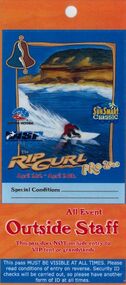
Surf Contest Pass, 2000 Bells Beach Competition Pass, 01/03/2000
... Torquay, Victoria, Australia...The pass features unique Indigenous artwork by Torquay artist/surfer Glenn Romanis bells beach rip curl glenn romanis surfing victoria 2000 rip curl pro Event management logos on the front. ...This event access pass was issued to staff, vendors and community volunteers at the 2000 Rip Curl Pro at Bells Beach.The access pass is typical of the pass issued each year to the staff and workers at the longest running surfing contest in the world. The pass features unique Indigenous artwork by Torquay artist/surfer Glenn Romanis2000 Rip Curl Pro Access Pass. Full colour laminated access pass (Outside Staff) for the 2000 Rip Curl Pro and Sunsmart Classic. The pass features cover art by Indigenous artist Glenn Romanis and event management logos. The pass also features a site map on the back and access information.Event management logos on the front. Indigenous Bell artwork by Torquay artist/surfer Glenn Romanis.bells beach, rip curl, glenn romanis, surfing victoria, 2000 rip curl pro -
 Flagstaff Hill Maritime Museum and Village
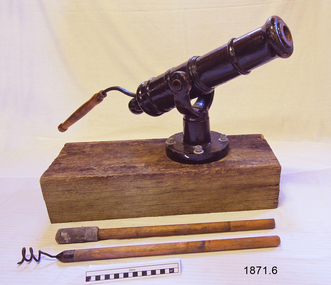
Weapon - Cannon, mid to late 19th century
... Torquay, Victoria, Australia...(Conservation Management Plan for Victorian Guns and Cannon, South Western Victoria, May 2008) flagstaff hill warrnambool shipwrecked coast flagstaff hill maritime museum maritime museum shipwreck coast flagstaff hill maritime village great ocean road cannon torquay thunder child cannon thunderchild cannon signal cannon muzzle loading cannon ordinance munitions Marks; Barrel "Thunder/ Child". ...The history of the Thunderchild gun is not known. It was presumably manufactured in Torquay in the second half of the 19th century. Such guns were often attached to a ship’s rail through the holes in the swivel base, as in the base of this gun. The guns fired grapeshot and were originally used on ships to repel boarders. They were also used to launch whaling harpoons and were sometimes employed for signalling. The relatively late date makes the latter application most likely. This Thunderchild gun is complete with ramrod and wad remover. It is in good working order and easily assembled. It is used locally for special ceremonies and for Whaleboat Races as a starting gun. (Guns and Cannon, South Wester Victoria, May 2008, ref W/F/03) The small bore cannon is part of a collection of nineteenth century Flagstaff Hill Guns and Cannon, which is classified as being a high level of significance, on State, National and World The nineteenth century artillery pieces are a very rare and representative collection of artillery of this era. The artillery pieces, individually and as a collection, are highly significant for historical, scientific and aesthetic reasons at the state, national and world levels. The artillery pieces are excellent examples of nineteenth century artillery designed for the shore defence of western Victoria in the mid to late 1800s. The collection demonstrates the system of nineteenth century Imperial Defence implemented by Britain and of the recycling of obsolete technology to the colonies by Britain. The collection represents the methods of artillery technology, its advancement and its modifications in order to remain active. It also illustrates the transference of defence technology from Britain to Australia and demonstrates the level of reliance Australia had on British defence equipment. The artillery pieces form prominent elements in their landscapes and, together with the batteries and sites in which they are located, create a strong visual link to the region’s defence history. Importantly the artillery pieces, individually and as a collection, represent a very rare and intact group of nineteenth century artillery. Very few examples of nineteenth century artillery have survived worldwide, the largest collections being sited in Canada. The collection is a rare collection of artillery which demonstrates the advancements made in artillery technology during the nineteenth century, and is one of the largest collections of nineteenth century artillery in Australia. Further, the collection is extremely intact, with most pieces retaining original carriages and many located within their original emplacement. This collection of artillery, with their carriages and in their locations, are of exceptional national significance as they represent the largest intact collection of artillery within a single defensive network, outside of major colonial ports. The collection of nineteenth century carriages and slides are in themselves an extremely rare and important collection, however their significance is enhanced by their placements within batteries and with guns. (Conservation Management Plan for Victorian Guns and Cannon, South Western Victoria, May 2008) Cannon; small 1pdr cast iron, smooth bore muzzle loading swivel gun, painted glass black. 19th century cannon has polished wood handle, two detachable metal stirrups and metal swivel base with cuff, attached to block of wood by four bolts. Accessories are a wood tamper and wood ramrod. Name on gun is Thunder-Child, Torquay, Vic. There are Maker’s Marks on the gun and base, and a number on the cannon.. Marks; Barrel "Thunder/ Child". Base cuff " THUNDER / -CHILD / TORQUAY / VIC ", Trunnion "2825/H"flagstaff hill, warrnambool, shipwrecked coast, flagstaff hill maritime museum, maritime museum, shipwreck coast, flagstaff hill maritime village, great ocean road, cannon, torquay, thunder child cannon, thunderchild cannon, signal cannon, muzzle loading cannon, ordinance, munitions -
 8th/13th Victorian Mounted Rifles Regimental Collection
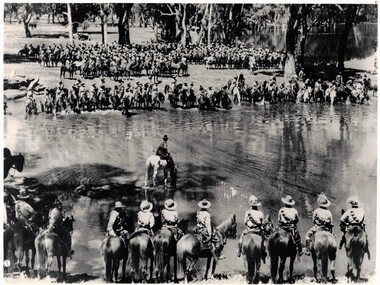
Photograph - watering horses
... Black and white photograph ( laminated ) of 8th, 13th,20th, and 4thLight Horse Regiments watering horses near Torquay Victoria , March 1940....Black and white photograph ( laminated ) of 8th, 13th,20th, and 4thLight Horse Regiments watering horses near Torquay Victoria , March 1940. Photograph watering horses ...See also 3089.86. Information with that photo gives an alternative provenance: 8th Light Horse Regiment watering horses at a Murray River lagoon, South Corowa NSW, September 1939; Wahgunyah Troop, C Squadron - this side of lagoon, Lieutenant J. Nott on grey horse in water. The number of horsemen would seem to exceed that of a single regiment so the Torquay description would seem more probable.Black and white photograph ( laminated ) of 8th, 13th,20th, and 4thLight Horse Regiments watering horses near Torquay Victoria , March 1940.Picture taken about March 1940 when the 13th Light Horse from Gippsland, the 8th Light Horse from Upper Murray, the 4th Light Horse from the Western Districts and the 20th Light Horse from the Goulburn Valley were in camp near Torquay. Mr Cappur Webb of Glendoxey, Seymour, a member of the 20th said the picture must have been taken during an exercise about five miles north of Torquay. “We used to water our horses in that lake”, he said." light horse, torquay, wwii, world war two, military, horses -
 Queenscliffe Maritime Museum
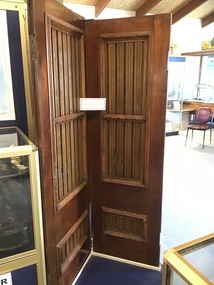
Functional object - Doors
... Torquay...Victoria Tower...Scammell (1891) and Victoria Tower - all situated along the short section of the 'Surf Coast' between Point Lonsdale and Torquay....Scammell (1891) and Victoria Tower - all situated along the short section of the 'Surf Coast' between Point Lonsdale and Torquay. ...There are only seven shipwrecks in Victoria that have had more than 100 objects recovered from them reported as a result of the Commonwealth Amnesty held in 1993-94. These are the Loch Ard (1878), Schomberg (1855) and Fiji (1891) - all situated along the western district 'Shipwreck Coast' - and the George Roper (1883), Light of the Age (1868), Joseph H. Scammell (1891) and Victoria Tower - all situated along the short section of the 'Surf Coast' between Point Lonsdale and Torquay.The Victoria Tower is archaeologically significant as the wreck of an international inward-bound passenger and cargo vessel. It is educationally and recreationally significant as a coherently intact example of a British built iron clipper ie: representative of a class or type. Along with the wrecks of the Light of the Age (1868 - American-built wooden clipper ship) and Sussex (1871 - Blackwall frigate) nearby these vessels represent the three major design classes, and span the evolution of commercial and immigrant sailing ships used by the British in the colonial Australian trade in the last half of the nineteenth century.2 Doors from the 'Victoria Tower' made from teak and mahoganydoors, salvage, shipwreck, torquay, victoria tower -
 Torquay and District Historical Society
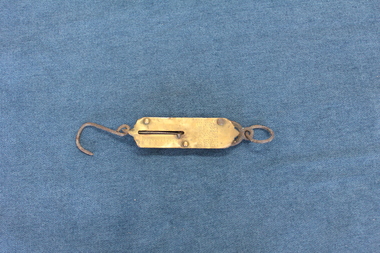
Equipment - Spring balance
... ...torquay victoria...He became a local hero in 1891 when he spotted the SS Joseph Scammell stricken on the reef off Point Danger and played a pivotal role in the successful rescue of all passengers and crew ... and the ship's cat. fishing equipment torquay victoria felix rosser Scales and balances EXCELSIOR IMPROVED SPRING BALANCE BELMONT-HDW-CO USA Pocket spring balance that would have been used for weighing fish. ...This scale is one of a number of items in a fishing basket that belonged to Arthur Rosser, son of Felix Rosser who was one of the early fishermen of Torquay. The tools and line kept in the basket may have been owned by Felix.Felix Rosser was a well known early settler in Torquay. He became a local hero in 1891 when he spotted the SS Joseph Scammell stricken on the reef off Point Danger and played a pivotal role in the successful rescue of all passengers and crew ... and the ship's cat.Pocket spring balance that would have been used for weighing fish. At the top of the scales there is a metallic ring to fasten the object. This is attached to the main body on which is a bronze plate. On one side measurements are inscribed into the metal surface. There is a spring loaded mechanism which moves along the scales when weight is added to a hook at the bottom of the shaft.EXCELSIOR IMPROVED SPRING BALANCE BELMONT-HDW-CO USAfishing equipment, torquay victoria, felix rosser, scales and balances -
 Torquay and District Historical Society
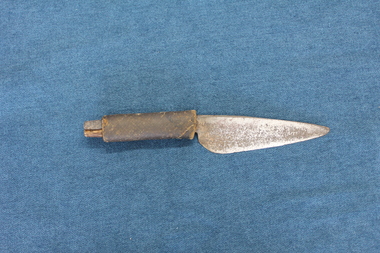
Equipment - Knife, fishing
... ...torquay victoria...He became a local hero in 1891 when he spotted the SS Joseph Scammell stricken on the reef off Point Danger and played a pivotal role in the successful rescue of all passengers and crew ... and the ship's cat. fishing equipment torquay victoria felix rosser Fishing knife that was kept in a wicker fishing basket. ...This knife is one of a number of items in a fishing basket that belonged to Arthur Rosser, son of Felix Rosser who was one of the early fishermen of Torquay. It was crafted from a sheep shearing blade, with wood inserted in the shaft and bound with strips of oilskin, evidence of the improvisation required to sustain a living. The tools and line kept in the basket may have been owned by Felix.Felix Rosser was a well known early settler in Torquay. He became a local hero in 1891 when he spotted the SS Joseph Scammell stricken on the reef off Point Danger and played a pivotal role in the successful rescue of all passengers and crew ... and the ship's cat.Fishing knife that was kept in a wicker fishing basket. Metal blade with wood inserted in the shaft and bound with strips of oilskinfishing equipment, torquay victoria, felix rosser -
 Torquay and District Historical Society
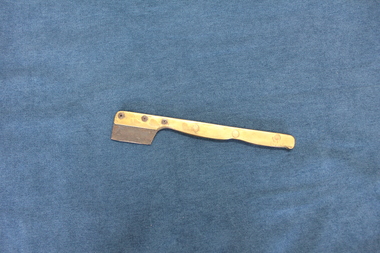
Equipment - Knife, fishing
... ...torquay victoria...He became a local hero in 1891 when he spotted the SS Joseph Scammell stricken on the reef off Point Danger and played a pivotal role in the successful rescue of all passengers and crew ... and the ship's cat. fishing equipment torquay victoria felix rosser Fishing knife in the shape of a small axe. ...This knife is one of a number of items in a fishing basket that belonged to Arthur Rosser, son of Felix Rosser who was one of the early fishermen of Torquay. The tools and line kept in the basket may have been owned by Felix.Felix Rosser was a well known early settler in Torquay. He became a local hero in 1891 when he spotted the SS Joseph Scammell stricken on the reef off Point Danger and played a pivotal role in the successful rescue of all passengers and crew ... and the ship's cat.Fishing knife in the shape of a small axe. Metal blade with wooden handle that is overlaid with bronze (?) .fishing equipment, torquay victoria, felix rosser -
 Torquay and District Historical Society
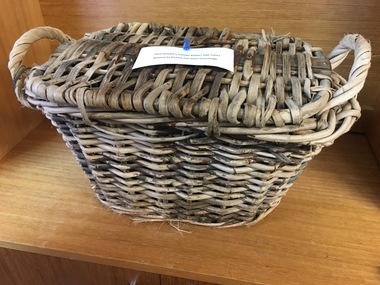
Equipment - Basket, Fishing and equipment
... ...torquay victoria...He became a local hero in 1891 when he spotted the SS Joseph Scammell stricken on the reef off Point Danger and played a pivotal role in the successful rescue of all passengers and crew ... and the ship's cat. fishing equipment torquay victoria felix rosser A wicker fishing basket and fishing equipment Equipment Basket, Fishing and equipment ...The fishing basket belonged to Arthur Rosser, son of Felix Rosser who was one of the early fishermen of Torquay. The tools and line kept in the basket may have been owned by Felix.Felix Rosser was a well known early settler in Torquay. He became a local hero in 1891 when he spotted the SS Joseph Scammell stricken on the reef off Point Danger and played a pivotal role in the successful rescue of all passengers and crew ... and the ship's cat.A wicker fishing basket and fishing equipmentfishing equipment, torquay victoria, felix rosser -
 Torquay and District Historical Society
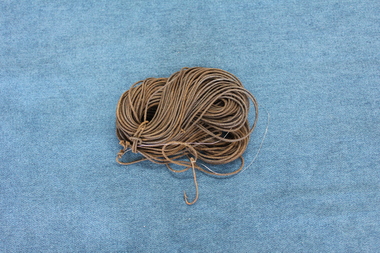
Equipment - Fishing line
... ...torquay victoria...He became a local hero in 1891 when he spotted the SS Joseph Scammell stricken on the reef off Point Danger and played a pivotal role in the successful rescue of all passengers and crew ... and the ship's cat. fishing equipment torquay victoria felix rosser Scales and balances Cord fishing line, coiled, with metal hook at end attached with fine metal wire Equipment Fishing line ...This fish line and hook is one of a number of items in a fishing basket that belonged to Arthur Rosser, son of Felix Rosser who was one of the early fishermen of Torquay. The tools and line kept in the basket may have been owned by Felix.Felix Rosser was a well known early settler in Torquay. He became a local hero in 1891 when he spotted the SS Joseph Scammell stricken on the reef off Point Danger and played a pivotal role in the successful rescue of all passengers and crew ... and the ship's cat.Cord fishing line, coiled, with metal hook at end attached with fine metal wirefishing equipment, torquay victoria, felix rosser, scales and balances -
 Queenscliffe Maritime Museum
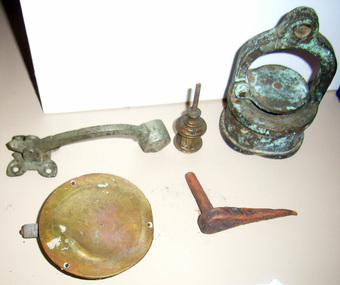
Victoria Tower Relics, mid 1860's
... "Victoria Tower" 3-mast ship wrecked 17th October 1869 on maiden voyage, Bream Creek near Torquay Victoria. 20 items mostly brass items..."Victoria Tower" 3-mast ship wrecked 17th October 1869 on maiden voyage, Bream Creek near Torquay Victoria. 20 items mostly brass items Victoria Tower Relics ..."Victoria Tower" 3-mast ship wrecked 17th October 1869 on maiden voyage, Bream Creek near Torquay Victoria. 20 items mostly brass items -
 National Wool Museum
Document
... Commonwealth of Australia/ Canberra/ ...3 July 1970/ The bearer of theis document/ Mr R W Pettitt/ of Torquay Victoria/ accompanied by his wife/ is proceeding on a visit overseas/......Corriedale sheep Sheep breeding Commonwealth of Australia/ Canberra/ ...3 July 1970/ The bearer of theis document/ Mr R W Pettitt/ of Torquay Victoria/ accompanied by his wife/ is proceeding on a visit overseas/... ...Letter of introduction from the Prime Minister of Australia, Mr J G Gorton, for Mr & Mrs R W Pettitt, on the occasion of their 1970 visit overseas.Commonwealth of Australia/ Canberra/ ...3 July 1970/ The bearer of theis document/ Mr R W Pettitt/ of Torquay Victoria/ accompanied by his wife/ is proceeding on a visit overseas/...corriedale sheep sheep breeding, australian corriedale association, pettitt, mr r. w., corriedale sheep, sheep breeding -
 Bendigo Historical Society Inc.
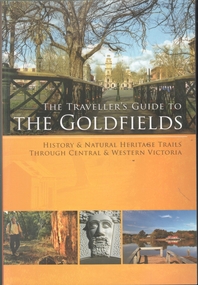
Book - The Traveller's Guide to the Goldfields, 2006
... Publications P/L Torquay, Victoria. Printed in Maryborough by McPherson's Printing Group...Publications P/L Torquay, Victoria. Printed in Maryborough by McPherson's Printing Group Book The Traveller's Guide to the Goldfields ...A soft cover book of 312 pages being a guide, history and natural heritage trails through Central and Western Victoria. Colour photos on front and back covers. Illustrated with maps and numerous colour photos of towns and districts. Published in 2006 by Best Shot! Publications P/L Torquay, Victoria. Printed in Maryborough by McPherson's Printing Group'M & J Qualtrough' sticker on title page Dymocks Booksellers sticker on back cover central and western goldfields, traveller's guide -
 Australian National Surfing Museum
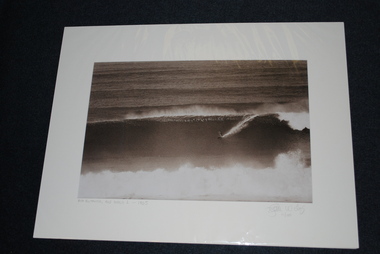
Photograph, John Witzig, Bob McTavish photograph Bells Beach 1 1965, 18/04/1965
... Bells Beach Road, Torquay, Surf Coast, Victoria ...This photo, part 1 of a 2 photo sequence taken by John Witzig, is of of Bob McTavish riding a very large waves (15'+) at Bells Beach on Easter Sunday (April 18th) 1965. This wave is thought to be the same one described by McTavish in his book as one of the biggest, most powerful waves he had ridden, almost resulting in his drowning after being washed down past the next headland at winki pop. Bells, Easter, 1965 is considered one of the biggest days that this break has been surfed. The surfer in the photograph, Bob McTavish would go on to become one of the most influential surfer/shapers in Australian during the next decade.The extremely large waves experienced by surfers at Bells Beach on Easter Sunday 1965 is part of surfing folklore. The wave featured in this photograph is considered one of the largest ridden waves ever documented at Bells Beach.Large black and white (sepia toned) photo. Part 1 of a 2 photo sequence taken by John Witzig of Bob McTavish riding a very big wave at Bells Beach. Photo is titled 'Bob McTavish Big Bells 1 - 1965', and signed and numbered by John Witzig (11/100). Signed by John Witzig. Numbered 11 / 100bells beach, john witzig, bob mctavish, easter sunday 1965, bells beach surfing classic -
Australian National Surfing Museum
Video Clip, The Story of the Bells Beach Bell, 20th April 2011
... Surf World Museum, Torquay, Surf Coast, Victoria, 3228, Australia ...The Bells Beach contest trophy is one of the most widely recognised sporting trophies in the world. Joe Sweeney has been making the trophy for the Bells Beach surfing contest since the late 1970's. It has been won four times by Australian surfer Mark Richards and American surfer Kelly Slater.The Bells Beach trophy is an iconic surfing artefact. To ring the trophy at Bells Beach at Easter is something all professional surfers aspire to achieve once in their professional careers. Short webclip featuring Joe Sweeney describing how he makes the iconic Bell trophy each year for the Rip Curl Pro at Bells Beach. Duration: 01.48 -
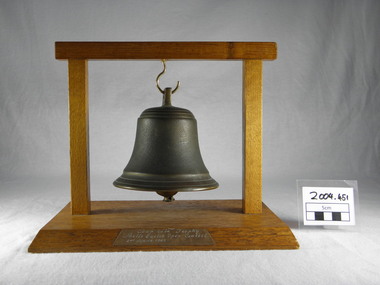 Australian National Surfing Museum
Trophy, Coca Cola Trophy
... Zeally Bay Road, Torquay, Surf Coast, Victoria, 3228, Australia ...This Bell was won by John Pawson as second junior place getter in the Bells Easter Open Contest in 1969. The bell was one of the earliest versions of the bell made by Joe Sweeney. John Pawson was a local surfer who tragically drowned at Winki Pop in January 1984RarityBrass bell mounted on wooden frame with wood stand and engraved brass plaque.Engraved on brass plaque "Coca Cola Trophy / Bells Easter Open Contest / 2nd JUNIOR 1969"trophy, surf, bells beach, bell, pawson, easter contest -
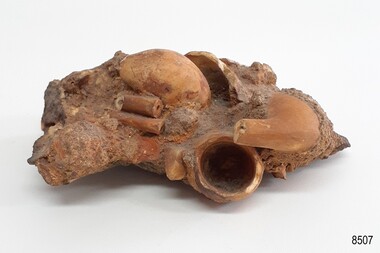 Flagstaff Hill Maritime Museum and Village
Leisure object - Tobacco Pipes, circa 1869
... southwest coast Victoria...Torquay...The Victoria Tower sailed under the command of Captain Kerr from Liverpool towards Melbourne on its maiden voyage with 4 passengers and 16 crew plus a general cargo including bottled beer, slates, iron pipes and hardware. It was almost at her destination when, on 17th October, 1869, it was wrecked at Point Impossible, west of Thompsons Creek, Breamlea, near Torquay. ...Flagstaff Hill Warrnambool Maritime Village Maritime Museum Flagstaff Hill Maritime Museum and Village Shipwreck coast Great Ocean Road Shipwreck artefact wreck dive McCulloch Collection Bruce McCulloch White Star Line Victorian Heritage Register clipper ship Victoria Tower Captain Kerr shipwreck Victoria Tower migrant ship 1869 cargo ship 1869 iron clipper British clipper ship 1869 cargo imported to Australia pipe cluster concretion of pipes pipe ceramic pipes tobacco pipes smoker's pipes southwest coast Victoria Torquay diver Evans Liverpool sailing ship iron hull migrant ship cargo ship 1869 shipwreck Concretion of clay tobacco pipes. ...This concretion of tobacco pipes is one of a group of artefacts in the McCulloch Collection. It was recovered from the shipwreck of the Victoria Tower. The pipes may have been amongst the ship's cargo, but could have been included in a passenger’s personal effects. The object is now one of the shipwreck artefacts in Flagstaff Hill’s Mc Culloch Collection, which includes items recovered from the wrecks of the Victoria Tower (wrecked in 1869) and Loch Ard (wrecked in 1878). They were salvaged by a diver in the early 1970s from the southwest coast of Victoria. Advanced marine technology had enabled divers to explore the depths of the ocean and gather its treasures before the Government introduced protective legislation. The artefacts were donated to the Queensland Department of Environment and Heritage Protection (EHP) by a passionate shipwreck lover. Bruce McCulloch verified their locations. In 2017, the Department repatriated them to Flagstaff Hill, where they joined our vast collection of artefacts from Victoria’s Shipwreck Coast. The Victoria Tower: - The three-masted iron clipper ship was built in 1869 in Liverpool, England, as a passenger and cargo ship for the Australian trade. It was named after one of the two towers of the British Houses of Parliament and owned by the White Star line. The Victoria Tower sailed under the command of Captain Kerr from Liverpool towards Melbourne on its maiden voyage with 4 passengers and 16 crew plus a general cargo including bottled beer, slates, iron pipes and hardware. It was almost at her destination when, on 17th October, 1869, it was wrecked at Point Impossible, west of Thompsons Creek, Breamlea, near Torquay. The shipwreck is a very popular dive site.The artefact is an example of cargo or personal items on board a ship in 1869. It provides a reference point for classifying and dating similar items. This artefact is significant for its association with the British-built, iron clipper ship Victoria Tower, a commercial and immigrant sailing ship constructed to carry cargo and passengers to colonial Australia. The vessel is recorded on the Victoria Heritage Database, VHR S698.Concretion of clay tobacco pipes. Bowls and stems of several broken orange tobacco pipes are joined together in ac irregularly shaped clump of concretion from the sea. The concretion also contains stones, shells, sand and particles of seaweed. It was recovered wreck of the ship Victoria Tower.flagstaff hill, warrnambool, maritime village, maritime museum, flagstaff hill maritime museum and village, shipwreck coast, great ocean road, shipwreck artefact, wreck dive, mcculloch collection, bruce mcculloch, white star line, victorian heritage register, clipper ship, victoria tower, captain kerr, shipwreck victoria tower, migrant ship 1869, cargo ship 1869, iron clipper, british clipper ship, 1869, cargo imported to australia, pipe cluster, concretion of pipes, pipe, ceramic pipes, tobacco pipes, smoker's pipes, southwest coast victoria, torquay, diver, evans, liverpool, sailing ship, iron hull, migrant ship, cargo ship, 1869 shipwreck -
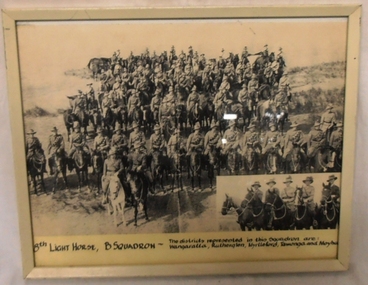 8th/13th Victorian Mounted Rifles Regimental Collection
Photograph, 8th Light Horse B. Squadron, 1940
... This photograph is likely to have been taken by a newspaper photographer when visiting the 8th Light Horse Regiment on manoeuvres with the 2nd Cavalry Division at Torquay Victoria in 1940. This assumption is supported by the identification of the districts from which the soldiers are drawn. ...This photograph is likely to have been taken by a newspaper photographer when visiting the 8th Light Horse Regiment on manoeuvres with the 2nd Cavalry Division at Torquay Victoria in 1940. This assumption is supported by the identification of the districts from which the soldiers are drawn. ...This photograph is likely to have been taken by a newspaper photographer when visiting the 8th Light Horse Regiment on manoeuvres with the 2nd Cavalry Division at Torquay Victoria in 1940. This assumption is supported by the identification of the districts from which the soldiers are drawn. The Fine studies of citizen soldiers while on manoeuvres in the period immediately preceding phasing out of horses and the transition to mechanised transport.Framed black and white photograph of sixty mounted light horsemen drawn up in massed ranks on a sand hill. Small insert photograph of five light horsemen, probably the squadron officers in lower right corner."8th Light Horse B. Squadron. The districts represented in this Squadron are Wangaratta, Rutherglen, Myrtleford, Tawonga and Moyhu"8th light horse regiment, wangaratta, rutherglen, myrtleford, tawonga, moyhu -
Australian National Surfing Museum
Video Clip, Torquay Surf Beach Family Movies, Circa 1947
... It was filmed at Torquay Surf Beach, Torquay, Victoria circa 1947. The last shots of the film show a surfer riding a hollow wooden plywood surfboard to the beach and stepping off onto the sand....Torquay Surf Beach was a macca for surfers in post-war Victoria. This is one of the earliest movies to show surfing at Torquay and in Victoria. ...This home movie features people enjoying summer by the beach. It was filmed at Torquay Surf Beach, Torquay, Victoria circa 1947. The last shots of the film show a surfer riding a hollow wooden plywood surfboard to the beach and stepping off onto the sand.Torquay Surf Beach was a macca for surfers in post-war Victoria. This is one of the earliest movies to show surfing at Torquay and in Victoria. It also features very early images of the Torquay Surf Life Saving Club which is the oldest in Victoria.Black and white 8mm home movie transferred to VHS and digitised to AVI file. Duration - 1 minute and 16 seconds.Museum logo at the start of the video clip.surfing, torquay surf life saving club, 1947, torquay surf beach, hollow plywood surfboard -
 8th/13th Victorian Mounted Rifles Regimental Collection
Photograph
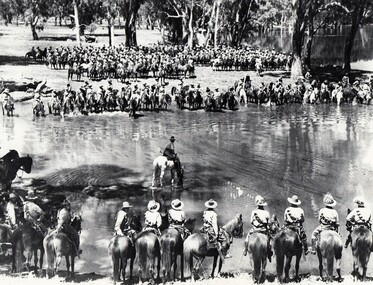
... A second copy (Cat No 0690) asserts it is 4 regiments of light horse being 8th, 13th, 20th and 4th watering horses near Torquay Victoria, March 1940....A second copy (Cat No 0690) asserts it is 4 regiments of light horse being 8th, 13th, 20th and 4th watering horses near Torquay Victoria, March 1940. Photograph Photograph ...A rare photograph of massed Light Horse in Victoria shortly before mechanisation consigned the horse to history.Black and white photograph of large group of horsemen in ranks waiting in the process of watering horses at a lagoon. One copy of the image claims it to be 8th Light Horse Regiment watering horses at a Murray River lagoon, South Corowa NSW, September 1939; Wahgunyah Troop, C Squadron - this side of lagoon, Lieutenant J. Nott on grey horse in water. A second copy (Cat No 0690) asserts it is 4 regiments of light horse being 8th, 13th, 20th and 4th watering horses near Torquay Victoria, March 1940.On a label on reverse of 0690: "Picture taken about March 1940 when the 13th Light Horse from Gippsland, the 8th Light Horse from Upper Murray, the 4th Light Horse from the Western Districts and the 20th Light Horse from the Goulburn Valley were in camp near Torquay. Mr Cappur Webb of Glendoxey, Seymour, a member of the 20th said the picture must have been taken during and exercise about five miles north of Torquay. “We used to water our horses in that lake”, he said." -
 Lake Bolac & District Historical Society
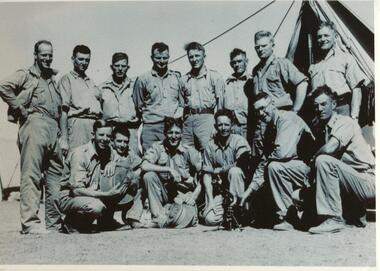
Black and white photograph, Lake Bolac Troop of the 4th/19th Lighthorse Regiment Back from left - Keith Davidson, Alan Hucker, Frank Shalders. Lew Wills, Neil Robertson, Harold Hildebrandt, Donald Davidson, Eric Hose Front - Reginald Fagg, Henry Clark, Eric Robertson, Robert Delamare, Henry Gale, Charles Geddes
... Members of the Lake Bolac Troop of the 4th/19 Lighthorse Regiment encamped at Torquay, Victoria. Back from left: Keith Davidson, Alan Hucker, Frank Shalders, Lewis Wills, Neil Robertson, Harold Hildebrandt, Donald Davidson, Eric Hose. ...Members of the Lake Bolac Troop of the 4th/19 Lighthorse Regiment encamped at Torquay, Victoria. Back from left: Keith Davidson, Alan Hucker, Frank Shalders, Lewis Wills, Neil Robertson, Harold Hildebrandt, Donald Davidson, Eric Hose. ...Members of the Lake Bolac Troop of the 4th/19 Lighthorse Regiment encamped at Torquay, Victoria. Back from left: Keith Davidson, Alan Hucker, Frank Shalders, Lewis Wills, Neil Robertson, Harold Hildebrandt, Donald Davidson, Eric Hose. Front: Reginald Fagg, Henry Clark, Eric Robertson, Robert Delamare, Henry Gale, Charles Geddeslake bolac, light horse, torquay, davidson, hucker, wills, robertson, hildebrandt, hose, fagg, clark, delamare, gale, geddes -
 Flagstaff Hill Maritime Museum and Village
Container - Earthenware jar, Bailey & Co, circa 1869
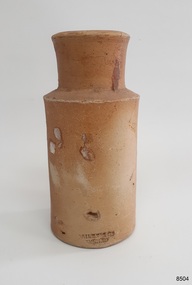
... ...Victoria Tower...1869...Torquay...The object is now one of the shipwreck artefacts in Flagstaff Hill’s McCulloch Collection, which includes other items recovered from the Victoria Tower, built in Liverpool by Evans in 1969, and wrecked the same year near Torquay, Victoria, on its maiden voyage. A diver salvaged the objects in the early 1970s while working along the southwest coast of Victoria. ...The object is now one of the shipwreck artefacts in Flagstaff Hill’s McCulloch Collection, which includes other items recovered from the Victoria Tower, built in Liverpool by Evans in 1969, and wrecked the same year near Torquay, Victoria, on its maiden voyage. A diver salvaged the objects in the early 1970s while working along the southwest coast of Victoria. ...The handmade earthenware jar, made by Bailey & Co. of England, was one of a group of artefacts in the McCulloch Collection that were recovered from the shipwreck Victoria Tower. The jar could have been from the ship's cargo or amongst the passengers' personal effects. The object is now one of the shipwreck artefacts in Flagstaff Hill’s McCulloch Collection, which includes other items recovered from the Victoria Tower, built in Liverpool by Evans in 1969, and wrecked the same year near Torquay, Victoria, on its maiden voyage. A diver salvaged the objects in the early 1970s while working along the southwest coast of Victoria. Advanced marine technology had enabled divers to explore the depths of the ocean and gather its treasures before the Government introduced protective legislation. The artefacts were donated to the Queensland Department of Environment and Heritage Protection (EHP) by a passionate shipwreck lover. Bruce McCulloch verified their locations. In 2017, the Department repatriated them to Flagstaff Hill, where they joined our vast collection of artefacts from Victoria’s Shipwreck Coast.The artefact is an example of cargo or personal items on board a ship in 1869. It provides a reference point for classifying and dating similar items. This artefact is significant for its association with the British-built, iron clipper ship Victoria Tower, a commercial and immigrant sailing ship constructed to carry cargo and passengers to colonial Australia. The vessel is recorded on the Victoria Heritage Database, VHR S698.Container, round brown earthenware jar with a wide mouth, thick lip, a wide neck that tapers slightly inwards towards the shoulder, and a body that tapers slightly inward towards the base. The glazed surface is rough. The variegated colours of the clay also have small dark speckles. There are several chips and dents on the jar. The inscription is stamped into the lower edge. Made by Bailey & Co., England. Recovered from the wreck of the Victoria Tower.Inscription “Bailey [&] Co / ENGLAND” flagstaff hill maritime museum and village, warrnambool, great ocean road, maritime museum, shipwreck artefact, southwest coast victoria, shipwreck coast, victoria tower, 1869, torquay, diver, bruce mcculloch, handmade, earthenware, jar, storage jar, stoneware, domestic container, kitchenware, bailey & co. england, sailing ship, evans of liverpool, evans, liverpool, clipper ship, iron hull, migrant ship, cargo ship, 1869 shipwreck -
 Flagstaff Hill Maritime Museum and Village
Leisure object - Doll's Leg, circa 1869
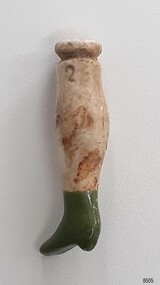
... ...Victoria Tower...1869...Torquay...The object is now one of the shipwreck artefacts in Flagstaff Hill’s McCulloch Collection, which includes other items recovered from the Victoria Tower, built in Liverpool by Evans in 1969, and wrecked the same year near Torquay, Victoria, on its maiden voyage. A diver salvaged the objects in the early 1970s while working along the southwest coast of Victoria. ...The object is now one of the shipwreck artefacts in Flagstaff Hill’s McCulloch Collection, which includes other items recovered from the Victoria Tower, built in Liverpool by Evans in 1969, and wrecked the same year near Torquay, Victoria, on its maiden voyage. A diver salvaged the objects in the early 1970s while working along the southwest coast of Victoria. ...The ceramic doll's leg was one of a group of artefacts in the McCulloch Collection that were recovered from the shipwreck Victoria Tower. The jar could have been from the ship's cargo or amongst the passengers' personal effects. The object is now one of the shipwreck artefacts in Flagstaff Hill’s McCulloch Collection, which includes other items recovered from the Victoria Tower, built in Liverpool by Evans in 1969, and wrecked the same year near Torquay, Victoria, on its maiden voyage. A diver salvaged the objects in the early 1970s while working along the southwest coast of Victoria. Advanced marine technology had enabled divers to explore the depths of the ocean and gather its treasures before the Government introduced protective legislation. The artefacts were donated to the Queensland Department of Environment and Heritage Protection (EHP) by a passionate shipwreck lover. Bruce McCulloch verified their locations. In 2017, the Department repatriated them to Flagstaff Hill, where they joined our vast collection of artefacts from Victoria’s Shipwreck Coast.The artefact is an example of cargo or personal items on board a ship in 1869. It provides a reference point for classifying and dating similar items. This artefact is significant for its association with the British-built, iron clipper ship Victoria Tower, a commercial and immigrant sailing ship constructed to carry cargo and passengers to colonial Australia. The vessel is recorded on the Victoria Heritage Database, VHR S698.Doll's leg, cream-coloured ceramic leg with two seams, a flat solid top and a glazed green ankle-length heeled boot. A shallow groove runs around the leg just below the top. An inscription is stamped into the leg below the groove. Recovered from the wreck of the Victoria Tower. Inscribed "2"flagstaff hill, warrnambool, maritime village, maritime museum, flagstaff hill maritime museum and village, shipwreck coast, great ocean road, shipwreck artefact, wreck dive, mcculloch collection, bruce mcculloch, victorian heritage register, sailing ship, doll's leg, ceramic doll leg, porcelain doll leg, doll's limb, ceramic limb from doll, children's toy, children's recreation, doll's leg with green boot, southwest coast victoria, victoria tower, 1869, torquay, diver, evans, liverpool, clipper ship, iron hull, migrant ship, cargo ship, 1869 shipwreck -
 Flagstaff Hill Maritime Museum and Village
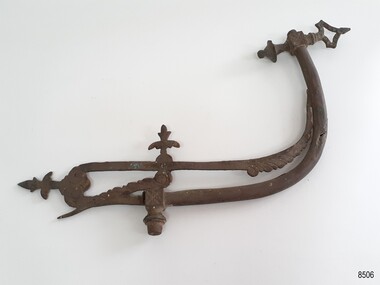
Functional object - Lamp Fitting, circa 1869
... ...Victoria Tower...1869...Torquay...The object is now one of the shipwreck artefacts in Flagstaff Hill’s McCulloch Collection, which includes other items recovered from the Victoria Tower, built in Liverpool by Evans in 1969, and wrecked the same year near Torquay, Victoria, on its maiden voyage. A diver salvaged the objects in the early 1970s while working along the southwest coast of Victoria. ...The object is now one of the shipwreck artefacts in Flagstaff Hill’s McCulloch Collection, which includes other items recovered from the Victoria Tower, built in Liverpool by Evans in 1969, and wrecked the same year near Torquay, Victoria, on its maiden voyage. A diver salvaged the objects in the early 1970s while working along the southwest coast of Victoria. ...The brass lamp fitting was one of a group of artefacts in the McCulloch Collection that were recovered from the shipwreck Victoria Tower. The jar could have been from the ship's cargo or amongst the passengers' personal effects. The object is now one of the shipwreck artefacts in Flagstaff Hill’s McCulloch Collection, which includes other items recovered from the Victoria Tower, built in Liverpool by Evans in 1969, and wrecked the same year near Torquay, Victoria, on its maiden voyage. A diver salvaged the objects in the early 1970s while working along the southwest coast of Victoria. Advanced marine technology had enabled divers to explore the depths of the ocean and gather its treasures before the Government introduced protective legislation. The artefacts were donated to the Queensland Department of Environment and Heritage Protection (EHP) by a passionate shipwreck lover. Bruce McCulloch verified their locations. In 2017, the Department repatriated them to Flagstaff Hill, where they joined our vast collection of artefacts from Victoria’s Shipwreck Coast. The artefact is an example of cargo or personal items on board a ship in 1869. It provides a reference point for classifying and dating similar items. This artefact is significant for its association with the British-built, iron clipper ship Victoria Tower, a commercial and immigrant sailing ship constructed to carry cargo and passengers to colonial Australia. The vessel is recorded on the Victoria Heritage Database, VHR S698. Brass decorative gas lamp fitting. Two flat arms of different lengths are joined on either side of a fitting that has a fleur-de-lis-like design. The shorter arm has a J-shaped brass pipe fitted to it with a decorative threaded cube joint partway along, and ends with a triangular tap and knob. The longer arm is also J-shaped and ends with a feather design. There are remnants of green paint on the cube fittings and the knob. Recovered from the wreck of the Victoria Tower.flagstaff hill, warrnambool, maritime village, maritime museum, flagstaff hill maritime museum and village, shipwreck coast, great ocean road, shipwreck artefact, wreck dive, mcculloch collection, bruce mcculloch, victorian heritage register, sailing ship, lamp fitting, gas lamp fitting, ship’s fitting, ship’s lamp, brass lamp fitting, lighting, domestic lighting, ship’s lighting, southwest coast victoria, victoria tower, 1869, torquay, diver, evans, liverpool, clipper ship, iron hull, migrant ship, cargo ship, 1869 shipwreck -
 Australian National Surfing Museum
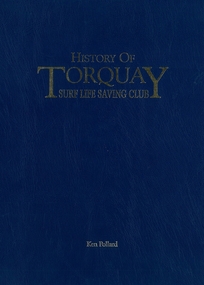
Book, Torquay Surf Life Saving Club Inc, History of Torquay Surf Life Saving Club, 01/01/1996
... The book features historic photographs of the surf club and the famed Torquay Surf Beach on Victoria rugged Surf Coast. The book also features chapters on the historic, cultural, social and competitive areas within the club....The book features historic photographs of the surf club and the famed Torquay Surf Beach on Victoria rugged Surf Coast. The book also features chapters on the historic, cultural, social and competitive areas within the club. ...History of the Torquay Surf Life Saving Club celebrates the first fifty years (1945-1995) of the largest surf life saving club in Victoria. The book features historic photographs of the surf club and the famed Torquay Surf Beach on Victoria rugged Surf Coast. The book also features chapters on the historic, cultural, social and competitive areas within the club.This bok is significant because it represents the first official history of one of the largest and most influential surf life saving clubs in Australia.Blue leather hardback book with gold lettering on blue representing the colours of the Torquay Surf Life Saving Club. Authors name - Ken Pollardbells beach, torquay surf life saving club, d s club, peter troy, vic tantau, terry wall, ken pollard, torquay surf beach, pioneer surfers, jim wall, dick garrard, sprint walker, owen yateman, alan coulson, ron hussey, joe sweeney, sharon heathcote, ray brewin, frances murphy, bryan hayden -
 Flagstaff Hill Maritime Museum and Village
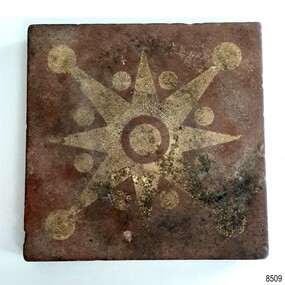
Ceramic - Floor Tile, Maw & Co, 1862-1869
... The object is now one of the shipwreck artefacts in Flagstaff Hill’s McCulloch Collection, which includes other items recovered from the Victoria Tower, built in Liverpool by Evans in 1969, and wrecked the same year near Torquay, Victoria, on its maiden voyage. A diver salvaged the objects in the early 1970s while working along the southwest coast of Victoria. ...The object is now one of the shipwreck artefacts in Flagstaff Hill’s McCulloch Collection, which includes other items recovered from the Victoria Tower, built in Liverpool by Evans in 1969, and wrecked the same year near Torquay, Victoria, on its maiden voyage. A diver salvaged the objects in the early 1970s while working along the southwest coast of Victoria. ...The floor tile is one of a group of artefacts in the McCulloch Collection that were recovered from the shipwreck Victoria Tower and were donated together. The tile could have been from the ship's cargo or amongst the ship’s fittings. It was made by Maw & Co., of Broseley, England, makers of earthenware encaustic and geometric floor tiles. In 1850, George Maw and his brother Arthur began their first factory in Worcester, and in 1862, the company moved to Broseley, Shropshire. The object is now one of the shipwreck artefacts in Flagstaff Hill’s McCulloch Collection, which includes other items recovered from the Victoria Tower, built in Liverpool by Evans in 1969, and wrecked the same year near Torquay, Victoria, on its maiden voyage. A diver salvaged the objects in the early 1970s while working along the southwest coast of Victoria. Advanced marine technology had enabled divers to explore the depths of the ocean and gather its treasures before the Government introduced protective legislation. The artefacts were donated to the Queensland Department of Environment and Heritage Protection (EHP) by a passionate shipwreck lover. Bruce McCulloch verified their locations. In 2017, the Department repatriated them to Flagstaff Hill, where they joined our vast collection of artefacts from Victoria’s Shipwreck Coast. The Victoria Tower: - The three-masted iron clipper ship was built in 1869 in Liverpool, England, as a passenger and cargo ship for the Australian trade. It was named after one of the two towers of the British Houses of Parliament and owned by the White Star line. The Victoria Tower sailed under the command of Captain Kerr from Liverpool towards Melbourne on its maiden voyage with 4 passengers and 16 crew plus a general cargo including bottled beer, slates, iron pipes and hardware. It was almost at her destination when, on 17th October 1869, it was wrecked at Point Impossible, west of Thompsons Creek, Breamlea, near Torquay. The shipwreck is a very popular dive site. The artefact is an example of cargo or personal items on board a ship in 1869. It provides a reference point for classifying and dating similar items. This artefact is significant for its association with the British-built, iron clipper ship Victoria Tower, a commercial and immigrant sailing ship constructed to carry cargo and passengers to colonial Australia. The vessel is recorded on the Victoria Heritage Database, VHR S698. Ceramic tile, square, with star or compass design. The brown floor tile has a cream design of a pointed star with a circle in its centre and between, and on the end of, each point. The side profile of the tile shows the division between the top layer and the base, with a groove between the two. The back of the tile has parallel ridges and is embossed with an inscription. The tile was made by MAW & Co. of Broseley, England, and was recovered from the wrecked ship Victoria Tower. Inscribed "MAW & CO BROSELEY" flagstaff hill, warrnambool, maritime village, maritime museum, flagstaff hill maritime museum and village, shipwreck coast, great ocean road, shipwreck artefact, wreck dive, mcculloch collection, bruce mcculloch, white star line, victorian heritage register, clipper ship, victoria tower, captain kerr, shipwreck victoria tower, migrant ship 1869, cargo ship 1869, iron clipper, british clipper ship, 1869, cargo imported to australia, tile, floor tile, ceramic tile, compass pattern, star pattern, flooring, george maw, arthur maw, maw & co., beverley, worcester, made in england
