
Showing 38 items matching "cordial manufacturing in warrnambool"
-
 Warrnambool and District Historical Society Inc.
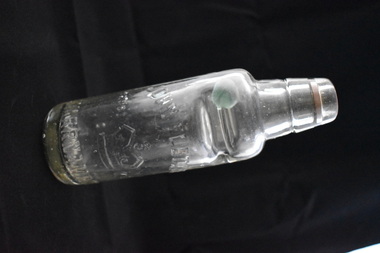
Bottle, Webb Bros Port Fairy, Early 20th century
... cordial manufacturing in warrnambool district...Cordial manufacturing was an important industry in Warrnambool and district for over 100 years cordial manufacturing in warrnambool district ‘Webb Bros. ...This is a marble stopper bottle from the Port Fairy aerated waters factory of the Webb brothers. A marble stopper bottle was filled upside down so that as soon as the filling stopped the stopper was forced down to seal the bottle against the rubber ring. Pressure inside the bottle would keep the marble pressed against the top of the bottle. To open the bottle the marble was pressed down where it would fall into the neck chamber below. The marble would stay inside the chamber when the bottle was tilted up for drinking. The Webb brothers operated the Port Fairy Aerated Water and Cordial Factory in William Street (no 29) in the late 19th and early 20th centuries. This bottle is of interest as an example of a marble stopper bottle from the aerated waters factory of the Webb brothers in Port Fairy. Cordial manufacturing was an important industry in Warrnambool and district for over 100 yearsThis is a marble stopper glass bottle. It has a rounded base with a rounded body tapering to a deeply-indented section which forms a narrow neck chamber. The top is rounded moulded glass with an opening. The green marble is loose inside the neck chamber and the rubber ring has been displaced and is at the bottom of the bottle. There is some discolouration inside the bottle from the original contents.‘Webb Bros. Aerated Waters Port Fairy’ cordial manufacturing in warrnambool district -
 Warrnambool and District Historical Society Inc.
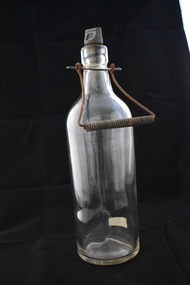
Container - Bottle, Reeves Stopper bottle, 1950s
... ...Cordial Manufacturing in Warrnambool...Reeves Cordial Factory, Warrnambool Cordial Manufacturing in Warrnambool History of Warrnambool ‘R.V.Reeves R.V.R.’ ...This bottle comes from the Warrnambool aerated water factory of Reg Reeves. This factory, in Koroit Street, Warrnambool, was established in the 1860s as the Union Cordial Factory by John Davis and then bought by John Fletcher in 1885. Fletcher’s business continued until 1930 when it was bought by Ralph Reeves. Coming to Warrnambool about 1900, Ralph Reeves managed a Banyan Street, Warrnambool cordial factory which had been established by John Rowley. Ralph Reeves bought a business in 1916 at Hamilton and sold it in 1929 to concentrate on the Warrnambool business. Reeves was joined by his son Reg in Warrnambool and Reg operated the business from 1946 to 1972. The trade name of Reeves was still used after Reg Reeves died and continued on for some years. This bottle is of interest as an example of a lemonade bottle form Reeves Cordial Factory in Warrnambool. The Reeves family operated this business in Warrnambool for 40 years. Cordial manufacturing was an important industry in Warrnambool for over 100 years. This is a clear glass lemonade bottle with a round base, a rounded body and a smaller circular neck with a screw top stopper made of composite material. A metal handle is attached to the neck section and it has a coil of metal on the handle for easier handling. The stopper has the name of the manufacturer of the soft drink. ‘R.V.Reeves R.V.R.’ (twice)reeves cordial factory, warrnambool, cordial manufacturing in warrnambool, history of warrnambool -
 Warrnambool and District Historical Society Inc.
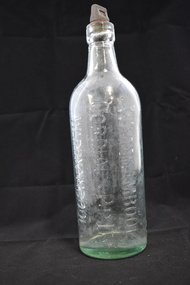
Bottle, Warrnambool Cordial, Mid 20th century
... ...Cordial Manufacturing in Warrnambool... was an important business in Warrnambool for over 100 years and Warrnambool Cordials Pty Ltd was a prominent business for many years. Warrnambool Cordials Pty Ltd Cordial Manufacturing in Warrnambool History of Warrnambool ‘Warrnambool Cordials’ Warrnambool Cordials Pty. ...This bottle came from the Warrnambool business of Warrnambool Cordials Pty Ltd. This business started when Joseph Lescai, a fruiterer in Fairy Street, Warrnambool in the 1920s, began making cordials and soft drinks. Soon this became his core business until it was taken over by a group of Warrnambool businessmen. The business, known as Warrnambool Cordials, was then bought in the 1930s by a Warrnambool garage proprietor, Thomas Hill. Charles and Frederick Flett then purchased the business in the early 1940s and in the 1960s the business was taken over by Thomas McKenzie. The business lasted until the 1980s. This bottle is of interest as an example of the products of the Warrnambool business of Warrnambool Cordials Pty Ltd. Cordial manufacturing was an important business in Warrnambool for over 100 years and Warrnambool Cordials Pty Ltd was a prominent business for many years. This is a green-tinged glass bottle with a rounded base and a rounded body tapering to a short rounded neck and moulded glass top with an opening. It has a screw top composite material stopper with the name of the lemonade maker on the top. Information on the lemonade maker is also impressed into the glass on the side of the bottle. ‘Warrnambool Cordials’ Warrnambool Cordials Pty. Ltd. Warrnambool’ ‘Lemonade’ ‘This bottle is the property of the Warrnambool Cordials Pty. Ltd. Warrnambool’ warrnambool cordials pty ltd, cordial manufacturing in warrnambool, history of warrnambool -
 Warrnambool and District Historical Society Inc.
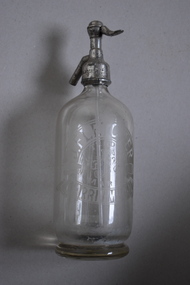
Soda Syphon, Fletcher, c 1930 (contents of syphon)
... cordial manufacturing in warrnambool... was an important industry in Warrnambool for over 100 years. cordial manufacturing in warrnambool fletcher history of warrnambool ‘J. ...This soda syphon is a device for dispensing carbonated or soda water. The valve allows portion of the contents to be dispensed whilst maintaining the pressure inside to keep the rest of the contents from going flat. The bottle is marked ‘J. Fletcher’. John Fletcher worked as a boy at Rowley’s cordial factory in Banyan Street, Warrnambool. He then worked for John Davis who had established the Union Cordial Factory in Koroit Street, Warrnambool in the 1860s. In 1885 John Fletcher bought the Davis business and operated it until 1930. John Fletcher sold the business to Ralph Reeves and as Reeves initially used Fletcher bottles and syphons, the contents of the bottle could have come from the time of either John Fletcher or Ralph Reeves. This syphon is of interest as it comes from a mid 20th century cordial factory in Warrnambool. Cordial manufacturing was an important industry in Warrnambool for over 100 years. This is a clear glass soda syphon with a round sold base and a rounded body and a metal pump and valve mechanism affixed to the top opening. A glass tube is inside the bottle and is part of the pump mechanism. The top metal section is very corroded. The side of the bottle has the Fletcher trademark - the stylized letters J and F. ‘J. Fletcher Trade Mark Warrnambool’ ‘J. Fletcher’ ‘British Syphon Mfg Co. Ltd London’ cordial manufacturing in warrnambool, fletcher, history of warrnambool -
 Warrnambool and District Historical Society Inc.
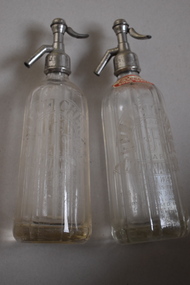
Soda Sypon, John Fletcher/Ralph Reeves, J. F. Fletcher, Mid 20th century (contents of bottles)
... Cordial Manufacturing in Warrnambool... was an important industry in Warrnambool for over100 years. Cordial Manufacturing in Warrnambool history of warrnambool ‘J. ...These two soda syphons were used to dispense soda water. They are marked ‘J. Fletcher’ with one of the bottles having the extra label of ‘Reeves’. The bottles come from the cordial factory in Koroit Street, Warrnambool. John Fletcher worked as a young boy in Rowley’s cordial factory in Banyan Street, Warrnambool and then worked for John Davis who had established the Union Cordial Factory in Koroit Street in the 1860s. John Fletcher bought the Davis business in 1885 and operated this factory until 1930. He then sold to Ralph Reeves who initially used the Fletcher bottles and syphons. At least one of these syphons comes from the Koroit Street factory during the proprietorship of Ralph Reeves.These soda syphons are of interest as they come from a local Warrnambool cordial factory in Koroit Street. Cordial manufacturing was an important industry in Warrnambool for over100 years. These are two soda syphons made of glass with heavy round bases and ridged surfaces on the bottle bodies. The metal tops contain the pump and valve mechanisms and the inside of the bottles have glass tubes attached to the top mechanisms. The sides of the bottle have the Fletcher trade mark symbol of the stylized letters J and F, Both metal tops are corroded. Both bottles contain a small amount of liquid.‘J. Fletcher’ “J. Fletcher Trade Mark Warrnambool’ ‘Soda Water’ ‘This syphon is the property of John Fletcher Warrnambool and cannot be legally used by others’ ‘British Syphon Co. Ltd. London Reg. No 762’. ‘Reeves Soda Water’ (one bottle only) cordial manufacturing in warrnambool, history of warrnambool -
 Warrnambool and District Historical Society Inc.
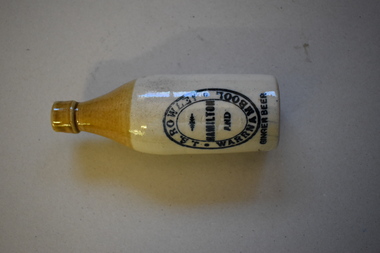
Bottle, The Bendigo Pottery Co. Pty. Ltd, J. S. Rowley, Late 19th century
... The bottle contained ginger beer manufactured at the cordials factory of J.S. Rowley at the corner of Timor and Banyan Streets, Warrnambool. ...cordial manufacturing plant on the site. The brewery section closed and the cordial manufacturing section, called the Warrnambool Steam Aerated Waters works, was expanded, By the 1880s there were 13 employees and 20 varieties of soft drinks were being produced. ...This bottle was made in Epsom, Bendigo at the Bendigo Pottery Works. The bottle contained ginger beer manufactured at the cordials factory of J.S. Rowley at the corner of Timor and Banyan Streets, Warrnambool. John Searle Rowley (1837-1893) opened a branch of the Geelong Corio Brewery in Timor Street and in 1868 established a cordial manufacturing plant on the site. The brewery section closed and the cordial manufacturing section, called the Warrnambool Steam Aerated Waters works, was expanded, By the 1880s there were 13 employees and 20 varieties of soft drinks were being produced. After Rowley died in 1893 the business continued under the same name with Ralph Reeves managing the plant from 1900 until he moved to Koroit Street and operated a cordial factory under his own name. This bottle is of interest as an example of the soft drinks manufactured by J.S.Rowley of Banyan Street Warrnambool. This business was an important one in Warrnambool in the second half of the 19th century and early in the 20th century. This is a ceramic bottle in brown and buff colouring. The top has two chips. There is no stopper. ‘J.S. Rowley Hamilton and Warrnambool Ginger Beer’ ‘The Bendigo Pottery Epsom Bendigo’ j.s. rowley cordial manufacturer, cordial manufacturers in warrnambool, history of warrnambool -
 Flagstaff Hill Maritime Museum and Village
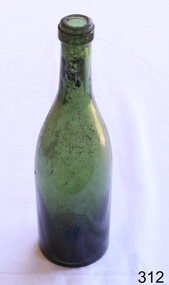
Container - Bottle, Late 19th century or early 20th century
... The use of glass bottles, that could be easily washed, led to improved hygiene, and mass manufacturing of drinks of all types, including milk, cordial and alcoholic beverages. Flagstaff Hill Warrnambool Shipwrecked-coast Flagstaff-Hill Flagstaff-Hill-Maritime-Museum Maritime-Museum Shipwreck-coast Flagstaff-Hill-Maritime-Village Glass Concave indentation at the base. ...Glass manufacturing has evolved over thousands of years. Glass making has been traced back to 3500 BC in Mesopotamia. The earliest known glass objects were beads, perhaps made by accident while working with metal. In the late Bronze Age, several civilizations discovered how to make vessels and glass bottles by wrapping threads of melted glass around cores of sand or clay. Later, moulds were used to form dishes and table wares. Around the 1st century BC, glassblowing was discovered. This made glass containers less expensive than pottery. Mould-blown glass, the process of blowing a piece of molten glass into a wooden or metal mould, was invented during the 1st century AD. This technique was faster with more consistent results. It paved the way for mass production. It wasn’t until the late 1800s that the production process to become more efficient. In 1887, a company in England created a semi-automatic process that could produce up to 200 bottles an hour. This process has been refined to the point where modern machines can yield more than 600 containers per minute. Blown vs. Manufactured Glass Bottles Nowadays, glass bottles, jars, and cups are usually manufactured on a bigger scale than is found in individual glassblowing studios. If we still depended on hand-blown glass for all of our glass containers, we would see some major differences in the process of creating bottles and jars. First, there's the time. Hand blowing glass takes a significant amount of time, even for one simple container. In contrast, hundreds of jars per minute can be made using modern technology. This leads to the second advantage: price. Because of the automated and streamlined process, the price for manufactured containers is much lower than that of hand-blown glass. Third, manufactured bottles will be much more consistently uniform than bottles blown by hand. Automated glass manufacturing produces nearly identical batches of jars. Glass blowing is awesome for unique, beautiful pieces of art. But for lots of lower priced and uniformly shaped containers, automatic manufacturing is the preferred method to create glass bottles and jars. https://www.containerandpackaging.com/resources/glass-bottles-brief-history The invention and development of glass for domestic items including bottles, has been nothing short of revolutionary. The use of glass bottles, that could be easily washed, led to improved hygiene, and mass manufacturing of drinks of all types, including milk, cordial and alcoholic beverages.Green Glass Bottle Possibly a ginger beer bottle.Concave indentation at the base. Also on base are two raised lumps. flagstaff hill, warrnambool, shipwrecked-coast, flagstaff-hill, flagstaff-hill-maritime-museum, maritime-museum, shipwreck-coast, flagstaff-hill-maritime-village, glass -
 Flagstaff Hill Maritime Museum and Village
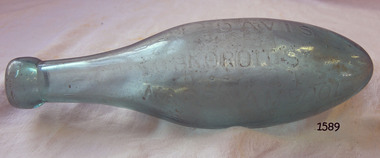
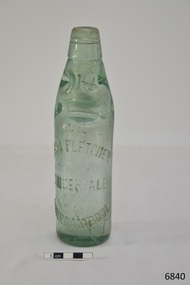
Container - Torpedo Bottle, Last quarter of the 19th century
... Warrnambool. This factory in Koroit Street was established in the mid 19th century by John Davis. As a young boy John Fletcher worked at the cordial factory of John Rowley in Banyan Street, Warrnambool and then worked for a number of years for John Davis at his Union Cordial Factory. In 1885 John Fletcher succeeded John Davis and continued in this business until 1930. The business was then taken over by Ralph Reeves. John Fletcher manufactured...Warrnambool. This factory in Koroit Street was established in the mid 19th century by John Davis. As a young boy John Fletcher worked at the cordial factory of John Rowley in Banyan Street, Warrnambool and then worked for a number of years for John Davis at his Union Cordial Factory. In 1885 John Fletcher succeeded John Davis and continued in this business until 1930. The business was then taken over by Ralph Reeves. John Fletcher manufactured ...This bottle has come from the aerated waters factory of John Fletcher of Warrnambool. This factory in Koroit Street was established in the mid 19th century by John Davis. As a young boy John Fletcher worked at the cordial factory of John Rowley in Banyan Street, Warrnambool and then worked for a number of years for John Davis at his Union Cordial Factory. In 1885 John Fletcher succeeded John Davis and continued in this business until 1930. The business was then taken over by Ralph Reeves. John Fletcher manufactured aerated waters, soda, tonic waters, lemonade, ginger ale, hop beer, hop bitters, sarsaparilla and cordials. The bottle would have been sealed with a cork stopper. The torpedo shape of the bottle would ensure that it was stored on its side, keeping the cork moist so that it didn't shrink and cause the bottle to leak its contents.The bottle is significant for its unusual torpedo shape and for being sold by the long standing John Fletcher's soft drink business in Warrnambool who was a prominent soft drinks manufacturer in Warrnambool for over 40 years.Torpedo shaped green glass bottle, name of manufacture of contents, John Fletcher Late and J. Davis, of Koroit St Warrnambool, is impressed in the glass."John Fletcher Late and J. Davis Koroit St Warrnambool"flagstaff hill, warrnambool, shipwrecked-coast, flagstaff-hill, flagstaff-hill-maritime-museum, maritime-museum, shipwreck-coast, flagstaff-hill-maritime-village, torpedo shaped glass bottle, torpedo bottle, bottle, john fletcher late and j. davis koroit st warrnambool, john fletcher late and j. davis, john fletcher late, j. davis -
 Flagstaff Hill Maritime Museum and Village
Container - Bottle, c. 1905
... cordial factory, sustained an eye injury when one of the bottles burst. Later, the eye had to be removed at the Warrnambool Base Hospital. ABOUT CODD BOTTLES Many inventions during the mid-to-late 1800s kept the fizz in carbonated drinks, such as ginger ale, soda water, and fruit drinks. Hiram Codd, an English engineer, invented a successful process that he patented as “Codd’s patented globe stopper bottle” in 1872. The Codd-neck bottle (commonly called Codd or marble bottle) is manufactured...cordial factory, sustained an eye injury when one of the bottles burst. Later, the eye had to be removed at the Warrnambool Base Hospital. ABOUT CODD BOTTLES Many inventions during the mid-to-late 1800s kept the fizz in carbonated drinks, such as ginger ale, soda water, and fruit drinks. Hiram Codd, an English engineer, invented a successful process that he patented as “Codd’s patented globe stopper bottle” in 1872. The Codd-neck bottle (commonly called Codd or marble bottle) is manufactured ...This bottle once contained John Fletcher’s ginger cordial. It was found in August 2014 in the sand dunes at Levy's Point, near McKinnon's quarry, Warrnambool. ABOUT JOHN FLETCHER of WARRNAMBOOL John Fletcher Cordial (or Beverage) Co.. Warrnambool supplied cordial and aerated drinks to the Western District of Victoria. John Fletcher was named as a cordial manufacturer in the Warrnambool Standard of June 13th 1895, when he attended a Publican’s Association meeting. Mr John Fletcher, aerated water and cordial manufacturer of Koroit Street, Warrnambool, had a summary of his factory printed in a short article in the Advocate, Melbourne, in February 1901. The article said, “one of the most complete plants outside the metropolis … spacious … well appointed …old-established business … noted for the excellence of the quality … a trial [of the beverage] is solicited.” John Fletcher and Harold Caffin, trading as J.S. Rowley & Co, cordial manufacturers in 1903, were prosecuted in September that year when the Board of Health found an analysed sample of Raspberry Vinegar to contain coal tar colouring, which could be injurious to health, particularly to the kidneys. The factory was still in operation in December 1924, when sadly, Mr S. Fletcher, who was carrying bottles of aerated water at Mr John Fletcher’s cordial factory, sustained an eye injury when one of the bottles burst. Later, the eye had to be removed at the Warrnambool Base Hospital. ABOUT CODD BOTTLES Many inventions during the mid-to-late 1800s kept the fizz in carbonated drinks, such as ginger ale, soda water, and fruit drinks. Hiram Codd, an English engineer, invented a successful process that he patented as “Codd’s patented globe stopper bottle” in 1872. The Codd-neck bottle (commonly called Codd or marble bottle) is manufactured in two parts. The body of the bottle is cast in two sections. At the time of joining the sections, a glass marble and rubber seal are inserted into the neck section. The lip is then applied to the top of the bottle. The Codd bottle is filled upside down as the pressure of the gas from the carbonated liquid holds the marble up and out of the way. When the bottle stands upright, the gas pushes the marble up against the washer, creating a firm seal to keep the fizz inside. The bottle is opened by pushing the marble down firmly to allow some of the gas to escape. The marble drops down and is caught in a depression formed in the neck. When the bottle is tilted to pour or drink the liquid, the marble rests in a dimple. Some have said that the bottle is a character, the shape having a face with its mouth keeping the marble out of the drink and eyes that catch the marble so that it doesn’t roll into the mouth of the drinker. The Codd bottle was expensive to produce, and children loved to destroy the marbles to play with the marbles inside. Many shops and factories added a deposit to the cost of buying the drink to encourage children to return the bottles rather than break it for the marble. Codd bottles are still being produced in India and Japan for soft drinks. A Codd bottle with the same markings as this one is valued on today’s Australian auction sites from AUD 35 - $75. Bottle, aqua/green glass, with glass marble inside. John Fletcher's Ginger Ale, Warrnambool. Container is often called a "Codd neck bottle", “marble bottle” or “Codd’s patent bottle”. Bottle made by Dobson. Inscription on bottle and base. c. 1905Marks moulded into glass; "JOHN FLETCHER / GINGER ALE / WARRNAMBOOL" and “DOBSON” and on base “G”. flagstaff hill, warrnambool, shipwrecked coast, flagstaff hill maritime museum, maritime museum, shipwreck coast, flagstaff hill maritime village, great ocean road, codd bottle, codd neck bottle, marble bottle, ginger beer bottle, john fletcher soft drinks, warrnambool soft drinks and cordials, john fletcher cordial (or beverage) co ., codd neck bottle, glass stopper bottle, hiram codd, antique bottle, harold caffin, john fletcher -
 Warrnambool and District Historical Society Inc.
Functional object - Ginger Ale Bottle, John Fletcher. Koroit Street, Warrnambool, c. 1930
... Cordial Factory in Banyan Street, Warrnambool. He then worked for John Davis who had established the Union Cordial Factory in Koroit Street in the 1860s. In 1885 John Fletcher bought Davis' business and operated it until 1930. It was then bought by Ralph Reeves. John Fletcher manufactured...Cordial Factory in Banyan Street, Warrnambool. He then worked for John Davis who had established the Union Cordial Factory in Koroit Street in the 1860s. In 1885 John Fletcher bought Davis' business and operated it until 1930. It was then bought by Ralph Reeves. John Fletcher manufactured ...This bottle was found in sea water while the donor was snorkelling in Stingray Bay, Warrnambool. It is a marble stopper bottle from the Warrnambool cordial factory of John Fletcher. Th bottle was filled upside down so that as soon as the filling ceased the marble was forced down to seal the bottle against a rubber ring (missing in this bottle). Pressure inside the bottle would keep the marble pressed against the top of the neck. To open the bottle the marble was pressed down so that it fell into the body of the bottle. John Fletcher as a young boy worked at Rowley's Cordial Factory in Banyan Street, Warrnambool. He then worked for John Davis who had established the Union Cordial Factory in Koroit Street in the 1860s. In 1885 John Fletcher bought Davis' business and operated it until 1930. It was then bought by Ralph Reeves. John Fletcher manufactured soda water, lemonade, tonic waters, ginger ale, sarsaparilla, cordials, hop beer and hop bitters.This bottle is of some interest as an example of a marble stopper bottle over 90 years old and as a memento of the Warrnambool soft drinks business of John Fletcher, a prominent businessman in Warrnambool for over 40 years.This is a clear glass bottle with a rounded body, a heavy indentation near the base of the neck and a thick tapering neck with a round opening. The bottle contains a green marble and some marine detritus. The bottle is discoloured with stains and dirt and has lettering etched into the side and base.John Fletcher Ginger Ale Warrnambool This bottle is the property of John Fletcher Warrnambool and cannot be legally used by others Gjohn fletcher warrnambool, cordial manufacturers in warrnambool -
 Warrnambool and District Historical Society Inc.
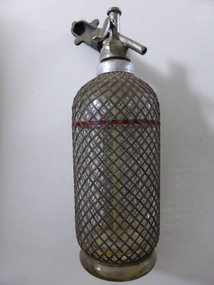
Bottle, Soda Siphon, c. 1920
... manufacturing also in U.S.A. and Europe. This syphon has no known provenance but it could have been used in a hotel or a cordial factory in Warrnambool or district. ...manufacturing also in U.S.A. and Europe. This syphon has no known provenance but it could have been used in a hotel or a cordial factory in Warrnambool or district. ...This soda syphon is a device for dispensing carbonated or soda water. It was also called a Seltzer bottle. The design of soda syphons used in the 20th century was first created in the late 1830s and these bottles were especially popular in the 1920s and 30s. This Sparklets Company syphon was probably made in England but the company was manufacturing also in U.S.A. and Europe. This syphon has no known provenance but it could have been used in a hotel or a cordial factory in Warrnambool or district. This soda syphon is of interest as an example of how soft drinks were dispensed 90 to 100 years ago. It will be useful for display.This is a heavy glass bottle with a heavy base. It has a metal mesh over the bottle with a metal (or material) red band around the bottle three-quarters of the way up from the bottom. The mechanisms for filling and siphoning at the top are made of metal (these include a funnel and two handles). Attached to the top and inside the bottle is a tube for syphoning. Directions for use are printed on the lid. ‘Sparklets’ ‘Admit gas slowly and shake vigorously’ Important. Do not fill the bottle above the red line’. sparklets company, soda syphon bottle, warrnambool -
 Warrnambool and District Historical Society Inc.
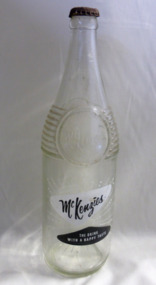
Functional object - Bottle, McKenzies - Large, Mid 20th Century
... McKenzies operated a cordial and softdrink manufacturing business in the mid 20th century in Warrnambool. ...Contents manufactured by Warrnambool Cordials Pty Ltd. Preservative added Artificially coloured. ...McKenzies operated a cordial and softdrink manufacturing business in the mid 20th century in Warrnambool. ...McKenzies operated a cordial and softdrink manufacturing business in the mid 20th century in Warrnambool. An example of manufacturing business in Warrnambool.Two clear glass bottles with white and black logo on front and white writing on back. Bottom of the neck has nine ridges broken on both sides by circle containing McKenzie in the glass. Rusted metal cap.KcKenzies, the drink with a happy taste. Contents manufactured by Warrnambool Cordials Pty Ltd. Preservative added Artificially coloured. Net Contents 26 FL. OZ. 39 on base.warrnambool, mckenzie soft drink, soft drink bottle -
 Warrnambool and District Historical Society Inc.
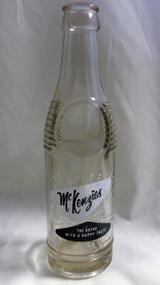
Functional object - Bottle, McKenzies - small, Mid 20th Century
... McKenzies operated a cordial and softdrink manufacturing business in the mid 20th century in Warrnambool. ...Contents manufactured by Warrnambool Cordials Pty Ltd. Preservative added Artificially coloured. ...McKenzies operated a cordial and softdrink manufacturing business in the mid 20th century in Warrnambool. ...McKenzies operated a cordial and softdrink manufacturing business in the mid 20th century in Warrnambool. An example of manufacturing business in Warrnambool.Clear glass bottle with white and black logo on front and white writing on back. Bottom of the neck has nine ridges broken on both sides by circle containing McKenzie in the glass. McKenzies, the drink with a happy taste. Contents manufactured by Warrnambool Cordials Pty Ltd. Preservative added Artificially coloured. Net Contents 7 FL. OZ warrnambool, mckenzie soft drink, soft drink bottle. -
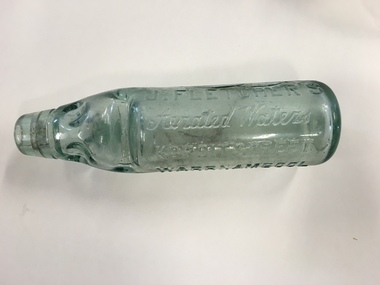 Warrnambool and District Historical Society Inc.
Bottle, J Fletcher's aerated waters, Circa 1900
... The making of cordials and aerated waters was an important industry in Warrnambool from the time of the first settlement up to the 1980s. John Fletcher succeeded John Davis in Koroit Street in 1885 and manufactured aerated waters, soda, lithia, tonic waters, lemonade, ginger ale, hop beer, hop bitters, sarsparilla and cordials. ...The making of cordials and aerated waters was an important industry in Warrnambool from the time of the first settlement up to the 1980s. John Fletcher succeeded John Davis in Koroit Street in 1885 and manufactured aerated waters, soda, lithia, tonic waters, lemonade, ginger ale, hop beer, hop bitters, sarsparilla and cordials. ...The making of cordials and aerated waters was an important industry in Warrnambool from the time of the first settlement up to the 1980s. John Fletcher succeeded John Davis in Koroit Street in 1885 and manufactured aerated waters, soda, lithia, tonic waters, lemonade, ginger ale, hop beer, hop bitters, sarsparilla and cordials. He installed many improvements around the late 1880's including an improved soda water machine which was also used for bottling lemonade, ginger ale and syphons. He sold to Ralph Reeves in 1930 and the business continued until the 1980's under the name of Reeves. The premises in Koroit St were auctioned in 1989.Warrnambool cordial bottles are of considerable significance as examples of an important local industry now gone. The Fletcher business was a well-known business in Warrnambool for 45 years.Round bottle with raised lettering in glass and indented sections on top section of bottle with marble enclosed. Clear greenish glass.J Fletcher’s Aerated waters Koroit Street Warrnambool vertically on bottle with lemonade horizontally on the other side. M on bottom of bottle.warrnambool,fletcher's aerated waters, fletcher's cordial , cordial bottle, -
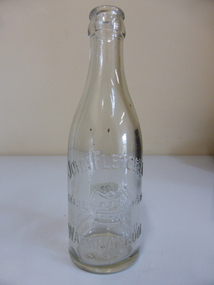 Warrnambool and District Historical Society Inc.
Container - Bottle, John Fletcher
... The making of cordials and aerated waters was an important industry in Warrnambool from the time of the first settlement up to the 1980s. John Fletcher succeeded John Davis in Koroit Street in 1885 and manufactured aerated waters, soda, lithia, tonic waters, lemonade, ginger ale, hop beer, hop bitters, sarsparilla and cordials. ...The making of cordials and aerated waters was an important industry in Warrnambool from the time of the first settlement up to the 1980s. John Fletcher succeeded John Davis in Koroit Street in 1885 and manufactured aerated waters, soda, lithia, tonic waters, lemonade, ginger ale, hop beer, hop bitters, sarsparilla and cordials. ...The making of cordials and aerated waters was an important industry in Warrnambool from the time of the first settlement up to the 1980s. John Fletcher succeeded John Davis in Koroit Street in 1885 and manufactured aerated waters, soda, lithia, tonic waters, lemonade, ginger ale, hop beer, hop bitters, sarsparilla and cordials. He sold to Ralph Reeves in 1930 and the business continued until the 1908s under the name of Reeves. Warrnambool cordial bottles are of considerable significance as examples of an important local industry now gone. The Fletcher business was a well-known business in Warrnambool for 45 years.This is a small size plain glass bottle manufactured for liquids sold commercially.On side of bottle ‘John Fletcher Warrnambool’ ‘Trade Mark’ with incision of symbol showing a crown with a Maltese Cross and three fleurs-de-lys. Near the base of the bottle is the wording ‘This bottle is the property of John Fletcher Warrnambool & cannot be legally used by others’. On base: ‘M 942, M, A.G.M.’wa, warrnambool,fletcher bottle, fletchers cordials warrnambool, fletcher's aerated water, marble bottle, -
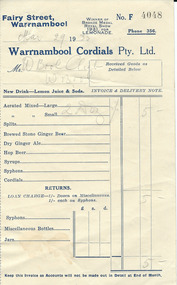 Warrnambool and District Historical Society Inc.
Document, Warrnambool Cordial, 1935
... Cordials Pty Ltd in 1935 to the Warrnambool Club. Warrnambool Cordials was originally established in the early 1920s by the Lescai Brothers who had their cordial business in Fairy Street. A company of local businessmen took over the cordial factory for some time when the Lescai brothers left the city, then it was purchased by a garage proprietor Thomas Hill and in the early 1930s Charles and Frederick Flett purchased the business and carried on for a few years. It was later operated by Thomas McKenzie before it was closed. It was still operating in 1975 when it was manufacturing...Cordials Pty Ltd in 1935 to the Warrnambool Club. Warrnambool Cordials was originally established in the early 1920s by the Lescai Brothers who had their cordial business in Fairy Street. A company of local businessmen took over the cordial factory for some time when the Lescai brothers left the city, then it was purchased by a garage proprietor Thomas Hill and in the early 1930s Charles and Frederick Flett purchased the business and carried on for a few years. It was later operated by Thomas McKenzie before it was closed. It was still operating in 1975 when it was manufacturing ...This is a docket issued by the Warrnambool Cordials Pty Ltd in 1935 to the Warrnambool Club. Warrnambool Cordials was originally established in the early 1920s by the Lescai Brothers who had their cordial business in Fairy Street. A company of local businessmen took over the cordial factory for some time when the Lescai brothers left the city, then it was purchased by a garage proprietor Thomas Hill and in the early 1930s Charles and Frederick Flett purchased the business and carried on for a few years. It was later operated by Thomas McKenzie before it was closed. It was still operating in 1975 when it was manufacturing both Loys and McKenzie’s soft drinks. It is noted that this docket contains the information that the Warrnambool Cordials business was a winner of a Bronze Medal for lemonade at the Royal Show in 1931. The Warrnambool Club, established in 1874 when the Warrnambool Club Hotel in Kepler Street was opened, was a gentlemen’s club. A new Warrnambool Club building was erected in Kepler Street in 1877 and is still in use today. This original docket is of interest as it is an example of the type of purchase made by the Warrnambool Club in 1935 and the type of docket used by the firm of Warrnambool CordialsThis is a docket printed on cream-coloured paper with blue print and lines. The details of the sale are written in pencil.Written material: ‘Mar.29, 1935, W’bool Club, W’bool, 2 doz., 5/-‘warrnambool cordials, warrnambool club, charles and frederick flett -
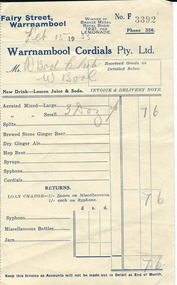 Warrnambool and District Historical Society Inc.
Document, Warrnambool Cordial, 1935
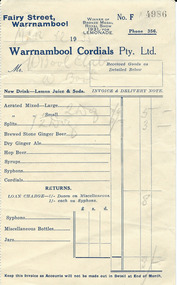
... Warrnambool Cordials Pty Ltd in 1935 to the Warrnambool Club. Warrnambool Cordials was originally established in Fairy Street in the early 1920s by the Lescai Brothers. A company of local businessmen took over the cordial factory when the Lescais left the city, then it was purchased by a garage proprietor, Thomas Hill, and in the early 1930s Charles and Frederick Flett purchased the business and carried it on for a few years. It was later operated by Thomas McKenzie before it was closed. It was still operating in 1975 when it was manufacturing...Warrnambool Cordials Pty Ltd in 1935 to the Warrnambool Club. Warrnambool Cordials was originally established in Fairy Street in the early 1920s by the Lescai Brothers. A company of local businessmen took over the cordial factory when the Lescais left the city, then it was purchased by a garage proprietor, Thomas Hill, and in the early 1930s Charles and Frederick Flett purchased the business and carried it on for a few years. It was later operated by Thomas McKenzie before it was closed. It was still operating in 1975 when it was manufacturing ...This is a docket issued by the Warrnambool Cordials Pty Ltd in 1935 to the Warrnambool Club. Warrnambool Cordials was originally established in Fairy Street in the early 1920s by the Lescai Brothers. A company of local businessmen took over the cordial factory when the Lescais left the city, then it was purchased by a garage proprietor, Thomas Hill, and in the early 1930s Charles and Frederick Flett purchased the business and carried it on for a few years. It was later operated by Thomas McKenzie before it was closed. It was still operating in 1975 when it was manufacturing both Loys and McKenzie’s soft drinks. It is noted that this docket contains the information that the Warrnambool Cordials business was a winner of a bronze medal for lemonade at the Royal Show in 1931. The Warrnambool Club, established in 1874 when the Warrnambool Club Hotel in Kepler Street was opened, was a gentlemen’s club. A new Warrnambool Club building was erected in Kepler Street in 1877 and is still in use today. This original docket is of interest as it is an example of the type of purchase made by the Warrnambool Club in 1935 and the type of docket issued by the firm of Warrnanmbool Cordials.This is docket printed on cream-coloured paper with blue print and lines. The details of the sale are written in pencil.Written material: ‘Feb.15, 1935, W’bool Club, W’bool, 3 doz. 7/6’warrnambool cordials, warrnambool club, lescai brothers, loys and mckenzie’s soft drinks, warrnambool -
 Warrnambool and District Historical Society Inc.
Document, Warrnambool Cordial, 1935
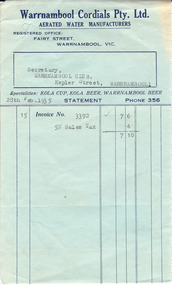
... Cordials Pty Ltd in 1935 to the Warrnambool Club. Warrnambool Cordials was originally established in the early 1920s by the Lescai brothers who had their cordial business in Fairy Street. A company of local businessmen took over the cordial factory for some time after the Lescais left the city, then it was purchased by a garage proprietor, Thomas Hill, and in the early 1930s Charles and Frederick Flett purchased the business and carried it on for a few years. It was later operated by Thomas McKenzie before it was closed. It was still operating in 1975 when it was manufacturing...Cordials Pty Ltd in 1935 to the Warrnambool Club. Warrnambool Cordials was originally established in the early 1920s by the Lescai brothers who had their cordial business in Fairy Street. A company of local businessmen took over the cordial factory for some time after the Lescais left the city, then it was purchased by a garage proprietor, Thomas Hill, and in the early 1930s Charles and Frederick Flett purchased the business and carried it on for a few years. It was later operated by Thomas McKenzie before it was closed. It was still operating in 1975 when it was manufacturing ...This is a docket issued by the Warrnambool Cordials Pty Ltd in 1935 to the Warrnambool Club. Warrnambool Cordials was originally established in the early 1920s by the Lescai brothers who had their cordial business in Fairy Street. A company of local businessmen took over the cordial factory for some time after the Lescais left the city, then it was purchased by a garage proprietor, Thomas Hill, and in the early 1930s Charles and Frederick Flett purchased the business and carried it on for a few years. It was later operated by Thomas McKenzie before it was closed. It was still operating in 1975 when it was manufacturing both Loys and McKenzie’s soft drinks. It is noted that this docket contains the information that the Warrnambool Cordials business was a winner of a Bronze Medal for lemonade at the Royal Show in 1931. The Warrnambool Club, established in 1874 when the Warrnambool Club Hotel in Kepler Street was opened, was a gentlemen’s club. A new Warrnambool Club building in Kepler Street was erected in 1877 and is still in use today. This original docket is of interest as it is an example of the type of purchase made by the Warrnambool Club in 1935 and the type of docket used by the firm of Warrnambool Cordials.This is a docket printed on cream-coloured paper with blue print and lines. The details of the sale are written in pencil.Written material: ‘Mar.12, 1935, W’bool Club, W’bool, 2 doz, 5/-, 1½ doz., 3/-, 8/-‘warrnamobol cordials, warrnambool club, charles and frederick flett -
 Warrnambool and District Historical Society Inc.
Document, Warrnambool Cordial, 1935
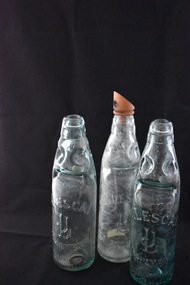
... Cordials Pty Ltd in 1935 to the Warrnambool Club. Warrnambool Cordials was originally established in the early 1920s by the Lescai Brothers who had their business in Fairy Street. A company of local businessmen took over the cordial factory for some time when the Lescai brothers left the city, then it was purchased by a garage proprietor, Thomas Hill, and in the early 1930s Charles and Frederick Flett purchased the business and carried it on for a few years. It was later operated by Thomas McKenzie before it was closed. It was still operating in 1975 when it was manufacturing...Cordials Pty Ltd in 1935 to the Warrnambool Club. Warrnambool Cordials was originally established in the early 1920s by the Lescai Brothers who had their business in Fairy Street. A company of local businessmen took over the cordial factory for some time when the Lescai brothers left the city, then it was purchased by a garage proprietor, Thomas Hill, and in the early 1930s Charles and Frederick Flett purchased the business and carried it on for a few years. It was later operated by Thomas McKenzie before it was closed. It was still operating in 1975 when it was manufacturing ...This is a docket issued by Warrnambool Cordials Pty Ltd in 1935 to the Warrnambool Club. Warrnambool Cordials was originally established in the early 1920s by the Lescai Brothers who had their business in Fairy Street. A company of local businessmen took over the cordial factory for some time when the Lescai brothers left the city, then it was purchased by a garage proprietor, Thomas Hill, and in the early 1930s Charles and Frederick Flett purchased the business and carried it on for a few years. It was later operated by Thomas McKenzie before it was closed. It was still operating in 1975 when it was manufacturing Loys and McKenzie’s soft drinks. It is noted that this docket contains the information that the Warrnambool Cordials business was a winner of a Bronze Medal for lemonade at the Royal Show in 1931. The Warrnambool Club, established in 1874 when the Warrnambool Club Hotel in Kepler Street was opened, was a gentleman’s club. A new Warrnambool Club building was erected in Kepler Street in 1877 and is still in use today. This original docket is of interest as an example of the type of purchase made by the Warrnambool Club in 1935 and the type of docket used by the firm of Warrnambool Cordials.This is a docket printed on green paper with blue printed material and blue lines. The details of the sale have been typed. The green paper is discoloured on the right hand side. Typed material: ‘Secretary, Warrnambool Club, Kepler Street, Warrnambool, 28th Feb.1935, 15, Invoice no. 3392, 7/6. 5% Sales Tax, 4, 7/10’warrnambool cordials -
 Warrnambool and District Historical Society Inc.
Bottle, J Lescal Warrnambool, 1920's
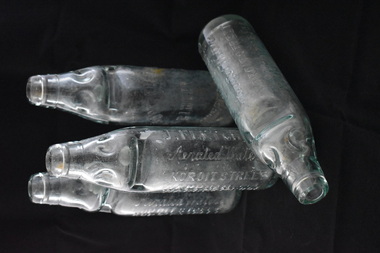
... Joseph Lescai and his brother, James had fruit shops in Warrnambool and in the 1920s Joseph Lescai began to produce cordial and soft drinks at his Fairy Street shop. The cordial manufacturing...Joseph Lescai and his brother, James had fruit shops in Warrnambool and in the 1920s Joseph Lescai began to produce cordial and soft drinks at his Fairy Street shop. The cordial manufacturing ...These marble stopper bottles came from the Warrnambool aerated waters factory of Joseph Lescai. A marble stopper bottle was one which was filled upside down so that as soon as the filling stopped the stopper was forced down to seal the bottle against the rubber ring. Pressure inside the bottle would keep the marble pressed against the top of the bottle. To open the bottle the marble was pressed down where it would fall into the neck chamber below. The marble would stay inside the neck chamber when the bottle was tilted up for drinking. Joseph Lescai and his brother, James had fruit shops in Warrnambool and in the 1920s Joseph Lescai began to produce cordial and soft drinks at his Fairy Street shop. The cordial manufacturing was then re-located to a site in Fairy Street close to Raglan Parade and the business, known as Warrnambool Cordials Pty Ltd, was operated then by a group of Warrnambool businessmen and later by Thomas Hill in the 1930s. In the 1940s the business was purchased by the Flett brothers, Frederick and Charles, and in the 1960s the business was sold to Thomas McKenzie and retailed under the name of McKenzie’s Cordials. The business was still operating in the 1970s. These bottles are significant because they come from the Warrnambool aerated water factory of Joseph Lescai, probably in the late 1920s. The business commenced by Joseph Lescai became Warrnambool Cordials Pty Ltd and this was a prominent business in Warrnambool for 50 years or more. Cordial manufacturing was an important industry in Warrnambool for over 100 years. These three bottles are marble-stopper green glass bottles. They have a rounded base and body with a deep indentation in the glass at the top of the body to form a narrow neck chamber. The necks have small round indentations in the glass. The tops of the bottles have moulded glass and an opening. Details on the aerated waters manufacturer are impressed into the glass on the side of the bottles. A round green marble is loose in the neck chamber. Rubber rings in the necks of the bottles are missing. One of the bottles has a wooden stopper but this may not have been an original. Inscriptions and Markings: Serial numbers, signatures, engravings, dedications in books, manufacturing details or personal markings ‘J. Lescai J.L. Warrnambool’ ‘This bottle is the property of Lescai Warrnambool and cannot be legally used by others’ These three bottles are marble-stopper green glass bottles. They have a rounded base and body with a deep indentation in the glass at the top of the body to form a narrow neck chamber. The necks have small round indentations in the glass. The tops of the bottles have moulded glass and an opening. Details on the aerated waters manufacturer are impressed into the glass on the side of the bottles. A round green marble is loose in the neck chamber. Rubber rings in the necks of the bottles are missing. One of the bottles has a wooden stopper but this may not have been an original. Inscriptions and Markings: Serial numbers, signatures, engravings, dedications in books, manufacturing details or personal markings ‘J. Lescai J.L. Warrnambool’ ‘This bottle is the property of Lescai Warrnambool and cannot be legally used by others’ These three bottles are marble-stopper green glass bottles. They have a rounded base and body with a deep indentation in the glass at the top of the body to form a narrow neck chamber. The necks have small round indentations in the glass. The tops of the bottles have moulded glass and an opening. Details on the aerated waters manufacturer are impressed into the glass on the side of the bottles. A round green marble is loose in the neck chamber. Rubber rings in the necks of the bottles are missing. One of the bottles has a wooden stopper but this may not have been an original. Inscriptions and Markings: Serial numbers, signatures, engravings, dedications in books, manufacturing details or personal markings ‘J. Lescai J.L. Warrnambool’ ‘This bottle is the property of Lescai Warrnambool and cannot be legally used by others’ These three bottles are marble-stopper green glass bottles. They have a rounded base and body with a deep indentation in the glass at the top of the body to form a narrow neck chamber. The necks have small round indentations in the glass. The tops of the bottles have moulded glass and an opening. Details on the aerated waters manufacturer are impressed into the glass on the side of the bottles. A round green marble is loose in the neck chamber. Rubber rings in the necks of the bottles are missing. One of the bottles has a wooden stopper but this may not have been an original. J. Lescai J.L. Warrnambool’ ‘This bottle is the property of Lescai Warrnambool and cannot be legally used by others’ lescal cordials, cordial bottles, 1920's bottles, warrnambool cordial manufacurers -
 Warrnambool and District Historical Society Inc.
Bottle, J Fletcher Warrnambool, Early 20th century
... Warrnambool. This factory in Koroit Street was established in the mid 19th century by John Davis. As a young boy John Fletcher worked at the cordial factory of John Rowley in Banyan Street, Warrnambool and then worked for a number of years for John Davis at his Union Cordial Factory. In 1885 John Fletcher succeeded John Davis and continued in this business until 1930.. The business was then taken over by Ralph Reeves. John Fletcher manufactured...Warrnambool. This factory in Koroit Street was established in the mid 19th century by John Davis. As a young boy John Fletcher worked at the cordial factory of John Rowley in Banyan Street, Warrnambool and then worked for a number of years for John Davis at his Union Cordial Factory. In 1885 John Fletcher succeeded John Davis and continued in this business until 1930.. The business was then taken over by Ralph Reeves. John Fletcher manufactured ...These bottles are known as marble stopper bottles. This type of bottle was filled upside down so that as soon as the filling stopped the stopper was forced down to seal the bottle against the rubber ring. Pressure inside the bottle would keep the marble pressed against the top of the bottle. To open the bottle the marble was pressed down where it would fall into the neck chamber below. The marble would stay inside the chamber when the bottle was tilted up for drinking. These bottles have come from the aerated waters factory of John Fletcher of Warrnambool. This factory in Koroit Street was established in the mid 19th century by John Davis. As a young boy John Fletcher worked at the cordial factory of John Rowley in Banyan Street, Warrnambool and then worked for a number of years for John Davis at his Union Cordial Factory. In 1885 John Fletcher succeeded John Davis and continued in this business until 1930.. The business was then taken over by Ralph Reeves. John Fletcher manufactured aerated waters, soda, tonic waters, lemonade, ginger ale, hop beer, hop bitters, sarsaparilla and cordials. These bottles are of interest firstly because they are good examples of marble stopper bottles, no longer in use today. They are also important because they are John Fletcher bottles and he was a prominent soft drinks manufacturer in Warrnambool for over 40 years. These four bottles are made of green coloured glass. They have a round body with deep indentations at the top, narrowing the entrance to the neck which is short and thick. The top opening is made of thick moulded glass. A glass marble is loose in the neck section. The rubber ring inside the neck is missing. The manufacturer’s details are embedded into the glass on both sides of the bottle.‘Lemonade’ ‘J.Fletcher’s Aerated Waters Koroit Street Warrnambool’ ‘This bottle is the property of John Fletcher Warrnambool and cannot be legally used by others’ fletcher's cordial, marble stopper bottle, warrnambool cordial -
 Warrnambool and District Historical Society Inc.
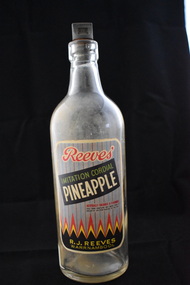
Bottle, Imitation Cordial Pineaple Reeves W'bool, 1970s
... cordial business at Hamilton in 1916 and sold it in 1929 to concentrate on his Warrnambool cordial factory. Reeves was joined by his son Reg in Warrnambool and Reg operated the business from 1946 to 1972. The trade name of Reeves was still used after Reg Reeves died and continued on for some years. This bottle is of interest as an example of the soft drinks made at the Warrnambool aerated waters factory of Reg Reeves. Reg and his father Ralph operated a cordial business in Warrnambool for 40 years. Cordial manufacturing ...This bottle came from the Warrnambool aerated waters factory of Reg Reeves. This factory in Koroit Street, Warrnambool was established in the 1860s as the Union Cordial Factory by John Davis and then bought by John Fletcher in 1885. Fletcher’s business continued until 1930 when it was bought by Ralph Reeves. Coming to Warrnambool about 1900, Ralph Reeves managed a Banyan Street cordial factory which had been established by John Rowley. Ralph Reeves bought a cordial business at Hamilton in 1916 and sold it in 1929 to concentrate on his Warrnambool cordial factory. Reeves was joined by his son Reg in Warrnambool and Reg operated the business from 1946 to 1972. The trade name of Reeves was still used after Reg Reeves died and continued on for some years. This bottle is of interest as an example of the soft drinks made at the Warrnambool aerated waters factory of Reg Reeves. Reg and his father Ralph operated a cordial business in Warrnambool for 40 years. Cordial manufacturing was an important industry in Warrnambool for over 100 years.This is a glass bottle with a long rounded body, a round base and a short rounded neck. The top of the bottle has a moulded glass open top and there is a cork stopper with a brown top to enable the bottle to be opened by turning. The stopper has the name of the manufacturer of the soft drink on it and there is a multi-coloured label pasted on to the side of the bottle. The name of the soft drinks manufacturer is also impressed into the glass on the side of the bottle. There are two small chips near the base of the bottle. Stopper: R.V.Reeves R.V.R. Bottle: Reeves Imitation Cordial Pineapple Artificially coloured &flavoured This food contains not more than 2 grains of sulphur dioxide to the pint R.J. Reeves Warrnambool ralph reeves, warrnambool, reg reeves, warrnambool, cordial manufacturers in warrnambool, history of warrnambool -
 Warrnambool and District Historical Society Inc.
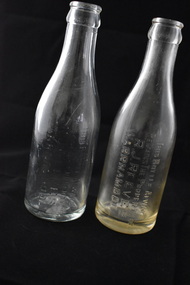
Bottle, Reeves Warrnambool, Mid 20th century
... cordial factory was established in Koroit Street, Warrnambool by John Davis and this business was taken over in the 1880s by John Fletcher. Ralph Reeves, who had been involved in the cordial making business in Warrnambool since 1900, bought the Koroit Street business in 1931. His son Reginald John acquired the business in 1946 and was actively involved until his death in 1972. The factory continued until the 1908s. These bottles are of interest as they come from the Warrnambol aerated waters business of Reginald John Reeves. The Reeves cordial factory was prominent in Warrnambool for over 40 years. Cordial manufacturing ...These bottles come from the Warrnambool aerated waters business of Reg Reeves. A cordial factory was established in Koroit Street, Warrnambool by John Davis and this business was taken over in the 1880s by John Fletcher. Ralph Reeves, who had been involved in the cordial making business in Warrnambool since 1900, bought the Koroit Street business in 1931. His son Reginald John acquired the business in 1946 and was actively involved until his death in 1972. The factory continued until the 1908s. These bottles are of interest as they come from the Warrnambol aerated waters business of Reginald John Reeves. The Reeves cordial factory was prominent in Warrnambool for over 40 years. Cordial manufacturing in Warrnambool was an important industry for over 100 years. These are two clear glass bottles (one has been slightly discoloured inside from the contents). They have a rounded base with a rounded body tapering to a smaller neck. The openings at the top have a lip of moulded glass. The name of the aerated waters manufacturer is impressed into the side of the bottle. There are no stoppers.‘This bottle always remains the property of R.J.Reeves Warrnambool.’ reg reeves, warrnambool, cordial manufacturers in warrnambool, history of warrnambool -
 Warrnambool and District Historical Society Inc.
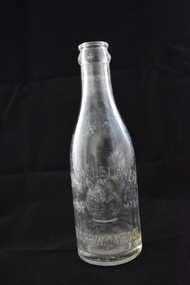
Bottle, Fletts Soda Water Warrnambool
... cordial factory in Banyan Street Warrnambool. He then worked for John Davis who had established the Union Cordial Factory in Koroit Street in the 1860s. In 1885 Fletcher bought John Davis’ business and operated it until 1930. It was then bought by Ralph Reeves. John Fletcher manufactured...cordial factory in Banyan Street Warrnambool. He then worked for John Davis who had established the Union Cordial Factory in Koroit Street in the 1860s. In 1885 Fletcher bought John Davis’ business and operated it until 1930. It was then bought by Ralph Reeves. John Fletcher manufactured ...This is a marble stopper bottle that came from the Warrnambool aerated waters factory of John Fletcher. This bottle was filled upside down so that as soon as the filling stopped the marble was forced down to seal the bottle against the rubber ring. Pressure inside the bottle would keep the marble pressed against the top of the bottle. To open the bottle the marble was pressed down where it has fallen into the neck chamber below. The marble stayed inside the bottle when it was tilted for drinking. John Fletcher worked as a young boy at Rowley’s cordial factory in Banyan Street Warrnambool. He then worked for John Davis who had established the Union Cordial Factory in Koroit Street in the 1860s. In 1885 Fletcher bought John Davis’ business and operated it until 1930. It was then bought by Ralph Reeves. John Fletcher manufactured soda water, tonic waters, lemonade, ginger ale, sarsaparilla, cordials, hop beer and hop bitters. This bottle is of some significance as an example of a marble stopper bottle and as a memento of the Warrnambool soft drinks business of John Fletcher. He was a prominent businessman in This is a mauve-coloured glass bottle known as a marble stopper bottle. The base and body are round with the top part of the body heavily indented to form a narrow opening leading to the neck. The neck is rounded and slightly tapering to the moulded round top. A green glass marble is loose in the neck section. The rubber ring at the top of the opening is missing. The details of the soda water manufacturer are embedded into the glass on the sides. ‘John Fletcher Trade Mark (crown symbol) Warrnambool’ ‘Soda Water’ ‘M’ john fletcher, warrnambool, cordial manufacturers in warrnambool, history of warrnambool -
 Warrnambool and District Historical Society Inc.
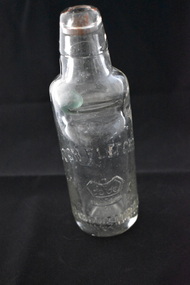
Bottle, J Fletcher Warrnambool, Early 20th century
... Warrnambool aerated waters manufacturer, John Fletcher. This factory was commenced in the mid 19th century by John Davis. As a young boy John Fletcher worked in the cordial factory of John Rowley in Banyan Street, Warrnambool and then worked for John Davis at his Union Cordial Factory for many years. In 1885 he succeeded John Davis in this business. Fletcher’s business continued until1930 when it was bought by another soft drinks manufacturer, Ralph Reeves. John Fletcher manufactured...Warrnambool aerated waters manufacturer, John Fletcher. This factory was commenced in the mid 19th century by John Davis. As a young boy John Fletcher worked in the cordial factory of John Rowley in Banyan Street, Warrnambool and then worked for John Davis at his Union Cordial Factory for many years. In 1885 he succeeded John Davis in this business. Fletcher’s business continued until1930 when it was bought by another soft drinks manufacturer, Ralph Reeves. John Fletcher manufactured ...This bottle came from the Warrnambool aerated waters manufacturer, John Fletcher. This factory was commenced in the mid 19th century by John Davis. As a young boy John Fletcher worked in the cordial factory of John Rowley in Banyan Street, Warrnambool and then worked for John Davis at his Union Cordial Factory for many years. In 1885 he succeeded John Davis in this business. Fletcher’s business continued until1930 when it was bought by another soft drinks manufacturer, Ralph Reeves. John Fletcher manufactured aerated waters, soda, tonic water, lemonade, ginger ale, hop beer, hop bitters, sarsaparilla and cordials. This bottle is of interest because it is a John Fletcher bottle and he was a prominent soft drinks manufacturer in Warrnambool for over 40 years. This is a clear glass bottle. It has a round base and a rounded body tapering in the neck to a round moulded open top. The stopper or seal is missing. The bottle has embedded lettering with details of the manufacturer of the contents.‘John Fletcher Trade Mark (crown symbol) Warrnambool’ ‘This bottle is the property of John Fletcher Warrnambool & cannot be legally used by others’ john fletcher, warrnambool, cordial manufacturers in warrnambool, history of warrnambool -
 Warrnambool and District Historical Society Inc.
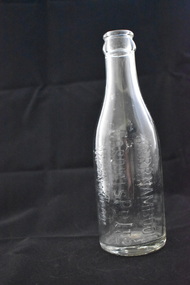
Bottle, Fletts, Mid 20th century
... cordial business in Warrnambool in the 1940s, 50s and 60s. Warrnambool Cordials Pty Ltd was a prominent business in Warrnambool for 40 years. Charles and Frederick Flett, Warrnambool Warrnambool Cordials Pty Ltd Cordial Manufacturers in Warrnambool History of Warrnambool ‘Fletts Warrnambool’ ‘Warrnambool Cordials Pty Ltd Warrnambool’ ‘This bottle is the property of the Warrnambool Cordials Pty. Ltd. Warrnamnbool’ This is a clear glass bottle with a rounded base and a circular body tapering to a narrower neck with a moulded glass open top. The stopper or bottle top is missing. The details of the manufacture ...This bottle came from the Warrnambool aerated waters factory of Charles and Frederick Flett, with the business known as Warrnambool Cordials Pty Ltd. This business had been established by Joseph Lescai in the 1920s. He had a fruit shop near the corner of Lava and Fairy Streets and then moved further north in Fairy Street. His cordial business flourished and was bought by a company of local businessmen before being sold to Thomas Hill in the 1930s. In the early 1940s Warrnambool Cordials Pty Ltd was purchased by Charles and Frederick Flett. Their father, William was originally a tinsmith in Timor Street and the two sons continued on his plumbing business until the 1950s as well as operating the cordial factory. In the 1960s Frederick sold the cordial business to Thomas McKenzie and it became McKenzie’s Cordials. This bottle is of interest as a memento of the Flett brothers cordial business in Warrnambool in the 1940s, 50s and 60s. Warrnambool Cordials Pty Ltd was a prominent business in Warrnambool for 40 years.This is a clear glass bottle with a rounded base and a circular body tapering to a narrower neck with a moulded glass open top. The stopper or bottle top is missing. The details of the manufacture of the soft drink are impressed into the glass on the sides of the bottle.‘Fletts Warrnambool’ ‘Warrnambool Cordials Pty Ltd Warrnambool’ ‘This bottle is the property of the Warrnambool Cordials Pty. Ltd. Warrnamnbool’ charles and frederick flett, warrnambool, warrnambool cordials pty ltd, cordial manufacturers in warrnambool, history of warrnambool -
 Warrnambool and District Historical Society Inc.
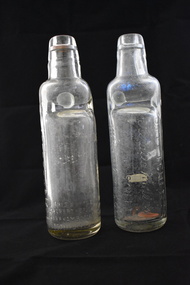
Bottle, Fletcher Warrnambool
... cordial factory of John Rowley in Banyan Street, Warrnambool. He then worked in Koroit Street, Warrnambool at the Union Cordial Factory of John Davis. This factory had been established in the 1860s. In 1885 John Fletcher bought the business of John Davis and continued it on until 1930 when it was bought by Ralph Reeves. John Fletcher manufactured...cordial factory of John Rowley in Banyan Street, Warrnambool. He then worked in Koroit Street, Warrnambool at the Union Cordial Factory of John Davis. This factory had been established in the 1860s. In 1885 John Fletcher bought the business of John Davis and continued it on until 1930 when it was bought by Ralph Reeves. John Fletcher manufactured ...These marble stopper bottles came from the Warrnambool aerated waters factory of John Fletcher. A marble stopper bottle was filled upside down so that as soon as the filling stopped the marble was forced down to seal the bottle against the rubber ring. Pressure inside the bottle would keep the marble pressed against the top of the bottle. To open the bottle the marble was pressed down where it would fall into the neck of the chamber below. The marble would stay inside the chamber when the bottle was tilted up for drinking. As a young boy John Fletcher worked at the cordial factory of John Rowley in Banyan Street, Warrnambool. He then worked in Koroit Street, Warrnambool at the Union Cordial Factory of John Davis. This factory had been established in the 1860s. In 1885 John Fletcher bought the business of John Davis and continued it on until 1930 when it was bought by Ralph Reeves. John Fletcher manufactured lemonade, tonic waters, soda water, sarsaparilla, cordials, ginger ale, hop beer and hop bitters. These bottles are of interest, firstly because they are good examples of the marble stopper bottle type of bottle, no longer in use. They are also important because they are John Fletcher bottles and he was a prominent businessman in Warrnambool for over 40 years.These are two glass bottles. They have a rounded base and body with deep indentations which give a narrowed aperture to the top of the body and the neck. The neck is round and tapering to a moulded opening at the top of the bottle. Both bottles had a round rubber ring inside the bottle, with one lodged in the bottom of the bottle. Both bottles have a green glass marble in the neck of the bottle. The name of the manufacturer of the lemonade is impressed into the body of the bottles. ‘J. Fletcher’s Aerated Waters Koroit Street Warrnambool’ ‘Lemonade’ ‘This bottle is the property of John Fletcher Warrnambool & cannot be legally used by others’ ‘A.G.M.’ john fletcher warrnambool, cordial manufacturers in warrnambool, history of warrnambool -
 Warrnambool and District Historical Society Inc.
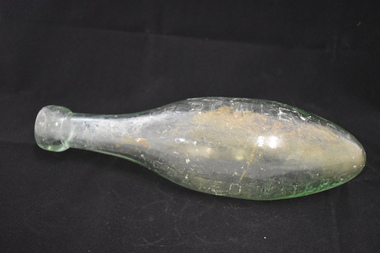
Bottle, S Rowley, Late 19th century
... manufacturing 20 varieties of drinks. Rowley died in 1893. He had been active in community affairs, serving four years on the Warrnambool Council and on the committees of the Warrnambool Hospital and the Mechanics Institute. This bottle is of great interest as it comes from the factory of the prominent 19th century Warrnambool aerated waters manufacturer, John Rowley. Few of his bottles have survived today. Cordial ...This bottle was known as a torpedo bottle. As the bottle had to lie on its side the soda was kept in contact with the cork and stopped the cork from shrinking and causing loss of pressure. This bottle comes from the Warrnambool aerated waters factory of John Searle Rowley (1837-1893). John Rowley, born in England, came to Australia in 1856 and in 1865 he opened a branch of the Geelong Corio Brewery at the corner of Timor and Banyan Streets in Warrnambool, bottling the beer, not brewing it. In 1870 this business was closed and Rowley developed his soft drinks business which he had established in 1868. In 1872 the business was called the Warrnambool Steam Aerated Works when a steam engine was purchased from Melbourne. In 1872 the factory was turning out 600 dozen bottles a day. By the 1880s the factory was occupying half an acre of land, was employing 13 people and manufacturing 20 varieties of drinks. Rowley died in 1893. He had been active in community affairs, serving four years on the Warrnambool Council and on the committees of the Warrnambool Hospital and the Mechanics Institute. This bottle is of great interest as it comes from the factory of the prominent 19th century Warrnambool aerated waters manufacturer, John Rowley. Few of his bottles have survived today. Cordial and soft drinks manufacturing was an important industry in Warrnambool for over 100 years and John Rowley was a key figure in this industry.This is a glass bottle, tinted green. The body of the bottle has an oval shape tapering to a point at the end and is known as a torpedo bottle. It can only be stored lying on its side. The neck of the bottle ends with a moulded glass top. There is no stopper. The bottle is slightly discoloured inside. The information on the maker is embossed into the body of the bottle.‘J.S. Rowley’s Aerated Waters Timor Street Warrnambool’john searle rowley, cordial manufacturers in warrnambool, history of warrnambool -
 Warrnambool and District Historical Society Inc.
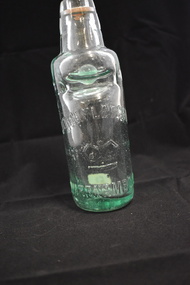
Bottle, John Fletcher, Early 20th century
... As a young boy John Fletcher worked at the cordial factory of John Rowley in Banyan Street, Warrnambool and then worked for John Davis at his Union Cordial Factory for many years. In 1885 he succeeded John Davis in this business. Fletcher’s business continued until 1930 and it later was bought by Ralph Reeves. John Fletcher manufactured...As a young boy John Fletcher worked at the cordial factory of John Rowley in Banyan Street, Warrnambool and then worked for John Davis at his Union Cordial Factory for many years. In 1885 he succeeded John Davis in this business. Fletcher’s business continued until 1930 and it later was bought by Ralph Reeves. John Fletcher manufactured ...This bottle is known as a marble stopper bottle. The bottle was filled upside down so that as soon as the filling stopped the stopper was forced down to seal the bottle against the rubber ring. Pressure inside the bottle would keep the marble pressed against the top of the bottle. To open the bottle the marble was pressed down where it would fall into the neck chamber below. The marble would stay inside the chamber when the bottle was tilted up for drinking. This bottle came from the aerated waters factory of John Fletcher. This factory was commenced in the mid 19th century by John Davis. As a young boy John Fletcher worked at the cordial factory of John Rowley in Banyan Street, Warrnambool and then worked for John Davis at his Union Cordial Factory for many years. In 1885 he succeeded John Davis in this business. Fletcher’s business continued until 1930 and it later was bought by Ralph Reeves. John Fletcher manufactured aerated waters, soda, tonic waters, lemonade, ginger ale, hop beer, hop bitters, sarsaparilla and cordials. This bottle is of interest, firstly because it is a good example of the marble stopper type of bottle, no longer in use. It is also important because it is a John Fletcher bottle and he was a prominent soft drinks manufacturer in Warrnambool for over 40 years. This is a green-coloured glass bottle with a round base. The top of the body of the bottle has two heavy indentations either side, narrowing the entry to the body of the bottle. The neck is short and thick and the opening at the top of the bottle is moulded with a rubber ring around the inside. A glass marble is loose inside the bottle neck. The name of the manufacturer is moulded into the glass on the side and includes a crown symbol used as a trade mark.‘John Fletcher Trade Mark Warrnambool’ john fletcher, warrnambool, cordial manufacturers in warrnambool -
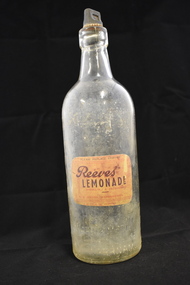 Warrnambool and District Historical Society Inc.
Bottle, Reeves Lemonade - with label, 1940s
... We have few Reeves bottles with the original paper labels. Cordial manufacturing in Warrnambool was an important industry for over 100 years. ...This bottle comes from the Warrnambool aerated waters factory of Ralph Reeves. This business was established in Koroit Street, Warrnambool in the 1860s as the Union Cordial Factory by John Davis and then bought by John Fletcher in 1885. Fletcher’s business continued until 1930 when it was bought by Ralph Reeves. Coming to Warrnambool about 1900 Reeves had managed a Banyan Street, Warrnambool factory which had been established by John Rowley. Reeves was joined by his son Reg in Warrnambool and Reg operated the business from 1946 to 1972. The trade name of Reeves was still used after Reg Reeves died in the early 1970s and continued on for some years. This bottle is of interest as an example of an early Reeves bottle. We have few Reeves bottles with the original paper labels. Cordial manufacturing in Warrnambool was an important industry for over 100 years.This is a clear glass bottle with a rounded base and rounded body tapering to a short round neck with a moulded glass top at the opening. The screw stopper is black and made of composite material. The inside of the bottle is discoloured. The details of the manufacturer of the contents are impressed into the glass on the side and there is a paper label pasted on the side of the bottle (black, red, yellow tonings) ‘R.V. Reeves’ (x2) 34’ ‘Lemonade Warrnambool Cordials Pty Ltd’ ‘Bottle not complete without stopper’ ‘This bottle is the property of Warrnambool Cordials Pty Ltd Warrnambool’ ‘Please replace stopper, Reeves lemonade, sparkling & refreshing, R.J. Reeves Warrnambool, bottle 2d. deposit’ ralph reeves, warrnambool, cordial manufacturers in warrnambool, history of warrnambool
