
Showing 163 items matching "kew station – kew (vic.)"
-
 Kew Historical Society Inc
Archive (Series) - Railways - Kew Branch Line
... Kew Branch Line – Kew (Vic.)...Kew Station...Kew Branch Line – Kew (Vic.) Kew Station – Kew (Vic.) Barker Station – Kew (Vic.) ...Various PartiesReference, Research, InformationArranged by Secondary Values (value of records to users)The Kew Branch line existed between the years of 1887 and 1957 and served as a railway line that split off from Hawthorn station and went through Barker station and terminated at Kew station. It ran along a single track and was proposed to extend all the way out to Doncaster, and perhaps further. It was decommissioned for passenger rail in 1952, and after serving another five years for freight trains, would be demolished come the next year. The file includes: Copies of the magazine ‘Newsrail’, a copy of ‘The Railway Comes to Kew: 1884-1887’ by Andrew Frost, multiple magazine, and newspaper articles with information regarding the Kew Railway and its history, a poem published in 1882 talking of the trains on the line, pictures of the line, and a collection of old tickets and timetables from the 1940s-50s.kew branch line – kew (vic.), kew station – kew (vic.), barker station – kew (vic.), railways – kew (vic.)kew branch line – kew (vic.), kew station – kew (vic.), barker station – kew (vic.), railways – kew (vic.) -
Eltham District Historical Society Inc
Document - Folder, Smith, Samuel
... Kew. Contents Photocopy of handwritten notes: Samuel Smith biography. Typed version of handwritten notes: Samuel Smith biography. Letter L Adam to Eltham Shire, 6 March 1884. Seeking information about the Smith family in Yarra Glen: Samuel Smith and Eliza Hurst. Photocopy of page from magazine National Trust Australia (Vic), no date (possibly 1993). Keith Smith closed his butcher shop, Kew, and donated equipment to National Trust, possibly to go to Gulf Station...Kew. Contents Photocopy of handwritten notes: Samuel Smith biography. Typed version of handwritten notes: Samuel Smith biography. Letter L Adam to Eltham Shire, 6 March 1884. Seeking information about the Smith family in Yarra Glen: Samuel Smith and Eliza Hurst. Photocopy of page from magazine National Trust Australia (Vic), no date (possibly 1993). Keith Smith closed his butcher shop, Kew, and donated equipment to National Trust, possibly to go to Gulf Station ...Samuel Smith came to Australia about 1849 with his wife and family, settling at Queenstown and, with the gold rush, established an abattoir. A descendant, Marjorie Smith Motschall wrote about the family in 'Wild WoodDays at Panton Hill'. Many descendants have lived in and around Eltham. The family had four generations of butchers, including Keith, who had a shop in Kew. Contents Photocopy of handwritten notes: Samuel Smith biography. Typed version of handwritten notes: Samuel Smith biography. Letter L Adam to Eltham Shire, 6 March 1884. Seeking information about the Smith family in Yarra Glen: Samuel Smith and Eliza Hurst. Photocopy of page from magazine National Trust Australia (Vic), no date (possibly 1993). Keith Smith closed his butcher shop, Kew, and donated equipment to National Trust, possibly to go to Gulf Station. Newspaper article: "Smith family's fortunes yielded to modern technology - in 1850", Diamond Valley News, 10 March 1987. Newspaper clippings, A4 photocopies, etcsamuel smith, eliza hurst, keith smith, gulf station yarra glen, james smith, queenstown, st andrews, sarah smith, richard smith, mary smith, edwin smith, thomas smith, john smith, ralph smith, marjorie smith motshall, wild wood days at panton hill book, louisa purcell, st andrews church queenstown, cherry tree road panton hill, beaumont house panton hill, edwin james samuel smith, violet bartlett, ethel may smith, mary louise smith, violet smtih, fred smith, alan smith, cemetery smiths gully road st andrews, russell smith, joan smith, joyce smith, ethel smith, grand hotel yarra glen -
 Sunshine and District Historical Society Incorporated
Certificate - Sunshine Rail Disaster death certificates, 1908
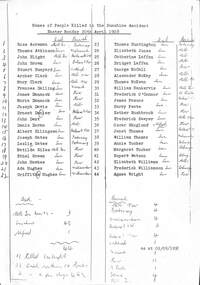
... Sunshine Railway Disaster Disaster Railways Sunshine Railway Station Printed List of Names of People killed in the Sunshine Accident Easter Monday 20 April 1908 Rose Acreman died Melbourne General Queen Vic Buried Footscray Thomas Atkinson died Sunshine Buried Williamstown John Blight died Melbourne General Queen Vic Buried Ballarat Old John Brown died Sunshine Buried Ballarat Old Stuart Bunyard died Sunshine Buried Oakleigh Archer Clark died Sunshine Buried Melbourne New Mary Clark died Sunshine Buried Melbourne New Frances Dalling died Sunshine Buried Warrick James Dannock died Sunshine Buried Kew Maria Dannock died Sunshine Buried Kew Joseph David died Sunshine Buried Melbourne New Ernest Denier died Sunshine Buried Ballarat New John Dent died Sunshine Buried Kew Denis Doran died Sunshine Buried Melbourne Albert Ellingsen died Sunshine Buried Ballarat New Joseph Gates died Sunshine Buried Footscray Leslie Gates died Sunshine Buried Footscray Matilda Giles died Melbourne General Queen Vic Buried Kew Ethel Green died Sunshine Buried Kew John Haekes died Sunshine Buried Kew Ada Hughes died Sunshine Buried Williamstown Griffith Hughes died Sunshine Buried Williamstown Thomas Huntington died Sunshine Buried Footscray Elizabeth Jones died Sunshine Buried Melbourne Catherine Laffan died Sunshine Buried Melbourne Bridget Laffan died Sunshine Buried Melbourne George McCall died Sunshine Buried Kew Alexander McKay died Sunshine Buried Melbourne Thomas McKean died Sunshine Buried Melbourne William Nankervis died Sunshine Buried Melbourne Frederick OConnor died Sunshine Buried St Kilda James Pascoe died Sunshine Buried Ballarat Old Harry Peate died Sunshine Buried Kew Esther Rushbrook died Sunshine Buried Kew Frederick Sawyer died Sunshine Buried Melbourne Oscar Skoglund died Alfred Buried Kew Janet Thomas died Sunshine Buried Ballarat Old William Thomas died Sunshine Buried Melbourne Annie Tucker died Sunshine Buried Coburg Margaret Tucker died Sunshine Buried Coburg Rupert Watson died Sunshine Buried Coburg Elizabeth Williams died Sunshine Buried Melbourne Frederick Williamson died Sunshine Buried Coburg Agnes Wright died Sunshine Buried Kew A3 photocopy of death registered in the District of East Melbourne in the State of Victoria Sunshine Rail Disaster death certificates Death certificates listing the 44 people who died as a result of the railway disaster at Sunshine Station 20th April 1908 Also lists names of those who did at Sunshine Melbourne and Alfred Hospital and place of burial Findings by coroner May and July inquest Certificate Sunshine Rail Disaster death certificates ...Printed List of Names of People killed in the Sunshine Accident Easter Monday 20 April 1908 Rose Acreman died Melbourne General Queen Vic Buried Footscray Thomas Atkinson died Sunshine Buried Williamstown John Blight died Melbourne General Queen Vic Buried Ballarat Old John Brown died Sunshine Buried Ballarat Old Stuart Bunyard died Sunshine Buried Oakleigh Archer Clark died Sunshine Buried Melbourne New Mary Clark died Sunshine Buried Melbourne New Frances Dalling died Sunshine Buried Warrick James Dannock died Sunshine Buried Kew Maria Dannock died Sunshine Buried Kew Joseph David died Sunshine Buried Melbourne New Ernest Denier died Sunshine Buried Ballarat New John Dent died Sunshine Buried Kew Denis Doran died Sunshine Buried Melbourne Albert Ellingsen died Sunshine Buried Ballarat New Joseph Gates died Sunshine Buried Footscray Leslie Gates died Sunshine Buried Footscray Matilda Giles died Melbourne General Queen Vic Buried Kew Ethel Green died Sunshine Buried Kew John Haekes died Sunshine Buried Kew Ada Hughes died Sunshine Buried Williamstown Griffith Hughes died Sunshine Buried Williamstown Thomas Huntington died Sunshine Buried Footscray Elizabeth Jones died Sunshine Buried Melbourne Catherine Laffan died Sunshine Buried Melbourne Bridget Laffan died Sunshine Buried Melbourne George McCall died Sunshine Buried Kew Alexander McKay died Sunshine Buried Melbourne Thomas McKean died Sunshine Buried Melbourne William Nankervis died Sunshine Buried Melbourne Frederick OConnor died Sunshine Buried St Kilda James Pascoe died Sunshine Buried Ballarat Old Harry Peate died Sunshine Buried Kew Esther Rushbrook died Sunshine Buried Kew Frederick Sawyer died Sunshine Buried Melbourne Oscar Skoglund died Alfred Buried Kew Janet Thomas died Sunshine Buried Ballarat Old William Thomas died Sunshine Buried Melbourne Annie Tucker died Sunshine Buried Coburg Margaret Tucker died Sunshine Buried Coburg Rupert Watson died Sunshine Buried Coburg Elizabeth Williams died Sunshine Buried Melbourne Frederick Williamson died Sunshine Buried Coburg Agnes Wright died Sunshine Buried Kew A3 photocopy of death registered in the District of East Melbourne in the State of Victoriasunshine railway disaster, disaster, railways, sunshine railway station -
 Kew Historical Society Inc
Photograph, 1st Kew Scouts Fire Drill, 1911, 1911
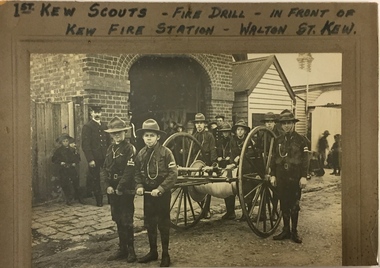
... Kew Scouts in front of the old Kew Fire Brigade building in Walton Street in 1911. The building, constructed in 1893 was later demolished in 1941. This is a rare historic photograph of the Station. Unfortunately the name of the photographer is unrecorded. kew fire brigade - walton street scout groups --- kew (vic ...A Volunteer Fire Brigade was established in Kew in 1879 and a fire station established in Walton Street, Kew. The Brigade was formally disbanded by the Fire Brigade Act of 1890 and the volunteers replaced by a unit of the Metropolitan Fire Brigade in 1891. The building shown in this rare photograph was constructed in 1893. In the background can be seen a house on the corner of Walton and Peel Streets, one of two, built in 1893 for firemen of the Brigade. An article in The Weekly Times (1 April 1911) records that: "Kew Troop - A,S.M. Williams reports:- The troop under S.M. Kellett. marched to the Kew Fire Brigade station, to receive instruction in fire drill from Mr Gross, the officer in charge, but as he was unexpectedly called away, the S.M. S and A.S.M had to instruct the Troop. Every boy was taught how to sink the hydrant, and how to couple and uncouple the hose. The hose reel was then brought into action, and the boys were divided into sets of six, each division taking its turn in pulling the reel up a hill to the water plug, where the hydrant was quickly sunk by one Scout, two more uncoupling the hose and coupling it on to the hydrant. We have gained four recruits during the last week, and are expecting two more next week."This is a fine, original photograph, probably taken by a commercial photographer, showing the 1st Kew Scouts in front of the old Kew Fire Brigade building in Walton Street in 1911. The building, constructed in 1893 was later demolished in 1941. This is a rare historic photograph of the Station. Unfortunately the name of the photographer is unrecorded.1st Kew Scouts undertaking a fire drill in front of the old Kew Fire Station in Walton Street, Kew. The reverse details the names and addresses of the Scouts featured in the photograph. An integral part of the Scout program is service to others and working with the fire brigade would have been just one of many such training activities enthusiastically undertaken by the Scouts. The Kew Fire Brigade had hand-drawn fire appliances up until 1919 when a motorised vehicle was purchased. The fire station was replaced by the Belford Road station in 1941 and subsequently demolished. Front: "First Kew Scouts - Fire Drill - In front of Kew Fire Station - Walton St. Kew" Reverse: "Walton St Kew / Kew Fire Station / Mr Gross o/c Fire Station / Bert Gundy Clark, part-time fireman / Allan Sewell Gellibrand St. / Clappy Williams Hawthorn ? / Allan Barrett Cobden St / Allan Woollard High St"kew fire brigade - walton street, scout groups --- kew (vic), 1st kew boy scouts -
 Kew Historical Society Inc
Photograph, J E & B L Rogers, Kew Post Office, 1967
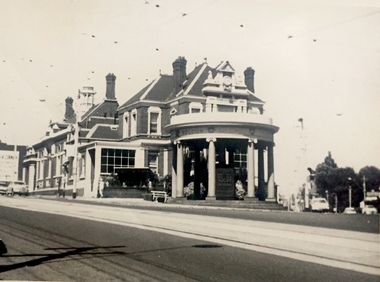
... Kew' (1973), or the numerous articles on local history that she produced for suburban newspapers. Most of the photographs in the collection include detailed annotations in her hand. The Rogers Collection provides a comprehensive insight into the working habits of a historian in the 1960s and 1970s. Together it forms the largest privately-donated collection within the archives of the Kew Historical Society. kew post office public buildings -- kew (vic.) "1967 / Kew Post Office / Commissioned in 1887; completed 1888 at a cost of 10,000 [pounds]. Court House is seen at extreme left. (See other picture for Police Station ...This work forms part of the collection assembled by the historian Dorothy Rogers, that was donated to the Kew Historical Society by her son John Rogers in 2015. The manuscripts, photographs, maps, and documents were sourced by her from both family and local collections or produced as references for her print publications. Many were directly used by Rogers in writing ‘Lovely Old Homes of Kew’ (1961) and 'A History of Kew' (1973), or the numerous articles on local history that she produced for suburban newspapers. Most of the photographs in the collection include detailed annotations in her hand.The Rogers Collection provides a comprehensive insight into the working habits of a historian in the 1960s and 1970s. Together it forms the largest privately-donated collection within the archives of the Kew Historical Society.Small, black and white photo of Kew Post Office in 1967."1967 / Kew Post Office / Commissioned in 1887; completed 1888 at a cost of 10,000 [pounds]. Court House is seen at extreme left. (See other picture for Police Station & residence)."kew post office, public buildings -- kew (vic.) -
 Kew Historical Society Inc
Document (item) - Invitation, Victorian Civil Ambulance Service, Official Opening of the New Headquarters Station, 1957
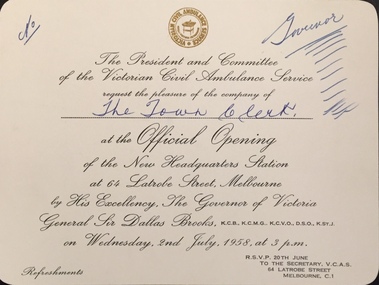
... As a continuous record, ranging across most decades of the Twentieth Century, they reveal changing tastes in design, values and relationships in the history of local government in Victoria. civic invitations -- kew (vic) victorian civil ambulance service new headquarters station - 64 latrobe street (melb) THE PRESIDENT AND COMMITTEE / OF THE VICTORIAN CIVIL AMBULANCE SERVICE / REQUEST THE PLEASURE OF THE COMPANY OF / The Town Clerk / AT THE OFFICIAL OPENING / OF THE NEW HEADQUARTERS STATION / AT 64 LATROBE STREET, MELBOURNE / BY HIS EXCELLENCY, THE GOVERNOR OF VICTORIA / GENERAL SIR DALLAS BROOKS KCB KCMG KCVO DSO KStJ / ON WEDNESDAY, 2ND JULY 1958 AT 3 P.M. / REFRESHMENTS / RSVP 20TH JUNE TO / THE SECRETARY VCAS 64 LATROBE STREET MELBOURNE C1 Single-sided invitation to the Town Clerk of Kew to attend the Official Opening of the Victorian Civil Ambulance Service's new headquarters station in 1957 Official Opening of the New Headquarters Station Document Invitation Victorian Civil Ambulance Service ...The Municipality of Kew (1860-1863), the Borough of Kew (1863-1910), the Town of Kew (1910-1921) and the City of Kew (1921-1994) were local government instrumentalities in the State of Victoria. In 1994, the City of Kew was amalgamated, together with the former Cities of Camberwell and Hawthorn, into the new City of Boroondara (1994- ). Like other local government entities of the period, Kew was administered by town clerks. The two notable town clerks in Kew's history were H. H. (Henry Hirst) Harrison (1868-1955) and W. D. (William Dickie) Birrell (1899-1974). Harrison was appointed to the position in 1901 and retired in 1938 after 37 years. Birrell, appointed Acting Town Clerk in 1921, became Town Clerk in 1938, following Harrison's retirement. He continued in this role until his retirement in 1966.This card is part of an historically significant civic collection, containing hundreds of separate invitations, documents, greeting cards, programmes and tickets issued and/or collected by successive town clerks. Items in the collection illuminate the political, social and cultural history of the district. As a continuous record, ranging across most decades of the Twentieth Century, they reveal changing tastes in design, values and relationships in the history of local government in Victoria.THE PRESIDENT AND COMMITTEE / OF THE VICTORIAN CIVIL AMBULANCE SERVICE / REQUEST THE PLEASURE OF THE COMPANY OF / The Town Clerk / AT THE OFFICIAL OPENING / OF THE NEW HEADQUARTERS STATION / AT 64 LATROBE STREET, MELBOURNE / BY HIS EXCELLENCY, THE GOVERNOR OF VICTORIA / GENERAL SIR DALLAS BROOKS KCB KCMG KCVO DSO KStJ / ON WEDNESDAY, 2ND JULY 1958 AT 3 P.M. / REFRESHMENTS / RSVP 20TH JUNE TO / THE SECRETARY VCAS 64 LATROBE STREET MELBOURNE C1civic invitations -- kew (vic), victorian civil ambulance service, new headquarters station - 64 latrobe street (melb) -
Kew Historical Society Inc
Journal, Kew Historical Society, Newsletter No.116, September 2016
... kew historical society (vic.) -- journals Back to Kew 1875 / Judith Scurfield p1. Heritage issues / Brad Miles p3. What's On - September to December / Brad Miles p3. New Strategic Plan / Brad Miles p4. Not a Ragbag Wagga: the Kew patchwork quilt / Suzanne McWha p5. The Great War in Kew: 1916 those who went / Andrew Frost p7. The Kew Festival Gazette 5 October 1895 / Don Garden p7. The Skilled Artisan: Bertie Robert Edgar Greenwood / Robert Baker, John Torpey, Judith Vimpani p9. Jill O'Brien / Robert Baker p9. More examples of Lost Kew - Clutha / Robert Baker; Fernhurst / Kerry Fairbank; Blackhall / Felicity Renowden; Kew Railway Station ...Back to Kew 1875 / Judith Scurfield p1. Heritage issues / Brad Miles p3. What's On - September to December / Brad Miles p3. New Strategic Plan / Brad Miles p4. Not a Ragbag Wagga: the Kew patchwork quilt / Suzanne McWha p5. The Great War in Kew: 1916 those who went / Andrew Frost p7. The Kew Festival Gazette 5 October 1895 / Don Garden p7. The Skilled Artisan: Bertie Robert Edgar Greenwood / Robert Baker, John Torpey, Judith Vimpani p9. Jill O'Brien / Robert Baker p9. More examples of Lost Kew - Clutha / Robert Baker; Fernhurst / Kerry Fairbank; Blackhall / Felicity Renowden; Kew Railway Station / Robert Baker p10. AGM Form of appointment of proxy p11. AGM Nomination form p11.Published quarterly since 1977, the newsletters of the Kew Historical Society contain significant research by members exploring relevant aspects of the Victorian and Australian Framework of Historical Themes. Frequently, articles on people, places and artefacts are the only source of information about an aspect of Kew, and Melbourne’s history.non-fictionBack to Kew 1875 / Judith Scurfield p1. Heritage issues / Brad Miles p3. What's On - September to December / Brad Miles p3. New Strategic Plan / Brad Miles p4. Not a Ragbag Wagga: the Kew patchwork quilt / Suzanne McWha p5. The Great War in Kew: 1916 those who went / Andrew Frost p7. The Kew Festival Gazette 5 October 1895 / Don Garden p7. The Skilled Artisan: Bertie Robert Edgar Greenwood / Robert Baker, John Torpey, Judith Vimpani p9. Jill O'Brien / Robert Baker p9. More examples of Lost Kew - Clutha / Robert Baker; Fernhurst / Kerry Fairbank; Blackhall / Felicity Renowden; Kew Railway Station / Robert Baker p10. AGM Form of appointment of proxy p11. AGM Nomination form p11.kew historical society (vic.) -- periodicals., kew historical society (vic.) -- newsletters, kew historical society (vic.) -- journals -
 Kew Historical Society Inc
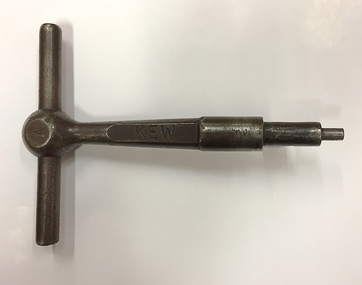
Equipment, Victorian Railways, 'A' Pattern Annett Key : Kew Railway Station, 20th Century
... kew railway station - denmark street - kew (vic)...Kew Railway Station was the second railway station on the Kew 'Spur' Line in Melbourne. The key unlocked signals equipment at the Station. The key was donated by Harry Jackson in 2019 during an exhibition at the Kew Court House on railway history in Kew. This piece of railway equipment is a rare oiece of railway memorabilia. kew railway station - denmark street - kew (vic ...Kew Railway Station was the second railway station on the Kew 'Spur' Line in Melbourne. The key unlocked signals equipment at the Station. The key was donated by Harry Jackson in 2019 during an exhibition at the Kew Court House on railway history in Kew.This piece of railway equipment is a rare oiece of railway memorabilia.'A' pattern Annett Key, used at the Kew Railway Station with signals equipment.KEWkew railway station - denmark street - kew (vic), annett keys -
 Kew Historical Society Inc
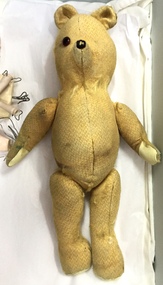
Leisure object, Teddy Bear, 1930-1955
... Kew Railway Station for a Baby Health Centre for a term of 21 years at 3 pounds per annum. A building, designed by Roland Chipperfield, was erected, and the Centre previously conducted at the Town Hall transferred there. This became known as the Denmark Street Baby Health Centre. (Cr. W.D. Vaughan, Kew’s Civic Century, W.D. Vaughan Pty Ltd., Kew, 1960, pp.96 & 97.) toys - teddy bears denmark street baby health centre - kew (vic ...In August, 1920, The Kew Town Council decided to establish a Baby Health Centre in Kew. The first Centre was opened in a room in the Town Hall in Walpole Street on 5 November 1920. In May 1939, the Railway Commissioners agreed to lease a site at the Kew Railway Station for a Baby Health Centre for a term of 21 years at 3 pounds per annum. A building, designed by Roland Chipperfield, was erected, and the Centre previously conducted at the Town Hall transferred there. This became known as the Denmark Street Baby Health Centre. (Cr. W.D. Vaughan, Kew’s Civic Century, W.D. Vaughan Pty Ltd., Kew, 1960, pp.96 & 97.)Small teddy bear with only one eye remaining and with a number of repairs. The bear was used by children at the Denmark Street Baby Health Centre in Kew.toys - teddy bears, denmark street baby health centre - kew (vic) -
 Kew Historical Society Inc
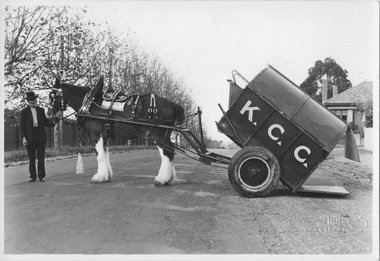
Photograph - City of Kew Horse, Cart and Employee, c.1950
... The City of Kew was a suburb in Melbourne from 1860 to 1994. city of kew garbage waste collection - kew (vic) Barry avery kew depot stuart tompkins "Location Cr Parkhill Rd & Hillcrest Av KEW / Driver Barry Avery" One of four original black and white photographs by Stuart Tompkins Camberwell of a horse and cart and a council employee, Barry Avery, in Parkhill Road, Kew. In a number of photos the cart has K.C.C., in large letters on its side. It is presumed to be the city garbage cart No.3 which was stationed ...The City of Kew was a suburb in Melbourne from 1860 to 1994.One of four original black and white photographs by Stuart Tompkins Camberwell of a horse and cart and a council employee, Barry Avery, in Parkhill Road, Kew. In a number of photos the cart has K.C.C., in large letters on its side. It is presumed to be the city garbage cart No.3 which was stationed at the old Council Depot on the corner of High and Disraeli Streets."Location Cr Parkhill Rd & Hillcrest Av KEW / Driver Barry Avery"city of kew, garbage waste collection - kew (vic), barry avery, kew depot, stuart tompkins -
 Kew Historical Society Inc
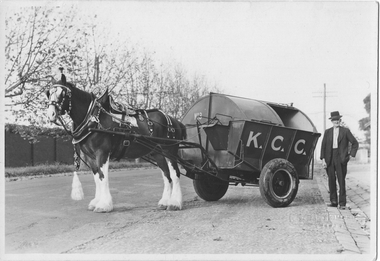
Photograph - City of Kew Horse, Cart and Employee, Stuart Tompkins, c.1950
... The photo from the former City of Kew Municipal Collection was taken by a photographer from Stuart Tompkins Studio in Camberwell. city of kew garbage waste collection - kew (vic) Barry avery kew depot stuart tompkins "Cr Parkhill Rd & Hillcrest Ave Kew / Driver : Barry Avery" One of four black and white photographs (perhaps reproductions) of a horse and cart and a council employee in Parkhill Road, Kew. In a number of photos the cart has K.C.C., in large letters on its side. It is presumed to be the city garbage cart No.3 which was stationed ...The Kew City Council Depot was for a period situated on the corner of High Street and Disraeli Streets. The photo from the former City of Kew Municipal Collection was taken by a photographer from Stuart Tompkins Studio in Camberwell.One of four black and white photographs (perhaps reproductions) of a horse and cart and a council employee in Parkhill Road, Kew. In a number of photos the cart has K.C.C., in large letters on its side. It is presumed to be the city garbage cart No.3 which was stationed at the old Council Depot on the corner of High and Disraeli Streets. "Cr Parkhill Rd & Hillcrest Ave Kew / Driver : Barry Avery"city of kew, garbage waste collection - kew (vic), barry avery, kew depot, stuart tompkins -
 Kew Historical Society Inc
Photograph - City of Kew Horse, Cart and Employee, Stuart Tompkins, c.1950
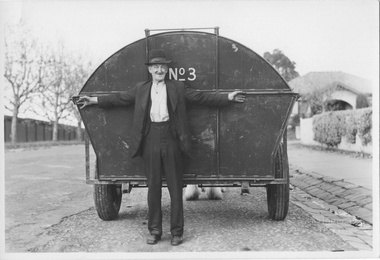
... The photo from the former City of Kew Municipal Collection was taken by a photographer from Stuart Tompkins Studio in Camberwell. city of kew garbage waste collection - kew (vic) Barry avery kew depot stuart Tompkins "Cr Parkhill Rd & Hillcrast Ave Kew / Driver Barry Avery" One of four original black and white photographs by Stuart Tompkins Camberwell of a horse and cart and a council employee, Barry Avery, in Parkhill Road, Kew. In a number of photos the cart has K.C.C., in large letters on its side. It is presumed to be the city garbage cart No.3 which was stationed ...The Kew City Council Depot was for a period situated on the corner of High Street and Disraeli Streets. The photo from the former City of Kew Municipal Collection was taken by a photographer from Stuart Tompkins Studio in Camberwell. One of four original black and white photographs by Stuart Tompkins Camberwell of a horse and cart and a council employee, Barry Avery, in Parkhill Road, Kew. In a number of photos the cart has K.C.C., in large letters on its side. It is presumed to be the city garbage cart No.3 which was stationed at the old Council Depot on the corner of High and Disraeli Streets. "Cr Parkhill Rd & Hillcrast Ave Kew / Driver Barry Avery"city of kew, garbage waste collection - kew (vic), barry avery, kew depot, stuart tompkins -
 Kew Historical Society Inc
Photograph - City of Kew Horse, Cart and Employee, Stuart Tompkins, c.1950
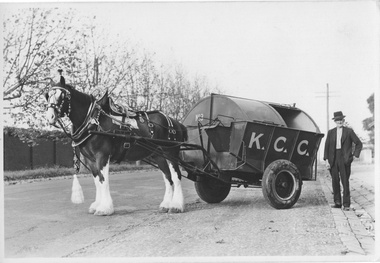
... The photo from the former City of Kew Municipal Collection was taken by a photographer from Stuart Tompkins Studio in Camberwell. city of kew garbage waste collection - kew (vic) stuart tompkins barry avery "Cr Parkhill Rd & Hillcrest Ave, Kew / Driver: Barry Avery" One of four original black and white photographs of a horse and cart and a council employee, Barry Avery, in Parkhill Road, Kew. In a number of photos the cart has K.C.C., in large letters on its side. It is presumed to be the city garbage cart No.3 which was stationed ...The Kew City Council Depot was for a period situated on the corner of High Street and Disraeli Streets. The photo from the former City of Kew Municipal Collection was taken by a photographer from Stuart Tompkins Studio in Camberwell. One of four original black and white photographs of a horse and cart and a council employee, Barry Avery, in Parkhill Road, Kew. In a number of photos the cart has K.C.C., in large letters on its side. It is presumed to be the city garbage cart No.3 which was stationed at the old Council Depot on the corner of High and Disraeli Streets. "Cr Parkhill Rd & Hillcrest Ave, Kew / Driver: Barry Avery"city of kew, garbage waste collection - kew (vic), stuart tompkins, barry avery -
 Kew Historical Society Inc
Map - Map of Kew and Hawthorn Districts
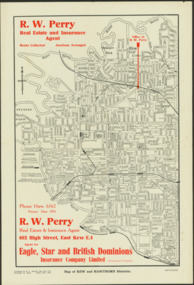
... Kew, East Kew and Hawthorn produced for a Kew Real Estate Agent, RW Perry. The map is undated. maps - kew (vic) maps - hawthorn (vic) R.W. Perry Real estate Agents -- Kew (Vic.) RW Perry / Real Estate & Insurance Agent, 602 High Street, East Kew Two-colour map of Kew and Hawthorn Districts produced for by R.L. Jarrett for RW Perry, Real Estate & Insurance Agent. The map has unusual features such as a planned railway link from Kew Station ...Map of Kew, East Kew and Hawthorn produced for a Kew Real Estate Agent, RW Perry. The map is undated.Two-colour map of Kew and Hawthorn Districts produced for by R.L. Jarrett for RW Perry, Real Estate & Insurance Agent. The map has unusual features such as a planned railway link from Kew Station to the former Outer Circle Railway. RW Perry / Real Estate & Insurance Agent, 602 High Street, East Kewmaps - kew (vic), maps - hawthorn (vic), r.w. perry, real estate agents -- kew (vic.) -
Kew Historical Society Inc
Archive (Sub-series) - Subject File, Fire Brigades, 1958
... Kew Historical Society have been compiling and storing information about subjects relating to the history of Kew and its environs, of which this file is an example. Typically files will contain primary and secondary sources. kew (vic) - history walton street - kew (vic) fire brigades - kew (vic) A small archive file containing a photocopy (presented by Trinity Grammar School to the Society) of the Rules of the Kew Volunteer Fire Brigade (established 1879), a photocopy of a photo of the Kew MFB officers on a Hupmobile at the entrance to the station, and sundry newspaper articles relating to the Brigade at its later location in Belford Road. ...Various partiesReference, Research, InformationSecondary Values (KHS Imposed Order)A subject archive file containing a photocopy (presented by Trinity Grammar School to the Society) of the Rules of the Kew Volunteer Fire Brigade (established 1879), a photocopy of a photo of the Kew MFB officers on a Hupmobile at the entrance to the station, and sundry newspaper articles relating to the Brigade at its later location in Belford Road.kew (vic) - history, walton street - kew (vic), fire brigades - kew (vic)kew (vic) - history, walton street - kew (vic), fire brigades - kew (vic) -
 Kew Historical Society Inc
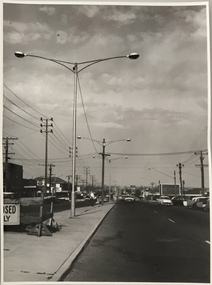
Photograph, Stuart Tompkins Studio, Electricity Supply Poles, South Road, Moorabbin, 1965
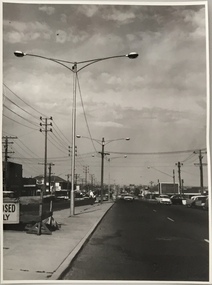
... kew Historical Society. public infrastructure -- kew (vic.) city of kew - engineers department Typed inscription on reverse: "Electricity Supply Poles. Photographed for Kew City Council 8/2/65. No.2 South Road - Moorabbin, west of Jasper Road, looking east. Steel poles with two lamps in median strip and supply wires from pole to pole along median strip (poles only 100' apart). Lamps along median only except at intersections. Wooden pole supports heavy supply lines across the road. Wooden poles 3' up and 8 1/2" dia. Wooden poles 3' up and 12 1/2 dia." Studio stamp: "Stuart Tompkins Studio. 547 Station ...Research provided by Stuart Tompkins Studio, Box Hill, into alternatives for median strip street lighting to be used in Burke Road, Kew. The photographers identified variants in different suburbs appropriate to Kew's needs.The series from which the photograph is drawn provides a snapshot by a commercial photographic studio of each named vicinity in 1965 as well as providing examples of public works infrastructure being commissioned by local government in the 1960s. The photos originally formed part of the Engineering Department's files in the City of Kew before being donated to the kew Historical Society.Electricity Supply Poles, South Road, Moorabbin, 1965. Stuart Tompkins Studio provided this photograph for the Kew City Council. The photograph of South Road, Moorabbin, west of Jasper Road, looking east depicts steel poles with two lamps in a median strip and supply wires from pole to pole. The poles were described as 100′ apart. The notation on the rear of the photograph was that there were lamps along the median strip except at intersections. A wooden pole is recognised as supporting heavy supply lines across the road. The steel poles in the photograph were said to be between 3′ to 3.5′ whereas the wooden poles were three to 12.25″ in diameter. [There are three copies of this photograph in the Collection.] Typed inscription on reverse: "Electricity Supply Poles. Photographed for Kew City Council 8/2/65. No.2 South Road - Moorabbin, west of Jasper Road, looking east. Steel poles with two lamps in median strip and supply wires from pole to pole along median strip (poles only 100' apart). Lamps along median only except at intersections. Wooden pole supports heavy supply lines across the road. Wooden poles 3' up and 8 1/2" dia. Wooden poles 3' up and 12 1/2 dia." Studio stamp: "Stuart Tompkins Studio. 547 Station Street, Box Hill. WX1439."public infrastructure -- kew (vic.), city of kew - engineers department -
 Kew Historical Society Inc
Photograph, Stuart Tompkins Studio, Electricity Supply Poles, South Road, Moorabbin, 1965
... kew Historical Society. city of kew -- engineers department public infrastructure -- kew (vic.) Typed inscription on reverse: "Electricity Supply Poles. Photographed for Kew City Council 8/2/65. No.2 South Road - Moorabbin, west of Jasper Road, looking east. Steel poles with two lamps in median strip and supply wires from pole to pole along median strip (poles only 100' apart). Lamps along median only except at intersections. Wooden pole supports heavy supply lines across the road. Wooden poles 3' up and 8 1/2" dia. Wooden poles 3' up and 12 1/2 dia." Studio stamp: "Stuart Tompkins Studio. 547 Station ...Research provided by Stuart Tompkins Studio, Box Hill, into alternatives for median strip street lighting to be used in Burke Road, Kew. The photographers identified variants in different suburbs appropriate to Kew's needs.The series from which the photograph is drawn provides a snapshot by a commercial photographic studio of each named vicinity in 1965 as well as providing examples of public works infrastructure being commissioned by local government in the 1960s. The photos originally formed part of the Engineering Department's files in the City of Kew before being donated to the kew Historical Society.Electricity Supply Poles, South Road, Moorabbin, 1965. Stuart Tompkins Studio provided this photograph for the Kew City Council. The photograph of South Road, Moorabbin, west of Jasper Road, looking east depicts steel poles with two lamps in a median strip and supply wires from pole to pole. The poles were described as 100′ apart. The notation on the rear of the photograph was that there were lamps along the median strip except at intersections. A wooden pole is recognised as supporting heavy supply lines across the road. The steel poles in the photograph were said to be between 3′ to 3.5′ whereas the wooden poles were three to 12.25″ in diameter. [There are three copies of this photograph in the Collection.] Typed inscription on reverse: "Electricity Supply Poles. Photographed for Kew City Council 8/2/65. No.2 South Road - Moorabbin, west of Jasper Road, looking east. Steel poles with two lamps in median strip and supply wires from pole to pole along median strip (poles only 100' apart). Lamps along median only except at intersections. Wooden pole supports heavy supply lines across the road. Wooden poles 3' up and 8 1/2" dia. Wooden poles 3' up and 12 1/2 dia." Studio stamp: "Stuart Tompkins Studio. 547 Station Street, Box Hill. WX1439."city of kew -- engineers department, public infrastructure -- kew (vic.) -
 Kew Historical Society Inc
Album - Scrapbook, Eva Grant, Historic Buildings, Kew, 1958-78, 1970s
... kew...country roads board - denmark street - kew...dorothy rogers reserve - studley park road - kew...field place - 3 henty court - kew (vic)...ellsmere (also ellesmere/ellsmore) - princess street - kew...fernhurst - 13 fernhurst grove - kew (vic)...kew civic centre - civic drive - kew (vic)...kew junction - kew (vic)...kew railway station...Buildings included in the scrapbook include: Billy Hughes' house - 167 Cotham Road Congregational Church - Walpole Street (c.1978) Country Roads Board - Denmark Street (1960) Dorothy Rogers Reserve - Studley Park Road Ellsmere (also Ellesmere/Ellsmore) - Princess Street Field Place - 3 Henty Court Fernhurst - 13 Fernhurst Grove Kew Civic Centre (1959) Kew Junction (1958) Kew Railway Station (1902, 1959) Kew Recreation Hall - Wellington Street (1960) Neama (Hall) - Studley Park Road Southesk (formerly Ordsall) - Cotham Road (c.1960) St Anthony's Home for Babies (formerly Madford) - 43 Wellington Street (c.1976) Studley House - Nolan Avenue The scrapbook contains historically significant, rare and sometimes unique images of significant heritage buildings in Kew, including their erection and demolition. eva grant billy hughes' house - 167 cotham road congregational church - walpole street - kew country roads board - denmark street - kew dorothy rogers reserve - studley park road - kew field place - 3 henty court - kew (vic) ellsmere (also ellesmere/ellsmore) - princess street - kew fernhurst - 13 fernhurst grove - kew (vic) kew civic centre - civic drive - kew (vic) kew junction - kew (vic) kew railway station - denmark street - kew (vic) recreation hall - wellington street - kew neama - hall - studley park road - kew (vic) southesk - ordsall - cotham road- kew (vic) st anthony's home for babies - madford - 43 wellington street (vic) studley house - nolan avenue - kew (vic) Includes letter from donor 11-page scrapbook of photographs and newspaper clippings with annotations by Eva Grant, a past member of the Kew Historical Society. ...One of three scrapbooks of photographs and newspaper cuttings taken and or collected by Eva Grant, a past member of the Kew Historical Society, which were donated by her niece, Julie Thomson. The albums include many photographs of Kew from the 1950s to the 1970s. Buildings included in the scrapbook include: Billy Hughes' house - 167 Cotham Road Congregational Church - Walpole Street (c.1978) Country Roads Board - Denmark Street (1960) Dorothy Rogers Reserve - Studley Park Road Ellsmere (also Ellesmere/Ellsmore) - Princess Street Field Place - 3 Henty Court Fernhurst - 13 Fernhurst Grove Kew Civic Centre (1959) Kew Junction (1958) Kew Railway Station (1902, 1959) Kew Recreation Hall - Wellington Street (1960) Neama (Hall) - Studley Park Road Southesk (formerly Ordsall) - Cotham Road (c.1960) St Anthony's Home for Babies (formerly Madford) - 43 Wellington Street (c.1976) Studley House - Nolan AvenueThe scrapbook contains historically significant, rare and sometimes unique images of significant heritage buildings in Kew, including their erection and demolition. 11-page scrapbook of photographs and newspaper clippings with annotations by Eva Grant, a past member of the Kew Historical Society. The pages of the album can be viewed in the image carousel above. Based on the text and known dates of demolition of a number of the buildings, the scrapbook was assembled over a twenty year period between c.1958-c.1978.Includes letter from donoreva grant, billy hughes' house - 167 cotham road, congregational church - walpole street - kew, country roads board - denmark street - kew, dorothy rogers reserve - studley park road - kew, field place - 3 henty court - kew (vic), ellsmere (also ellesmere/ellsmore) - princess street - kew, fernhurst - 13 fernhurst grove - kew (vic), kew civic centre - civic drive - kew (vic), kew junction - kew (vic), kew railway station - denmark street - kew (vic), recreation hall - wellington street - kew, neama - hall - studley park road - kew (vic), southesk - ordsall - cotham road- kew (vic), st anthony's home for babies - madford - 43 wellington street (vic), studley house - nolan avenue - kew (vic) -
Kew Historical Society Inc
Archive (Sub-series) - Subject File, Kew Court House 1986-1989, 1986
... kew - history...kew court house...kew police station...heritage campaigns - kew (vic...Kew Court House and Police Station began when the Victorian Government announced its intention to sell the properties comprising this heritage precinct. The Kew Historical Society mounted a community campaign to raise funds from the community for its preservation, with the support of the City of Boroondara. The funds raised by the Society were $500,000, which contributed to the buildings purchase and restoration. The community campaign was an exemplary example of heritage in action. The Society holds the complete documentation of this heritage campaign. kew - history kew court house kew police station heritage campaigns - kew (vic ...Various partiesReference, Research, InformationSecondary Values (KHS Imposed Order)Subject file containing information relating to the Kew Post Office complex, including the Kew Court House and the Police Station. The correspondence between parties included the City of Kew, the Kew Historical Society, and the Victorian Government. Initially the correspondence related to the proposed use of the Court House as a Centre for the Society as it was being forced to vacate the Copy Shop (q.v) in Walpole Street due to its impending demolition. Later correspondence relates to the proposed sale of the Court House by the Victorian Government.kew - history, kew court house, kew police station, heritage campaigns - kew (vic)kew - history, kew court house, kew police station, heritage campaigns - kew (vic) -
Kew Historical Society Inc
Archive (Sub-series) - Subject File, Kew Court House - 2000-2005, 2000
... kew - history...kew court house...kew police station...heritage campaigns - kew (vic...Kew Court House and Police Station began when the Victorian Government announced its intention to sell the properties comprising this heritage precinct. The Kew Historical Society mounted a community campaign to raise funds from the community for its preservation, with the support of the City of Boroondara. The funds raised by the Society were $500,000, which contributed to the buildings purchase and restoration. The community campaign was an exemplary example of heritage in action. The Society holds the complete documentation of this heritage campaign. kew - history kew court house kew police station heritage campaigns - kew (vic ...Various partiesReference, Research, InformationSecondary Values (KHS Imposed Order)Subject file containing information about the heritage significance of the Kew Court House (and Police Station) in High Street, Kew. Most of the file contains correspondence between a number of interested parties including the Kew Historical Society which was leading the campaign to have the building/precinct preserved and used for community purposes. Letters and submissions include those from the Department of Treasury & Finance, Ray Tonkin (Heritage Victoria), Dr. Robert Dean MLA, Judith Voce, Hon David Davis MLC, John Lenders MP, Hon John Thwaites, Andrew McIntosh MLA and officers of the Kew Historical Society. The file also contains records of interview and memos and meeting minutes relating to the campaign.kew - history, kew court house, kew police station, heritage campaigns - kew (vic)kew - history, kew court house, kew police station, heritage campaigns - kew (vic) -
 Kew Historical Society Inc
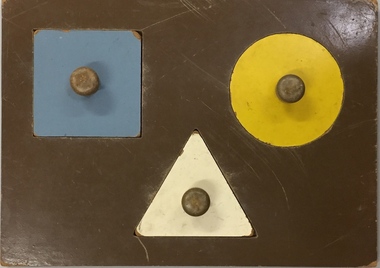
Leisure object, Child's Puzzle : Denmark Street Baby Health Centre, c.1950s
... Kew. The first Centre was opened in a room in the Town Hall in Walpole Street on 5 November 1920. In May 1939, the Railway Commissioners agreed to lease a site at the Kew Railway Station for a Baby Health Centre for a term of 21 years at 3 pounds per annum. A building, designed by Roland Chipperfield, was erected, and the Centre previously conducted at the Town Hall transferred there. This became known as the Denmark Street Baby Health Centre. (Cr. W.D. Vaughan, Kew’s Civic Century, W.D. Vaughan Pty Ltd., Kew, 1960, pp.96 & 97.) denmark street baby health centre - kew (vic ...In August, 1920, The Kew Town Council decided to establish a Baby Health Centre in Kew. The first Centre was opened in a room in the Town Hall in Walpole Street on 5 November 1920. In May 1939, the Railway Commissioners agreed to lease a site at the Kew Railway Station for a Baby Health Centre for a term of 21 years at 3 pounds per annum. A building, designed by Roland Chipperfield, was erected, and the Centre previously conducted at the Town Hall transferred there. This became known as the Denmark Street Baby Health Centre. (Cr. W.D. Vaughan, Kew’s Civic Century, W.D. Vaughan Pty Ltd., Kew, 1960, pp.96 & 97.)One of a pair of wooden puzzles used in the Denmark Street Baby Health Centre in Kew.denmark street baby health centre - kew (vic), baby health centres - kew (vic), games and puzzles -
 Kew Historical Society Inc
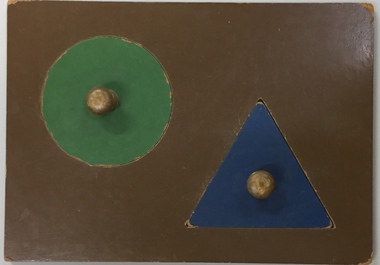
Leisure object, Child's Puzzle : Denmark Street Baby Health Centre, c.1950s
... Kew. The first Centre was opened in a room in the Town Hall in Walpole Street on 5 November 1920. In May 1939, the Railway Commissioners agreed to lease a site at the Kew Railway Station for a Baby Health Centre for a term of 21 years at 3 pounds per annum. A building, designed by Roland Chipperfield, was erected, and the Centre previously conducted at the Town Hall transferred there. This became known as the Denmark Street Baby Health Centre. (Cr. W.D. Vaughan, Kew’s Civic Century, W.D. Vaughan Pty Ltd., Kew, 1960, pp.96 & 97.) denmark street baby health centre - kew (vic ...In August, 1920, The Kew Town Council decided to establish a Baby Health Centre in Kew. The first Centre was opened in a room in the Town Hall in Walpole Street on 5 November 1920. In May 1939, the Railway Commissioners agreed to lease a site at the Kew Railway Station for a Baby Health Centre for a term of 21 years at 3 pounds per annum. A building, designed by Roland Chipperfield, was erected, and the Centre previously conducted at the Town Hall transferred there. This became known as the Denmark Street Baby Health Centre. (Cr. W.D. Vaughan, Kew’s Civic Century, W.D. Vaughan Pty Ltd., Kew, 1960, pp.96 & 97.)One of a pair of wooden puzzles used in the Denmark Street Baby Health Centre in Kew.denmark street baby health centre - kew (vic), baby health centres - kew (vic), games and puzzles -
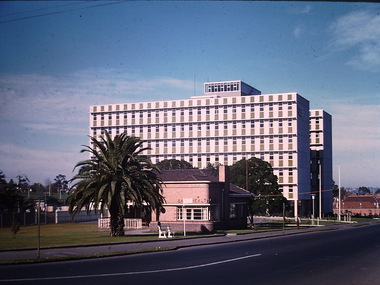 Kew Historical Society Inc
Photograph - Country Roads Board and Denmark Street Baby Health Centre, Ron Setford, 1961
... Kew (Vic.) -- 1960s Country Roads Board VicRoads Denmark Street -- Kew (Vic.) Denmark Street Baby Health Centre Nil A photograph providing a visual contrast of the pre and post-World War II architectural styles of the Denmark Street Baby Health Centre and two of the Country Roads Board office buildings. Each was built on part of the land fronting the Kew branch line. In May 1939, the Railway Commissioners agreed to lease a site at the Kew Railway Station ...Ron Setford and his wife Grace Setford lived in Tanner Avenue, East Kew, from c.1946 to c.1995. A keen photographer, he recorded the changing face of Kew over a 20 year period. Apart from 30 photographs of built structures and places in Kew dating from 1960 and 1961, 145 of his 35mm colour slides chronicle the development of the Eastern Freeway through the Yarra Valley over a five year period from c.1972 to c.1977. This important collection was donated to the Society by his granddaughter in 2025.This collection of 175 35mm slides is of local and statewide significance, owing to its subject matter, particularly the major development of road transport infrastructure during the 1970s with the construction of the Eastern Freeway. The photographer also took care to annotate and date most of his slides which enable the researcher to pinpoint temporal and spatial locations.A photograph providing a visual contrast of the pre and post-World War II architectural styles of the Denmark Street Baby Health Centre and two of the Country Roads Board office buildings. Each was built on part of the land fronting the Kew branch line. In May 1939, the Railway Commissioners agreed to lease a site at the Kew Railway Station for a Baby Health Centre. The single-storey cream brick building was designed by Roland Chipperfield. The Country Roads Board (1913–83), later renamed VicRoads, transferred its headquarters from the Royal Exhibition Building to Kew in 1961, following the completion of two modernist eight-storey office towers in 1960. The VicRoads buildings were closed in 2024, and there is ongoing debate about what replaces them.Nilron setford, photographs -- kew (vic.) -- 1960s, country roads board, vicroads, denmark street -- kew (vic.), denmark street baby health centre -
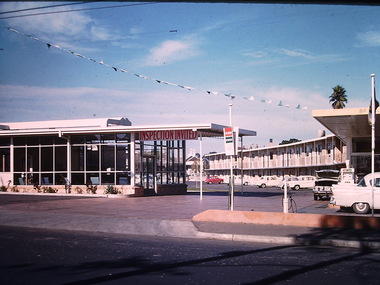 Kew Historical Society Inc
Photograph - California Motel, Barkers Road, Ron Setford, 1961
... Kew (Vic.) -- 1960s California Motel -- Barkers Road -- Hawthorn (Vic.) "California Motel" Opened in 1960, the California Motel at 138 Barkers Road, Hawthorn, was located opposite the entrance to Xavier College and built on the site of the former Barker railway station of the closed Kew branch line. ...Ron Setford and his wife Grace Setford lived in Tanner Avenue, East Kew, from c.1946 to c.1995. A keen photographer, he recorded the changing face of Kew over a 20 year period. Apart from 30 photographs of built structures and places in Kew dating from 1960 and 1961, 145 of his 35mm colour slides chronicle the development of the Eastern Freeway through the Yarra Valley over a five year period from c.1972 to c.1977. This important collection was donated to the Society by his granddaughter in 2025.This collection of 175 35mm slides is of local and statewide significance, owing to its subject matter, particularly the major development of road transport infrastructure during the 1970s with the construction of the Eastern Freeway. The photographer also took care to annotate and date most of his slides which enable the researcher to pinpoint temporal and spatial locations.Opened in 1960, the California Motel at 138 Barkers Road, Hawthorn, was located opposite the entrance to Xavier College and built on the site of the former Barker railway station of the closed Kew branch line. The motel was advertised as “away from the hustle and bustle of the city and offering affordable accommodation for the business or leisure traveller”. Special amenities included air-conditioning, a business centre, and swimming pool. The motel had 82 suites. A possibly forgotten, but perhaps essential feature of the motel, was the Caltex Service Station at its entrance. The building was closed in April 2008, extensively vandalised and finally demolished in 2013."California Motel"ron setford, photographs -- kew (vic.) -- 1960s, california motel -- barkers road -- hawthorn (vic.) -
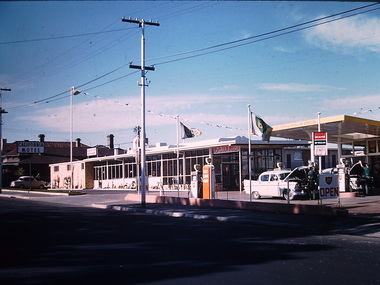 Kew Historical Society Inc
Photograph - California Motel, Barkers Road, Kew, Ron Setford, 1961
... Kew (Vic.) -- 1960s California Hotel -- Barkers Road -- Hawthorn (Vic.) California Motel -- Barkers Road Nil Opened in 1960, the California Motel at 138 Barkers Road, Hawthorn, was located opposite the entrance to Xavier College and built on the site of the former Barker railway station of the closed Kew branch line. ...Ron Setford and his wife Grace Setford lived in Tanner Avenue, East Kew, from c.1946 to c.1995. A keen photographer, he recorded the changing face of Kew over a 20 year period. Apart from 30 photographs of built structures and places in Kew dating from 1960 and 1961, 145 of his 35mm colour slides chronicle the development of the Eastern Freeway through the Yarra Valley over a five year period from c.1972 to c.1977. This important collection was donated to the Society by his granddaughter in 2025.This collection of 175 35mm slides is of local and statewide significance, owing to its subject matter, particularly the major development of road transport infrastructure during the 1970s with the construction of the Eastern Freeway. The photographer also took care to annotate and date most of his slides which enable the researcher to pinpoint temporal and spatial locations.Opened in 1960, the California Motel at 138 Barkers Road, Hawthorn, was located opposite the entrance to Xavier College and built on the site of the former Barker railway station of the closed Kew branch line. The motel was advertised as “away from the hustle and bustle of the city and offering affordable accommodation for the business or leisure traveller”. Special amenities included air-conditioning, a business centre, and swimming pool. The motel had 82 suites. A possibly forgotten, but perhaps essential feature of the motel, was the Caltex Service Station at its entrance. The building was closed in April 2008, extensively vandalised and finally demolished in 2013.Nilron setford, photographs -- kew (vic.) -- 1960s, california hotel -- barkers road -- hawthorn (vic.), california motel -- barkers road -
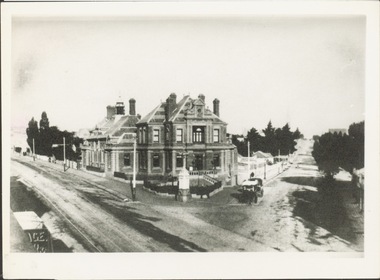 Kew Historical Society Inc
Postcard - Kew Public Offices, c.1898
... Kew Post Office Queen Victoria Jubilee Fountain Kew Public Offices Kew Court House High Street -- Kew (Vic.) Cotham Road -- Kew (Vic.) Kew Public Offices, built 1888, and including a post office, court house and police station. ...Print copy of an original sourced from the Latrobe Library in 1976 for exhibition purposes.Kew Public Offices, built 1888, and including a post office, court house and police station. The bird's eye view shows the buildings bordered by High Street and Cotham Roads. The photo postdates 1897 when the Queen Victoria Jubilee Fountain was constructed in front of the post office.kew post office, queen victoria jubilee fountain, kew public offices, kew court house, high street -- kew (vic.), cotham road -- kew (vic.) -
Kew Historical Society Inc
Journal, Kew Historical Society, Newsletter No.43, September, 1989
... kew historical society (vic.) -- periodicals. kew historical society (vic.) -- newsletters kew historical society (vic.) -- journals President’s Letter to Members / Gwen Steele p1. From 24 Years Ago: Kew Historical Society [Minutes, 4th November 1965] p2. An Item of Interest: Dight’s Falls Pumping Station ...President’s Letter to Members / Gwen Steele p1. From 24 Years Ago: Kew Historical Society [Minutes, 4th November 1965] p2. An Item of Interest: Dight’s Falls Pumping Station p3. Notice of Annual General Meeting p4.Published quarterly since 1977, the newsletters of the Kew Historical Society contain significant research by members exploring relevant aspects of the Victorian and Australian Framework of Historical Themes. Frequently, articles on people, places and artefacts are the only source of information about an aspect of Kew, and Melbourne’s history.President’s Letter to Members / Gwen Steele p1. From 24 Years Ago: Kew Historical Society [Minutes, 4th November 1965] p2. An Item of Interest: Dight’s Falls Pumping Station p3. Notice of Annual General Meeting p4.kew historical society (vic.) -- periodicals., kew historical society (vic.) -- newsletters, kew historical society (vic.) -- journals -
Kew Historical Society Inc
Journal, Kew Historical Society, Newsletter No.60, September, 1997
... kew historical society (vic.) -- periodicals. kew historical society (vic.) -- newsletters kew historical society (vic.) -- journals Ye Olde Presidentes Lettere [sic] [photograph of Kew railway station] / Dione McIntyre p1. ...Ye Olde Presidentes Lettere [sic] [photograph of Kew railway station] / Dione McIntyre p1. Our End of Year Party / p2. Our Many Resources / p2. What is your Taste in Fonts? / p2. Did you do that Homework? / p2. Back to Our Beginnings [extract from minutes of Kew Civic Movement, 16th September 1958] / p3. Such Goings on in the Car Park! / p3. 1997 Calendar of Meetings and Other Activities / p4. Notice of Annual General Meeting / p4. To Our Younger Citizens / p4.Published quarterly since 1977, the newsletters of the Kew Historical Society contain significant research by members exploring relevant aspects of the Victorian and Australian Framework of Historical Themes. Frequently, articles on people, places and artefacts are the only source of information about an aspect of Kew, and Melbourne’s history.Ye Olde Presidentes Lettere [sic] [photograph of Kew railway station] / Dione McIntyre p1. Our End of Year Party / p2. Our Many Resources / p2. What is your Taste in Fonts? / p2. Did you do that Homework? / p2. Back to Our Beginnings [extract from minutes of Kew Civic Movement, 16th September 1958] / p3. Such Goings on in the Car Park! / p3. 1997 Calendar of Meetings and Other Activities / p4. Notice of Annual General Meeting / p4. To Our Younger Citizens / p4.kew historical society (vic.) -- periodicals., kew historical society (vic.) -- newsletters, kew historical society (vic.) -- journals -
Kew Historical Society Inc
Journal, Kew Historical Society, Newsletter No.67, November, 2000
... kew historical society (vic.) -- periodicals. kew historical society (vic.) -- newsletters kew historical society (vic.) -- journals President’s Report to Annual General Meeting, October / Raymond Vaughan-Smith, p1-2. End of Year Party / p2. Kew Police Station ...President’s Report to Annual General Meeting, October / Raymond Vaughan-Smith, p1-2. End of Year Party / p2. Kew Police Station and Court House / p3. Brain Teaser / p3. Our Committee for 2000-2001 / p4.Published quarterly since 1977, the newsletters of the Kew Historical Society contain significant research by members exploring relevant aspects of the Victorian and Australian Framework of Historical Themes. Frequently, articles on people, places and artefacts are the only source of information about an aspect of Kew, and Melbourne’s history.President’s Report to Annual General Meeting, October / Raymond Vaughan-Smith, p1-2. End of Year Party / p2. Kew Police Station and Court House / p3. Brain Teaser / p3. Our Committee for 2000-2001 / p4.kew historical society (vic.) -- periodicals., kew historical society (vic.) -- newsletters, kew historical society (vic.) -- journals -
Kew Historical Society Inc
Journal, Kew Historical Society, Newsletter No.72, January, 2003
... kew historical society (vic.) -- periodicals. kew historical society (vic.) -- newsletters kew historical society (vic.) -- journals President’s Message / Lisa D’Acri p1-2. Kew Festival / p2. Jobs to be Done, Can you Help? / p2. Police Station ...President’s Message / Lisa D’Acri p1-2. Kew Festival / p2. Jobs to be Done, Can you Help? / p2. Police Station and Court House Application / p3. Boat Trip Planned for April in Lieu of Evening Meeting / p3. Committee for OCT. 2002 to SEP 2003 / p3. 2003 Calendar / p4.Published quarterly since 1977, the newsletters of the Kew Historical Society contain significant research by members exploring relevant aspects of the Victorian and Australian Framework of Historical Themes. Frequently, articles on people, places and artefacts are the only source of information about an aspect of Kew, and Melbourne’s history.President’s Message / Lisa D’Acri p1-2. Kew Festival / p2. Jobs to be Done, Can you Help? / p2. Police Station and Court House Application / p3. Boat Trip Planned for April in Lieu of Evening Meeting / p3. Committee for OCT. 2002 to SEP 2003 / p3. 2003 Calendar / p4.kew historical society (vic.) -- periodicals., kew historical society (vic.) -- newsletters, kew historical society (vic.) -- journals
