
Showing 41 items matching "kew town hall (walpole street)"
-
 Kew Historical Society Inc
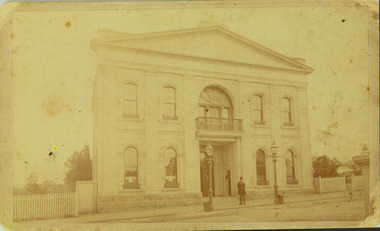
Photograph - Former Kew Town Hall, Walpole Street, 1887
... Former Kew Town Hall, Walpole Street...Kew Town Hall...Walpole Street - Kew (Vic.)...The earliest building on the Walpole Street site was the Kew Athenaeum Hall (built 1860) which was purchased by Kew Council in 1865. The Town...A print copy of a gelatin silver photograph of the former Kew Town Hall in Walpole Street, Kew. The photograph shows the neo-classical facade added to the former Atheneum building in the 1880s. ...Photograph Former Kew Town Hall, Walpole Street ...The earliest building on the Walpole Street site was the Kew Athenaeum Hall (built 1860) which was purchased by Kew Council in 1865. The Town Hall was sold to Woolworth's and subsequently demolished in 1972 when the civic offices were transferred to a new building on the corner of Charles Street and Cotham Road.This is the earliest known image of the old Kew Town Hall following the addition of the new facade in the 1880s.A print copy of a gelatin silver photograph of the former Kew Town Hall in Walpole Street, Kew. The photograph shows the neo-classical facade added to the former Atheneum building in the 1880s. The recessed doors in the entrance are now held by Trinity Grammar School. A man, probably Cr Edmund Marshall, is standing outside the entrance. Two gas lamps stand in front of the Hall.Reverse in pencil: "Edmund Marshall Councillor 1887"town halls, kew town hall, walpole street - kew (vic.) -
 Kew Historical Society Inc
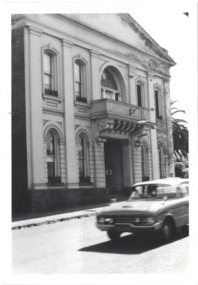
Photograph - Former Kew Town Hall, Walpole Street, 1970
... Former Kew Town Hall, Walpole Street...kew town hall -- walpole street...Black and white photographic positive of the front of the (former) Kew Town Hall in Walpole Street between High Street and Malmsbury Street, on the west side where Woolworth's supermarket now stands. ...Kew was granted independence in 1860. It was declared a borough in 1863, a town in 1910 and a city in 1921. In 1994, Kew was amalgamated into the new City of Boroondara. kew town hall -- walpole street local government -- kew civic buildings -- kew (vic.) town halls -- melbourne (vic.) ...The Municipality of Kew was granted independence in 1860. It was declared a borough in 1863, a town in 1910 and a city in 1921. In 1994, Kew was amalgamated into the new City of Boroondara.Black and white photographic positive of the front of the (former) Kew Town Hall in Walpole Street between High Street and Malmsbury Street, on the west side where Woolworth's supermarket now stands. The photograph, from August 1970 shows the detailing of the Italianate rendered-brick facade, added in the 1880s when the hall was renovated. The earliest building on the site was the Kew Athenaeum Hall (built 1860) which was purchased by Kew Council in 1865. The Town Hall was sold to Woolworth's and subsequently demolished in 1972 when the civic offices were transferred to a new building on the corner of Charles Street and Cotham Road."Old Kew Town Hall / Walpole St / Aug 1970/ Gift of Stewart West 1990"kew town hall -- walpole street, local government -- kew, civic buildings -- kew (vic.), town halls -- melbourne (vic.) -
 Kew Historical Society Inc
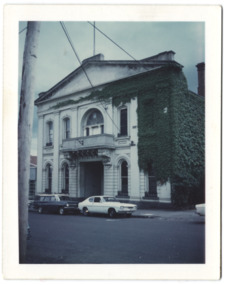
Photograph - Former Kew Town Hall, Walpole Street, 1972
... Former Kew Town Hall, Walpole Street...kew town hall -- walpole street...Kew was granted independence in 1860. It was declared a borough in 1863, a town in 1910 and a city in 1921. In 1994, Kew was amalgamated into the new City of Boroondara. In 1960, a new Town Hall in Cotham Road was opened. The Municipal Offices that had remained in the former Town Hall in Walpole Street...Colour photographic positive (polaroid) of the front of the (former) Kew Town Hall in Walpole Street between High Street and Malmsbury Street, on the west side where Woolworth's supermarket now stands. ...Street in 1972. This is a rare and important colour photograph of the Kew Municipal Offices (former Town Hall) taken on 11/2/1972 in the year that the building was demolished and replaced by a Safeway Supermarket. kew town hall -- walpole street local government -- kew town halls -- melbourne (vic.) ...The Municipality of Kew was granted independence in 1860. It was declared a borough in 1863, a town in 1910 and a city in 1921. In 1994, Kew was amalgamated into the new City of Boroondara. In 1960, a new Town Hall in Cotham Road was opened. The Municipal Offices that had remained in the former Town Hall in Walpole Street until it was moved to the new Civic Centre on the corner of Cotham Road and Charles Street in 1972.This is a rare and important colour photograph of the Kew Municipal Offices (former Town Hall) taken on 11/2/1972 in the year that the building was demolished and replaced by a Safeway Supermarket.Colour photographic positive (polaroid) of the front of the (former) Kew Town Hall in Walpole Street between High Street and Malmsbury Street, on the west side where Woolworth's supermarket now stands. The photograph, taken in February 1972, shows the detailing of the Italianate rendered-brick facade, added in the 1880s when the hall was renovated. The earliest building on the site was the Kew Athenaeum Hall (built 1860) which was purchased by Kew Council in 1865. The Town Hall was sold to Woolworth's and subsequently demolished in 1972 when the civic offices were transferred to a new building on the corner of Charles Street and Cotham Road.kew town hall -- walpole street, local government -- kew, town halls -- melbourne (vic.) -
 Ballarat Heritage Services
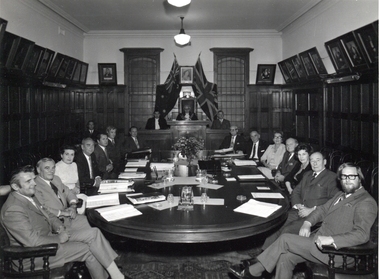
Photograph - Photograph - Black and White, City of Kew Councillors at the last Meeting in the Kew Town Hall, Walpole Street, c1972
... City of Kew Councillors at the last Meeting in the Kew Town Hall, Walpole Street....City of Kew Councillors at the last Meeting in the Kew Town Hall, Walpole Street. Left to right going around the table: Cr Dick Cremin, Cr Ivan Wade, Cr Dorothy Buchanan, Cr Jack Ryan, Cr George McKenzie , Cr Gerard Petrie, Cr Jack Gervasoni, behind these councillors sits Brian Robinson, Laurie Johnson (Town Clerk), Cr Leo Hawkins (Mayor), George Russell (City Engineer) , ?...The former Kew Town Hall was used for an Op Shop for a number of years before it was demolished for a supermarket. city of kew councillors kew town hall dick cremin ivan wade jack ryan gerrie petrie jack gervasoni john hogan gervasoni alan hutchinson gerard petrie Jack Ryan George McKenzie Brian Robinson Laurie Johnson Leo Hawkins George Russell Gladys "Bon" Fink Bon Fink Percival Watts Phyllis Hore Frank O'Brien City of Kew Councillors at the last Meeting in the Kew Town Hall, Walpole Street. ...The former Kew Town Hall was used for an Op Shop for a number of years before it was demolished for a supermarket.City of Kew Councillors at the last Meeting in the Kew Town Hall, Walpole Street. Left to right going around the table: Cr Dick Cremin, Cr Ivan Wade, Cr Dorothy Buchanan, Cr Jack Ryan, Cr George McKenzie , Cr Gerard Petrie, Cr Jack Gervasoni, behind these councillors sits Brian Robinson, Laurie Johnson (Town Clerk), Cr Leo Hawkins (Mayor), George Russell (City Engineer) , ?, ?, Cr Gladys "Bon" Fink, [possible Cr Percival "Percy" Watts?]' Cr Phyllis Hore, [Possibly Cr Frank O'Brien?], Cr Alan Hutchisoncity of kew, councillors, kew town hall, dick cremin, ivan wade, jack ryan, gerrie petrie, jack gervasoni, john hogan gervasoni, alan hutchinson, gerard petrie, jack ryan, george mckenzie, brian robinson, laurie johnson, leo hawkins, george russell, gladys "bon" fink, bon fink, percival watts, phyllis hore, frank o'brien -
 Kew Historical Society Inc
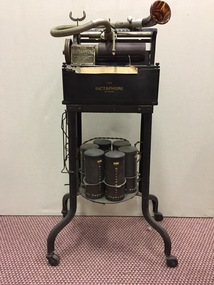
Machine - Dictaphone, 1900-1920
... ...kew town hall (walpole street)...Dictaphone used in the Kew Town Hall in Walpole Street...Dictaphone from the Kew Town Hall Local historic significance due to its use and wider scientific significance for its technological innovation dictaphone kew town hall (walpole street) office equipment recording equipment Metal label: "THE DICTAPHONE / TRADE MARK / 35 WILLIAMS STREET / MELBOURNE / PHONES 3688-11572 / AND AT SYDNEY - BRISBANE - ADELAIDE Dictaphone used in the Kew Town Hall in Walpole Street Machine Dictaphone ...Dictaphone from the Kew Town HallLocal historic significance due to its use and wider scientific significance for its technological innovationDictaphone used in the Kew Town Hall in Walpole StreetMetal label: "THE DICTAPHONE / TRADE MARK / 35 WILLIAMS STREET / MELBOURNE / PHONES 3688-11572 / AND AT SYDNEY - BRISBANE - ADELAIDEdictaphone, kew town hall (walpole street), office equipment, recording equipment -
 Kew Historical Society Inc
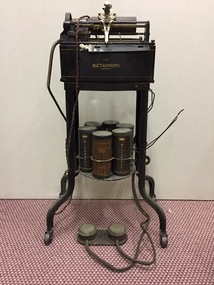
Machine - Dictaphone, The Dictaphone Corporation, 1900-1920
... ...kew town hall (walpole street)...Metal Dictaphone used in the Kew Town Hall in Walpole Street....Office Equipment imported from United States The dictaphone, intact with its cylinders, has historic local importance as an item used in the old Kew Town Hall and also as a work of technological innovation from the first part of the 20th century. dictaphone kew town hall (walpole street) Metal Label (top): "THE DICTAPHONE / REG US PATENT OFF / TRANSCRIBING MACHINE / DICTAPHONE CORPORATION / NEW YORK / MODEL B10 TYPE X / SOLE MANUFACTURERS MADE IN U.S.A" Metal Dictaphone used in the Kew Town Hall in Walpole Street. ...Office Equipment imported from United StatesThe dictaphone, intact with its cylinders, has historic local importance as an item used in the old Kew Town Hall and also as a work of technological innovation from the first part of the 20th century.Metal Dictaphone used in the Kew Town Hall in Walpole Street.Metal Label (top): "THE DICTAPHONE / REG US PATENT OFF / TRANSCRIBING MACHINE / DICTAPHONE CORPORATION / NEW YORK / MODEL B10 TYPE X / SOLE MANUFACTURERS MADE IN U.S.A"dictaphone, kew town hall (walpole street) -
 Kew Historical Society Inc
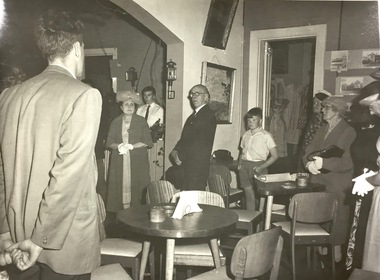
Photograph - Artists of Kew Exhibition, 1950-1960
... ...Kew Town Hall - Walpole street...The location of the exhibition is at the old Kew Town Hall in Walpole Street. Both Miss Figuerola and Cr Dickinson were foundation members of the Kew Historical Society....The location of the exhibition is at the old Kew Town Hall in Walpole Street. Both Miss Figuerola and Cr Dickinson were foundation members of the Kew Historical Society. ...The Melbourne artist Alma Agnes Marion Figuerola, was the daughter of Juan Pedro Narciso Figuerola (1869-1919) and Alice Lucinda Walker Hanson (1889-1969). Each of their three daughters grew up to be involved in the arts: Alma as a painter; Carmen Irene (1906-1993) as a short story writer, poet and teacher of dancing; and Sylvia (also Silvia) Lyla Alice (1911-1992) as a composer and cellist. The first art lessons Alma Figuerola received were with Oscar Binder. Later she attended the art school established by the Melbourne 'tonalist' [Duncan] Max Meldrum (1875-1955). She graduated from his school in 1920, participating in her first group exhibition in the same year. Solo exhibitions of her work were to be held in 1933 at the Meldrum Gallery in Elizabeth Street, in 1937 and 1945 at the Athenaeum Gallery at 188 Collins Street, and in 1951 at Georges Gallery in Collins Street. Throughout her extensive career she participated in group exhibitions, usually with artists of the Meldrum School, and as a member of the Twenty Melbourne Painters, of which she was invited to become an associate in 1935. In 1953, her portrait of Professor ES Hills was entered in the Archibald Prize Competition of the Art Gallery of New South Wales. A resident of Kew from the 1930s - 51 Studley Park Road, often with her mother, her sister Carmen, or both - from c.1942 until her death she lived at 'D’Estaville', 7 Barry Street. From the late 1930s she is recorded as actively contributing to the arts at a local level. In 1939 and 1940 she participated in art exhibitions at the Hawthorn Municipal Library organised by Jessie Carbines. From 1944 to 1951 she co-organised successive Kew Arts Festivals, initially in the Presbyterian Church Hall in Highbury Grove and later at the Recreation Hall in Wellington Street. A foundation member of the Kew Historical Society in 1958, Alma Figuerola remained an active member of the Society until her death on 8 December 1970. She predeceased her two sisters who both died in the 1990s and who are buried at Andersons' Creek Cemetery in Warrandyte.Photograph of a group of adults attending an exhibition entitled Artists of Kew. Two people have been identified in the photograph - Cr WHS Dickinson and Alma Figuerola at centre. The location of the exhibition is at the old Kew Town Hall in Walpole Street. Both Miss Figuerola and Cr Dickinson were foundation members of the Kew Historical Society.Reverse: "Artists of Kew Exhibition. Founder of KHS Cr Dickinson in dark suit. Miss Alma Figrierola [sic] to his left". "KH-97" kew historical society - members, alma figuerola, cr whs dickinson, exhibitions - kew (vic), southesk - cotham road - kew (vic), kew town hall - walpole street -
 Kew Historical Society Inc
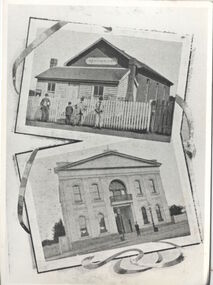
Print, FGA Barnard, Athenaeum Hall & Kew Town Hall, 1910
... athenaeum hall, walpole street...kew town...Together it forms the largest privately-donated collection within the archives of the Kew Historical Society. athenaeum hall, walpole street kew town hall, walpole street dorothy rogers "Athenaeum built 1860. 1865 purchased & Town Hall built around it. ...This work forms part of the collection assembled by the historian Dorothy Rogers, that was donated to the Kew Historical Society by her son John Rogers in 2015. The manuscripts, photographs, maps, and documents were sourced by her from both family and local collections or produced as references for her print publications. Many were directly used by Rogers in writing ‘Lovely Old Homes of Kew’ (1961) and 'A History of Kew' (1973), or the numerous articles on local history that she produced for suburban newspapers. Most of the photographs in the collection include detailed annotations in her hand. The Rogers Collection provides a comprehensive insight into the working habits of a historian in the 1960s and 1970s. Together it forms the largest privately-donated collection within the archives of the Kew Historical Society.A photographic copy of a book plate made for the historian Dorothy Rogers which was first published in the 'Jubilee History of Kew' (1910) by F.G.A. Barnard"Athenaeum built 1860. 1865 purchased & Town Hall built around it. Later a new front was added as in picture - note old lamps - At present under demolition for Safeways Store"athenaeum hall, walpole street, kew town hall, walpole street, dorothy rogers -
 Kew Historical Society Inc
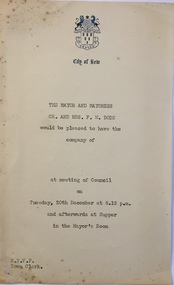
Document (item) - Invitation to a Meeting of Kew Council, City of Kew, 1948
... ...kew town hall -- Walpole street -- Kew (Vic.)...As a continuous record, ranging across most decades of the Twentieth Century, they reveal changing tastes in design, values and relationships in the history of local government in Victoria. ephemera civic ephemera civic invitations cr f w dods kew town hall -- Walpole street -- Kew (Vic.) Invitation by the City of Kew on behalf of the Mayor and Mayoress, Cr and Mrs F W Dods, to a meeting of Council on Tuesday 20 December 1948 and supper afterwards in the Mayors Room. ...The Municipality of Kew (1860-1863), the Borough of Kew (1863-1910), the Town of Kew (1910-1921) and the City of Kew (1921-1994) were local government instrumentalities in the State of Victoria. In 1994, the City of Kew was amalgamated, together with the former Cities of Camberwell and Hawthorn, into the new City of Boroondara (1994- ). Like other local government entities of the period, Kew was administered by town clerks. The two notable town clerks in Kew's history were H. H. (Henry Hirst) Harrison (1868-1955) and W. D. (William Dickie) Birrell (1899-1974). Harrison was appointed to the position in 1901 and retired in 1938 after 37 years. Birrell, appointed Acting Town Clerk in 1921, became Town Clerk in 1938, following Harrison's retirement. He continued in this role until his retirement in 1966. A large part of this collection of civic ephemera was assembled by W. D. Birrell. This is part of an historically significant civic collection, containing hundreds of separate invitations, documents, greeting cards, programmes and tickets issued and/or collected by successive town clerks. Items in the collection illuminate the political, social and cultural history of the district. As a continuous record, ranging across most decades of the Twentieth Century, they reveal changing tastes in design, values and relationships in the history of local government in Victoria.ephemera, civic ephemera, civic invitations, cr f w dods, kew town hall -- walpole street -- kew (vic.) -
 Kew Historical Society Inc
Document (item) - Invitation to a Special Meeting of Kew Council, City of Kew, 1949
... ...kew town hall -- walpole street -- kew (vic.)...As a continuous record, ranging across most decades of the Twentieth Century, they reveal changing tastes in design, values and relationships in the history of local government in Victoria. ephemera civic ephemera civic invitations kew town hall -- walpole street -- kew (vic.) cr w j hambly Invitation to a special meeting of Council by the City of Kew, on behalf of the Mayor and Mayoress, Cr and Mrs W J Hambly, to be held in the Town Hall, Kew, on 22 August 1949. ...The Municipality of Kew (1860-1863), the Borough of Kew (1863-1910), the Town of Kew (1910-1921) and the City of Kew (1921-1994) were local government instrumentalities in the State of Victoria. In 1994, the City of Kew was amalgamated, together with the former Cities of Camberwell and Hawthorn, into the new City of Boroondara (1994- ). Like other local government entities of the period, Kew was administered by town clerks. The two notable town clerks in Kew's history were H. H. (Henry Hirst) Harrison (1868-1955) and W. D. (William Dickie) Birrell (1899-1974). Harrison was appointed to the position in 1901 and retired in 1938 after 37 years. Birrell, appointed Acting Town Clerk in 1921, became Town Clerk in 1938, following Harrison's retirement. He continued in this role until his retirement in 1966. A large part of this collection of civic ephemera was assembled by W. D. Birrell. This is part of an historically significant civic collection, containing hundreds of separate invitations, documents, greeting cards, programmes and tickets issued and/or collected by successive town clerks. Items in the collection illuminate the political, social and cultural history of the district. As a continuous record, ranging across most decades of the Twentieth Century, they reveal changing tastes in design, values and relationships in the history of local government in Victoria.ephemera, civic ephemera, civic invitations, kew town hall -- walpole street -- kew (vic.), cr w j hambly -
 Kew Historical Society Inc
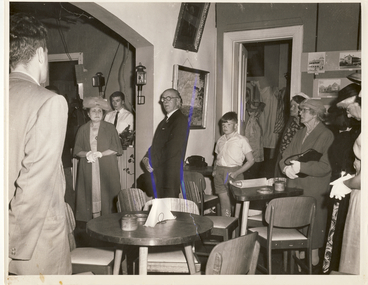
Photograph, Historical Exhibition, Kew, 1964-1965
... It has been suggested that the exhibition at the Kew Town Hall in Walpole Street....It has been suggested that the exhibition at the Kew Town Hall in Walpole Street. Historical Exhibition, Kew Photograph Photograph ...The Melbourne artist Alma Agnes Marion Figuerola, was the daughter of Juan Pedro Narciso Figuerola (1869-1919) and Alice Lucinda Walker Hanson (1889-1969). Each of their three daughters grew up to be involved in the arts: Alma as a painter; Carmen Irene (1906-1993) as a short story writer, poet and teacher of dancing; and Sylvia (also Silvia) Lyla Alice (1911-1992) as a composer and cellist. The first art lessons Alma Figuerola received were with Oscar Binder. Later she attended the art school established by the Melbourne 'tonalist' [Duncan] Max Meldrum (1875-1955). She graduated from his school in 1920, participating in her first group exhibition in the same year. Solo exhibitions of her work were to be held in 1933 at the Meldrum Gallery in Elizabeth Street, in 1937 and 1945 at the Athenaeum Gallery at 188 Collins Street, and in 1951 at Georges Gallery in Collins Street. Throughout her extensive career she participated in group exhibitions, usually with artists of the Meldrum School, and as a member of the Twenty Melbourne Painters, of which she was invited to become an associate in 1935. In 1953, her portrait of Professor ES Hills was entered in the Archibald Prize Competition of the Art Gallery of New South Wales. A resident of Kew from the 1930s - 51 Studley Park Road, often with her mother, her sister Carmen, or both - from c.1942 until her death she lived at 'D’Estaville', 7 Barry Street. From the late 1930s she is recorded as actively contributing to the arts at a local level. In 1939 and 1940 she participated in art exhibitions at the Hawthorn Municipal Library organised by Jessie Carbines. From 1944 to 1951 she co-organised successive Kew Arts Festivals, initially in the Presbyterian Church Hall in Highbury Grove and later at the Recreation Hall in Wellington Street. A foundation member of the Kew Historical Society in 1958, Alma Figuerola remained an active member of the Society until her death on 8 December 1970. She predeceased her two sisters who both died in the 1990s and who are buried at Andersons' Creek Cemetery in Warrandyte.An undated photograph of WHS Dickinson and Alma Figuerola at the opening of an exhibition in Kew in 1964/5. It has been suggested that the exhibition at the Kew Town Hall in Walpole Street.Later hand: "Mayor of Kew opens exhibition of paintings (Miss Alma Figuerola left in doorway). arists - kew (vic), exhibitions -- kew (vic.) -
 Kew Historical Society Inc
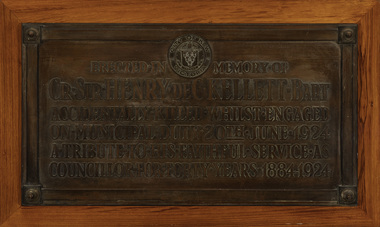
Plaque - Cr. Sir Henry de C. Kellett Bart, 1924
... The plaque to Henry Kellett was originally mounted in the vestibule of the Kew Town Hall in Walpole Street...The plaque bears an extensive dedication and is mounted on a wooden mount that was previously attached to a wall in the Walpole Street [Kew] Town Hall ....The plaque to Henry Kellett was originally mounted in the vestibule of the Kew Town Hall in Walpole Street The plaque was once part of the Municipal Collection of the former City of Kew and was presented to the Kew Historical Society before the move from the Walpole Street (Kew) Town Hall to new Civic offices in Charles Street in 1971. sir henry de castres kellett mayors of kew (vic) councillors of kew (vic) "City of Kew Victoria [logo] / Erected in Memory of / Cr. ...The plaque to Henry Kellett was originally mounted in the vestibule of the Kew Town Hall in Walpole StreetThe plaque was once part of the Municipal Collection of the former City of Kew and was presented to the Kew Historical Society before the move from the Walpole Street (Kew) Town Hall to new Civic offices in Charles Street in 1971.Bronze funeral plaque commemorating the life and death of Sir Henry de Castres Kellett, who was killed in a traffic accident in 1924. The plaque bears an extensive dedication and is mounted on a wooden mount that was previously attached to a wall in the Walpole Street [Kew] Town Hall ."City of Kew Victoria [logo] / Erected in Memory of / Cr. Sir Henry de C. Kellett Bart. / Accidentally Killed Whilst Engaged / On Municipal Duty 20th June 1924 / A Tribute to His Faithful Service as / Councillor for Forty Years 19884-1924"sir henry de castres kellett, mayors of kew (vic), councillors of kew (vic) -
 Kew Historical Society Inc
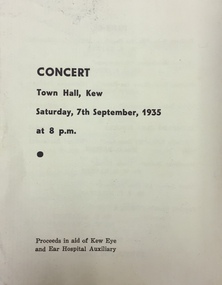
Programme - Concert Program, Concert, Town Hall, Kew, 1935
... Four page program for a concert in the Kew Town Hall, in Walpole Street, given on 7 September 1935. ...Walpole Street Town Hall in September 1935. The final page of the program includes advertisements for a draper and a chemist in Hawthorn concerts - kew (vic) Four page program for a concert in the Kew Town Hall, in Walpole Street, given on 7 September 1935. ...Program for a concert in the Walpole Street Town Hall in September 1935. The final page of the program includes advertisements for a draper and a chemist in HawthornFour page program for a concert in the Kew Town Hall, in Walpole Street, given on 7 September 1935. The proceeds of the concert were to be given to the Kew Eye and Ear Hospital Auxiliary.concerts - kew (vic) -
 Kew Historical Society Inc
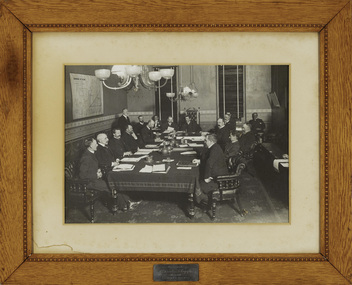
Photograph - Framed Photograph, Kew Town Council, circa 1903, c. 1904
... An early, important photograph of the Kew Councillors at a meeting in the Council Chamber of the Kew Town Hall in Walpole Street. The framed photograph was donated by Sir Stanley Seymour Argyle (1867-1940) who was Mayor of Kew in 1902-03 and 1903-04. ...Kew. Argyle was later to be Premier of Victoria. This is a commemorative photograph, presented by Argyle to the Town of Kew. sir stanley argyle (1867-1940) kew town council council chamber (kew town hall) Brass Plaque: "Presented by / Cr Stanley S. Argyle / Mayor 1902-3 & 1903-4". An early, important photograph of the Kew Councillors at a meeting in the Council Chamber of the Kew Town Hall in Walpole Street ...Medical practitioner Sir Stanley Seymour Argyle (1867-1940) was a man ‘much admired’ for his civic contribution to Kew. To ensure ‘pure [uncontaminated]’ milk for Kew, he co-foundered the Willsmere Certified Milk Company in 1898. His mayoralty of Kew, 1902-04, exhibited superior leadership. In association with local chartable institutions and churches he ensured the unemployed of Kew were not distressed. He also agitated for the removal of the Kew Lunatic Asylum. After a long stint as a doctor in the Army Medical Corps with the Australian Expeditionary Force, Kew formally welcomed him back home in 1918. However, in 1919 he left his two-storey red brick home, on the ‘corner of Gellibrand Street’ for Toorak. He went on to have an outstanding career in radiology at the Alfred Hospital and in Victorian politics. He was cremated following a State funeral. (SMcW)An important photograph of local and statewide historical significance showing Sir Stanley Argyle, Mayor of Kew. Argyle was later to be Premier of Victoria. This is a commemorative photograph, presented by Argyle to the Town of Kew.An early, important photograph of the Kew Councillors at a meeting in the Council Chamber of the Kew Town Hall in Walpole Street. The framed photograph was donated by Sir Stanley Seymour Argyle (1867-1940) who was Mayor of Kew in 1902-03 and 1903-04. Stanley Argyle, later to be Premier of Victoria, is in the mayoral chair wearing his robes of office. The photograph was once displayed in the Kew Town Hall. Brass Plaque: "Presented by / Cr Stanley S. Argyle / Mayor 1902-3 & 1903-4".sir stanley argyle (1867-1940), kew town council, council chamber (kew town hall) -
 Kew Historical Society Inc
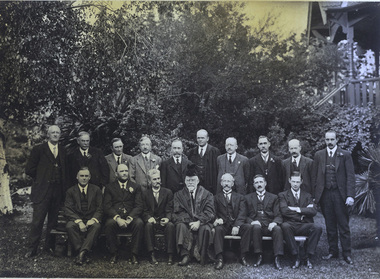
Photograph, J E Barnes, Kew Becomes a City, 1921, 1921
... Kew by Cr Wishart. The framed photograph was hung in the Walpole Street Town Hall. ...Barnes, who had been responsible for creating the series of 19th Century portraits of former mayors that was displayed in the Kew Town Hall in Walpole Street....Barnes, who had been responsible for creating the series of 19th Century portraits of former mayors that was displayed in the Kew Town Hall in Walpole Street. Kew Becomes a City, 1921 Photograph Photograph J E Barnes ...This is a smaller version of the large framed photograph donated to the new City of Kew by Cr Wishart. The framed photograph was hung in the Walpole Street Town Hall. Presumably, each of the Councillors in the portrait was presented with a smaller version.This photograph was donated by a descendant of the Kellett family. This picture, like it framed counterpart, is historically significant as a record of a major civic event in Kew's history. It is also aesthetically significant as the last official photograph taken by the photographer Josiah Earl Barnes before his death in the same year.Kew Becomes a City, 1921. Small photograph mounted on card of the official portrait of the Mayor and Councillors of Kew in 1921. Josiah Earl Barnes, the photographer, posed the group in front of the Jubilee Rotunda in the Alexandra Gardens in Cotham Road, Kew. At the centre of the group in mayoral robes is the then mayor of Kew, Cr. F.G.A. Barnard. This was to be the last major commission by the Council for J.E. Barnes, who had been responsible for creating the series of 19th Century portraits of former mayors that was displayed in the Kew Town Hall in Walpole Street.J. E. Barnes / Photoj.e. barnes, kew (victoria), kew city council, alexandra gardens, f.g.a. barnard -
Kew Historical Society Inc
Archive (Sub-series) - Subject File, Kew Historical Society, Horse Trough & Hitching Post [Kew], 1966
... Another letter from B F Bade in 1986 identifies the hitching post as having been once located outside the old Kew Town Hall in Walpole Street, and dating from 1907. The latter was acquired in 1987 and installed in 1988 during the Bicentennial. ...Another letter from B F Bade in 1986 identifies the hitching post as having been once located outside the old Kew Town Hall in Walpole Street, and dating from 1907. The latter was acquired in 1987 and installed in 1988 during the Bicentennial. ...Various partiesReference, Research, InformationSecondary Values (KHS Imposed Order)Correspondence and published articles relating to the horse trough and hitching post outside the gates of the Boroondara General Cemetery. The earliest item of correspondence is a typed and signed letter from the historian Dorothy Rogers to Mrs West, Secretary of the Kew Historical Society, dated 13 Feb 1966. It relates to transport, including horse trams that travelled through Kew. Another letter from B F Bade in 1986 identifies the hitching post as having been once located outside the old Kew Town Hall in Walpole Street, and dating from 1907. The latter was acquired in 1987 and installed in 1988 during the Bicentennial. The horse trough was originally located on this site and restored in 1988.kew historical society - archives, kew - history, boroondara general (kew) cemetery, george bills, annis bills, horse transport - melbournekew historical society - archives, kew - history, boroondara general (kew) cemetery, george bills, annis bills, horse transport - melbourne -
 Kew Historical Society Inc
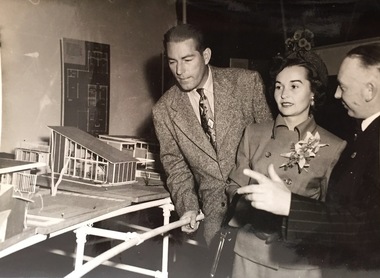
Photograph - Publicity Photograph, Herald Feature Service, Inspection of Architectural Models for a New Kew City Hall, circa 1959, 1959
... The original Kew Town Hall offices were located in Walpole Street, Kew. Before 1960, even though it had been much discussed over a number of decades, Kew did not have a 'civic hall'. ...The original Kew Town Hall offices were located in Walpole Street, Kew. Before 1960, even though it had been much discussed over a number of decades, Kew did not have a 'civic hall'. ...The original Kew Town Hall offices were located in Walpole Street, Kew. Before 1960, even though it had been much discussed over a number of decades, Kew did not have a 'civic hall'. When required, events such as balls, exhibitions or theatrical events were held in the Kew Recreation Hall in Walpole Street. A new City Hall was to be opened by Sir Robert Menzies in 1960. It was located beside the Alexandra Gardens in Cotham Road. It is now used as the Kew Library. Cr Hugh George Ferguson (at right) was born in June 1900 in Williamstown. After his family moved to Kew, they lived in Fernhurst Grove while his future wife’s family lived in Fellows Street. He married in 1940 and subsequently joined the Australian Imperial Forces. After the war he worked as a Billeting Affairs Organiser for the Dutch Government, resettling migrants in Australia. He also worked in advertising as an account manager, and was campaign director for Arthur Rylah is Victorian politics. He organised the first major trade fairs at the Royal Exhibition Buildings after the Second World War, including a World Trade Fair. He built a home in Brougham Street and represented North Ward on Kew Council from 1952 to 1968. He was elected Mayor for the 1959-60 term. He died in 1975, aged 75, and is buried in Boroondara Cemetery.An item of historical interest donated by members of the Dods family in 2006. The Dods-Ferguson Collection includes a number of items once in the possession of the families related to or descended from two mayors of Kew: Cr. Hugh Ferguson and Cr. Frederick Dods.Publicity photograph of two men and a woman inspecting architectural models for a new Kew City Hall. The man at the right of the photograph is Cr Hugh George Ferguson, Mayor of Kew 1959-60. The Hall, now occupied by the Kew Library, was opened by The Hon H.E. Bolte MLA, Premier of Victoria in 1960.Herald Sun Feature Service / Hugh G. Ferguson & Associates / New Kew City Hall. kew city hall, hugh g. ferguson & asociates, architectural models - kew, cr hugh george ferguson -
 Kew Historical Society Inc
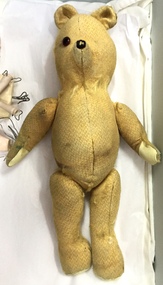
Leisure object, Teddy Bear, 1930-1955
... In August, 1920, The Kew Town Council decided to establish a Baby Health Centre in Kew. The first Centre was opened in a room in the Town Hall in Walpole Street on 5 November 1920. ...In August, 1920, The Kew Town Council decided to establish a Baby Health Centre in Kew. The first Centre was opened in a room in the Town Hall in Walpole Street on 5 November 1920. ...In August, 1920, The Kew Town Council decided to establish a Baby Health Centre in Kew. The first Centre was opened in a room in the Town Hall in Walpole Street on 5 November 1920. In May 1939, the Railway Commissioners agreed to lease a site at the Kew Railway Station for a Baby Health Centre for a term of 21 years at 3 pounds per annum. A building, designed by Roland Chipperfield, was erected, and the Centre previously conducted at the Town Hall transferred there. This became known as the Denmark Street Baby Health Centre. (Cr. W.D. Vaughan, Kew’s Civic Century, W.D. Vaughan Pty Ltd., Kew, 1960, pp.96 & 97.)Small teddy bear with only one eye remaining and with a number of repairs. The bear was used by children at the Denmark Street Baby Health Centre in Kew.toys - teddy bears, denmark street baby health centre - kew (vic) -
 Kew Historical Society Inc
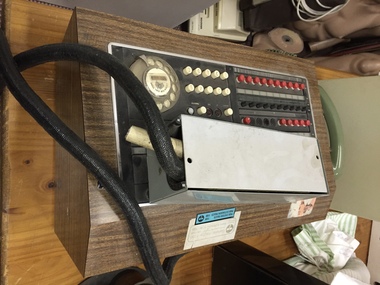
Equipment, City of Kew Switchboard, 1960s
... Kew was established in 1860. Through successive incarnations as a municipality, borough, town and city, its headquarters, at least until 1972, were located in a town hall in Walpole Street. ...Kew was established in 1860. Through successive incarnations as a municipality, borough, town and city, its headquarters, at least until 1972, were located in a town hall in Walpole Street. ...The local government area of Kew was established in 1860. Through successive incarnations as a municipality, borough, town and city, its headquarters, at least until 1972, were located in a town hall in Walpole Street. In 1994, the city was amalgamated into a new City of Boroondara. This items served as telephone equipment - a switchboard - in the City's civic offices.Switchboard used in the City of Kew's Civic Offices in Walpole Street. The redundant equipment was donated to the Society in 1988.office equipment, city of kew, switchboards -
 Kew Historical Society Inc
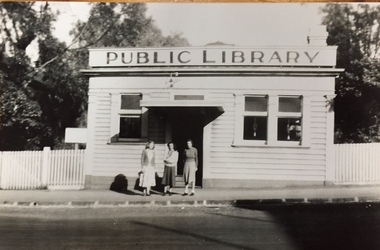
Photograph - Print Copy, Public Library, Walpole Street, Kew
... A rare image of the Kew Library in Walpole Street after it had been renovated. The Library was situated beside the Town Hall. municipal libraries - kew kew municipal library - walpole street *(kew) On reverse of original: "5/4/49, MIRI DICKINSON, MARIE DICKENS, BERYL OAKES AT KEW LIBRARY Black and white print made from an original in the possession of the donor Public Library, Walpole Street, Kew Photograph Print Copy ...In a letter accompanying the donation, the donor writes "I am enclosing a photograph ... I have now established that Emma Murray has a daughter Alma who was also a librarian and probably took the photo."A rare image of the Kew Library in Walpole Street after it had been renovated. The Library was situated beside the Town Hall.Black and white print made from an original in the possession of the donorOn reverse of original: "5/4/49, MIRI DICKINSON, MARIE DICKENS, BERYL OAKES AT KEW LIBRARYmunicipal libraries - kew, kew municipal library - walpole street *(kew) -
 Kew Historical Society Inc
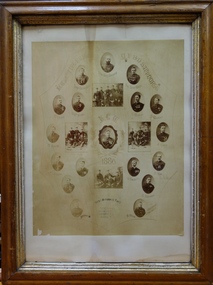
Award, Kew Fire Brigade / Best Average Time, 16 points / U.F.B.D. Sandhurst, 1886
... Kew Borough Council having decided to initiate a fire brigade, invited volunteers to send in their names. About 40 complied with the invitation and met at the Town-hall to choose 12 of their number to form the brigade. The 12 elected then chose their officers as follows :— Councillor Gray, captain ; Mr. Thomas Greenhill, foreman ; and Mr. H. Loxton, secretary. The brigade decided to apply to the council for uniforms and a bell; and after adopting rules for their guidance the meeting separated. The brigade now possesses a reel and 500ft. of hose, and a shed is being erected in Little Walpole-street...Kew Borough Council having decided to initiate a fire brigade, invited volunteers to send in their names. About 40 complied with the invitation and met at the Town-hall to choose 12 of their number to form the brigade. The 12 elected then chose their officers as follows :— Councillor Gray, captain ; Mr. Thomas Greenhill, foreman ; and Mr. H. Loxton, secretary. The brigade decided to apply to the council for uniforms and a bell; and after adopting rules for their guidance the meeting separated. The brigade now possesses a reel and 500ft. of hose, and a shed is being erected in Little Walpole-street ...1879 - The Argus, Friday 11 July 1879, page 4. The Kew Borough Council having decided to initiate a fire brigade, invited volunteers to send in their names. About 40 complied with the invitation and met at the Town-hall to choose 12 of their number to form the brigade. The 12 elected then chose their officers as follows :— Councillor Gray, captain ; Mr. Thomas Greenhill, foreman ; and Mr. H. Loxton, secretary. The brigade decided to apply to the council for uniforms and a bell; and after adopting rules for their guidance the meeting separated. The brigade now possesses a reel and 500ft. of hose, and a shed is being erected in Little Walpole-street for a station. The council have applied for six additional fireplugs in the Main-road, so that the brigade may now be considered fairly established. 1886 - Globe (Sydney), Tuesday 16 March 1886, page 8 The Kew Fire Brigade, which obtained the pride of place at the recent fire brigades' demonstration, at Sandhurst, was met on their return at Spencer-street Railway Station by the Mayor and Councillors of that suburb, and were subsequently entertained at the Greyhound Hotel. 1886 - South Bourke and Mornington Journal, Wednesday 17 March 1886, page 2 It may be, deemed remarkable, but nevertheless a fact, 'that the Kew Fire Brigade, comparatively a new one, has gained premier place at the recent contest of brigades held at Ballarat, winning two first prizes and two second. On returning they were met at the station and escorted to Kew, preceded by the Borough banner. Certificate awarded to the Kew Volunteer Fire Brigade as an award for winning 'the best average time' in competition at Sandhurst. Surrounding the team's photo are a series of individual oval named portraits of the team. This framed version of the certificate, (there are two in the collection) is less faded than the framed version.The photograph without the mount (2016.0097a) has been digitally enhanced. Inscription: "Kew Fire Brigade U.F.B.D. Sandhurst. Kew 1886: Best Average Time, 16 points"kew volunteer fire brigade -
 Kew Historical Society Inc
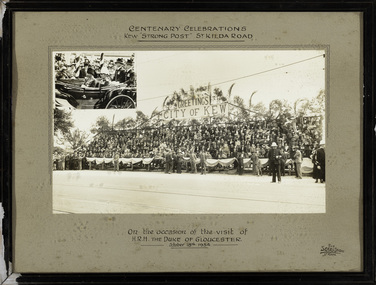
Photograph, The Sears Studio, Centenary Celebrations : Kew "Strong Post" St Kilda Road, 1934
... The photograph of the Kew Strong Post was once part of the Municipal Collection of the former City of Kew and was presented to the Kew Historical Society before the move from the Walpole Street (Kew) Town Hall to new Civic offices in Charles Street in 1971....The photograph of the Kew Strong Post was once part of the Municipal Collection of the former City of Kew and was presented to the Kew Historical Society before the move from the Walpole Street (Kew) Town Hall to new Civic offices in Charles Street in 1971. ...Cr. W.D. Vaughan in 'Kew's Civic History' (1960) records that: "In connection with the Melbourne Centenary Celebrations in 1934, the Kew Council decided to organise a strong post as an appropriate gesture of welcome to H.R.H. the Duke of Gloucester. Also that the municipality be represented by a symbolic floral float in the Royal pageant. This was a striking entry and won first prize, and evoked much comment on account of its originality and truly Australian motif." The photograph of the Kew Strong Post was once part of the Municipal Collection of the former City of Kew and was presented to the Kew Historical Society before the move from the Walpole Street (Kew) Town Hall to new Civic offices in Charles Street in 1971.Historic photograph of participation by the City of Kew in celebrations for a royal visitFramed and glazed photograph on its original inscribed mount and original frame of the Kew "Strong Post" in St Kilda Road on the occasion of the visit to Melbourne of the Duke of Gloucester. The photograph has two components, at the upper left is a photo of the royal carriage while the man photo shows the people of Kew on a decorated 'Strong Post' on St Kilda Road, along which the procession progressed. T"Centenary Celebrations / Kew "Strong Post" St Kilda Road / On the occasion of the visit of / H.R.H. The Duke of Gloucester / October 18th 1934."royal visits - melboure - 1934, duke of gloucester, kew (vic.) — municipal collection -
 Kew Historical Society Inc
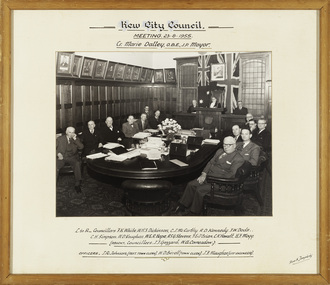
Photograph, Stuart Tompkins, Kew City Council Meeting, Cr Marie Dalley, O.B.E., J.P., Mayor, 1955
... kew city council - 1955...council chamber - walpole street (kew) town hall...Framed photograph of the Kew City Council at a meeting in the Council Chamber of the Walpole Street {Kew] Town Hall in August 1955; the Mayor Cr. ...The photograph was once part of the Municipal Collection of the former City of Kew and was presented to the Kew Historical Society in 1989. mayors of kew (vic) kew city council - 1955 council chamber - walpole street (kew) town hall kew (vic.) — municipal collection Framed photograph of the Kew City Council at a meeting in the Council Chamber of the Walpole Street {Kew] Town Hall in August 1955; the Mayor Cr. ...Cr. Marie Dalley was the first female mayor of Kew in 1954-55. The photograph shows the interior of the Council Chamber in the 1950s.An original photograph of Cr. Marie Dalley and councillors in 1955. The photograph was once part of the Municipal Collection of the former City of Kew and was presented to the Kew Historical Society in 1989.Framed photograph of the Kew City Council at a meeting in the Council Chamber of the Walpole Street {Kew] Town Hall in August 1955; the Mayor Cr. Marie Dalley chairing the meeting. Names of the councillors and council staff are inscribed on the mount. mayors of kew (vic), kew city council - 1955, council chamber - walpole street (kew) town hall, kew (vic.) — municipal collection -
 Kew Historical Society Inc
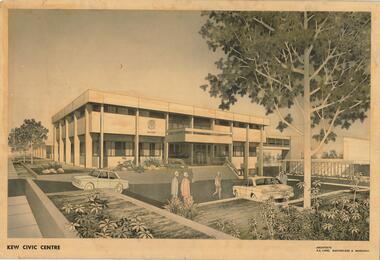
Drawing, AK Lines, Macfarlane & Marshall, Kew Civic Centre, c.1970
... Kew Civic Hall (A C Leith & Bartlett, 1960) on the site of the former mansion Ordsall (later renamed South Esk). Whereas the entrance to the Civic Hall was positioned off Civic Drive, the main entrance to the Civic Centre faced Cotham Road, as shown in the undated perspective drawing of the proposed building. The Civic Hall was used for public functions and performances, while the Civic Centre was used for civic offices. It also contained the Council Chamber. The building opened in 1972, following the relocation of the councillors and council officers from the former Town Hall in Walpole Street...Kew Civic Hall (A C Leith & Bartlett, 1960) on the site of the former mansion Ordsall (later renamed South Esk). Whereas the entrance to the Civic Hall was positioned off Civic Drive, the main entrance to the Civic Centre faced Cotham Road, as shown in the undated perspective drawing of the proposed building. The Civic Hall was used for public functions and performances, while the Civic Centre was used for civic offices. It also contained the Council Chamber. The building opened in 1972, following the relocation of the councillors and council officers from the former Town Hall in Walpole Street ...The Kew Civic Centre (A K Lines, MacFarlane & Marshall, 1972) was built next to the Kew Civic Hall (A C Leith & Bartlett, 1960) on the site of the former mansion Ordsall (later renamed South Esk). Whereas the entrance to the Civic Hall was positioned off Civic Drive, the main entrance to the Civic Centre faced Cotham Road, as shown in the undated perspective drawing of the proposed building. The Civic Hall was used for public functions and performances, while the Civic Centre was used for civic offices. It also contained the Council Chamber. The building opened in 1972, following the relocation of the councillors and council officers from the former Town Hall in Walpole Street (now a Woolworth's supermarket). Following the amalgamation of the former City of Kew into the City of Boroondara in 1994, the Civic Centre was sold to Trinity Grammar School. The exterior of the Centre has been modified by Trinity Grammar.A report for Heritage Victoria (date) describes how two architectural firms dominated the designs for new civic buildings in Victoria during the post war period. The report claims that: "An interesting sub-theme in the erection of post-war municipal offices in Victoria is that a considerable proportion were designed by the same three or four Melbourne-based architectural firms, who established themselves as the leading specialists in this type of work. The two most prolific firms in this regard were A K Lines, MacFarlane & Marshall, and A C Leith & Bartlett; both, in fact, had made names for themselves as designers of local government offices prior to the Second World War. Lines' office, for example had designed the Eltham Shire Offices in 1941, while Leith's firm had been responsible for the celebrated Heidelberg Town Hall in 1937). Both practices parleyed this early experience into a lucrative post-war career, designing numerous municipals offices well into the 1970s." (Survey of Post-War Built Heritage in Victoria, Built Heritage Pty Ltd, 2010.) The perspective drawing importantly captures the original design and function of the exterior of the building and its public entrance.Hand-coloured perspective sketch of the new Kew Civic Centre, completed in 1972 to designs by A K Lines, MacFarlane & Marshall; and located on the corner of Charles Street and Cotham Road, Kew. The sketch represents the front elevation of the building and its relation to the preexisting Kew Civic Hall at right. The three storey building features strong vertical concrete buttresses that extend across the three levels. KEW CIVIC CENTRE / A K LINES, MACFARLANE & MARSHALLkew civic centre, a.k. lines, macfarlane & marshall, architectural drawings, civic buildings -- kew (vic.), town hall -- kew (vic) -
 Kew Historical Society Inc
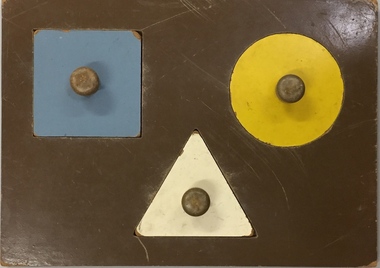
Leisure object, Child's Puzzle : Denmark Street Baby Health Centre, c.1950s
... In August, 1920, The Kew Town Council decided to establish a Baby Health Centre in Kew. The first Centre was opened in a room in the Town Hall in Walpole Street on 5 November 1920. ...In August, 1920, The Kew Town Council decided to establish a Baby Health Centre in Kew. The first Centre was opened in a room in the Town Hall in Walpole Street on 5 November 1920. ...In August, 1920, The Kew Town Council decided to establish a Baby Health Centre in Kew. The first Centre was opened in a room in the Town Hall in Walpole Street on 5 November 1920. In May 1939, the Railway Commissioners agreed to lease a site at the Kew Railway Station for a Baby Health Centre for a term of 21 years at 3 pounds per annum. A building, designed by Roland Chipperfield, was erected, and the Centre previously conducted at the Town Hall transferred there. This became known as the Denmark Street Baby Health Centre. (Cr. W.D. Vaughan, Kew’s Civic Century, W.D. Vaughan Pty Ltd., Kew, 1960, pp.96 & 97.)One of a pair of wooden puzzles used in the Denmark Street Baby Health Centre in Kew.denmark street baby health centre - kew (vic), baby health centres - kew (vic), games and puzzles -
 Kew Historical Society Inc
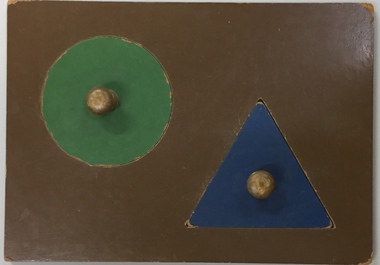
Leisure object, Child's Puzzle : Denmark Street Baby Health Centre, c.1950s
... In August, 1920, The Kew Town Council decided to establish a Baby Health Centre in Kew. The first Centre was opened in a room in the Town Hall in Walpole Street on 5 November 1920. ...In August, 1920, The Kew Town Council decided to establish a Baby Health Centre in Kew. The first Centre was opened in a room in the Town Hall in Walpole Street on 5 November 1920. ...In August, 1920, The Kew Town Council decided to establish a Baby Health Centre in Kew. The first Centre was opened in a room in the Town Hall in Walpole Street on 5 November 1920. In May 1939, the Railway Commissioners agreed to lease a site at the Kew Railway Station for a Baby Health Centre for a term of 21 years at 3 pounds per annum. A building, designed by Roland Chipperfield, was erected, and the Centre previously conducted at the Town Hall transferred there. This became known as the Denmark Street Baby Health Centre. (Cr. W.D. Vaughan, Kew’s Civic Century, W.D. Vaughan Pty Ltd., Kew, 1960, pp.96 & 97.)One of a pair of wooden puzzles used in the Denmark Street Baby Health Centre in Kew.denmark street baby health centre - kew (vic), baby health centres - kew (vic), games and puzzles -
 Kew Historical Society Inc
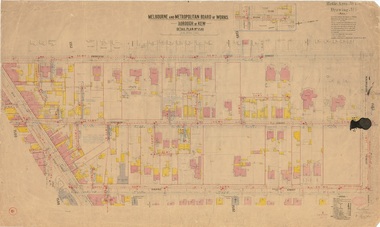
Plan, Melbourne & Metropolitan Board of Works : Borough of Kew : Detail Plan No.1581, 1904
... Town, then City of Kew. The hand-coloured sections of buildings on the plan were used to denote masonry or brick constructions (pink), weatherboard constructions (yellow), and public buildings (grey). The streets and built structures in this plan were surveyed in 1903 and released to contractors in 1904. In addition to the designation of building types by colour, the plan includes detailed descriptions of land use and ownership. While many buildings remain from this period, a number of the buildings represented have been demolished including the original Kew Town Hall, and the Congregational and Roman Catholic churches in Walpole...Town, then City of Kew. The hand-coloured sections of buildings on the plan were used to denote masonry or brick constructions (pink), weatherboard constructions (yellow), and public buildings (grey). The streets and built structures in this plan were surveyed in 1903 and released to contractors in 1904. In addition to the designation of building types by colour, the plan includes detailed descriptions of land use and ownership. While many buildings remain from this period, a number of the buildings represented have been demolished including the original Kew Town Hall, and the Congregational and Roman Catholic churches in Walpole ...The Melbourne and Metropolitan Board of Works (MMBW) plans were produced from the 1890s to the 1950s. They were crucial to the design and development of Melbourne's sewerage and drainage system. The plans, at a scale of 40 feet to 1 inch (1:480), provide a detailed historical record of Melbourne streetscapes and environmental features. Each plan covers one or two street blocks (roughly six streets), showing details of buildings, including garden layouts and ownership boundaries, and features such as laneways, drains, bridges, parks, municipal boundaries and other prominent landmarks as they existed at the time each plan was produced. (Source: State Library of Victoria)This plan forms part of a large group of MMBW plans and maps that was donated to the Society by the Mr Poulter, City Engineer of the City of Kew in 1989. Within this collection, thirty-five hand-coloured plans, backed with linen, are of statewide significance as they include annotations that provide details of construction materials used in buildings in the first decade of the 20th century as well as additional information about land ownership and usage. The copies in the Public Record Office Victoria and the State Library of Victoria are monochrome versions which do not denote building materials so that the maps in this collection are invaluable and unique tools for researchers and heritage consultants. A number of the plans are not held in the collection of the State Library of Victoria so they have the additional attribute of rarity.Original survey plan, issued by the MMBW to a contractor with responsibility for constructing sewers in the area identified on the plan within the Borough of Kew. The plan was at some stage hand-coloured, possibly by the contractor, but more likely by officers working in the Engineering Department of the Borough and later Town, then City of Kew. The hand-coloured sections of buildings on the plan were used to denote masonry or brick constructions (pink), weatherboard constructions (yellow), and public buildings (grey). The streets and built structures in this plan were surveyed in 1903 and released to contractors in 1904. In addition to the designation of building types by colour, the plan includes detailed descriptions of land use and ownership. While many buildings remain from this period, a number of the buildings represented have been demolished including the original Kew Town Hall, and the Congregational and Roman Catholic churches in Walpole Street. While the mansion ‘Illapa’ in Princess Street is still extant – now part of ‘Rylands’ – the neighbouring mansion ‘Elsmere’ was demolished some decades ago. Rivalling Illapa and Elsmere in size were two mansions in Walpole Street, one named on the plan as ‘Gnarlbine’. Over time, Kew Junction and the south side of High Street have been reconfigured and widened, so that the commercial buildings on the corner of Princess and High Street no longer exist. A surprising feature of this part of central Kew to the northwest of Kew Junction is the amount of vacant land. In a number of cases, this land is noted by the contractor as used for vegetable gardens.melbourne and metropolitan board of works, detail plans, maps - borough of kew, mmbw 1581, cartography -
 Kew Historical Society Inc
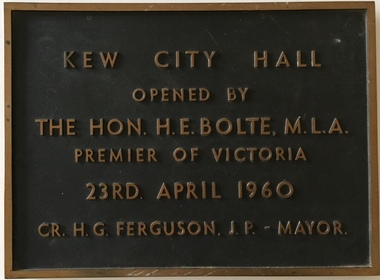
Plaque, Kew City Hall : Opened by The Hon H.E. Bolte M.L.A. Premier of Victoria 23rd April 1960 : Cr H.H. Ferguson J.P. Mayor, 1960
... The Municipality of Kew was proclaimed on 19 December 1860, then upgraded to a Borough (1863), a Town (1910) and finally a City (1921). From 1865, its offices were based in the former Athenaeum Hall in Walpole Street, which, although extended in 1883, inevitably became inadequate. ...The Municipality of Kew was proclaimed on 19 December 1860, then upgraded to a Borough (1863), a Town (1910) and finally a City (1921). From 1865, its offices were based in the former Athenaeum Hall in Walpole Street, which, although extended in 1883, inevitably became inadequate. ...The Municipality of Kew was proclaimed on 19 December 1860, then upgraded to a Borough (1863), a Town (1910) and finally a City (1921). From 1865, its offices were based in the former Athenaeum Hall in Walpole Street, which, although extended in 1883, inevitably became inadequate. Plans for a new purpose-built Town Hall were first mooted in the late 1880s, but fell prey to six subsequent decades of debate. During that time, many sites were considered and rejected, and several schemes prepared. Finally, in 1945, it was resolved to build a new civic centre as a war memorial. The council acquired Southesk, a mansion on the south-west corner of Cotham Road and Charles Street – first mooted as a possible Town Hall site two decades earlier – and plans for a civic precinct were drawn up by John Scarborough. The project stalled until 1957, when a Town Hall Committee was formed and a new architect appointed: Harold Bartlett of Leith & Bartlett. He also proposed an entire civic precinct, of which a large public hall would constitute Stage One. Designed to accommodate almost any public or official function, the space had had a small stage at one end for intimate theatrical productions, a larger stage at the other (with operable sunken orchestra pit) for musical performances, plus the most up-to-date equipment for live TV transmission. The building, befitting its original intent as a war memorial, was also to include a sculpted monument, for which a separate design competition was held. First prize went to George H Allen (1900-1972), long-time head of the Sculpture Department at RMIT and a former war artist himself (the only one, in fact, to have worked in the medium of sculpture). At the time of the Kew project, Allen was best known for his Cenotaph at the Shrine of Remembrance (1955) and a controversial abstract sculpture at Hume House in William Street (1957). Tenders for the new hall were called and the contract (worth £104,986) was awarded to H F Yuncken. The foundation stone was laid by the Mayor, Cr F C O'Brien, on 1 June 1959. Completion (initially scheduled for October) was delayed by the unavailability of certain materials; it was barely finished in time for the official opening (by Premier Henry Bolte) on 23 April 1960. The war memorial was unveiled two days later (Anzac Day) by Bolte's deputy, the Hon A G Rylah. Fittingly, that year also marked Kew's municipal centenary, and many celebratory events were held in and around the new civic centre in December, including a special council meeting (attended by the Prime Minister), a tree planting ceremony and a youth ball. Source: Survey of Built Heritage in Victoria: Stage Two (Built Heritage Pty Ltd., 2010)Plaque commemorating the opening of a new town hall in KewMetal plaque recording the official opening of the Kew City Hall, 23rd April 1960. This plaque was given to the Kew Historical Society in 1991 by the former City of Kew.Kew City Hall / Opened by / The Hon. H.E. Bolte M.L.A. / Premier of Victoria / 23rd April 1960 / Cr. H.G. Ferguson J.P. - Mayor.kew city hall, foundation stones - kew (vic), sir henry bolte, local government -- kew (vic.) -
 Kew Historical Society Inc
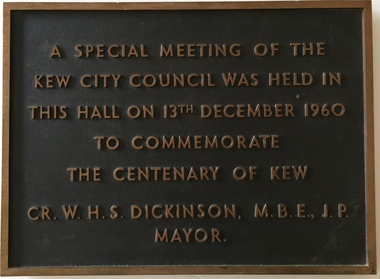
Plaque, A Special Meeting of the Kew City Council Was Held in This Hall on 13th December 1960 to Commemorate the Centenary of Kew : Cr. W.H.S. Dickinson M.B.E., J.P. Mayor, 1960
... The Municipality of Kew was proclaimed on 19 December 1860, then upgraded to a Borough (1863), a Town (1910) and finally a City (1921). From 1865, its offices were based in the former Athenaeum Hall in Walpole Street, which, although extended in 1883, inevitably became inadequate. ...The Municipality of Kew was proclaimed on 19 December 1860, then upgraded to a Borough (1863), a Town (1910) and finally a City (1921). From 1865, its offices were based in the former Athenaeum Hall in Walpole Street, which, although extended in 1883, inevitably became inadequate. ...The Municipality of Kew was proclaimed on 19 December 1860, then upgraded to a Borough (1863), a Town (1910) and finally a City (1921). From 1865, its offices were based in the former Athenaeum Hall in Walpole Street, which, although extended in 1883, inevitably became inadequate. Plans for a new purpose-built Town Hall were first mooted in the late 1880s, but fell prey to six subsequent decades of debate. During that time, many sites were considered and rejected, and several schemes prepared. Finally, in 1945, it was resolved to build a new civic centre as a war memorial. The council acquired Southesk, a mansion on the south-west corner of Cotham Road and Charles Street – first mooted as a possible Town Hall site two decades earlier – and plans for a civic precinct were drawn up by John Scarborough. The project stalled until 1957, when a Town Hall Committee was formed and a new architect appointed: Harold Bartlett of Leith & Bartlett. He also proposed an entire civic precinct, of which a large public hall would constitute Stage One. Designed to accommodate almost any public or official function, the space had had a small stage at one end for intimate theatrical productions, a larger stage at the other (with operable sunken orchestra pit) for musical performances, plus the most up-to-date equipment for live TV transmission. The building, befitting its original intent as a war memorial, was also to include a sculpted monument, for which a separate design competition was held. First prize went to George H Allen (1900-1972), long-time head of the Sculpture Department at RMIT and a former war artist himself (the only one, in fact, to have worked in the medium of sculpture). At the time of the Kew project, Allen was best known for his Cenotaph at the Shrine of Remembrance (1955) and a controversial abstract sculpture at Hume House in William Street (1957). Tenders for the new hall were called and the contract (worth £104,986) was awarded to H F Yuncken. The foundation stone was laid by the Mayor, Cr F C O'Brien, on 1 June 1959. Completion (initially scheduled for October) was delayed by the unavailability of certain materials; it was barely finished in time for the official opening (by Premier Henry Bolte) on 23 April 1960. The war memorial was unveiled two days later (Anzac Day) by Bolte's deputy, the Hon A G Rylah. Fittingly, that year also marked Kew's municipal centenary, and many celebratory events were held in and around the new civic centre in December, including a special council meeting (attended by the Prime Minister), a tree planting ceremony and a youth ball. Source: Survey of Built Heritage in Victoria: Stage Two (Built Heritage Pty Ltd., 2010)Historically significant commemorative plaqueMetal plaque relating to special Council meeting to mark centenary of Kew, 13th December 1960. This plaque was given to the Kew Historical Society in 1991 by the former City of Kew.A Special Meeting Of The / Kew City Council Was Held In / This Hall On 13th December 1960 / To Commemorate / The Centenary of Kew / Cr. W.H.S. Dickinson, M.B.E., J.P., / Mayorkew city hall, foundation stones - kew (vic), cr. w.h.s. dickinson, local government -- kew (vic.) -
Kew Historical Society Inc
Journal, Kewriosity : May 1991
... Kew] Community House courses / p7. Coming events at Trinity [Grammar] / p7. Carmelite Monastery restoration / p7. Council Chamber or Council void? [descriptive comparison of Walpole Street Town Hall ...Flying doctors descend on Kew [Crawford Productions] / p1. Computerised court opens [Penalty Enforcement by Registration of an Infringement (PERIN)] / p1. Stop or give-way? [Council assessment of intersections] / p1. Council seeks kinder review / p1. Diary dates for May / p2. Your marching champions [Kew Band, Kew Youth Band] / p2. Word of mouth [Pre-school story time at Kew Library 1996- ] / p2. Something airey [exhibition at Kew Gallery] / p2. Something pre-loved [Glass Street Kindergarten trash 'n treasure sale] / p2. Commentary [Willsmere redevelopment] / Cr Daryl Oldaker p3. Traffic headaches for Barkers Road [drain upgrade] / p3. Trees versus powerlines / p4. Loyal service [Tom Gascoyne] / p4. Traffic Management update [Area 7, Area 10] / p4. Cleaner shopping centres / p4. Hard rubbish collection / p4. Willsmere Drain / p4. Survey of dual occupancy / p4. Health [Department] stall / p5. Women's health workshops / p5. Baby Change Room [Walpole Street] / p5. Nursing Mothers' meetings / p5. Status quo for family day care [industrial award ruling] / p5. Immunisation - Important / p5. Daytime garden / p6. Library Friends' [book] sale / p6. [East Kew Bowling Club] Indoor bowls / p6. Chrysanthemums, M'am [Kew Garden Club] / p6. Handy Veterans Service [Kew sub-branch of the RSL] / p6. Crime wave [Neighbourhood Watch Areas G64, G97] / p6. All this for sixpence [Balwyn Cinema history] / p6. Positive [survey] feedback [to Kewriosity] / p6. Arthritis meeting / p6. Something fishy [Ian Napier at Raya Gallery] / p7. [Kew] Community House courses / p7. Coming events at Trinity [Grammar] / p7. Carmelite Monastery restoration / p7. Council Chamber or Council void? [descriptive comparison of Walpole Street Town Hall with the Chamber at the Municipal [Civic] Offices] / p8. Evangelist meeting [St Hilary's] / p8. Youth empowerment [Youth Resource Centre] / Kate Lang p8. Missions meeting [Kew Baptist Church Hall] / p8.Kewriosity was a local newsletter combining Kew Council and community news. It was published between November 1983 and June 1994, replacing an earlier Kewriosity [broad] Sheet (1979-84). In producing Kewriosity, Council aimed to provide a range of interesting and informative articles covering its deliberations and decision making, together with items of general interest and importance to the Kew community and information not generally available through daily media outlets.non-fictionFlying doctors descend on Kew [Crawford Productions] / p1. Computerised court opens [Penalty Enforcement by Registration of an Infringement (PERIN)] / p1. Stop or give-way? [Council assessment of intersections] / p1. Council seeks kinder review / p1. Diary dates for May / p2. Your marching champions [Kew Band, Kew Youth Band] / p2. Word of mouth [Pre-school story time at Kew Library 1996- ] / p2. Something airey [exhibition at Kew Gallery] / p2. Something pre-loved [Glass Street Kindergarten trash 'n treasure sale] / p2. Commentary [Willsmere redevelopment] / Cr Daryl Oldaker p3. Traffic headaches for Barkers Road [drain upgrade] / p3. Trees versus powerlines / p4. Loyal service [Tom Gascoyne] / p4. Traffic Management update [Area 7, Area 10] / p4. Cleaner shopping centres / p4. Hard rubbish collection / p4. Willsmere Drain / p4. Survey of dual occupancy / p4. Health [Department] stall / p5. Women's health workshops / p5. Baby Change Room [Walpole Street] / p5. Nursing Mothers' meetings / p5. Status quo for family day care [industrial award ruling] / p5. Immunisation - Important / p5. Daytime garden / p6. Library Friends' [book] sale / p6. [East Kew Bowling Club] Indoor bowls / p6. Chrysanthemums, M'am [Kew Garden Club] / p6. Handy Veterans Service [Kew sub-branch of the RSL] / p6. Crime wave [Neighbourhood Watch Areas G64, G97] / p6. All this for sixpence [Balwyn Cinema history] / p6. Positive [survey] feedback [to Kewriosity] / p6. Arthritis meeting / p6. Something fishy [Ian Napier at Raya Gallery] / p7. [Kew] Community House courses / p7. Coming events at Trinity [Grammar] / p7. Carmelite Monastery restoration / p7. Council Chamber or Council void? [descriptive comparison of Walpole Street Town Hall with the Chamber at the Municipal [Civic] Offices] / p8. Evangelist meeting [St Hilary's] / p8. Youth empowerment [Youth Resource Centre] / Kate Lang p8. Missions meeting [Kew Baptist Church Hall] / p8. publications -- city of kew (vic.), kewriosity, council newsletters, community newsletters
