


Historical information
St Albans Square emerged during the period when Melbourne’s outer suburbs were building European‑style pedestrian plazas to support growing migrant communities.
St Albans, with its large Maltese, Yugoslav, Italian, Greek, and later Vietnamese population, needed: a central meeting place, a pedestrian‑friendly shopping zone, a civic space separate from traffic, somewhere for markets, gatherings, and casual socialising.
The Square was built as part of the Main Road East commercial precinct, becoming the suburb’s unofficial “town centre.”
Significance
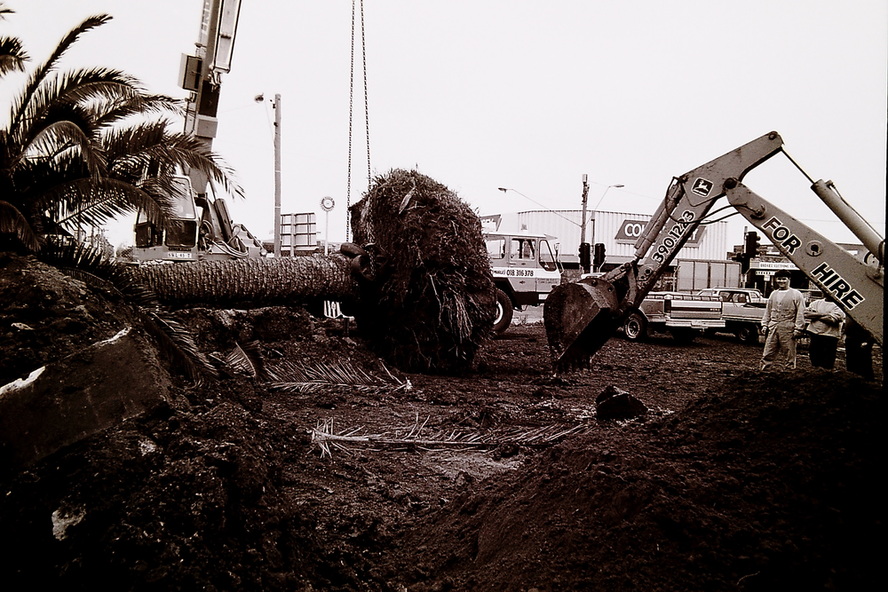
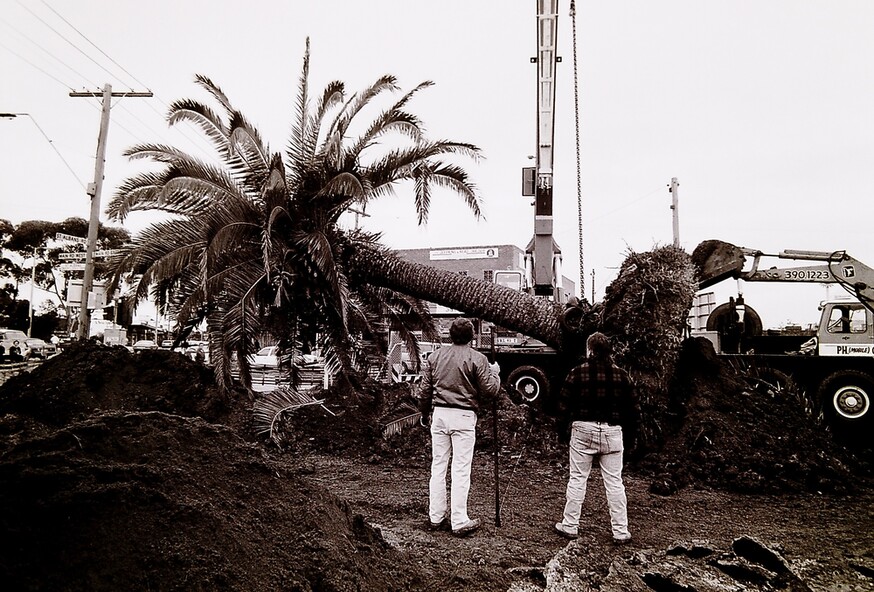
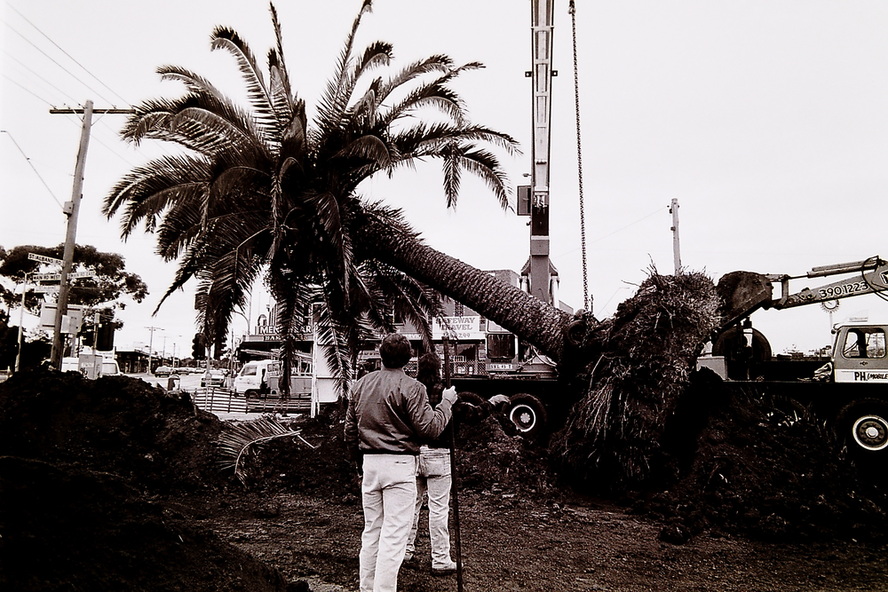
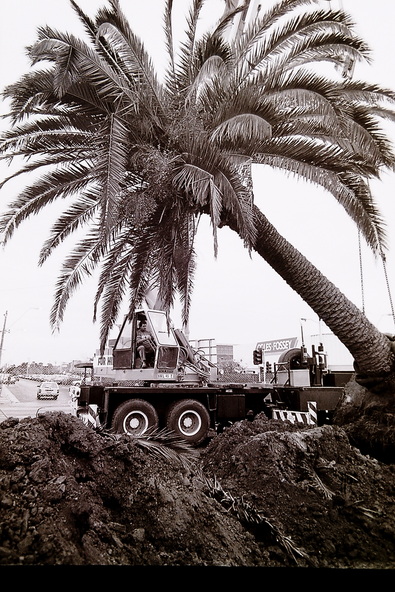
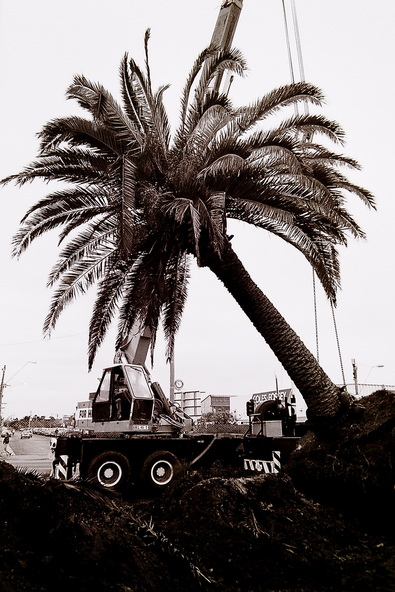
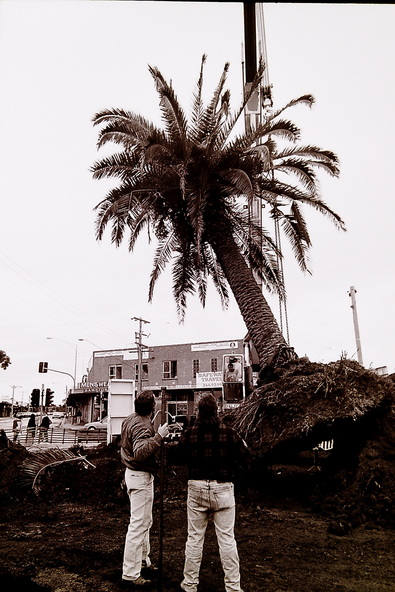
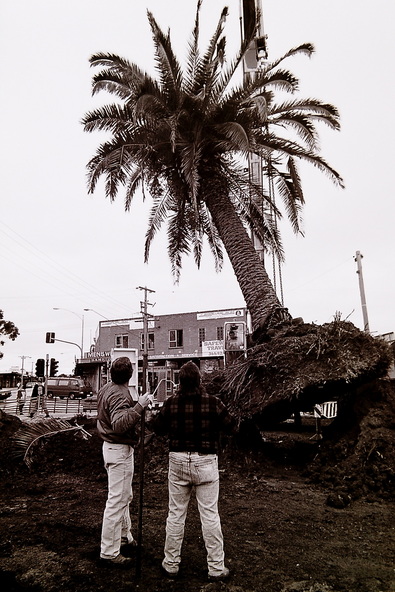
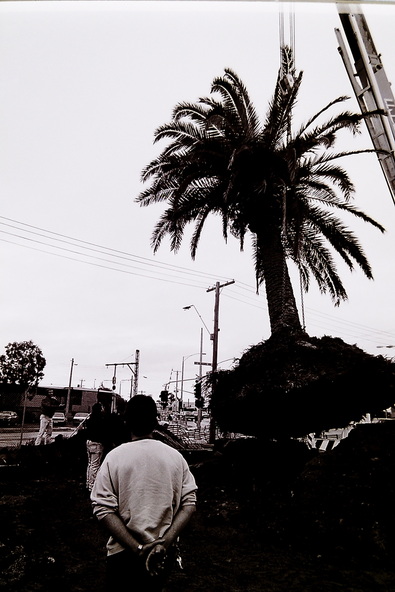
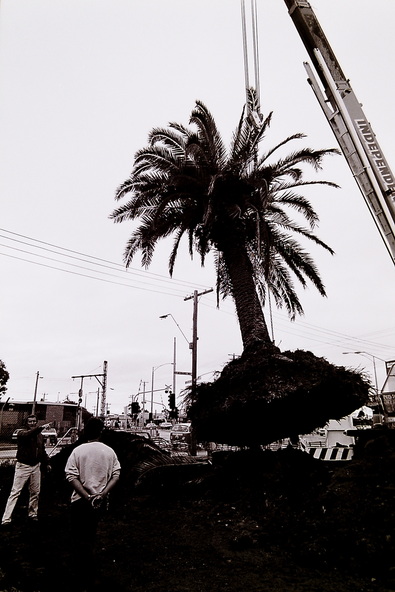
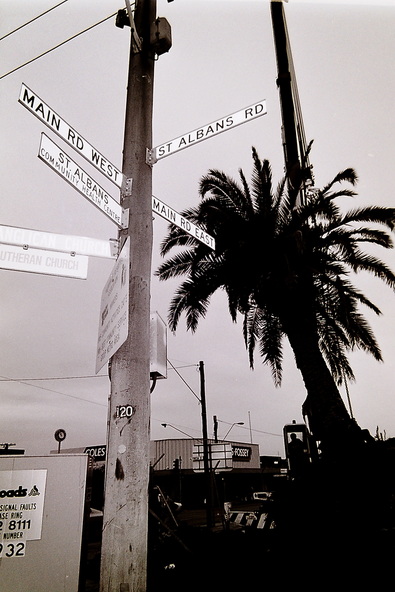
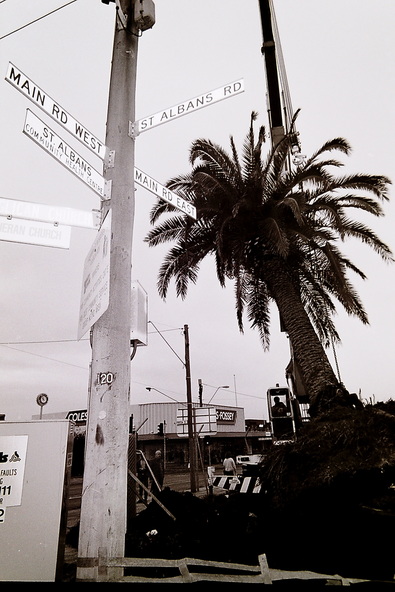
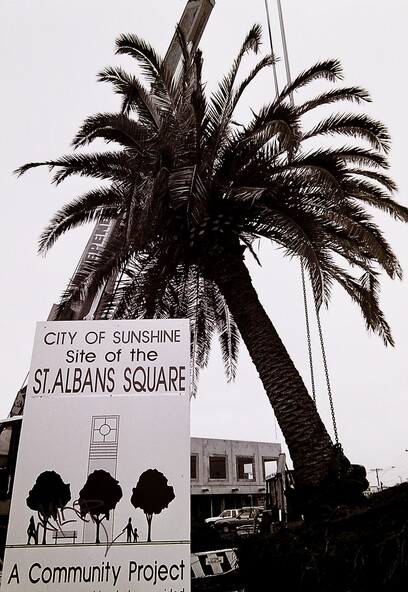
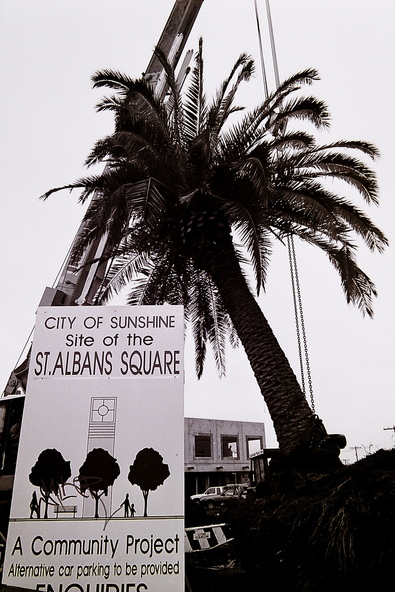
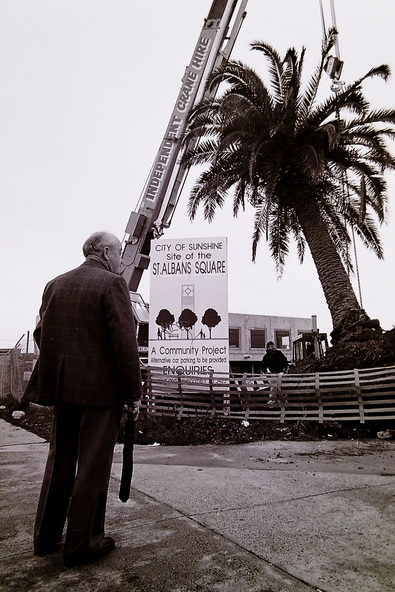
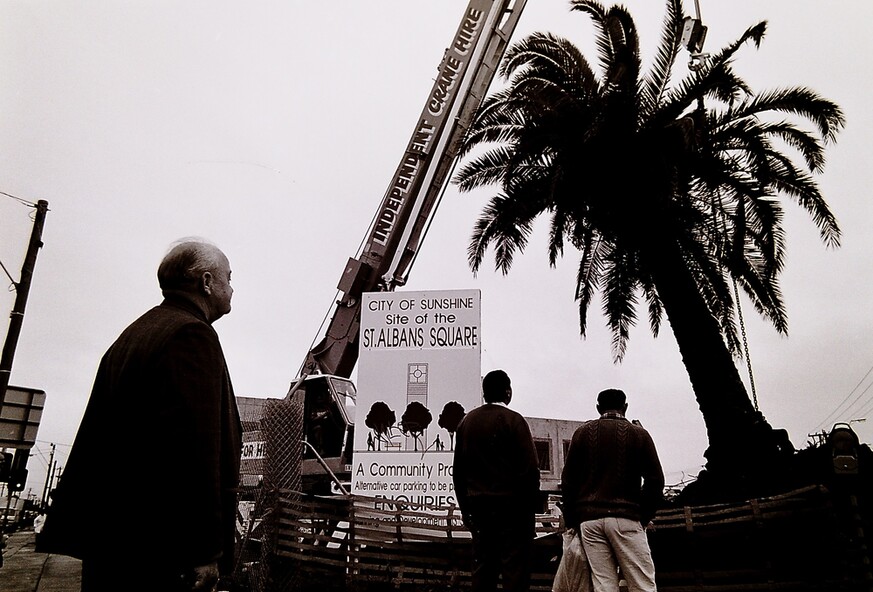
These photographs taken by The Advocate captures the installation of the 10 metre palm tree at St Albans Square is significant as the palm tree has become a long‑standing landscape marker that contributes to the visual identity and social character of the precinct. The tree was donated to Council by local Ardeer resident Peter Zafiropoulous.
Positioned at the intersection of Main Road East and The Esplanade, it serves as a focal point within the plaza and reflects late‑20th‑century suburban design practices that used distinctive plantings to create recognisable civic landmarks.
The tree has remained a constant feature through decades of commercial change, multicultural growth, and streetscape redevelopment, and continues to embody the continuity of community life in St Albans.
Its survival into 2026 enhances its value as a living element of the suburb’s public‑realm heritage.
Physical description
Digital scans of black and white negatives
Inscriptions & markings
Palm Tree St. Albans Square 284.2
